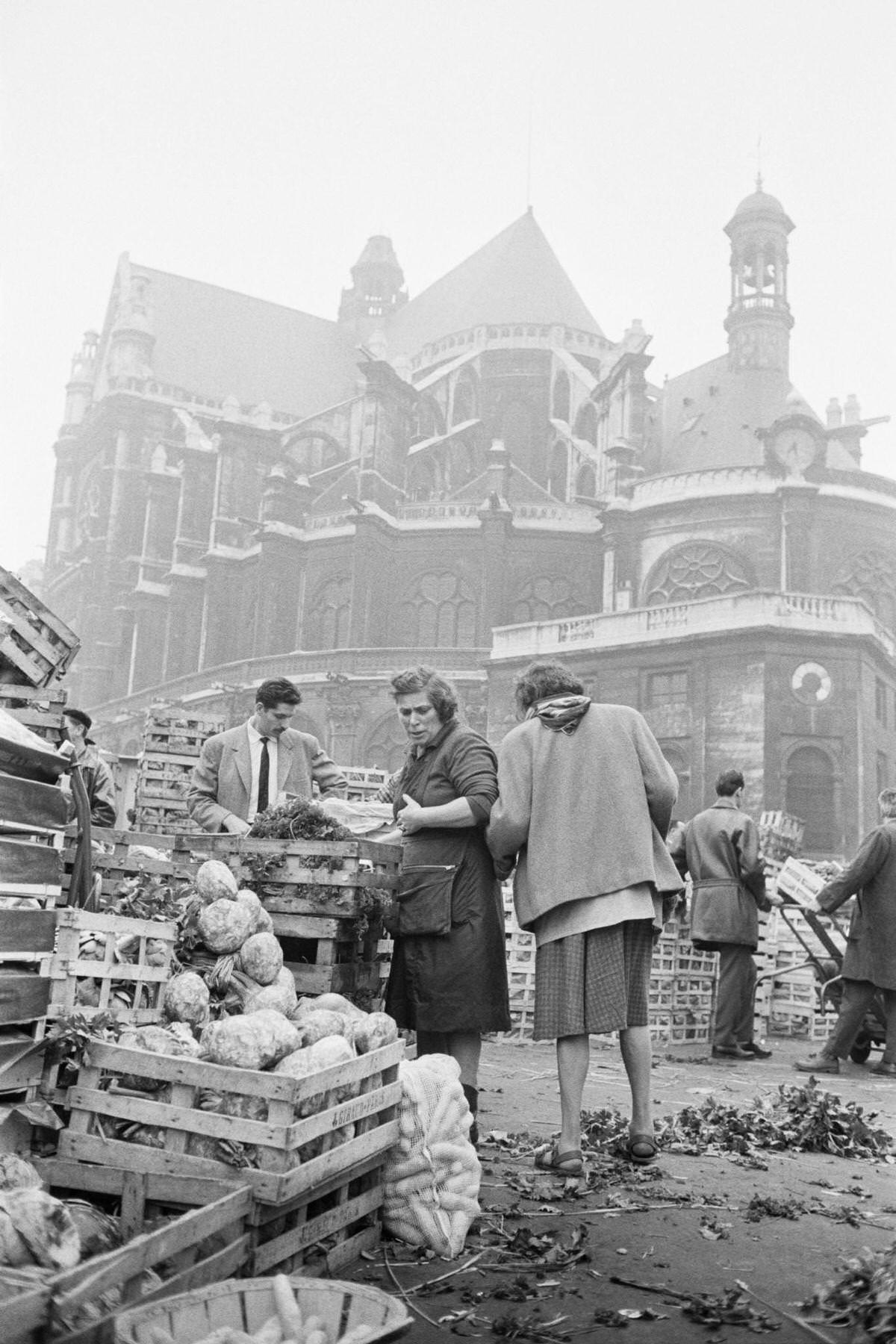
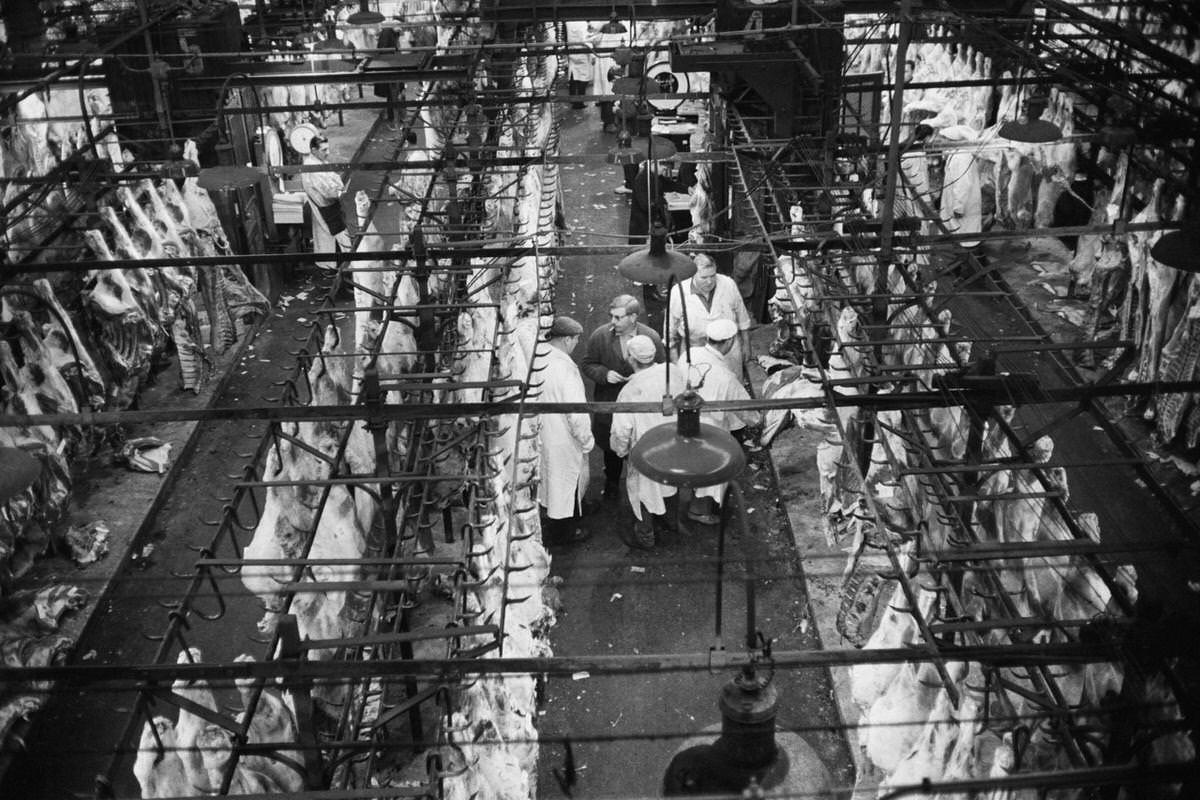
For 800 years, Les Halles was the beating heart of food supply in Paris. Every vegetable, cut of meat, fish, flower, and wheel of cheese that fed the city passed through this one dense, sprawling district on the Right Bank. By the 1950s, it was still running at full force — a place where butchers, market porters, greengrocers, restaurant owners, and ordinary shoppers all collided in one organized chaos that ran around the clock.
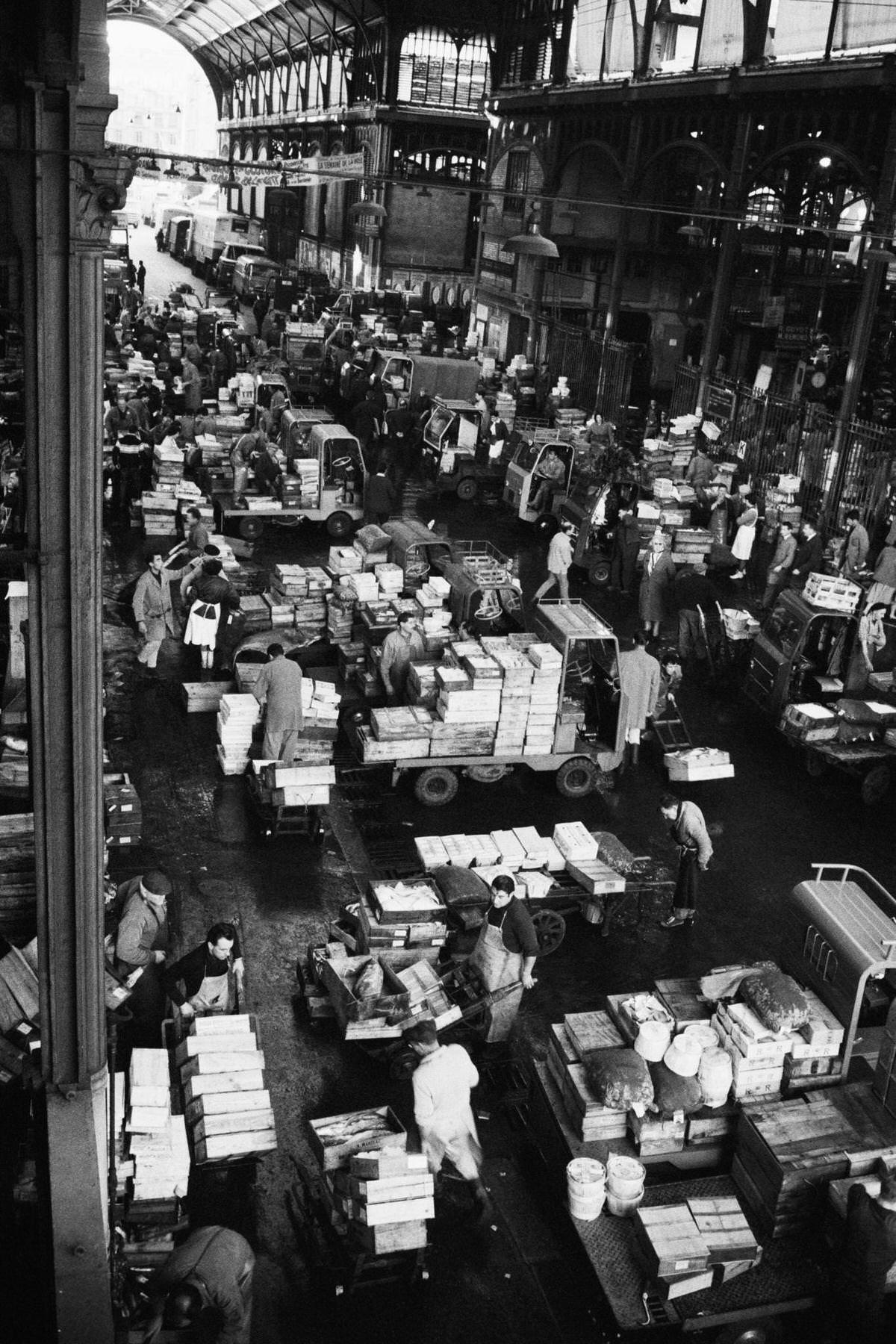
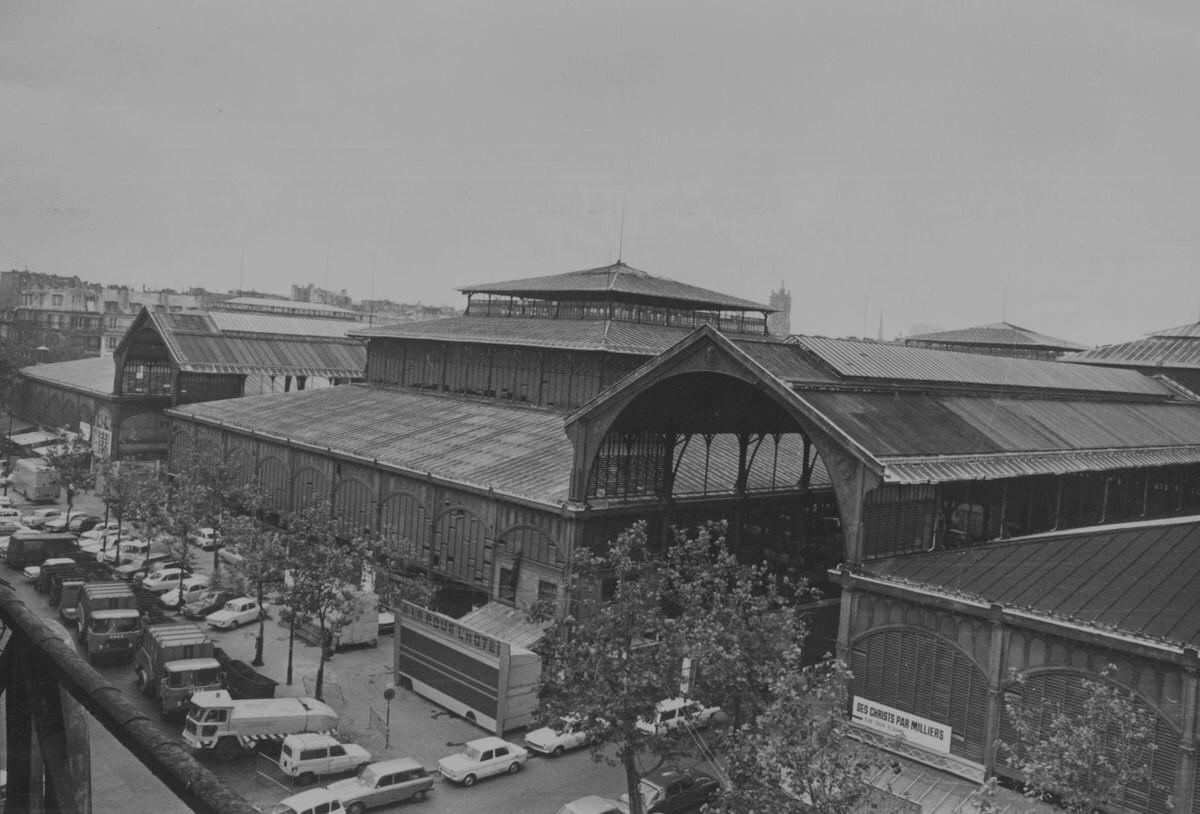
The architecture of Les Halles was immediately recognizable. Architect Victor Baltard designed the market’s iron-and-glass pavilions in the mid-19th century, and they shared the same industrial logic as the great railway stations of Paris — the Gare du Nord, Gare Saint-Lazare, and the building that would later become the Musée d’Orsay. Tall steel arches supported broad glass awnings, letting daylight pour in over the stalls below. By the 1950s, those high beams were thick with layers of paint and iron rivets — a worn but still striking version of what had once been considered the most modern market infrastructure in the world.
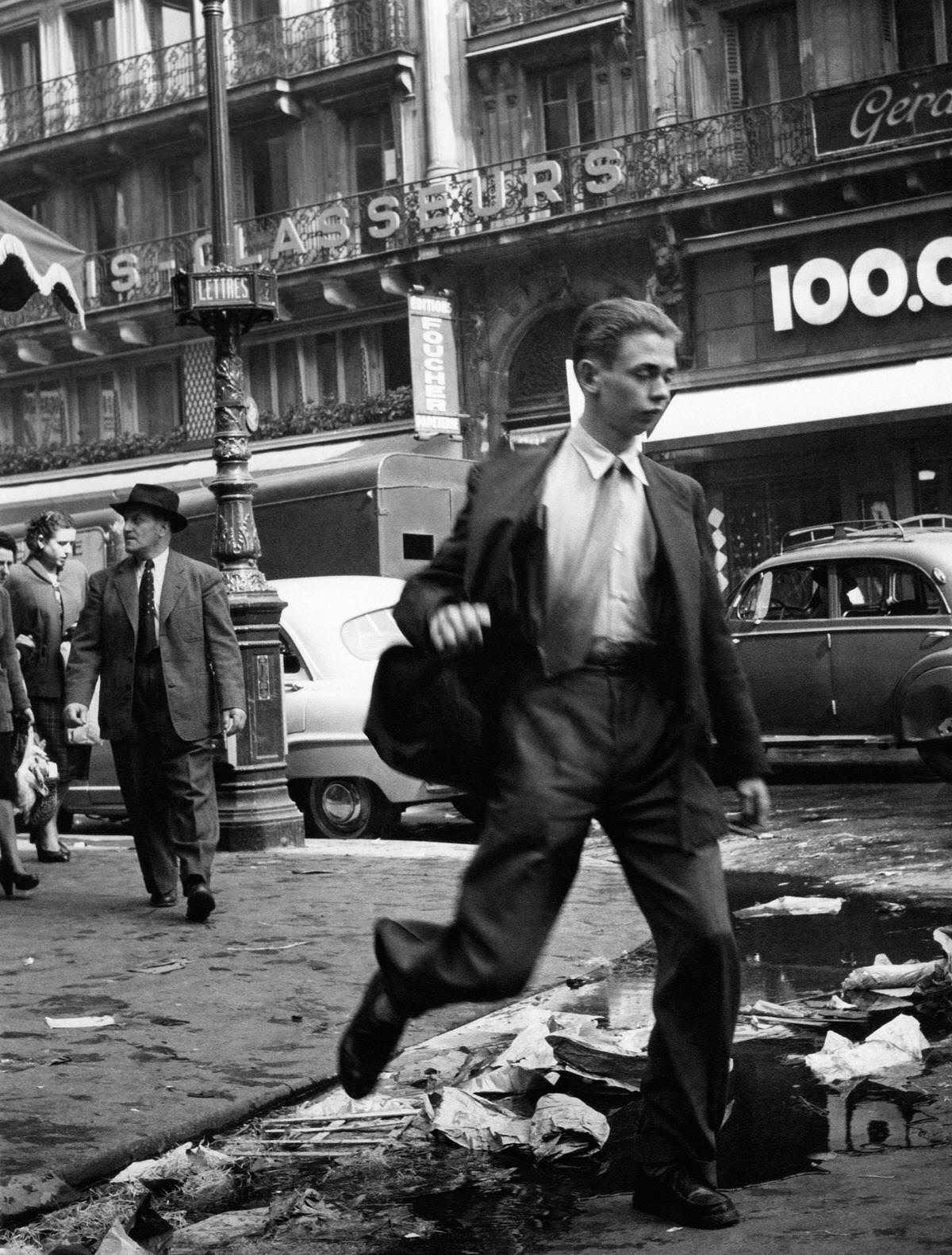
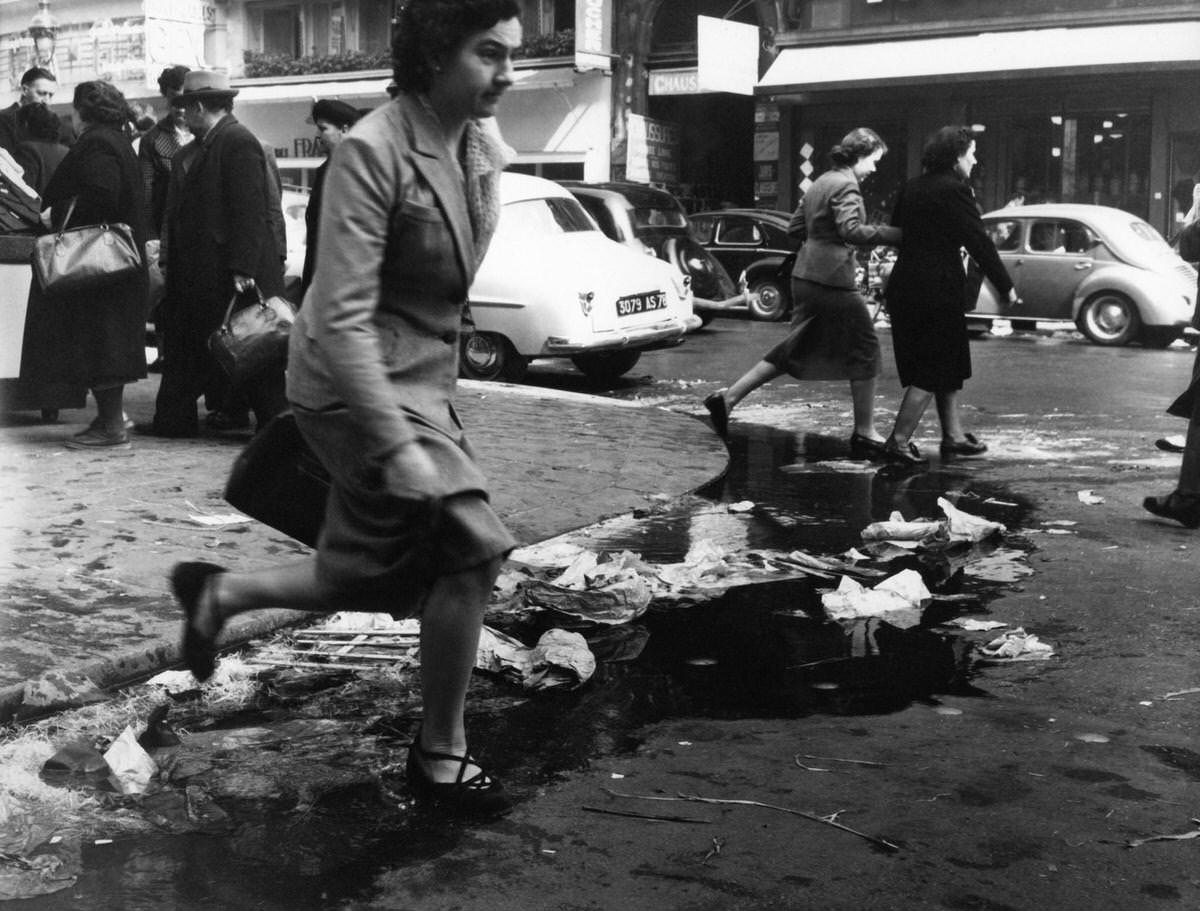
The gutters cutting across the cobblestones were a constant feature of daily life at Les Halles. Water, ice melt, and runoff from the fish and meat stalls drained constantly through the channels between pavings. Workers and visitors alike learned quickly to navigate them — sometimes with a jump, sometimes not fast enough.
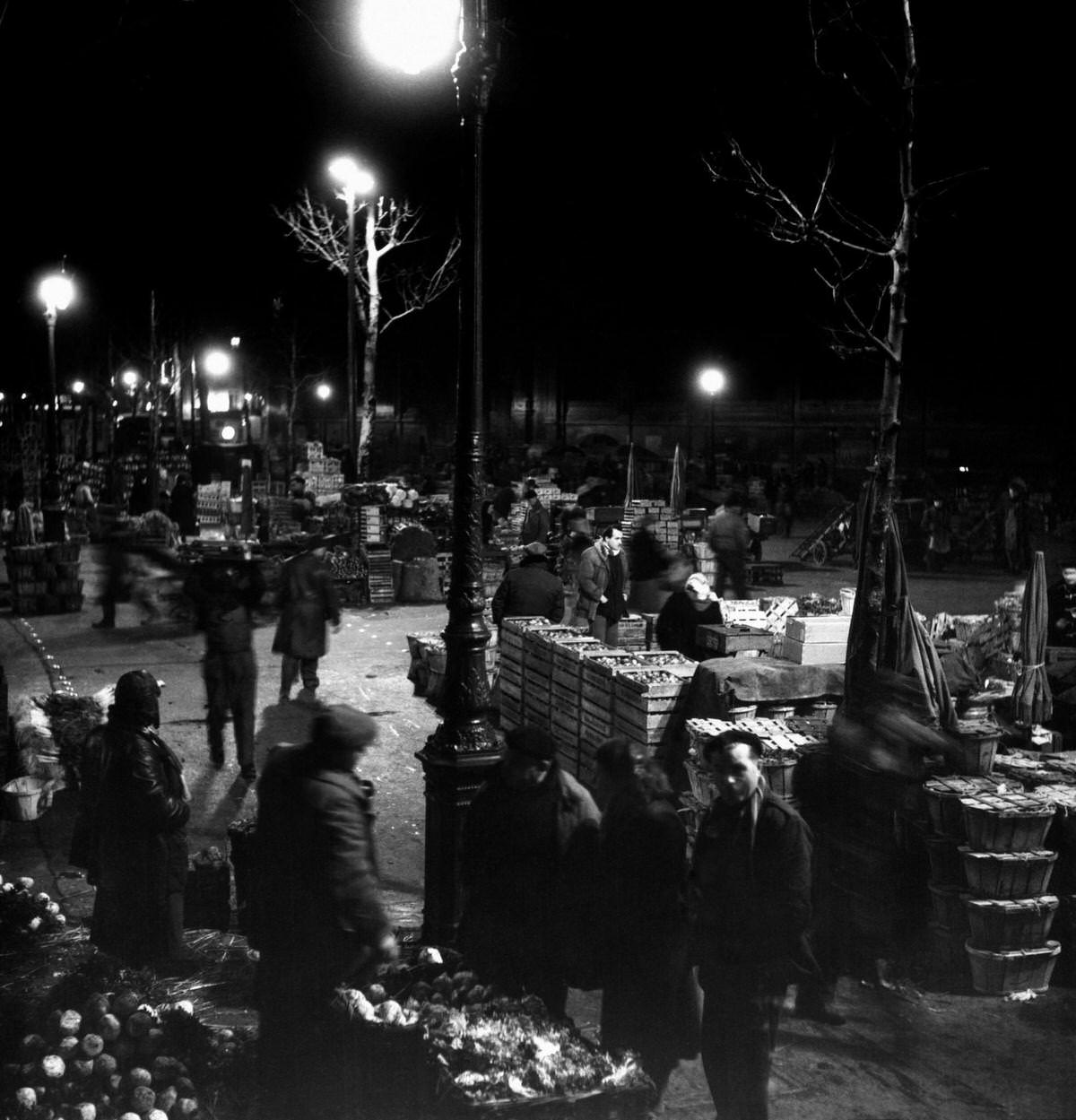
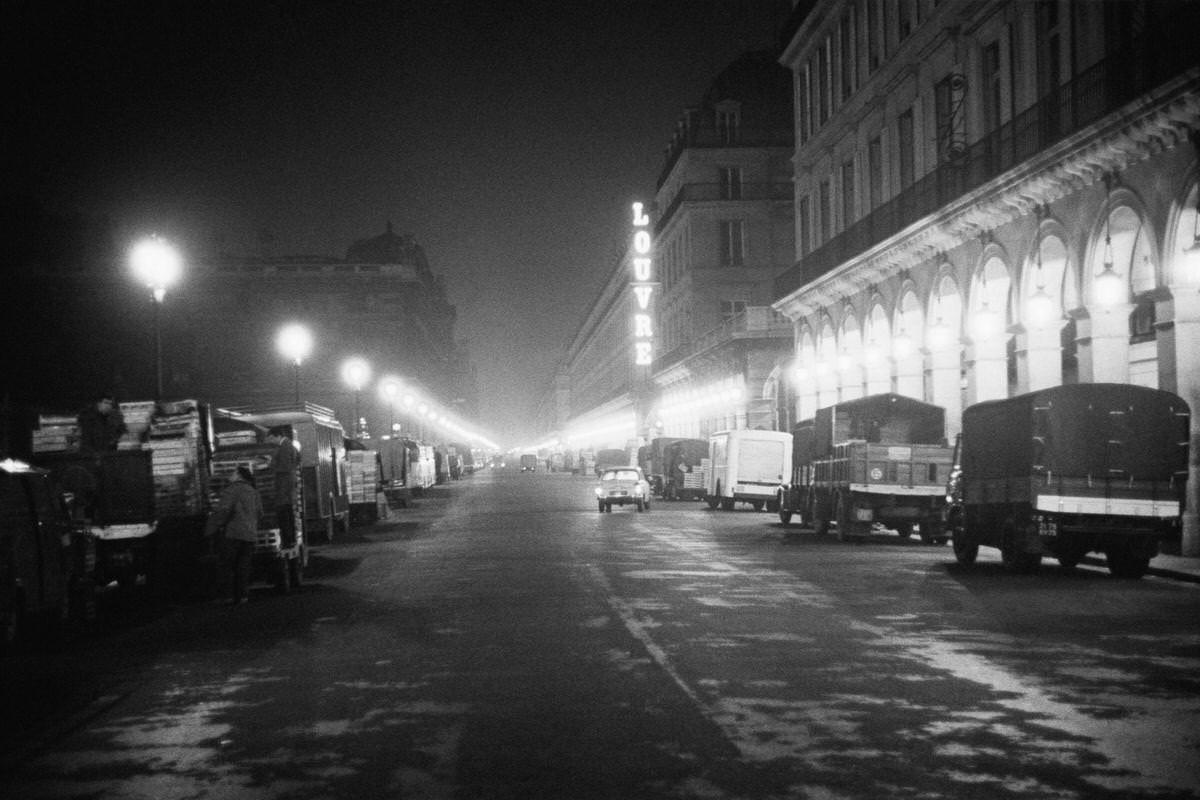
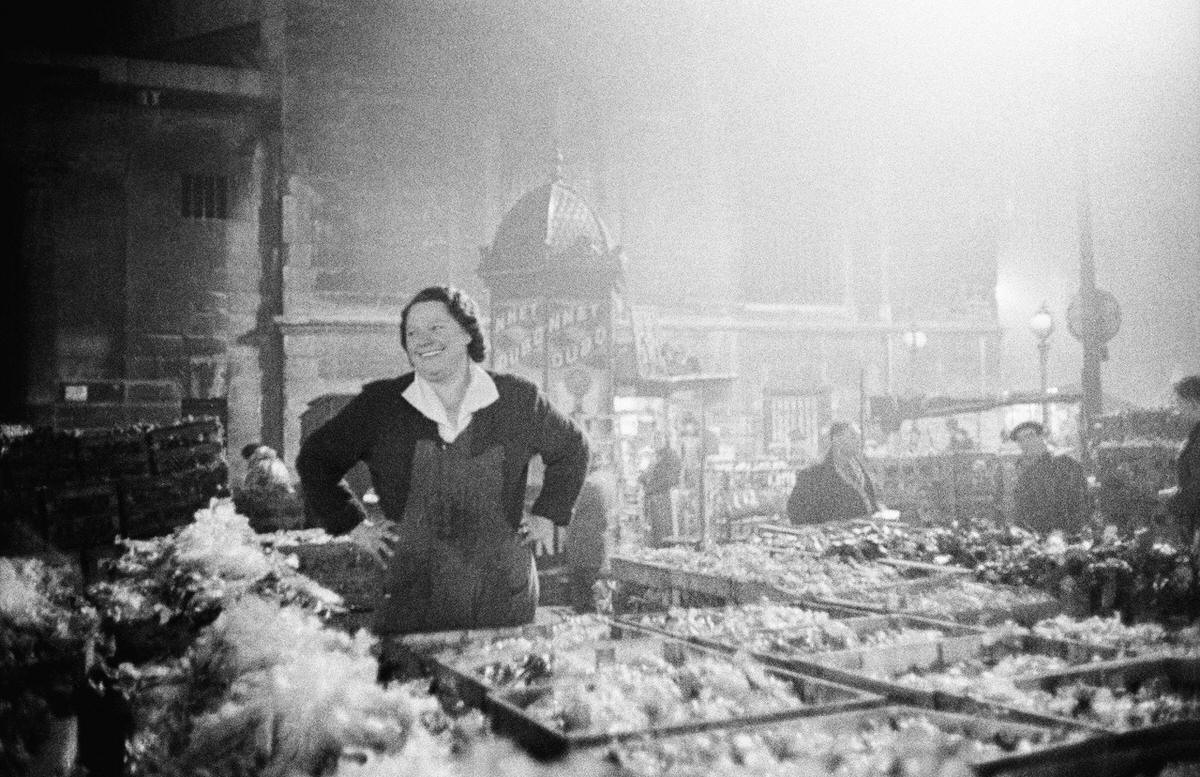
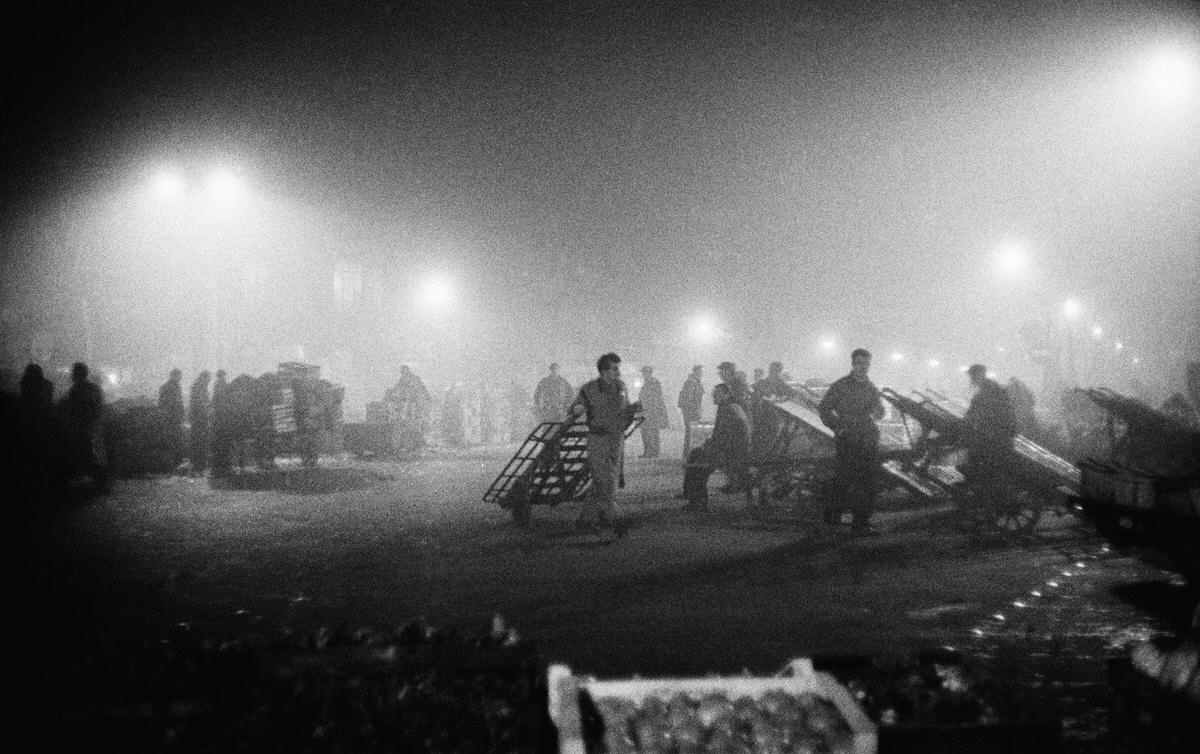
Les Halles had two very different faces depending on the hour. During the day, the vegetable and flower stalls dominated the open areas under the pavilion roofs. Greengrocers arranged their produce in careful displays, and Parisians from all walks of life came to shop. At night, the market transformed entirely. Thousands of tons of meat and fish arrived, were unloaded, butchered, bought, and sold before most of the city woke up. The night shift at Les Halles was its own world.
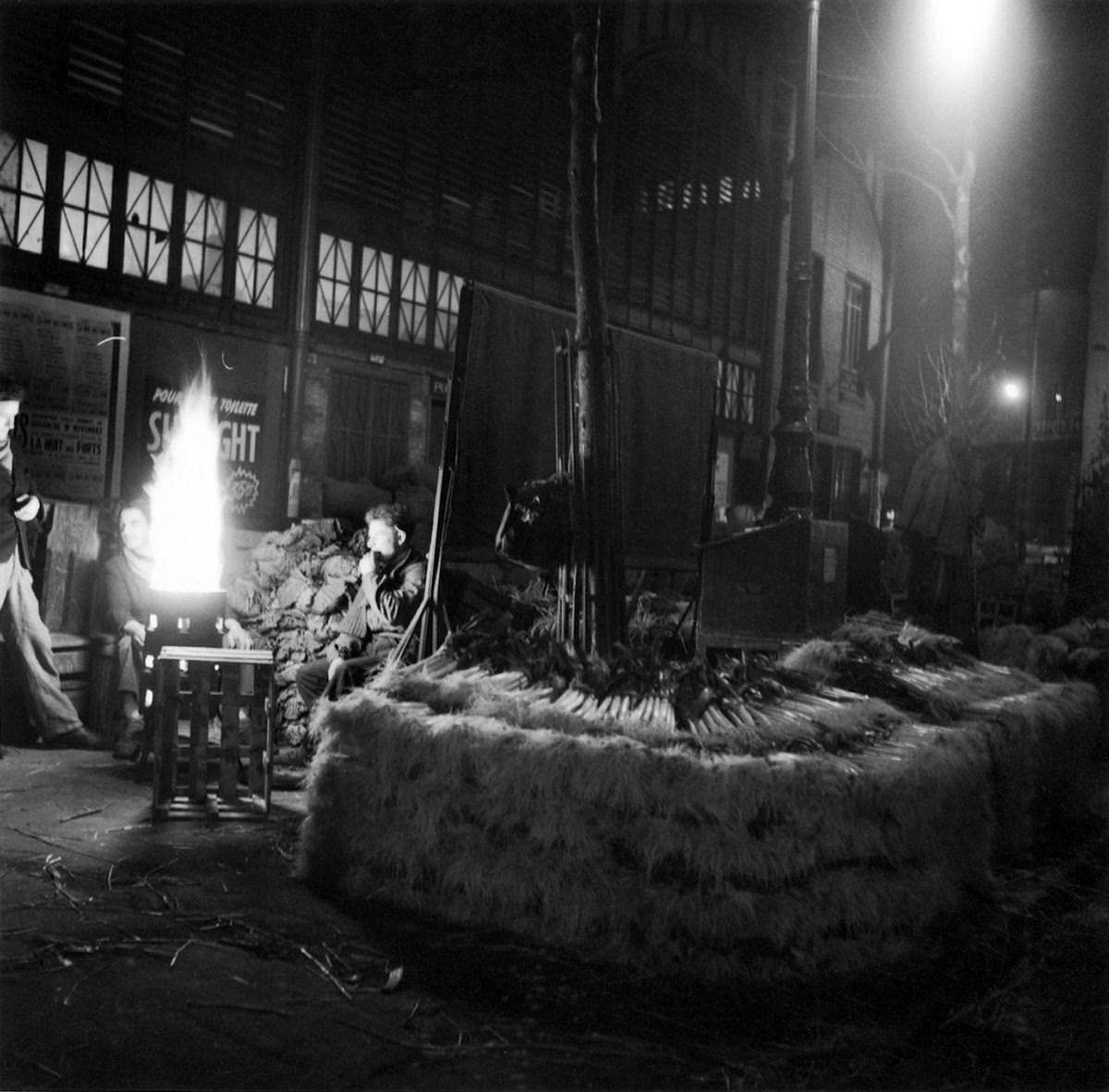
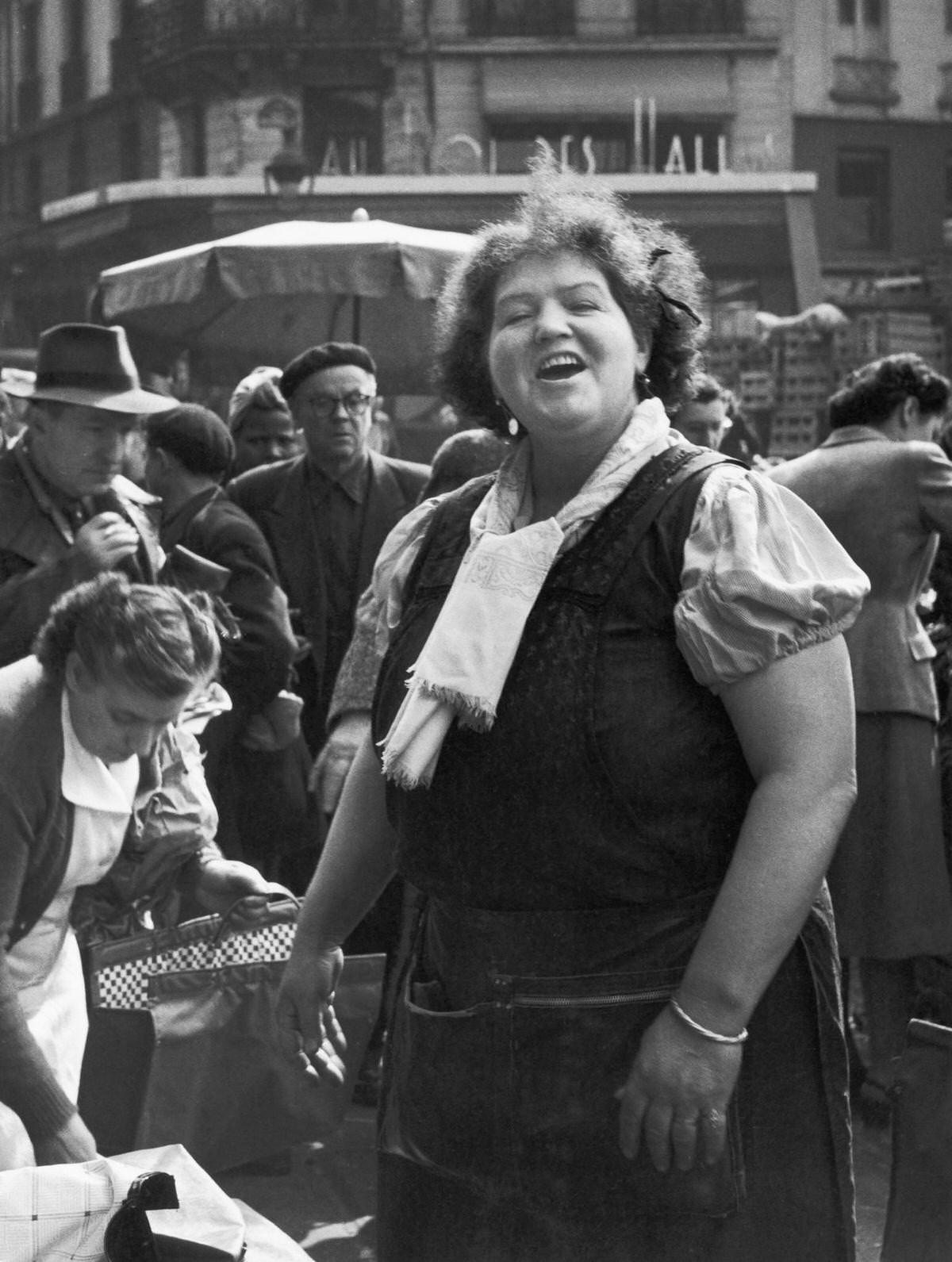
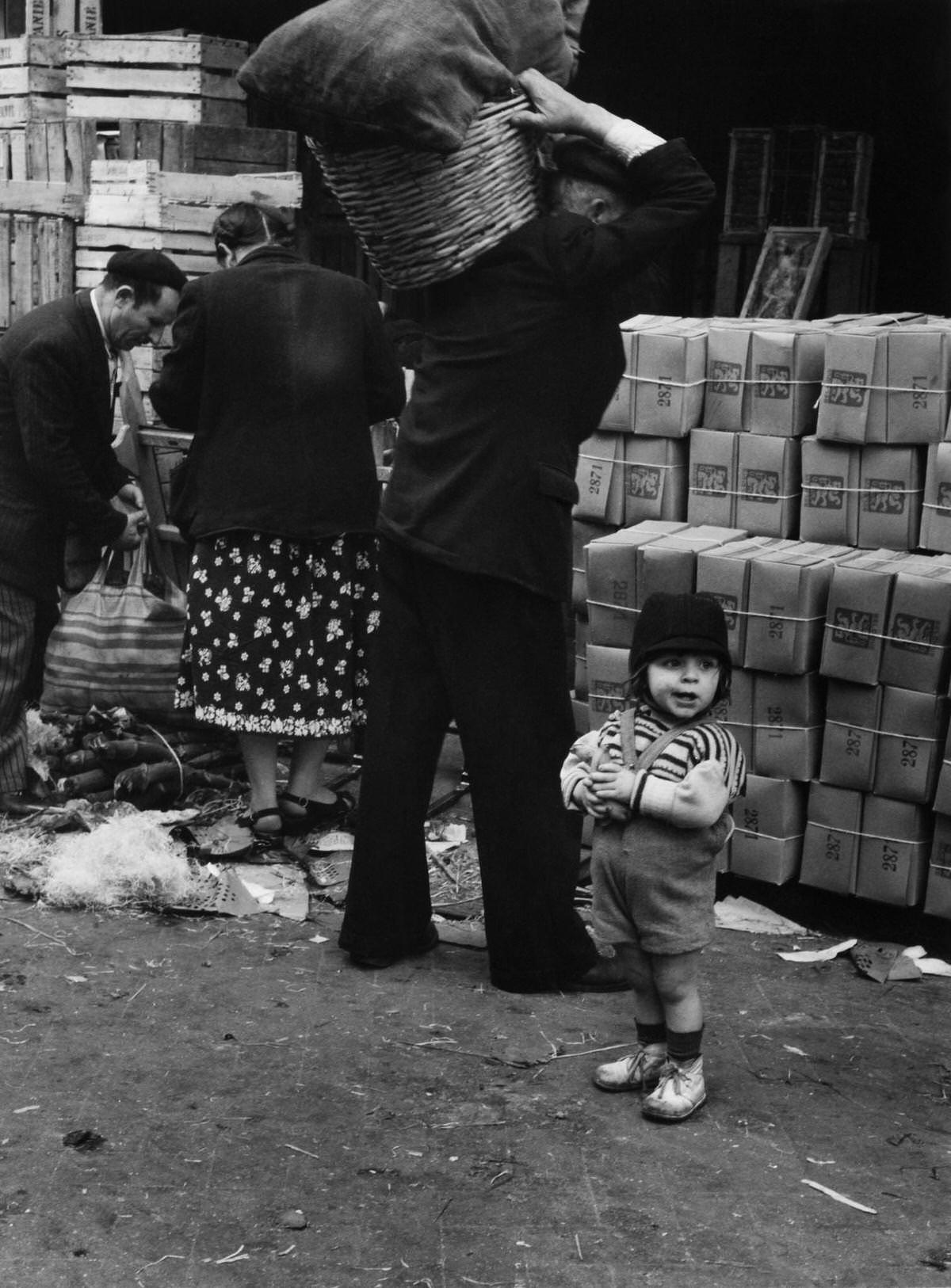
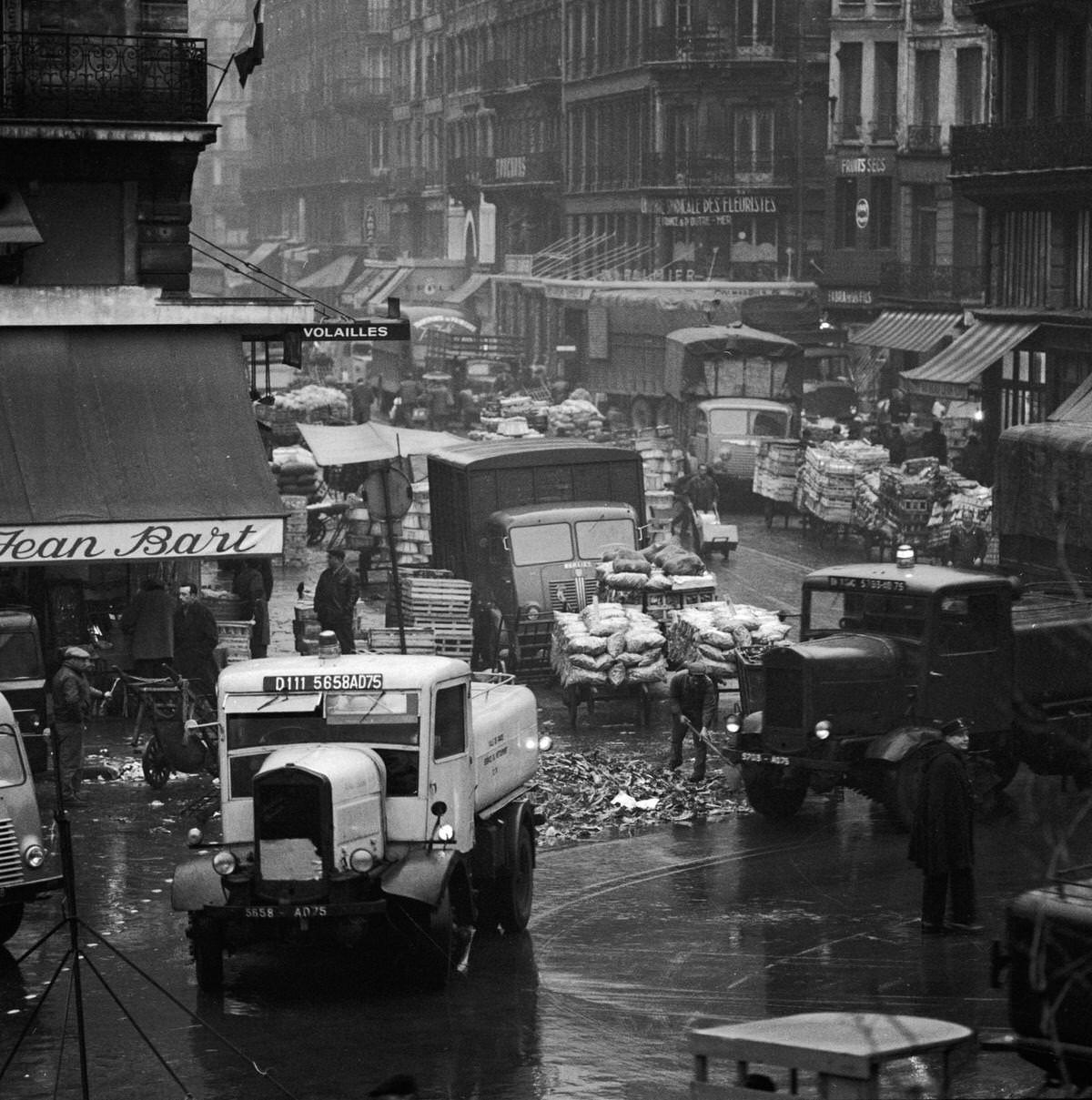
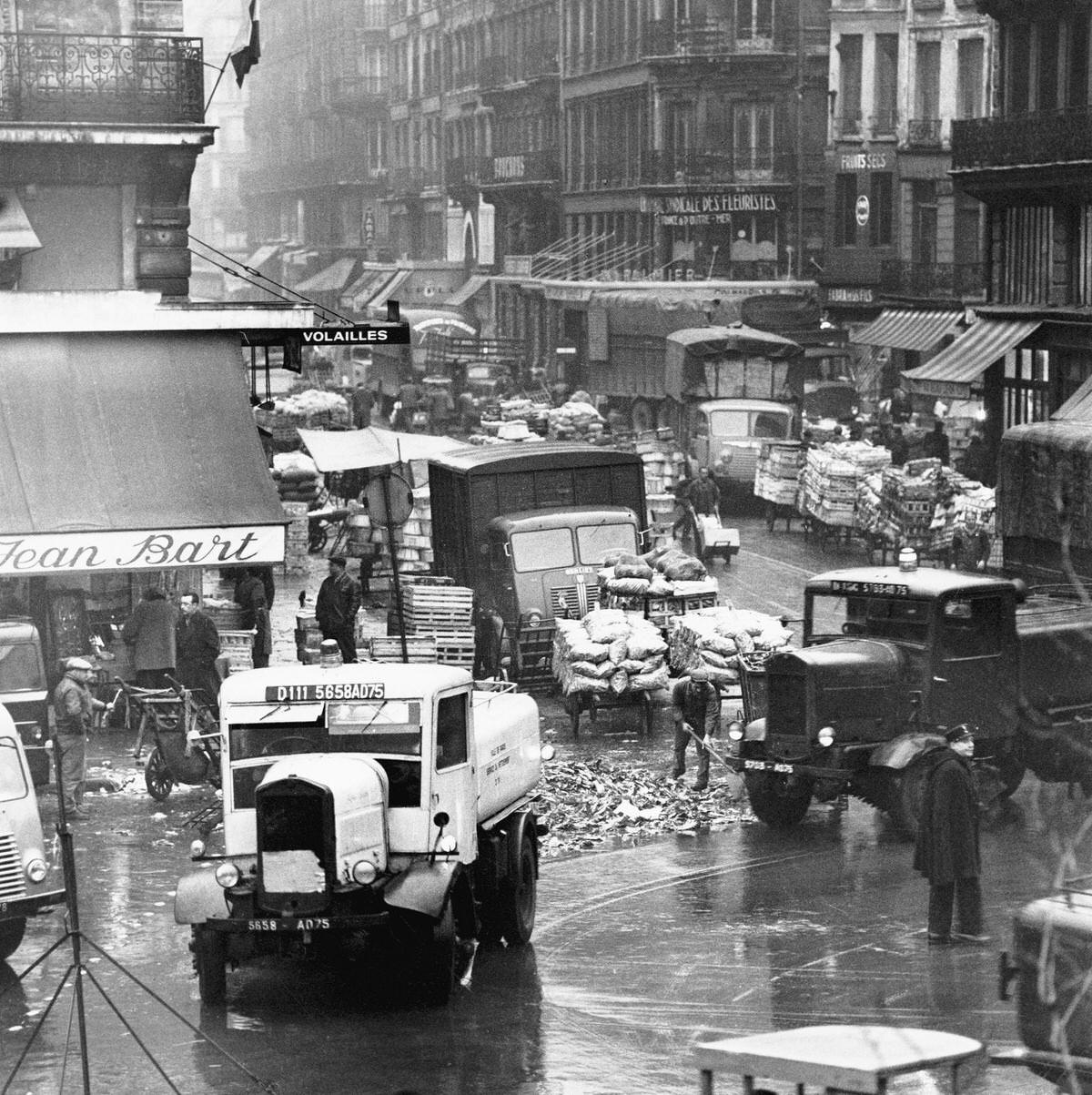
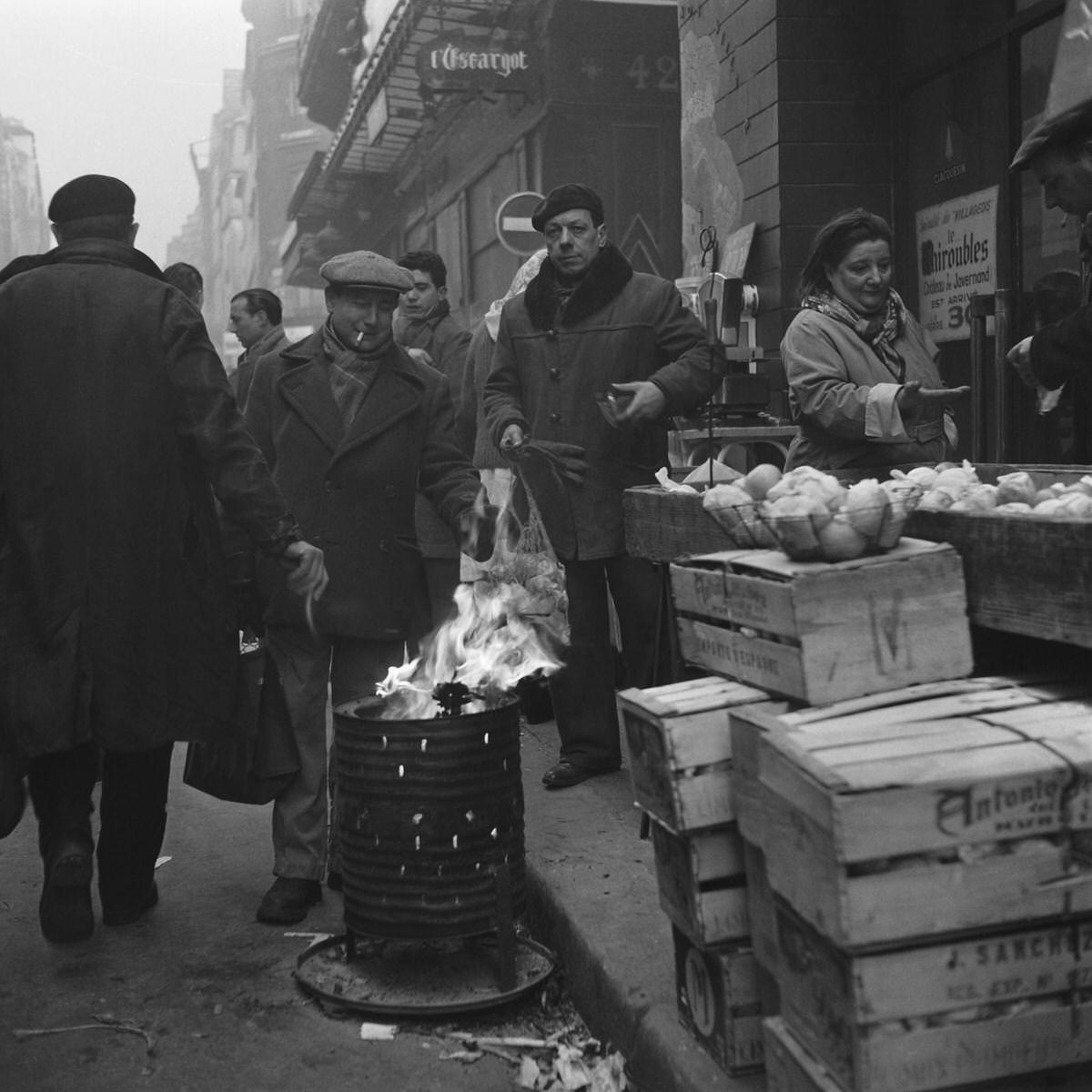
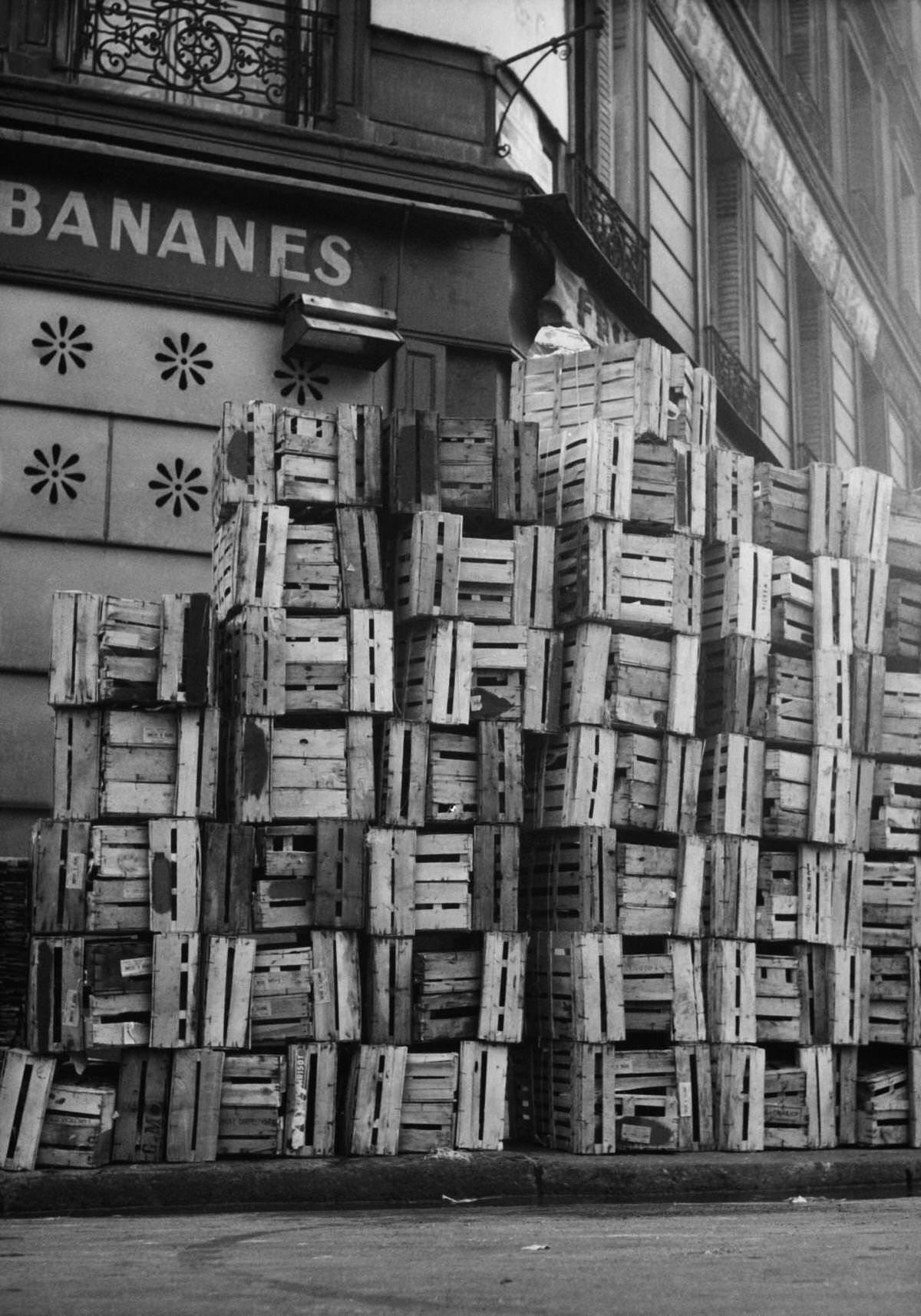
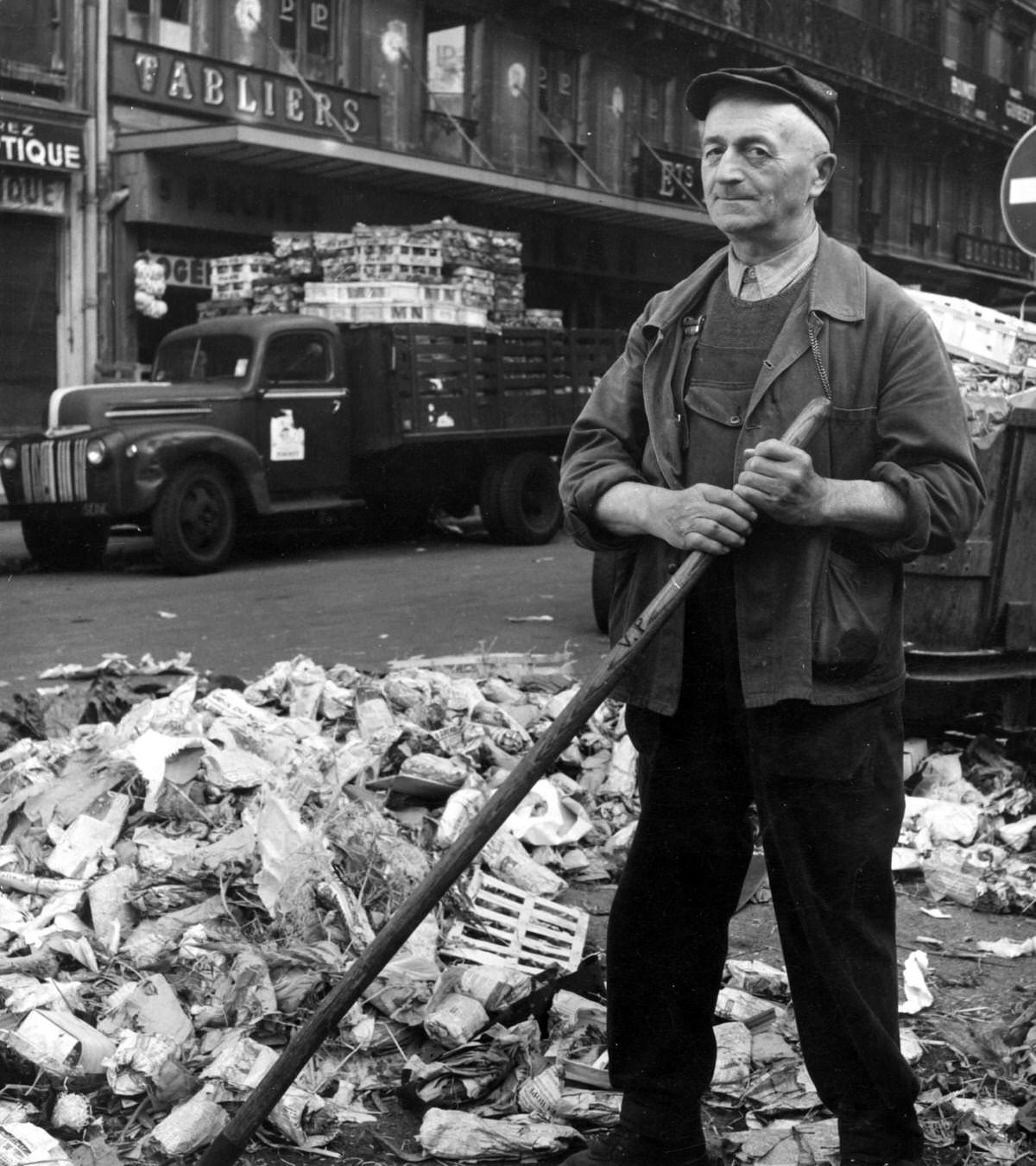
The surrounding Beaubourg district was part of the same living organism. Narrow streets fanned out from the main pavilions, lined with wholesale shops, small cafés, and workers’ bars that kept unusual hours to serve the market trade. The neighborhood was rough around the edges but completely alive at all times of day or night.
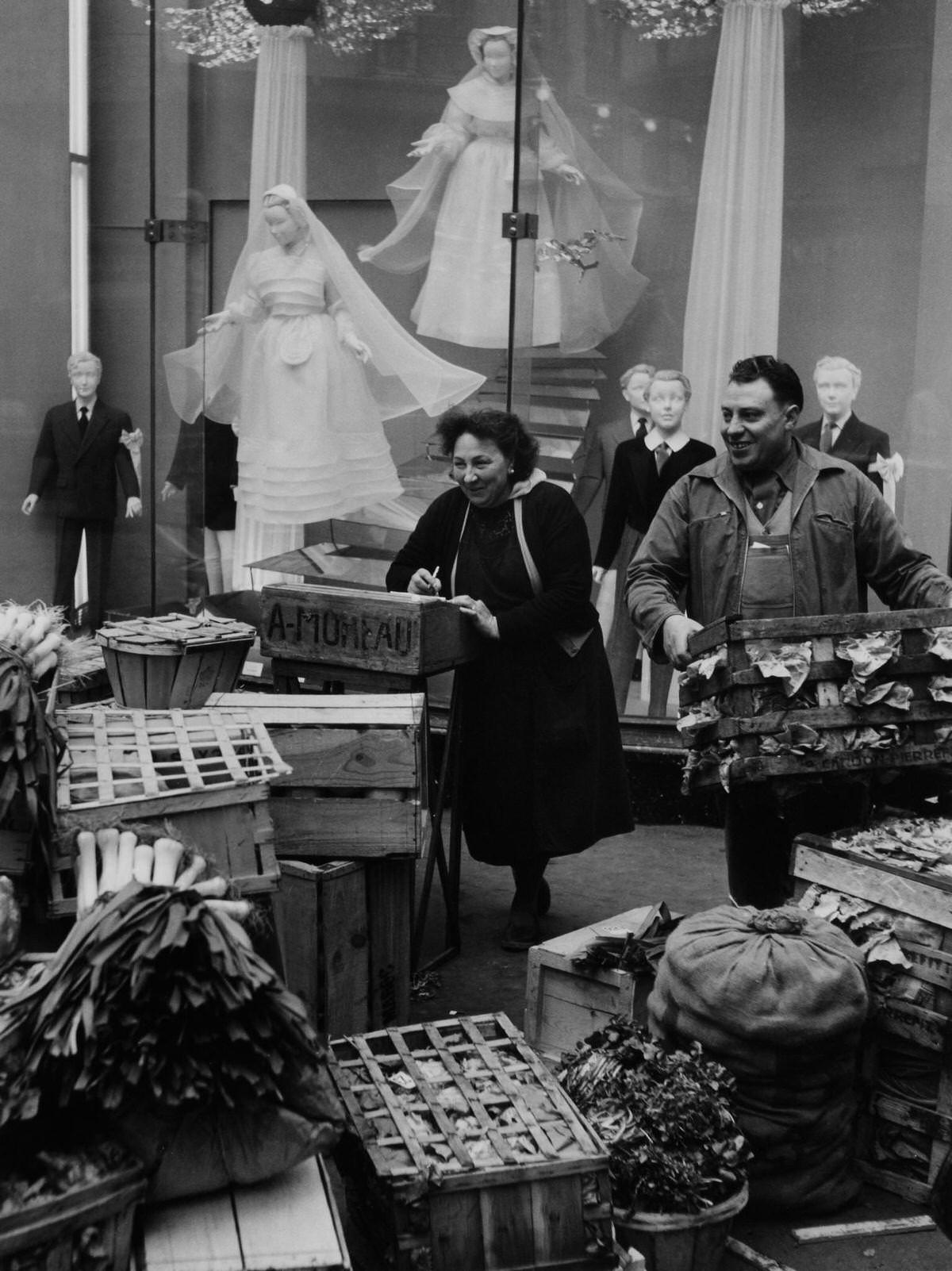
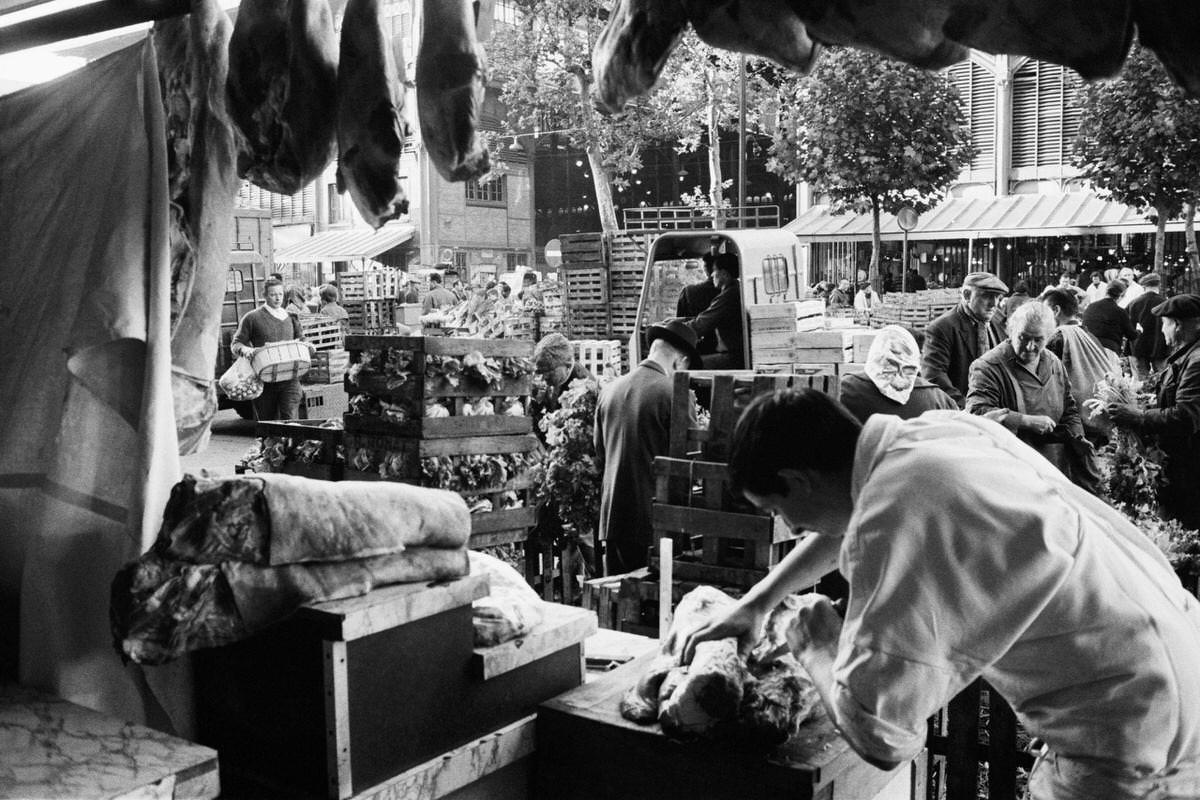
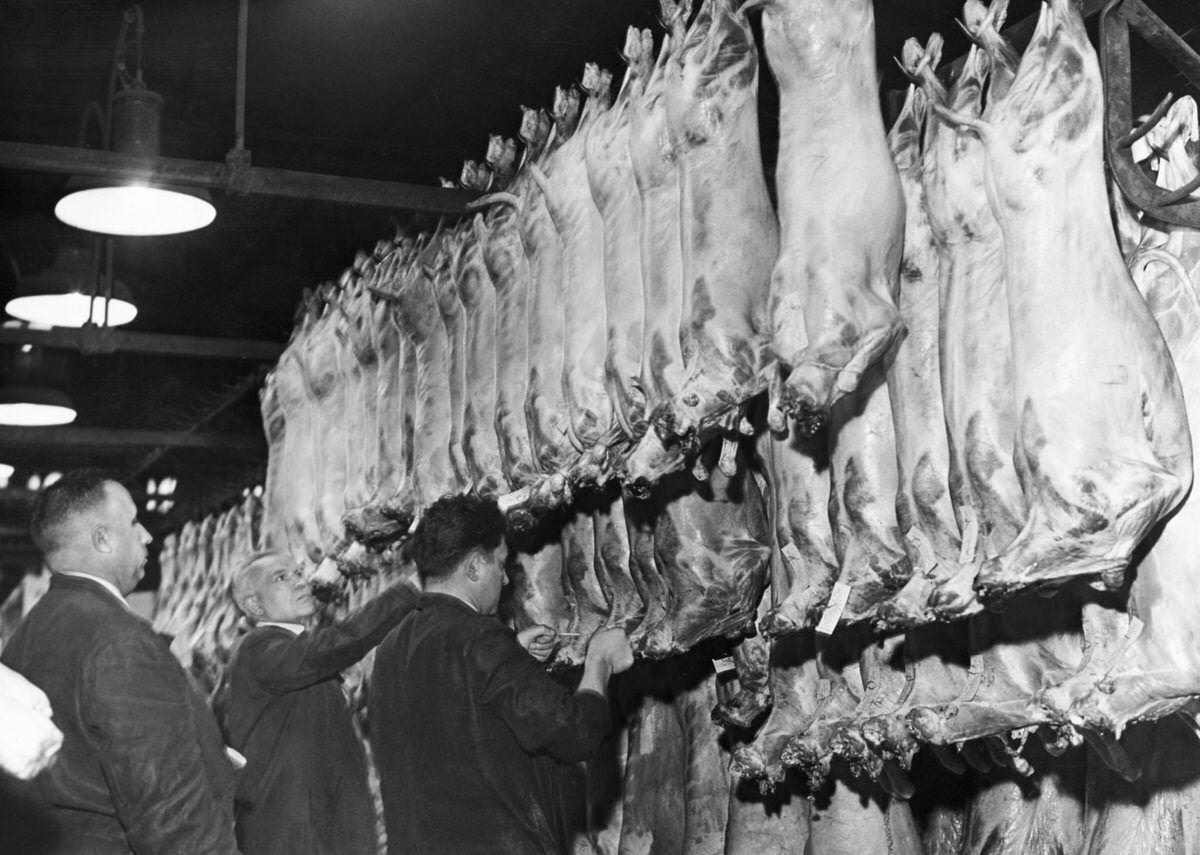
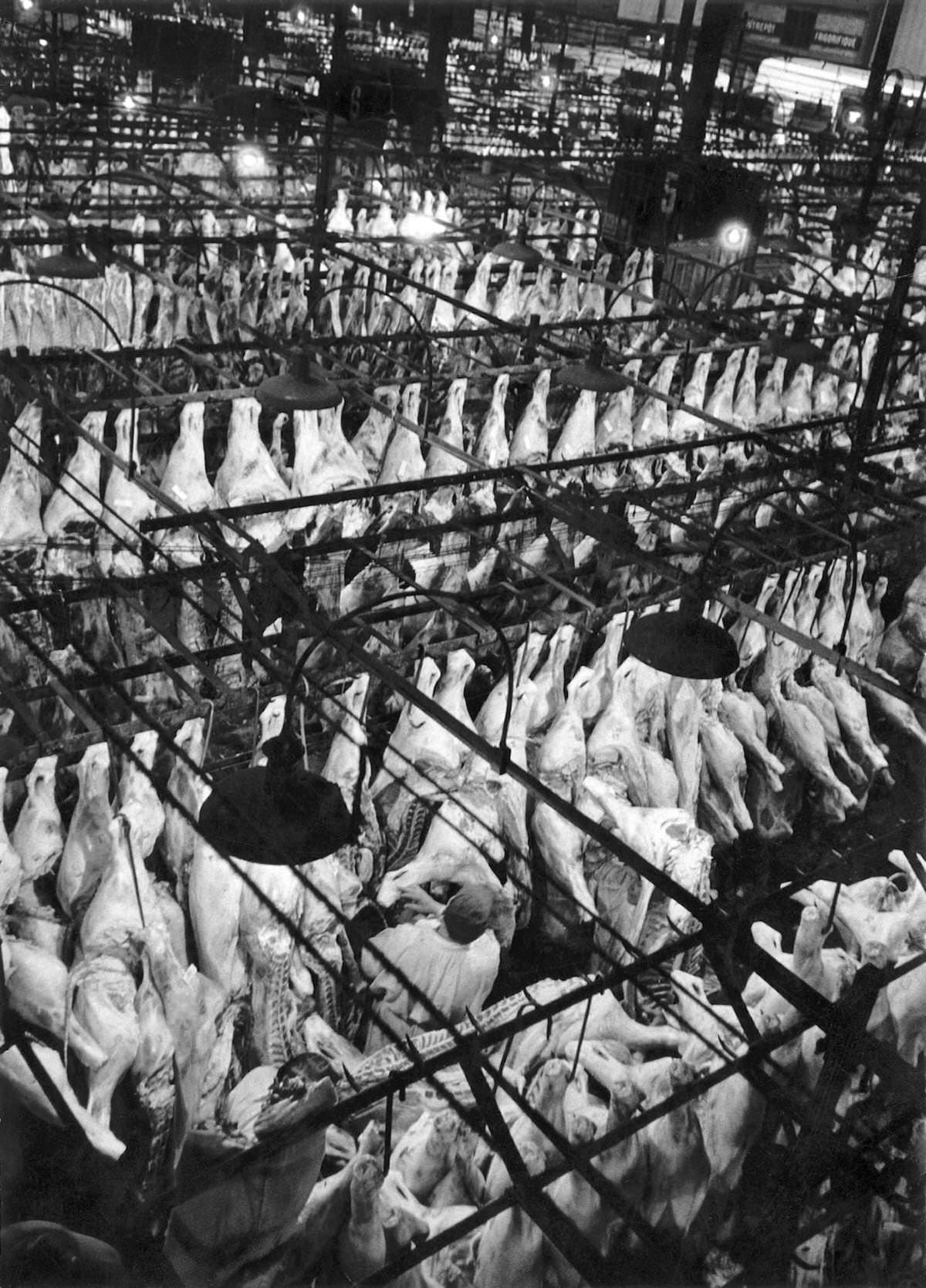
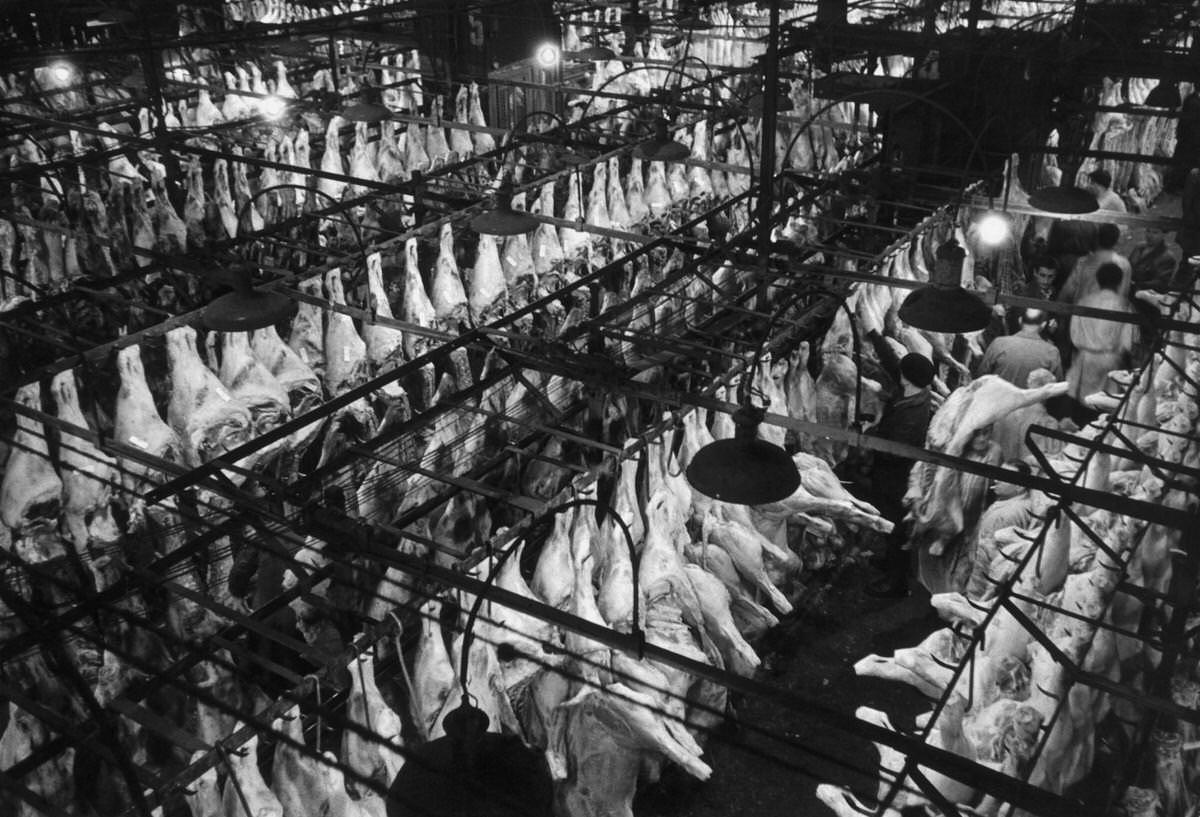
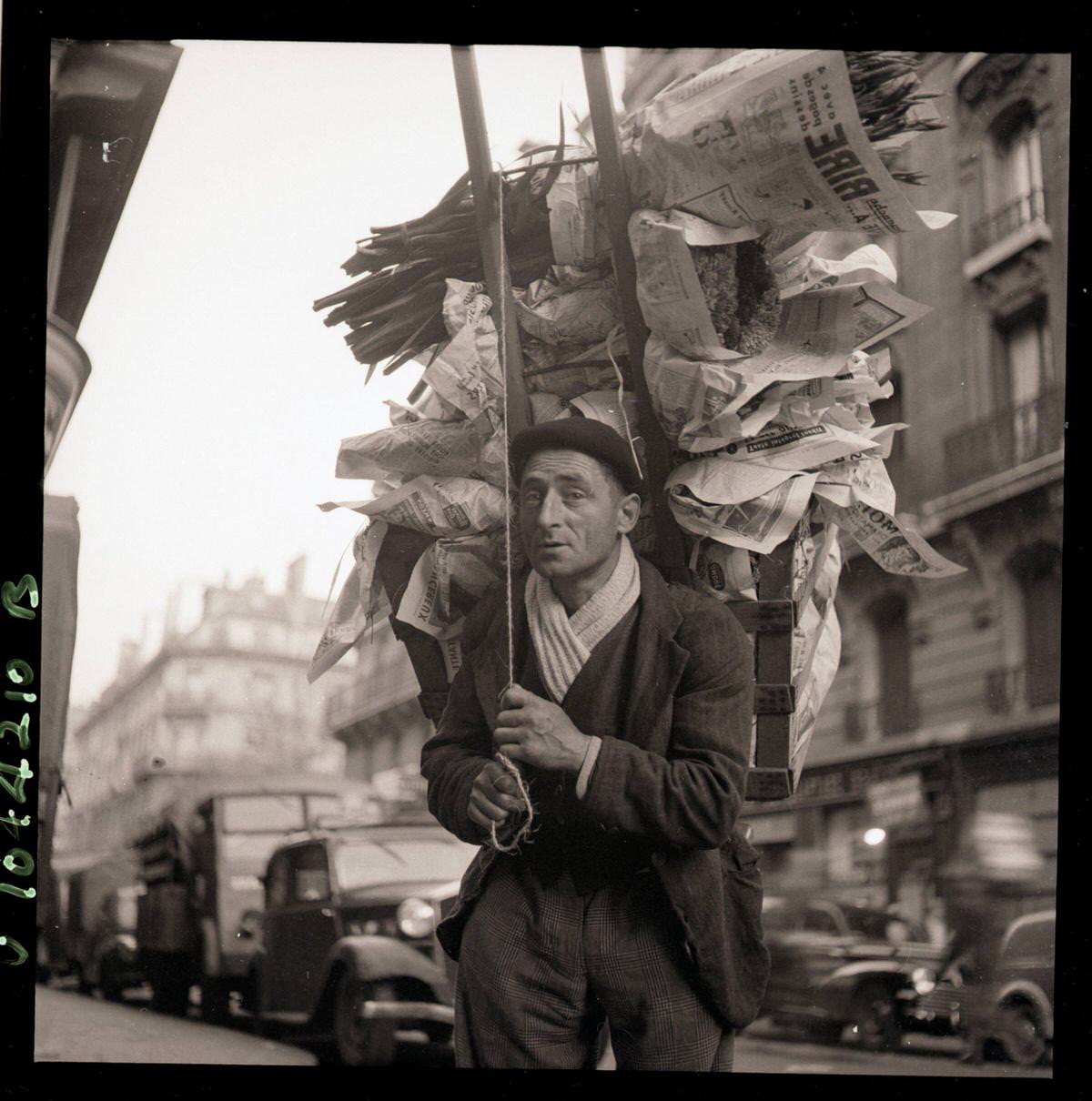
The meat market was one of the most demanding operations in the entire district. Butchers worked through the night and into the early morning hours, breaking down entire carcasses under the pavilion lights. Market porters — known in French as the *Forts des Halles* — carried enormous loads on their backs using wooden frames, moving goods from delivery trucks to stalls with speed and precision. It was physically brutal work that required both strength and experience.
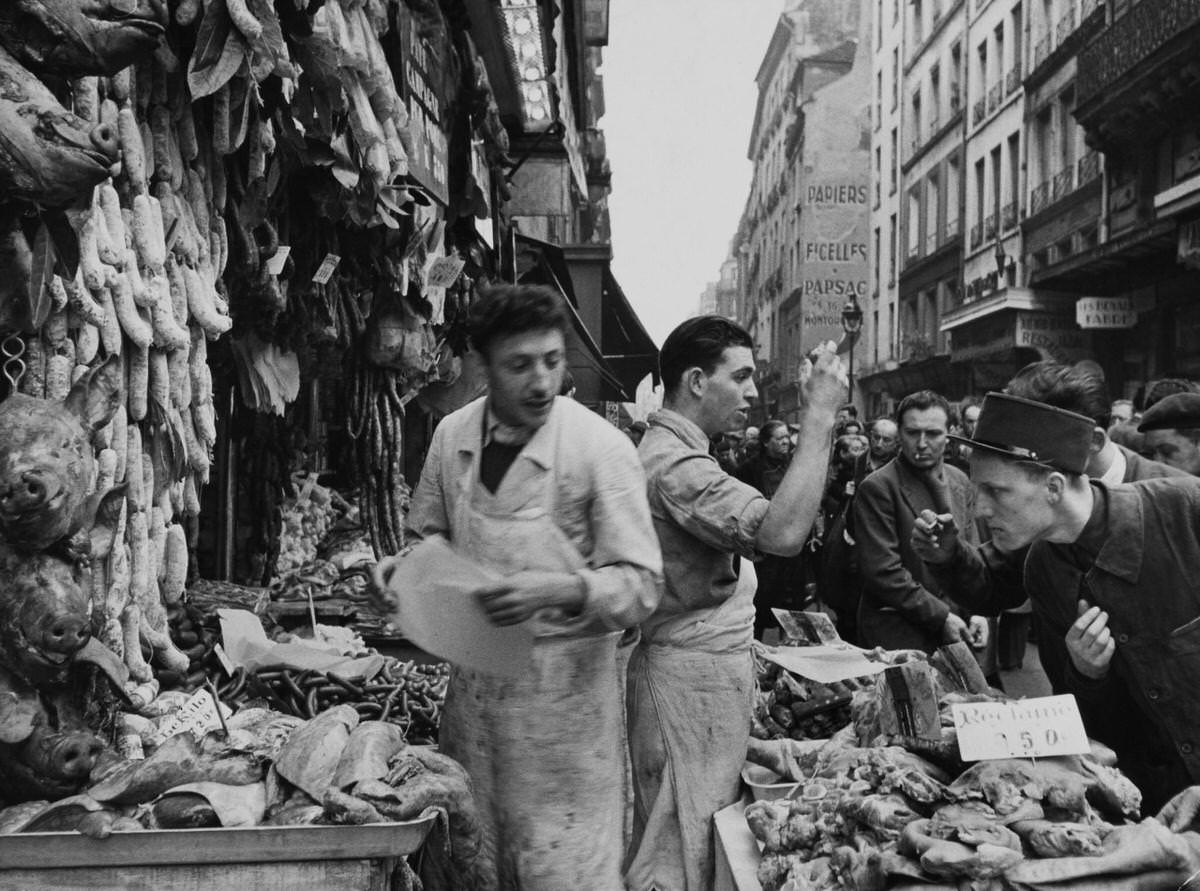
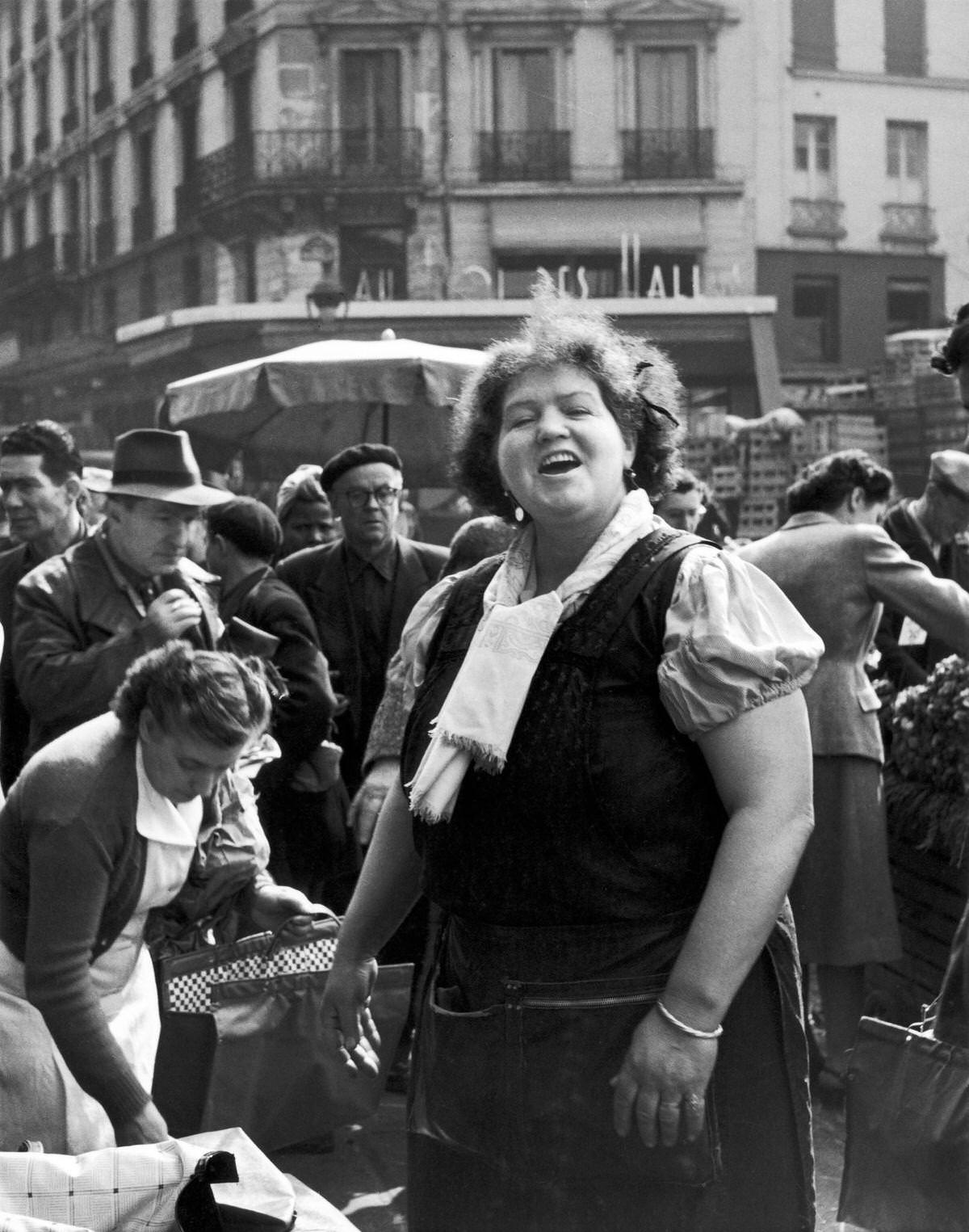
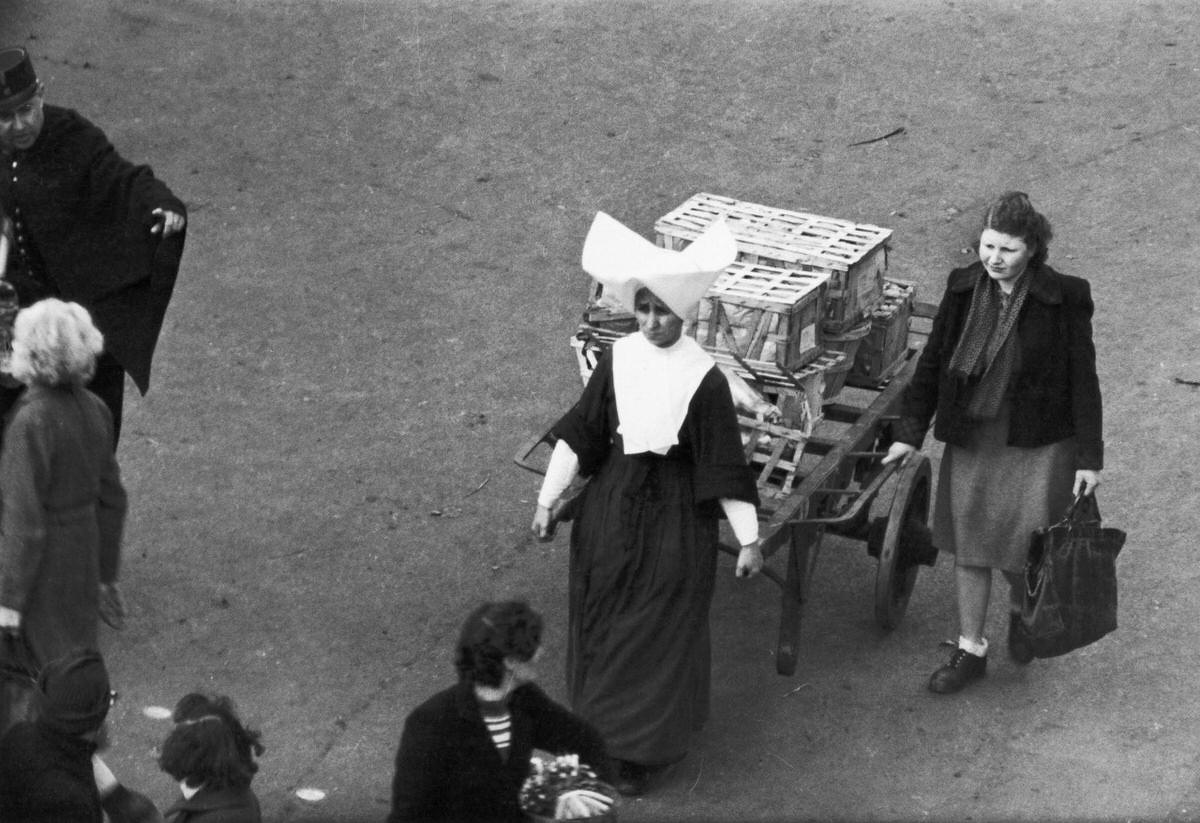
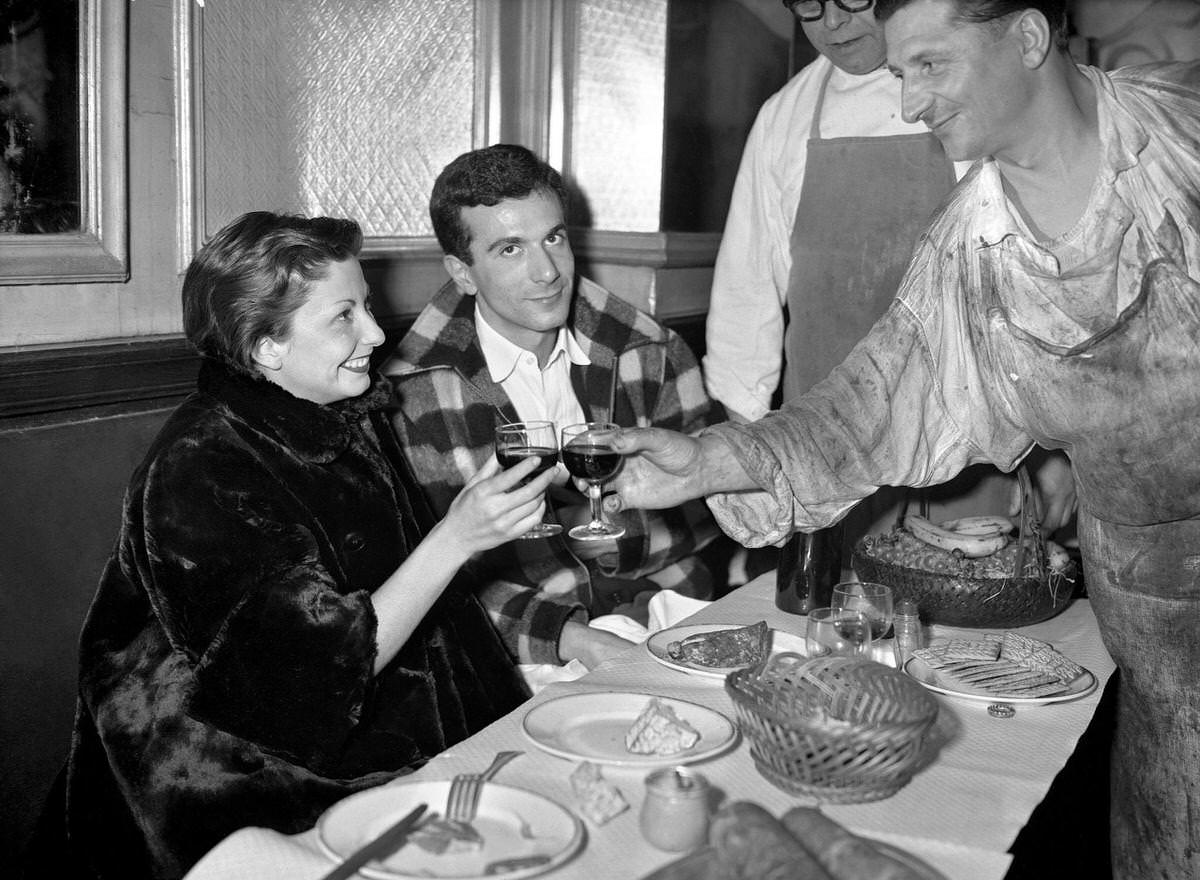
Les Halles attracted every type of person. Nuns from nearby convents came to buy provisions. Restaurant owners arrived early to select the best cuts before the best stock was gone. Celebrities occasionally passed through. French dancer Zizi Jeanmaire was photographed there with her husband in 1952 — her presence in a working wholesale market reflecting just how central Les Halles was to Parisian life, not just as a supply chain but as a genuine social space.
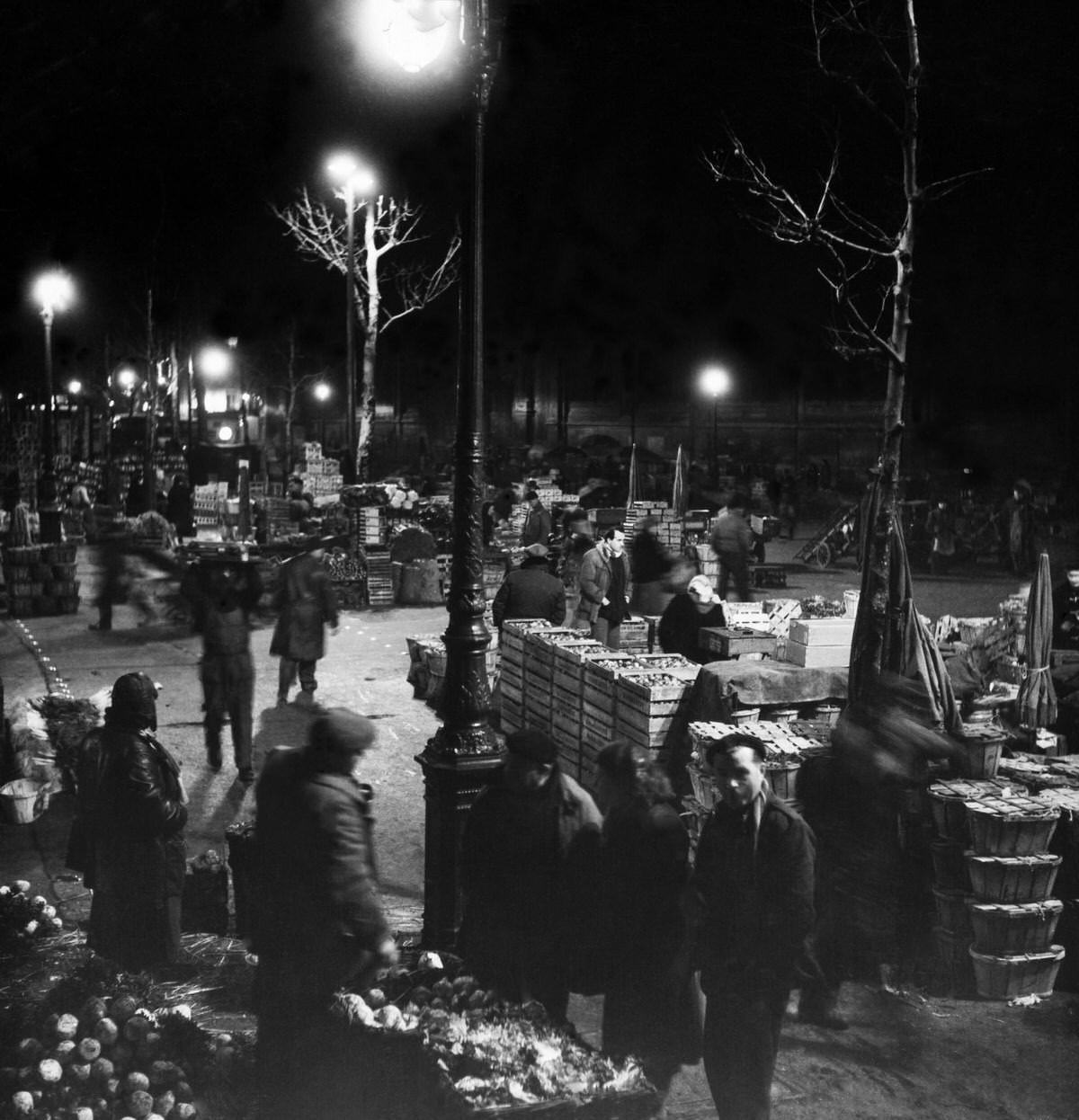
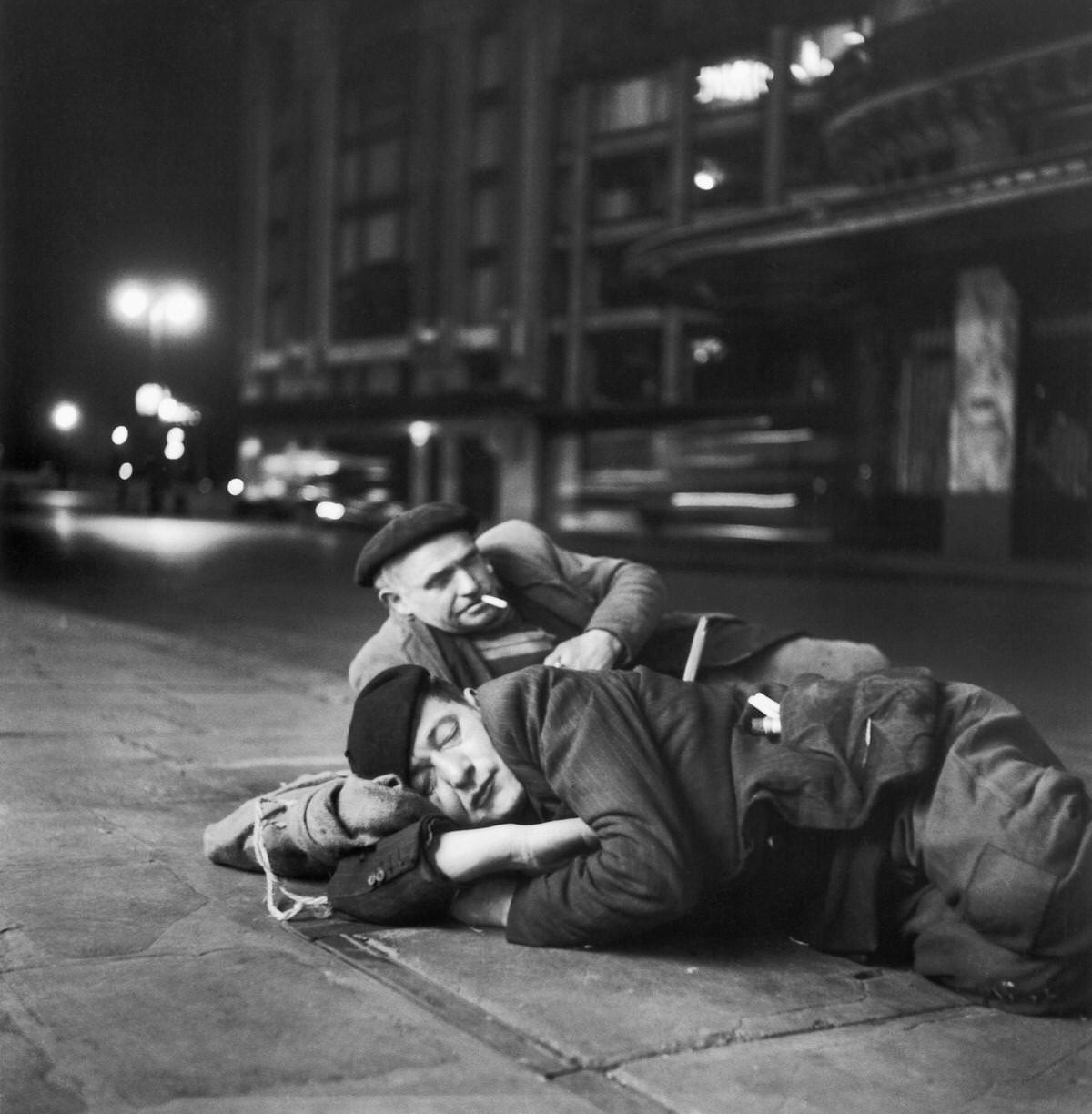
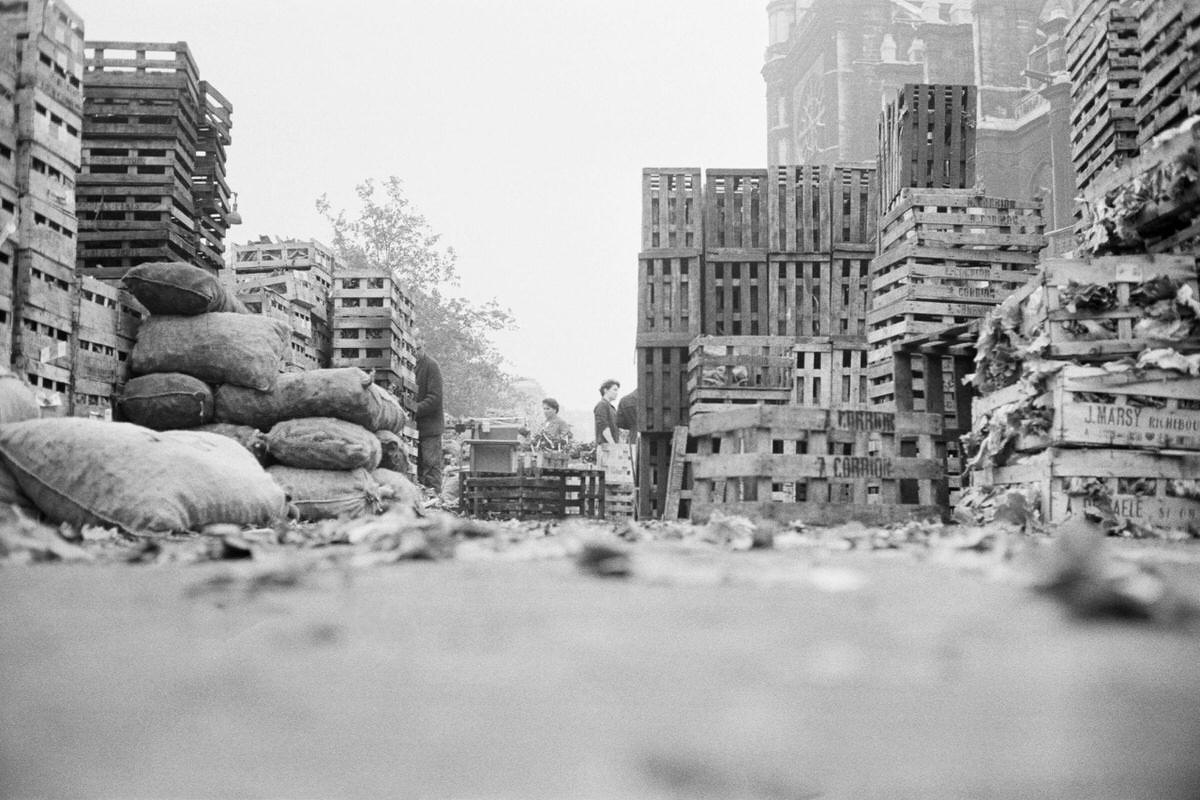
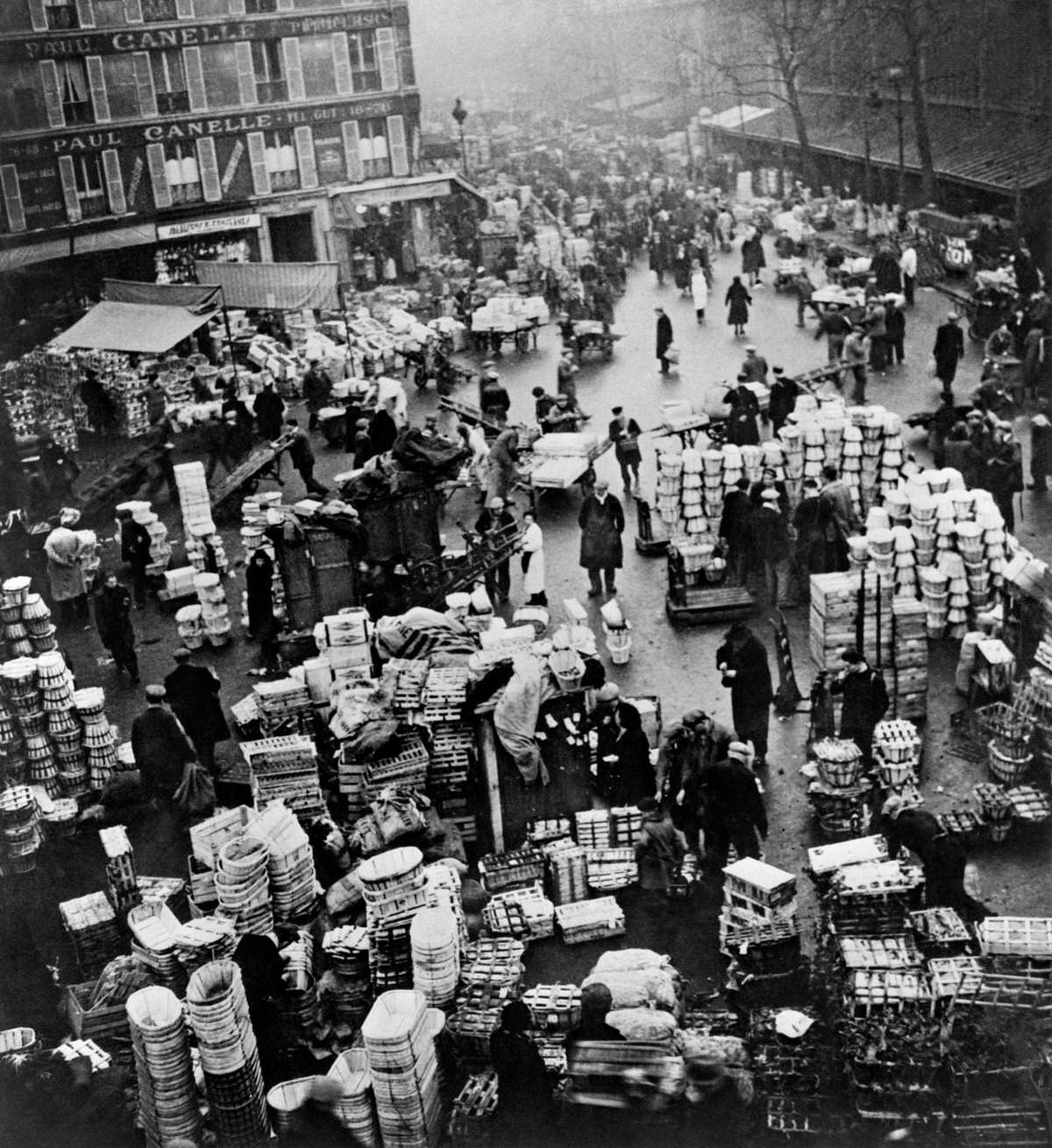
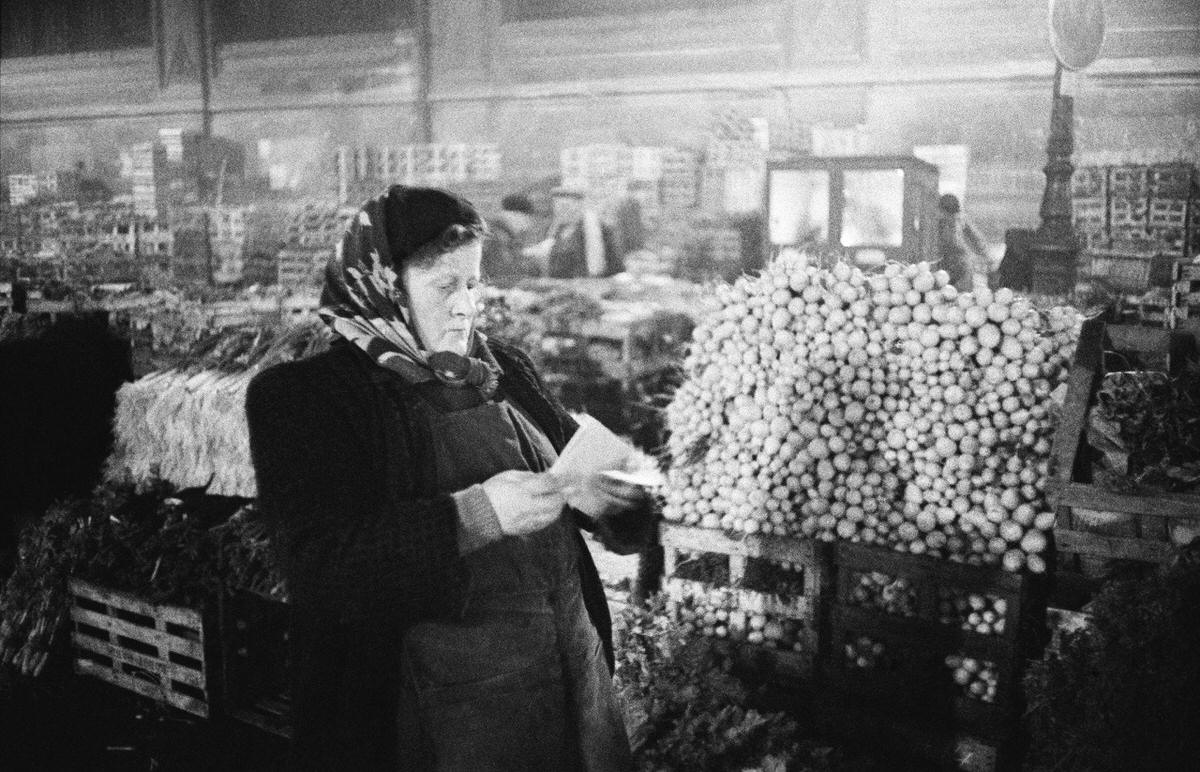
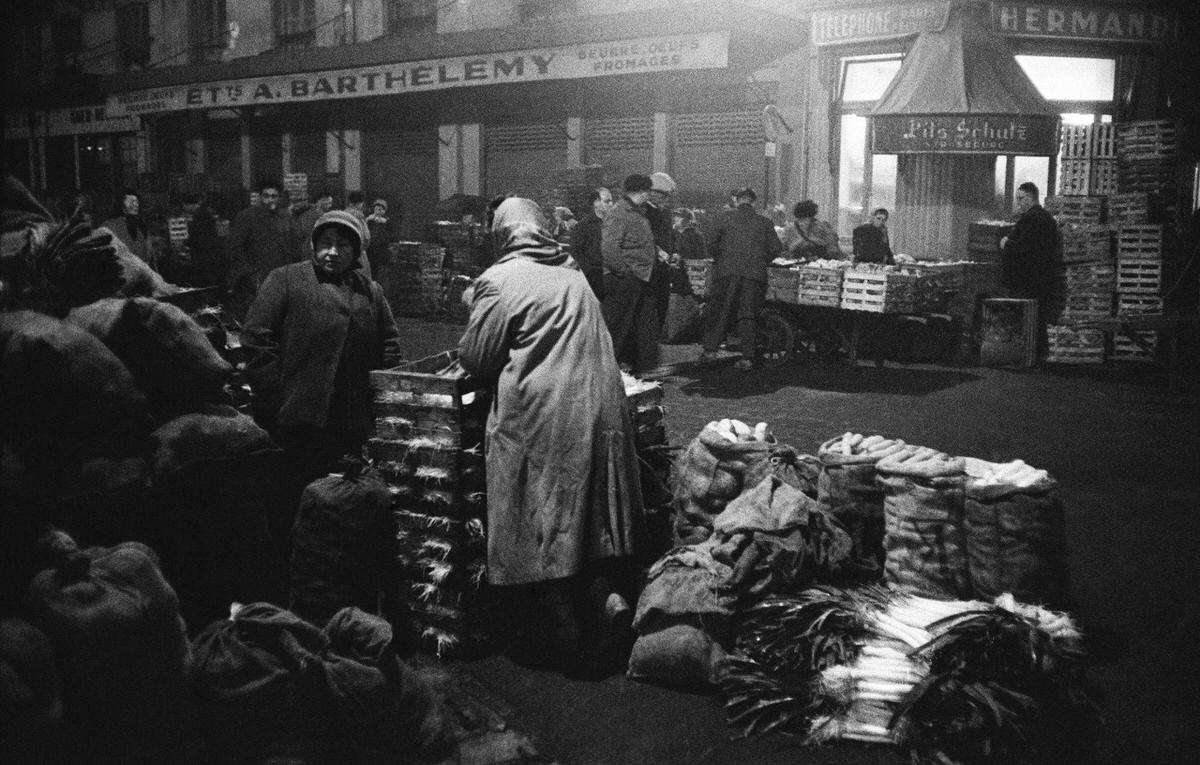
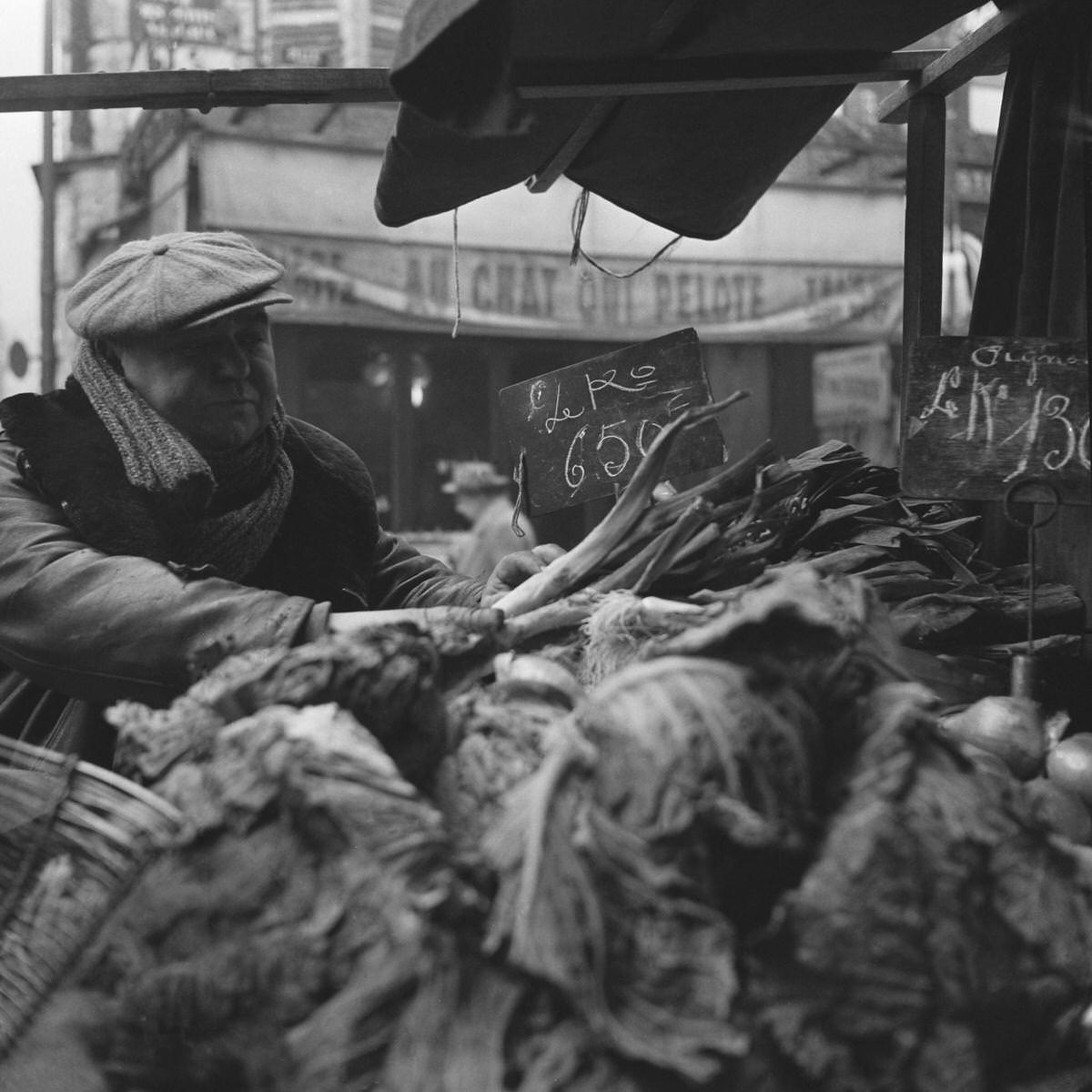
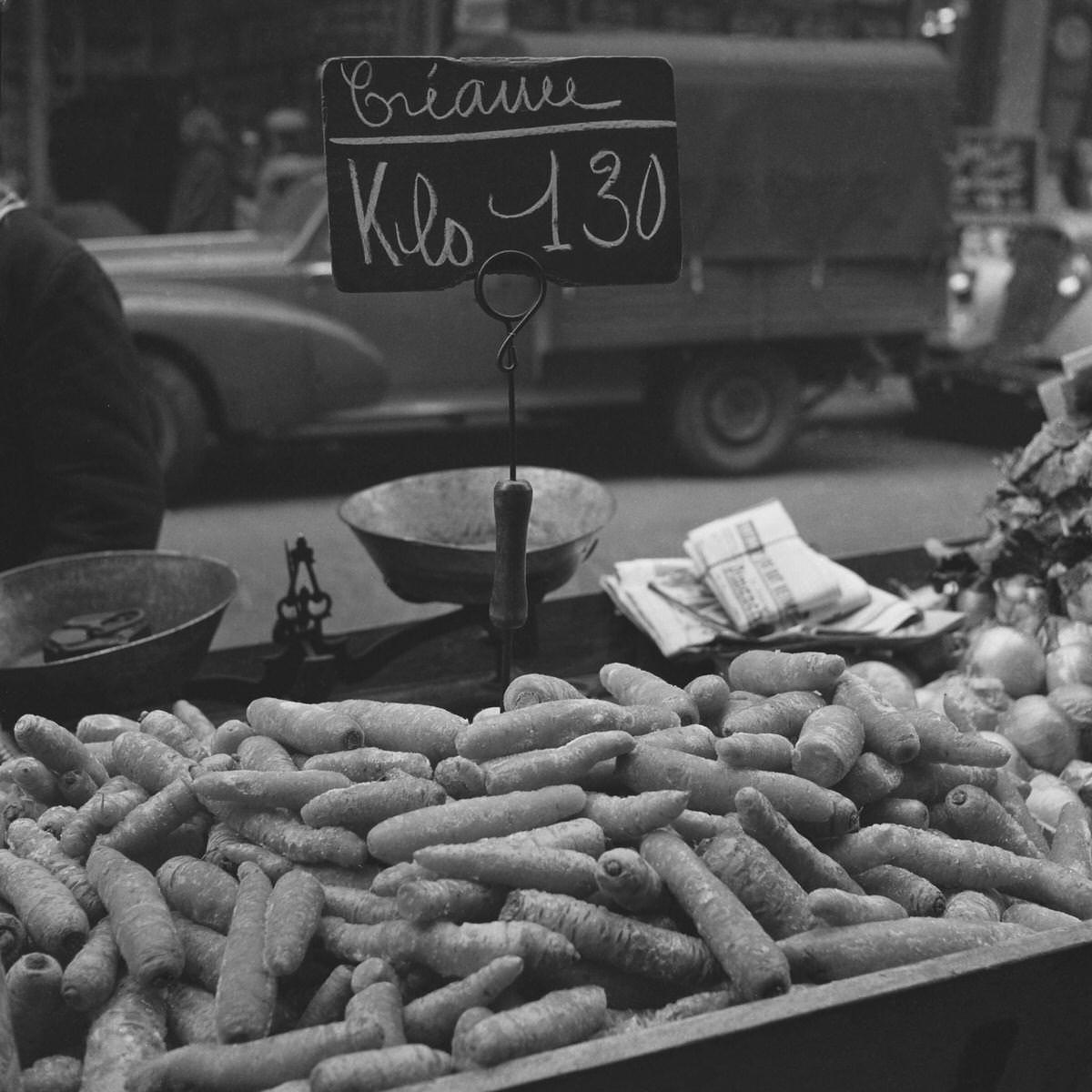
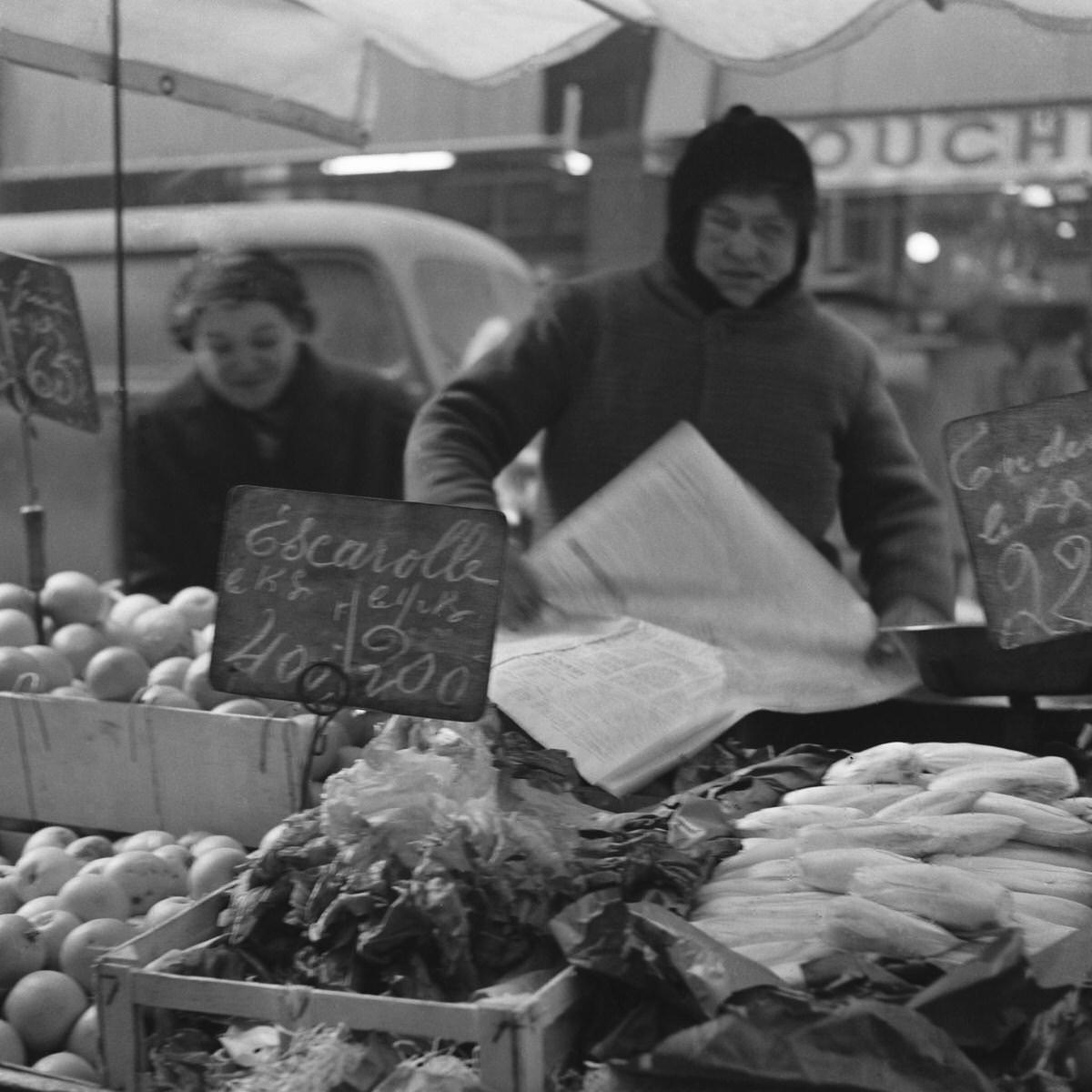
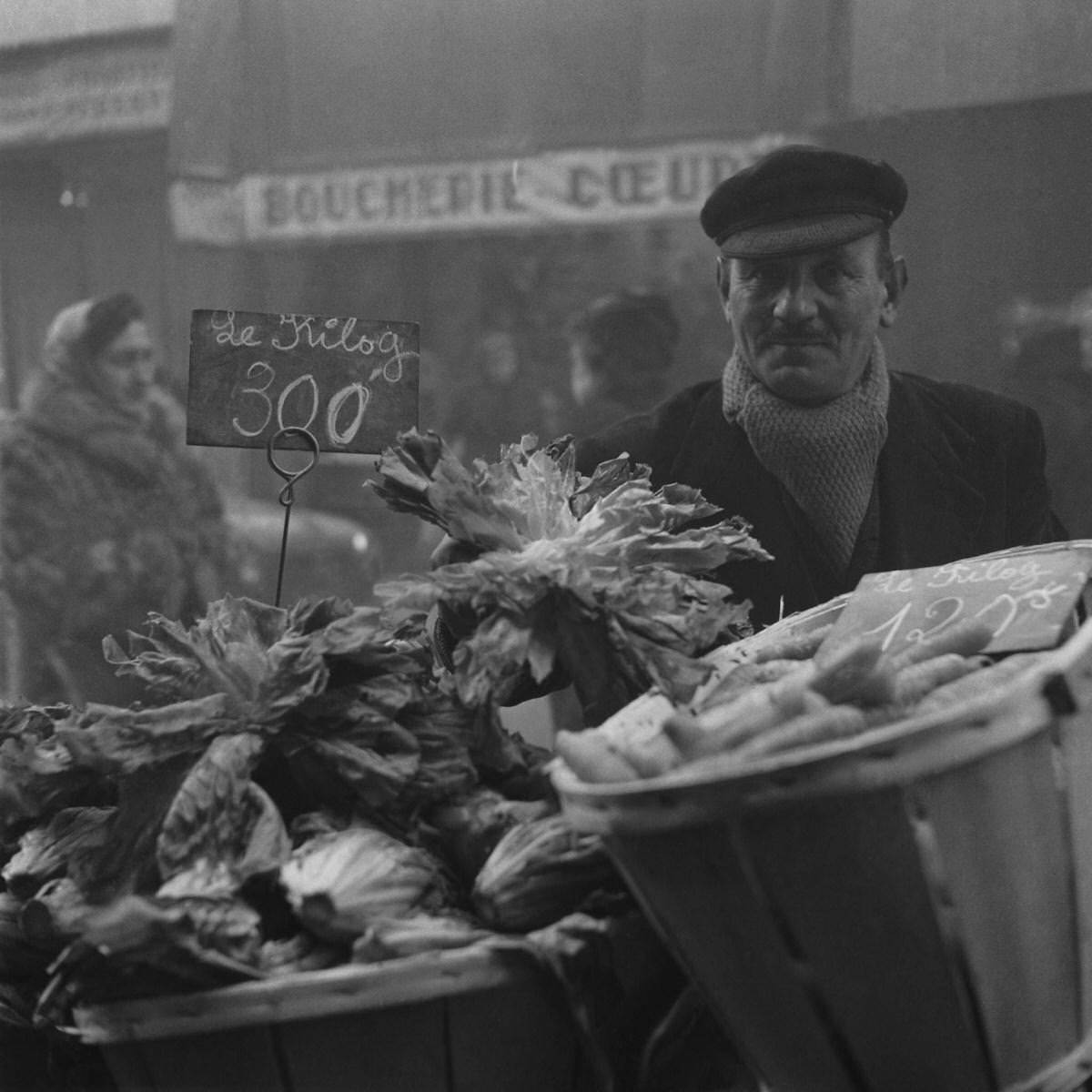
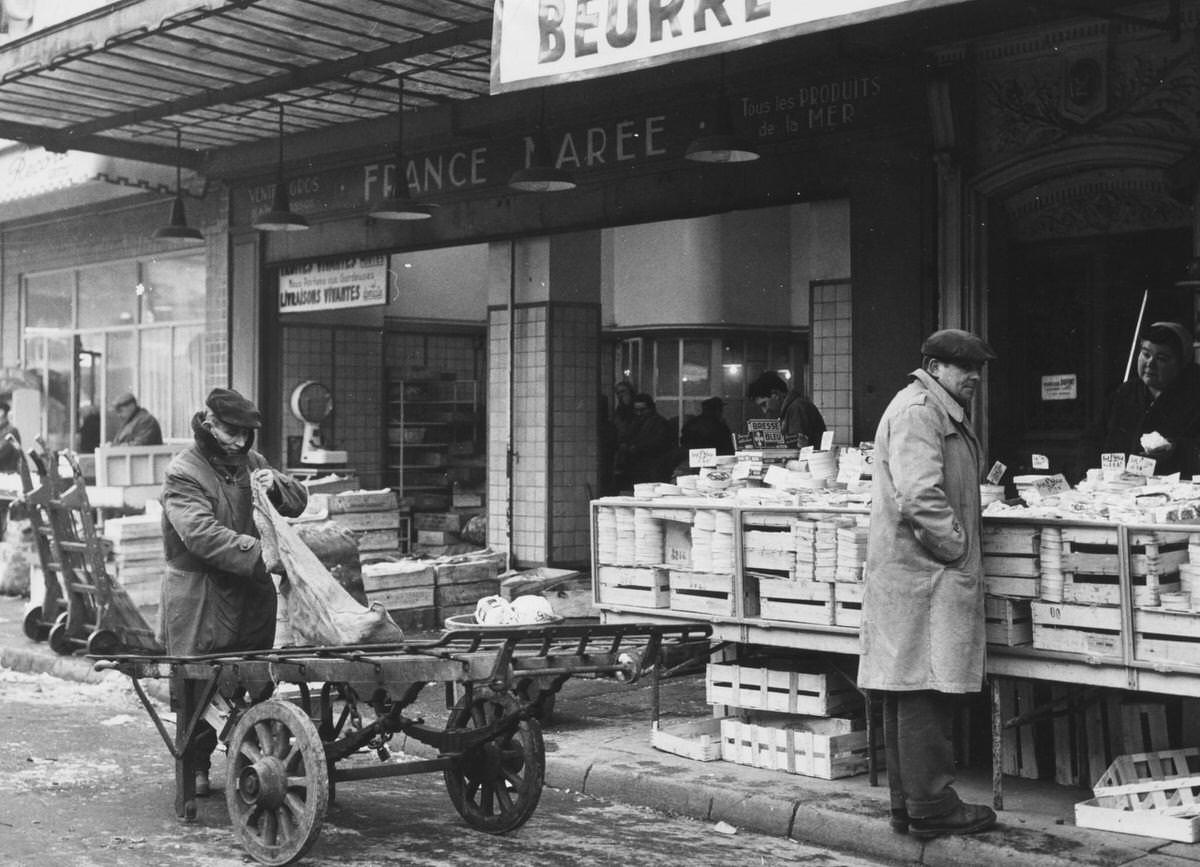
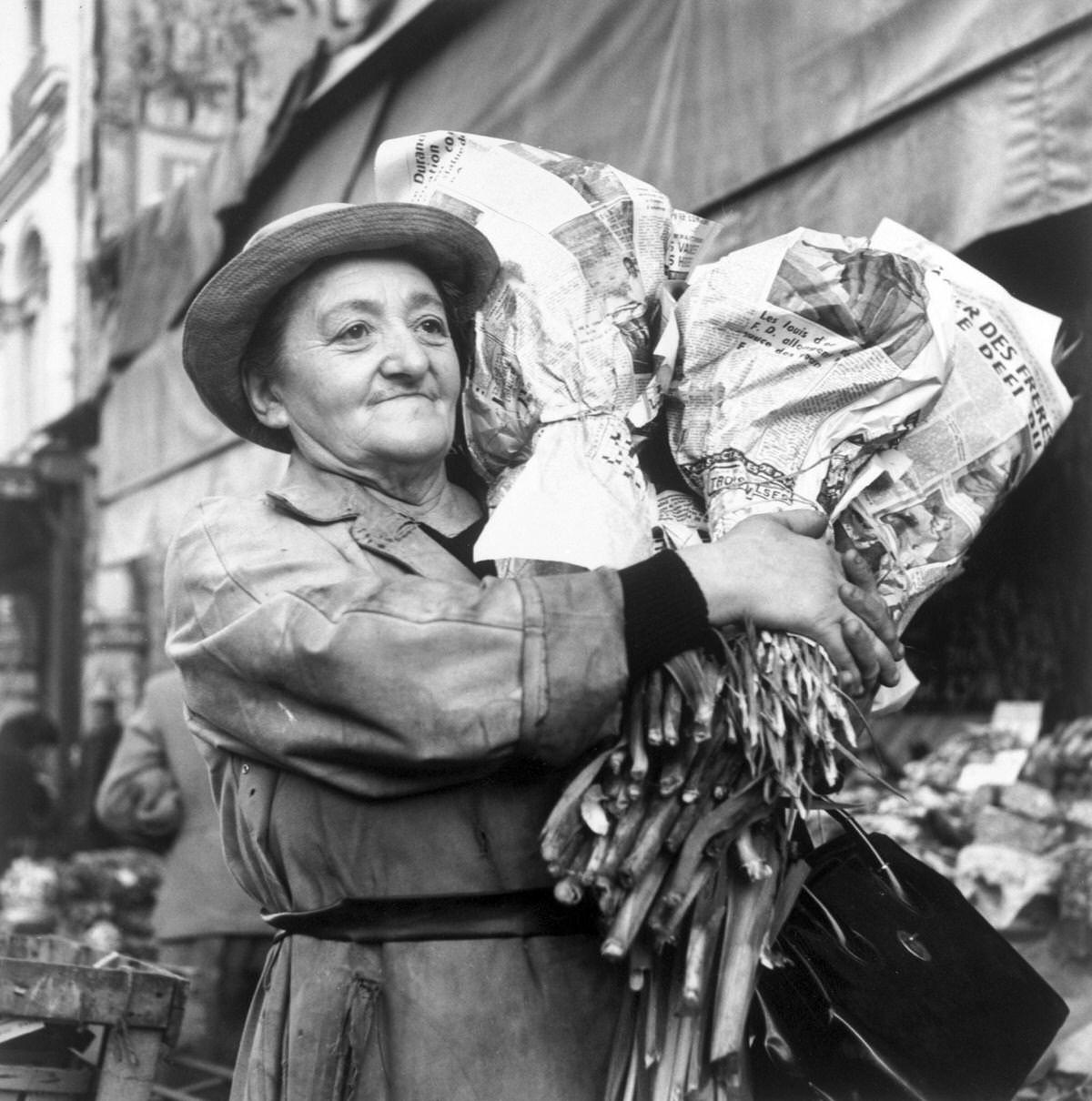
The greengrocers’ section was colorful and densely packed. Workers stacked leeks, cabbages, carrots, and root vegetables in massive quantities. In 1950, photographers documented the stalls and their workers in detail — the arrangement of produce, the clothing of the vendors, and the physical effort of moving goods all captured at a moment when the market was still operating exactly as it had for generations.

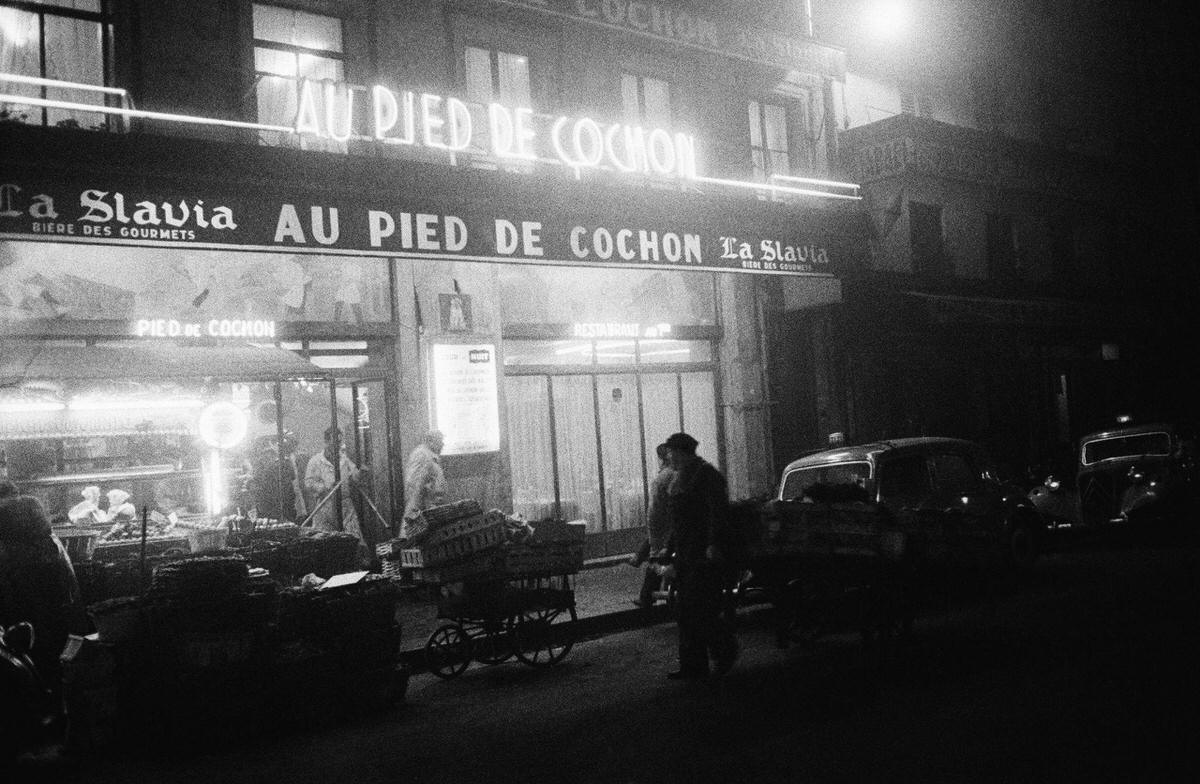
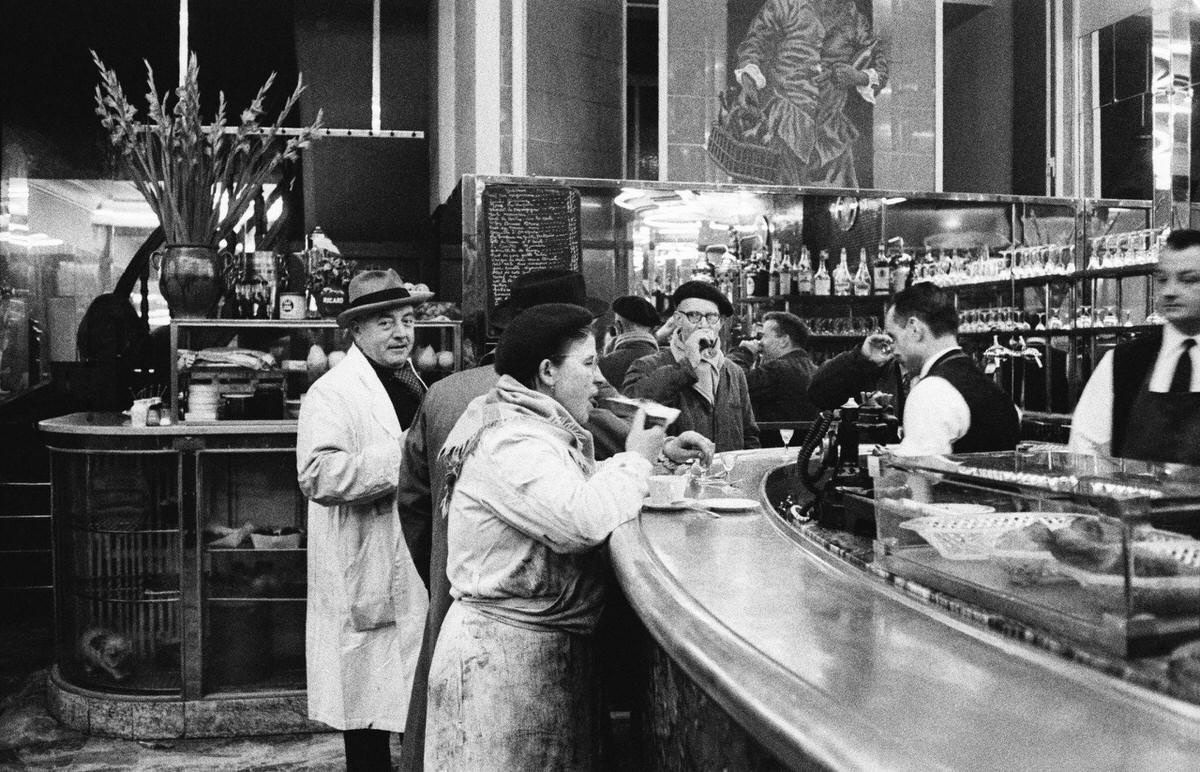
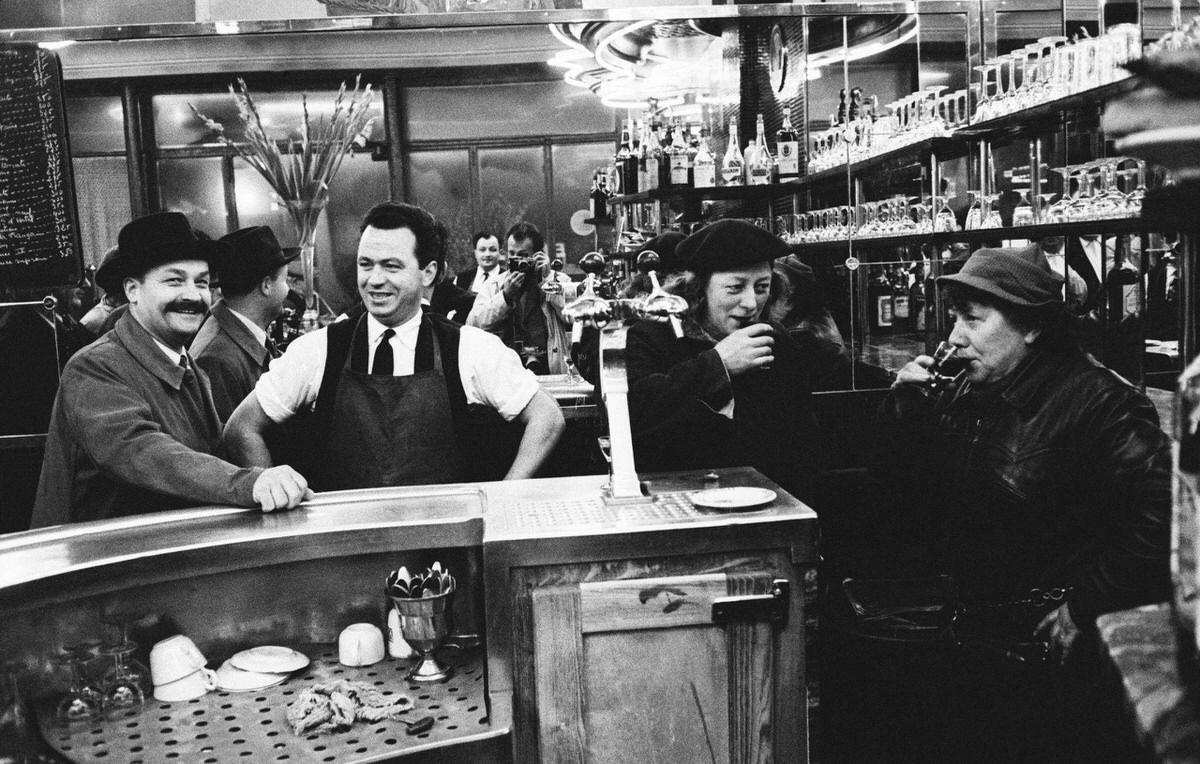
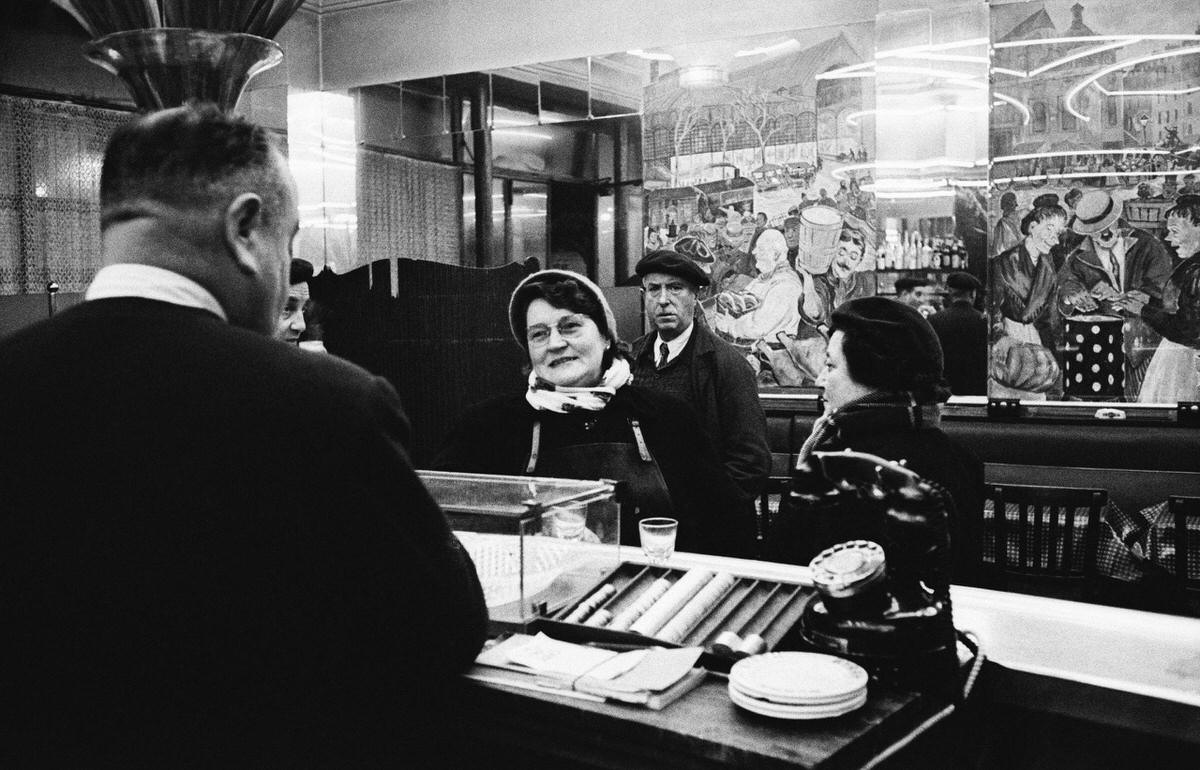
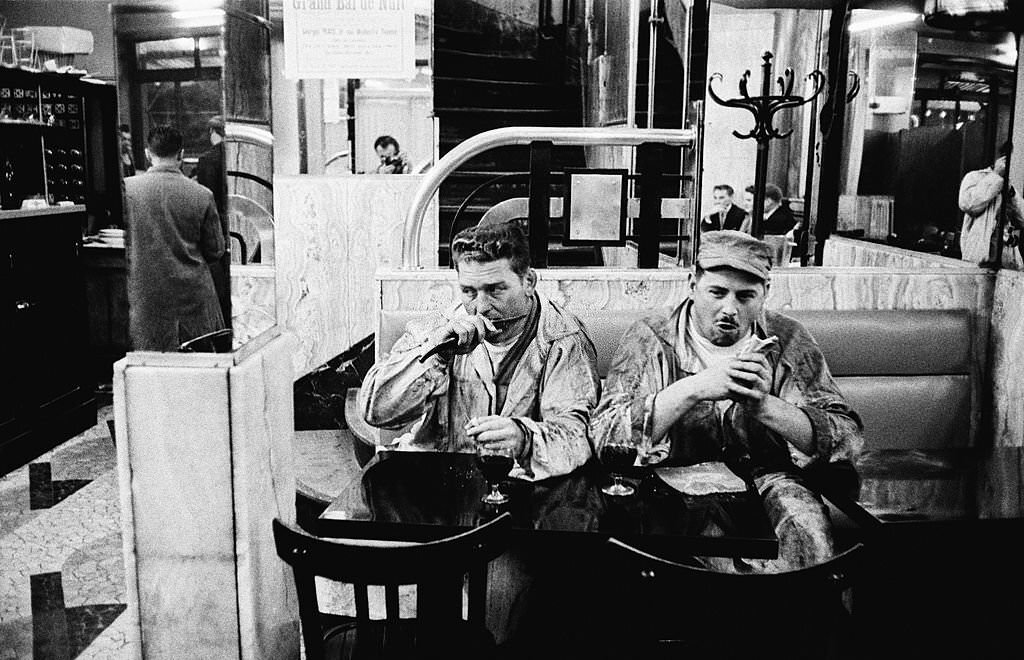
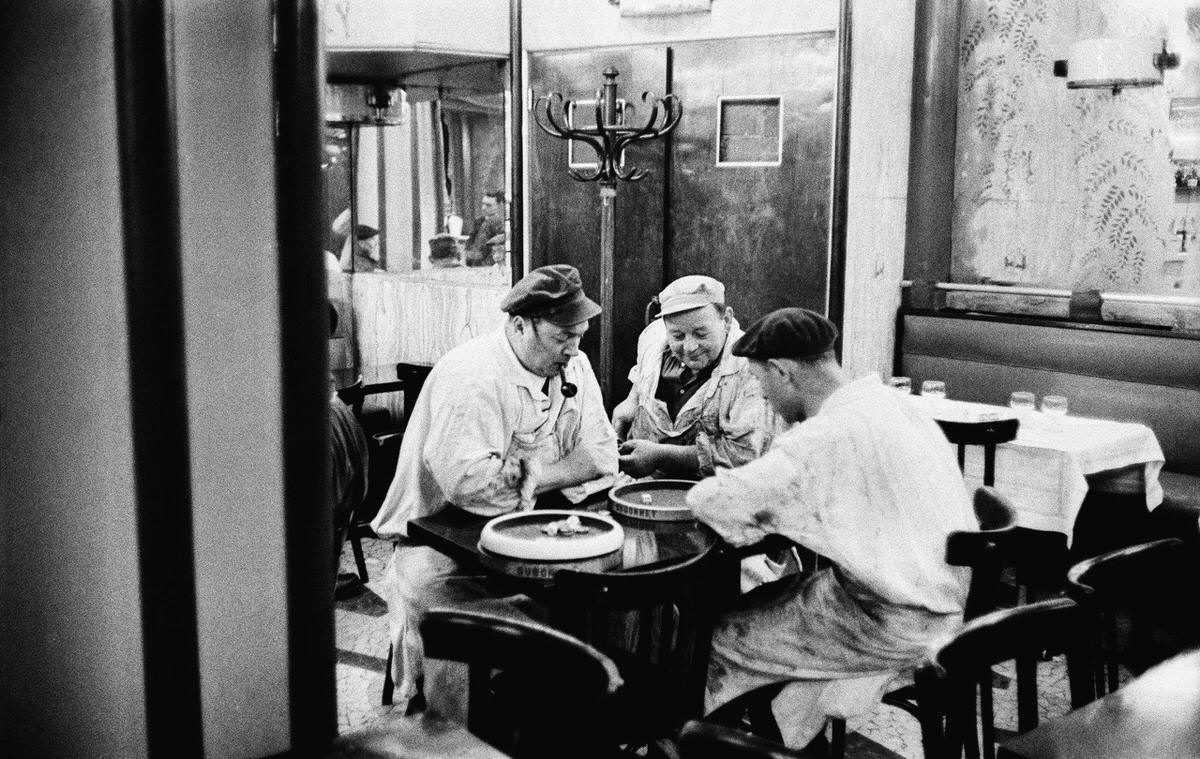
When the work was done, butchers and porters retreated to the cafés and bars of the district. These establishments kept hours that matched the market — open through the night and into the morning. Butchers ate lunch together after finishing shifts that began before midnight, played dice at café tables, and filled the bars with conversation and cigarette smoke. The restaurant *Le Pied de Cochon* on Rue Coquillière was one of the most famous of these spots, serving onion soup and grilled pig’s trotters to workers and late-night visitors alike.
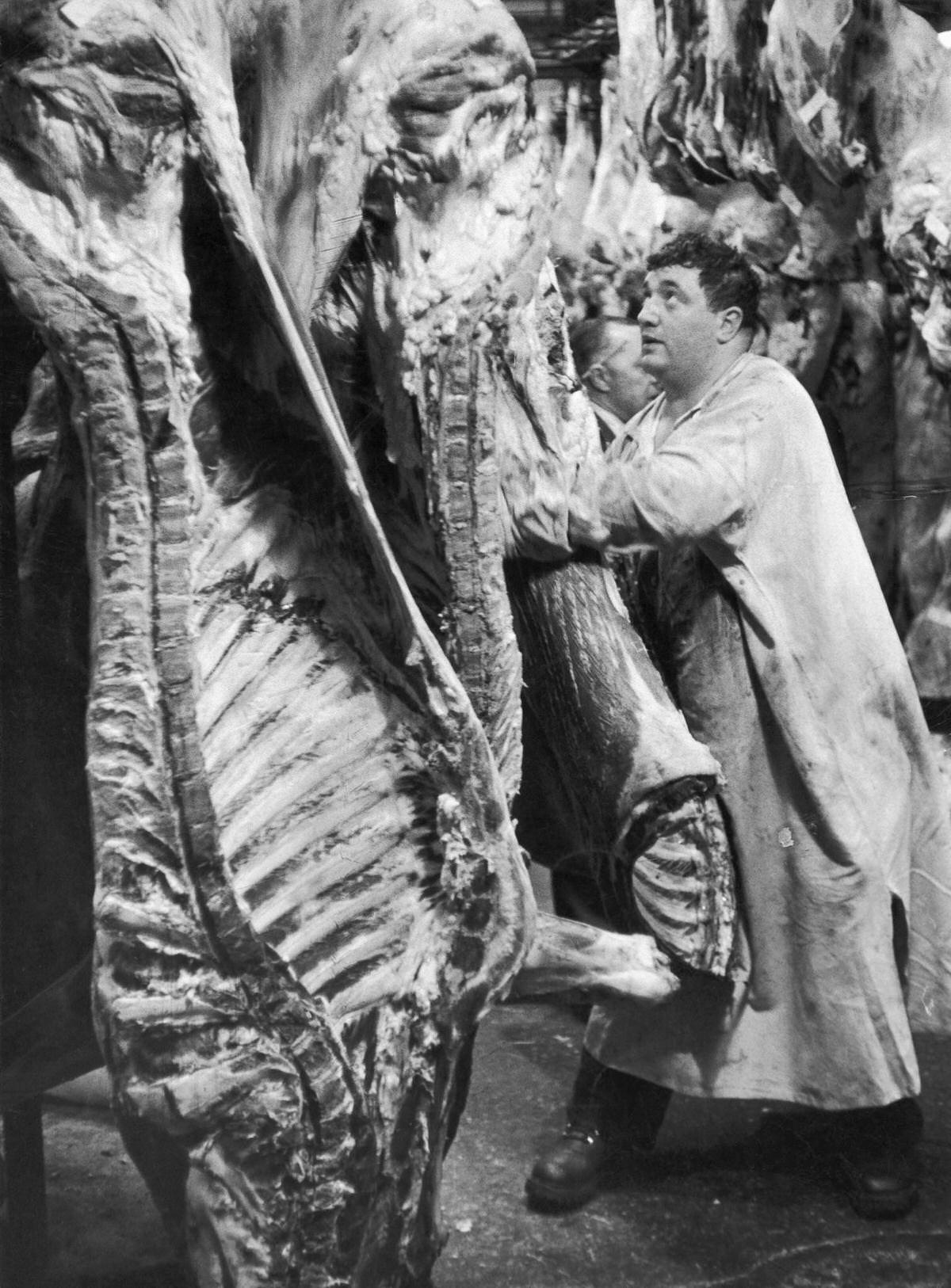
The butchers of Les Halles were a distinct professional class within the market. They wore white coats stained with the morning’s work and moved through the pavilions with the confidence of men who knew exactly where everything was and who controlled what. Their work was skilled and fast. A full beef carcass arrived on a hook and left as individual cuts within minutes.
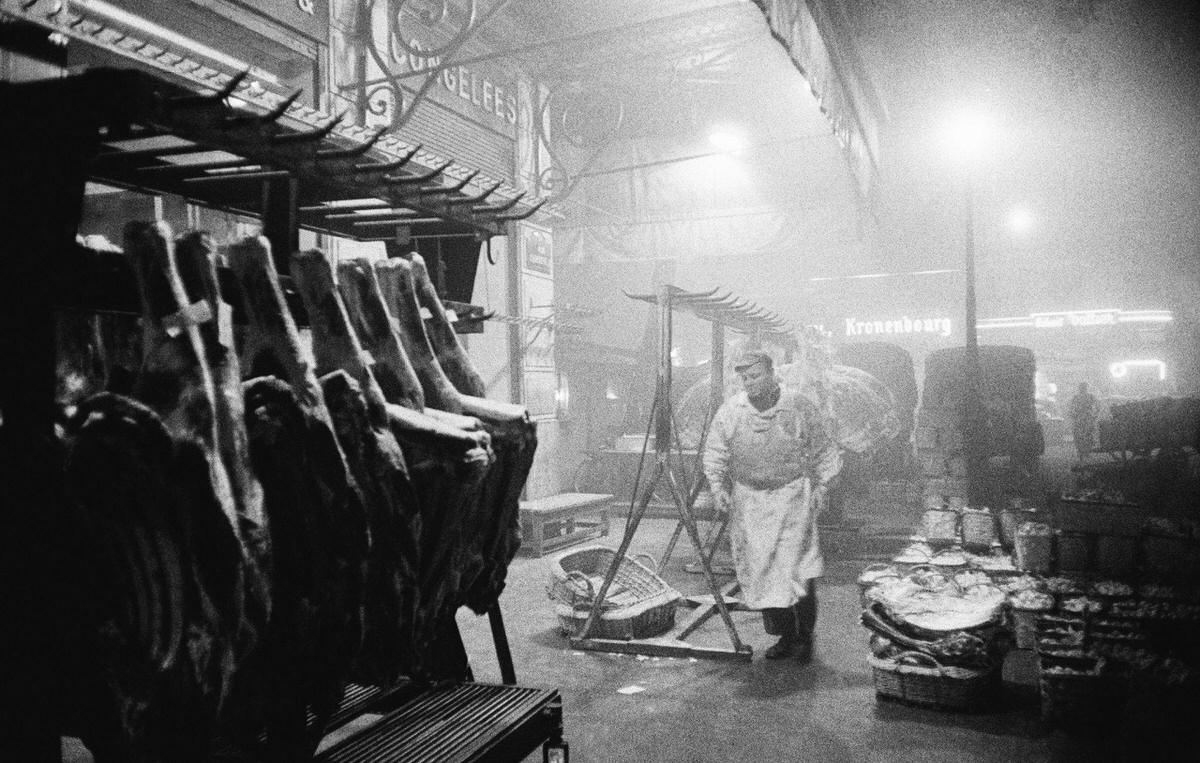
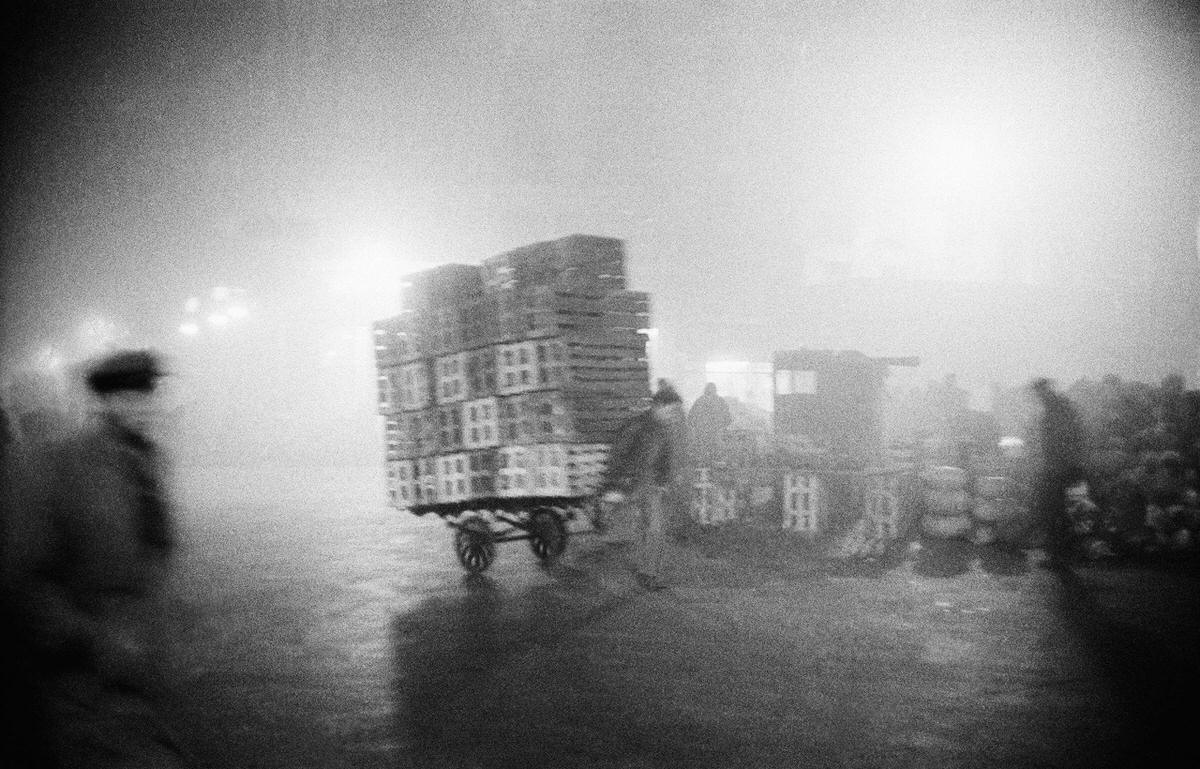
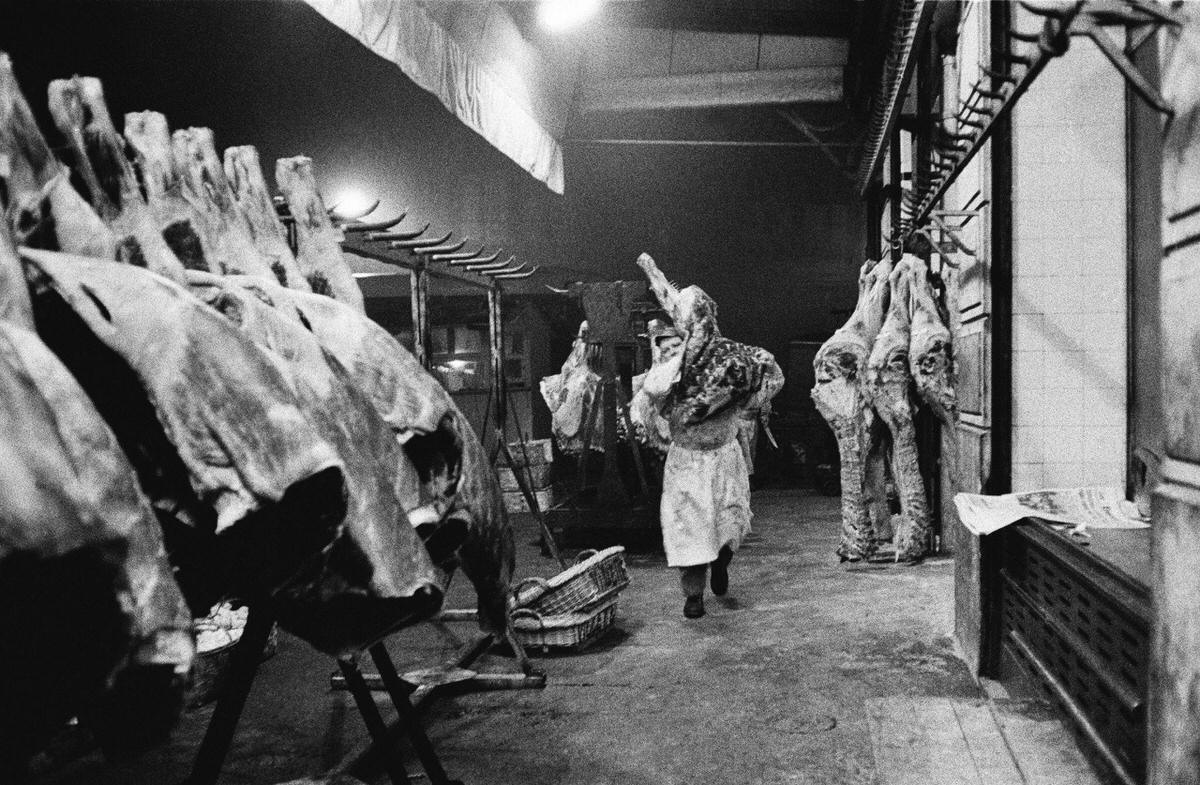
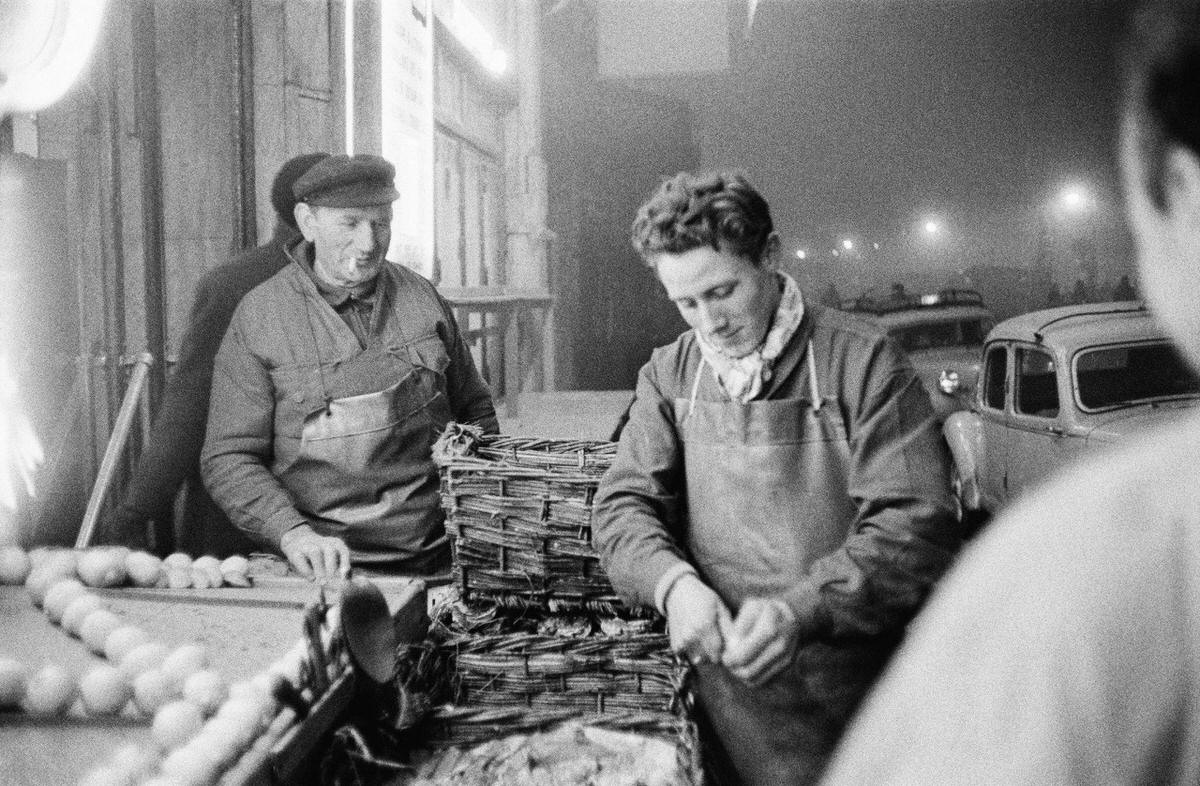
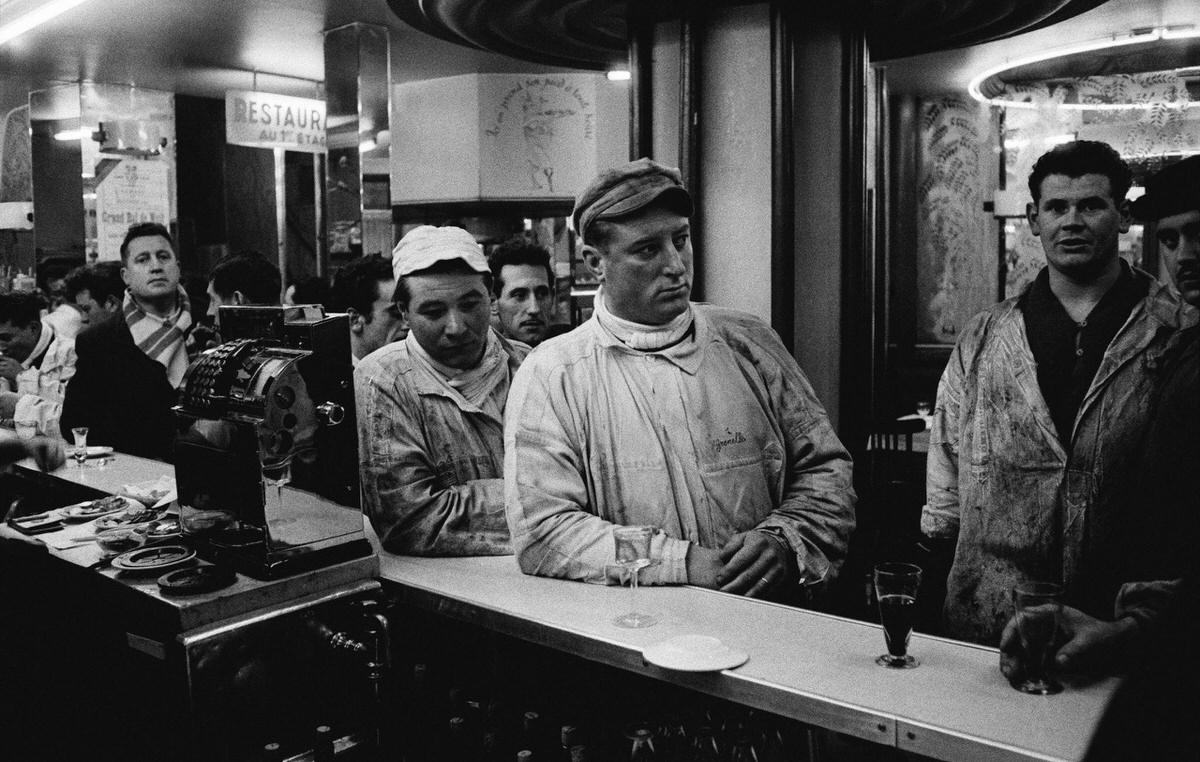
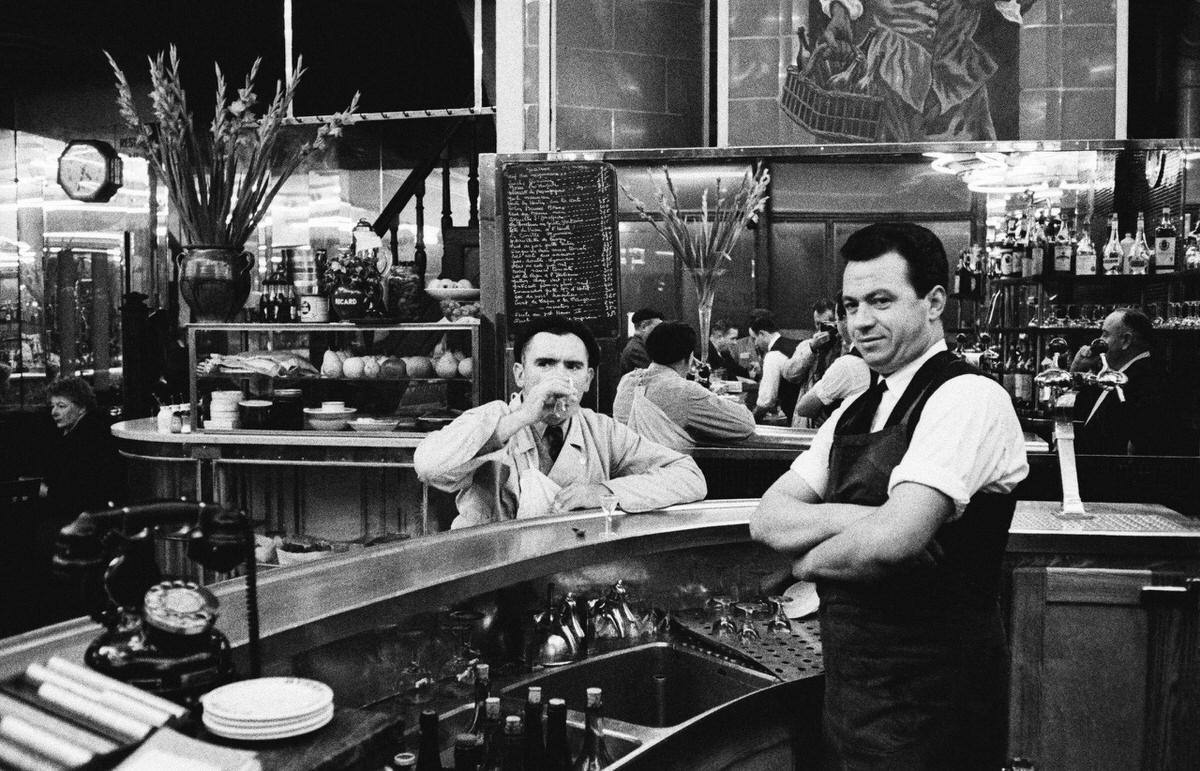
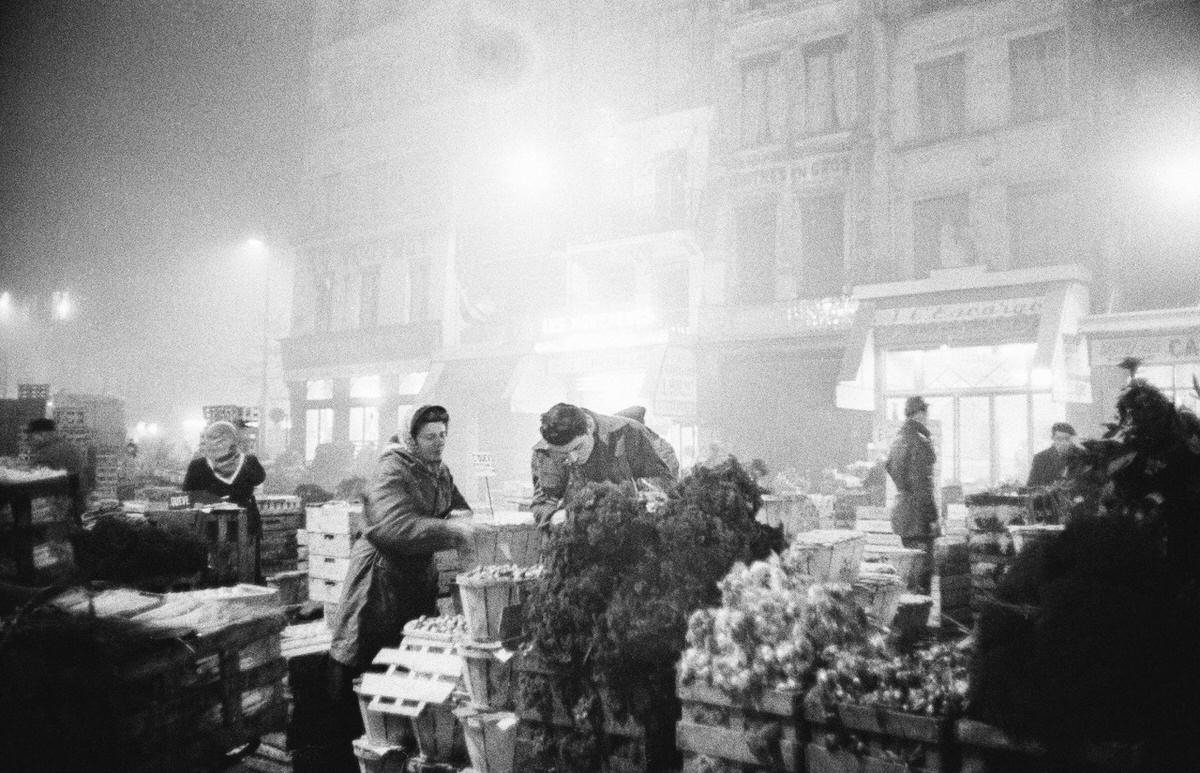
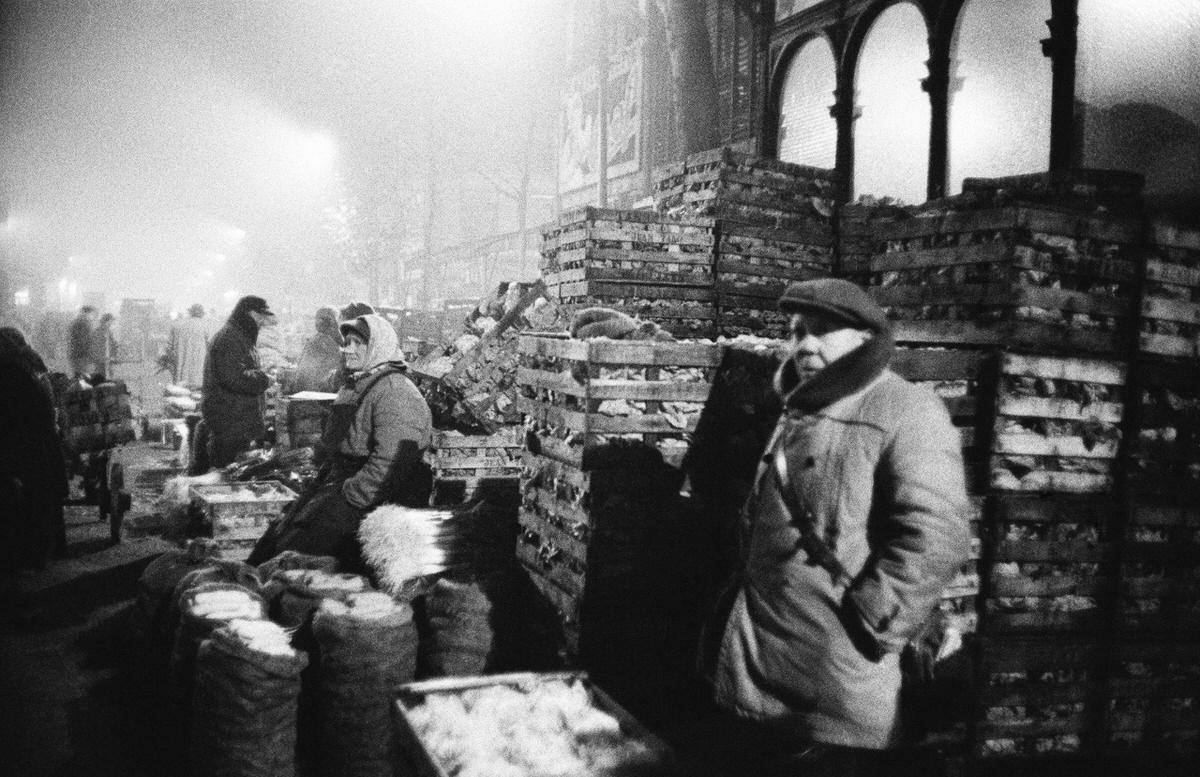
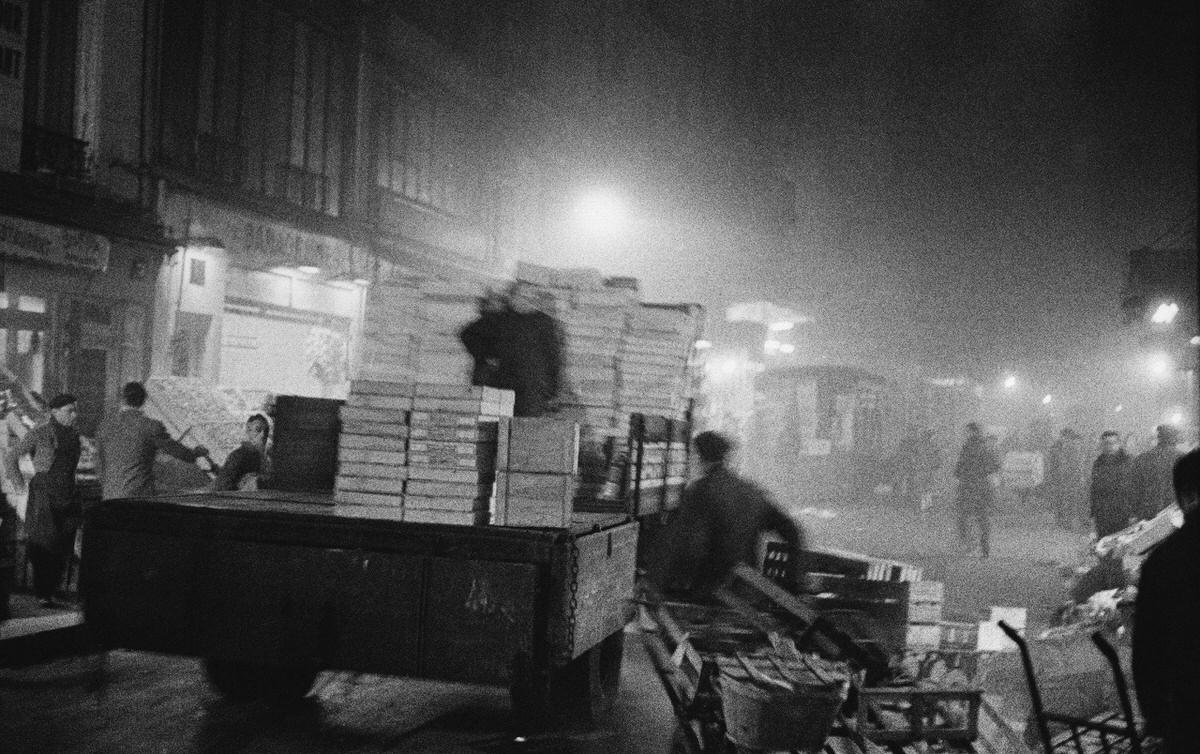
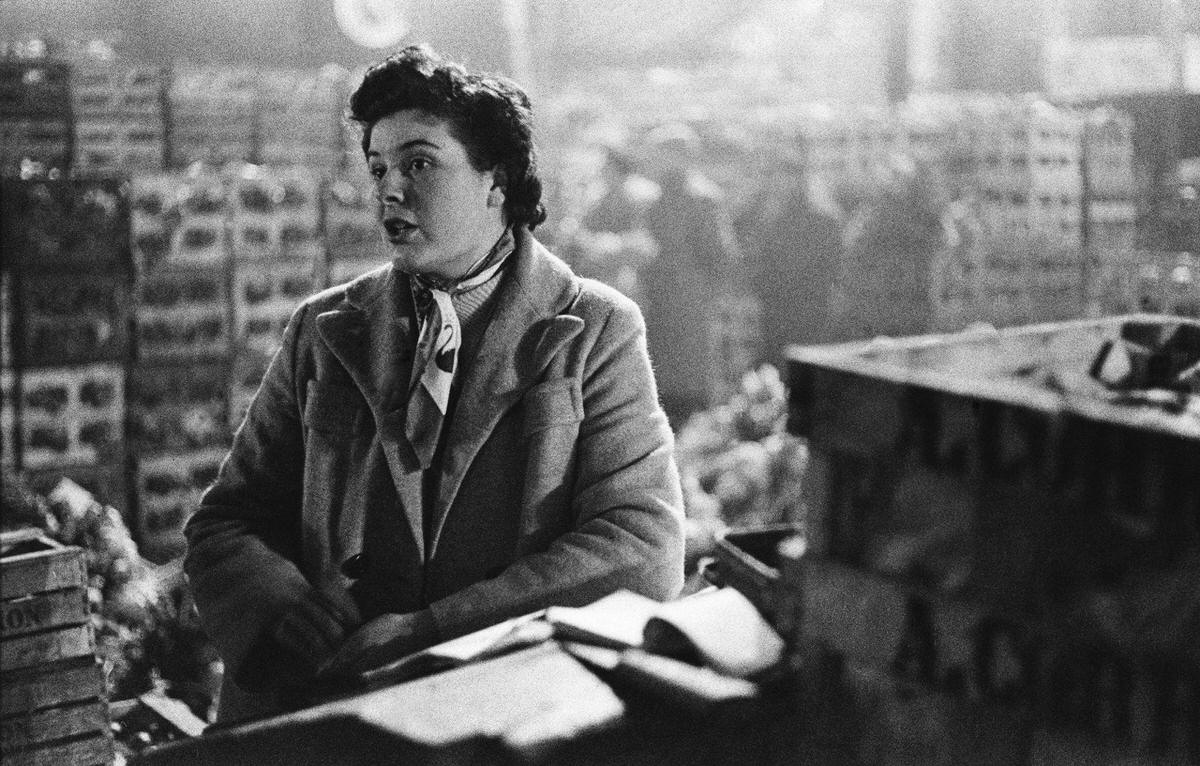
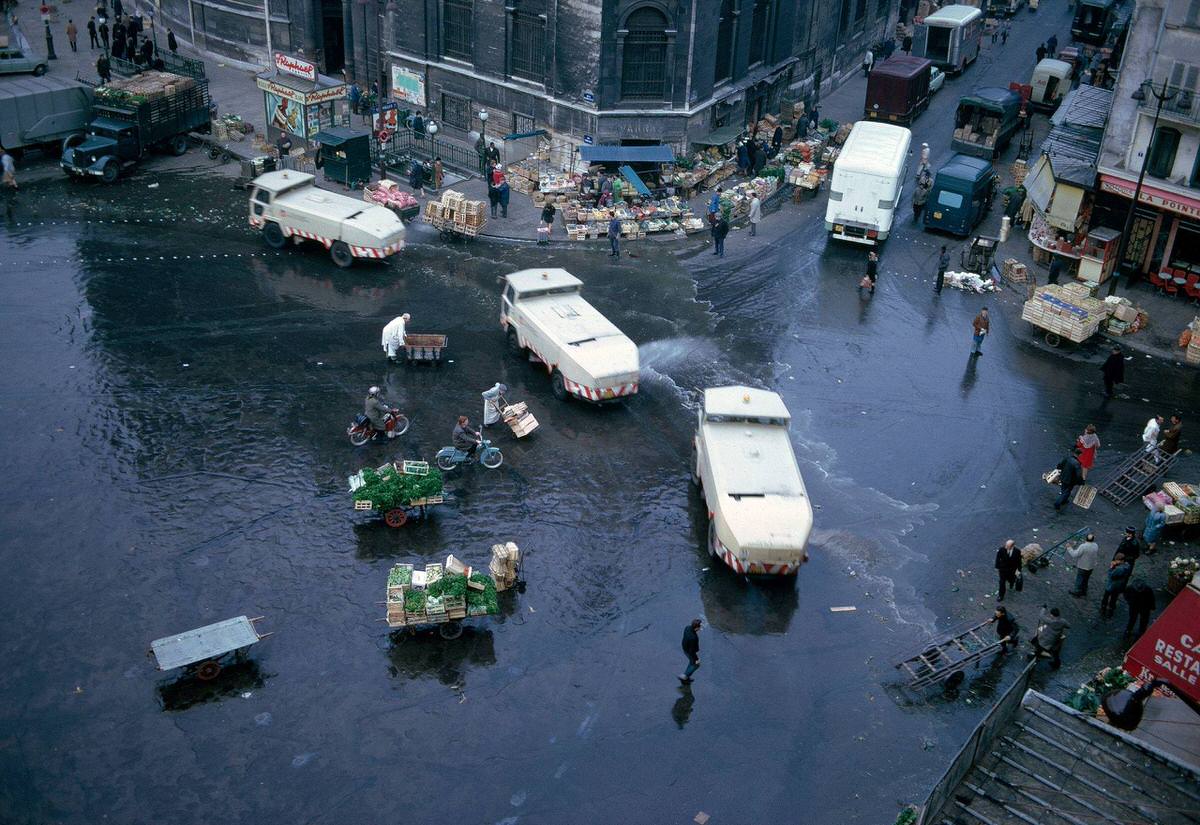
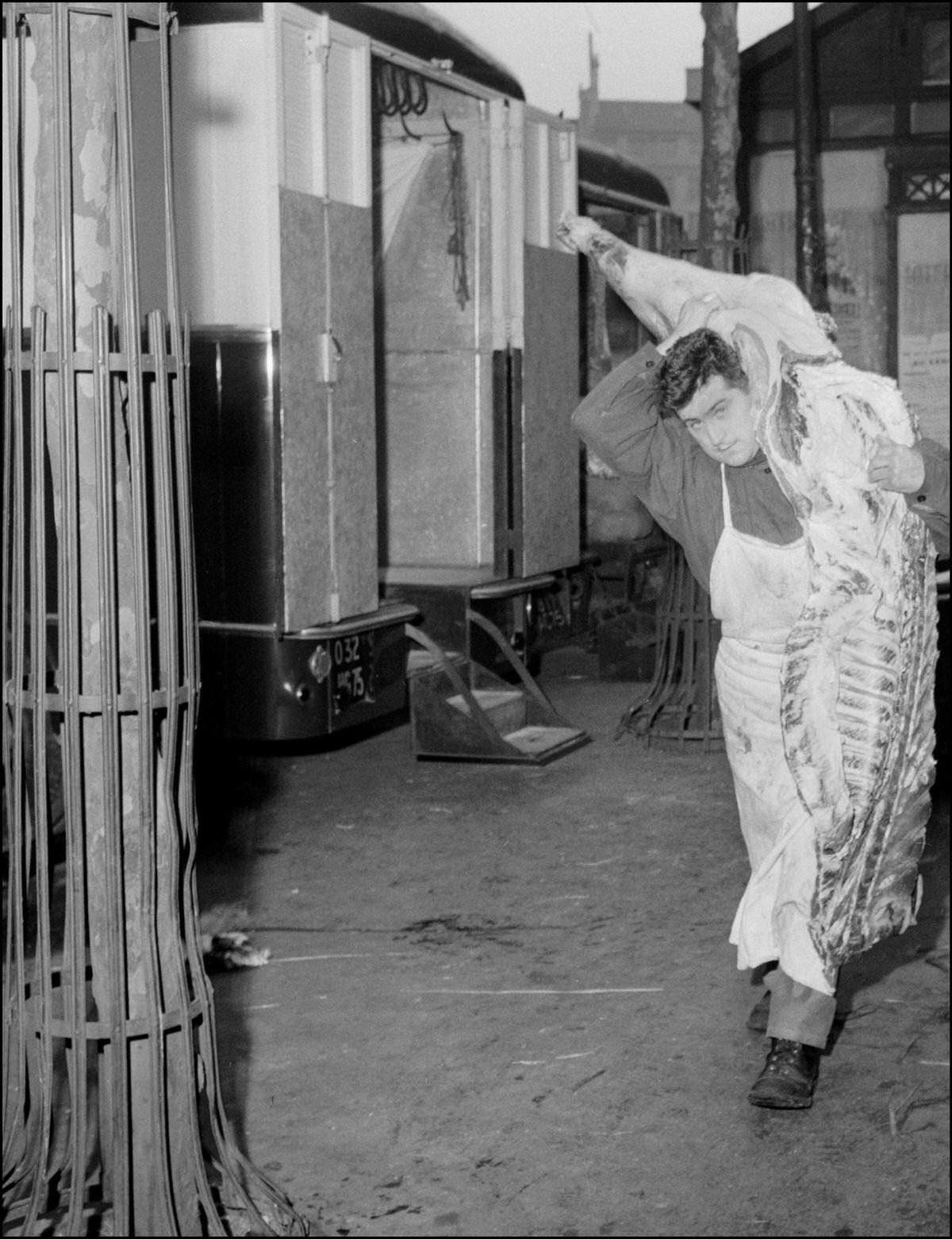
The market porters — the *Forts des Halles* — were among the most physically remarkable workers in the city. They carried sides of beef and other heavy loads on wooden frames strapped to their backs, often running between trucks and stalls. The role required enormous endurance and was passed down through tight-knit communities of workers who took considerable pride in the title.
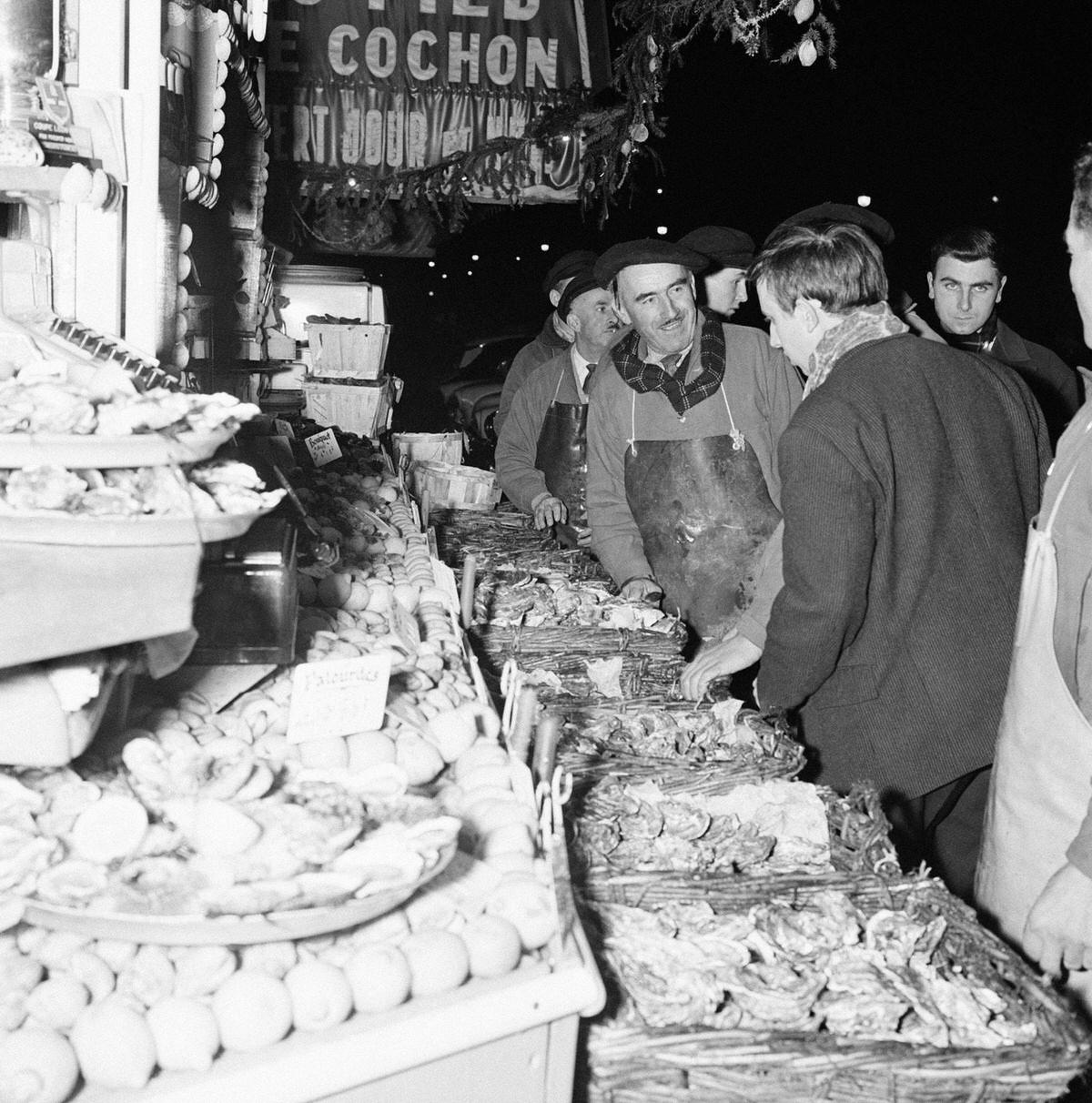
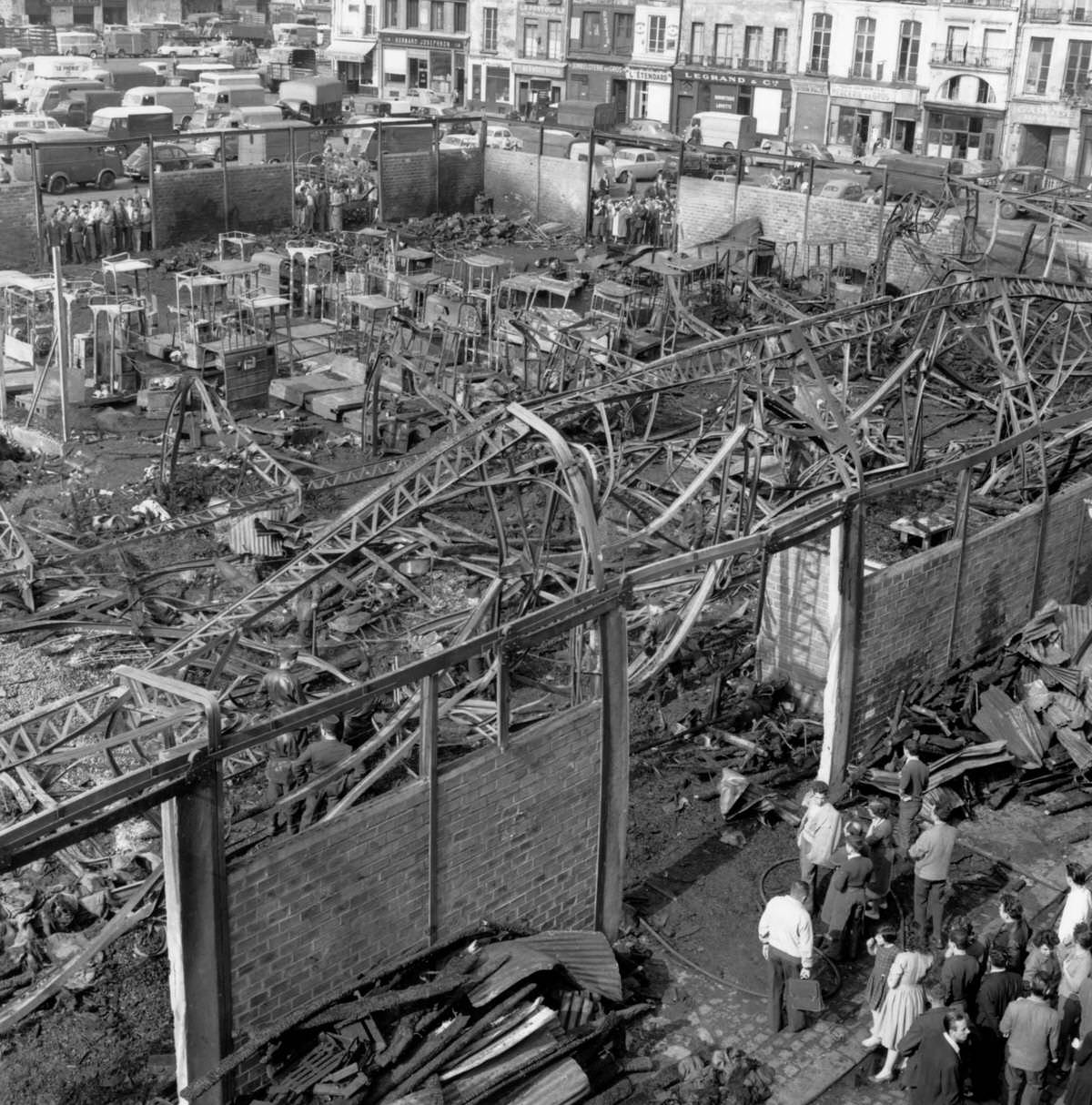
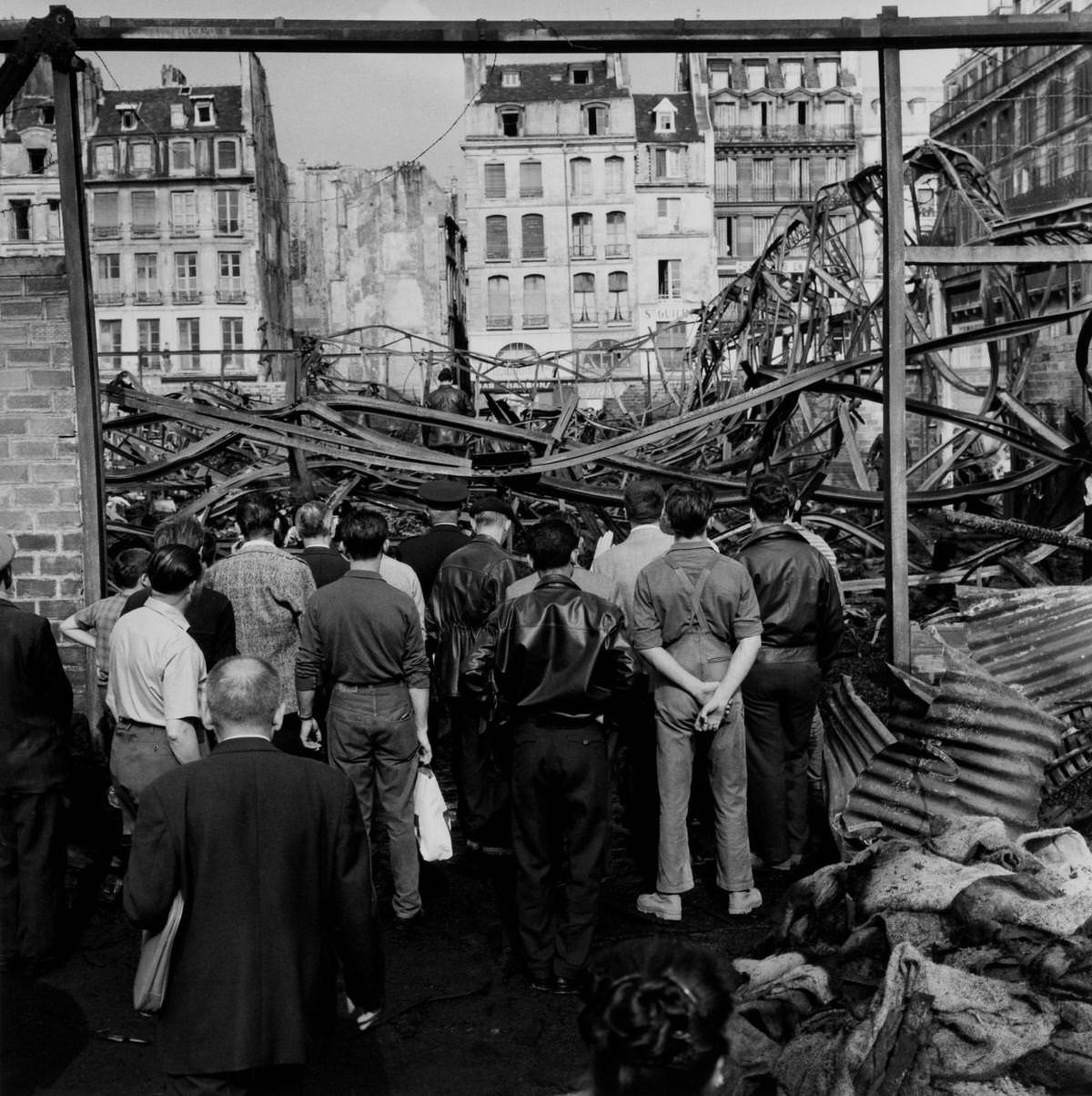
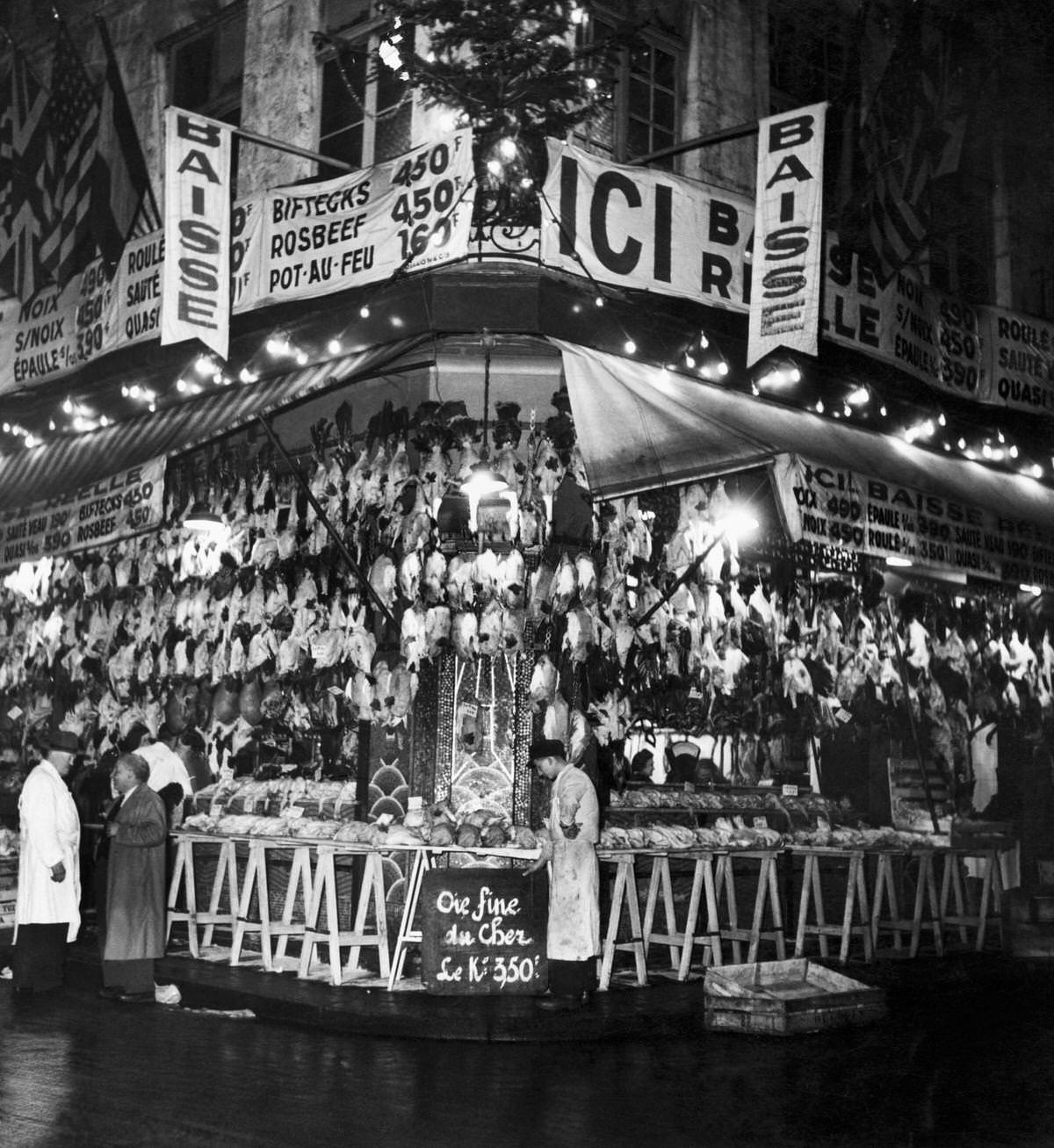
New Year’s Eve was one of the busiest nights of the year at Les Halles. In December 1959, crowds pushed through the surrounding streets hunting for poultry, foie gras, and oysters. Restaurant owners competed with home cooks for the best stock, and the market hummed with unusual intensity even by its own standards. The same year, a warehouse fire struck part of the district, leaving damage that was photographed extensively in the aftermath.
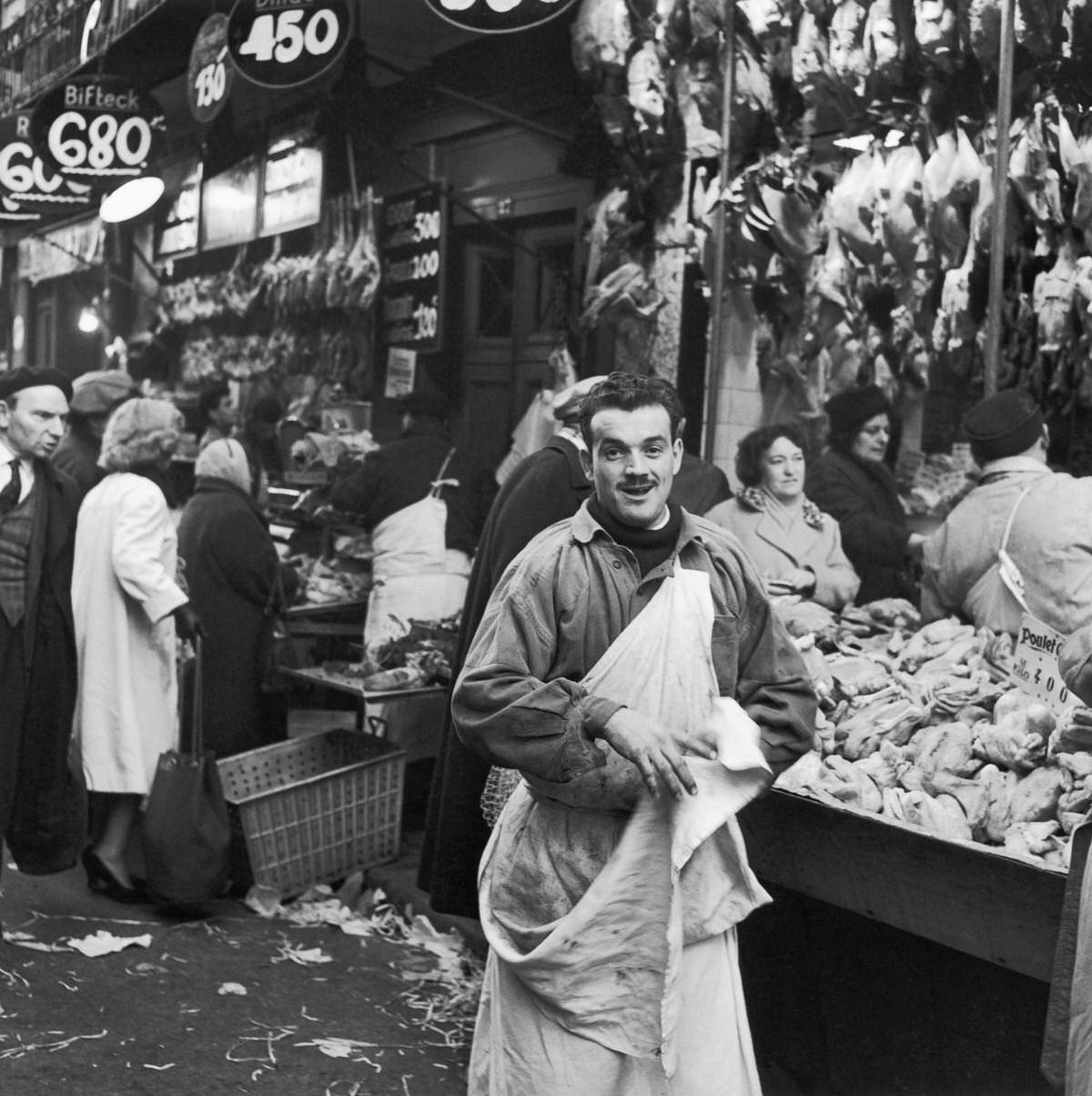
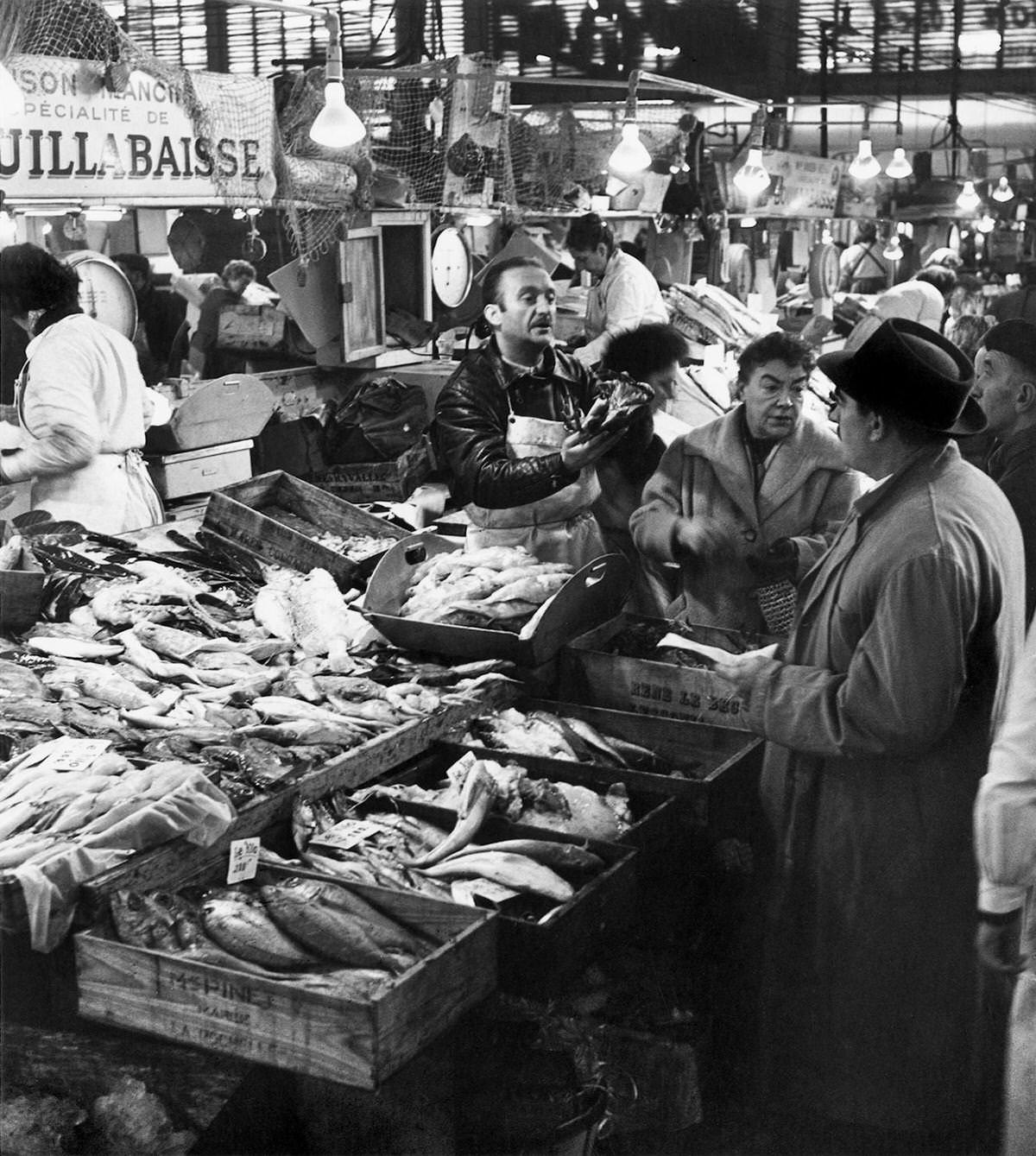
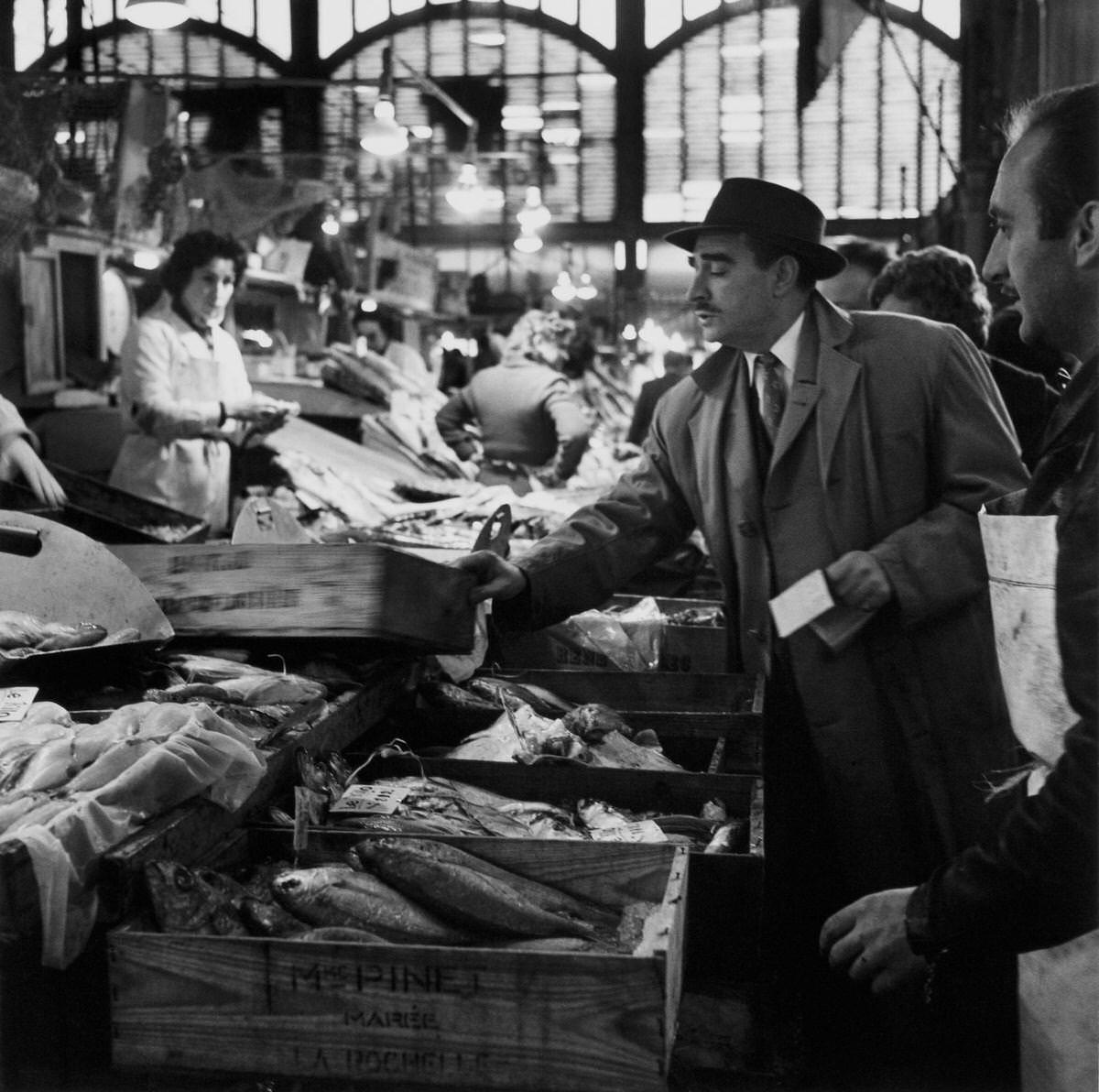
By the mid-1950s, the Beaubourg district surrounding the market had changed little in decades. Its streets were dense with old buildings, small trades, and the constant movement of goods. In 1957, photographs of the area document a district that still operated entirely on foot and by hand — horse-drawn carts had disappeared but motorized transport had not yet fully taken over the narrow lanes.
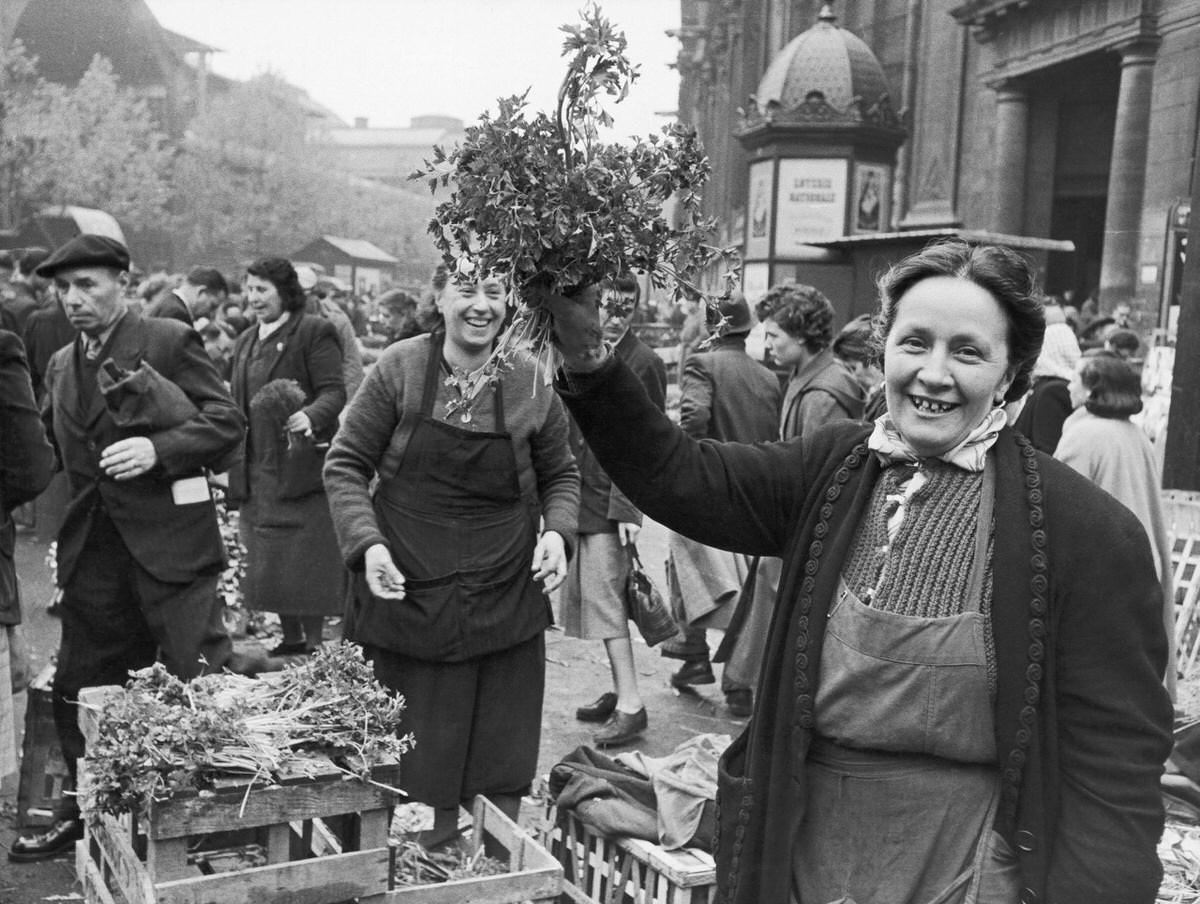
The greengrocers of 1956 were well-documented by photographers drawn to the visual richness of the stalls — the textures of root vegetables, the rough hands of the vendors, and the dense layers of produce stacked against the iron pillars of Baltard’s pavilions. A grocers’ strike that same year briefly disrupted operations and drew press attention to the labor conditions inside the market.
In June 1955, the meat hall was photographed at seven in the morning — the tail end of the overnight shift, when the bulk of wholesale trading had already been completed and workers began cleaning down the stalls. The *Forts des Halles* were still moving between the rows, clearing the last of the loads. By that hour, the rest of Paris was just waking up for breakfast.
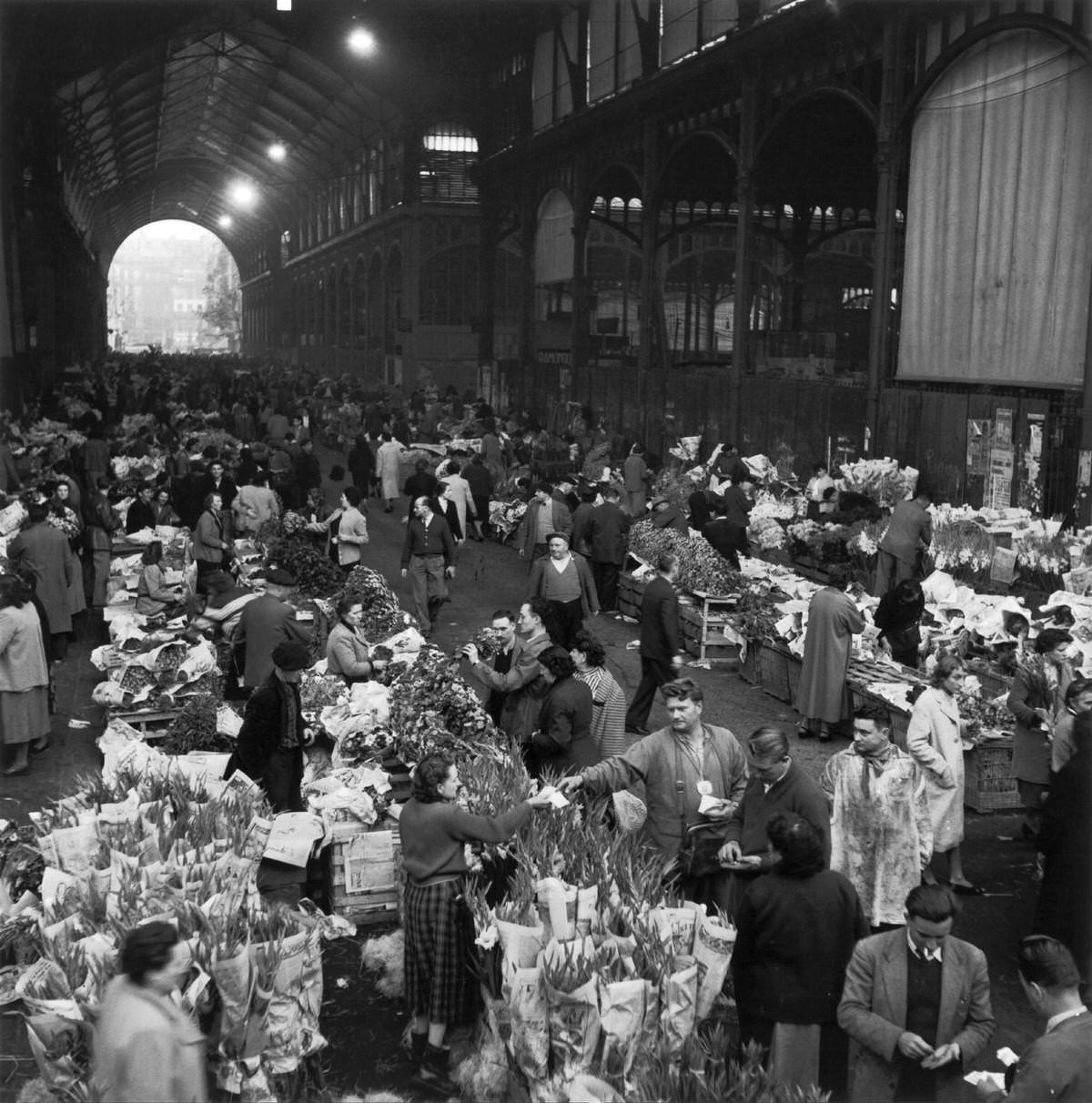
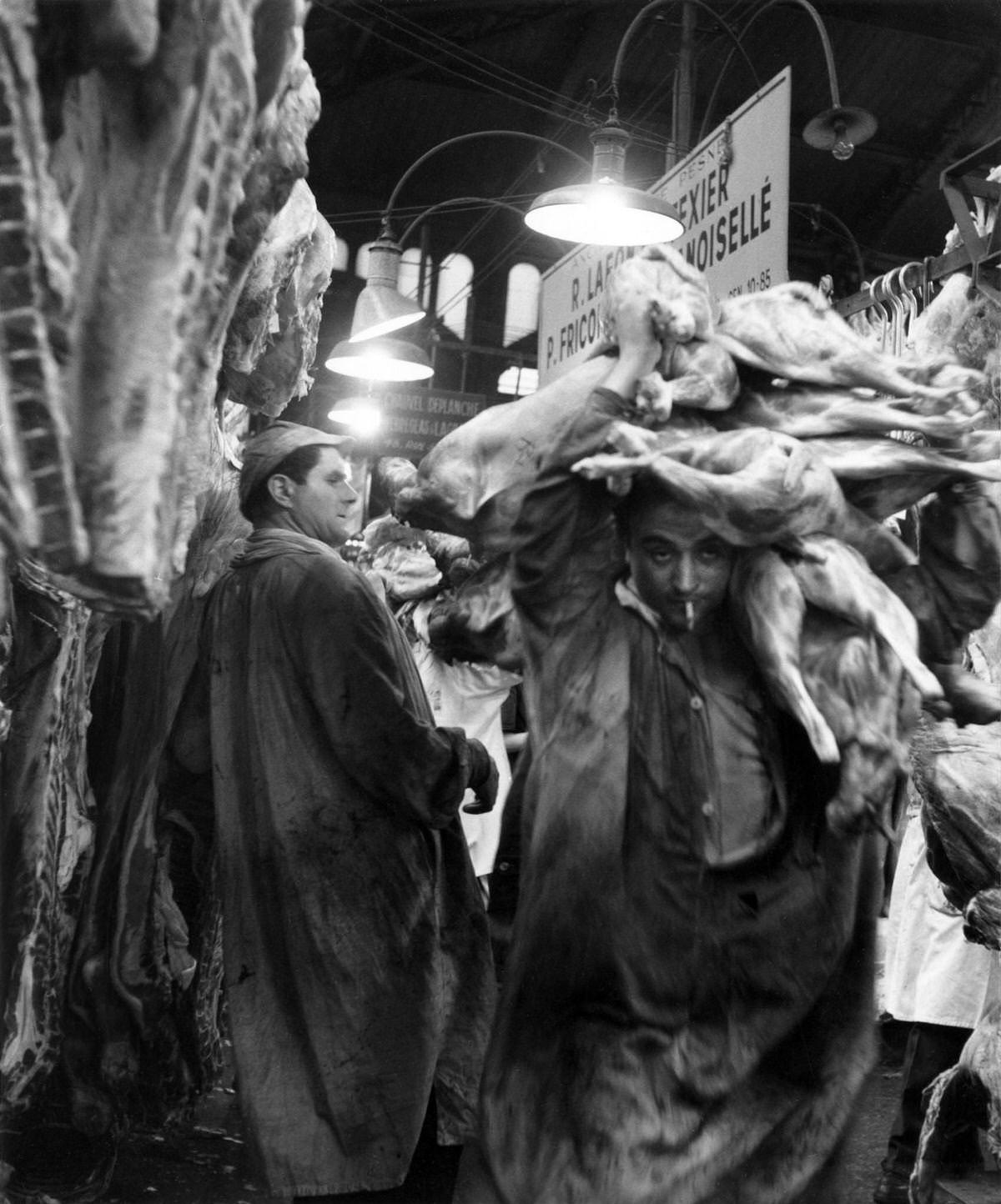
Christmas brought its own spectacle to Les Halles. In 1954, poultry was delivered and displayed in enormous quantities — whole ducks, geese, and chickens hung in rows under the pavilion roof. Men carried heavy wooden frames stacked with goods on their backs through the crowds, navigating the narrow lanes between stalls with practiced ease. The market’s flower sellers also stood out in the winter months, their stalls a burst of color against the grey iron and stone of the district.
These photographs from the early 1950s capture a place in full operation — a market that had not yet been declared obsolete, that still functioned as the sole central wholesale supply point for one of the largest cities in Europe. The scale of it, visible in every wide shot of the pavilions, is difficult to fully grasp. Thousands of workers, millions of kilos of food, and a city of millions all converged here, every single day.