
Before electric dryers became a fixture in American homes, wet laundry had one destination: outdoors. In 1930s New York City, this was not a quiet, suburban backyard routine. It was a dense, vertical, urban ritual played out across fire escapes, rooftops, alleyways, and brick courtyards. Clotheslines stretched between tenement windows like flags marking who lived where. The sheer volume of laundry in these neighborhoods tells you everything about how tightly packed city life really was.
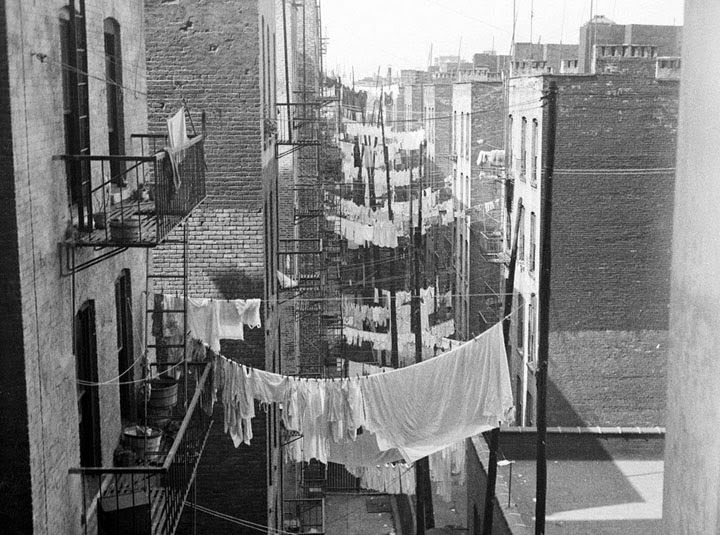
Electric dryers were invented in the 1930s, but they remained rare and expensive for decades. Most New York families — especially those living in working-class tenements — relied entirely on outdoor drying well into the 1950s. Washing was done by hand or in shared tubs, and hanging the load outside was simply the final step in a long, physical process. Every family did it. Every block showed it.
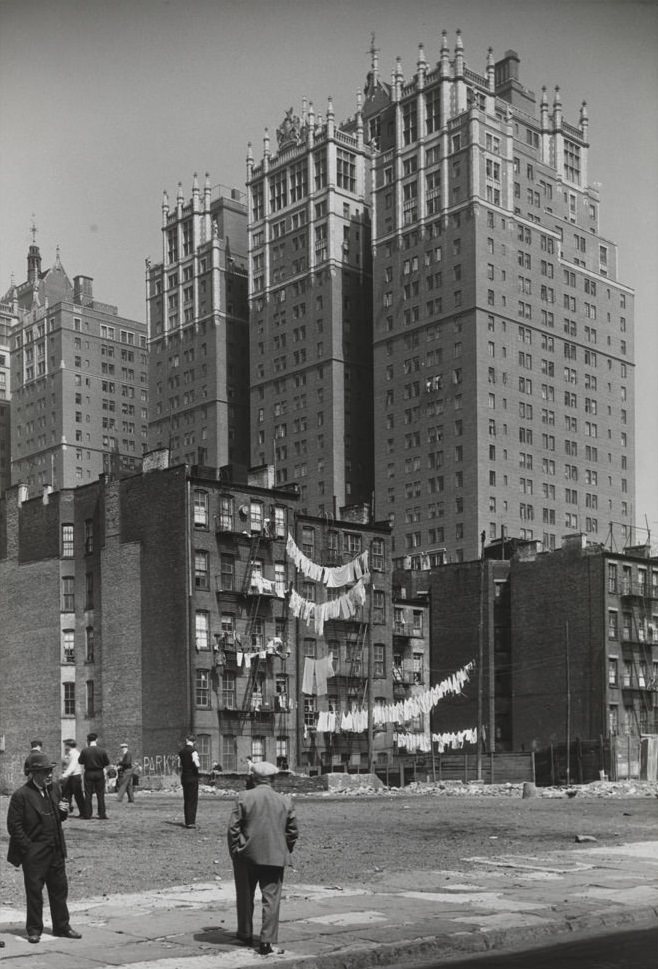
New York’s tenement districts were particularly defined by this practice. Buildings packed dozens of families into narrow lots, and communal courtyard space was precious. Clotheslines were strung across every available gap — between windows, across open lots, and above alleyways — creating a layered canopy of drying sheets, work clothes, and children’s garments.
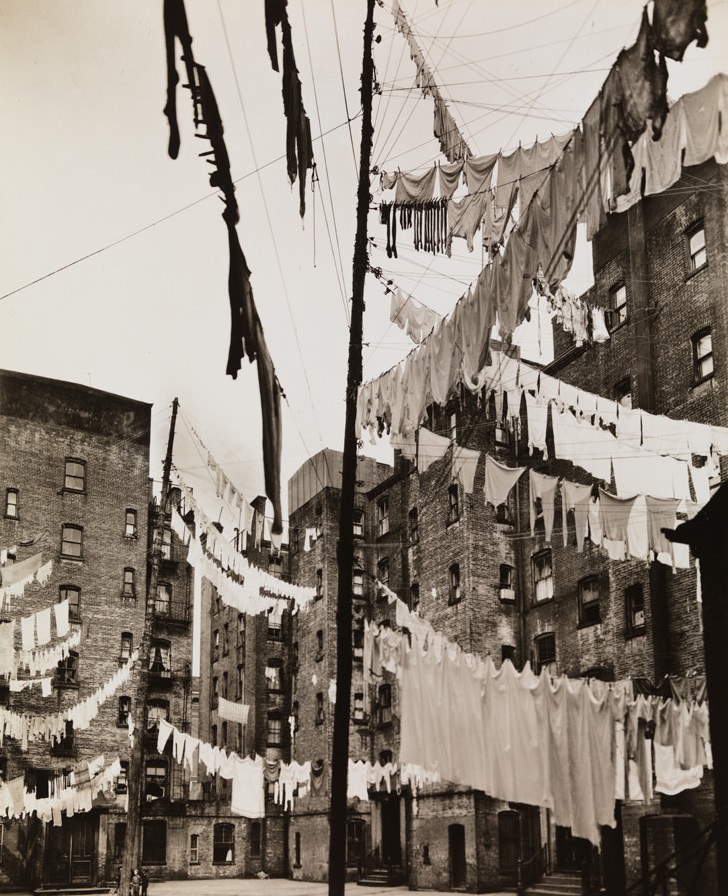
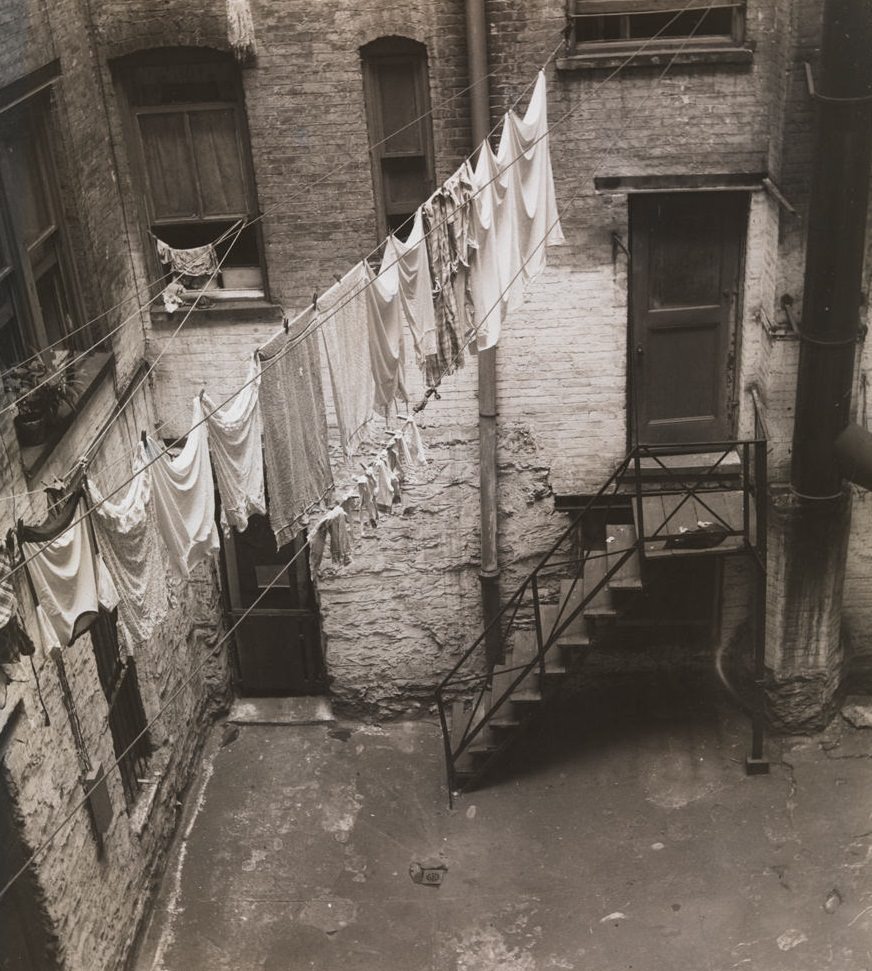
Different neighborhoods found different solutions to limited space. On narrower streets like Greenwich Street, lines were strung close to building facades, with laundry nearly grazing passersby below. The practice was so common that it blended into the background — a permanent feature of city streetscapes rather than something anyone paused to notice.
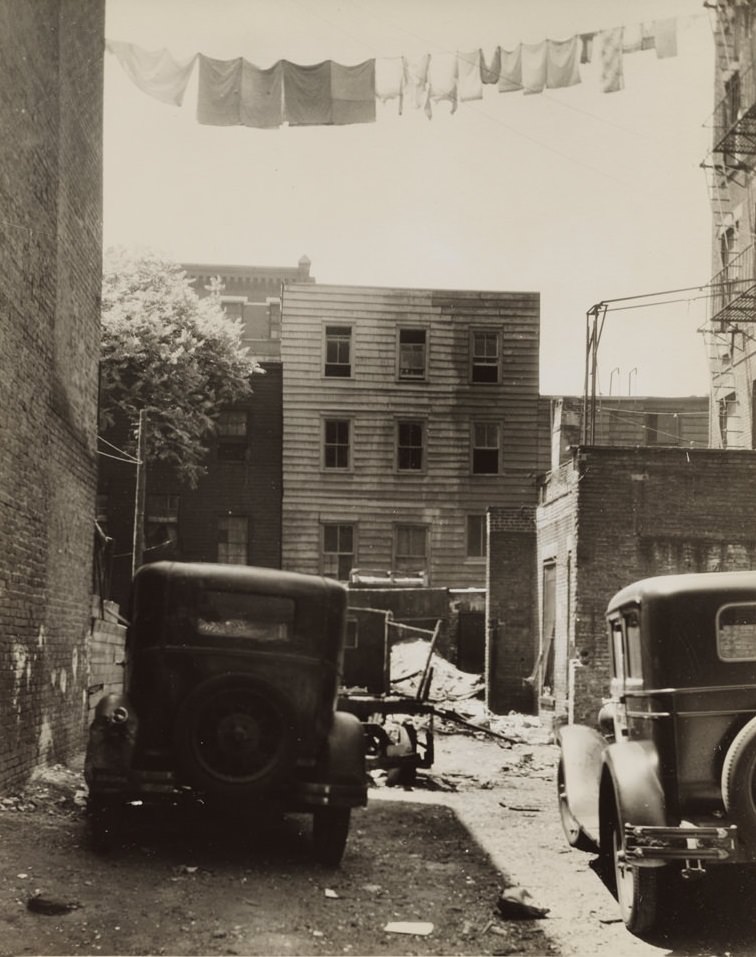
Vacant lots between buildings became improvised drying yards. Where a structure had been demolished or never built, residents claimed the open air. By 1939, lots on streets like 148th Street doubled as communal laundry spaces, with lines anchored to fence posts or neighboring walls.
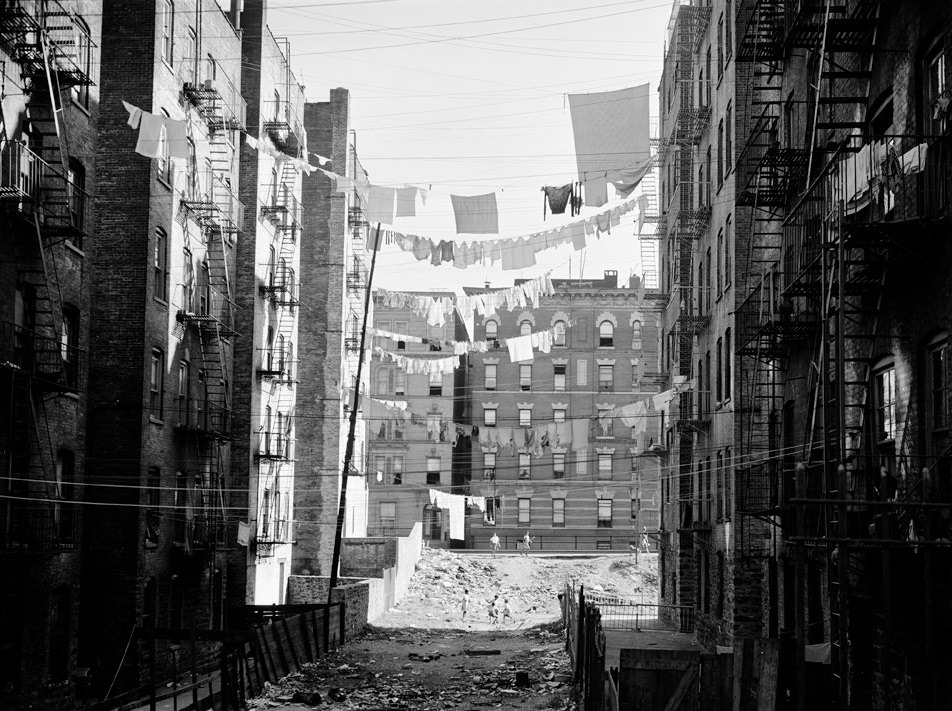
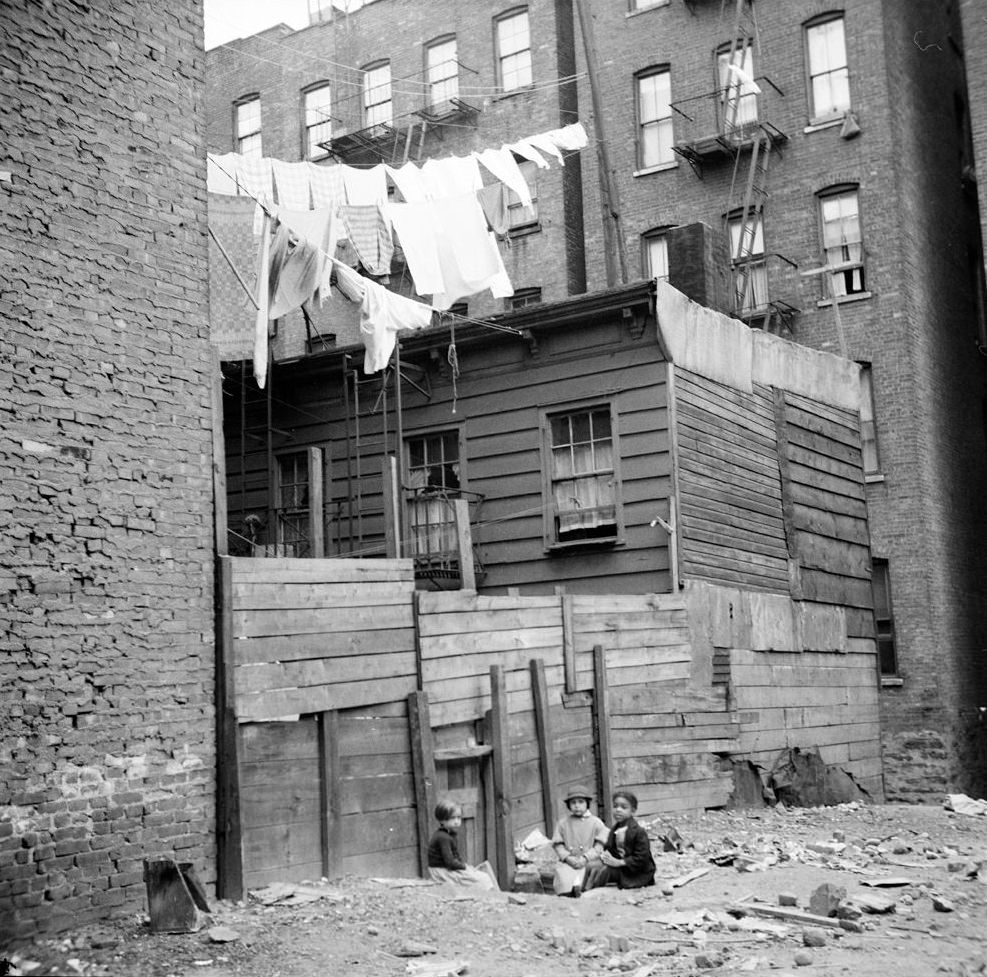
Children grew up around this routine. In rear tenement yards, laundry overhead was simply part of the landscape — alongside dirt, noise, and neighbors living at close range. The 1935 photo below captures this world plainly: children at play beneath lines of hanging wash, in the shadow of wooden rear tenements.
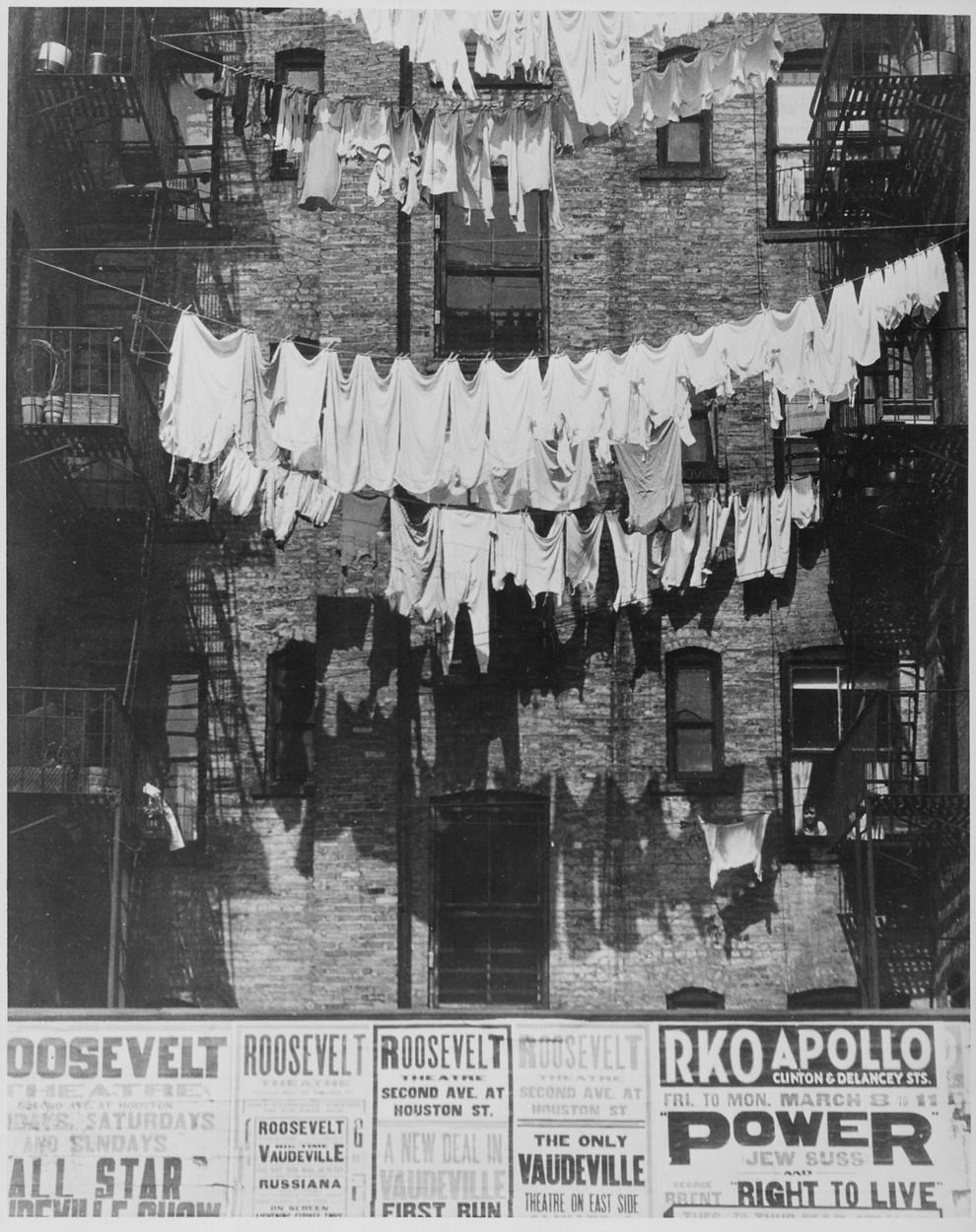
Immigrant communities, many of them Jewish and Italian, filled the tenement districts of lower Manhattan and upper neighborhoods alike. In these dense blocks, laundry day was a shared, visible event. The Jewish Museum’s collection includes photographs of tenement rows from around 1937 where the lines run so thick they nearly obscure the building facades behind them.
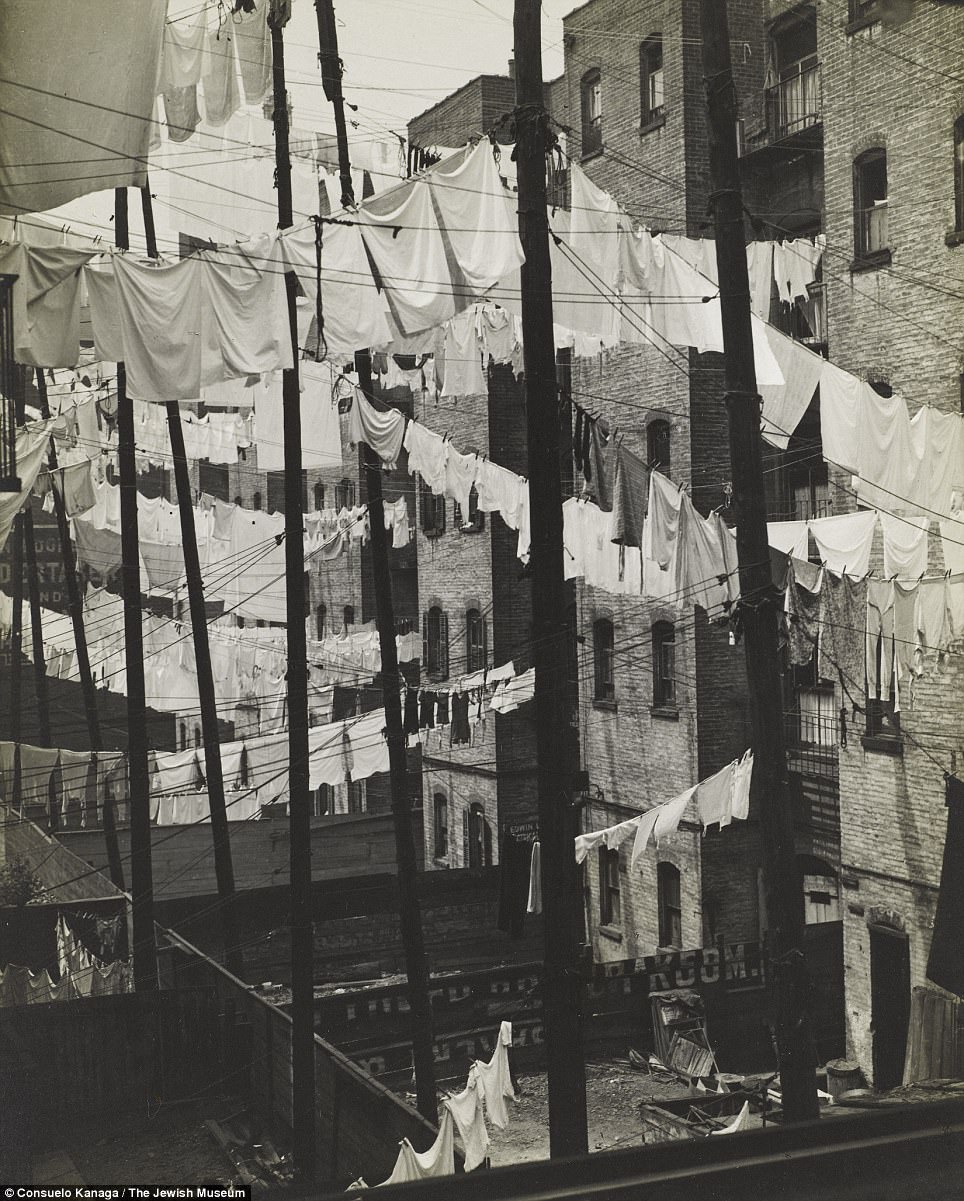
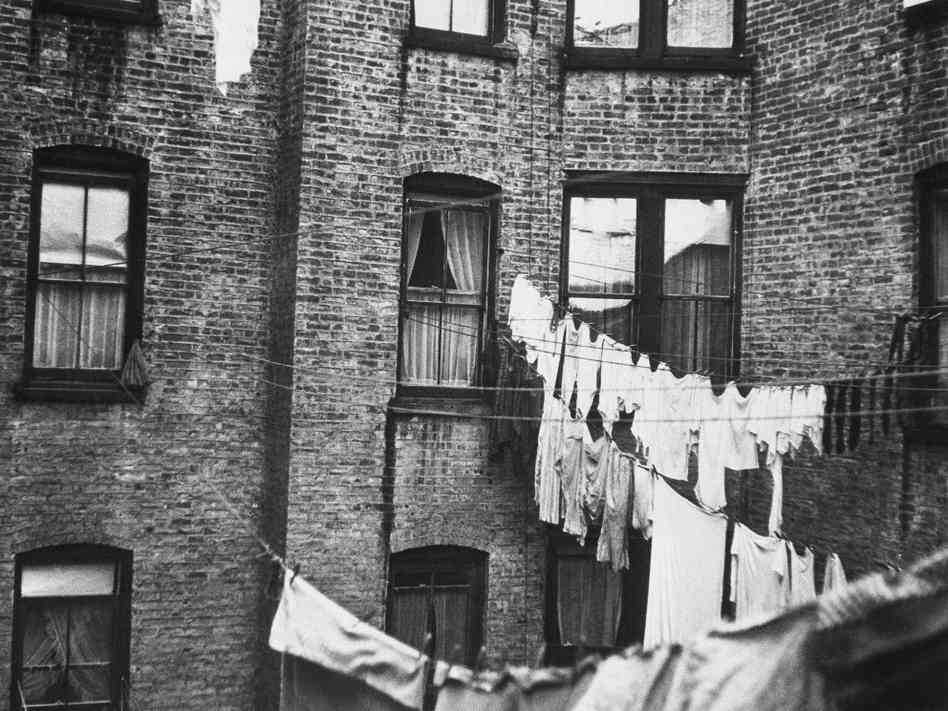
By 1934, photographers were documenting these scenes with growing interest — recognizing that outdoor laundry was as much a part of New York’s visual identity as its skyscrapers. The lines, the billowing fabric, the geometry of ropes and pulleys all made for striking compositions. But behind each image was straightforward domestic labor, repeated every week without exception.
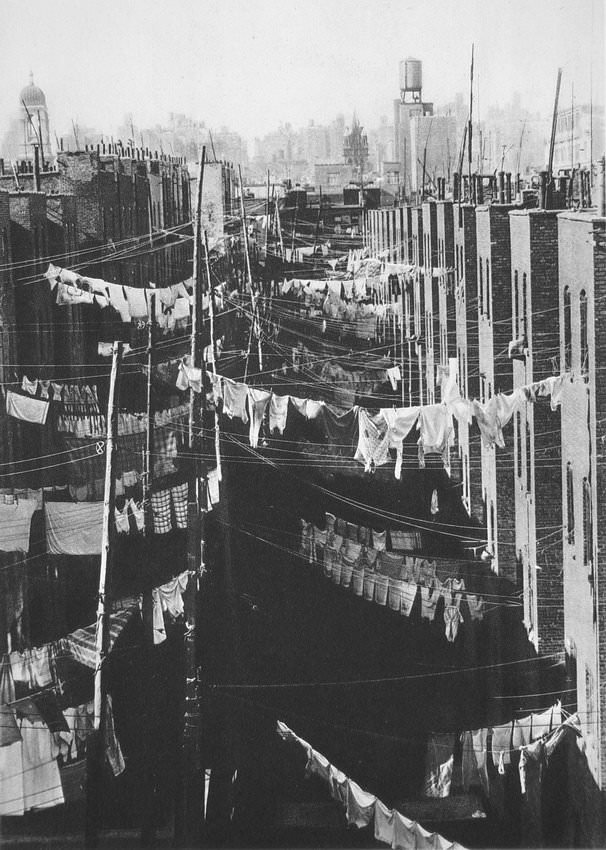
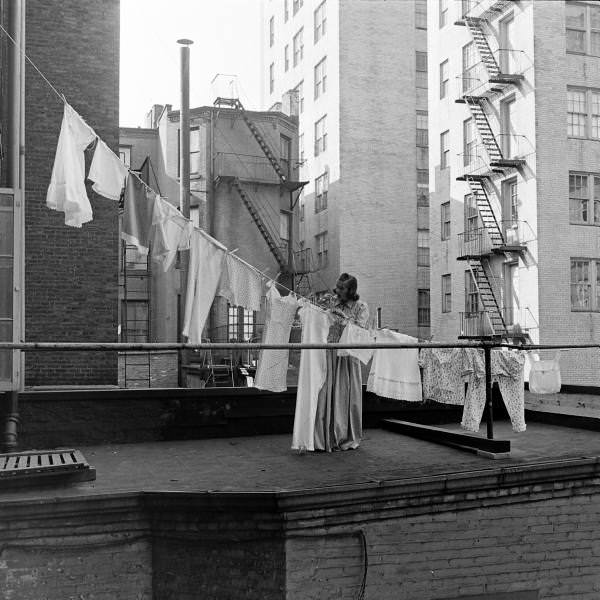
Rooftops were among the most practical drying spaces in the city. Open to sun and wind, they could handle large loads quickly. In 1939, women could be found hauling wet laundry up several flights of stairs to spread it across rooftop lines — a physically demanding task that was simply part of the weekly schedule.





How did you like getting your laundry back? Is it like…it goes to the opposite building, so you are sharing a line with the building across the street?
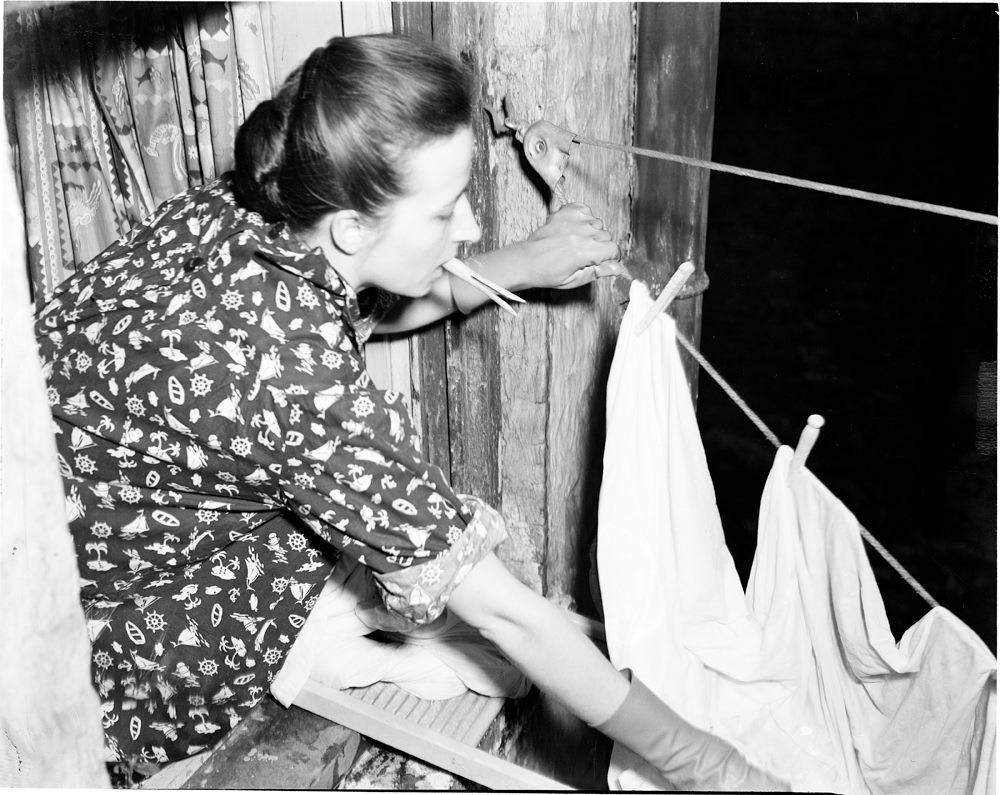
There are two pulleys on the line; you hang an item, push the line out until there is no more wash to hang, let it dry, and pull it in. There was a fixed point in the distance where your line would go that wouldn’t interfere with another. The clothes would blow off the line on windy days, and it wasn’t much fun in the winter either.
I appreciate your clarification! Haha. Could you tell me how the line got attached to something else? Perhaps the pole or building across the alley?
Be very careful! The new line would require someone to climb a ladder. If an old-line breaks, you can carefully thread the new line through with the old line. Apartments on the first floor were not desirable because people could steal your clothes off the line.