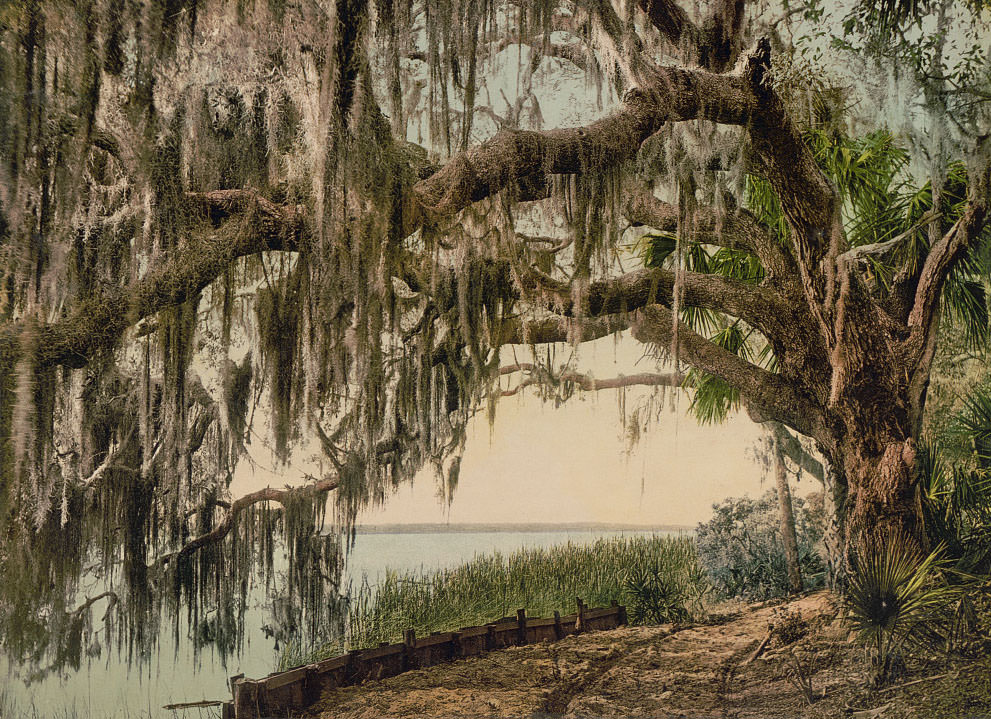
Florida became the 27th state to join the union in 1845. At the time of statehood, roughly half of the state’s population were enslaved African Americans. After Reconstruction, the white-dominated state legislature moved swiftly to consolidate power. Between 1885 and 1889, lawmakers passed poll taxes and other voter registration barriers specifically designed to strip Black citizens and poor white voters of their political voice.
By 1900, Florida’s total population stood at around 529,000. African Americans numbered more than 200,000 — approximately 44 percent of the state’s population. Most people, regardless of race, depended on agriculture and farming for their livelihood. It was a state still very much shaped by its land, its waterways, and its climate.
The images below are photochroms — a printing process that added vivid color to black-and-white photographs — capturing Florida’s hotels, streets, rivers, groves, and coastlines from the late 19th and early 20th centuries. They offer a rare, colorized window into what the state looked like during a pivotal period of its history. One of the grandest landmarks of the era was the Tampa Bay Hotel, a massive Moorish Revival structure that dominated the city’s skyline.
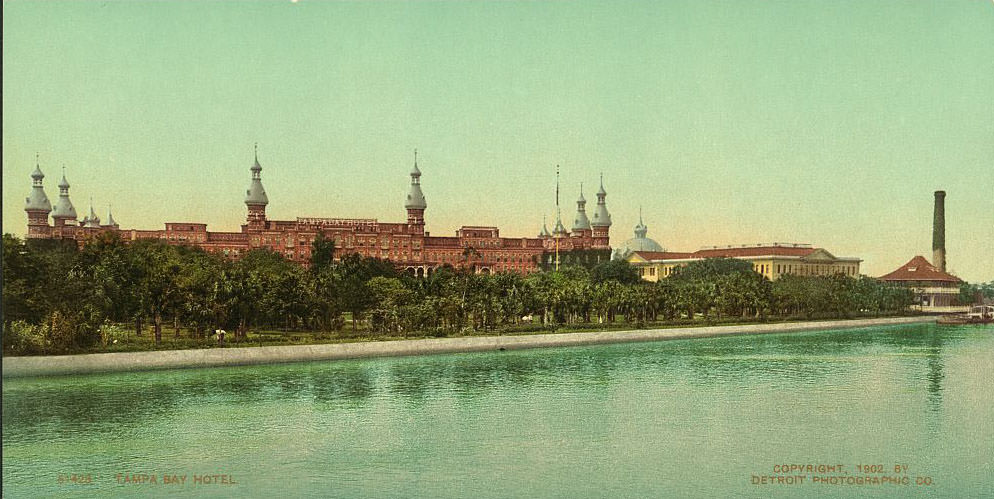
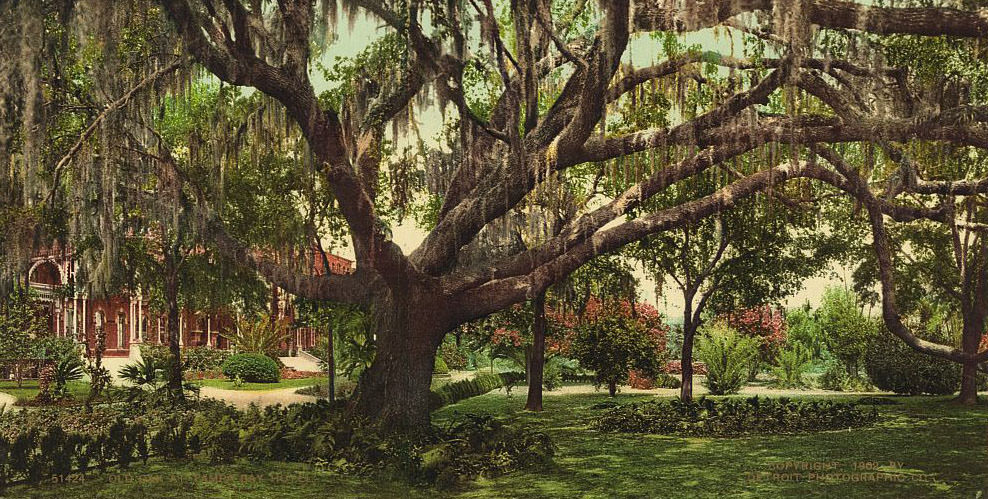
The hotel’s grounds were equally striking. Ancient oak trees, draped in Spanish moss, gave the property a sense of age and permanence that the building’s ornate architecture only amplified.
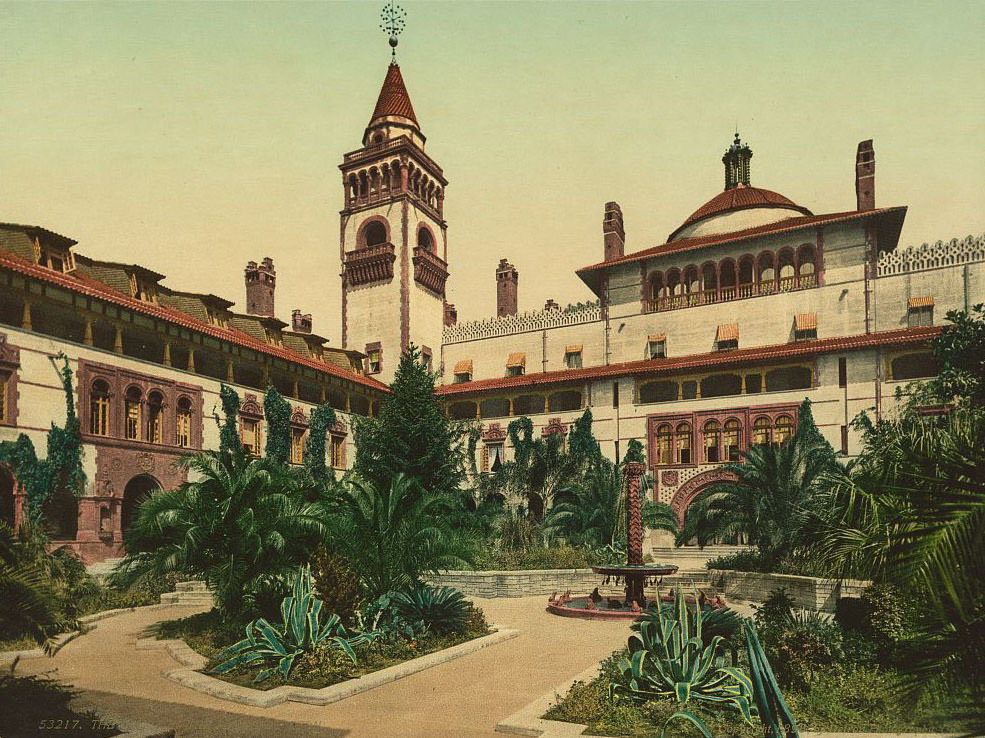
St. Augustine, founded by the Spanish in 1565, was one of Florida’s most historically significant cities by the late 1800s. Entrepreneur Henry Flagler poured enormous resources into transforming it into a winter destination for wealthy Northerners. His Ponce de León Hotel, opened in 1888, was a showpiece of Spanish Renaissance architecture with a grand interior courtyard at its center.
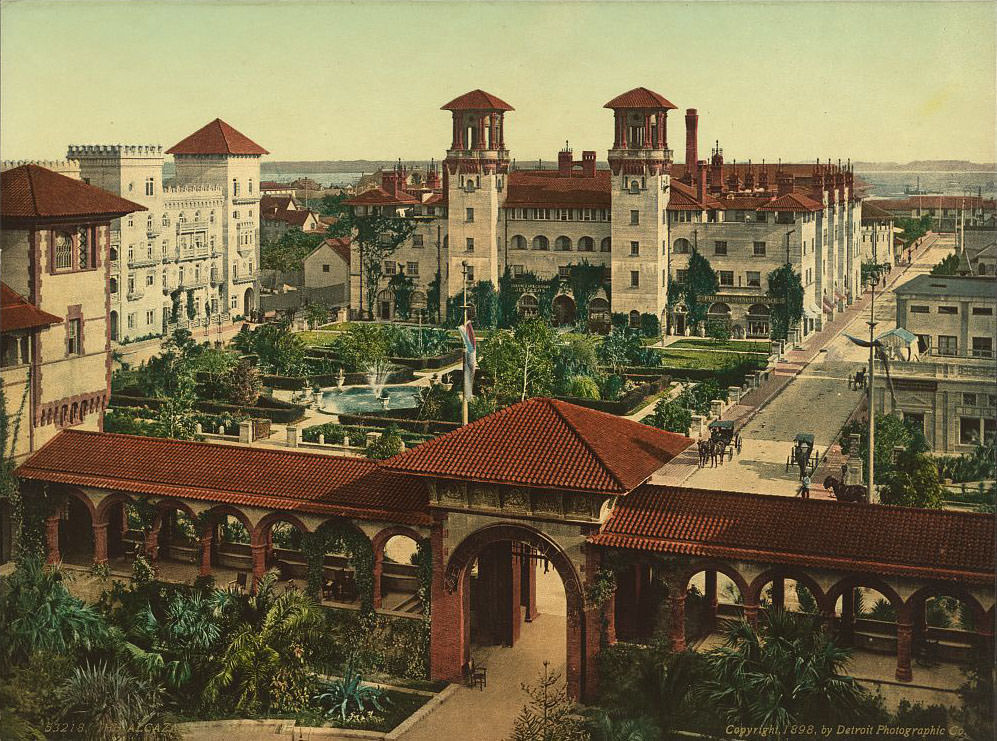
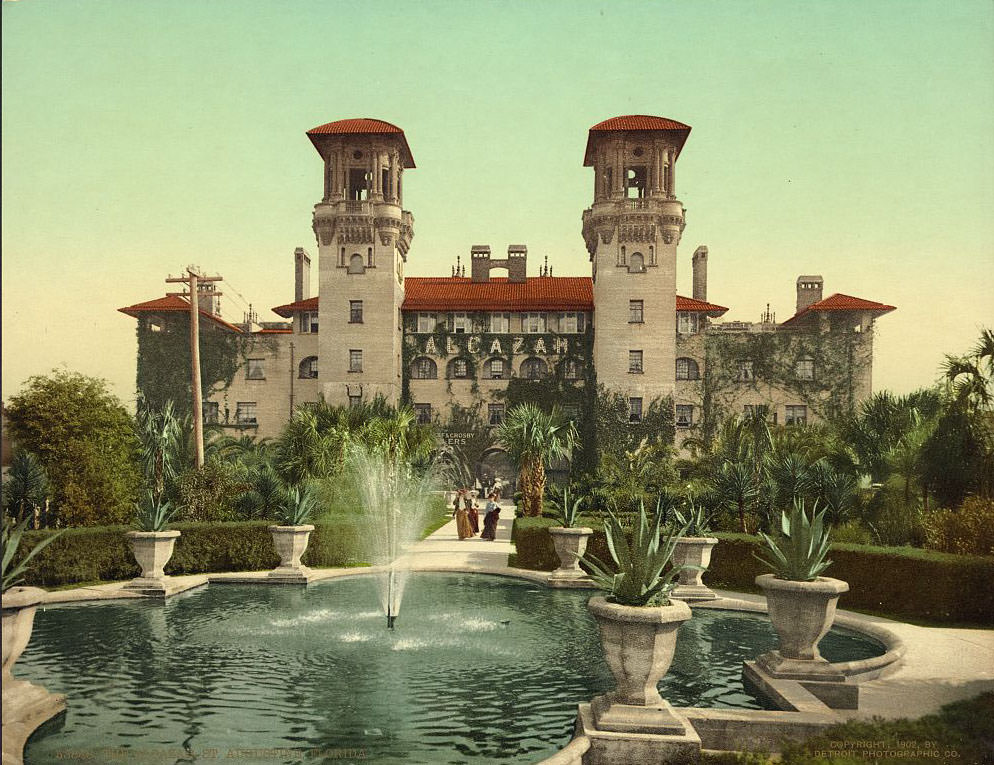
Just across the street from the Ponce de León stood the Alcazar Hotel, also built by Flagler. The Alcazar housed one of the largest indoor swimming pools in the world at the time, along with a casino and Turkish baths. Today the building serves as Café Alcazar.
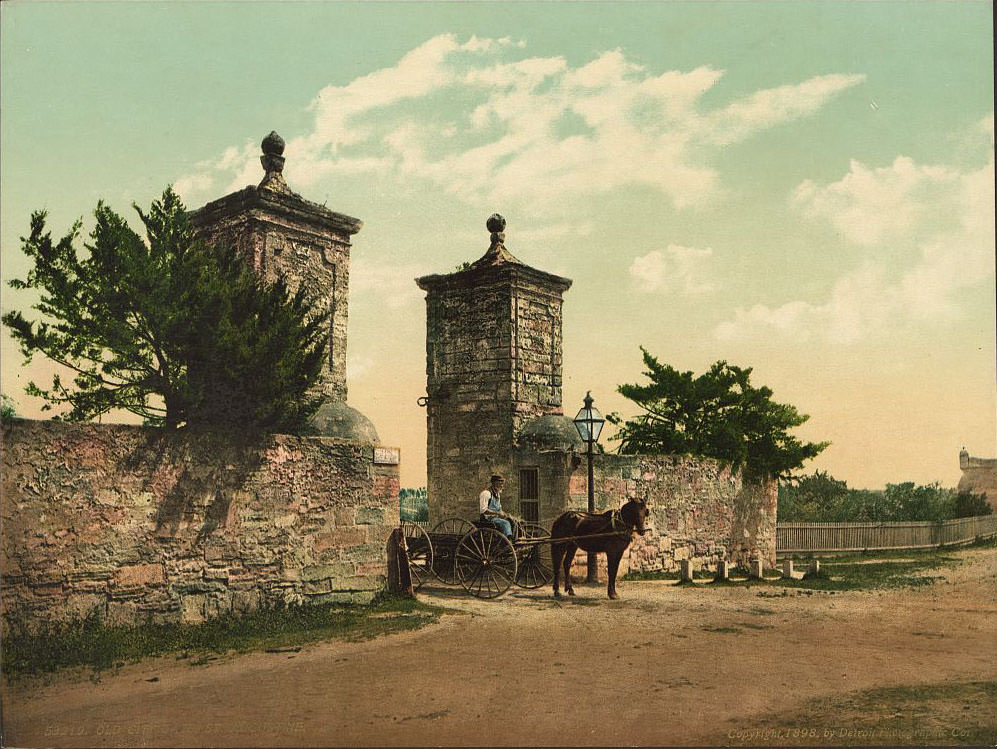
St. Augustine’s Old City Gate dates back to the 18th century, built by the Spanish as the main entry point into the fortified city. It stood as a physical reminder of Florida’s long colonial past, well before American statehood.
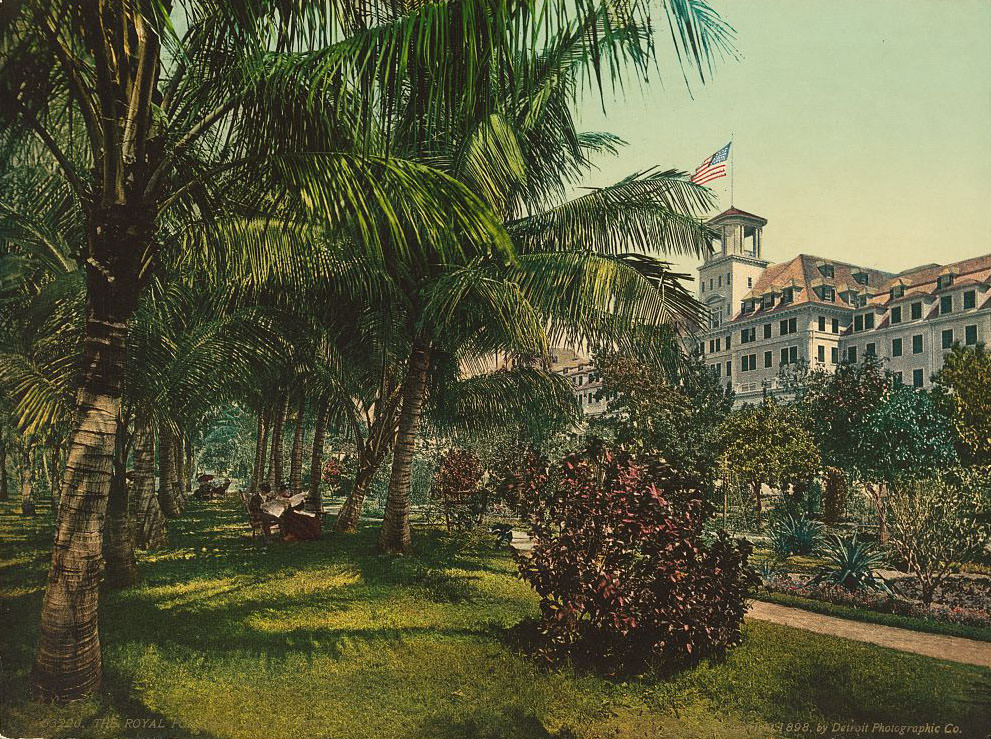
Further south along the Atlantic coast, Palm Beach was emerging as another elite winter retreat. Flagler’s Royal Poinciana Hotel on Lake Worth was the largest wooden structure in the world when it opened in 1894, capable of housing over 1,700 guests.
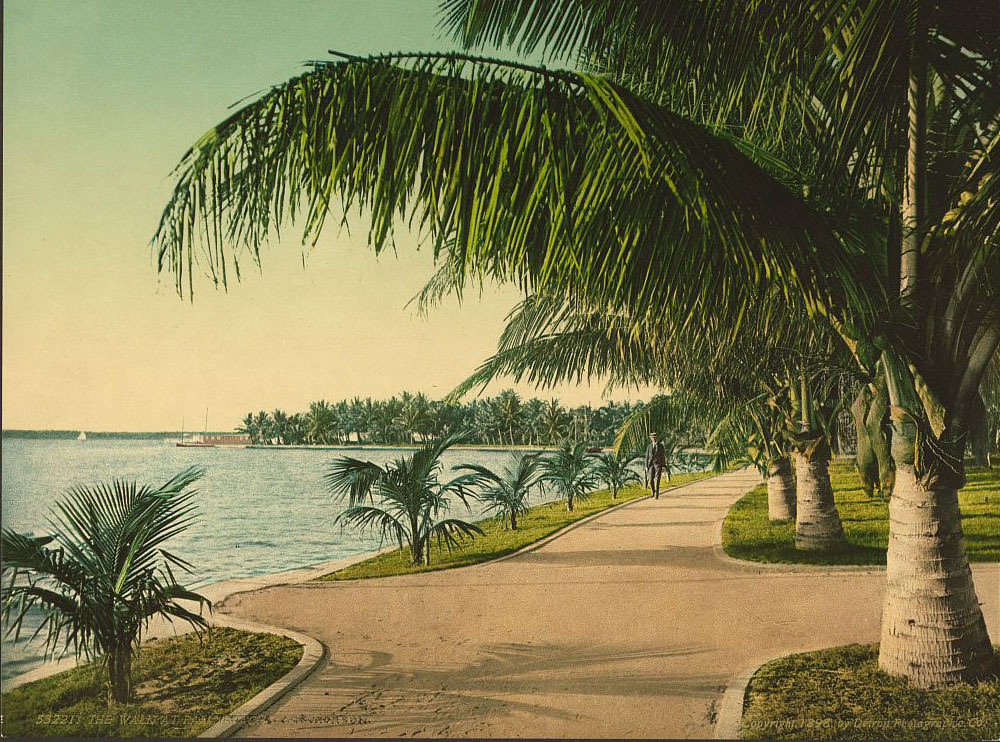
Guests at Palm Beach could stroll along well-maintained paths lined with tropical palms, a sharp contrast to the rugged wilderness that covered most of the state just miles inland.
Beyond the resort towns, Florida’s natural landscape was dense and wild. Hammocks — areas of hardwood forest rising slightly above surrounding wetlands — were common throughout the peninsula and gave the state much of its ecological character.
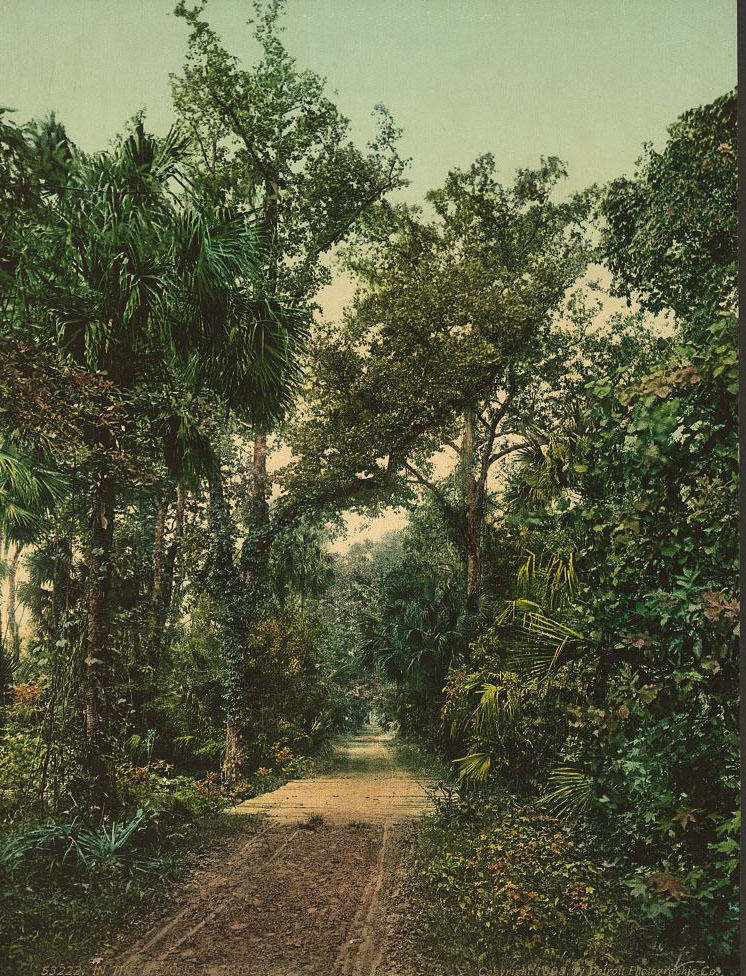
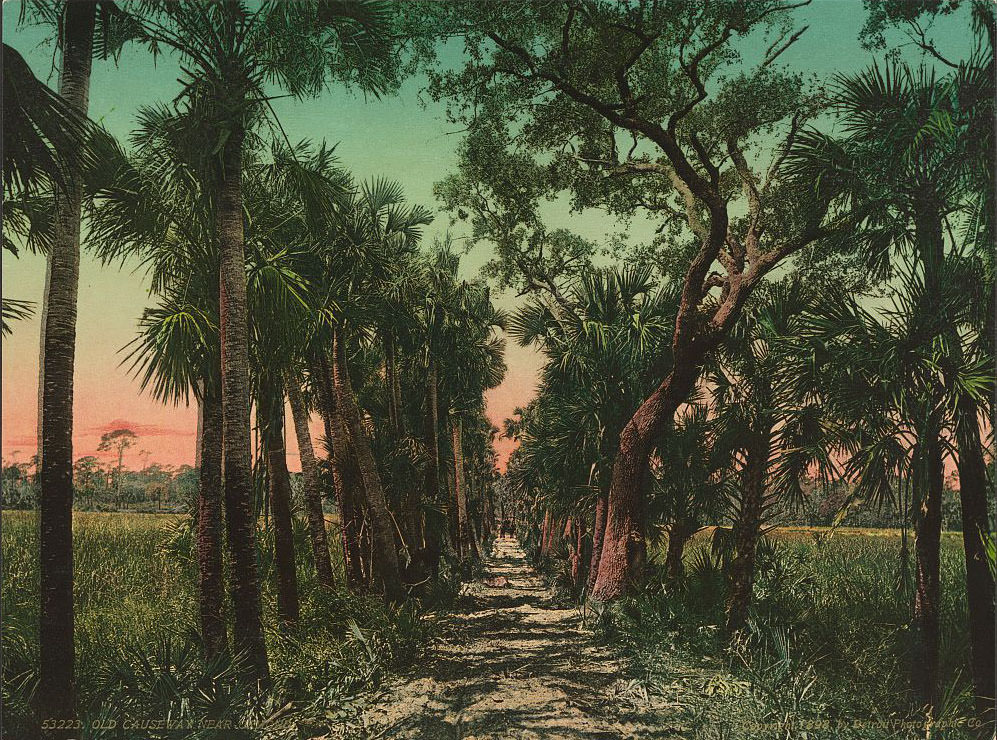
Infrastructure across Florida was still rudimentary in the late 1800s. River crossings relied on wooden causeways and bridges that required constant maintenance in the humid, storm-prone climate.
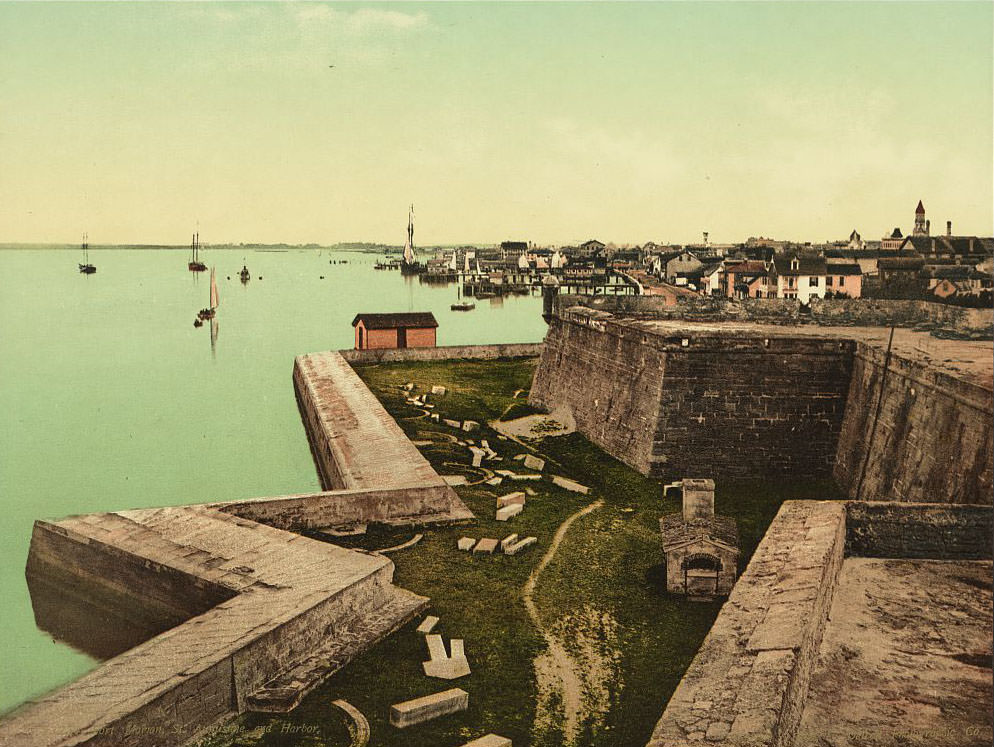
Fort Marion — today known as Castillo de San Marcos — was one of the oldest masonry forts in the continental United States. Built by the Spanish in the late 17th century, it guarded St. Augustine’s harbor and remained a functional military installation into the late 19th century, used at various points to hold Native American prisoners.
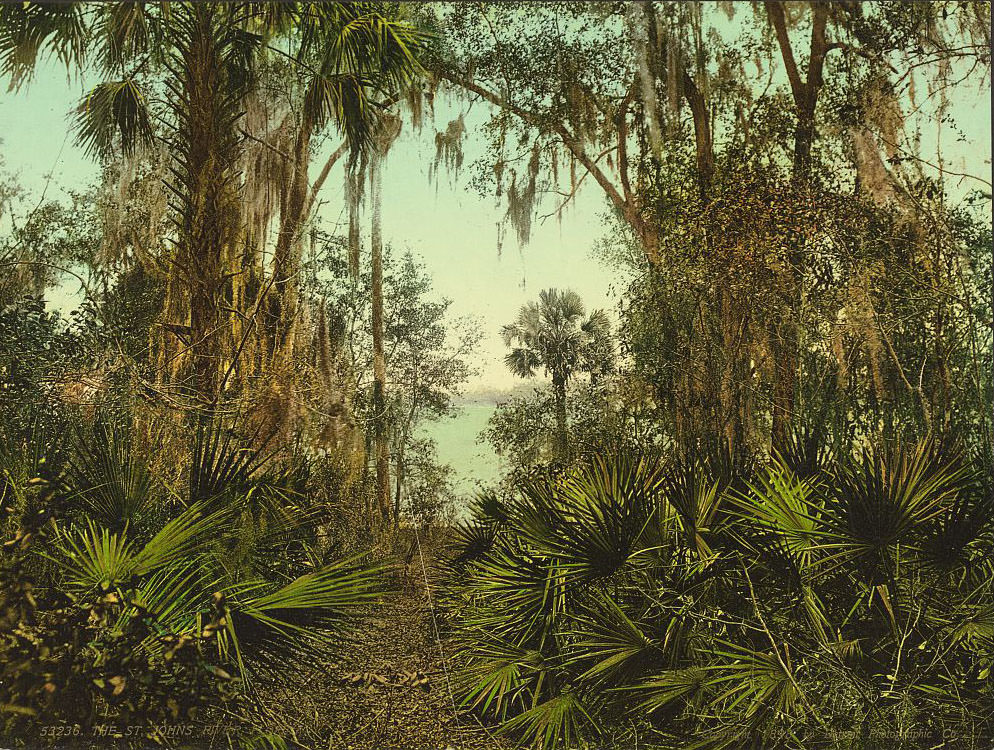
The St. Johns River was one of the most important waterways in Florida, flowing northward for more than 300 miles. Steamboats carried passengers and freight along its length, connecting inland communities to the coast.
The Indian River — a lagoon system running along Florida’s east coast — was equally vital. Its warm, shallow waters supported thriving citrus groves on its banks and provided a navigable route for trade and travel.
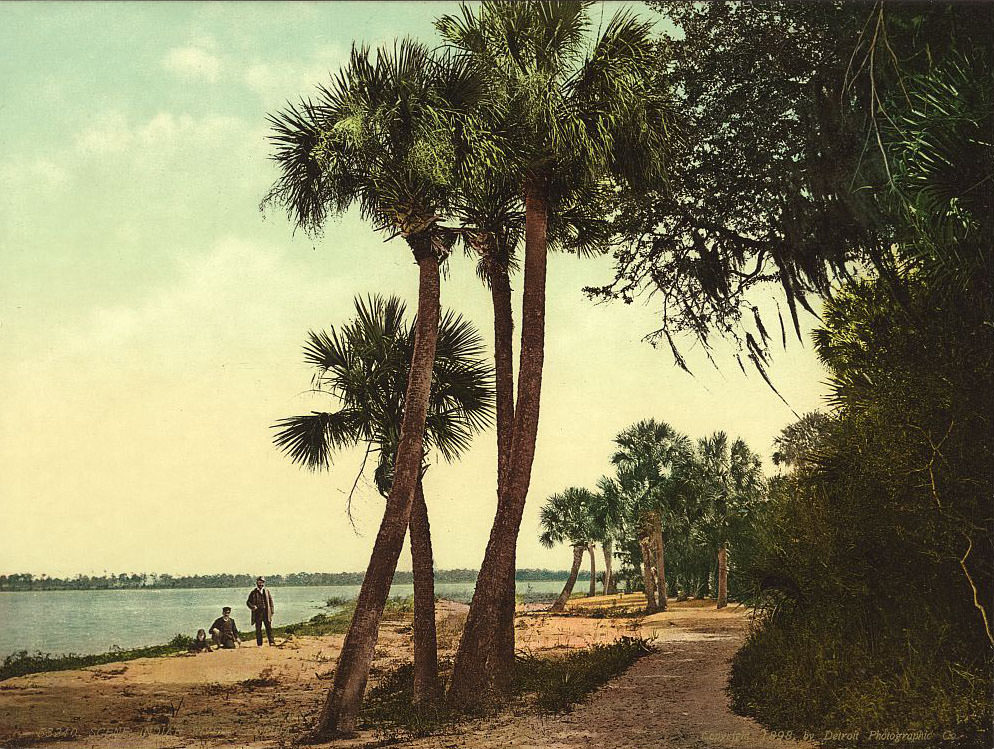
Key West, located at the southernmost tip of the Florida Keys, was actually the most populous city in Florida in the late 19th century. The Custom House, completed in 1891, served as the federal government’s administrative hub for the island’s busy port.
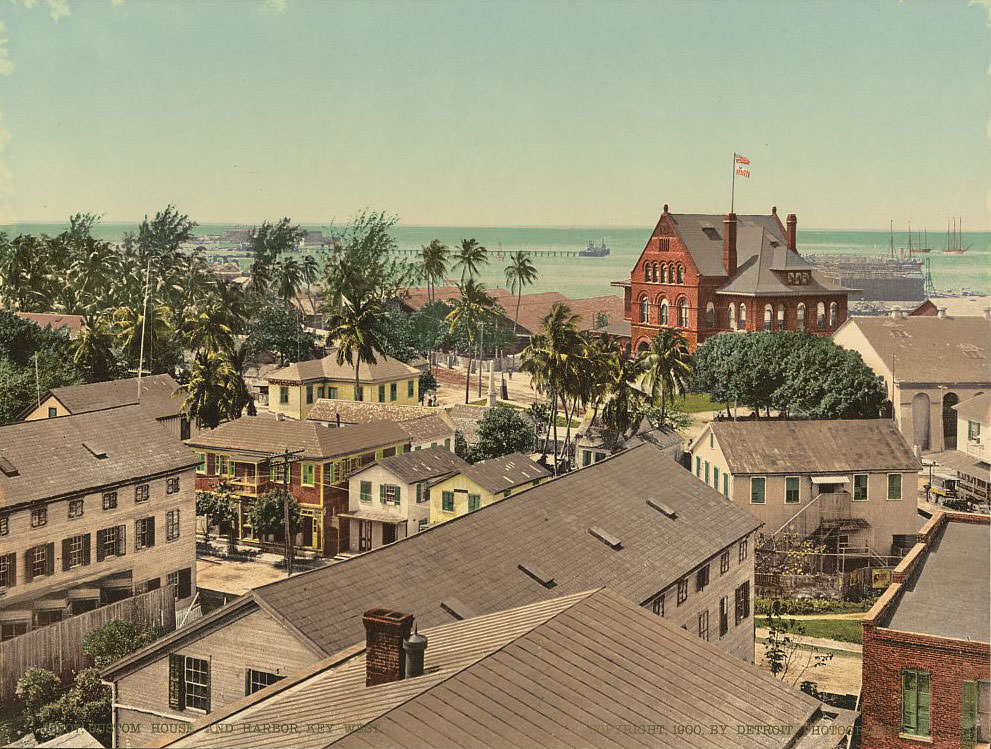
The U.S. military maintained a barracks in Key West, and the grounds featured a striking rubber tree — a tropical species that thrived in the island’s climate and drew curiosity from soldiers and visitors alike.
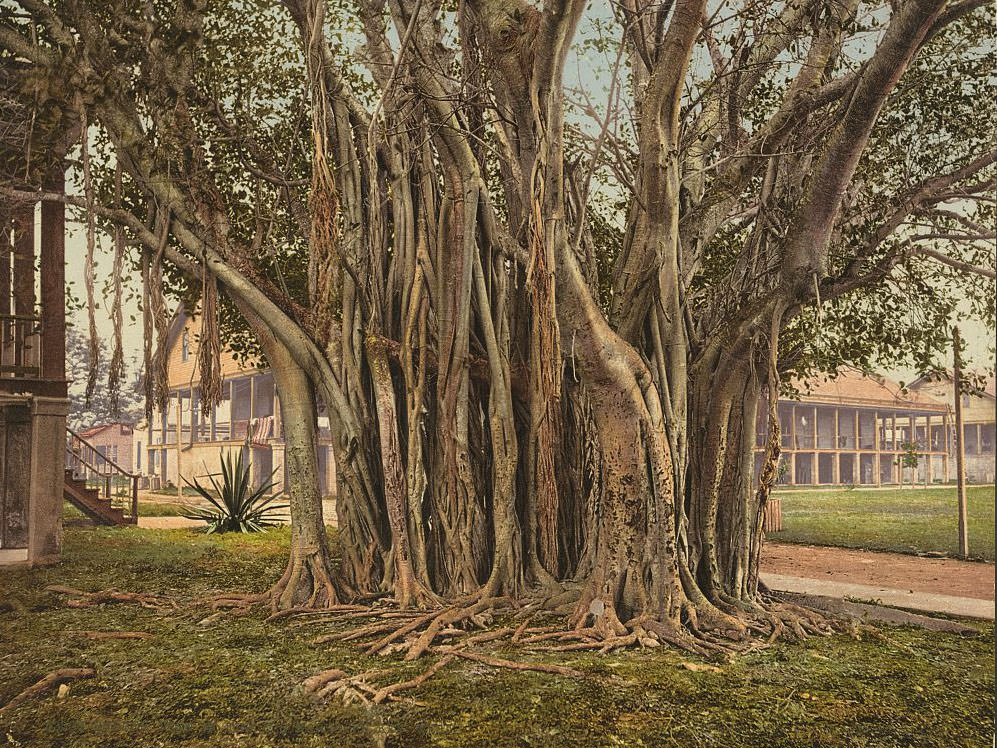
Miami in 1900 was barely a city at all — it had only been incorporated in 1896. The Miami River, running just a few miles from the Everglades to Biscayne Bay, was the lifeblood of this early settlement, used for transportation and commerce.
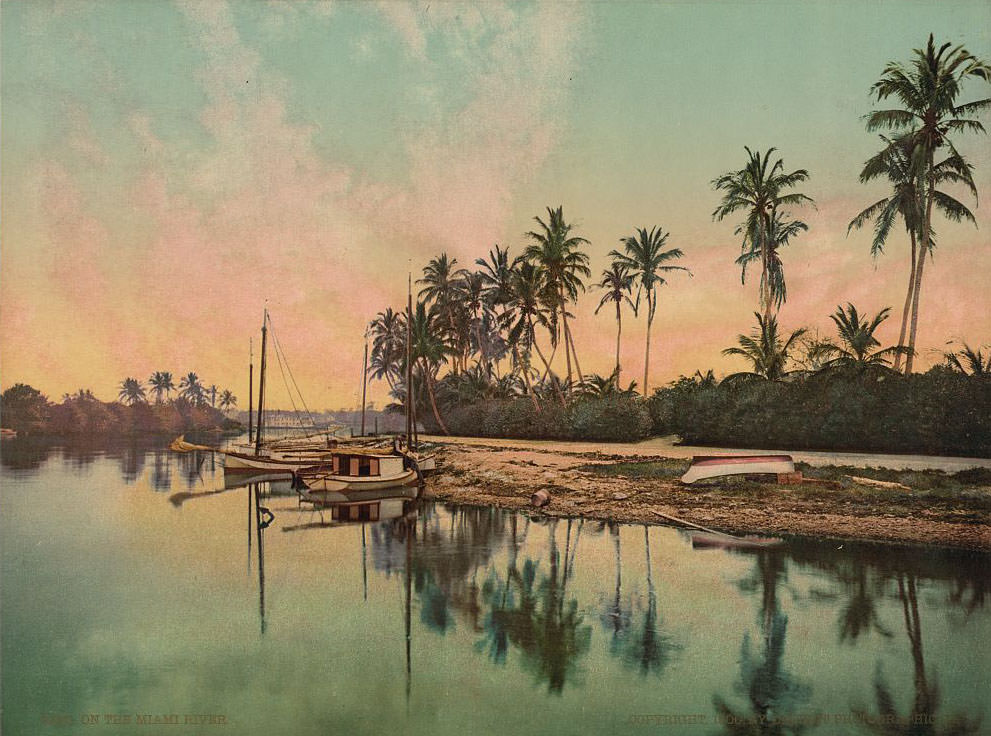
The Royal Poinciana at Palm Beach continued to draw wealthy visitors into the new century, cementing Palm Beach’s reputation as the preferred winter destination for America’s upper class.
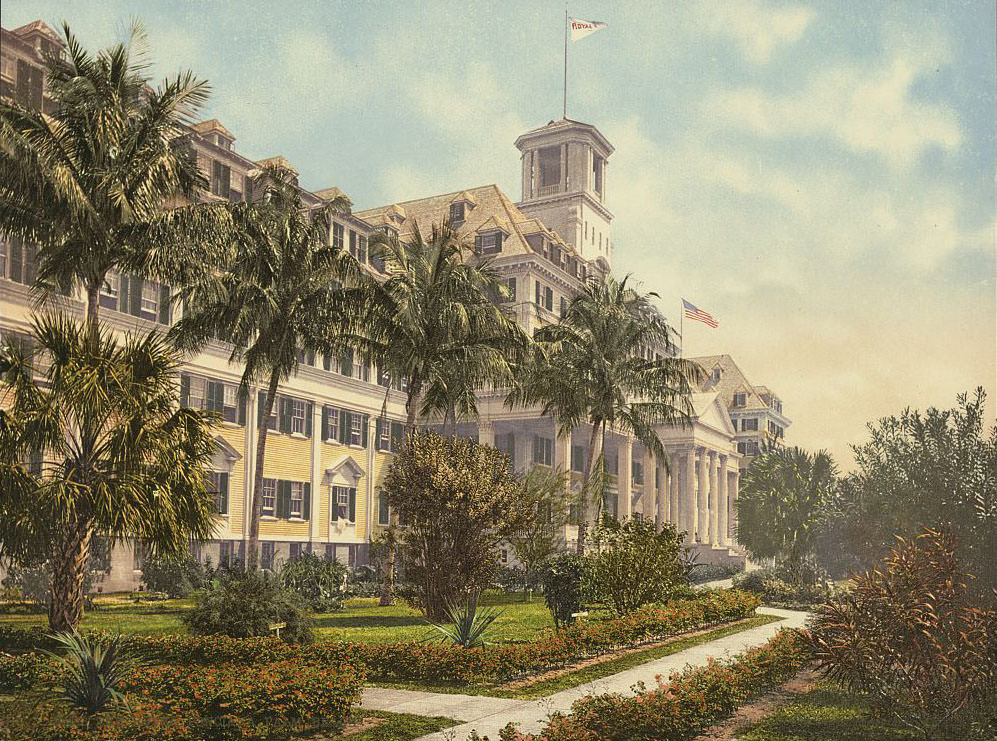
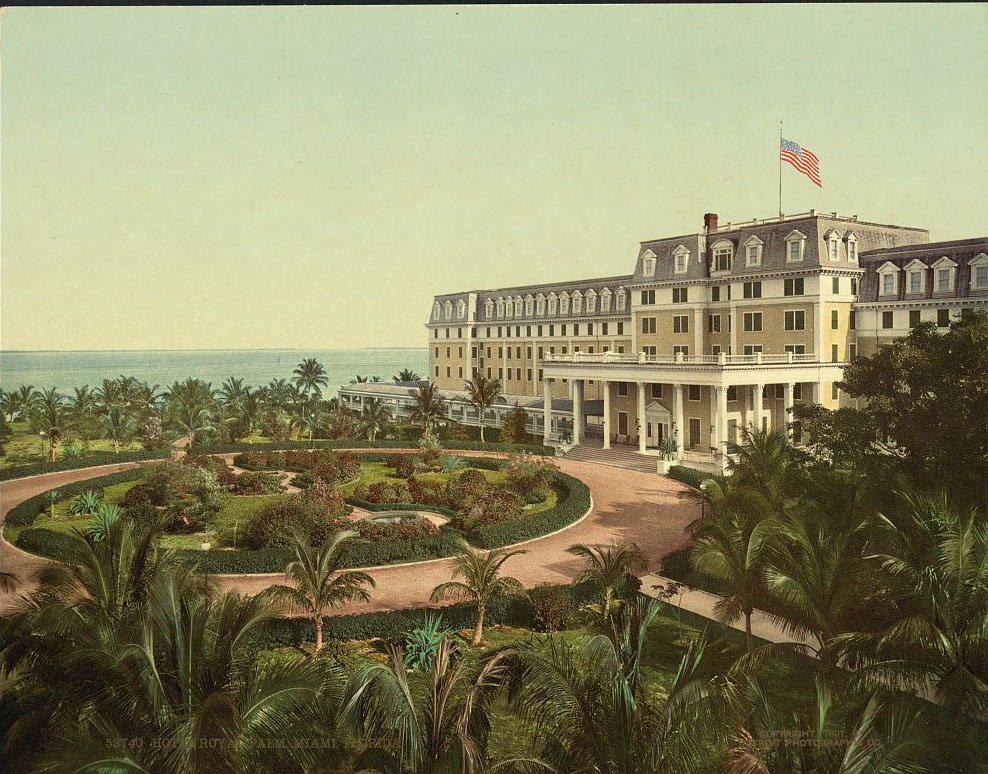
Flagler’s ambitions extended to Miami as well. The Hotel Royal Palm, which opened in 1897, was a luxurious 350-room property built directly on the bank of the Miami River. It was among the first major hotels in what was then a fledgling frontier town.
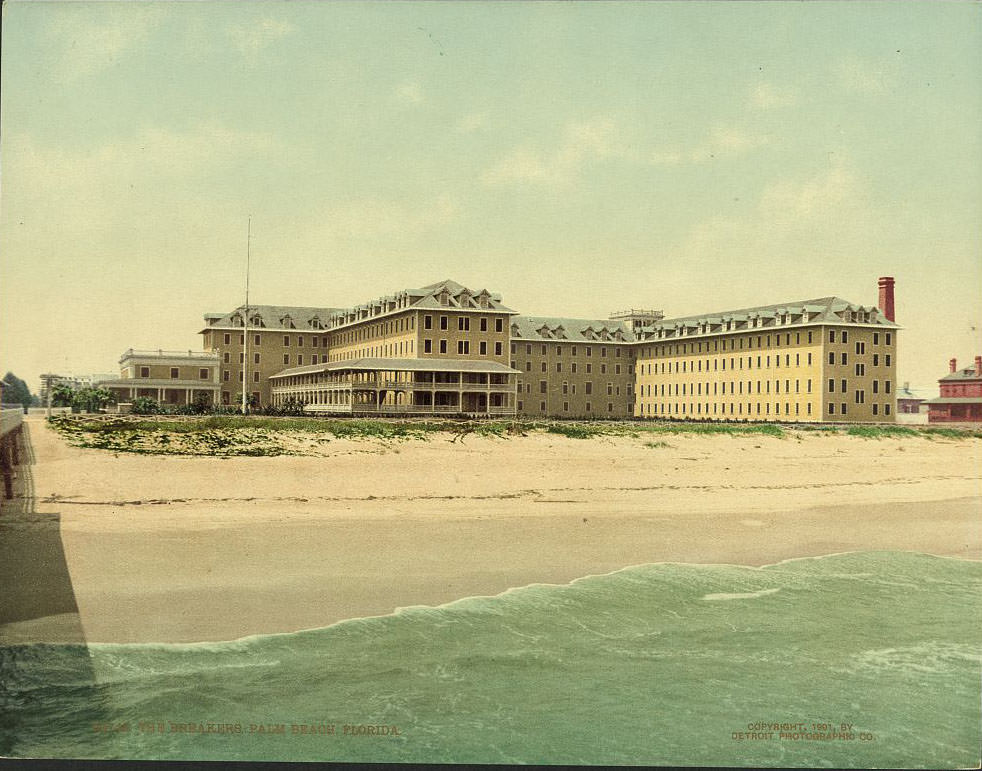
The Breakers in Palm Beach was another flagship resort of the era. Originally called the Palm Beach Inn when it opened in 1896, it was renamed The Breakers to reflect its oceanfront position. The wooden structure burned down twice in the early 20th century before being rebuilt in its current form.
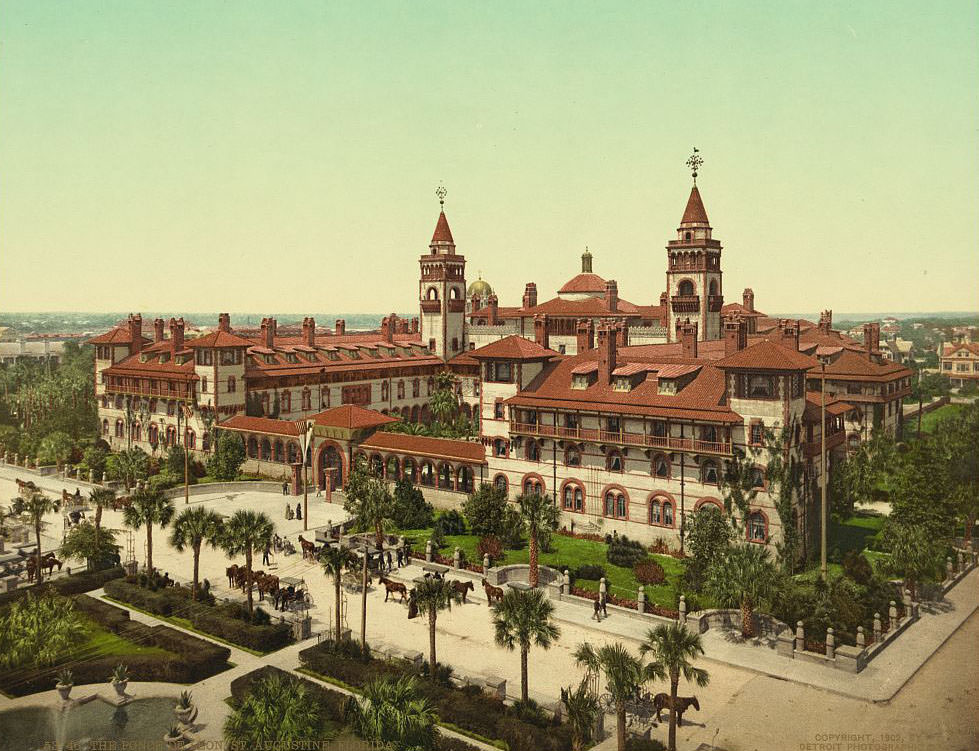
Back in St. Augustine, the Ponce de León Hotel remained one of the most photographed buildings in Florida. Constructed from poured concrete — an experimental technique at the time — it was built to last in a way that many wooden structures of the era were not.
By 1902, the Alcazar Hotel had also become a fixture in St. Augustine’s visual identity. Its Venetian-style architecture stood in deliberate contrast to the older Spanish colonial buildings nearby.
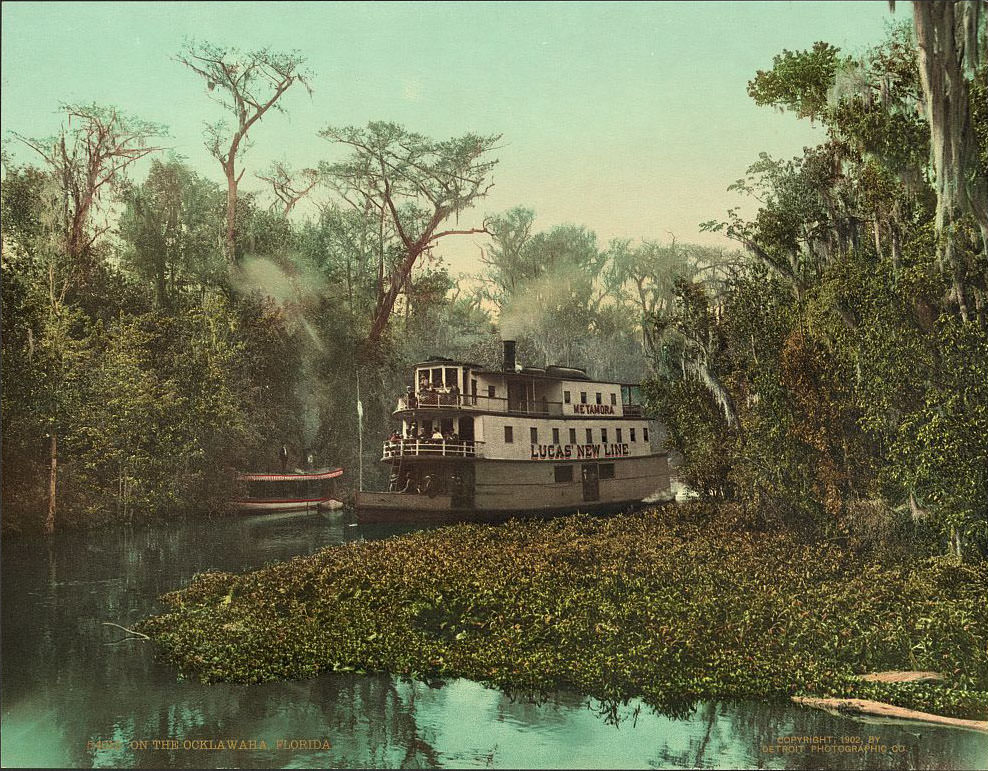
The Ocklawaha River, winding through north-central Florida, was a popular steamboat route in the 19th century. Passengers traveled its narrow, heavily forested channel to reach Silver Springs, one of the largest freshwater spring systems in the world.
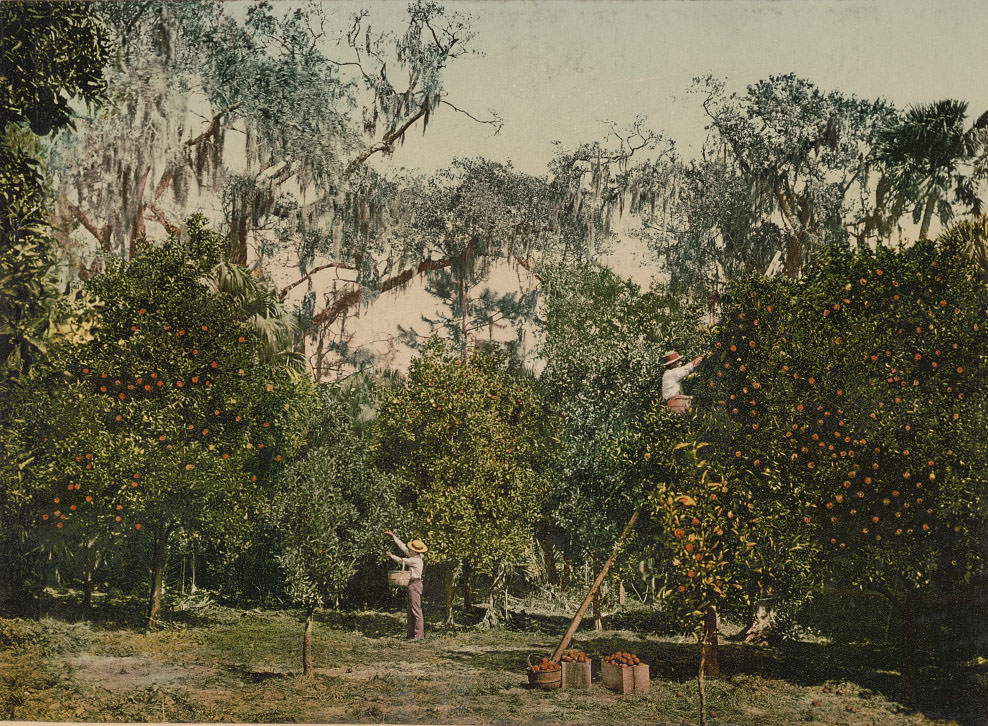
Agriculture defined Florida’s economy in this period. Orange groves and pineapple fields — called pineries — spread across the central and southern parts of the state, supplying Northern markets that had no access to fresh tropical fruit during winter months.
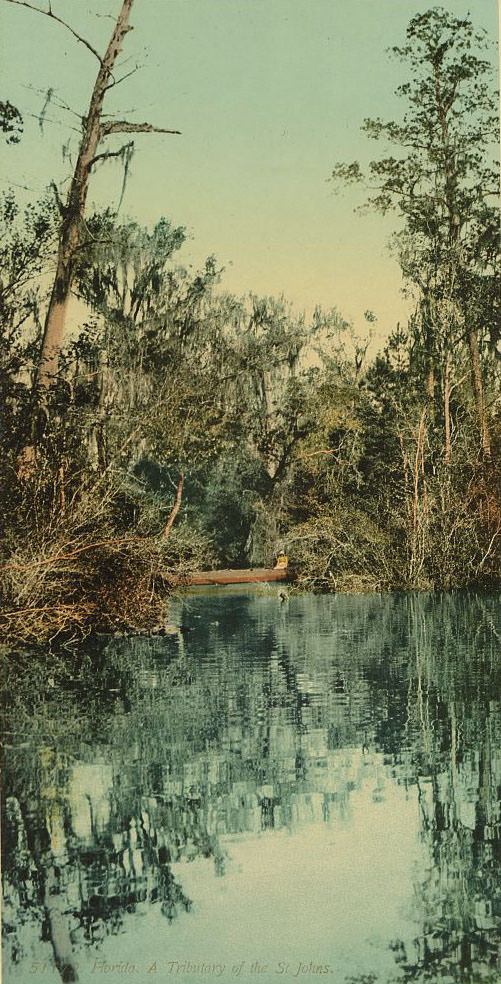
The tributaries feeding into the St. Johns River system snaked through forests and marshland, creating a network of waterways that early settlers used for navigation long before roads were built.
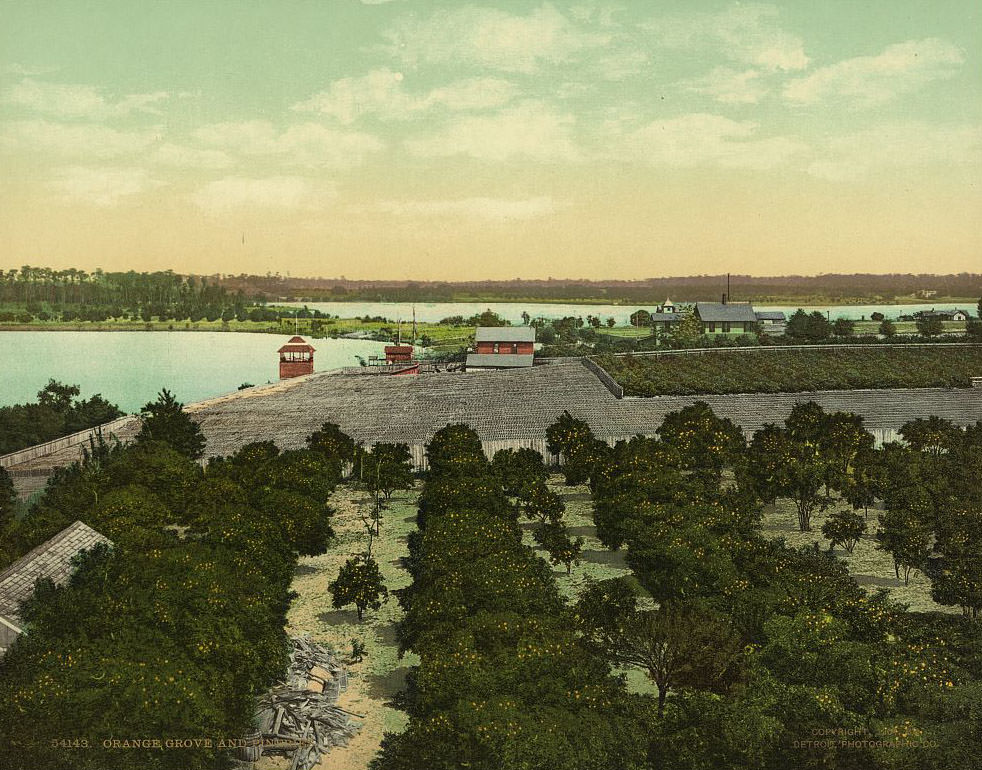
Indian River orange groves produced some of the most prized citrus in the country. The unique combination of the lagoon’s moderating influence on temperature and the region’s sandy soil created ideal growing conditions.
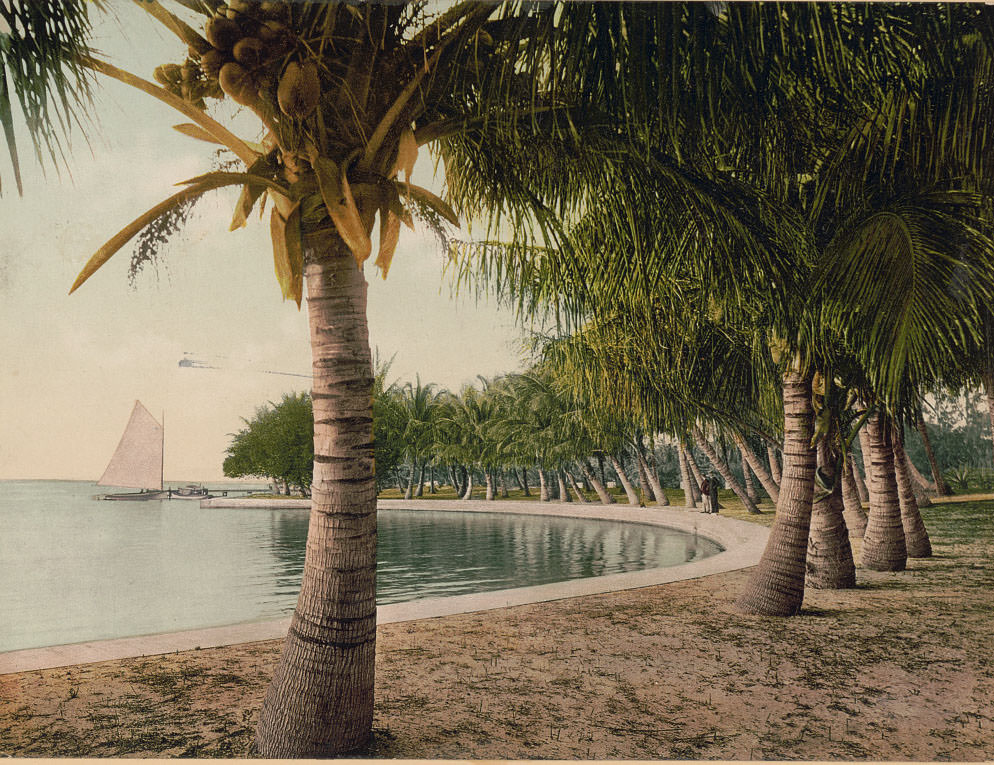
Coconut palms along Lake Worth were a defining feature of the Palm Beach landscape. They had been planted deliberately in earlier decades, partly from coconuts that washed ashore from a wrecked Spanish ship called the Providencia in 1878.
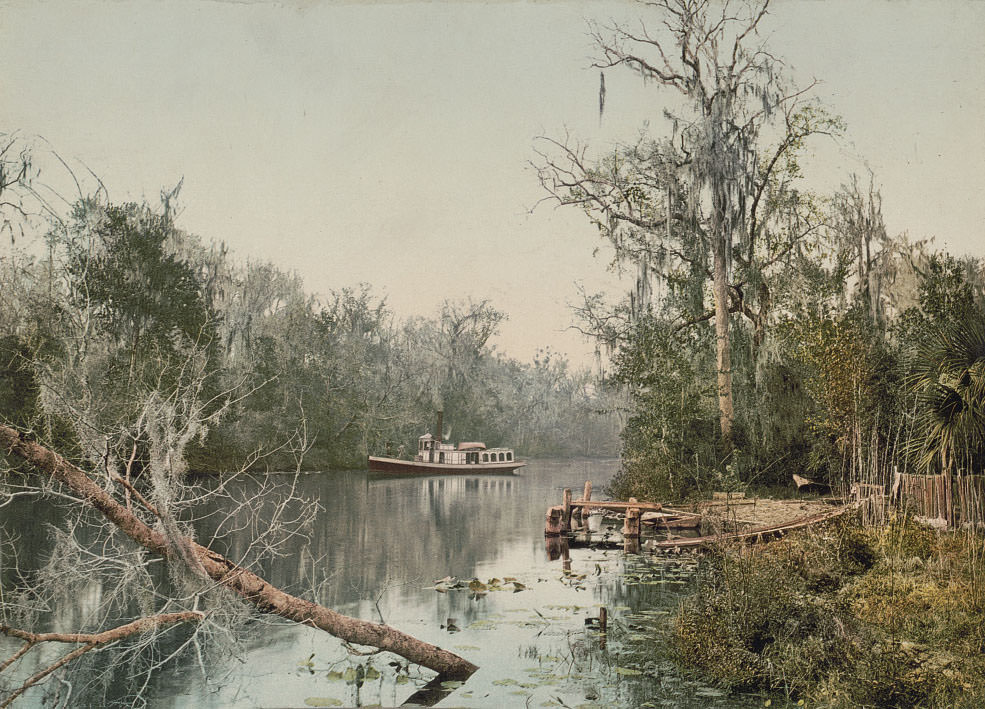
Rice Creek, a tributary of the St. Johns River in Putnam County, flowed through territory that had long been used for timber and turpentine production — two industries that employed large numbers of Black laborers under brutal conditions in the post-Civil War South.
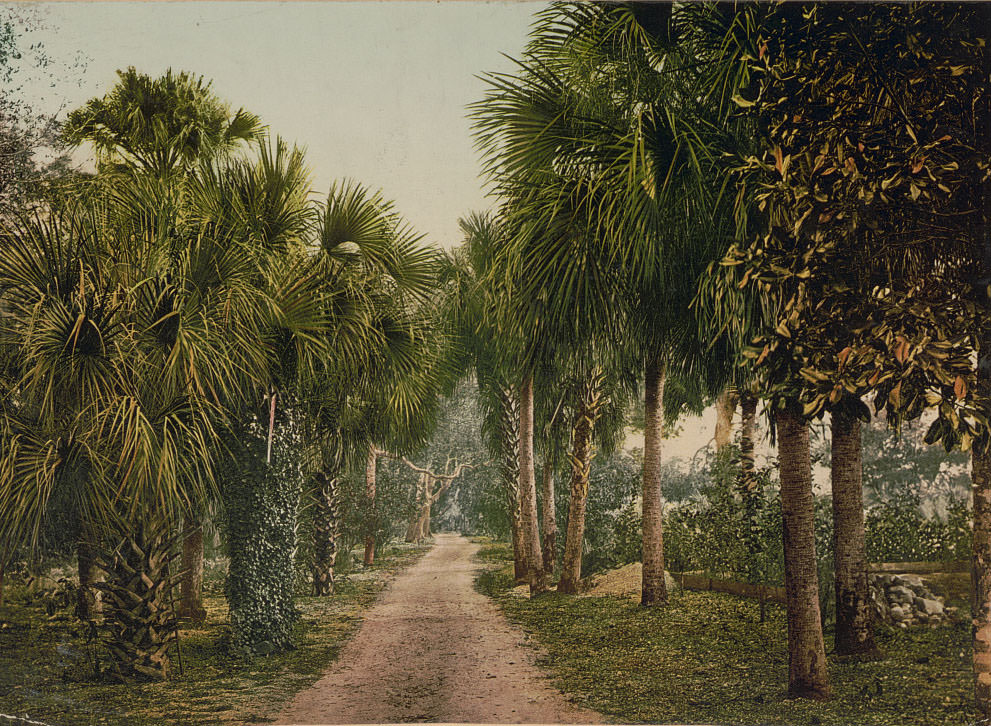
Along the coast near Ormond Beach, palmetto trees — the same species featured on Florida’s state flag — filled the landscape. They were tough, salt-tolerant plants that defined Florida’s subtropical vegetation as much as any other species.
Spanish moss draped over the Royal Arch Oaks near Ormond was one of the most evocative sights in Florida. The moss — not a true moss but an air plant — hung from live oaks across the state, giving Florida’s forests a distinctly moody, atmospheric quality that photographers of the era captured again and again.