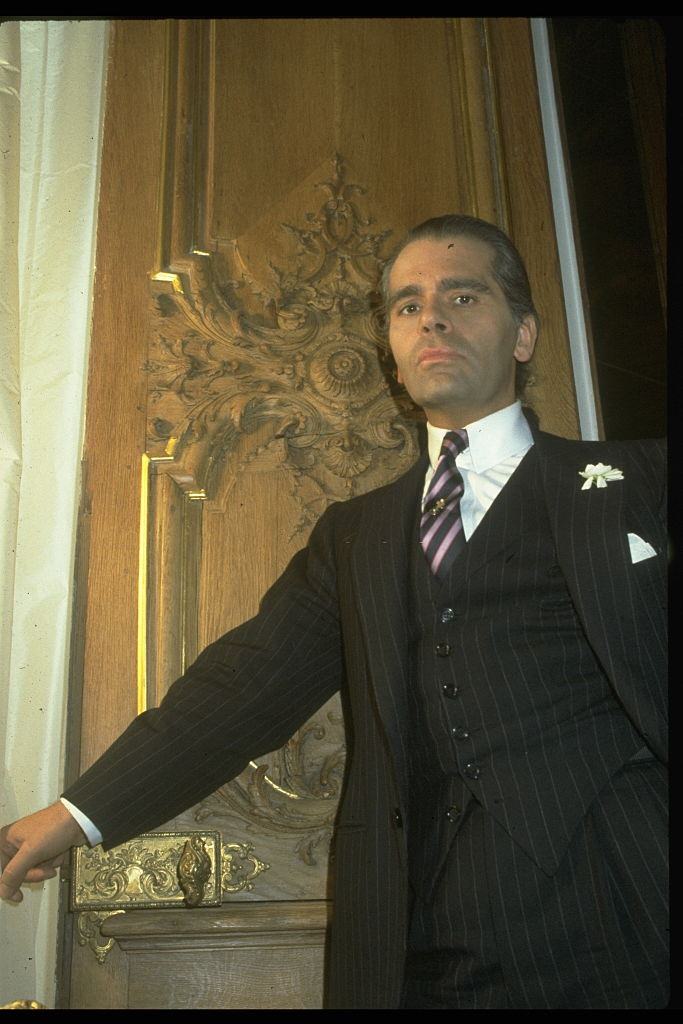
Karl Lagerfeld was one of the most recognized names in the history of fashion. Born in Germany, he built a career that spanned decades and crossed continents, leaving a mark on nearly every major fashion house he touched. Vogue Magazine once called him the “unparalleled interpreter of the spirit of the moment” — a title he earned through relentless creativity and an uncanny ability to read what the world wanted to wear before the world knew it itself. He worked across an extraordinary range of brands, including Chanel, Fendi, Chloé, Valentino, H&M, and Diesel, adapting his vision to suit each label’s identity without ever losing his own.
Lagerfeld’s entry into fashion was sharp and deliberate. In 1955, he entered a coat design competition organized by the International Wool Secretariat. His work caught the eye of Pierre Balmain, who hired him on the spot. That single competition set the entire arc of his career in motion. He later studied art history in Rome, an experience that deepened his eye for aesthetics and historical context. During his time in Rome, he worked for the fashion house Tiziani, before going on to collaborate with Charles Jourdan, Krizia, and Valentino.
In July 1958, Lagerfeld presented his first collection at a two-hour exhibition. The collection was released under the name “Roland Karl,” but it failed to impress critics and buyers. Rather than retreat, he kept working. Two years later, he released a collection of small, elegant hats crafted from satin. That second effort earned genuine praise and signaled that Lagerfeld had found his footing.
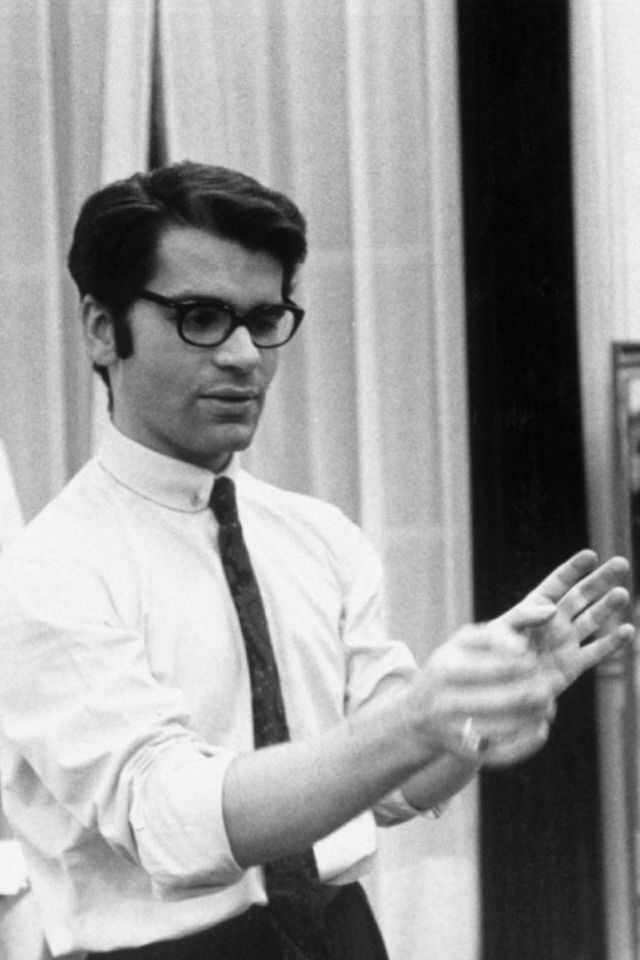
Through the late 1950s and into the 1960s, Lagerfeld was a constant presence in Parisian fashion circles, absorbing influences and building his technical skills. His time at various houses gave him a broad command of garment construction, fabric behavior, and the theater of a fashion show. These years were foundational — every silhouette he later made famous had roots in this period of intense learning and experimentation.
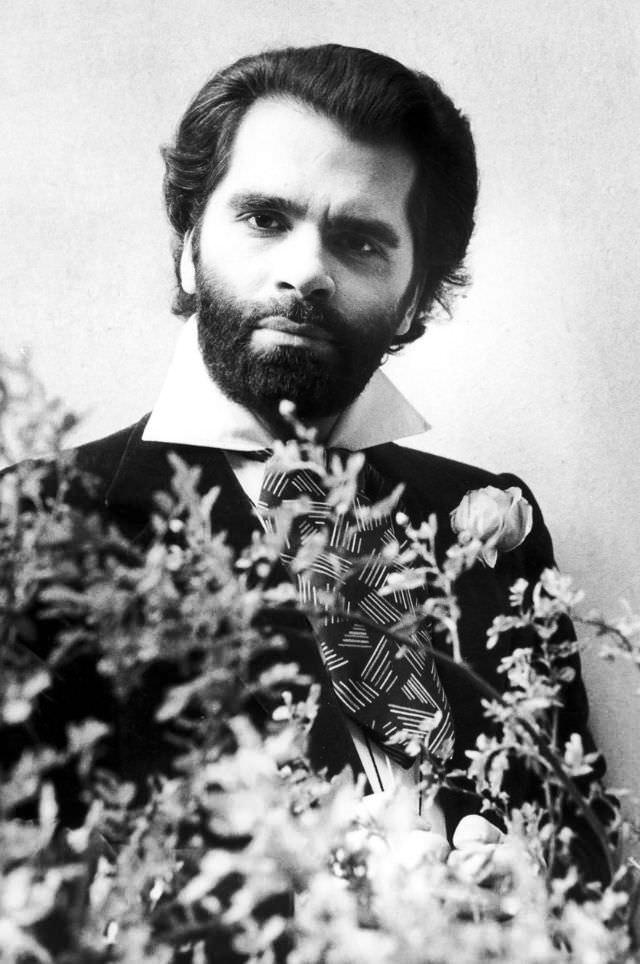
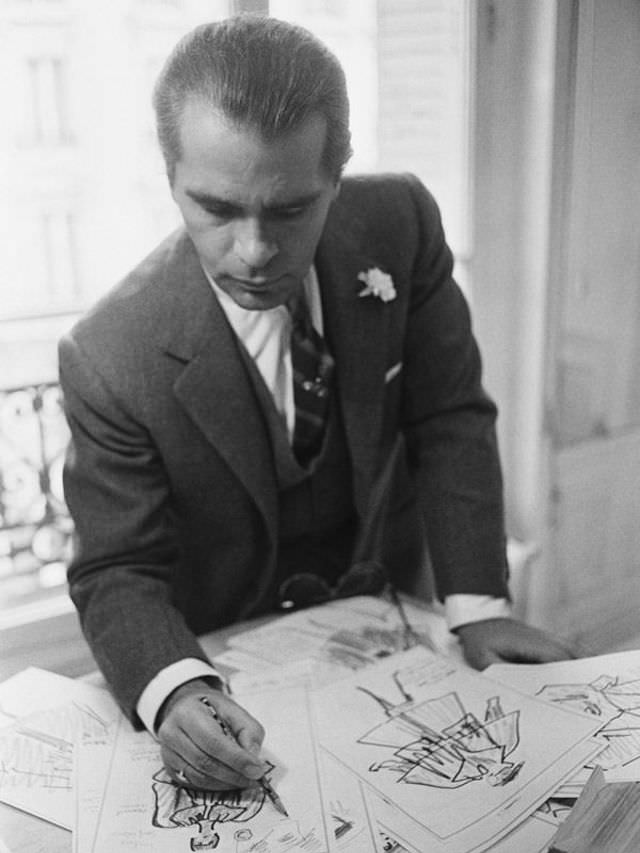
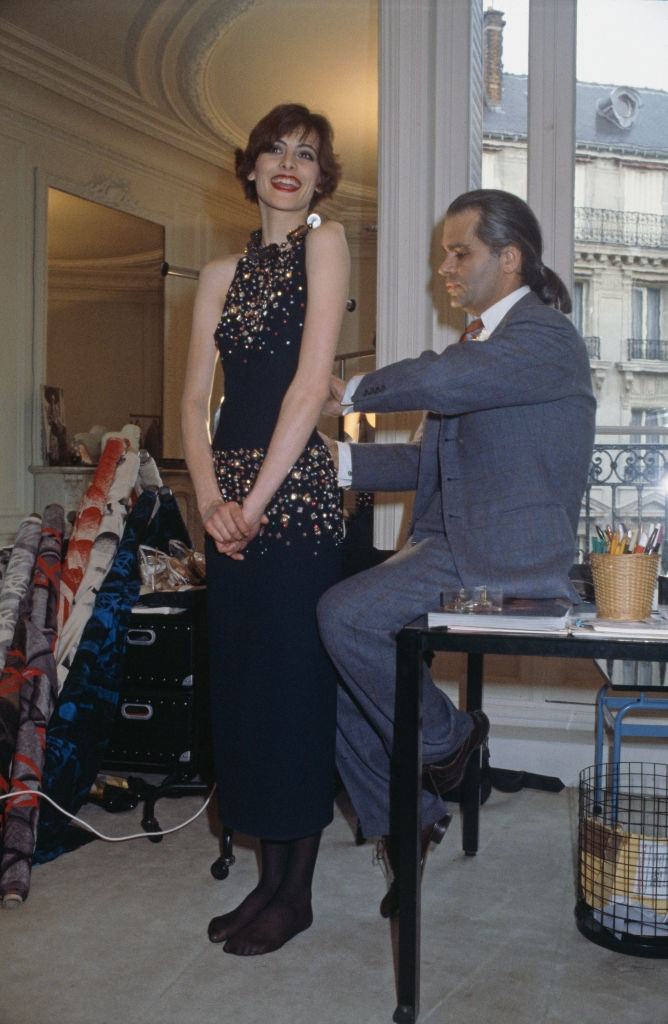
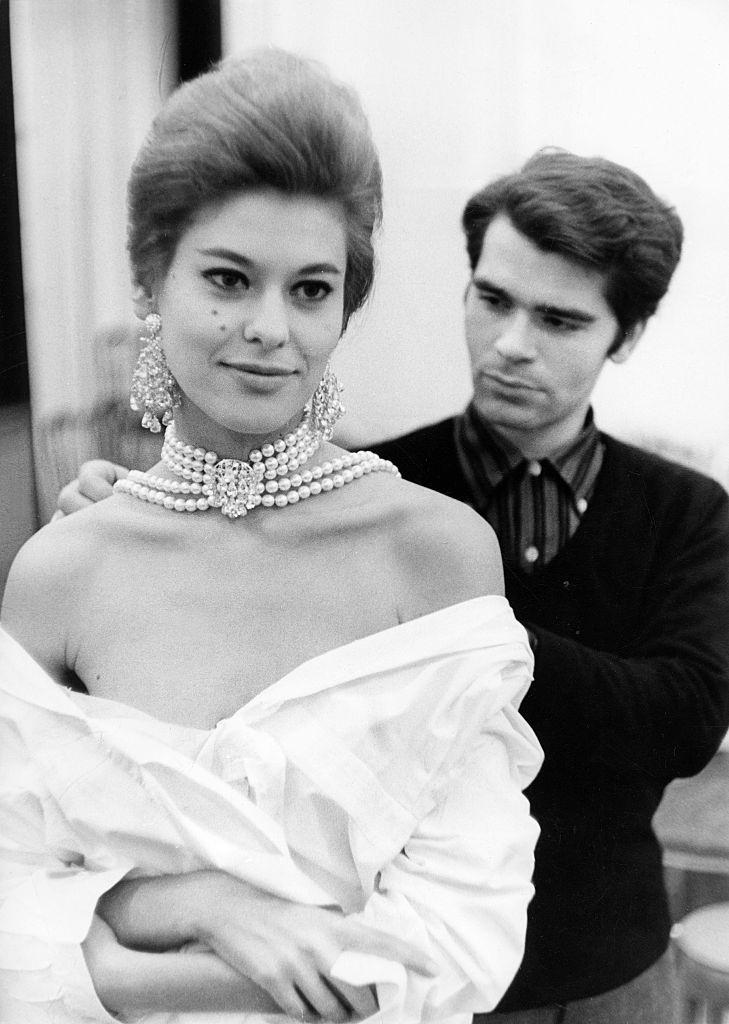
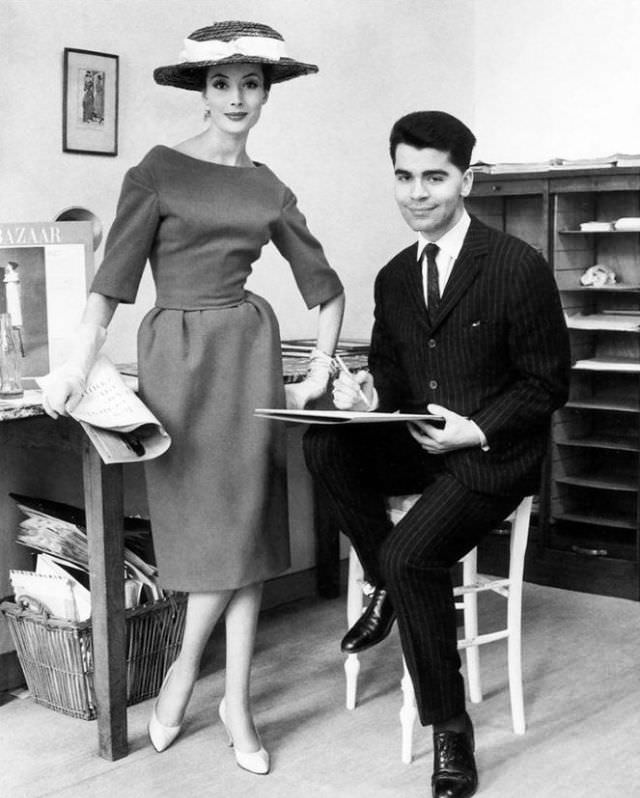
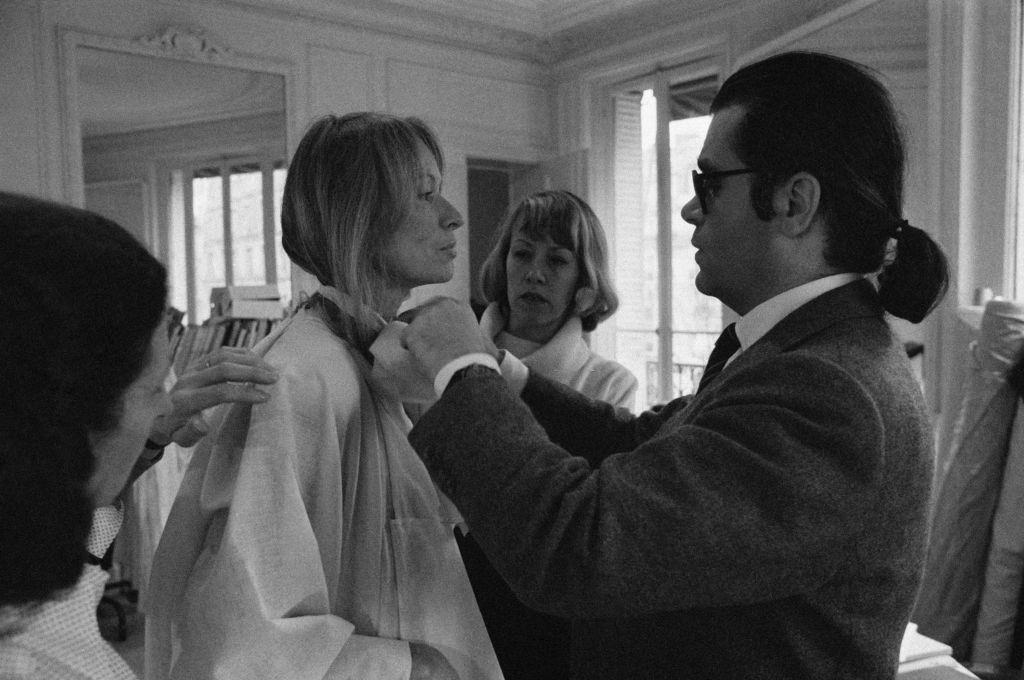
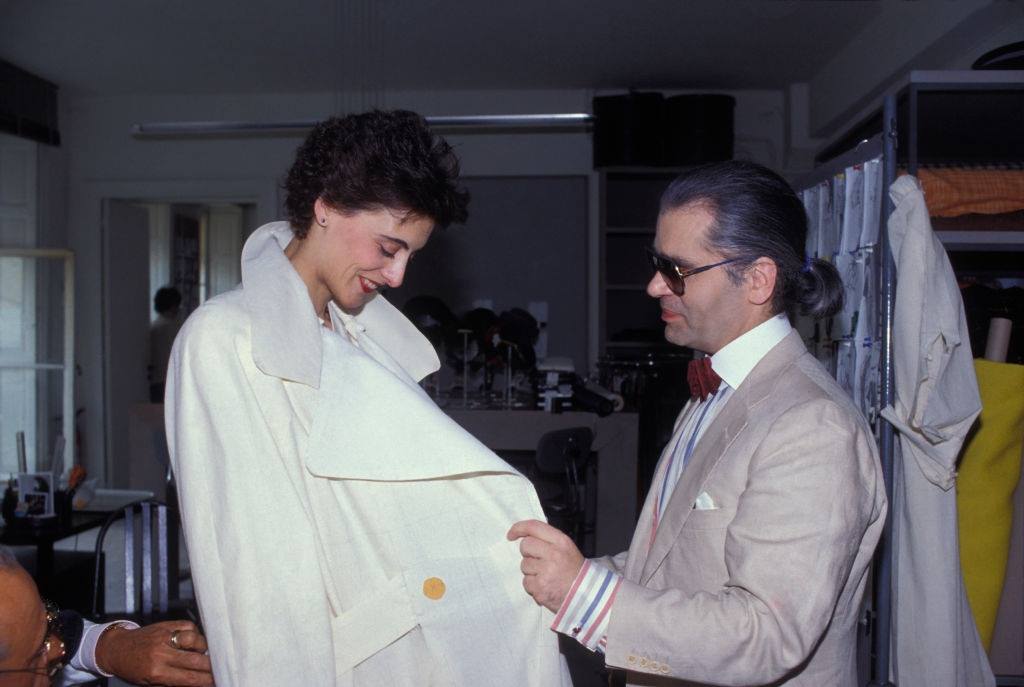
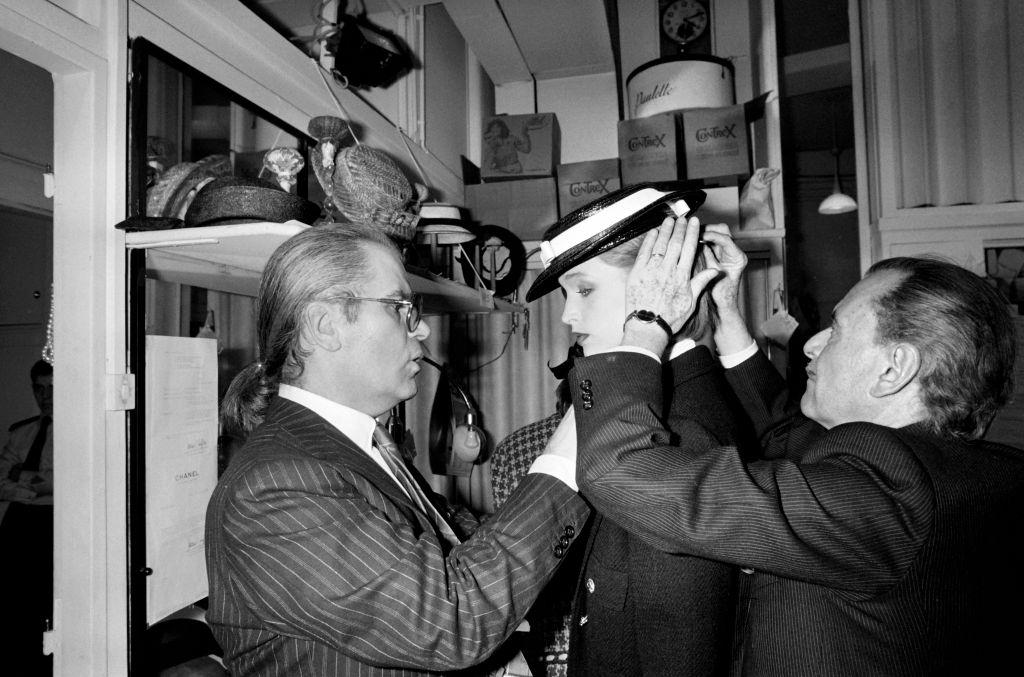
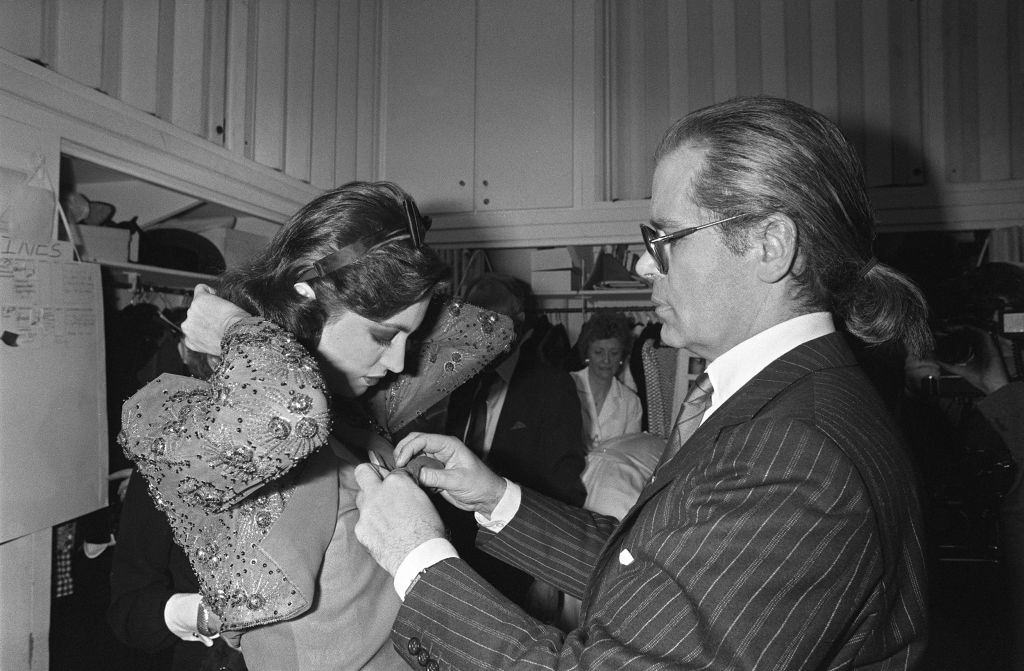
By 1959, Lagerfeld was working directly with models, refining garments in real time before shows. He paid close attention to how clothing moved on a body, adjusting drape, neckline, and structure with precision. His hands-on approach to preparation set a tone that defined his work throughout his career.
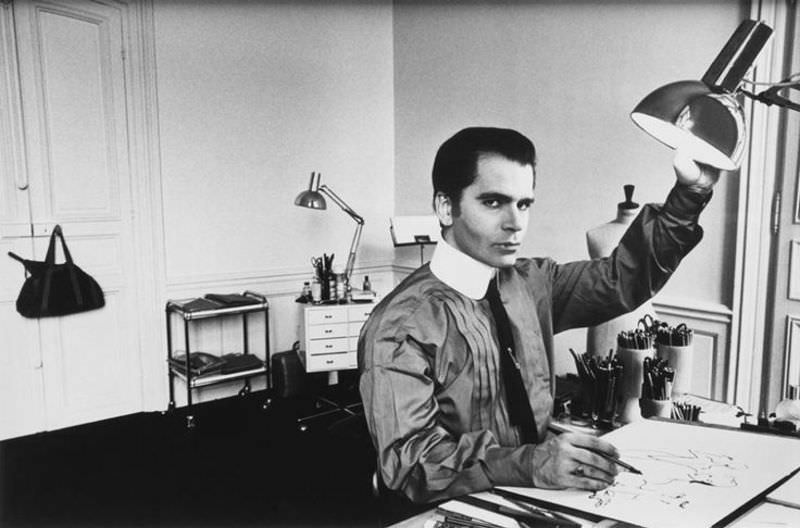
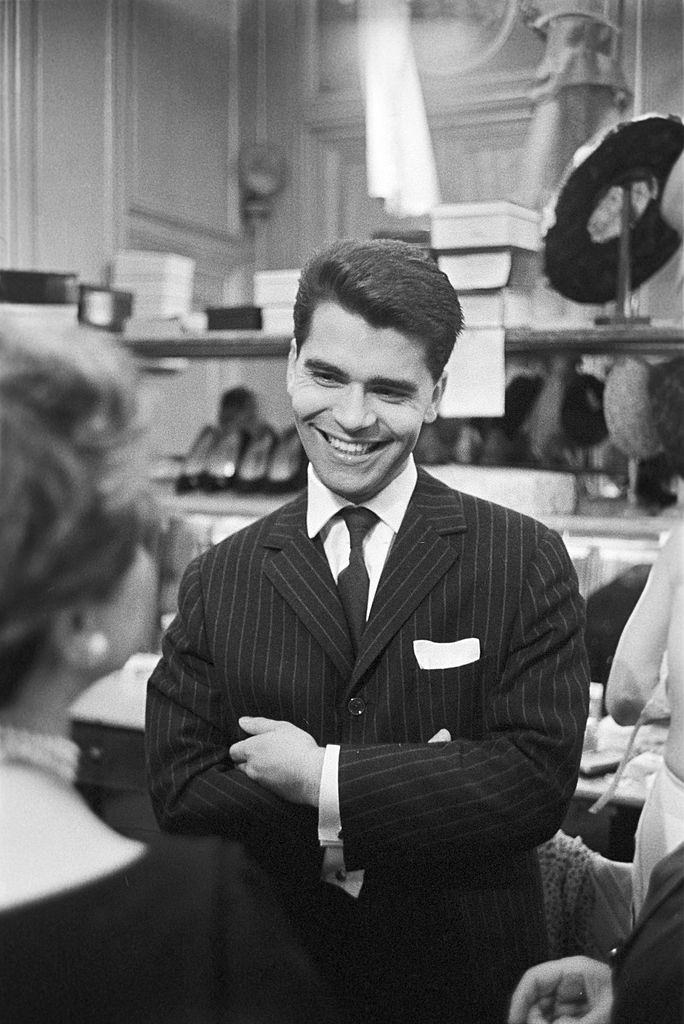
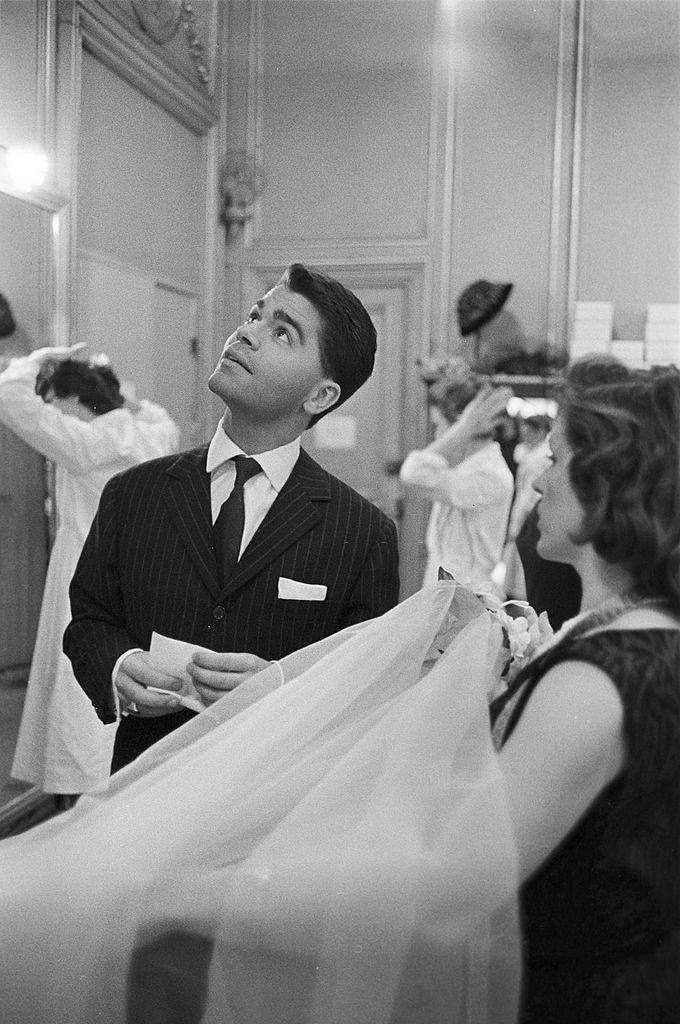
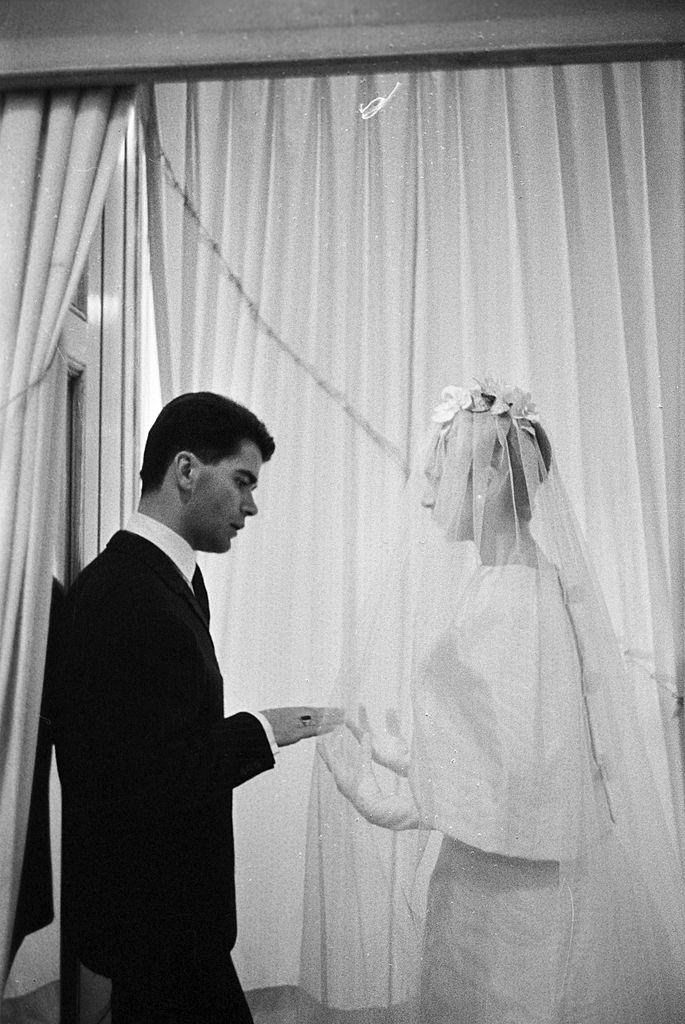
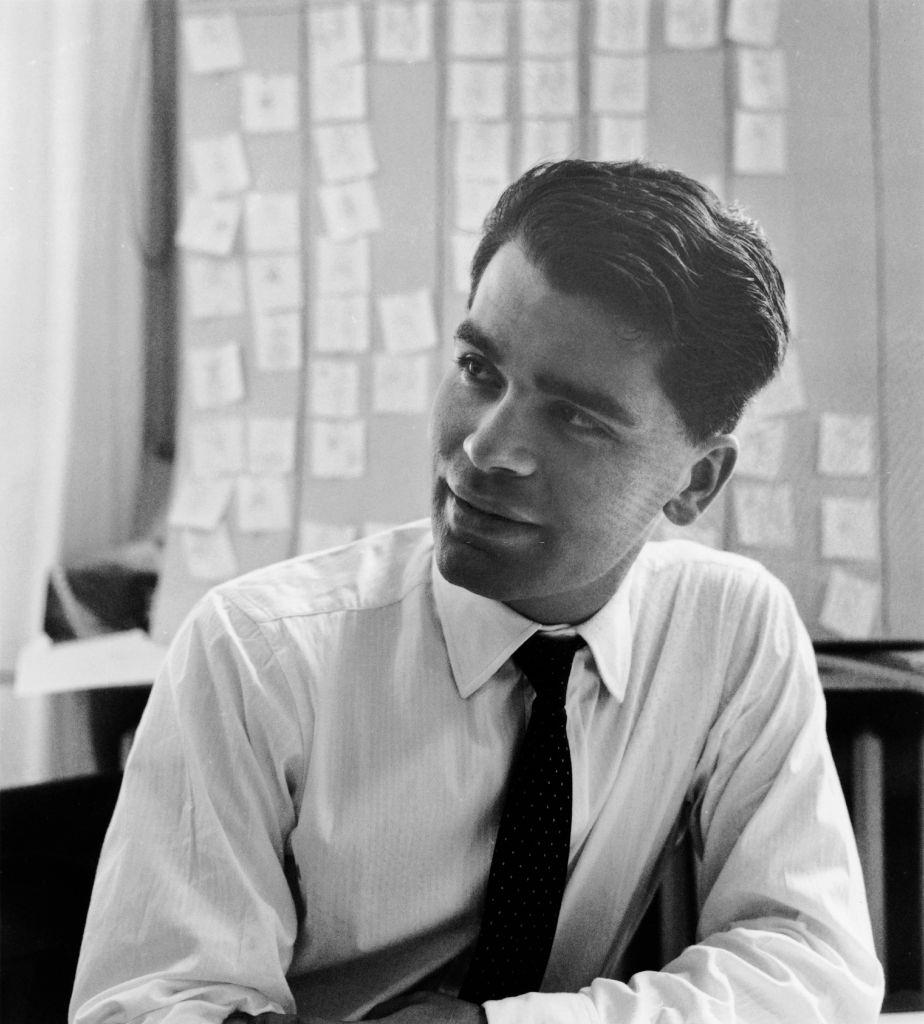
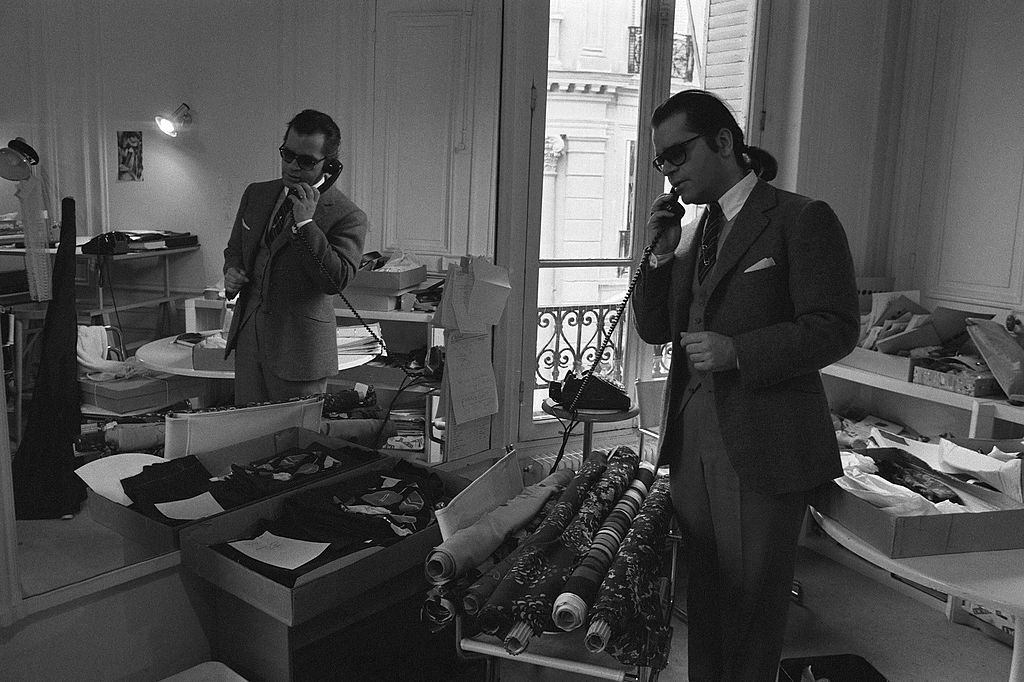
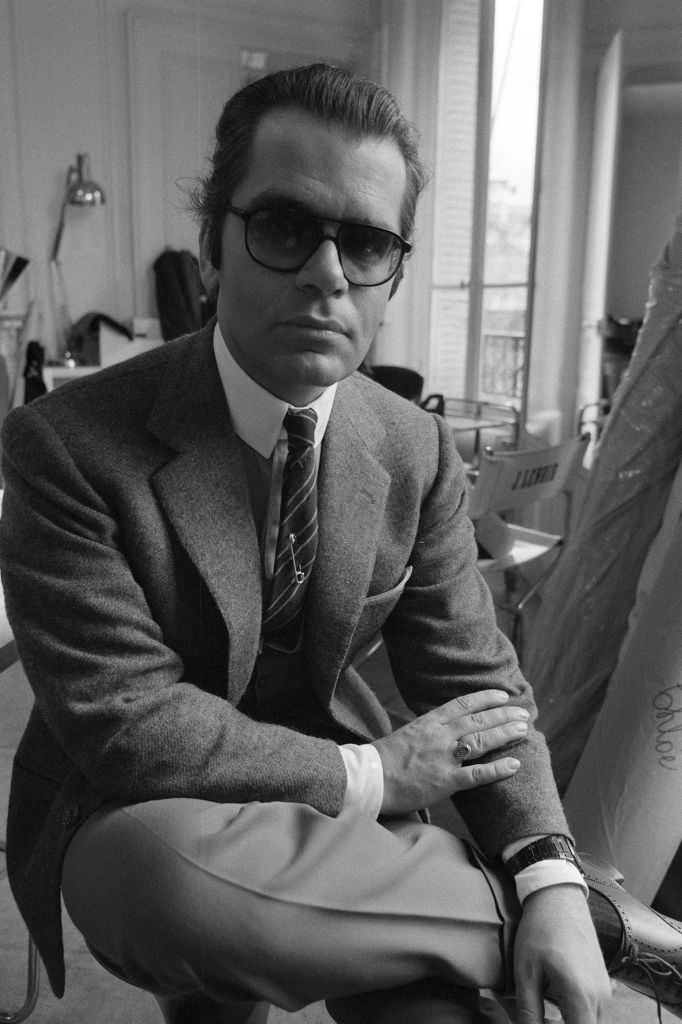
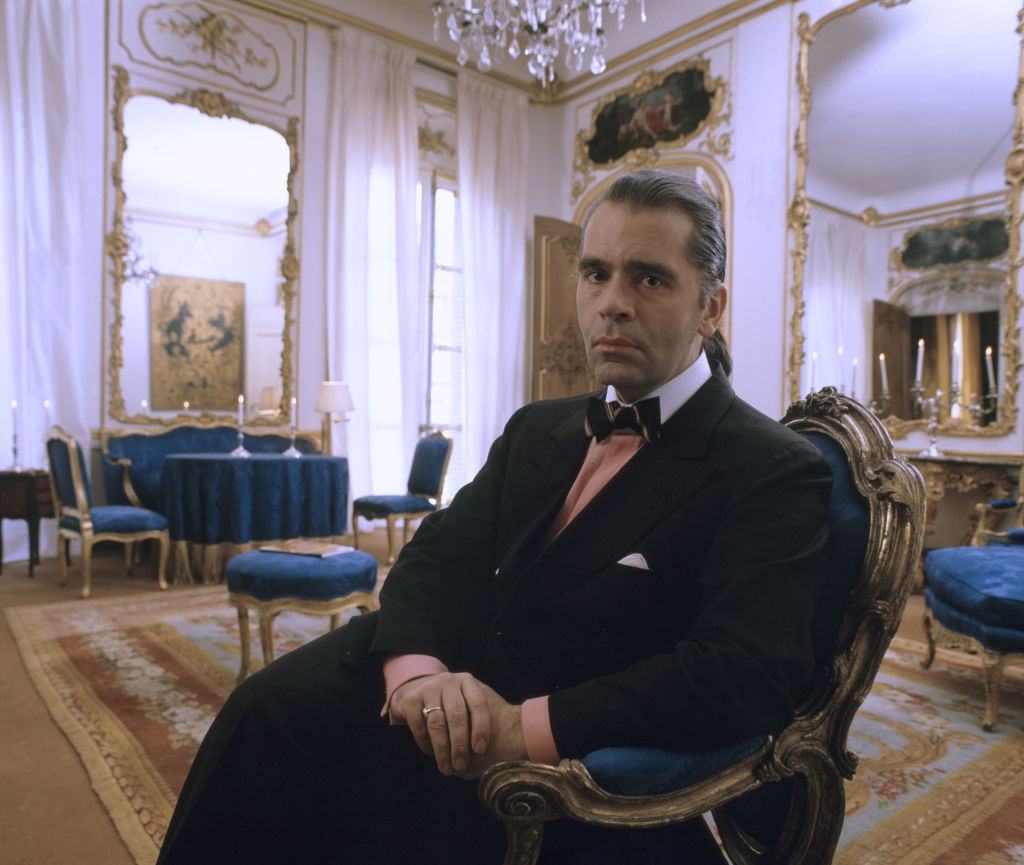
The 1960s brought Lagerfeld further into the center of Paris fashion. He built working relationships, developed a sharp personal style, and began to distinguish himself not just as a craftsman but as a creative director — someone who could shape the identity of a brand, not merely produce garments for it. His office became a space of constant activity, with sketches, fabrics, and reference materials always close at hand.
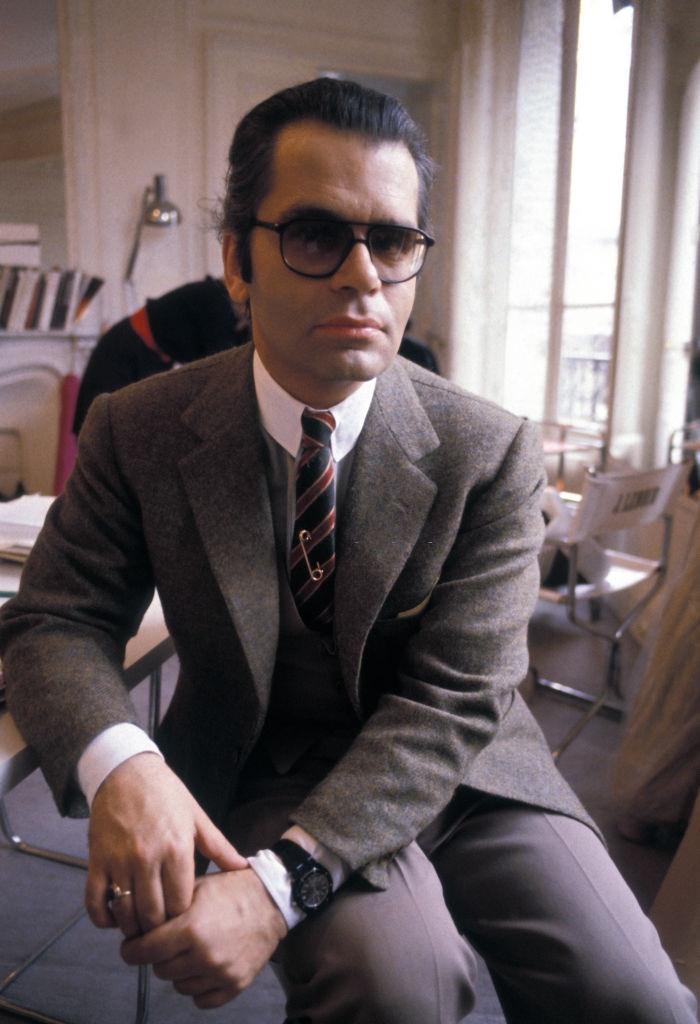
In 1970, after Guy Douvier replaced him at Tiziani, Lagerfeld began collaborating with the Roman haute couture house Curiel. That year, he designed the first Curiel collection — another demonstration of his ability to step into an established house and immediately shape its direction. Through the early 1970s, his name grew increasingly prominent in European fashion, and his association with Chloé deepened into one of the most productive creative partnerships of his career.
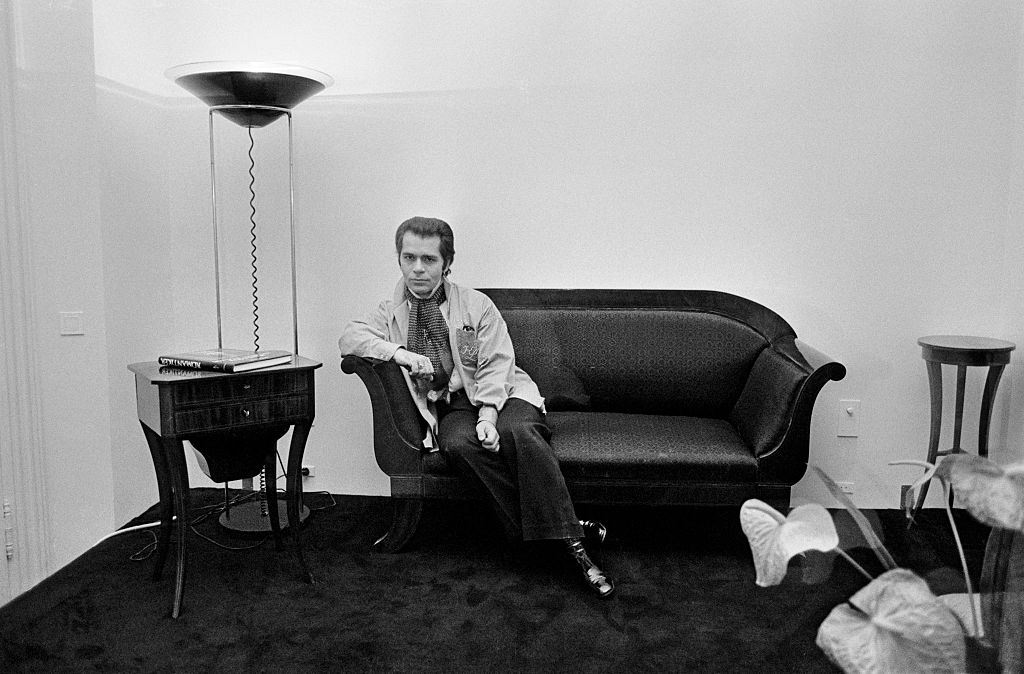
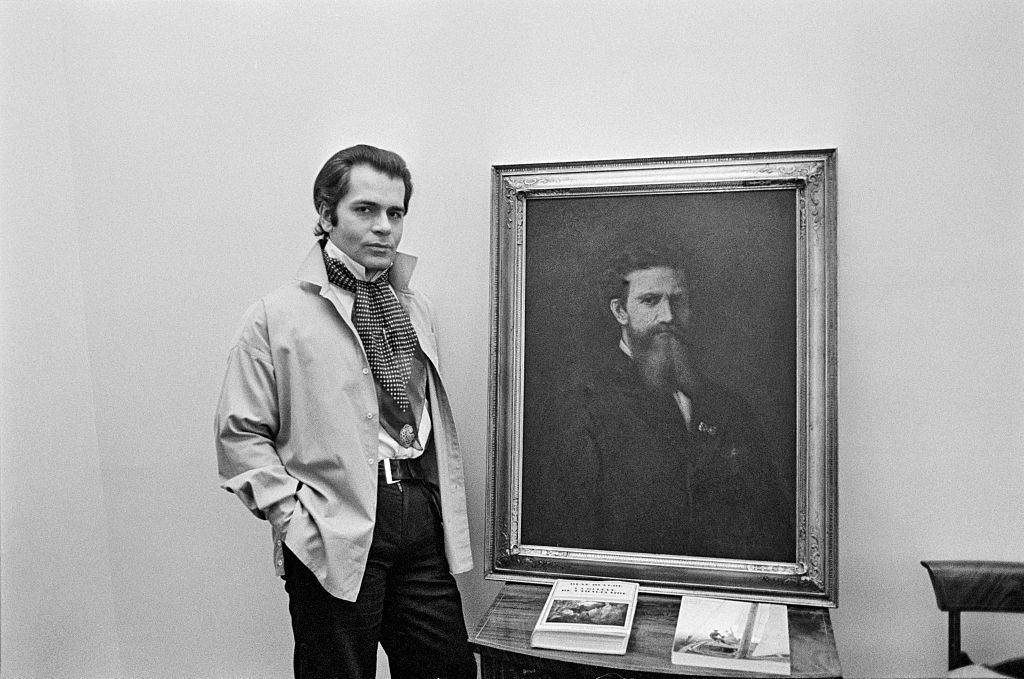
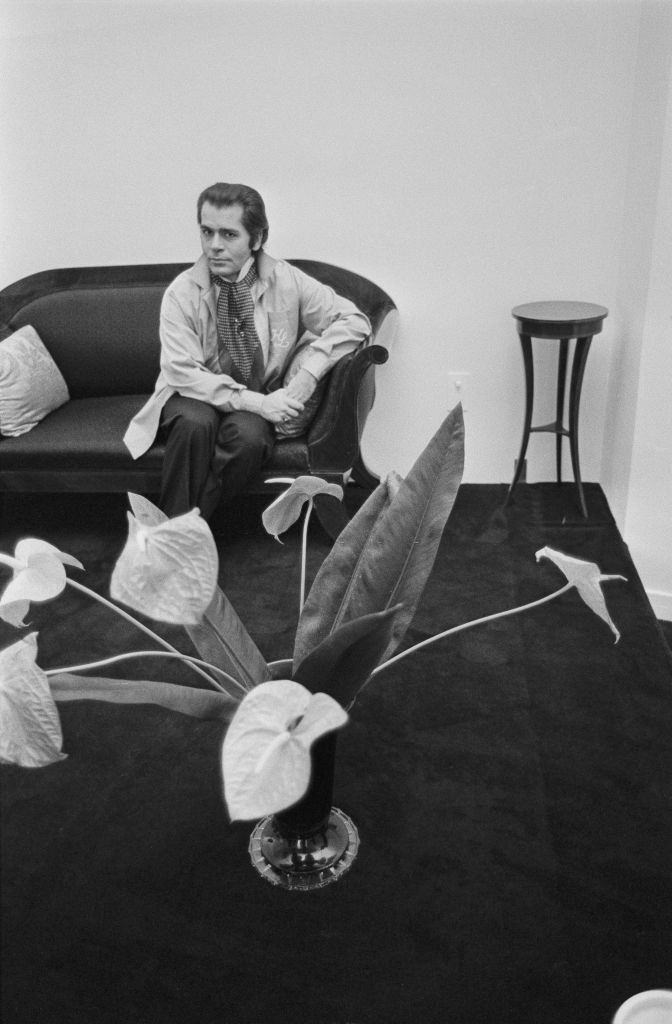
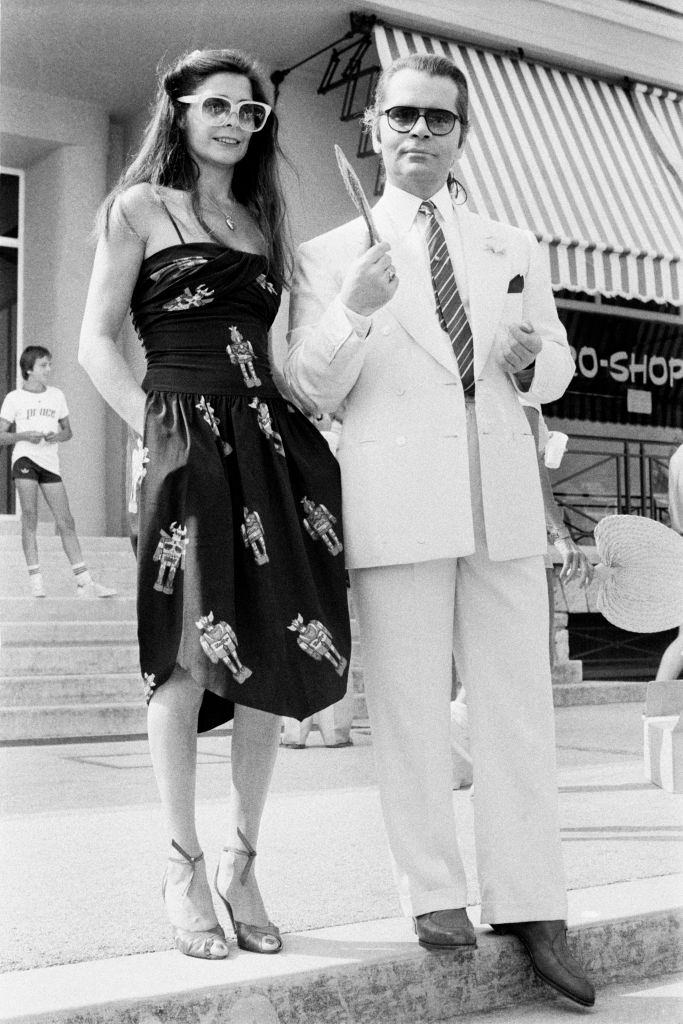
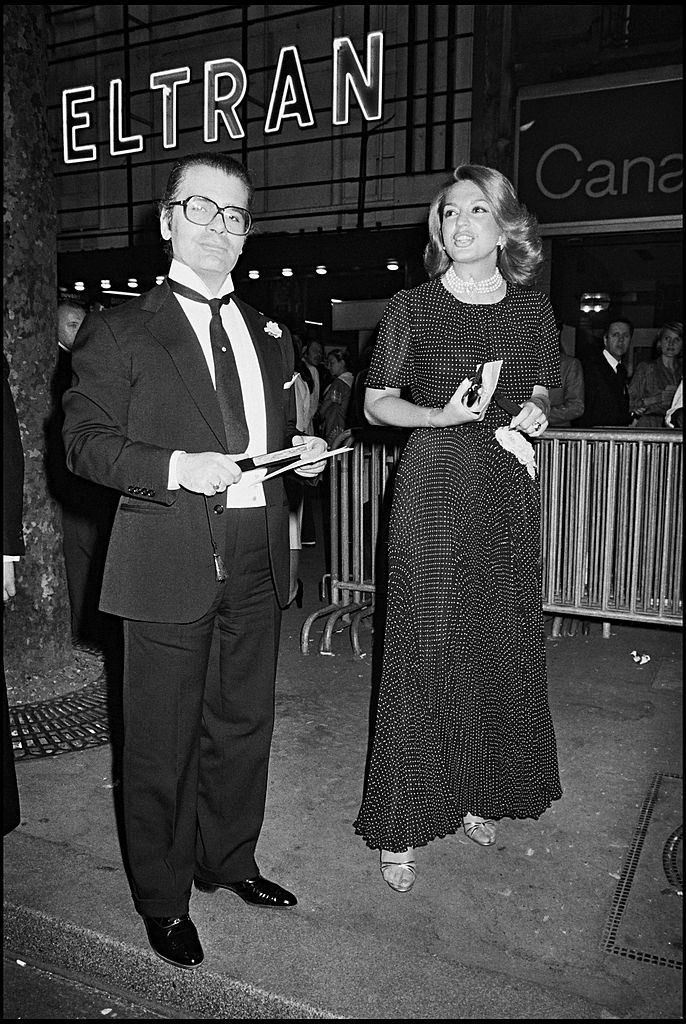
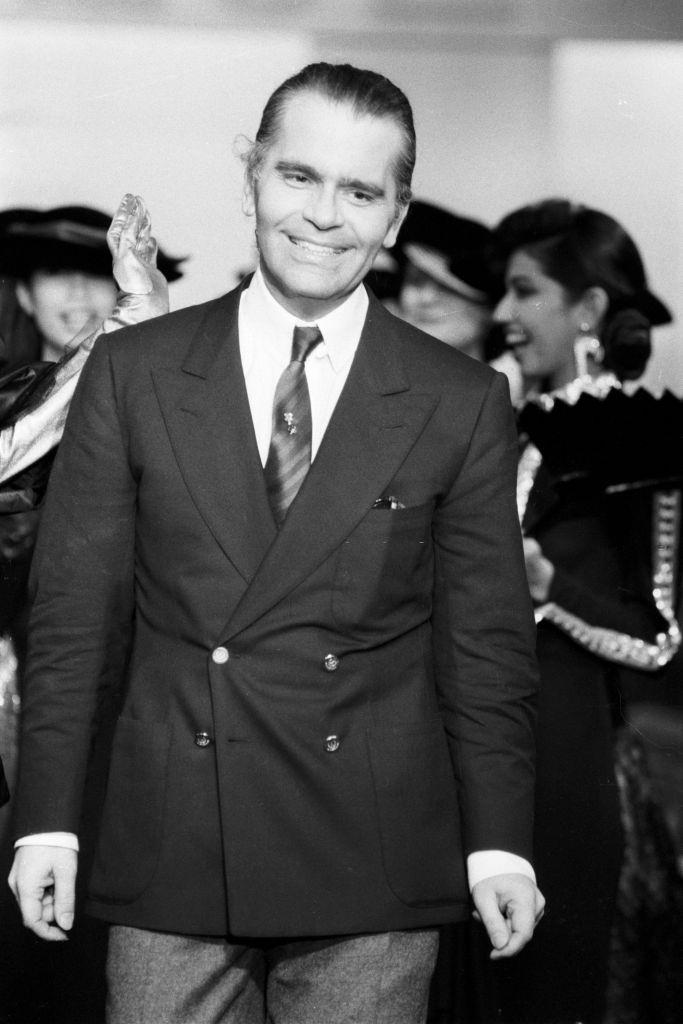
By the mid-1970s, Lagerfeld was one of the most sought-after designers in Paris. His Chloé collections were celebrated for their femininity and easy elegance — a style that felt modern without abandoning craftsmanship. He dressed models in fluid, beautifully cut pieces that moved with confidence on the runway. His social life was equally active. He was a fixture at Paris nightlife, regularly seen at clubs and cultural events alongside aristocrats, actors, and fellow designers.
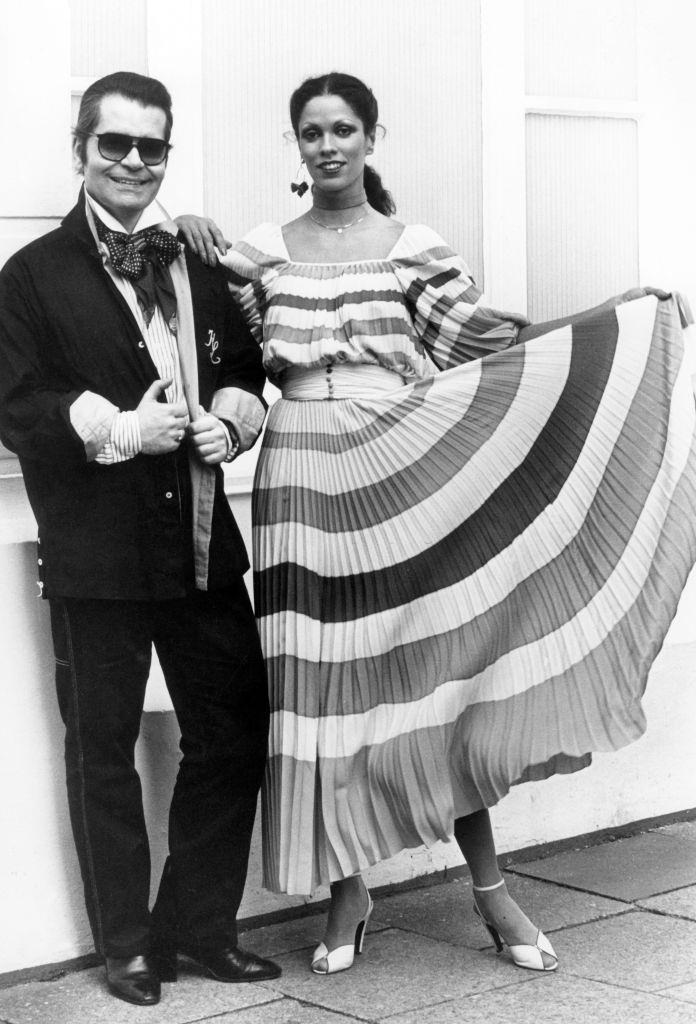
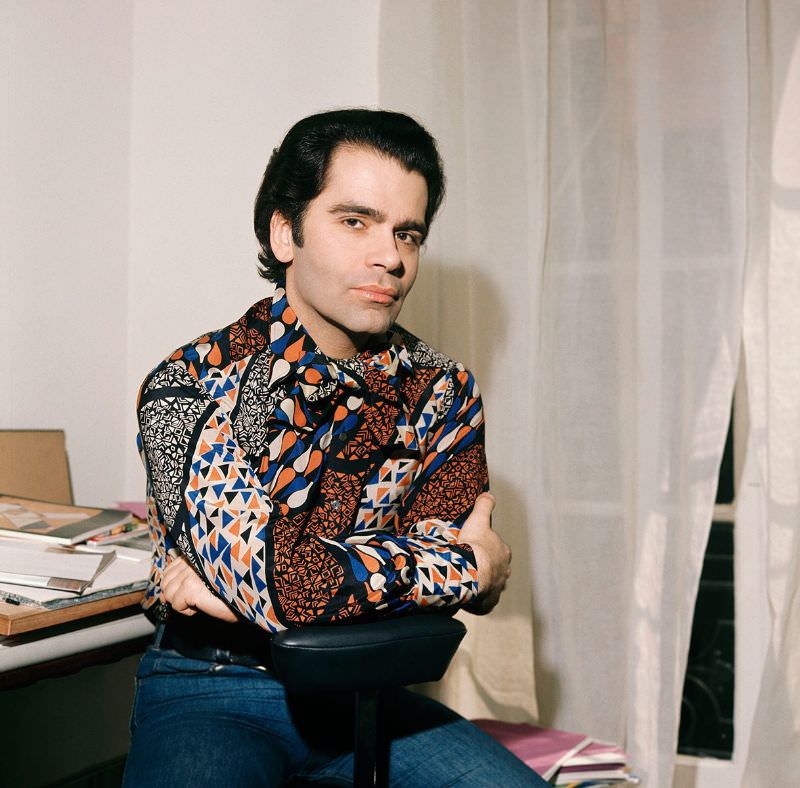
During the late 1970s, Lagerfeld maintained a grueling but productive pace — running his studio in Paris, overseeing collections, and managing a social calendar that connected him to figures across art, film, and politics. He also had a long and well-documented platonic relationship with Jacques de Bascher, a French aristocrat and socialite, which lasted 18 years. Outside of work, Lagerfeld was a serious bibliophile. He assembled a personal library of 300,000 books — one of the largest private collections in the world.
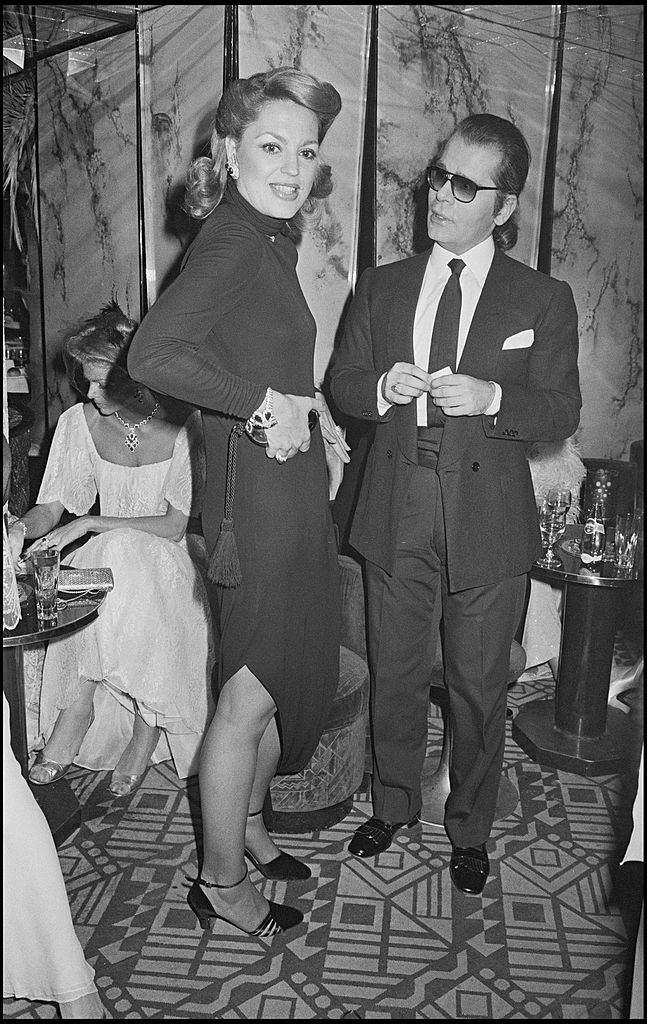
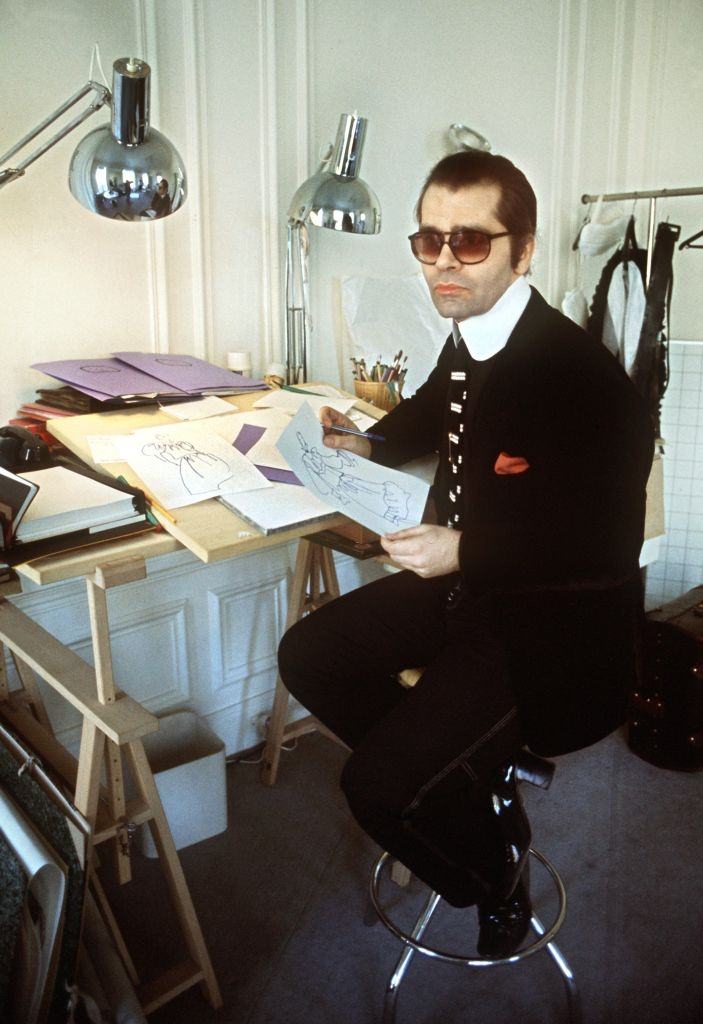
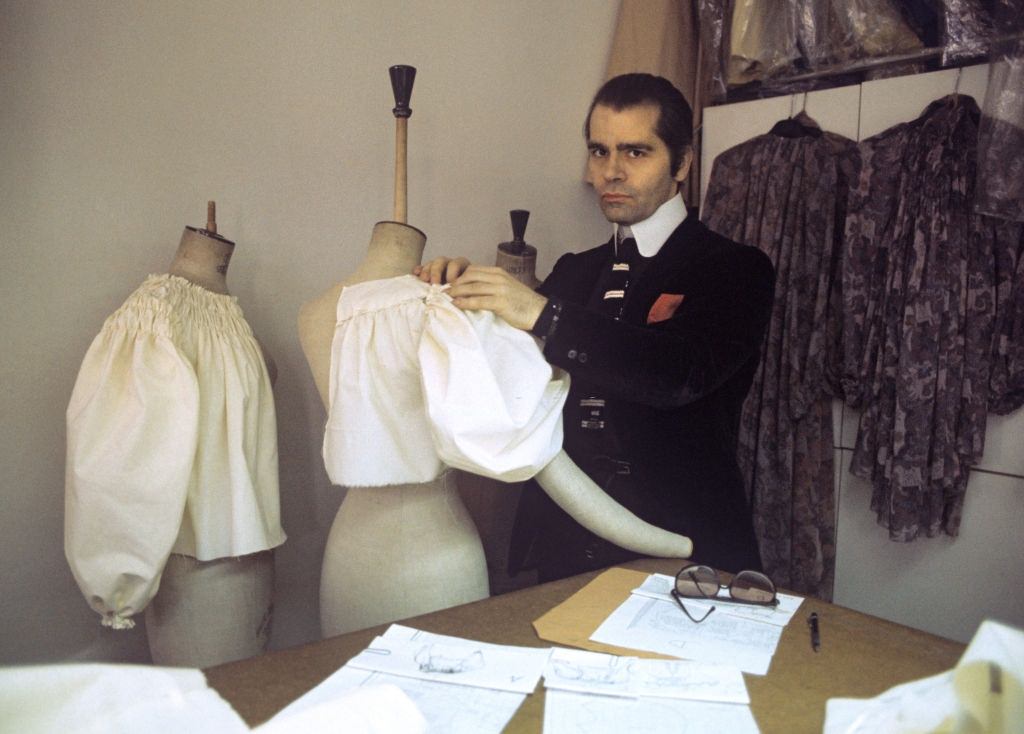
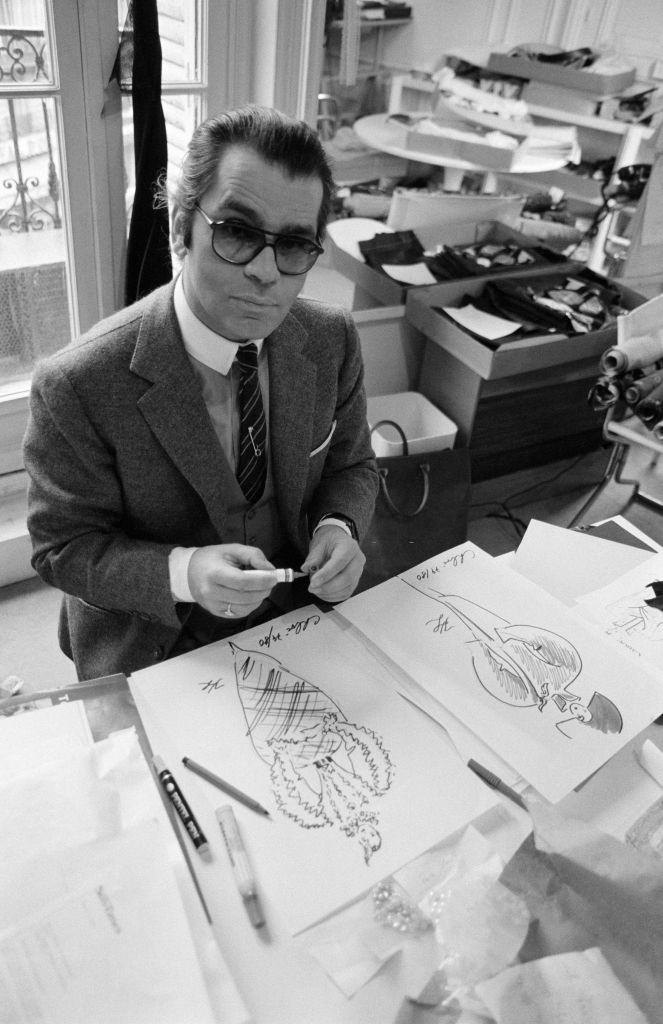
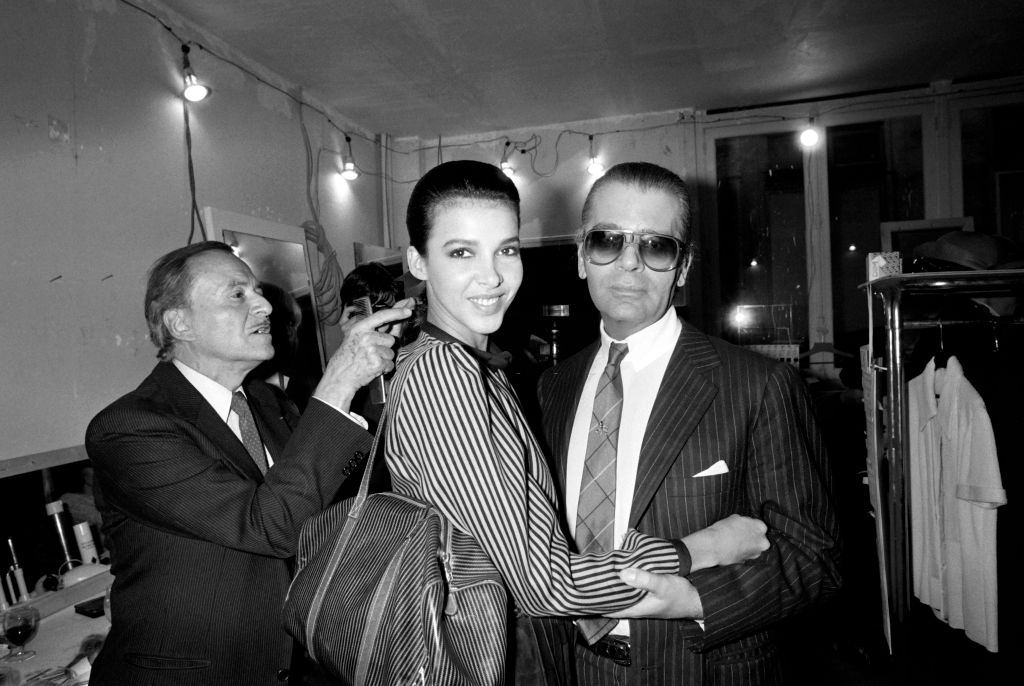
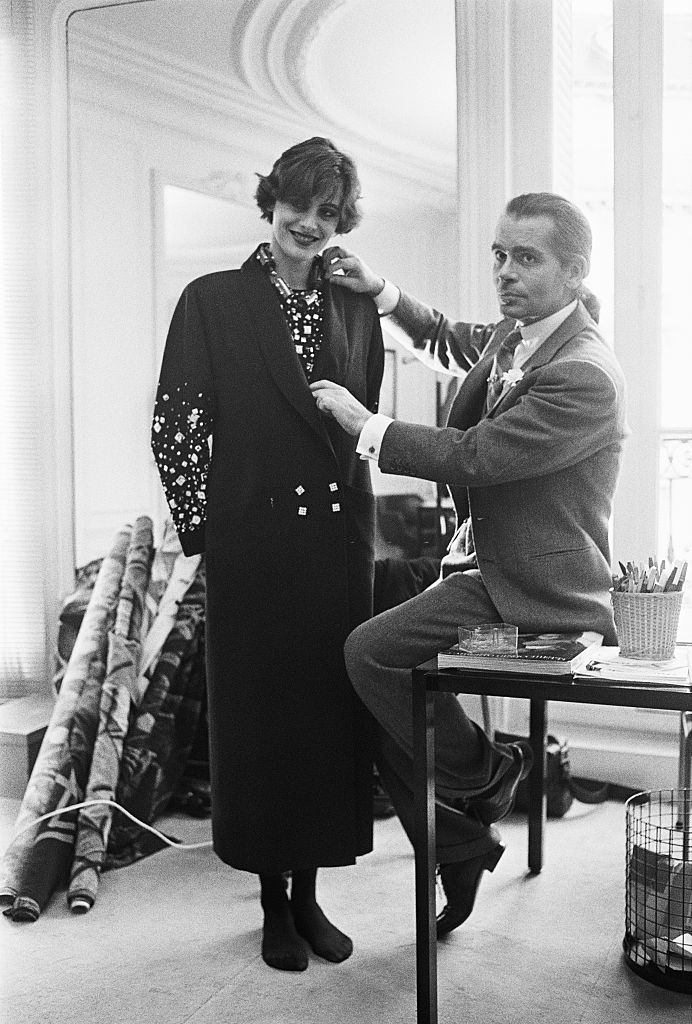
As the 1970s closed, Lagerfeld was operating at full capacity — sketching, directing fittings, attending events, and managing press. His studio in Paris was a hub of controlled energy. He was known for working with meticulous attention to detail, personally adjusting collars, veils, and hemlines on models before shows. Every element of a collection had to meet his standard before it left the atelier.
The early 1980s marked a turning point in Lagerfeld’s career. In the early part of the decade, Chanel — a house that had gone largely dormant since Coco Chanel’s death in 1971 — brought him on board to lead the brand. What followed was one of the most dramatic turnarounds in fashion history. Lagerfeld overhauled the ready-to-wear line, injecting it with energy, wit, and modernity while keeping the house’s classic codes intact. Chanel went from a near-dead brand to a global powerhouse under his direction.
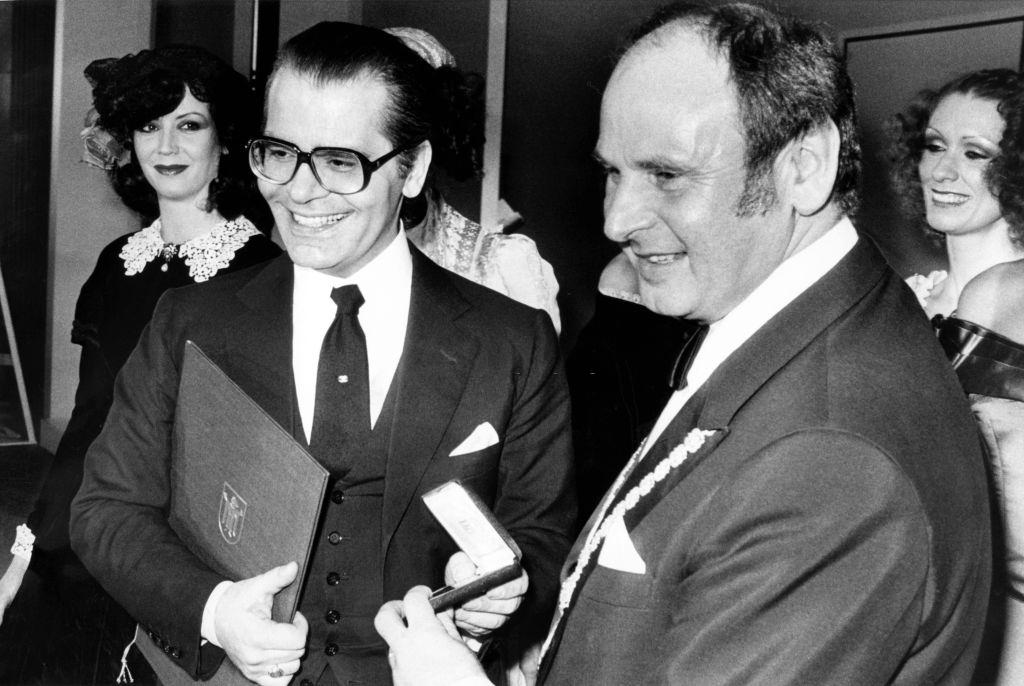
In 1982, Lagerfeld launched his own fragrance, “KL,” presenting it in Hamburg. The launch marked another dimension of his brand-building ambition — he was not just designing clothes but constructing a complete identity around his name. That same year, he was photographed at social events alongside prominent figures from European culture and politics, maintaining the high-profile presence that kept his name in front of the public.
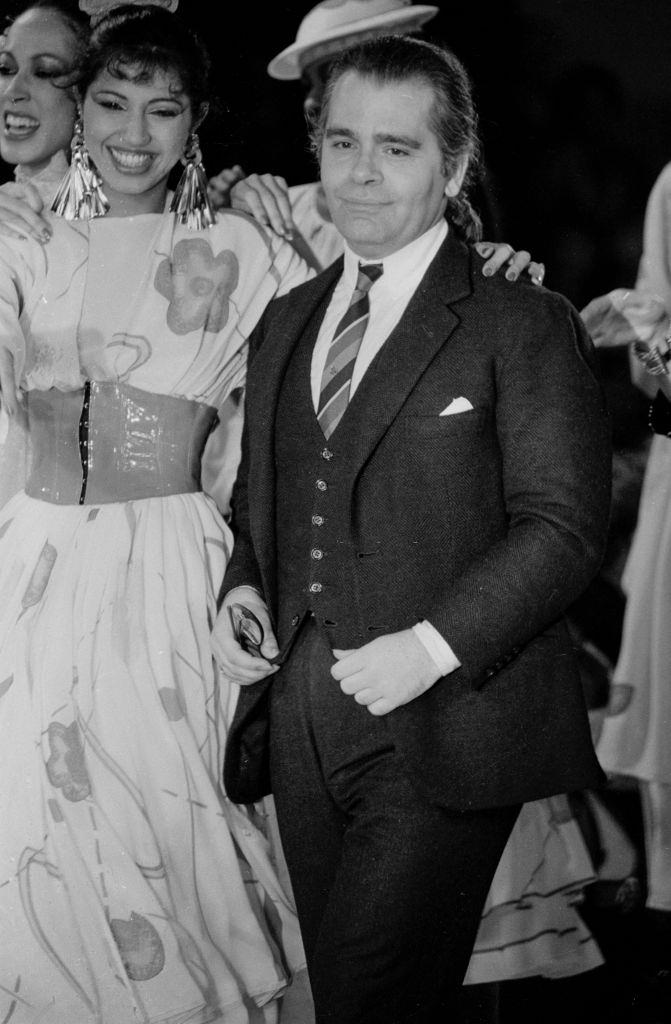
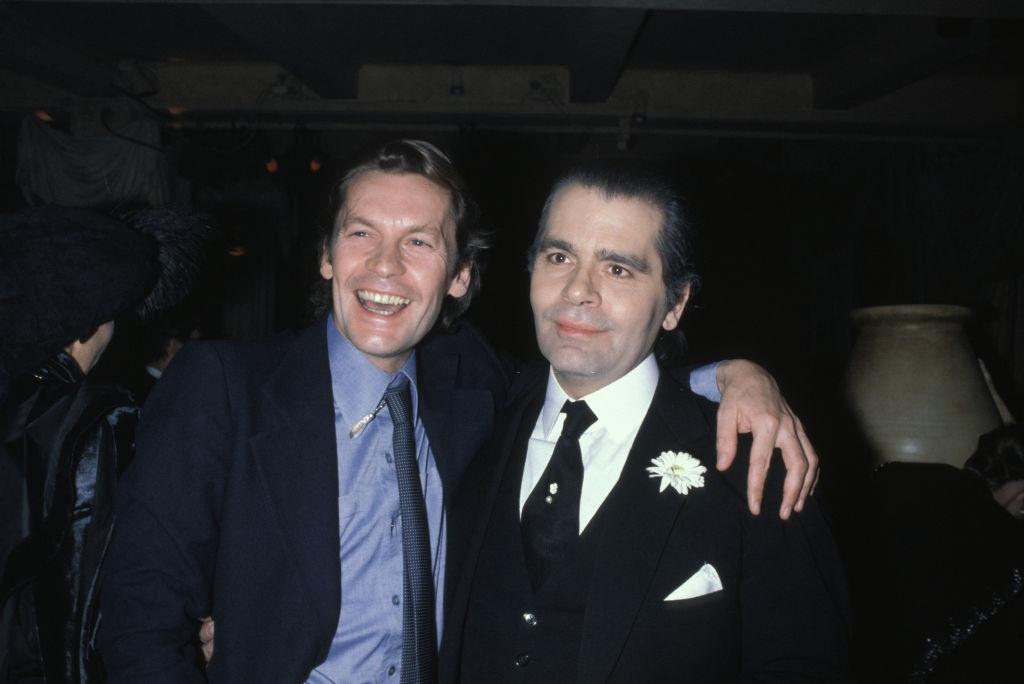
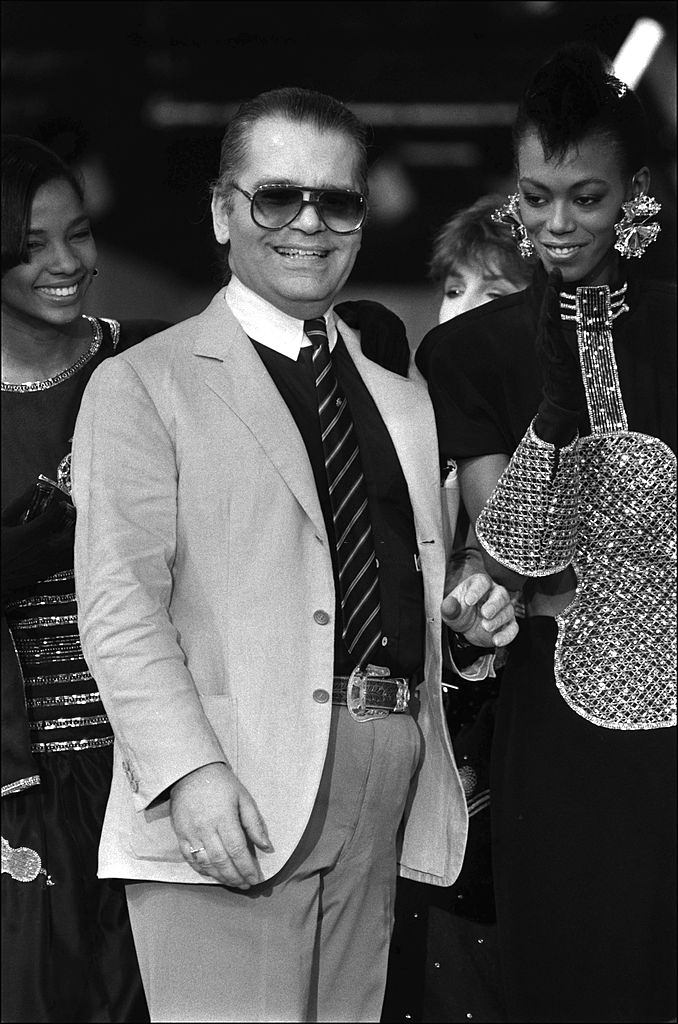
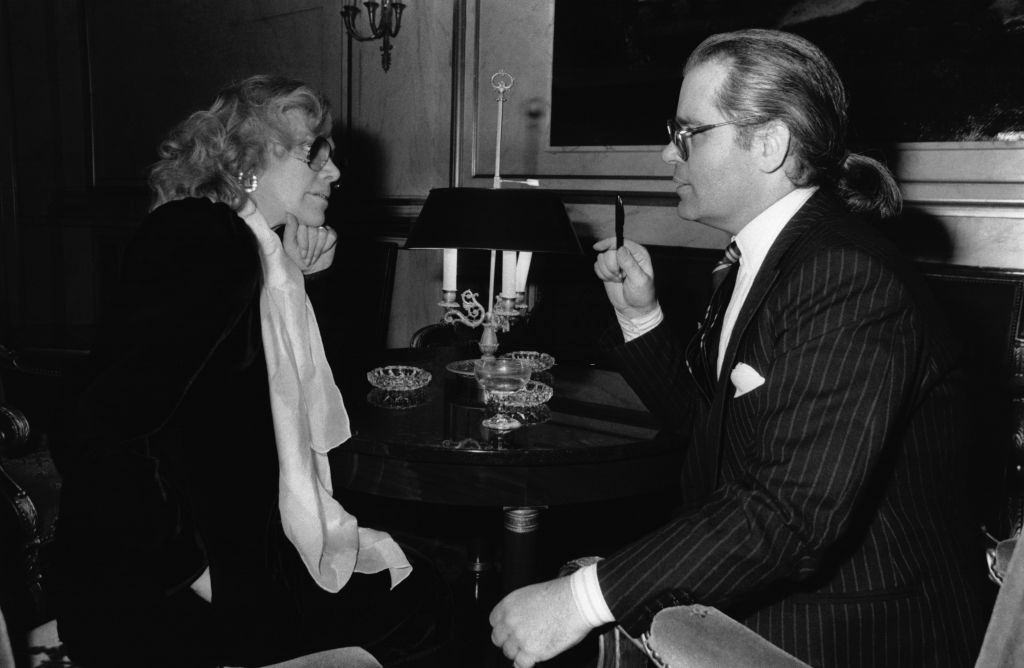
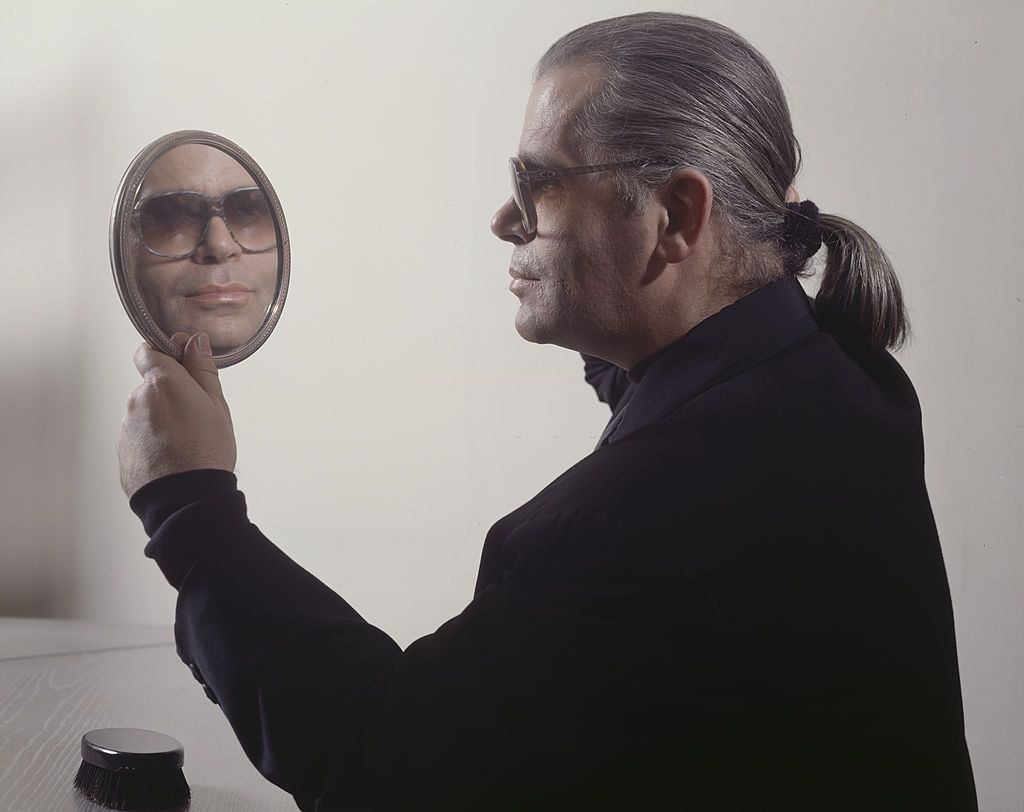
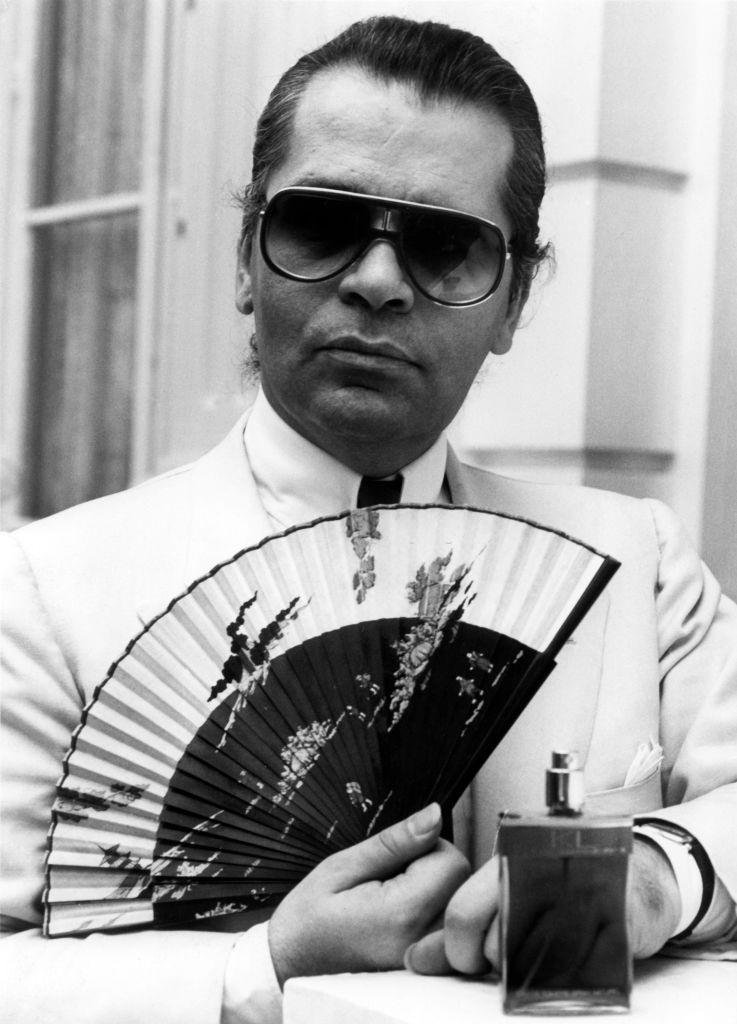
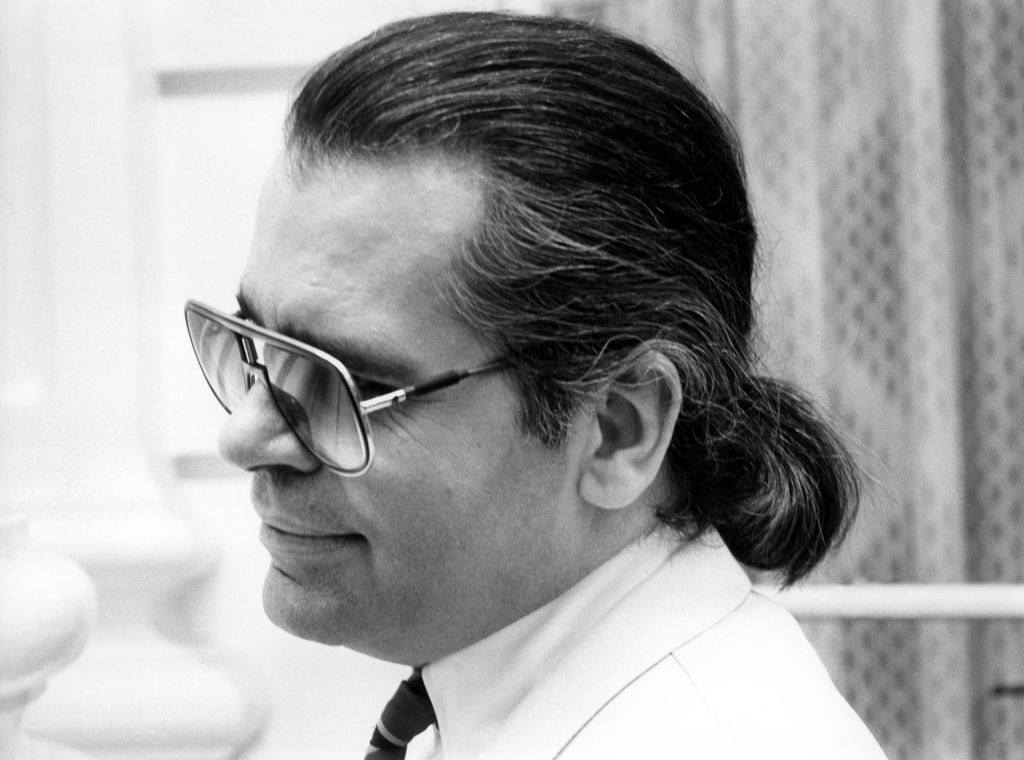
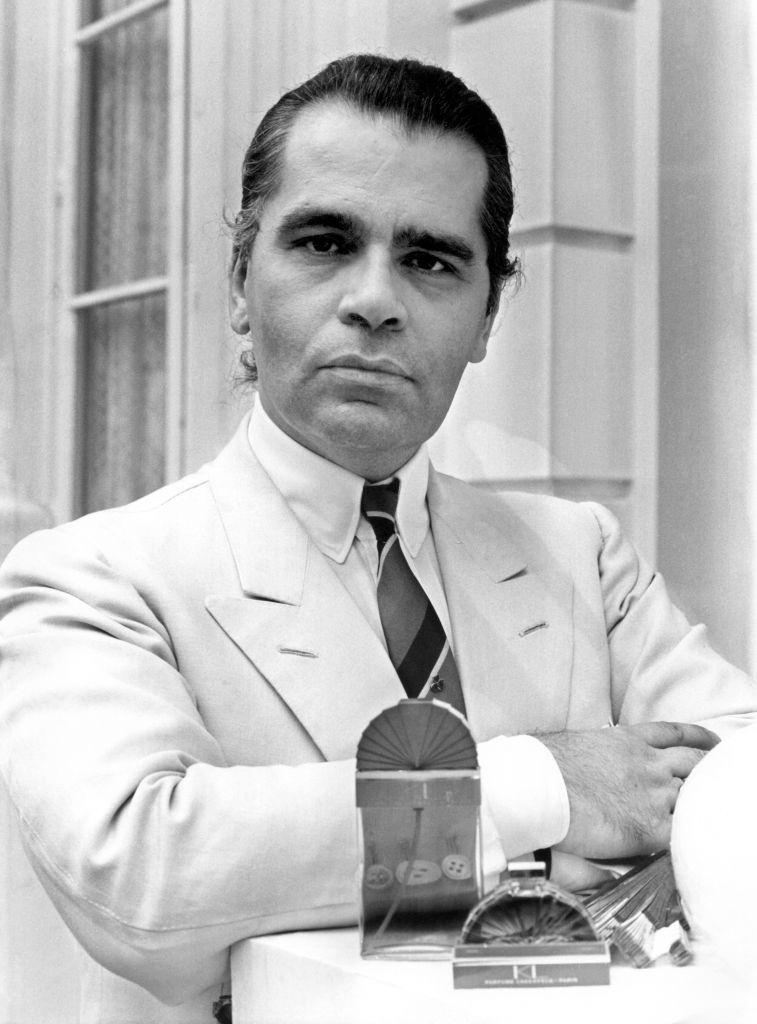
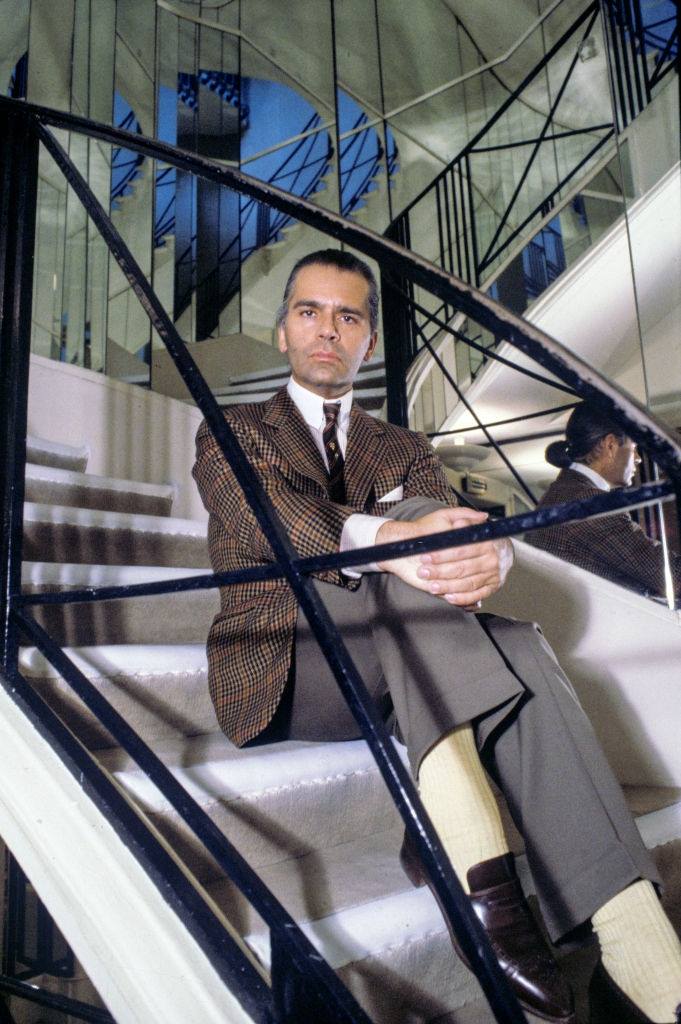
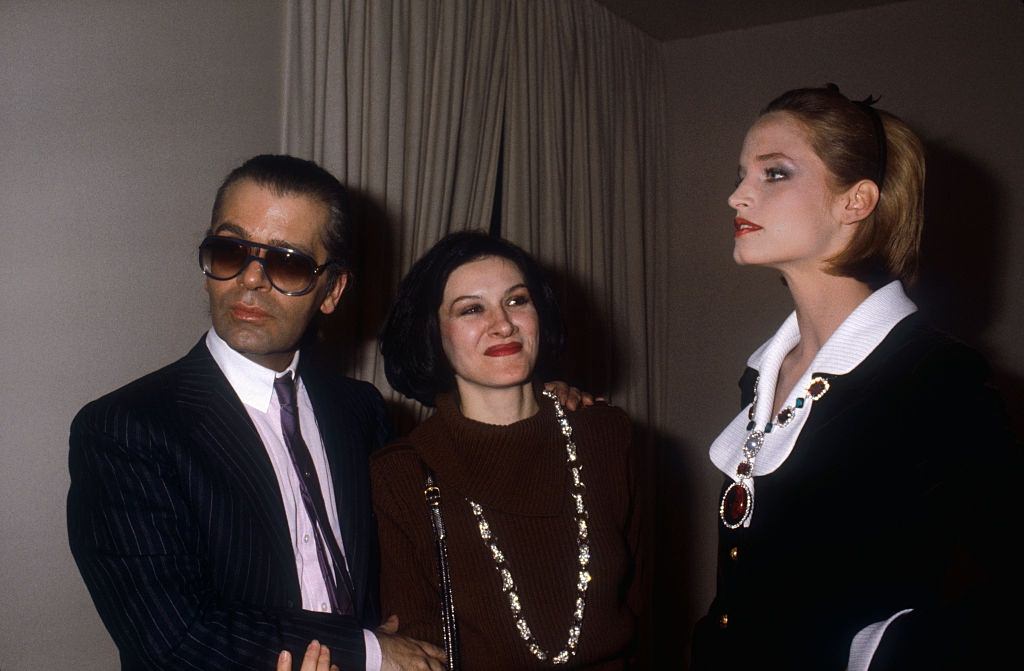
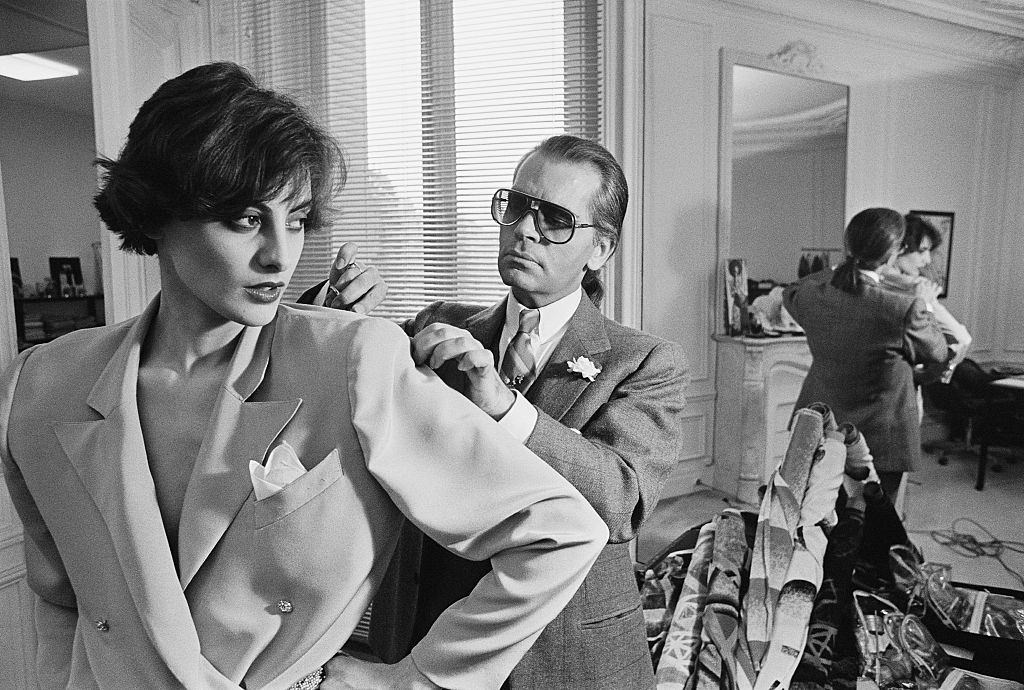
By 1983, Lagerfeld was simultaneously running work at Chanel and Chloé — two very different houses with distinct identities. At Chanel, he posed confidently on the steps of the store for press, signaling the start of a new era. At Chloé, he continued producing collections with top model Inès de la Fressange, fitting designs directly on her in the Paris studio. His ability to shift tone and aesthetic between two major houses, without confusion or compromise in either, was remarkable.
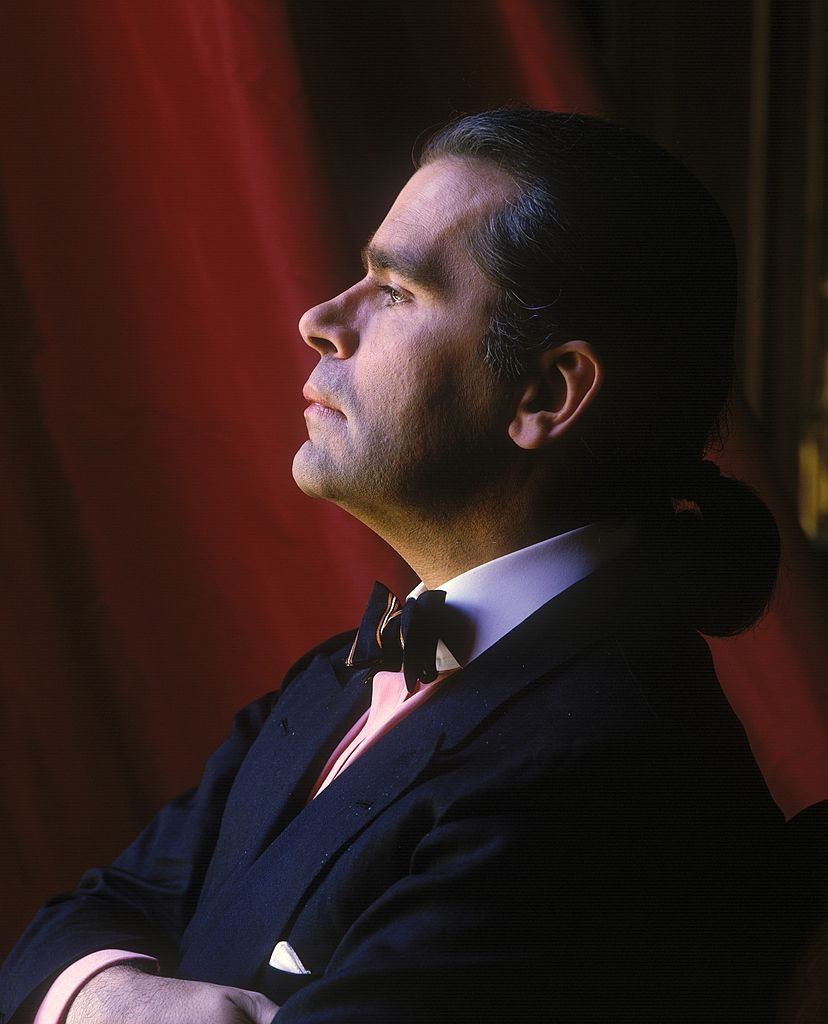
In 1994, Lagerfeld introduced a collection of dresses embellished with Quranic phrases. The reaction was swift and severe. The controversy grew so intense that model Claudia Schiffer required bodyguards to protect her from threats made by religious fundamentalists. Lagerfeld did not retreat from the design world — he pressed forward, continuing to work across multiple labels while expanding his reach. In 2006, he launched “K Karl Lagerfeld,” a denim and fitted T-shirt line for men and women. He also designed holiday cosmetics for Japanese makeup brand Shu Uemura and created a collection of pins and brooches based on the work of jeweler Suzanne Belperron. Beyond design, Lagerfeld was also an accomplished photographer. He shot advertising campaigns for both Chanel and Fendi and photographed Mariah Carey for the cover of V magazine.
Lagerfeld owned properties across Europe and the United States — in Brittany, Monte Carlo, Hamburg, Manhattan, and multiple residences in Paris. Each property was decorated according to a distinct theme, reflecting his deep engagement with art and design beyond the runway. In Paris, he shared his home with Choupette, his Birman cat, whom he spoke of with open affection. He once stated publicly that if it were legally possible, he would marry her. In January 2019, Lagerfeld was admitted to the American Hospital of Paris due to health complications. He died on February 18, 2019, from complications related to pancreatic cancer. He had expressed a wish not to have a formal funeral, and his ashes were scattered in secret. On June 20, 2019, a celebration of his life titled “Karl For Ever” was held at the Grand Palais in Paris, honoring a career that had reshaped modern fashion from the inside out.