Hey There! Before You Go. 😧
Get the best vintage content straight into your inbox!

Don't worry, we don't spam

What Jersey City looked like in the 1970s

Jersey City in the 1970s was a city caught between its industrial past and an uncertain future. It sat directly across the Hudson River from Manhattan, close enough to see the newly built World Trade Center towers rising above the skyline, yet struggling with factory closures, rising crime, and neighborhoods left behind by a changing economy. The contrast was sharp and constant.
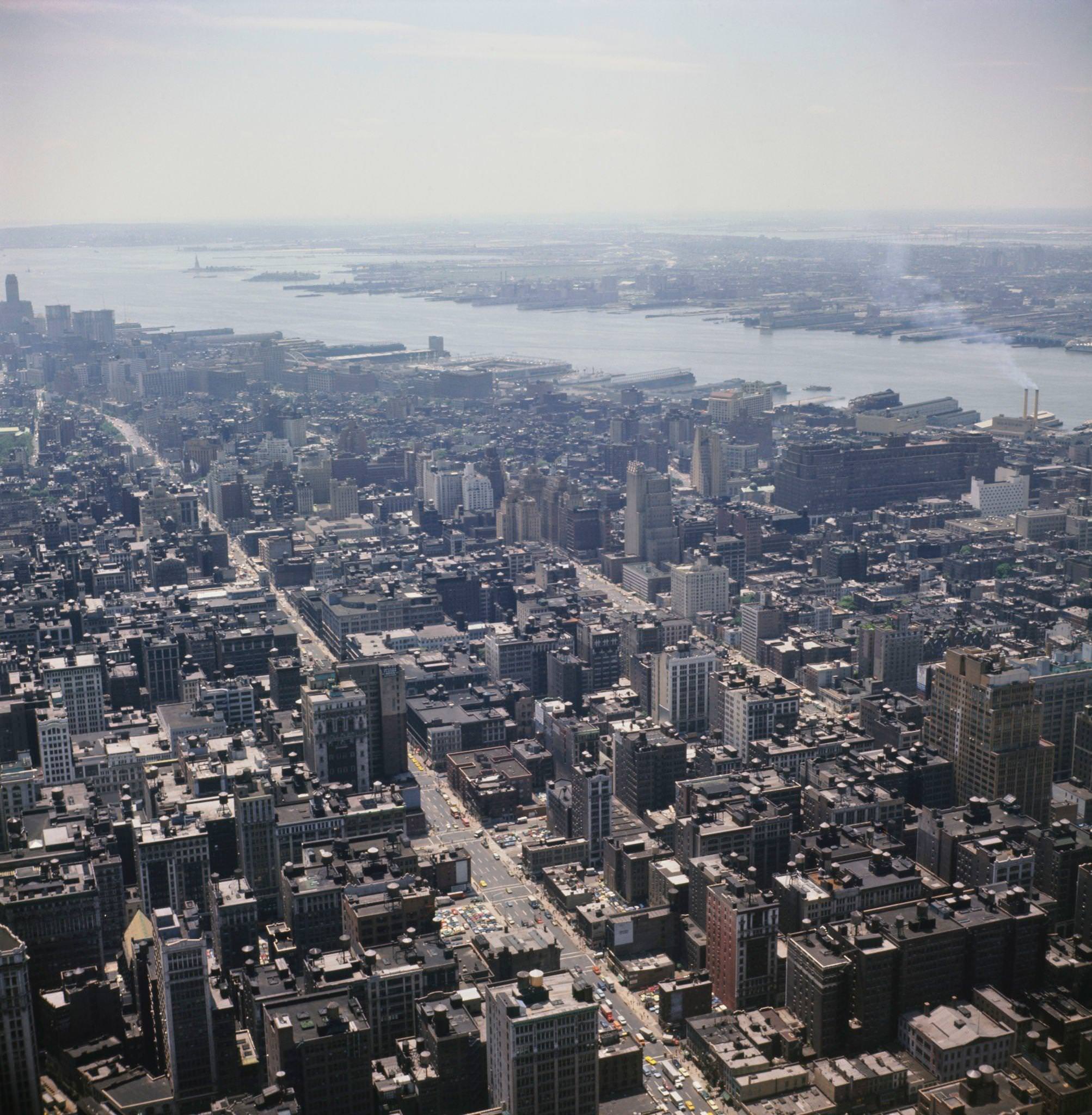
Aerial view from the top of the Empire State Building looking south-west over 7th and 8th Avenues in Manhattan to the Hudson River and Jersey City in New Jersey beyond, 1970

For much of its history, Jersey City had been a powerhouse. The waterfront was lined with factories, warehouses, and rail yards that kept thousands of people employed. The Port of Jersey City ranked among the busiest on the entire East Coast. Freight moved through constantly, and the city’s web of train lines and highways — including the New Jersey Turnpike and the Holland Tunnel — made it a major link between New York and the rest of the country. By the 1970s, though, that industrial engine was breaking down.
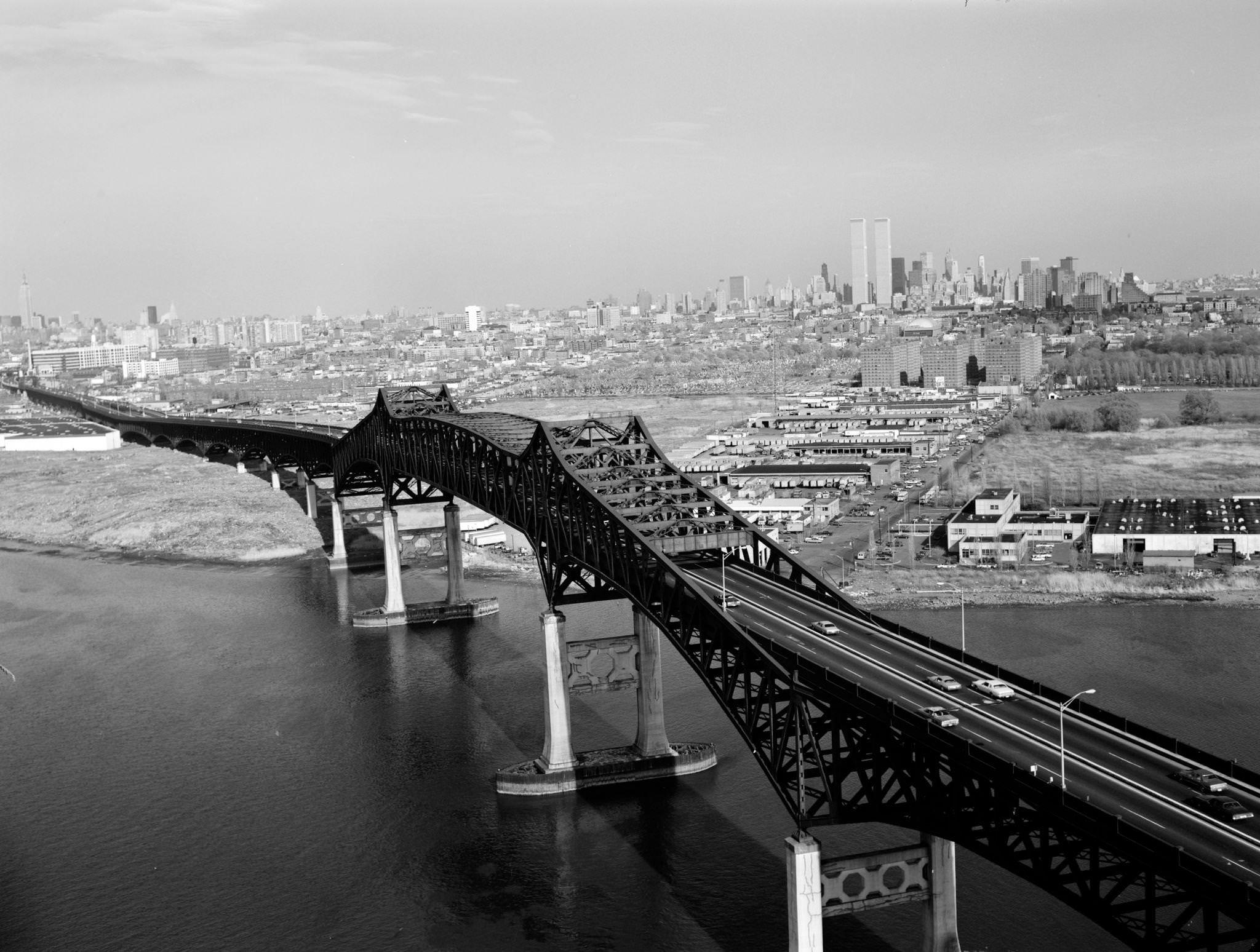
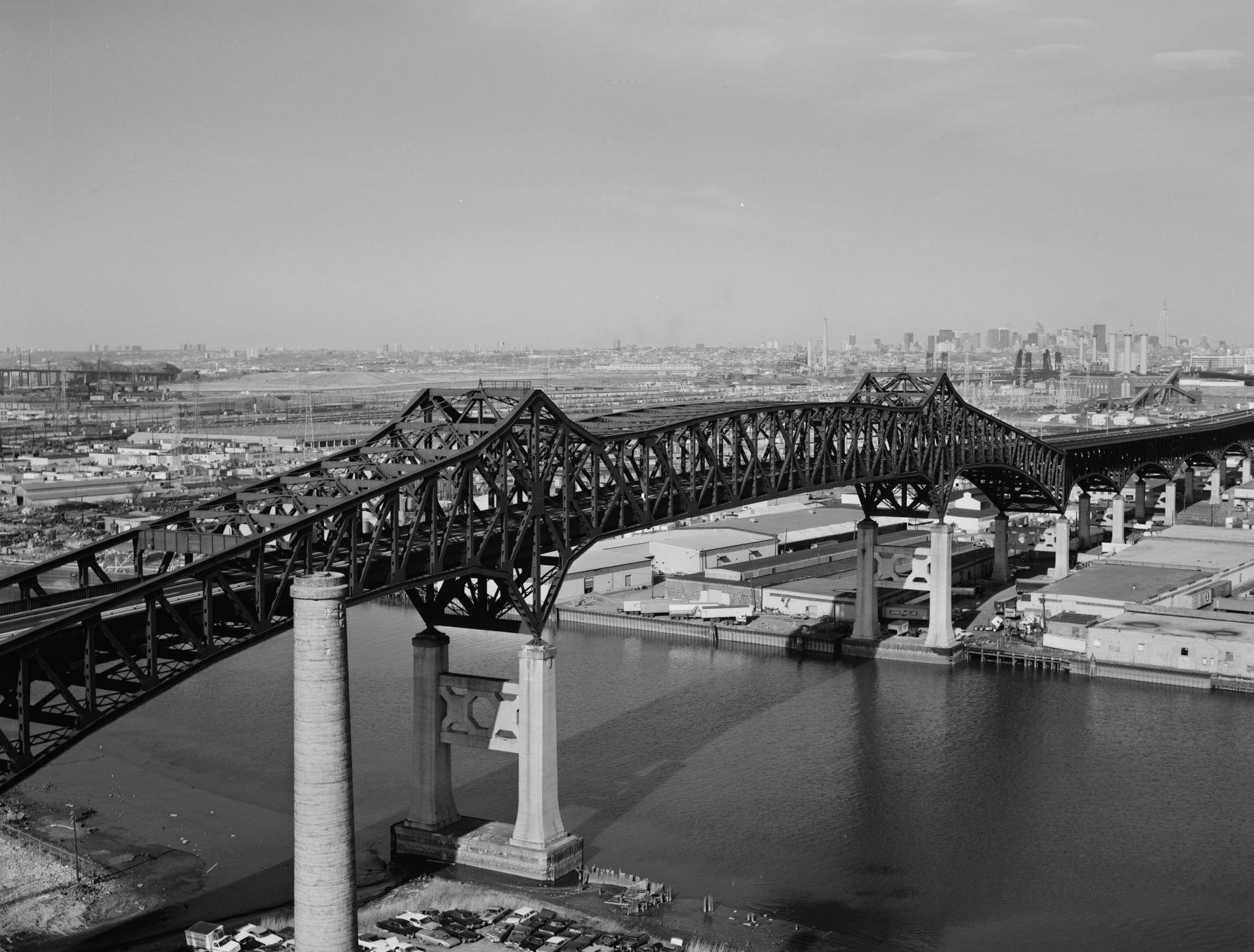
Aerial view looking east over the Pulaski Skyway which spans the Passaic River, Jersey City, New Jersey, 1978.

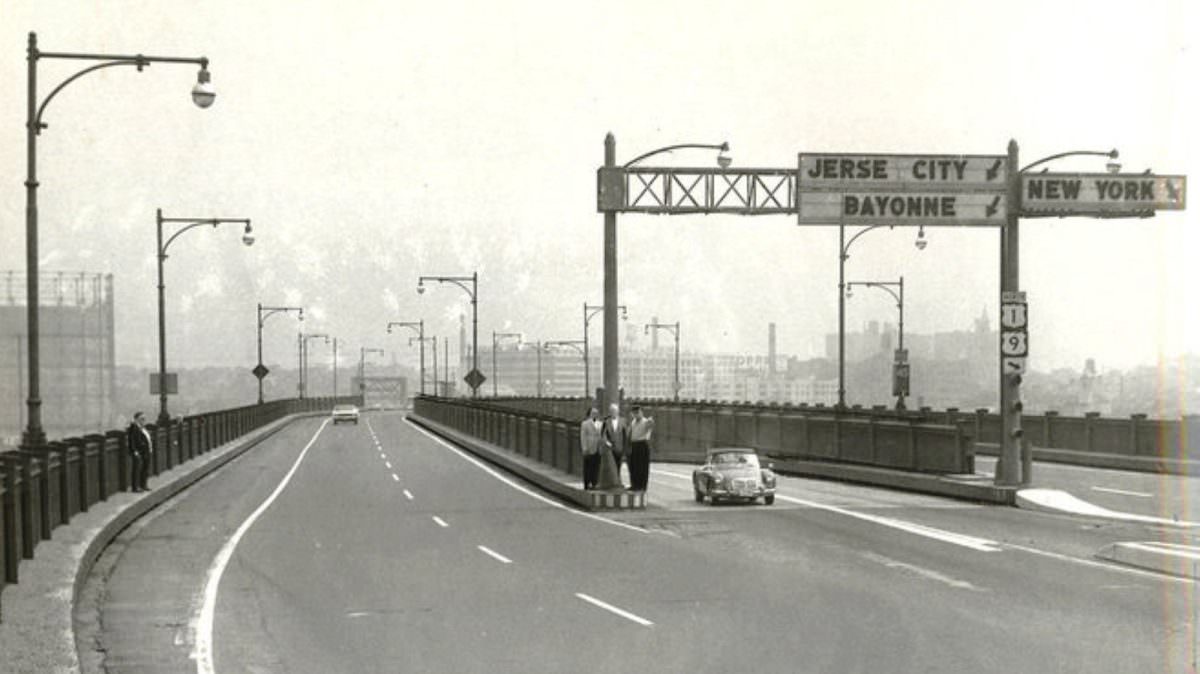
The Pulaski Skyway, a steel bridge that swept over the Passaic River and into Jersey City, became a daily backdrop for commuters passing through a city visibly in decline. Coal-burning power plants like the Kearny Generation Station pumped smog into the air on most days. The sky above the waterfront was rarely clear.
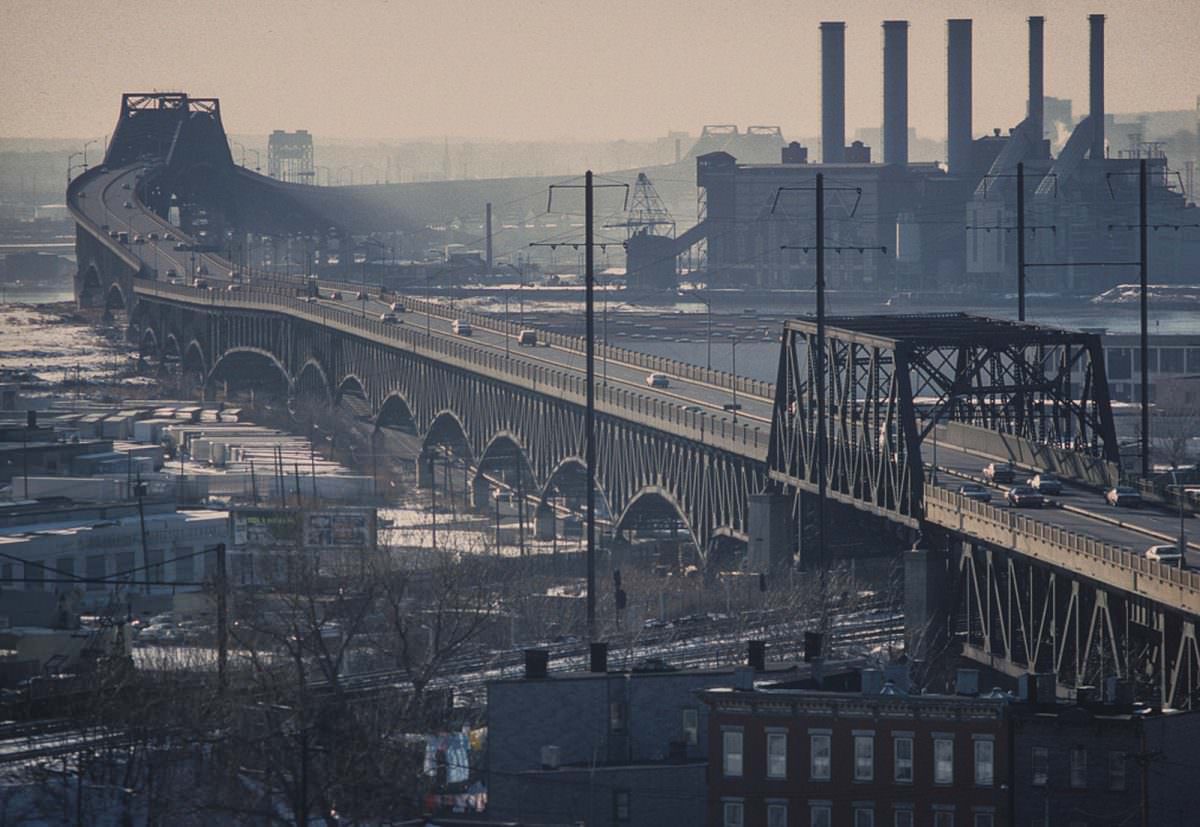
Pulaski Skyway with 1970s cars on a typically smoggy day. The Kearny Generation Station from 1925 was still in use and burning coal. Jersey City, Nov 1977

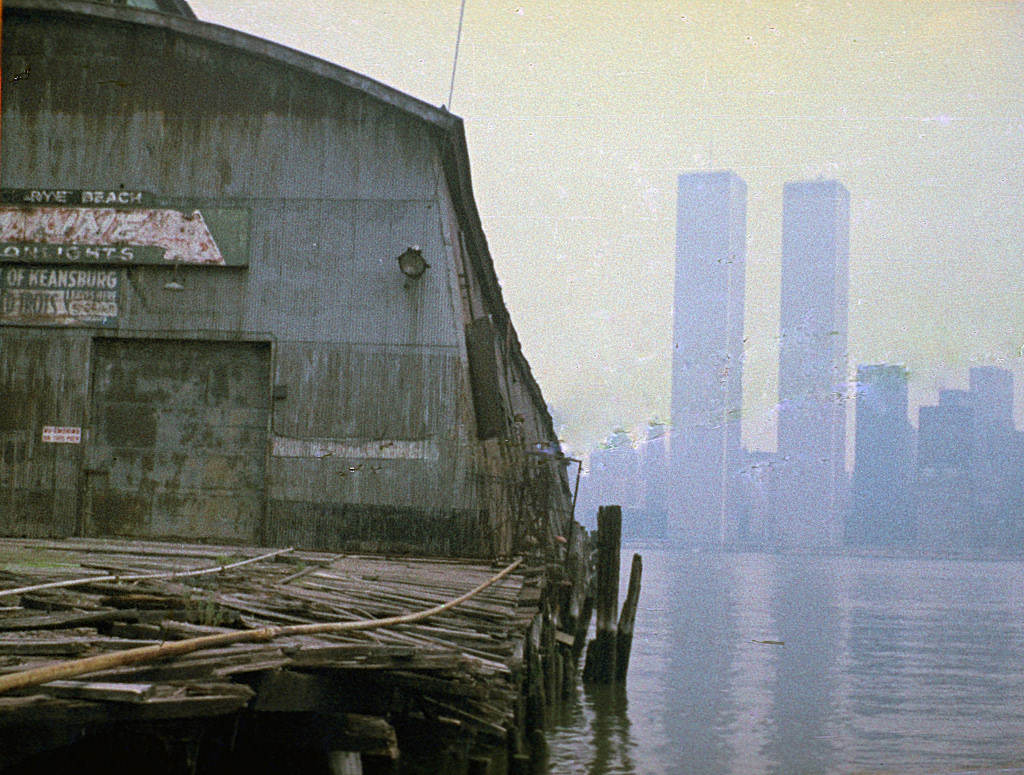
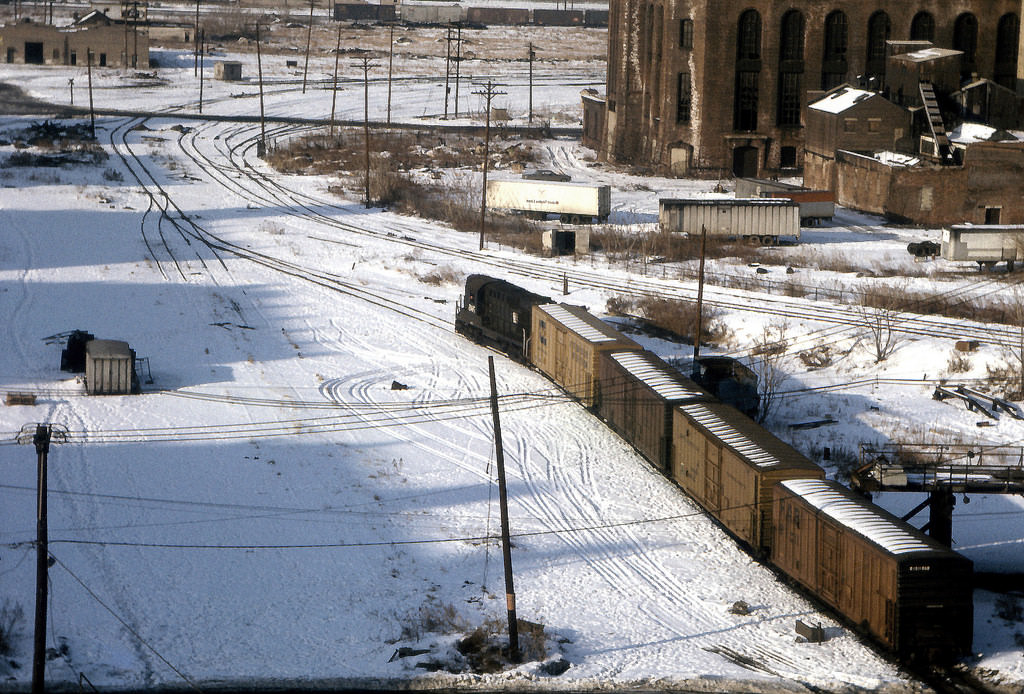
The waterfront told the clearest story of the city’s economic slide. Piers that once handled enormous volumes of cargo sat rotting and empty. Rail yards that had connected New Jersey to the nation were abandoned, their tracks rusting, their facilities left to crumble. The Central Railroad of New Jersey Terminal, once a busy passenger hub, stood vacant by the mid-1970s.
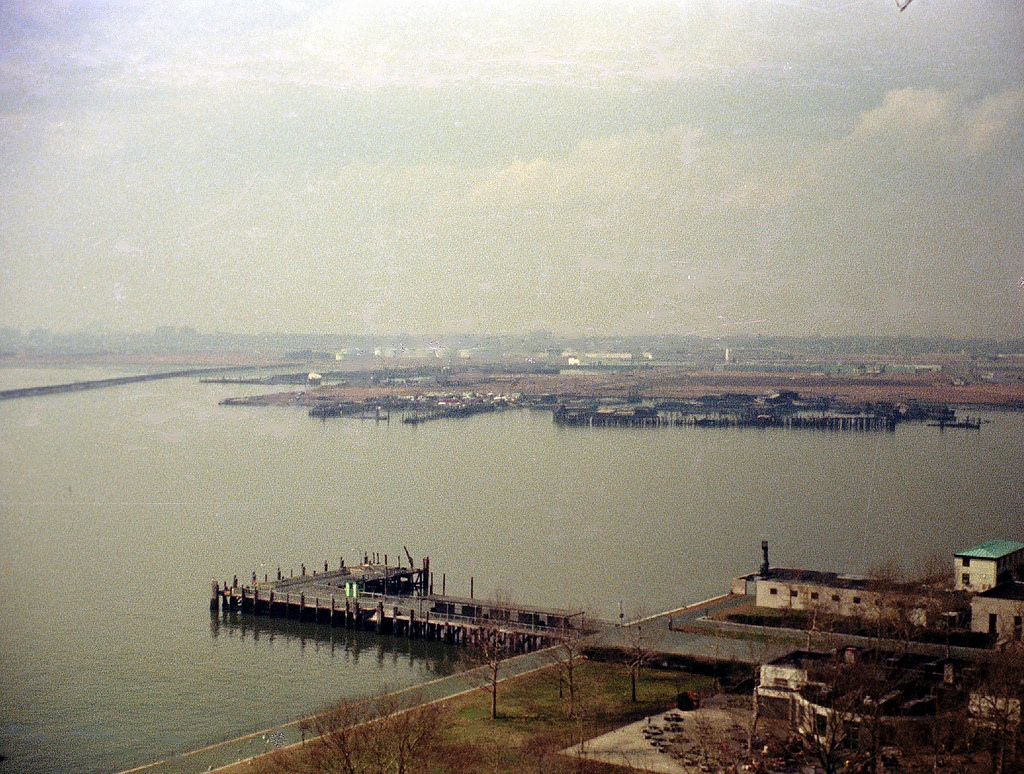
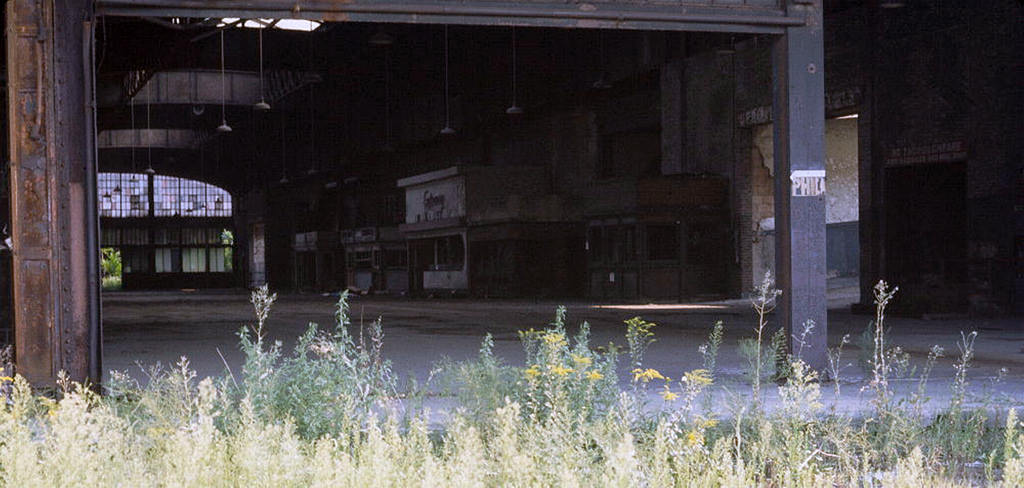
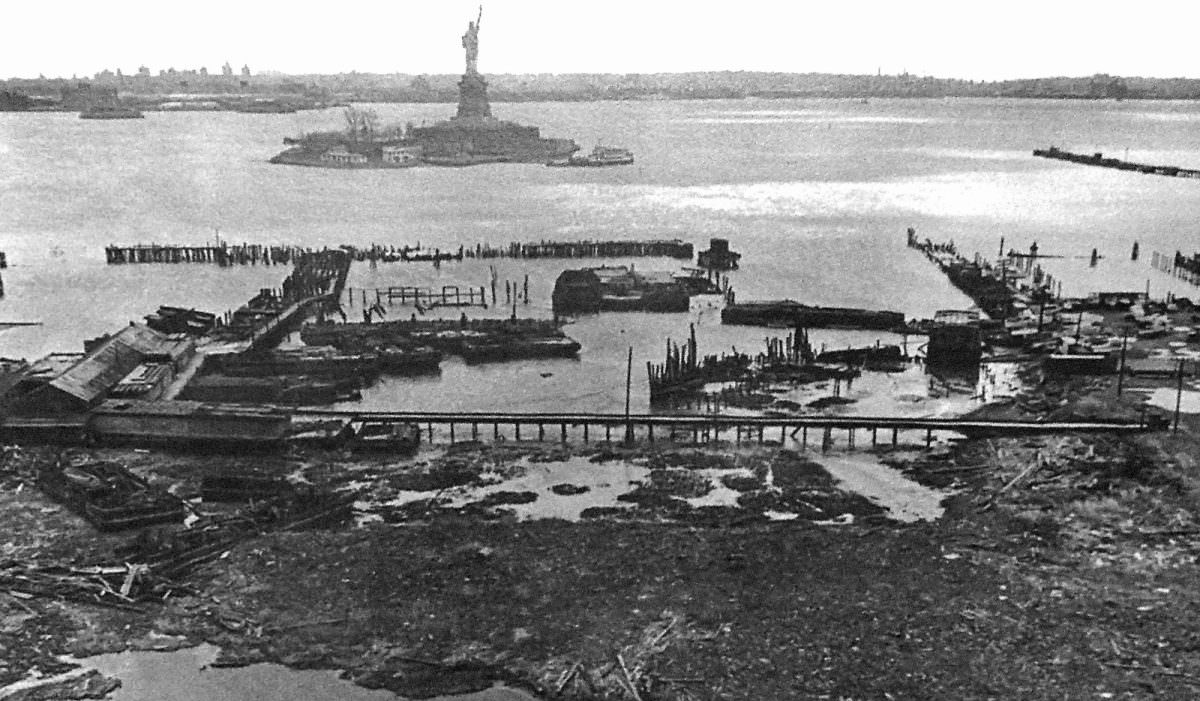
Industrial, railroad and rotting pier ruins in Jersey City from the Statue of Liberty, March 1973
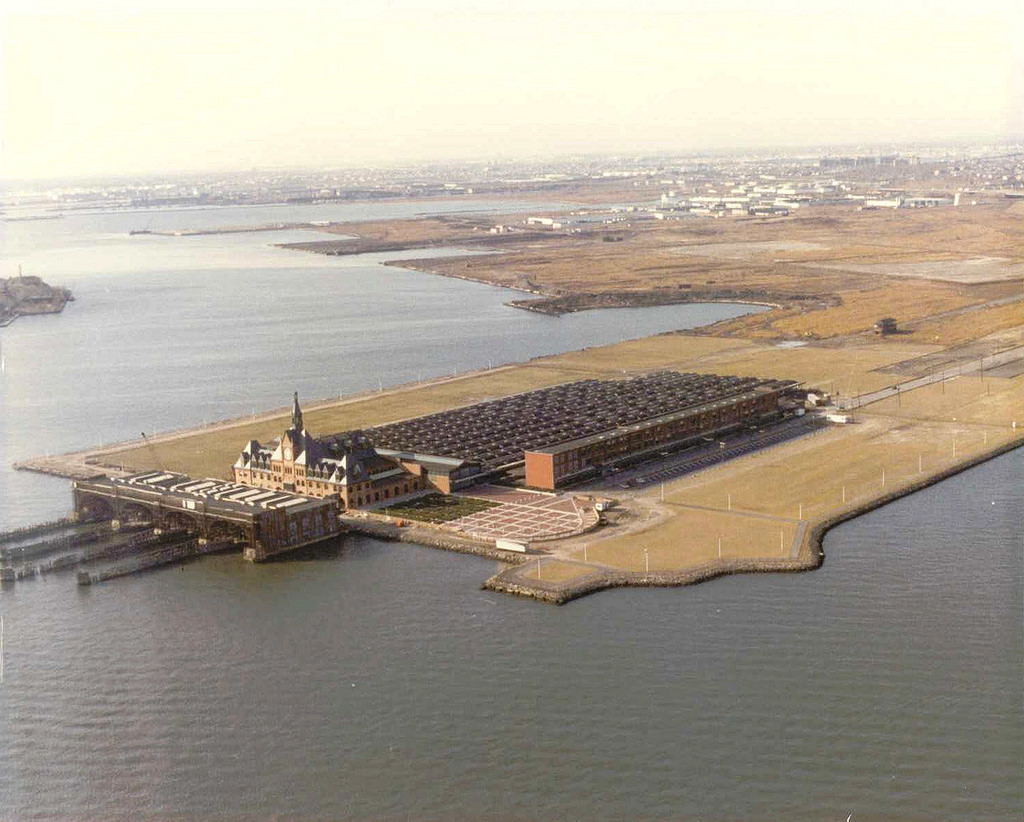
The abandoned Central Railroad of New Jersey Terminal Jersey City, Aug. 1976

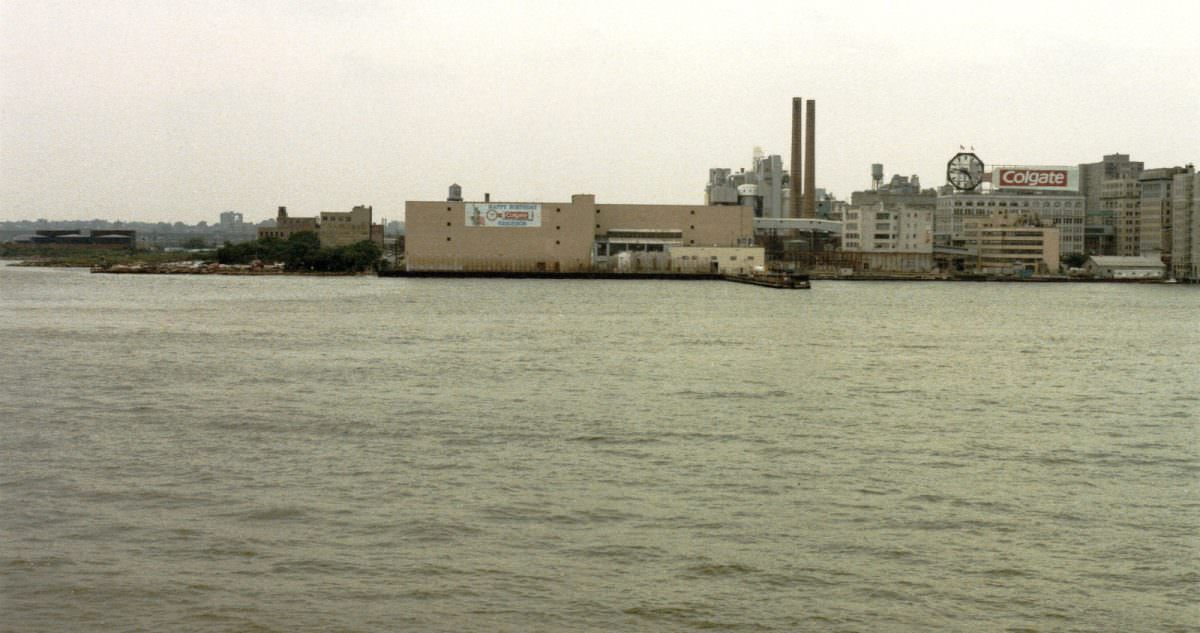
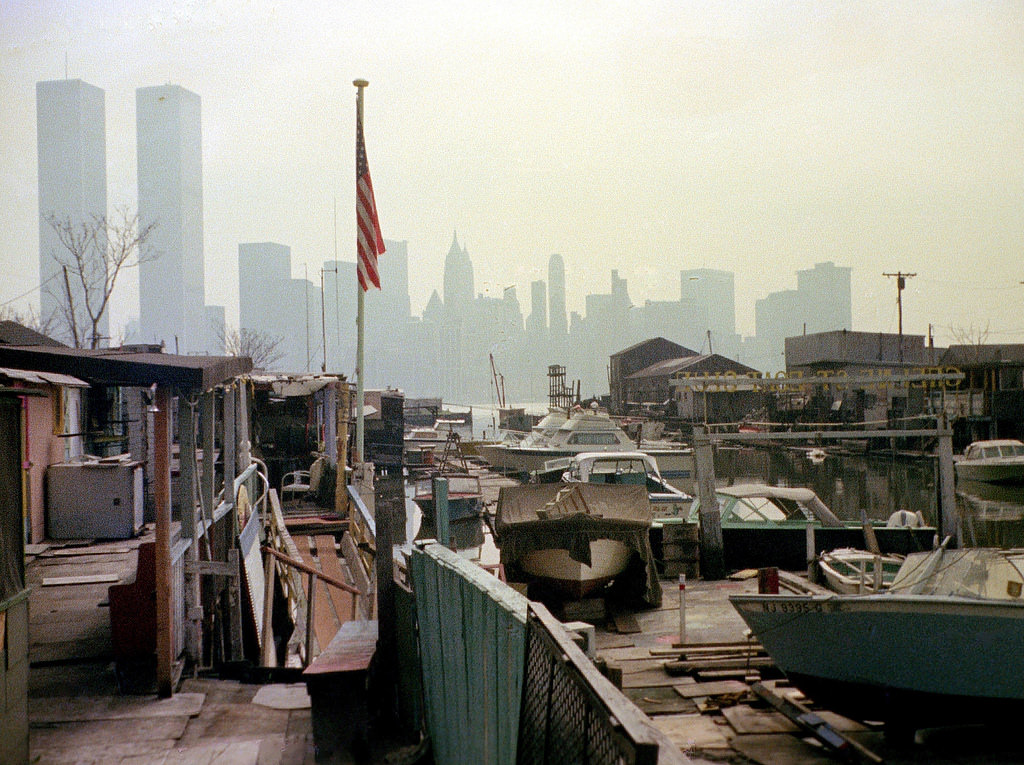
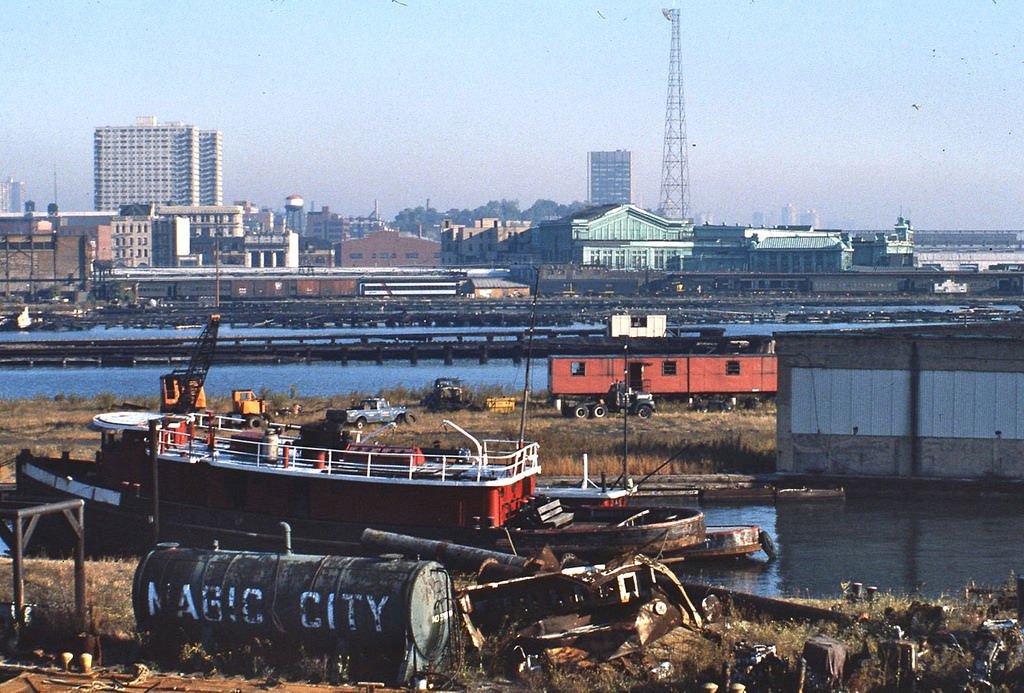
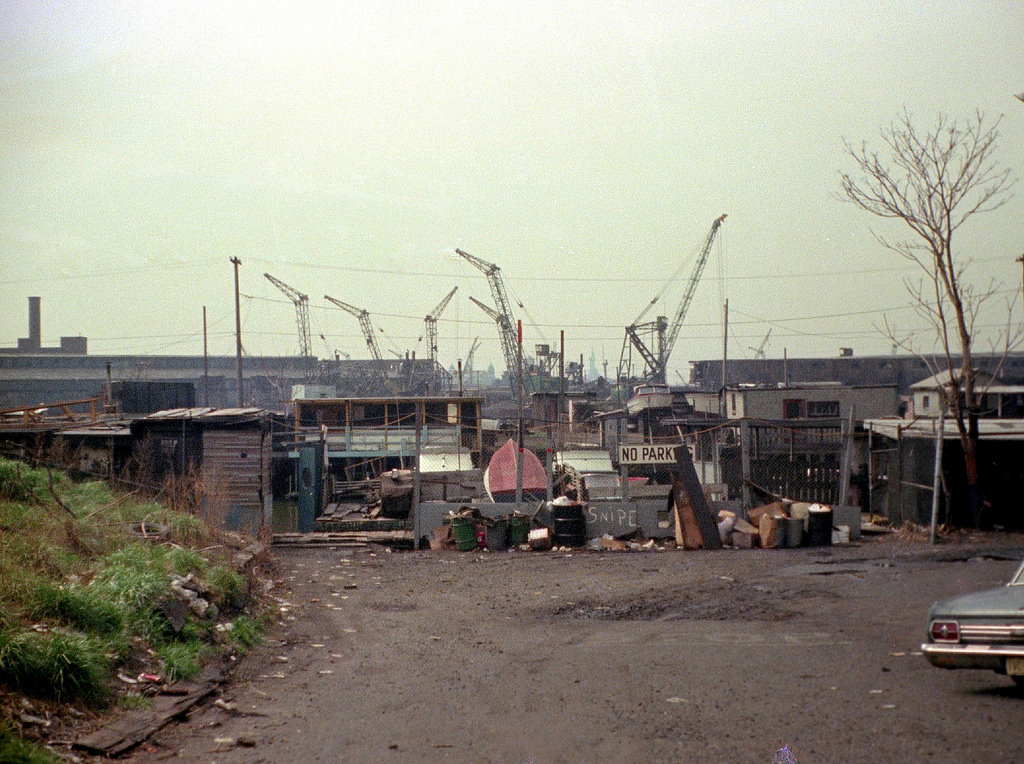
Along Greene Street, the waterfront had become what many described as a no-man’s land. Old boat clubs clung to the shoreline in disrepair, and fenced-off patches of land sat contaminated — too toxic to clean up and too damaged to use. Abandoned cranes and barges dotted the industrial waterfront, quiet monuments to the work that had stopped.
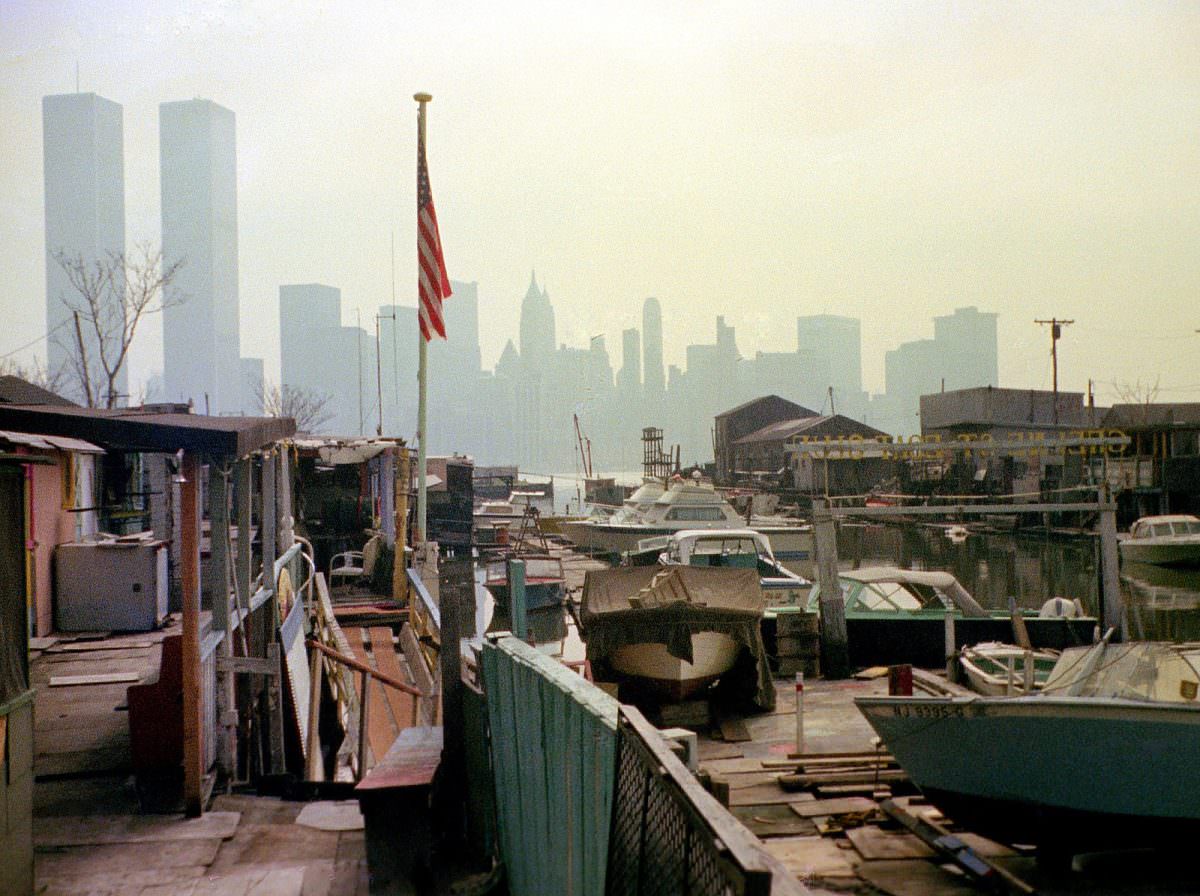
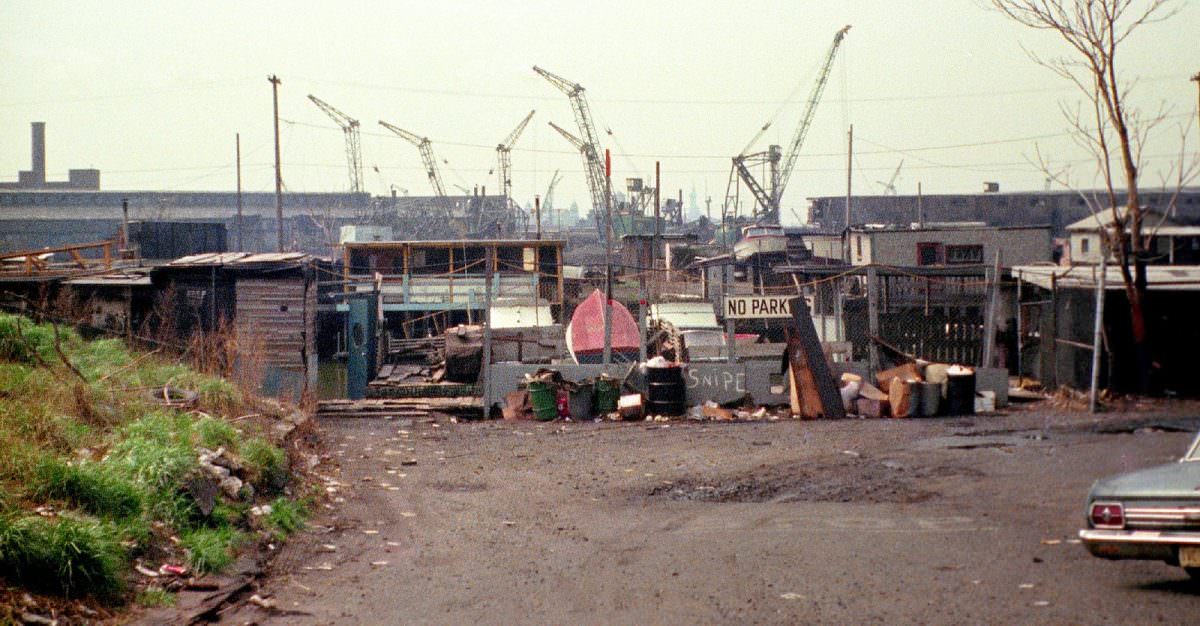
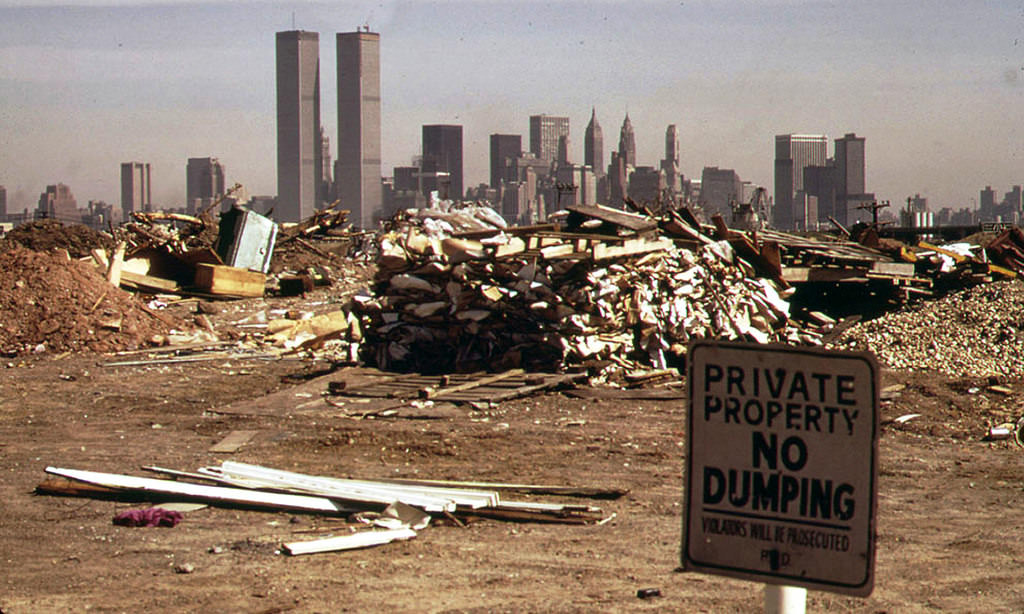
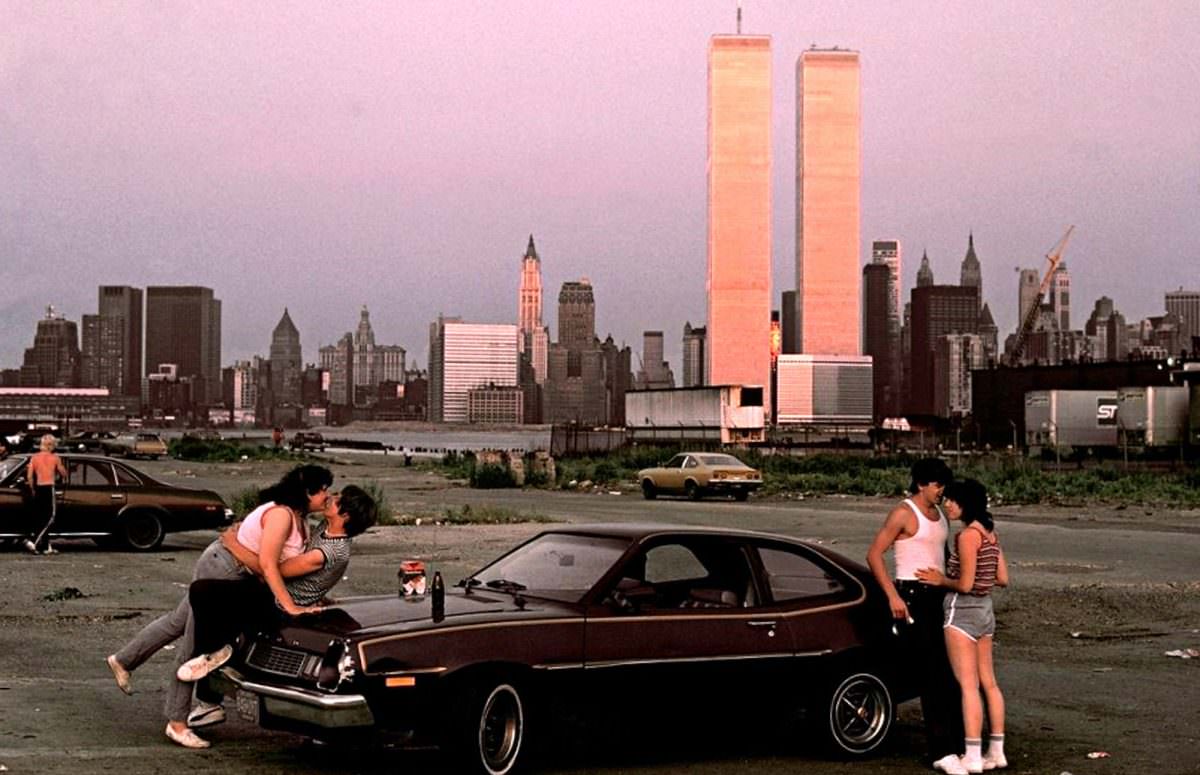
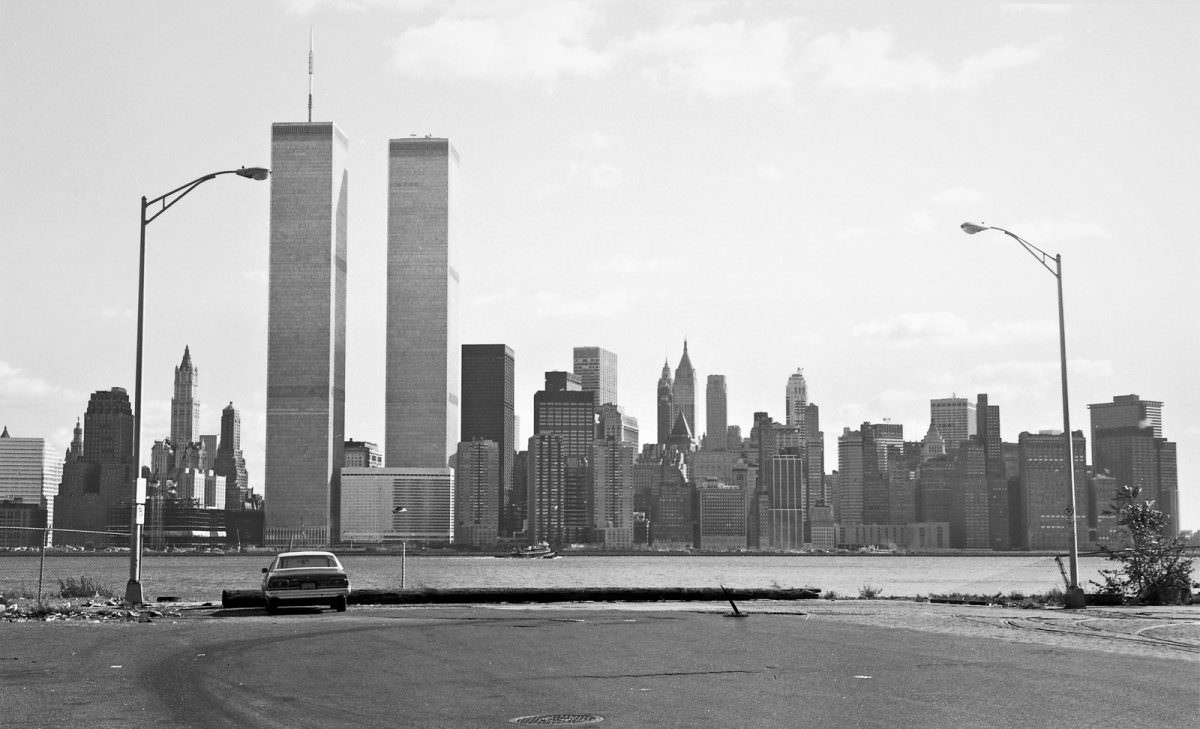
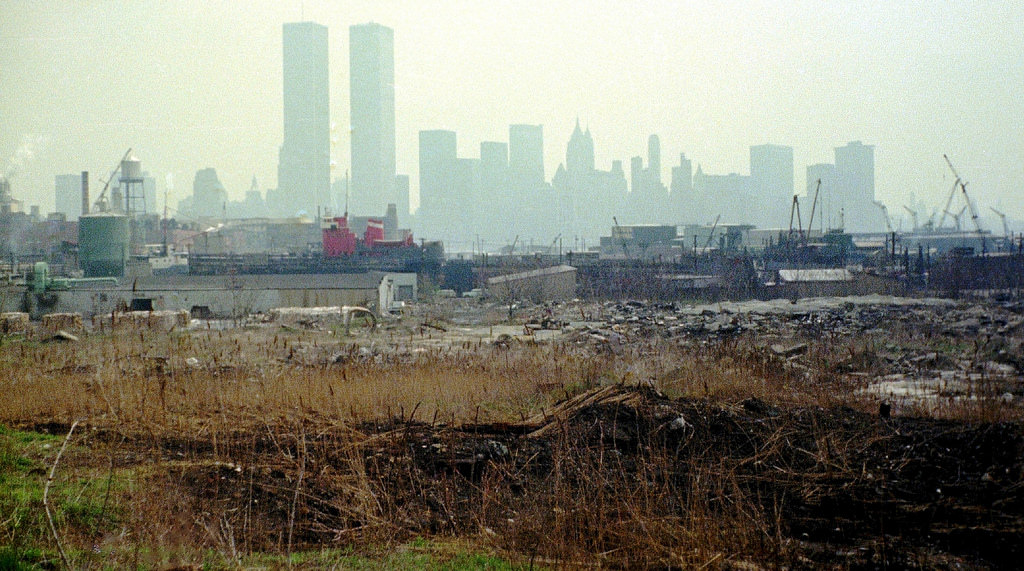
The ramshackle Greene Street Boat Club in Jersey City with the Lower Manhattan skyline and the World Trade Center in the distance, March 1975
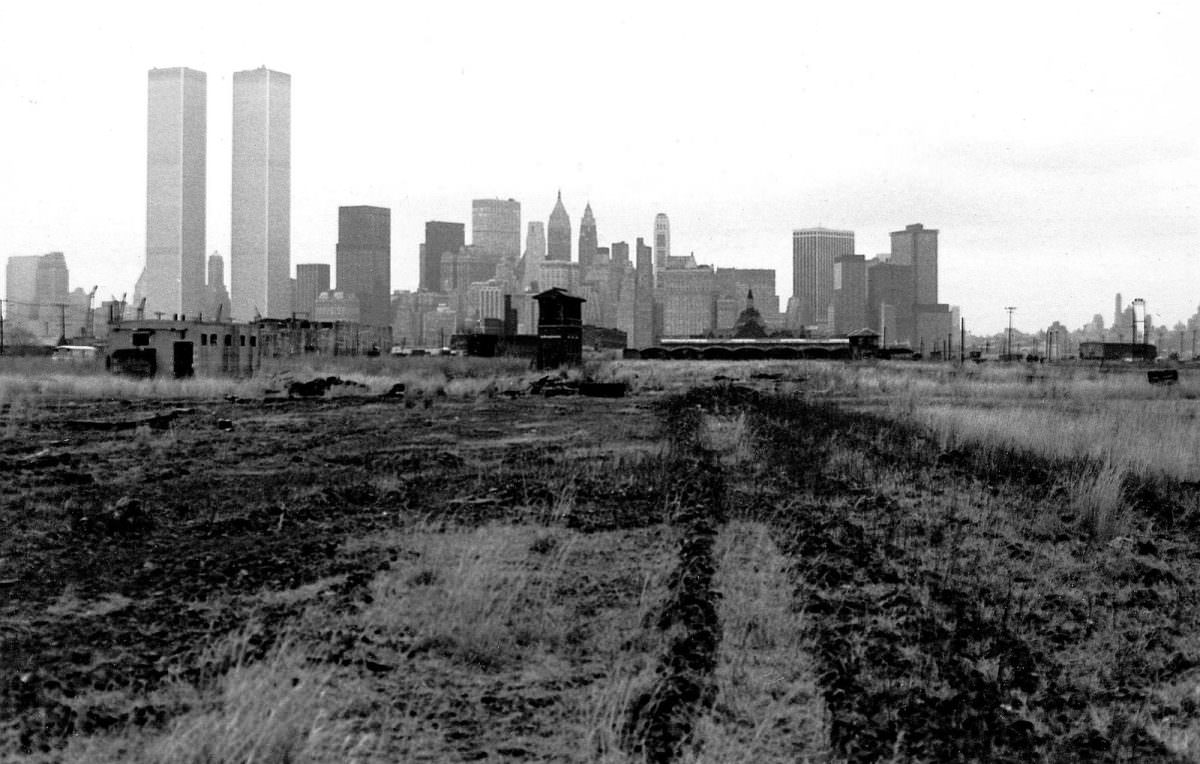
The abject no-man's land at the end of Greene Street looking south to the Morris Canal, The Statue of Liberty and Ellis Island.
The abject no-man’s land at the end of Greene Street looking south to the Morris Canal, The Statue of Liberty and Ellis Island.
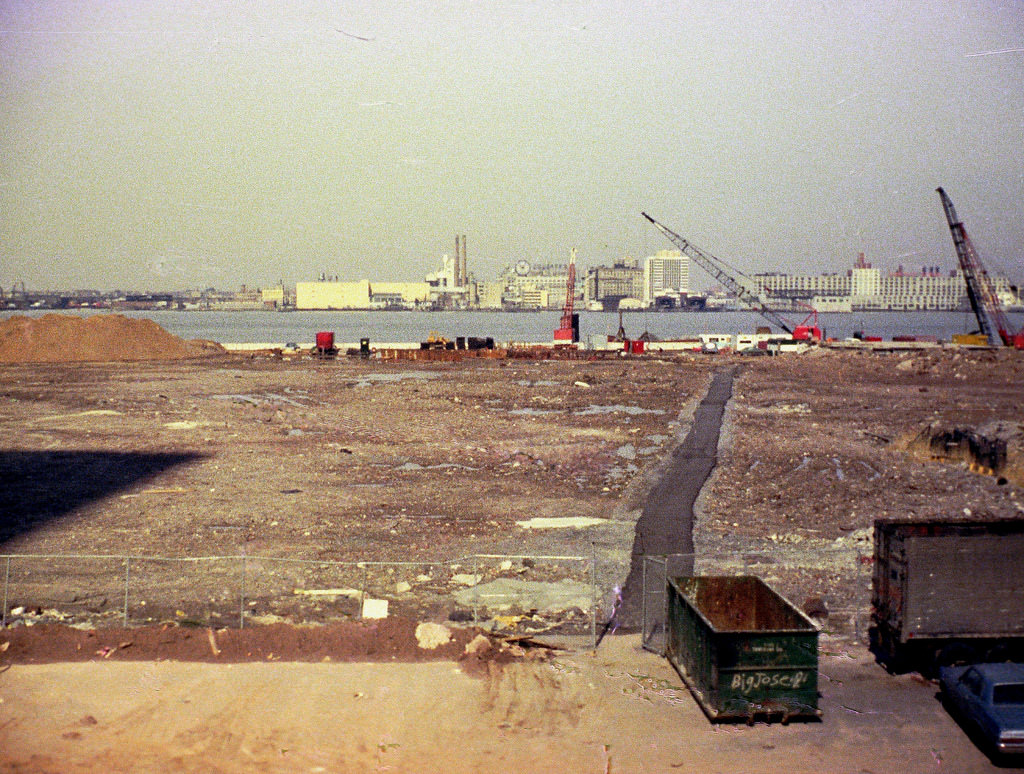
A fenced off overgrown area that was too toxic to remediate, Jersey City, March 1974
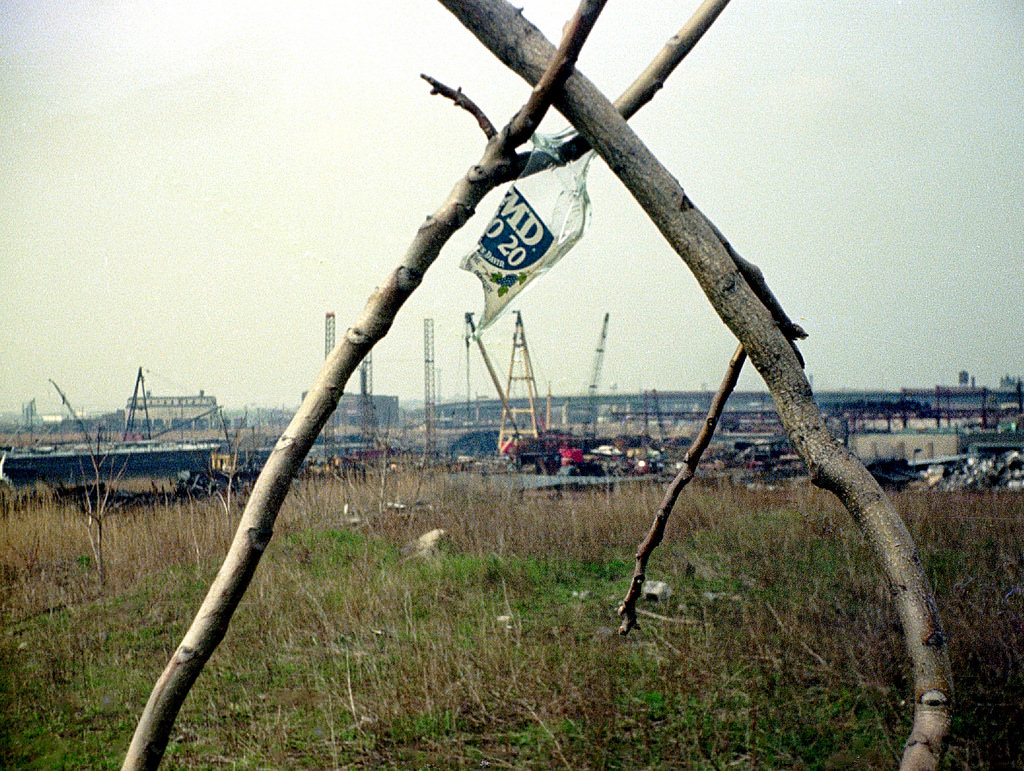
Abandoned cranes, barge at left, industrial wasteland, and old Jersey Central railroad facility in the distance at left,Jersey City, 1975

Environmental hazards weren’t limited to fenced-off lots. In June 1972, a ruptured pipeline at an Exxon facility near Black Tom and Caven Point sent a large pool of gasoline swirling into the water around the Statue of Liberty — a vivid example of how industrial operations were affecting the surrounding environment.
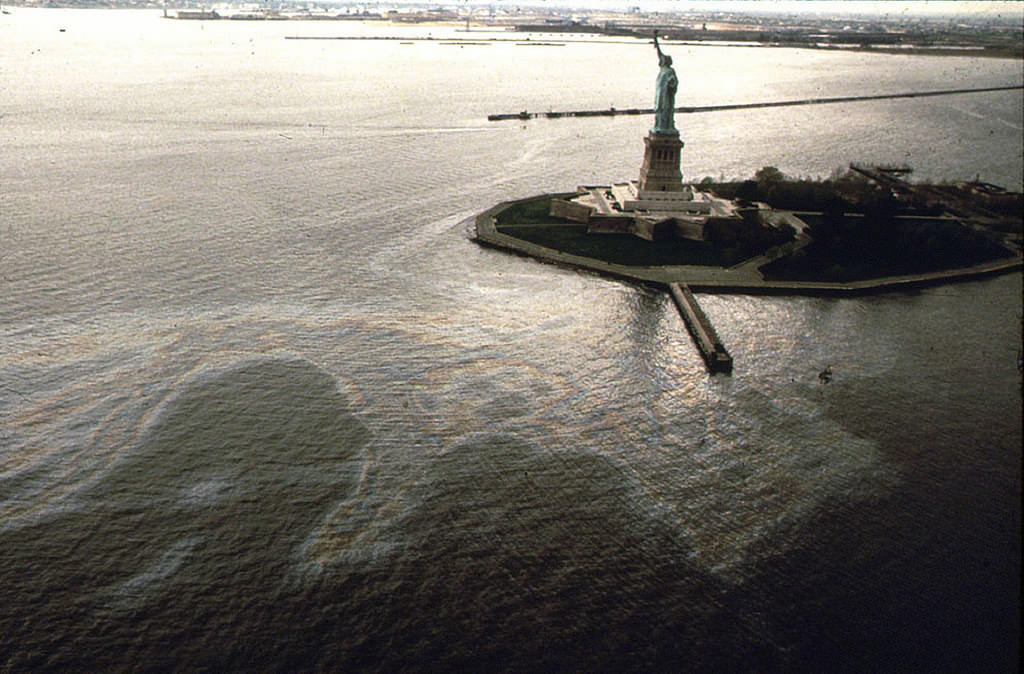
Large pool of gasoline swirls around the Statue of Liberty from a ruptured pipeline at the Exxon facility near Black Tom and Caven Point in Jersey City, June 1972

Inside the city’s neighborhoods, daily life carried on under real strain. Working-class communities packed into areas like Journal Square, Greenville, and Bergen-Lafayette. The population was diverse — immigrants from Europe and Latin America, a large African American community, and longtime residents whose families had lived there for generations. But unemployment was climbing as factories shut down or relocated, and crime rates — both violent and property crimes — were high across many parts of the city.
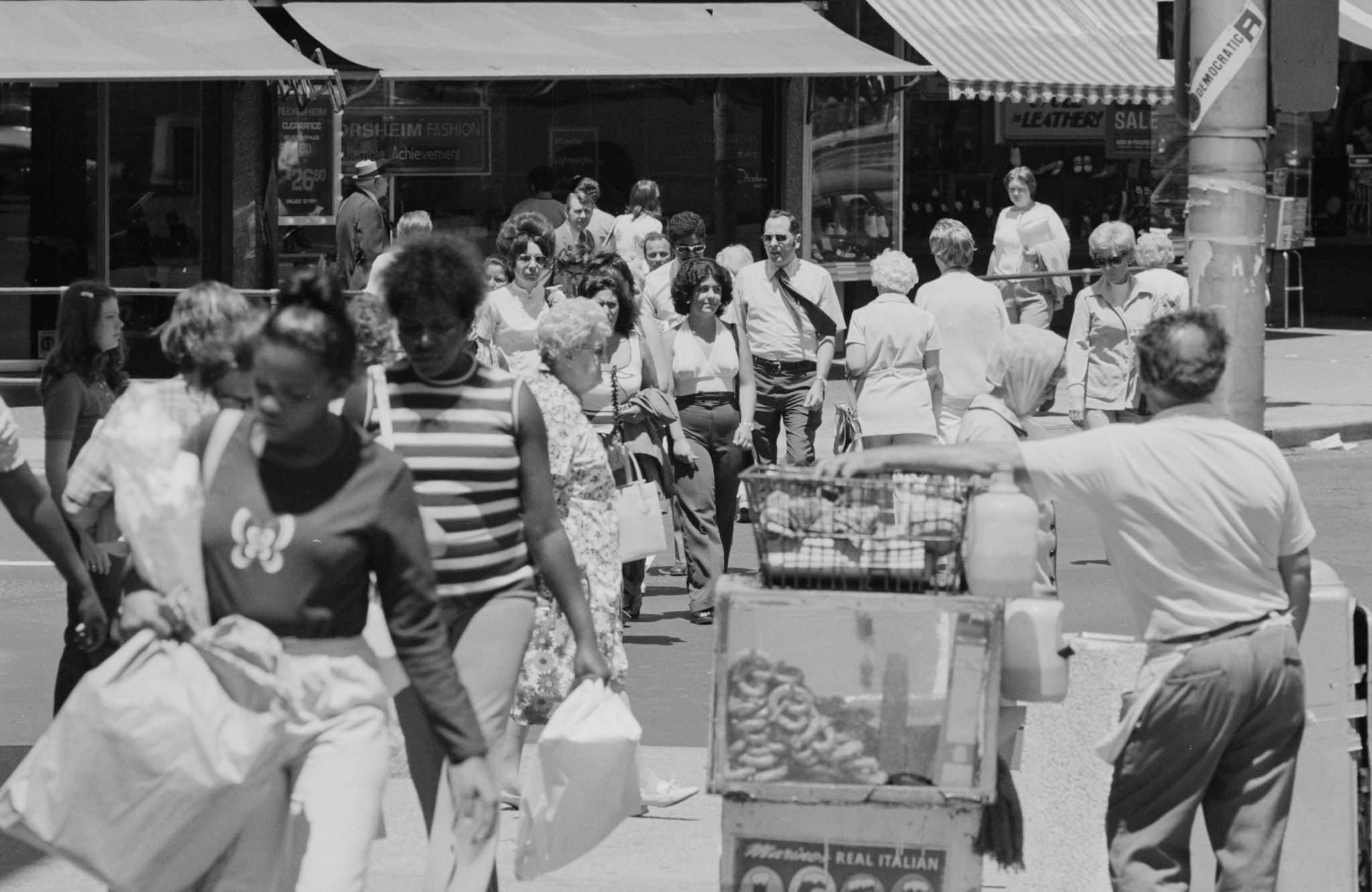
View of pedestrians crossing the street at an unidentified street corner of Jersey City, New Jersey, 1974.
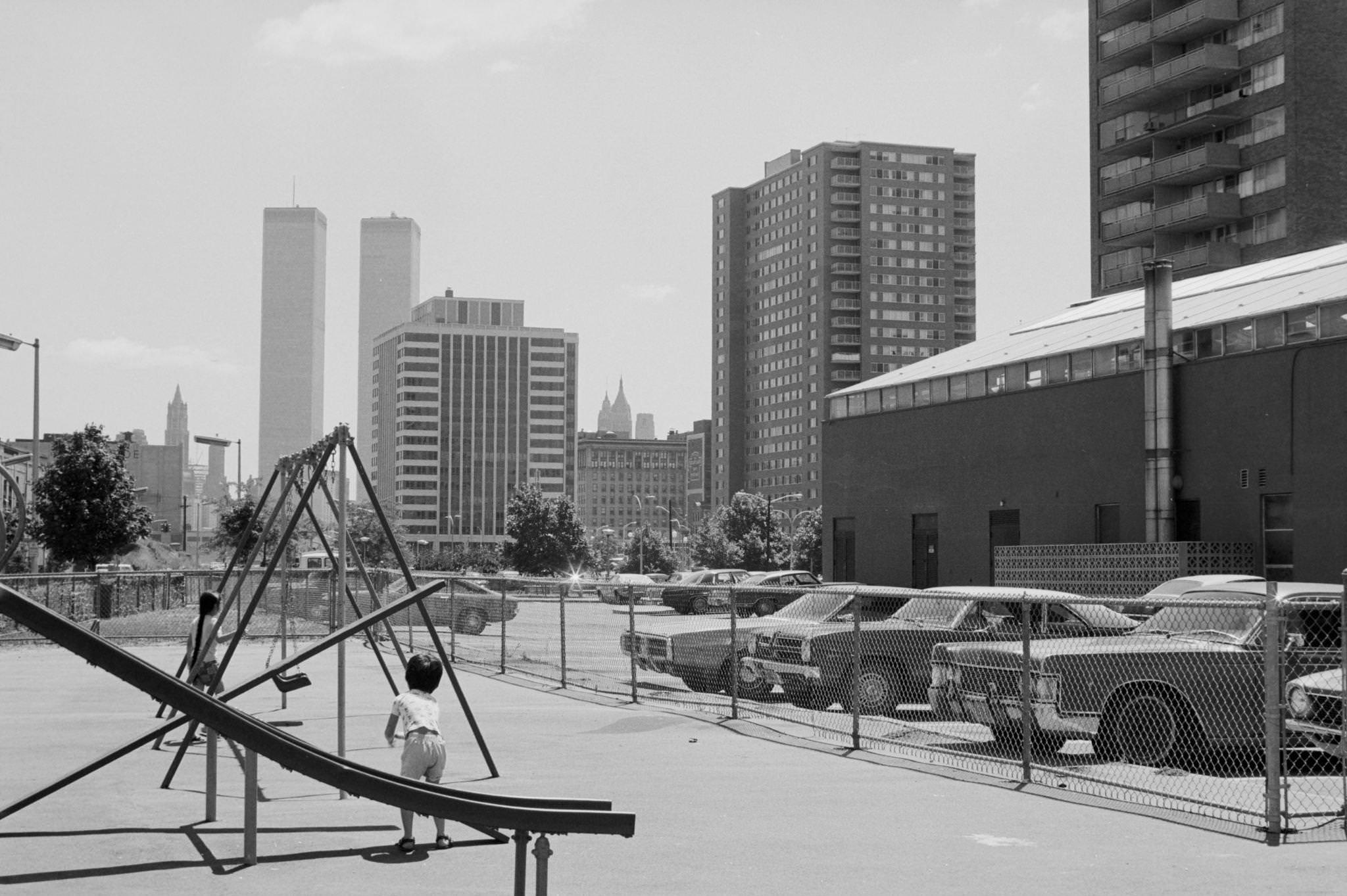
With the World Trade Center in the distance, view looking east at two children at play in a playground in a housing complex in downtown Jersey City, New Jersey, 1974.

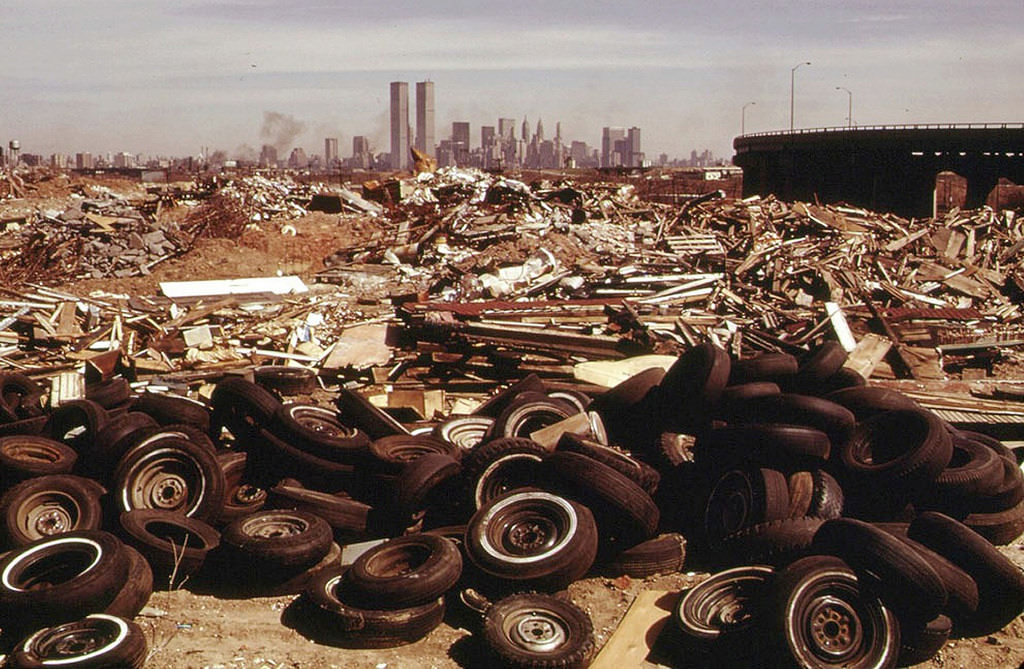
City infrastructure showed the pressure too. The Jersey City Medical Center and its powerhouse, once a grand public institution, sat abandoned and in ruins by 1977. The Morris Canal basin near the waterfront had become a dumping ground — littered with trash and stripped abandoned cars.
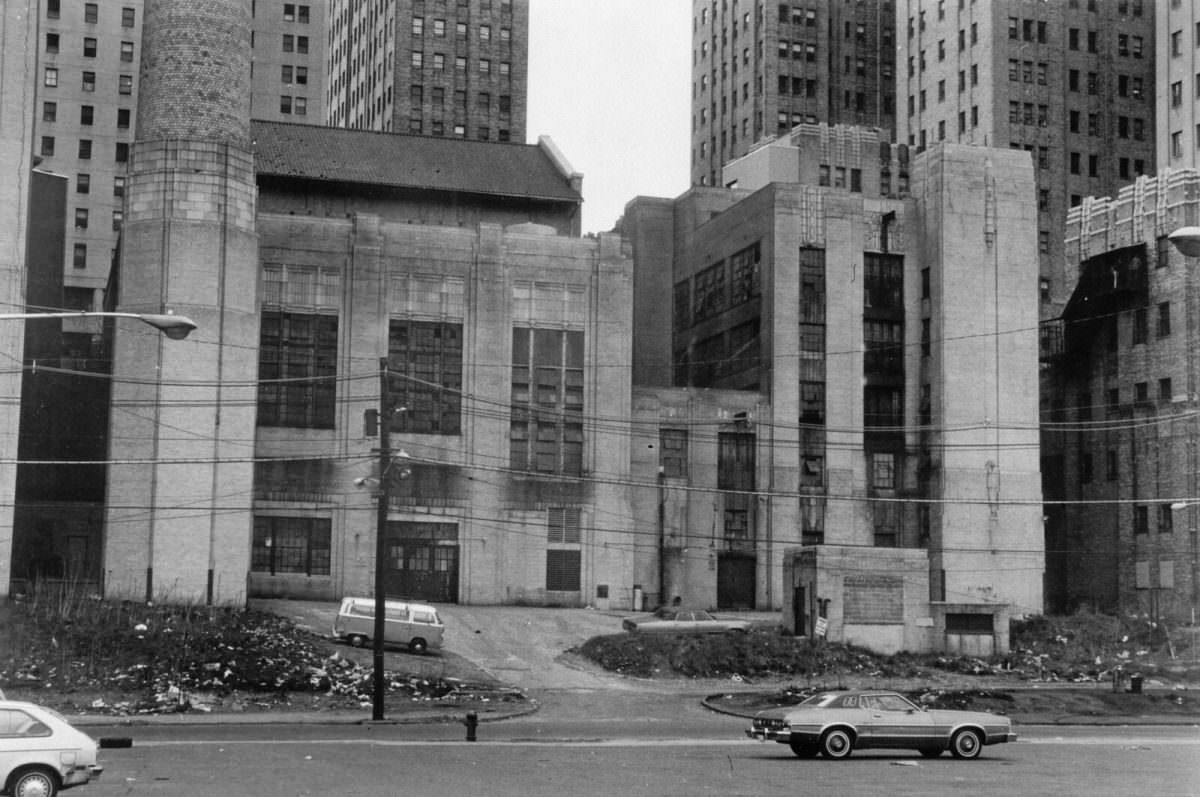
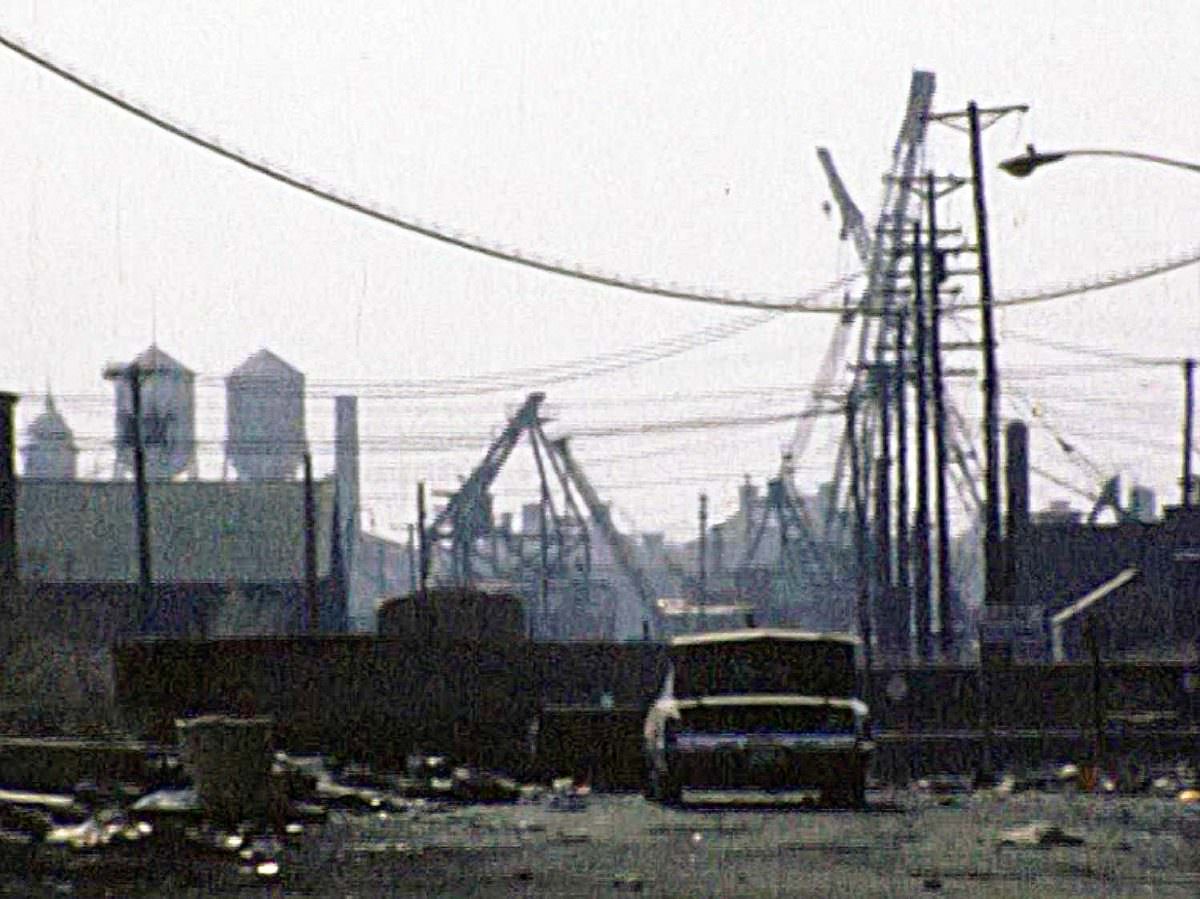
Jersey City Medical Center and its Powerhouse. Abandoned, littered and in ruins, 1977.
Two water towers on top of Ellis Island. Trash and a stripped abandoned car by the Morris Canal small basin, Jersey City, April 1976

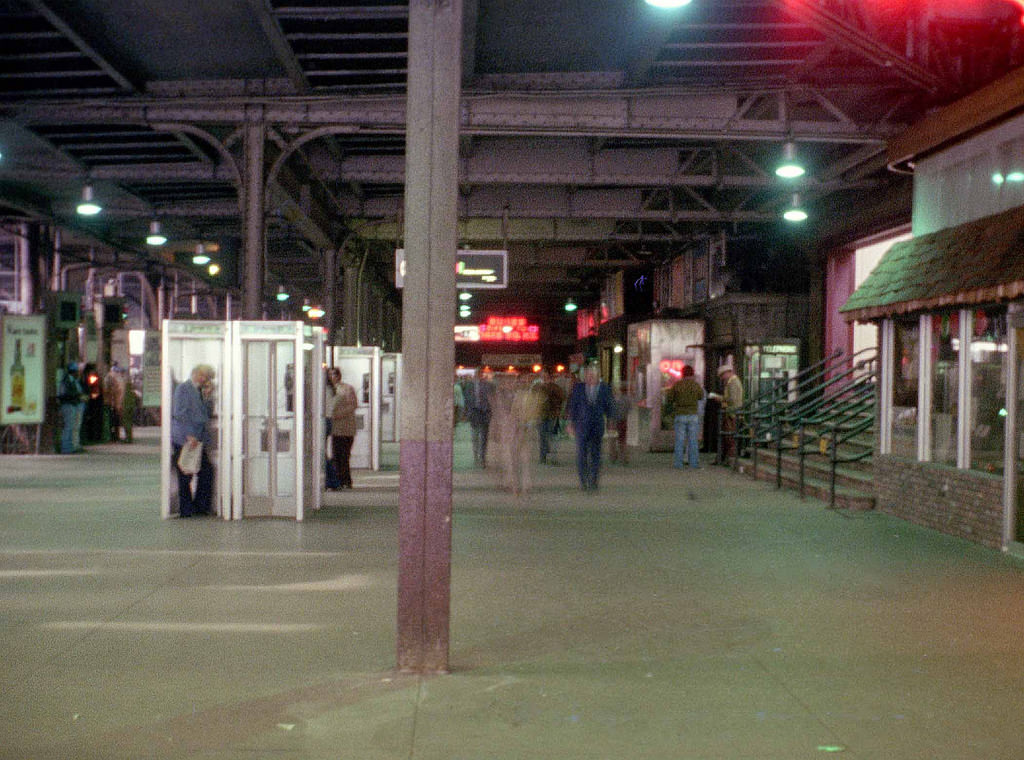
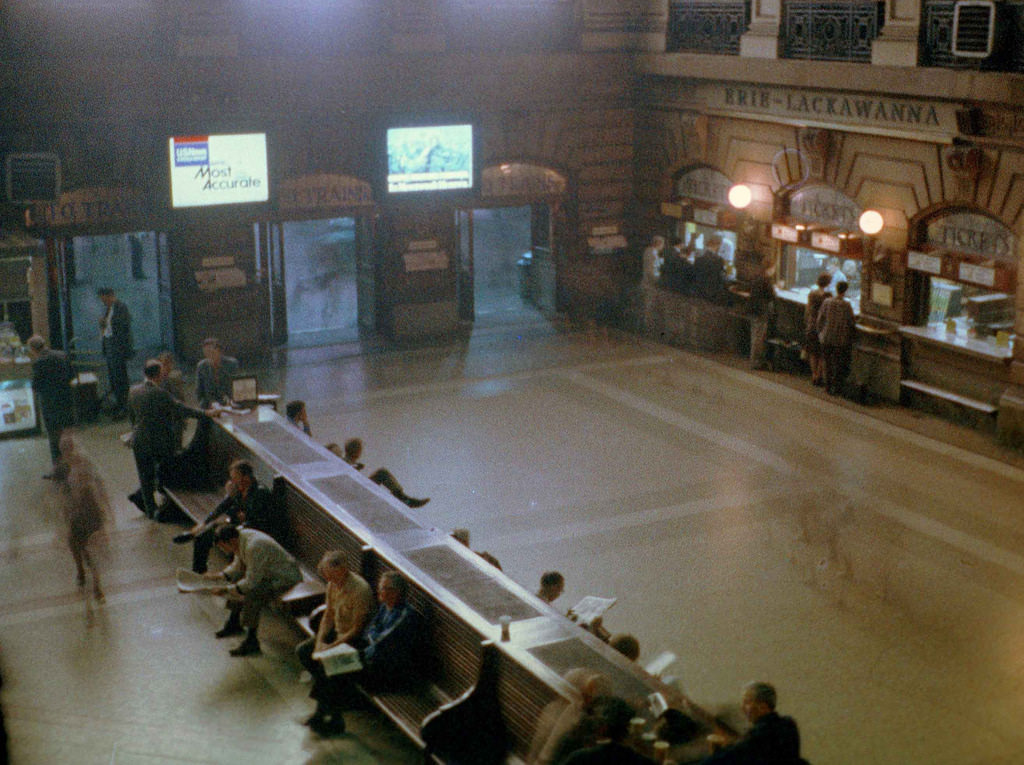
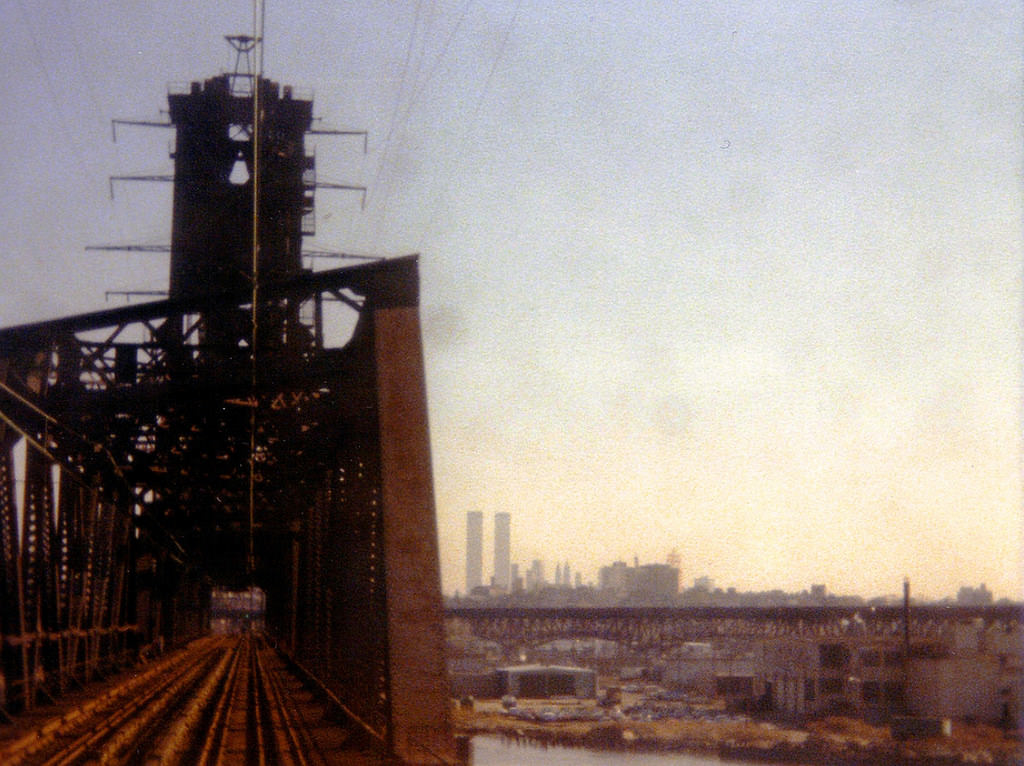
Transportation was one area where the city still functioned. PATH trains connected Jersey City to Newark and Manhattan, running through stations like Exchange Place that served thousands of daily riders. The Erie Lackawanna terminal in nearby Hoboken continued operating, its waiting rooms and phone booths still in use through the mid-1970s.
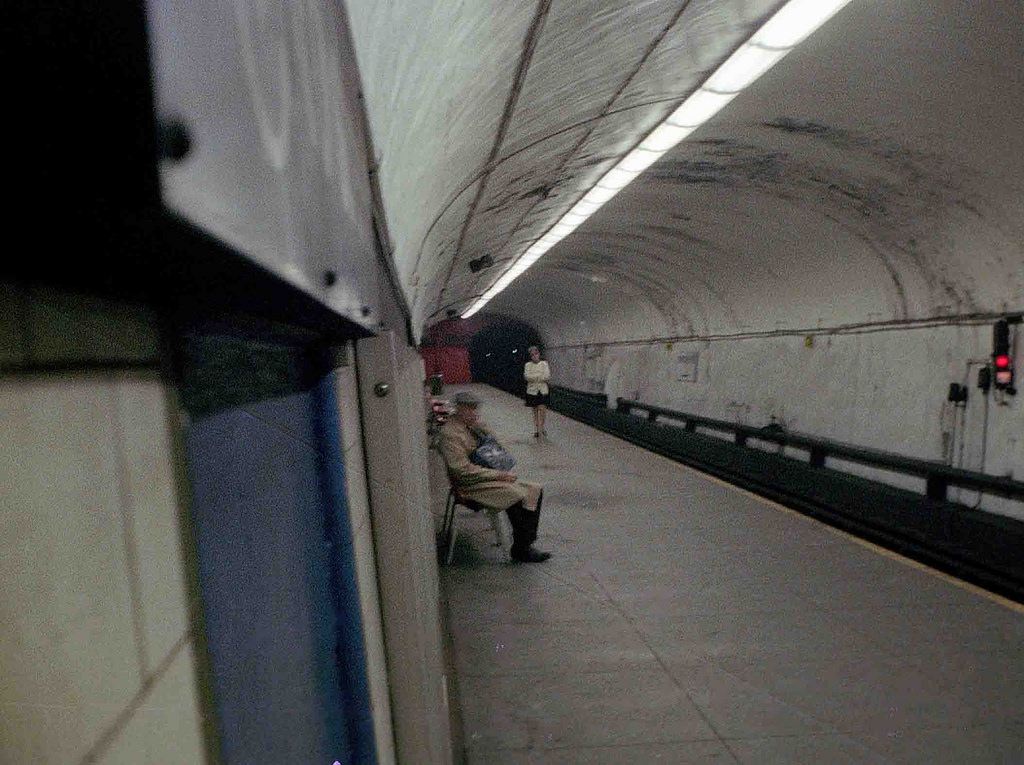
The Exchange Place PATH station, Jersey City, March 1975
The view from a PATH train end-window on a trip from Newark to New York, Jersey City, March 1977
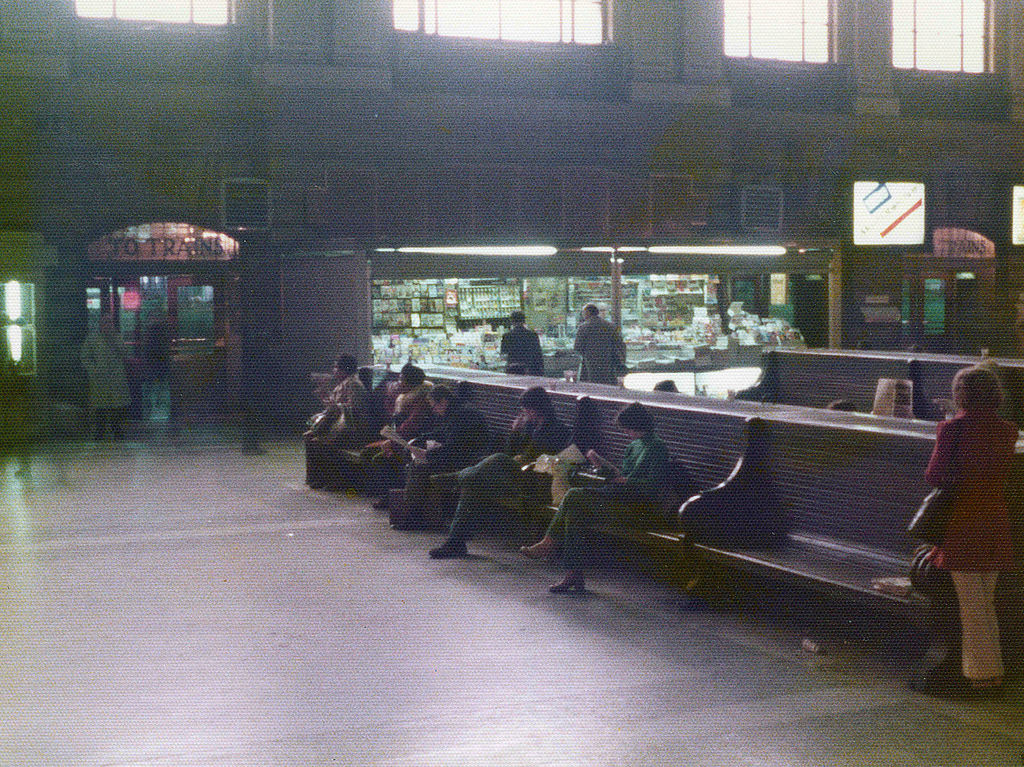
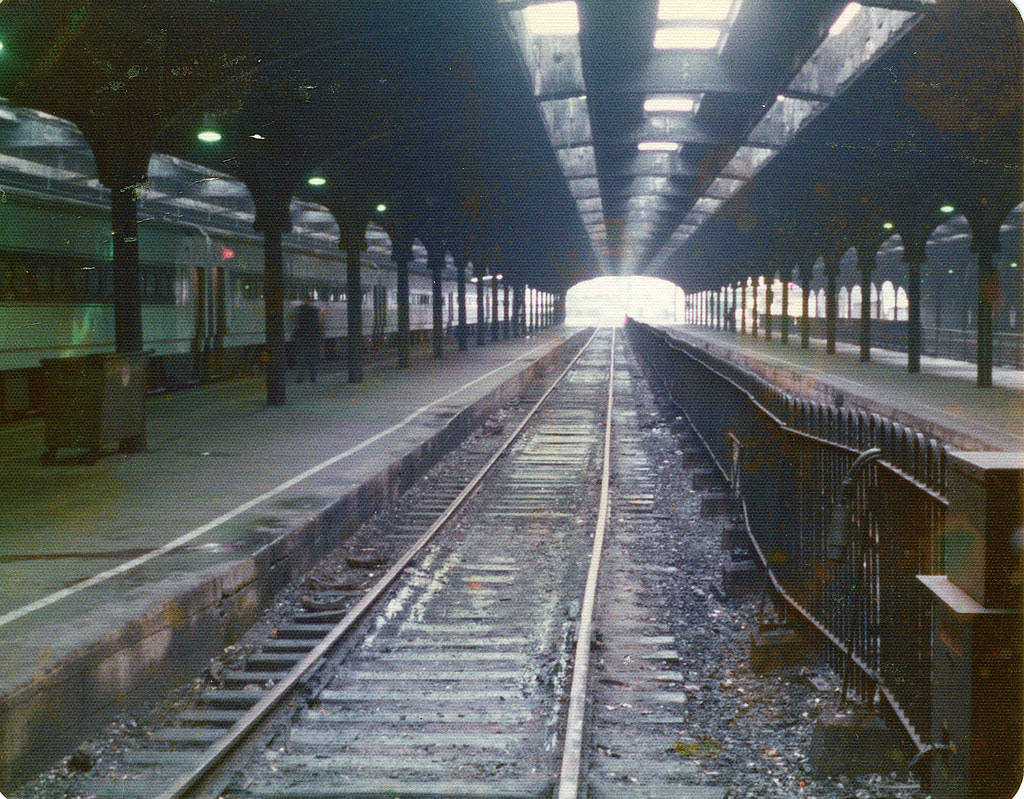
Hoboken Erie Lackawanna railroad terminal waiting room, March 1975

Even amid the decay, some parts of downtown Jersey City were beginning to stir. Montgomery Street and areas around Grove Street and Newark Avenue were seeing early signs of redevelopment. New housing was going up, and the city government was pushing urban renewal projects forward. One of the most significant was the development of Liberty State Park on the former industrial waterfront — a project that would transform abandoned rail yards into public open space with direct views of the Statue of Liberty and Ellis Island.
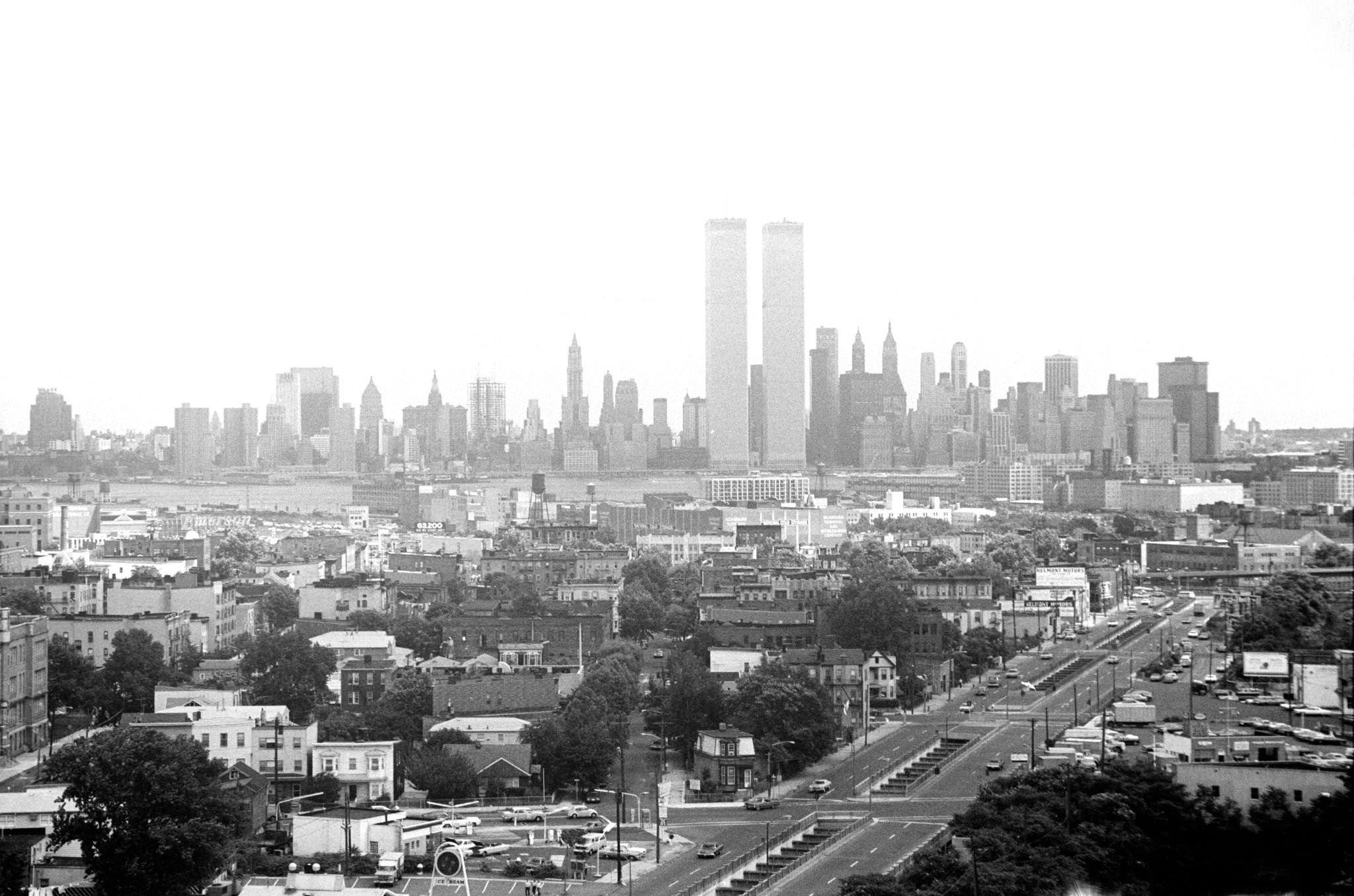
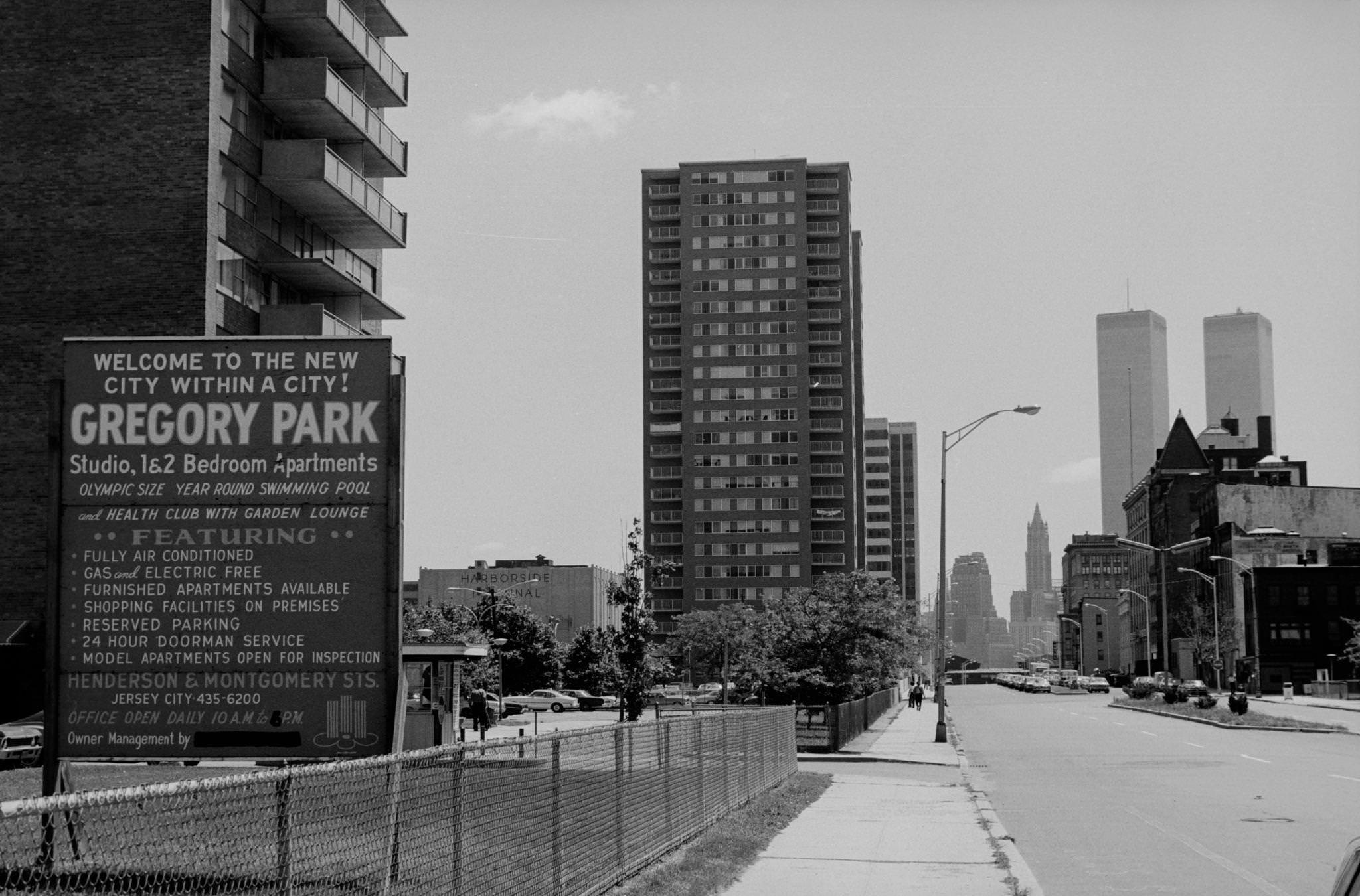
Aerial view, looking east, with the World Trade Center and the New York City skyline in the distance, of Montgomery Street in downtown Jersey City, New Jersey, 1974.
Gregory Park Apartments in Jersey City, 1974
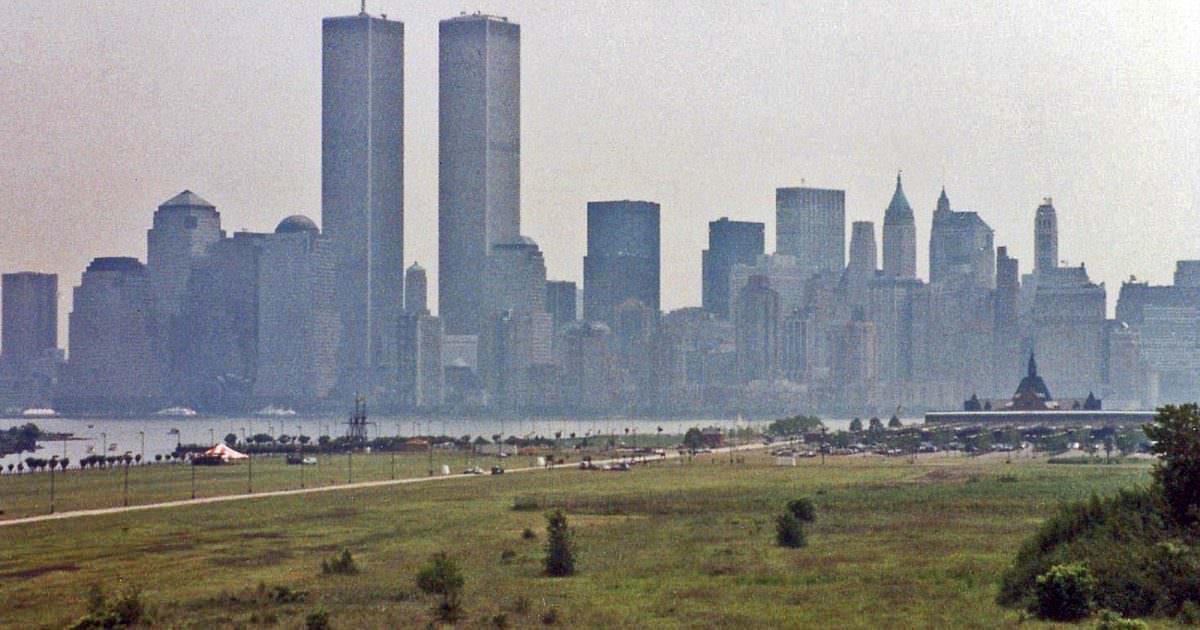
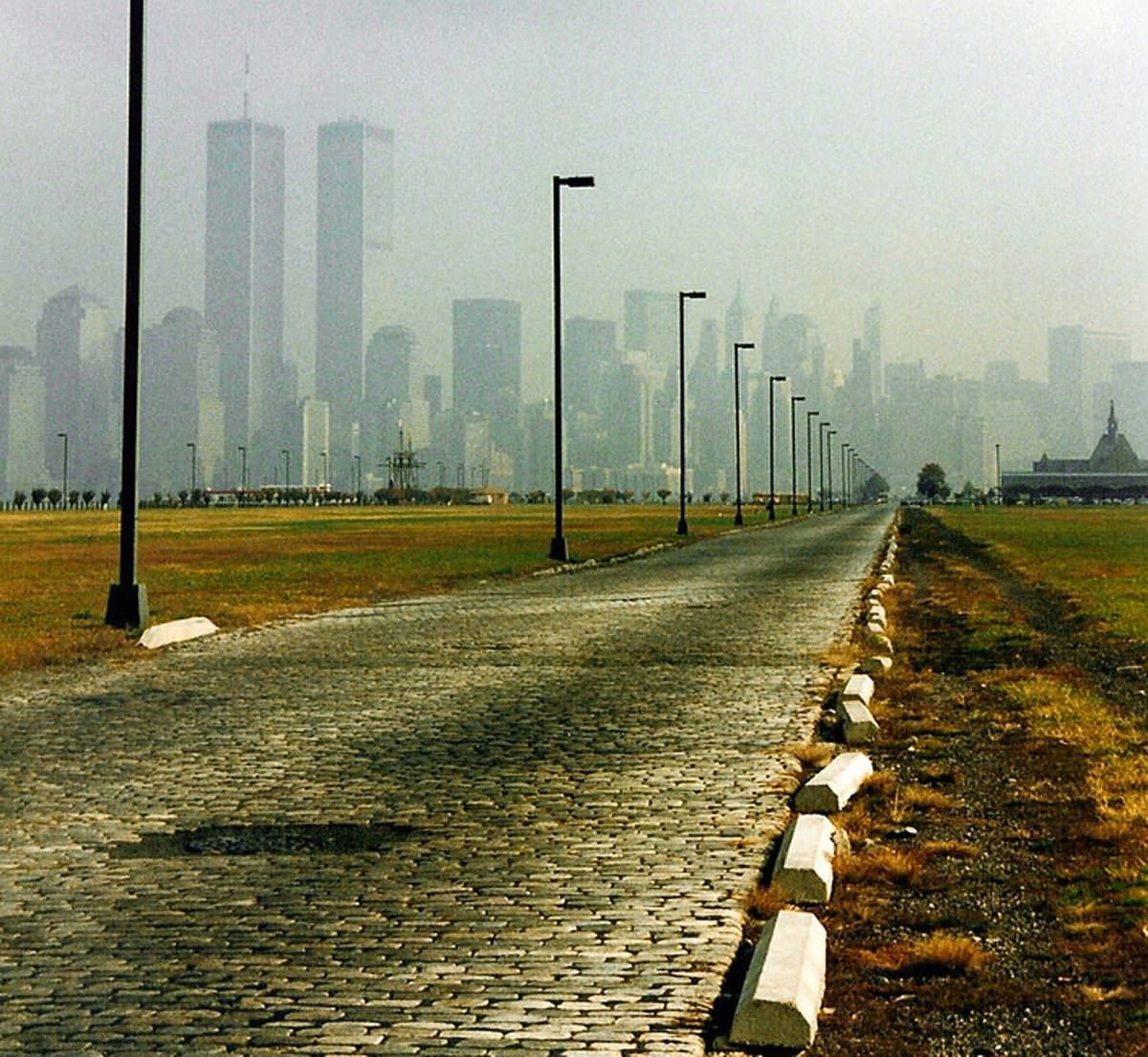
Liberty State Park, Jersey City, 1979

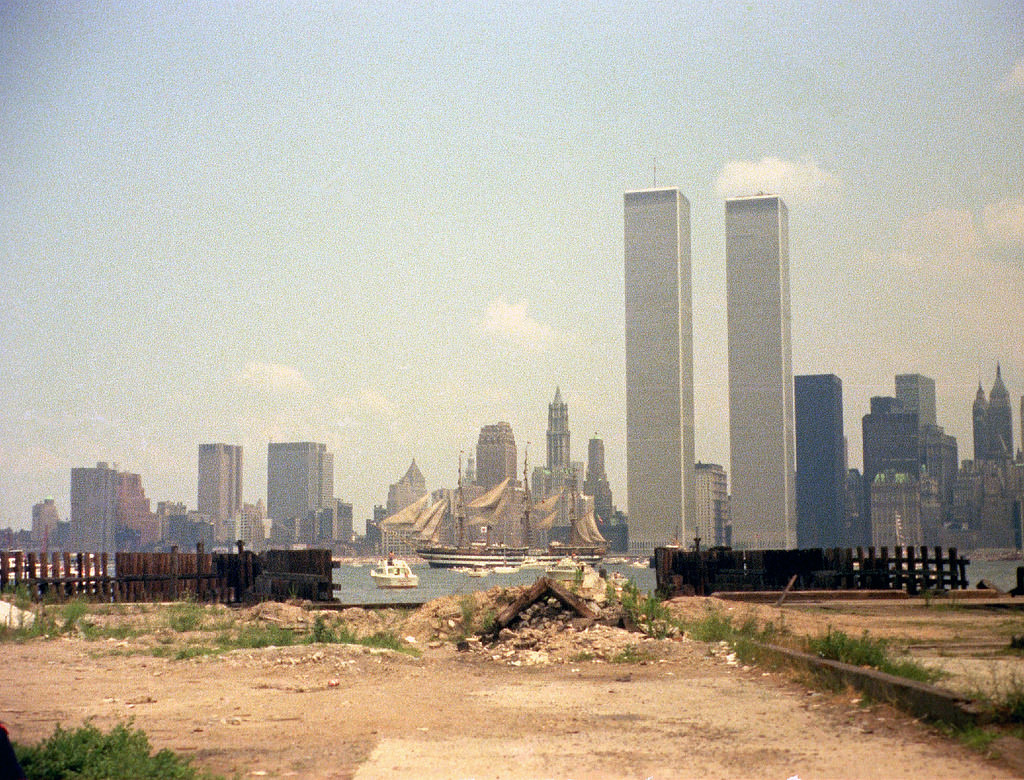
On July 4, 1976, the nation’s Bicentennial brought a rare moment of celebration to the Jersey City waterfront. Tall ships sailed past as part of Operation Sail, viewed from the grounds of the old Central Railroad of New Jersey Terminal — a site that was abandoned but still commanding. The World Trade Center hovered across the river, and crowds gathered at Exchange Place to watch the spectacle.
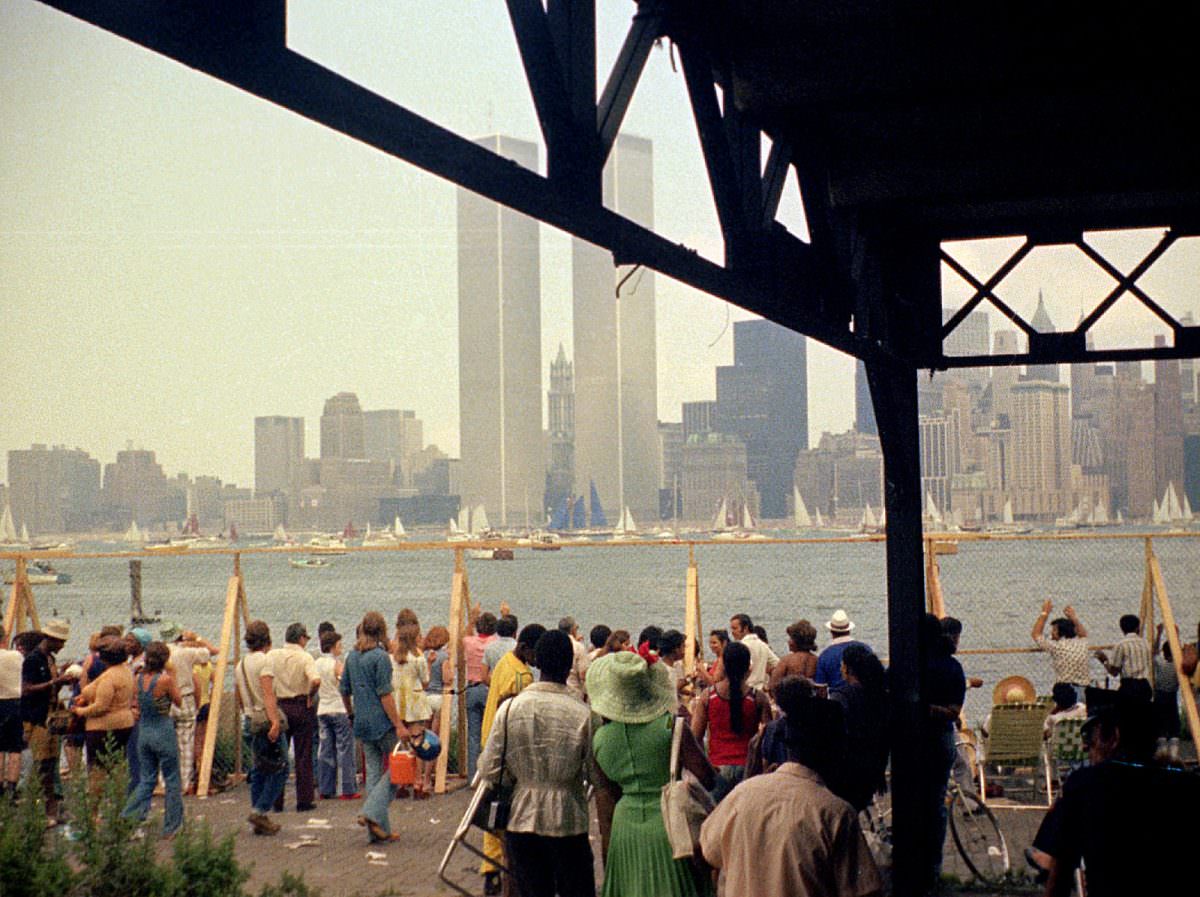
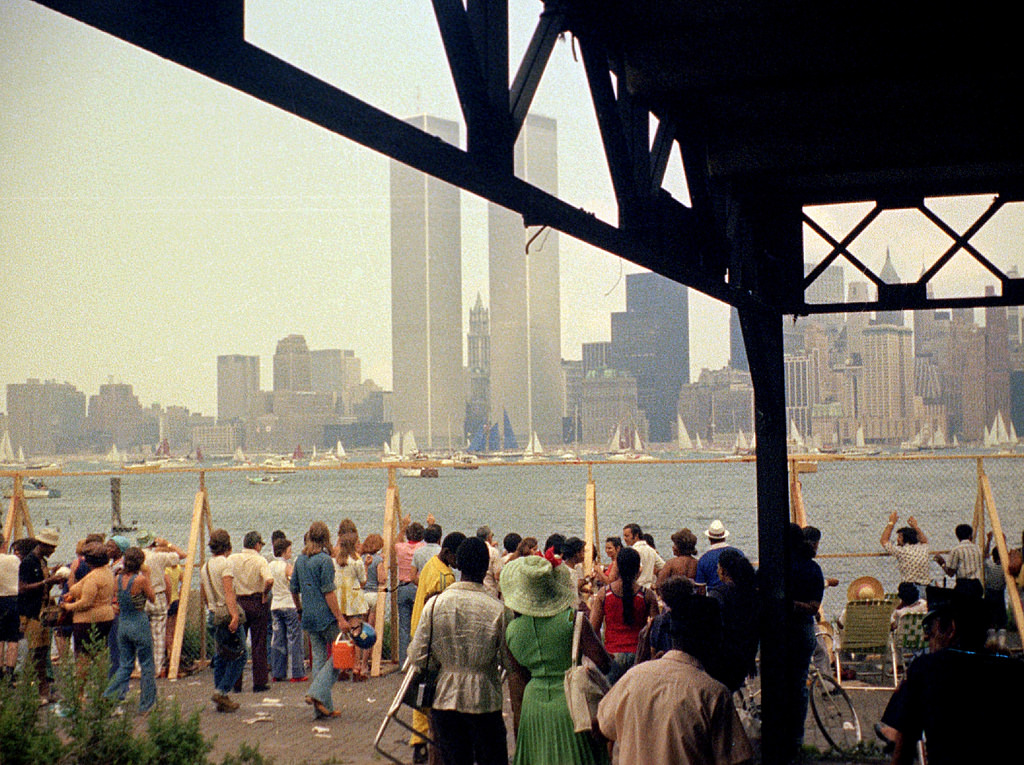
Bicentennial Tall Ships during Opsail (Operation Sail) from the abandoned Central Railroad of NJ in Jersey City. World Trade Center hovers over the scene, July 4 1976
Bicentennial Tall Ships during Opsail from the abandoned Central Railroad of NJ in Jersey City, July 4, 1976
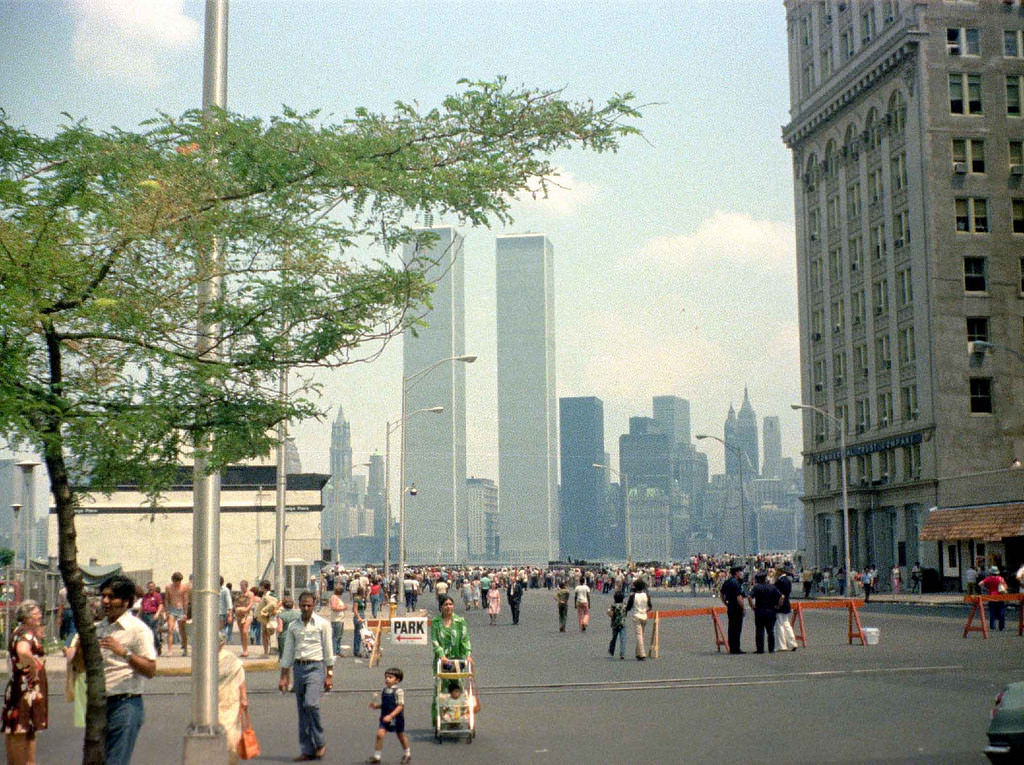
Exchange Place and the World Trade Center on Bicentennial Day in Jersey City, July 4, 1976

From the 58th floor of the World Trade Center, a 1974 panoramic view showed Jersey City spread out to the west — a dense patchwork of neighborhoods, rail lines, and waterfront industry, all within sight of one of the world’s most famous skylines. That proximity to New York defined Jersey City as much as anything else. It was a city that existed in Manhattan’s shadow, rich in history, but working hard to find its footing in a decade that tested nearly every American city.
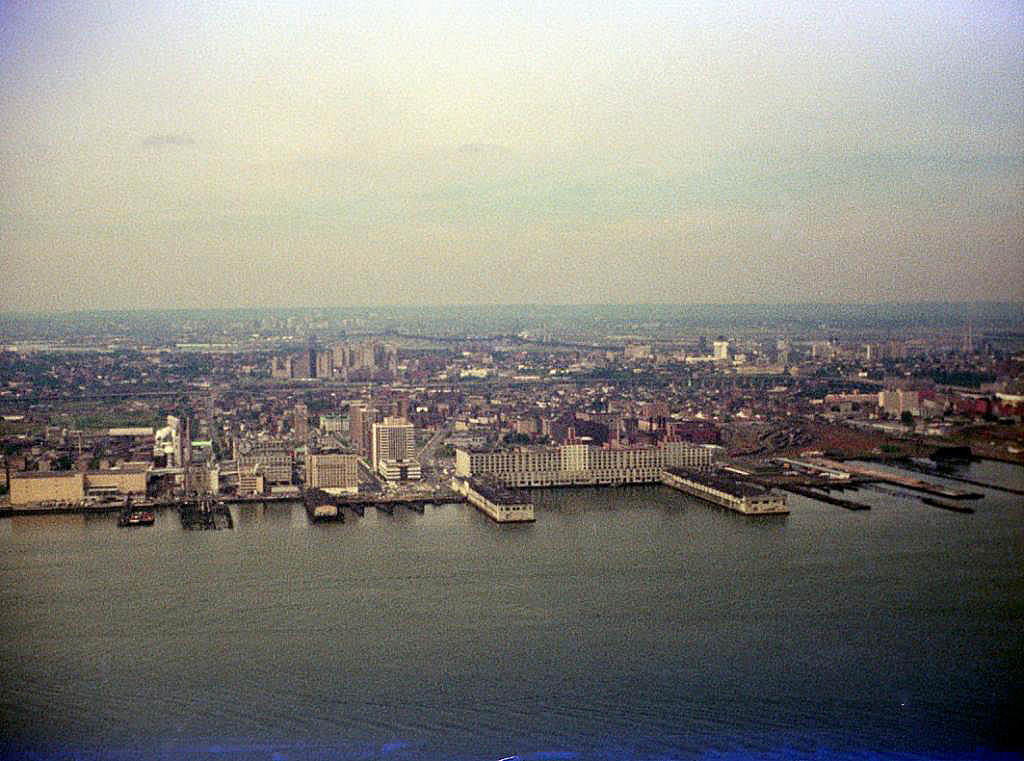
Jersey City panoramic view from the 58th floor of the World Trade Center, April 1974
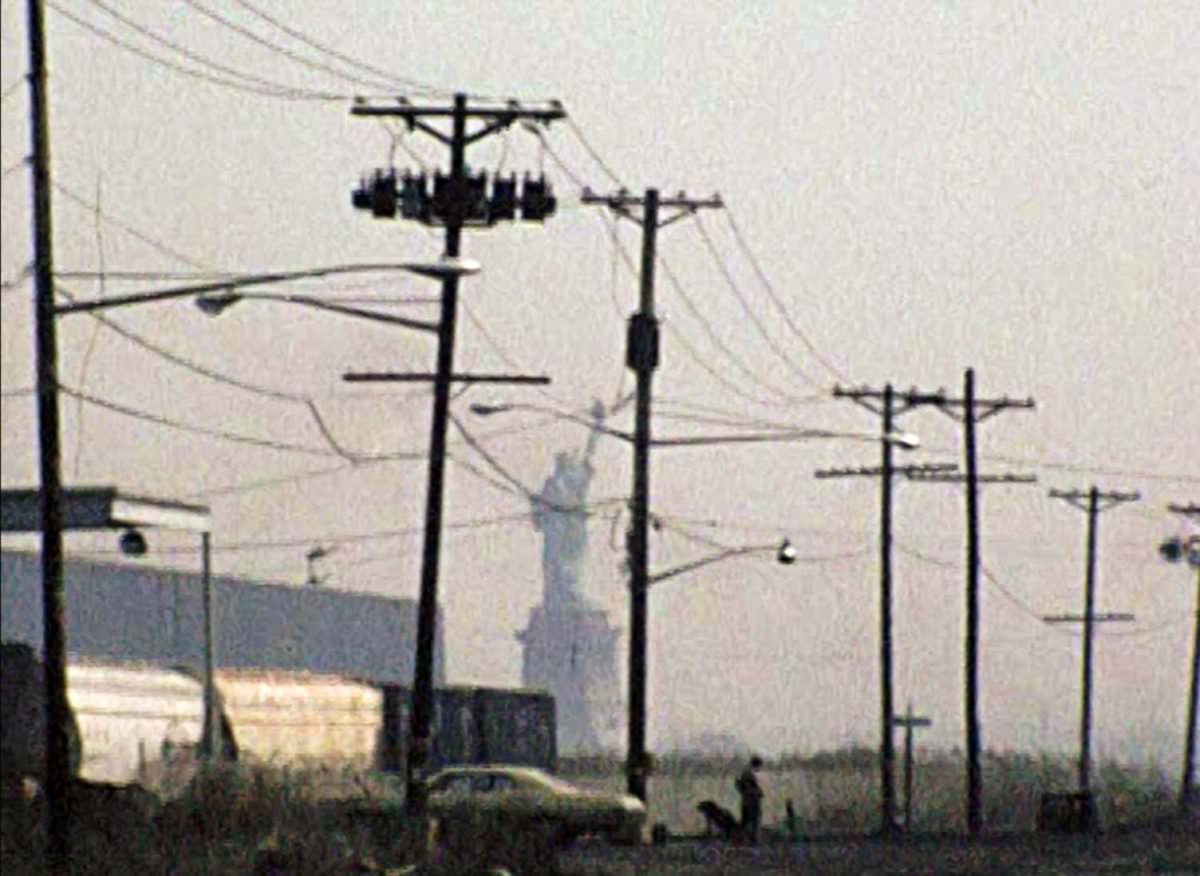
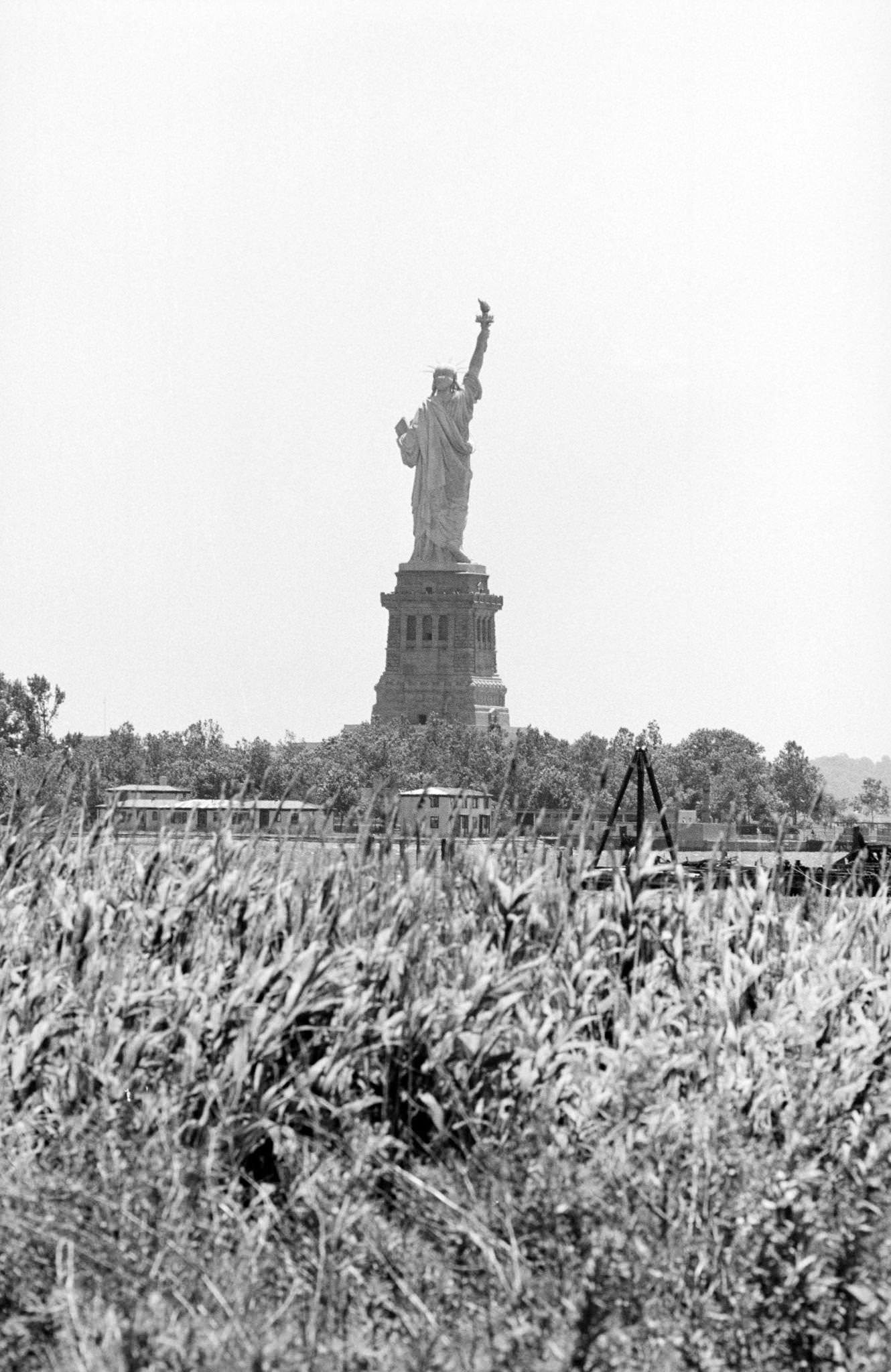
View of the Statue of Liberty from Jersey City, New Jersey, 1974.
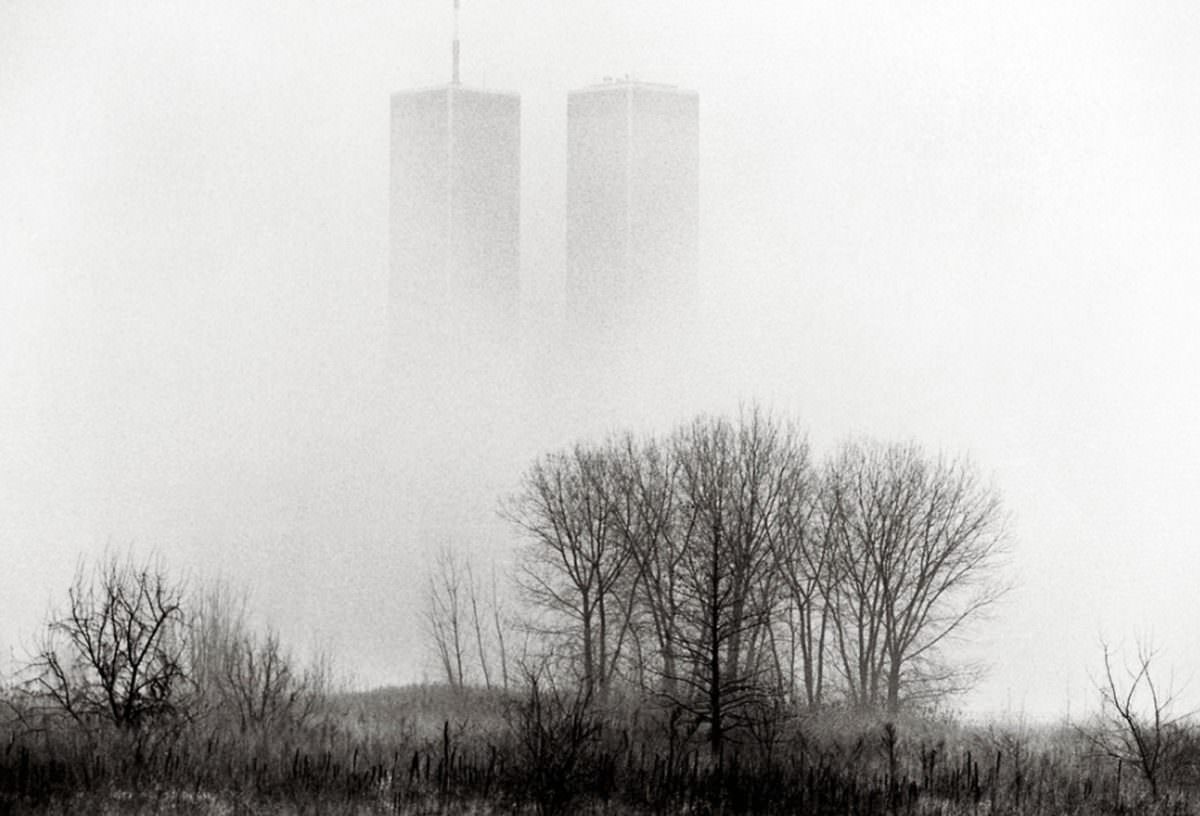
The World Trade Center and Lower Manhattan hover across the Hudson, Jersey City, March 1976.
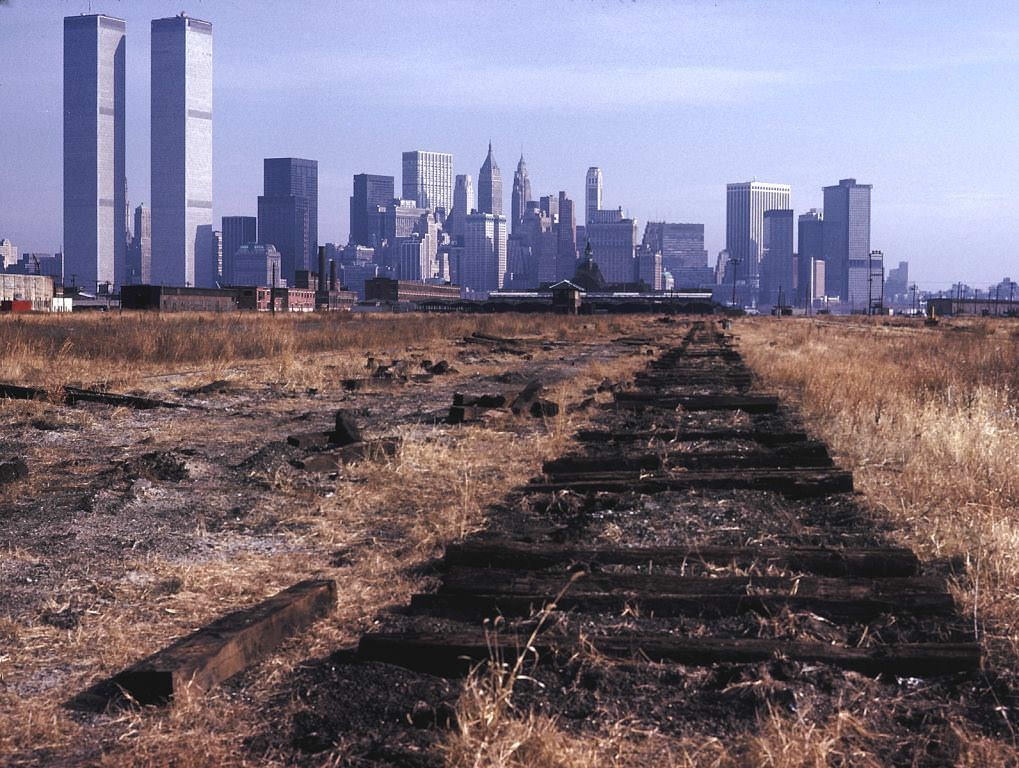
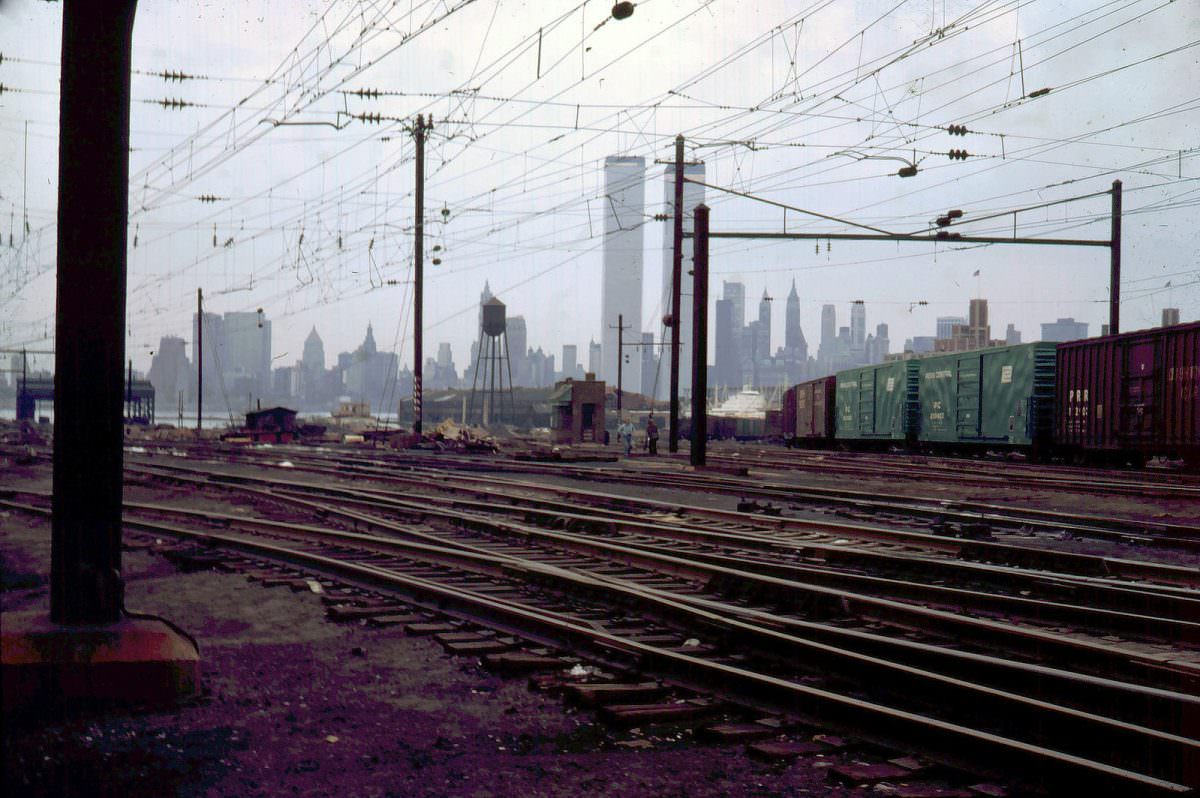
World Trade Center, Lower Manhattan, abandoned Central Railroad of NJ Terminal and railroad land(Liberty State Park is here now), Jersey City, 1975
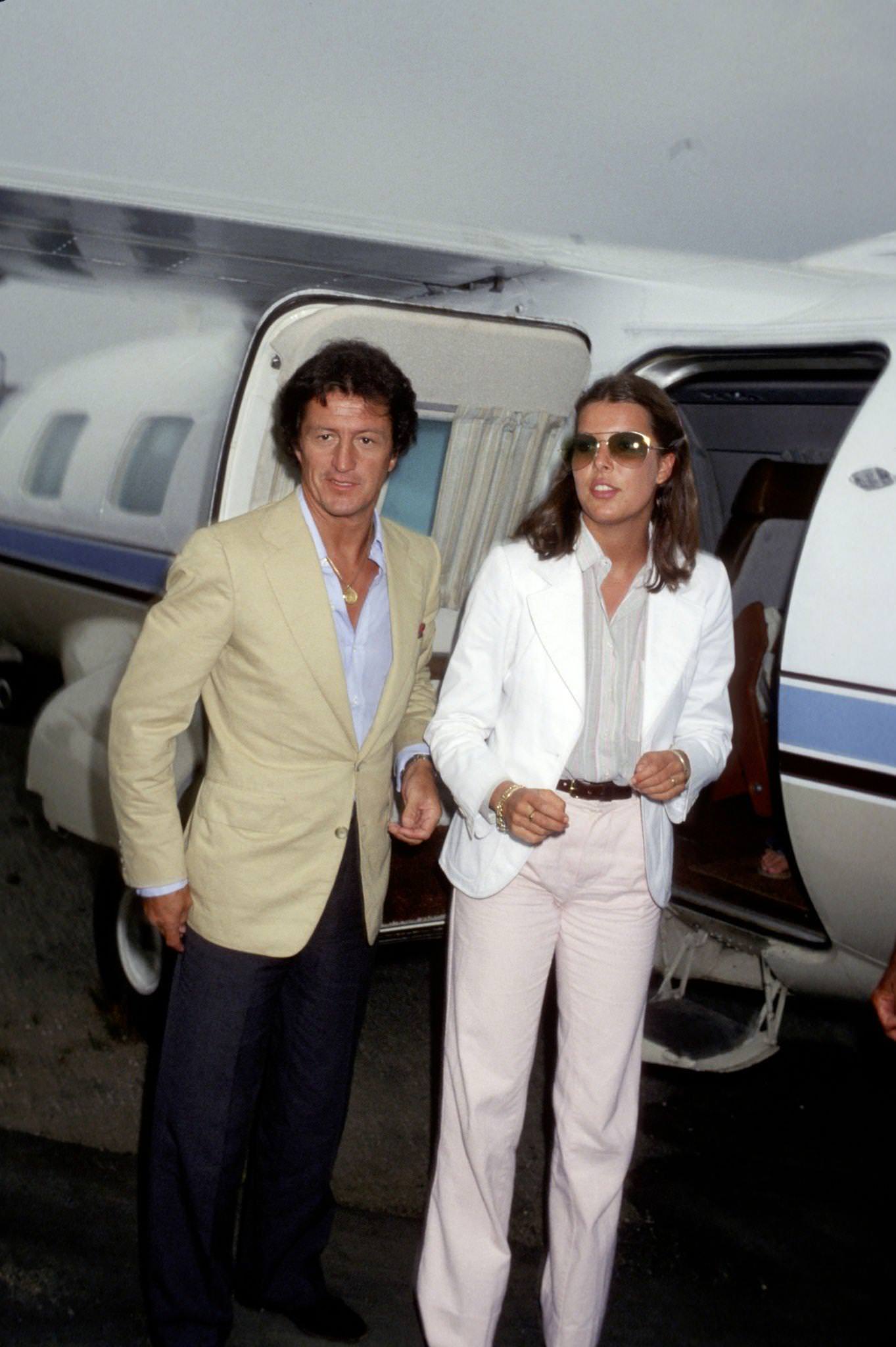
Princess Caroline and Philippe Junot at the Ocean City Beach in Ocean City, New Jersey
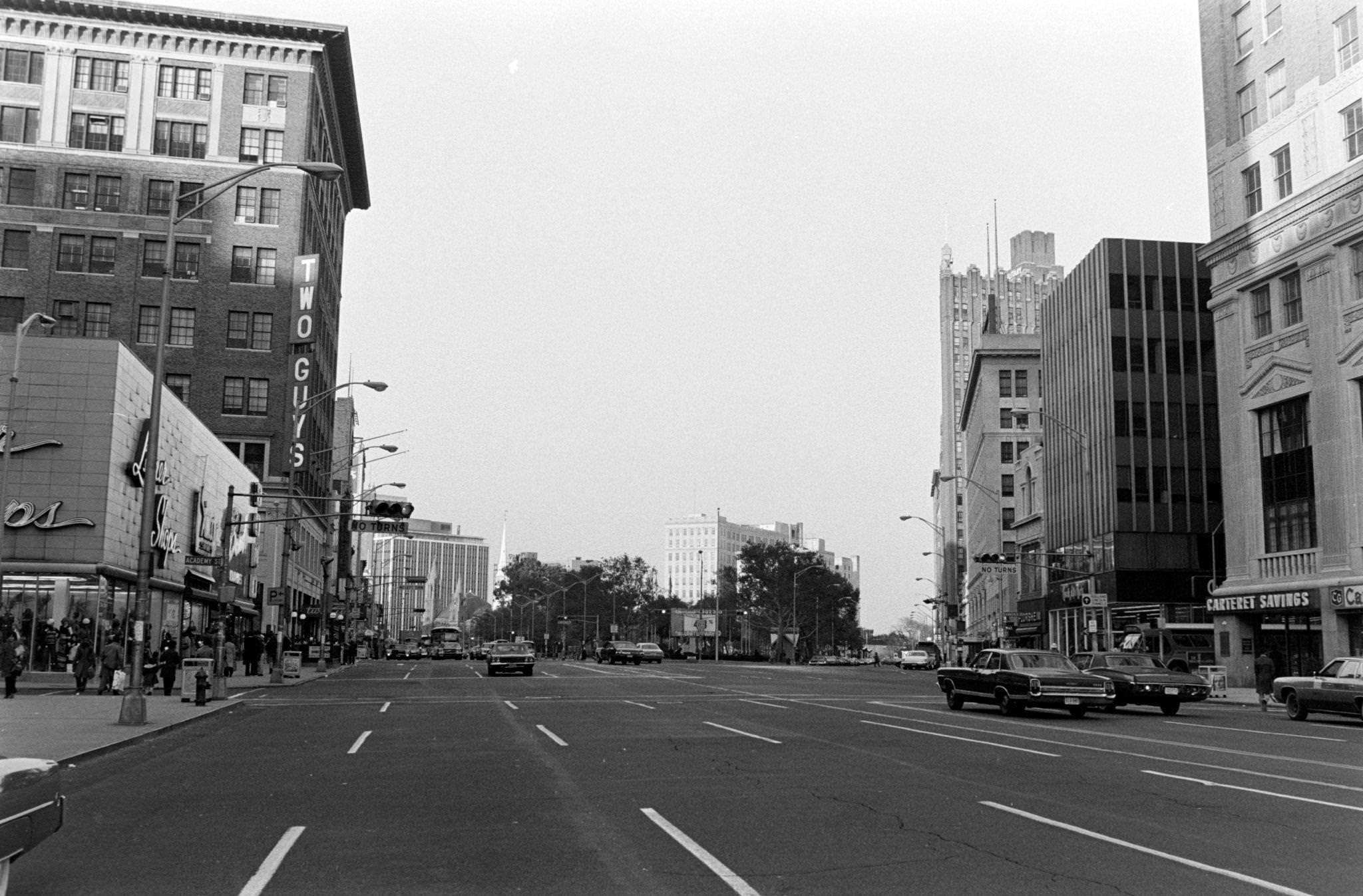
Architecture in Newark, New Jersey, is seen on October 23, 1976.
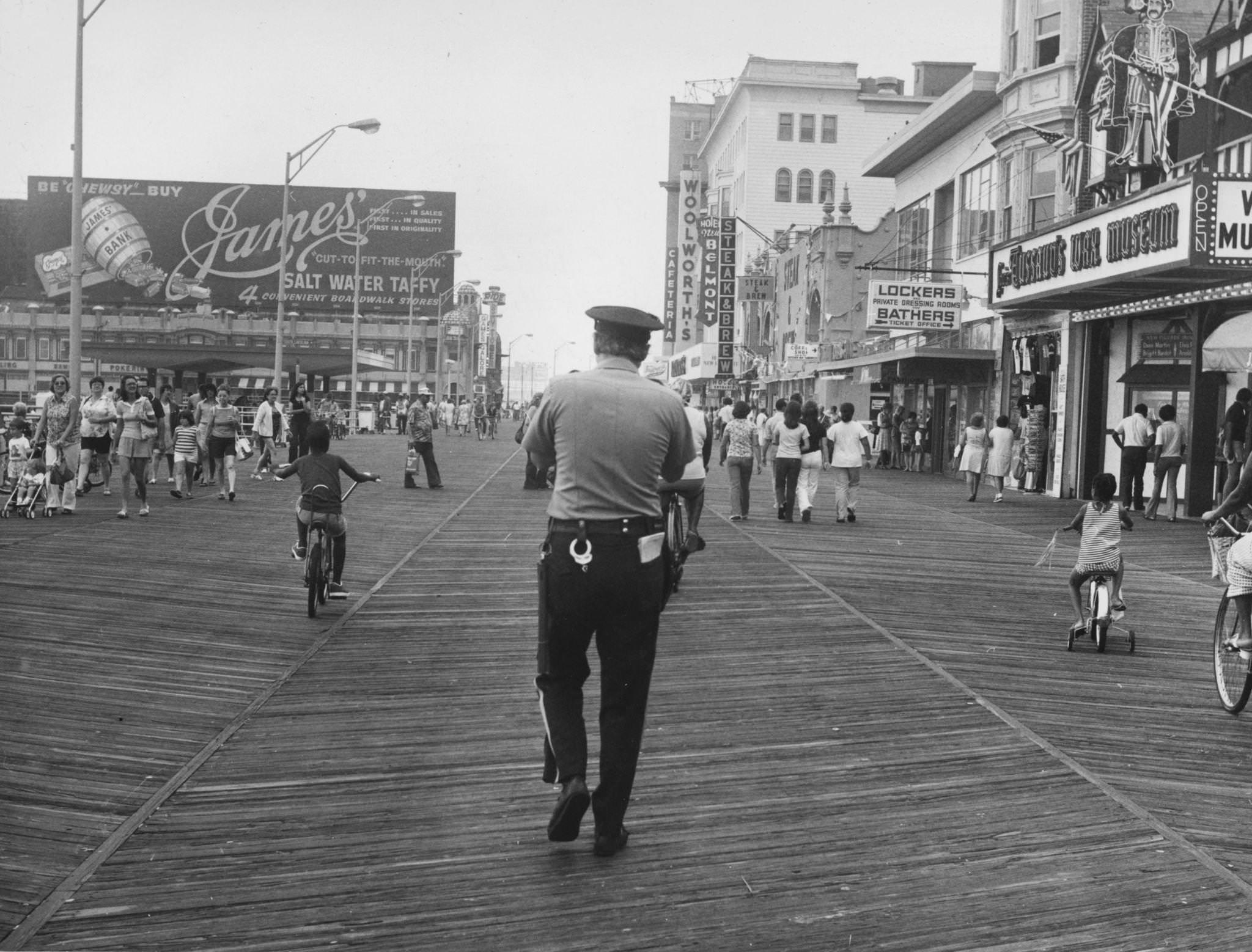
A policeman walking along the boardwalk at Atlantic City, New Jersey, 1976
What Jersey City looked like in the 1970s
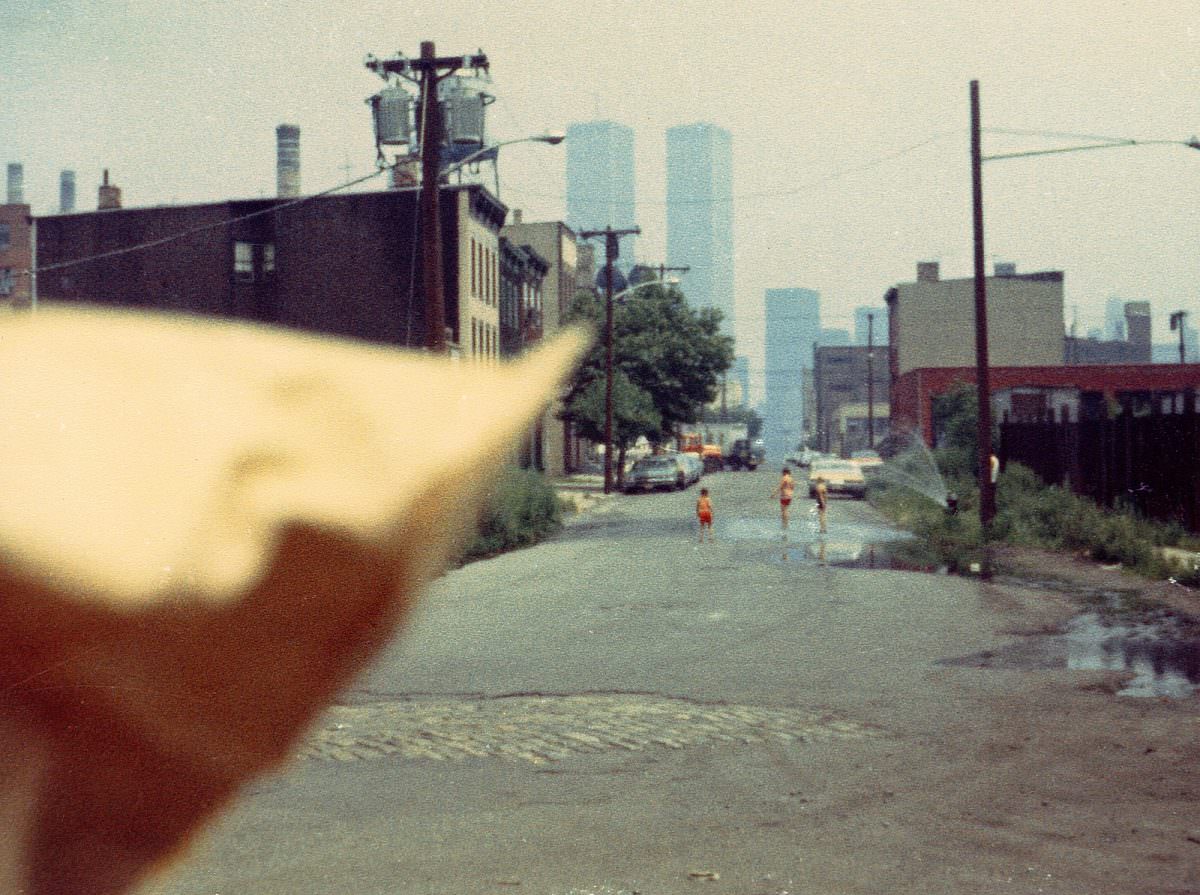
Jersey City, Aug 1979
Jersey City, March 1975
What Jersey City looked like in the 1970s
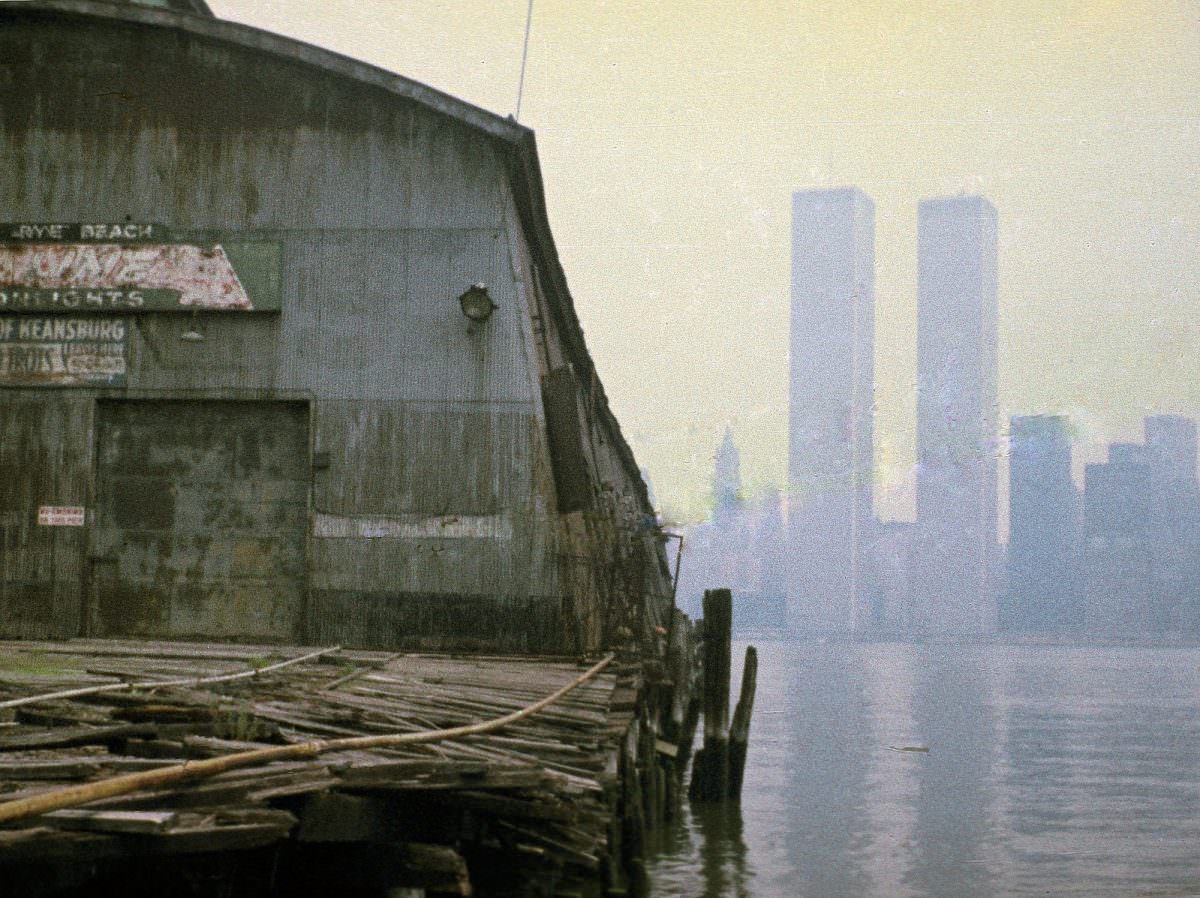
Abandoned pier at Exchange Place in Jersey City with World Trade Center across the Hudson, March 1975
Battery Park City landfill towards Jersey City from the abandoned West Side Highway in front of the World Trade Center(its shadow on the left), May 1974
Greene Street Boat Club in Jersey City with the Lower Manhattan skyline and the World Trade Center in the distance, 1975
Hoboken Erie Lackawana terminal with people using phone booths in 1975
Hoboken Erie Lackawanna Railroad Terminal looking from decrepit old Jersey City piers, March 1976
Hoboken Erie Lackawanna terminal in 1975
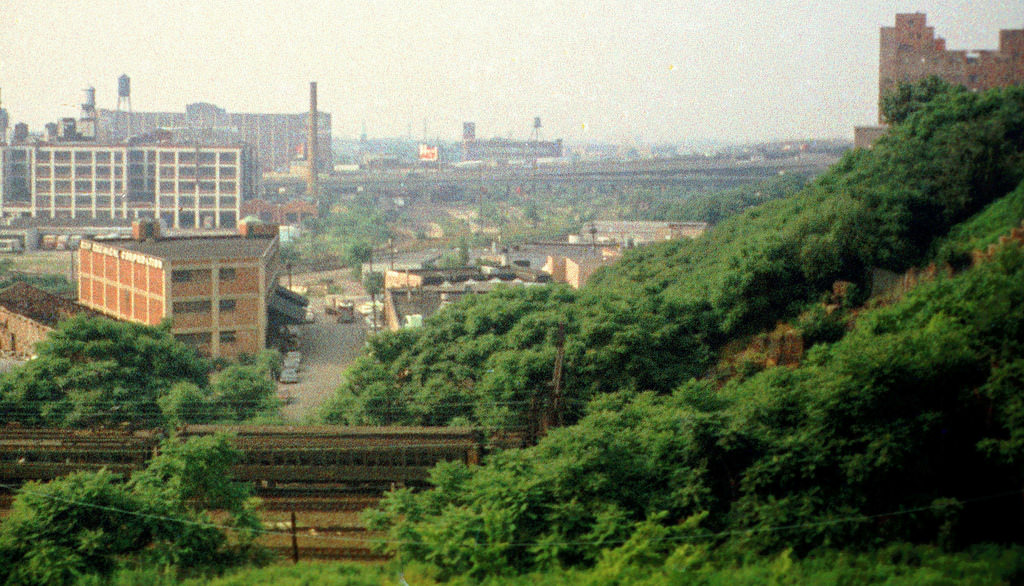
Hoboken toward Jersey City (desolate industrial area by Erie Railroad tunnel through Bergen Hill), 1975
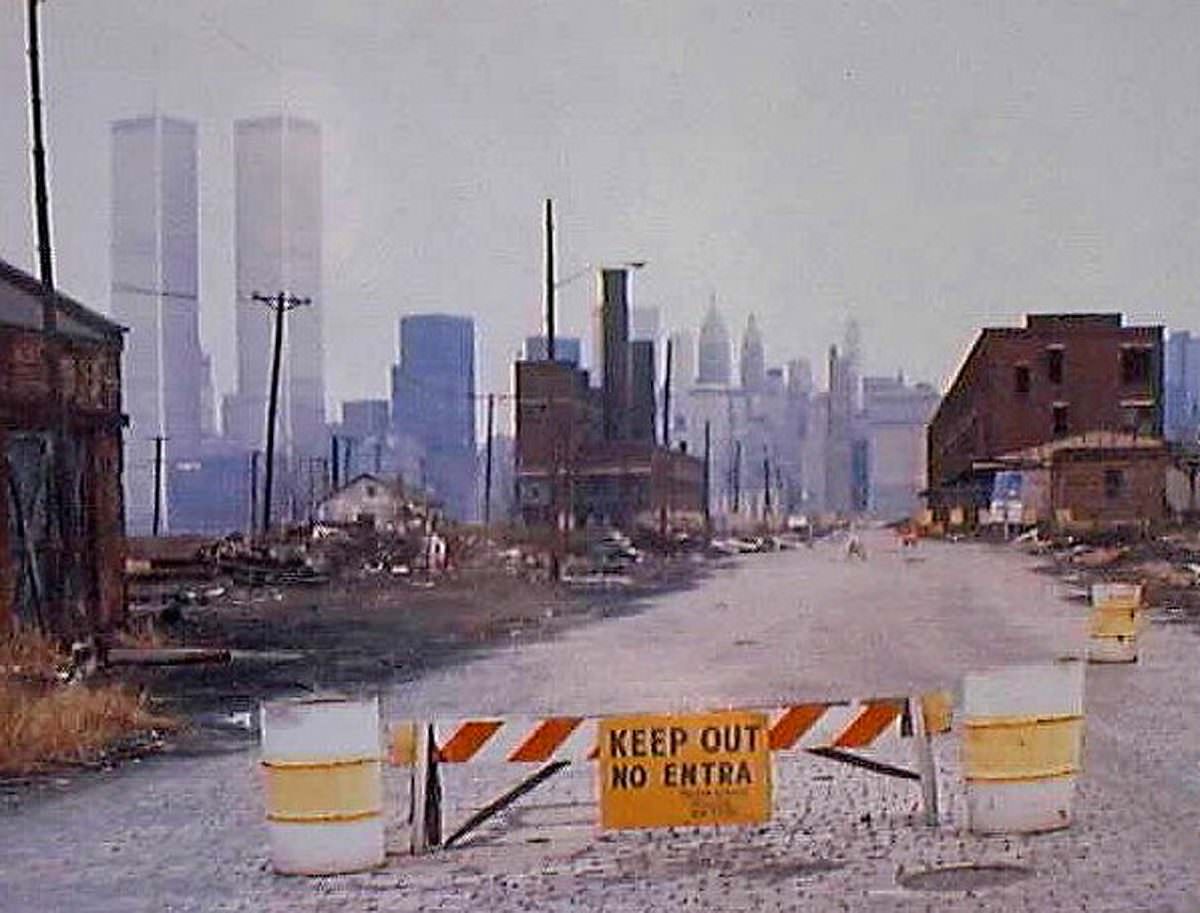
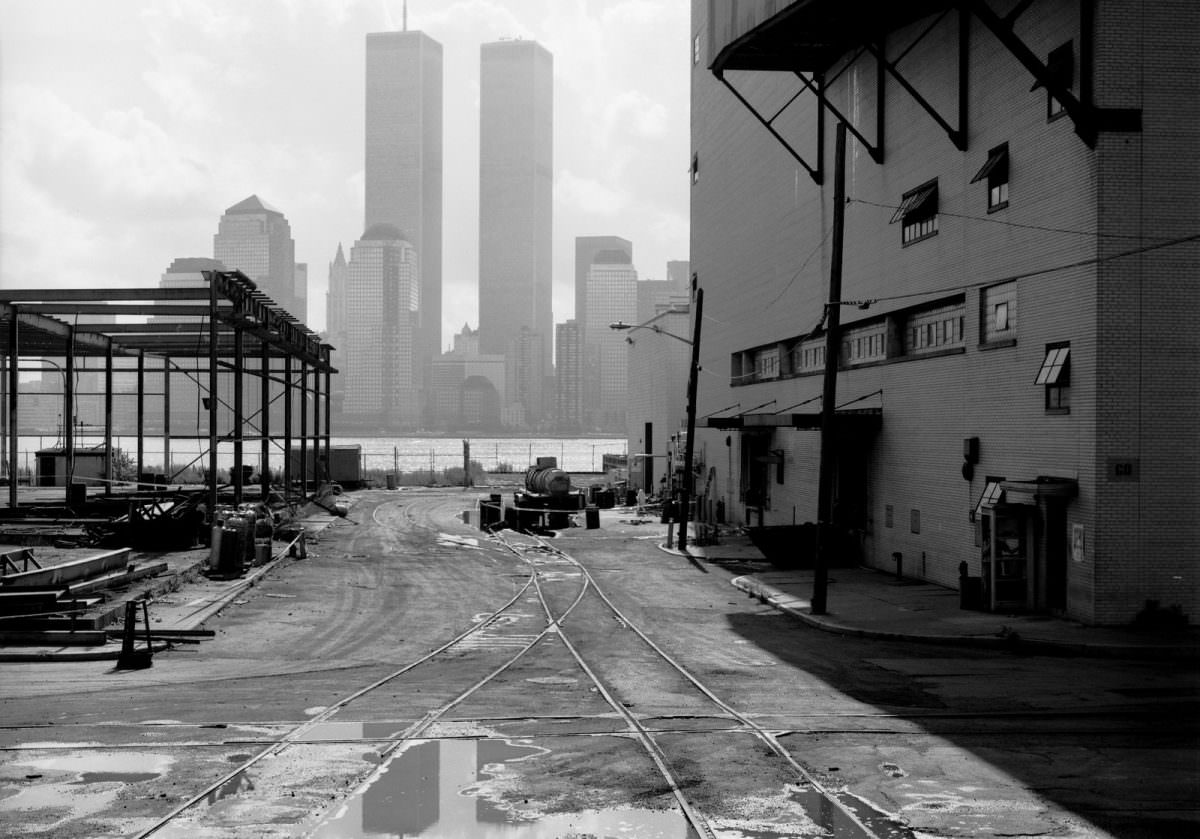
Jersey City industrial ruins at the end of Greene Street, 1975
Jersey City, 1978
Jersey City, 1978
Jersey City, April 1975
Jersey City, July 4, 1976
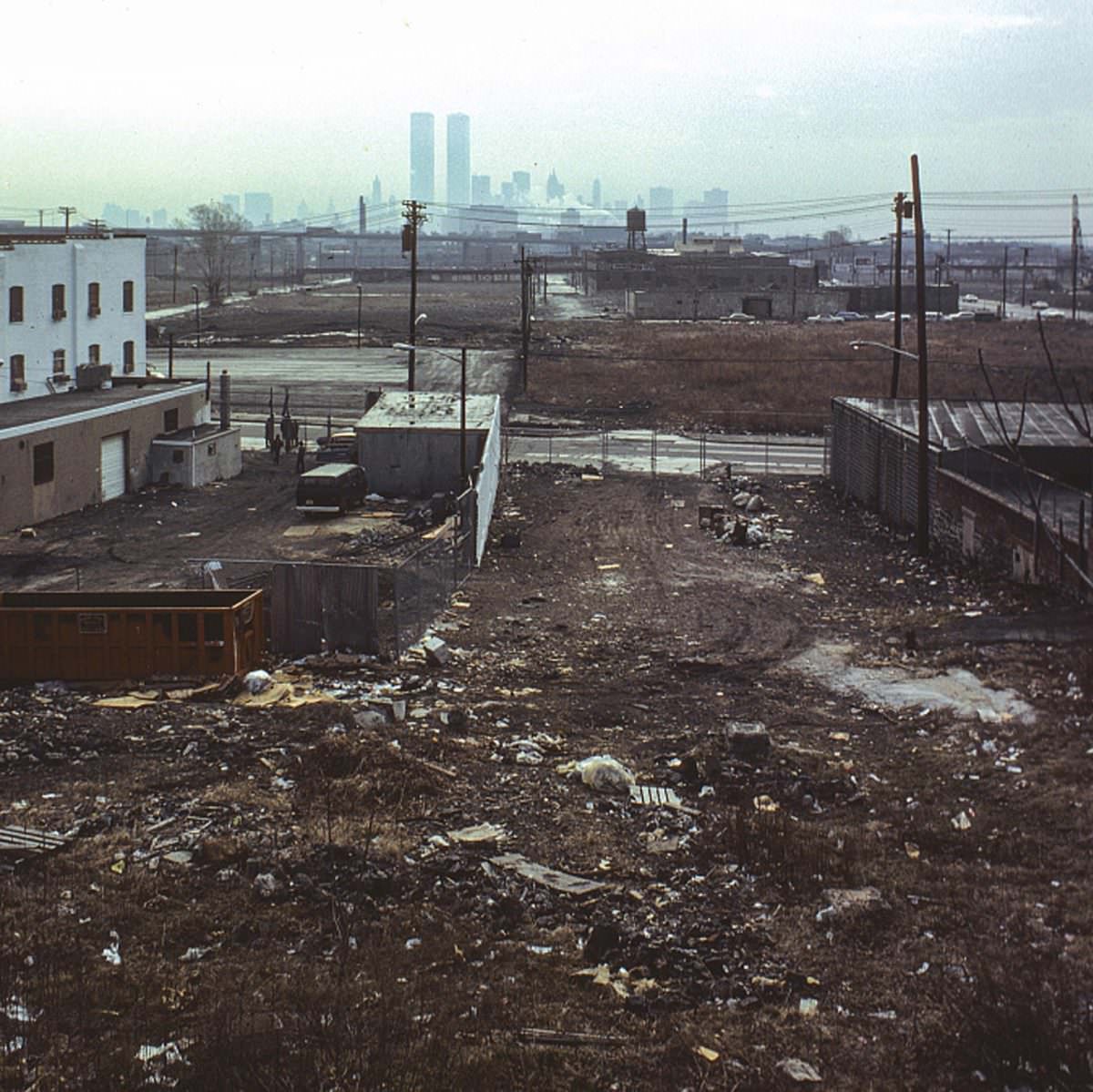
Looking east to Lower Manhattan and the World Trade Center near the New Jersey Turnpike exit 14B from James Hamil Drive, March 1974
The Erie Lackawanna railroad terminal, 1975
Enjoyed this post? Get new ones in your inbox.

16 thoughts on “What Jersey City looked like in the 1970s”

    1. Avatar of William Harris
      William Harris

      I’d say it’s a far sight better than these photos attest to in the 70’s. Looks pretty nasty. I’m curious, is it the luxury apartments that you object to?
  1. I remember going to Atlantic City in the late 70’s as a kid , mostly I remember the Planters Peanuts and some game machine where you would put in a nickle and it would shove a bunch of nickles off the edge , till you ran out of nickles and the smell of press on t-shirts
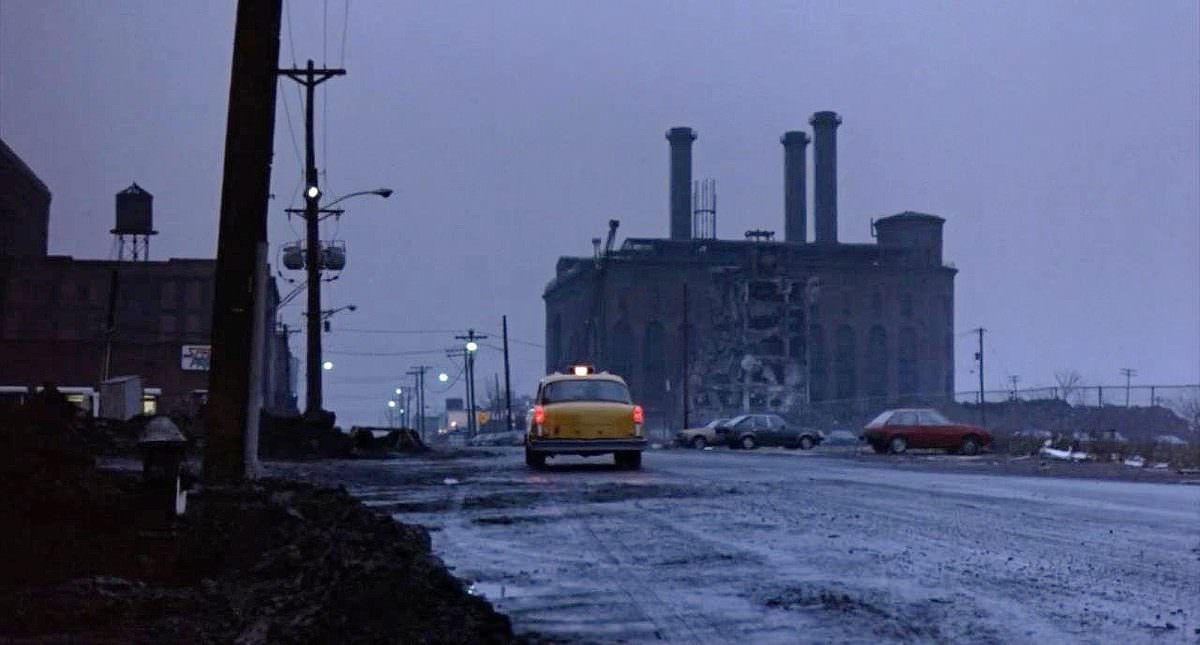
  2. Photo 23 will always be one of my favorites. That’s the ending scene from Sid & Nancy (filmed in ‘85ish) the taxi is traveling west on Greene at roughly Steuben street.

Leave a Comment

Your email address will not be published. Required fields are marked *

Share this Post 🥺

Please take a moment to share this content. Your support is greatly appreciated! 🙌🙏

Share this Post 🥺

Please take a moment to share this content. Your support is greatly appreciated! 🙌🙏
Scroll to Top
 
Hey Friend, Before You Go.. Please like & follow for more interesting content