Throughout history, photographs have played a vital role in documenting and preserving our collective past. They freeze time, capturing the essence of significant events and providing a visual record of the moments that shaped the world. These images have influenced our understanding of history, sparked conversations, and inspired generations — conveying stories that need little or no accompanying text.
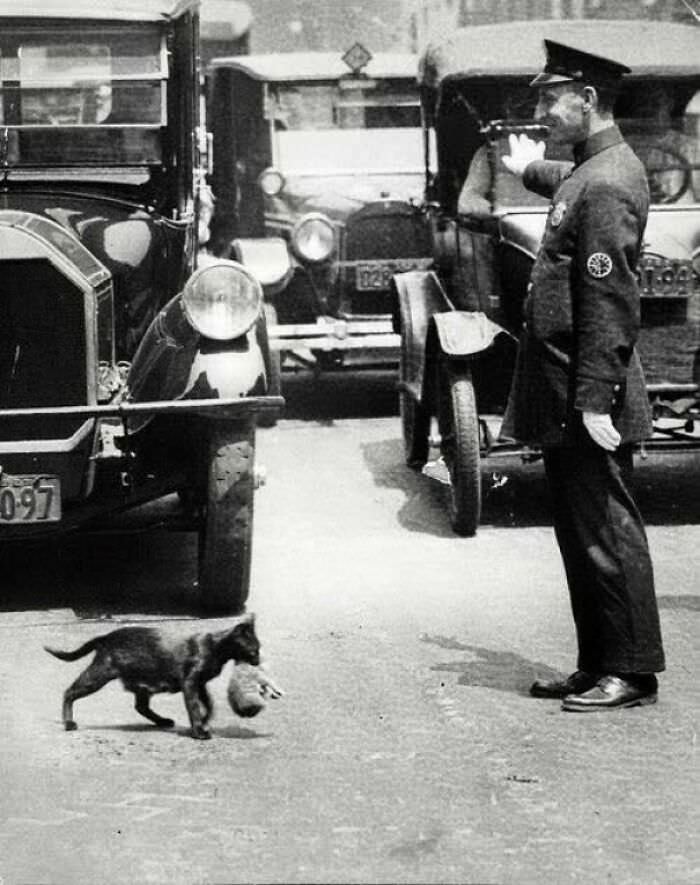
In this photo from around 1925, a New York City police officer stops traffic to allow a mother cat to cross the street safely with her kitten. The image captures a moment of kindness and compassion in a bustling city. At the time, New York City was home to many stray cats, and their welfare was not always a priority. In this instance, the officer saw the need to protect the mother cat and her kitten from the dangers of the busy street. As the photo shows, the officer stands in the middle of the road, holding up his hand to stop traffic, while the mother cat calmly makes her way across the street with her kitten close behind.
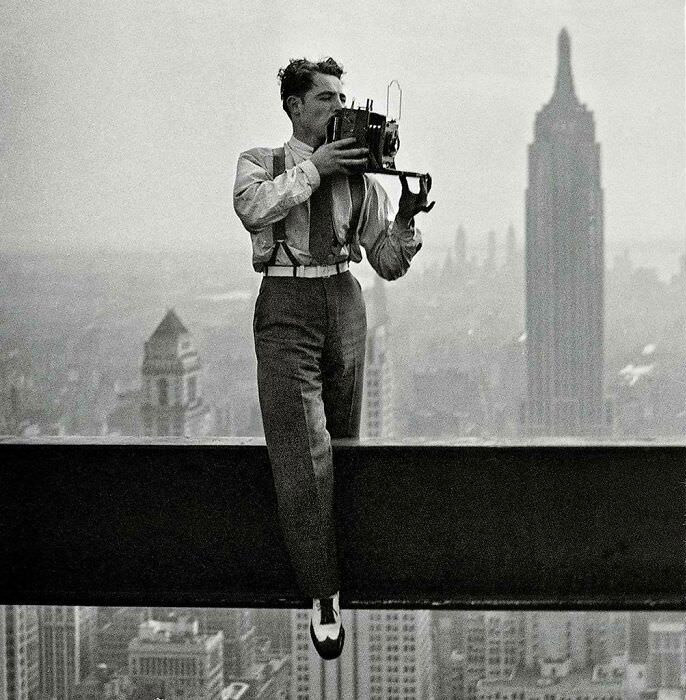
Charles C. Ebbets was an American photographer best known for his work documenting the construction of the Empire State Building. His iconic photograph of construction workers having lunch on a steel beam high above New York City was taken on September 20, 1932. The image became an instant classic and is still widely recognized today as a symbol of the building’s construction and the hard work and bravery of the workers who built it. In this photo, we see Ebbets himself — the man behind the camera — who captured one of the most memorable images in American history.
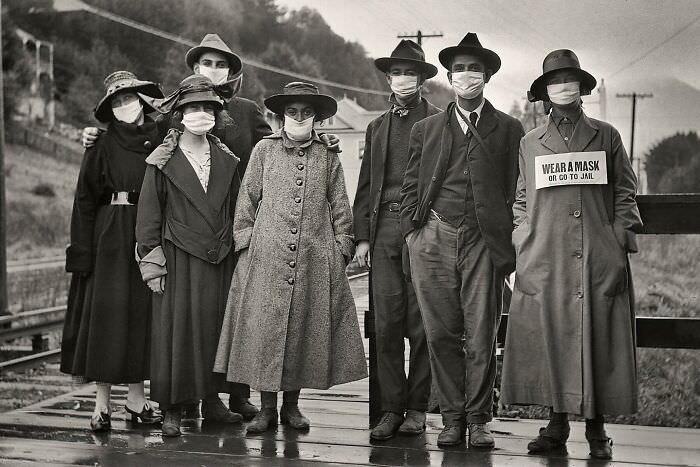
In 1918, the Spanish Flu swept across the world, infecting millions and killing hundreds of thousands of people. To help stop the spread of the disease, public health officials recommended the use of masks in public places. In California, masks became mandatory in some cities, including San Francisco, and those who refused to wear them were threatened with fines and even imprisonment. This photo, taken during the pandemic, shows a group of rail commuters in California wearing white protective masks, with one mask even bearing the message “wear a mask or go to jail.”
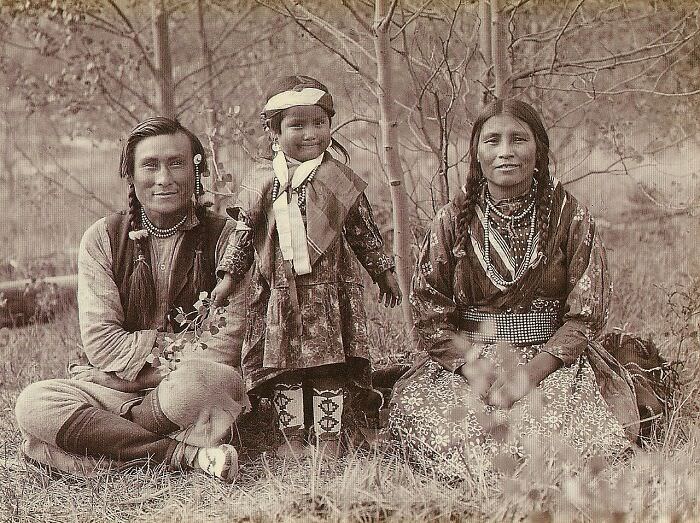
In 1907, Mary Schäffer was one of the first non-Indigenous people to venture into the Rocky Mountains and photograph the Indigenous communities living there. One of her subjects was Samson Beaver, a guide from the Stoney First Nation, his wife Leah, and their daughter Frances Louise. Schäffer’s photos provide a rare glimpse into the daily lives of Indigenous families during that time. Samson Beaver was known for his hunting and guiding skills, and his family would often accompany him on his journeys. The photo captures the Beavers’ traditional clothing and way of life, a testament to the rich and vibrant culture of the Stoney First Nation.
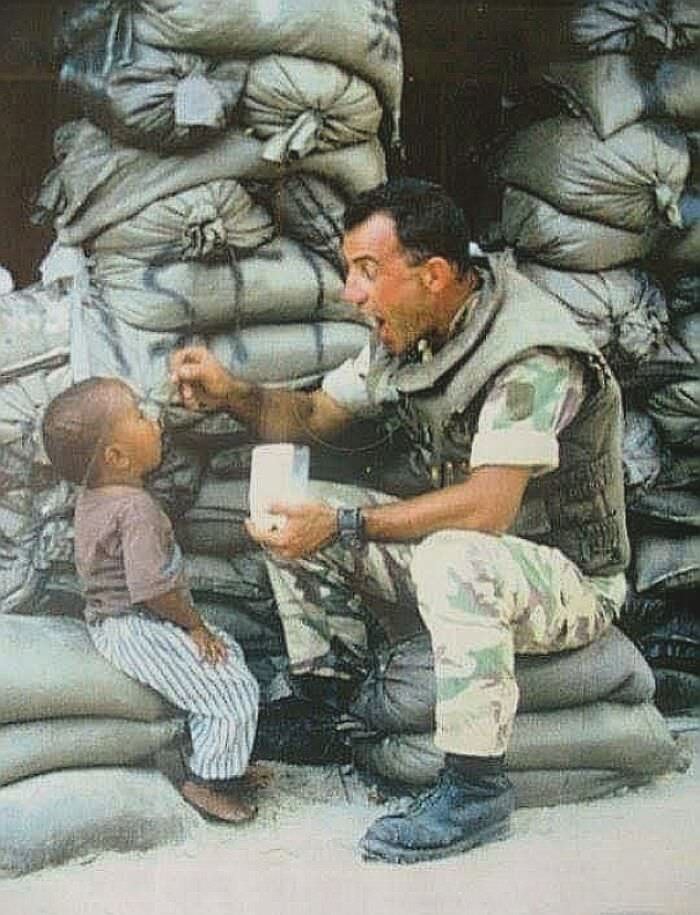
The photo, captured by Paolo Pellegrin, shows a moment of compassion in the middle of the chaos of war. During the 1993 Battle of Mogadishu, an Italian soldier can be seen giving food to a local orphan in need. The conflict in Somalia was raging, and the Italian soldiers were part of the United Nations peacekeeping forces there to provide aid and stability. The soldier’s expression is one of care and empathy, a stark contrast to the violence and destruction surrounding them. This act of kindness may have been a small gesture, but for the orphan receiving the food, it meant the world.
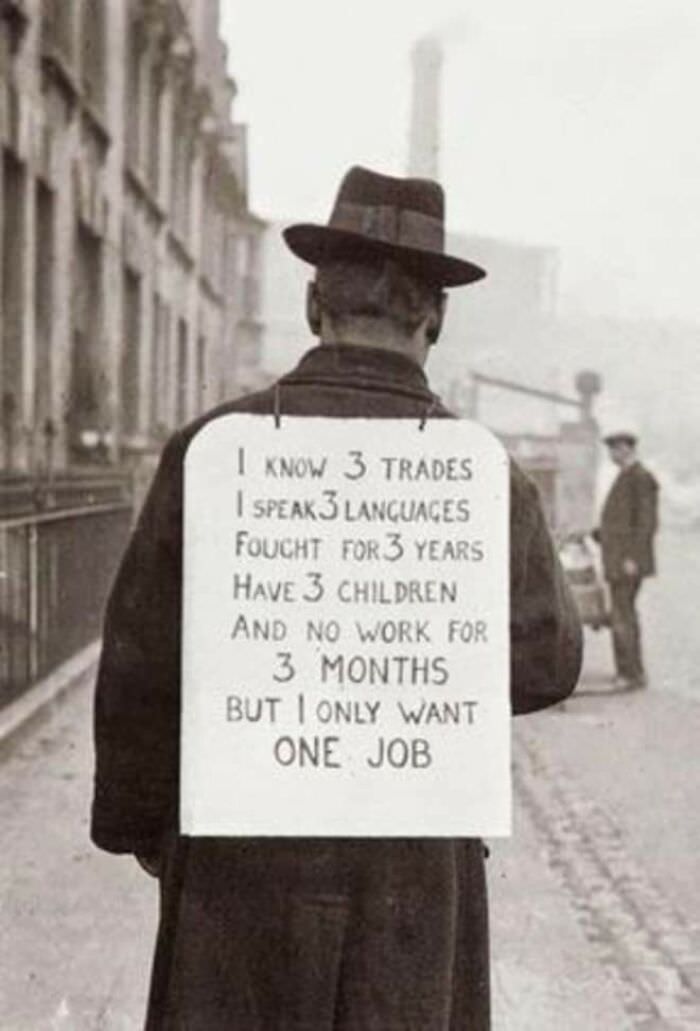
In this photo, a man in England during the 1930s can be seen wearing his CV in an attempt to stand out and catch the attention of potential employers. This creative approach to job hunting shows the desperation that many faced during the Great Depression, when finding work was a struggle for many. The man’s bold move to wear his CV as clothing highlights the lengths people would go to in order to secure employment and provide for themselves and their families. Despite the tough economic times, the resilience and creativity of individuals shone through, showing that even in the hardest of times, people find ways to adapt and survive.
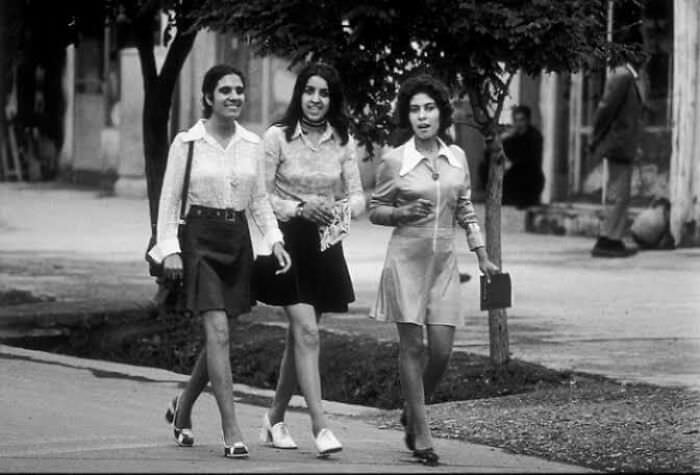
This photo captures three women on the streets of Kabul, Afghanistan in 1972, just a few years before the Soviet invasion and the rise of the Taliban. At the time, Afghanistan was a relatively liberal and modern society, with women enjoying greater freedoms and participating in public life. The women in the photo are dressed in Western clothing and appear to be walking confidently and independently. The photo takes on a significant meaning in light of the subsequent Taliban regime, which severely restricted women’s rights and freedoms. The photo serves as a record of a time when Afghanistan was a different place, and of the struggles and resilience of Afghan women over the years.
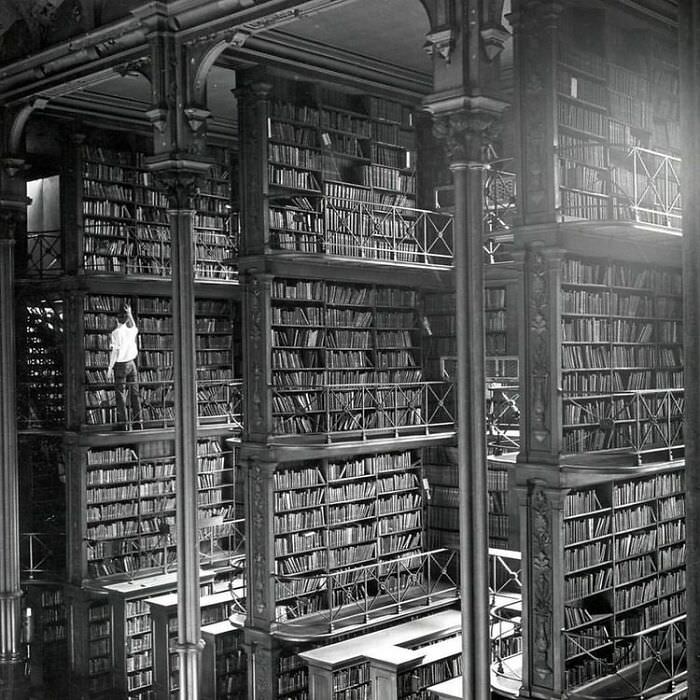
In this photo, taken before the era of digital bookstores, a man can be seen browsing the shelves of the old Public Library of Cincinnati. The building, completed in 1874, served as the central library for the Cincinnati Public Library system for over 80 years until it was demolished in 1955. Today, the site of the library is occupied by an office building and a parking lot. The loss of such a beautiful and historic building remains a regrettable moment in the city’s history and a reminder of the importance of preserving architectural landmarks for future generations.
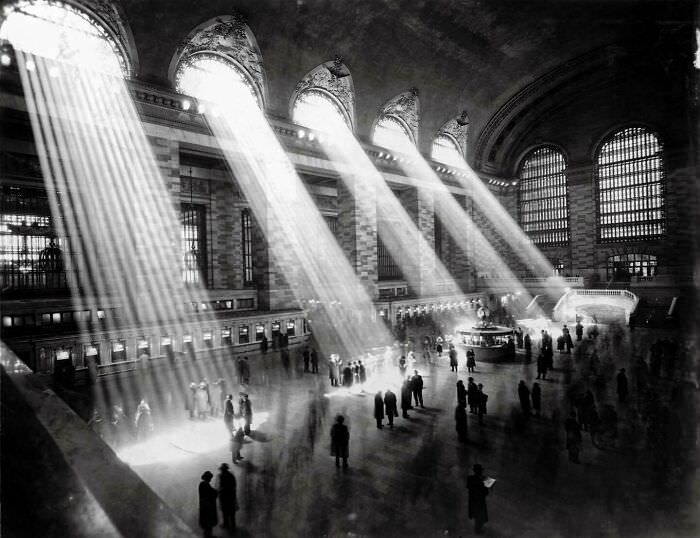
In the midst of the activity at Grand Central Station in 1929, Louis Faure captures a fleeting moment of a ray of sunlight illuminating the main concourse. The light shines through the windows high above, highlighting the architectural beauty of the terminal. Today, the view from those windows is blocked by tall buildings, making it impossible to see the same sight. This photograph serves as a reminder of the timeless character of the station and the beauty that can be found in unexpected moments.
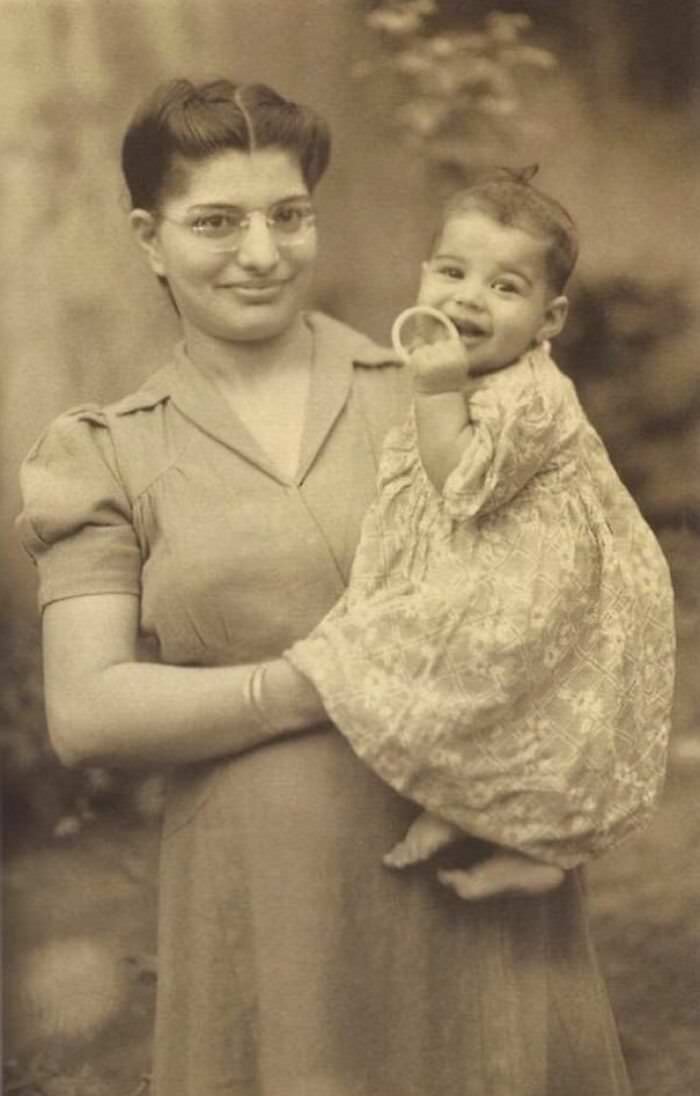
In this tender and intimate moment, we see Freddie Mercury, the legendary frontman of Queen, with his mother Jer Bulsara in Zanzibar in 1947. At this point, Freddie was just a young child, but the love between mother and son is clear in the photograph. Jer was a significant influence on Freddie throughout his life. The photo captures a quiet moment of maternal affection. Even as Freddie achieved global fame and fortune, he remained close to his mother, and she was with him in his final moments.
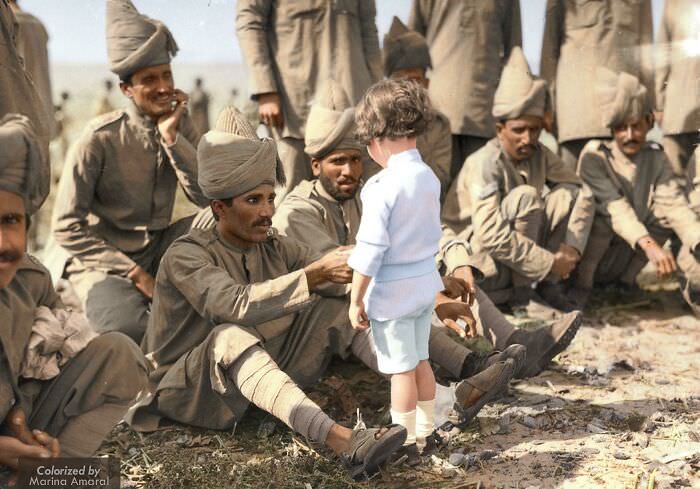
In 1914, Indian soldiers arrived in France to join forces with the French and British soldiers in World War I. This photograph captures a moment of cultural exchange between a French boy and the Indian soldiers. The boy looks on curiously as the soldiers introduce themselves, showing the meeting of two different cultures brought together by the war. The Indian soldiers, who came from a colony of the British Empire, had come to the aid of the Allied forces and were active in many battles on the Western Front. The photo shows that even in the chaos of war, moments of human connection can still be found.
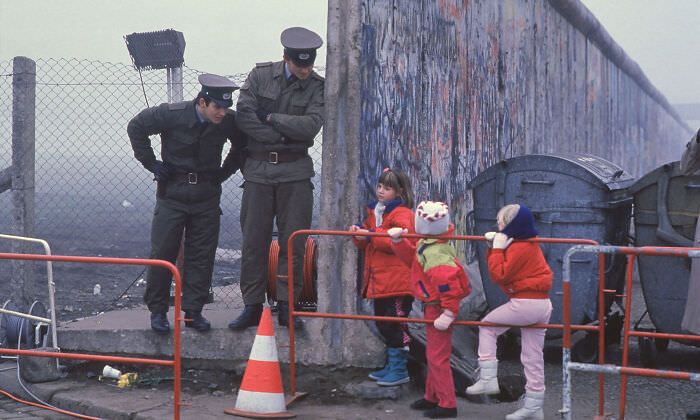
In November 1989, the Berlin Wall was crumbling, and tensions between East and West Germany were high. This photo captures a moment of connection between West German school children and East German border guards, as they paused to talk beside an opening in the wall. The fall of communism in East Germany was a defining moment in history, and the sight of East and West Germans talking and crossing borders was a powerful symbol of unity and hope. This photograph, taken by Stephen Jaffe, serves as a reminder of the human connections that can form even in the most difficult of times.
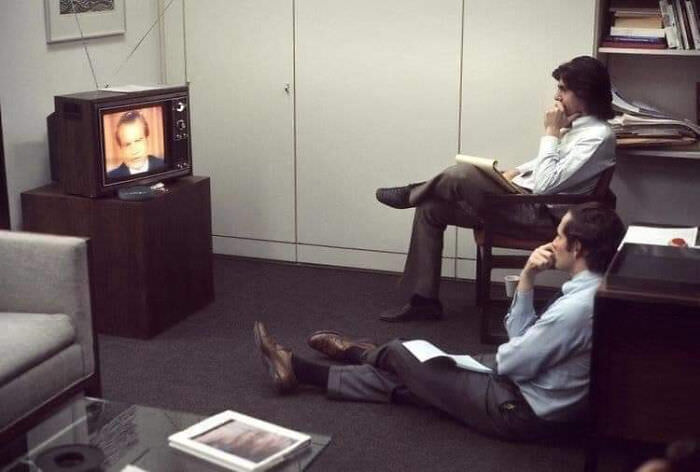
The photo captures the moment when the reporters who uncovered the Watergate scandal — Bob Woodward and Carl Bernstein, along with their editor Ben Bradlee — watch President Nixon resign in 1974. The scandal began with a break-in at the Democratic National Committee headquarters in the Watergate complex in 1972, which was eventually traced back to members of Nixon’s administration. The journalists worked to uncover the corruption and wrongdoing of the administration, leading to Nixon’s eventual resignation.
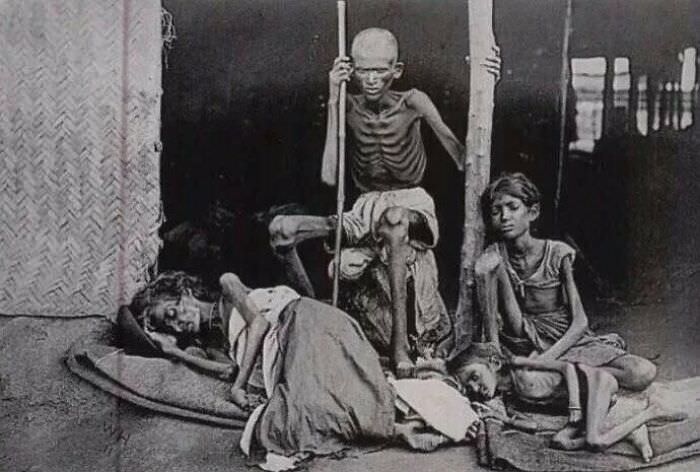
This historic photo captures the grim reality of the Madras Famine of 1877 in India during the British Raj. The famine was caused by a combination of factors, including drought and the failure of the monsoon, leading to the deaths of millions. In this photo, a man can be seen fiercely guarding his family from the threat of cannibals, a stark indication of the desperate measures people were forced to take to survive.
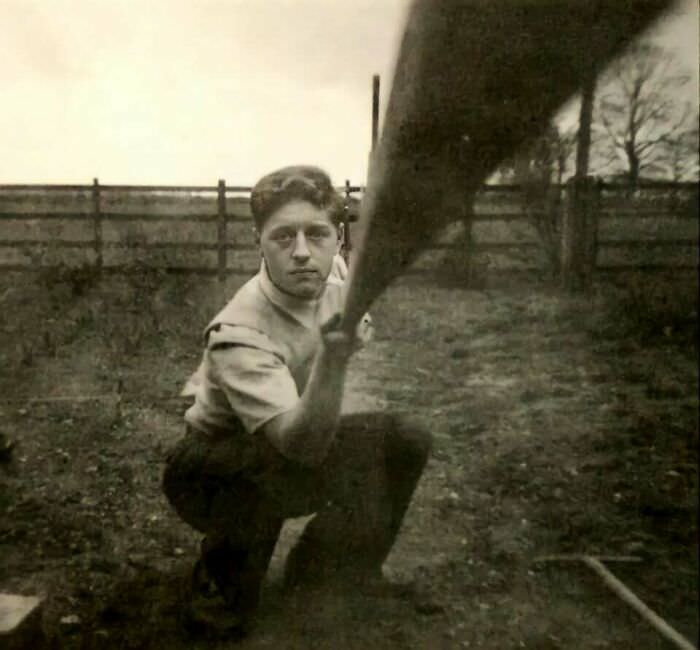
In 1957, before the age of smartphones and selfie sticks, a man found a way to take a self-portrait using a stick of wood to activate the camera. This photo captures a moment of creativity and resourcefulness, as well as a desire to capture and preserve memories. During this time period, photography was not as accessible as it is today — film and developing were expensive, and cameras were not widely available. However, people still wanted to document their lives and experiences. This man’s creative solution shows that even without modern technology, people found ways to capture the moments that mattered to them.
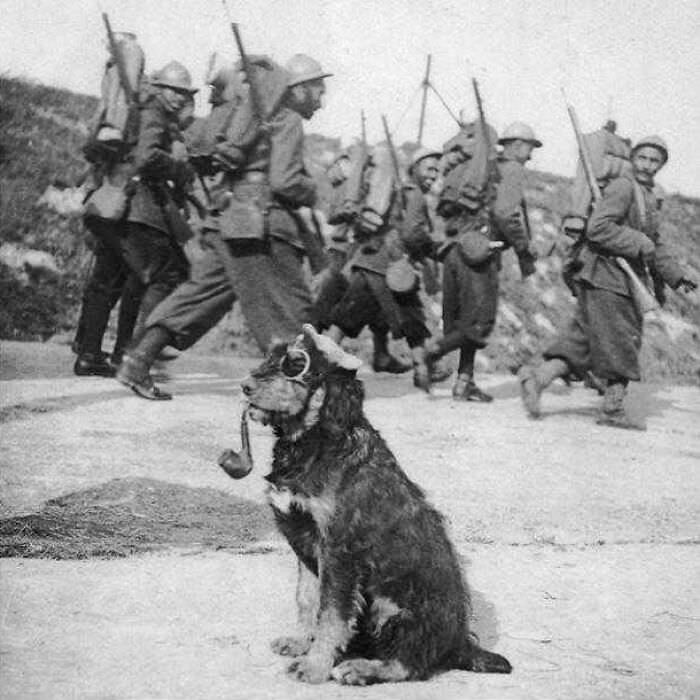
In the midst of World War I, French soldiers encountered an unusual character in the form of a dog named Smokey. The picture shows Smokey wearing goggles and smoking a pipe, which attracted the attention of the soldiers passing by. It is clear that Smokey provided some lightheartedness and joy in the harsh realities of war. The soldiers may have also found Smokey to be a good luck charm, as dogs have often been associated with loyalty, protection, and courage.
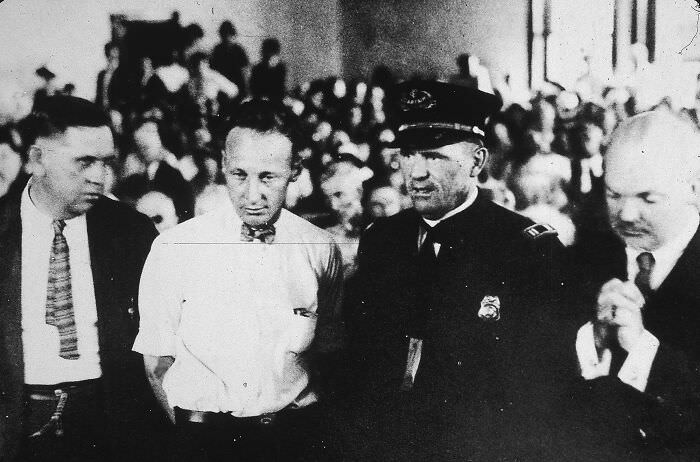
The Scopes Monkey Trial of 1925 was a landmark legal case in the United States that tested the constitutionality of a Tennessee law prohibiting the teaching of evolution in public schools. The case pitted science against religion, as high school teacher John T. Scopes was charged with violating the law by teaching Darwin’s theory of evolution. The trial was a media sensation, attracting national attention and drawing crowds of spectators to the courthouse in Dayton, Tennessee. In the end, Scopes was found guilty and fined $100, but the trial exposed deep divisions in American society over the teaching of evolution and the role of religion in public life.
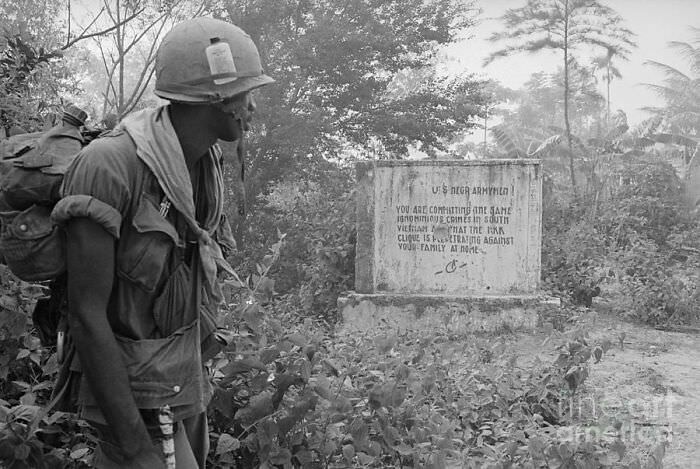
The Vietnam War was a divisive conflict that left a lasting impact on those who fought in it. This photograph captures a moment that highlights the racial tensions present within the US military during the war. In the image, a Black US soldier can be seen reading a message left by the Viet Cong. The message accuses Black American soldiers of committing the same crimes against the Vietnamese people that the Ku Klux Klan was committing against African Americans at home. This message highlights the intersecting issues of race and war and the complexity of the Vietnam War for many Americans.
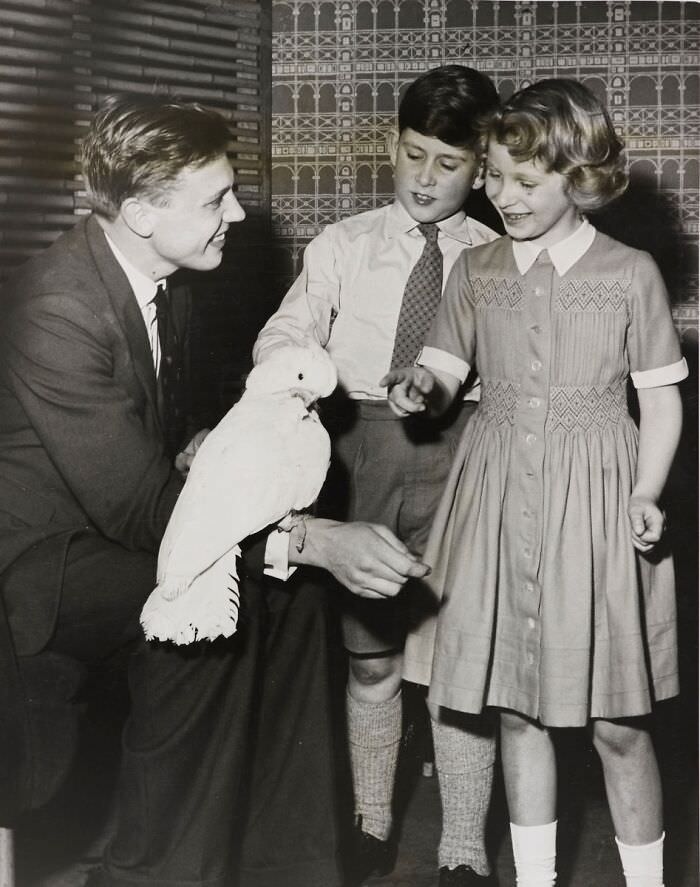
In 1958, Sir David Attenborough, known for his love of nature and wildlife, had the opportunity to introduce Prince Charles and Princess Anne to a cockatoo. The event took place at the London Zoo, where Attenborough was serving as a controller at the time. In the photo, Attenborough can be seen holding the bird on his hand while the young prince and princess look on with interest. The moment captures the wonder that can come from experiencing the natural world up close.
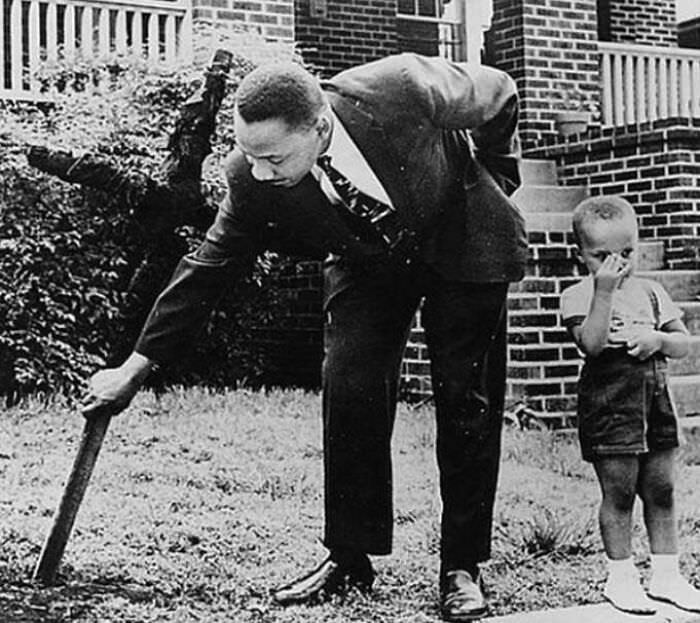
Martin Luther King Jr. was a leader of the Civil Rights Movement, fighting against segregation and racial injustice in America. He was often the target of hate and violence, including having a cross burned in his front yard. In this photo, we see him removing the charred remains of that cross — a symbol of hatred and fear. It shows the strength and resilience of a man who was committed to nonviolence and justice, even in the face of bigotry and violence.
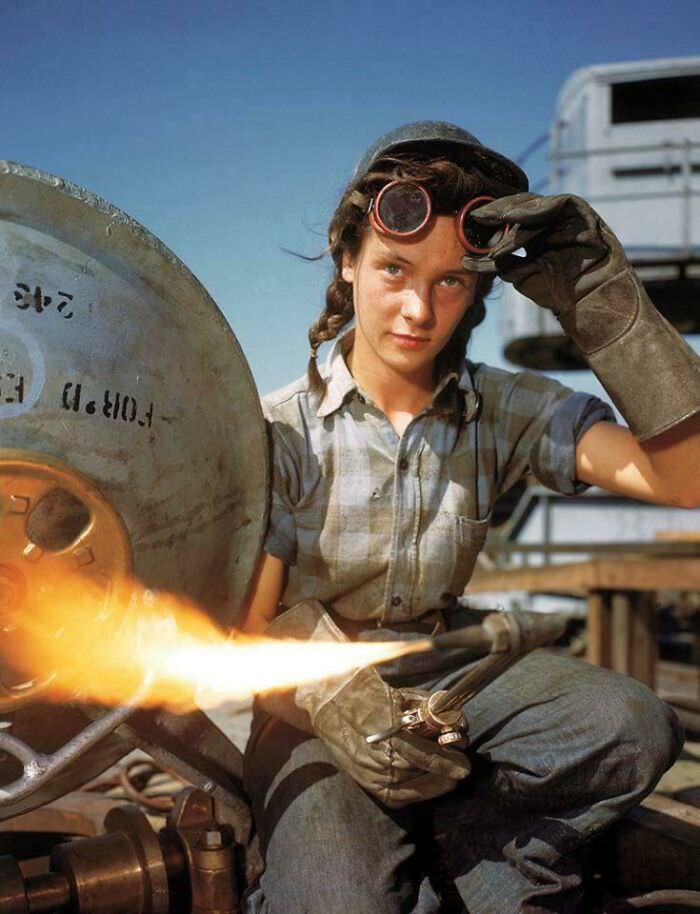
In the midst of World War II, with many men fighting overseas, women stepped up to work in jobs that were traditionally seen as men’s work. One such job was welding, and this photo captures a young woman welder in Connecticut during the 1940s. Her outfit and stance show that she is confident and skilled in her trade, and her expression conveys determination and pride. This photo is a reminder of the important role that women played during the war effort and their contribution to the workforce, which paved the way for future generations of women to pursue careers in traditionally male-dominated fields.
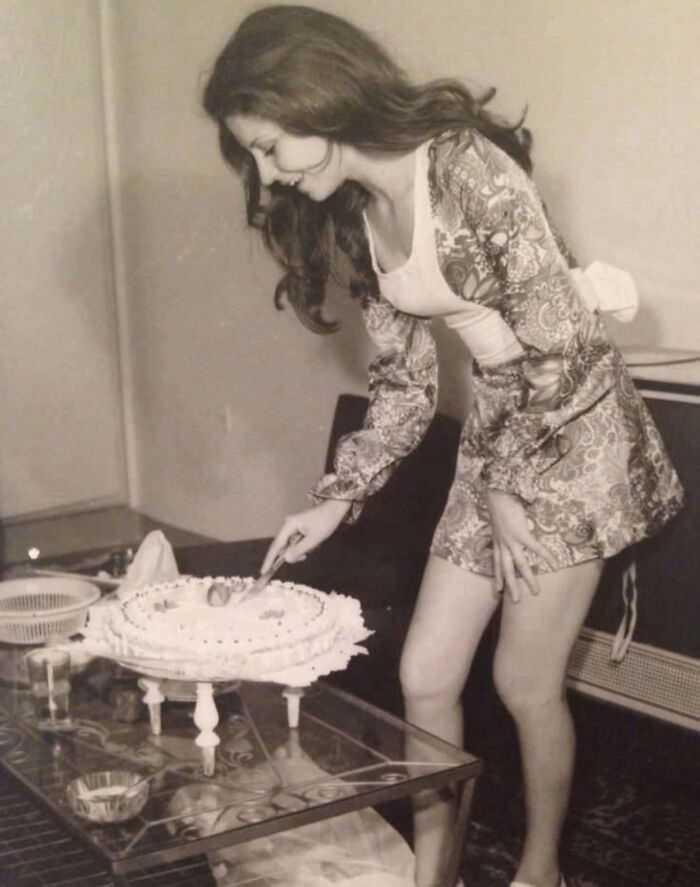
In this photo taken in Iran in 1973, a woman is cutting her birthday cake surrounded by her family and friends. The scene is one of joy and celebration, with the woman dressed in a stylish outfit and the cake decorated with flowers and candles. However, just five years later, the Islamic Revolution would change the face of Iran, bringing a new era of political and cultural upheaval. The freedoms and customs shown in this photo would soon be restricted, as the Islamic government put in place strict dress codes and cultural norms.
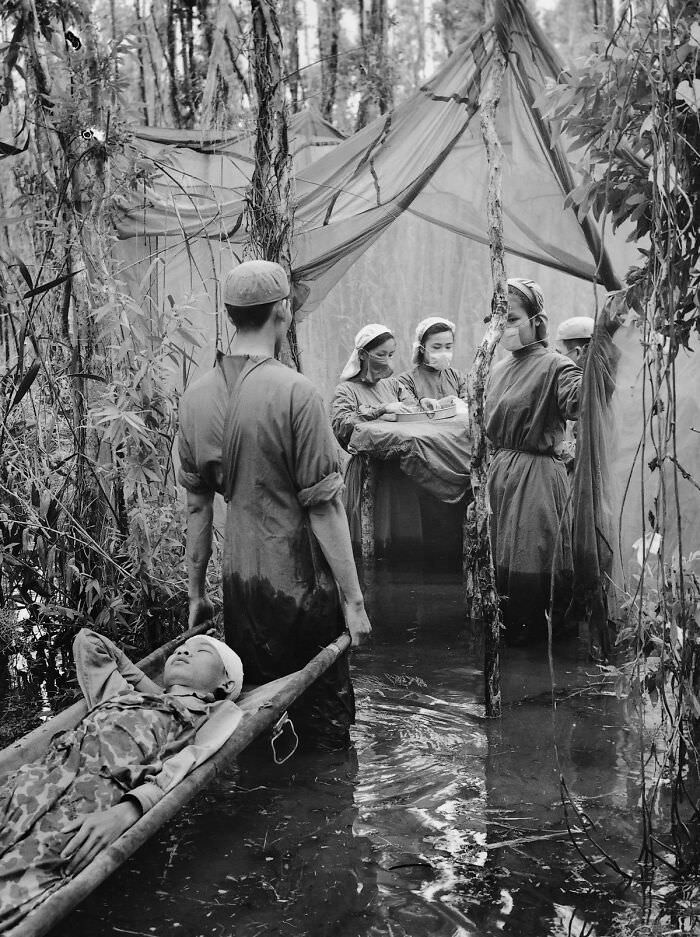
In this photo from the Vietnam War in 1970, we see a makeshift hospital in the midst of chaos. Despite the devastation of war, medical professionals are doing their best to care for the injured and sick. The room is packed with patients and medical equipment, yet the doctors and nurses work without stopping to provide care and comfort. This photo is a testament to the resilience and strength of the human spirit, and a reminder that in times of crisis, people come together to care for one another.
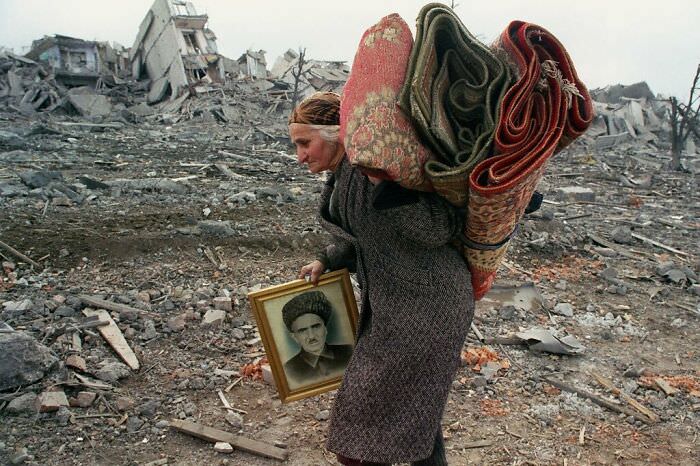
In May 1995, Russian soldiers gave an elderly woman in Grozny just five minutes to pack her bags and leave her home before they destroyed it. With nothing but a portrait of her late husband and some rugs, she left the place she had called home for years, her sons and husband already gone. The photo captures her sense of loss, but also her resilience, as she leaves behind the destruction and moves forward with what little she has left.
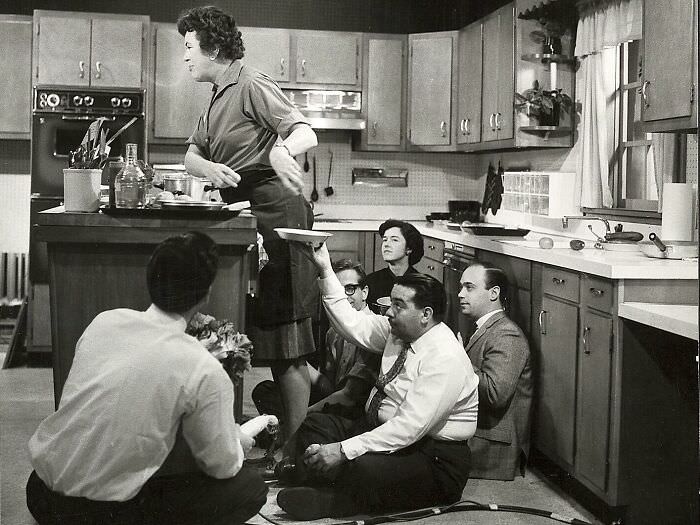
Julia Child was a pioneering figure in American television, bringing French cuisine to American homes with her show “The French Chef.” In this photo from 1963, we see Julia on set, filming an episode of her show, with a chicken roasting in the oven in the background. With her trademark humor and down-to-earth approach, Julia made cooking accessible to a wider audience and encouraged viewers to try their hand at French cooking. She also co-authored the bestselling cookbook “Mastering the Art of French Cooking” with Simone Beck and Louisette Bertholle, which further established her place in the culinary world.
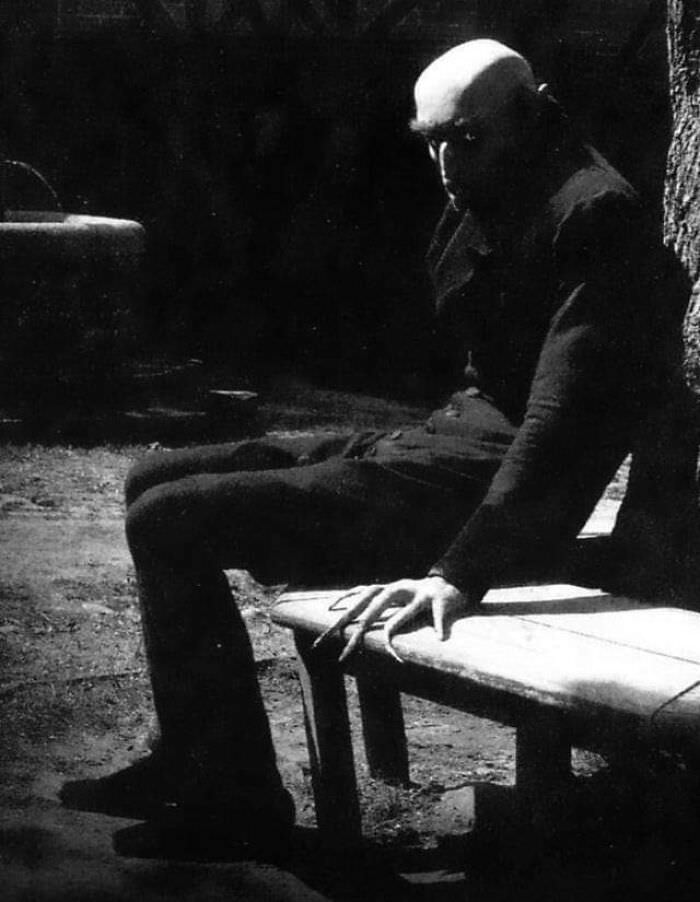
Max Schreck, the actor who played the vampire in the 1922 silent film “Nosferatu,” is seen here taking a break on set. The film, an unauthorized adaptation of Bram Stoker’s “Dracula,” was a groundbreaking work of German Expressionism and has become a classic of the horror genre. Schreck’s portrayal of Count Orlok was so convincing that rumors spread that he was an actual vampire. The actor was known for being kind and gentle off-camera, and this photo captures a rare moment of relaxation in the midst of filming.
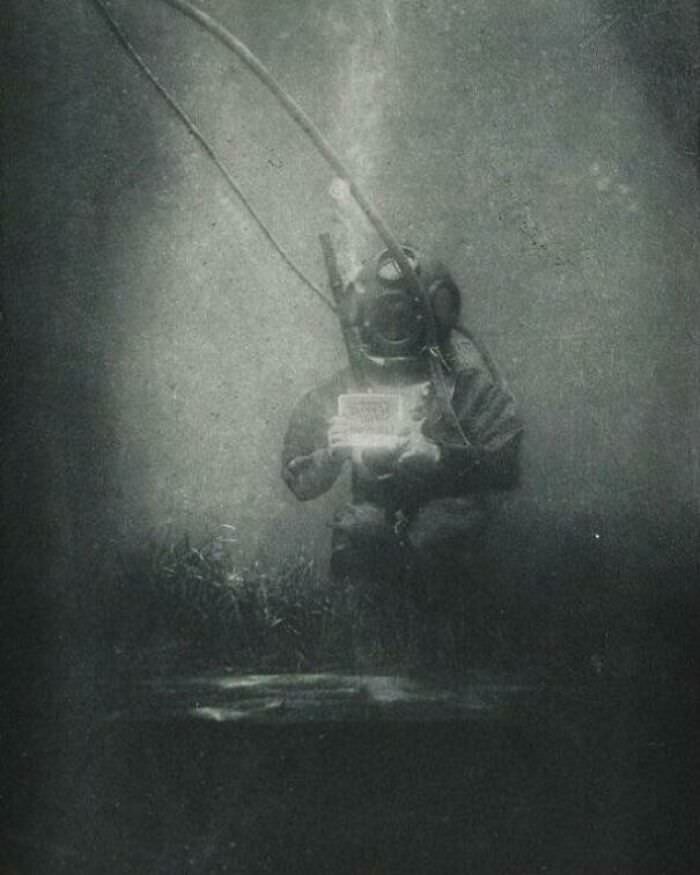
In 1899, Louis Boutan, a French scientist and pioneer of underwater photography, took what many believe to be the first photograph taken underwater. The photograph features a diver fully submerged and looking toward the camera while surrounded by murky water. This photograph marked the beginning of an era of exploration and discovery in the underwater world. Boutan went on to capture many more underwater photographs and videos, contributing greatly to the understanding and preservation of marine life.
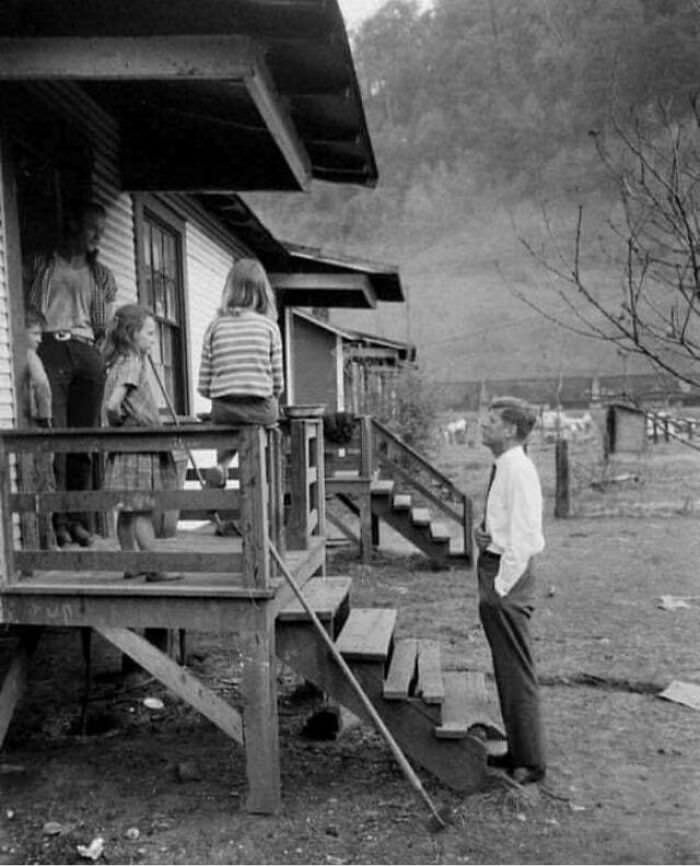
In this photo, we see a young John F. Kennedy campaigning door-to-door in West Virginia during his 1960 presidential campaign. With his sleeves rolled up and a determined look on his face, Kennedy engages with the people he hopes to lead. He was known for his ability to connect with voters, especially through his famous televised debates with Richard Nixon. Kennedy’s presidency included accomplishments such as the creation of the Peace Corps. Although his life was cut short, his legacy has remained a symbol of hope and progress.
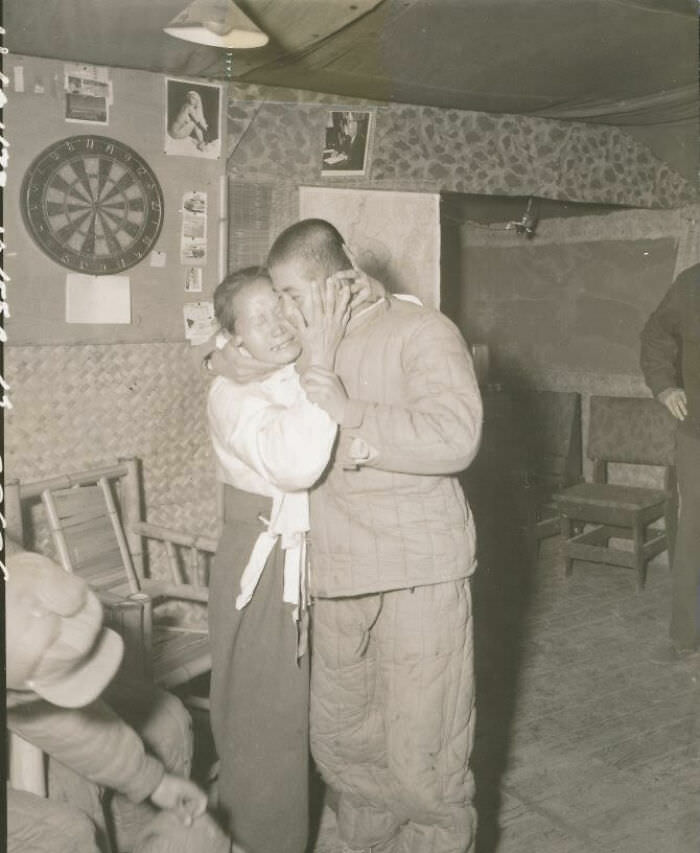
In this photograph taken in 1953, a Korean mother embraces her son who had just escaped from a North Korean prisoner-of-war camp after the signing of the Korean Armistice Agreement. The mother’s face is filled with emotion as she clings tightly to her son, her eyes closed in joy. The Korean War was a devastating conflict that saw families separated and communities torn apart. This image captures the relief felt by a mother at being reunited with her son after a long and difficult period of uncertainty.
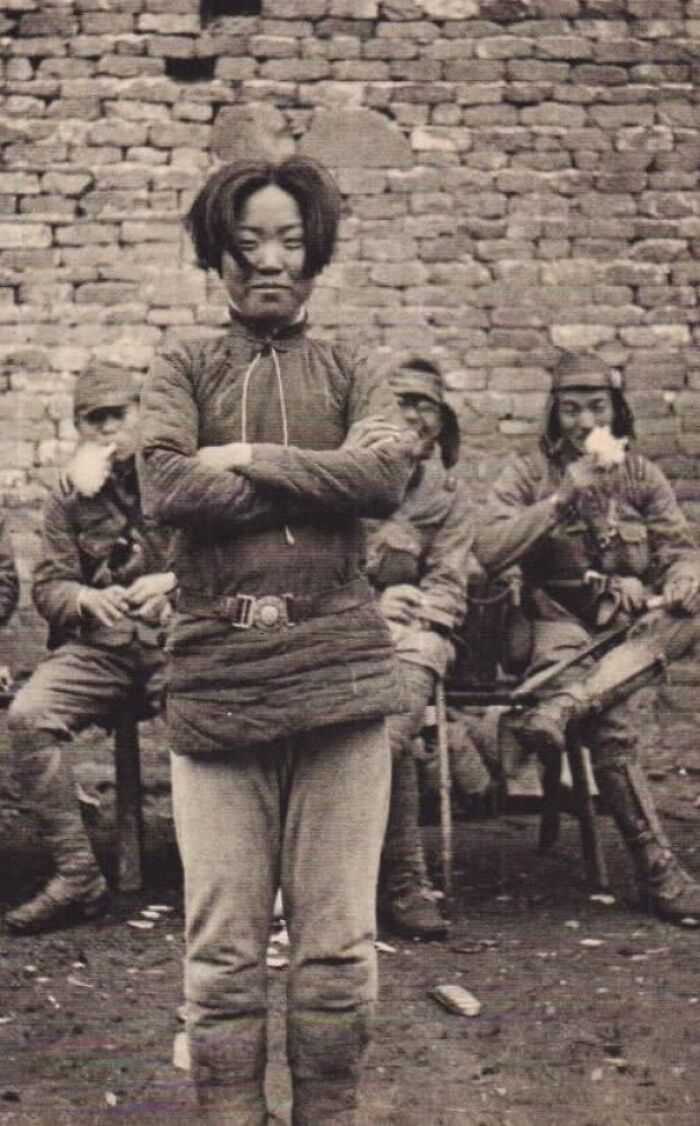
Cheng Benhua, a Chinese guerrilla fighter, is pictured smiling in this historic photograph taken moments before her execution by the Japanese army in late 1938. She was only 24 years old at the time. Despite the situation, Cheng’s smile conveys a sense of courage and defiance in the face of the enemy. She fought against Japanese occupation, becoming a symbol of resistance in China. Cheng’s legacy continues to inspire generations of people to stand up for their rights and fight against oppression.
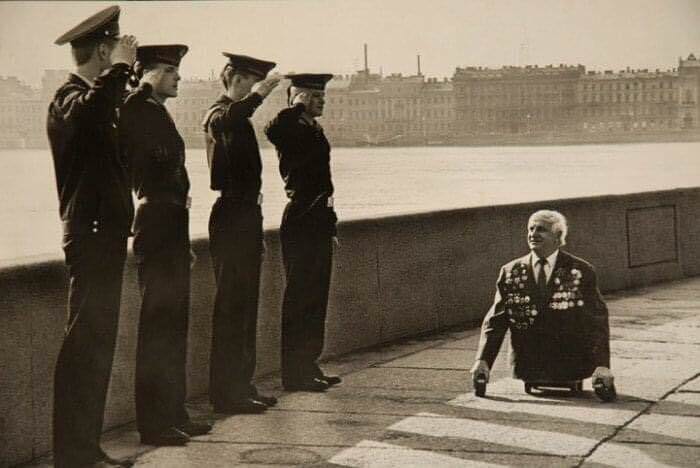
In this photograph, sailors can be seen saluting a war veteran in Leningrad in 1989. The image captures the deep respect and gratitude felt by these young sailors toward the veteran, who likely risked their life during the war. The scene is a reminder of the sacrifices made by those who serve in the military and the lasting impact that service has on those who witness it.
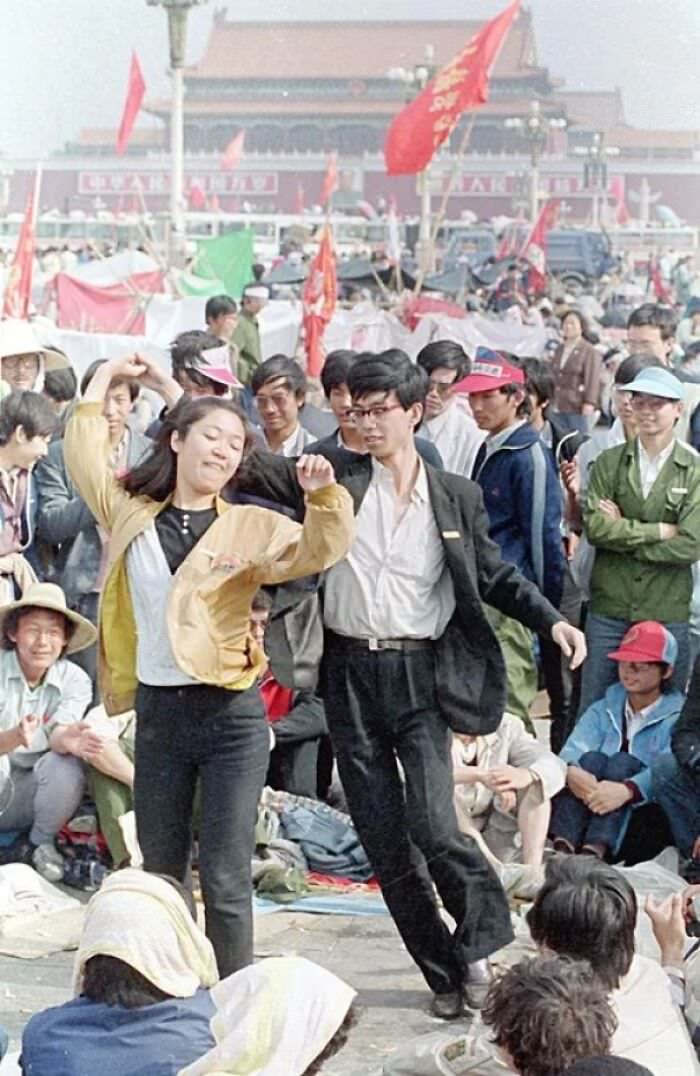
In the spring of 1989, Chinese students gathered in Beijing’s Tiananmen Square to demand democracy and government reforms. They organized peaceful protests and hunger strikes that lasted for weeks, but the government refused to listen. On June 4, the Chinese military was ordered to crack down on the protesters, resulting in a violent confrontation that left many dead and injured. Before the arrival of the military, a group of students gathered in the square and began dancing as a form of peaceful protest. The photo captures a moment of hope and defiance in the face of an oppressive government.
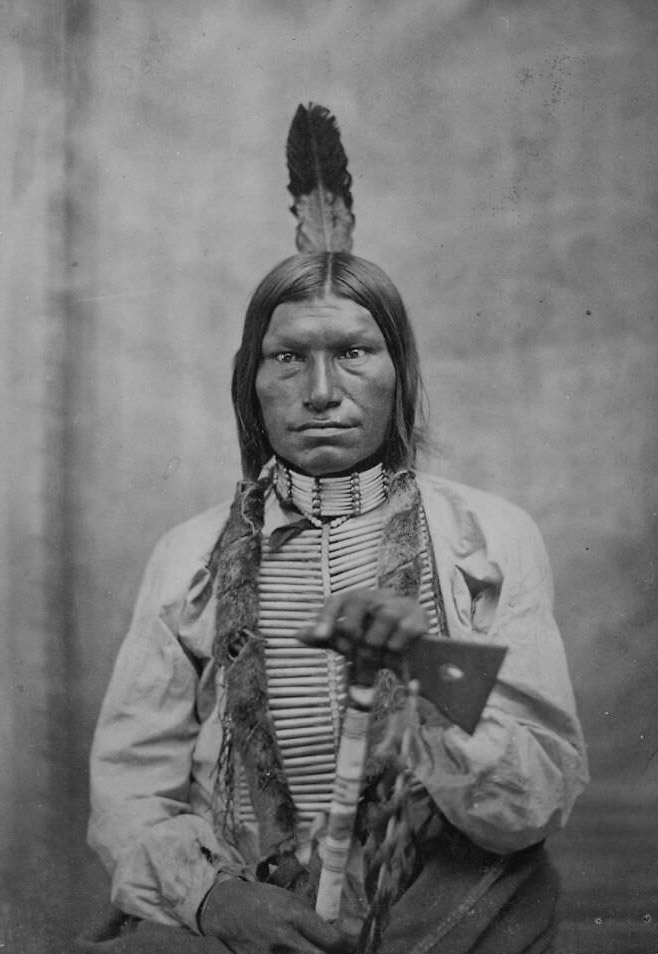
Chief Low Dog was an Oglala Lakota chief who fought alongside Sitting Bull at the Battle of Little Bighorn. This photo, taken around 1881, captures his piercing gaze and stern expression. Low Dog was one of the Lakota leaders who resisted the encroachment of the United States on their land and fought to preserve his people’s way of life. In this photo, he wears traditional clothing and carries a rifle, symbolizing his readiness for battle.
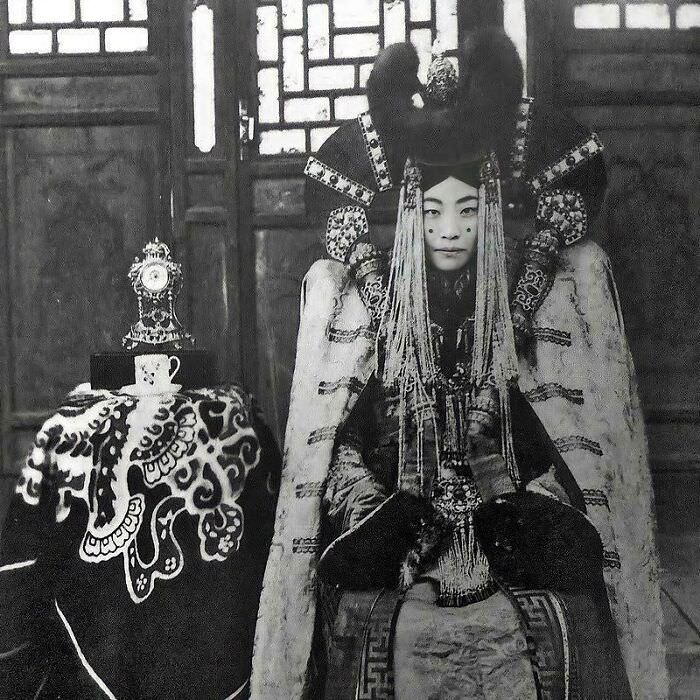
In this historic photo, we see Genepil, the last queen consort of Mongolia. She was married to the Bogd Khan, the ruler of Mongolia until the monarchy was abolished in 1924. The photograph was taken on January 1, 1923, shortly after their marriage. Genepil was highly regarded in Mongolia, known for her intelligence and beauty. However, her life was cut short during the Stalinist purges in May 1938, when she was killed. Her death marked the end of an era in Mongolian history.
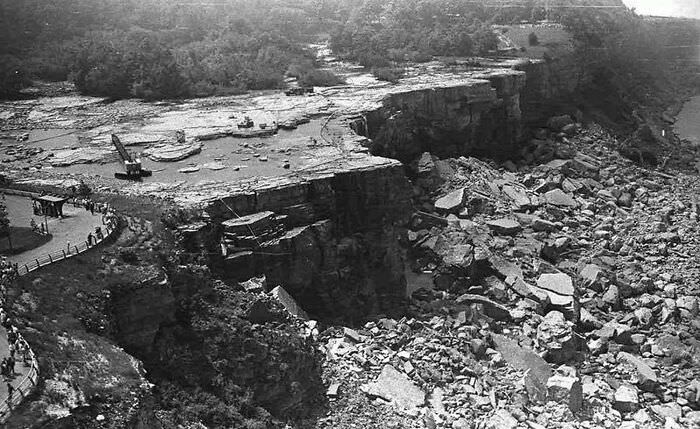
In 1969, the United States Army Corps of Engineers conducted a study on the erosion of Niagara Falls. As part of the study, they diverted the flow of the Niagara River away from the American side of the falls to investigate the rock formations underneath. This diversion stopped the flow of water over the falls, and for several months the falls were completely dry. This rare occurrence allowed tourists to walk along the riverbed and explore areas that were usually inaccessible due to the power of the water. It also provided researchers with valuable information on how the falls were formed and the geological makeup of the area. The water was restored in November of that year, and the falls returned to their natural state.
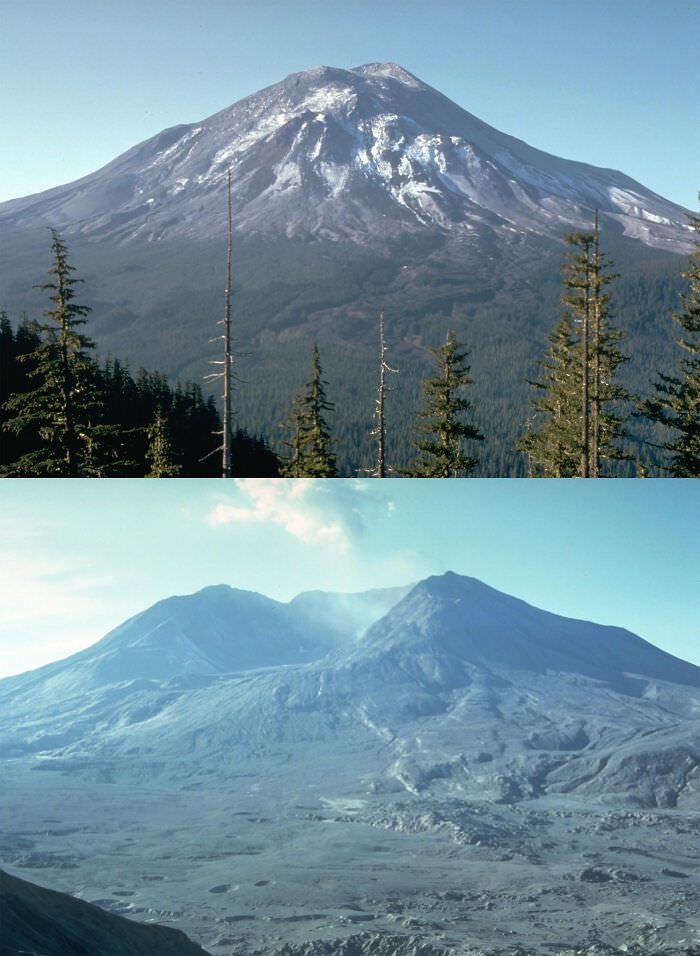
On May 18, 1980, Mt. St. Helens, a volcano in Washington state, erupted with immense force, unleashing a powerful explosion that sent ash, smoke, and rocks into the air. The eruption was so powerful that it removed the top 1,300 feet of the mountain, leaving a large crater in its place. The resulting landslide and ash cloud destroyed forests and homes and caused widespread devastation in the surrounding area. One photo, taken on May 17, 1980, shows the calm before the eruption, with the mountain appearing peaceful and undisturbed. The second photo shows the aftermath, with a barren, ash-covered landscape where forests once stood. The eruption of Mt. St. Helens permanently changed the landscape and the lives of those who lived nearby.
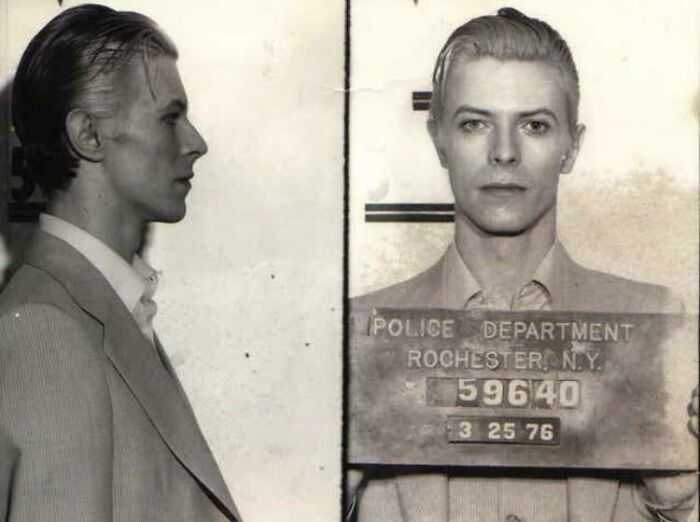
In 1976, David Bowie was arrested for marijuana possession in Rochester, New York. This photo captures him after the arrest, with his hair disheveled, wearing a rumpled suit and an unbuttoned shirt. The arrest did little to affect his career, and he continued to release successful albums and reinvent himself as an artist over the decades that followed.
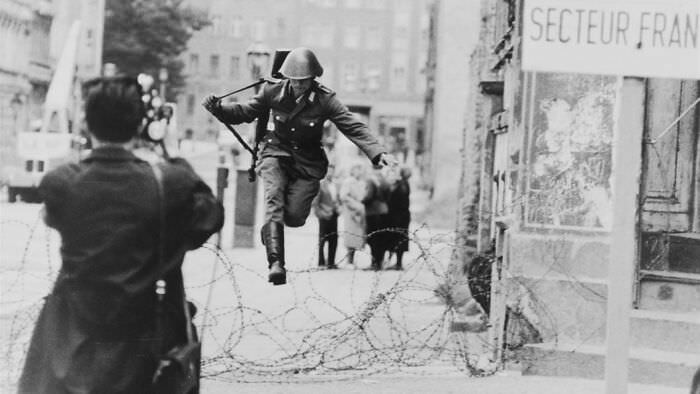
In August 1961, just days after the construction of the Berlin Wall began, East German border guard Conrad Schumann made a daring escape to the West. Schumann was responsible for guarding the wall near Checkpoint Charlie, but one day he made the decision to jump over the barbed wire fence as a crowd gathered on the West German side. The iconic photograph captured the moment he leapt to freedom, leaving behind his East German uniform and rifle. Schumann was later granted asylum in West Germany, and the image became a symbol of the desire for freedom in East Germany.
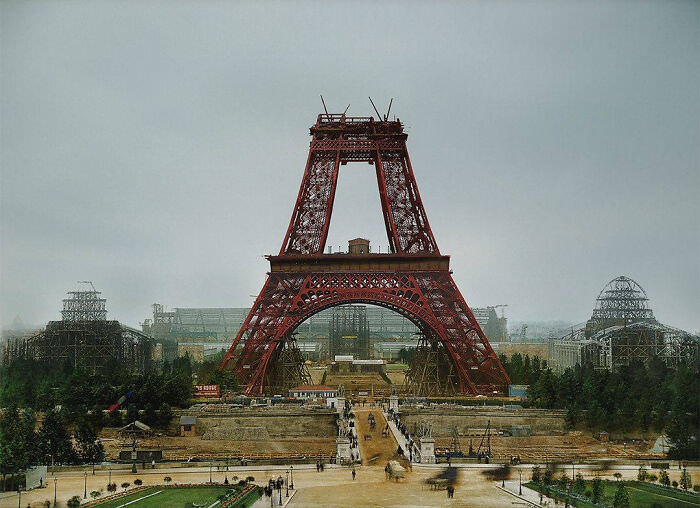
In this photo, we see the Eiffel Tower under construction in July 1888. The Eiffel Tower was designed by Gustave Eiffel for the 1889 World’s Fair in Paris and was initially met with controversy and skepticism. As the tower began to take shape, it quickly became a symbol of French engineering and innovation. The photo shows workers scaling the metal beams, carefully piecing together the design that would become one of the most recognized landmarks in the world. Today, the Eiffel Tower remains one of the most visited attractions in the world, a testament to the skill and vision of the engineers and workers who built it.
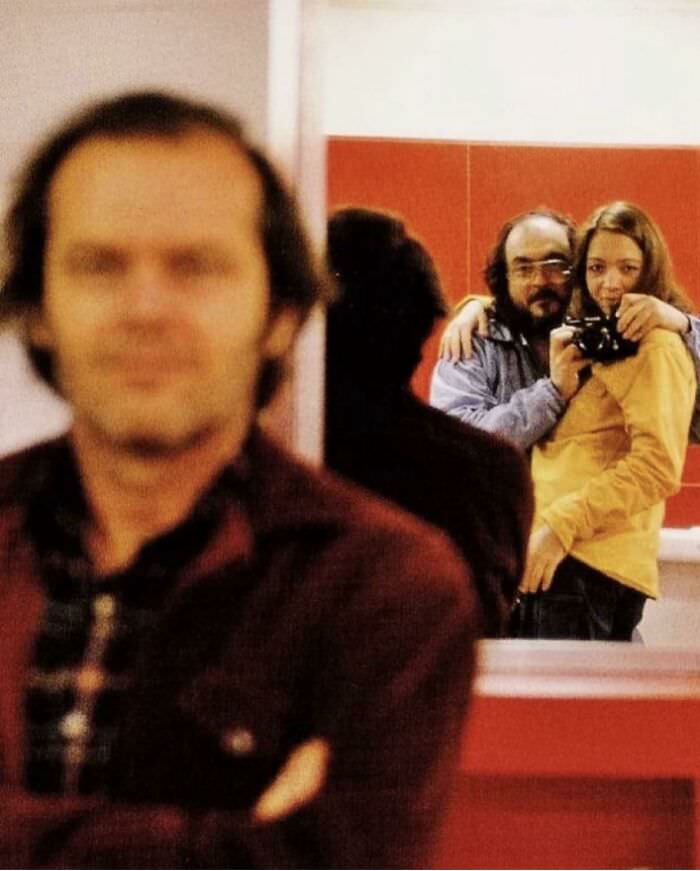
This photo, captured by Kubrick’s daughter Vivian, shows the filmmaker in a rare moment on the set of his horror film The Shining. Kubrick can be seen smiling and holding his daughter, while in the background actor Jack Nicholson appears to be unaware of the photo being taken. The photo gives a glimpse into the atmosphere on set during the production of one of the most acclaimed horror films of all time.
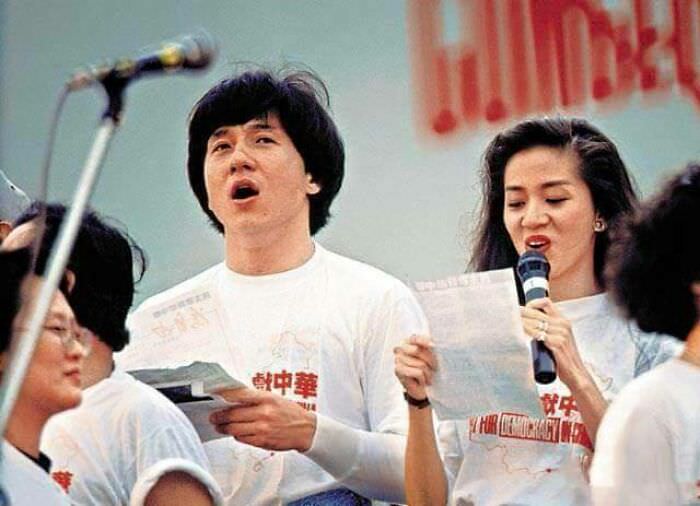
In 1989, Hong Kong held a benefit concert to support the protesters at Tiananmen Square. Jackie Chan, a martial arts star and actor, was among the performers at the concert. Chan had generally avoided political involvement, but this time he chose to speak out. During his performance, Chan wore a white headband with the words “All blood is the same color” written on it. He also spoke to the crowd about the importance of democracy and freedom, urging them to support the protesters. Chan’s actions were significant because he was a popular figure in both Hong Kong and mainland China, and by speaking out he put himself at risk of damaging his career and reputation.
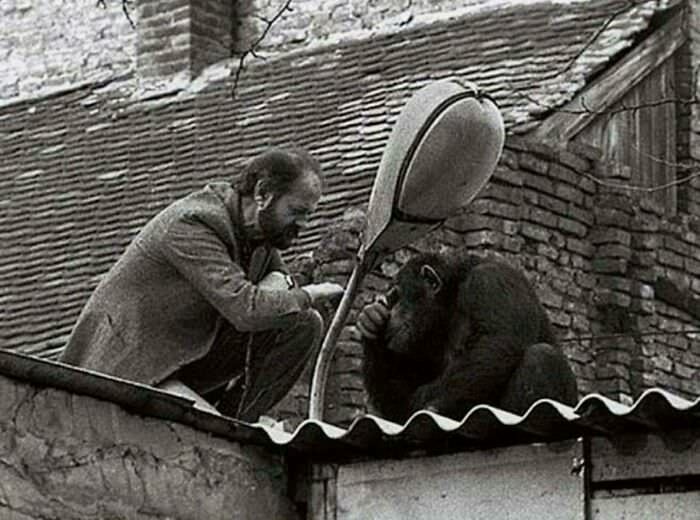
In 1988, Sami the chimpanzee, a resident of the Belgrade Zoo, made a daring escape, climbing the walls of his enclosure and fleeing into the city. The director of the zoo, Vuk Bojovic, tried to convince Sami to return, even climbing up after him on a nearby building. Sami ran across rooftops and through the streets of Belgrade, evading capture for several hours. He was eventually caught and returned safely to the zoo. His escape captured the public’s imagination, with many cheering on the chimpanzee and his adventure.
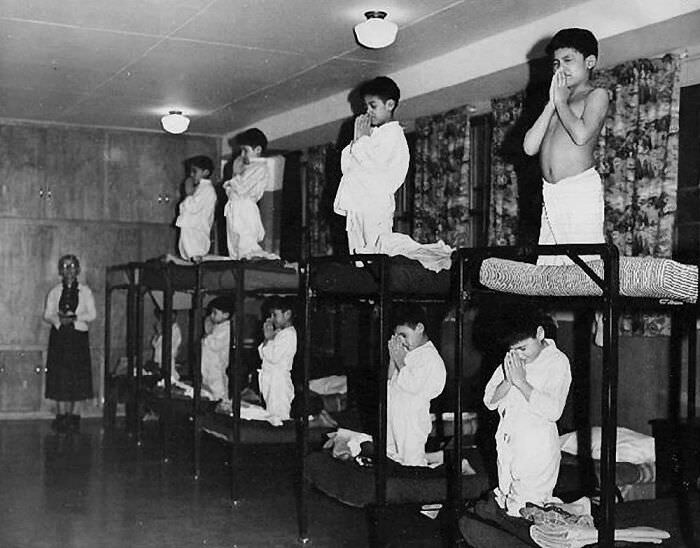
This photograph captures the reality of Indigenous children being forced to abandon their culture and adopt Christianity in residential schools run by the Canadian government and the Catholic Church. From the 1930s to the 1970s, thousands of Indigenous children were taken from their families and placed in these schools, where they were forced to speak English or French, cut their hair, and abandon their traditional clothing and practices. This photo shows children being made to pray to a Christian God, a practice meant to strip them of their culture and identity. The legacy of residential schools continues to impact Indigenous communities in Canada, with many survivors still grappling with the trauma of their experiences.
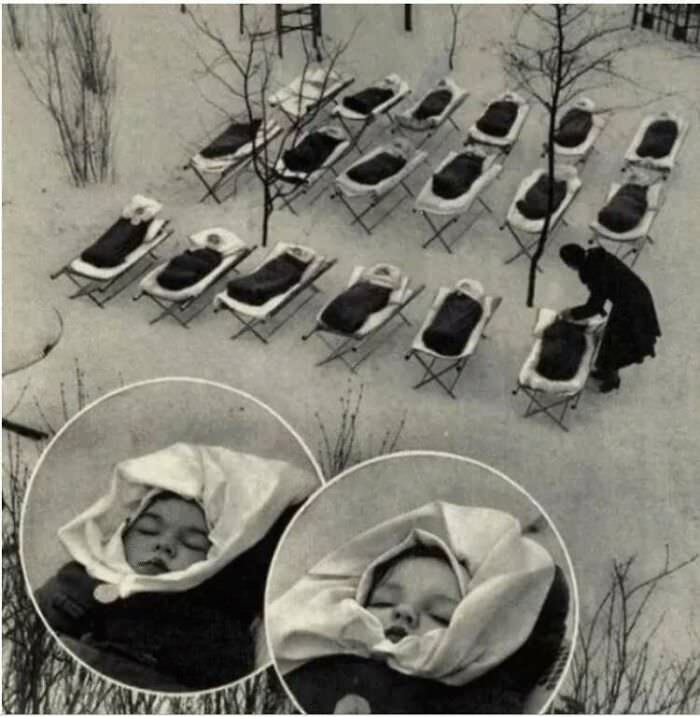
In 1950s Moscow, it was common practice for babies to be left outside to sleep, even during the winter months. The belief was that fresh air would help strengthen their immune systems and prevent illness. This photo, taken in 1958, shows rows of babies sleeping outside a Moscow maternity hospital. They are bundled up in blankets and hats to keep warm but are otherwise exposed to the elements. Similar customs were seen in other parts of the world, including Scandinavian countries. This photo is a reminder of the different ways in which cultures have approached child-rearing over the years.
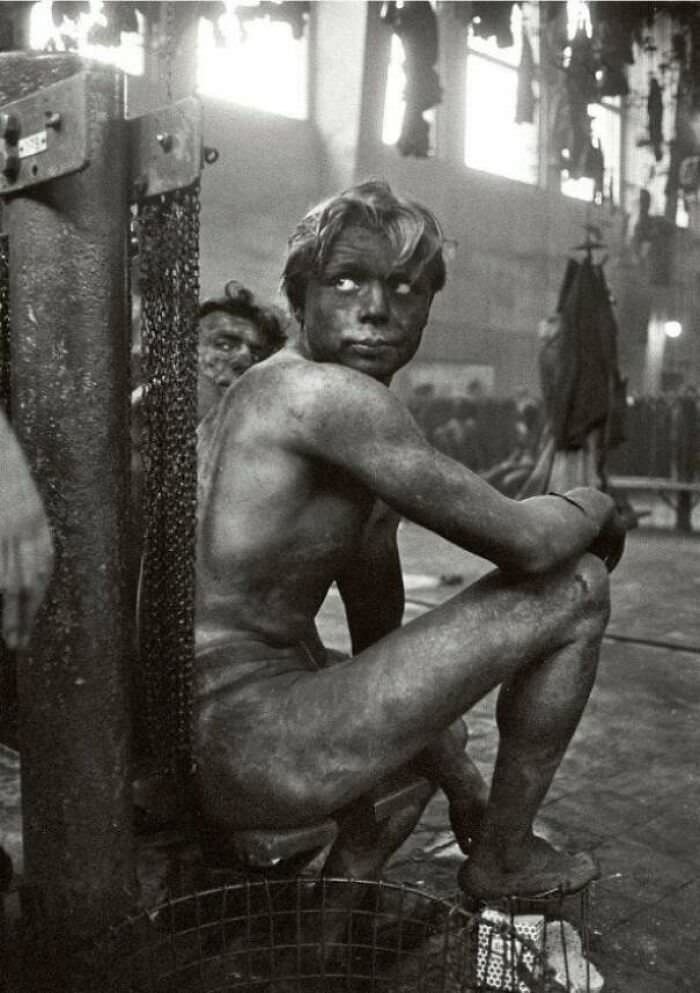
This photograph captures the physical toll of coal mining in Gelsenkirchen, Germany in 1958. The exhausted coal miner, covered in dirt and grime, waits in line to take a communal shower after a long day’s work in the mines. His body language conveys the fatigue that comes with this dangerous and demanding job. Despite the hardship, miners like him were a driving force of the German economy, and their labor provided the energy that powered the country’s industrial growth.
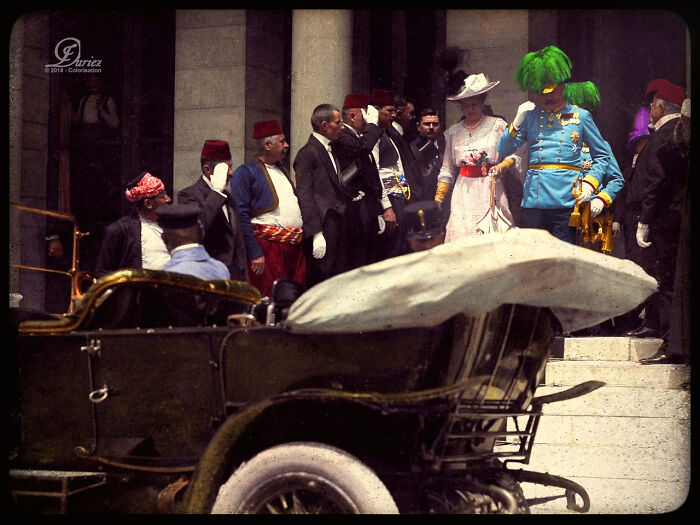
On June 28, 1914, Archduke Franz Ferdinand, heir to the Austro-Hungarian Empire, and his wife Sophie visited Sarajevo, Bosnia, as part of an official visit. As they traveled through the city in an open car, a young man named Gavrilo Princip, a member of a Serbian nationalist group, shot and killed them both. This act of violence became the spark that ignited World War I. This photo captures the last moments of Franz Ferdinand and his wife before the assassination. They can be seen sitting in their car, moments away from the event that would change the course of history.
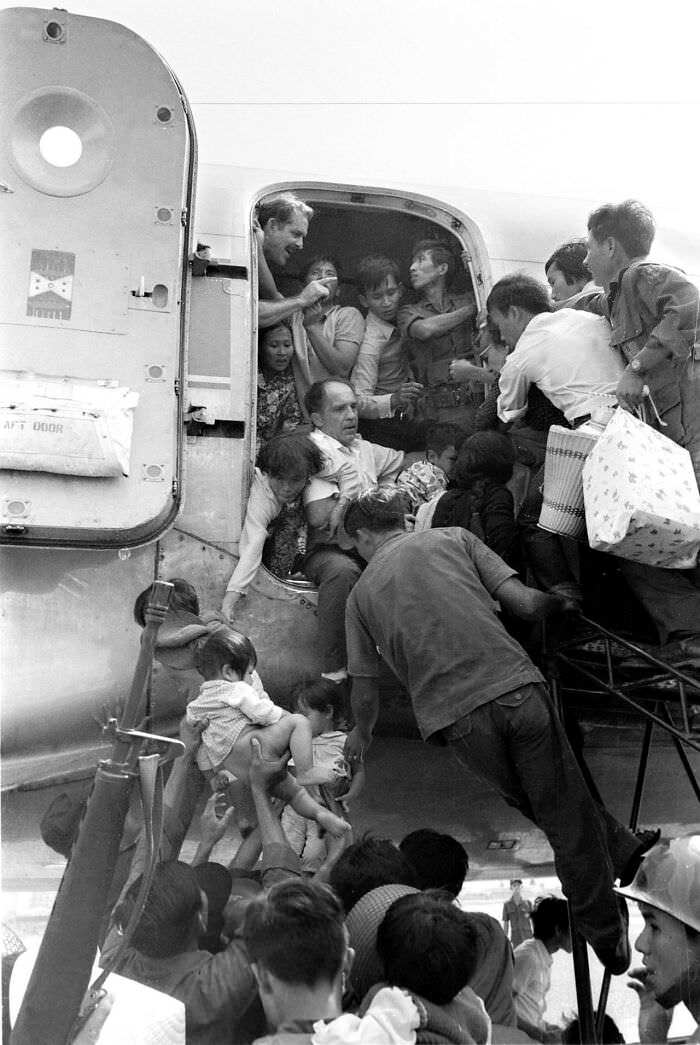
In the final days of the Vietnam War, the US was frantically trying to evacuate as many people as possible from South Vietnam. In this photo taken on April 1, 1975, at the airport in Nha Trang, chaos erupts as people fight to board a plane out of the country. The US withdrawal was seen as a victory for the North Vietnamese, and those left behind were at risk of being persecuted for their association with the US or South Vietnamese government. Families were separated and people were injured as they tried to get on the few planes available.
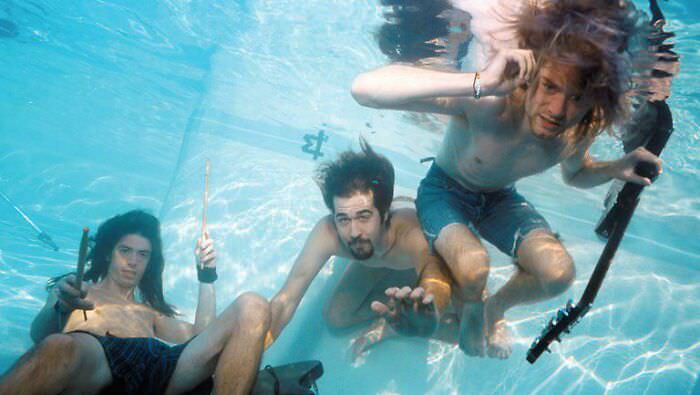
This photograph was taken in 1991 by Kirk Weddle during a photo shoot for the album cover of Nirvana’s “Nevermind.” The album was released on September 24, 1991, and is widely regarded as one of the greatest and most influential albums of all time. The image features a baby swimming underwater, reaching out for a dollar bill on a fishhook — an image that captured the mood of the era and became a symbol of the disillusionment and frustration of a generation. The album’s raw energy, combined with its themes of alienation and self-discovery, struck a chord with young people around the world, and Nirvana quickly became one of the most popular and influential bands of the 1990s.
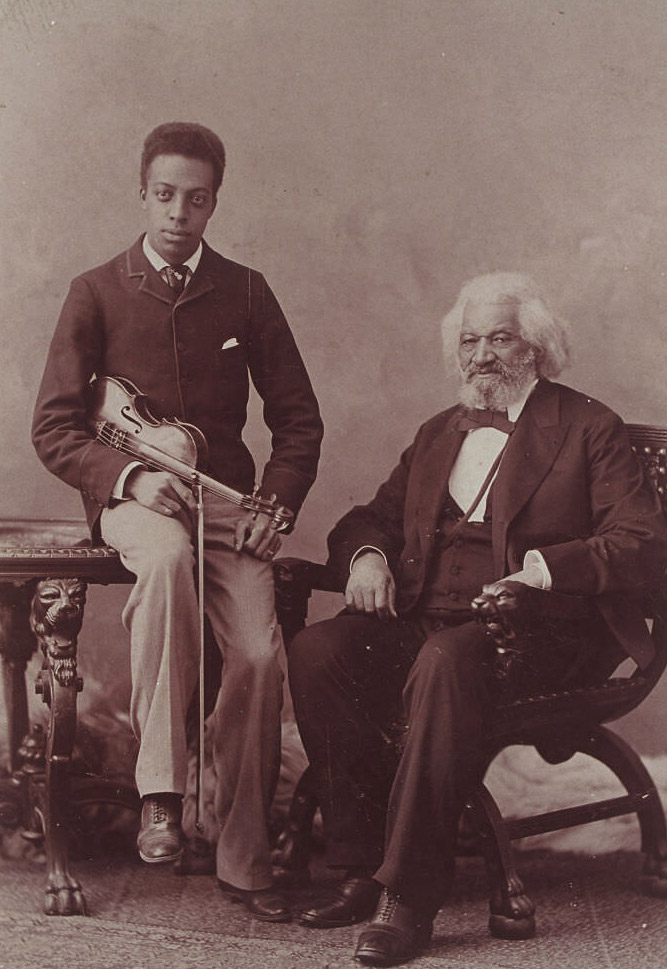
In this rare photograph, abolitionist and statesman Frederick Douglass poses with his musician grandson Joseph Douglass. Despite the nearly five-decade age gap between them, the two men were united by their dedication to fighting against racism and injustice. Frederick Douglass was a formerly enslaved man who became one of the most prominent African American leaders of the 19th century. He used his eloquence and intellect to advocate for the abolition of slavery and the rights of all marginalized people. Joseph Douglass was a talented musician who used his art to express his own resistance against racial oppression.
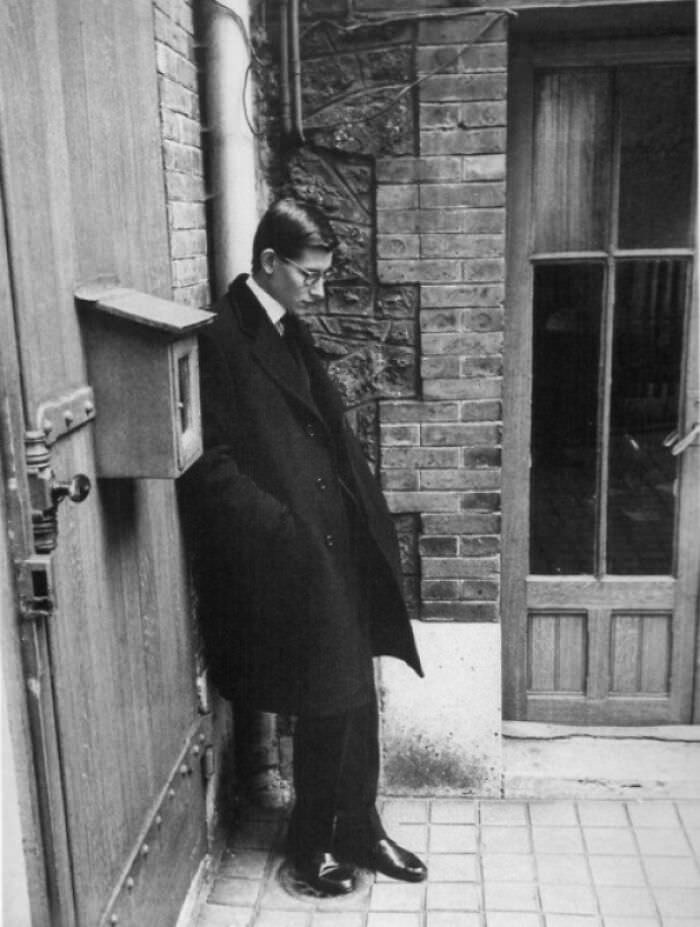
In this historic photo, a 21-year-old Yves Saint Laurent is captured attending the funeral of legendary fashion designer Christian Dior in 1957. Dior had been a mentor and employer of Saint Laurent, who was 19 years old when he was appointed as Dior’s successor after Dior’s sudden death. This photo captures a significant moment in fashion history, showing the transition from one iconic designer to the next. Saint Laurent would go on to transform fashion with his own designs, helping to define modern couture.
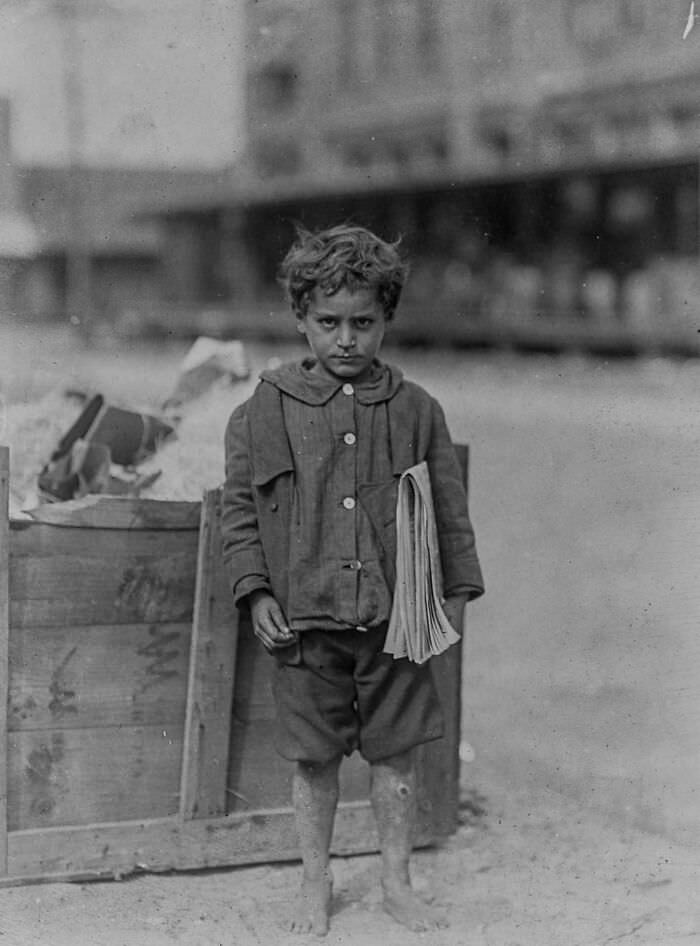
In 1913, the streets of Tampa, Florida were filled with young newsboys like this one, determined to earn a living selling newspapers. This particular newsboy, just four years old, was already a regular seller, braving the heat and the crowds to make a few cents each day. While it may seem shocking to see such a young child working, it was a common sight at the time, as many families relied on their children to contribute to the household income.
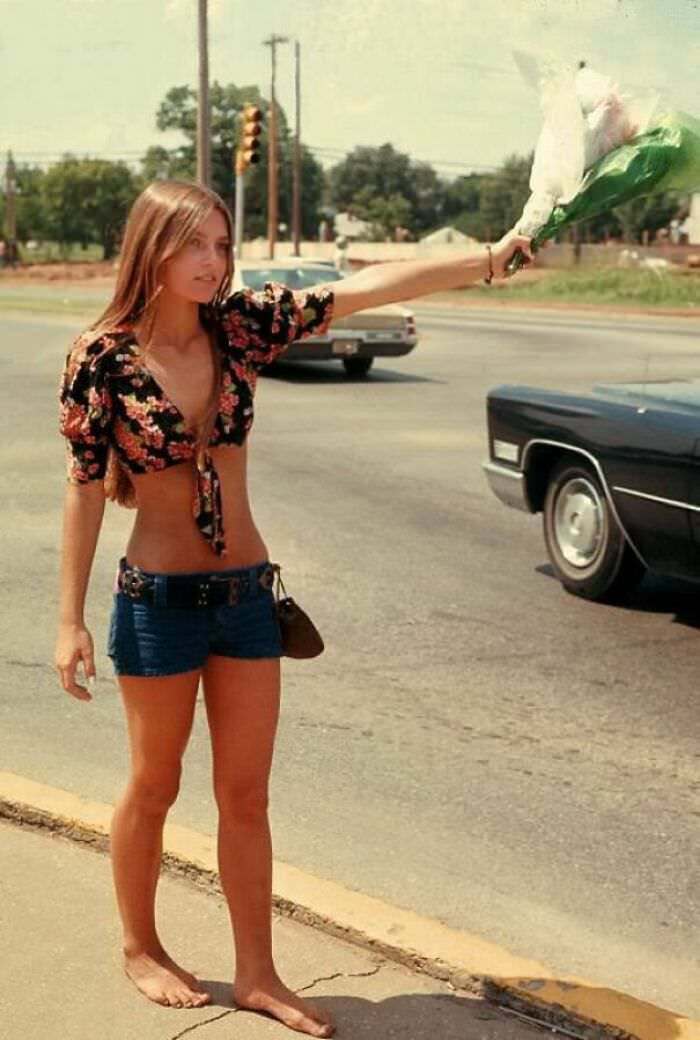
This photo captured the spirit of the hippie movement in the early 1970s. A young girl, wearing a headband and tie-dye shirt, sold roadside flowers in Oklahoma. Her peaceful demeanor reflected the “flower power” ideology that was prominent during this time. The hippie movement was a response to the social norms of the era, seeking to promote love, peace, and freedom. The girl’s smile and the colorful flowers she sells represent the hope for a better world that the hippie generation carried with them.
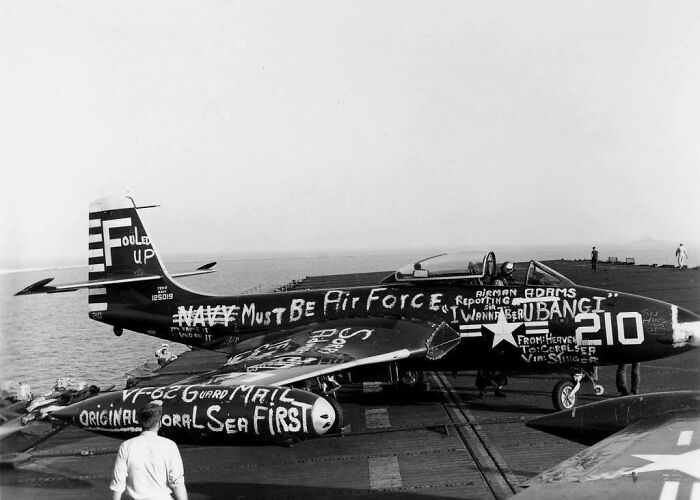
The photo captures the moment when Lieutenant Commander George C. Watkins, a US Navy fighter pilot, realized he had made a critical mistake. He had just landed his F9F-2 Panther fighter jet on the wrong aircraft carrier — the USS Monterey — instead of his own carrier, the USS Essex. As the jet’s engines were being turned off, Watkins knew he was in trouble. He had only a few seconds to react before the Panther was launched off the Monterey’s deck into the ocean. Watkins quickly radioed his carrier, but it was too late. The jet was launched into the sea, and Watkins had to be rescued by a helicopter. The photo serves as a stark reminder of the consequences of even the slightest mistake in naval aviation.
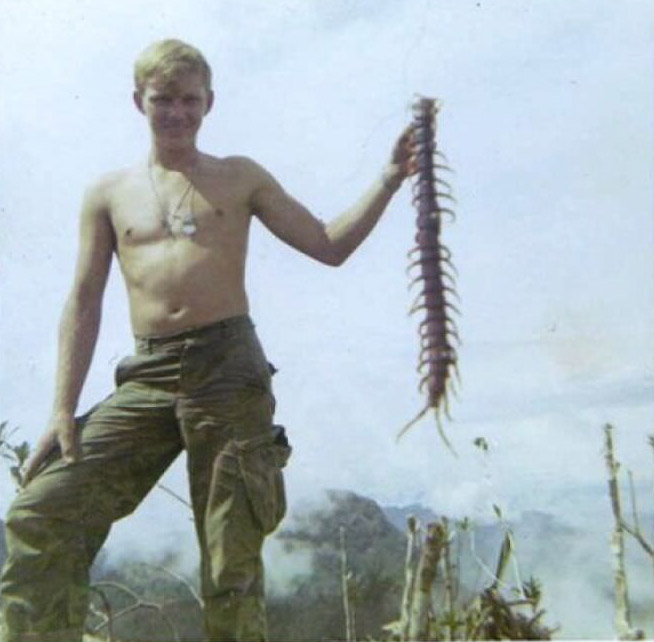
In this photo taken during the Vietnam War, a US soldier can be seen holding up a large jungle centipede. The soldier’s face shows a mix of fascination and disgust at the creature, which was a common inhabitant of the dense forests and jungles of Vietnam. The centipede’s poisonous bite could cause severe pain and swelling, making encounters with them particularly dangerous for soldiers. This image captures both the natural hazards that soldiers faced during the war and the resilience they had to display in order to survive in such a hostile environment.
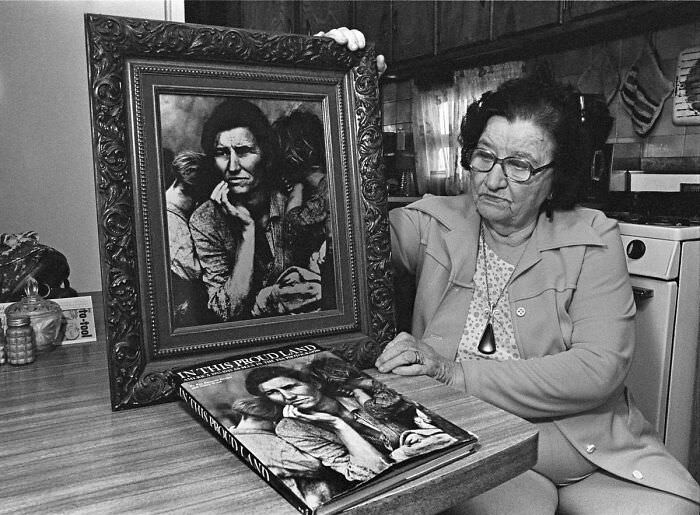
Florence Thompson was the woman captured in Dorothea Lange’s iconic photograph “Migrant Mother,” taken during the Great Depression in 1936. For decades, Thompson’s identity was unknown, but in 1978 a reporter from a local newspaper in California tracked her down and interviewed her. During the interview, Thompson held up a copy of the photograph and shared her story of struggle and poverty during the Depression. She had worked as a pea picker and had several children to support. The photograph had become a symbol of the hardship experienced by millions of Americans during that time. Thompson passed away a few years later, but her image lives on as a powerful reminder of the resilience of the human spirit.
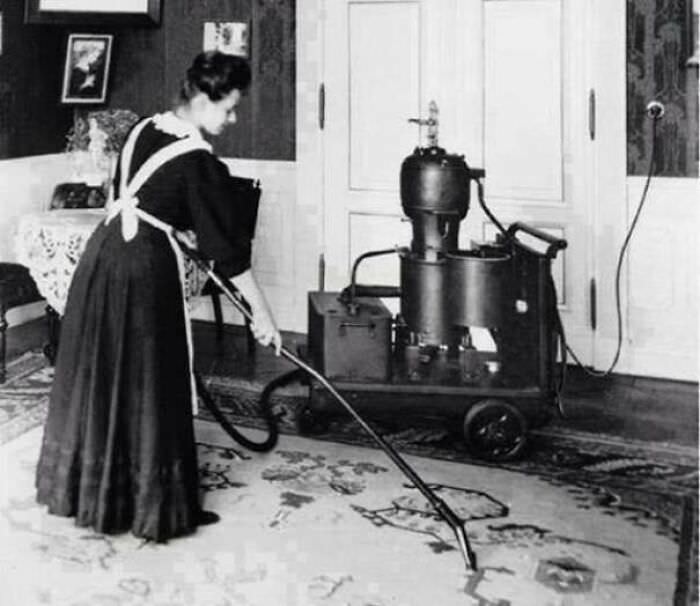
In 1906, the vacuum cleaner was still a relatively new invention, but it was already changing the way people approached house cleaning. This photo captures a woman using a vacuum cleaner to clean her home, showing the growing use of this time-saving device. Before the vacuum cleaner, people relied on brooms and dustpans to clean their floors — a time-consuming and physically demanding task. With the invention of the vacuum cleaner, cleaning became much easier and faster. While the earliest vacuum cleaners were large and unwieldy, they quickly evolved to become smaller and more practical. Today, vacuum cleaners are still an essential tool for keeping homes clean, and have come a long way from their early beginnings in the early 20th century.
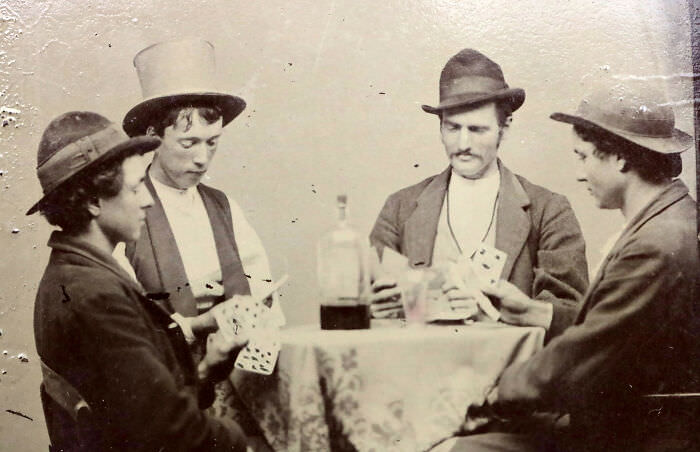
In 1877, Billy the Kid was a notorious outlaw and member of a gang in New Mexico. This photograph, one of only two certified photographs of him, shows him with his gang playing cards. Billy, easily recognizable in his top hat, appears relaxed and at ease with his fellow outlaws. The photograph offers a glimpse into the everyday life of a notorious outlaw and shows the human side of someone who is often only known for his crimes.
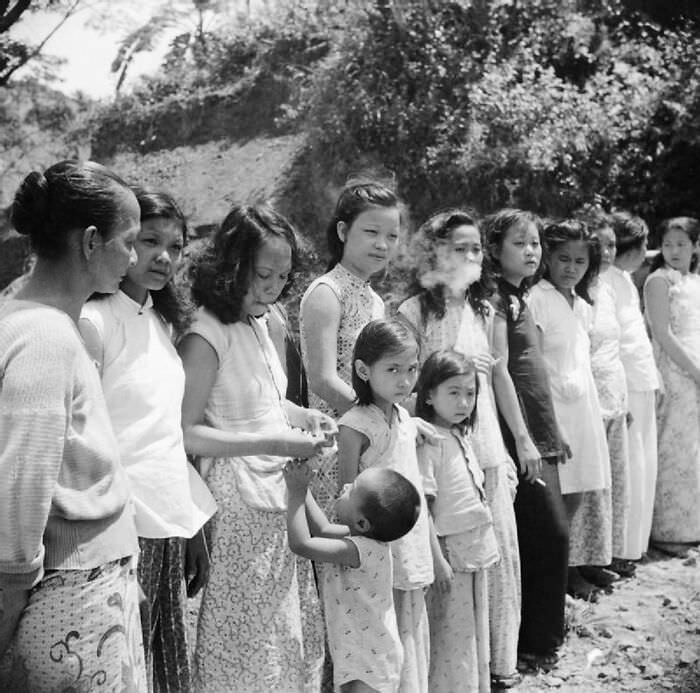
The Japanese military systematically abducted, imprisoned, and sexually enslaved an estimated 200,000 women and girls — mostly from Korea, China, and the Philippines — to serve as sex slaves for their soldiers. These women were subjected to rape, torture, and brutal living conditions. The term “comfort women,” used at the time and in the original caption, is a euphemism that does not reflect the violence and coercion these women endured. It is important to use accurate language when discussing these documented war crimes and the experiences of the victims.
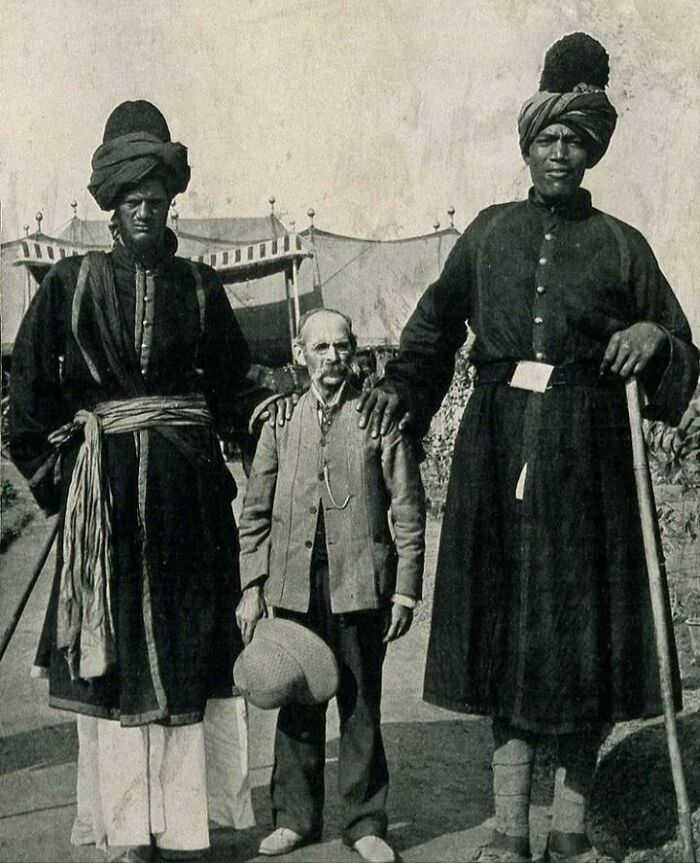
In 1903, American photographer James H. Hare visited India and captured a photo of the guards of the Delhi Darbar. The image shows the soldiers dressed in their traditional attire, standing tall and holding their weapons. The Delhi Darbar was a grand gathering of the rulers of India, held to showcase the power and prestige of the ruling empire. Hare’s photograph serves as a record of India’s rich history and the role of ceremonial guards in that tradition.
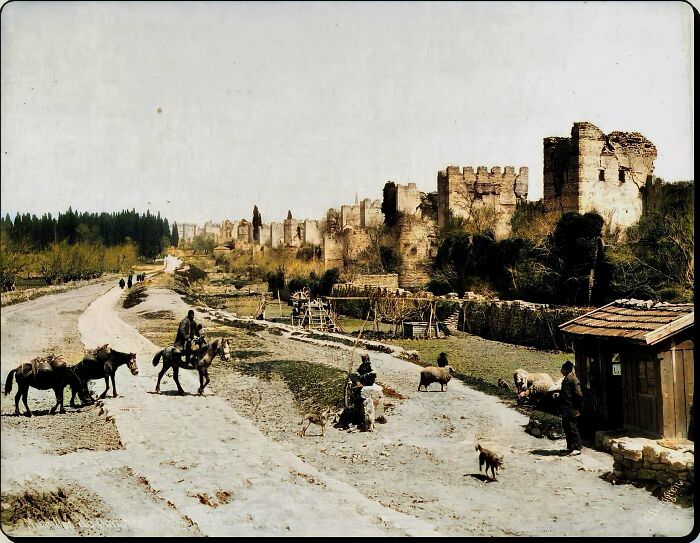
The Theodosian Walls of Constantinople, also known as the Walls of Constantinople, were a series of defensive walls that surrounded the city of Constantinople — modern-day Istanbul, Turkey. Built in the early 5th century under the direction of Emperor Theodosius II, the walls were designed to protect the city from invasion and were considered virtually impenetrable. This photograph, taken in 1870 during the Ottoman Empire, shows the scale of the walls. They stood at over 13 meters tall and 5 meters thick, and were equipped with a series of towers and gates. They successfully protected Constantinople from many attacks, including sieges by the Avars, Persians, and Arabs. Much of the Theodosian Walls still stands today, and they were declared a UNESCO World Heritage site in 1985.
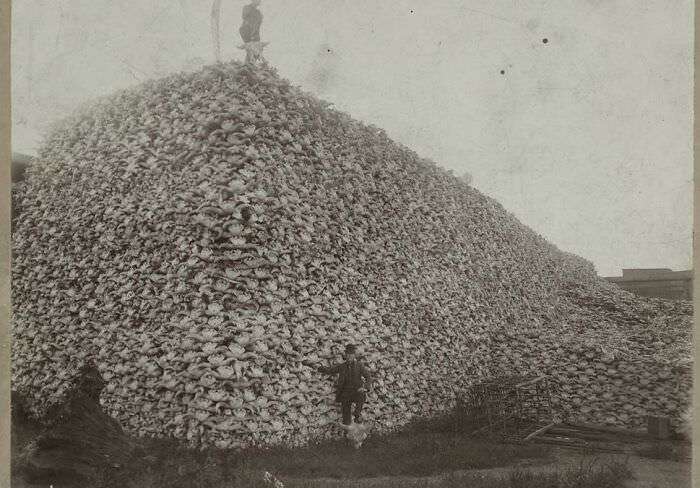
In the late 1800s, the North American bison population was rapidly declining due to over-hunting and the expansion of the American frontier. In 1892, a photographer captured an image of a mountain of buffalo skulls, which stands as a stark record of the devastation brought upon the once-enormous bison population, which numbered in the millions before being hunted to near extinction.
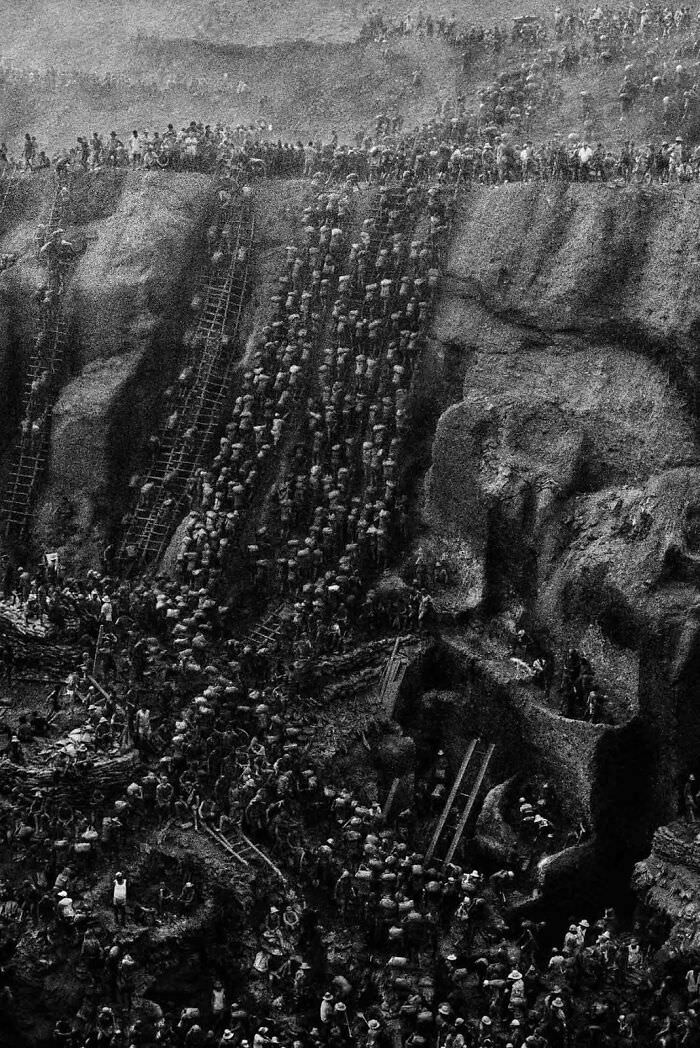
In the late 1800s, the North American bison population was rapidly declining due to over-hunting and the expansion of the American frontier. In 1892, a photographer captured an image of a mountain of buffalo skulls, which stands as a stark record of the devastation brought upon the once-enormous bison population, which numbered in the millions before being hunted to near extinction.
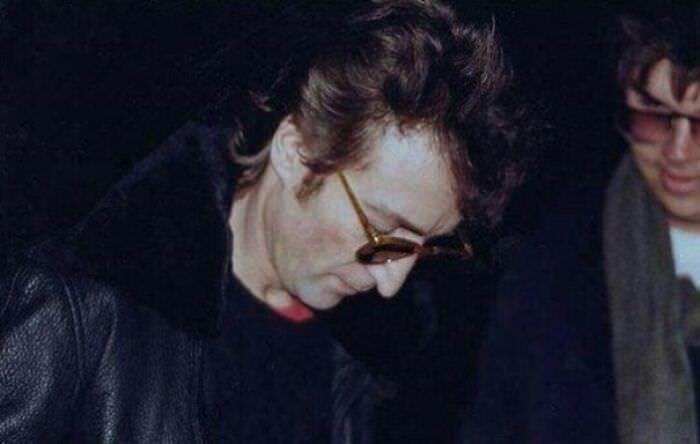
On December 8, 1980, John Lennon was shot and killed outside of his apartment building in New York City by Mark David Chapman, a troubled fan who had earlier that day gotten Lennon to sign a copy of his album “Double Fantasy.” The photo, captured by a bystander, shows Lennon signing the album for Chapman, unaware of the events that would unfold later that day. Lennon’s death sent shockwaves through the music industry and beyond, leaving fans around the world mourning the loss of a beloved icon.
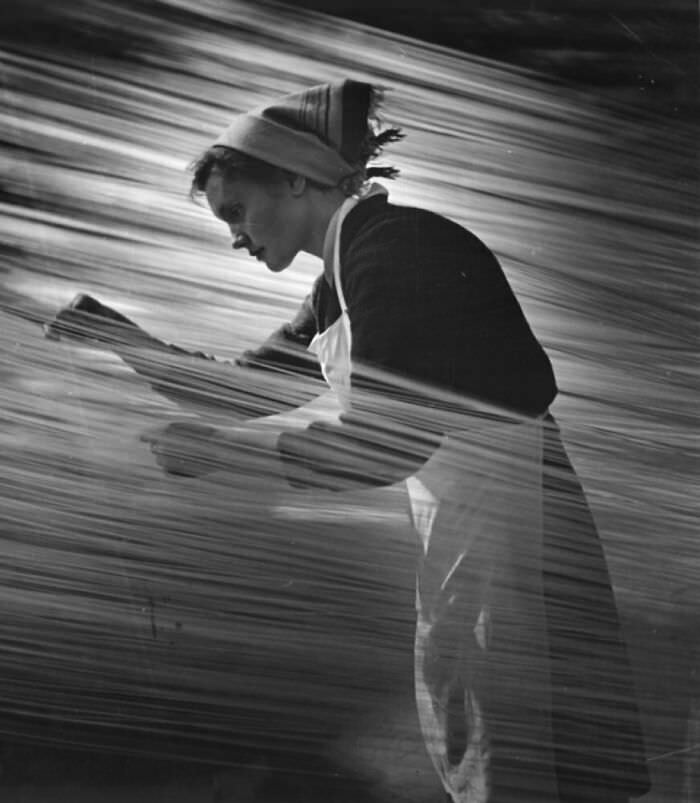
In this photograph captured by Nikolay Matorin, we see the face of a Soviet textile worker during the Soviet era. With a blank stare and tired eyes, the worker represents the hardships and sacrifices that many laborers faced in the name of industrial progress. The Soviet Union invested heavily in the textile industry, and this worker’s labor played a vital role in the economy. The worker’s face is a testament to the human toll of industrialization.
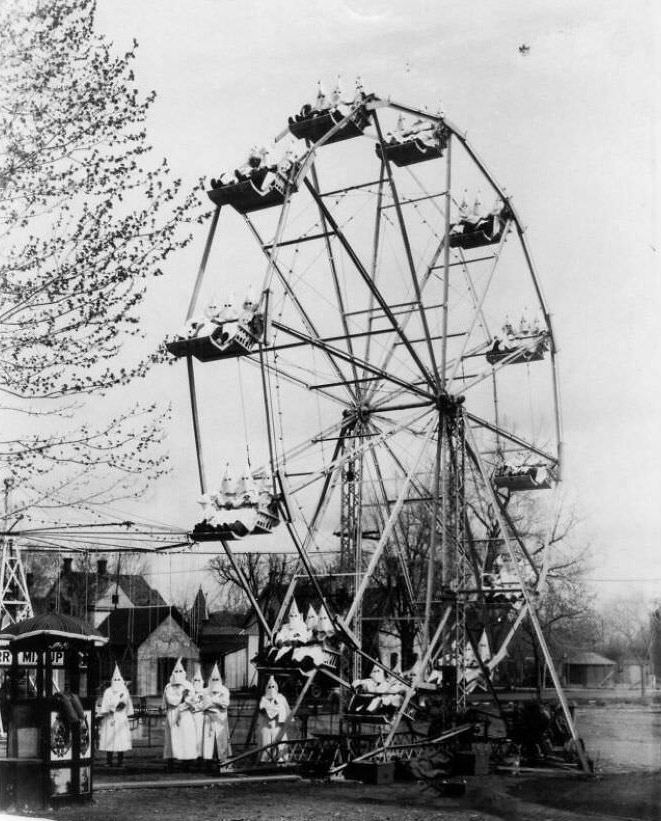
In this 1926 photograph, members of the Ku Klux Klan are seen riding a Ferris wheel at an amusement park in Cañon City, Colorado. The image documents the Klan’s power and reach during the 1920s, when its membership was at its peak across the United States. During this time, the Klan had a significant presence in Colorado and used its influence to push for discriminatory laws and policies targeting minorities, especially African Americans, Catholics, and Jews. The Klan also had a significant presence in politics and was able to elect members to positions of power in some areas. This photograph captures the normalized nature of the Klan’s presence in American society during the early 20th century.
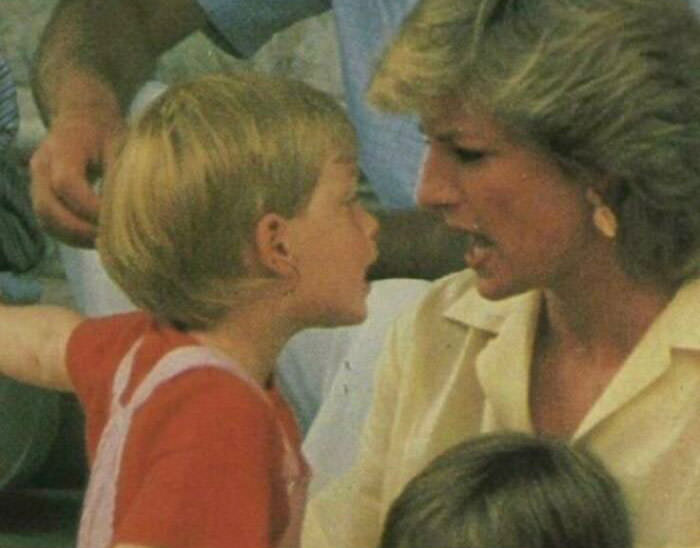
In this candid moment captured around 1991, Princess Diana appears to be losing an argument to her 7-year-old son, Prince Harry. The photograph, taken by Tim Graham, shows Diana in a state of exasperation as Harry confidently stands his ground. The young prince, with his hands on his hips, appears unfazed by his mother’s attempt to persuade him.
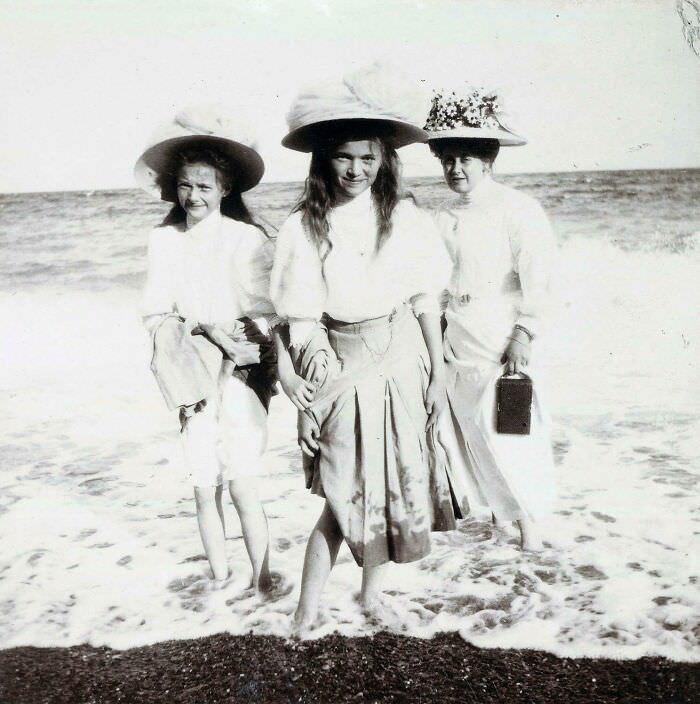
In 1908, the daughters of Tsar Nicholas II of Russia — Grand Duchesses Olga, Tatiana, Maria, and Anastasia — took a summer cruise in Finland with their family. This photograph captures the sisters on the deck of the yacht, enjoying the sea breeze and the scenery. The image captures a relaxed and carefree moment for the young princesses. Their idyllic life would be cut short just a few years later, as the family fell victim to the Russian Revolution and were executed by the Bolsheviks in 1918.
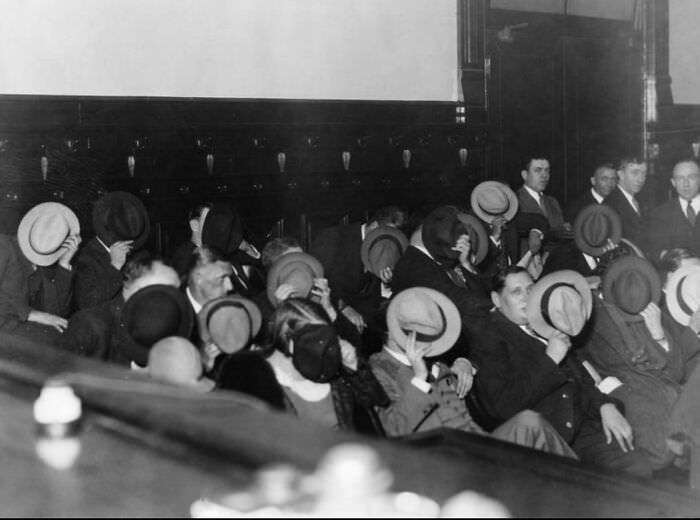
In 1931, notorious gangster Al Capone was brought to trial for income tax evasion, and the world watched as some of the most powerful mobsters of the time were called to testify. In this photograph, taken during the trial, several of the mobsters can be seen covering their faces to avoid being identified by the press. Despite their attempts at secrecy, the trial led to Capone’s conviction and imprisonment. The trial was a significant moment in the history of organized crime, demonstrating the ability of the legal system to bring even powerful criminals to justice.
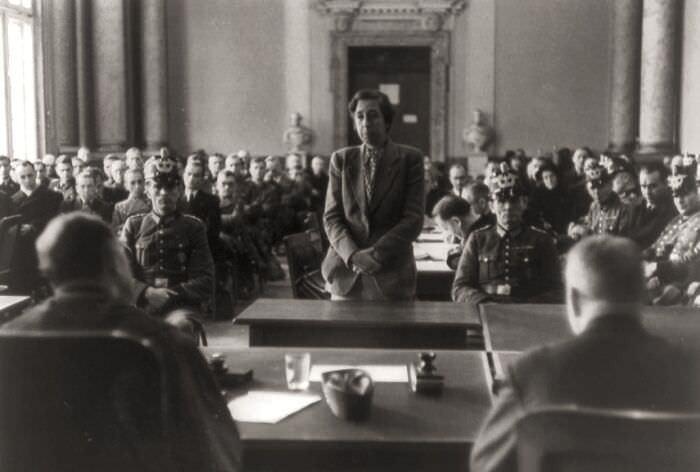
In this rare photograph, Elisabeth “Lilo” Gloeden stands before judges during her trial for involvement in the plot to assassinate Adolf Hitler in 1944. Lilo was part of the German resistance movement and was believed to have helped in the assassination attempt that failed. She was later arrested by the Gestapo and sentenced to death. Her trial was a sham, and her sentence was carried out in January 1945. This photograph captures the fear and apprehension that Lilo faced as she stood before her accusers.
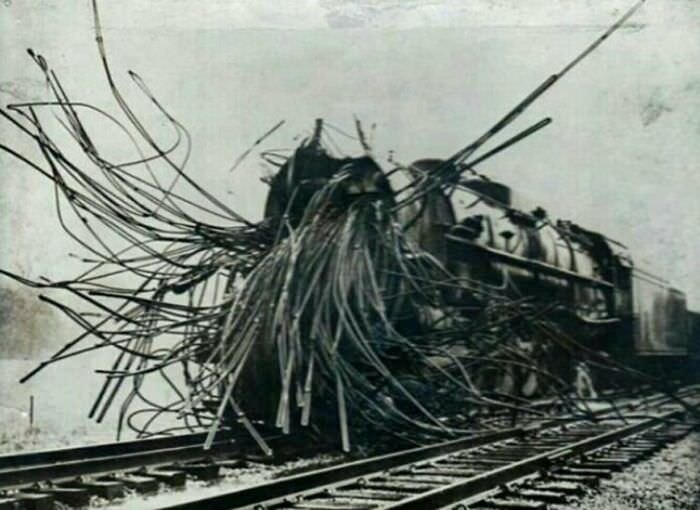
On May 22, 1948, tragedy struck the rail yard when the C&O T-1 #3020 locomotive experienced a catastrophic boiler explosion. The explosion was so powerful that debris was scattered throughout the surrounding area, causing damage to nearby buildings and injuring several bystanders. The force of the blast lifted the massive locomotive off its tracks and threw it onto its side. Despite the efforts of first responders and railway workers, several crew members lost their lives in the explosion. The cause of the explosion was later attributed to a combination of factors, including the age of the boiler and the high-pressure steam generated during the locomotive’s operation.
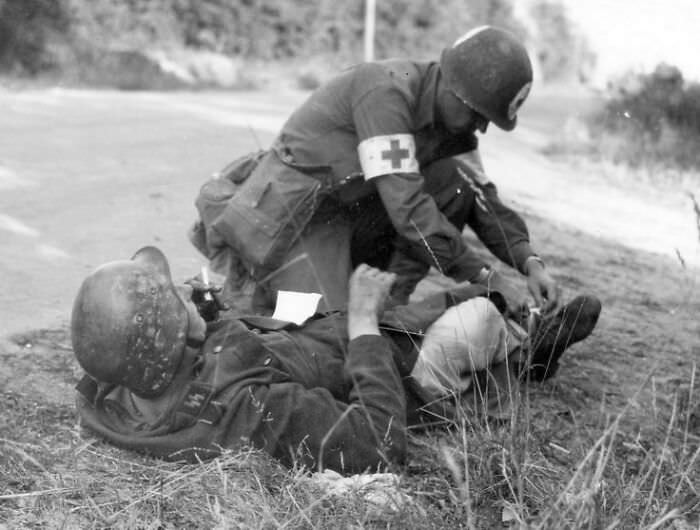
This photograph, taken by Robert Capa, shows a US medic providing first aid to a wounded German SS soldier in France during World War II. The photo captures a moment of humanity in the midst of war. The medic, shown with his back to the camera, is tending to the injured soldier’s leg. The German soldier appears to be in great pain, yet the medic provides help without hesitation. This photo also highlights the bravery of medics who risk their own lives to help others, regardless of nationality or allegiance.
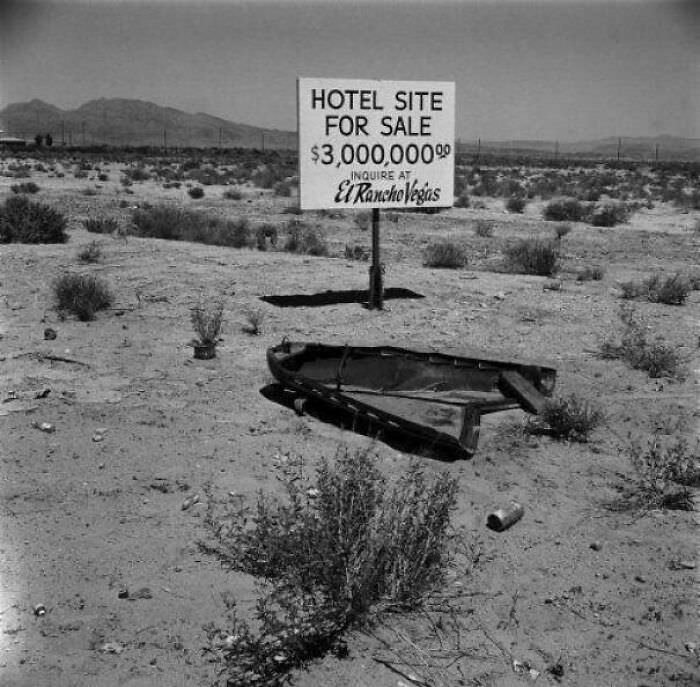
In 1955, the Las Vegas Strip was still in its early stages of development, with only a handful of major hotels and casinos standing. The iconic neon lights and towering structures associated with the Strip today were yet to come. This photograph captures the early days of the Vegas Strip, with the Flamingo Hotel and Casino visible in the background. The Flamingo was one of the first major hotels on the Strip, built by notorious gangster Bugsy Siegel in 1946.
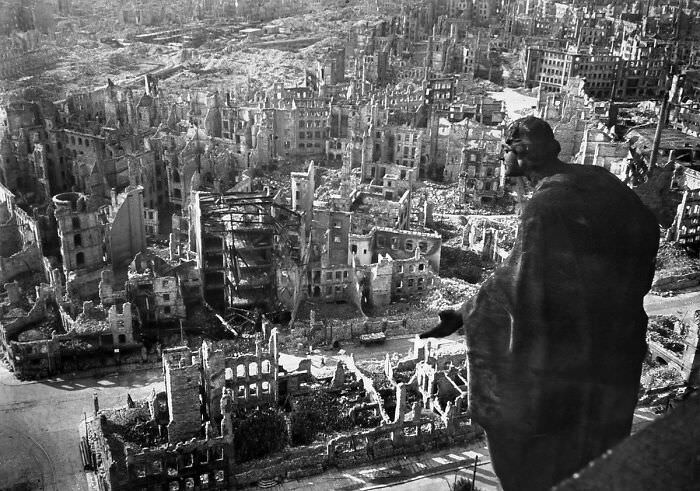
In February 1945, Allied forces carried out a bombing campaign on the German city of Dresden, reducing much of the city to rubble. This photo, taken from the town hall tower, captures the scale of the destruction in the old town. The once-beautiful buildings that made up the historic city center are reduced to piles of rubble and debris. The bombing of Dresden remains a controversial event, with some arguing that it was an unnecessary act of violence against a civilian population, while others defend it as a strategic military action.
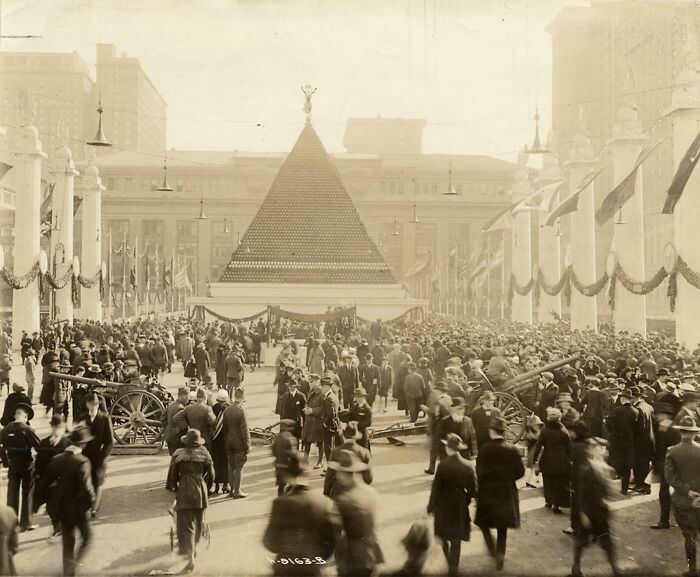
In 1919, Grand Central Terminal in New York City became the site of a display to commemorate victory in World War I. A towering pyramid of German Army helmets was erected in the station’s main concourse. Each helmet was inscribed with the name of an American soldier who had died in the war, and the pyramid was topped by an American eagle. The display was intended to honor the fallen soldiers and show the might of the victorious United States. The pyramid was the idea of Colonel Lewis L. Strauss, who served as the chairman of the Victory Loan Drive, an initiative to raise funds for the war effort. The pyramid was dismantled after the drive was completed.
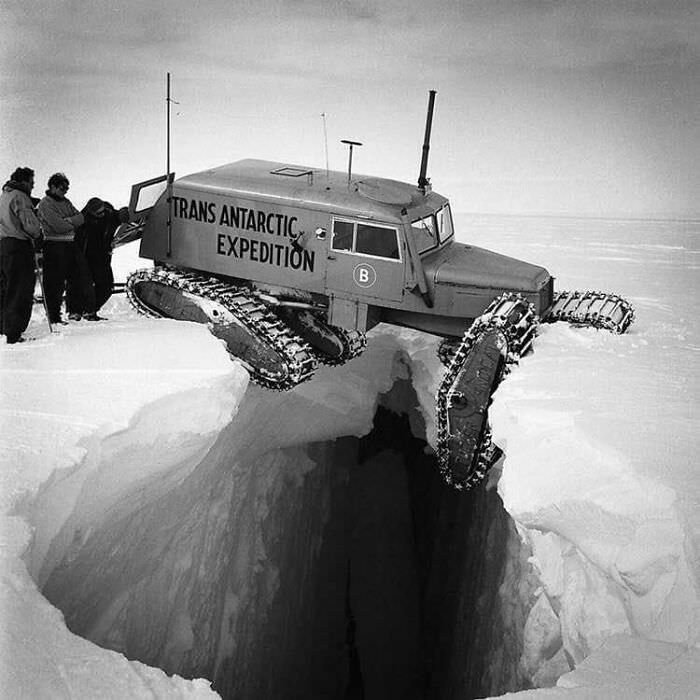
In the photo, a Tucker Sno-Cat is seen hovering over a crevasse during the Transantarctic Expedition of 1954. The expedition was the first to cross Antarctica from the Weddell Sea to the Ross Sea via the South Pole. Led by British explorer Sir Vivian Fuchs and Sir Edmund Hillary, the expedition used Sno-Cats as their primary mode of transportation through the harsh terrain of the Antarctic. The Sno-Cats were specially designed with tracks that allowed them to move across the icy terrain.
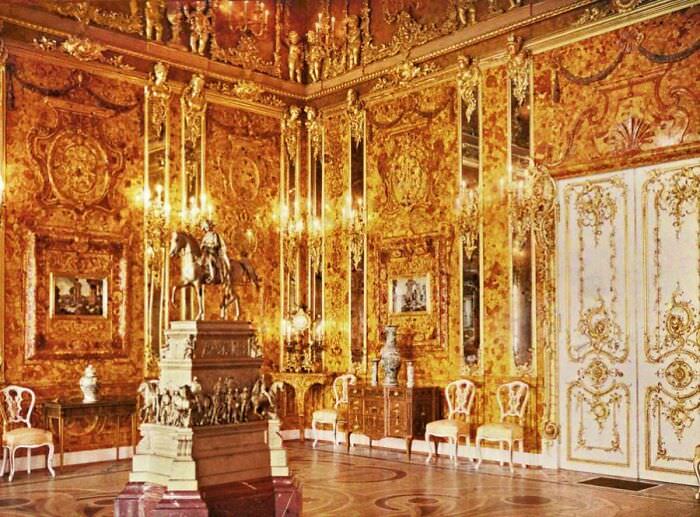
The Amber Room was an ornate chamber lined with panels of amber, gold leaf, and mirrors. It was created in the early 18th century in Prussia and was later given to Peter the Great of Russia. During World War II, the Nazis looted the room from a palace near St. Petersburg, and it has never been seen since. This photograph, taken in 1943, is the only known color photograph of the Amber Room. It shows the detail of the amber panels, intricate carvings, and gold leaf. The Amber Room remains one of the greatest unsolved mysteries of art theft.
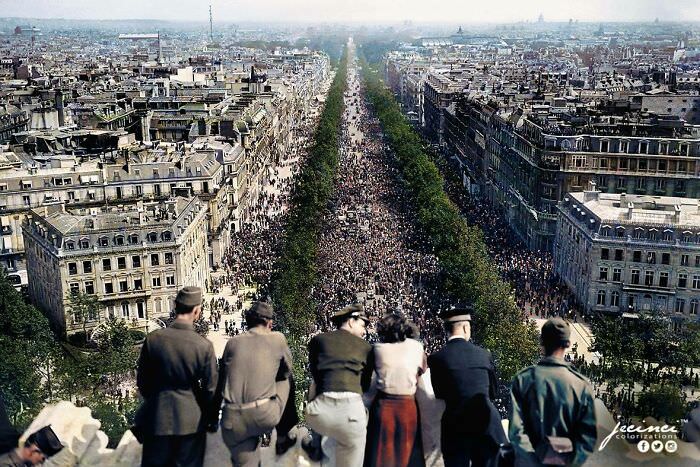
This photograph shows the Champs-Élysées as seen from the Arc de Triomphe on VE Day, May 8, 1945. It captures the celebratory atmosphere in Paris as people flooded the streets to mark the end of World War II in Europe. The Arc de Triomphe, a symbol of French patriotism and military victories, is visible in the foreground, while the avenue stretching into the distance is lined with cheering crowds and waving flags. This image documents the joy and relief felt by people around the world at the end of the war.
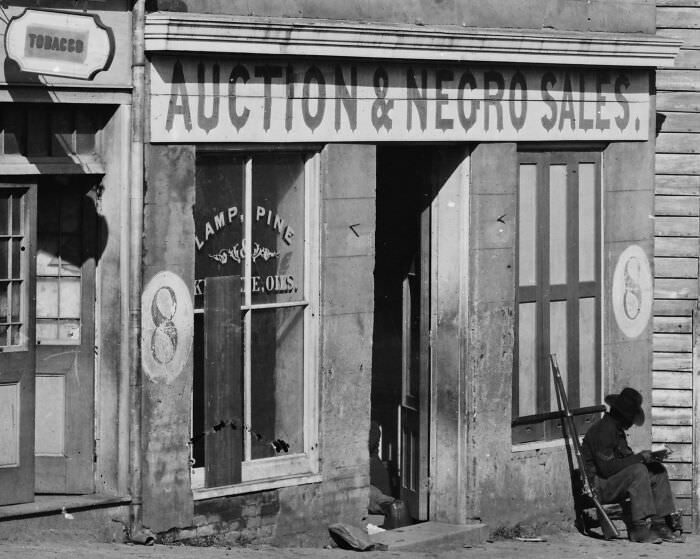
This is a stereograph photograph taken by George N. Barnard in 1864, showing a slave trader’s business on Whitehall Street in Atlanta, Georgia. The photograph is a reddish-brown tone and features two identical images next to each other on yellow card stock. The scene shows a block of commercial buildings, with the central building having a sign that reads “AUCTION & NEGRO SALES” on the bottom floor and “CHINA GLASS / & / QUEENSWARE” on the upper floor. A man in dark clothing can be seen sitting in front of the store with a rifle propped against a window of the center building.
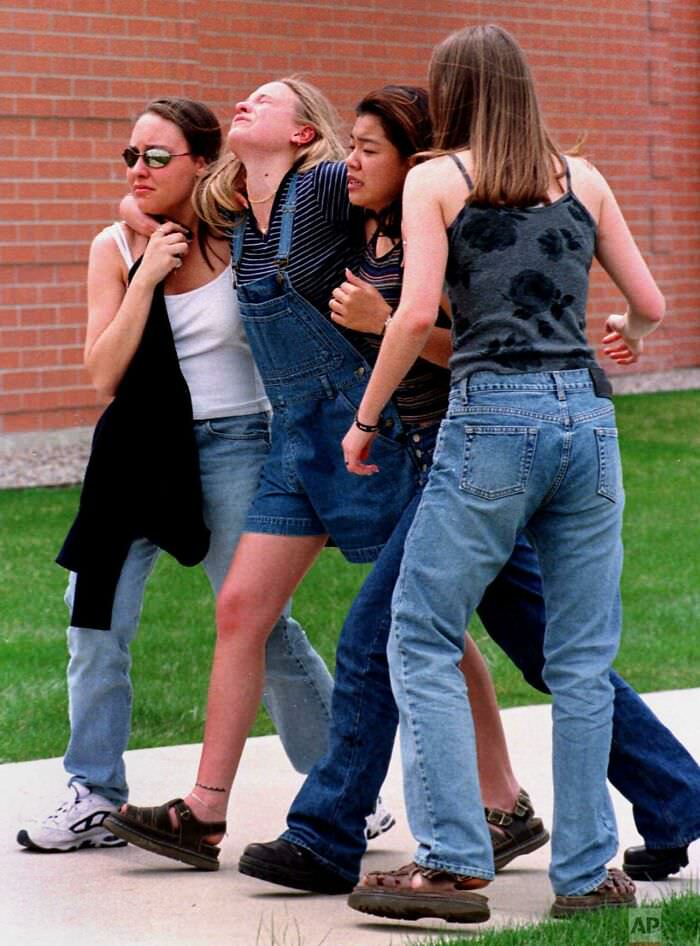
On April 20, 1999, two gunmen went on a shooting rampage at Columbine High School in Colorado, killing 13 people and injuring 21 others before taking their own lives. In the aftermath of the tragedy, students and faculty members were evacuated to nearby locations for safety. This photograph shows a group of student survivors walking toward a library near Columbine High School where they were taken after the shooting. The students look visibly shaken and distressed, with some holding onto each other for support.
![[Factually Corrected] Tutankhamun's head. Harry Burton photo published dec. 1925.](https://www.bygonely.com/wp-content/uploads/2023/04/Important_historical_photos_83.jpg)
The photograph, taken by Harry Burton and published in December 1925, shows the head of Tutankhamun, an ancient Egyptian pharaoh who ruled during the 18th dynasty. The head is part of the king’s mummified body, which was discovered in 1922 by archaeologist Howard Carter in the Valley of the Kings. The photograph was taken during the excavation of the tomb, which is considered one of the most significant archaeological discoveries of the 20th century. The head is shown in detail, with its distinctive features — including the elongated shape of the skull and the prominent nose — clearly visible. The photograph reflects the artistry and skill of the ancient Egyptian civilization and their elaborate burial practices.
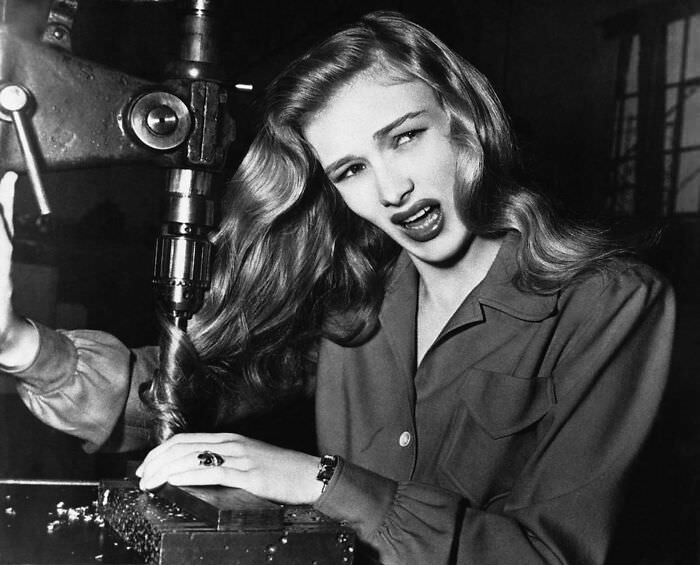
In this photograph, American film actress Veronica Lake is shown in a factory in America on November 9, 1943, demonstrating the dangers of women war workers wearing their hair long while working at their benches. During World War II, women played a significant role in the workforce, taking on jobs traditionally held by men who had gone off to fight. There were safety concerns about long hair getting caught in machinery, and materials were created to encourage women to wear their hair up or cut it short. Veronica Lake was known for her signature hairstyle, which featured her hair covering one eye, and this photo was used to illustrate the importance of workplace safety, even for Hollywood celebrities.

The photo shows Shigeru Miyamoto, the creator of popular video game characters such as Mario, holding a Nintendo Game Boy which contains the Super Mario World video game. The photo was taken in June 1992, during the height of Nintendo’s popularity in the video game industry. Miyamoto’s contributions to the industry have had a significant impact on the video game world, and his creations have become household names across the globe.
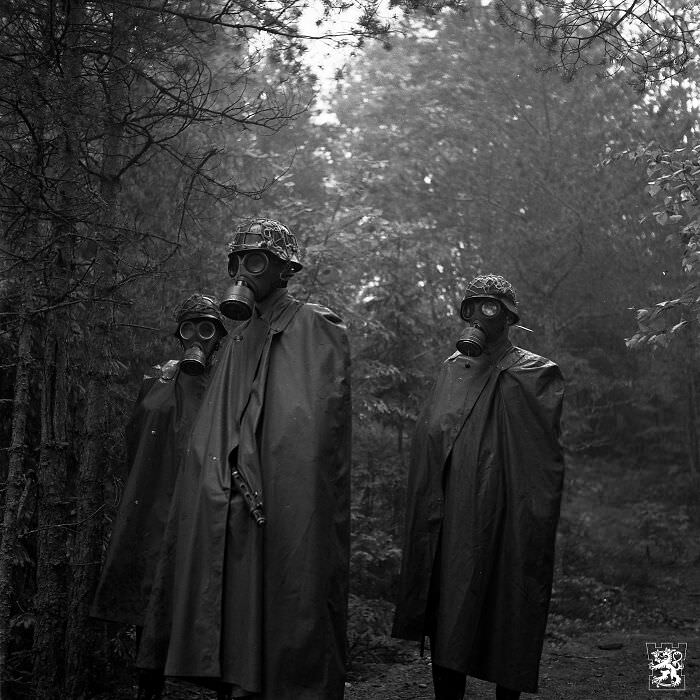
The photograph shows a group of Finnish soldiers wearing Nuclear, Biological, and Chemical (NBC) gear. The soldiers are standing in a line wearing protective suits, gas masks, and helmets. They are holding rifles and appear to be in a state of readiness for a potential attack. The photograph was taken in 1961, during the Cold War era, when the threat of nuclear war loomed over many countries. The Finnish military, like many other militaries around the world, conducted regular drills and training exercises to prepare for the possibility of a nuclear, biological, or chemical attack.
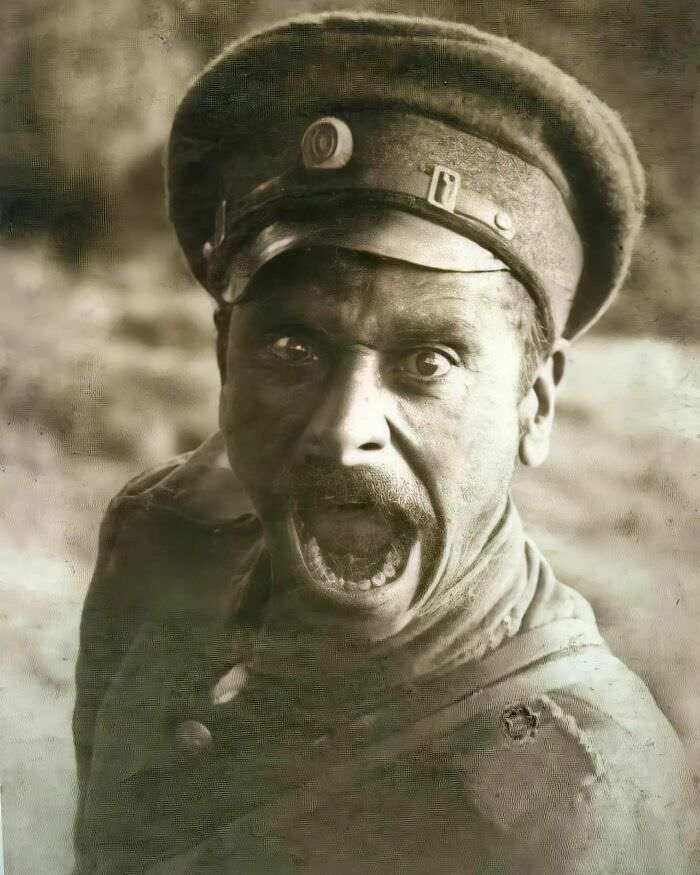
In this photograph taken around 1916, a Bulgarian soldier is captured mid-battle cry. He stands tall with his rifle in hand and his eyes fixed on an unseen enemy. The intensity in his expression conveys the determination of a soldier on the front lines of war. The soldier’s uniform is adorned with military badges and medals, indicating his years of service and experience in battle. His cap bears the distinctive emblem of the Bulgarian army, which fought alongside the Central Powers during World War I.
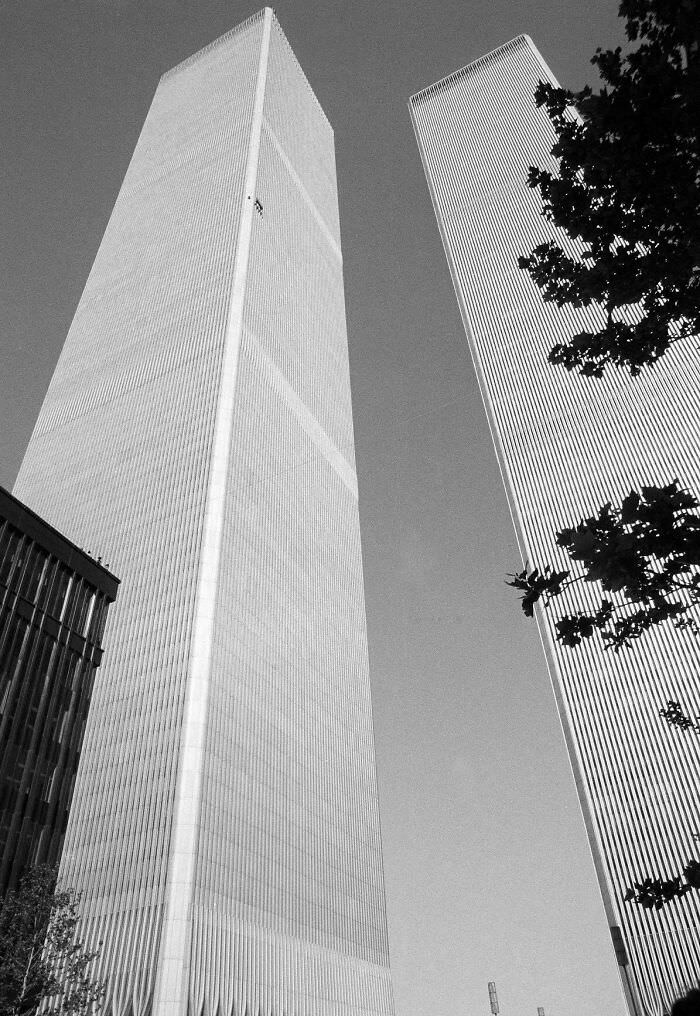
On May 26, 1977, George Willig, also known as the “Human Fly,” climbed the South Tower of the World Trade Center in New York City. Armed with only homemade climbing equipment, Willig scaled the tower in just under four hours. This ground-view photograph captures Willig making his way up the side of the tower, dwarfed by the massive structure. Despite the authorities’ attempts to stop him, Willig successfully reached the top and was met with cheers from onlookers. Willig’s climb became a symbol of human perseverance and determination.
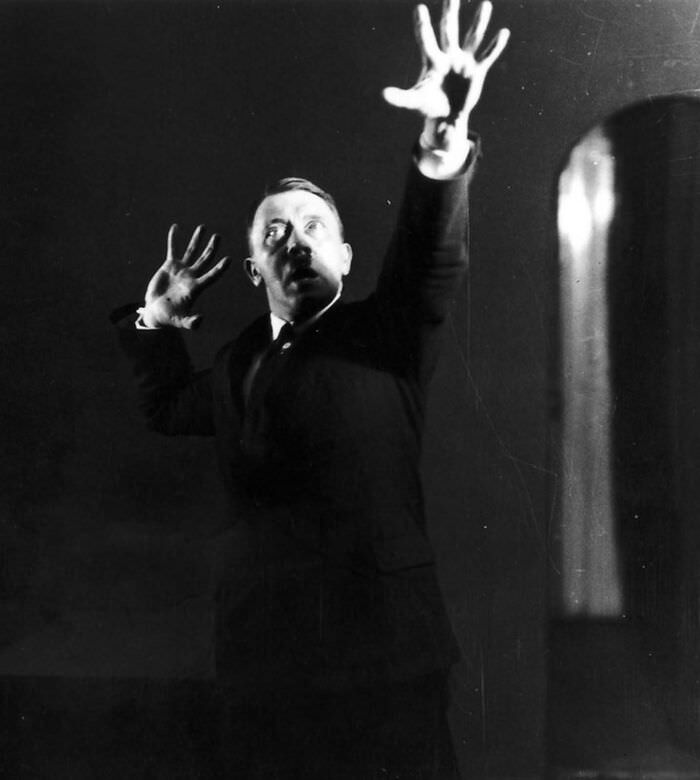
In 1925, Heinrich Hoffmann, the personal photographer of Adolf Hitler, captured a moment of the future dictator rehearsing a speech in front of a mirror. The photograph reveals the carefully planned nature of Hitler’s speeches, as he studies his posture, gestures, and facial expressions. It also offers a glimpse into Hitler’s obsession with controlling his public image. Hitler’s use of propaganda was a key element in his rise to power, and his speeches were carefully crafted to appeal to the emotions and fears of the German people.
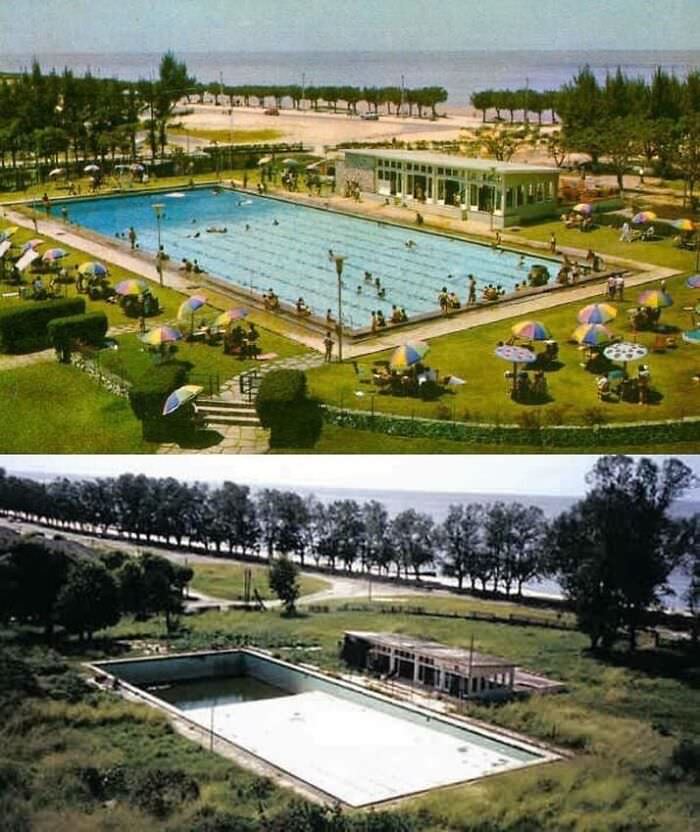
In its time, the Grande Hotel of Beira was a symbol of luxury and elegance, hosting some of the most influential figures in Mozambique. After the country’s civil war in the 1980s, the hotel fell into disrepair and was abandoned. Its once-grand halls and rooms now lie empty and crumbling. Despite numerous attempts to revitalize the hotel, it remains a reminder of the complexities and contradictions of history.
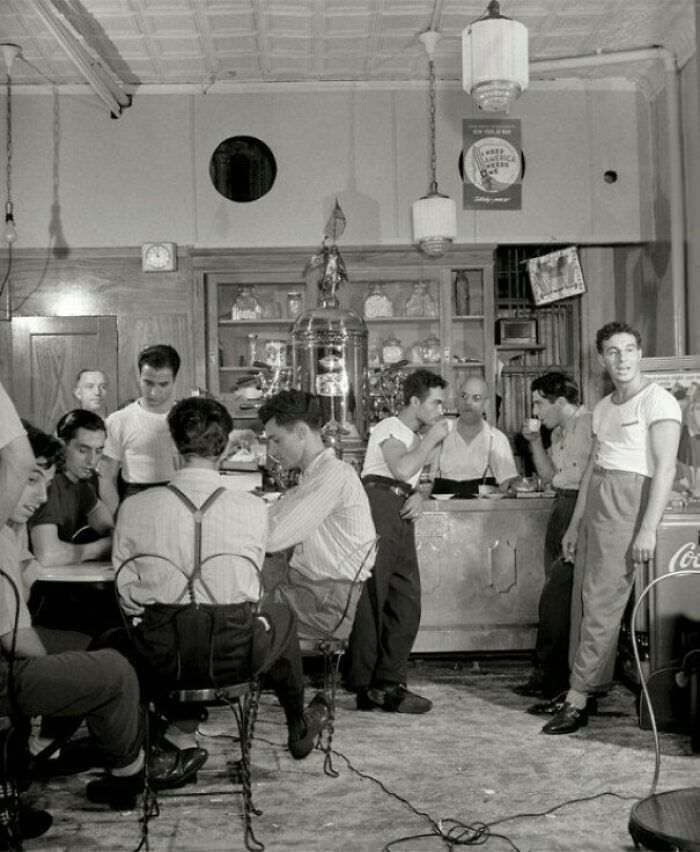
In this photograph, taken by American photographer Marjory Collins in 1942, we see the scene of an Italian-American café on MacDougal Street in New York City. The café is filled with patrons enjoying their meals, while outside the storefront hangs a sign advertising “Wines and Liquors.” The walls are adorned with Italian-themed paintings and the tables are covered with red and white checkered tablecloths. This image captures a moment when Italian immigrants and their culture were becoming more integrated into American society. The café serves as a symbol of the vibrant Italian-American community in New York City.
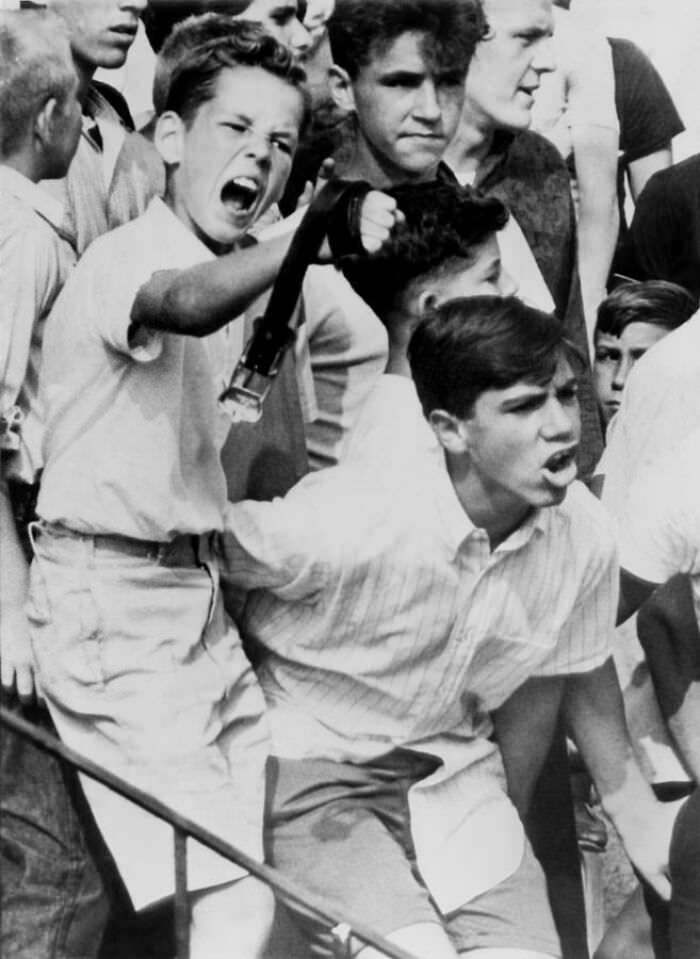
In August 1963, the Horace Baker family became the first African American family to move into the all-white Delmar Village neighborhood of Folcroft, Pennsylvania. As soon as they arrived, they were met with hostility and harassment from the white residents of the area, including young boys who are seen in this photograph harassing the family. The harassment included rock throwing, name-calling, and taunting. The situation was so severe that the family had to have police protection around the clock.
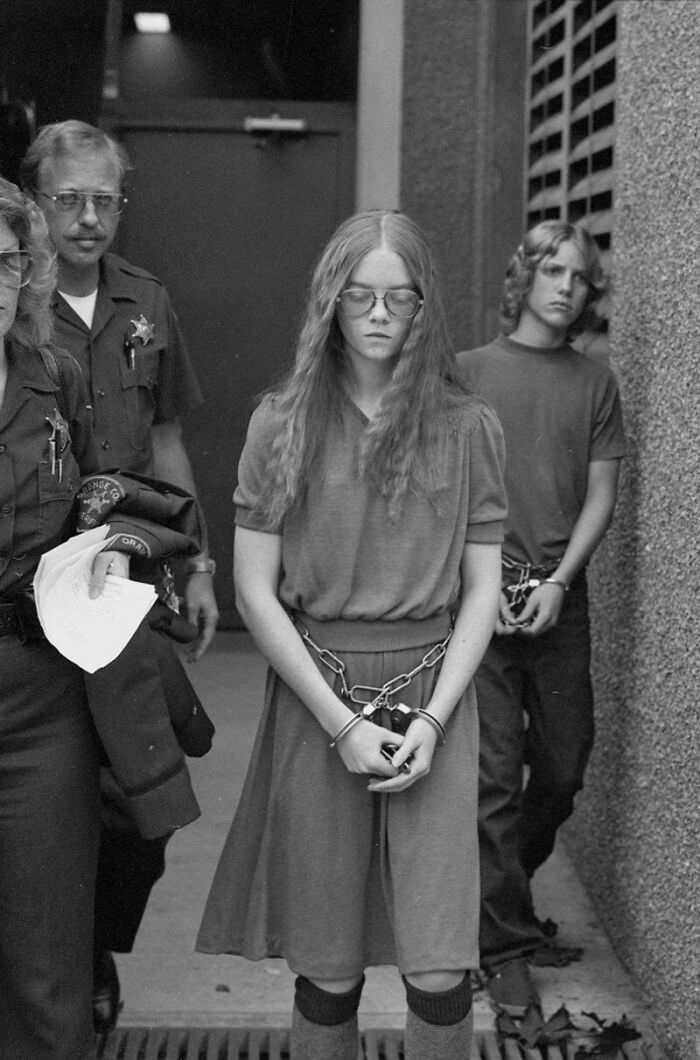
In 1979, 16-year-old Brenda Spencer carried out a shooting in San Diego, California, killing two people and injuring nine others. She became known for her statement to the police — “I don’t like Mondays. This livens up the day” — when asked about her motive. After her arrest, Brenda Spencer pleaded guilty to two counts of murder and nine counts of assault with a deadly weapon. The photograph captures Brenda Spencer leaving court in Santa Ana, California, after pleading guilty. The attack and her lack of remorse made headlines and raised questions about gun control and mental health in America. Brenda Spencer remains incarcerated to this day.
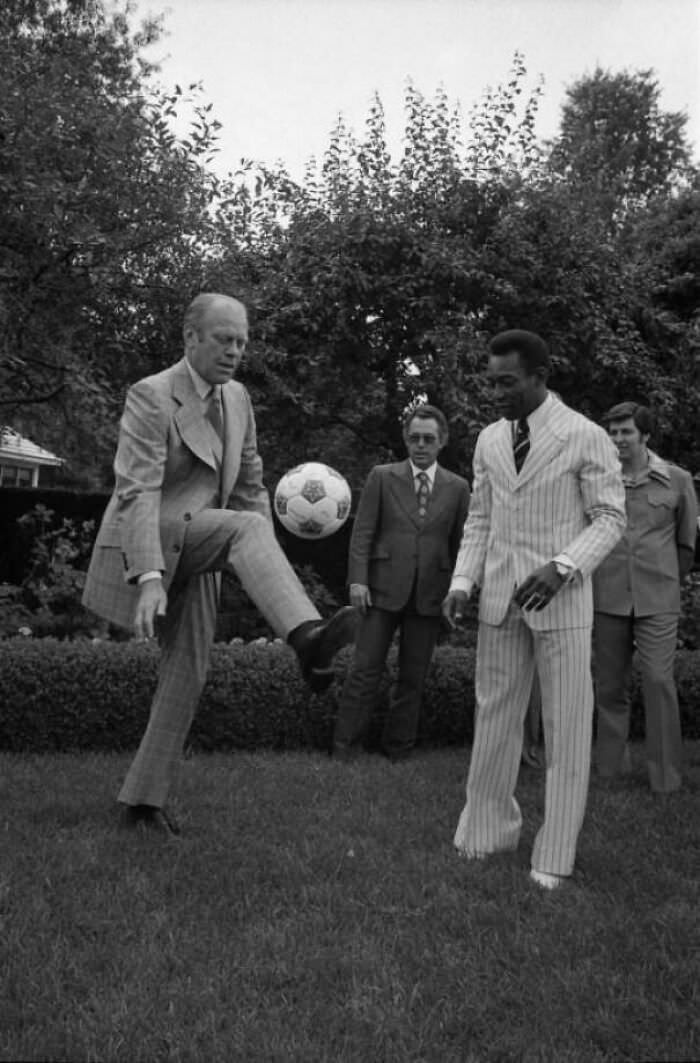
In 1975, President Gerald Ford welcomed Brazilian soccer star Pelé to the White House. The two then went to the Rose Garden, where they kicked around a soccer ball in front of the press. The event was part of a larger push by President Ford to promote physical fitness and encourage Americans to live more active lifestyles. It was also a chance for the President to show his support for soccer, a sport that was gaining more attention in the US, especially among young people.
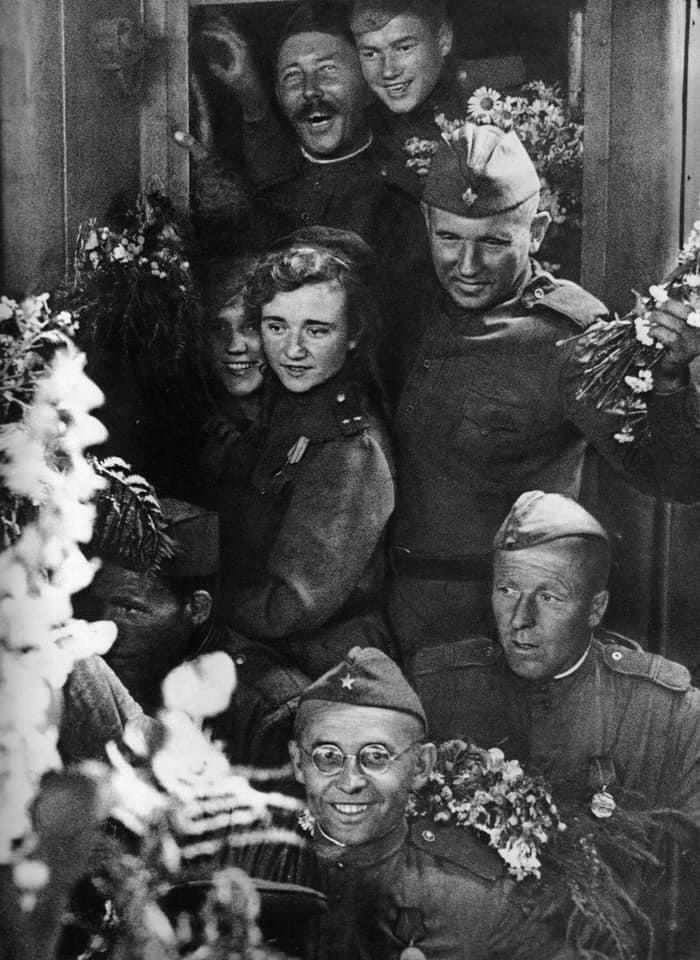
In this photo taken in 1945, Soviet soldiers can be seen celebrating their return home after fighting in World War II. The soldiers, dressed in their uniforms, are seen laughing, cheering, and embracing each other, filled with joy at having survived the war. The photo captures a moment of relief felt by soldiers who were fortunate enough to make it back home. It also serves as a reminder of the devastating toll that war takes on individuals and societies.
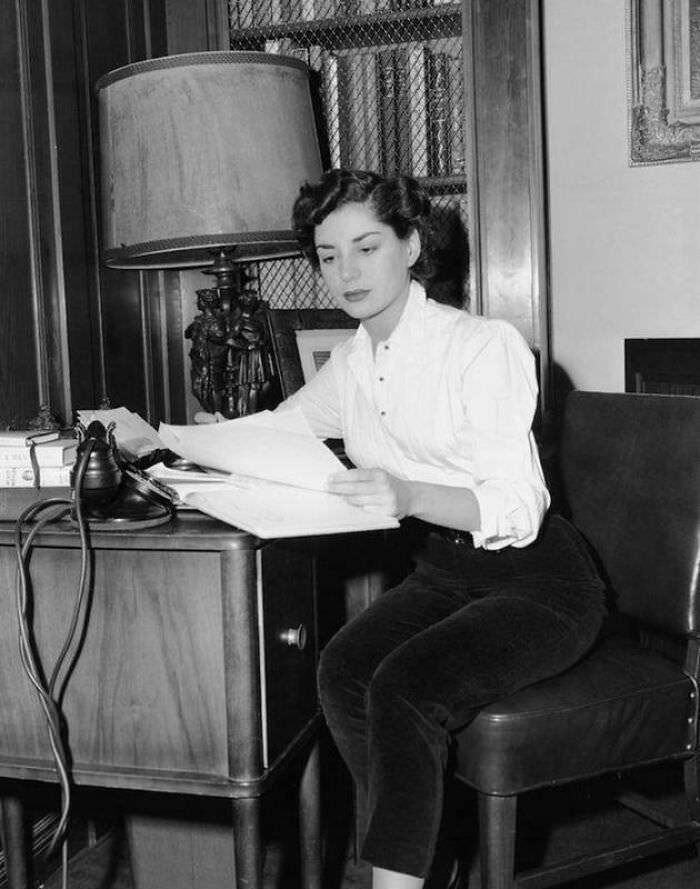
This photo captures a young Barbara Walters during her freshman year at Sarah Lawrence College in 1949. She is seen wearing a stylish coat and a matching hat, looking confidently into the camera with a smile on her face. Walters went on to become one of the most respected journalists in American television history, breaking ground as a female anchor and correspondent. Throughout her career, she interviewed some of the most influential figures of her time, including heads of state, celebrities, and newsmakers.
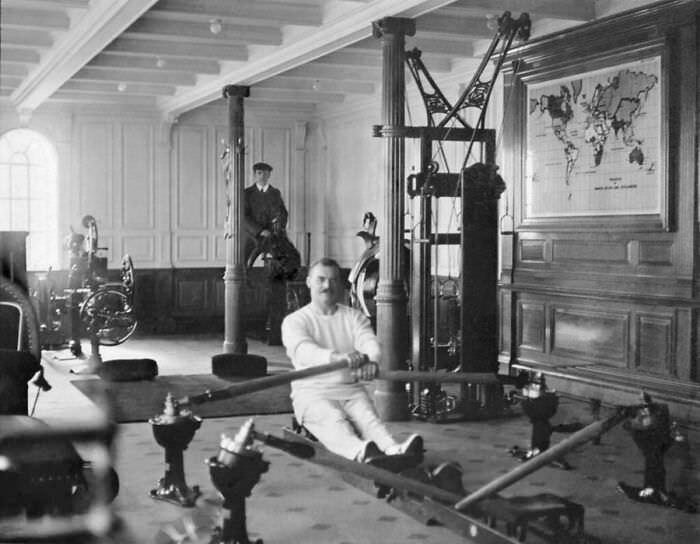
This photograph captures a man exercising on a rowing machine in the gym aboard the RMS Titanic, a luxury passenger liner that famously sank on its maiden voyage in 1912. The gym was located on the Titanic’s boat deck and featured a variety of exercise equipment, including rowing machines, weights, and stationary bicycles. The gym was a popular spot for first-class passengers to stay active during the voyage. The man in the photograph appears to be fully engaged in his workout, unaware of the tragedy that would soon befall the ship.
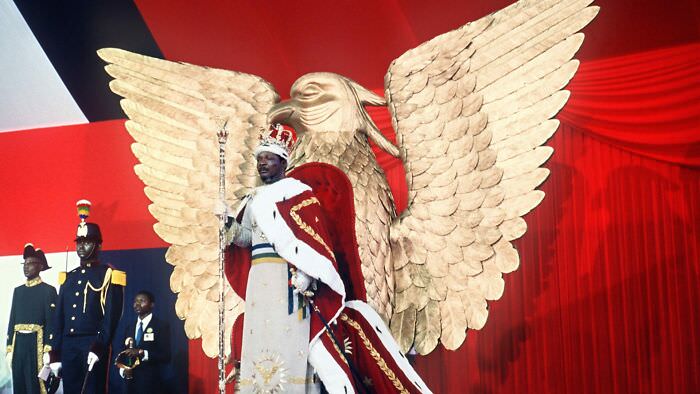
In 1977, Jean-Bédel Bokassa, the military dictator of the Central African Republic, staged a lavish coronation ceremony to crown himself Emperor Bokassa the First. The event was a display of Bokassa’s wealth and power, as he spared no expense in the ceremony, which reportedly cost a third of the country’s entire annual budget. The event was attended by many foreign dignitaries and featured ornate costumes, military parades, and a 5,000-person banquet. Bokassa even wore a crown made of solid gold and diamonds. Bokassa’s reign as emperor was short-lived, as he was overthrown in a French-led coup in 1979. The coronation remains a controversial event in the history of the Central African Republic.
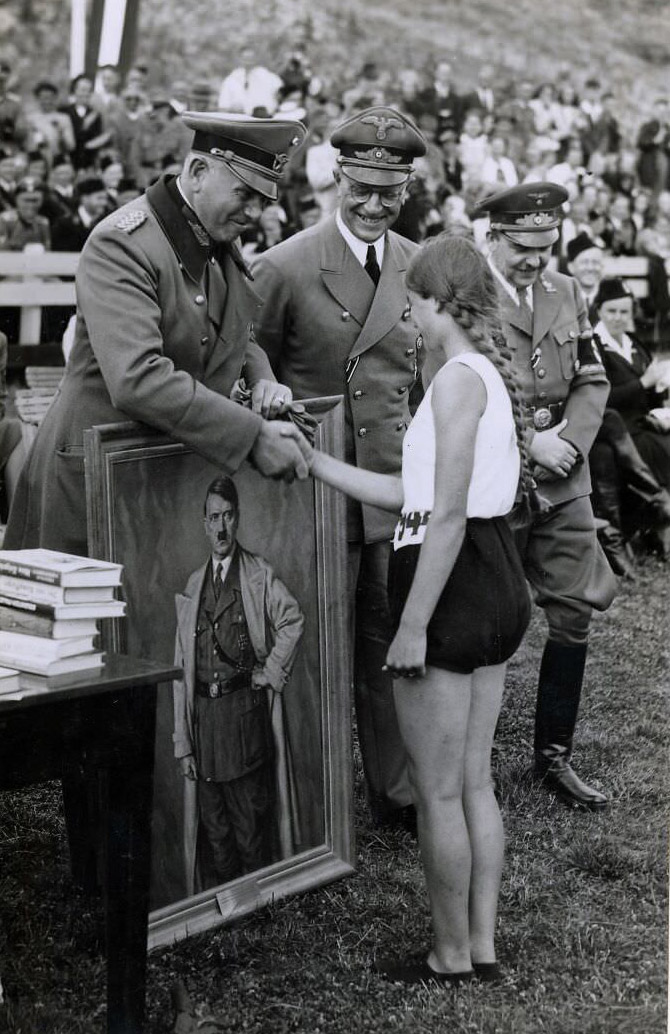
In this photograph, a Dutch athlete can be seen receiving a portrait of Adolf Hitler as a sports prize from General Otto Schumann, commander of the Ordnungspolizei. The photograph was taken in The Hague, the Netherlands, in 1941 during the German occupation of the country. During the Nazi occupation, sports events were often used as a means of propaganda to promote the idea of Aryan superiority. The awarding of a portrait of Hitler to a Dutch athlete was seen as an attempt to push Nazi ideology on the Dutch population.
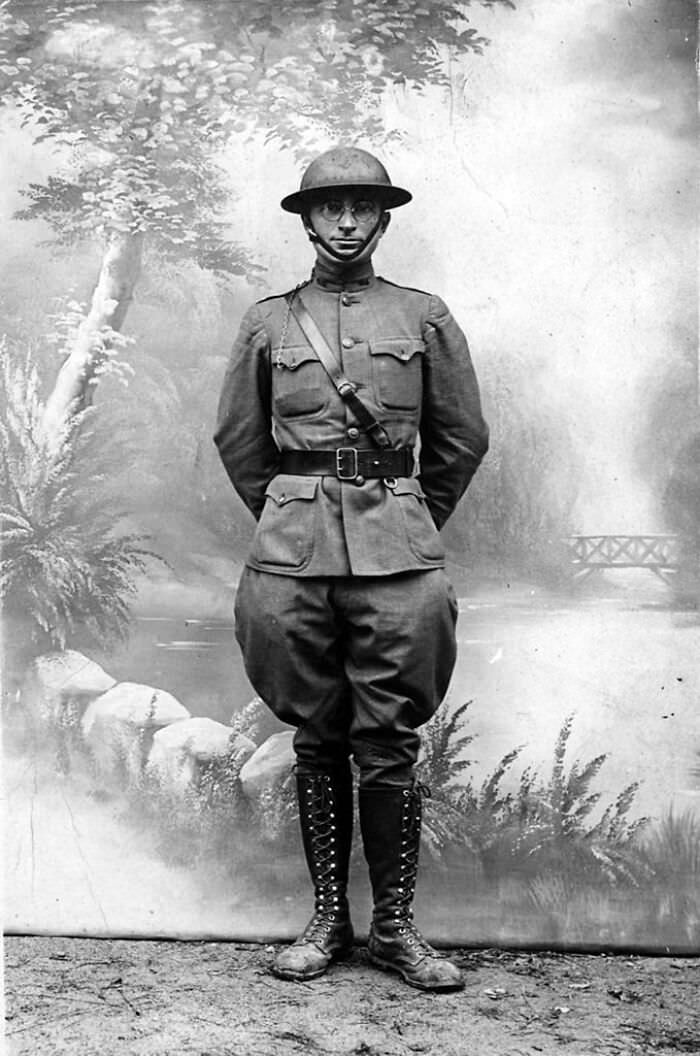
In this photograph, we see a young Harry S. Truman during his service as a captain in World War I. Truman, who would later become the 33rd President of the United States, served in France as an artillery officer during the war. Despite being initially trained as a field artillery captain, he was later transferred to a battery that used the French 75mm gun, a weapon known for its accuracy and rapid firing rate. Truman led his men through some of the deadliest battles of the war, including the Meuse-Argonne offensive, which ultimately contributed to the defeat of Germany. Truman’s experiences during the war shaped his leadership style and political philosophy in the years to come.
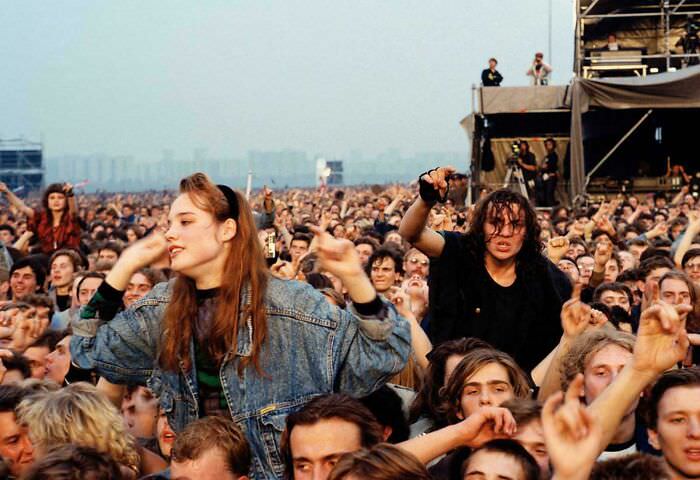
In this photograph, taken in Moscow on September 28, 1991, Soviet rock fans attend a concert to celebrate the end of an era. The Soviet Union was on the verge of collapse, and the concert was seen as a celebration of newfound freedoms and the end of Soviet censorship. The concert, featuring several of the country’s biggest rock stars, was held in an airfield in front of an estimated half-million people. The concert was organized as a gift to Russian youth for their role in resisting the August coup, which had attempted to overthrow the Soviet government. The event signaled the end of Soviet power and the beginning of a new era of openness.
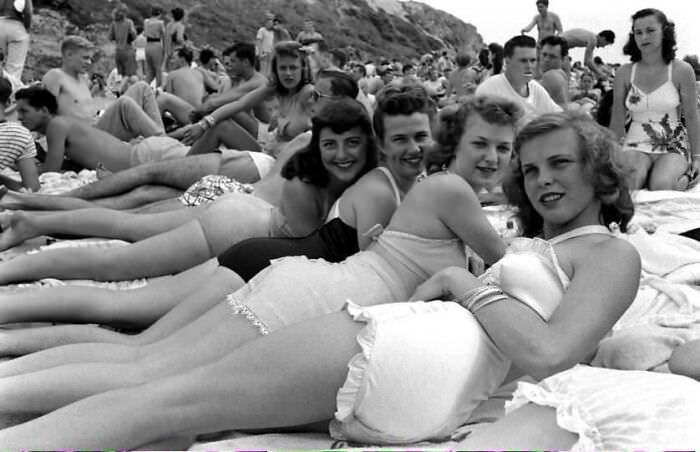
This photo captures the spirit of youthful freedom and joy during the post-war era in America. The young men and women in the photo are enjoying their spring break in Santa Monica, California in 1947. They are full of energy as they splash in the ocean and enjoy the beach. The photo represents a time of optimism in America after the hardships of World War II. The fashion and style of the young people in the photo reflect the trends of the time and give us a glimpse into the youth culture of the era.
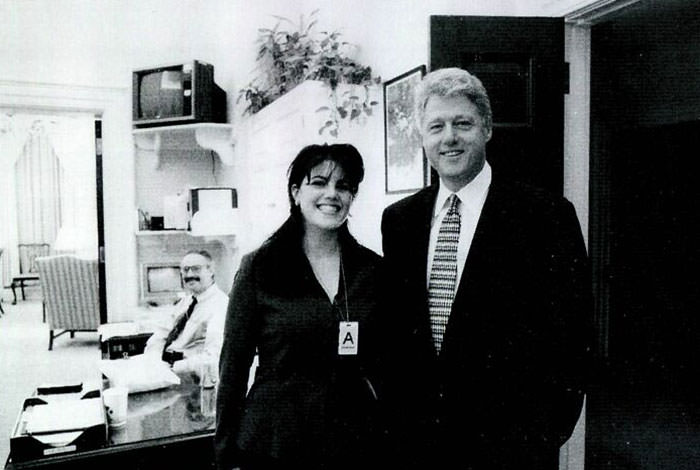
In 1998, a scandal erupted involving President Bill Clinton and White House intern Monica Lewinsky. A photograph of the two together began to circulate, fueling rumors of an affair. The allegations were eventually confirmed, and Clinton became only the second US president to be impeached. The photo shows Clinton and Lewinsky standing together in a crowded room, with Clinton’s arm around her waist and Lewinsky smiling broadly. It became a symbol of the controversy that followed, with both individuals facing public scrutiny and criticism.
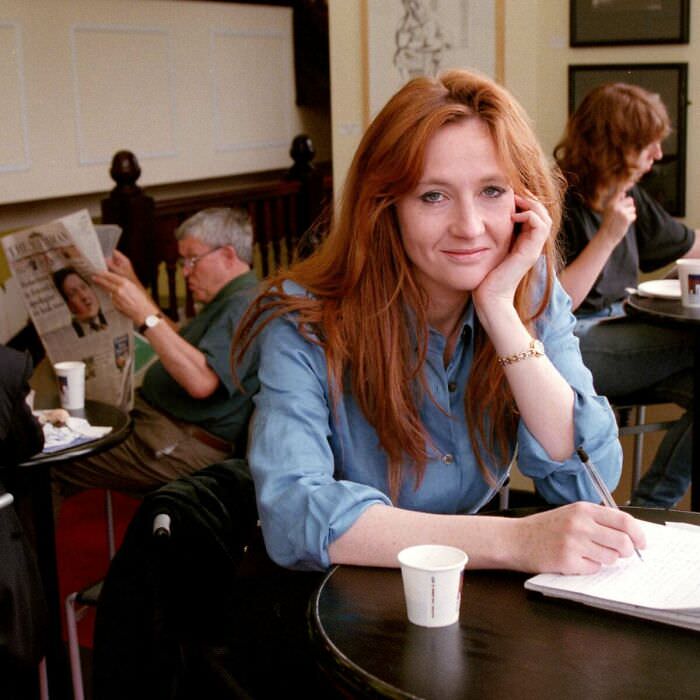
In this photograph taken in 1998, we see J.K. Rowling writing the fourth book in the Harry Potter series, “Harry Potter and the Goblet of Fire.” Rowling is seen sitting at a table in a café in Edinburgh, Scotland. The café, called The Elephant House, has become a popular tourist destination for fans of the Harry Potter series, as it is known as a place where Rowling spent many hours writing her books. The photograph captures a moment before Rowling’s life changed with the worldwide success of her work.
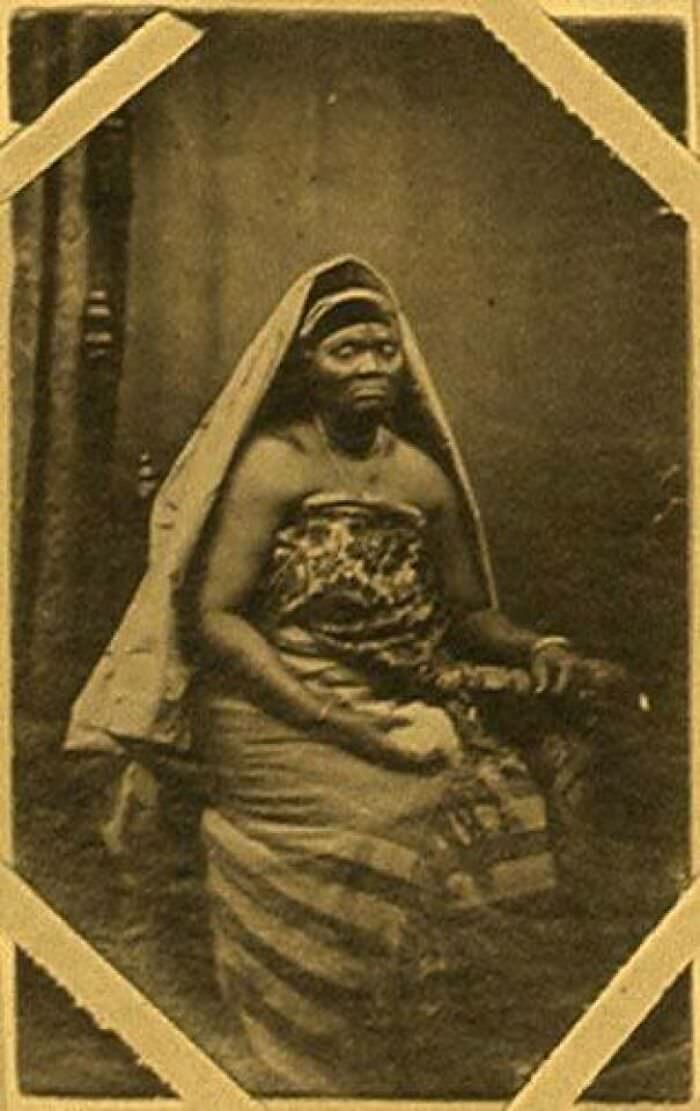
In the late 19th century, Efunroye Tinubu was a powerful female Nigerian slave trader who rose to prominence in the slave trade of West Africa. Known for her intelligence and business acumen, she became one of the wealthiest women in Lagos and sold enslaved people across the region. Despite her involvement in the slave trade, Efunroye Tinubu was also known for her philanthropy and support she provided to the Yoruba community. She helped to fund schools and hospitals and provided loans to women entrepreneurs.
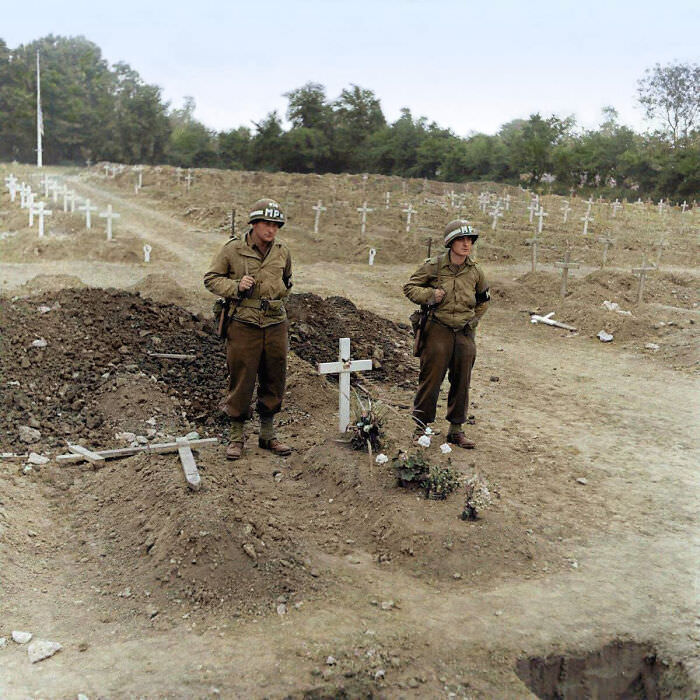
On July 12, 1944, Brigadier General Theodore Roosevelt Jr., son of former President Theodore Roosevelt, died of a heart attack in Normandy, France during World War II. His death occurred just weeks after the Allied invasion of Normandy. As a sign of respect, Roosevelt’s body was temporarily buried in Normandy, close to where American troops had landed. This photo captures the temporary gravesite, adorned with flowers and an American flag. Roosevelt was widely mourned by the American public. In January 1946, his remains were moved to their final resting place at the Normandy American Cemetery.
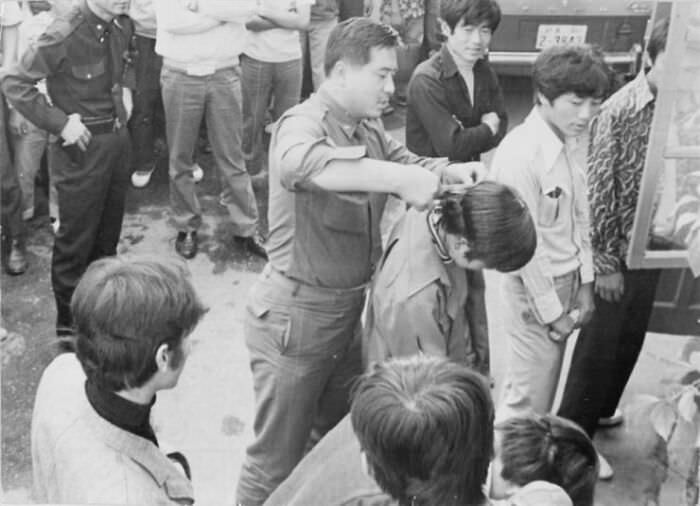
In the 1970s, the South Korean government implemented a strict crackdown on men with long hair and women wearing short skirts, deeming it a symbol of Western decadence. This photo shows a South Korean soldier forcibly cutting the hair of a young man in front of others, as a form of punishment. The crackdown was part of President Park Chung-hee’s campaign to promote traditional Korean values and culture. Many young people resisted the campaign, seeing it as an infringement on their freedom of expression. The crackdown continued until the late 1970s and remains a controversial part of South Korean history.
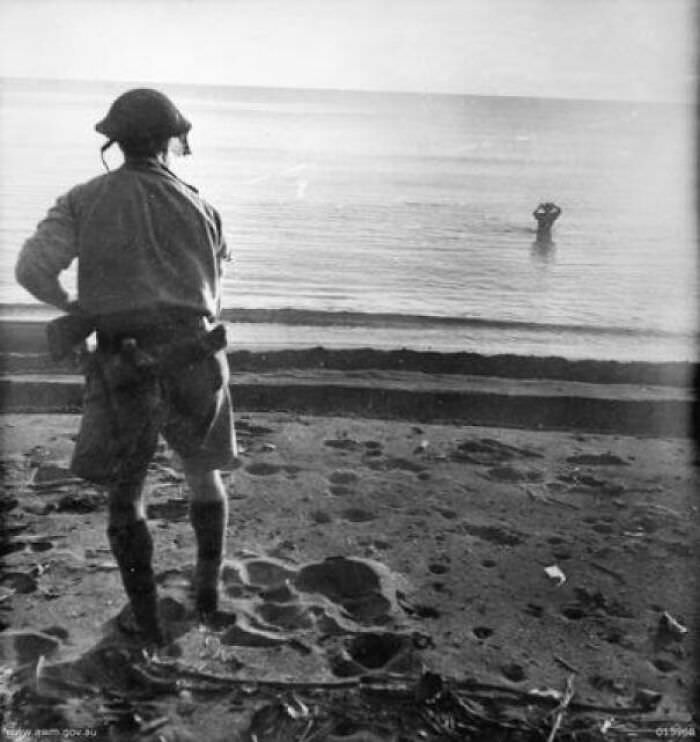
In this photograph taken during World War II, a Japanese soldier can be seen wading into the sea with a grenade held against his head. The soldier was at Cape Endaiadere in New Guinea and was surrounded by Australian troops who called on him to surrender. The soldier chose to die rather than be captured and pulled the pin on the grenade. The photographer captured this moment, showing the soldier’s determination in the face of certain death.
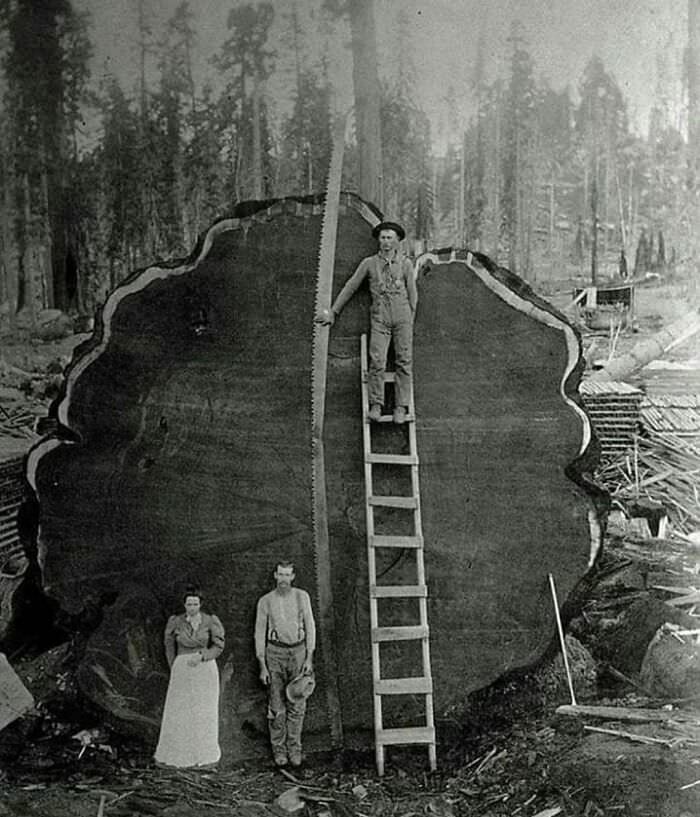
In 1892, a logging family posed for a photograph with a massive redwood tree in California that they had just felled. The tree was estimated to be over 1,300 years old, and its trunk was so wide that it took the entire family, standing with outstretched arms, to surround it. The logging of old-growth redwoods in California had become a major industry by the late 1800s, with trees being cut down at an alarming rate for use in construction and other industries. This photograph captures both the everyday reality of the logging family’s work and the destruction of an ancient natural landmark.
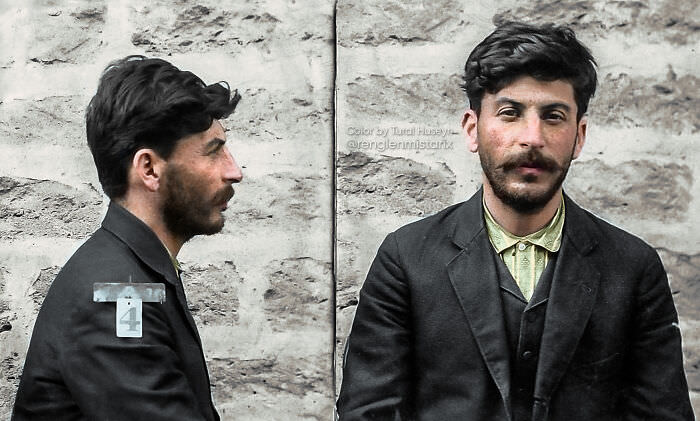
In March 1910, Joseph Stalin was imprisoned in the Bailov Prison in Baku, Azerbaijan for revolutionary activity. This photo captures Stalin sitting in his cell with fellow prisoners visible in the background. Stalin had been exiled to Siberia twice before this imprisonment and was known for his involvement in the Bolshevik movement. It was during his time in prison that Stalin began to emerge as a leader, organizing prisoners and advocating for their rights. His time in prison helped to solidify his political beliefs and tactics, which he would later employ during his rise to power as the leader of the Soviet Union.
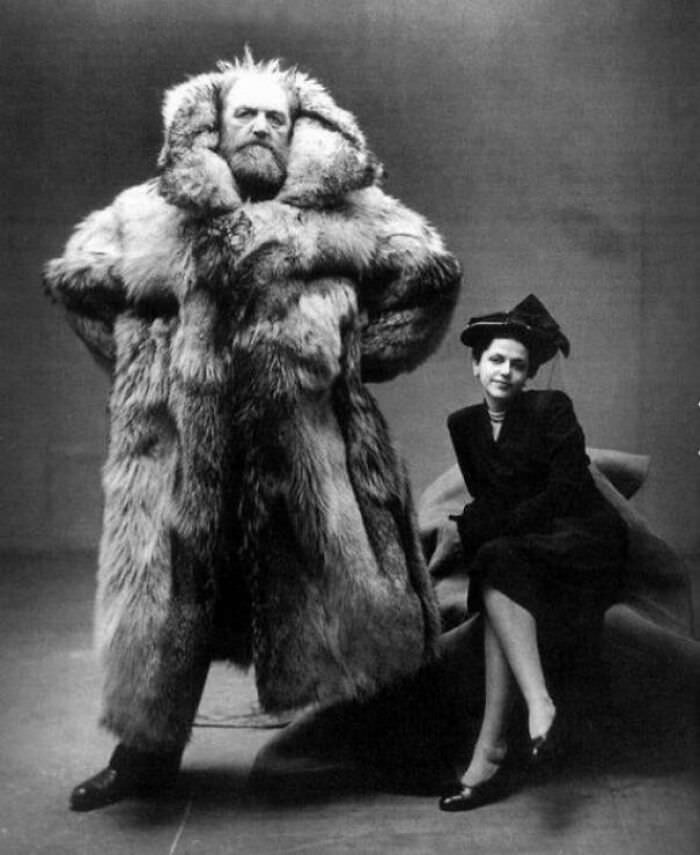
Peter Freuchen, a Danish explorer and author, made several expeditions to the Arctic. In 1947, a photograph was taken of Freuchen standing next to his third wife, Dagmar Freuchen-Gale, while wearing a polar bear coat made from a bear he had killed himself. The coat was made from the skin of a polar bear that he had hunted while on one of his expeditions. Freuchen’s polar bear coat became a symbol of his life as an Arctic explorer.
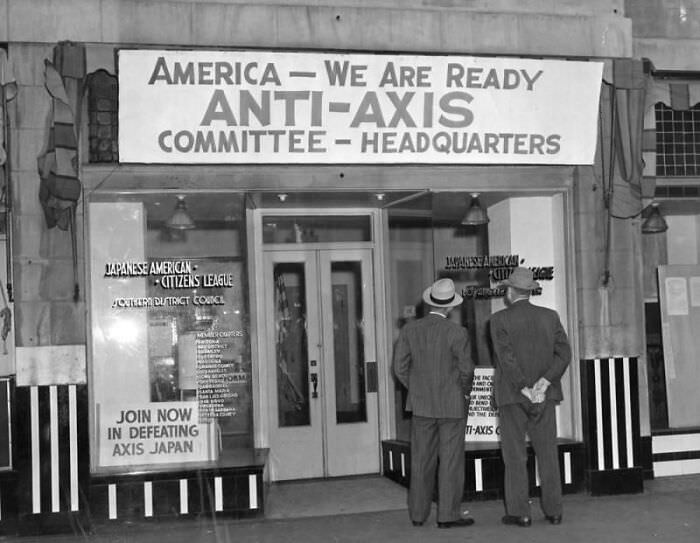
Following the attack on Pearl Harbor, Japanese Americans in the United States faced severe discrimination and racism due to their ancestry. In response, the Japanese American Citizens League opened the Anti-Axis Committee Office on December 14, 1941, just one week after the attack. The office was created as part of a campaign to demonstrate the loyalty of American-born Japanese citizens to the United States and to combat anti-Japanese sentiment. The committee organized volunteer efforts and fundraising drives to support the American war effort and advocated for the rights of Japanese Americans during a time of intense prejudice and discrimination.
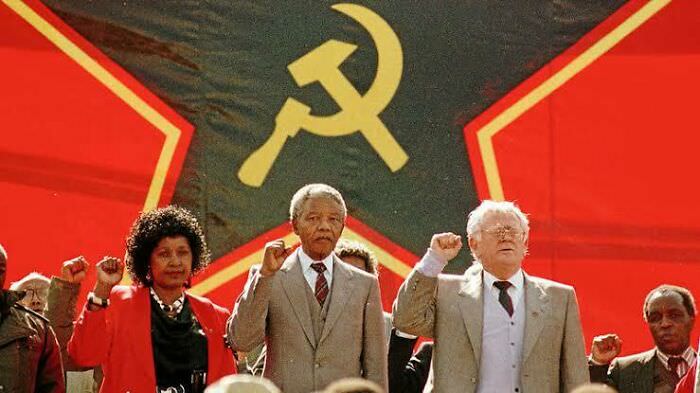
This photograph was taken in Soweto in 1990, just months after Nelson Mandela was released from prison after 27 years. In the photograph, Mandela can be seen addressing a crowd at a South African Communist Party rally. This was a significant moment, as the Communist Party had been banned in South Africa for many years, and Mandela had been labeled a terrorist by the apartheid government. Mandela’s appearance at the rally was a symbol of his commitment to social justice and his willingness to work with all political groups to bring about a new, democratic South Africa. Mandela was a member of the African National Congress, but he recognized the importance of alliances with other groups in the fight against apartheid.
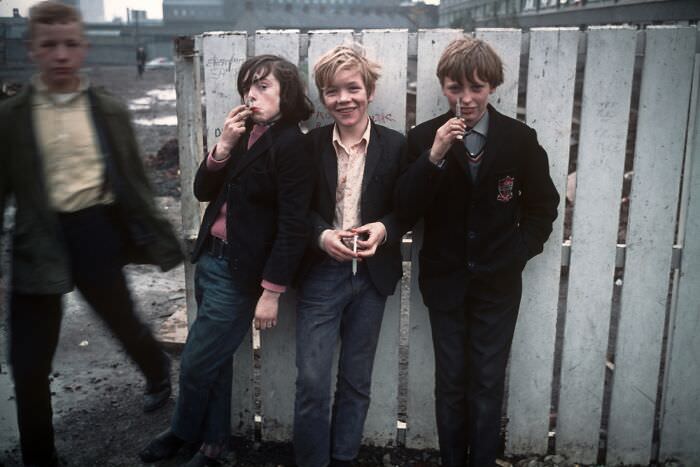
In the 1970s, it was not uncommon for British schoolboys to play with discarded syringes, as they were treated as toy water pistols. The photograph captures a group of boys holding up the syringes, unaware of the potential danger they posed. Syringes used by drug addicts, who would often share needles, were a common sight on the streets of the UK during the 1970s. The reuse of needles and lack of hygiene associated with drug use led to the spread of diseases such as HIV and hepatitis C. The photograph serves as a stark reminder of the dangers of playing with items that appear harmless but could have deadly consequences.
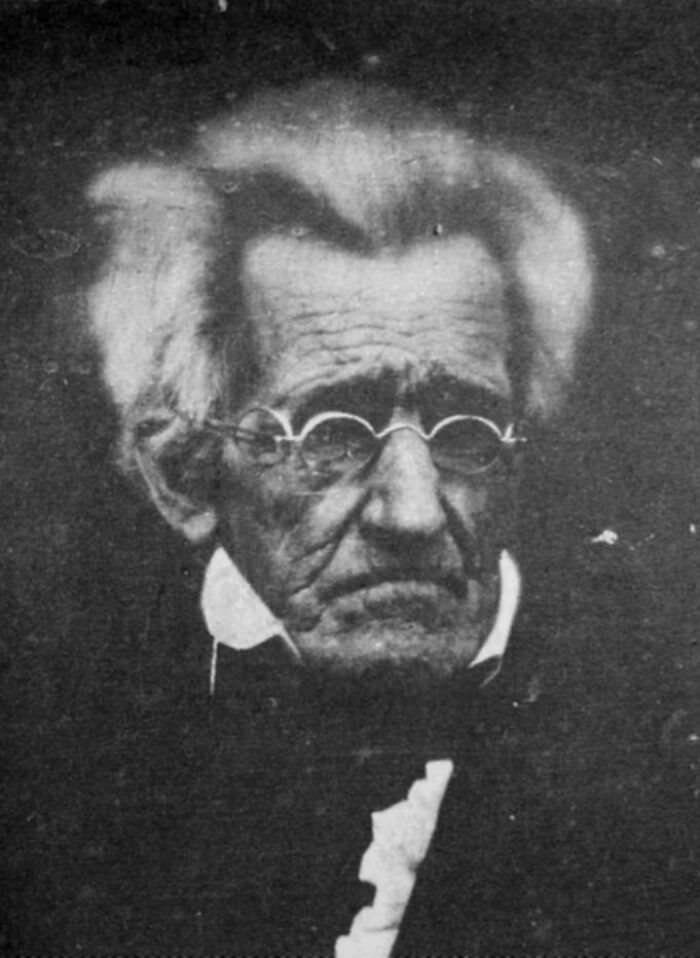
This photograph, taken in 1845, captures one of the last glimpses of former President Andrew Jackson, who died later that year at the age of 78. Jackson served as the seventh President of the United States from 1829 to 1837. He was known for his populist views, his opposition to a powerful central bank, and his Indian removal policies, which resulted in the forced relocation of Native American tribes from their ancestral lands in the southeastern United States. Photography was still a new technology in the mid-1800s, making this image a rare artifact. The image shows Jackson seated in a chair, wearing a dark suit and holding a cane, with a stern expression on his face.
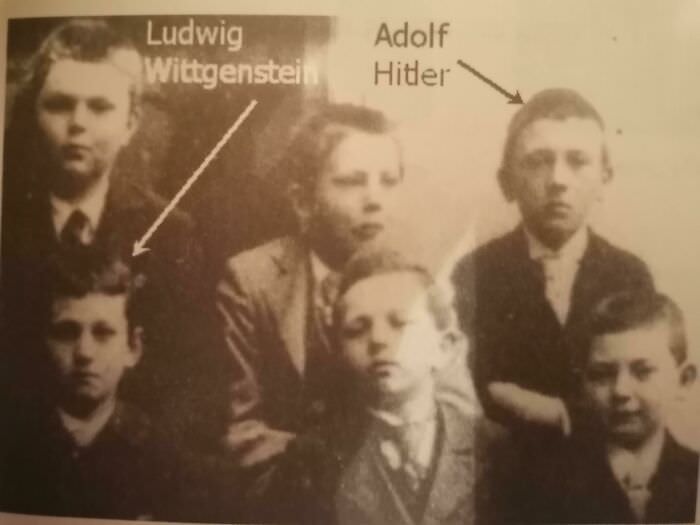
In 1903, a teenage Adolf Hitler and philosopher Ludwig Wittgenstein attended Realschule in Linz, Austria. Although they were both enrolled in the same school, their paths crossed only briefly. A photograph from that year shows a young Hitler and Wittgenstein standing near each other, with Wittgenstein taller than the future dictator. Wittgenstein, one of the most influential philosophers of the 20th century, later renounced his Austrian citizenship and fought for the British during World War I. Hitler went on to become one of the most infamous figures in history, responsible for the deaths of millions during World War II.
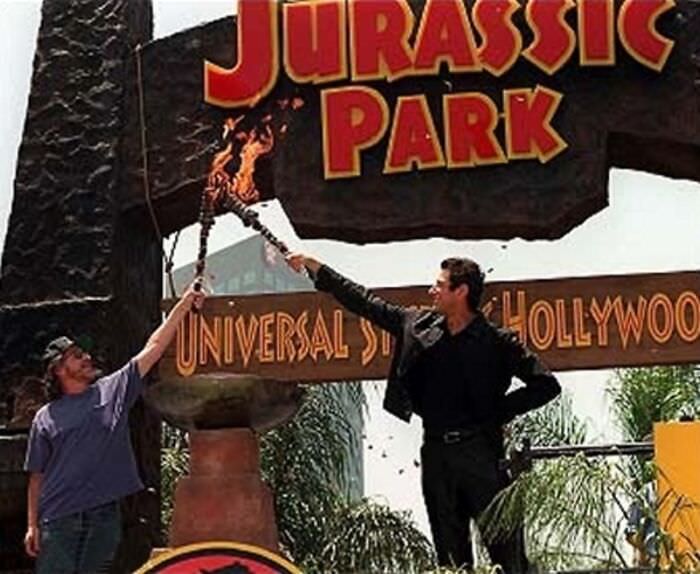
On June 21, 1996, Steven Spielberg and Jeff Goldblum attended the grand opening of Jurassic Park: The Ride at Universal Studios Hollywood. The ride was based on Spielberg’s 1993 film Jurassic Park and featured a water ride through a world of dinosaurs. Spielberg and Goldblum were on hand to light the ceremonial torches and officially open the ride. The attraction quickly became one of the most popular at Universal Studios.
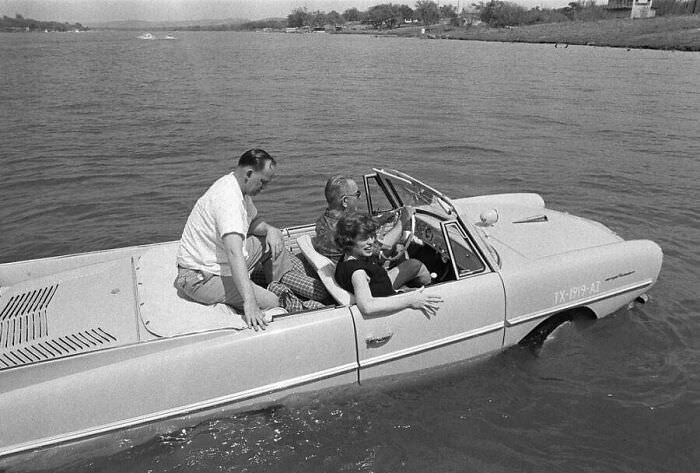
In 1965, President Lyndon B. Johnson made headlines for driving his amphibious car, known as the Amphicar, on the lake at his Texas ranch. The Amphicar was designed to be driven on land as well as water, and Johnson used it to entertain guests. Johnson’s fondness for the Amphicar was well-known, and he often enjoyed giving rides to guests on the lake.
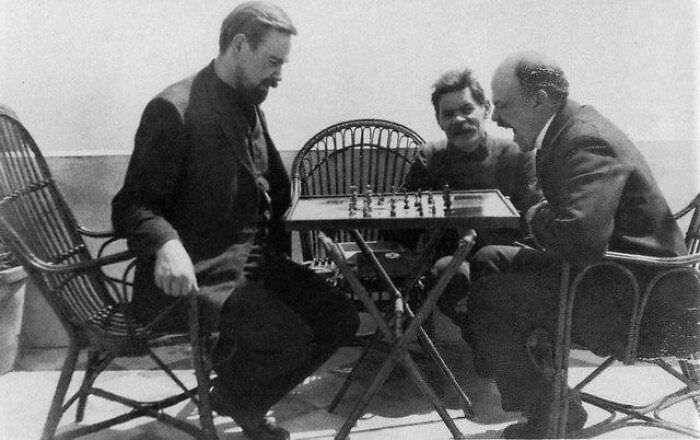
In 1908, Vladimir Lenin visited Maxim Gorky on the Italian island of Capri. During his stay, Lenin was known to engage in political discussions and intellectual debates with his comrades, including Alexander Bogdanov. In a rare moment of leisure, Lenin and Bogdanov played a game of chess. The image captures a rare glimpse of the revolutionary leader in a relaxed setting, away from the intense political struggles that dominated his life.
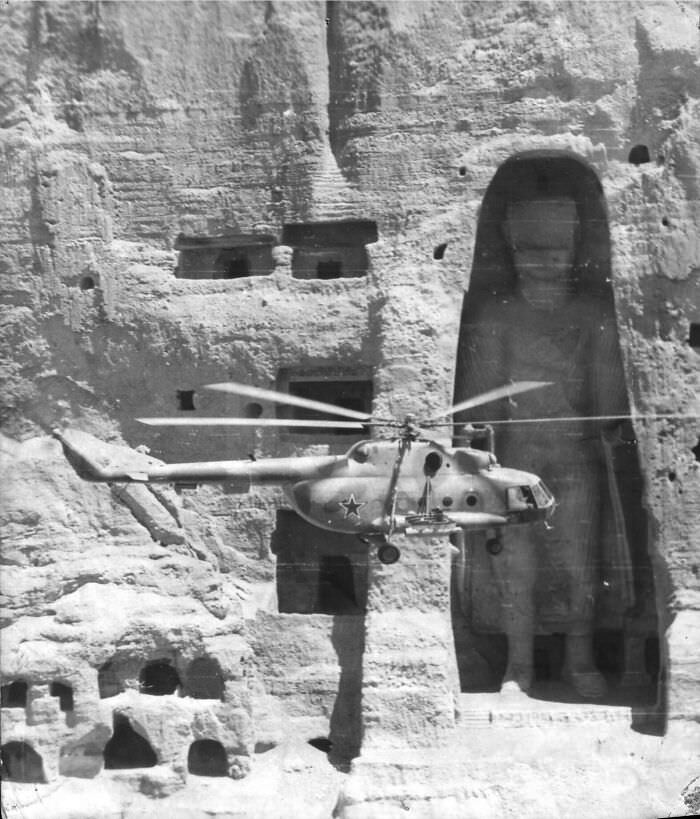
In 1980, a Soviet MI-8 helicopter flew past one of the two iconic Buddha statues in Bamiyan, Afghanistan. The statues, carved into the cliff face in the 6th century, were a testament to the country’s rich cultural history. Their existence was threatened during the Soviet-Afghan War, when the Soviets used the site as a military base. The helicopter in the photo was part of the Soviet military presence in the area, flying past the Buddha as a reminder of the conflict between the Soviet Union and Afghanistan. In 2001, the Taliban destroyed both Buddhas, sparking international outrage.
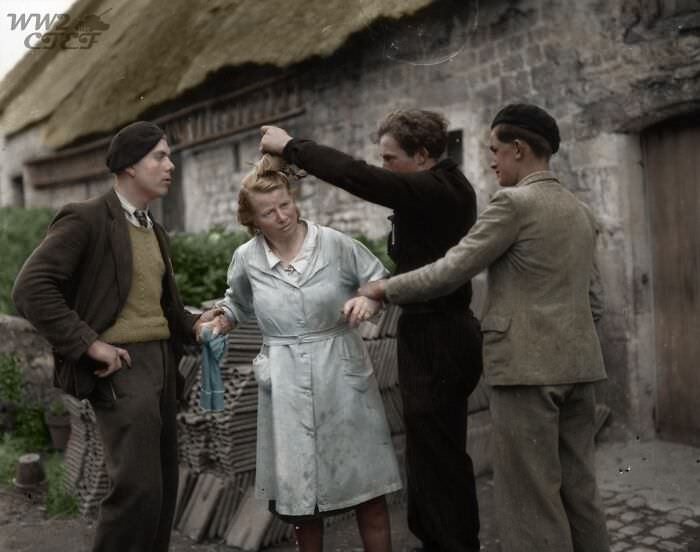
In this image captured in 1945, two French men are restraining a woman accused of collaborating with the Germans during the occupation. Another man is cutting off her hair in a public shaming ritual that was common at the time. This practice, known as “tondues” or “the shorn ones,” was used to punish and publicly humiliate women who were suspected of having relationships with German soldiers or helping the enemy. The act of cutting off their hair was a symbol of their disgrace and was meant to serve as a warning to others. The practice was controversial, and many women were falsely accused or became victims of vigilante justice.
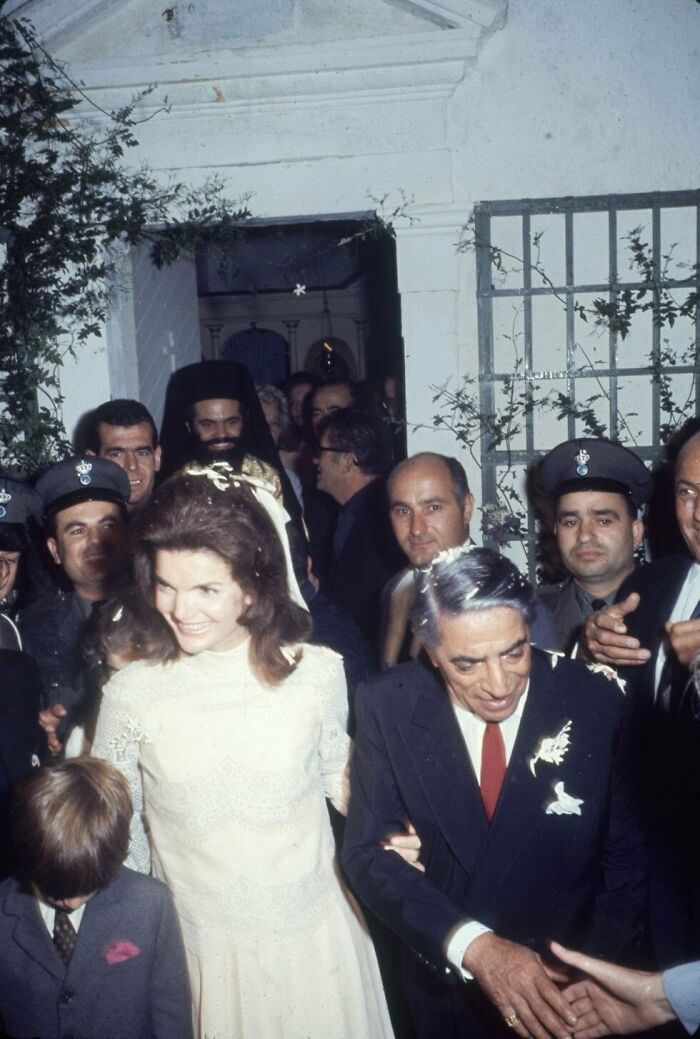
On October 20, 1968, former First Lady Jacqueline Kennedy married Greek shipping magnate Aristotle Onassis on the island of Skorpios in Greece. The wedding was a private affair, attended by only family and close friends. Jackie, still mourning the loss of her husband, President John F. Kennedy, found comfort in Onassis, who was known for his wealth and extravagant lifestyle. The marriage caused controversy and criticism, with some accusing Jackie of abandoning the Kennedy legacy and others accusing Onassis of using her for social status. The couple remained together until Onassis’s death in 1975.
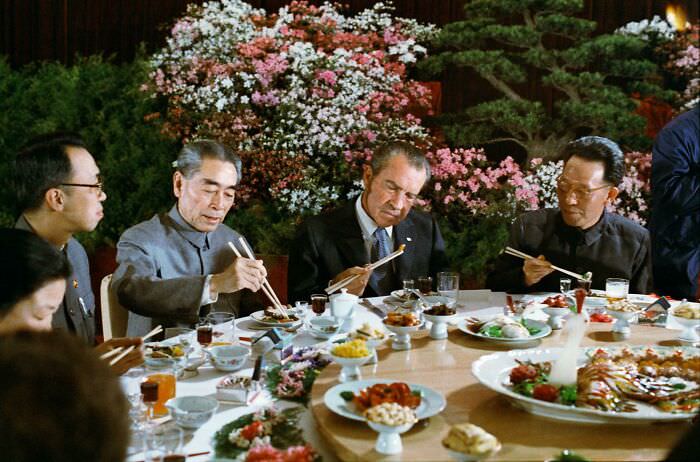
In February 1972, President Richard Nixon made a historic trip to Beijing, becoming the first US president to visit China since the country’s Communist revolution in 1949. The visit marked a major shift in US foreign policy and the beginning of a new era in US-China relations. While in China, Nixon met with Chinese leaders, including Mao Zedong and Premier Zhou Enlai, and toured the country. This photo shows Nixon dining with Chinese leaders, including Zhou Enlai, at the Great Hall of the People in Beijing. The visit paved the way for future diplomatic and economic cooperation between the two countries.
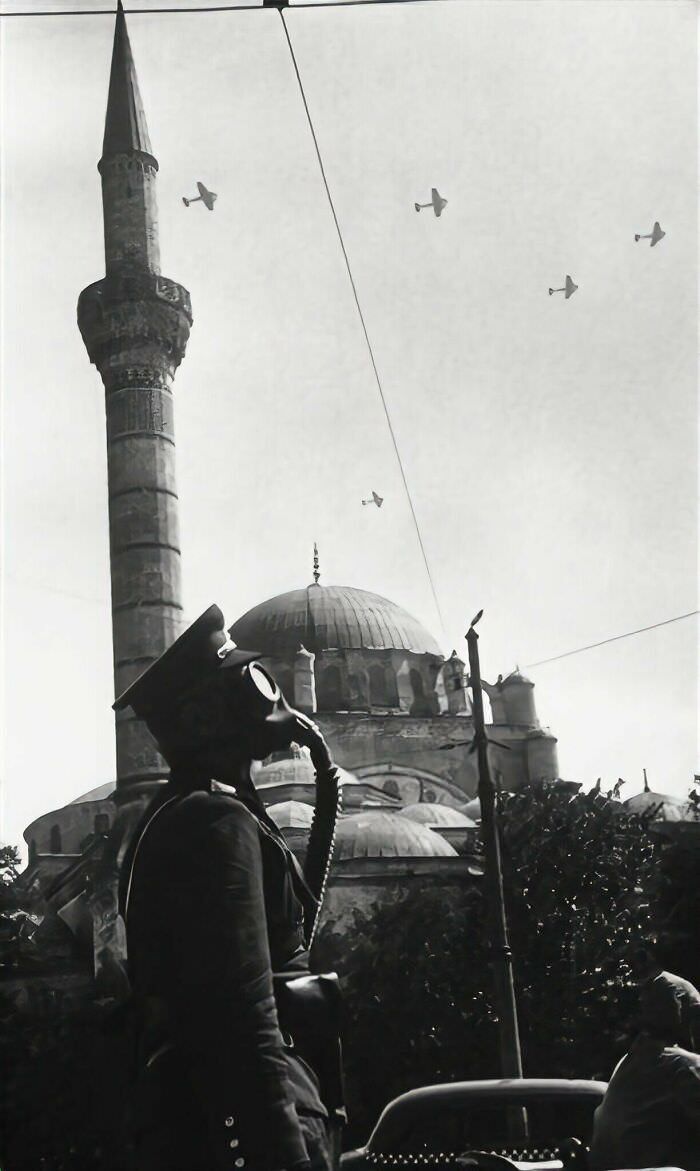
This photograph, taken in 1939, captures Turkish soldiers participating in a military exercise in Istanbul to prepare for the threat of chemical attack. The soldiers are seen wearing gas masks and protective gear as they move through the city streets. In the foreground, a group of soldiers are marching forward while others stand at attention, rifles at the ready. This image reflects the heightened tensions and fears of chemical warfare during the buildup to World War II, as countries around the world prepared for potential attacks.