Hey There! Before You Go. 😧
Get the best vintage content straight into your inbox!

Don't worry, we don't spam

The Spruce Goose: Hughes H-4 Hercules – The Largest Flying Boat Ever Built

In the middle of World War II, the United States faced a deadly problem in the Atlantic Ocean. German U-boats were sinking Allied supply ships faster than they could be replaced. The answer, at least in theory, was to move troops and cargo through the air, over the water, and completely beyond the reach of submarines. That idea led to one of the most ambitious aircraft ever attempted — the Hughes H-4 Hercules, better known as the Spruce Goose.

The project began as a partnership between shipbuilder Henry Kaiser and aviation pioneer Howard Hughes. The U.S. government backed the concept of a massive flying boat that could carry troops and heavy equipment across the Atlantic without risking submarine attack. Kaiser later withdrew from the project, but Hughes pressed on, taking full control of the design and construction. The aircraft was planned to carry 750 fully equipped soldiers or two Sherman tanks in a single load — numbers that made it a true strategic transport in concept, not just in name.
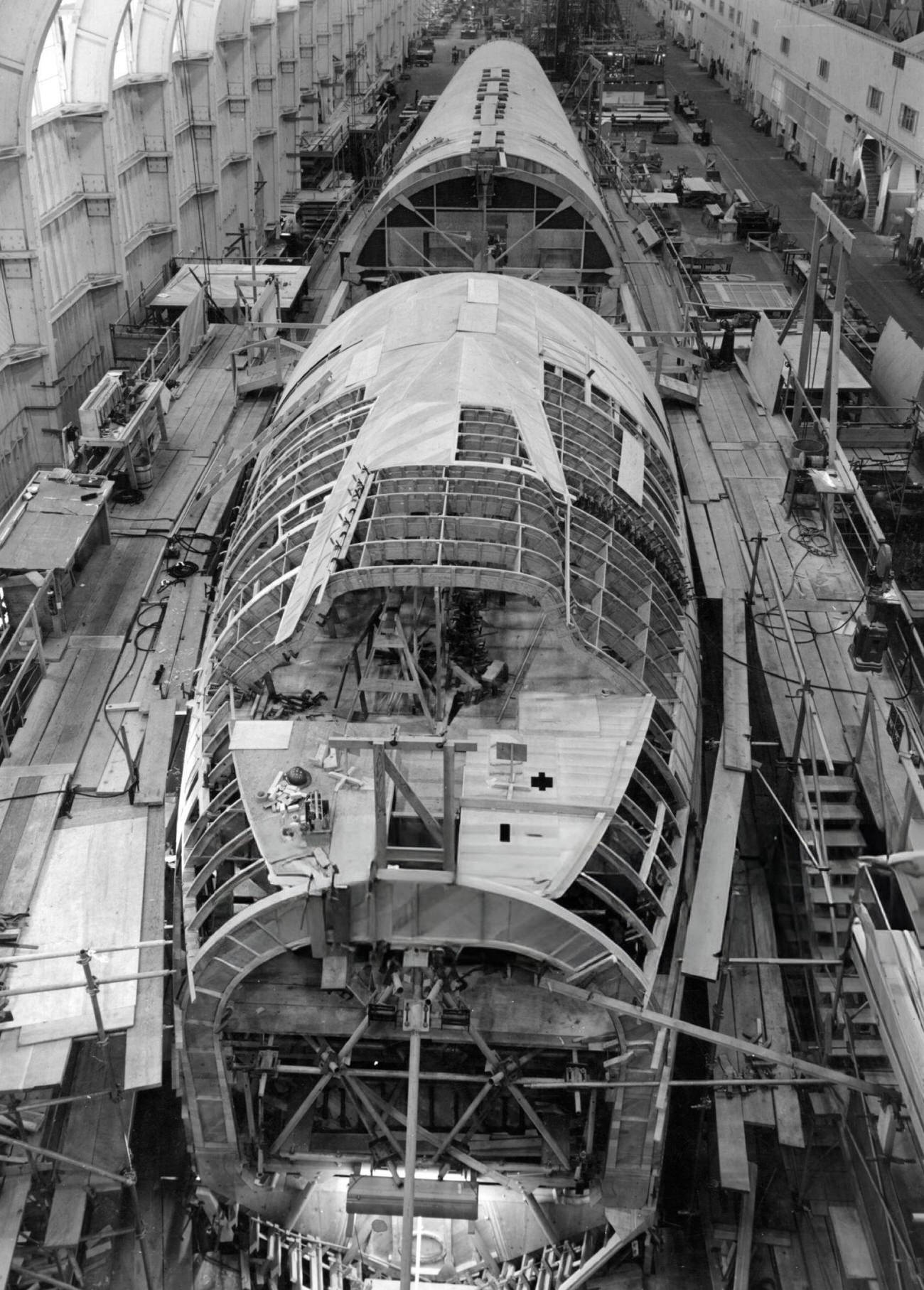
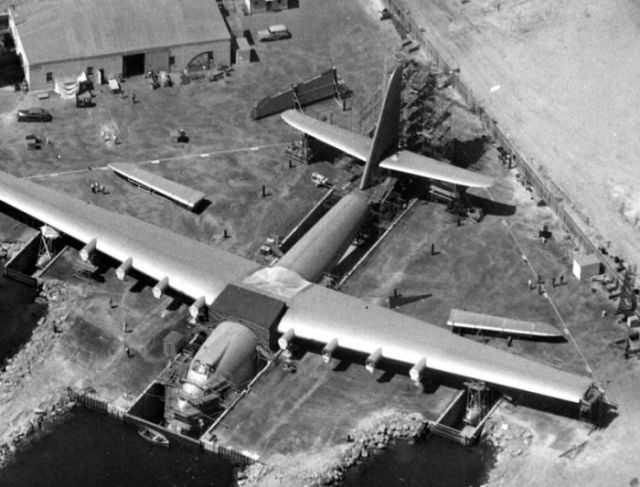
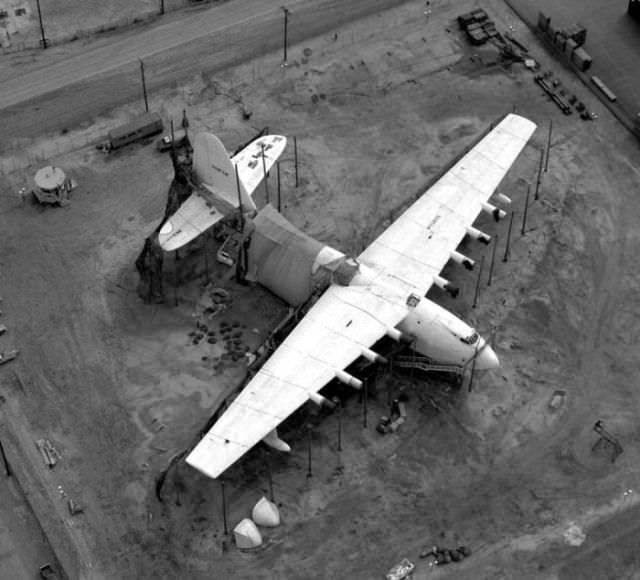
The Hughes H-4 Hercules under construction, 1945.

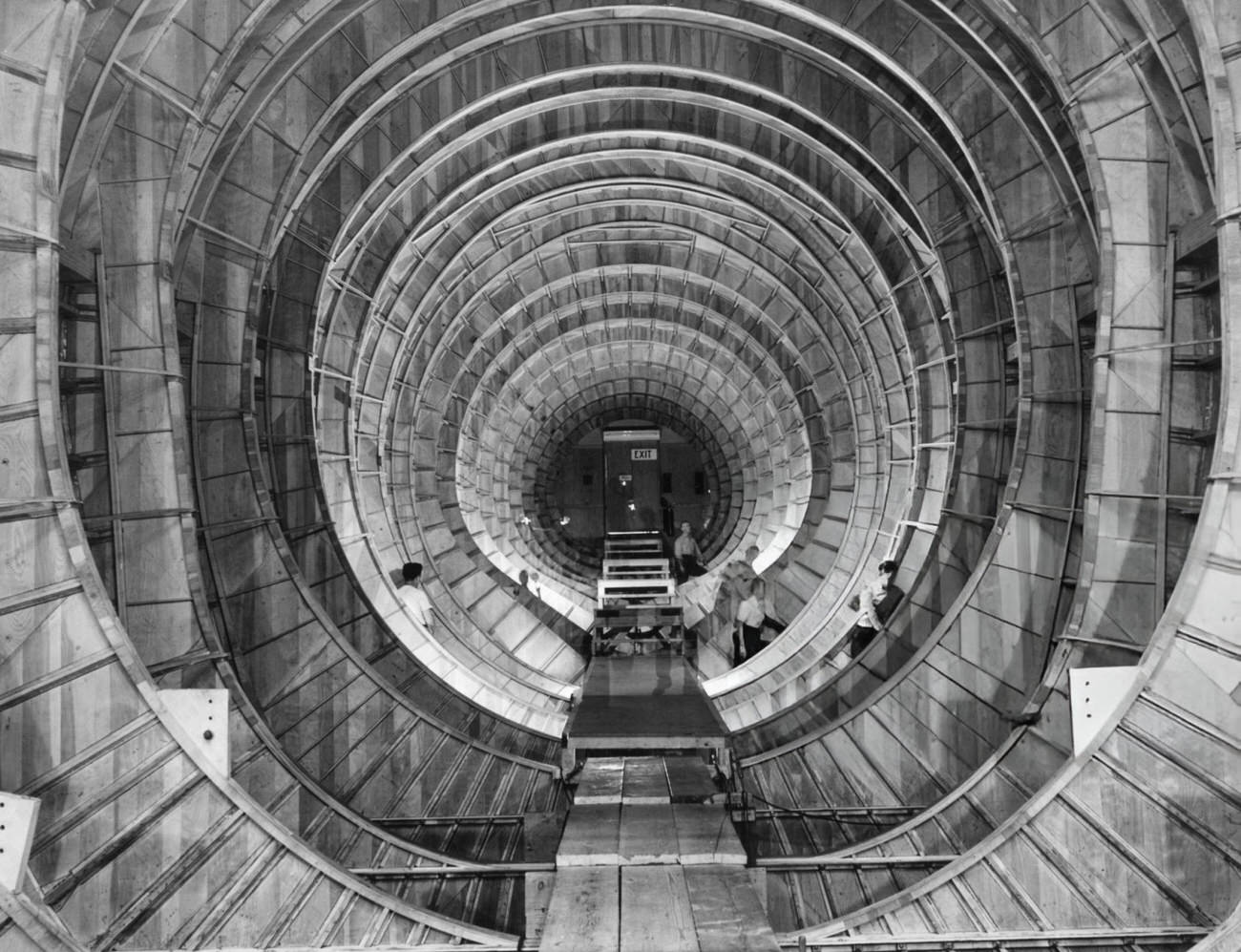
Wartime restrictions on aluminum forced Hughes and his team to find another path. The government had reserved that metal for fighters, bombers, and other combat aircraft. So the H-4 was built almost entirely from wood — specifically, laminated birch sheets bonded together with resin using a technique called Duramold. The process stacked thin layers of wood and pressed them into curved shapes, producing a material that was both strong and surprisingly light. Despite the nickname “Spruce Goose,” the aircraft contained almost no spruce at all.
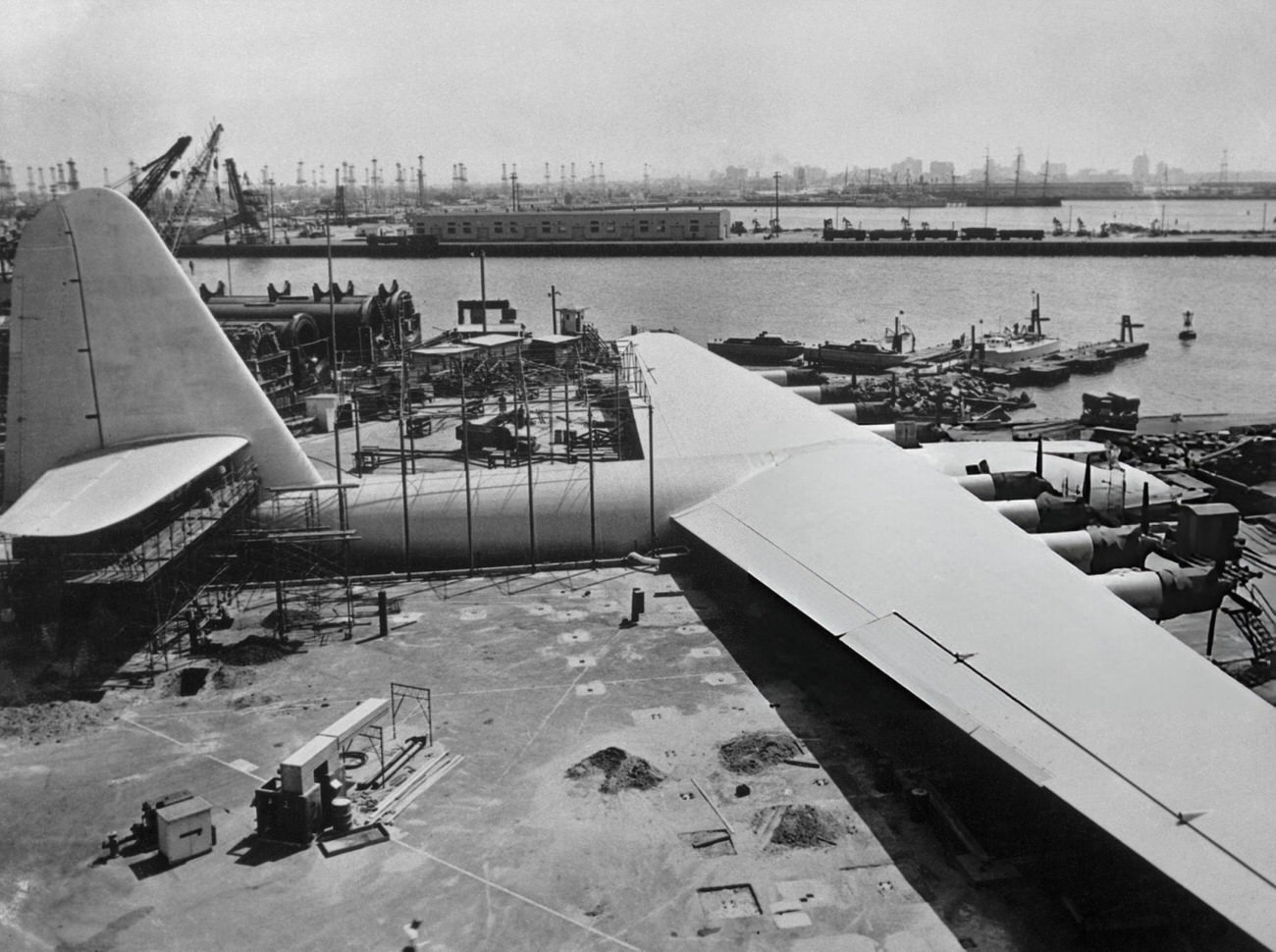
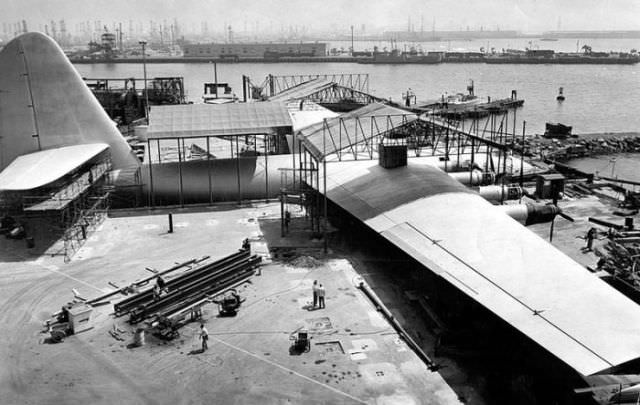
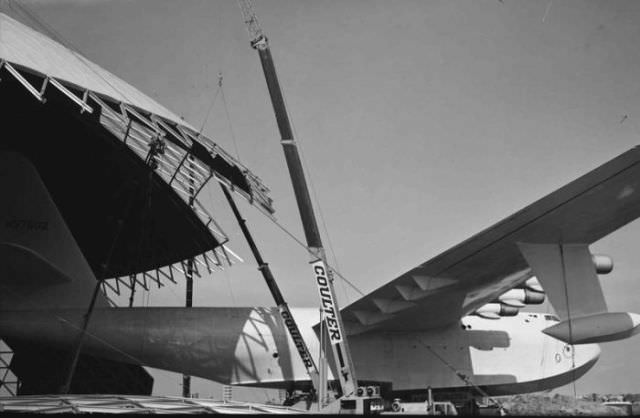
The Spruce Goose nearing completion in Culver City, California, 1945.
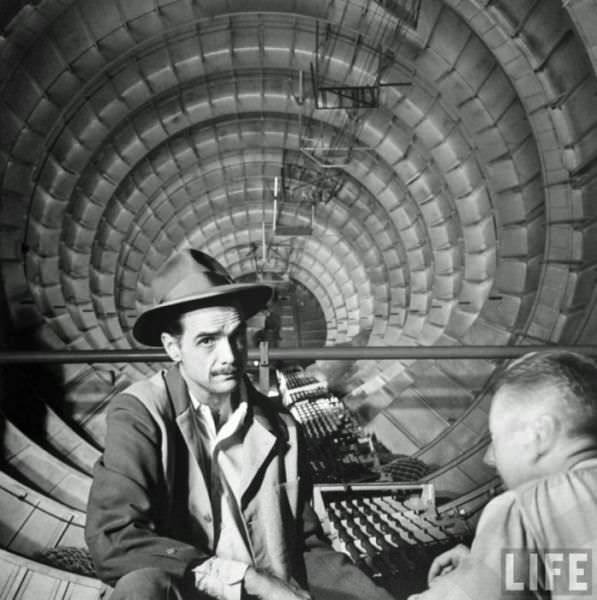
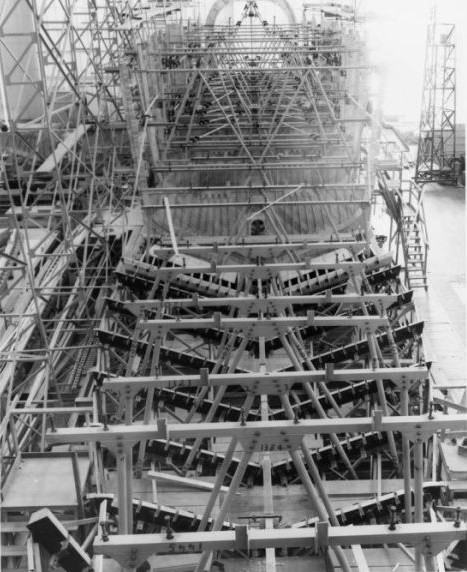
The incomplete hull of a Hughes H-4 Hercules, 1945.

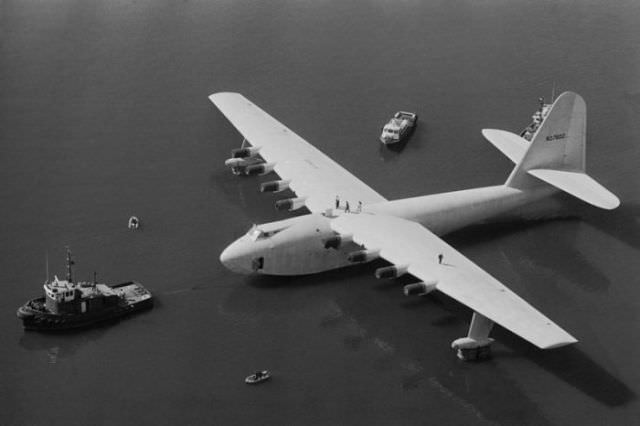
The scale of the H-4 was unlike anything built before it. Its wingspan measured 320 feet — 97.5 meters — a record that still stands today as the largest wingspan of any aircraft ever constructed. For comparison, a modern Boeing 747 spans about 211 feet. The H-4’s fuselage ran 218 feet 8 inches long and stood 24 feet tall inside. Eight Pratt & Whitney R-4360 Wasp Major radial engines powered the aircraft, each one packing 28 cylinders and producing 3,000 horsepower. Together, they delivered a combined output of 24,000 horsepower.
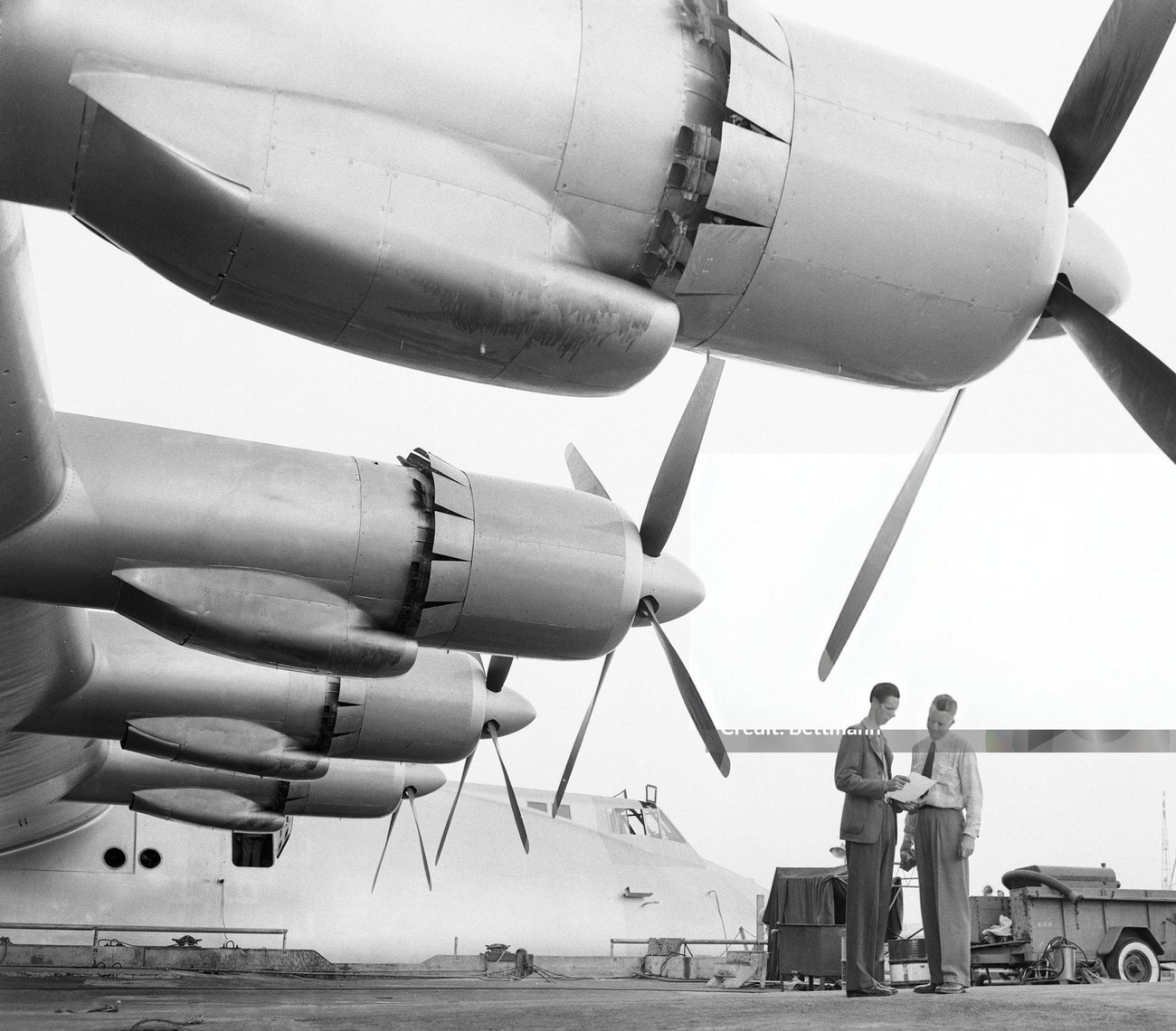
Two men dwarfed by the Spruce Goose's wing engines, 1947.
Two men dwarfed by the Spruce Goose’s wing engines, 1947.

Construction took place at Hughes Aircraft Company’s facilities in Culver City, California. The project ran into repeated delays and cost far more than originally projected. The sheer complexity of working with wood at this scale presented engineering challenges that had no existing playbook. Keeping the wooden structure rigid and stable across a 320-foot wingspan required entirely new solutions. The war ended in 1945 before the aircraft was finished, removing the military urgency that had driven the program in the first place. Hughes, however, refused to stop.
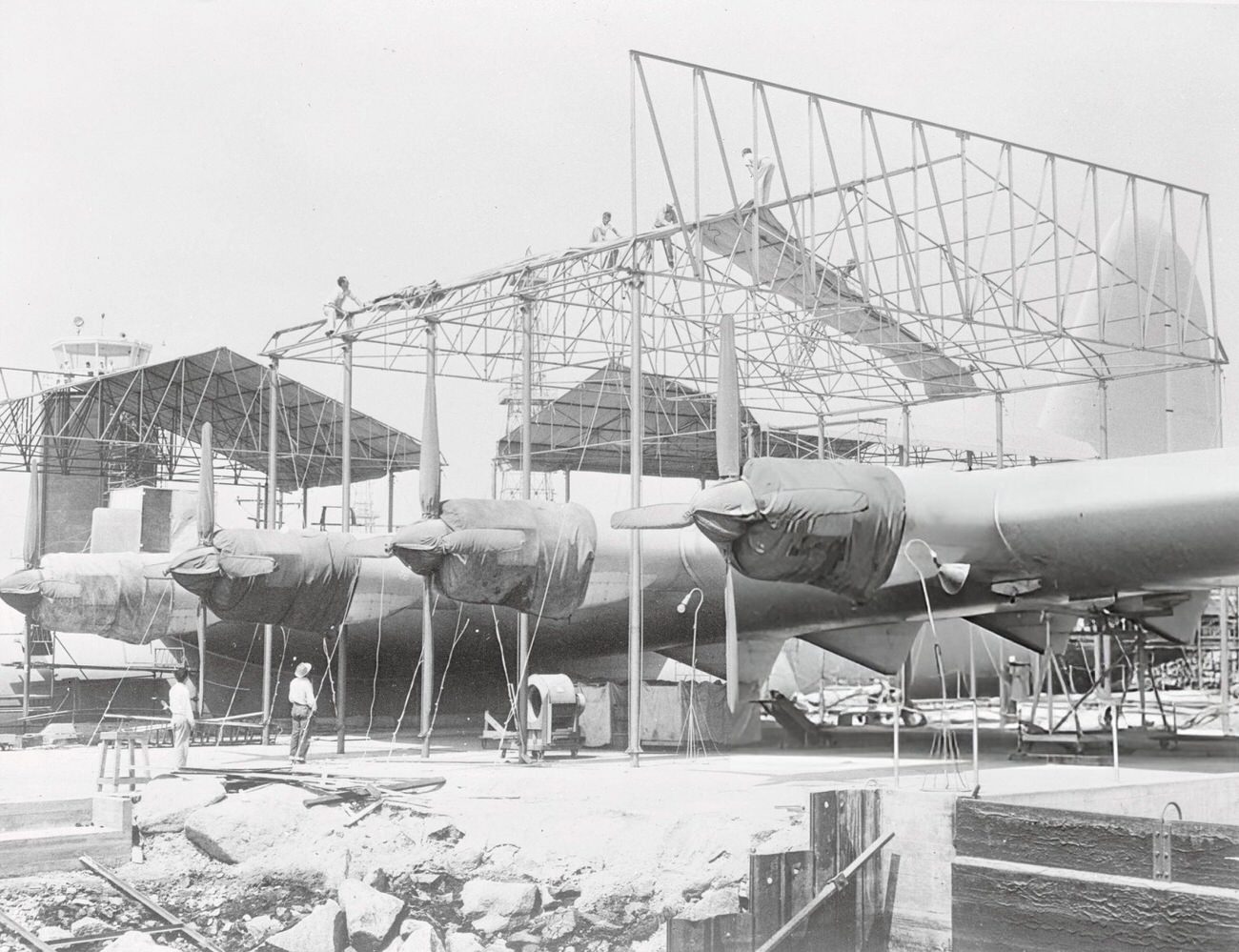
Workmen making covers for Howard Hughes' Spruce Goose, 1940s.
Workmen making covers for Howard Hughes’ Spruce Goose, 1940s.

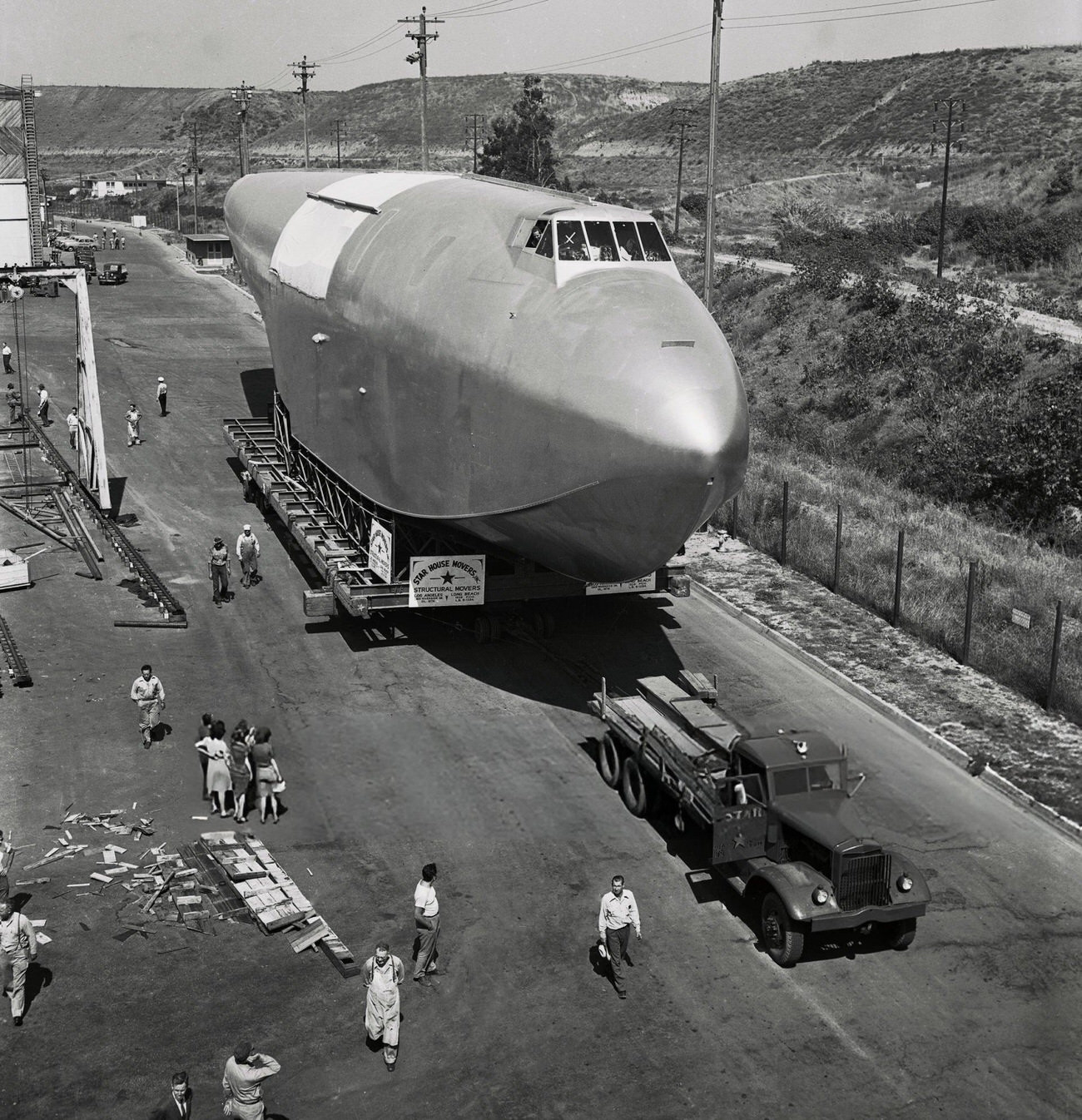
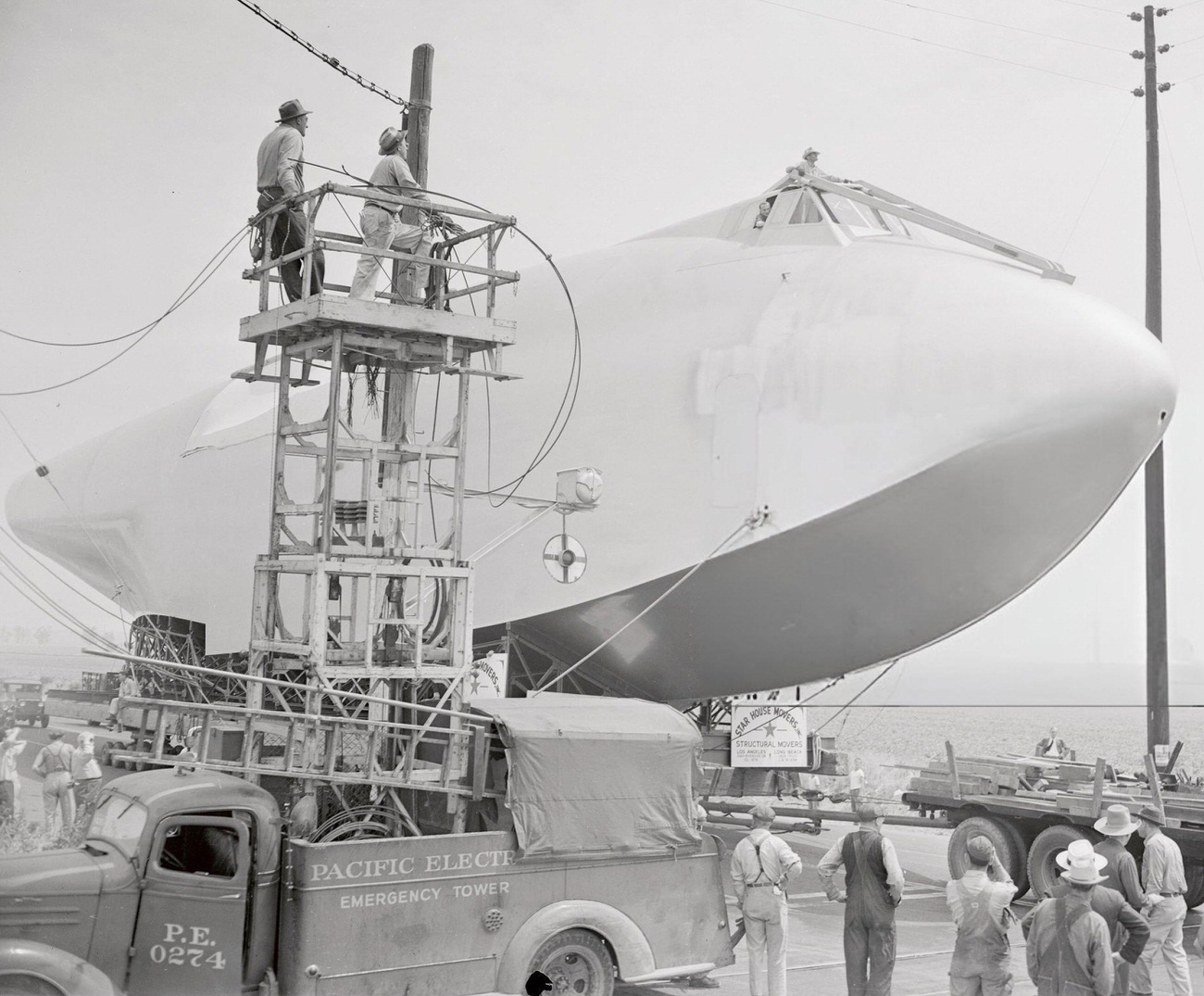
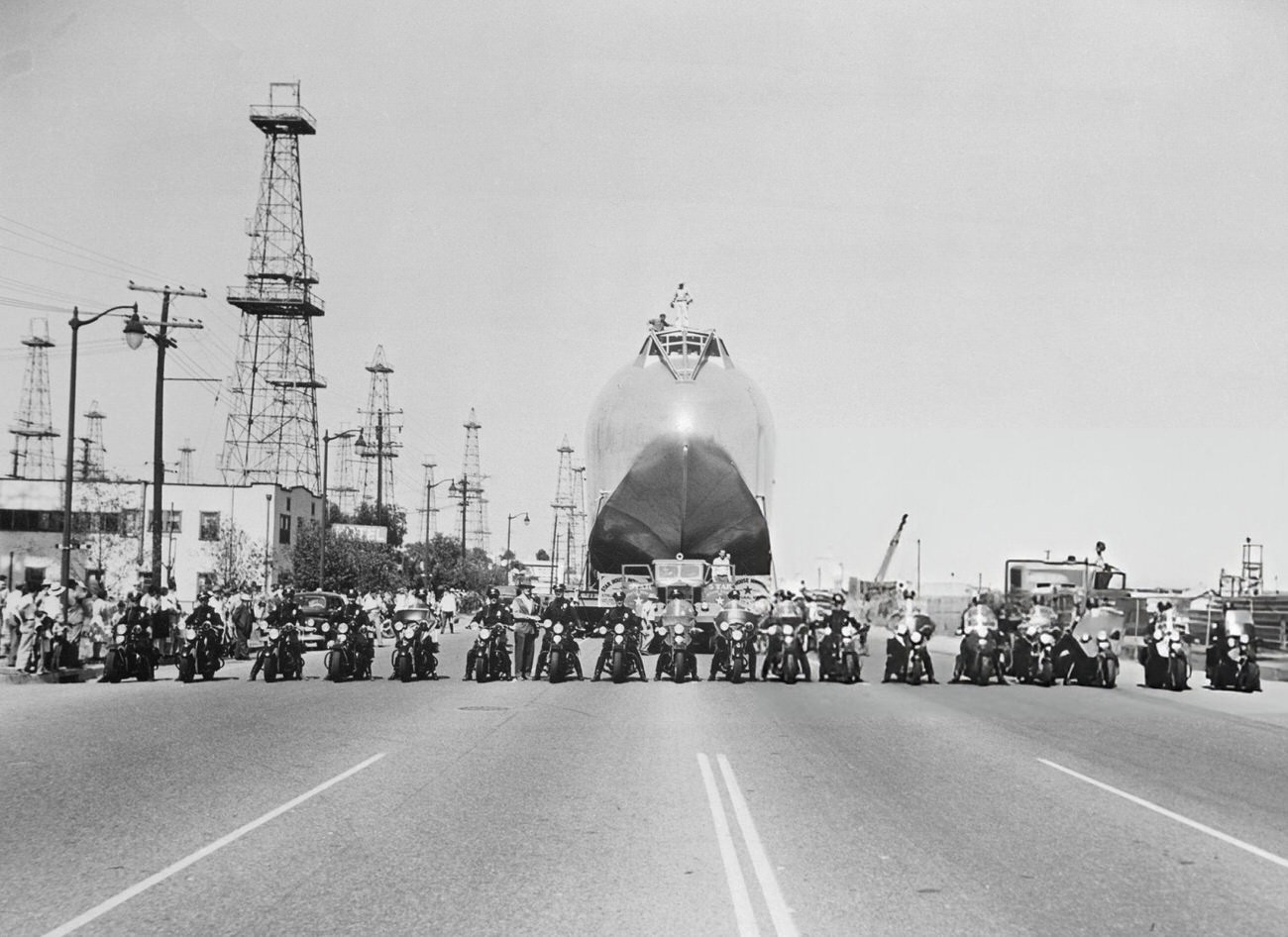
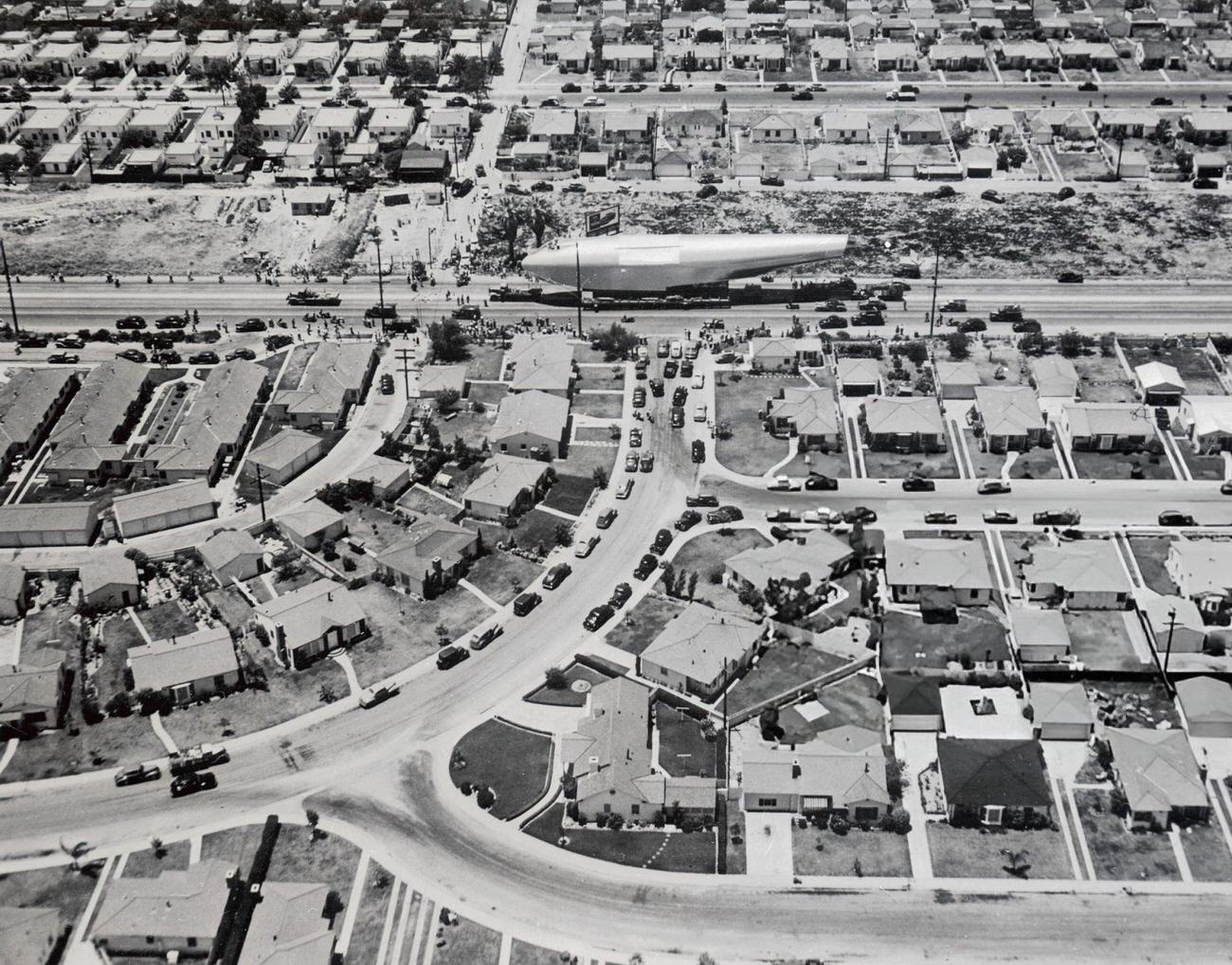
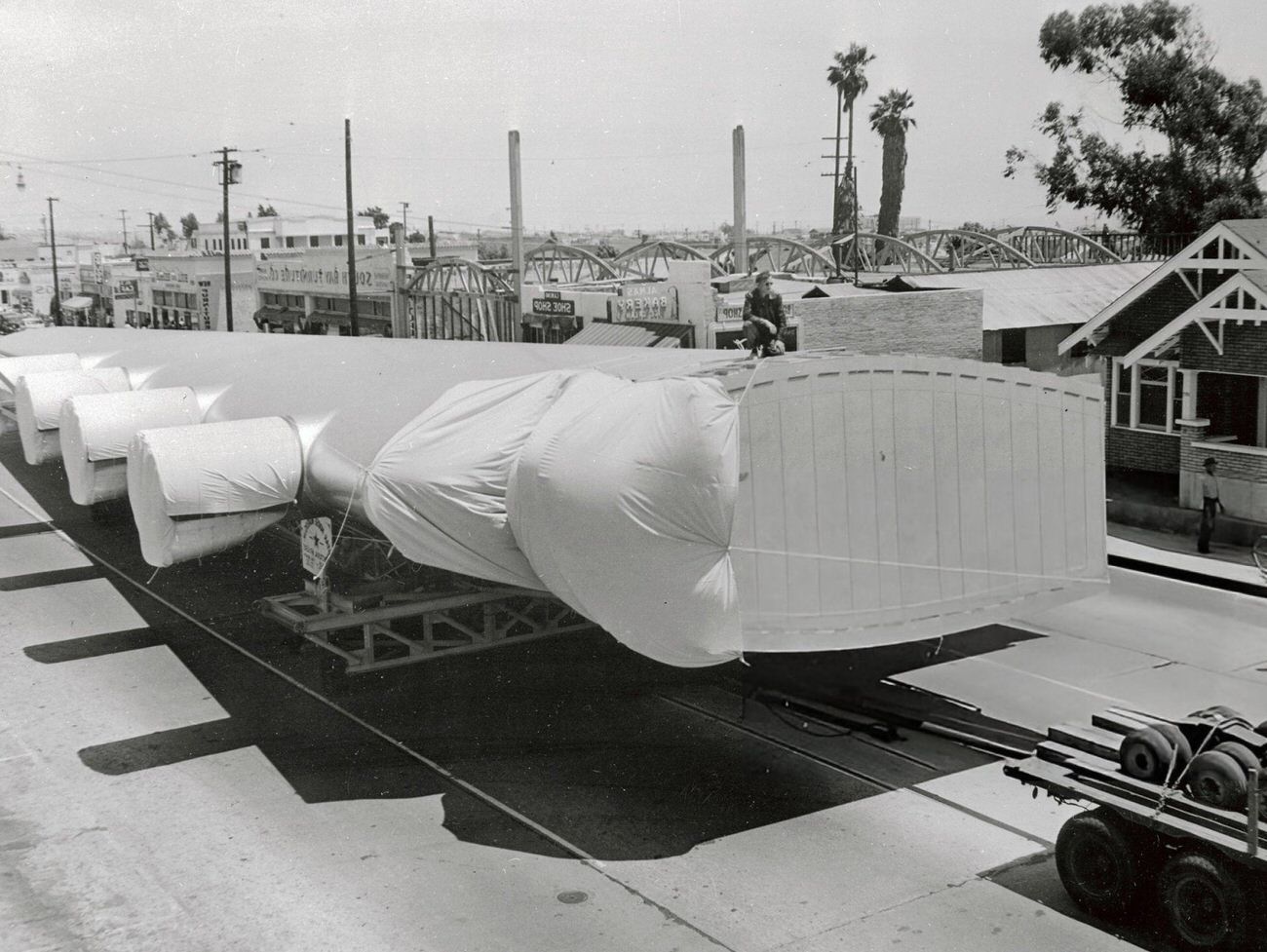
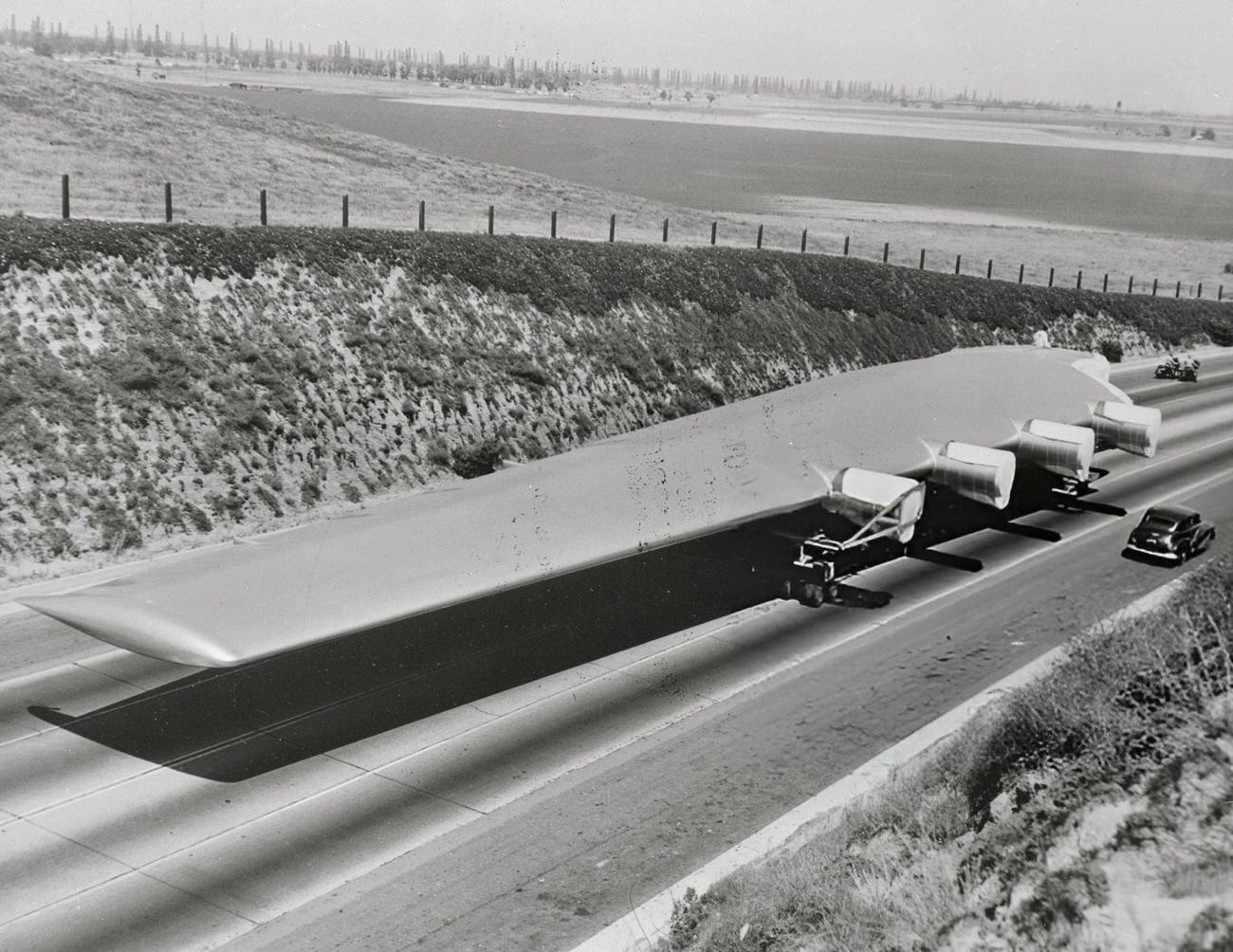
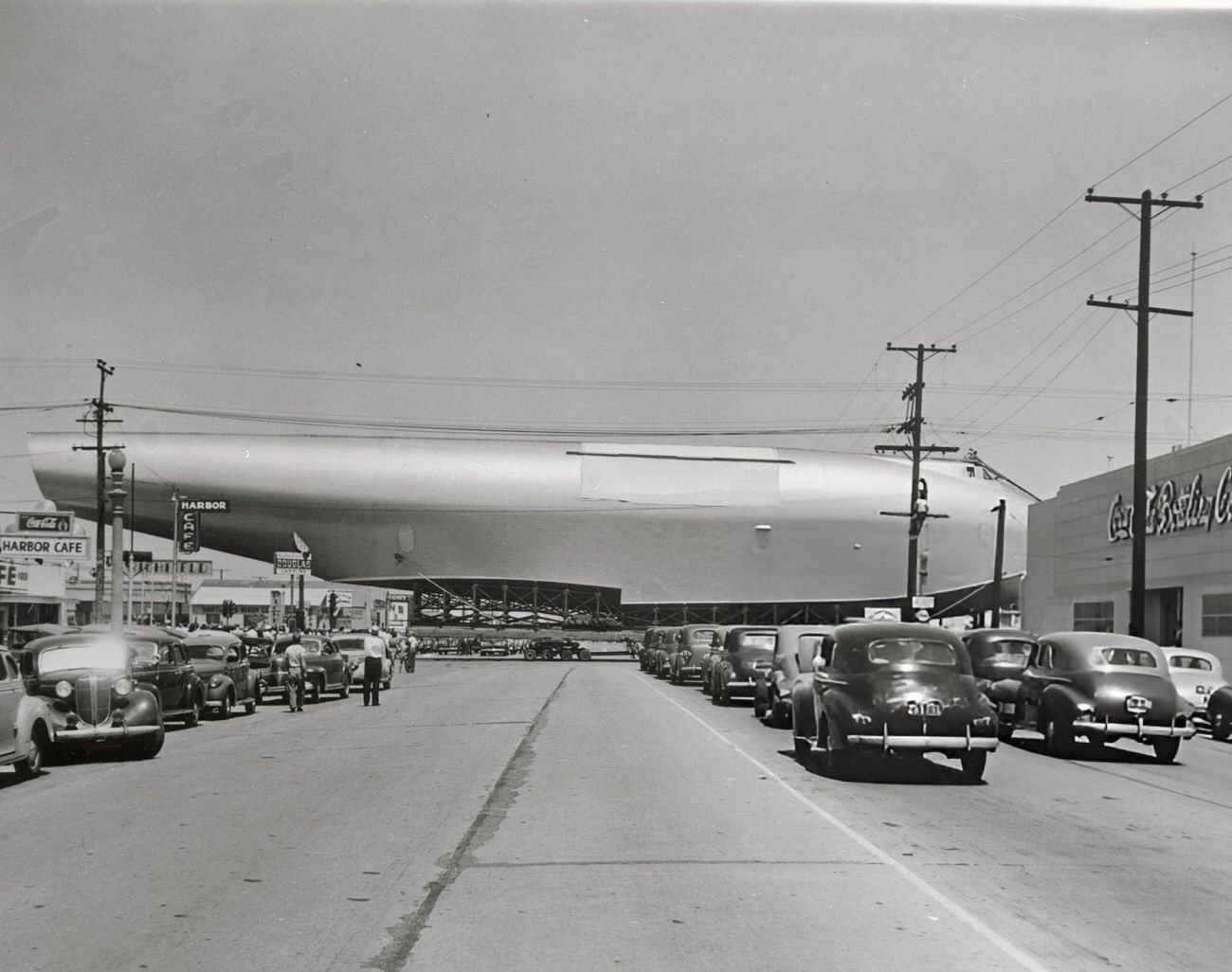
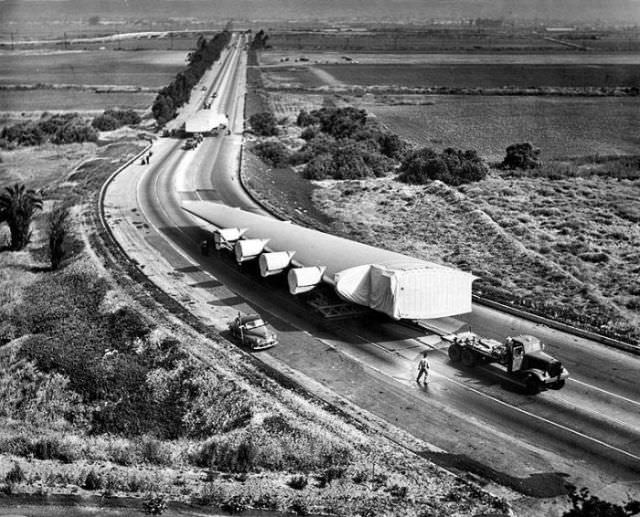
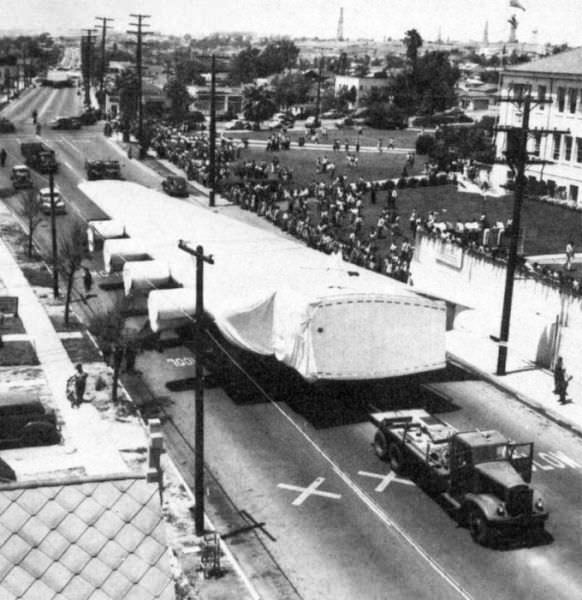
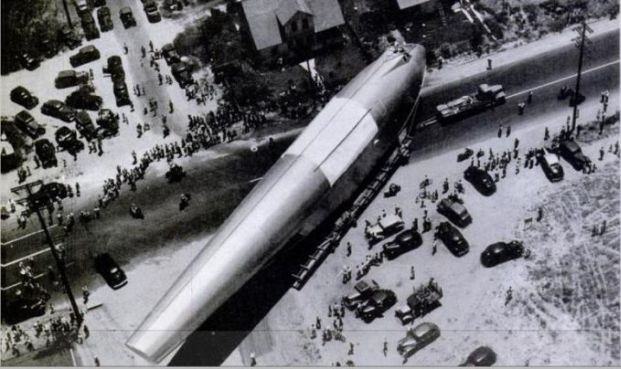
Moving a completed aircraft of this size from Culver City to Long Beach Harbor was itself a major operation. The H-4 was built in sections and transported in pieces across a 28-mile route. Power lines had to be removed along the way to allow the oversized components to pass through. The wings, fuselage, and hull each required their own transport convoy, drawing crowds of onlookers as the enormous sections rolled through city streets and intersections.
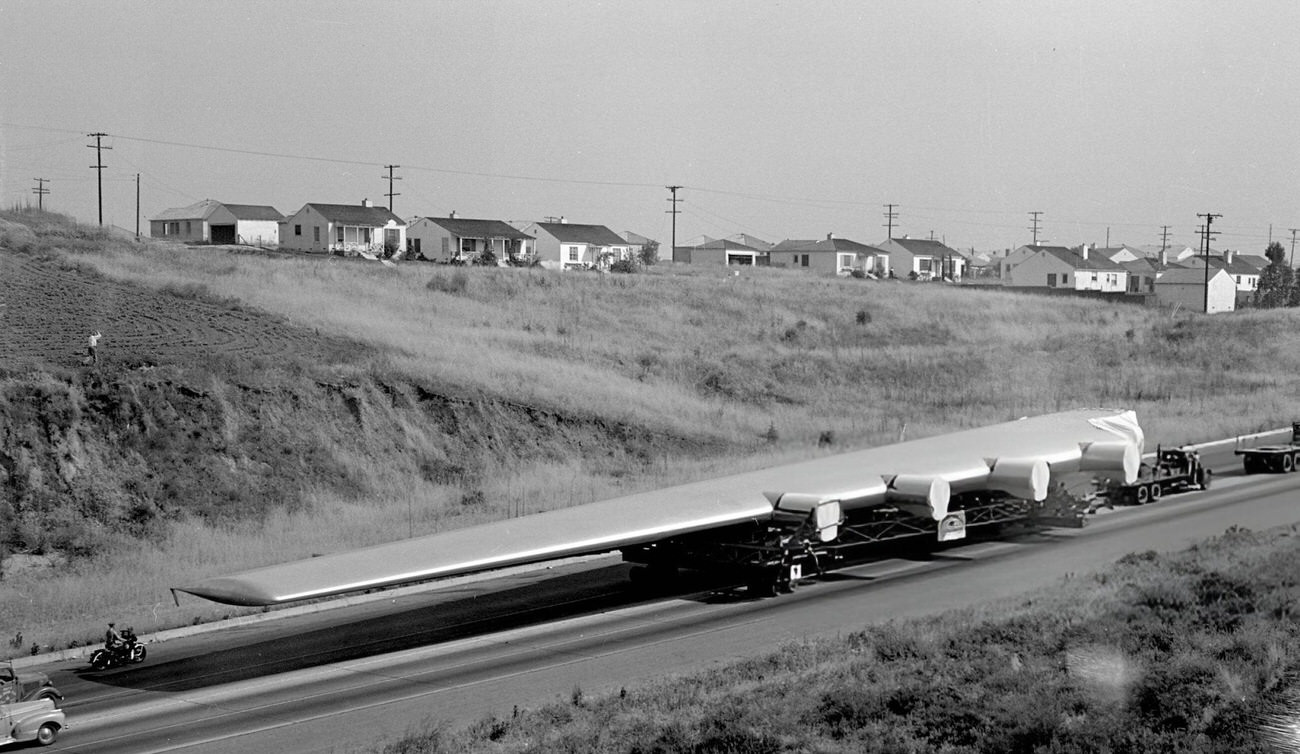
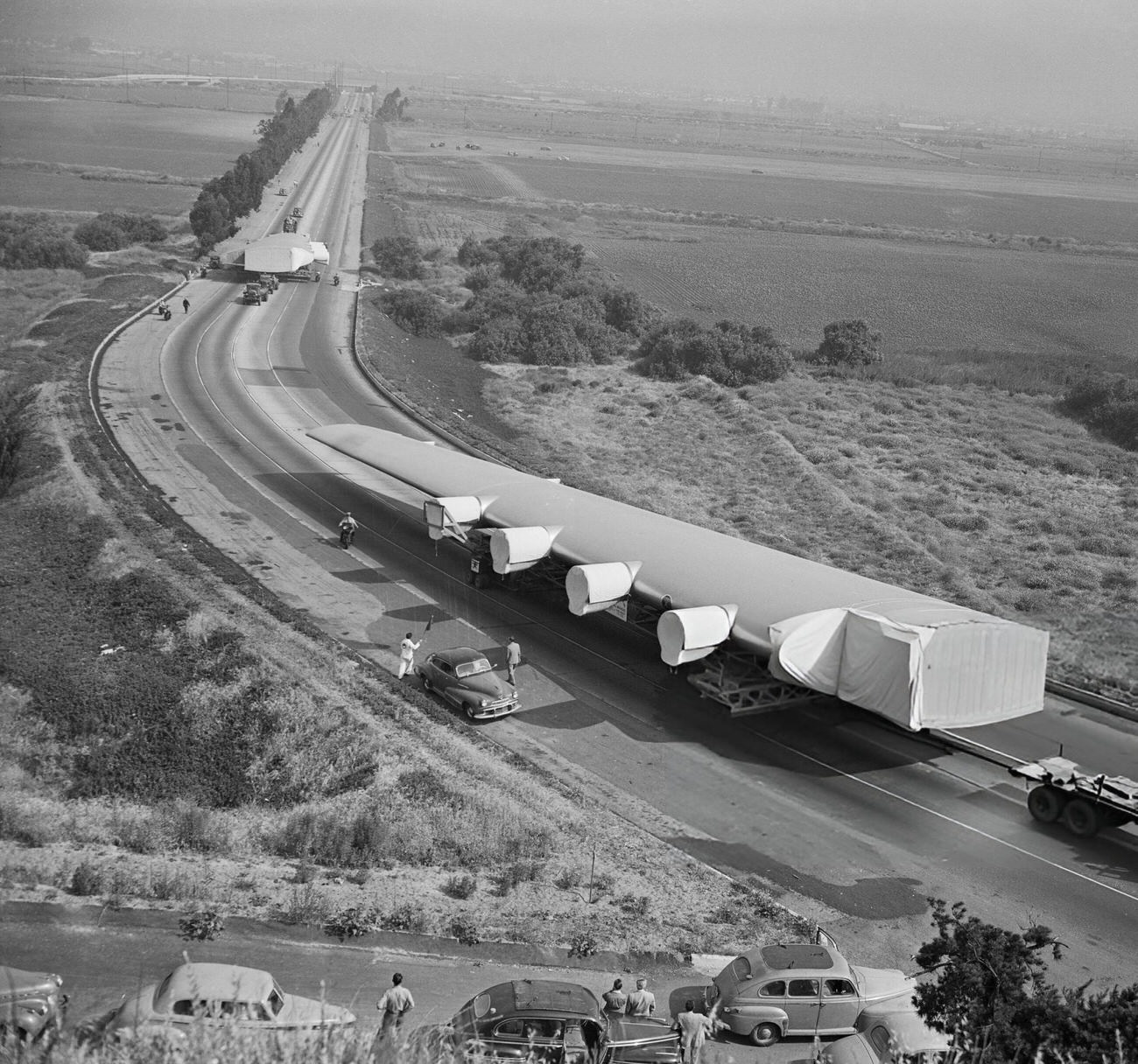
A wing of the Hughes H-4 Hercules, Spruce Goose, being transported to Long Beach Harbor for assembly, 1947.
Wings of Howard Hughes' Spruce Goose being transported, 1940s.
Wings of Howard Hughes’ Spruce Goose being transported, 1940s.
The fuselage of Howard Hughes' Spruce Goose leaving the hangar, 1940s.
The fuselage of Howard Hughes’ Spruce Goose leaving the hangar, 1940s.
Power lines being removed for the Spruce Goose's transport, 1940s.
Power lines being removed for the Spruce Goose’s transport, 1940s.
The Spruce Goose fuselage being transported from Culver City to Long Beach, 1946.
Transporting the Spruce Goose parts across a 28-mile route, 1940s.
A wing section of the Spruce Goose, 1940s.
A Spruce Goose wing next to a car during transport, 1940s.
The Spruce Goose being transported across a highway intersection, 1940s.

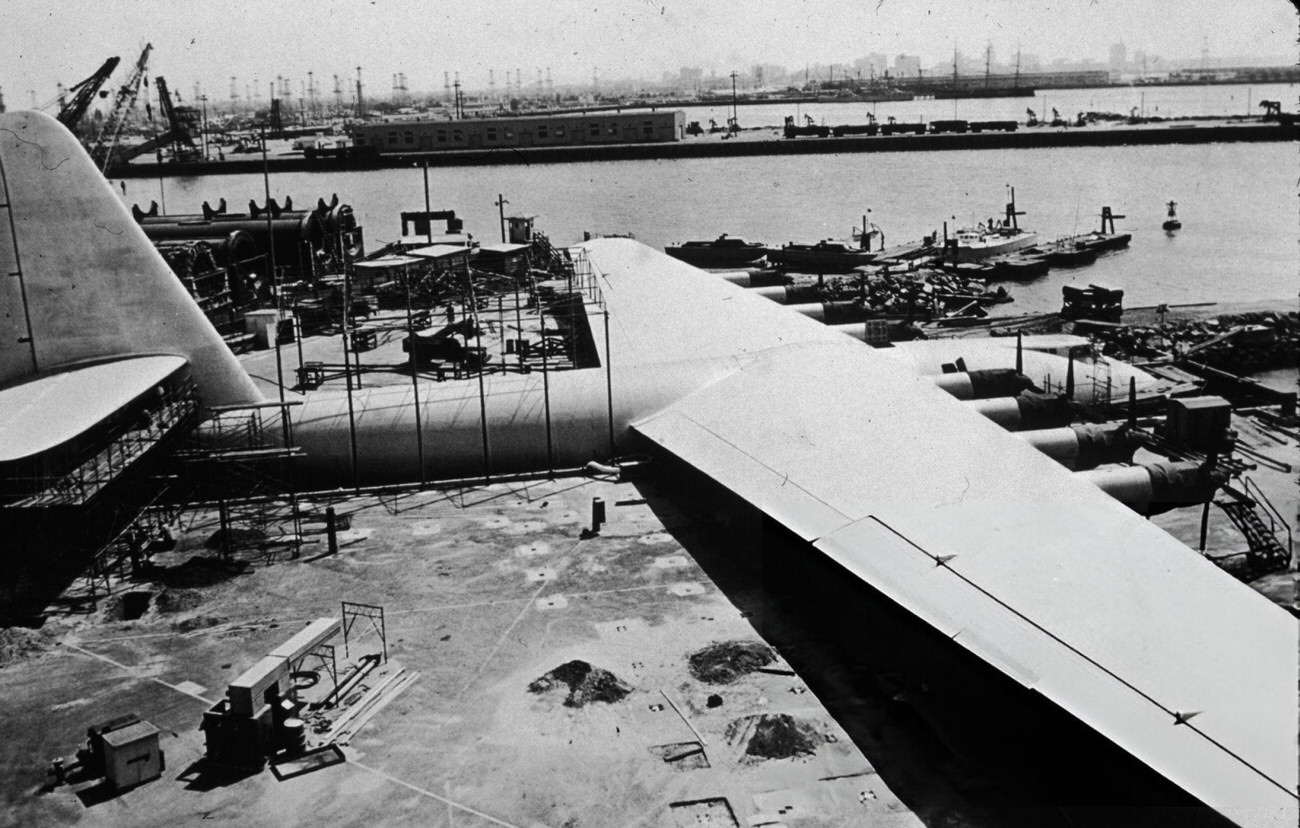
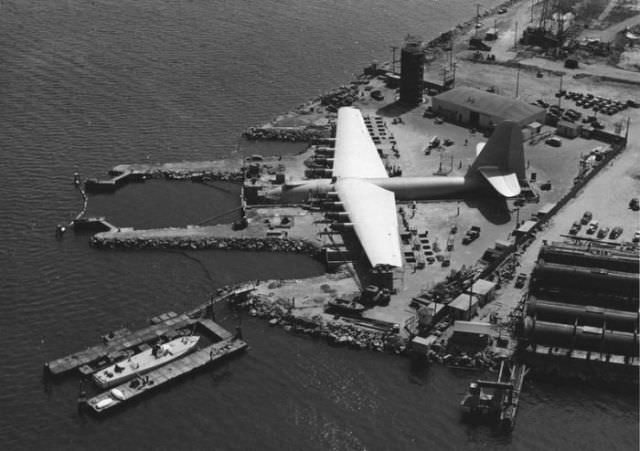
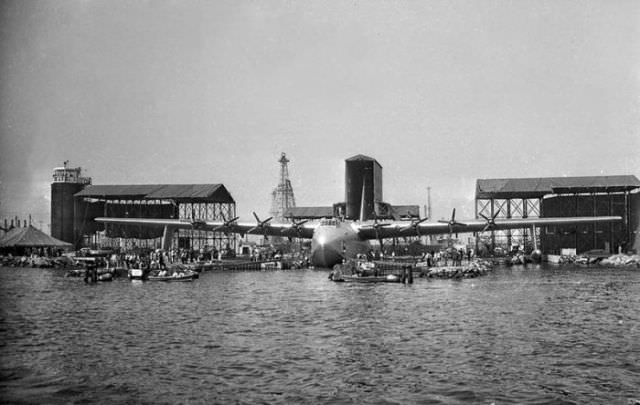
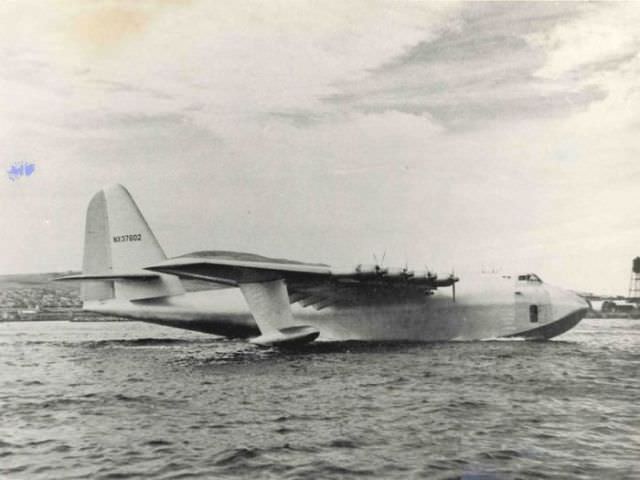
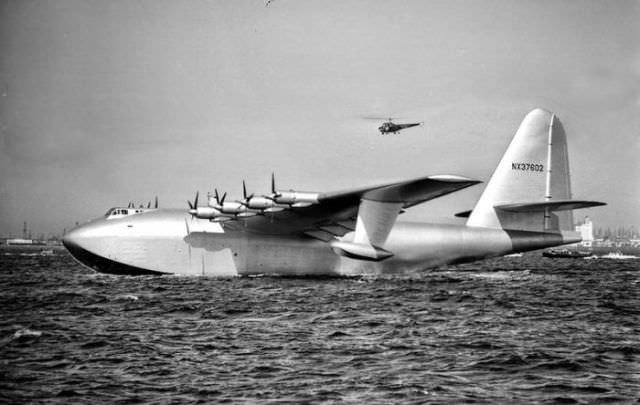
Once the sections arrived at Long Beach, assembly began and the H-4 took its final shape on the water. The aircraft featured a high-mounted wing and a wide, boat-like hull — a design built specifically to take off and land on open water. This eliminated any dependence on land-based runways, which were often targeted or unavailable during wartime operations. The design was practical by necessity, not novelty.
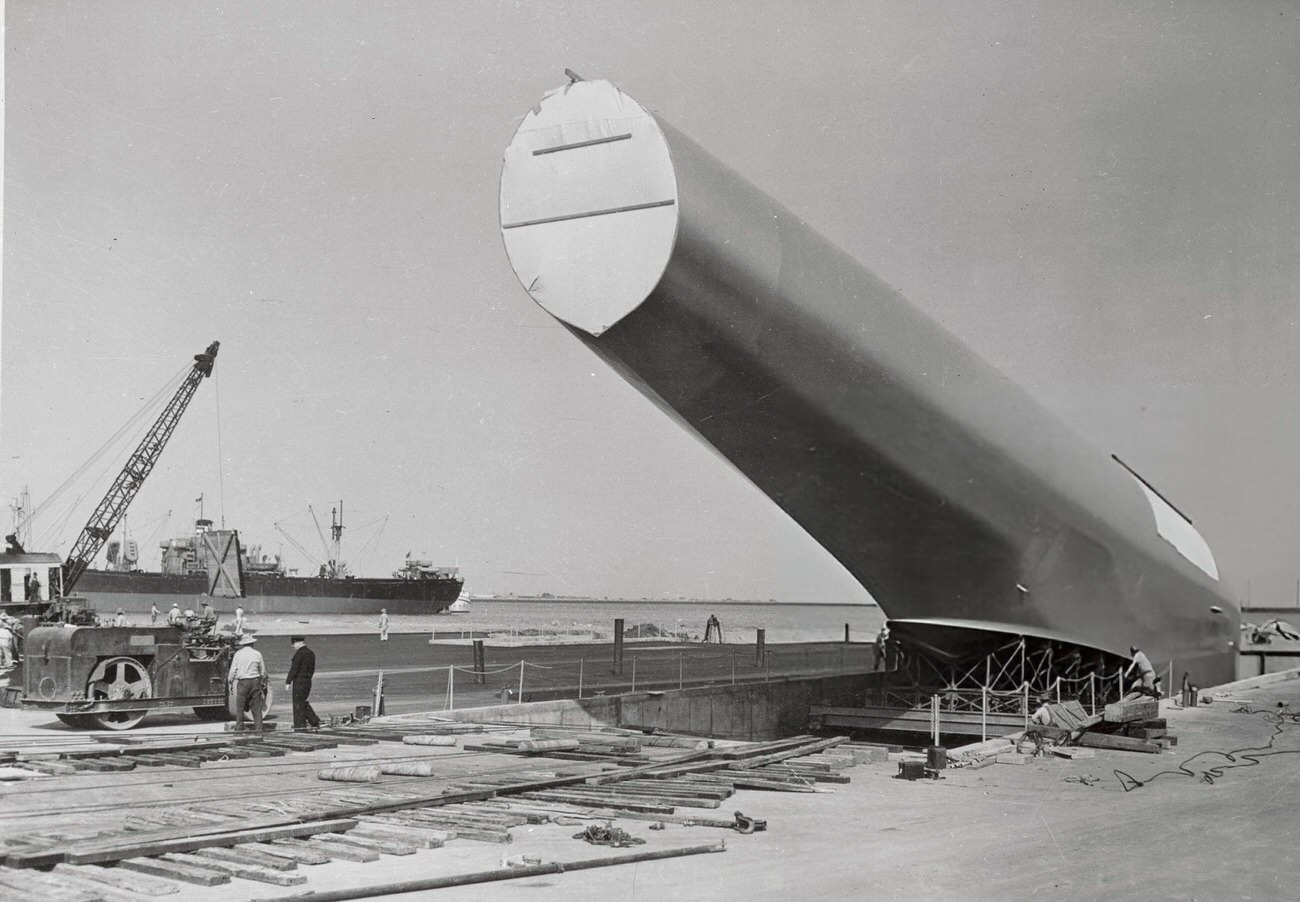
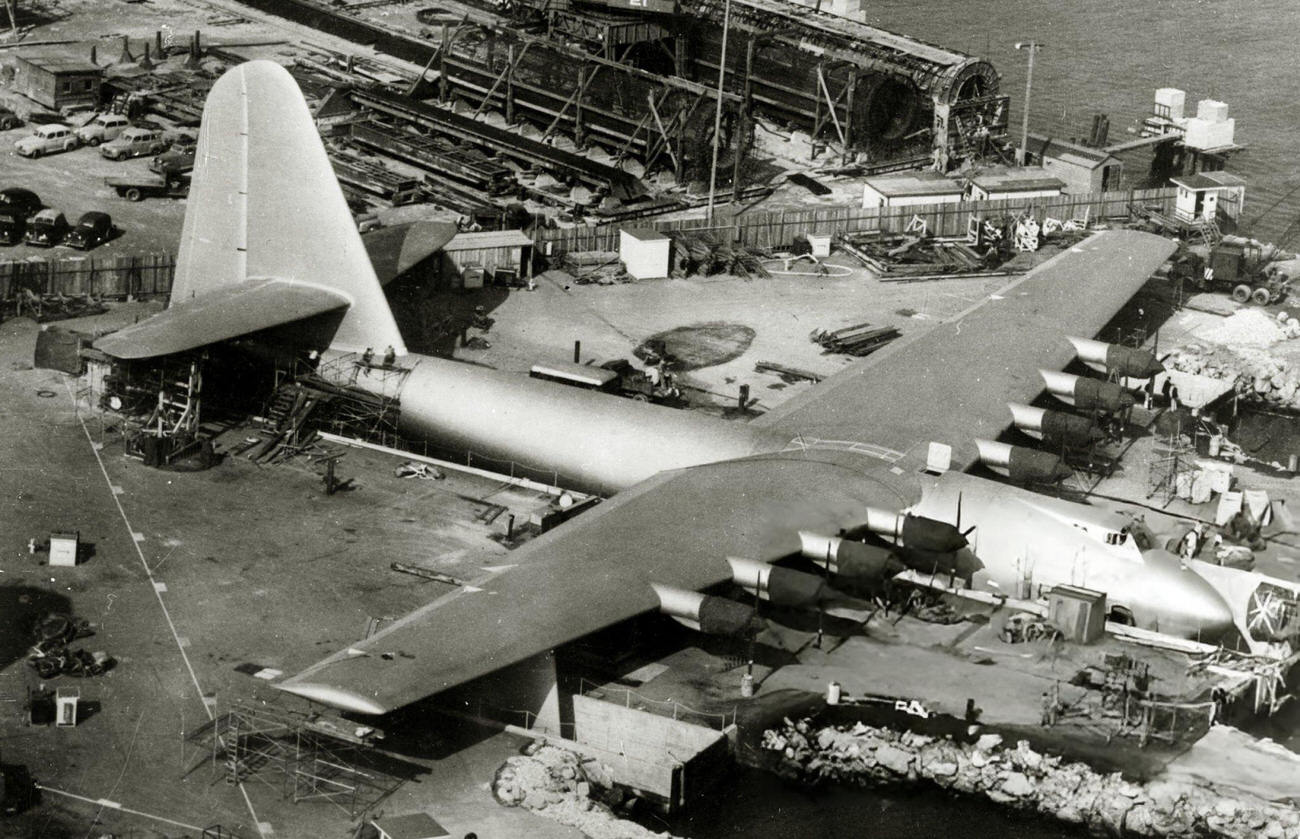
Howard Hughes' Spruce Goose nearing completion, 1946.
Howard Hughes’ Spruce Goose nearing completion, 1946.
The Spruce Goose nearing completion in Long Beach, California, 1947.
The Spruce Goose, a massive seaplane designed by Howard Hughes, 1947.

By 1947, the H-4 faced growing political scrutiny. The Senate War Investigating Committee was probing the cost and purpose of the program, questioning whether the enormous government investment had produced anything of value. Hughes was called to testify and faced sharp criticism. He responded by announcing that the aircraft would fly — and that if it failed, he would leave the country. The stage was set for November 2, 1947.
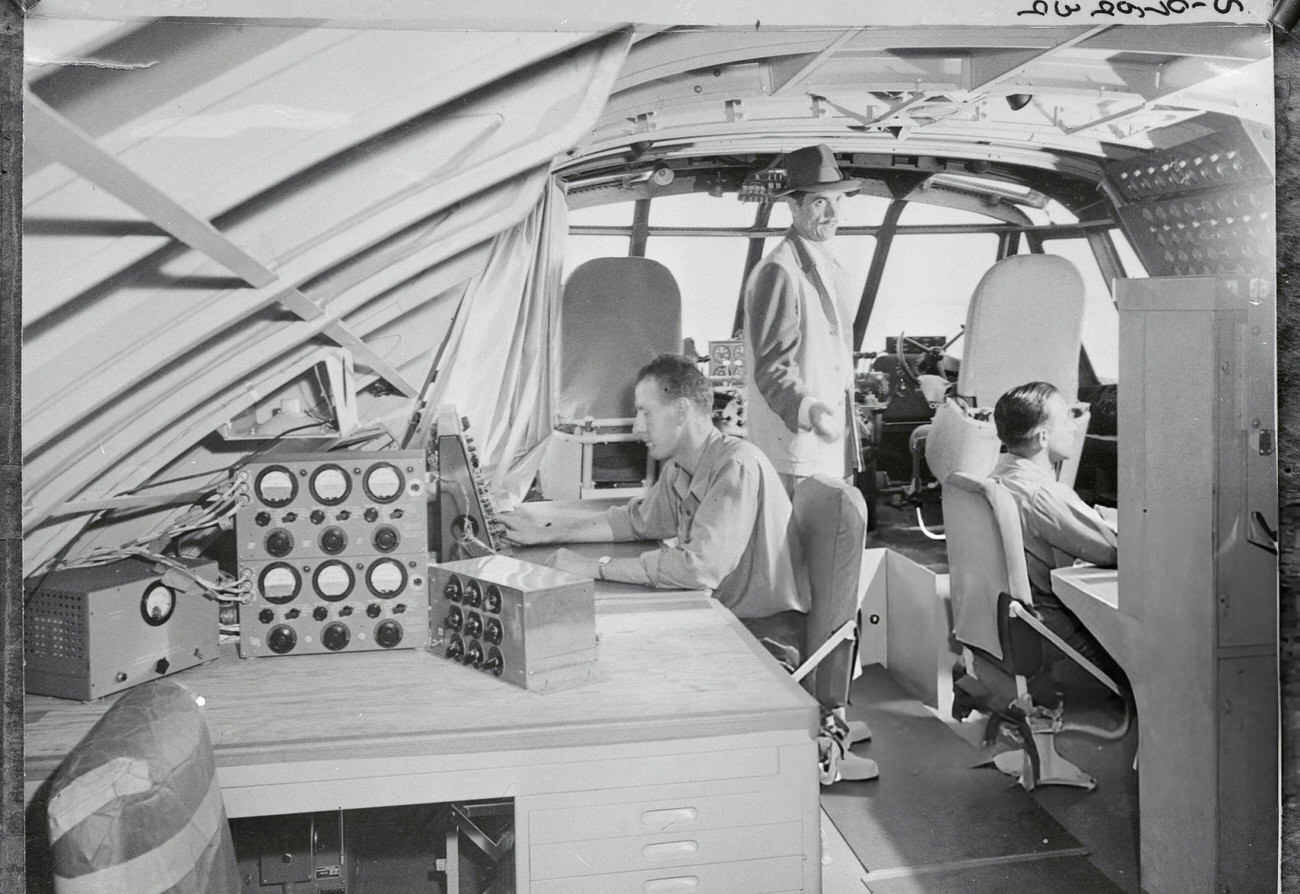
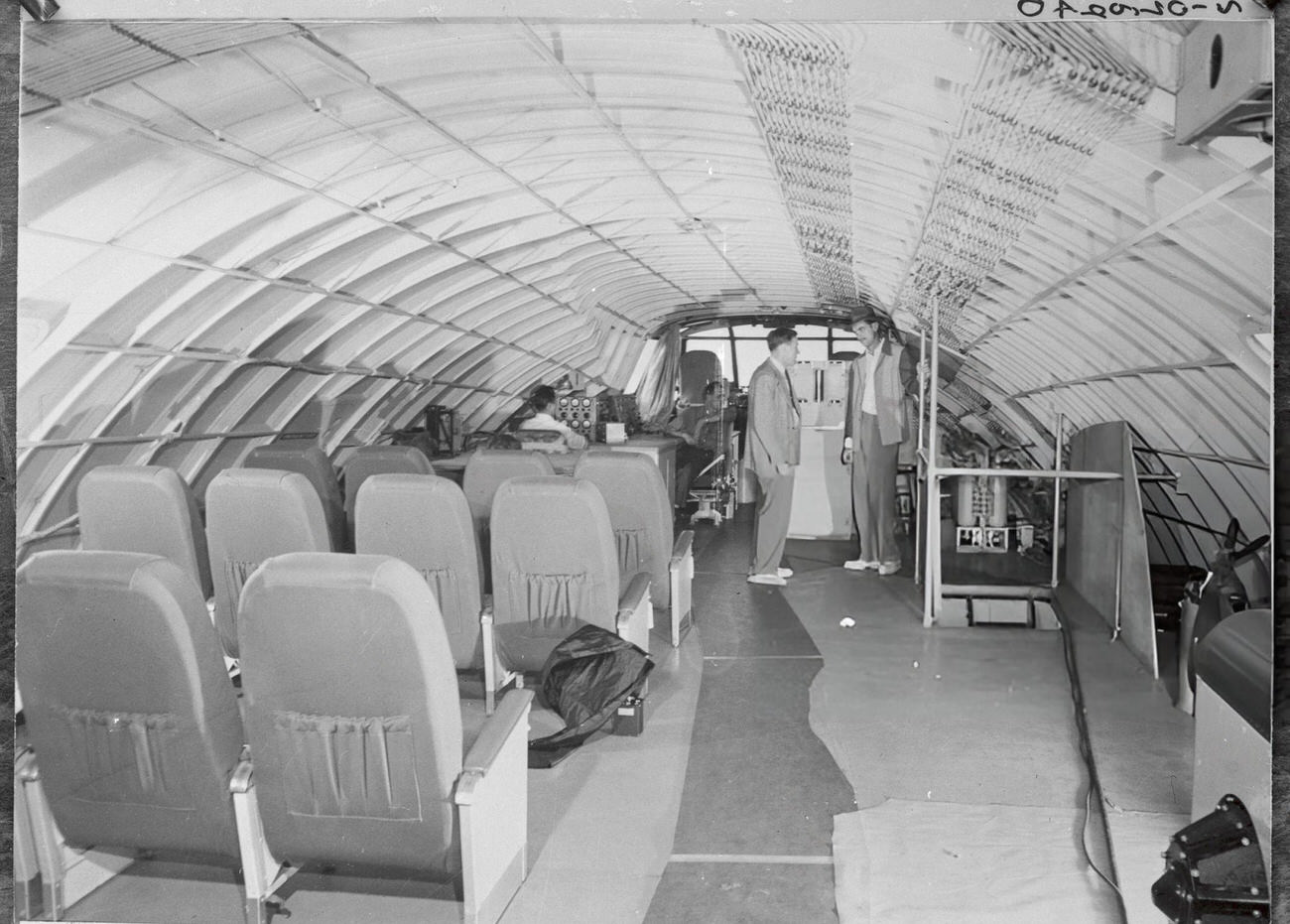
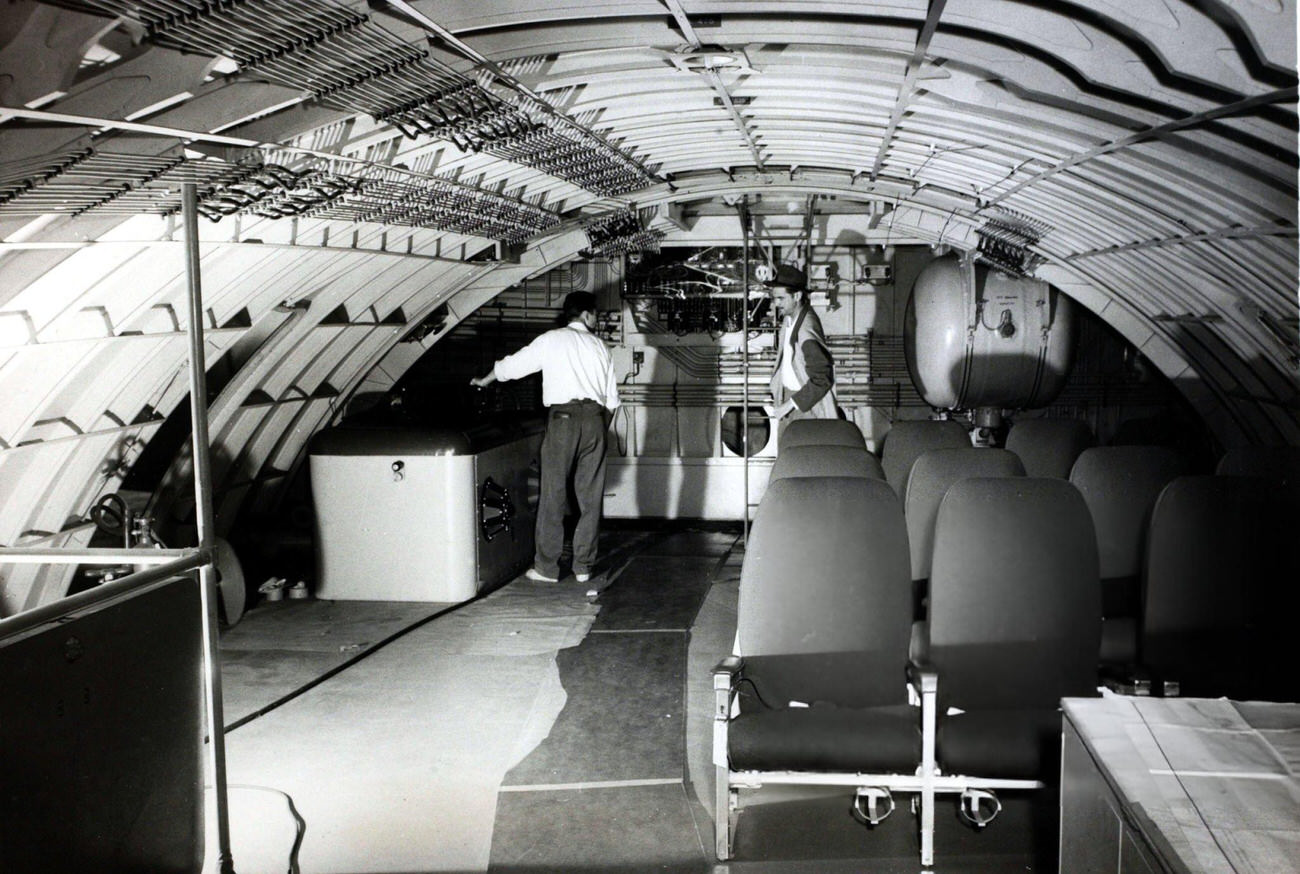
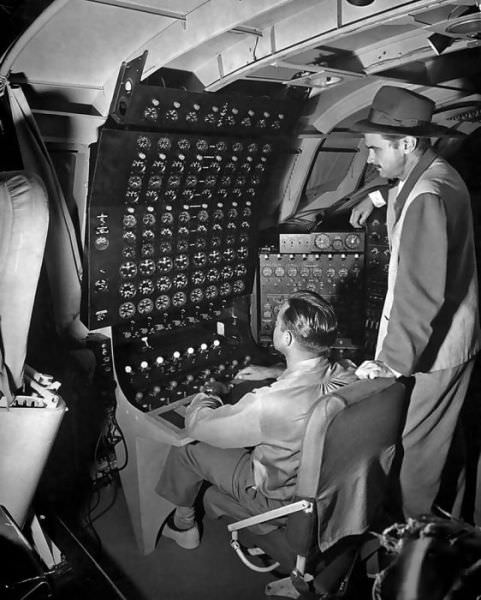
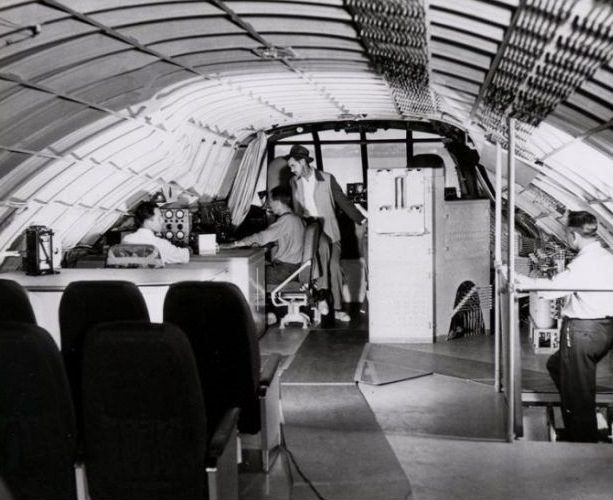
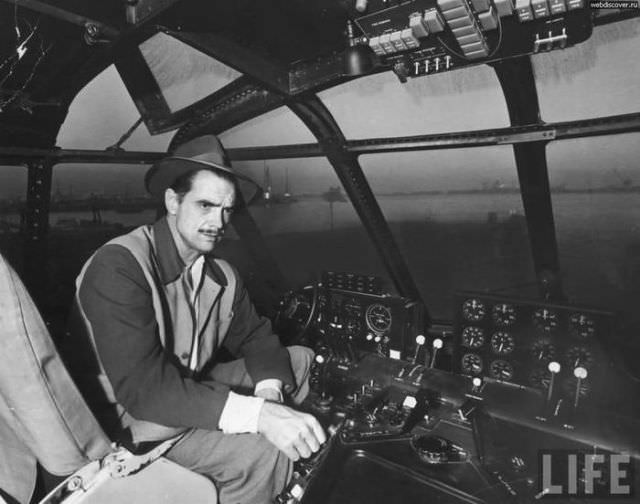
Howard Hughes with crew on the flight deck of the Spruce Goose, 1947.
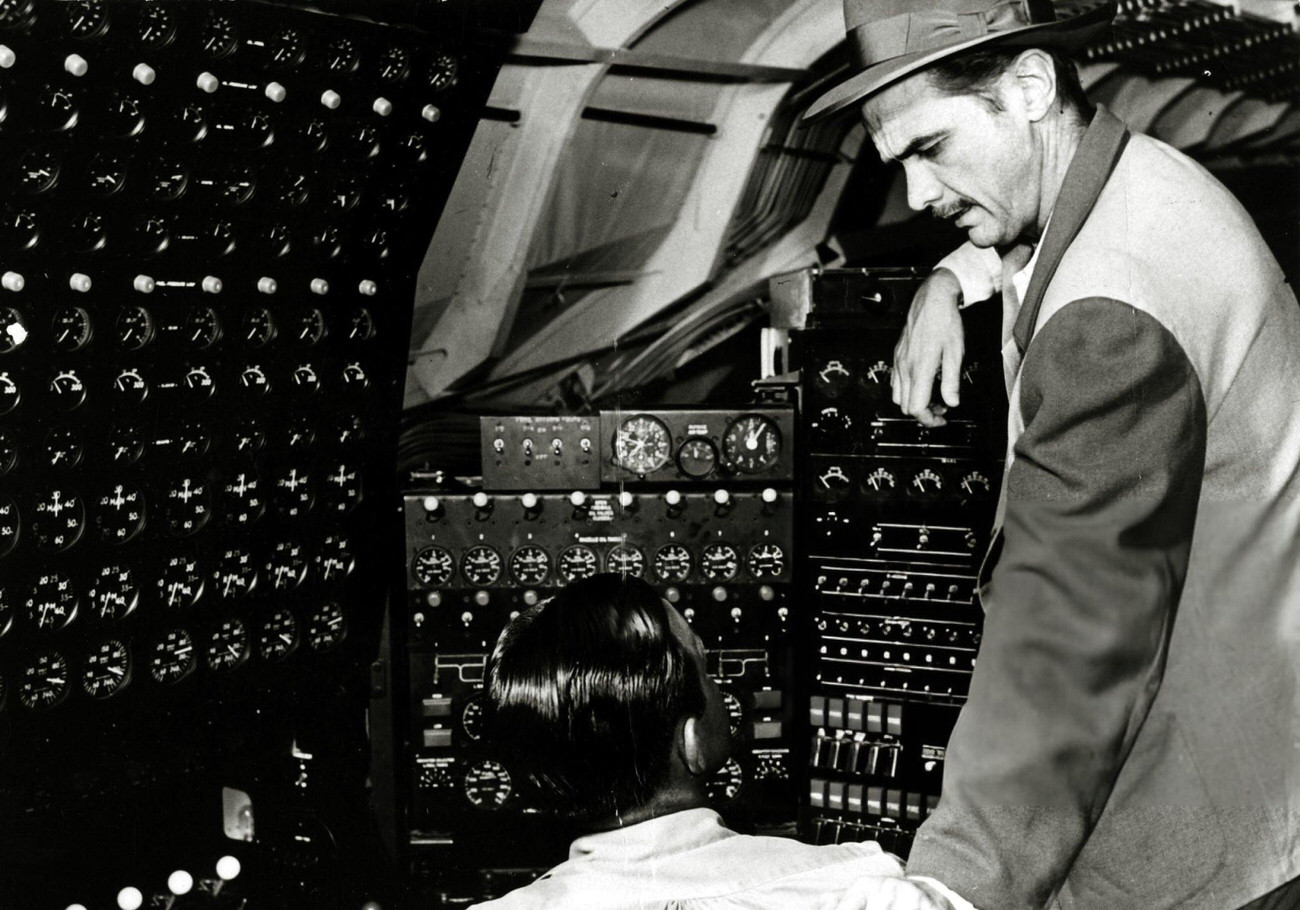
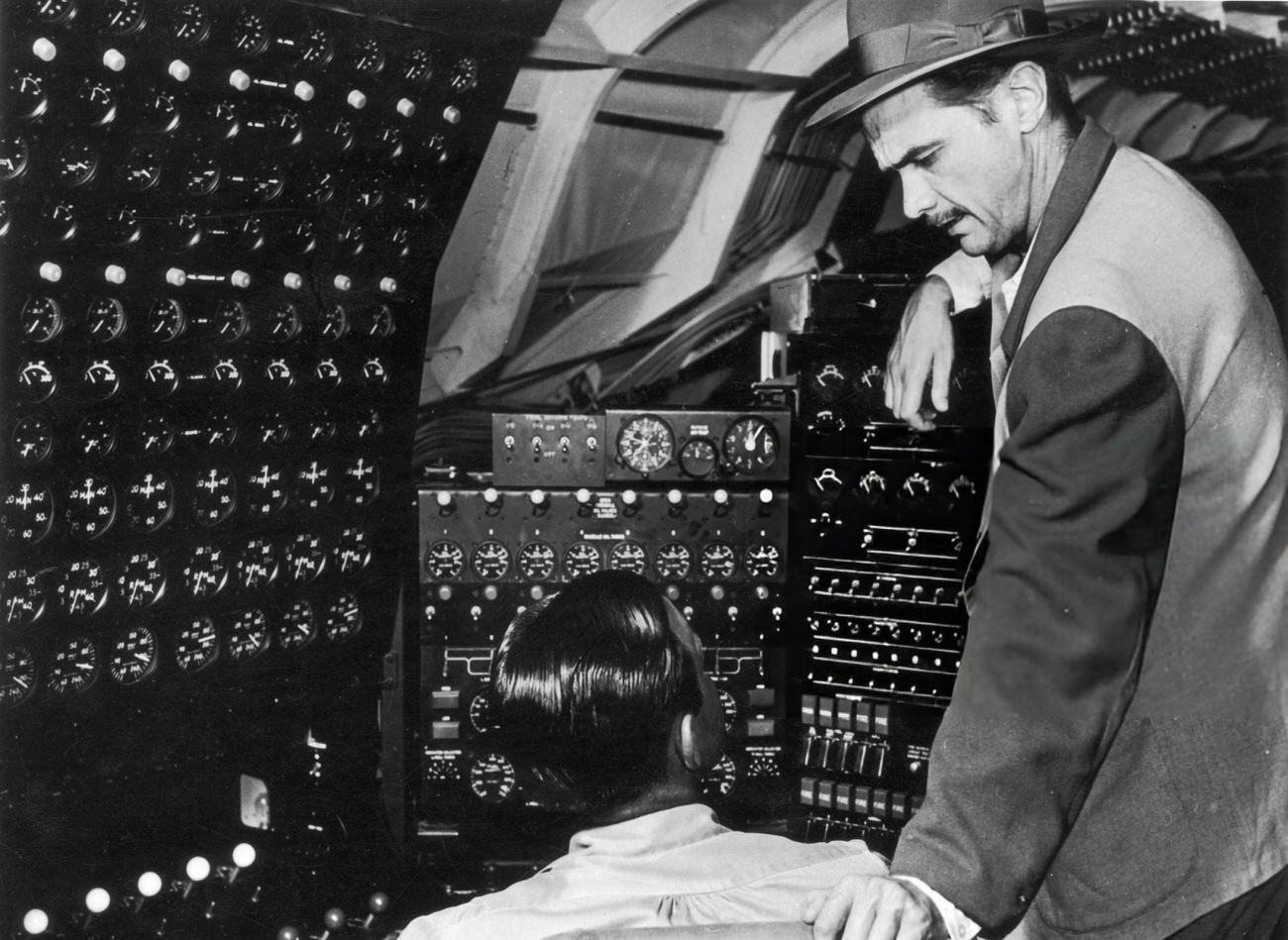
The flight deck of Howard Hughes' Spruce Goose, 1940s.
The flight deck of Howard Hughes’ Spruce Goose, 1940s.

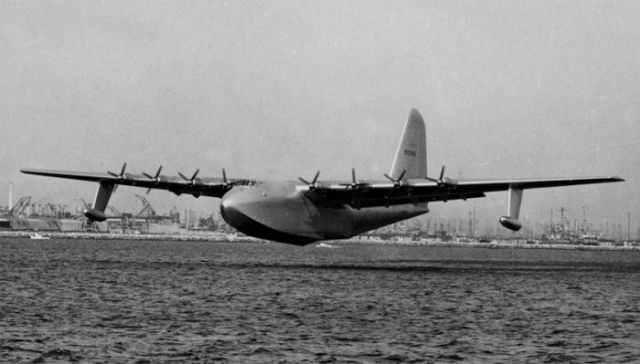
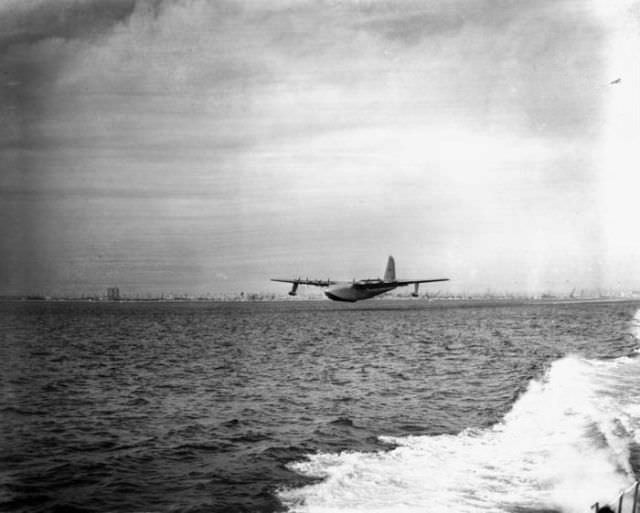
On that day, Howard Hughes himself sat at the controls in Long Beach Harbor. Journalists and dignitaries who had come to watch the taxi tests were caught off guard when the H-4 actually lifted off the water. The aircraft climbed to 70 feet and flew approximately one mile before touching back down. The entire flight lasted less than a minute. It was the only time the H-4 ever left the water.
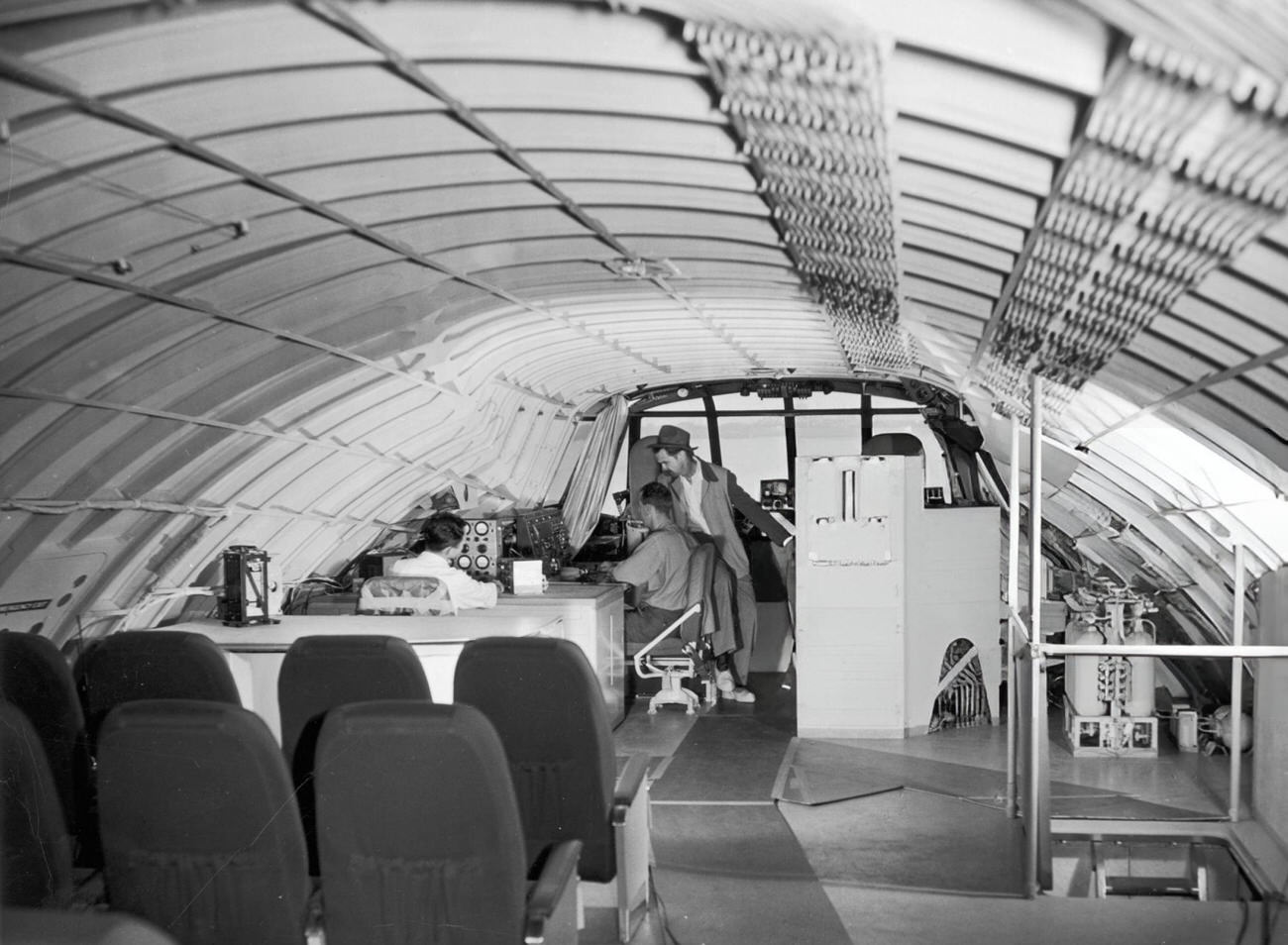
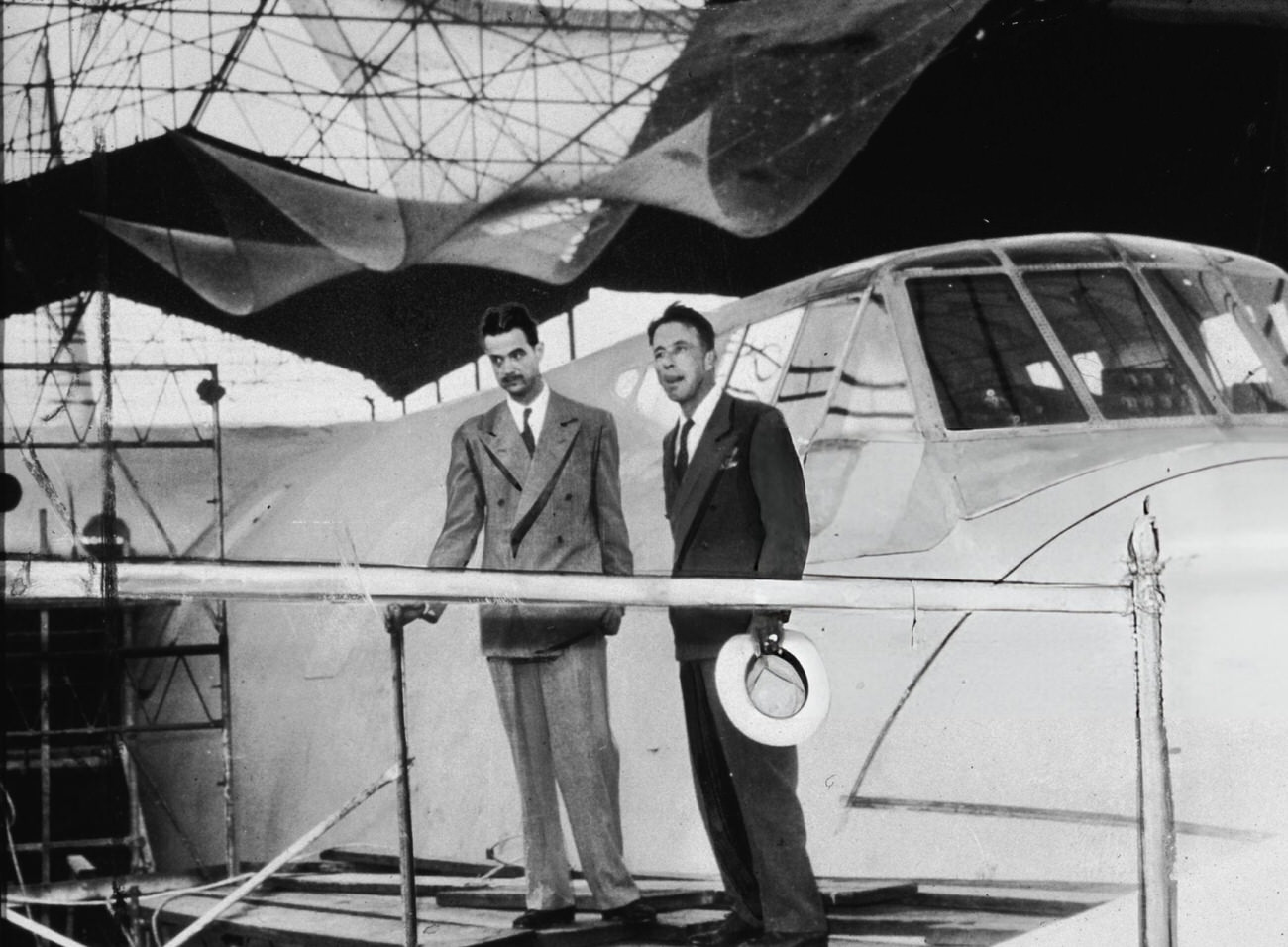
Howard Hughes talking to staff on the Spruce Goose on the day of its only flight, 1947.
Howard Hughes and an unidentified man near the Spruce Goose's cockpit, 1947.
Howard Hughes and an unidentified man near the Spruce Goose’s cockpit, 1947.
Howard Hughes on his Spruce Goose with an engineer, 1947.
Howard Hughes and an engineer on the Spruce Goose, 1947.
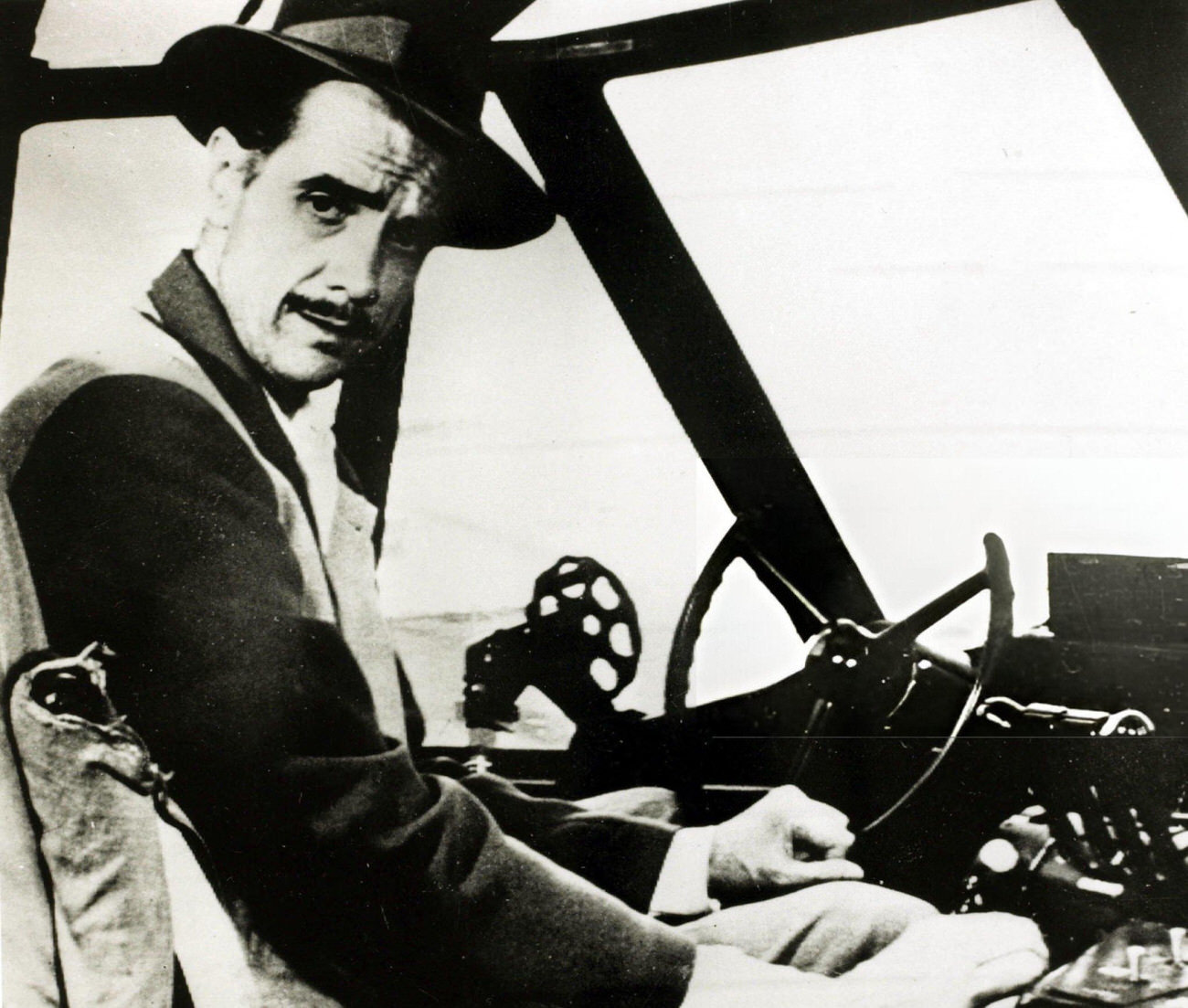
Howard Hughes on the flight deck of the Spruce Goose on the day of its only flight, 1947.
Howard Hughes at the controls of the Spruce Goose, 1947.

After the flight, Hughes kept the aircraft in a climate-controlled hangar in Long Beach, maintained by a full-time crew at his own expense for decades. It never flew again and never entered production. The postwar world had moved on to different aircraft and different needs, and the flying boat had no role to fill. Hughes died in 1976, and the aircraft eventually passed out of his estate’s hands.
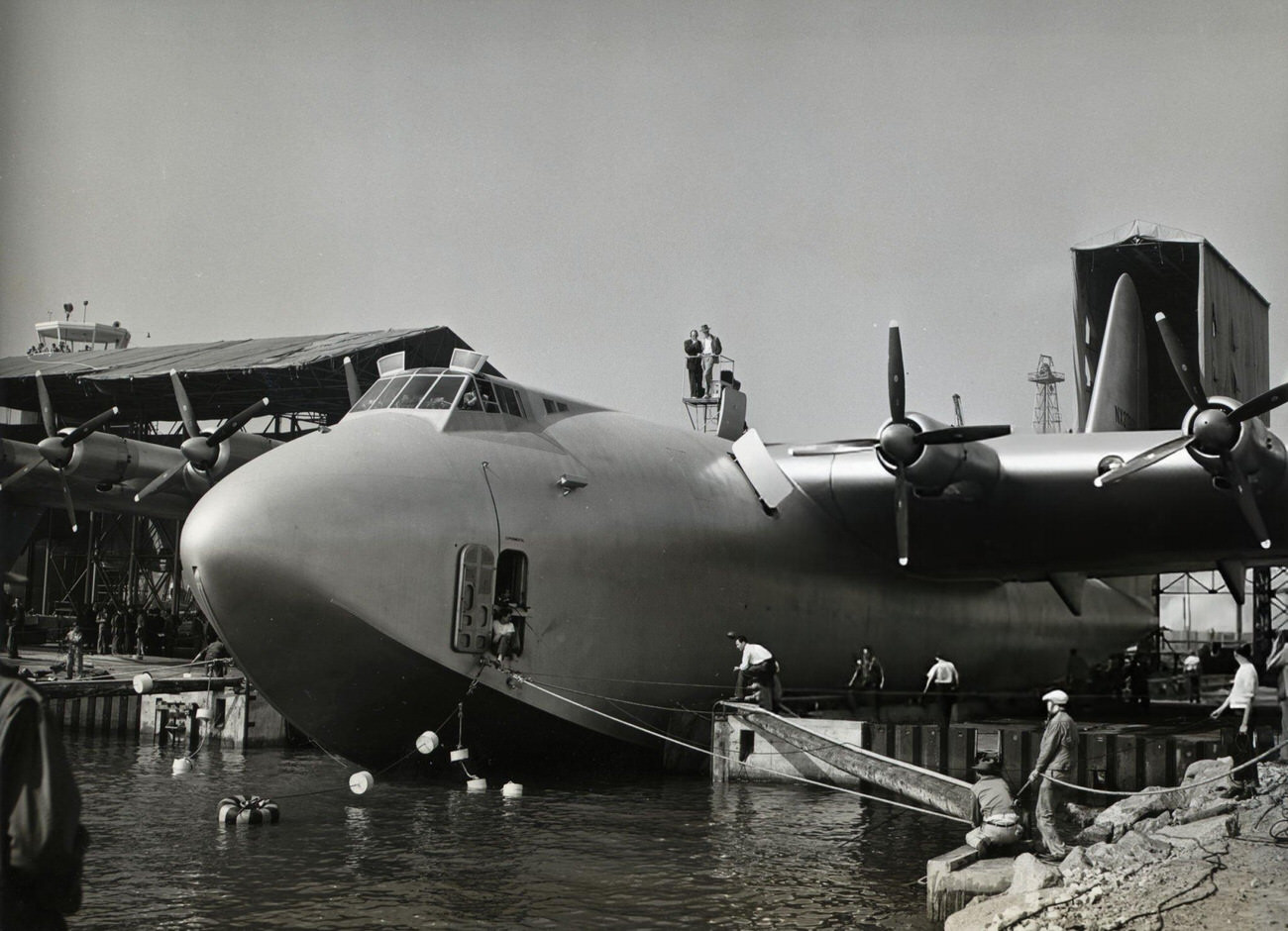
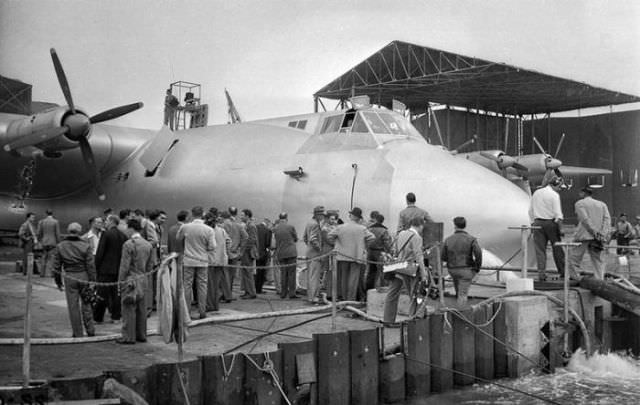
Howard Hughes supervising the launch of his flying boat, 1940s.

The H-4 Hercules is now on permanent display at the Evergreen Aviation & Space Museum in McMinnville, Oregon. Visitors stand inside a building built specifically to house it, looking up at a 320-foot wingspan constructed entirely by hand from layered wood — a machine born out of wartime desperation that flew once, briefly, and then outlived nearly everyone who built it.
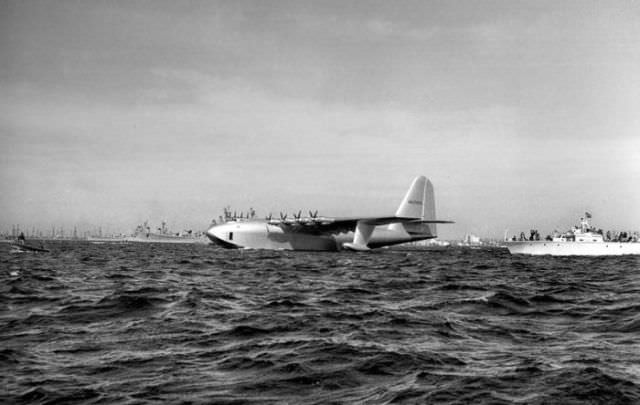
The Spruce Goose: Hughes H-4 Hercules - The Largest Flying Boat Ever Built
Enjoyed this post? Get new ones in your inbox.

Leave a Comment

Your email address will not be published. Required fields are marked *

Share this Post 🥺

Please take a moment to share this content. Your support is greatly appreciated! 🙌🙏

Share this Post 🥺

Please take a moment to share this content. Your support is greatly appreciated! 🙌🙏
Scroll to Top
 
Hey Friend, Before You Go.. Please like & follow for more interesting content