
Snow has always done something to people. It transforms a familiar street, park, or hillside into something completely new. For generations, the first heavy snowfall of the year pulled people outdoors — not because they had to go, but because they wanted to. These photos capture exactly that impulse, frozen in time across more than a century.
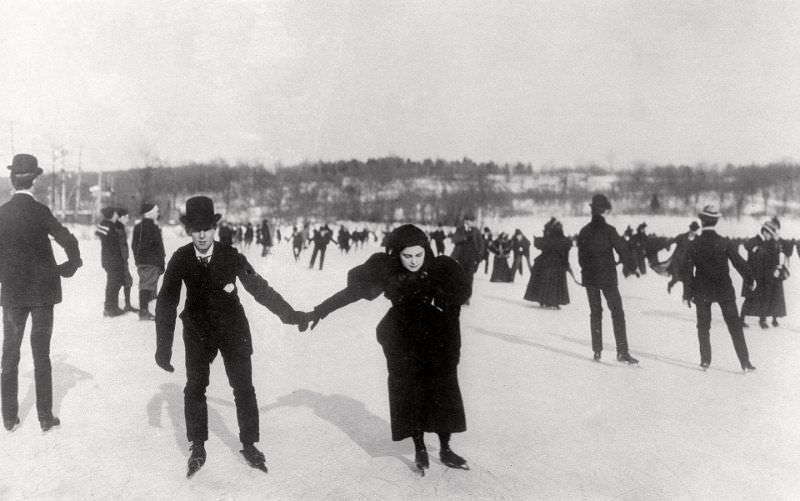
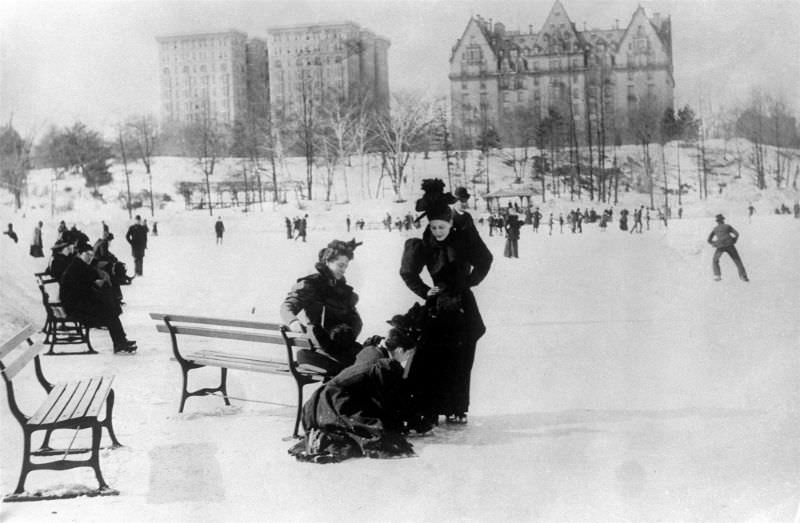
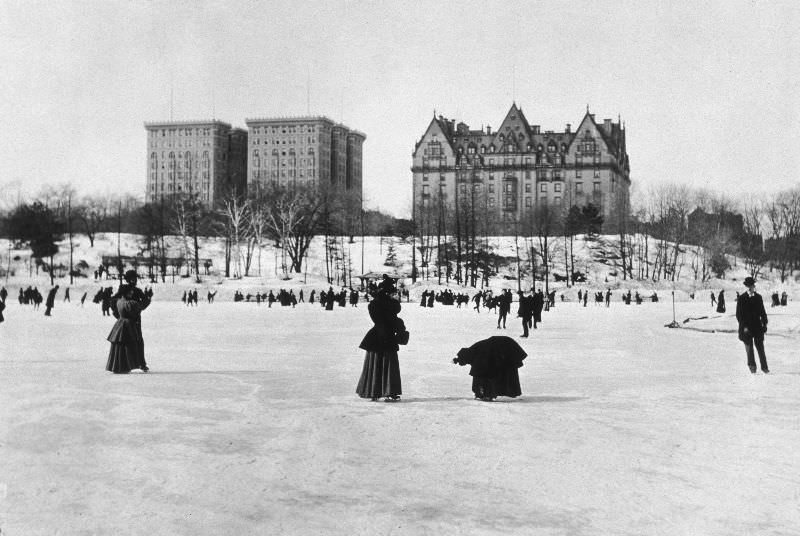
In the late 1800s, Central Park’s frozen lakes drew crowds of New Yorkers eager to skate. Ice skating was one of the most accessible winter pastimes of the era — no expensive equipment, no travel required. Men and women skated side by side, bundled in heavy wool coats, in a city that otherwise moved at a relentless pace. By 1894, frozen ponds across the country were filling with skaters of every age.
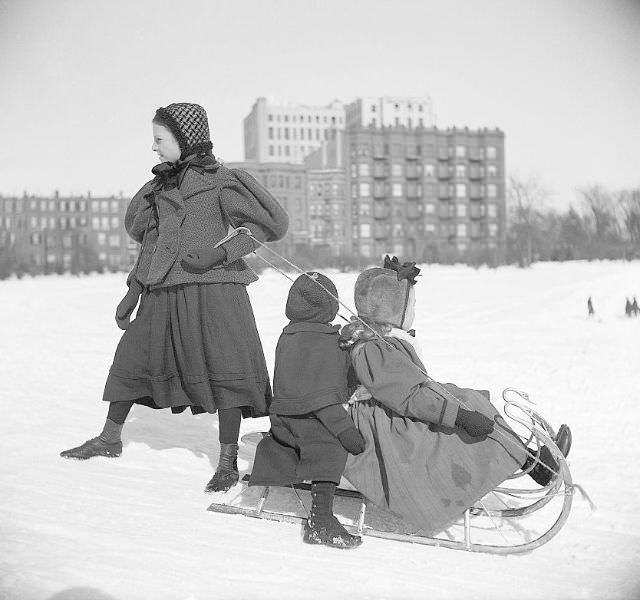
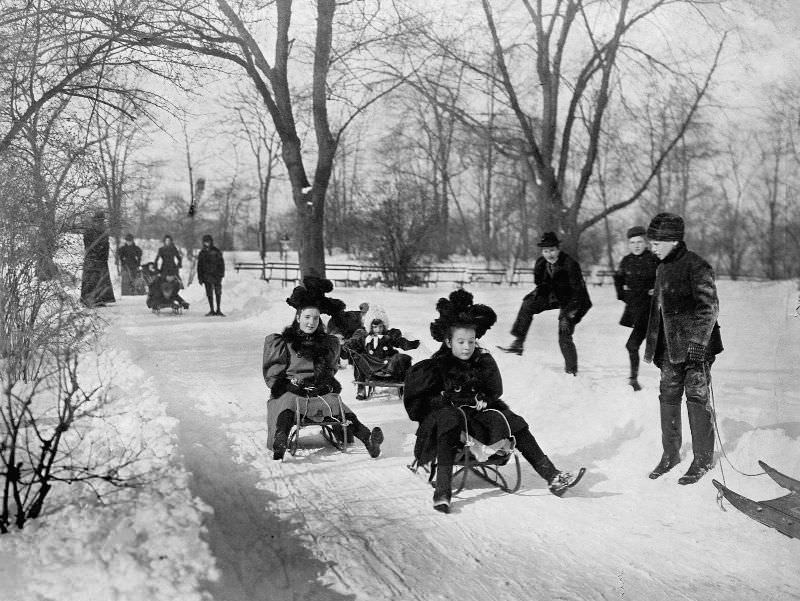
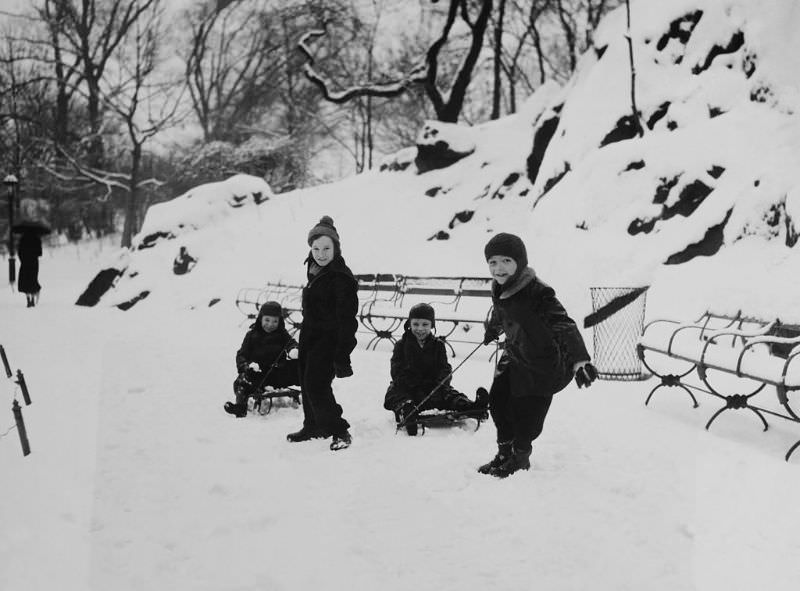
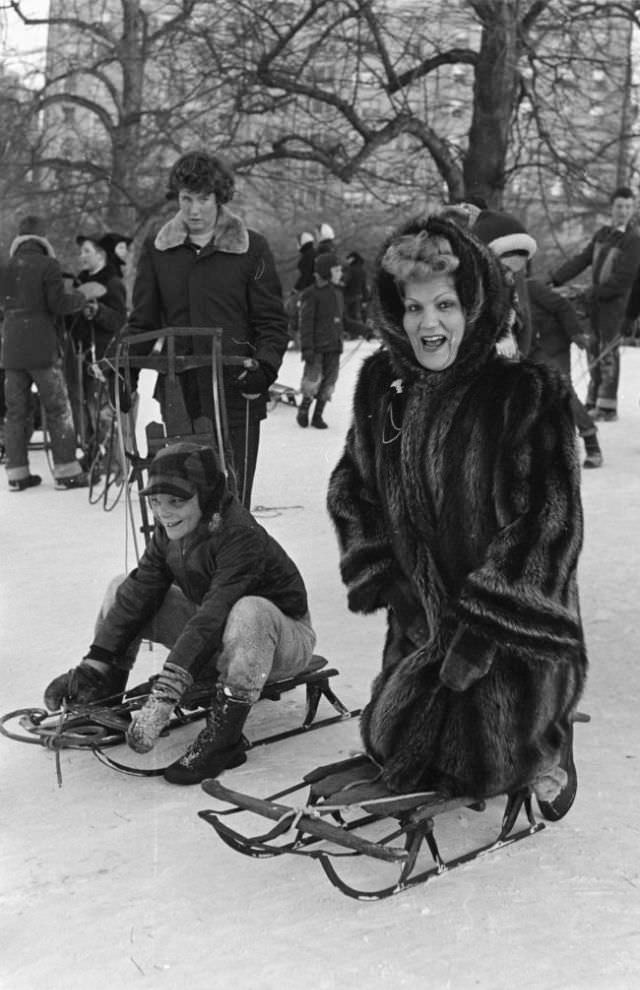
Sledding was just as popular, and children needed little convincing to head for the nearest hill. Photos from 1897 and 1900 show kids piling onto wooden sleds, launching down slopes without a second thought. The sleds were simple, the hills were free, and the fun was immediate.
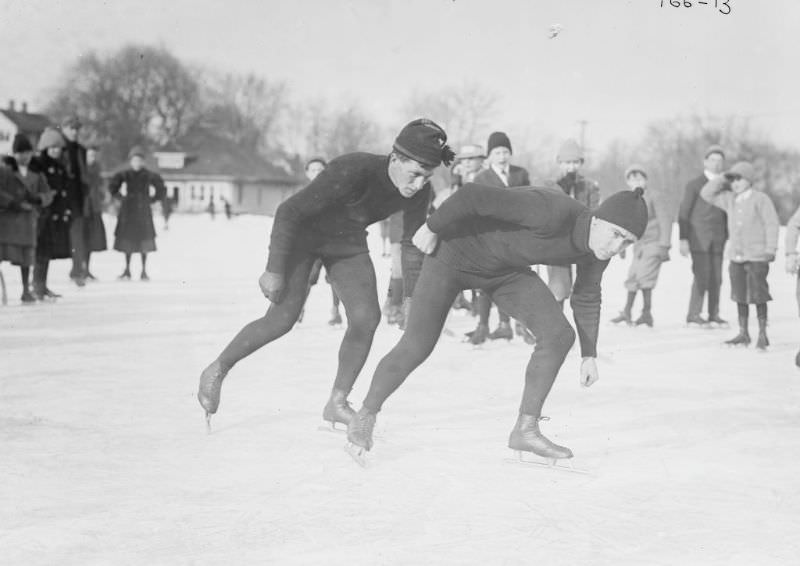
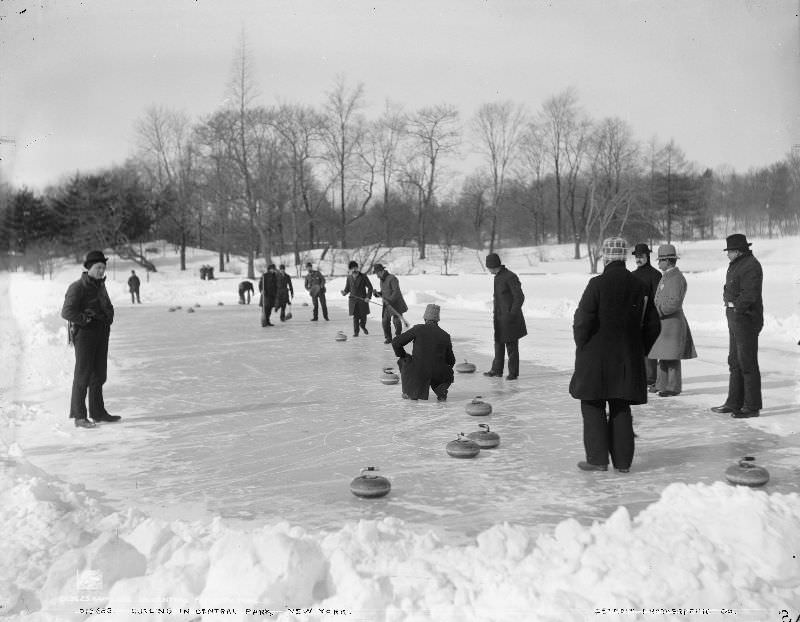
Adults found their own competitive pursuits. Speed skating races drew crowds at the turn of the century, with men carving tight lines across frozen surfaces. Curling, a sport with roots in 16th-century Scotland, had already found a committed following by 1900, with groups of men studying the ice as seriously as any modern athlete.
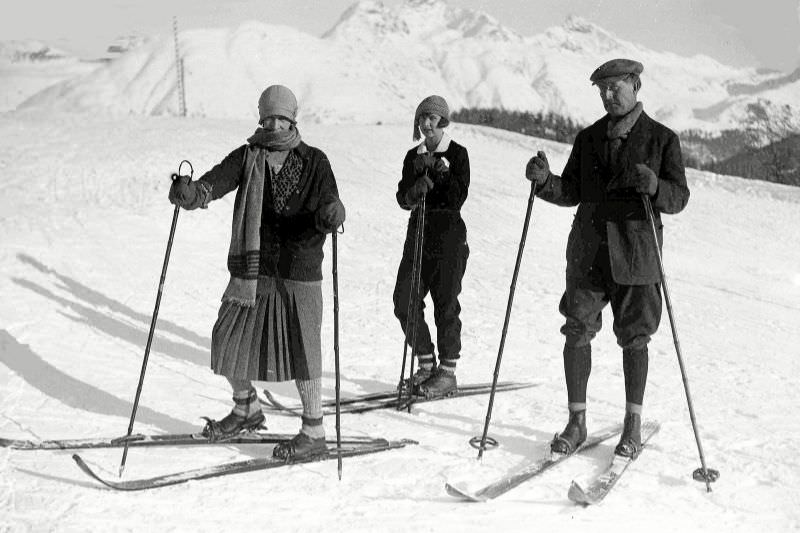
Many of today’s winter sports began as tools for survival in northern climates. Skis, snowshoes, and dog sleds were originally built so people could travel and work during heavy winters. As motorized transport took over those practical roles, the same activities shifted into recreation. Skiing became a leisure pursuit, drawing royalty and everyday people alike to the slopes.
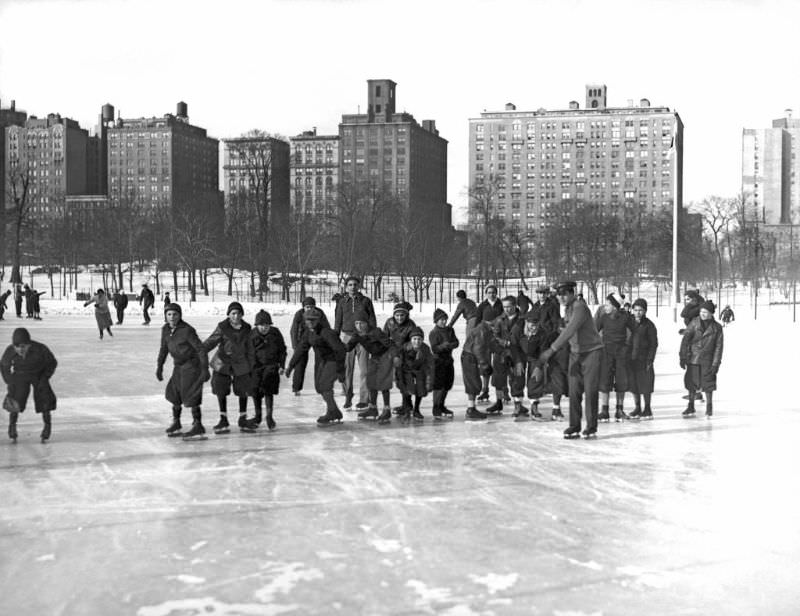
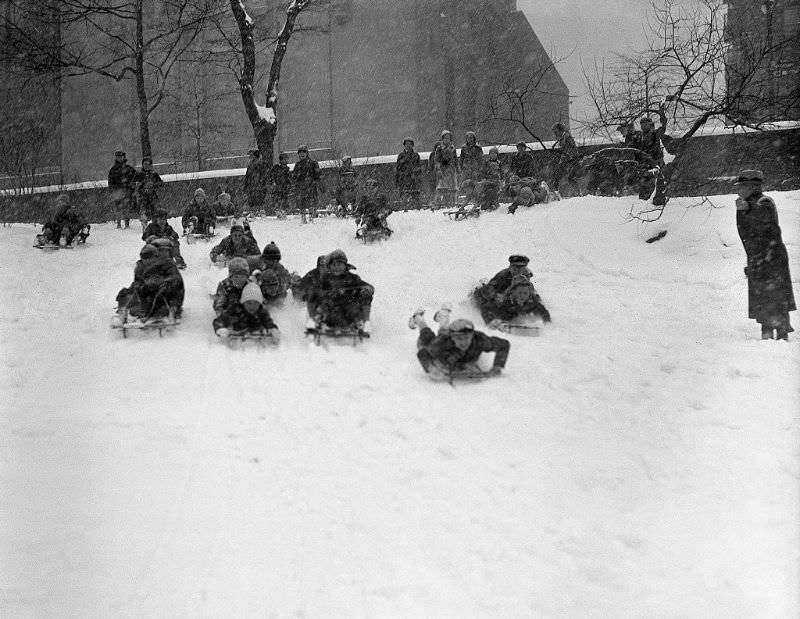
Ice skating races grew more organized through the 1930s, with competitors lining up in formation for timed events. Meanwhile, children kept sledding down every available hill, and snowball fights broke out wherever there was fresh powder and a willing opponent.
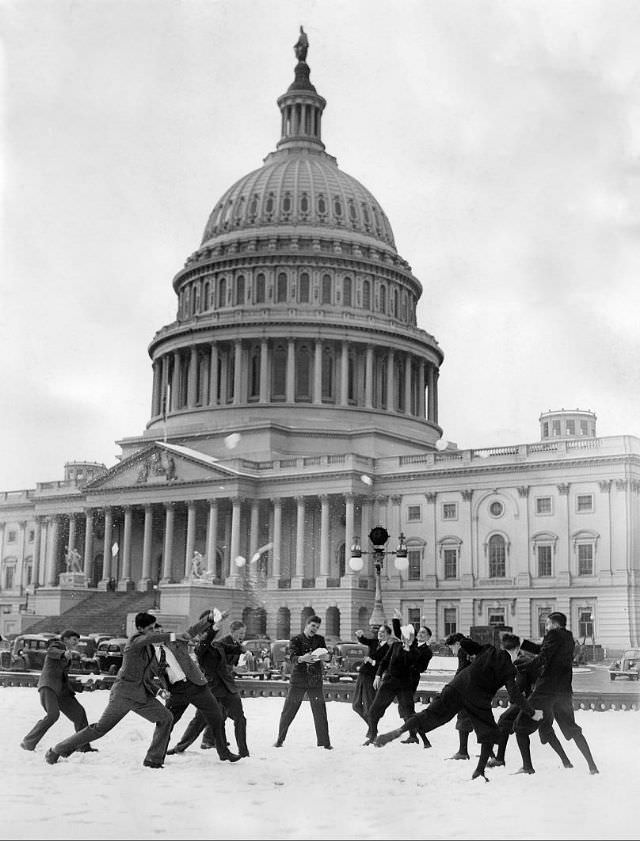
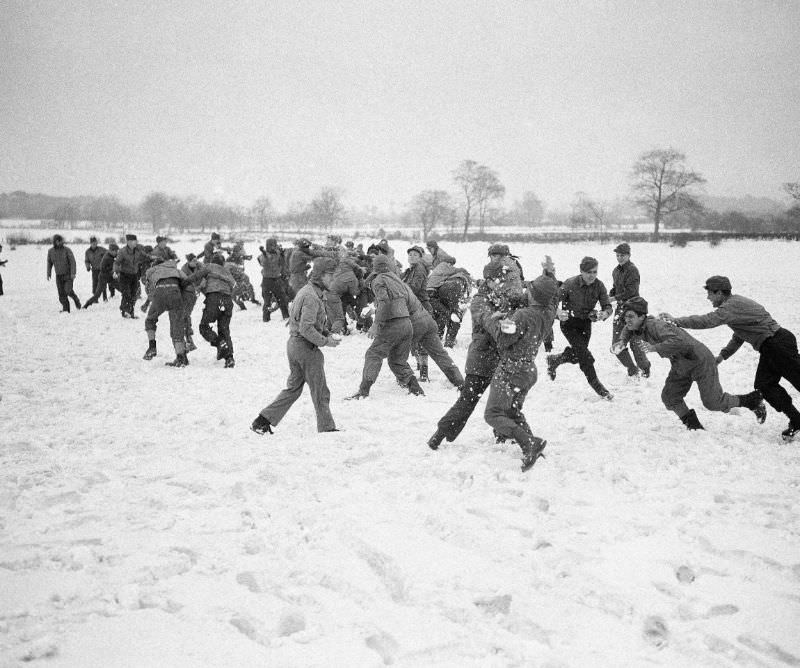
In January 1939, young men launched snowballs at each other on the grounds of the U.S. Capitol in Washington, D.C. Three years later, U.S. Army troops stationed in Northern Ireland did the same at their base. Snow, it turned out, had a way of cutting through even the most serious circumstances.
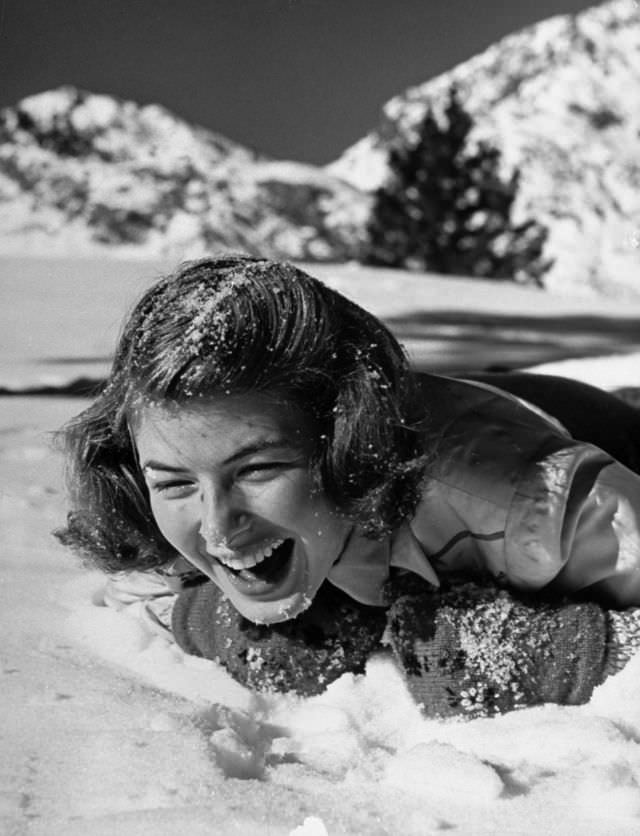
Actress Ingrid Bergman was photographed at June Lake resort in 1941, laughing as a friend sent a spray of snow across her during a ski trip. It’s a candid, unguarded moment — a reminder that even at the height of her fame, snow had the same effect on her as on everyone else.
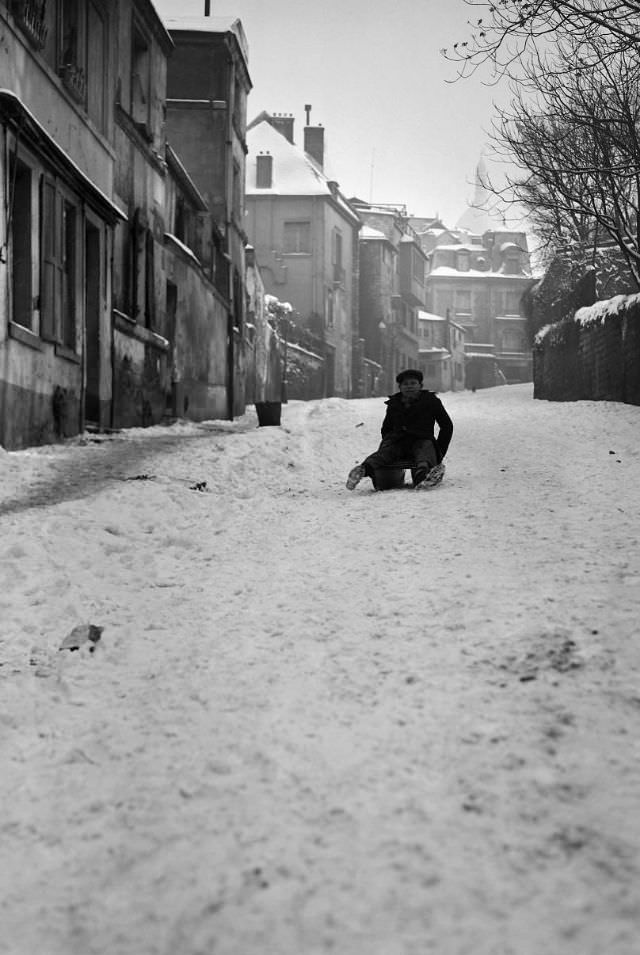
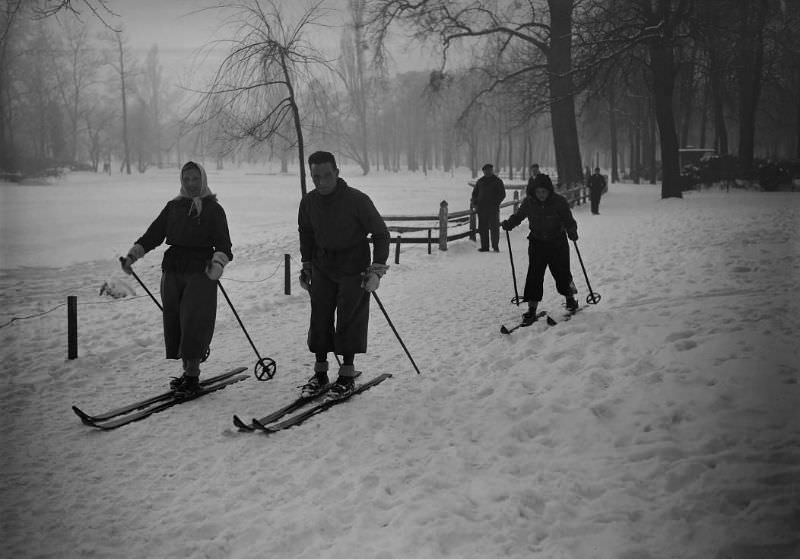
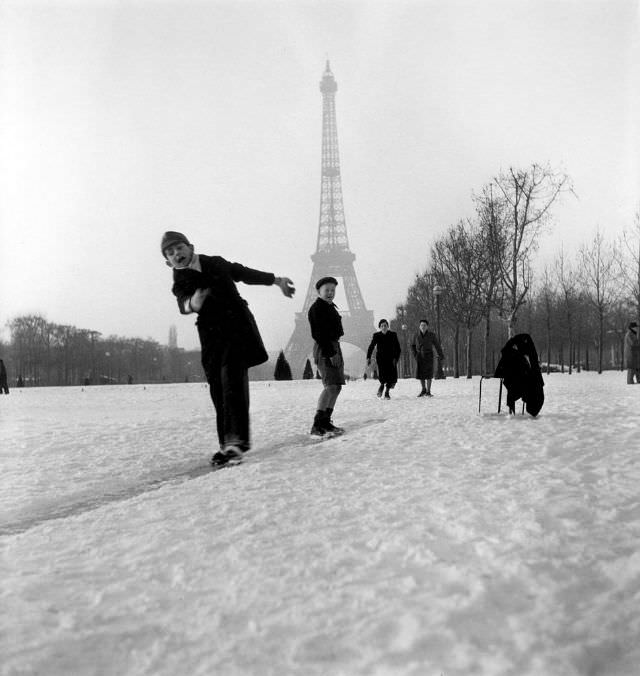
Paris in January 1945 was still living in the shadow of World War II, but snow brought a brief sense of normalcy. A boy sledded down the cobblestoned rue de l’Abreuvoir in Montmartre. A family skied through the Bois de Vincennes. Children slid across the ground in front of the Eiffel Tower. Life, despite everything, continued.
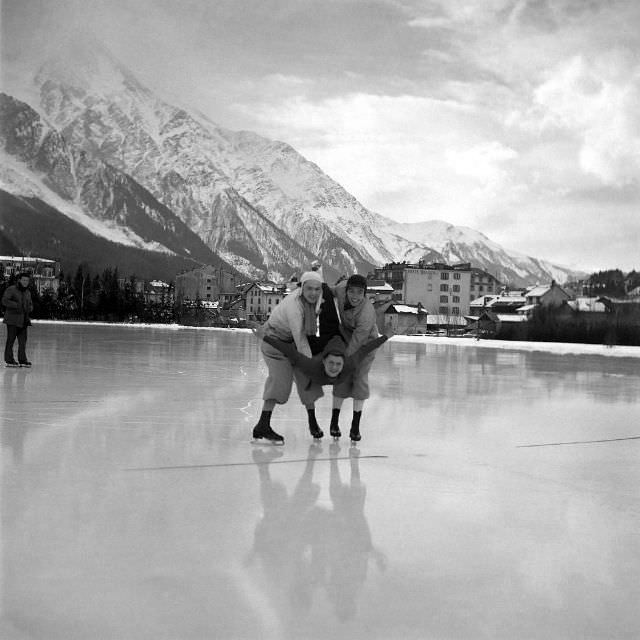
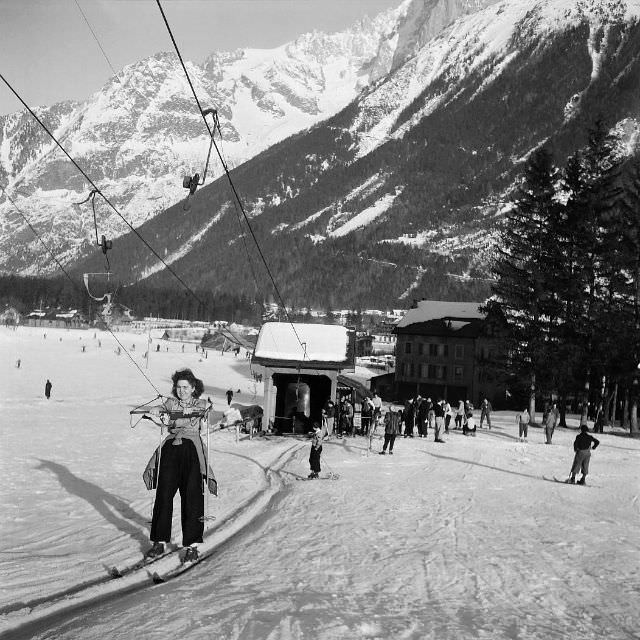
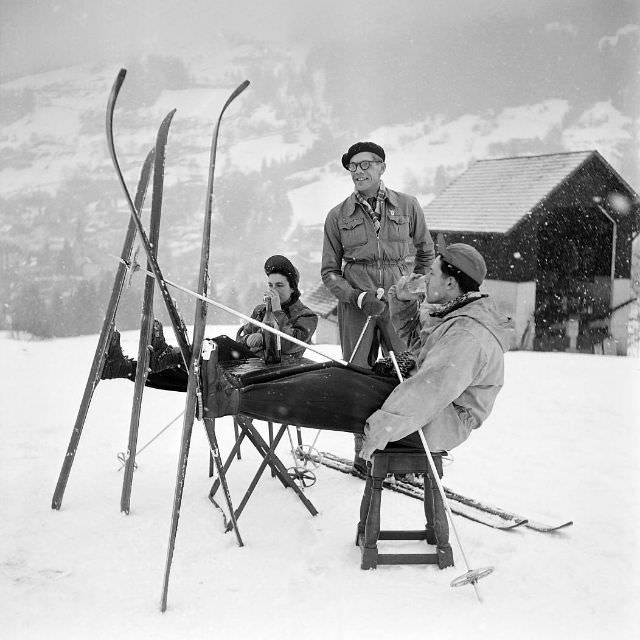
The postwar years saw a boom in winter recreation across Europe. The French Alps became a destination for ice skaters and skiers, and resorts like Chamonix filled with holidaymakers. In February 1949, skiers near Saint-Gervais-les-Bains stopped for drinks beside the cable car station — a ritual that felt as much a part of the skiing day as the runs themselves.
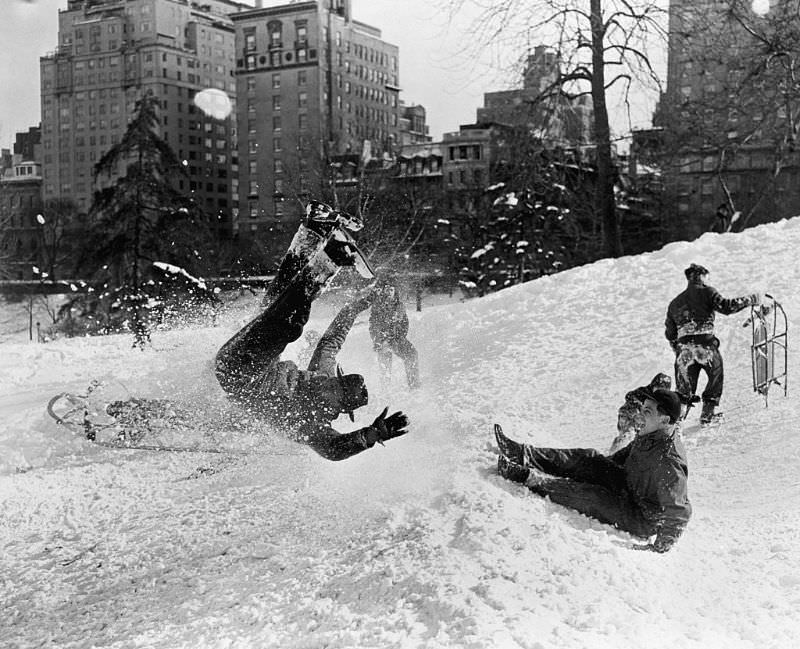
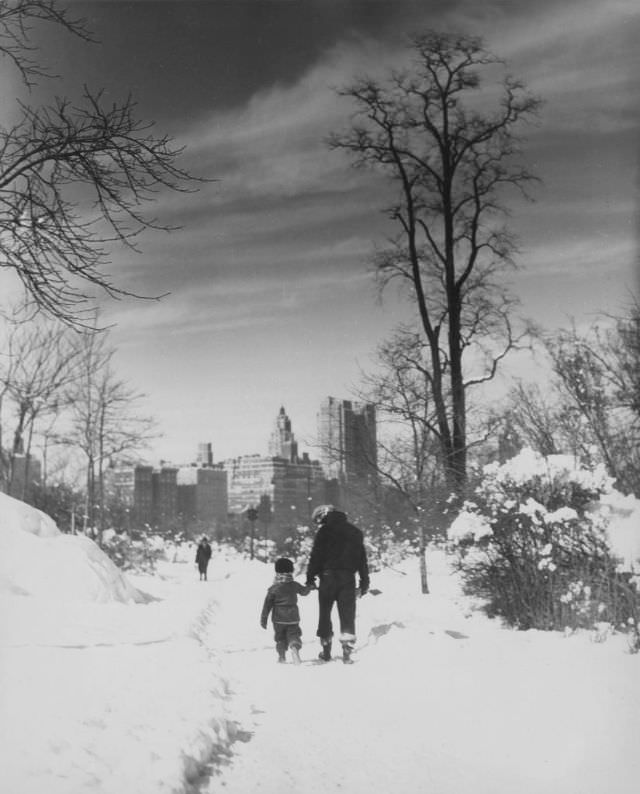
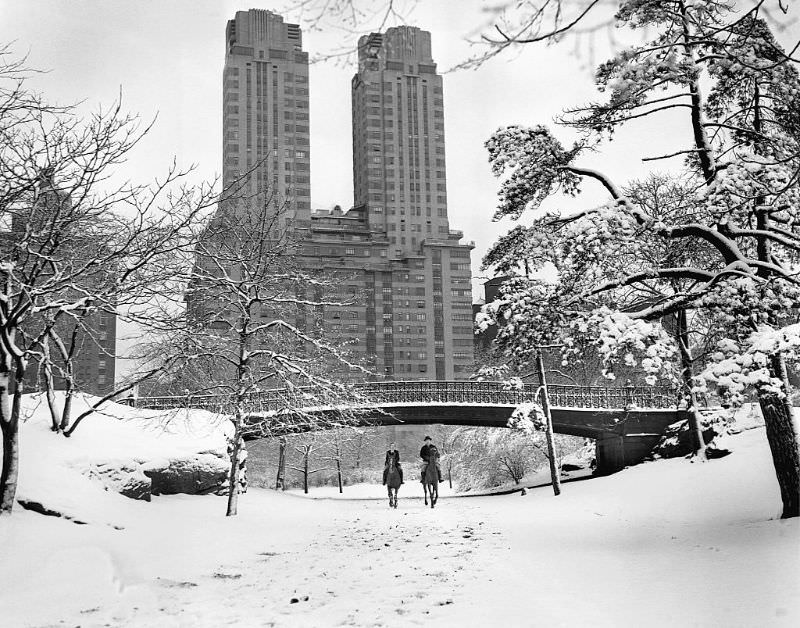
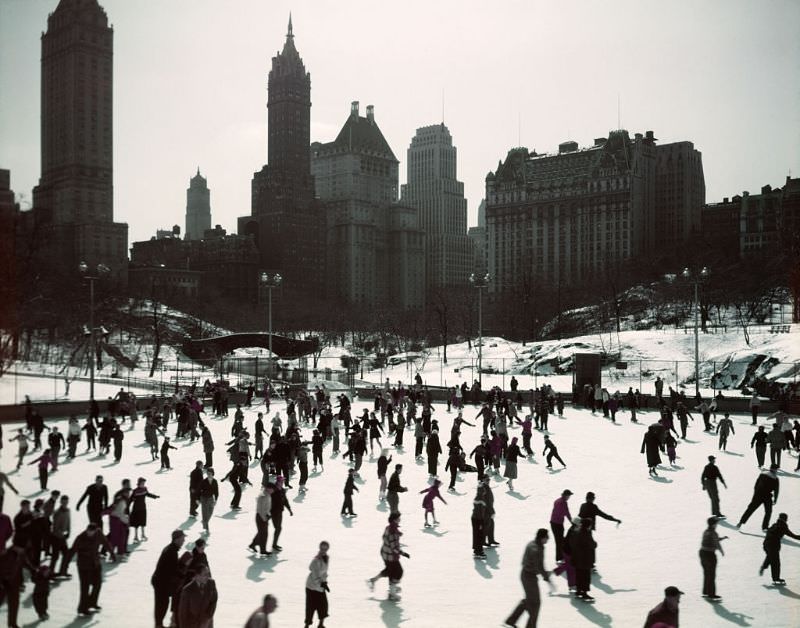
In New York during the 1950s, Central Park remained the go-to destination when snow fell. People watched pigeons from benches, children ran through drifts, and ice skaters circled frozen ponds just as their grandparents had decades before.
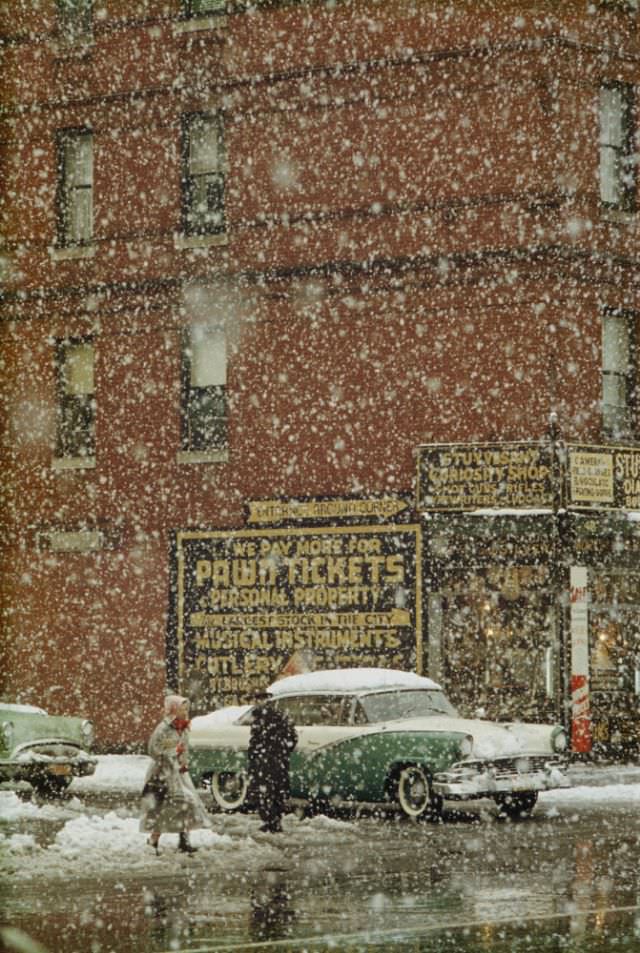
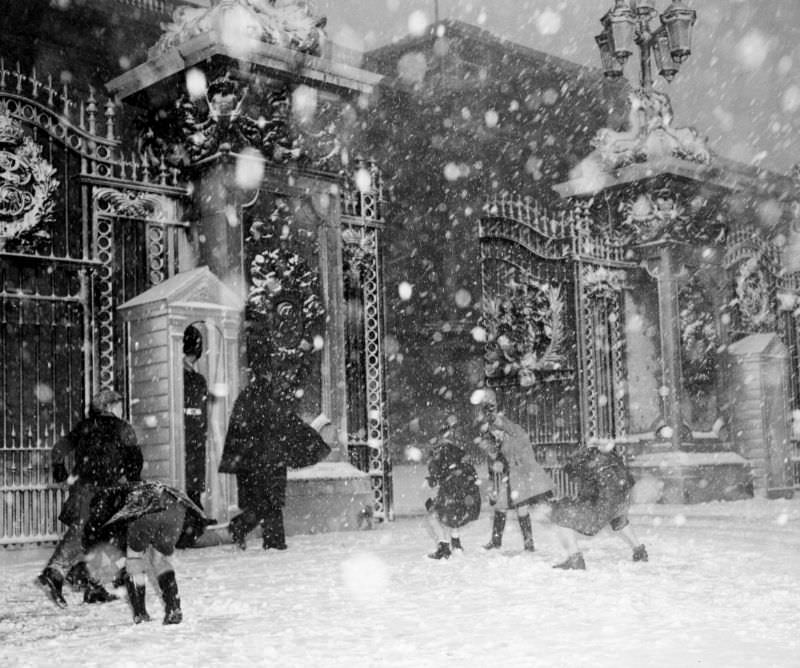
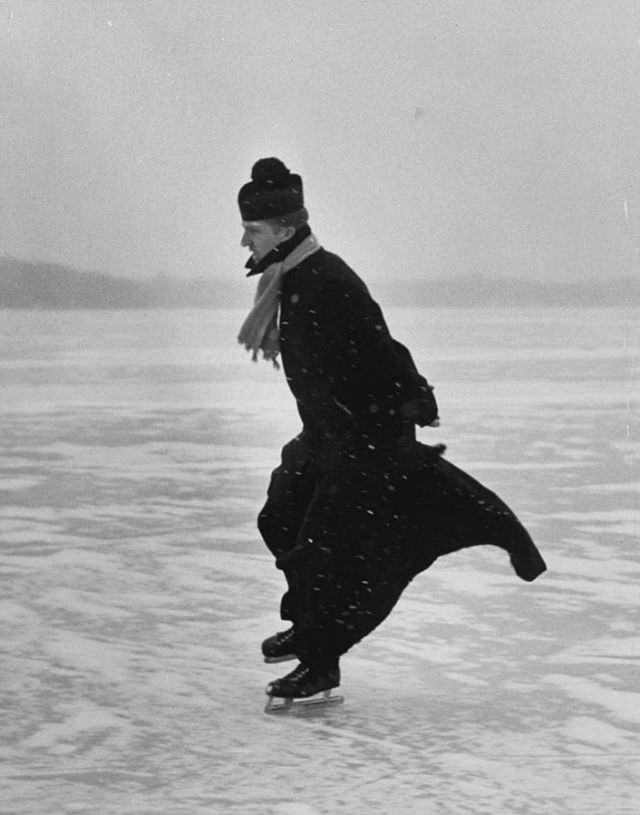
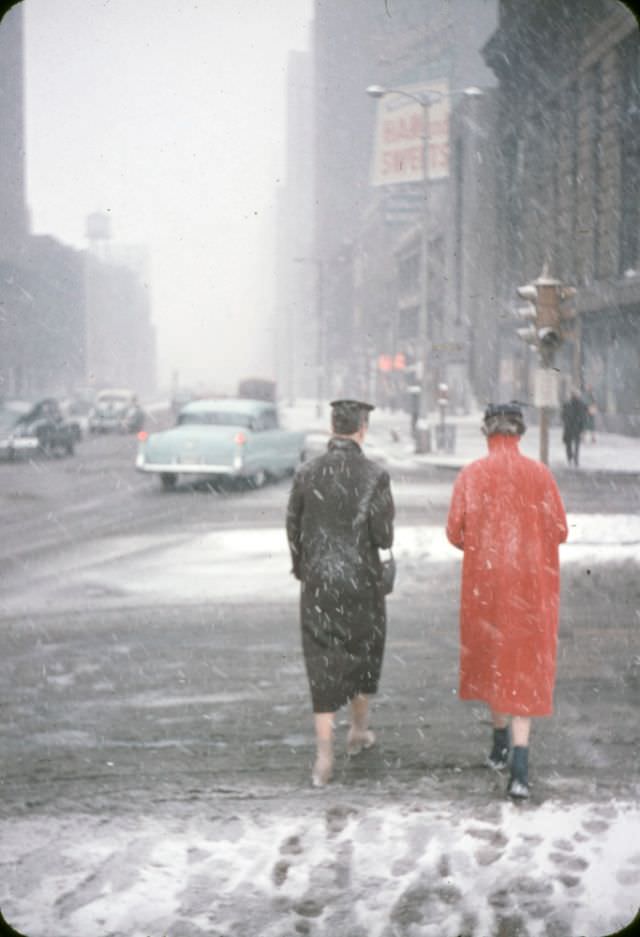
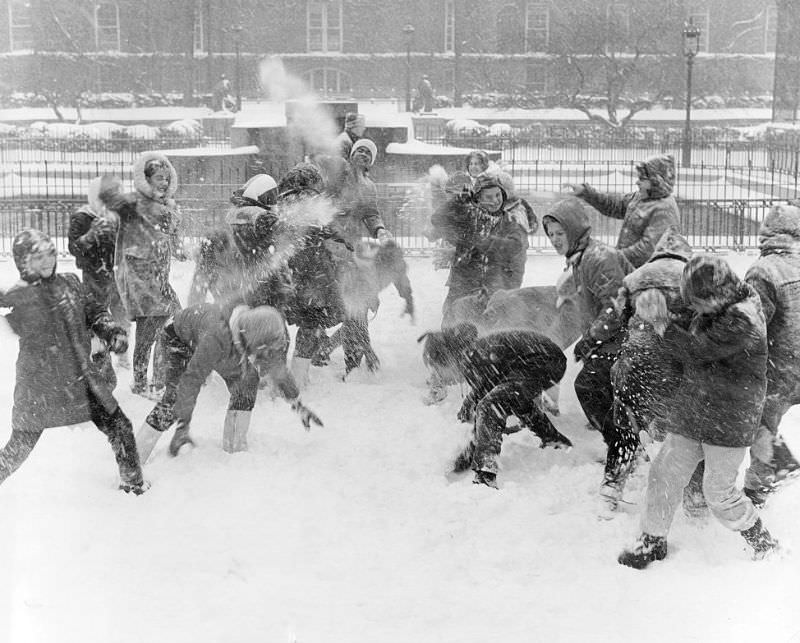
Children threw snowballs in front of Buckingham Palace in January 1955. That same year, a priest was photographed gliding across the ice on skates — the image captured by photographer John Dominis. Two women pushed through a Chicago snowstorm in 1956, scarves pulled tight against the wind.
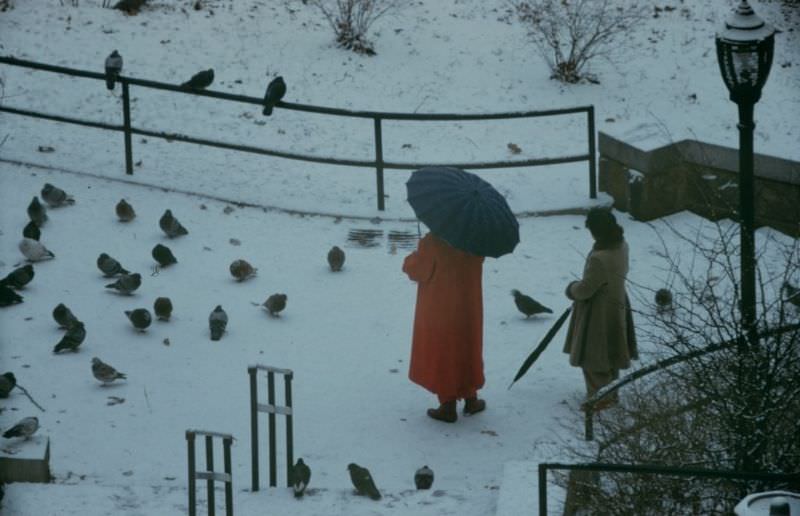
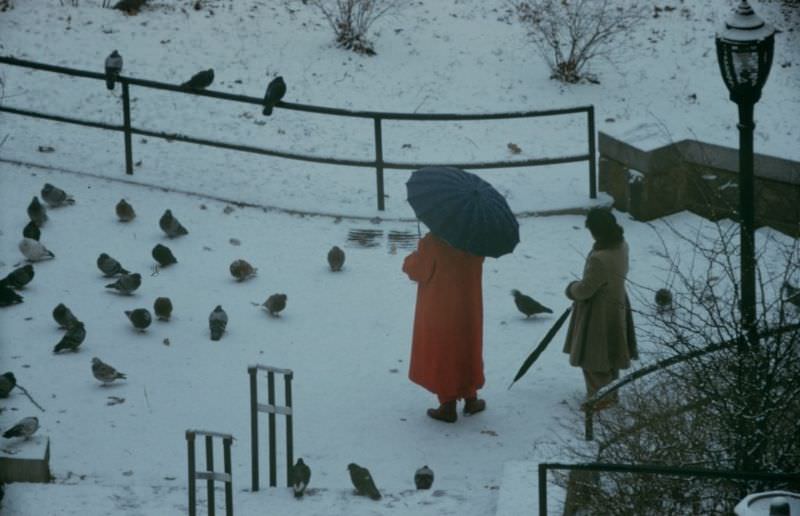
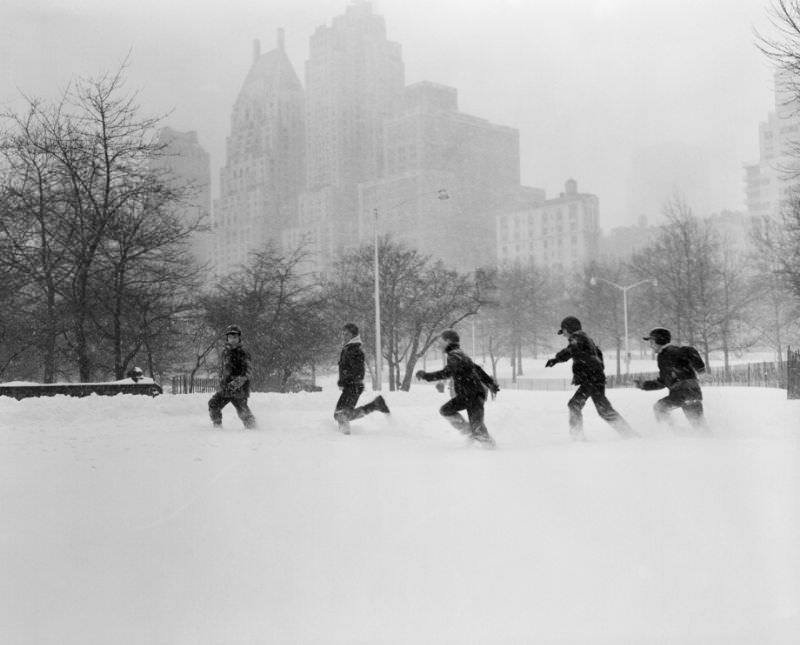
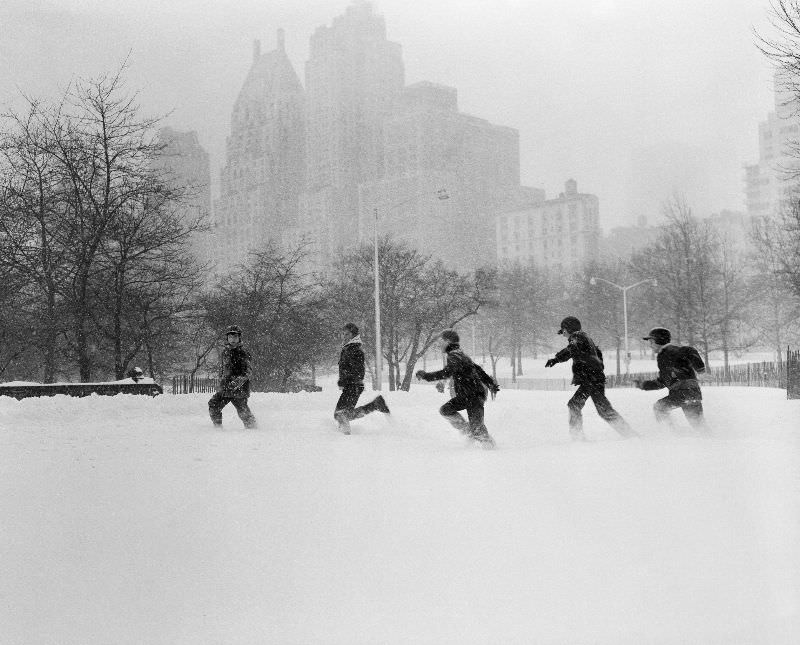
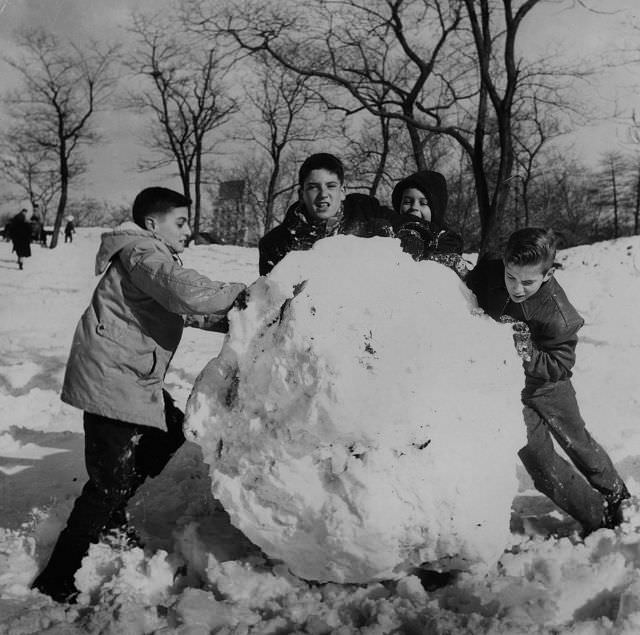
Central Park in 1957 offered a quieter kind of winter pleasure — two people sitting still, watching pigeons move through a snow-covered park. A year later, children were back to running full speed through drifts, and by 1960 someone had managed to roll a snowball to an improbable size.
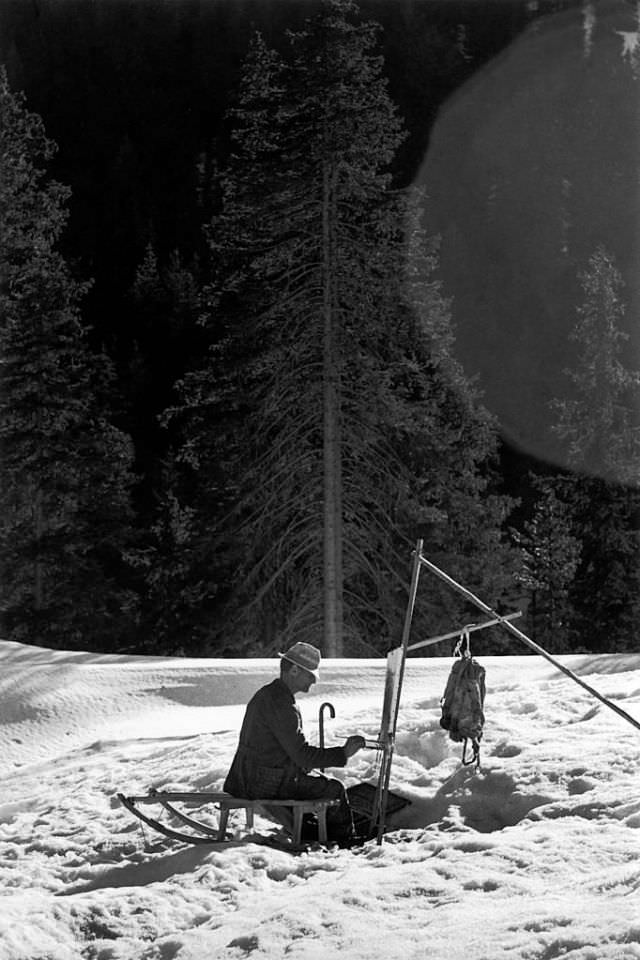
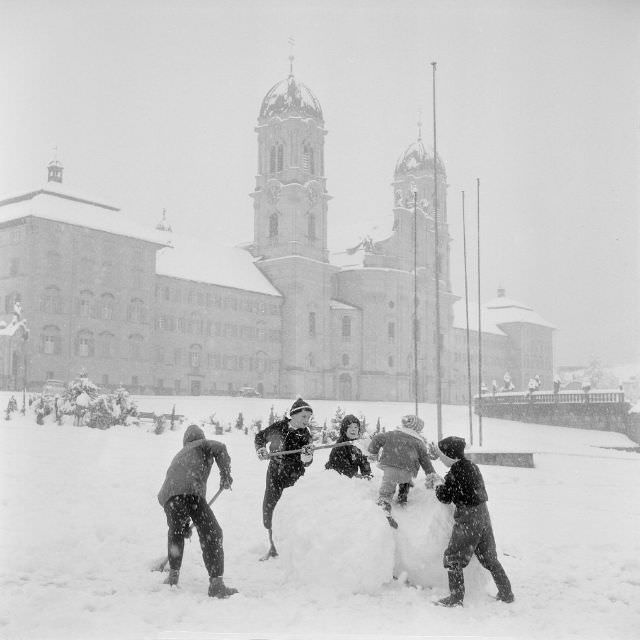
A painter set up his easel in the snow-covered Dolomites in 1959, working in near-freezing temperatures to capture the mountain landscape. In Einsiedeln, Switzerland, children played in the snow in the shadow of the town’s famous abbey. These were ordinary days made extraordinary by the weather.
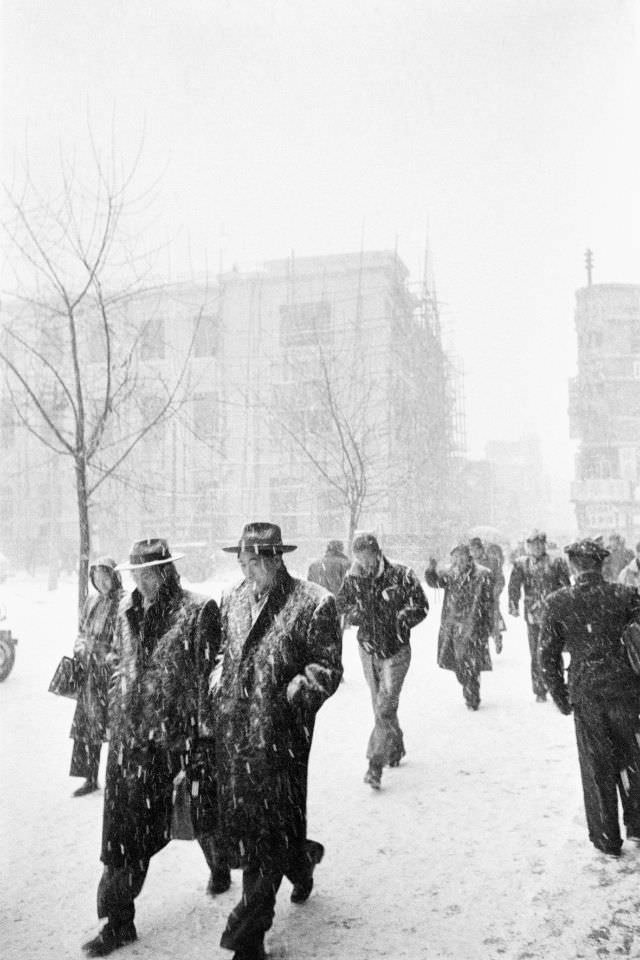
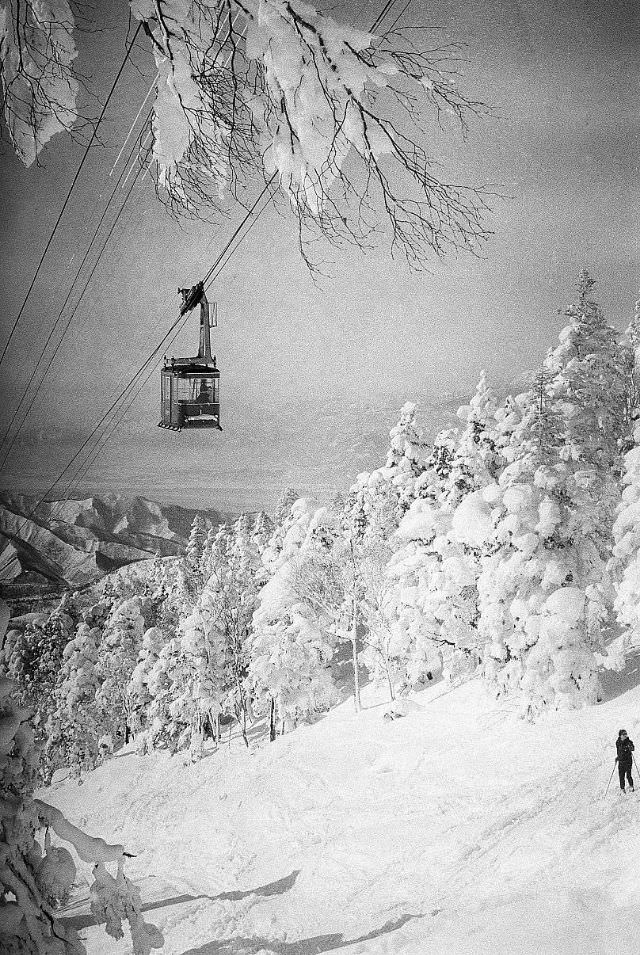
Seoul’s Meongdong district and Japan’s Shiga Kogen resort in Nagano showed that winter recreation was not limited to the West. By February 1961, ski lifts were already carrying visitors up the slopes of the Japanese Alps, and the sport had firmly taken root across Asia.
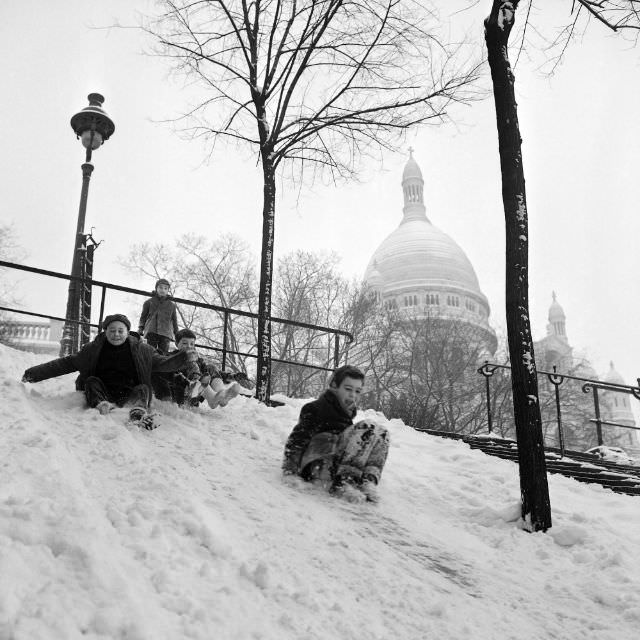
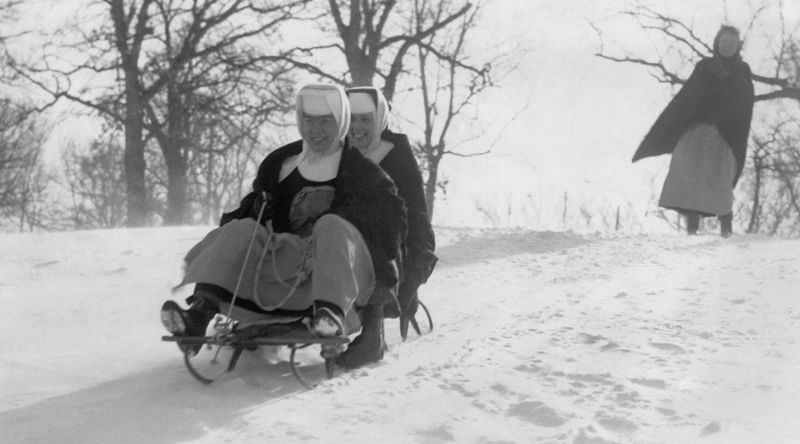
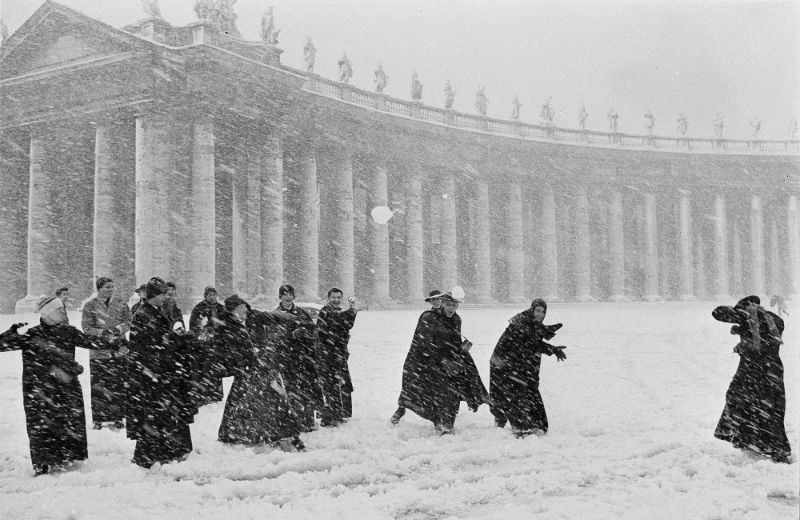
In February 1963, children sledded down the slopes of Montmartre in Paris. Two years later, nuns from the St. Mary of the Angels convent in Rock Island, Illinois, were photographed sledding at Long View Park. In Vatican City that same month, student priests hurled snowballs in St. Peter’s Square.
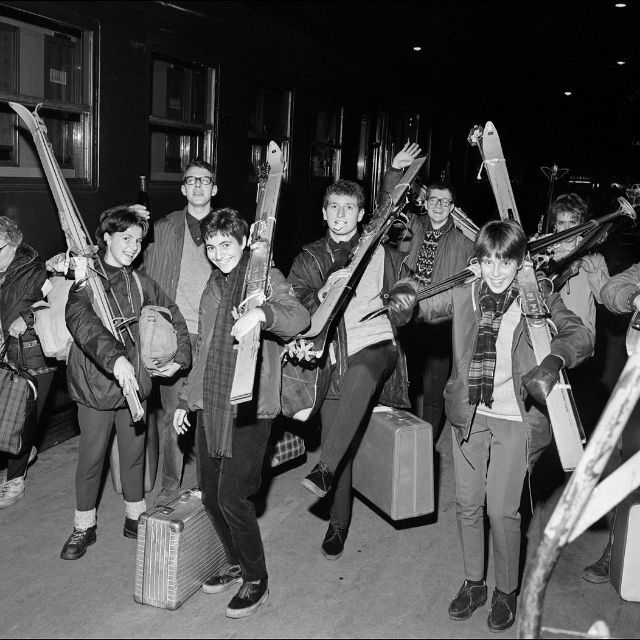
By December 1965, skiing had become a full-blown cultural event in France. Young Parisians gathered at Gare de Lyon days before Christmas, skis over their shoulders, heading off for winter sports holidays in the mountains. The platforms were packed with excitement and equipment.
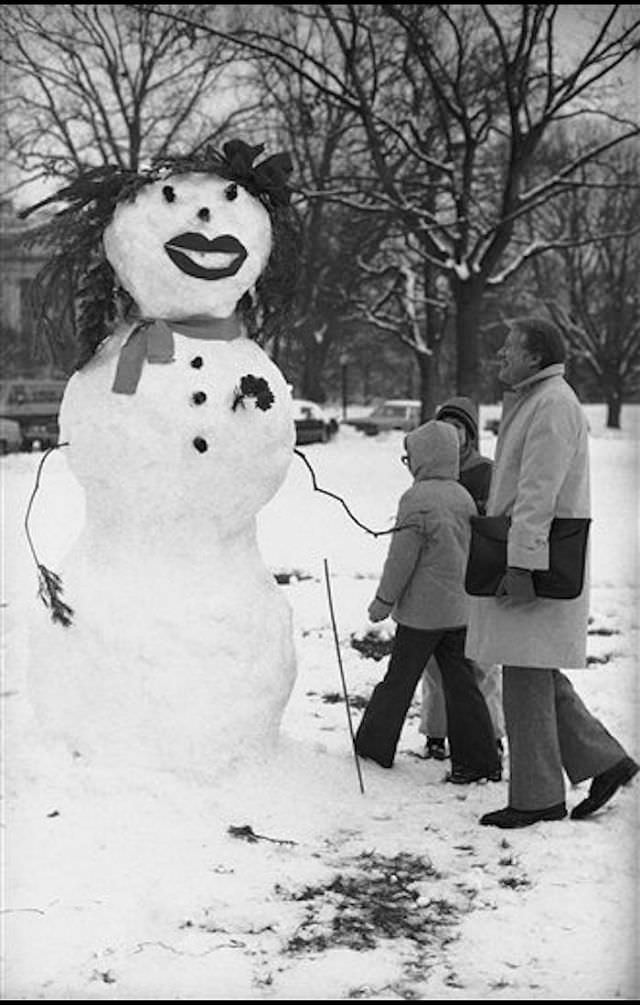
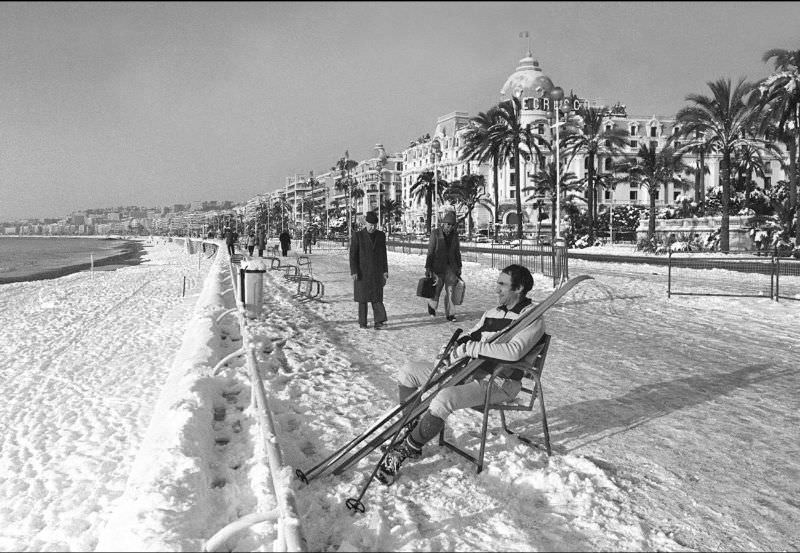
In January 1978, President Jimmy Carter stepped outside the White House to admire a snowman built on the front lawn. Seven years later, in Nice, France — a city not known for heavy snowfall — a man removed his skis after a rare winter storm blanketed the Promenade des Anglais. When snow arrives somewhere unexpected, people find a way to enjoy it.





perfect for bruises or spacing out
I am assuming this is in early 1950 before the war. People going about their business not knowing what was lurking around the corner.