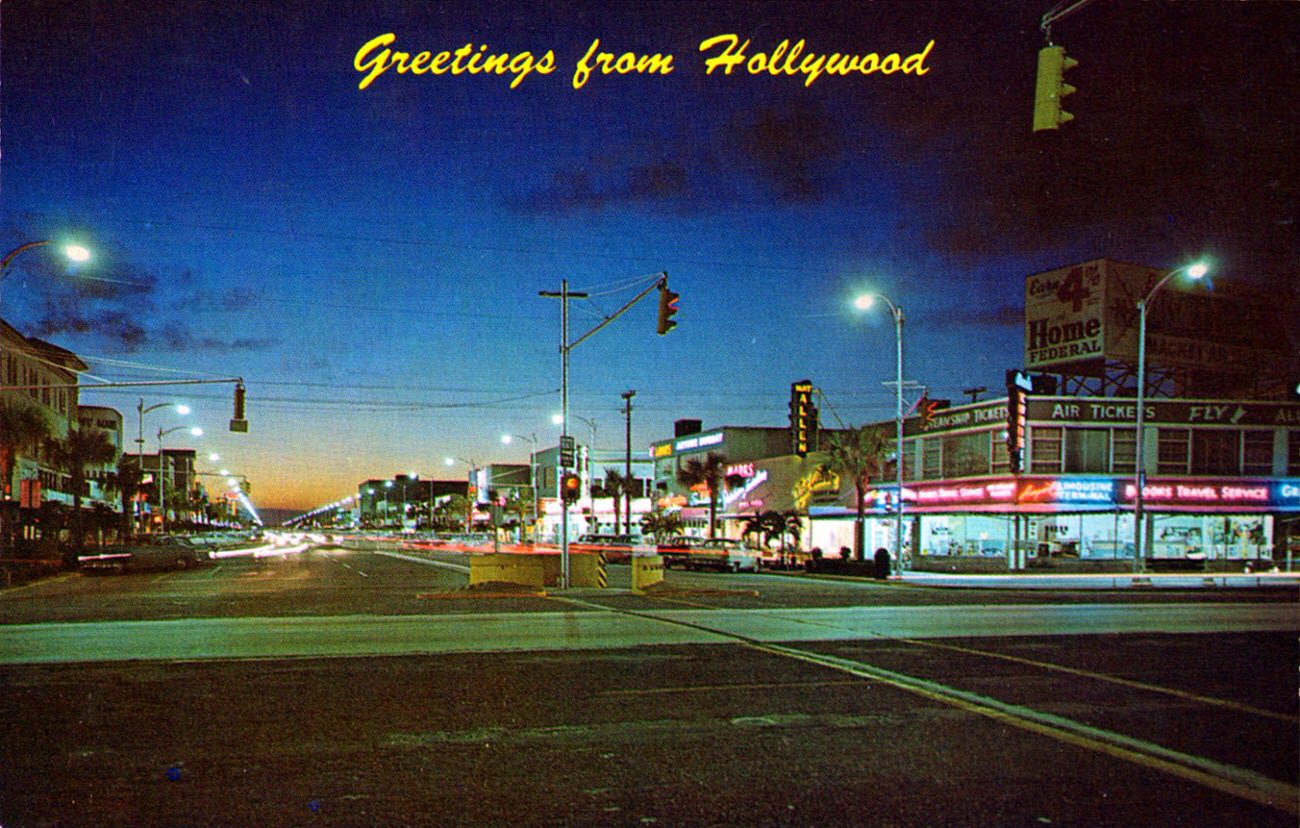
Hollywood in the 1960s was unlike any other place in America. It was loud, colorful, and constantly moving. The neighborhood carried the weight of its own legend — movie studios, famous landmarks, and a sidewalk lined with the names of stars — while also being a real community where people lived their everyday lives. Tourists flooded the streets alongside residents, all drawn to the same stretch of boulevard that had become one of the most recognizable addresses in the world.
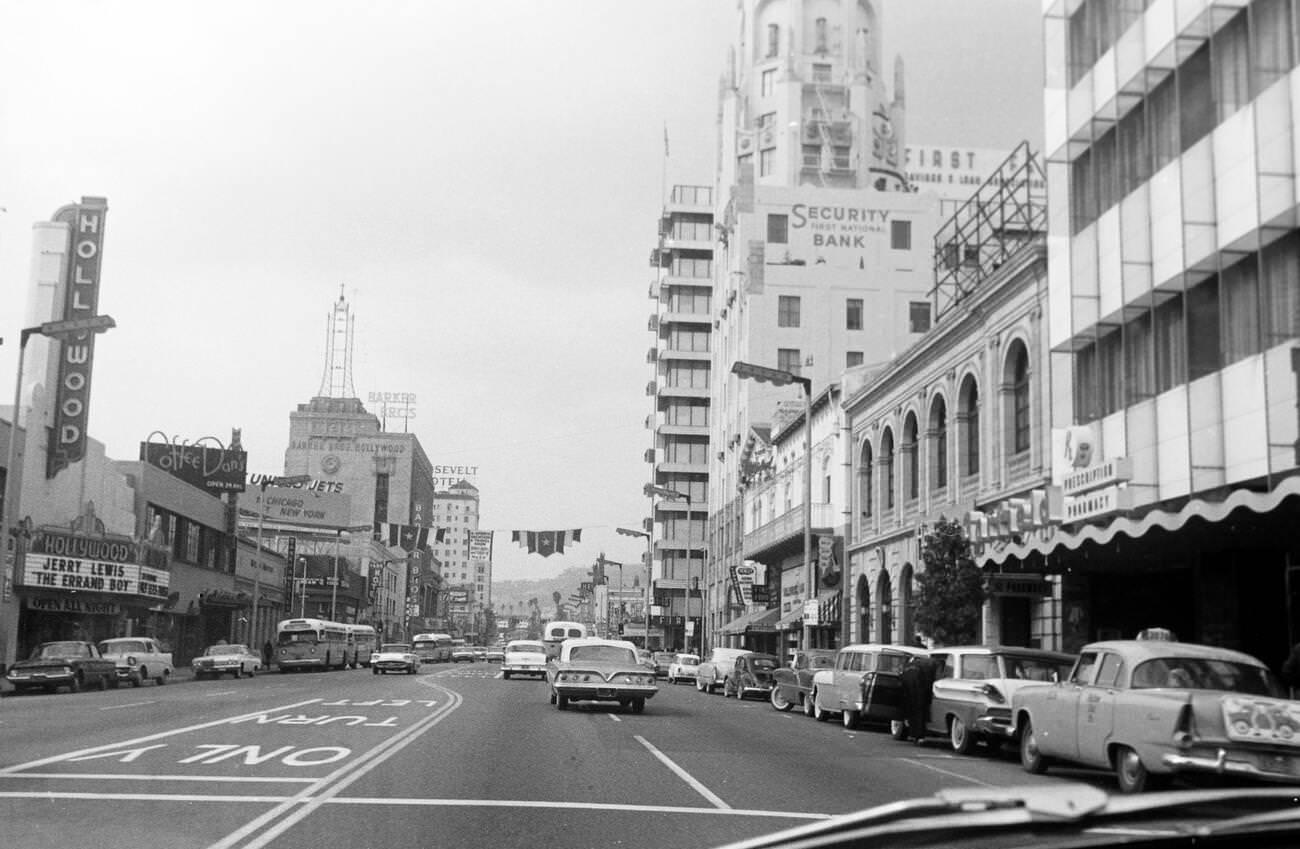
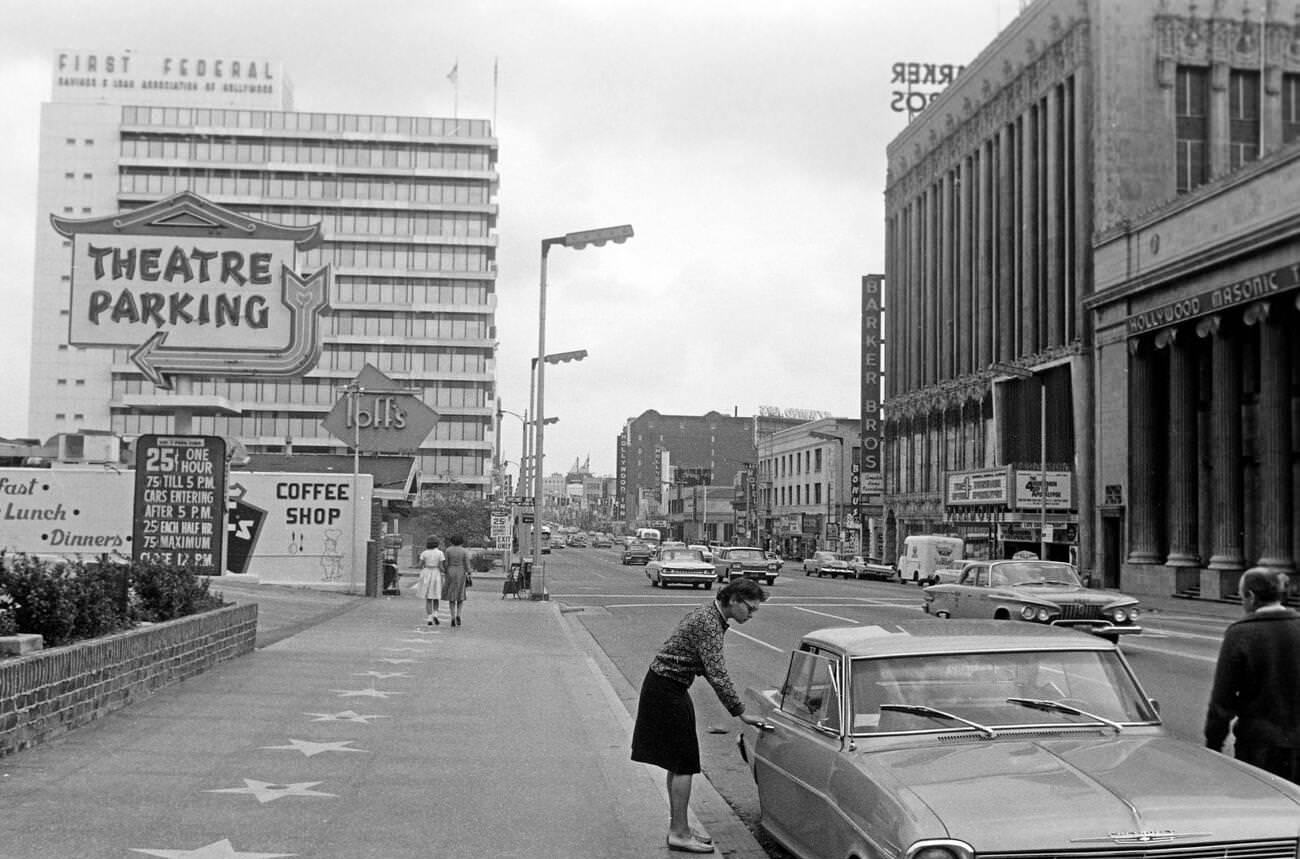
Hollywood Boulevard in the early part of the decade still had the polished energy of a city proud of its identity. Shops, theaters, and restaurants lined the street, and foot traffic was steady at almost any hour. The Hollywood Walk of Fame, which had only been established in 1960, was already drawing crowds of tourists craning their necks to find the names of their favorite actors pressed into the pink terrazzo stars beneath their feet.
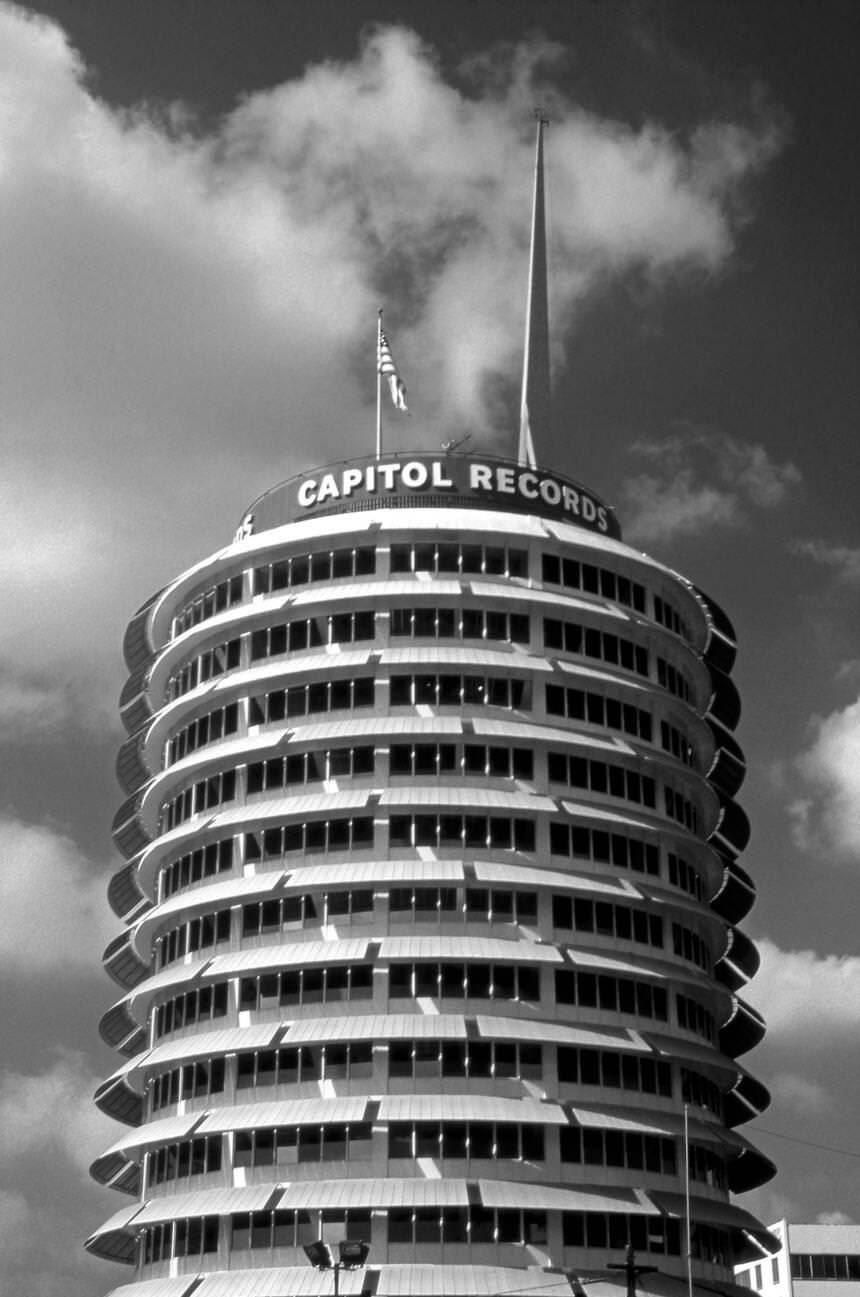
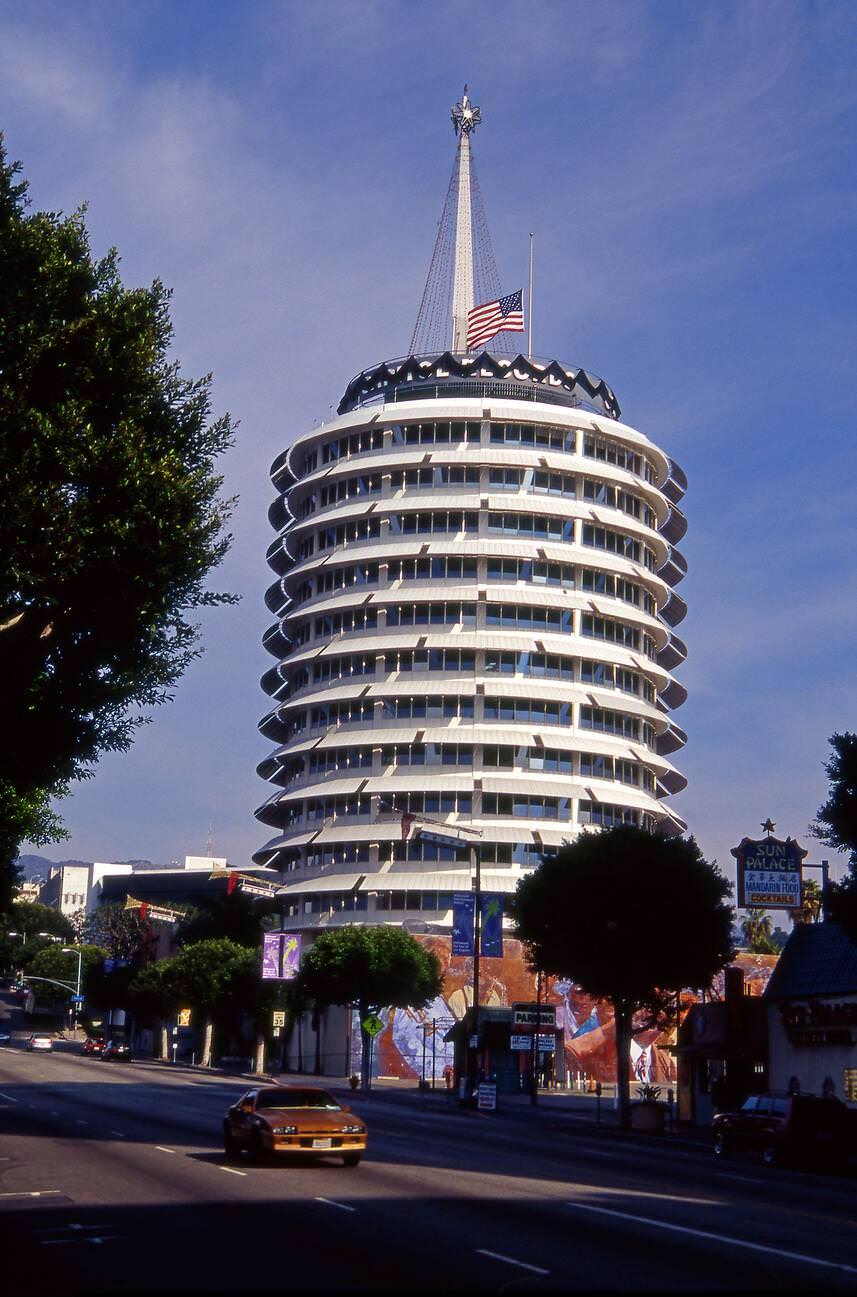
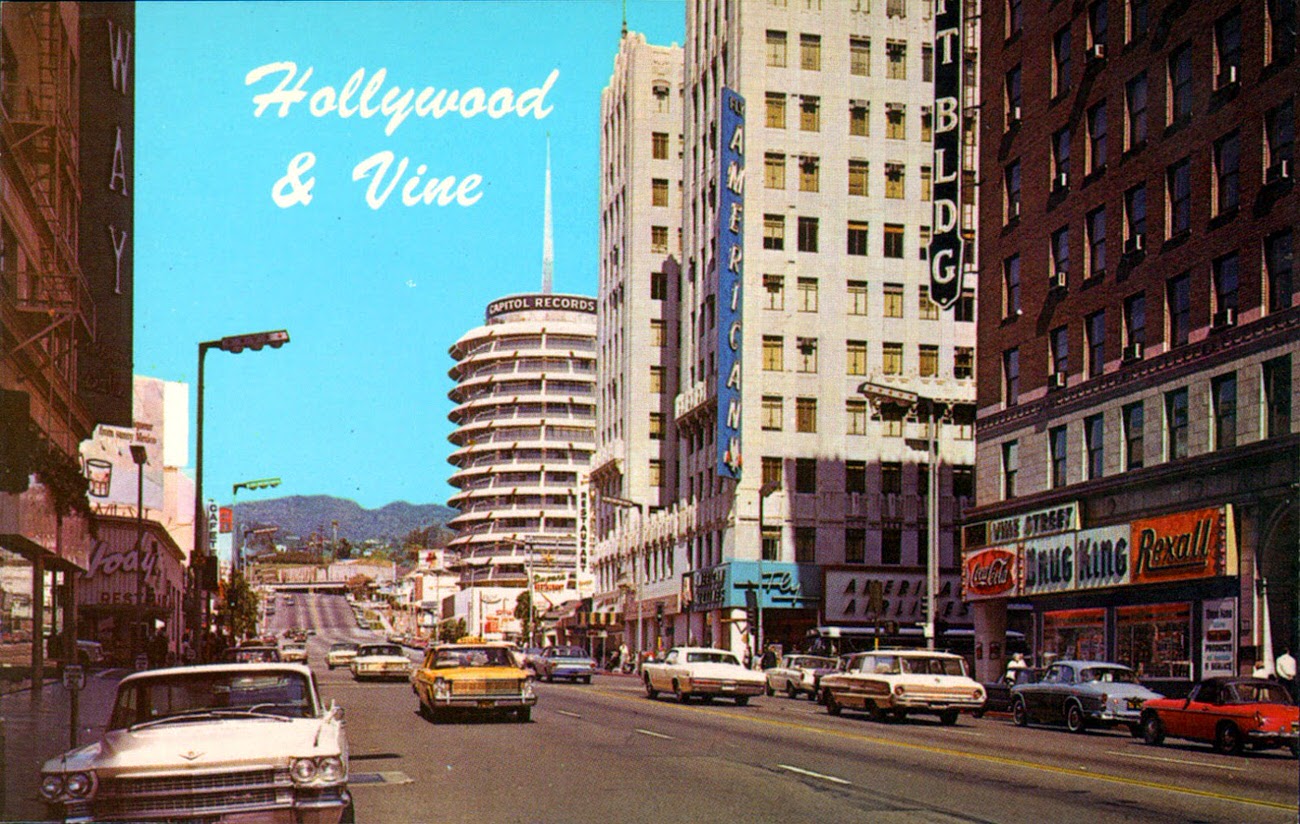
The music industry had a strong physical presence in Hollywood as well. The Capitol Records building, completed in 1956 just north of Hollywood and Vine, became one of the most distinctive structures in the city. Its circular, stacked design was meant to resemble a stack of records on a turntable. Inside, artists recorded some of the decade’s most important music. The building was impossible to miss and served as a constant reminder that Hollywood was as much about sound as it was about film.
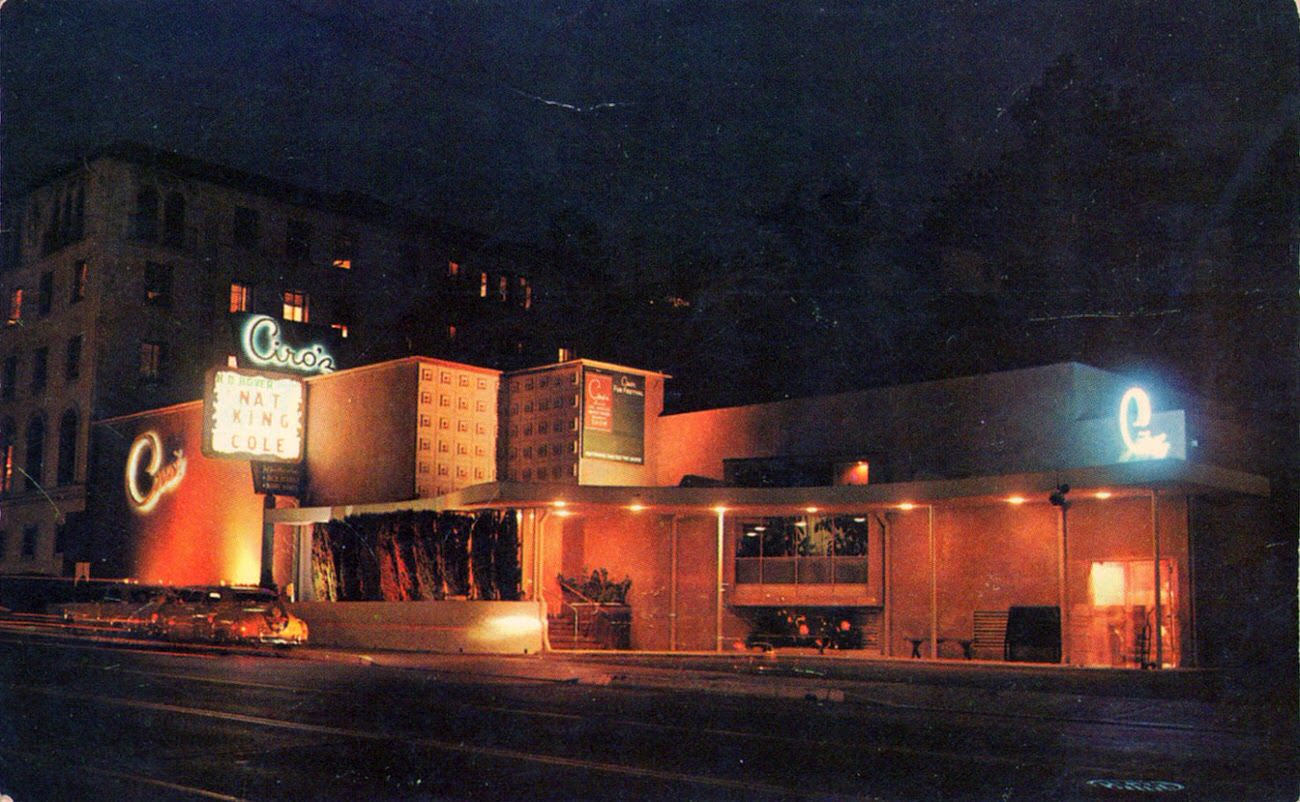
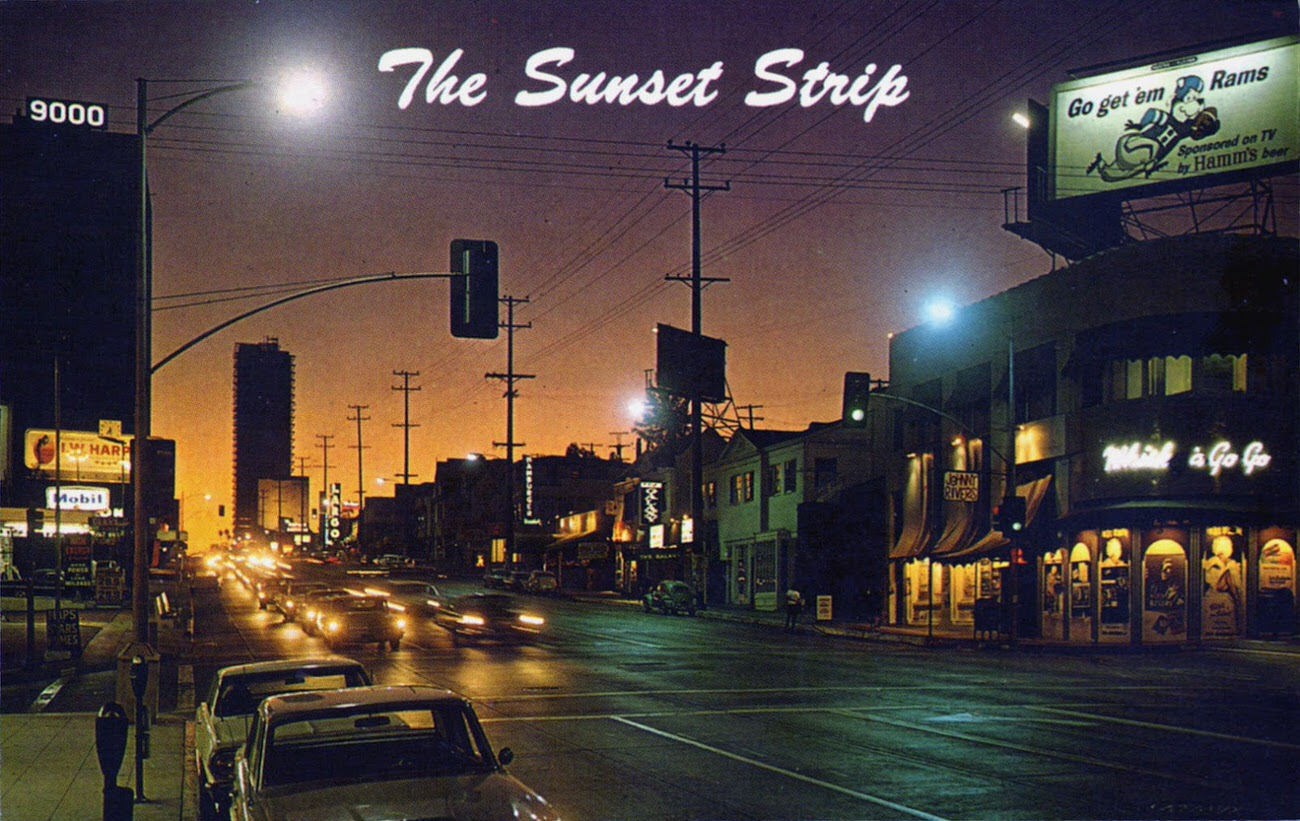
The Sunset Strip — the stretch of Sunset Boulevard running through West Hollywood — was the heartbeat of the city’s nightlife. By day, it was a corridor of billboards advertising the latest films and albums. By night, it transformed into something else entirely. Clubs like Ciro’s had been drawing Hollywood royalty since the 1940s, and the tradition carried well into the 1960s. Newer venues pushed the Strip further into rock and roll territory, and the whole boulevard hummed with the noise of a city that never fully went to sleep.
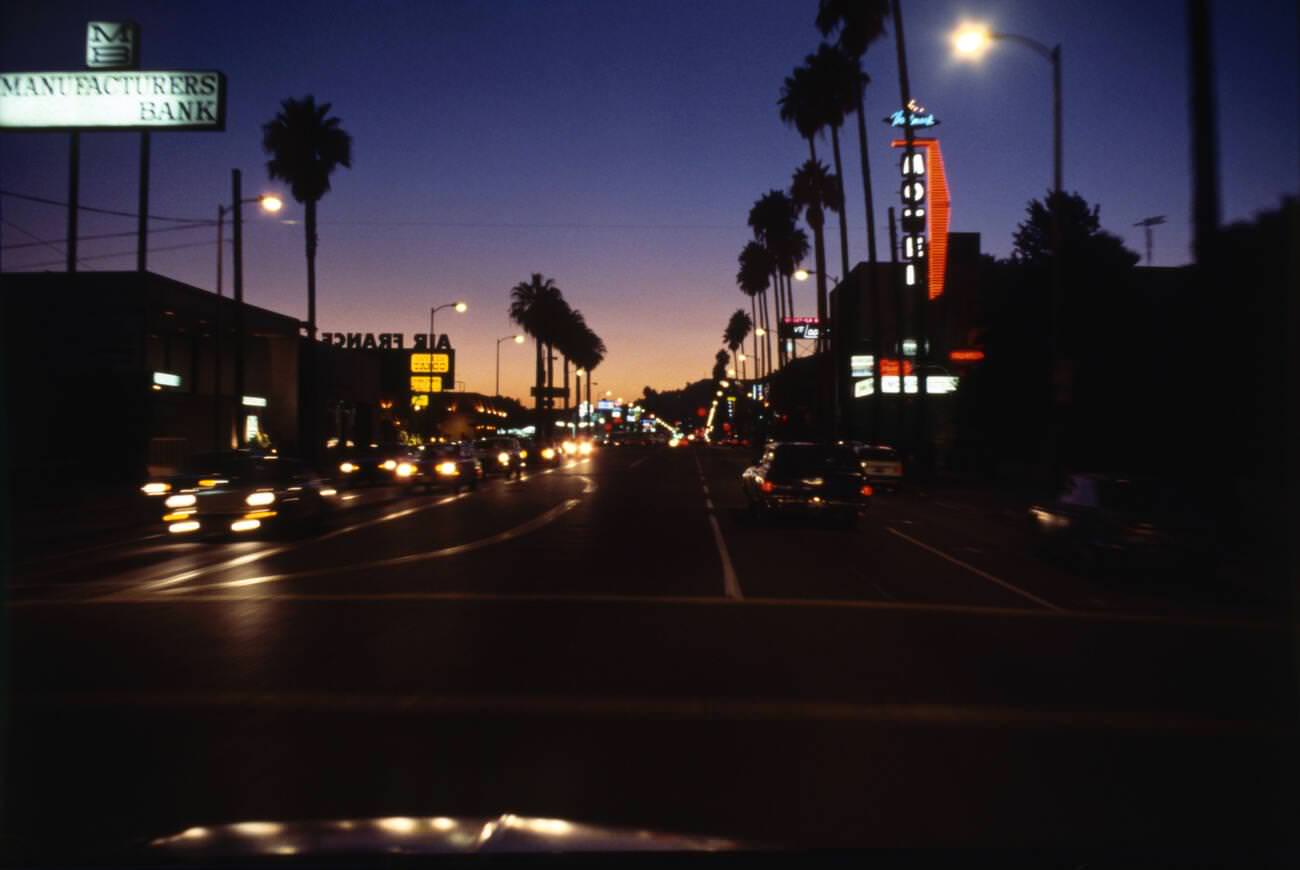
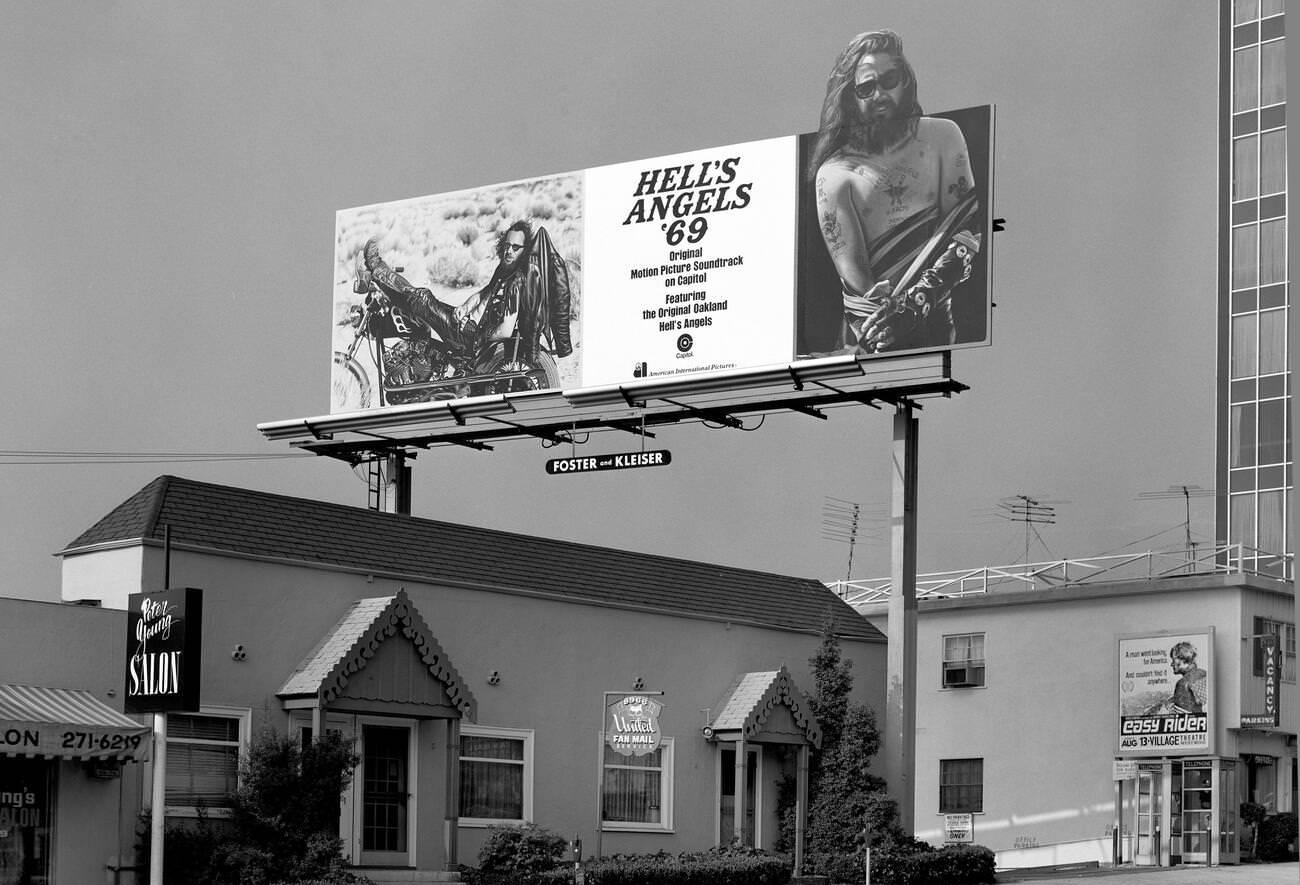
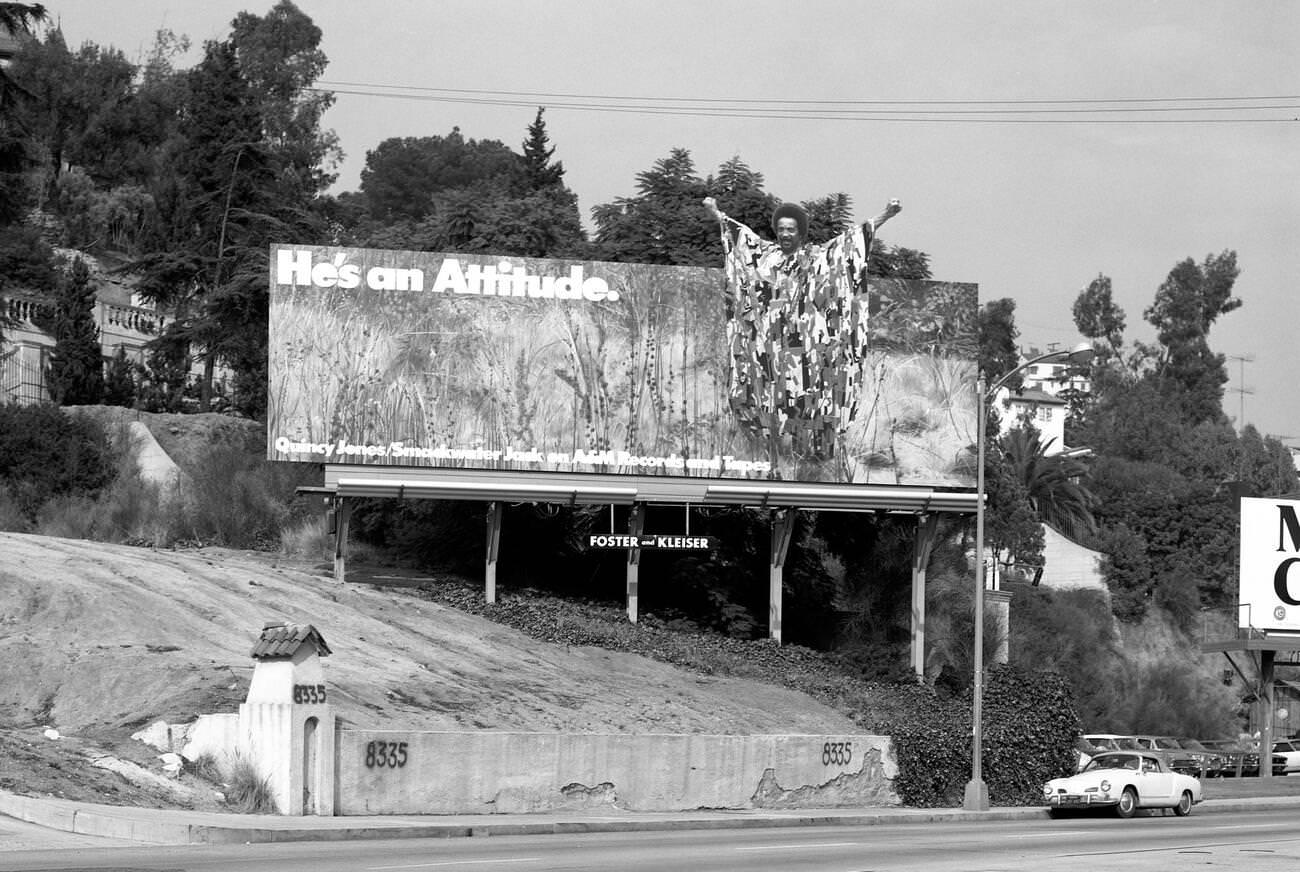
Billboards were a fixture of the Strip and served as a rolling gallery of popular culture. Movie studios and record labels paid top dollar for space on the most visible walls along Sunset. A billboard here wasn’t just advertising — it was a statement. Getting your face or your film on the Strip meant you had arrived.
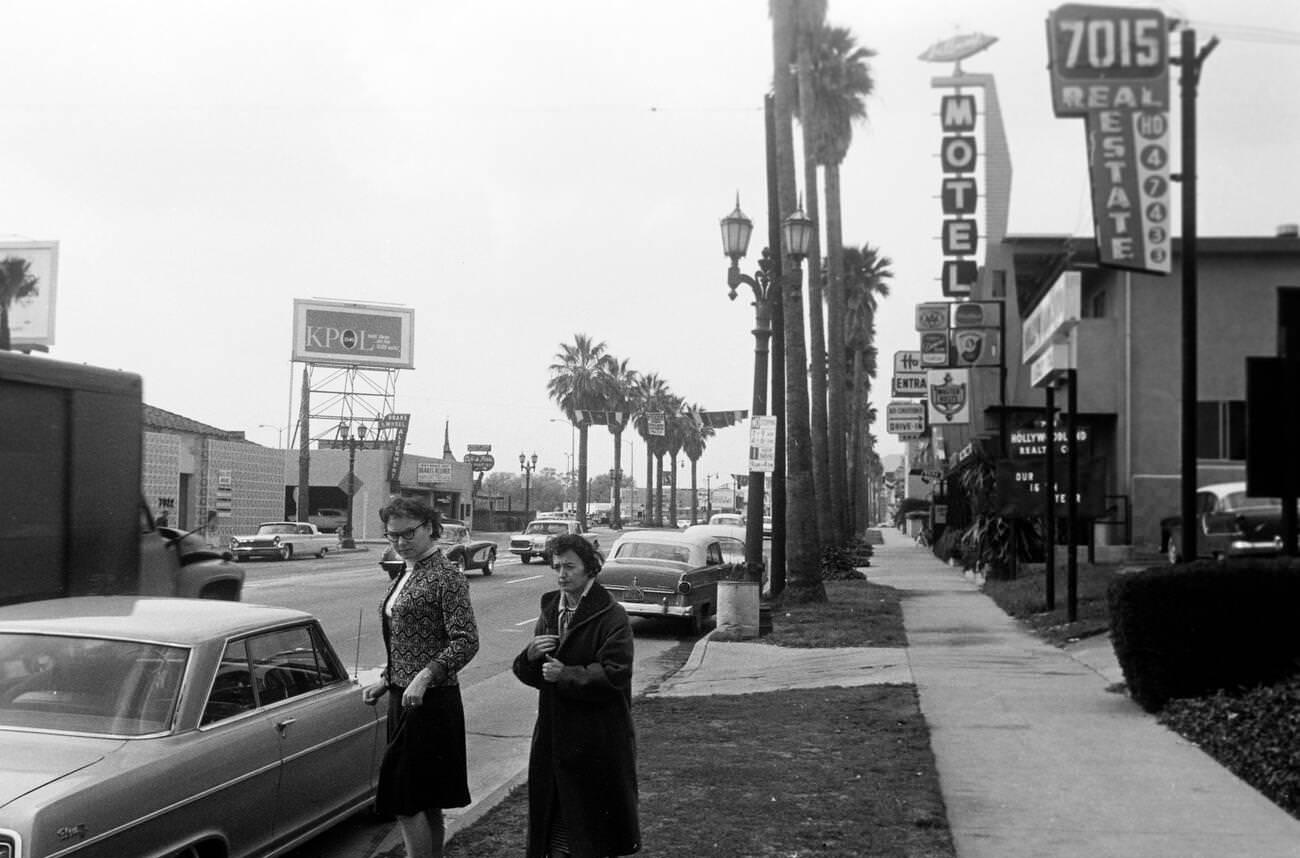
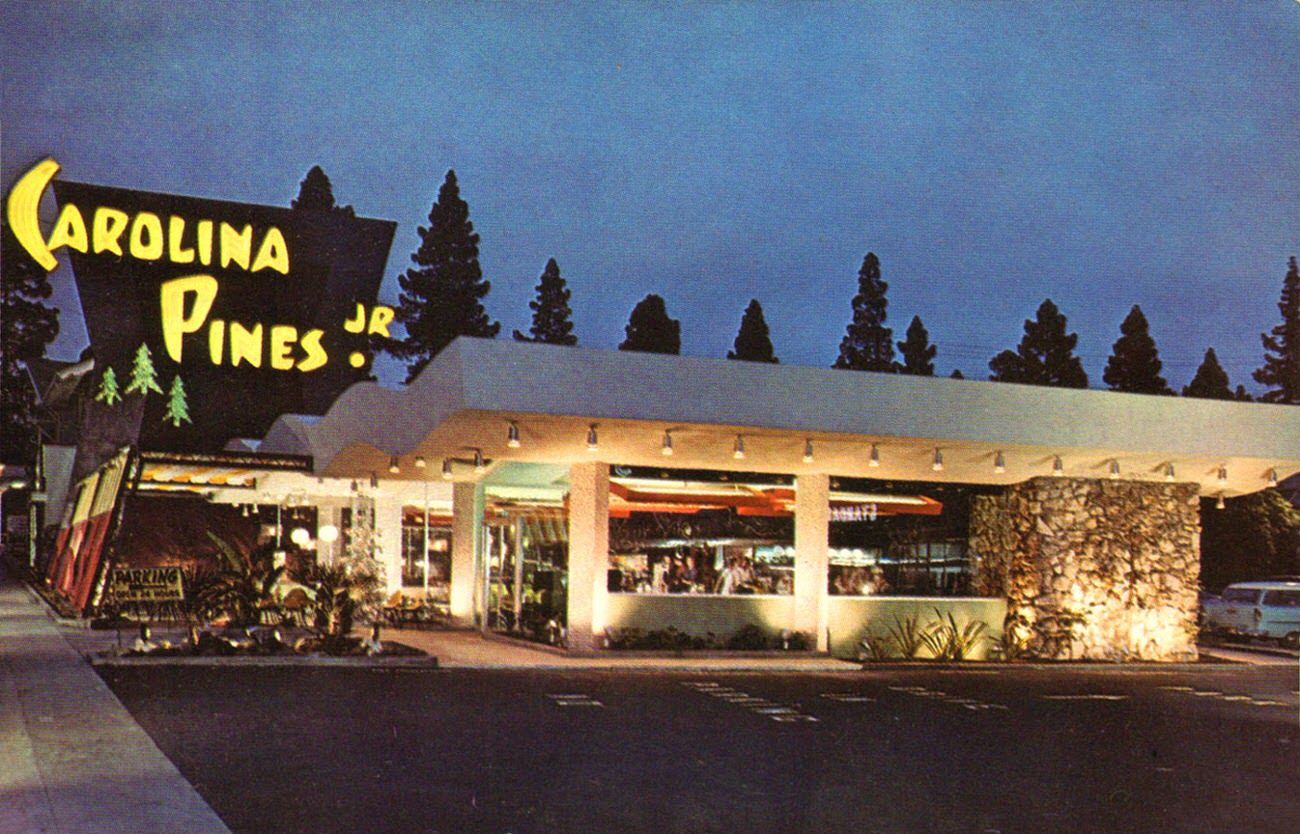
Everyday life on the streets of Hollywood had its own rhythm. Women strolled Hollywood Boulevard in fashionable early-60s dress, window shopping and stopping into the diners and coffee shops that dotted the area. The neighborhood’s dining scene ranged from family-style restaurants to late-night counters that served anyone willing to slide into a booth at 2 a.m.
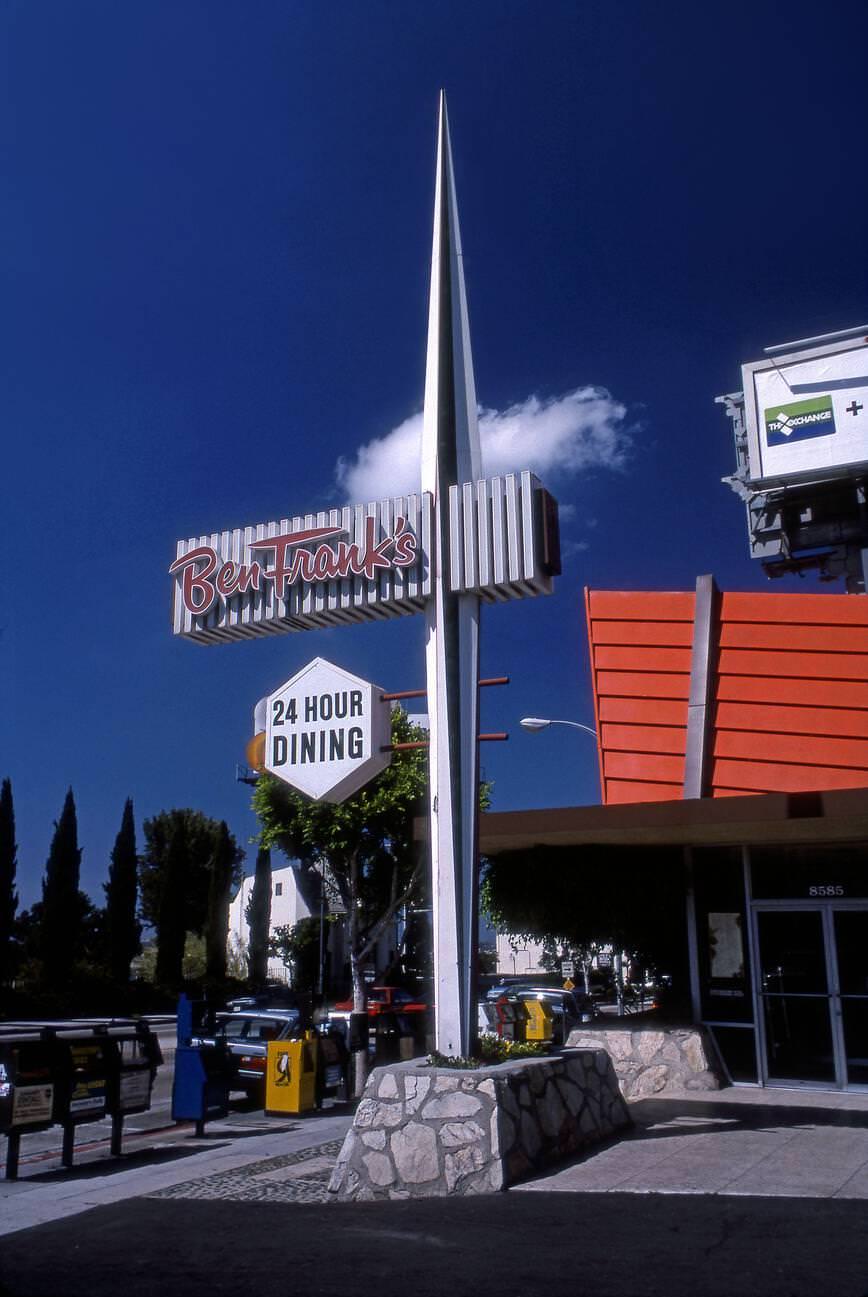
Coffee shops and diners weren’t just places to eat — they were places to be seen and to meet. Ben Frank’s on the Sunset Strip was one of the most famous of these spots. Open 24 hours, it attracted musicians, actors, and the growing crowd of young people who had come to Hollywood looking for something they couldn’t quite name. The restaurant’s space-age sign was as much a landmark as any studio gate.
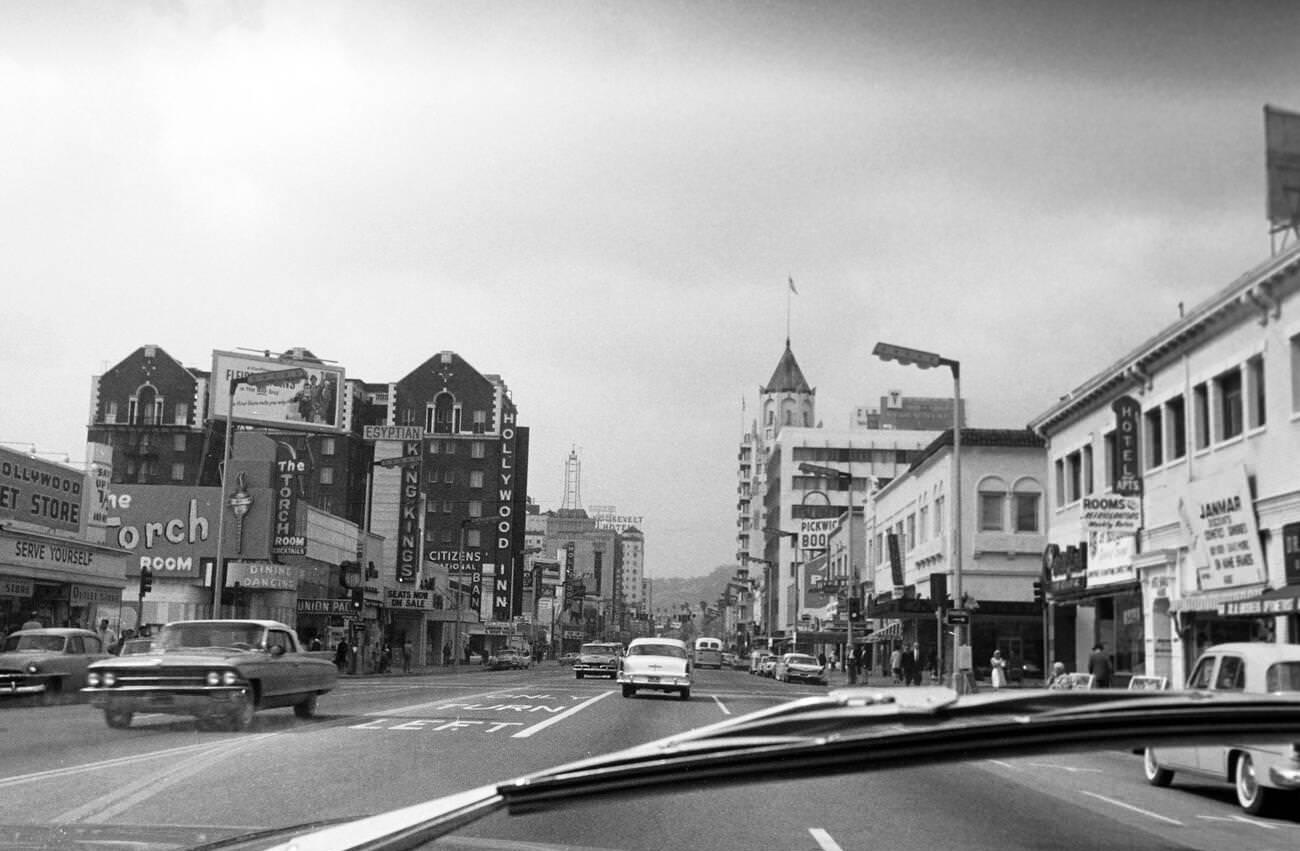
The intersection of Hollywood and Vine was one of the most storied corners in the country. In the 1960s, it remained a busy commercial hub. American Airlines had a prominent presence there, and the surrounding blocks were filled with offices, shops, and theaters that drew steady foot traffic throughout the day.
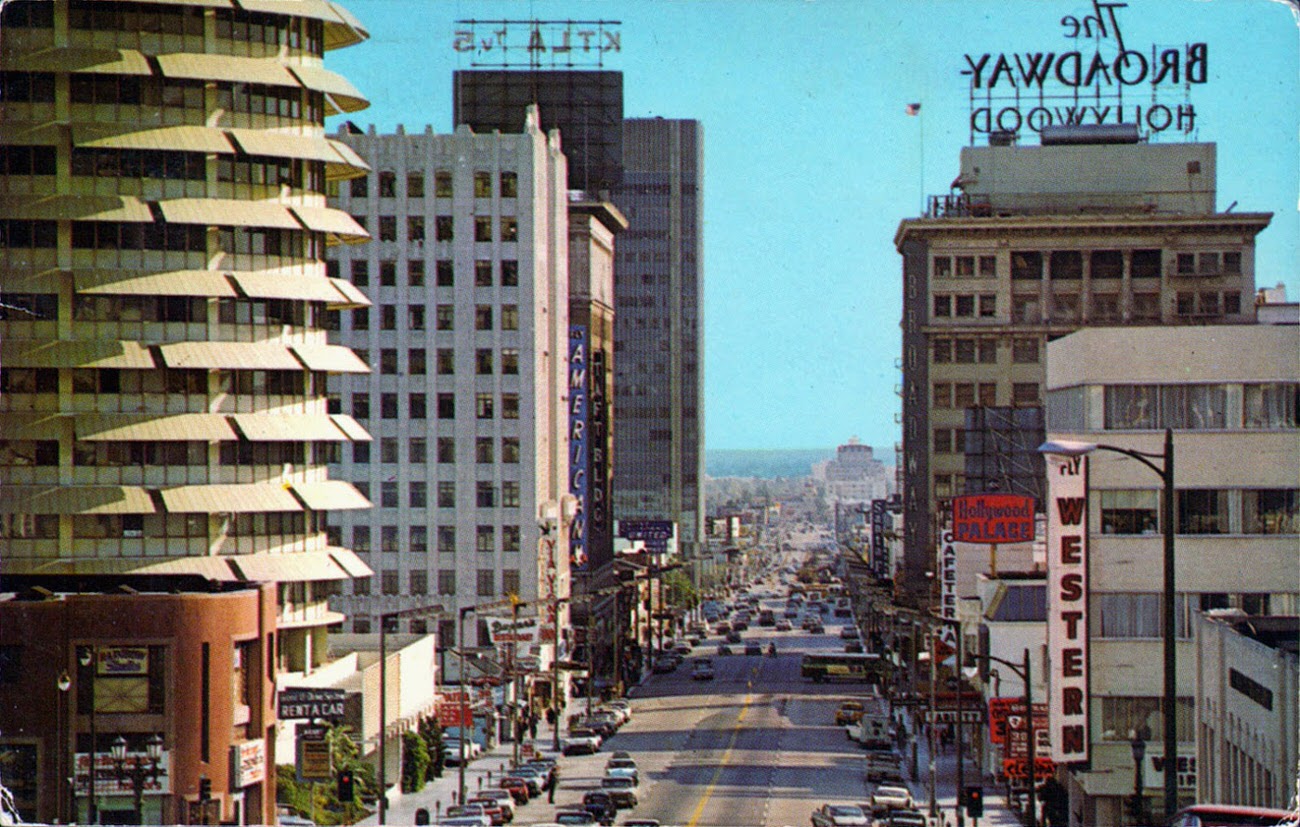
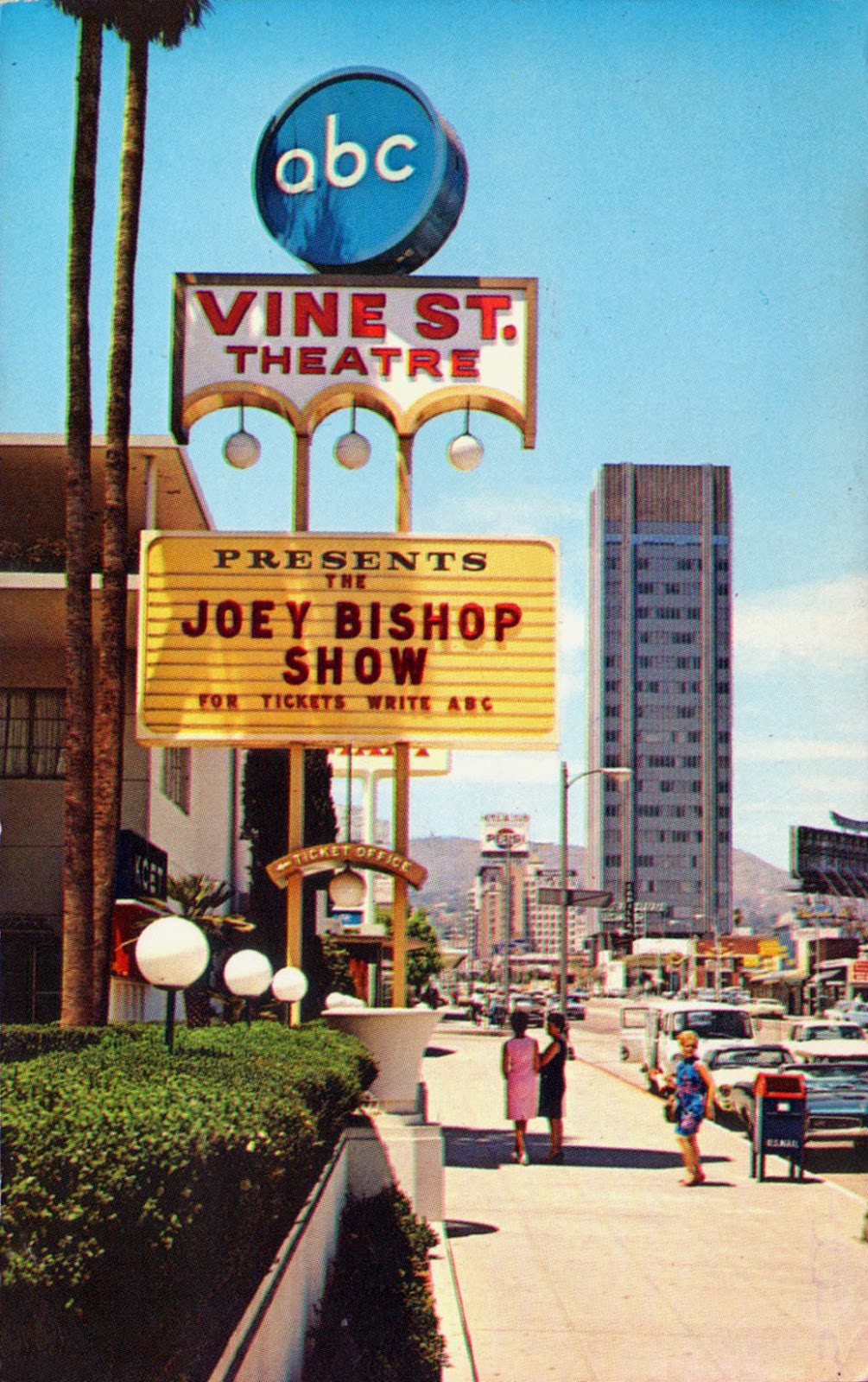
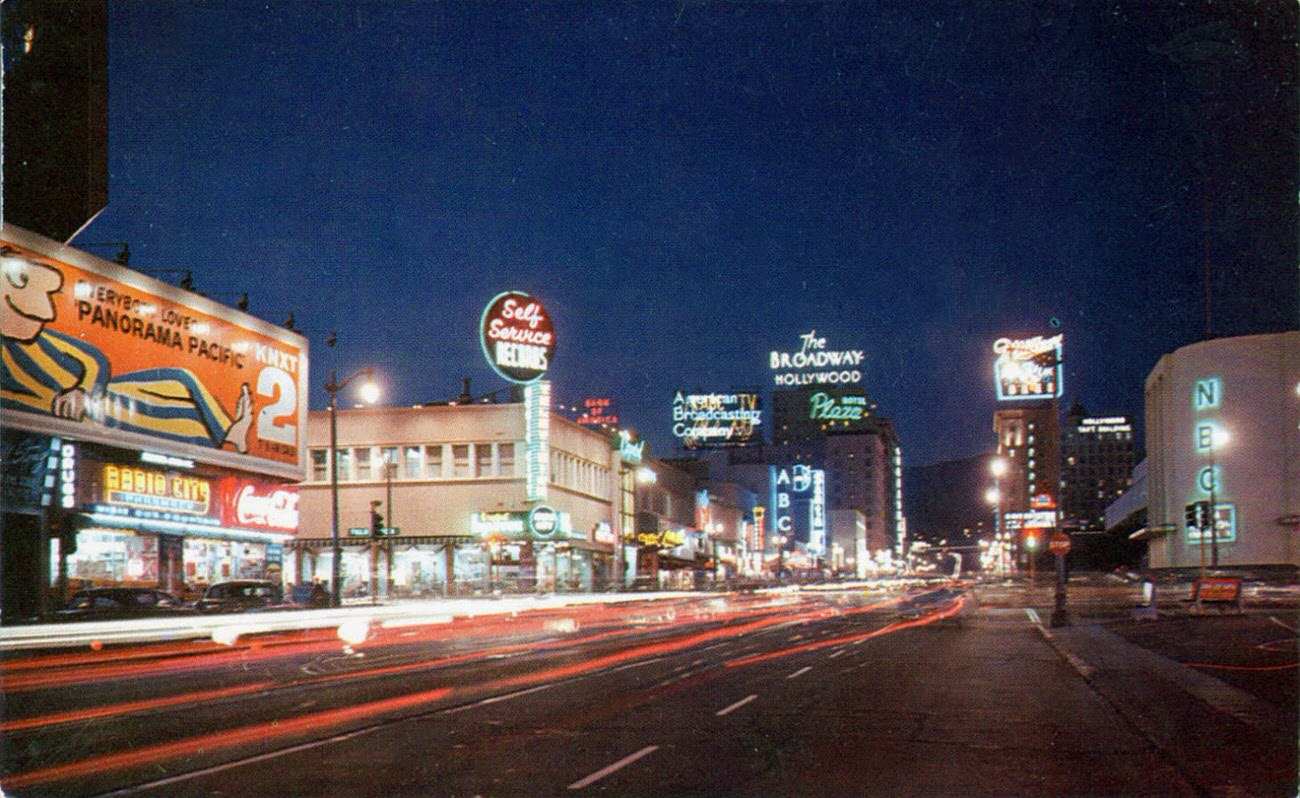
Television was recording itself into the neighborhood’s landscape. The ABC Vine Street Theater, a converted movie house, became a production site for television programs during the decade. Nearby, record stores like Self Service Records on Sunset and Vine catered to the exploding demand for rock, folk, and pop albums. Music was everywhere — in the stores, on the billboards, and pouring out of the clubs at night.
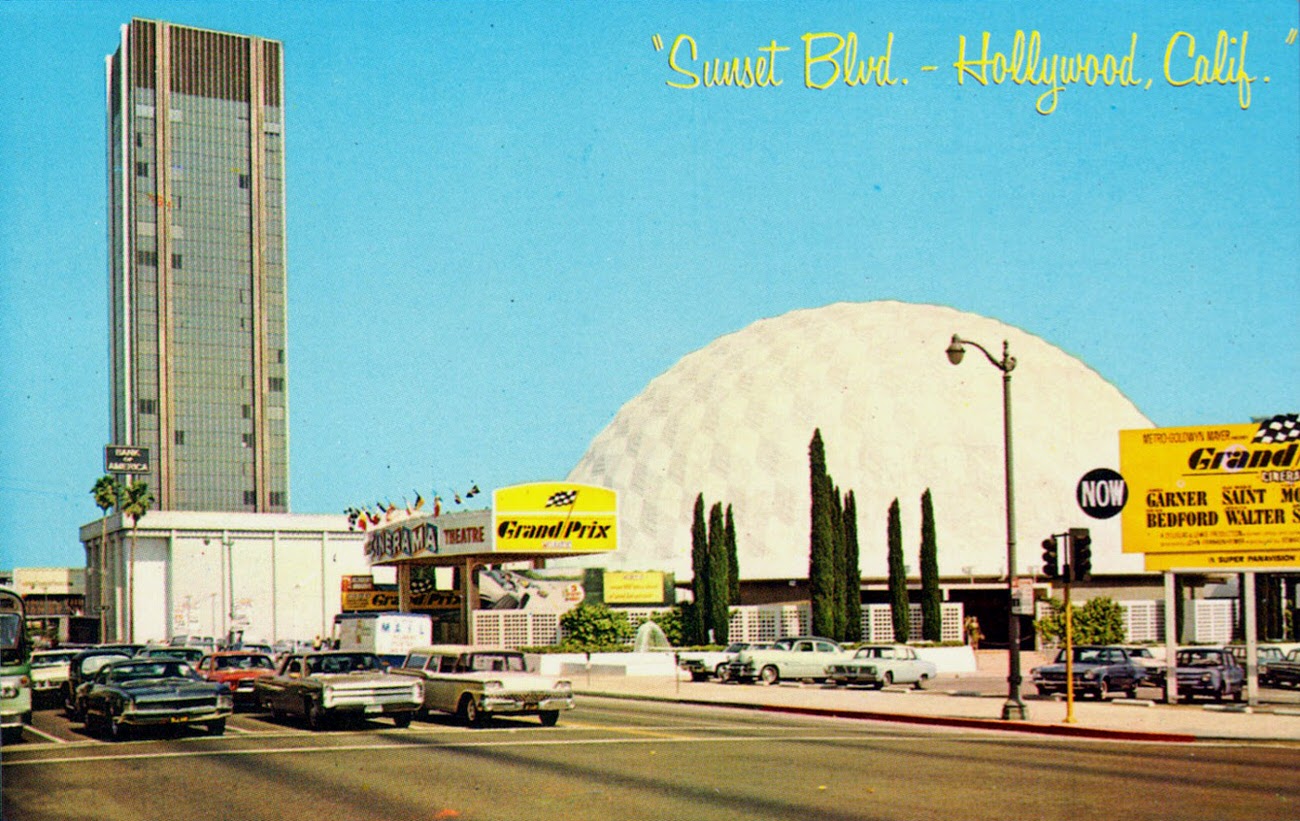
The Cinerama Theater on Sunset Boulevard near Ivar was one of Hollywood’s premier movie houses during the decade. Cinerama was a widescreen format that used a curved screen and multiple projectors to create an immersive experience far beyond what a standard theater could offer. Going to see a film there was an event, not just an outing.
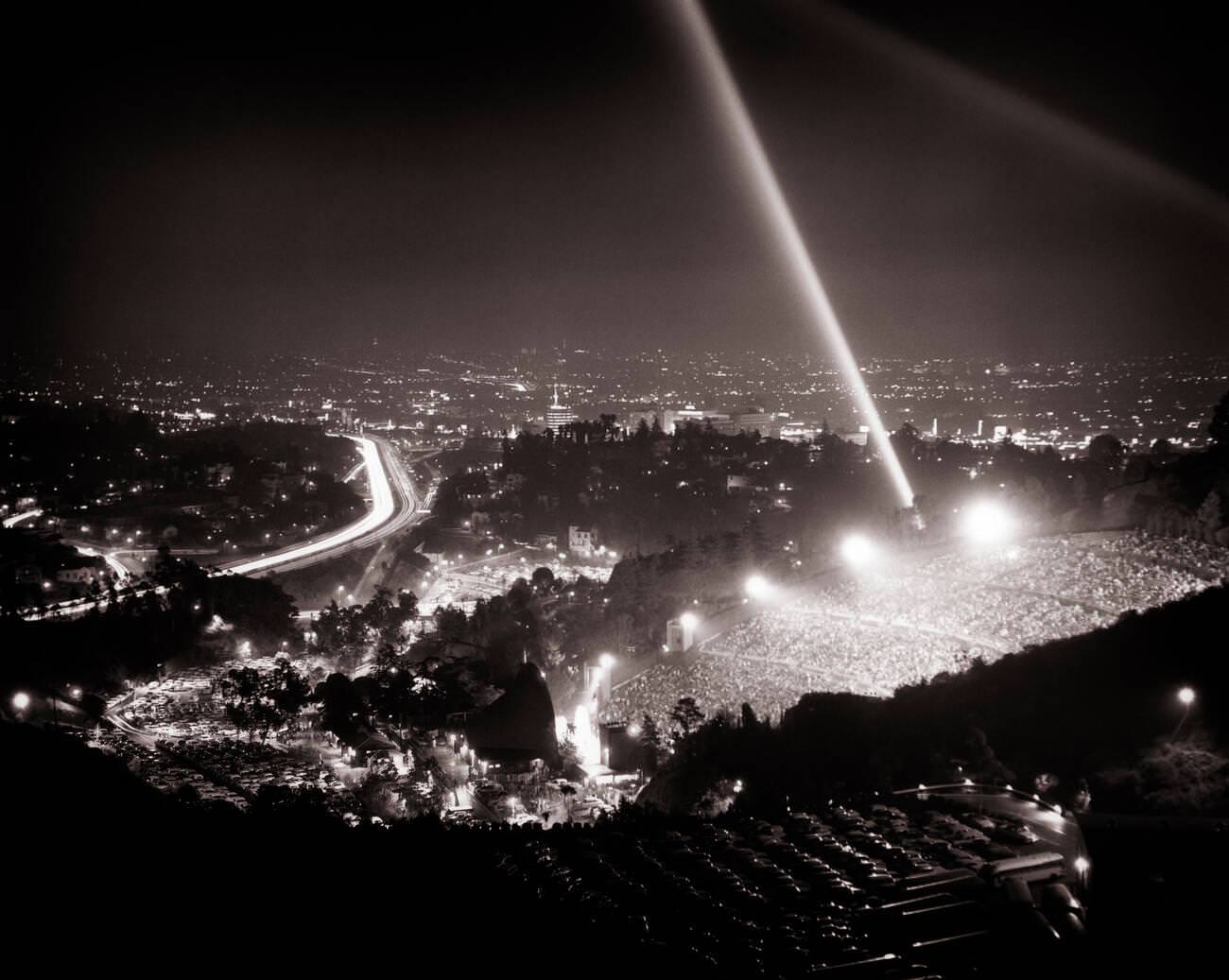
The Hollywood Bowl, the open-air amphitheater nestled in the hills above the city, continued to be a major venue for live performance. Premier nights drew searchlight fanfare and crowds dressed for the occasion. The Bowl hosted everything from classical orchestras to popular music acts, and its distinctive shell-shaped bandshell made it one of the most photographed venues in Southern California.
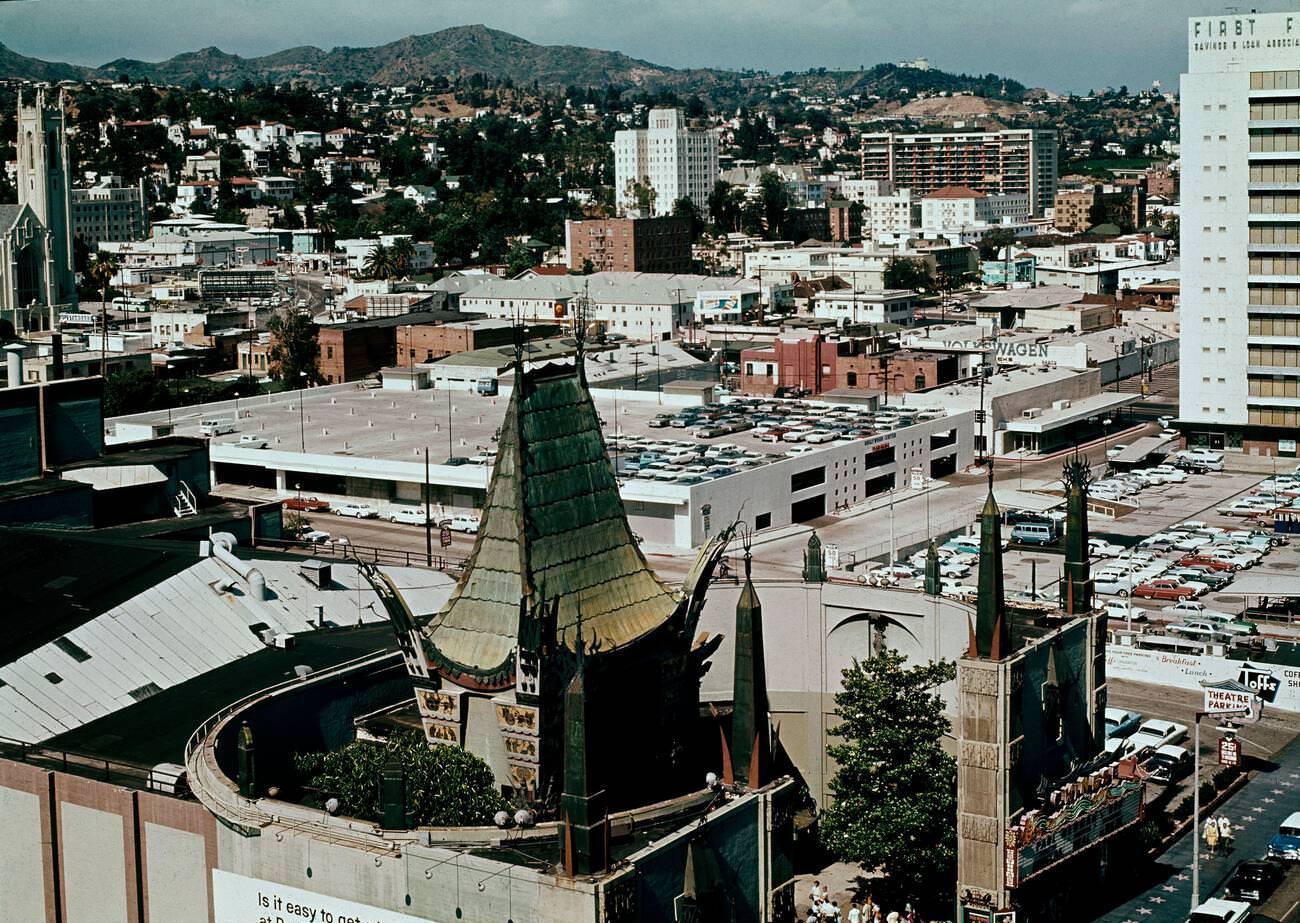
Grauman’s Chinese Theatre remained one of Hollywood’s most visited landmarks throughout the decade. Its ornate facade and the forecourt filled with celebrity handprints and footprints in cement drew tourists from around the world. The theater continued to host major film premieres, keeping it at the center of Hollywood’s public life.
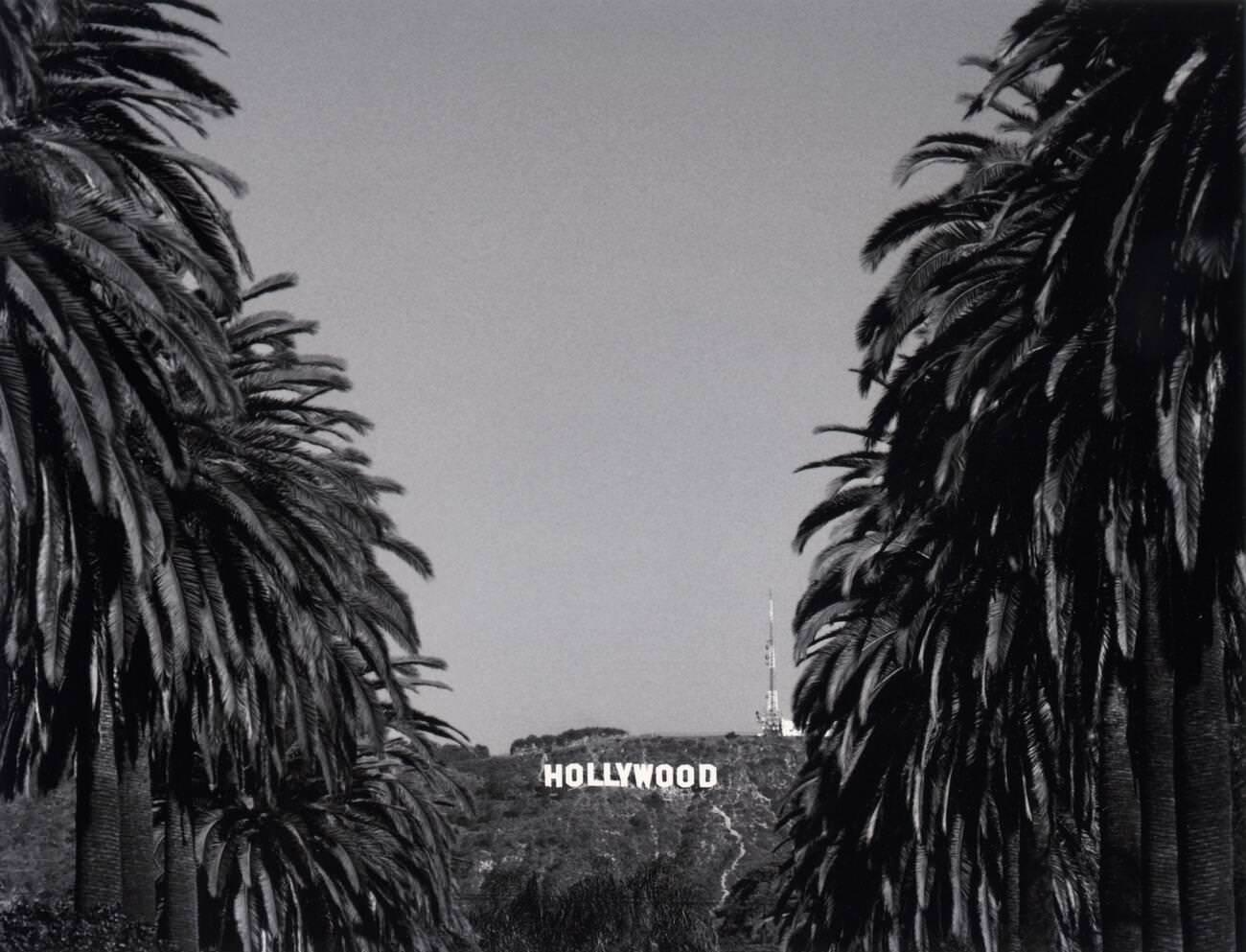
Above it all, the Hollywood Sign watched over the neighborhood from the Santa Monica Mountains. Originally built in 1923 to advertise a real estate development, by the 1960s it had long since become a symbol of the film industry and of the city itself. It was deteriorating by this point — individual letters were sagging and the lighting system had long gone dark — but it still drew eyes upward from across the basin.