Most people today associate the holiday shopping rush with Black Friday. The term itself was first used in 1869, but it didn’t enter mainstream American vocabulary until the 1980s. Long before that phrase took hold, the holiday shopping season was already a massive, highly organized event — and few stores ran it bigger or more intensely than Macy’s in New York City.
By 1948, Macy’s was operating at a scale that’s hard to picture today. The store employed 14,000 workers and stocked over 400,000 items. On the busiest days, more than 250,000 shoppers flooded its floors at one time. Managing that volume required military-style planning. Every department had a role. Every employee had a job to do before the doors even opened.
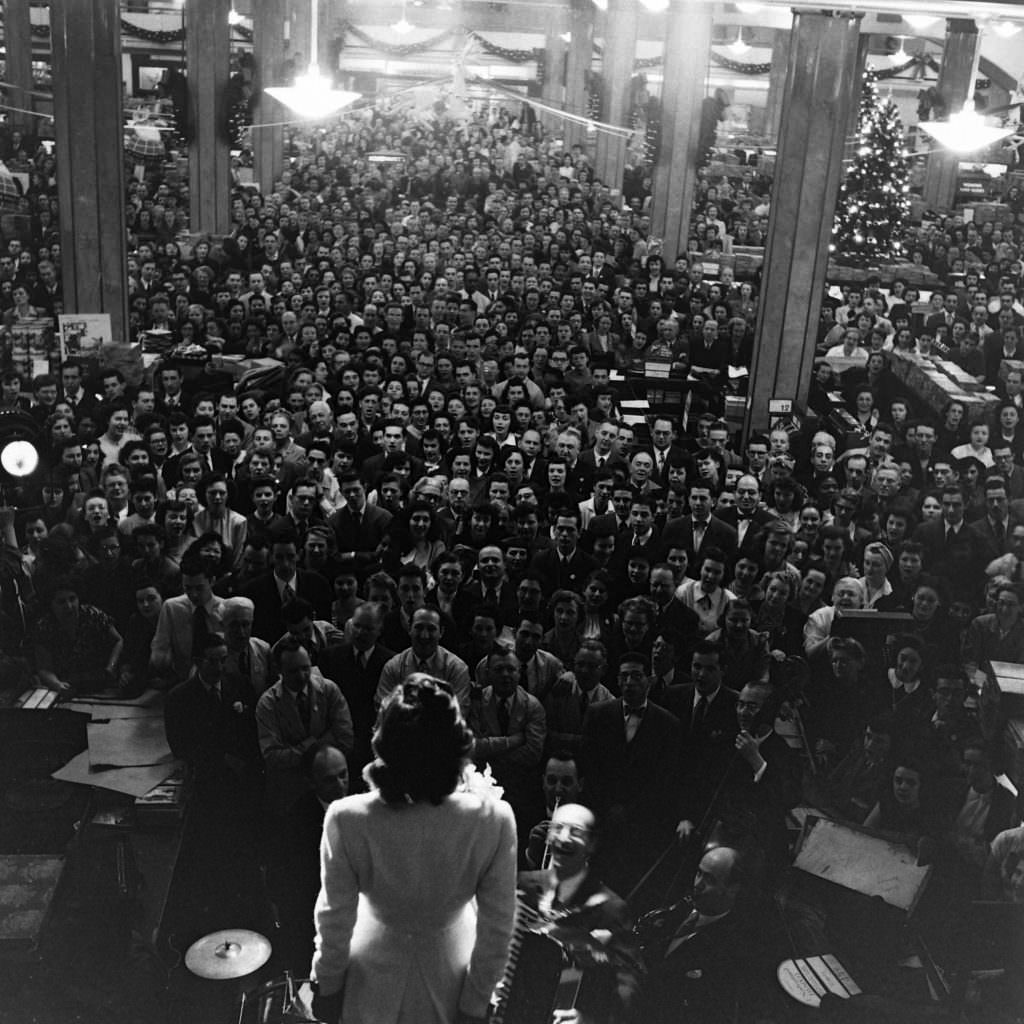
To kick off the season, Macy’s held a giant pep rally for its staff. Singer Jane Pickens led roughly 9,000 employees in a rousing, all-hands performance of ‘Jingle Bells’ — a deliberate attempt to build energy and salesmanship before the Christmas rush began in earnest.
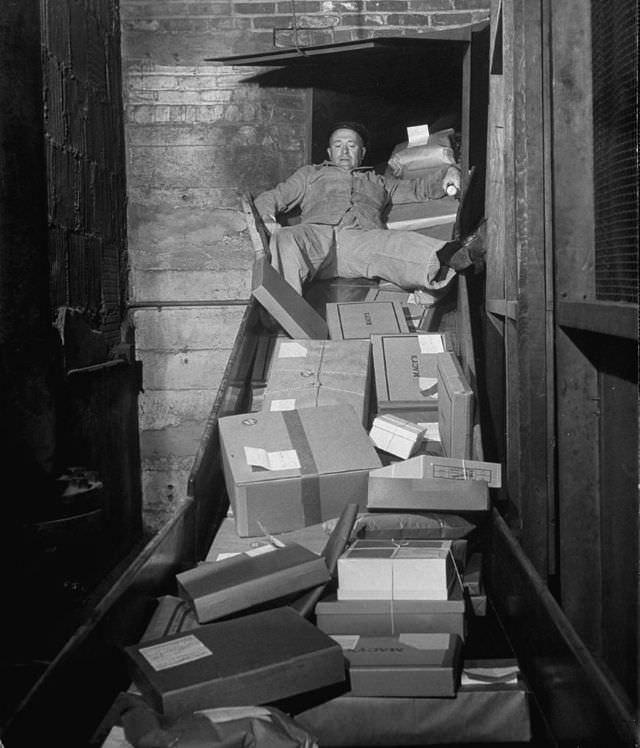
Behind the scenes, the store’s logistics were just as intense. Package chutes moved merchandise from floor to floor at high speed, and when those chutes got jammed, employees had a direct solution — clearing them with their own bodies.
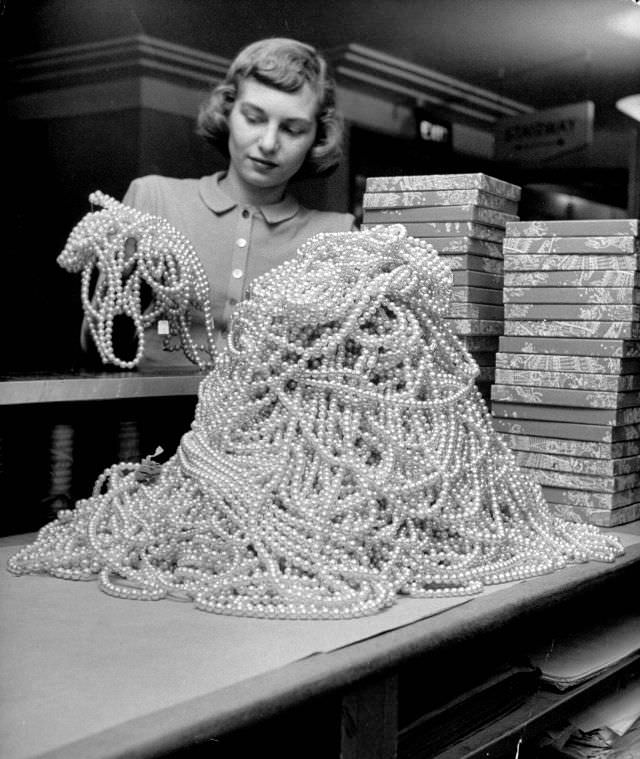
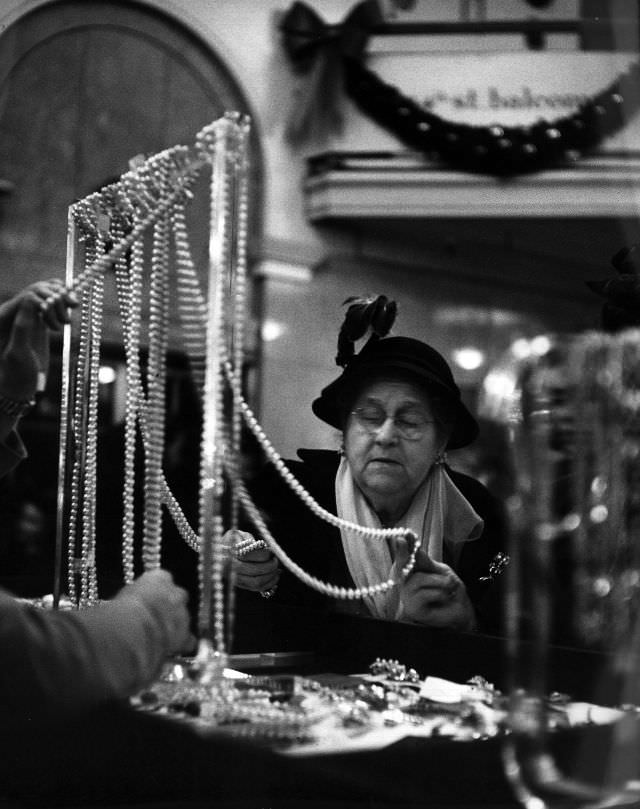
Among the hottest items that season were ‘simulated’ — or costume — pearl necklaces. Employees sorted through enormous piles of them to prepare stock for the sales floor, where demand was fierce.
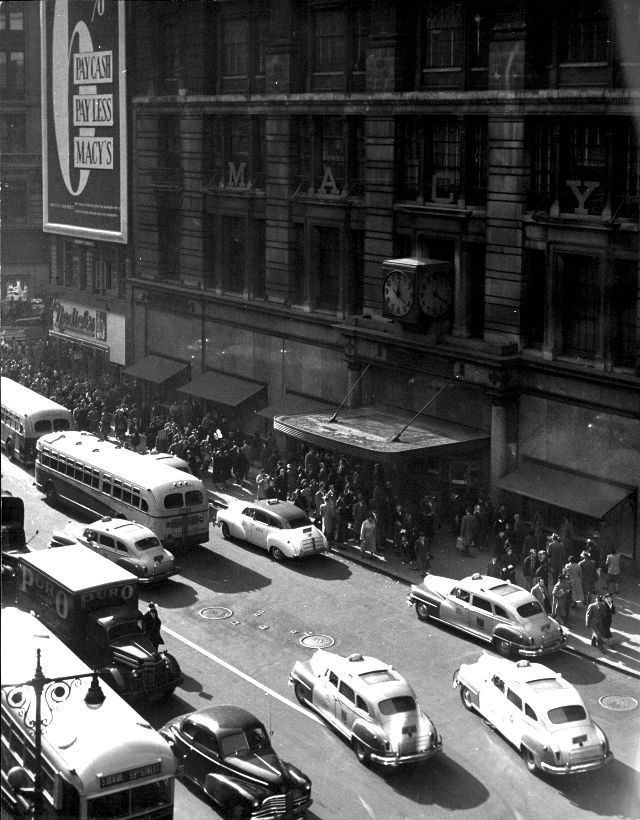
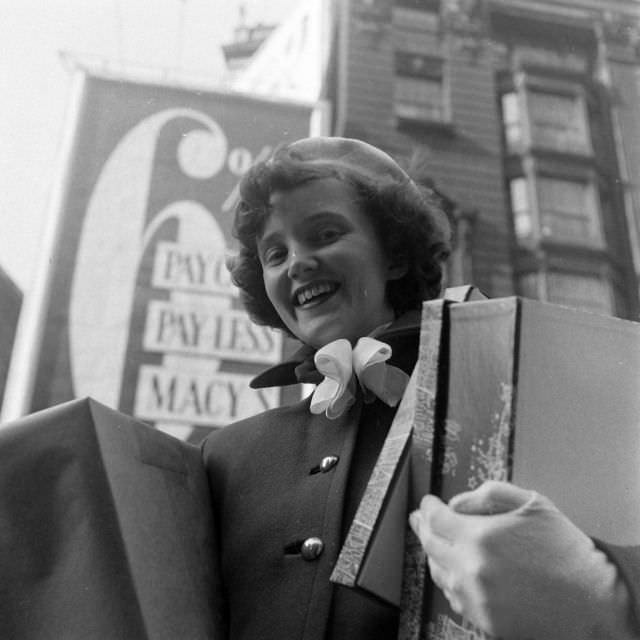
Outside the store, the scene was just as striking. Crowds gathered on the sidewalks of Herald Square as shoppers from across the city and beyond made their way to what was, for many, the most important shopping destination of the year.
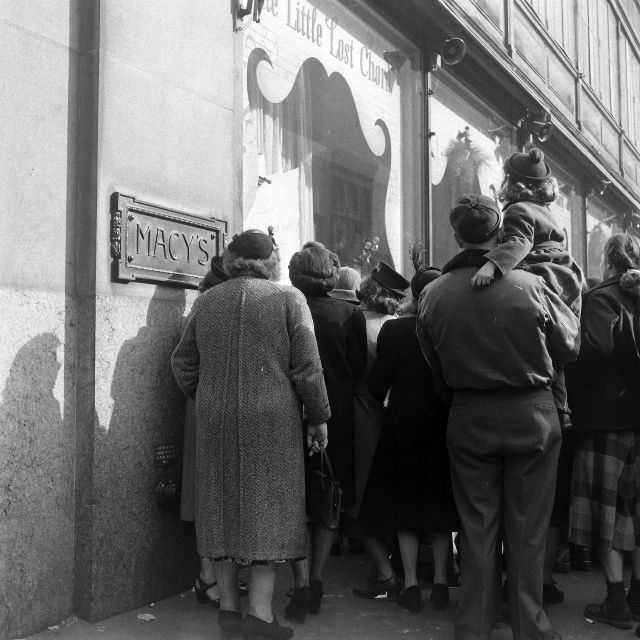
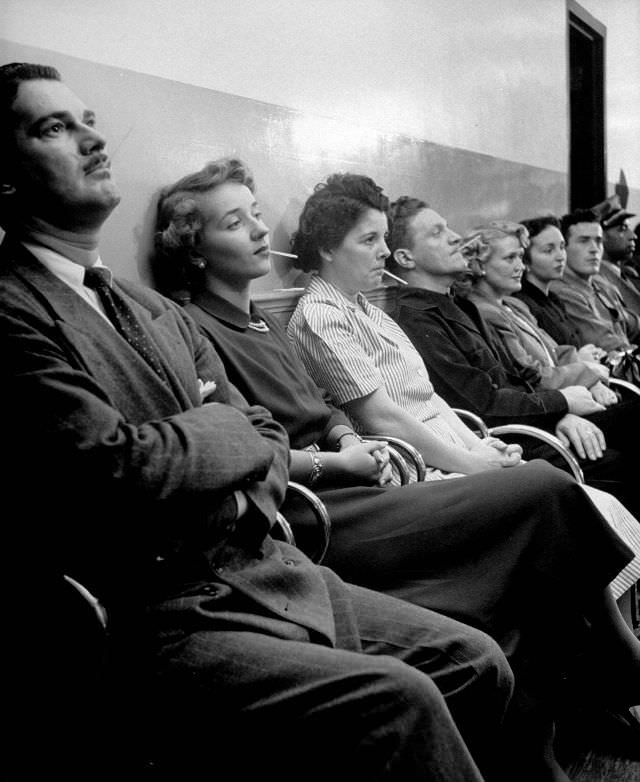
Getting inside didn’t mean you could shop right away. Shoppers were held back and made to wait before being allowed onto the sales floor. Crowd control wasn’t optional — it was a matter of safety and order.
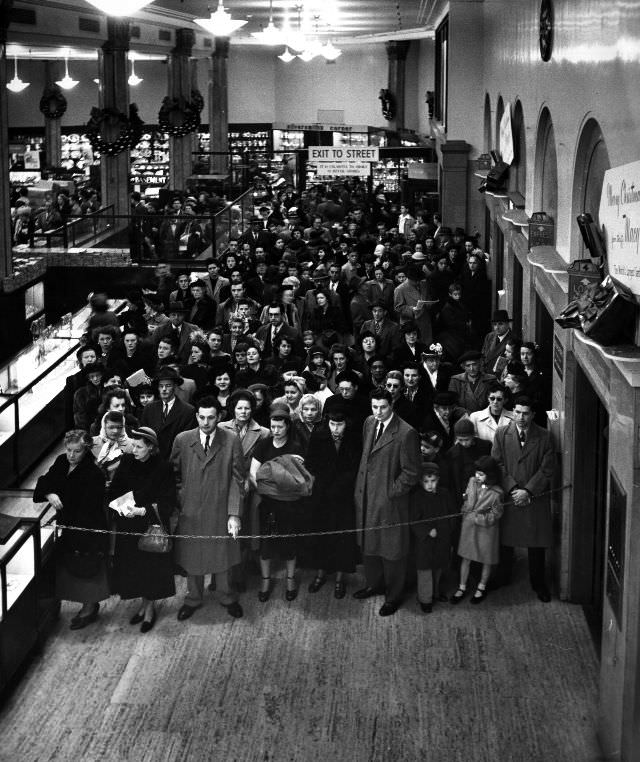
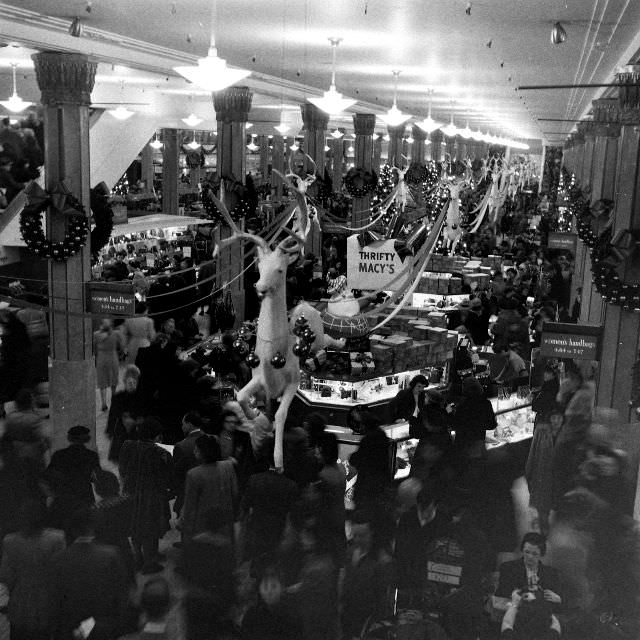
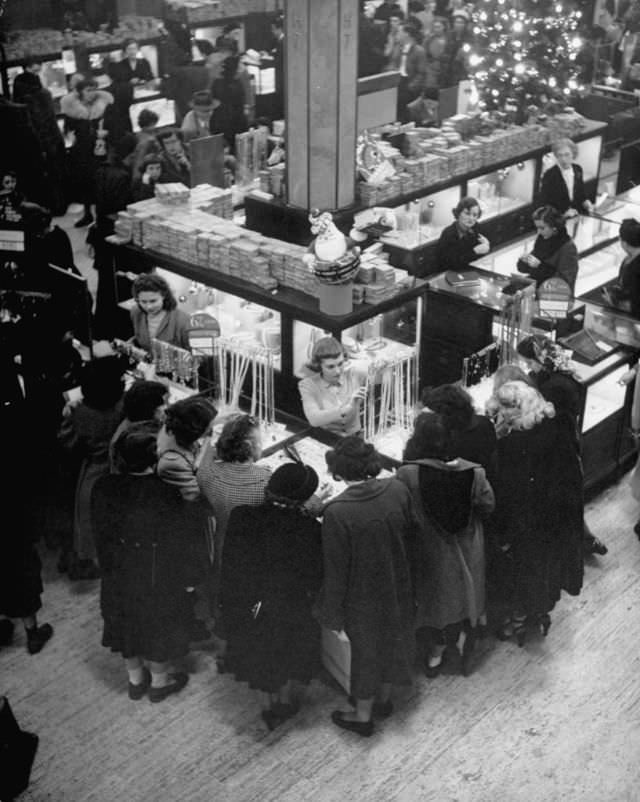
Once on the floor, the energy was electric. Counters were packed, clerks were in constant motion, and the noise of thousands of transactions happening at once filled every corner of the building.
The costume pearl necklaces drew some of the biggest crowds at the counters. Shoppers pressed in from all sides to get a look — and hopefully get their hands on a set before stock ran out.
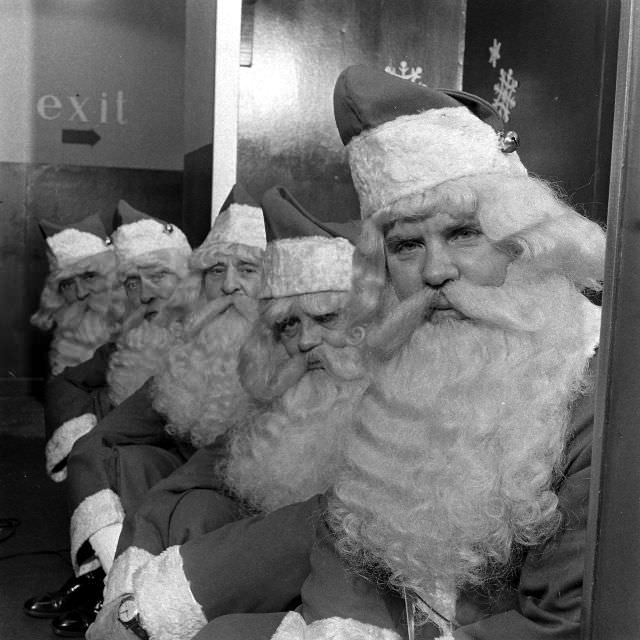
The holiday shopping experience wasn’t just for adults. Children were part of the tradition too, wide-eyed among the displays and decorations that Macy’s carefully arranged throughout the store.
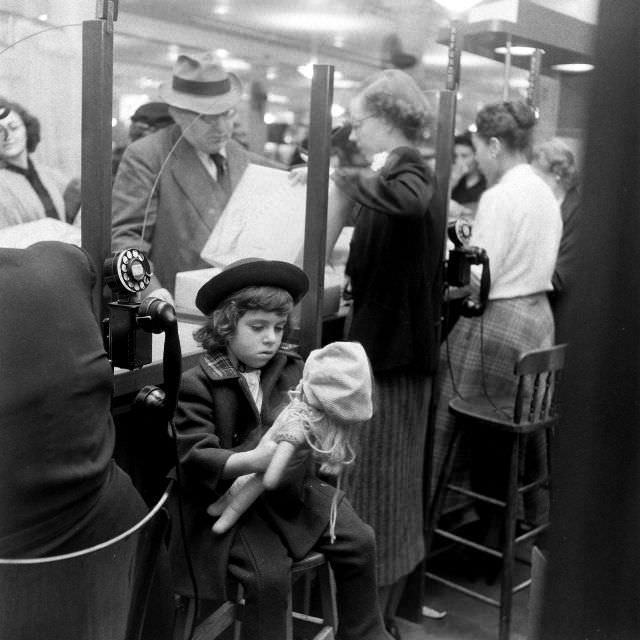
For customers who couldn’t make it to the store in person, Macy’s Shopping Service department handled orders remotely. Teams of employees worked together to assemble each order and get it ready for delivery — a precursor to what we’d now call fulfillment operations.
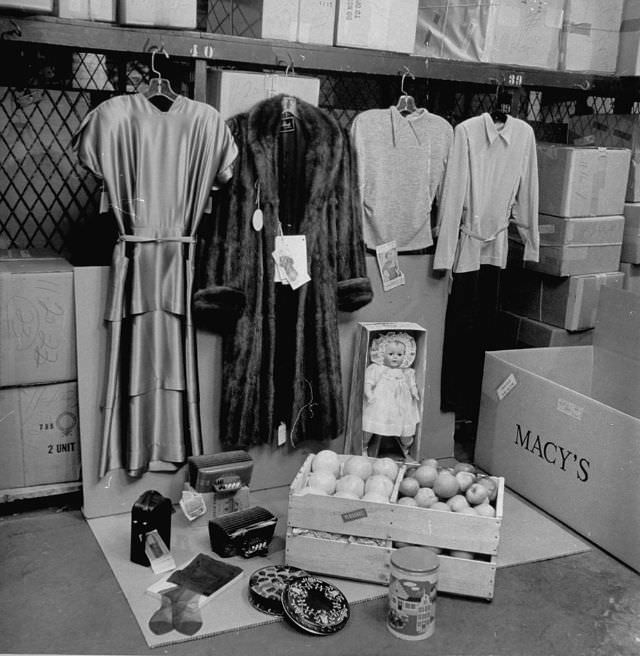
Not every purchase stuck. Macy’s maintained a full returns operation where employees processed refunds for customers bringing merchandise back. In a store seeing quarter-million-person foot traffic days, the returns desk was never quiet.
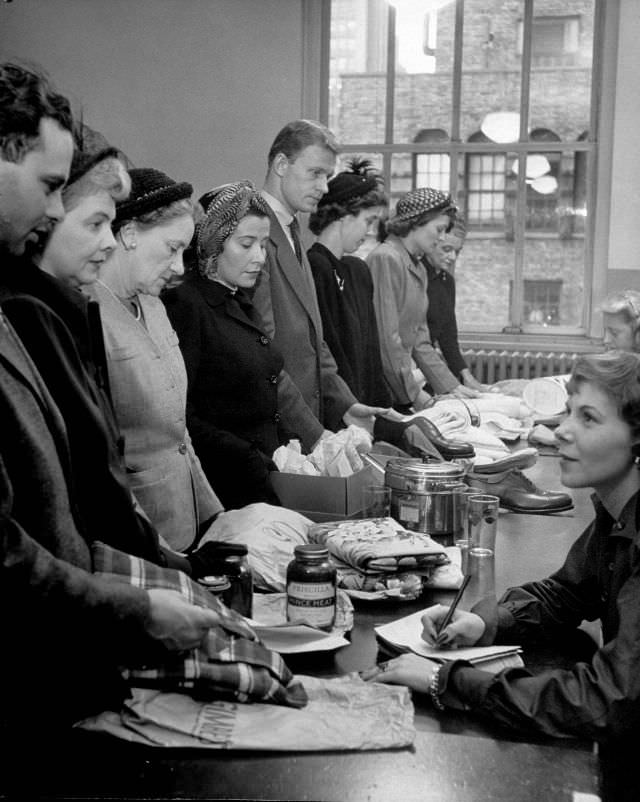
Pricing during the 1948 holiday season was anything but fixed. Clerks tracked competitor prices in real time and adjusted their own prices on hot items — including striped pajamas and Macy’s house-brand Scotch — as many as five times in a single day. Telephone operators stood ready to field up to six customer questions per minute. Meanwhile, plainclothes employee detectives moved through the crowds specifically trained to identify shoplifters hidden among the masses.
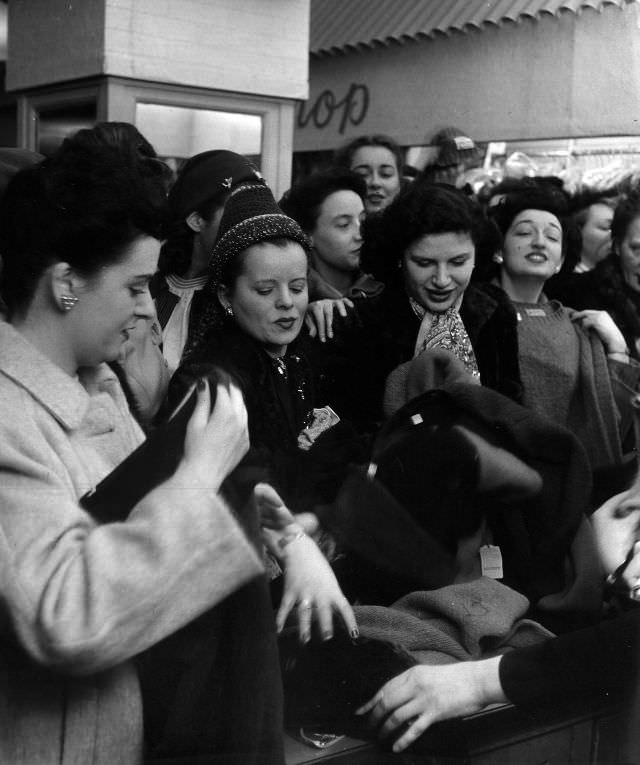
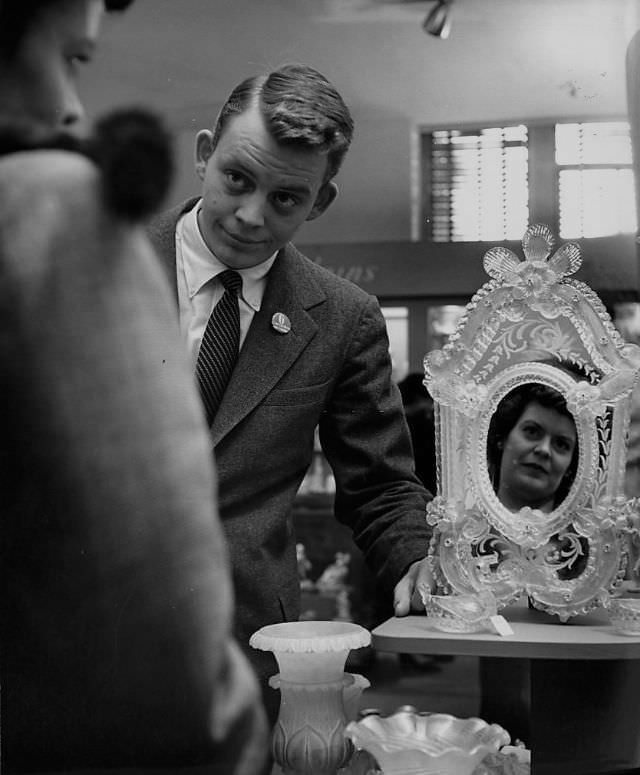
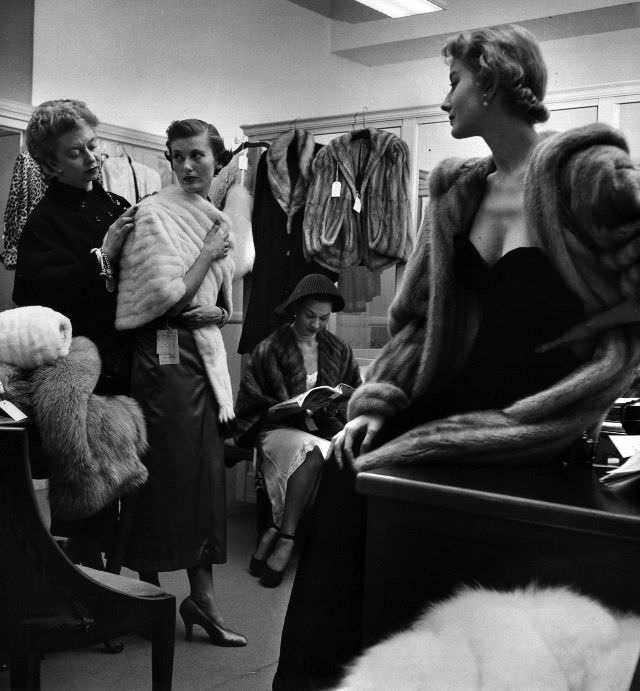
The store’s merchandise ranged well beyond practical gifts. The fur department drew shoppers looking for high-end items, and sales staff were on hand to assist customers trying on coats in the dressing rooms.
With 14,000 employees working through one of the most physically demanding retail events of the year, Macy’s even maintained an on-site hospital. Staff members had their temperatures taken right in the store — keeping sick workers off the floor was a practical necessity, not a courtesy, when that many people were packed into one building.
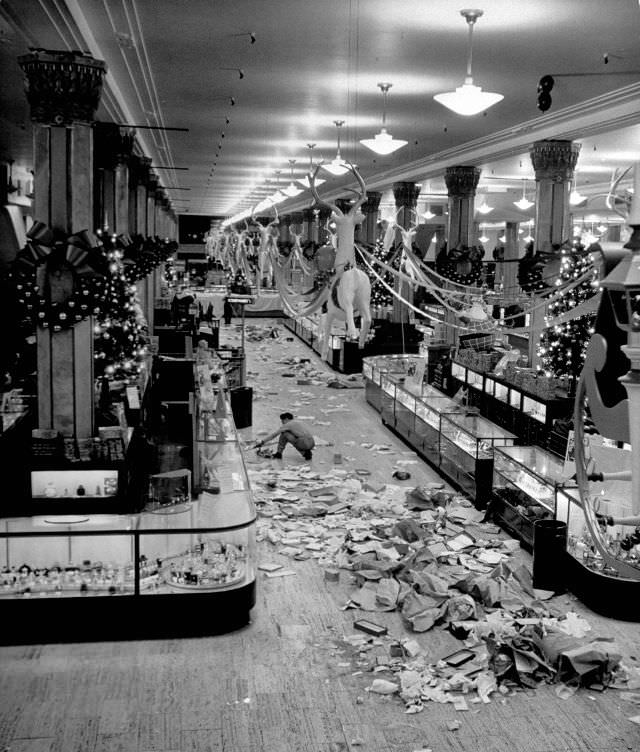
When the rush finally ended, what was left behind told the whole story. Debris covered the floors in thick piles — discarded packaging, tags, and the physical evidence of hundreds of thousands of transactions completed in just a few weeks.