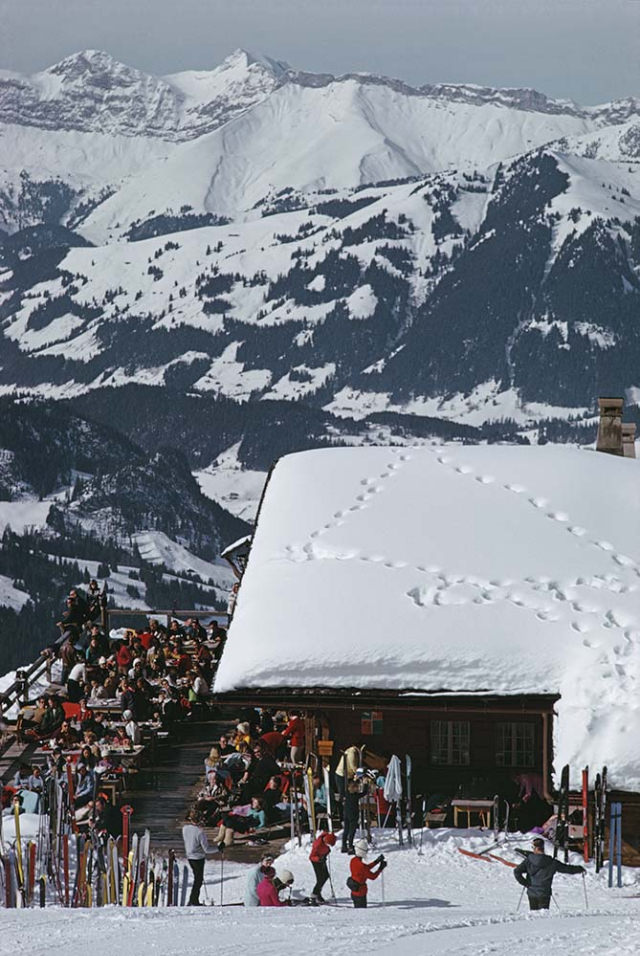
Slim Aarons (1916–2006) built his entire career on a simple philosophy: photograph attractive people doing attractive things in attractive places. The American photographer didn’t use stylists or makeup artists. What he captured was real — wealthy, glamorous people living their lives in some of the most beautiful settings on earth. His work appeared in Life, Town & Country, and Holiday magazines, and his photographs became some of the most iconic candid portraits of the 20th century.
Before his career took him to poolsides and mountain resorts, Aarons served in the United States Army. He enlisted at 18, worked as a photographer at the West Point military academy, and earned a Purple Heart as a combat photographer during World War II. After the war, he moved to California and turned his lens toward celebrities and the leisure class. The contrast between his wartime work and his postwar subject matter couldn’t have been sharper.
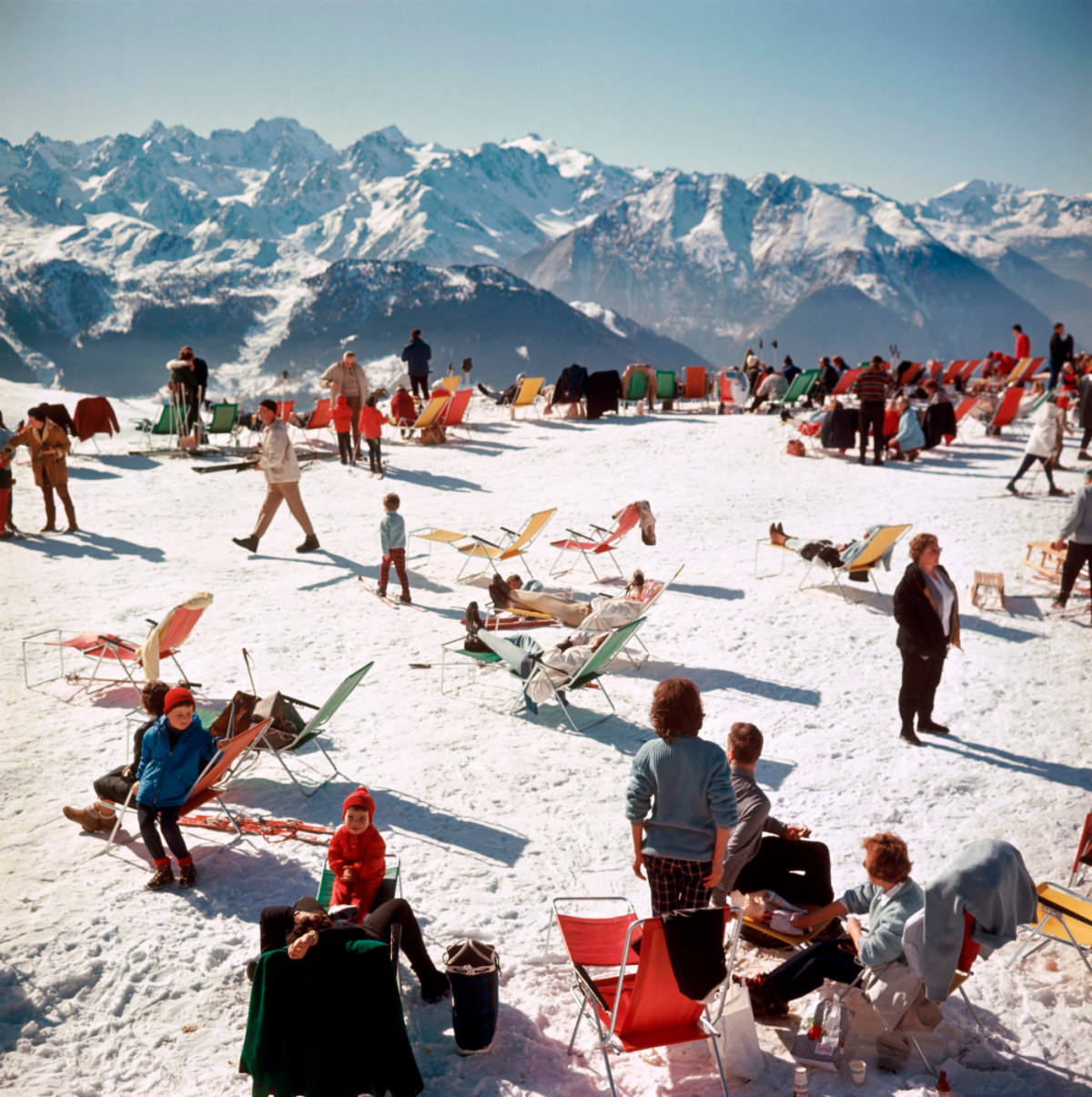
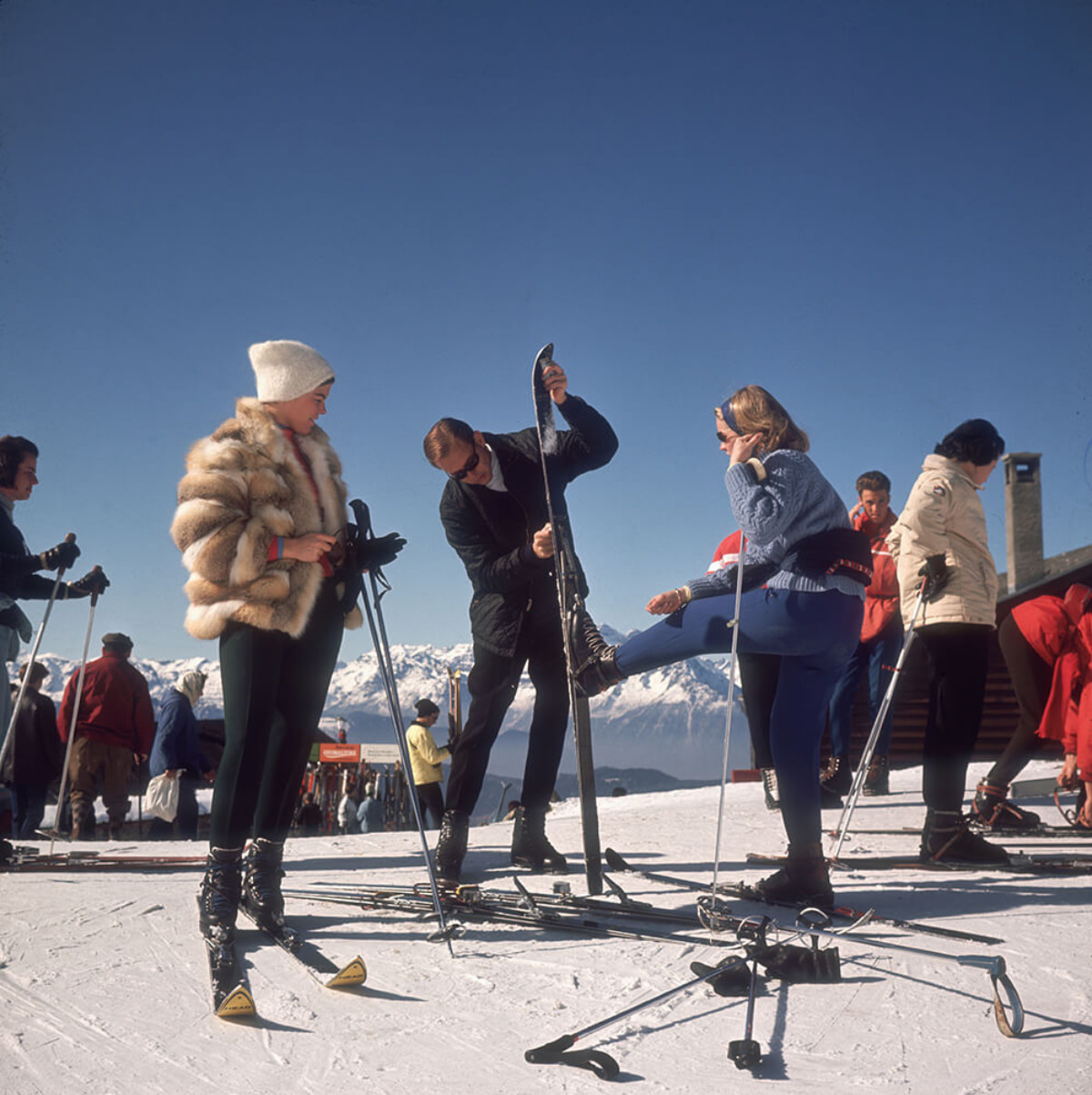
In the 1960s, Aarons travelled through Europe’s most celebrated ski resorts, documenting holidaymakers at play in the winter snow. The Swiss resort of Verbier was one of his favourite stops. In February 1964, he found guests stretched out on sun loungers right on the slopes — a scene that perfectly summed up the era’s approach to winter holidays.
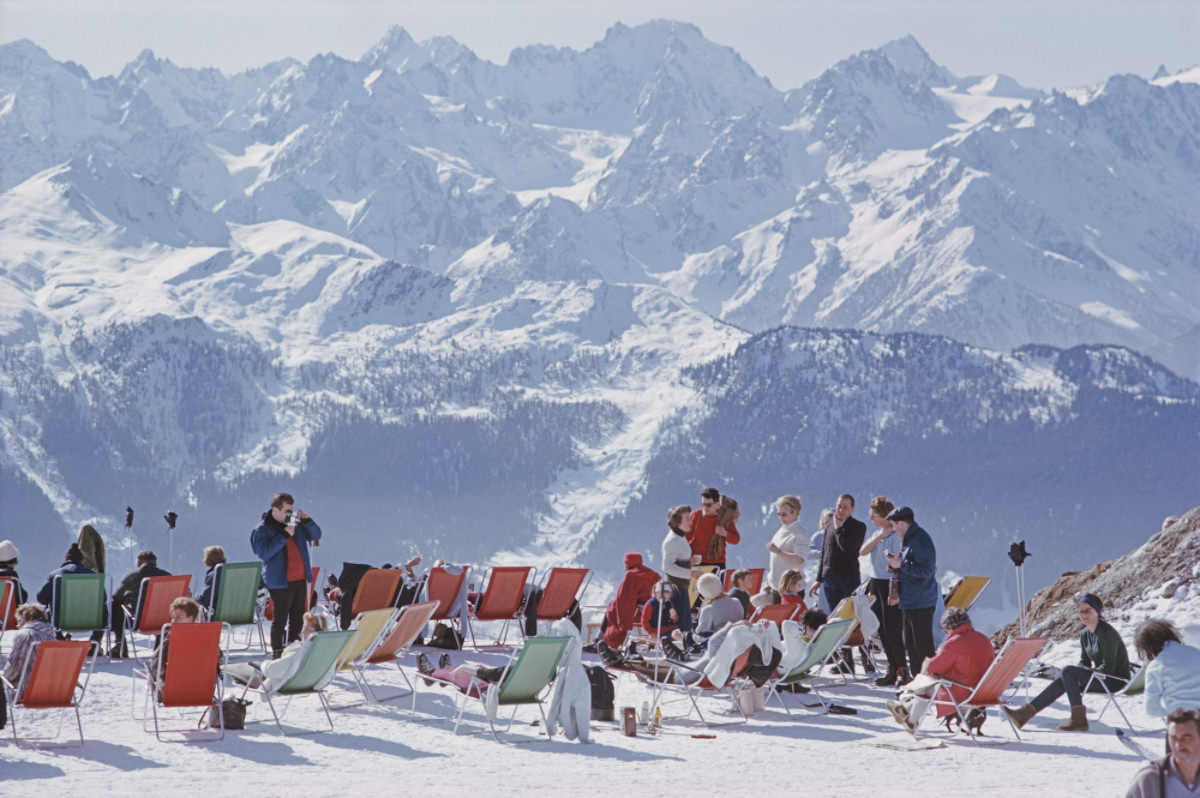
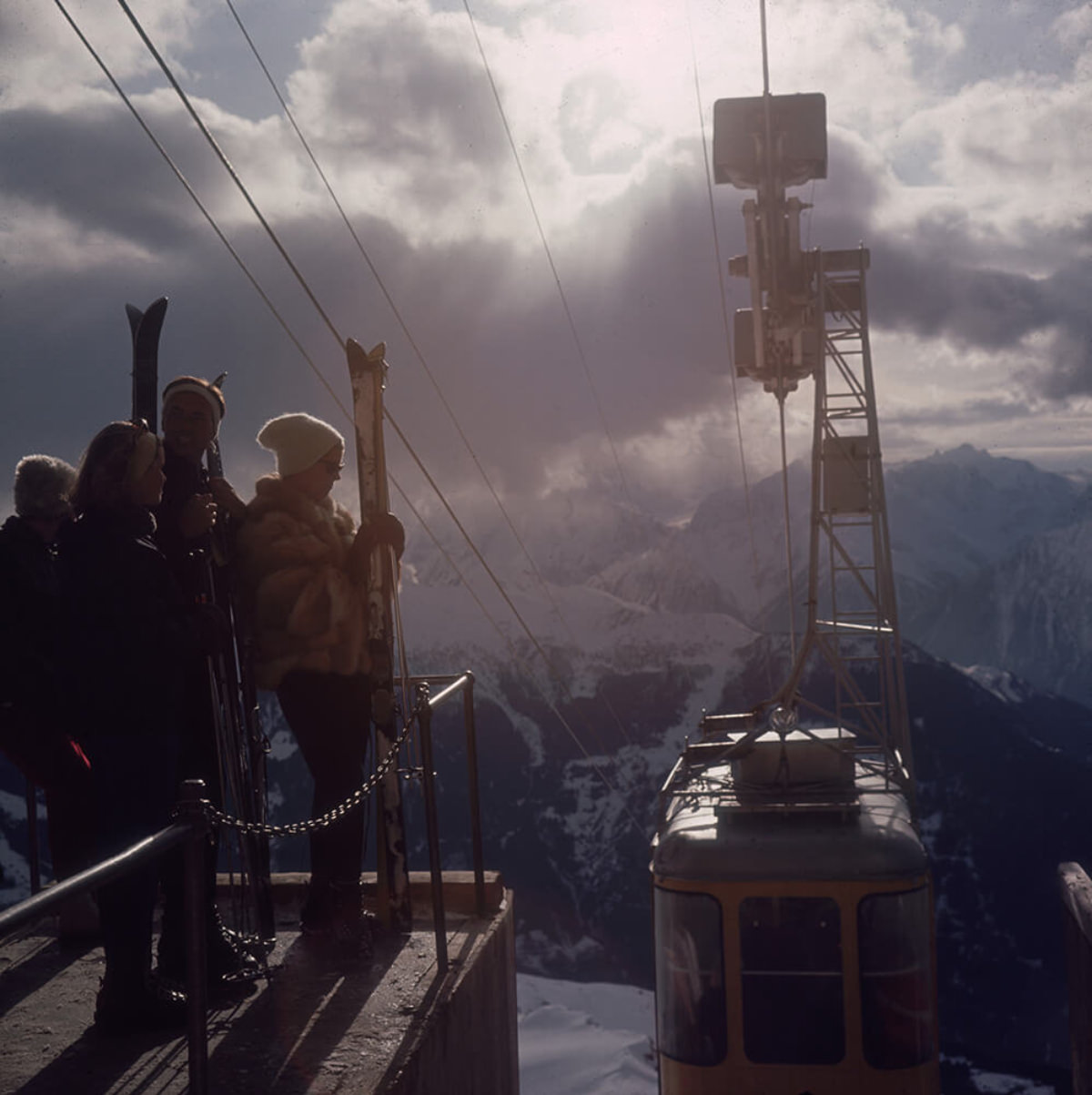
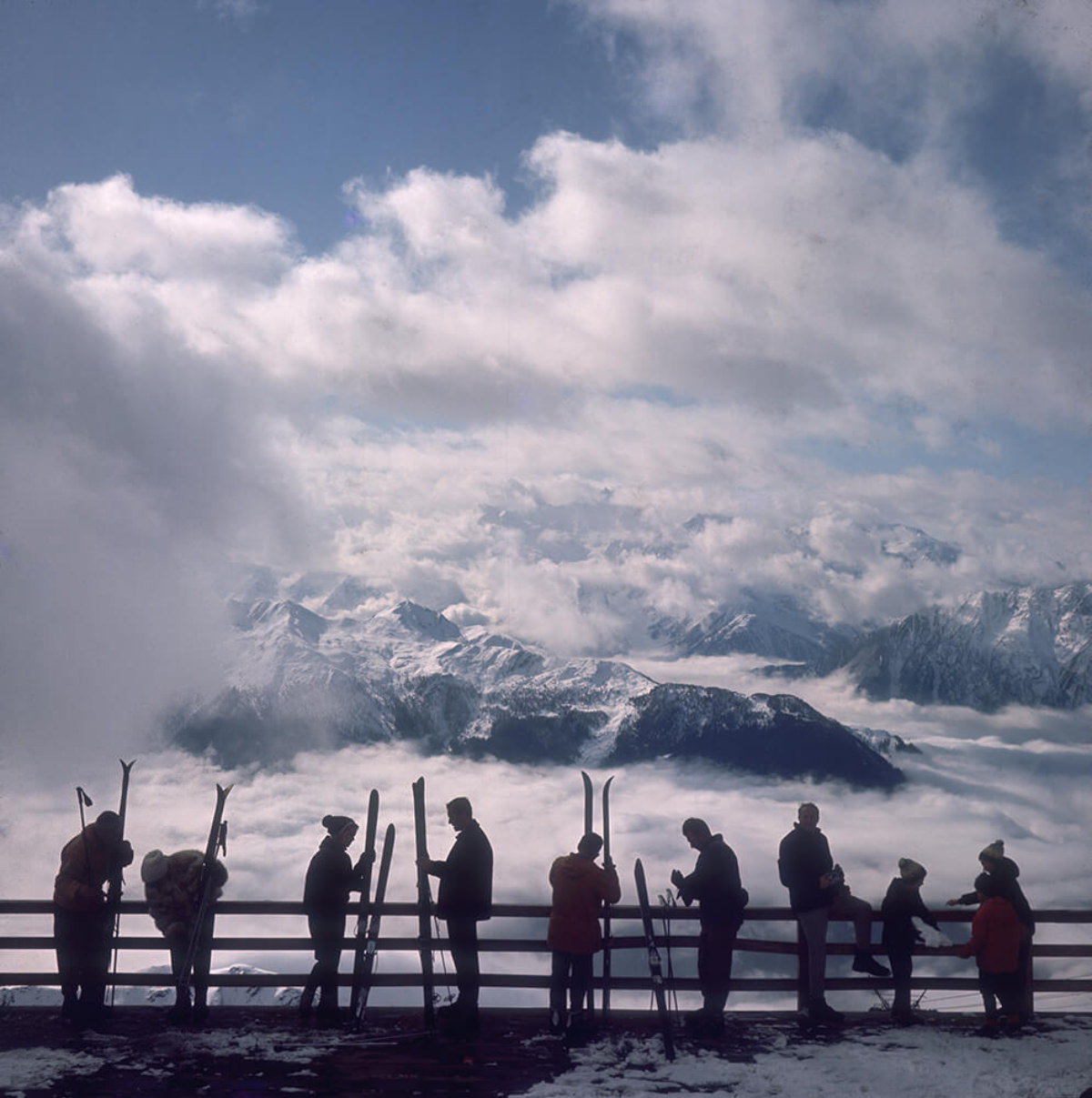
Verbier’s mountain peaks gave Aarons the kind of dramatic backdrop he loved. High above the valley, holidaymakers gathered at the top of the mountain to soak in the sun and the altitude. The light at that elevation is sharp and bright, and Aarons used it well.
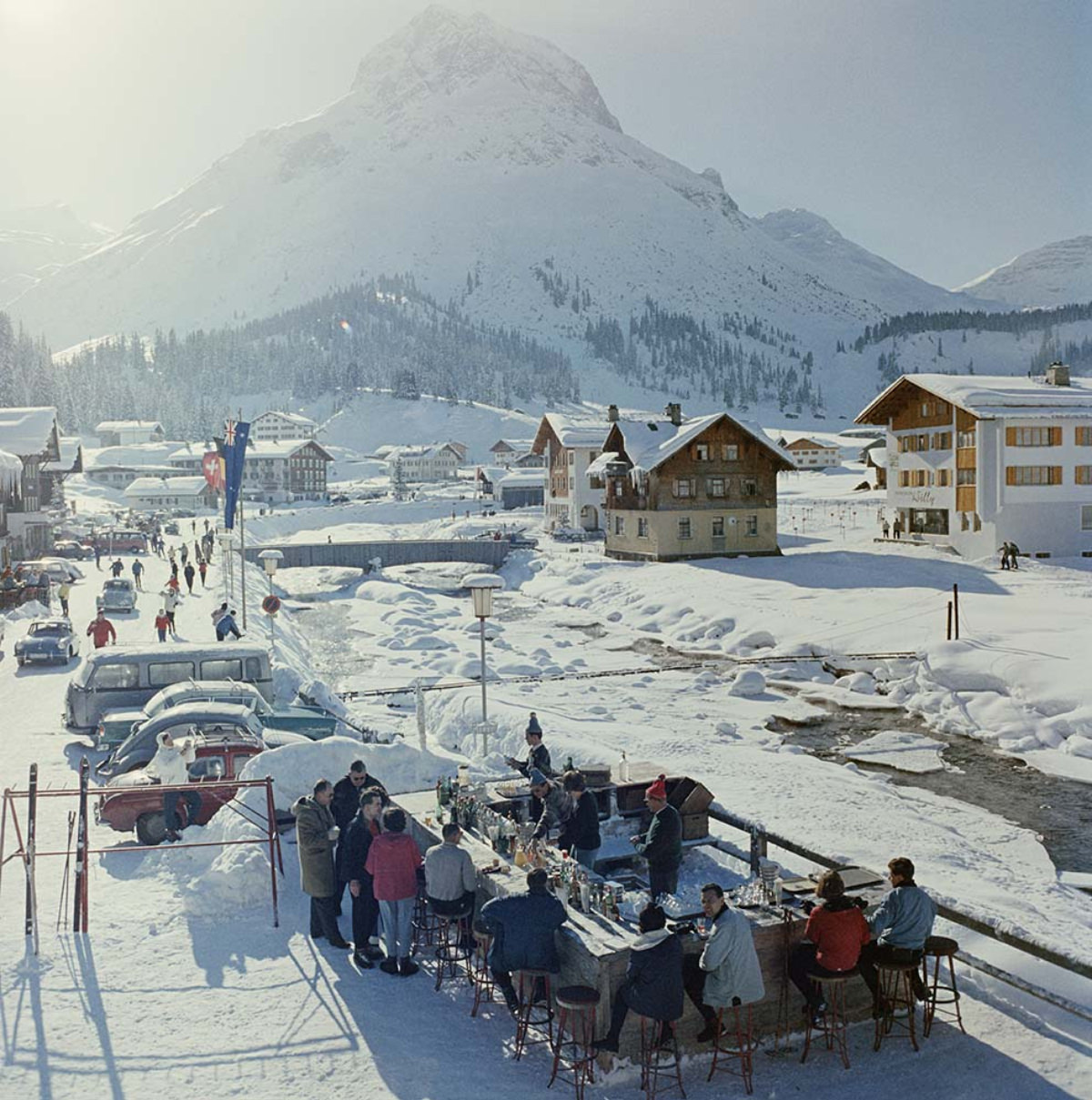
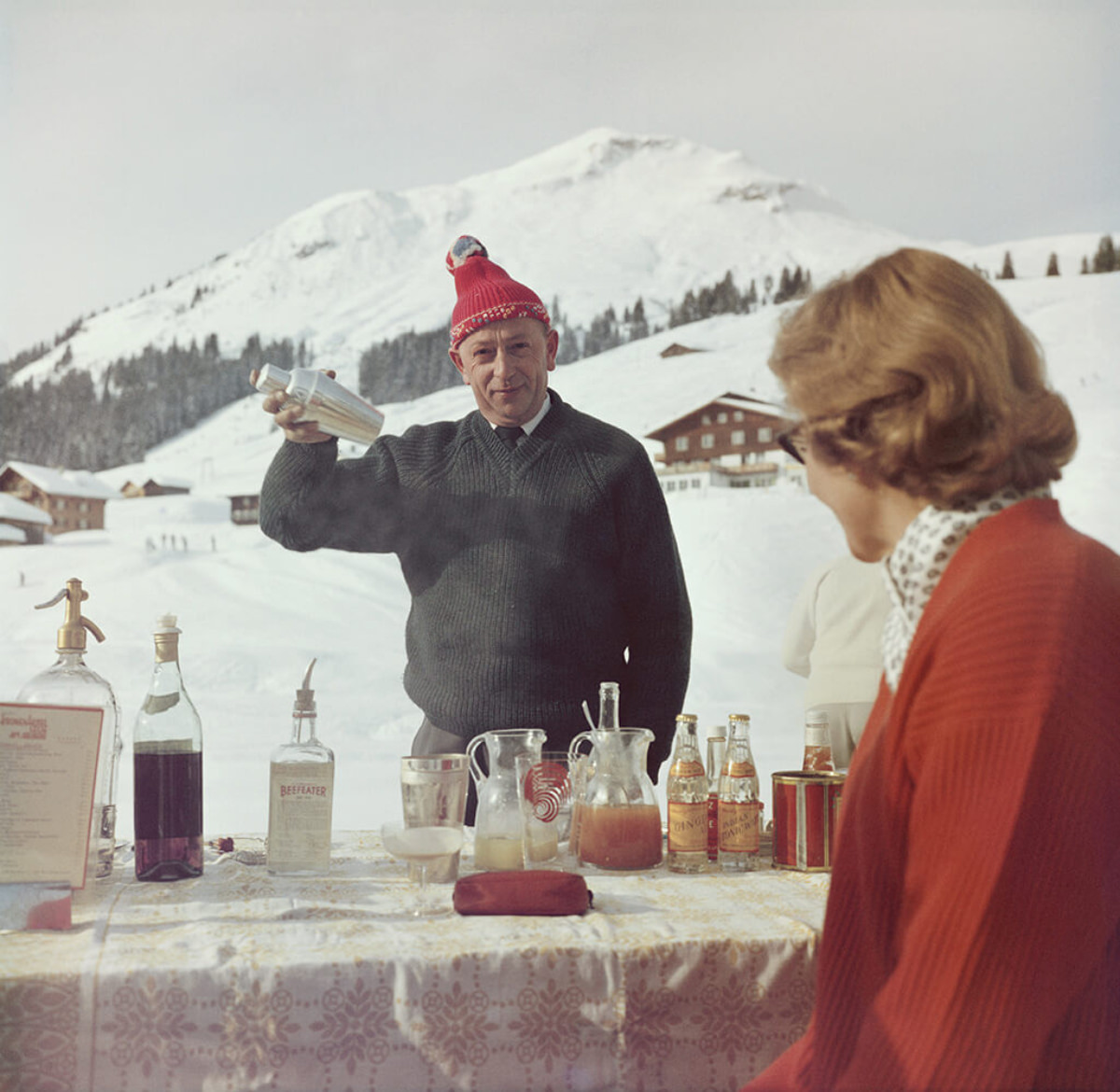
Austria was another key destination. In 1960, Aarons visited Lech, a small but exclusive resort in the Vorarlberg Alps. The Hotel Krone there featured an outdoor Ice Bar set against the striking backdrop of the Omershorn mountain — a spot that attracted a well-heeled crowd looking for something more than just skiing.
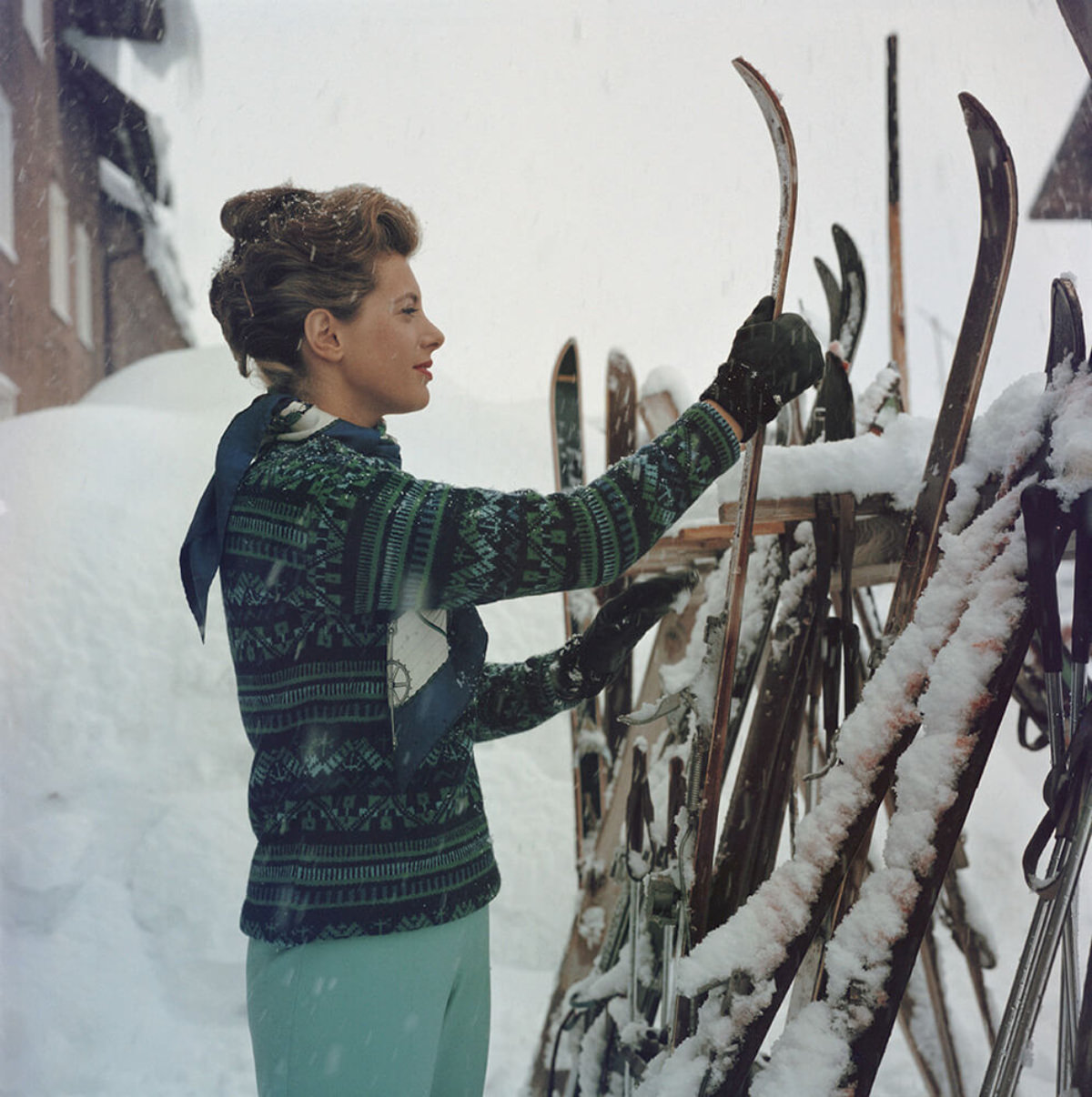
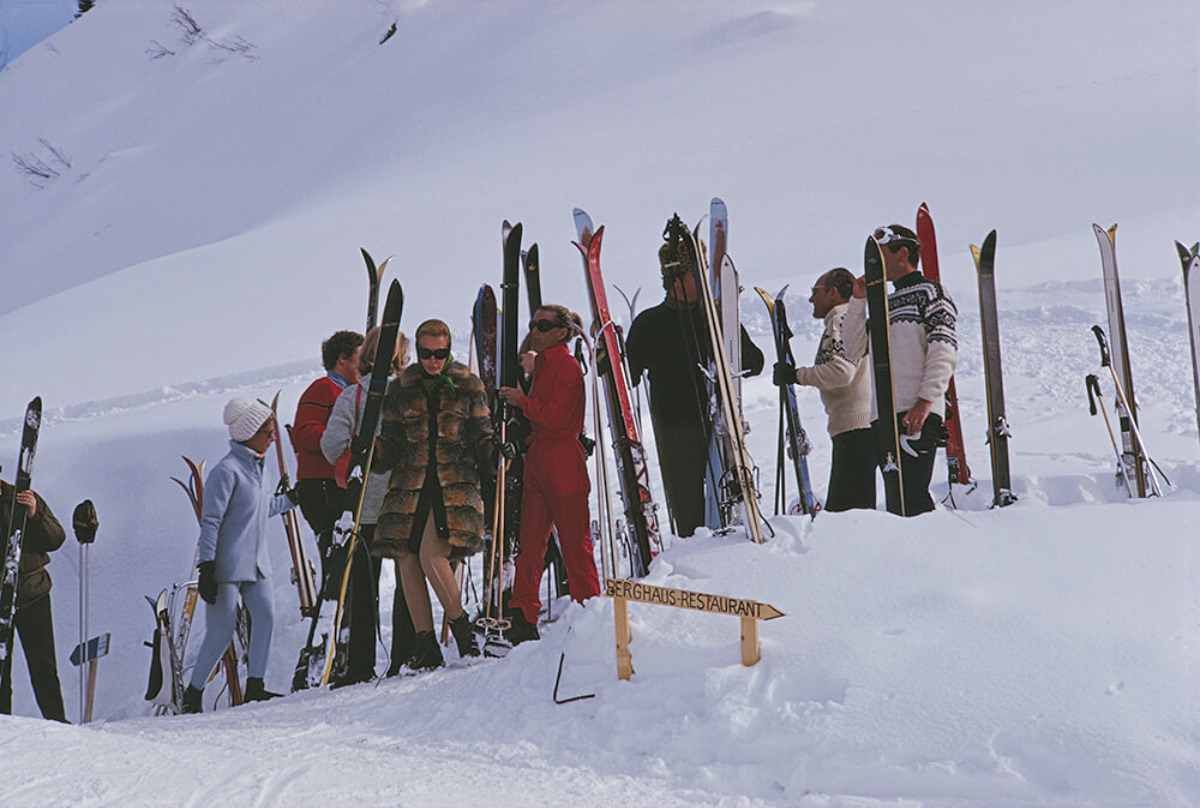
Lech also attracted European royalty and aristocracy. Princess Luciana Pignatelli was among those Aarons photographed on the slopes there, embodying the kind of effortless, moneyed ease that defined his body of work.
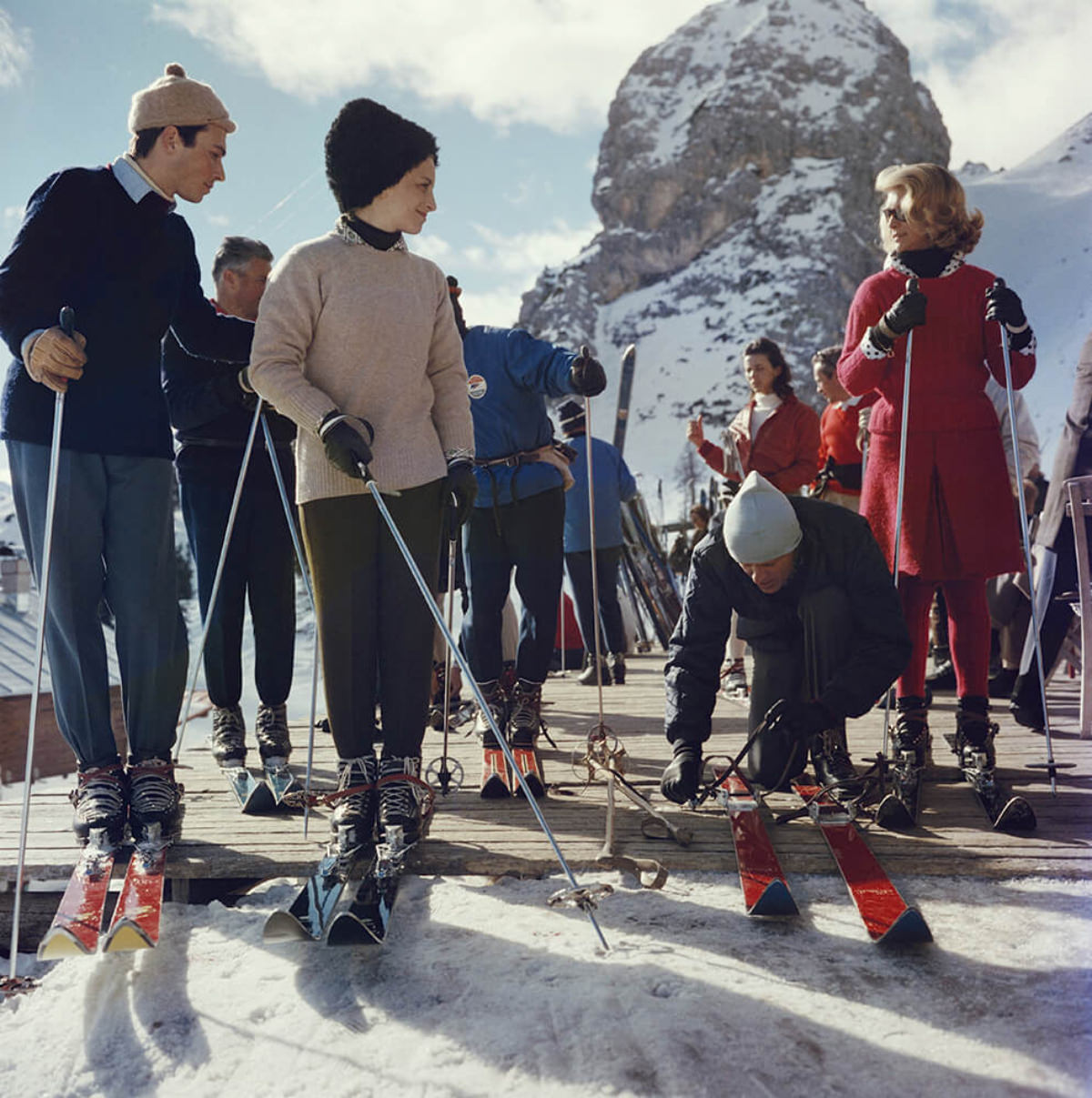
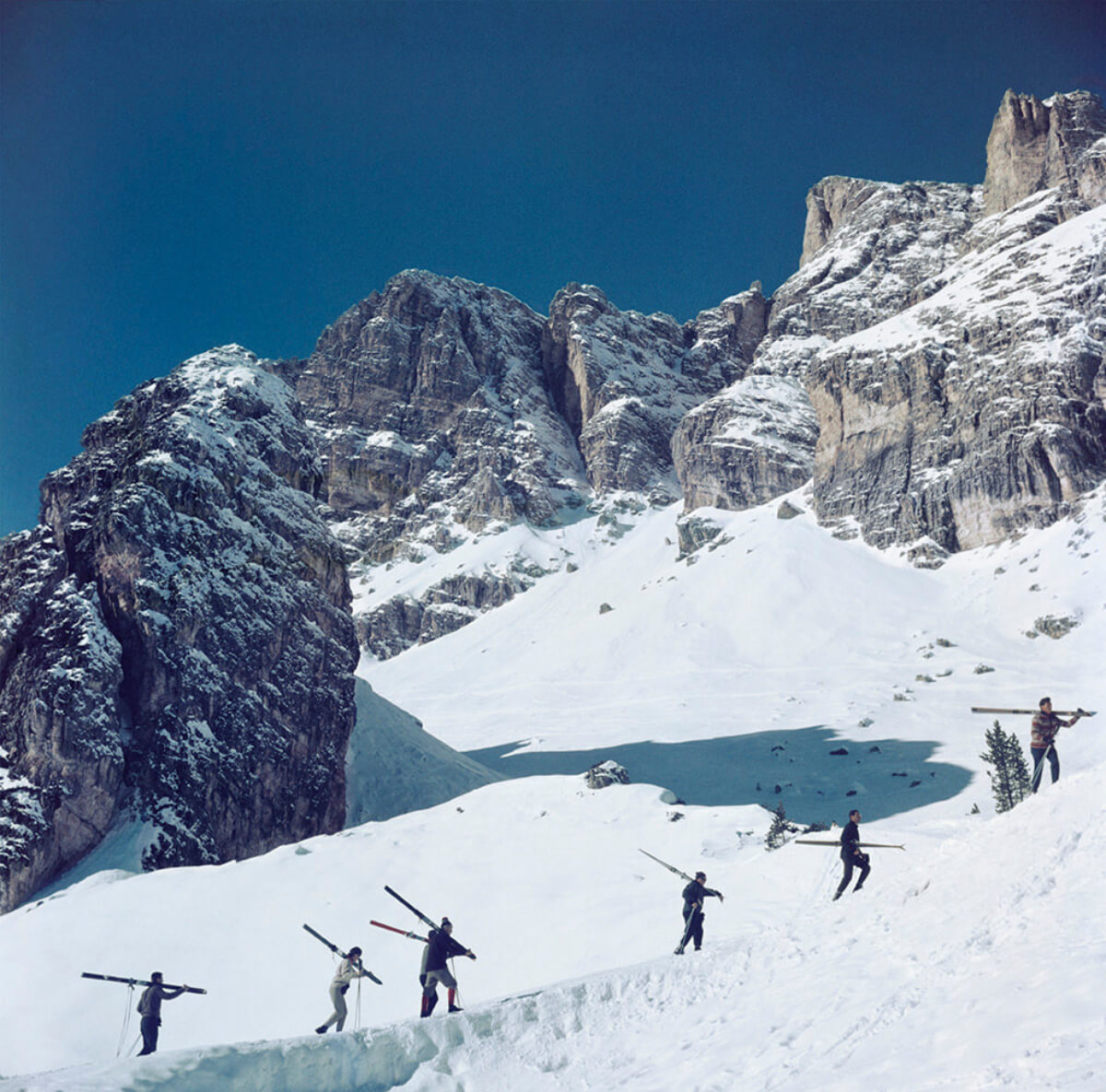
Italy’s Cortina d’Ampezzo drew Aarons in 1962. Nestled in the Dolomites of northern Italy, Cortina had hosted the 1956 Winter Olympics and was firmly established as one of Europe’s most fashionable ski resorts by the time Aarons arrived. He photographed skiers on the slopes and captured others making the climb back up the mountain on foot.
Back in Verbier, Aarons documented the everyday rhythms of resort life — the queues for the cable car, the pause at a high viewpoint to look out over a valley filled with clouds. These weren’t staged moments. They were simply the details of a holiday that Aarons happened to be present for.
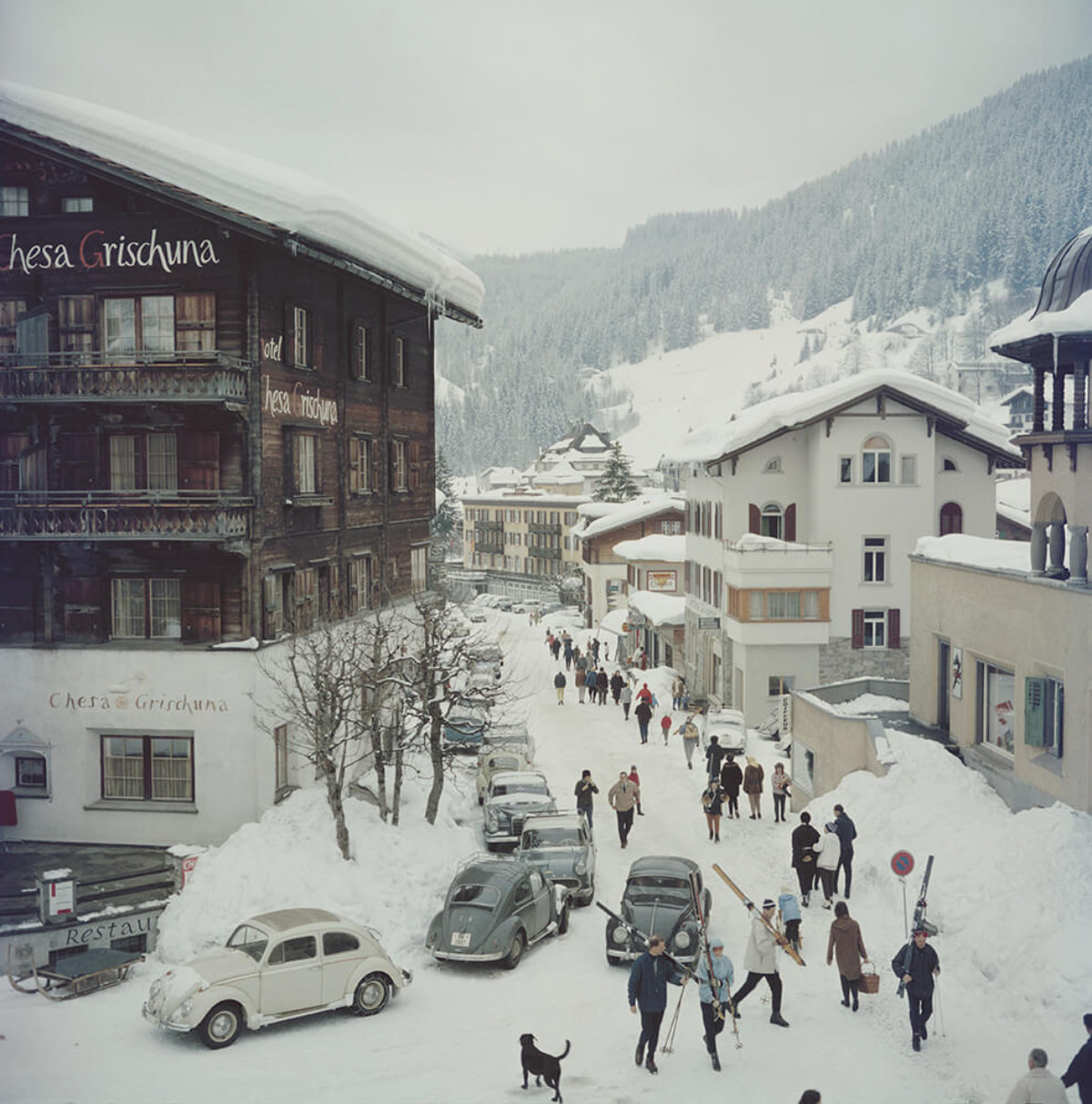
Klosters, another Swiss resort, offered Aarons a different kind of shot in 1963. The Hotel Chesa Grischuna — a traditional, wood-fronted building in the village centre — served as a natural gathering point for skiers passing through, and Aarons was there to capture the scene.
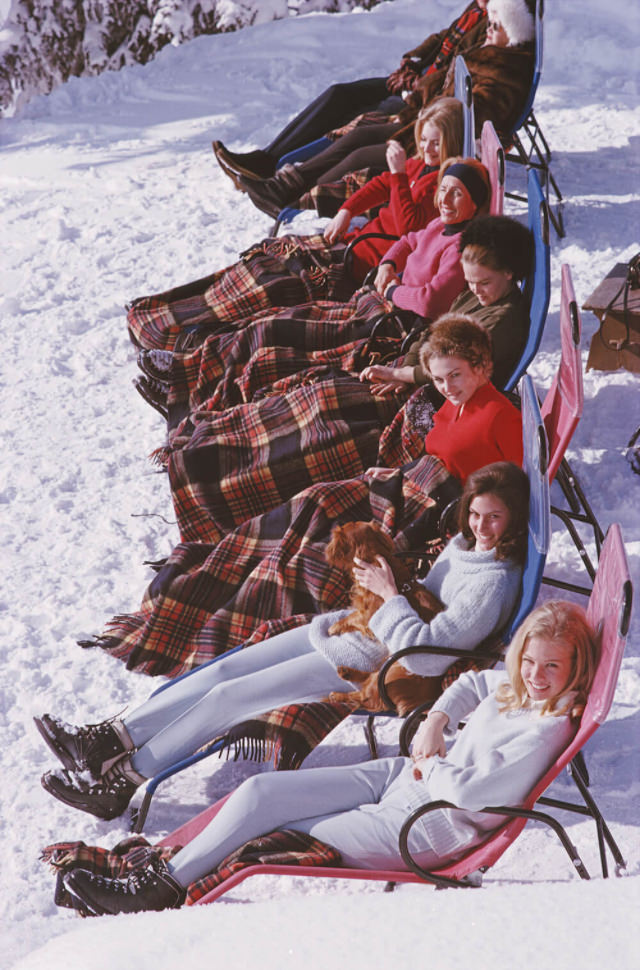
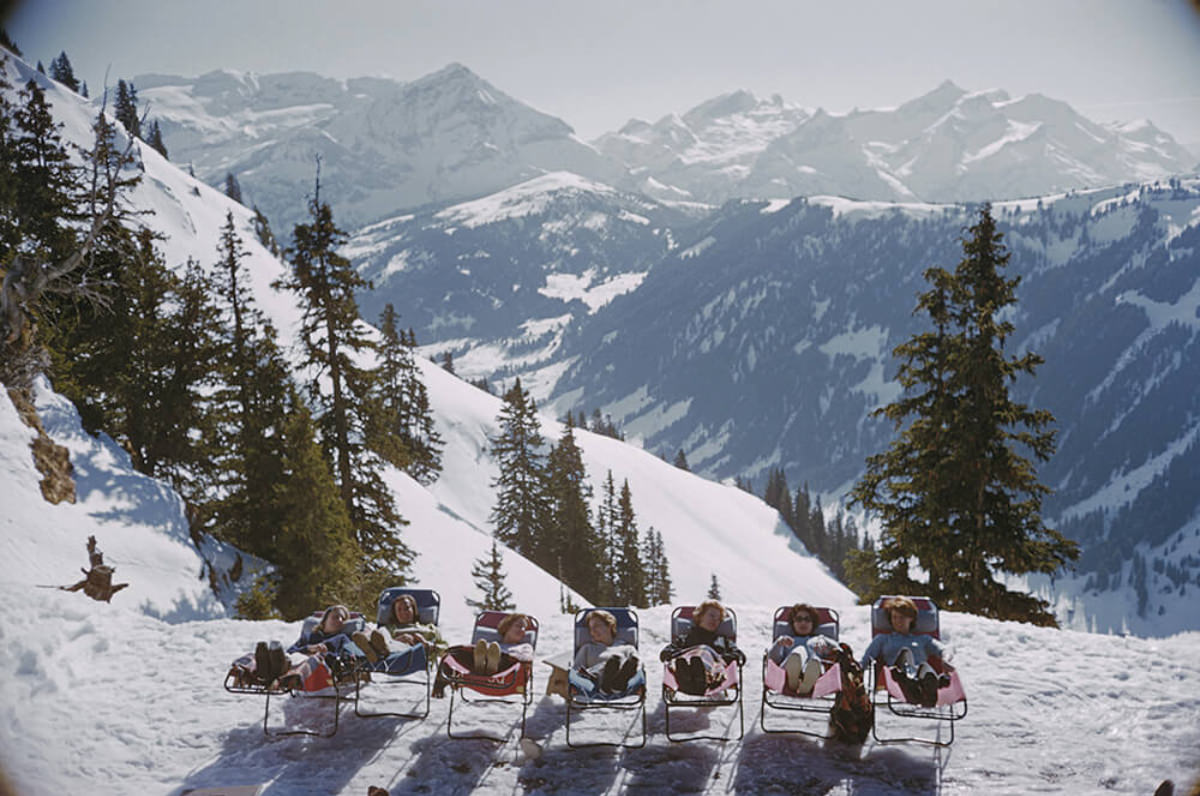
Gstaad, one of Switzerland’s most exclusive winter resorts, appeared in Aarons’ work across multiple years. In 1963, he photographed a group of women reclining on the snow with rugs draped over their knees — relaxed, well-dressed, and entirely at home in the cold.
Aarons returned to Verbier in 1964 for more shots of skiers on the slopes, then came back to Gstaad later in the decade. By 1969, the resort’s character remained consistent — elegant, social, and always photogenic.
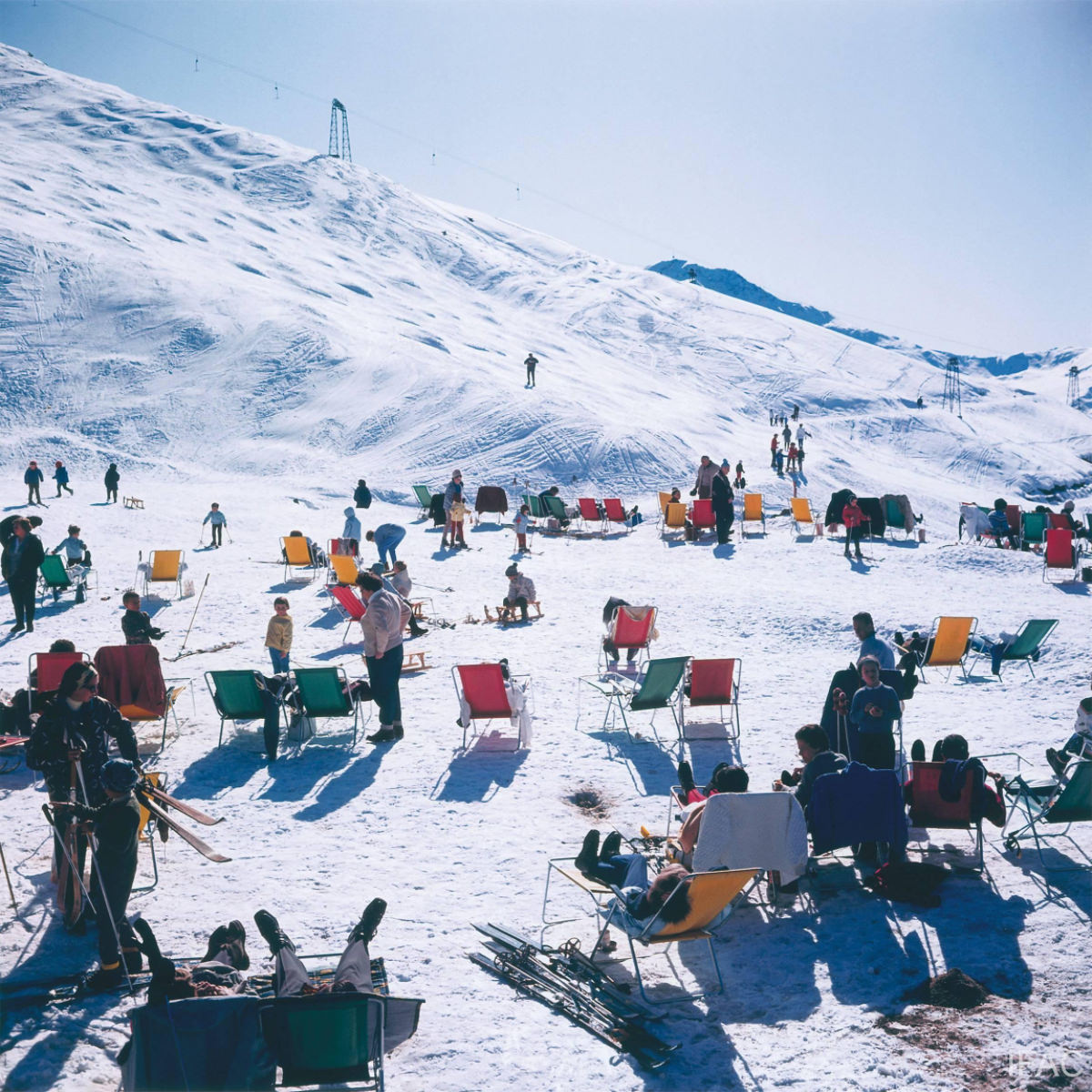
Sun loungers on snowy slopes were a recurring image in Aarons’ winter work. At Gstaad in March 1961, guests again settled into chairs on the mountainside, faces tilted toward the sun at altitude — a ritual that seemed as natural to them as the skiing itself.
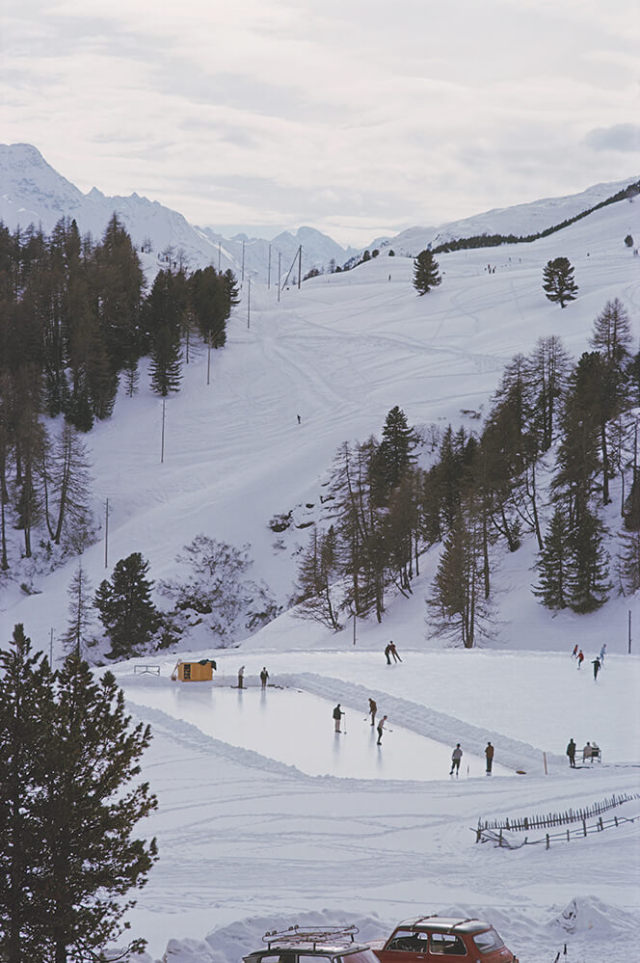
St. Moritz, perhaps the most famous of all Swiss winter resorts, gave Aarons a different kind of action to photograph. In 1963, he captured a curling match on the ice — a sport that had long been part of alpine resort culture and drew a dedicated crowd of spectators and players alike.
At Lech’s Hotel Krone in 1960, the Ice Bar wasn’t just a scenic backdrop — it was a working bar. A bartender mixed drinks for guests while the Omershorn loomed in the distance, and the scene had exactly the kind of casual luxury that Aarons spent his career seeking out.
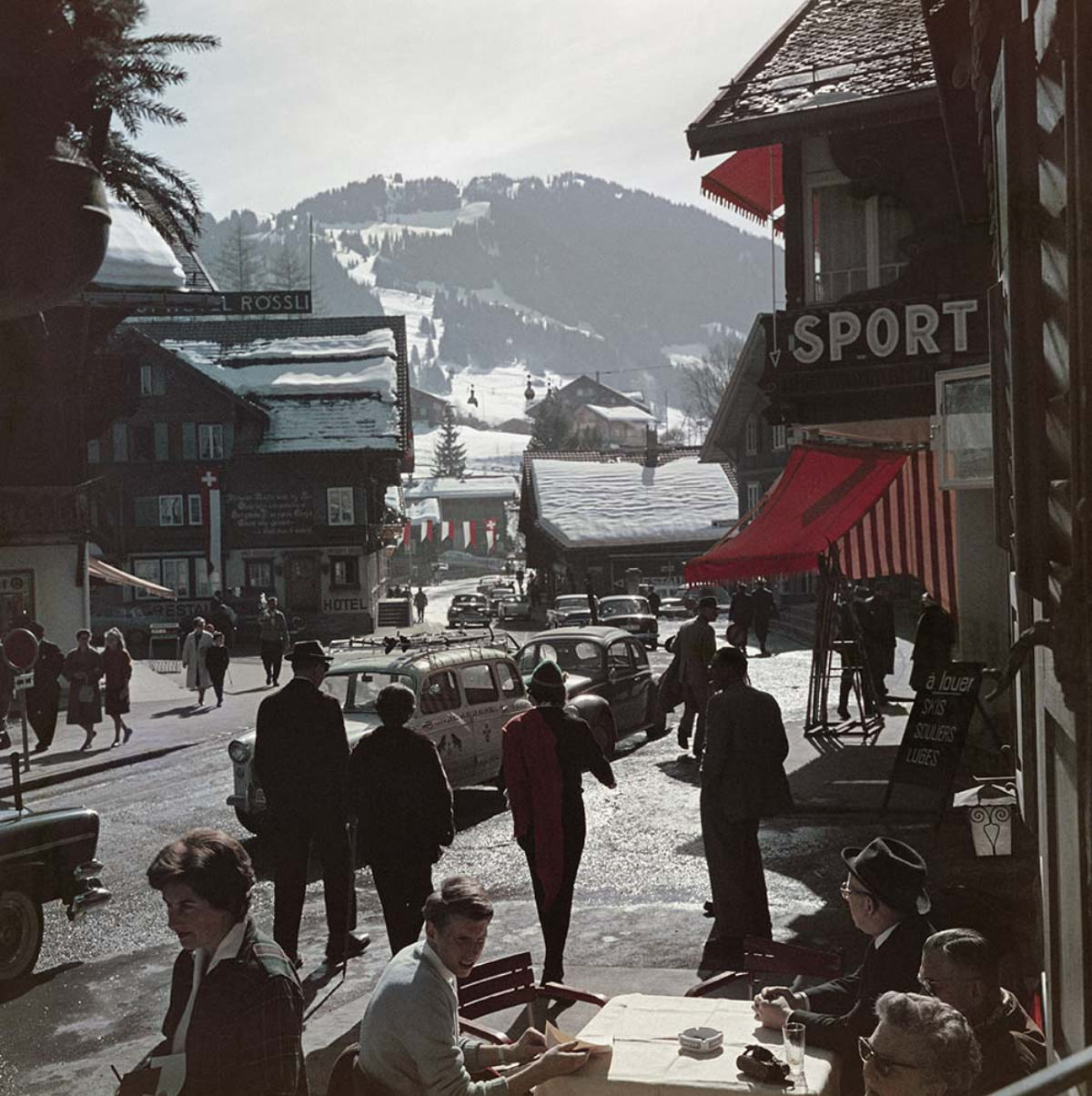
By 1969, the Eagle Club in Gstaad was the place to be seen after a day on the slopes. Aarons photographed holidaymakers dining there, the room full of the same well-dressed, well-connected crowd he had been photographing throughout the decade. The resort town itself, with its traditional chalets and snow-covered streets, completed the picture of 1960s alpine luxury.