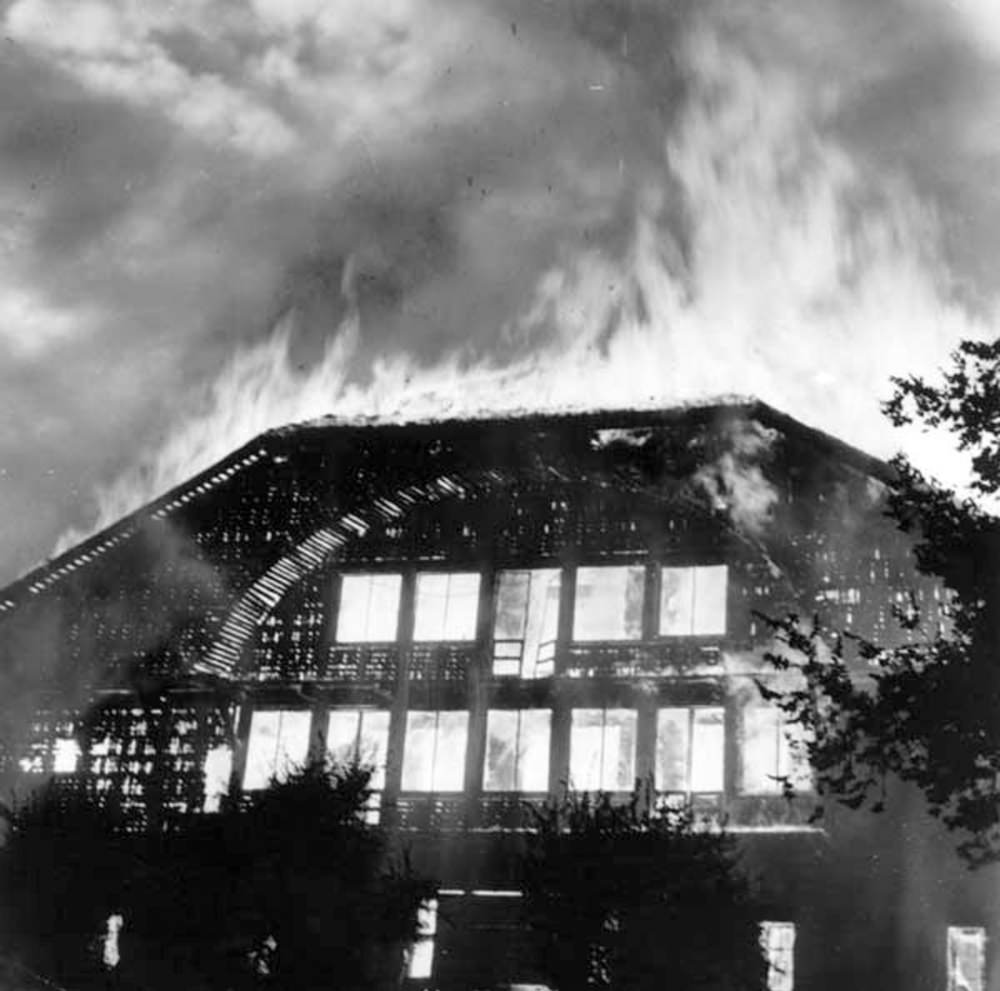
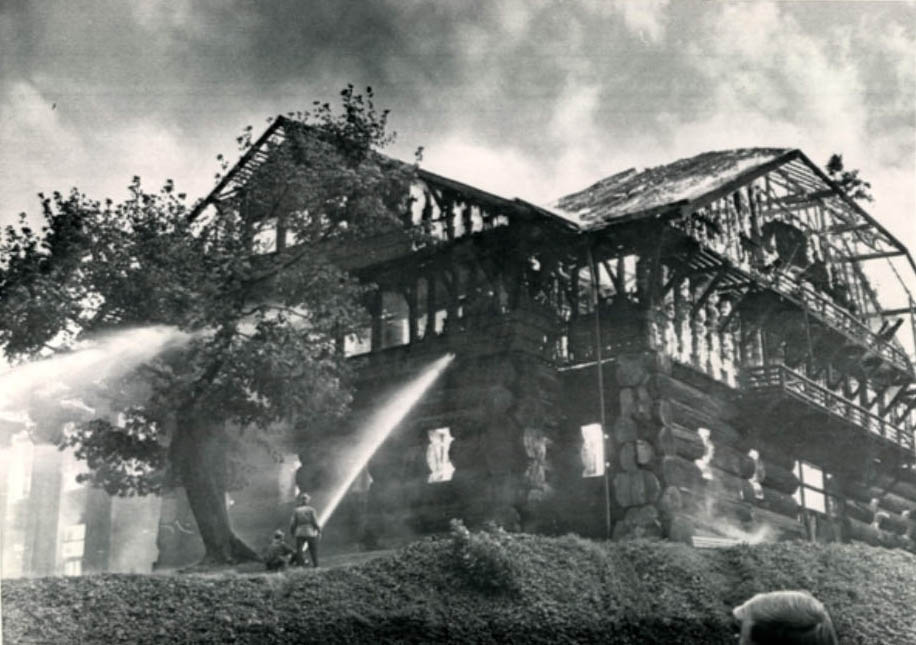
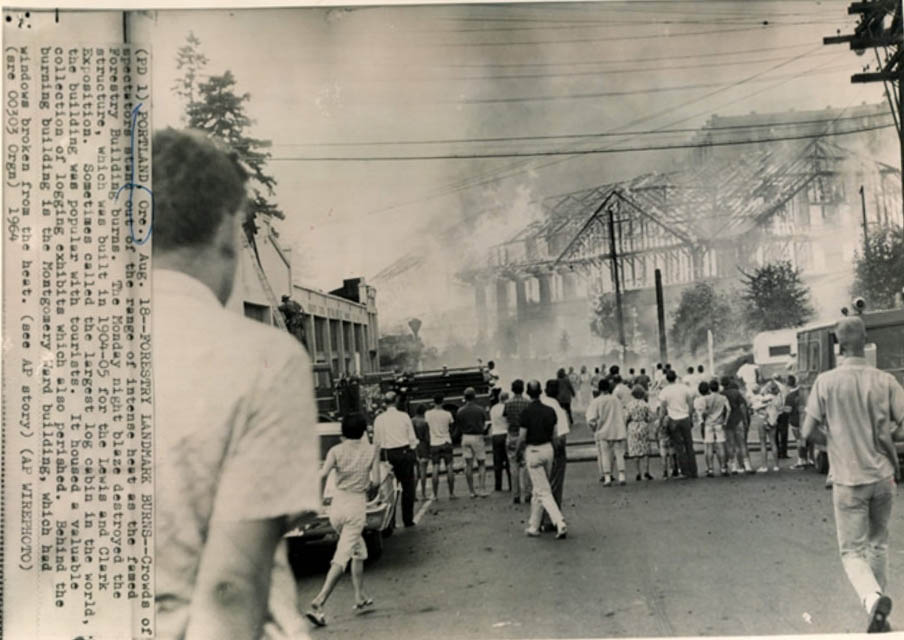
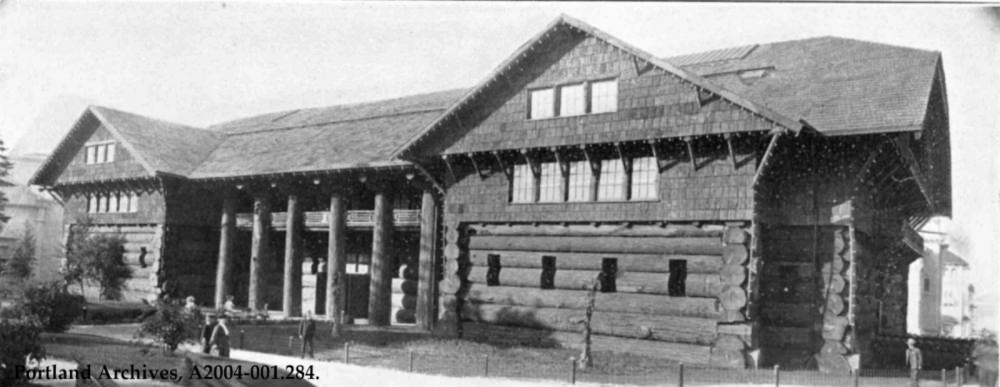
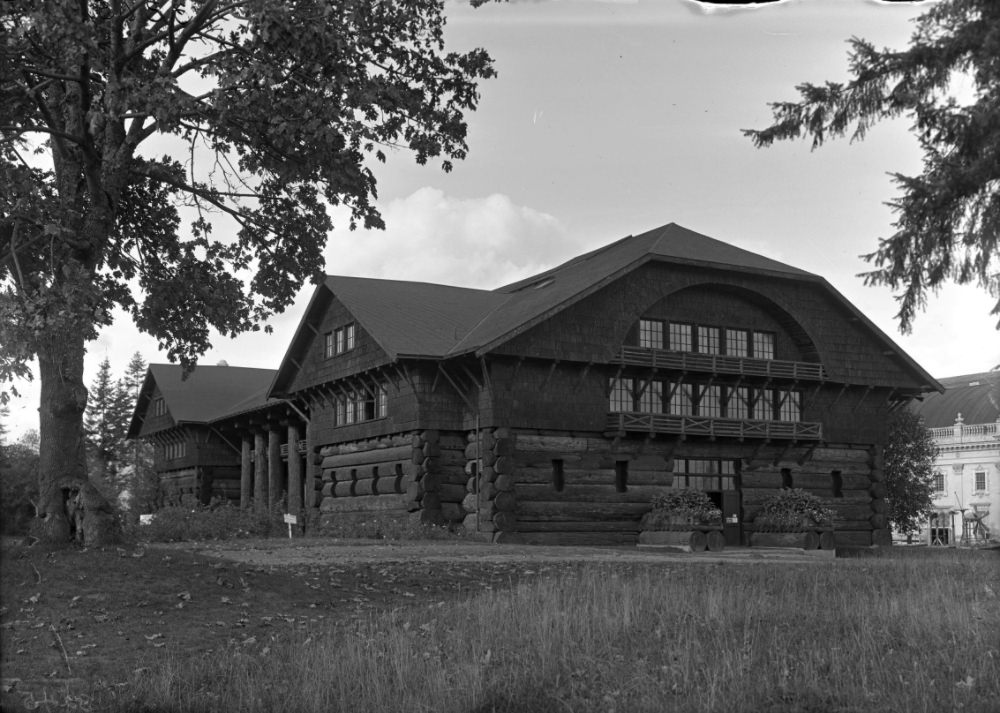
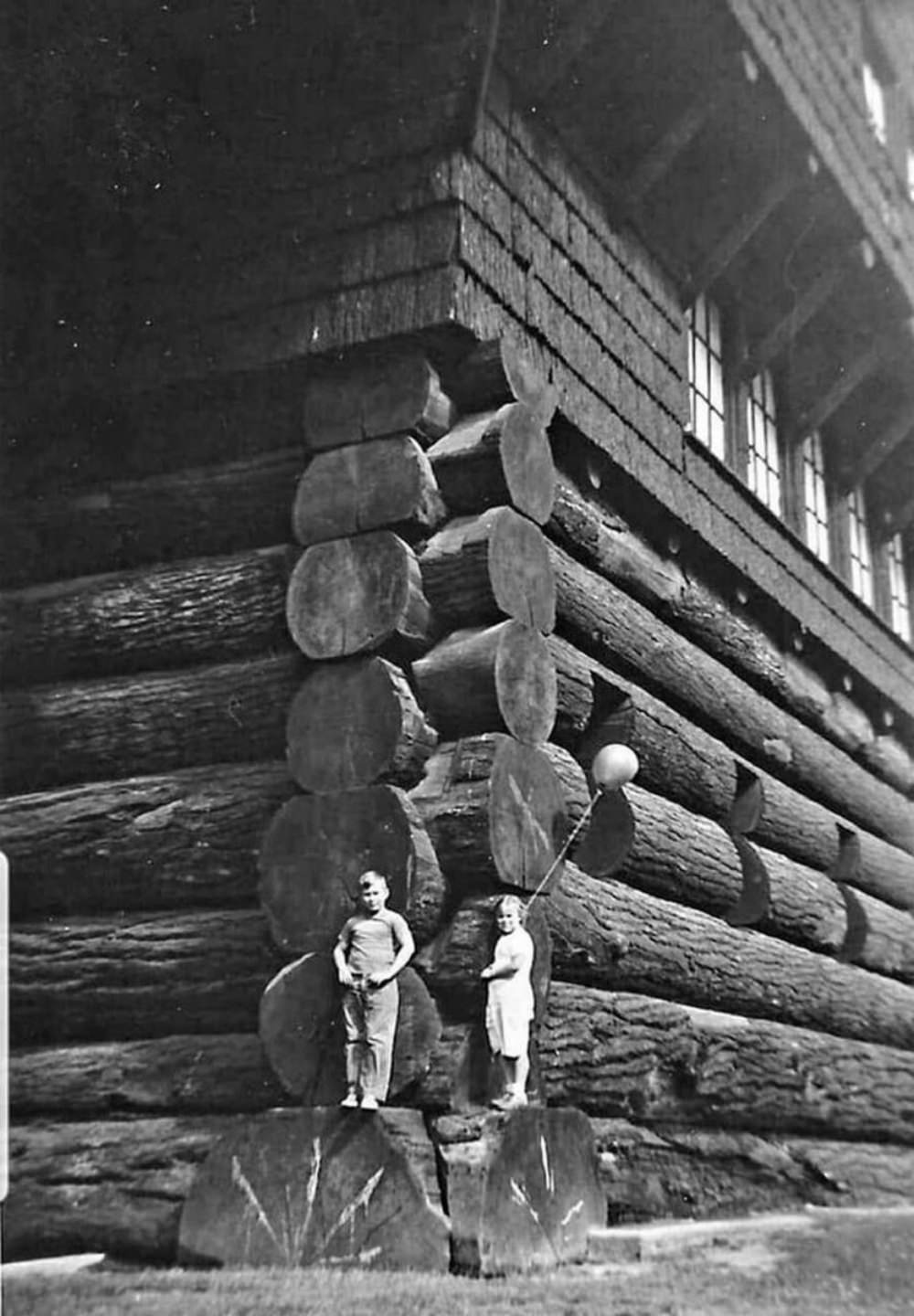
In the summer of 1905, Portland, Oregon unveiled something the world had never seen before — a log cabin so massive it stood roughly seven stories tall. Built for the Lewis and Clark Centennial Exposition, the Forestry Building was not just a landmark. It was a record-holder, widely recognized as the largest log cabin ever constructed. Nearly 60 years later, it was gone in a matter of hours.
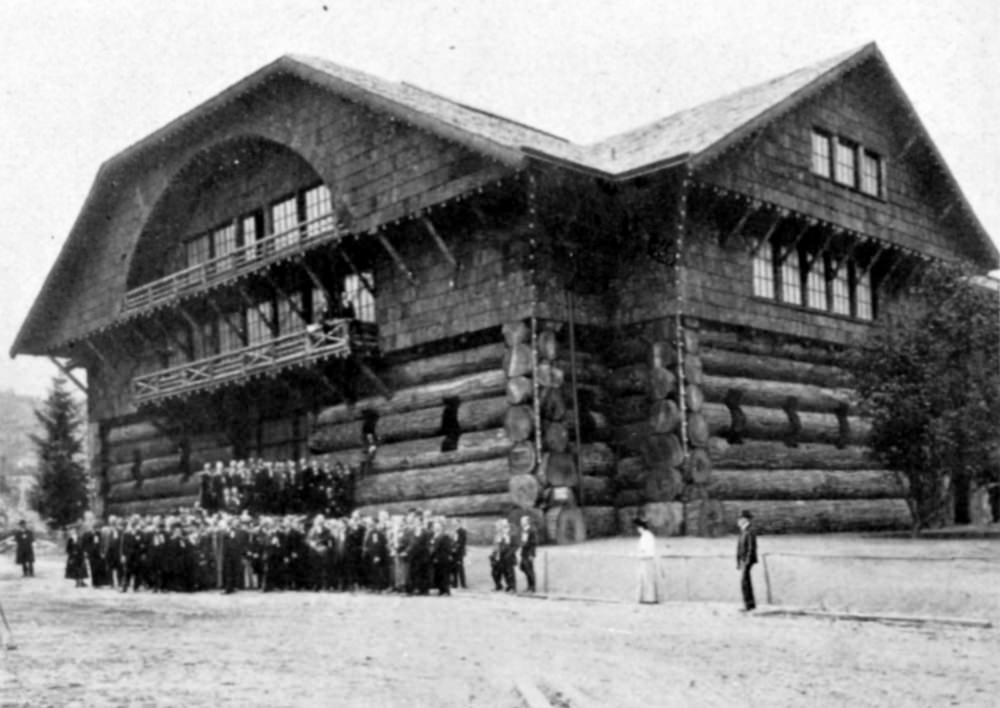
The building was designed by architect Ion Lewis, who worked out of a Portland architectural firm. Construction cost around $30,000 — roughly $935,000 in today’s money. The logs that formed the backbone of the structure were massive, unpeeled Douglas Fir trees, 54 of them in total, purchased from old-growth forests in Columbia County, Oregon. The man behind that purchase was Simon Benson, an American businessman and philanthropist with deep ties to the Pacific Northwest timber industry.
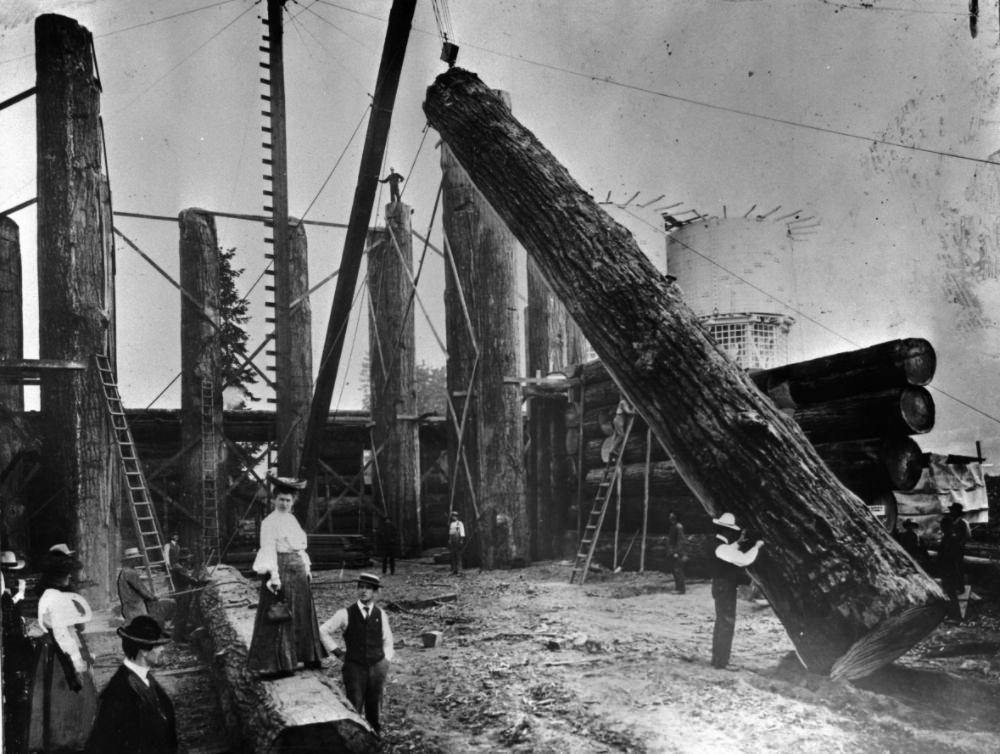
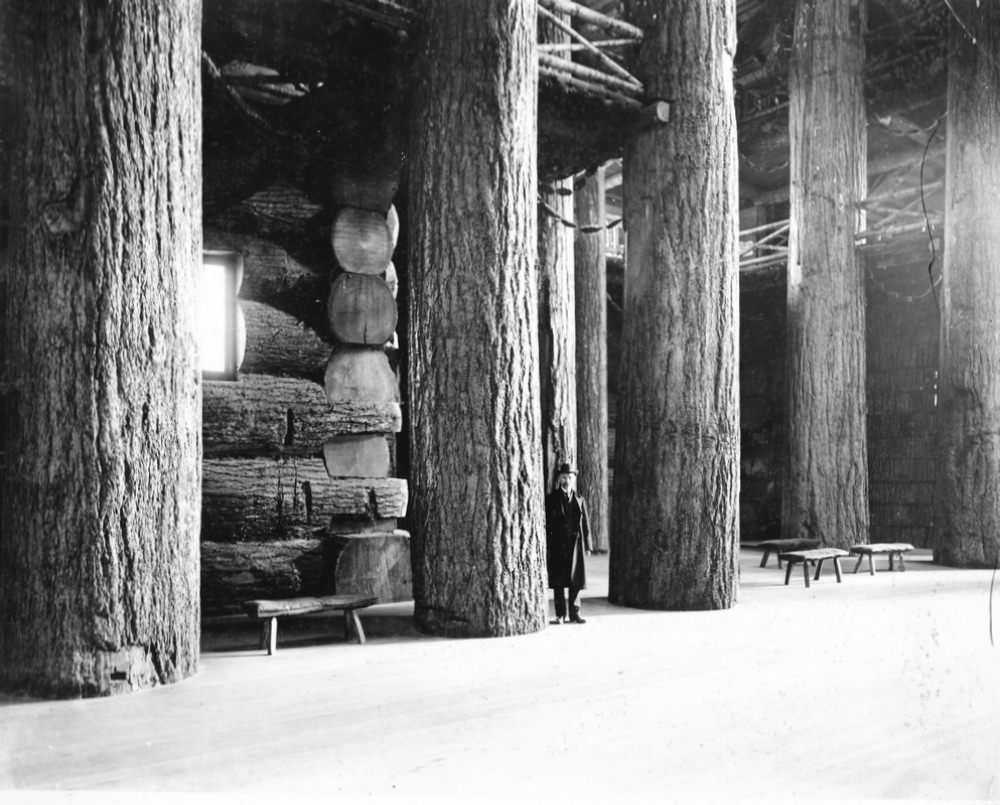
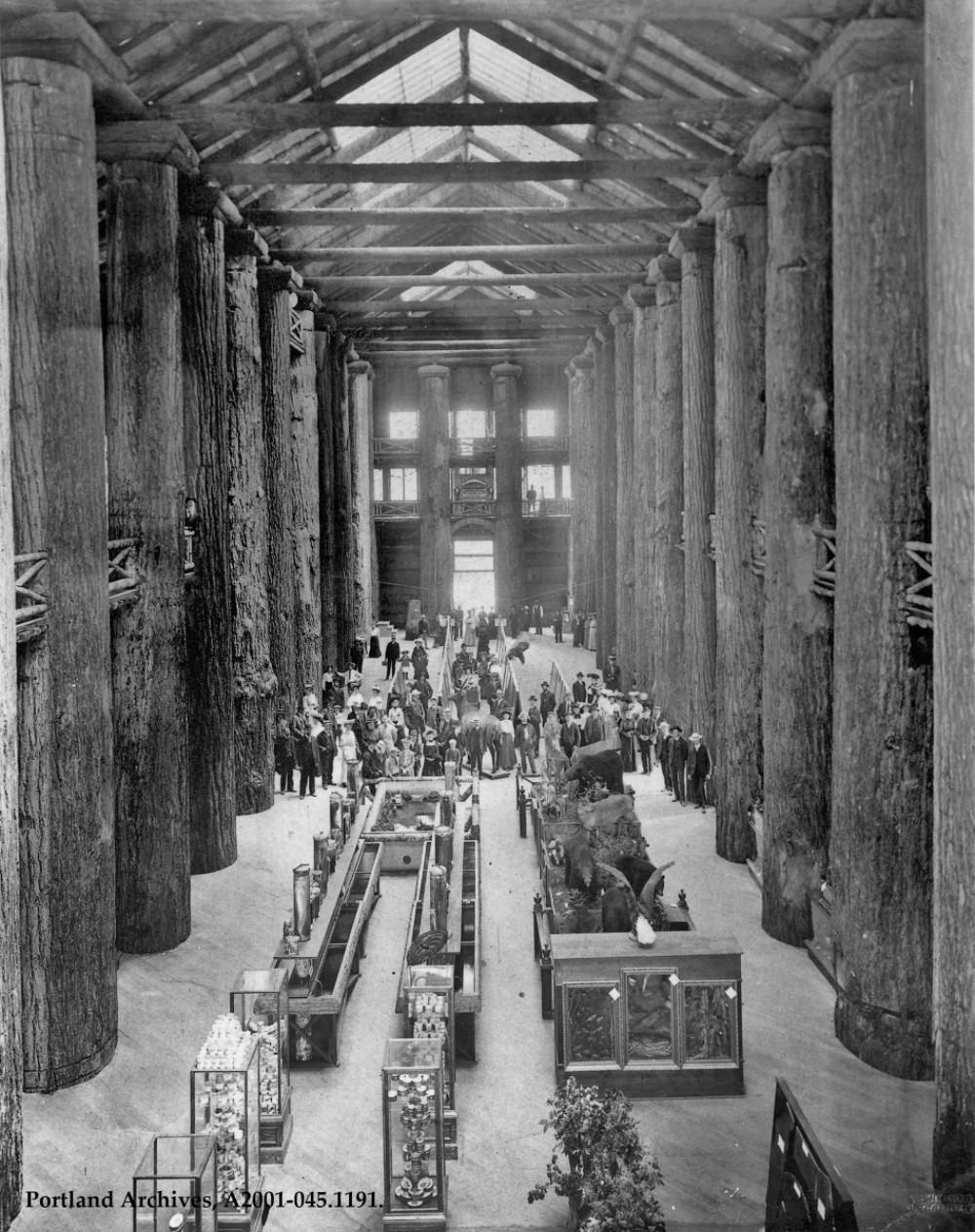
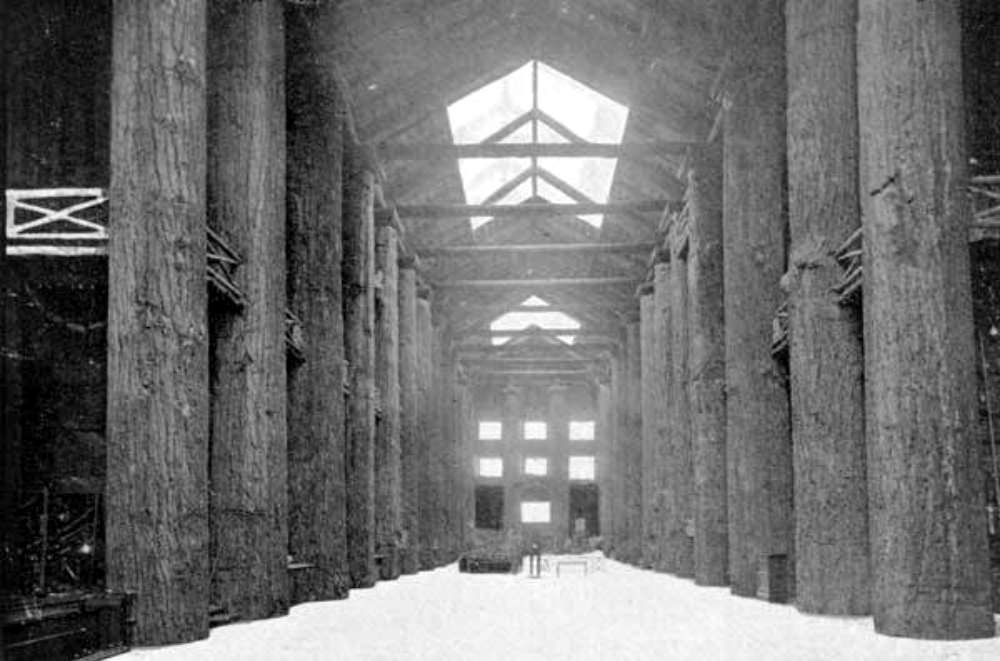
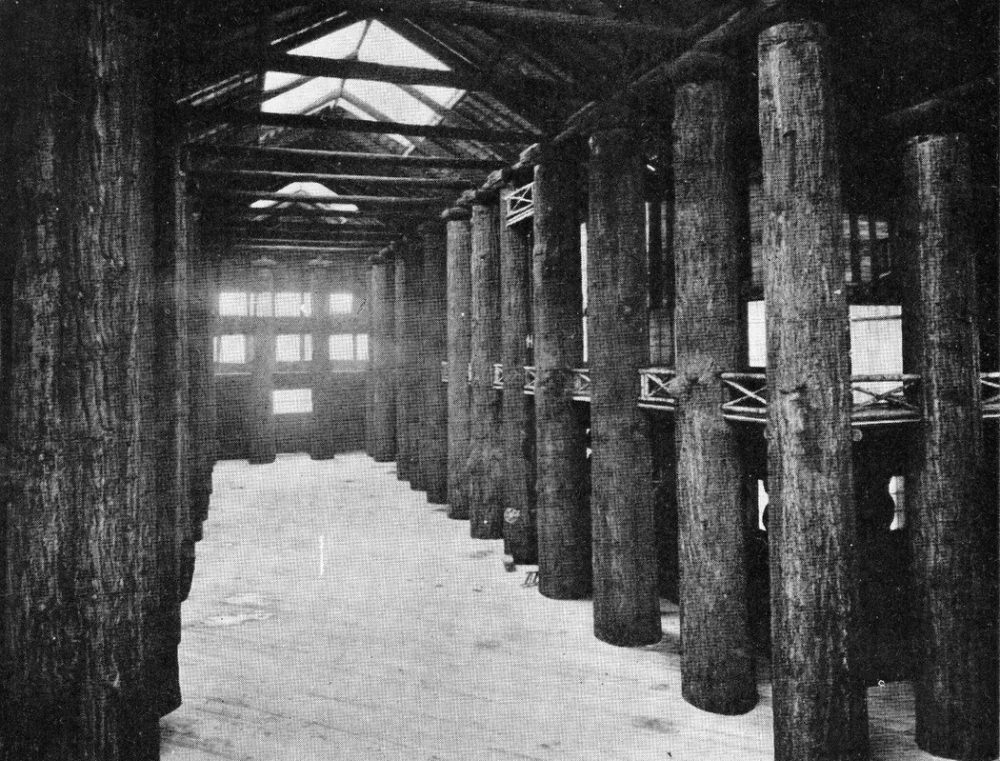
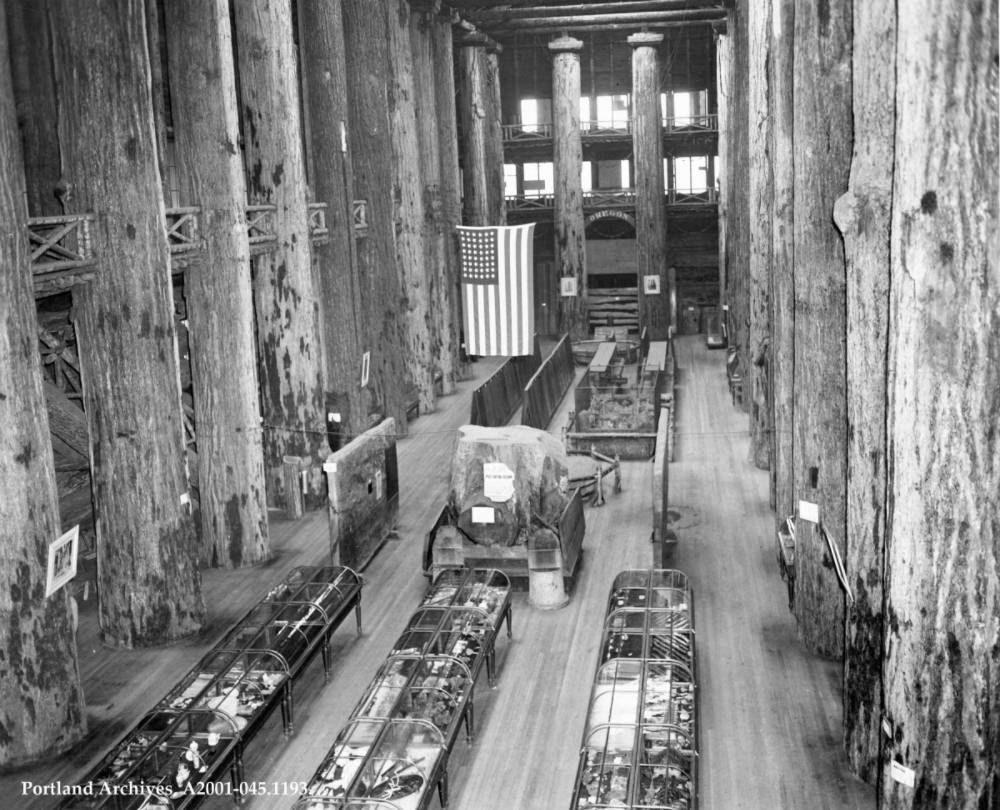
Inside, the logs lined the walls and rose through the building in a way that made visitors feel small. The structure supported a two-story cruciform aisle — a cross-shaped central hall — lit from above by skylights. Walking through it felt less like entering an exhibition hall and more like stepping into an ancient forest. The exhibits themselves covered the forestry industry, local wildlife, and Native American artifacts and photographs.
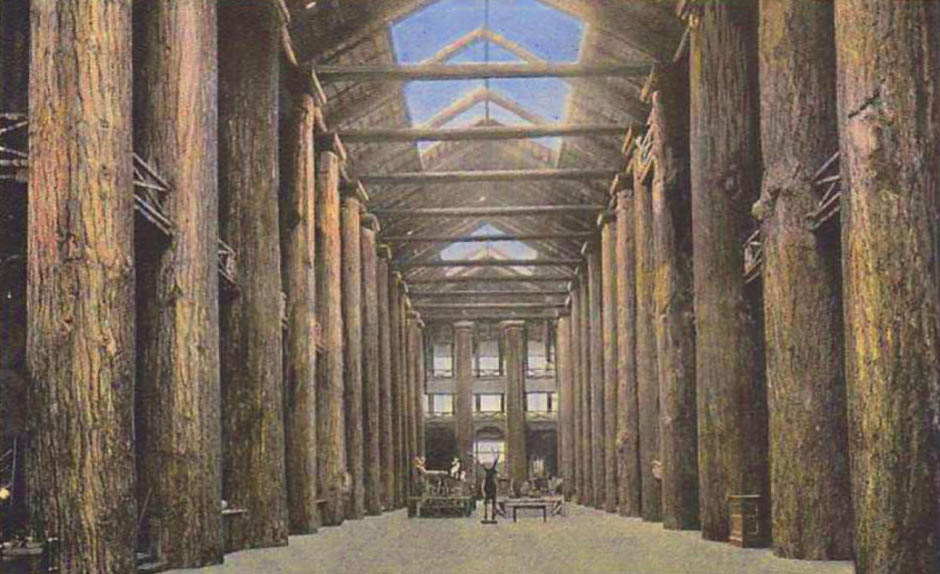
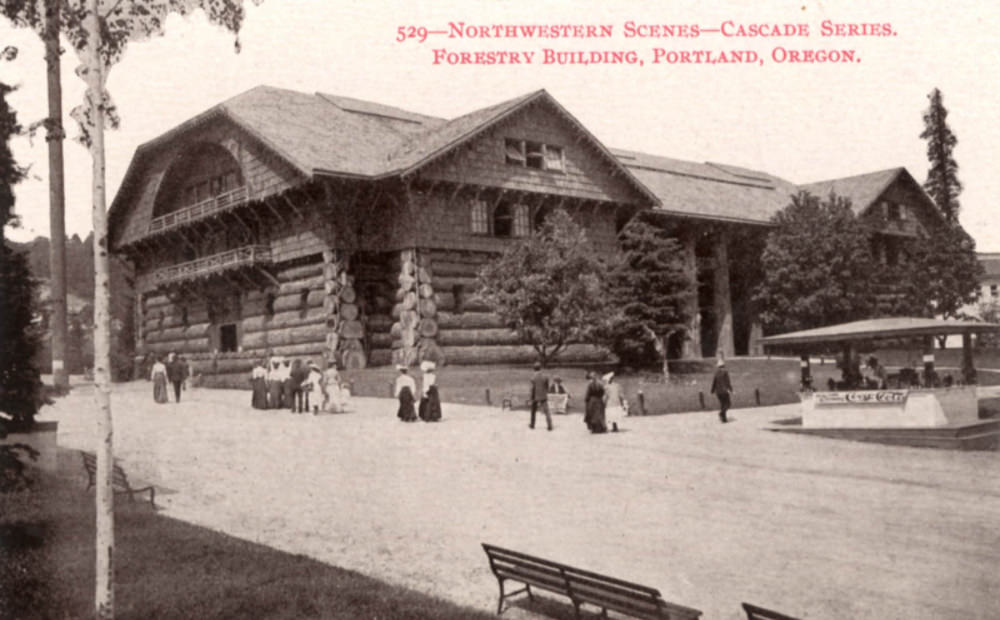
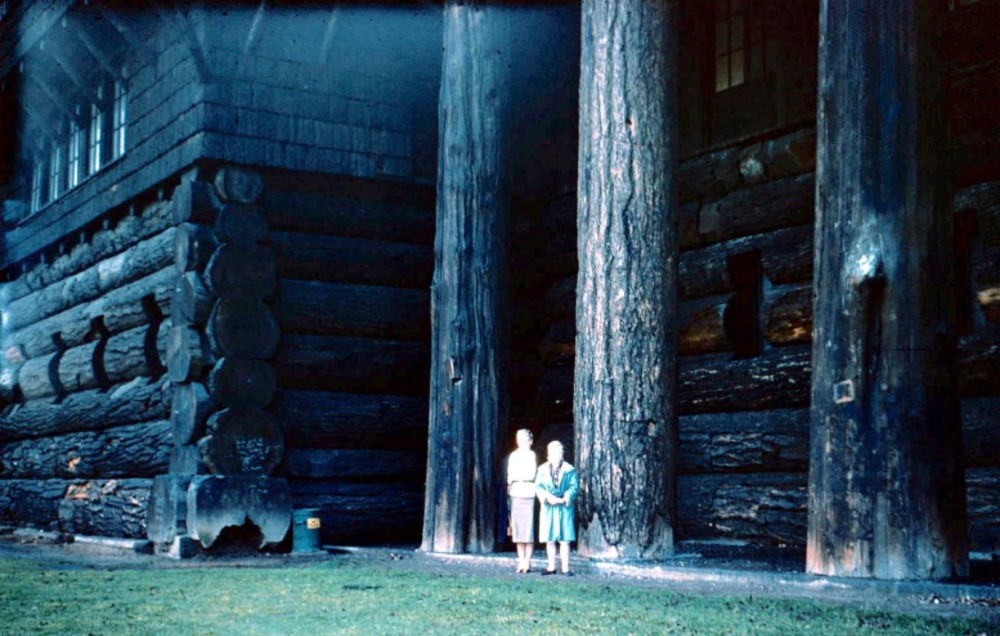
The sheer scale of the interior left a lasting impression on everyone who entered. Photographs from the exposition show visitors dwarfed by the columns of raw, unstripped timber rising on either side of them. The logs were not decorative — they were structural, load-bearing giants that held the entire roof in place. To stand beneath them was to understand, in a very physical way, just how large the old-growth forests of the Pacific Northwest once were.
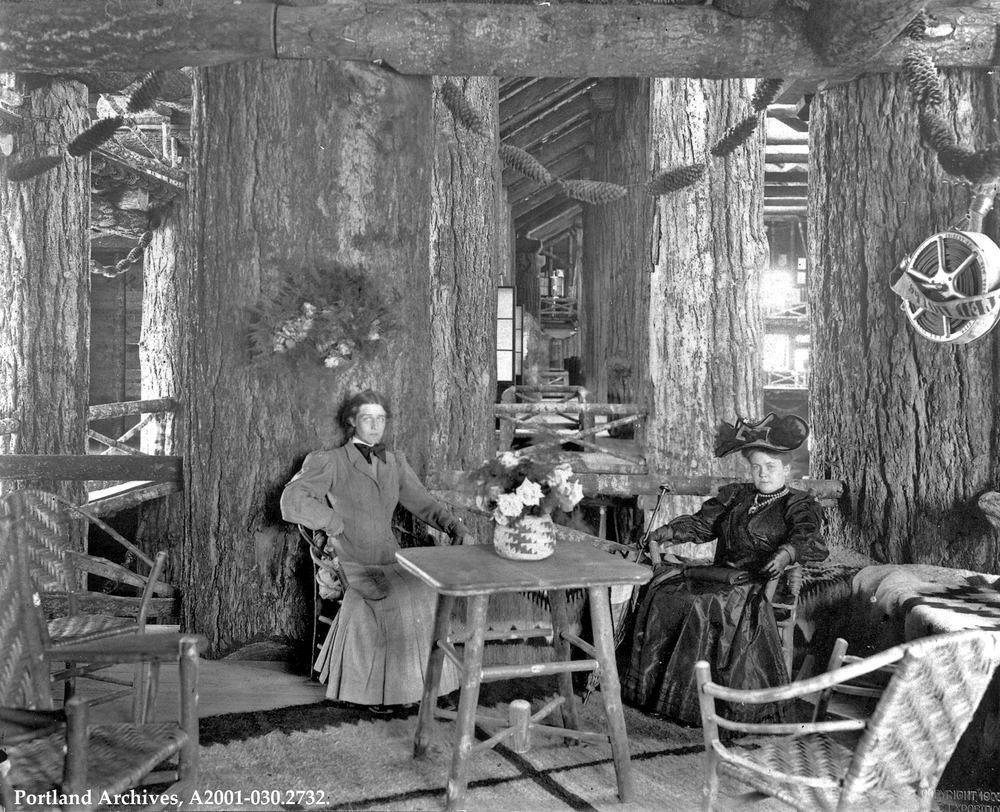
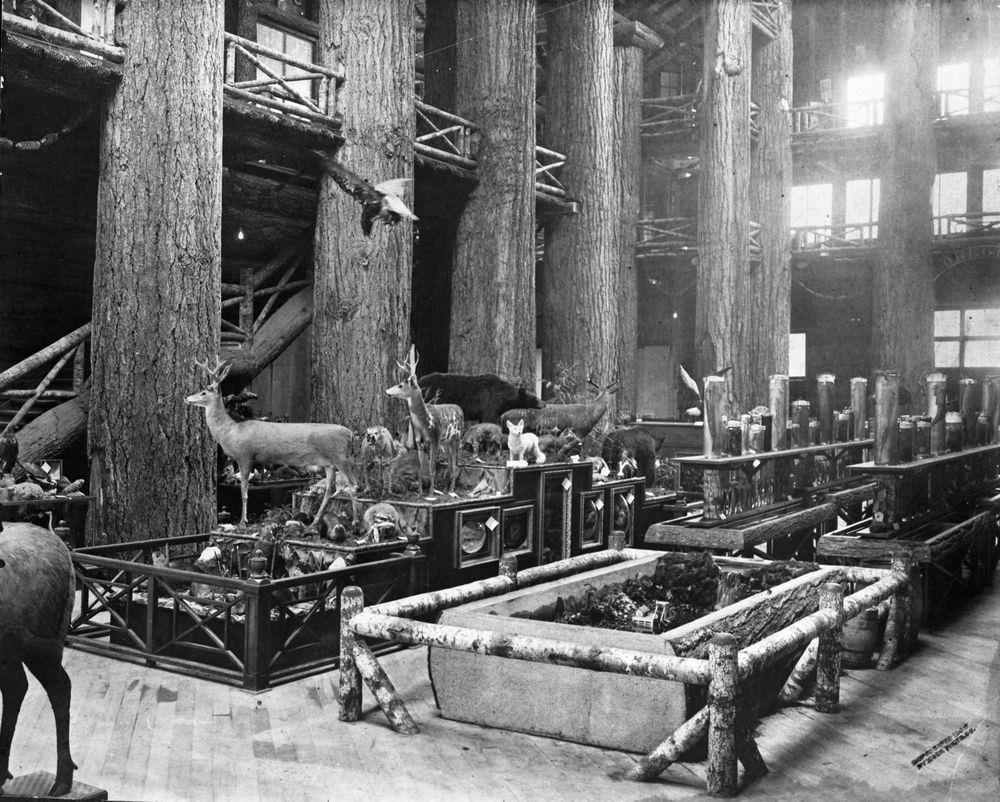
The exposition drew enormous crowds, and the Forestry Building was one of its most celebrated attractions. Exhibits inside showcased the region’s booming timber trade and its natural landscape. One particularly notable artifact was the first sheet of Douglas Fir plywood ever manufactured — produced in 1904 by the Autzen family’s Portland Manufacturing Company. That single sheet of plywood represented a turning point in how wood could be engineered and used.
When the exposition closed, Portland kept the building standing. But it did not keep it well. In the years that followed 1905, the city allowed the structure to slowly deteriorate. Embers from nearby building fires and wood-burning stoves fell on its roof on multiple occasions, and each time the fire department stepped in before the flames could spread. The building survived those scares, but the wear was adding up.
By the 1940s, the building had become a genuine safety hazard. The whole logs used in its construction had warped over the decades, and bark beetles and termites had moved in and were actively consuming the wood. City officials placed the Forestry Building on a demolition list. It seemed like the end. Then, in the 1950s, the Chamber of Commerce launched a fundraising effort to restore it. Public awareness of what the building represented — and what would be lost — had finally caught up with its condition.
The challenge of restoring it was considerable. Old-growth timber of the size and quality used in the original construction still existed, but finding 52 matching trees deep in the forest was a near-impossible task. Unlike the original logs, which had been floated down rivers to the site, replacement logs would have to be trucked in — requiring entirely new log-handling systems designed to protect the bark. The logistical and financial obstacles were enormous, but the restoration moved forward.
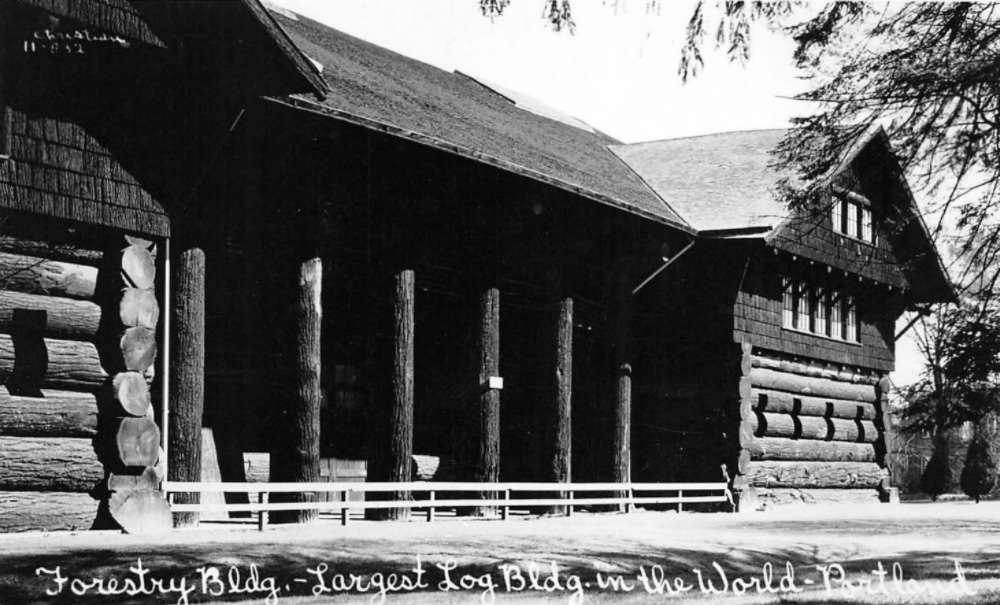
By 1959, during Oregon’s sesquicentennial celebration — the 150th anniversary of statehood — the building had been largely restored to its former condition. The Oregonian described it as home to a “priceless collection of antique and modern logging exhibits.” The first sheet of Douglas Fir plywood was still on display. For a brief window, the Forestry Building felt like it had been given a second life.
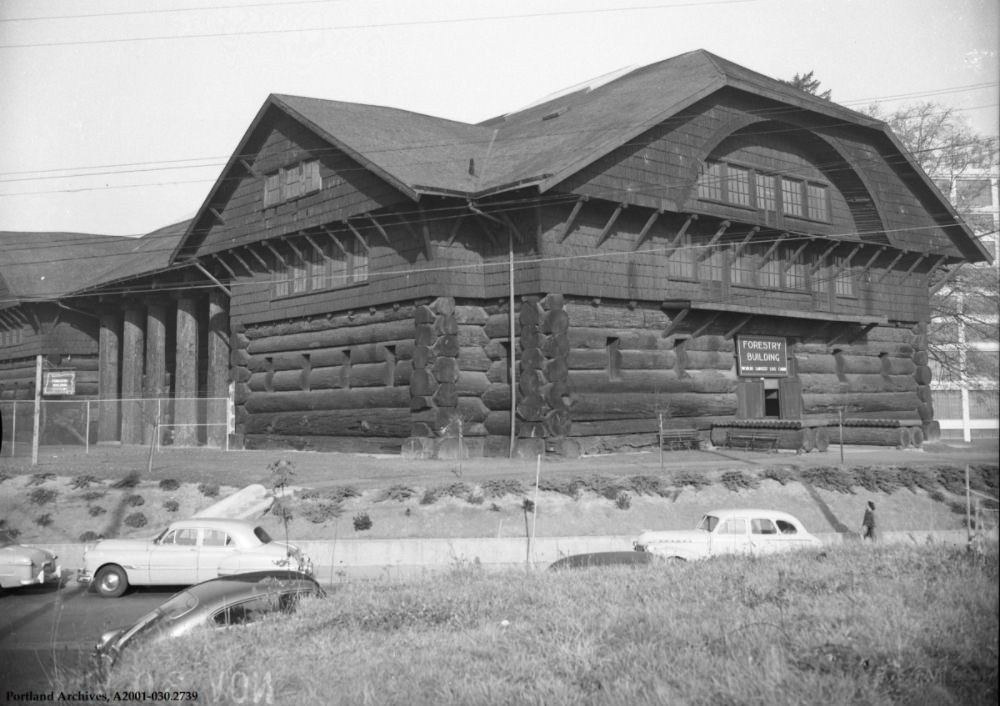
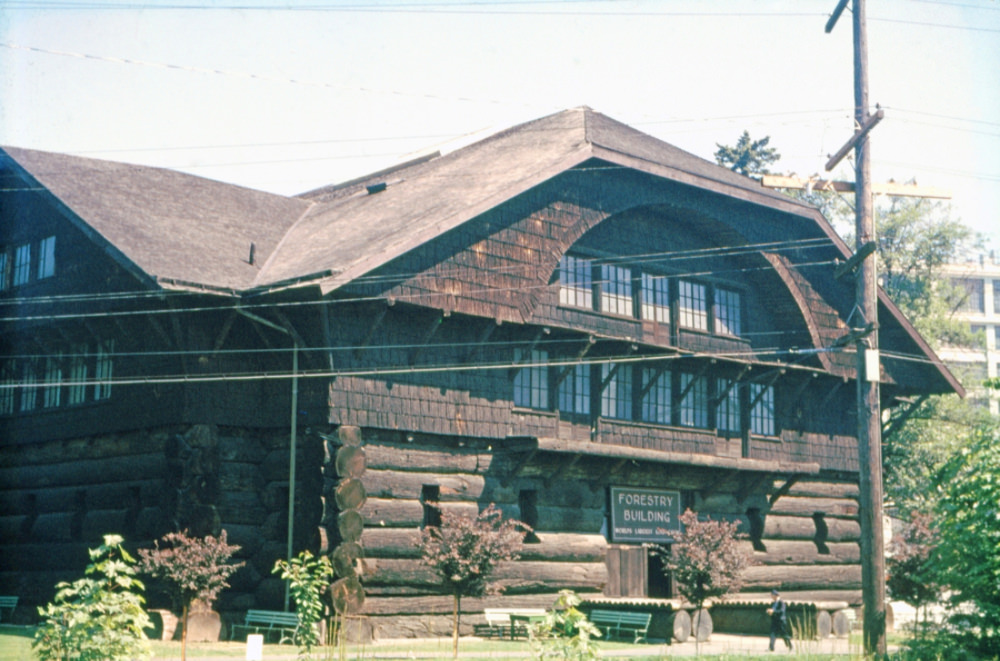
On the evening of August 17, 1964, the building’s caretaker locked up and left at around 5:30 p.m. Within minutes, neighbors spotted heavy flames erupting from inside. Fire crews arrived at the scene at approximately 6:15 p.m. — less than an hour after the caretaker had walked out the door. What they found made it instantly clear that the building was beyond saving. The Oregonian reported the next morning that there had never been a hope of saving it, and that nothing inside was recovered. Every exhibit, every artifact, every log that had stood for nearly six decades was gone.