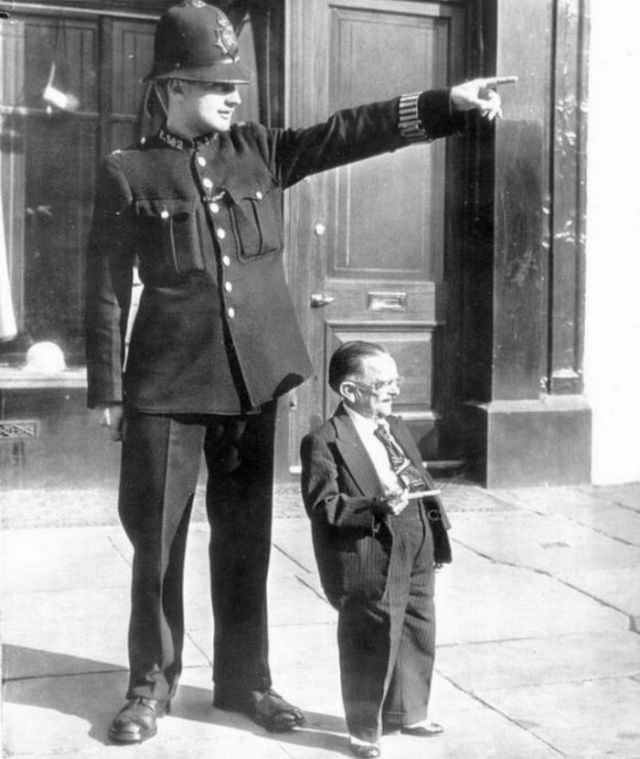
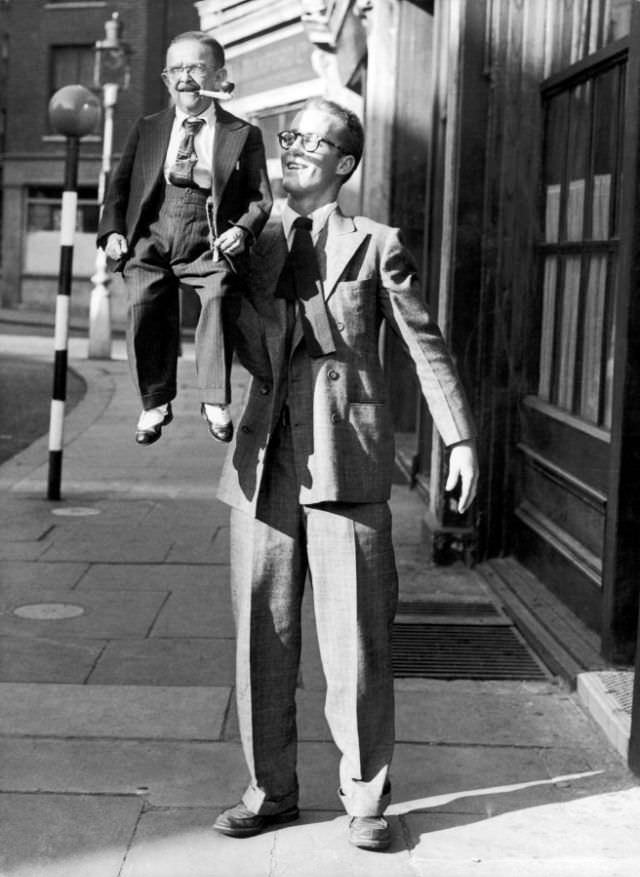
Henry Behrens stood just 30 inches tall and weighed 32 pounds. For most of the 20th century, he held the title of the world’s smallest man. Born around 1895 in Brazil to German parents, his early childhood appeared unremarkable — until the age of two, when his growth simply stopped. No documented medical diagnosis explains why, though conditions like this typically stem from hormonal deficiencies or genetic disorders. What made Henry’s case particularly notable was that his body remained fully proportionate. He was not a dwarf. Every part of him scaled evenly; he was simply very, very small.
Growing up with such a rare condition in the late 1800s and early 1900s meant few conventional paths were open to Henry. He found his footing in show business. He joined Burton Lester’s midget troupe, a traveling circus that featured performers of short stature. Performing under the stage name Colonel Peewee, Henry toured extensively, drawing crowds across multiple continents. His charm on stage went beyond novelty — he was fluent in four languages, which allowed him to genuinely connect with audiences wherever the troupe performed.
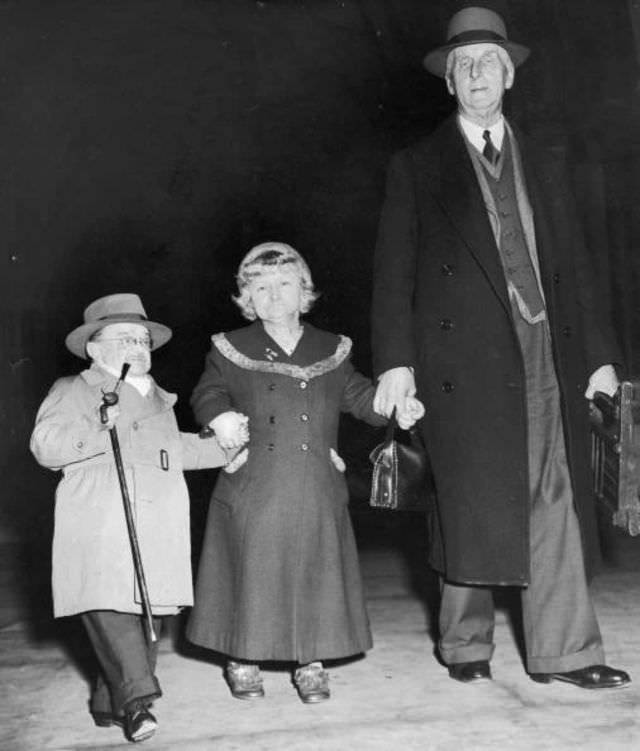
It was during these years on the road that Henry met Emmie, a fellow performer originally from Leeds, England. She stood 10 inches taller than him. Their shared life within the troupe drew them together, and in 1932 they married. The union was both personal and professional — two people who understood the particular pressures of living and working as performers in bodies the public couldn’t stop staring at. They remained together for the rest of Henry’s life.
In 1951, Henry and Emmie stepped away from touring and settled permanently in Worthing, on the southern coast of England. They purchased a house on Graham Road — a real home, not a stage or a sideshow tent. Life there required constant adaptation. Door handles sat well above Henry’s reach. Every staircase presented a climb where each step was nearly half his total height. Standard public buses were simply off-limits; the entry steps were too high for him to manage.
To solve the transportation problem, Henry had a small car custom-built for him, powered by a lawn mower engine. It gave him real independence — the ability to move through his town on his own terms without waiting for help or accommodation from others. This kind of practical ingenuity defined how Henry approached the built world, which had been designed entirely without him in mind.
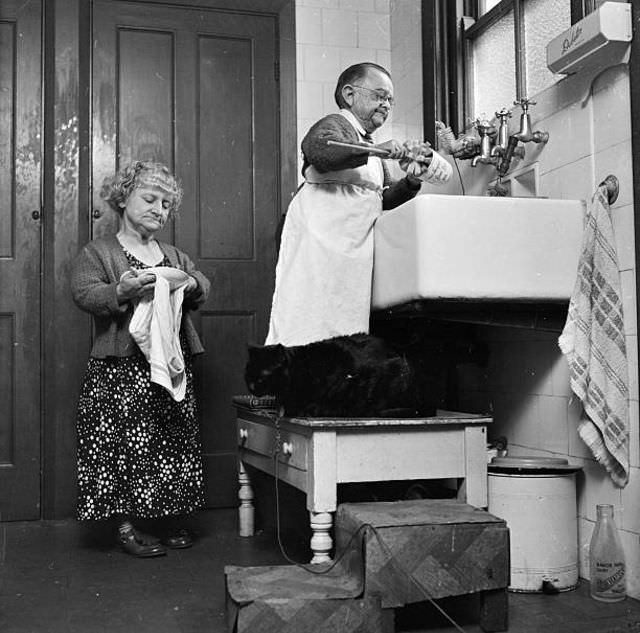
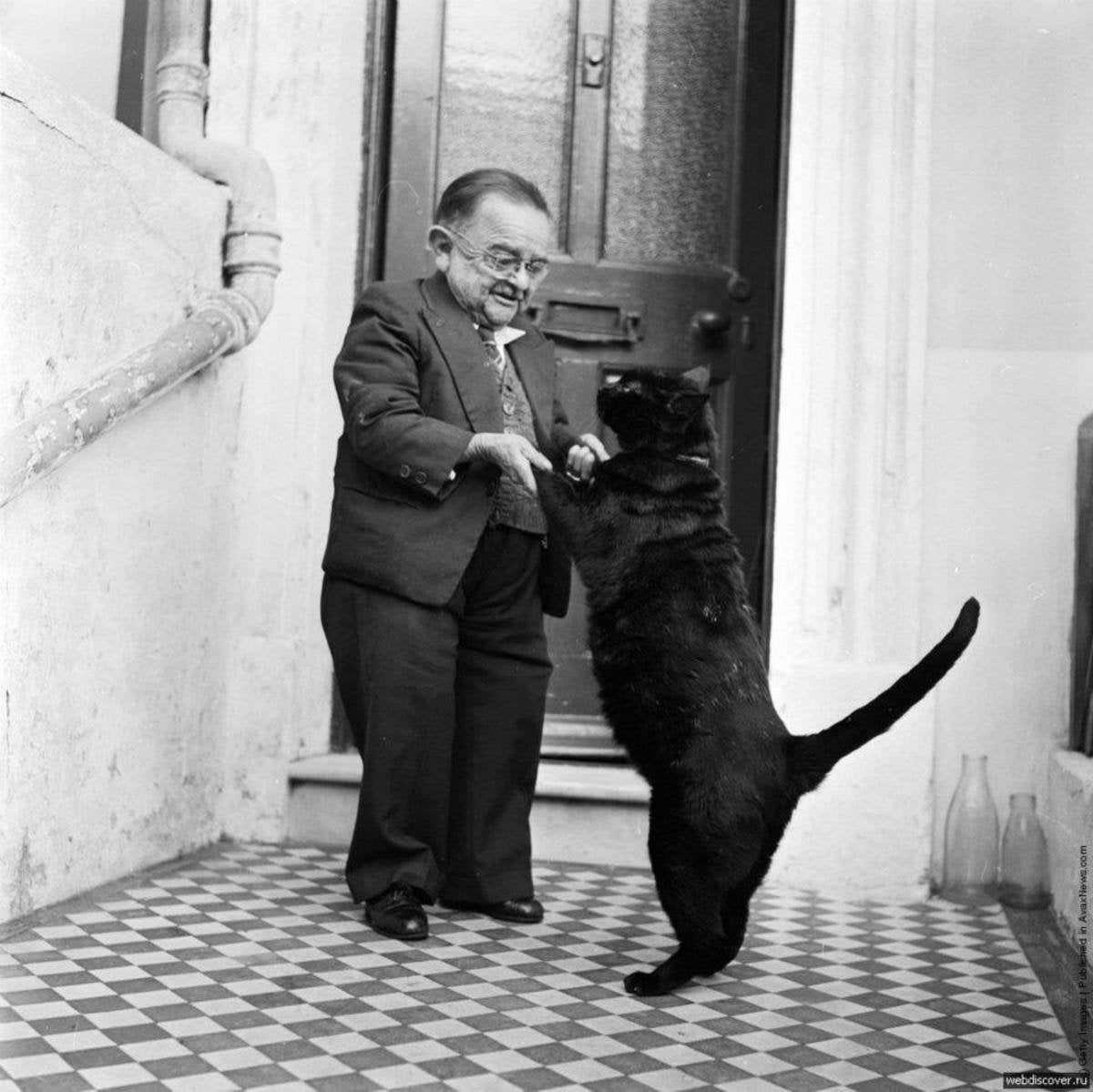
Photographs taken during the 1950s offer a vivid look at Henry’s daily life in Worthing. One well-known image shows him dancing on his doorstep with his pet cat — the cat nearly matching him in size. These photos weren’t staged spectacles. They were candid glimpses of an ordinary afternoon made visually striking only by the scale of the man in them. The contrast between Henry’s small frame and the everyday objects around him — a standard door, a garden wall, a household cat — communicated more than words could about the physical reality of his world.
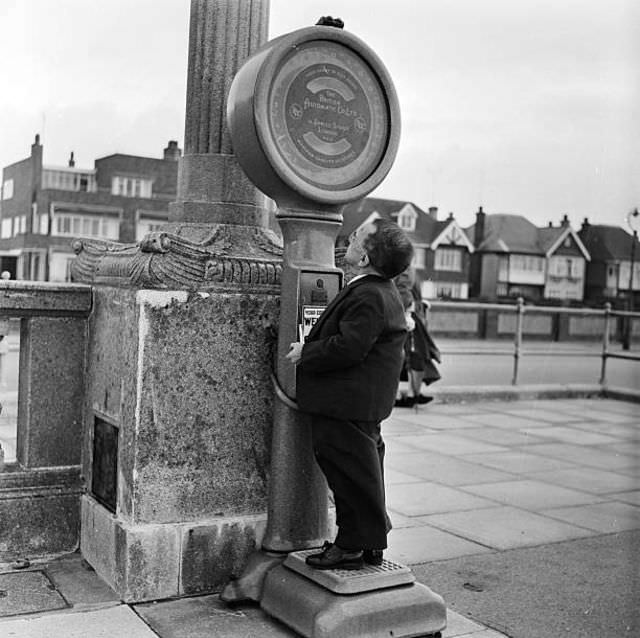
Media coverage throughout this period treated Henry with a mix of curiosity and genuine respect. He was not a recluse. He spoke to reporters, allowed photographers into his home, and engaged with the public attention his unusual life attracted. His four languages remained assets in retirement just as they had been in performance — he was articulate, sharp, and comfortable being the subject of scrutiny.
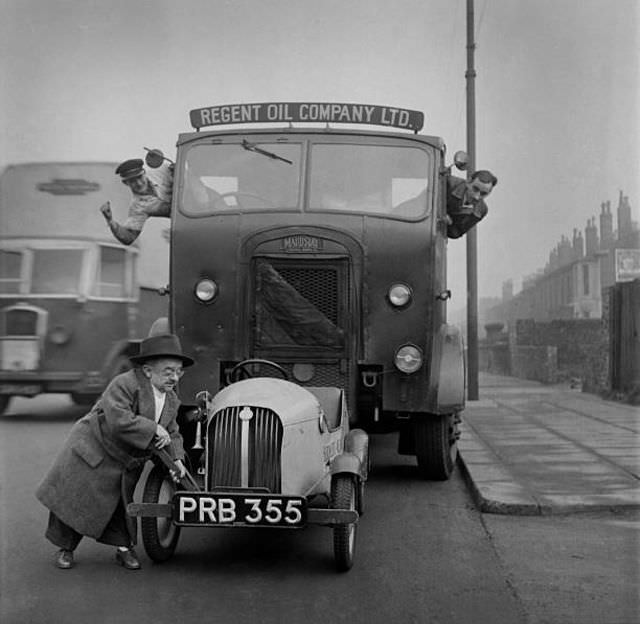
Henry Behrens died in 1961 at the age of 66. He had spent nearly seven decades navigating a world built for people twice his size — traveling across continents, performing for thousands, building a marriage, buying a house, and driving his own car through the streets of an English seaside town. The facts of his life speak plainly: the world was not made for him, and he lived in it fully anyway.