Inter-Island Airways, now known as Hawaiian Airlines, was founded in 1929. It is the largest airline in Hawaii, the 8th largest commercial airline in the U.S., and is based in Honolulu, Hawaii. Its primary hub is at Daniel K. Inouye International Airport on the island of O’ahu, with a secondary hub at Kahului Airport on the island of Maui. Here are some vintage photos that show the uniforms of Hawaiian Airlines flight attendants over the years.
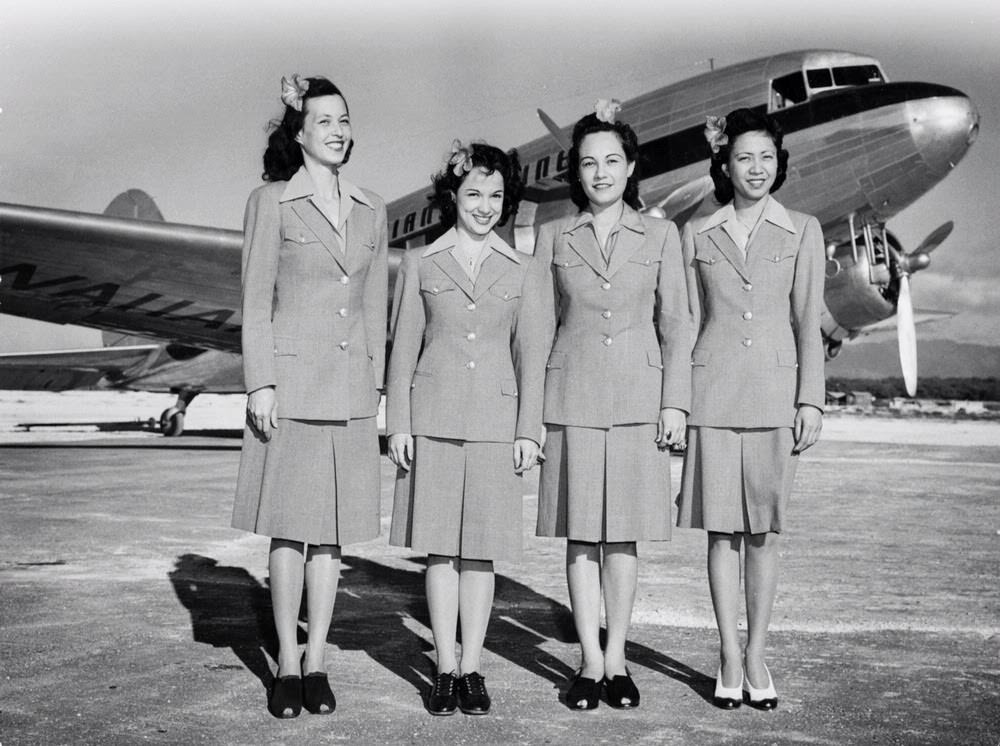
The airline hired its first hostesses to work on their 24-seat DC-3 aircraft. The uniform had a gray jacket and matching skirt with a white blouse. Throughout the 1940s, additions such as a military cap and a black stripe on the sleeve were added.
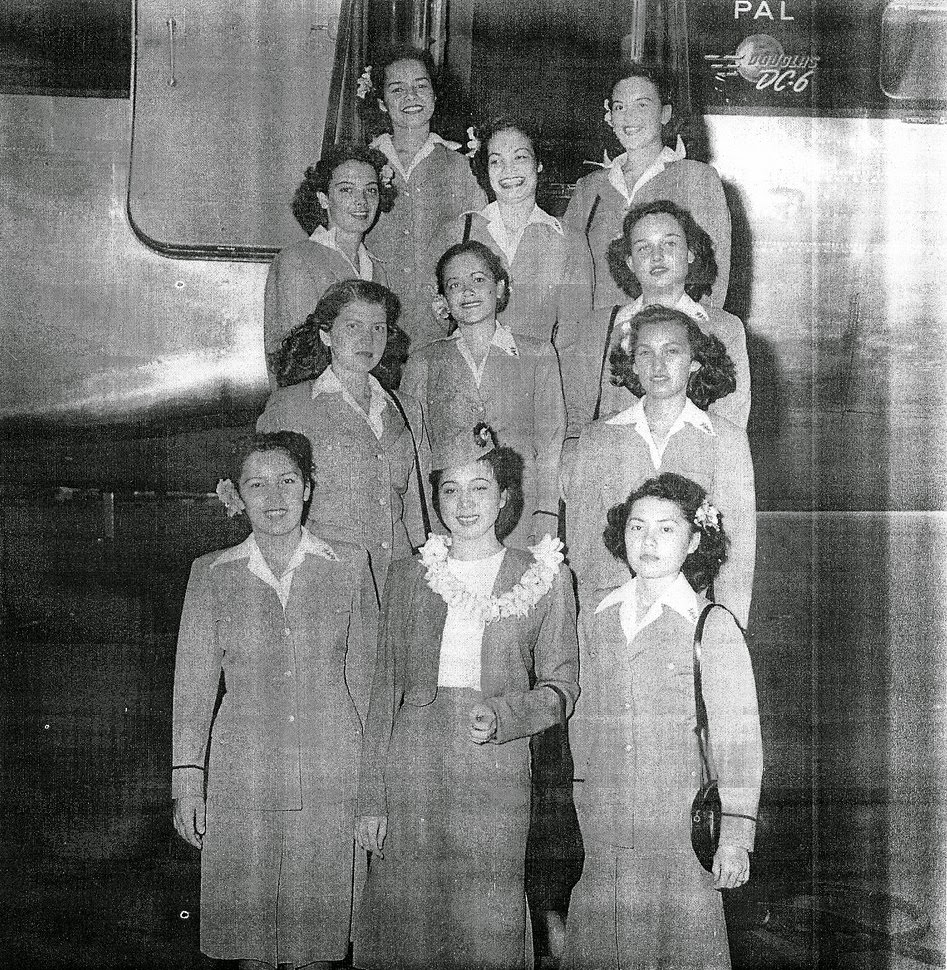
This photo was taken the first week of August 1948, when this group of Hawaiian Airlines hostesses greeted the Philippine Airlines crew, represented by their lead hostess wearing the lei. That flight stopped over in Honolulu en route to San Francisco, carrying President Elpidio Quirino on a diplomatic mission to the United States.
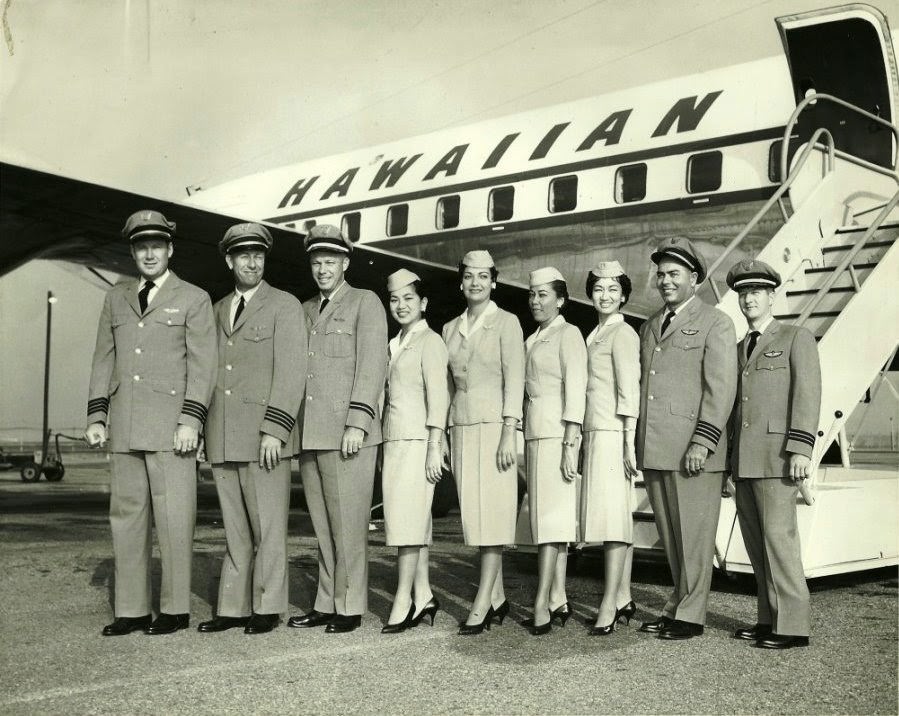
The pilots’ uniforms look a little like doormen’s next to the crisply tailored flight attendants’ suits. This crew stands in front of a DC-6, used for trans-Pacific charter flights to Honolulu and Hilo, and for inter-island flights in the busy summer season, from 1958 to 1966.
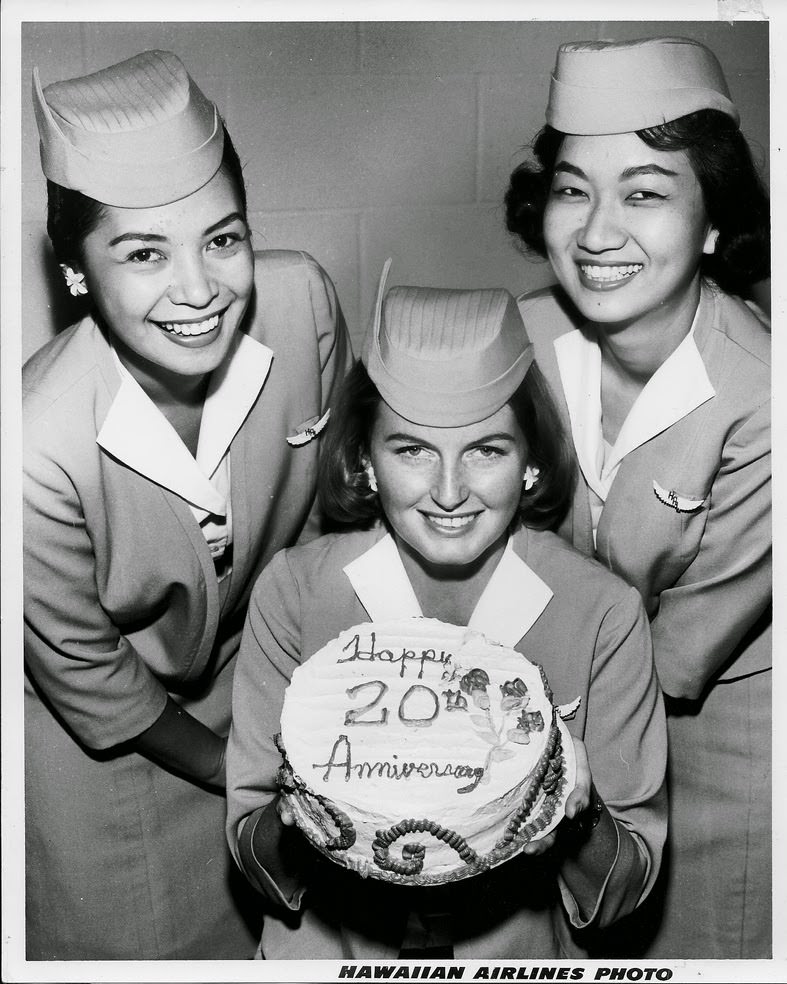
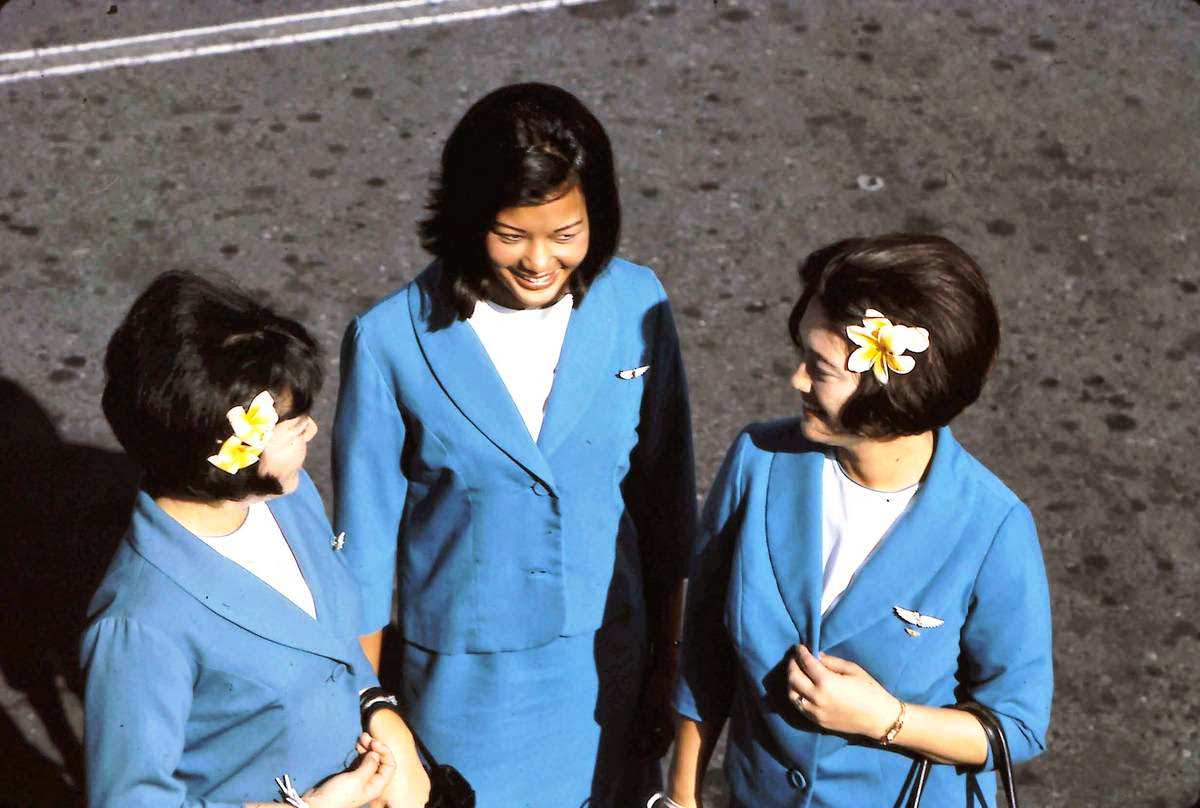
When the first commercial jet service between Los Angeles and Honolulu began in 1960, the uniform color changed from gray to blue. The jacket sleeves were shortened to three-quarters length, and matching colored berets were added, along with a set of wings.
Hawaiian Airlines rolled out new uniforms for its flight attendants in conjunction with the unveiling of the new DC-9 Royal Fan Jet service it added to its fleet. The uniforms were considered high fashion and featured a three-piece ensemble topped by a white straw beret. They were designed and produced by Fashions by Hino, one of Hawaii’s leading dress manufacturers at the time.
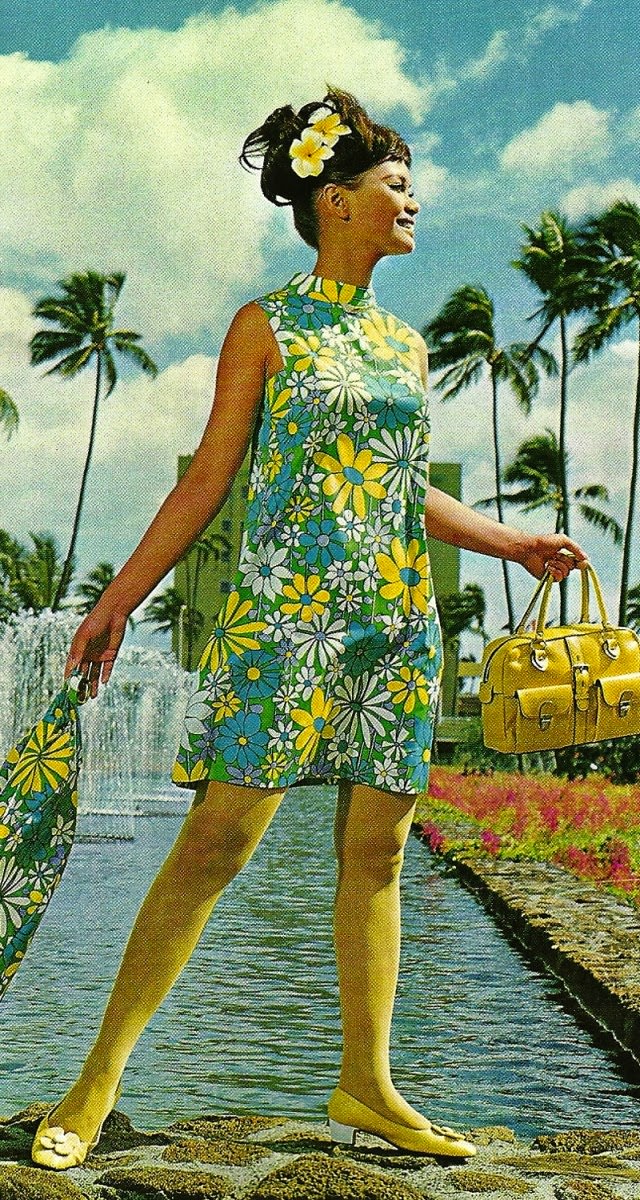
“Flower Power” was the key to Hawaiian Airlines’ flight attendant uniform plan for 1968, according to then-president John H. Magoon, Jr. Attendants wore an A-line dress in a print designed specifically for Hawaiian Airlines by Tiger Fabrics of New York, and the dresses were produced by Kahala Sportswear of Honolulu. Flight attendants had the option of wearing the dress with either a short split sleeve or sleeveless. Fresh plumeria flowers were worn in the hair as part of the ensemble. Pale yellow tights accented the look. David Evins of the renowned Evins Shoe Company of New York designed the shoes. The yellow leather purse was designed by New York fashion house Park Lane.
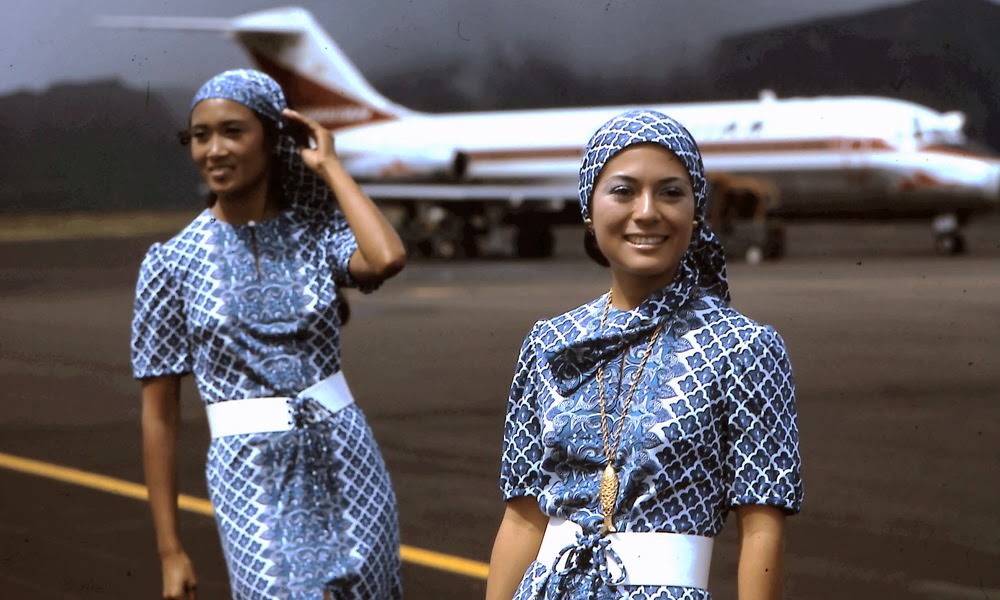
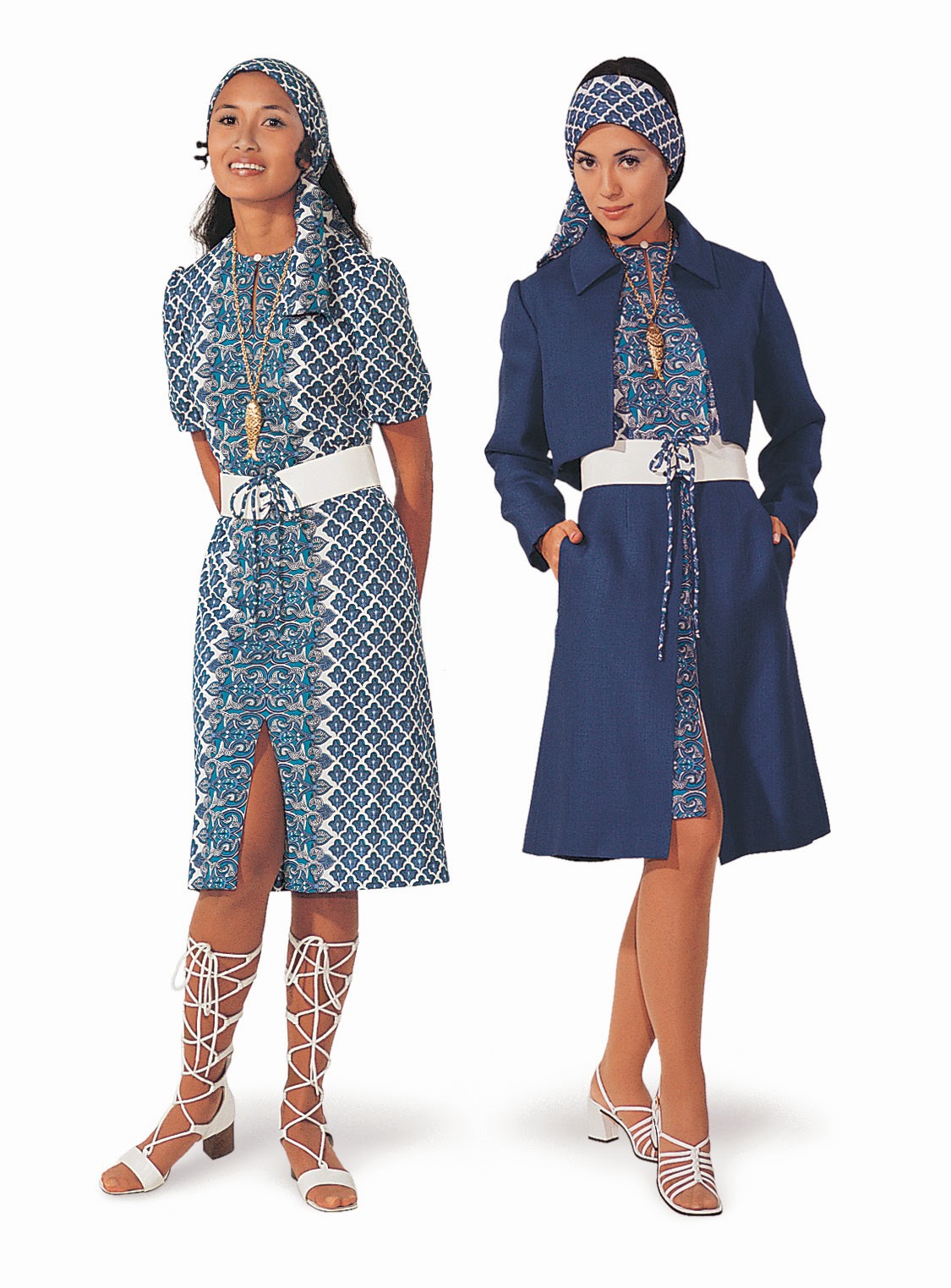
The uniform featured a two-piece outfit consisting of a nylon dress and jacket designed by Richard Tam of San Francisco, whose line could be found at high-end department stores. Hawaiian Airlines designed the print for the fabric. The accessories included low-heeled pumps, lace boots, and sandals, all in white. Scarves were used as headgear, a sash belt, or an ascot tie. A golden pendant worn on a chain around the neck featured a stylized fish representing Hawaii’s conquest of the seas, and is also a symbol of strength and good luck in Asian culture.
In 1974, Malia International designed easy-to-wear uniforms for the female flight attendants. The ensemble consisted of five items in a floral print that could be combined into different outfits: a long dress or muumuu for the traditional island look, a short dress, a top-and-skirt combination, and a shirt jacket to be worn with any of the other garments. Crisp white accessories — shoes, handbag, and jewelry — complemented the outfit.
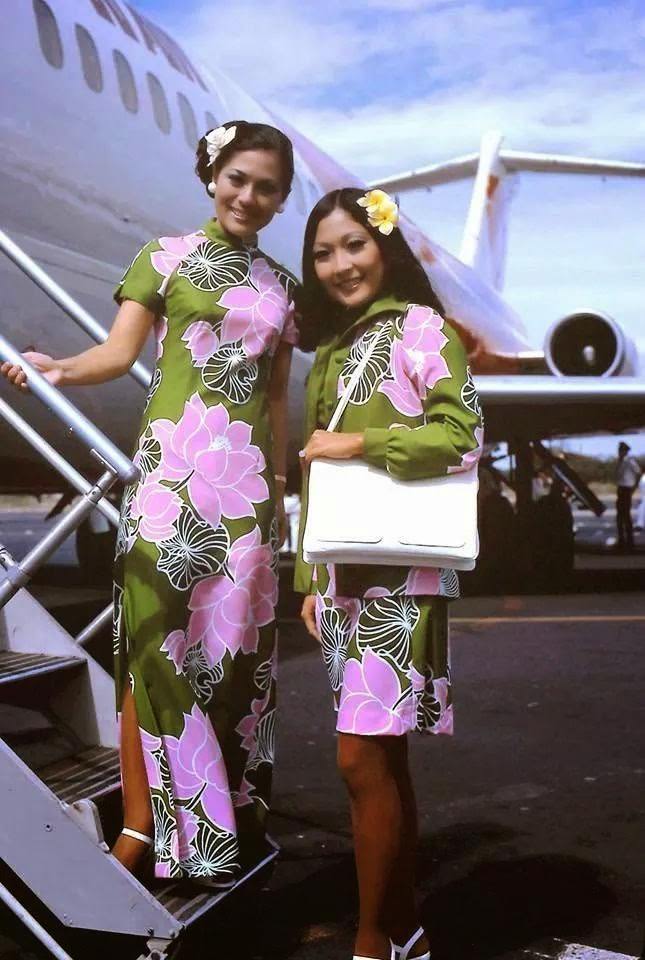
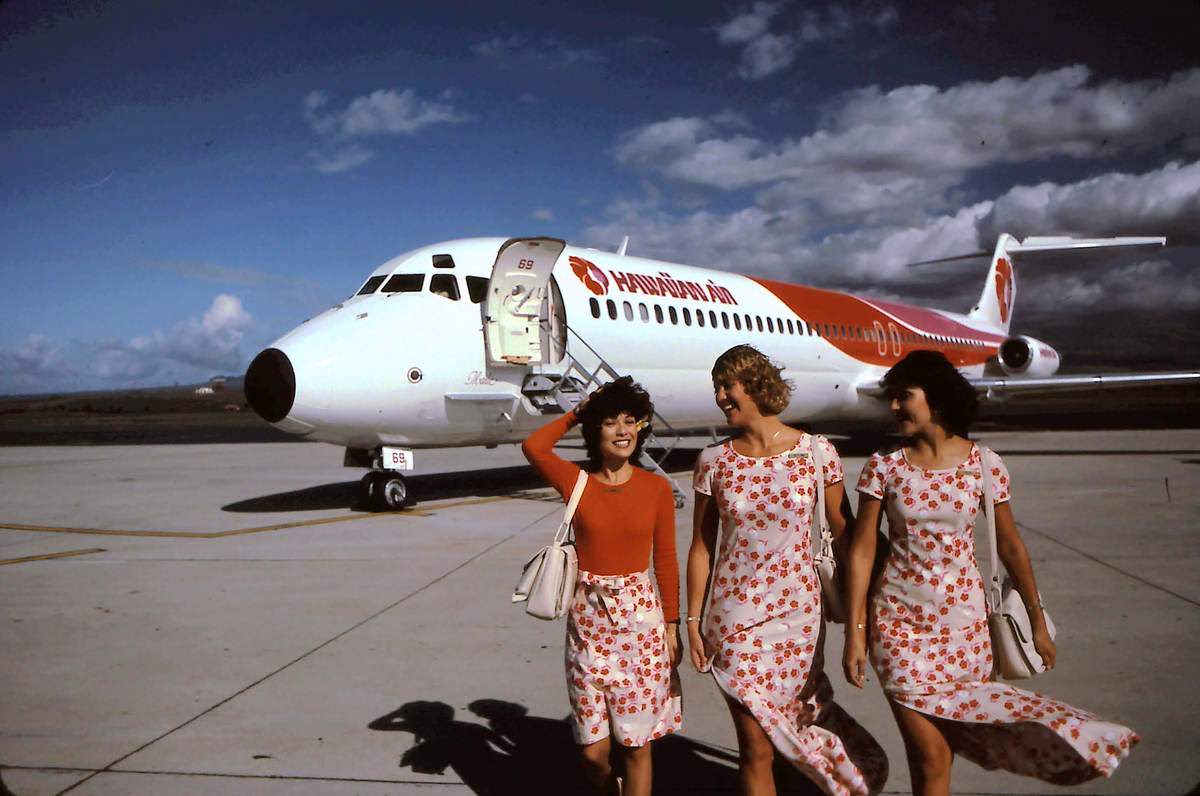
Again designed by Malia International, Ltd., this uniform included a jump suit, a long muumuu, a jacket, a solid scarf, and a print scarf.
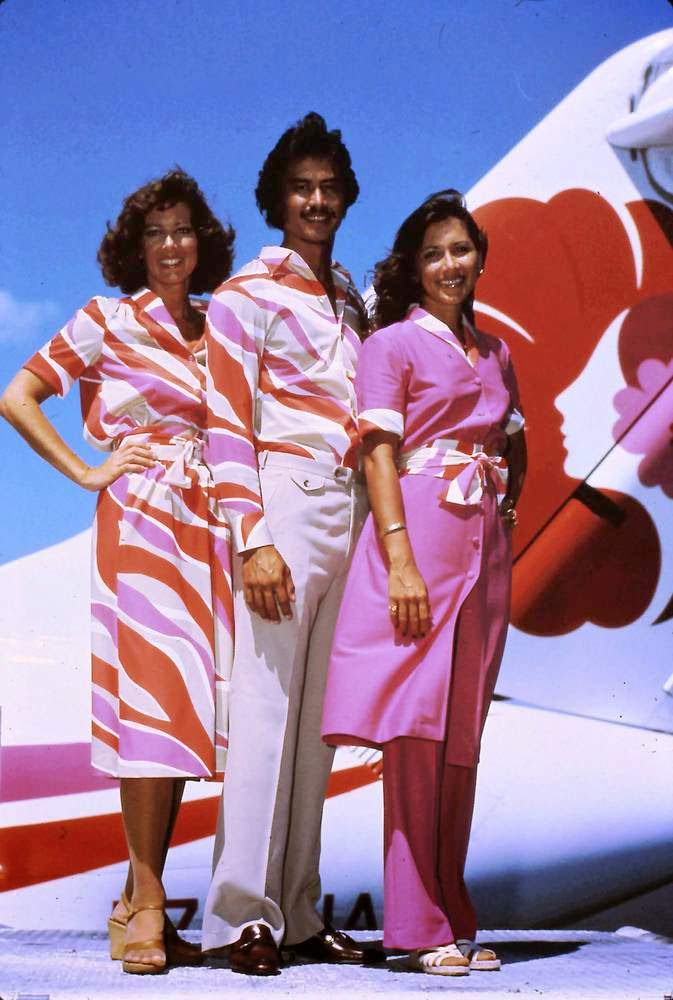
Hawaiian Airlines’ hibiscus red and bright orchid logo colors inspired the creation of an exclusive print named “Sky” for the uniform program in 1979, which was the airline’s 50th anniversary. Flight attendants were able to make 20 different outfits from a wardrobe of six garments.
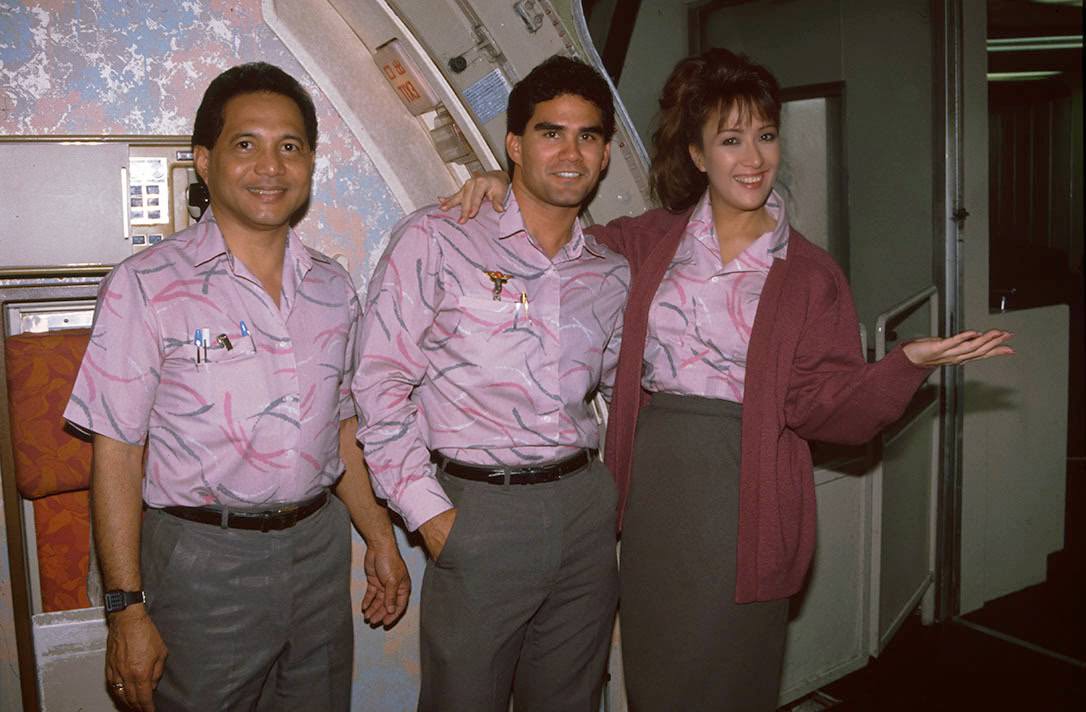
In the 1980s, Hawaiian Airlines began hiring its first group of male flight attendants. In celebration of its 60th anniversary, the airline rolled out new uniforms for all of its employees to give a more contemporary and professional look that matched the national and international scope of its service. The male flight attendant uniform consisted of a patterned 50/50 poly-cotton shirt in mauve, with the option of short or long sleeves, and poly-cotton dress pants in a brownish stone-grey color. The female flight attendant uniform included a blouse that matched the men’s shirt, worn with a skirt or dress slacks in stone grey and a matching blazer, or a shirtwaist dress with a matching belt.
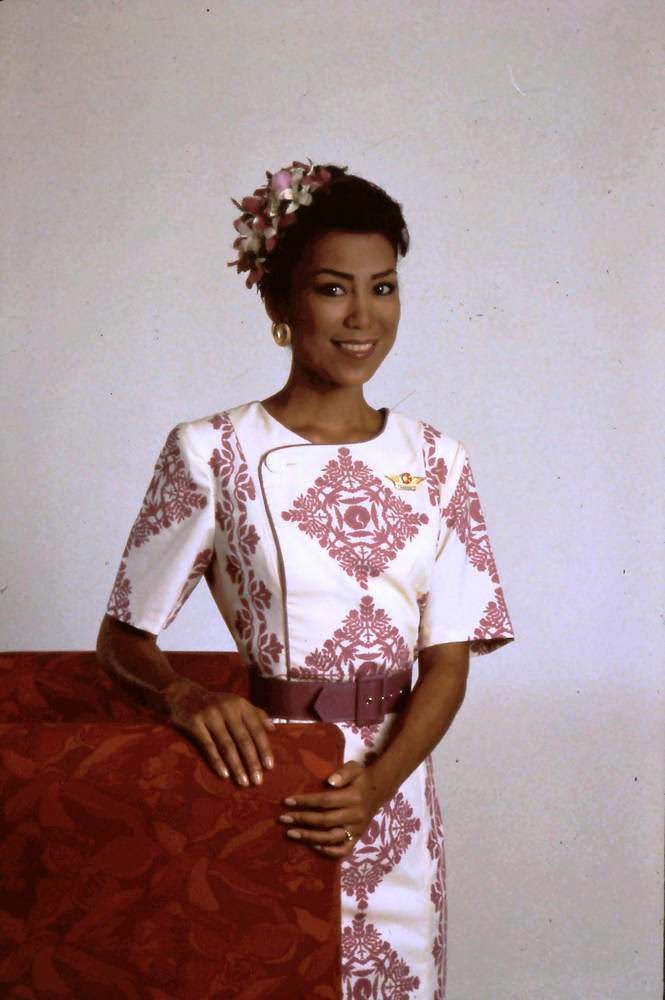
Inspired by the traditional Hawaiian quilt, Hawaiian Airlines unveiled a new flight attendant uniform that featured the classic quilting tradition with its Pualani logo in the center, surrounded by an intricate design that included indigenous Hawaiian plants and flowers as well as the airline’s DC-9 aircraft.