On the morning of January 31, 1961, a five-year-old chimpanzee named Ham was given a small meal — baby cereal, condensed milk, vitamins, and half an egg — by his handlers at Cape Canaveral, Florida. A few hours later, he would become the first chimpanzee ever to travel into space. His flight aboard NASA’s Mercury-Redstone 2 mission lasted just 16 minutes and 39 seconds, but it changed the course of the American space program forever.
Ham was born in 1955 in the French Cameroons of West Africa. He was captured and brought to the United States, eventually arriving at Holloman Air Force Base in New Mexico. At just two years old, he was selected for training under neuroscientist Dr. Joseph V. Brady at Holloman’s Aero-Medical Field Laboratory. The program was part of Project Mercury, the United States’ first human spaceflight effort. Before any astronaut could go up, NASA needed to know whether a living creature could survive the physical demands of space — and whether they could still perform tasks while up there.
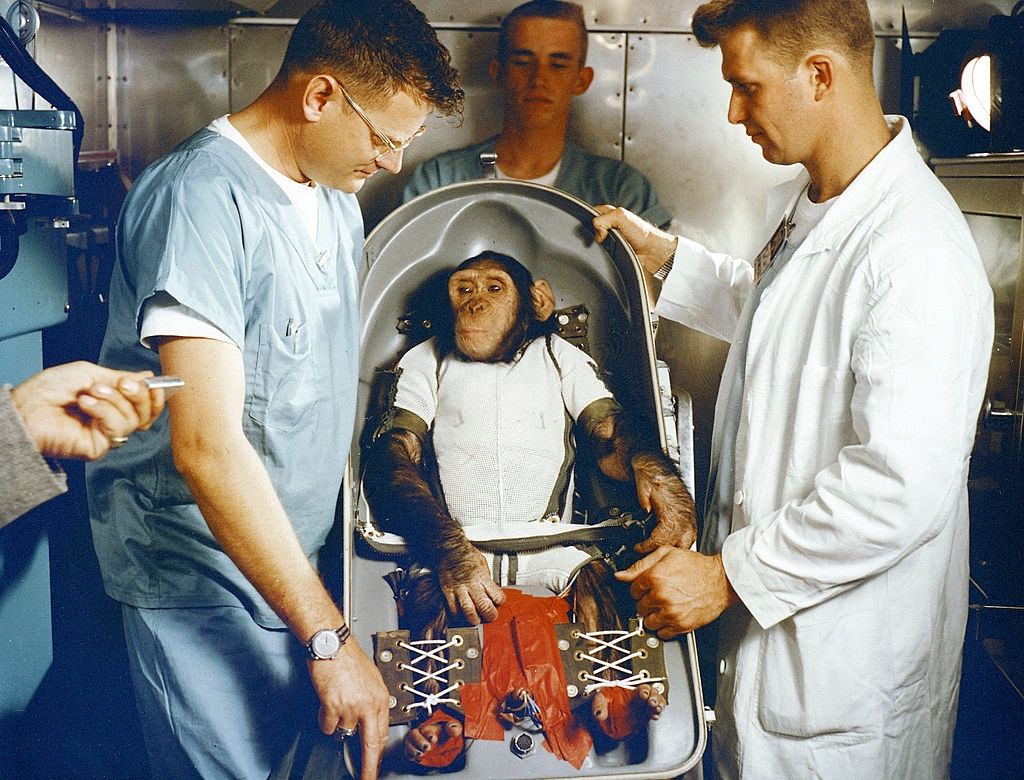
Ham’s training was built around simple, repeatable tasks. He was taught to push a lever within five seconds of seeing a flashing blue light. If he pushed it in time, he received a banana pellet as a reward. If he failed to respond within the five-second window, he received a mild electric shock to the soles of his feet. The method was straightforward but effective. Over months of training, Ham became precise and consistent. Handlers gave him the name “Ham” — an acronym for Holloman Aero Medical — just before his flight. Before that, he was known only by his number: #65.
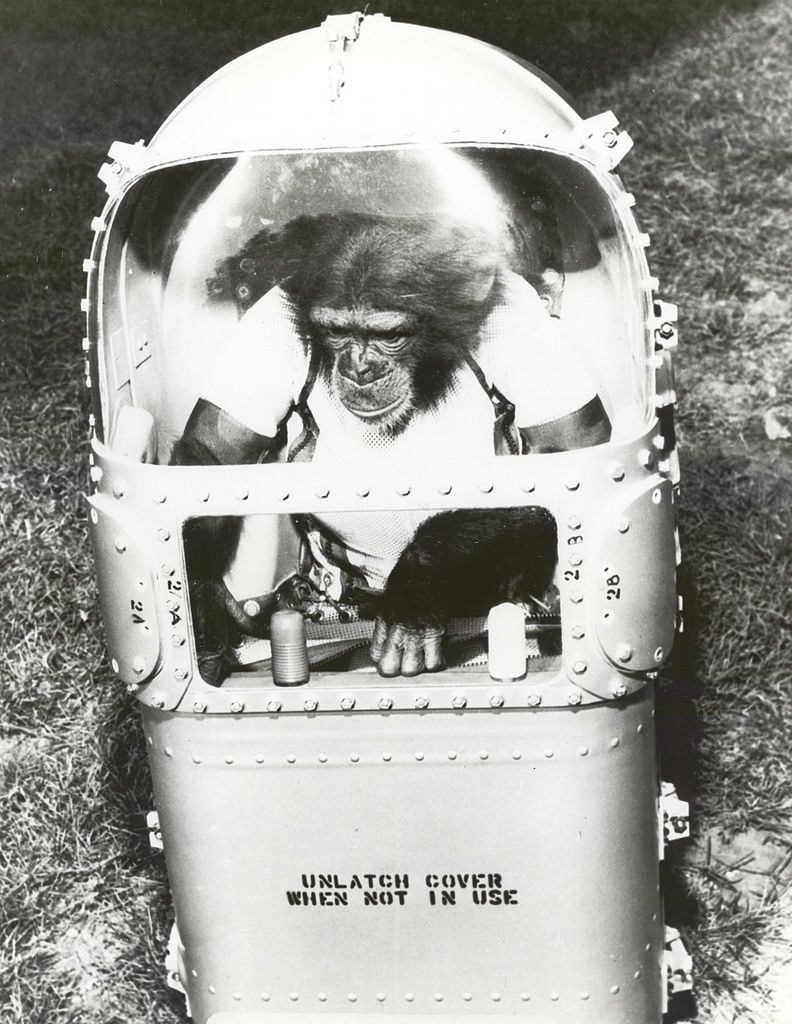
The rivalry between the United States and the Soviet Union was fierce in the late 1950s and early 1960s. The Soviets had already launched Sputnik in 1957 and sent the dog Laika into orbit in the same year. Every American milestone in space carried enormous political weight. Ham’s mission was designed to prove that a living creature — and eventually a human — could perform meaningful work in space. Engineers, doctors, and scientists all had a stake in whether Ham came home safely.
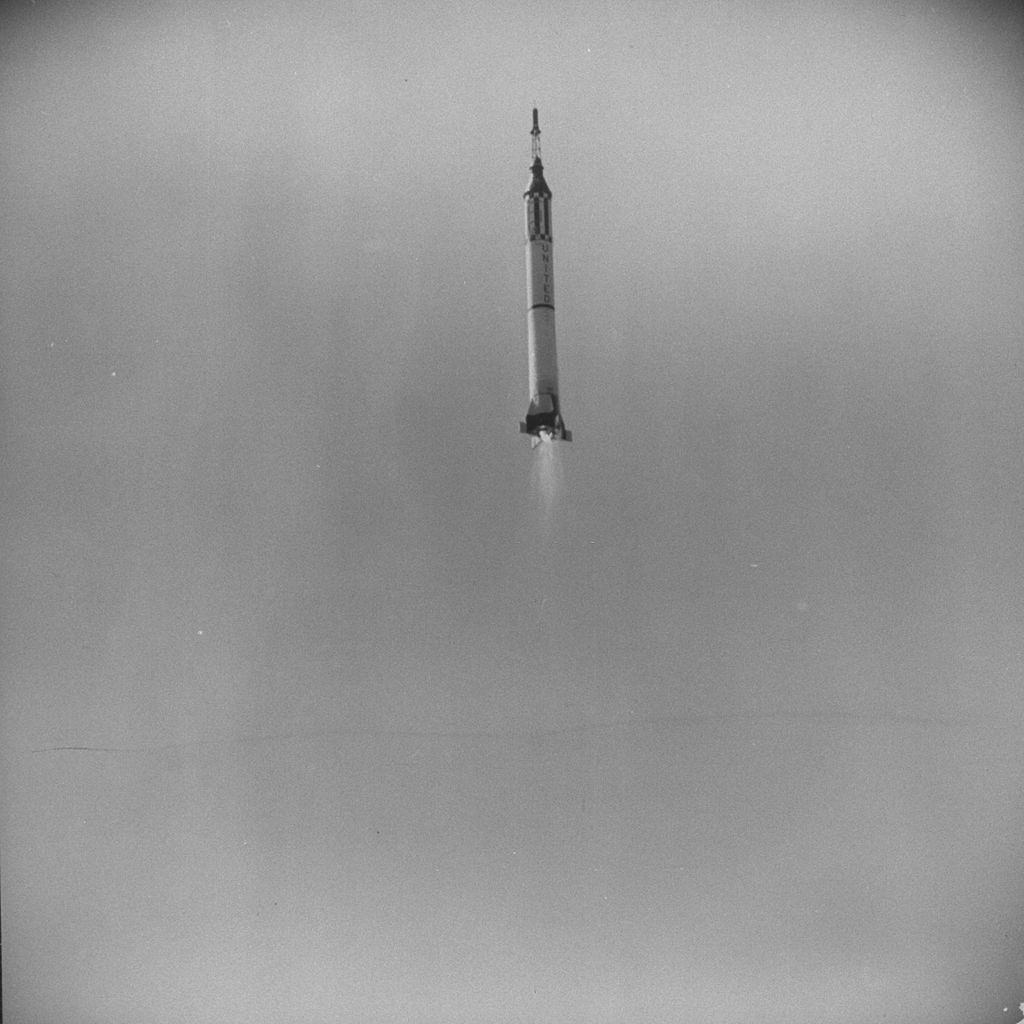
Ham launched from Cape Canaveral at 11:54 a.m. Eastern Time. The Mercury-Redstone 2 rocket propelled the capsule to a top speed of roughly 5,800 miles per hour. Ham reached a peak altitude of approximately 157 miles above Earth — well above the boundary of space. During the flight, sensors and computers on the ground tracked his vital signs in real time. One serious problem did occur: a valve malfunction caused the cabin pressure to drop partially. Ham’s pressurized space suit, however, protected him from any harm.
Throughout the flight, Ham continued pushing his lever in response to the flashing blue light, just as he had been trained to do. His reaction times in space were only a fraction of a second slower than they were on Earth. This was a critical finding. It told NASA’s scientists that space travel did not prevent a living creature from thinking and acting. The data helped clear the path for Alan Shepard’s historic human flight just a few months later, on May 5, 1961.
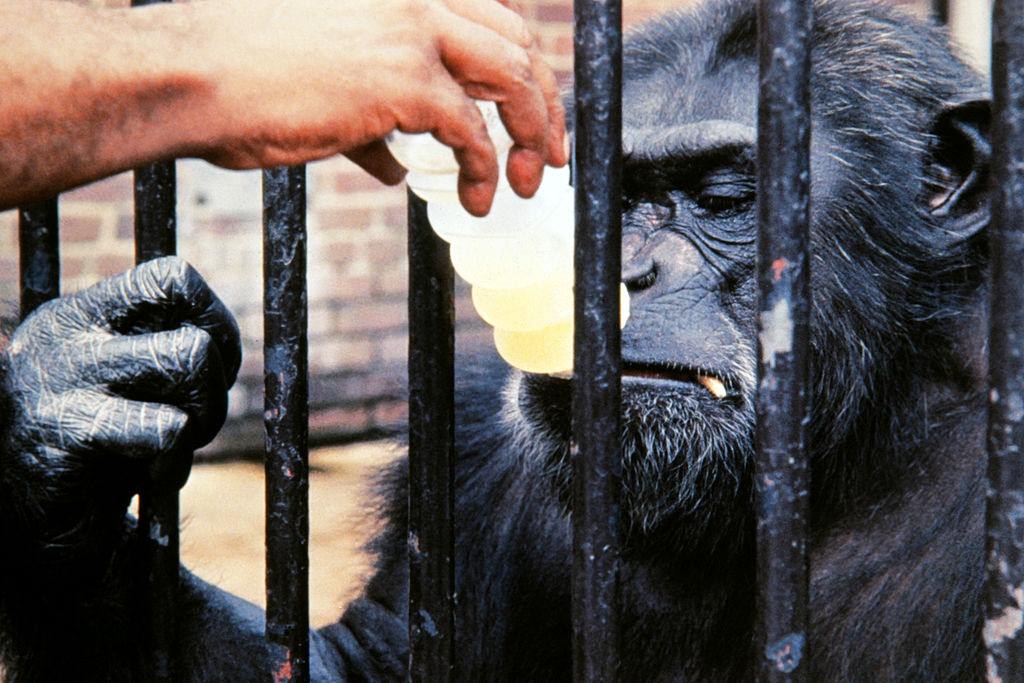
After re-entry, the capsule splashed down in the Atlantic Ocean, about 60 miles beyond the planned landing zone. Recovery teams from the USS Donner retrieved the capsule, which had taken on some water during the recovery wait but remained structurally intact. When crew members opened the hatch, Ham was found alive and alert. He had suffered only a bruised nose — a remarkably minor injury given the forces he had endured.
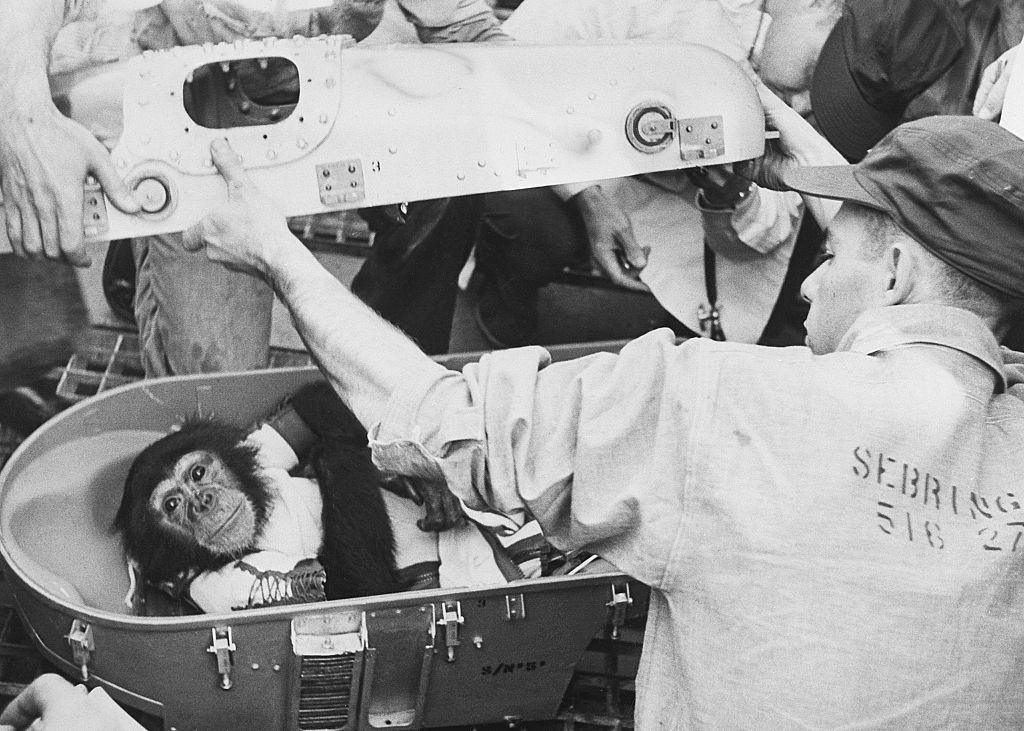
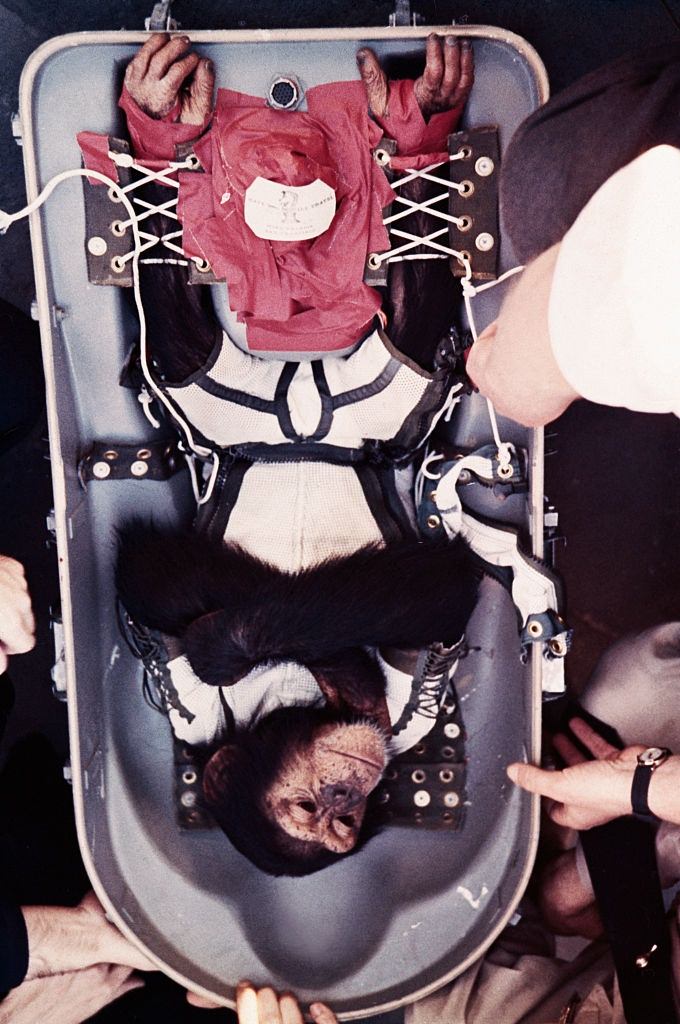
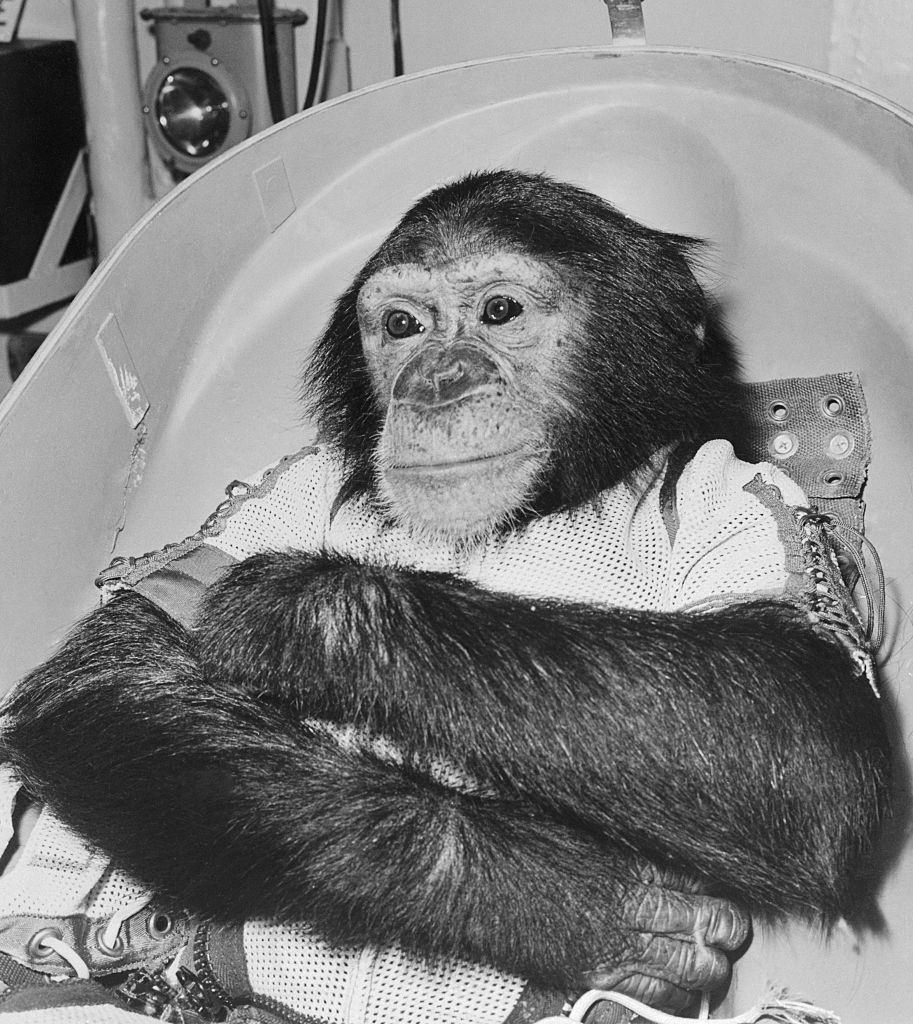
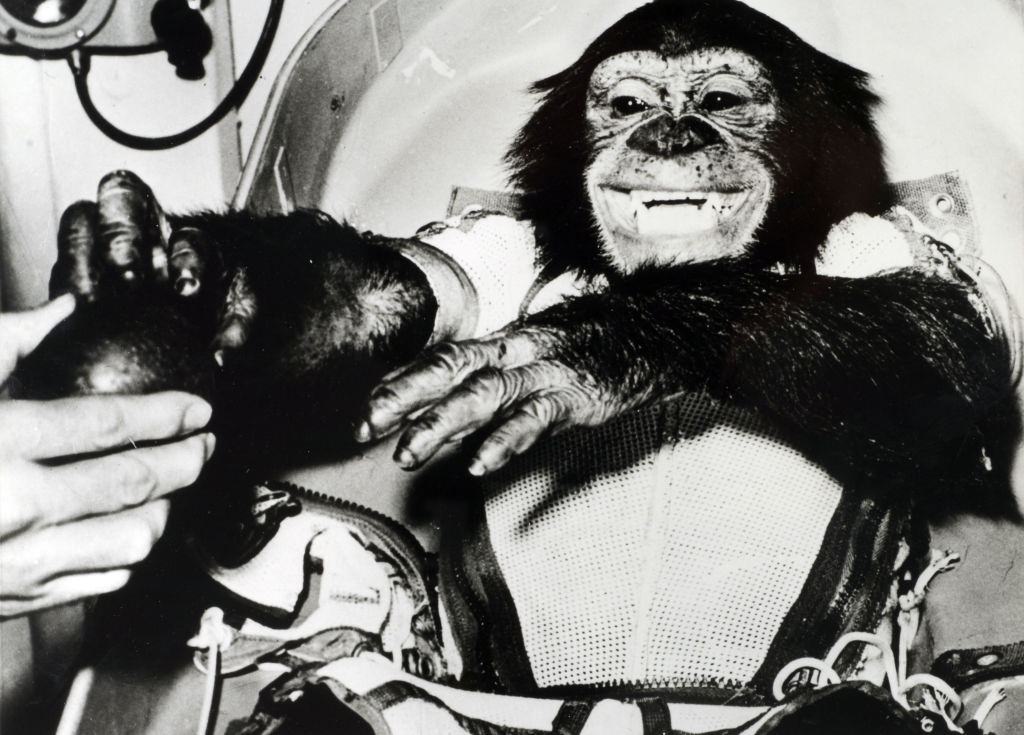
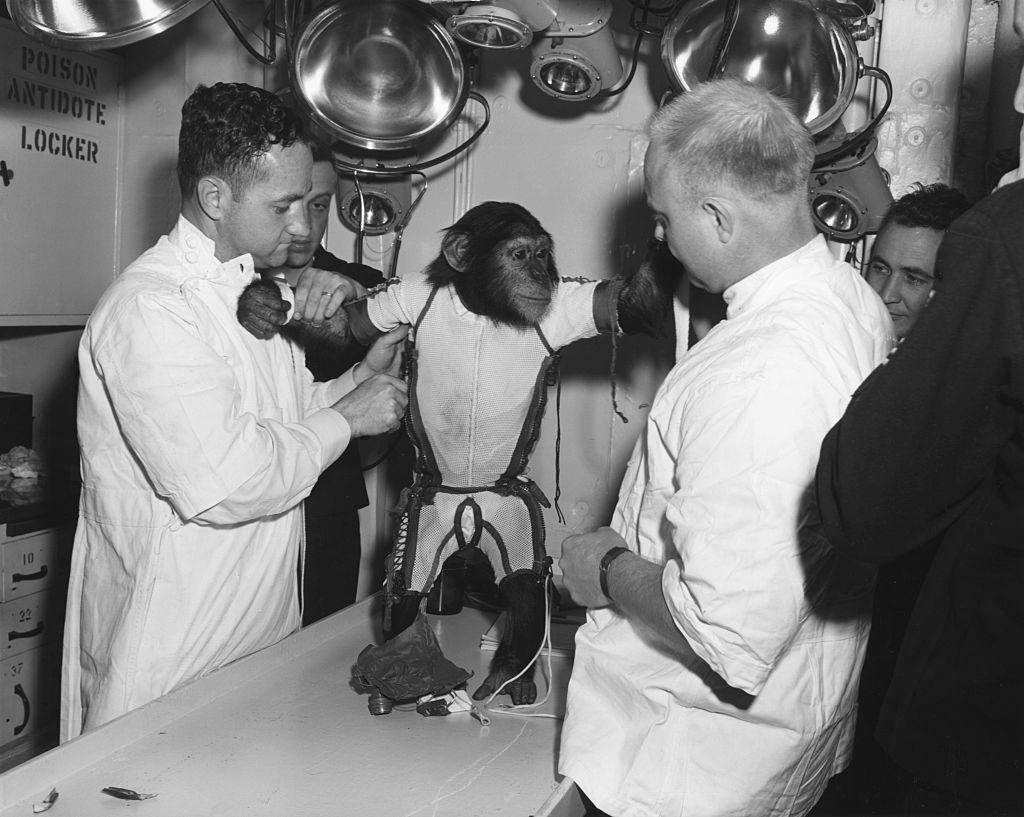
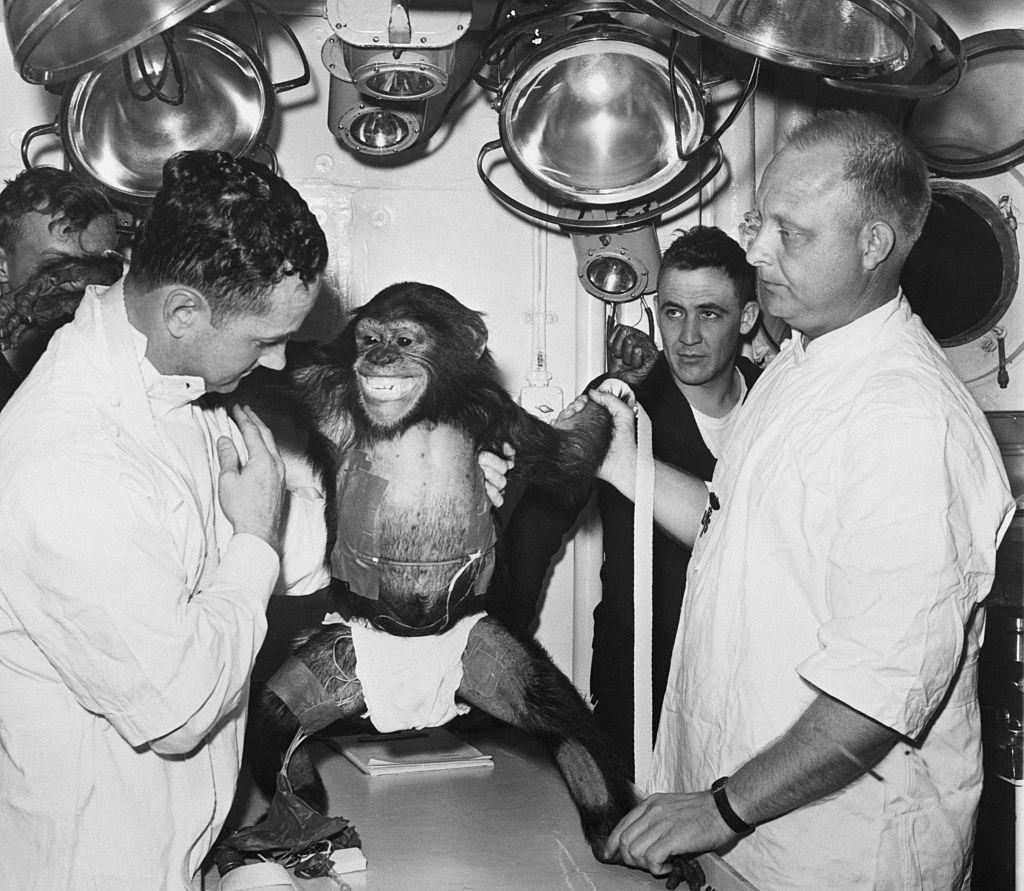
Aboard the USS Donner, Ham was examined by U.S. Air Force veterinarian Captain Richard E. Benson and a team of doctors. They found him to be in excellent physical condition. Photographs taken on the recovery ship show Ham reaching out toward Benson’s hand — a moment that quickly became one of the most recognizable images of the early space race.
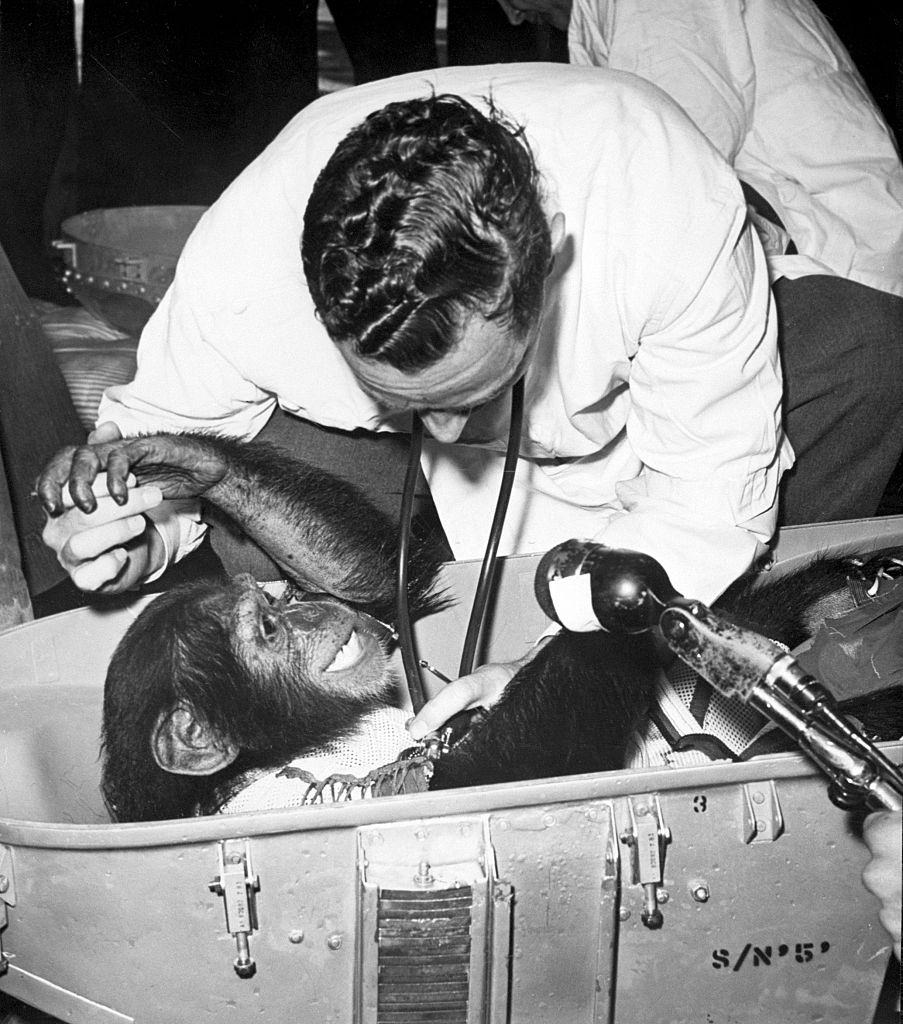
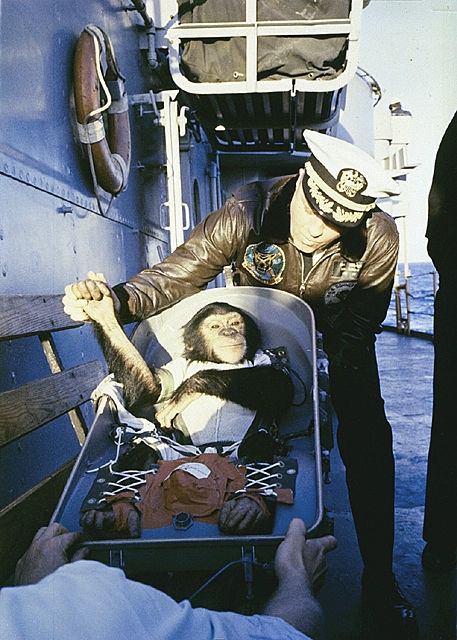
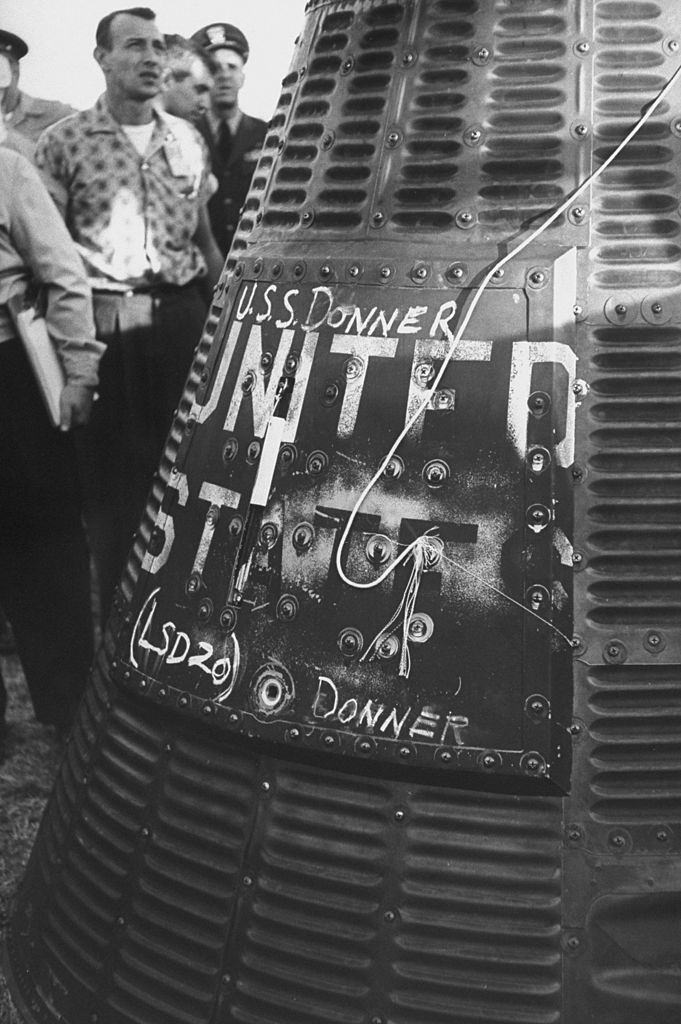
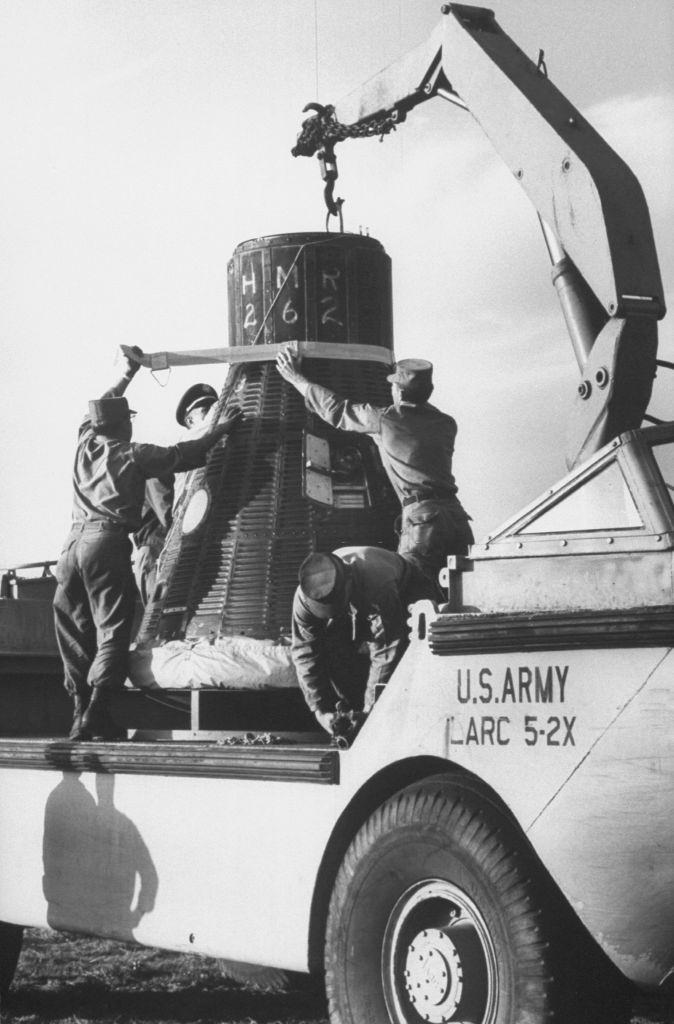
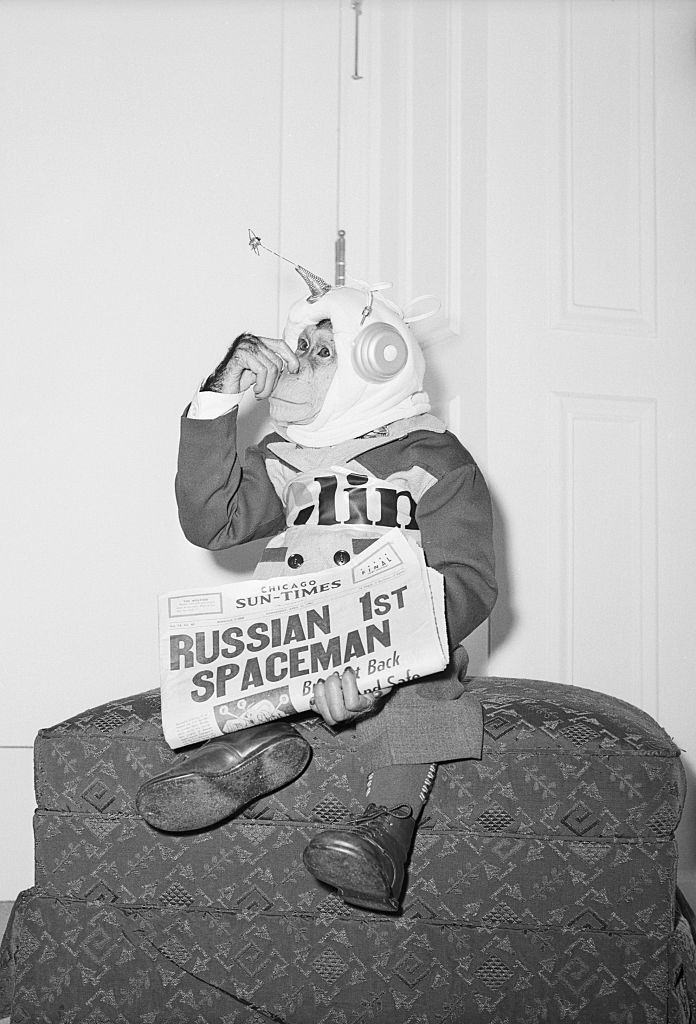
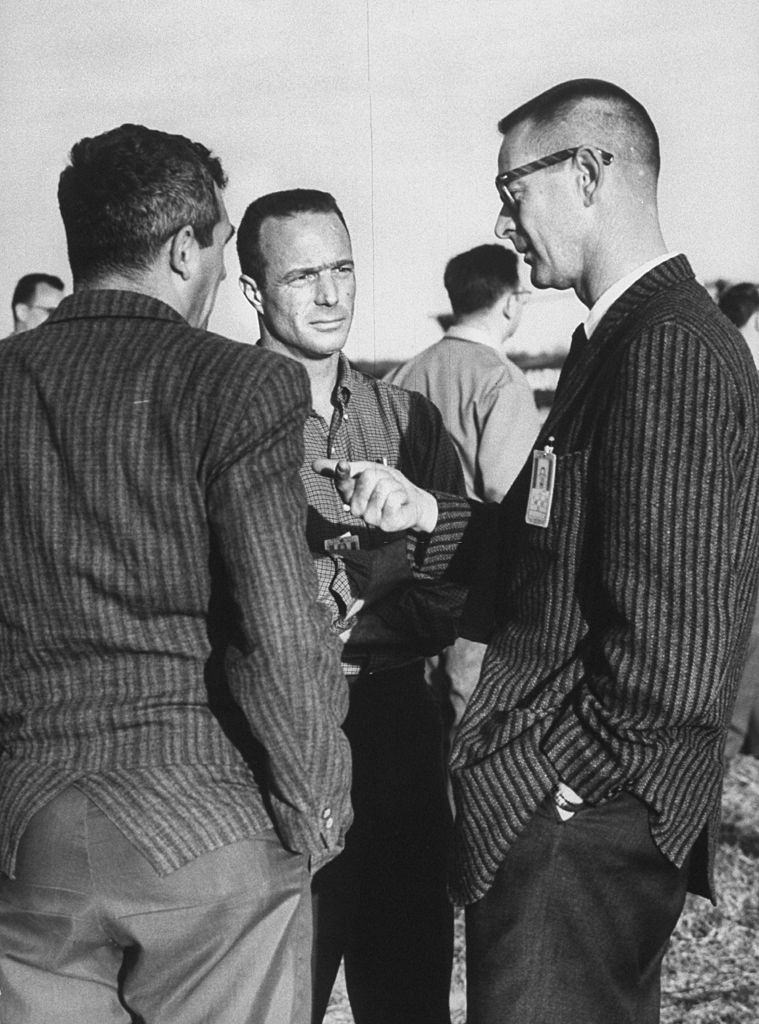
Once back on dry land, Ham was met with significant public attention. He appeared in photographs holding newspapers — a staged but widely circulated image that made him a recognizable face across the country. Astronaut Scott Carpenter was among those photographed speaking publicly about Ham’s safe return, and Ham later met astronaut Alan Shepard, the first American to fly in space.
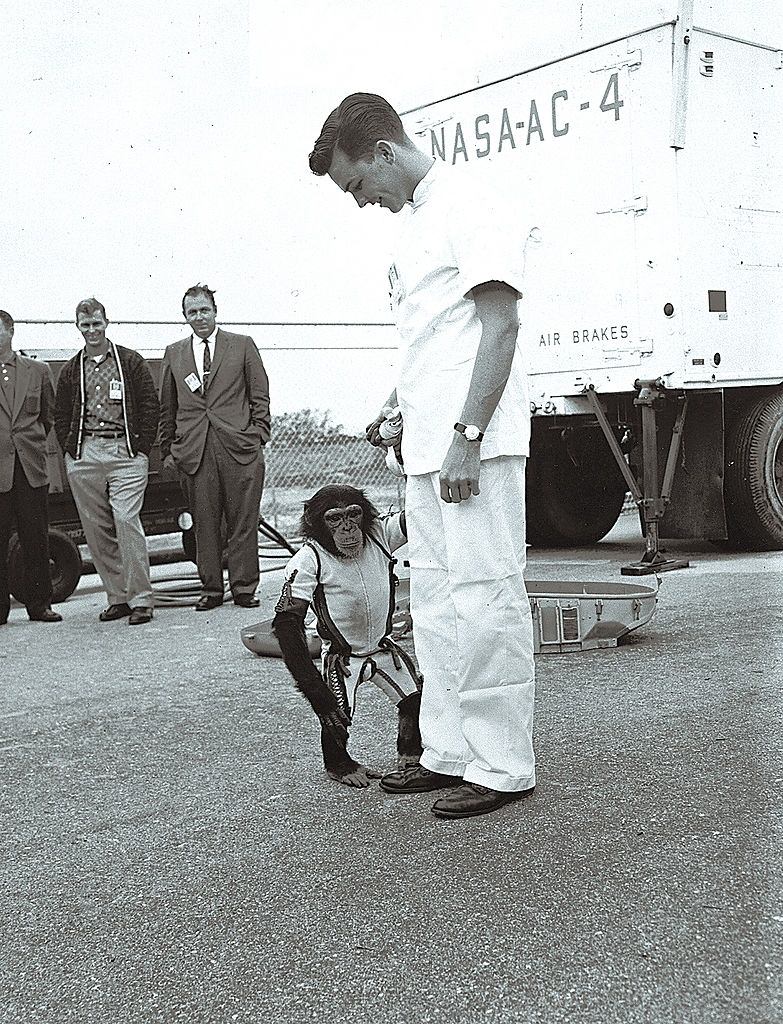
After all the attention faded, Ham returned to a quieter life. He was transferred to the National Zoo in Washington, D.C., on April 5, 1963, where he lived for the next 17 years. On September 25, 1980, he was moved to the North Carolina Zoo, where he joined a small social group of other chimpanzees. Ham died on January 19, 1983, at approximately 27 years of age.
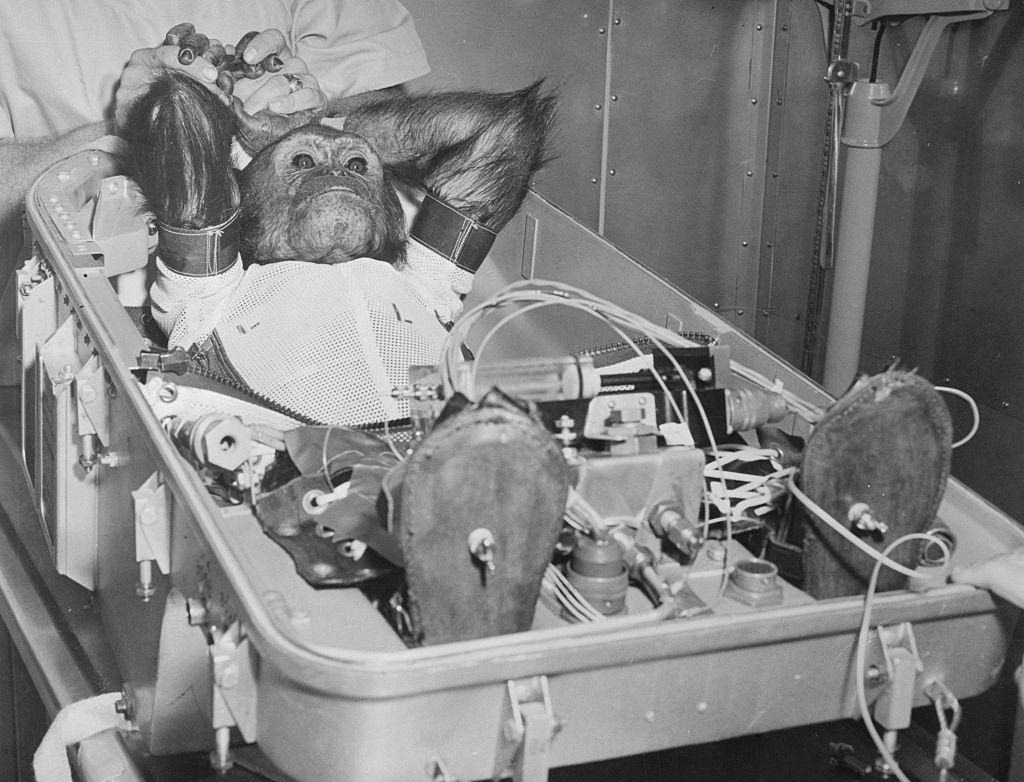
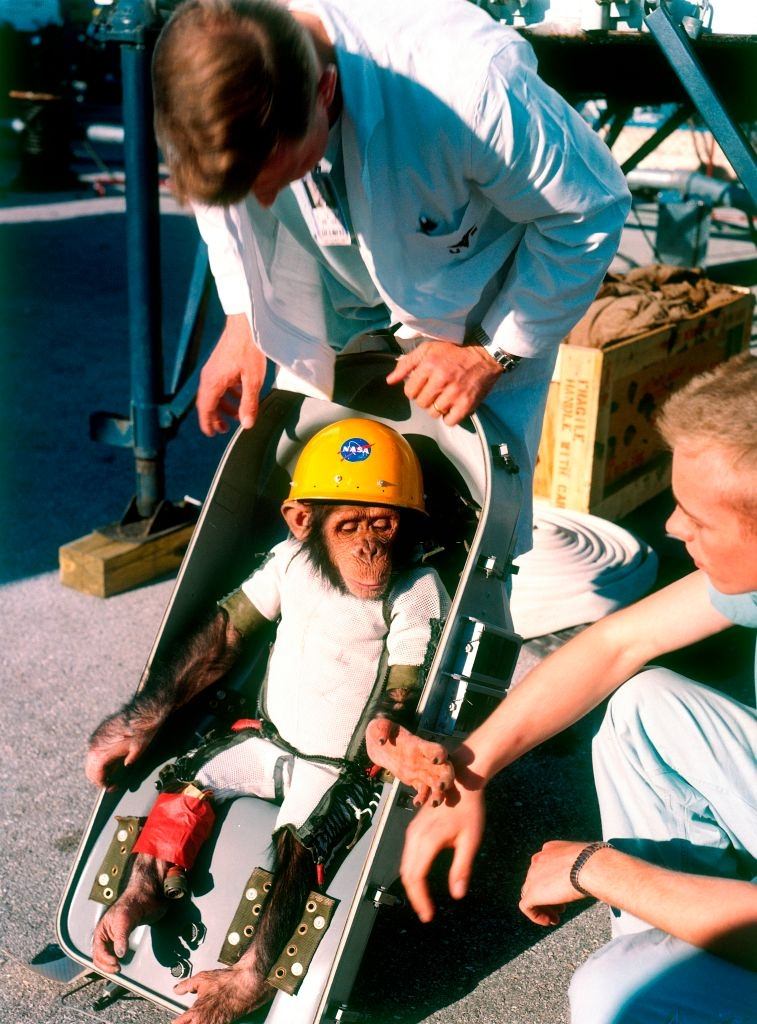
Following his death, Ham’s body was sent to the Armed Forces Institute of Pathology for a full autopsy. There were initial plans to preserve and display his remains at the Smithsonian Institution, following the Soviet model used for the pioneering space dogs Belka and Strelka. However, that plan was abandoned after strong public opposition. His remains — minus the skeleton — were buried at the International Space Hall of Fame in Alamogordo, New Mexico. Colonel John Stapp delivered the eulogy at his burial. Ham’s skeleton was retained separately and is now held in the collection of the National Museum of Health and Medicine.
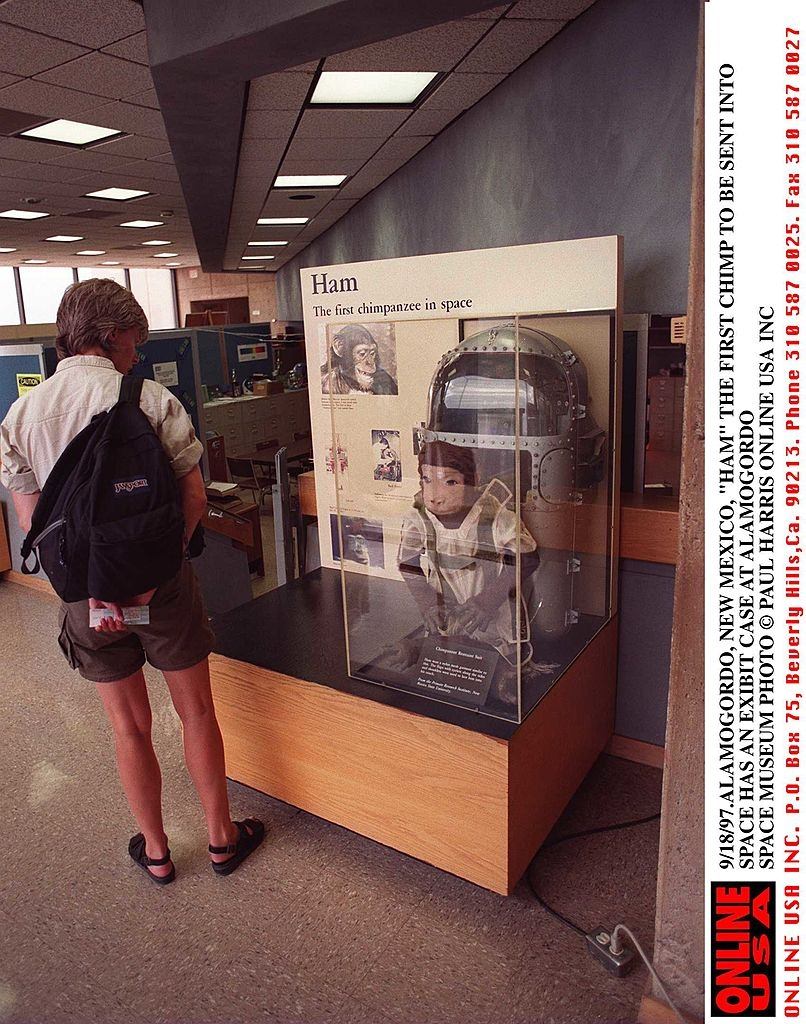
Ham’s place in history is documented and permanent. His exhibit at the Alamogordo Space Museum in New Mexico stands as a physical record of what he accomplished. He was not a volunteer, and he had no understanding of what he was part of — but the data his body and behavior produced during those 16 minutes and 39 seconds above Earth helped shape every American human spaceflight that followed.