
Guangzhou sits at the heart of southern China, positioned along the Pearl River delta where trade routes have converged for centuries. By the 1970s, the city was one of the most strategically important urban centers in the country — a gateway to the outside world at a time when China was still largely closed to it. As the decade wore on, that began to change. China’s gradual shift toward modernization sent ripples through every corner of Guangzhou, from its transport networks to its street markets to the political slogans painted on its walls.
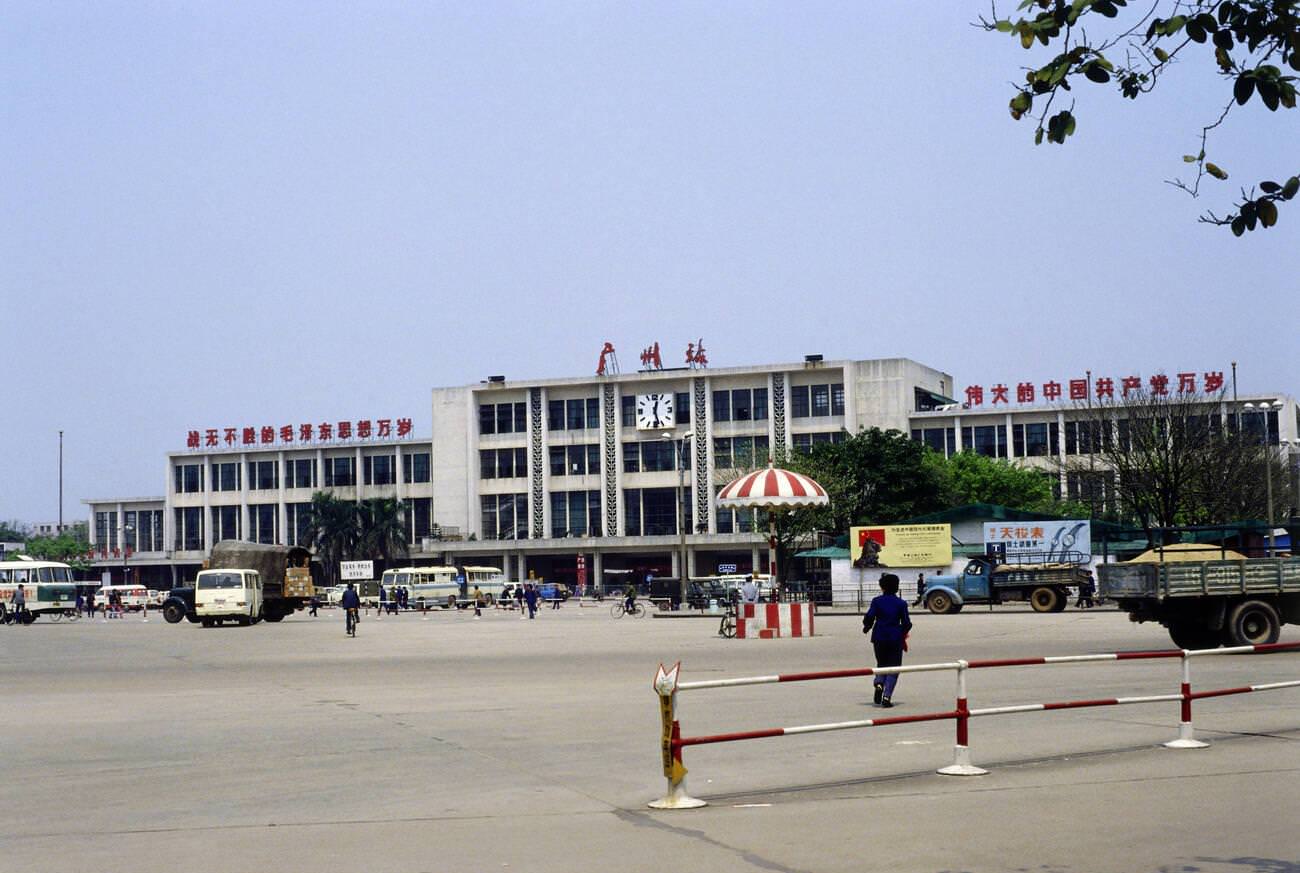
The city’s central railway station stood as one of the most visible symbols of that connectivity. It processed enormous flows of passengers and goods, linking Guangzhou to the rest of China and, through the nearby border, to Hong Kong and the wider world.
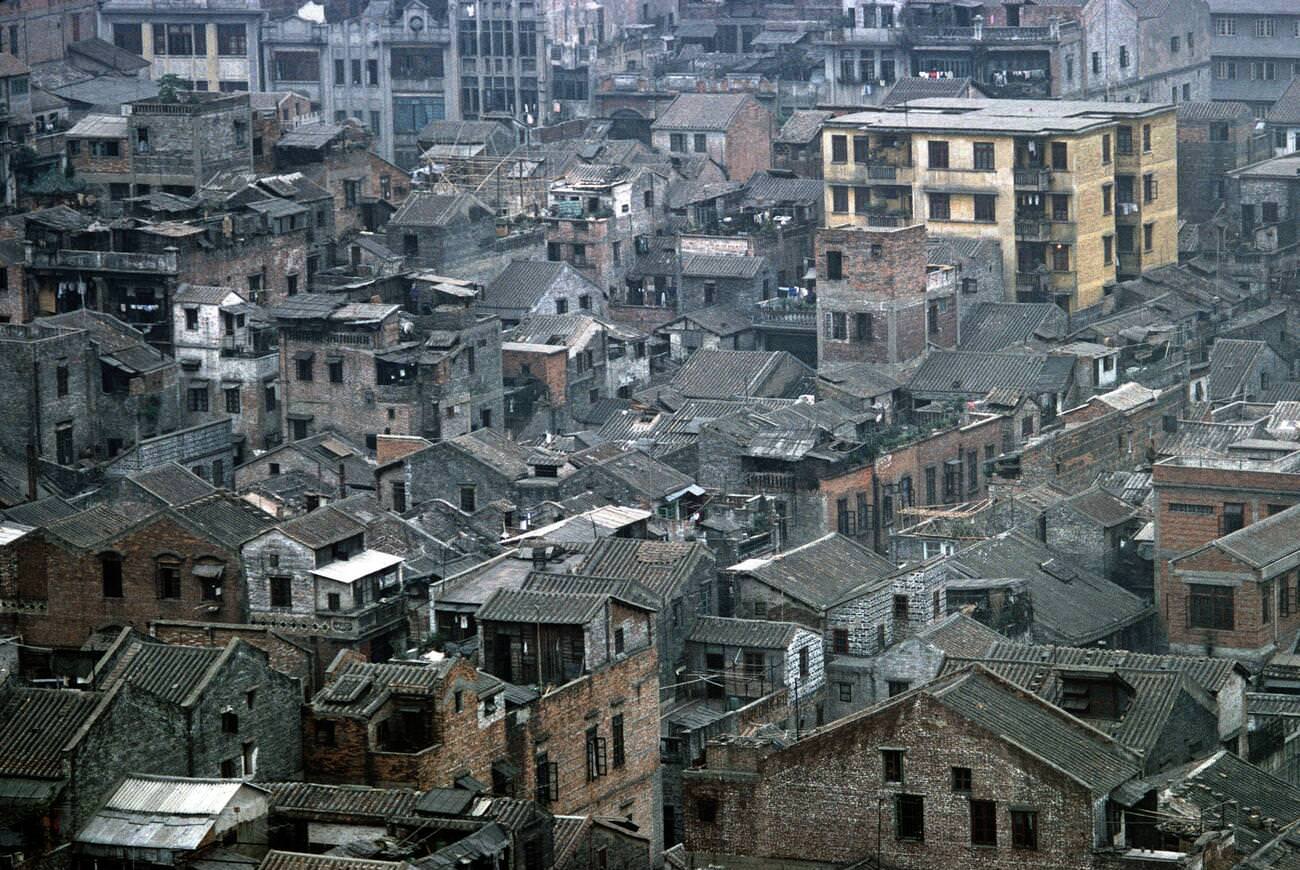
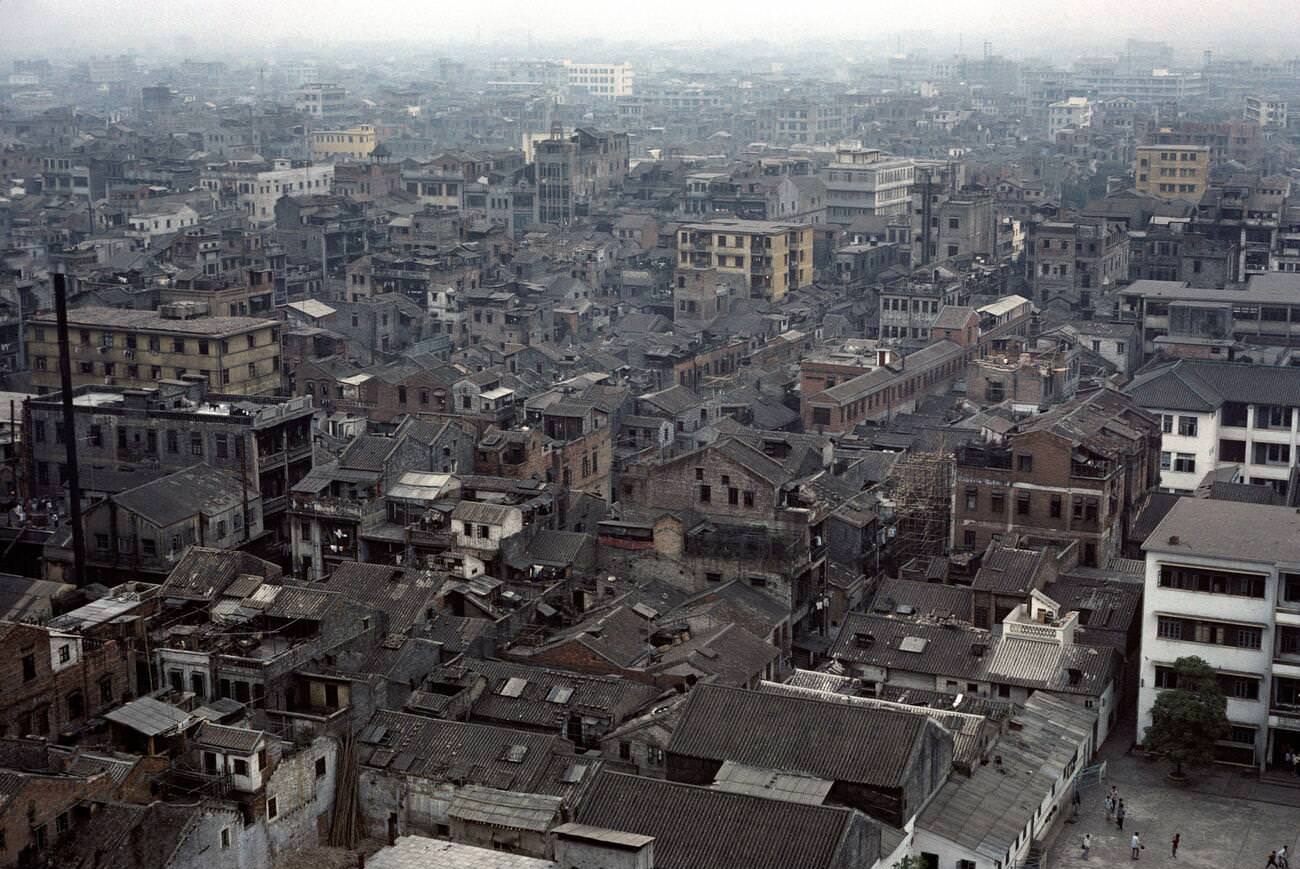
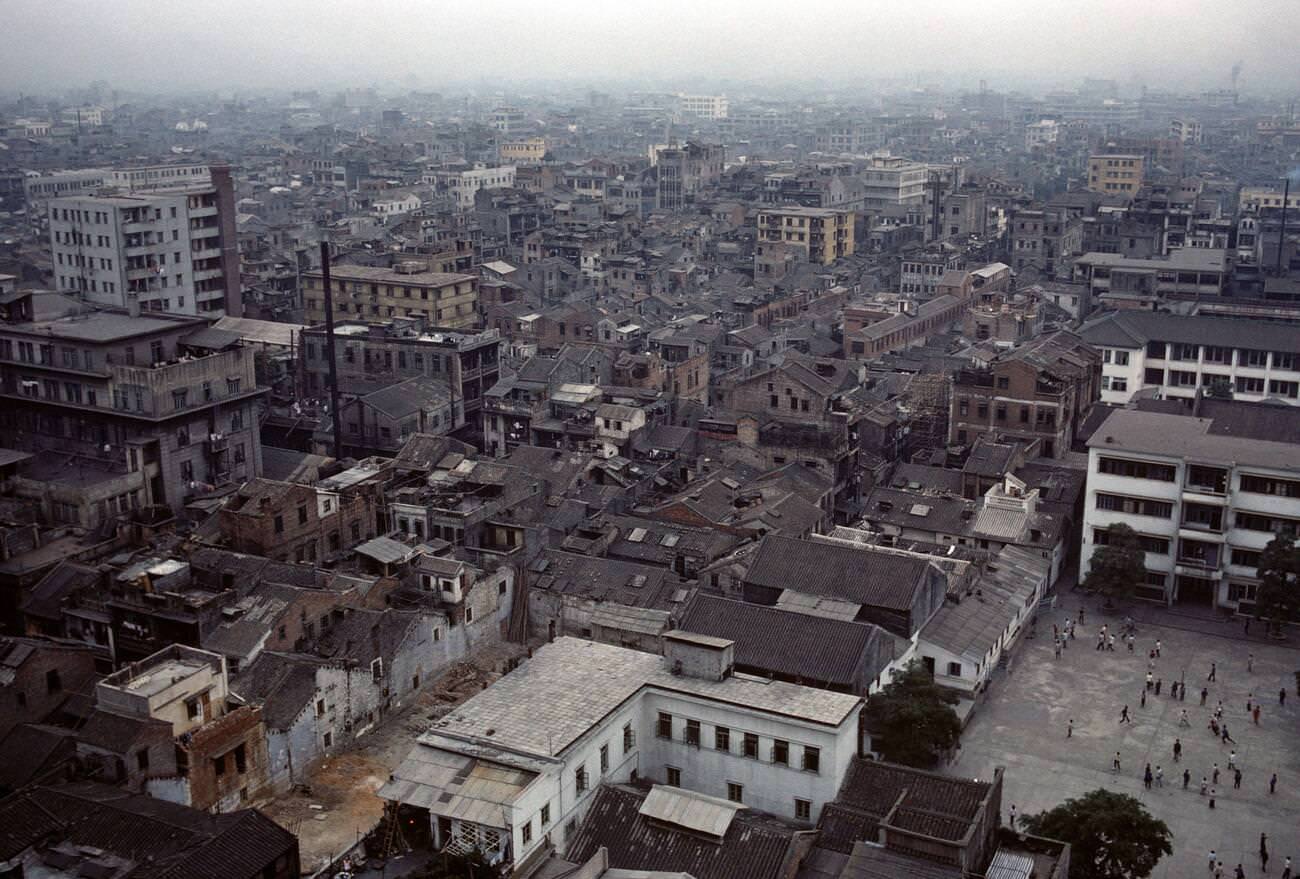
By the end of the decade, Guangzhou’s skyline was filling in. Residential blocks, government buildings, and urban infrastructure had expanded steadily throughout the 1970s. Urban planners mixed utilitarian Soviet-influenced architecture with older Cantonese building styles, producing a cityscape that was distinctly its own.
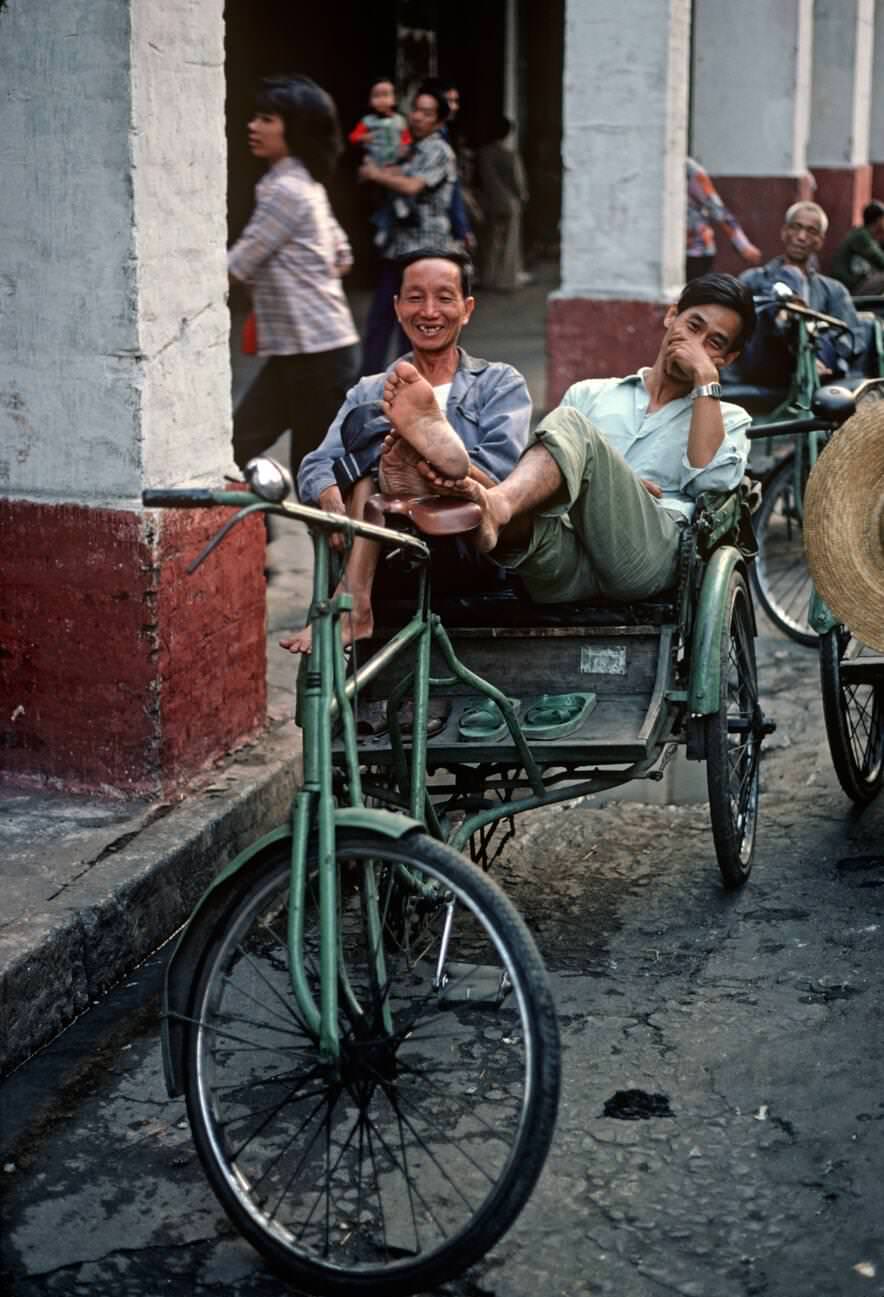
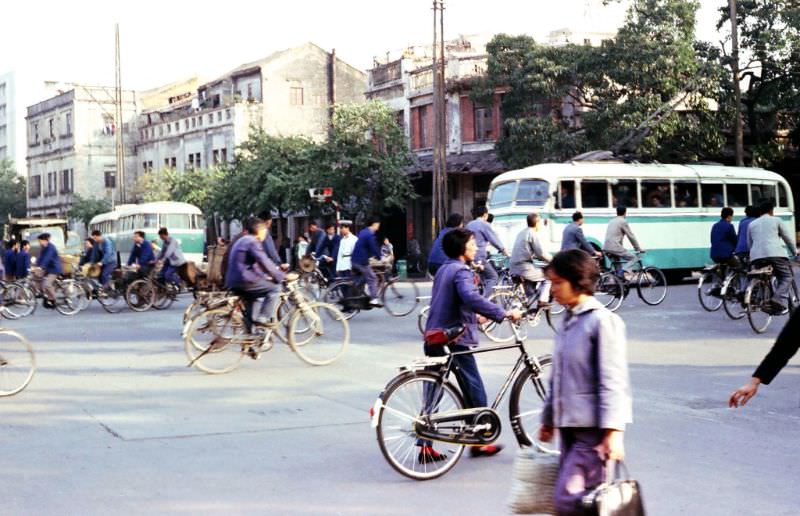
Getting around the city in the 1970s relied heavily on muscle power. Bicycles were everywhere, and pedal taxis — also known as pedicabs or cycle rickshaws — were a common sight on Guangzhou’s streets. Drivers ferried passengers through narrow lanes and busy intersections, threading between pedestrians and the growing number of state-owned buses.
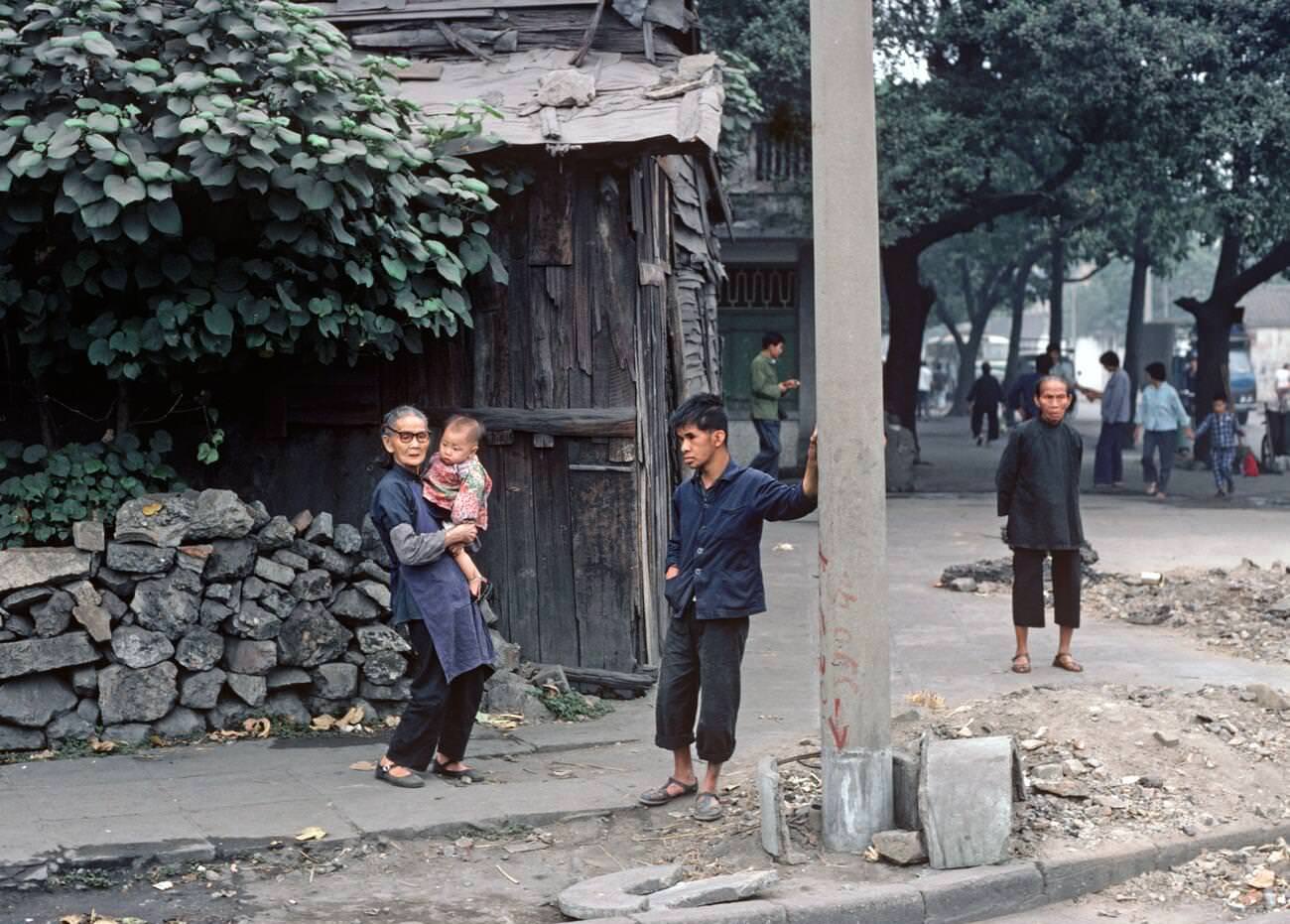
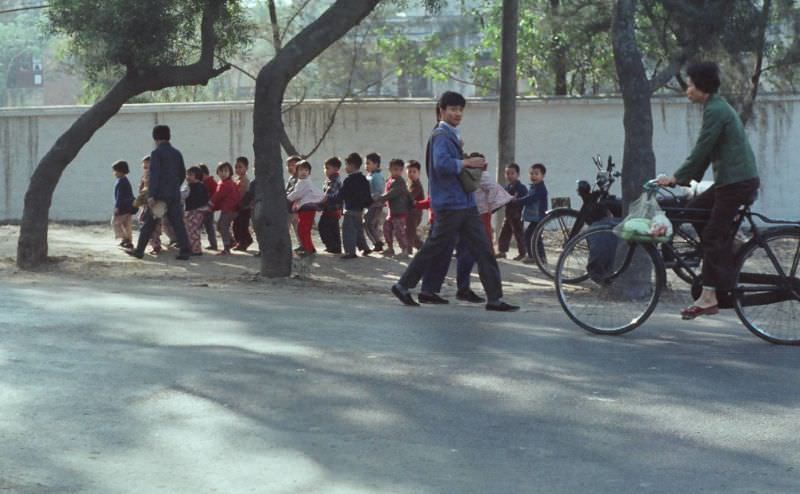
Away from the city center, life moved at a slower pace. In the suburbs, extended family structures remained the backbone of daily life. Grandmothers routinely took on childcare duties while parents worked, a practice deeply embedded in Cantonese family culture.
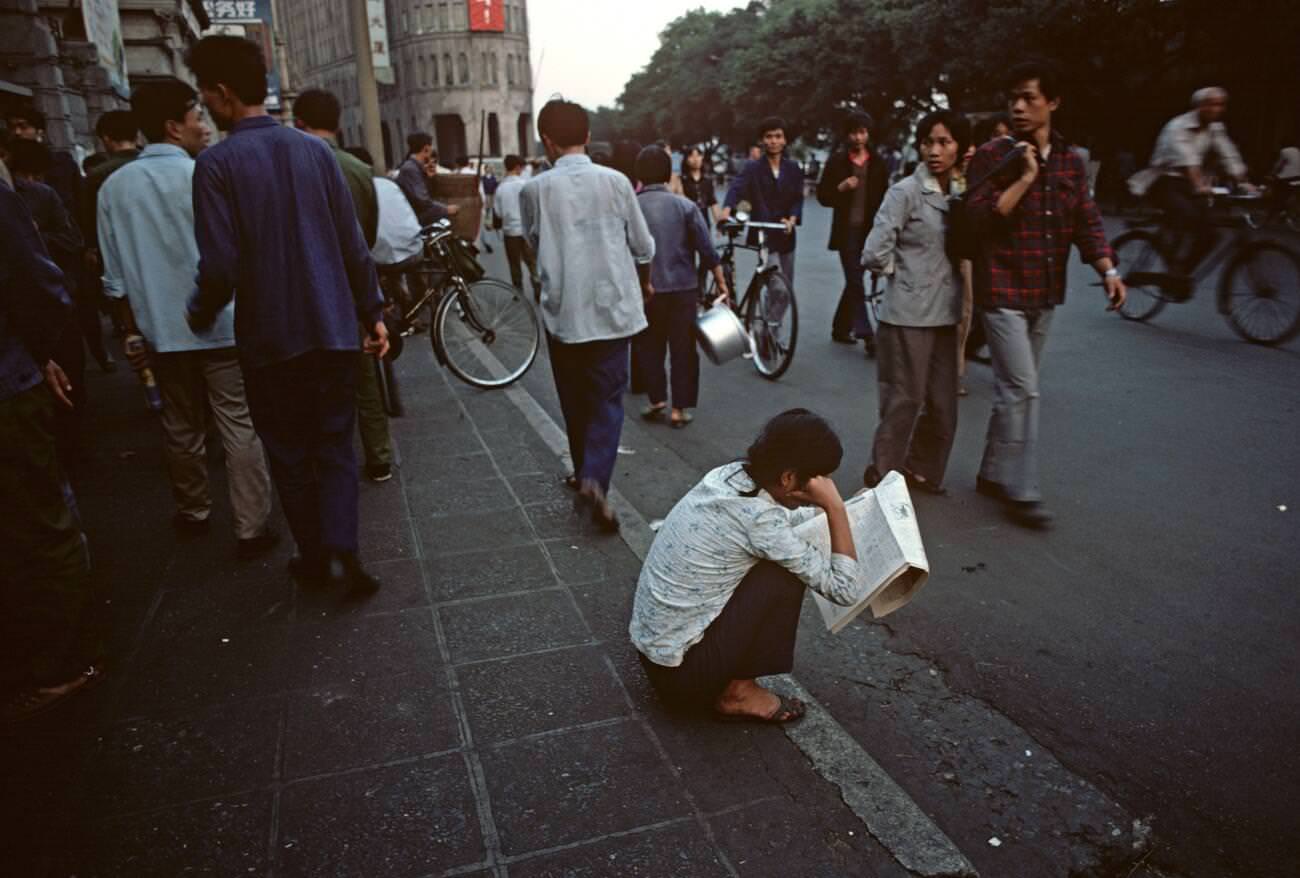
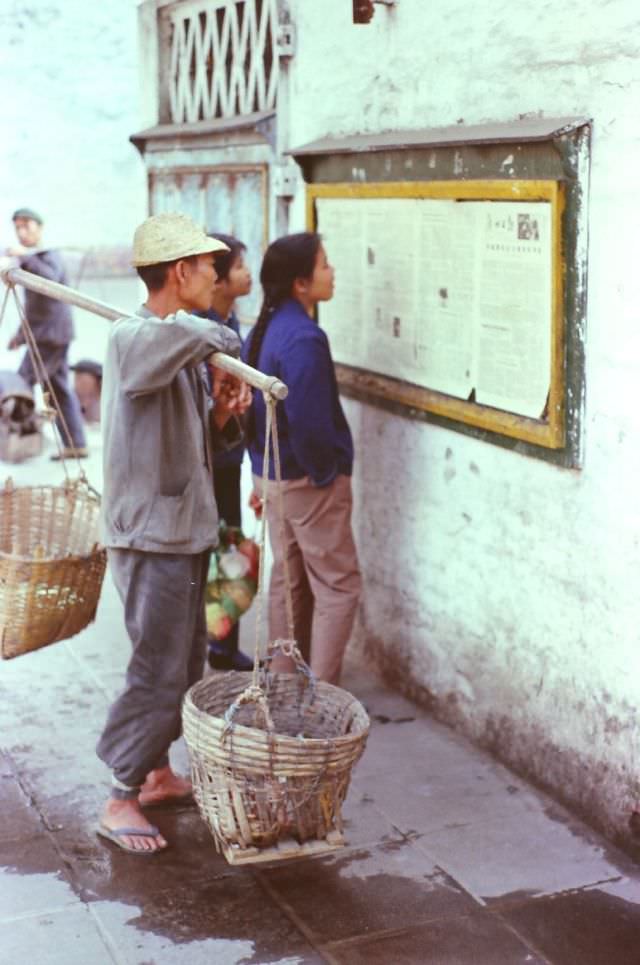
Access to information was tightly controlled during this era, but the newspaper remained a central part of daily life. Residents gathered on street corners and in public spaces to read state-published papers, which were often posted on notice boards for those who couldn’t buy their own copy.
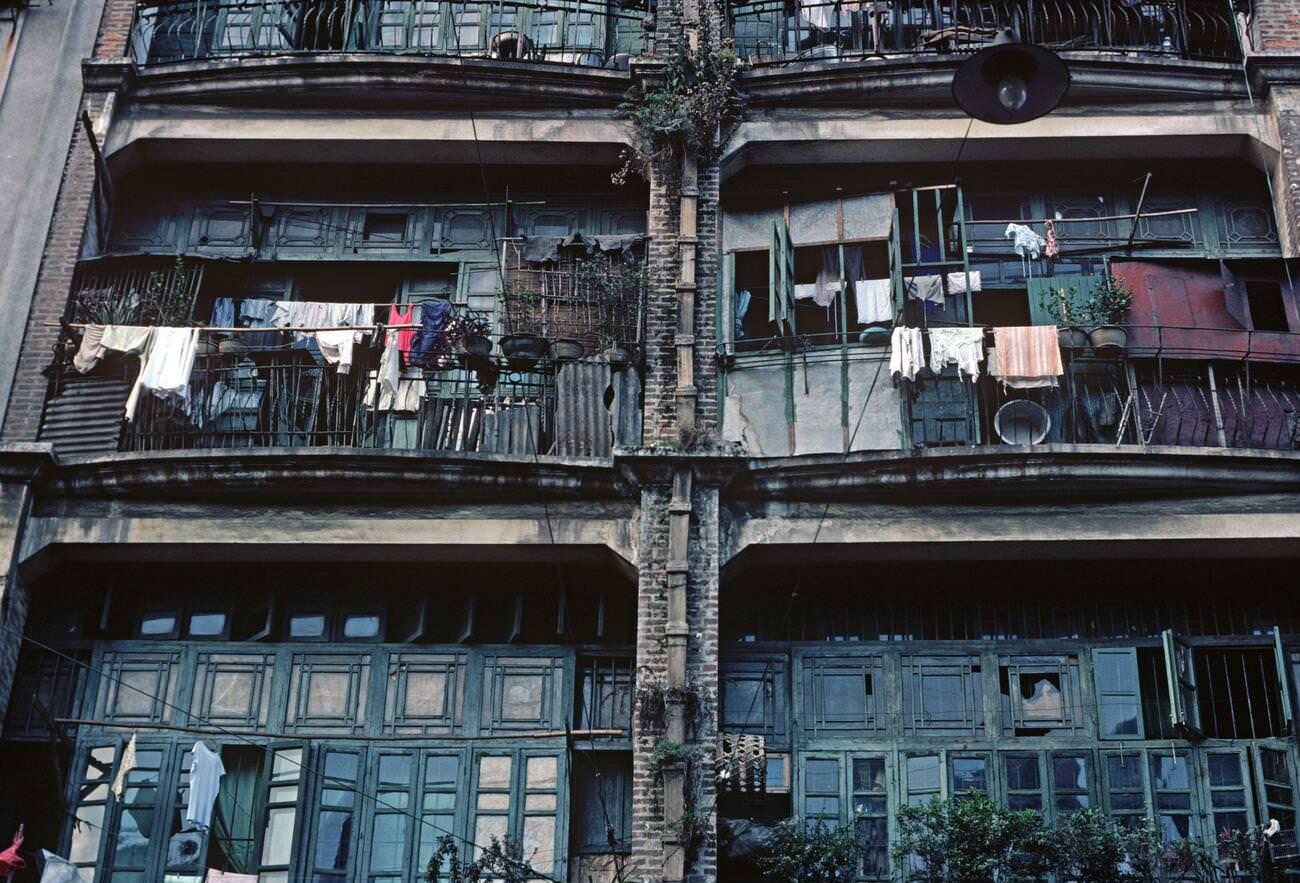
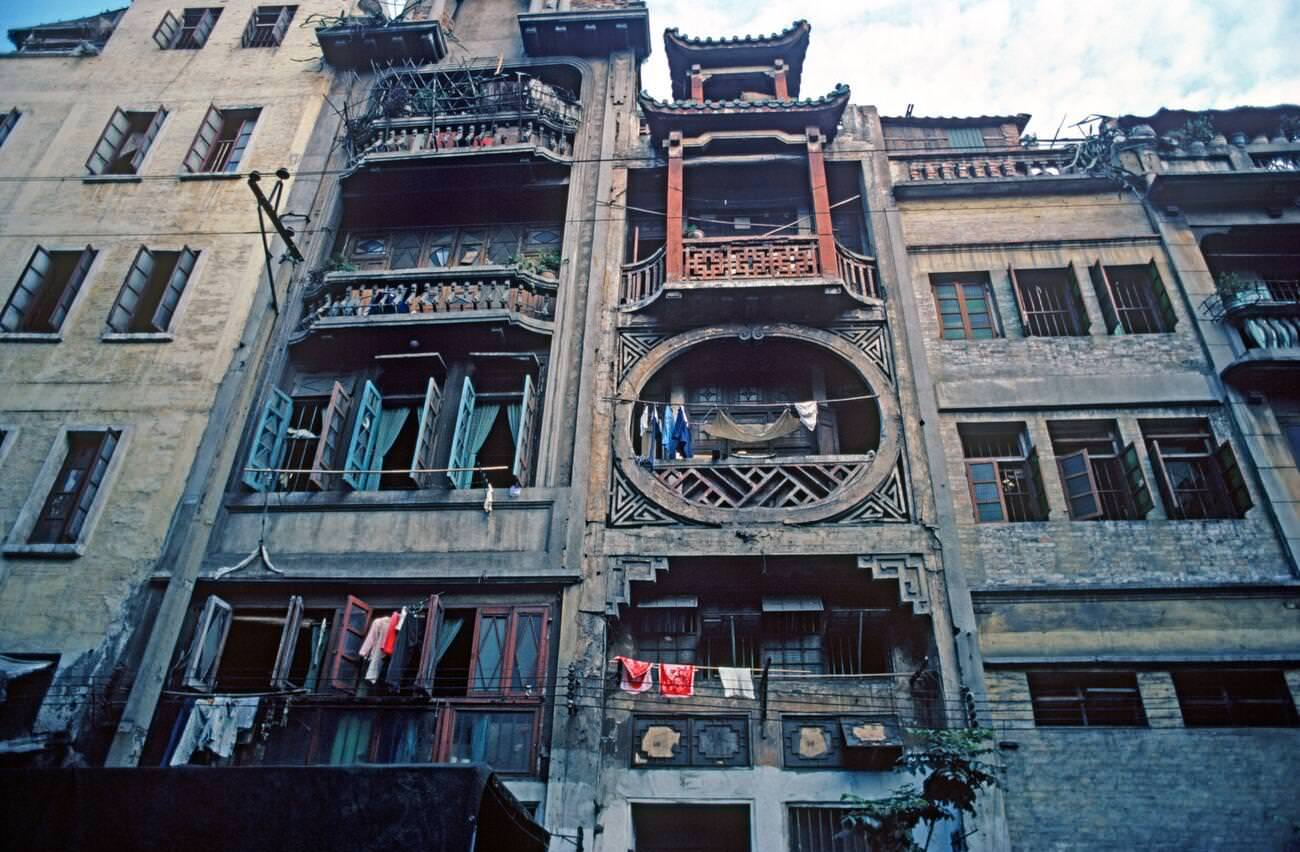
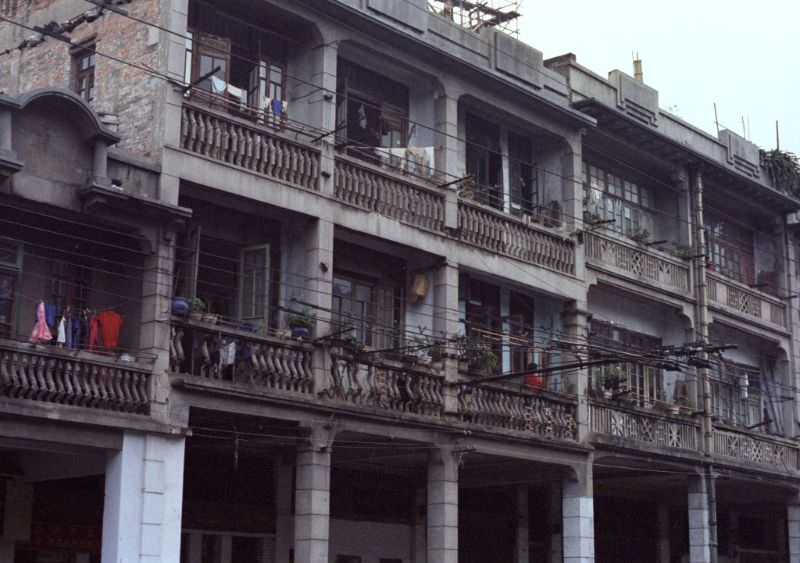
Much of Guangzhou’s residential housing stock dated from the early and mid-20th century. Older apartment blocks, built in a style common to southern Chinese cities, lined many of the older neighborhoods. These buildings featured open-air corridors, tiled facades, and narrow balconies — practical designs suited to the region’s hot, humid climate.
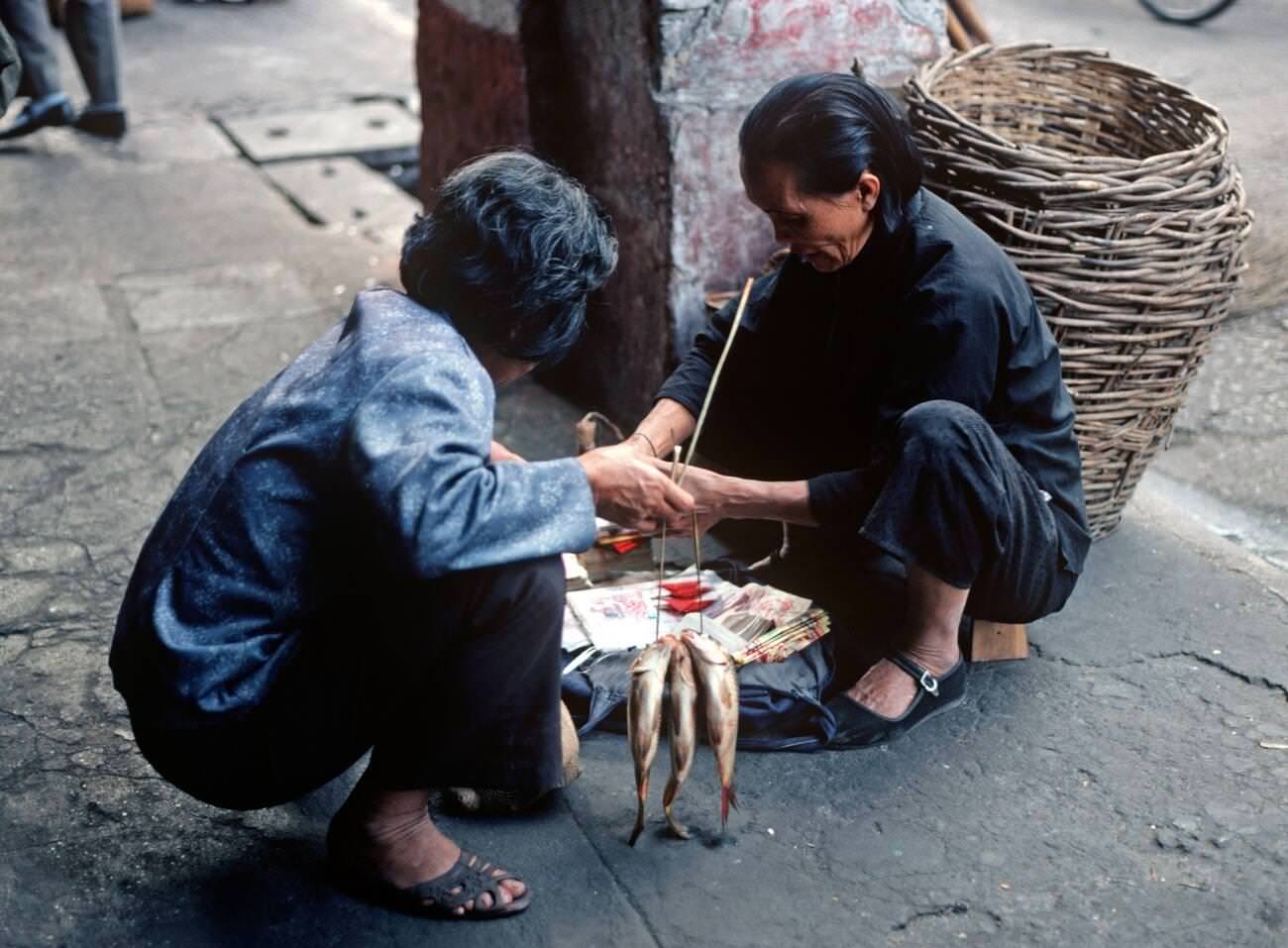
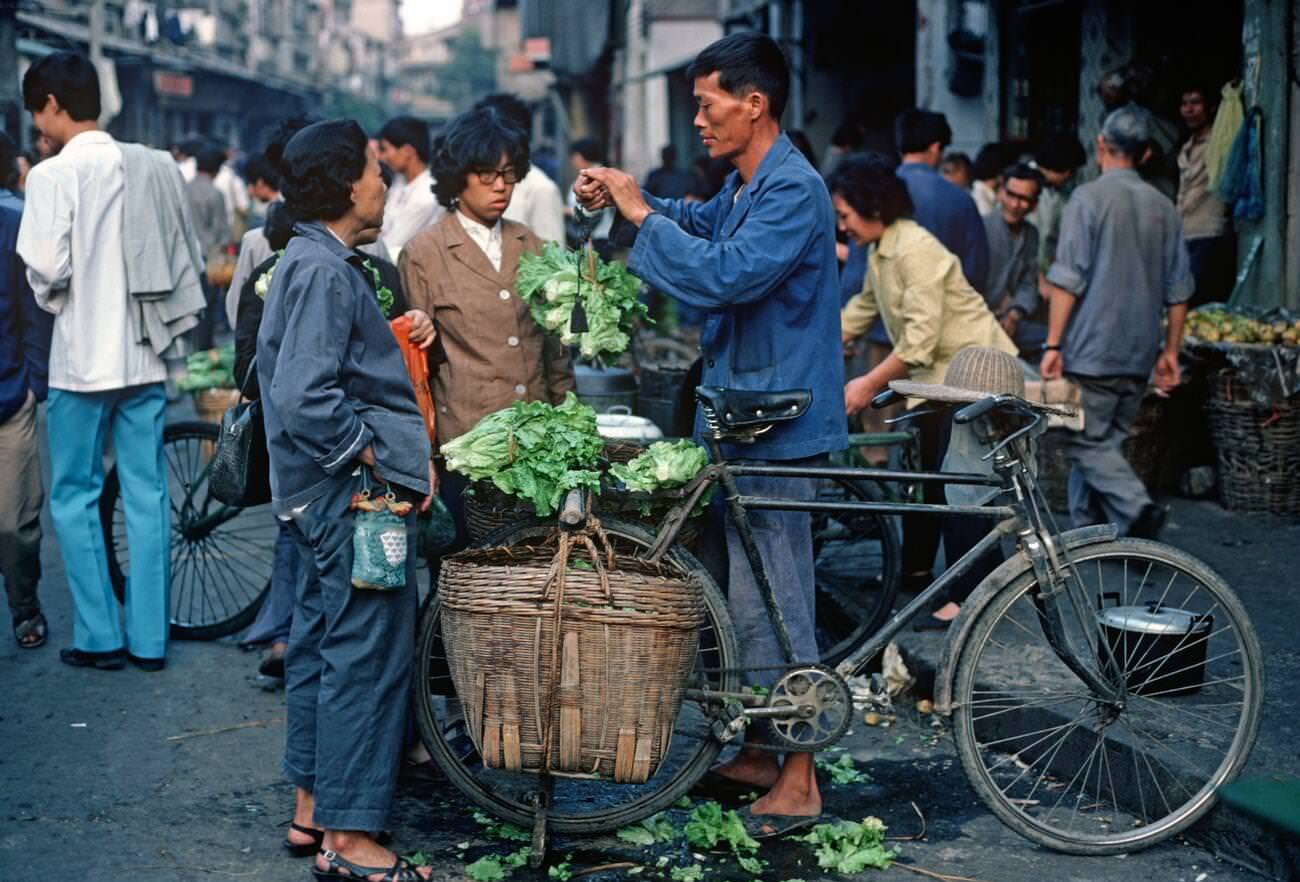
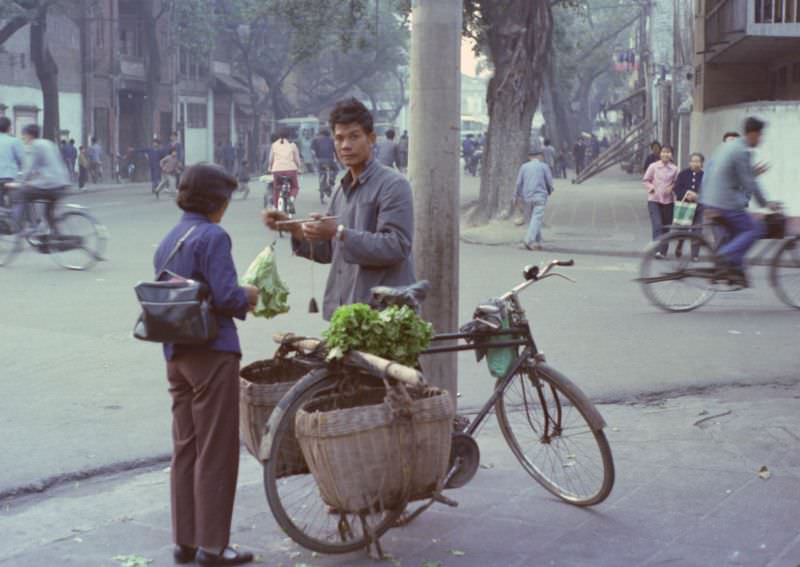
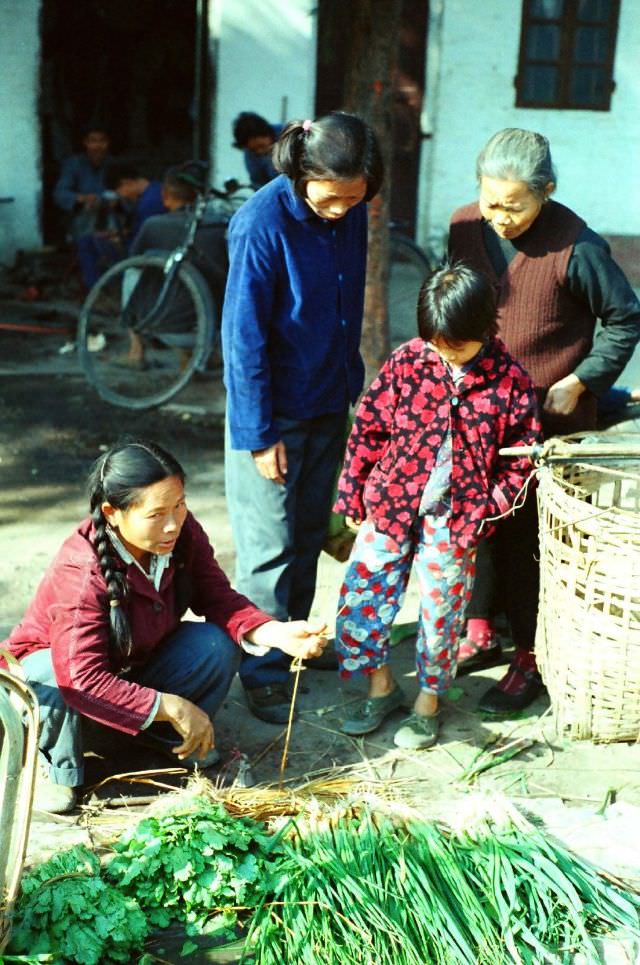
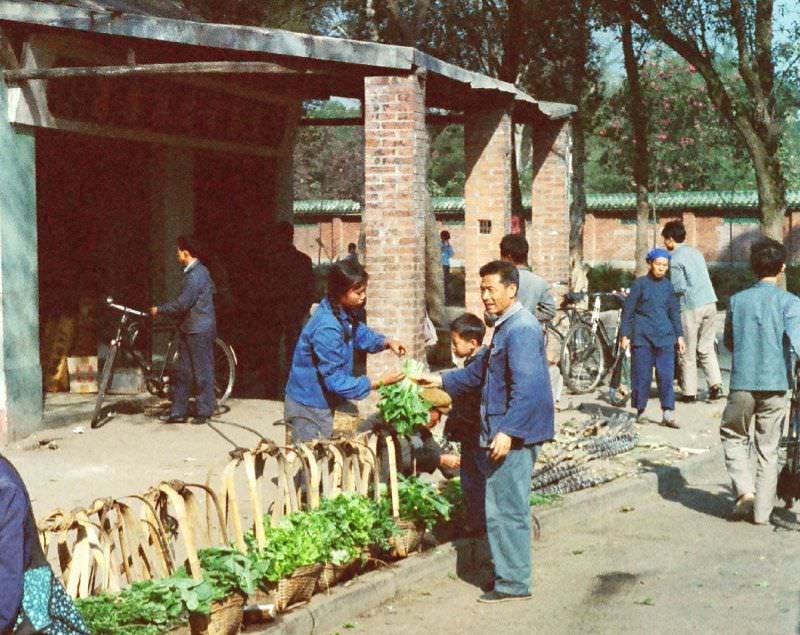
Street markets were the lifeblood of Guangzhou’s food economy. Fresh fish, vegetables, and live poultry were sold daily from stalls and carts across the city. Cantonese cuisine places enormous value on freshness, and shoppers selected their ingredients with care — inspecting fish still swimming, produce just harvested, and cuts of meat from that morning’s slaughter.
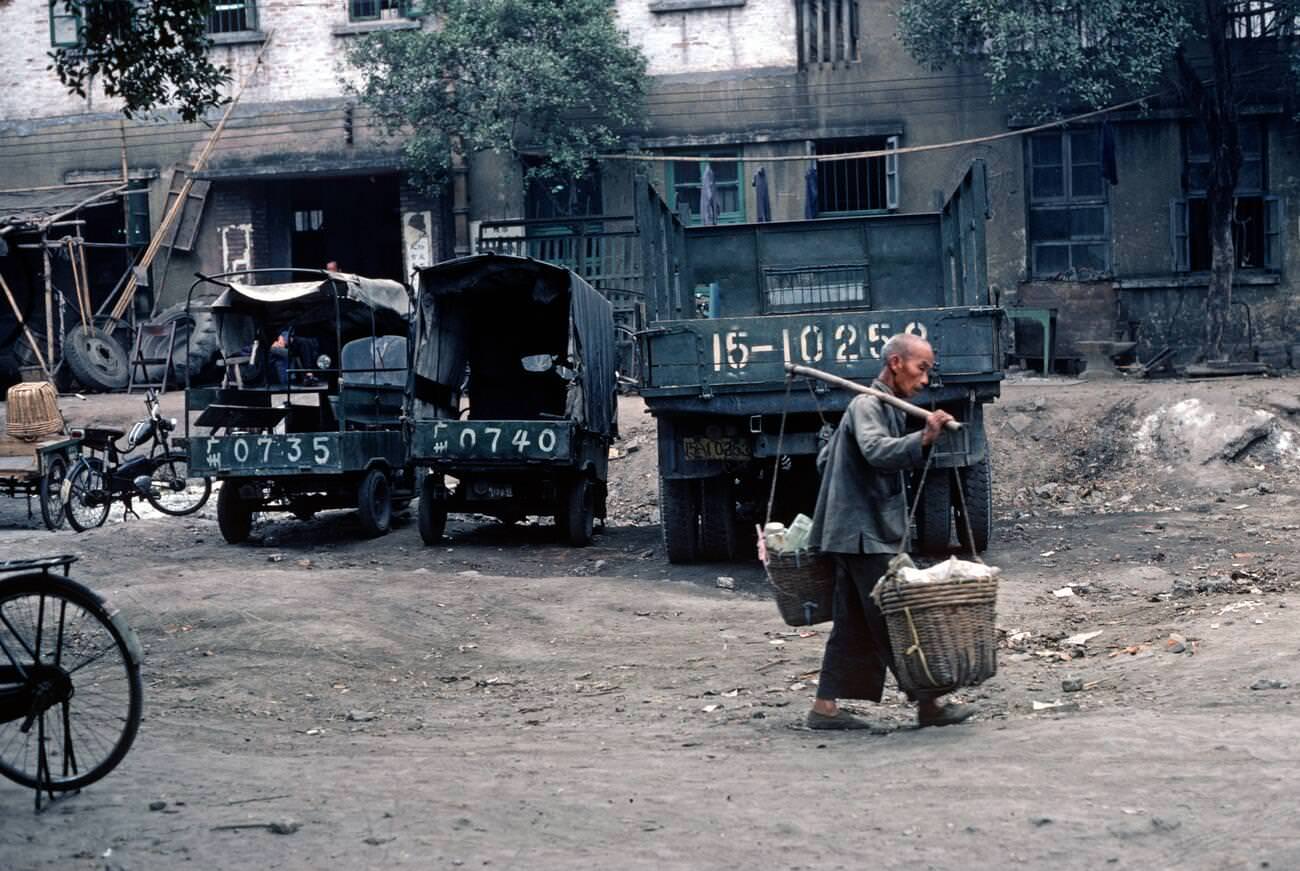
Outside the city, the rural economy depended on manual labor and traditional methods. Farmers and traders used bamboo shoulder poles to carry heavy loads — a technique that had been used across southern China for generations. The poles, balanced across the shoulders with baskets hanging from each end, allowed a single person to transport a remarkable amount of weight over long distances.
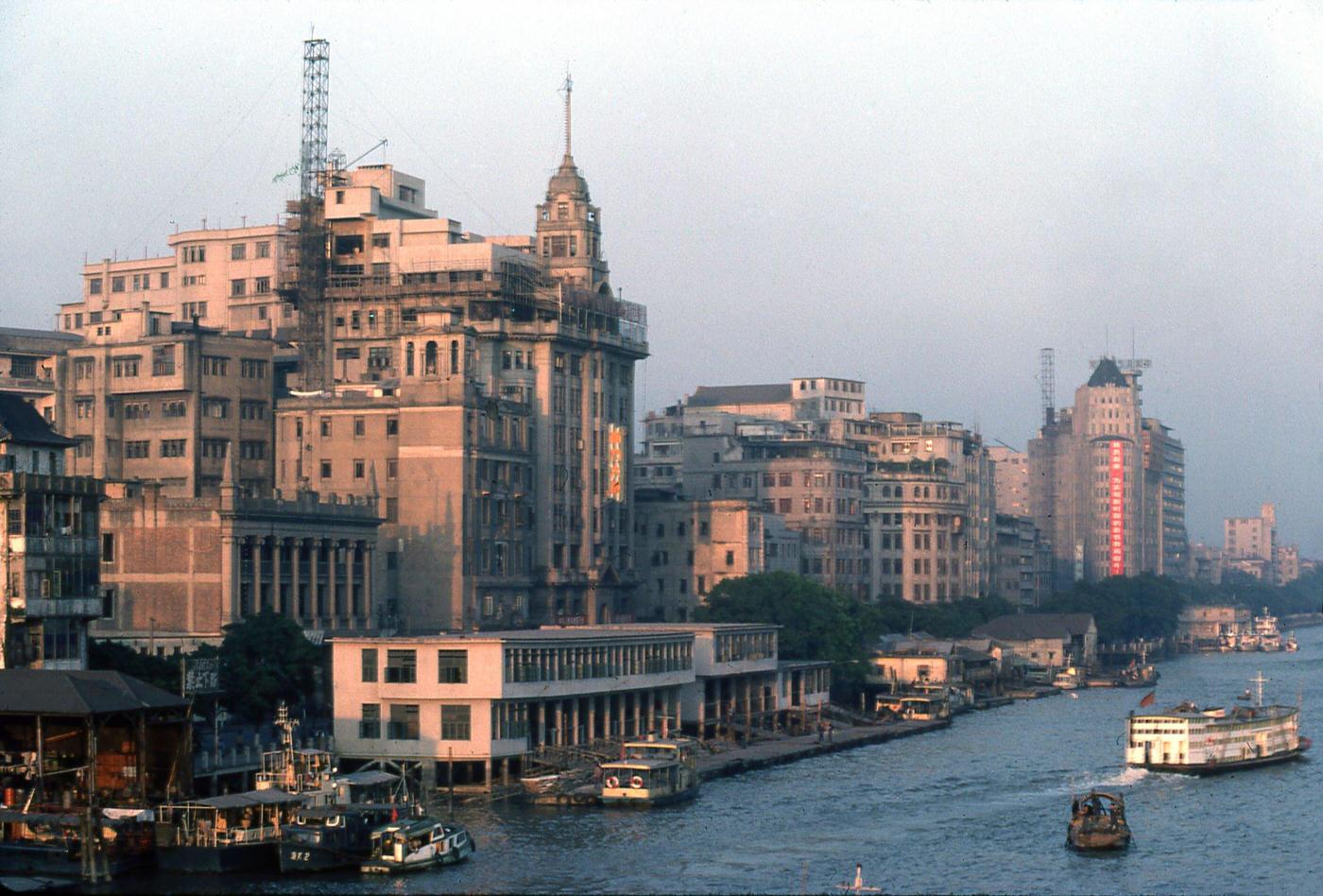
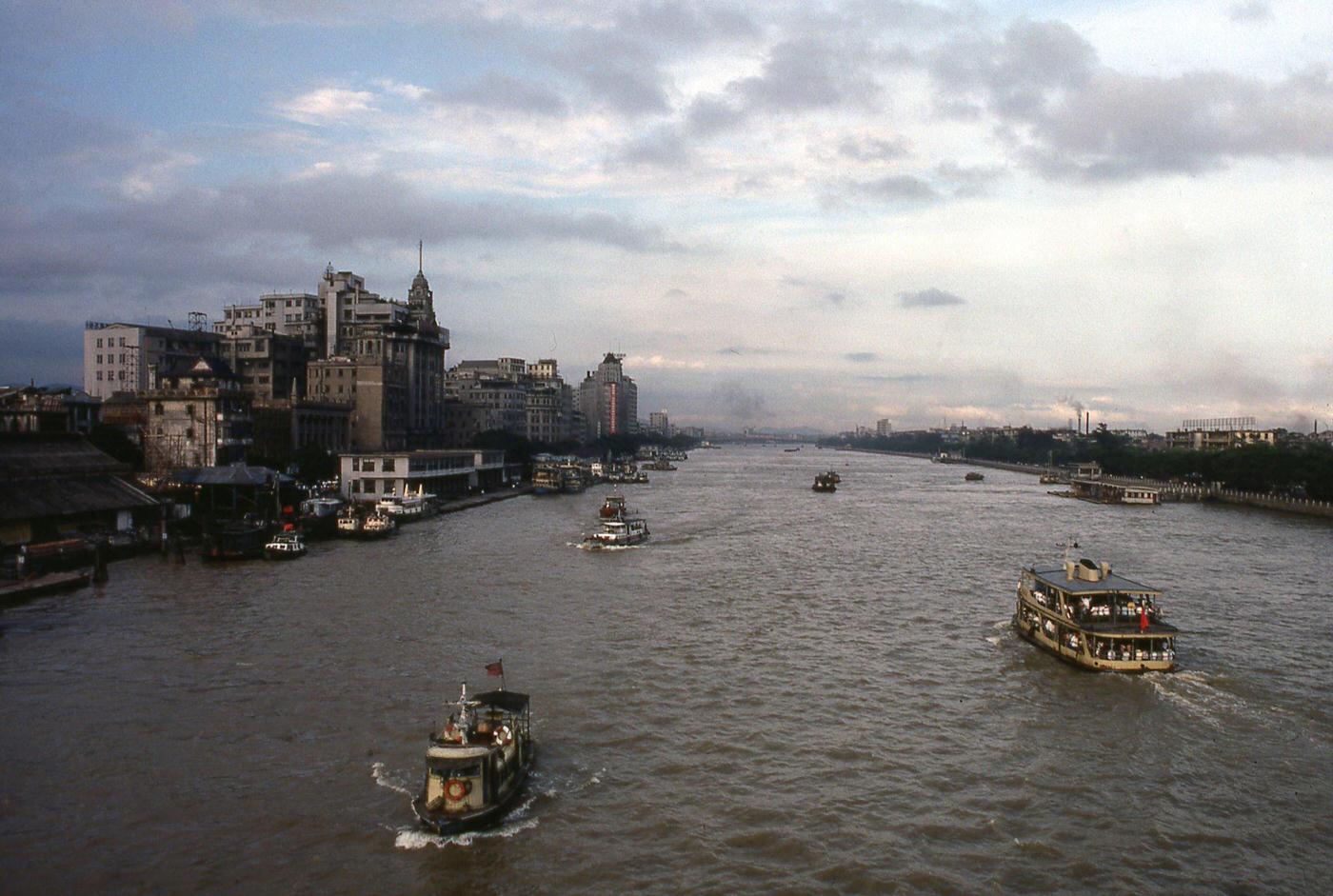
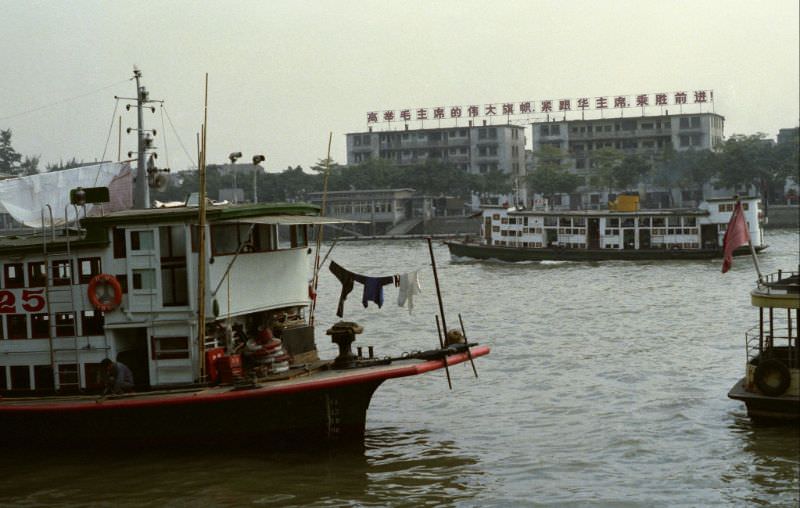
The Pearl River waterfront was one of the most recognizable stretches of Guangzhou. Cargo vessels, fishing boats, and ferries crowded the water, while the embankment lined with colonial-era buildings reflected the city’s long history as a trading port.
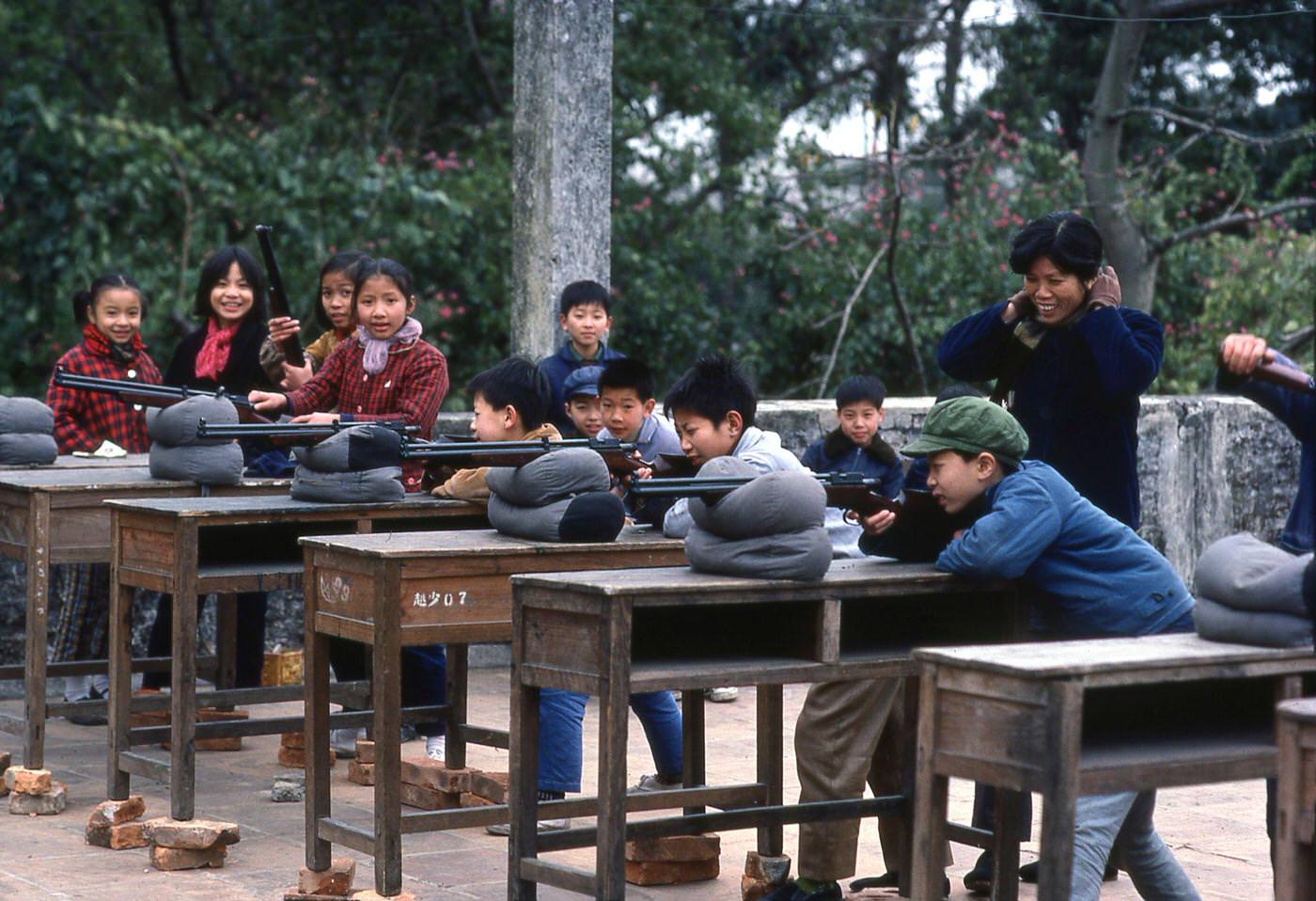
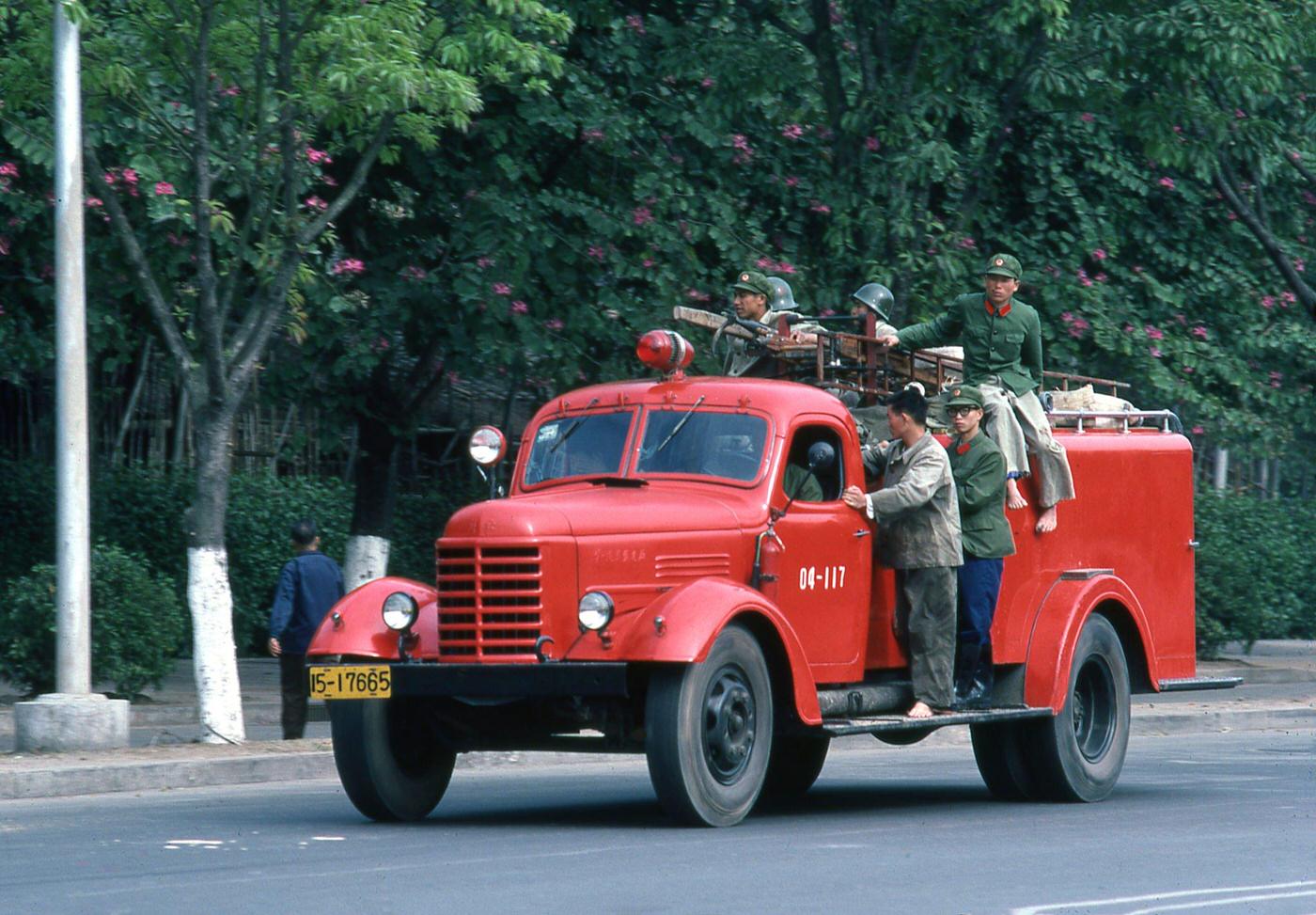
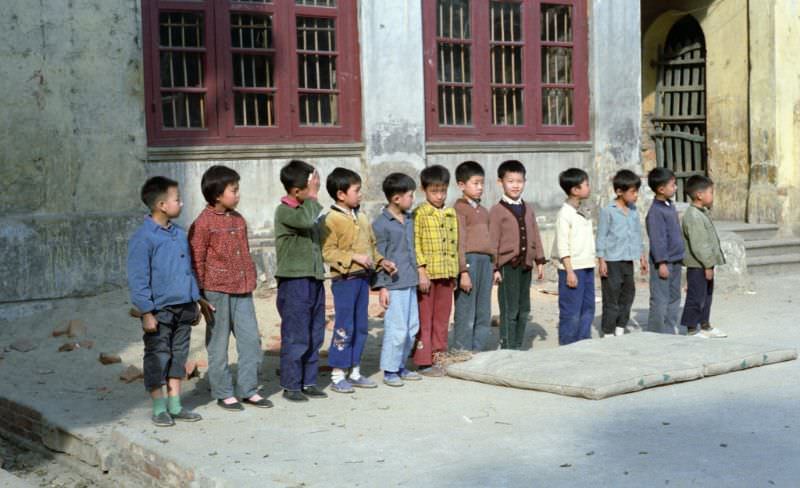
Military preparedness was woven into civilian life across China during this period. In Guangdong province, elementary school children participated in target shooting drills as part of their standard education. These exercises were part of a broader national program promoting civil defense readiness.
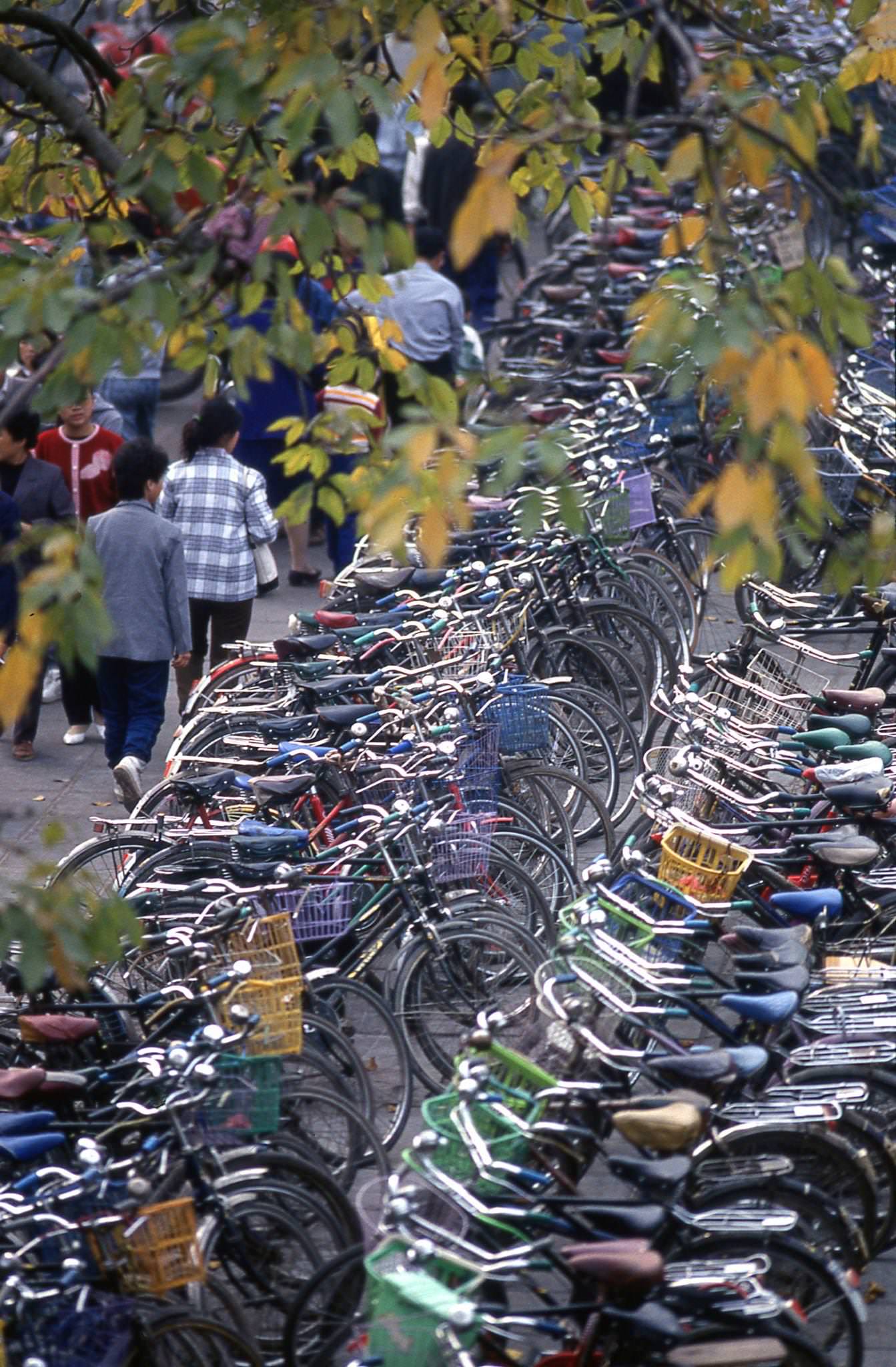
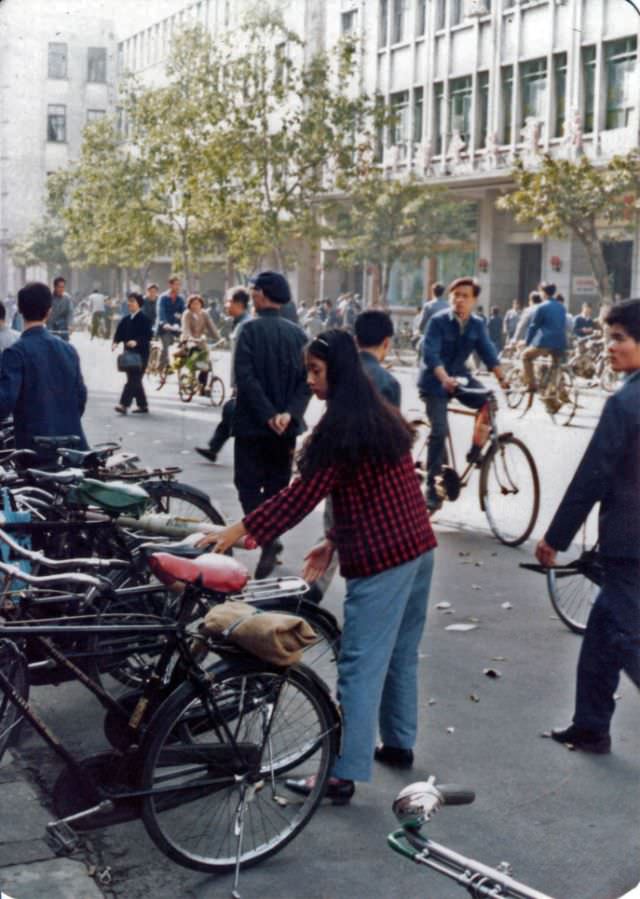
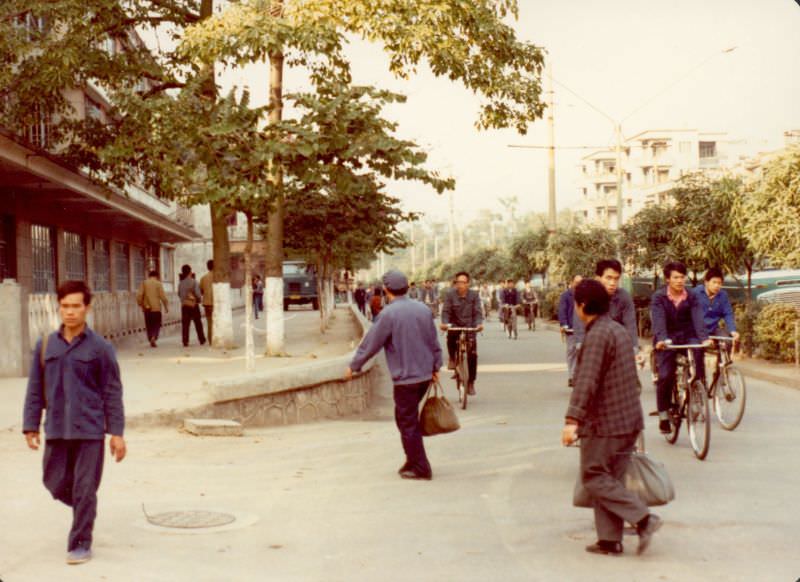
Bicycles dominated Guangzhou’s streets throughout the 1970s. They were the primary mode of transport for workers, students, and families alike. Rows of them parked along sidewalks were a constant feature of the urban landscape, a sign of just how central cycling was to everyday movement in the city.
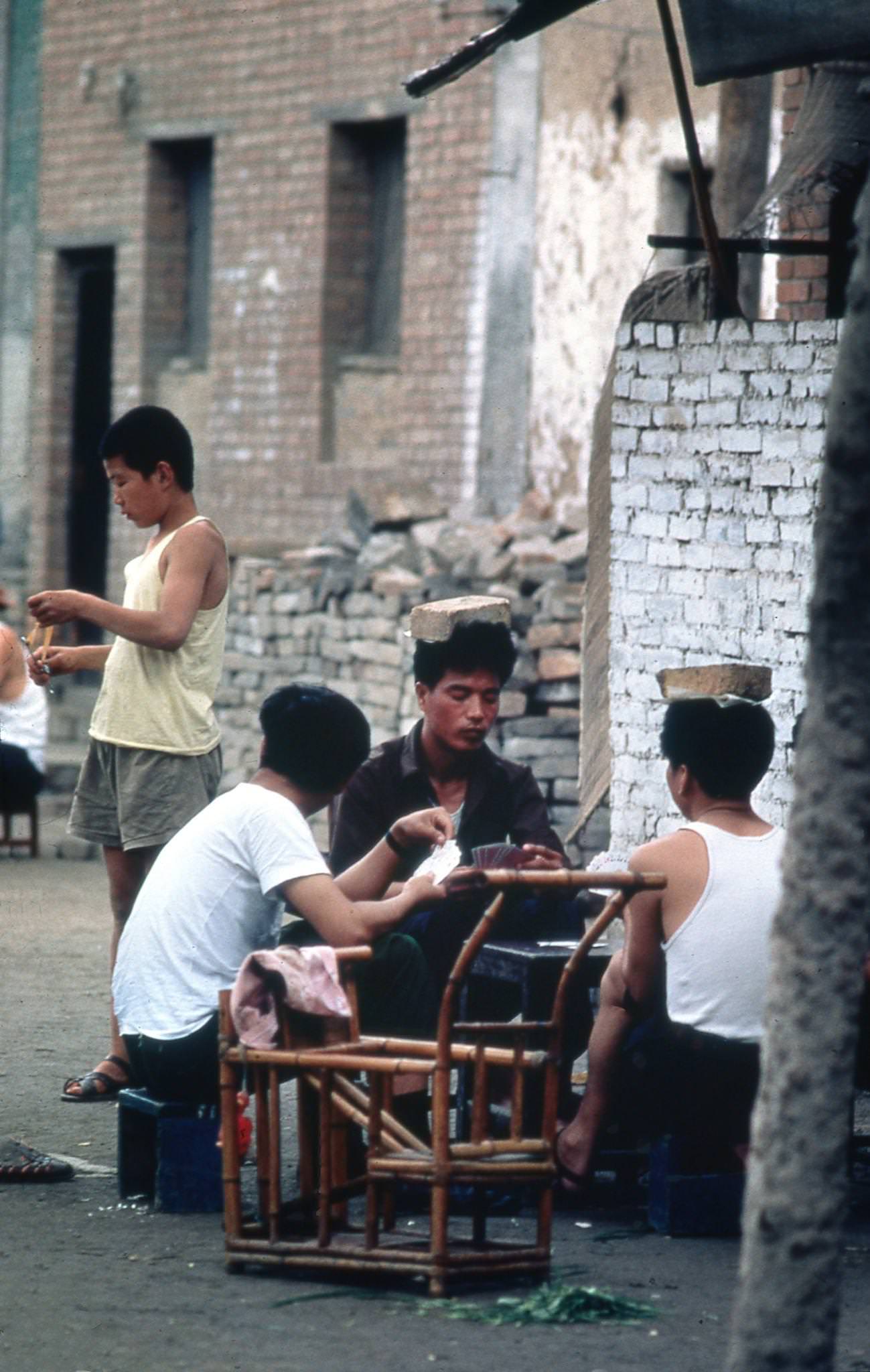
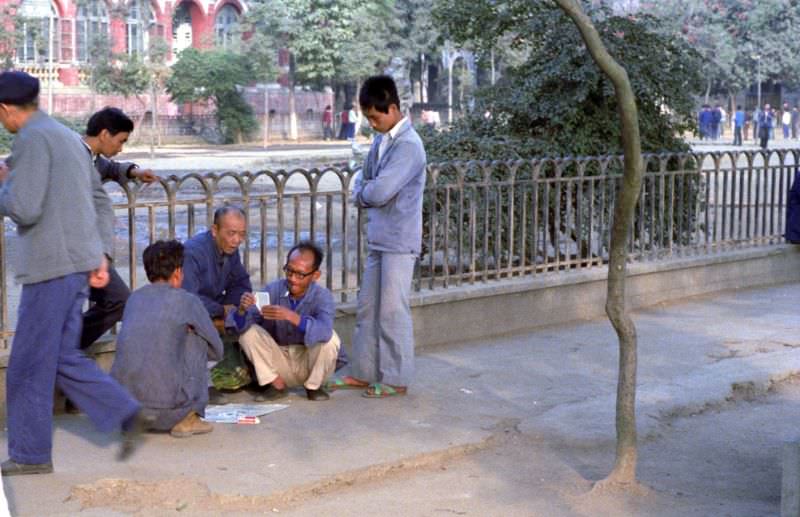
Public spaces doubled as social gathering spots. Men played cards on sidewalks and in alleyways, a pastime that crossed class and occupation. These informal games were a fixture of Guangzhou’s street culture, offering a brief escape from work and the pressures of daily life.
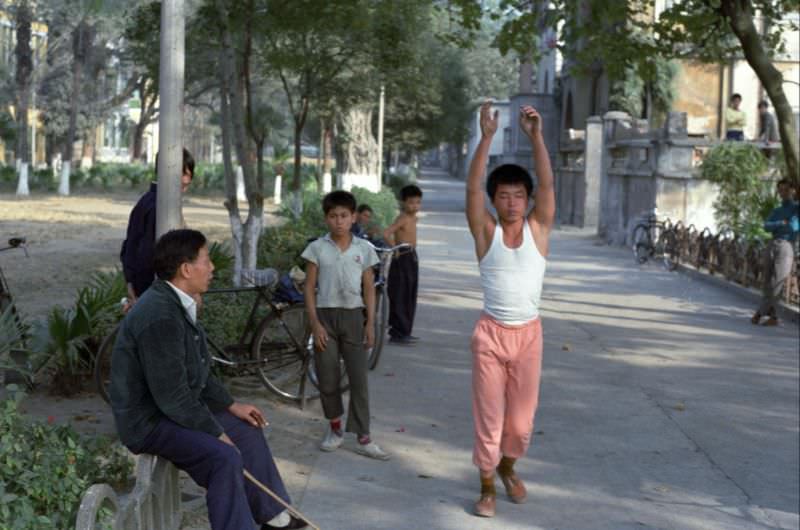
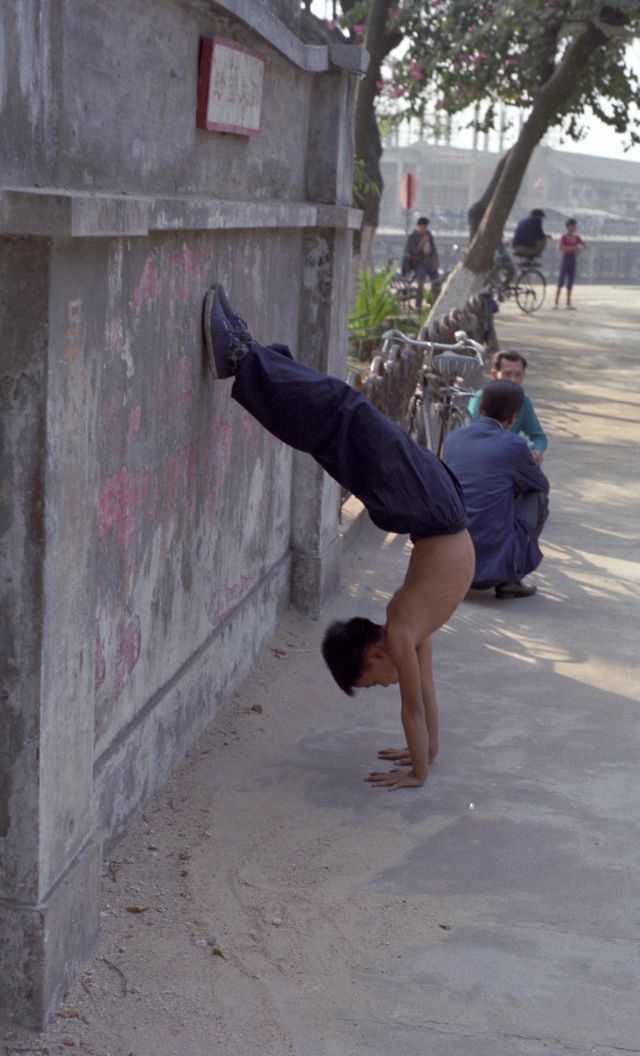
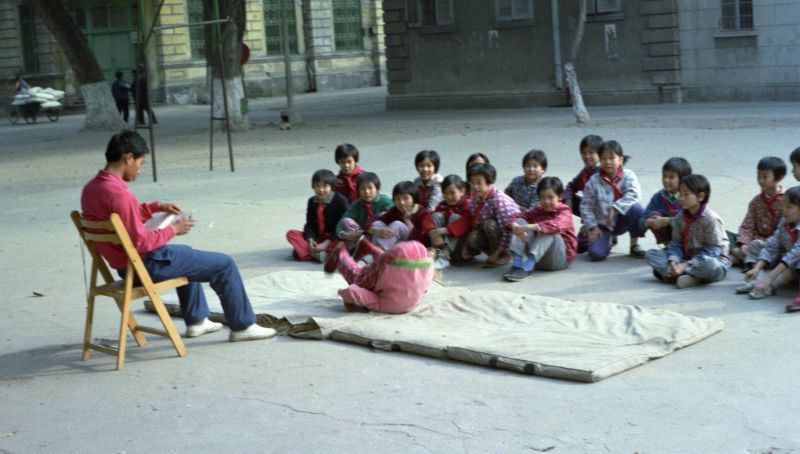
Acrobatics had a long tradition in Chinese performance culture, and Guangzhou was no exception. Schools and youth programs offered acrobatics training, with instructors putting young students through demanding physical drills. The discipline required strength, flexibility, and years of repetitive practice.
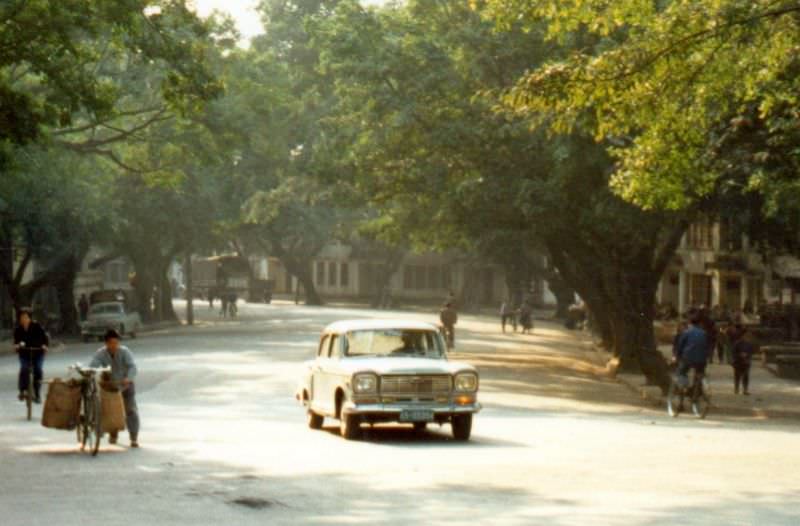
The bicycle wasn’t just a tool of mass transit — it was a personal statement of independence and mobility. A lone cyclist navigating Guangzhou’s streets in 1978 was a common, unremarkable sight, yet these images now serve as a record of a city before motorization reshaped its character entirely.
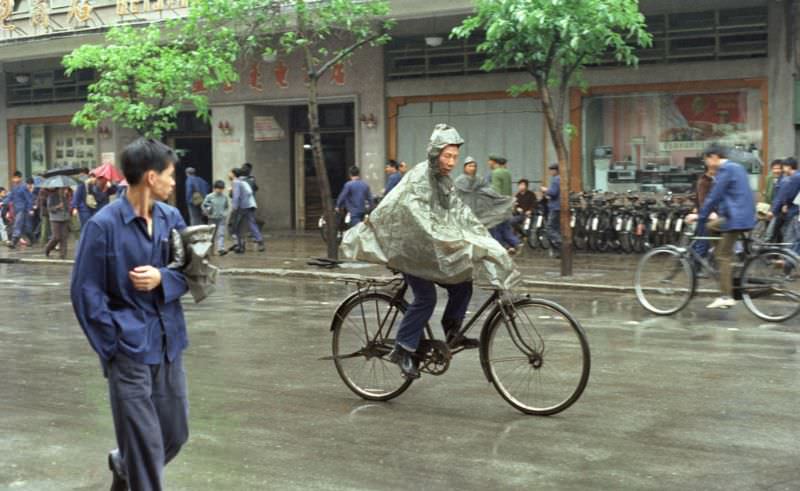
In December 1978, the Democracy Wall movement reached Guangzhou. Citizens posted large handwritten posters — known as big-character posters or dazibao — on public walls, calling for political reform, greater freedoms, and accountability. The movement was tolerated briefly before authorities moved to suppress it nationwide in 1979.
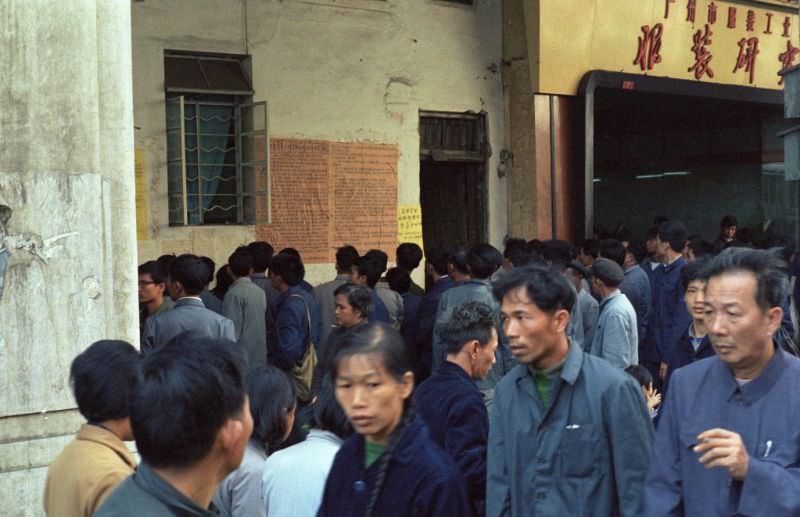
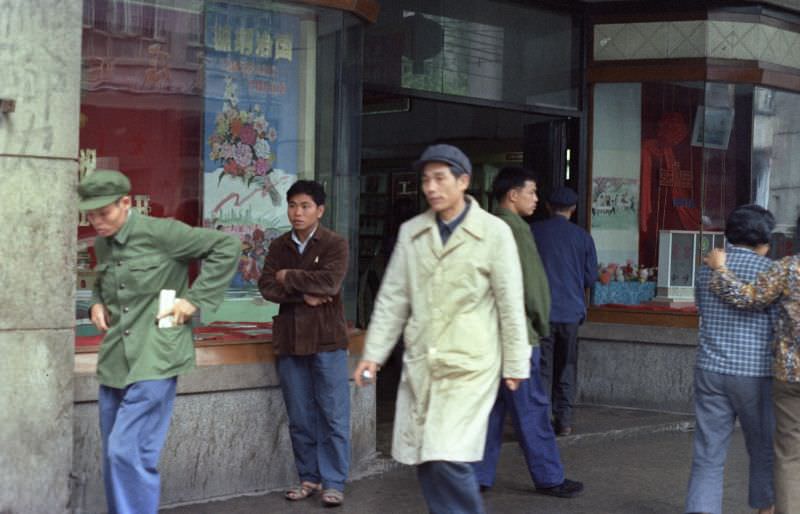
Despite tight controls on information, bookstores operated throughout the city. State-run shops stocked approved literature, political texts, and educational materials. In 1978, as China began reassessing its direction after the Cultural Revolution, bookstores became important places where people sought knowledge about a rapidly changing world.
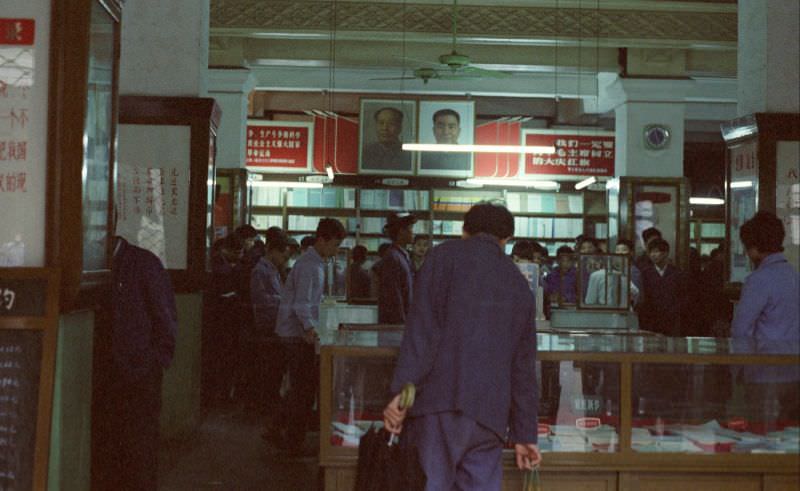
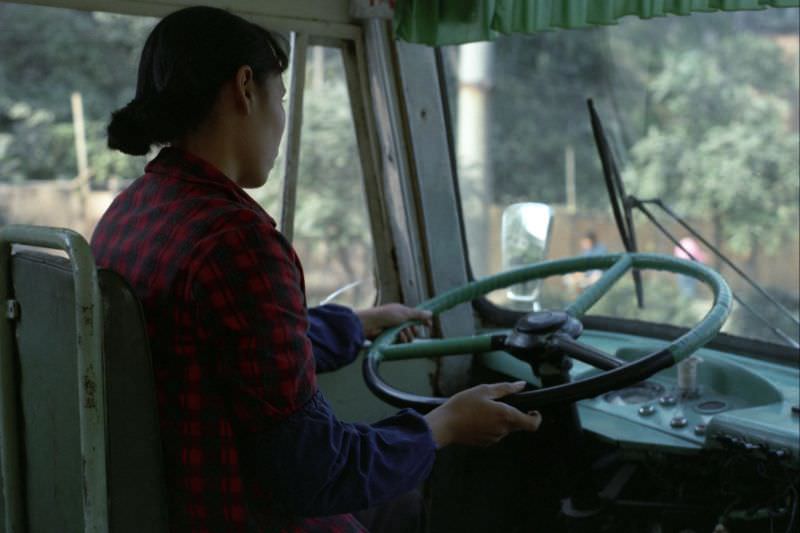
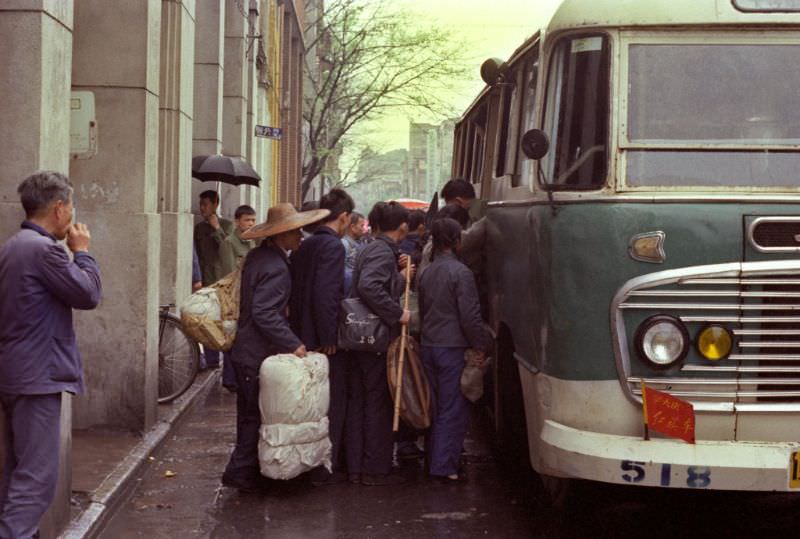
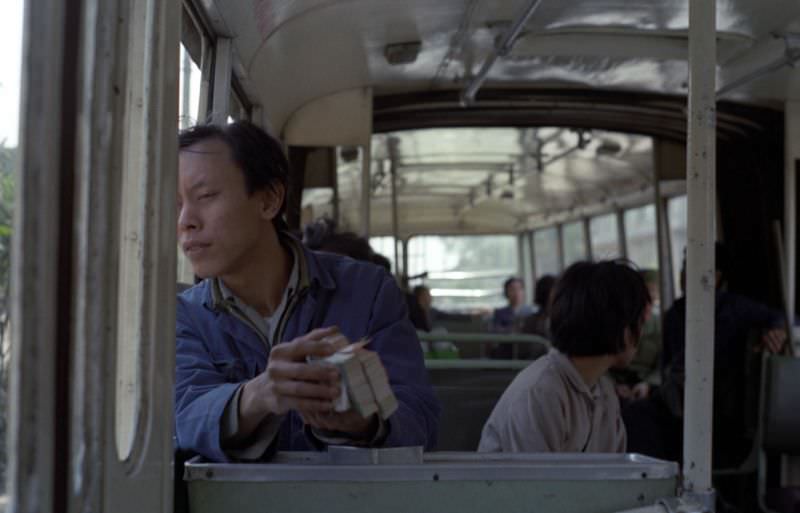
Public bus service was the backbone of Guangzhou’s transit system. Stops across the city filled with workers and students at rush hours, and buses were routinely packed. The state managed the entire network, with bus drivers and ticket collectors serving as a distinct occupational class within the city’s workforce.
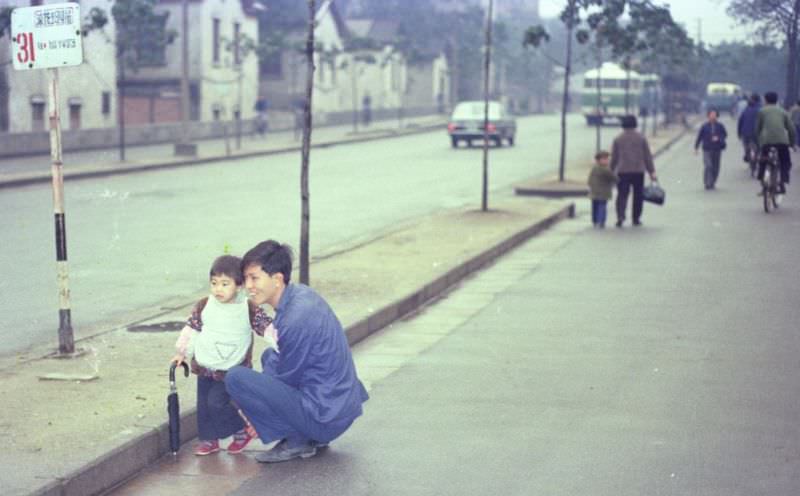
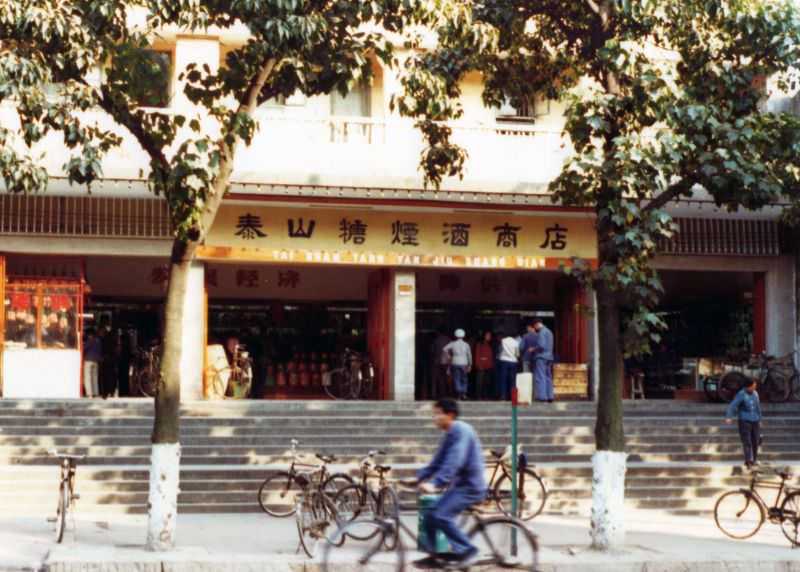
Small retail shops selling everyday goods were spread throughout Guangzhou’s neighborhoods. Stores combining candy, tobacco, and liquor under one roof were common — practical outlets where residents could handle several errands in one stop. These shops were tightly regulated, operating within a system that was still largely state-controlled but beginning to show early signs of private commerce.
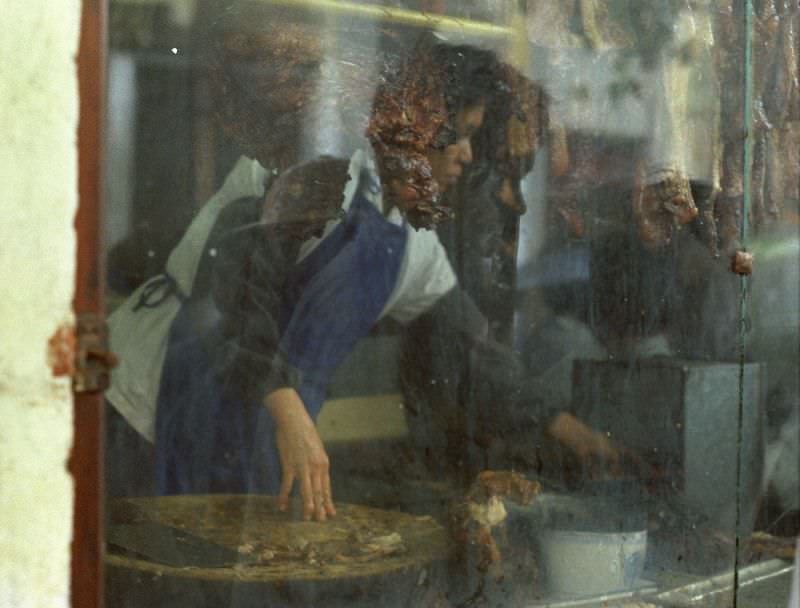
Cantonese roasted meat — char siu pork, roast duck, and soy sauce chicken — was a staple of the local food culture. Shops specializing in these preparations hung their goods in the window, a practice that remains unchanged today. In 1978, these establishments served as both restaurants and takeaway counters for working families.
Shamian Island, a former foreign concession area in the western part of Guangzhou, retained its European architectural character well into the 1970s. The island’s wide tree-lined streets made it a popular spot for leisure. Residents gathered there to play cards, enjoy the shade, and socialize — a striking contrast to the dense urban neighborhoods nearby.
Live animals were a normal part of the food supply chain in Guangzhou. Chickens roamed alleyways near markets and residential areas before being sold and slaughtered. This proximity to livestock was an everyday reality in both urban and suburban neighborhoods, where the line between food production and living space remained blurred.
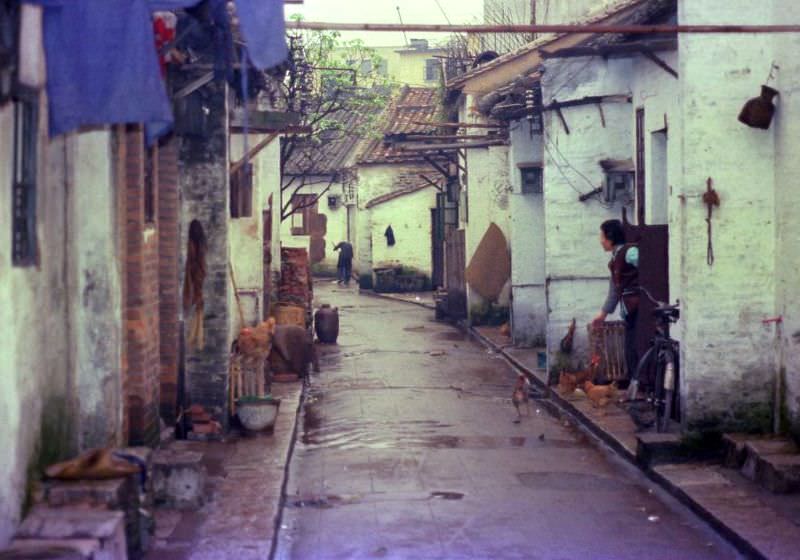
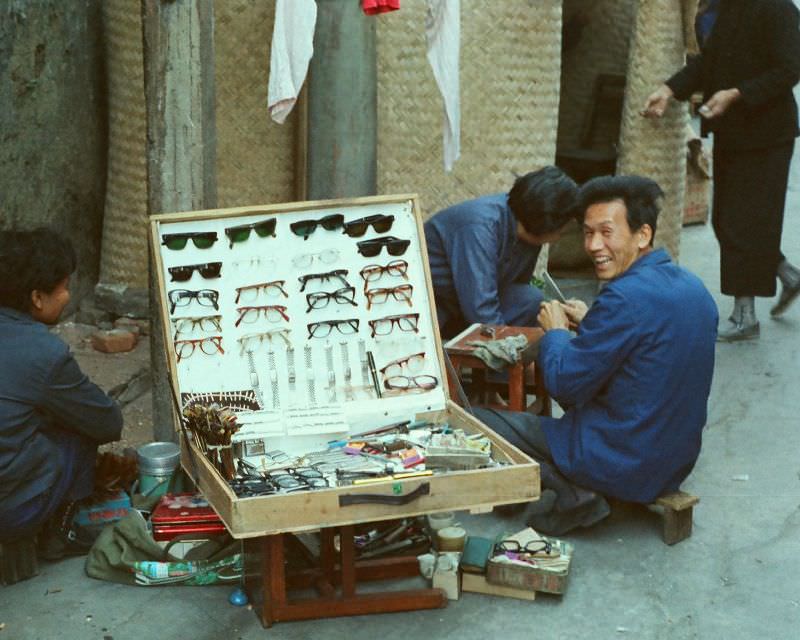
As 1978 brought early signals of China’s economic reform, small-scale private commercial activity began to reappear in Guangzhou. Vendors set up informal stalls and conducted transactions outside the state supply system — a tentative return of market activity that would later expand dramatically under Deng Xiaoping’s policies.
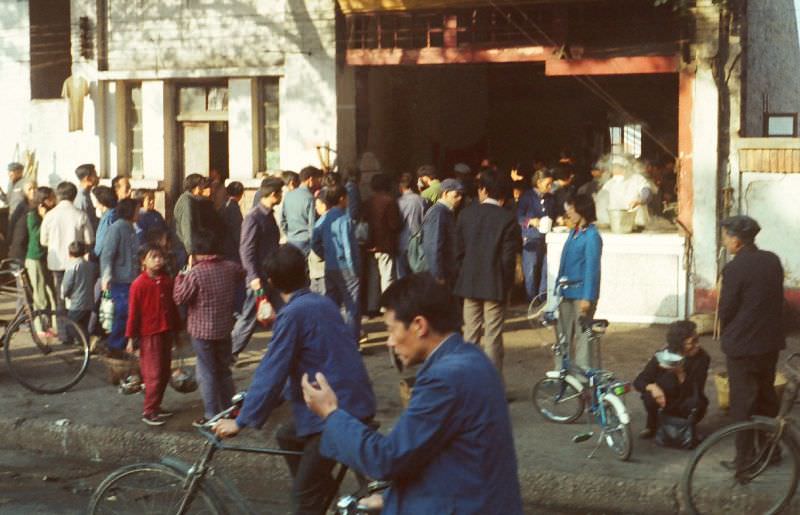
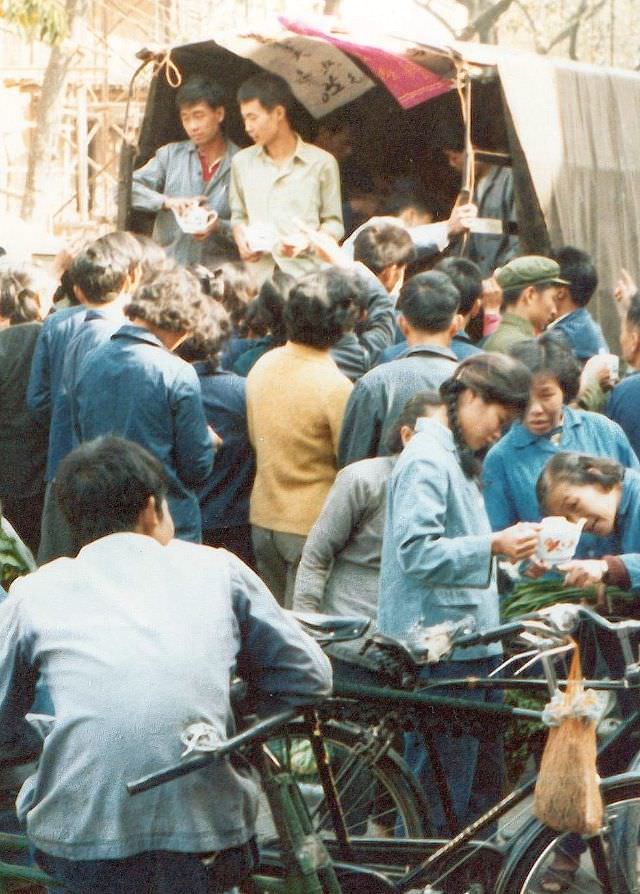
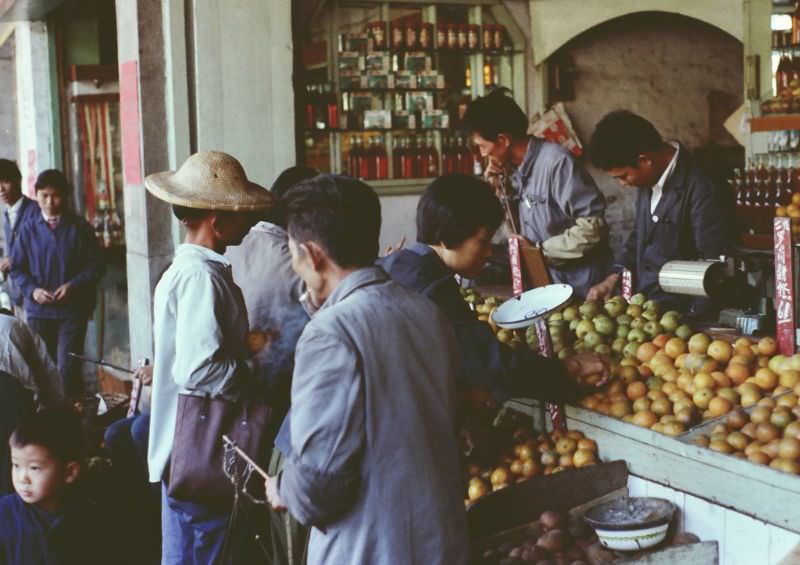
Fruit markets brought color and noise to Guangzhou’s streets. Seasonal produce — lychees, longans, bananas, and citrus — was sold from baskets and wooden crates. Vendors and customers haggled in rapid Cantonese, a language known for its speed and tonal complexity.
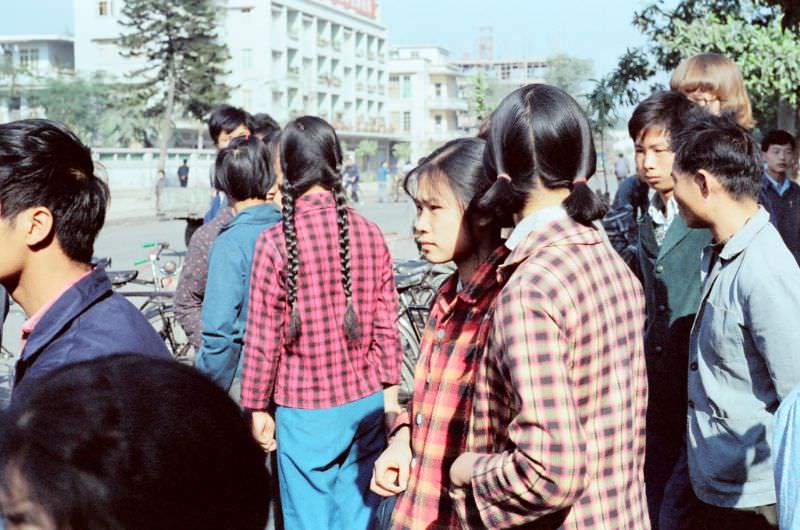
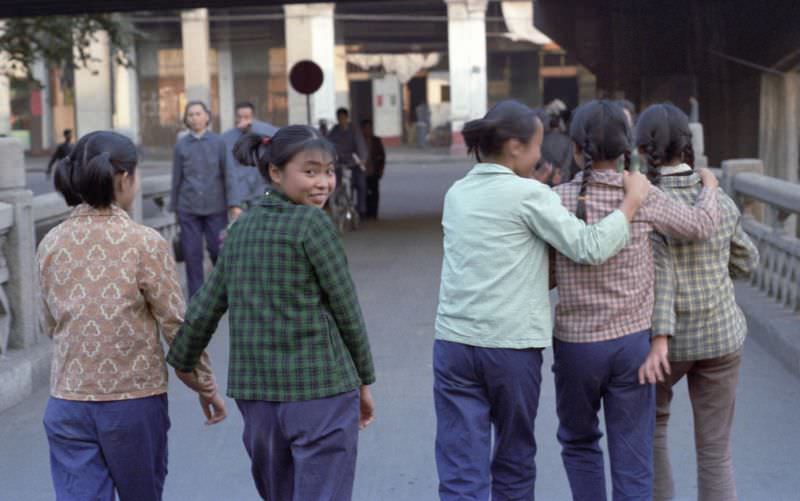
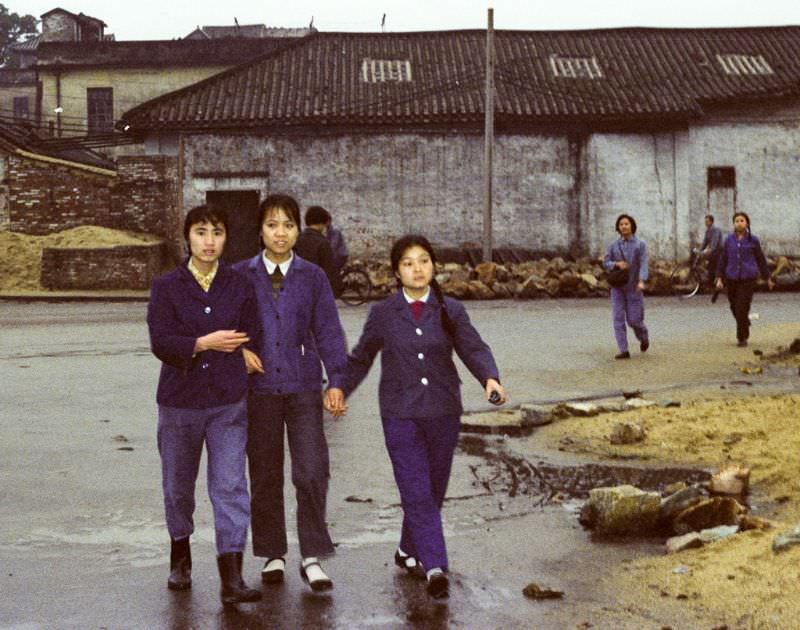
Fashion in 1970s Guangzhou was modest and largely uniform. The Mao suit remained common, especially among older residents and officials. But younger women in Guangzhou — closer to Hong Kong than any other major Chinese city — began to show subtle signs of change in how they dressed. The influence of styles filtering across the border was visible, even if restrained.
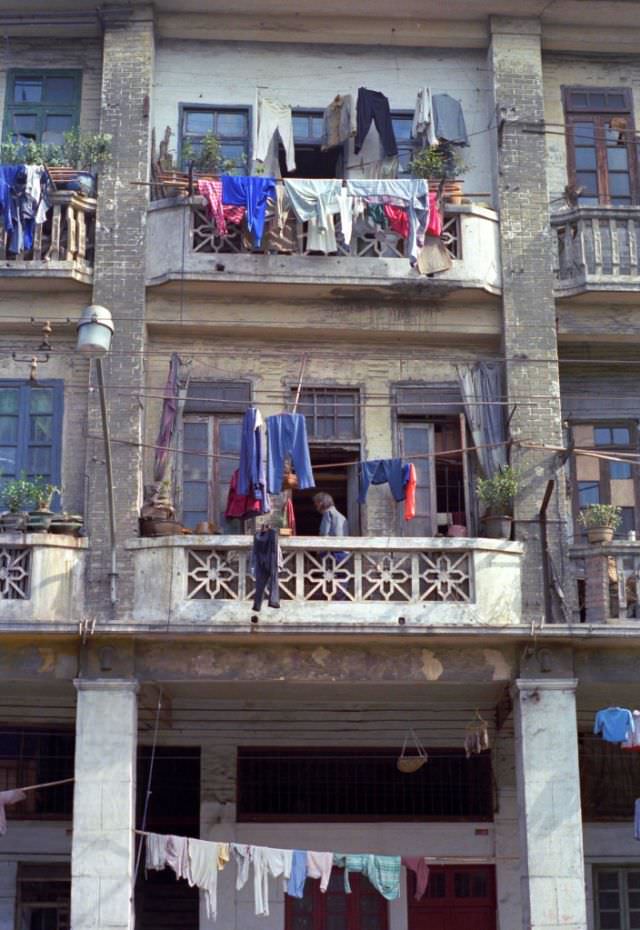
Urban housing in Guangzhou ranged from older pre-revolution buildings to newer blocks constructed in the 1960s and early 1970s. Apartments were small by most standards, shared by extended families, and often lacked the basic amenities that would be considered standard decades later. Laundry hung from windows and balconies was a universal feature of these buildings.
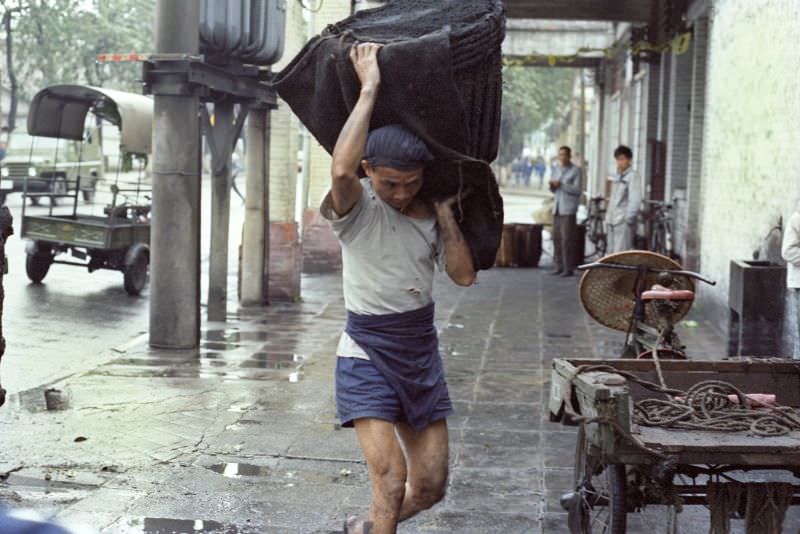
Manual labor underpinned Guangzhou’s economy throughout the 1970s. Construction workers, porters, factory hands, and street laborers formed the largest segment of the city’s workforce. These workers operated with few protections, long hours, and wages set by the state.
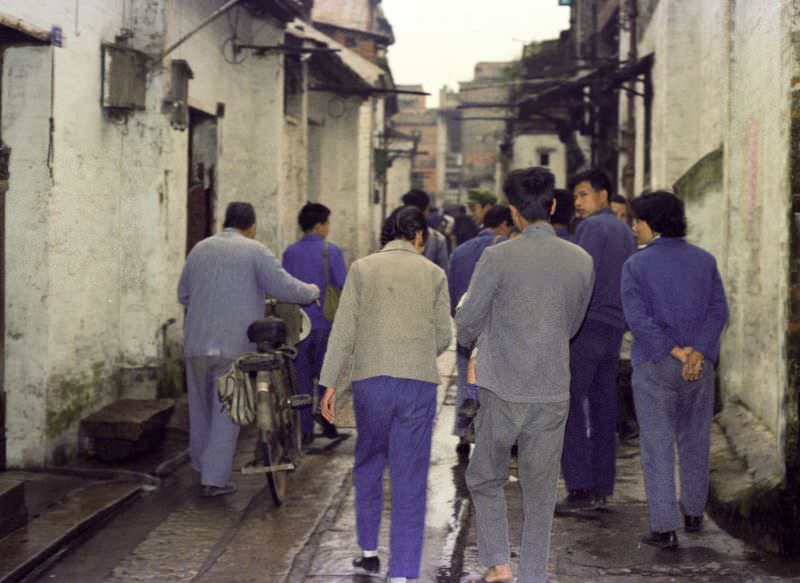
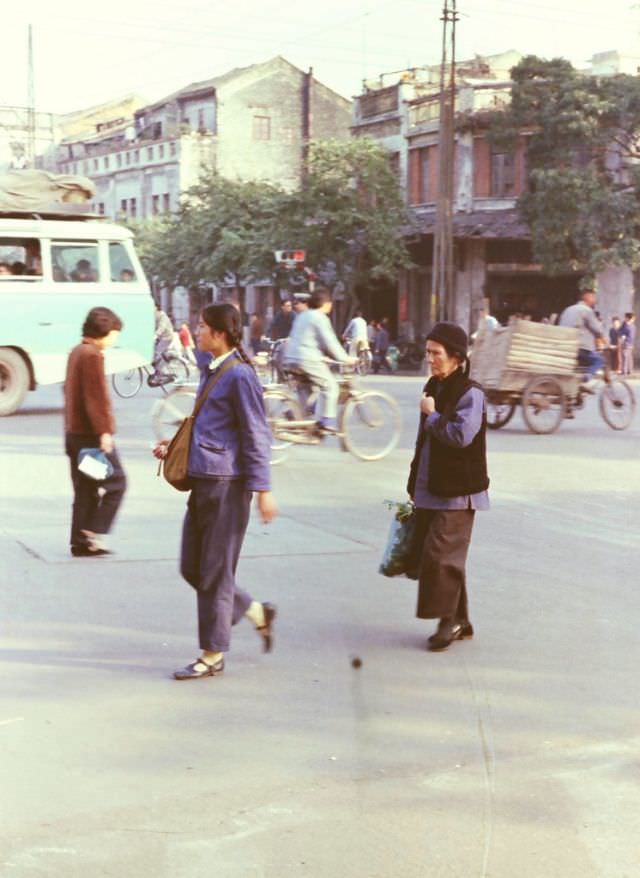
Guangzhou’s streets in 1978 captured a city in transition — narrow lanes crowded with pedestrians, cyclists, and occasional motor vehicles; storefronts with hand-painted signs; and residents going about routines shaped by both longstanding Cantonese custom and the demands of a socialist state.
Open-air markets sold a wide range of goods, from household tools to clothing to food. These markets operated as distribution points in a state-managed supply system, but informal trading also took place alongside official commerce. The market was where residents solved practical problems — finding spare parts, supplementing food rations, and exchanging goods with neighbors.
The Pearl River was inseparable from Guangzhou’s identity. Fishermen, ferry operators, and cargo workers depended on it daily. The river also defined the city’s geography, with key districts, bridges, and the historic waterfront all organized around its banks.
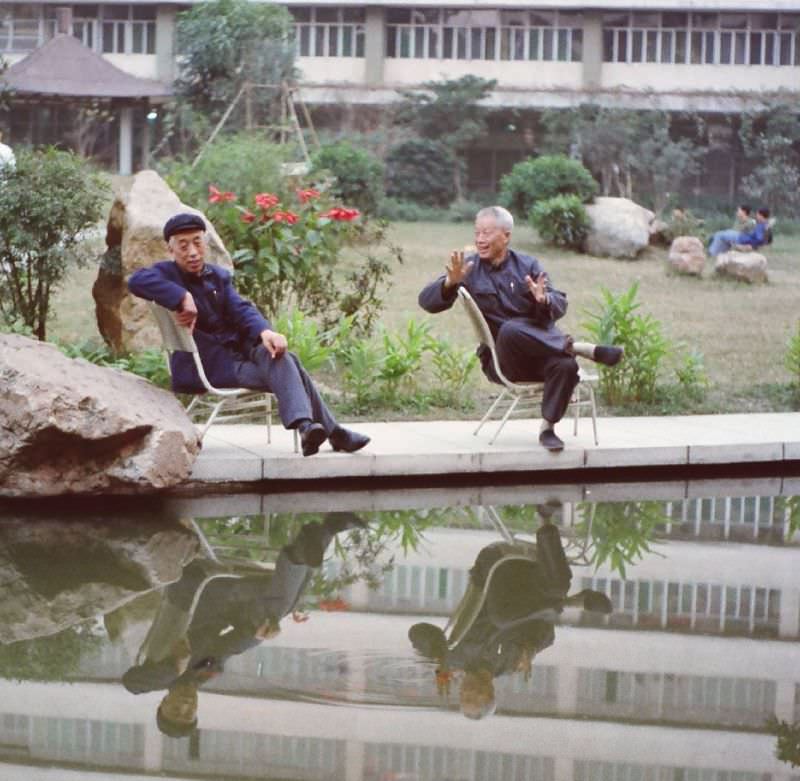
The Dongfang Hotel was one of Guangzhou’s premier hotels during this period, hosting foreign delegations, trade visitors, and dignitaries. Its swimming pool was a notable luxury, a sharp contrast to the austere living standards most residents experienced. The hotel symbolized Guangzhou’s role as a carefully managed interface between China and the outside world.
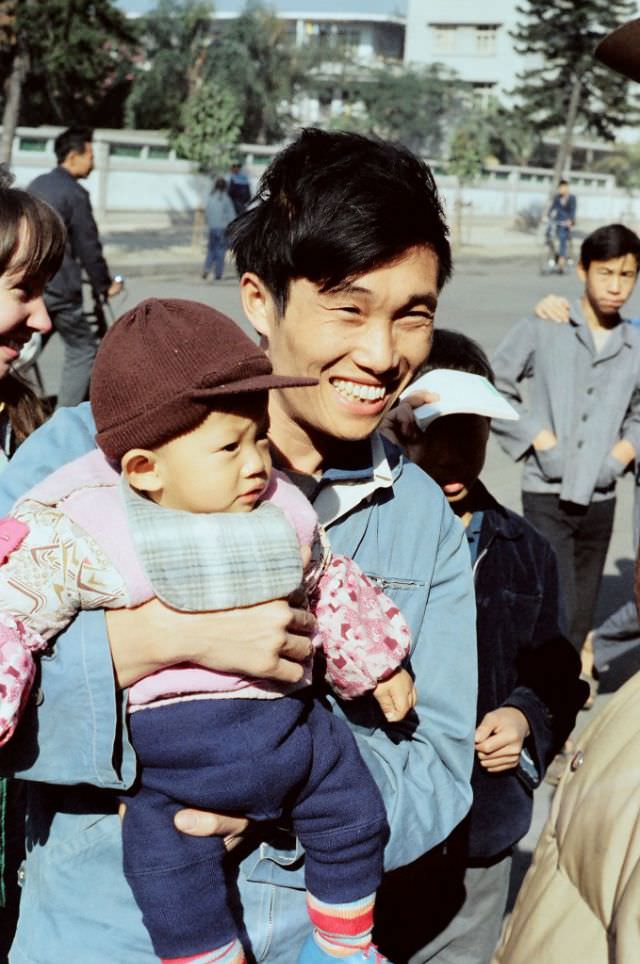
Family life in 1970s Guangzhou revolved around tightly knit households navigating shared living spaces and limited resources. A father’s pride in his child was a simple, universal moment — unchanged by politics or policy — captured plainly in the everyday life of the city.
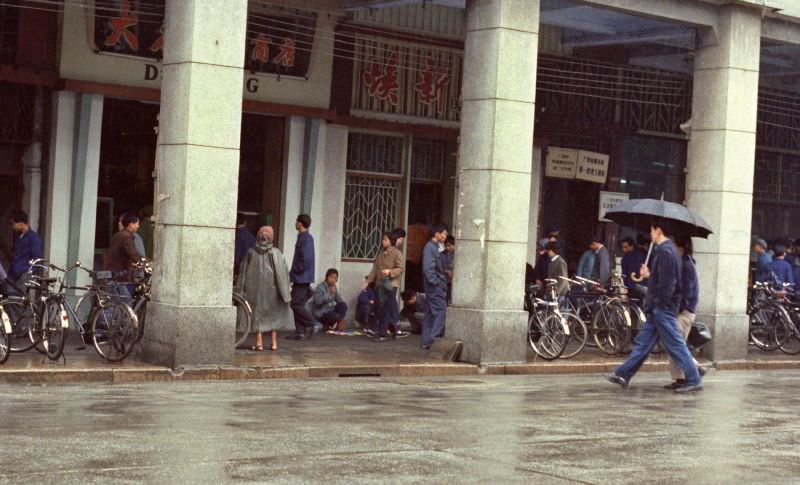
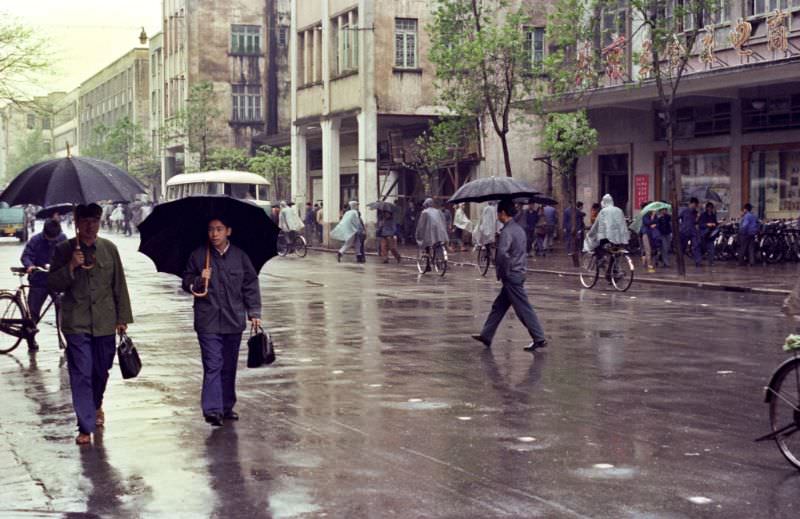
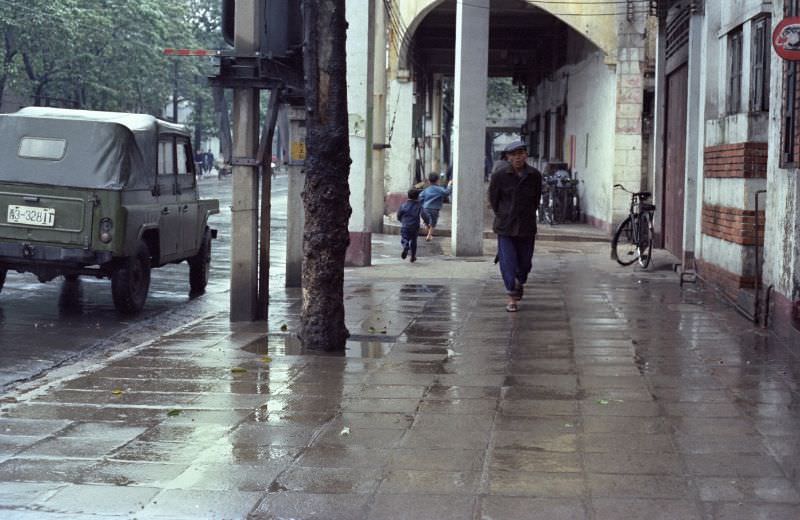
Guangzhou’s subtropical climate brought heavy rain for much of the year. Residents moved through wet streets under umbrellas or improvised cover, navigating flooded lanes and slick pavement. Rainy days did little to slow the city’s pace — markets stayed open, bicycles kept moving, and street vendors remained at their posts.
Newspaper reading was a social act in Guangzhou. State papers such as the Nanfang Daily and People’s Daily were the primary sources of news, and residents read them on benches, in teahouses, and on street corners. In late 1978, as China’s political direction shifted following the death of Mao, news took on added urgency.
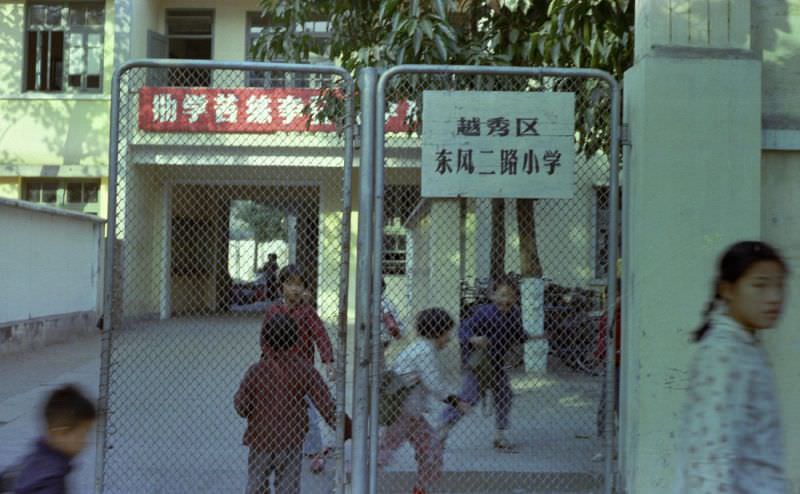
Schools in Guangzhou operated on a structured national curriculum. Children attended classes six days a week in buildings that were often spartan in their facilities. School entrances were marked with political slogans and banners, a visible reminder of the ideological framework that shaped education during this period.
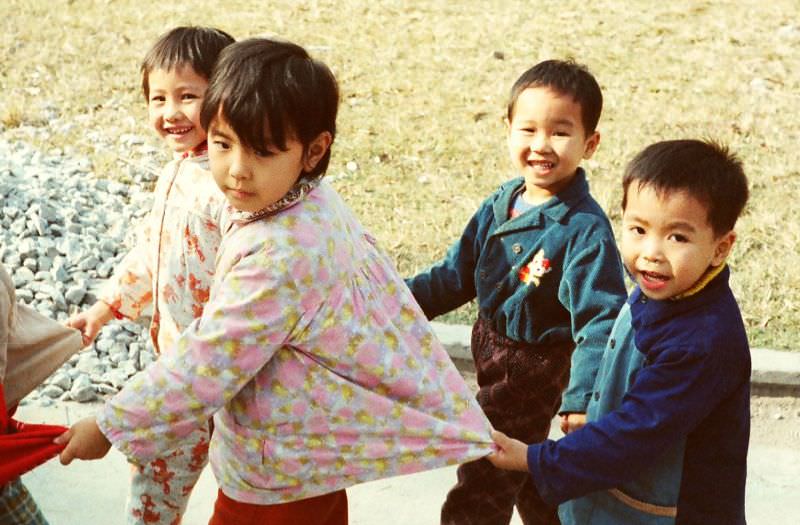
Shamian Island’s school yards offered a rare open space within the dense urban fabric. Children played within the walls of former foreign concession buildings, a setting that carried layers of history — colonial occupation, liberation, and now the routines of socialist-era childhood. The island’s European architecture served as a silent backdrop to daily school life.
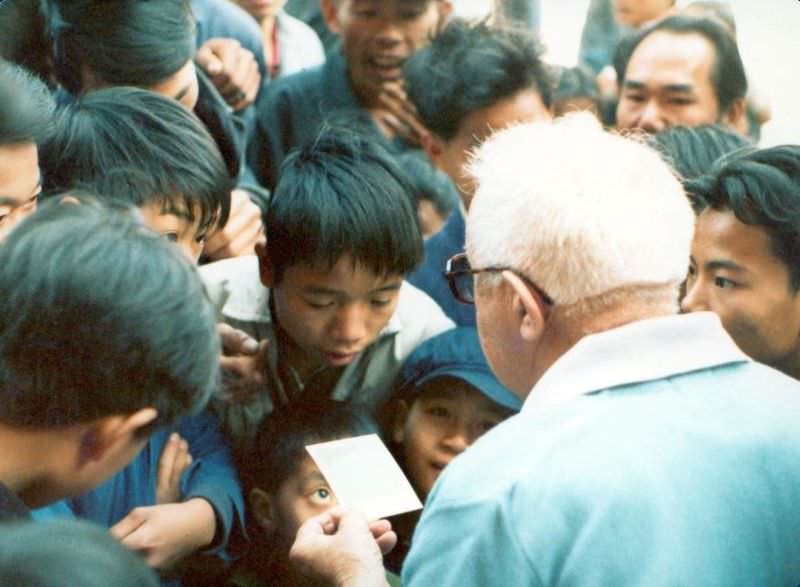
The Polaroid camera was a novelty in China in 1978. Foreign visitors occasionally brought them, and the instant development of a photograph was a genuine source of amazement for many people encountering the technology for the first time. Being handed a photo of yourself seconds after it was taken was a rare and memorable experience in a country where personal photography was uncommon.
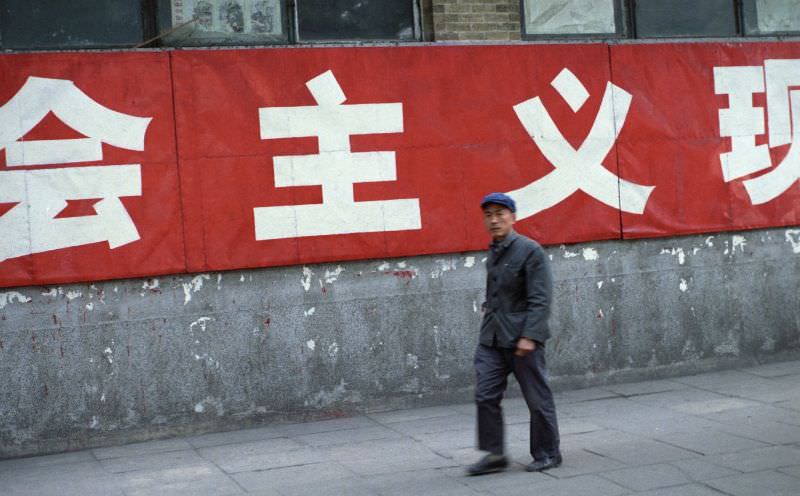
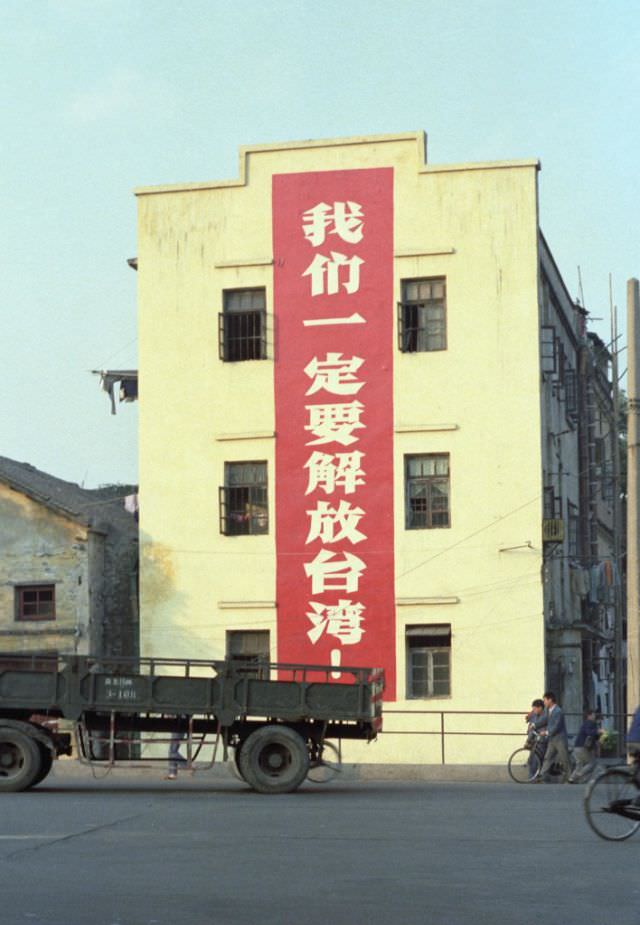
Political slogans covered walls, buildings, and public spaces throughout Guangzhou. In 1978, the official messaging shifted to reflect China’s new direction under Deng Xiaoping — calls for modernizing socialism replaced the more radical slogans of the Cultural Revolution years. These signs were part of the state’s constant effort to frame public thinking around official ideology.
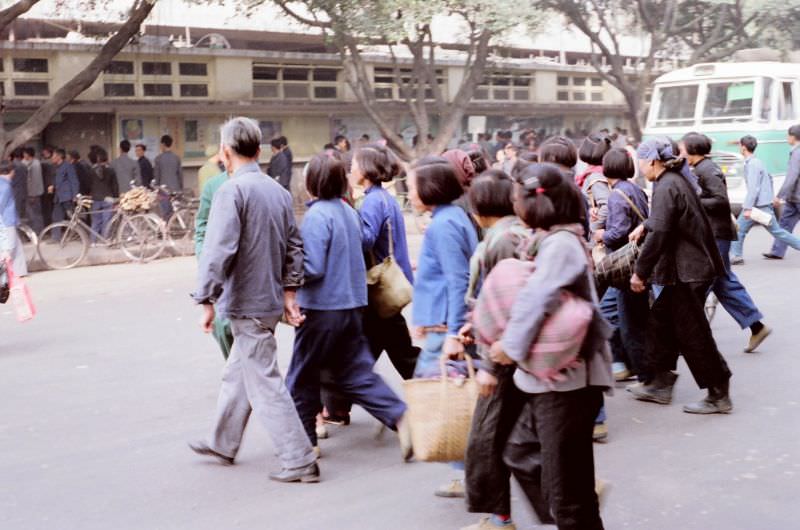
Among the political signage visible across Guangzhou in 1978, messages about Taiwan appeared regularly. The Chinese government’s position on Taiwan reunification was a consistent theme in public propaganda, reinforced through slogans on walls and in official media. These signs were a standard fixture of the political landscape that residents passed every day without necessarily stopping to read them.
On Guangzhou’s busy buses, ticket collectors occupied a dedicated role. Seated near the door, they sold tickets, called out stops, and managed boarding — a system that kept the high-volume routes moving efficiently. It was steady, unglamorous work that thousands of city residents depended on every day.
New residential blocks were built across Guangzhou throughout the 1970s to address a serious housing shortage. These units were assigned by work units, not purchased on a market. Families had little say in where they lived, and the buildings themselves were built for function rather than comfort — concrete structures with minimal ornamentation and small floor plans.
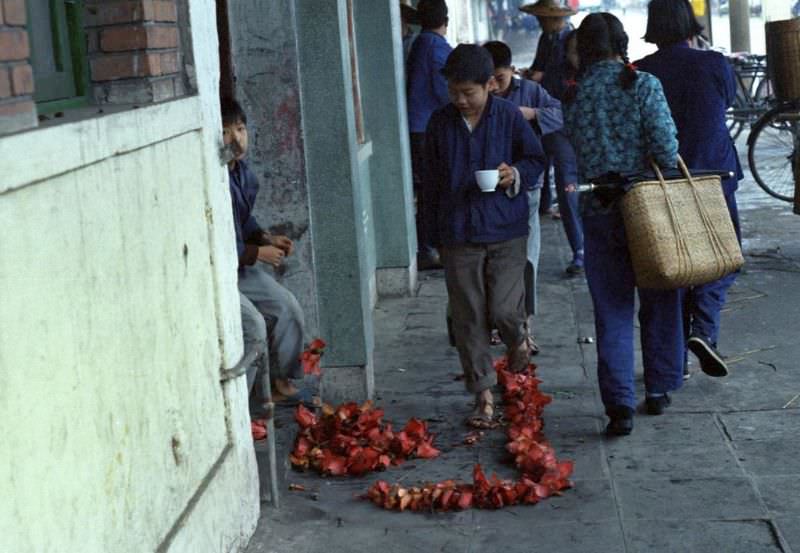
Street selling by children and teenagers was a visible feature of Guangzhou’s informal economy, particularly as economic reform began to take hold in 1978. Young vendors sold small items — snacks, trinkets, simple goods — at the edges of markets and along busy pedestrian routes. It was an early sign of the commercial energy that would transform the city in the decades ahead.





Those were great. Thank you for sharing!
I too thank you for sharing.
Much of the city still looked the same well into the early nineties, and there are still plenty of inner city villages where similar scenes still exist. The back streets of Shi Pai still feel like the original walled city even today…..
It would have been nice to have more details on the specific locations. Most places I recognised, but there were a few that are still nagging at me…
thanks again.
Cool pics!
I am thinking, on the one had, wow, Guangzhou has changed a lot (to put it mildly), but on the other, (apart from the clothes, bikes, and vehicles), large parts of China still look pretty similar to this.
What’s with the bricks on the head? Never seen that before.
Wish every newbie here had to look at #65 before posting “Xi is preparing to invade Taiwan soon” for the 867th time
These are great. Thanks for sharing!
Great photos. The main train station still looked like that a few years ago. I believe it’s been fully updated in the last few years though.
Why do the card players have bricks on their heads?
I still remember when the Dongfang was by far the best place in town! Is it still even open these days?
I asked my GZ fiancee: those guys put a brick on their head per each game loss (up to 3-4 bricks, depends how strong their neck is lol), means the guy in the middle is playing well 😉
Thank you.
Yep Dongfang Hotel is open and same as before, it’s one of very few places that didn’t change and I love to revisit it… All that area didn’t change much, brings some great memories from my first Canton Fair visits from 2001 up when it was in Liuhua… Big Four back then were Garden Hotel, White Swan, China Hotel and Dongfang… good times.
Do you remember the sky gardens at the DongFang?
Used to take dates up there back in the day.
Who are the top five these days?
Which one was sky gardens? I remember there was ine garden up on the roof (within the tropical garden inside Dongfang), that one is gone but everyone else is there, same pool and tropical garden.
Current top 5? Ah… now it’s the same like in any other big city (Four Seasons, Ritz, Hyatt, etc…). I still prefer old big 4 and their charm so I recommend them to clients visiting fairs lol… Haven’t been to White Swan for many years, hope it aged better than Dongfang… Garden and China seems to be doing ok.
The White Swan was refurbed recently, but is no longer in the best location. Garden district was deliberately sabotaged to enable Zhujiang, but as you say, I too prefer the old school establishments.
Wow… If people stare at foreigners there now, I can’t imagine the fuss it would’ve created back then 😂
My GZ fiancee’s grandma worked as a hostess at early Canton Fairs in 1960’s, at that time it was held in Haizhu (later moved to Liuhua in 1970’s).
Her family have some great stories from GZ past…
Seen these before, but equally amazed every time, such a great pictures 🙂
My GZ fiancee’s grandma worked as a hostess at early Canton Fairs in 1960’s, at that time it was held in Haizhu (later moved to Liuhua in 1970’s).
Her family have some great stories from GZ past…
The main train station building doesn’t look any different, though unfortunately too much street ‘furniture’ on the road outside.