The Gorbals sits on the south bank of the River Clyde in Glasgow, Scotland. For much of the 19th and early 20th centuries, it was one of the most overcrowded urban districts in the entire United Kingdom. Rural migrants flooded into Glasgow looking for work in its booming factories, docks, and ironworks. The Gorbals absorbed wave after wave of newcomers, and by the 1930s the district — which includes the sub-areas of Laurieston and Hutchesontown — held an estimated 90,000 residents. That translated to a population density of roughly 40,000 people per square kilometer, or about 281 people per acre. The numbers alone tell a brutal story, but the photographs taken between the 1940s and the 1960s make the human cost impossible to ignore.
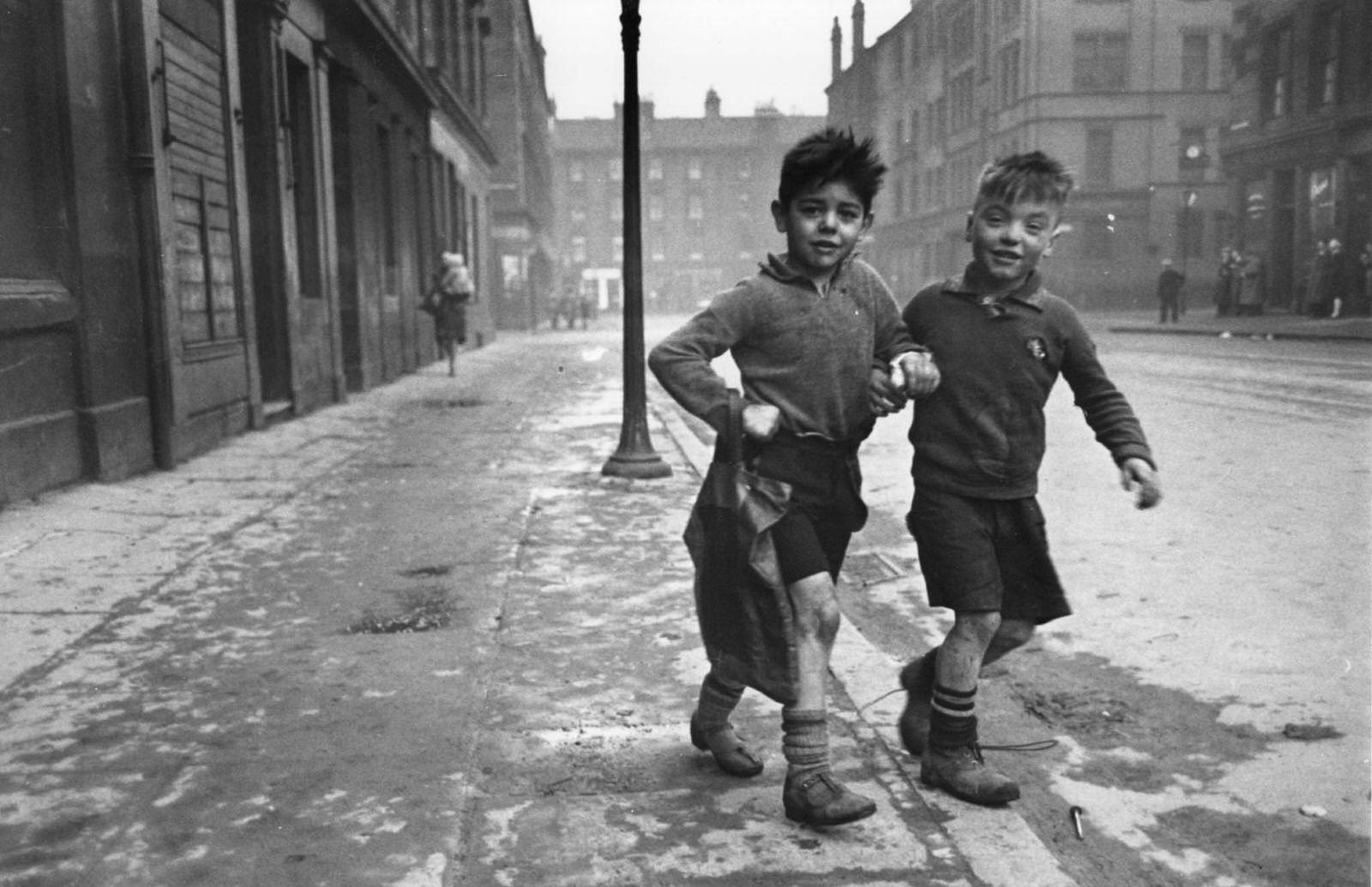
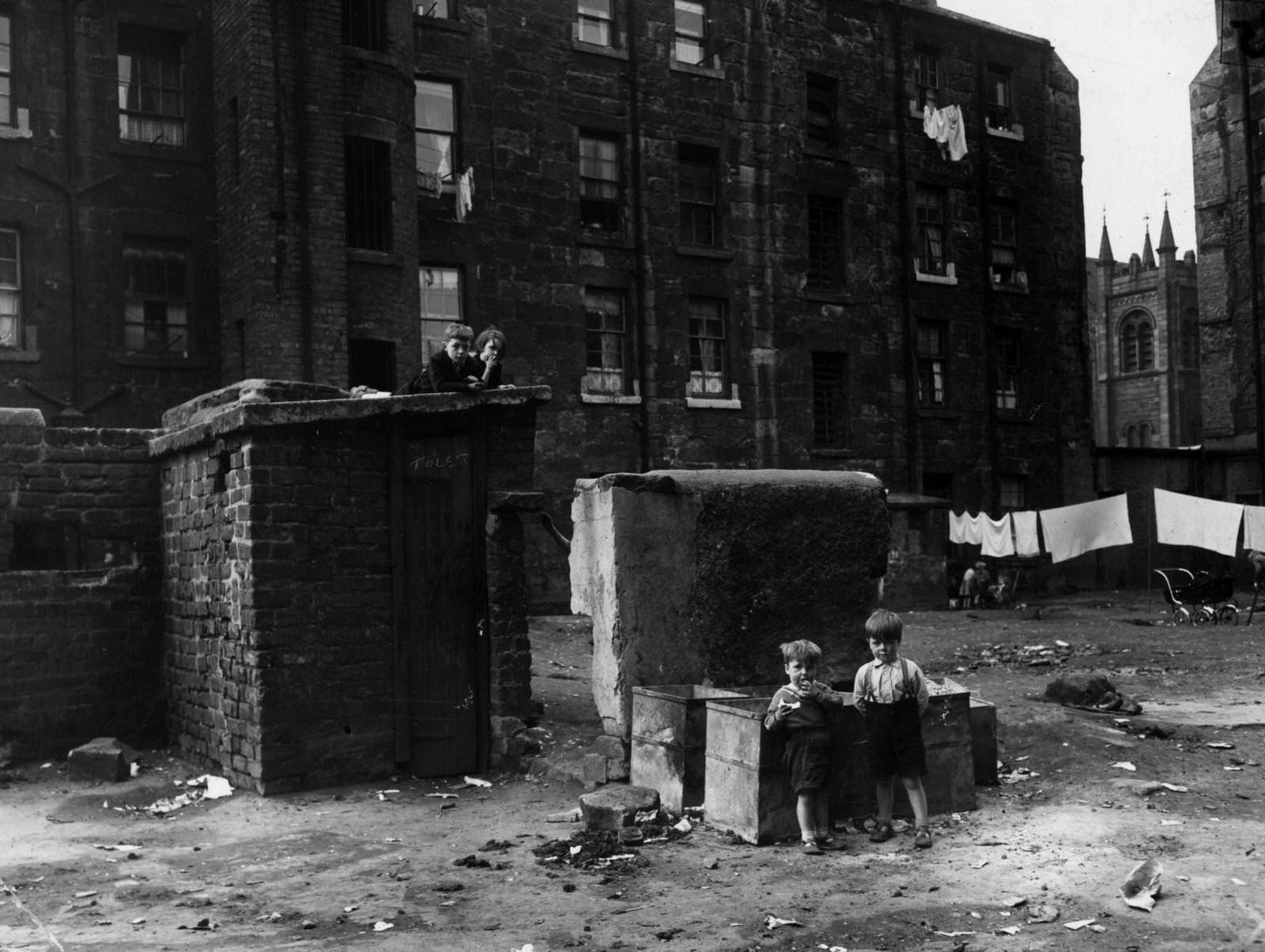
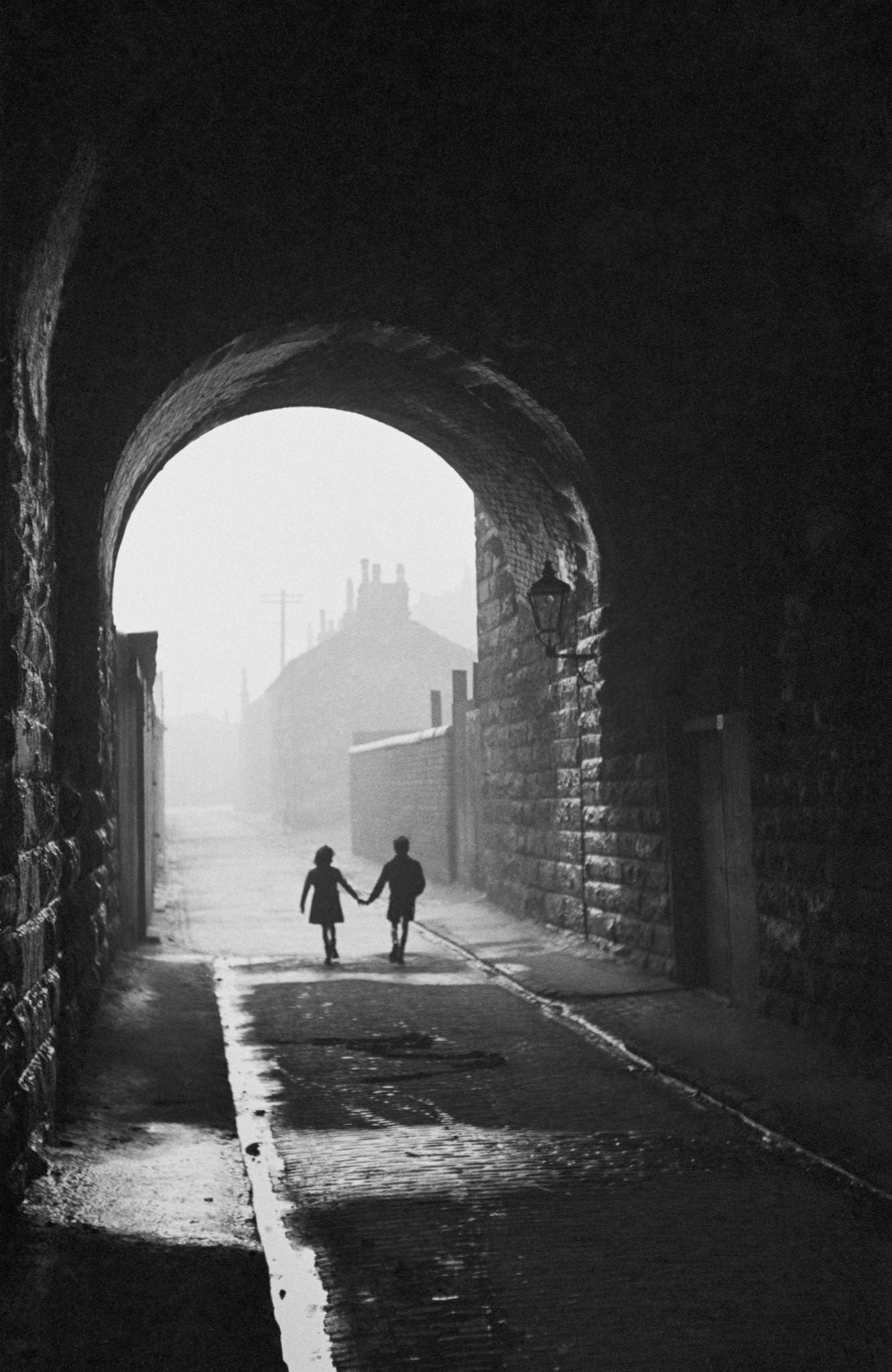
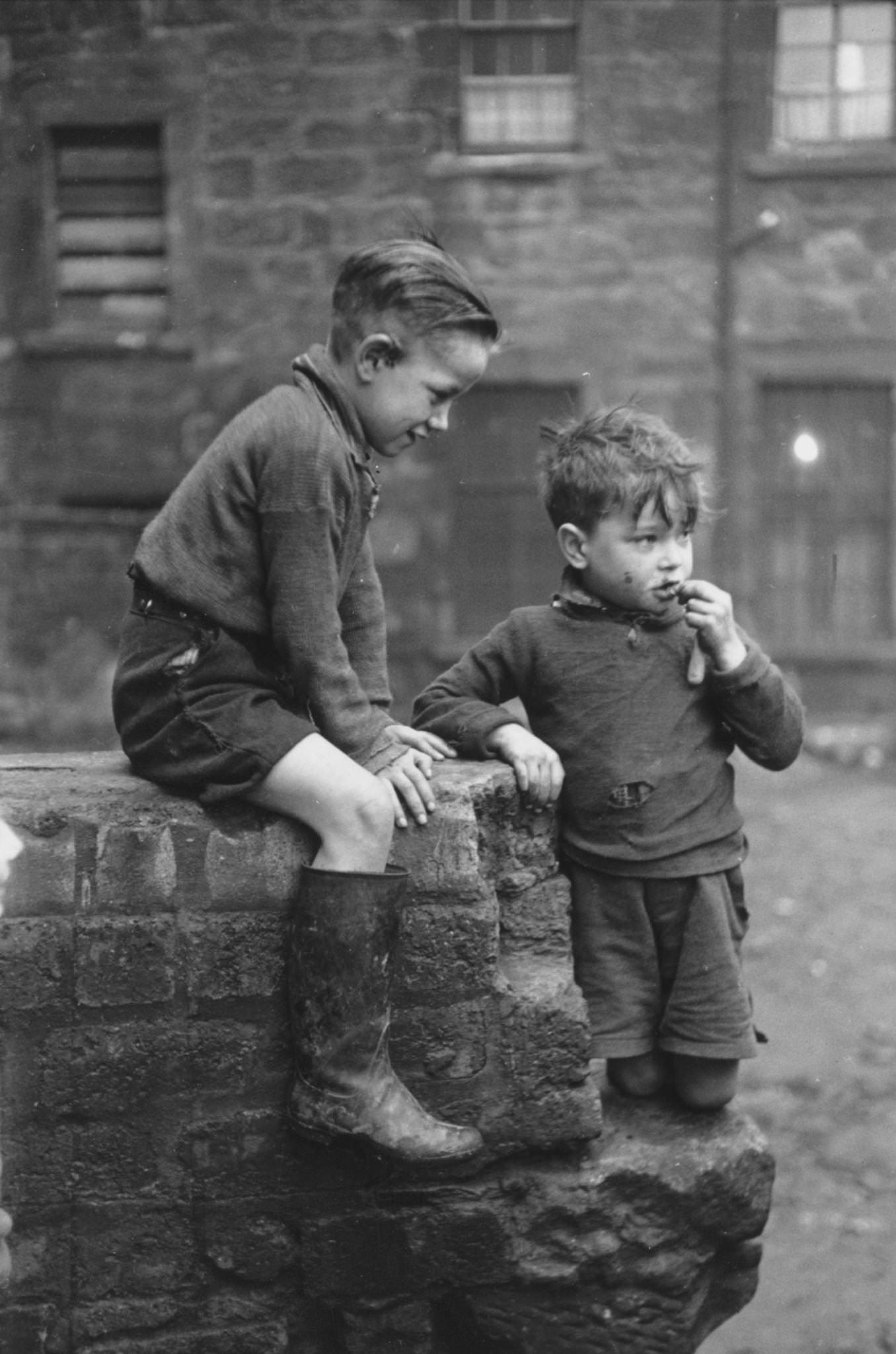
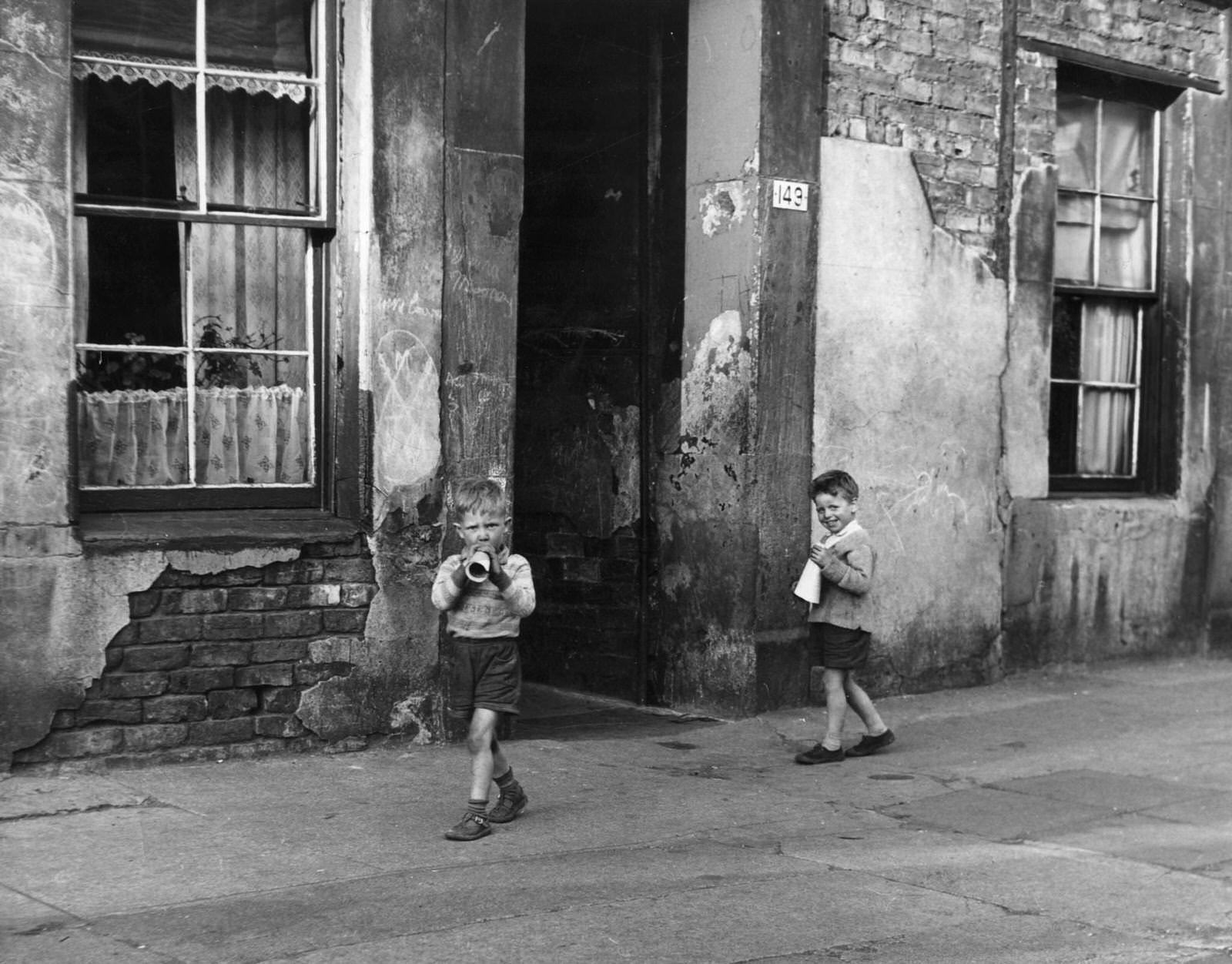
Two boys in the Gorbals area of Glasgow, 1948
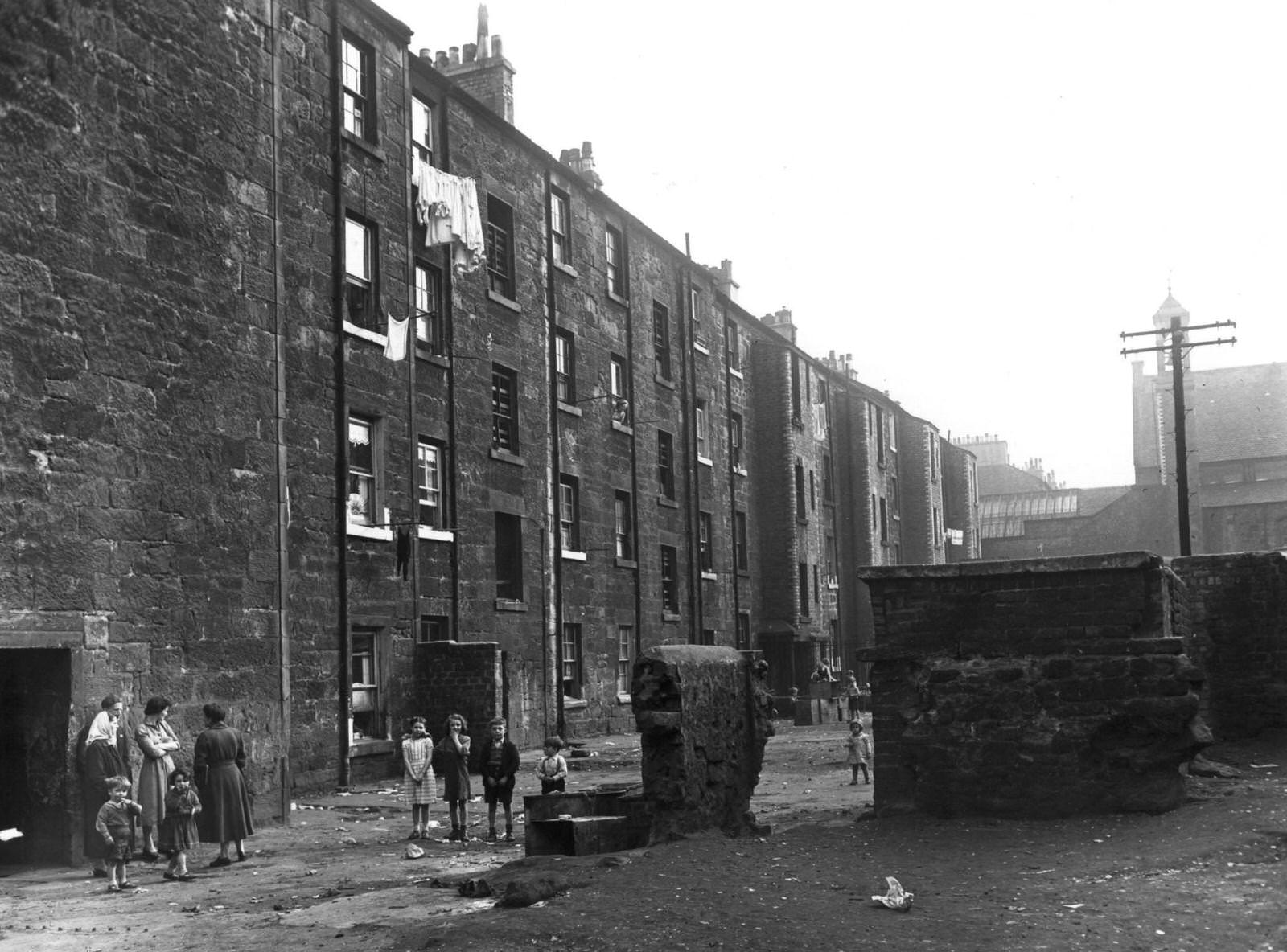
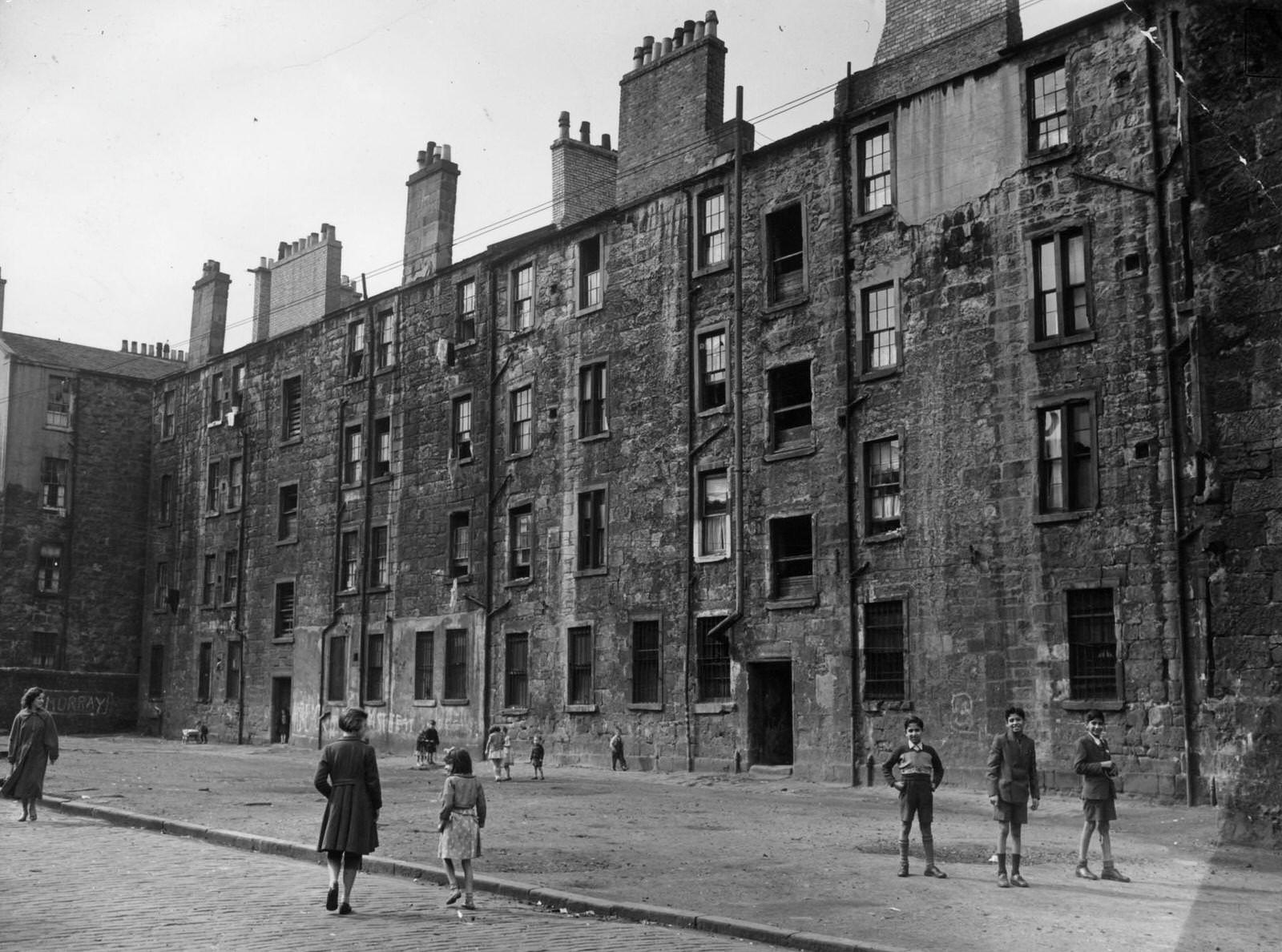
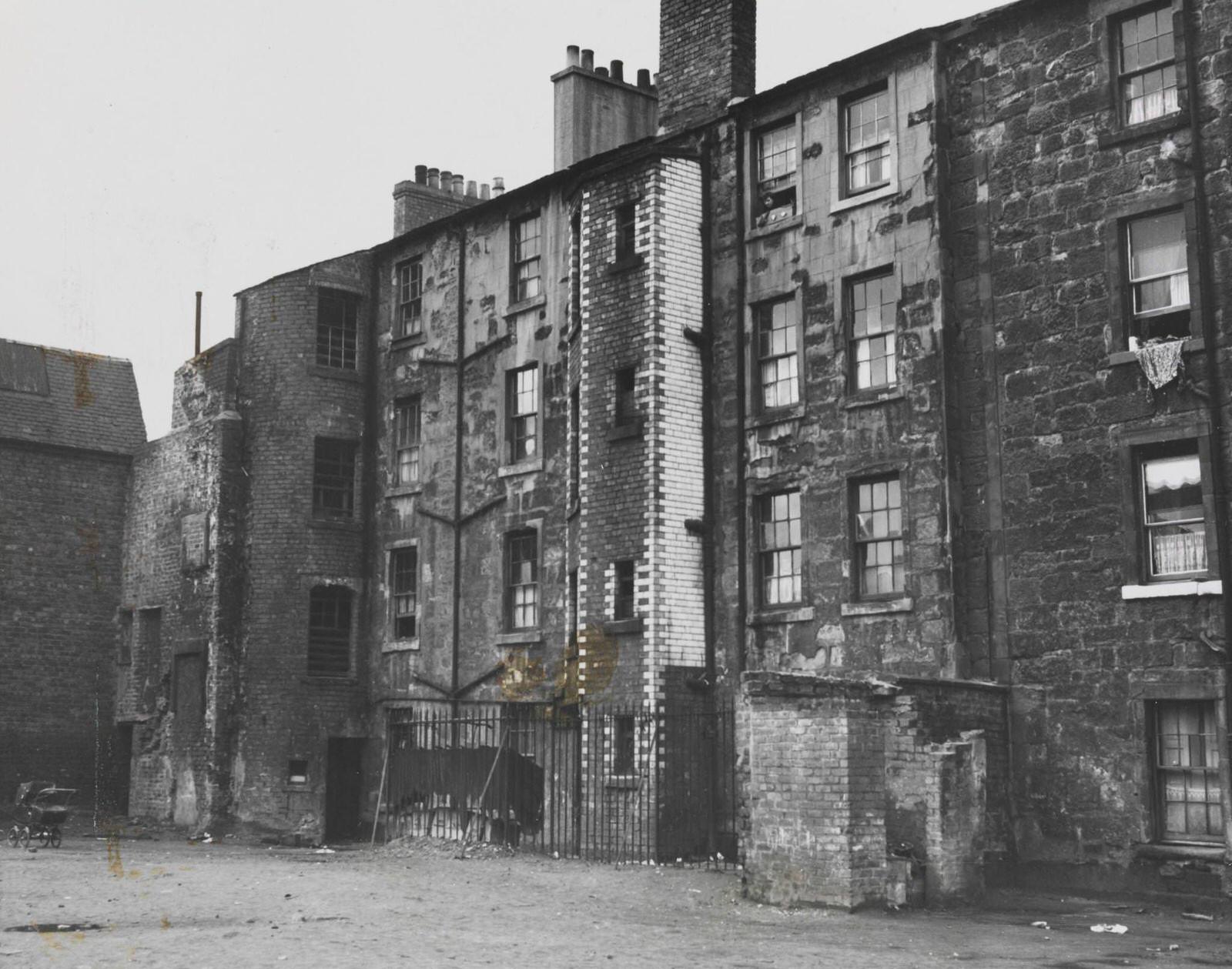
The tenements that packed the Gorbals were not built to last. Thrown up quickly and cheaply in the 1840s to house Glasgow’s expanding industrial workforce, they became dangerously overcrowded almost immediately. By the time photographers turned their lenses on the district in the late 1940s, conditions had barely changed in a century. Up to eight family members shared a single room. Thirty residents shared one toilet. Forty people shared a single cold-water tap. Sewage and sanitation were persistent failures, and crime was a constant backdrop to daily life. Even after 850 tenements were torn down between 1920 and the mid-1950s, the remaining blocks were still packed beyond any reasonable limit.
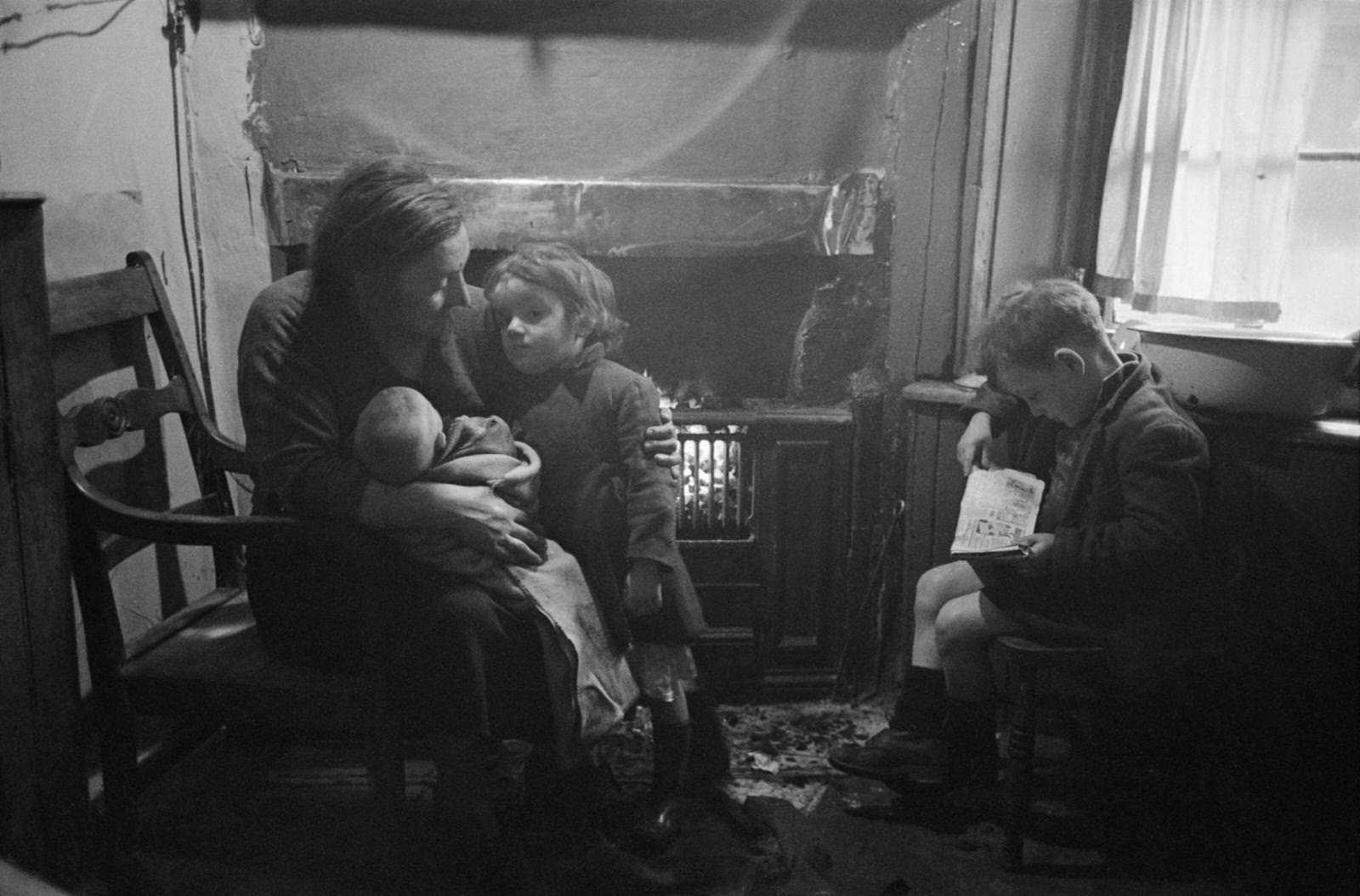
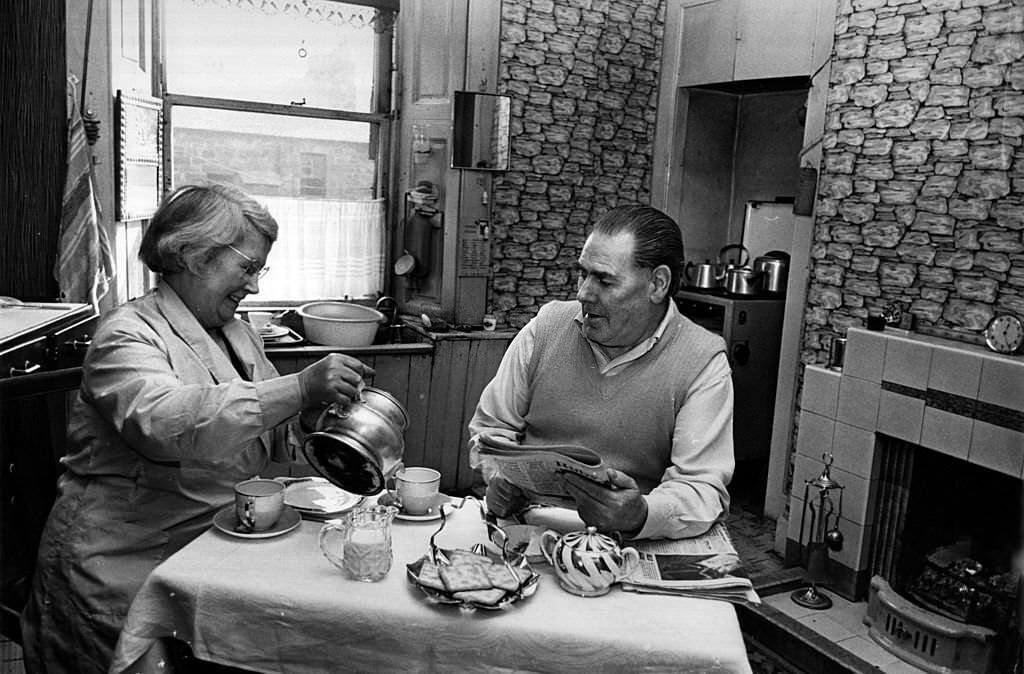
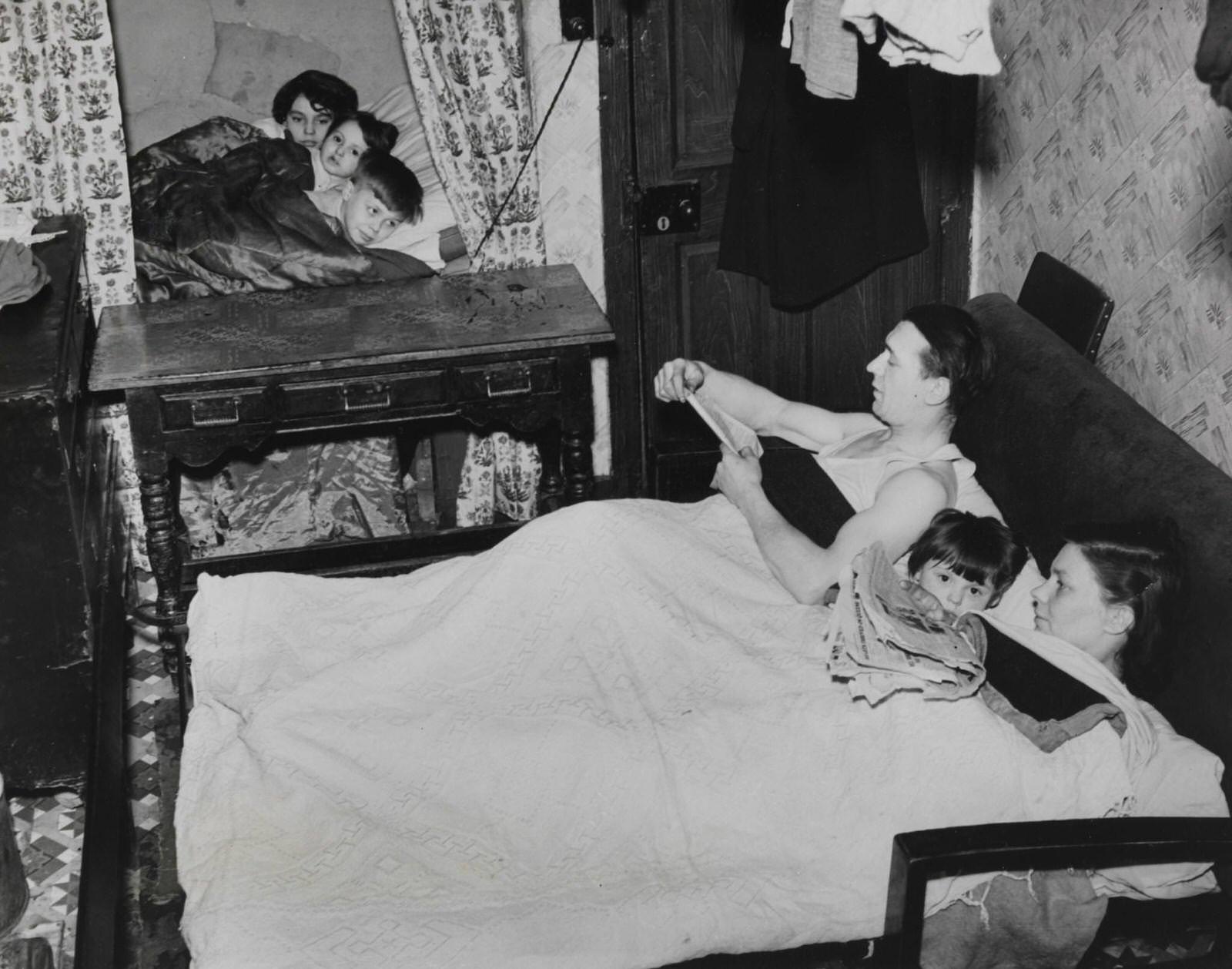
A family at home in the Gorbals area of Glasgow, 1948
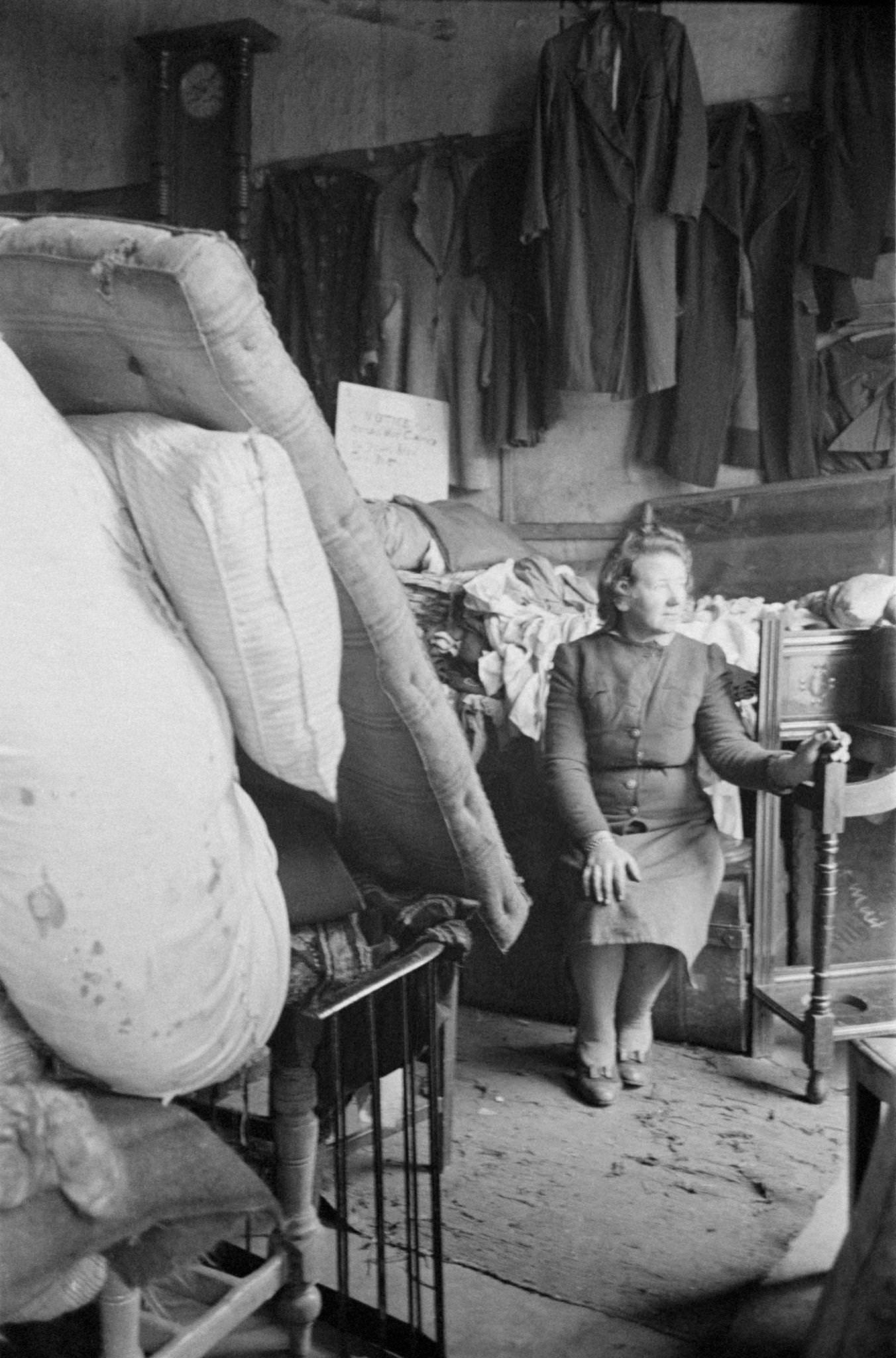
Inside those homes, families made do with almost nothing. Walls were damp, ceilings crumbled, and light was scarce. What furniture existed was often worn down to bare wood. Families dressed their children in hand-me-downs bought from second-hand shops along the district’s narrow streets, and coal deliveries — still arriving by horse-drawn cart as late as 1960 — were a necessity, not a luxury. Pawnbrokers did steady business. Junk shops like the one run by Mrs. Lundy on Bedford Street served a community that could not afford to throw anything away.
Mrs Lundy at her junk shop in Bedford Street in the Gorbals, a slum district of Glasgow, 1948.A second hand clothing store in the Gorbals area of Glasgow, January 1948.
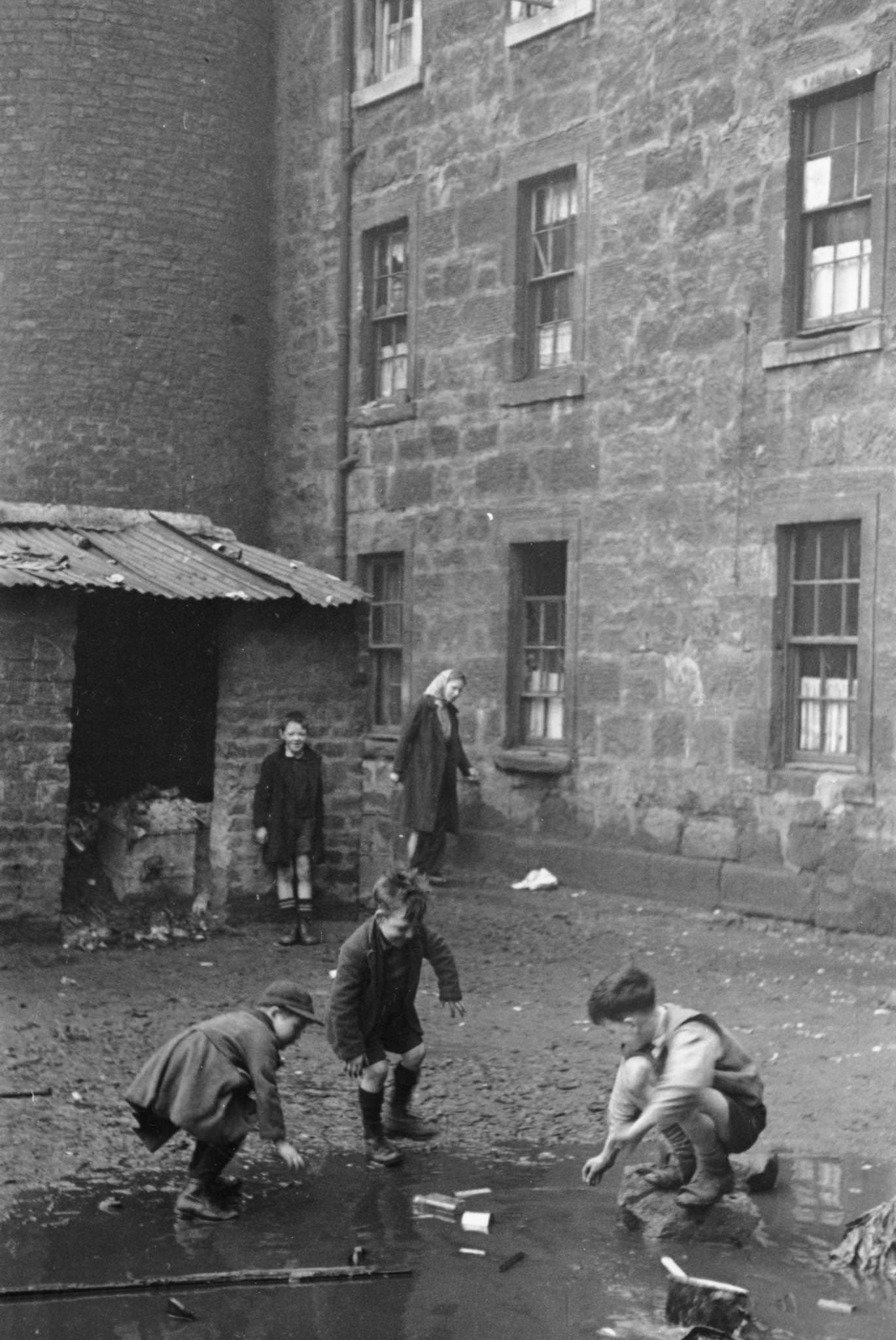
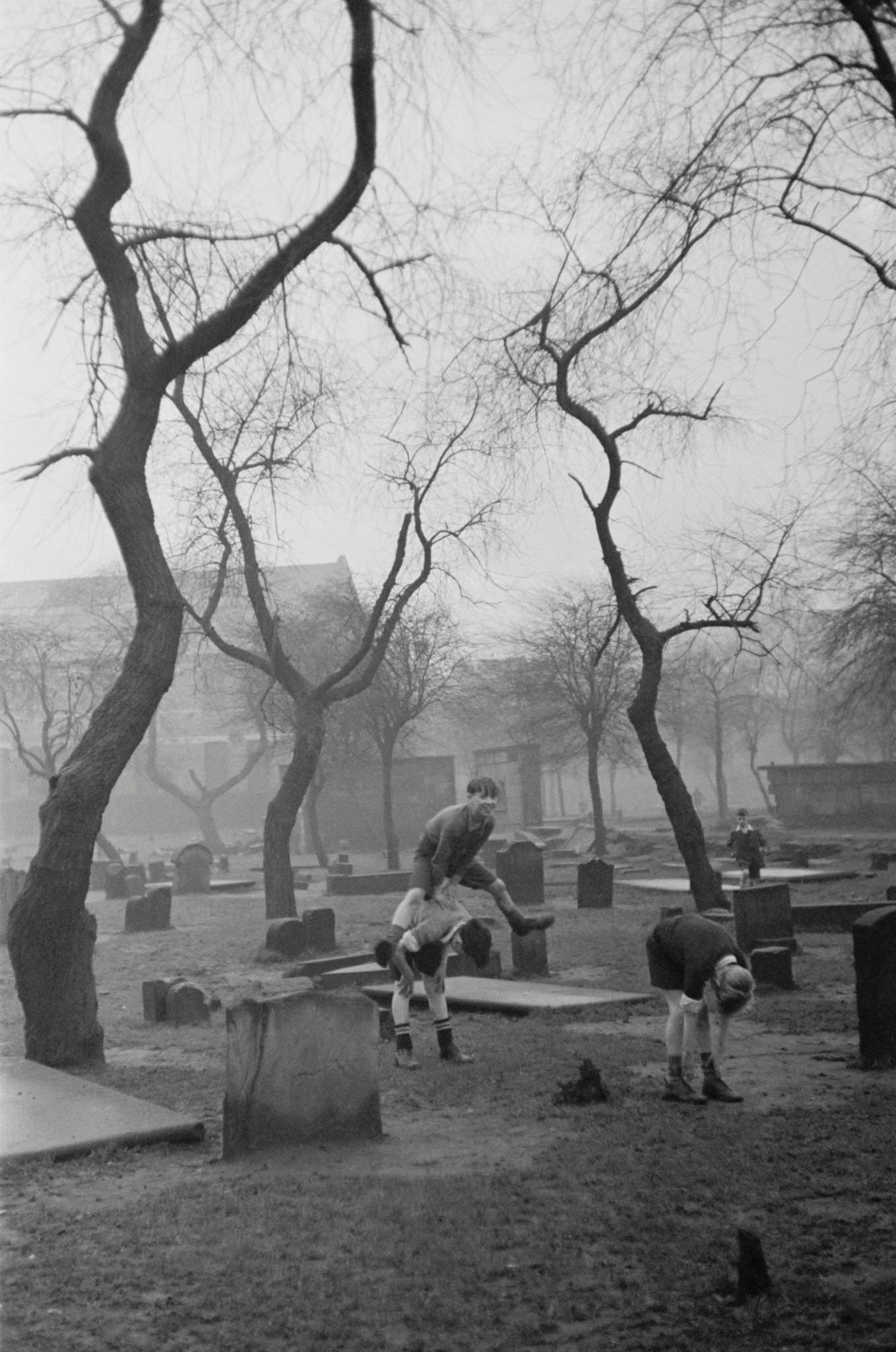
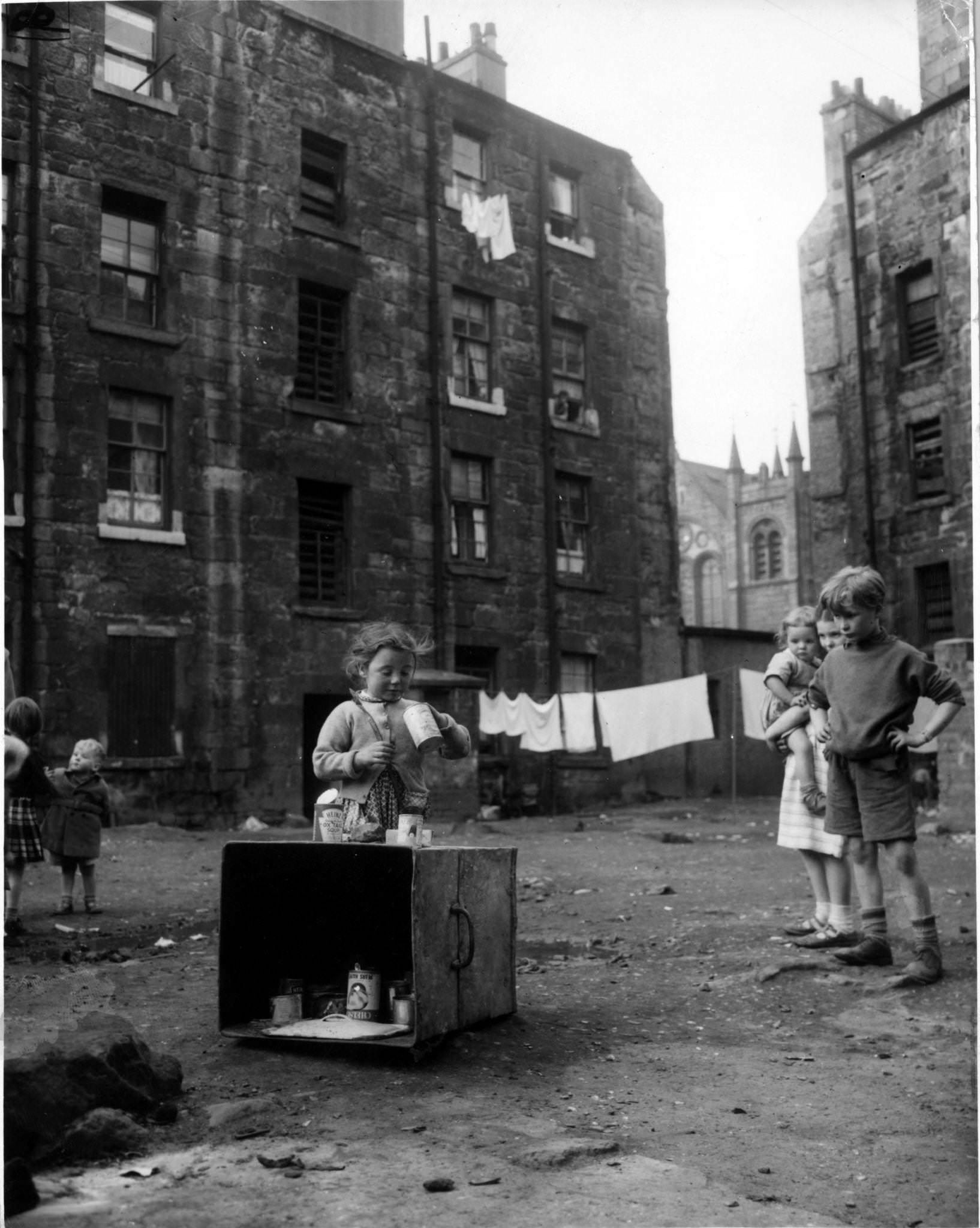
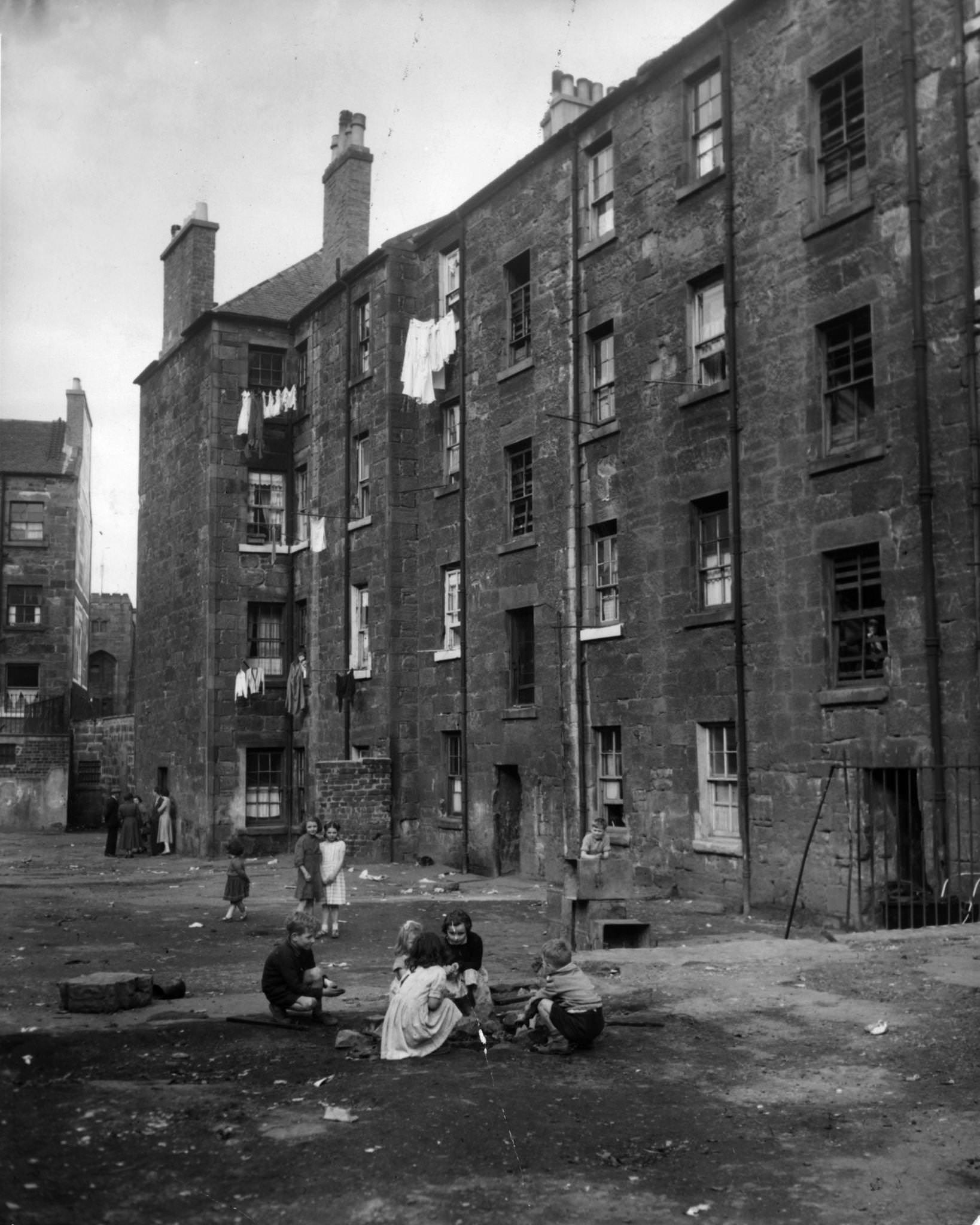
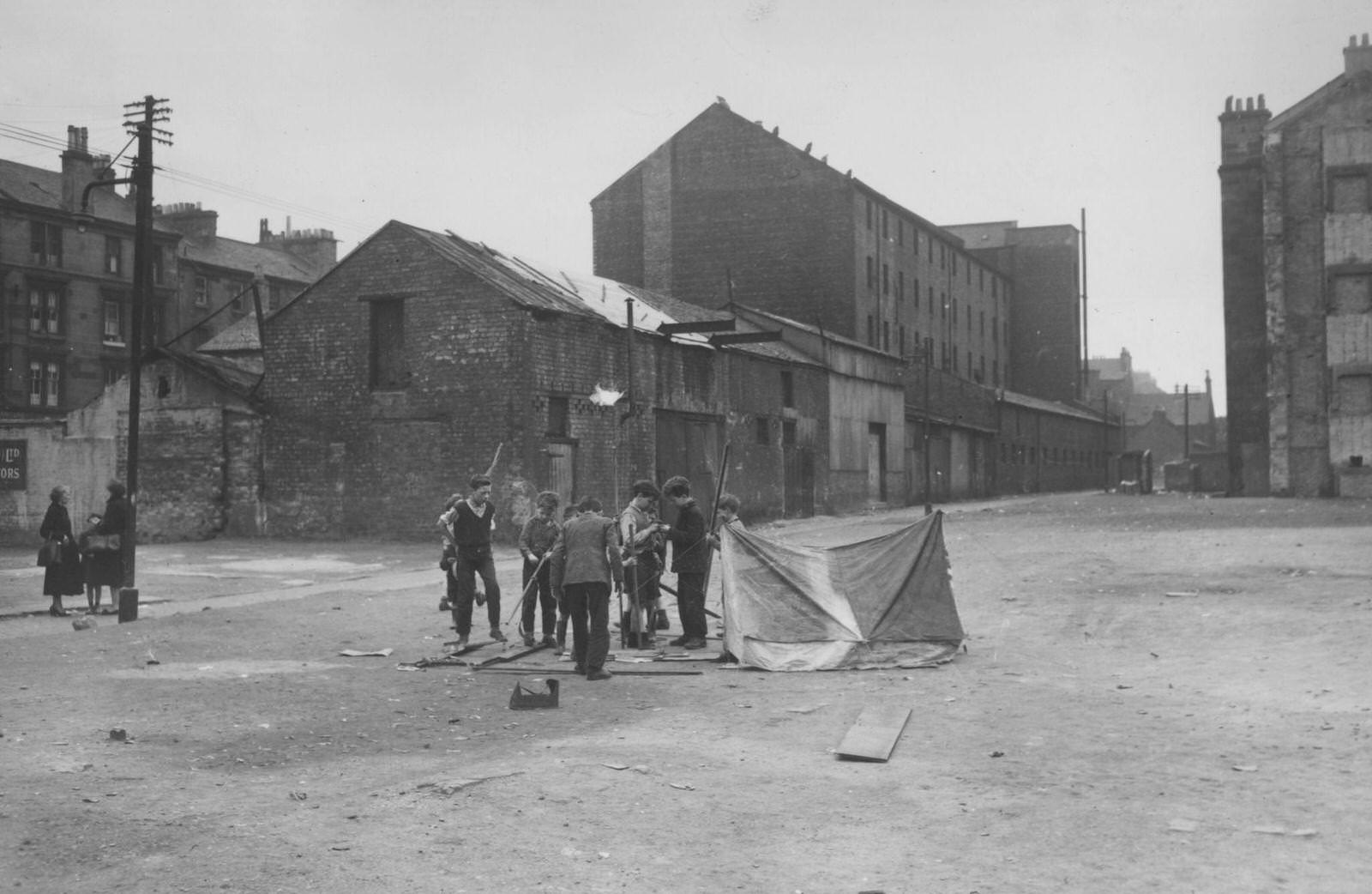
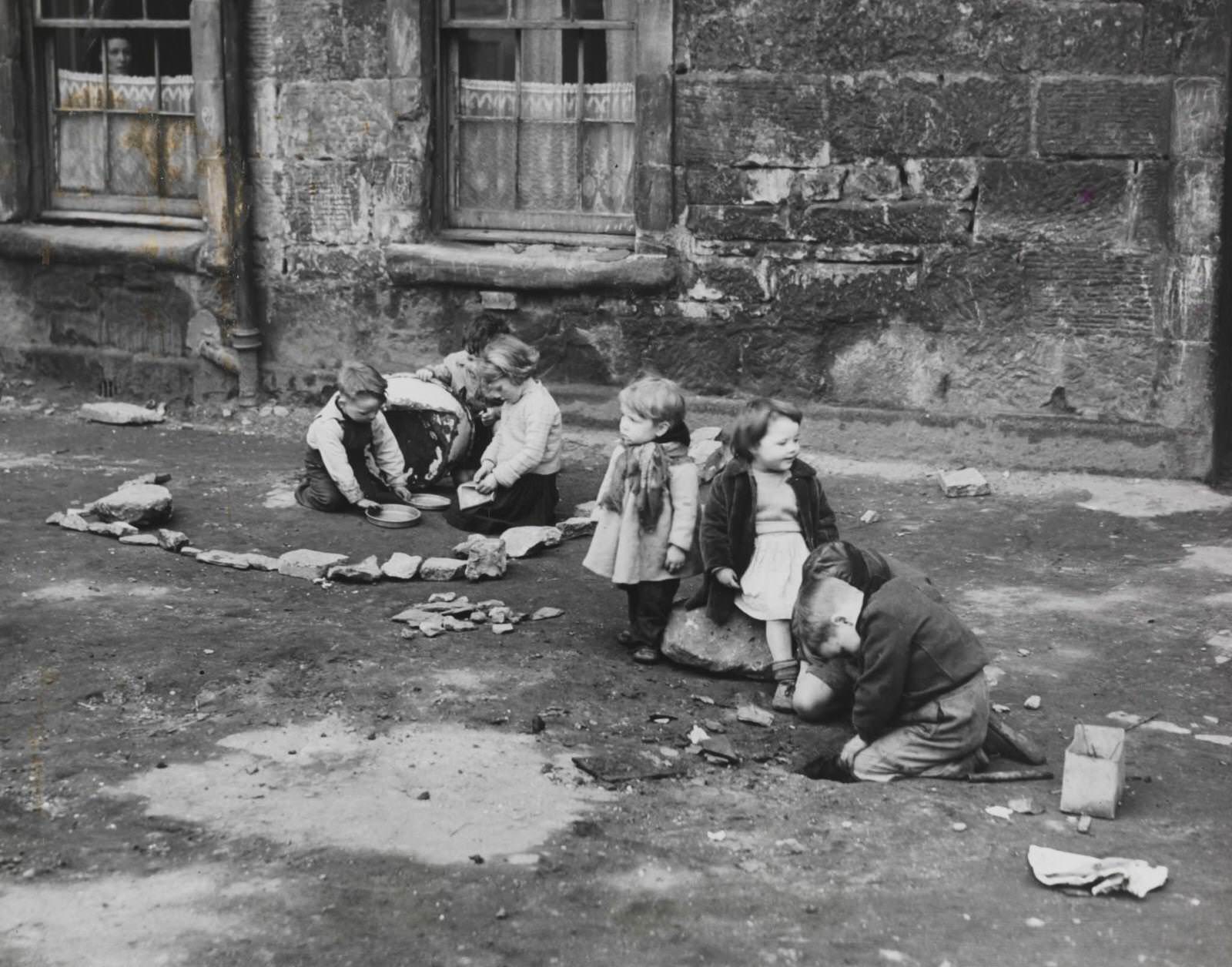
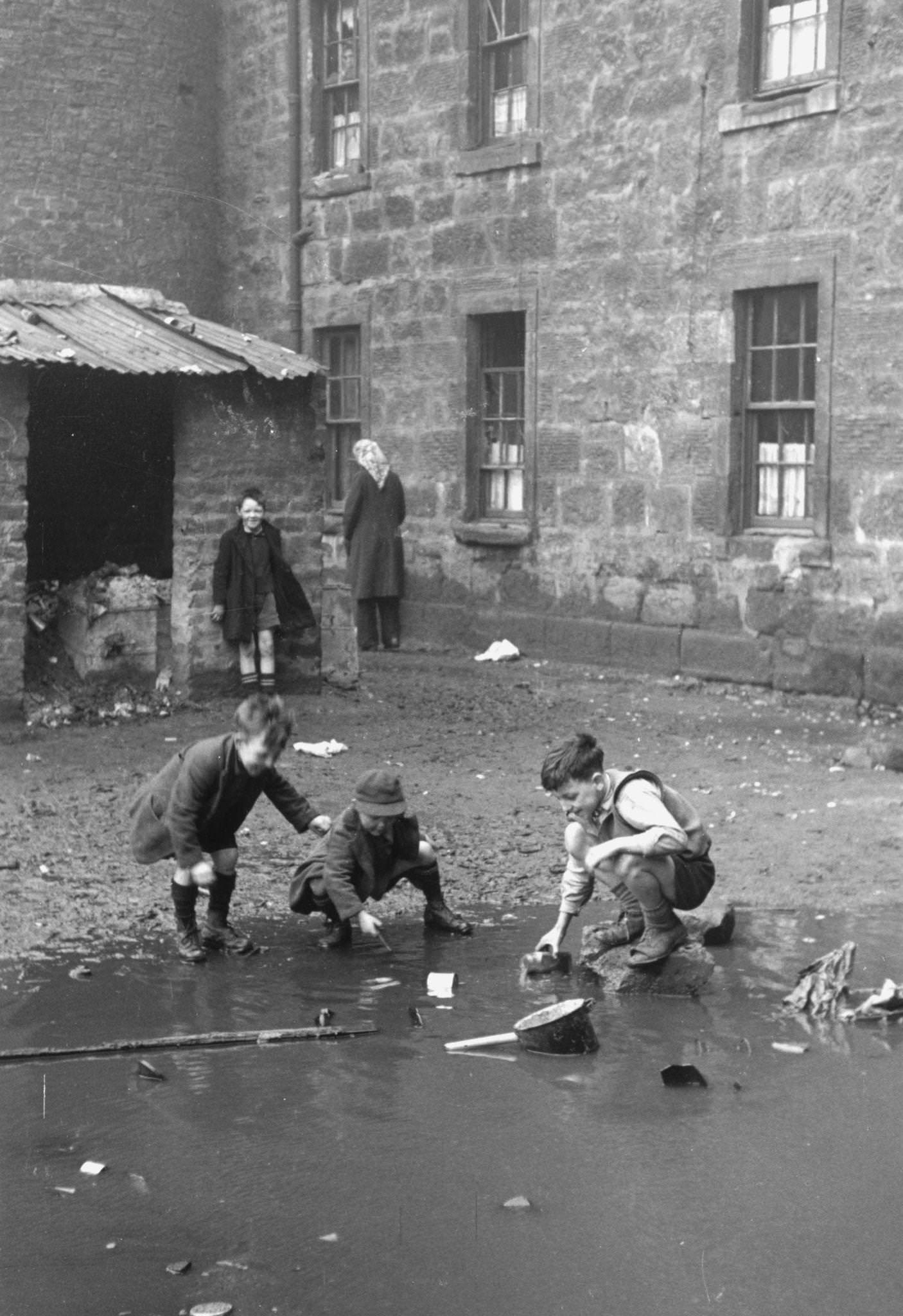
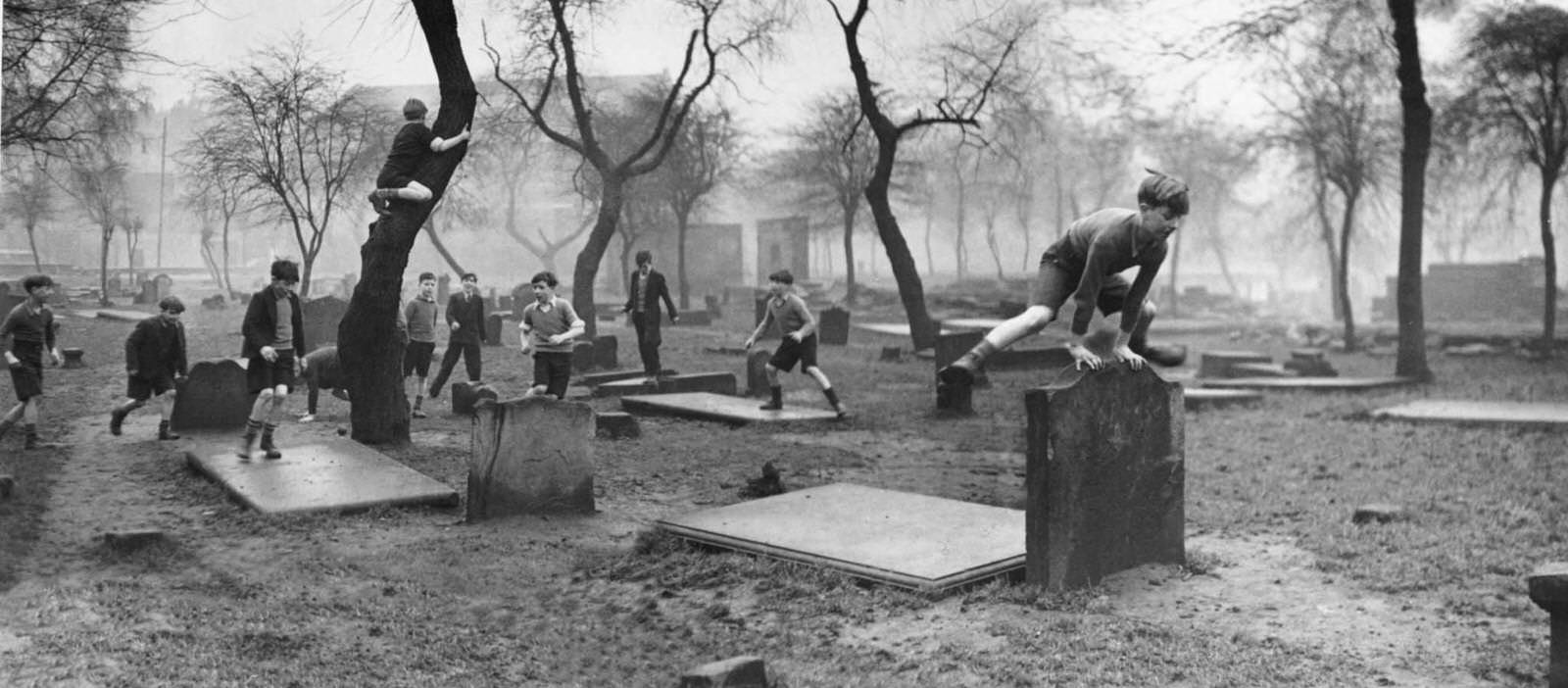
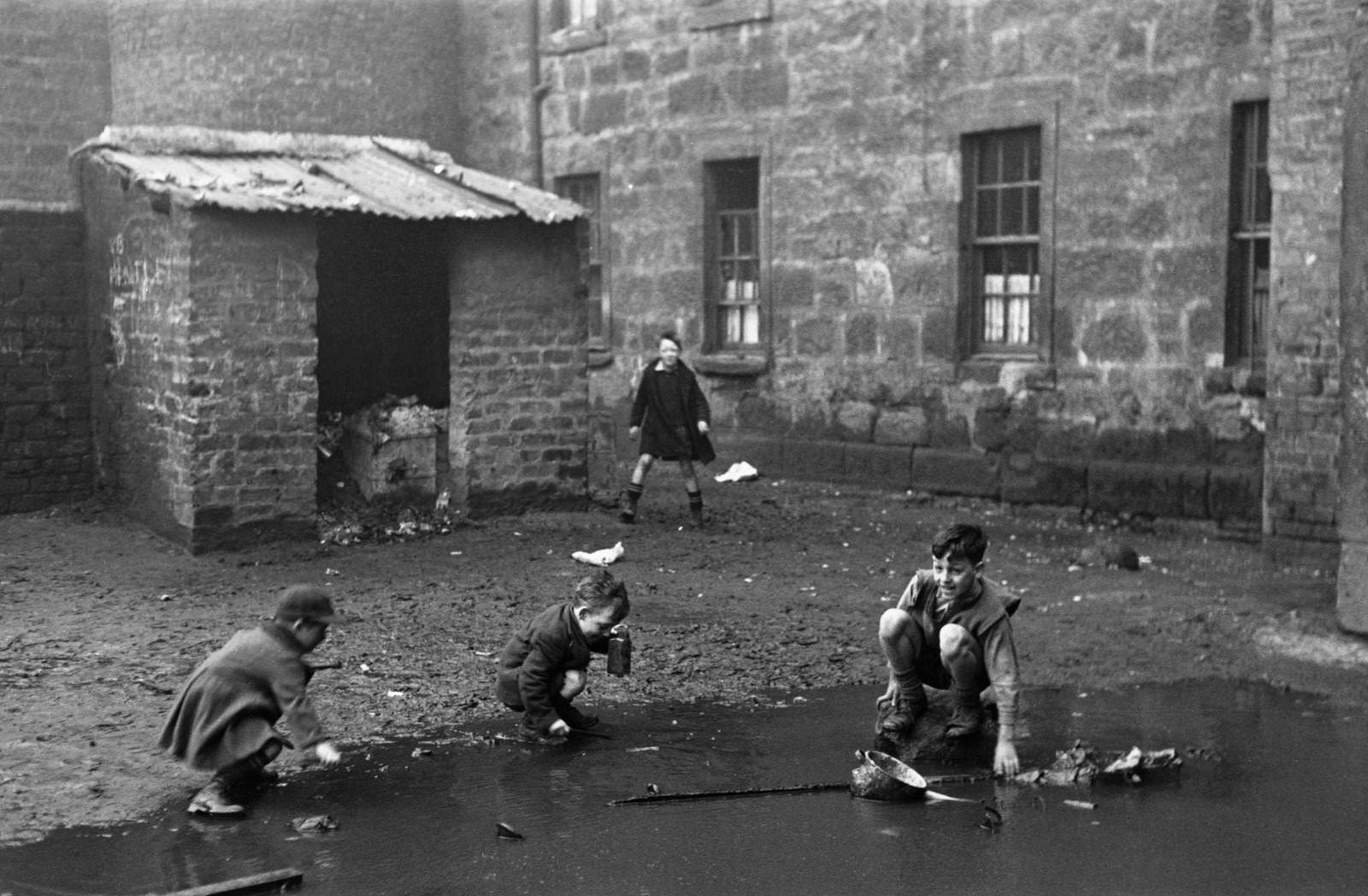
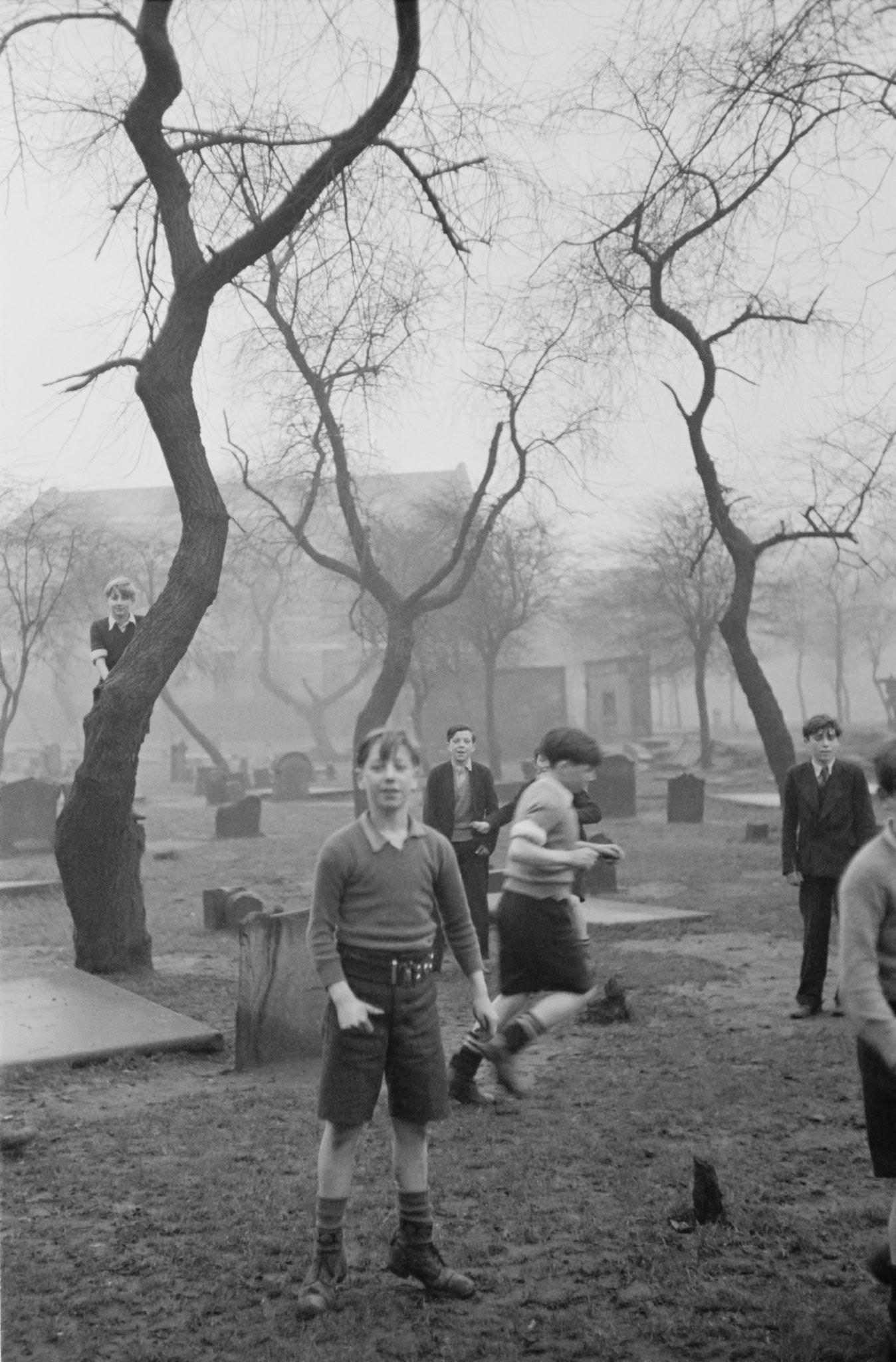
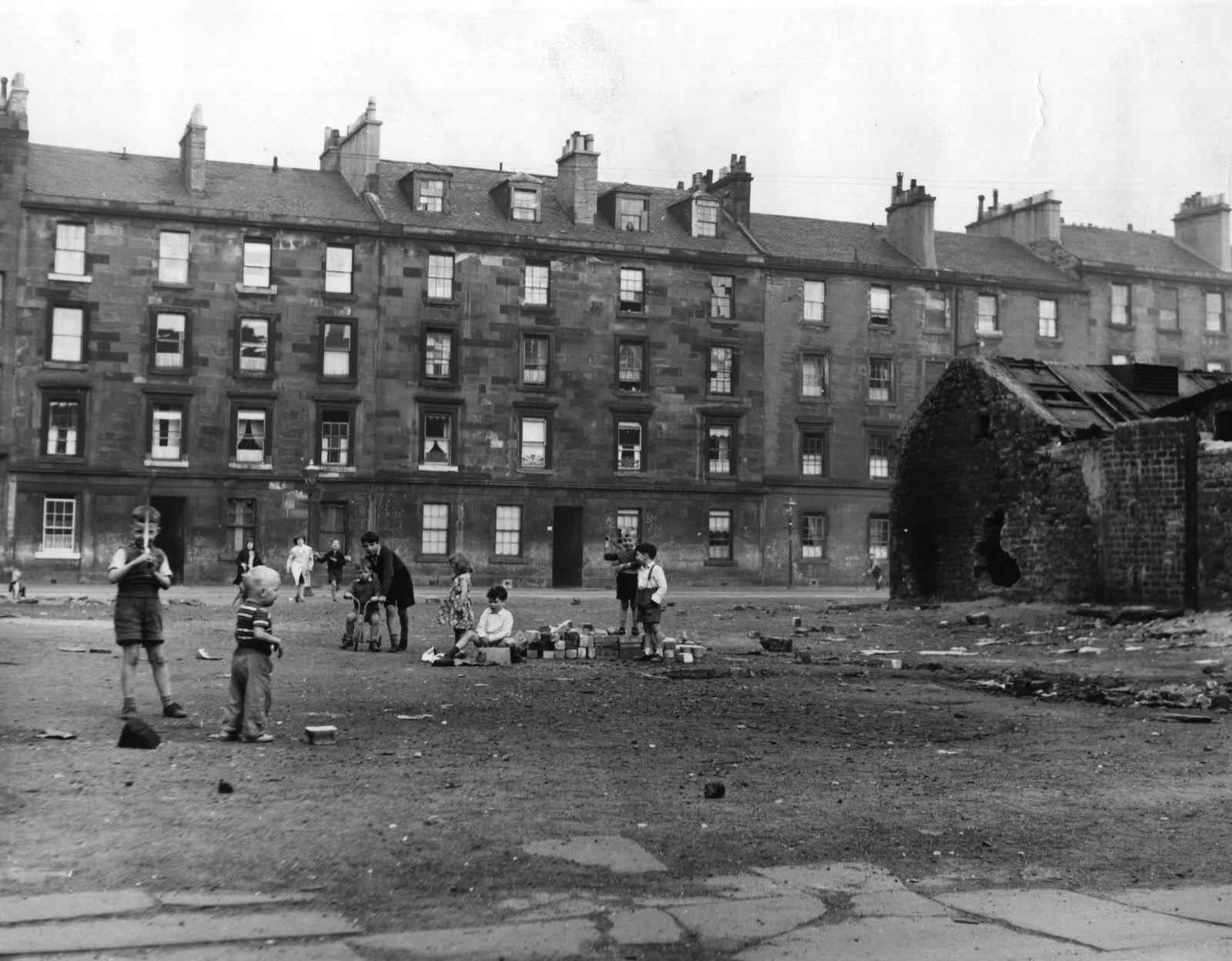
Despite the grimness of their surroundings, children found ways to fill their days. With no gardens, parks, or proper play areas nearby, the streets, yards, and puddles became their playgrounds. Boys splashed through muddy pools in the back lanes, climbed on rubble, and played leapfrog among the gravestones of the Corporation Burial Ground on Rutherglen Road — one of the only patches of green in the entire district. Girls made games out of tin cans and whatever scraps they could find in the yards behind Florence Street and Surrey Lane.
Boys play in a puddle in the slums of Gorbals, Glasgow, 1948
A group of boys playing leapfrog amongst the gravestones of the Corporation Burial Ground in Rutherglen Road, one of the few areas of greenery in the Gorbals, a slum district of Glasgow, 1948.
September 1956: Jenny Lamont and her friends play with tin cans in the yard behind tennemants of Florence Street, in the Gorbals area of Glasgow, 1956
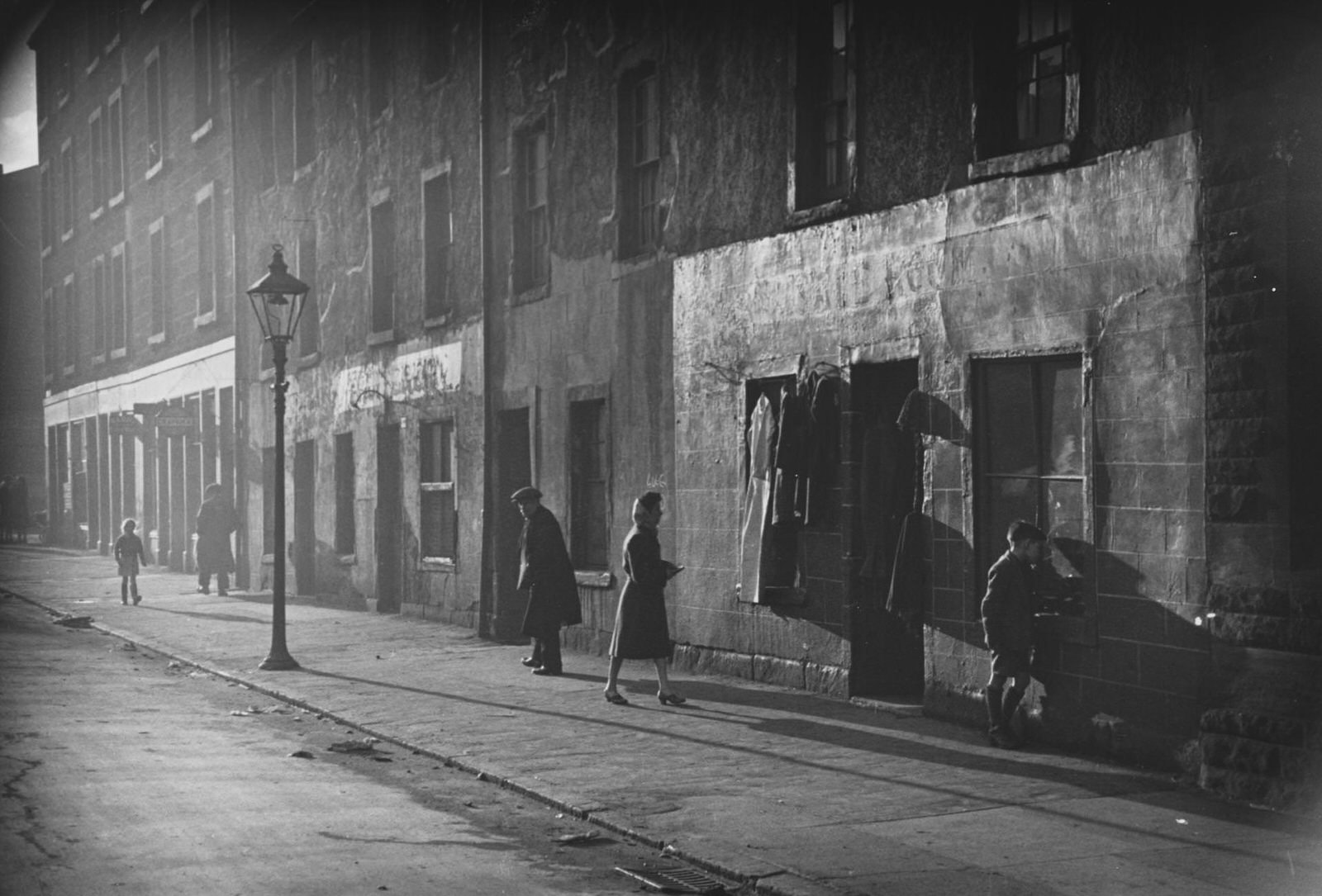
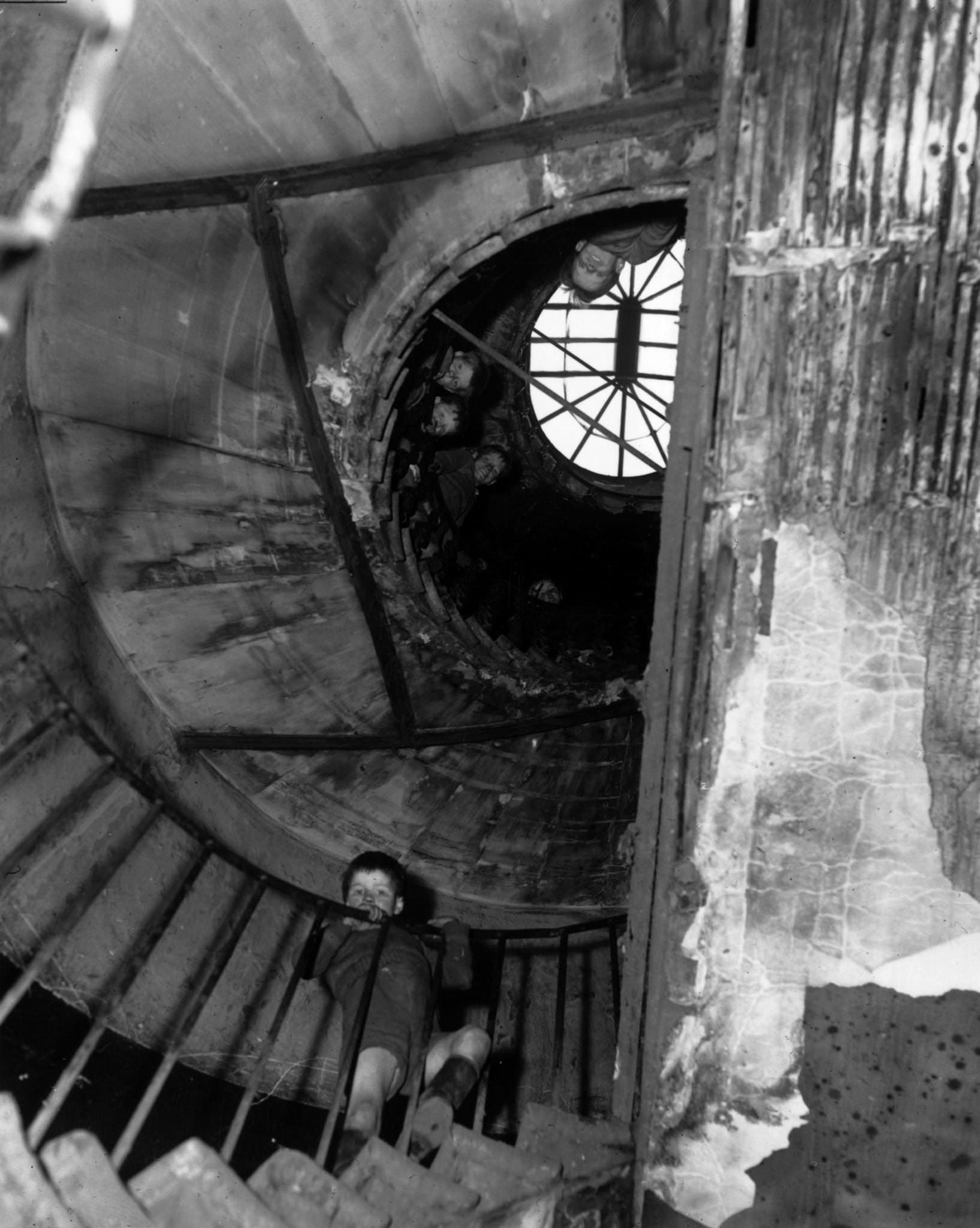
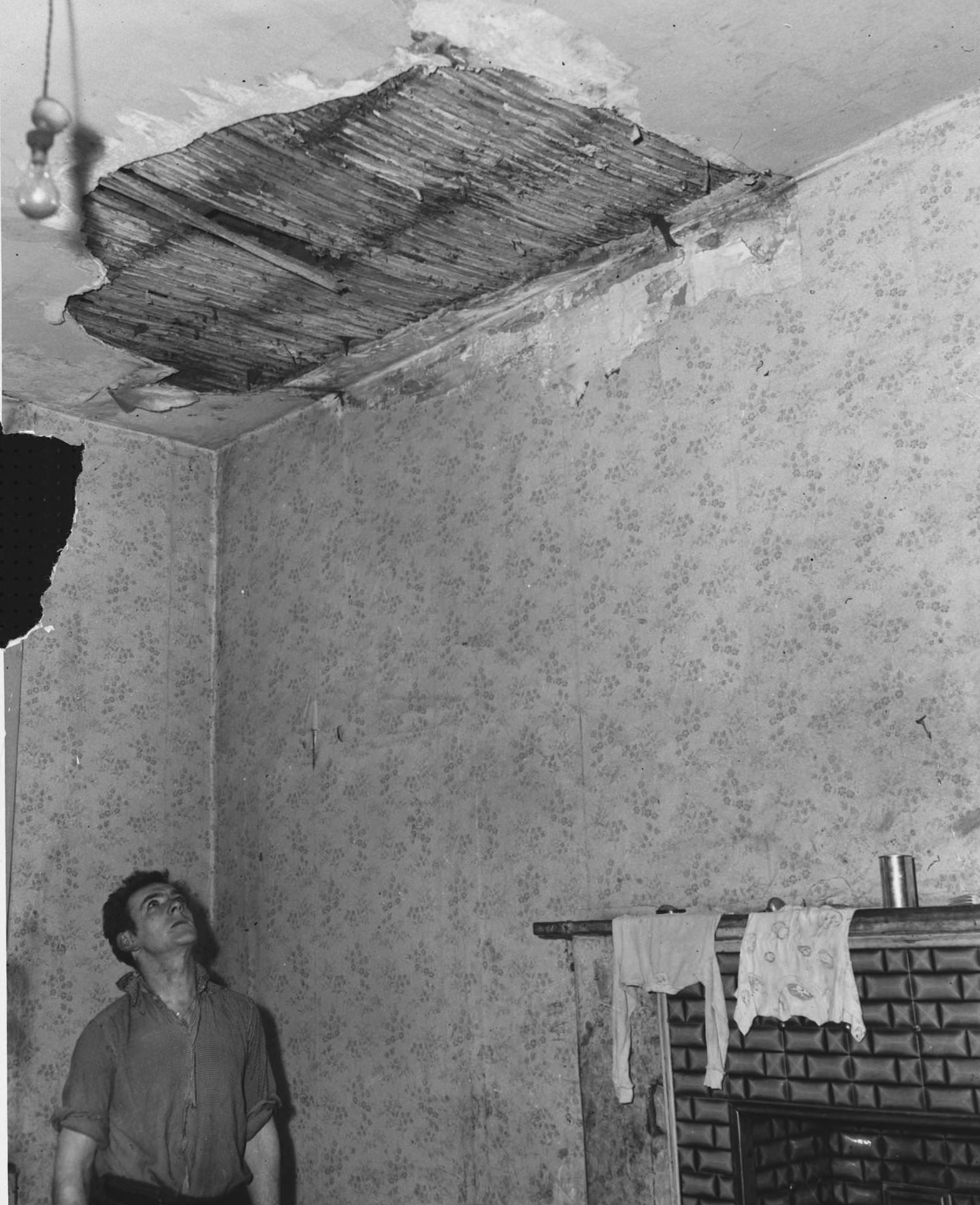
The graffiti-covered walls, muddy pools, and scattered rubbish that surrounded these children were not occasional problems — they were the permanent state of the streets. Walls along alleyways like Surrey Lane were black with soot and age. In 1956, photographers captured children peering over the banisters of spiral staircases inside tenement blocks on Nicholson Street, their faces framed by crumbling plaster. A shared outdoor lavatory in one Gorbals yard served eight separate families. Mr. Jackson, a council house resident photographed in 1956, stood looking up at a gaping hole in his own ceiling.
Children peer over the banisters of a spiral staircase in a tenement block in Nickelsar Street, the Gorbals, Glasgo, 1956.Children playing in a Glasgow slum which is to be demolished, 1956Mr. Jackson inspects a hole in the ceiling of his council house in the Gorbals, 1956
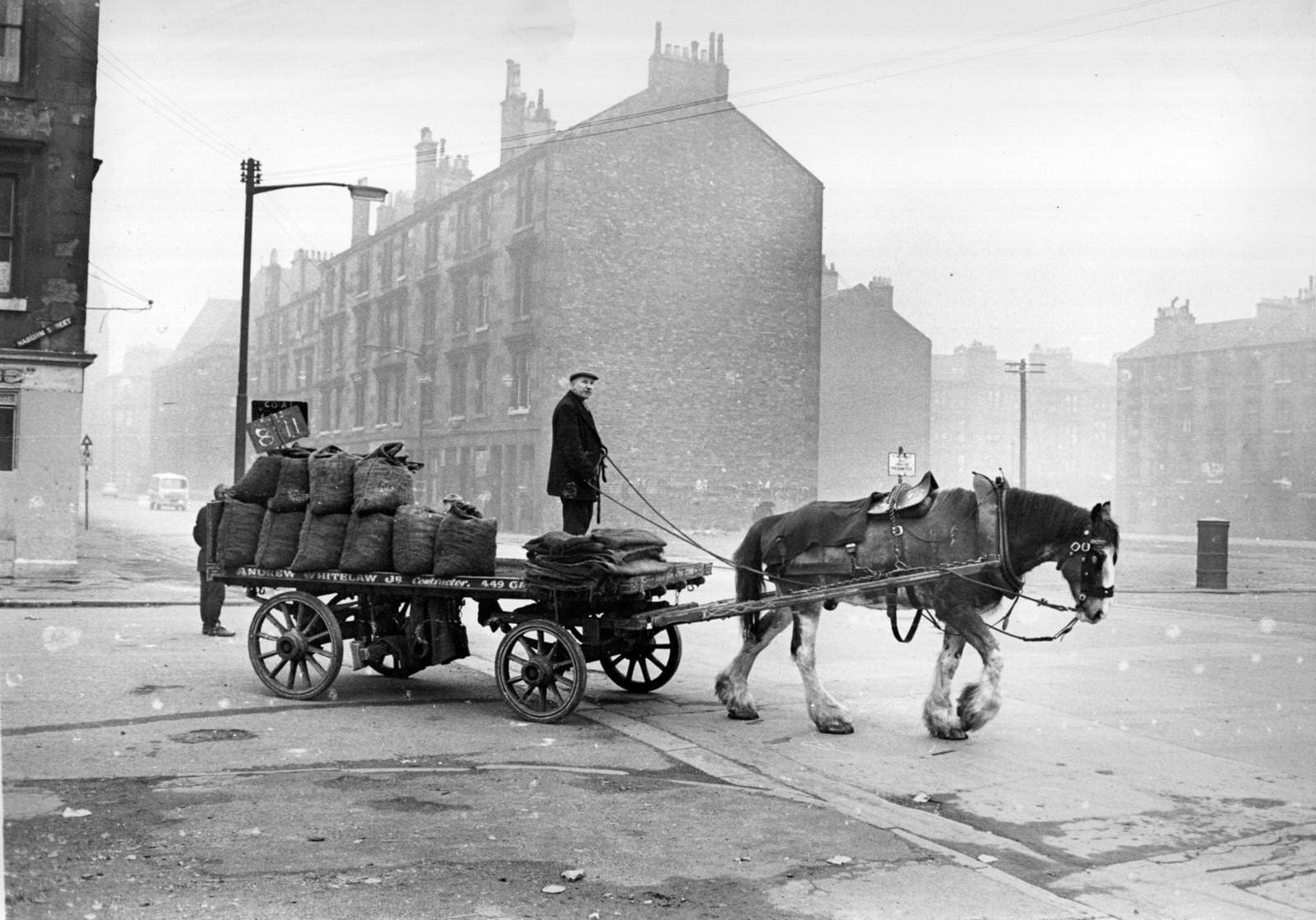
The streets themselves reflected the economic reality of the place. Closed pawnbrokers, hand carts loaded with belongings, and coal men still doing rounds in horse-drawn carts were everyday sights well into 1960. The Gorbals had its own internal economy of survival. Factories, warehouses, and local commerce gave work to around 15,000 residents in 1914, and the area supported 16 schools, 15 churches, three synagogues, swimming pools, libraries, picture houses, dance halls, and two theatres. But the infrastructure of community life sat on top of housing stock that was fundamentally unfit for human habitation.
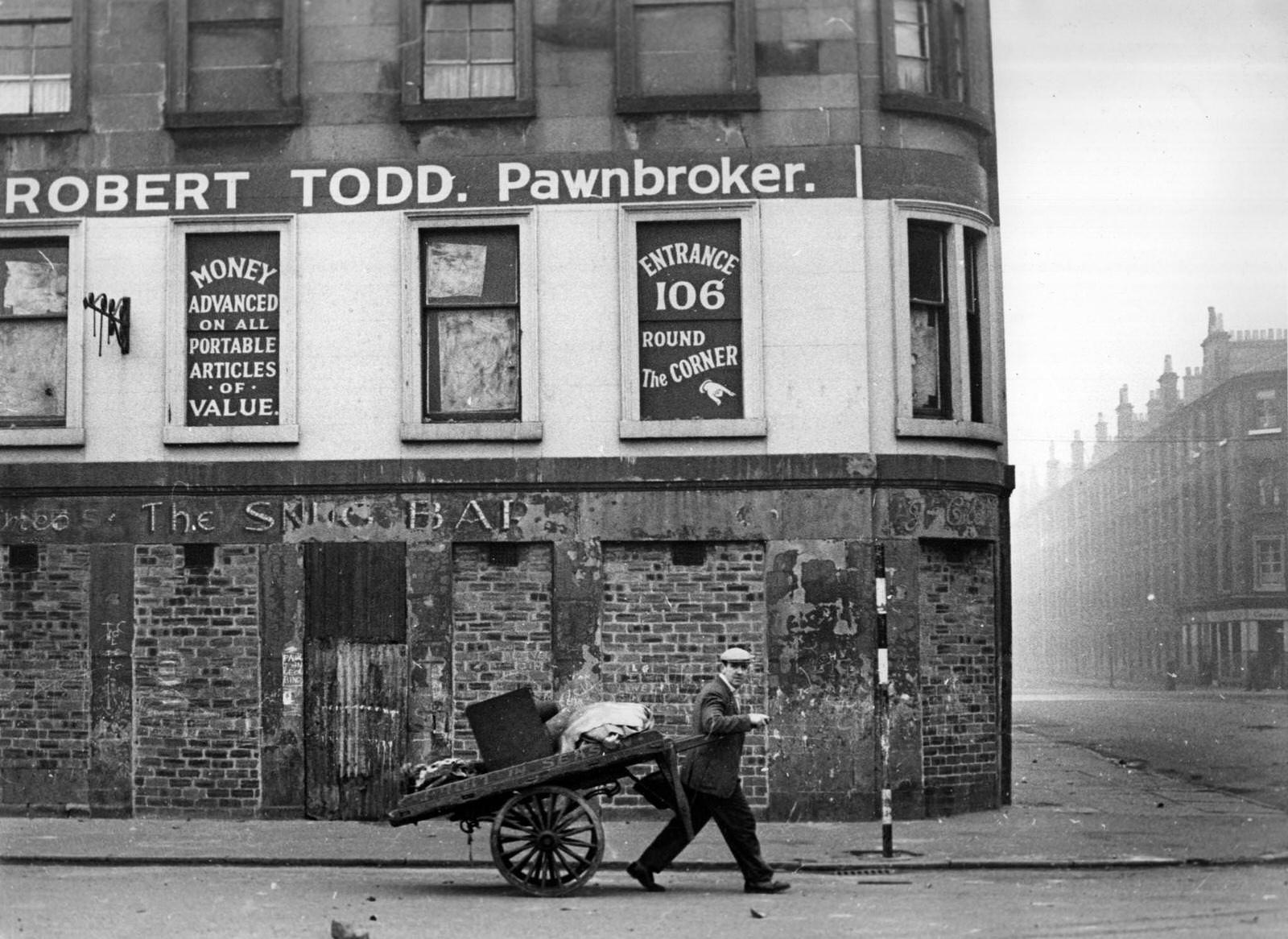
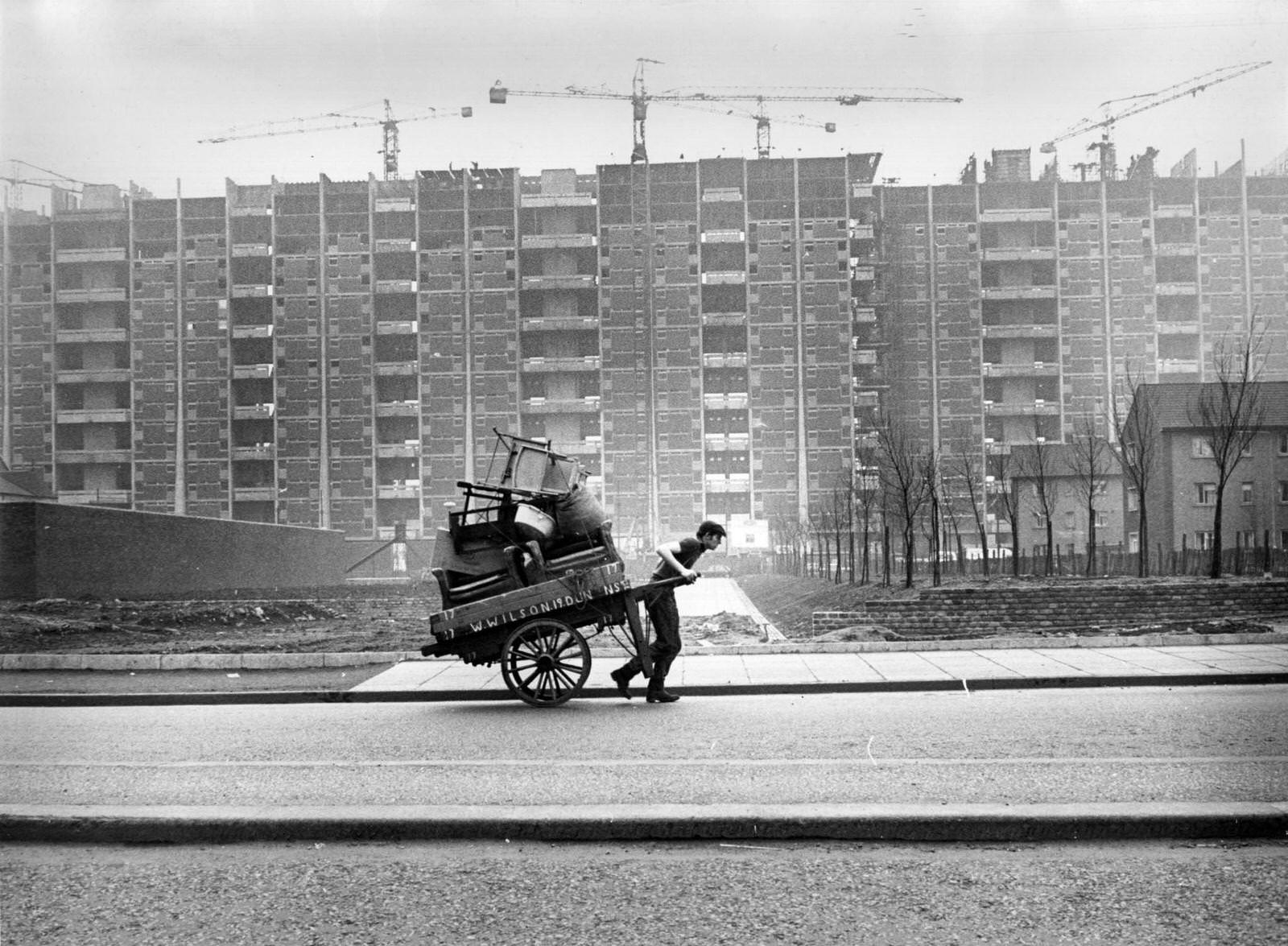
A coalman doing his rounds in his horse-drawn cart in the Gorbals area of Glasgow, 1960A man pulling a hand cart past a closed-down pawnbroker’s shop in the Gorbals area of Glasgow, 1960
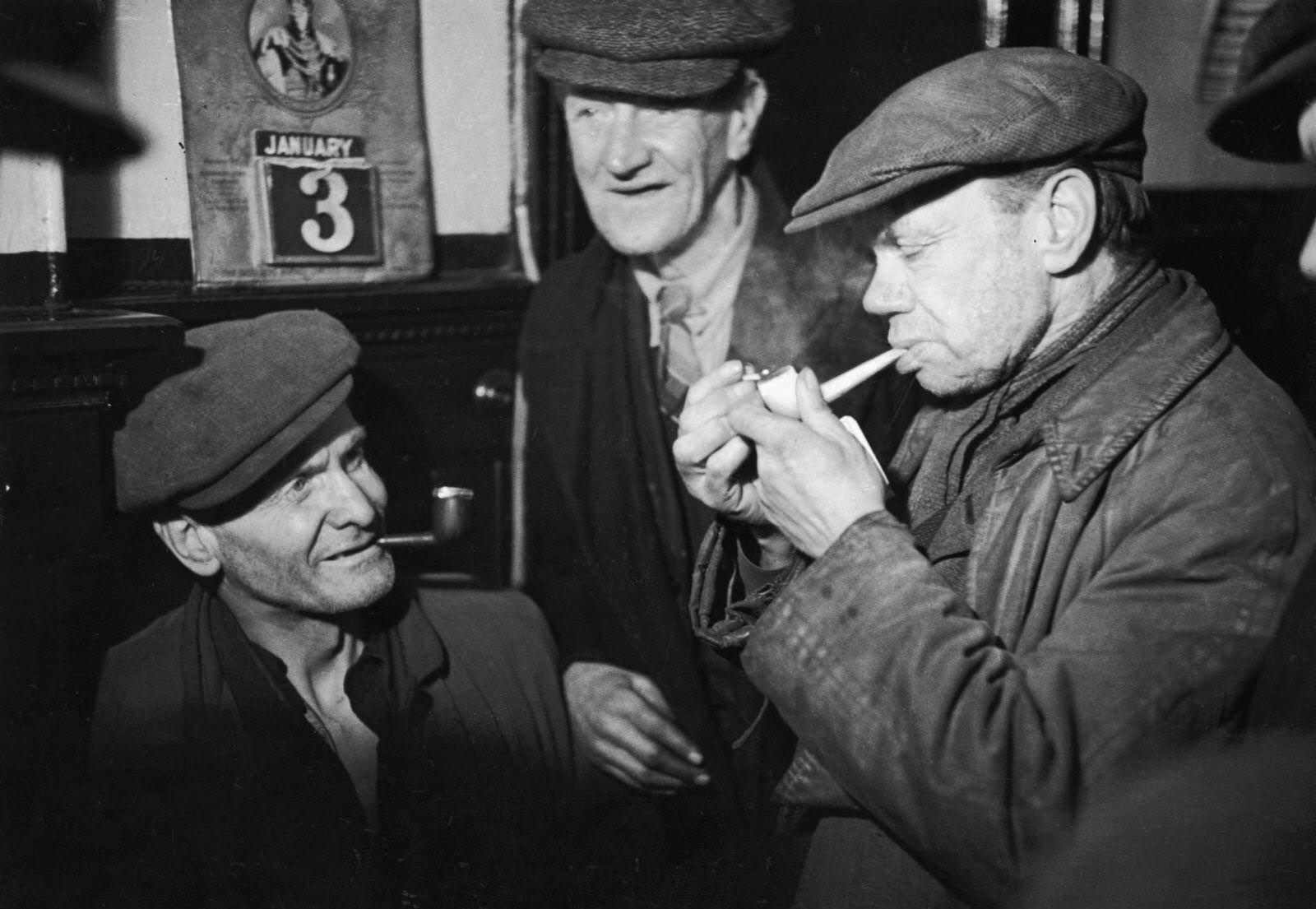
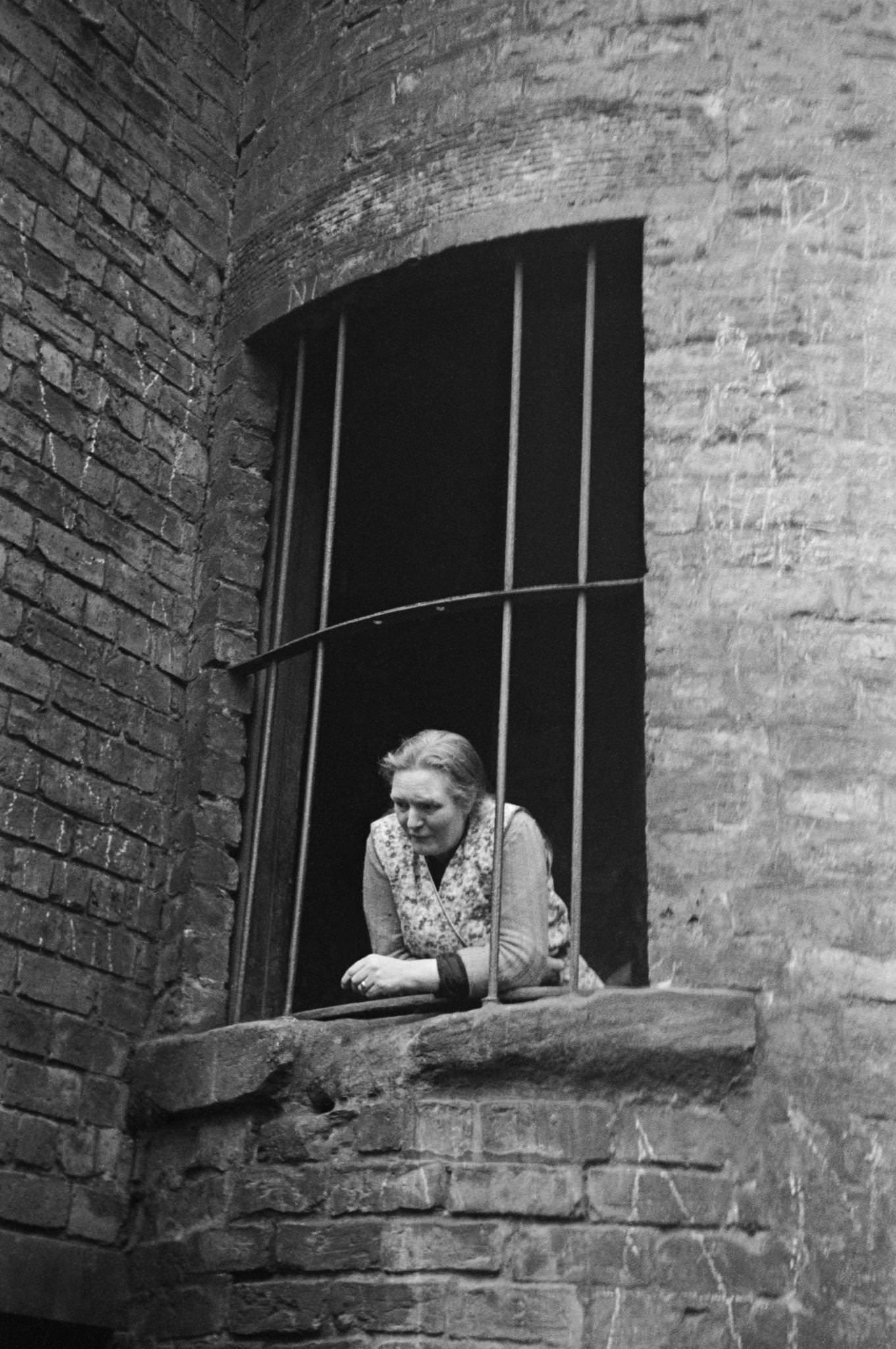
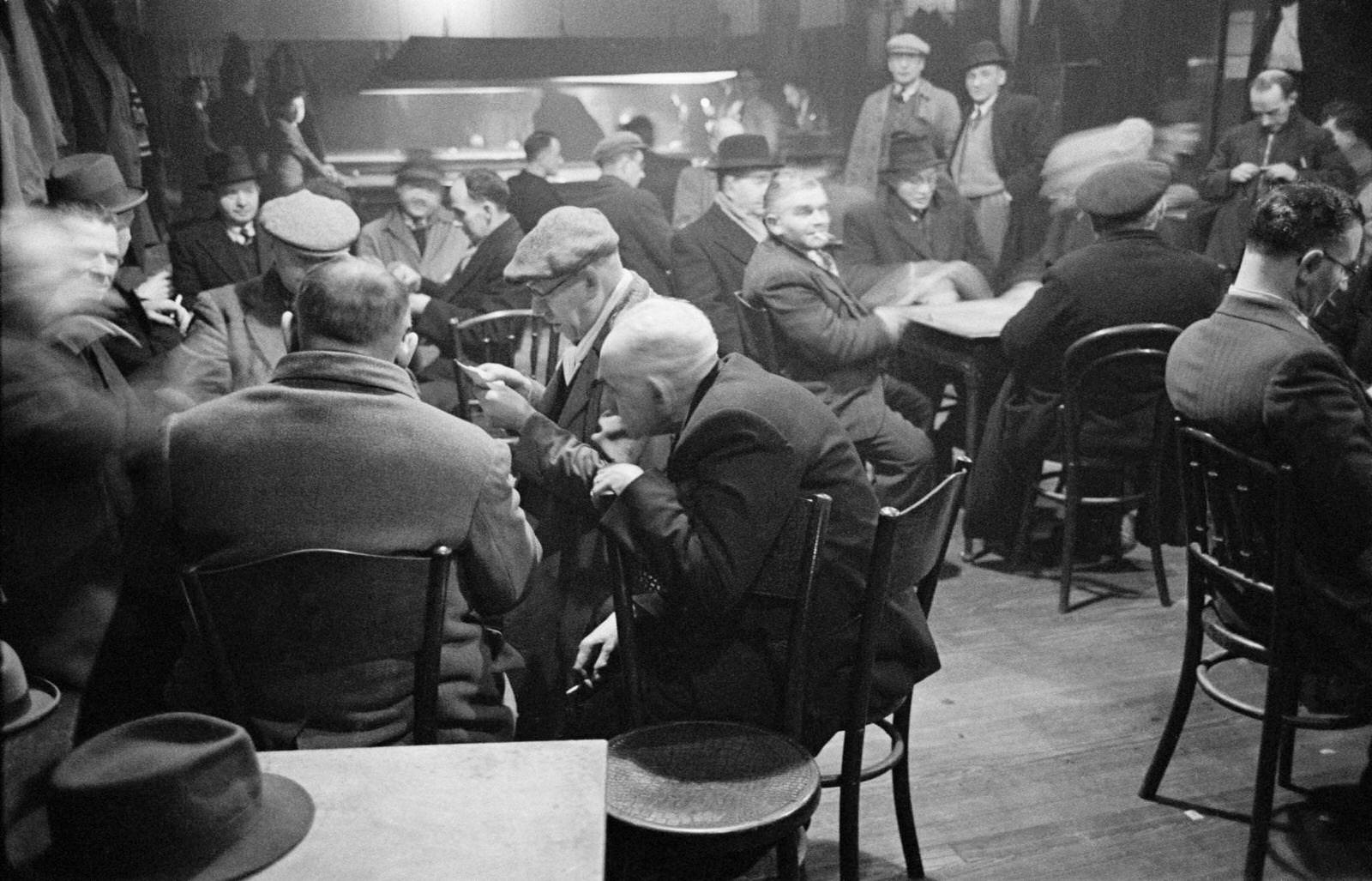
Adults escaped the cramped tenements wherever they could. The local pub was a central gathering point. In January 1948, men from across the district met in their local to share a smoke and talk. Social clubs offered a similar refuge. These spaces were not luxuries — they were breaks from rooms so small and so full of people that privacy was simply not possible. A woman photographed in 1948 looked down from a tenement window onto the street below, the window frame itself a reminder of how thin the boundary was between the crowded interior and the equally crowded street.
Men from the Gorbals, Glasgow’s slum area, meet in the local pub for a friendly smoke, 3rd January 1948.A woman looks down from a window in the Gorbals area of Glasgow, 1948
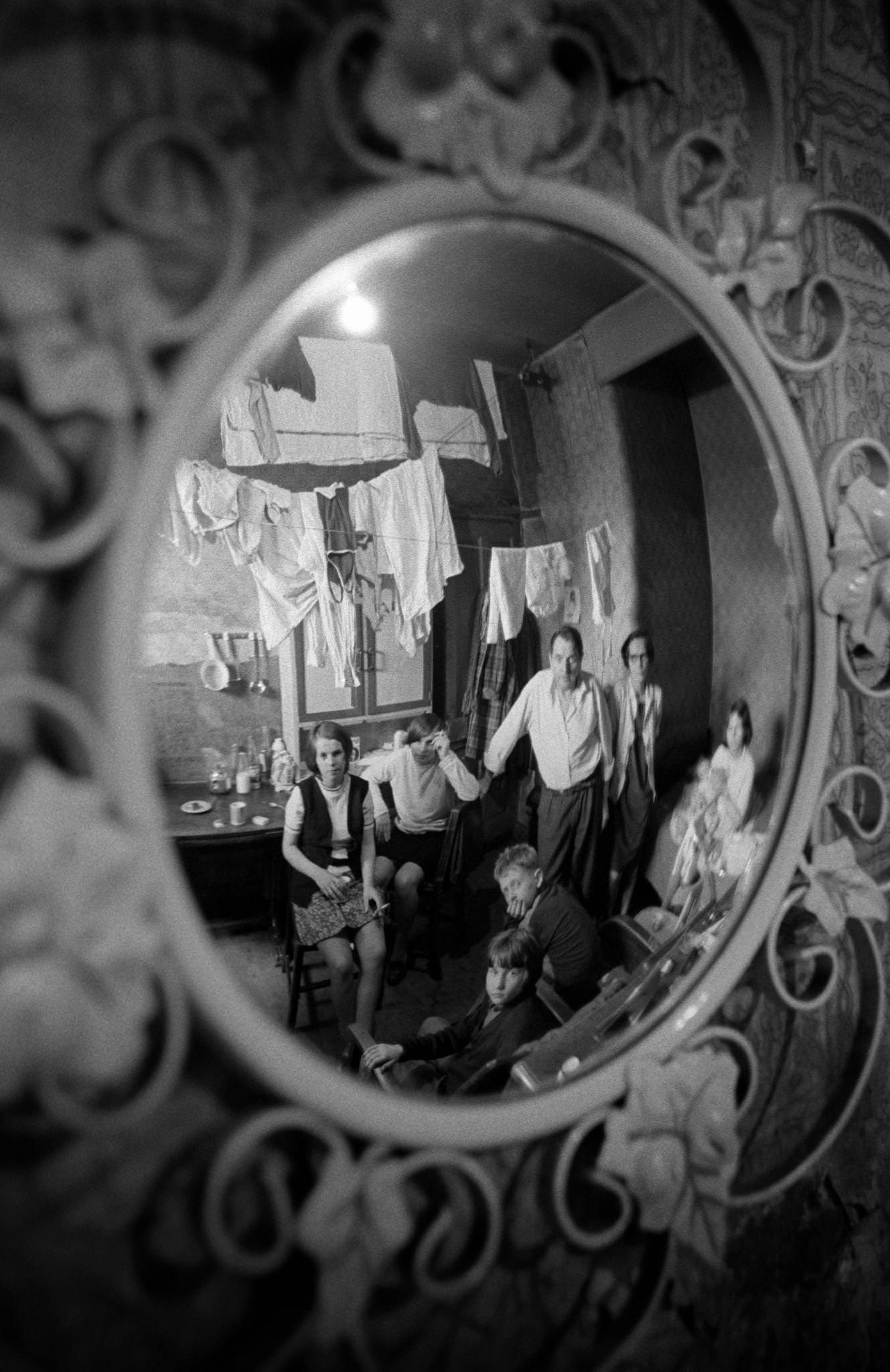
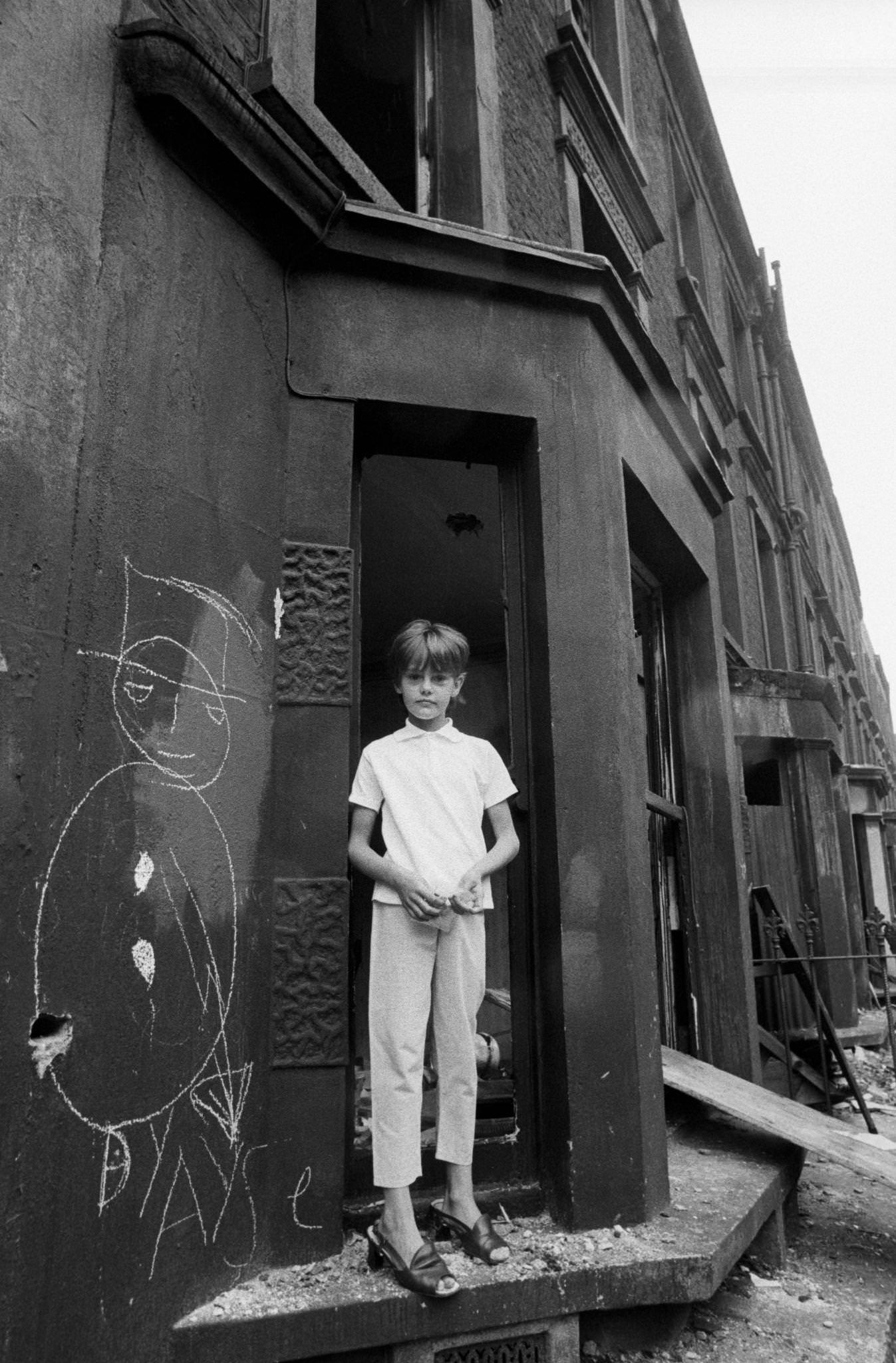
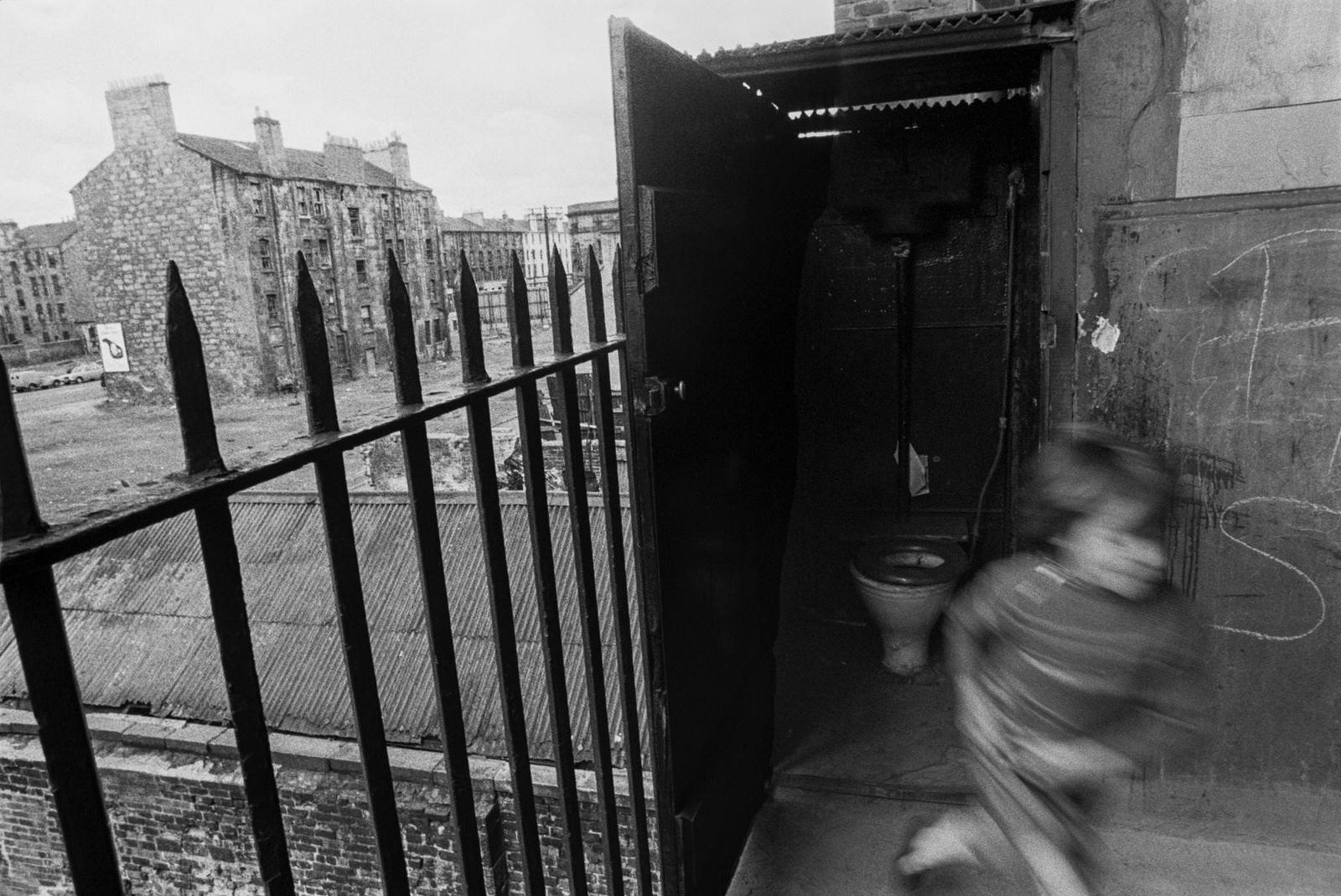
By 1969, even though demolition had been underway for nearly a decade, large sections of the Gorbals were still standing in the same degraded condition. Families of eight were still living in flats barely large enough for two. A photograph from that year shows a family of eight reflected in a mirror in their home — the mirror itself one of the few pieces of decoration in an otherwise bare room. Through broken windows, courtyards below were strung with laundry. Children in hand-me-down shoes stood in doorways next to graffiti-covered walls. Outdoor toilets were still in use, and a single photograph of a small boy leaving one of them says more about the state of sanitation than any report could.
A family of eight reflected in a mirror in their home in the notorious Gorbals district of Glasgow in 1969.
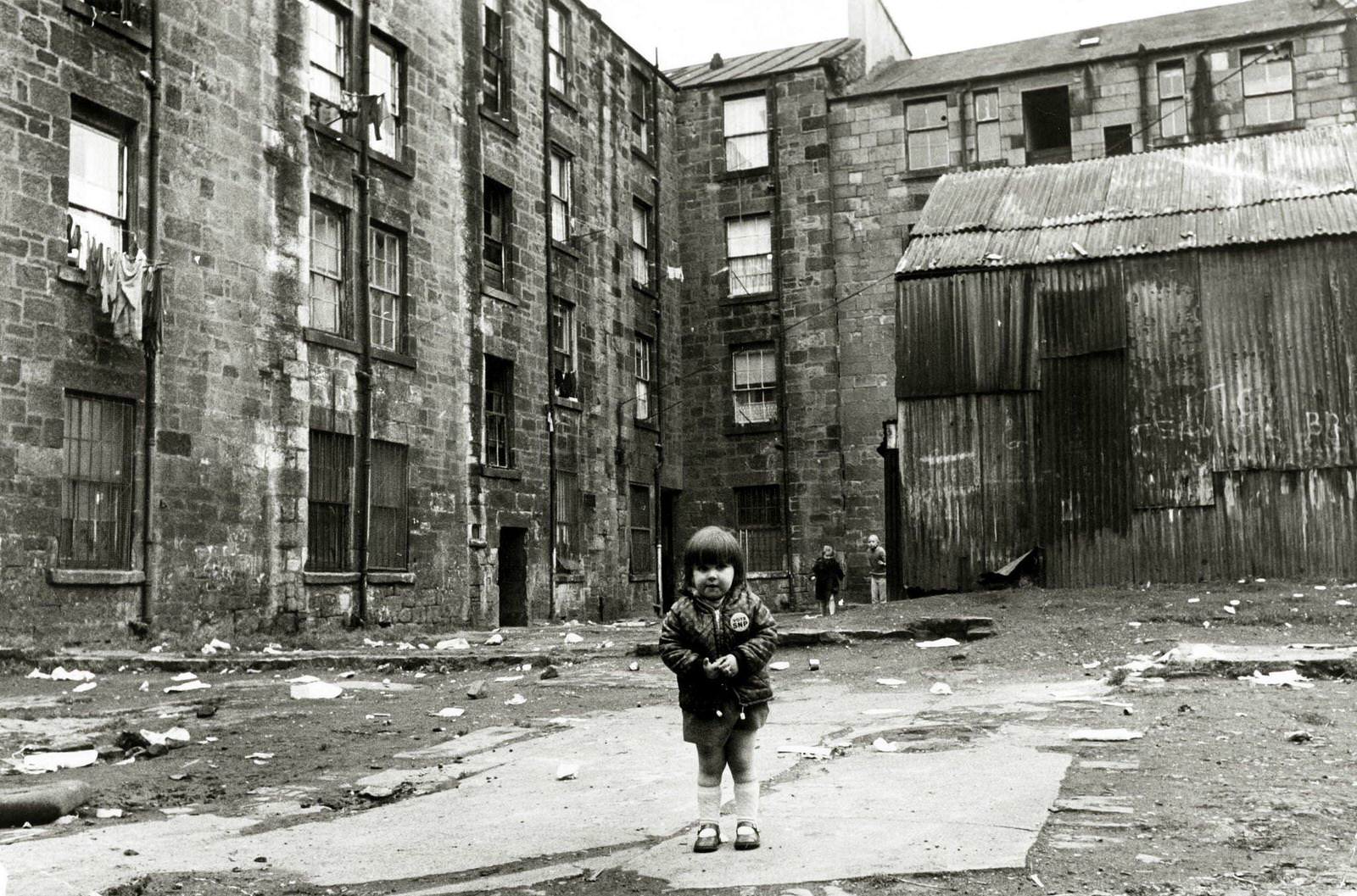
A thin child wearing women’s shoes standing in a doorway next to a graffiti figure in slum housing in the notorious Gorbals district of Glasgow in 1969.
A little boy leaving an outdoor toilet in slum housing in the notorious Gorbals district of Glasgow in 1969.
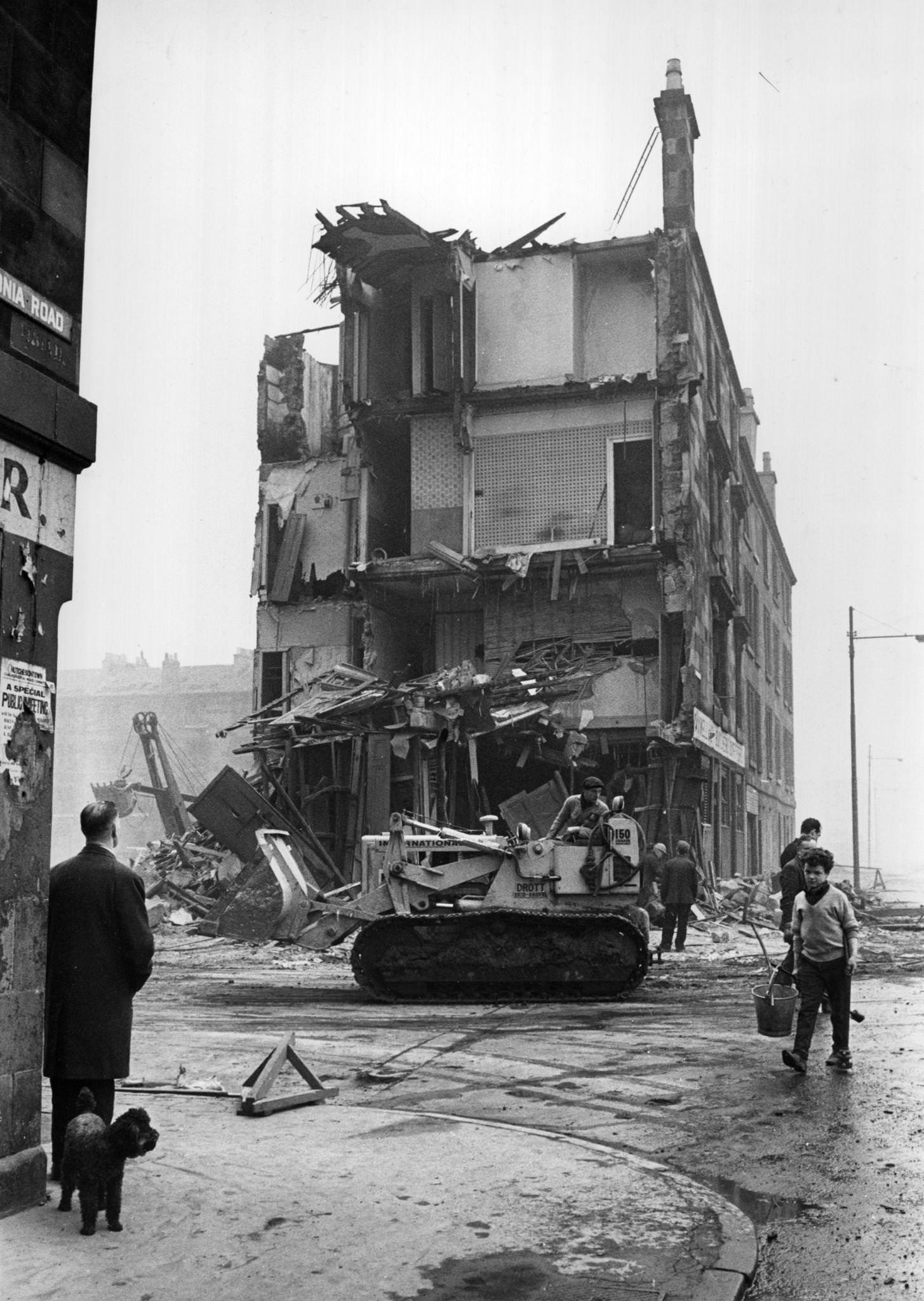
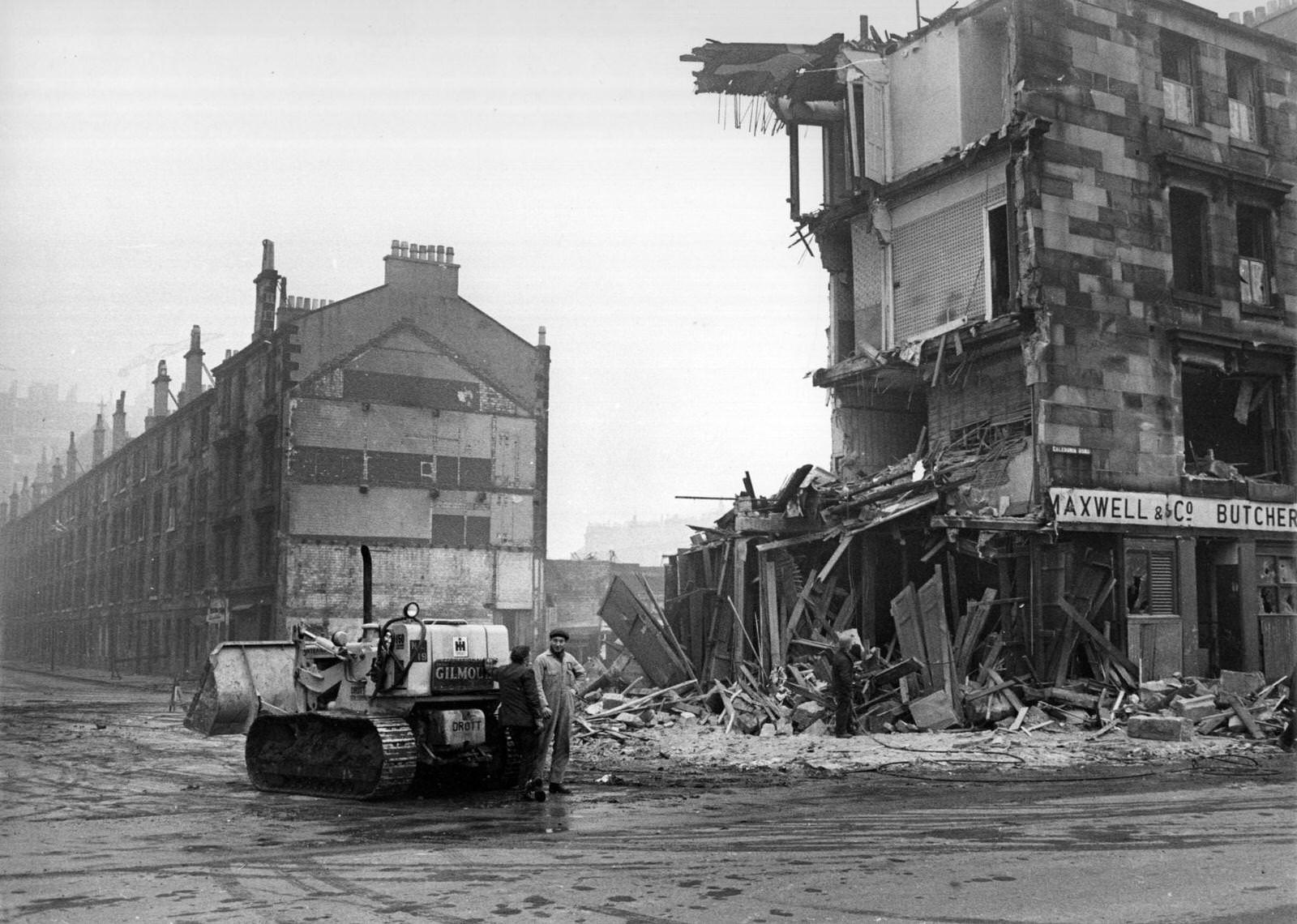
Glasgow Corporation had begun acting on the problem in the 1950s. Post-war planners targeted the Gorbals and Hutchesontown for wholesale clearance, following a model being applied in London and other major British cities at the same time. Some families were moved out entirely under overspill agreements with new towns like East Kilbride, or relocated to outlying housing estates such as Castlemilk. Others were rehoused within the district itself in new concrete high-rise towers. By 1960, bulldozers were moving through the Gorbals in earnest, knocking down tenement after tenement as residents and children watched from nearby streets.
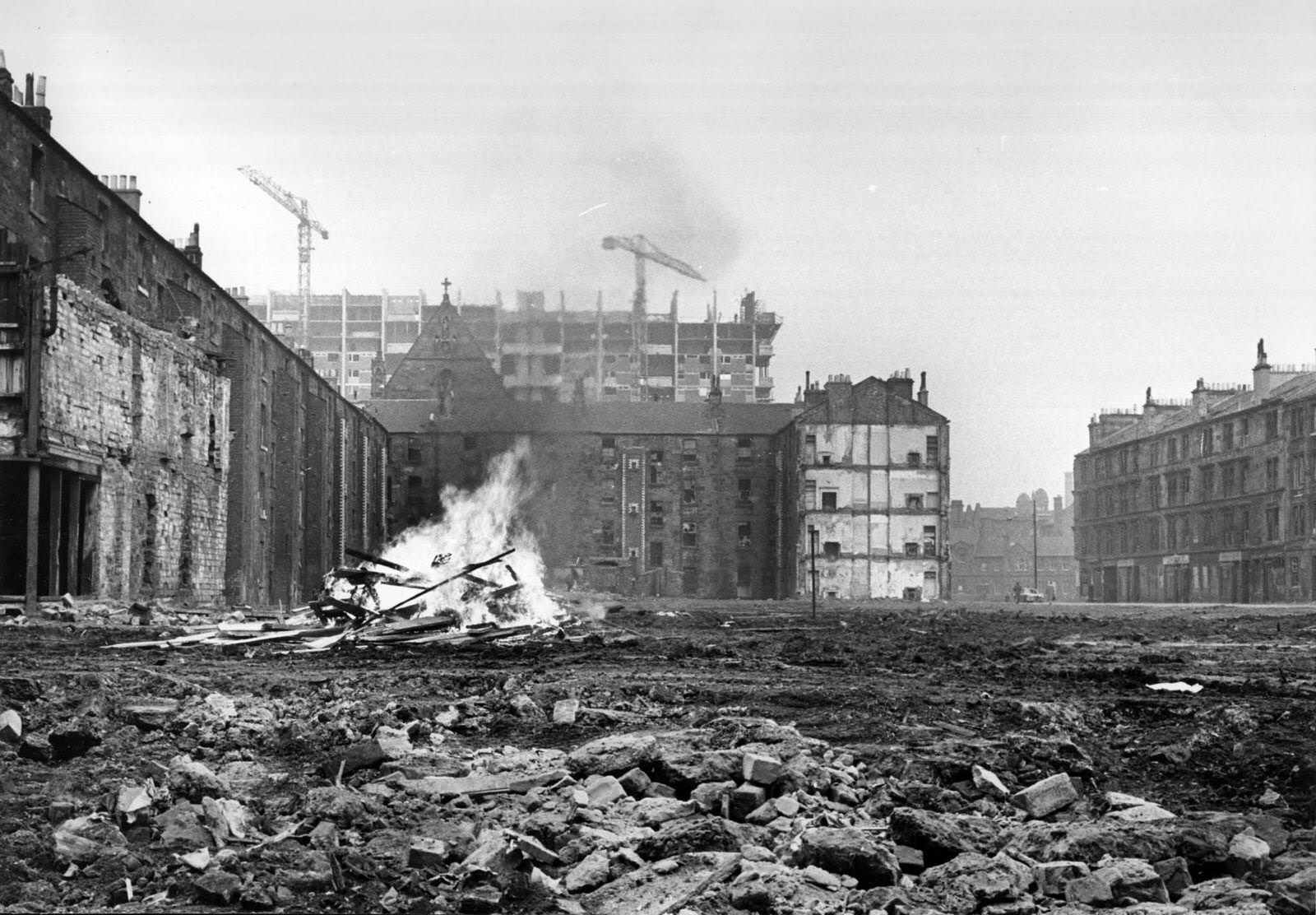
A workman in a bulldozer in front of a tenement being demolished in the Gorbals area of Glasgow, 1960Workmen and a bulldozer beside a tenement being demolished in the Gorbals area of Glasgow, 1960An area of cleared ground in the Gorbals area of Glasgow where debris from the newly-demolished slum tenements is being burnt on a bonfire, 1960
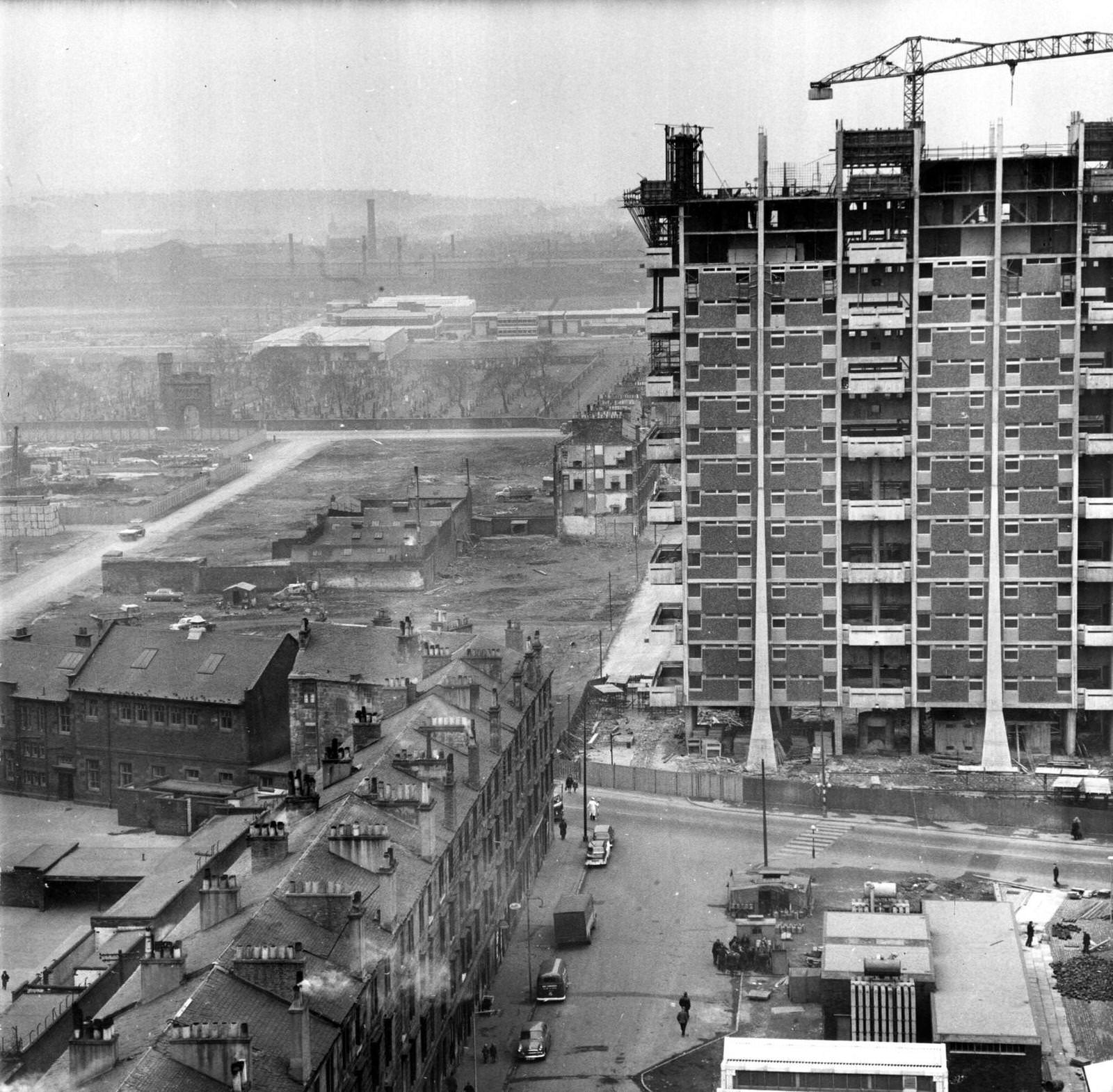
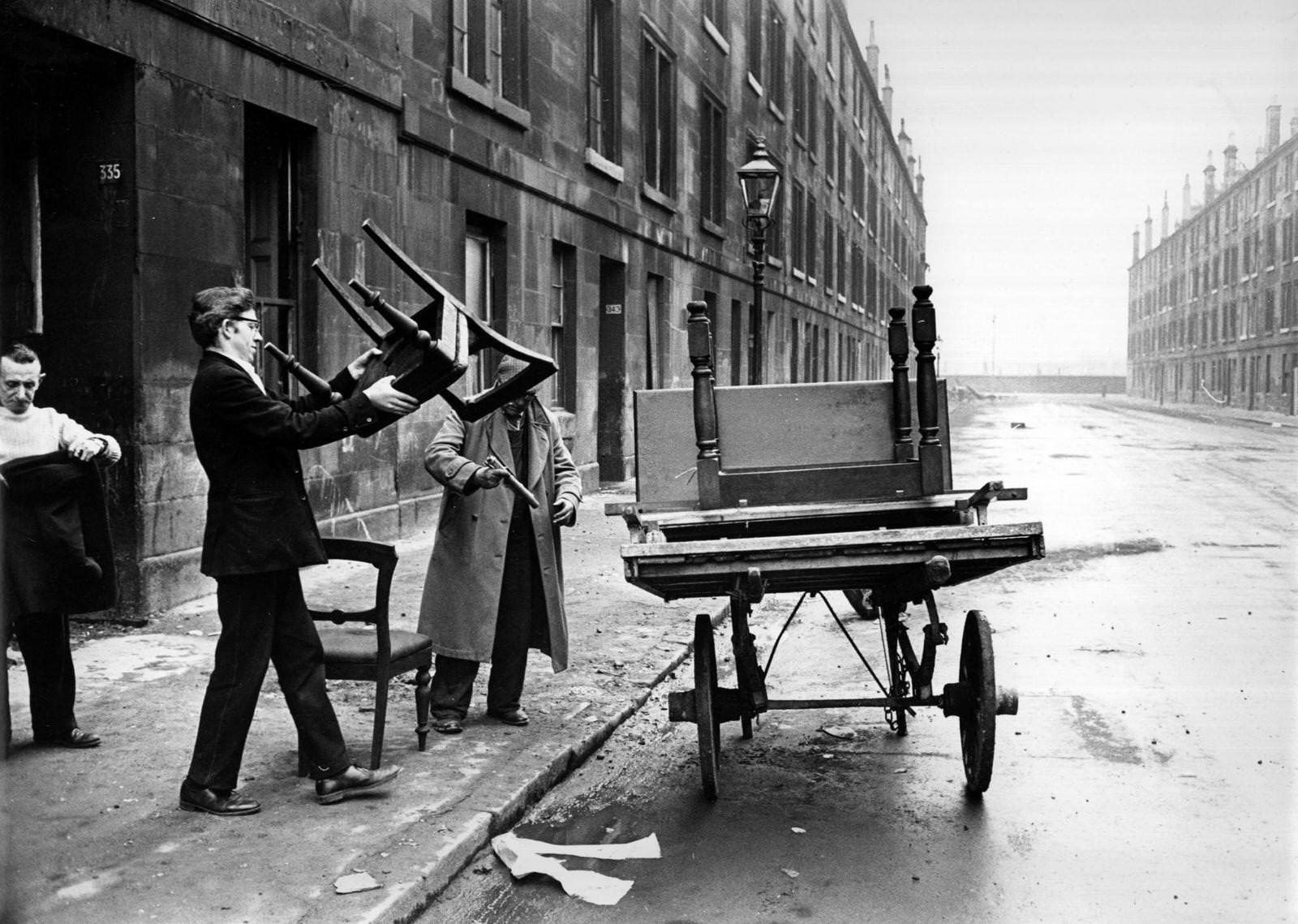
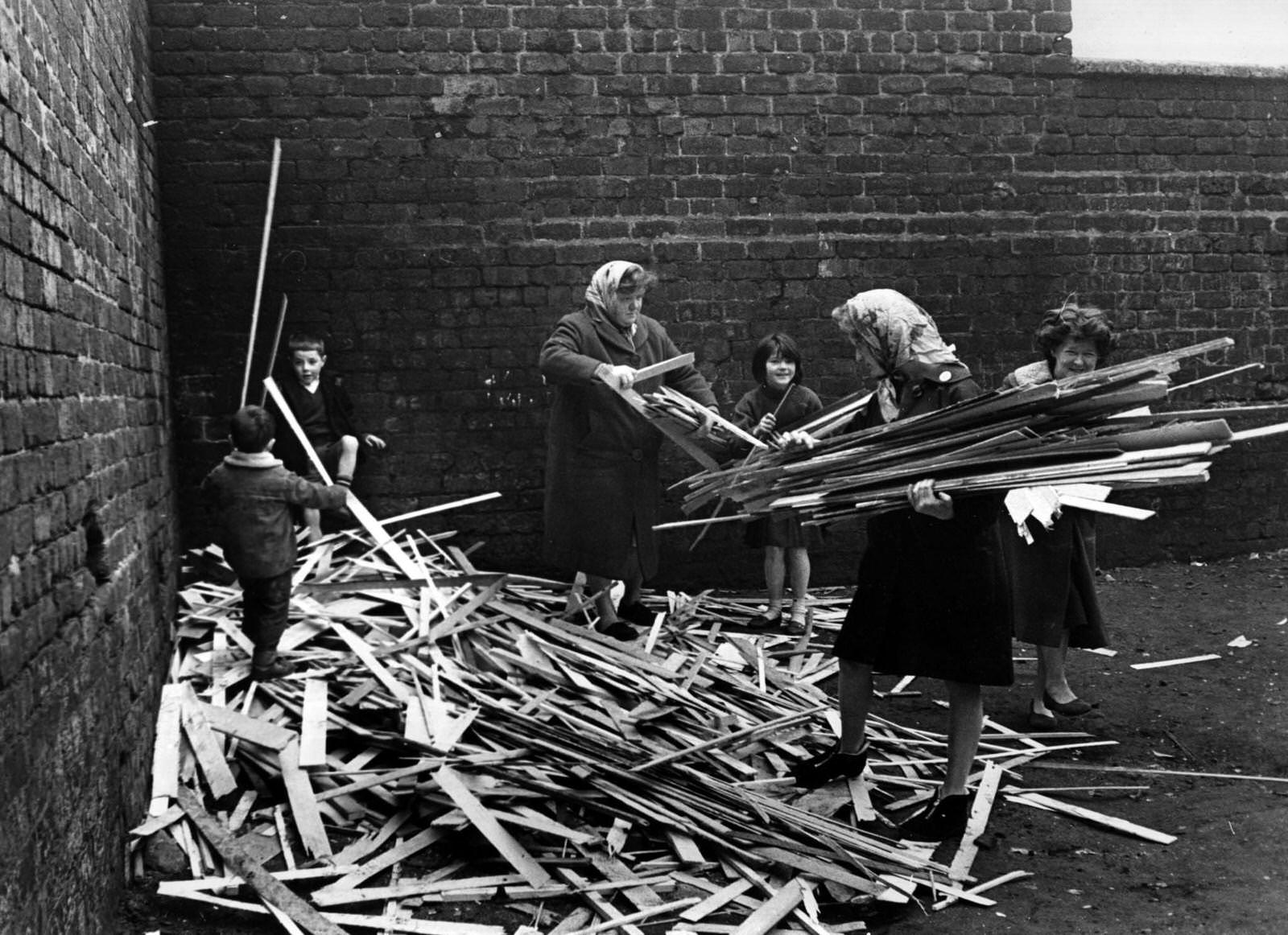
As old blocks came down, new ones went up beside them. Tower blocks rose from the cleared ground, and residents still living in the surviving tenements could watch the construction from their windows. The contrast was stark — crumbling Victorian stone next to raw concrete frames climbing skyward. Some families were photographed moving their belongings out by hand cart, piling furniture onto the street before the demolition crews arrived. Others collected firewood from the partially-demolished buildings around them, stripping out whatever was still usable before it disappeared under the rubble.
Modern housing under construction beside old tenements in the Gorbals area of Glasgow, 1960A man piling furniture onto a cart in a street of soon-to-be-demolished tenements in the Gorbals area of Glasgow, 1960Residents of the Gorbals area of Glasgow collecting firewood among partially-demolished tenement buildings, 1960
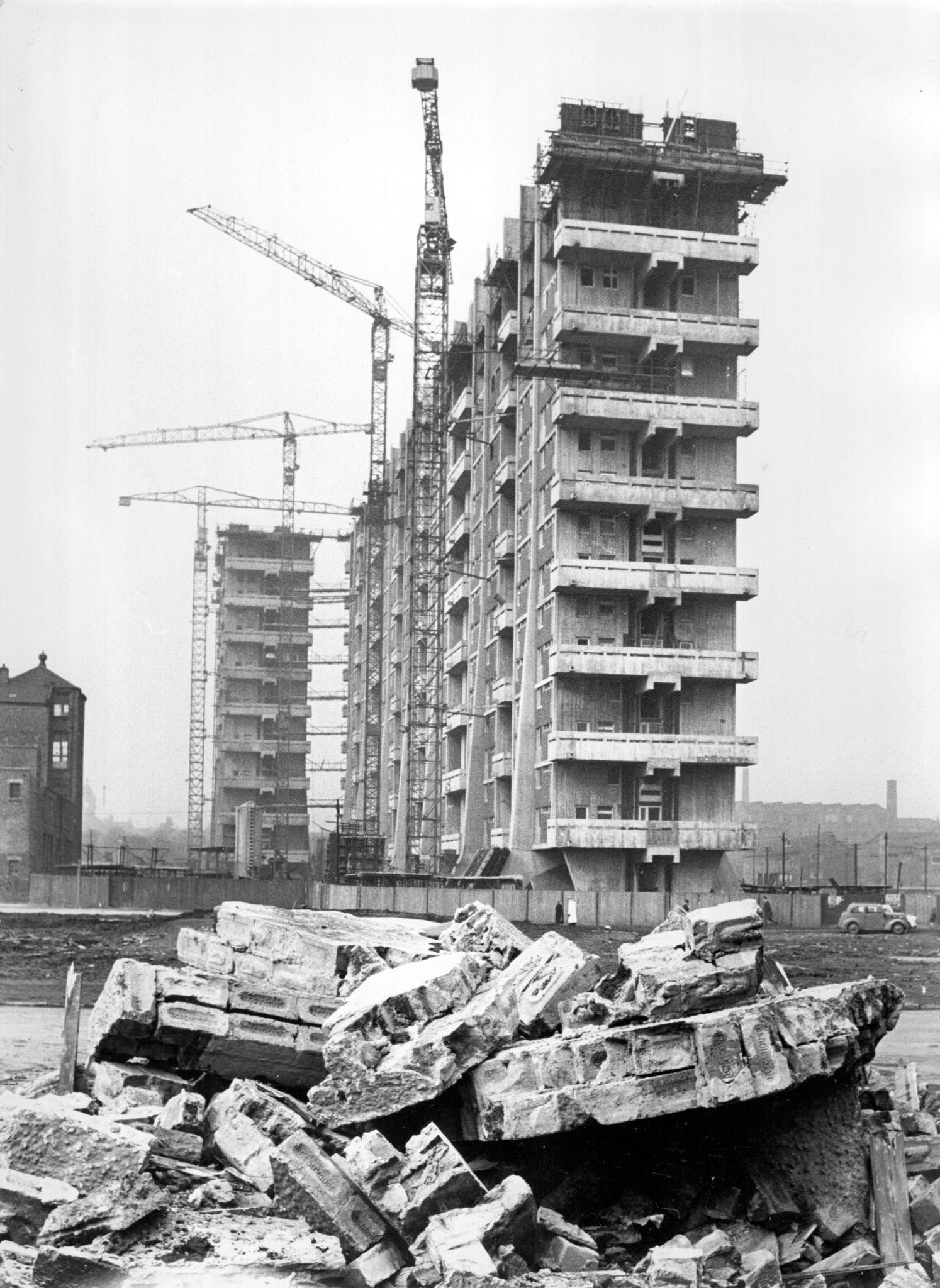
The new high-rise blocks that replaced the tenements were a visible sign of change. Tower cranes dominated the skyline, and by the early 1960s completed blocks were already occupied. The Buchanan family, photographed in 1960, sat in their new flat — a space that would have been unimaginable compared to the single rooms many Gorbals families had shared for generations. Children played at the base of the new towers in open ground that had only recently been cleared slum street. But even in 1962, women were still walking past active demolition sites, and residents were still looking out from old tenement windows at the new housing rising across the street.
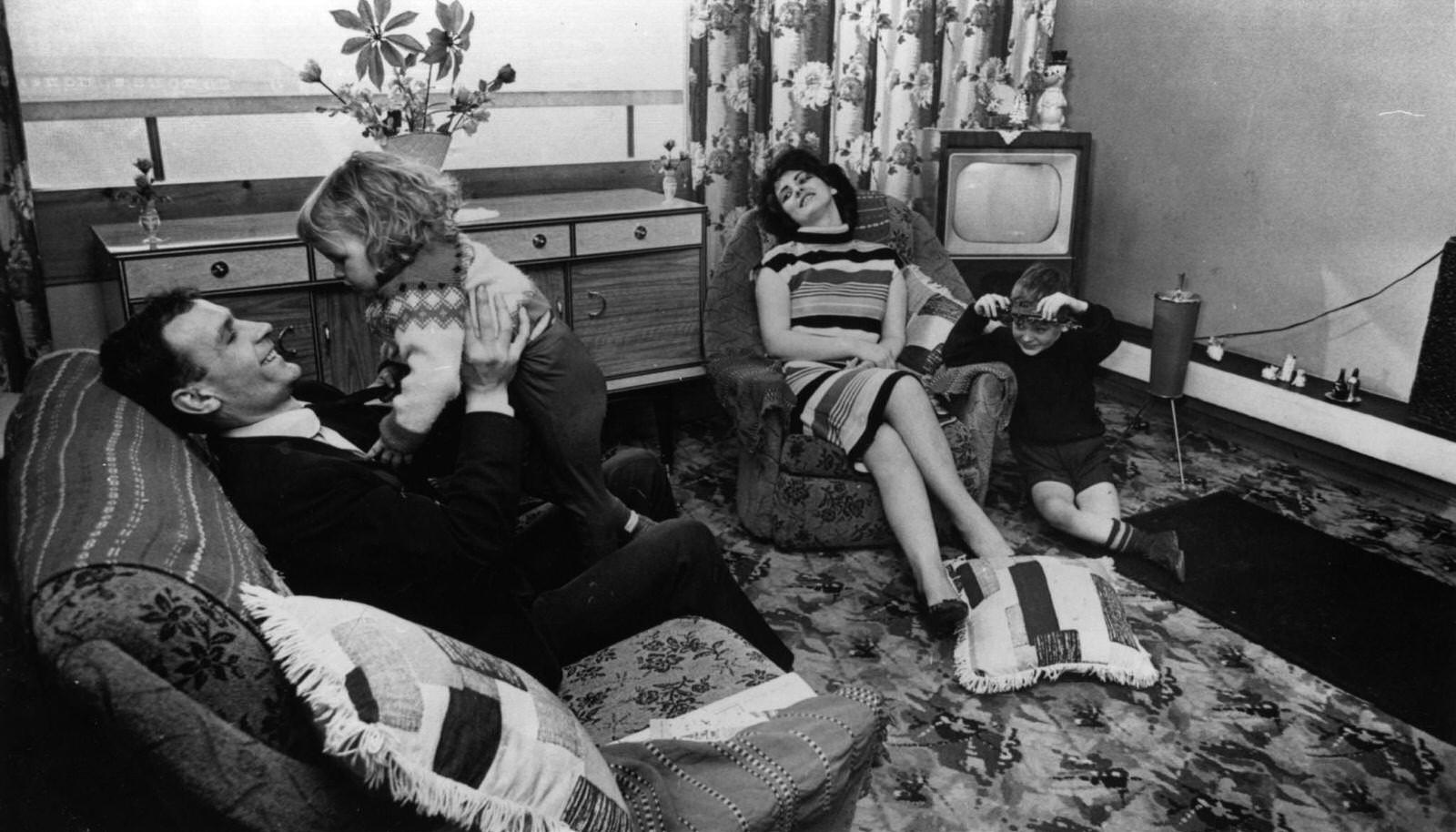
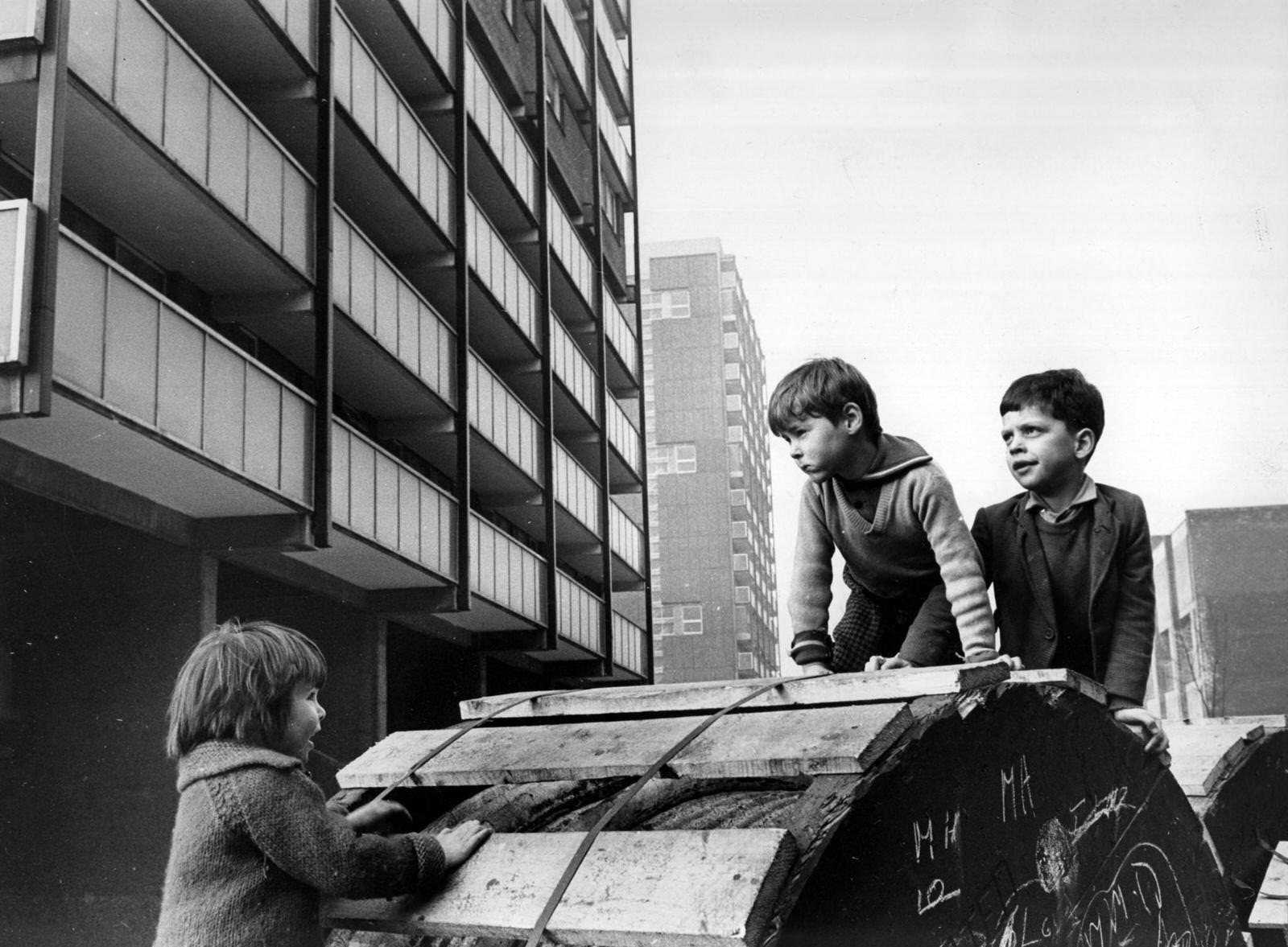
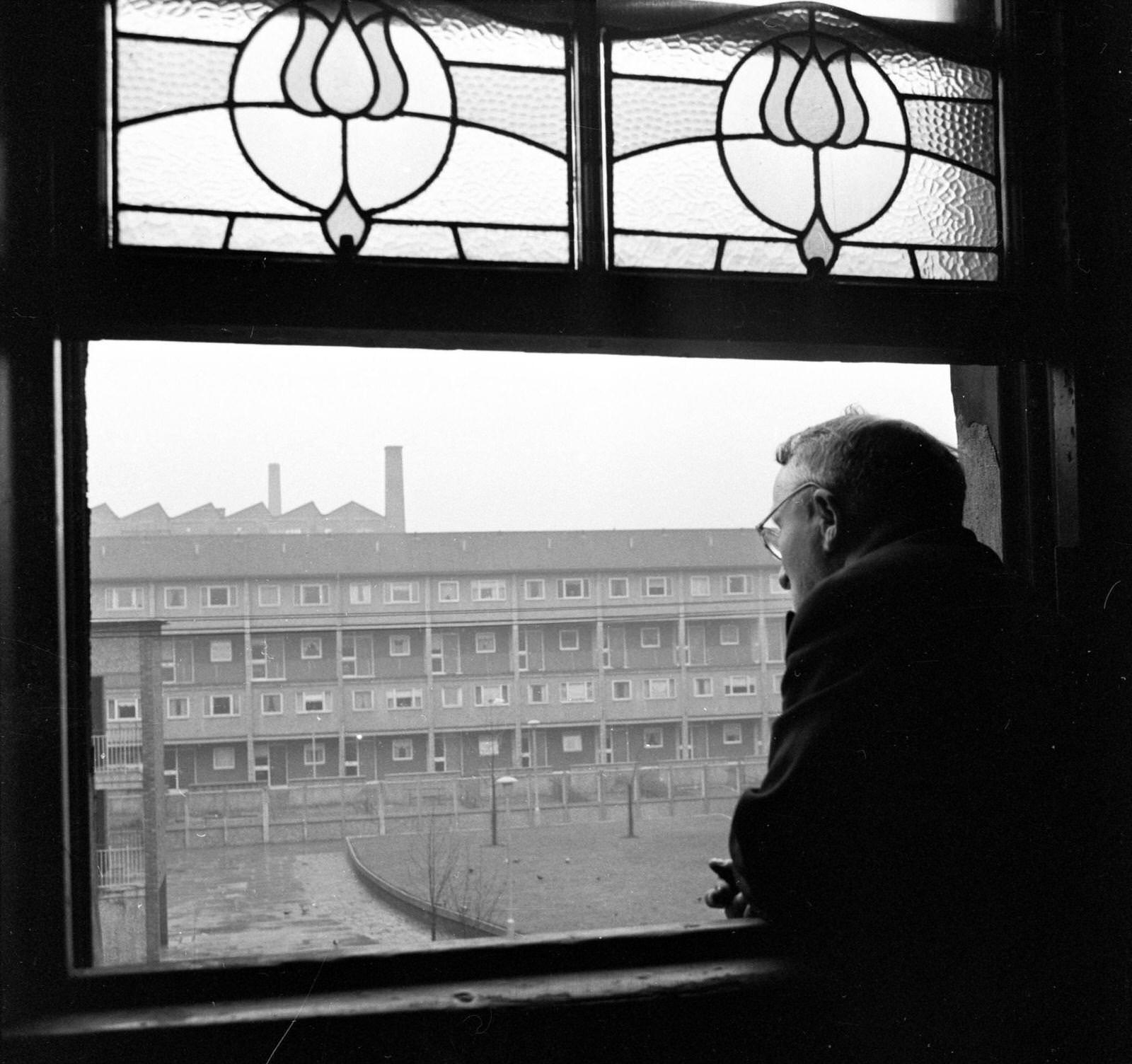
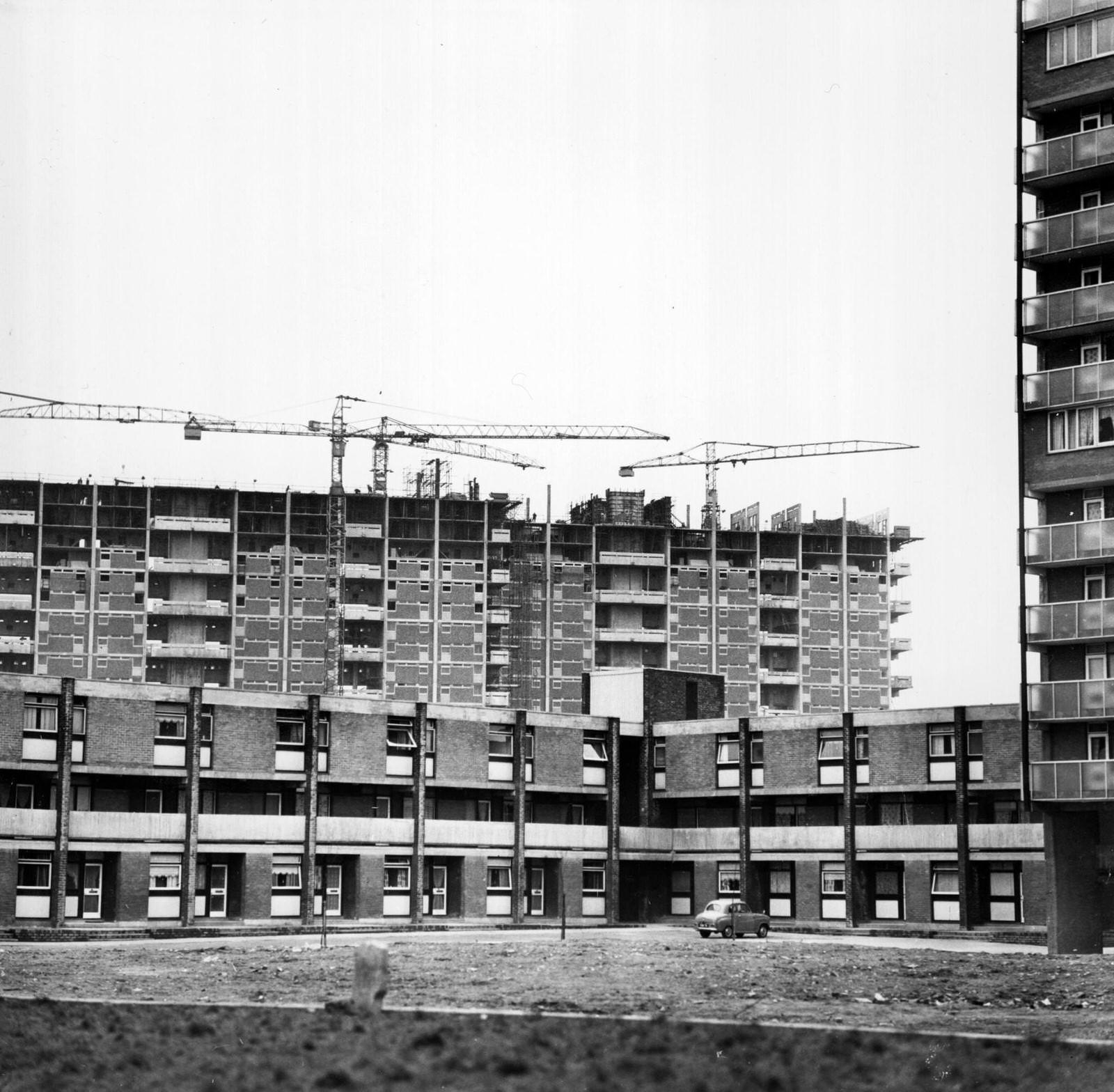
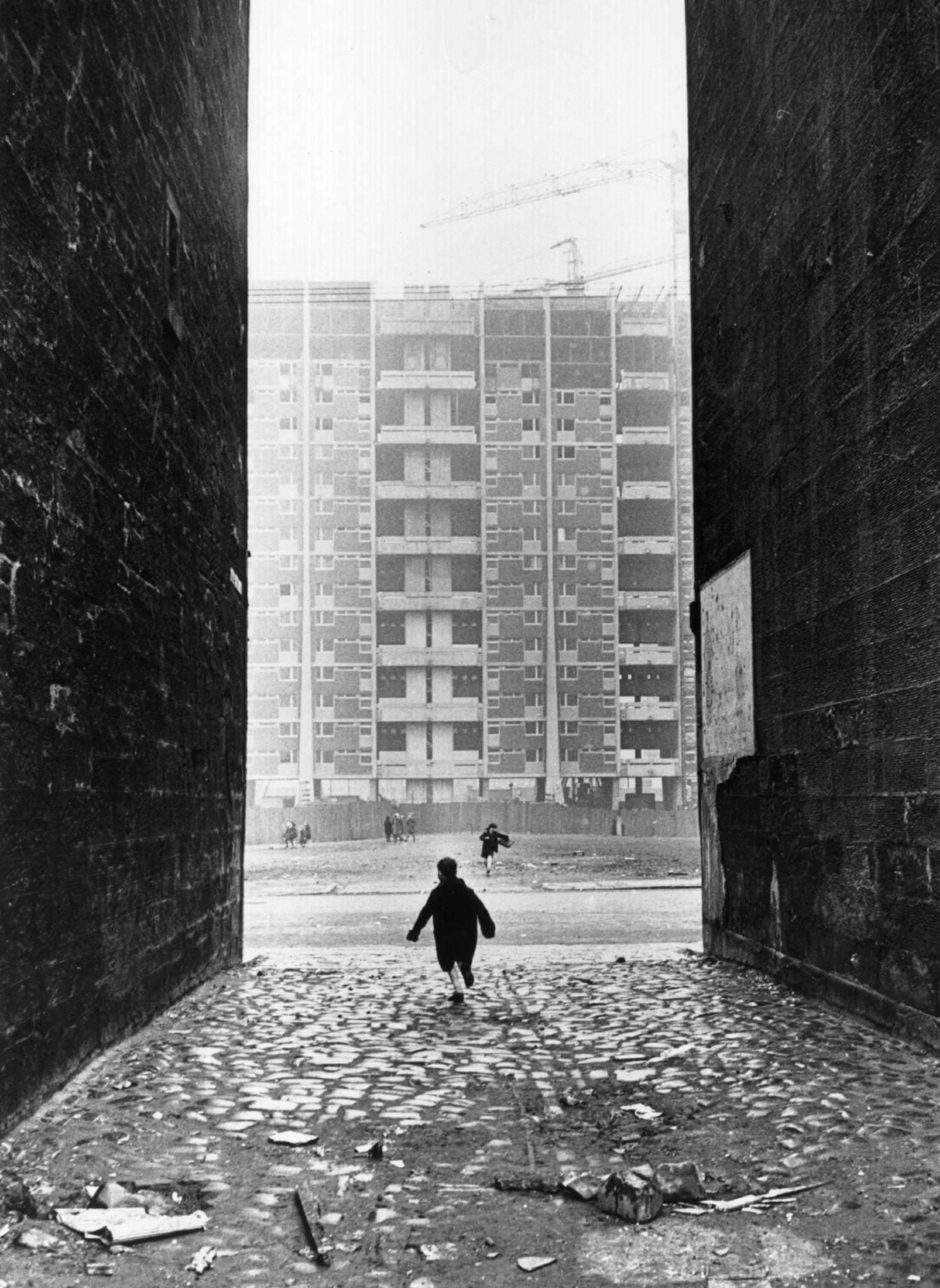
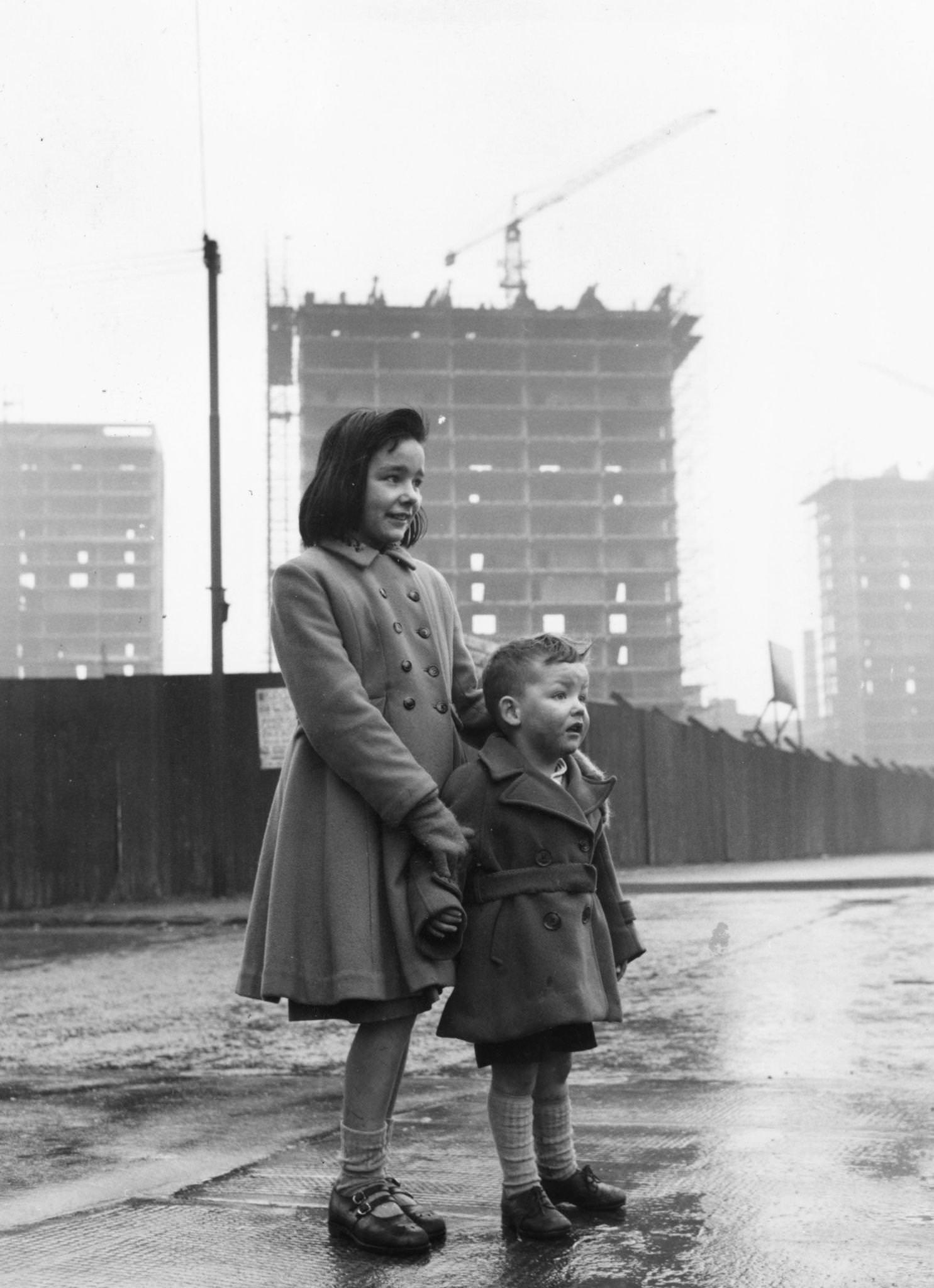
Tower blocks under construction in the Gorbals area of Glasgow, 1960The Buchanan family at home in their new flat in the Gorbals area of Glasgow, 1960Children playing beside modern tower blocks in the Gorbals area of Glasgow, 1960A resident of the Gorbals area of Glasgow looking out of his window at a row of newly-built housing, 1962
Even as late as 1969 and into the early 1970s, pockets of the old Gorbals remained. Sections of slum housing that hadn’t yet been cleared still sheltered families. Mothers with five children crowded into flats with bare walls and minimal furniture. A 1974 photograph labelled some remaining structures as among the worst slums in Britain. The district that had housed 90,000 people at its peak was being hollowed out block by block, its population scattered across the city and its surrounding towns, and its physical fabric reduced to rubble and bonfires on cleared lots.
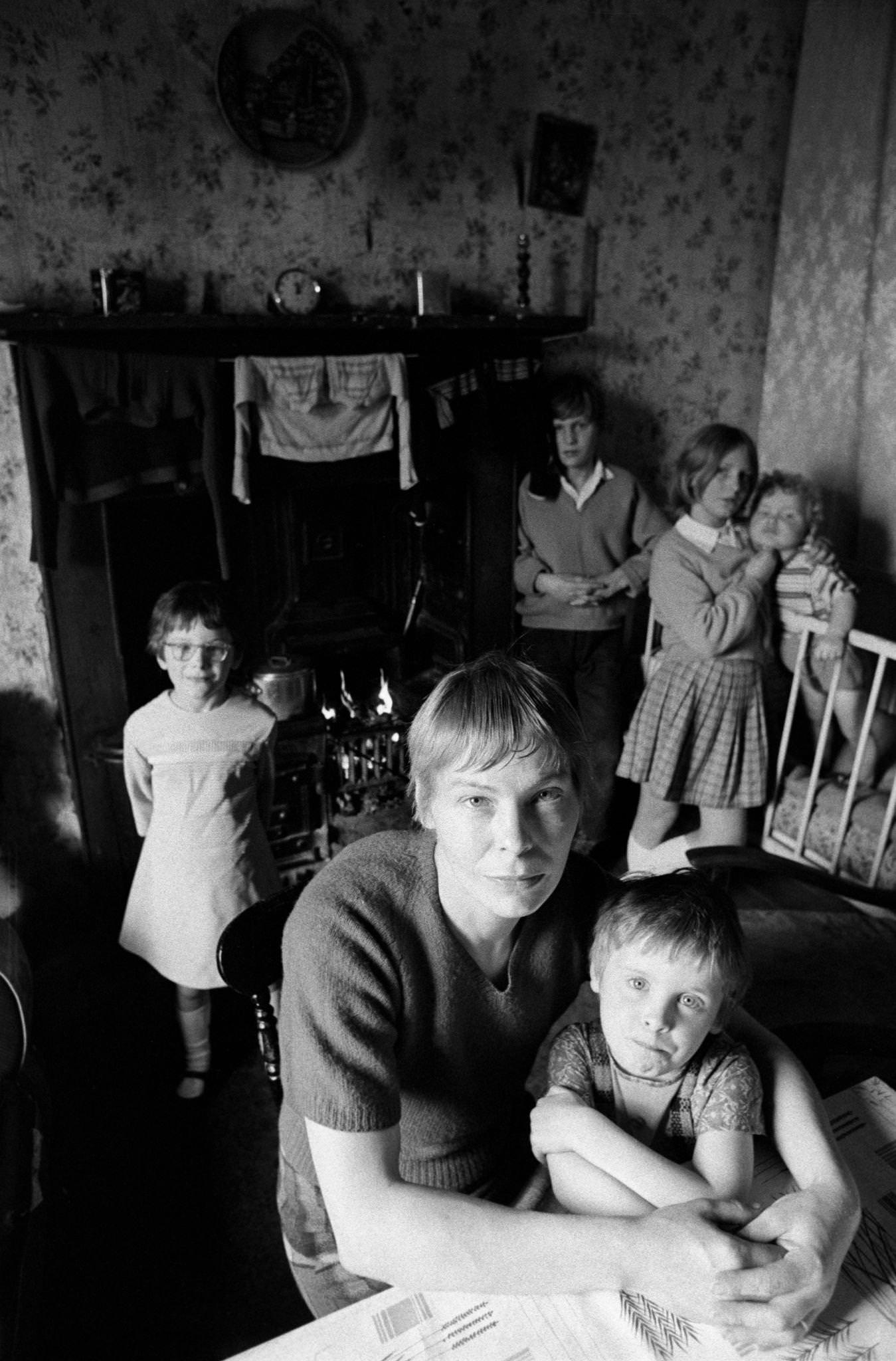
A mother with her five children in poor housing in the notorious Gorbals district of Glasgow, 1969.A scene in the Gorbals area of Glasgow, Scotland, showing the slums, some of the worst in Britain, 1974
Below is the full collection of photographs documenting the Gorbals across this period — from the late 1940s through to the final stages of clearance. They show not just the physical state of the buildings, but the daily texture of life inside one of Britain’s most densely packed urban communities.
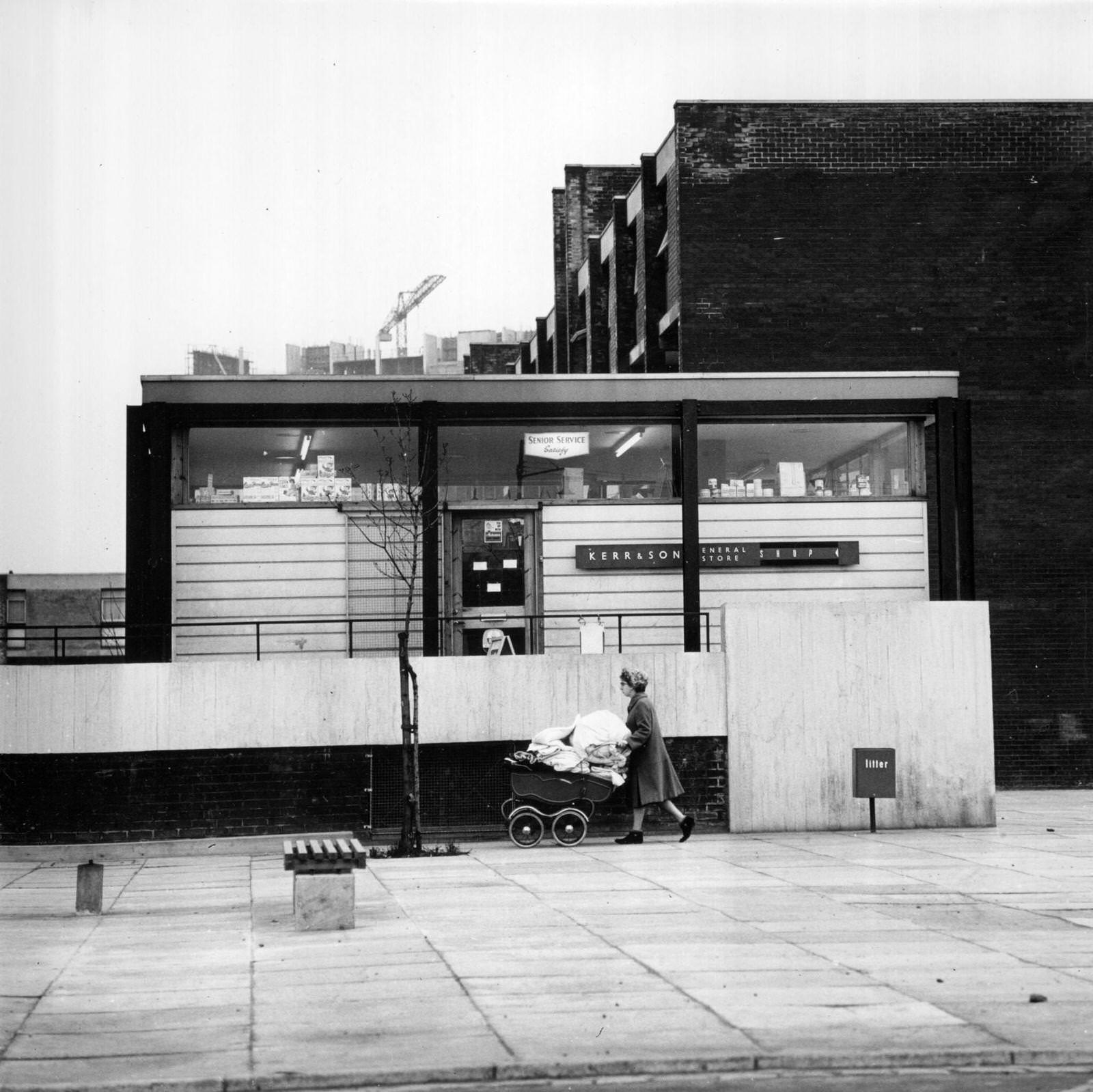
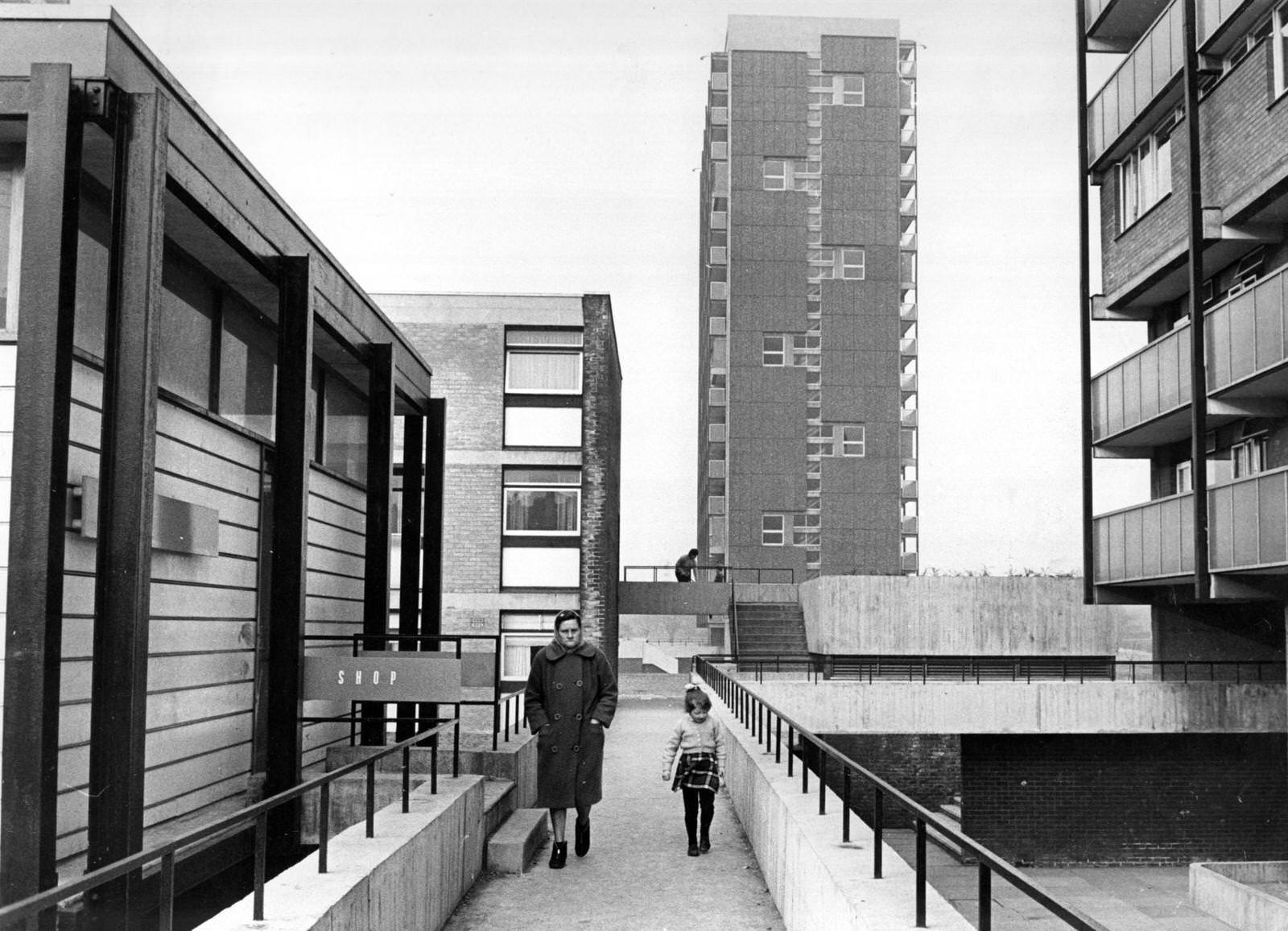
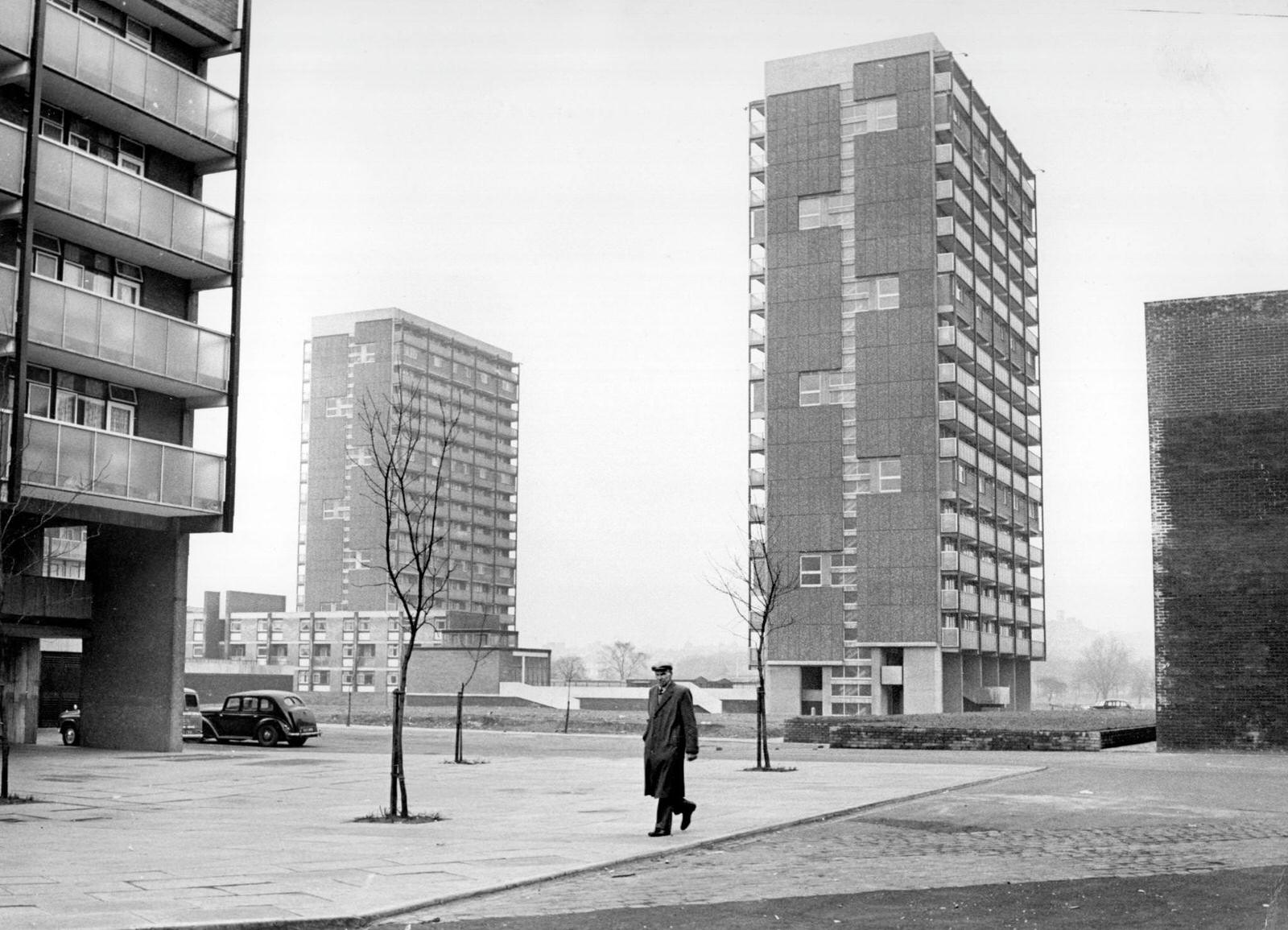
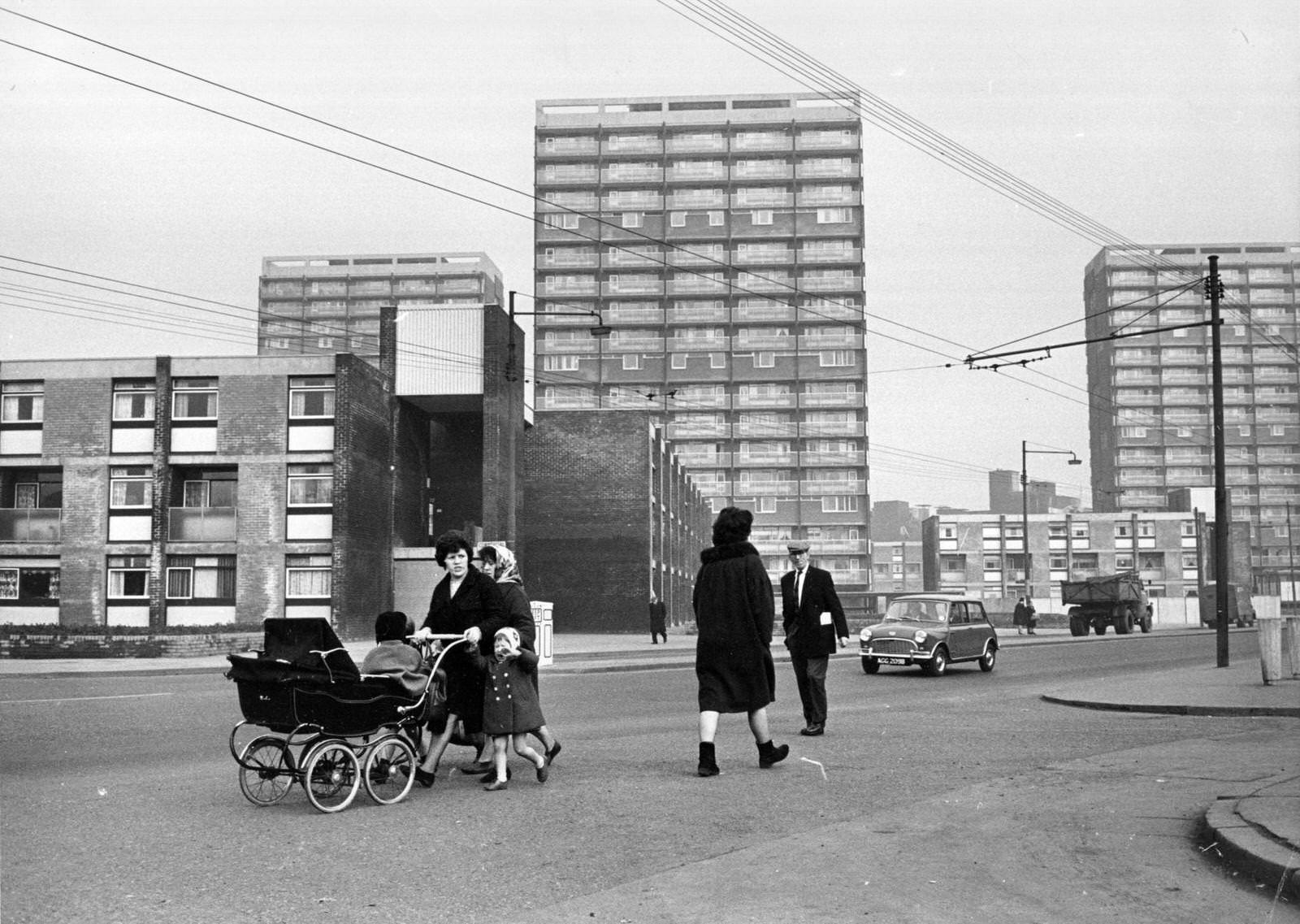
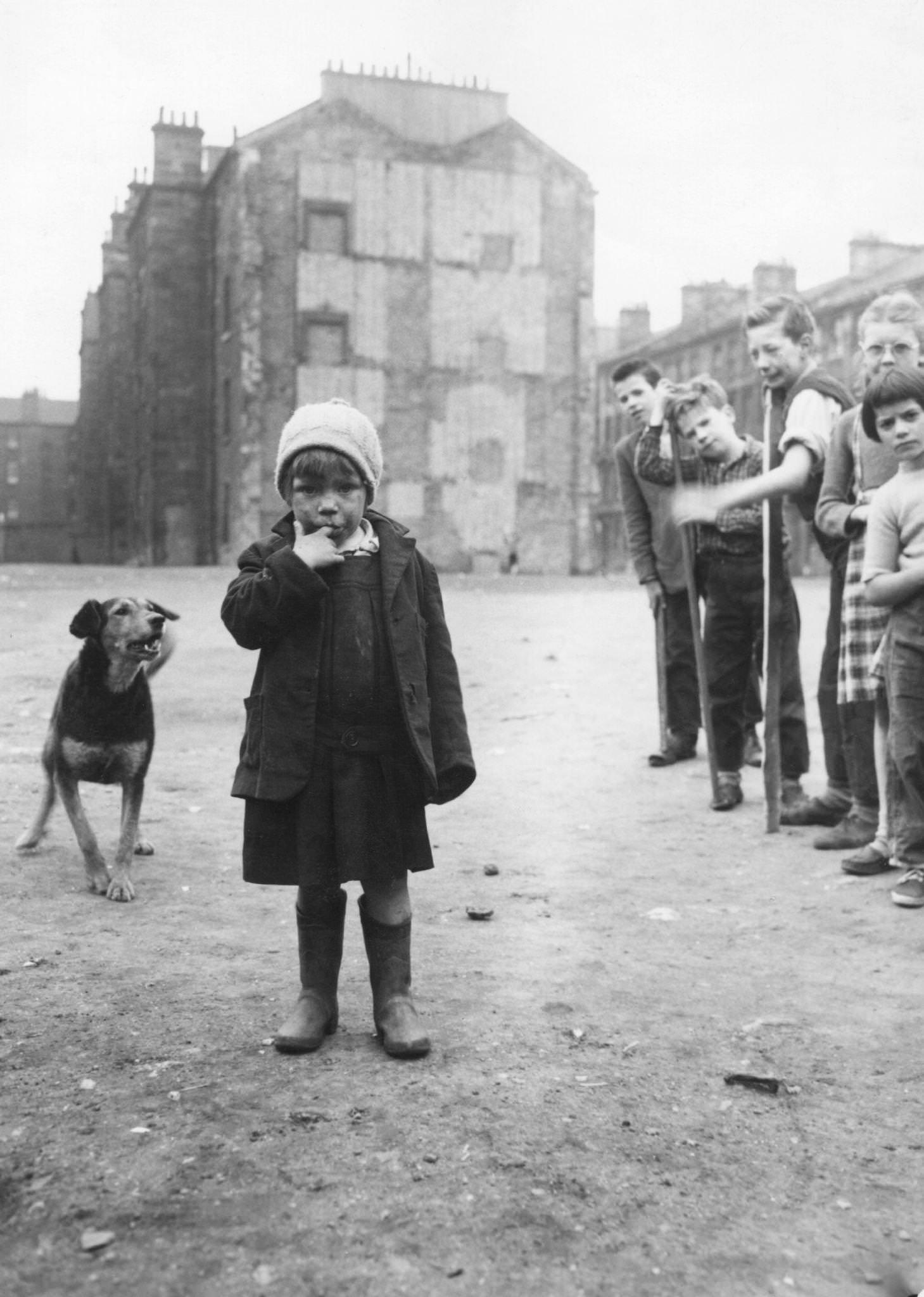
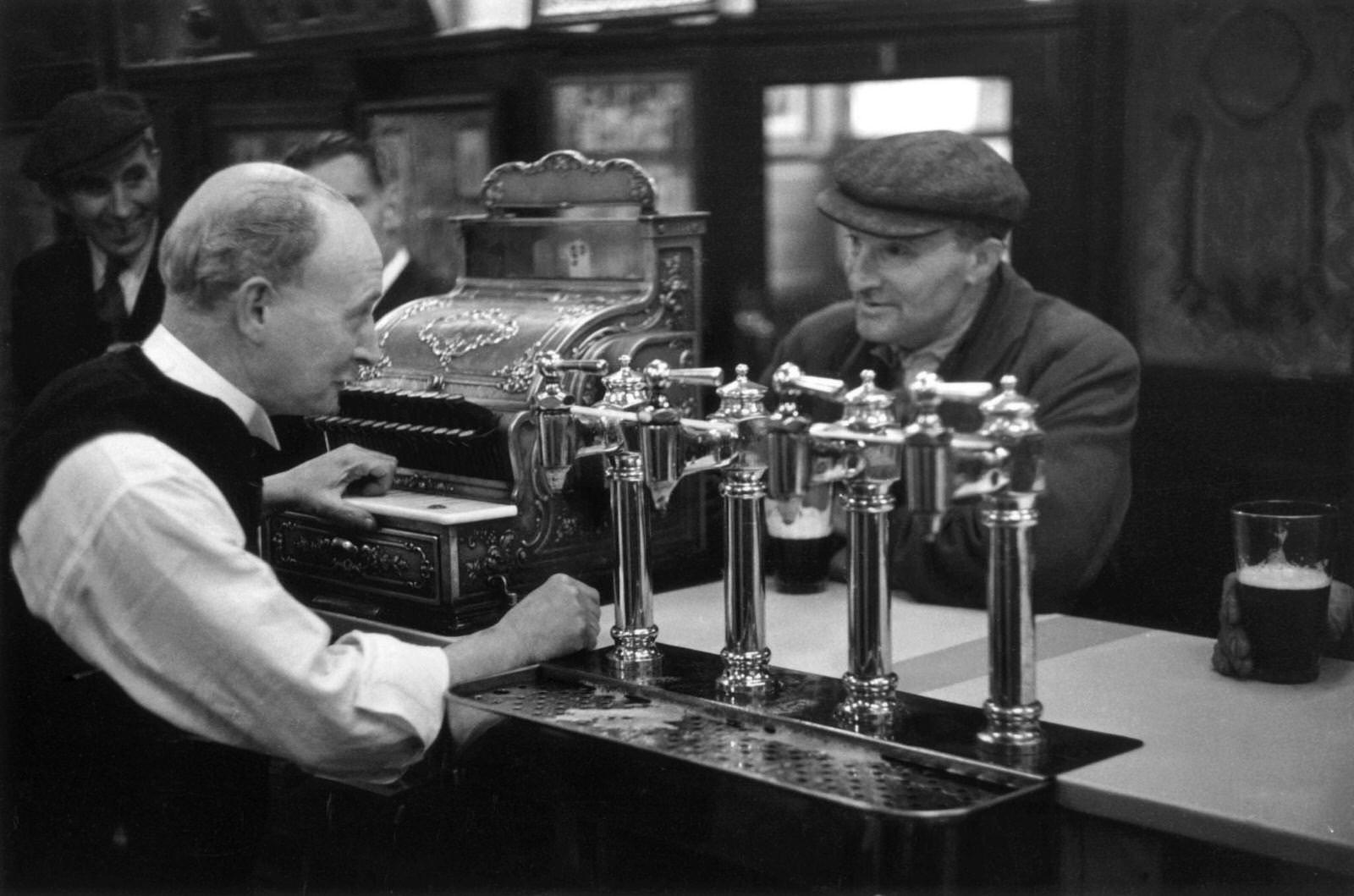
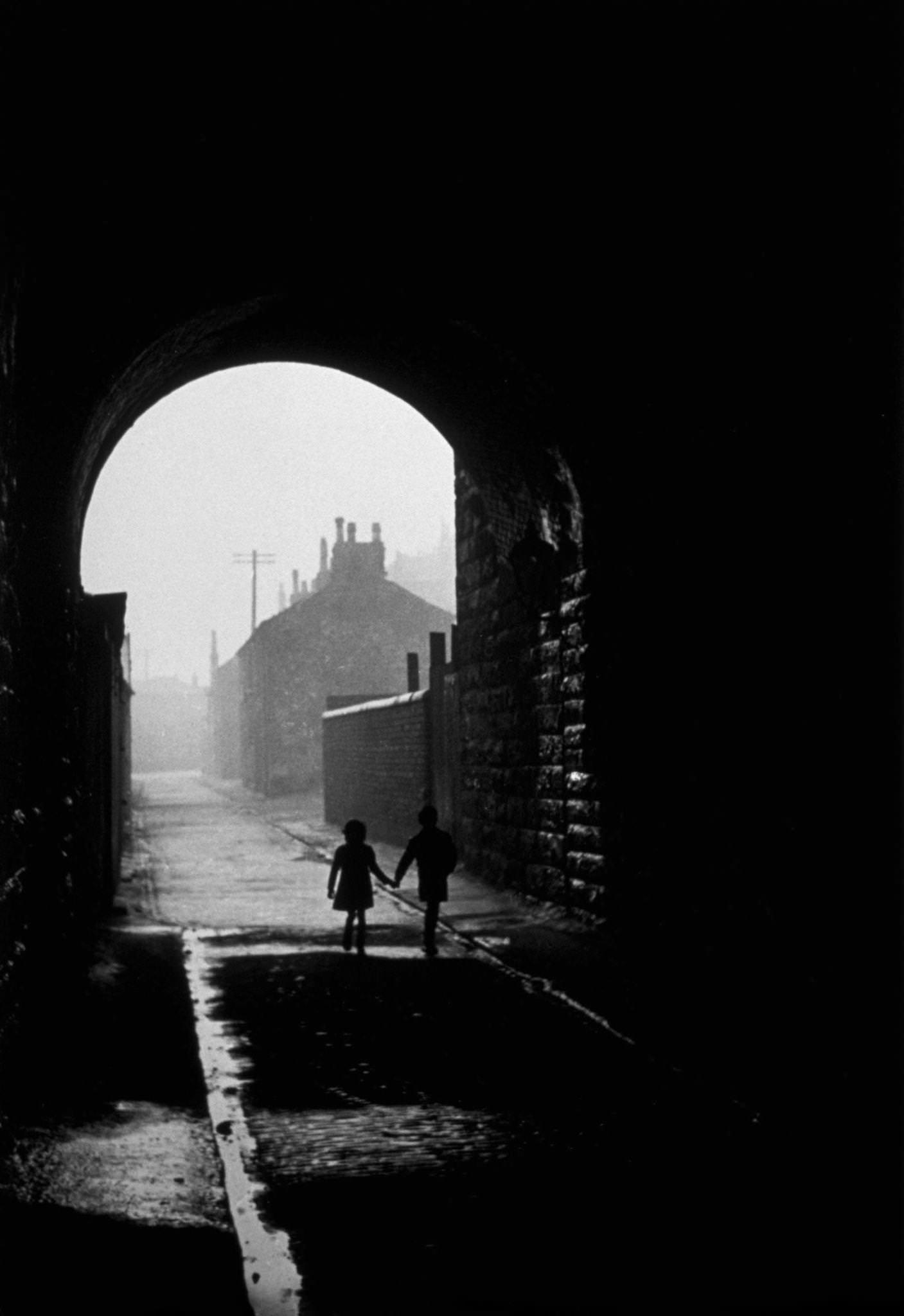
A woman pushing a pram laden with bedding past a newly built shop in the modern Gorbals area of Glasgow, 1960Modern housing in the Gorbals area of Glasgow, some of it under construction, 1960A woman and a little girl walking through an area of modern housing in the Gorbals area of Glasgow, 1960A woman and a little girl walking through an area of modern housing in the Gorbals area of Glasgow, 1690A man walking past modern tower blocks in the Gorbals area of Glasgow, 1960People walking past newly-built tower blocks in the Gorbals area of Glasgow, 1960A high-rise block of flats under construction in the Gorbals area of Glasgow, 1960A man pulling a hand cart past tower blocks under construction in the Gorbals area of Glasgow, 1960Flats in Camden Street, in the Gorbals area of Glasgow, 1956Children play on waste ground outside a tenement block in Camden Street, the Gorbals, Glasgow, 1956Children playing in Surrey Lane in the Gorbals area of Glasgow, 1956The Surrey Lane entrance to Nicholson Street flats, in the Gorbals, the notorious slum district of Glasgow, 1956A dog barks at a girl in the Surrey Lane area of the Gorbals, Glasgow, 1956Children play in a yard in Coburg Street, in the Gorbals area of Glasgow, 1956Slum children at play, 1952Matilda Szlapikas in her slum surrounding, 1952General scenes of a slum in the Gorbals area of Glasgow, 1952Donnelly family of Centre Street, Glasgow, 1952A boy and girl hold hands under an archway in the Gorbals, a slum district of Glasgow, 31st January 1948.A barman at work in the Gorbals district of Glasgow, 1948
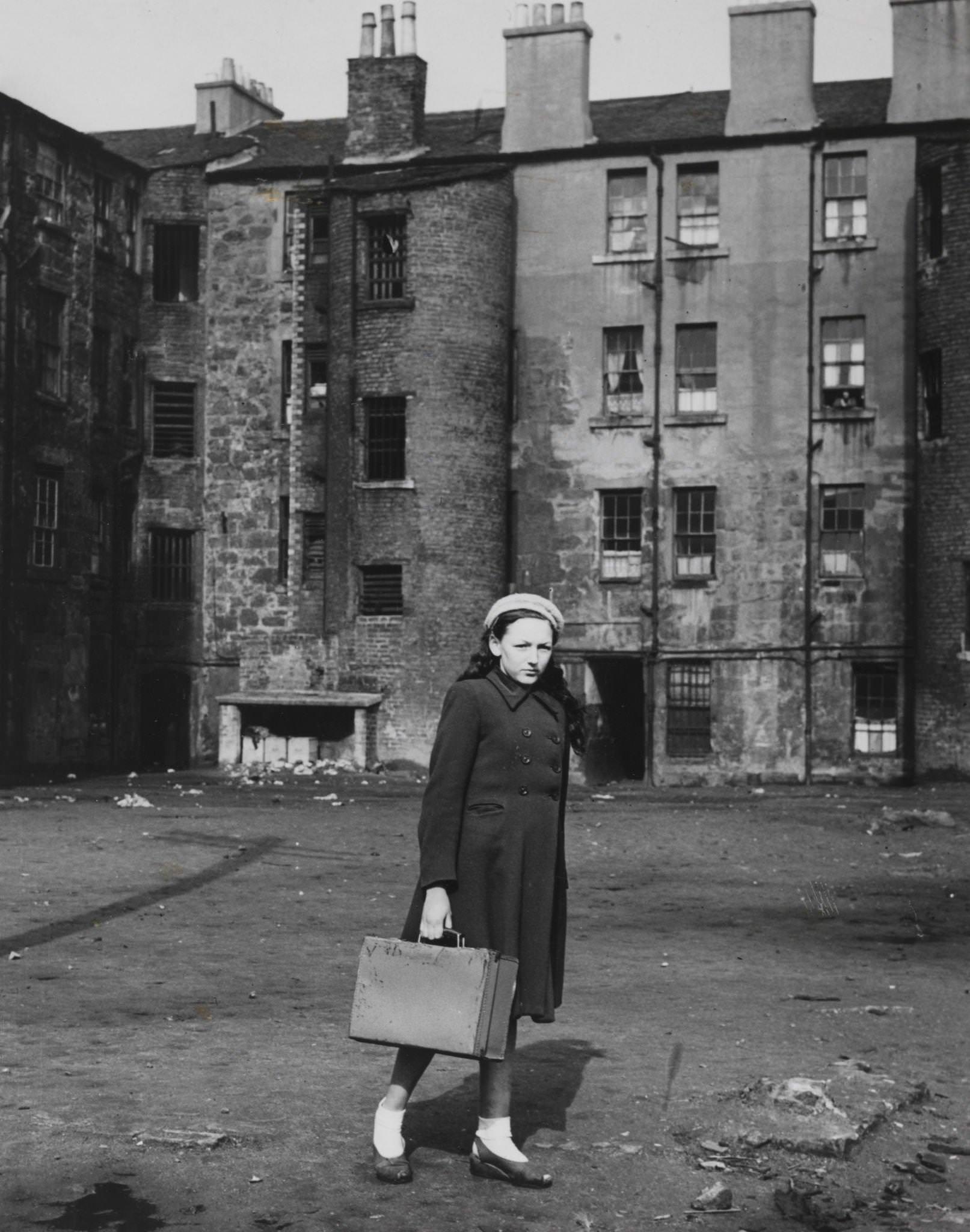
Two young boys from the Gorbals area of Glasgow, 1948
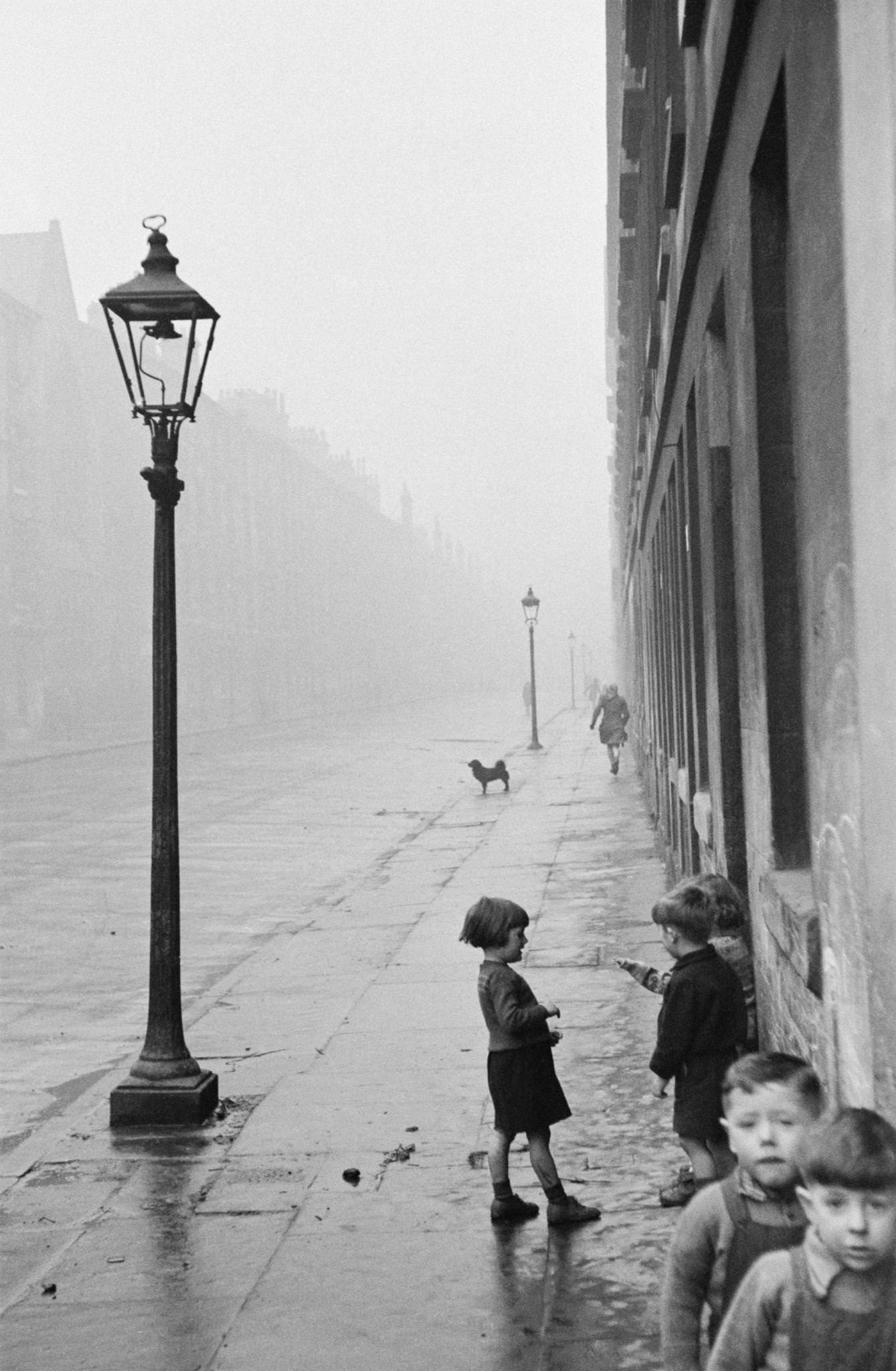
Two children walking in the Gorbals area of Glasgow, 1948
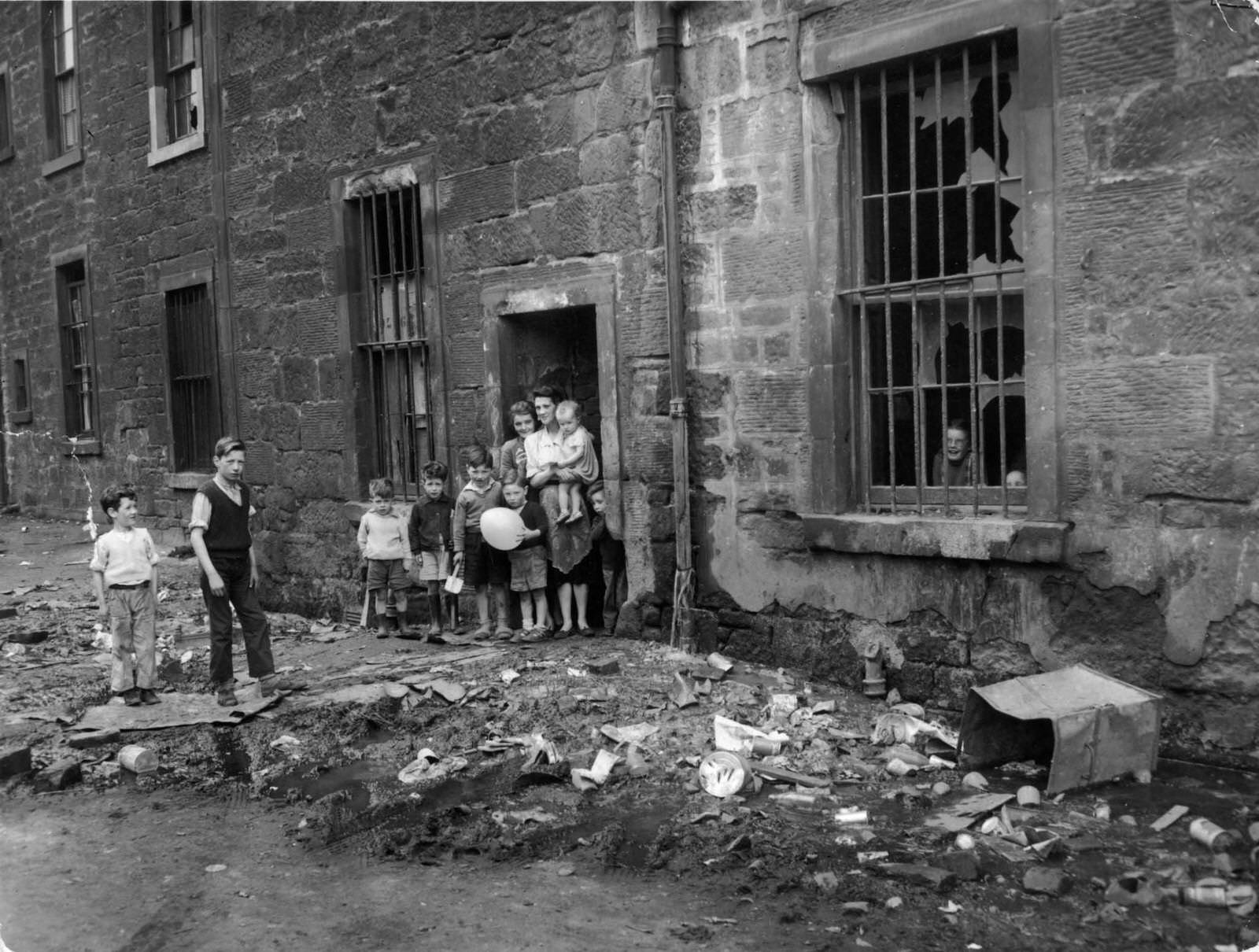
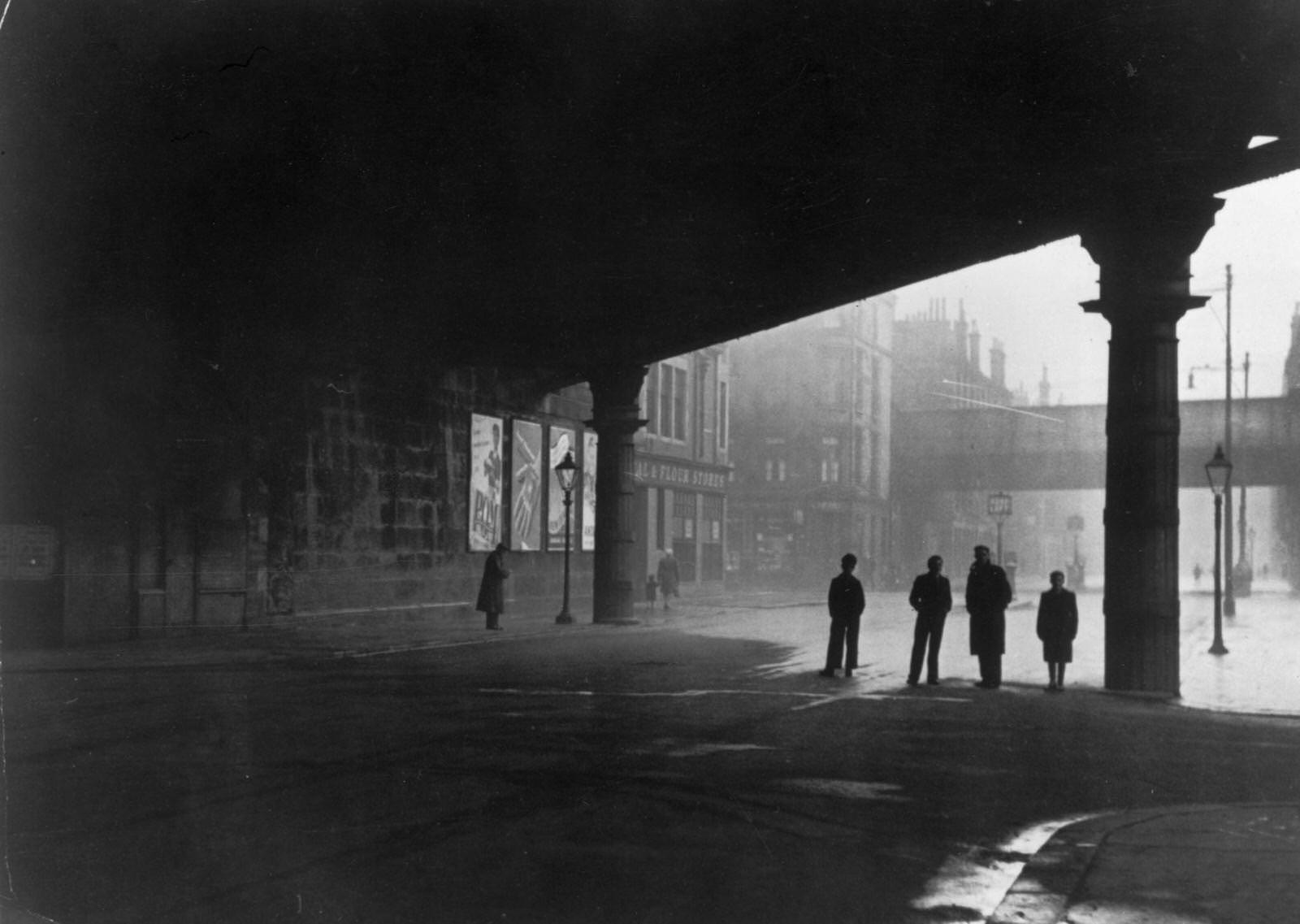
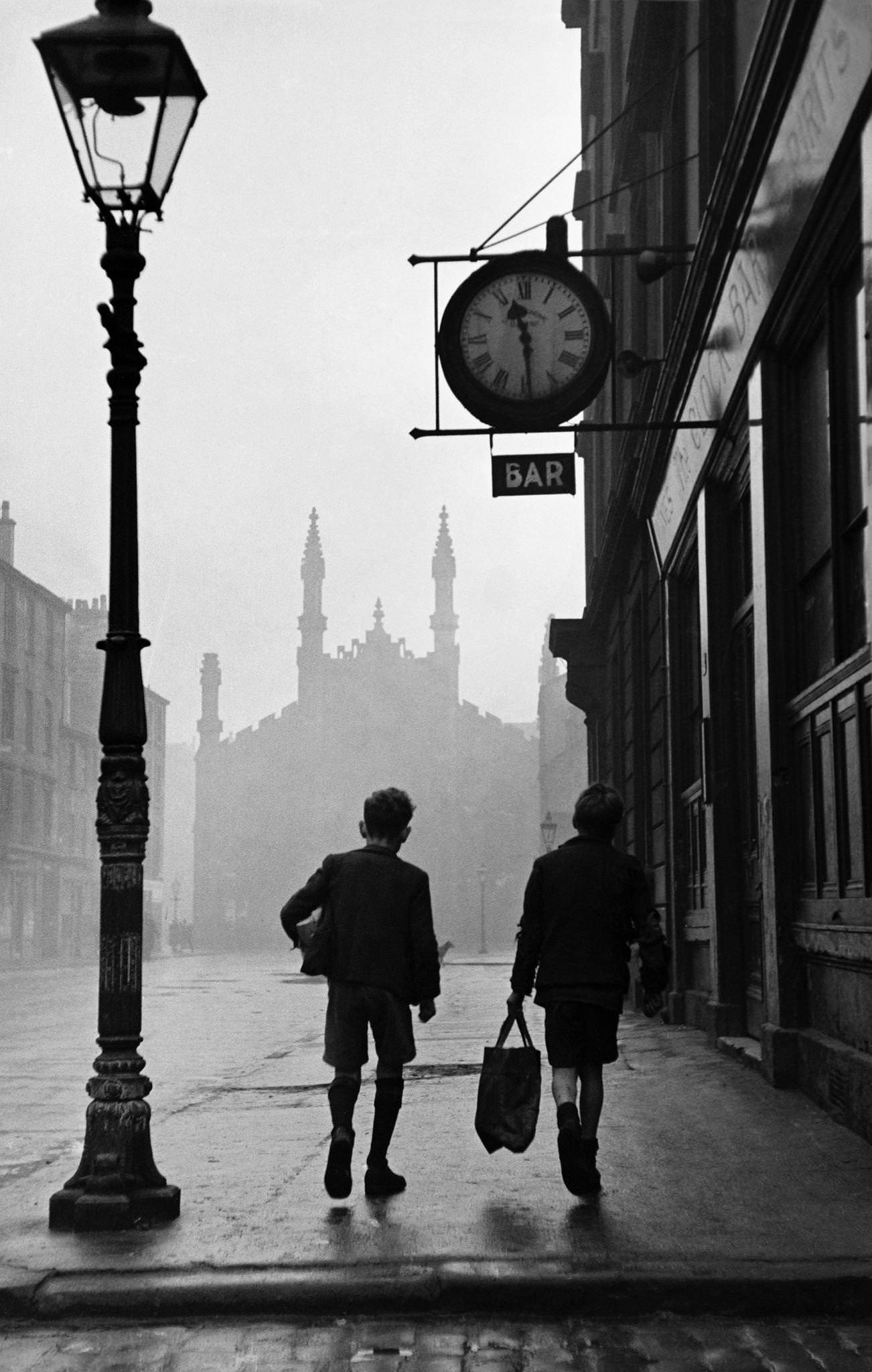
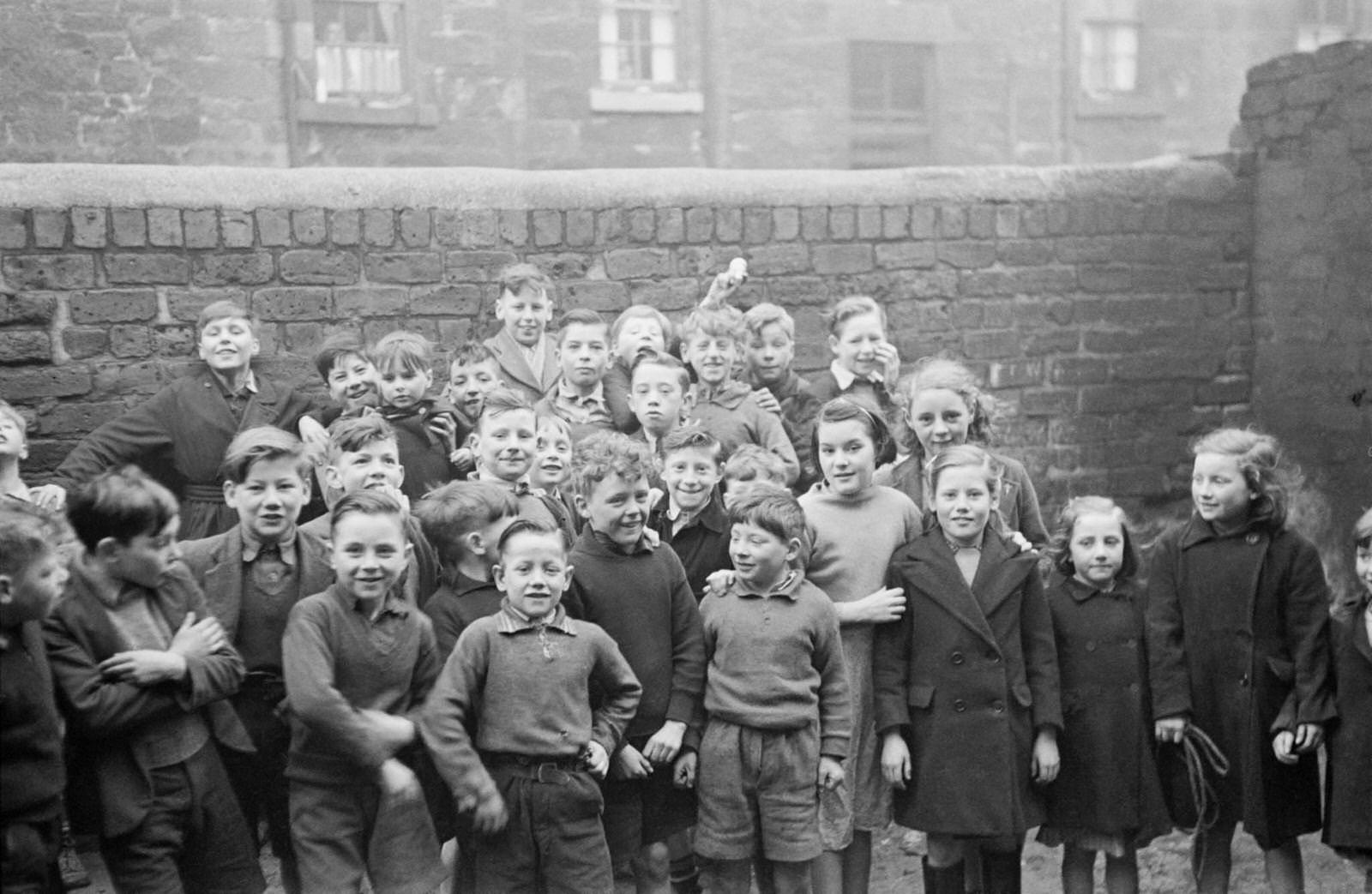
A bridge in the Gorbals area of Glasgow, 1948Children playing in a puddle in the Gorbals, a slum distict of Glasgow with graffiti on the walls and muddy pools and rubbish littering the back yards, 1948A group of boys from the Gorbals play amongst the gravestones of the Corporation Burial Ground in Rutherglen Road, one of the few areas of greenery in the district, 1948Two boys walk down a street in the Gorbals, a slum area of Glasgow, 1948Children play in a yard with the ‘Gorbals’, a notorious slum area of Glasgow, January 1948.Men at a social club in the Gorbals, a slum district of Glasgow, 1948.Boys and girls pose for the camera in the Gorbals, a slum district of Glasgow, 1948.
A group of young children on a street in the Gorbals, a slum district of Glasgow, 1948.
A group of boys play amongst the gravestones of the Corporation Burial Ground in Rutherglen Road, one of the few areas of greenery in the Gorbals, a slum district of Glasgow, 1948.
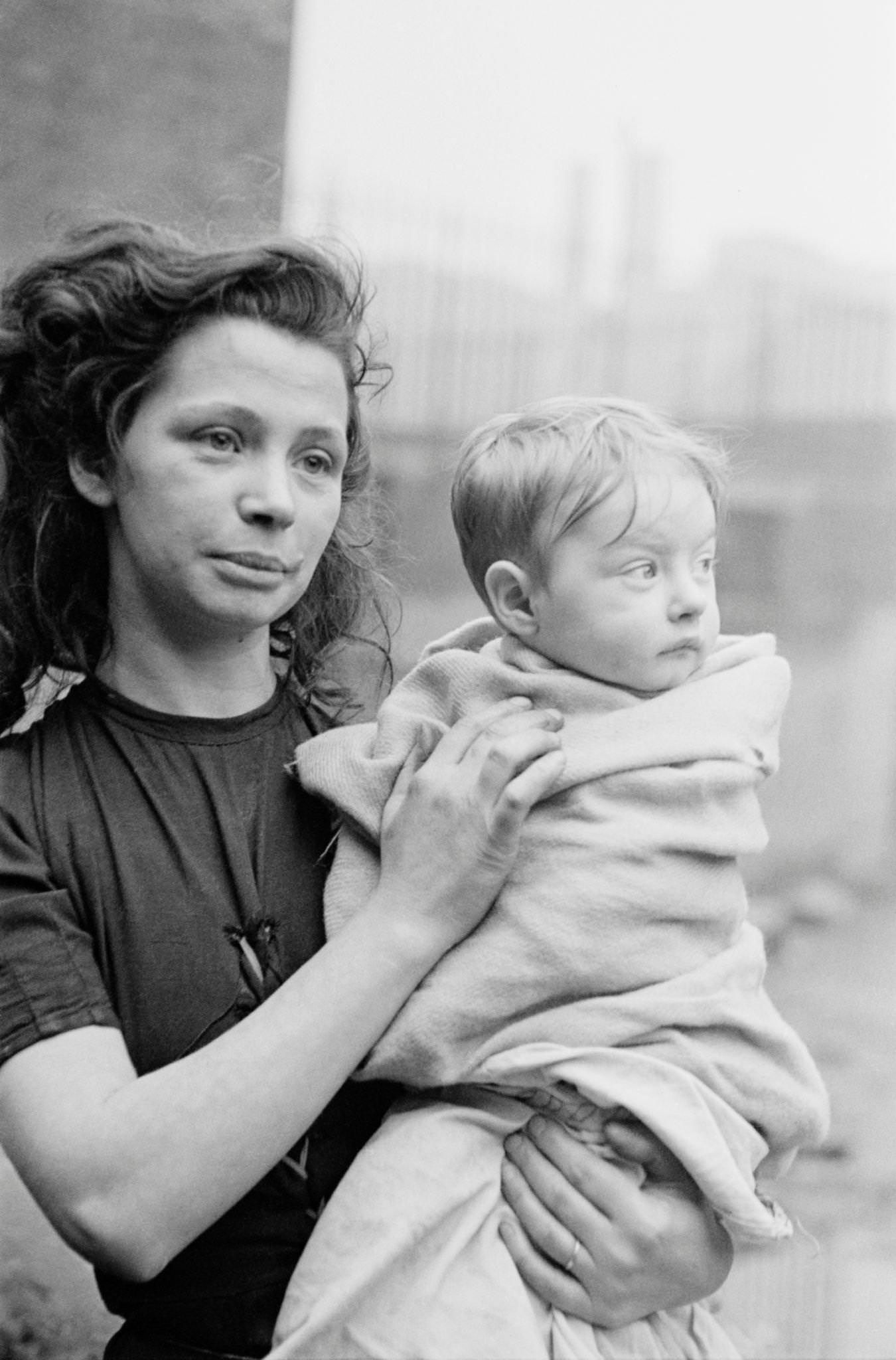
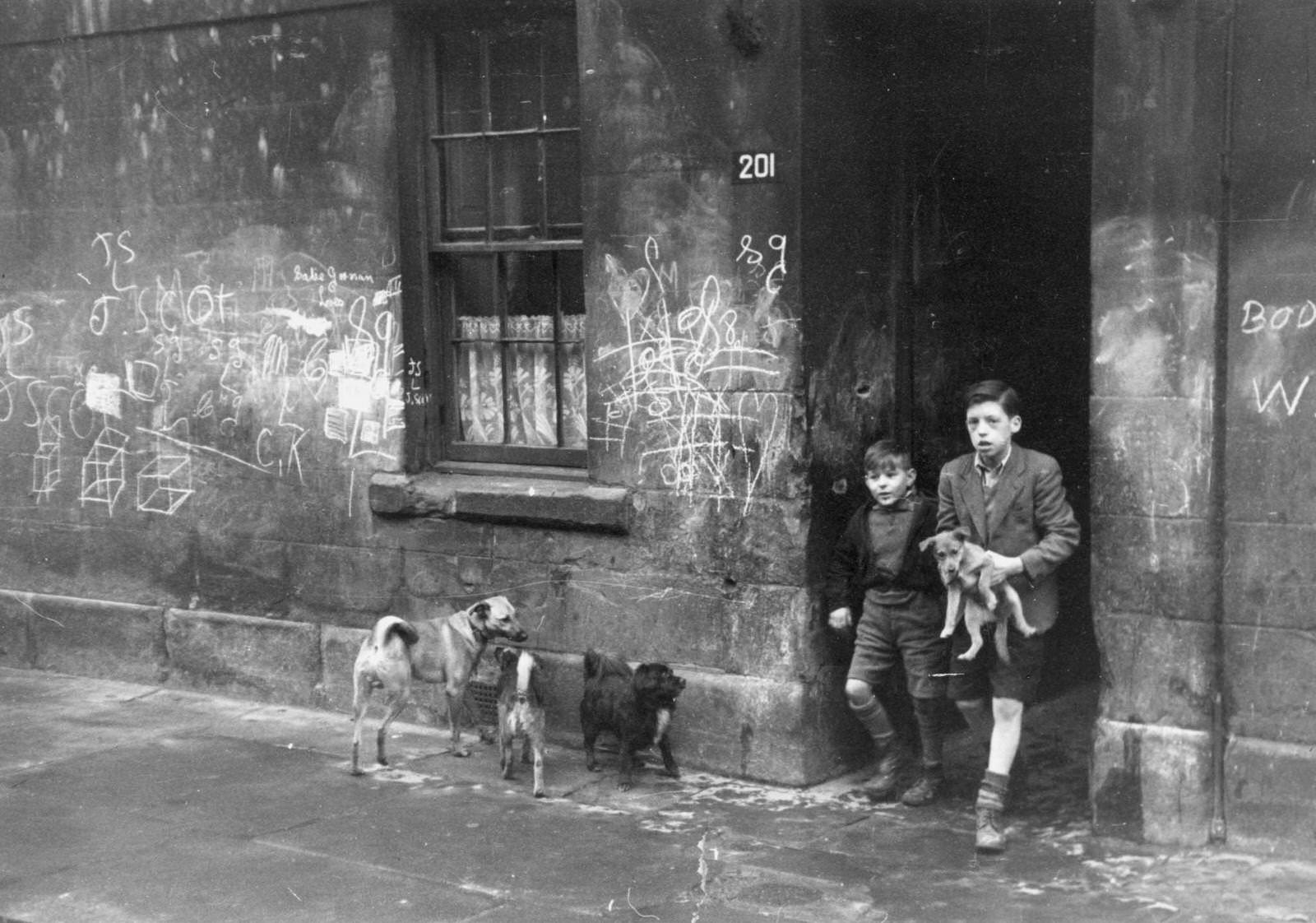
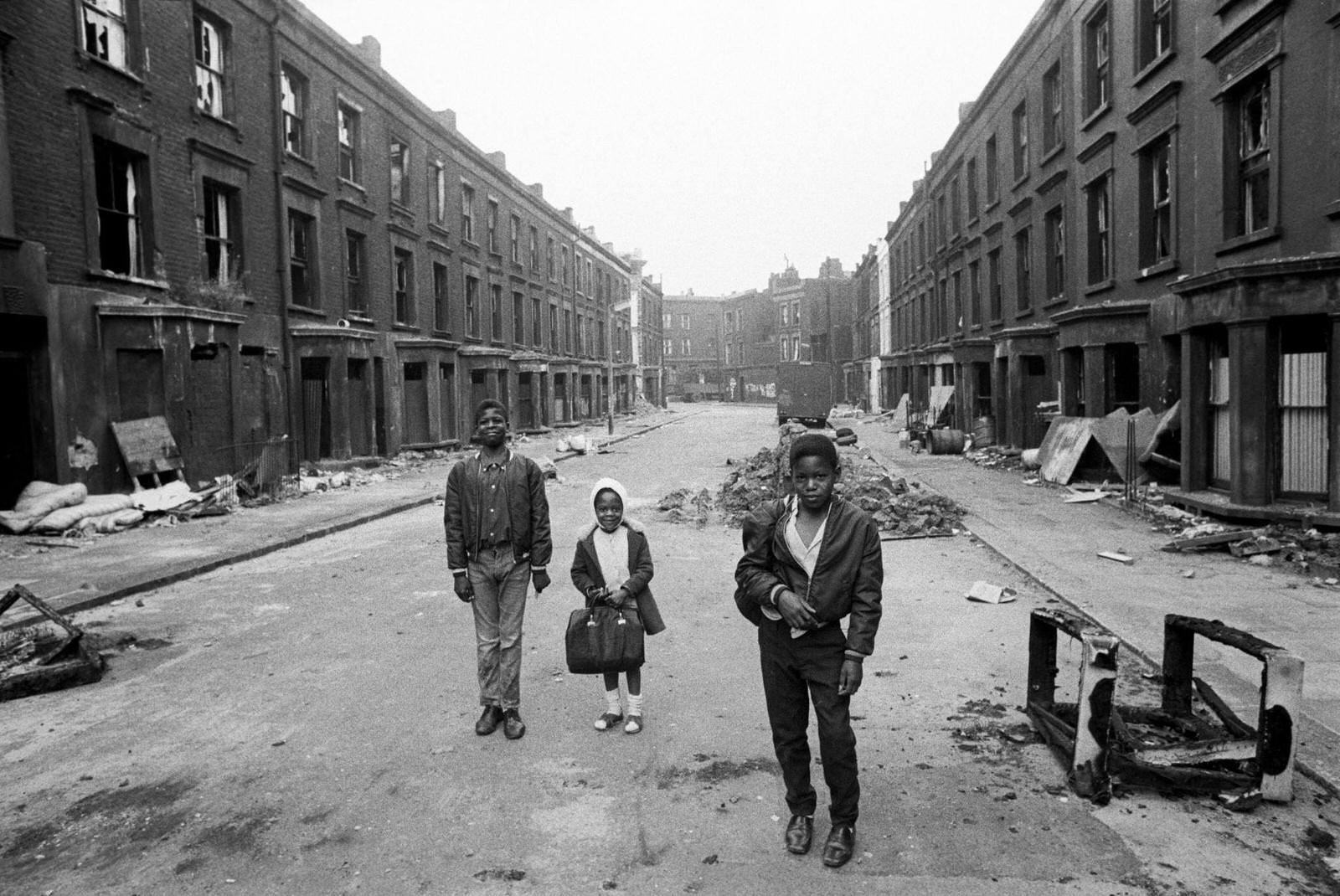
A young woman holding a baby wrapped in a blanket in the Gorbals, a slum district of Glasgow, 1948.Two boys with their dogs in the Gorbals, a slum area of Glasgow with unkempt streets and graffiti covered walls, 1948Three children, including a little girl carrying a satchel, walking along a street of slum housing in the notorious Gorbals district of Glasgow in 1969.
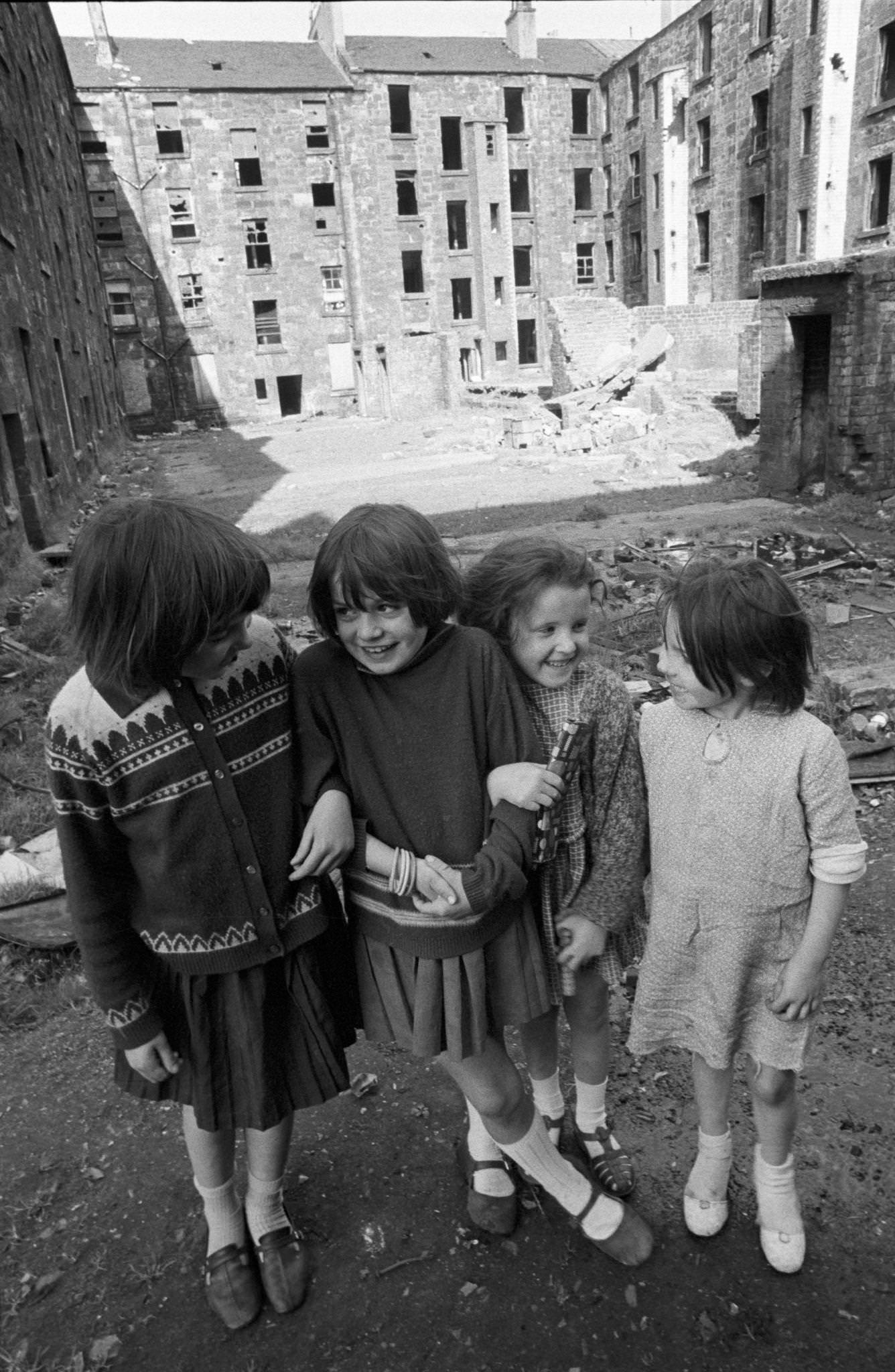
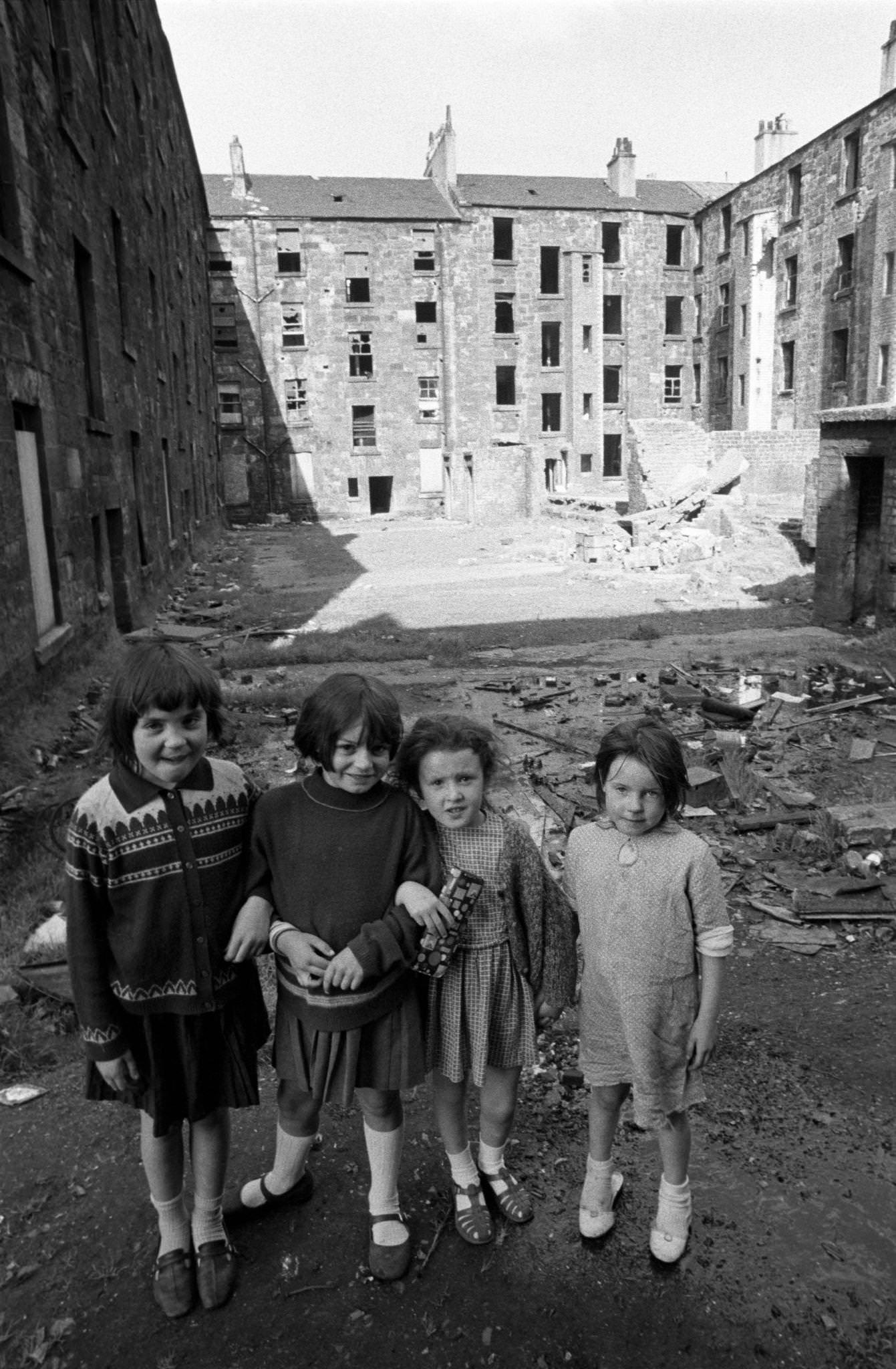
Four little girls posing in front of slum housing in the notorious Gorbals district of Glasgow in 1969.
Four little girls posing in front of slum housing in the notorious Gorbals district of Glasgow in 1969.
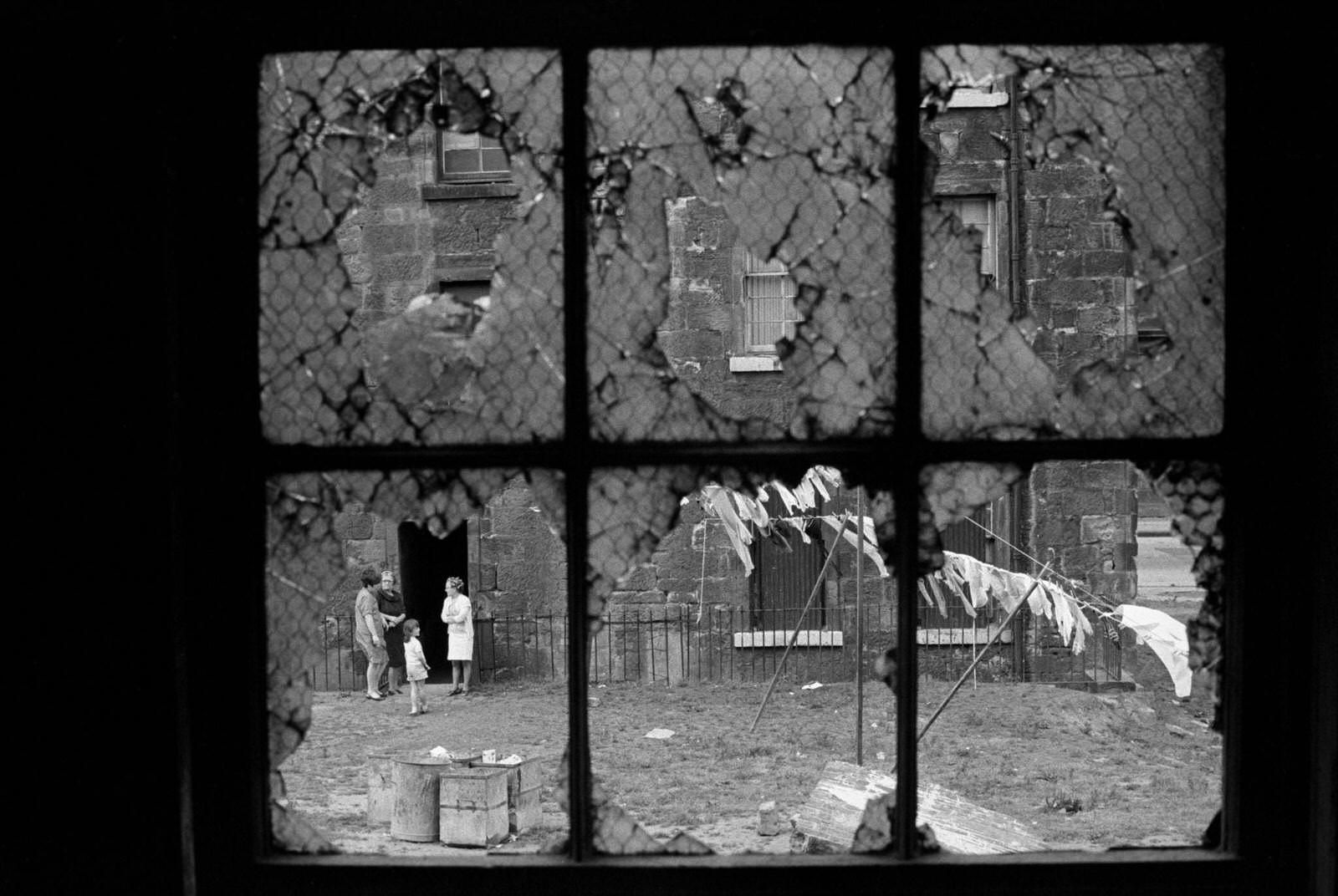
Looking out through broken windows onto a courtyard scene with laundry and four residents of slum housing in the notorious Gorbals district of Glasgow, 1969.
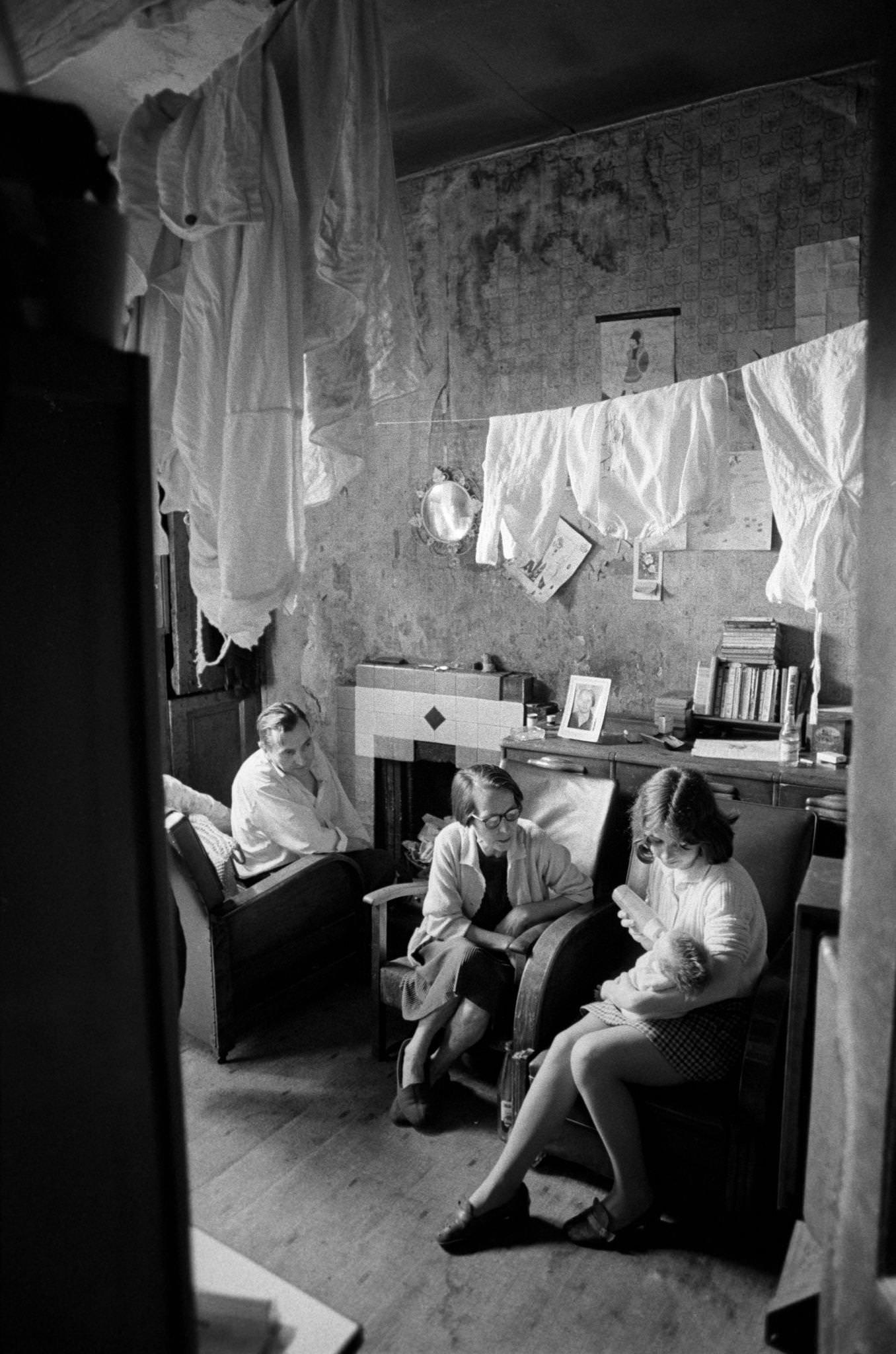
Four people, including an older couple and a young girl feeding her baby, in their home in the notorious Gorbals district of Glasgow, 1969.
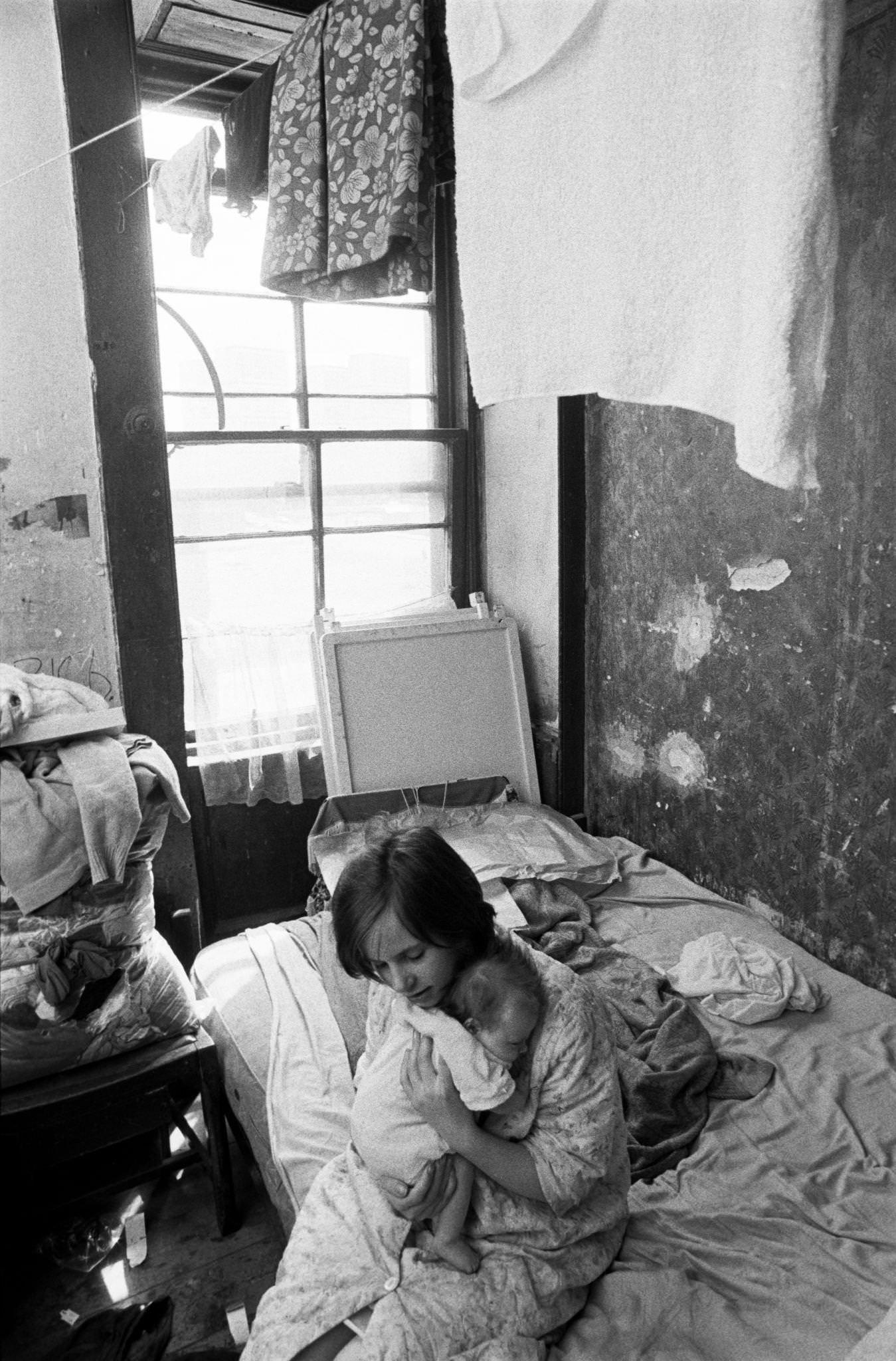
A young girl holding a little baby in her flat in the notorious Gorbals district of Glasgow, 1969.
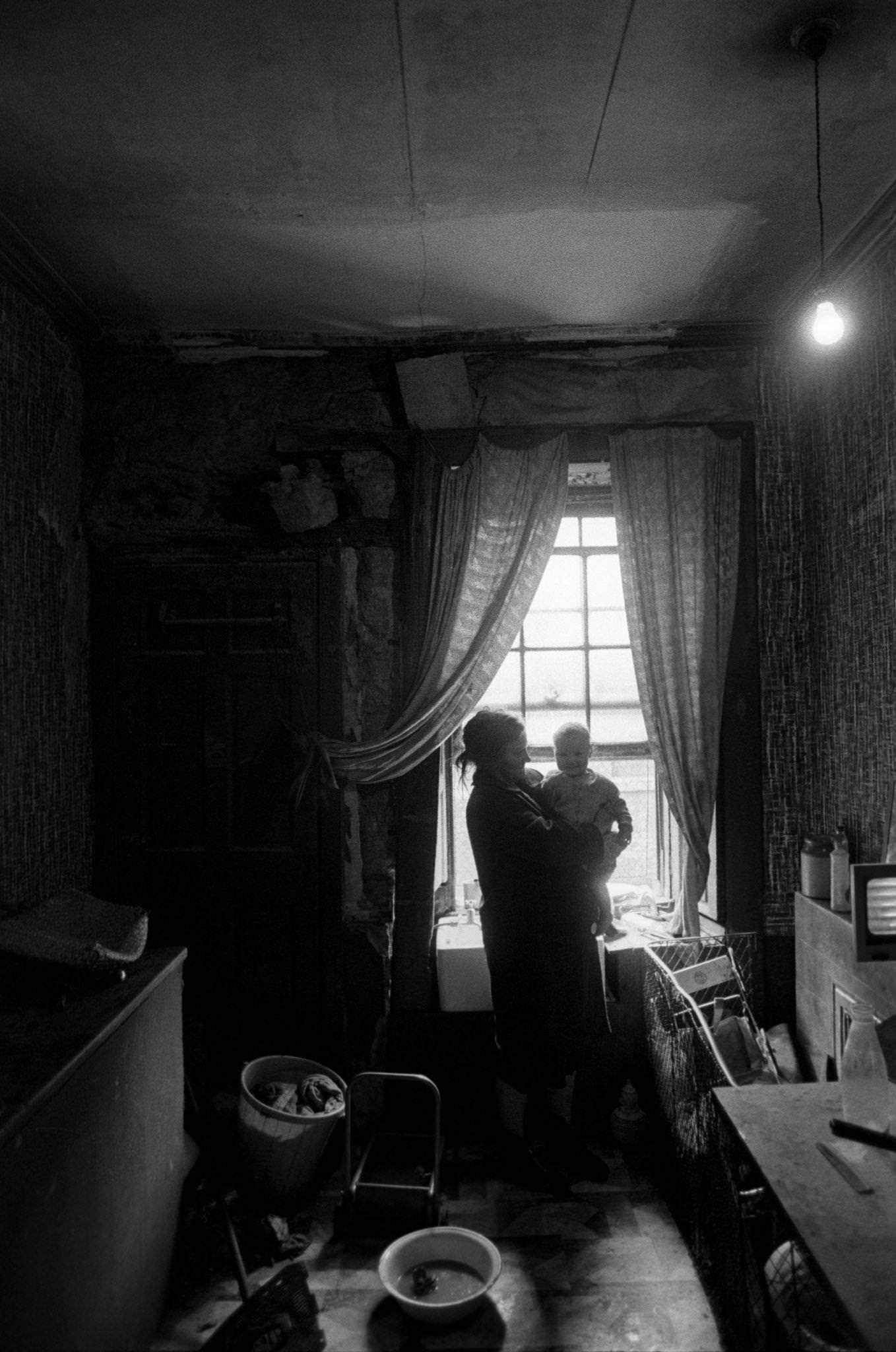
A mother holding her child at a window in the kitchen of her flat in the notorious Gorbals district of Glasgow, 1969.
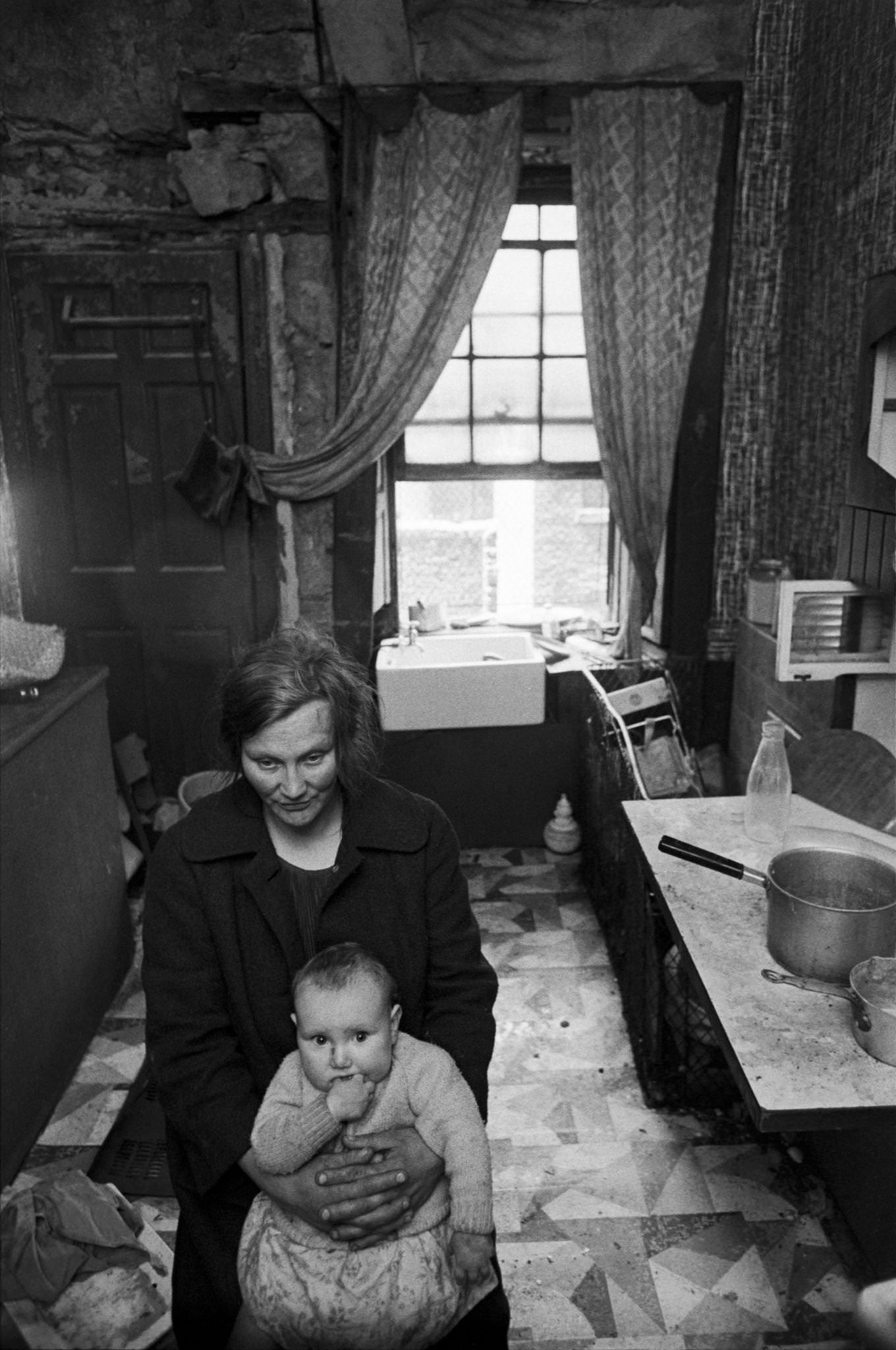
A mother holding her child in the kitchen of her flat in the notorious Gorbals district of Glasgow, 1969.
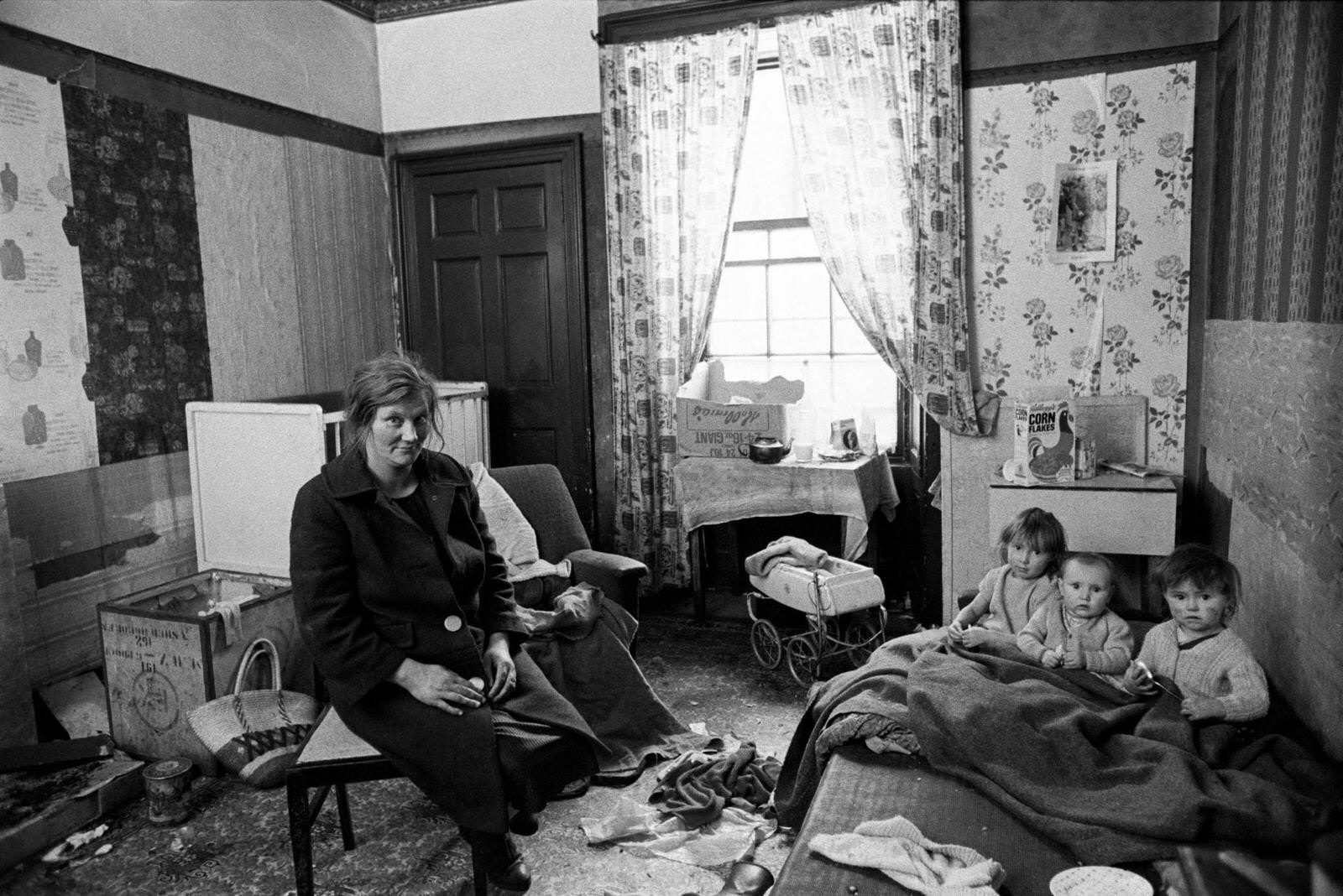
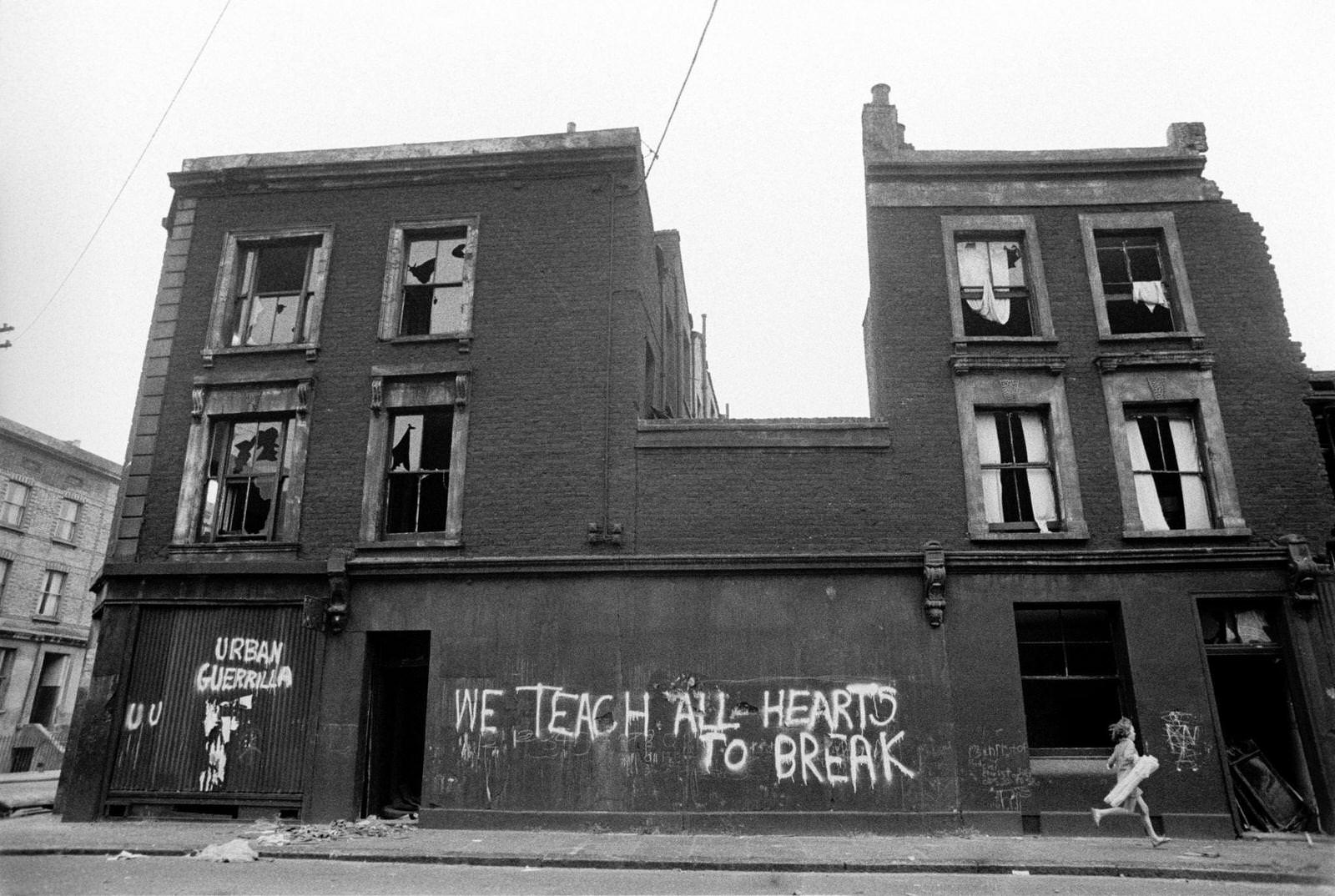
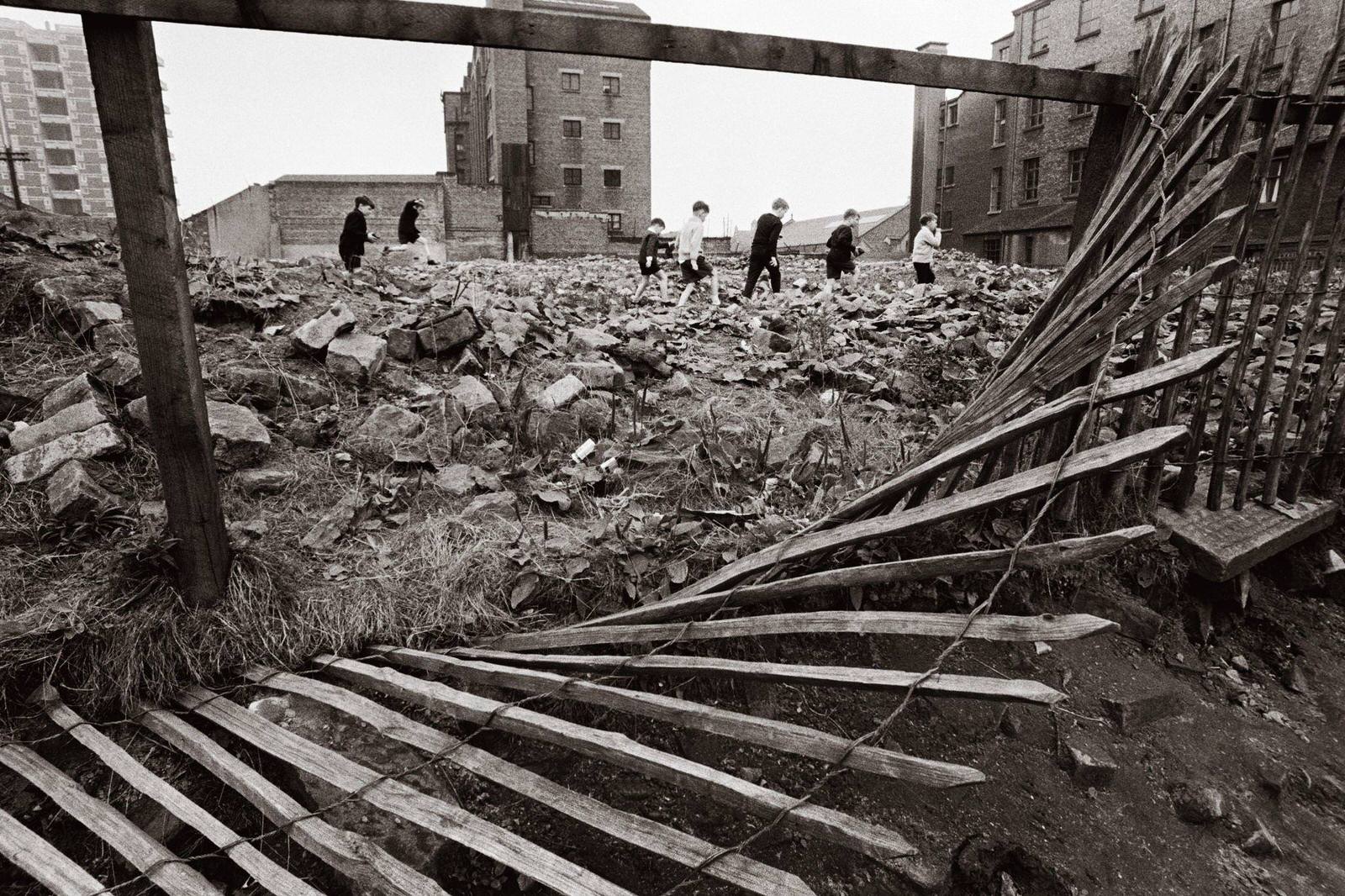
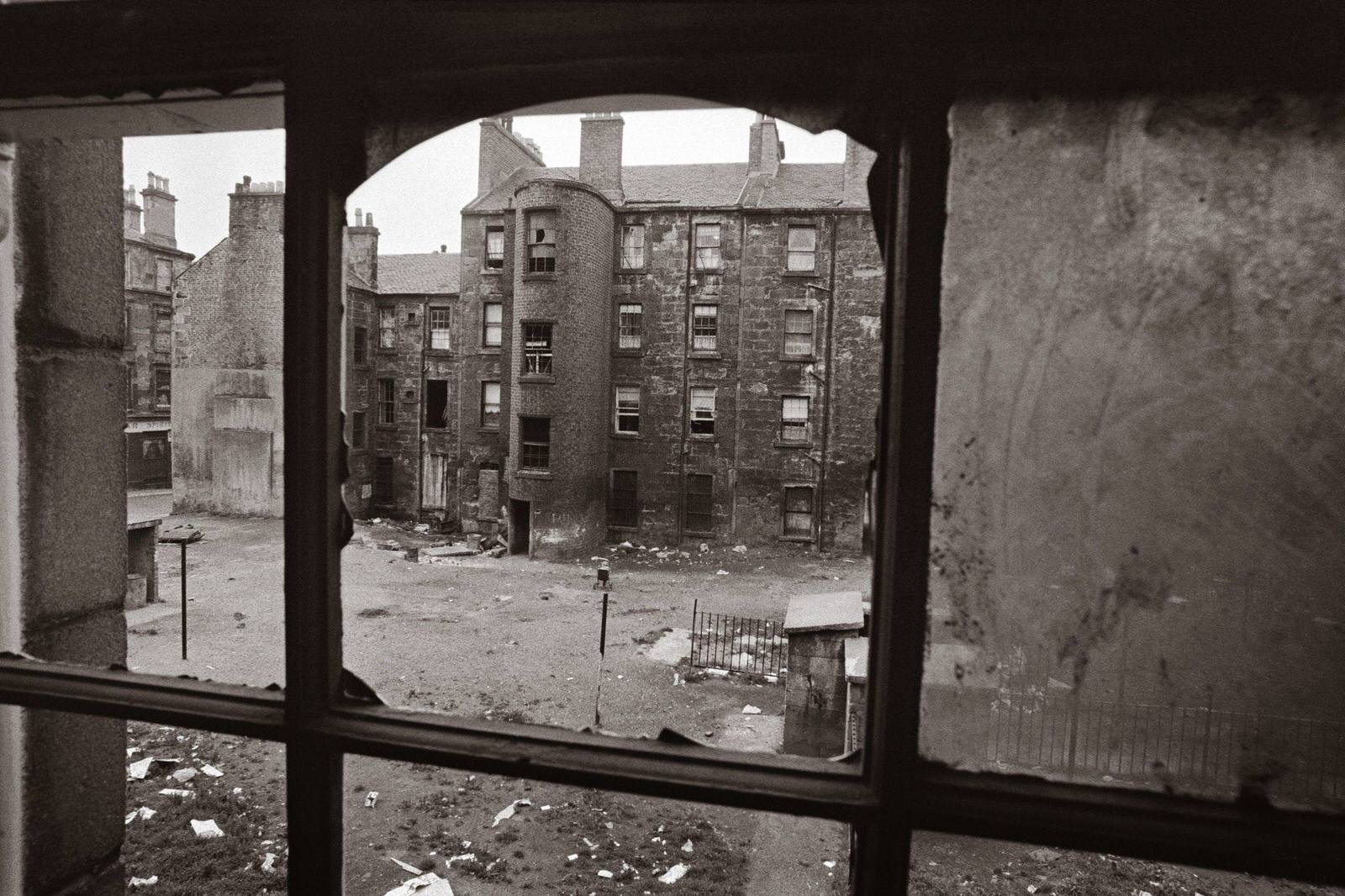
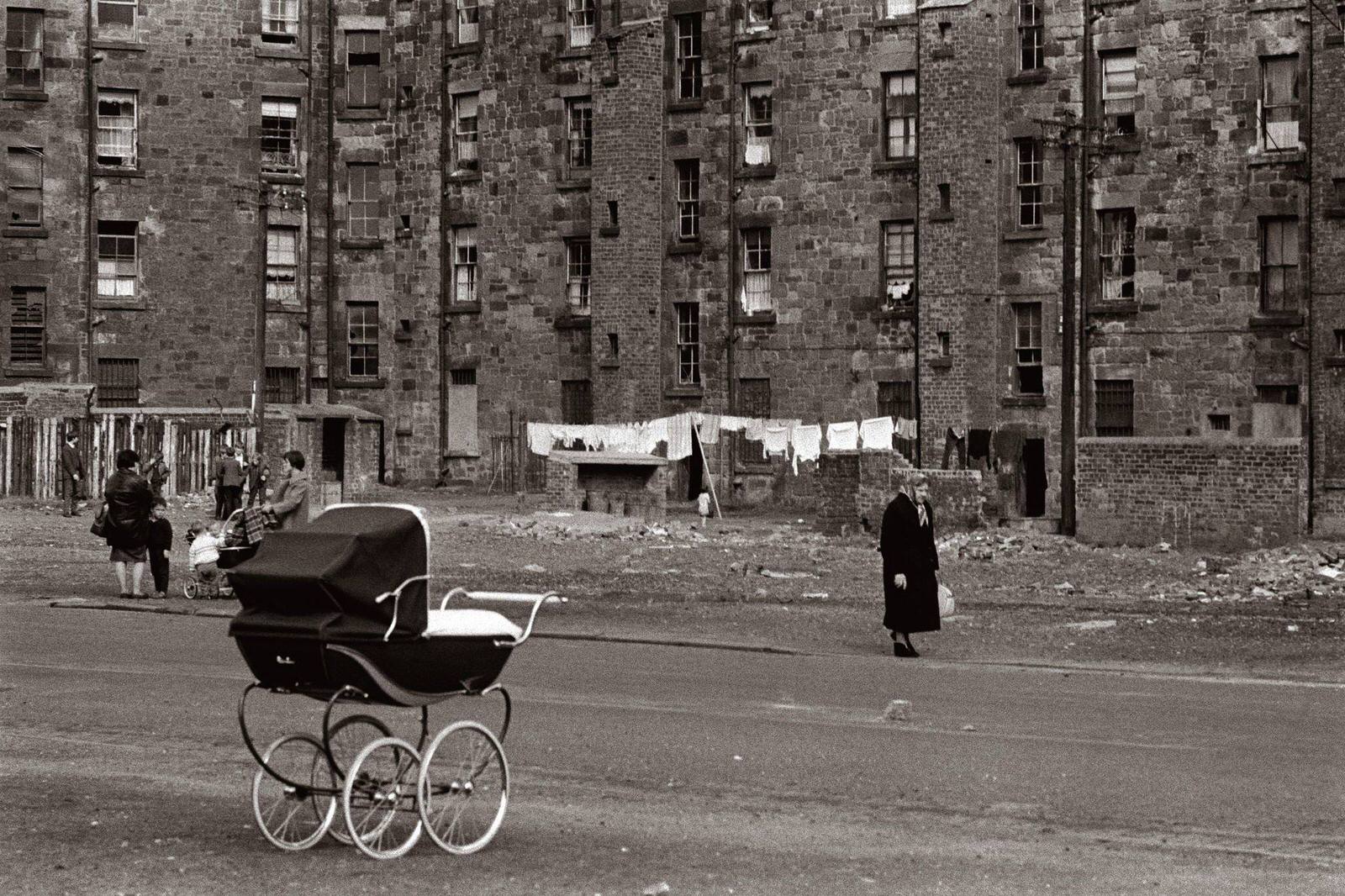
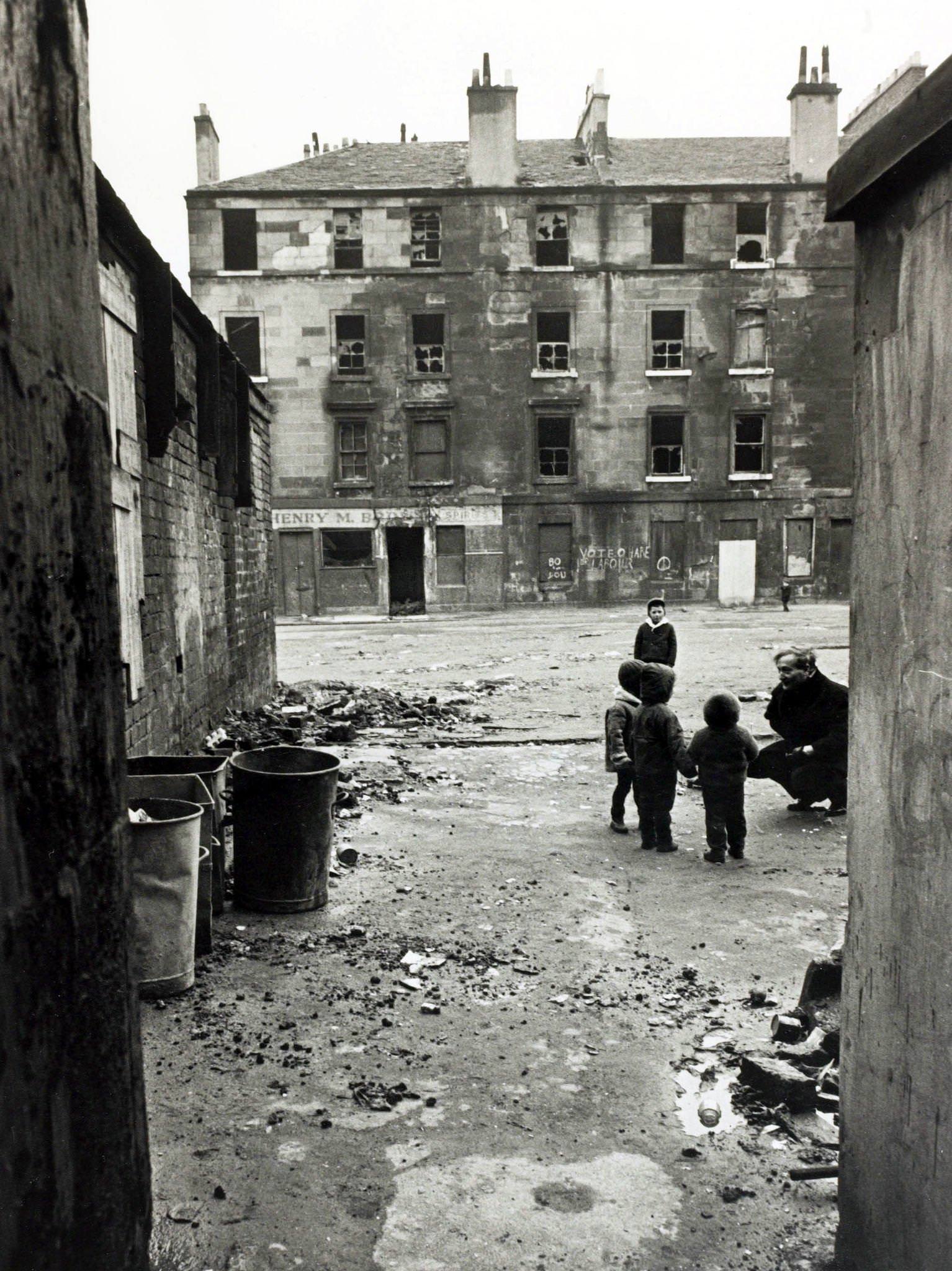
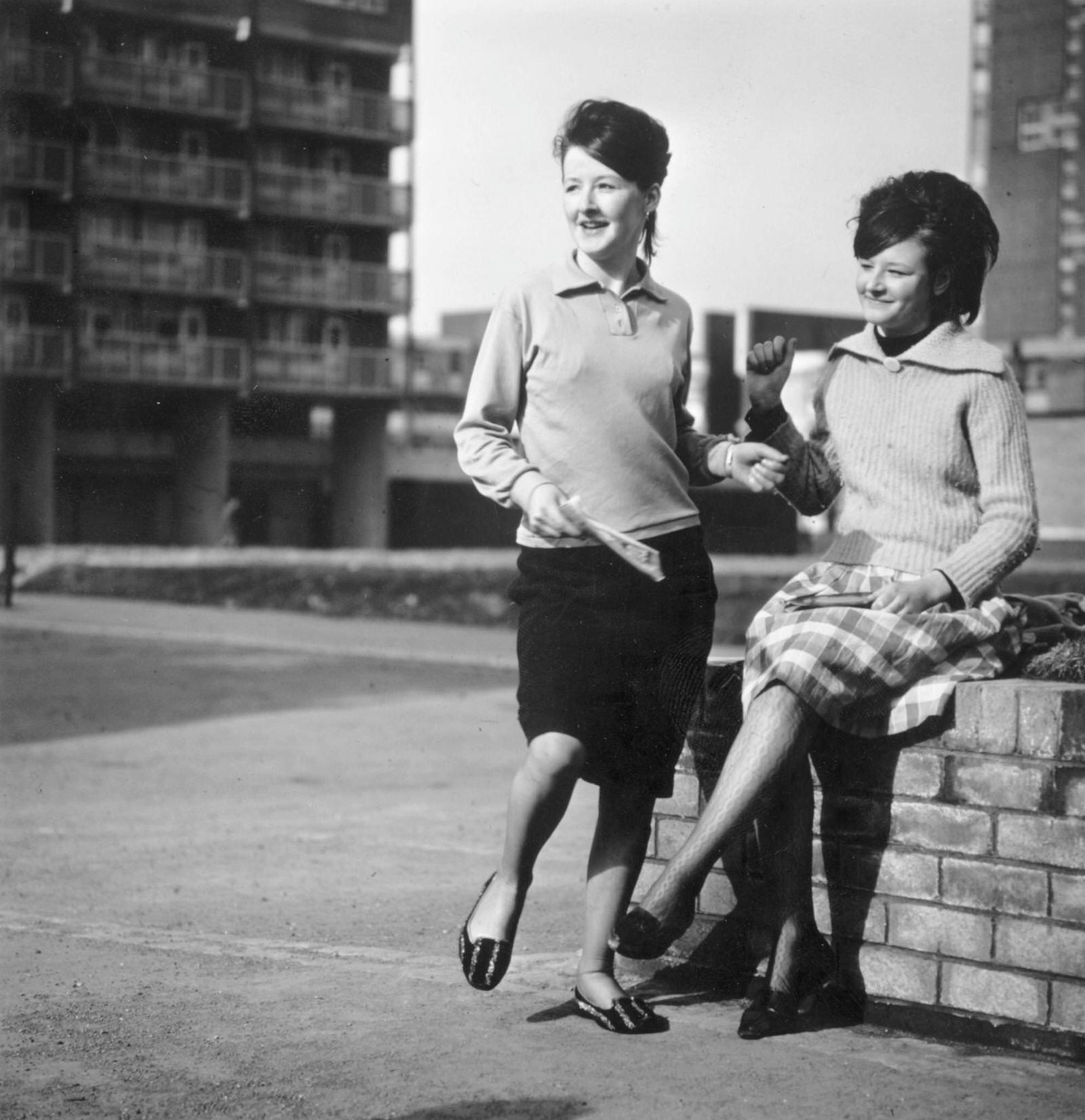
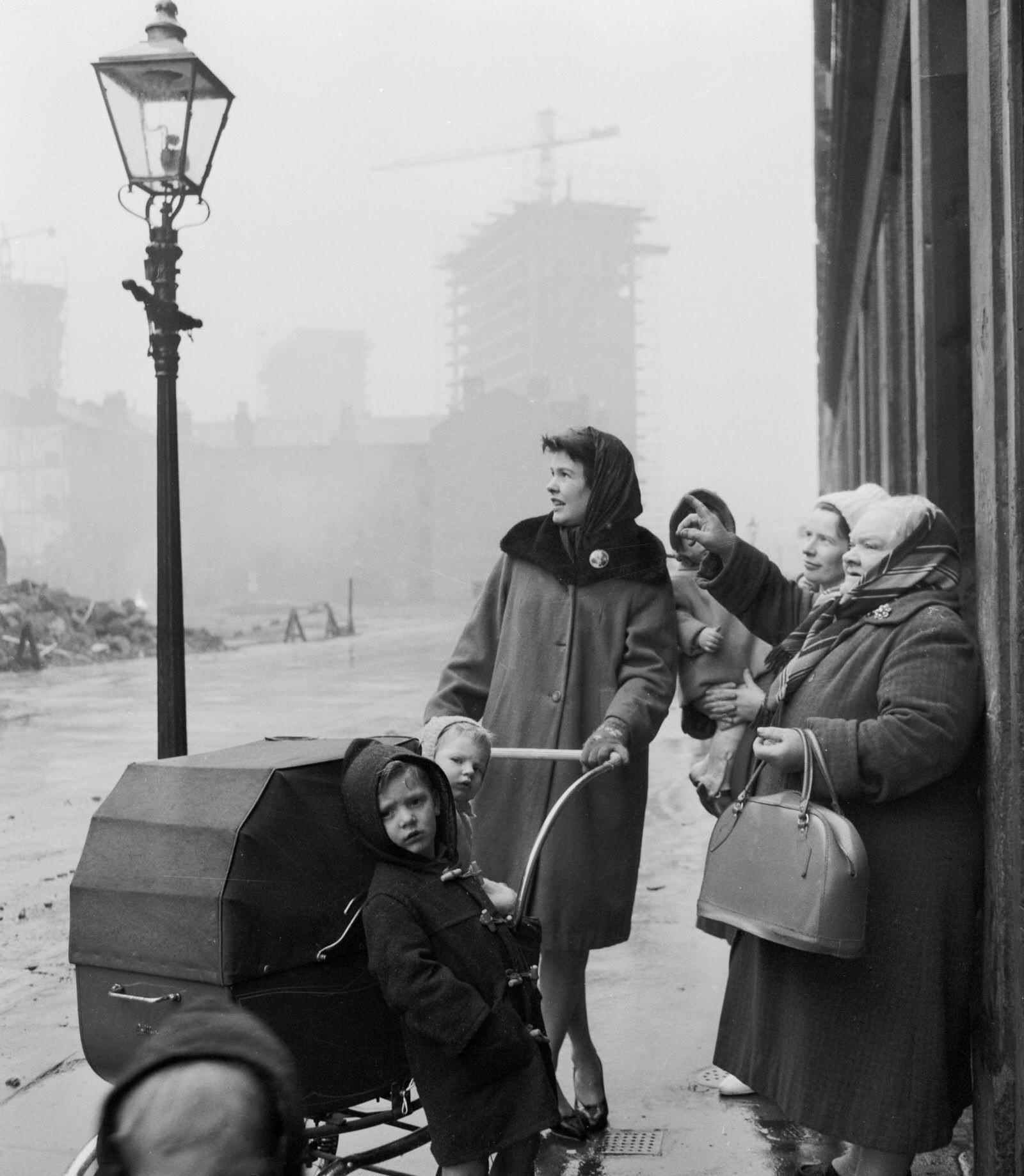
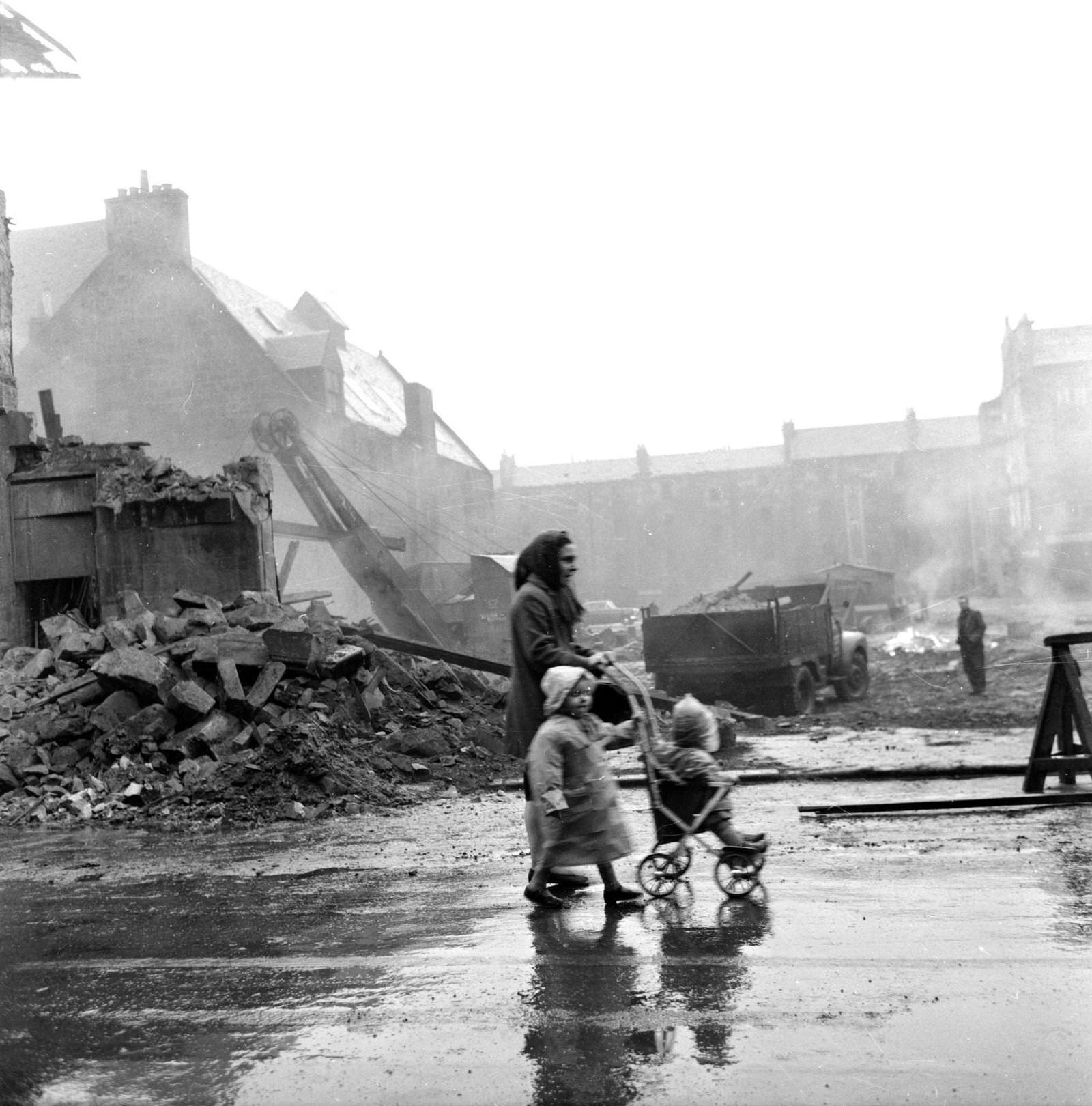
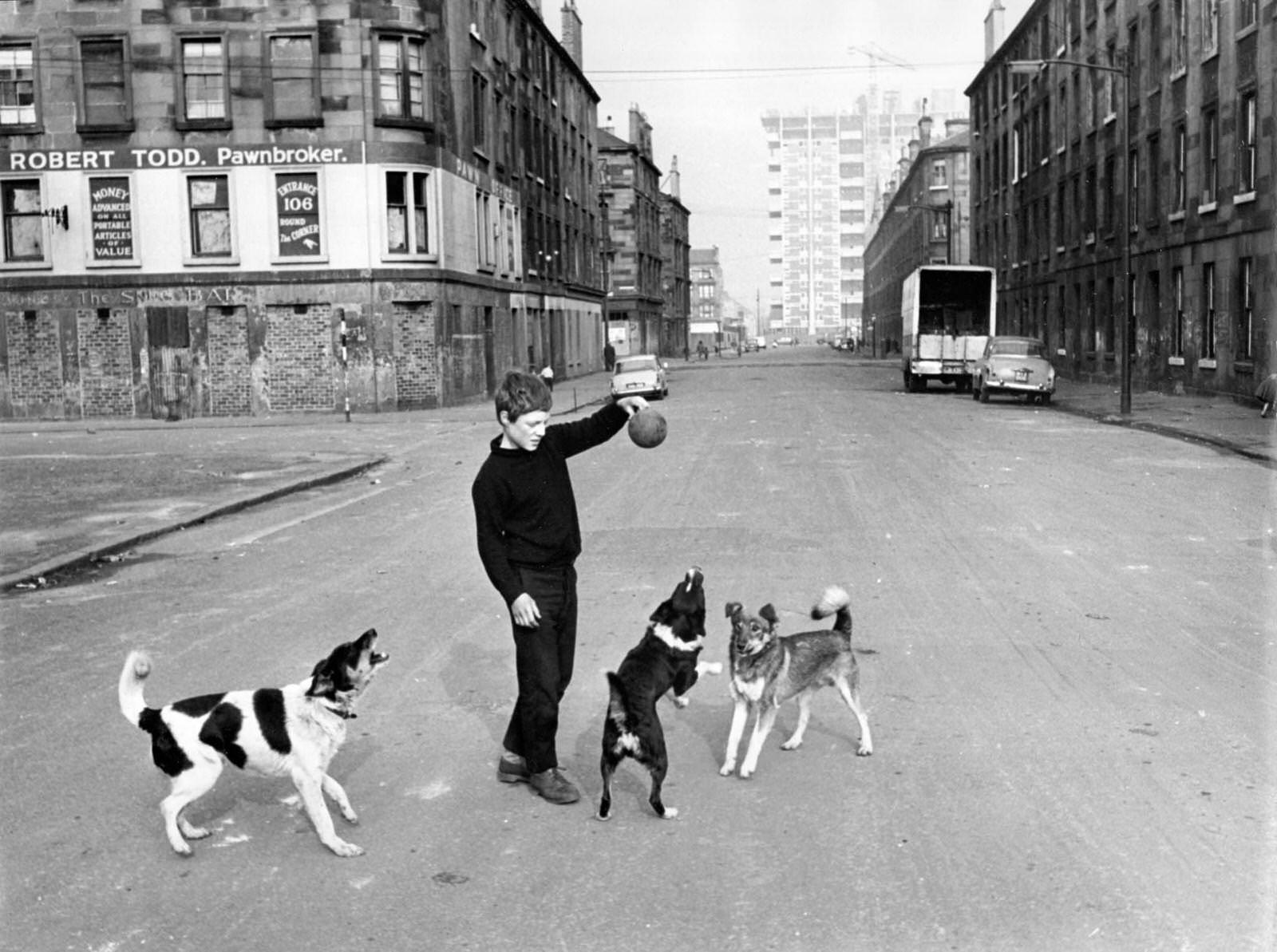
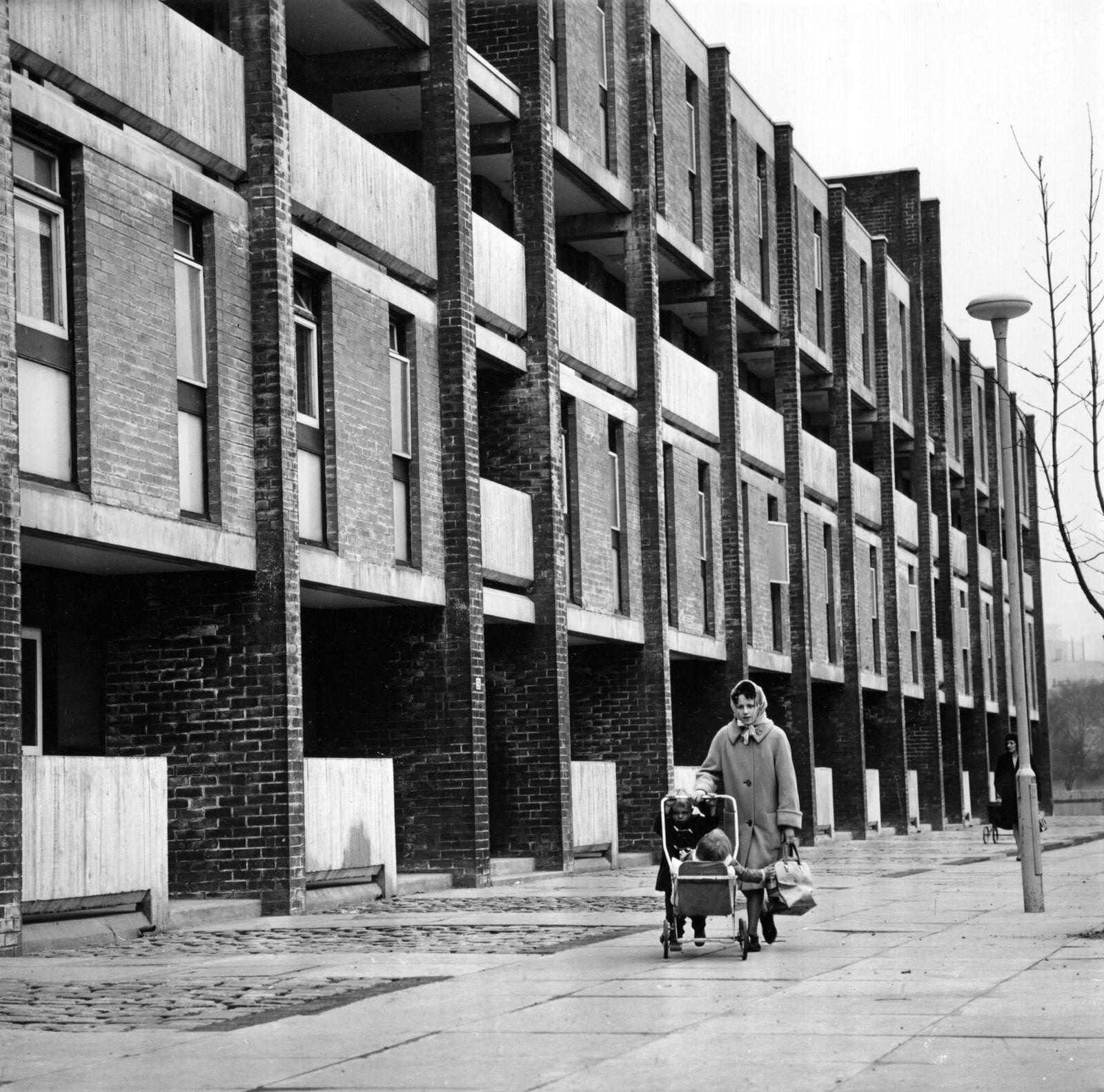
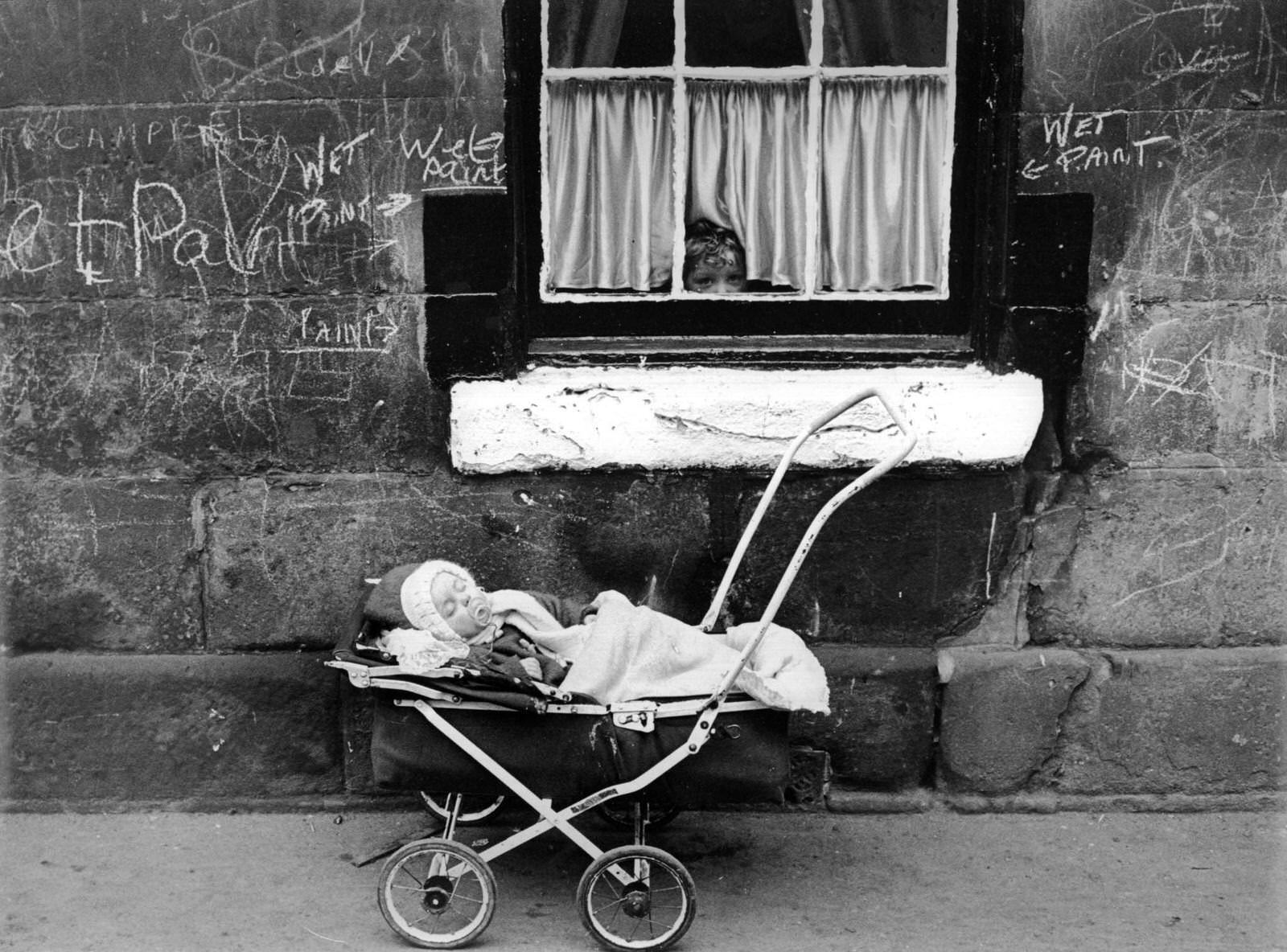
A mother and three little children in the interior of their flat in the notorious Gorbals district of Glasgow, 1969.The exterior of slum housing in the notorious Gorbals district of Glasgow, 1969.A group of boys pick their way through a wasteland in the Gorbals area of Glasgow, 1968.The view from a smashed window in the Gorbals area of Glasgow, 1968.A lone pram beside a road in the Gorbals area of Glasgow, 1968.A scene in the Gorbals area of Glasgow, Scotland, showing the slums about to be cleared for new flats, 1966Beatles fan Ann and her sister Eileen dance the twist in a housing estate in the Gorbals area of Glasgow, 1966A group of women and children stop to look at across the street where sections of the notoriously squalid slums known as the Gorbals have been demolished, 1962A woman with two young children walking past a demolition site in the Gorbals area of Glasgow, 1962Two young children in street of the Gorbals district of Glasgow, 1962An open site which children in the Gorbals area of Glasgow use for playing, 1961Two young boys playing outside in the Gorbals district of Glasgow, which was described as having the worst slums in Europe, 1960A boy playing with dogs in a road of tenement housing in the Gorbals area of Glasgow, 1960A woman walking past a block of modern housing with two young children in the Gorbals area of Glasgow, 1960A child looks at a baby in a pram from the window of a tenement block in the Gorbals area of Glasgow, before demolition, 1960
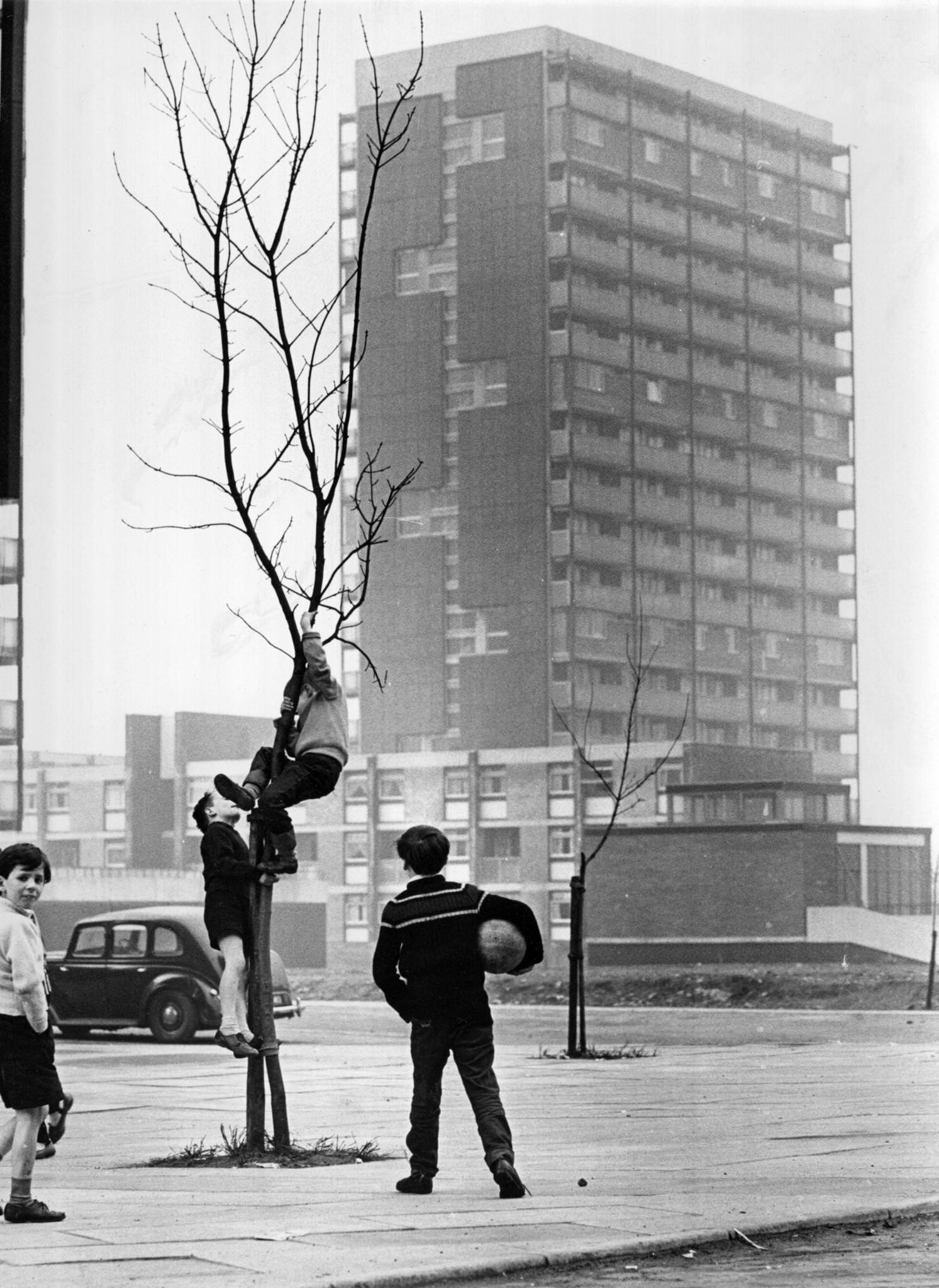
Boys climbing a tree near a modern tower block in the Gorbals area of Glasgow, 1960
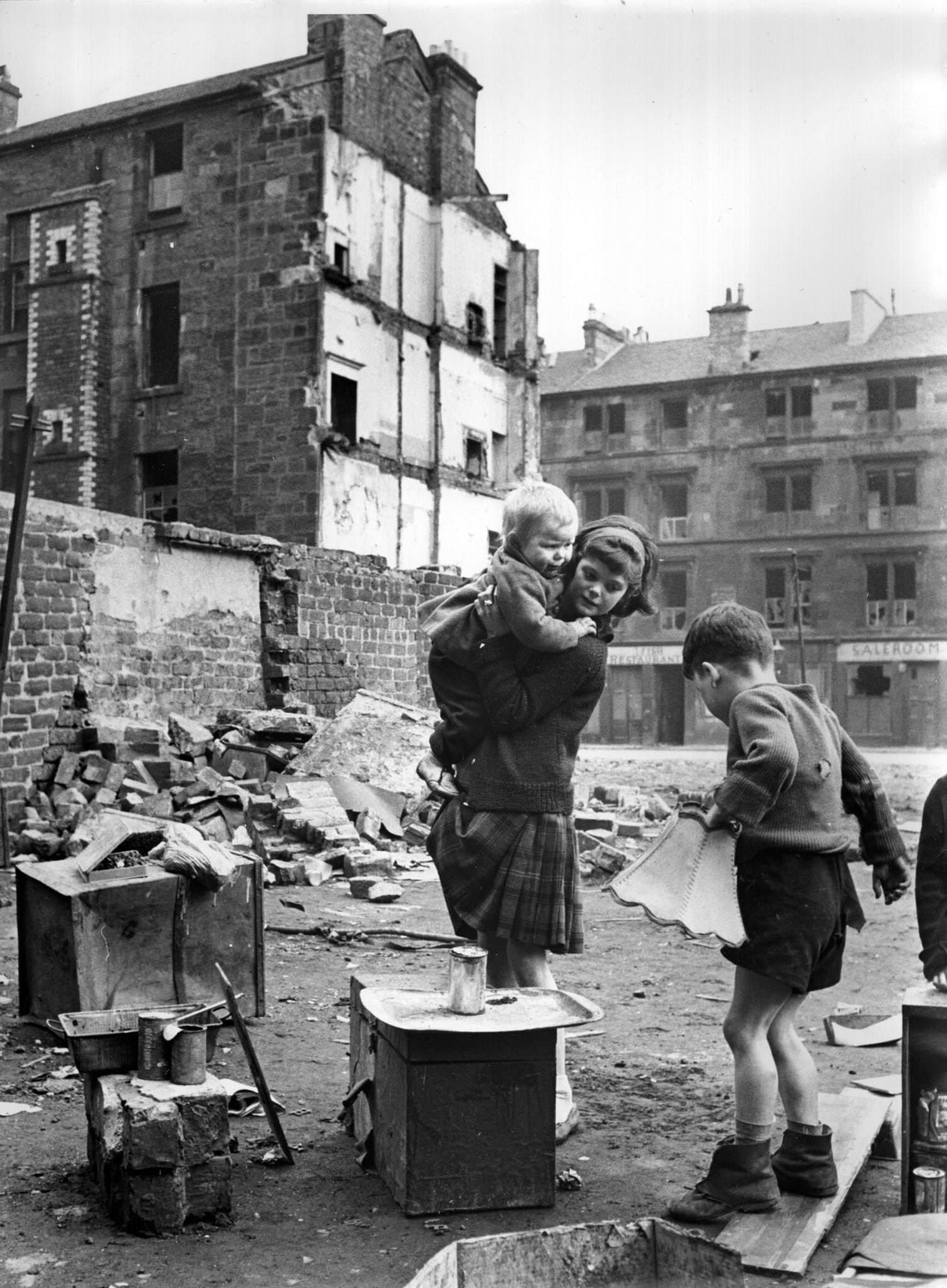
Children playing in an area of slums under clearance in the Gorbals area of Glasgow, 1960
It’s interesting how some people tend to romanticize the past, forgetting about the challenges and limitations that people faced back then. It’s important to appreciate the advancements we have today while also acknowledging the history and culture of the past.
The old photos really highlight how much wider the roads were without traffic and parked cars, and it makes you wonder why people don’t play out in the street anymore.
These photos are really fascinating, and there are some that I haven’t seen before. However, let’s avoid using derogatory terms like “terrible,” “notorious,” and “infamous.” The urban renewal programs of that time had a profound impact on the lives of thousands of people, many of whom lost their homes and communities. The mass demolitions and relocations were very disruptive and had long-lasting consequences. While some of the redevelopment schemes that followed were successful, in many ways they were just as flawed as the original tenements.
These vintage photo websites often have captions that sound robotic. It’s obvious that it’s a woman walking past a building or children playing, but the descriptions seem unnecessary.
My mum grew up in it towards the end. According to Jacob Rees-Mogg during question time, the concentration camps of the Boer War had a death rate similar to Glasgow’s. This was Glasgow at the time. Sickening.
I hate how you can’t help but read the captions, but they add nothing to the story. It’s like GlasgowLive, where the person has seen the photo for the first time and doesn’t know anything about it, so he just describes what anyone looking at it can see.
The Gorbals could and should have been saved. It was in a terrible state, but there wasn’t much wrong with the buildings. It was just too overcrowded. Govanhill was broadly similar in terms of properties there and the layout, but the difference was the people living there got to see what happened to the Gorbals and successfully put a stop to redevelopment.






It’s interesting how some people tend to romanticize the past, forgetting about the challenges and limitations that people faced back then. It’s important to appreciate the advancements we have today while also acknowledging the history and culture of the past.
The old photos really highlight how much wider the roads were without traffic and parked cars, and it makes you wonder why people don’t play out in the street anymore.
Not a pothole in sight
Not a 2.5 tonne SUV in sight either.
Not a firstbus in sight…
No change there, then.
These photos are really fascinating, and there are some that I haven’t seen before. However, let’s avoid using derogatory terms like “terrible,” “notorious,” and “infamous.” The urban renewal programs of that time had a profound impact on the lives of thousands of people, many of whom lost their homes and communities. The mass demolitions and relocations were very disruptive and had long-lasting consequences. While some of the redevelopment schemes that followed were successful, in many ways they were just as flawed as the original tenements.
Worst town planning move ever.
These vintage photo websites often have captions that sound robotic. It’s obvious that it’s a woman walking past a building or children playing, but the descriptions seem unnecessary.
Not to lessen the tone, but Jacob Rees-Mogg compared the death rates of the Boer War, which were similar to Glasgow at the time.
Never seen this before!
My mum grew up in it towards the end. According to Jacob Rees-Mogg during question time, the concentration camps of the Boer War had a death rate similar to Glasgow’s. This was Glasgow at the time. Sickening.
There needs to be a massive cultural switch for Glaswegians to start living longer.
I hate how you can’t help but read the captions, but they add nothing to the story. It’s like GlasgowLive, where the person has seen the photo for the first time and doesn’t know anything about it, so he just describes what anyone looking at it can see.
Age expectancy is low due us wiegies loving the bevy
The Gorbals could and should have been saved. It was in a terrible state, but there wasn’t much wrong with the buildings. It was just too overcrowded. Govanhill was broadly similar in terms of properties there and the layout, but the difference was the people living there got to see what happened to the Gorbals and successfully put a stop to redevelopment.
The Gorbals could and should have been sav