Hey There! Before You Go. 😧
Get the best vintage content straight into your inbox!

Don't worry, we don't spam

Eugenics History: Facts And Photos That Depict The Dark History Of Eugenics

Long before eugenics had a name, humans were already applying selective breeding to plants and animals. Farmers bred crops for higher yields and livestock for faster growth. These practices were efficient, measurable, and widely accepted. Then, in the late 19th century, scientists began asking a dangerous question: what if the same logic could be applied to people?

The idea was to reduce human suffering by eliminating what eugenicists called ‘undesirable’ traits — disability, mental illness, poverty, and crime. They believed these traits were inherited and could be bred out of the population over generations. The term ‘Eugenics’ was coined in 1883 by British scholar Sir Francis Galton, a cousin of Charles Darwin. Galton envisioned a superior society built by encouraging reproduction among the educated and healthy while discouraging it among lower classes. He proposed specific mating rules to achieve this goal.
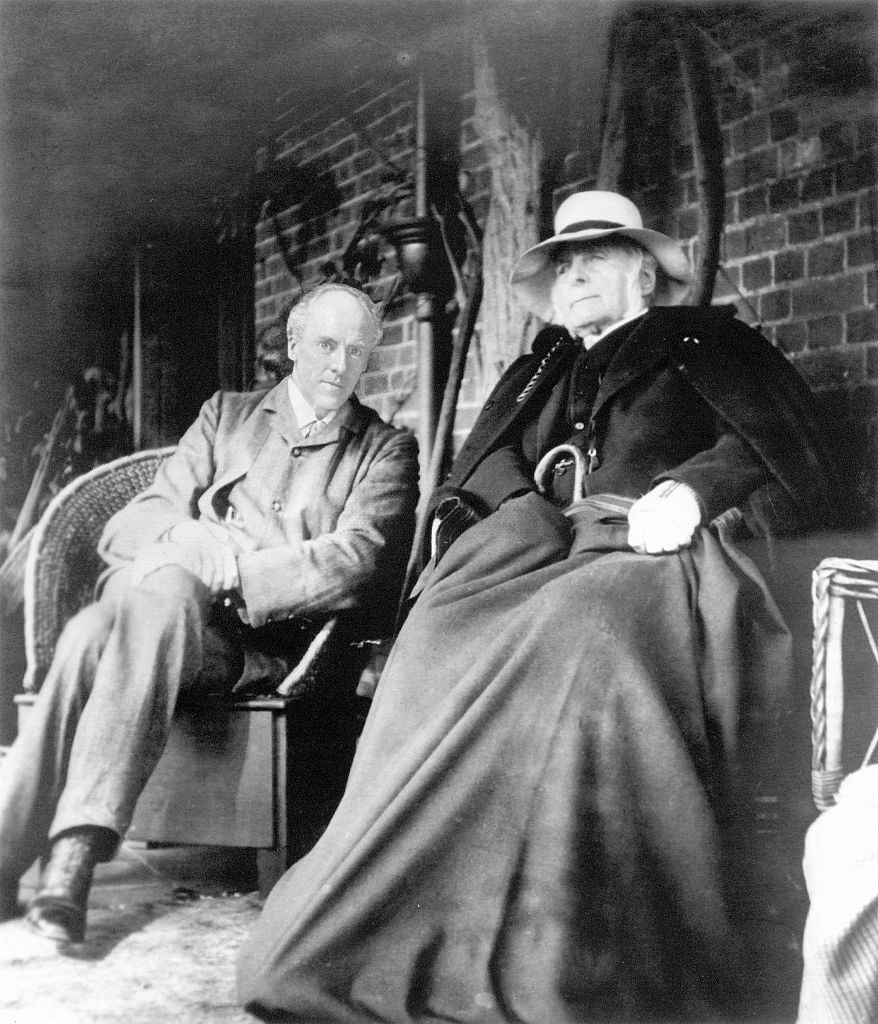
Karl Pearson, British mathematician and one of the founders of modern statistics, alongside the British scientist Francis Galton, 1905.

Galton’s ideas found little traction in Britain, but in the United States they were embraced with enthusiasm. In 1896, Connecticut passed a law banning people with epilepsy or those deemed ‘feeble-minded’ from marrying. In 1903, the American Breeders’ Association was created specifically to study eugenics. Government agencies, scientists, and social reformers established Eugenics Record Offices across the country. These offices tracked family histories and genetic traits, and they held the authority to declare individuals unfit for reproduction.
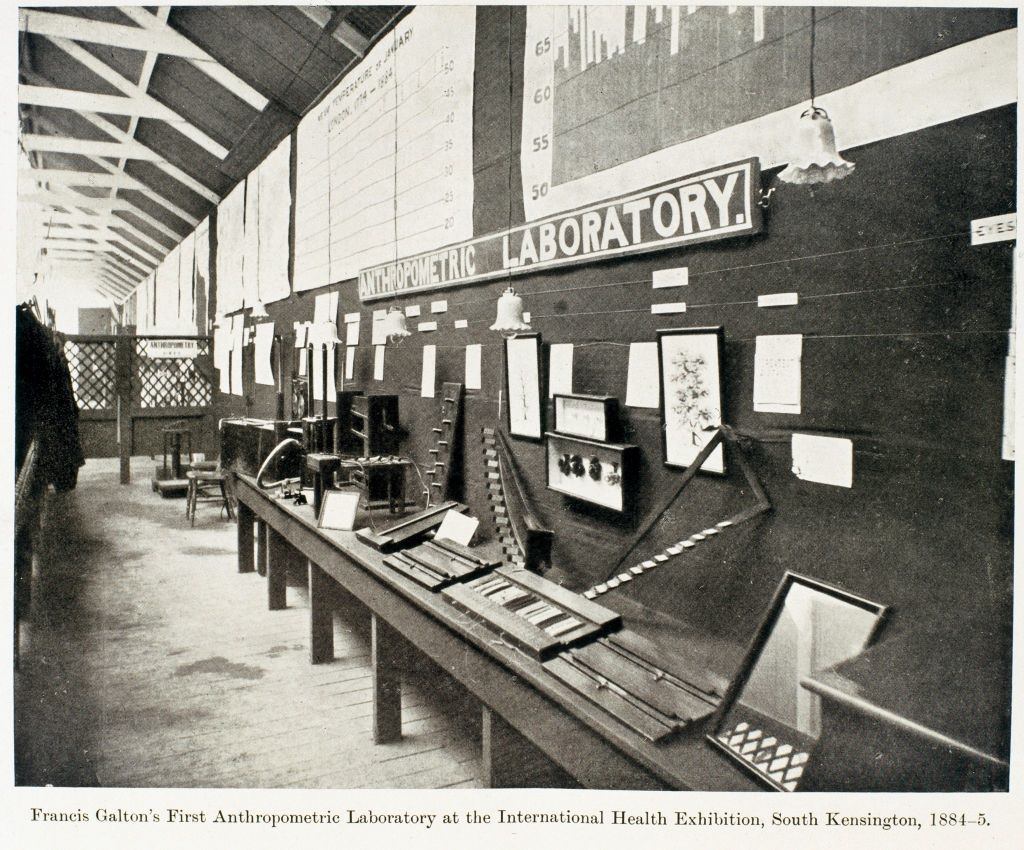
Francis Galtons first Athropometric Laboratory,  at the South Kensington Museum, 1884-1885.
Francis Galtons first Athropometric Laboratory, at the South Kensington Museum, 1884-1885.

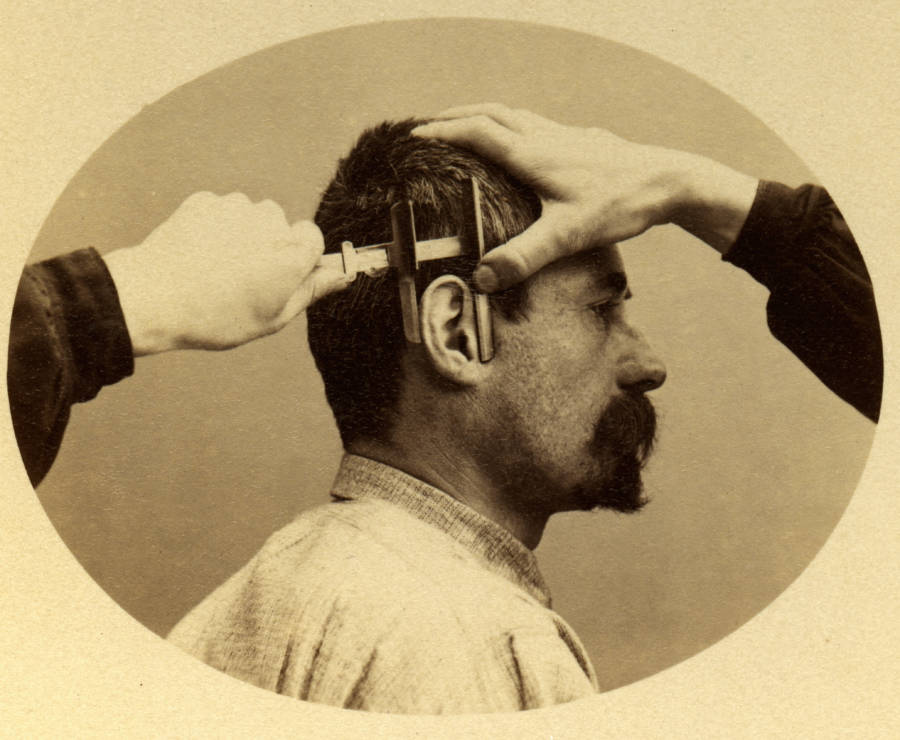
One of the key tools used by eugenicists was anthropometry — the scientific measurement of the human body. Researchers measured skulls, noses, ears, and limbs, believing these physical dimensions could reveal a person’s intelligence, character, and racial worth. Laboratories and classrooms across Europe and North America trained students in these methods, lending the movement an air of scientific credibility.
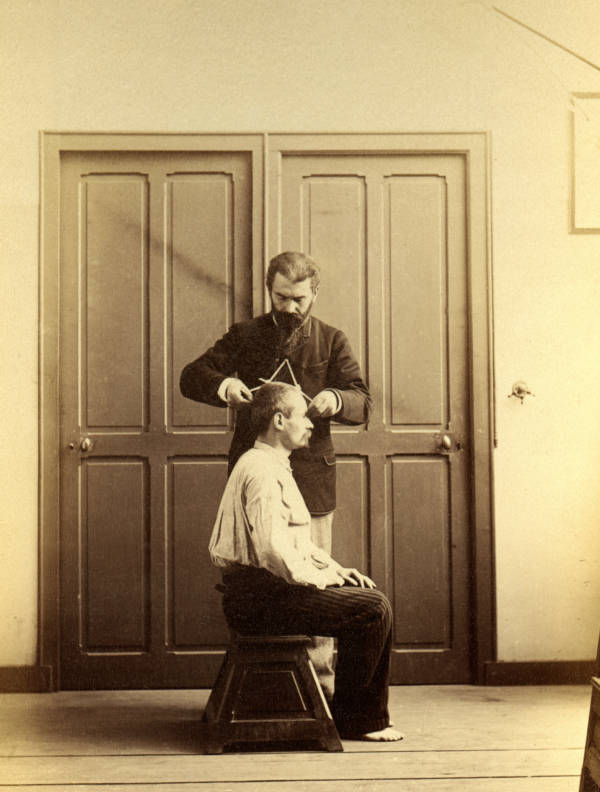
French researcher Alphonse Bertillon demonstrates how to measure a human skull, Paris, 1894

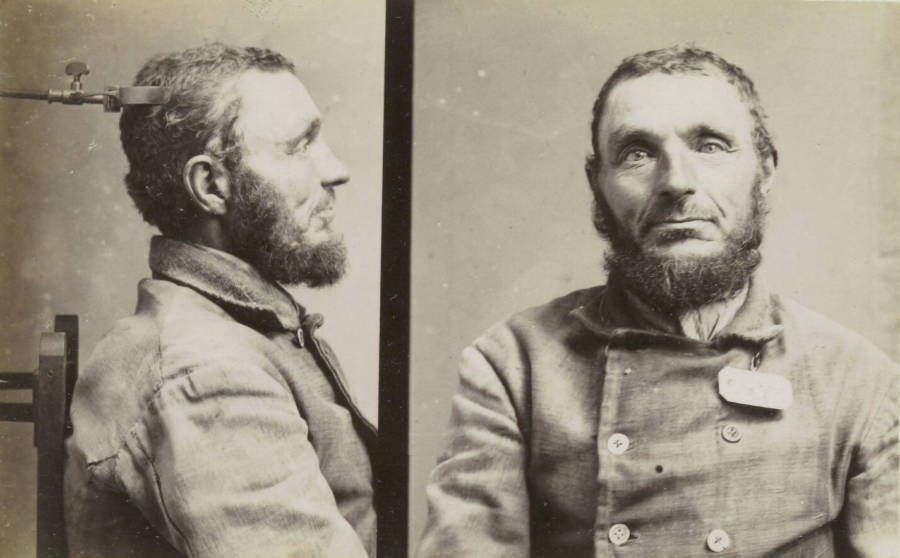
Alphonse Bertillon, a French police officer, developed one of the most widely adopted systems of body measurement. His ‘Bertillon method’ was used to identify criminals by cataloguing their physical features — height, arm span, ear shape, and skull size. Law enforcement agencies in France, the Netherlands, and the United States adopted the system. It reflected a core belief of the era: that criminality was a biological trait, visible in the body.
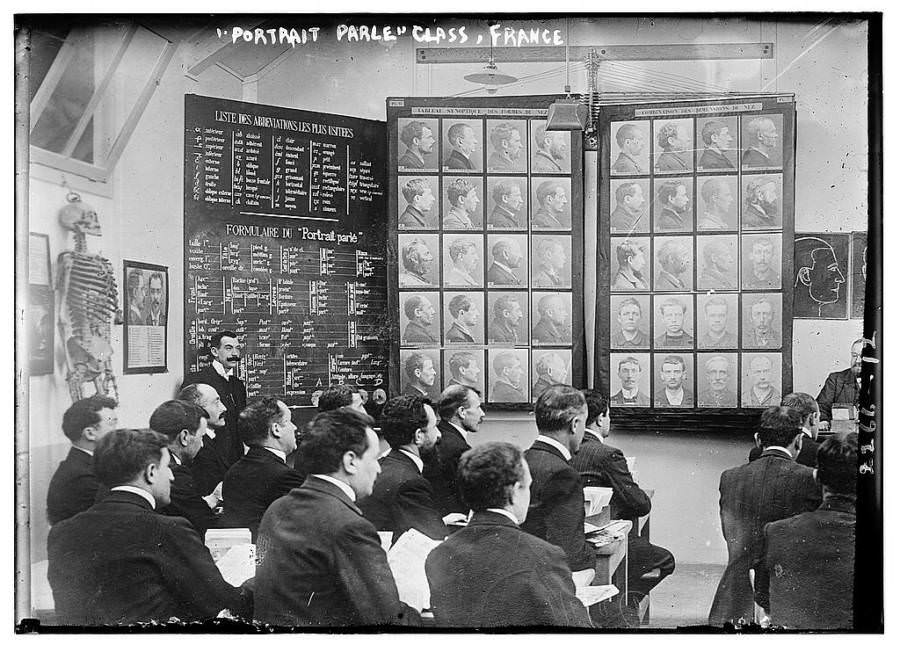
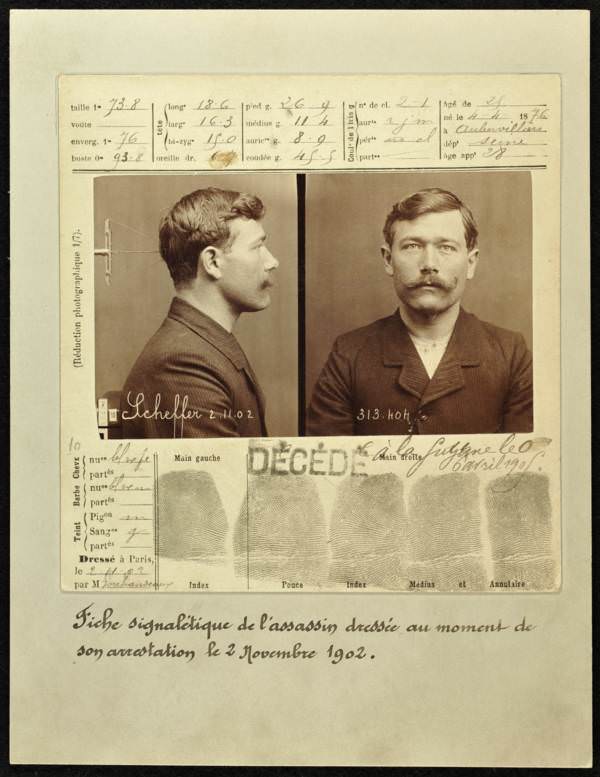
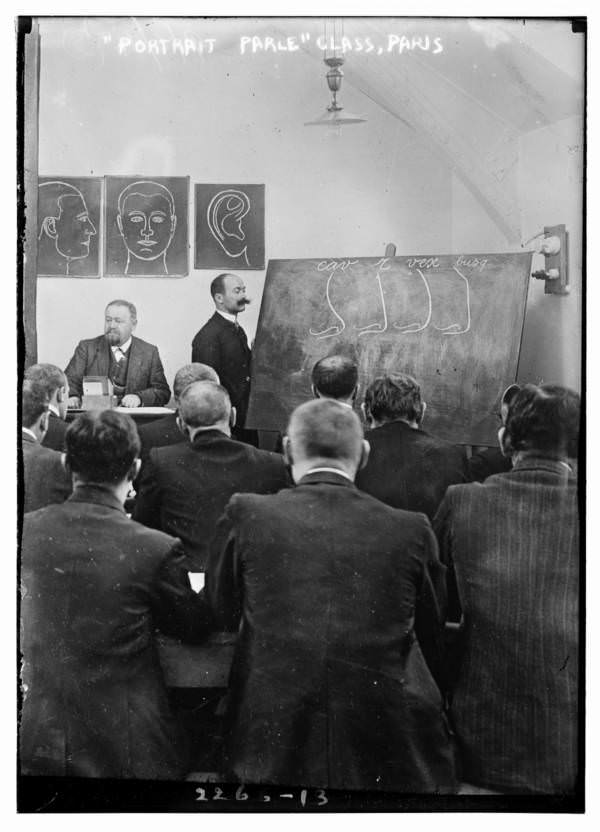
A class studies the Bertillon method of criminal identification, based on measuring body parts in France, 1910s
A convicted criminal, with the measurements of his various body parts in Paris in 1902
A convicted criminal's head is measured, Netherlands, 1896
A convicted criminal’s head is measured, Netherlands, 1896
A demonstration of how to measure a criminal's ear, Paris, 1894
A demonstration of how to measure a criminal’s ear, Paris, 1894

Police departments across the United States also adopted anthropometric methods. The New York City Police Department used these techniques to measure suspects and build criminal profiles. The measurements were recorded, filed, and used to argue that certain physical types were inherently prone to criminal behavior.
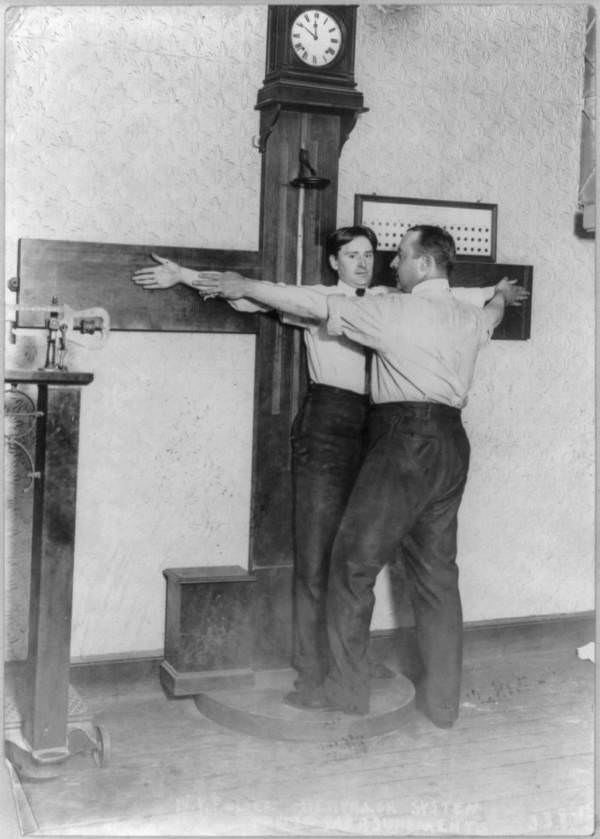
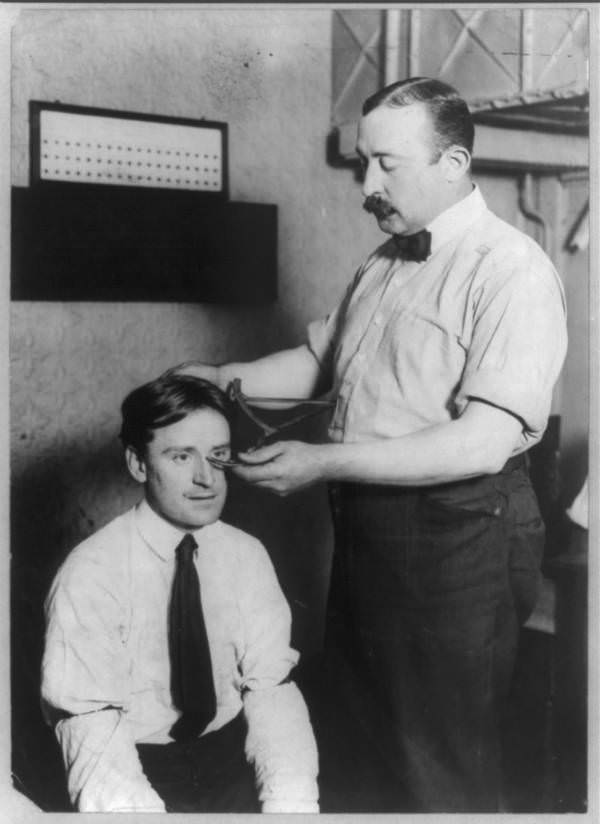
The New York City Police Department practices taking arm measurements using anthropometric methods, New York, 1908
The New York City Police Department demonstrates how to measure a criminal's cranium, 1908
The New York City Police Department demonstrates how to measure a criminal’s cranium, 1908

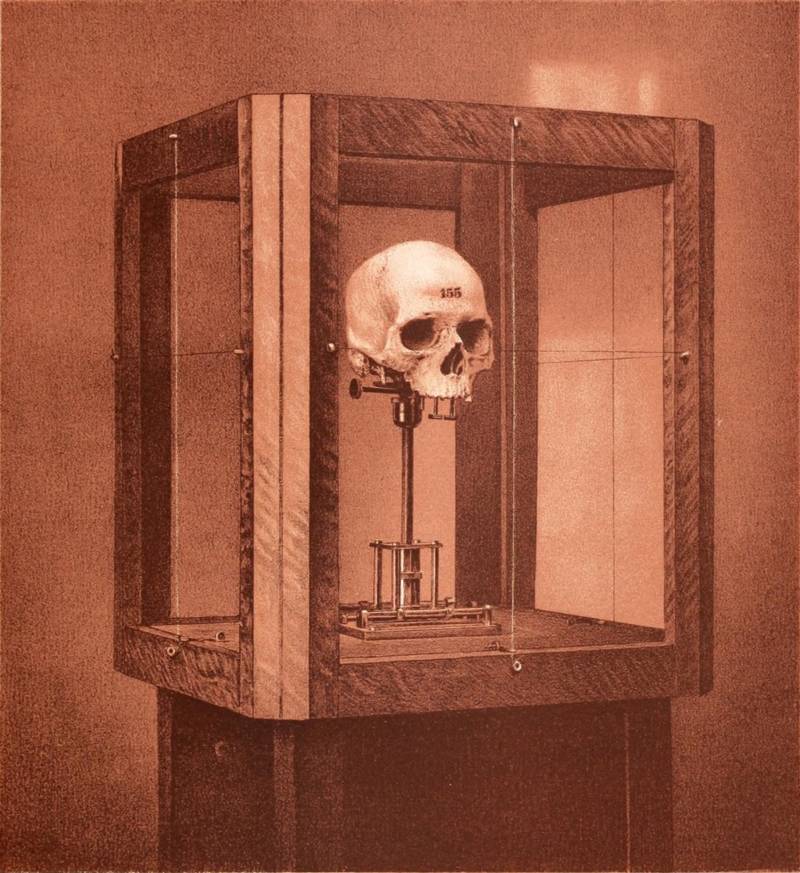
Skull measurement was central to eugenics research. Craniology — the study of skull shape and size — was used to rank racial groups and predict intelligence. Researchers filled skulls with water to measure their capacity, believing larger skulls housed superior minds. Institutions like the National Academy of Sciences housed collections of human skulls for this purpose.
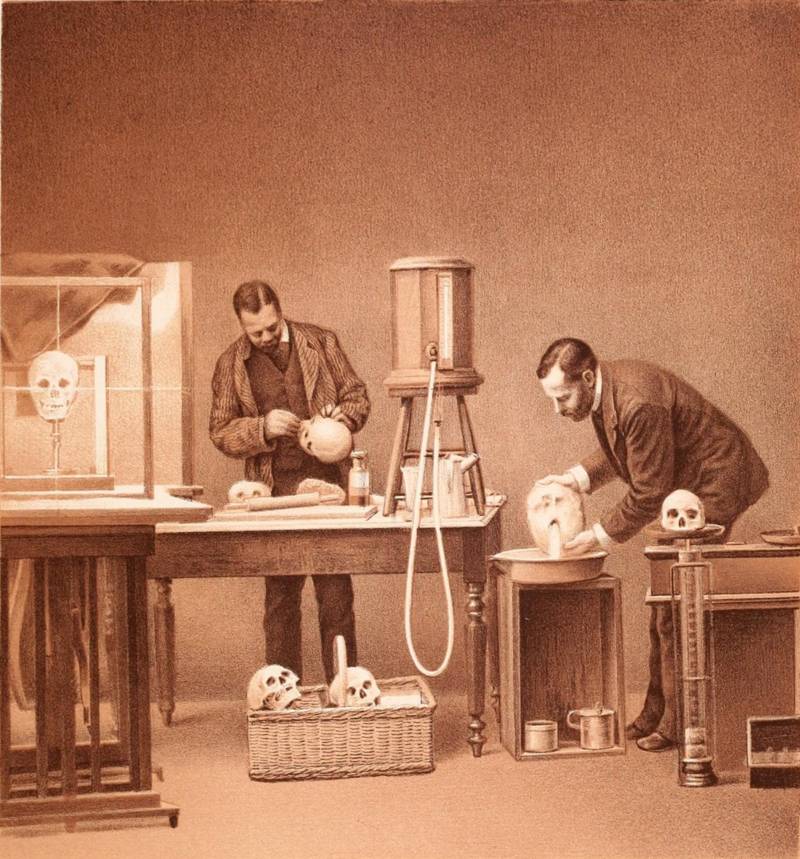
Researchers measure the capacity of a human skull by filling it with water,  National Academy of Sciences, 1885.
Researchers measure the capacity of a human skull by filling it with water, National Academy of Sciences, 1885.
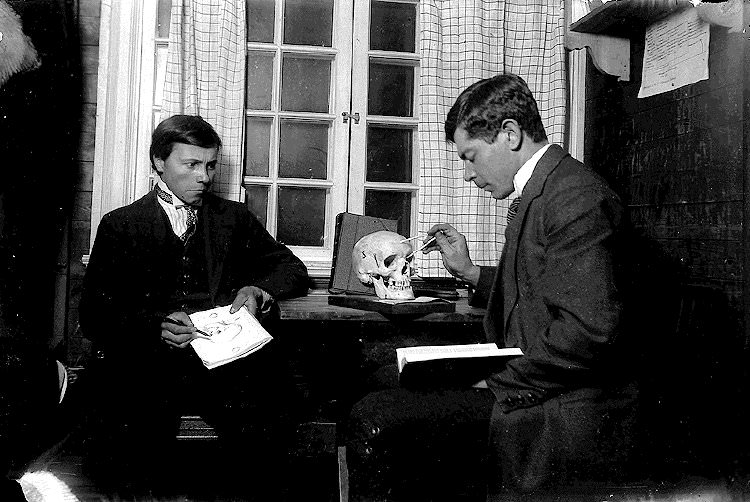
A craniologist demonstrates how to measure a human skull, Sweden, 1915
A human skull in a glass display in  National Academy of Sciences, 1885.
A human skull in a glass display in National Academy of Sciences, 1885.

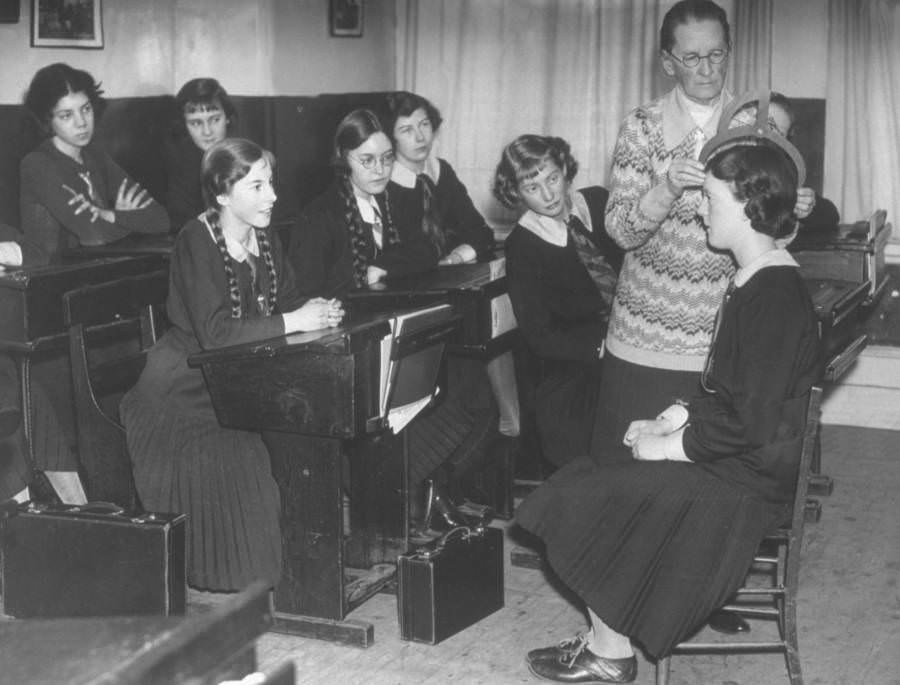
Phrenology, a related practice, claimed that the bumps and contours of a person’s skull revealed their mental faculties and personality. Devices like the psychograph were built to automate this process, scanning a person’s head and producing a printed readout of their supposed mental traits. These machines were marketed to the public and used at fairs and exhibitions, giving eugenics ideas a foothold in everyday life.
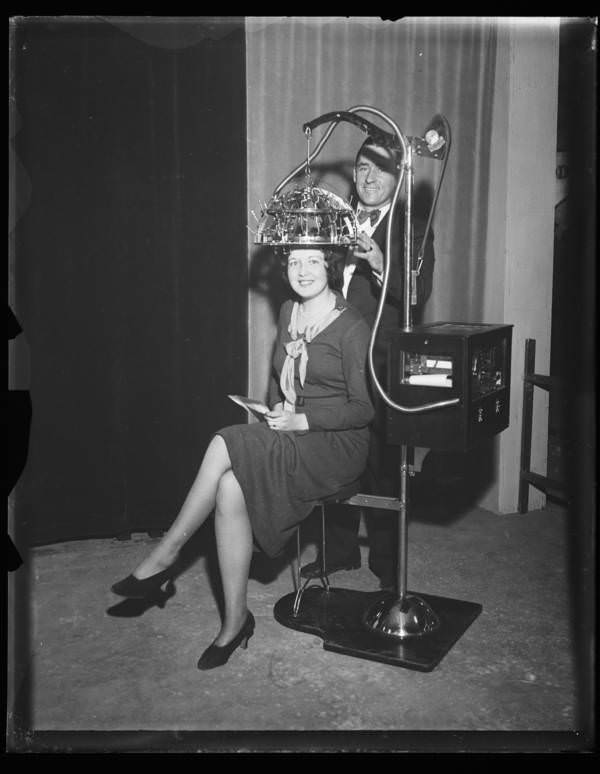
A woman wearing a psychograph, a machine designed to determine someone's mental faculties by measuring their skull, America, 1931
A woman wearing a psychograph, a machine designed to determine someone’s mental faculties by measuring their skull, America, 1931
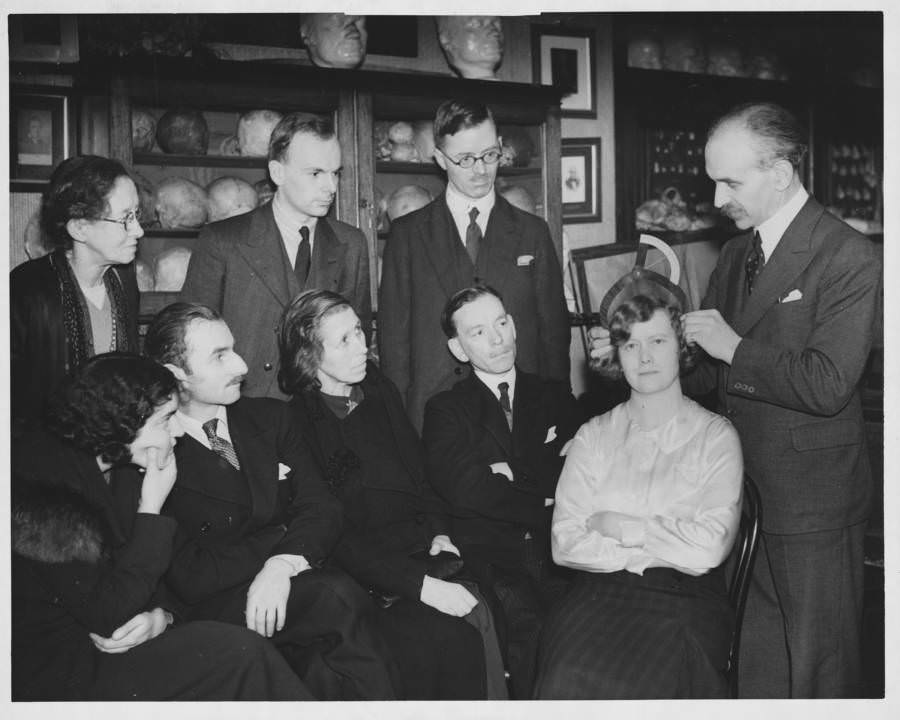
A phrenologist demonstrates how to measure the mental energy inside of a woman's head, London, 1937
A phrenologist demonstrates how to measure the mental energy inside of a woman’s head, London, 1937
A phrenologist demonstrates how to measure a person's head, England, 1937.
A phrenologist demonstrates how to measure a person’s head, England, 1937.

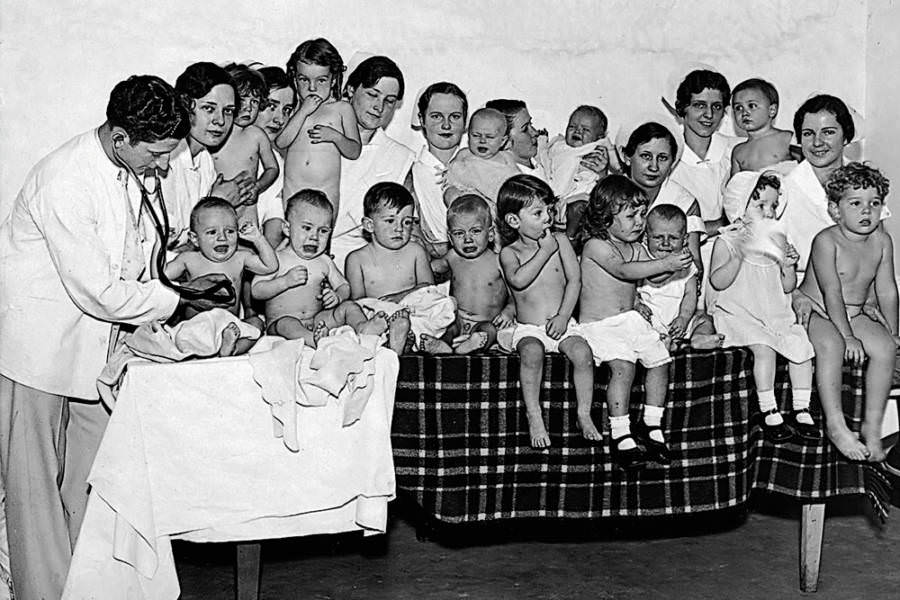
Eugenics wasn’t just practiced in laboratories. It was taken to state fairs and public exhibitions. ‘Fitter Family’ contests judged families on their supposed genetic superiority, awarding trophies to those deemed the best human specimens. ‘Better Baby’ contests evaluated infants between 6 and 48 months old on health metrics, with doctors attempting to establish standards for the ideal child. These events made eugenics feel normal and even celebratory.
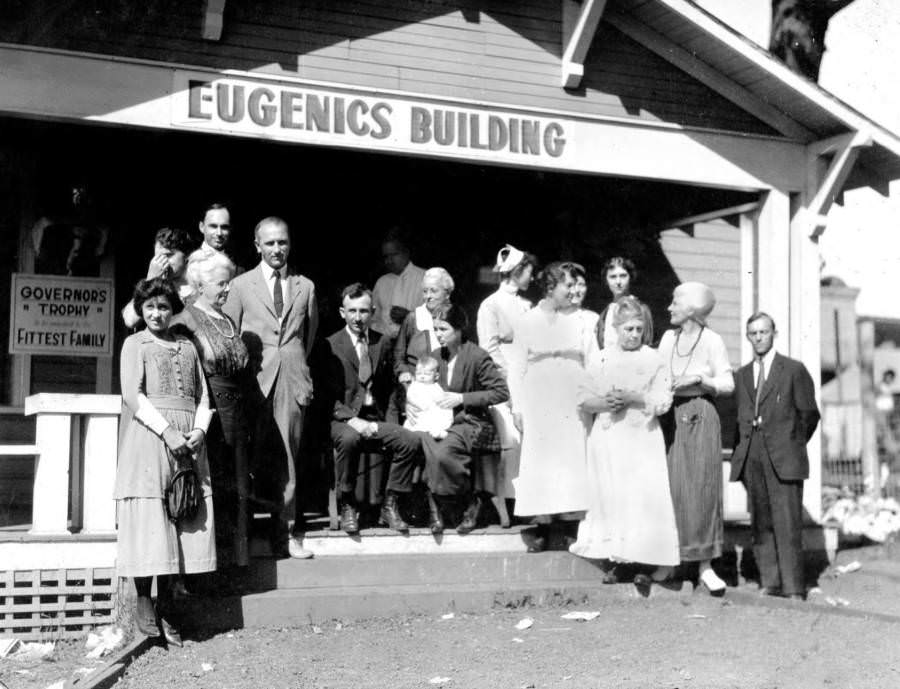
Families who competed in the "Fitter Family" contest, meant to find the most eugenically perfect family,  Topeka, Kansas. 1925.
Families who competed in the “Fitter Family” contest, meant to find the most eugenically perfect family, Topeka, Kansas. 1925.
Babies compete in the 'Better Baby Contest' where doctors tried to find the perfect infant human specimen in Washinton DC in 1931.
Babies compete in the ‘Better Baby Contest’ where doctors tried to find the perfect infant human specimen in Washinton DC in 1931.

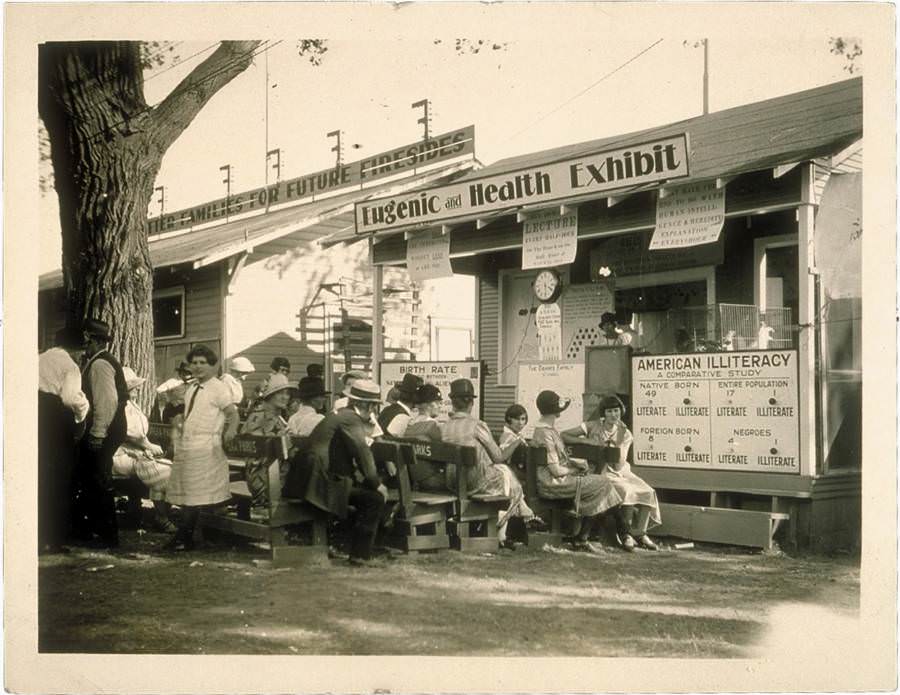
Public education campaigns pushed eugenics further into mainstream thinking. Posters warned that allowing ‘unfit’ people to reproduce would burden society. Exhibits traveled the country, claiming that illiteracy and poverty could be eliminated through selective breeding. These campaigns were not fringe activities — they were funded and endorsed by respected institutions.
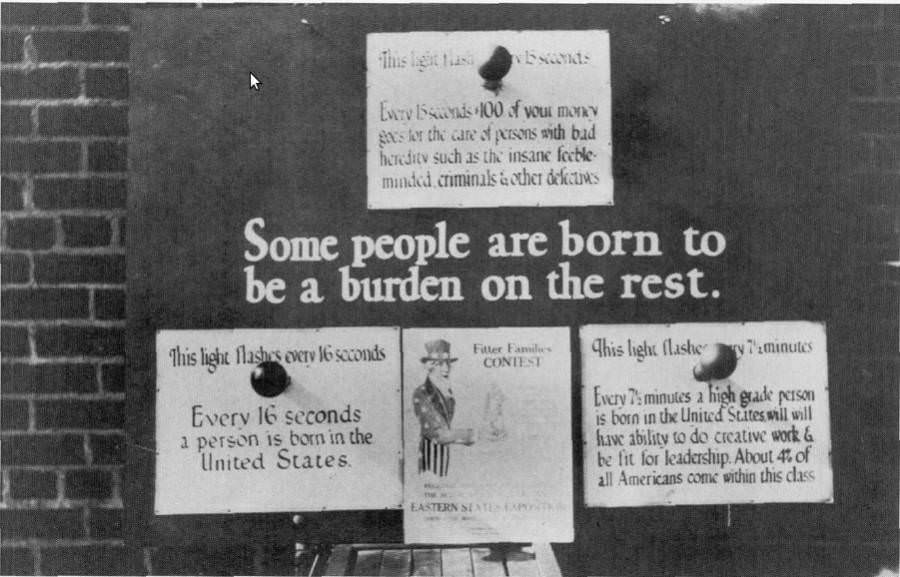
A poster warns that breeding among the unfit creates an unwanted burden on the rest of society, Philadelphia, Pennsylvania. 1926.
A Eugenics and Health Exhibit teaches the crowd how illiteracy can be controlled through selective breeding in America.

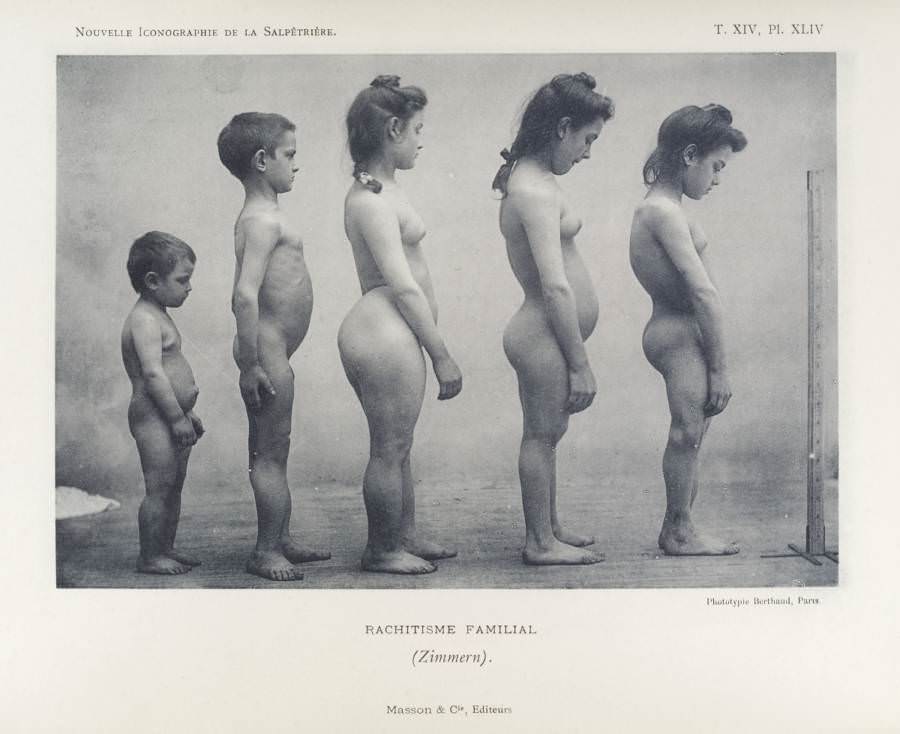
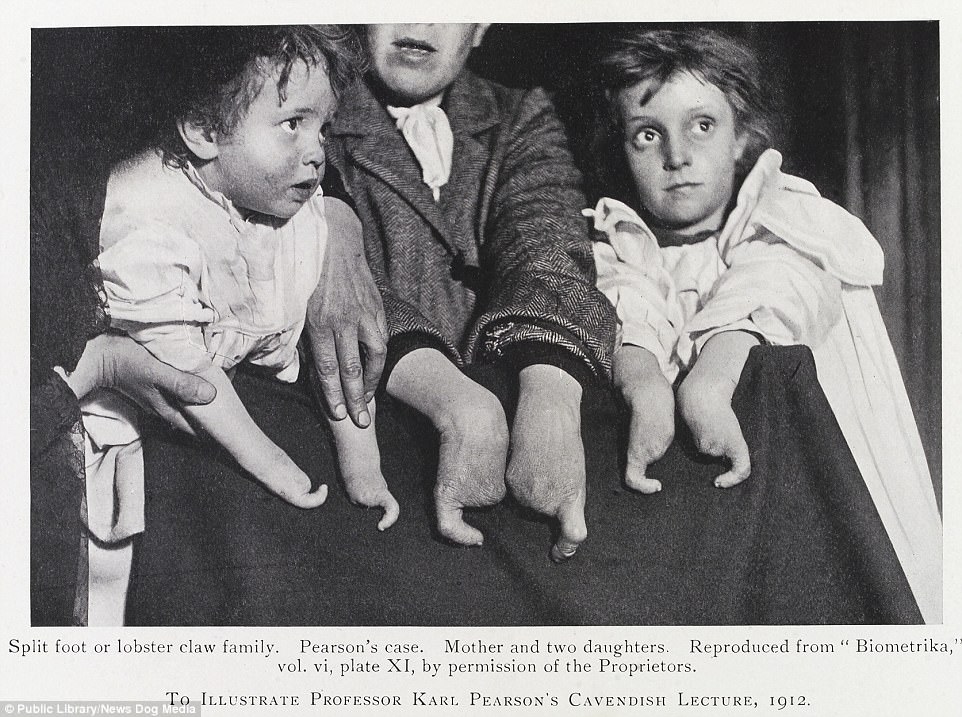
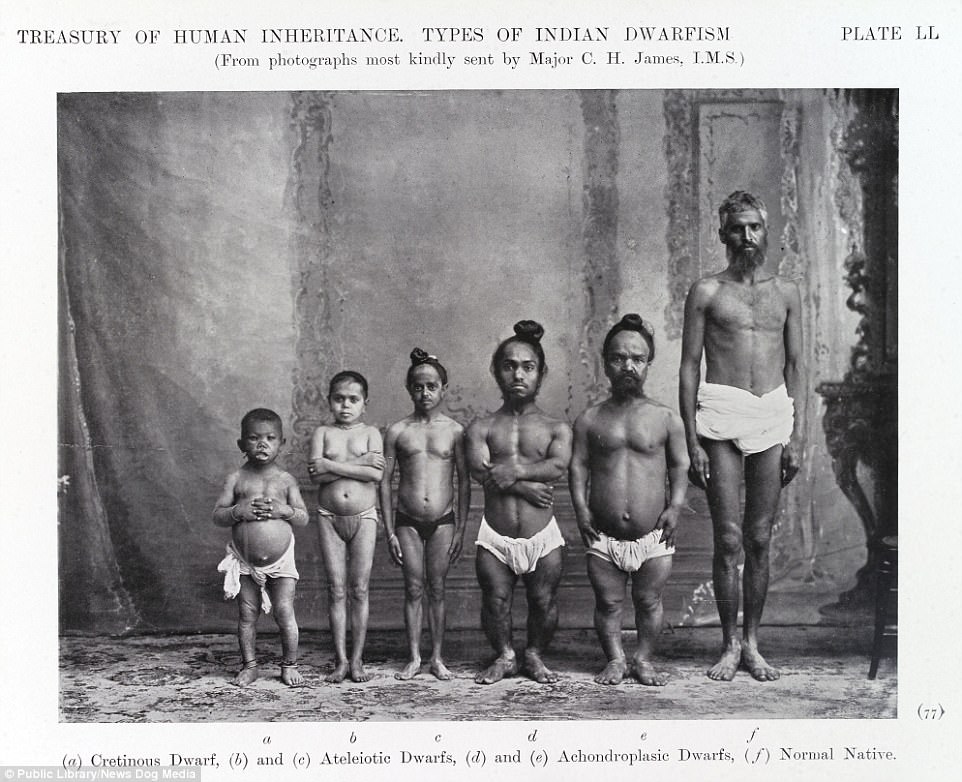
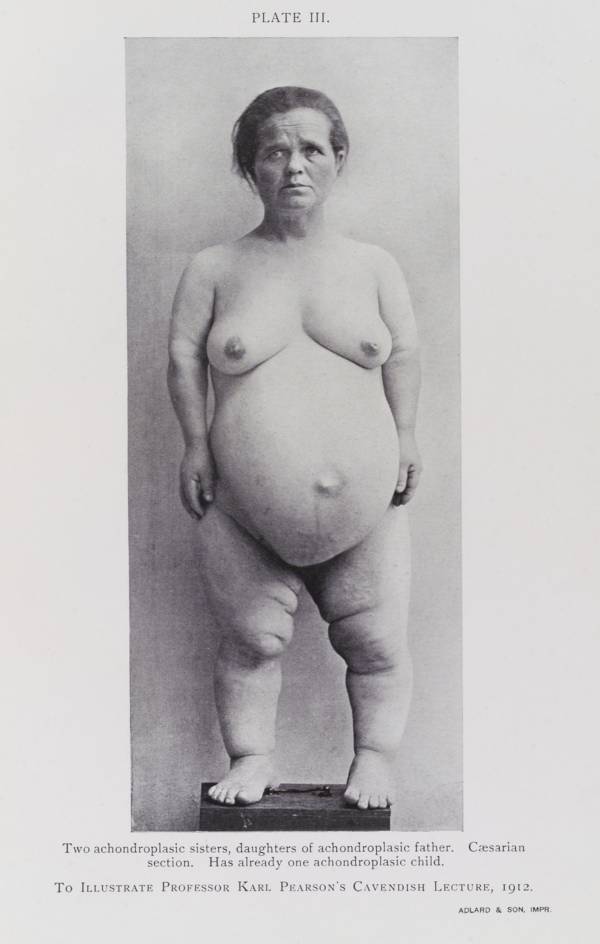
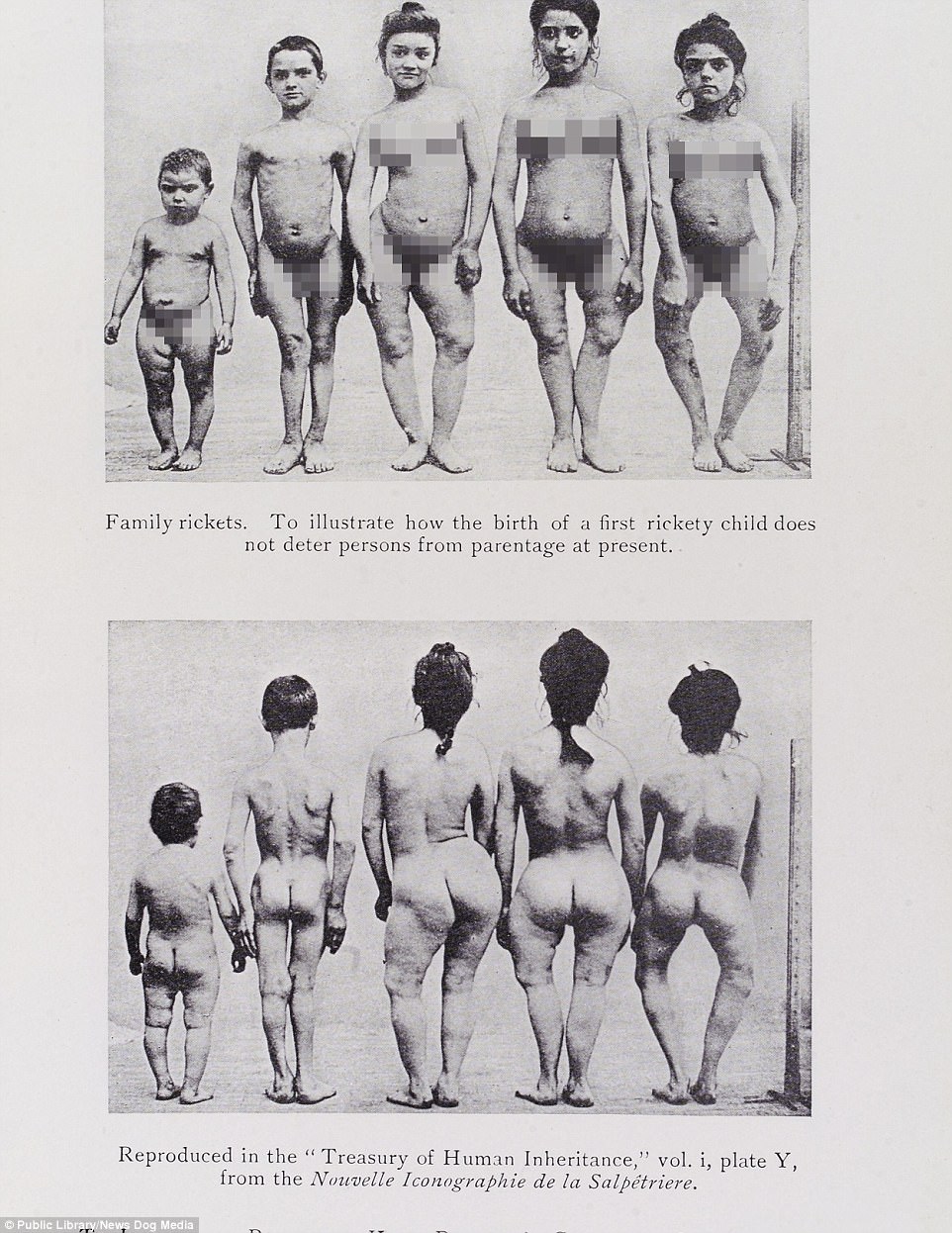
The Eugenics Society in Britain went a step further by photographing people with disabilities and medical conditions to argue that their traits were hereditary and should be prevented from being passed on. Children with rickets, cleft lips, and limb deformities were photographed and presented as evidence for why certain people should not reproduce. These photographs were used in scientific publications and policy arguments.
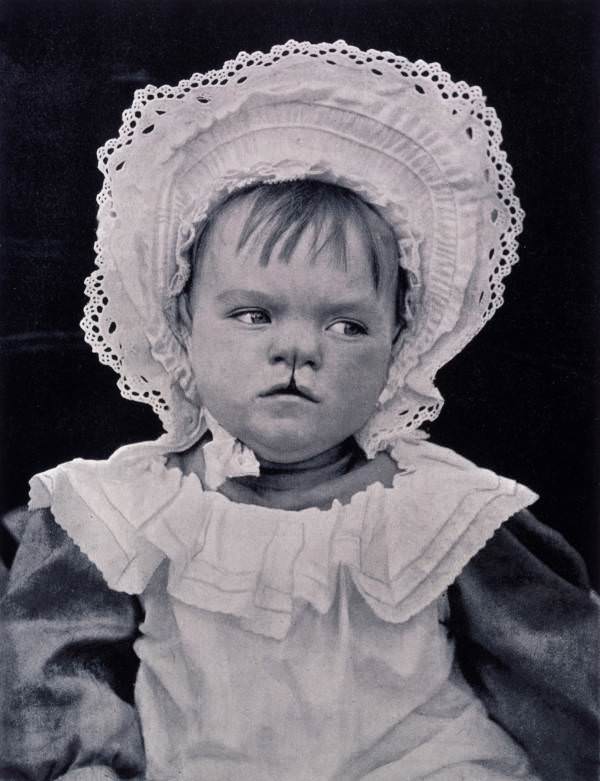
A child with a cleft lip, taken to demonstrate the type of child that should be kept from breeding,  London, England. 1912.
A child with a cleft lip, taken to demonstrate the type of child that should be kept from breeding, London, England. 1912.
Children afflicted with rickets, photographed by the Eugenics Society to demonstrate that their condition is hereditary and could be controlled through selective breeding, 1912
A family of children born with rickets, as photographed by the Eugenics Society, 1912
A photograph from the Eugenics Society showing a family with the "lobster claw" deformity, meant as a demonstration of a hereditary defect, 1912.
A photograph from the Eugenics Society showing a family with the “lobster claw” deformity, meant as a demonstration of a hereditary defect, 1912.
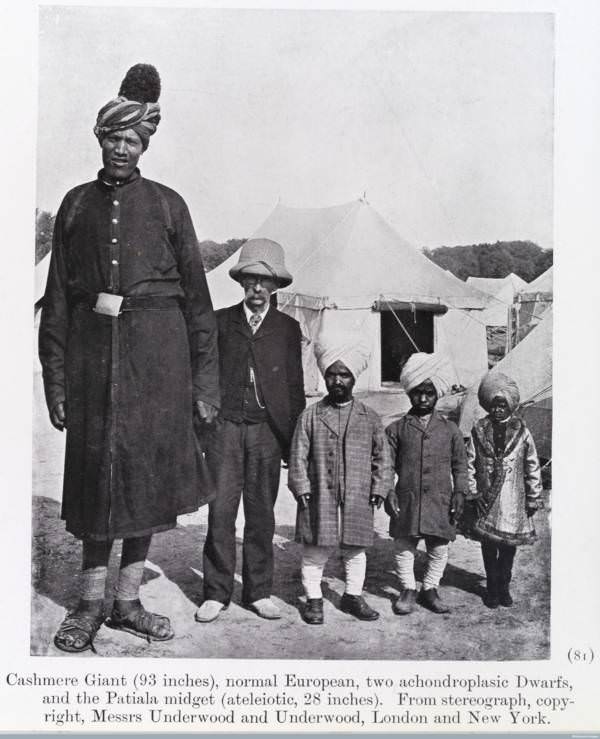
Photographs of 'Indian Dwarfism' from the Eugenics Society in 1912.
Photographs of ‘Indian Dwarfism’ from the Eugenics Society in 1912.
A woman with achondroplasia (a form of dwarfism), as photographed by the Eugenics Society. The notes point out that her parents and children also have achondroplasia, 1912
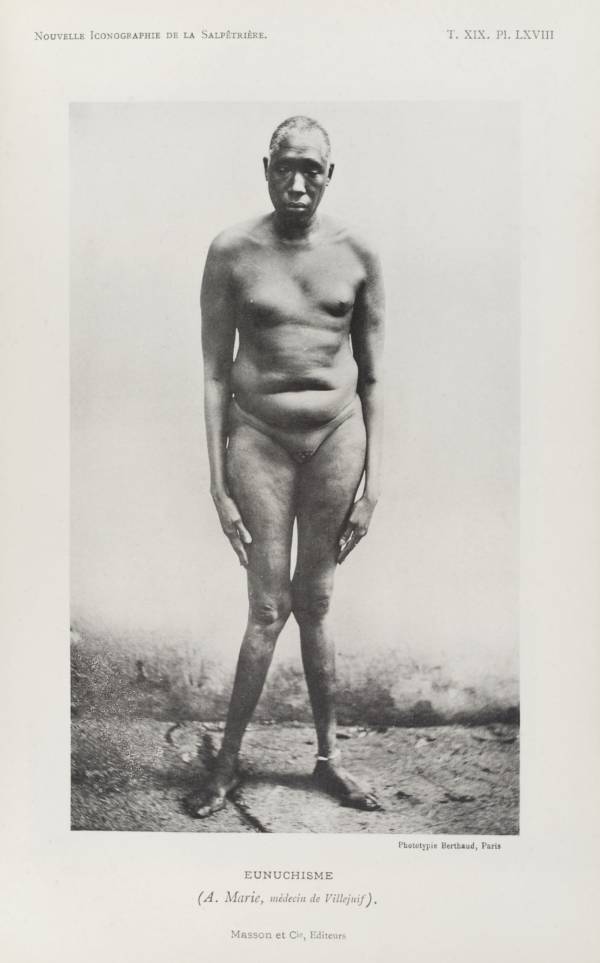
A humiliated-looking man with "eunuchism" allows scientists of the Eugenics Society to photograph him in the nude
A humiliated-looking man with “eunuchism” allows scientists of the Eugenics Society to photograph him in the nude

Eugenics took its most brutal legislative form in California, which passed a forced sterilization law in 1909. Between 1909 and 1979, approximately 20,000 sterilization operations were performed in state mental institutions. The stated justification was protecting society from the offspring of people with mental illness. The U.S. Supreme Court upheld the constitutionality of forced sterilization in its 1927 ruling in Buck v. Bell. A 1976 Government Accountability Office investigation found that between 25 and 50 percent of Native American women were sterilized between 1970 and 1976.
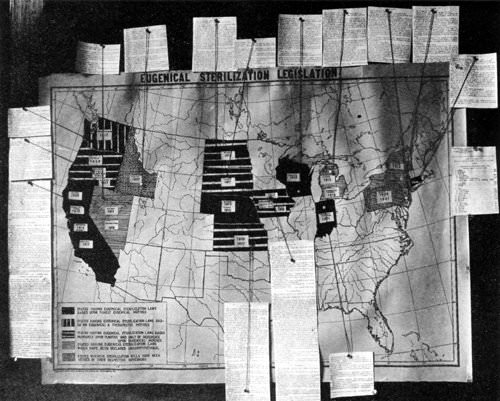
A map illustration revealing which states in the United States have laws condoning forced sterilization, New York. 1921.

American eugenics laws drew direct admiration from Adolf Hitler. In his 1925 book Mein Kampf, he praised the United States as the only country showing progress toward better racial policies, writing: ‘There is today one state in which at least weak beginnings toward a better conception are noticeable. Of course, it is not our model German Republic, but the American Union.’ When the Nazi regime came to power, it applied eugenics on a massive, state-sanctioned scale.
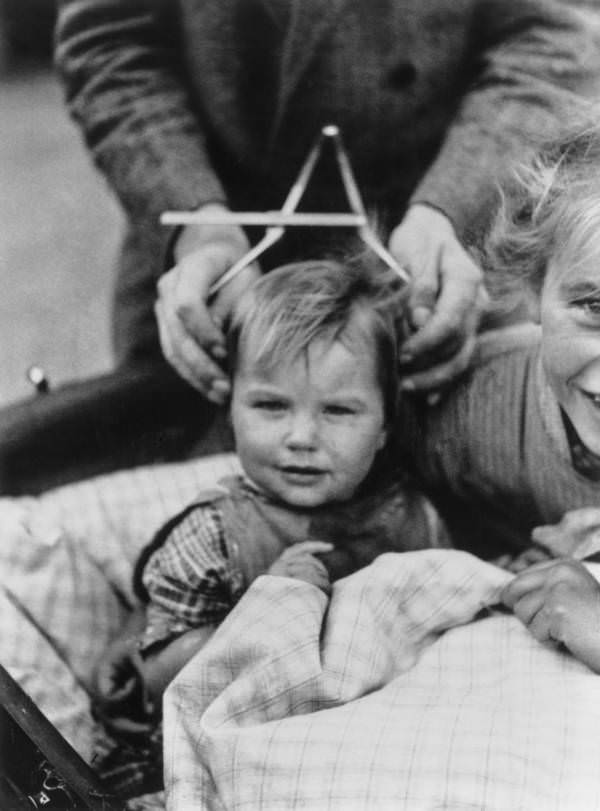
A child's head is measured to determine his personality and predict his future in Schleswig-Holstein, Germany, in 1932.
A child’s head is measured to determine his personality and predict his future in Schleswig-Holstein, Germany, in 1932.

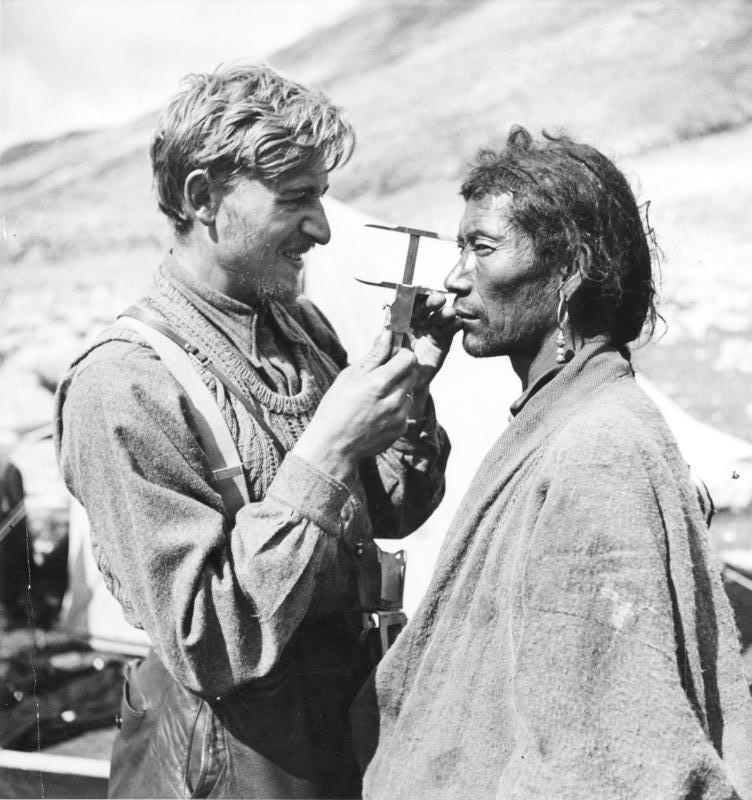
Nazi scientists conducted race measurement campaigns across Europe and beyond. Dr. Bruno Beger, working under the SS’s Ahnenerbe project — a Nazi organization dedicated to researching Aryan racial history — traveled to Tibet in 1938 to measure the heads and facial features of Tibetan people. His goal was to find evidence of Aryan ancestry in remote populations. The measurements were intended to build a racial hierarchy with Germans at the top.
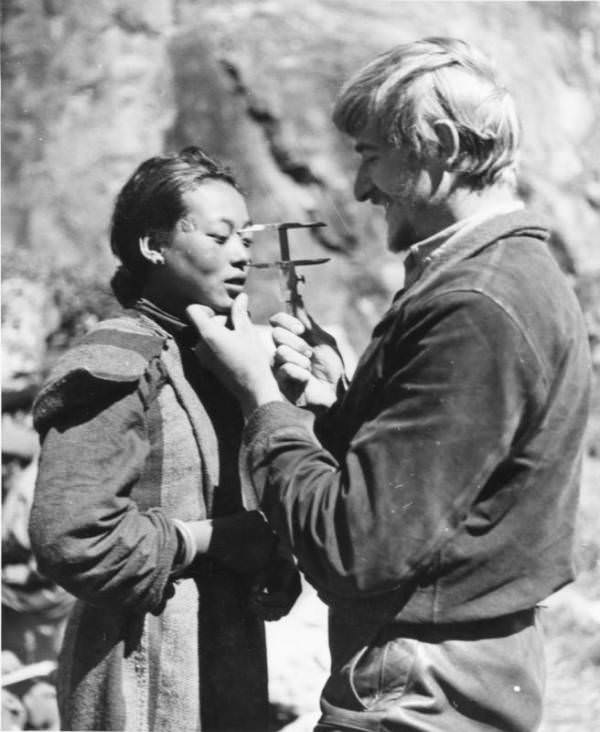
German Dr. Bruno Beger measures a Tibetan woman's head to demonstrate the ("inferior") characteristics of her race.
German Dr. Bruno Beger measures a Tibetan woman’s head to demonstrate the (“inferior”) characteristics of her race.
Bruno Beger measures the facial characteristics of a Tibetan man, Tibet, 1938

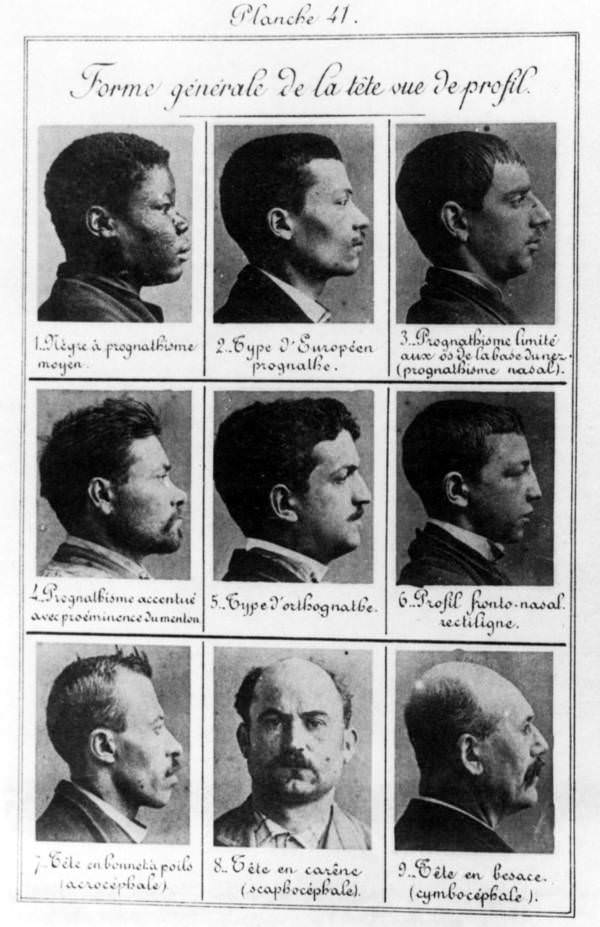
Nazi racial ideology extended to photographs and visual propaganda that arranged images of people from different parts of the world alongside Neanderthal reconstructions to suggest shared ‘primitive’ traits. These images were published in scientific and educational materials. Criminal ‘types’ were similarly catalogued by race, with portrait studies claiming to identify the facial features of criminality across different ethnic groups.
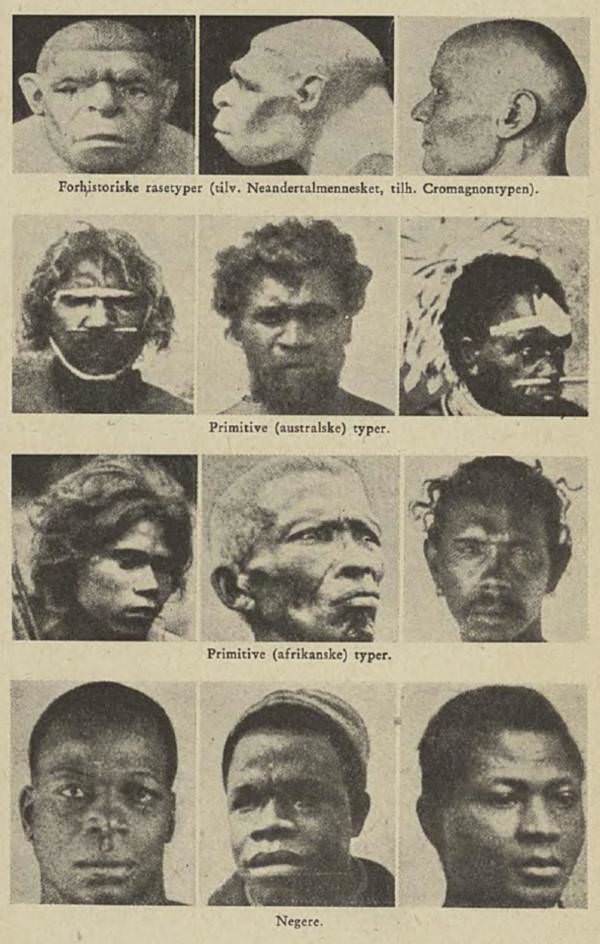
Photographs of "human races," organized to suggest a common trait shared by "primitive" Australians, Africans, and Neanderthals., 1939
Photographs of “human races,” organized to suggest a common trait shared by “primitive” Australians, Africans, and Neanderthals., 1939
Portraits demonstrating the standard head shapes of "criminal types" of various races from France, 1914
Portraits demonstrating the standard head shapes of “criminal types” of various races from France, 1914
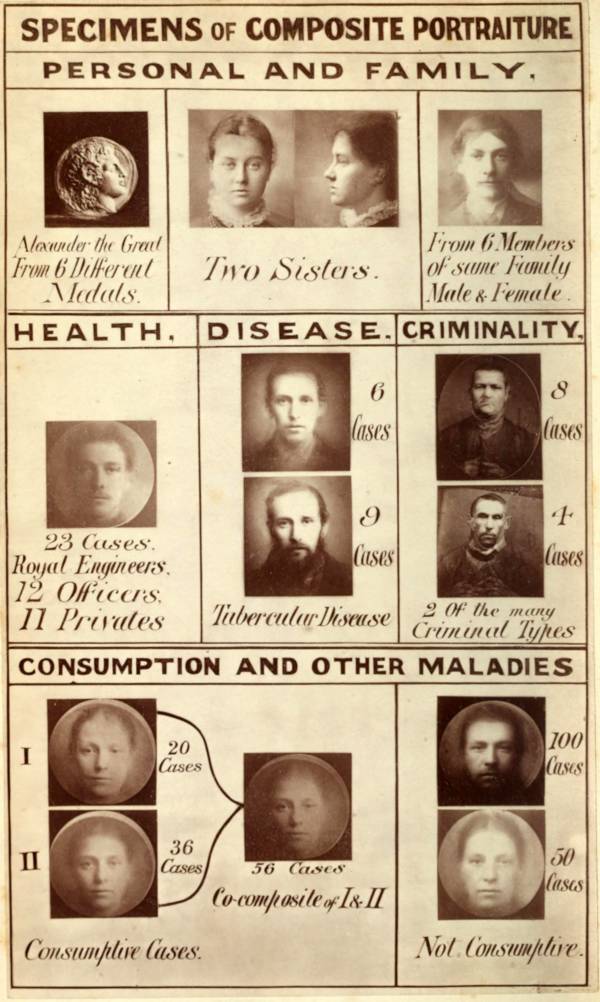
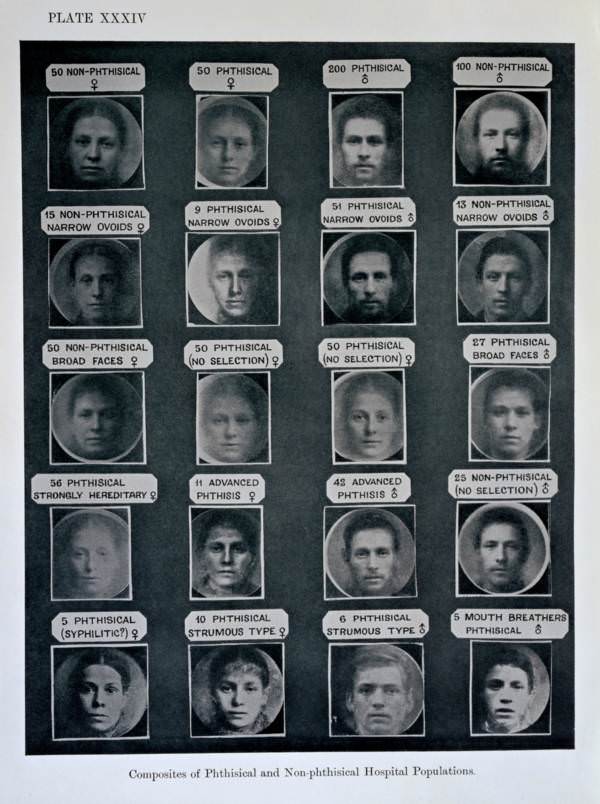
Composite photographs, created to show the common faces of criminality and disease.
An anthropometry class learns about the different types of human noses, Paris, 1910s

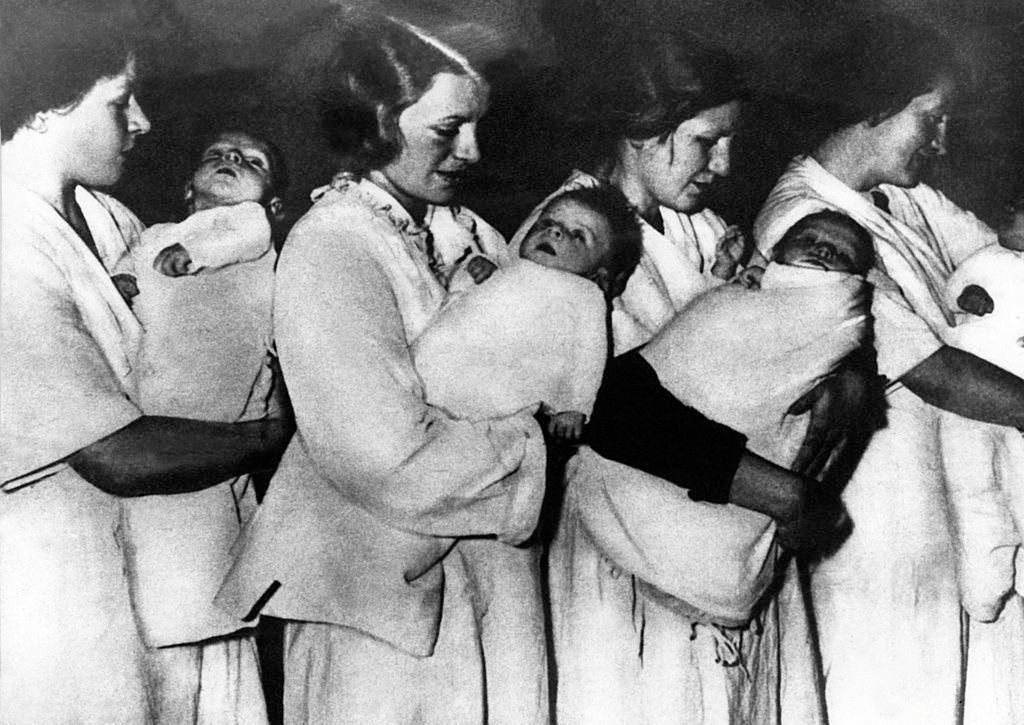
The Nazi regime’s Lebensborn program was another direct application of eugenic thinking. It was designed to increase the population of children considered racially ‘Aryan.’ Women were selected for their physical characteristics and encouraged to bear children for the state. Children from occupied territories who were deemed racially desirable were taken from their families and placed with German households, where they were raised under Nazi ideology.
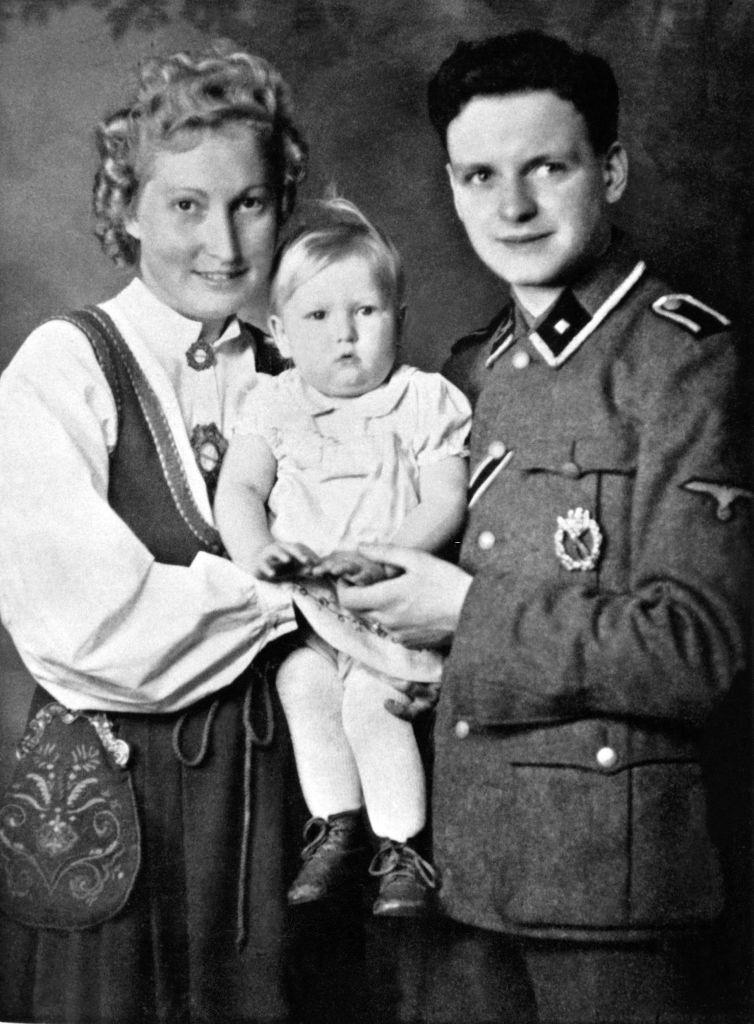
A German family with a German allegedly Aryan Girl born in a Lebensborn, during the Wolrd War II.
German women carrying children on an alleged Aryan purity in a Lebensborn, selection center births by methods eugenicists during the second world war.
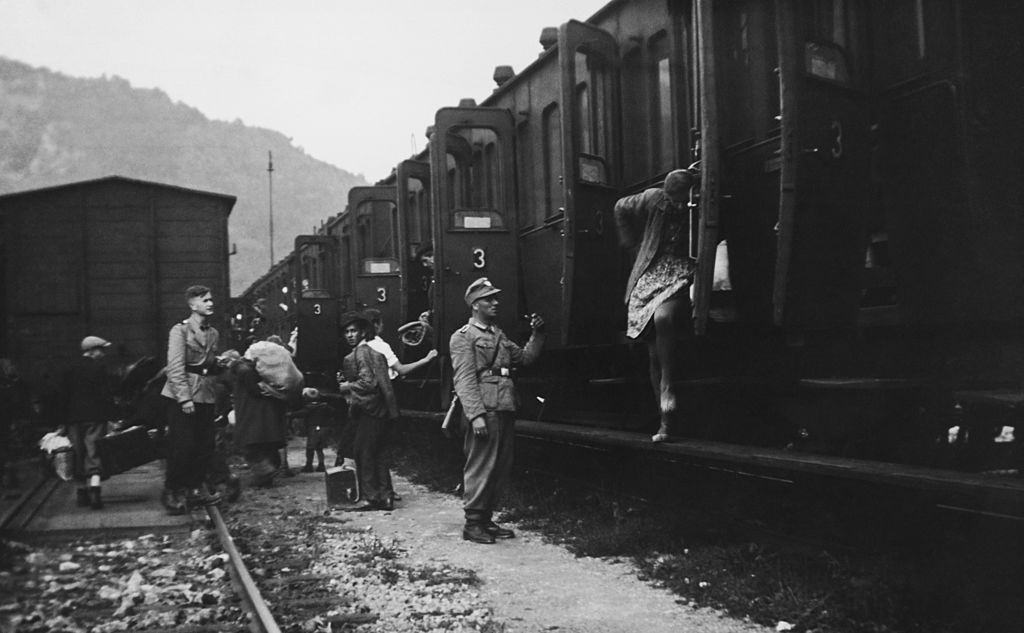
The children of partisan parents from Celje, Yugoslavia (now in Slovenia), arrive in Frohnleiten, Austria, where they are met by German military police officers, August 1942.

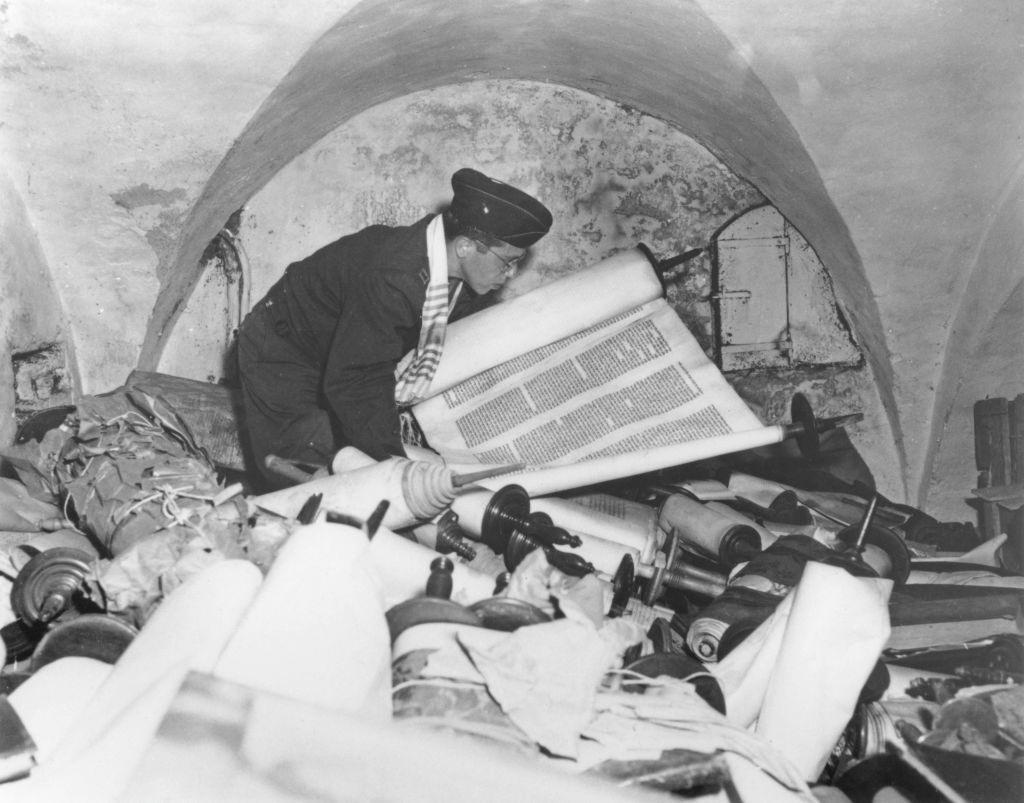
The Kaiser Wilhelm Institute for Anthropology, Human Heredity, and Eugenics in Berlin was a central hub of Nazi race science. Researchers there studied twins to understand hereditary traits. After the war, American forces discovered the institute’s cellars contained hundreds of Jewish Torah scrolls stolen from across occupied Europe — stored alongside the scientific instruments of racial classification.
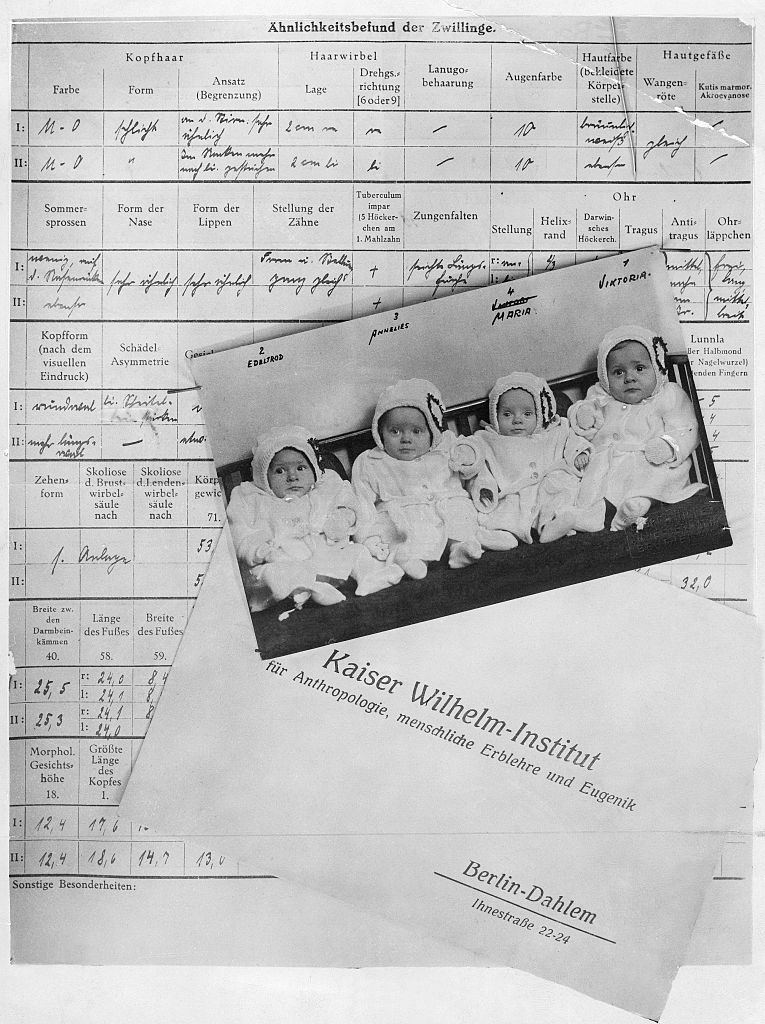
File on twins used for eugenics research at the Kaiser Wilhelm Institute for Anthropology at Berlin, Germany, 1930.
US Army chaplain Samuel Blinder examines one of hundreds of Jewish Sefer Torah scrolls, stolen from all over Europe by Nazi forces.

Harvard anthropologist Earnest Albert Hooton was one of the most prominent American academics to support racial classification through skull research. He maintained large collections of skulls at Harvard and used them to argue for biological differences between racial groups. His work gave academic legitimacy to ideas that were already fueling discriminatory laws and policies.
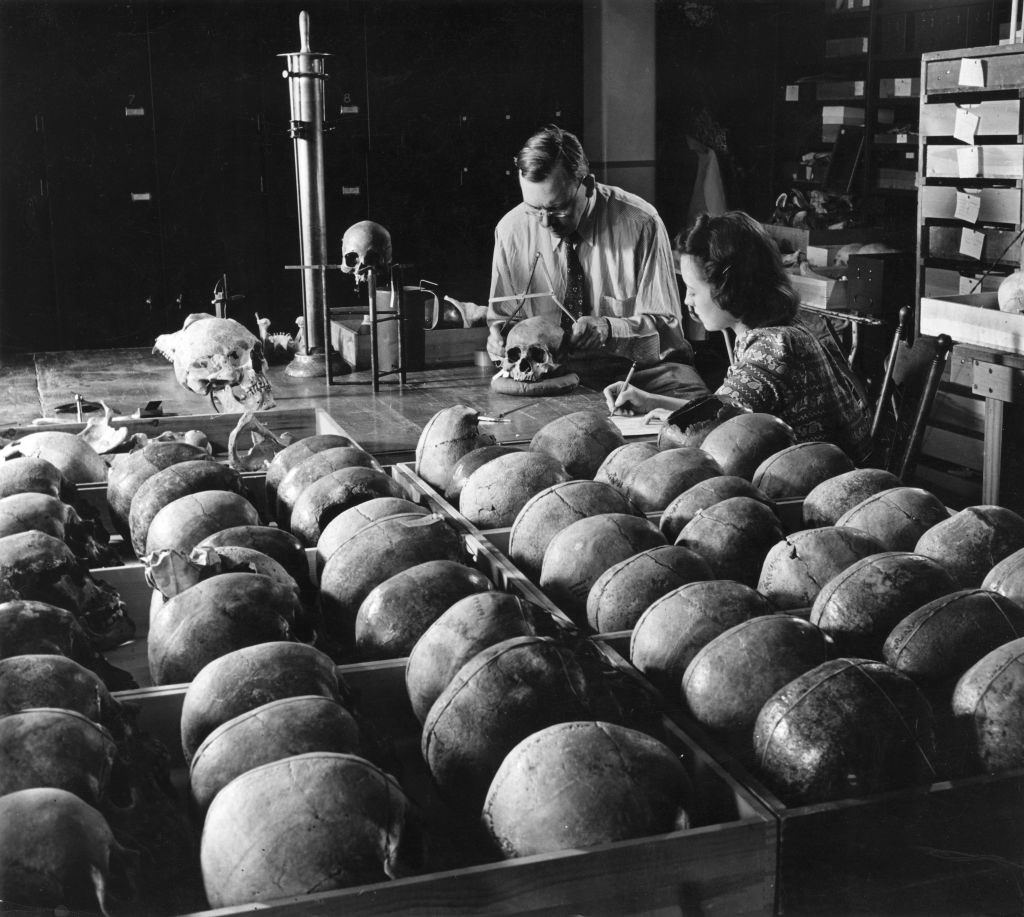
American Anthrologist Earnest Albert Hooton and on identified woman of Harvard University standing with trays of skulls used in his research on evolution, 1939
Patients with and without various diseases, created to find the common facial characteristics of people who are resistant to disease, England, 1912.

At the 1932 Eugenics Congress held at New York’s Natural History Museum, a statue was unveiled representing the ‘average American.’ It was constructed using measurements taken from approximately 100,000 military veterans. The exhibit presented a physical ideal and framed deviation from it as a problem to be corrected. Eugenics had by then permeated museums, universities, government offices, and courtrooms across the Western world.
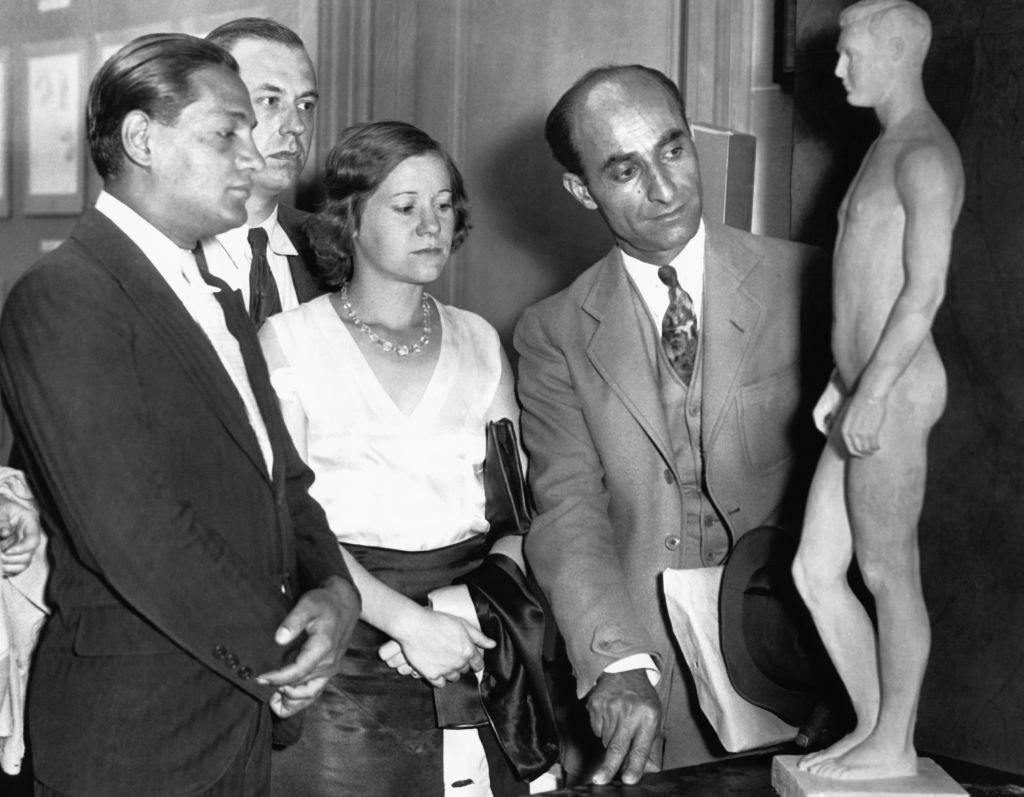
A statue symbolizing the average American at the Natural History Museum in New York.
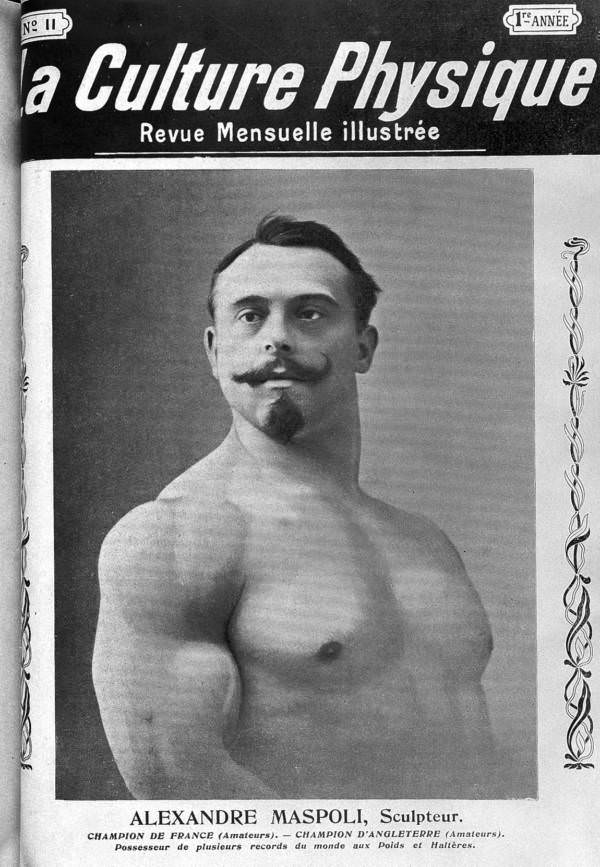
French weightlifter Alexandre Maspoli poses as an ideal human specimen on the cover of La Culture Physique, France, 1904

After World War II, eugenics lost its public respectability, but forced sterilizations continued in several countries for decades. As genetic science advanced in the latter half of the 20th century, a new form of the debate emerged around human genetic engineering. Modern genetic testing allows couples to screen embryos for hereditary diseases, and prenatal testing can detect certain conditions in the womb. In 1972, protesters in Tokyo marched against a proposed eugenics amendment bill, demonstrating that the fight against state-mandated reproductive control was far from over.
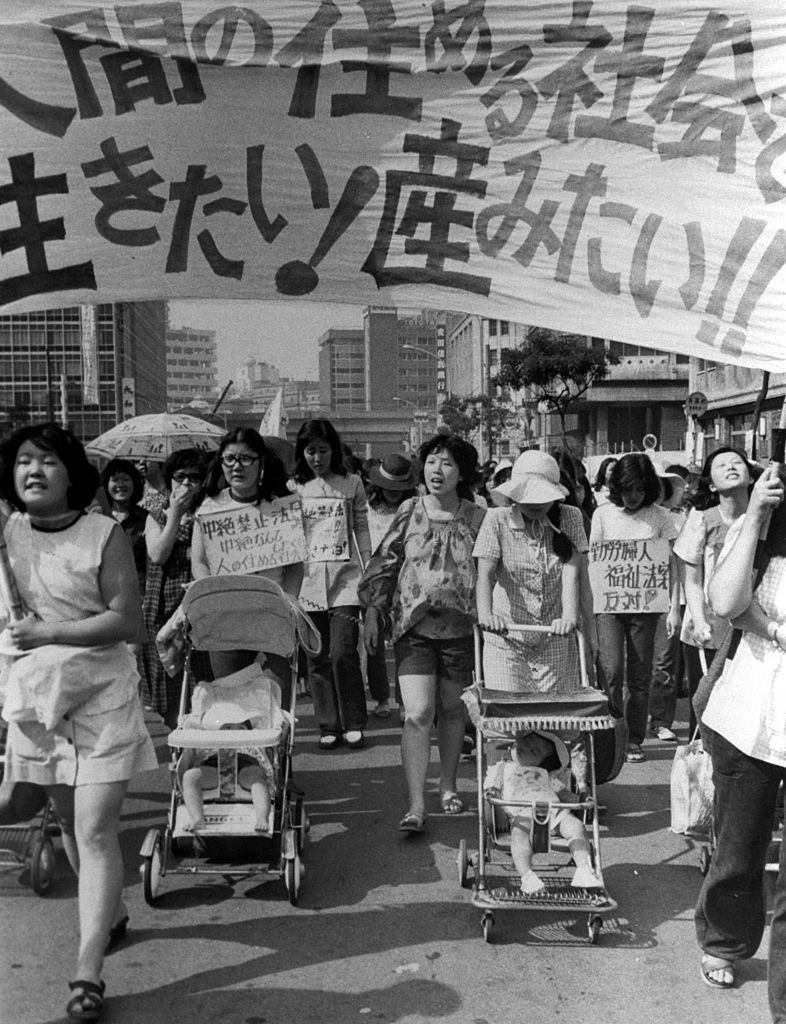
Women march on to protest the eugenics amendment bill on June 11, 1972 in Tokyo, Japan.
Enjoyed this post? Get new ones in your inbox.

Leave a Comment

Your email address will not be published. Required fields are marked *

Share this Post 🥺

Please take a moment to share this content. Your support is greatly appreciated! 🙌🙏

Share this Post 🥺

Please take a moment to share this content. Your support is greatly appreciated! 🙌🙏
Scroll to Top
 
Hey Friend, Before You Go.. Please like & follow for more interesting content