
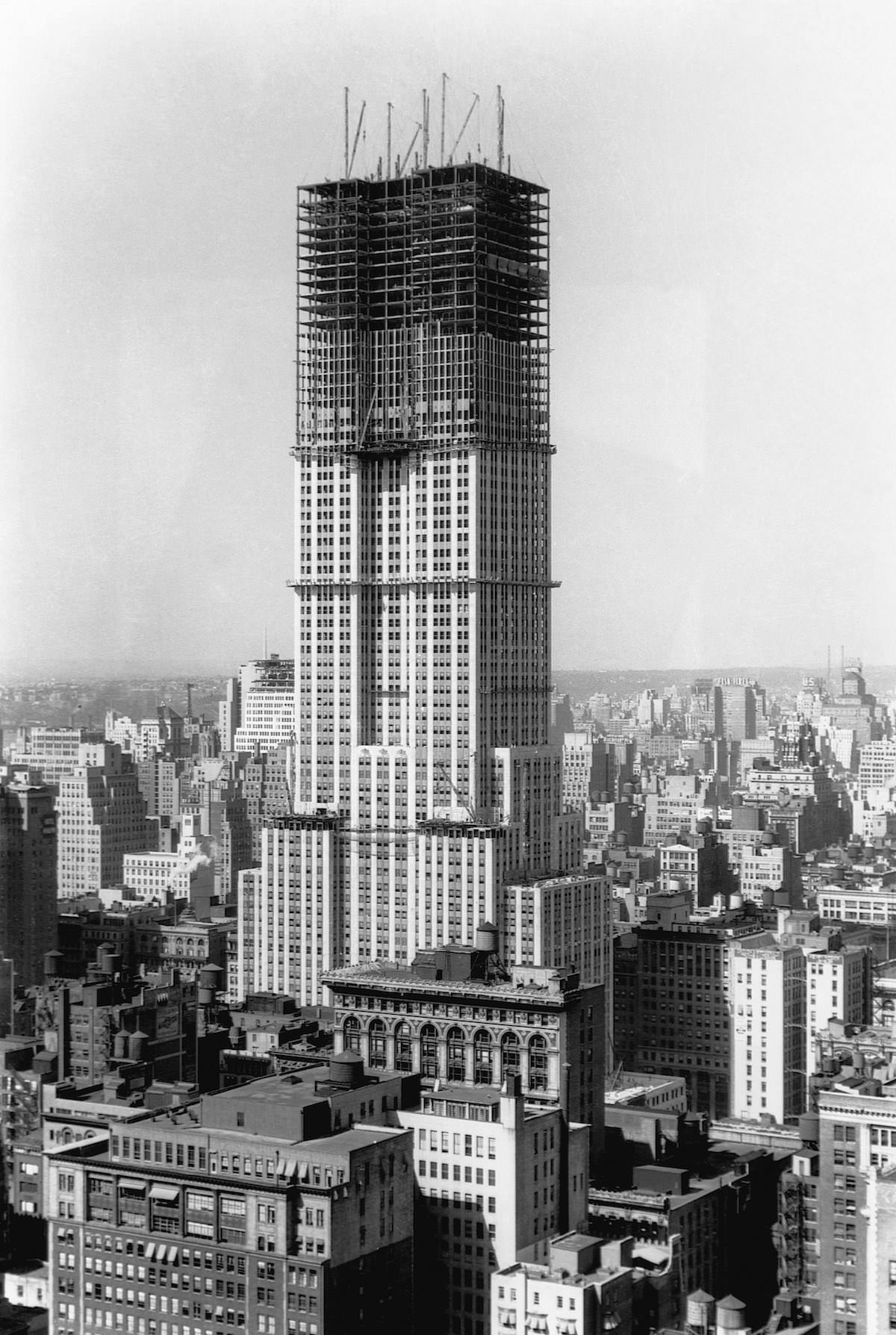
When the Empire State Building broke the skyline of New York City in 1931, it was unlike anything the world had seen. Rising 1,250 feet from the corner of Fifth Avenue and 34th Street, it became the tallest building on Earth. It was only the second structure in history to surpass the 1,000-foot mark, trailing the Chrysler Building by just a short window of time before quickly surpassing it. Groundbreaking began on March 17, 1930, and the pace of construction was relentless — floors went up at a rate that stunned the public and the press alike. By May 1, 1931, just 410 days after work began, the building was officially open.
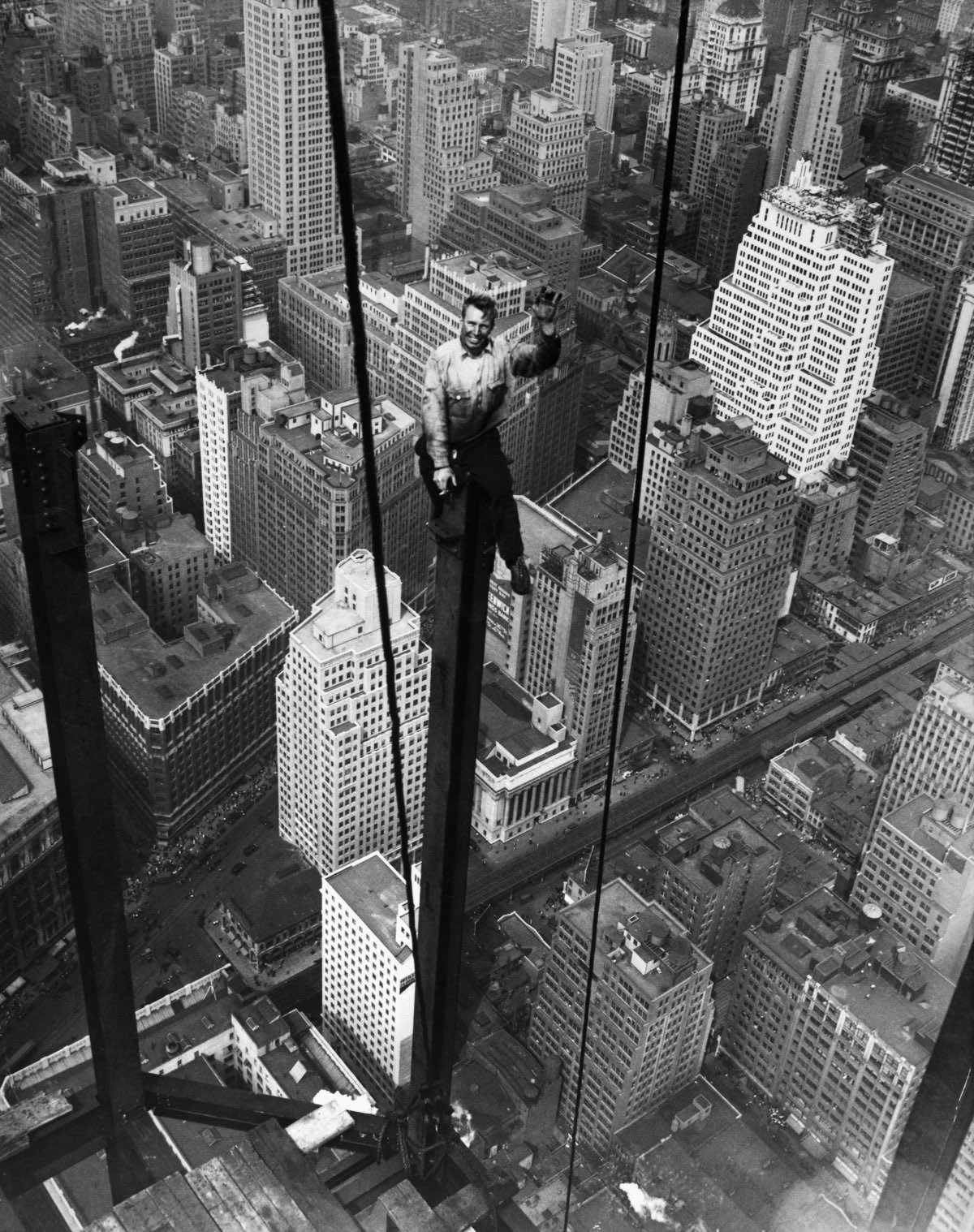
More than 3,500 workers were employed at the building’s peak construction phase. They were a diverse crew — Irish and Italian immigrants made up the bulk of the labor force, but a notable group among them were Mohawk ironworkers from the Kahnawake reserve near Montreal, Canada. Their presence at extreme heights was not accidental. The Mohawk people’s involvement in high-steel construction stretches back to 1886, when members of the community were hired to help build a bridge over the St. Lawrence River that crossed onto their land. Supervisors quickly noticed that the men moved across the high steel beams with calm and ease, and the reputation stuck. By the time the Empire State Building went up, Mohawk ironworkers were a sought-after part of any major skyscraper crew.
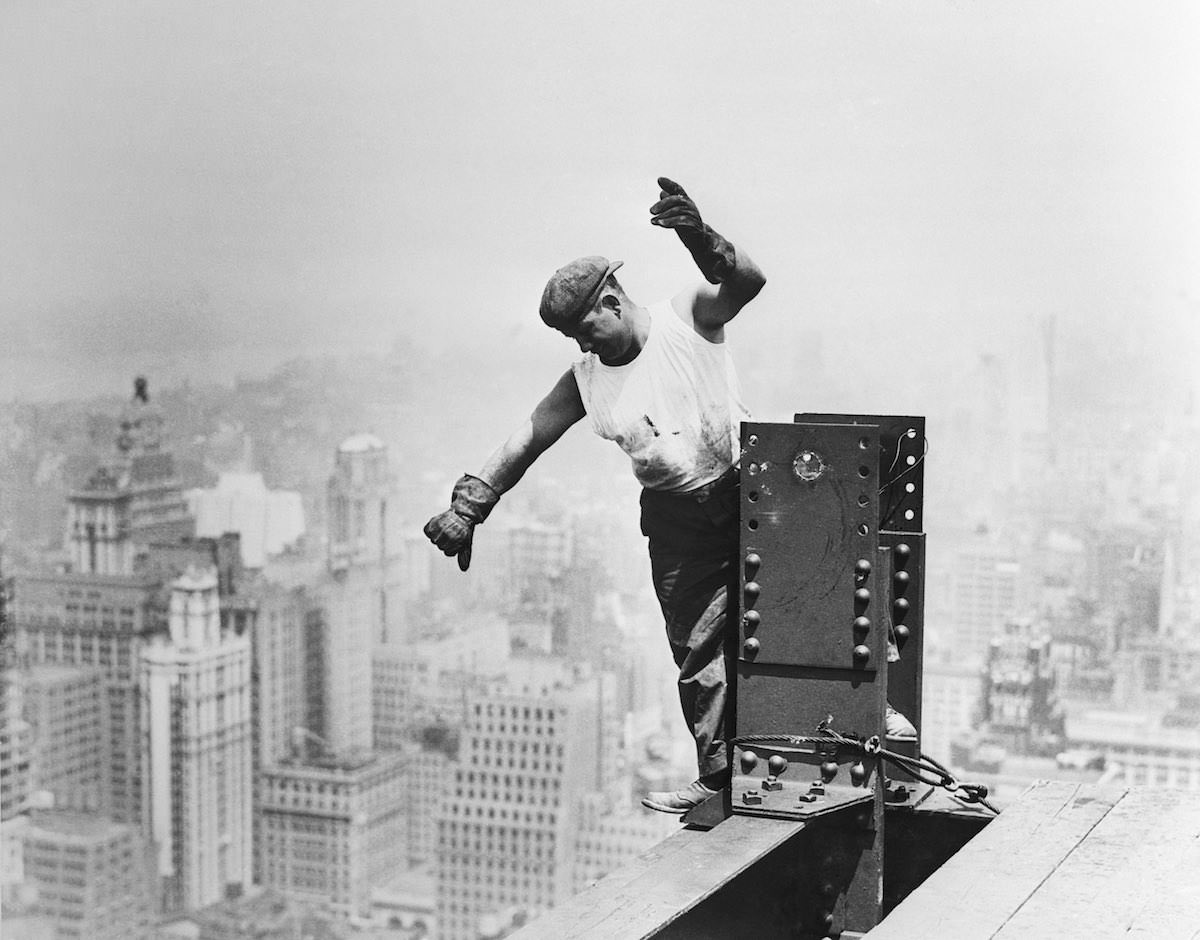
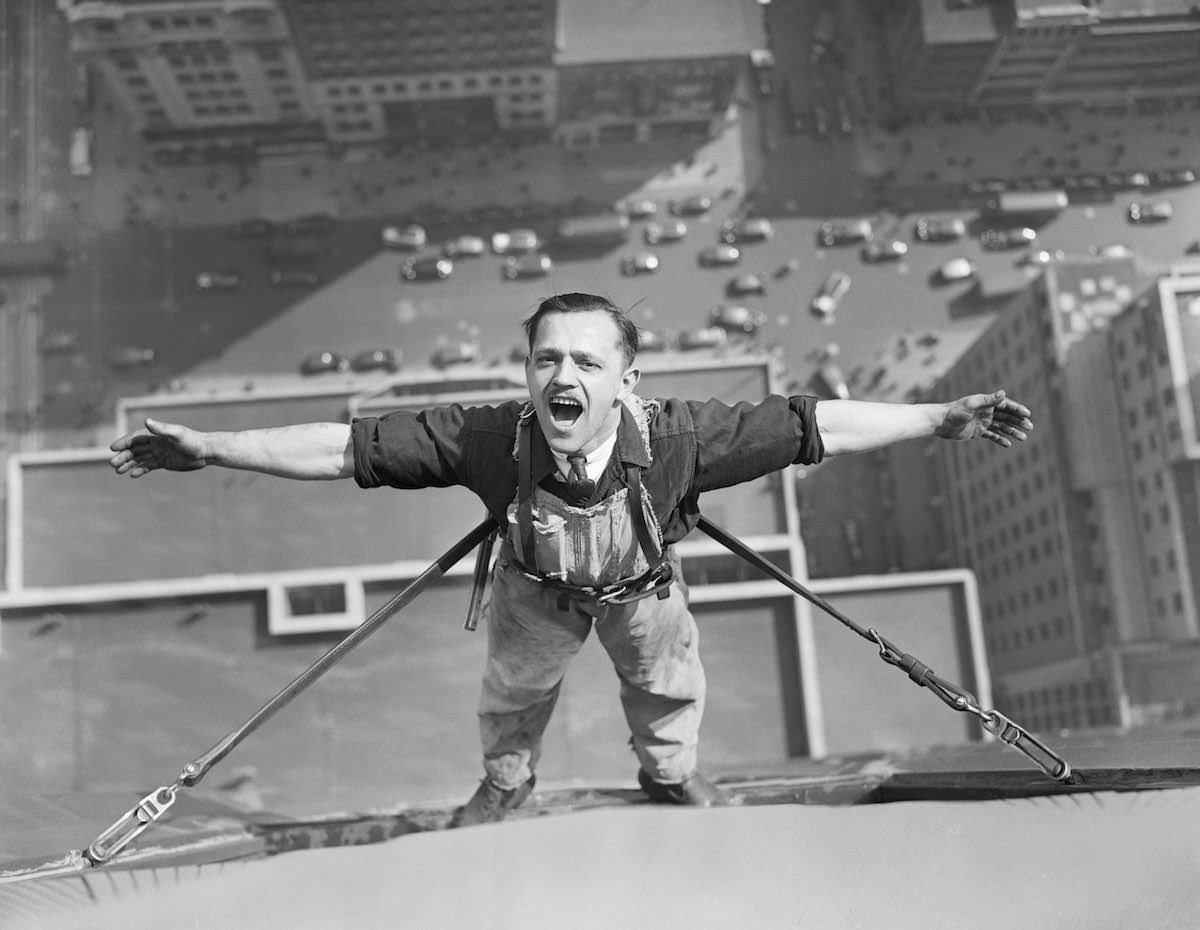
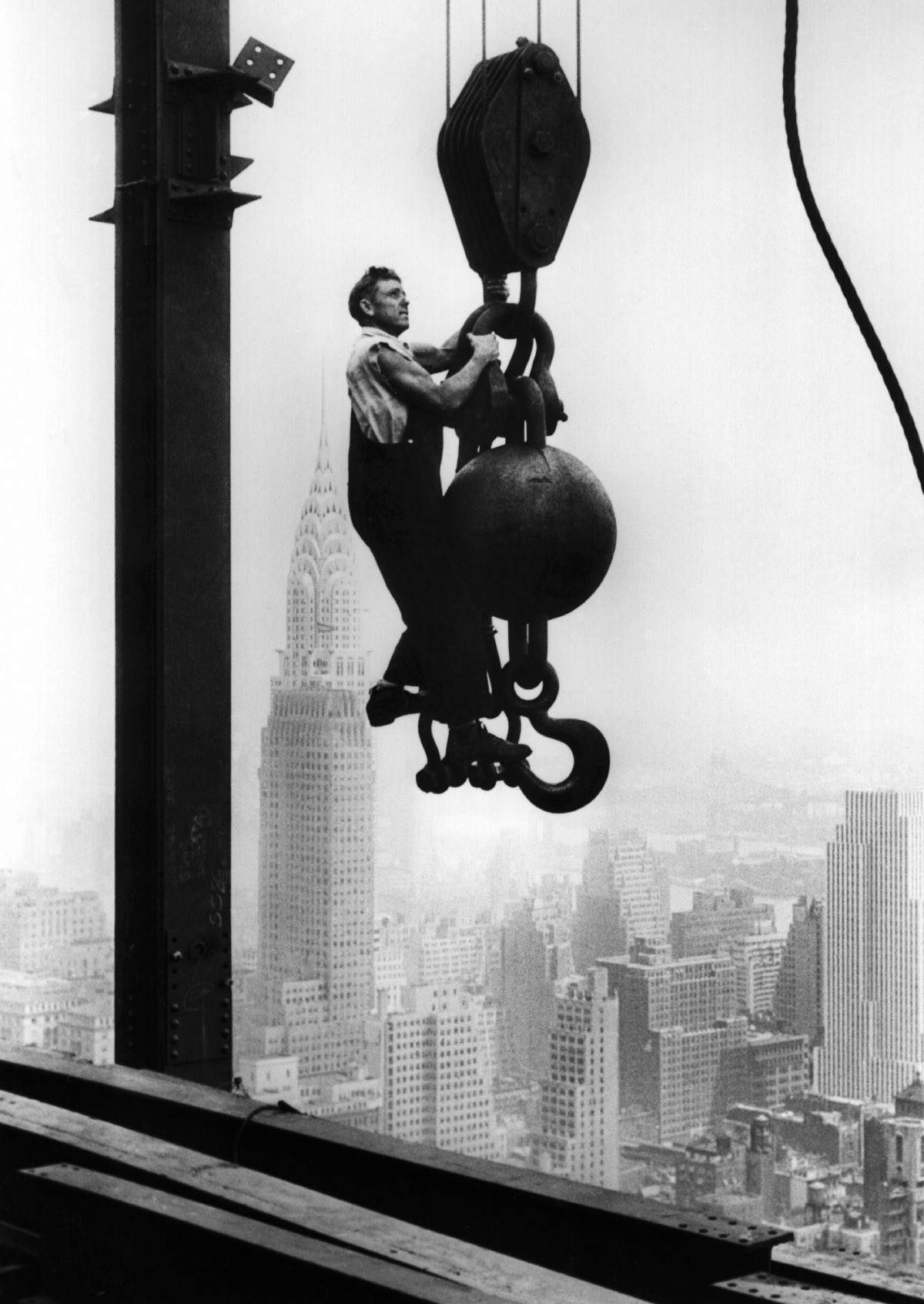
The scale of the project demanded equally bold documentation. Photographers scrambled alongside workers, climbing derricks and dangling from beams to capture what was unfolding above Manhattan. Some of these images required as much nerve as the construction work itself. One cameraman climbed a derrick on the 88th floor to photograph a worker waving casually to colleagues — hundreds of feet above Herald Square, where cars and pedestrians below looked no larger than insects.
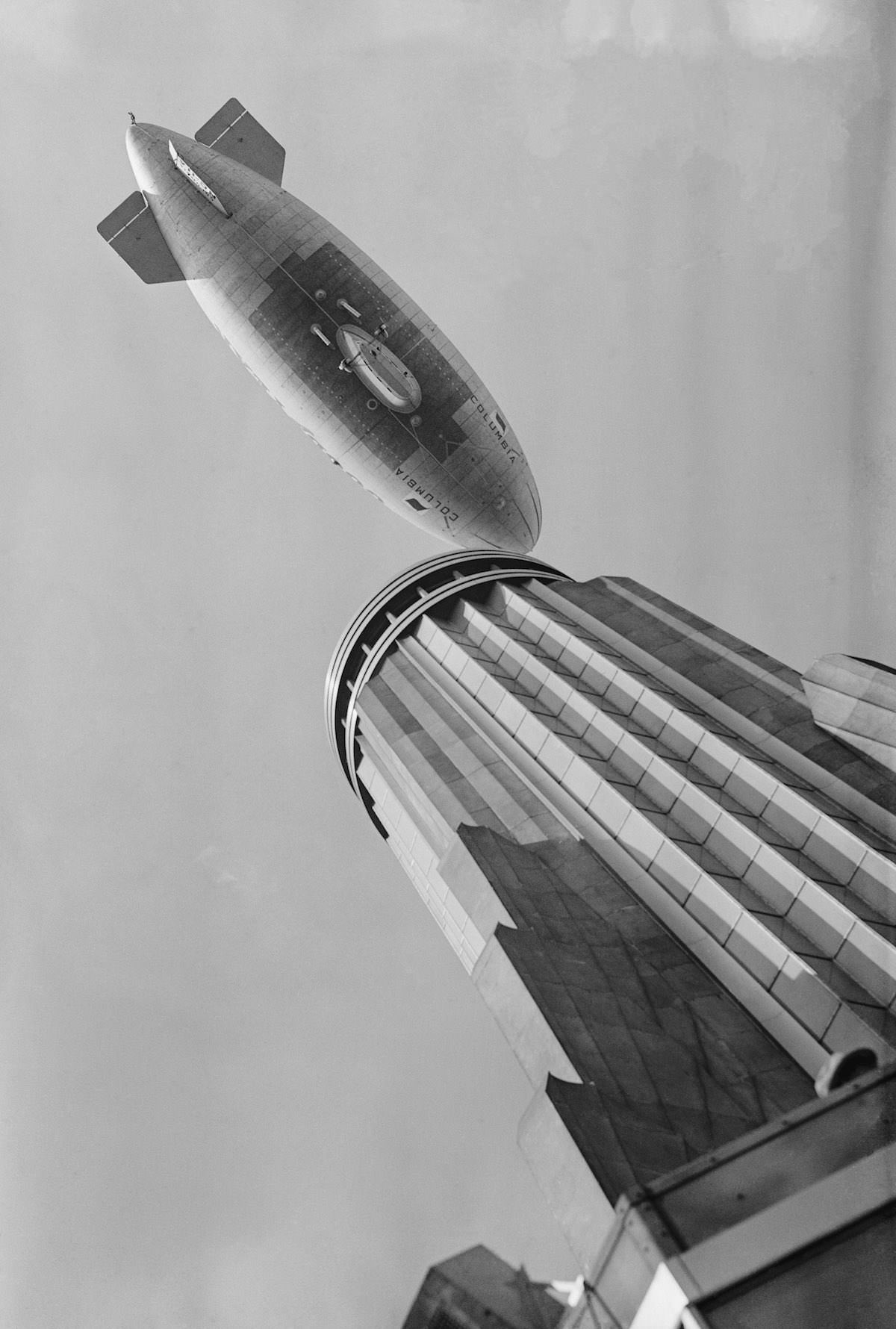
The building’s original design included something ambitious even by today’s standards: a mooring mast for dirigibles — large airships — at its very top. The mast extended the structure’s total height to 1,454 feet. The idea was that transatlantic airships could dock at the top of the building and passengers could disembark directly into midtown Manhattan. The plan was technically and logistically impractical, and it was never regularly used for that purpose, but it added a futuristic flair to the building’s identity from the start.
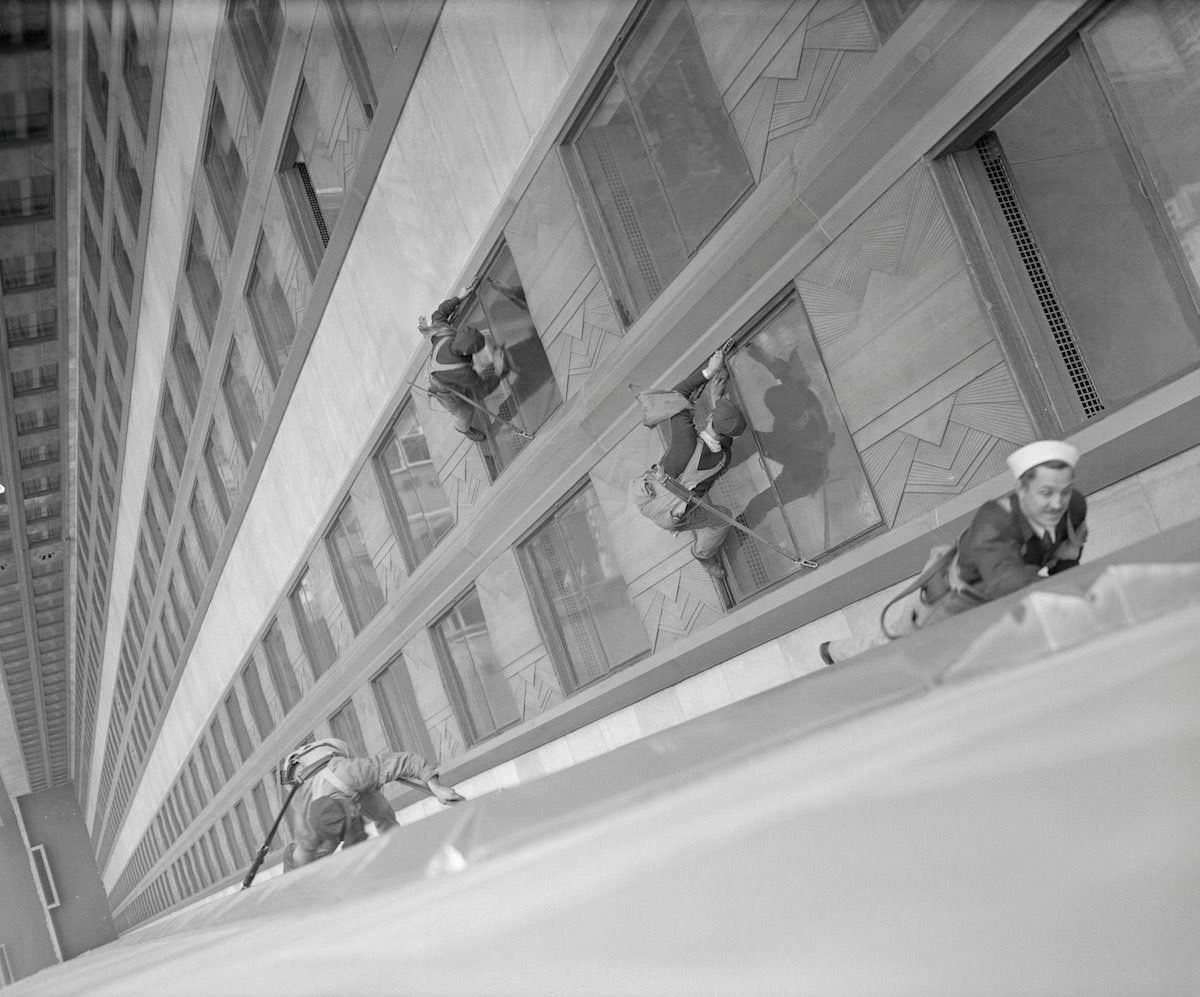
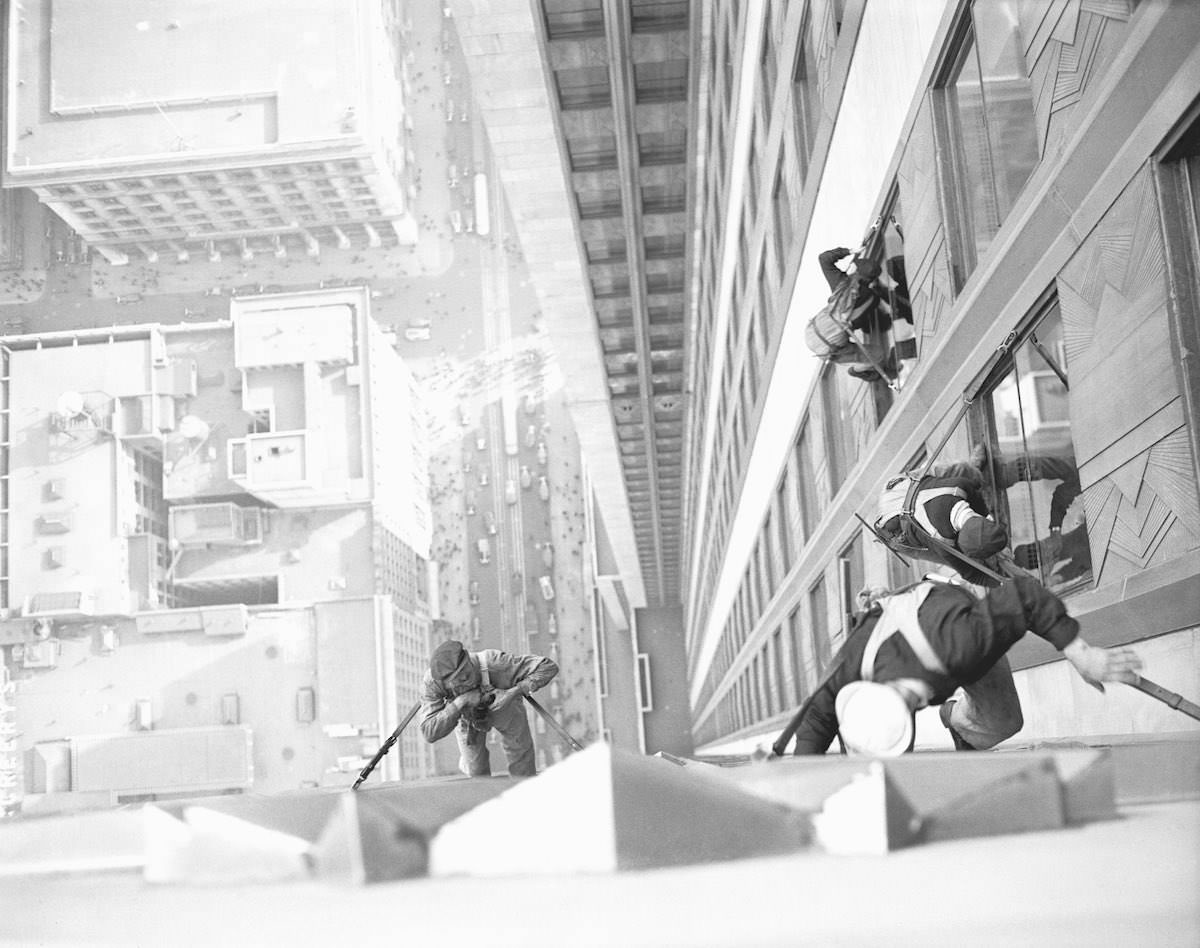
Once the building was standing, the work did not stop. Window washers became a regular fixture on its exterior, clinging to platforms hundreds of feet in the air as part of their daily routine. Photos from January 1932 show these workers smiling as they cleaned the glass face of the world’s tallest building — apparently unfazed by the sheer drop below them.
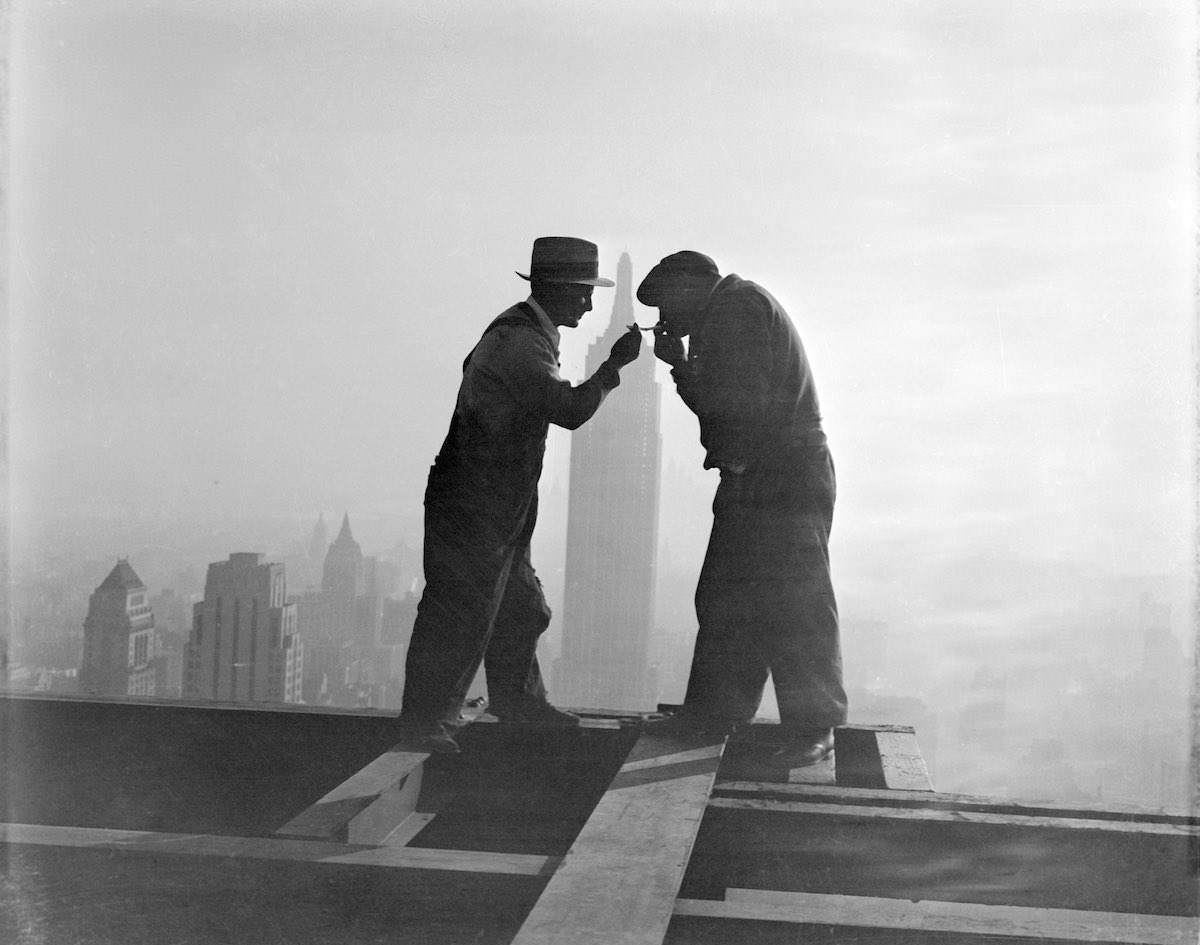
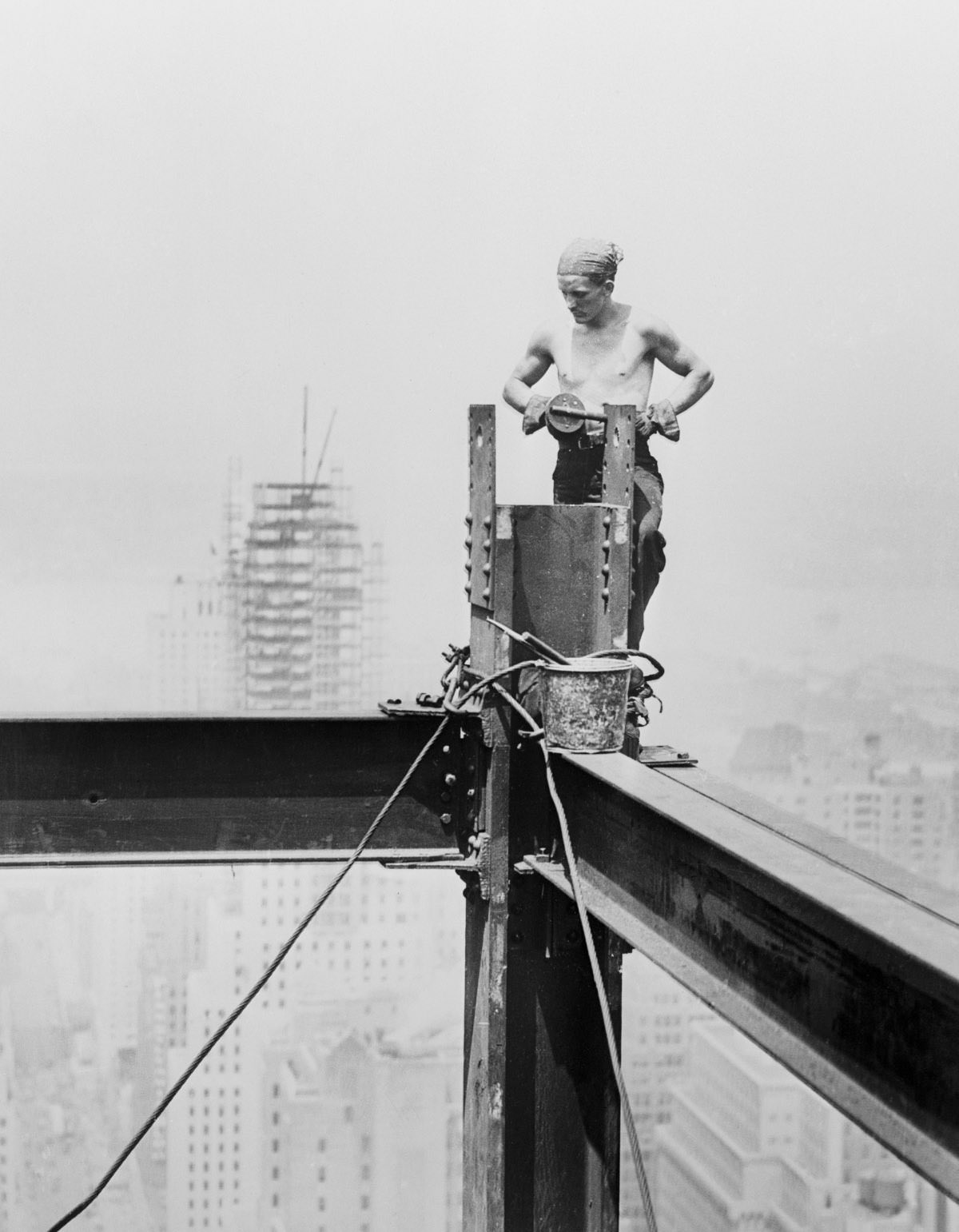
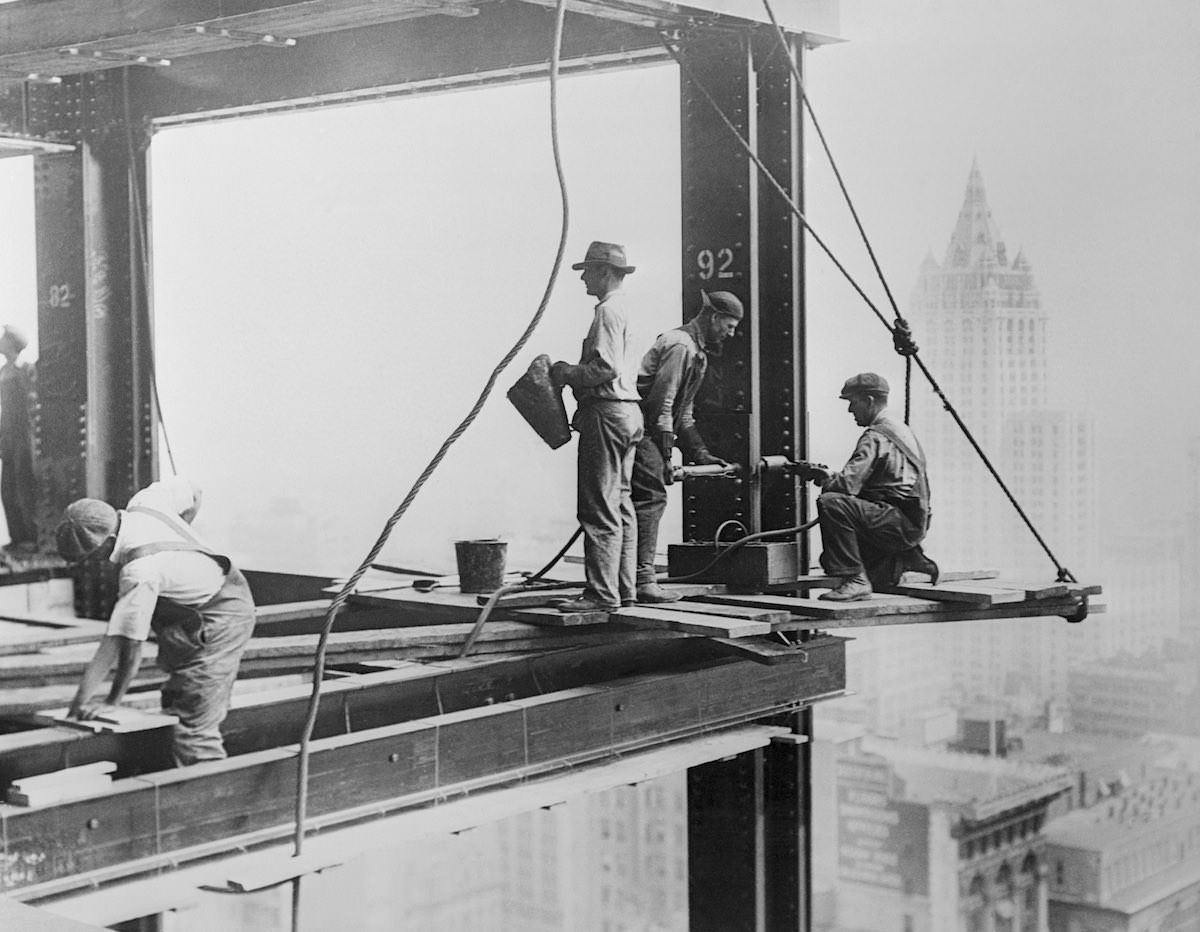
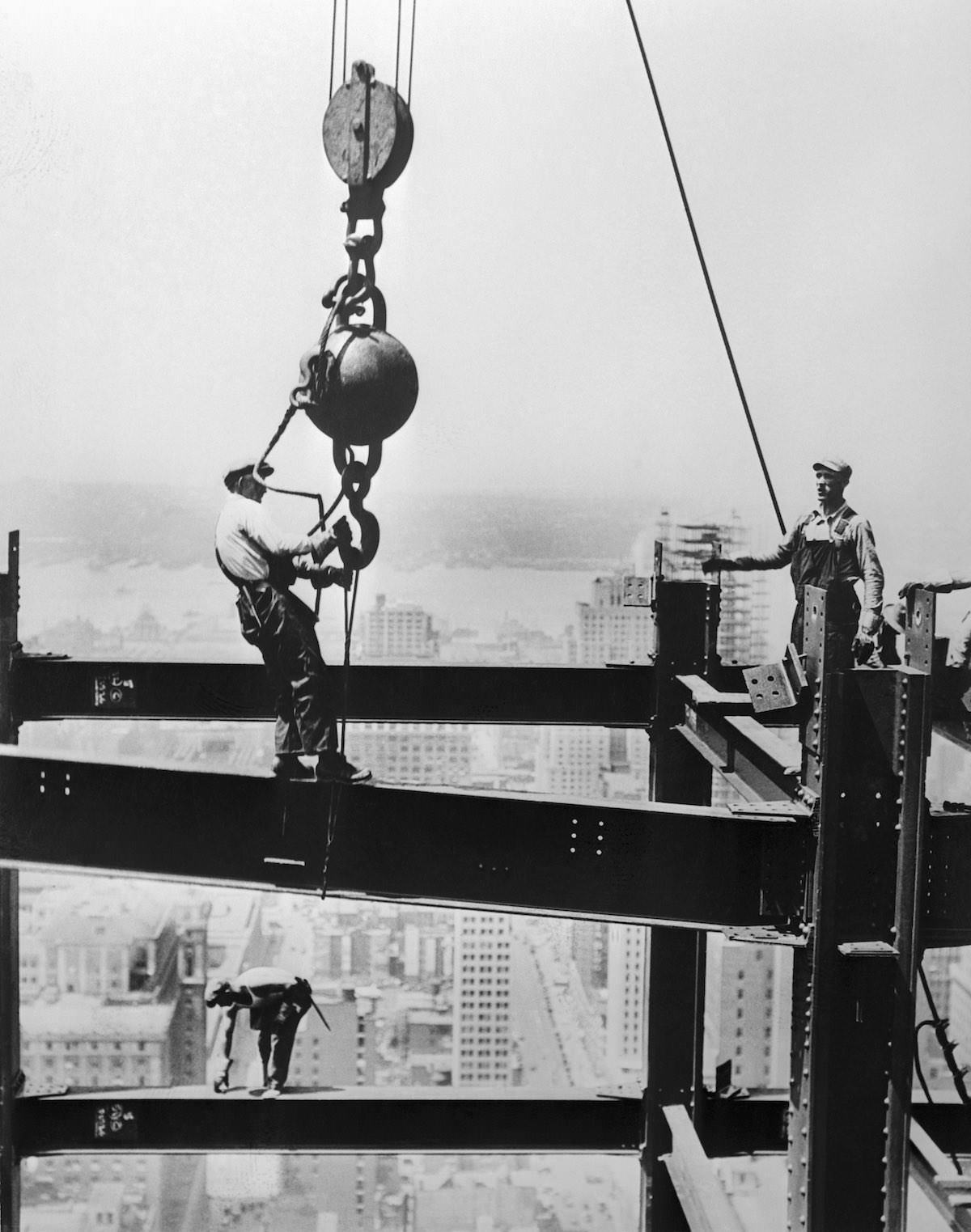
During the construction itself, steel workers moved across open beams with little to no safety equipment by modern standards. Riveting gangs worked in teams — one man heated the rivets, another caught them in a bucket, and a third hammered them into place while a fourth held the beam. The work was fast, hot, and genuinely dangerous. Falls, burns, and equipment failures were real risks every day on the job. In total, five workers died during the building’s construction, a number considered remarkably low for a project of this size at that time.
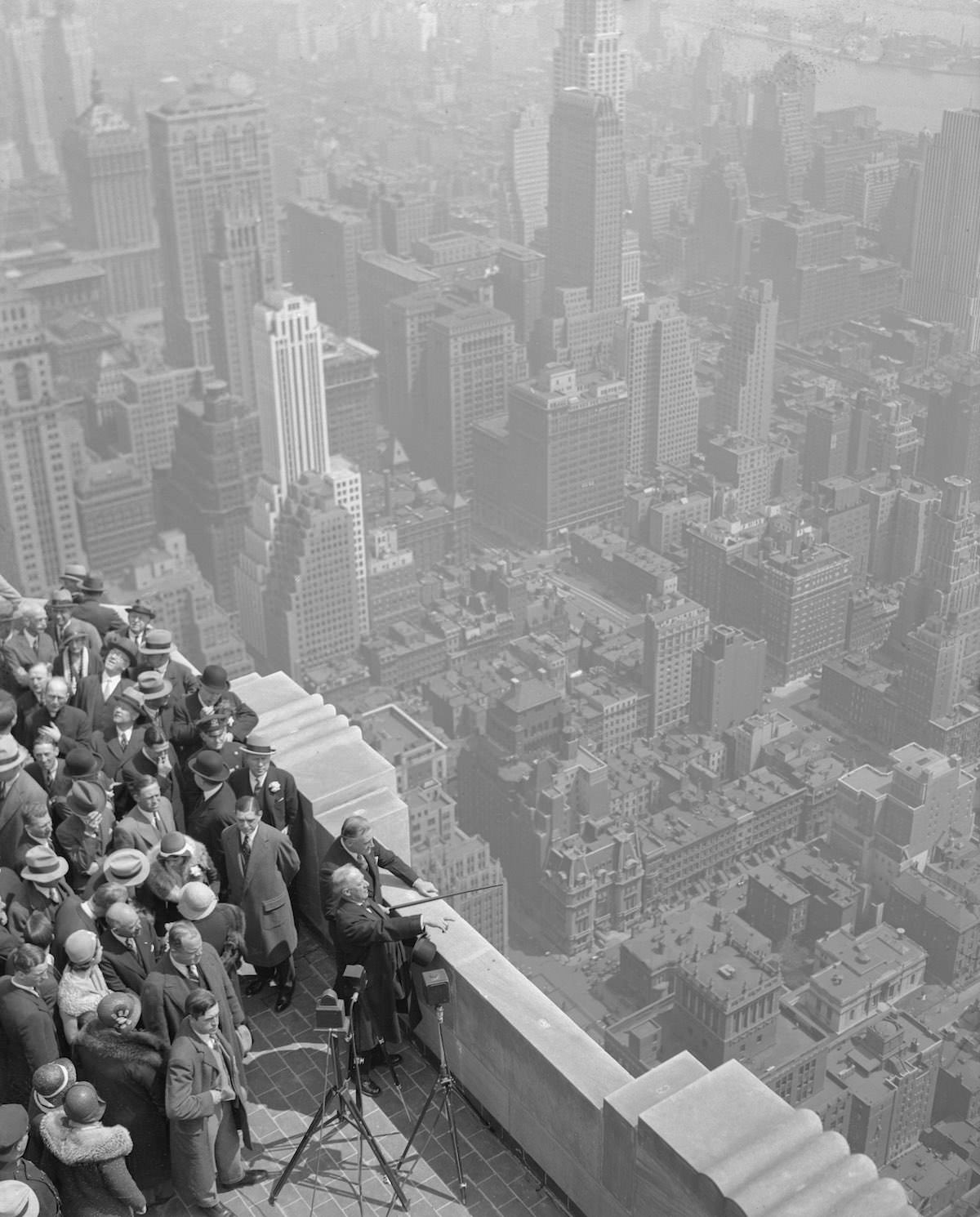
The building’s official opening on May 1, 1931, drew enormous attention. Former New York Governor Alfred E. Smith — who served as president of the company that built the structure — stood at the top alongside then-Governor Franklin D. Roosevelt. In Washington, D.C., President Herbert Hoover pressed a telegraph key that switched on all of the building’s lights from hundreds of miles away. It was a moment designed to project confidence and modernity during the darkest years of the Great Depression.
Despite the fanfare, the timing of the opening was brutal from a financial standpoint. The Great Depression had gutted the commercial real estate market in New York. Much of the building’s office space sat empty for years, earning the structure the nickname “The Empty State Building” among New Yorkers. It did not turn a profit until 1950. The building was constructed on the former site of the Waldorf Astoria Hotel, which had been demolished to make way for it — an early sign that the project’s backers were willing to tear down one iconic New York institution to build a larger one.
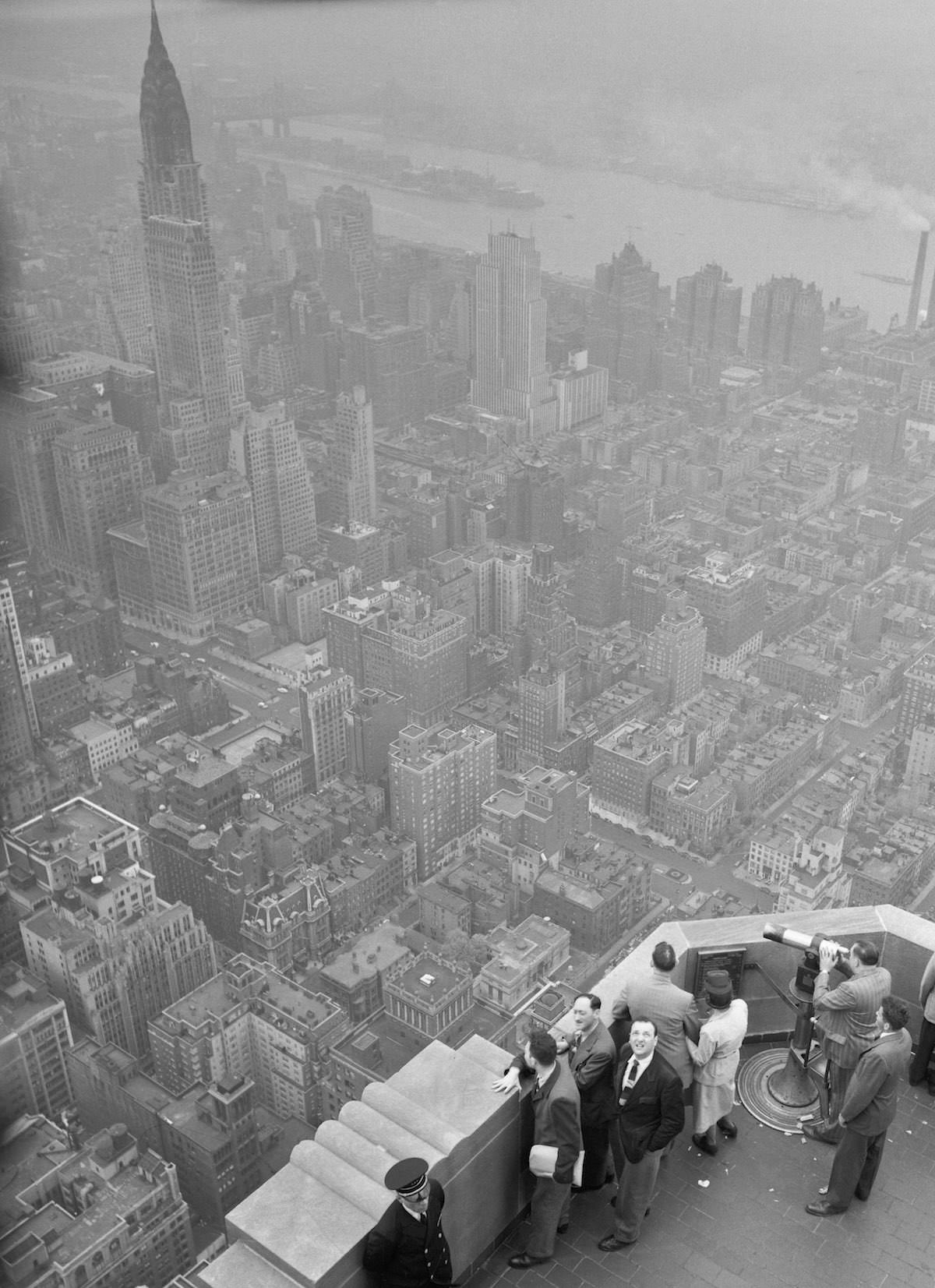
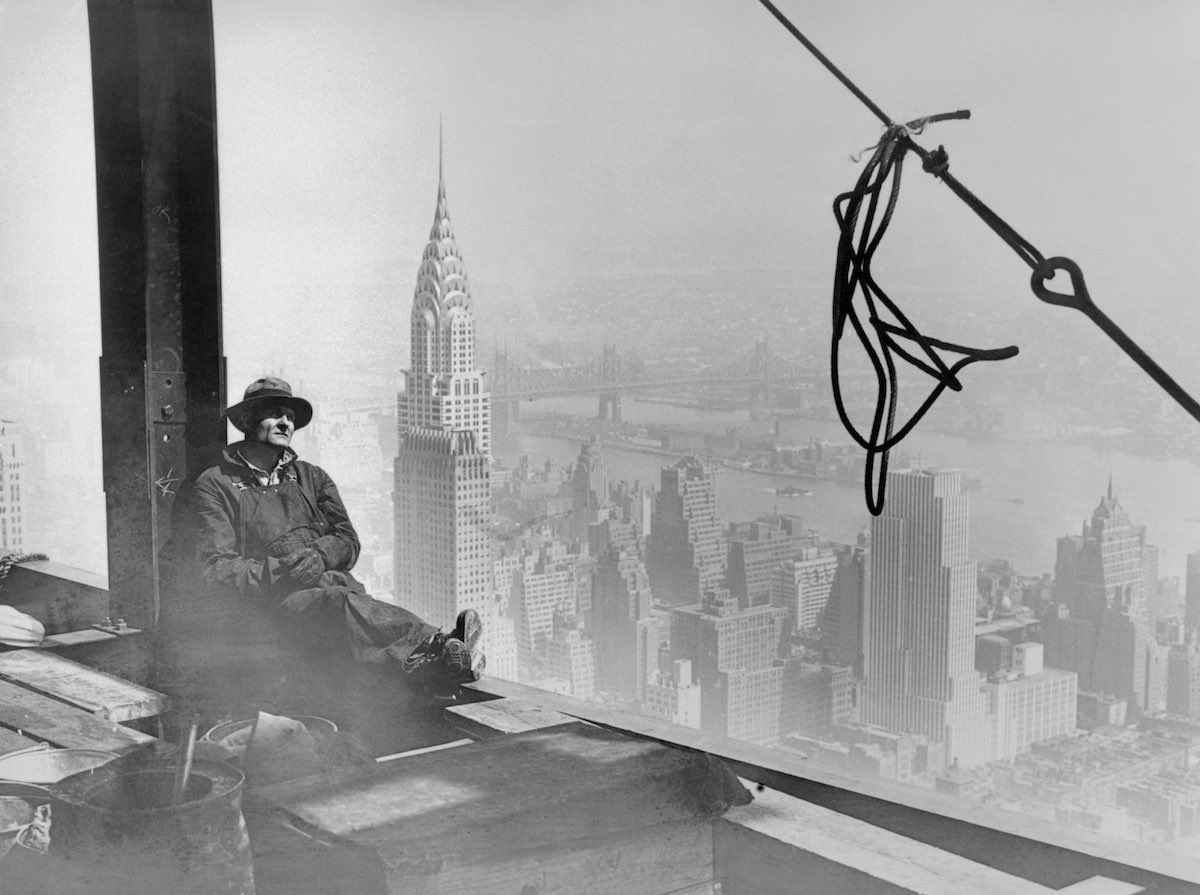
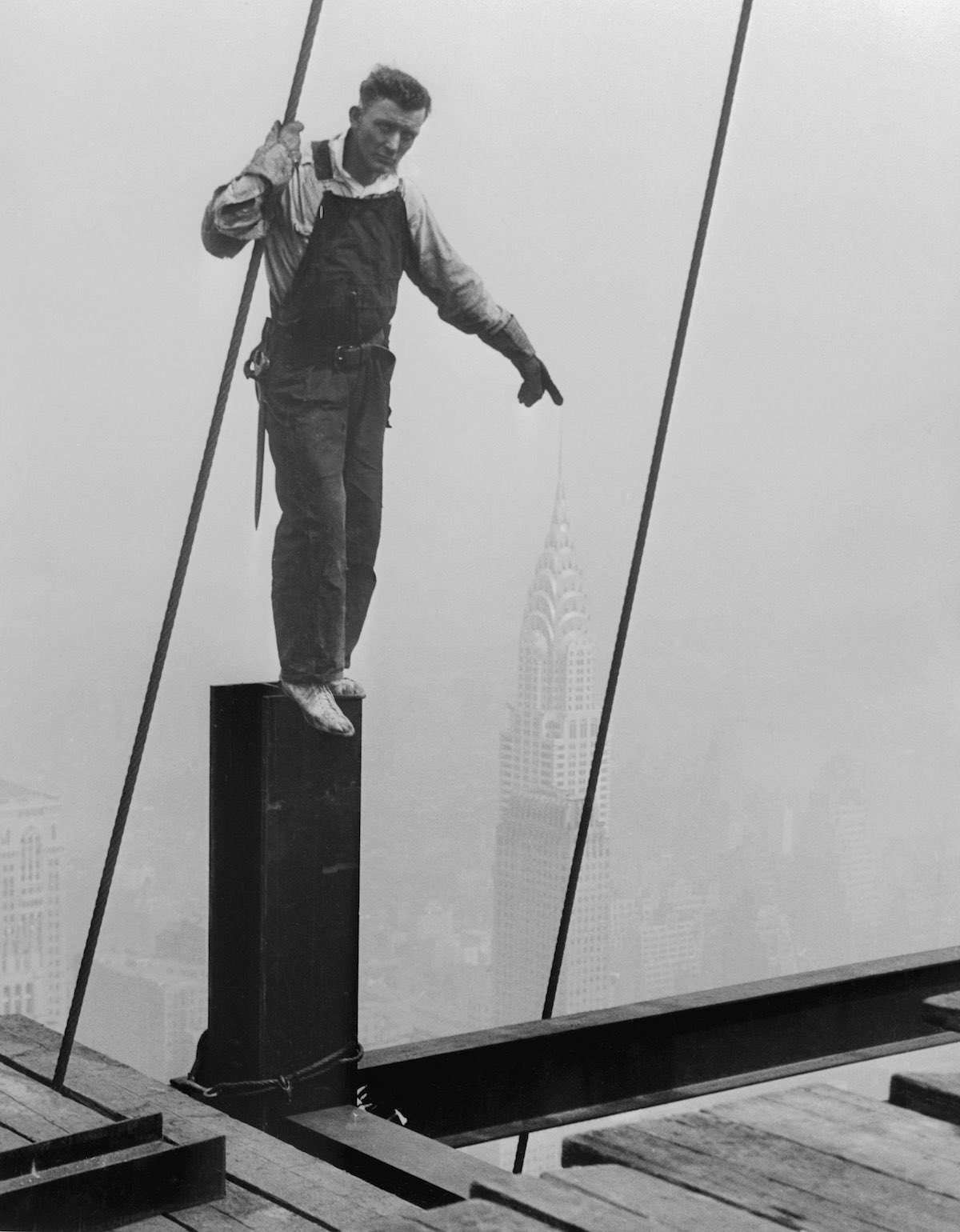
Even from the top of the Empire State Building, the Chrysler Building — its closest rival in height — was close enough to touch in photographs, at least with a little photographic trickery. A press photographer captured a steelworker appearing to pinch the Chrysler Building’s famous spire between his fingers, with both towers visible in the same frame. The image illustrated just how dramatically the Manhattan skyline had transformed in just a few years.
Construction workers weren’t the only ones who had to hold their nerve at extreme heights. In 1956, a crew installed four powerful night beacons on the 90th floor of the building. Together, the four lights produced nearly two billion candlepower — described at the time as the brightest continuous source of man-made light in the world. Engineers stated the beacons were visible from as far as 300 miles away. The installation cost $250,000, a significant sum for the era.
The building also endured one of the most dramatic accidents in New York City history. On July 28, 1945, a U.S. Army B-25 bomber, disoriented in heavy fog, crashed directly into the building between the 78th and 79th floors. The impact killed 14 people and caused significant structural damage. Yet the building reopened just two days later, on July 30, 1945, with workers already erecting scaffolding on the damaged side. The speed of the response said everything about the building’s structural design and the determination of those who maintained it.
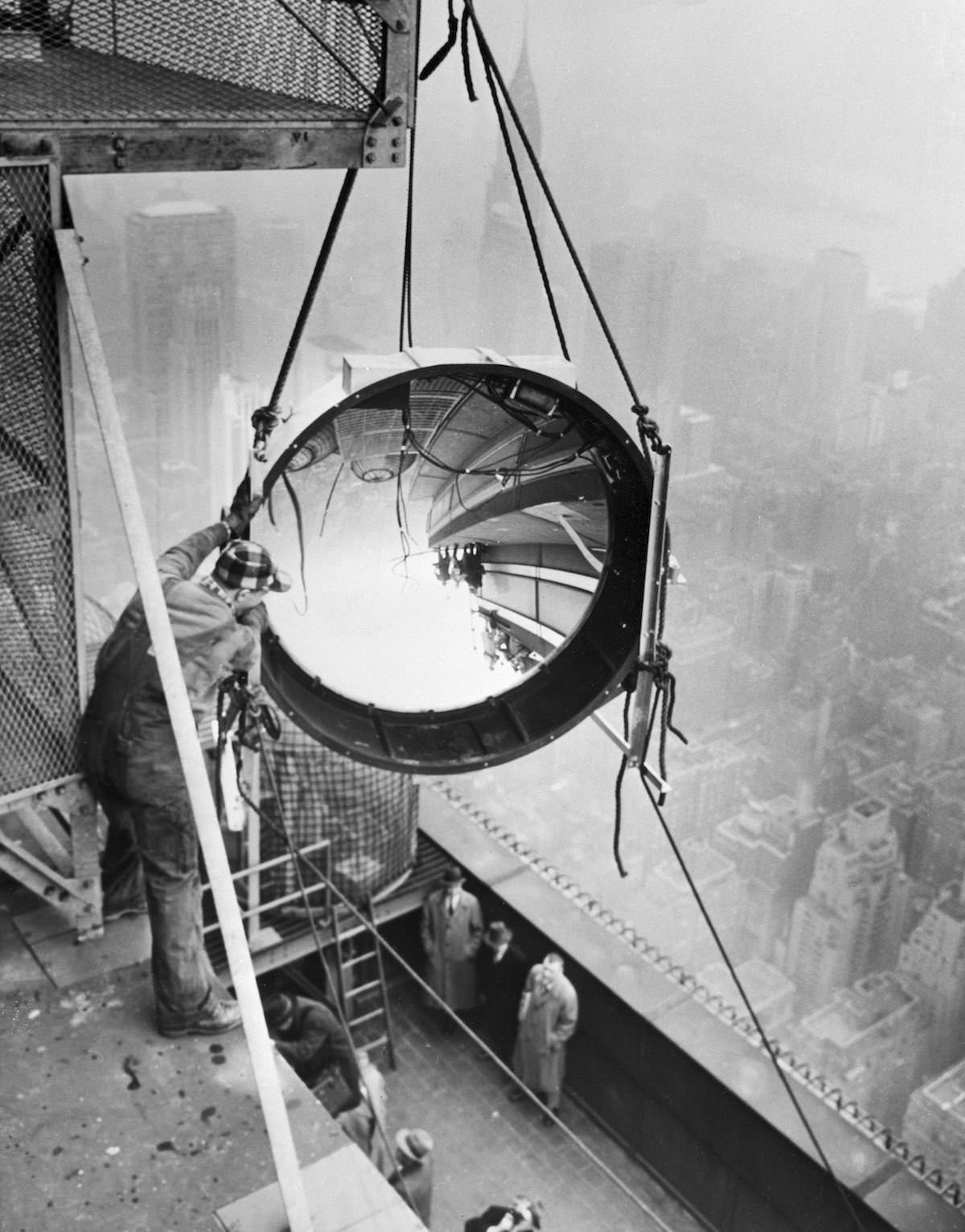
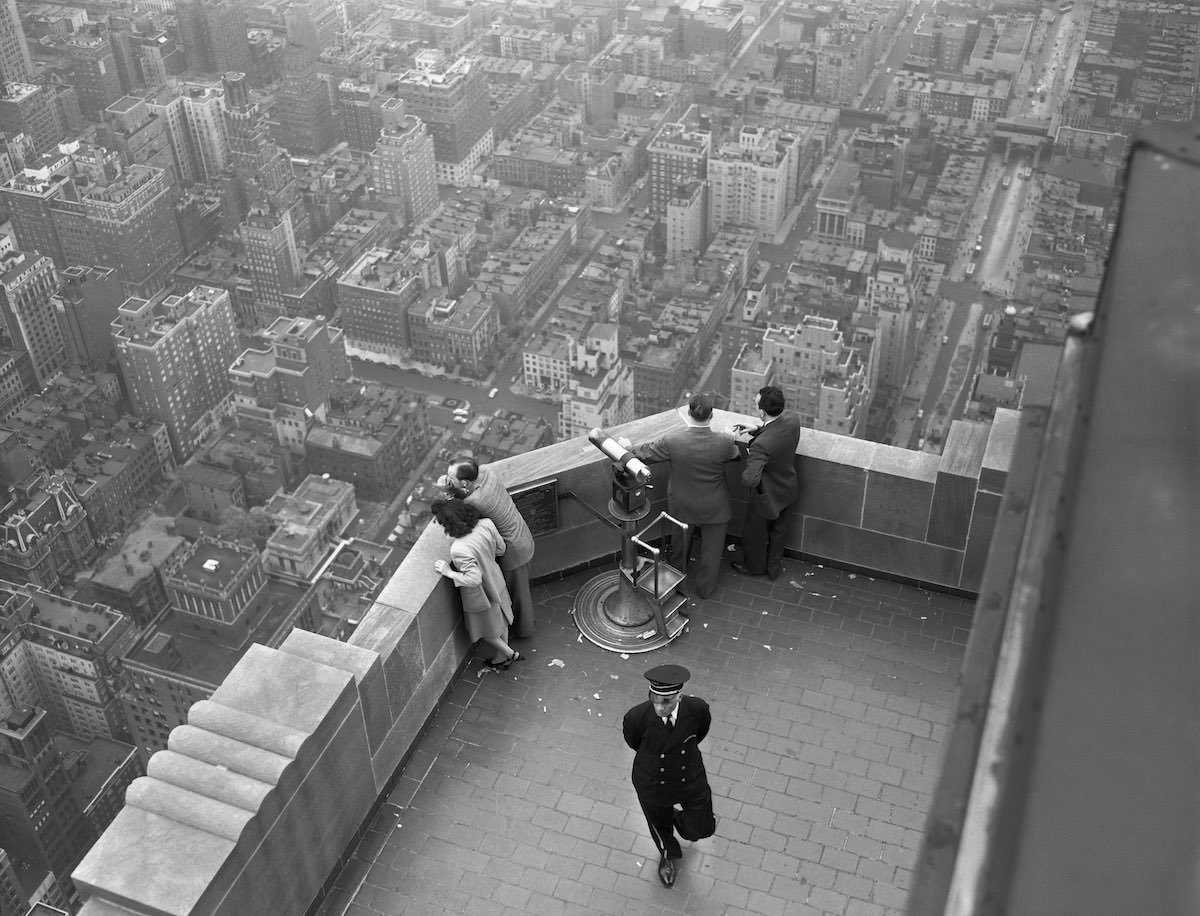
The photographs taken throughout the construction and early decades of the Empire State Building’s life are a direct record of what human labor looked like at its most extreme. These were men doing extraordinary work with basic tools, far above the city streets, with the press watching and cameras rolling. The images are raw and unposed — workers eating lunch on open beams, hanging off cranes, or simply staring out over a city that was, for a brief moment, laid out entirely below them.
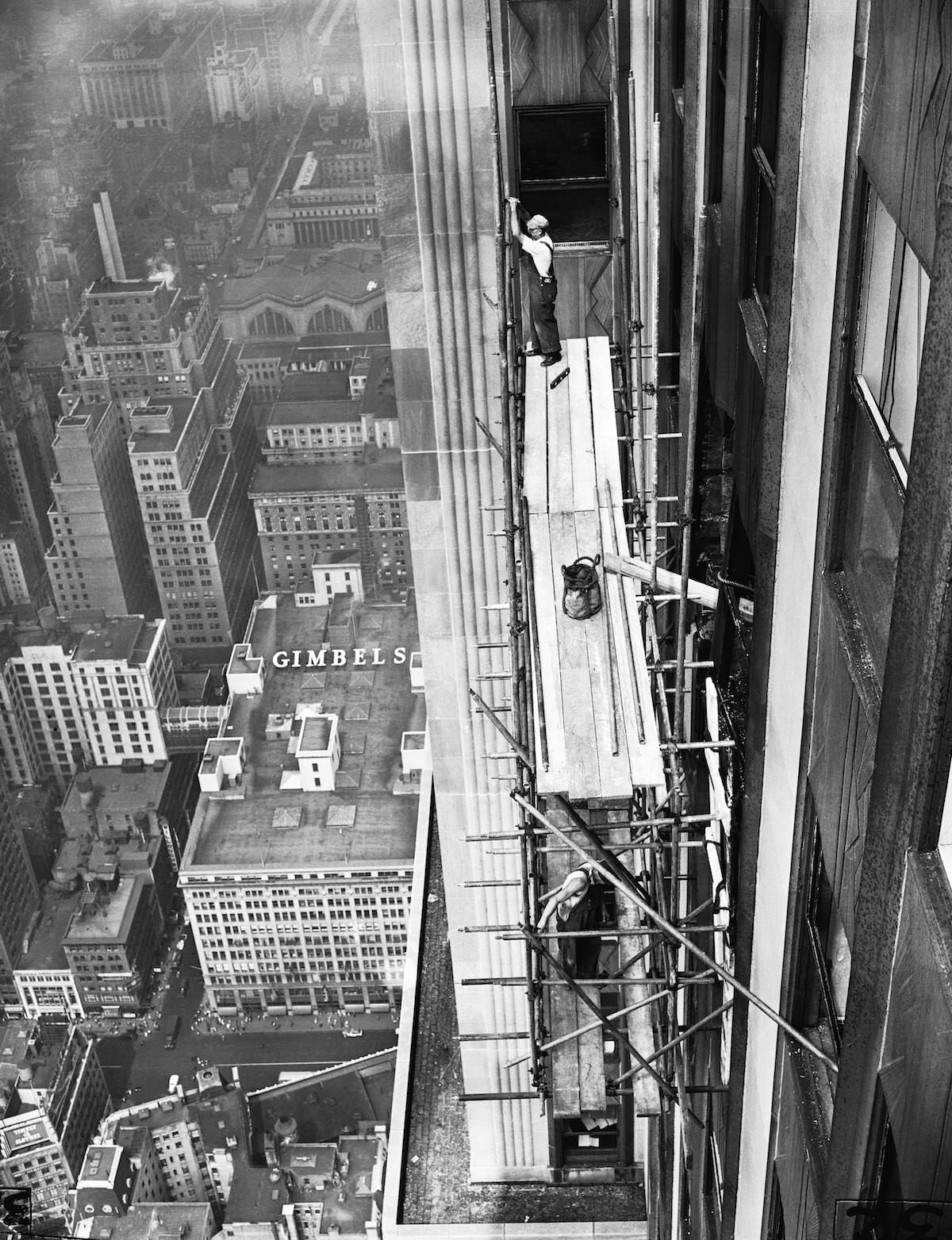
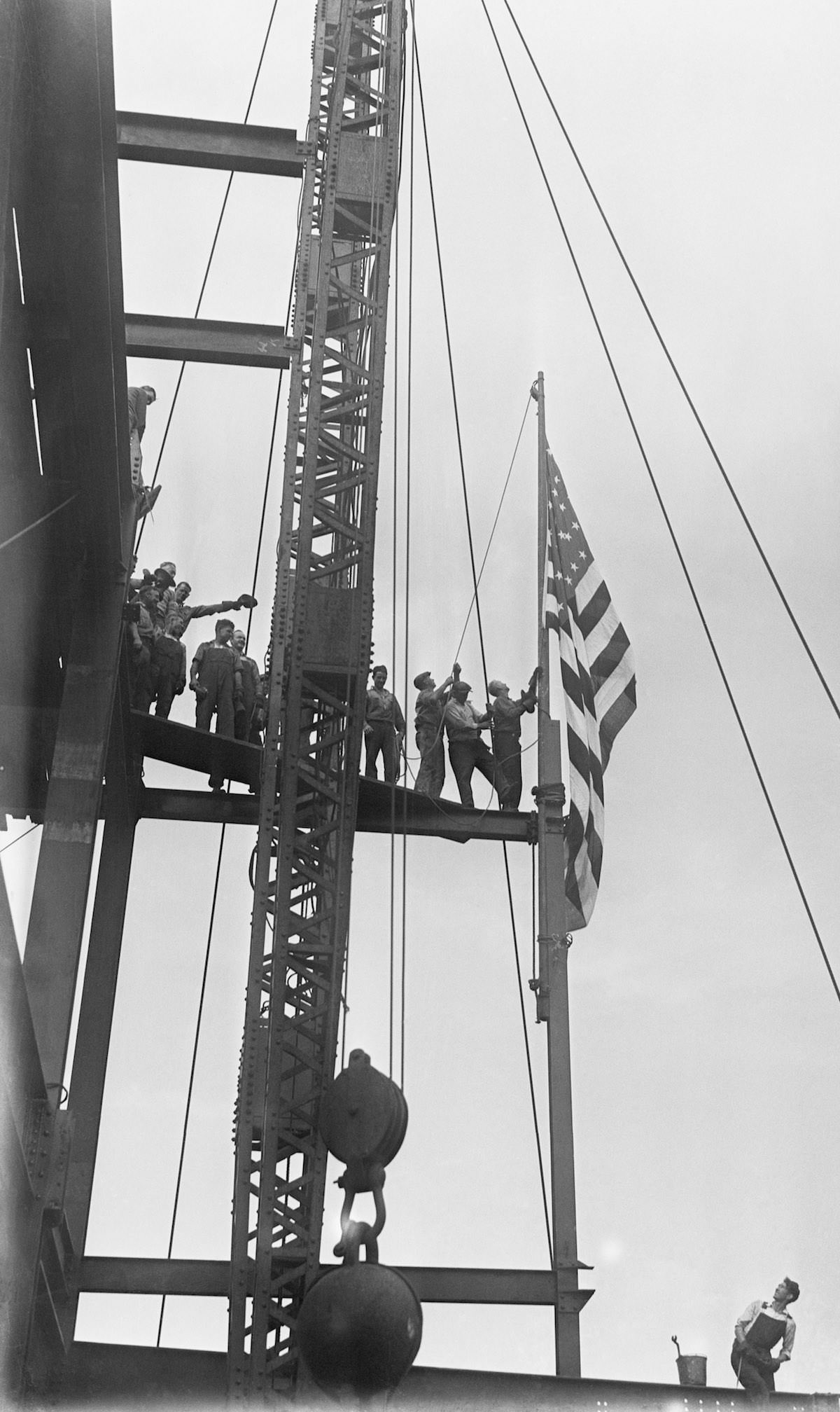



We built that thing in less than two years. Take a moment to consider that the next time you pass XYZ construction site that is still under construction and probably will still be once we are all dead and buried.
This gave me severe anxiety