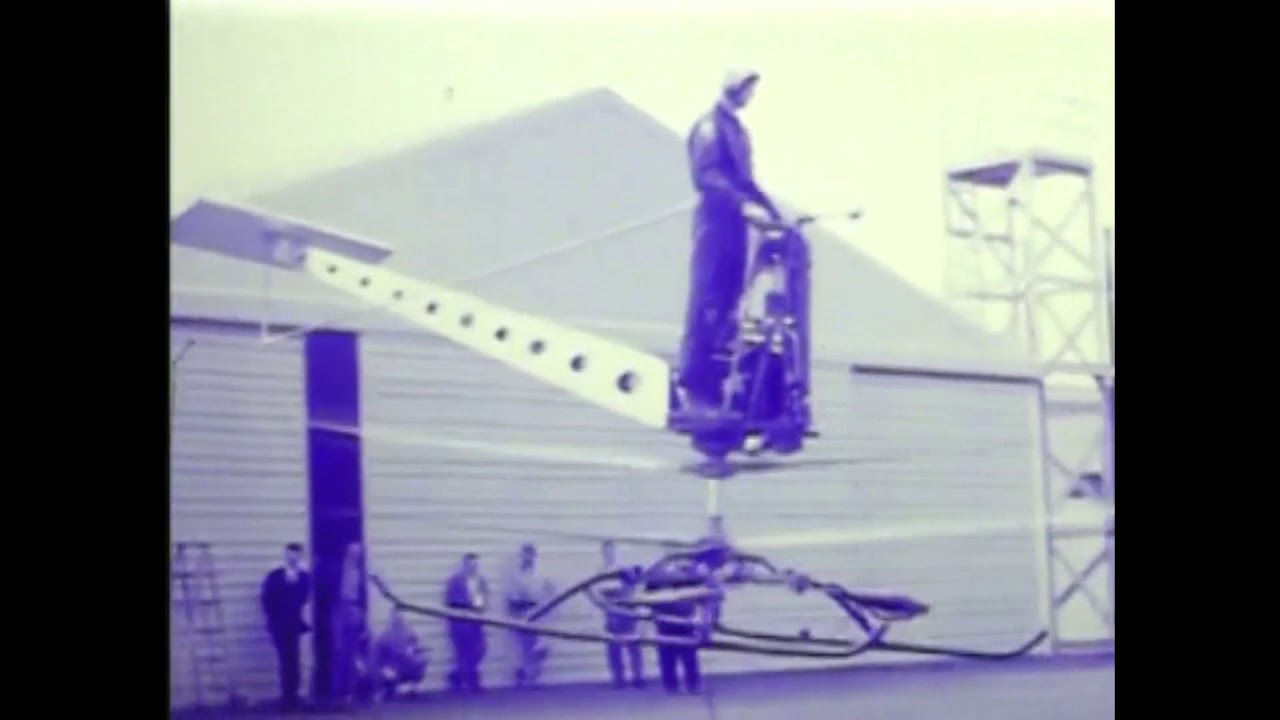
In the mid-1950s, the US Army had a bold idea: give individual soldiers their own personal flying machine. No cockpit, no cabin — just a soldier standing on a platform above a pair of spinning rotor blades, scouting the battlefield from the air. The machine built to make that happen was the de Lackner HZ-1 Aerocycle, and for a brief moment, it looked like it might actually work.
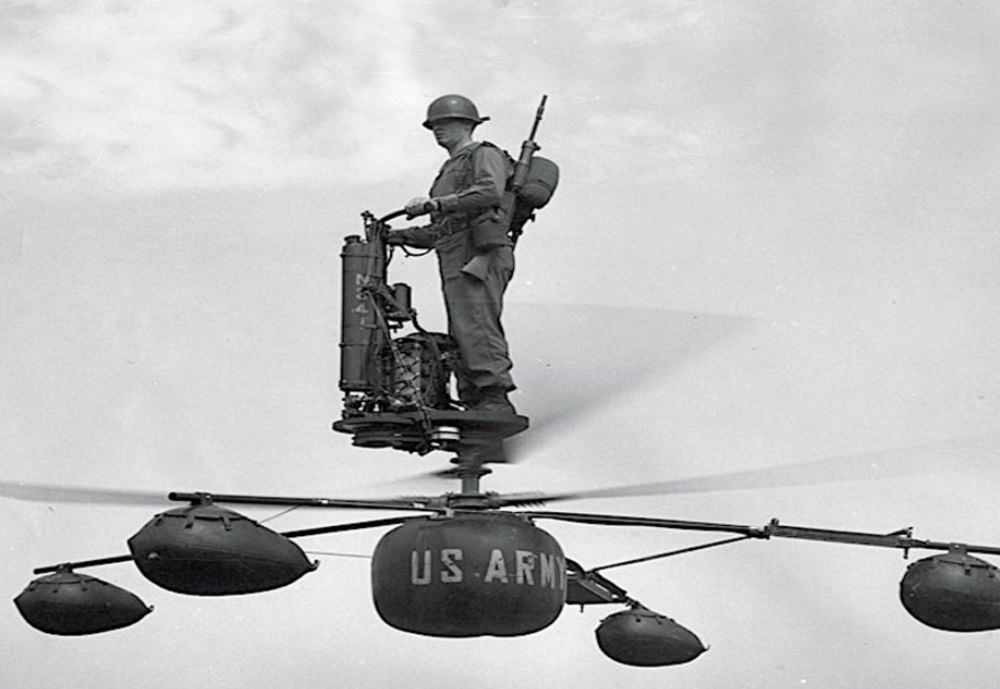
The Aerocycle was built by the de Lackner Helicopter Company, based in Mount Vernon, New York. The US Army originally designated it the YHO-2, but in 1955 it was re-designated HZ-1 and given the name ‘Aerocycle.’ Its first free flight took place at Brooklyn Army Terminal in January 1955. The design was simple in concept: two contra-rotating rotors mounted below the pilot’s feet, spinning in opposite directions to cancel out torque. The pilot stood on a small platform above the rotors and steered by shifting body weight.
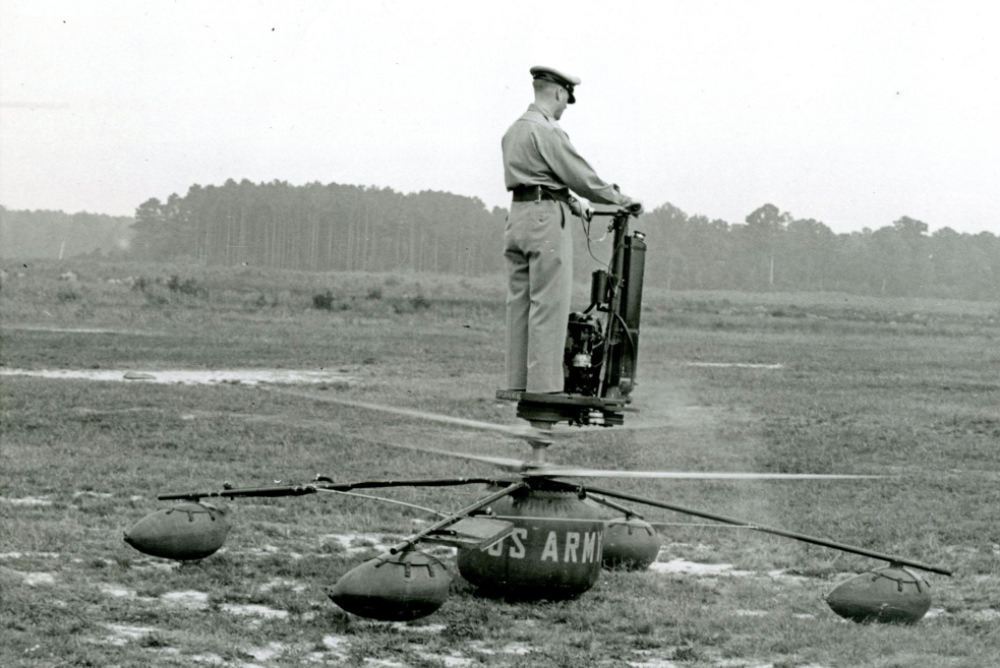
The Army’s vision for the Aerocycle was straightforward. It would serve as a modern version of the cavalry scout — a soldier who could lift off the ground, scan the terrain ahead, and report back quickly. The craft was meant to give infantry units fast-moving airborne eyes and ears on the battlefield without the cost or complexity of a full helicopter. Early results gave the Army reason to be optimistic.
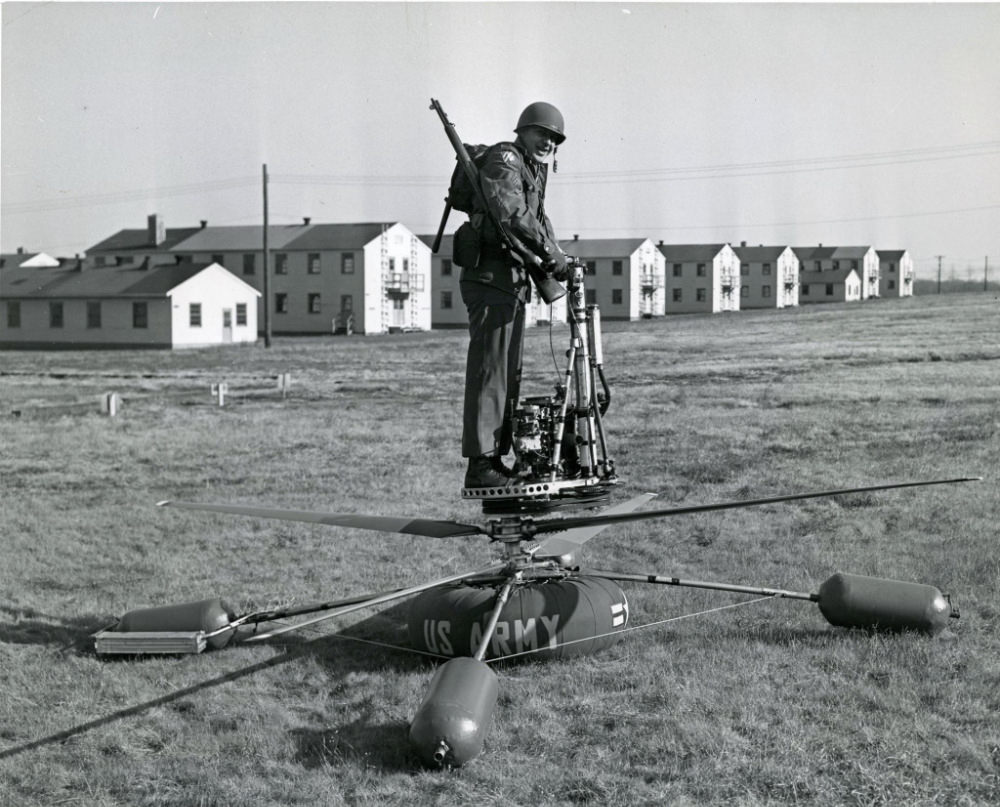
The early test program logged 160 flights and more than 15 hours of total flight time. Those numbers were promising enough for the Army to order a dozen examples of the aircraft. One of the most striking claims to come out of early testing was that an untrained soldier could learn to operate the HZ-1 in less than 20 minutes. Some testers went further, claiming just five minutes of instruction was enough. The Aerocycle also proved faster than other flying platform designs the Army had evaluated at the time.
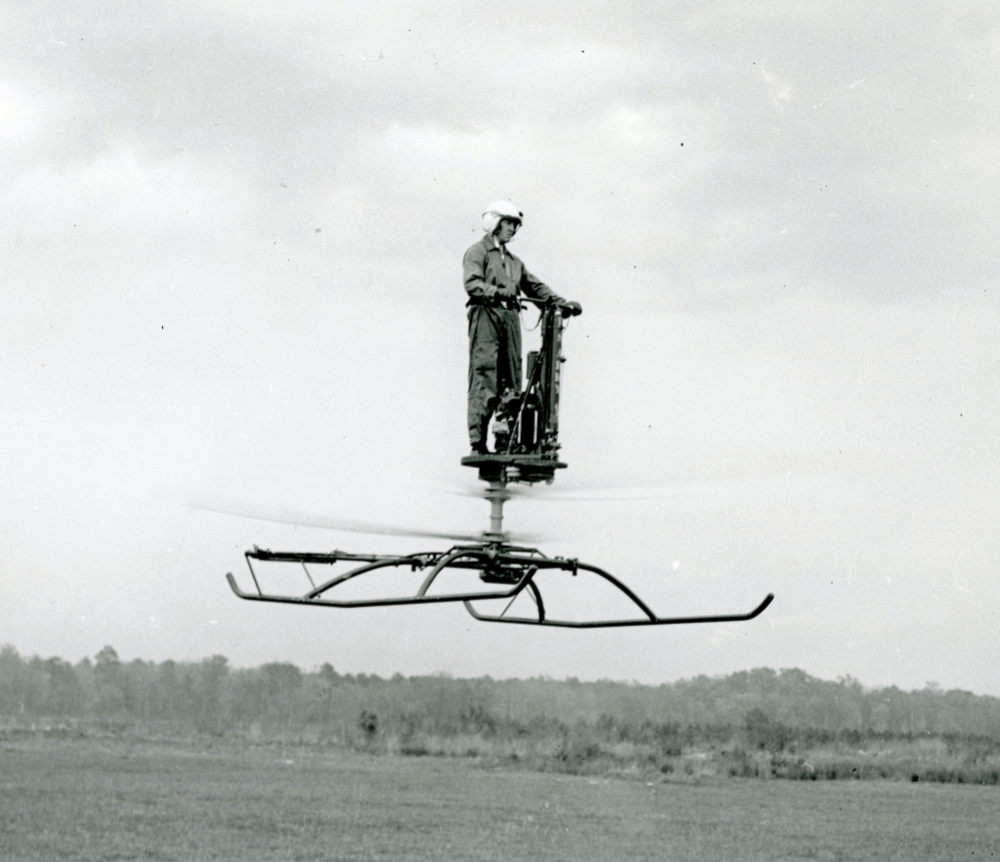
After 1956, the test program moved to Fort Eustis, Virginia, where Captain Selmer Sundby took over test-flying duties. More rigorous testing there began to expose serious problems that the earlier flights had not fully revealed.
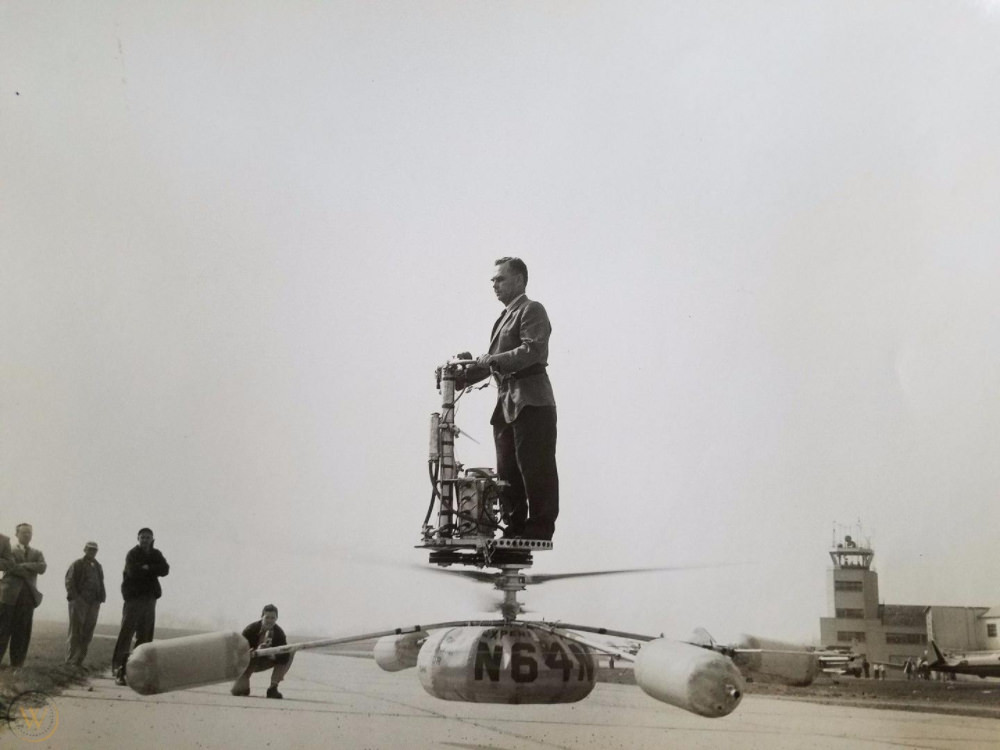
The first major issue was pilot difficulty. Despite the early claims about quick training times, deeper testing showed the HZ-1 was far harder to fly than anyone had anticipated. Engineers and Army officials agreed it was not safe in the hands of an inexperienced pilot. The body-weight steering system that made it seem simple in theory was much less forgiving in practice. A small misjudgment in balance could quickly lead to loss of control.
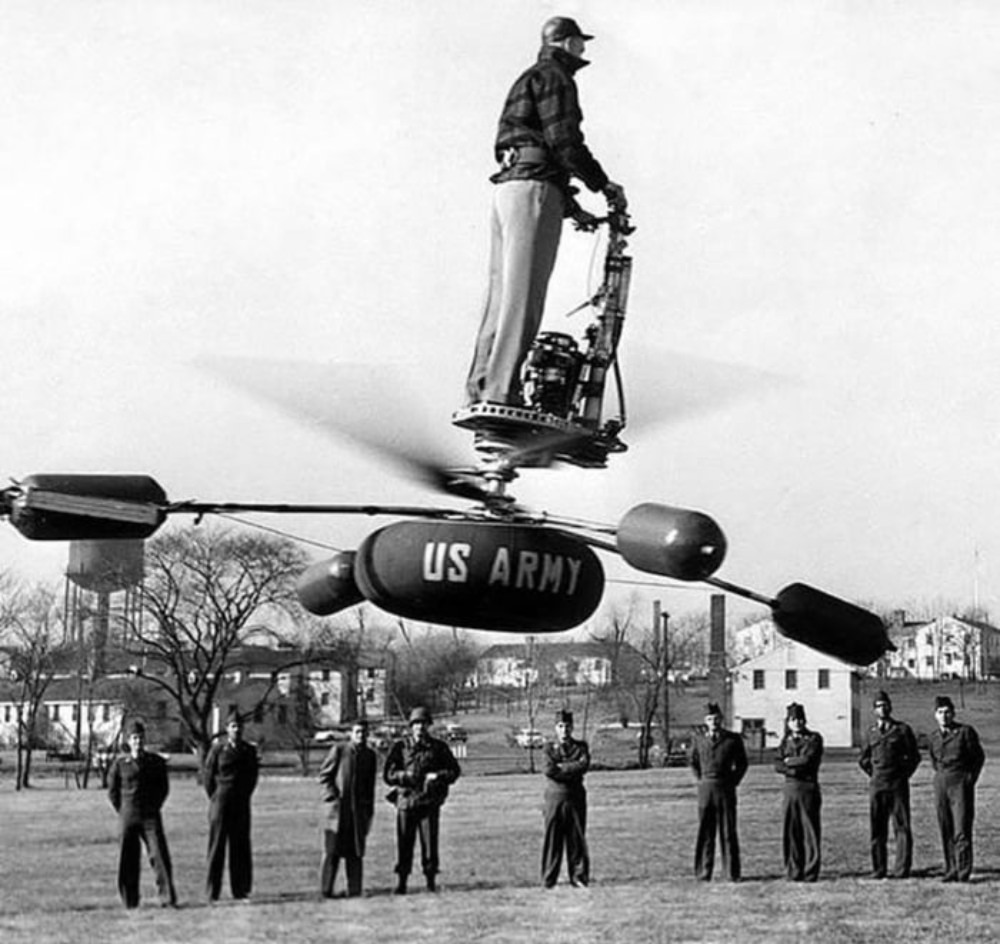
The second major issue was a serious mechanical hazard. Because the rotors were mounted low — directly beneath the pilot’s platform — they were constantly at risk of pulling in small rocks, debris, and other loose material from the ground. During tethered and free-flight tests that ran as long as 43 minutes, the Aerocycle suffered two separate crashes. In both accidents, the contra-rotating rotor blades intermeshed and collided with each other, shattering on impact and causing an immediate and total loss of control.
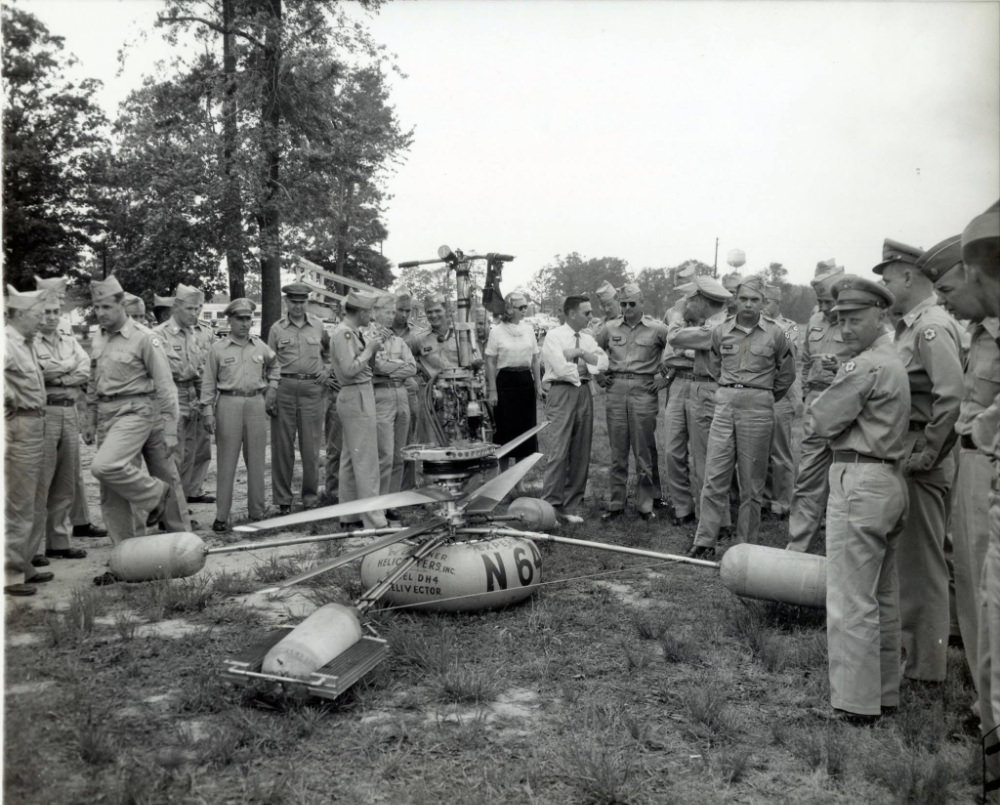
The Langley Research Center in Virginia carried out aerodynamic testing on the Aerocycle inside a full-scale wind tunnel. Researchers found that an uncontrollable pitching motion developed as forward speed increased, which placed a hard ceiling on how fast the craft could safely fly. Notably, the wind tunnel tests showed that rotor-tip clearance between the two blades was always sufficient during normal flight — meaning the crashes were not simply a result of the rotors being too close together under steady conditions.
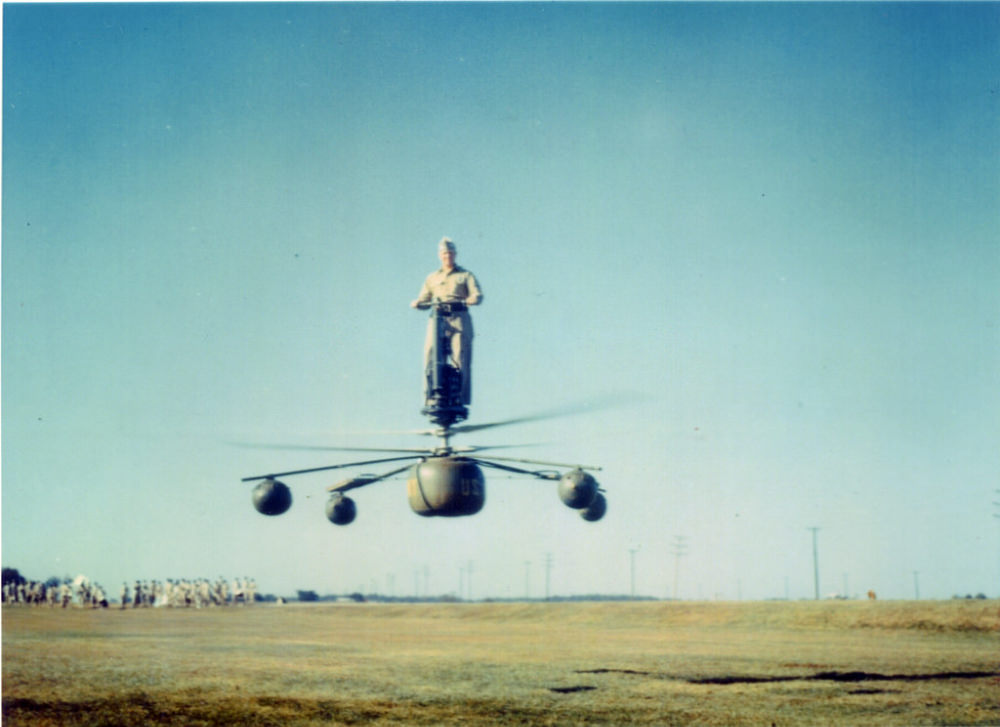
That finding made the accidents more troubling, not less. Engineers could not determine with certainty what specific sequence of events caused the rotor blades to intermesh during the crashes. Without a clear answer, there was no reliable fix. Combined with the growing recognition that the personal lifting device concept did not meet the Army’s operational needs, the program was cancelled.
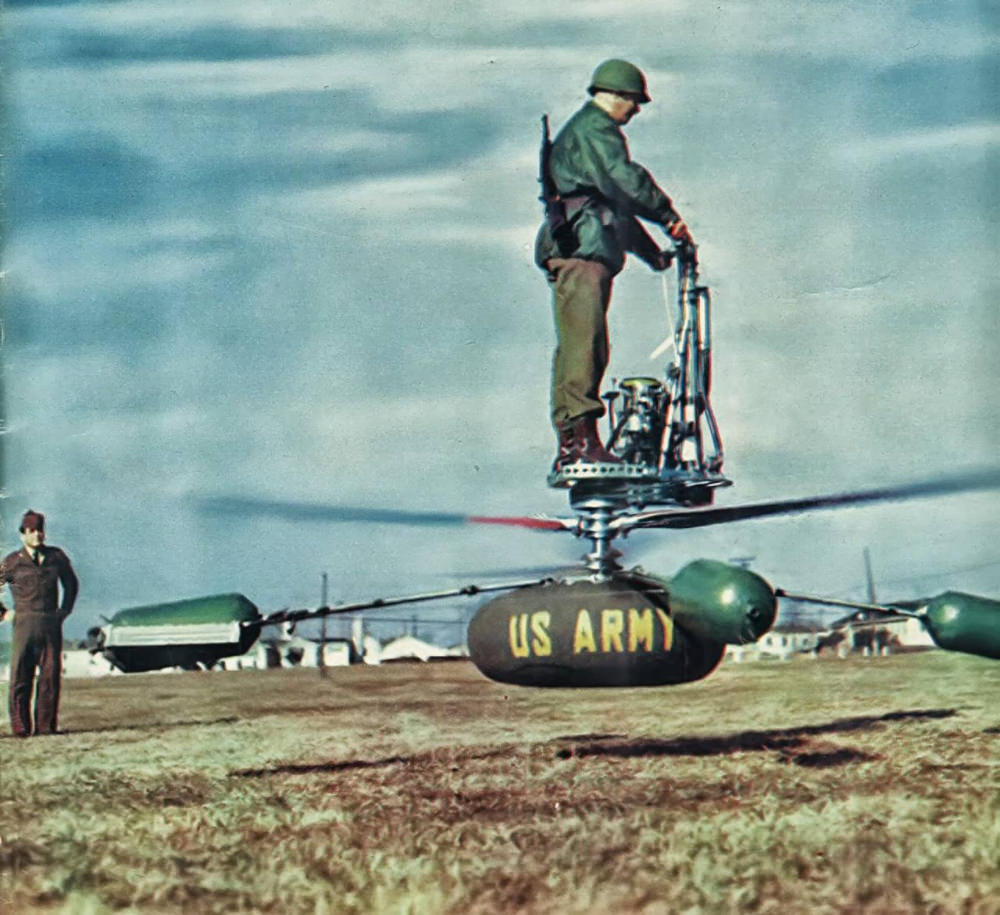
Captain Selmer Sundby walked away from the HZ-1 program with the Distinguished Flying Cross for his test-flight work. He went on to fly the H-21 and H-34 helicopters in test programs and later served in combat during the Vietnam War, retiring from the military as a colonel. His career stands as a reminder of just how dangerous experimental aviation work was during this era — and how much was asked of the men who flew these machines before anyone knew if they were safe.
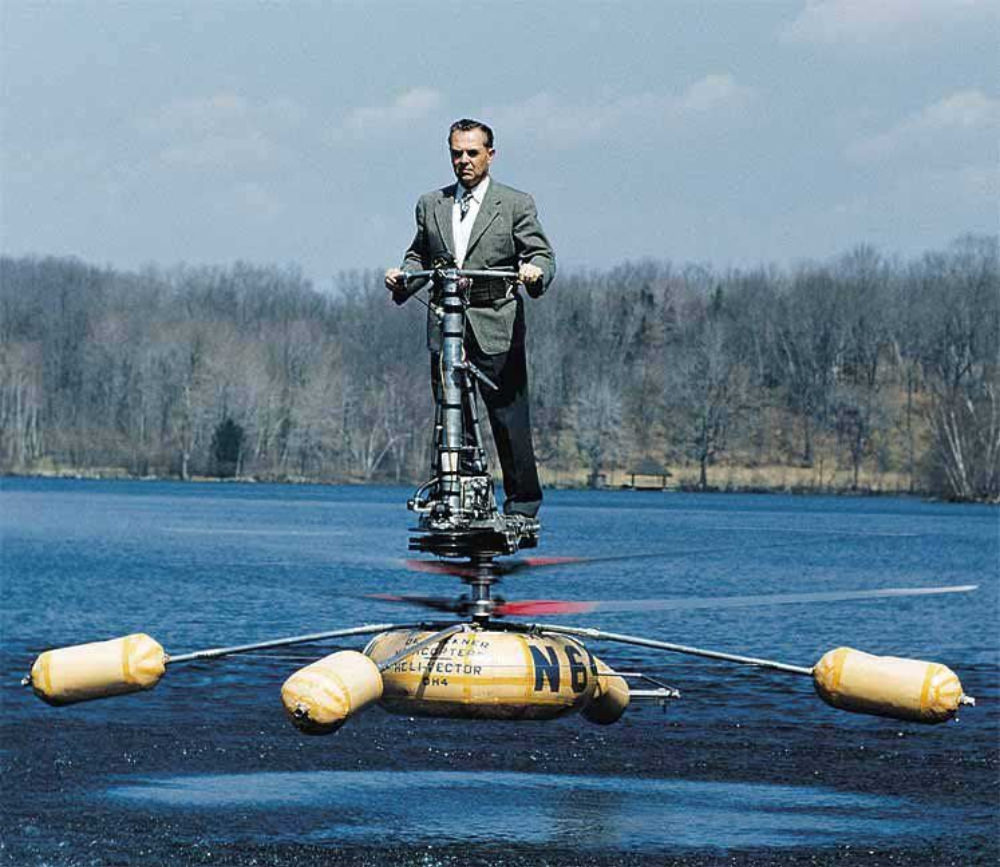
The HZ-1 Aerocycle never made it past the testing phase. Twelve units were ordered, but the crashes, the unresolved mechanical mystery, and the craft’s demanding flight characteristics ended any chance of real deployment. The idea of a one-man battlefield helicopter platform was ahead of its time — and the technology of the 1950s was not ready to make it work safely.