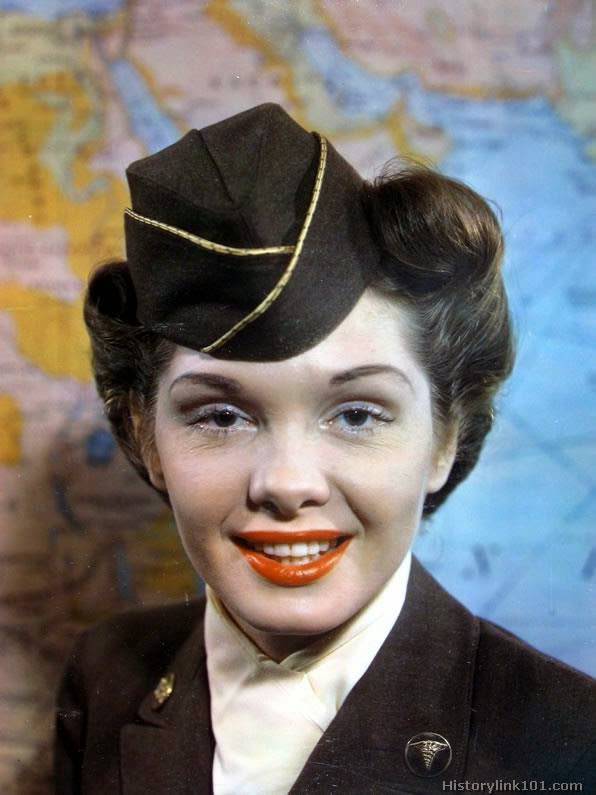
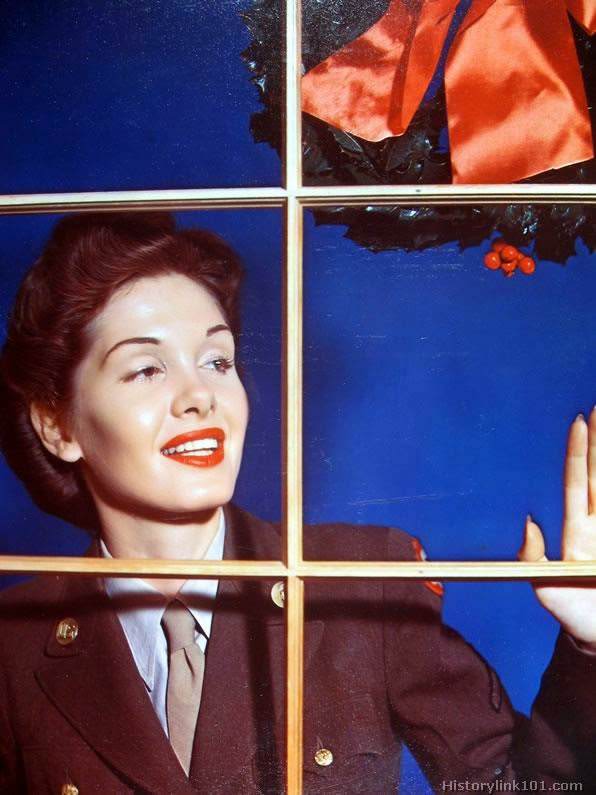
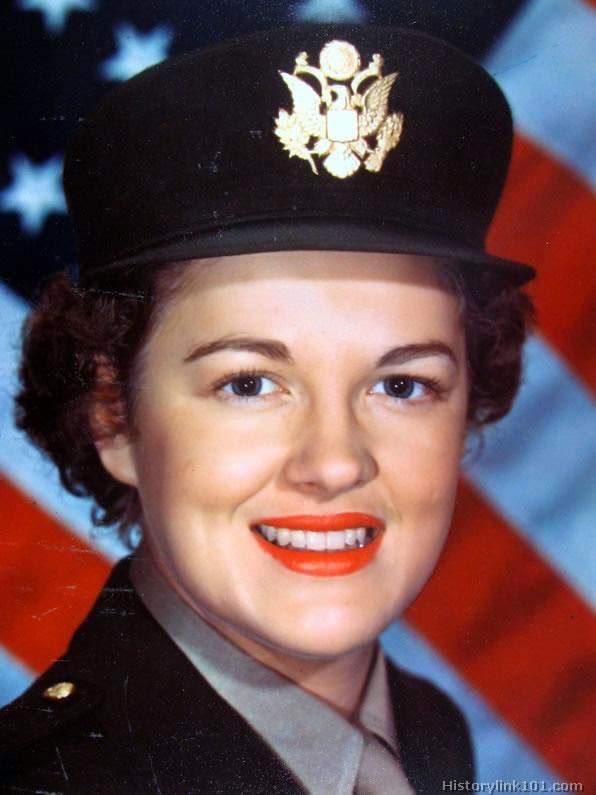
When World War II began in 1939, millions of men shipped out to fight. Factories, farms, and offices lost their workers almost overnight. Women filled those gaps — and they did it on a massive scale. They produced weapons and ammunition in munitions plants, built naval vessels in shipyards, and drove buses, trams, and trains to keep cities moving. In rural areas, women joined the Women’s Land Army, planting crops and managing livestock as food imports dried up under wartime blockades.
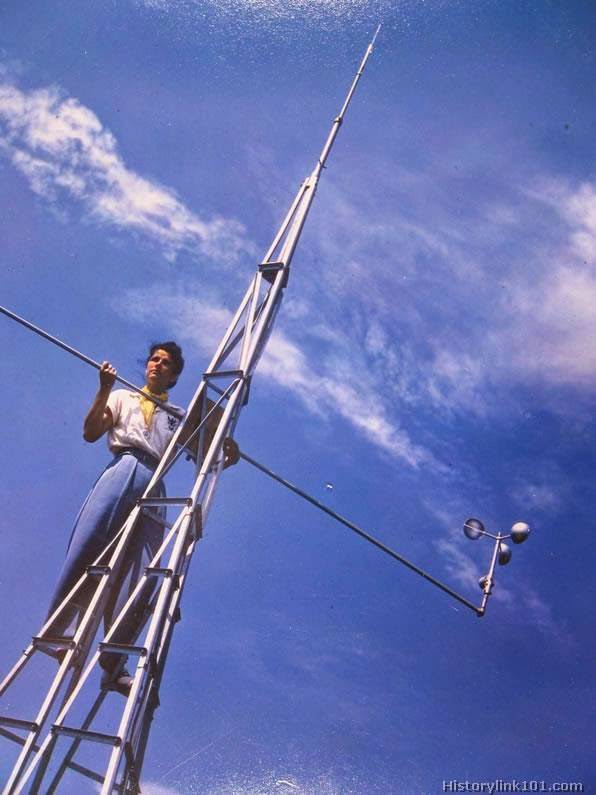
Observation post of weather station maintained by Company A 579th Signal Battalion.
Military support roles opened up for women across Allied nations. In the United States, the Women’s Army Corps — the WAC — put women to work as clerks, radio operators, drivers, and air traffic controllers. Britain had the Women’s Auxiliary Air Force. These organizations handled logistics, communications, and medical care, freeing combat-ready men for the front lines.
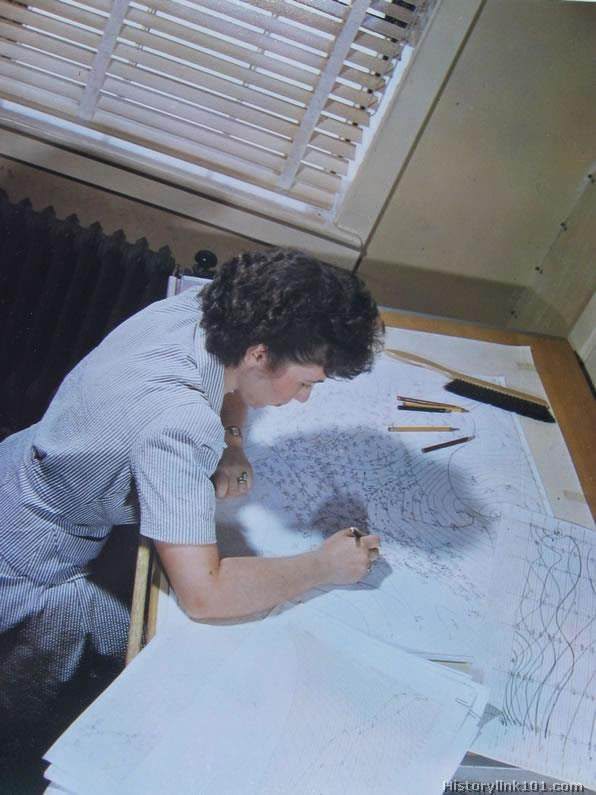
A WAAC in training at a WAAC Training Center. She looks over the paper records in the control tower at an airport.
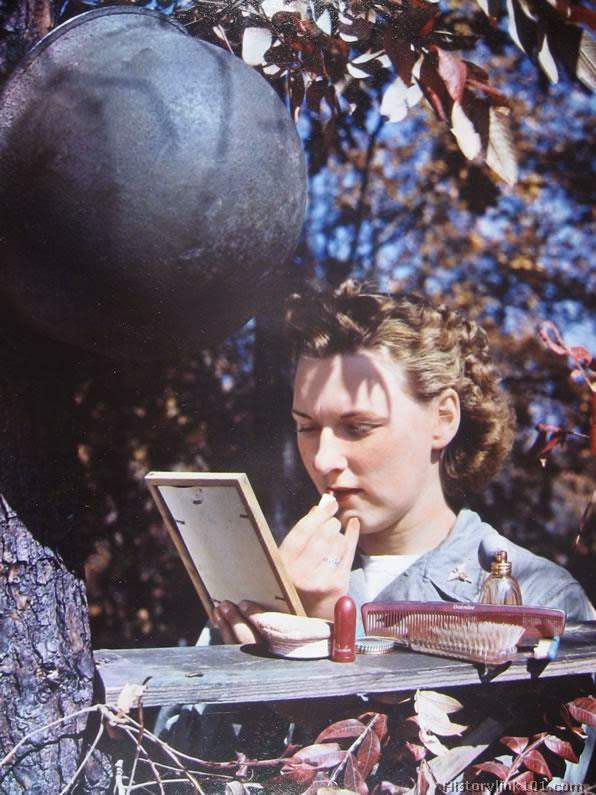
A WAAC while in training at a WAAC training center finds time to refreshen herself up.
WAC training was rigorous and thorough. Recruits learned to operate technical equipment, read instruments, and carry out duties that had previously been reserved for male soldiers.
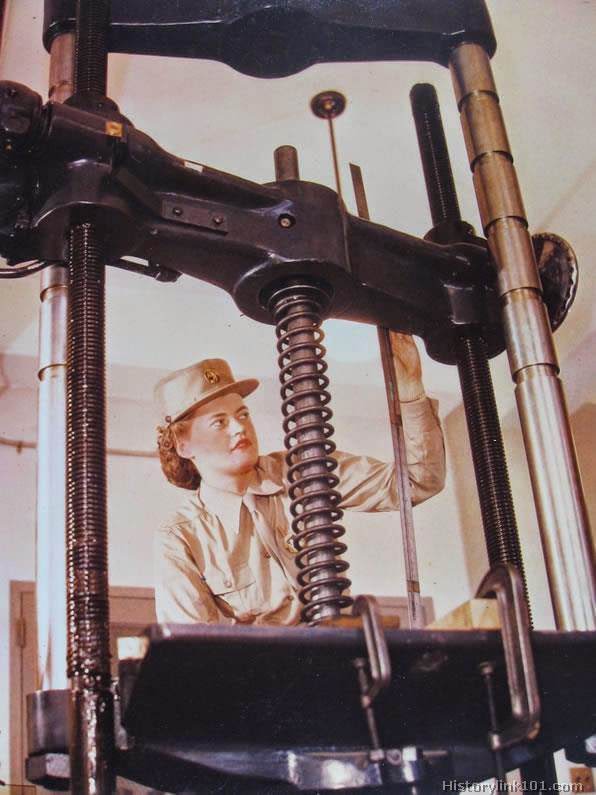
A WAC, in training at a WAC training center, checks the registration scale of a testing machine.
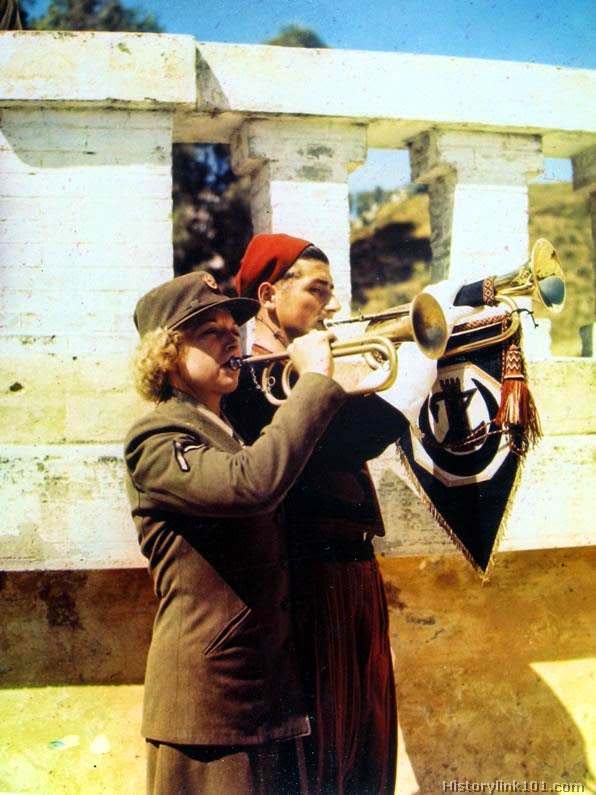
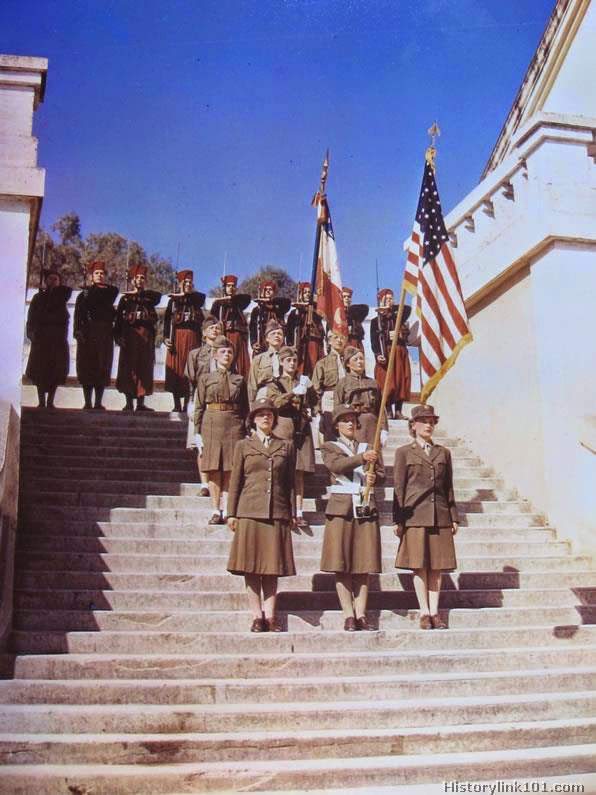
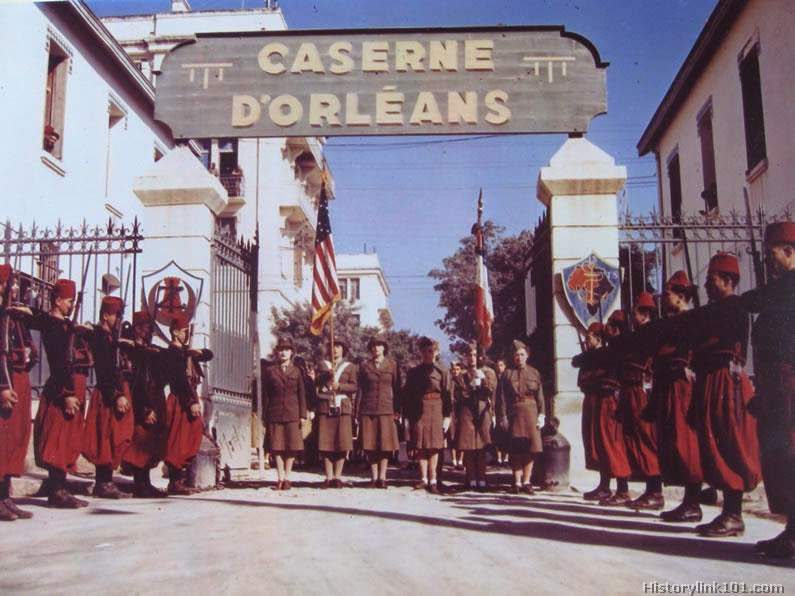
WAC units deployed far beyond American soil. In January 1944, the first overseas company completed a full year of service in the North African Theater. They worked alongside French forces and other Allied women’s units under the Mediterranean sun.
An American WAC and the bugler of the famous First Zouave Regiment of North Africa combine under Mediterranean skies to sound an Army call. At the left is a member of the historic first overseas company of the WAC which, in January 1944, will have completed a year of service in the North African Theater.
On parade are these WAC’s in North Africa who promenade on the occasion of their review at one of the most historic fortresses in the Mediterranean theatre. The guard of honor is the color guard of the first Zouave Regiment. In the rear are units of three French women in uniform from organizations who join with their American sisters in serving their armies in a vital way.
The Color Guard of the Women’s Army Corps in North Africa is seen coming through the gate of the Caserne D’Orleans, a famous Mediterranean fortress, while the guard of honor of the First Zouave Regiment stands at attention.
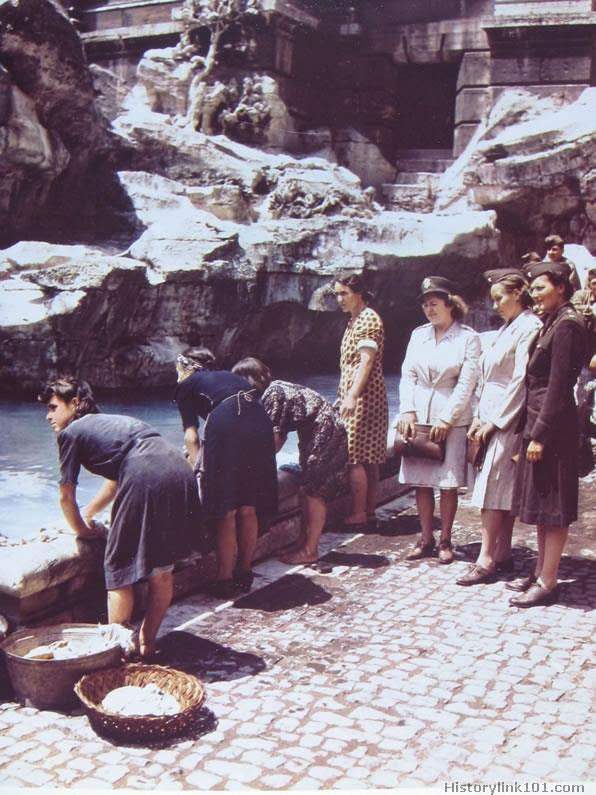
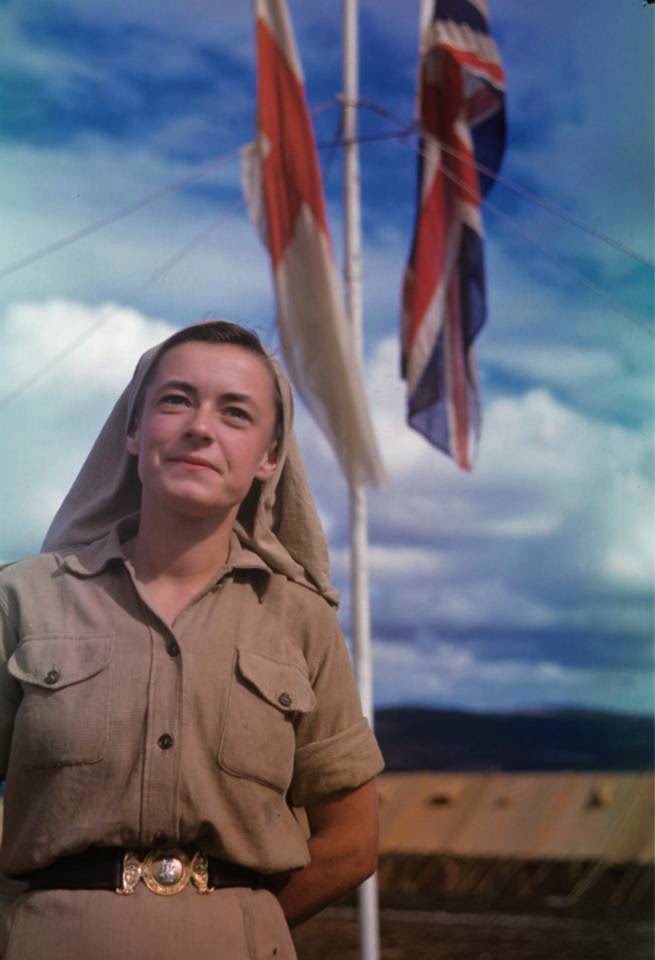
Nurses served in active war zones, treating the wounded close to the front. In Italy, North Africa, and across the Pacific, they worked under fire and in difficult conditions. Some crossed paths with local civilians and other Allied personnel in towns still feeling the weight of occupation.
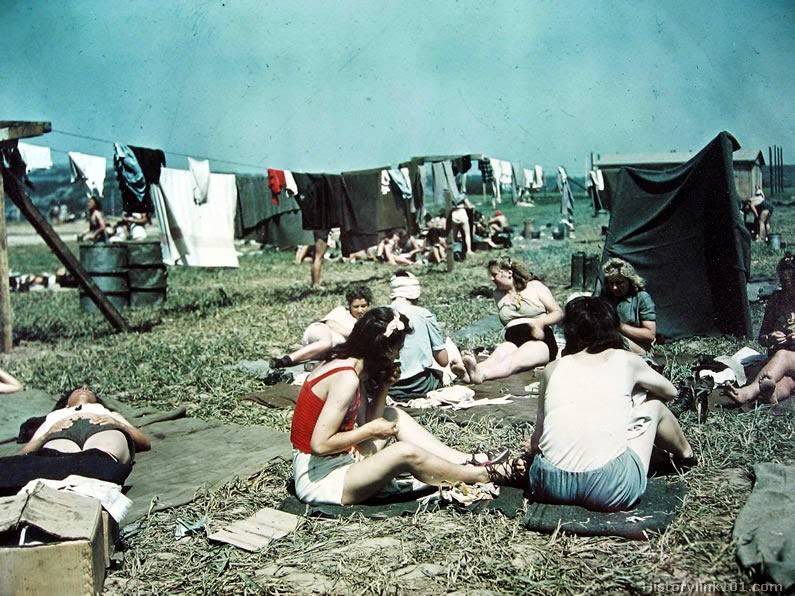
Italian women wash clothes at the fountain of Fontana Verdi while US Army nurses and GI’s look on. June 1944.A few of the more than 500 women at the PW Camp, Sinzing, Germany taking sunbaths.
In the Soviet Union, women took on roles unmatched anywhere else in the Allied world. Thousands served as snipers, machine gunners, and pilots. The “Night Witches” — a regiment of female bomber pilots — flew low-altitude night raids in small wooden planes, dropping bombs on German positions with no radar and no parachutes.
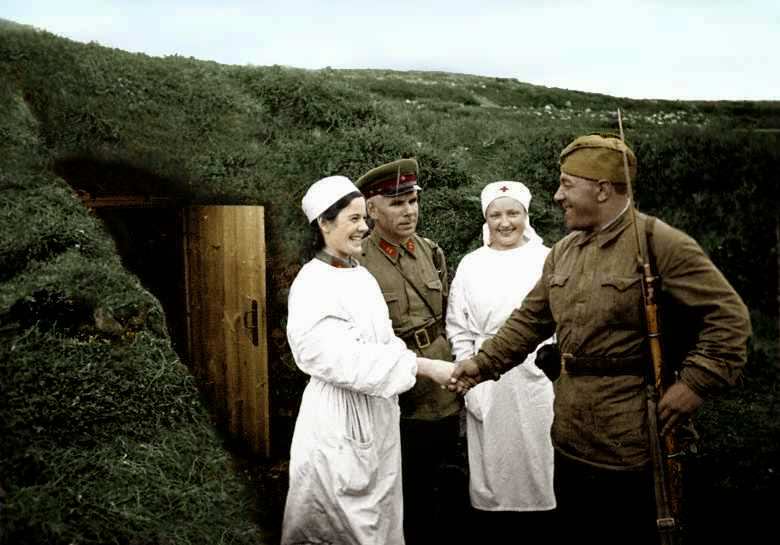
Soviet nurses.
Women also worked in intelligence. Many broke enemy codes, intercepting and decoding messages that shaped military decisions. Others operated undercover in occupied territories as couriers or spies. Capture meant arrest, torture, or execution — and many faced exactly that.
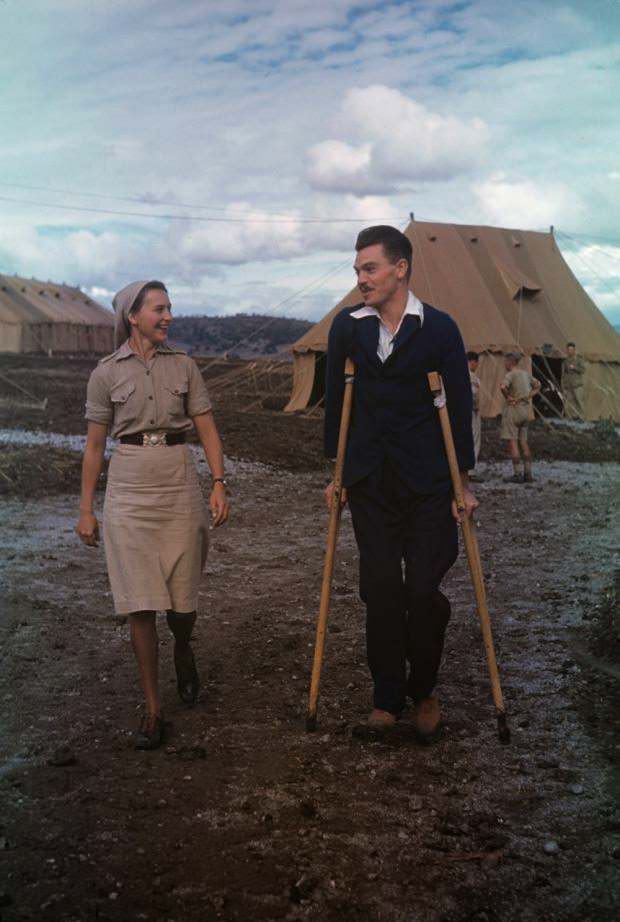
Bill Kay Strolls with Nursing Sister Dorothy Rapsey. North Africa, Second World War.
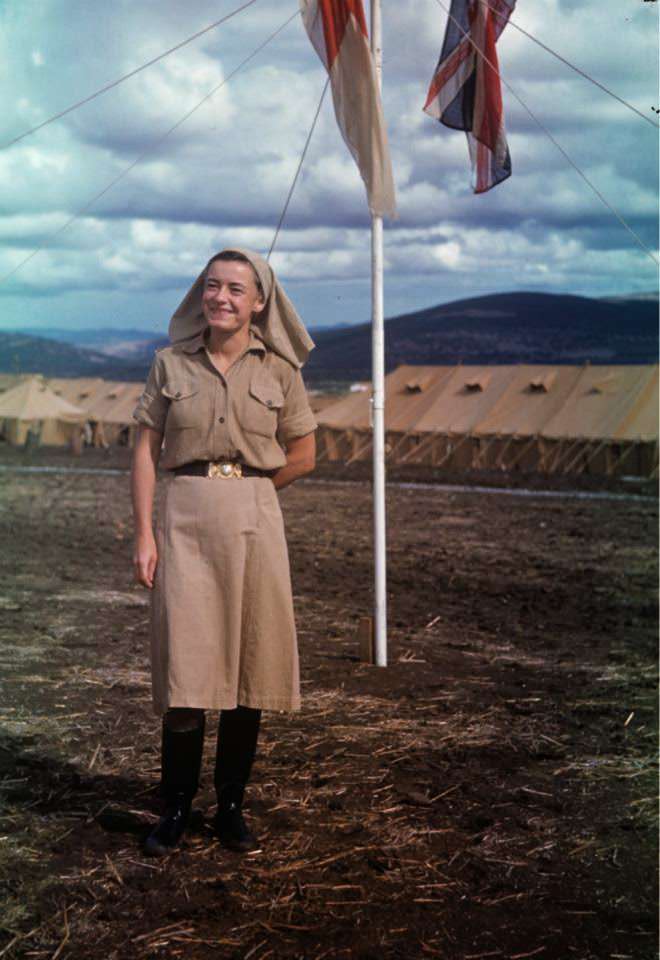
Nursing Sister Ruth Webster, North Africa, Second World War.
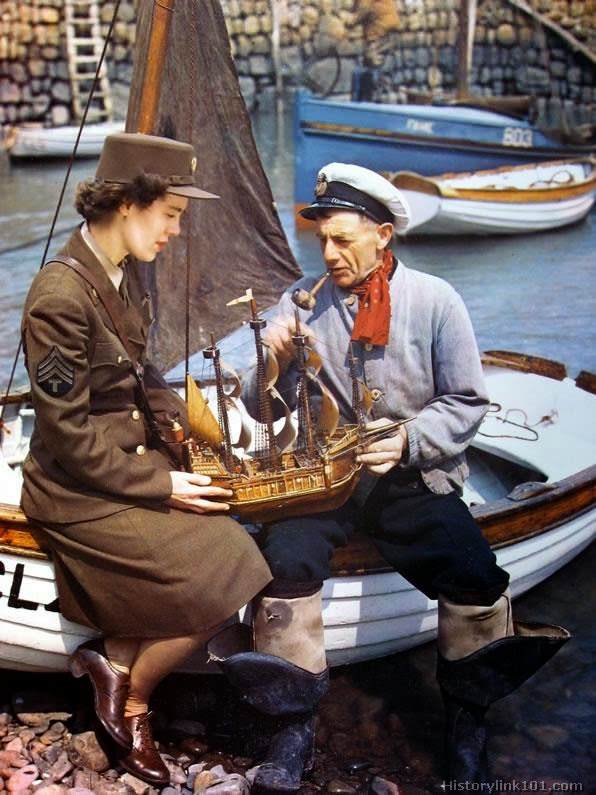
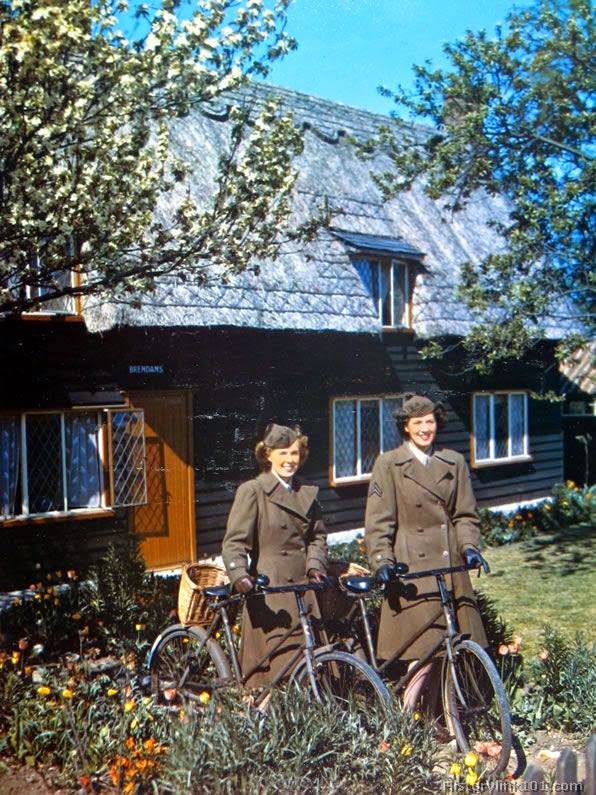
Back in England, WAC personnel settled into the rhythms of wartime service — commuting to work, learning from locals, and carrying out their duties day after day.
Somewhere in England a WAC learns about old sailing ships from a good authority.
These WACs in England ride bikes from their quarters to their offices.
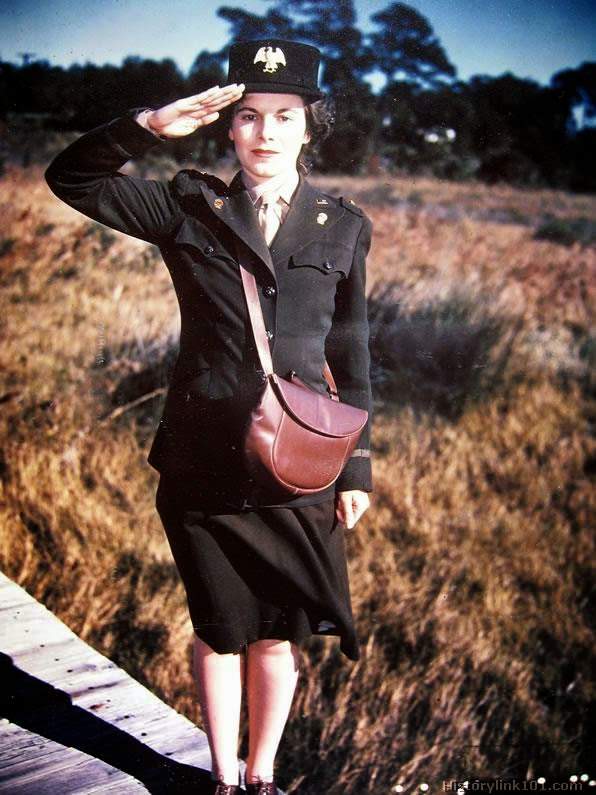
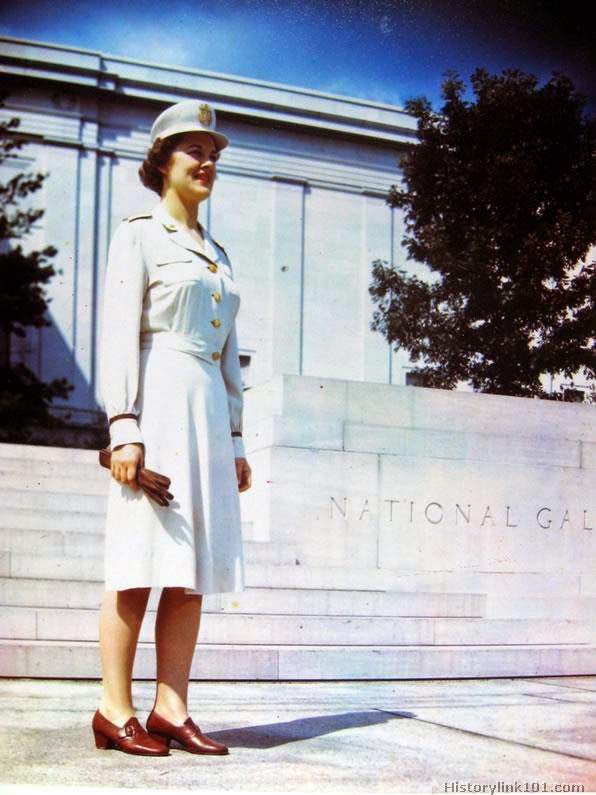
Uniforms evolved over the course of the war to reflect expanded roles and changing conditions. Officers wore standardized winter and summer dress, with specific authorized accessories marking their rank and branch.
A WAC officer wearing the winter duty uniform, stands in salute. This relpaces the first uniform authorized for the WACs: the major change being removal of the belt. The chocolate brown shoulder bag, brown leather gloves and shoes are the authorized accessories.
A Lt. wearing optional summer uniform authorized for Medical Department Physical Therapist for informal use.
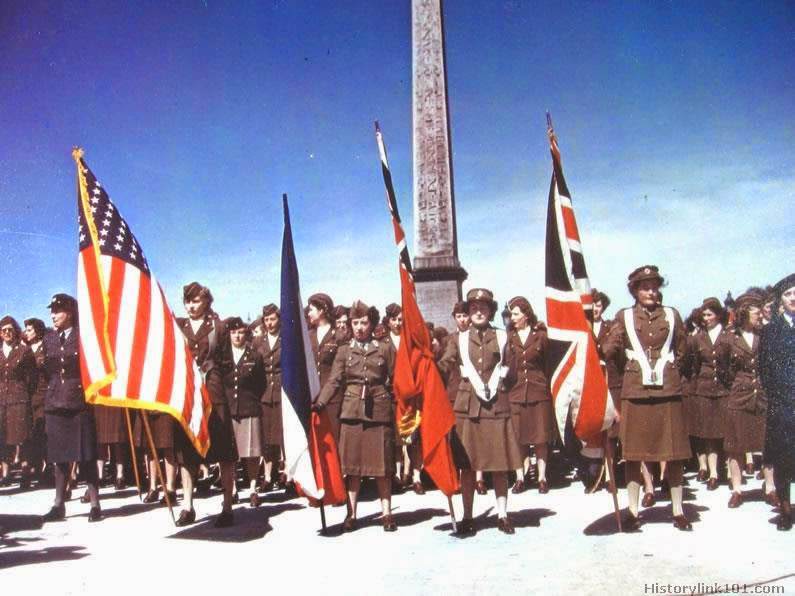
By the time the war ended, WAC units in Europe had served for years across multiple theaters. In September 1945, ETO WACs marched in the first all-women parade ever held in Paris, joined by Britain’s ATS and WAAF detachments and French WACs. It was a ceremony that marked both the end of a war and the scale of what women had accomplished in it.
ETO WACS celebrate 3rd anniversary in Paris. View of ETO WACS assembled in review in front of the Place de la Concord in Paris, France. In a history making parade down the famous Champa Xlysses Ave., ETO WACS marched in the first all women parades in the history of the city. Guests in the parade were detachments of English ATS, WAAPS and French WACS. They were led by the US Army Band and a WAC color guard.
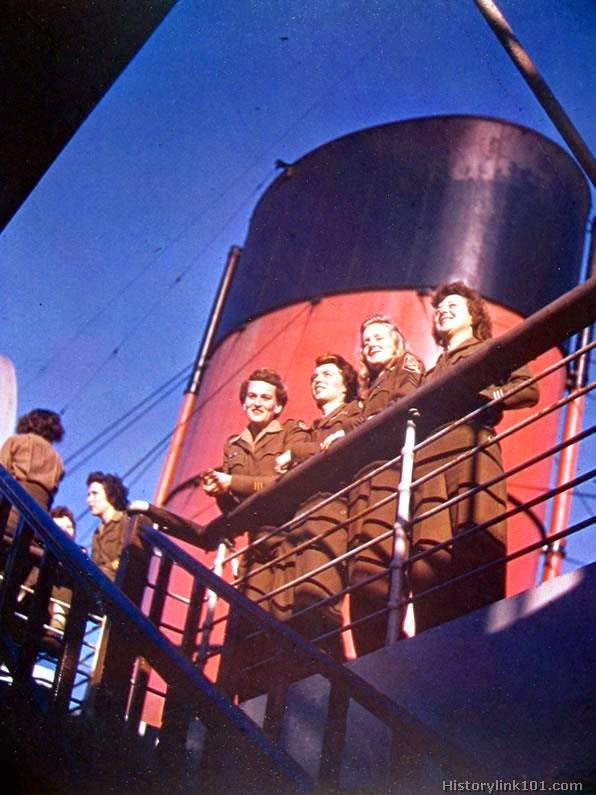
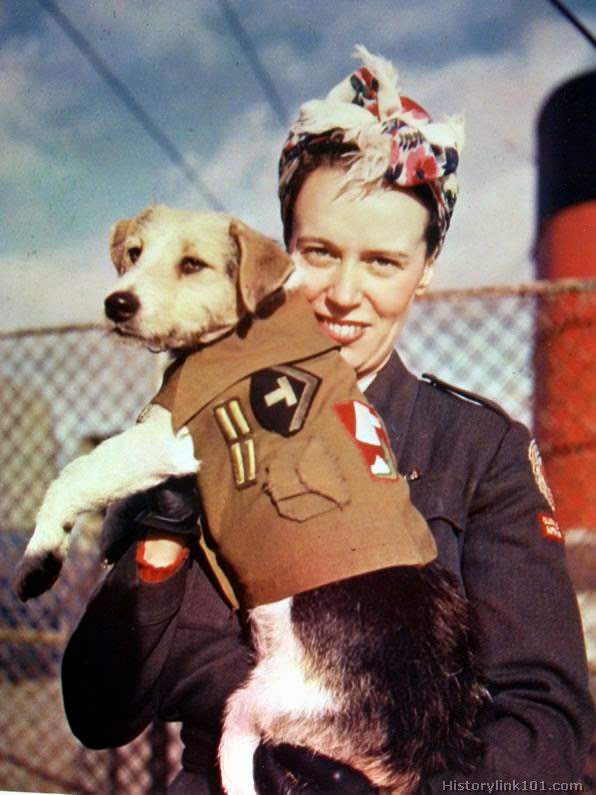
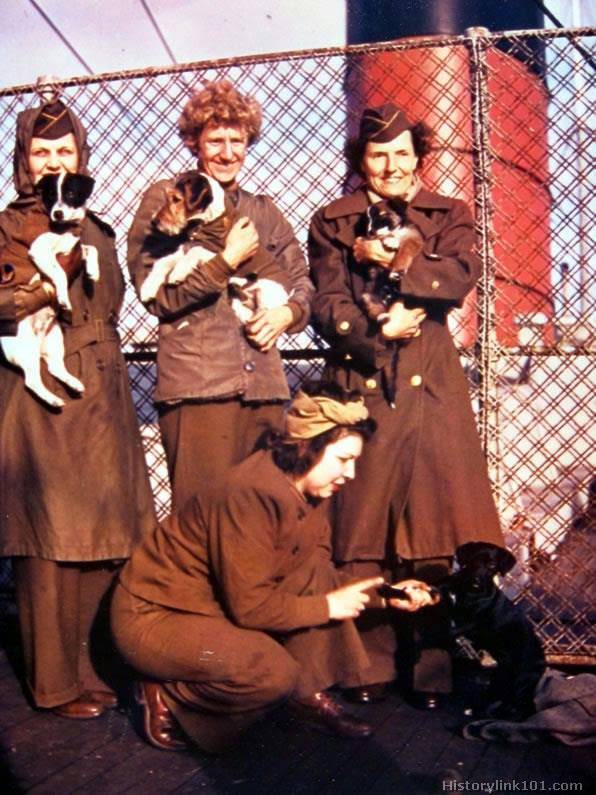
The journey home came aboard ships like the SS Queen Mary. WACs who had spent more than two years overseas finally sailed back across the Atlantic in November 1945. Even a stray dog named Spotty, found dockside with a handwritten tag asking for a home, made the voyage — picked up by Red Cross workers, passed between ships, and finally arriving in New York to be reunited with his former master.
These WAC have been overseas well over two years and are on their way home aboard the S.S. Queen Mary. It sailed from Southampton November 4, 1945.
Spotty was found dockside with last sailing of the Elizabeth. Tag on coat saying, “My name is Spotty. Two years old. Housebroken. Love to ride in trucks. Been with boys two years in combat. But just could not make the ship. Won’t you please give me a home.” Picked up by two Red Cross girls who found his company, promised to try and get him a home. Spotty was tied up but broke leash and boarded ship again but was found and put off. Picked up by same two Red Cross girls again they found he could go home if someone looked after him. Permission granted her allowed her to sail on Acquatania but sailing was cancelled. Sailing date of Queen May was announced and Spotty did make it to New York November, 1945 to be greeted by his former master.
Andrew Thompson is an archaeologist and historian who specializes in the study of war and conflict. He writes about the brutal history of warfare, including the World Wars and other significant conflicts. Through his work, he aims to deepen our understanding of the human cost of conflict and inspire us to work towards a more peaceful future.