
Cleveland, Ohio was founded in 1796 by surveyors working for the Connecticut Land Company. It was planted at the mouth of the Cuyahoga River where it meets Lake Erie — a location that would shape everything about the city’s future. That natural geography made Cleveland one of the most important transportation hubs in the American Midwest. Goods, raw materials, and people all passed through the city in enormous volumes, and by the time the 20th century arrived, Cleveland looked and felt like a true modern metropolis.
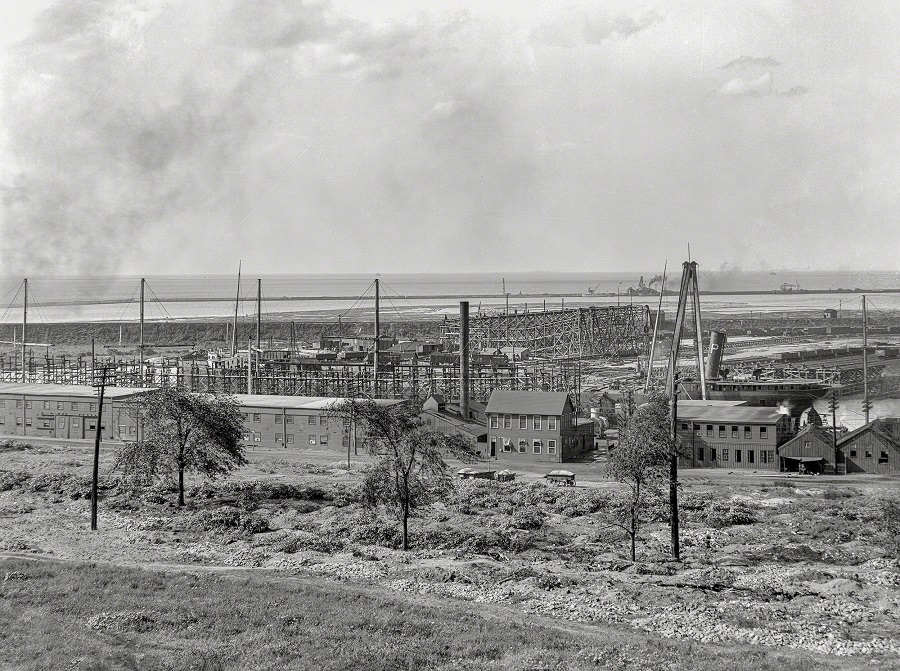
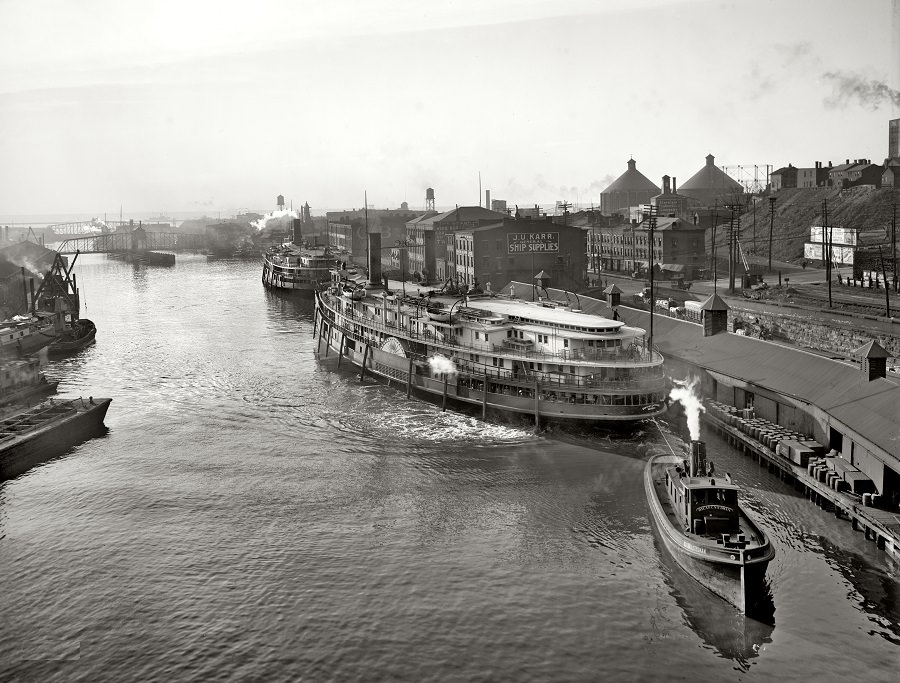
Lake Erie was the engine behind Cleveland’s early commercial power. Ore ships and freighters moved constantly along its surface, connecting the city to iron and coal deposits across the Great Lakes region. The docks along the Cuyahoga River were among the busiest in the country, handling millions of tons of raw materials every year. Iron, steel, copper, chemicals, oil refining, and metals fabrication were the industries that drove the city’s economy, and the waterfront was their lifeline.
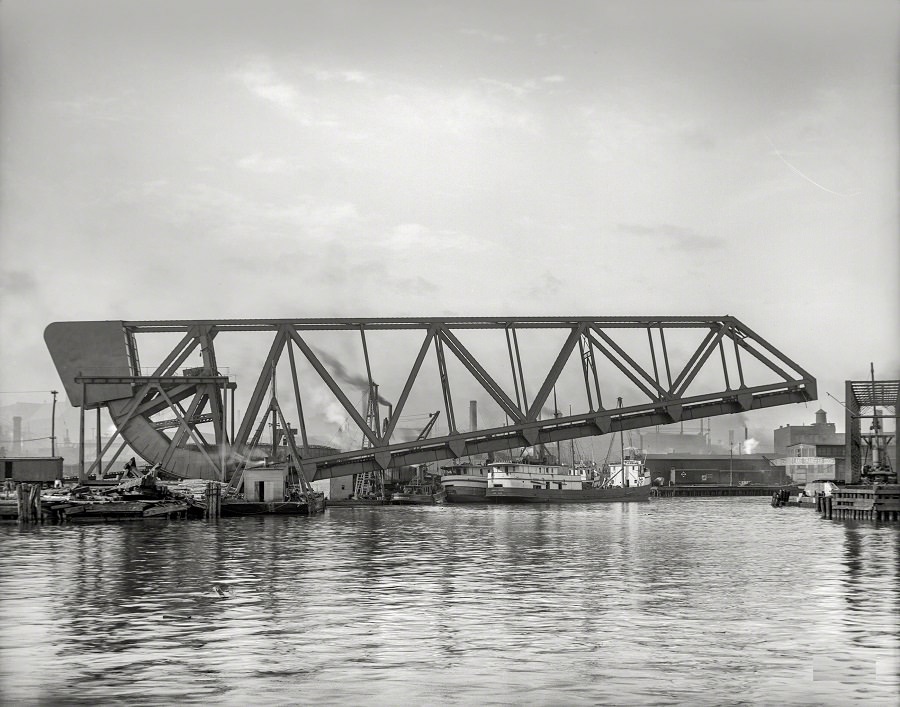
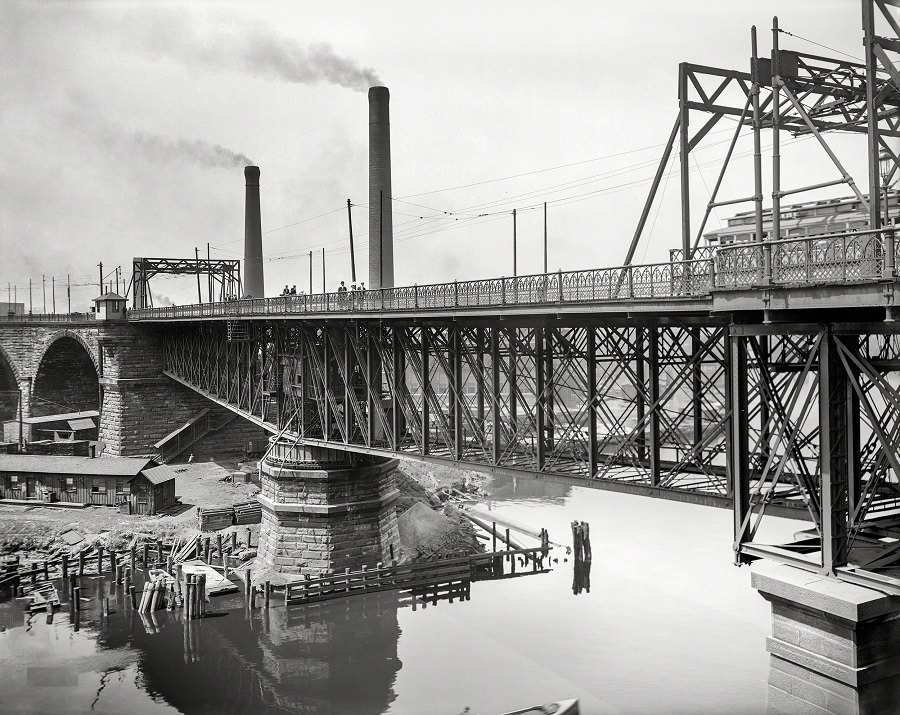
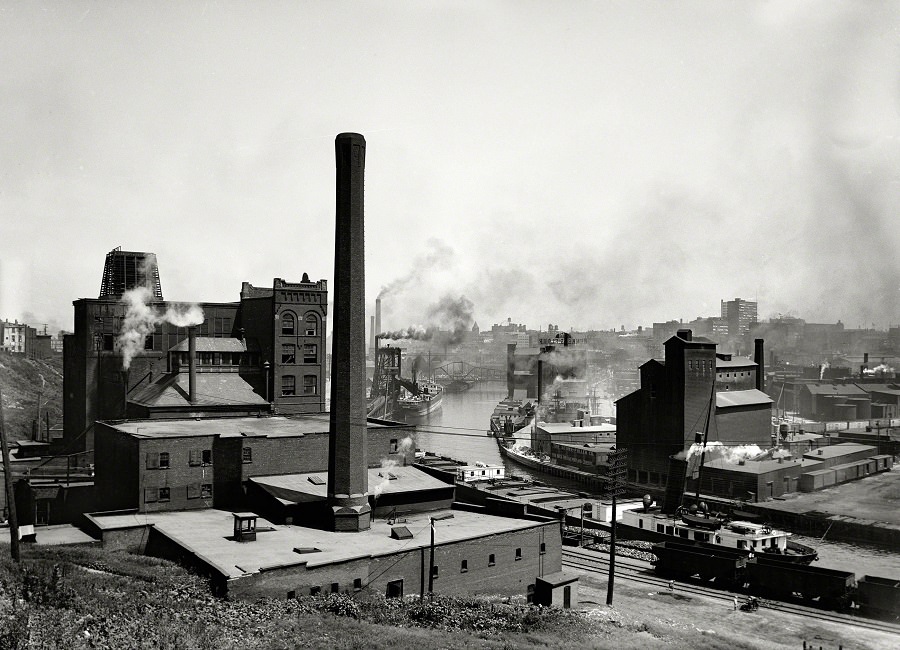
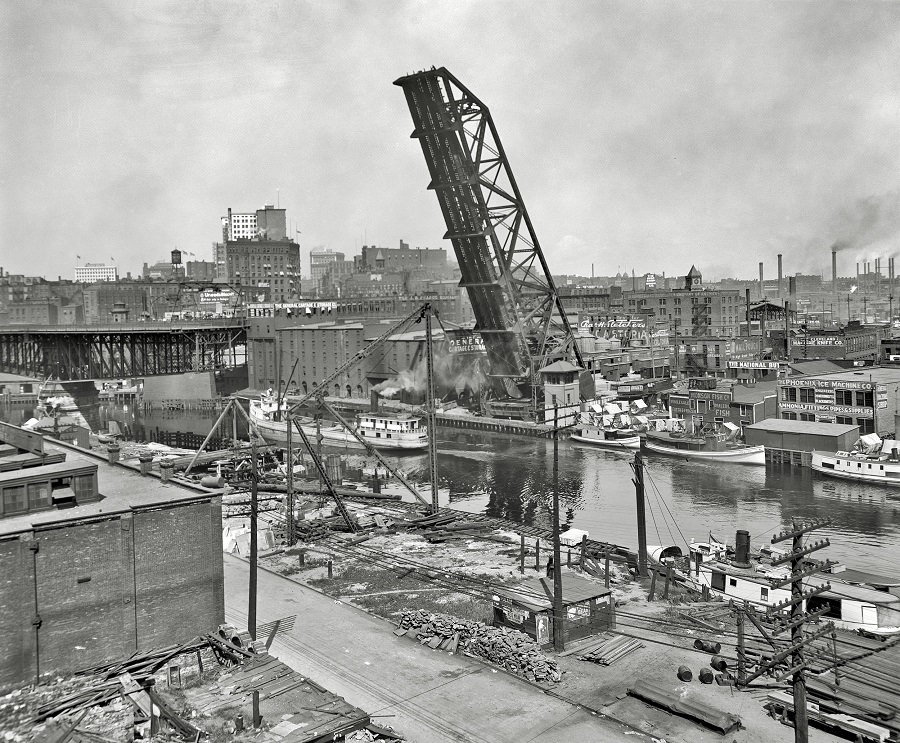
The Cuyahoga River was lined with industrial infrastructure. Lift bridges allowed tall-masted vessels and freighters to pass through while still letting road traffic cross above. The Superior Avenue viaduct was one of the most recognizable structures in the city, stretching high over the river valley and connecting the east and west sides of Cleveland in dramatic fashion.
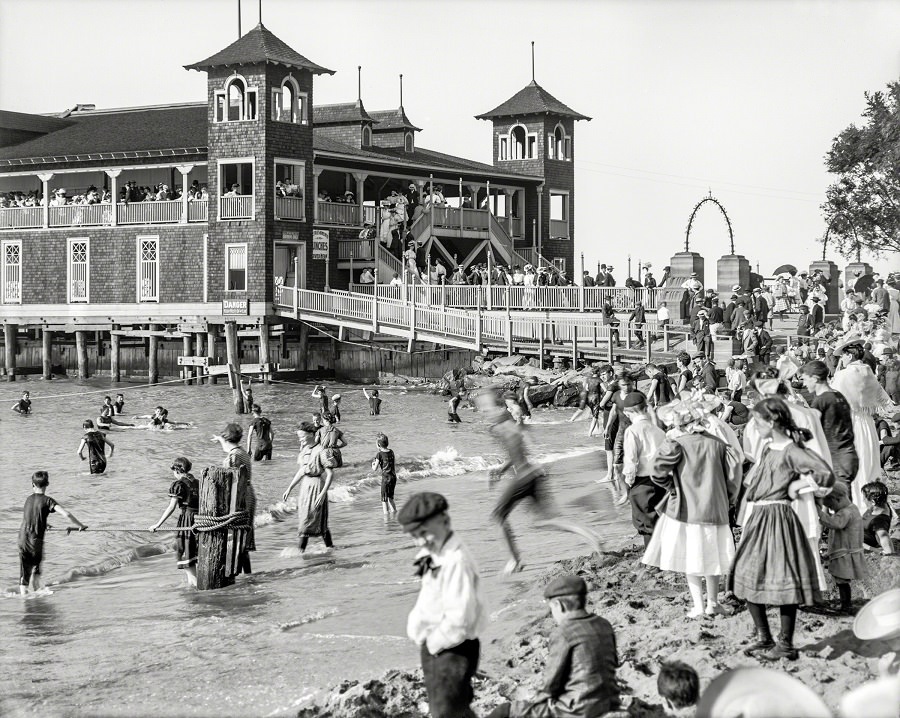
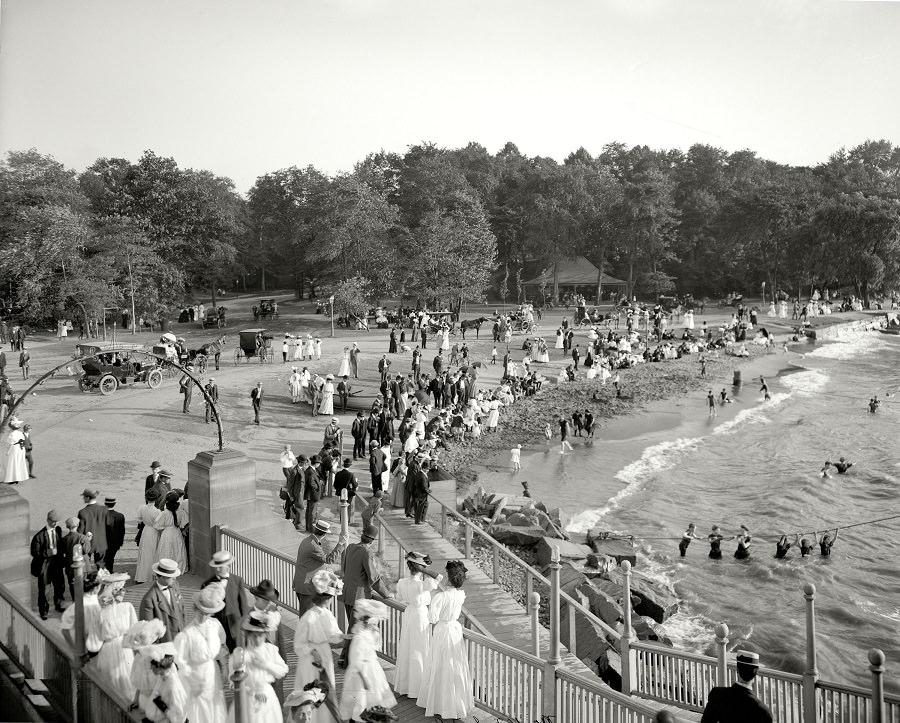
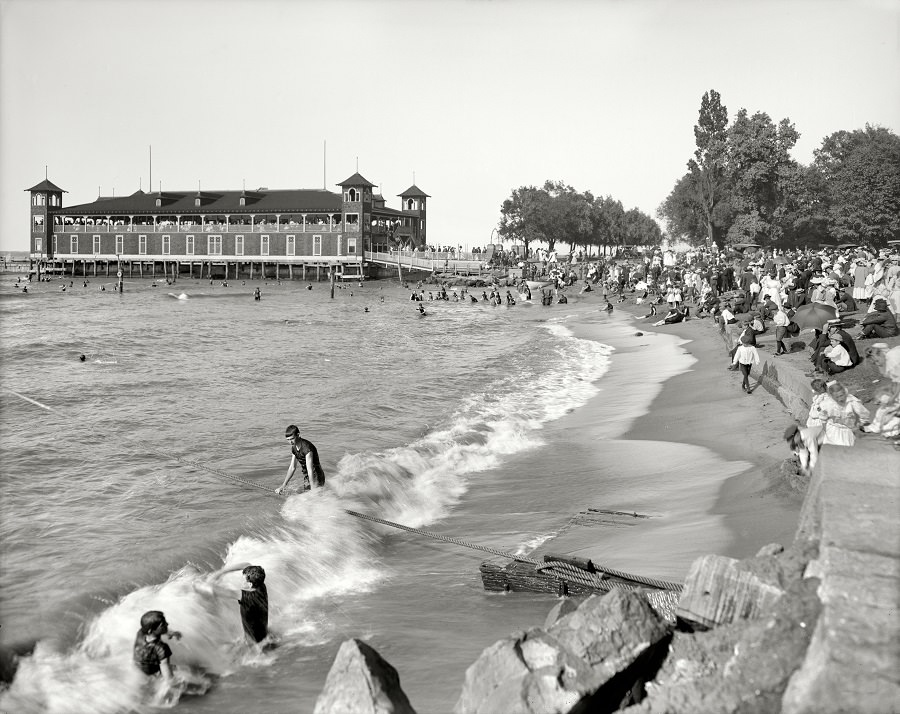
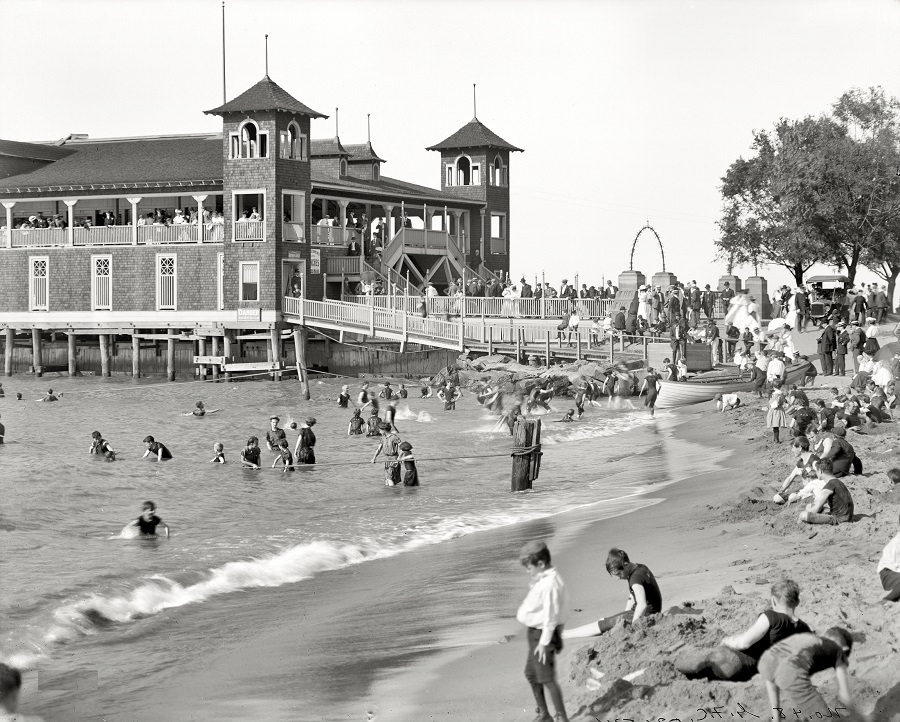
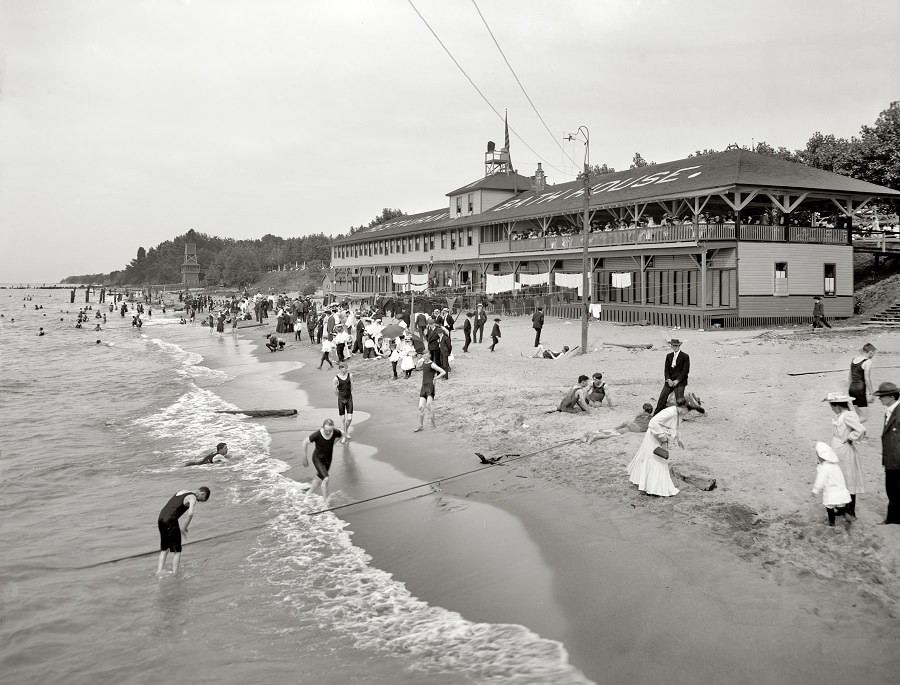
Away from the waterfront, Cleveland offered its residents places to relax and gather. Gordon Park, sitting along the Lake Erie shoreline, featured a bathing pavilion and a sandy beach that drew large crowds during the warmer months. Clevelanders of all backgrounds came to the water’s edge to swim, socialize, and escape the noise of the city’s factories and streets.
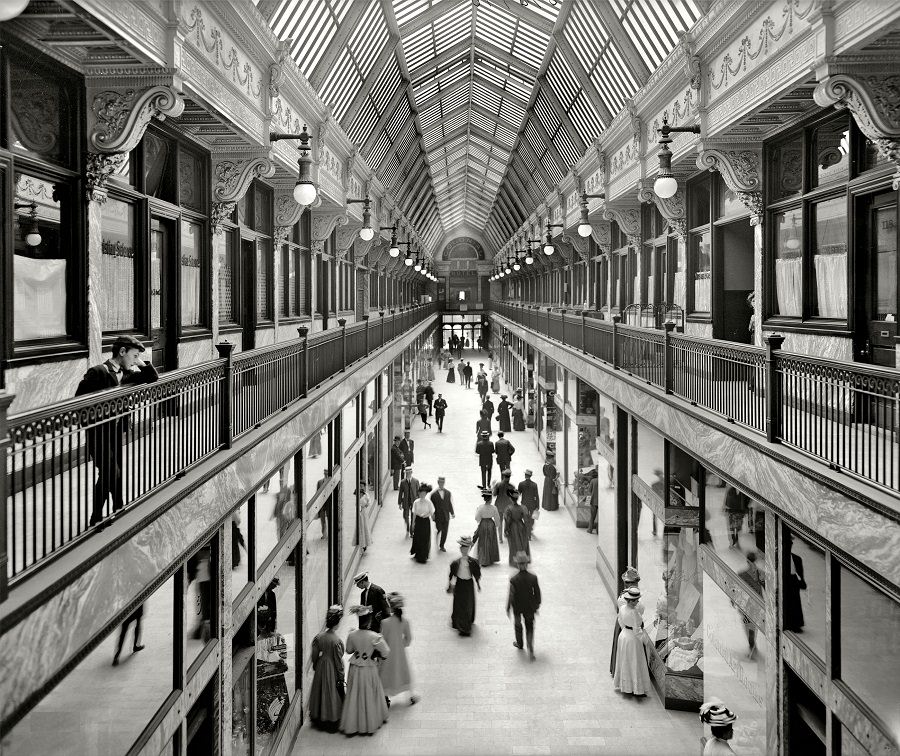
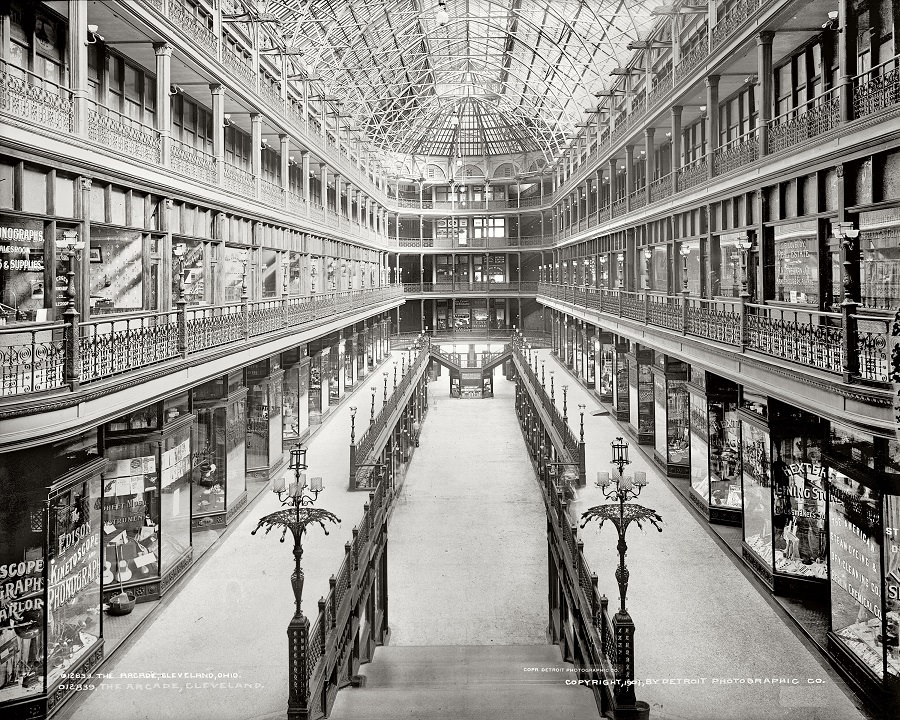
Downtown Cleveland was defined by grand commercial architecture. The Arcade — one of the most ambitious buildings of its era — connected Euclid Avenue and Superior Avenue through a soaring five-story interior gallery topped with a glass skylight. When it opened in 1890, it was one of the largest indoor shopping arcades in the United States. By the early 1900s, it remained a centerpiece of the city’s business district.
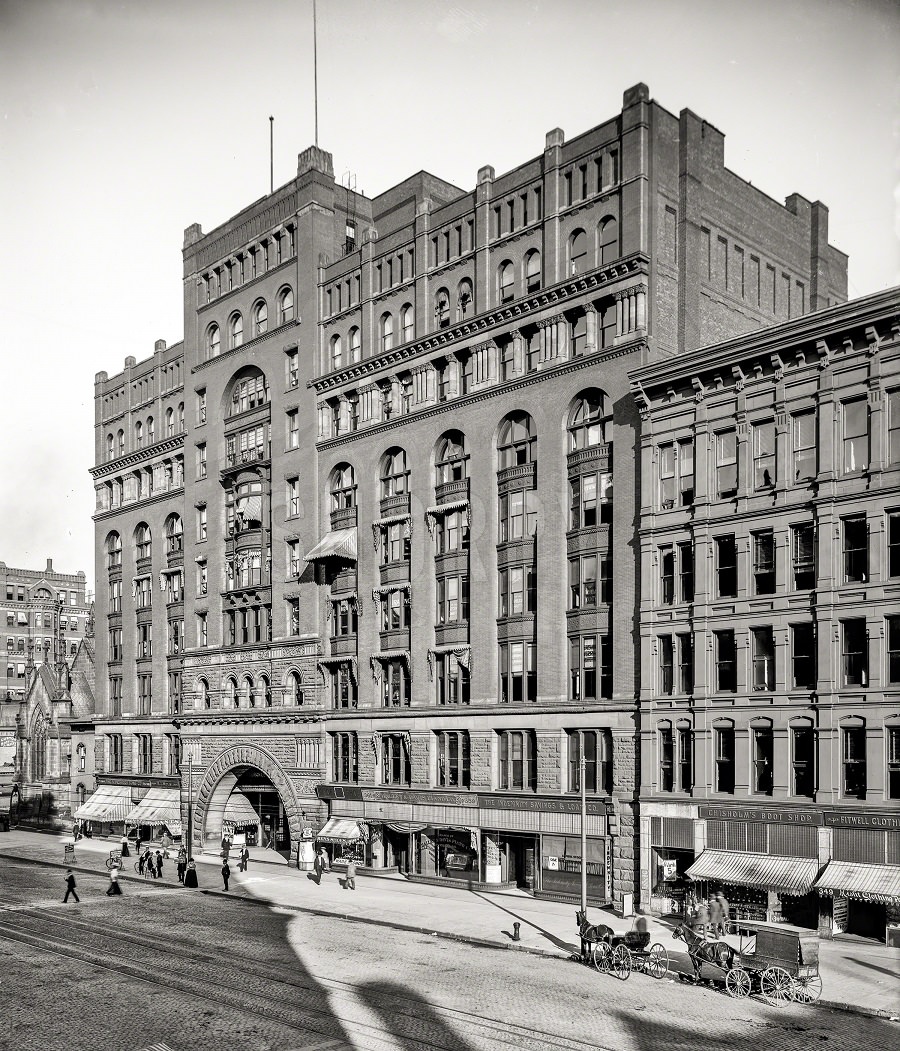
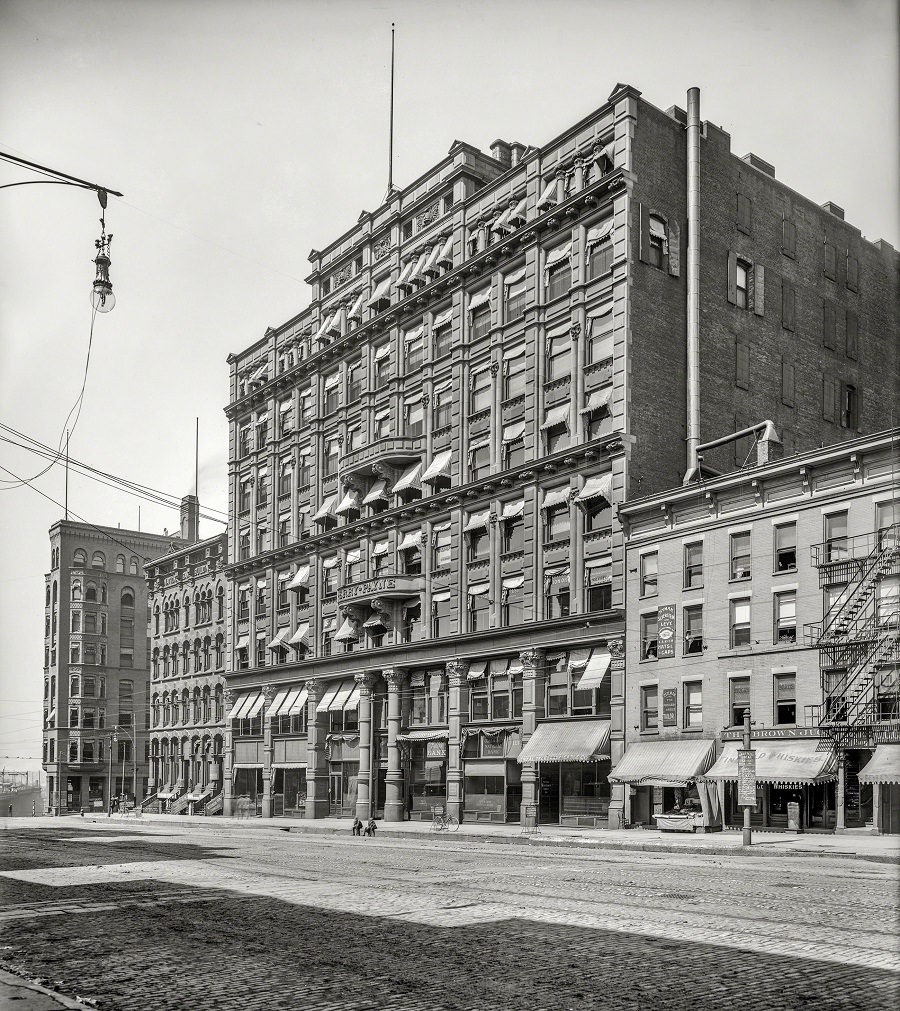
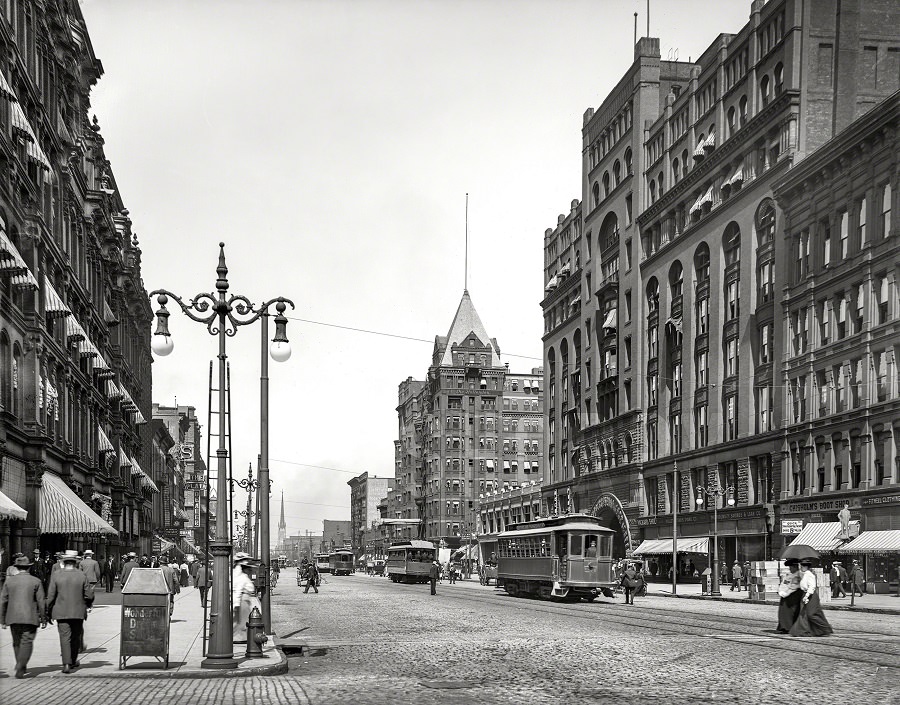
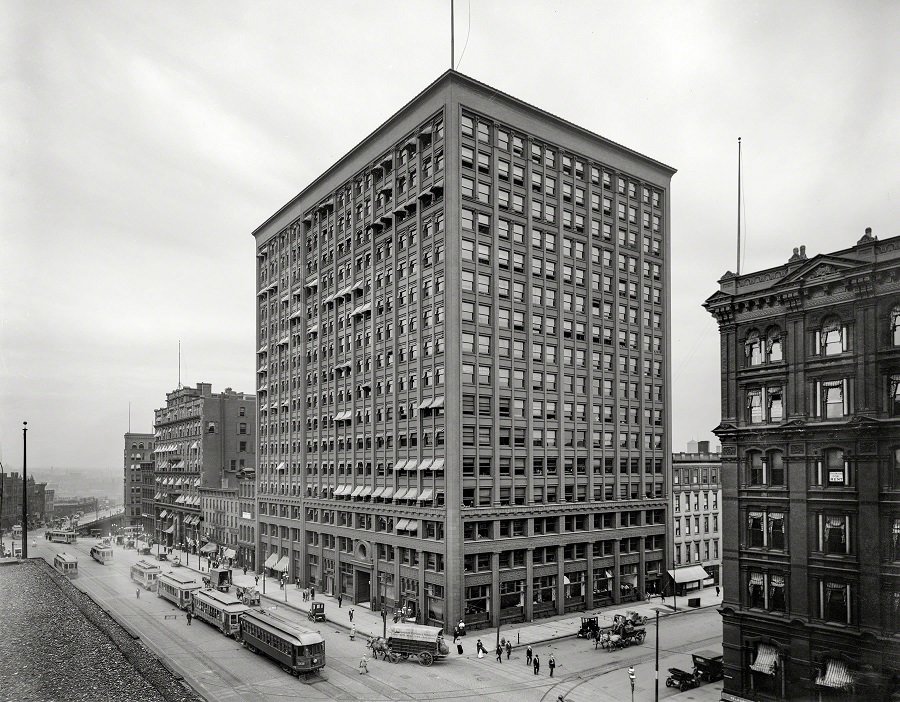
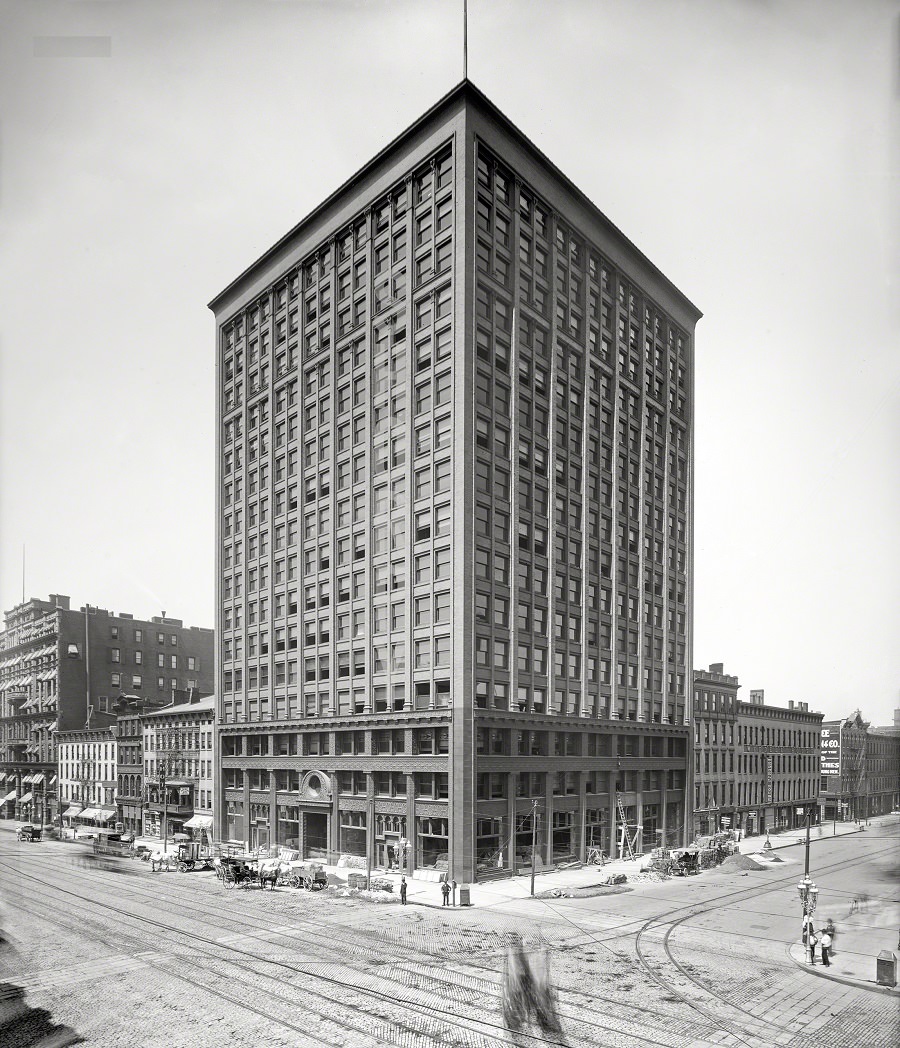
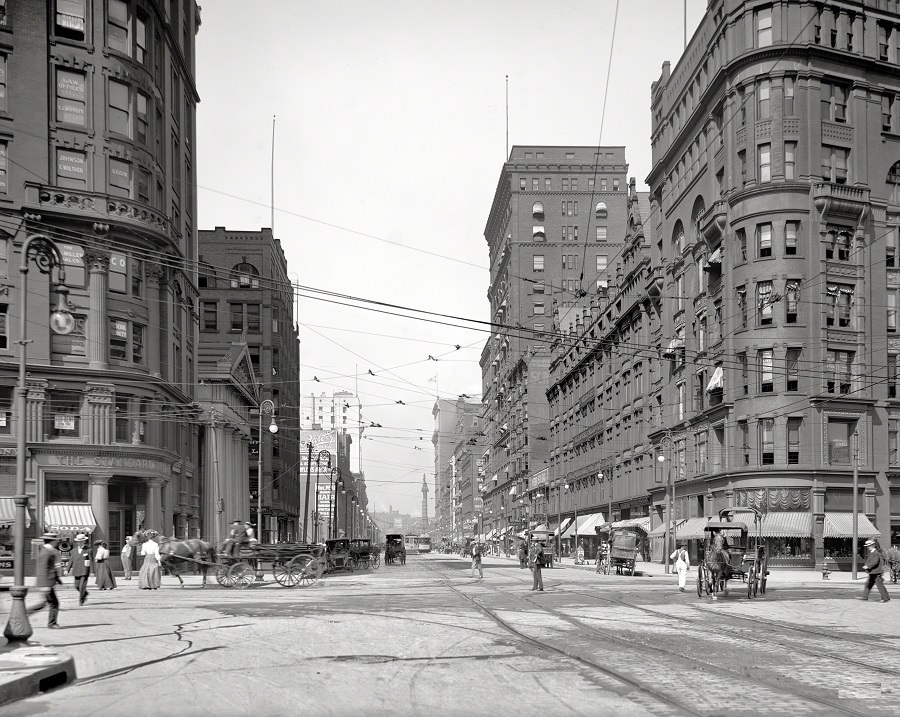
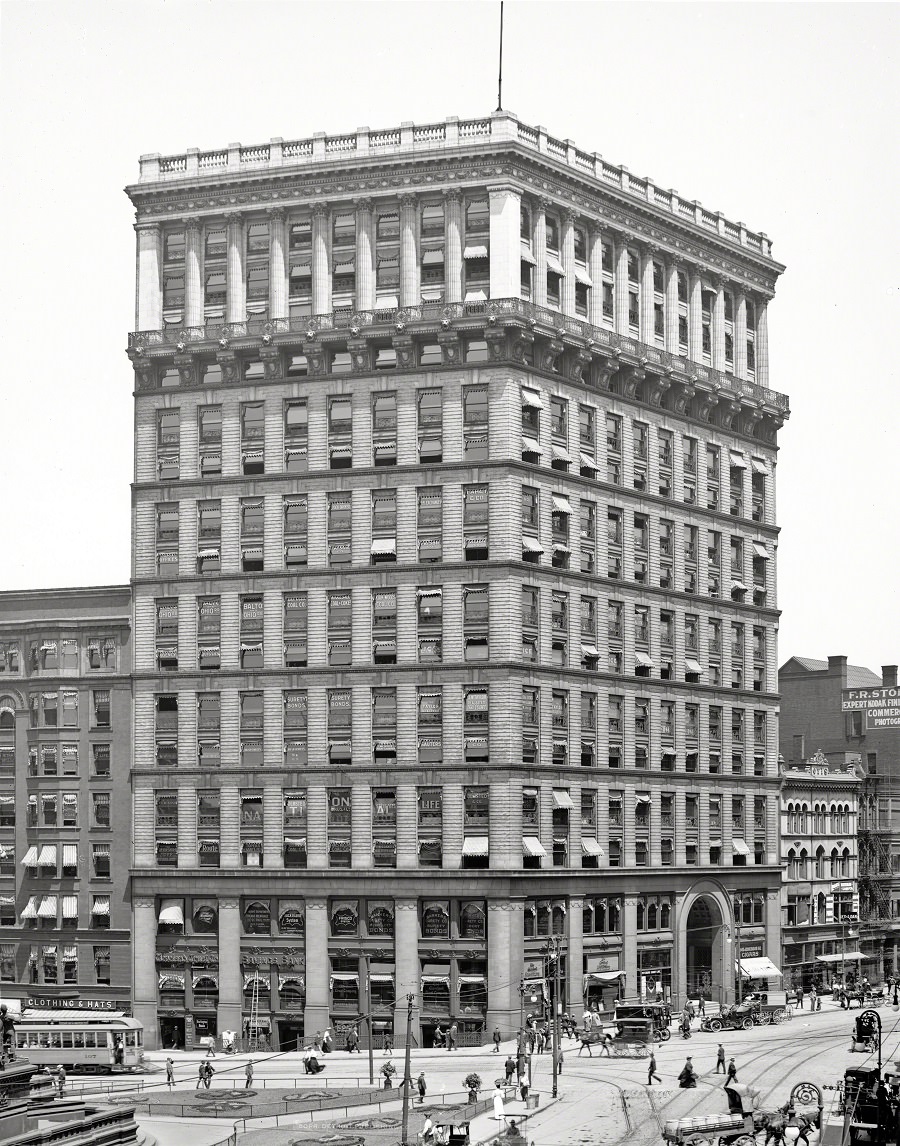
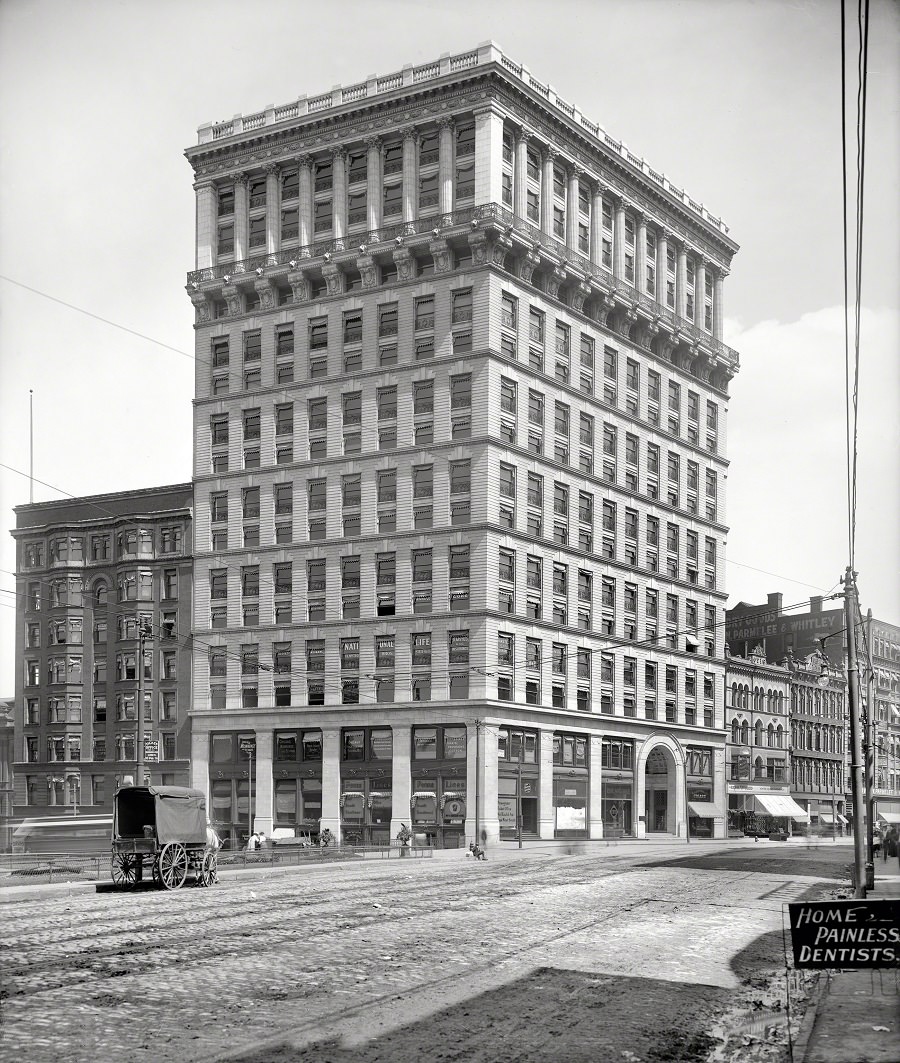
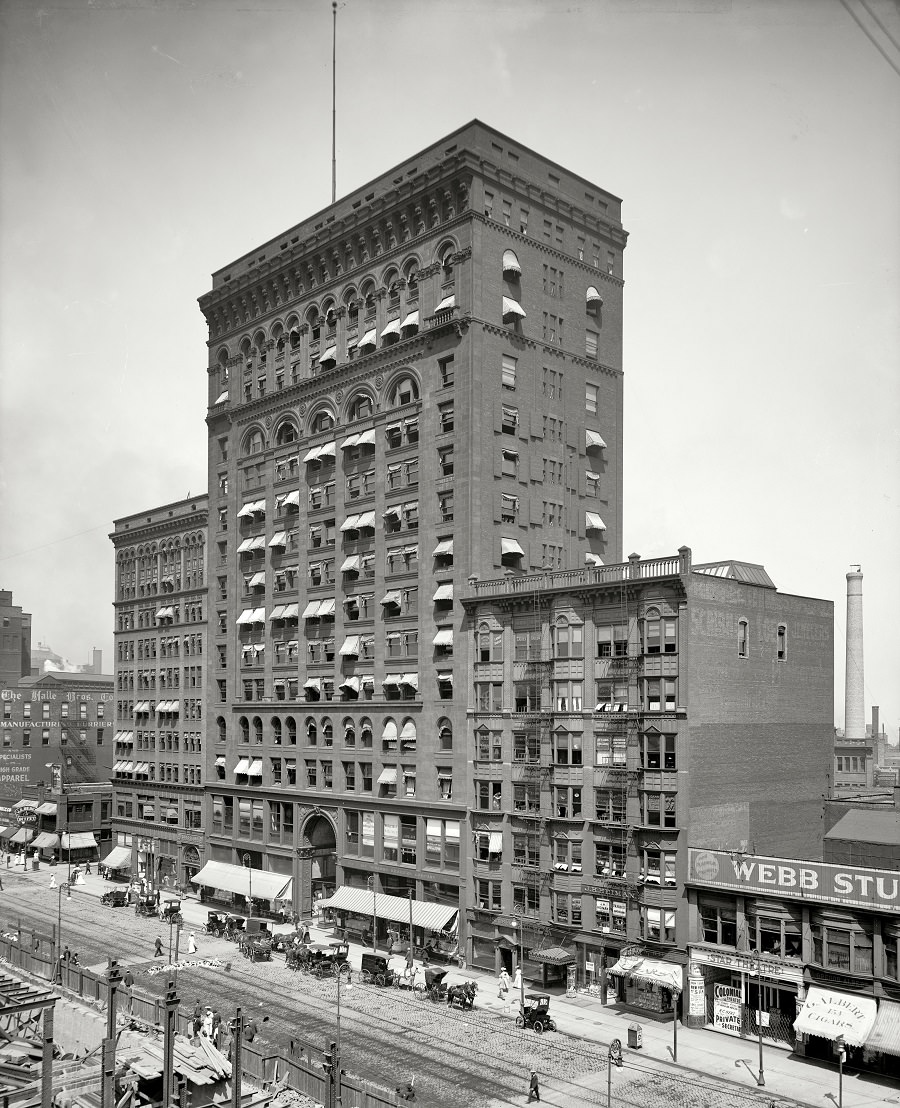
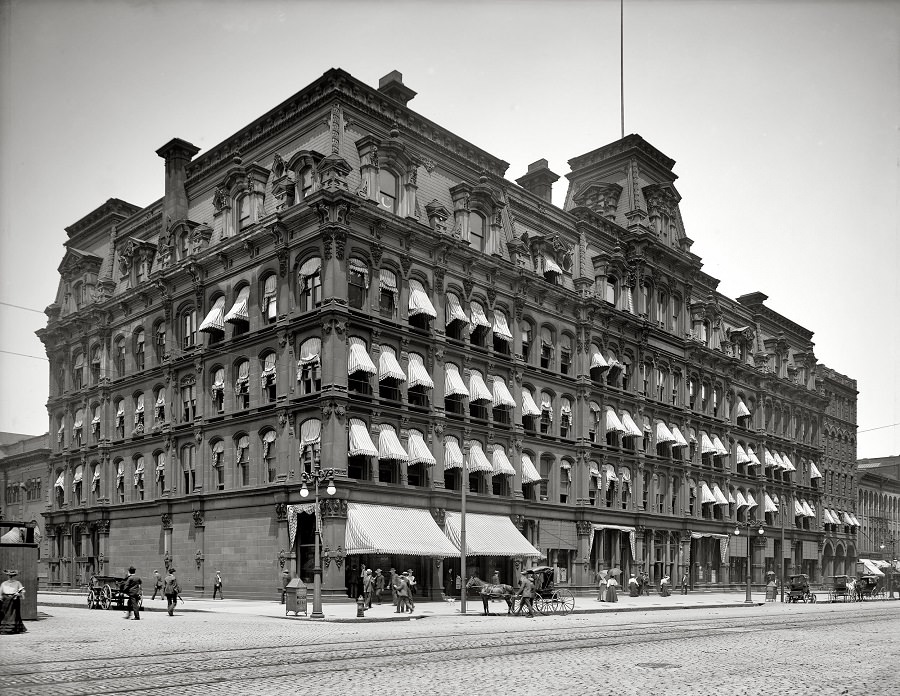
Superior Avenue was one of the main commercial corridors in the city, lined with office buildings, hotels, and civic institutions. The Perry-Payne Building stood as one of its early landmarks, while the Rockefeller Building — completed in 1910 — became a defining fixture of the streetscape. Named after the city’s most famous industrialist, John D. Rockefeller, the building represented Cleveland’s ambition and its ties to national wealth.
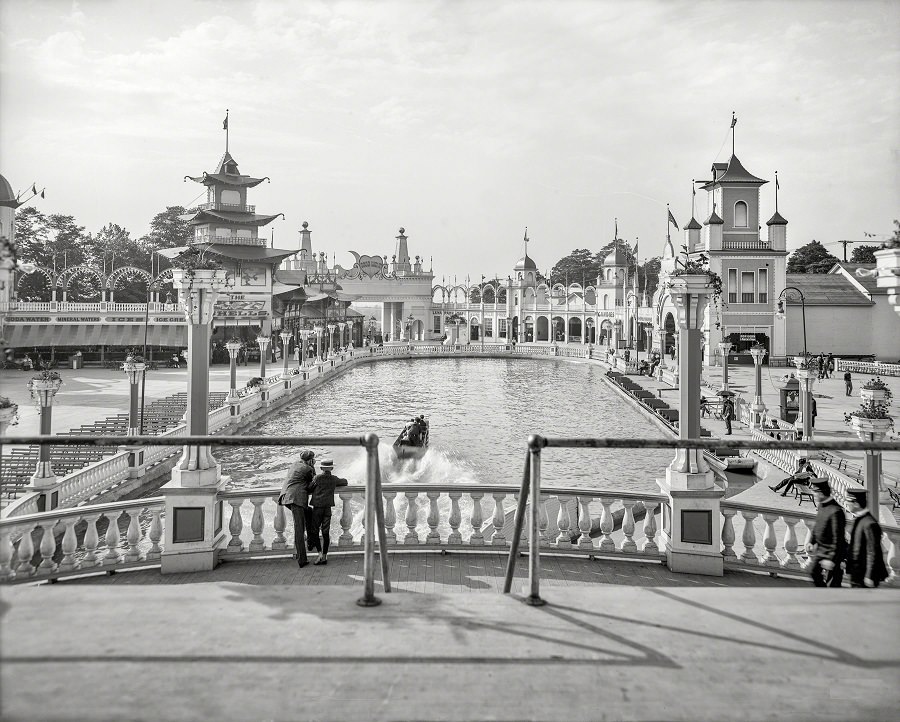
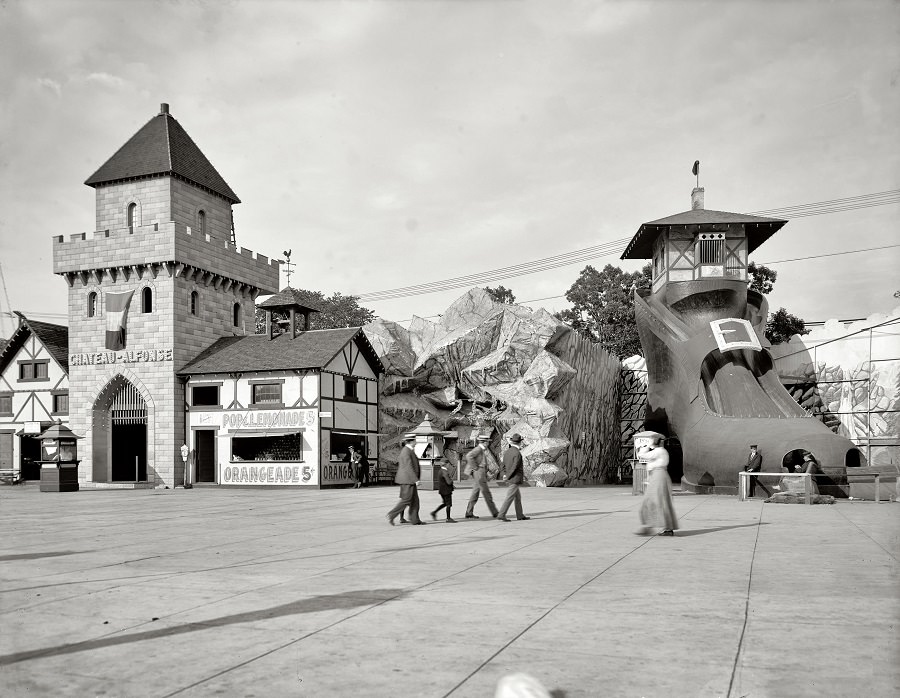
Cleveland’s residents also had a taste for entertainment. Luna Park, which opened in 1905 on Woodland Avenue, was a popular amusement destination packed with rides and attractions. The Shoot-the-Chutes was one of its signature thrills — a water-flume ride that sent passengers shooting down a steep wooden ramp into a lagoon below. Crowds lined up for it on weekends throughout the warm season.
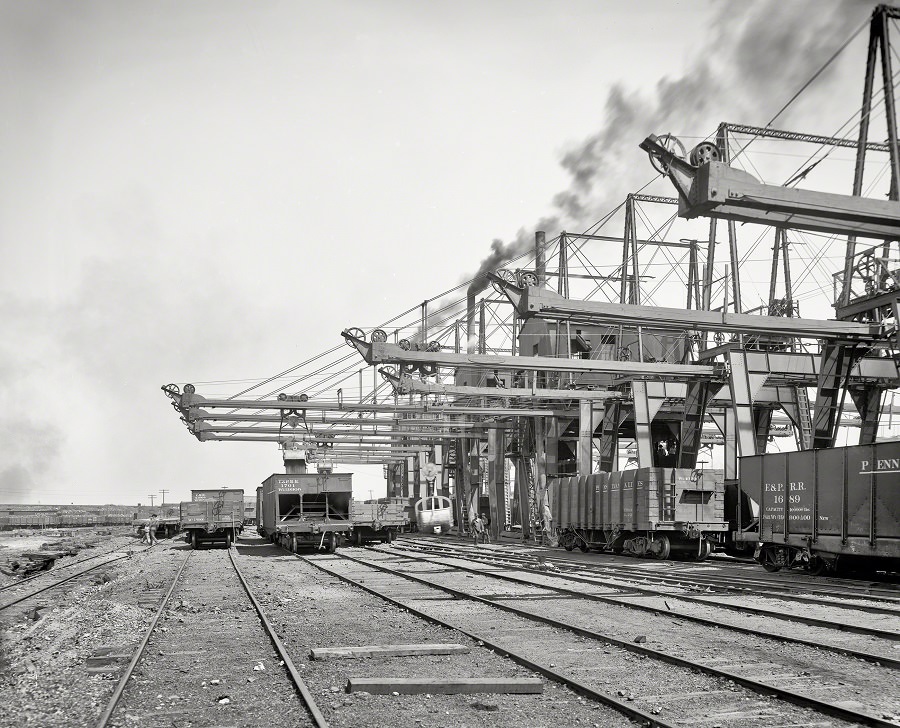
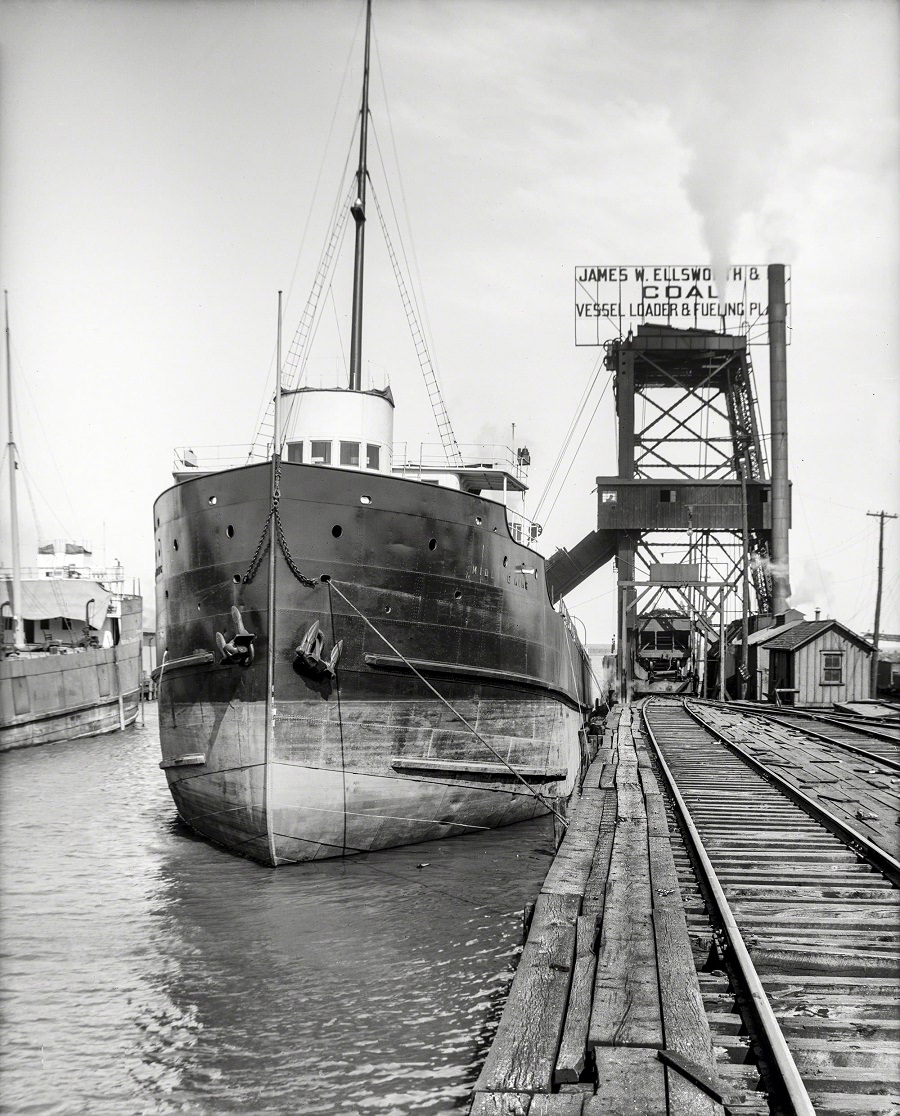
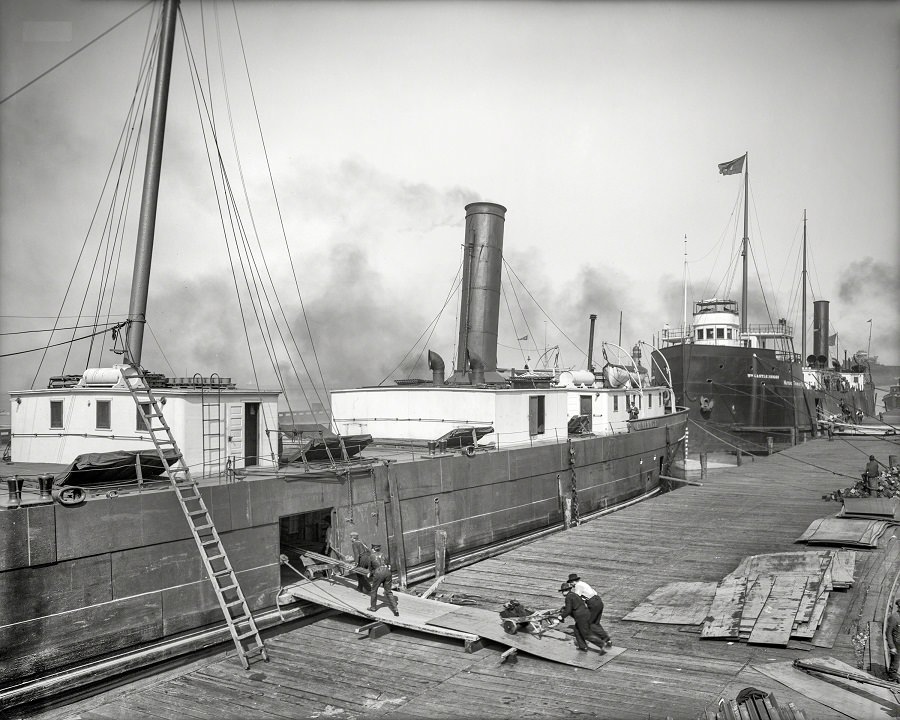
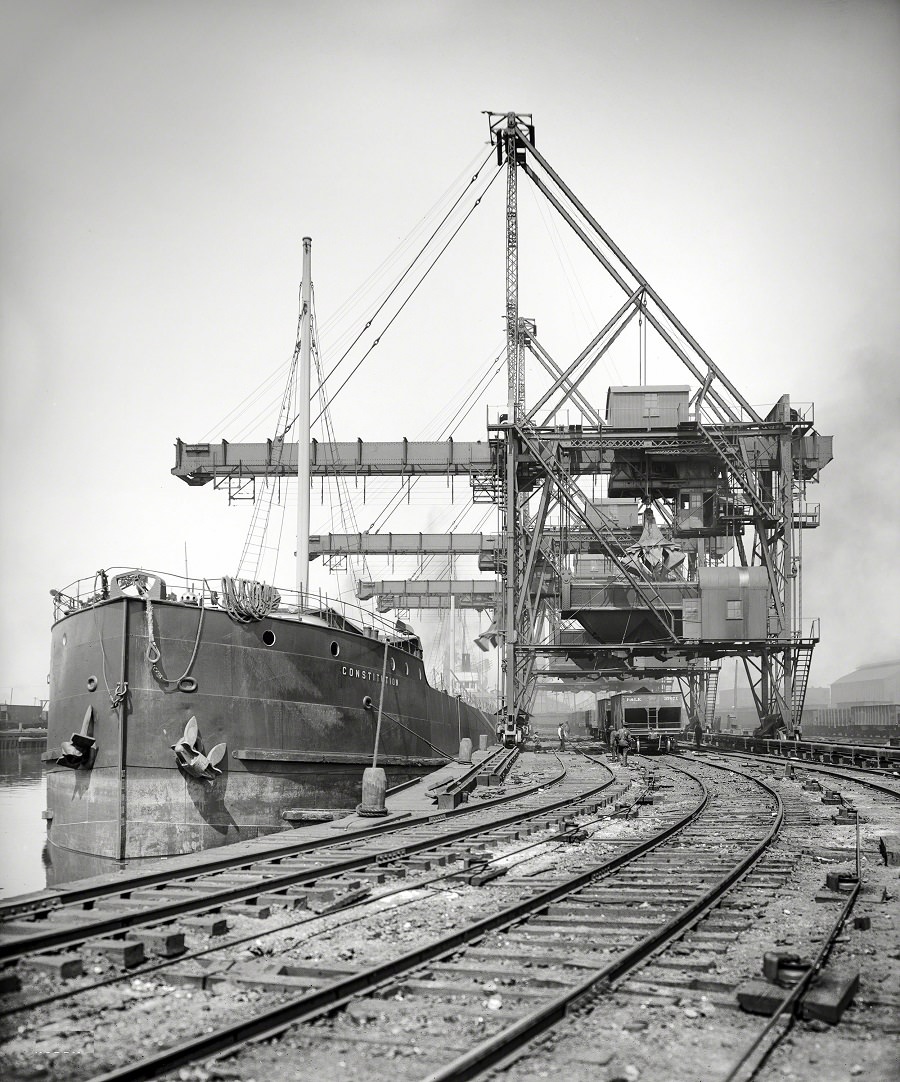
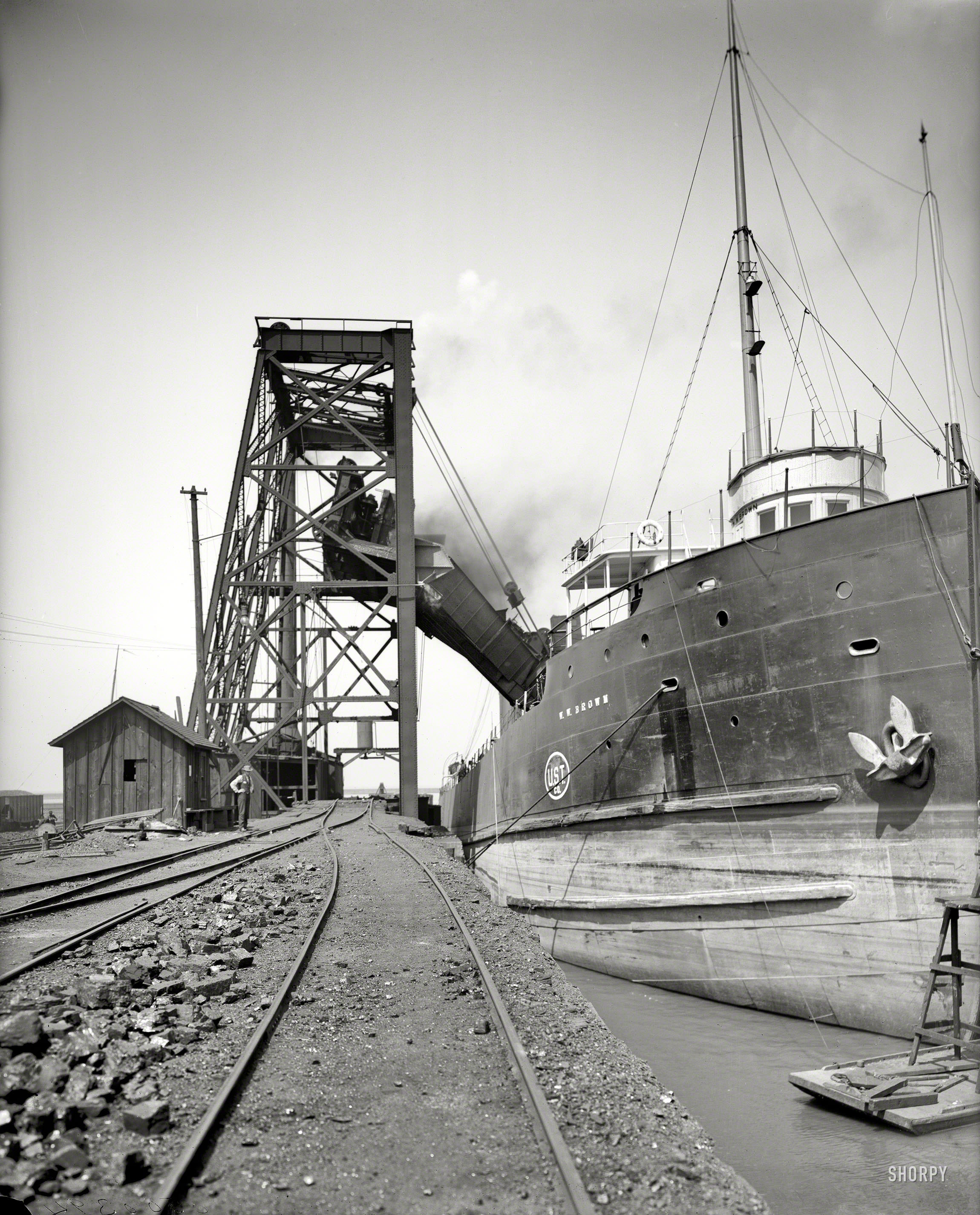
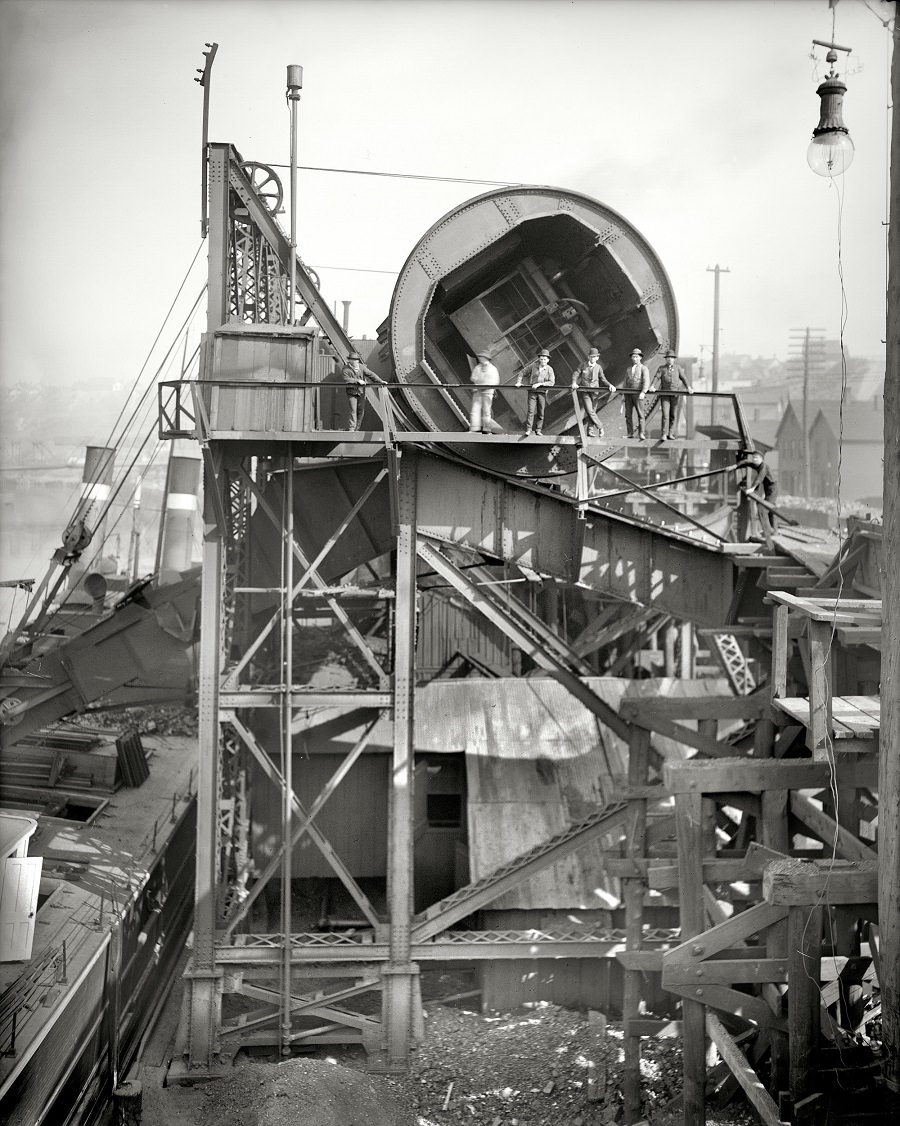
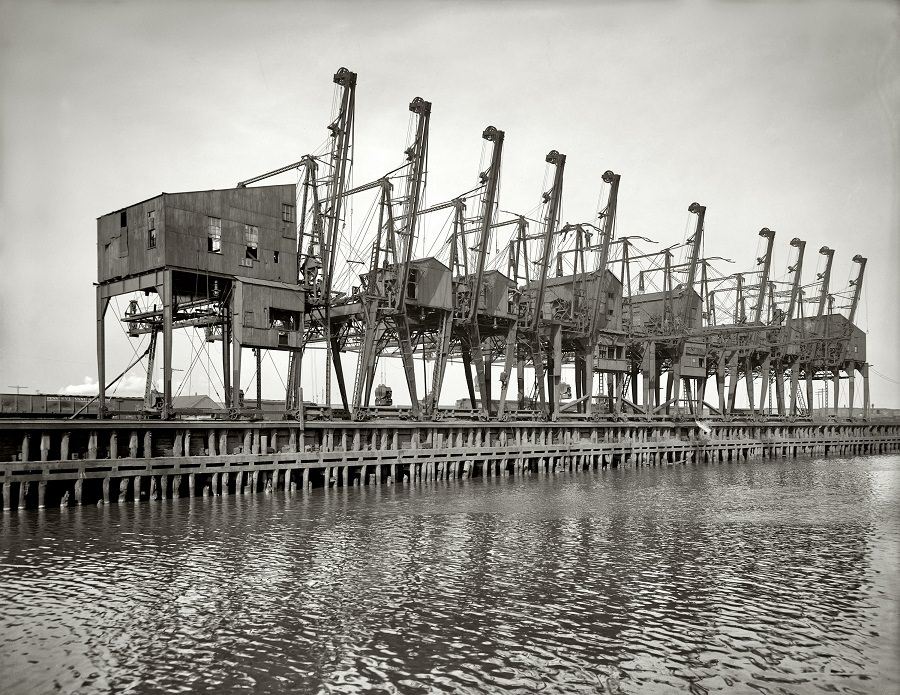
On the river, freighters like the Chili and the Wm. Castle Rhodes were a common sight, hauling coal, iron ore, and limestone between Great Lakes ports. Mechanical hoists and unloaders made the work faster and more efficient than ever before. The Brown electric hoist and the Hulett ore unloaders were among the most advanced pieces of industrial machinery in the world at the time, and Cleveland’s docks were among the first to put them to widespread use.
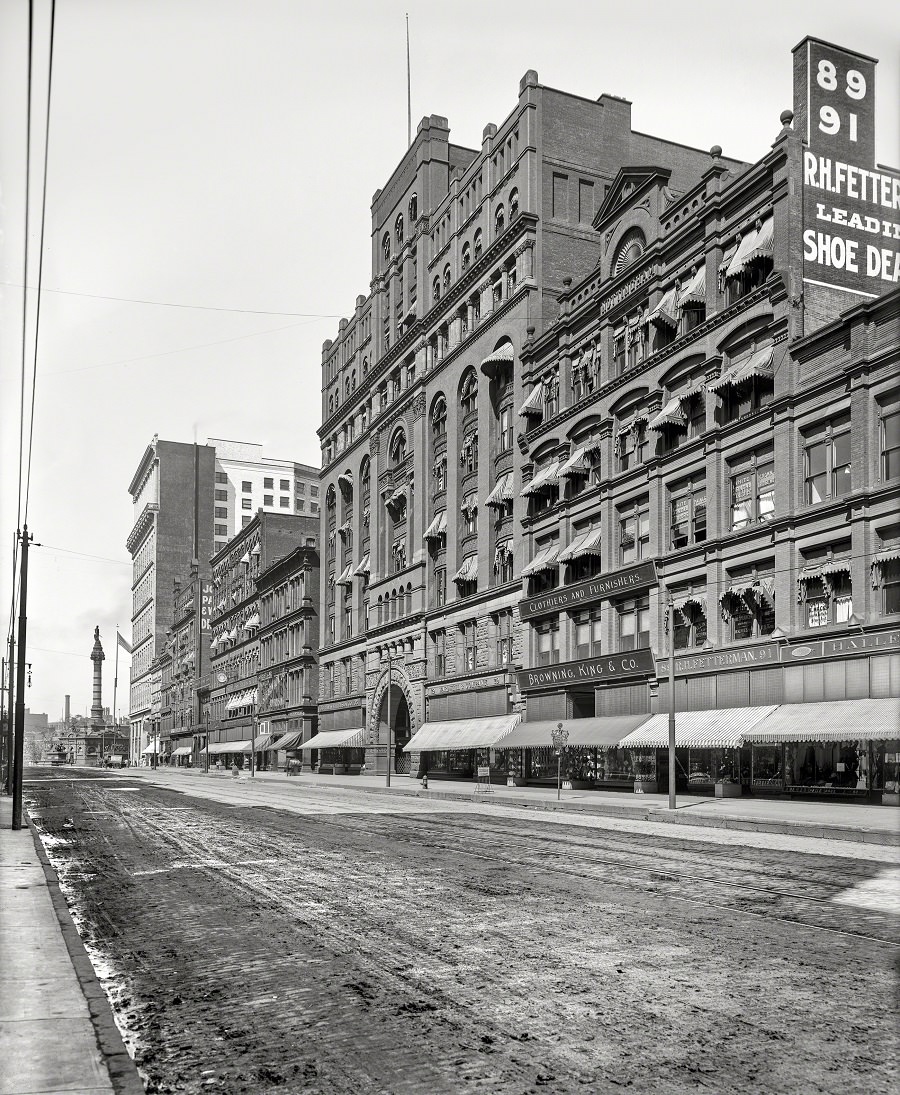
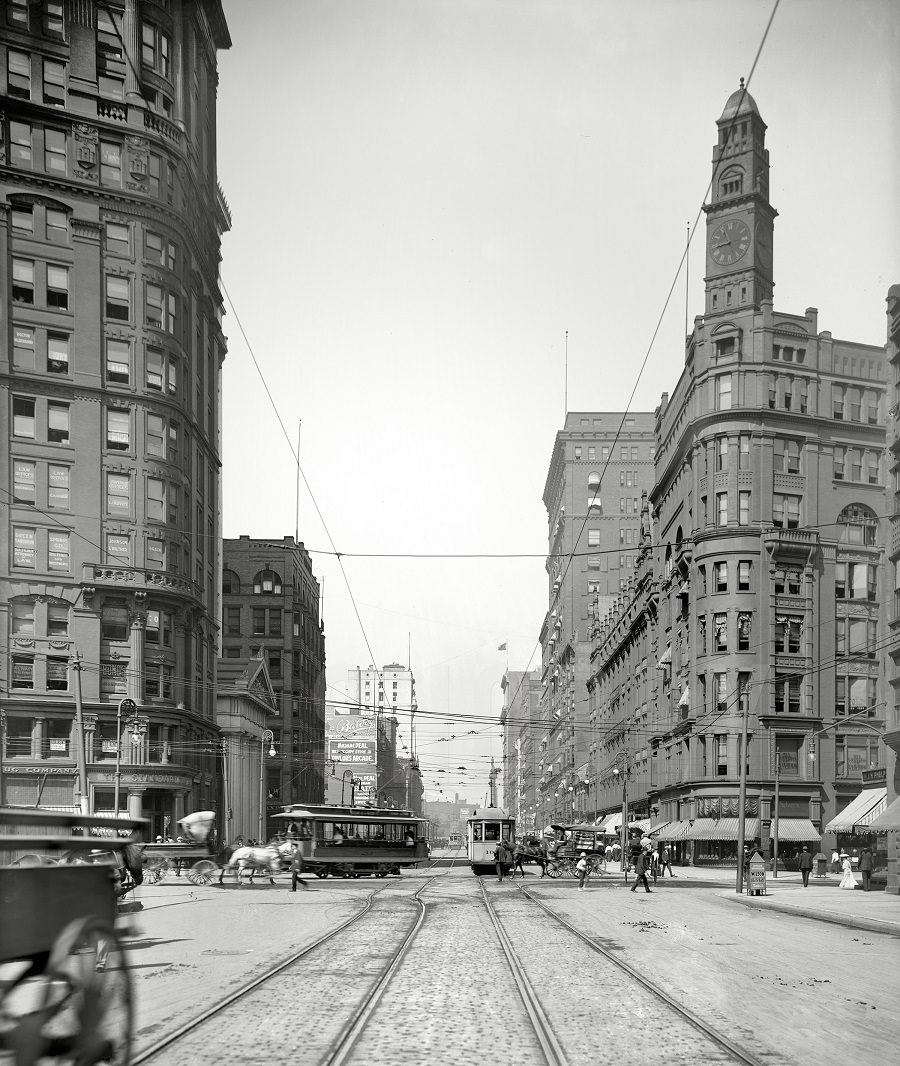
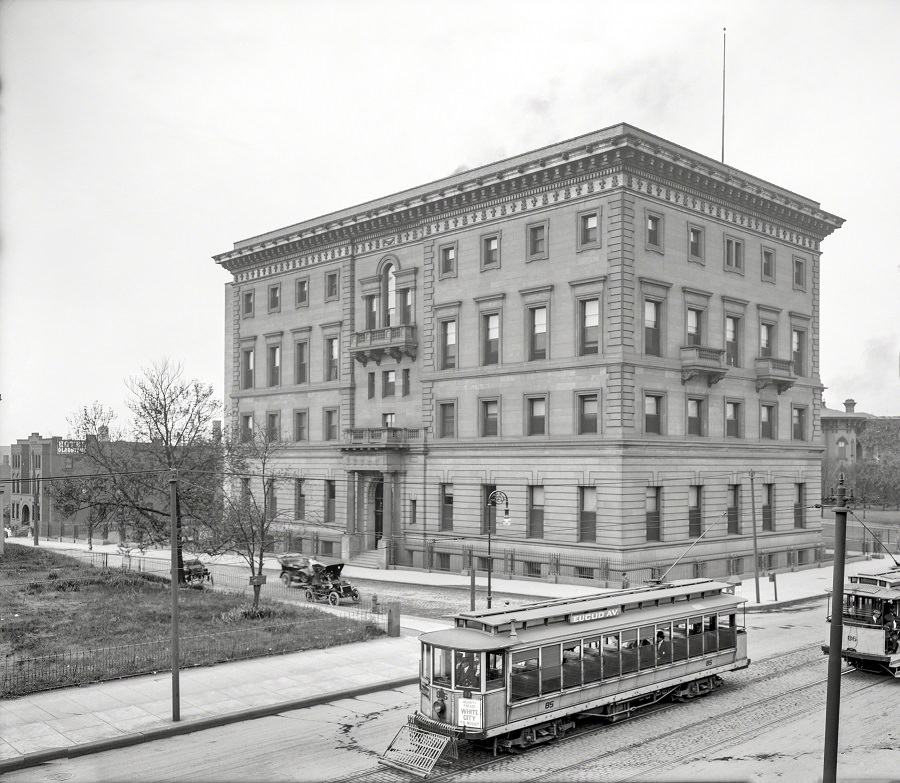
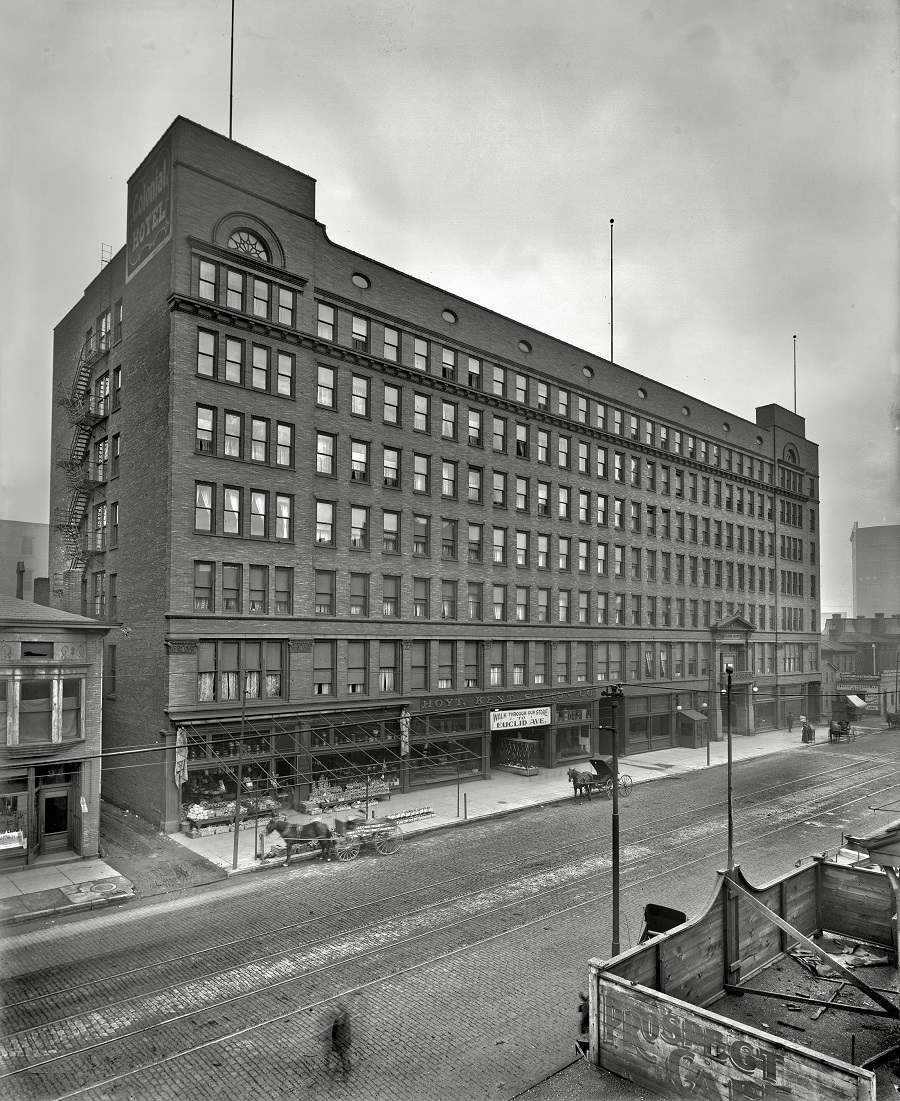
Euclid Avenue was Cleveland’s most celebrated street. In the 19th century, it had earned the nickname ‘Millionaires’ Row’ for the lavish mansions built there by the city’s wealthiest families. By the early 1900s, the avenue was transitioning into a major commercial boulevard, with department stores, banks, and office buildings rising alongside what remained of its earlier residential grandeur.
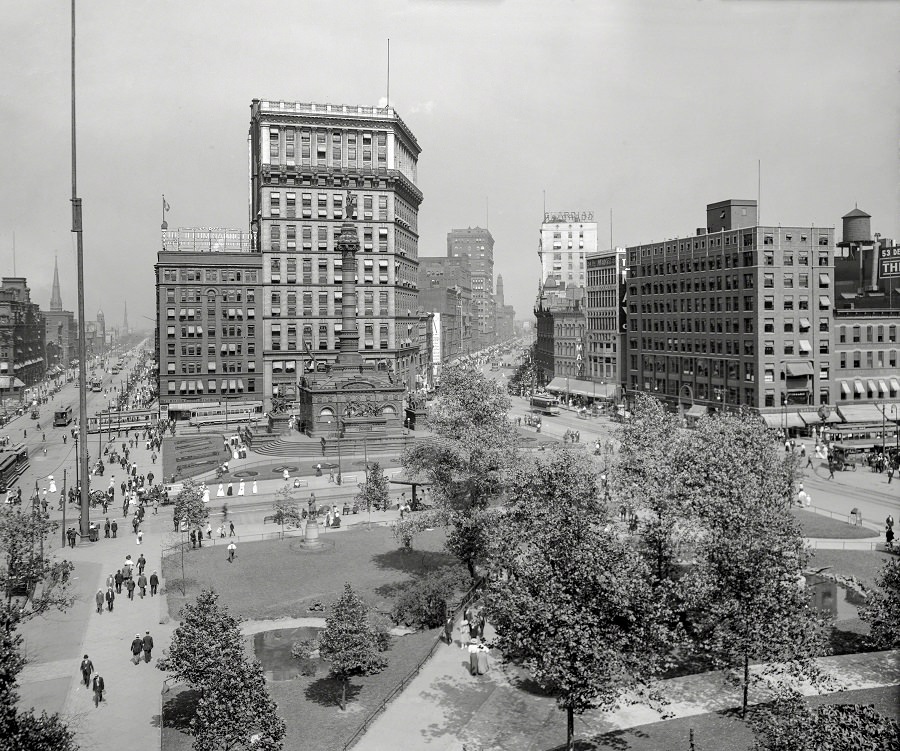
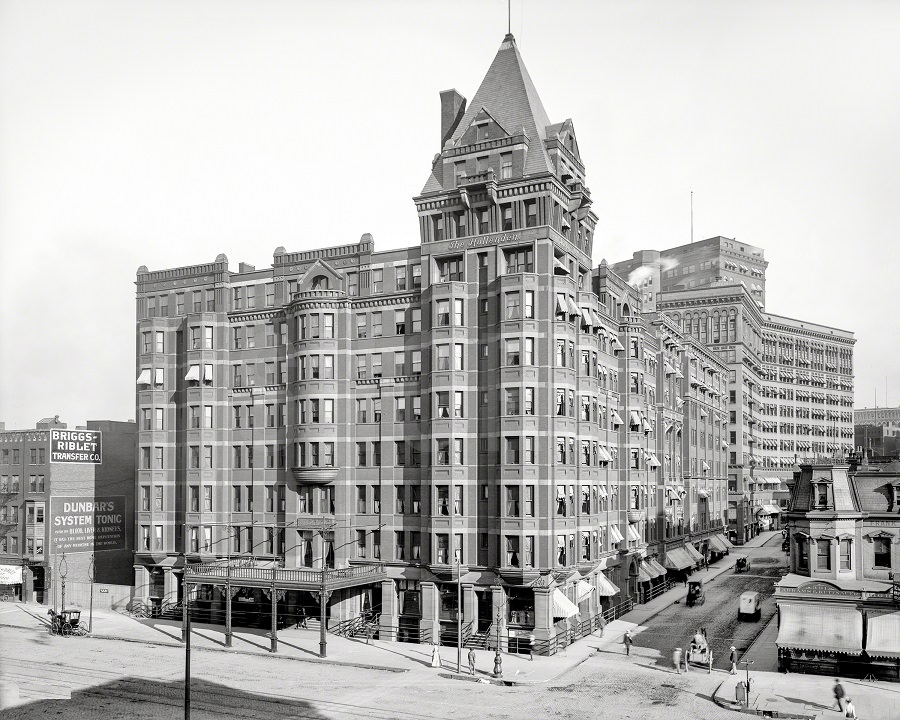
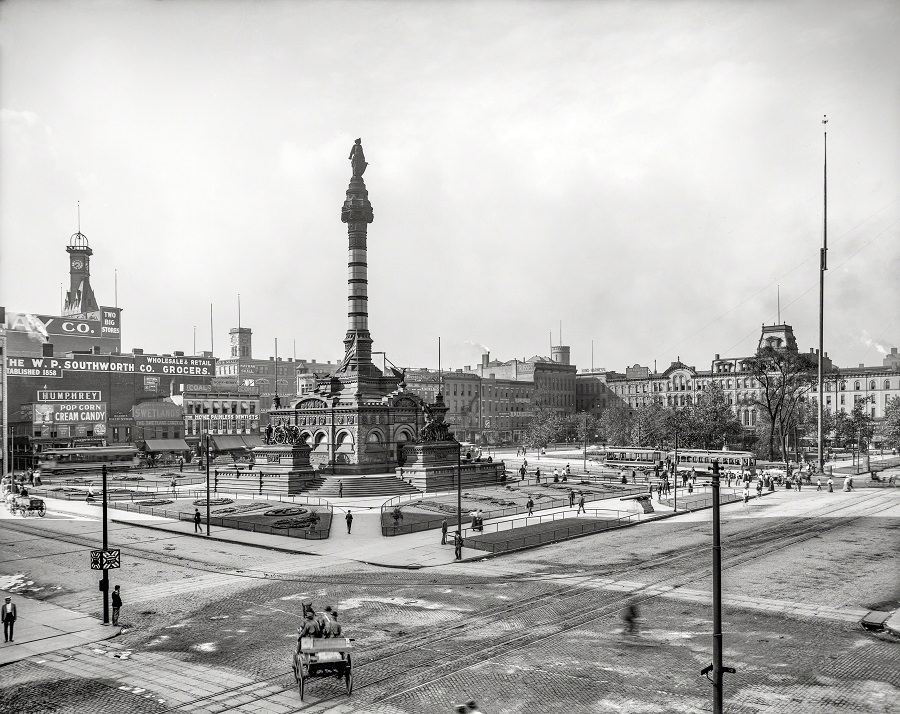
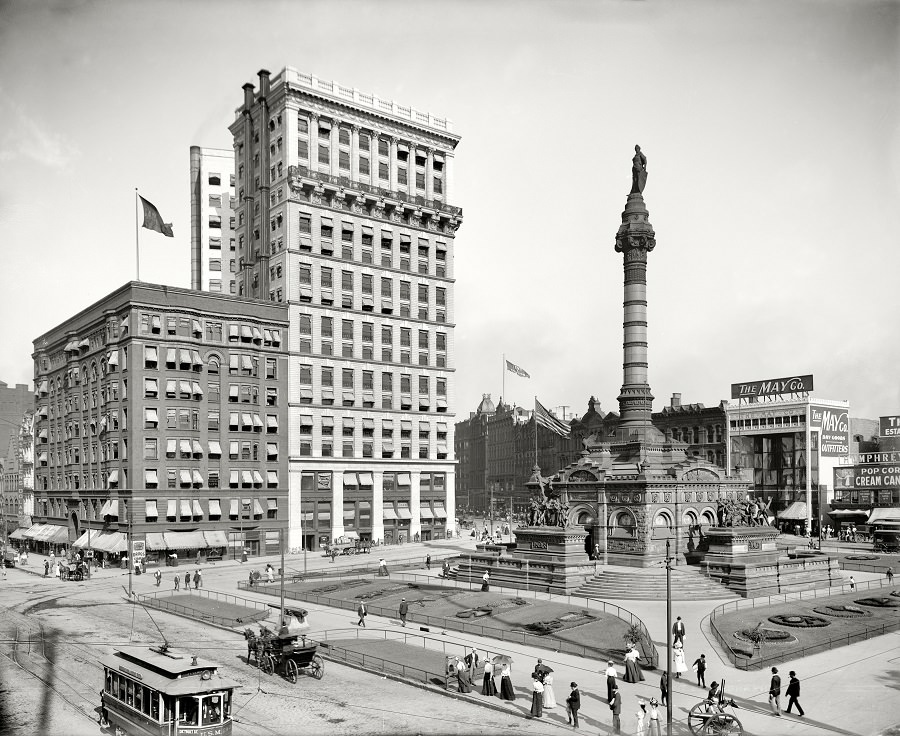
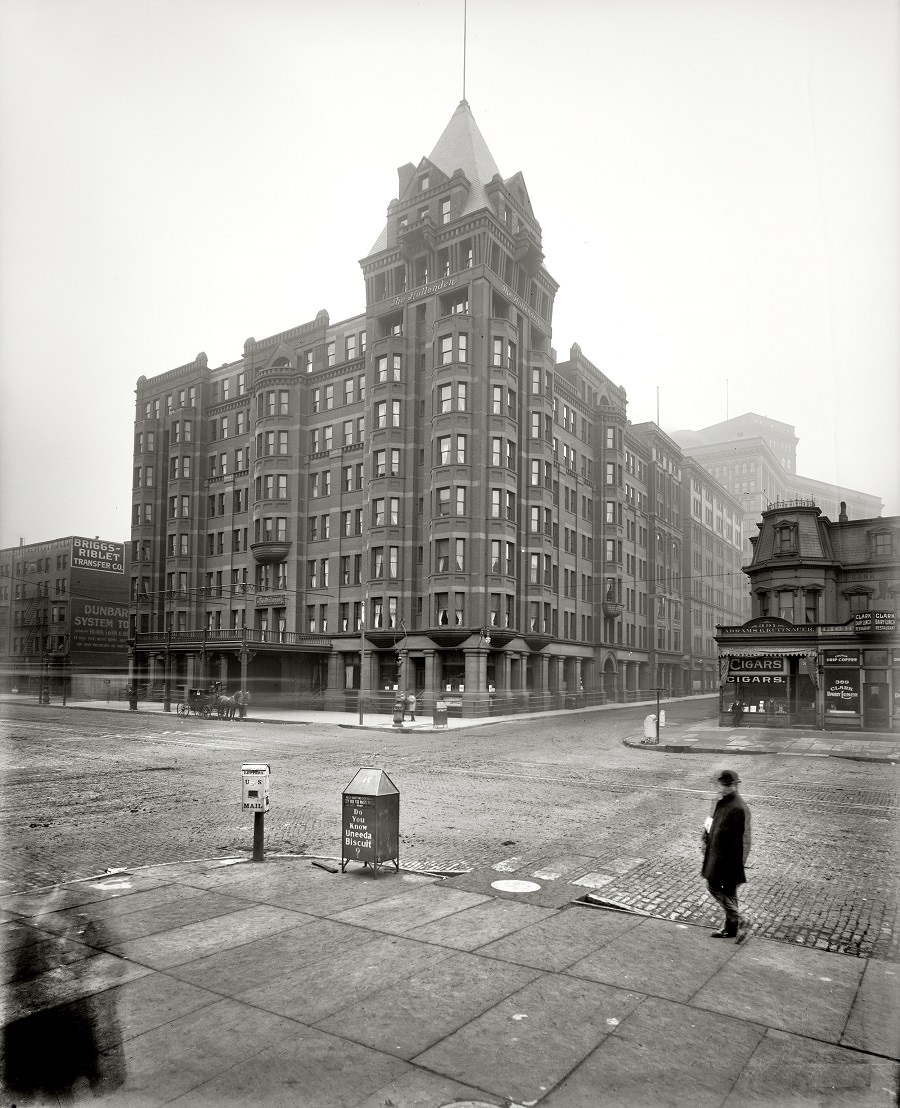
Public Square sat at the heart of the city. The Soldiers and Sailors Monument, dedicated in 1894, stood prominently in the square as a tribute to Cuyahoga County’s Civil War dead. Hotels like the Hollenden on Superior Avenue catered to the steady stream of business travelers and politicians who passed through the city. Cleveland hosted the Republican National Convention, a mark of its importance in national political life.
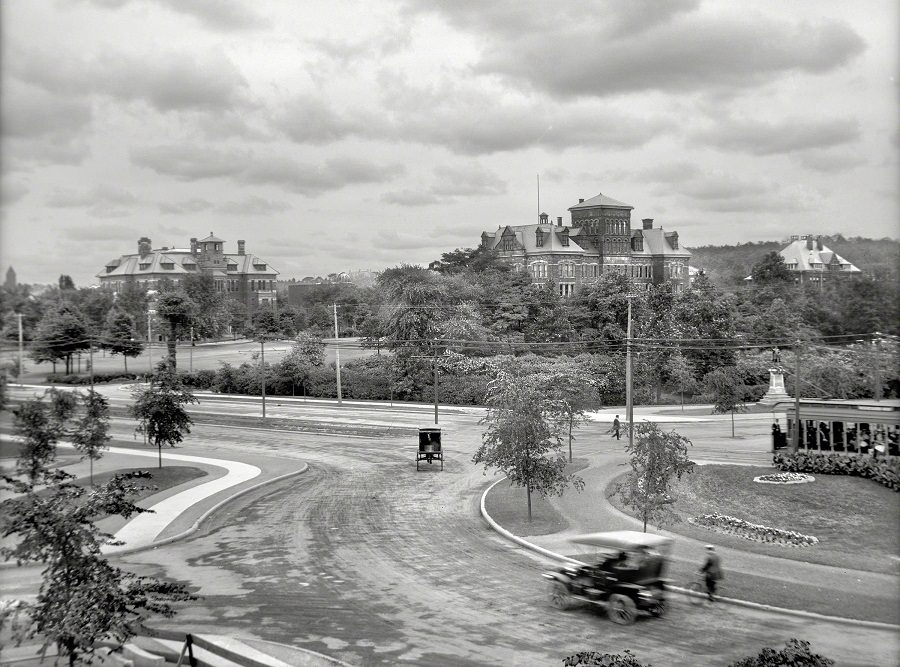
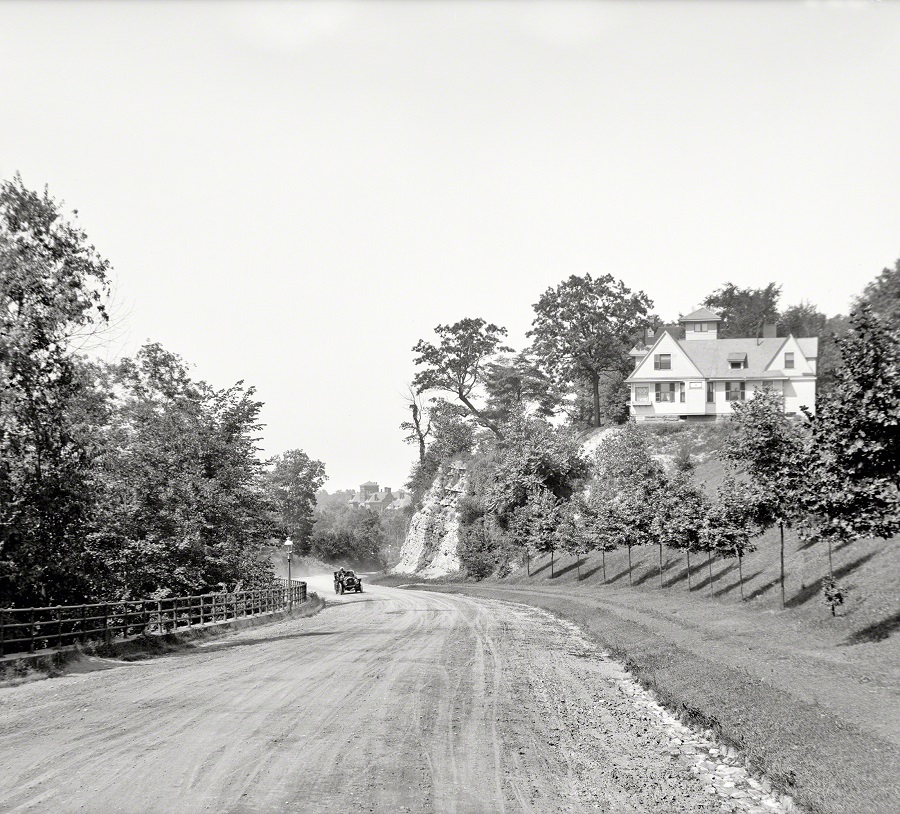
The large-scale immigration that Cleveland’s industries attracted transformed the city’s neighborhoods. Workers from Southern and Eastern Europe, as well as migrants from other parts of the United States, poured into the city throughout the late 19th and early 20th centuries. The population swelled, and the demand for housing, services, and infrastructure grew alongside it. Residential areas like Ambler Heights offered tree-lined drives for those with the means to live away from the industrial core.
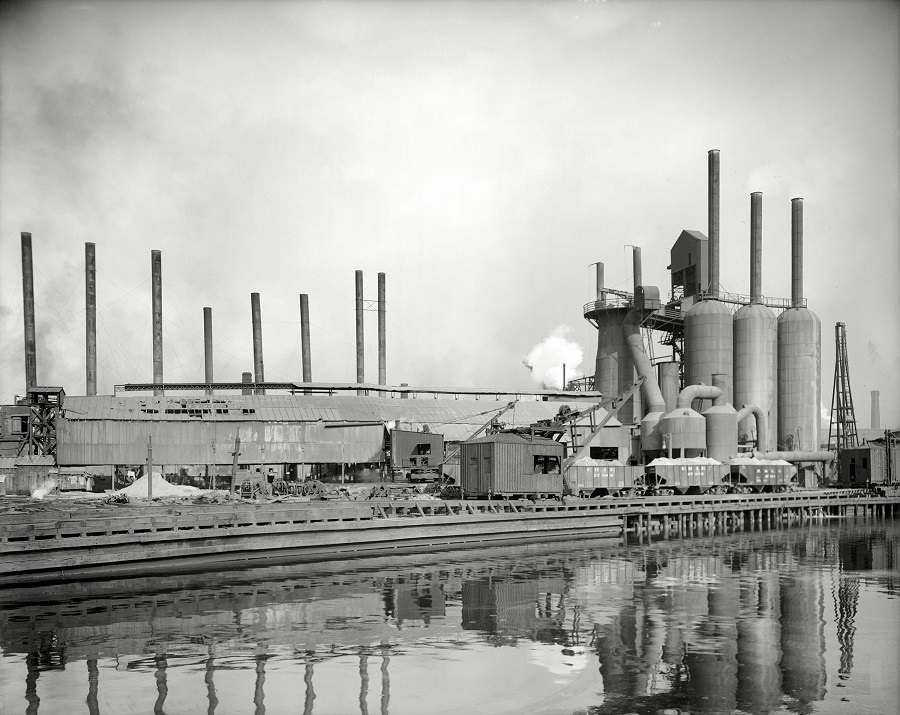
The industrial landscape of the city was striking in its scale. The Central Furnace Works along the Cuyahoga River represented the heavy manufacturing that made Cleveland a steel and iron powerhouse. Rotary coal car unloaders, clamshell hoists, and grain elevators were fixtures of the riverbank and lakeshore, operating around the clock to feed the factories and move product to market.
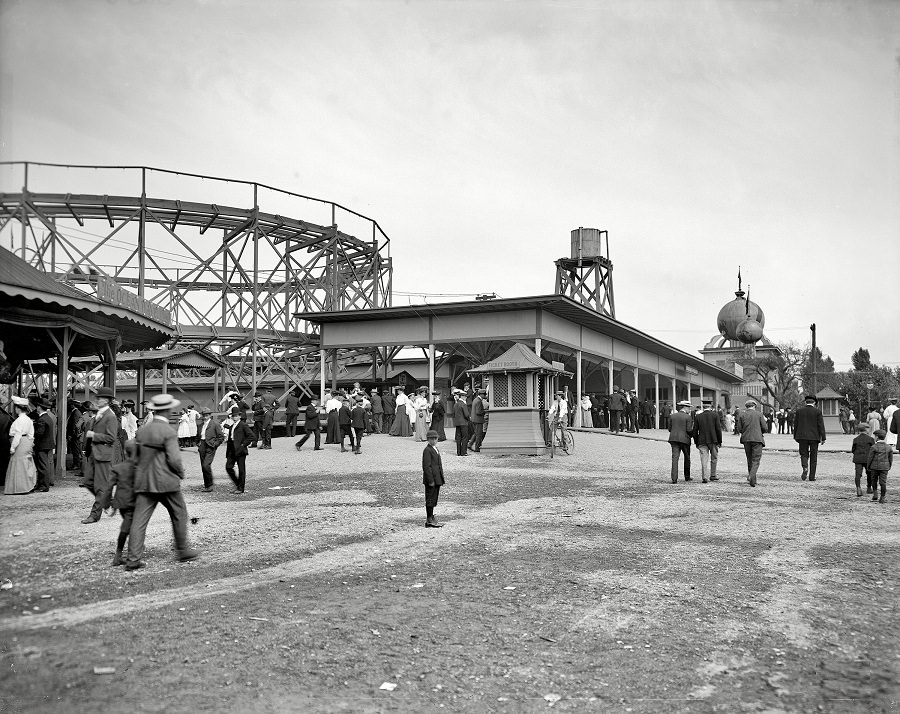
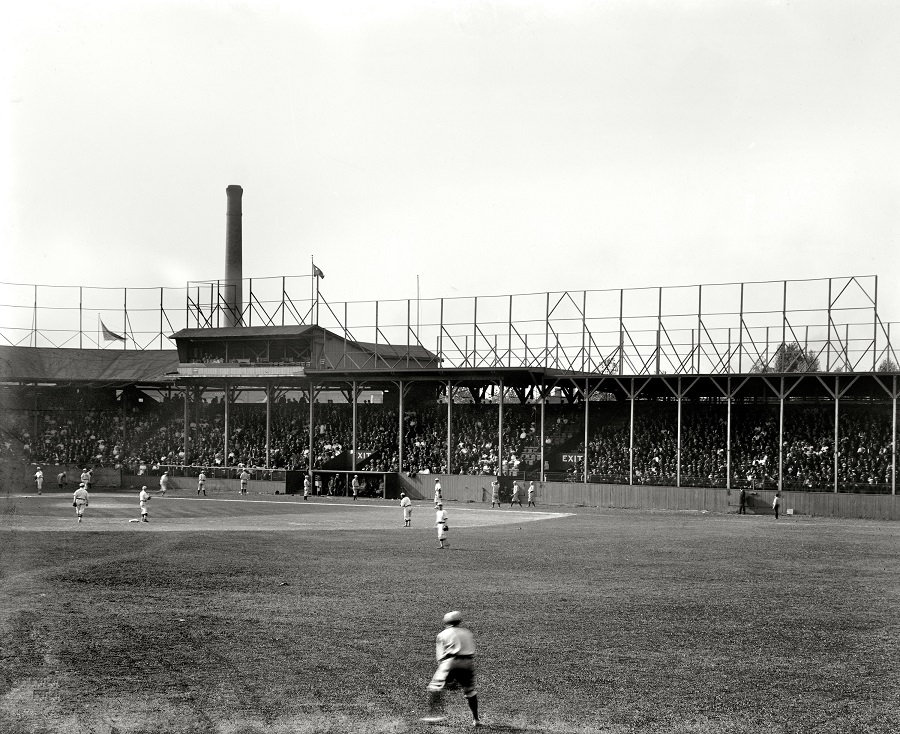
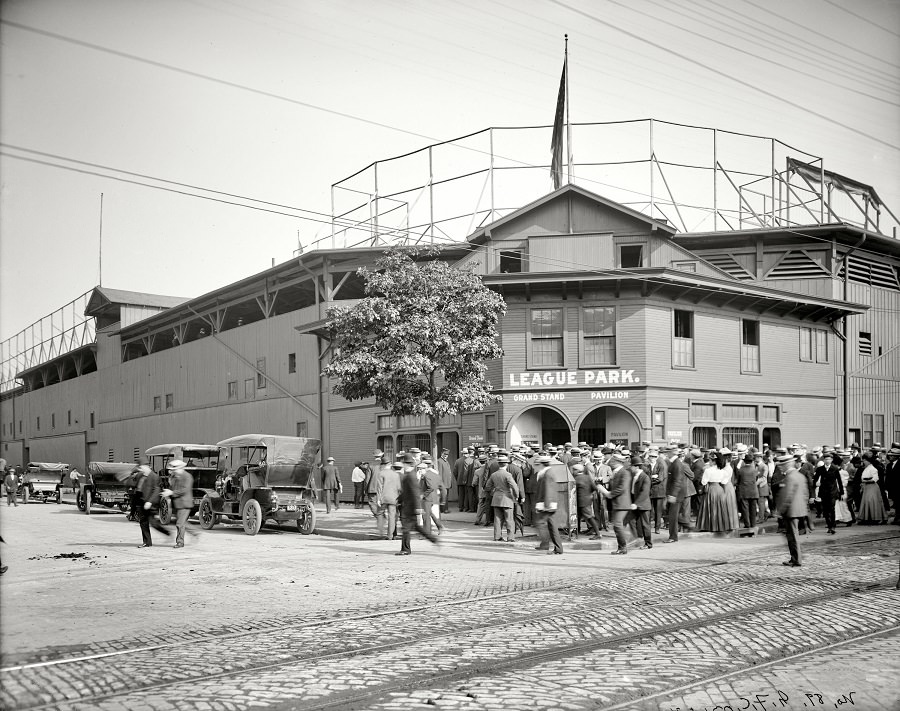
Clevelanders balanced hard industrial work with a vibrant leisure culture. Euclid Beach Park on the lake’s eastern shore featured a roller coaster that drew thrill-seekers from across the region. League Park on Lexington Avenue opened in 1891 and served as the home of the Cleveland Spiders and later the Cleveland Naps baseball team. On warm summer days, the ballpark’s wooden grandstands filled with fans.
Gordon Park remained one of the most visited public spaces in the city. Its beach and pavilion on Lake Erie offered a clean, organized space for swimming and recreation. The park was maintained as part of Cleveland’s broader effort to provide public green spaces to a rapidly growing urban population.
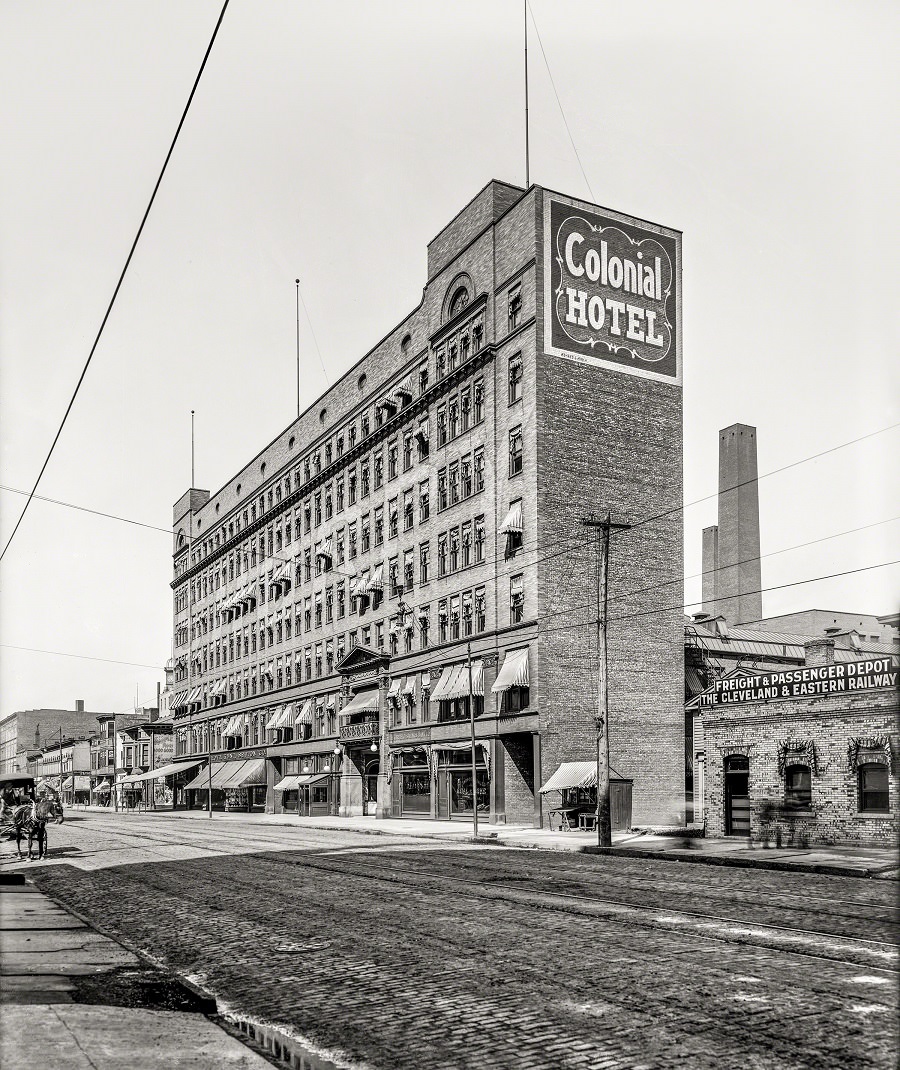
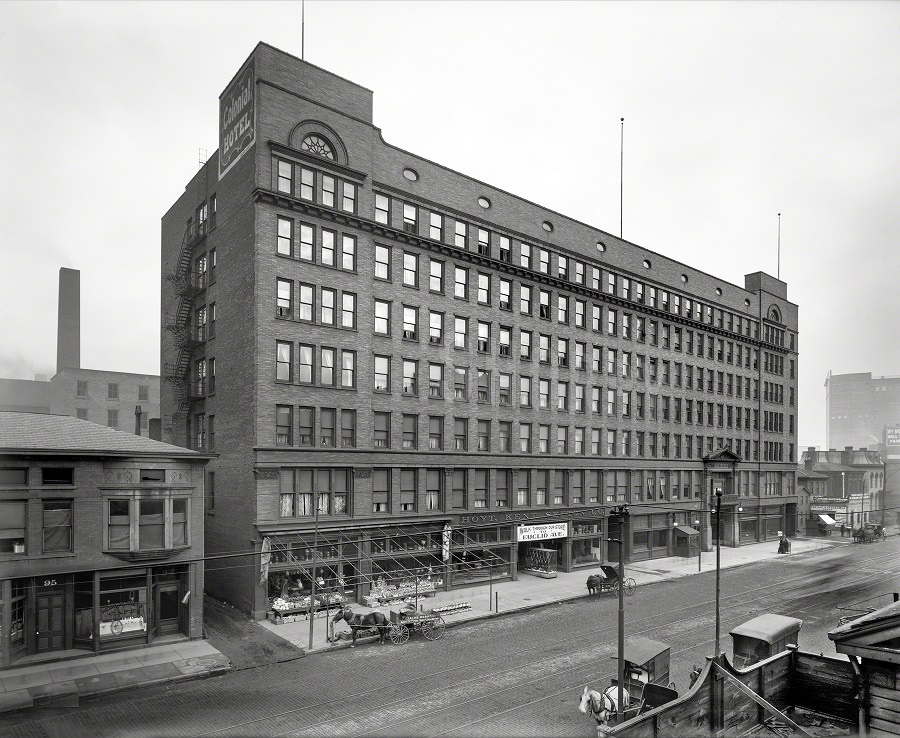
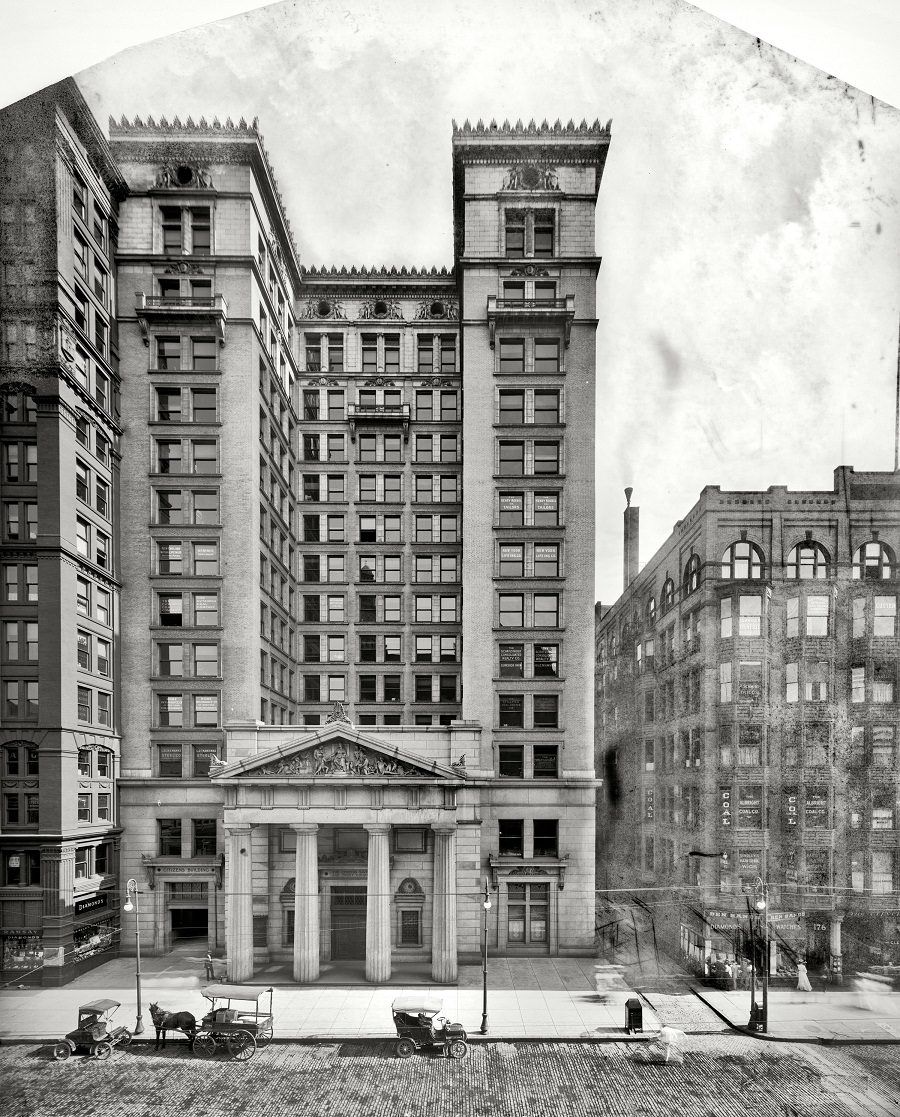
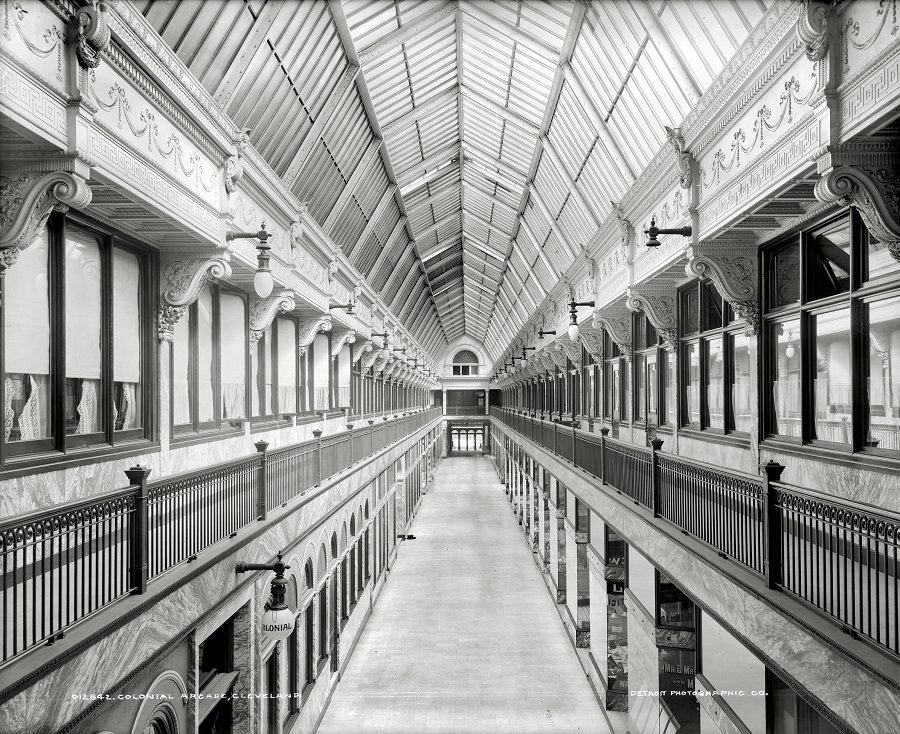
Indoor commercial spaces gave the city’s residents places to shop and gather year-round. The Colonial Arcade on Euclid Avenue was a covered shopping passage with storefronts on both levels, echoing the design philosophy of the larger Arcade nearby. The city’s commercial core was dense, active, and architecturally ambitious, with buildings like the New England Building and the Citizens Savings and Trust Company adding variety and scale to the downtown streetscape.
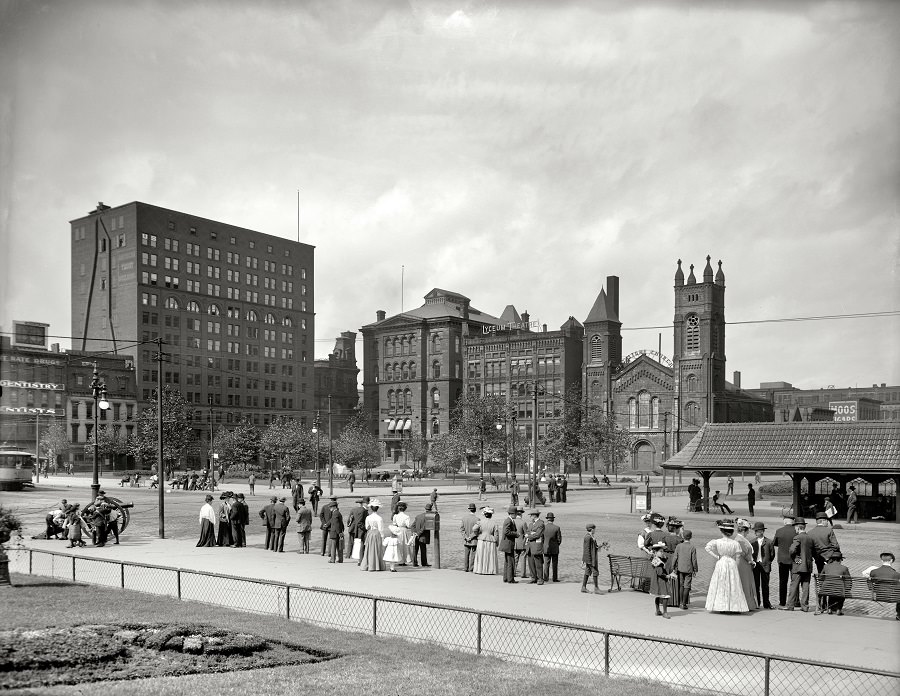
The machinery at Cleveland’s docks was a spectacle in itself. Brown hoist machines positioned along the riverbank could lift enormous loads of bulk material from ship holds and deposit them into waiting rail cars or stockpiles with mechanical precision. These machines, along with rotary coal car unloaders and grain elevator systems, kept the city’s industrial output moving at a pace that few other American cities could match.
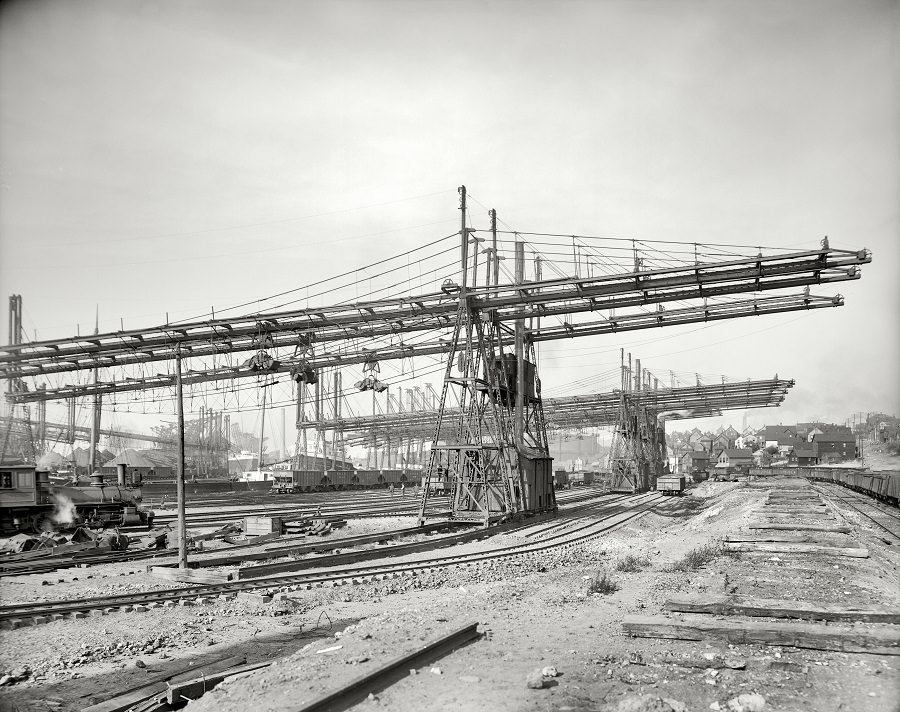
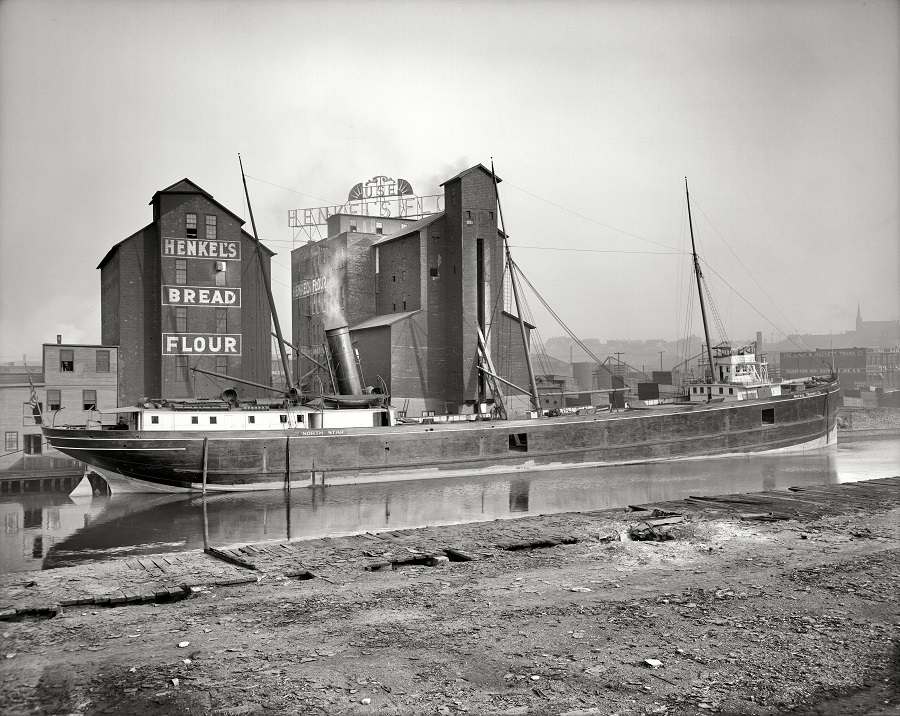
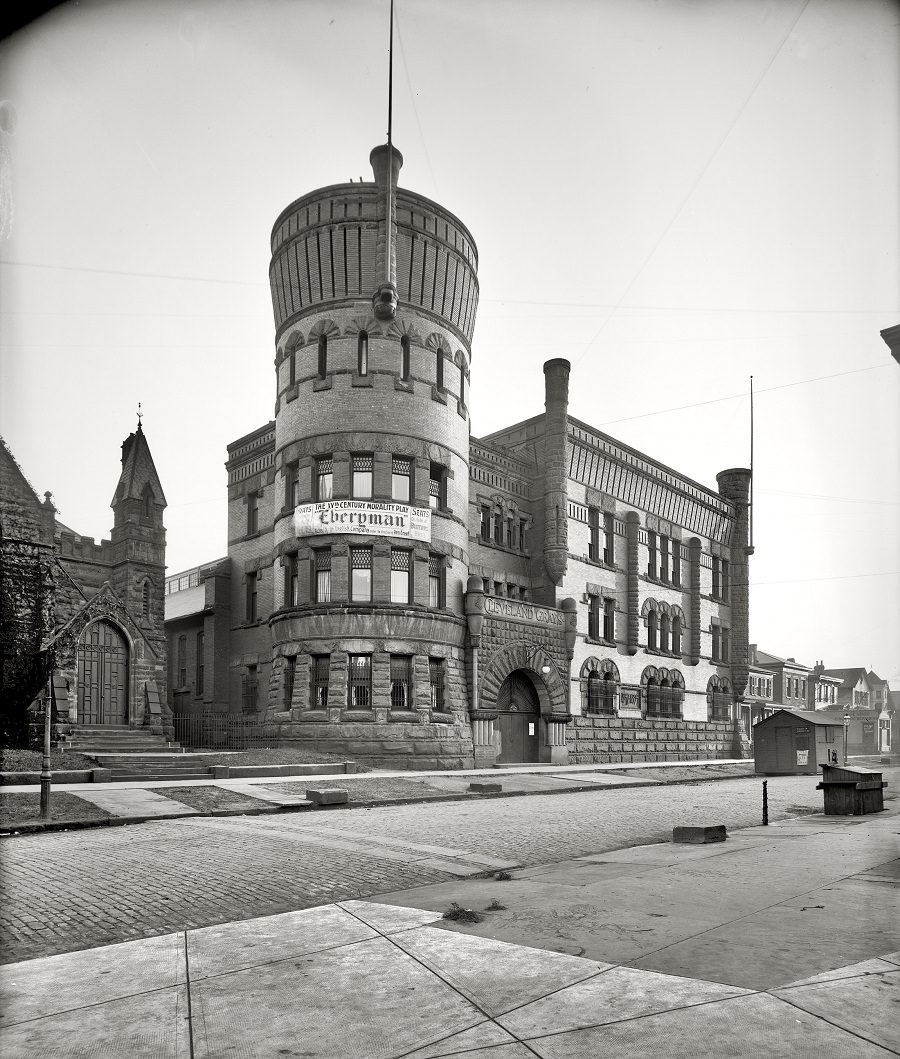
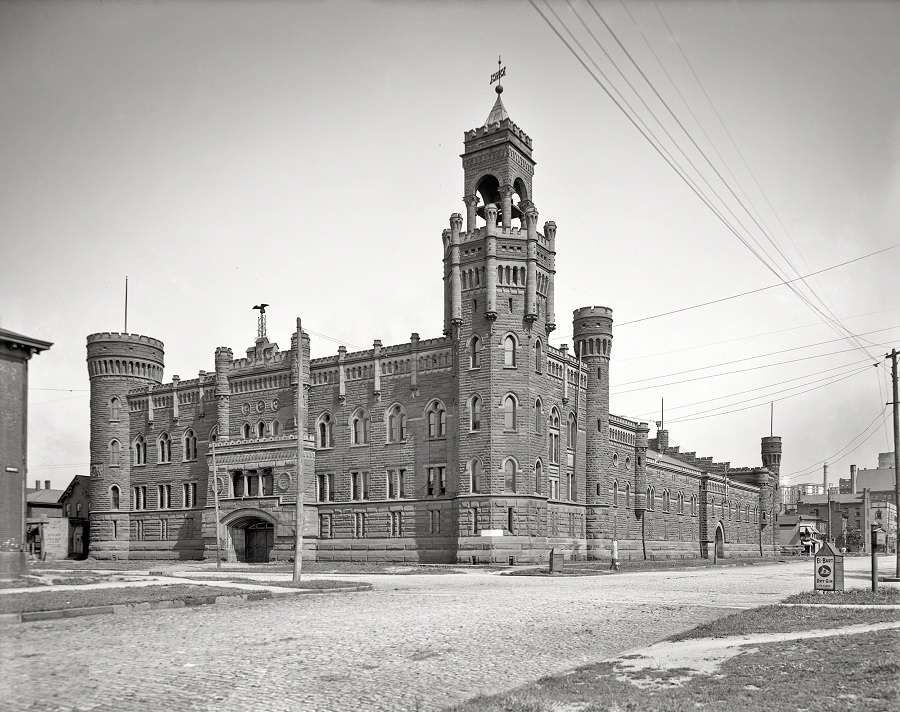
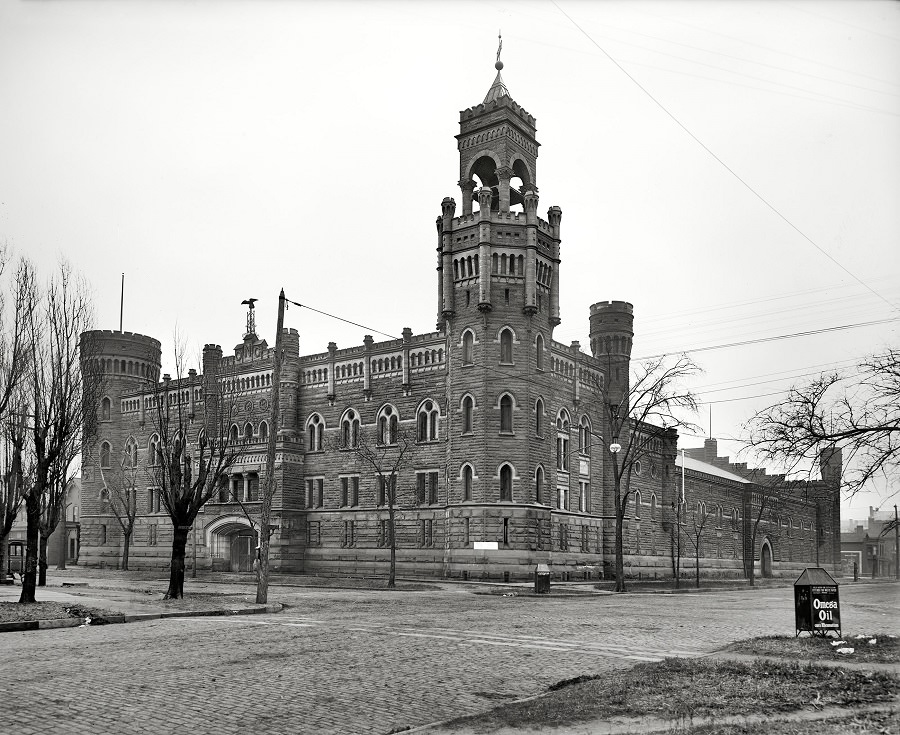
The city’s growth, though disrupted by the Wall Street Crash of 1929 and the Great Depression that followed, had already built something substantial. Cleveland’s population would reach its peak of nearly one million people by 1950. But the foundations of that peak — the docks, the steel mills, the grand avenues, the public parks, the armories, and the bustling commercial streets — were all laid during the remarkable decades captured in these photographs.





I really enjoy looking at these vintage photos of the city. It’s interesting to consider the idea that cities like Cleveland, Pittsburgh, and Cincinnati may not necessarily need skyscrapers or even a centralized downtown area. It seems that in the past, businesses were more spread out throughout the city, leading to more densely populated neighborhoods. This model of urban planning was likely influenced by factors such as pre-white flight and the rise of automobiles and interstates in the latter half of the 20th century. Today, many people who work for major companies are forced to travel long distances and deal with heavy traffic congestion just to work in a centralized downtown location for a few hours each day, which can be quite challenging and frustrating.
At one point, Cleveland was a highly dense city with numerous buildings and homes lining every street. In my opinion, skyscrapers can sometimes be imposing and not very comforting for people when viewed from street level. It’s unfortunate that many beautiful old buildings were demolished in the 80s and 90s to make room for modern skyscrapers. It’s sad to compare pictures of Public Square from the early 1900s to what it looks like now. The area used to be densely populated and full of activity, but it has lost much of that charm over time.
Amazing pictures! Looks like there were LOTS of jobs back then…
Do you think we should make those subway entrances pedestrian/bike friendly?
Yes, of course. The Cleveland rail beds have an abandoned line that runs from Gordon square to Ohio city (along Monroe rd. parallel to the rapid line) to terminal tower. Isn’t that a great idea for a park/bike trail? I’ve heard proposals for that sort of thing once. I don’t know what happened.
Wow, what a glorious past. So sad what’s happened:(
It’s amazing/depressing how quickly a place can change. Great pics.
Isn’t it inspiring too? Cleveland is on the up-and-up right now, based on your premise. Let’s keep up the momentum and create a city to be proud of. Cleveland’s current state is already a source of pride for many people. Imagine having that pride coupled with some real vibrancy, which is certainly burgeoning in my experience.
I understand now why old people say Cleveland used to be a nice place.
The Arcade is a time capsule. It is virtually the same over 100 years later
Love old pictures of Cleveland, well actually any city. There were a few mistakes in the description vs. actual pictures but still great.
So cool to see the jack knife lift bridge while it was in operation!
does anyone know more about “The Old Shoe” slide at Luna park? It looks really familiar, like I may have actually gone on the ride or a replica of it as a small child. I wonder where the original ended up.