On December 1, 1955, Rosa Parks refused to give up her seat on a Montgomery, Alabama city bus to a white passenger. She was arrested and charged under Chapter 6, Section 11 of the Montgomery City Code’s segregation law. Her act of defiance was not impulsive. Parks had attended the Highlander Folk School in Tennessee, where she received training in nonviolent resistance. Her ability to remain composed under pressure was no accident — it was the result of deliberate, structured preparation.
Throughout the late 1950s and early 1960s, civil rights organizations across the country built formal workshops and training programs to prepare Black men, women, and especially young people for the realities of nonviolent protest. The goal was straightforward: teach activists to absorb physical and verbal abuse without retaliating. In a social climate where any perceived act of aggression by a Black protester could result in arrest, injury, or death, maintaining composure was not just a moral principle — it was a survival strategy.
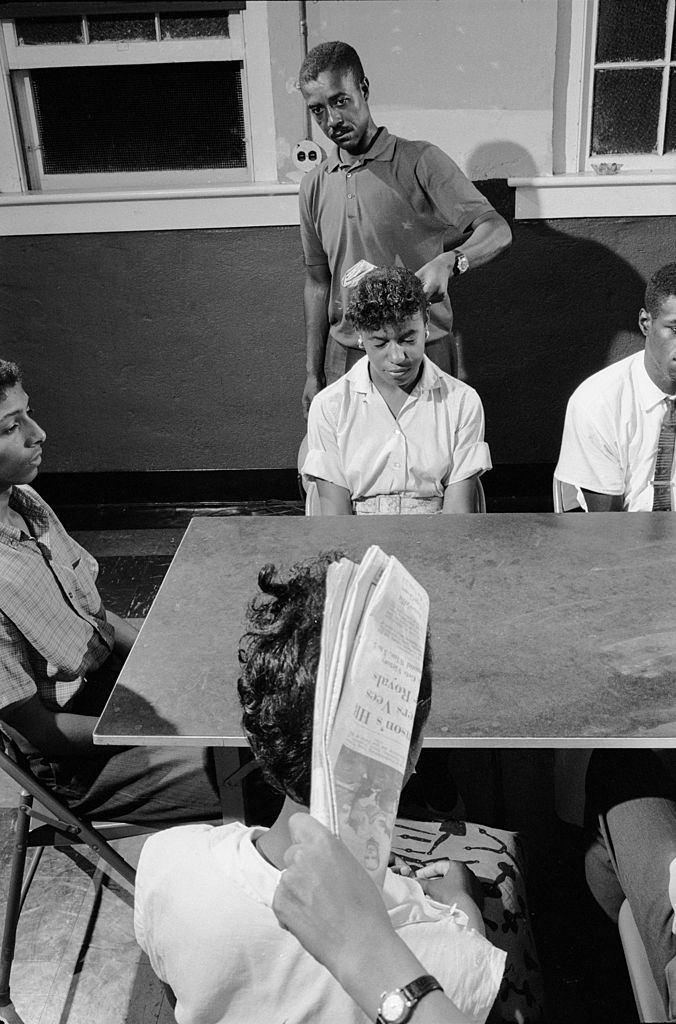
One of the most documented sets of training sessions took place in Petersburg, Virginia in May 1960, organized under the guidance of NAACP student advisors. Volunteers, many of them college students, showed up to be put through deliberate harassment. Trainers blew cigarette smoke into their faces, pulled their hair, shouted at them, and struck them with rolled-up newspapers. The volunteers were expected to sit still, stay silent, and hold their position. Those who could not were sent back to practice more.
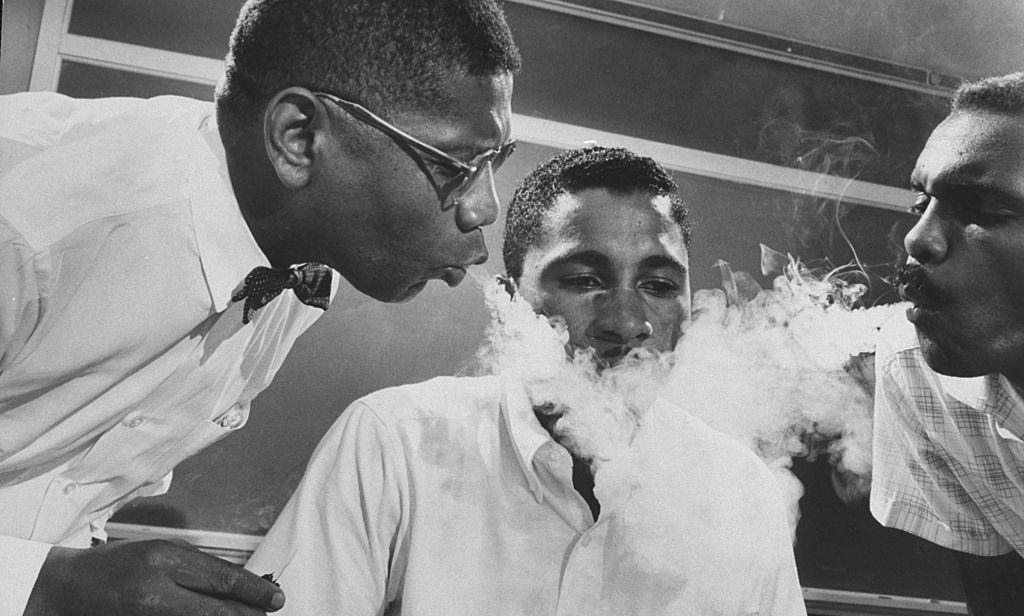
Virginius B. Thornton was one of the volunteers who went through this training in Petersburg. His sessions were photographed and became some of the most recognizable images from this period of civil rights history. In one session, NAACP student advisor David Gunter and fellow trainer Leroy Hill stood over Thornton and blew smoke directly into his face. Thornton remained still. The exercise was repeated until staying calm under that kind of provocation became second nature.

The smoke-blowing exercise was one of several techniques trainers used to simulate the harassment protesters would face at lunch counter sit-ins and other demonstrations. White segregationists were known to blow smoke, pour drinks, and drop food on protesters seated at counters. By experiencing these acts repeatedly in a safe setting, volunteers built the mental muscle to endure them in public without flinching or fighting back.
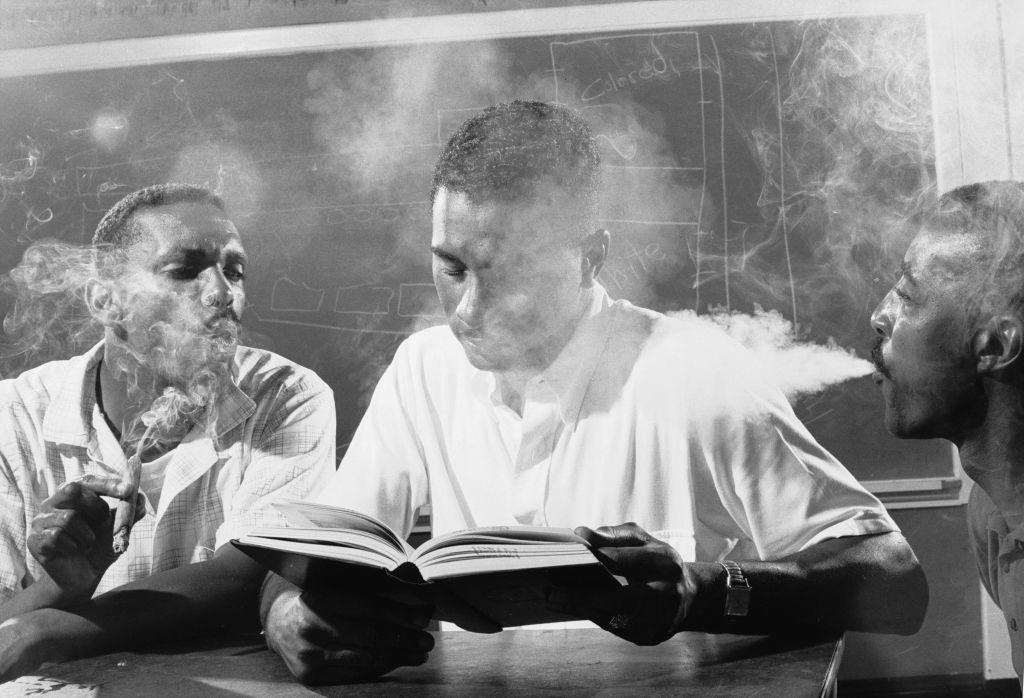
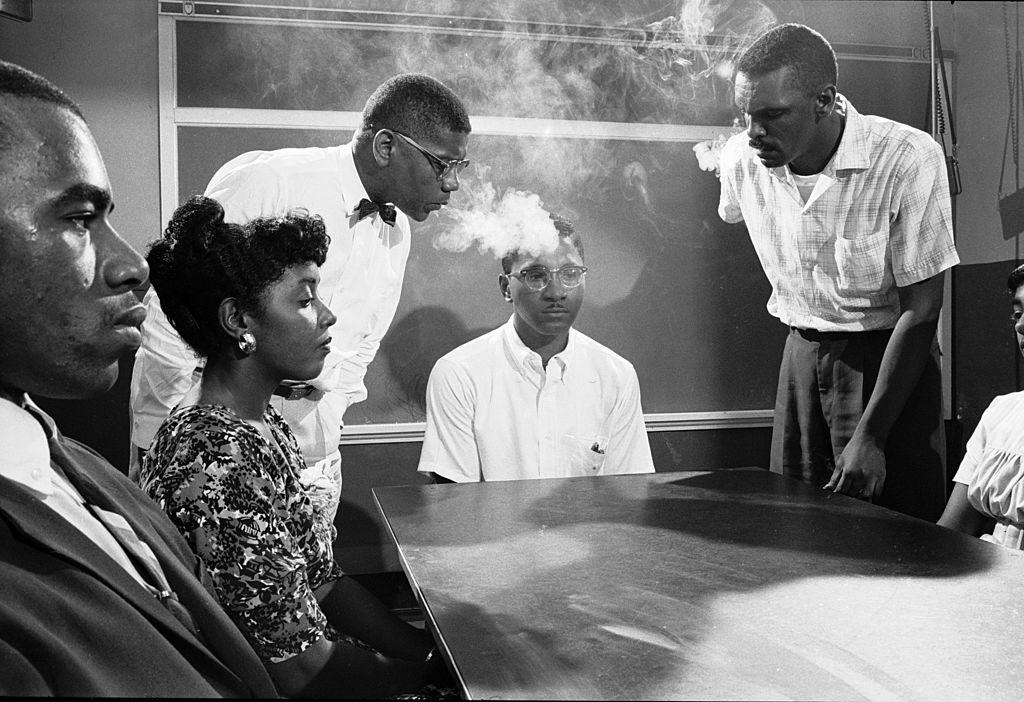
Beyond smoke, trainers also used physical contact to stress-test the volunteers. Striking the head with a rolled-up newspaper simulated the kind of blows protesters routinely received from hostile bystanders and, at times, from law enforcement. The newspaper left no lasting injury but delivered a sharp, startling impact. The point was to make the sensation familiar — something a protester could absorb without breaking their composure or abandoning their position at a demonstration.
The sit-in demonstrations these volunteers were preparing for were high-stakes events. Starting with the Greensboro sit-ins in February 1960, Black students across the South began occupying seats at segregated lunch counters and refusing to leave. Angry white crowds often surrounded them, screaming insults, dumping condiments on them, and physically striking them. Police frequently sided with the aggressors. A single act of retaliation from a protester could be used to discredit the entire movement and justify violent crackdowns.
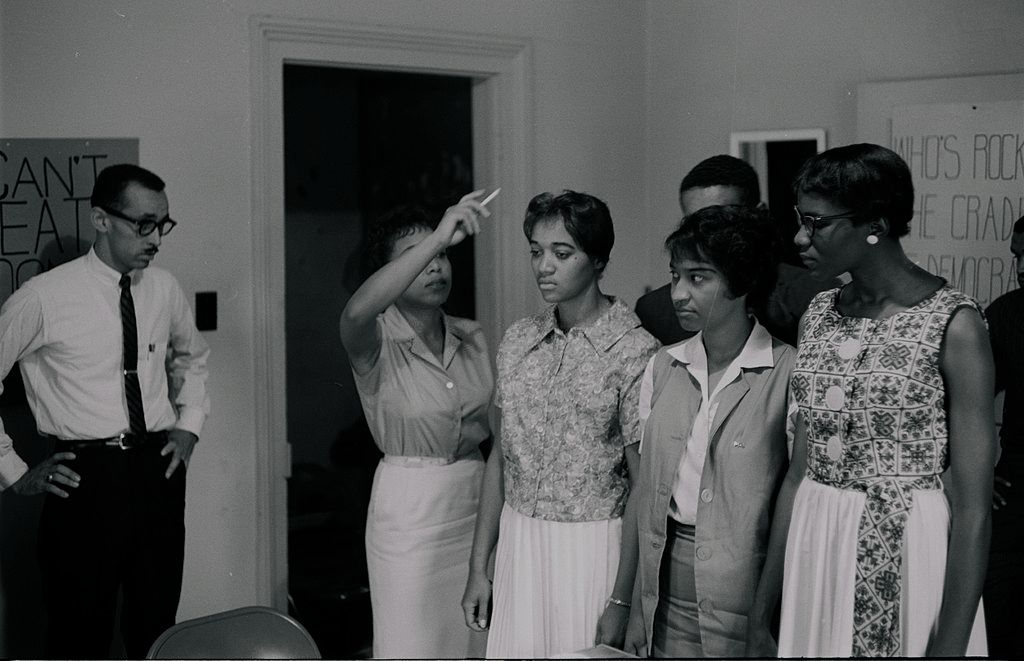
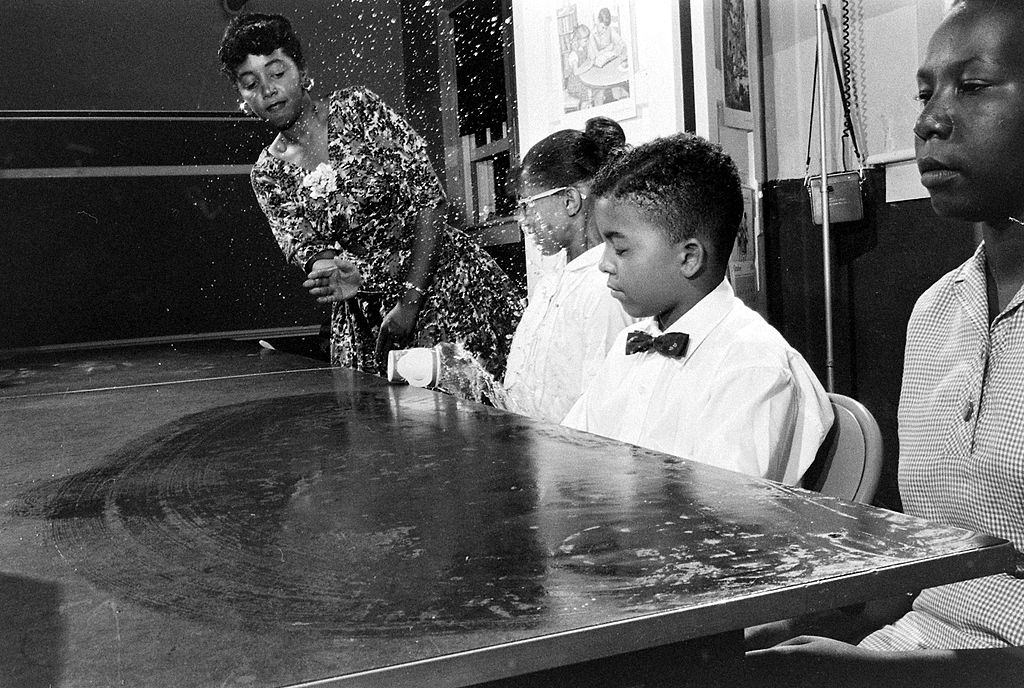
Not all participants in these workshops were Black men. Women also trained under the same conditions. Photographer Eve Arnold documented these sessions and also participated in them firsthand, experiencing smoke blown into her face and having her hair pulled as part of the training exercises. Her participation gave her a direct understanding of what the volunteers were being put through and produced some of the most visceral photographic records of this training period.
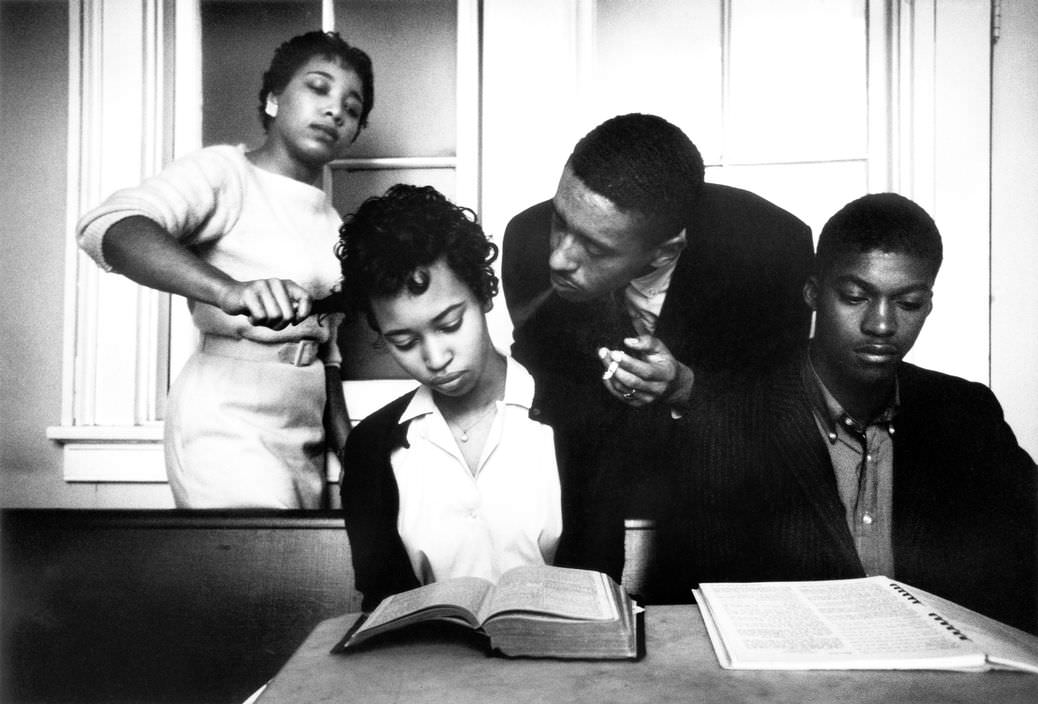
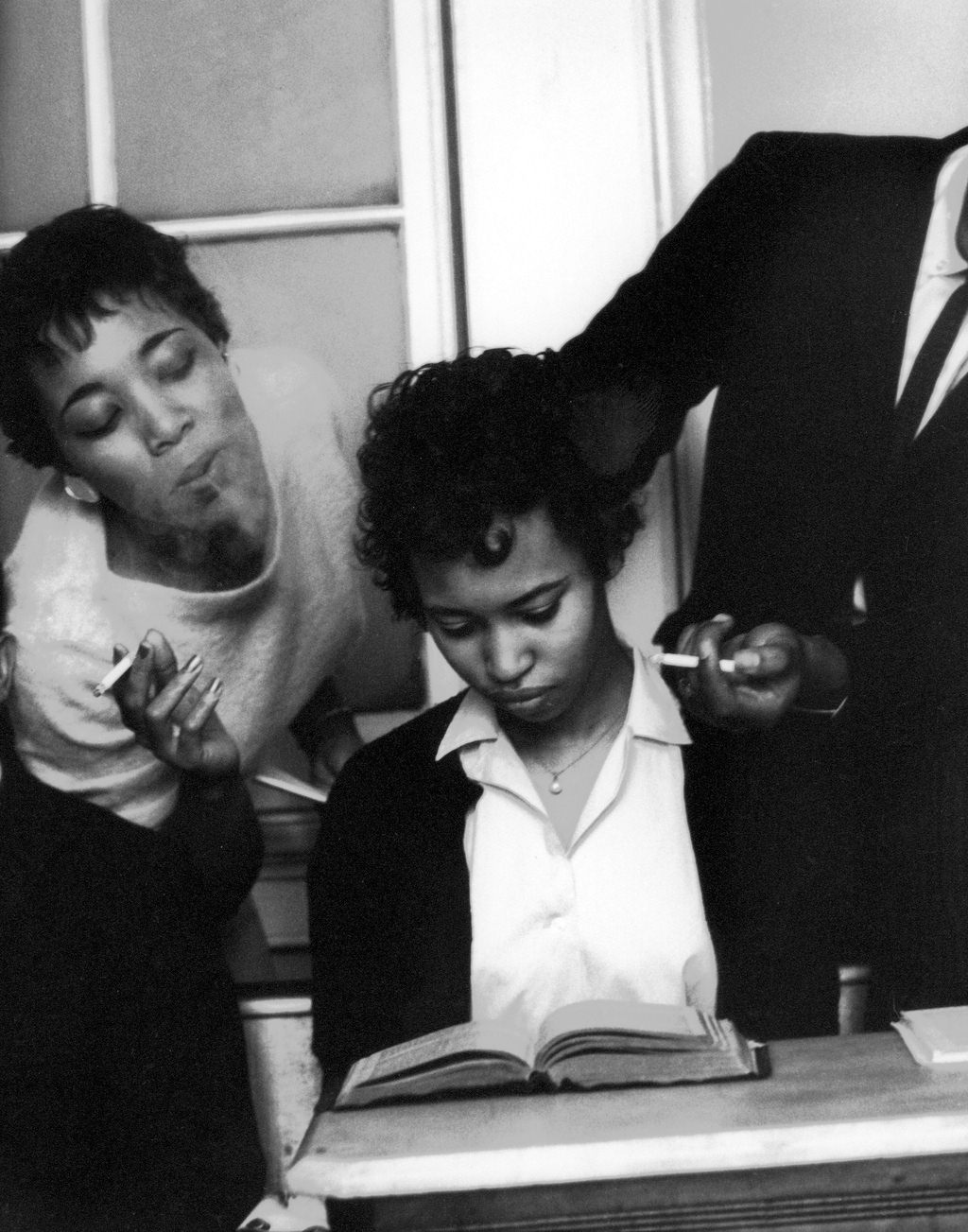
The discipline required to sit through these sessions was immense. Trainers did not ease participants in gently. The harassment was immediate, sustained, and designed to provoke a reaction. Volunteers were taught to focus on the larger purpose — desegregation, legal change, public pressure — rather than on the immediate discomfort in front of them. Role-playing exercises, group discussions, and repeated practice runs were all part of the curriculum. Organizations like the Congress of Racial Equality (CORE) and the Student Nonviolent Coordinating Committee (SNCC) developed and spread these methods across dozens of cities.
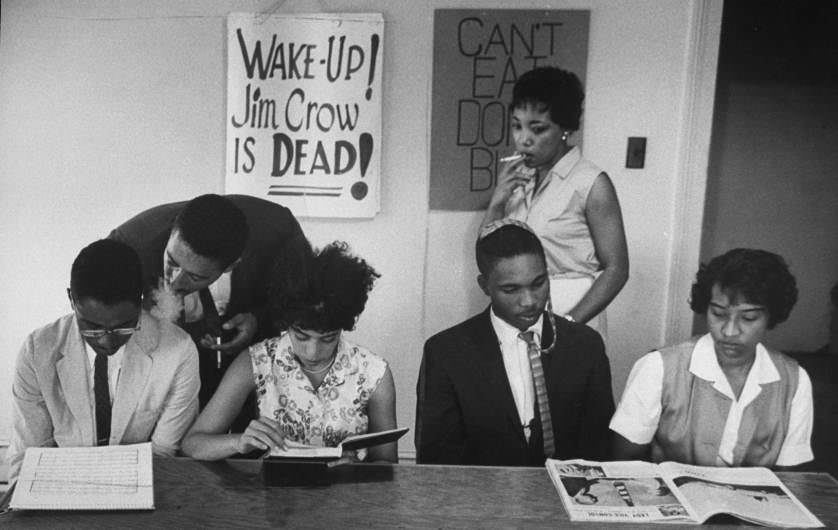
The photographs taken in Petersburg in 1960 offer a rare, unfiltered look at what this preparation actually looked like. These were not symbolic gestures. The trainers were hard on the volunteers because the streets would be harder. Every person who sat down at a lunch counter, marched in a picket line, or boarded a segregated bus had often spent hours in rooms exactly like these — being pushed, provoked, and conditioned to hold the line without raising a hand.