In the early 1900s, traveling circuses were one of the biggest forms of entertainment across Northern Ireland. Towns and cities that rarely saw large-scale public spectacles would suddenly come alive when a circus rolled in. These touring shows — sometimes called “circus on wheels” — moved from town to town by wagon, bringing acrobats, clowns, trained animals, and a wide cast of performers. For the people of Strabane, a market town in County Tyrone, a visiting circus was a major event.
Local photographer H.F. Cooper made it his mission to document these visits. The cameras of the era had a serious limitation — they could not freeze fast motion cleanly, which meant the high-flying acts inside the big top were nearly impossible to photograph. So Cooper turned his lens elsewhere. He captured performers during rehearsals, behind the scenes, and in the streets of Strabane itself. The result is a remarkable set of images that shows the human side of circus life — candid, unscripted, and full of detail.
One of the circuses Cooper photographed was Scott’s Circus, which came through Strabane in 1910. The clowns were among the most visually striking subjects, dressed in full costume even outside the ring.
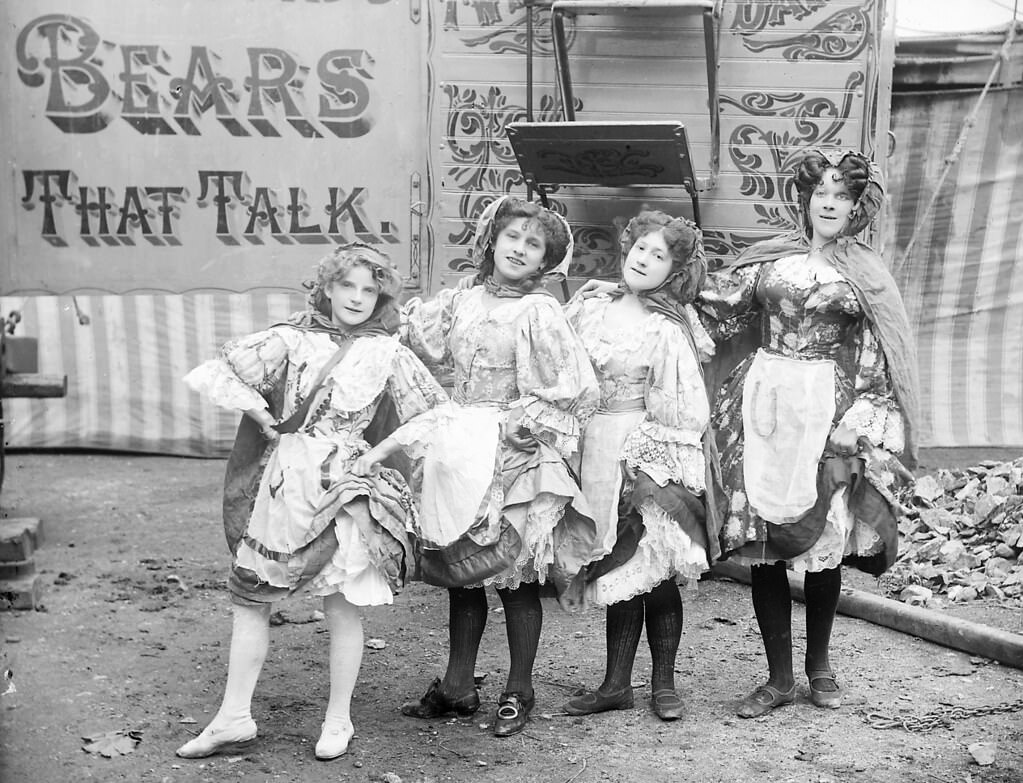
Hanneford’s Canadian Circus was another major troupe that visited Strabane in 1910. It brought a large company of performers, including several women who took on demanding physical roles both in and out of the spotlight. Cooper photographed four of the female performers together, a rare group portrait that shows the diversity of talent within a single traveling show.
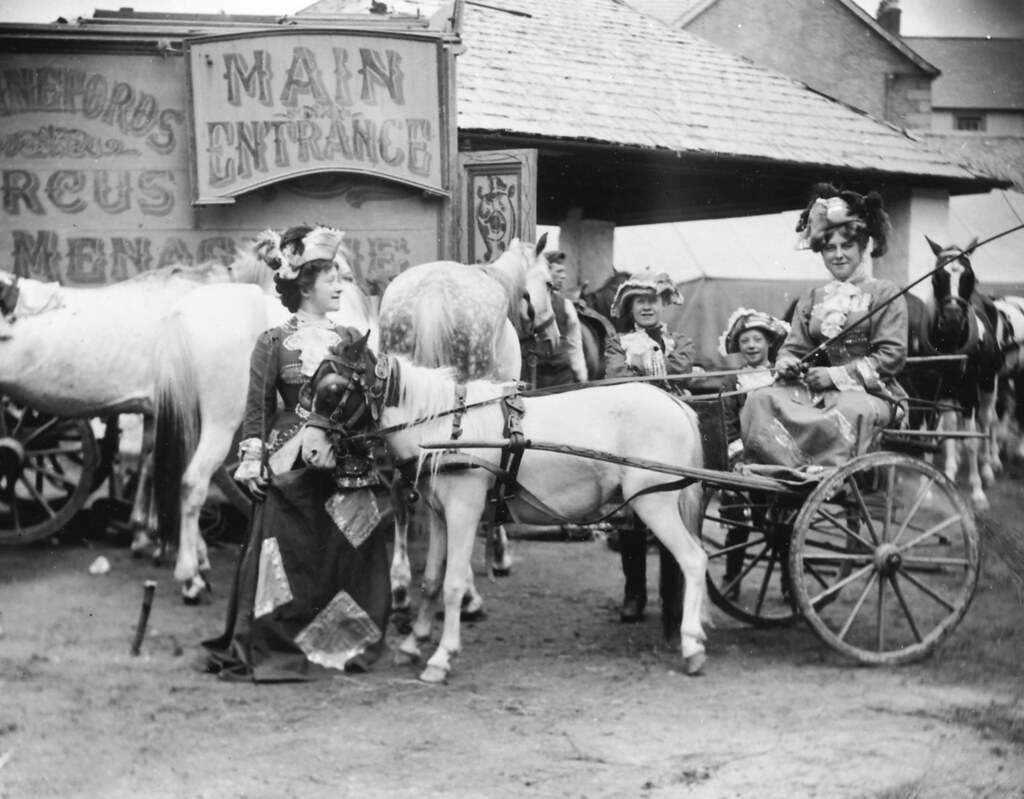
Life between performances for circus troupes meant constant movement. Performers traveled by horse and cart, living and working in close quarters as they made their way across the Irish countryside. Cooper caught members of Hanneford’s Canadian Circus in exactly that setting — mid-journey, perched on a cart, ordinary life unfolding between extraordinary shows.
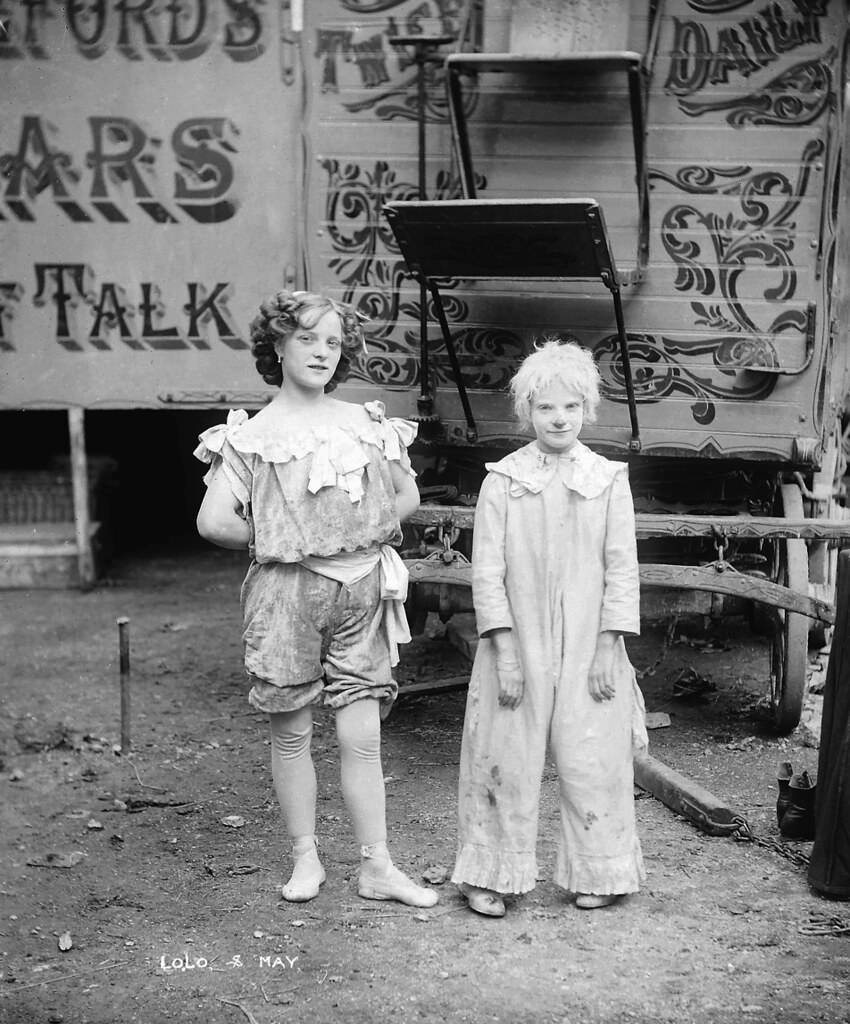
Not all performers were adults. Traveling circuses often included younger members, sometimes children of circus families who grew up on the road and trained from an early age. Two of Hanneford’s performers — identified simply as Lola and May — were photographed together, their youth a contrast to the hard, nomadic life of the touring circuit.
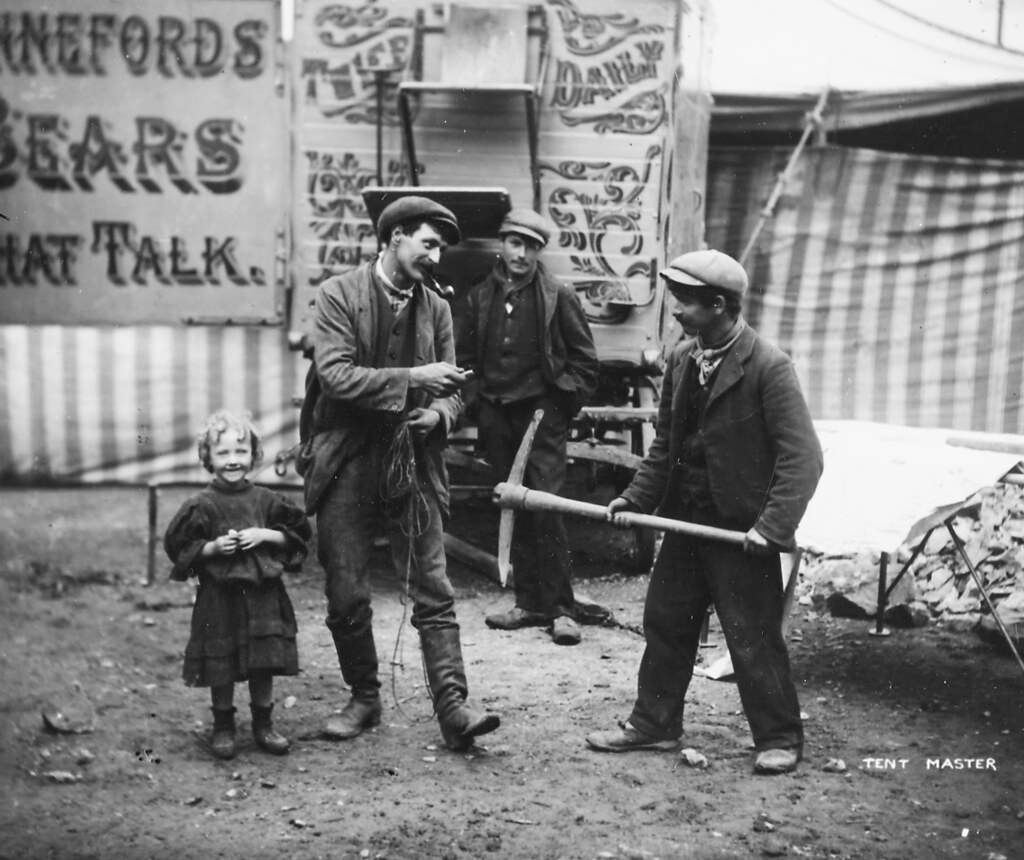
Behind every show was a team of workers who never appeared in the ring. The tent master was one of the most essential figures in any traveling circus — responsible for setting up and striking the big top at every new location. Cooper photographed one such man in 1910, a quiet acknowledgment of the labor that made the spectacle possible.
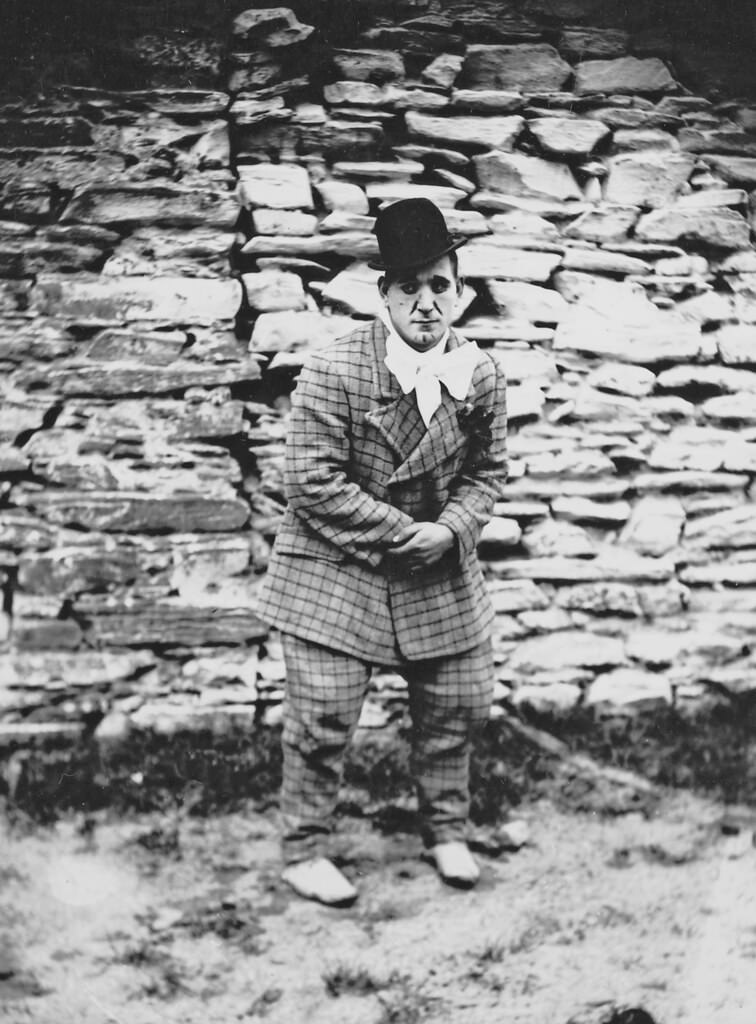
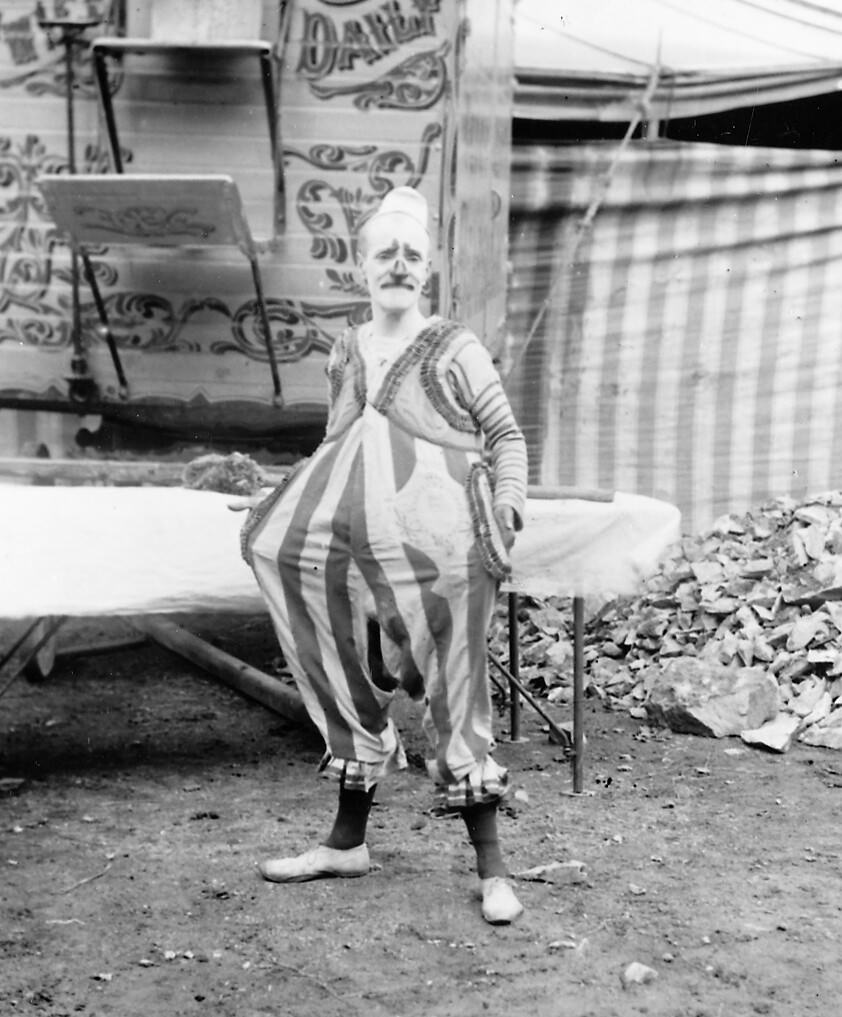
Clowns were a fixture of every circus that passed through Strabane. They worked the crowds outside the tent, drawing in spectators before the main acts began. This clown from Hanneford’s Canadian Circus was photographed in full costume on the streets of Strabane — a common tactic to build excitement and pull people toward the show.
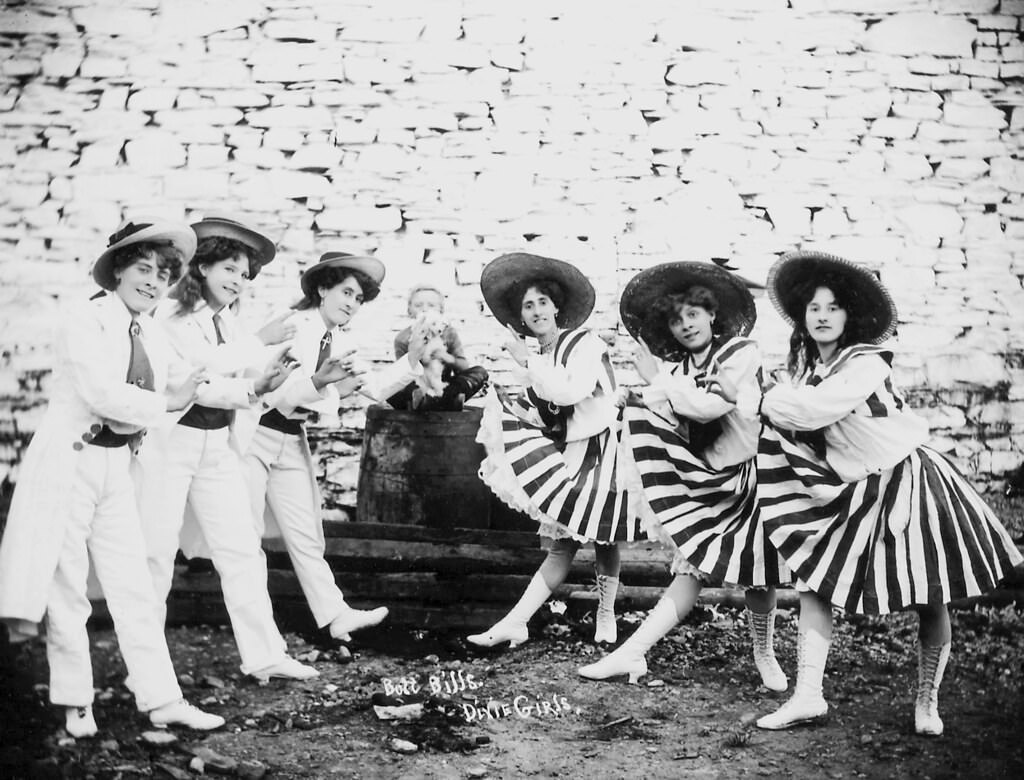
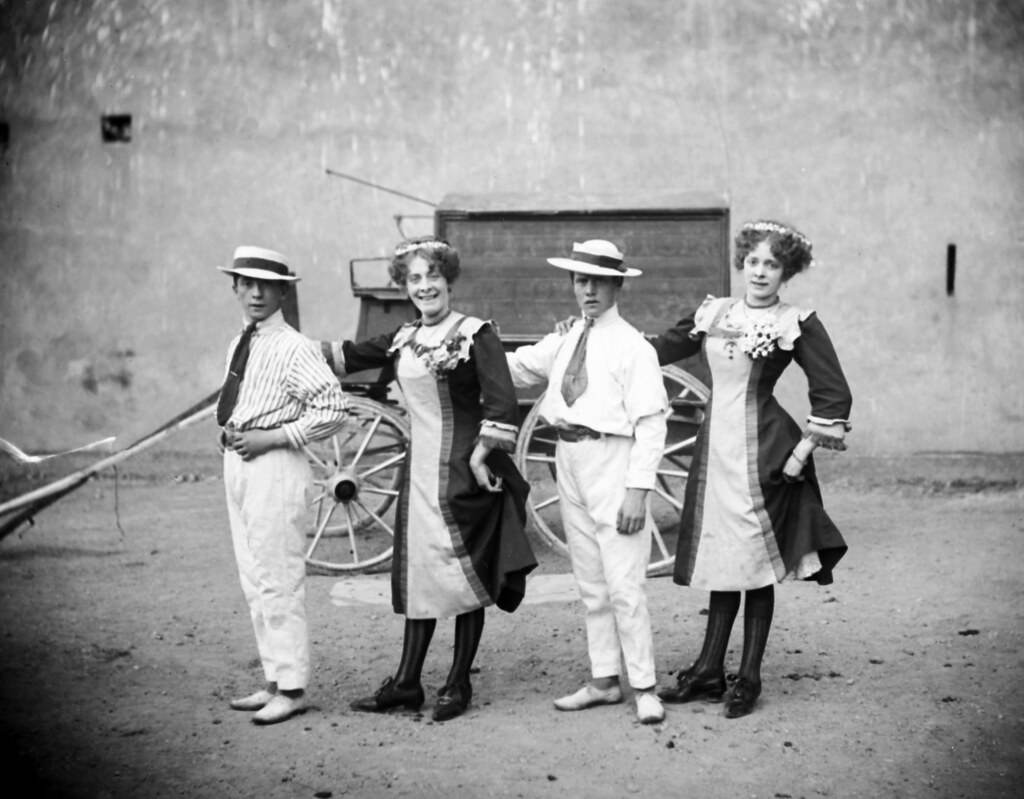
Buff Bill’s Circus was another troupe that made the journey to Strabane. It featured a group called the Dixie Girls, a performance act that appeared in 1910. Cooper photographed them in a formal group pose, their costumes marking them clearly as stage performers rather than everyday townsfolk.
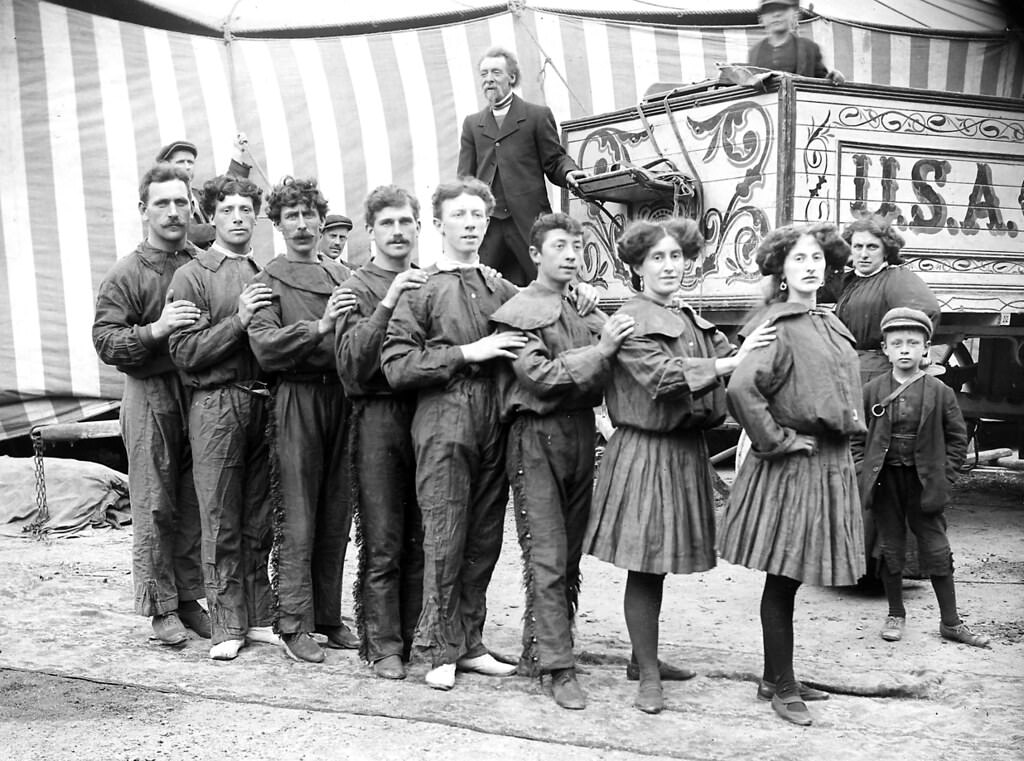
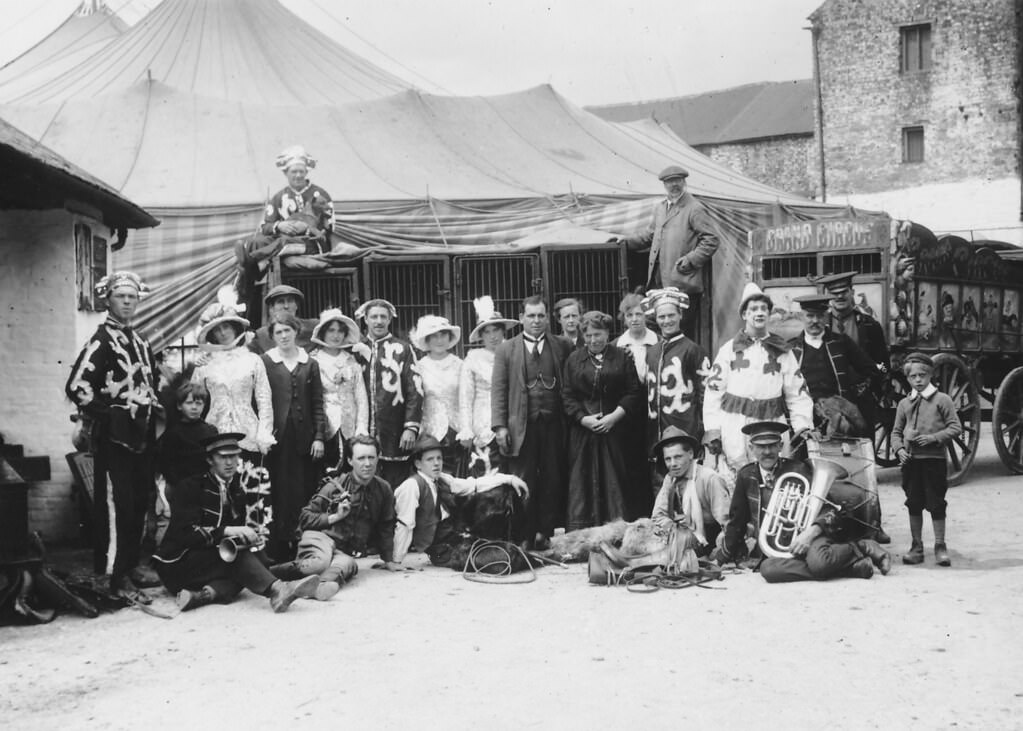
Buff Bill’s Circus brought a wide variety of performers to Strabane. Cooper documented the troupe extensively, capturing group portraits that show just how large and varied these traveling companies were. Men and women of different roles — acrobats, animal handlers, clowns, and general entertainers — all traveled together as a tight-knit unit.
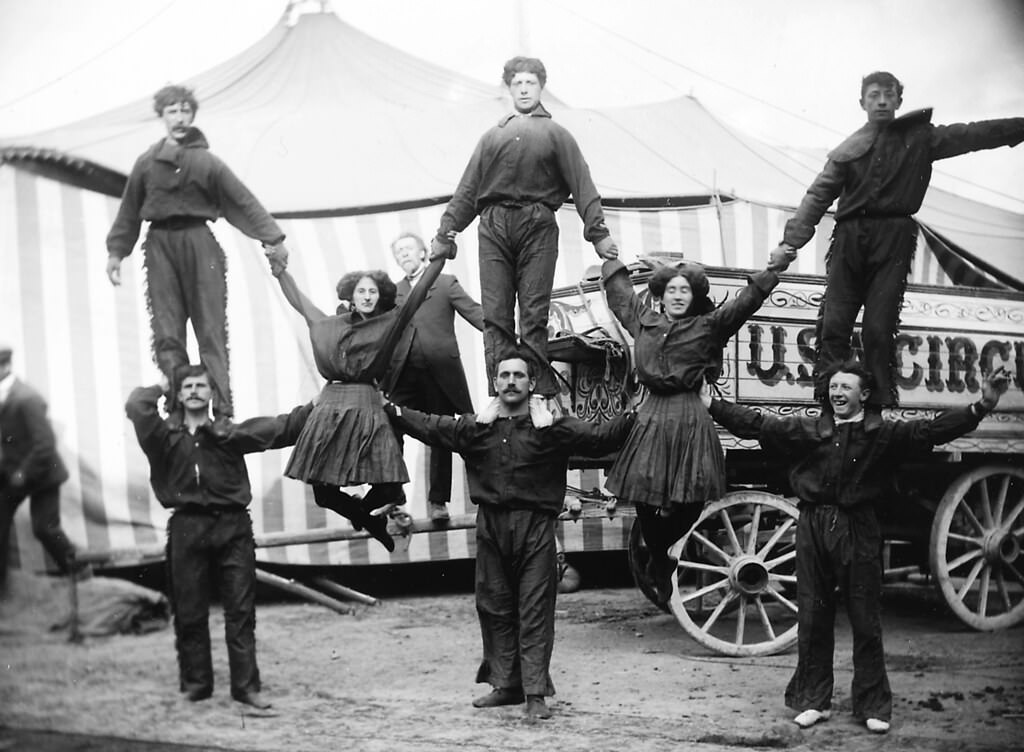
Acrobatic acts were central to any circus program. Strength, balance, and coordination were trained skills that took years to develop. One of Cooper’s most striking photographs shows a group of performers stacked in a human tower — a classic acrobatic display that required trust and precision from every person involved.
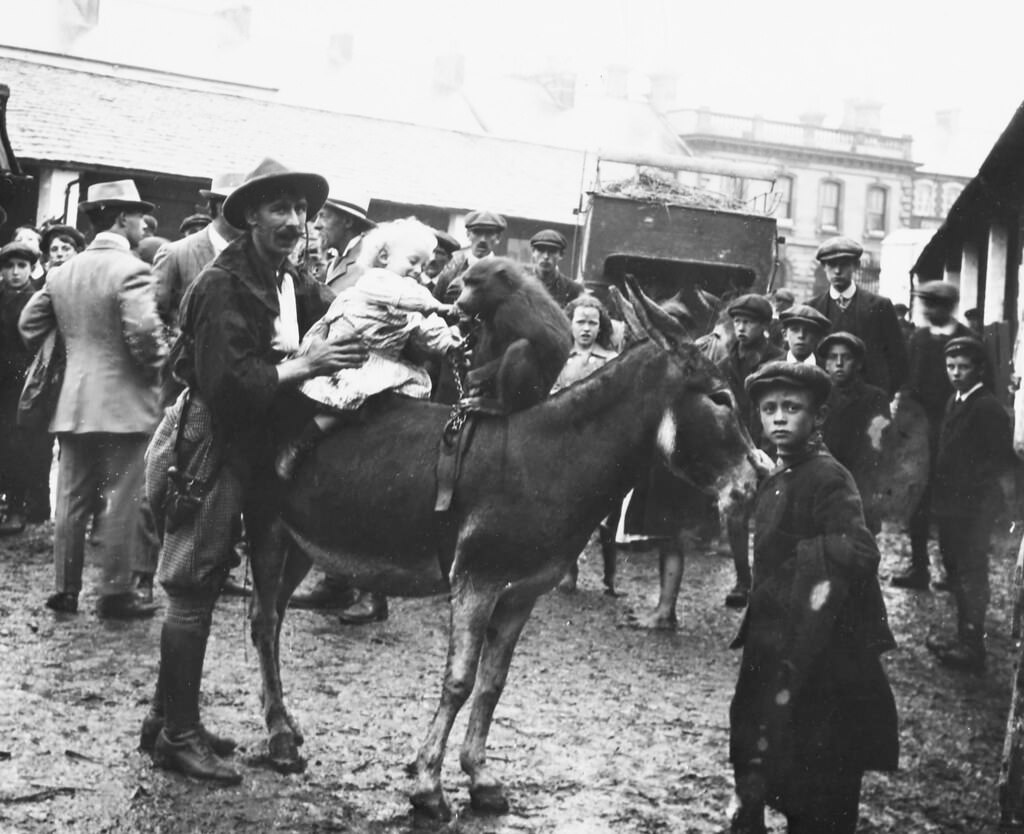
Animal acts were a major draw for circus audiences. Exotic and trained animals gave crowds something they could not see anywhere else. One photograph from Buff Bill’s Circus shows a child posed with a baboon seated on a donkey — an unusual and eye-catching combination that would have delighted spectators of all ages.
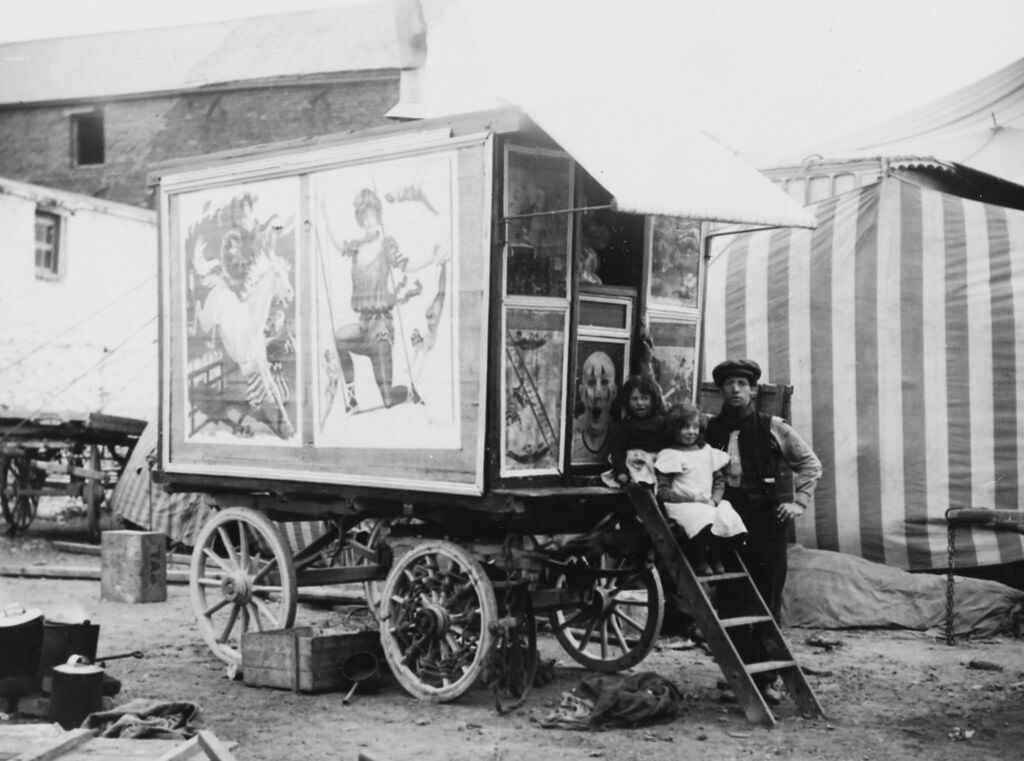
The caravans that circus performers lived in served as their homes for months at a time. These mobile dwellings were parked wherever the circus set up, forming a small temporary community on the edge of town. Cooper photographed two children and a man relaxing on the steps of one of these caravans — a glimpse of domestic life within Buff Bill’s Circus.
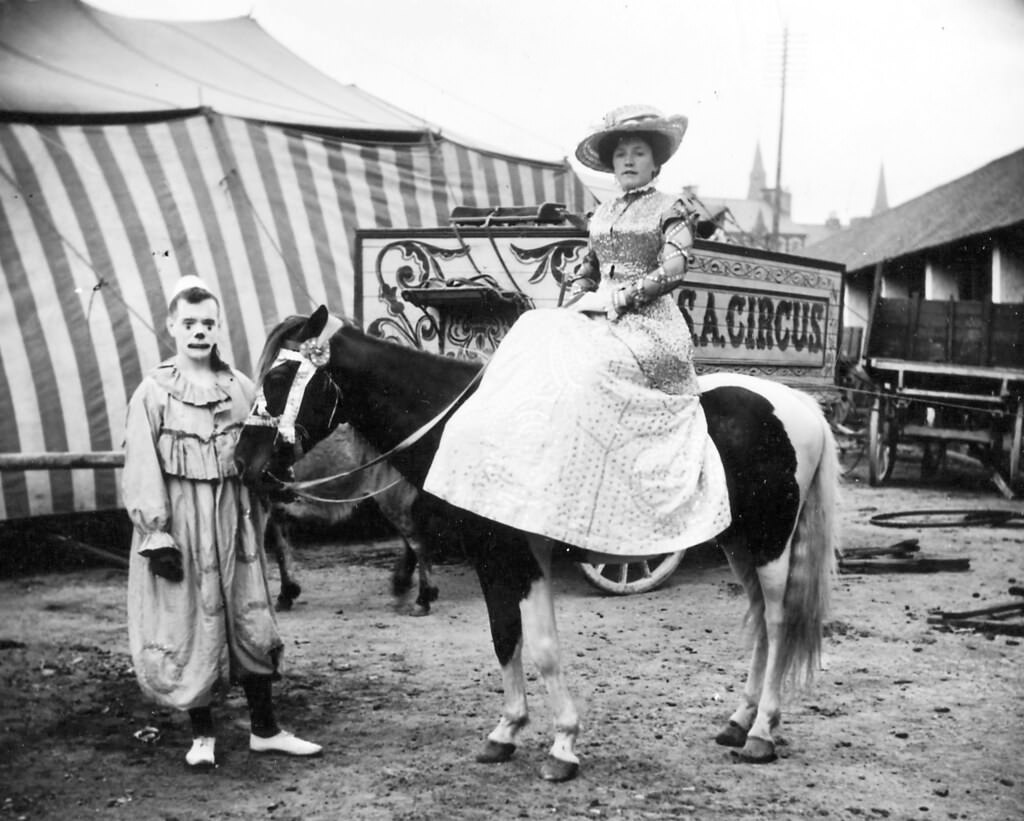
Horses were central to circus performance in this era. Equestrian acts — featuring riders performing tricks at speed or in elaborate choreography — were among the most popular attractions. Cooper captured several horse-related scenes, including a lady performing on horseback while a clown looked on from the side.
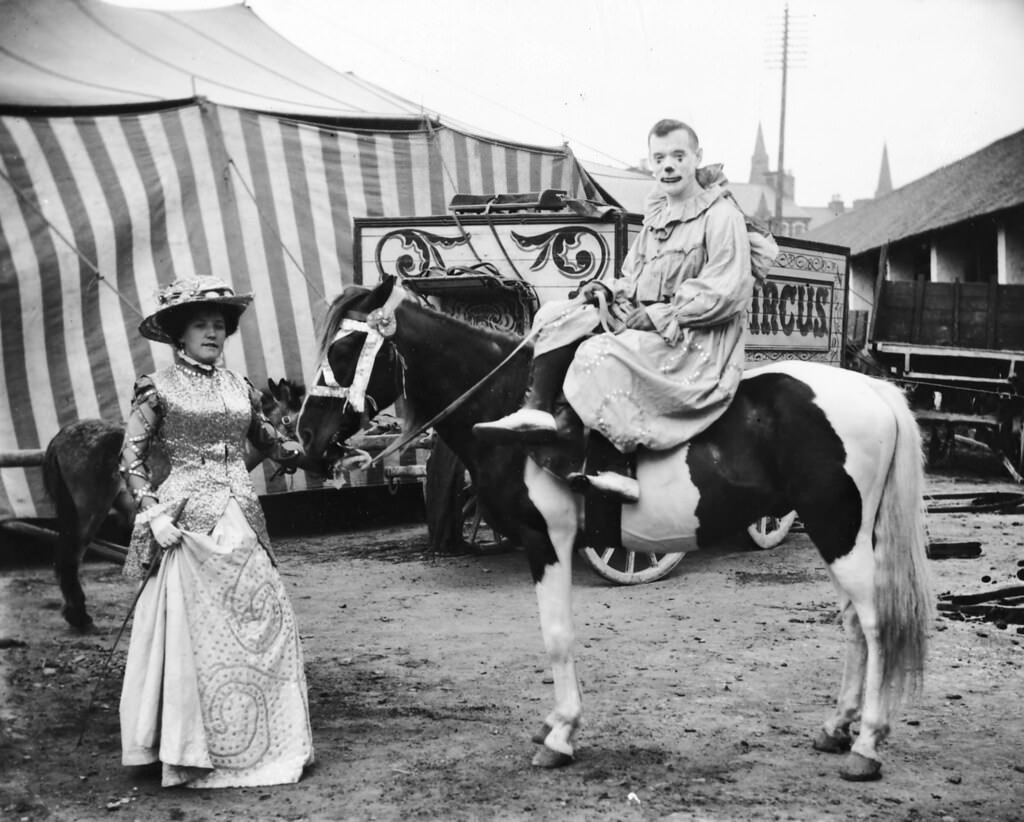
Clowns frequently appeared alongside horses in circus acts, using the animals for comic routines that played off the more graceful equestrian performances. One photograph shows a clown mounted on a horse while a woman holds the animal steady — a behind-the-scenes moment that hints at the rehearsal and coordination that went into even the comedic acts.
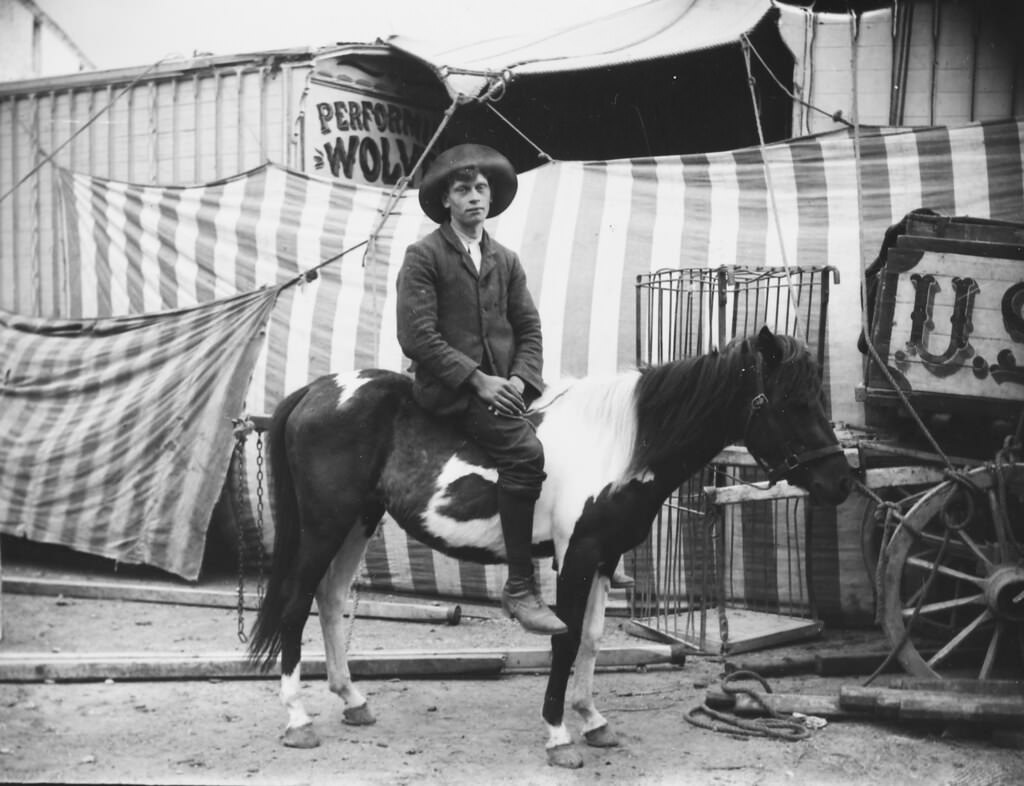
Outside the tent, horses were used for transport and as part of the circus’s public presence in town. A mounted rider outside a circus was a visible advertisement — a signal that the show had arrived and that something worth seeing was about to begin.
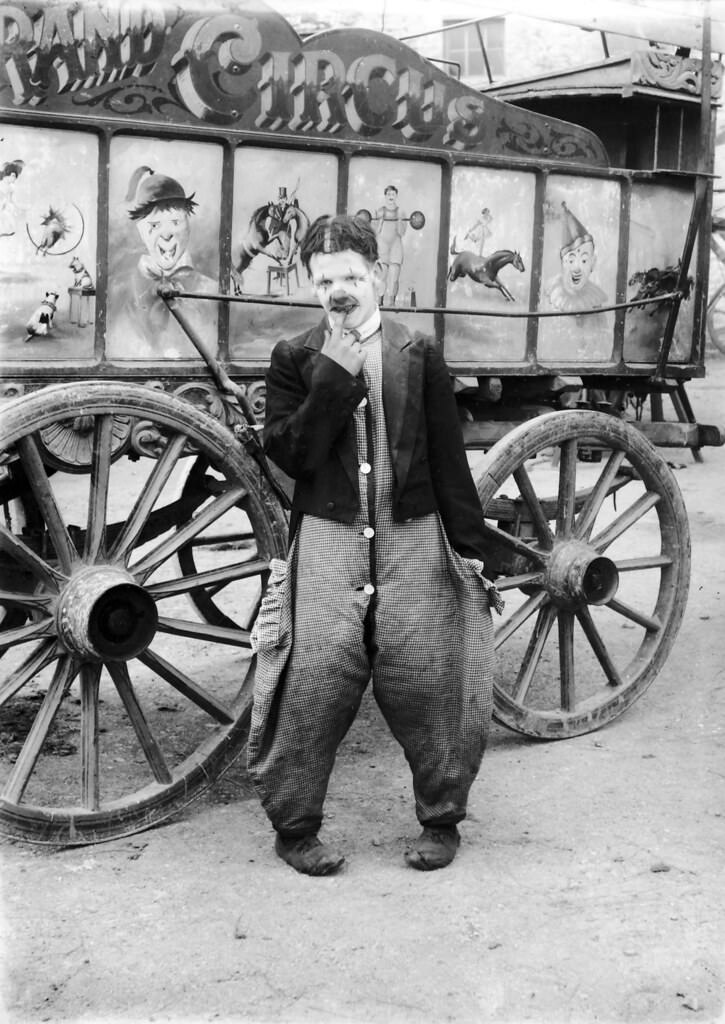
The Grand Circus was another company that passed through Strabane during this period. Its painted wagons were part of the spectacle even before the show began. Cooper photographed one of the Grand Circus’s clowns standing beside one of these wagons, the bright decorations visible even in black and white.
The entertainers of the Grand Circus in Strabane posed together for Cooper in a group photograph that captures the variety of personalities within the company. These were working performers — professional entertainers who made their living on the road, dependent on the goodwill of every new town they entered.
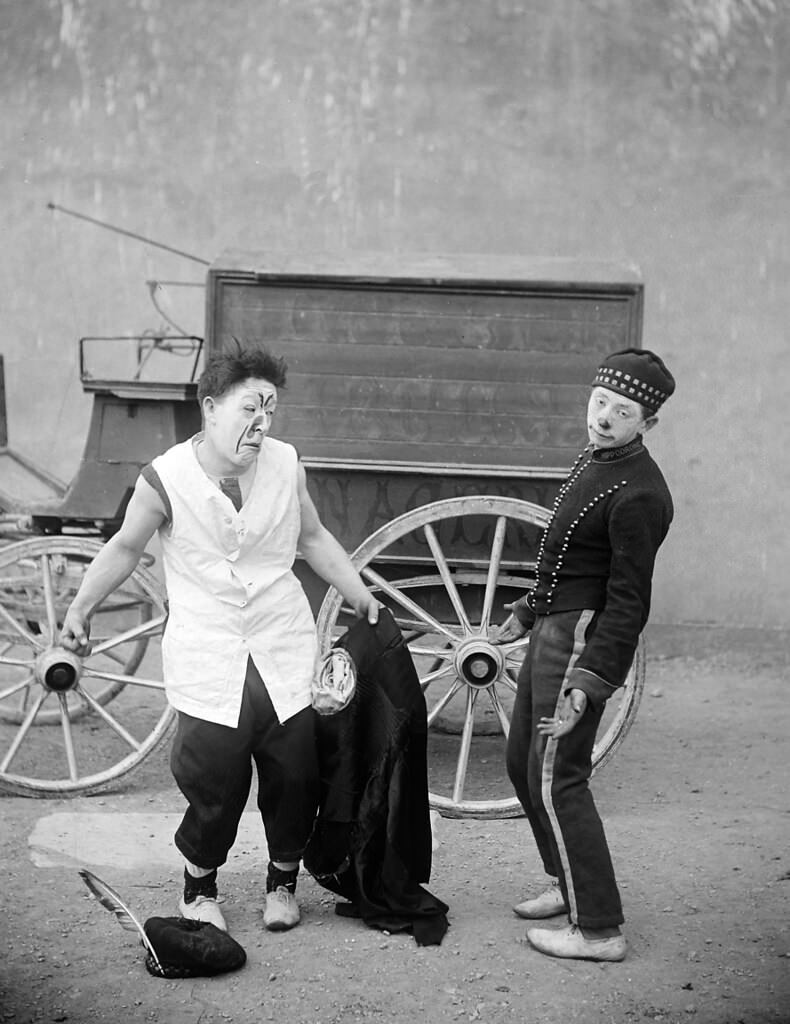
Clown partnerships were common in circus acts, with two performers playing off each other for comic effect. Cooper photographed two clowns standing together in front of a wagon, their costumes and expressions setting the tone for the kind of act they performed inside the ring.
Wagon sides were often used as informal backdrops for portrait photography during this era. Cooper used them frequently, posing groups of performers in front of the decorated circus vehicles. These photographs served as a record of who was part of each company, preserving names and faces that might otherwise have been forgotten.
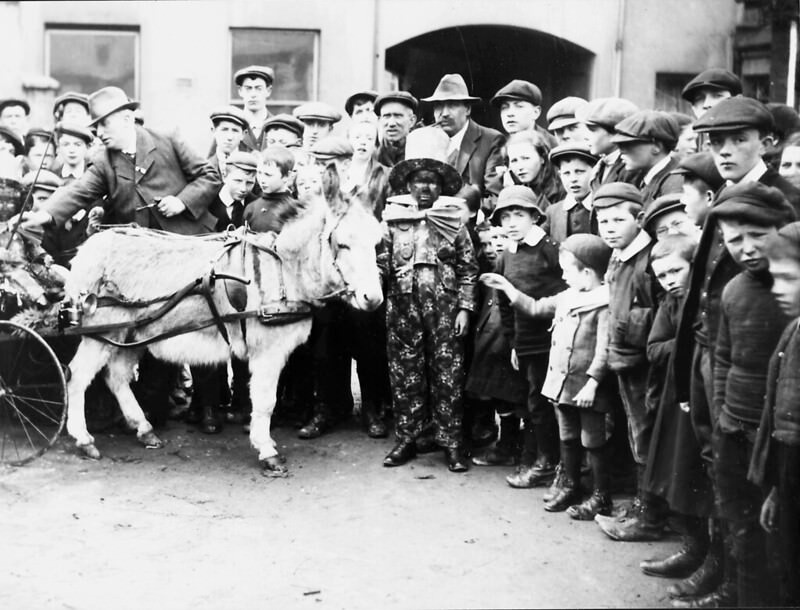
Beyond the formal troupe portraits, Cooper also documented how the circus interacted with the people of Strabane. One photograph shows a crowd gathered around a clown and a donkey on the street — the kind of impromptu street performance that was designed to pull in passersby and build anticipation for the main show.
Individual performers also sat for portraits in front of the wagons, giving Cooper a chance to document the faces of those who made up these traveling companies. Each photograph is a record of a specific person in a specific moment — a performer pausing between rehearsals or performances to stand still for the camera.
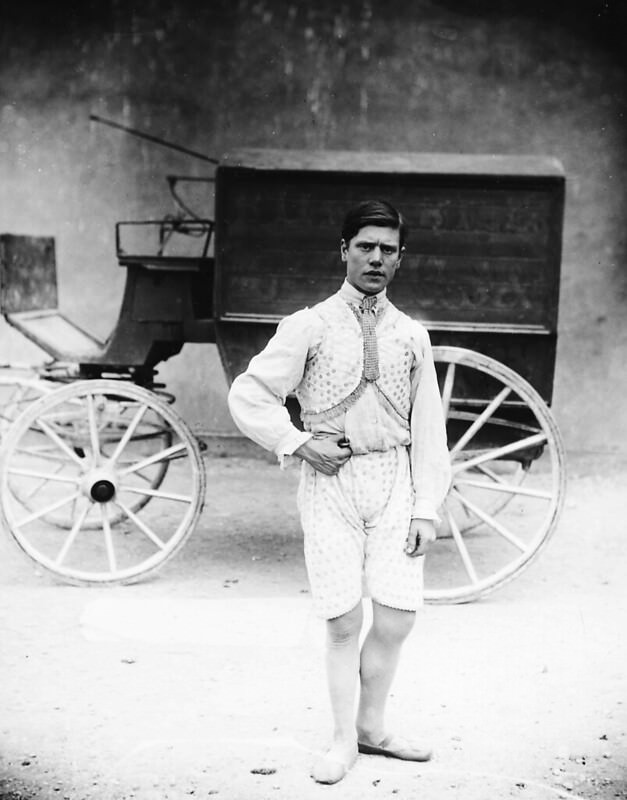
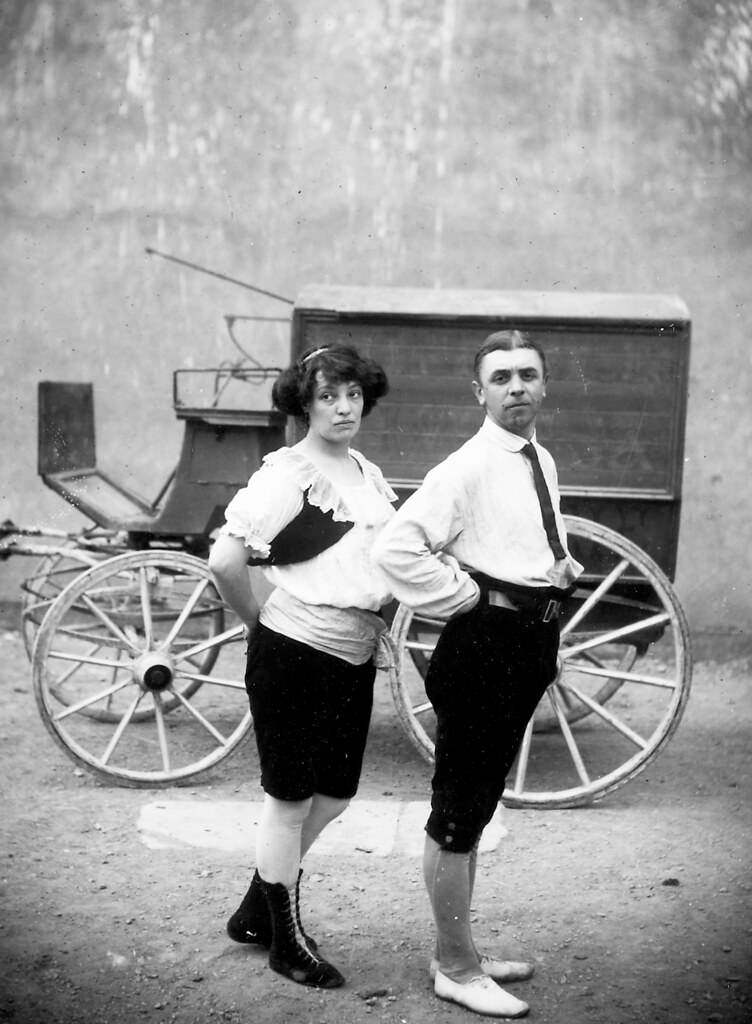
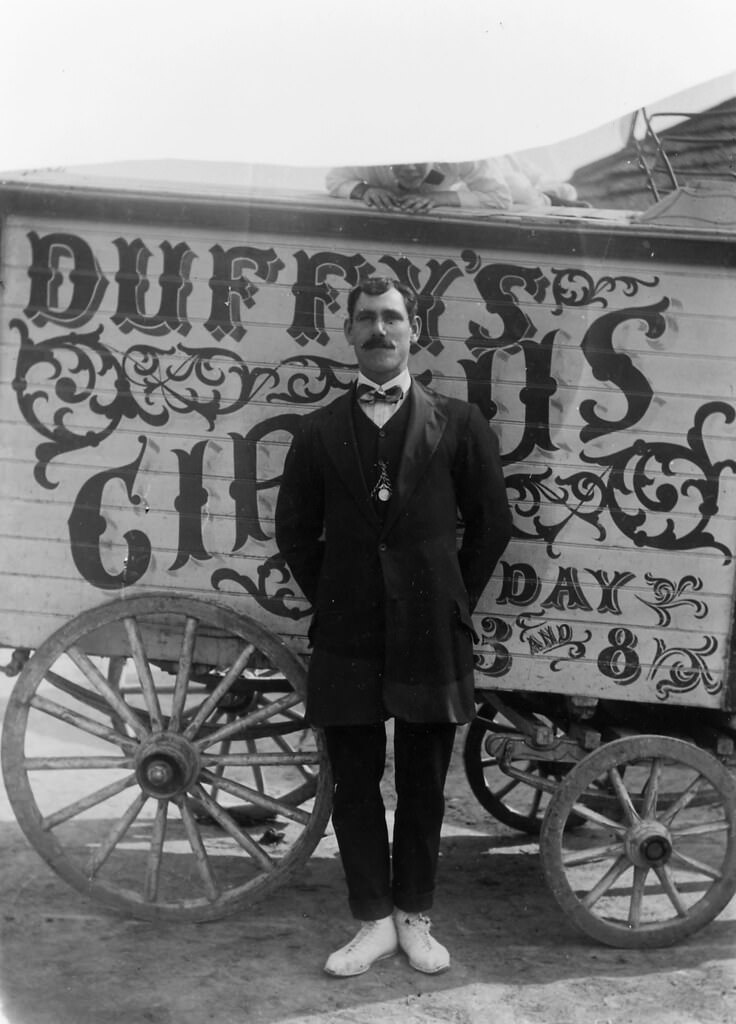
By 1911, Duffy’s Circus had made its way to Strabane, adding to the already rich record of visiting troupes that Cooper was building. The Duffy name was well-known on the Irish circus circuit, and Cooper photographed the company thoroughly — from its wagons and signage to its performers and behind-the-scenes personnel.
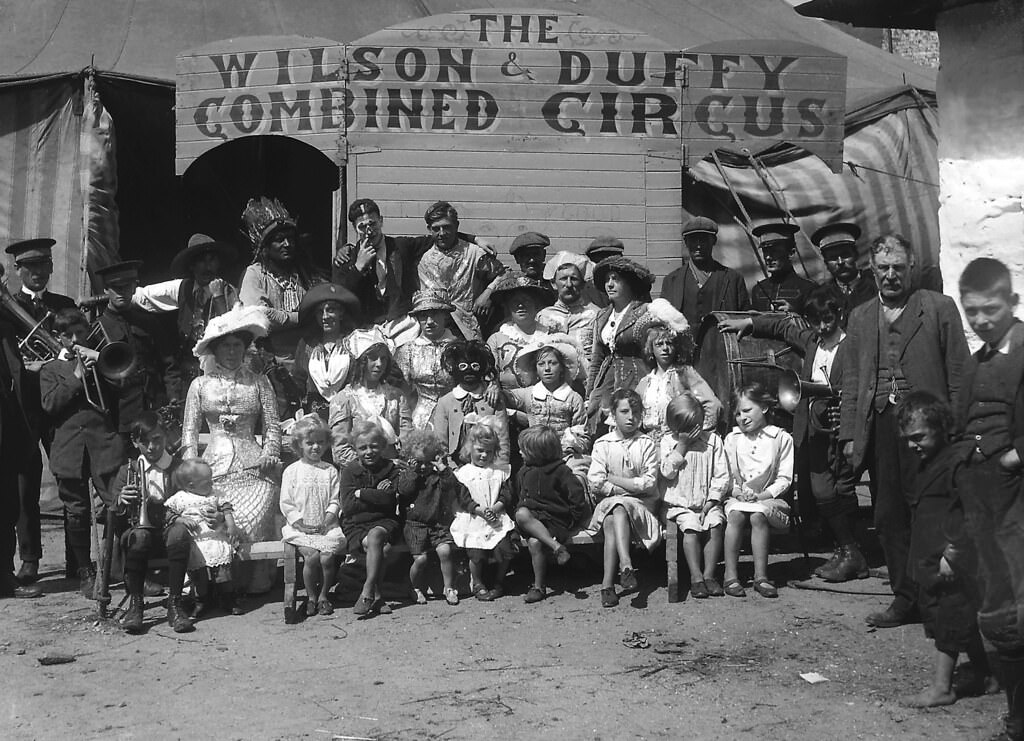
Wilson and Duffy’s Circus — a combined outfit — brought together a large company of members and performers. Cooper captured them together in a group portrait, a collective image of a company that depended on every single one of its members to keep the show running day after day.
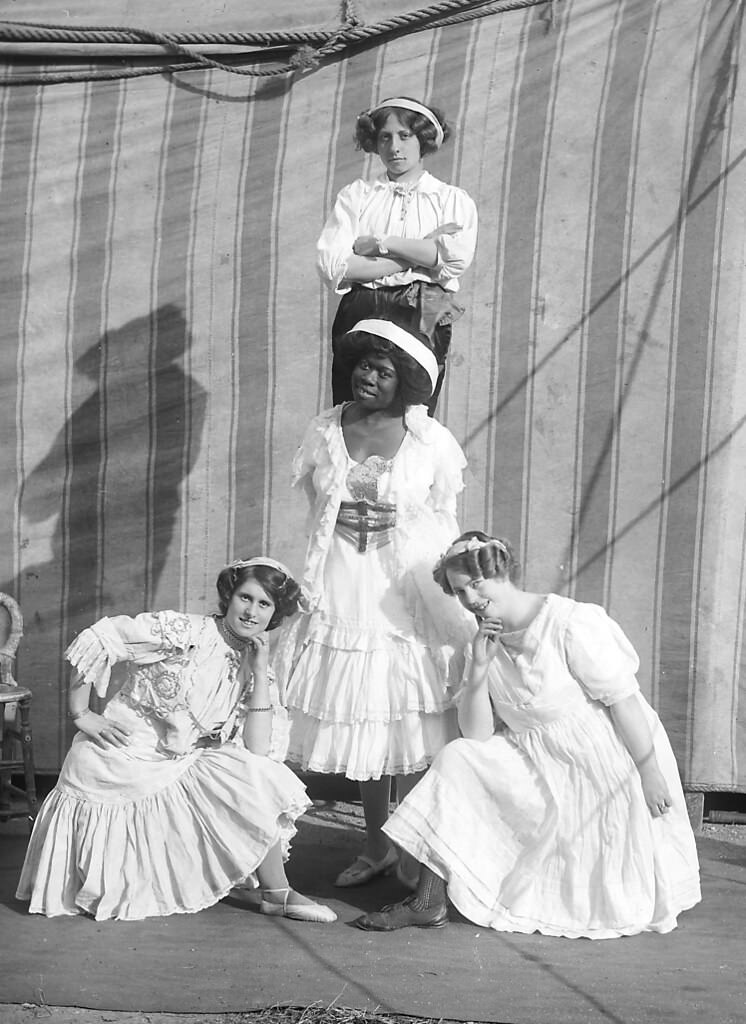
Female performers made up a visible and important part of every circus company photographed by Cooper. Four girls from Duffy’s Circus were photographed outside a tent, their expressions relaxed and informal — a candid moment away from the demands of performance.
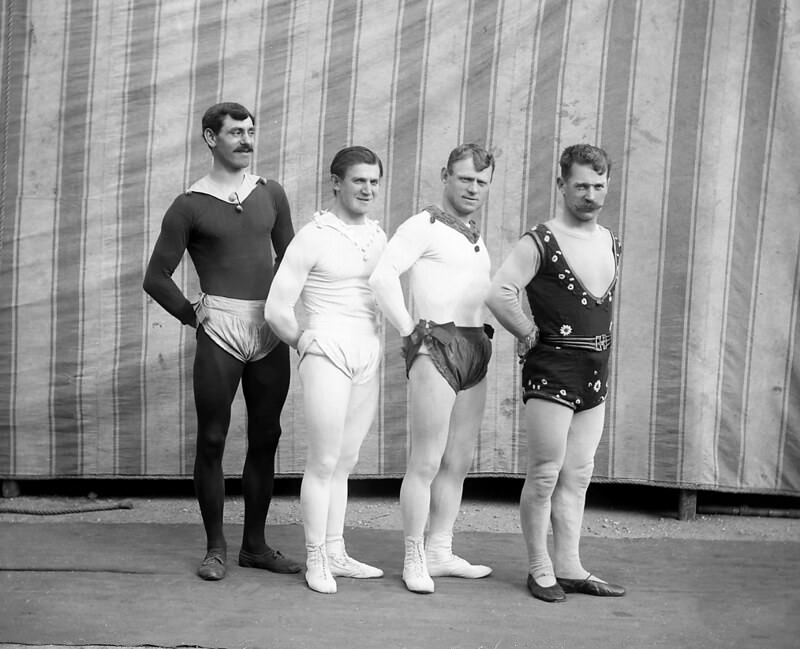
The male entertainers of Duffy’s Circus posed together for Cooper in 1911, presenting a confident front to the camera. These were men who traveled full-time with the circus, their skills ranging from physical performance to animal handling to stage comedy.
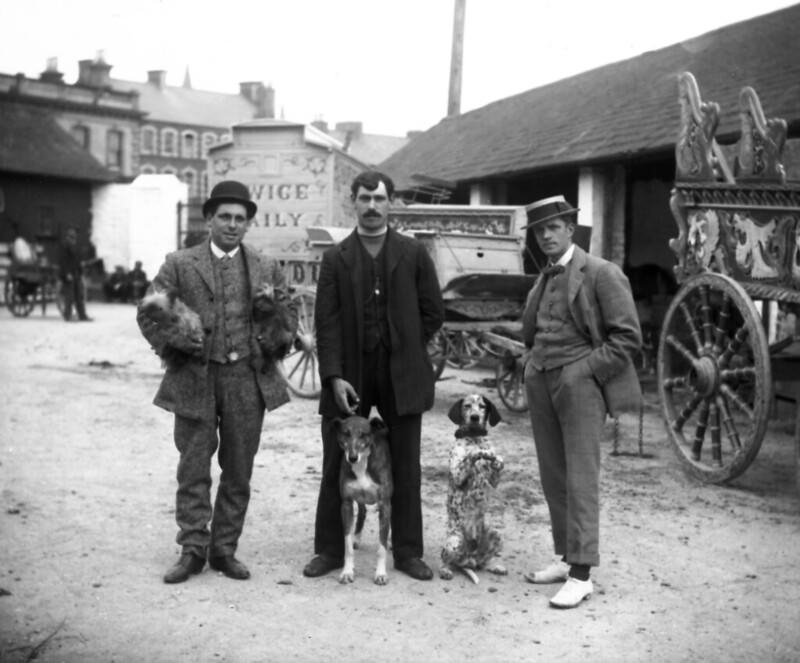
Animals were not limited to the exotic. Trained dogs were a staple of the smaller traveling circuses, performing tricks and routines that audiences found charming and accessible. Cooper photographed three men alongside two dogs — likely handlers or performers who worked the dog act in Duffy’s show.
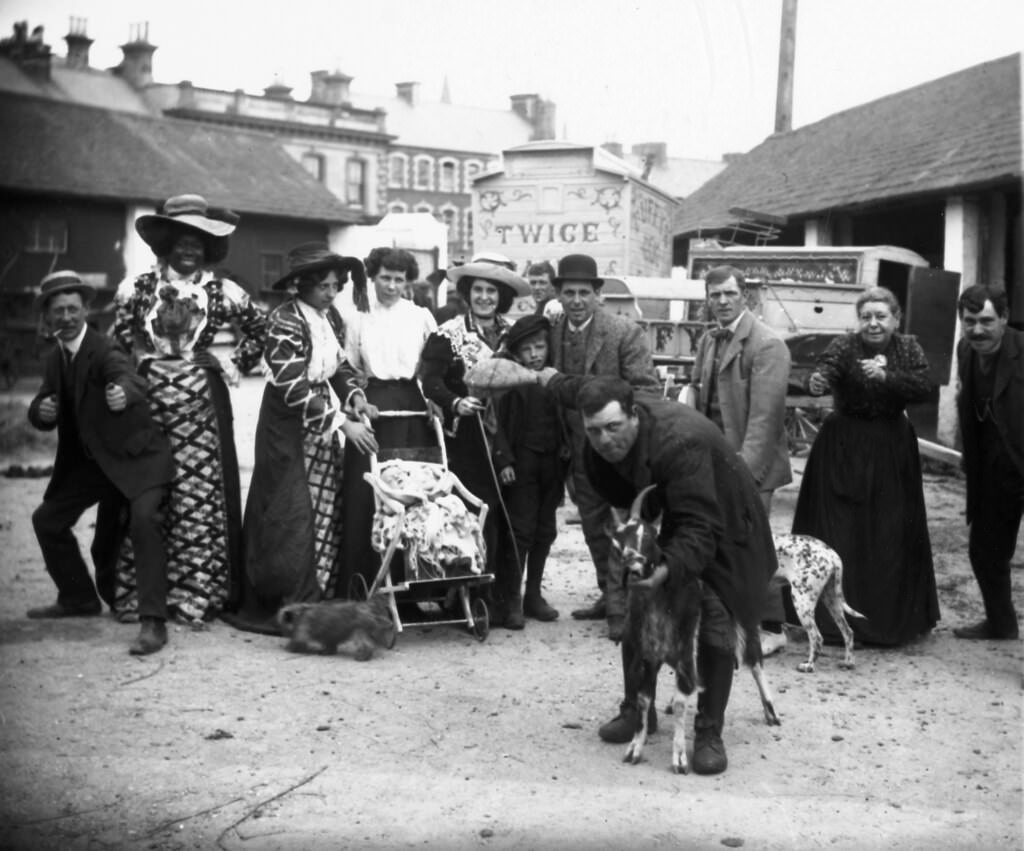
Group portraits of the full company gave Cooper the chance to document the breadth of each circus. A gathering of Duffy’s Circus entertainers shows just how many people it took to run a touring show of this scale — performers, crew, and support staff all part of the same traveling world.
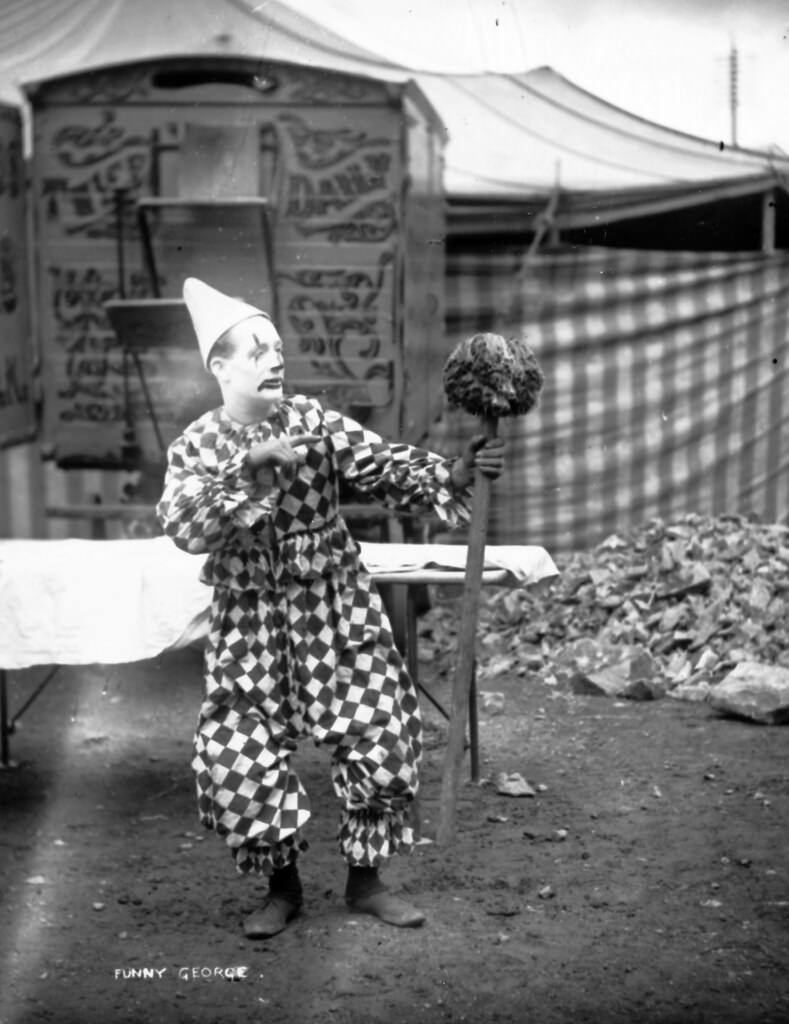
Among the most memorable individuals Cooper photographed was a clown known as ‘Funny George’ from Duffy’s Circus. The nickname alone tells something about the character he played — a crowd-pleasing figure whose job was to make people laugh no matter what town they happened to be in. His portrait, taken in 1911, is one of the most direct and personal images in Cooper’s entire circus archive.