In 1982, a collection of old photographs turned up at a flea market in Cannes, France. Nobody knows who originally sold them, but the images tell a clear story. A French-speaking traveler had visited China in October 1921, passing through Shanghai, Suzhou, and Beijing, and had documented the people and places they encountered along the way. The photos sat forgotten for decades before resurfacing. What they show is a rare, unfiltered window into daily life in a country under enormous strain.
China in 1921 was only ten years into its life as a republic, and the transition had been rocky. Much of the country was governed not by a central authority but by regional warlords who controlled land and resources for their own benefit. In northern China, a severe drought had wiped out crops across a vast, densely populated region. The resulting famine killed upwards of half a million people. Farmers who survived the crop failures faced desperate choices — many fled their land, and some sold their children into slavery to avoid starvation. The warlords who controlled these areas exploited the crisis rather than relieving it.
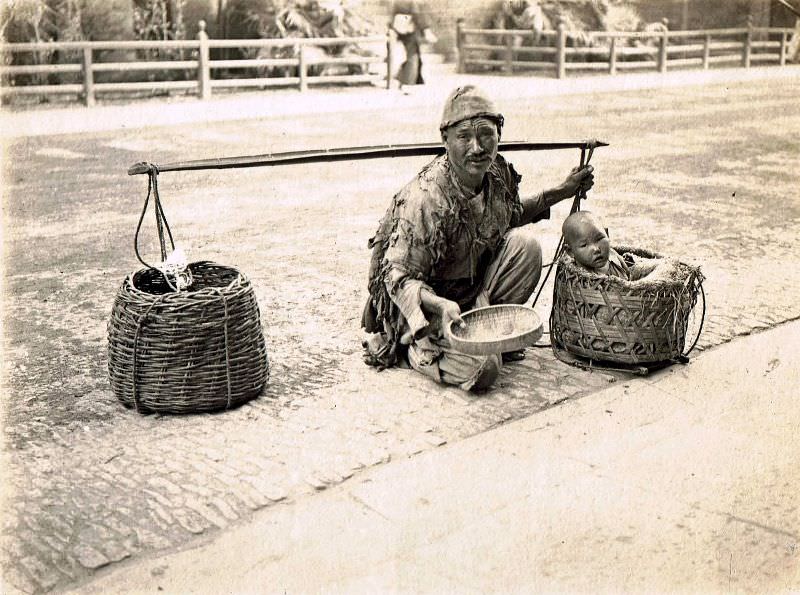
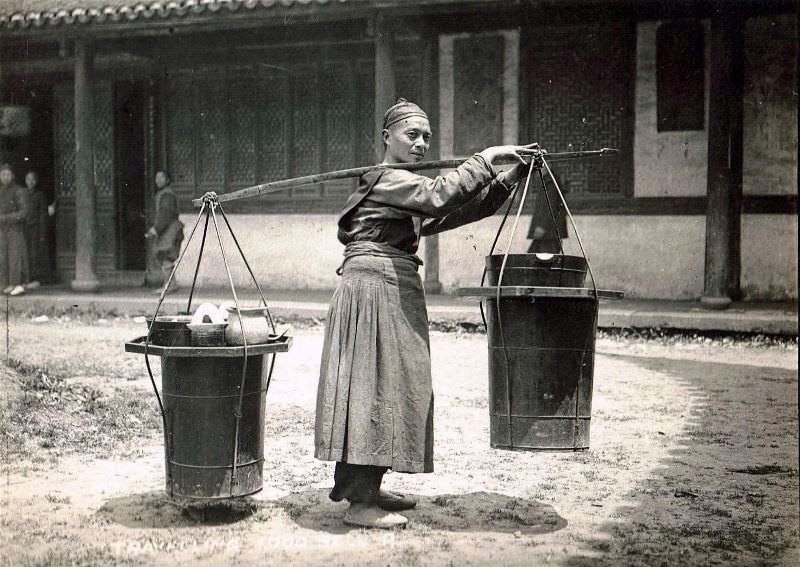
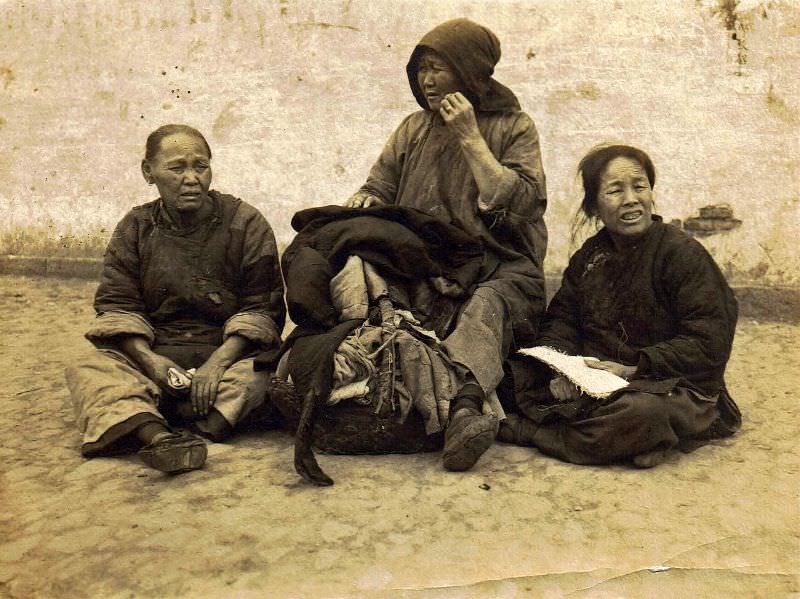
The crisis in the north shaped the social landscape across the country. In cities like Shanghai and Beijing, the gap between poverty and ordinary working life was visible on every street corner. The French traveler captured both — people scraping by alongside tradespeople, craftsmen, monks, and families going about their routines.
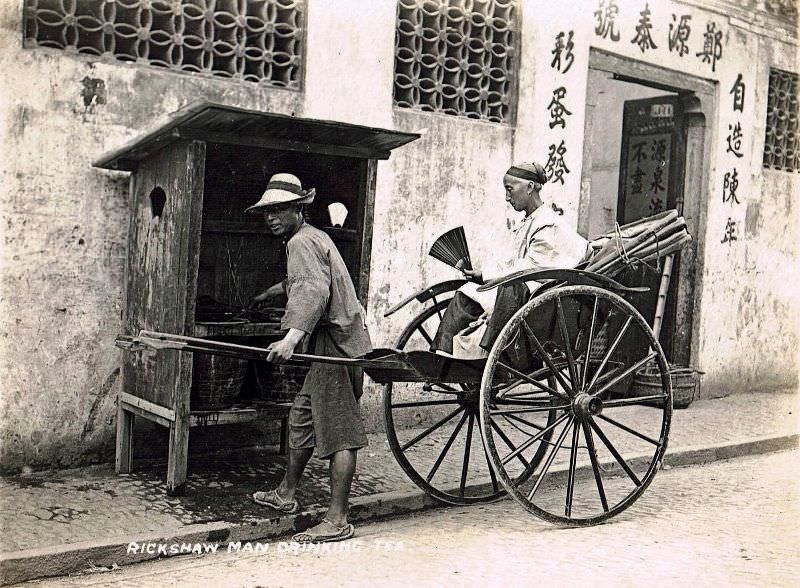
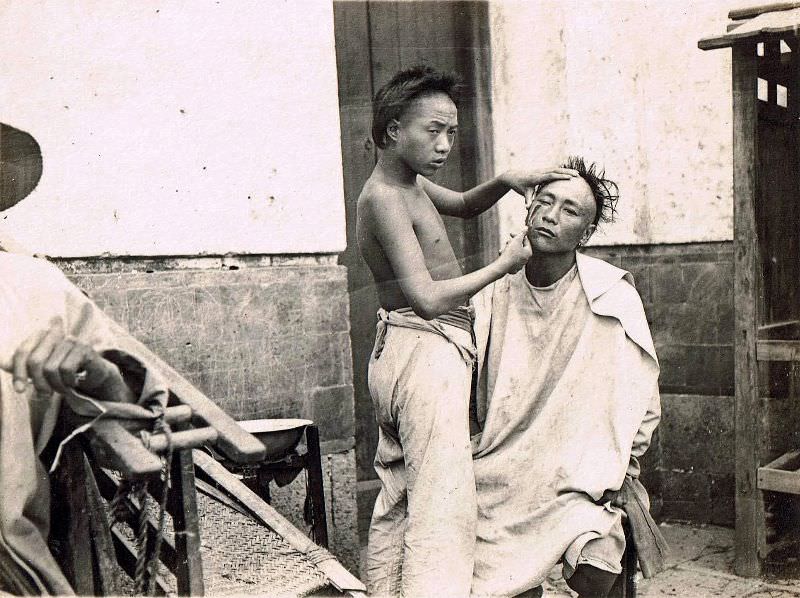
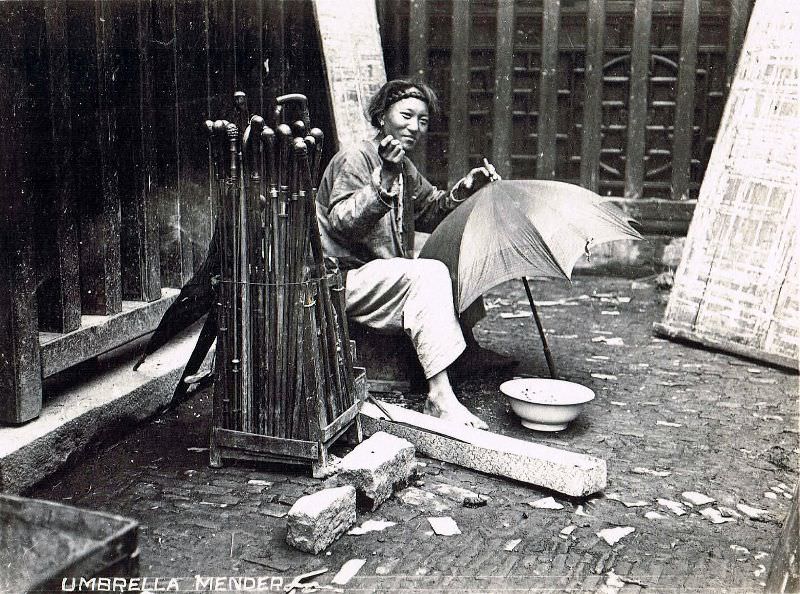
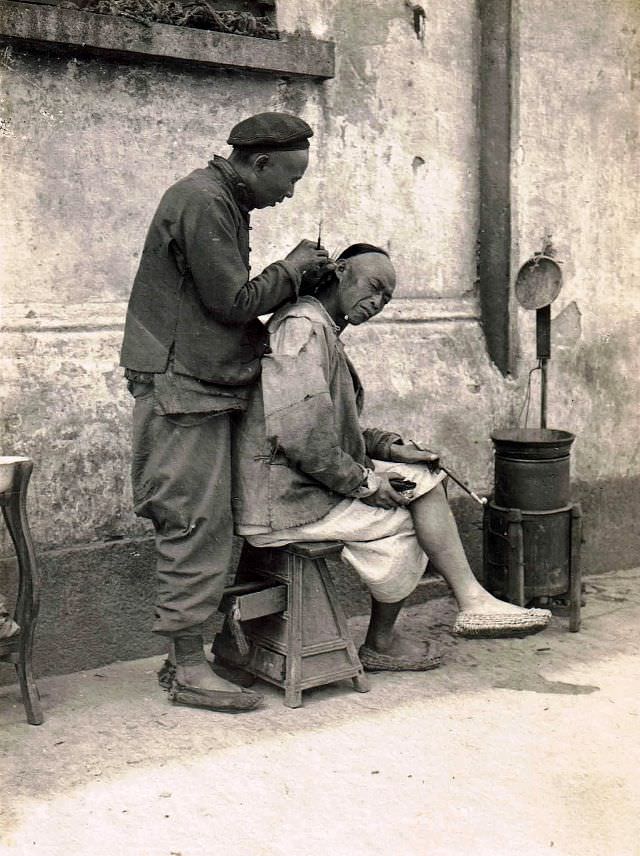
Street labor was everywhere. Rickshaw pullers, food sellers, and umbrella menders worked directly in public spaces, serving whoever needed them. A barber could set up on the pavement with nothing more than a blade and a stool.
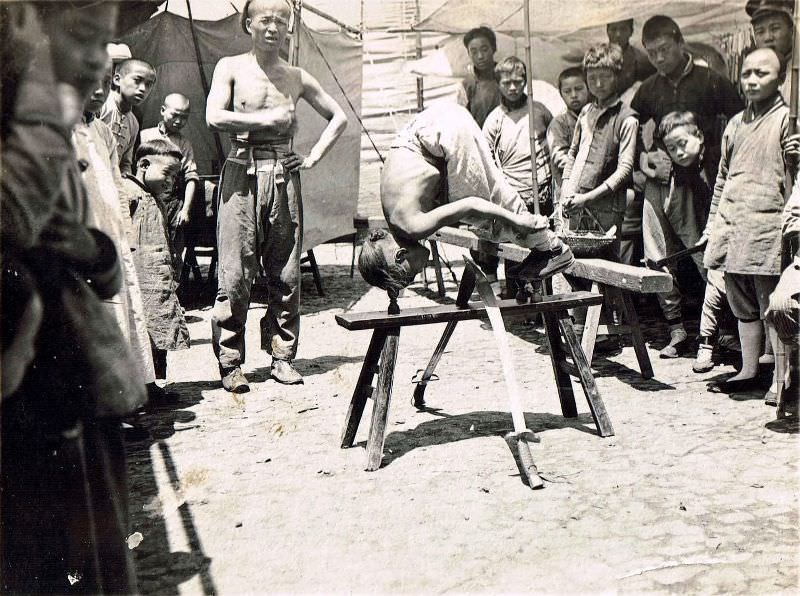
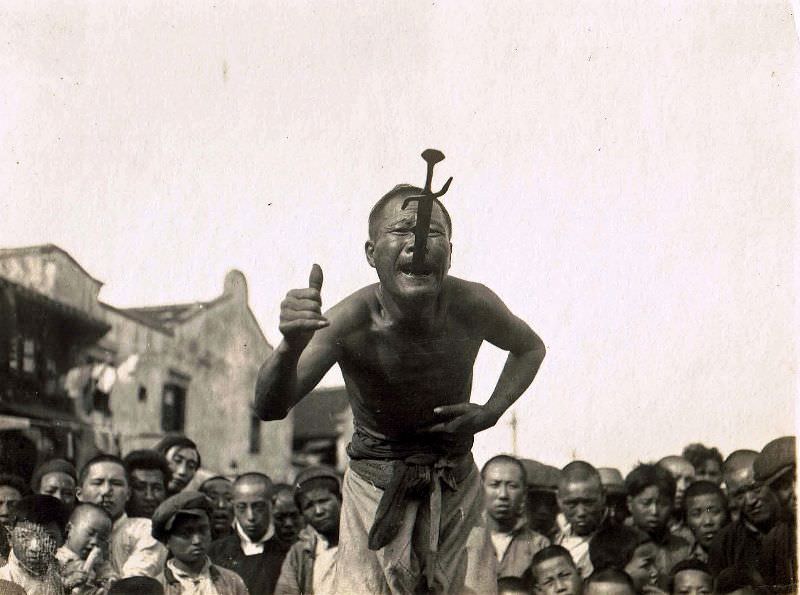
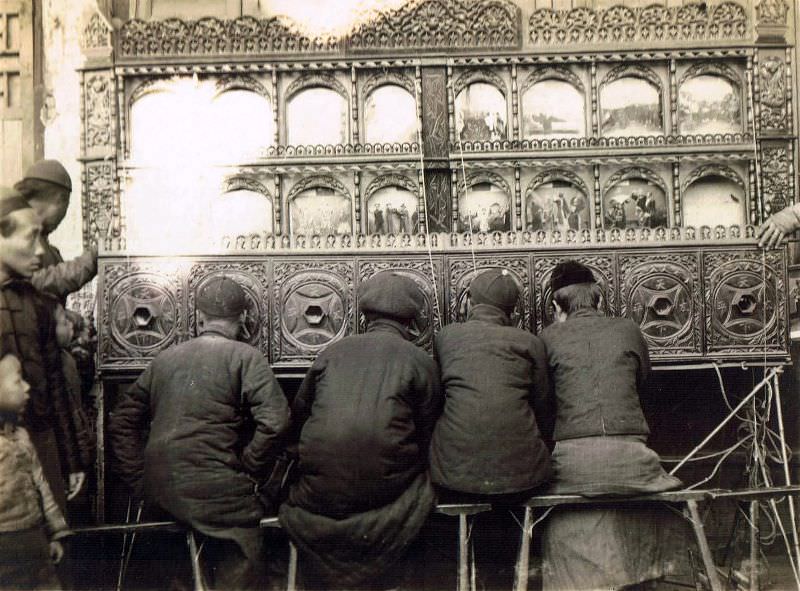
Entertainment was equally public. Street performers drew crowds in open squares and along busy roads. Circus artists, sword swallowers, and peep show box operators all competed for the attention — and spare coins — of passersby.
Skilled tradespeople worked with tools that had changed little over generations. A craftsman drilled by hand. Women worked spinning wheels and looms. Flax was processed by hand in a technique called heckling — combing the raw plant fibers into threads ready for weaving.
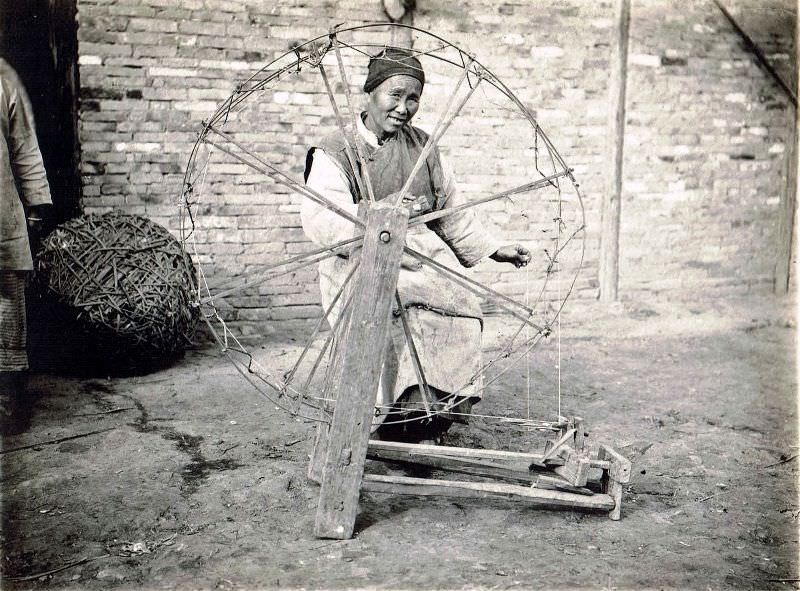
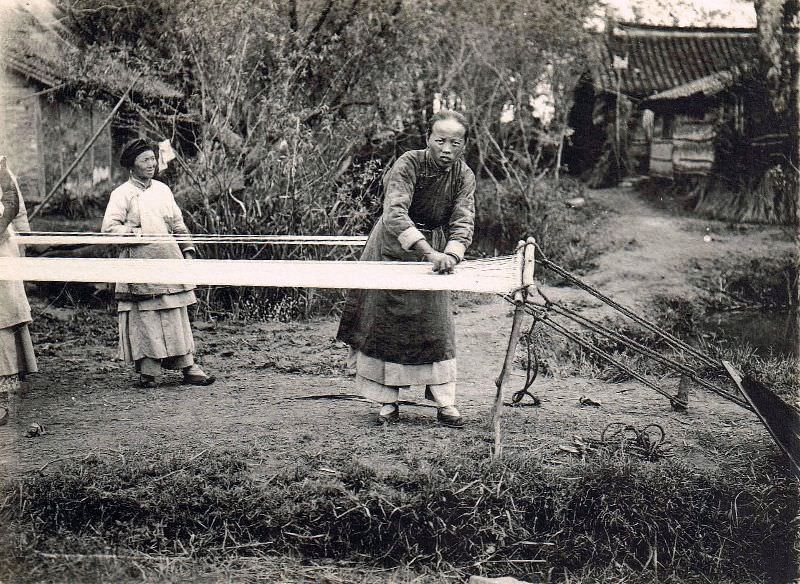
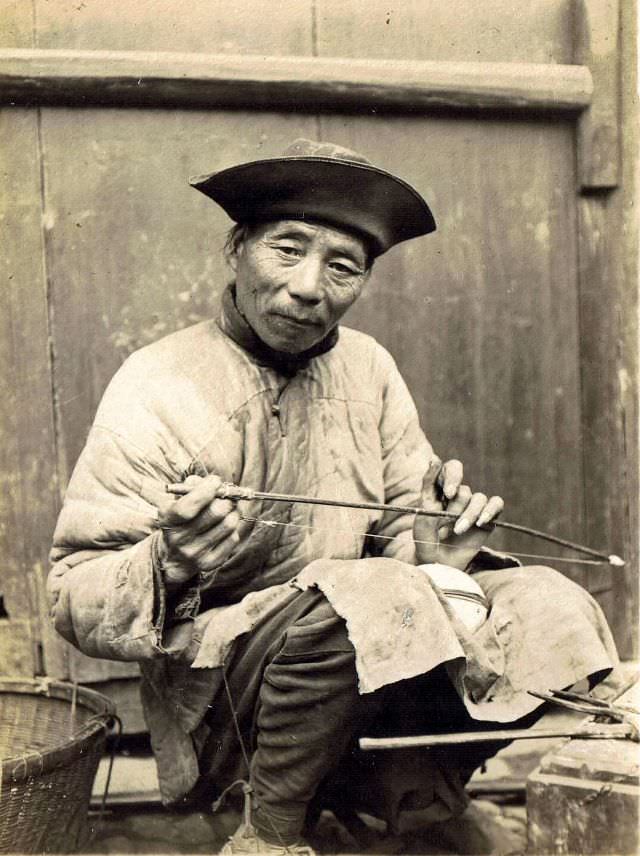
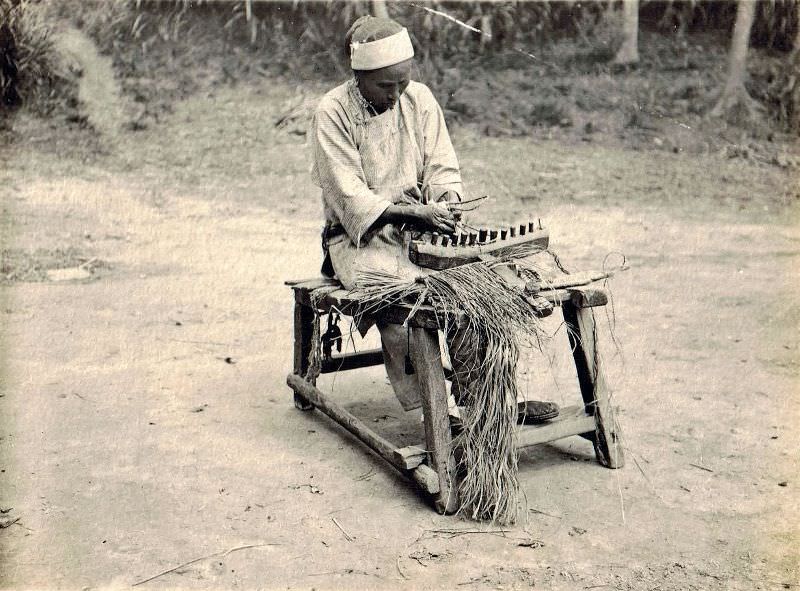
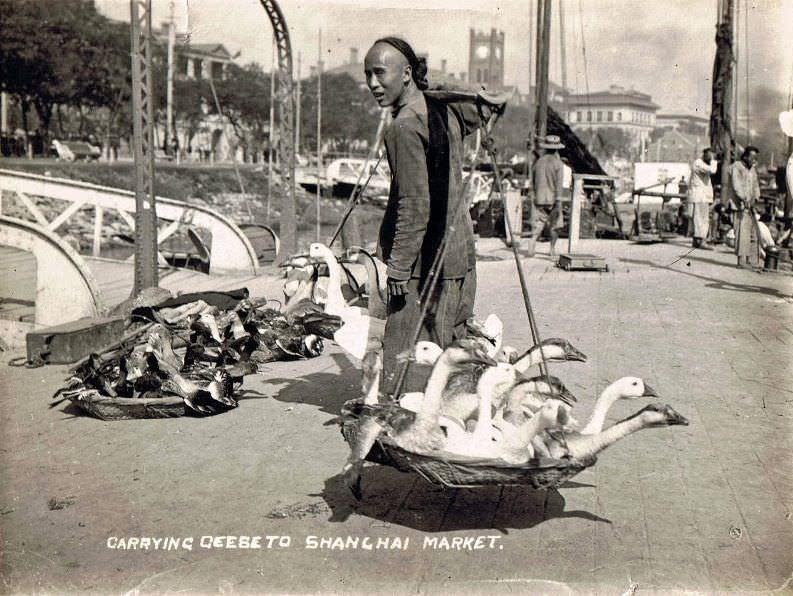
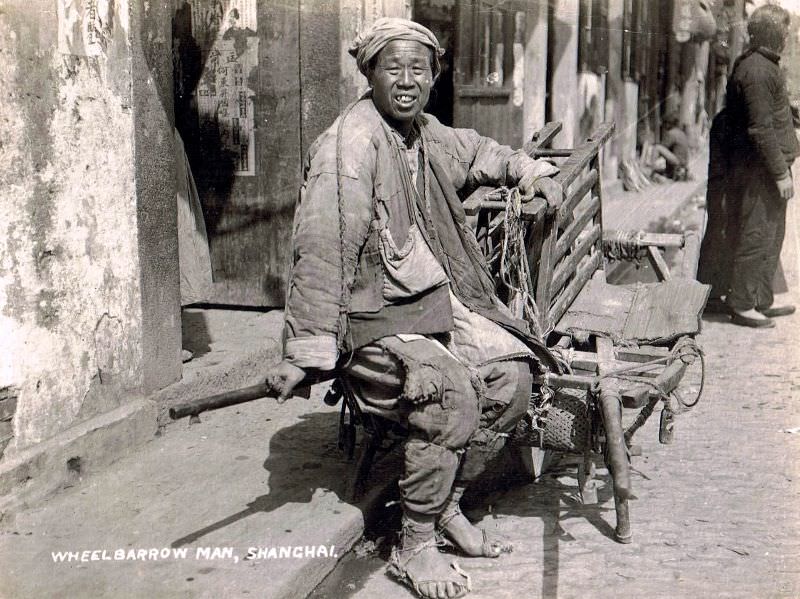
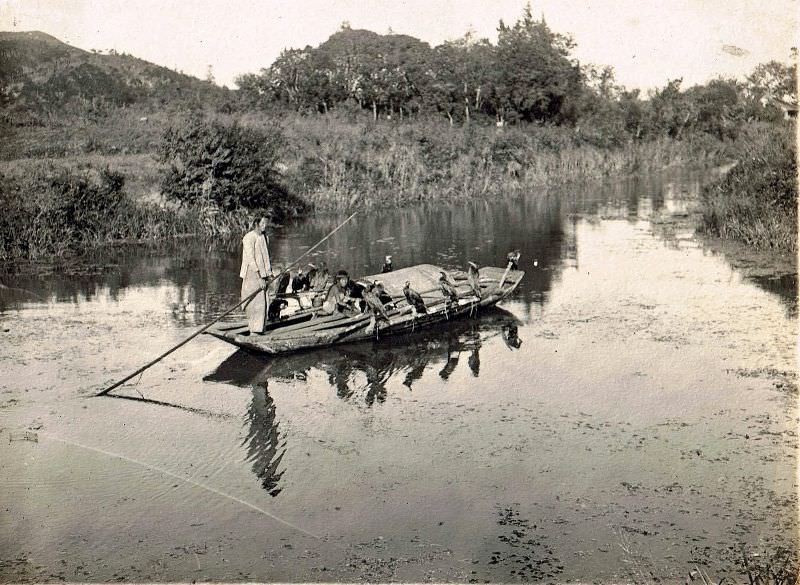
Beyond the workshops, food made its way to market by whatever means available. Live geese were carried to the Shanghai markets on foot. A wheelbarrow served as a practical freight solution on city streets. Fishermen on the rivers and coastal waterways used trained cormorant birds to dive and retrieve fish — a technique used in China for over a thousand years.
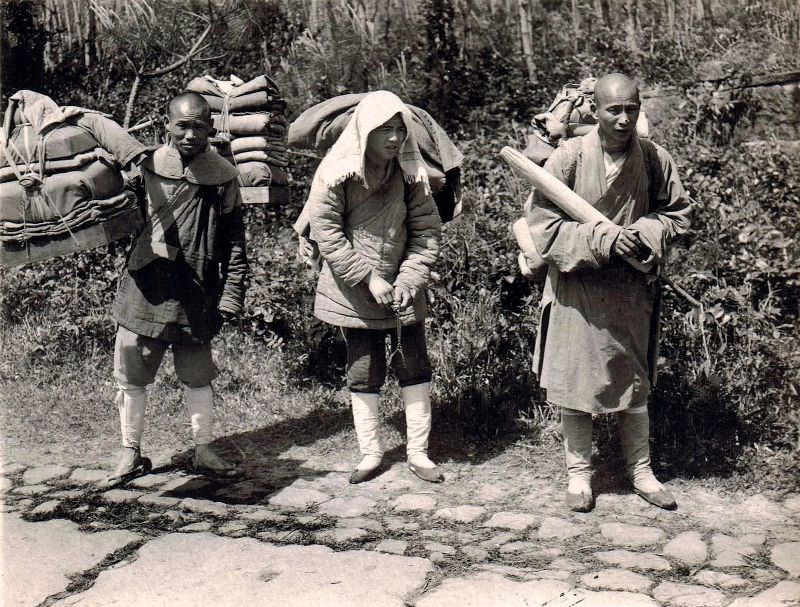
Religion remained a constant presence in public life. Buddhist monks traveled between communities, and portraits of individual monks show the variety of roles within that tradition. A calligrapher practiced his art with careful, deliberate brushstrokes.
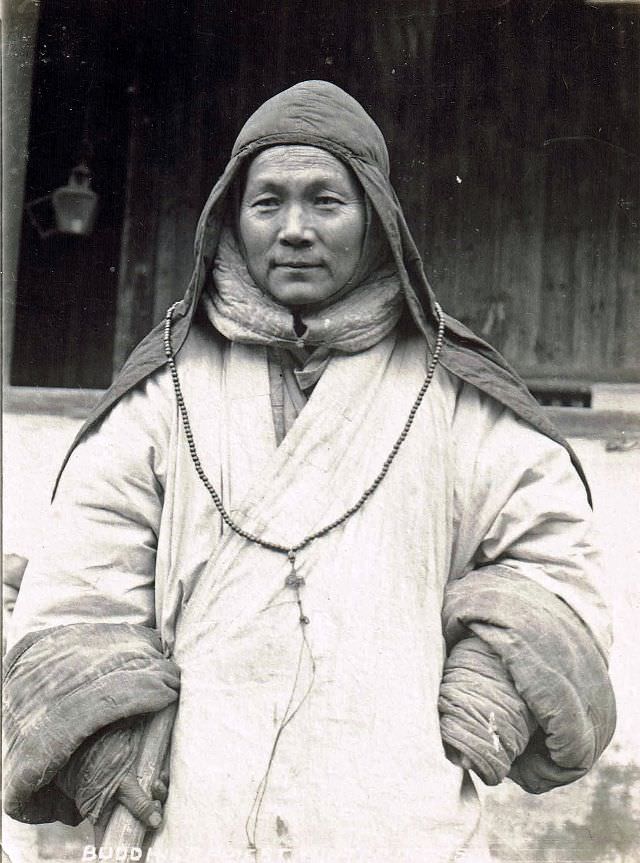
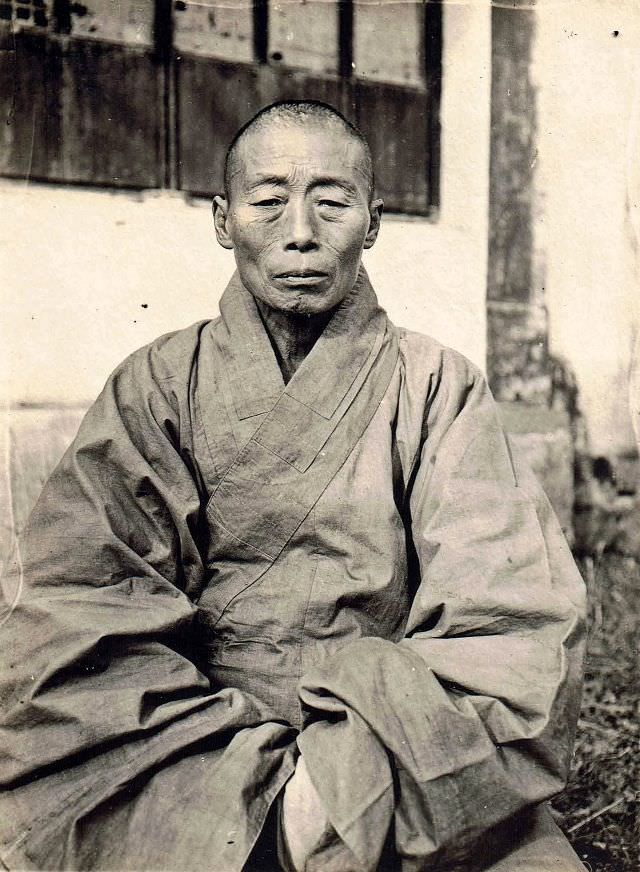
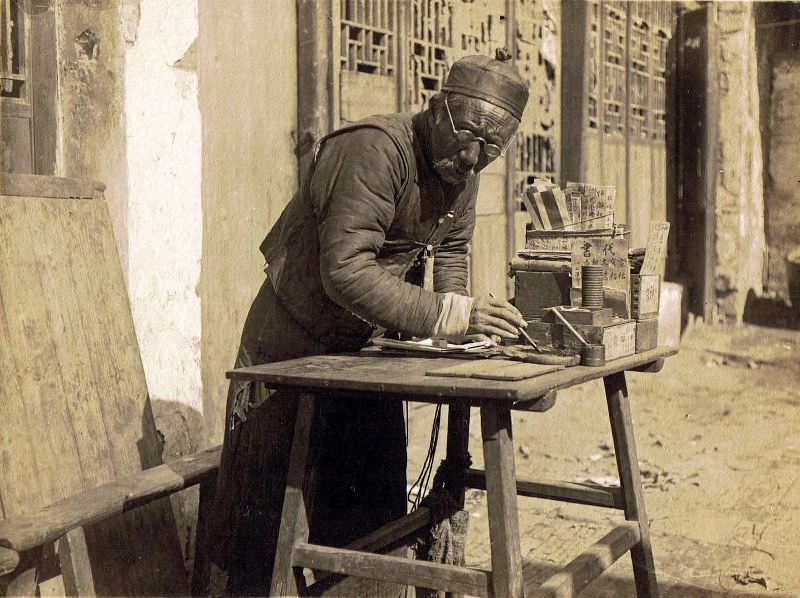
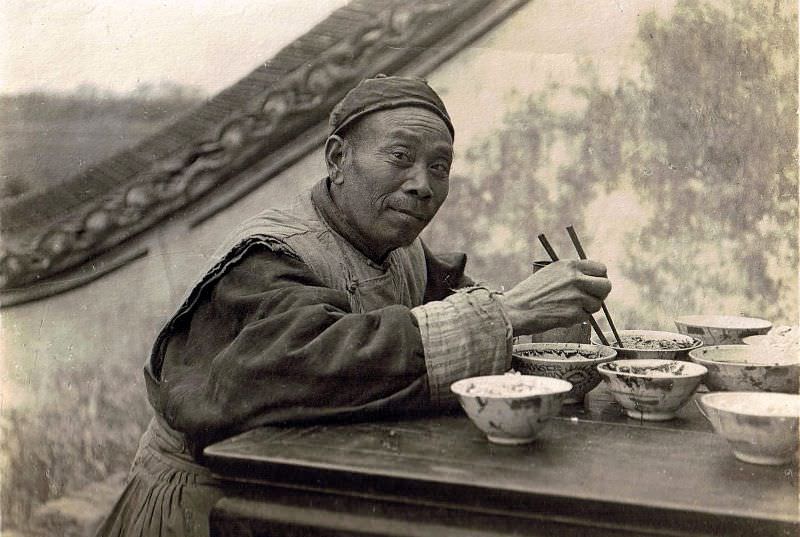
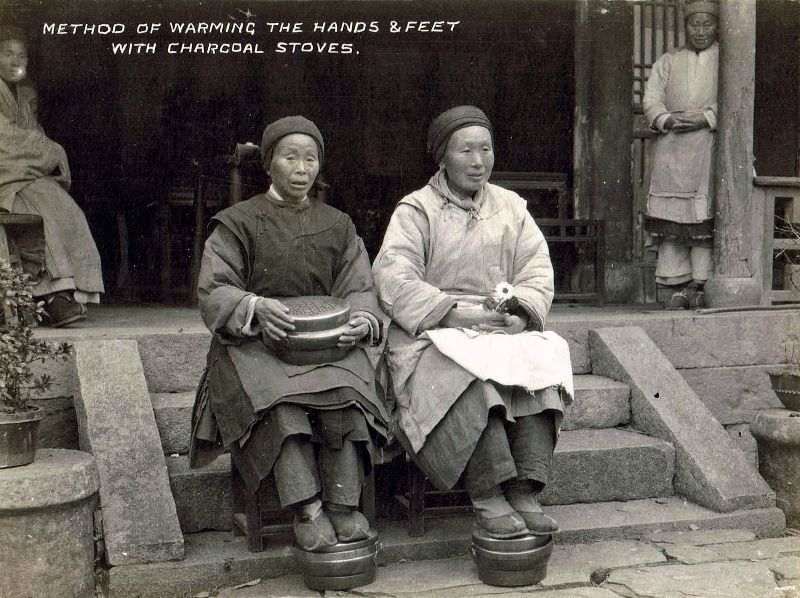
The traveler also photographed quieter, more personal moments — men playing chess, a man eating with chopsticks, people warming their hands over small charcoal stoves in the October cold, and a street doctor in Beijing performing an ear-cleaning treatment on a patient.
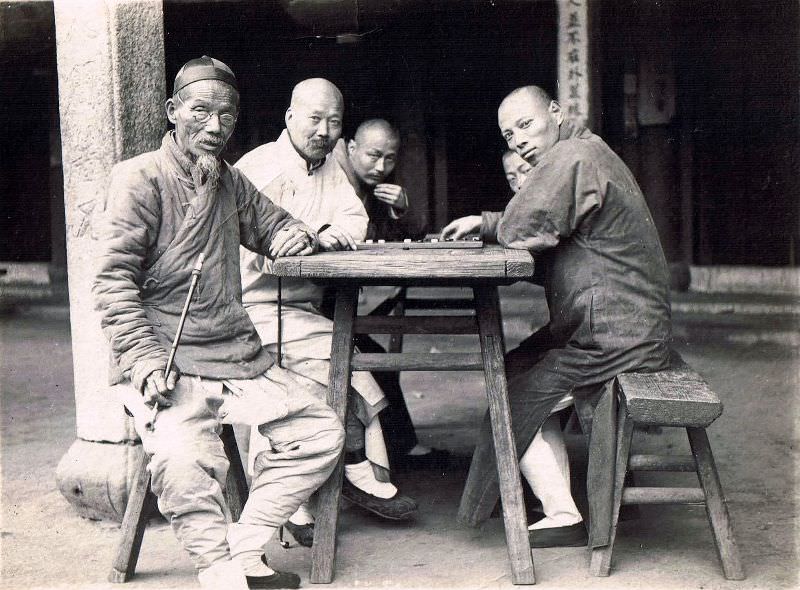
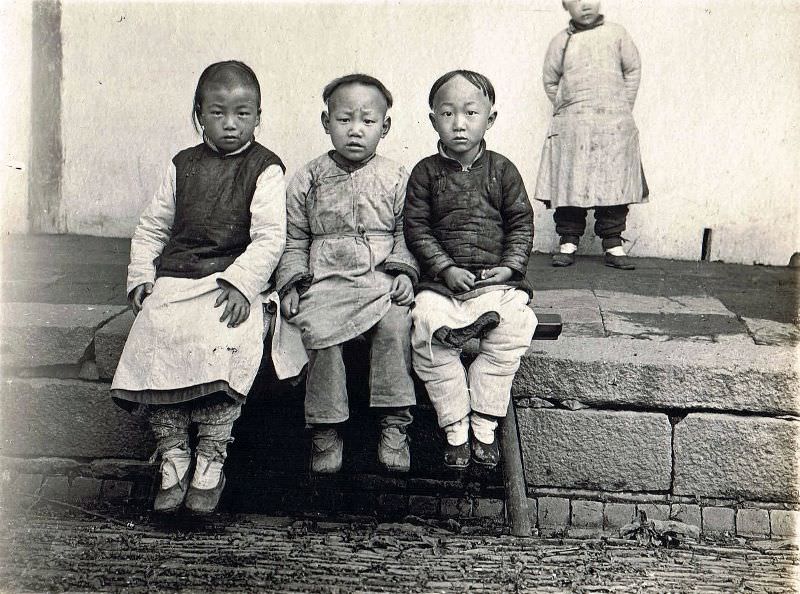
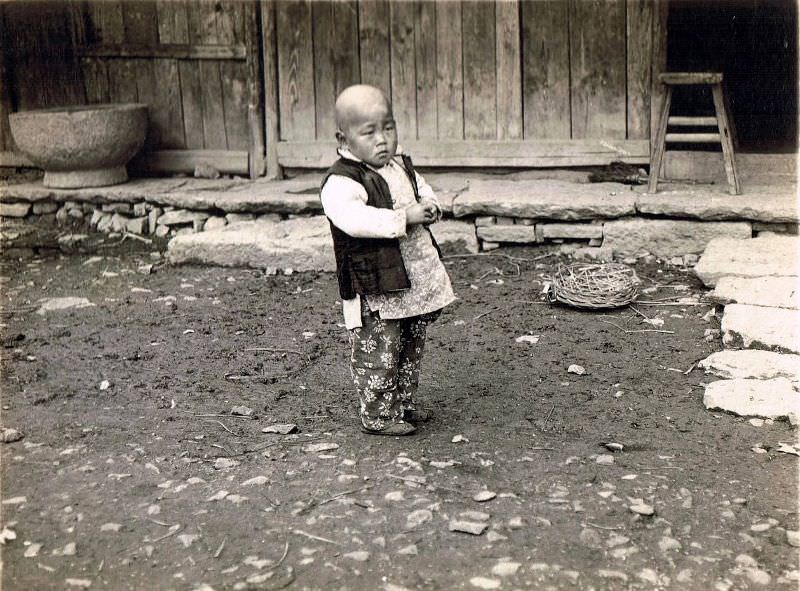
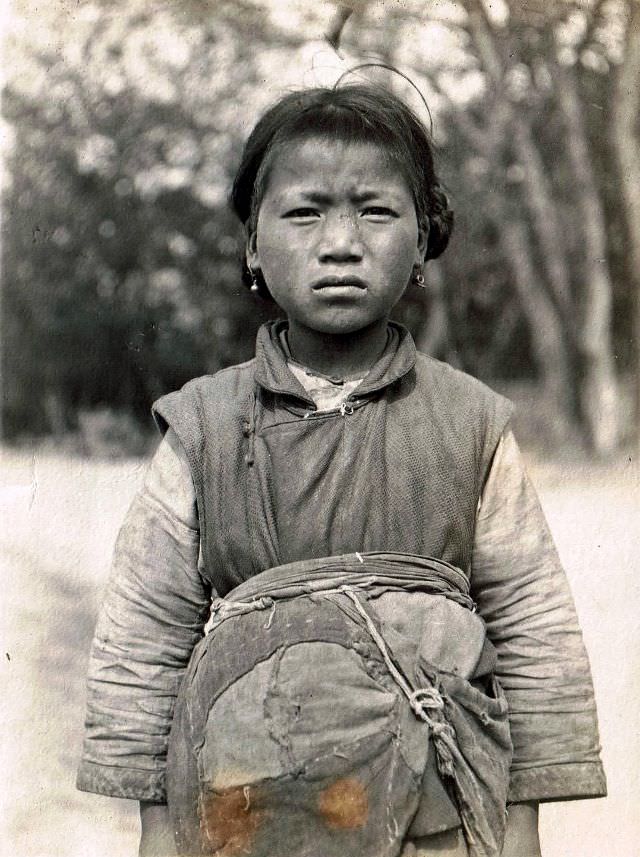
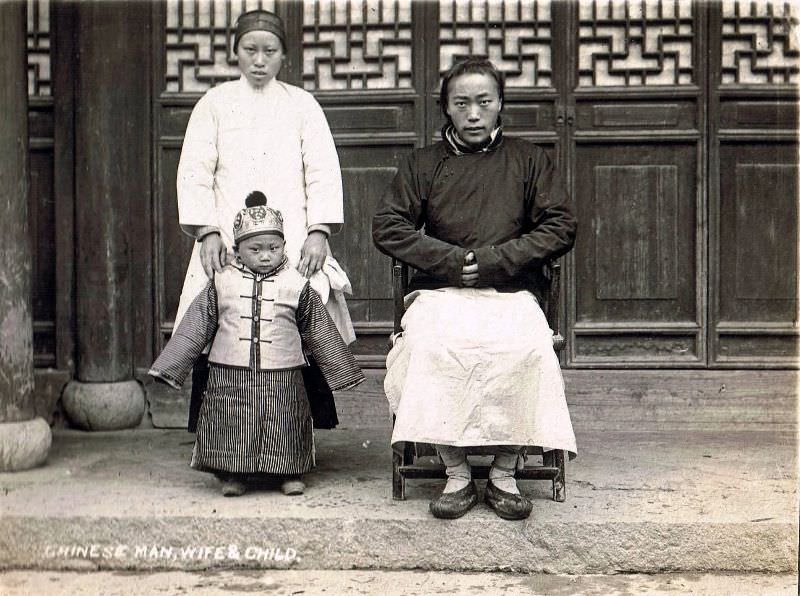
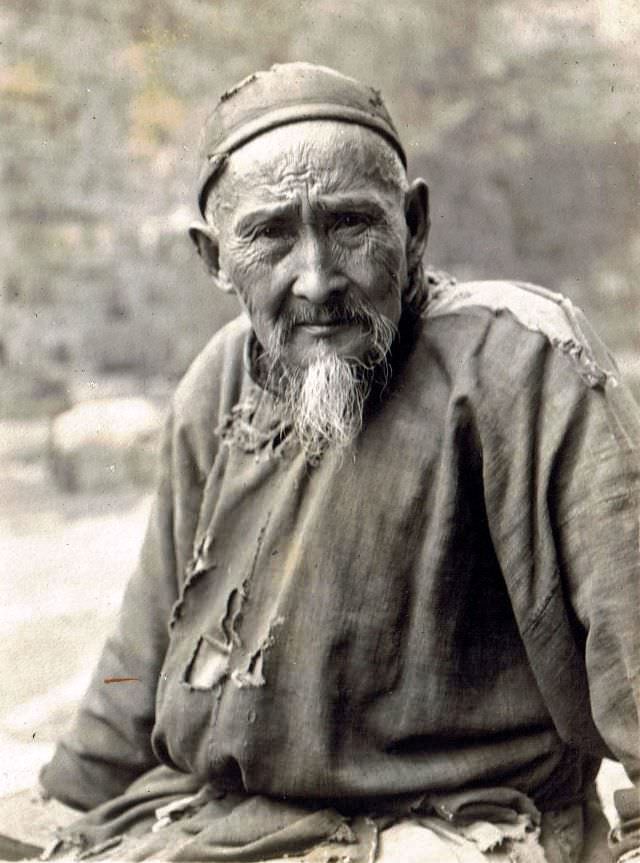
Portraits of ordinary people — children, women, families, elders — fill out the collection. They stand or sit for the camera with varying degrees of ease. Some appear curious; others look directly into the lens with a steady, unreadable composure.
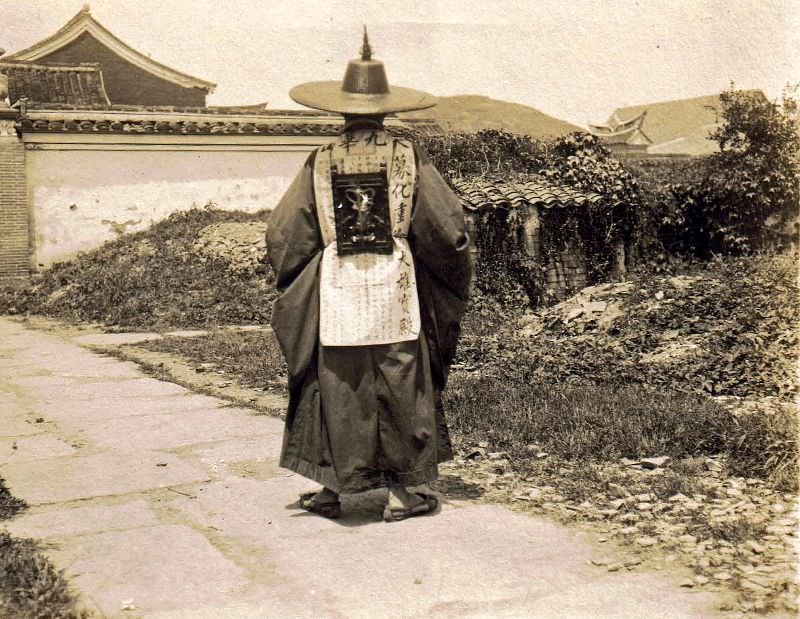
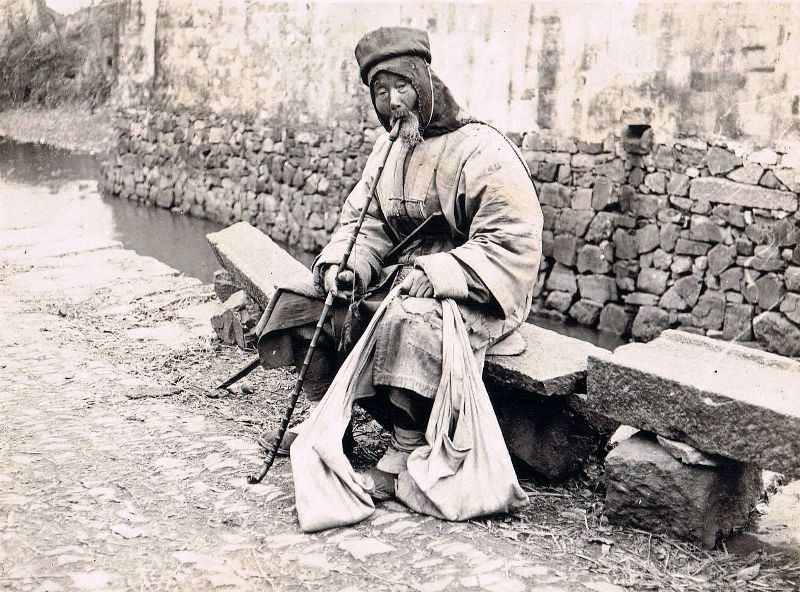
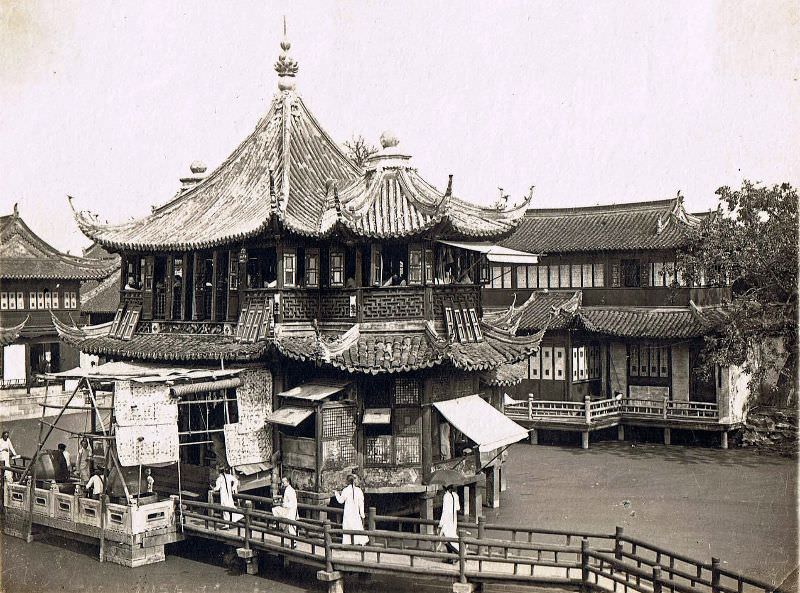
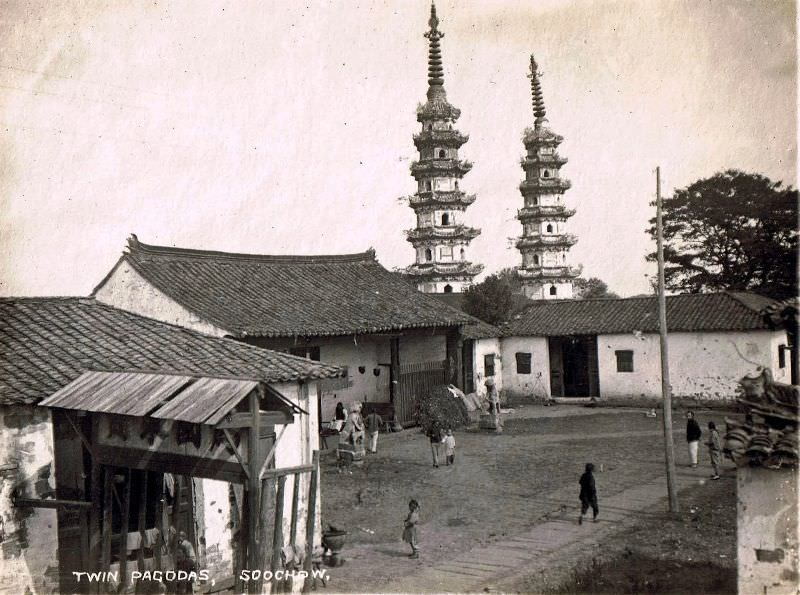
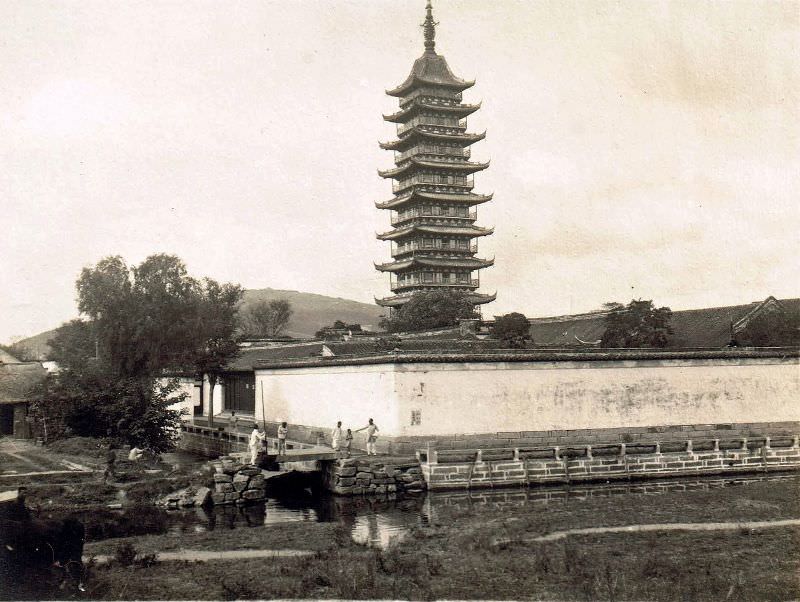
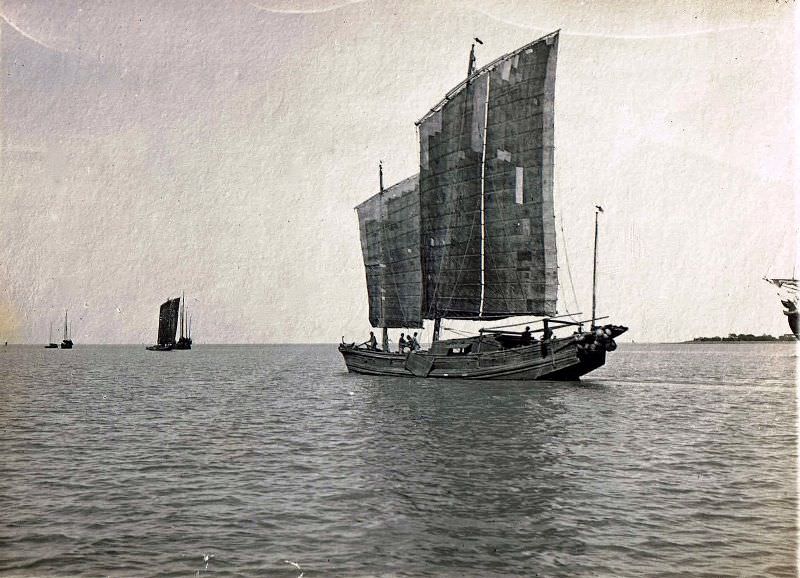
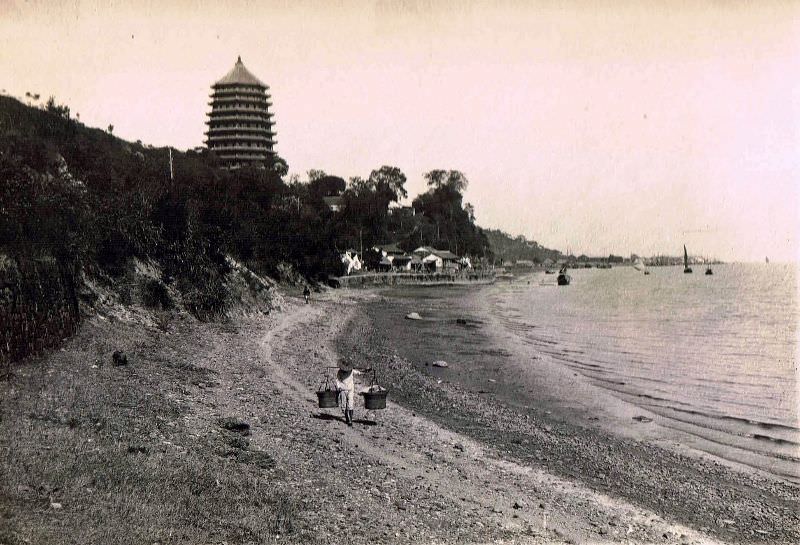
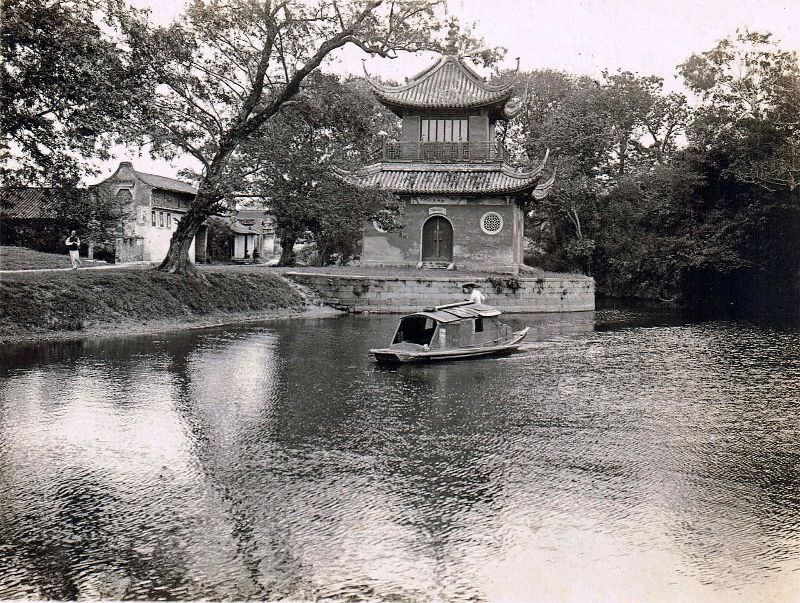
The cities themselves appear in the photos alongside the people. Historic landmarks like Yu Garden in Shanghai, the Twin Pagodas in Suzhou, and the Songjiang Square Pagoda near Shanghai show the architectural fabric of the country. Junks — traditional flat-bottomed Chinese sailing vessels — cross the water in one image. A pavilion sits beside a calm waterway in another.
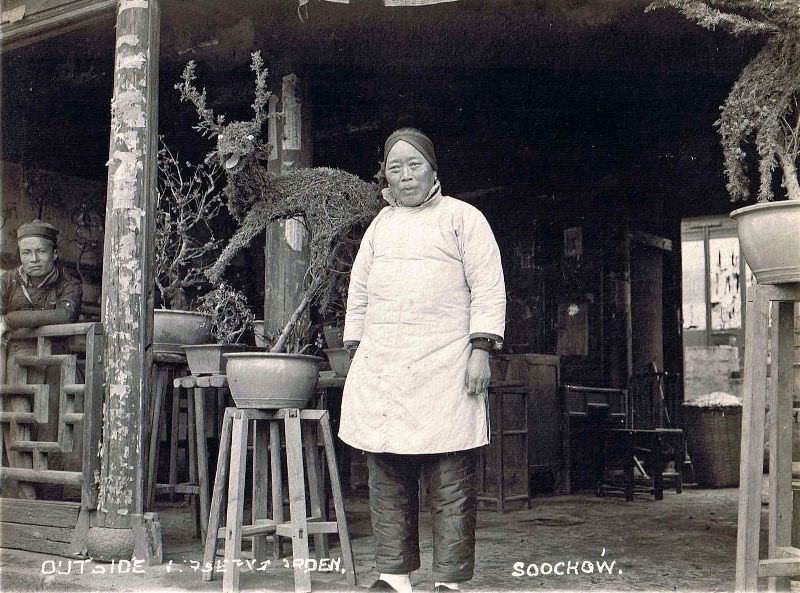
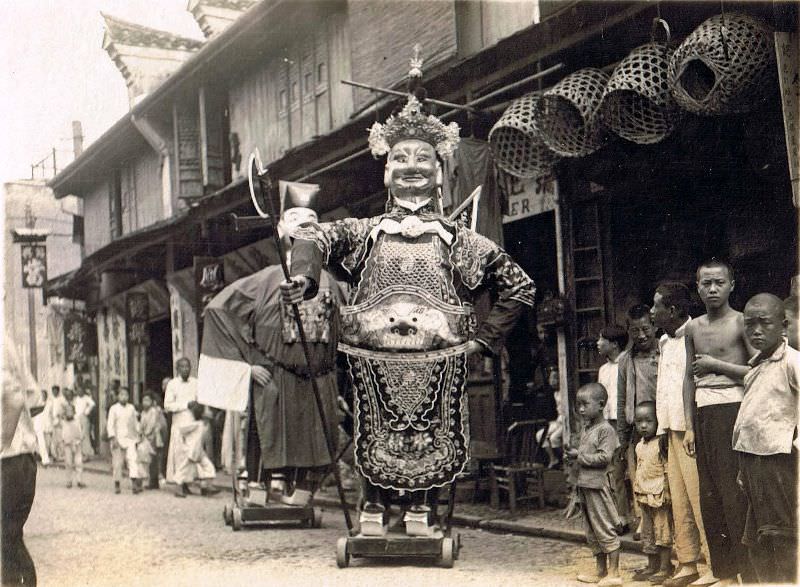
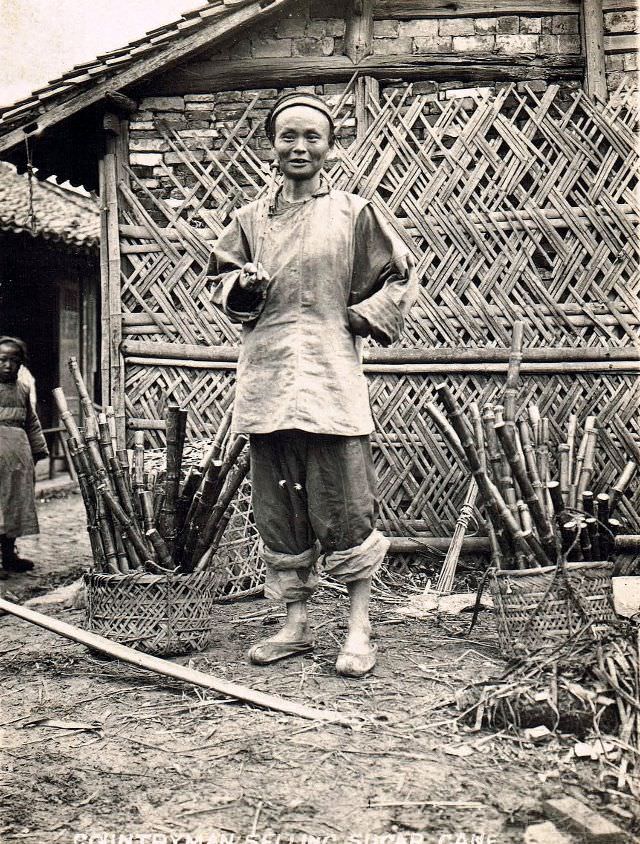
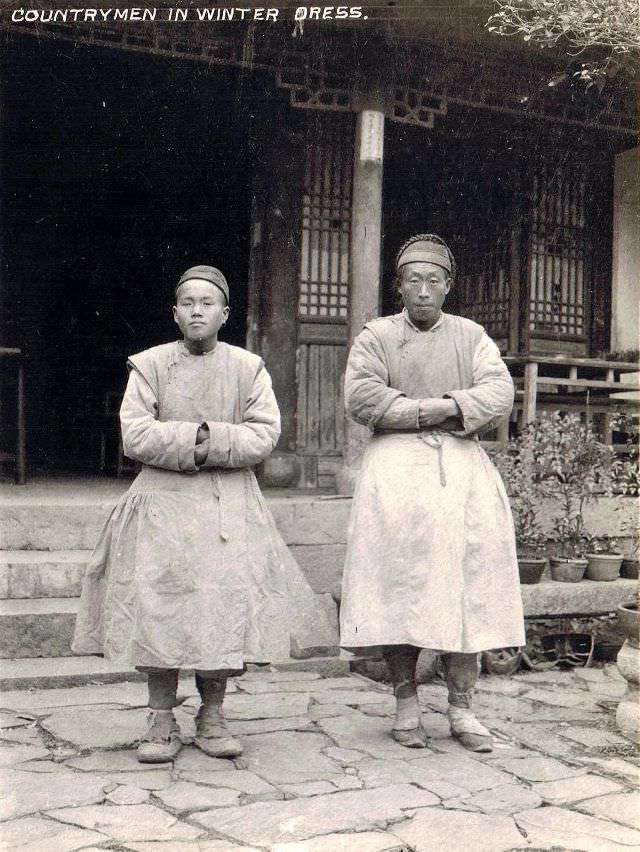
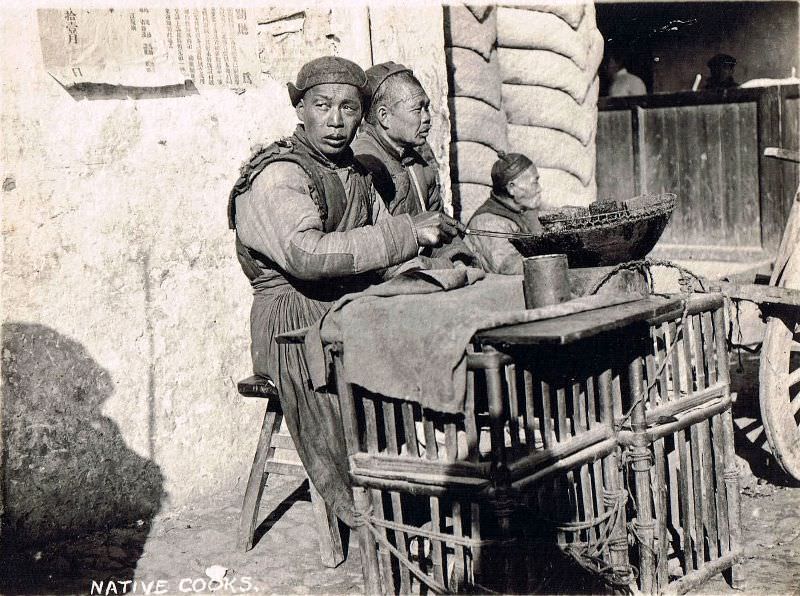
Some images document things that are harder to categorize — large decorative dolls on wheels, a countryman selling sugar cane, cooks working over open fires, and men bundled in heavy winter clothing against the autumn chill.