

Winter has a way of turning the world into a playground. Cold air, frozen ground, and a fresh layer of snow have drawn children outside for generations — bundled up, rosy-cheeked, and utterly fearless. These black and white photographs, taken across several decades and multiple continents, capture that timeless pull that snow has on young people. From the streets of Paris to the parks of New York City, the joy on these children’s faces is unmistakable. The earliest photograph in this collection takes us back to the very start of the twentieth century.
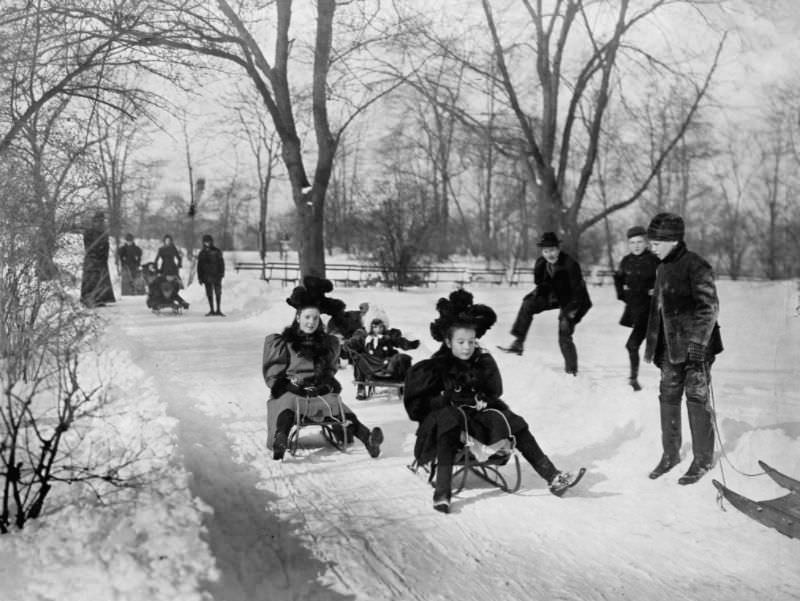
Central Park in 1900 was already a beloved gathering place for New York City families. When snow fell, it transformed the park’s open lawns and gentle hills into a winter wonderland for the city’s youngest residents. The children in this photograph are dressed in the heavy wool coats and layered clothing typical of the era, a far cry from the insulated snow gear of later decades. By the 1920s, photographers were increasingly capturing everyday life, and children at play in winter were a favorite subject.
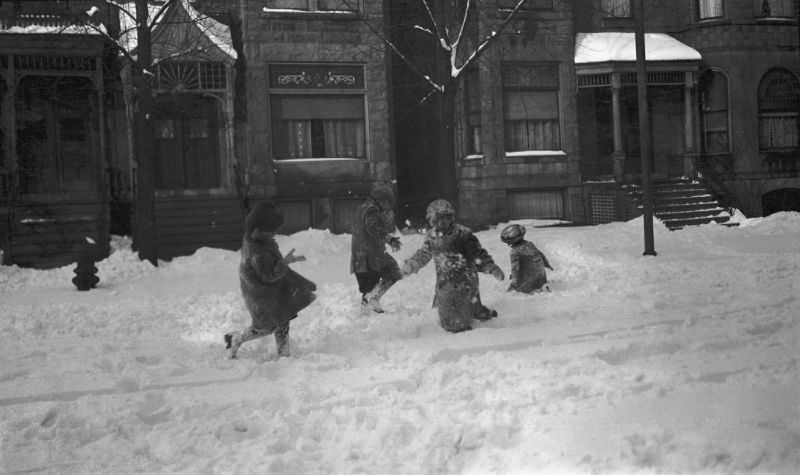
The 1920s brought a new energy to childhood leisure. Public spaces filled with children sledding, throwing snowballs, and building snowmen. Despite the economic hardships many families faced during this era, the snow itself was always free. It required nothing more than a willing pair of boots and an open patch of ground. Through the 1930s and into the early 1940s, winter play continued even as the world was at war.
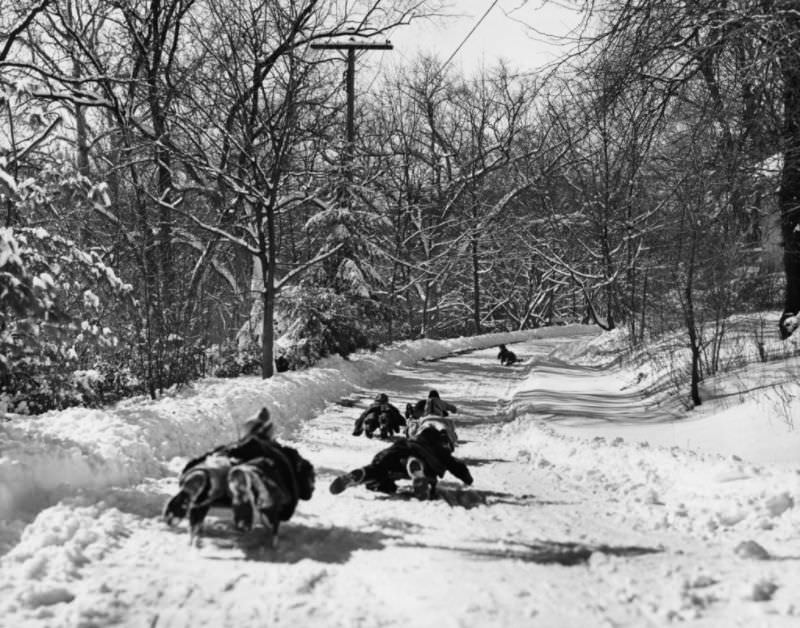
This 1944 photograph was taken while World War II was still being fought across Europe and the Pacific. Yet here, children are doing what children have always done — playing. Snow offered a brief, normal moment in an otherwise disrupted childhood for millions of kids around the world during this period. Just one year later, as the war drew to a close, children in Paris were back on the streets.
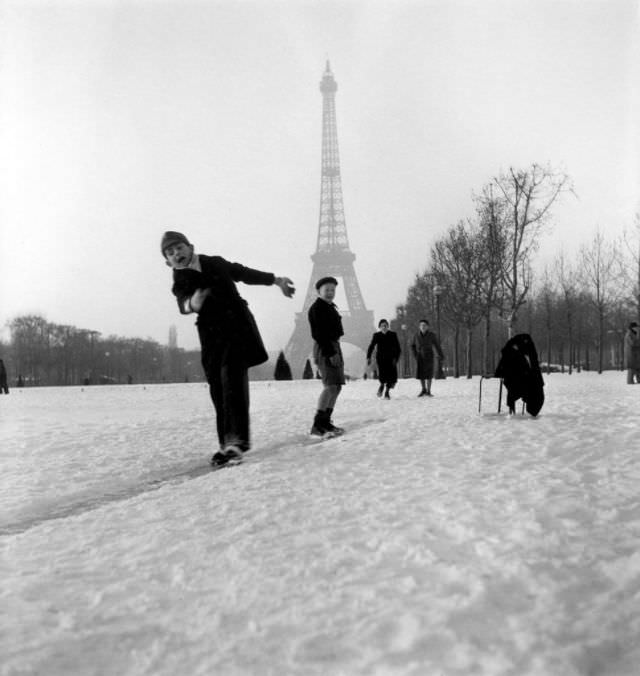
Paris in 1945 was a city rebuilding itself after years of German occupation. Winter arrived regardless, and with it came snow. For children, the streets and parks of the city became open arenas for play. The simplicity of the moment — kids in the snow, laughing and running — stands in sharp contrast to the turbulent history surrounding it. Across the English Channel, London’s children were doing the same.
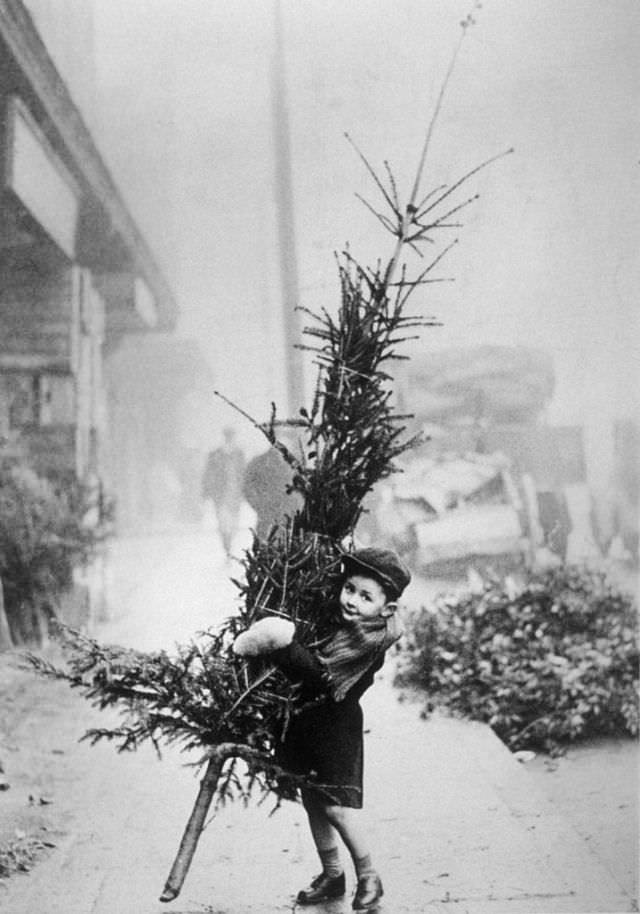
Spitalfields Market in London’s East End was one of the city’s busiest trading areas. In 1946, with post-war rationing still in place and much of the city’s infrastructure damaged, the neighborhood’s children made the most of a snowy day near the market. The cobblestoned streets and brick buildings of the East End form a distinctive backdrop to this slice of postwar childhood. As the 1950s arrived, photographers around the world were documenting children at play with new enthusiasm.
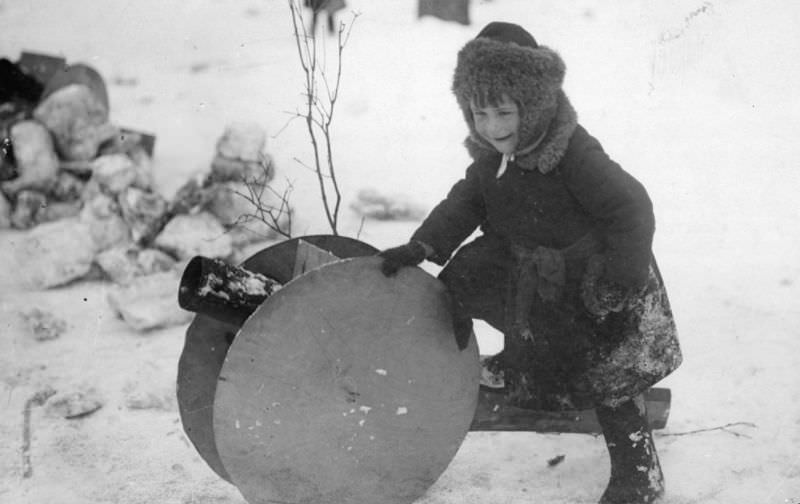
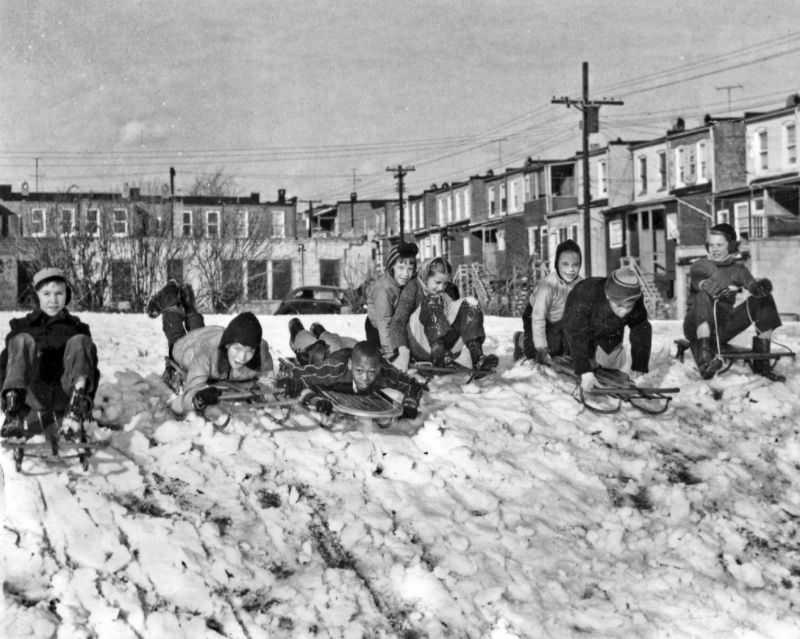
Moscow’s winters are among the harshest in Europe, with temperatures regularly plunging well below freezing. Snow is not a novelty there — it is a months-long reality. Russian children in the 1950s grew up treating deep snow as a normal part of life, sledding down hills and skating on frozen ponds as naturally as children elsewhere might ride bikes in summer. The early 1950s also produced some particularly striking winter portraits.
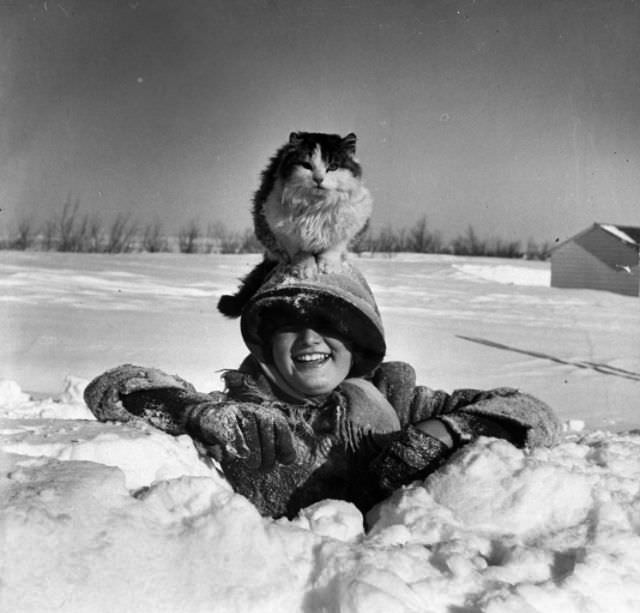
This 1952 photograph captures the decade’s characteristic mix of formal winter clothing and completely uninhibited play. Children of the era wore wool coats, knit caps, and leather boots — not exactly flexible snow gear, but it never slowed anyone down. Italy’s fashion capital, Milan, saw its own share of snowy winters during this decade.
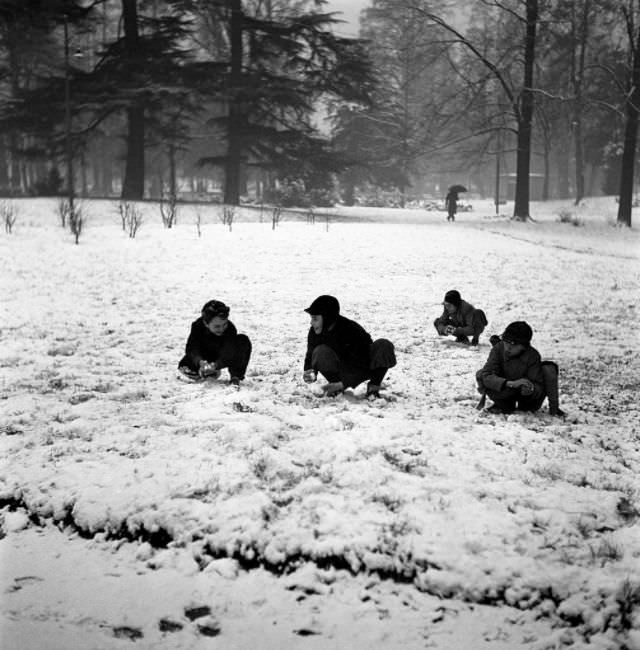
Milan is not typically associated with heavy snowfall, but the city does see winter weather, and when snow arrives, it transforms even its grand urban piazzas. The children photographed here in the 1950s treat the snow-dusted streets with the same enthusiasm found in any country or climate. The mid-1950s produced several memorable images from both Europe and America.
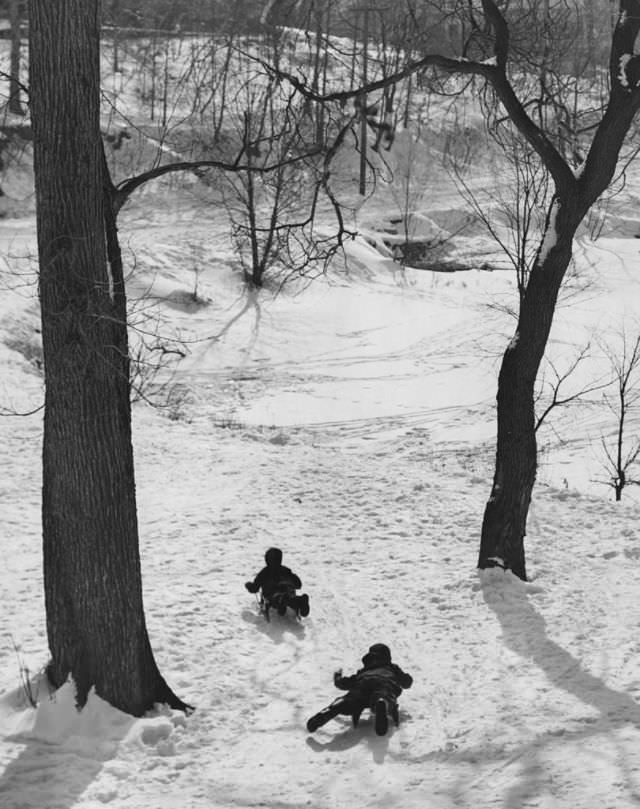
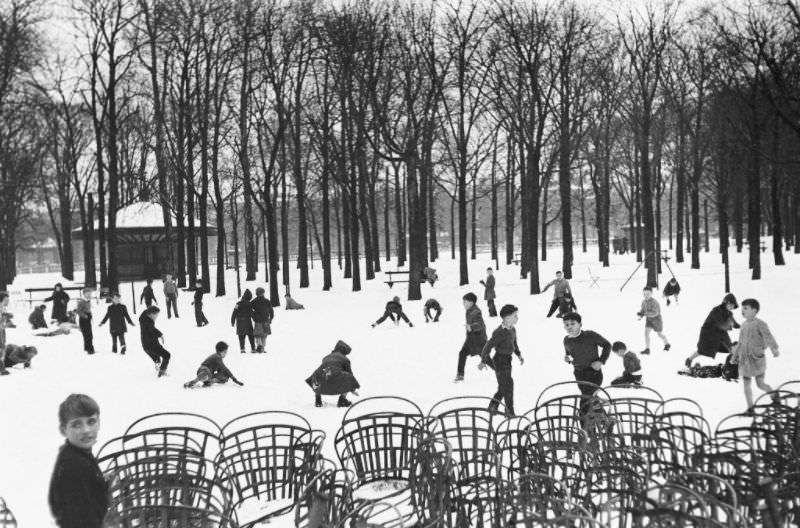
The Luxembourg Gardens in Paris have been a gathering place for families since the 17th century. In winter, when snow blankets the garden’s formal pathways and fountains, it becomes a different kind of space entirely — one shaped by children rather than by gardeners. The 1955 photograph taken here shows kids at play among the frosted trees, their dark coats standing out against the white ground. London and New York continued to provide rich settings for winter photography as the decade neared its end.
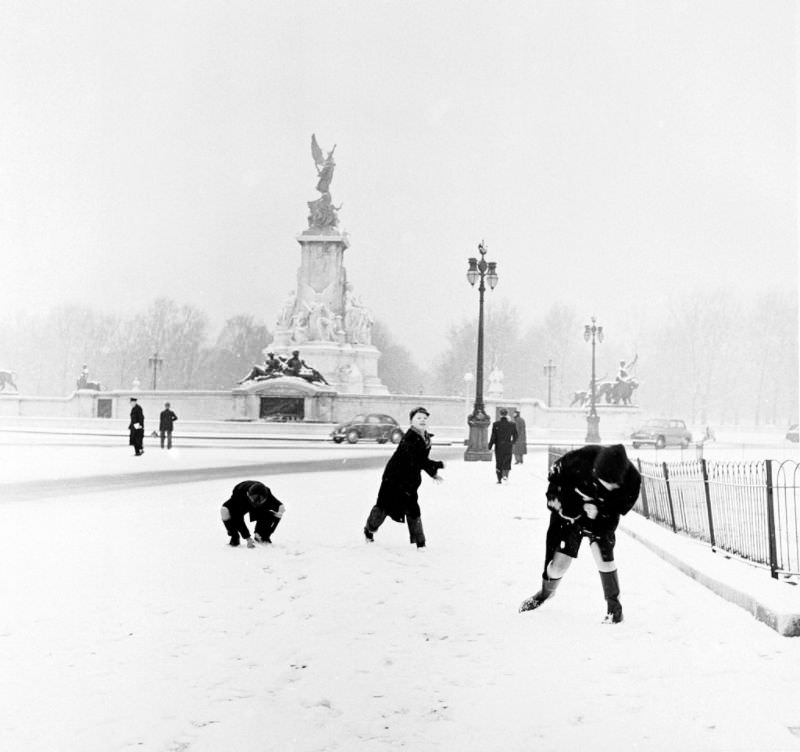
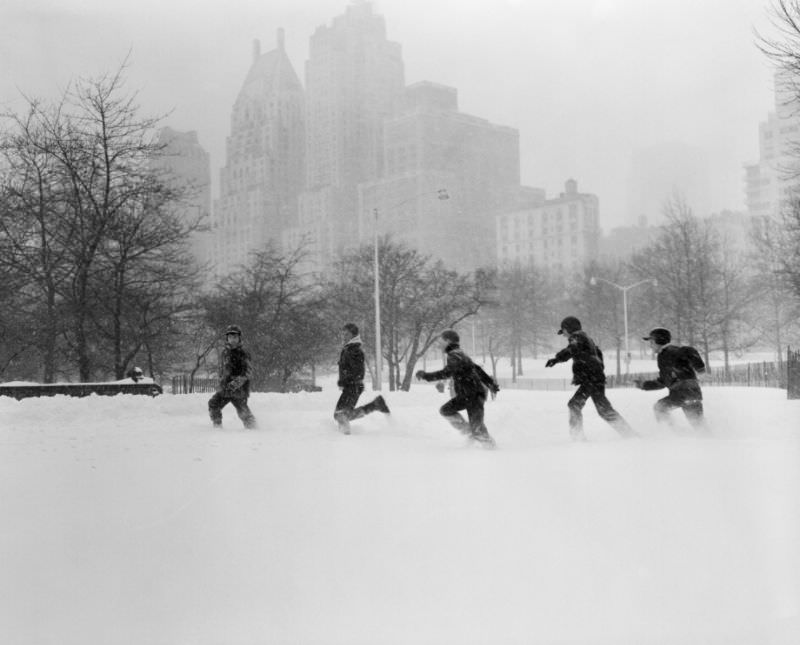
Central Park reappears in this collection in 1958, nearly six decades after the first photograph was taken there in 1900. The park itself had changed over those years, as had the clothing and equipment children used, but the activity was the same — kids running, sliding, and throwing snow with total abandon. Meanwhile, in the suburbs outside London, families were enjoying their own winter scenes.
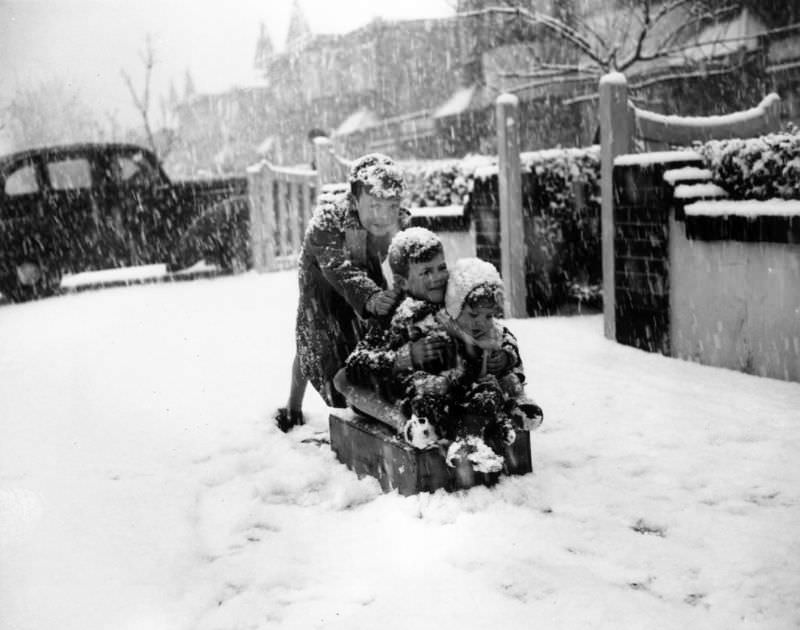
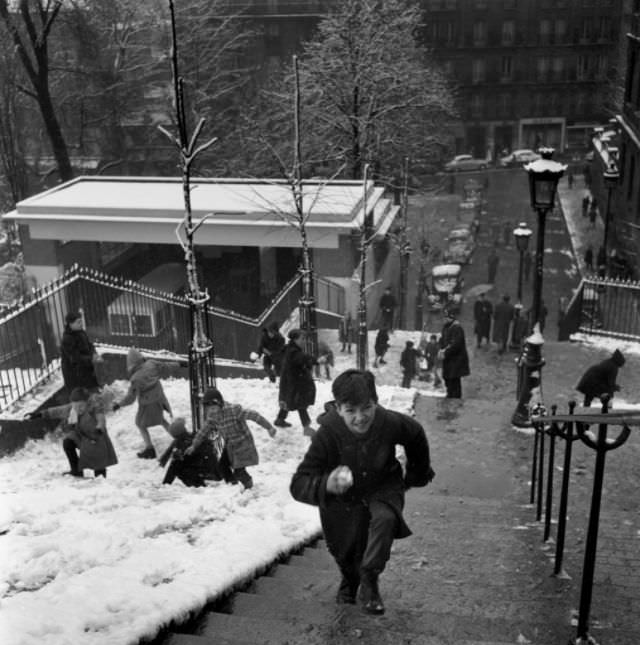
Ilford in Essex was a growing suburban area in the late 1950s, full of families who had moved out of central London after the war. A snowy day in the neighborhood meant the whole street became a playground. Paris in that same year, 1958, saw children making the most of the city’s parks and wide boulevards under a fresh coat of snow. The following year, 1959, brought notable winter photographs from both Switzerland and northern England.
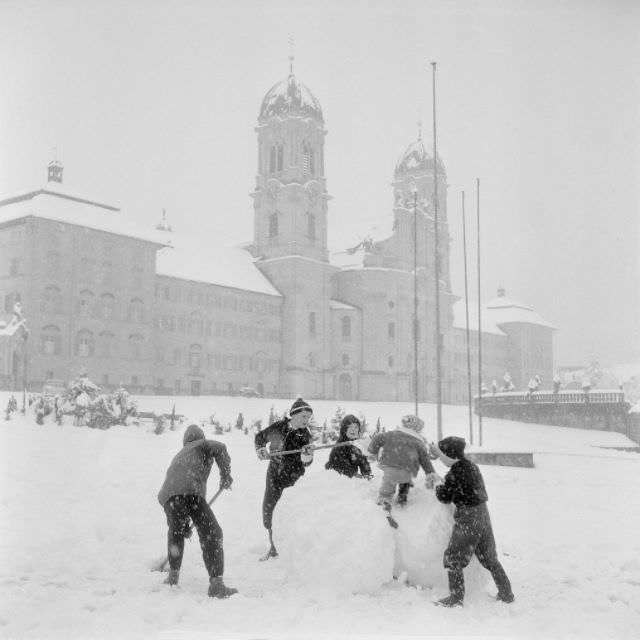
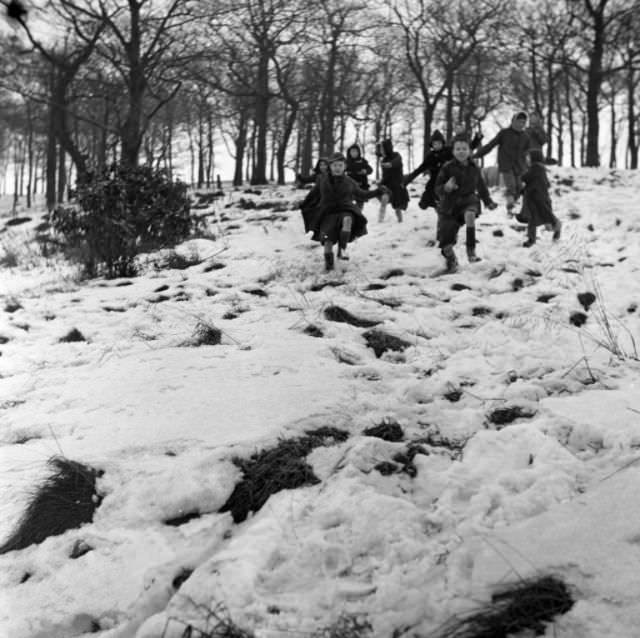
Einsiedeln is a small town in the Swiss Alps, where deep winter snowfall is simply part of the annual rhythm. Children there grew up skiing and sledding with a level of skill that children in milder climates rarely develop. Manchester, in contrast, sits in the rainy lowlands of northern England, where heavy snow is less frequent but no less celebrated when it arrives. As the 1960s began, photographers continued to find children and snow an irresistible combination.
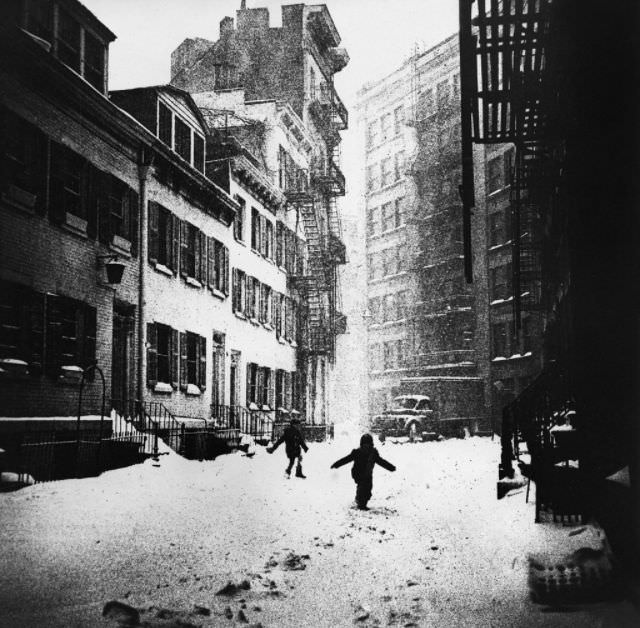
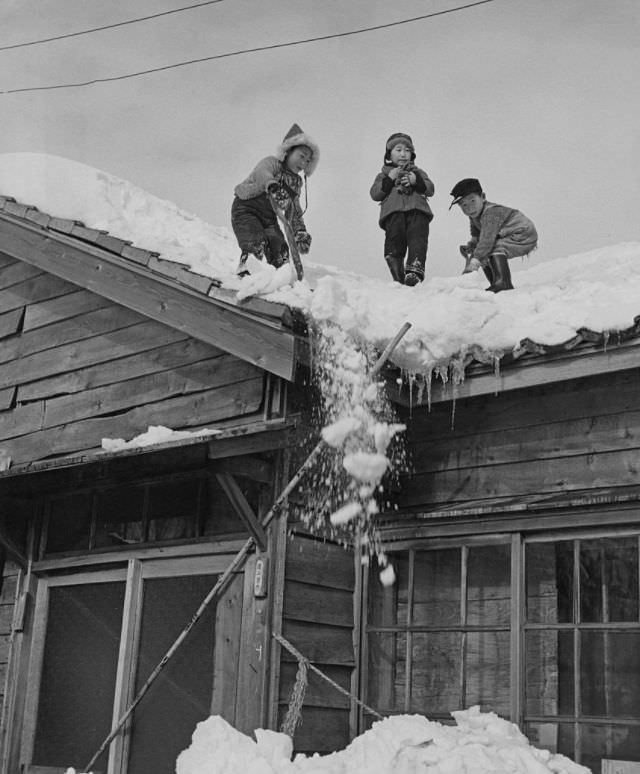
Greenwich Village in 1960 was a neighborhood known for its artists and writers, but on a snowy day it belonged to the kids. The narrow streets and brownstone stoops of the Village provided a tight, intimate setting for winter play. Halfway around the world, children in Japan were doing the same — building snowmen and staging snowball fights in a country where winter festivals and snow have deep cultural roots. Across every era and every city in this collection, the children’s enthusiasm for snow remains entirely consistent.
