Chenango County sits in the heart of central New York State, tucked into a region known as the Southern Tier. Its name comes from an Oneida word meaning “large bull-thistle,” a nod to the Indigenous people who shaped this land long before European settlement. The Chenango River, a tributary of the Susquehanna River, flows southward through the county, carving out the broad, scenic valley that defines so much of the local landscape. Governing the county is a Board of Supervisors made up of 23 elected town officials who represent their communities at the county level.
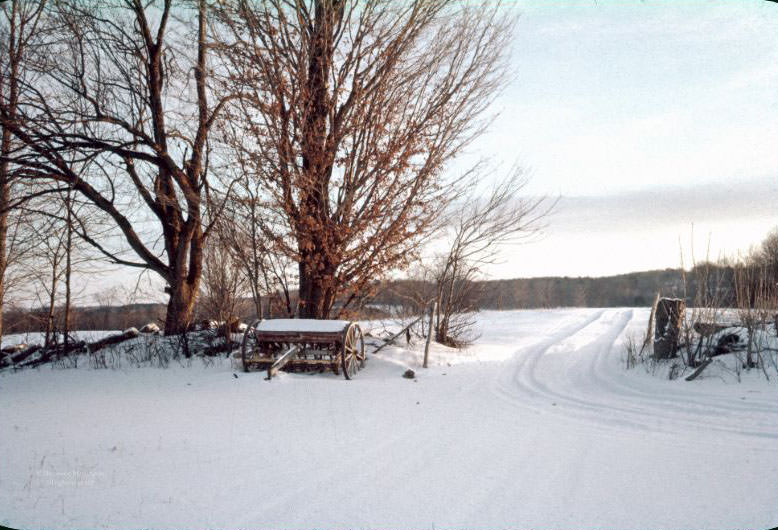
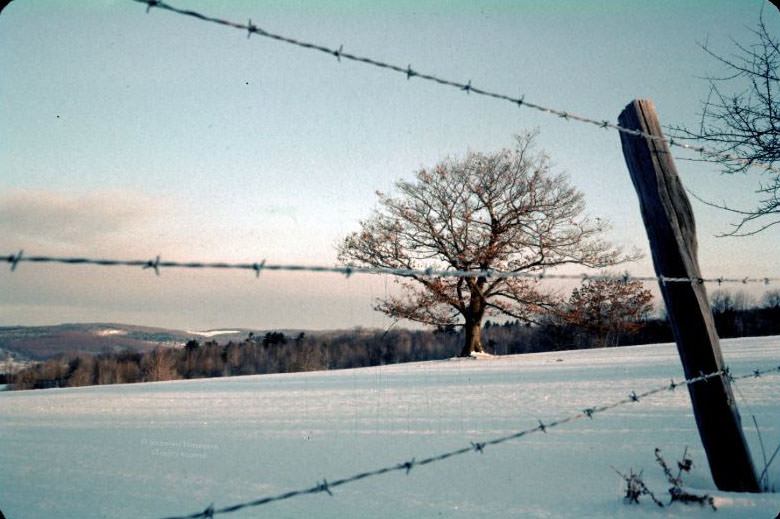
The photographs below were taken by Lynn Harrington (1915–1999), a careful and devoted observer of the world around him. Shot between 1960 and 1967, his images capture Chenango County in a way that no written record fully can — the texture of a dirt road, the silence of a frozen gorge, the warm light of a summer evening. These are scenes of everyday rural life, small-town streets, rolling farmland, and seasons that came and went with quiet regularity.
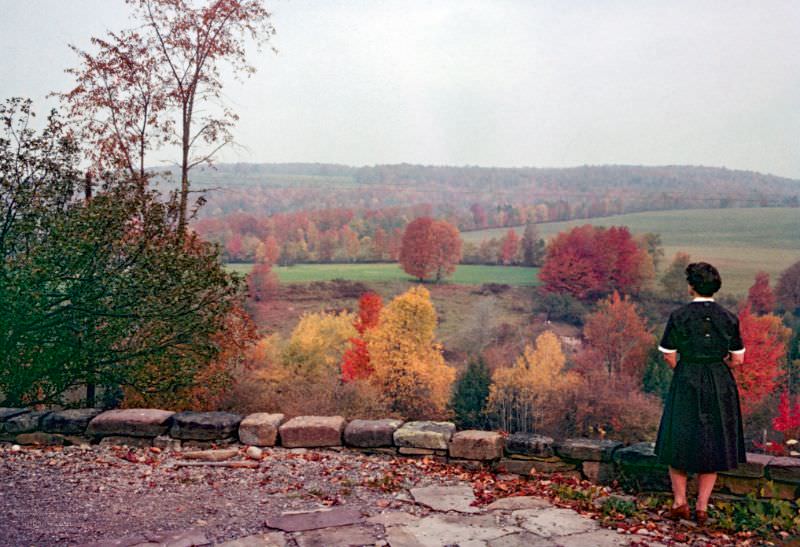
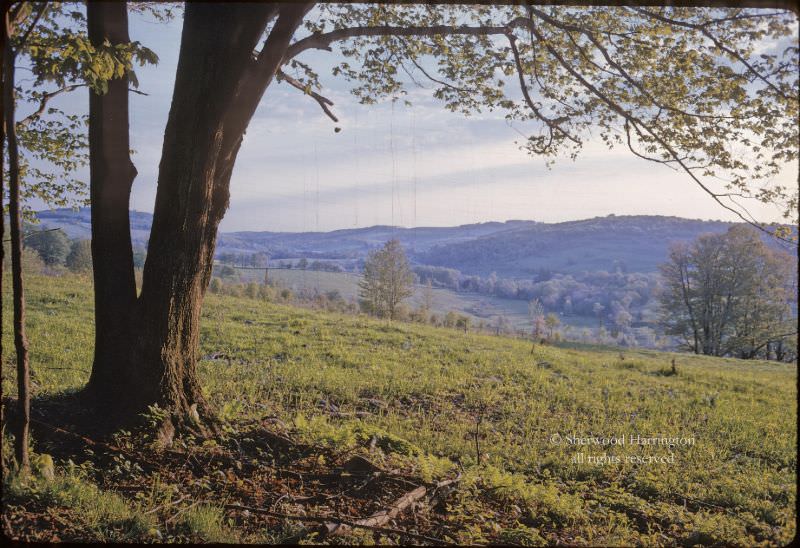
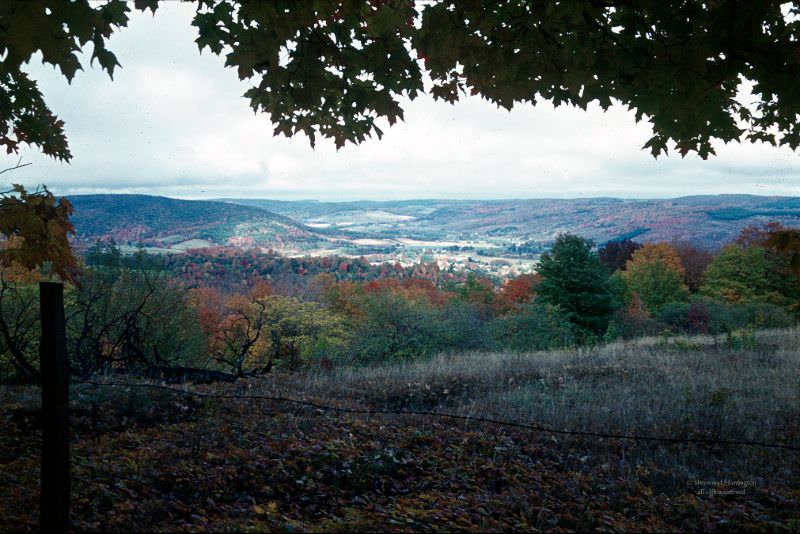
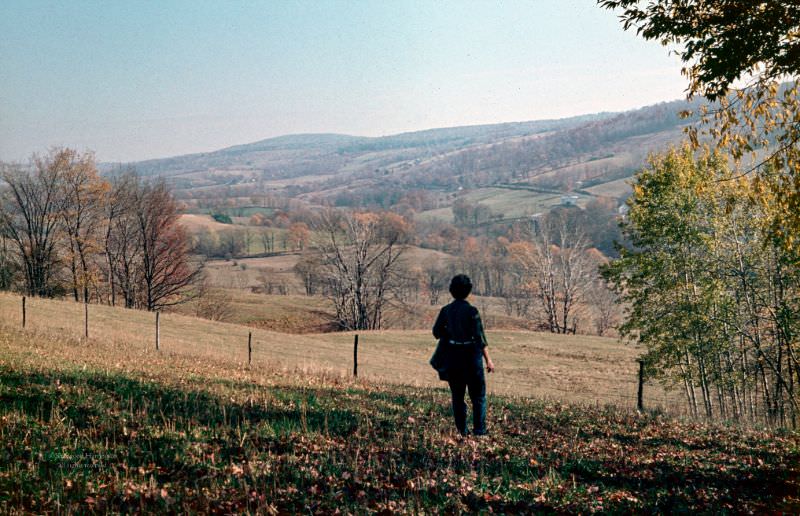
Harrington’s earliest shots from 1960 already show his eye for the natural world. In October of that year, he looked out from his own driveway across the Thompson Creek valley, capturing the wide, open feel of the Chenango hills in autumn.
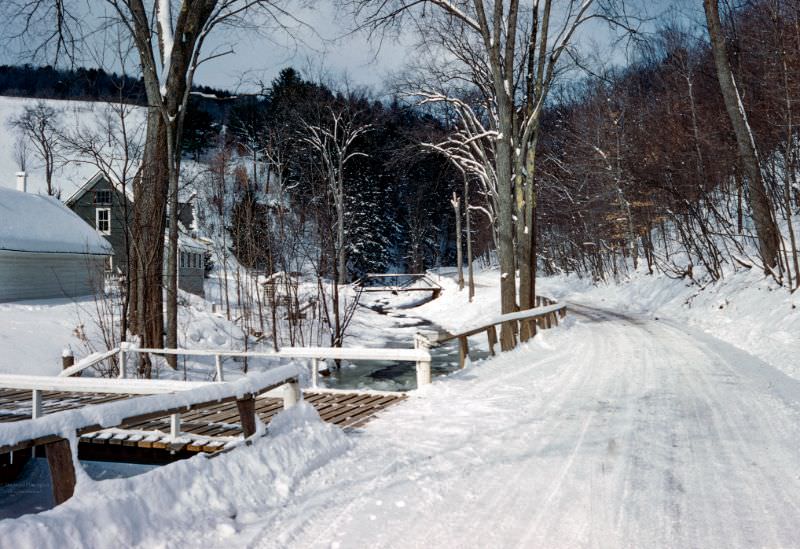
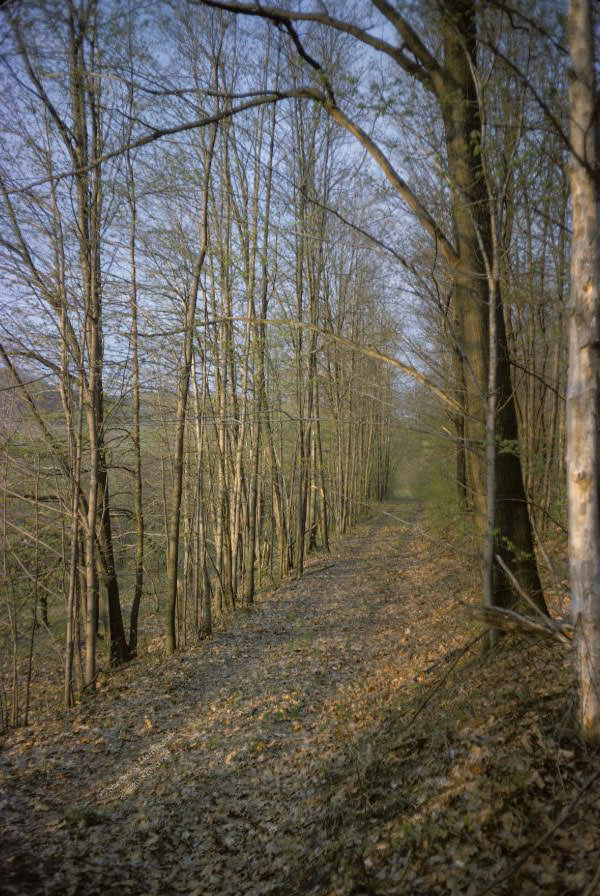
That same year, in March, he photographed the quiet stretch of Lower Ravine Road, where bare trees and cold light gave the scene a spare, almost timeless quality.
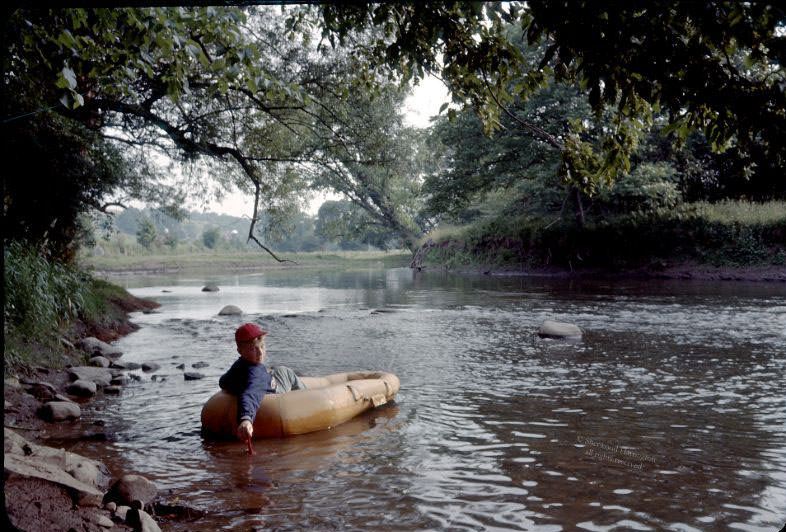
Summer brought a different energy. By July 1960, surplus inflatable rubber rafts had become a seasonal fixture, a small but telling detail of postwar American life finding its way into rural upstate New York.
One of the most striking industrial landmarks in the area was the Lyon Brook Trestle, part of the New York, Ontario & Western Railroad line running between Norwich and Oxford. Harrington photographed it in March 1960, when the surrounding trees were still bare and the structure stood out sharply against the winter landscape.
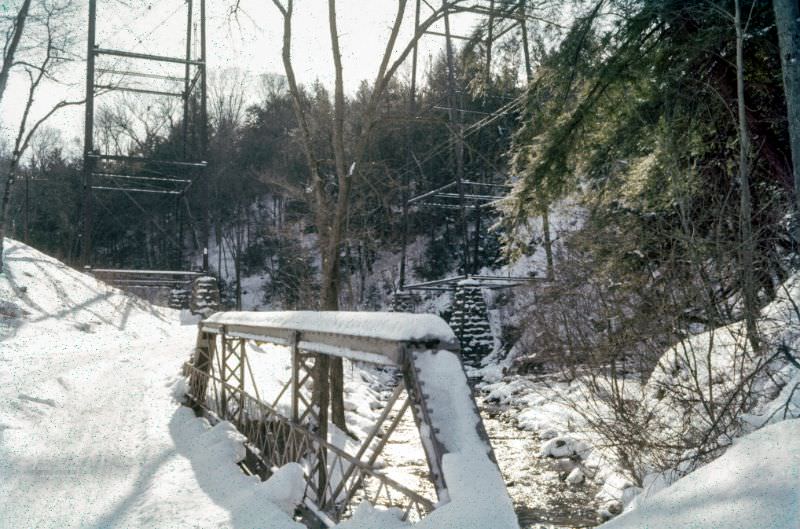
By 1961, Harrington’s range was expanding. He photographed summer evenings, backroads near old cemeteries, and the broad open floors of valleys that spread across the county.
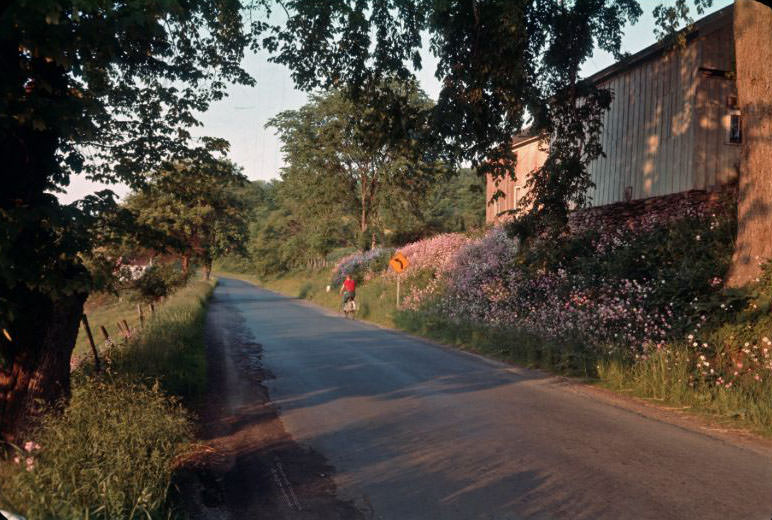
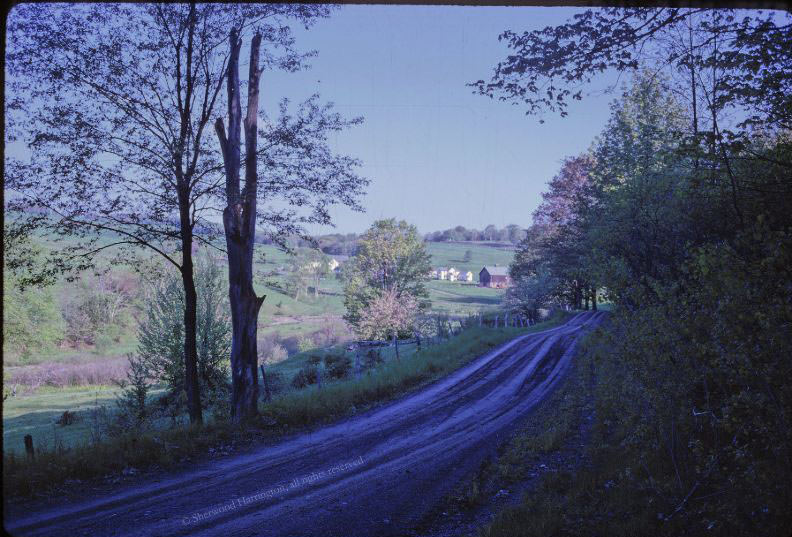
The Great Brook Valley was a subject he returned to more than once. Its wide, green floor and surrounding hills made it one of the county’s most photogenic stretches of countryside.
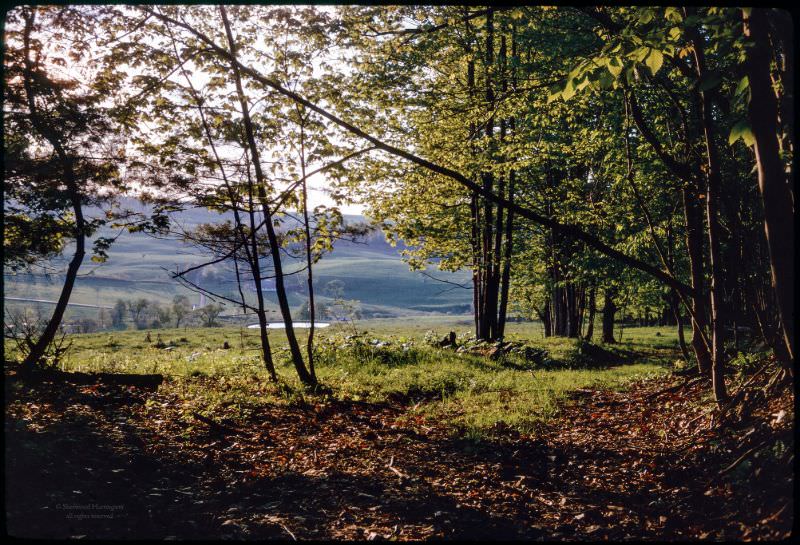
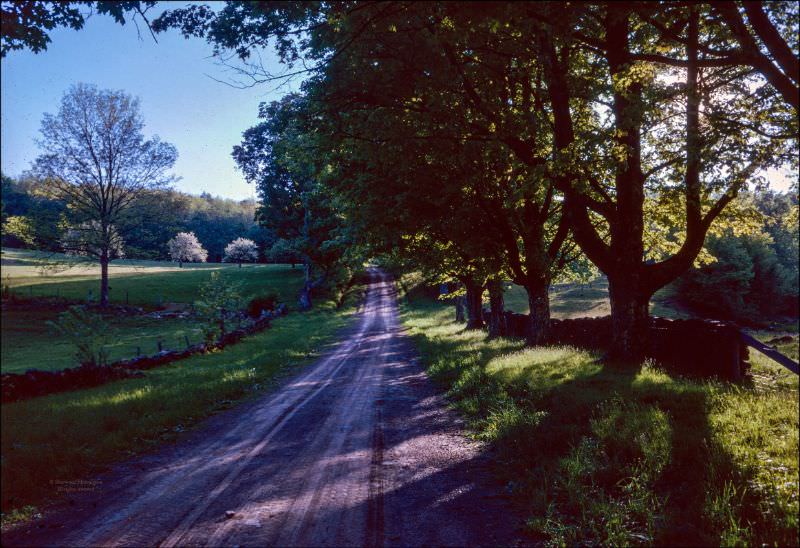
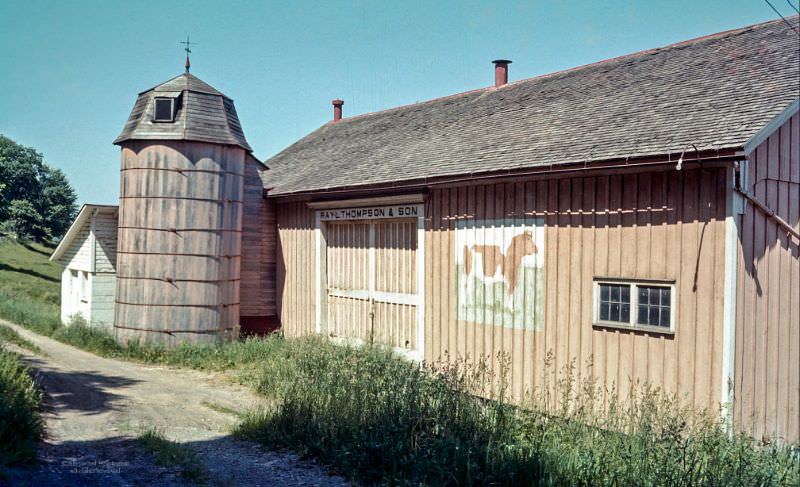
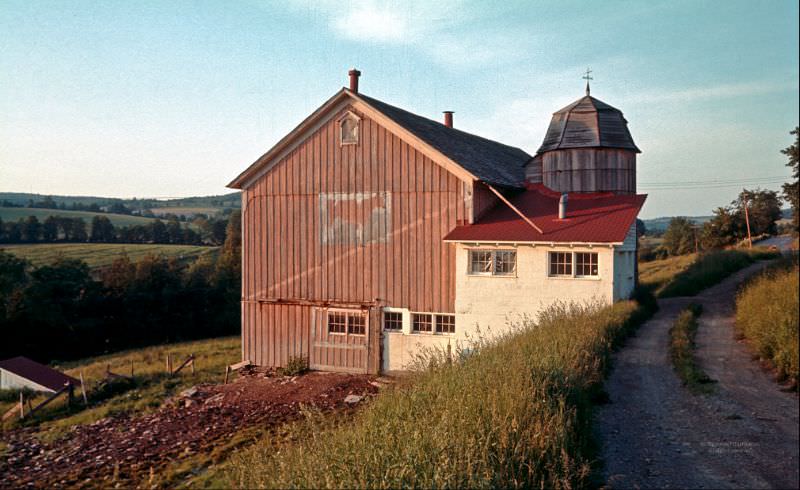
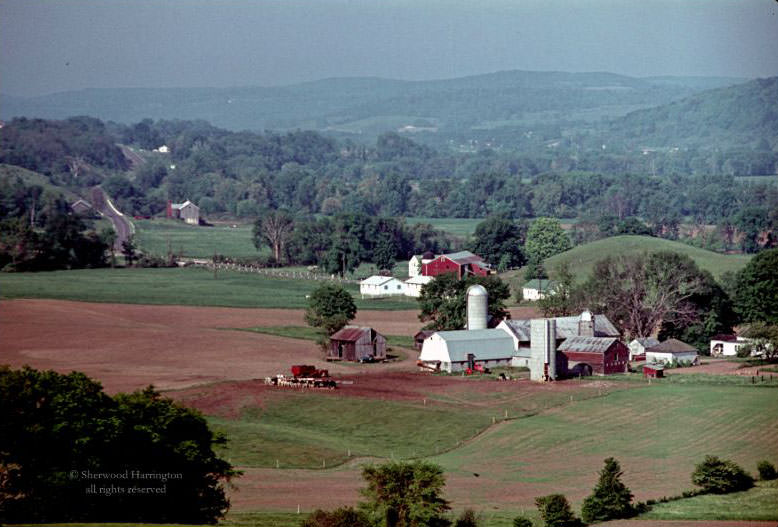
Working farms were still a defining feature of Chenango County in the early 1960s. The barn belonging to Ray L. Thompson on Kings Settlement Road stood as a symbol of an agricultural way of life that had shaped the county for generations.
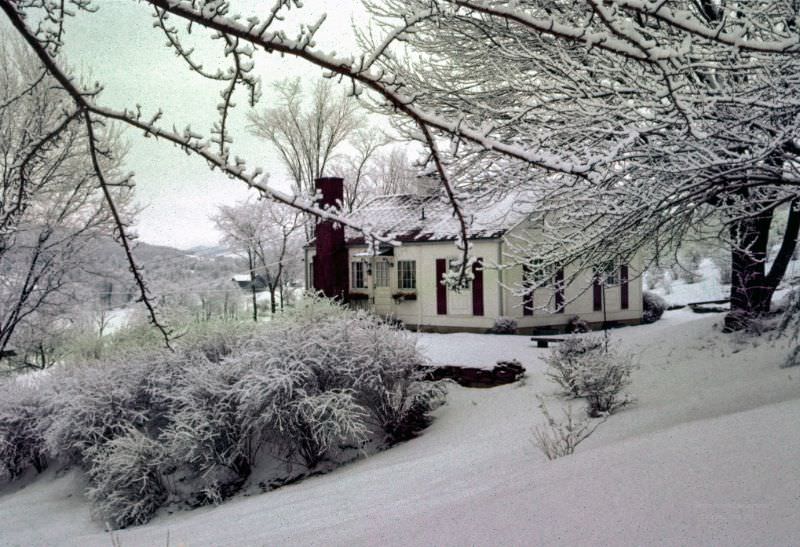
Harrington also turned his camera toward the personal. In 1961, he photographed the house where he grew up, a straightforward image that carries real weight simply because of what it represents.
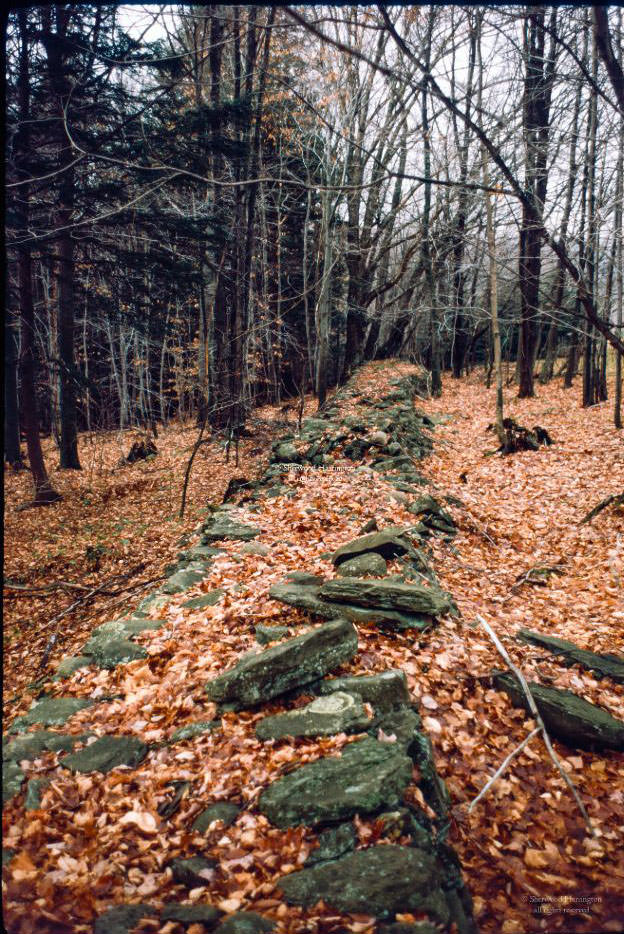
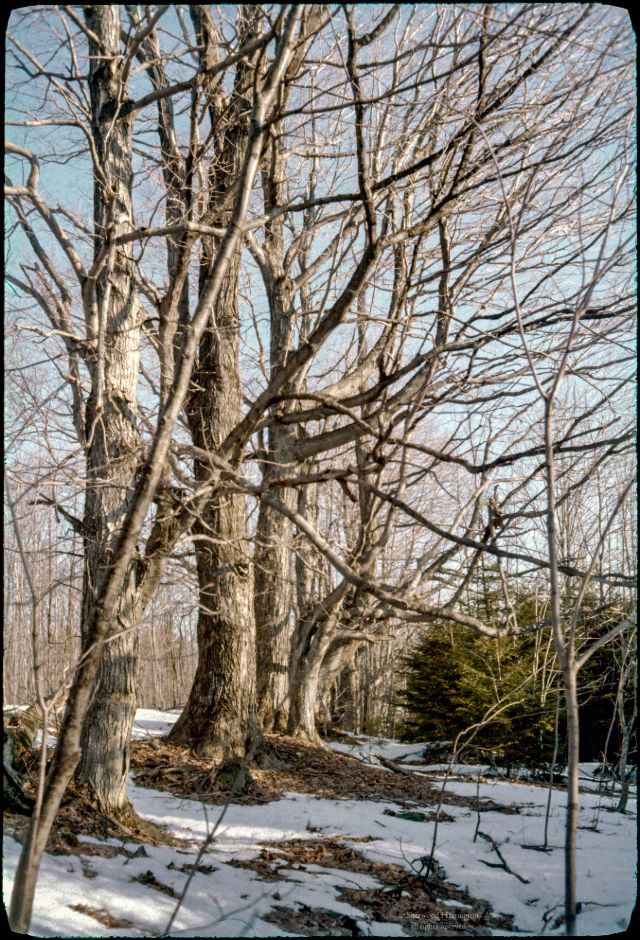
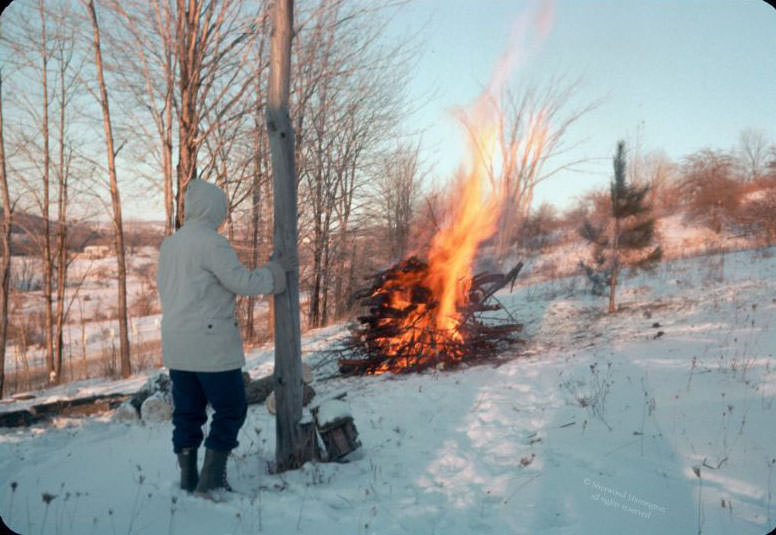
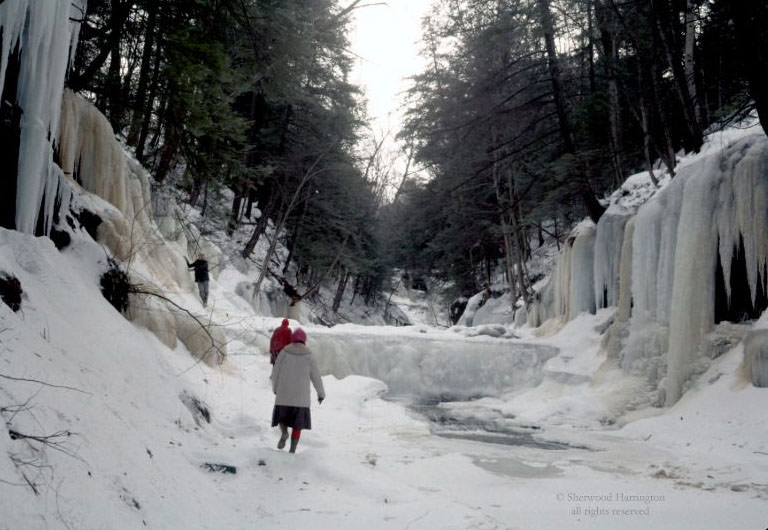
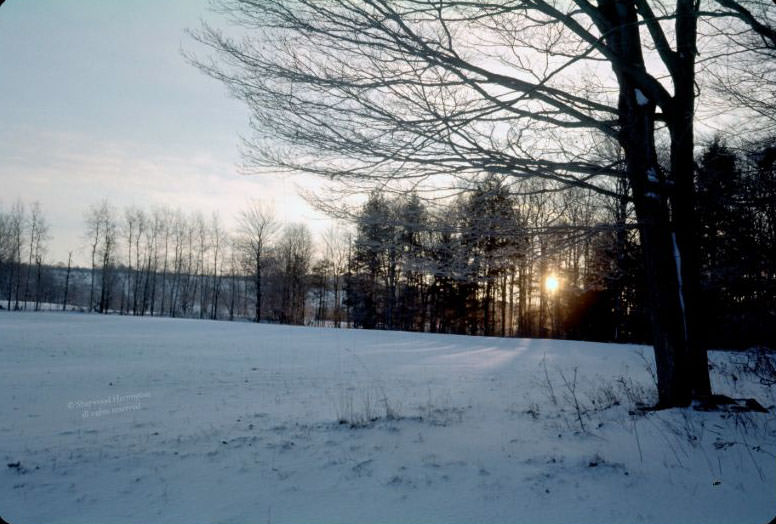
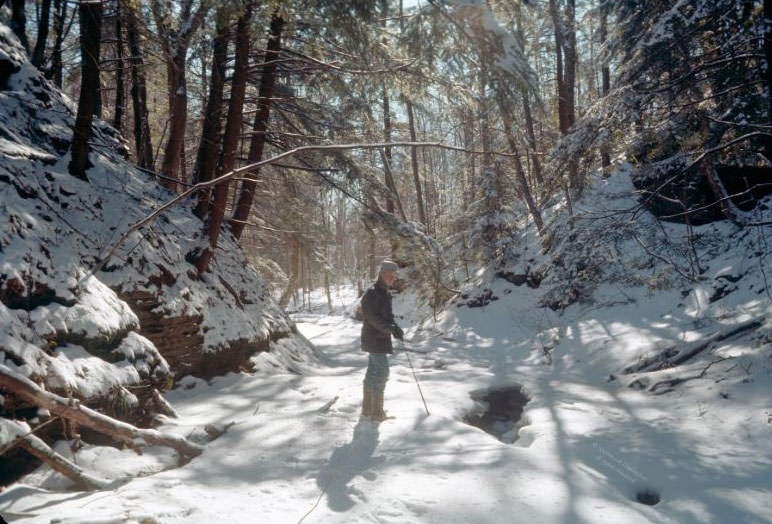
The winter of 1962 gave Harrington some of his most dramatic material. He ventured into frozen gorges, photographed a line of trees marking an abandoned homestead in the county’s high country, and documented a bonfire of yard trimmings on a cold February day.
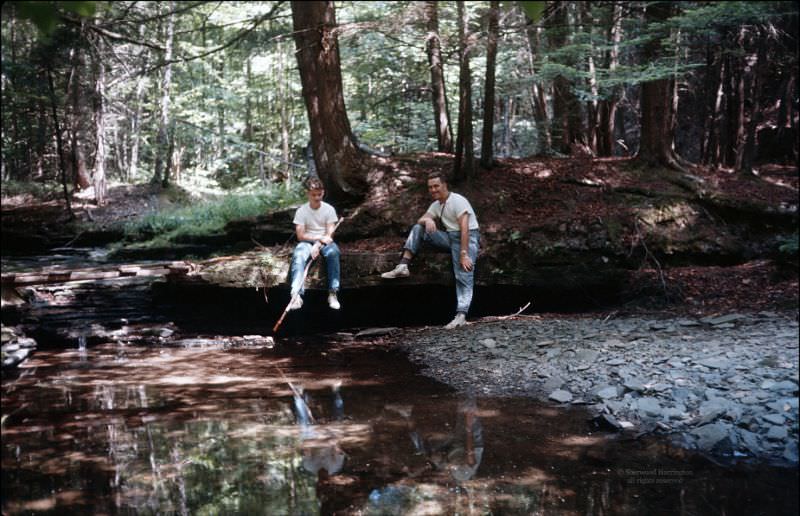
Among the more personal photographs from this period is a summer 1962 shot of Harrington and his father together — a rare glimpse of the man behind the camera.
From the high ground of Whaupaunaucau, Harrington looked northward across the Chenango Valley, with Steam Sawmill Hill rising on the left — a view that captures the full breadth of the valley’s landscape.
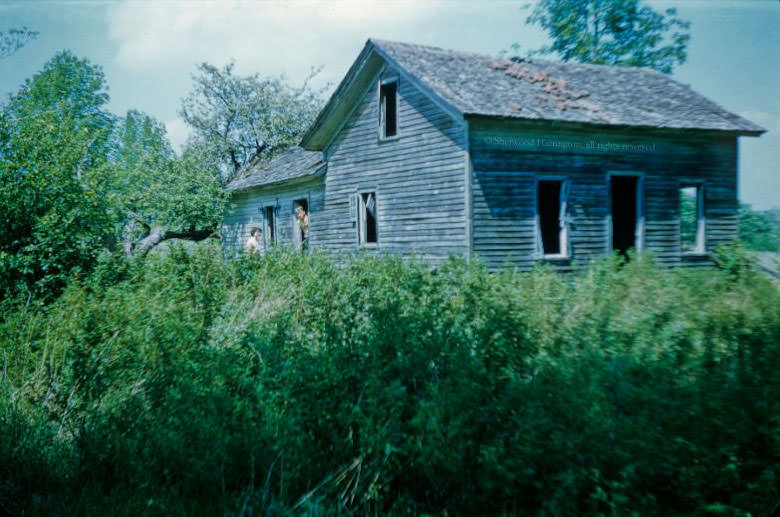
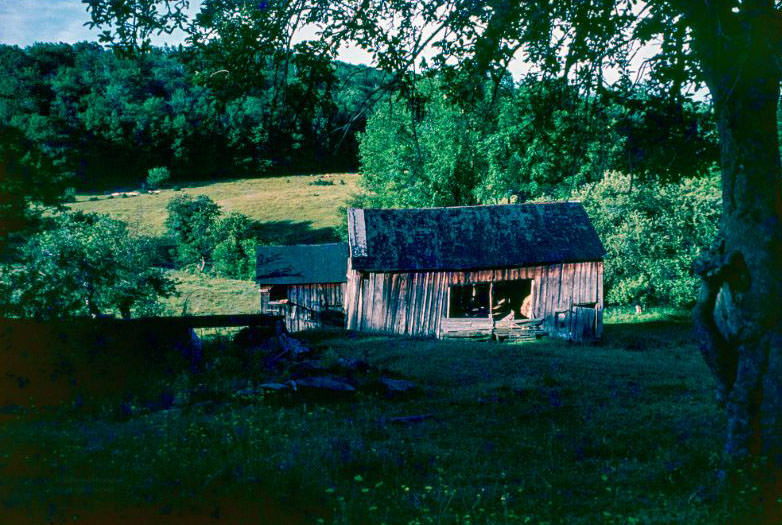
Abandoned buildings were scattered through the county’s high country, and Harrington documented them with care. These structures spoke to farms and homesteads that had been given up, left to slowly disappear into the hillside landscape.
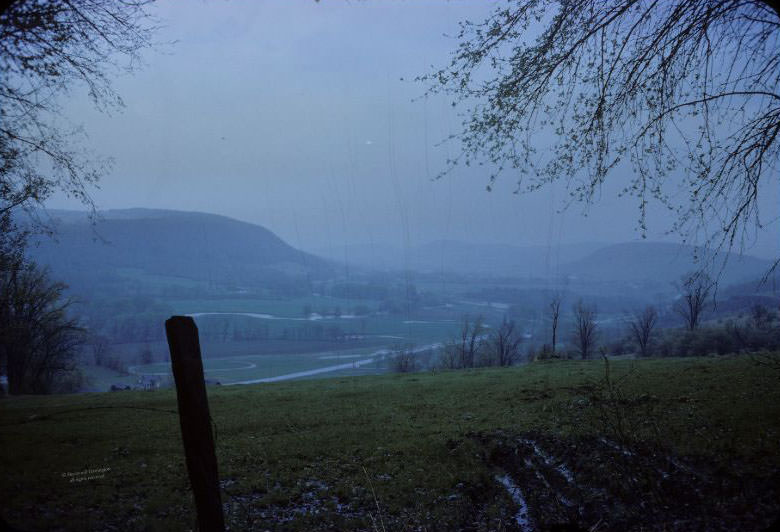
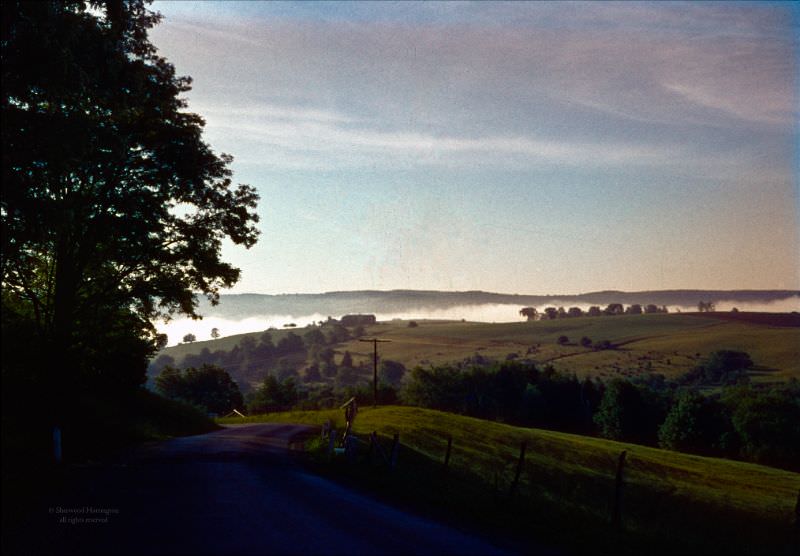
Along the county’s eastern border, the Unadilla Valley produced a particular kind of summer morning fog that Harrington captured in 1962. The image shows the valley half-hidden beneath a thick, low mist — the kind of scene that locals recognized immediately.
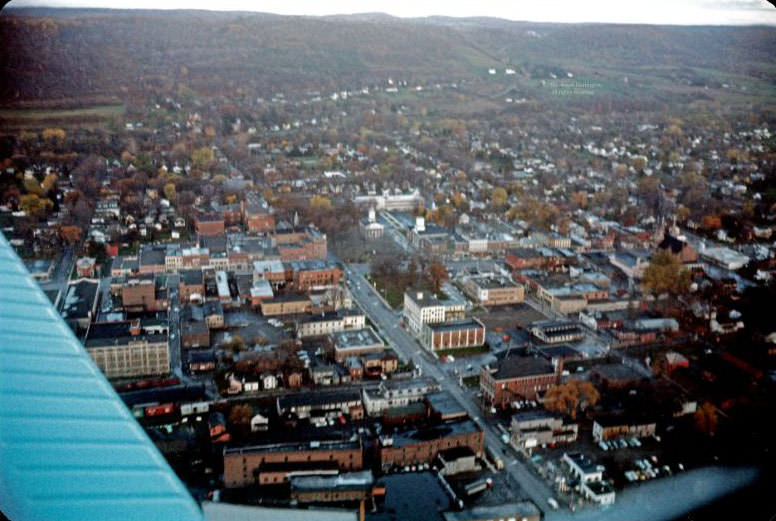
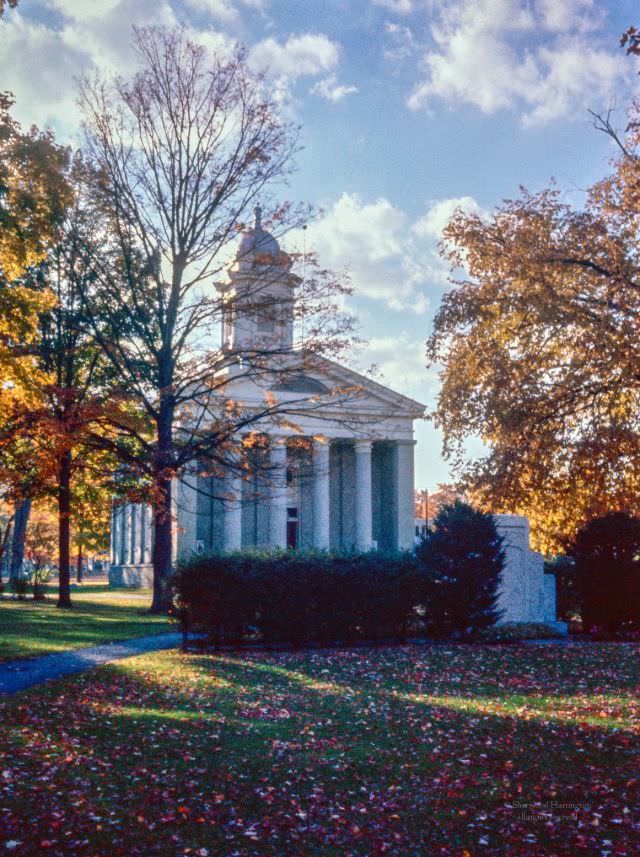
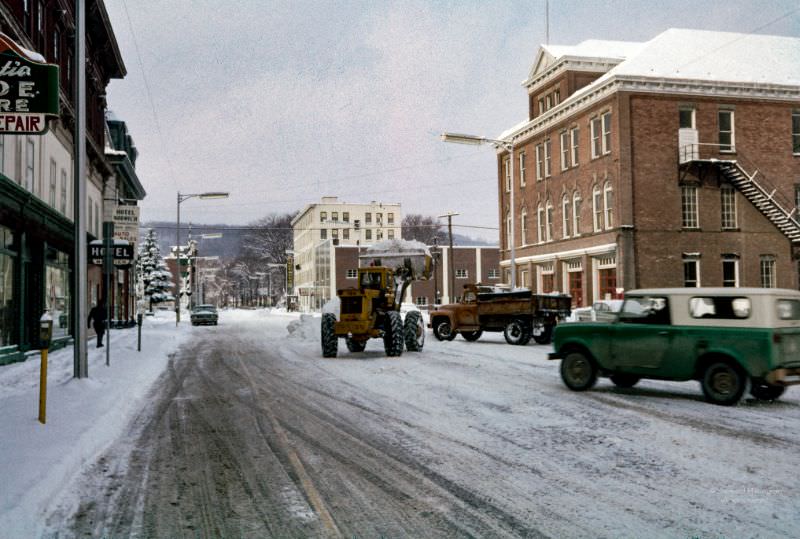
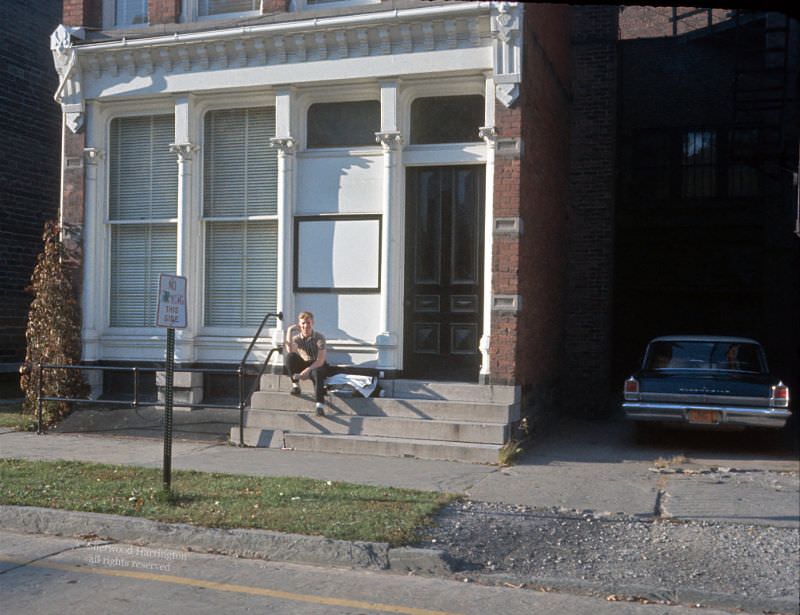
By 1963, Harrington was documenting the county seat of Norwich with the same steady attention he gave to the countryside. The Chenango County Courthouse stood at the center of civic life in the city, and East Main Street showed the active commercial district that served the surrounding communities.
Steam Sawmill Hill, visible from many points in the Chenango Valley, appears again in an October 1963 shot looking down into North Norwich from the western valley wall.
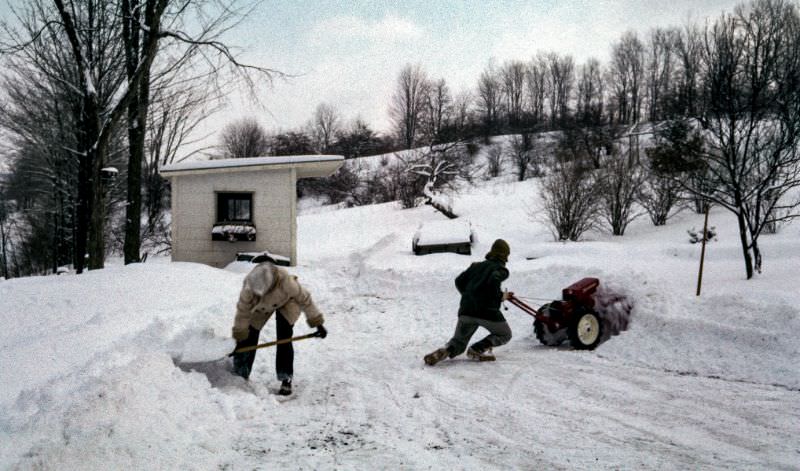
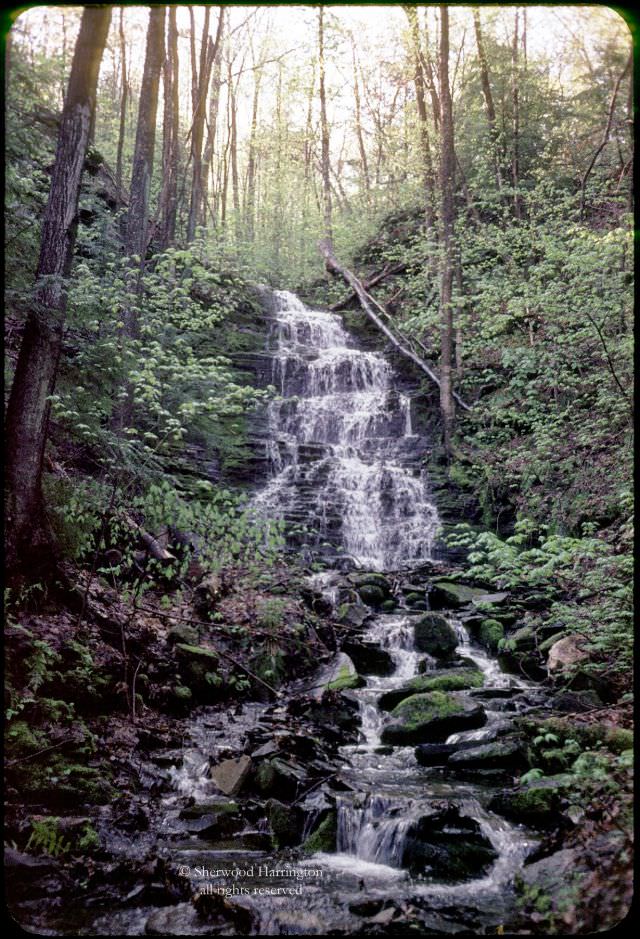
Winter life in Chenango County required real effort. Snow removal was a routine task, and the waterfall south of the Norwich reservoir offered a dramatic natural sight in the cold months, the water tumbling past ice-edged rocks.
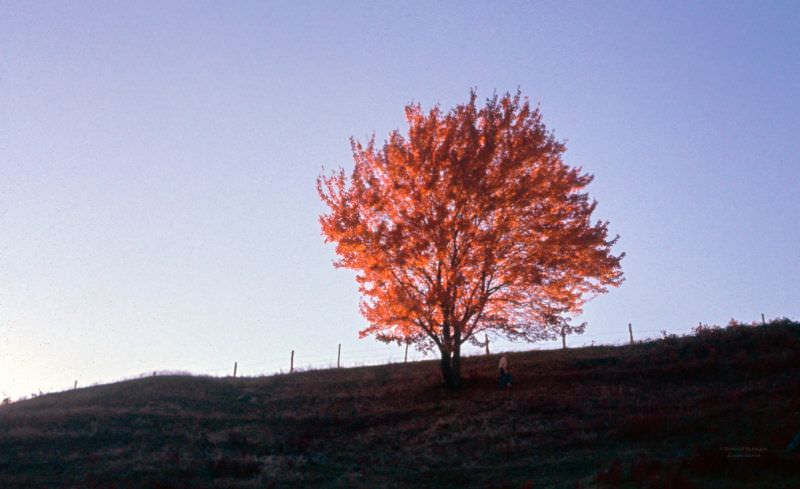
Autumn along the ridgetops near Thompson Creek produced brilliant color, and in October 1963, Harrington caught a young maple catching the last light of the sunset — one of his most vivid seasonal images.
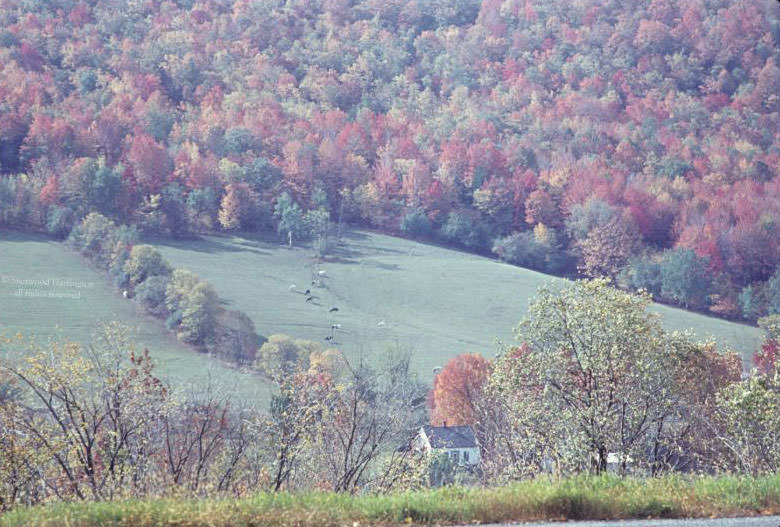
In 1964, Pleasant Valley showed up in two very different moods. In June, the road through it was green and lush. By fall, the same valley was thick with autumn color.
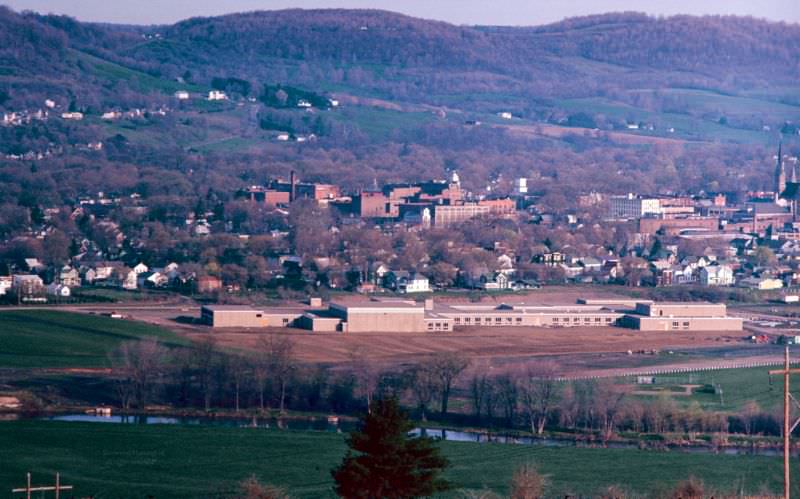
April 1964 brought a significant milestone for Norwich. The city’s new high school was nearly ready to open, and Harrington photographed it from the east, its modern form standing out clearly against the familiar backdrop of the valley.
By 1965, Harrington was ranging widely across the county. From Tinker Ridge he looked east over the Chenango Valley in June, and from the old O&W railroad bed on the valley’s eastern side he looked toward Oxford, following a line that trains no longer traveled.
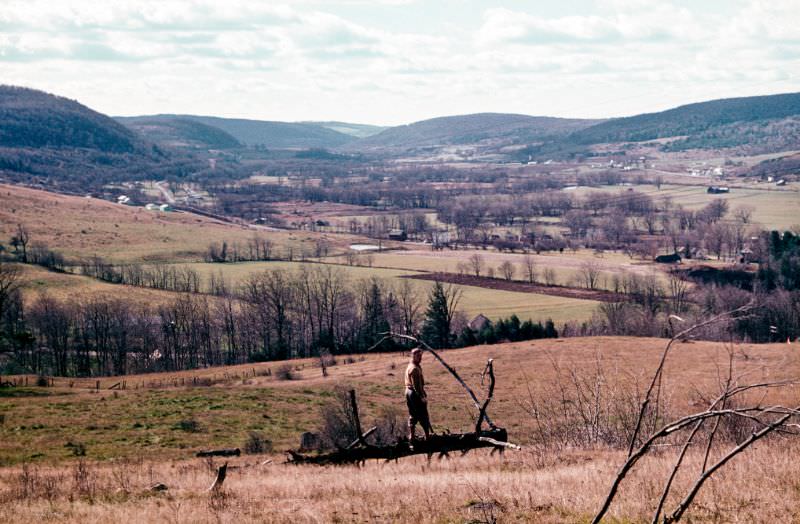
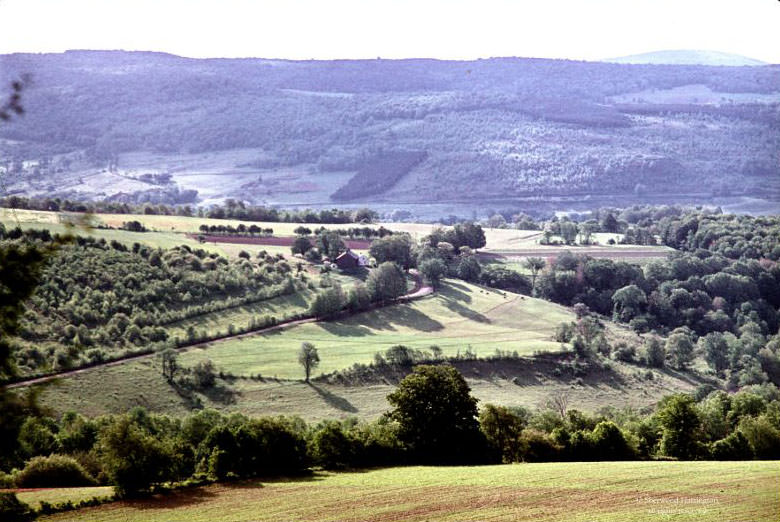
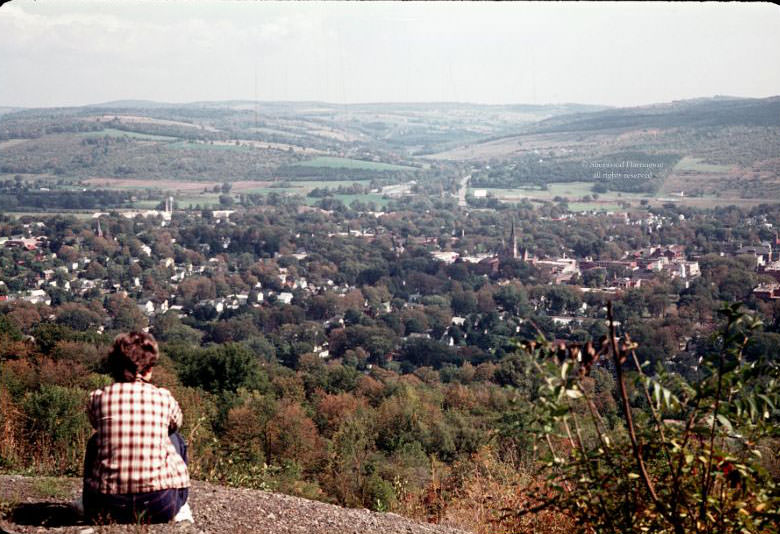
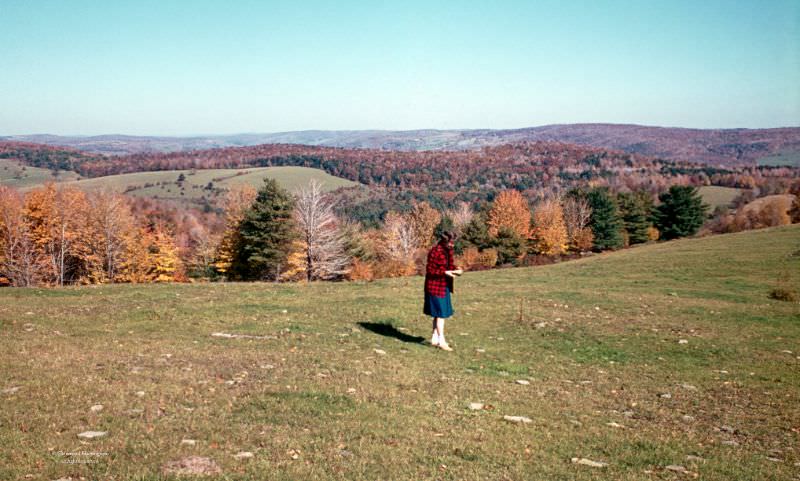
Two photographs from the fall of 1965 feature Harrington’s mother. In September, she stood at the West Hill quarry looking down on Norwich. A month later, in October, she appeared on a hill above the Unadilla Valley near White Store.
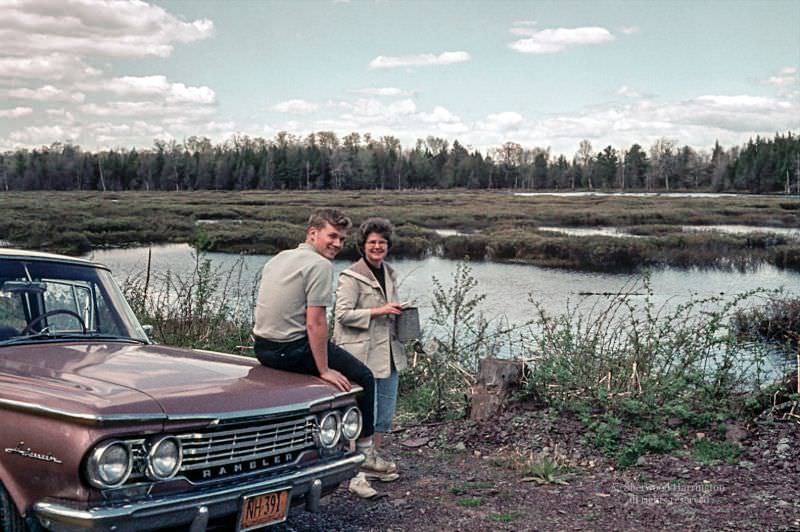
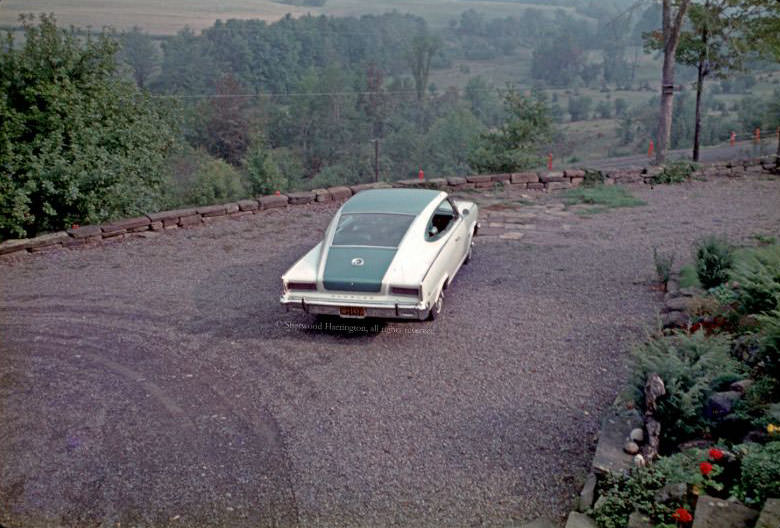
A Rambler Marlin also appears in the summer of 1965 — a snapshot of an American car that was, at the time, brand new, positioned against the rural backdrop that Harrington knew so well.
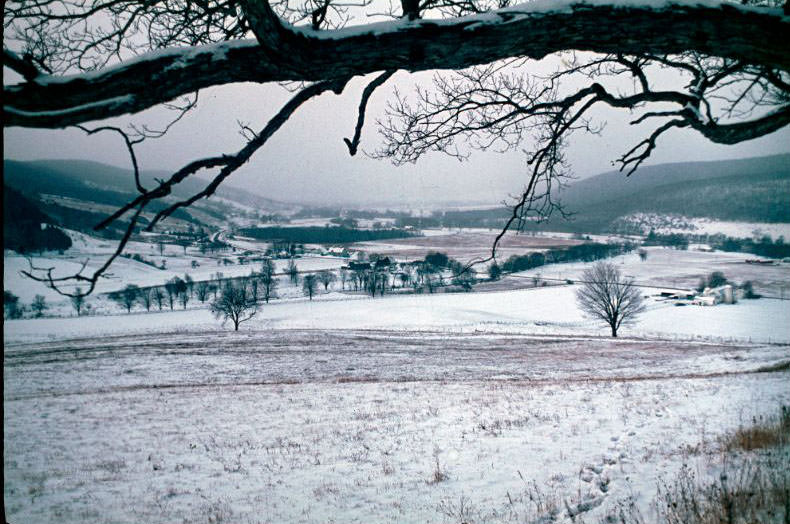
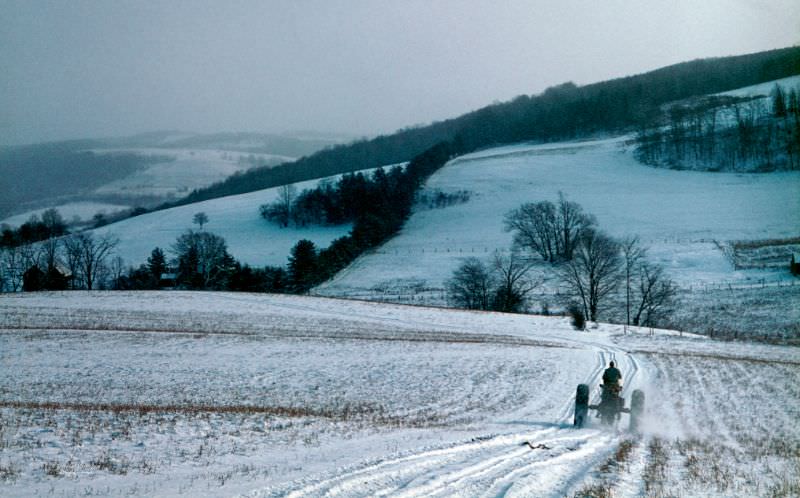
January 8, 1966 produced two sweeping winter views — one from Sugarloaf Hill looking across the Chenango Valley, and another showing the hills on the valley’s east side between North Norwich and Sherburne.
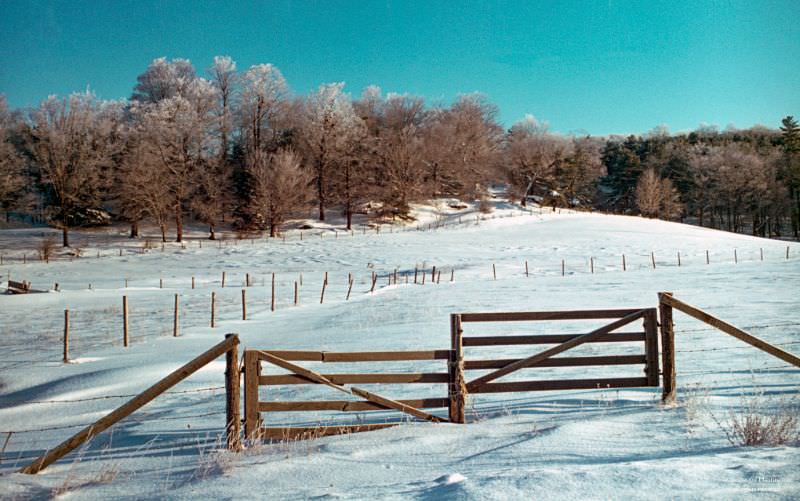
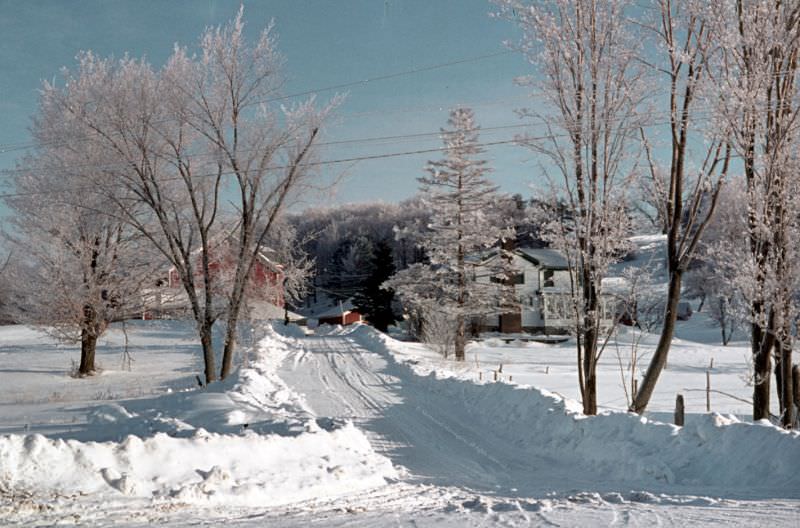
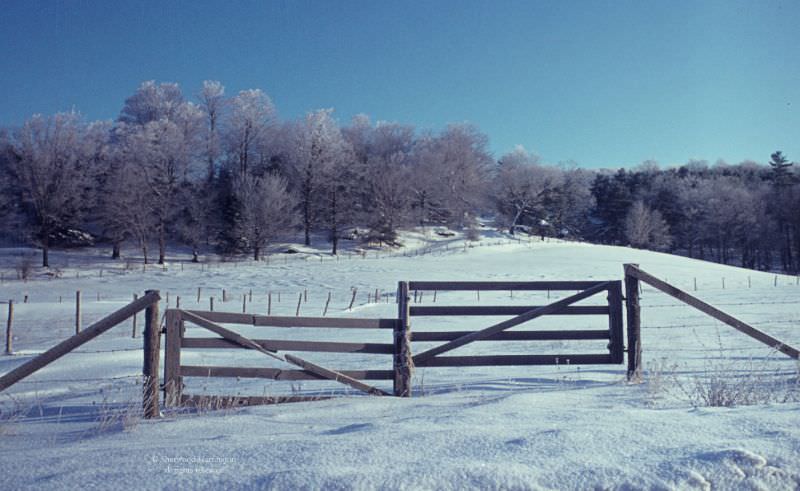
Tanner Hill in 1966 gave Harrington the chance to photograph hoar frost — ice crystals coating the branches and grasses in a way that turned the hillside completely white. He returned to the spot more than once to capture the effect.
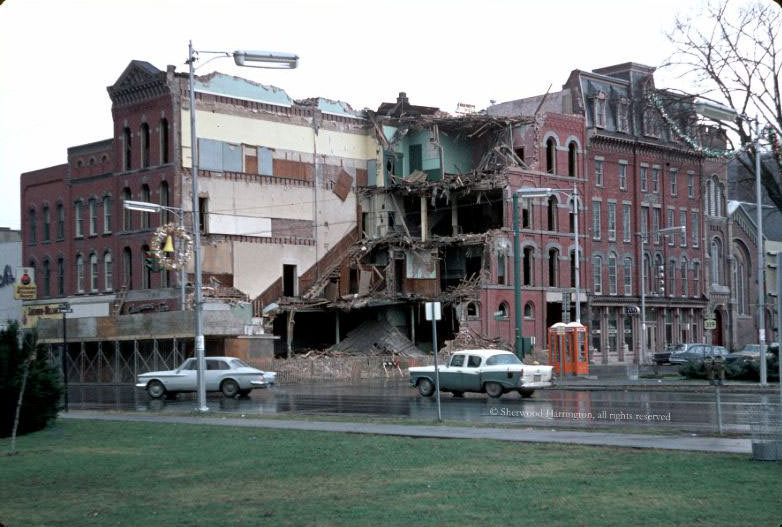
Downtown Norwich was changing in 1966. In January, the old Chapman & Turner department store building at the southwest corner of Broad and Main streets was in its final stages of demolition, its familiar facade giving way to whatever would come next.
Harrington’s final photograph in this collection comes from 1967, near White Store, New York — a quiet rural scene that closes out seven years of patient, dedicated photography in one of central New York’s most distinctive counties.