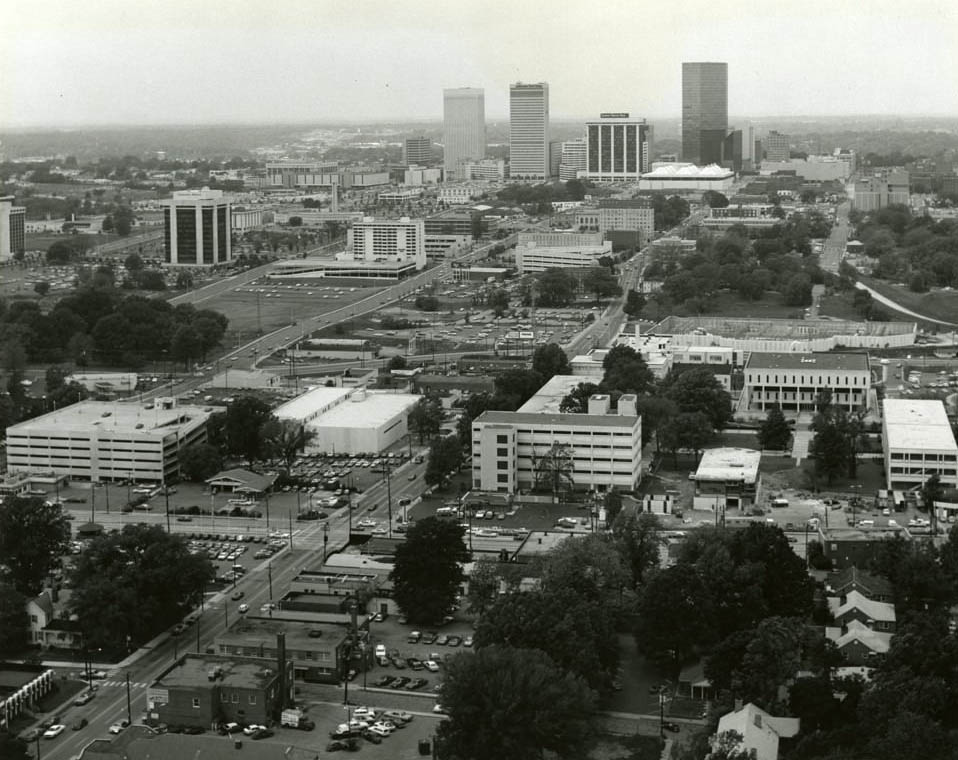
Charlotte, North Carolina looked very different in the 1980s. The skyline was smaller, the streets were quieter, and the city was still finding its footing as a major American urban center. But beneath that quieter surface, the decade was packed with change — economic, demographic, and cultural. What you see in the photos below captures a city on the move, well before it became the sprawling metropolis it is today.
The banking sector drove much of Charlotte’s growth during this period. North Carolina had a unique state law that allowed banks to open branches across the entire state — a flexibility most other states did not permit. In 1982, Hugh McColl, a banker at North Carolina National Bank, made a bold move and acquired a small out-of-state bank. That single transaction helped trigger a nationwide rethinking of banking laws and set Charlotte on a path to becoming one of the most important financial cities in the United States.
Beyond banking, Charlotte was pushing into the top 20 largest U.S. cities by population. That growth brought new demands — more hospitals, more schools, more roads. The city, Mecklenburg County, and the surrounding towns were still technically separate jurisdictions, but they faced the same pressures of rapid urbanization. Between 1990 and 2015, the county’s population would double and surpass one million residents, a trajectory that was already being set during the 1980s.
Major league sports came to Charlotte during this decade as well. The Charlotte Hornets were founded in 1988, bringing professional basketball to a region already passionate about the game. College basketball rivalries — particularly between Duke University and the University of North Carolina at Chapel Hill — had long defined the sports culture here. Michael Jordan, a UNC Tar Heel himself, was already a household name by the time the Hornets tip-off their first season.
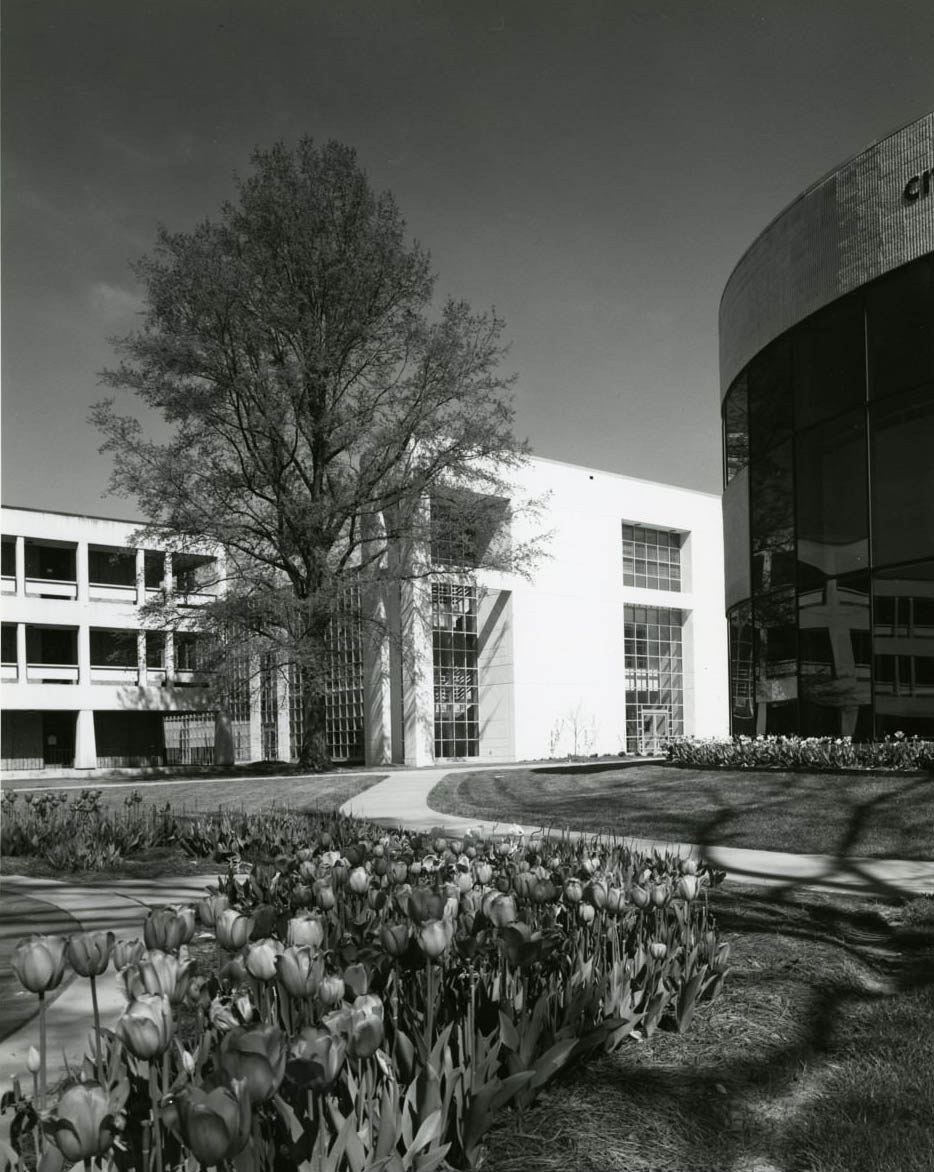
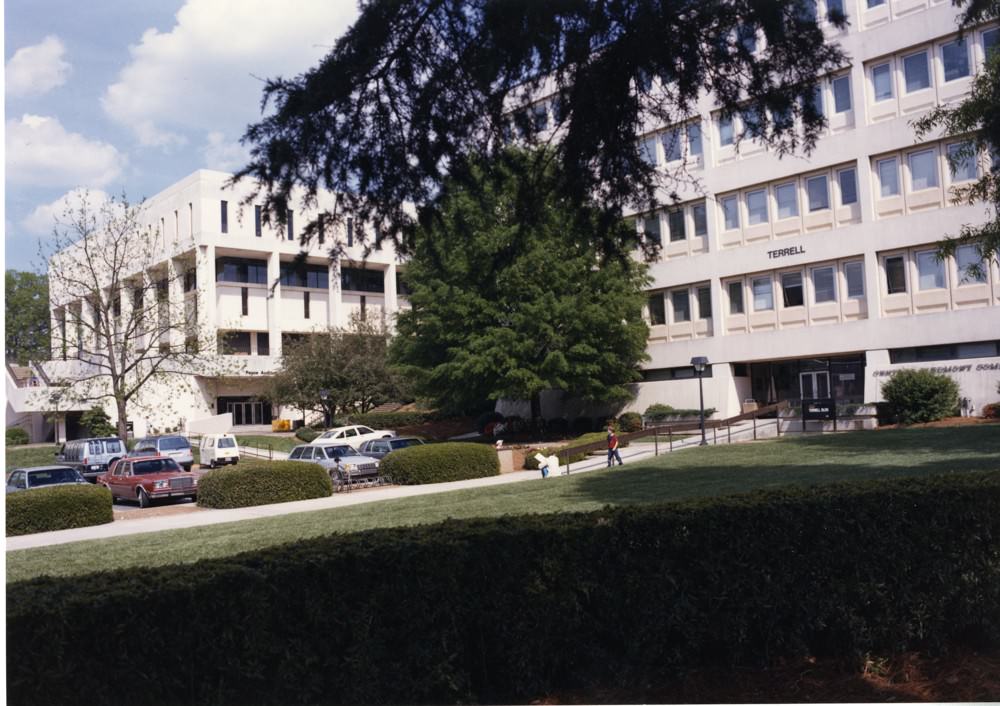
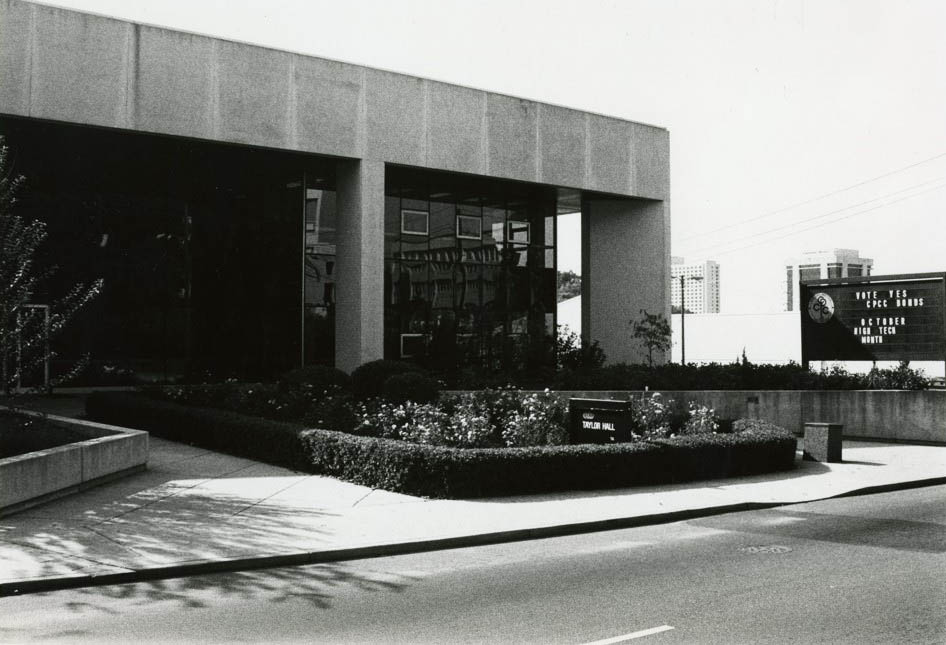
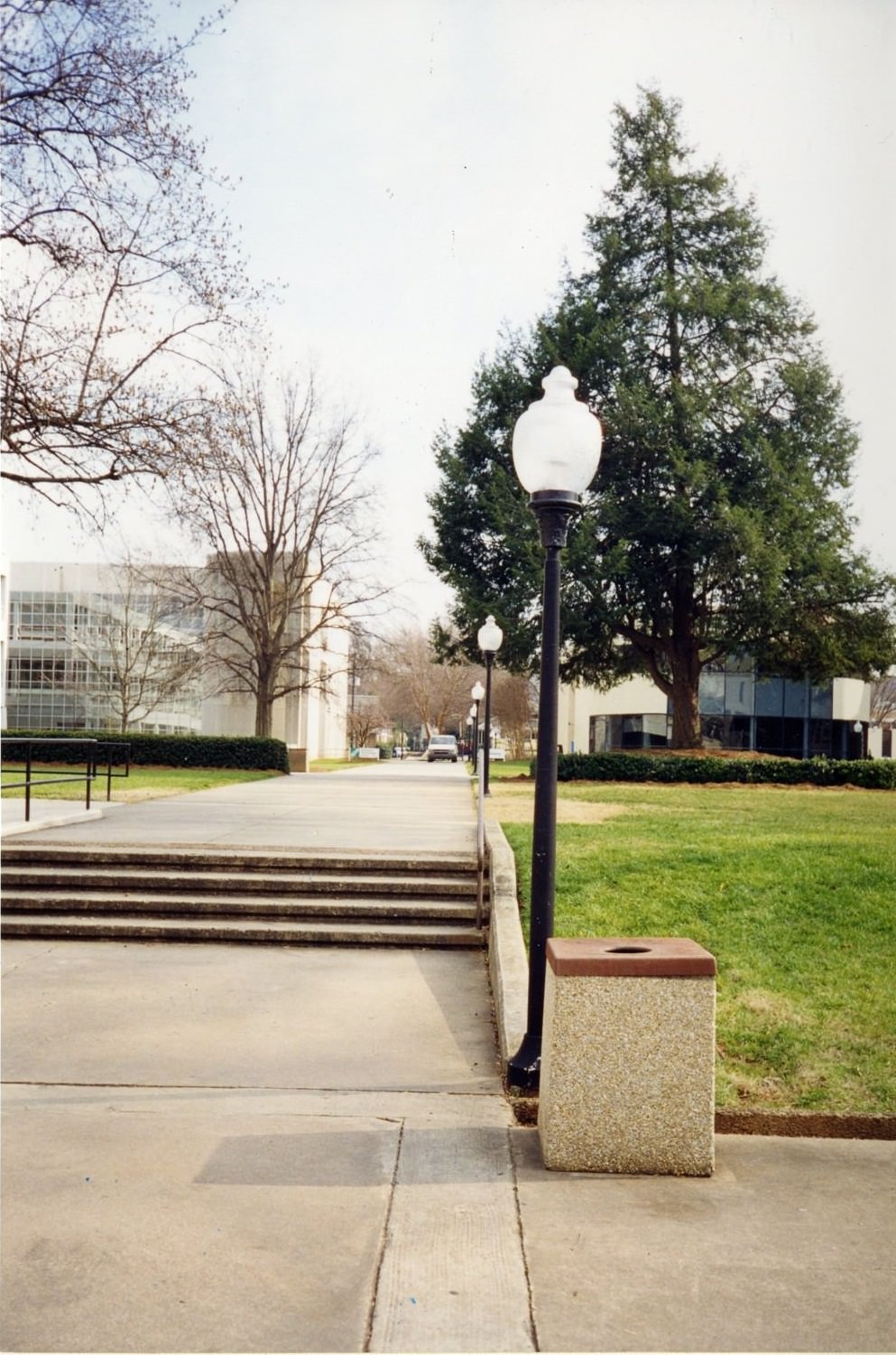
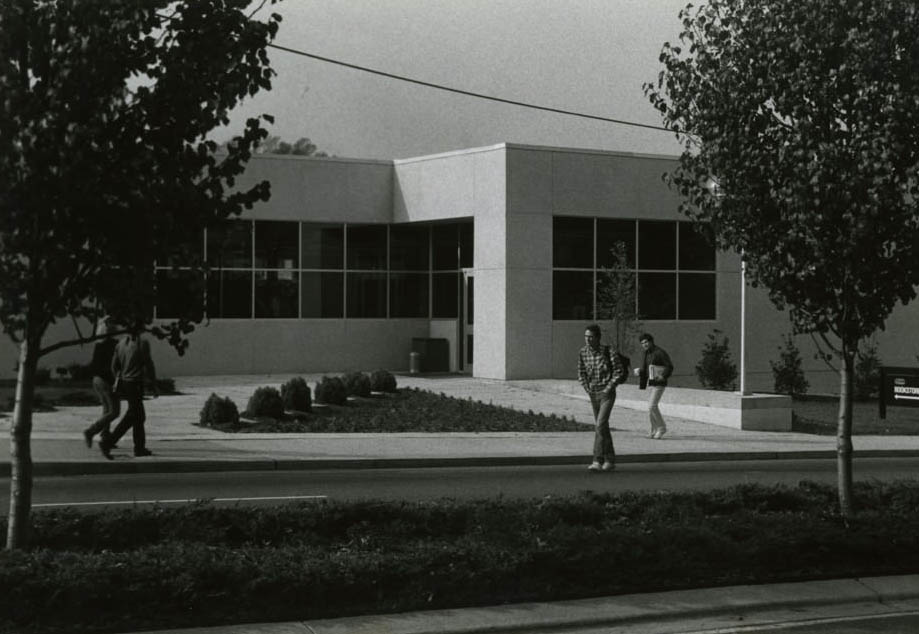
Central Piedmont Community College was an active and growing institution during the 1980s. The campus saw significant construction and expansion throughout the decade, reflecting Charlotte’s push to build the educational infrastructure needed for a growing workforce. Buildings were going up, lots were being paved, and students filled classrooms across the campus.
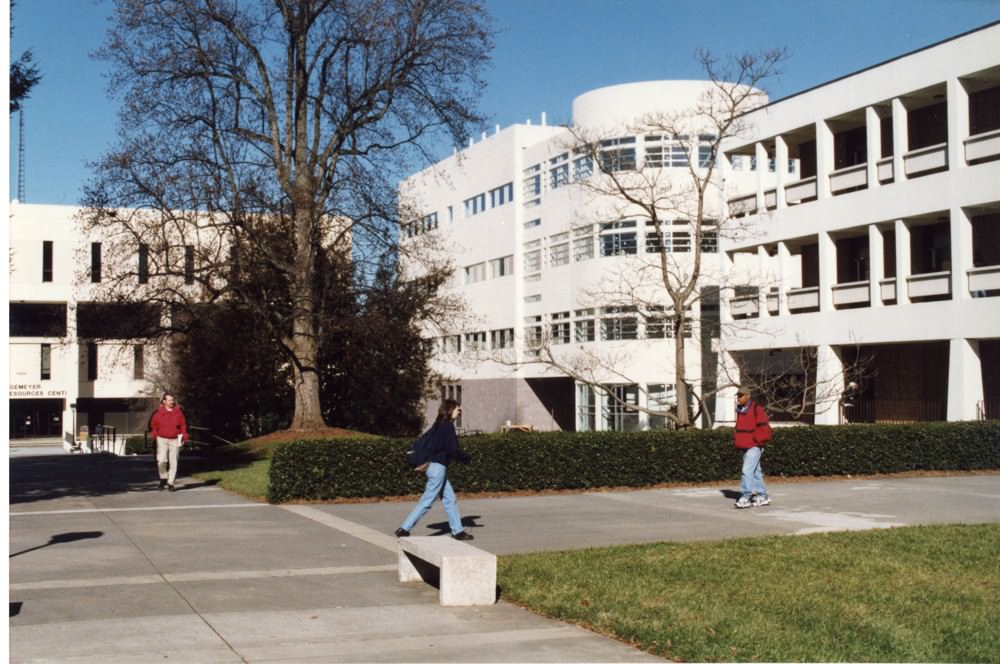
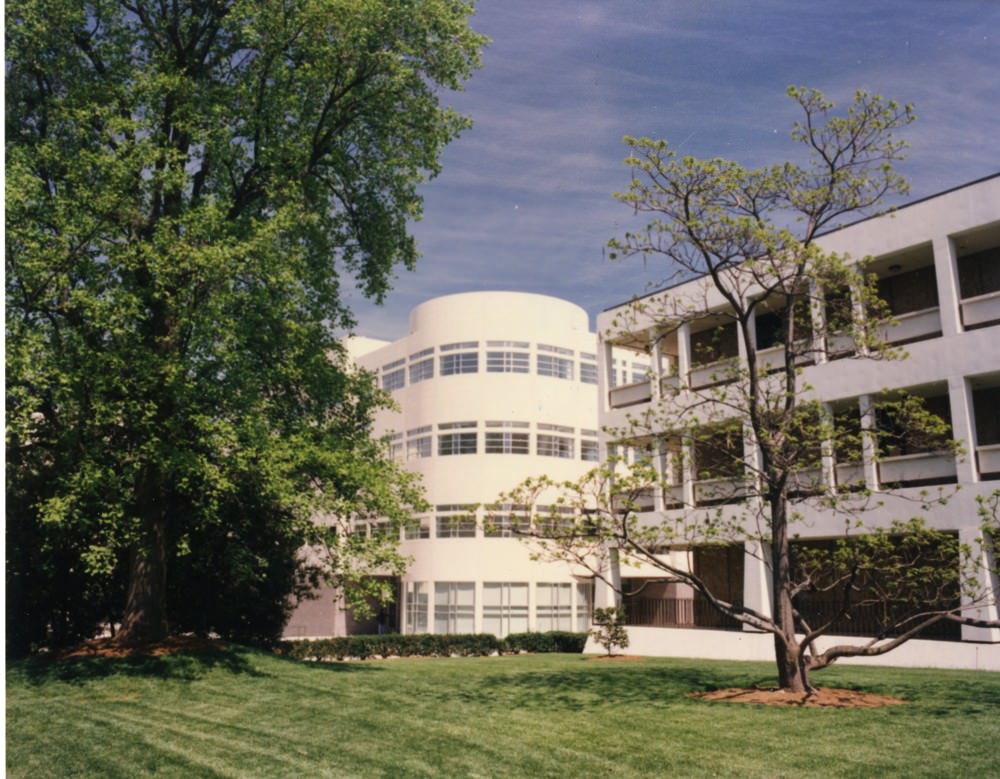
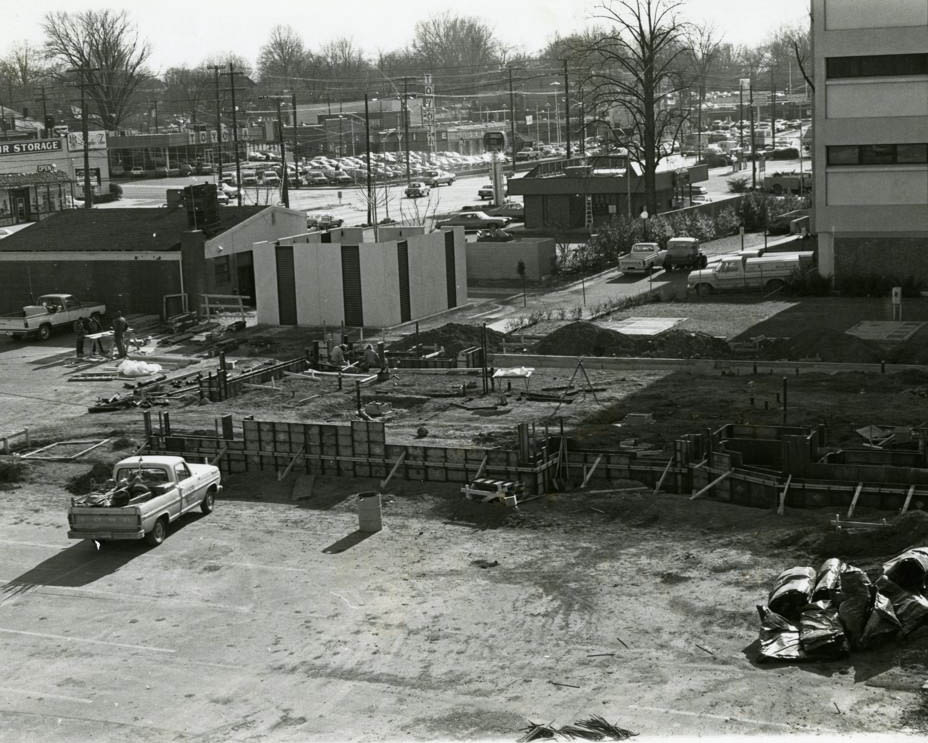
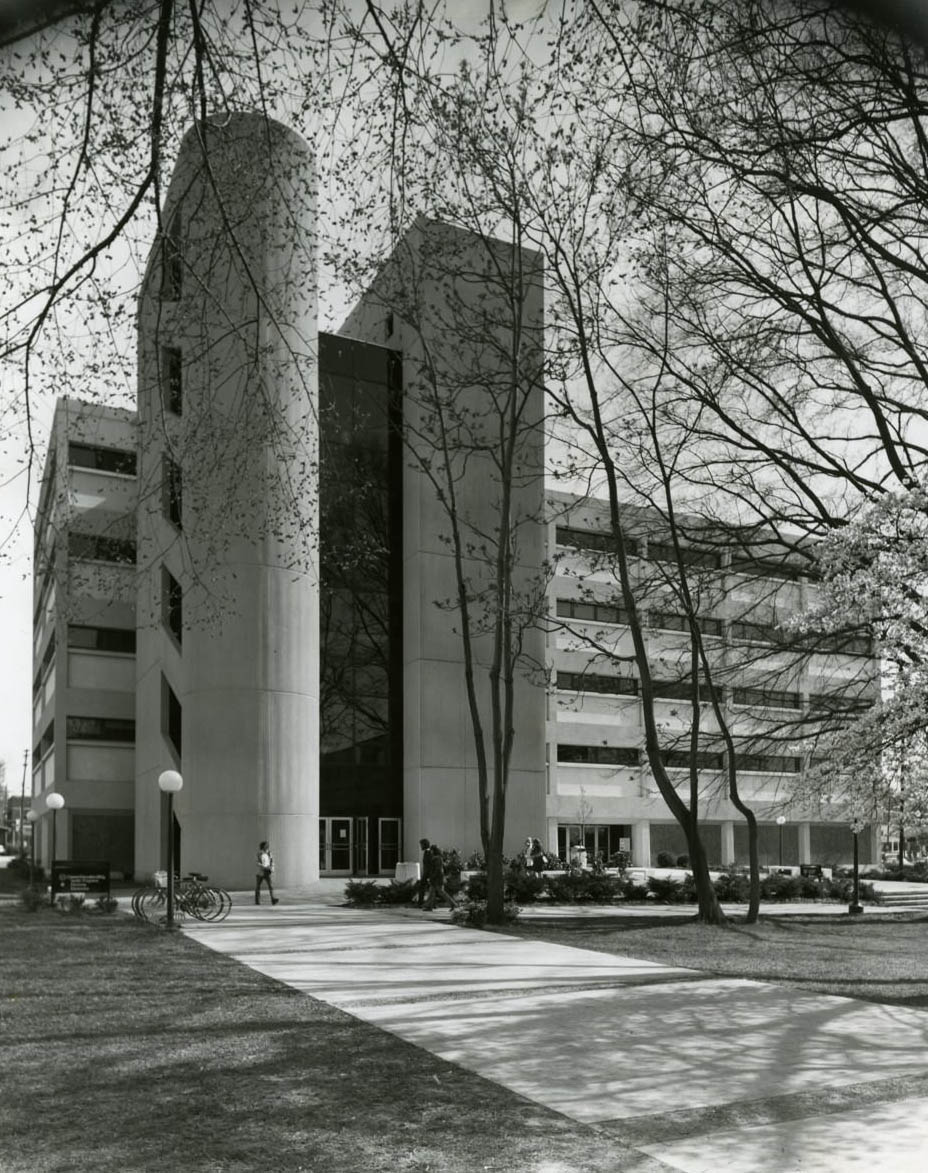
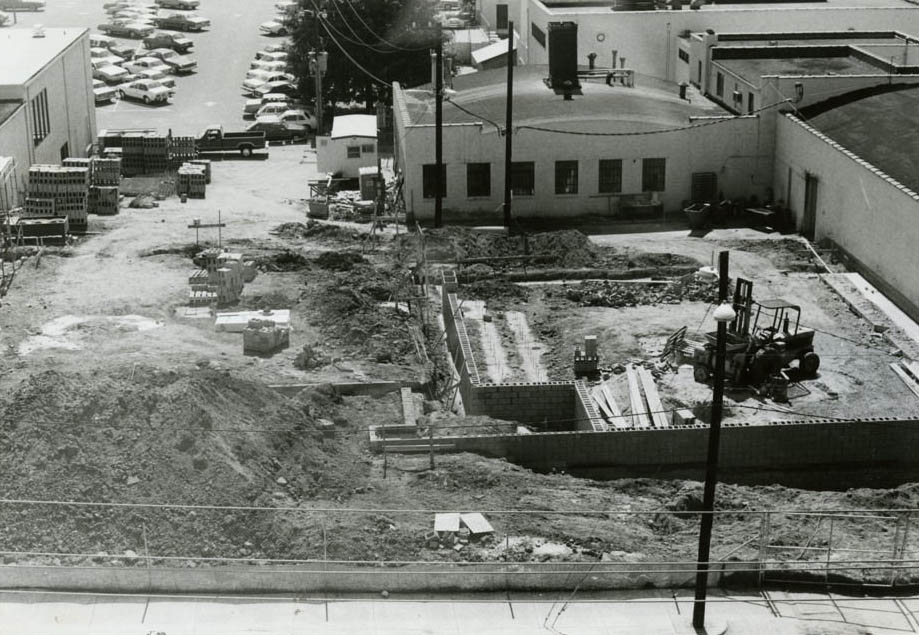
The ATC building and the Citizens building were among the most recognizable structures on the Central Piedmont campus during this era. The Citizens Center itself was still under construction for part of the decade, and aerial photographs from the time show a campus that was actively being rebuilt and expanded to meet rising enrollment demands.
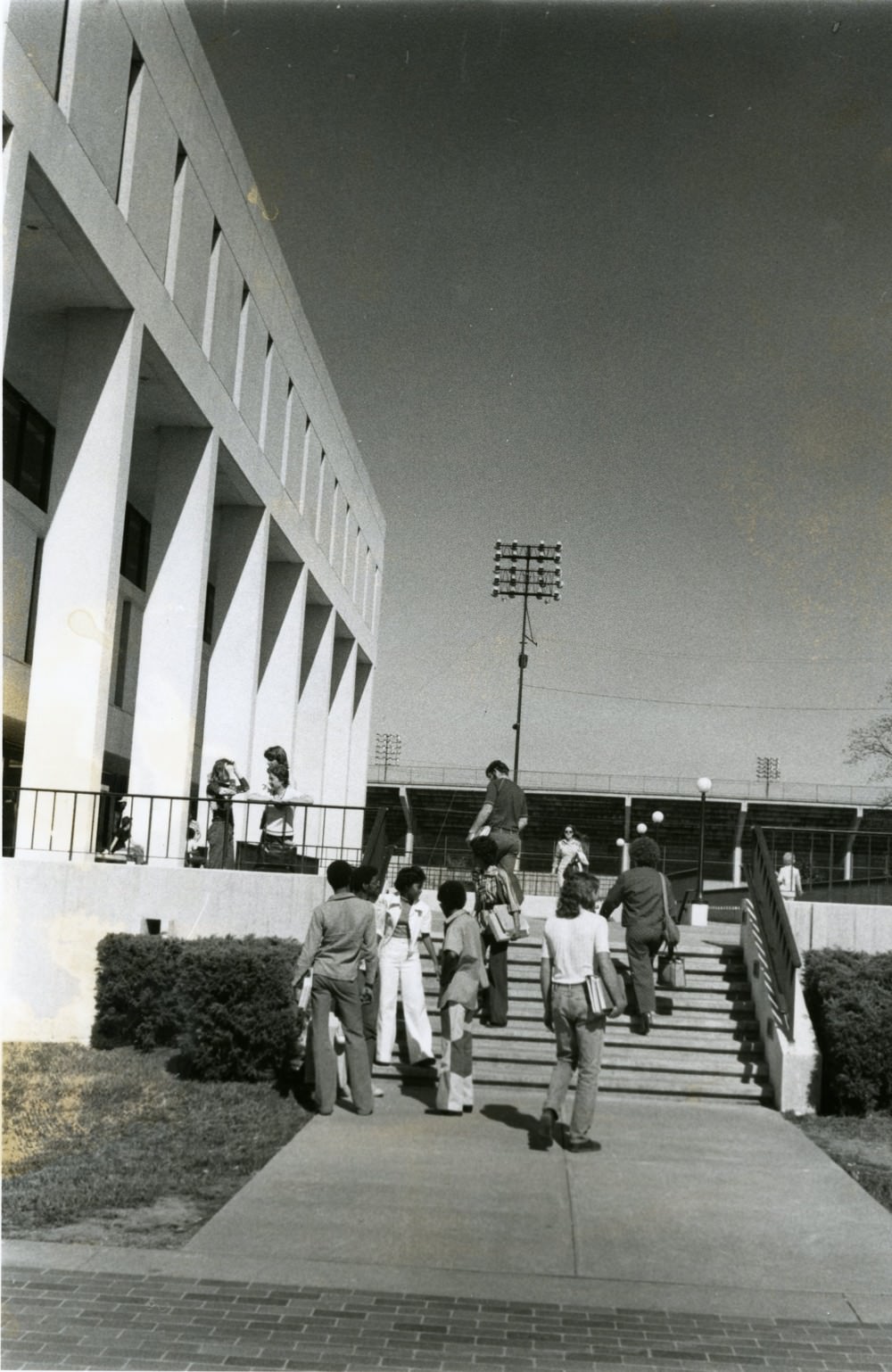
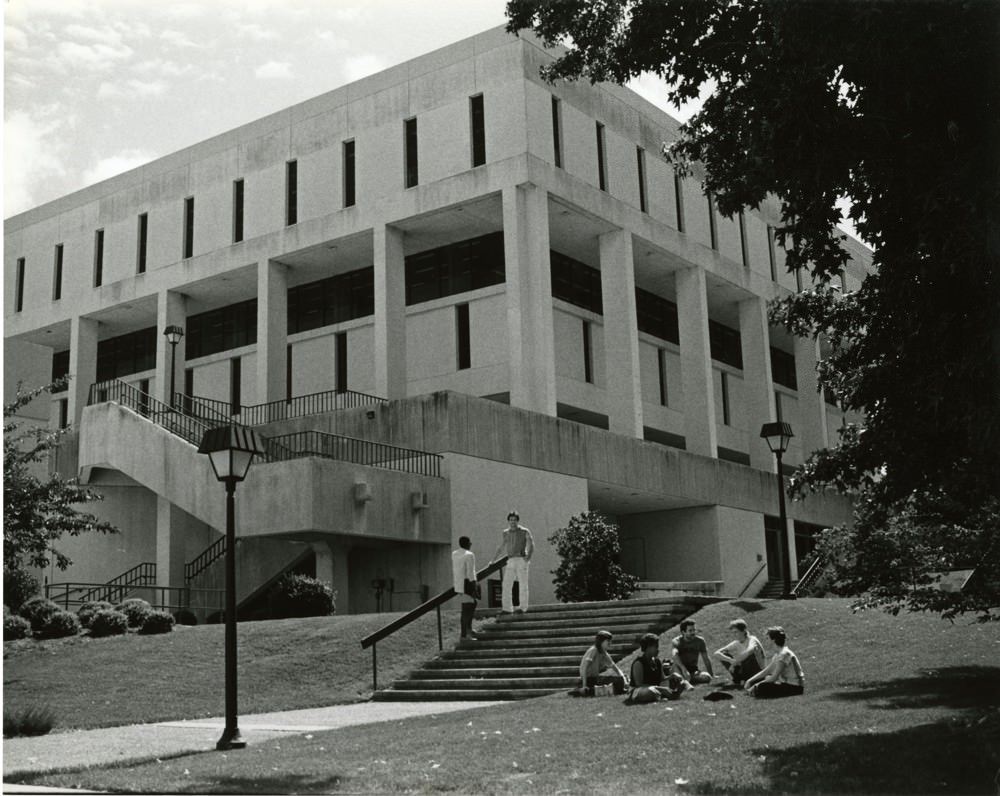
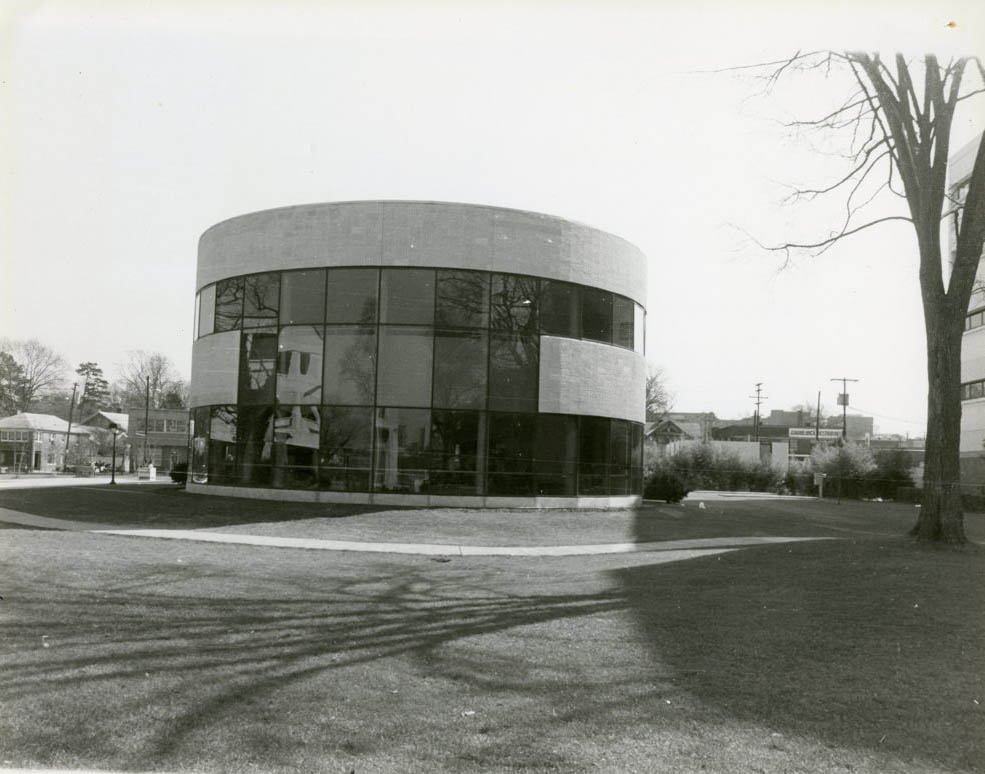
The Learning Resources Center — known on campus simply as the LRC — underwent its own expansion in 1982. Construction on the library extension brought new space to what was already a core part of campus life. By the mid-1980s, the exterior of the completed building stood as a symbol of the college’s growing ambitions.
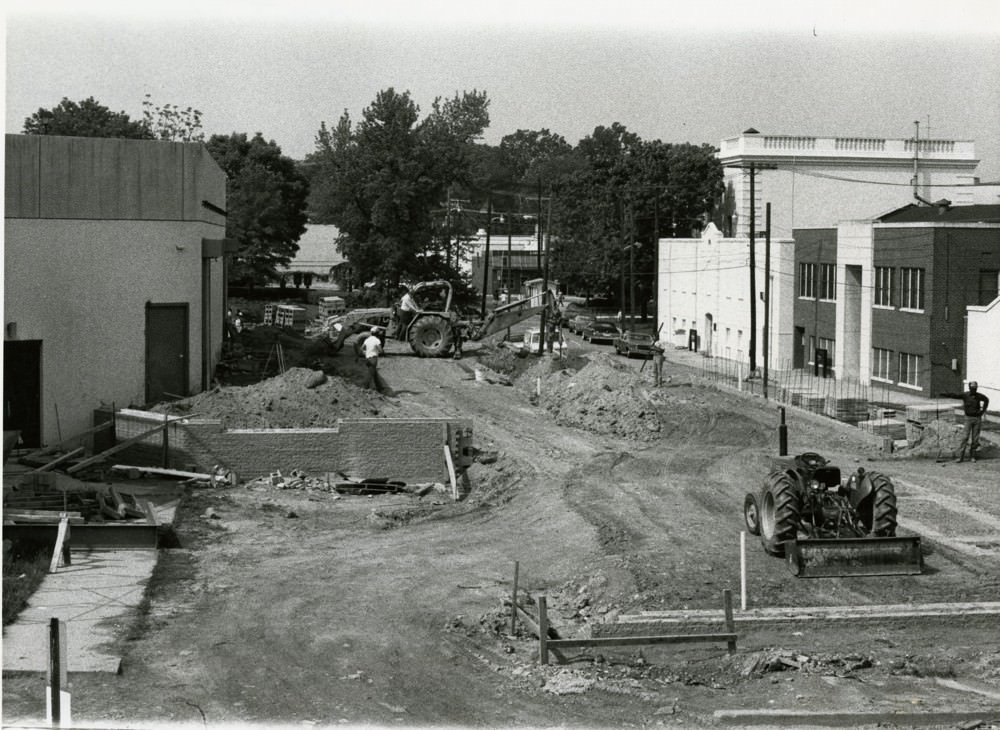
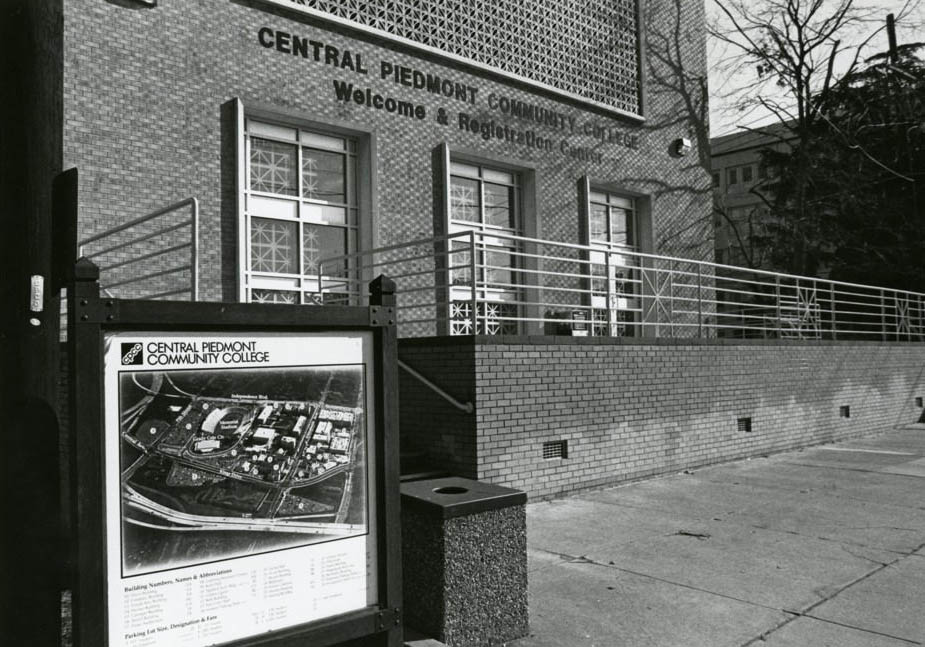
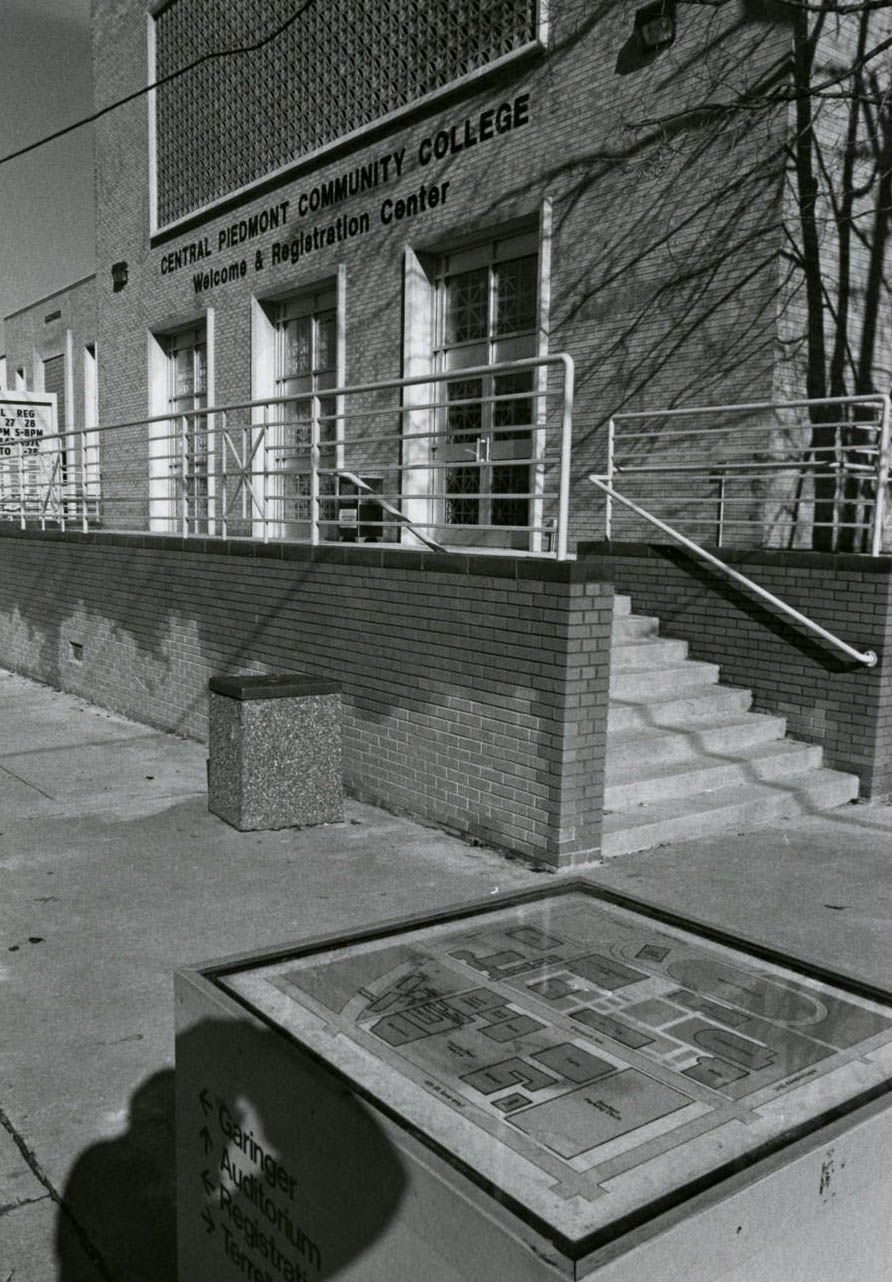
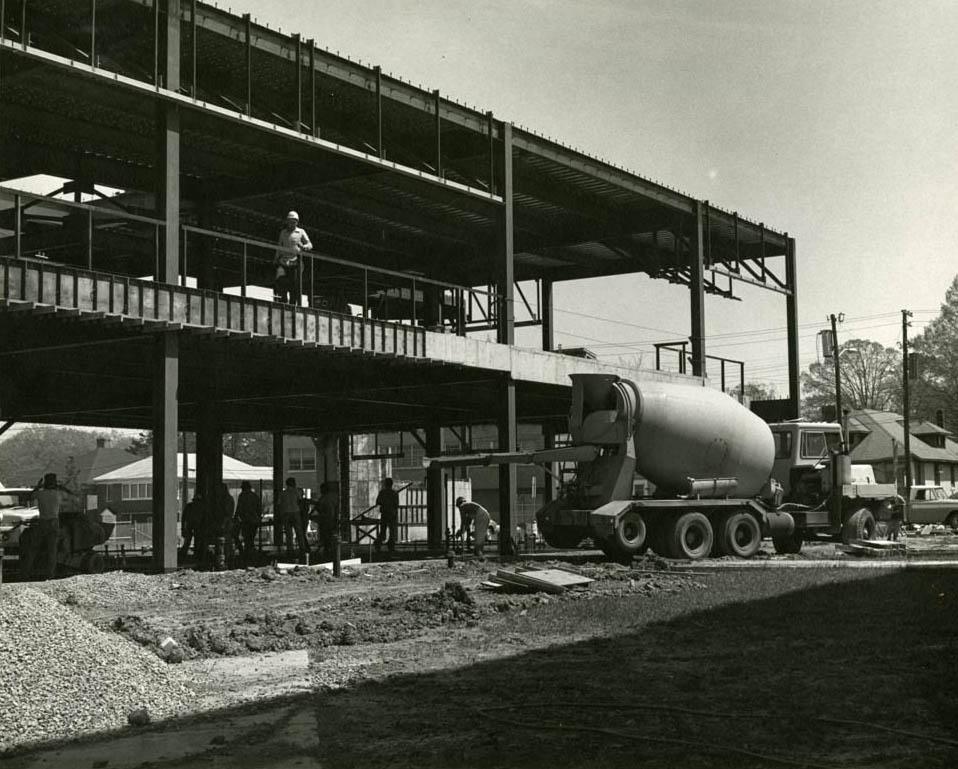
Construction crews were a common sight at Central Piedmont throughout the decade. The Citizens Center was one of the largest projects, rising along Independence Boulevard while the rest of campus continued its daily routines. The welcome and registration center served as the first point of contact for students new to the college, complete with a campus map displayed at the front.
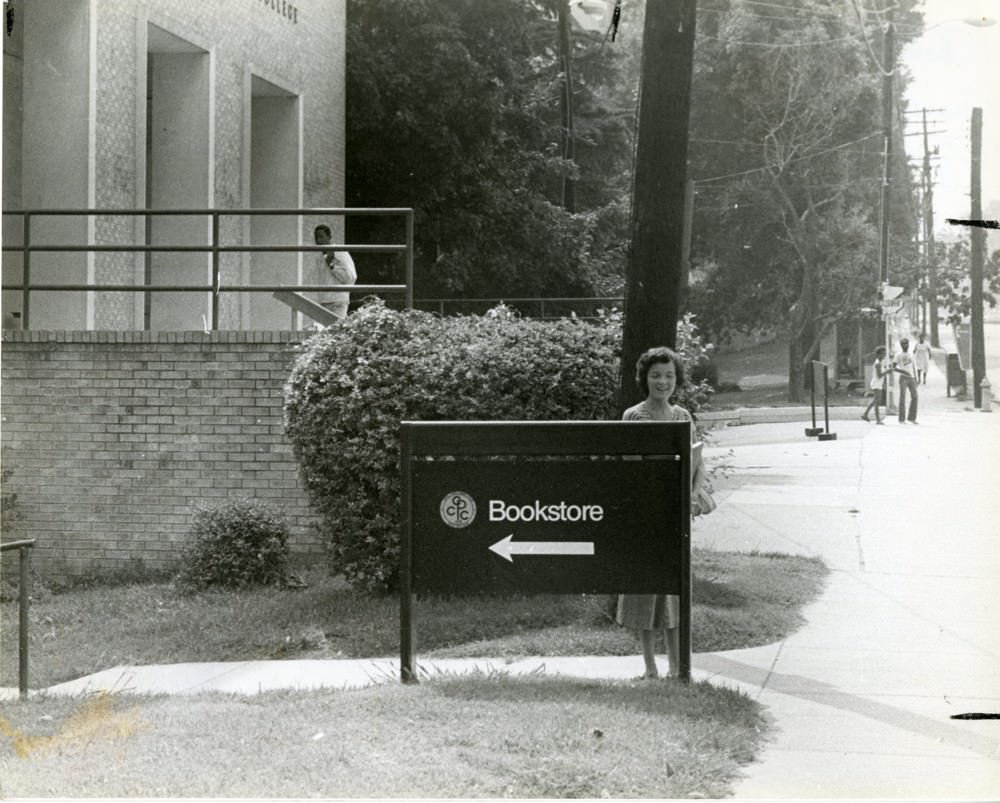
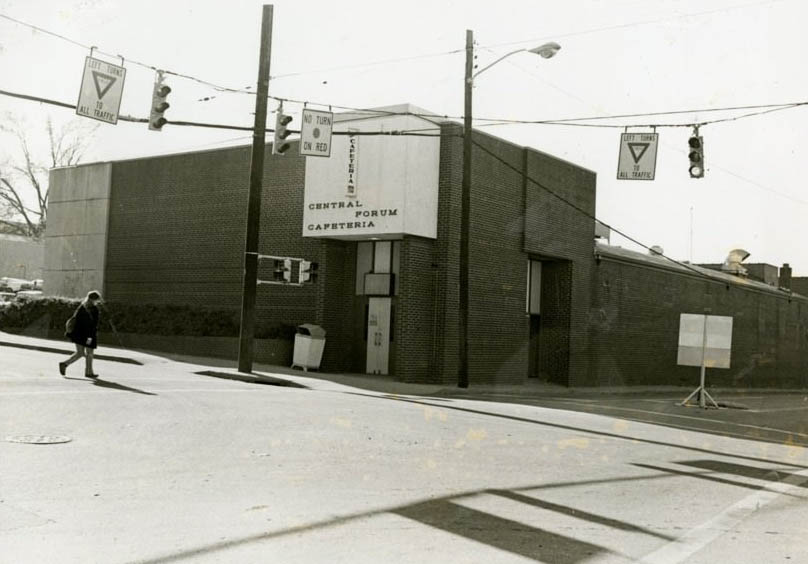
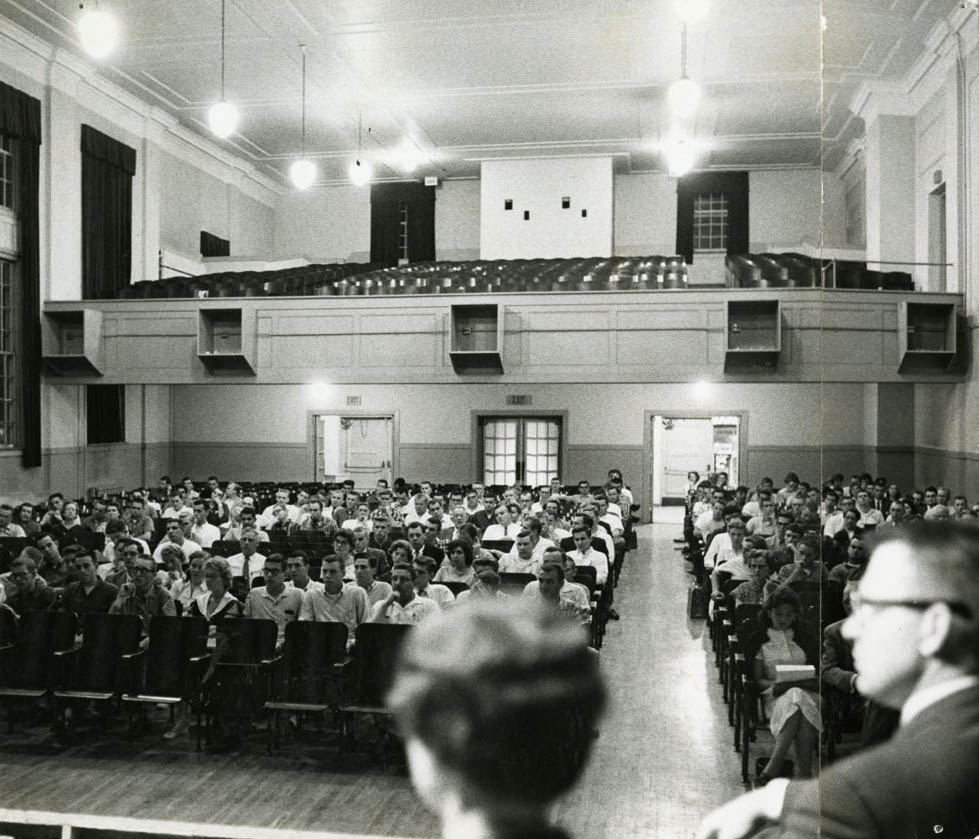
Central High School — one of Charlotte’s historic educational landmarks — was also part of the city’s fabric during the 1980s. The school’s auditorium filled with students for graduation ceremonies, and its basement housed a bookstore that served the surrounding community. The building’s cafeteria, known as the Central Forum, was a daily gathering spot for students.
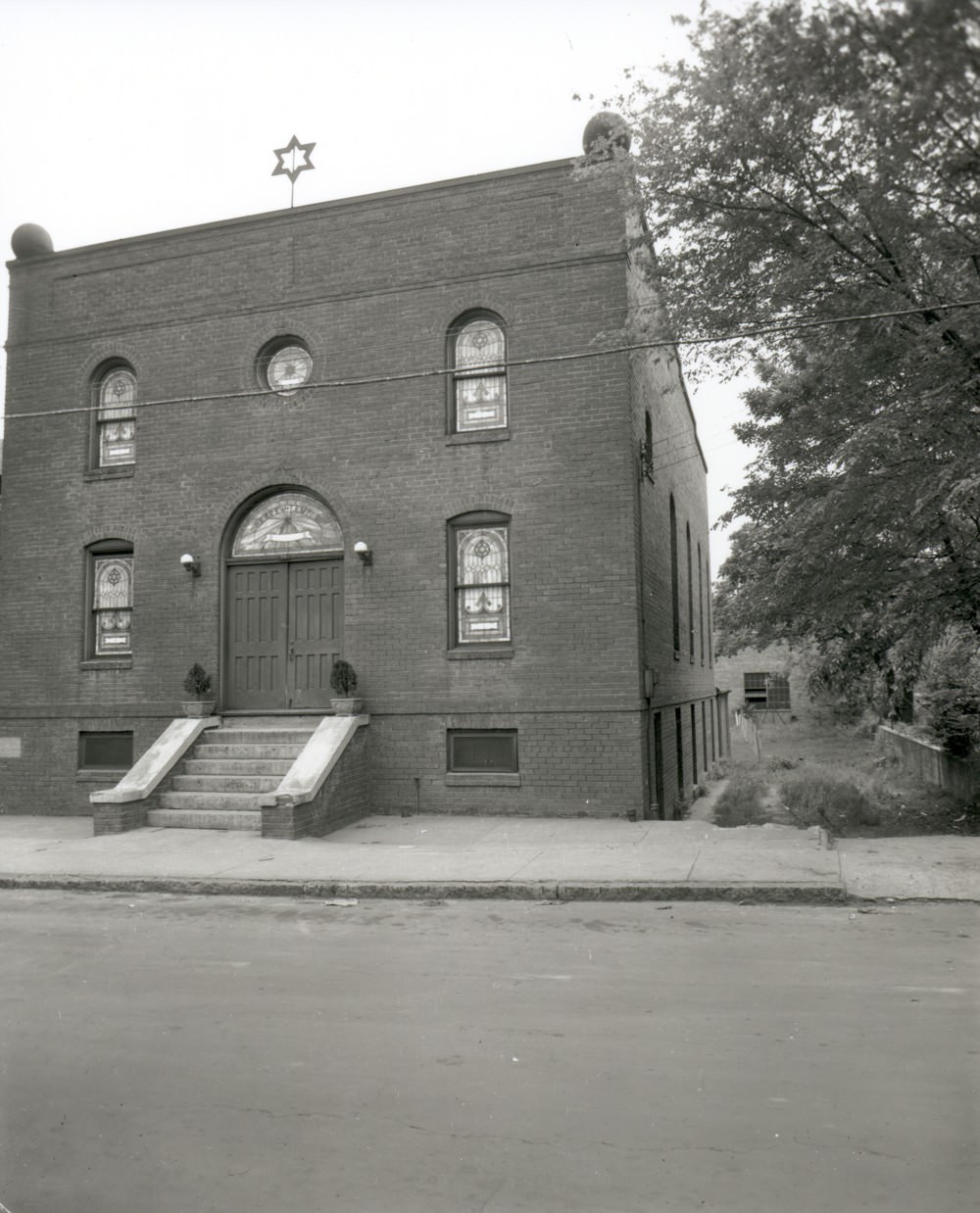
Charlotte’s religious history stretched back long before the 1980s. The Hebrew United Brotherhood synagogue at 409 West 7th Street in what is now Fourth Ward was originally built in 1916 and served a congregation of twenty-five founding families. William Greenberg, who arrived in the 1930s, became the first English-speaking rabbi at the congregation. By the time these photos were taken, the building had already been sold to the Mormon church and no longer stands today.
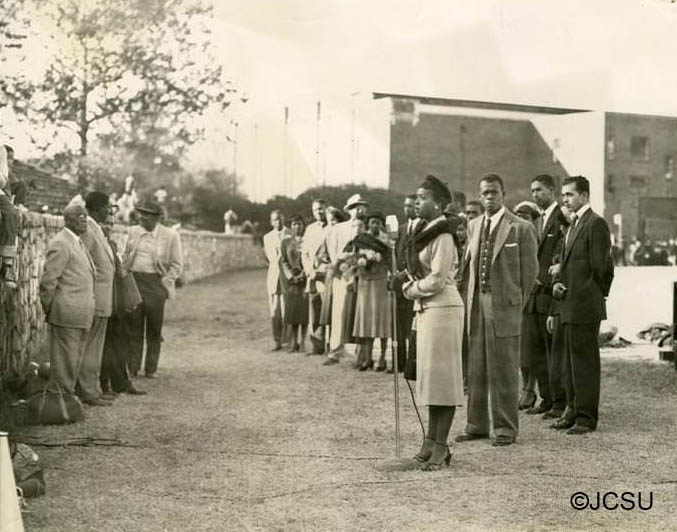
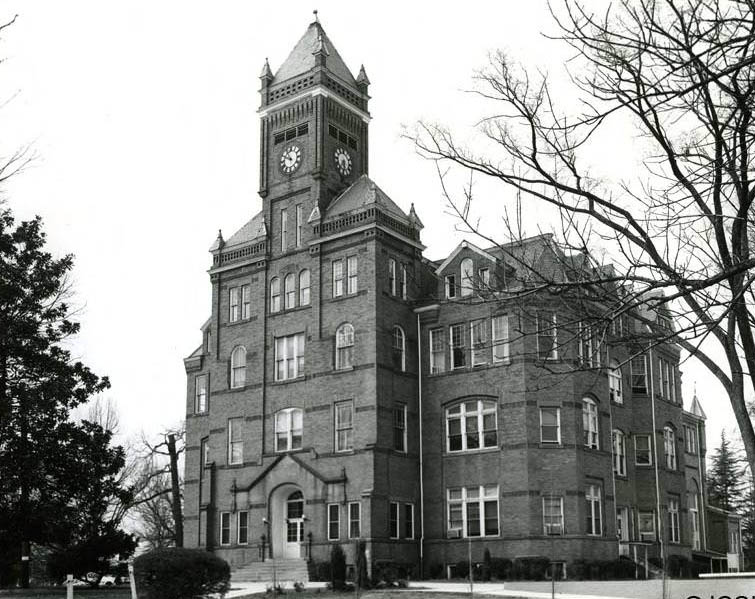
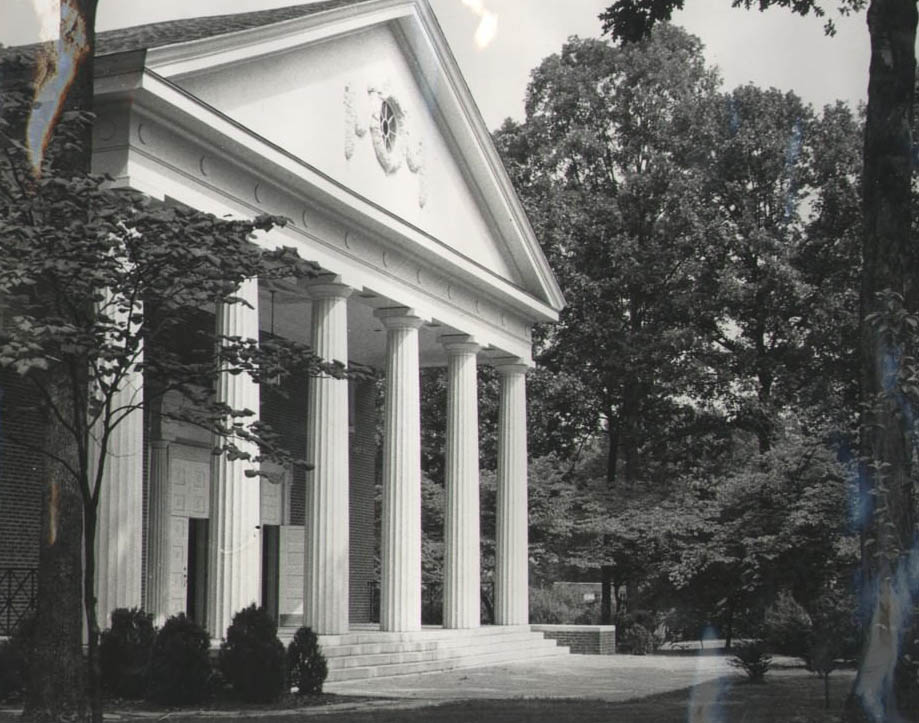
Johnson C. Smith University, a historically Black university founded in 1867, was an important part of Charlotte’s academic and social life throughout the 1980s. The university’s campus included landmarks like Biddle Hall, Smith Hall, Smith Cottage, McCrorey Theological Seminary, Van Every building, and Belk Chapel. Homecoming football games drew large crowds and were significant community events.
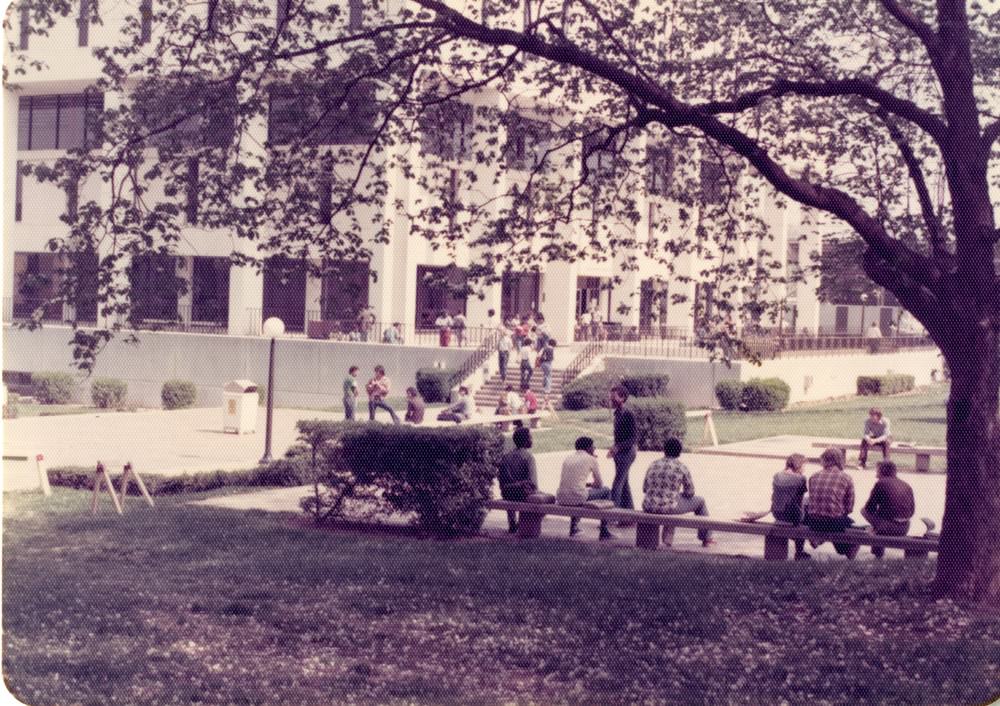
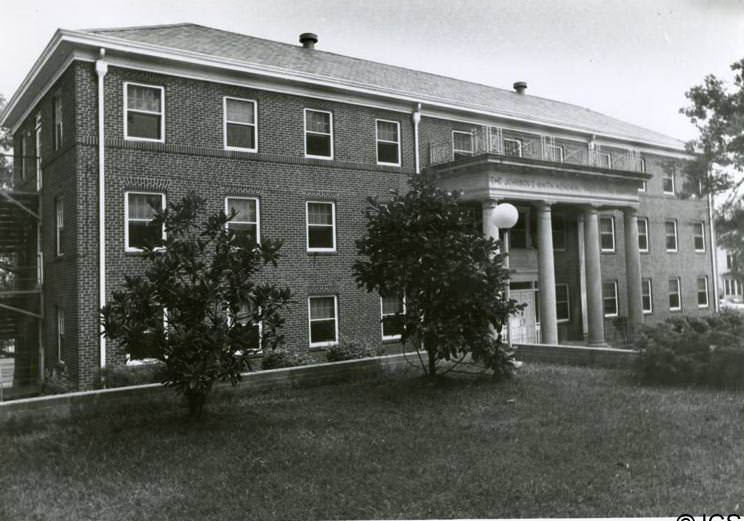
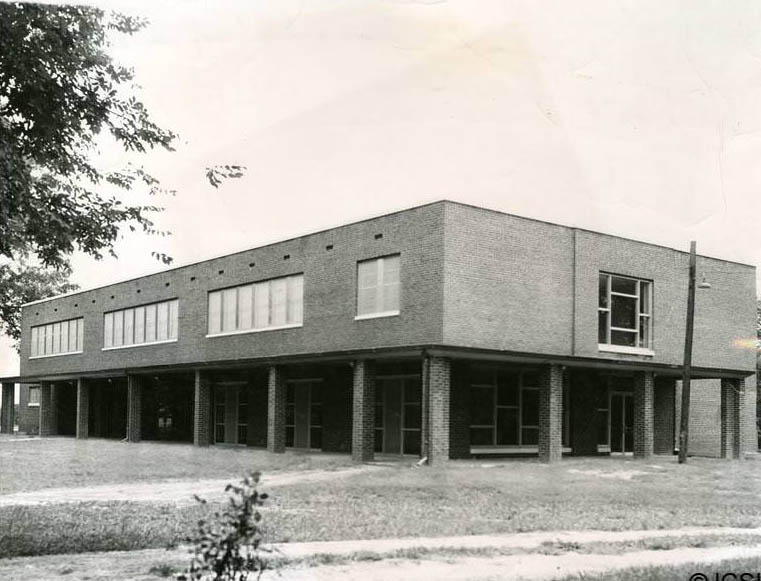
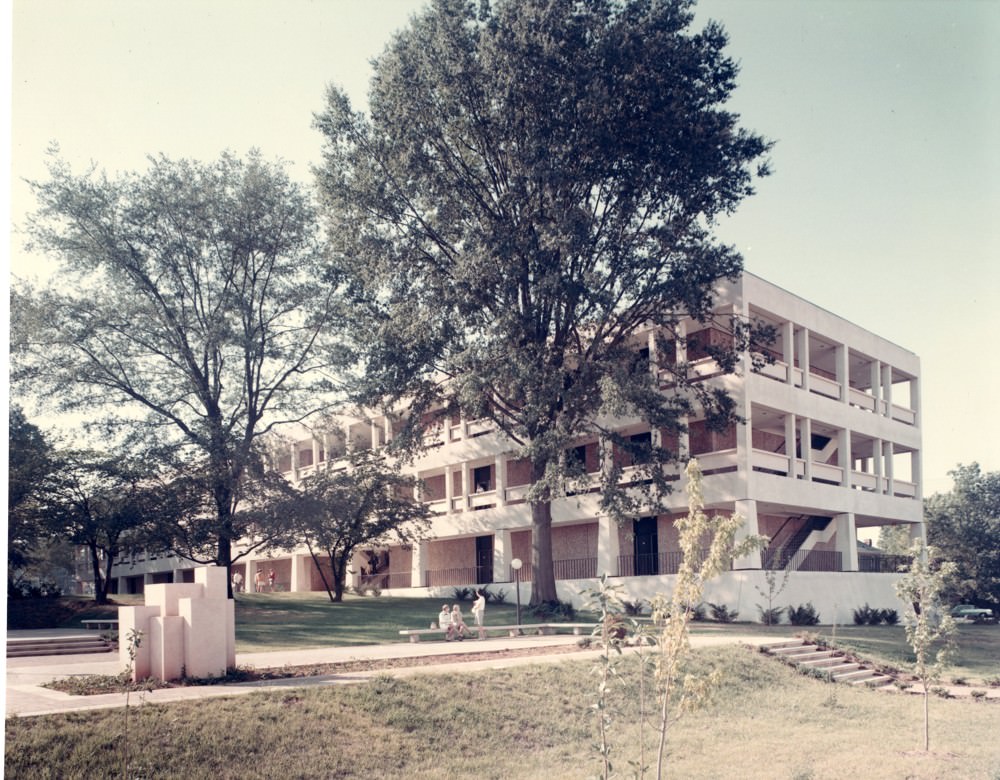
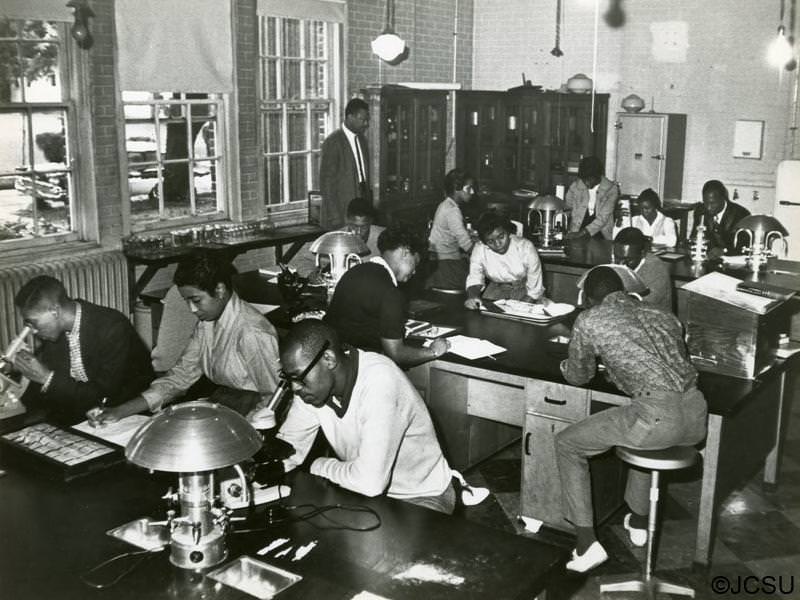
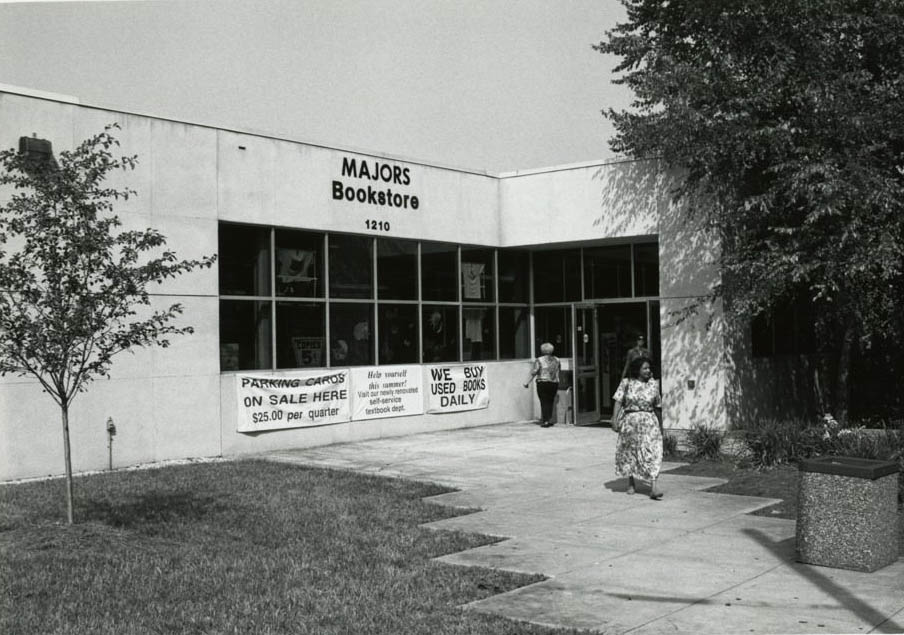
Student life in 1980s Charlotte had its own distinct rhythm. Bookstores like Majors Bookstore were central to campus commerce, and the Belk building at Central Piedmont served a variety of student needs. Parking lots filled with the era’s boxy sedans and hatchbacks, and science classrooms buzzed with students working through experiments at lab benches. These everyday scenes tell as much about Charlotte in the 1980s as any headline ever could.
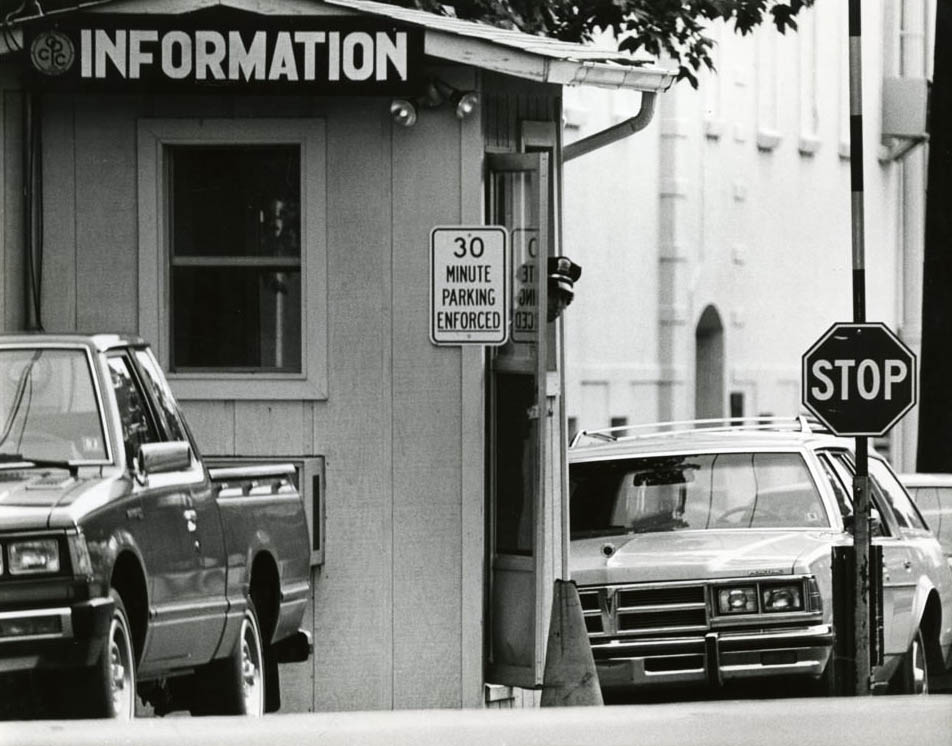
The welcome and registration center at Central Piedmont was more than just an administrative office. For many Charlotte residents in the 1980s, it was the entry point into higher education — the first step toward the kinds of jobs a rapidly changing economy now demanded. The campus map displayed near the front entrance guided thousands of new students each semester through a college that was still growing its own identity alongside the city.
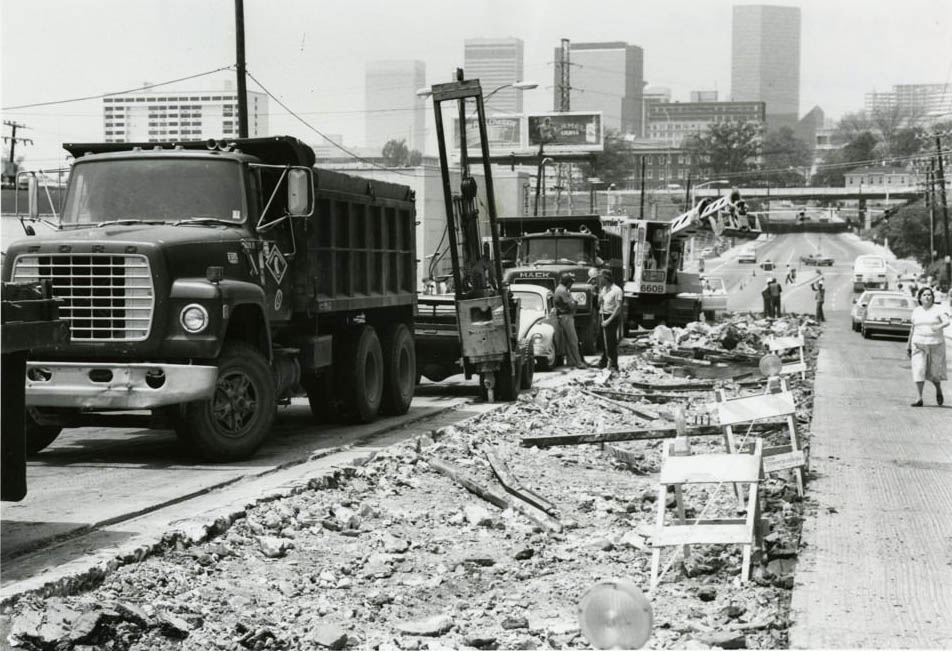
Charlotte’s streets and neighborhoods in the 1980s had a character that is hard to find now. Elizabeth Avenue’s tree-lined median cut through a neighborhood that felt more intimate than urban. The city’s roads were not yet choked with the traffic that would come with later decades of growth. These were the arteries of a city still in the early stages of becoming something much larger.
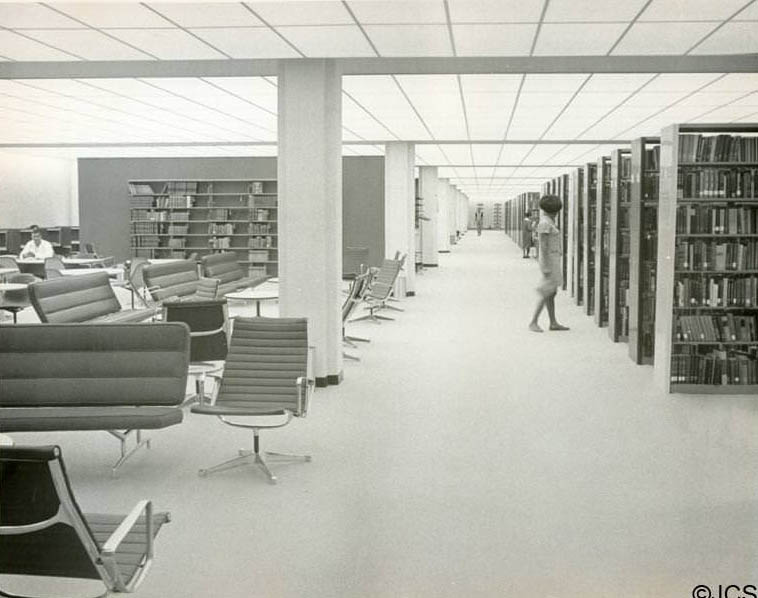
Inside Charlotte’s classrooms and gathering spaces, the decade played out in ways that feel both familiar and distant. Science students bent over microscopes and lab equipment. Student speakers took the mic at Johnson C. Smith University football games under autumn skies. Inside the James B. Duke Memorial Library, researchers sat among stacks of books in quiet reading rooms, doing the slow work of learning in an era before the internet changed everything.