The Arthur J. Fenwick Collection offers a rare window into a world where the open road meant genuine adventure. These photographs, many dating to around 1950, document not just family holiday caravanning but the richer, older tradition of traveling showmen, circus folk, and fairground communities who lived on wheels year-round.
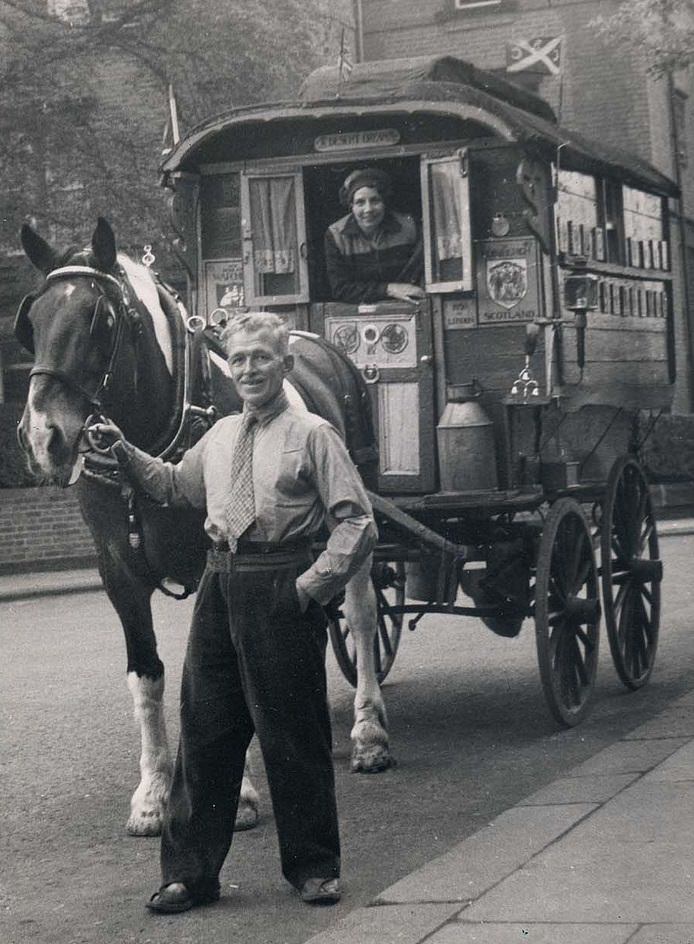
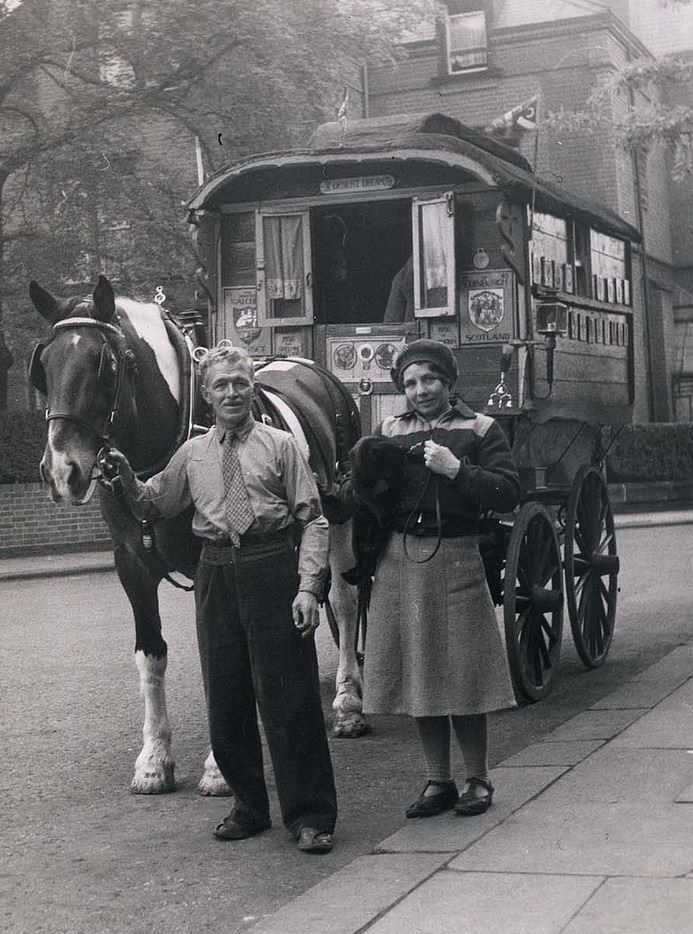
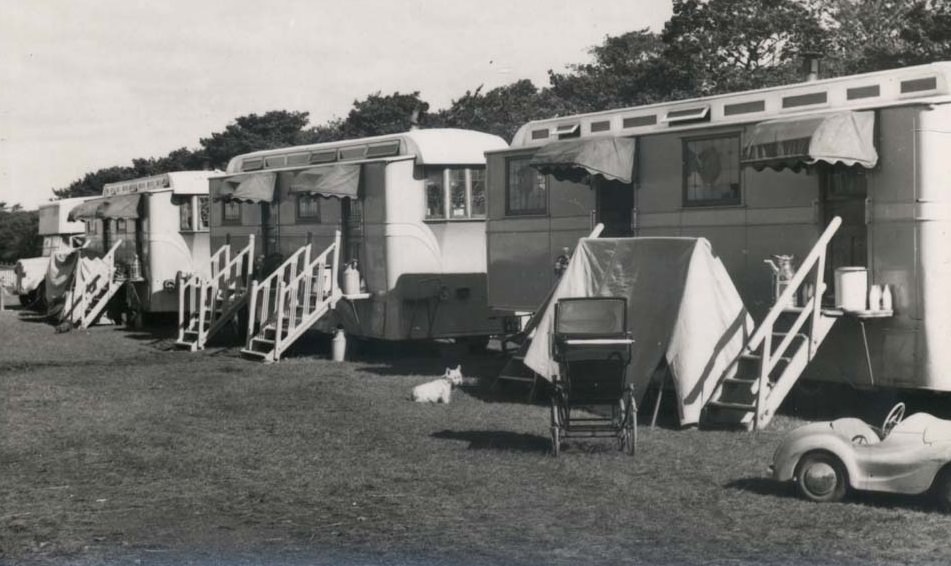
The “Desert Dream” caravan, photographed on the road in 1950, is a perfect example of post-war mobility. Britain’s roads were narrow and winding, and towing a caravan demanded patience and skill. Electricity and running water were luxuries, not guarantees. Travelers carried what they needed and made do with the rest.
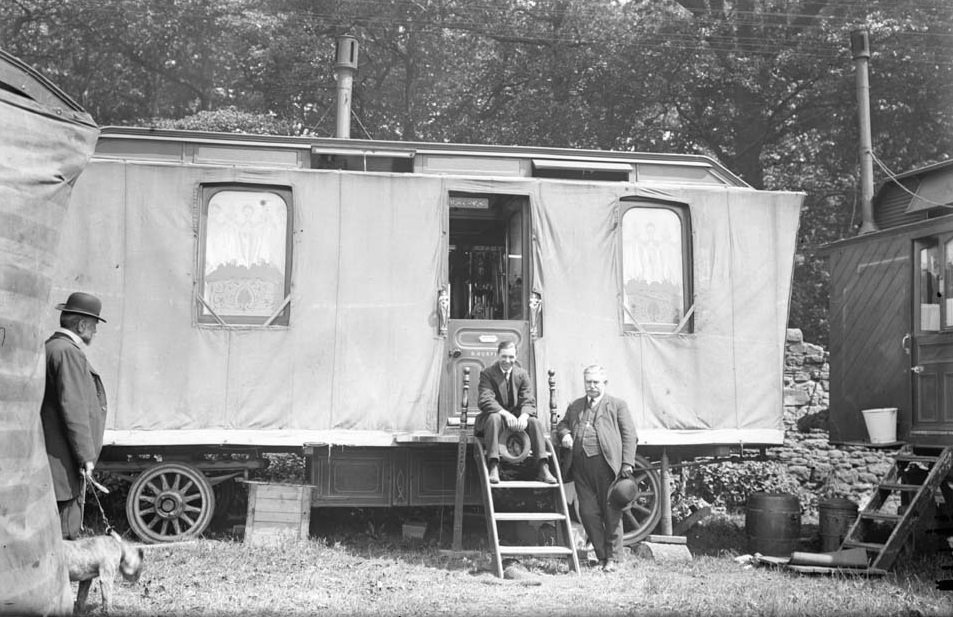
Arthur J. Fenwick himself appears in the collection, photographed on the steps of a showman’s caravan. The showman’s caravan was a distinct vehicle from the family holiday trailer — heavier, more ornate, and built for a life permanently on the move. Fenwick’s access to these communities produced an unusually intimate record.
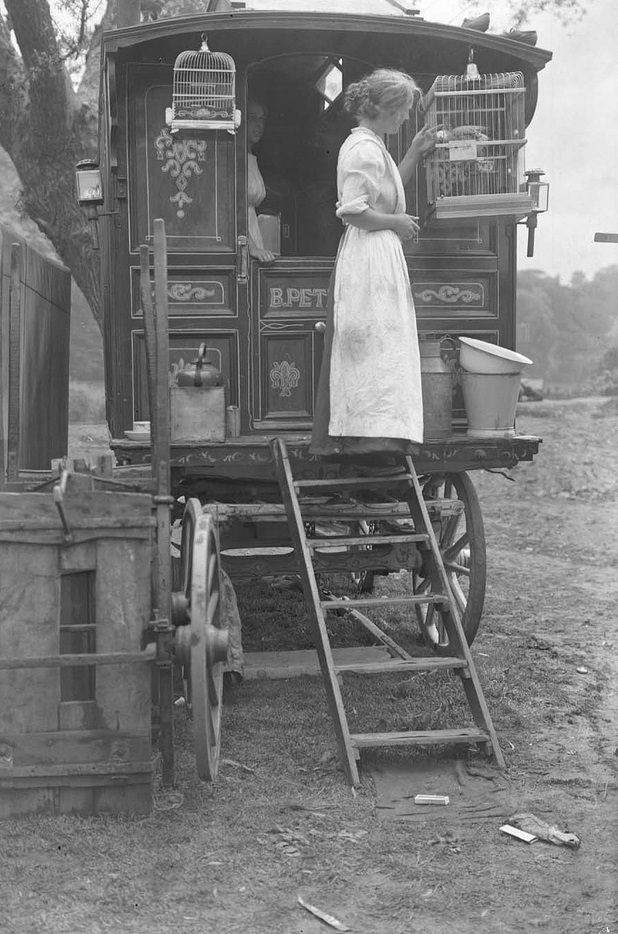
Life within these traveling communities had its own rhythms. Animals, birds, and performance equipment traveled alongside people, as seen in this portrait of a young woman with birdcages. For fairground and circus families, the caravan was not a holiday retreat — it was a permanent home and workplace combined.
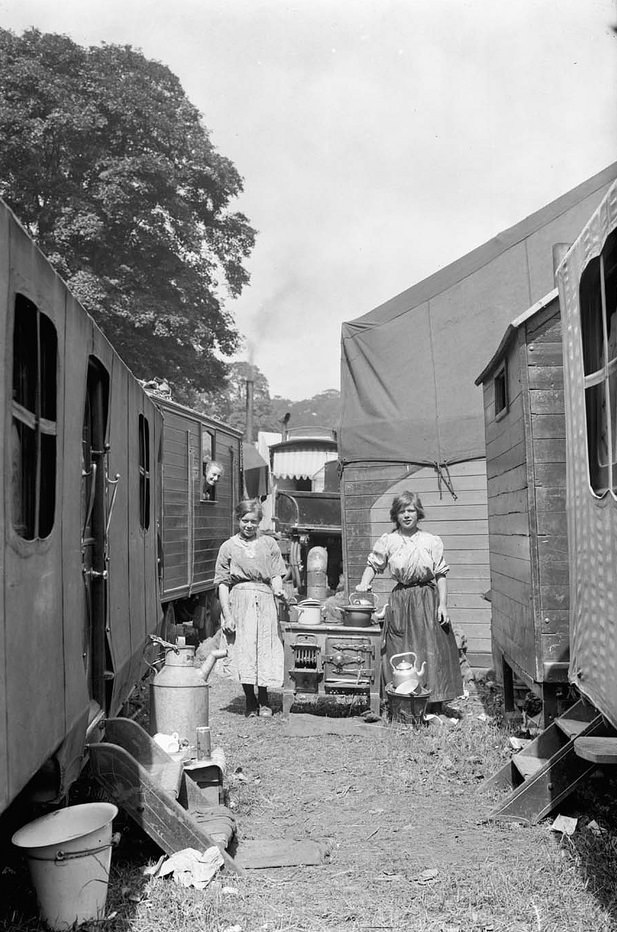
Cooking was done outdoors on wood or coal stoves, often shared between families. These two girls standing beside an old stove represent a daily reality for traveling communities — meals prepared in the open air, regardless of the weather, with whatever fuel could be sourced along the route.
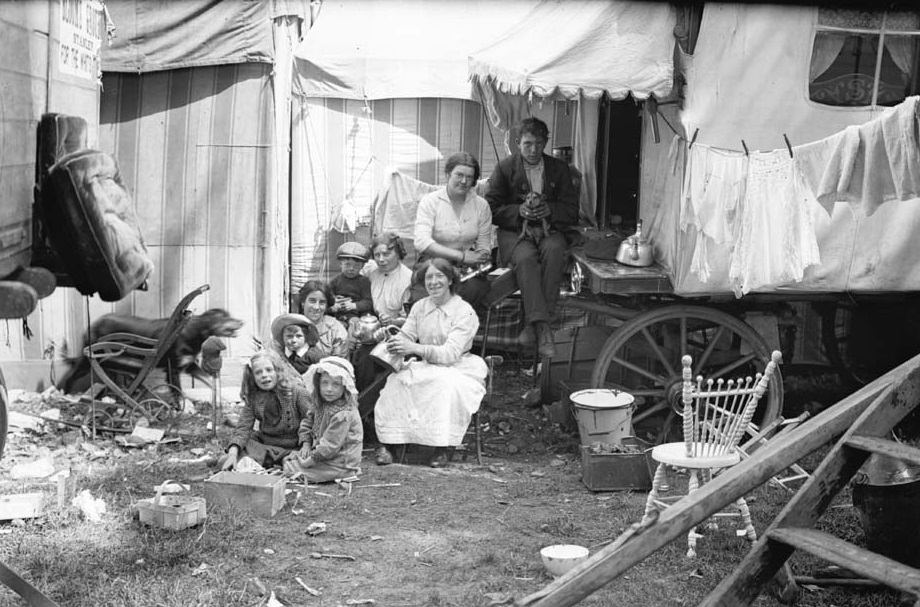
Circus and fairground travelers gathered in tight-knit groups between shows. Big top tents went up and came down with practiced efficiency, and caravans formed protective circles around the camp. This photograph captures the community at rest — a brief pause in an almost constant cycle of travel and performance.
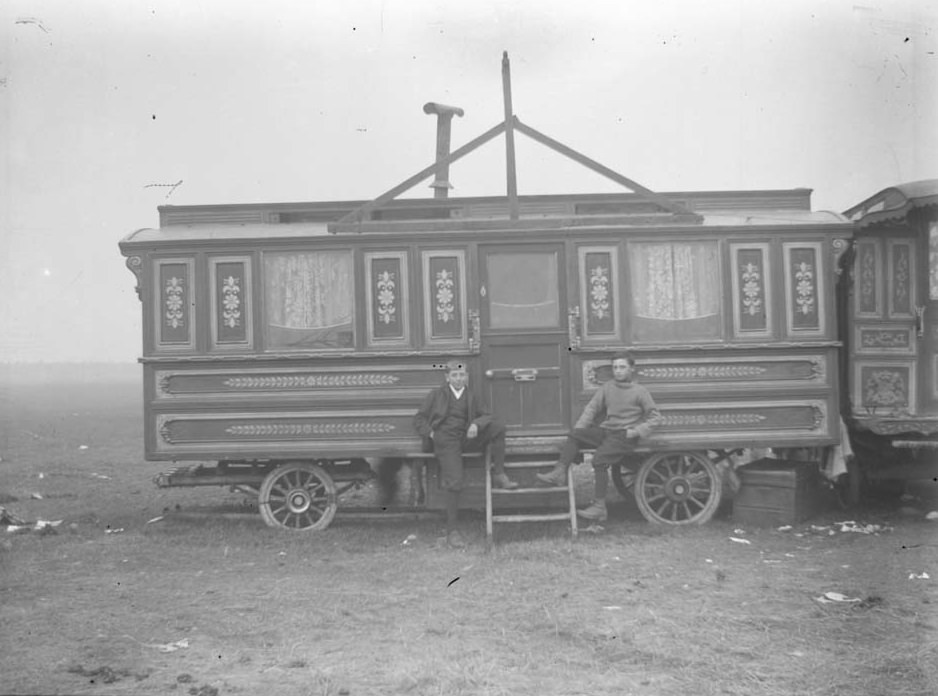
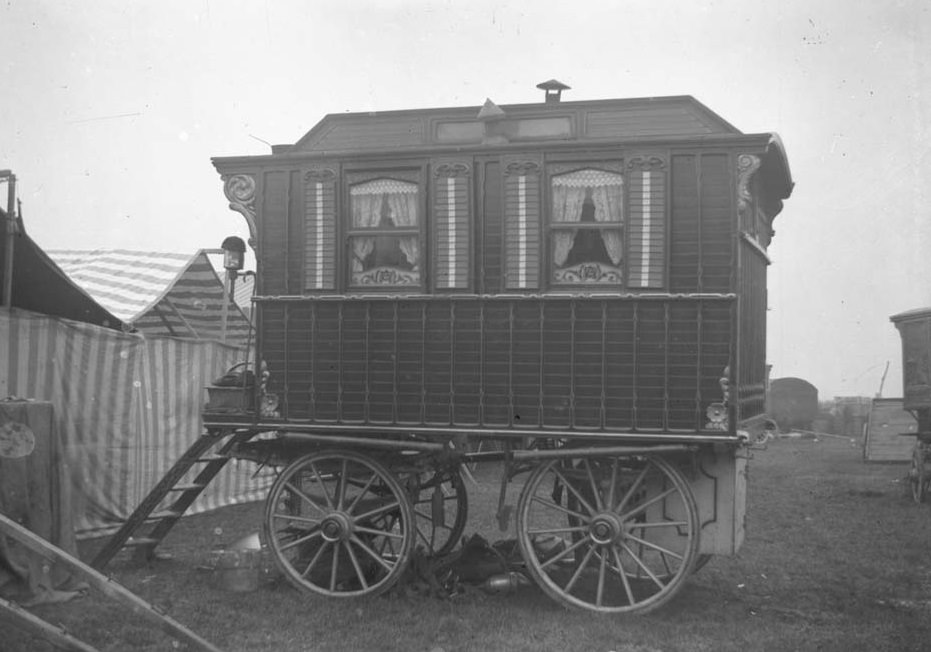
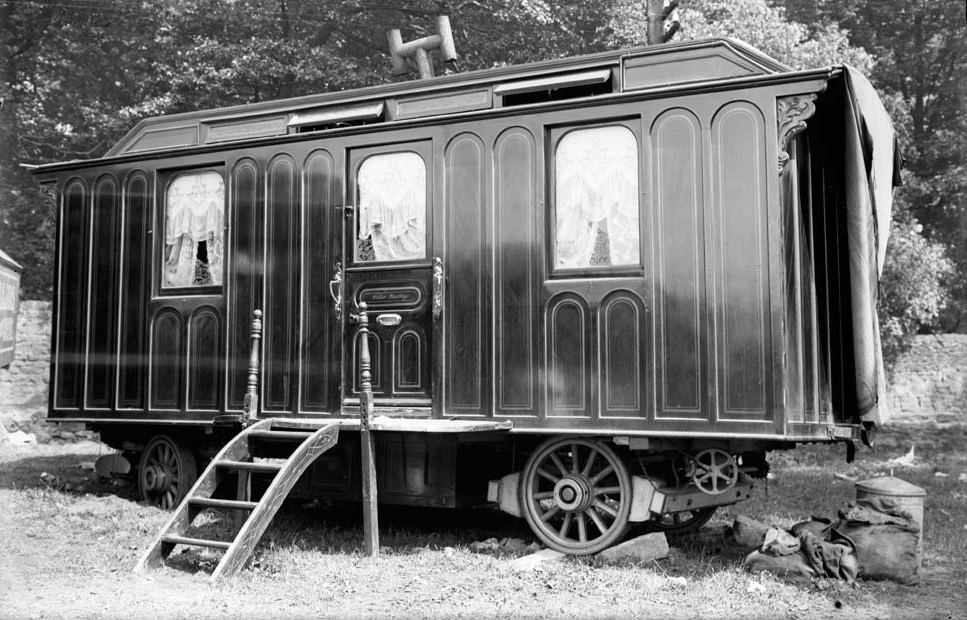
The horse-drawn wooden showman’s caravan was already a throwback by 1950, but some traveling families still used them. Intricately carved and painted, these vehicles were status symbols within the community. Owning a well-kept caravan signaled prosperity and pride in one’s trade.
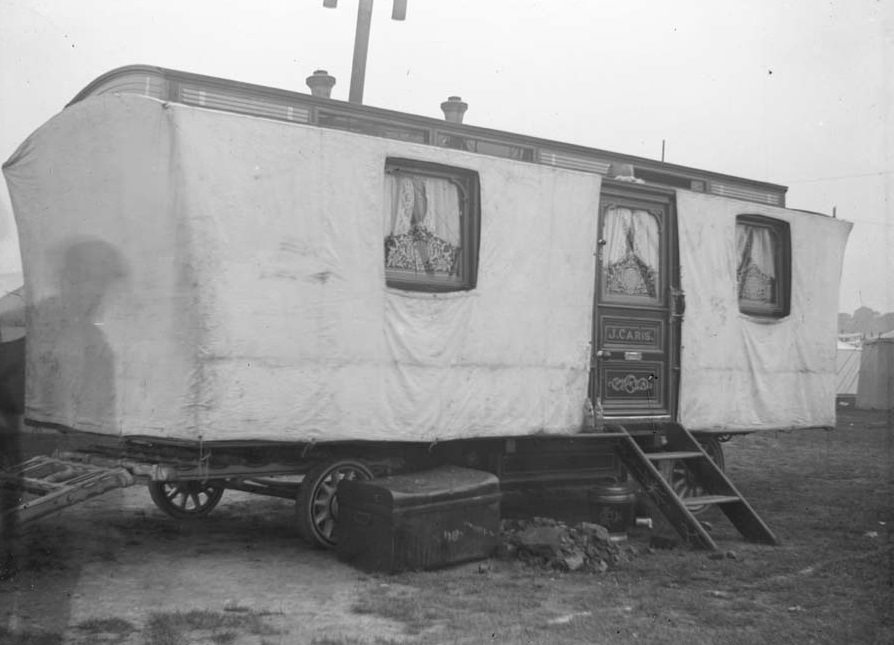
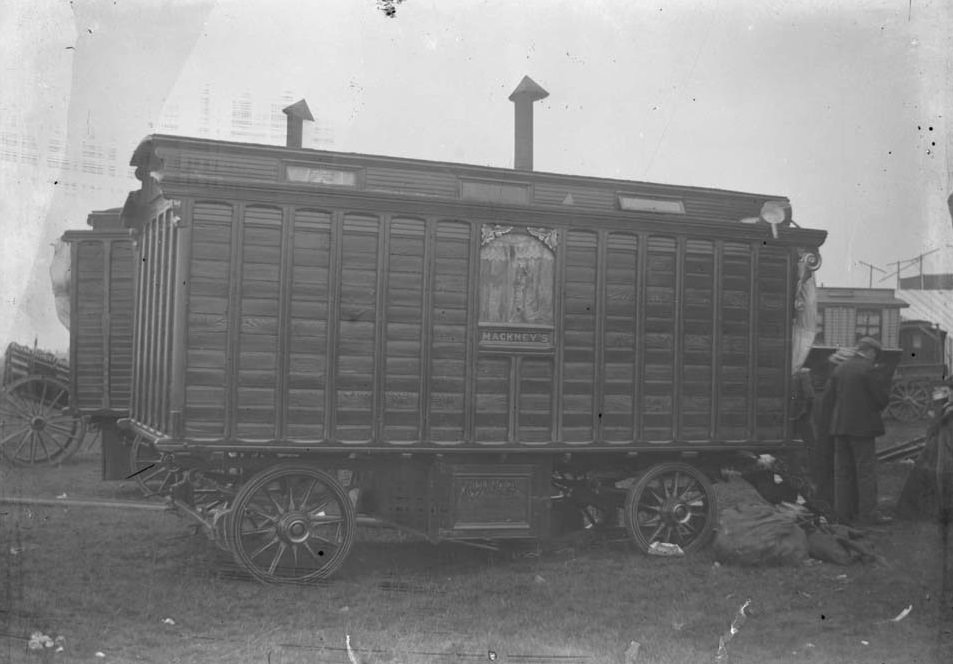
Named caravans like Mackney’s and Walker Hoadley’s point to the strong family dynasties within the traveling show world. These names were brands as much as surnames — recognized across fairgrounds and circus circuits throughout Britain.
Chipperfield Circus, one of Britain’s most famous traveling circuses, is represented here at Town Moor in Newcastle. The Chipperfield family operated continuously for generations, and their caravans at a stop like this would have numbered in the dozens, forming a temporary city on the moor.
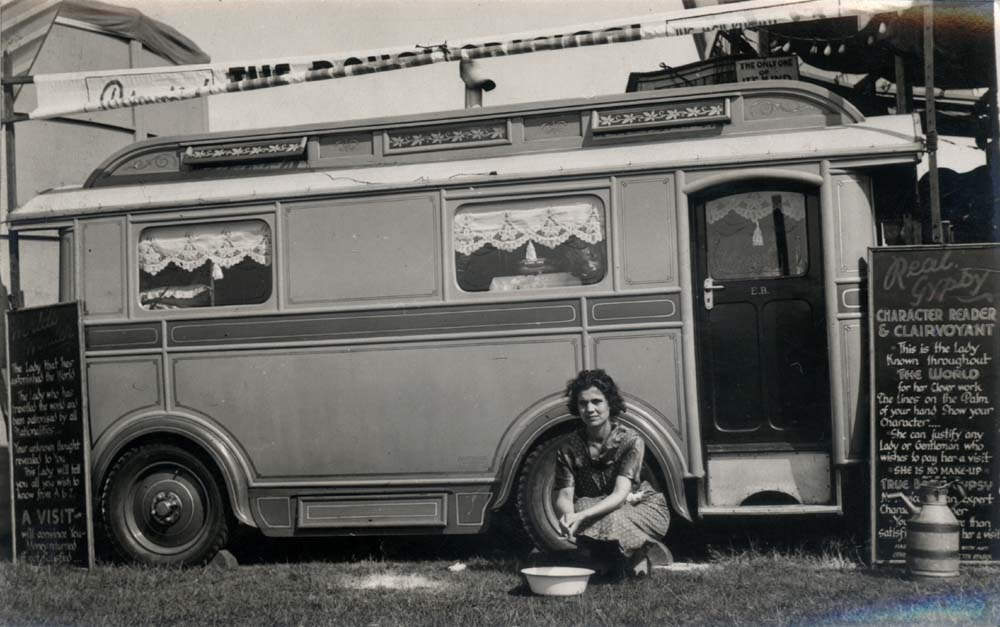
Fortune tellers and clairvoyants were fixtures of the traveling fair. This photograph of a character reader and clairvoyant shows the full range of trades that existed within these communities — entertainment, spectacle, and mystery all traveled together under the same canvas.
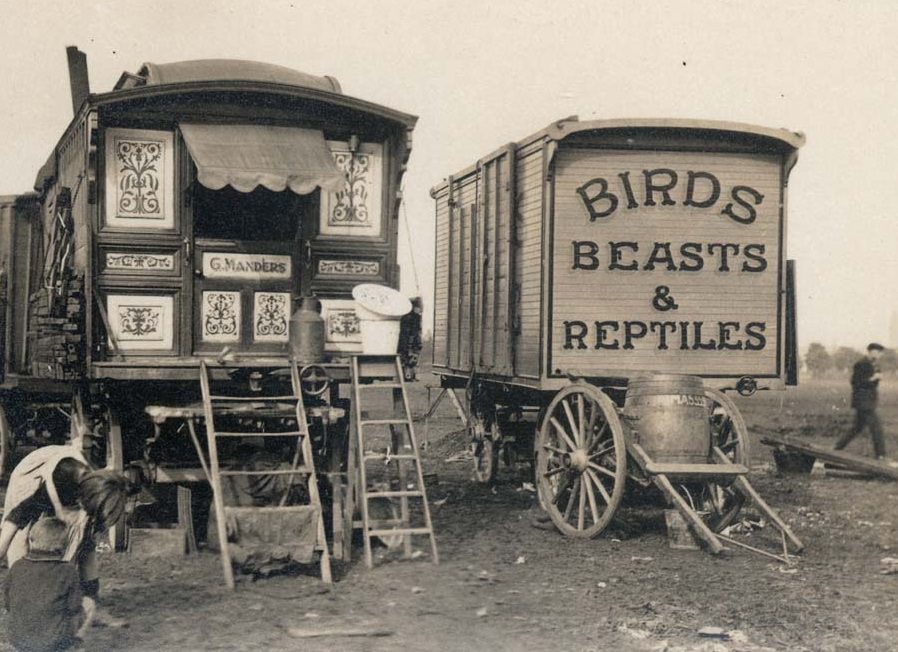
Manders Menagerie rounds out the collection with a reminder that traveling shows often included wild animals displayed for paying audiences. Menageries like Manders’ moved from town to town, and their caravans and wagons carried everything from big cats to exotic birds. The Fenwick photographs preserve a way of life that had already begun to disappear by the mid-20th century.