Camden is an inner-city borough in northern London, formed in 1965 when three older metropolitan boroughs — Hampstead, Holborn, and St Pancras — were merged into one. The borough takes its name from Charles Pratt, an English judge who also provided land for development as far back as 1791. Over the centuries, Camden’s streets and neighbourhoods carried the names of its major landowners: the Dukes of Bedford, the Lords Southampton, and the Somers family. By the 1980s, Camden had grown into a dense, diverse urban district packed with working-class streets, independent shops, music venues, and a canal network that wound quietly through the noise of city life.
Photographer Peter Marshall walked Camden’s streets throughout the 1980s with a camera, documenting what he saw at street level — not landmarks or tourist attractions, but the everyday texture of the borough. His photographs show bus routes, corner shops, housing estates, market stalls, and the people who filled them. Together, they form a detailed visual record of a London neighbourhood in a decade of rapid change.
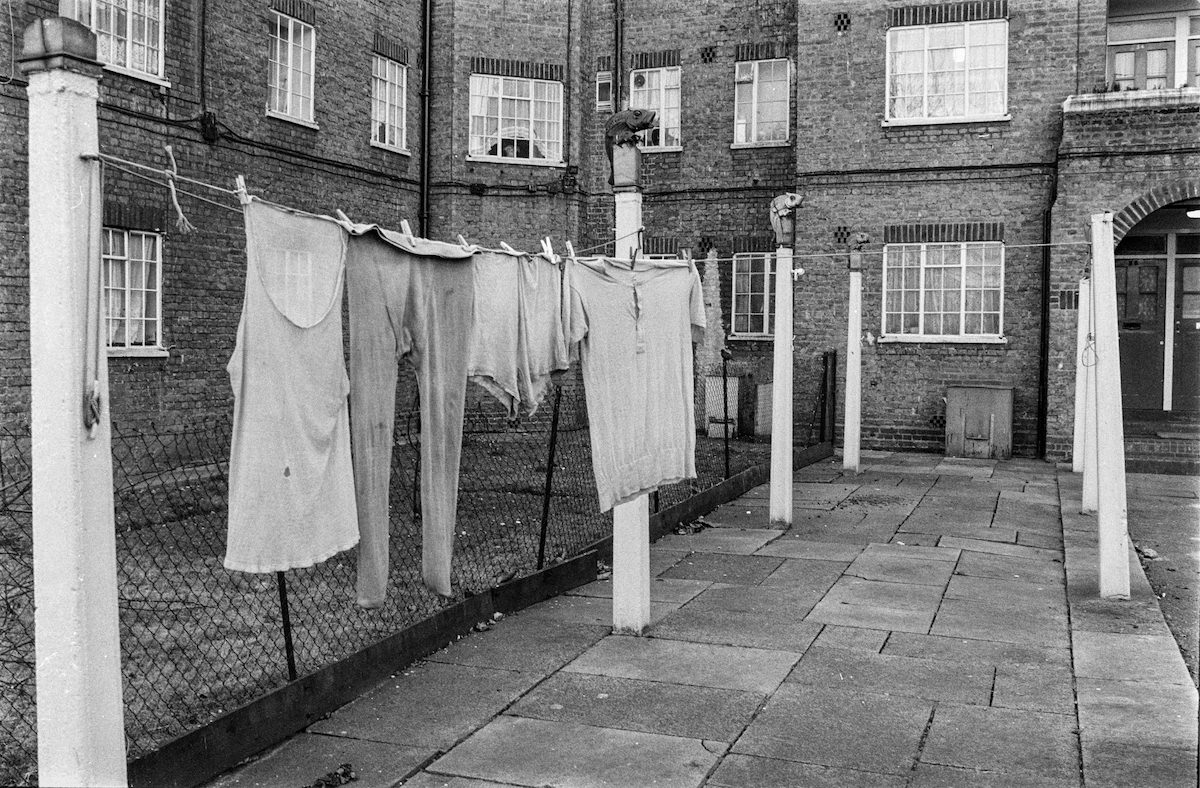
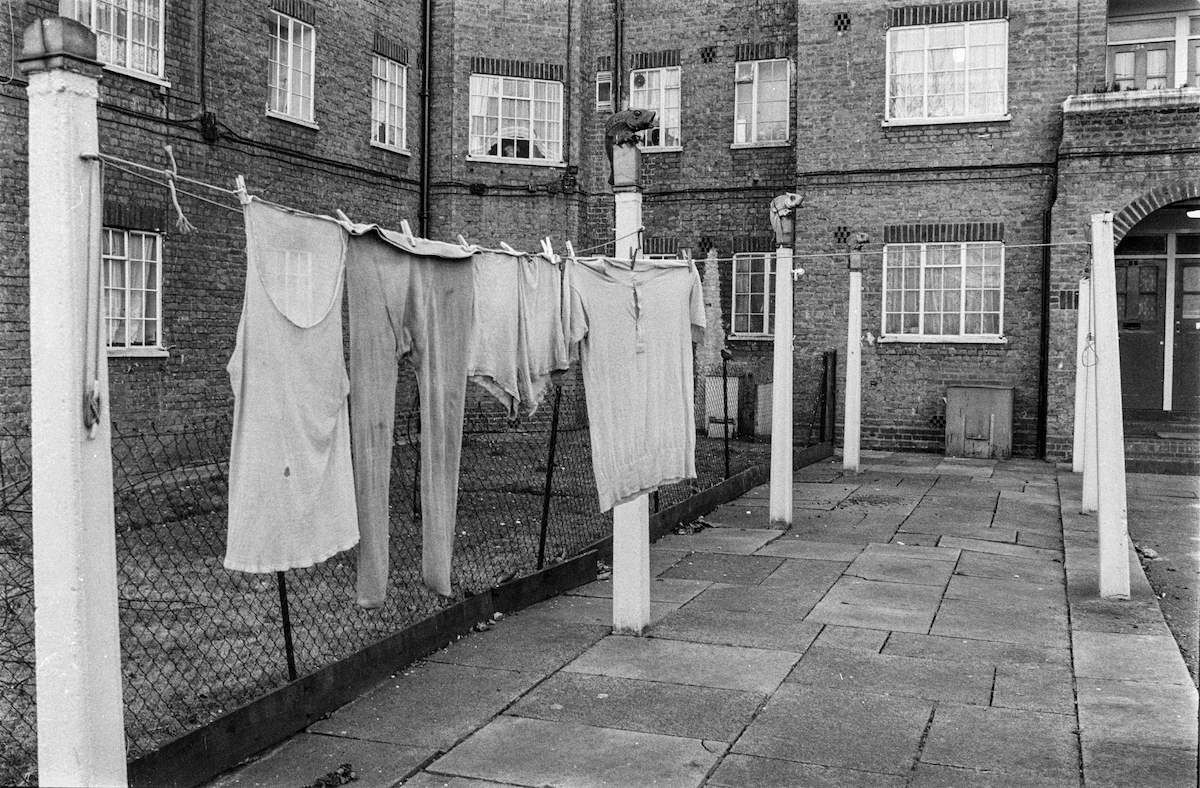
Somers Town, one of Camden’s oldest and most densely populated districts, appears frequently in Marshall’s work. Streets like Chalton Street and Drummond Crescent still carried traces of Victorian-era infrastructure alongside post-war housing blocks. The washing posts and ironwork details he photographed were everyday objects that most people walked past without a second glance.
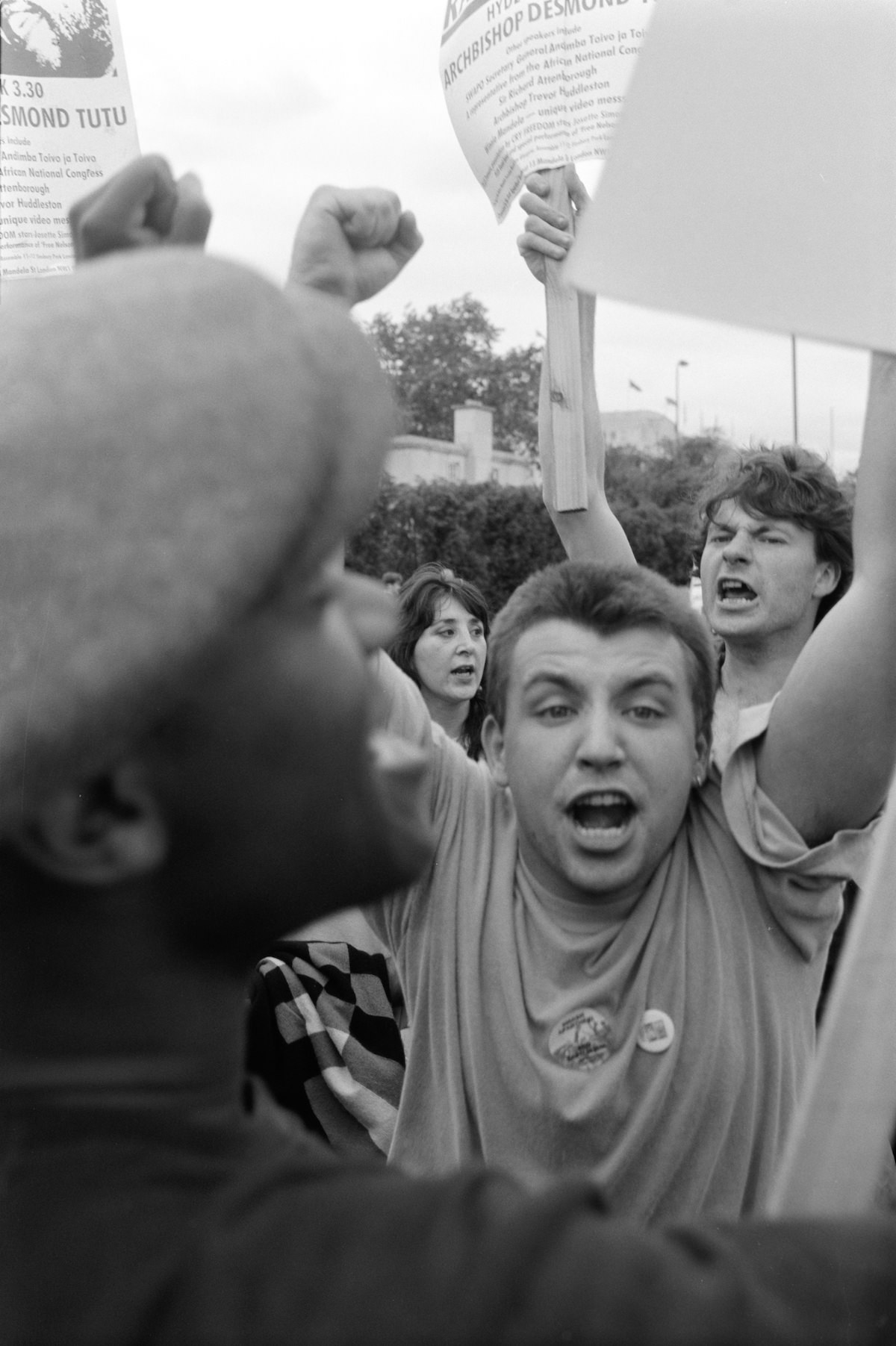
Camden in the 1980s was also a place of political energy. The Free Nelson Mandela Birthday March and Rally of 1986 drew thousands through the borough’s streets, part of a growing national campaign demanding the release of the imprisoned South African leader. Marshall was there to photograph it.
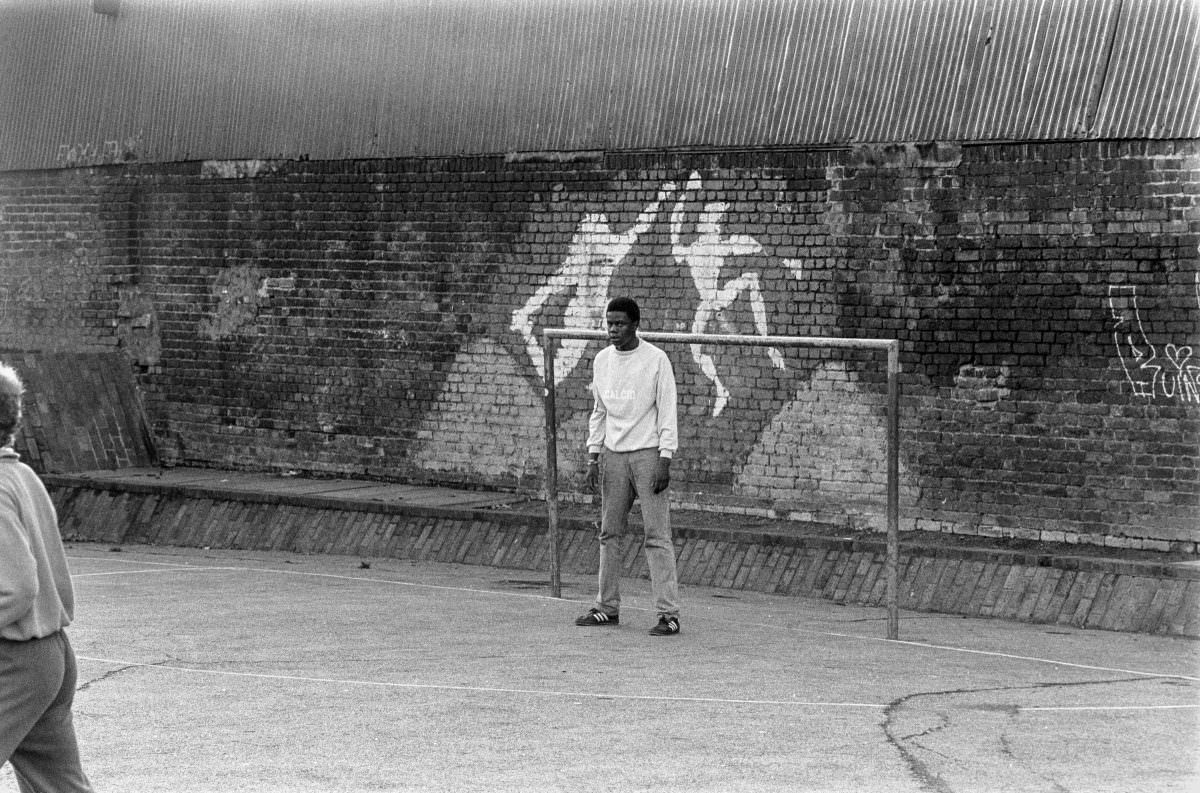
Kentish Town was one of Camden’s most photographed neighbourhoods in Marshall’s collection. Its residential streets, like Castlehaven Road, mixed terraced housing with small businesses and community spaces. The area had a working-class character that was still largely intact in the mid-1980s.
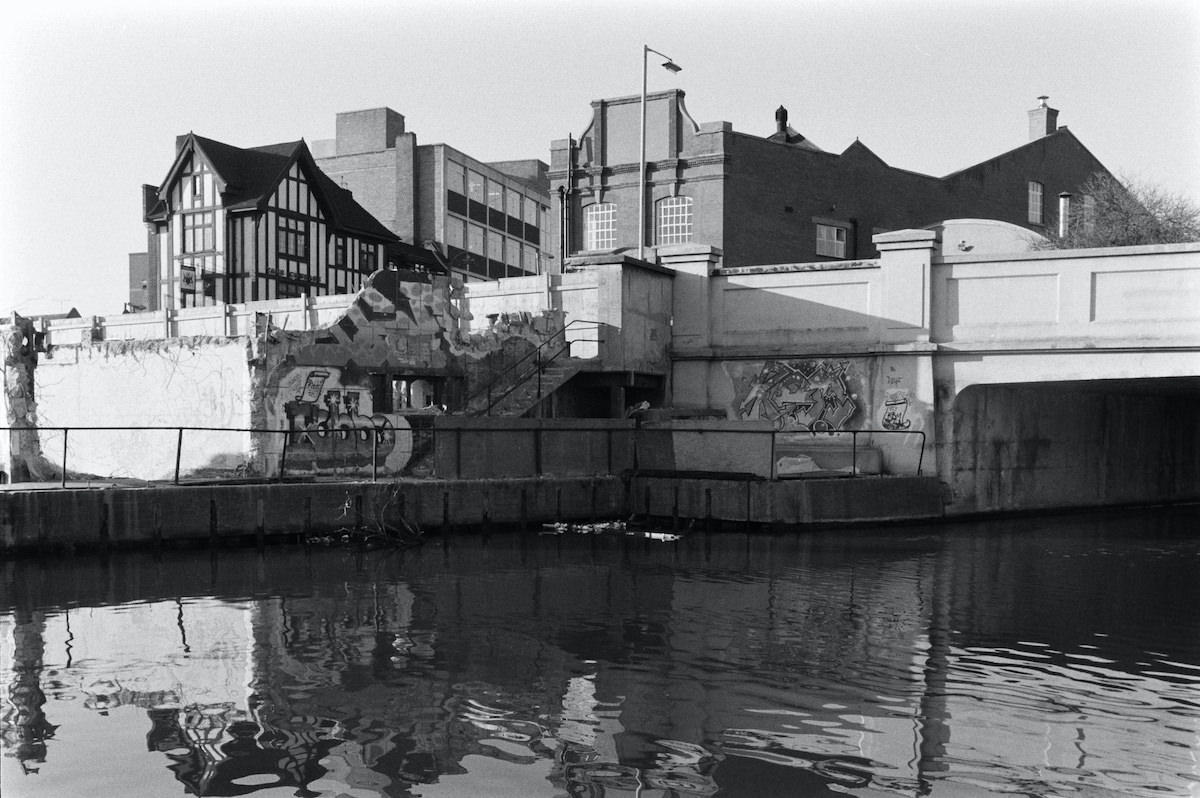
The Regent’s Canal cuts through Camden from east to west and appears in several of Marshall’s photographs. By the 1980s, the canal had long since lost its commercial shipping role and had become a quieter corridor through the city — still industrial in some stretches, but increasingly used by walkers and cyclists.
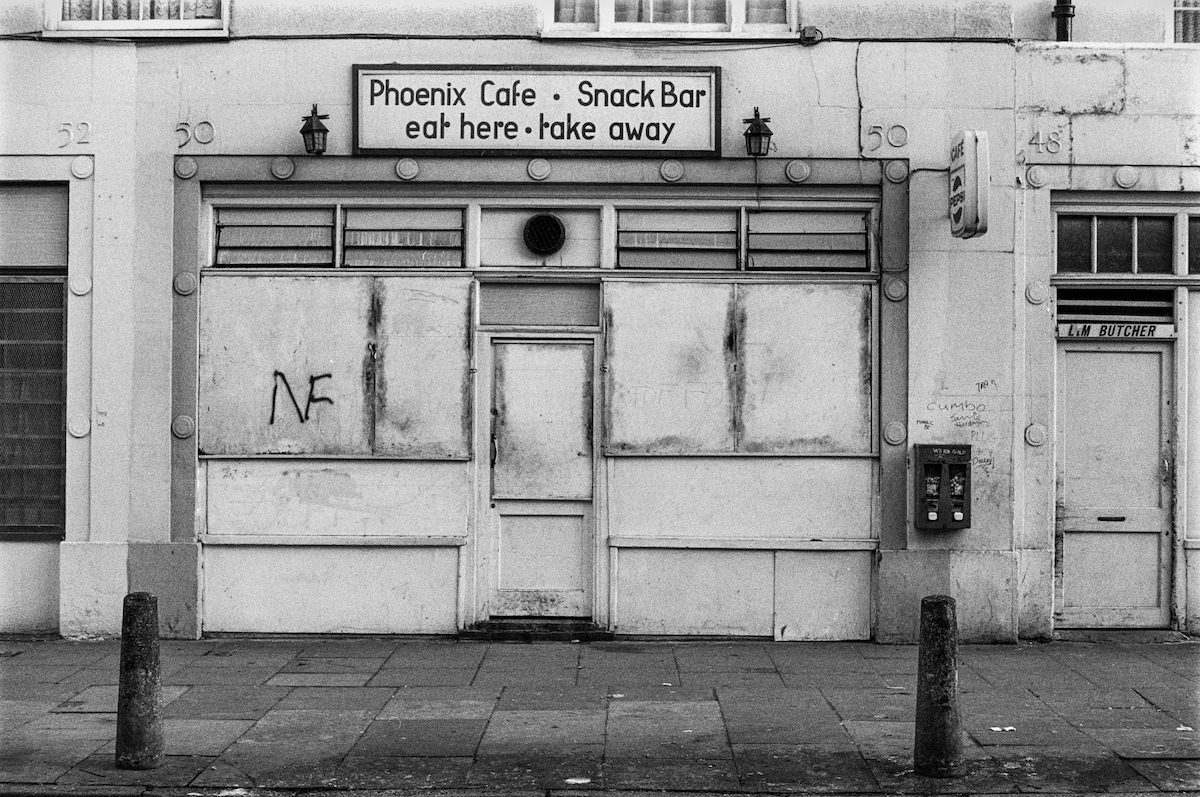
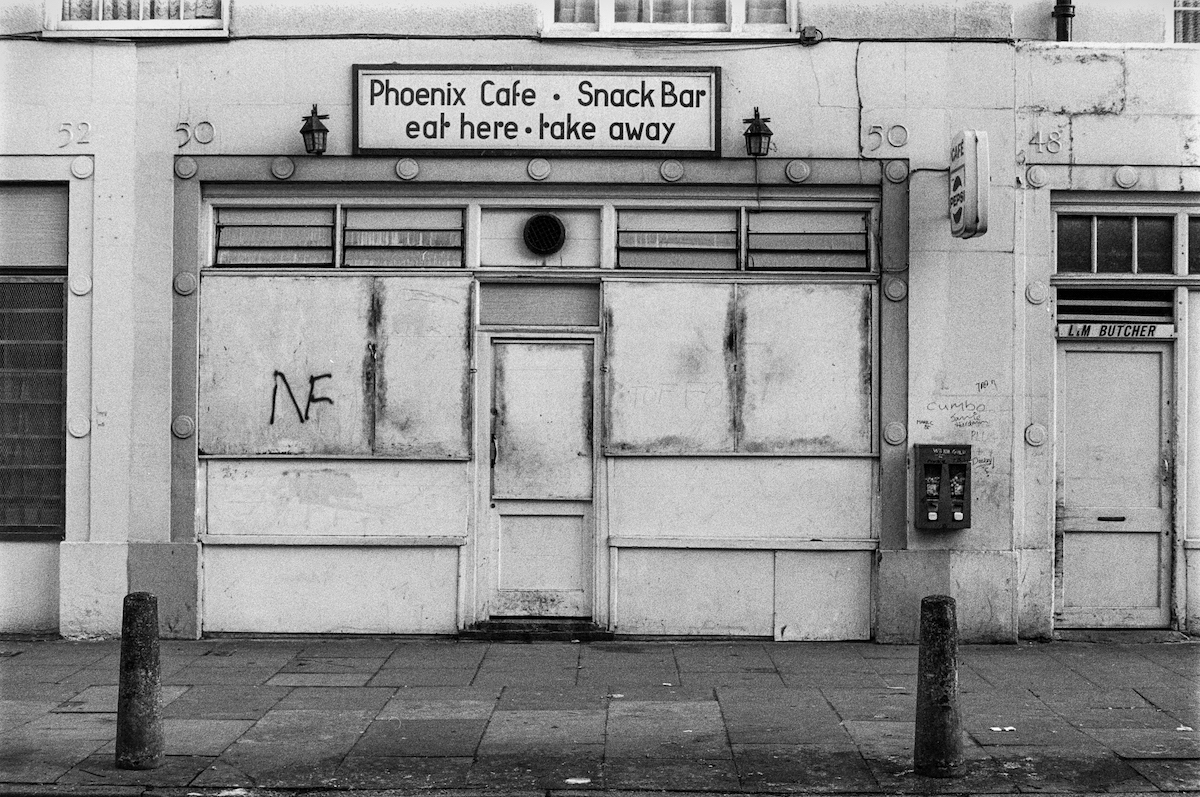
Chalton Street in Somers Town hosted a string of small, local businesses. The Phoenix Cafe was the kind of establishment found on nearly every working-class high street in London at the time — a place for a cheap breakfast, a cup of tea, and a break from the day.
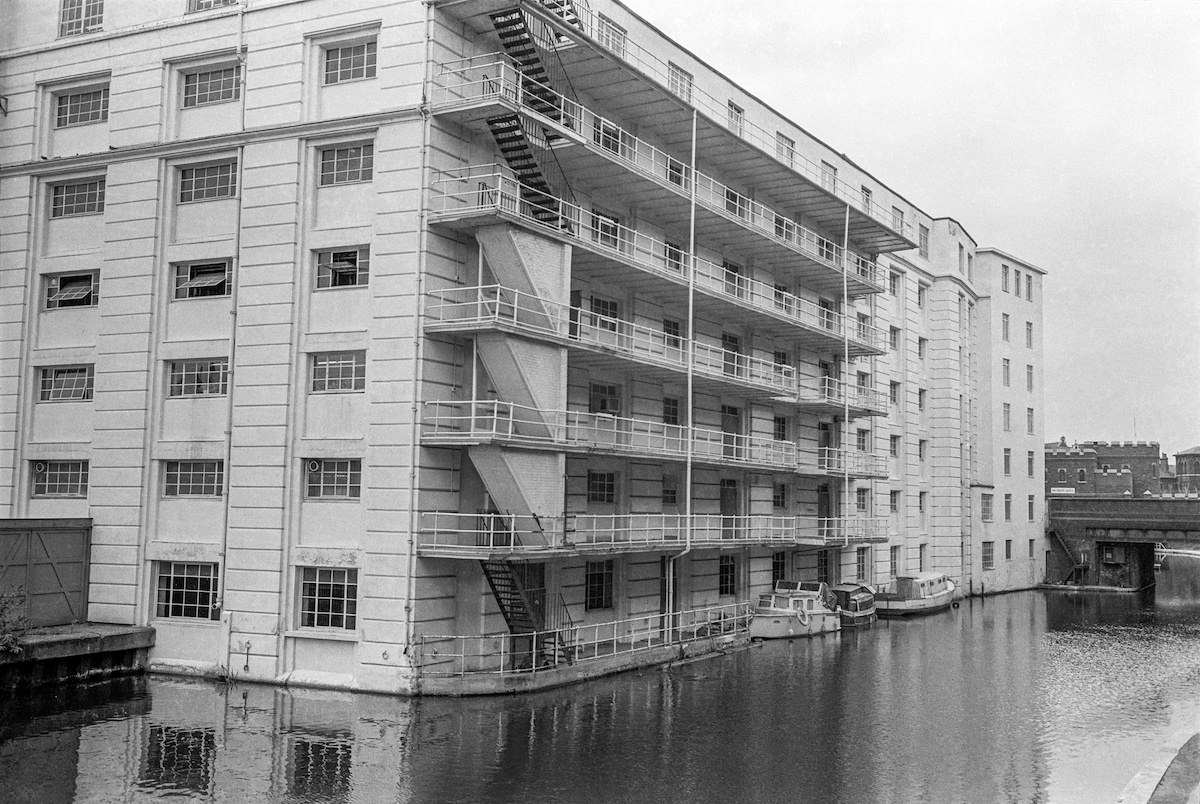
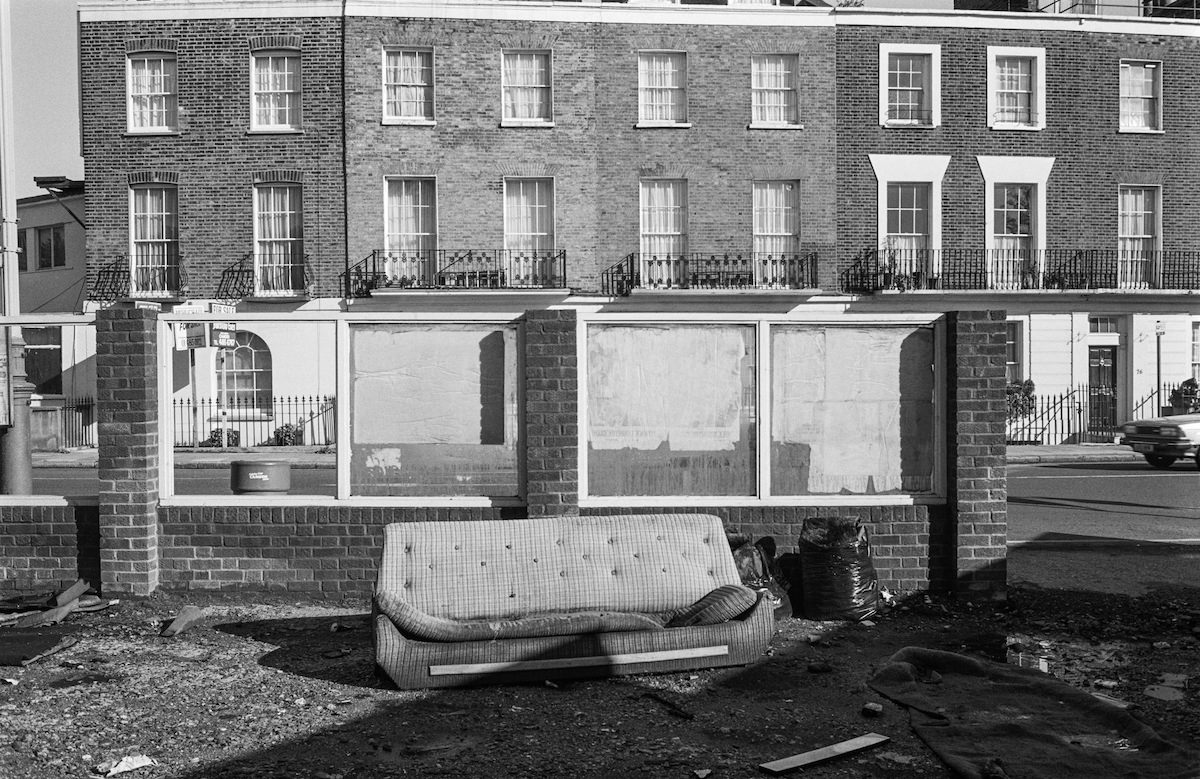
Gilbey House, sitting alongside the Regent’s Canal, was one of the larger commercial buildings Marshall photographed near the waterway. A short distance away, Delancey Street in Camden Town offered a glimpse of the neighbourhood’s residential side — quieter and more domestic than the main roads.
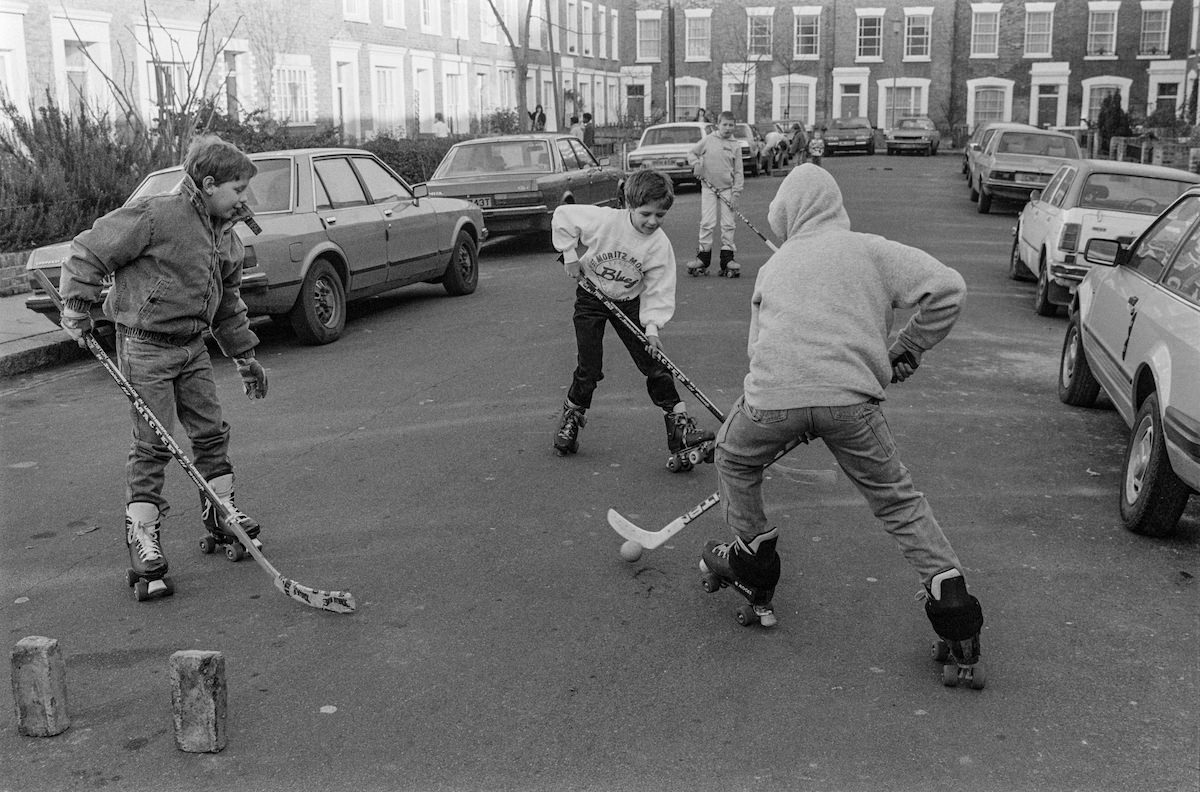
Marshall didn’t only photograph buildings and shopfronts. At St Leonard’s Square in Kentish Town, he captured a game of hockey being played in the street — the kind of informal, unorganised sport that filled urban open spaces before widespread redevelopment squeezed them out.
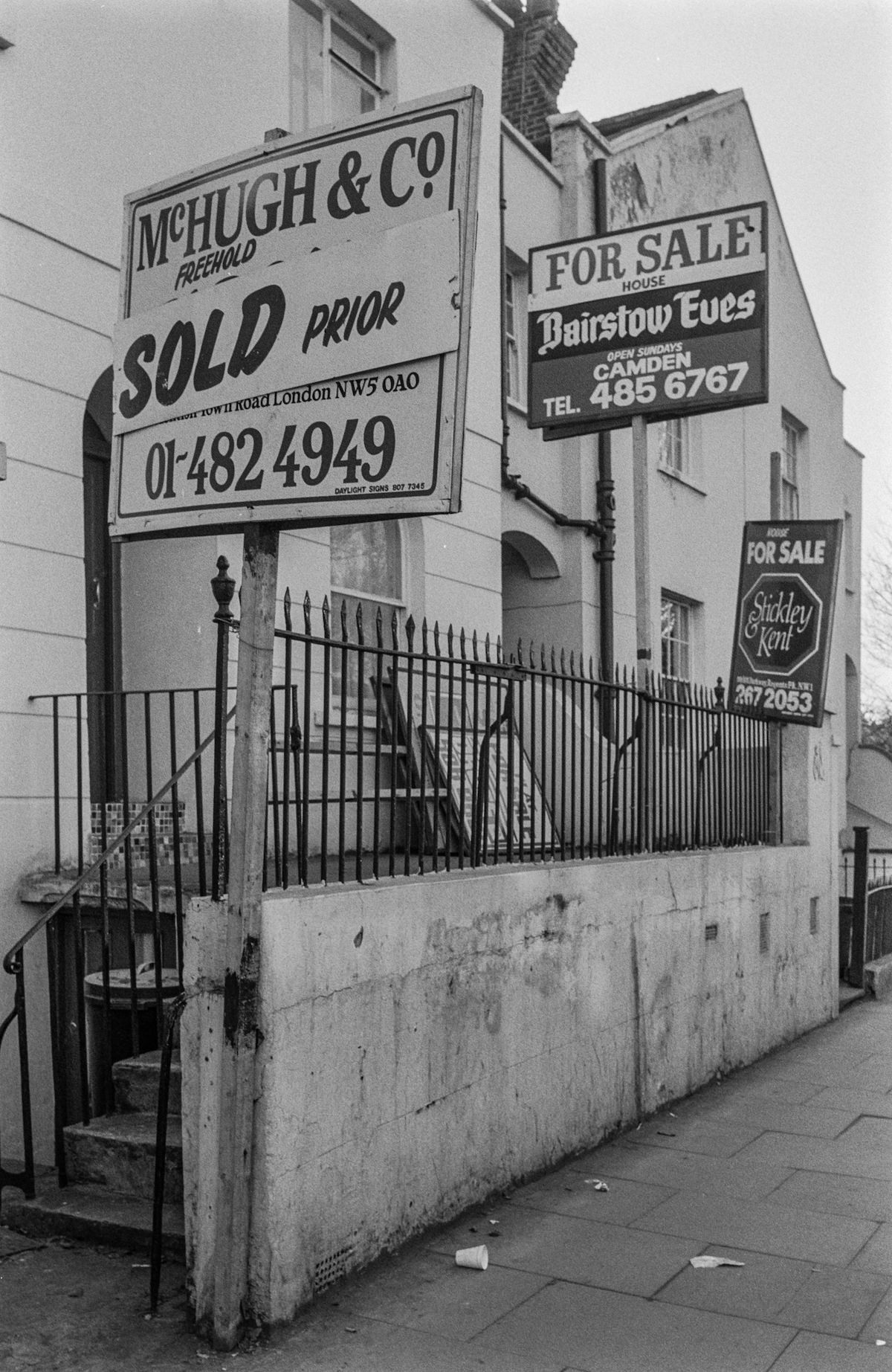
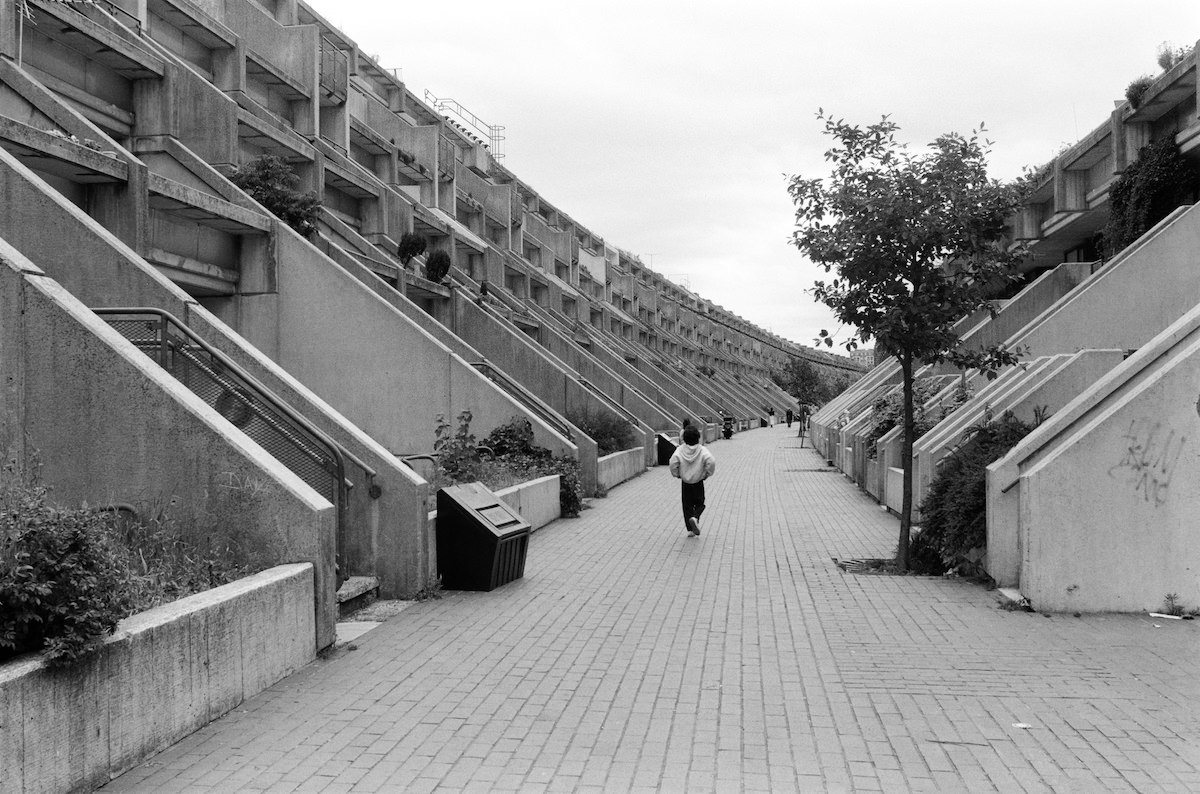
Moving north within the borough, South Hampstead presented a noticeably different character from Kentish Town or Somers Town. Streets like Langtry Walk and College Crescent were quieter and more residential, reflecting the more affluent end of a borough that contained extreme contrasts in wealth and living conditions.
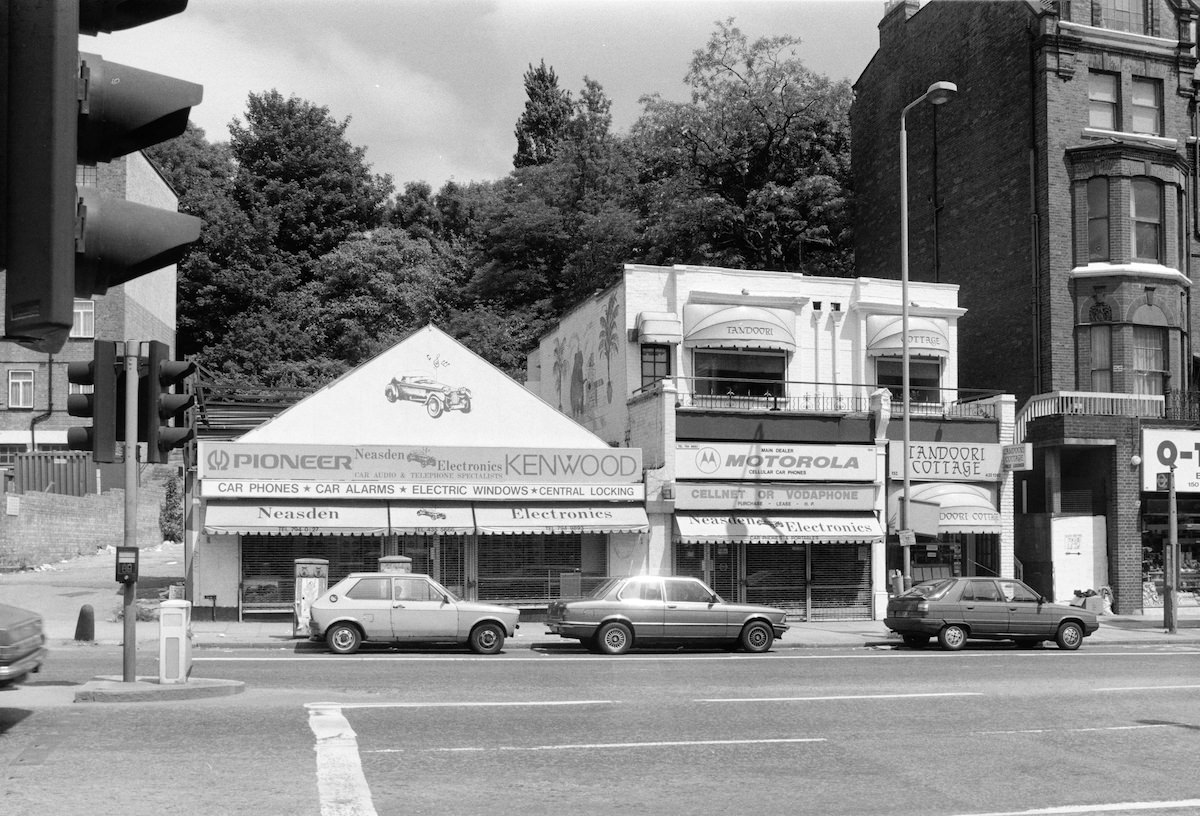
Finchley Road in 1988 showed the kind of commercial mix that defined many of Camden’s main roads. An electronics shop sat next to an Indian restaurant — a combination that reflected London’s growing multiculturalism as well as the rapid spread of consumer electronics through the decade.
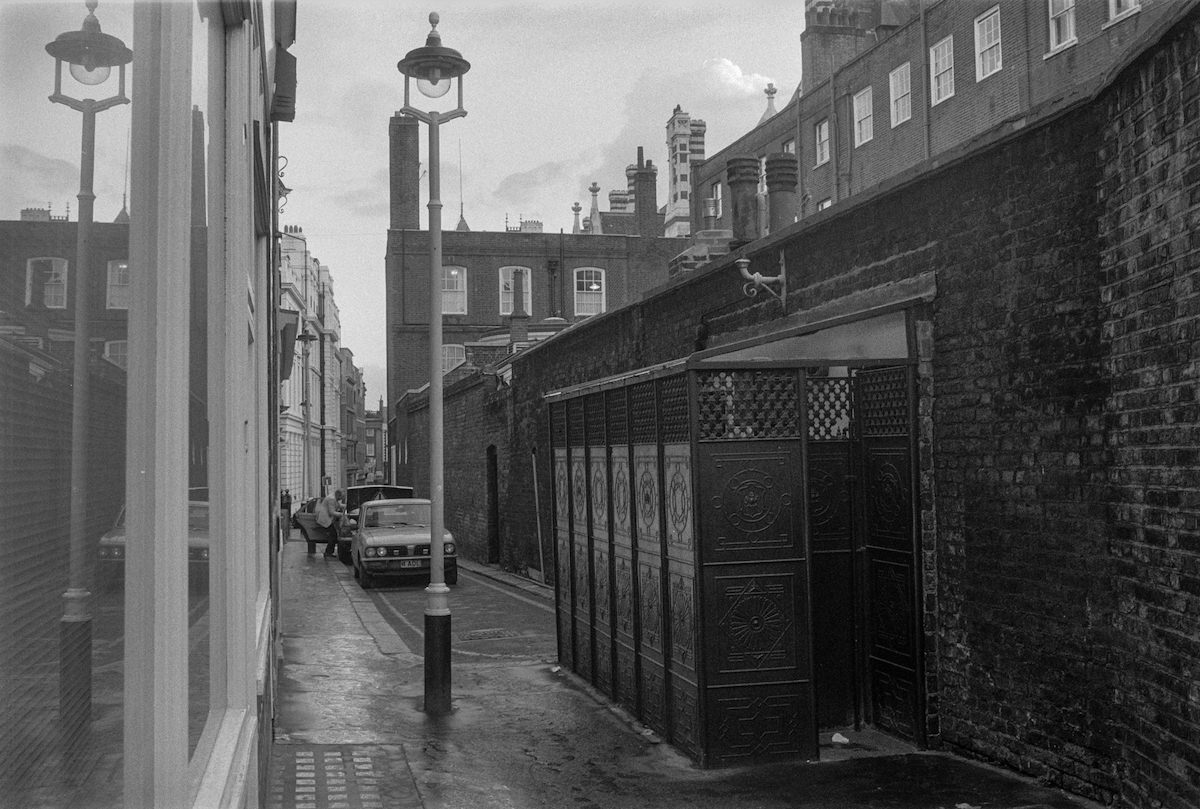
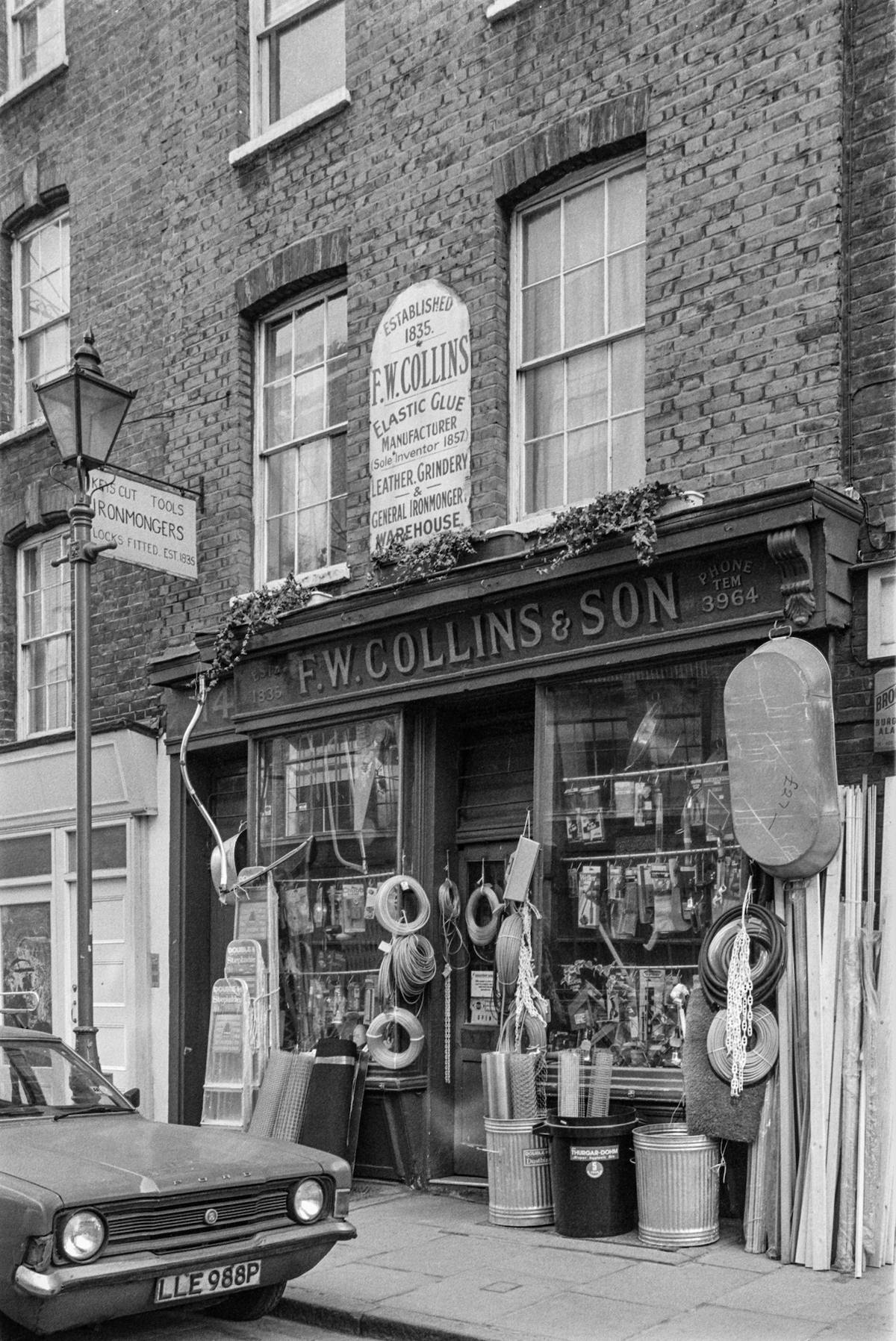
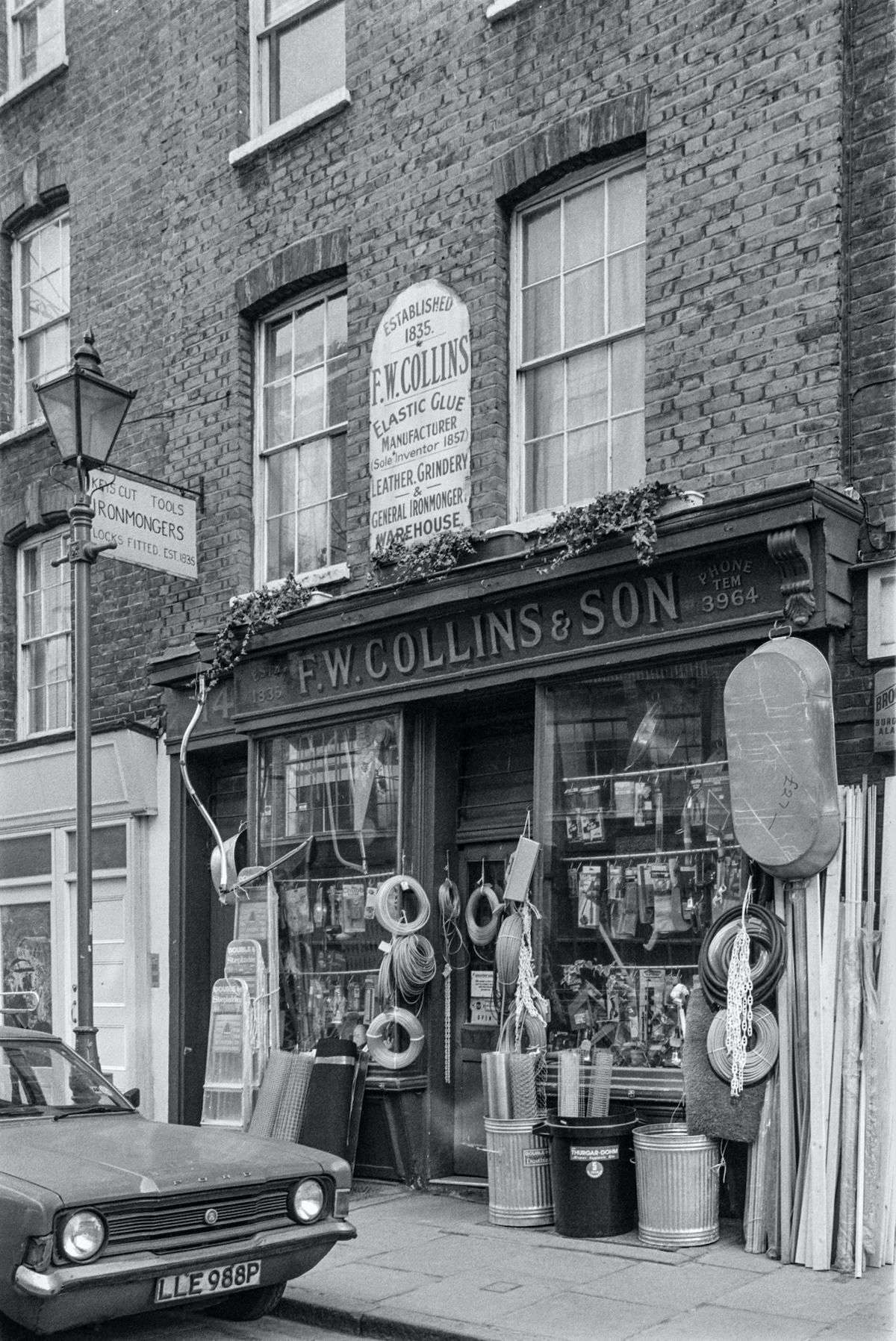
In Holborn, Marshall photographed the kind of infrastructure that was fast disappearing from London’s streets — a public urinal tucked into Star Yard, and F W Collins, a traditional ironmonger’s on Earlham Street. These were businesses and fixtures that had served their communities for decades but were beginning to give way to newer commercial forces.
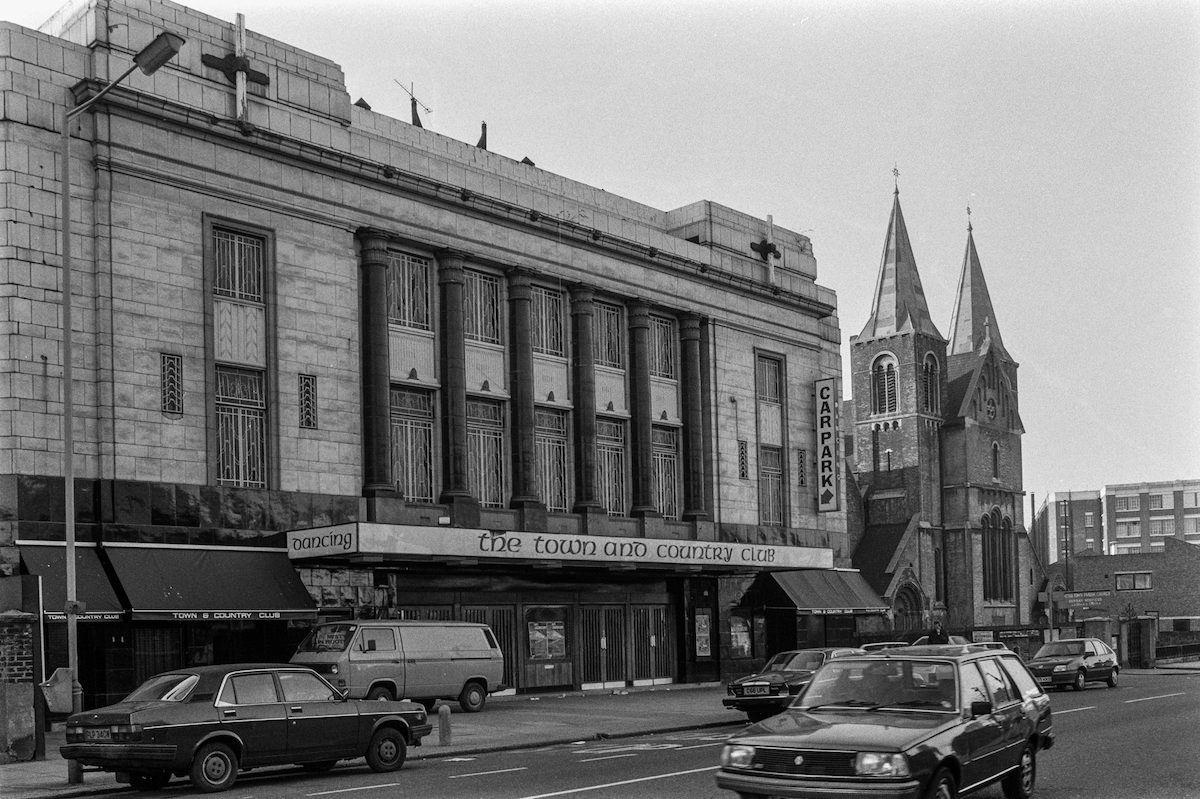
The Town and Country Club on Kentish Town Road was one of Camden’s most prominent live music venues during this period. It hosted major acts throughout the 1980s and sat at the heart of a music scene that made Camden one of the most significant cultural districts in the country at the time.
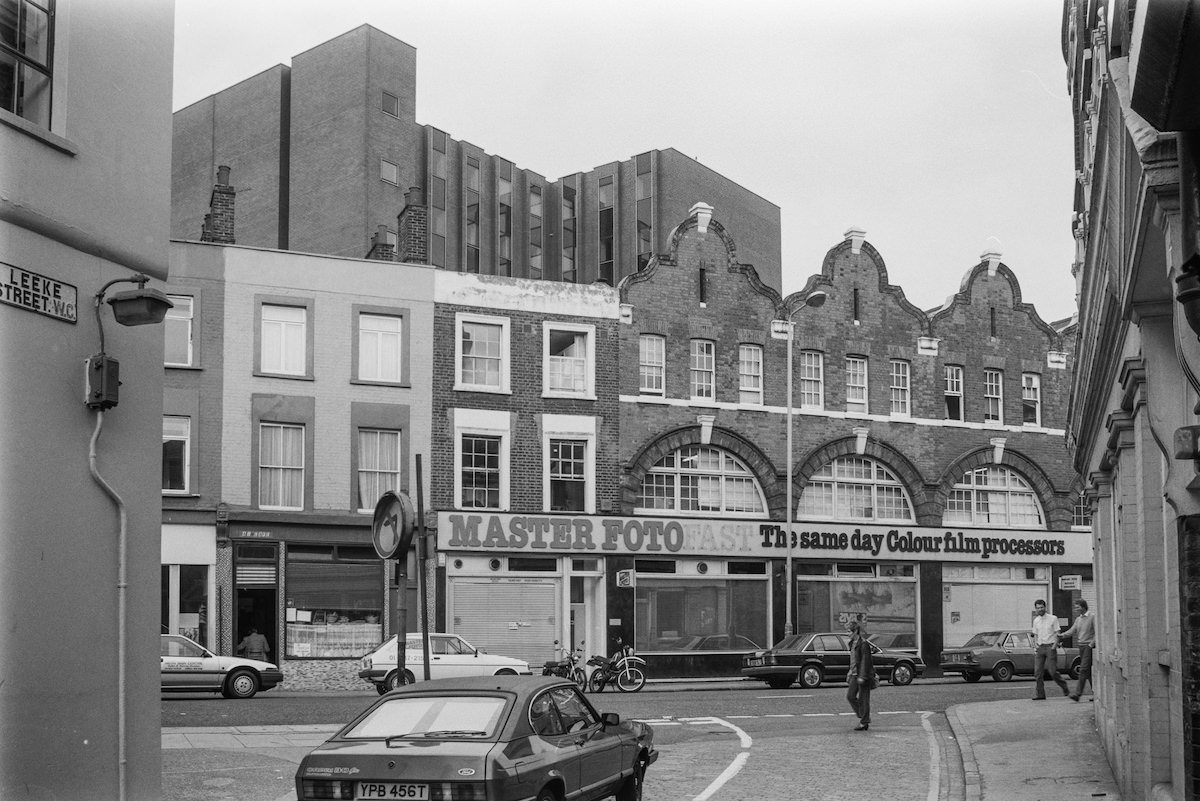
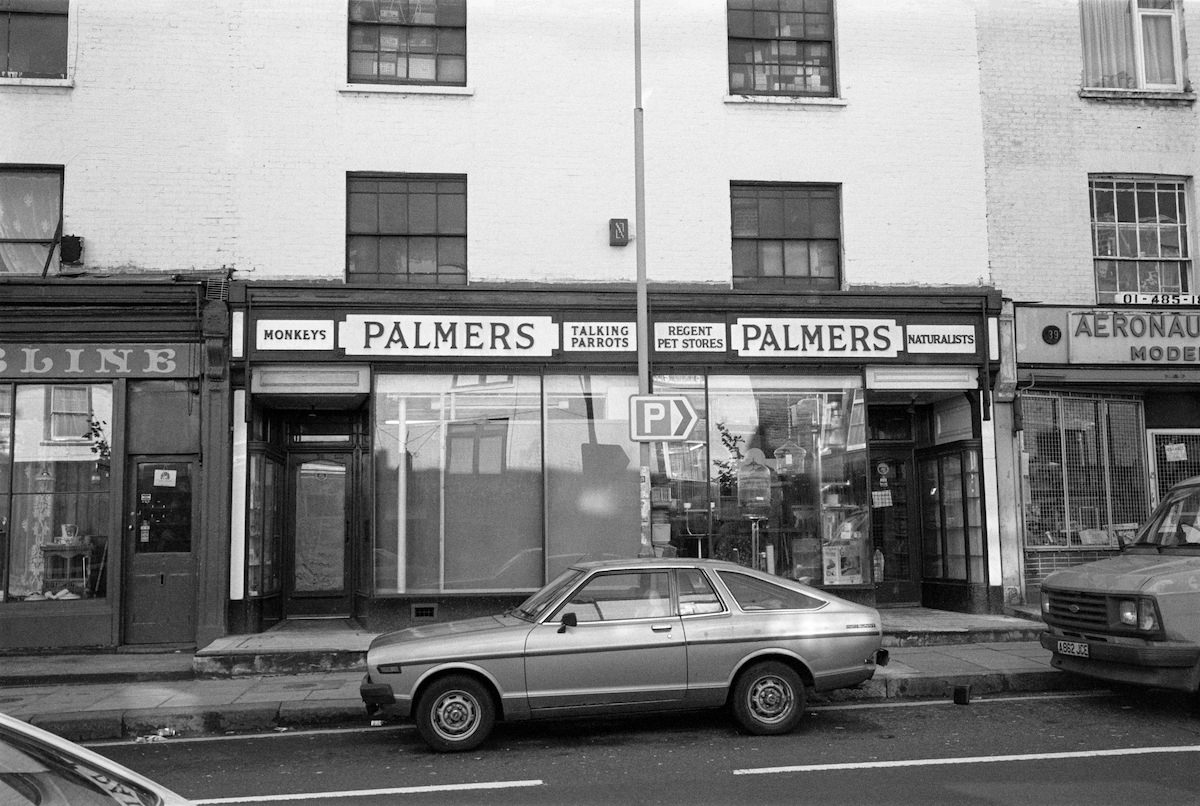
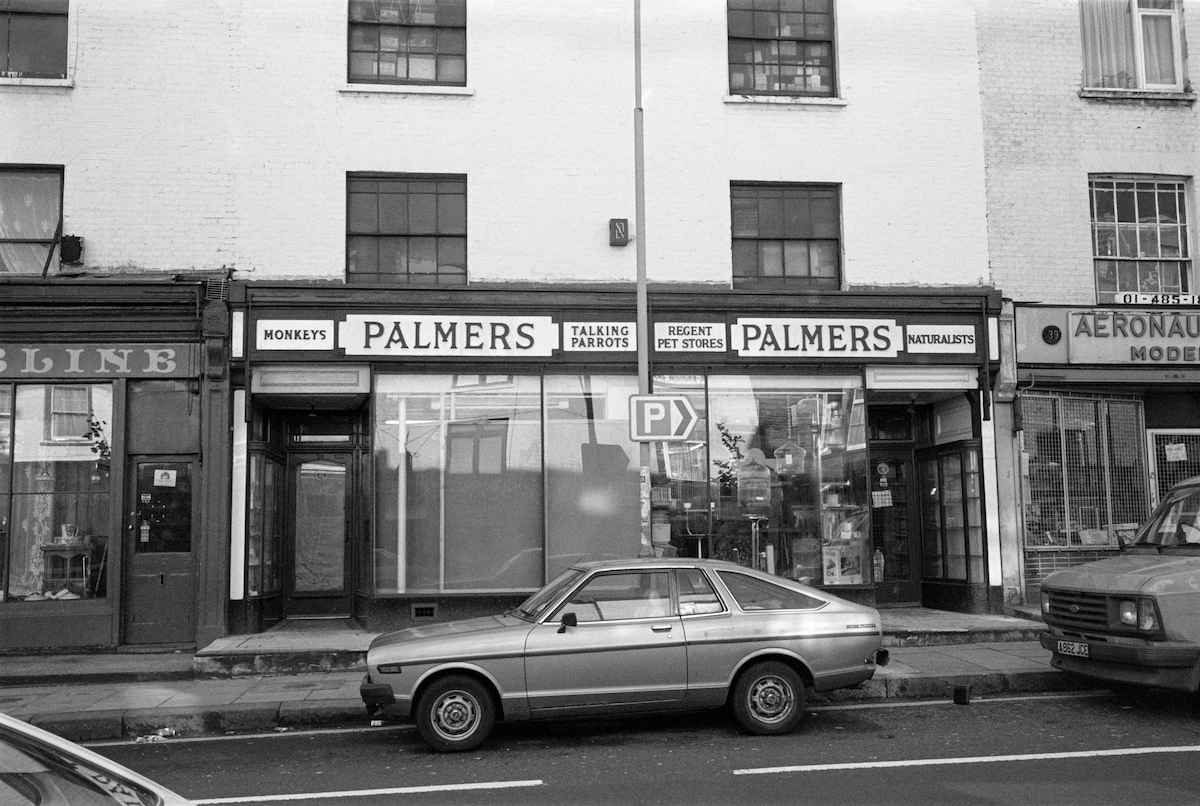
The King’s Cross area, bordering the eastern edge of Camden, had a rough reputation in the 1980s. Marshall’s photograph of King’s Cross Road near Leeke Street captures the area before the major regeneration that would come in later decades. Palmers Pet Stores on Parkway, by contrast, was a Camden Town institution — a neighbourhood shop on a road lined with independent traders.
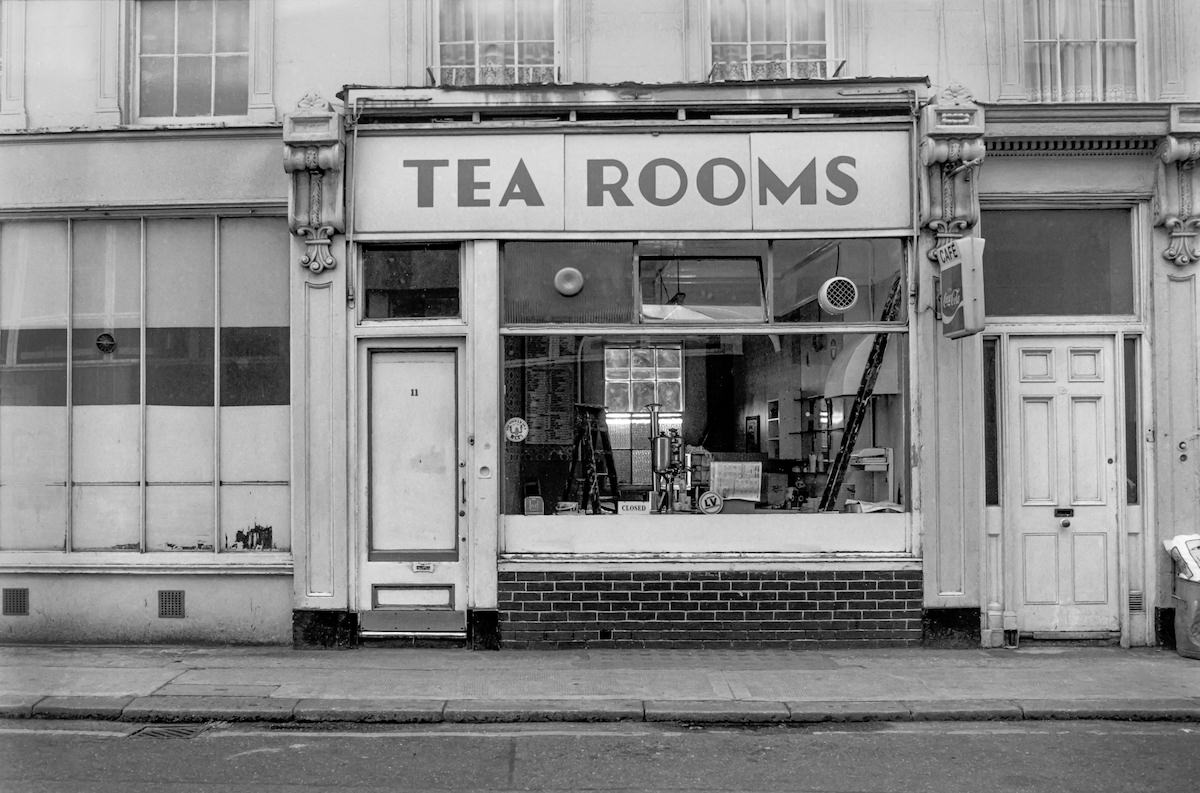
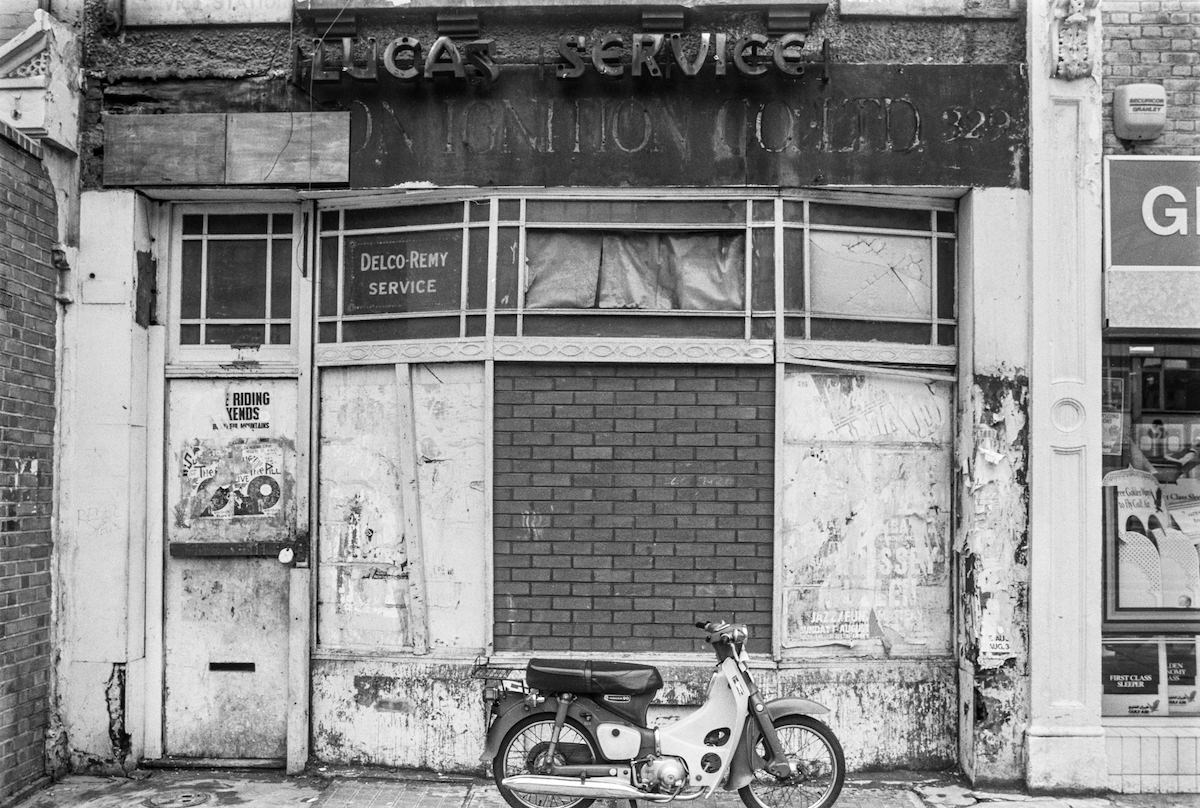
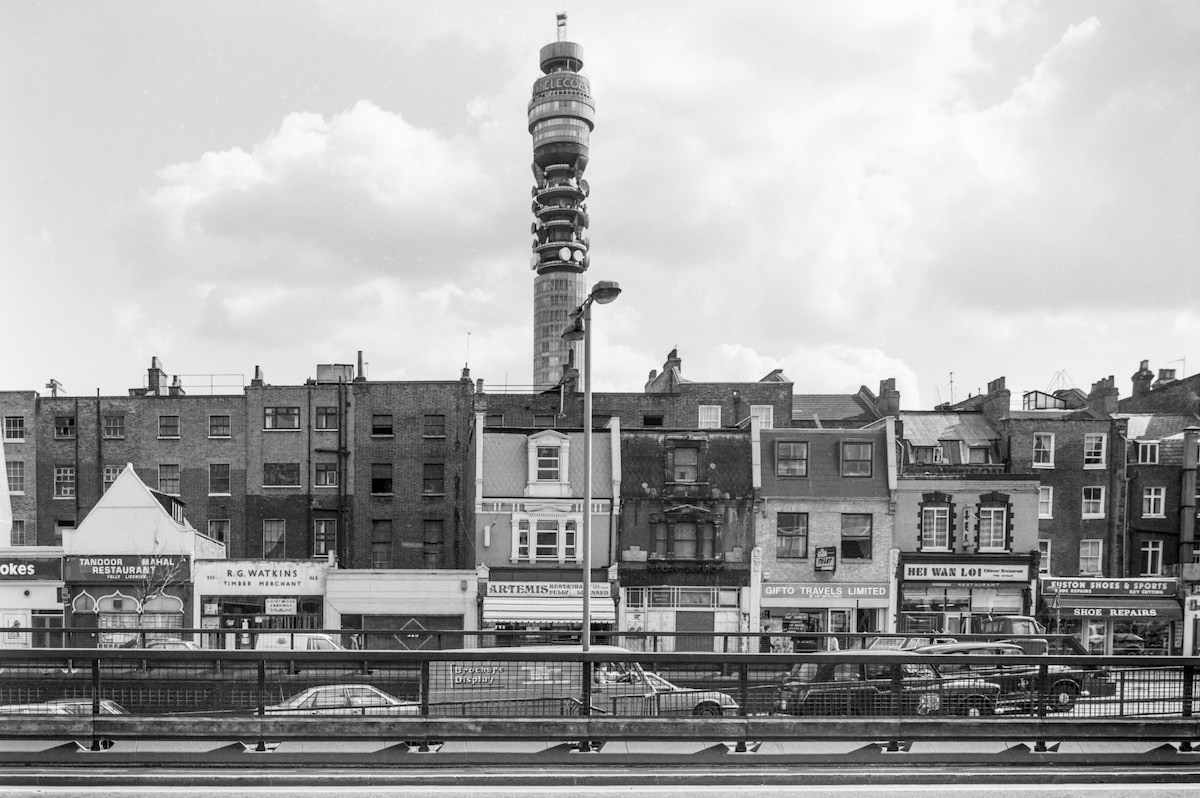
Euston Road, one of Camden’s busiest arteries, ran through the southern edge of the borough and connected it directly to central London. Marshall photographed it multiple times across the decade, tracking how its shopfronts and buildings changed — or, in many cases, stayed stubbornly the same.
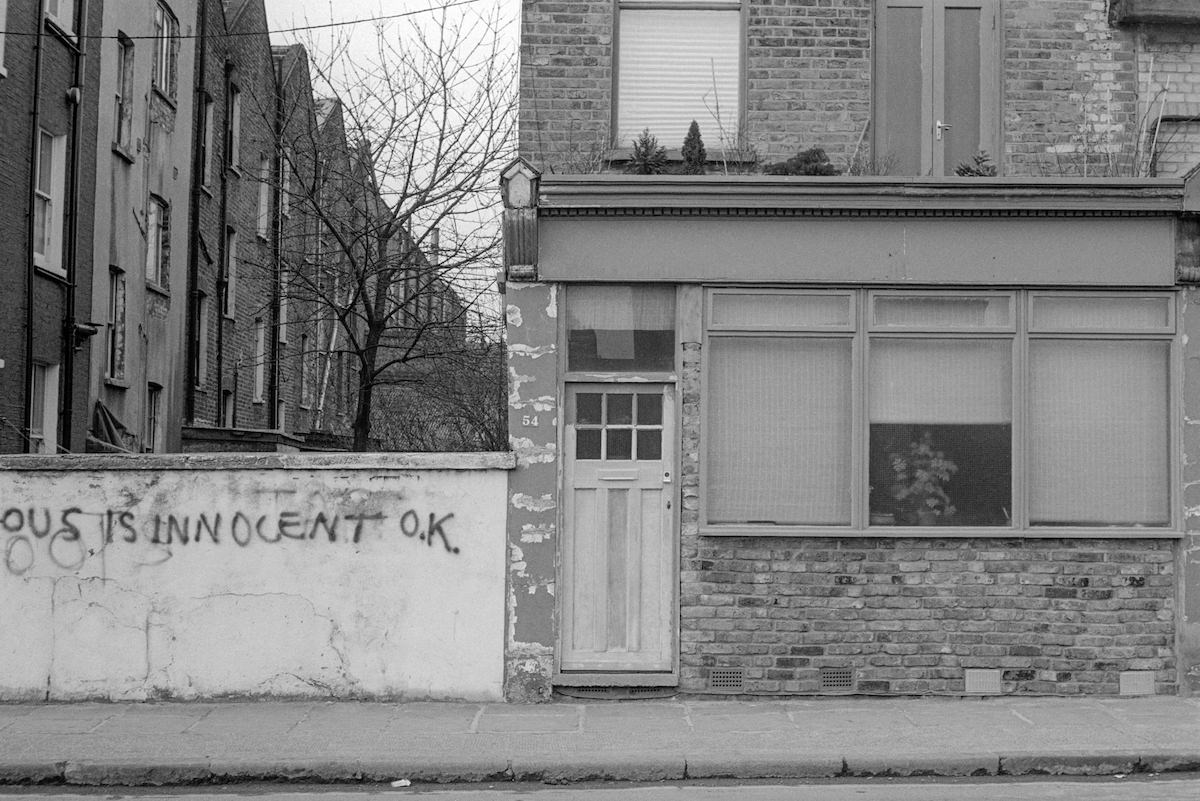
One of the earliest photographs in the collection dates to 1980, from the Mornington Crescent area. The painted slogan — “G Davis Is Innocent O.K.” — refers to George Davis, a man convicted of armed robbery in 1975 whose supporters ran a high-profile campaign claiming he was wrongfully identified. The graffiti was still appearing on walls across London well into the 1980s.
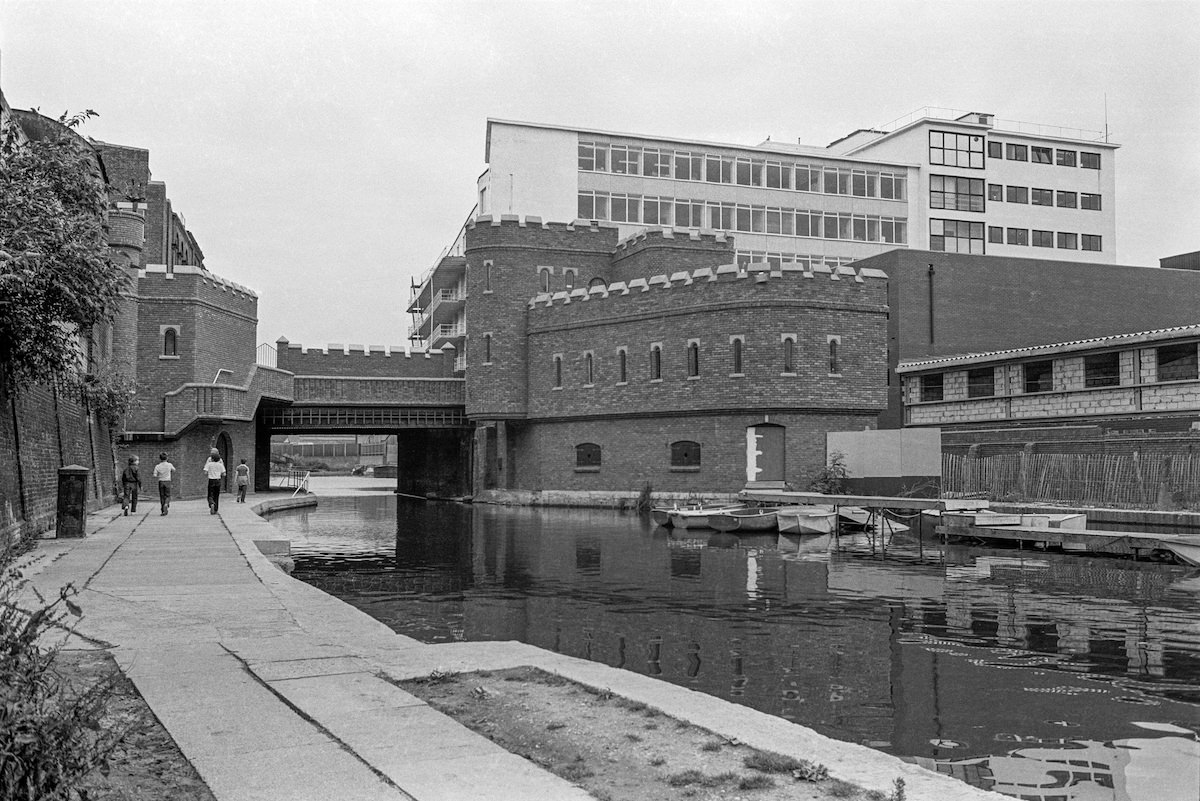
The Pirate Castle, photographed by Marshall in 1981, is a community boating centre on the Regent’s Canal that was purpose-built to give young people in the area access to the waterway. It remains one of the more unusual-looking structures along Camden’s stretch of canal.
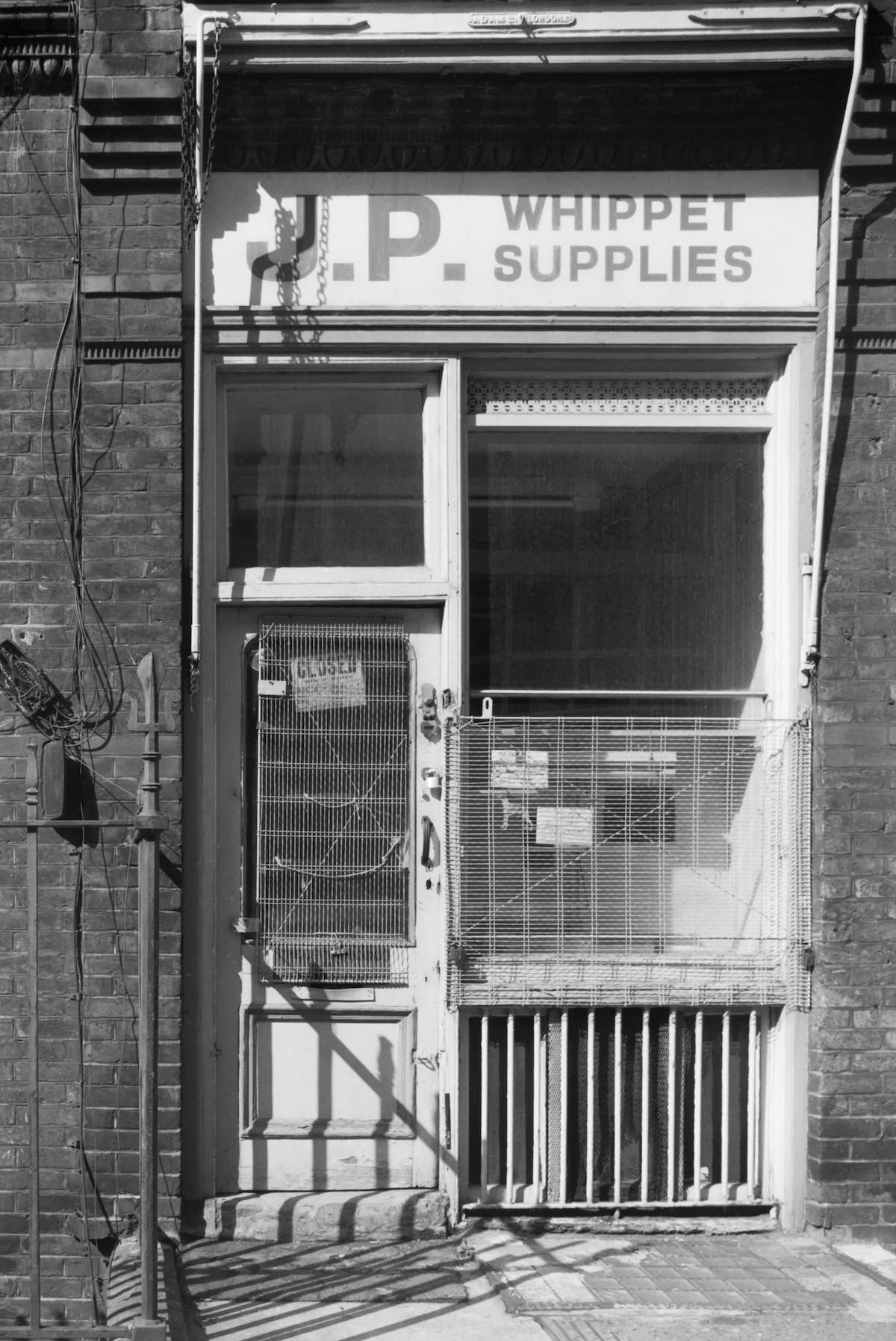
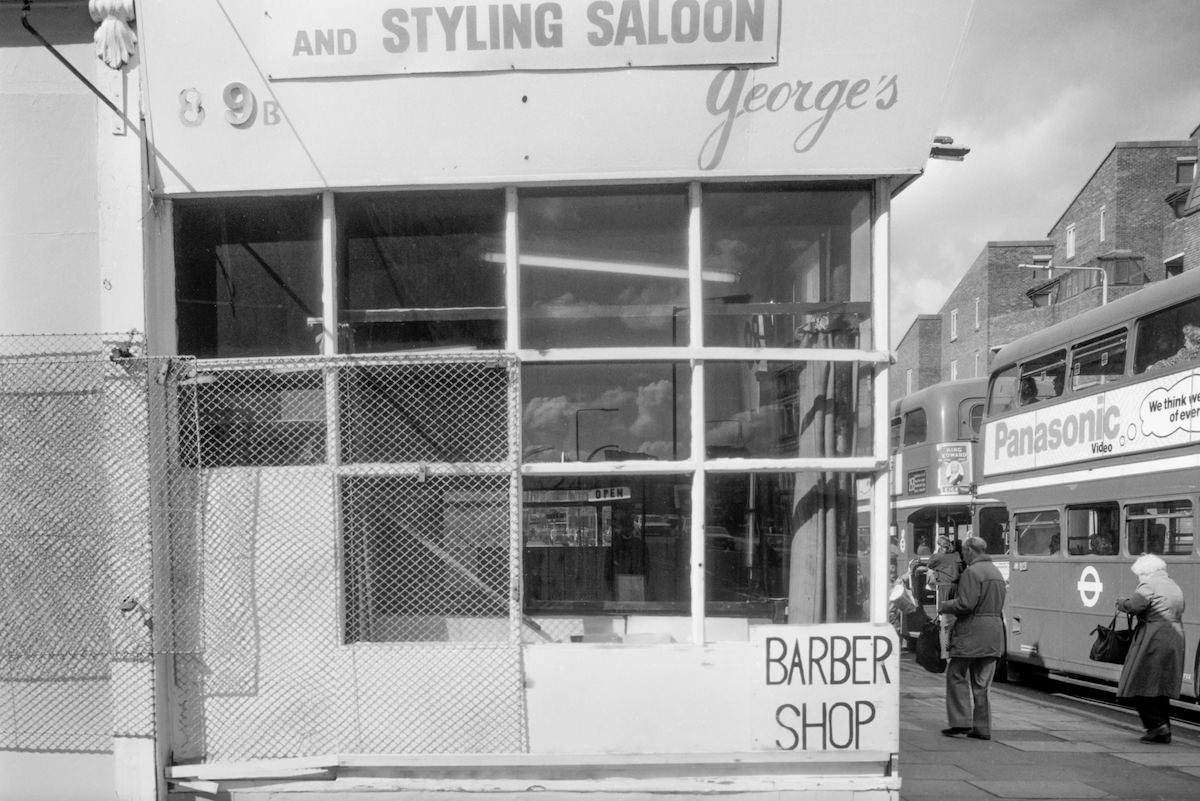
Specialist shops like J P Whippet Supplies on William Road were a feature of Camden’s commercial streets that would have been taken for granted at the time. George’s Barber Shop on Hampstead Road was the kind of local institution — a one-chair or two-chair shop with regulars who’d been coming for years — that defined neighbourhood life across the borough.
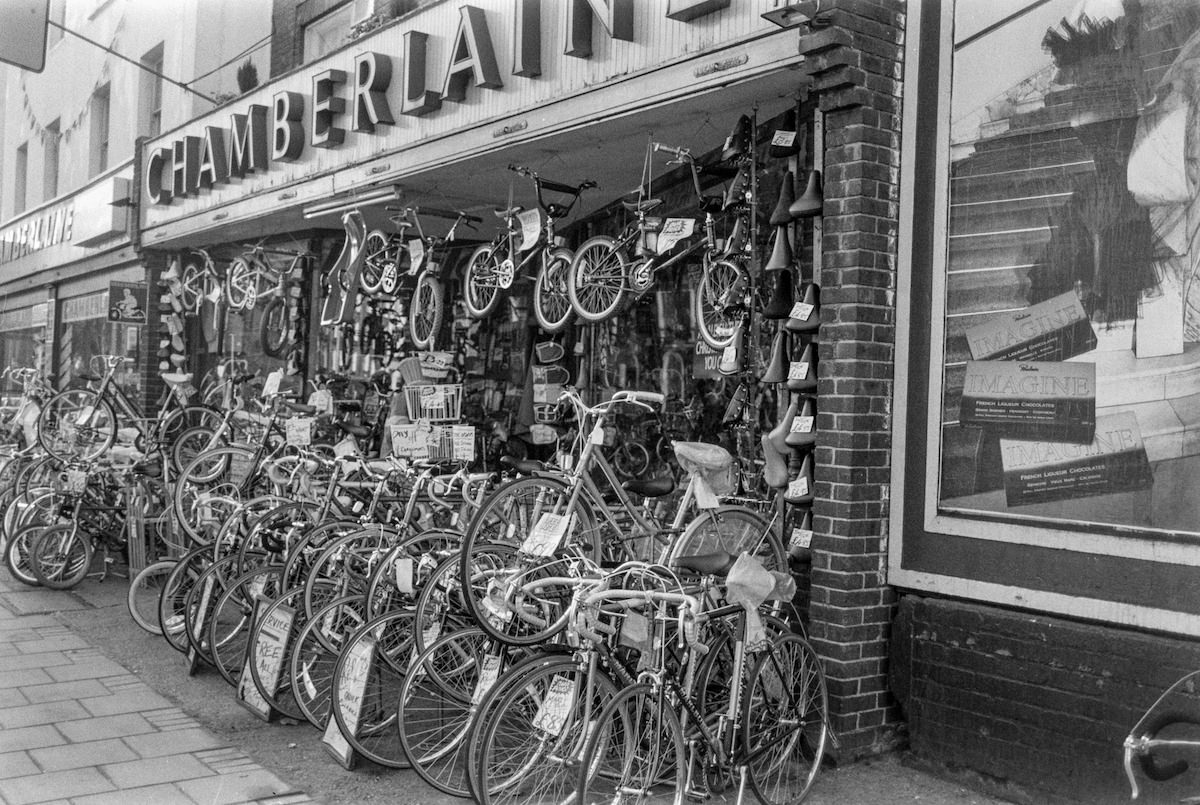
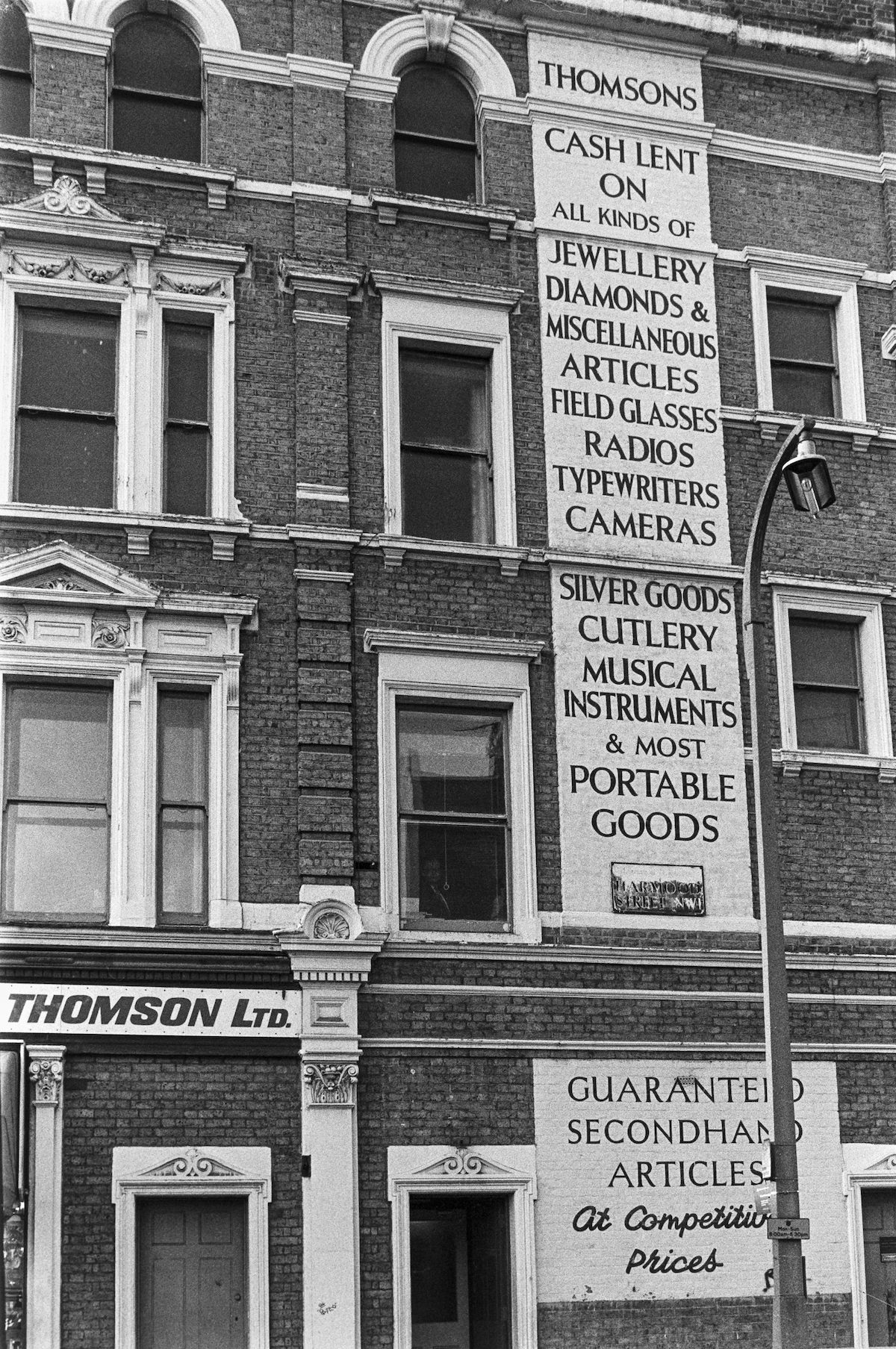
Kentish Town Road was one of the borough’s main commercial strips, and Chamberlaine Cycles was one of its long-standing independent businesses. Nearby on Harmood Street, Thomsons represented the smaller, side-street traders that made up Camden’s economic backbone in the 1980s.
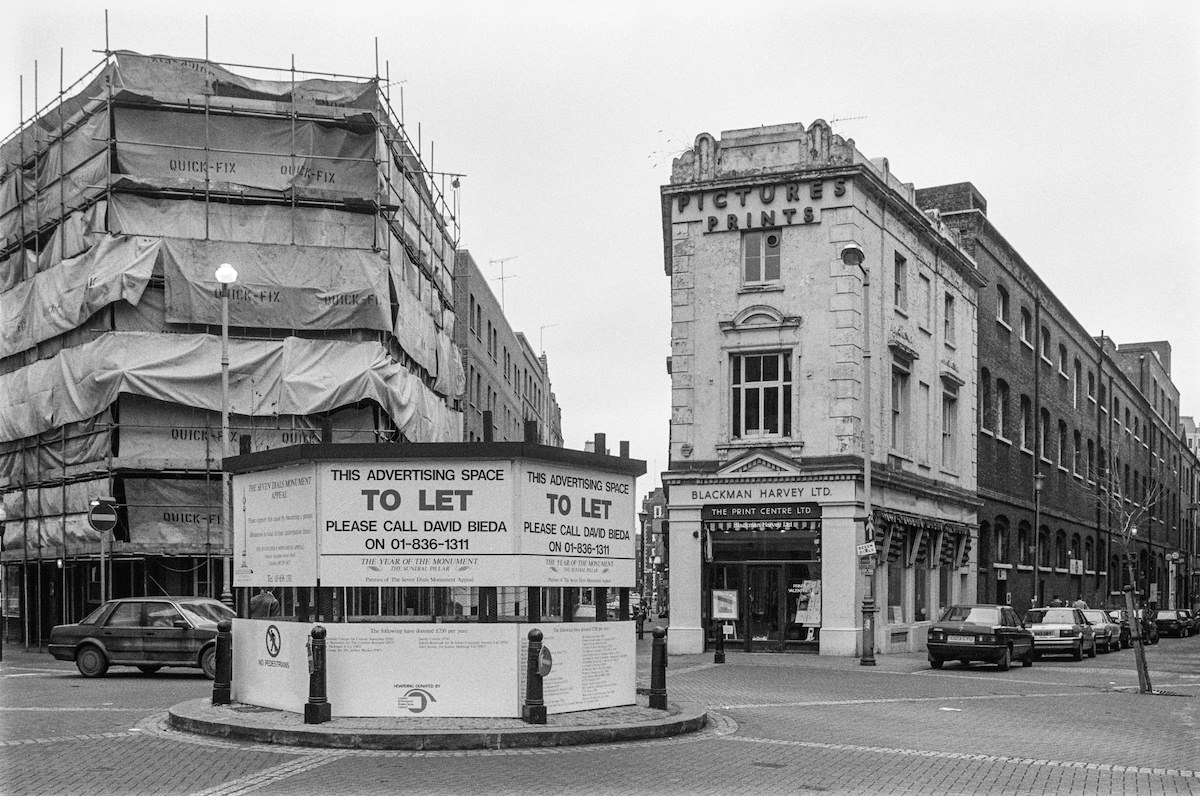
Argyle Walk near King’s Cross was a quiet pedestrian street surrounded by the grit of one of London’s busiest transit hubs. Seven Dials in Covent Garden, on the southern boundary of Camden, was already undergoing gentrification by 1987 — the seven streets converging on a central column becoming an increasingly fashionable part of central London.
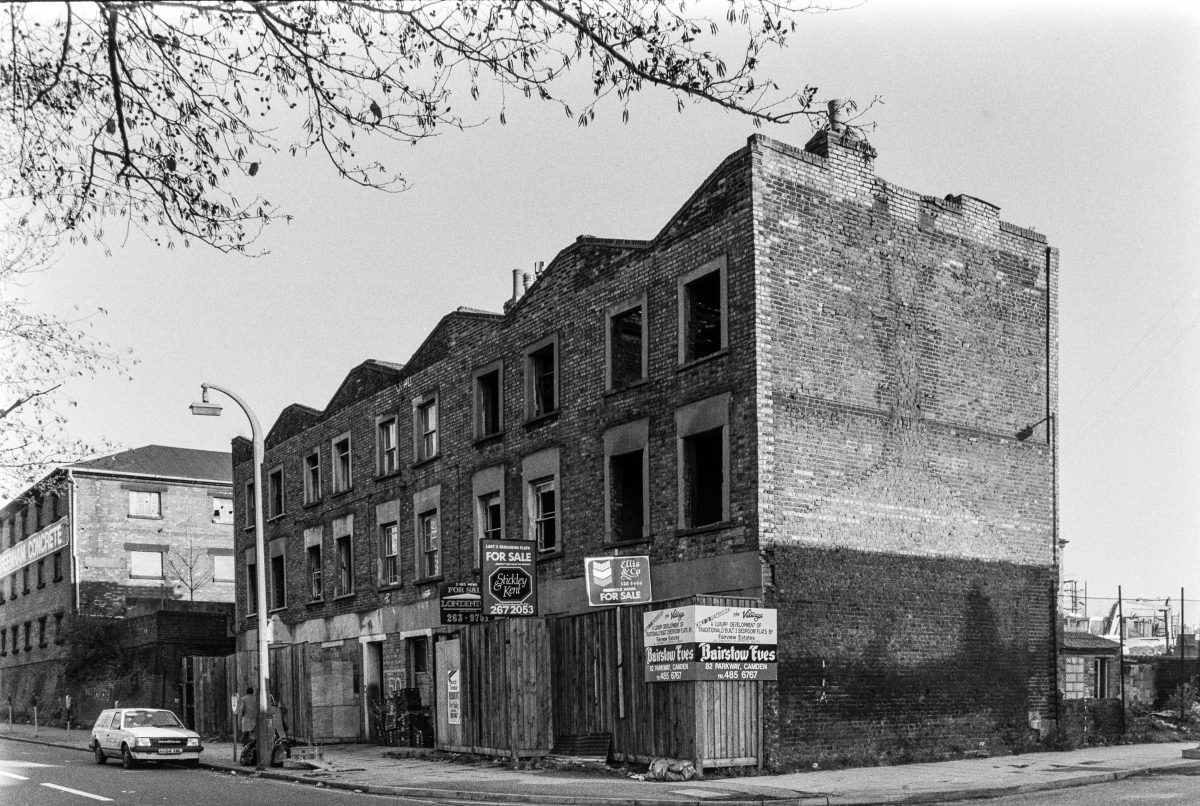
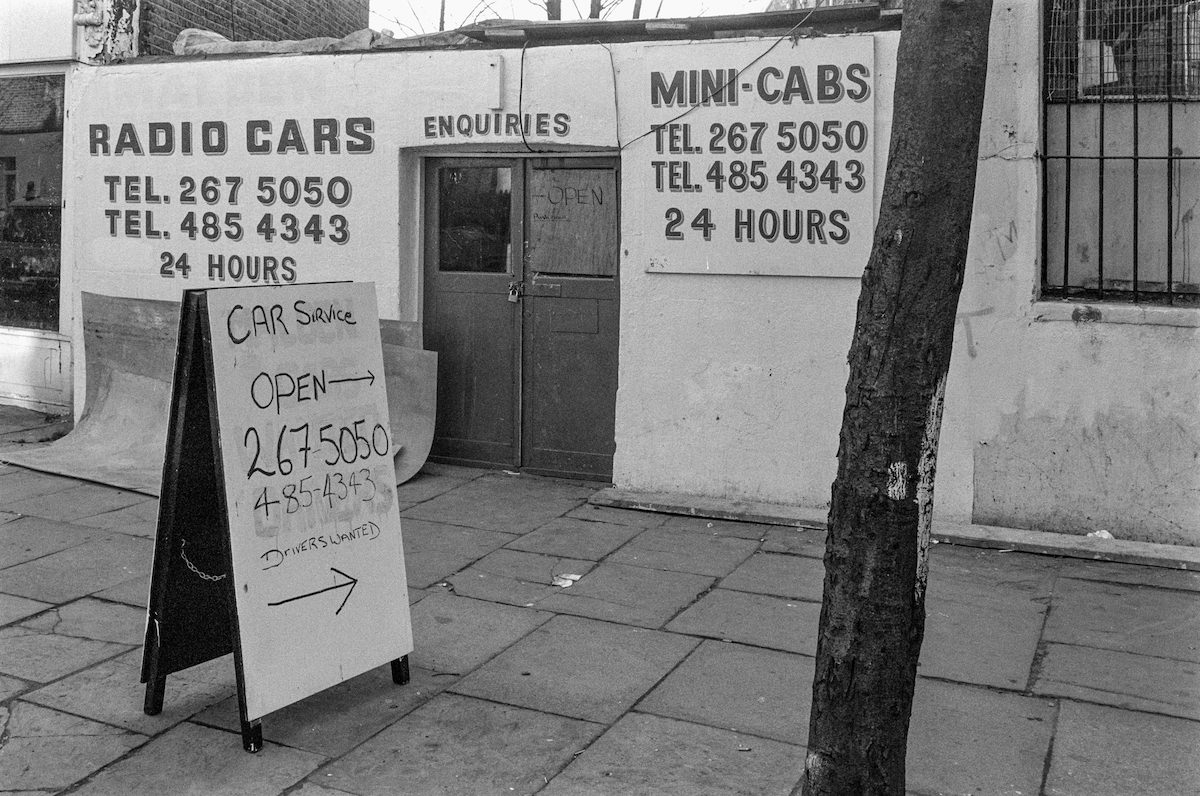
St Pancras Way ran through one of the borough’s oldest areas, close to the historic church and the railway terminus that carried the neighbourhood’s name. Rhyl Street in Kentish Town was a quieter residential road, its terraced houses typical of the Victorian stock that made up much of the borough’s housing.
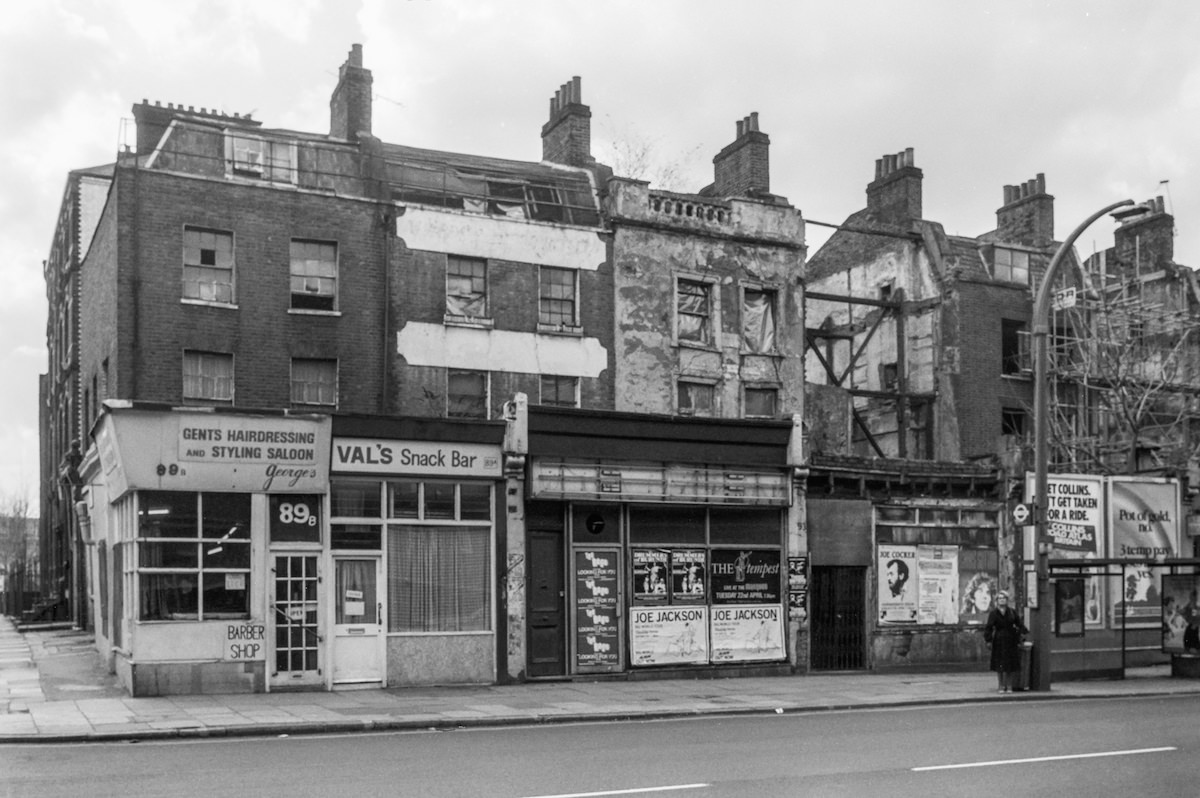
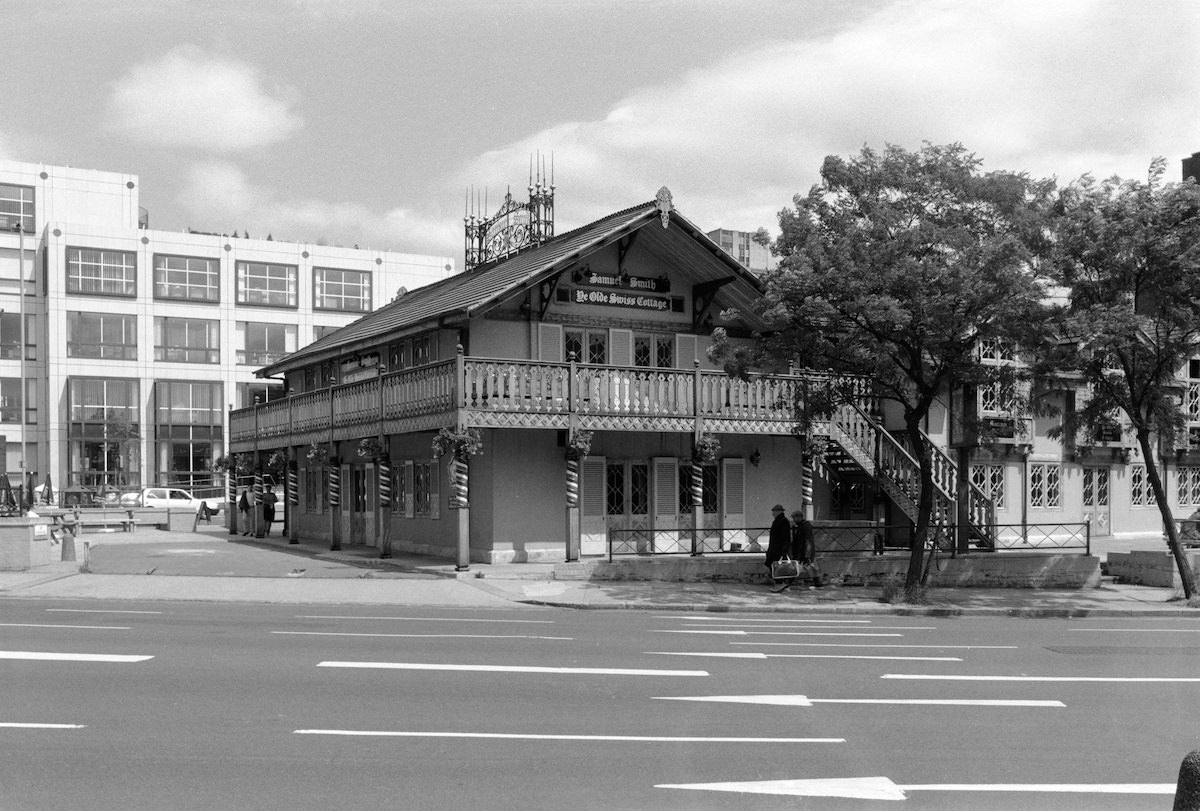
Hampstead Road in 1986 was still dominated by independent businesses and a heavy flow of traffic connecting Camden Town to the West End. Further north on Finchley Road, the pub Ye Olde Swiss Cottage gave its name to the entire Swiss Cottage neighbourhood — one of the more recognisable landmarks in the northern part of the borough.
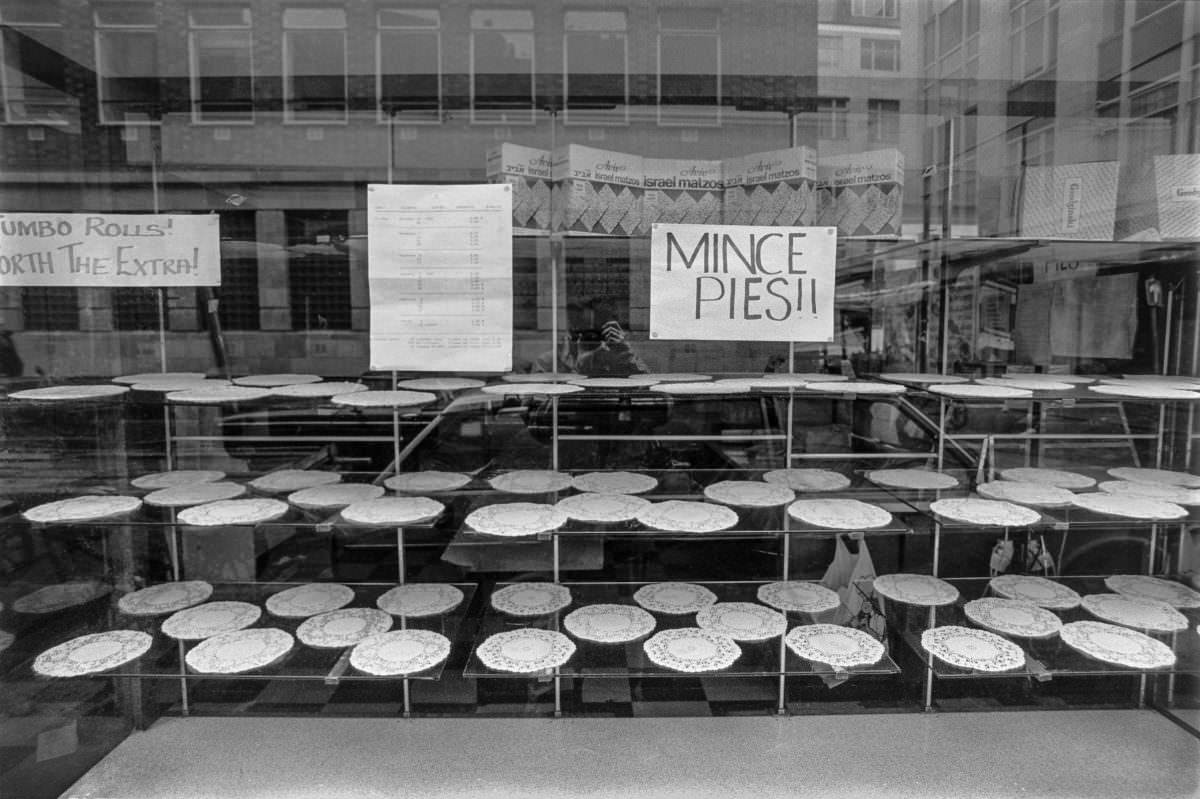
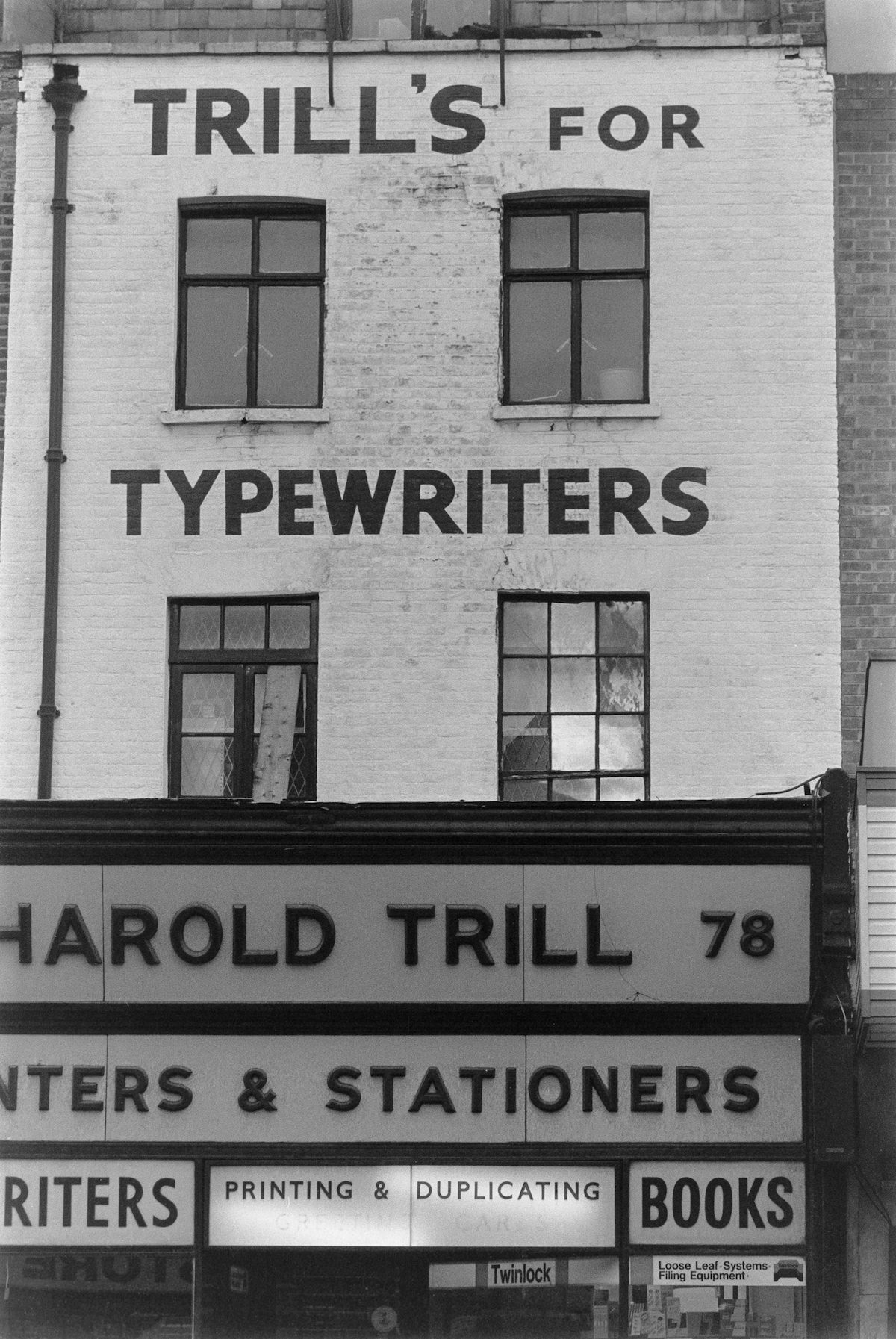
Leather Lane in Holborn was home to one of the area’s oldest street markets, trading daily through the 1980s. Marshall photographed it at Christmas time, capturing a stall selling mince pies — a small moment that anchors the photograph firmly in the seasonal rhythm of street trading.
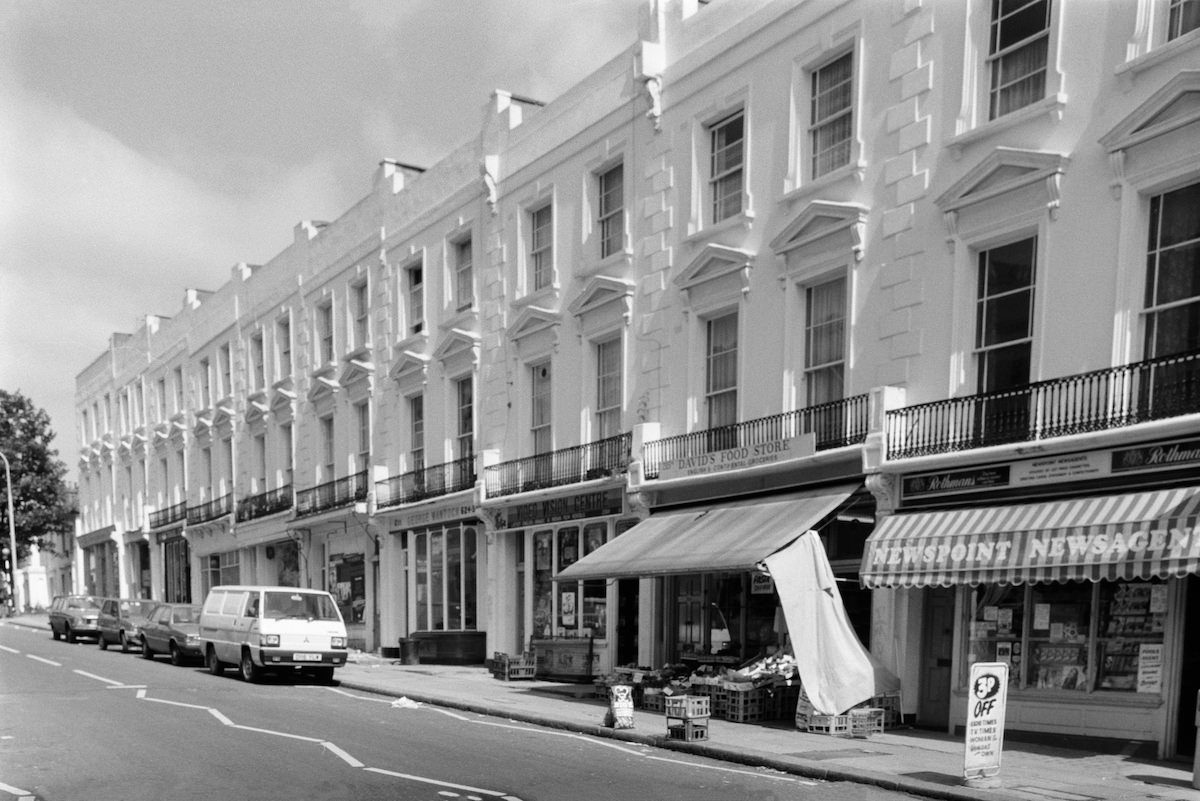
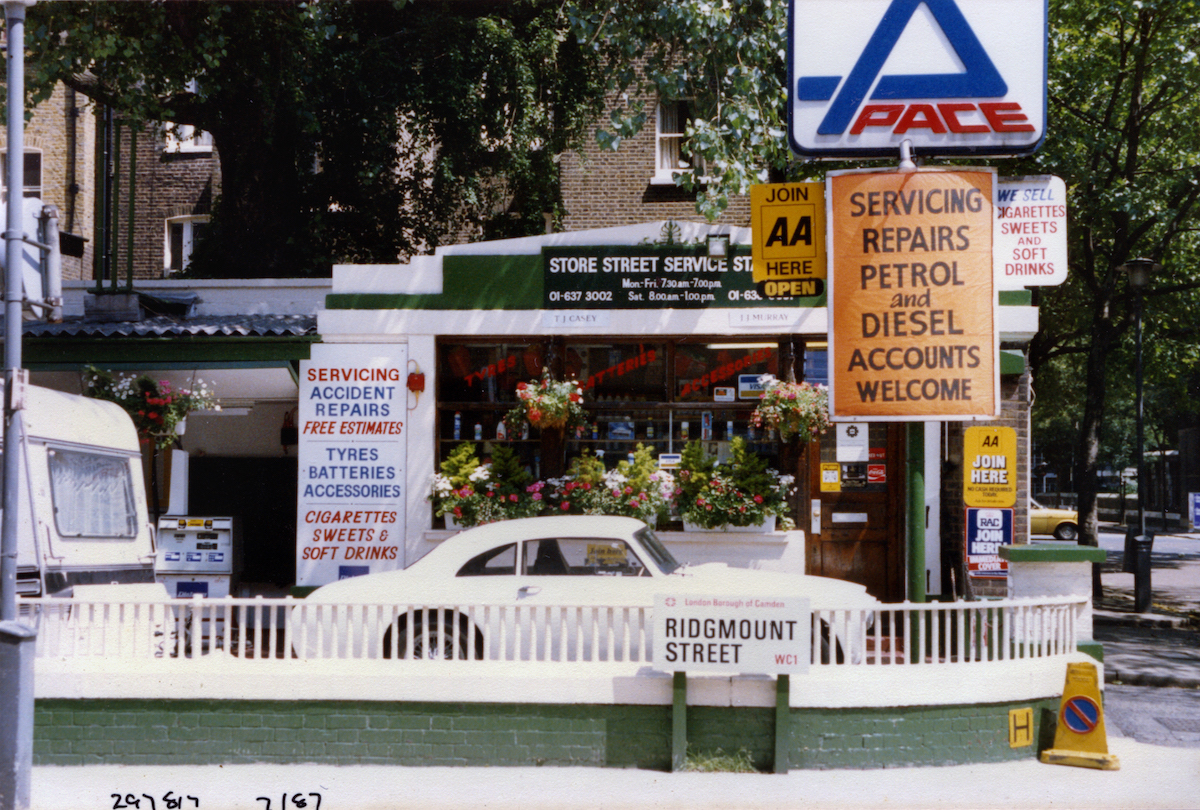
On Ridgmount Street in Holborn, Marshall photographed a garage — the kind of urban automotive workshop that occupied ground-floor spaces throughout the borough. These were practical businesses serving a neighbourhood that still relied heavily on working vehicles rather than the leisure car culture that was expanding elsewhere in Britain.
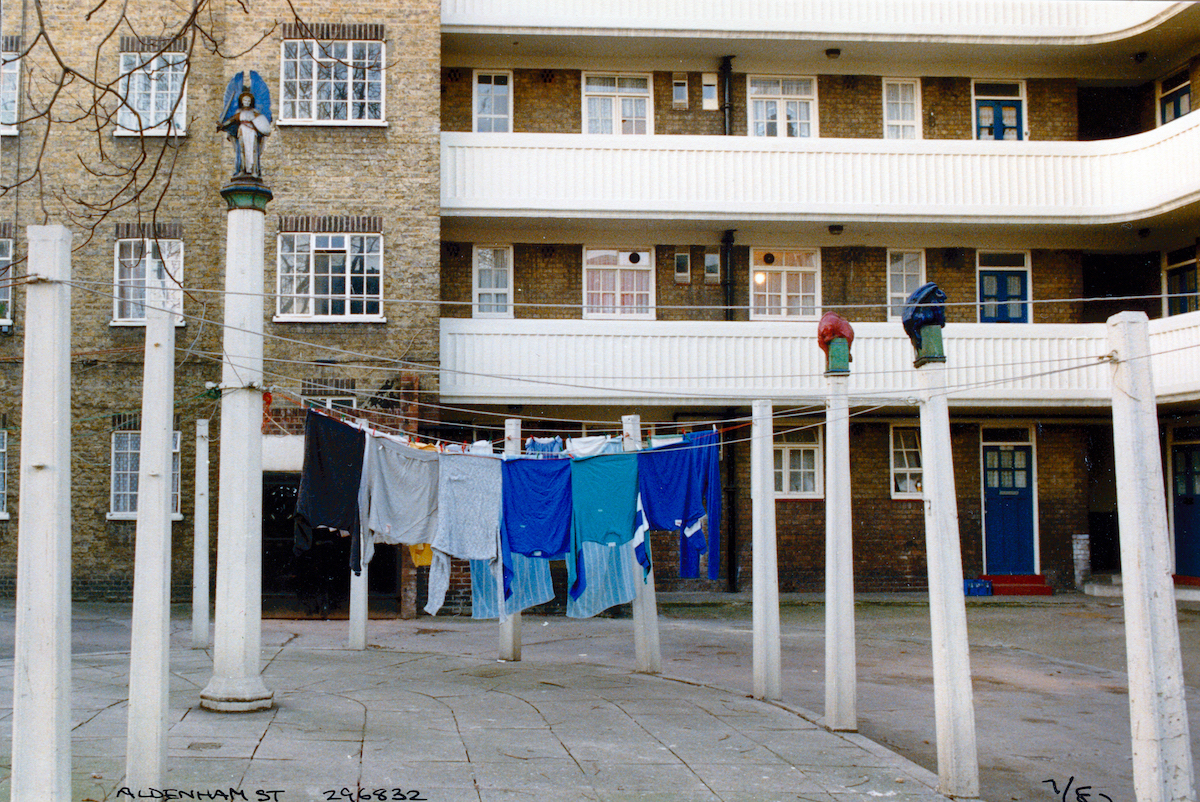
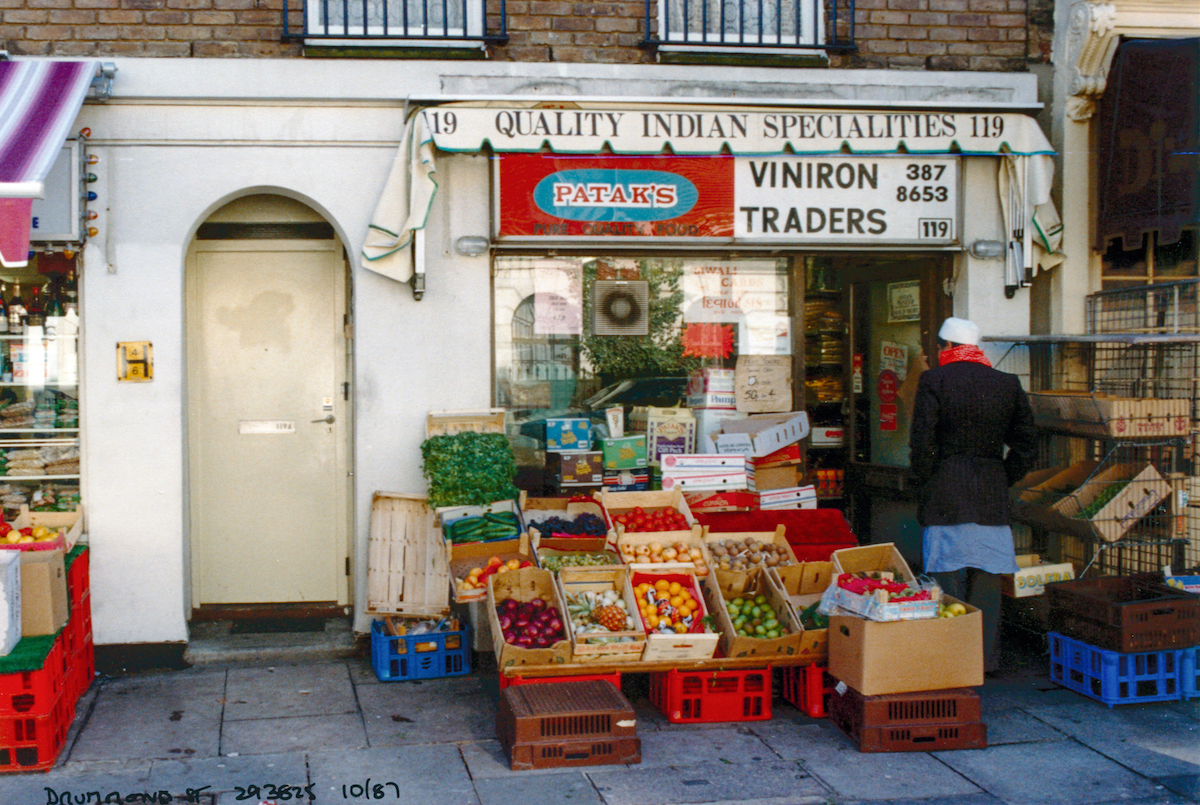
Aldenham Street in Somers Town still had communal washing posts in 1987 — a feature of older housing estates where outdoor drying was built into the design. Drummond Street near Euston, meanwhile, was already well known for its South Asian grocers and restaurants, and Viniron Traders was among the greengrocers supplying the area’s diverse community.
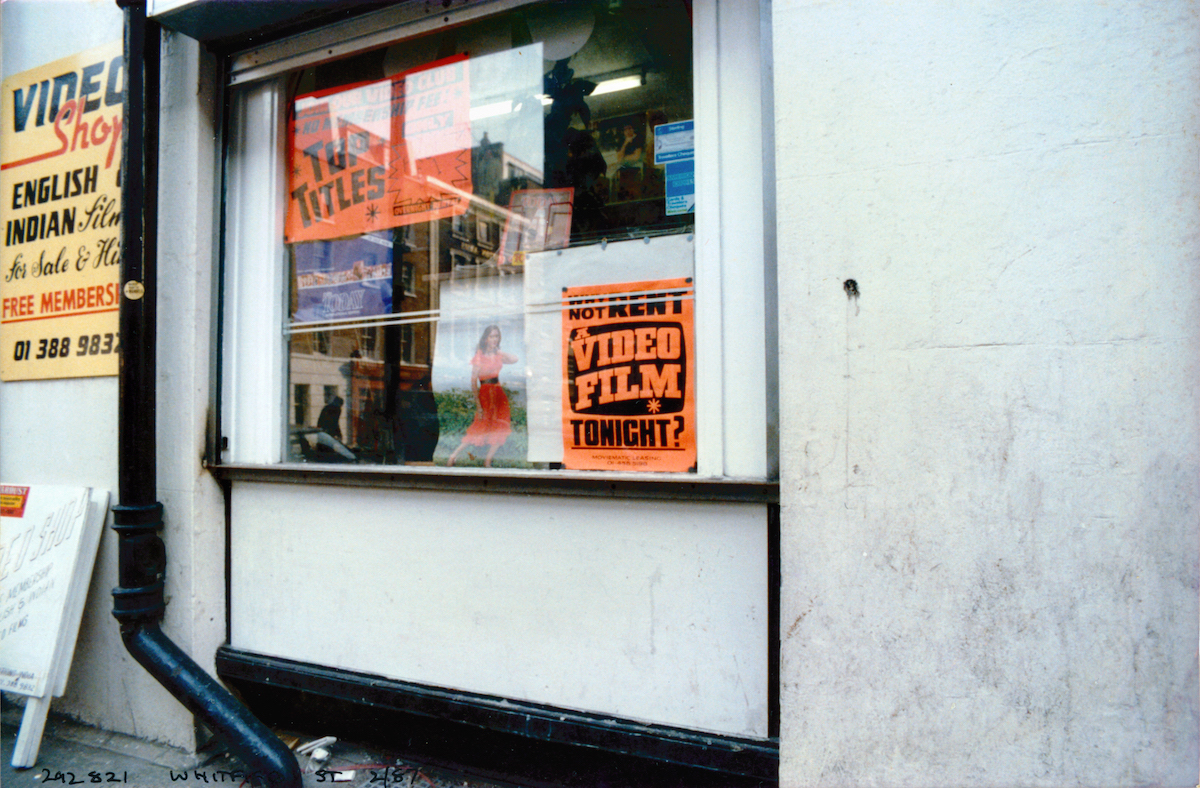
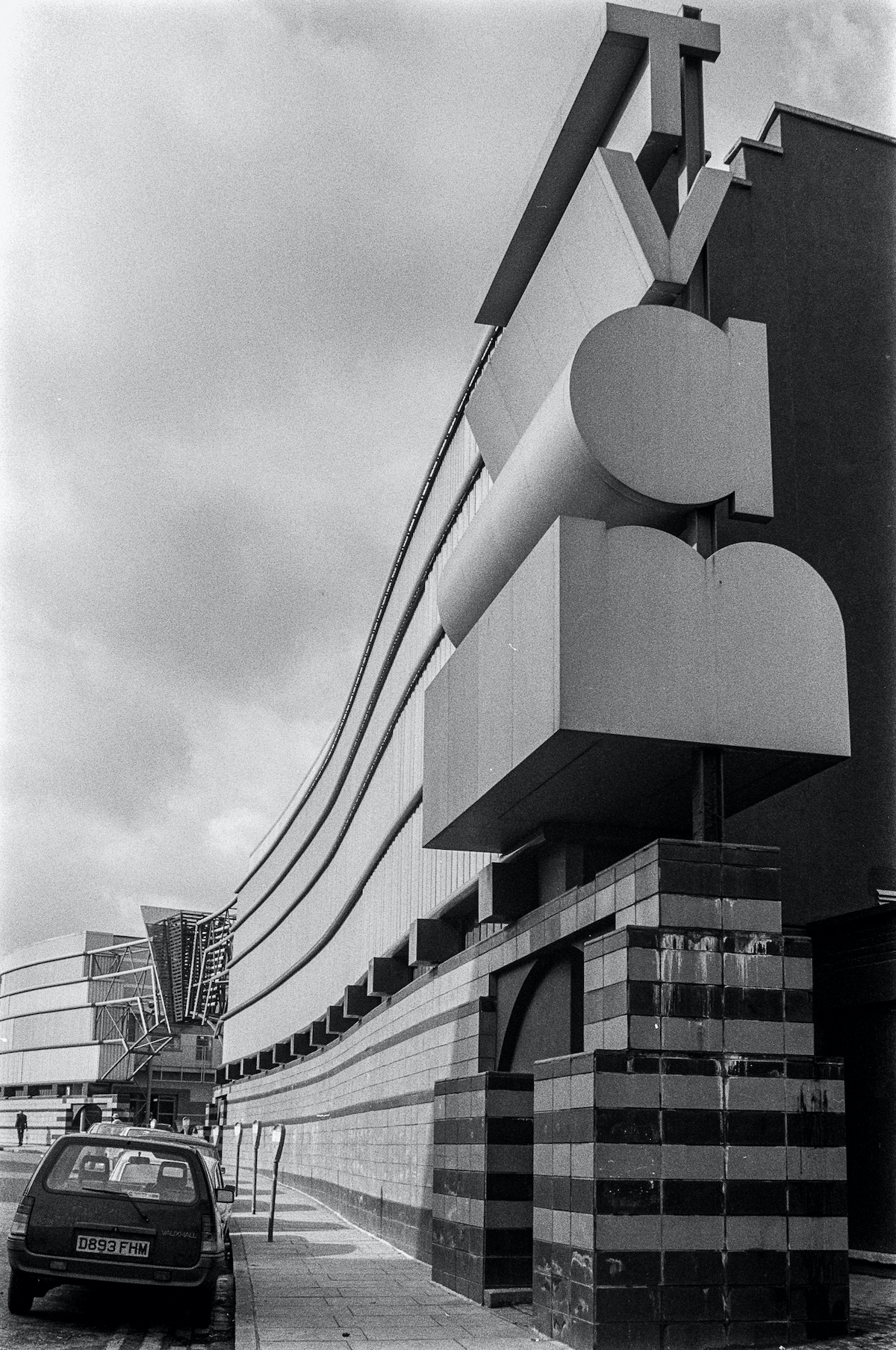
Video rental shops multiplied across London in the 1980s following the widespread adoption of home video players, and Whitfield Street in Fitzrovia was no exception. Marshall photographed one such shop in 1987, capturing a business type that would be entirely gone from British high streets within two decades.
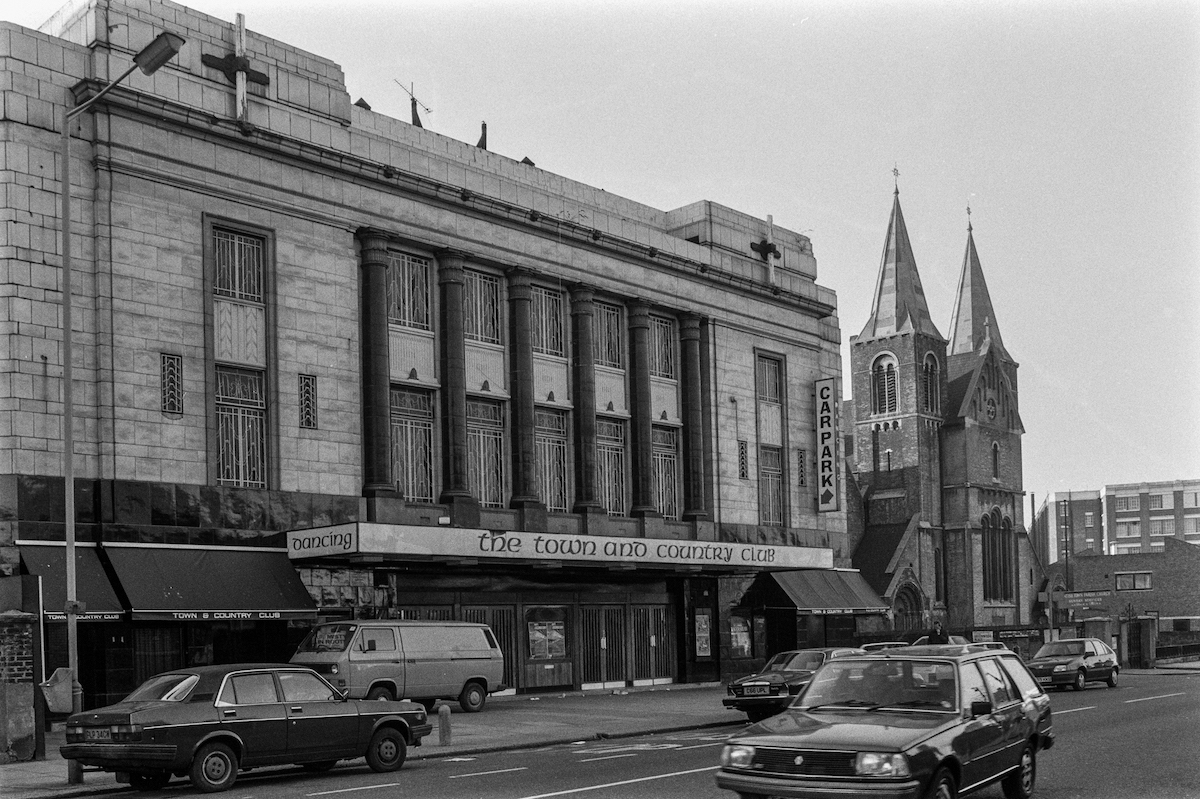
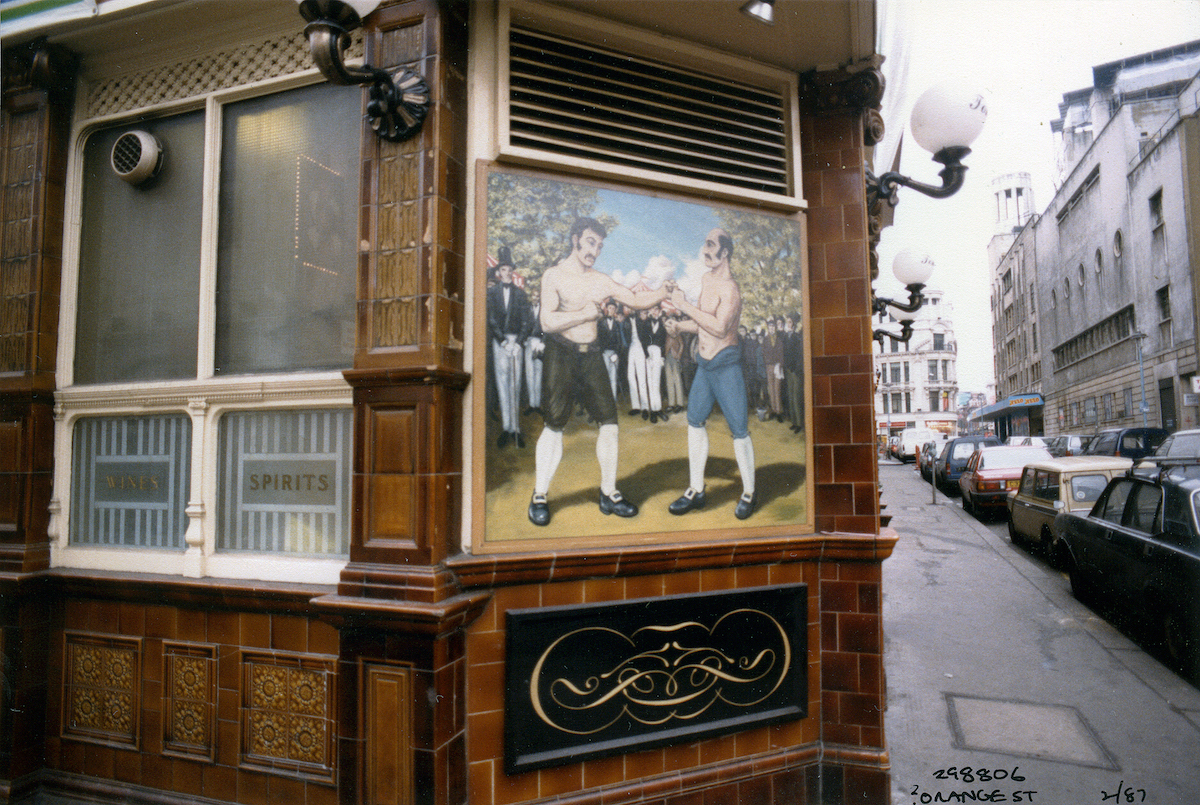
The Town and Country Club appears in Marshall’s collection more than once, underlining its central role in Camden’s cultural life. The Tom Cribb pub near Panton Street — named after the early nineteenth-century boxing champion — sat on the fringe of Camden’s boundary with Westminster.
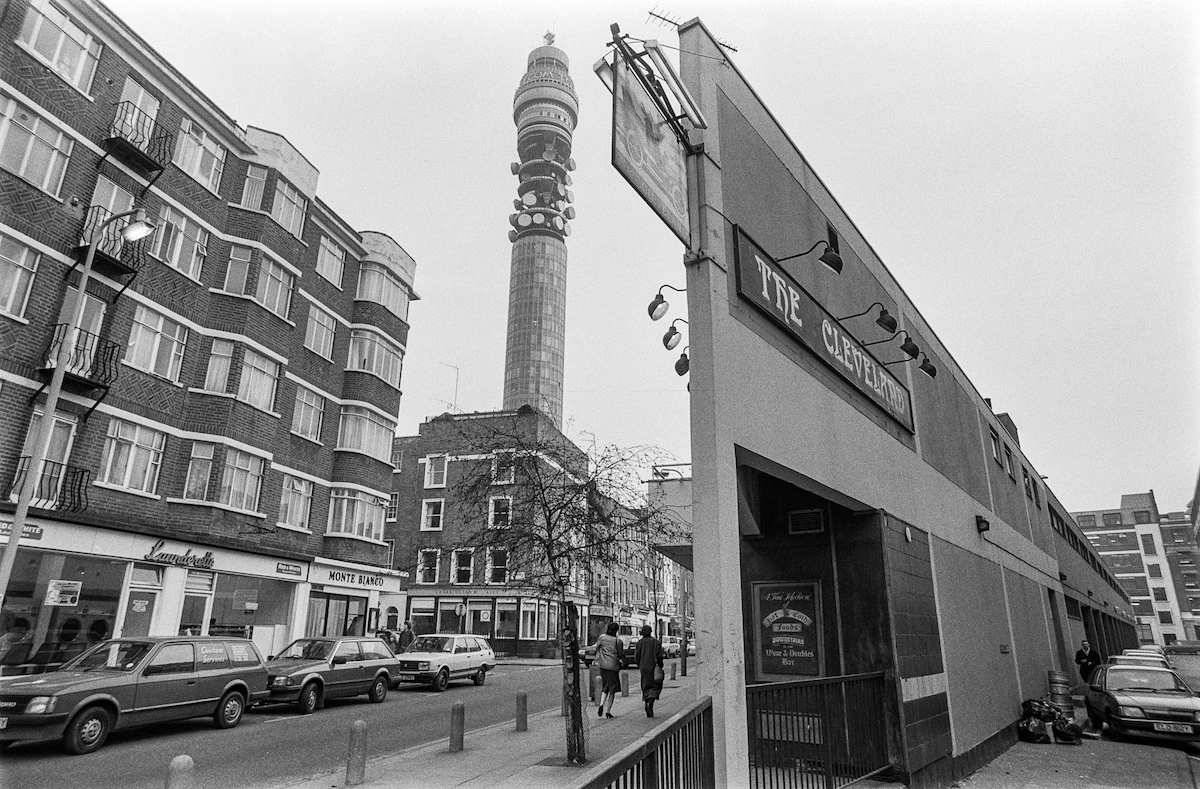
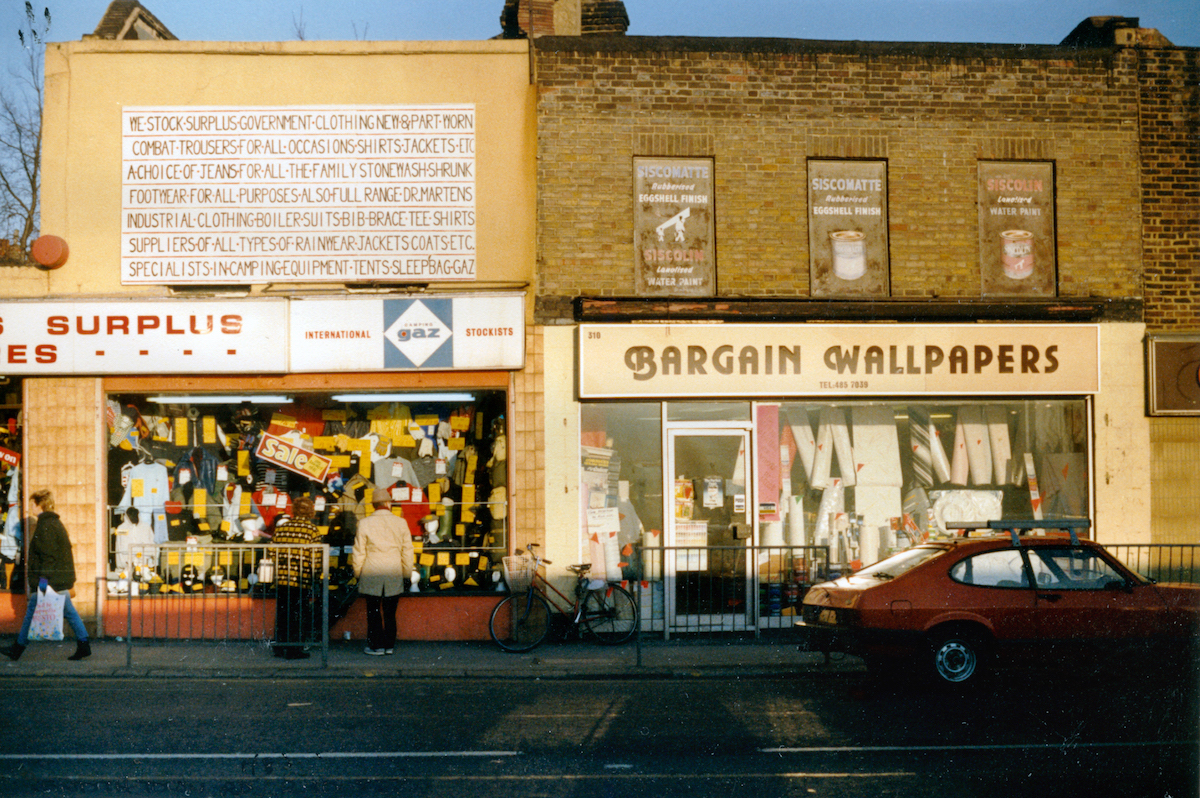
The Post Office Tower — now the BT Tower — loomed above Cleveland Street in Fitzrovia and appeared as a backdrop in several of Marshall’s photographs. Its presence in images of low-rise shopfronts and local pubs underscored the visual contrasts that defined Camden: modern infrastructure rising above streets that looked largely unchanged since the 1950s.
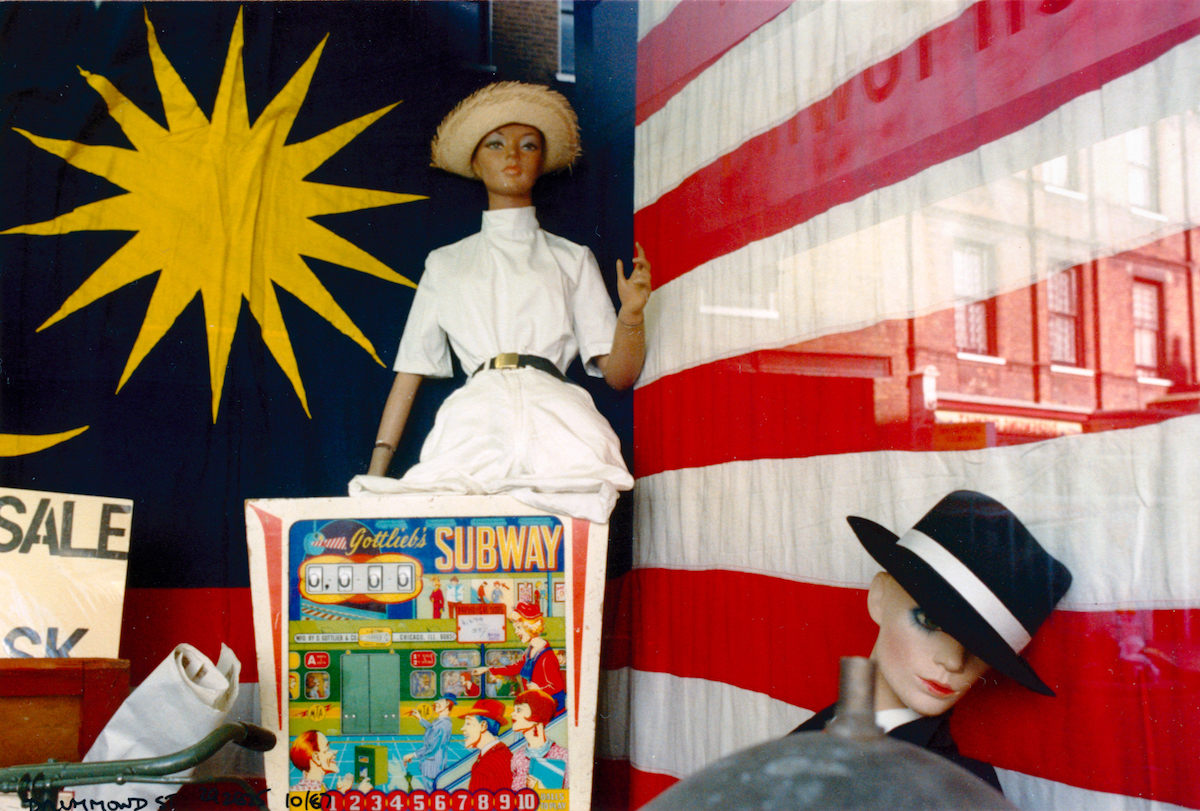
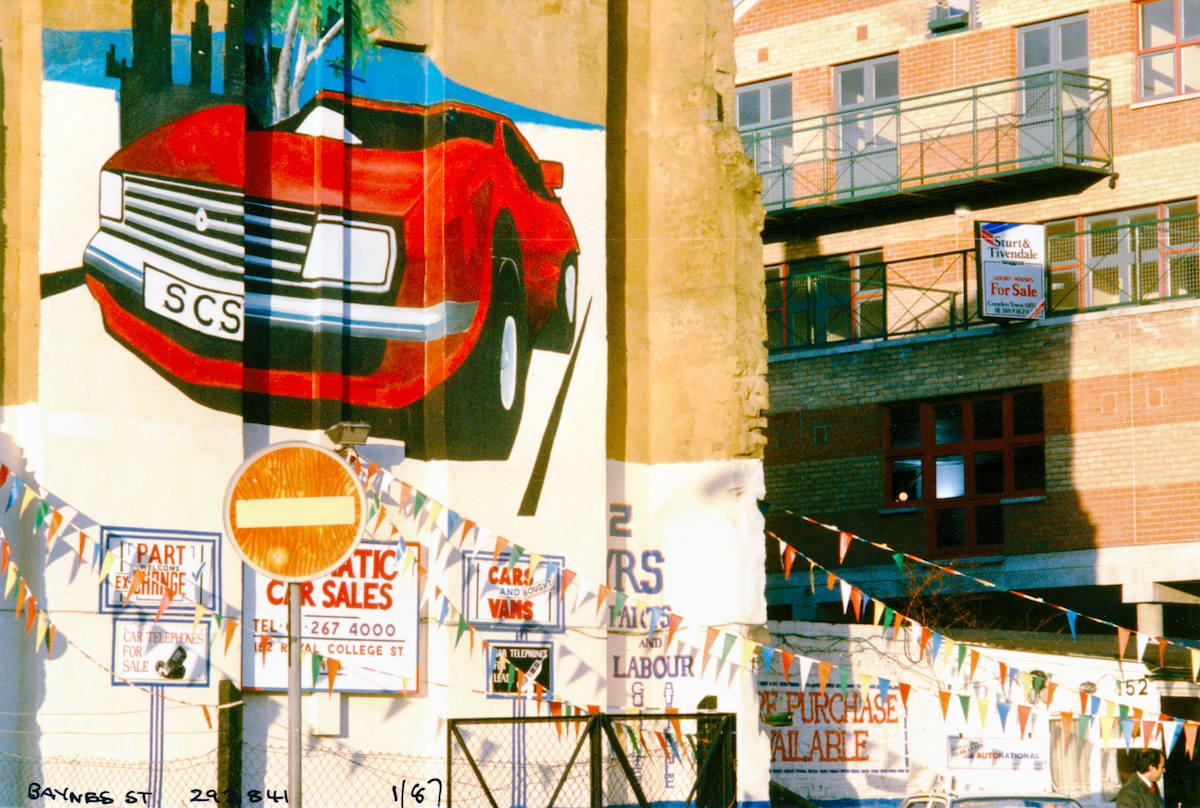
Drummond Street’s shop windows in 1987 reflected the neighbourhood’s South Asian commercial identity, with displays aimed at a local customer base. A short distance away on Baynes Street, SCS Car Sales operated one of the small used-car lots that occupied gaps between residential streets across Camden.
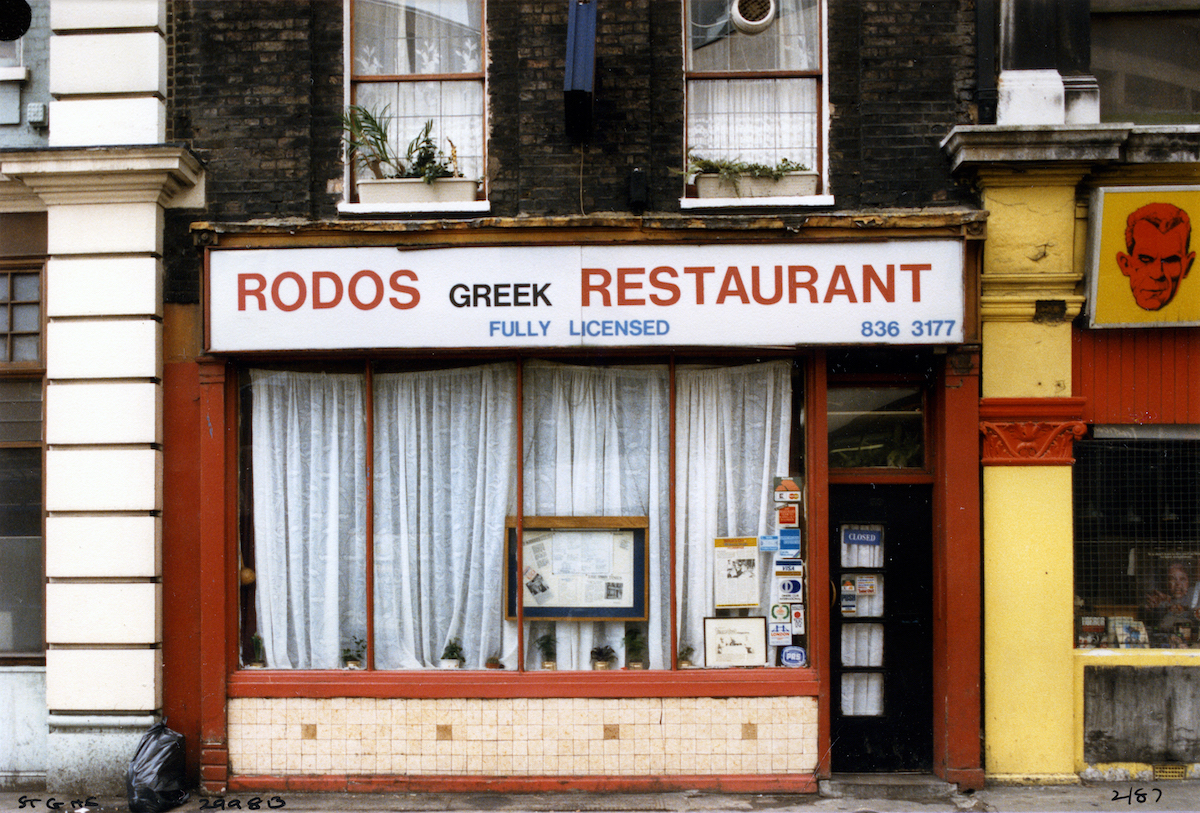
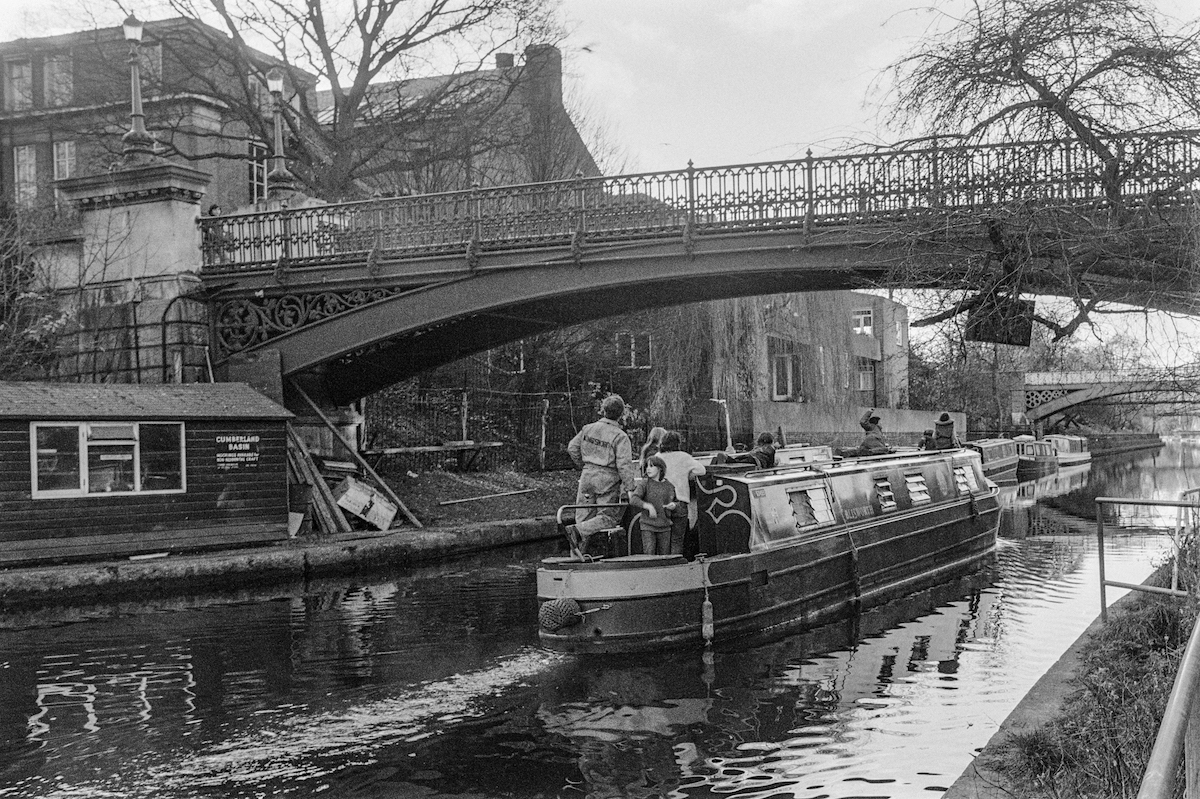
Greek restaurants were a common sight across Camden in the 1980s, and Rodos on St Giles High Street was one of several that Marshall photographed during the decade. The Regent’s Canal at Cumberland Basin near Primrose Hill offered a calmer subject — still water and towpath in one of the quieter stretches of an otherwise busy waterway.
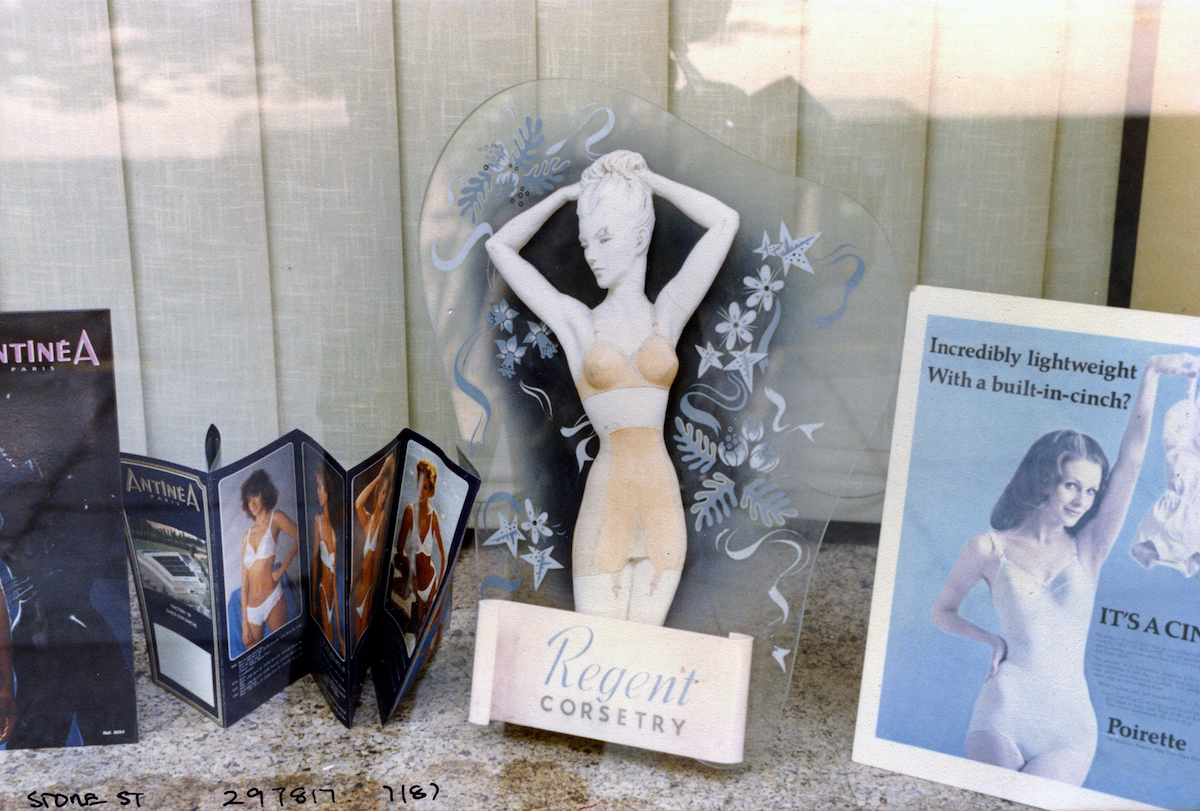
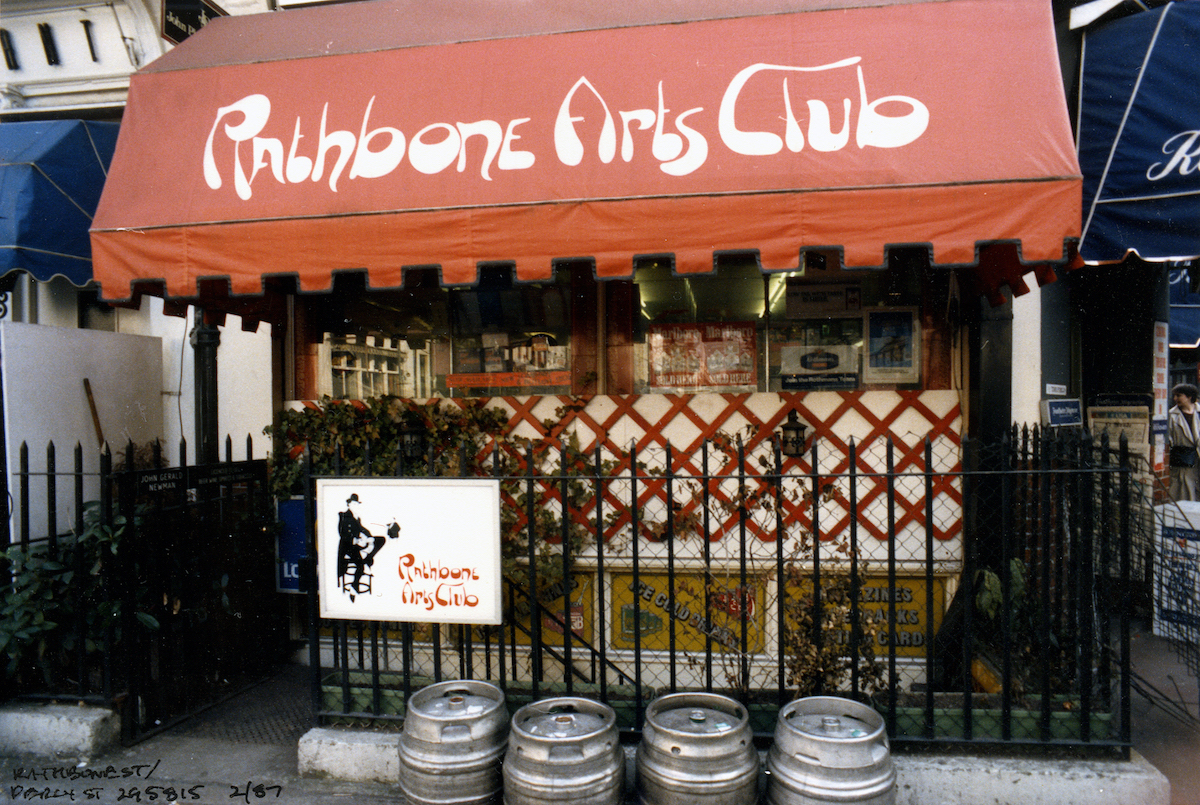
Regent Corsetry on Store Street was the kind of highly specialised shop that survived on a loyal local clientele and a low-rent street presence. The Rathbone Arts Club in Fitzrovia reflected a different side of Camden’s character — the borough had a long association with artists, writers, and creative communities, and venues like this were central to that world.
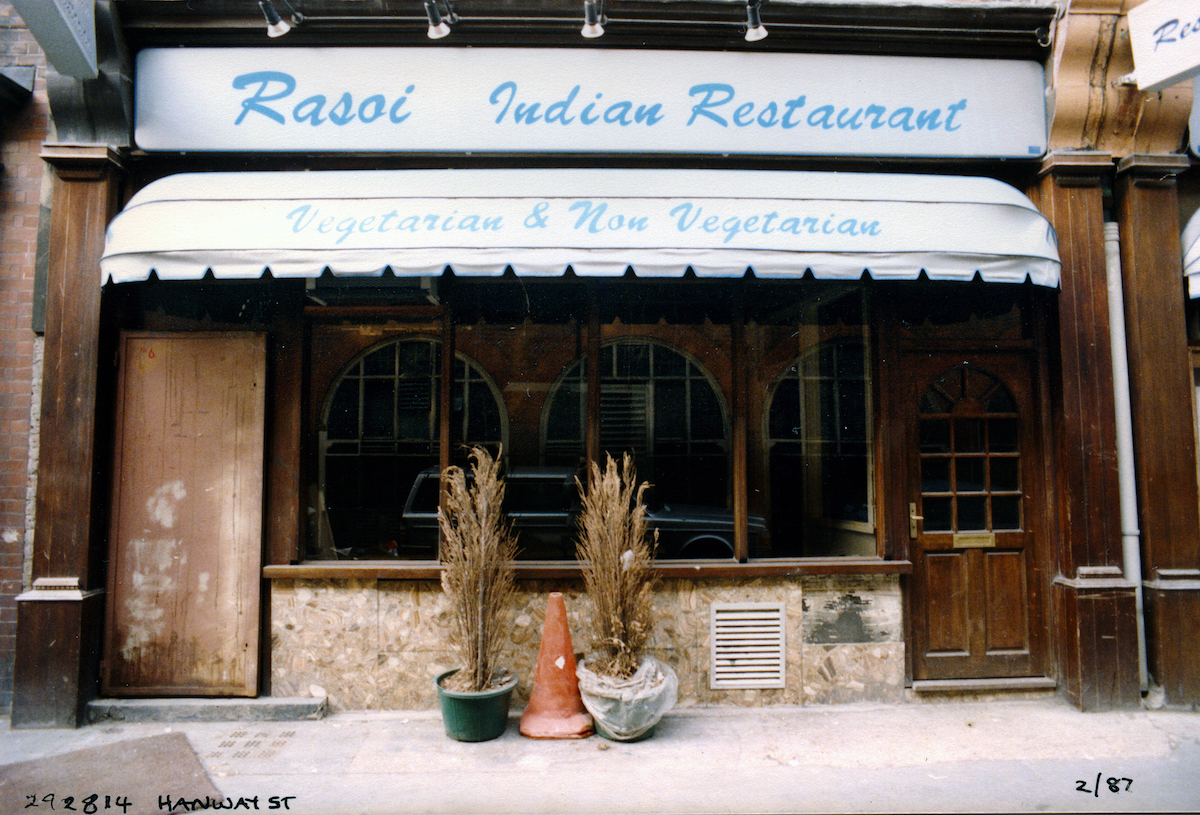
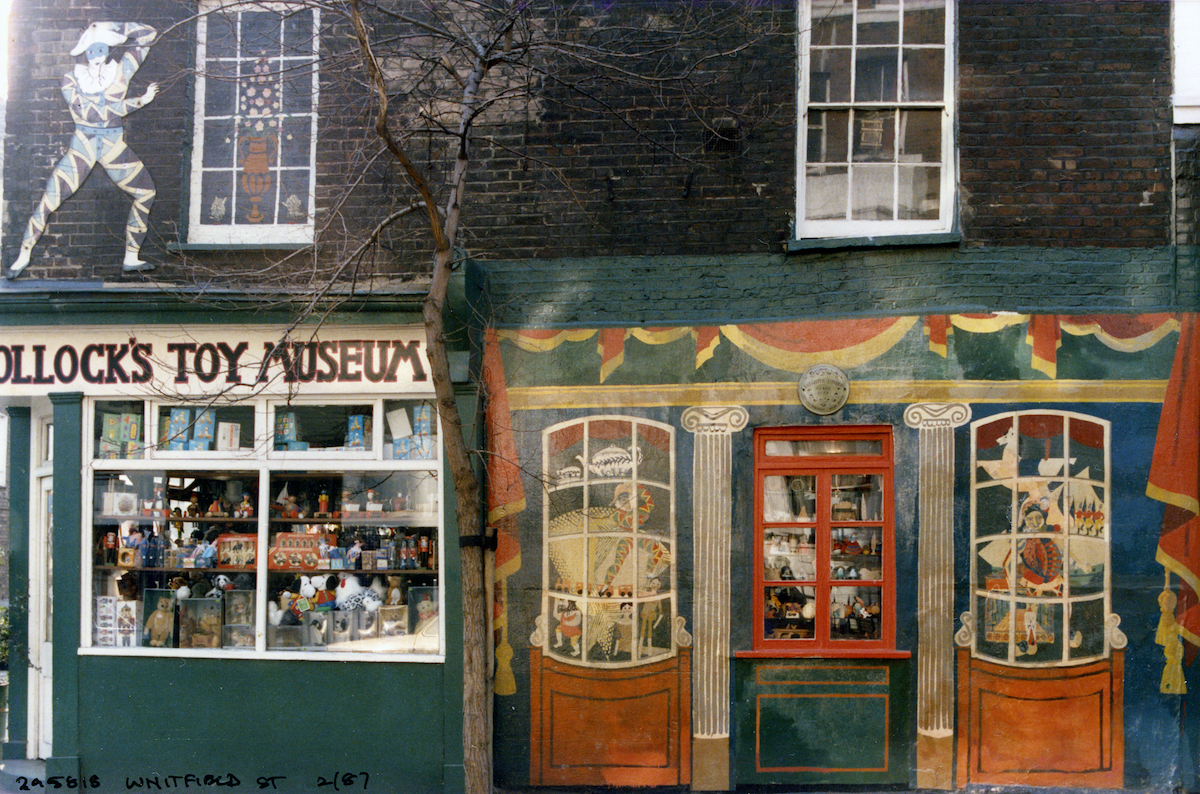
Indian restaurants like Rasoi on Hanway Street were well established in this part of London by 1987, serving both local residents and the office workers who filled the surrounding streets. Pollock’s Toy Museum on Whitfield Street was a long-standing Camden attraction dedicated to antique toys and theatrical model theatres — a sharp contrast to the neighbourhood’s grittier commercial activity.
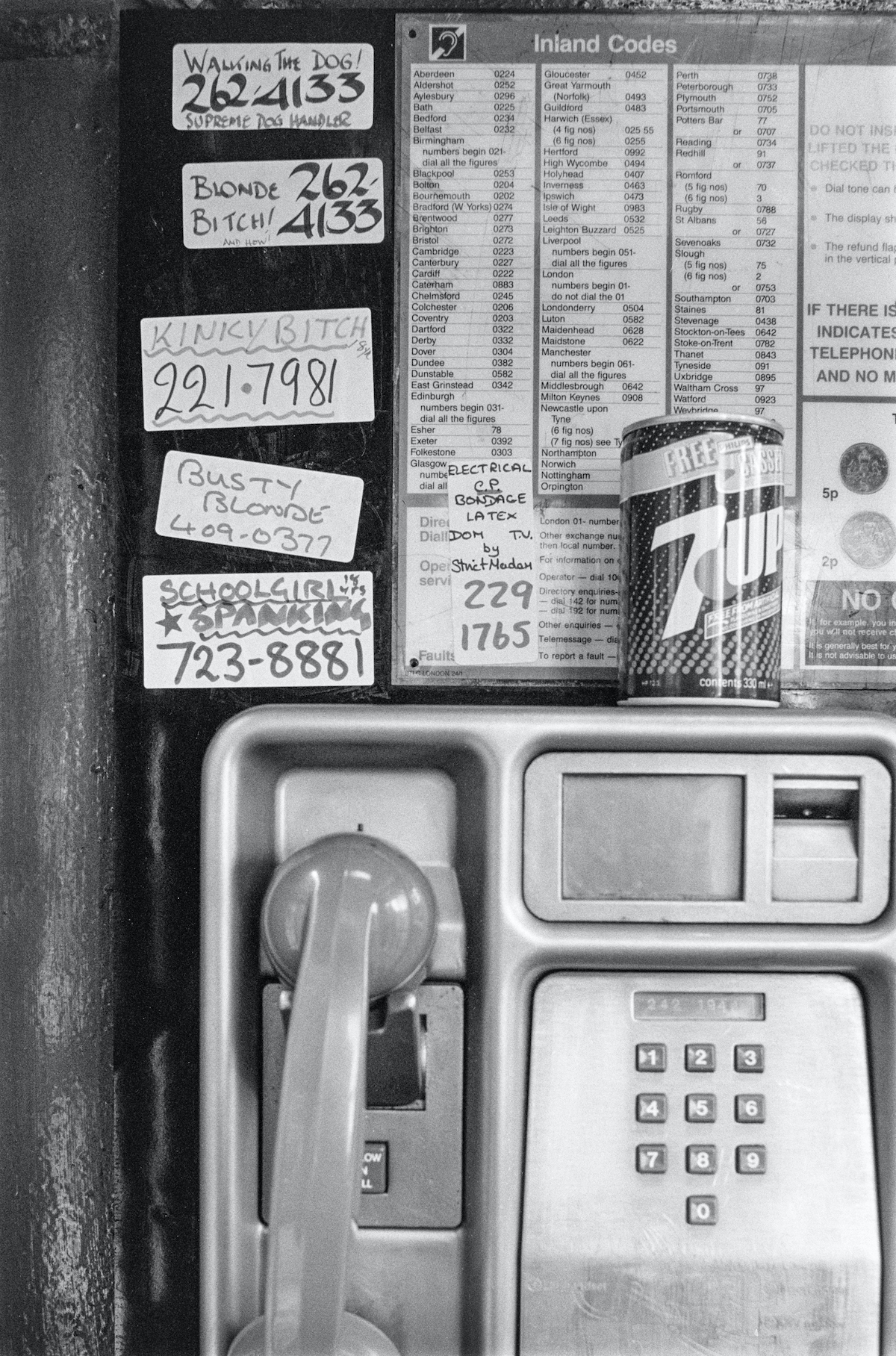
New Oxford Street, running through the southern section of the borough, was one of the busiest retail streets in the area. Marshall photographed it in both 1986 and 1987, capturing how the streetscape shifted slightly year to year while maintaining its dense, urban character.

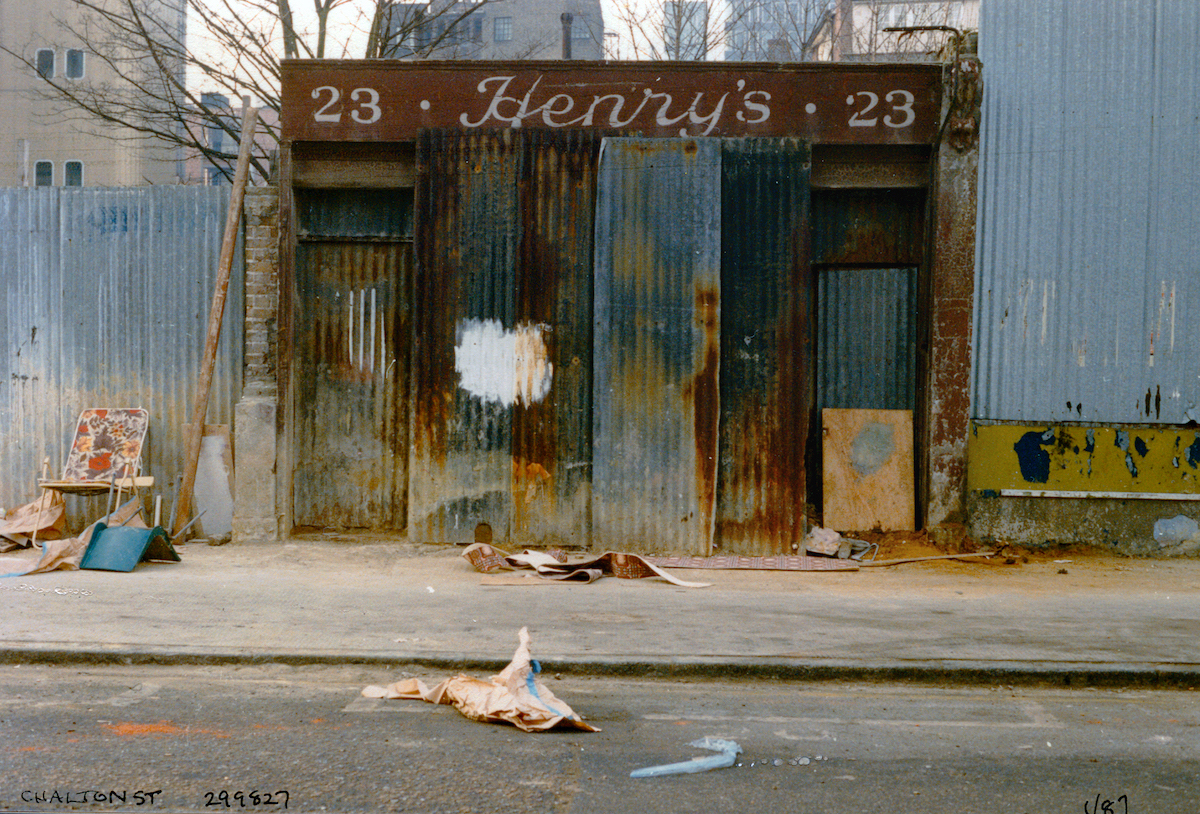
Drummond Street near Euston was home to a wide variety of traders. A shop simply called Modern Art sat among the grocers and restaurants, reflecting the eclectic commercial mix of the street. Henry’s on Chalton Street in Somers Town was part of the same dense network of local traders that Marshall returned to repeatedly throughout his time documenting the borough.
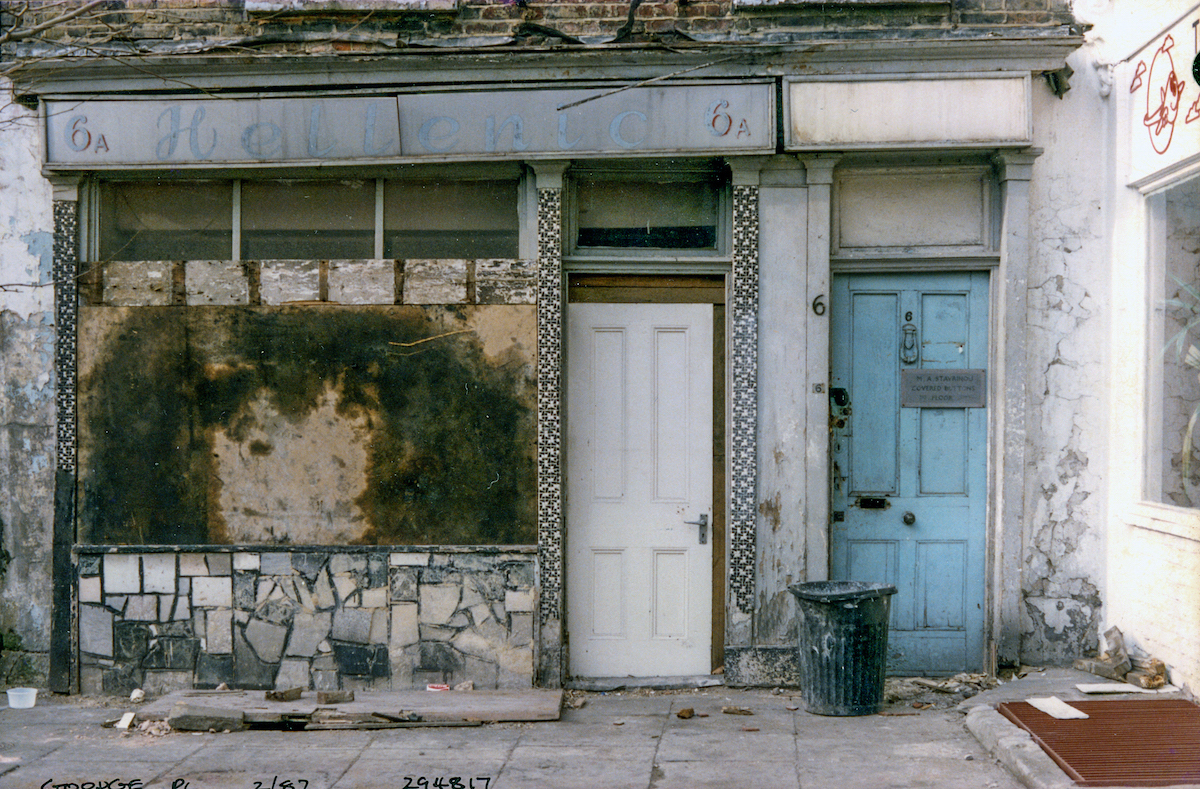
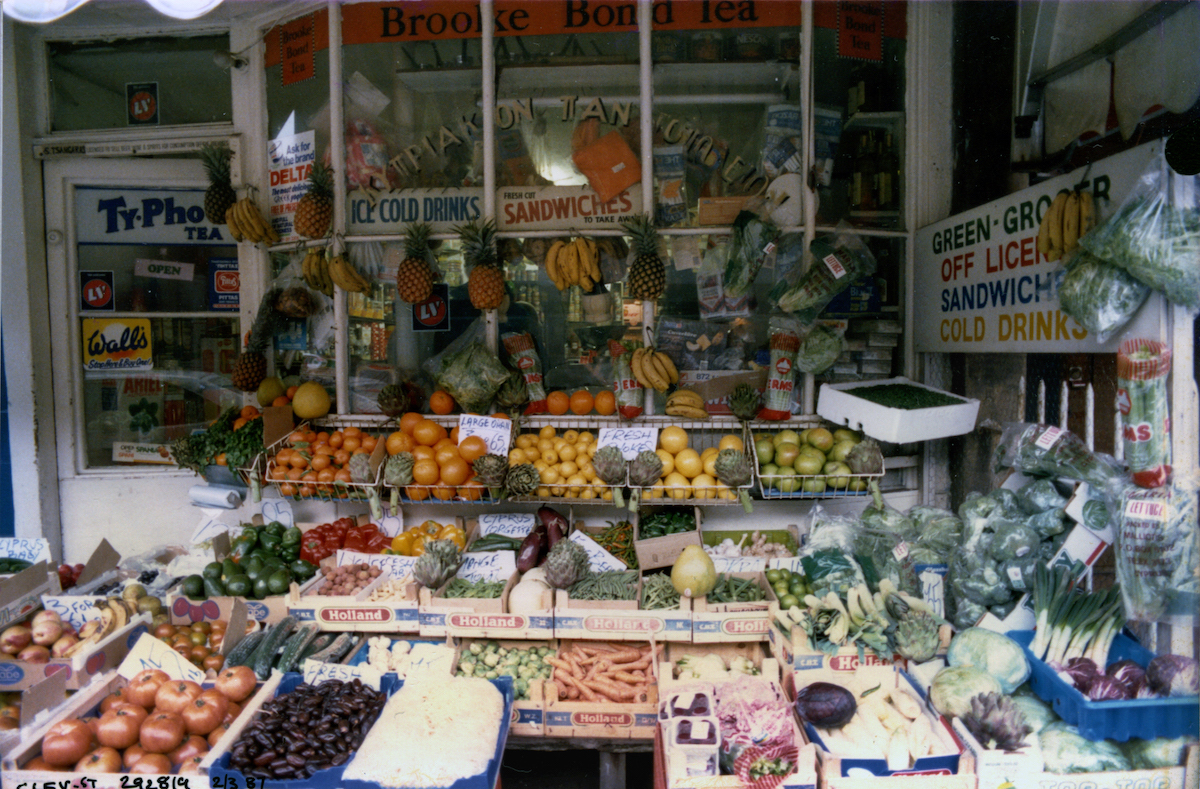
Fitzrovia, straddling the border between Camden and Westminster, had a strong Greek and Greek-Cypriot business presence by the 1980s. Hellenic on Goodge Place and the greengrocer on Cleveland Street were both part of that community’s commercial footprint in the area.
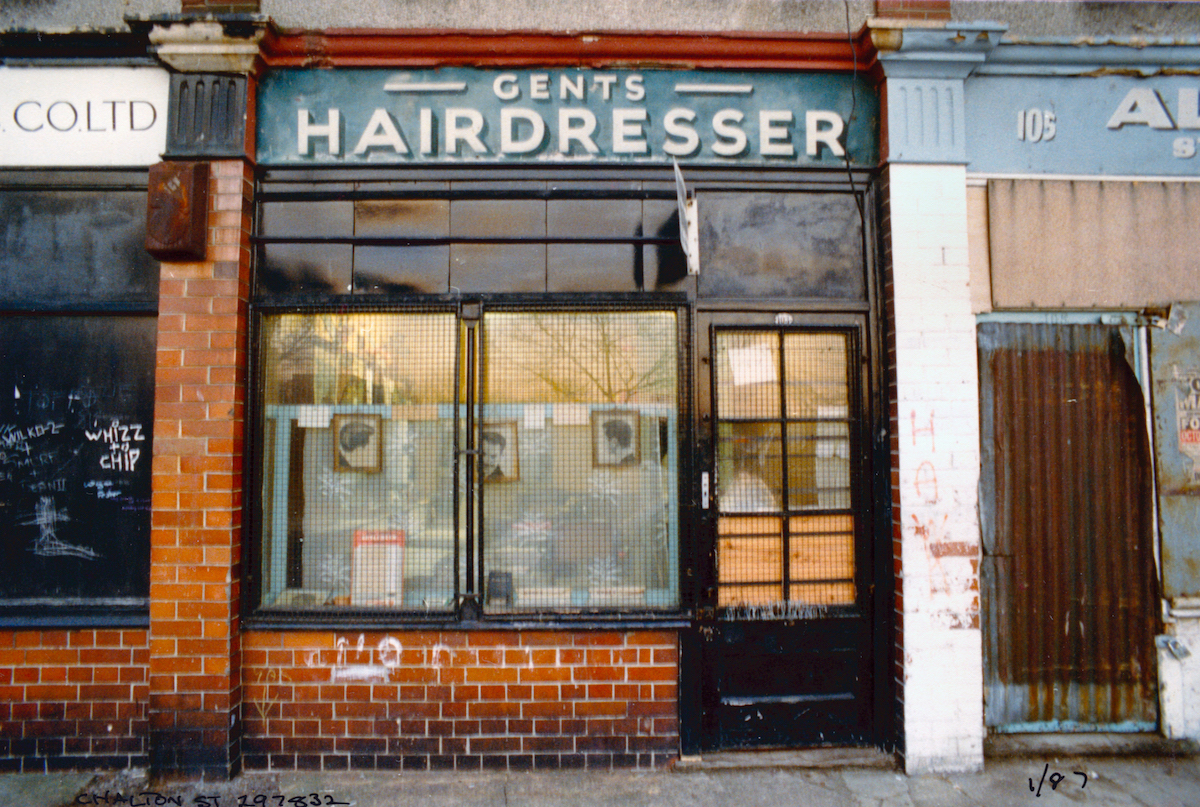
Gilden Crescent in Kentish Town was a quiet residential street, typical of the housing stock that made up much of the borough away from the main roads. The gents’ hairdresser on Chalton Street in Somers Town was one of the most basic of local services — a barber’s chair, a mirror, and a shop front that hadn’t changed in years.
Denmark Place in St Giles was a short alley off Denmark Street that had become infamous in 1980 following a devastating fire in a social club that killed 37 people. By the time Marshall photographed it in 1987, the street had returned to its role as part of London’s music instrument district, surrounded by guitar shops and music businesses.
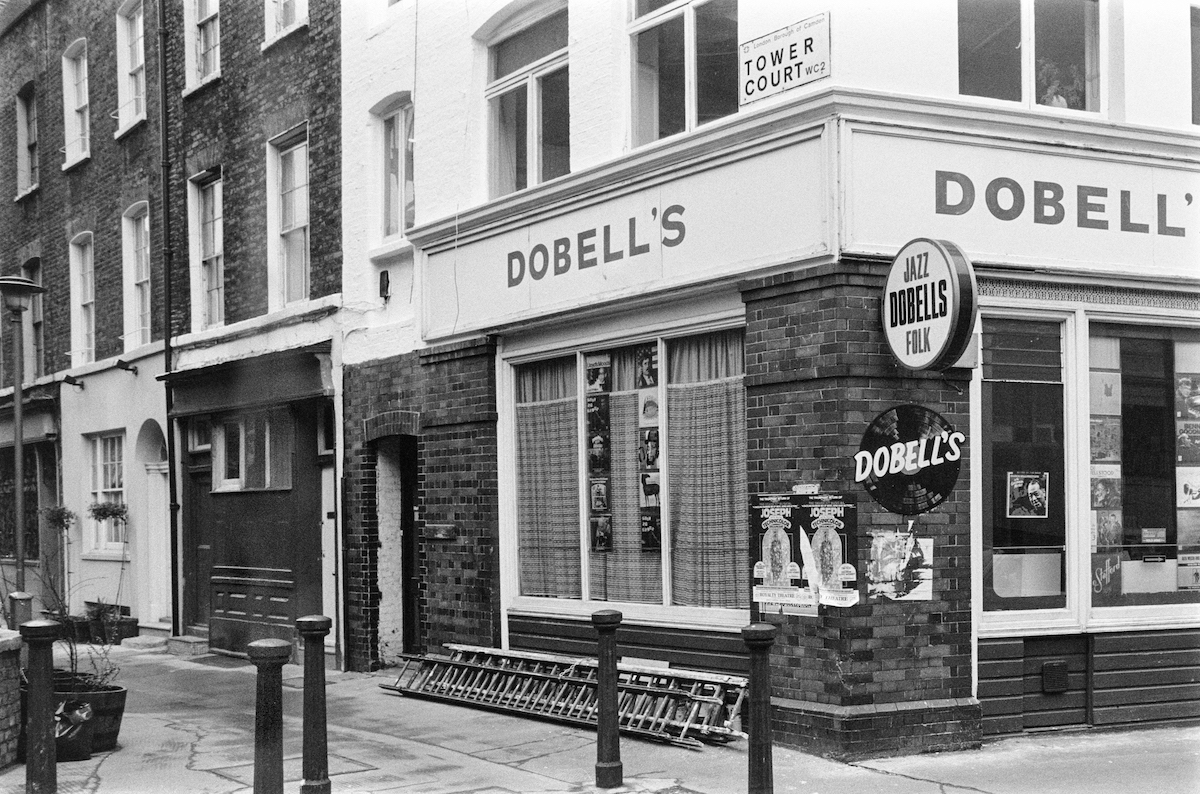
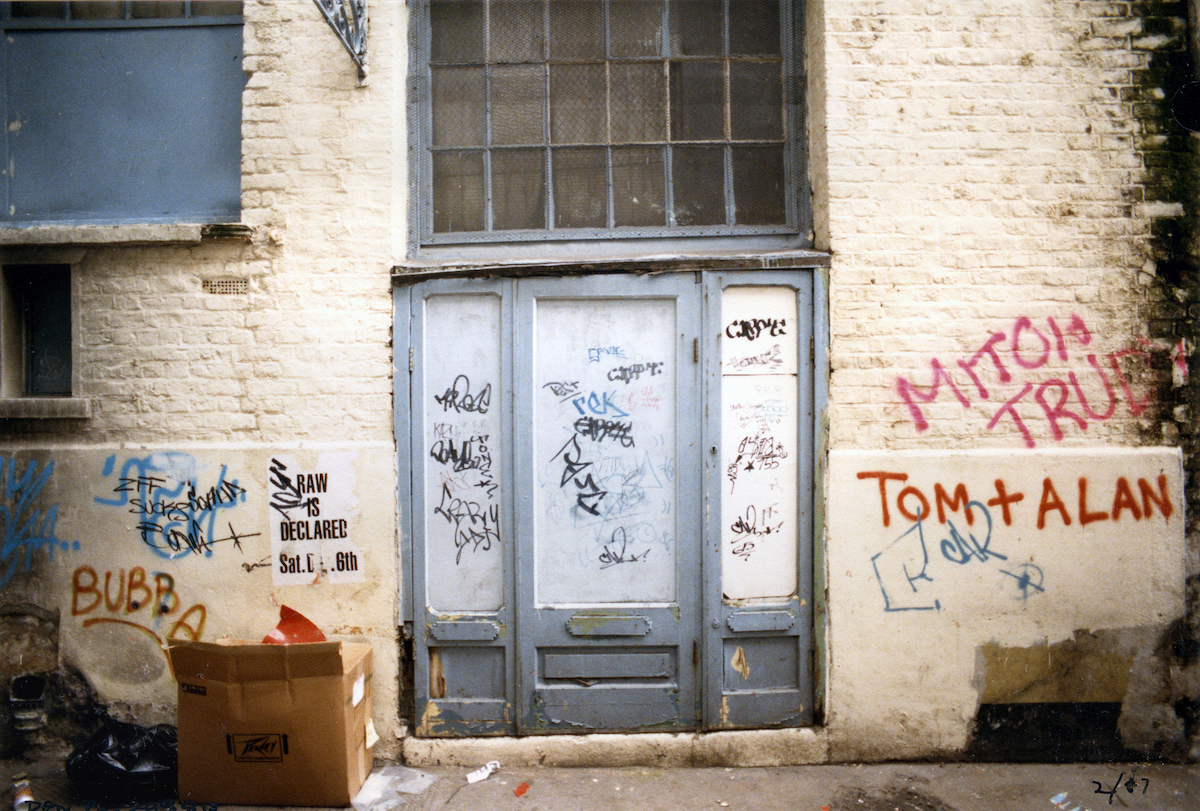
Denmark Street — known informally as Tin Pan Alley — was the centre of London’s music publishing and instrument trade. Marshall photographed it extensively in 1987, capturing both the shopfronts and the street life that surrounded one of the city’s most music-focused streets.
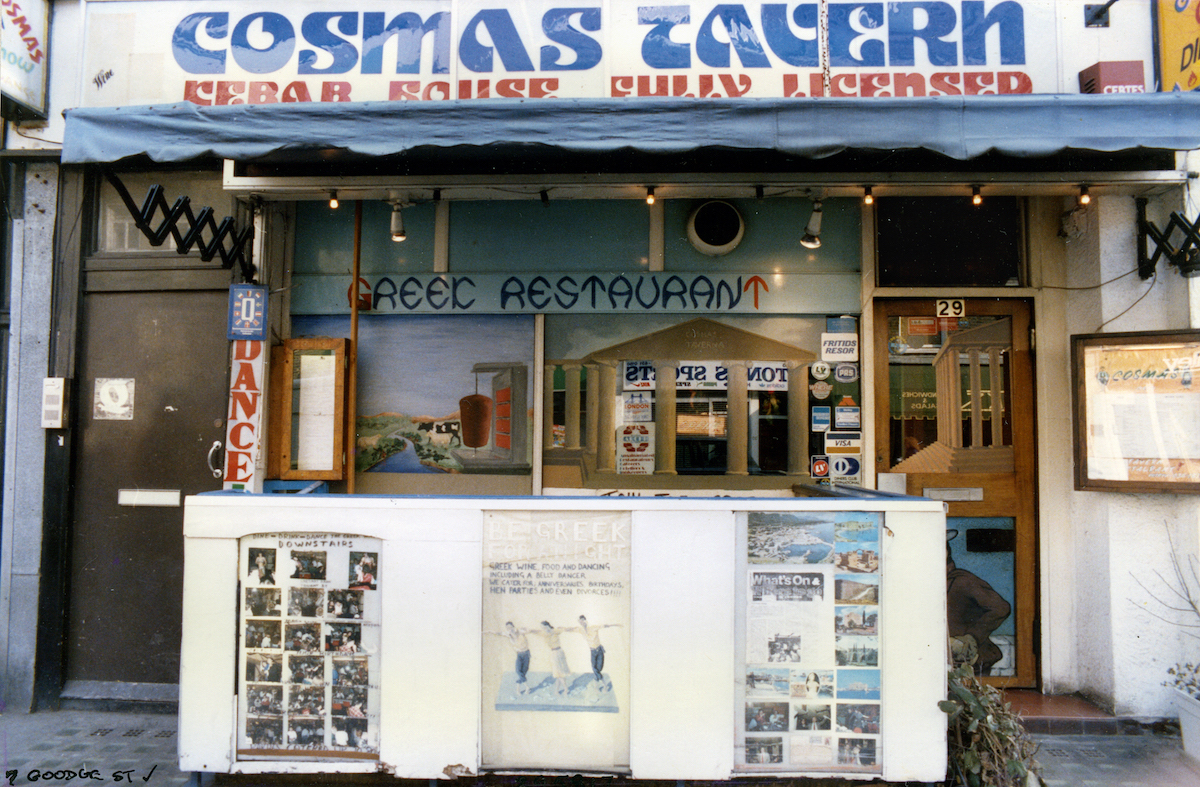
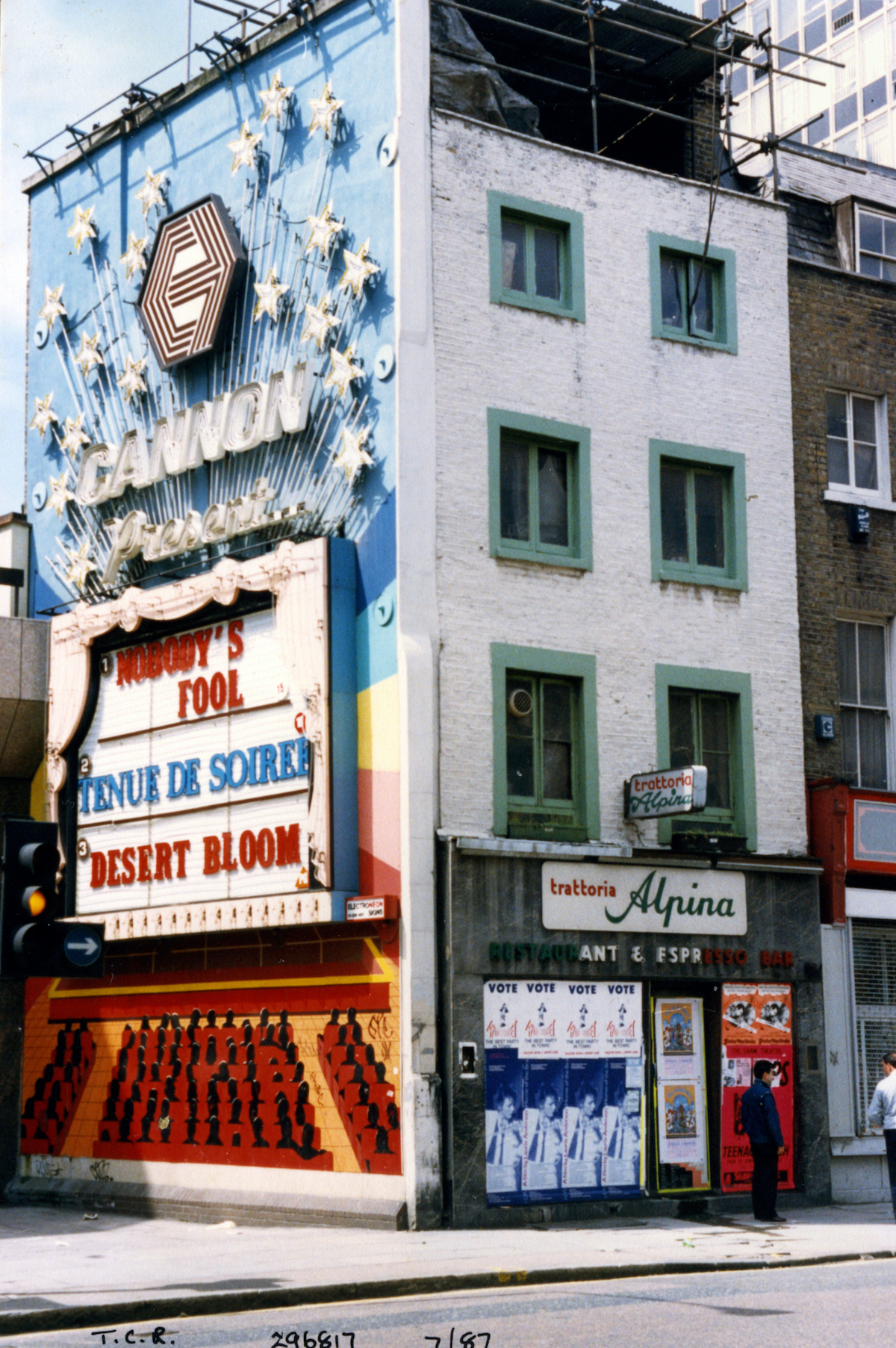
Goodge Street’s Cosmas Tavern was another Greek restaurant in the Fitzrovia cluster that Marshall documented. The Cannon Cinema on Tottenham Court Road was part of the Cannon Films chain that expanded aggressively across Britain in the 1980s, taking over older independent cinemas and rebranding them under a single corporate identity.
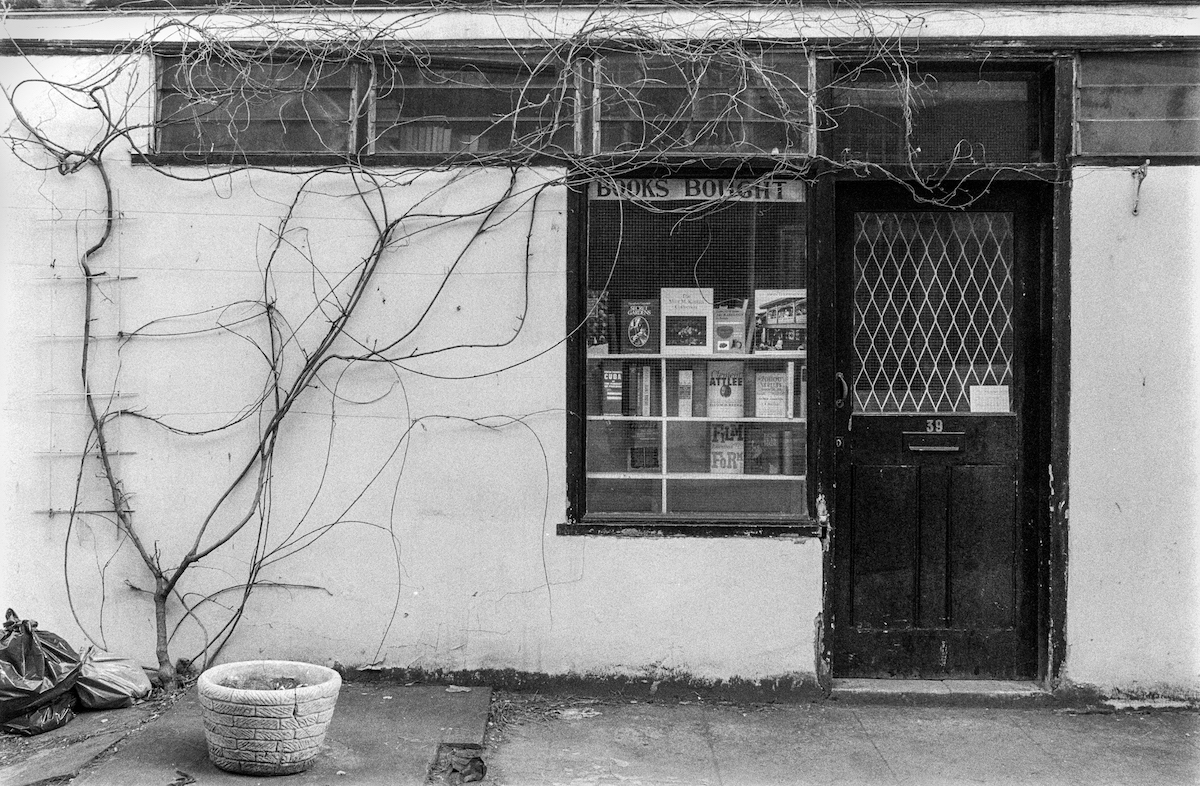
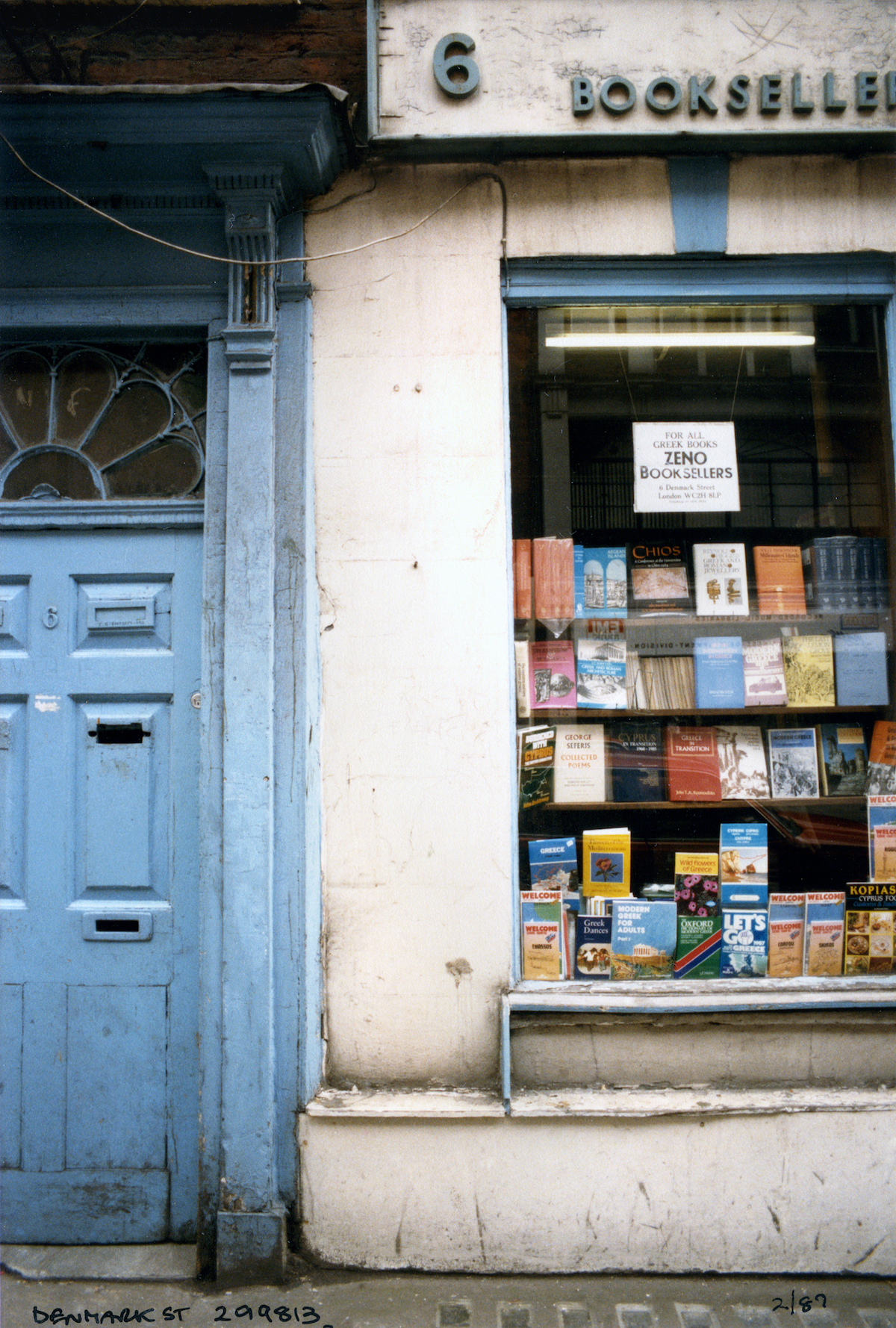
Bloomsbury and St Giles both had a strong tradition of independent bookshops in the 1980s, sustained by the nearby University of London and the publishing industry concentrated in the area. Marshall photographed two of them — one on Burton Road and one at 6 Denmark Street — capturing a type of shop that was already beginning to feel the pressure of chain retailers.

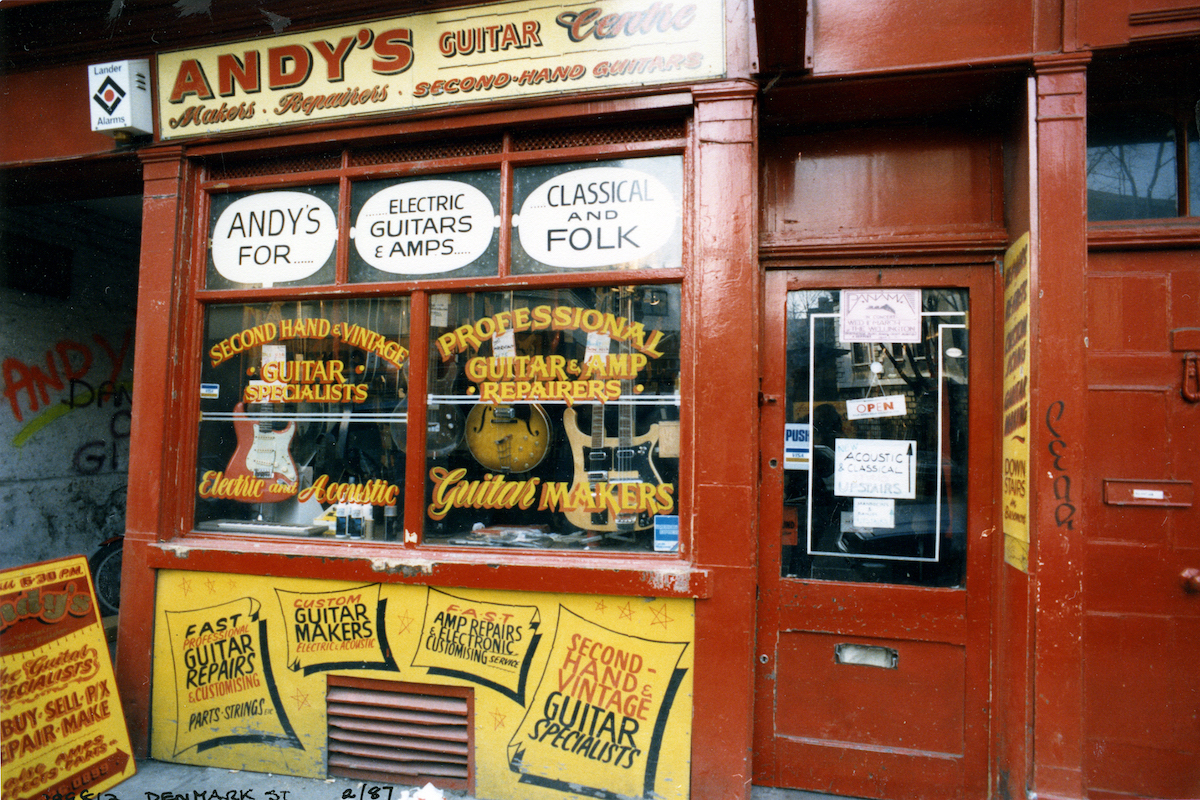
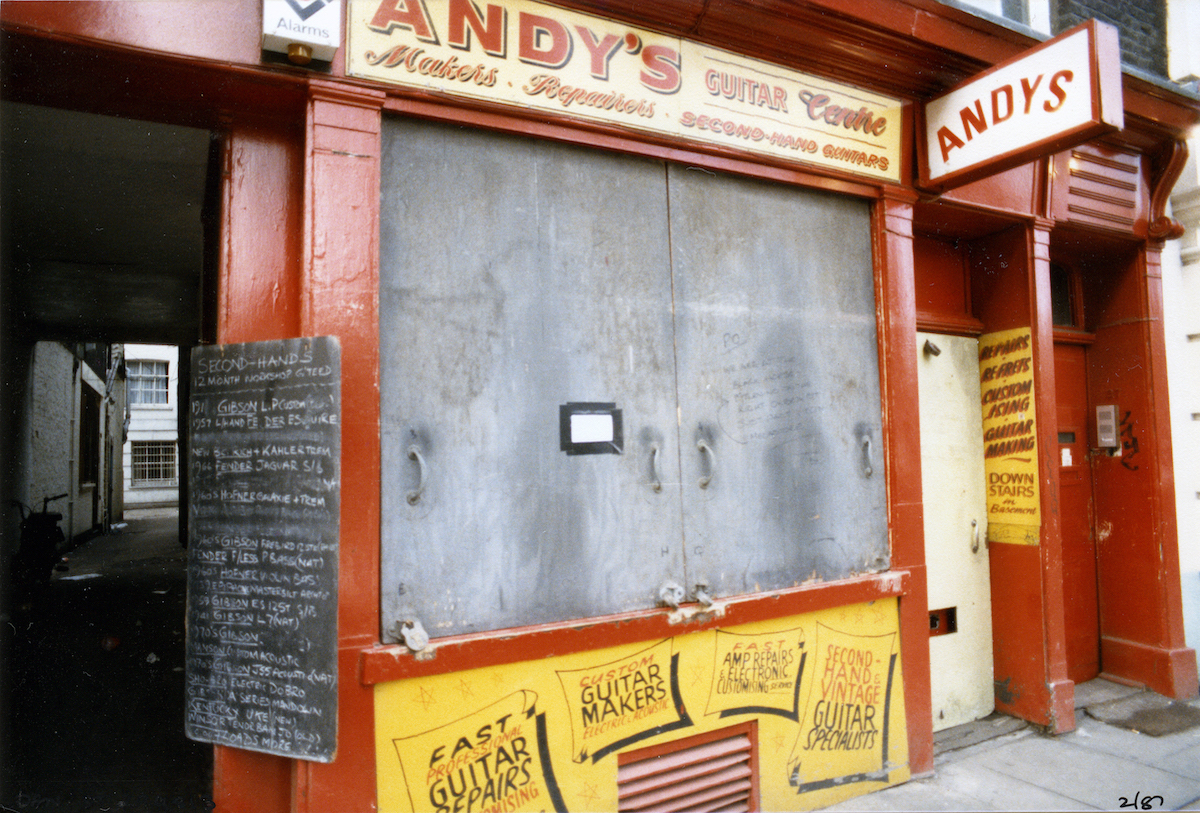
Bill Lewington Music on Shaftesbury Avenue was a specialist woodwind and brass instrument dealer that occupied a prominent spot on one of Camden’s southern thoroughfares. Andy’s Guitar Centre on Denmark Street was one of the street’s most well-known shops, selling and repairing guitars to musicians from across London.
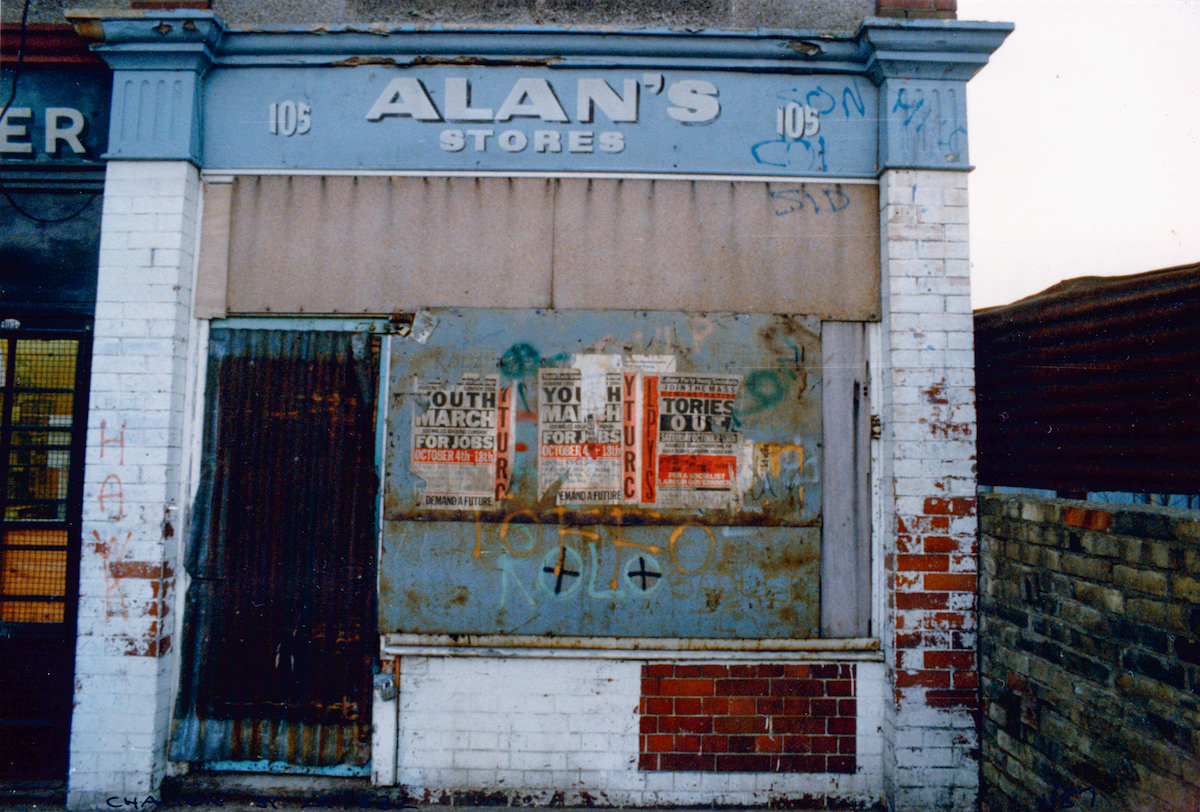
Alan’s Stores on Chalton Street in Somers Town was part of the dense row of local traders that Marshall returned to across multiple years. Chalton Street ran through the heart of Somers Town and was one of the most consistently photographed streets in his entire Camden series.