Most cities grow outward. Seattle grew by tearing itself apart and starting over. Between 1890 and 1930, the city leveled hills, filled tidelands, straightened rivers, dug sewers, paved roads, and carved canals — all in a sustained, decades-long effort to turn a rugged waterfront town into a functioning commercial city. Historian Clarence Bagley, writing in his 1916 History of Seattle, put it plainly: “no great city on the American continent has overcome so many natural obstacles in its expansion.” He called Seattle a “vast reclamation project,” and the photographs from that era prove him right.
The trigger for much of this transformation was the Great Seattle Fire of 1889, which devastated the downtown retail district and forced city leaders to rethink the entire layout of the city. City Engineer R. H. Thomson used the disaster as an opening. He pushed an ambitious plan to reshape the land itself — not just rebuild on it. City planners believed that flat, grid-aligned streets were essential for commerce to flow. The hills had to go.
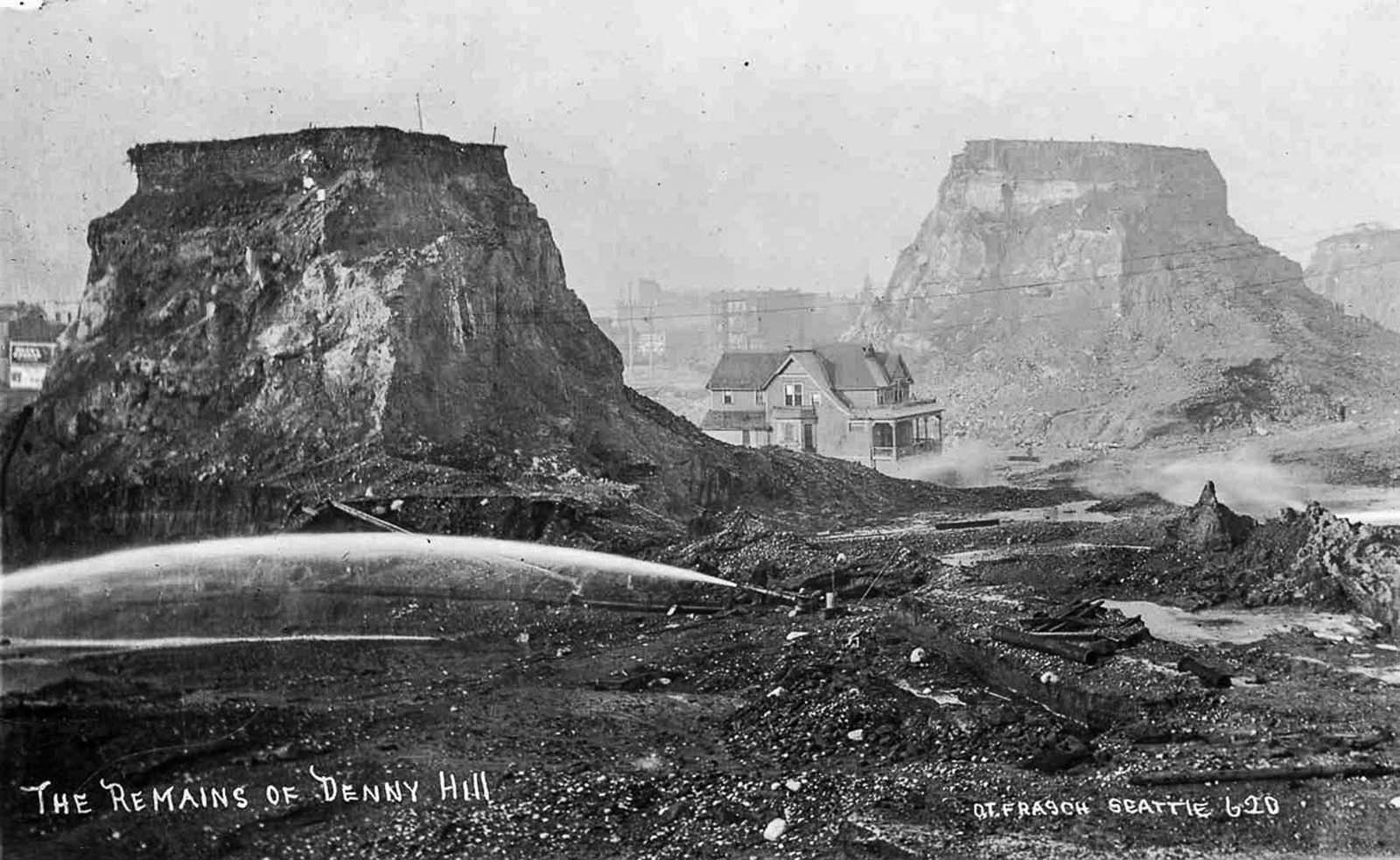
The most famous of these projects was the Denny Regrade — a two-phase effort to remove Denny Hill entirely from the Seattle landscape. The first phase ran from 1908 to 1911 and targeted roughly 27 city blocks, stretching from Pine Street to Cedar Street and from Second to Fifth Avenues. Workers used a hydraulic method called sluicing: water was pumped from Lake Union at a rate of about 20 million gallons per day, blasted at the hillside through high-pressure nozzles, and the resulting slurry was channeled through tunnels to Elliott Bay.
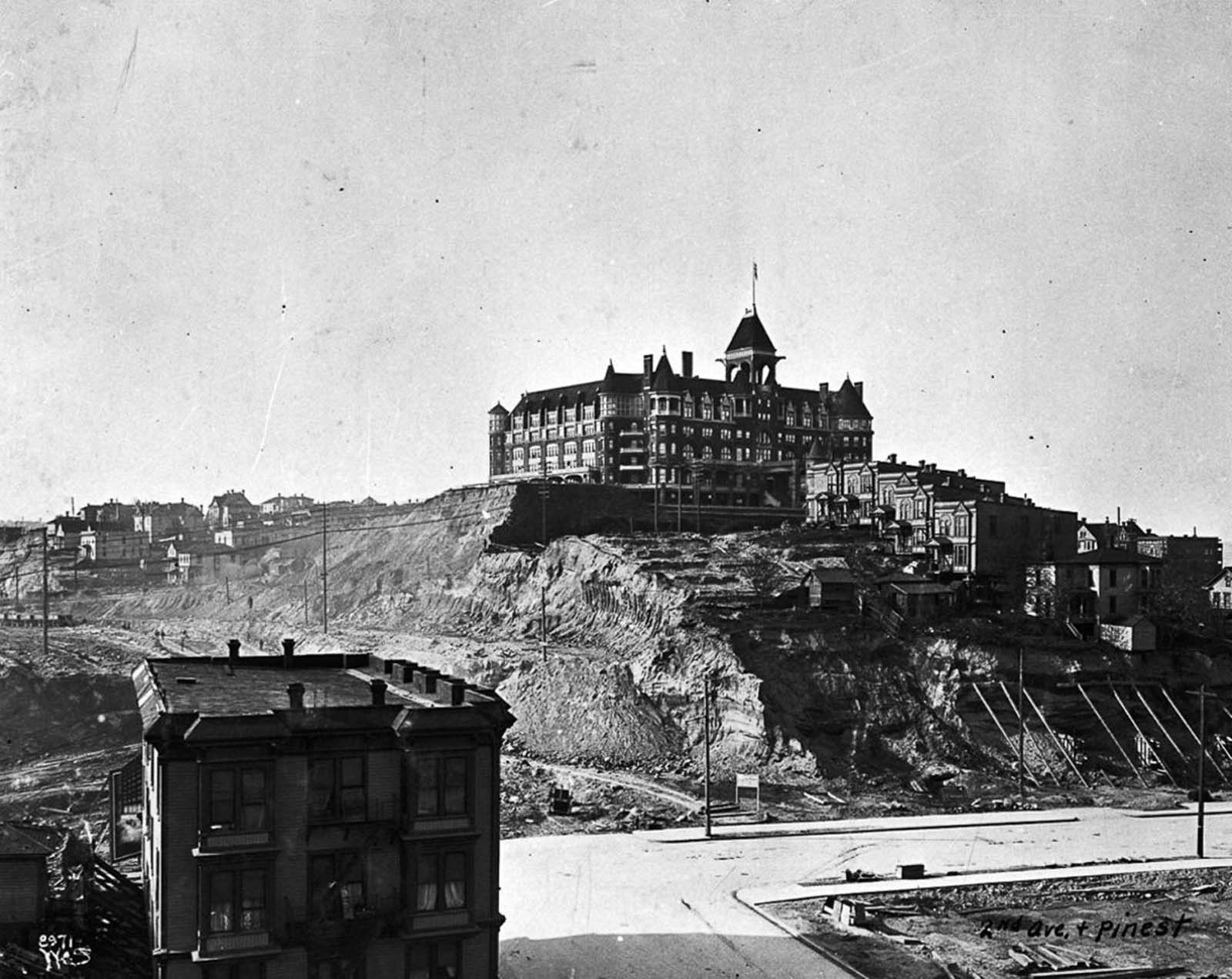
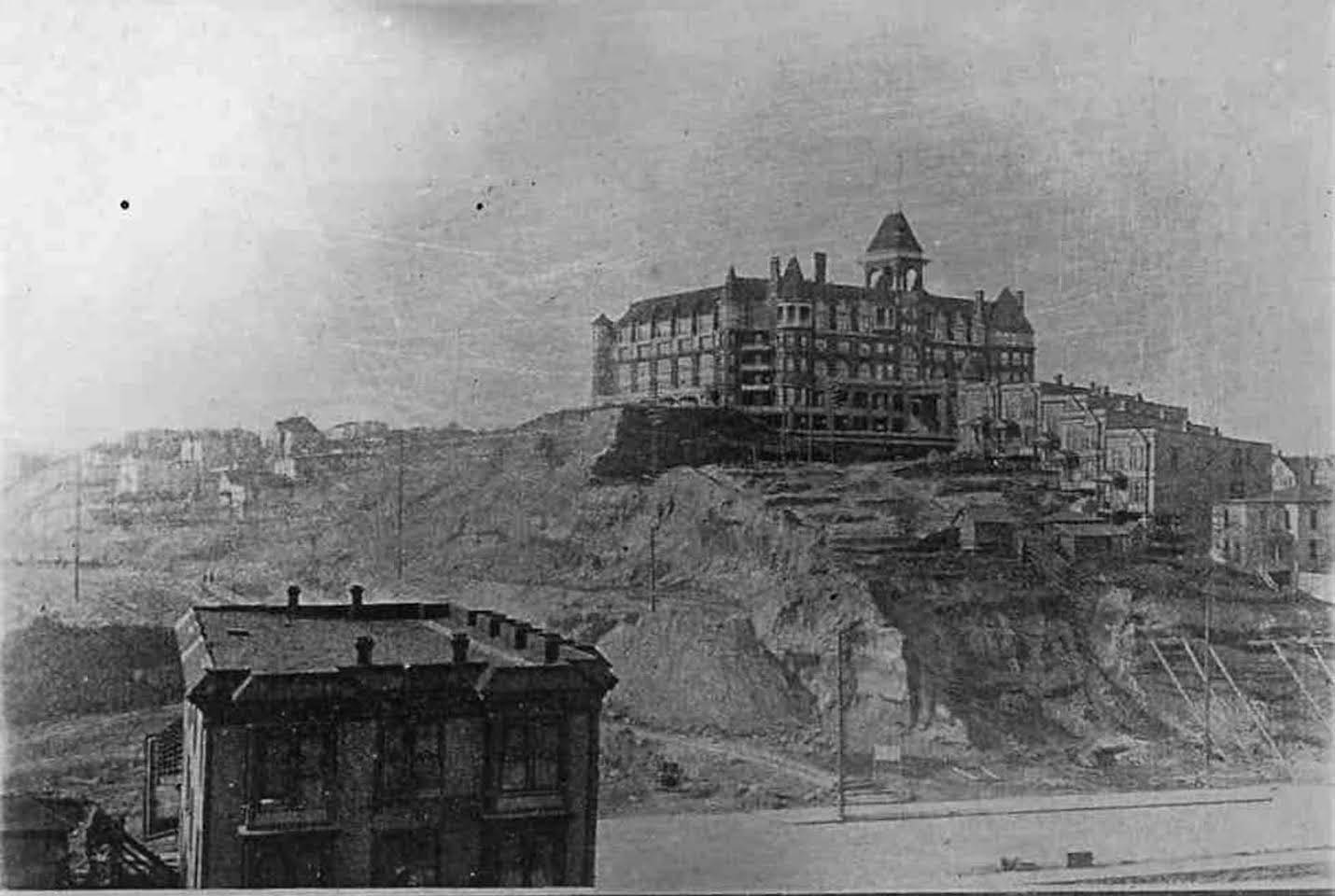
Before the regrade began, Denny Hill was home to some of Seattle’s grandest structures. The Denny Hotel — later renamed the Washington Hotel — sat on the hill’s south summit and was one of the most prominent buildings in the city. Its commanding position above the waterfront made it a landmark, but that same elevation made it an obstacle to the city’s plans. It was demolished to make way for the regrade.
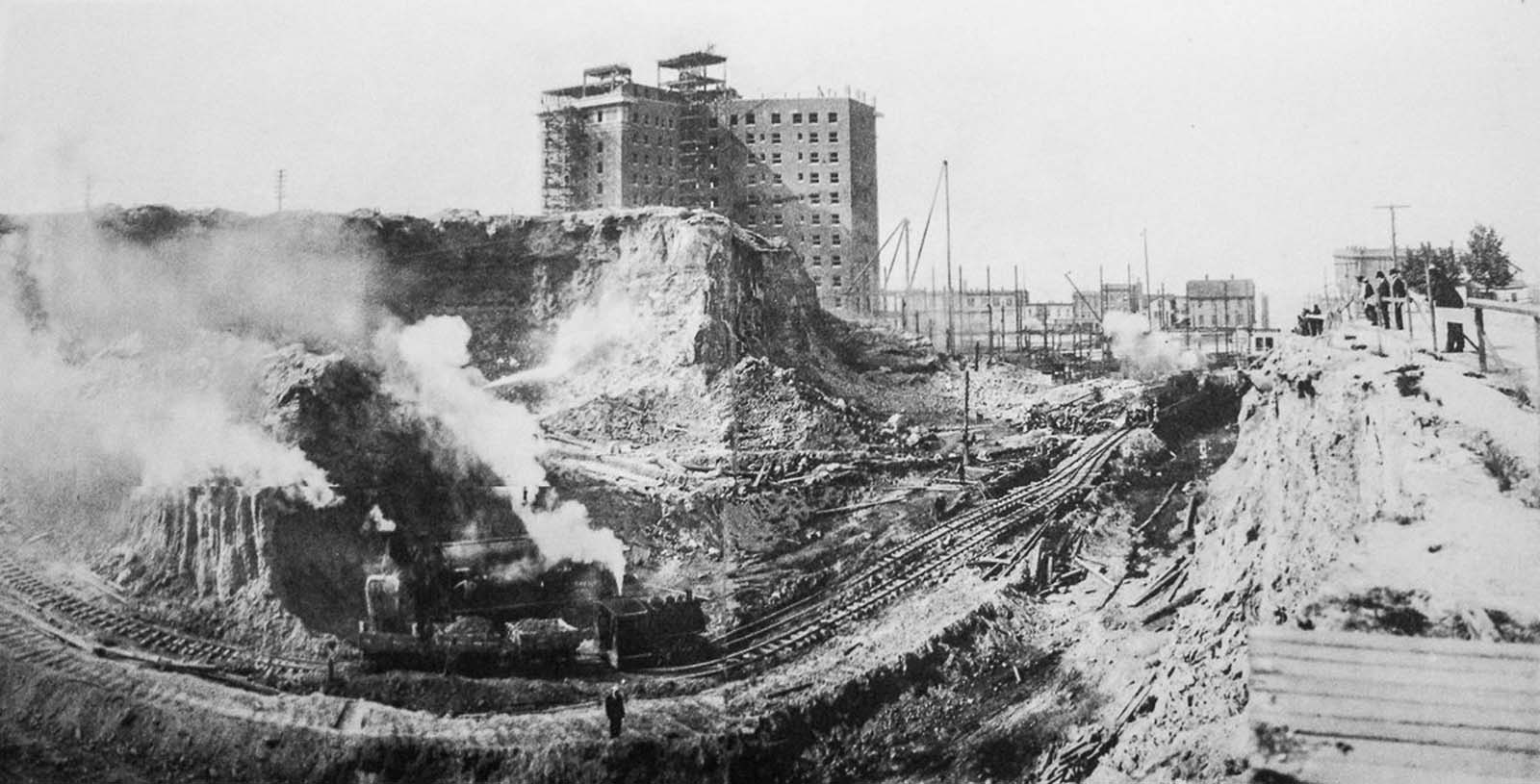
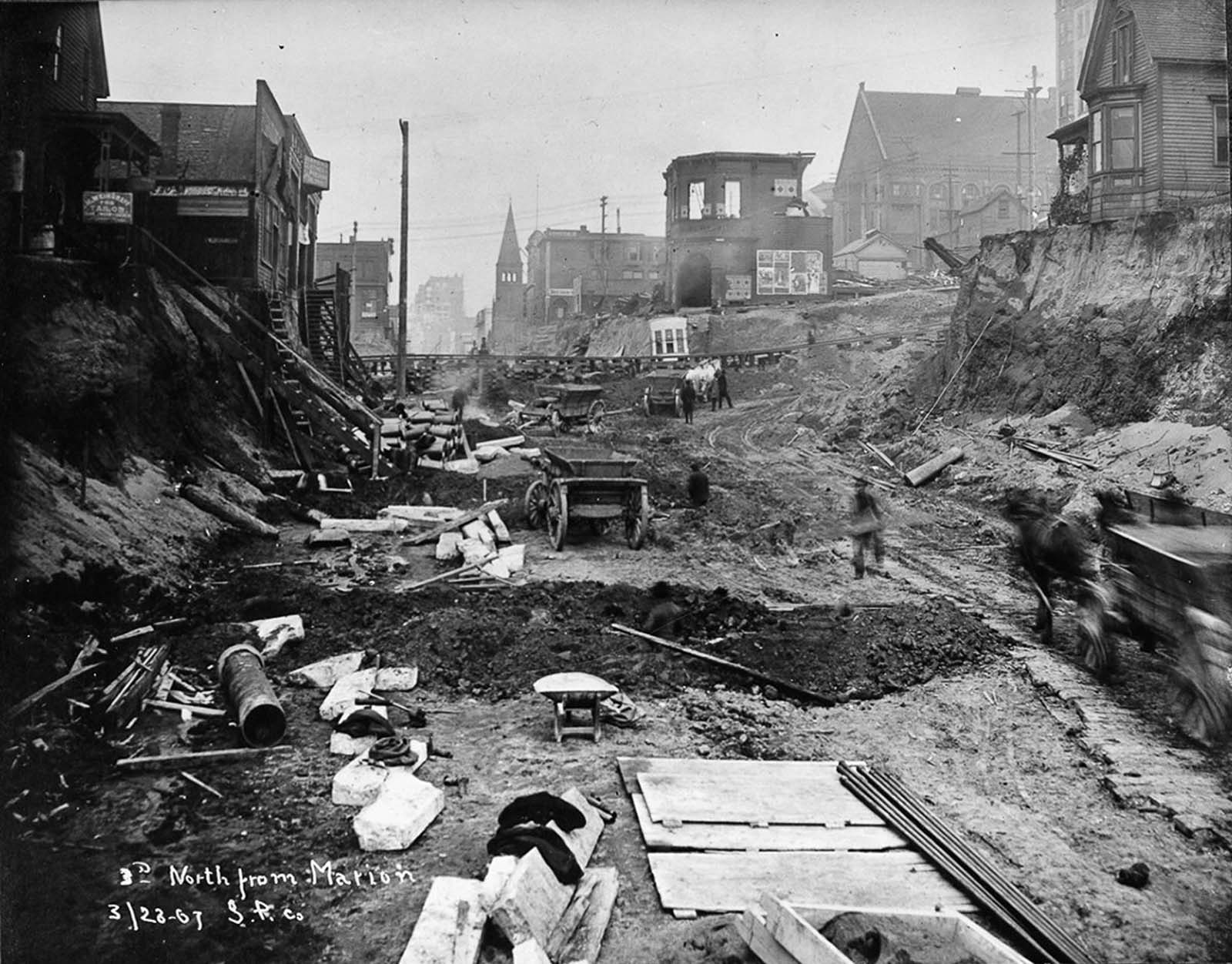
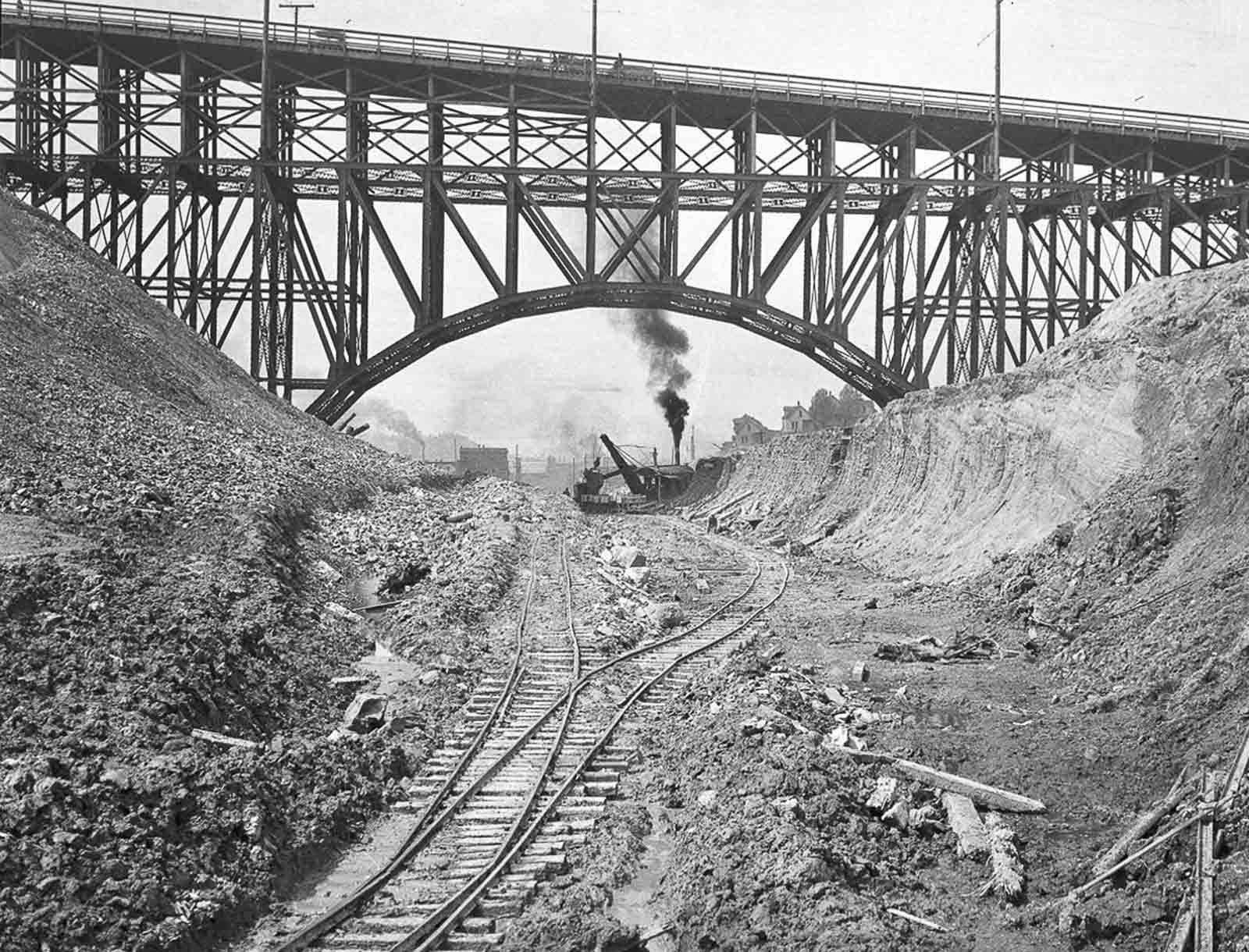
The street-level transformation was visible block by block. Avenues that had once climbed steep grades were carved flat. Horse teams, steam shovels, and rail carts all worked in coordination to move the earth that the water cannons loosened. The scale of the operation was staggering — entire city blocks vanished, replaced by the flat terrain that developers and city planners had been demanding for years.
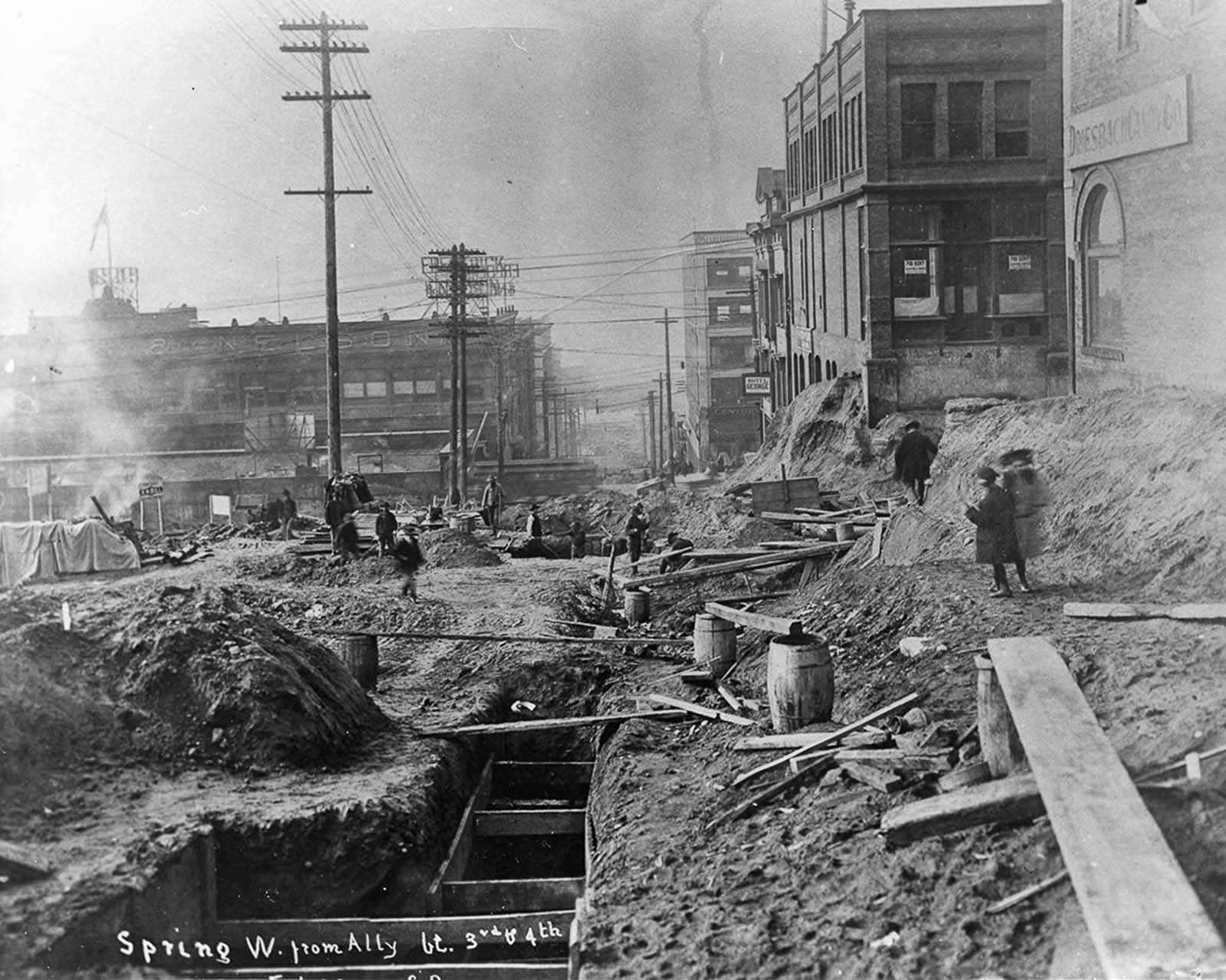
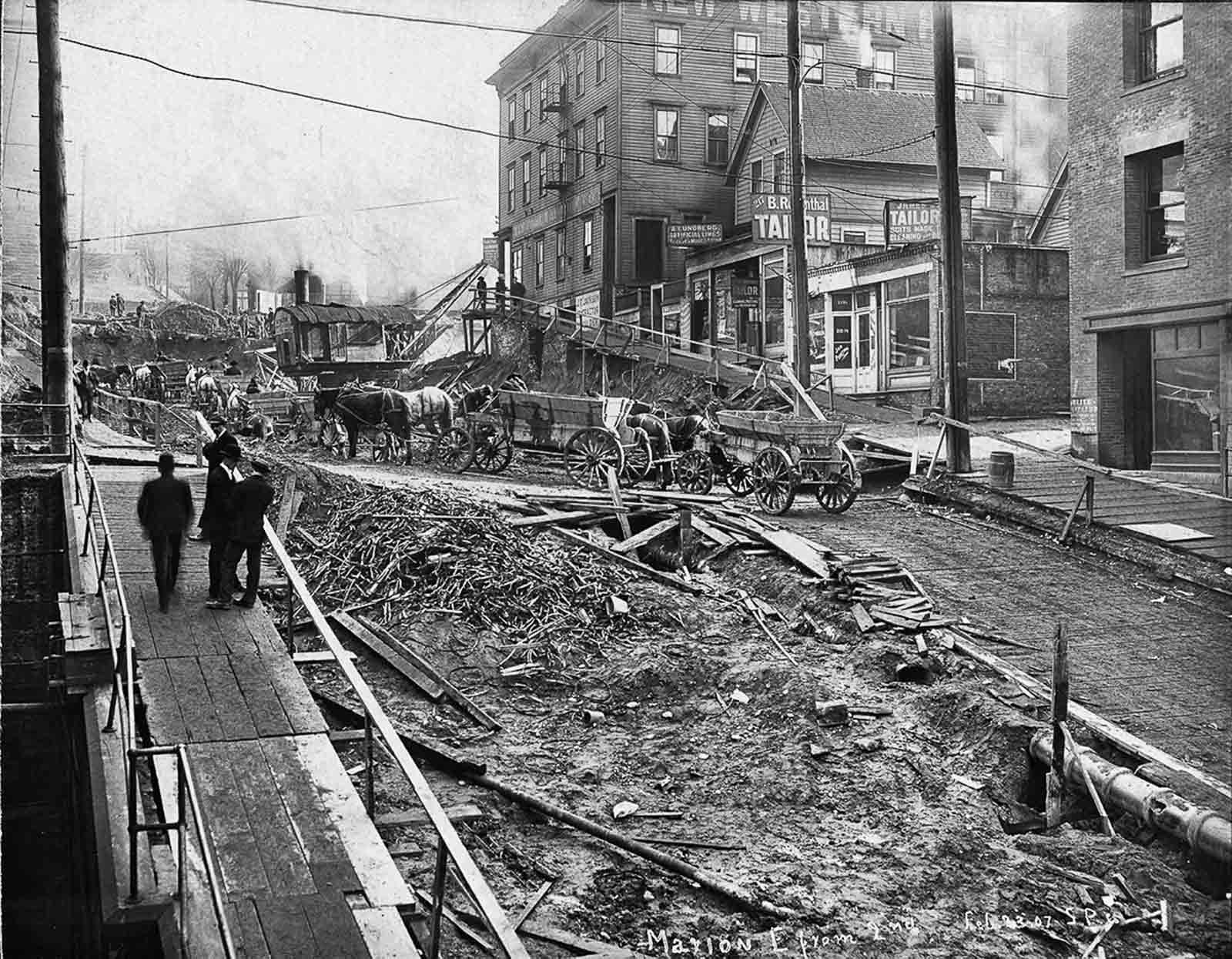
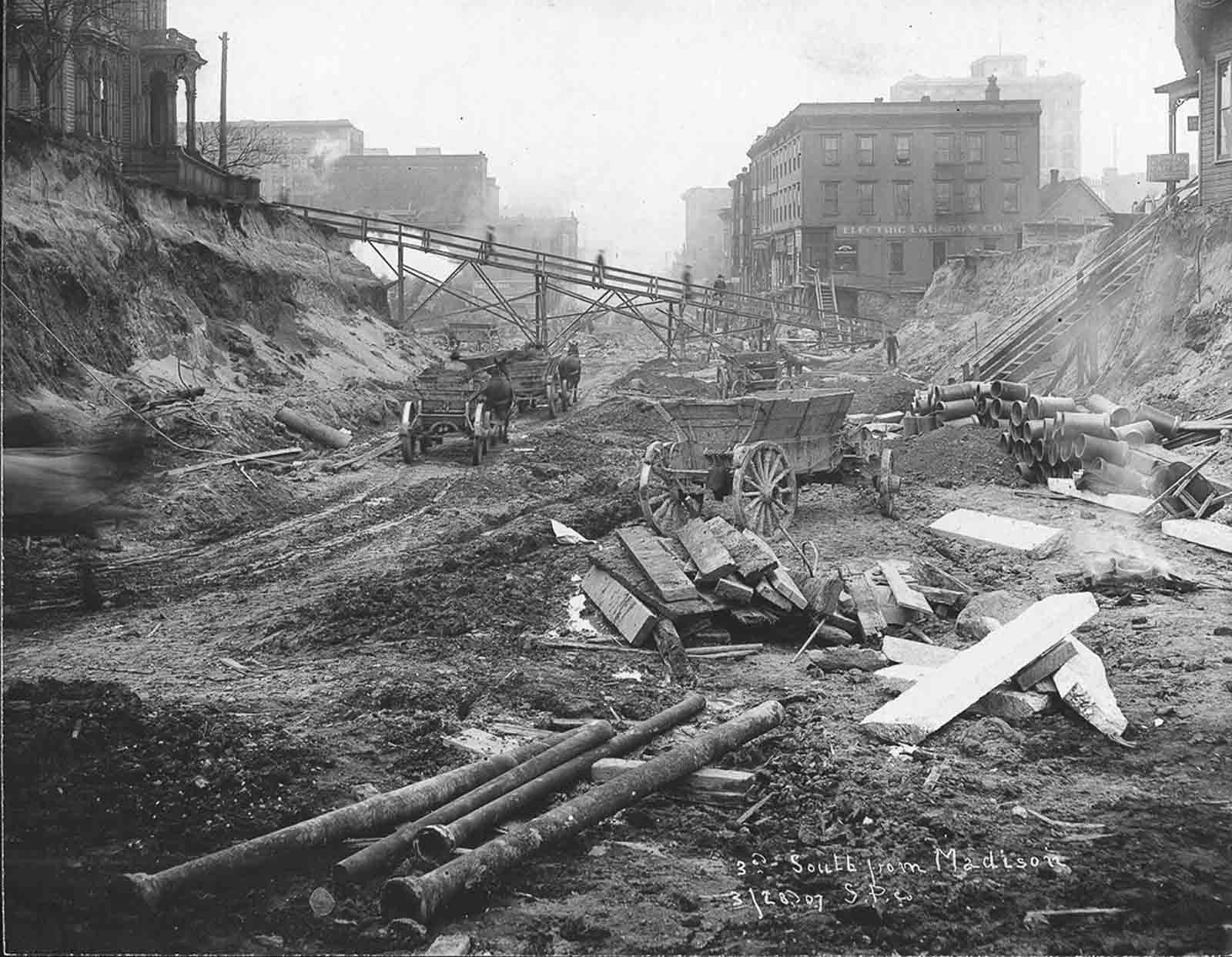
The first phase of the Denny Regrade did open up new land — what is now the heart of Belltown — but it created a new problem. The newly leveled western section was cut off from the rest of the city by the remaining eastern half of Denny Hill, whose steep western face offered no practical access. Investors refused to build on the remaining hill, knowing that a second phase of regrading would likely destroy whatever they constructed. The result was a stalemate that left the area underdeveloped for years.
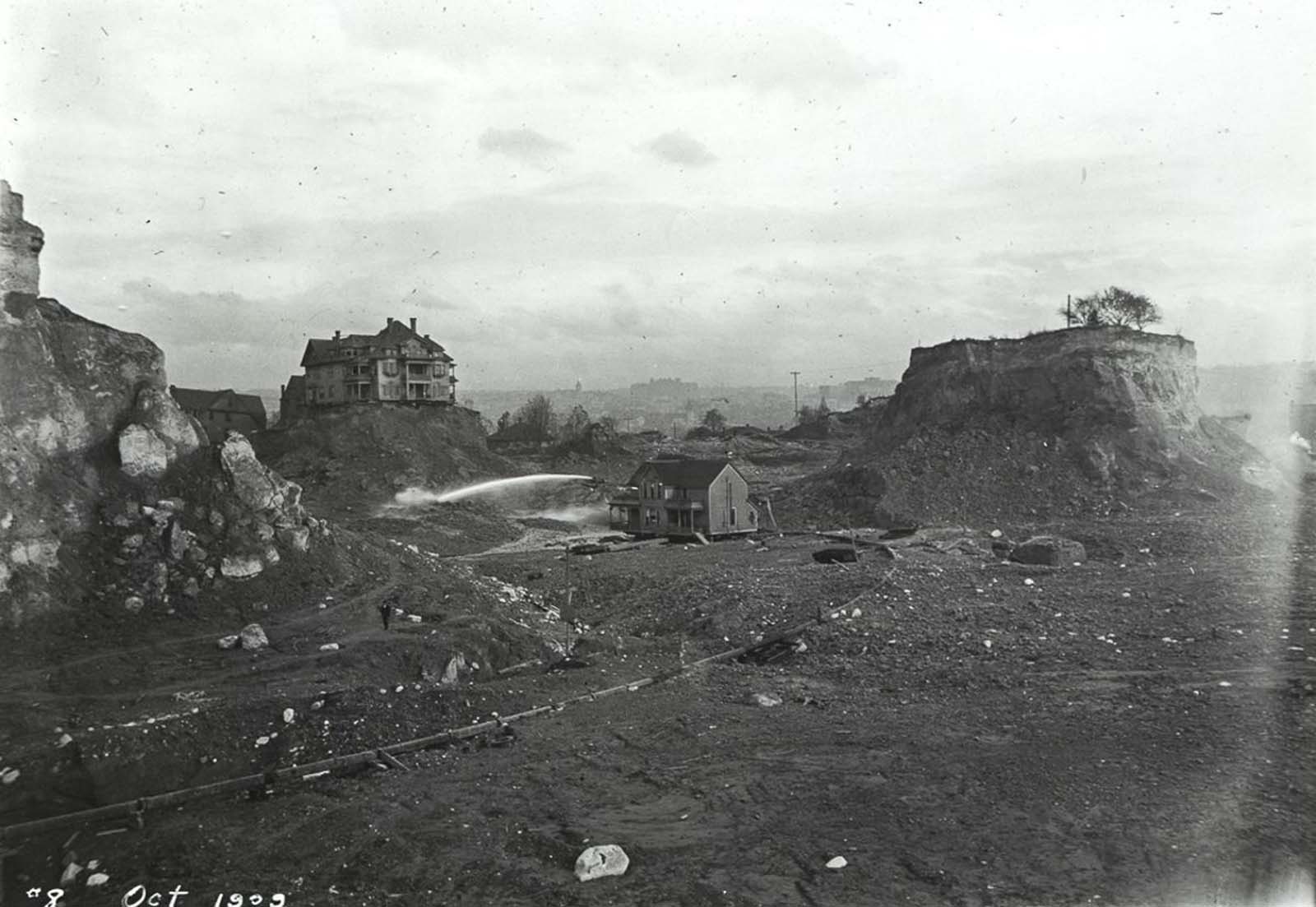
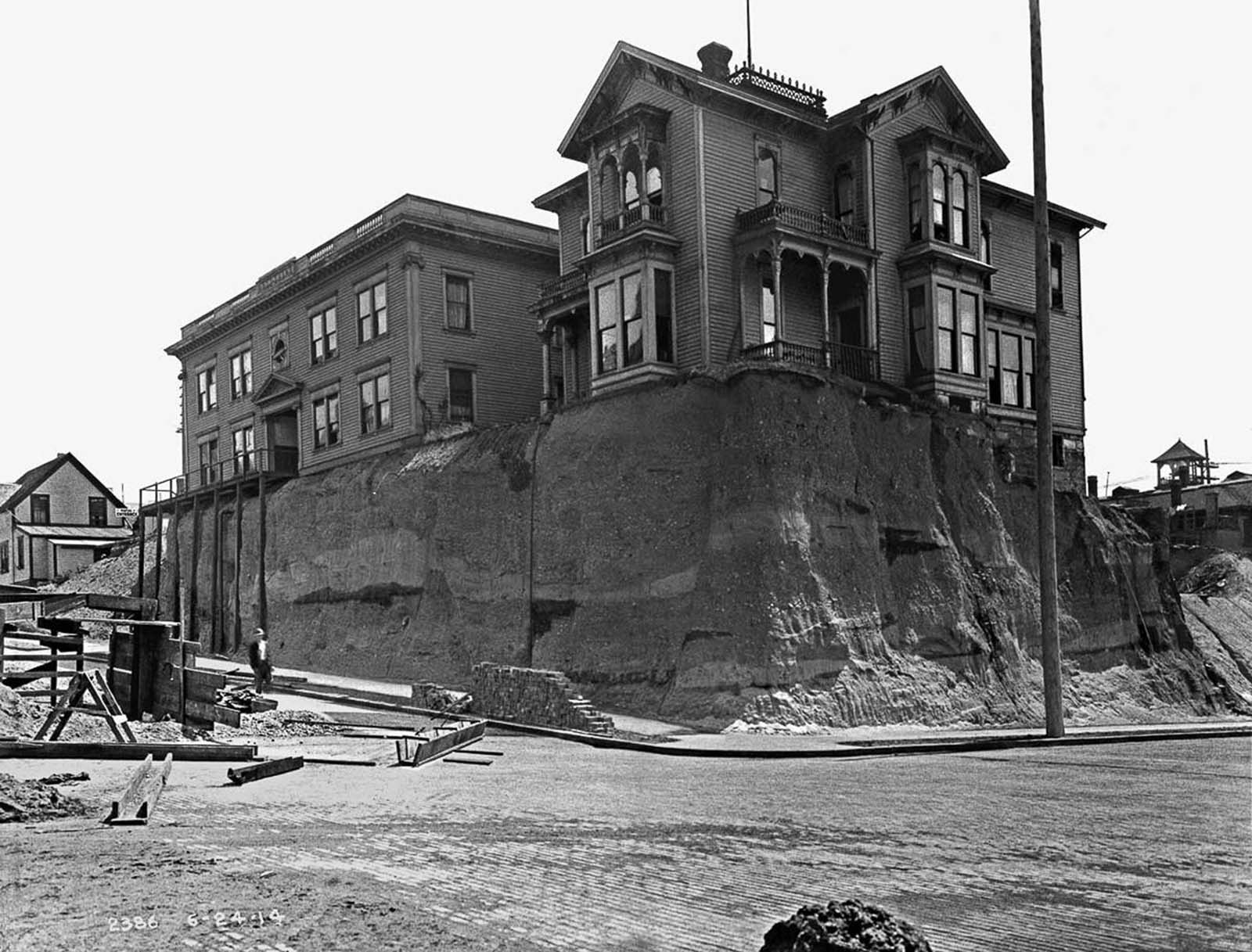
Some property owners refused to cooperate with the city. They declined to sell their land or allow the regrade to proceed across their lots, which left isolated mounds of earth standing in the middle of what was otherwise flat, cleared ground. These leftover formations came to be called “spite mounds” — stubborn remnants held in place by owners who resisted the city’s momentum.
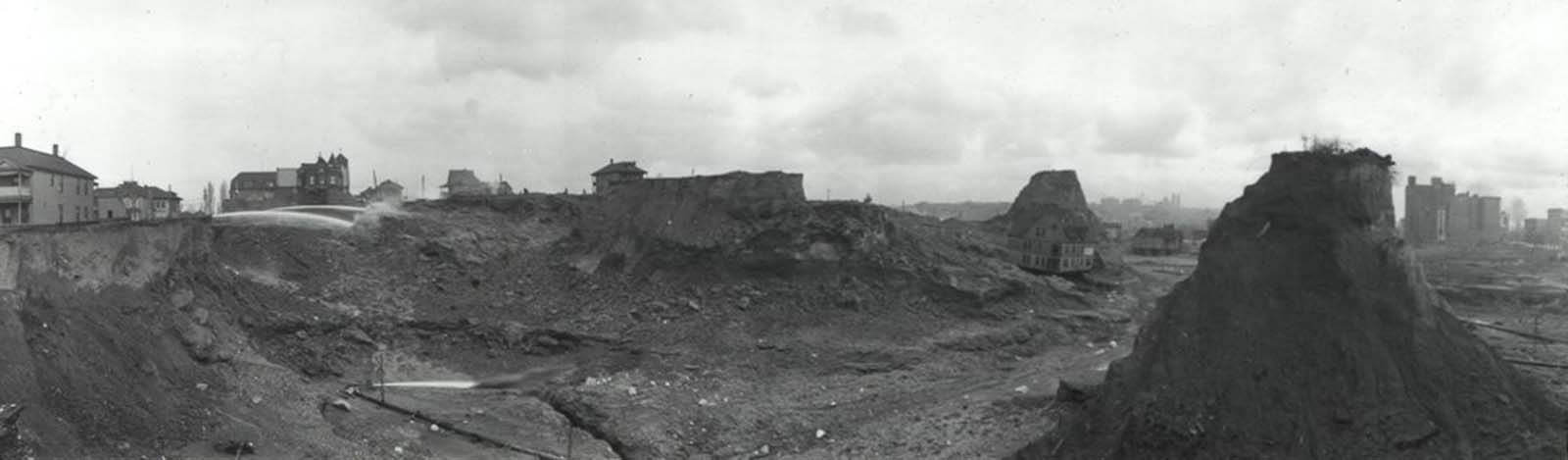
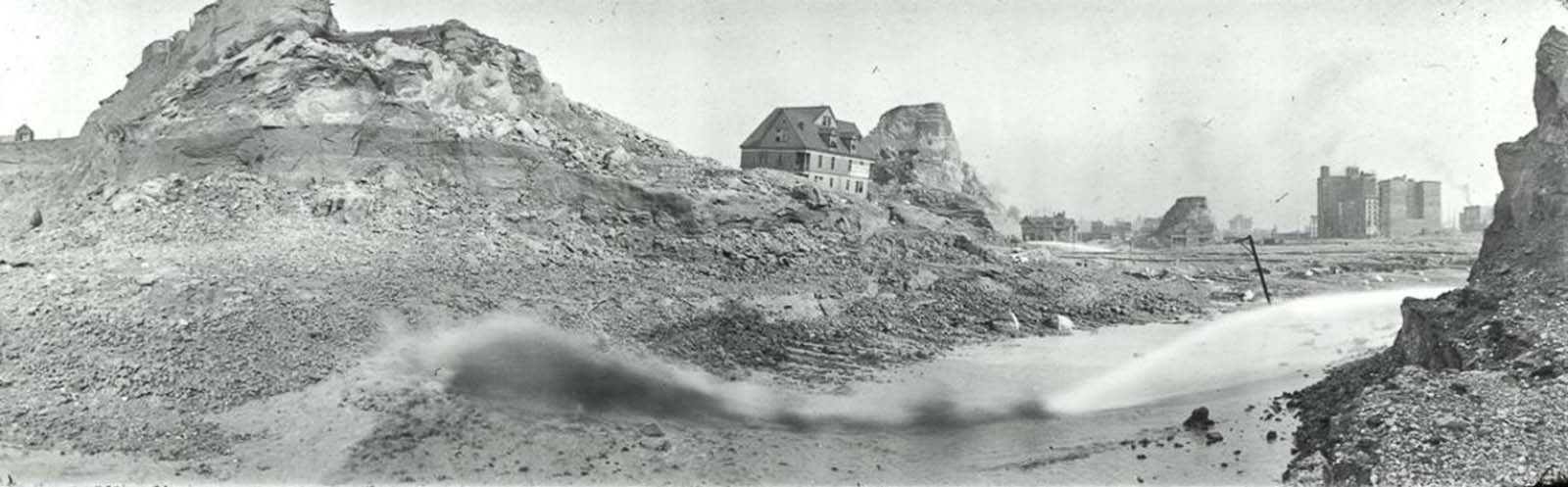
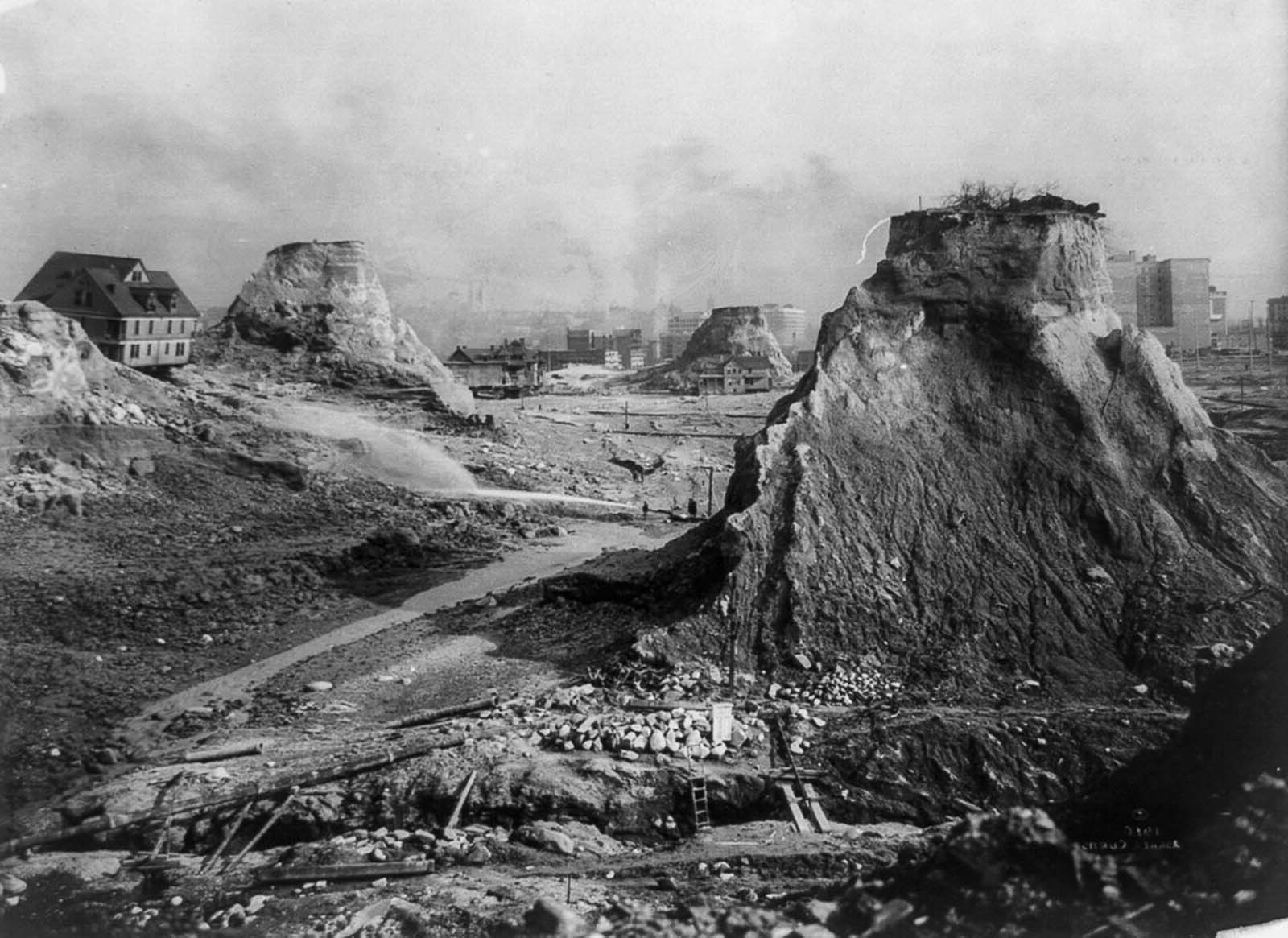
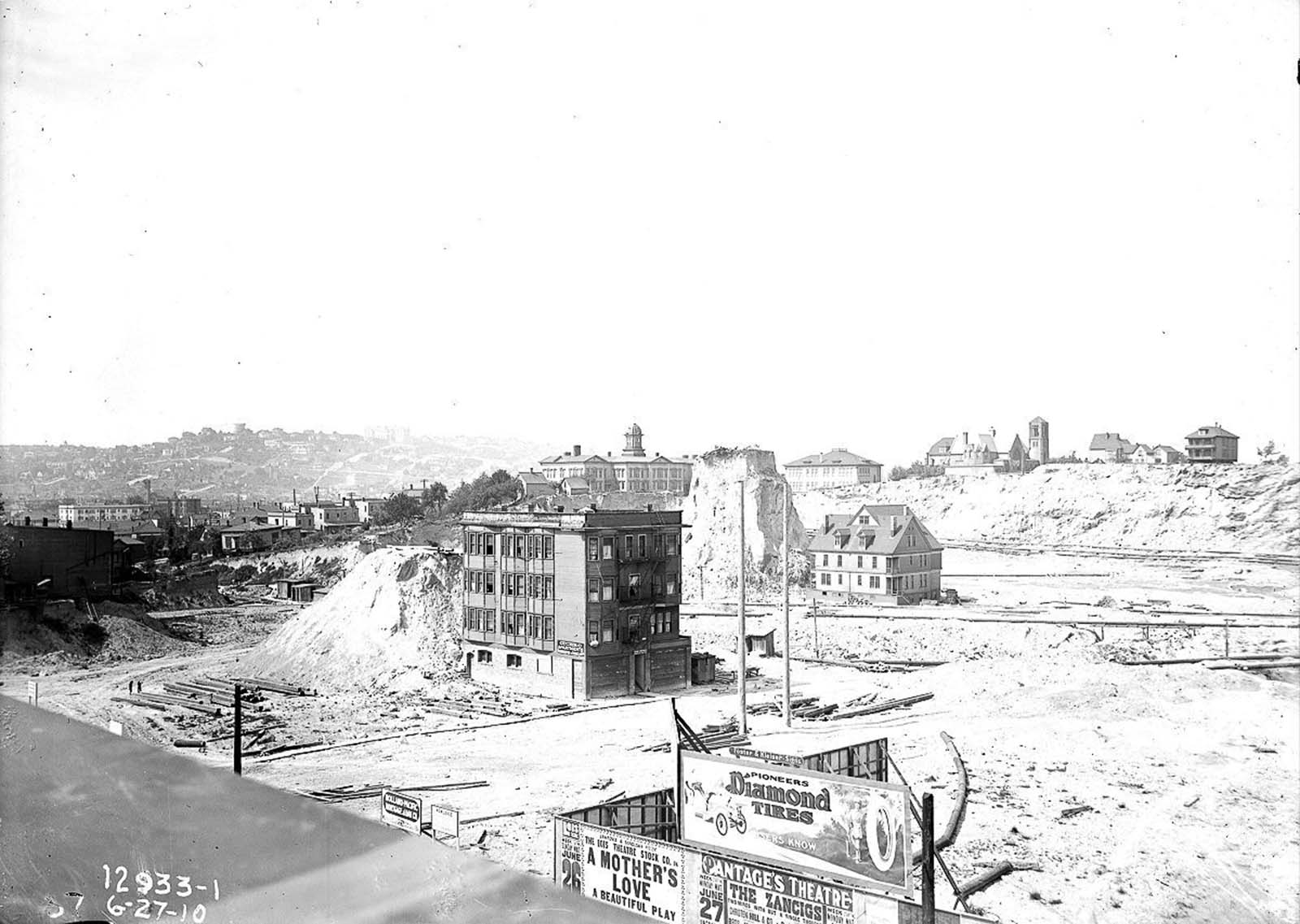
Regrading wasn’t limited to Denny Hill. Across Seattle, street after street was leveled and reshaped during this period. The Dearborn regrade, the Sixth Avenue regrade, and numerous smaller projects all contributed to the wholesale reshaping of the city’s terrain. Engineers and laborers moved across the urban grid methodically, eliminating grade changes that made transportation difficult and commercial development impractical.
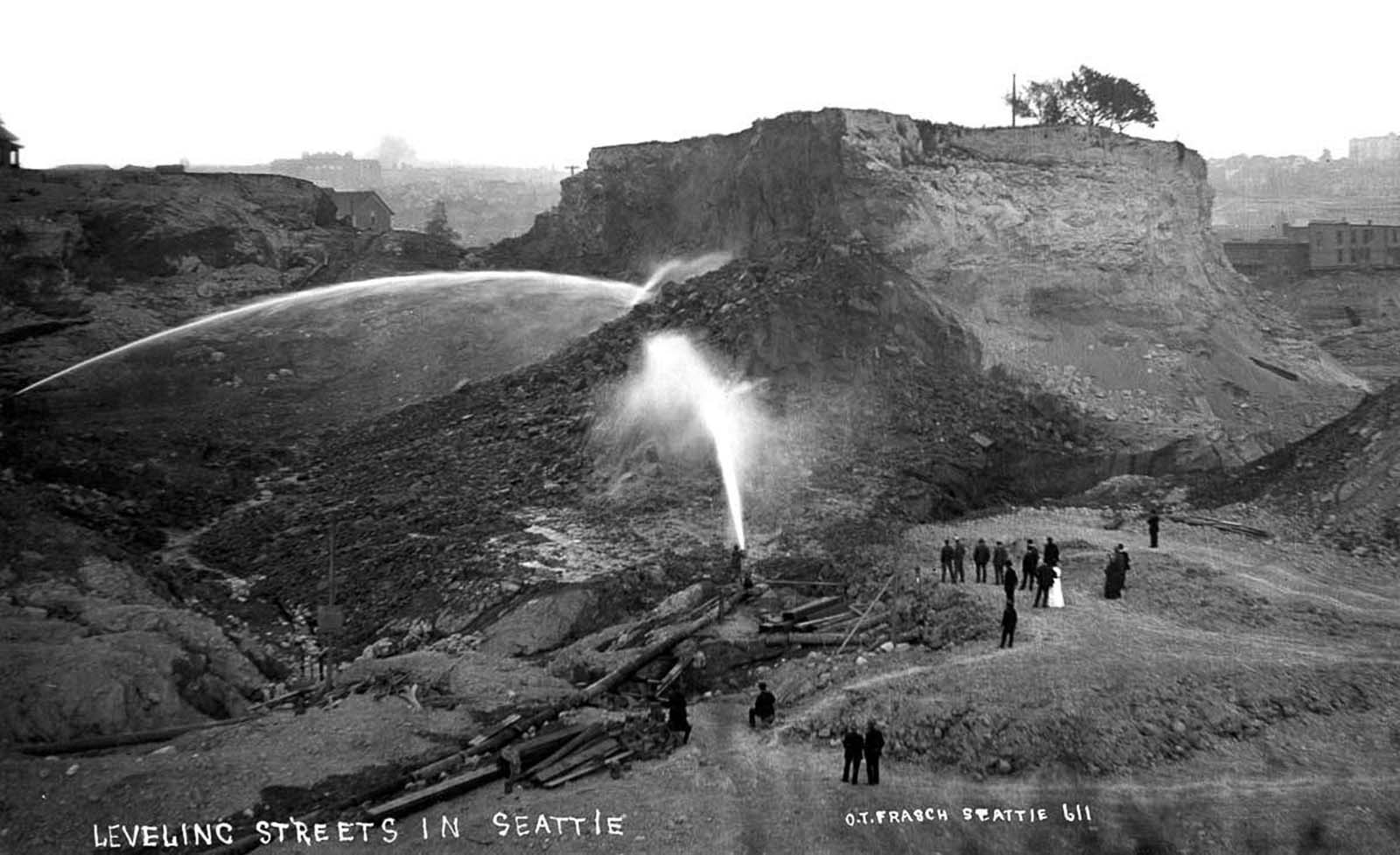
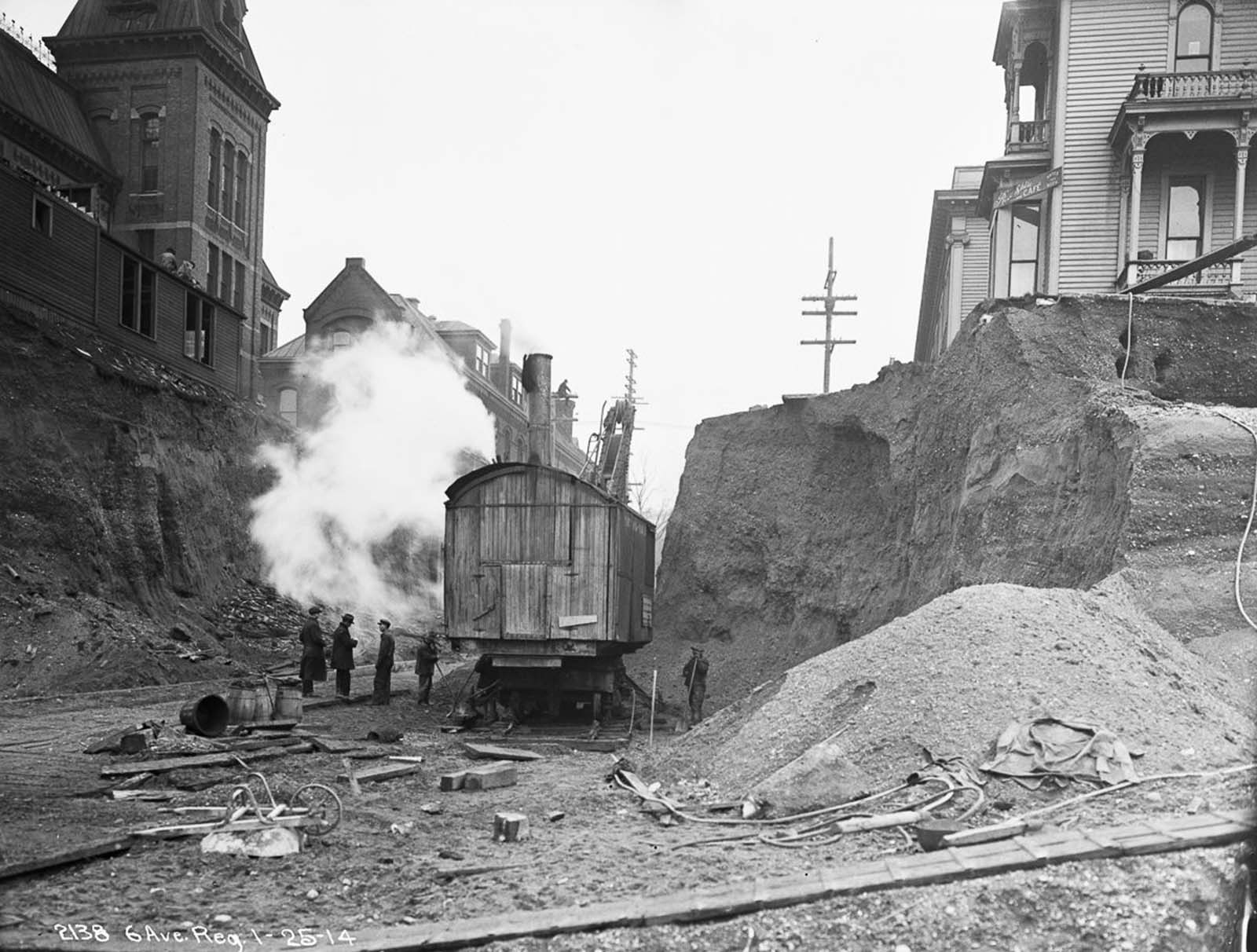
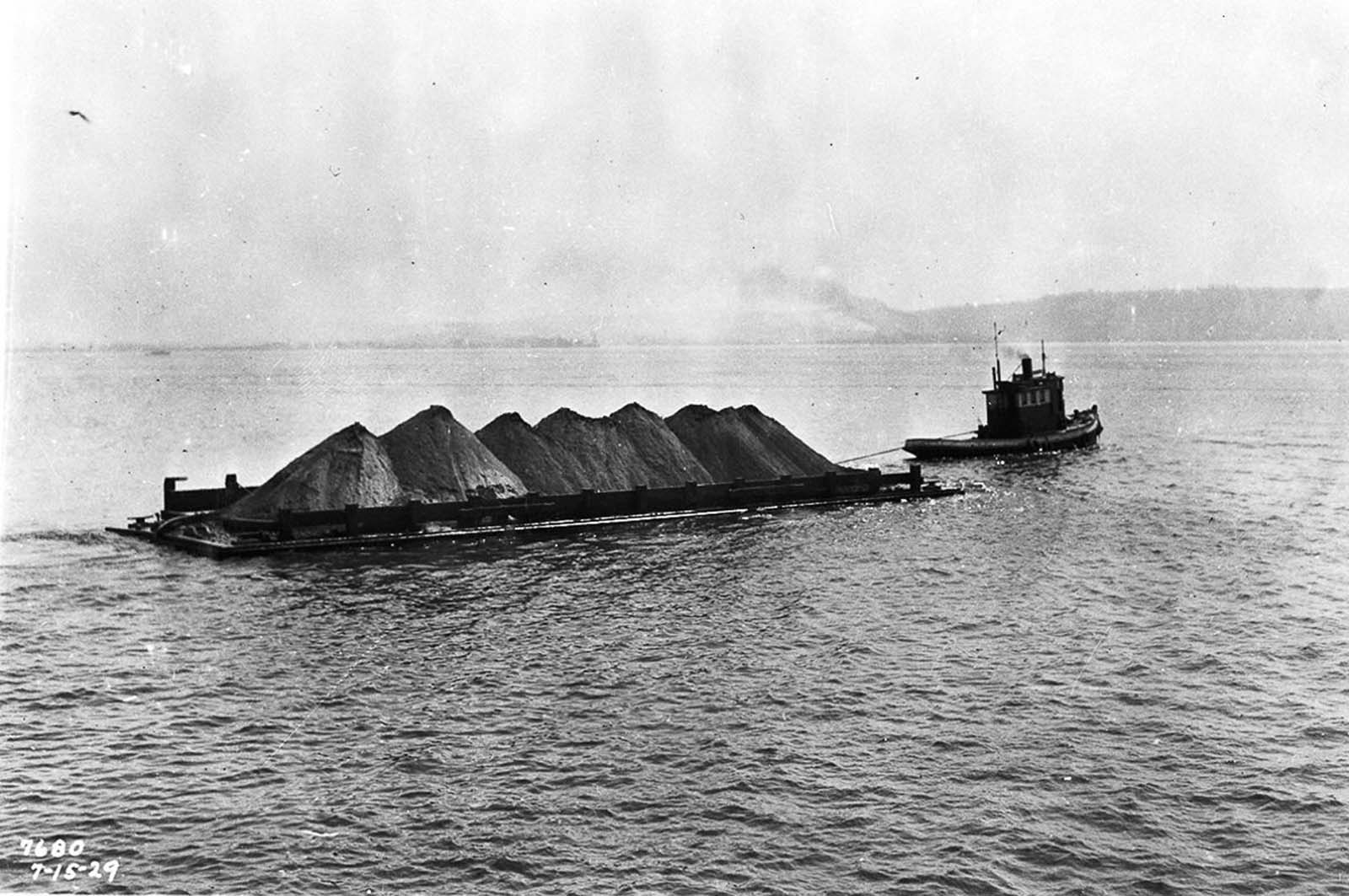
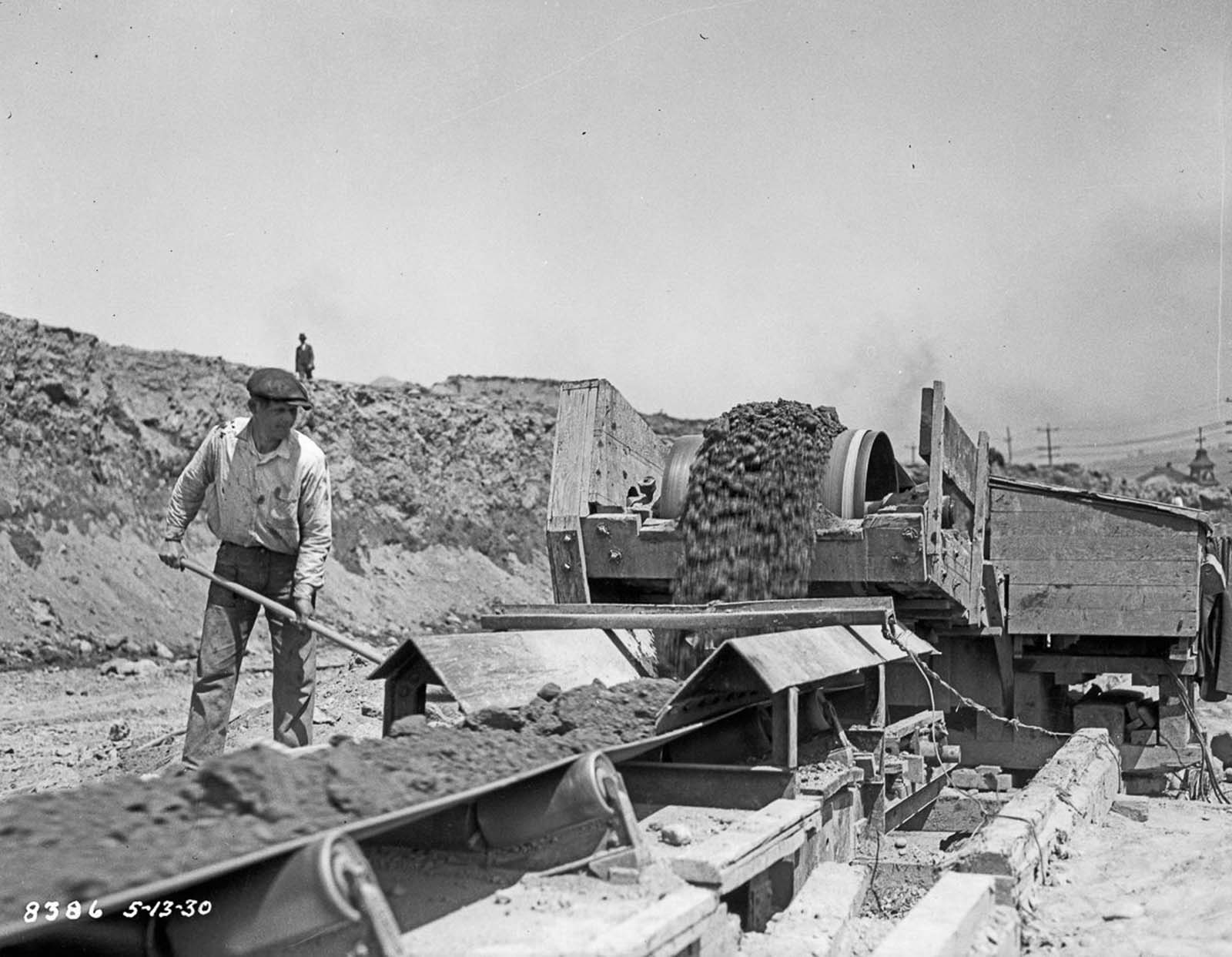
The second phase of the Denny Regrade — Denny Regrade No. 2 — began in February 1929 and lasted 22 months. This phase used a completely different method. Instead of water cannons, workers deployed power shovels to dig out the remaining hill. Conveyor belts carried the excavated earth down to the waterfront, where it was loaded onto purpose-built scows and dumped into deep water.
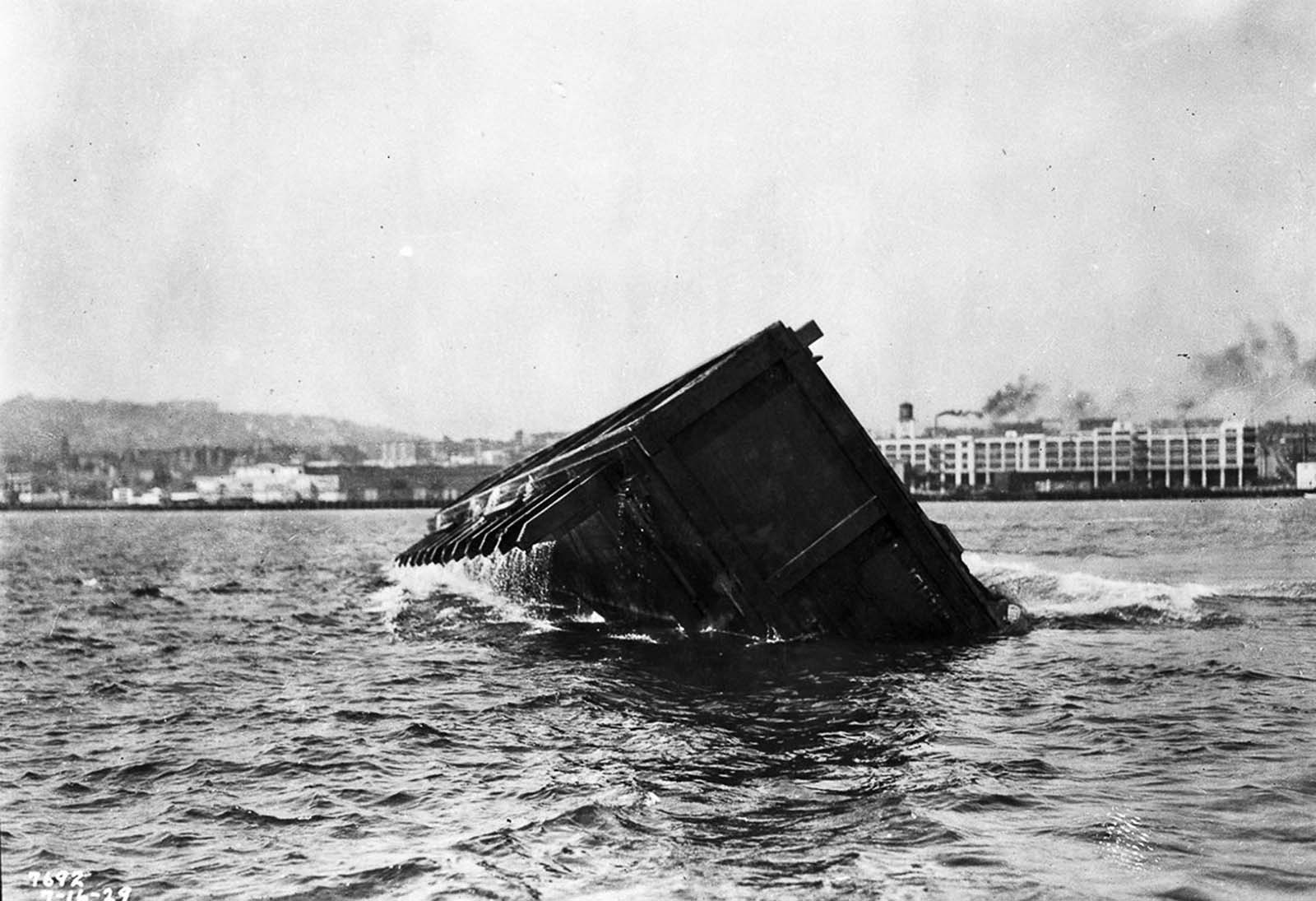
The scows used in the second regrade were an engineering novelty. They were designed to capsize on command. Each scow was symmetrical — identical from top to bottom and side to side — and equipped with a seacock that could be opened to flood one side of the hull. Once the water rushed in, the scow would tip over, dumping its load of earth into the harbor. It would then bob back up, drain the ballast tank, and right itself. The entire process took about three minutes. Dozens of loads were dumped this way throughout the operation.
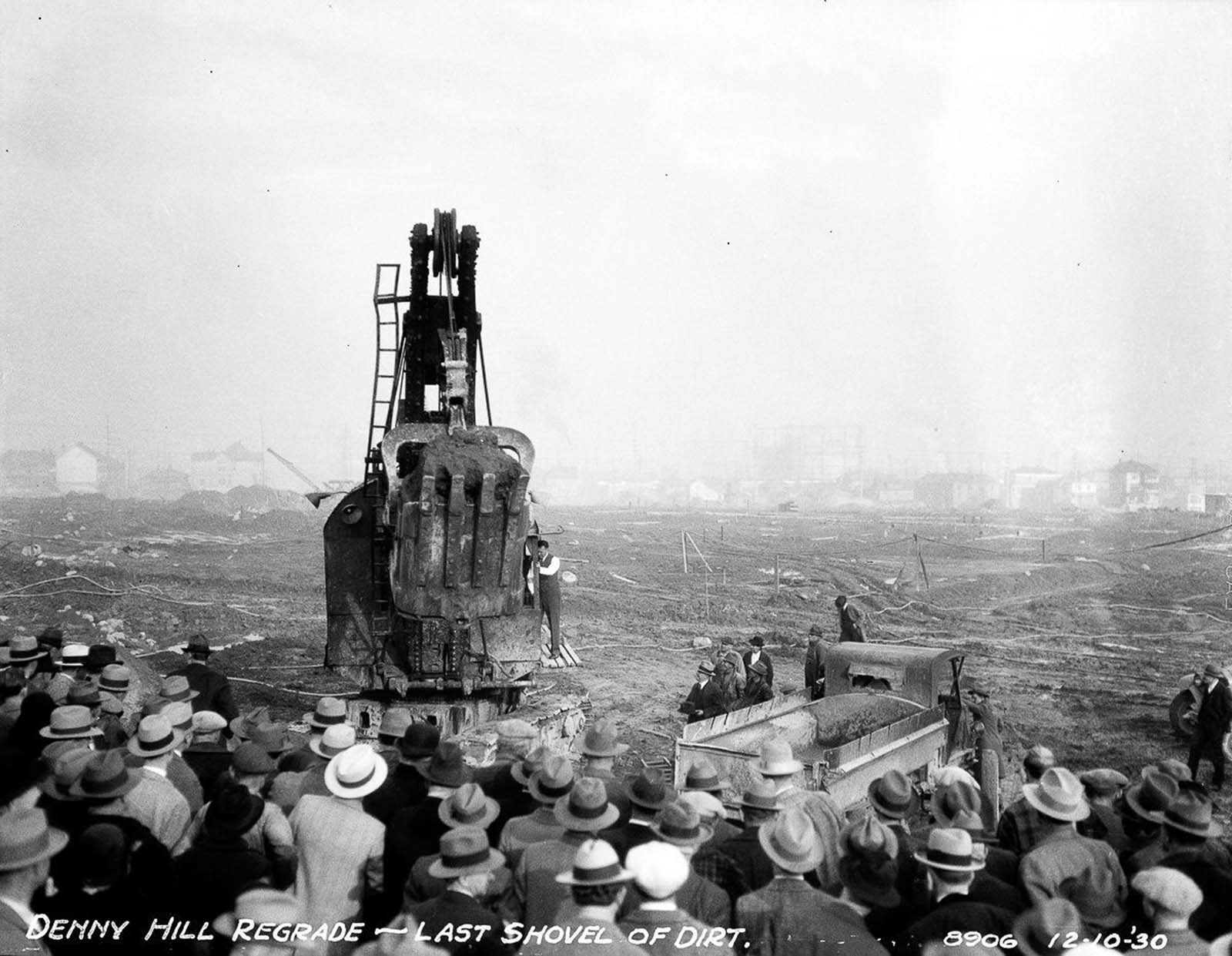
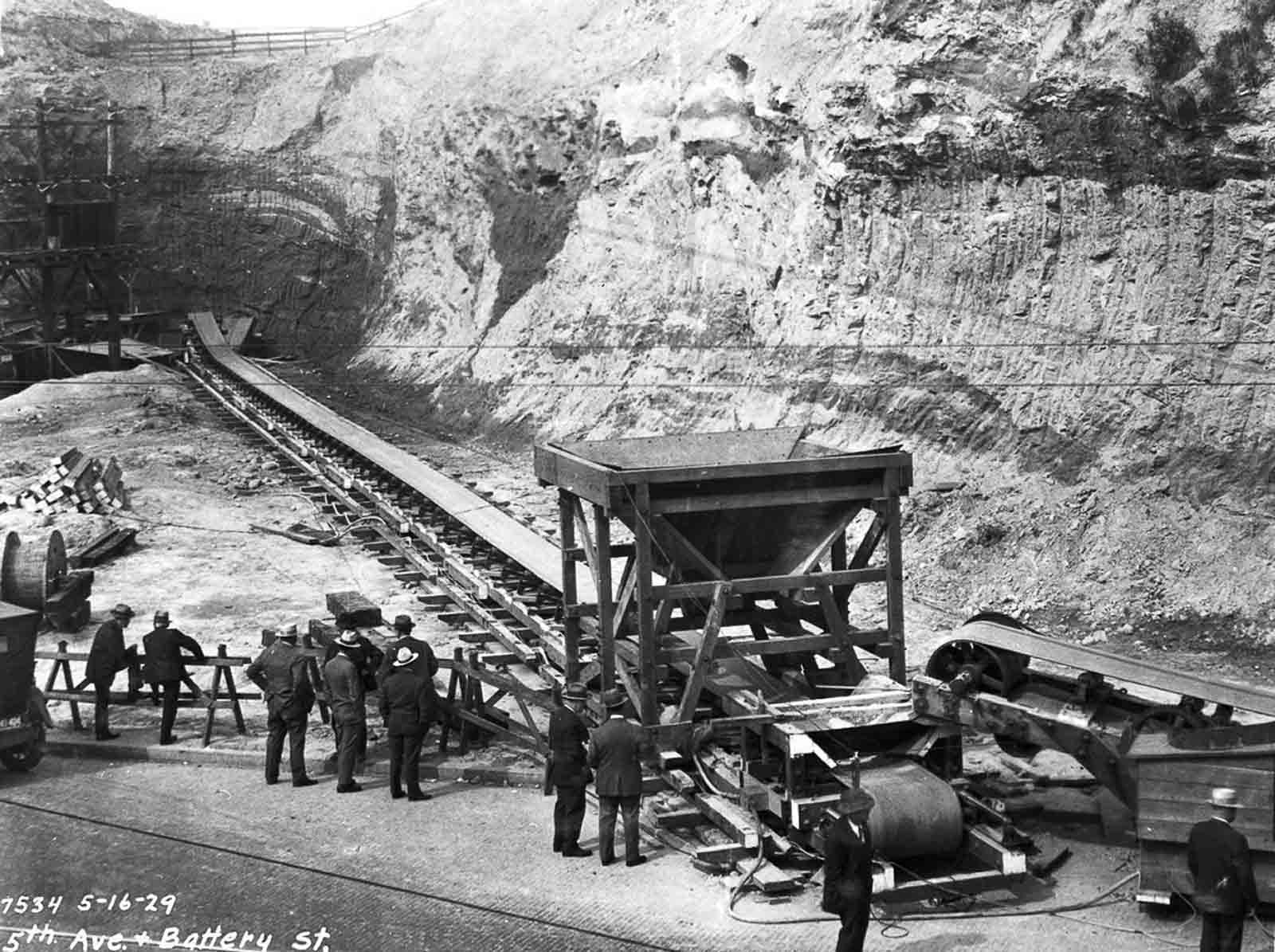
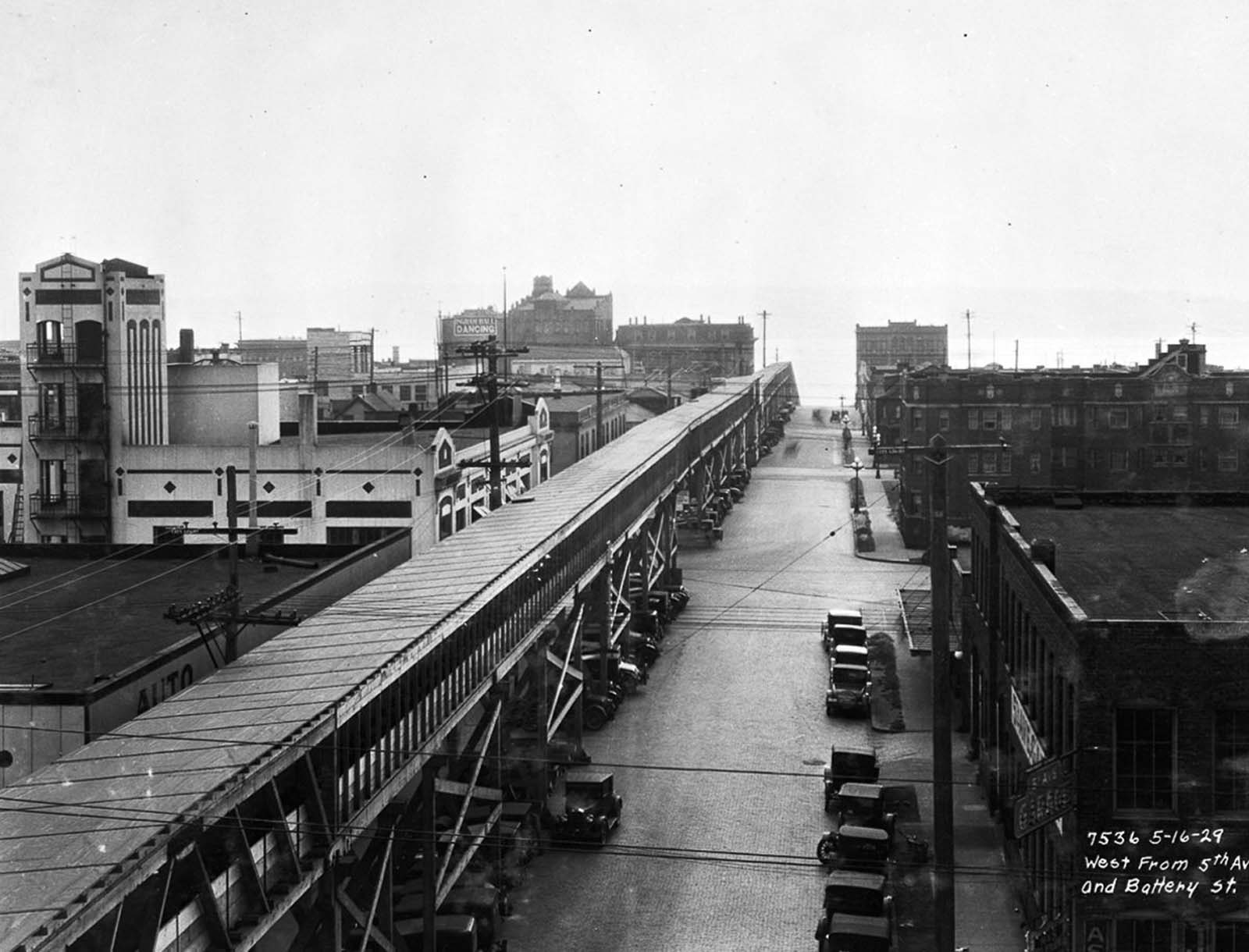
Among the structures demolished during Denny Regrade No. 2 was the Denny School on Battery Street, between 5th and 6th Avenues. When it opened in 1884, it had been described as “an architectural jewel…the finest schoolhouse on the West Coast.” It was gone by the time the regrade was finished, swallowed up by the same relentless push for flat, buildable land that had defined Seattle’s development for four decades.
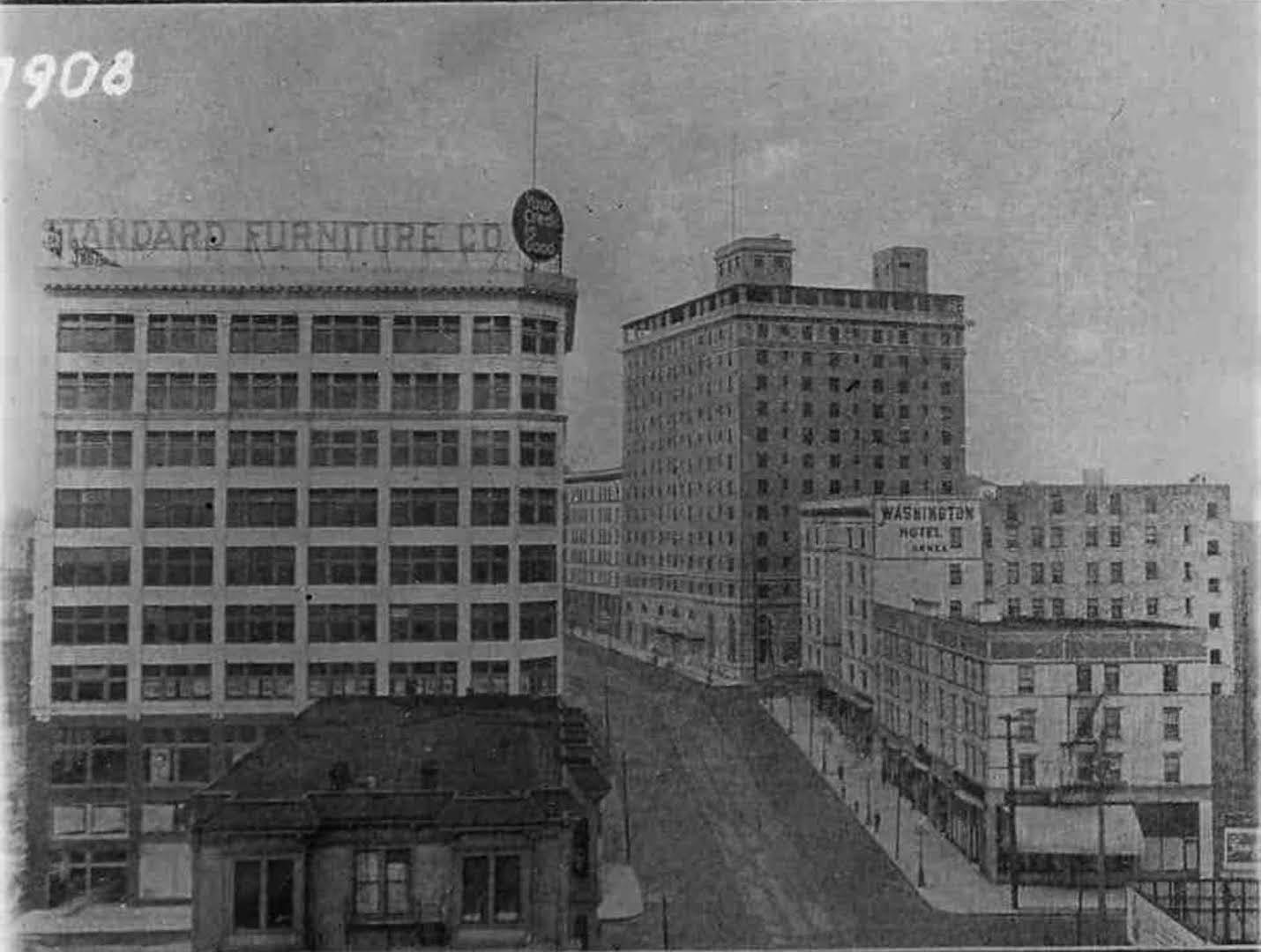
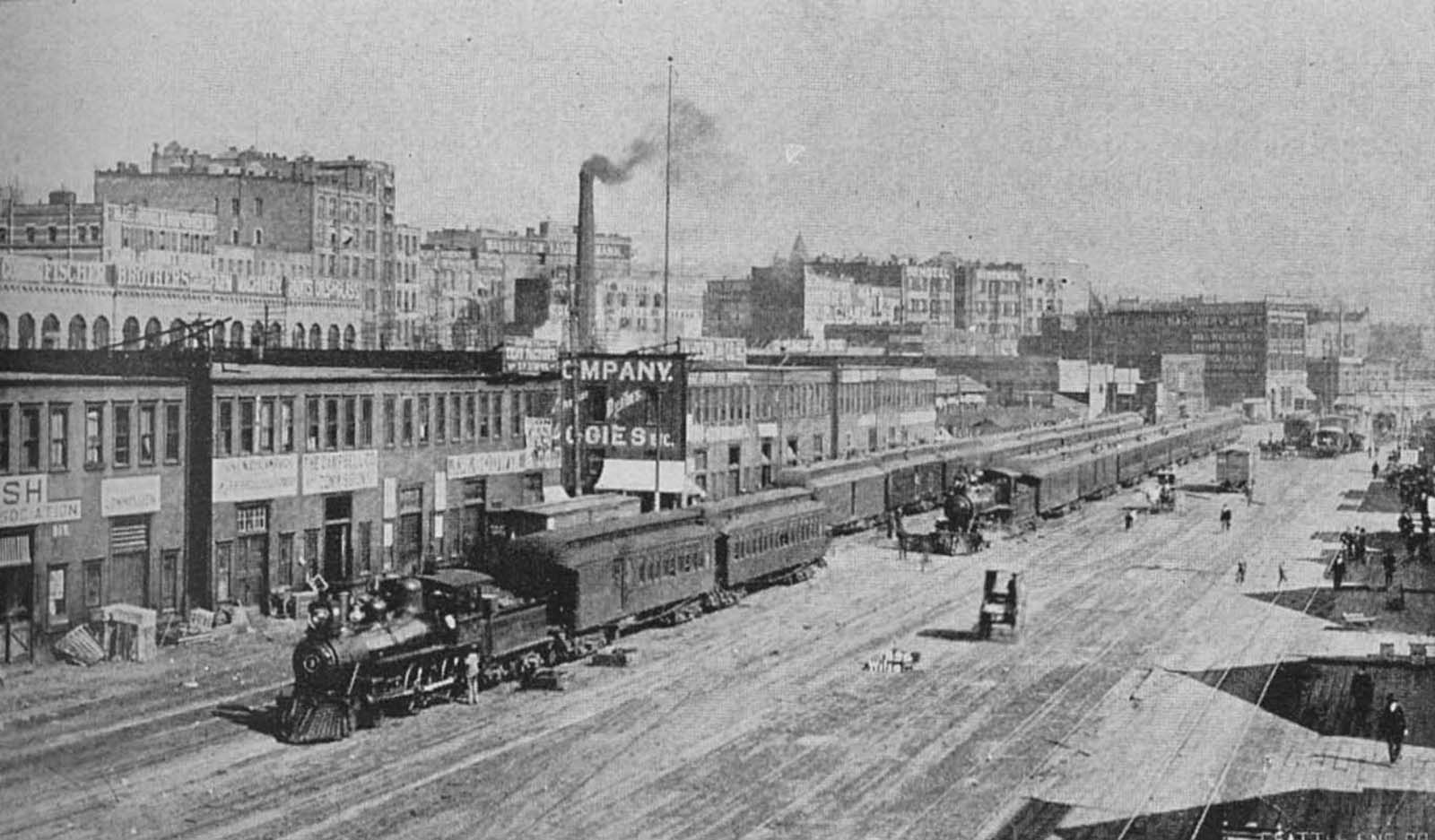
The earth removed from Denny Hill and the other regrade sites didn’t just disappear — it was repurposed. Fill from the early regrades was used to build up the waterfront. Railroad Avenue, now known as Alaskan Way, was constructed directly on this reclaimed ground. The wharves of the Central Waterfront rose from the same fill that had once been hillside. What had been dug up from the interior of the city became the foundation of its working harbor.