
Brussels in the 1980s was a city caught between its deep historical roots and a rapidly changing future. As the de facto capital of the European Union, it drew bureaucrats, diplomats, and foreign workers from across the continent. That steady influx of people reshaped the city’s economy, its architecture, and the rhythm of daily life on its streets. These photographs, taken between 1980 and 1989, capture that transformation in remarkable detail.
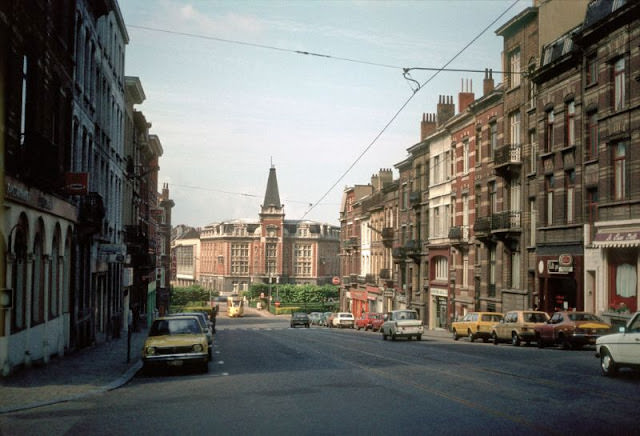
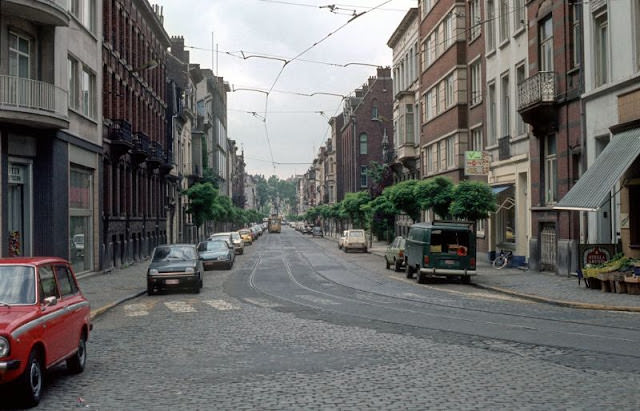
The residential communes surrounding the city center — Etterbeek, Saint-Gilles, Ixelles, and Woluwe-Saint-Lambert — each had their own distinct character. Tree-lined avenues gave way to bustling commercial strips, and corner shops stood alongside tram stops and neighborhood markets. Life in these areas moved at a quieter pace than in the city center, but they were far from sleepy.
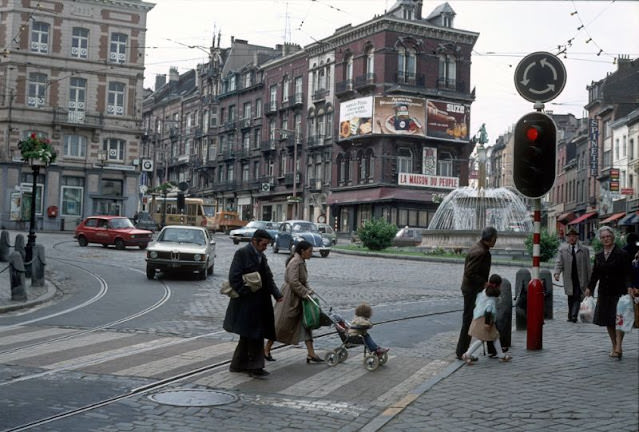
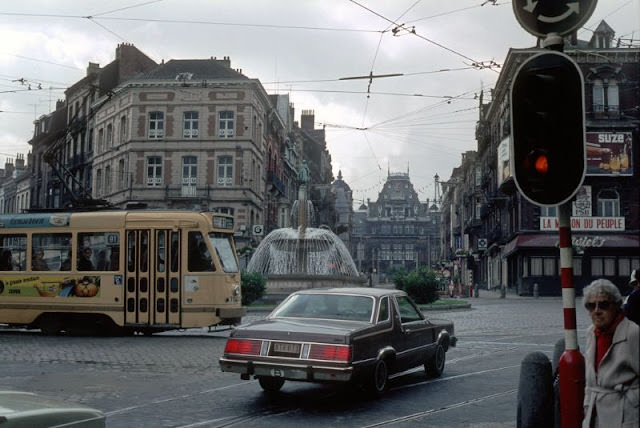
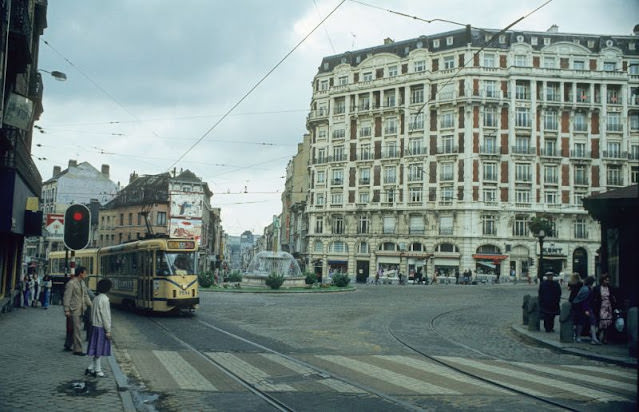
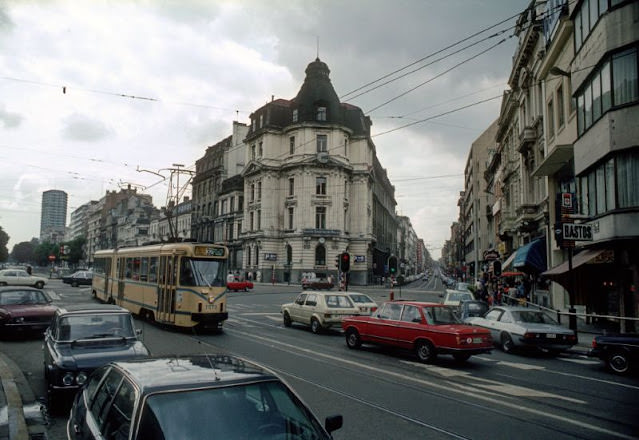
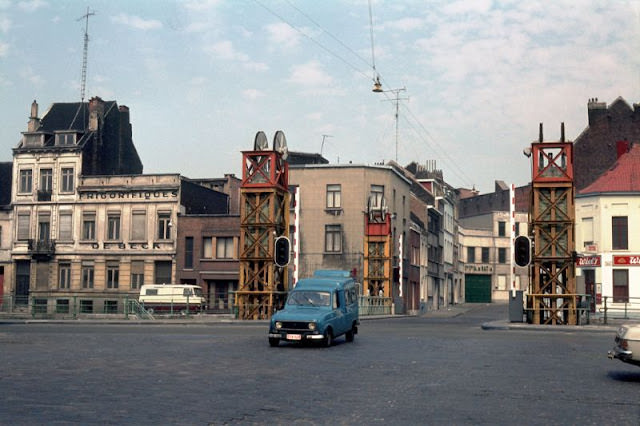
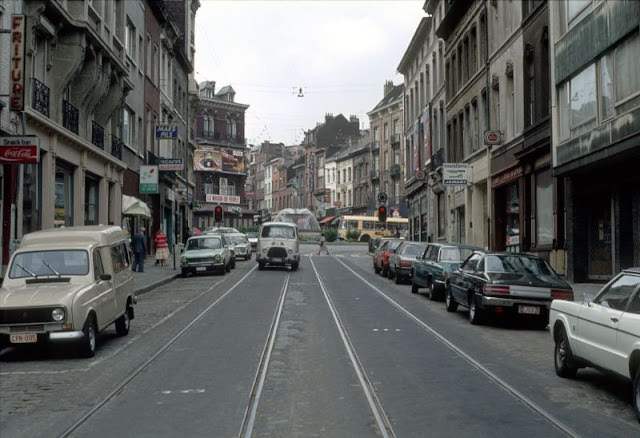
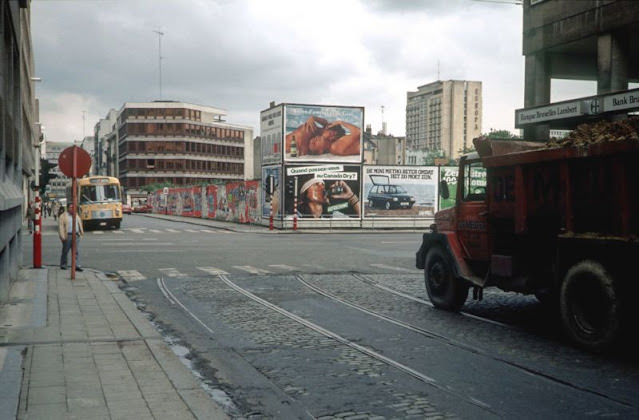
The Barrière de Saint-Gilles was one of the busiest transit points in the commune of Saint-Gilles. Trams, pedestrians, and cars all competed for space here, and the STIB — Brussels’ public transport company — had signalmen stationed at key junctions to keep traffic flowing. These workers were a fixture of the urban landscape, directing trams at crossroads before electronic systems took over.
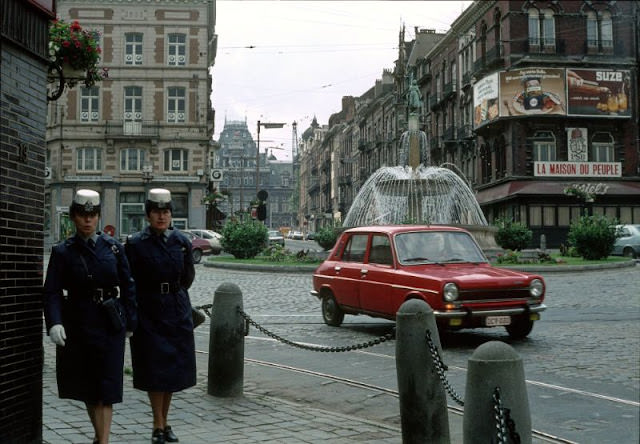
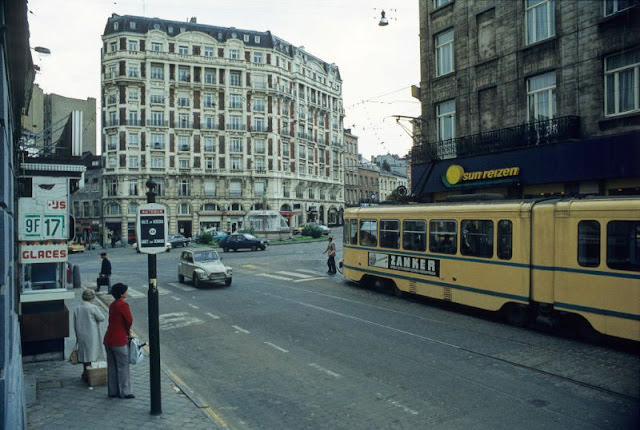
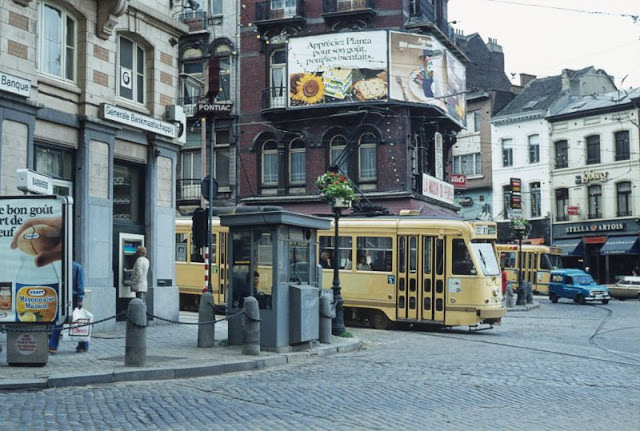
Brussels was expanding its Metro network throughout this decade, but trams and buses remained the backbone of daily commuting for most residents. The city invested heavily in public transport infrastructure to keep pace with its growing population, particularly as EU institutions brought thousands of new workers into the city each year.
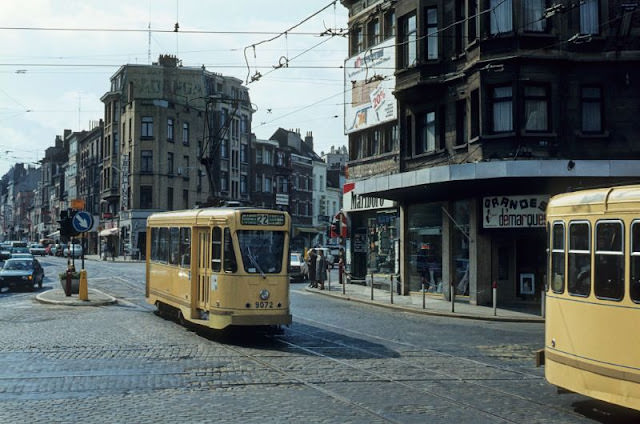
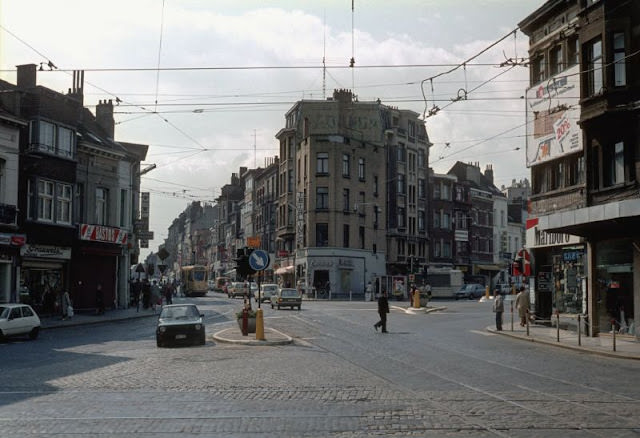
Etterbeek, situated directly adjacent to the European Quarter, felt the effects of EU expansion more directly than most communes. The Chaussée de Wavre and surrounding streets saw increased commercial activity as the neighborhood accommodated the growing number of professionals working nearby.
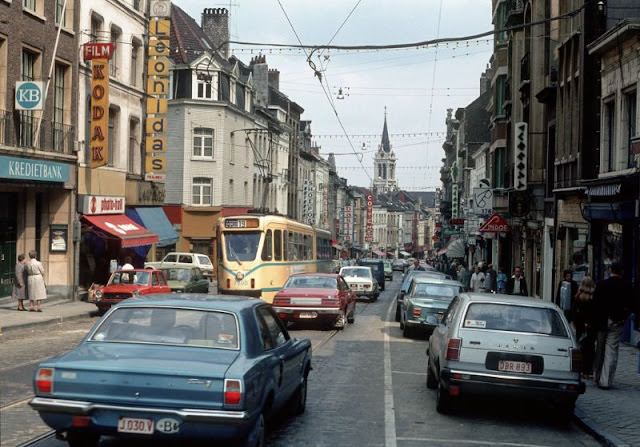
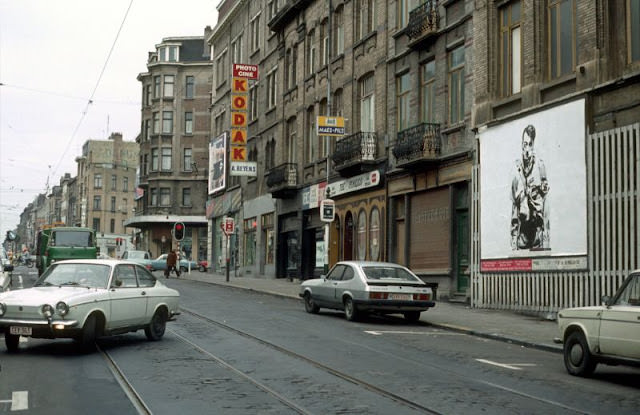
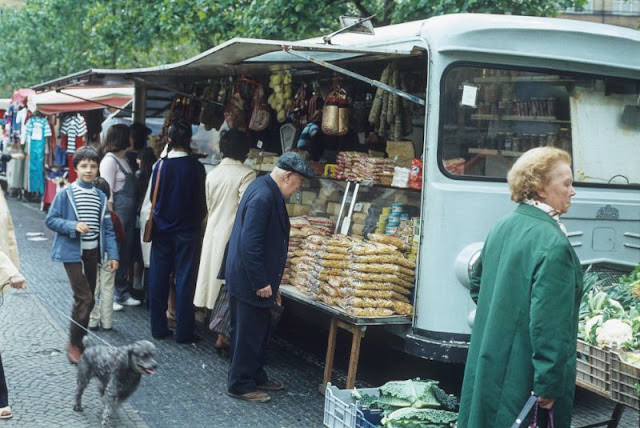
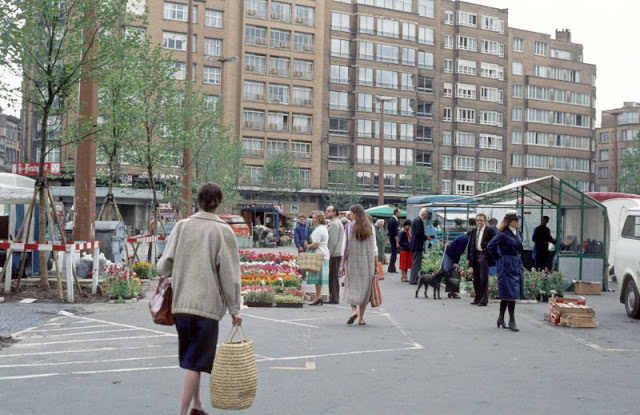
Place Flagey in Ixelles was a social hub. Its outdoor market drew locals every week, with vendors selling produce, flowers, and everyday goods. The square itself was anchored by the iconic Art Deco building of the former INR broadcasting house, which gave the area a distinctive skyline.
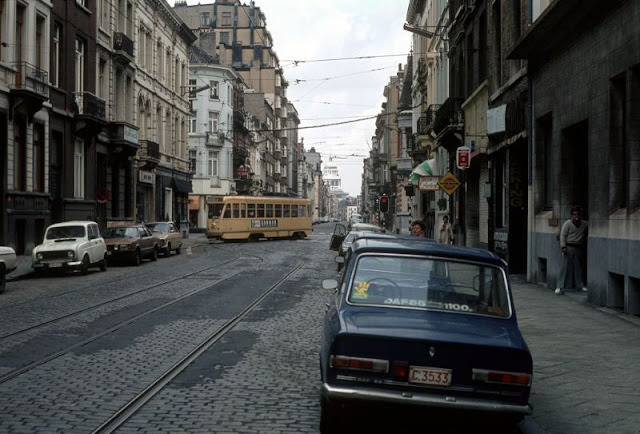
The residential side streets of Ixelles — Rue de Livourne, Rue de Washington — were typical of Brussels’ bourgeois neighborhoods. Wide sidewalks, wrought-iron balconies, and ornate facades from earlier centuries lined these streets. By the 1980s, many of these buildings had been divided into apartments to house the city’s expanding workforce.
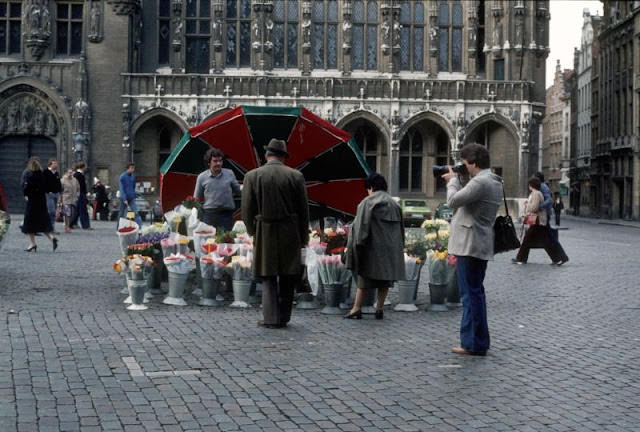
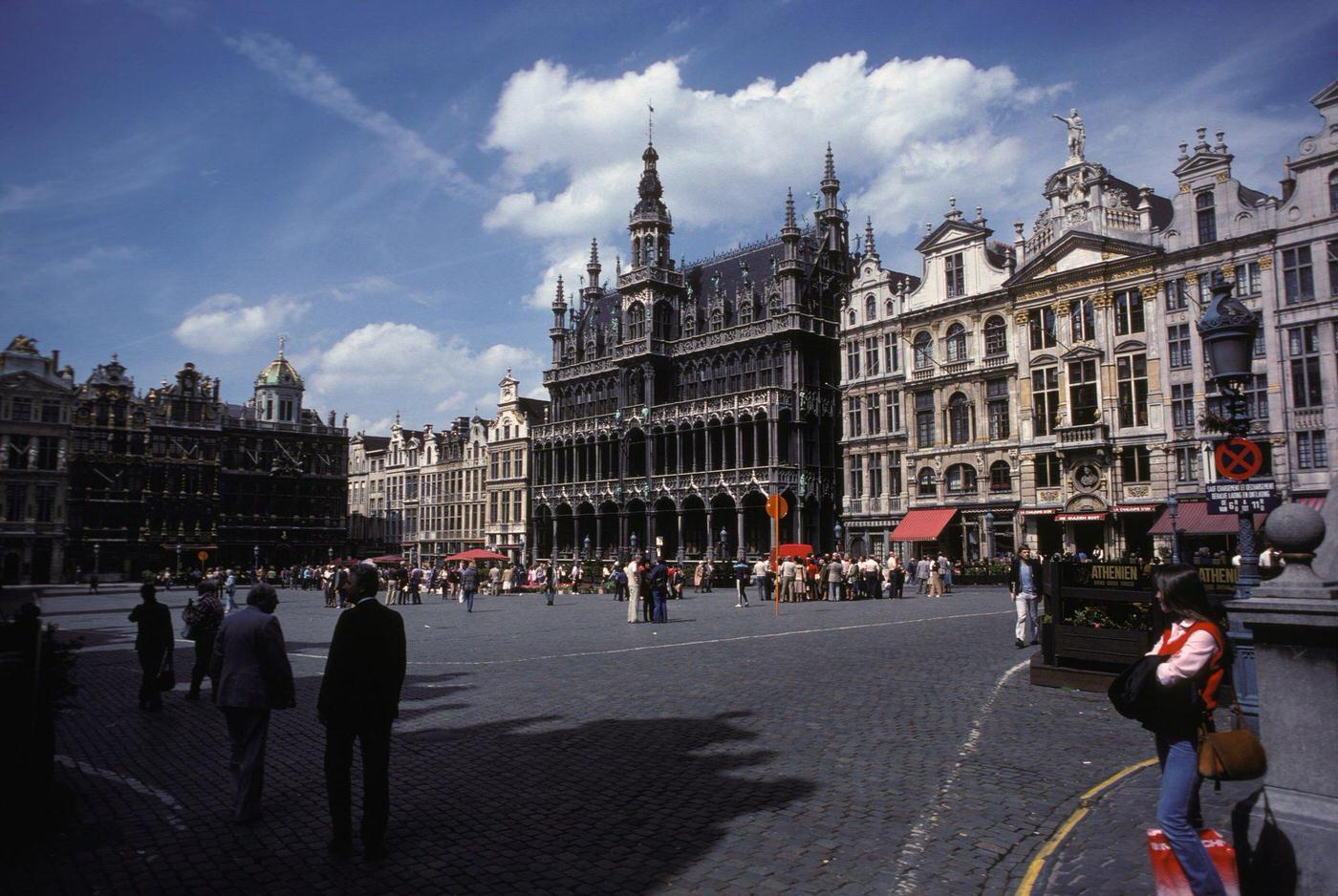
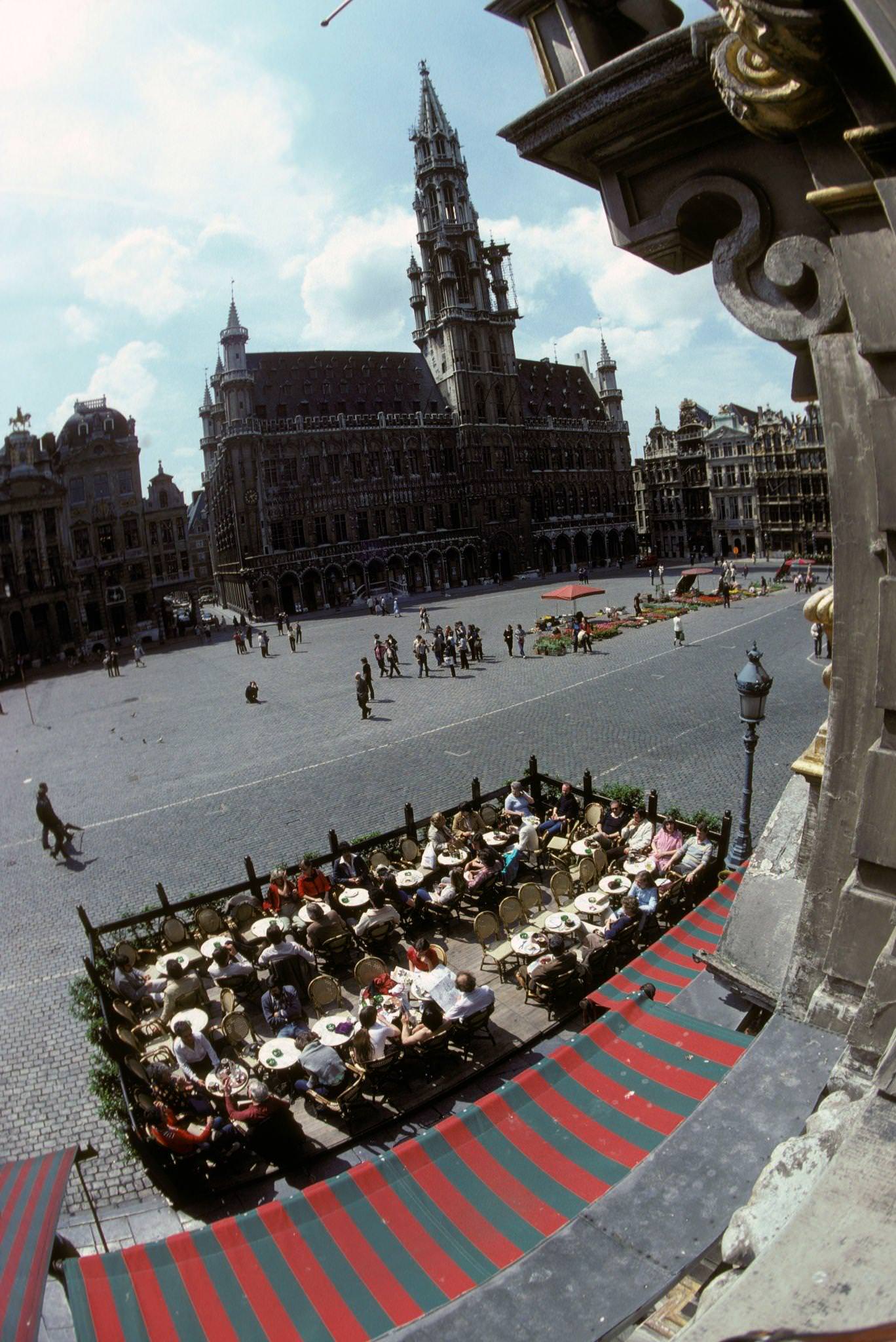
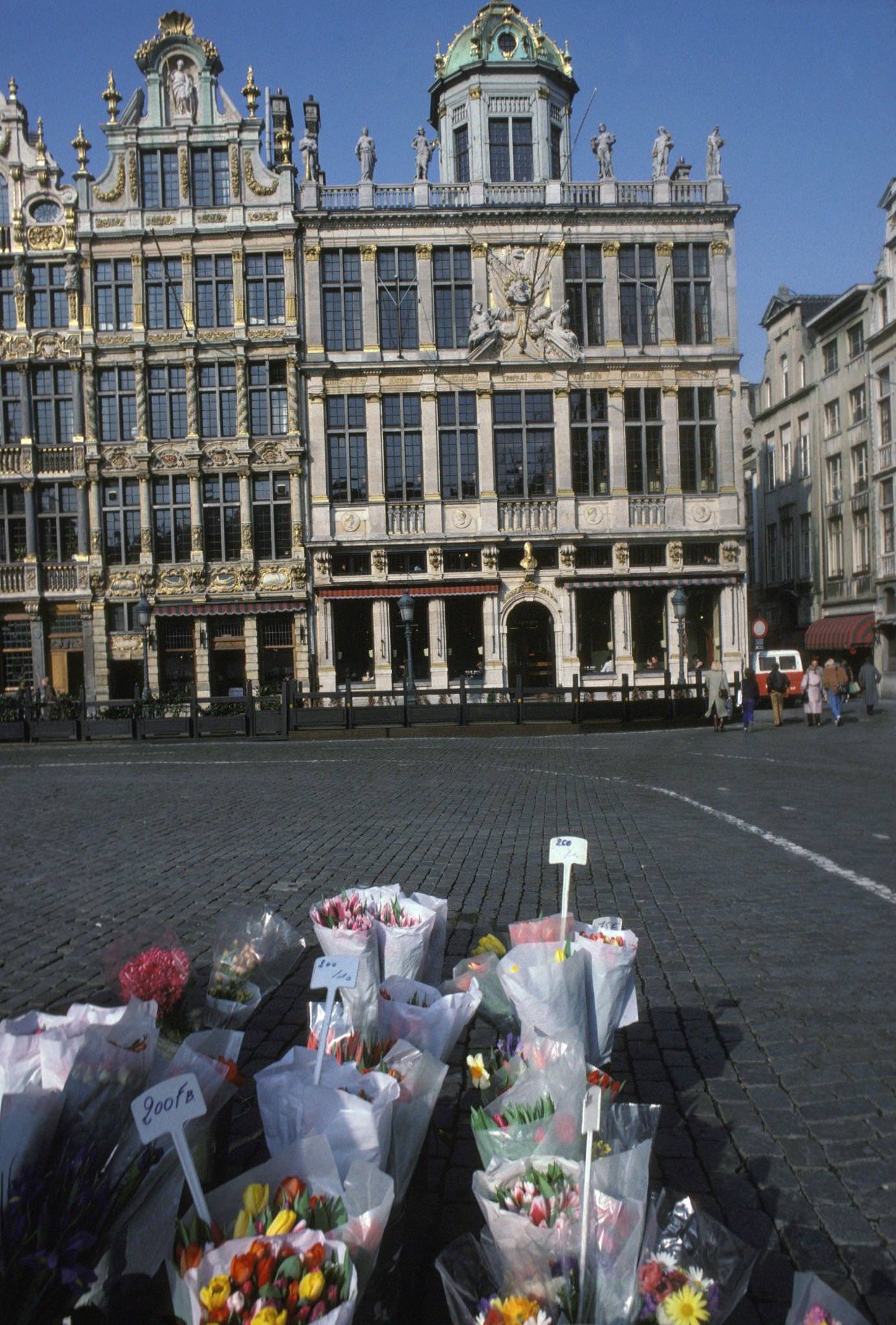
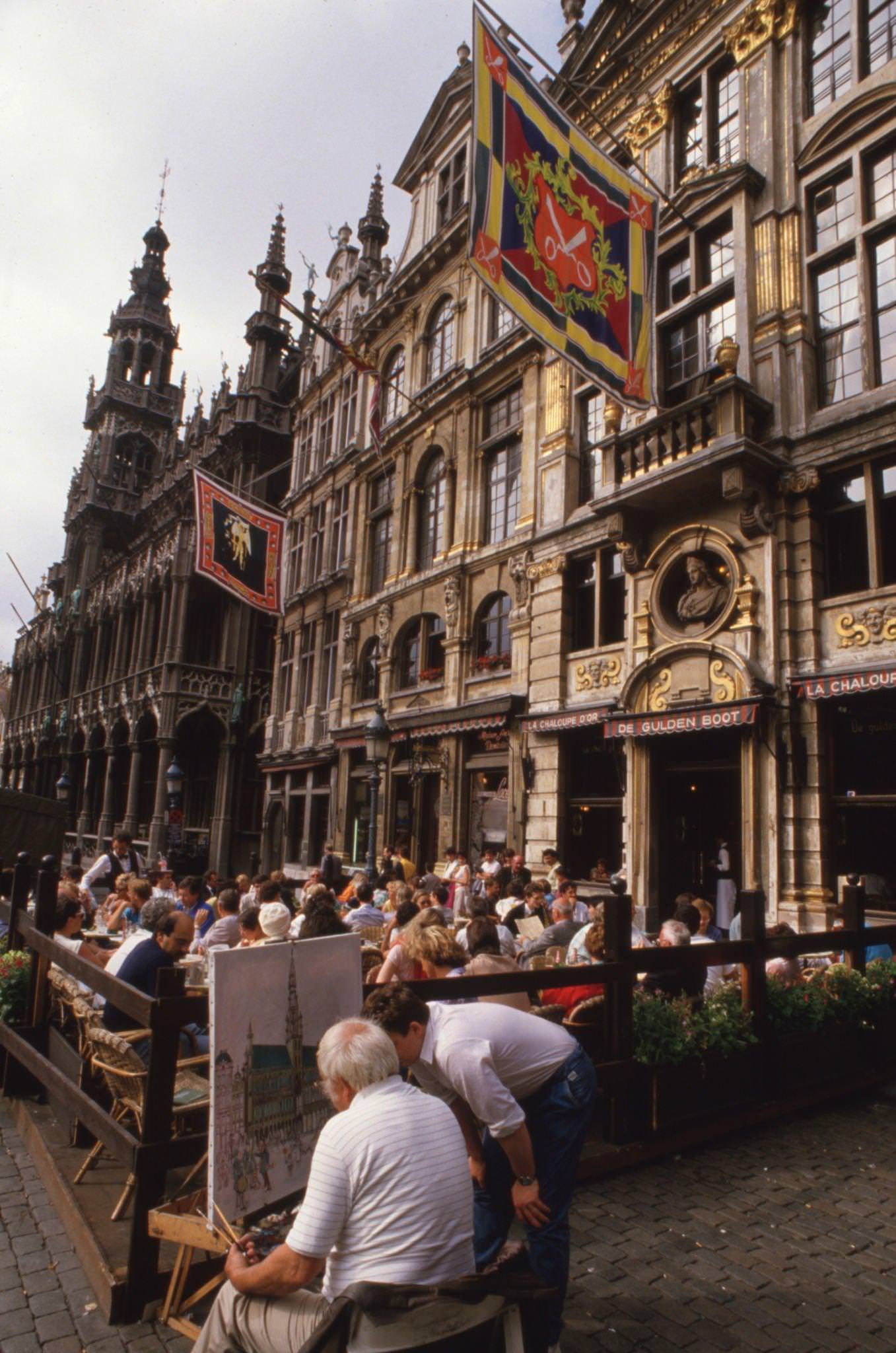
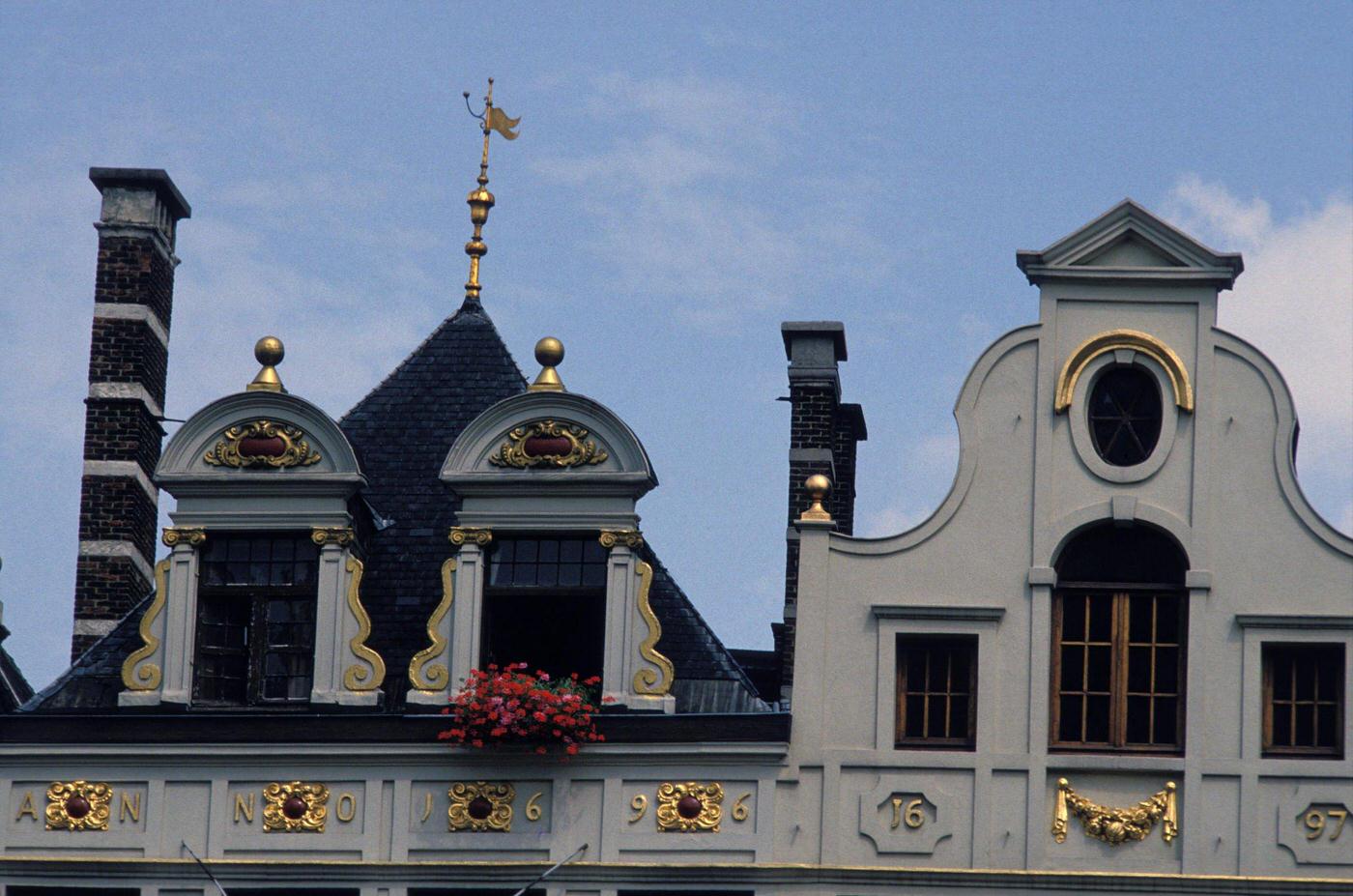
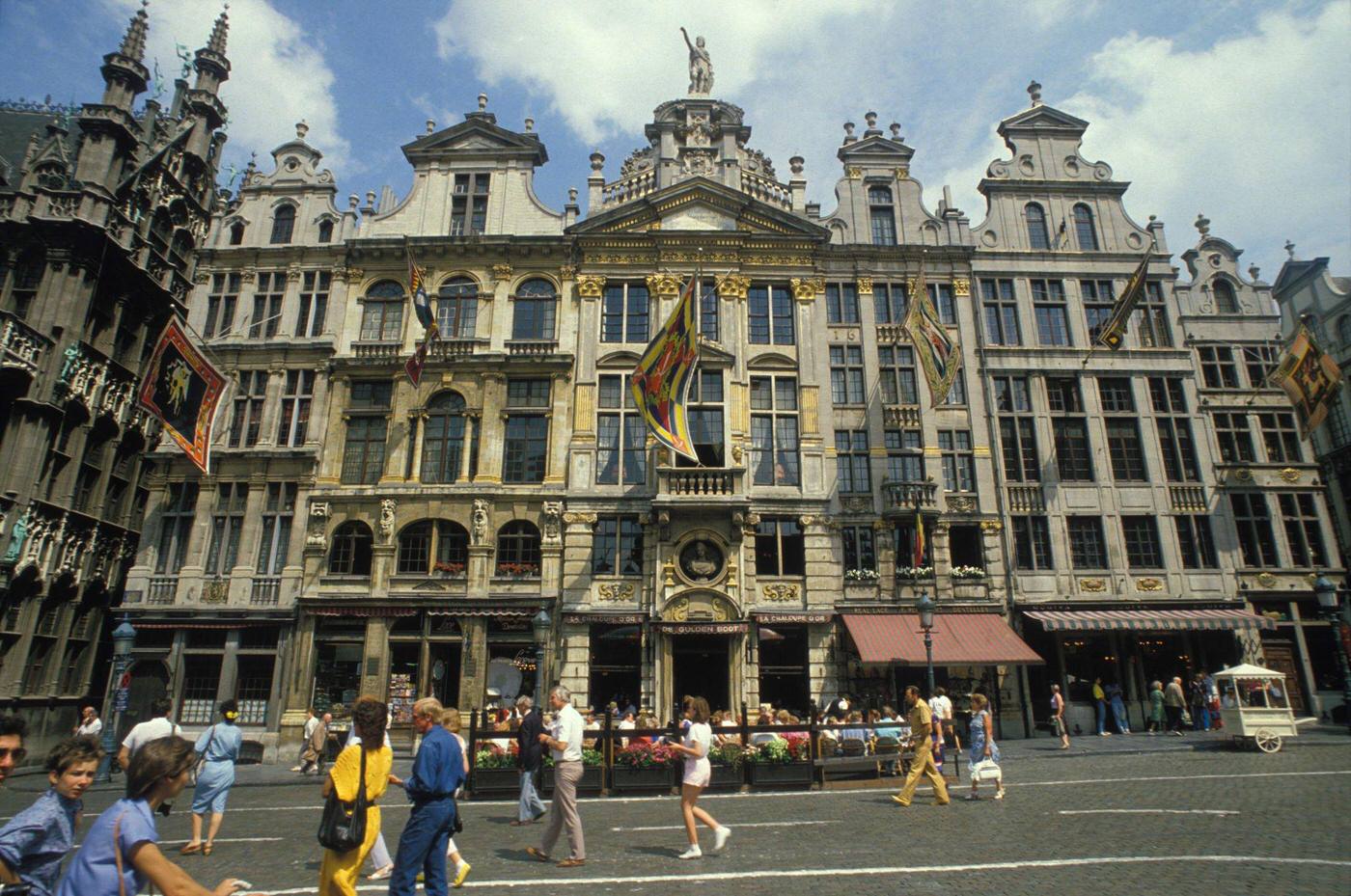
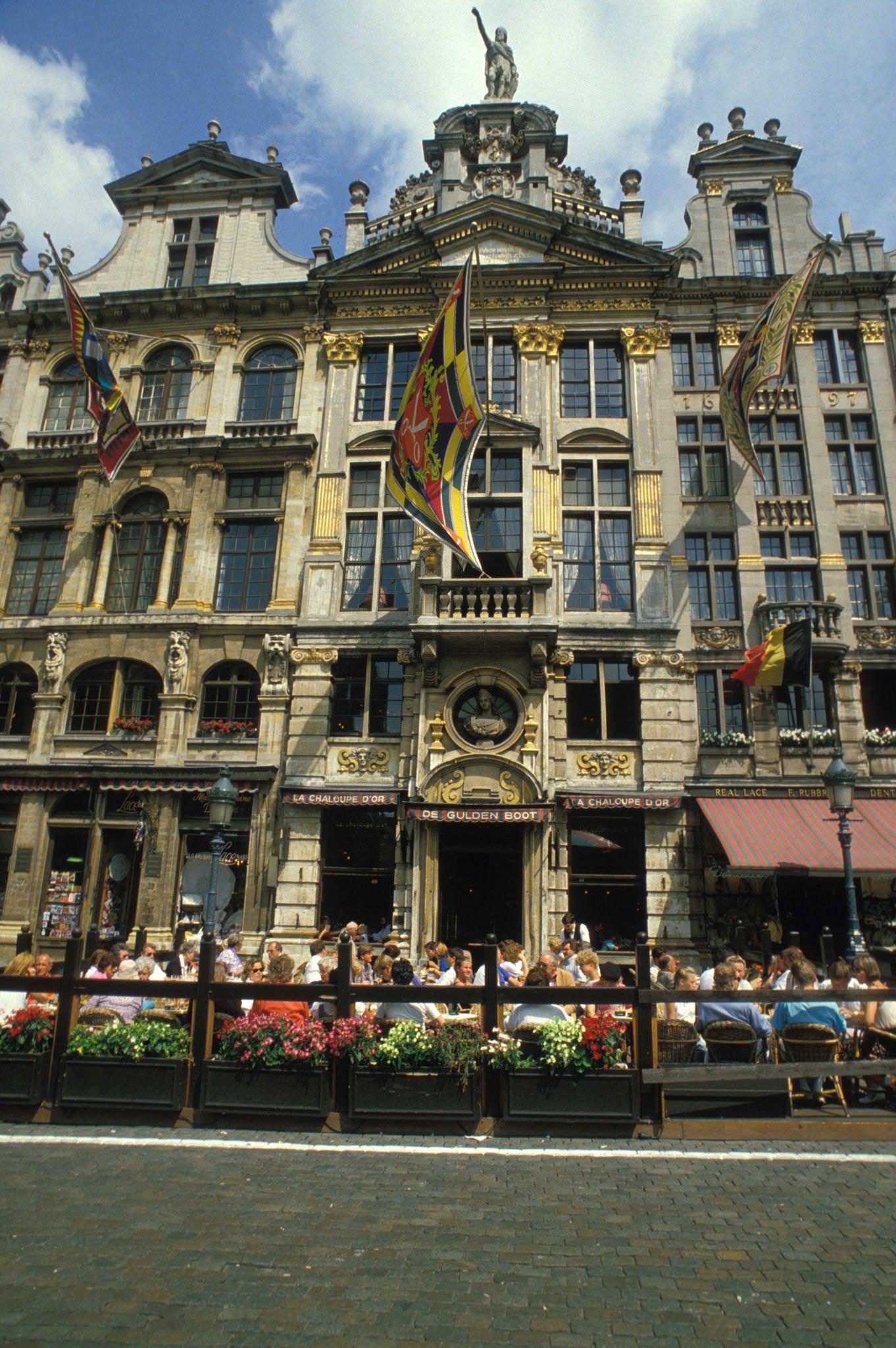
Moving into 1981, the photographs shift toward Brussels’ city center, where commerce, culture, and politics converged. The Grand Place — the city’s medieval market square — remained the beating heart of Brussels. Its gilded guild houses dated back to the 17th century and attracted tourists year-round, while locals used the surrounding streets for everyday shopping and dining.
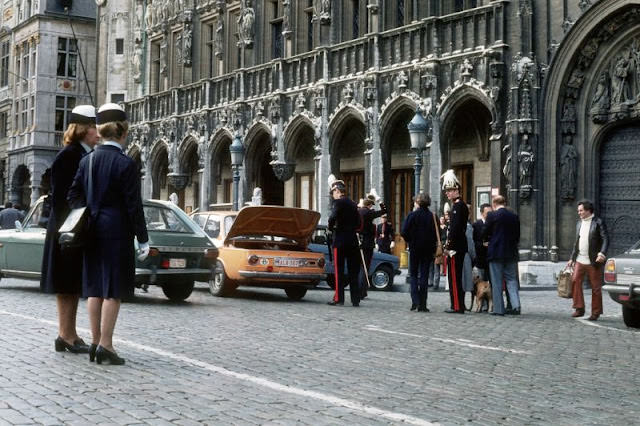
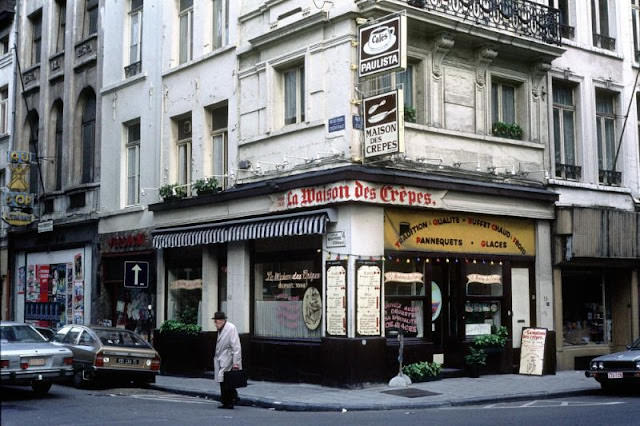
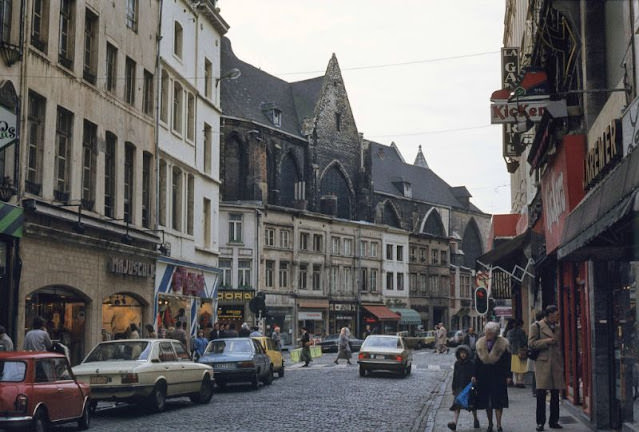
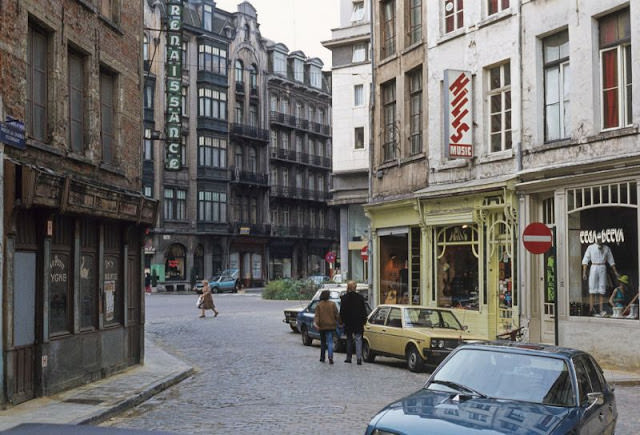
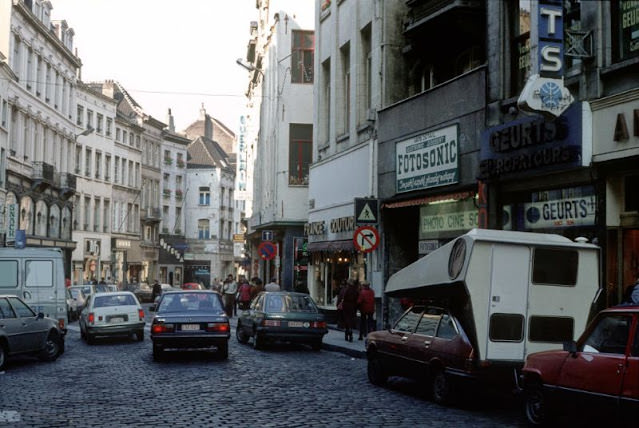
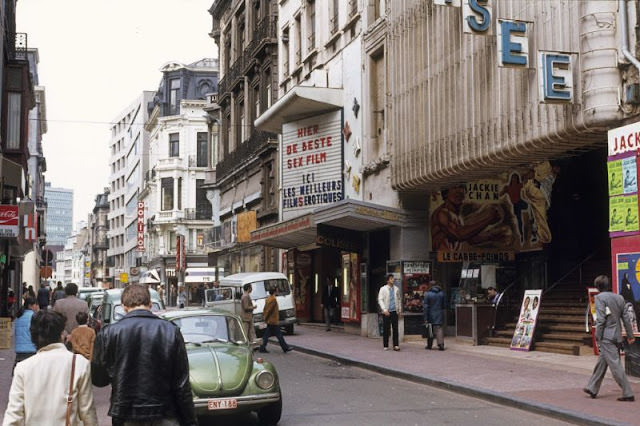
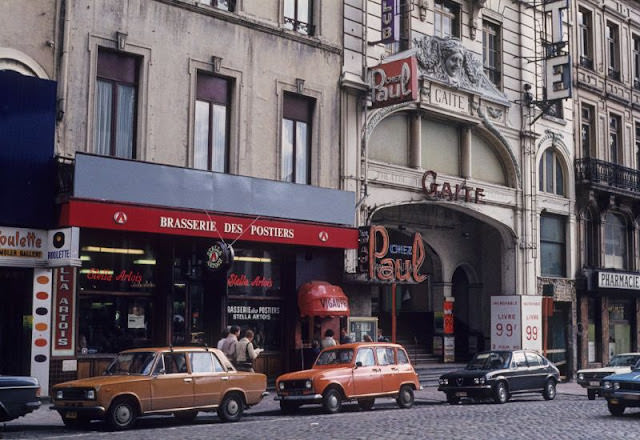
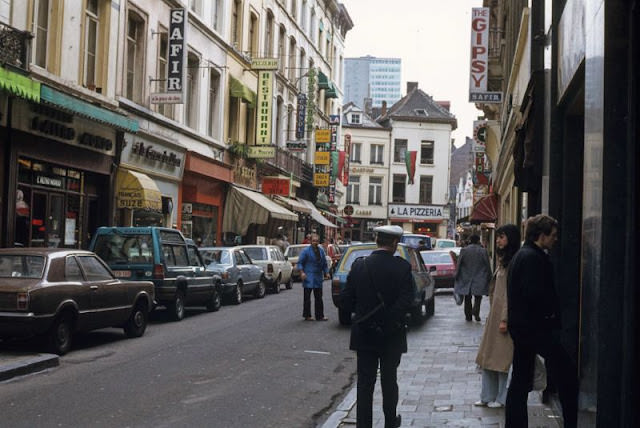
The streets radiating outward from the Grand Place were packed with shops, restaurants, and small businesses. Rue des Fripiers, Rue du Marché aux Herbes, and Rue du Midi each offered a different slice of city life. Crepe shops, second-hand clothing stores, and old-fashioned storefronts competed for attention on narrow cobblestone lanes.
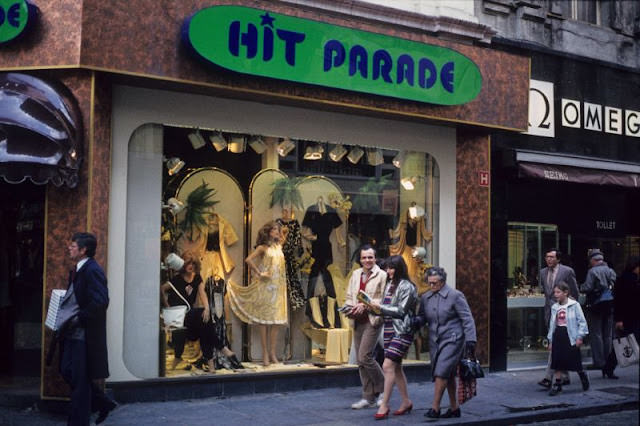
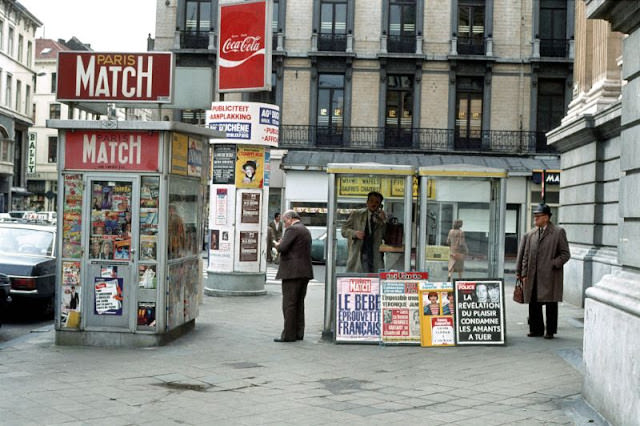
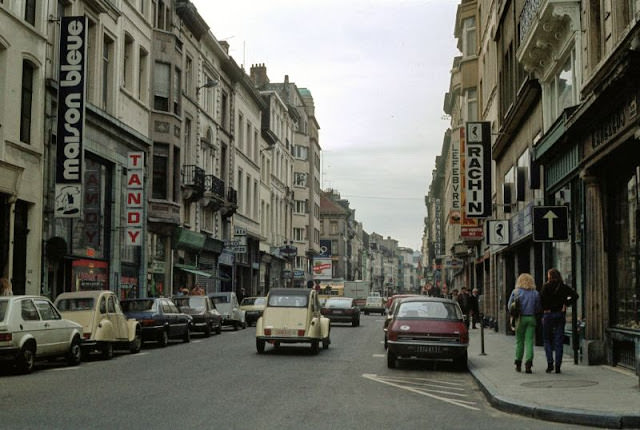
The Place de la Monnaie was another central landmark. Named after the mint that once operated there, it was home to the Théâtre Royal de la Monnaie, one of Belgium’s premier opera houses. The square bustled with foot traffic, and shop posts displaying advertisements and public notices were a common feature of the urban streetscape.
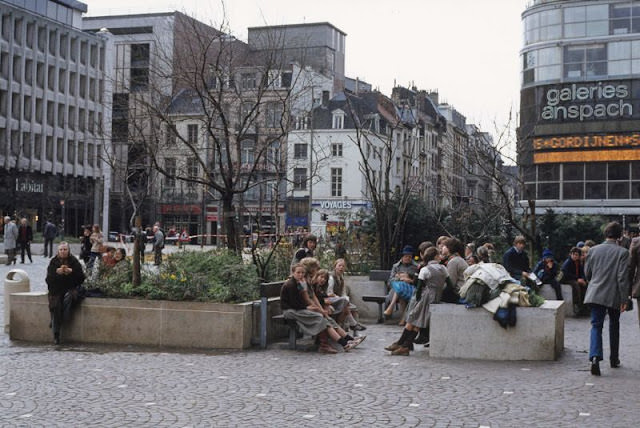
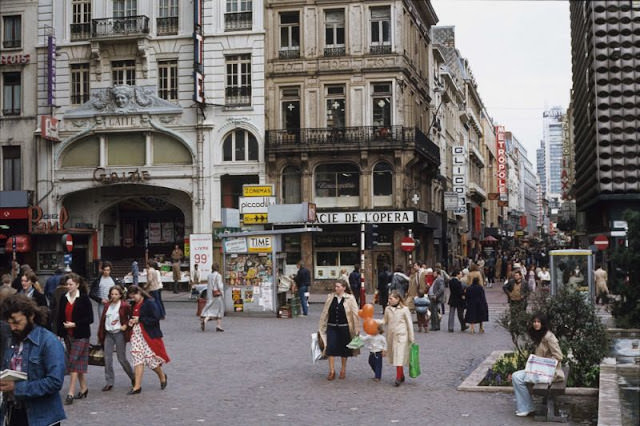
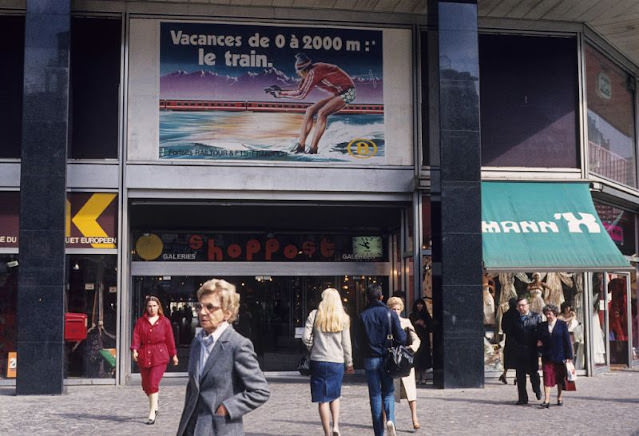
Avenue Louise, one of Brussels’ most prestigious boulevards, showed a different face of the city — upscale boutiques, embassies, and high-end apartments. Boulevard du Jardin Botanique to the north offered yet another contrast, with the Bon Marché department store and the nearby Botanical Garden drawing both shoppers and those looking for green space.
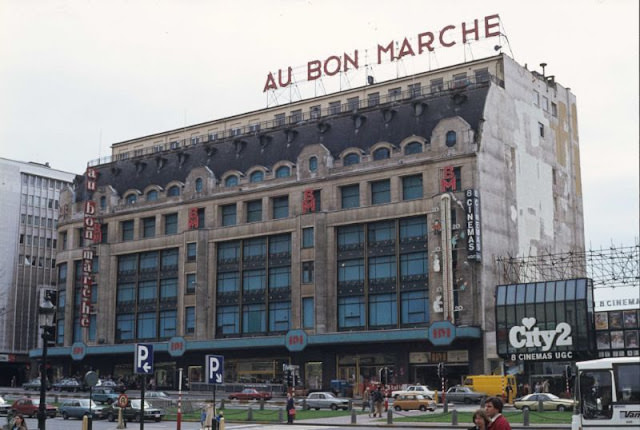
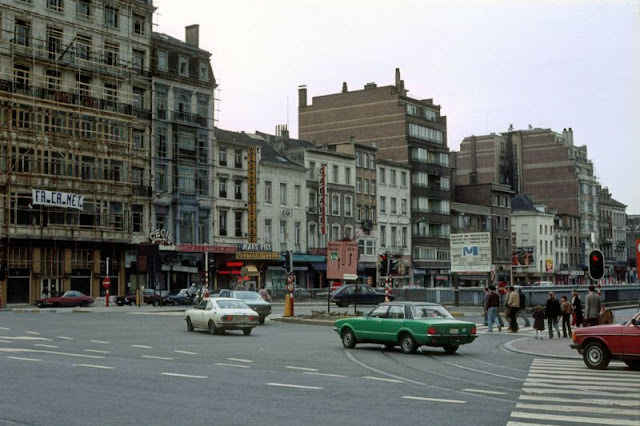
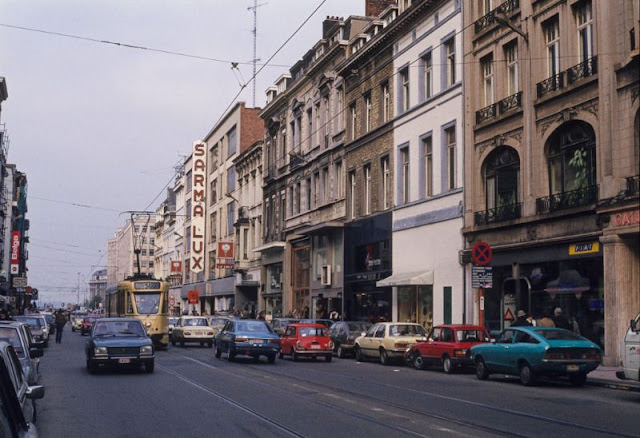
Woluwe-Saint-Lambert, an outer commune, had a more suburban feel. Its commercial strips along the Chaussée de Roodebeek and Avenue Roi Chevalier were lined with local businesses and billboard advertisements that reflected the consumer culture of the decade.
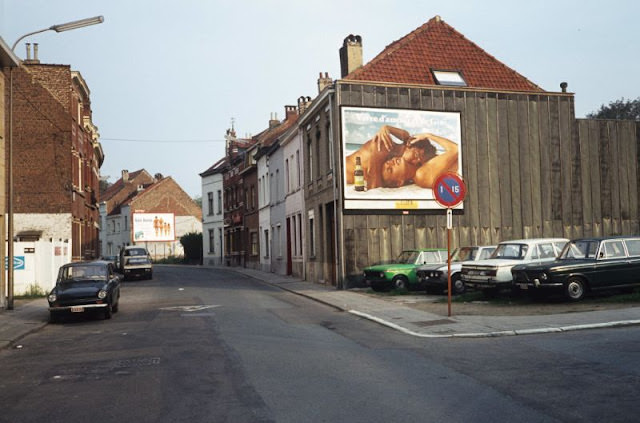
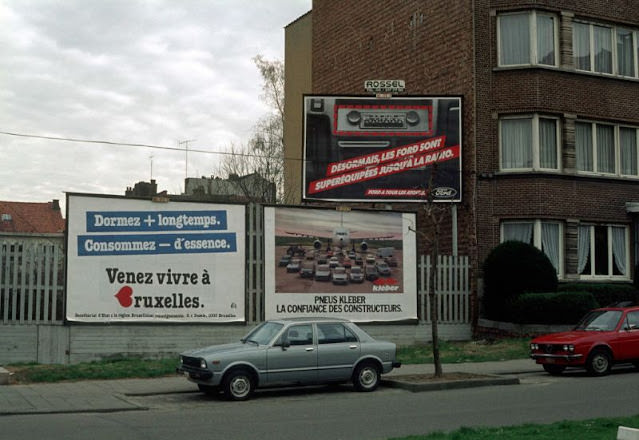

The Rue Ravenstein and Place Royale area connected the upper and lower parts of the city. Rue Ravenstein ran through an important cultural corridor, passing near the Palais des Beaux-Arts and offering views across the Mont des Arts. The Northern Quarter, meanwhile, was on the verge of dramatic change — photographs taken in 1981 show it just before major demolition and redevelopment work began to make way for new office towers.
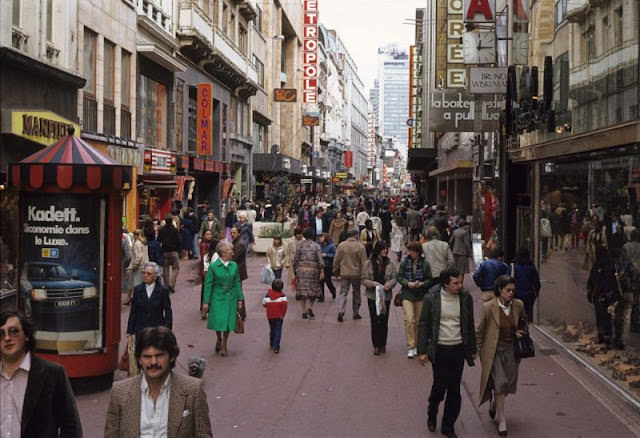
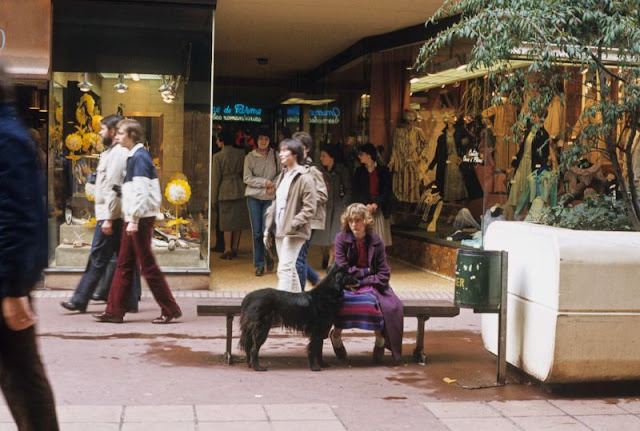
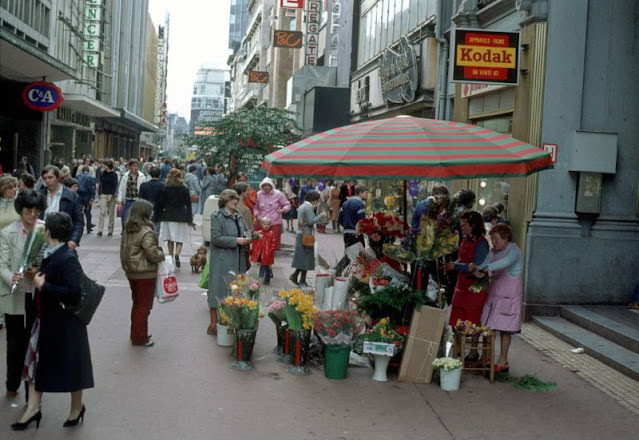
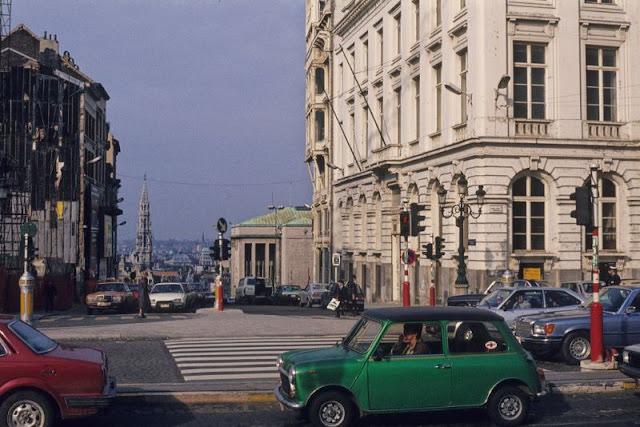
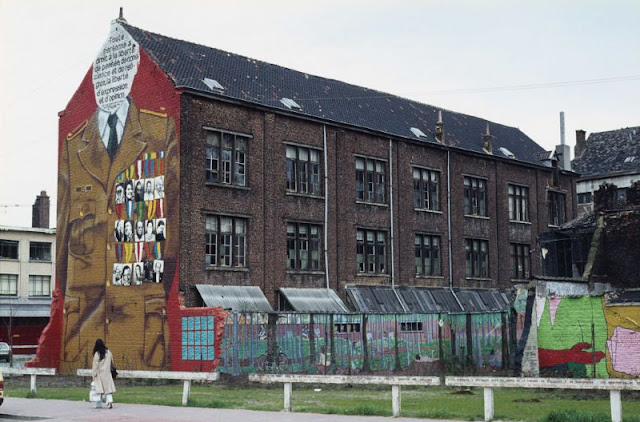
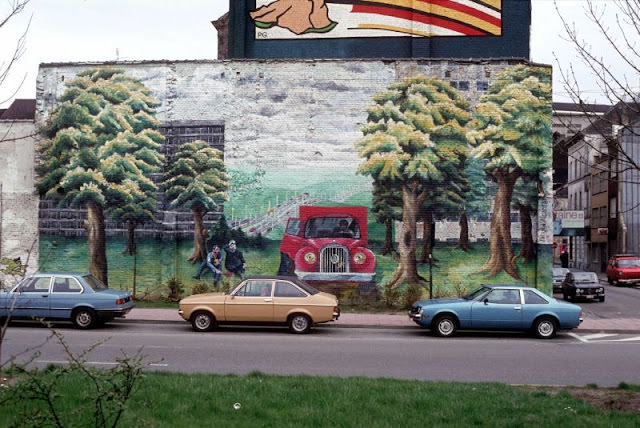
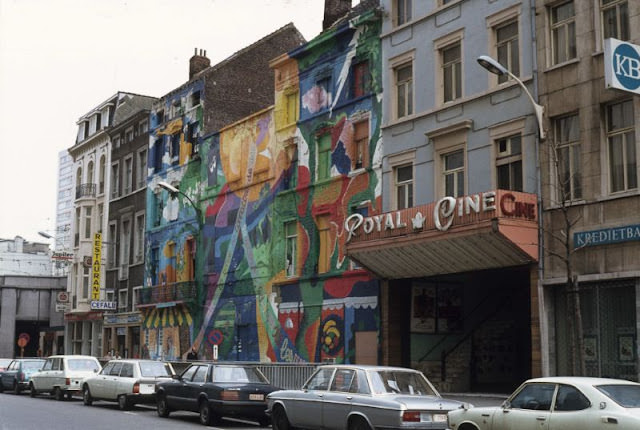
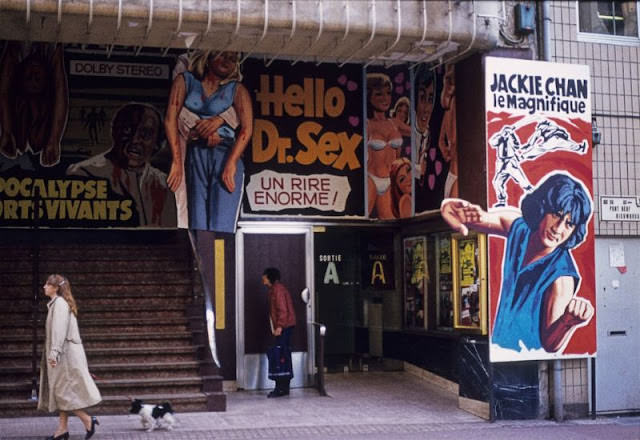
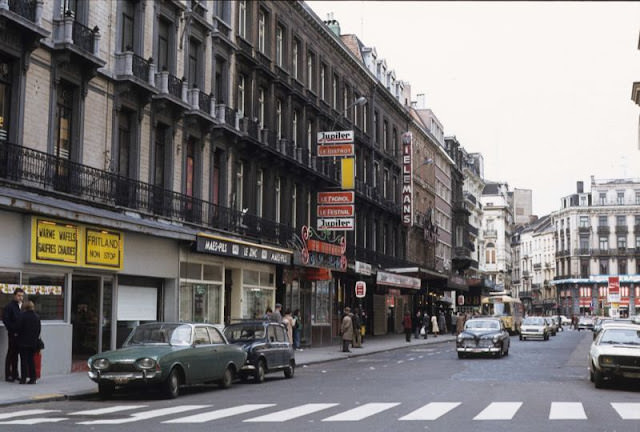
Other 1981 street scenes fill out the picture of the city at the start of the decade. Rue du Pont Neuf connected Rue Neuve with Boulevard Adolphe Max, threading through a dense commercial district. The Royal Ciné cinema on Rue Charles Rogier, standing beside the Rogier Tower, was typical of the entertainment venues that dotted the city center.
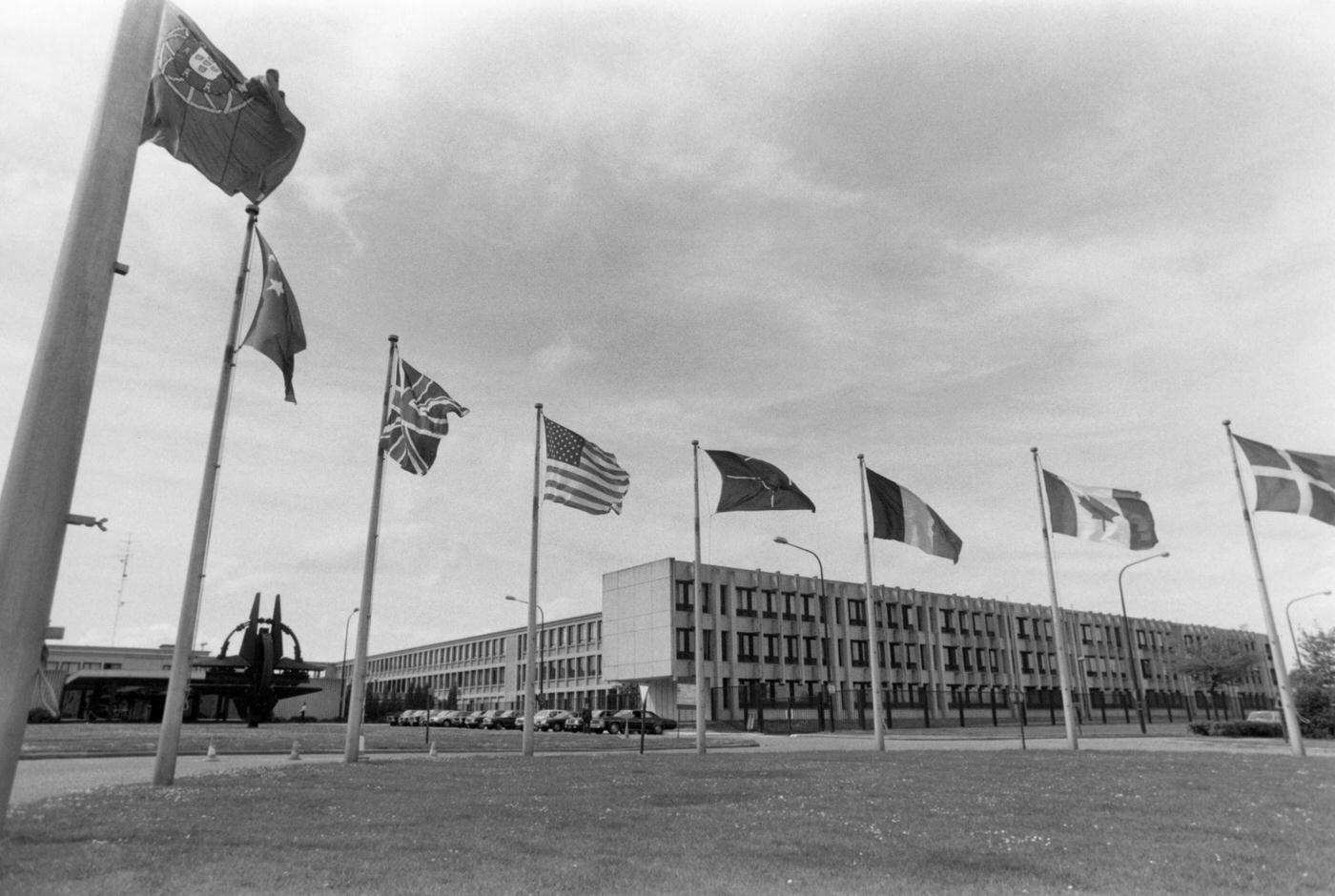
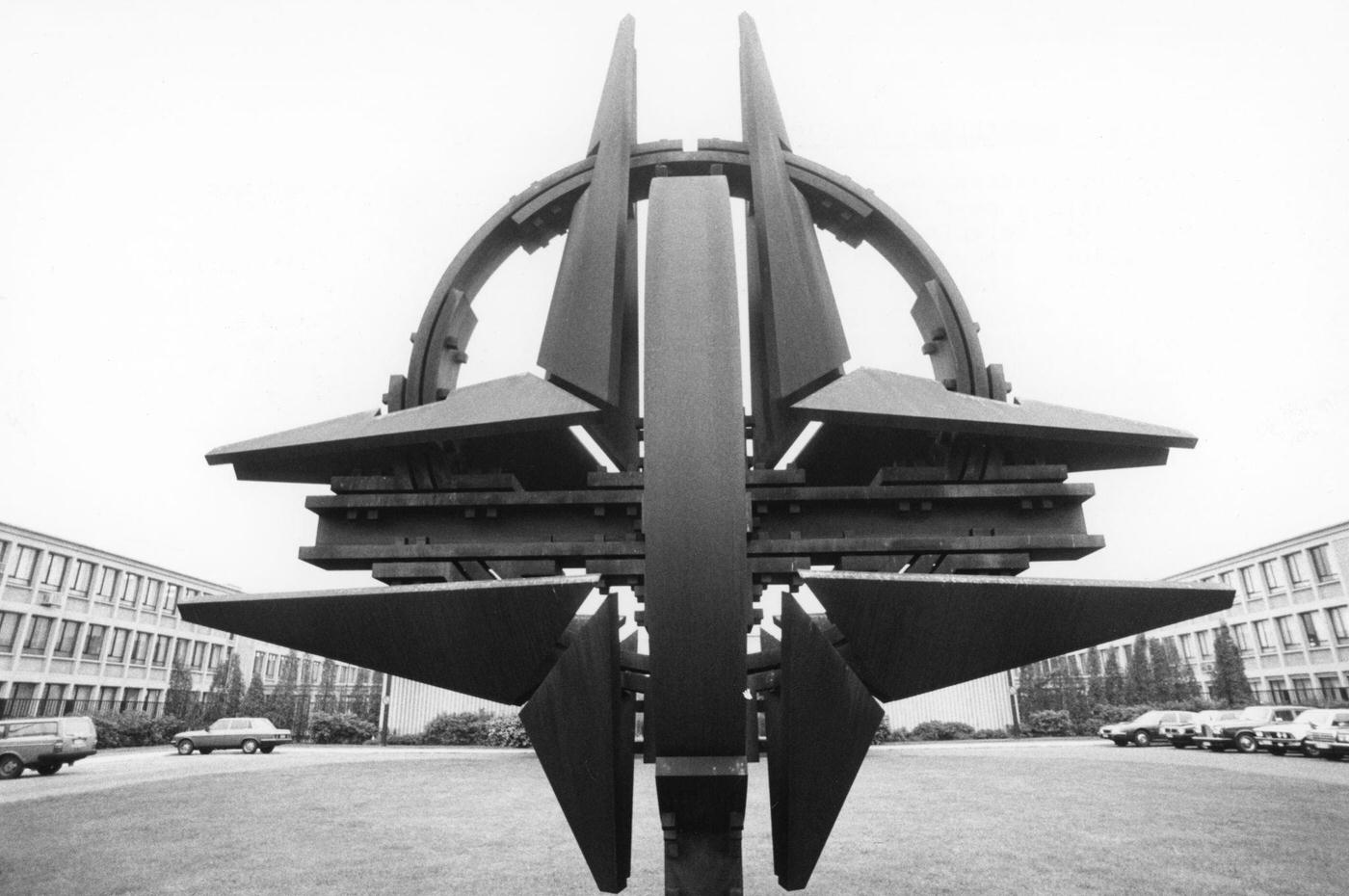
NATO’s headquarters in Brussels added another layer to the city’s international identity. Belgium hosted the alliance’s political command, and its presence meant a constant flow of military officials, NATO staff, and defense ministers through the city throughout the decade.
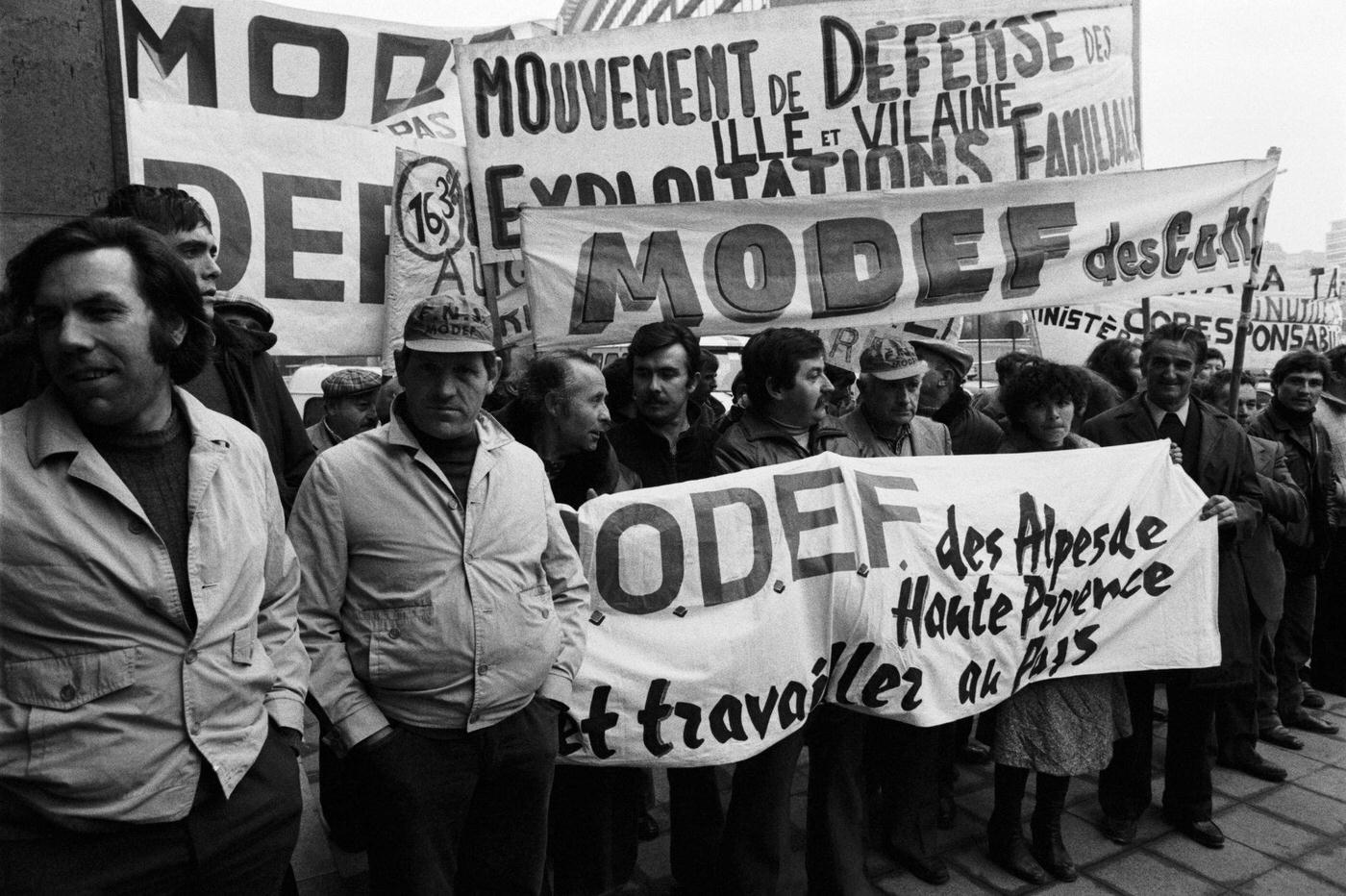
The political atmosphere of Brussels was rarely quiet. In 1982, farmers drove their tractors into the city to protest EU agricultural price negotiations, blocking streets and drawing national attention. It was a vivid reminder that while Brussels set policy for Europe, the people affected by those policies were not shy about making their voices heard.
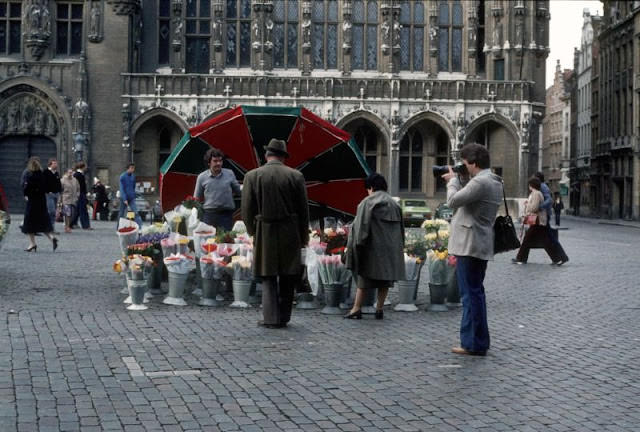
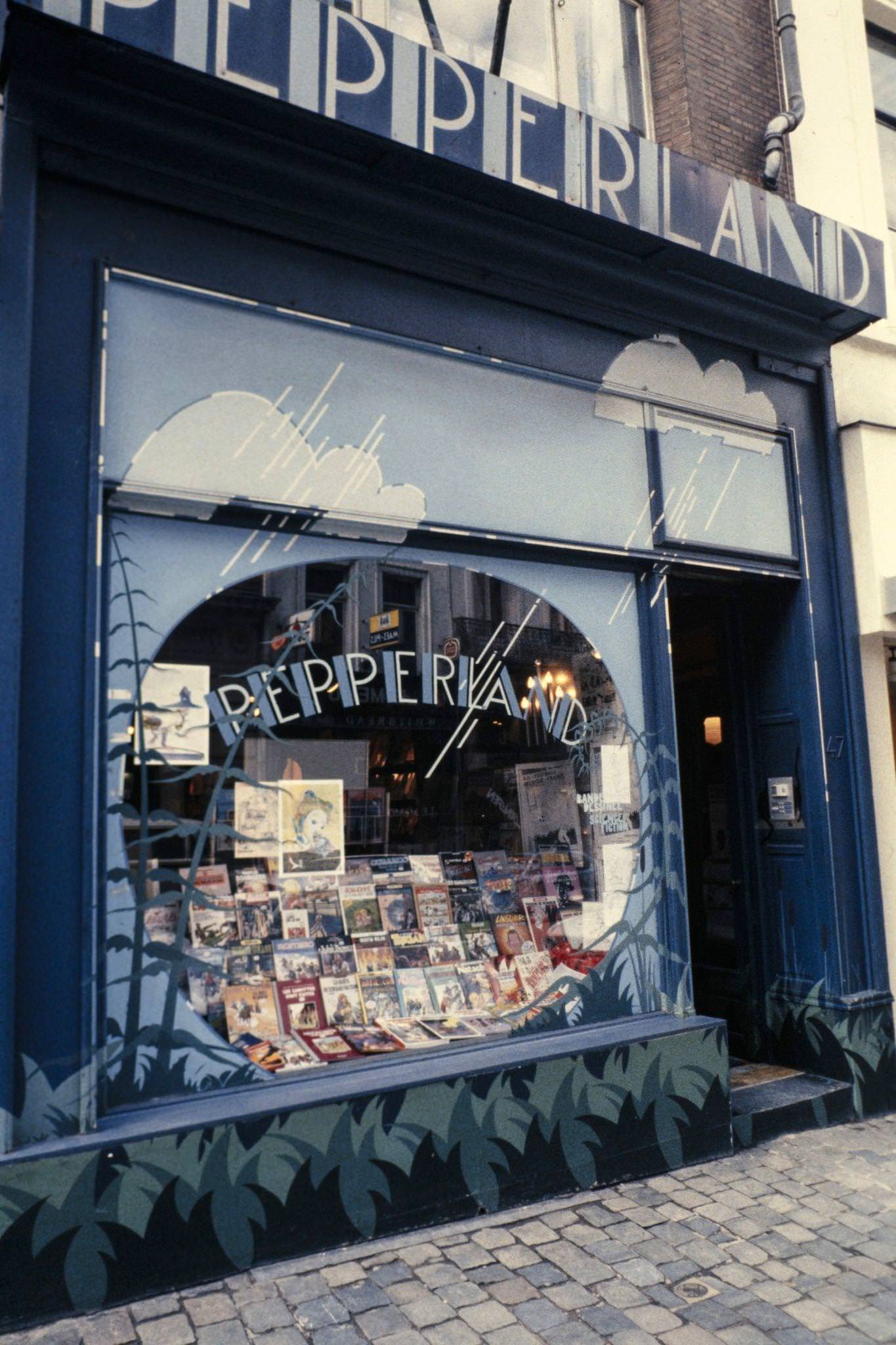
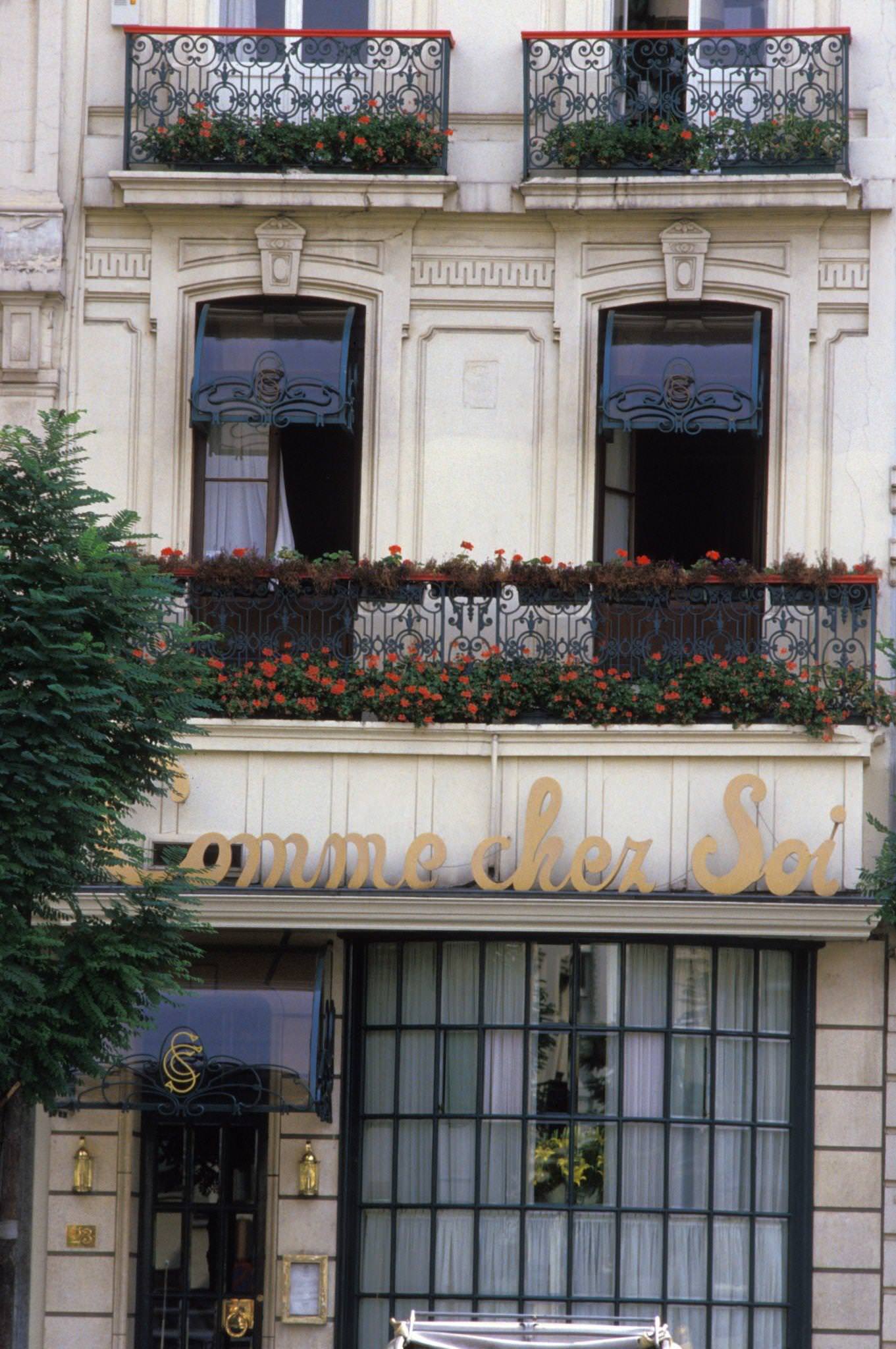
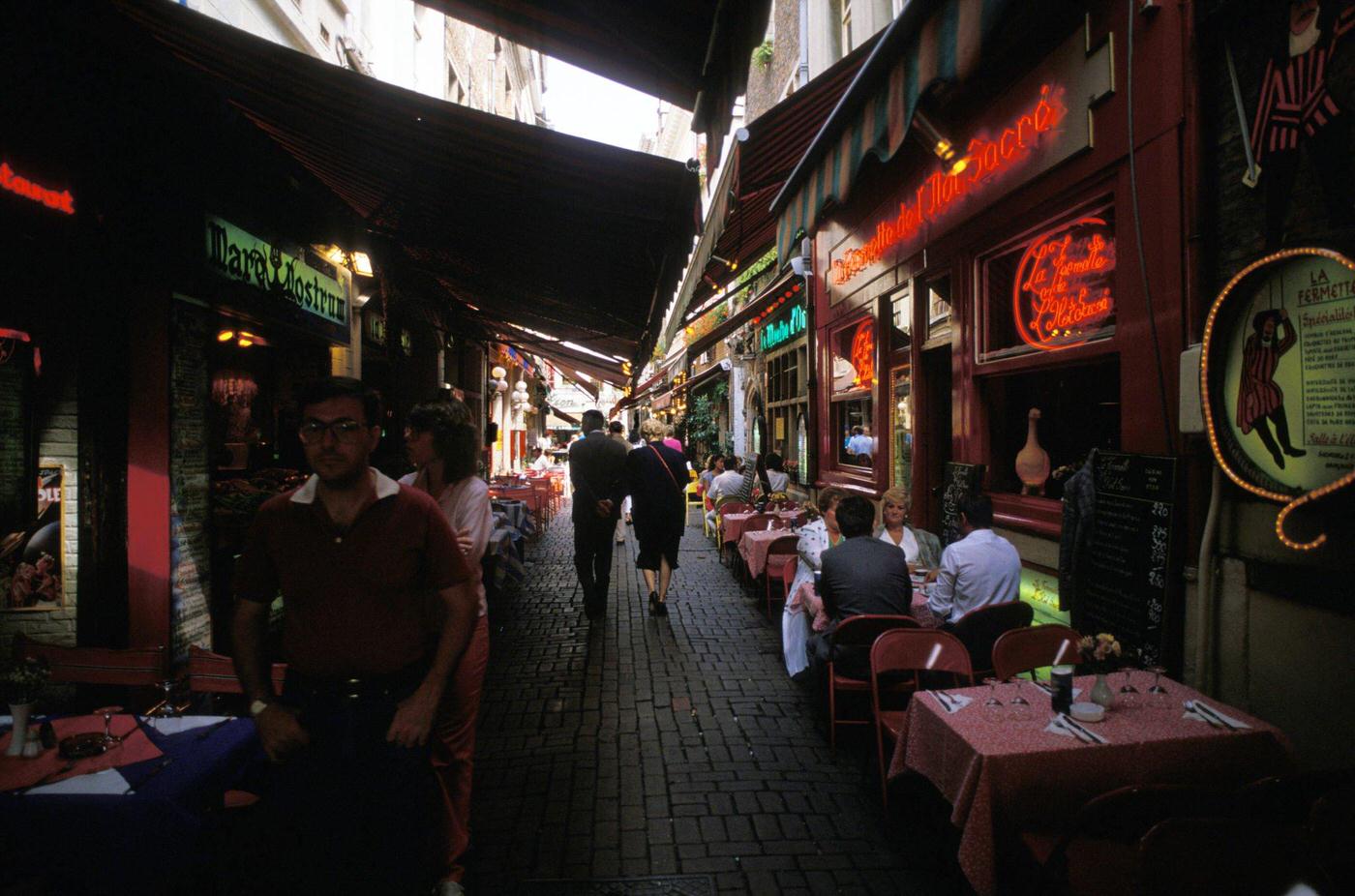
Cultural life flourished throughout the decade. Comic books held a special place in Belgian culture — the country had produced Tintin and the Smurfs, and shops like Pepperland in 1983 catered to a dedicated readership. Flowers were sold daily at the Grand Place, restaurants like ‘Comme Chez Soi’ upheld Brussels’ reputation for fine dining, and the Petite Rue des Bouchers packed in visitors with its wall-to-wall eateries.
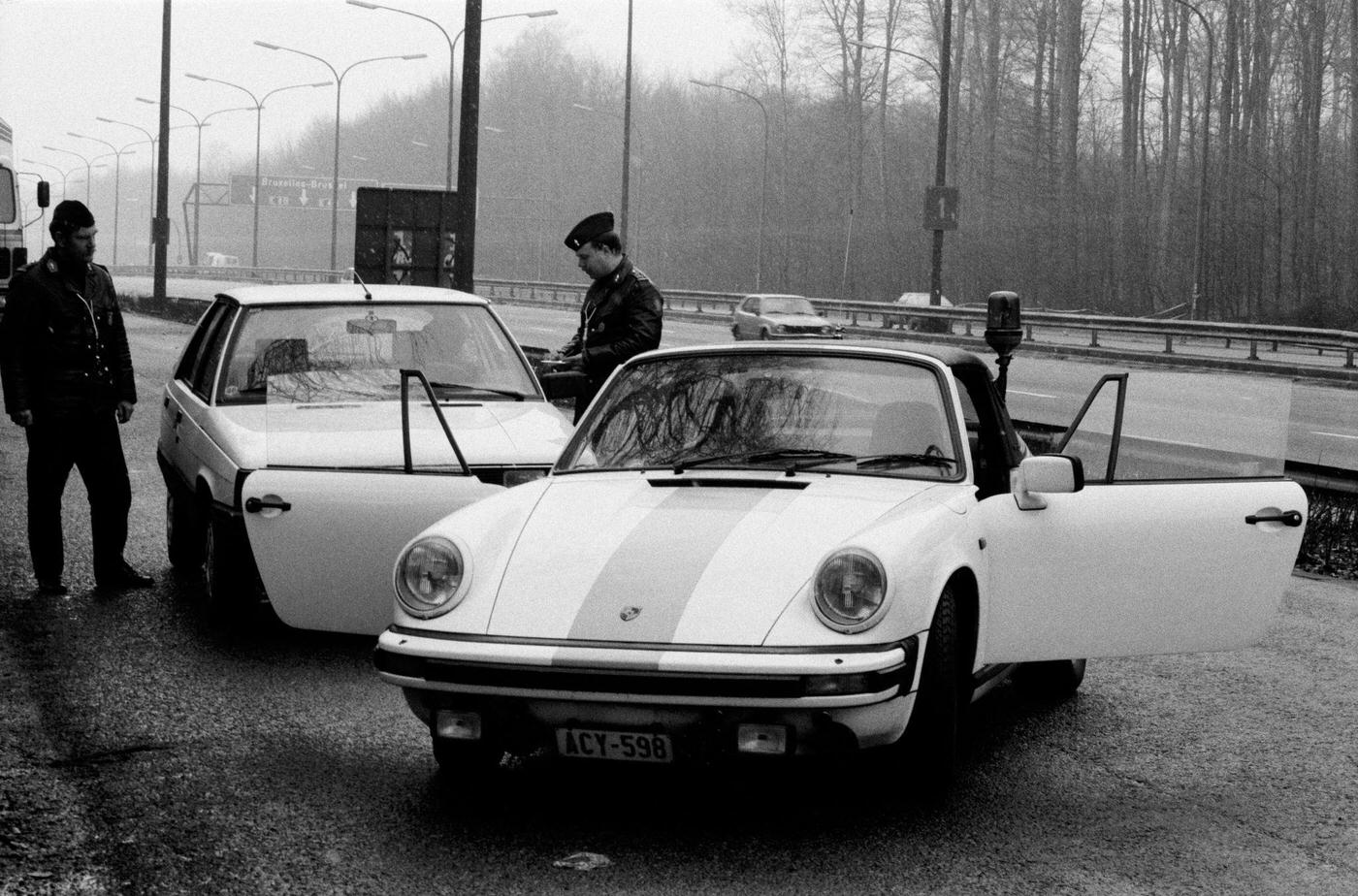
Security in Brussels was a visible concern throughout the 1980s. With NATO, EU institutions, and embassies all based in the city, law enforcement operated at a heightened level. The Belgian police even deployed Porsche patrol cars on the highway network near Brussels by 1985 — a sign of both the era’s style and the seriousness with which authorities approached rapid response.
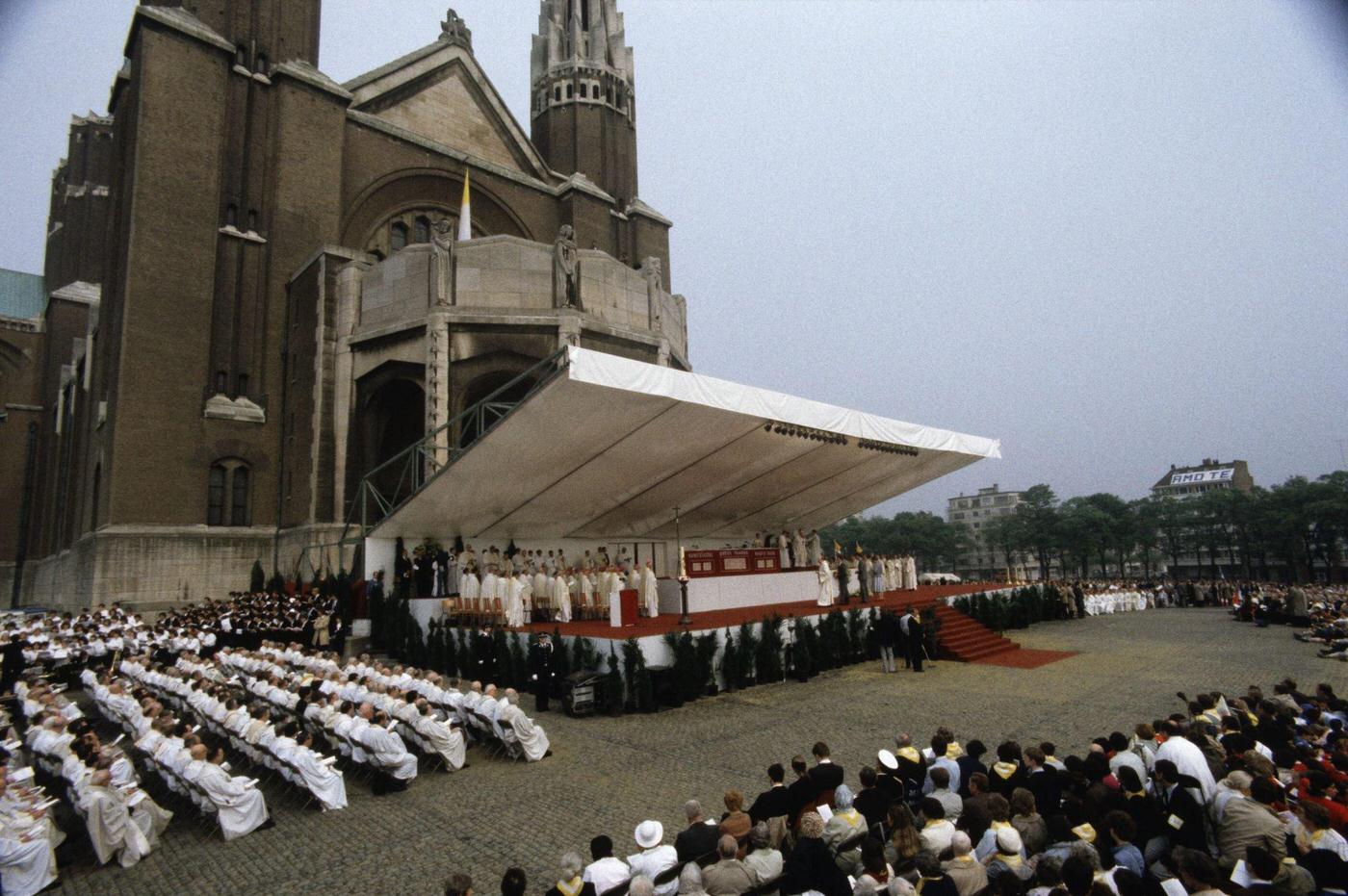
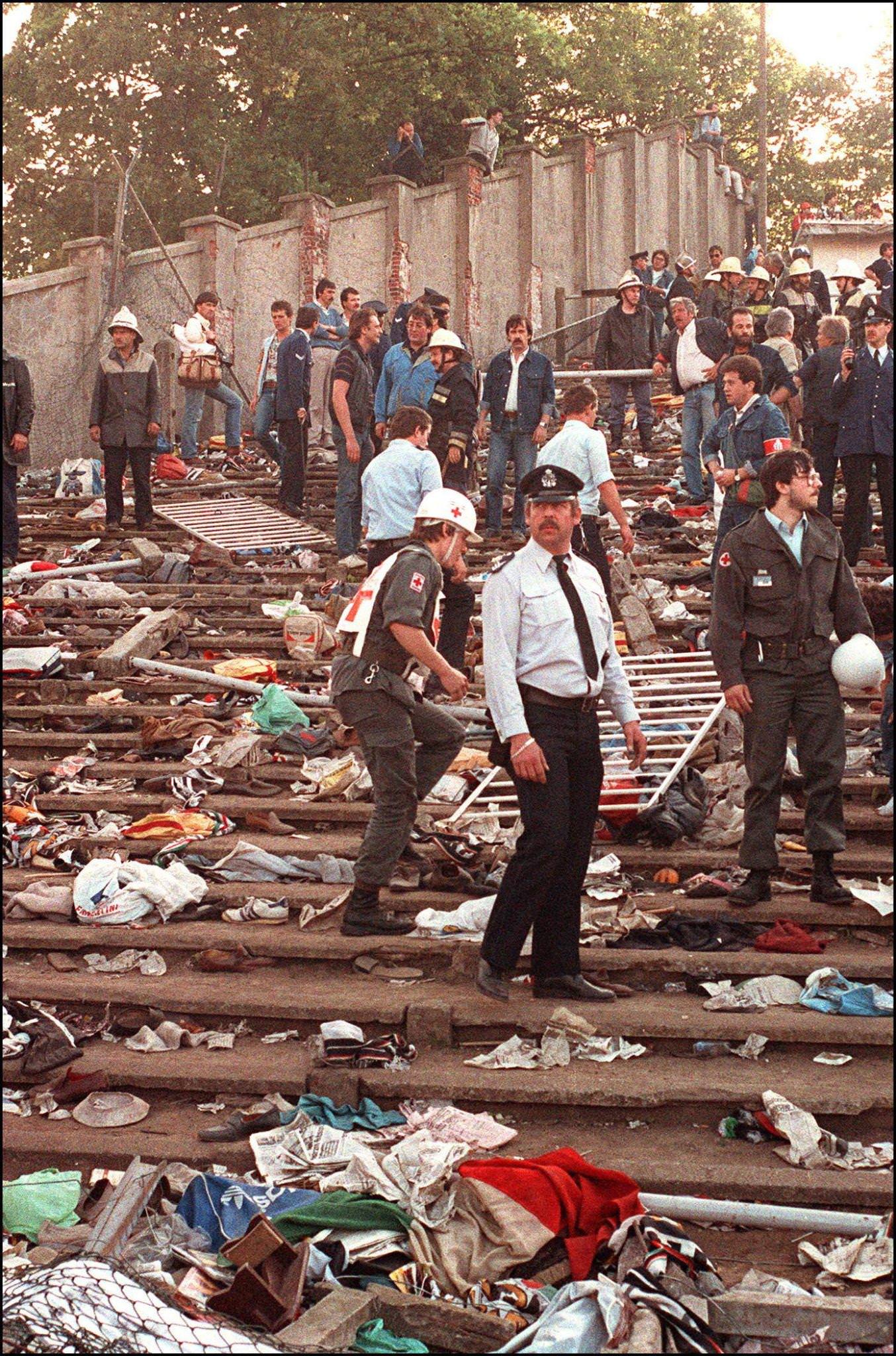
1985 brought two events that defined the decade in very different ways. In May, Pope John Paul II celebrated the Eucharist at the Basilica of Koekelberg before an enormous crowd. Just weeks later, the Heysel Stadium disaster struck. On May 29, 1985, before the European Cup final between Juventus and Liverpool, violence broke out in the stands. A retaining wall collapsed, killing 39 people. Rescue workers and police searched through the rubble for victims while the match was controversially allowed to continue.
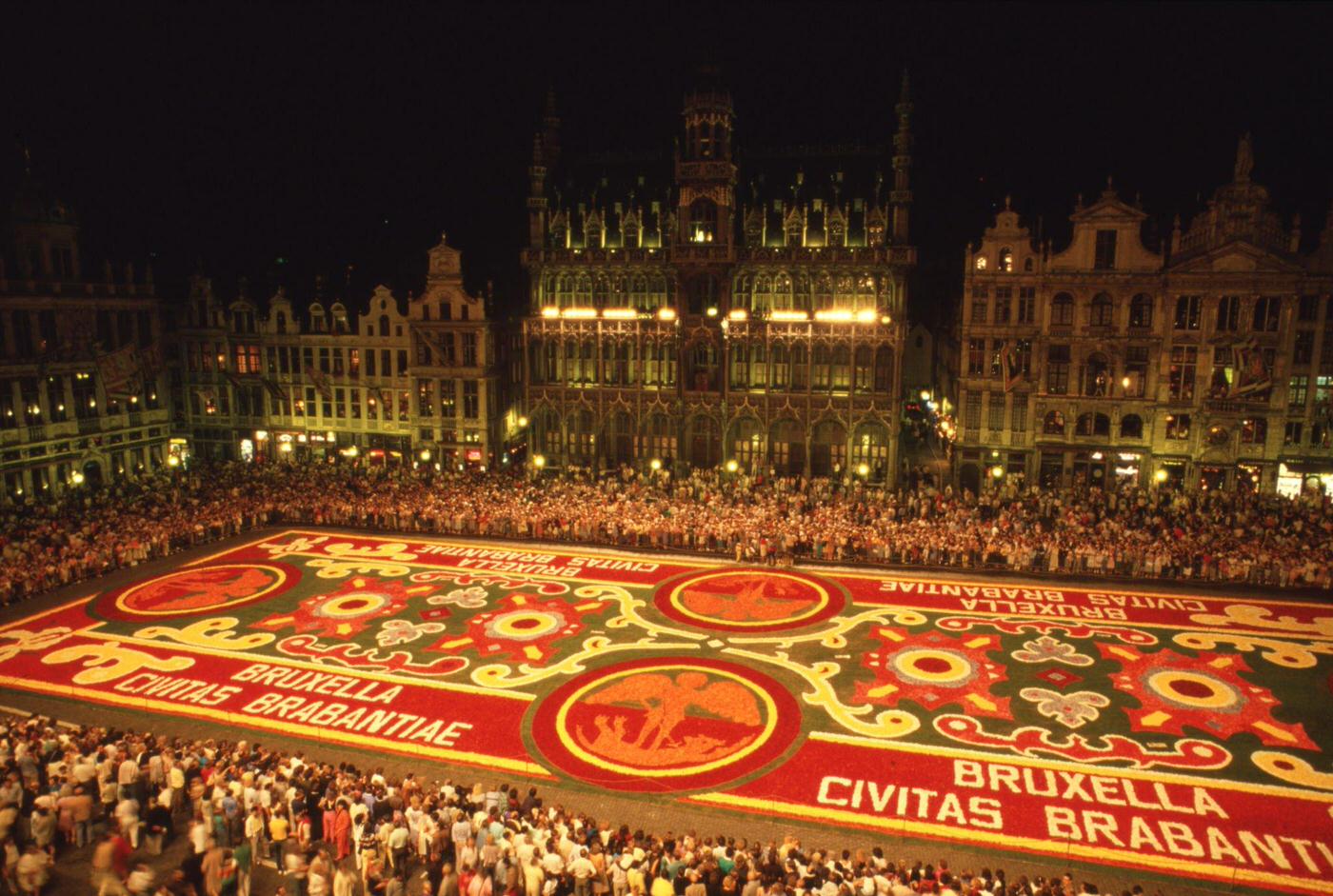
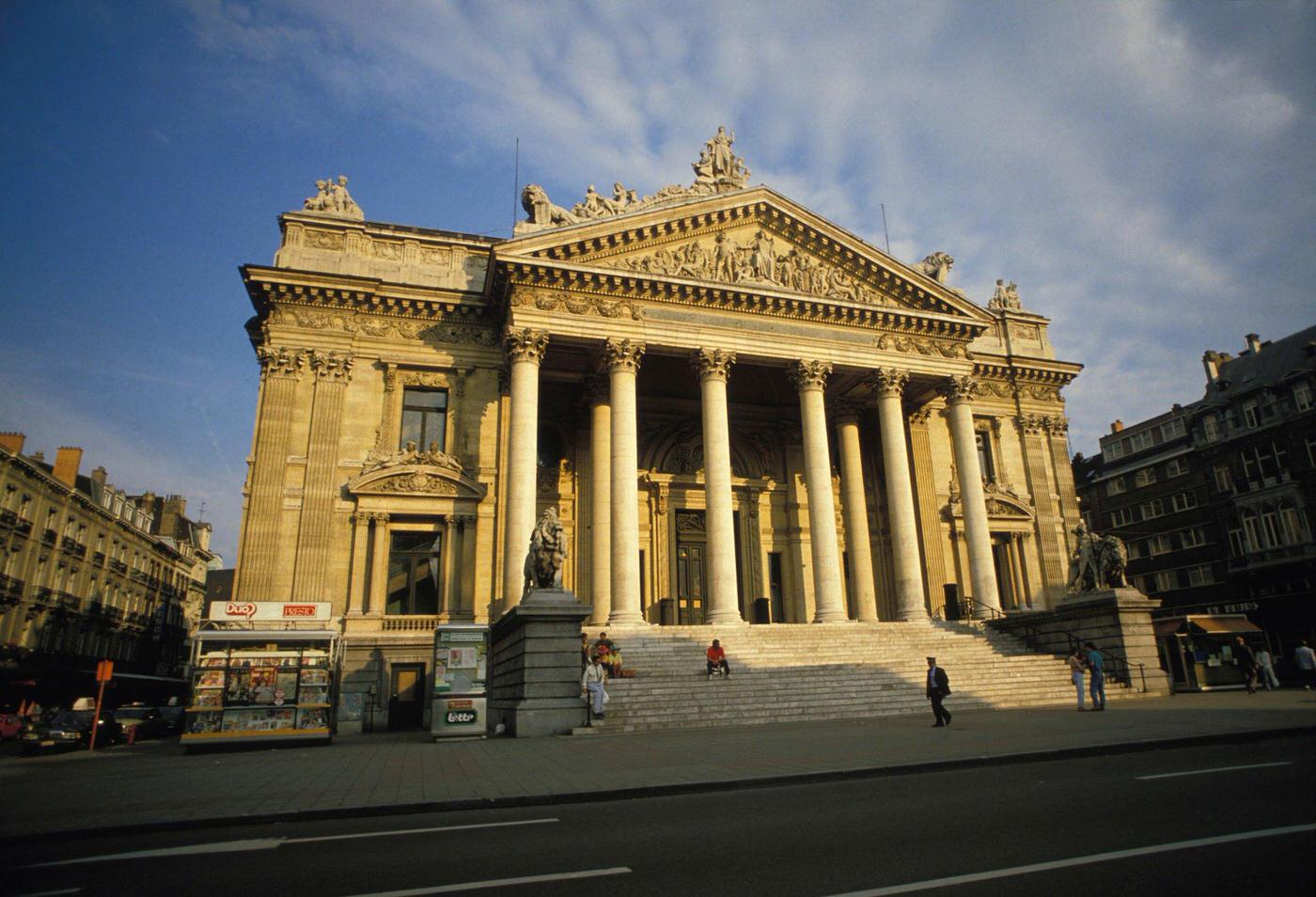
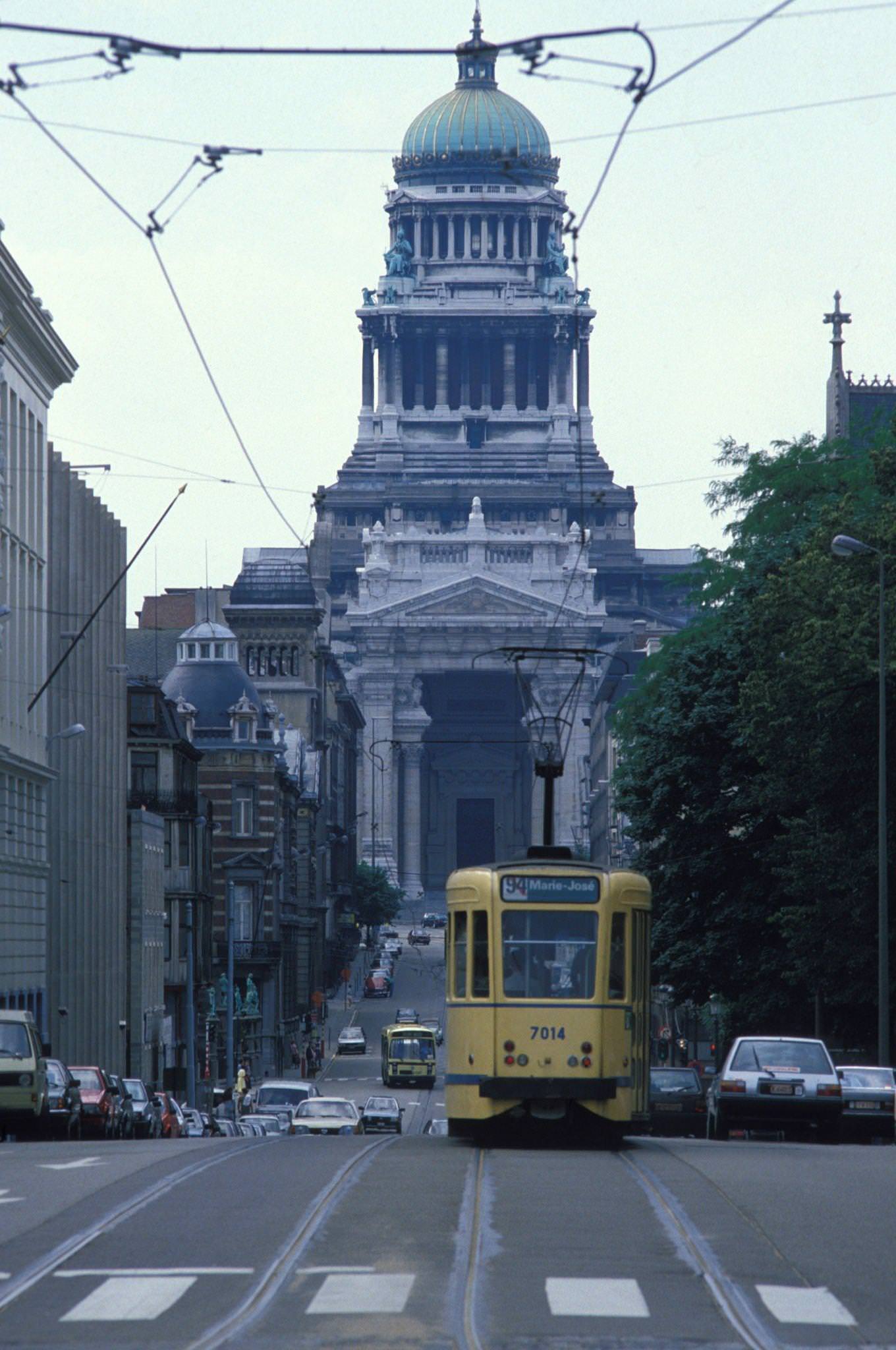
By 1986, photographers were documenting the city’s landmarks in sharp detail. The Grand Place hosted festivals and drew crowds of visitors. The Brussels Stock Exchange — the Bourse — anchored the commercial center with its grand neoclassical facade. The Palace of Justice loomed over the Marolles neighborhood from its hilltop position, one of the largest courthouses built in the 19th century anywhere in the world.
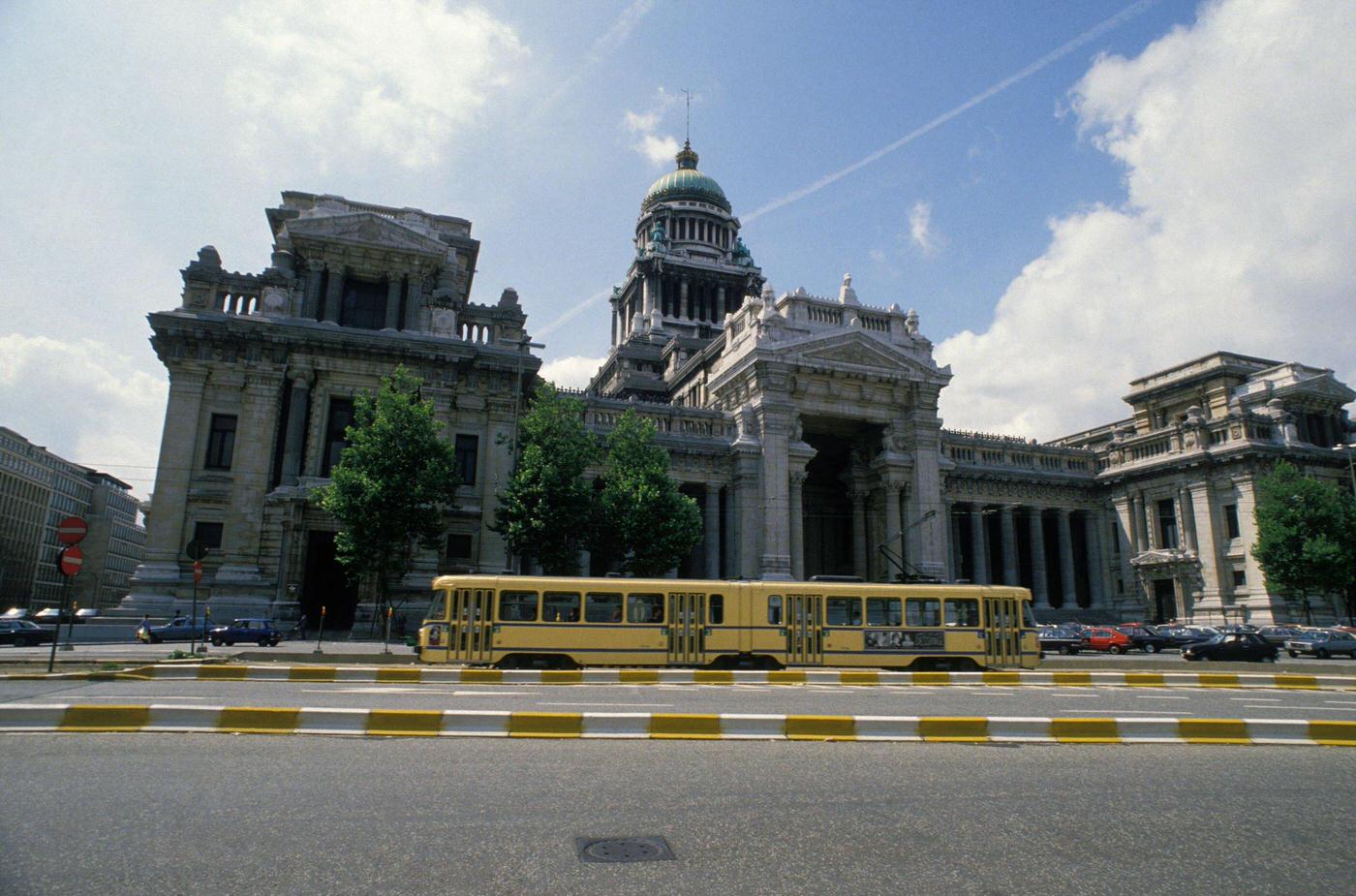
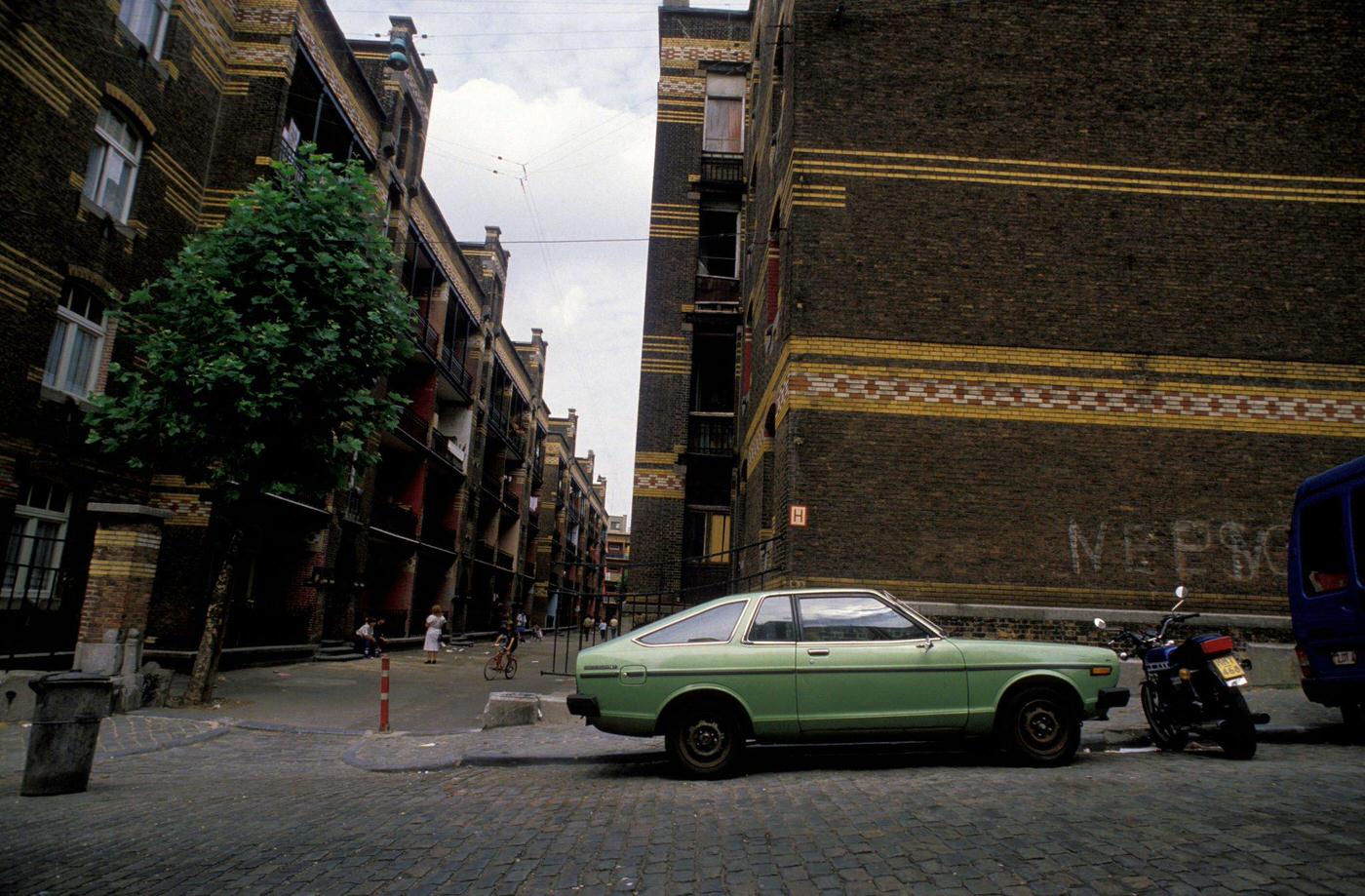
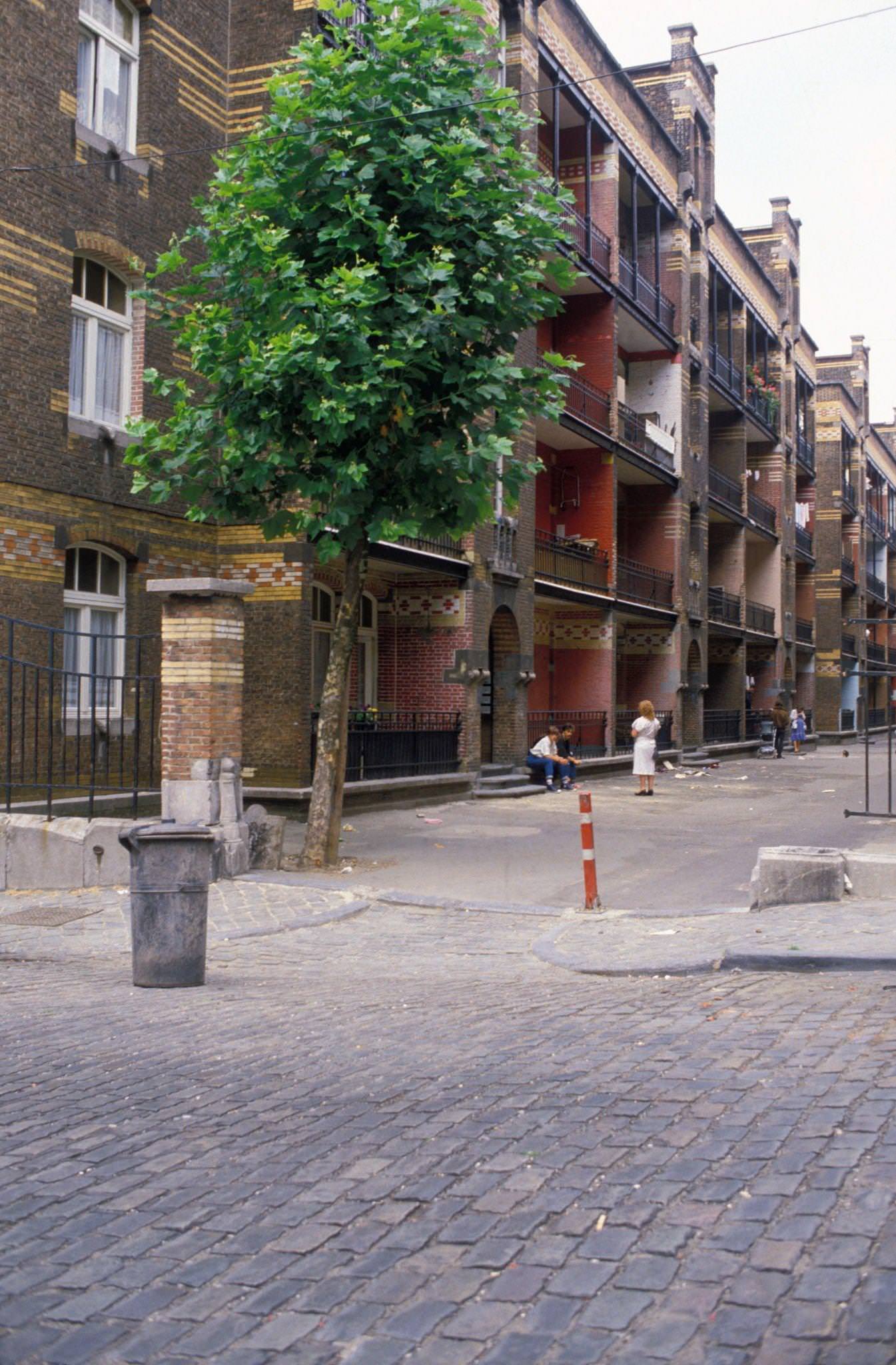
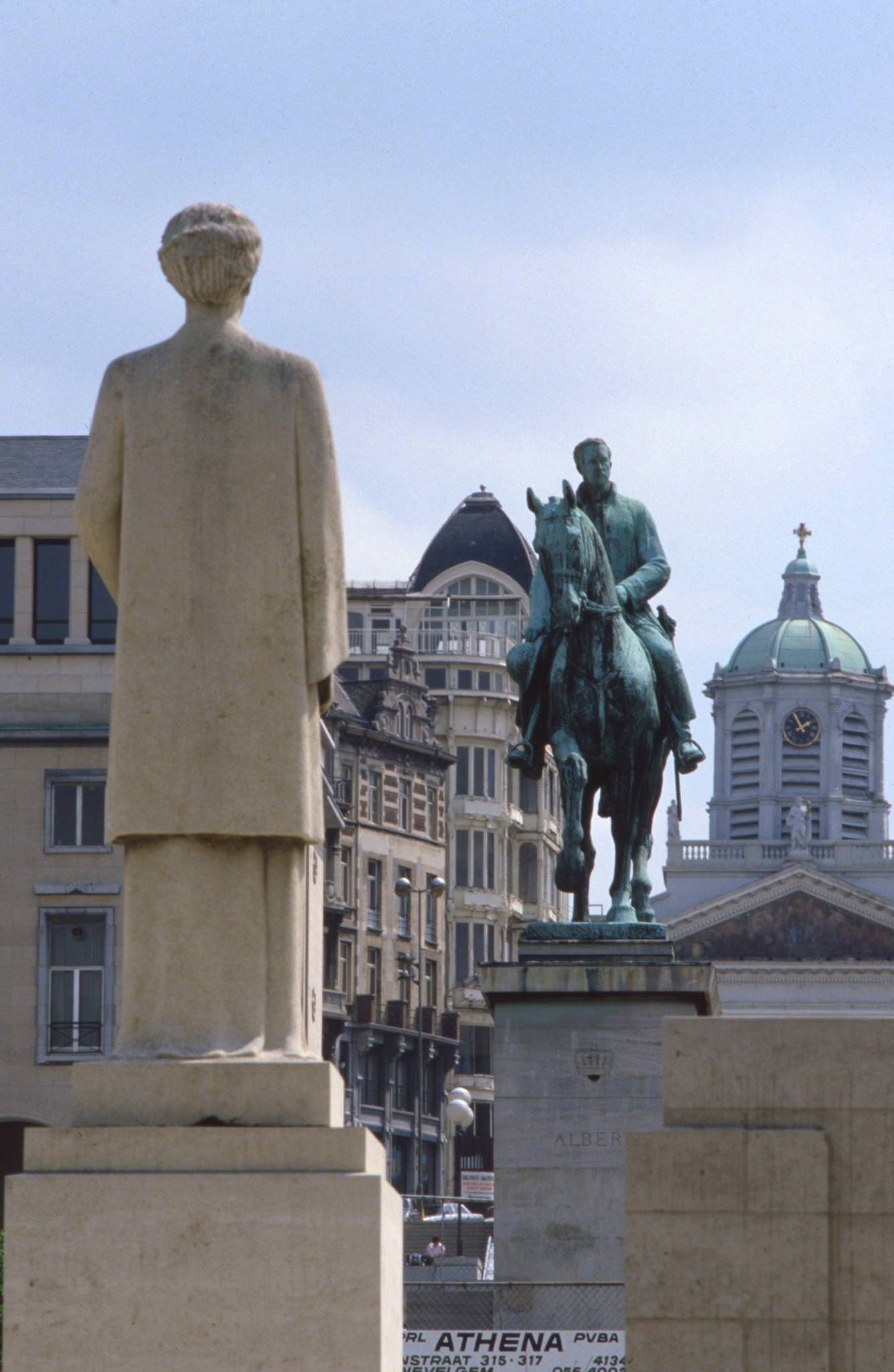
The Marolles, situated at the foot of the Palace of Justice, was one of Brussels’ oldest and most working-class neighborhoods. Its narrow streets were a world apart from the polished corridors of EU offices just a few kilometers away. Statues of King Albert I and Queen Elisabeth stood nearby, marking the city’s royal heritage alongside its modern political role.
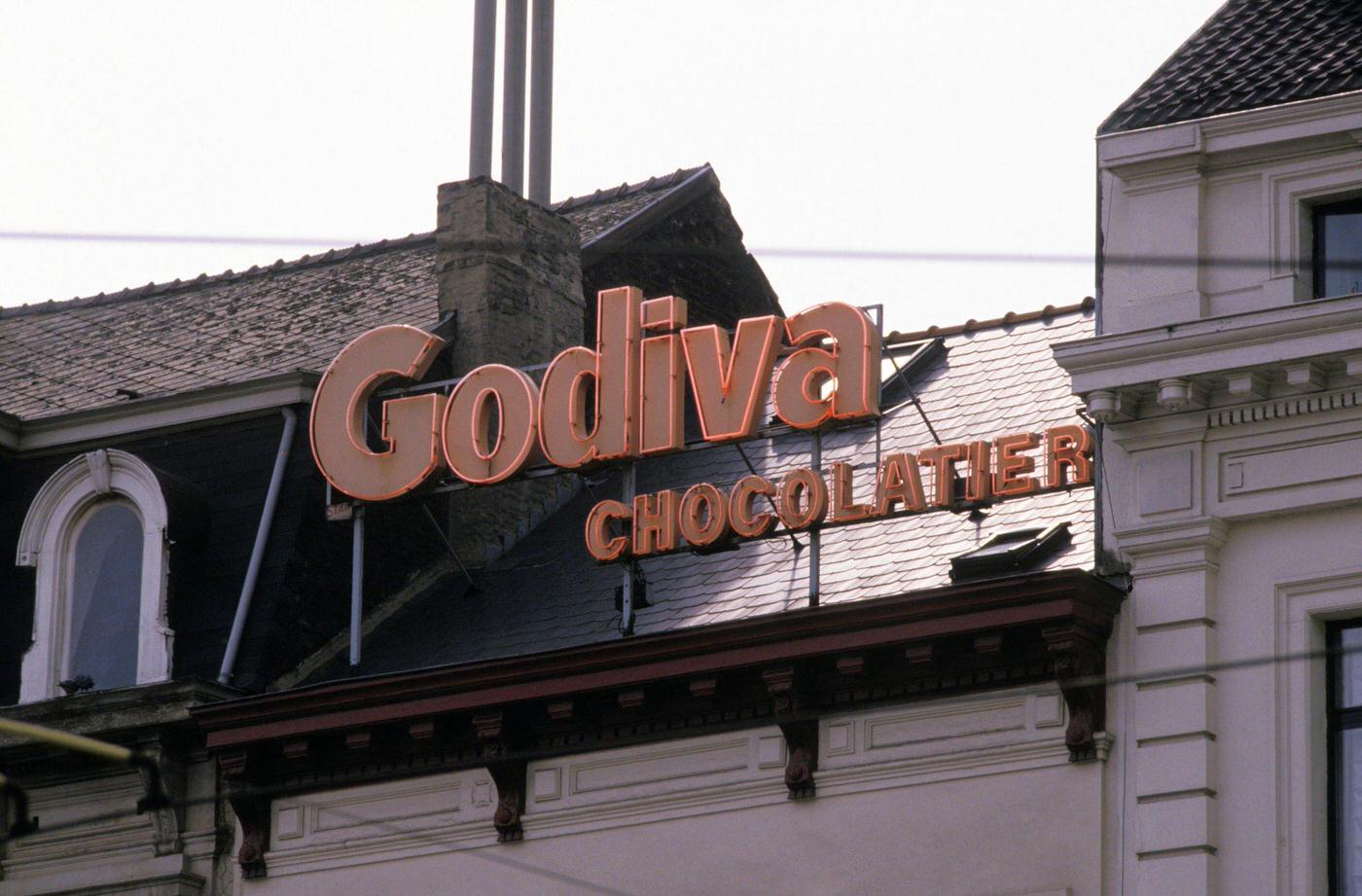
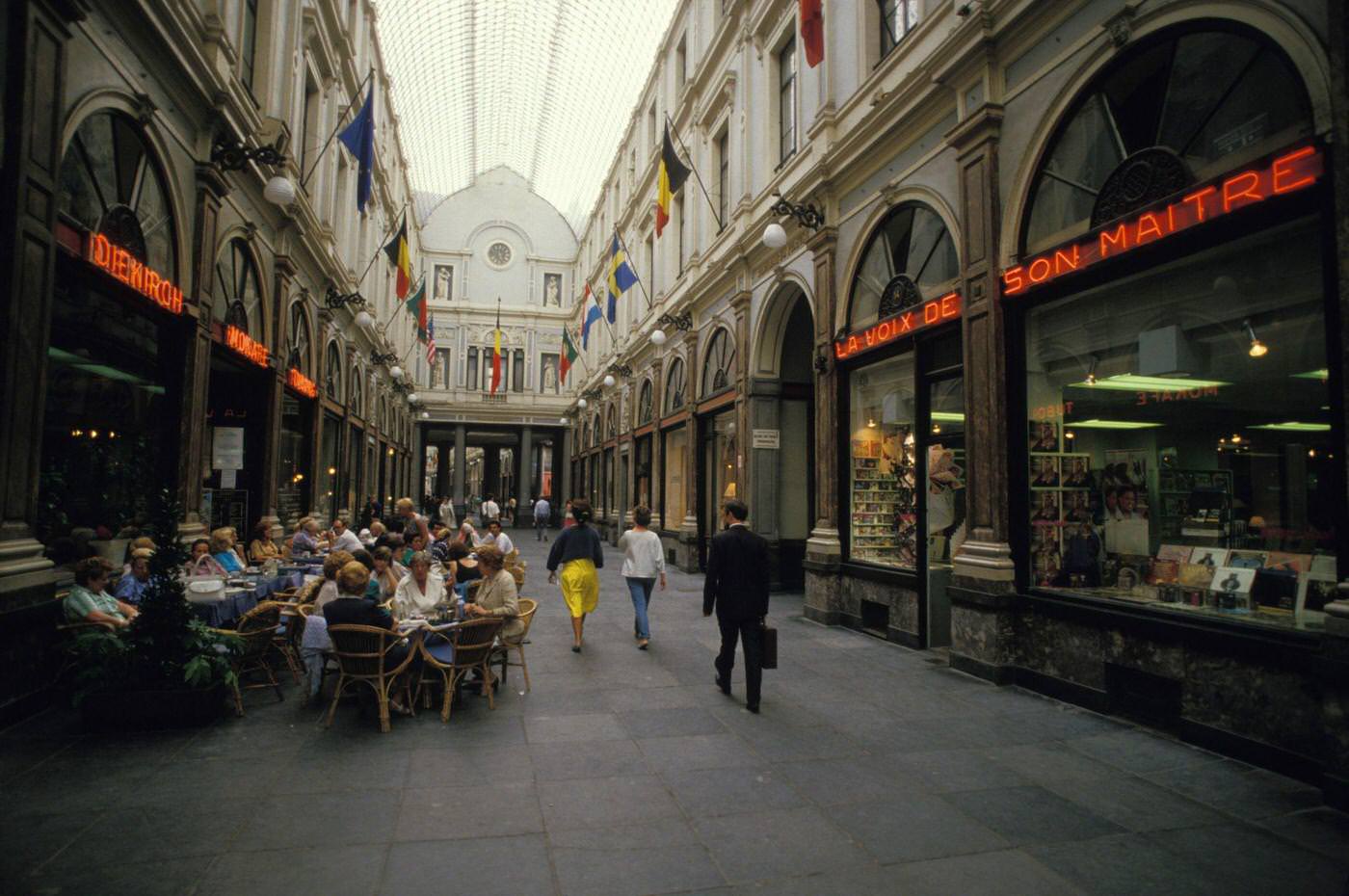
Brussels wore its culinary and commercial identity proudly. The Godiva chocolatier signage was a fixture on upscale streets, representing Belgium’s global reputation for chocolate. Fine dining restaurants like ‘Comme Chez Soi’ on Place Rouppe held multiple Michelin stars and attracted guests from across Europe. The Royal Galleries of Saint-Hubert, a stunning 19th-century shopping arcade, remained one of the most elegant spaces in the city.
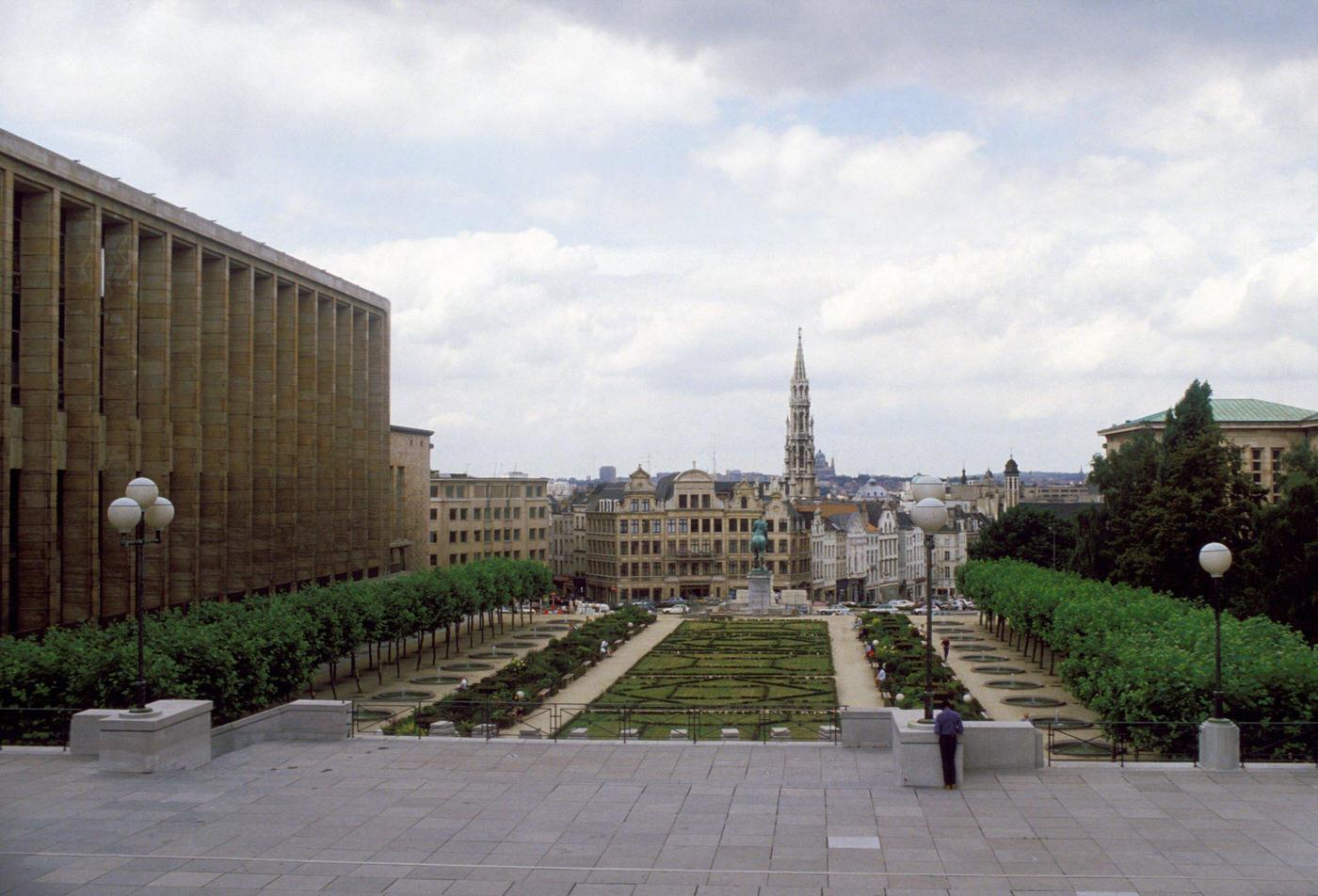
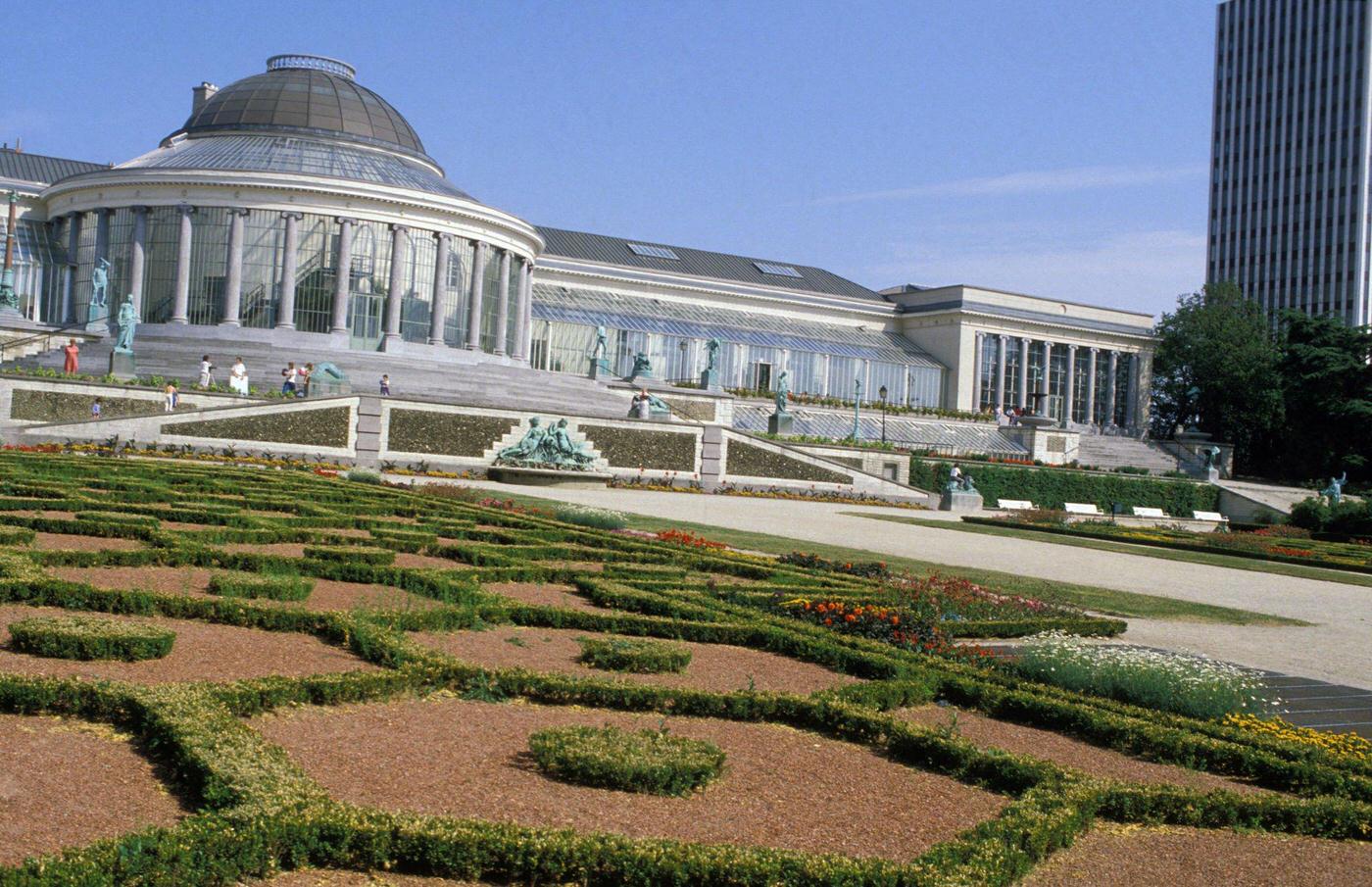
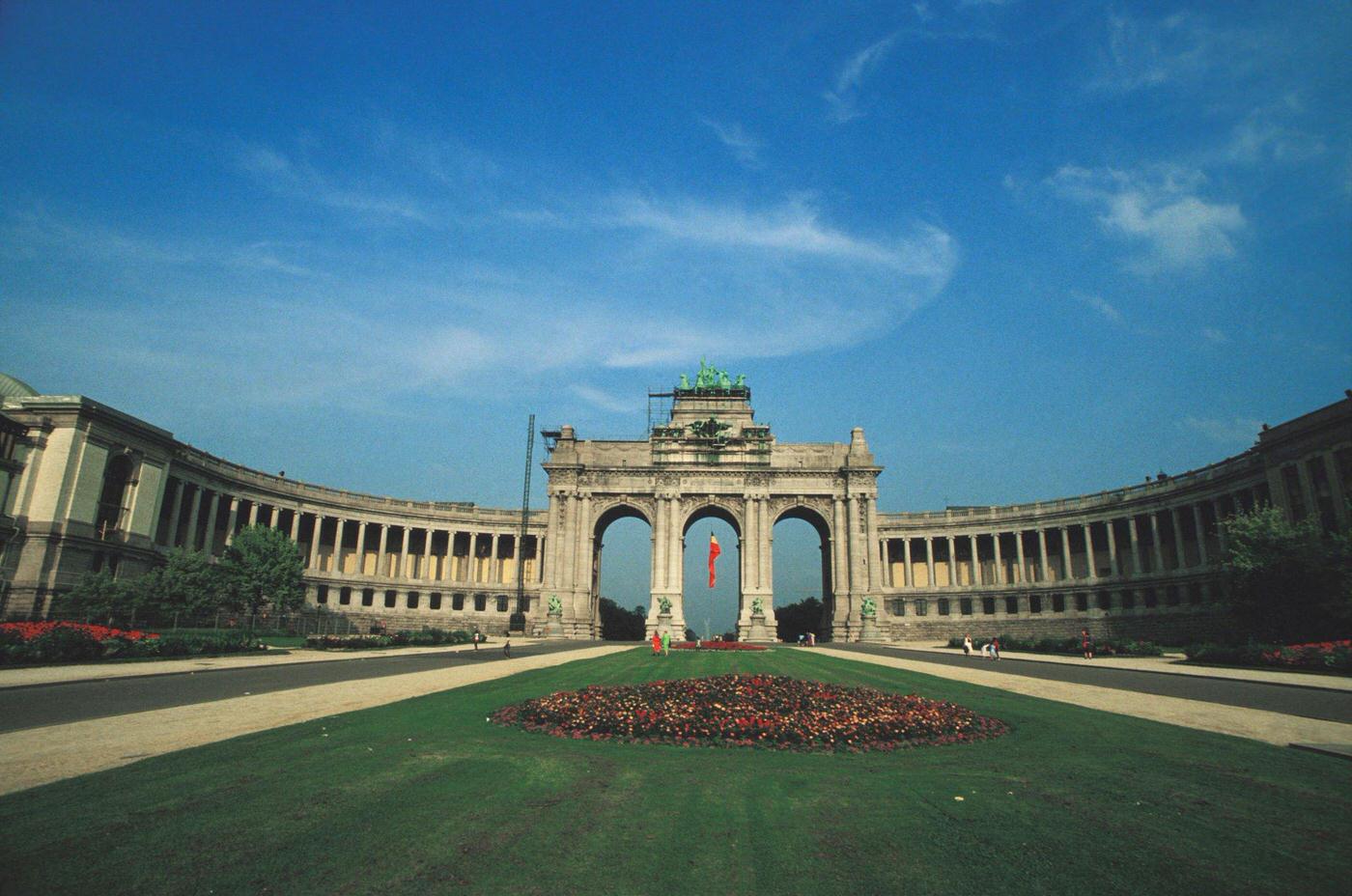
The city’s green spaces and public monuments offered relief from the urban density. The Mont des Arts terraced garden connected the lower and upper city with sweeping views. The Parc du Cinquantenaire, built to celebrate Belgium’s 50th anniversary of independence, anchored the eastern part of the city with its triumphal arch and museum complex. The Botanical Garden near the boulevard of the same name provided another patch of calm.
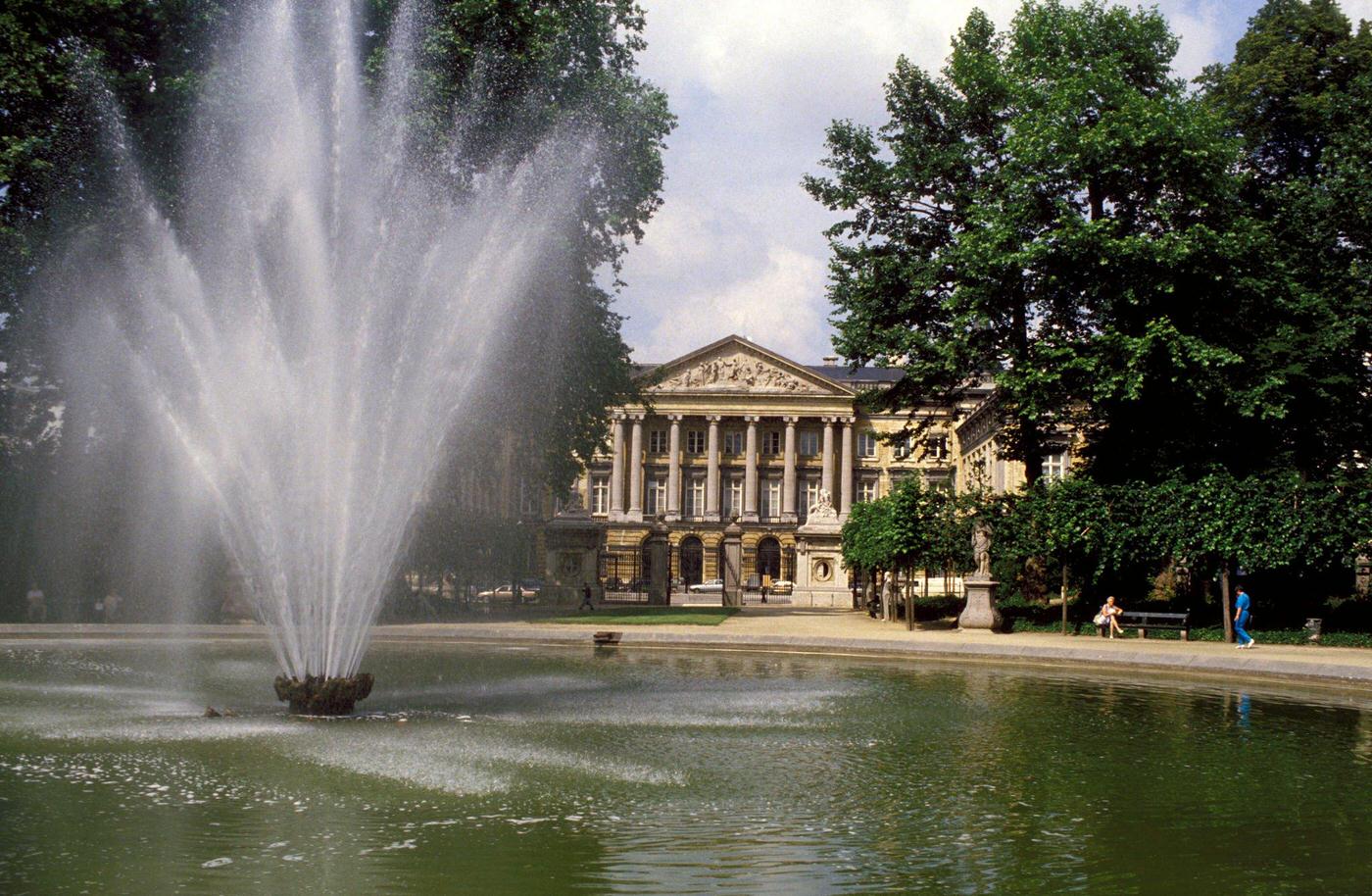
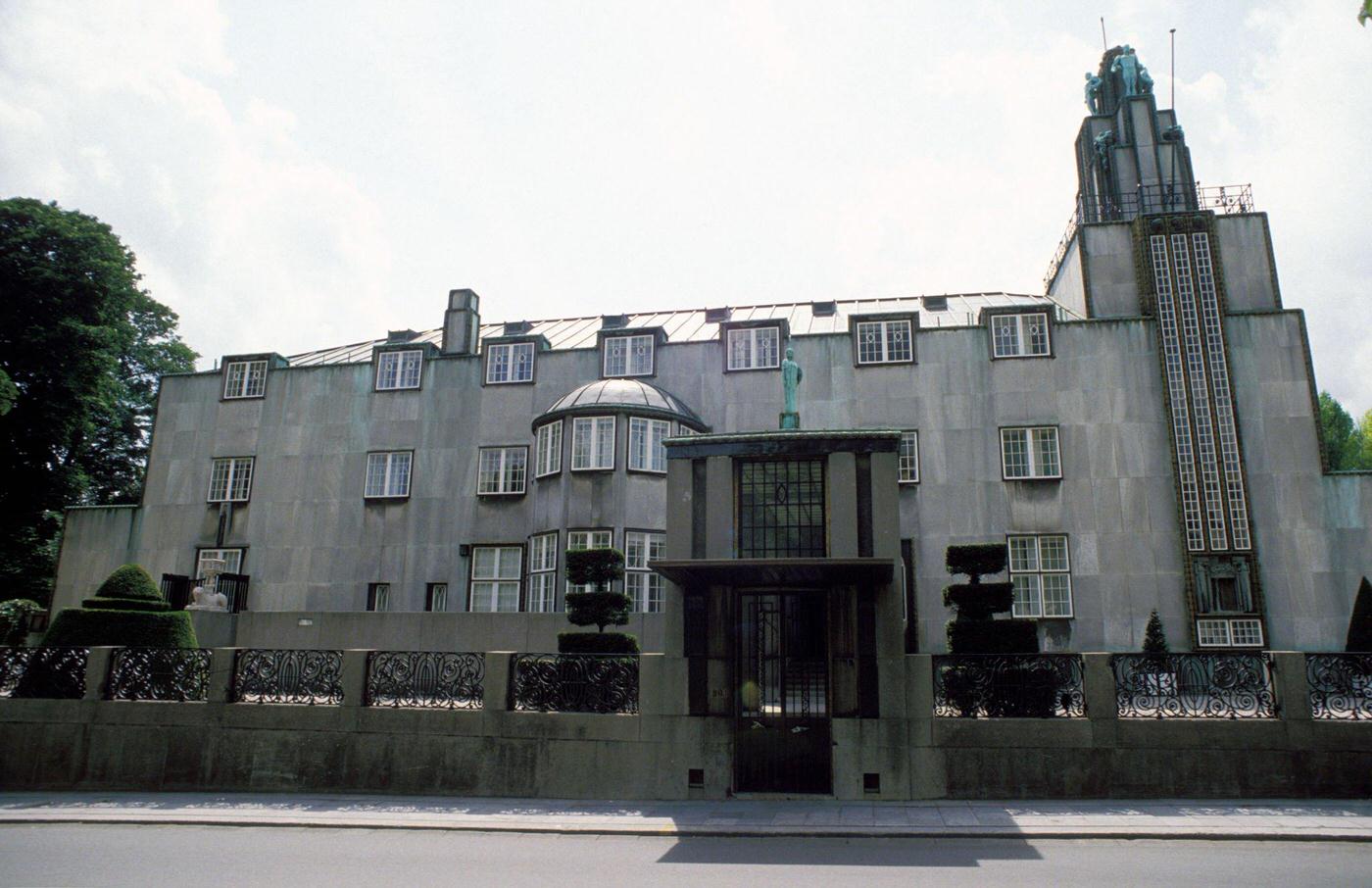
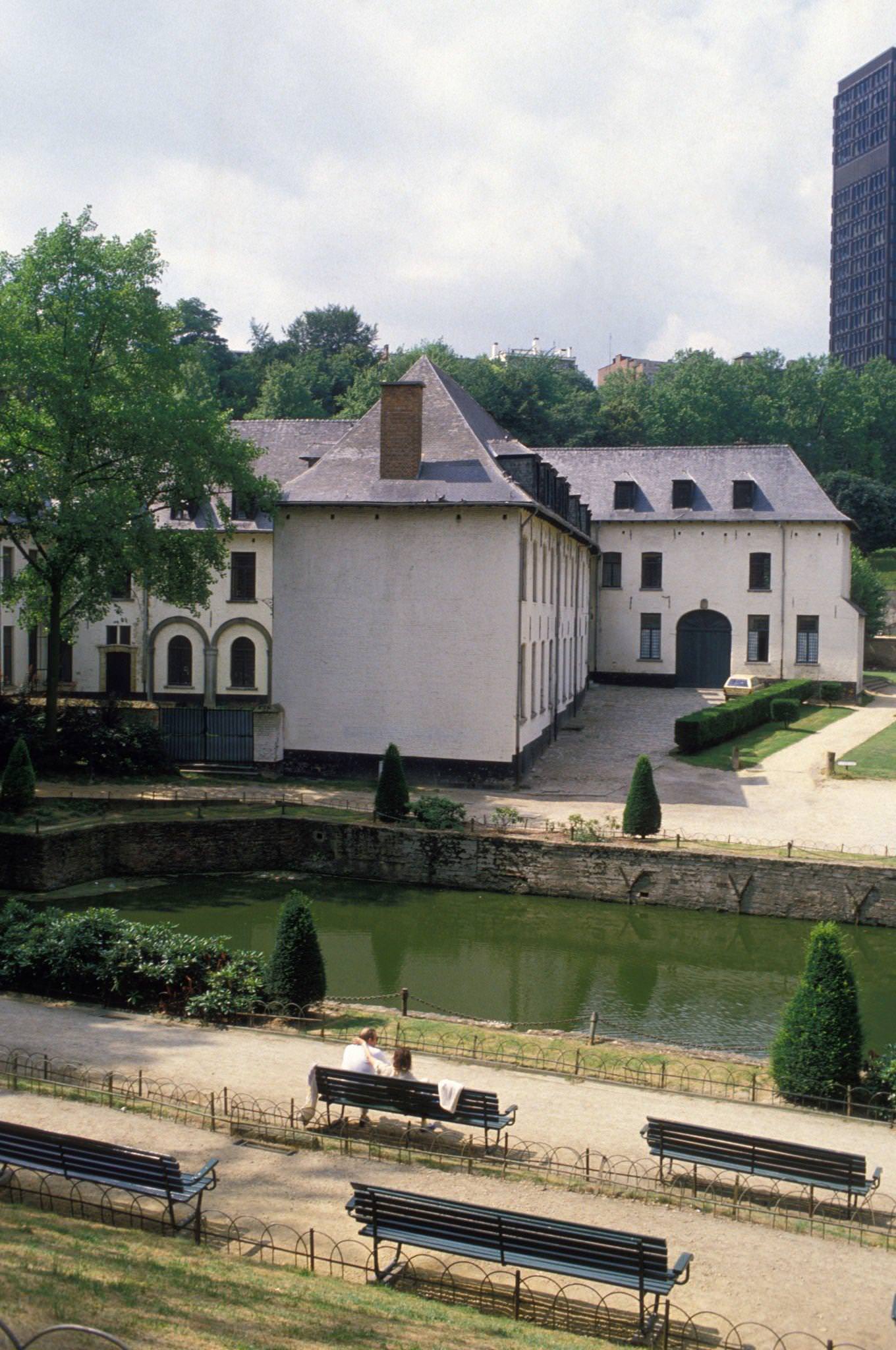
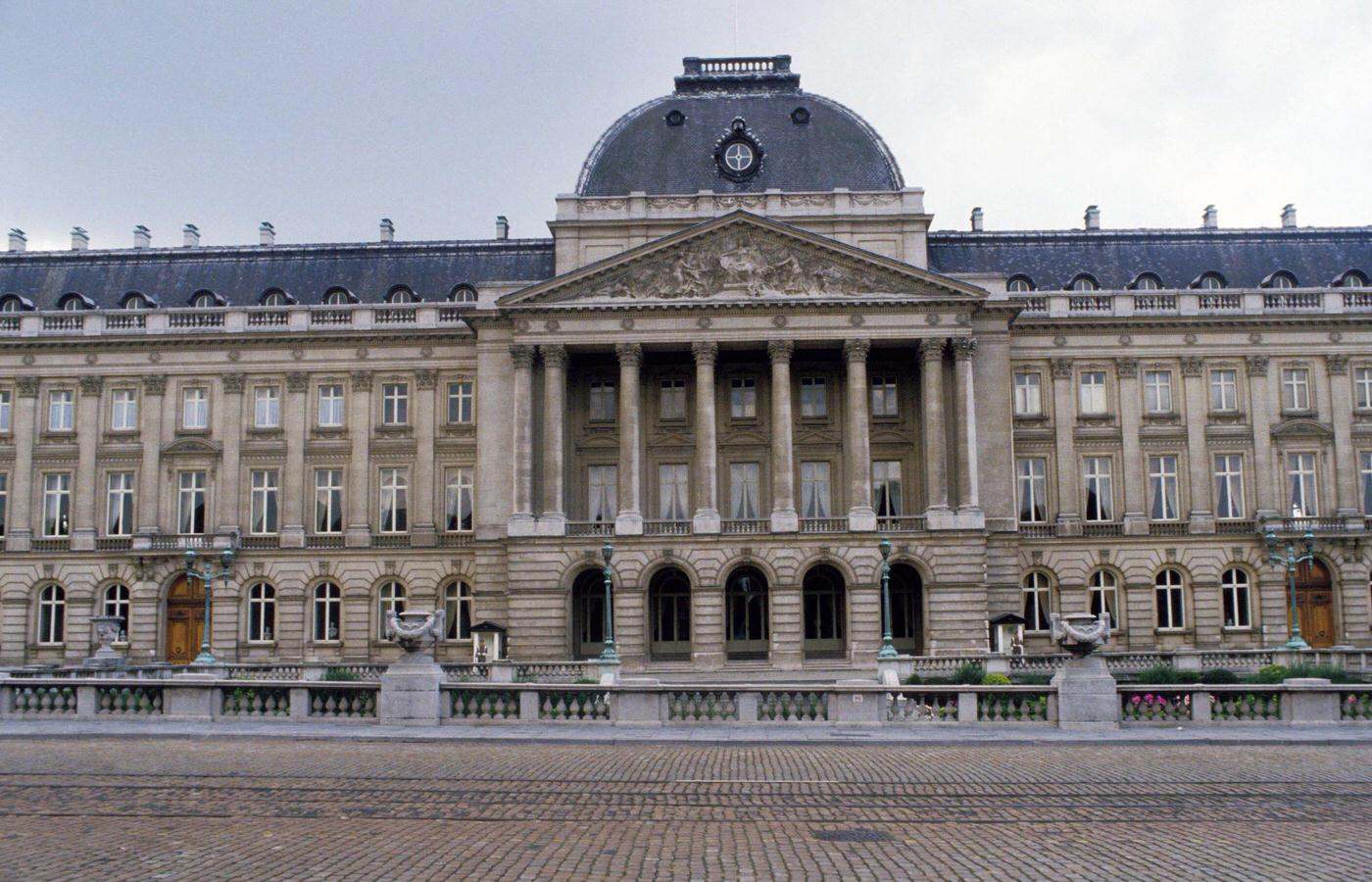
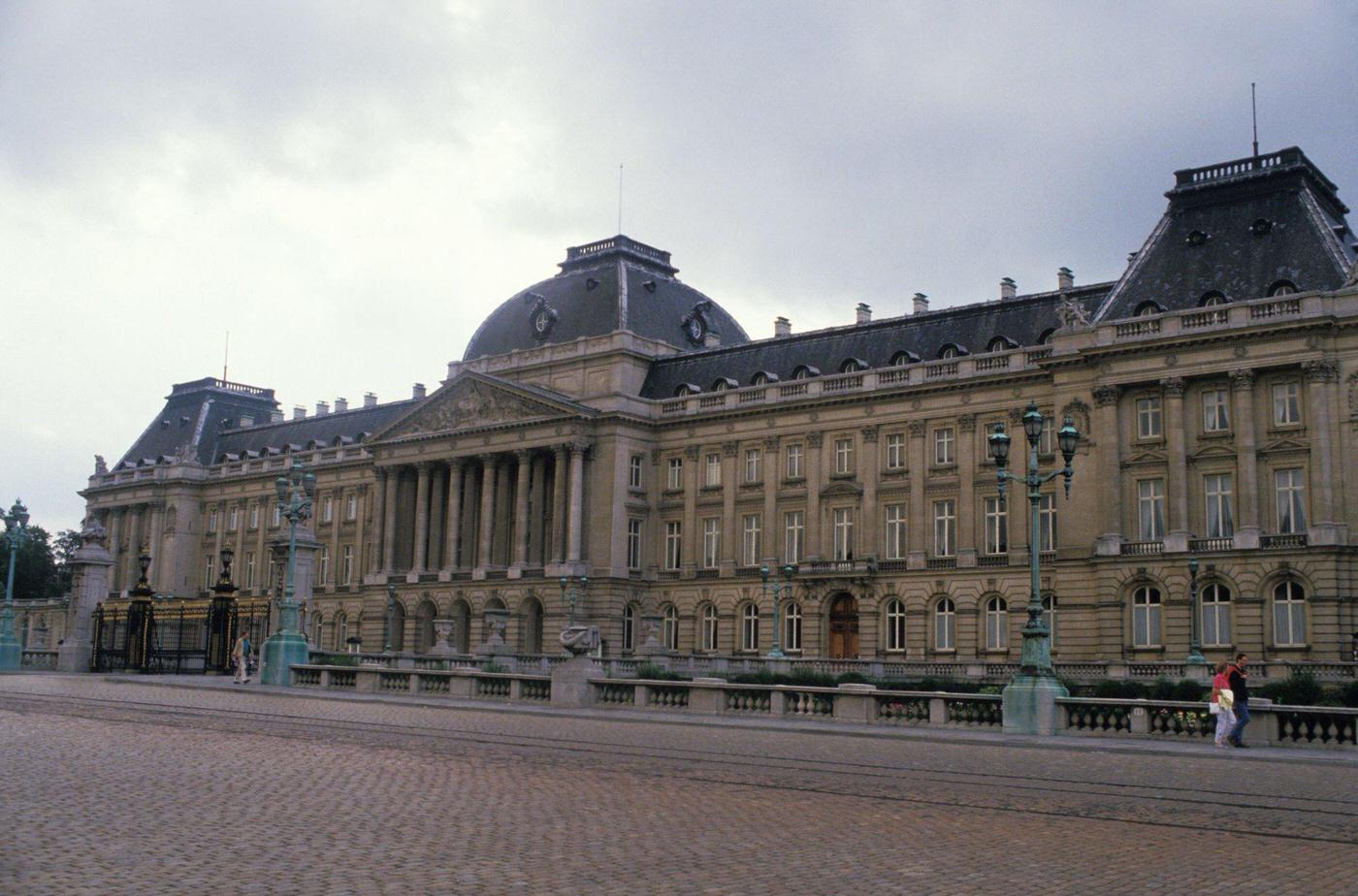
The Royal Palace, the Stoclet Palace, and the Abbaye de la Cambre each represented different eras of Brussels’ architectural wealth. The Royal Palace on Place des Palais served as the working residence of the Belgian king. The Stoclet Palace, a UNESCO World Heritage Site, was a masterpiece of Art Nouveau architecture completed in 1911 and still privately owned in the 1980s. The Abbaye de la Cambre, a former Cistercian abbey, sat peacefully beside its pond in the commune of Ixelles.
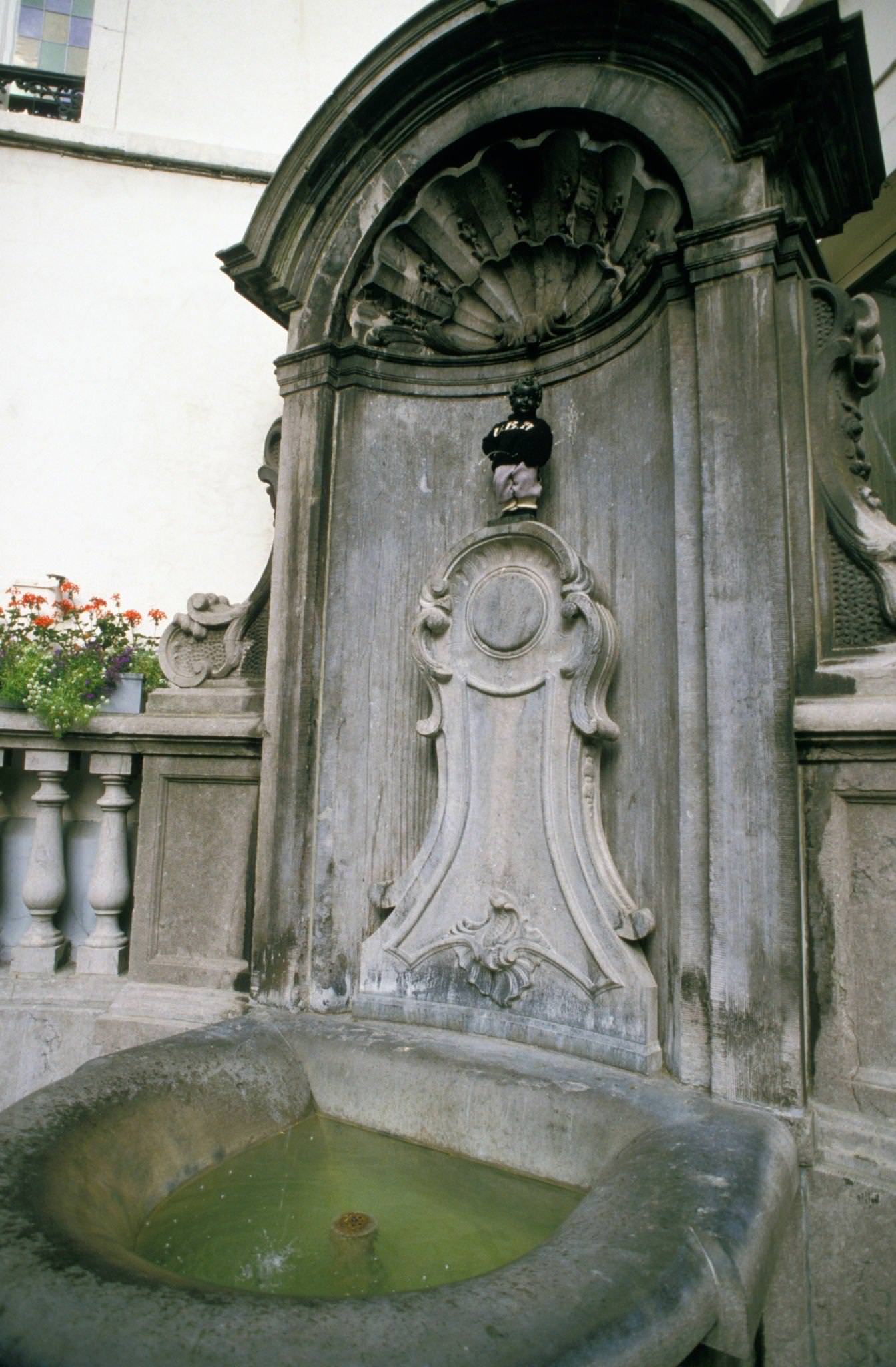
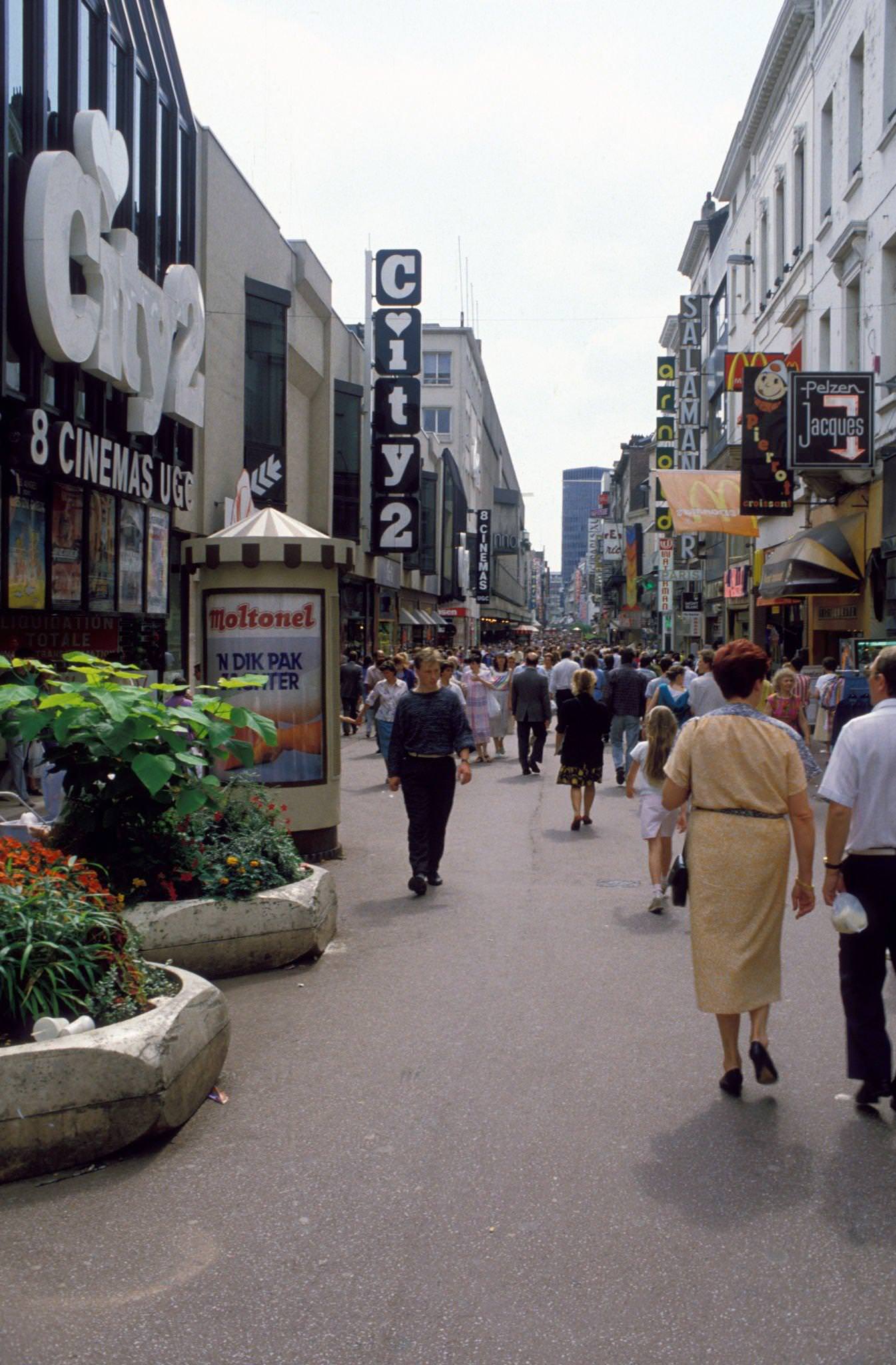
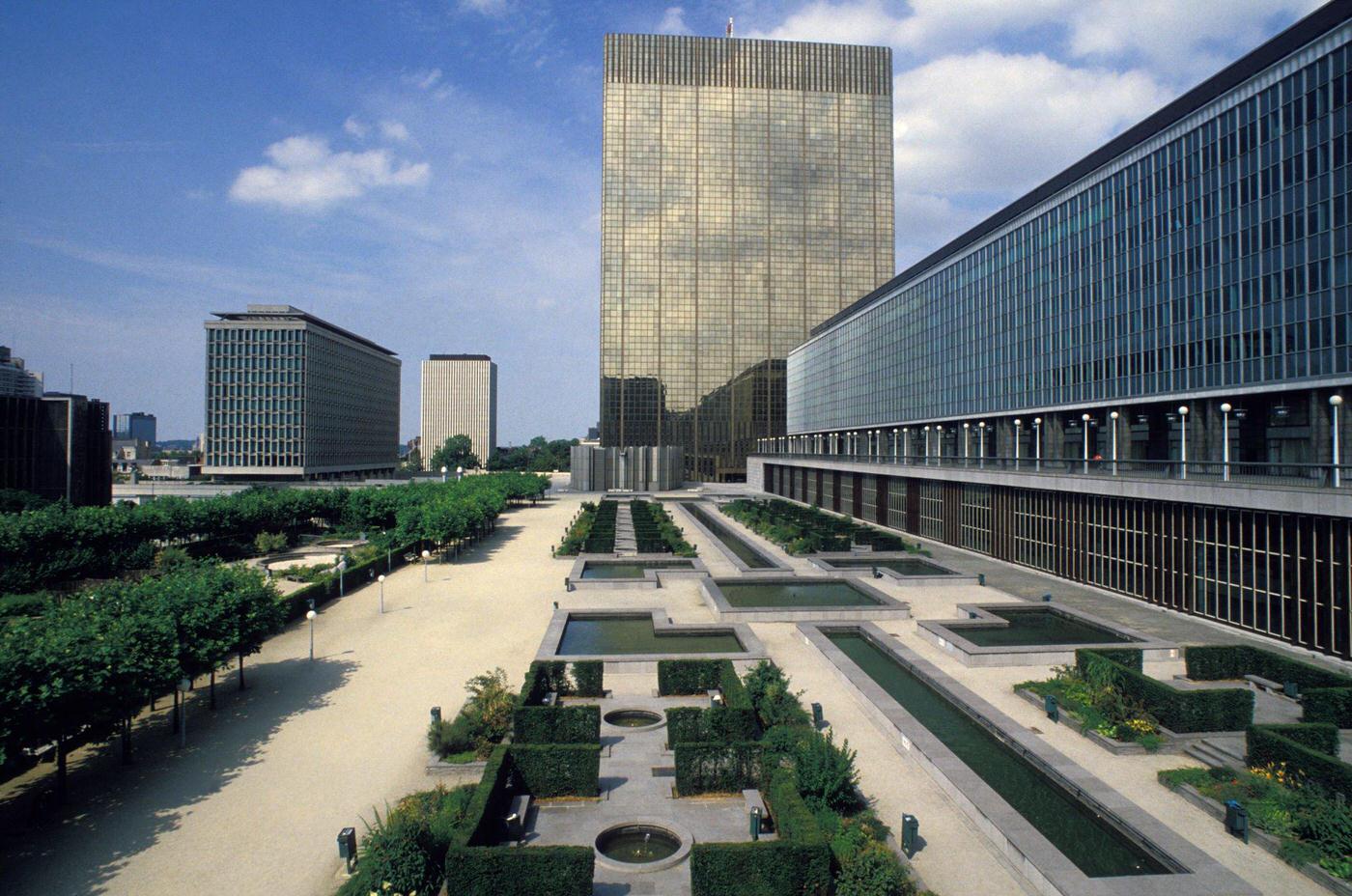
The Manneken Pis — Brussels’ famous 17th-century bronze fountain of a small boy — remained one of the city’s most visited curiosities. Rue Neuve, the city’s main pedestrian shopping street, drew crowds seven days a week. And the Gardens of the Administrative City, surrounding the massive government complex built in the 1960s and 70s, offered a more formal green space in the heart of the city.
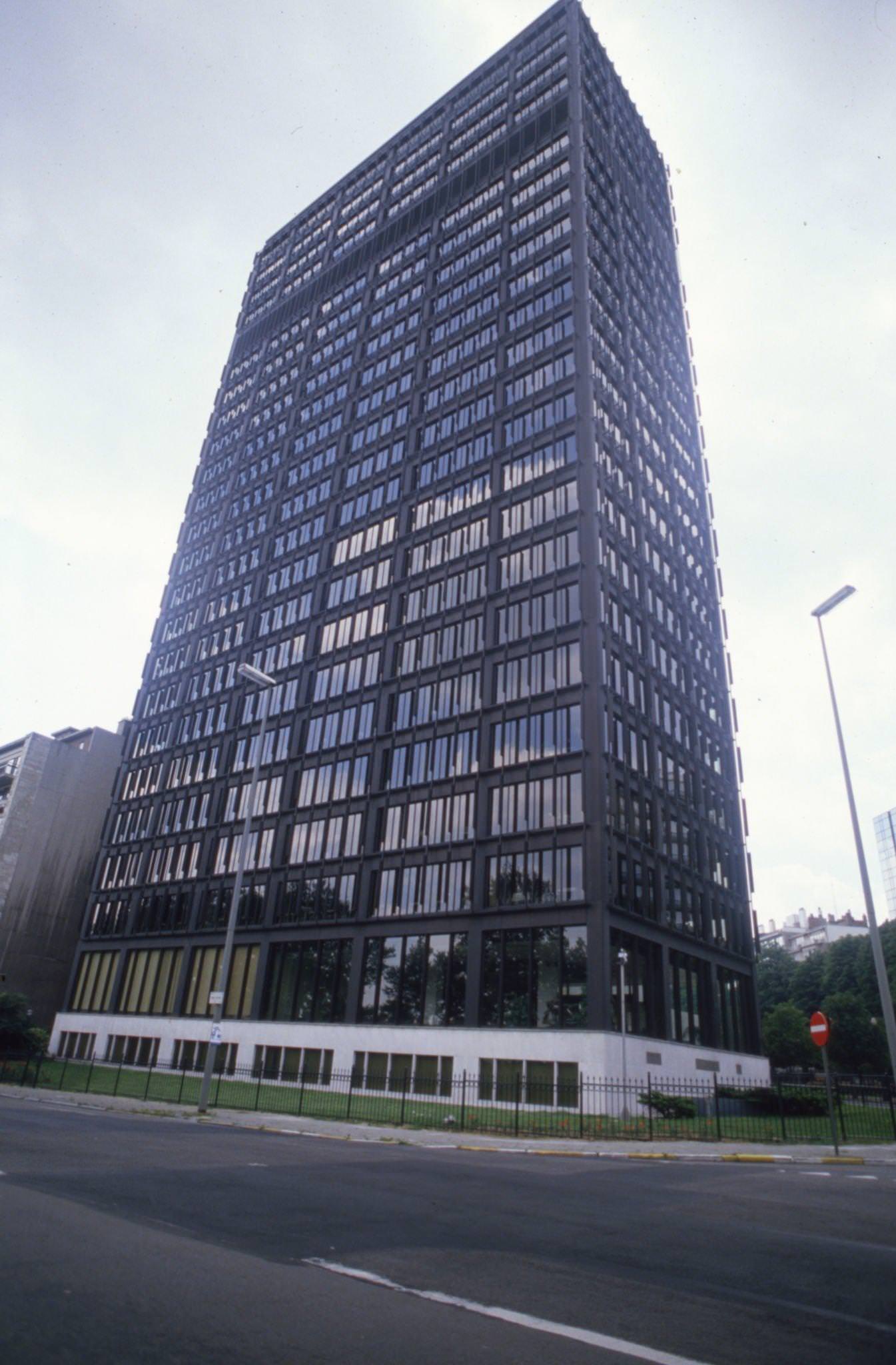
Corporate Brussels was also on display. The ITT European Headquarters represented the wave of multinational companies that had chosen Brussels as their European base during this period. The Regency Street corridor linking the city center to the Palace of Justice was lined with legal offices and institutions that underscored Brussels’ role as a seat of law and governance.
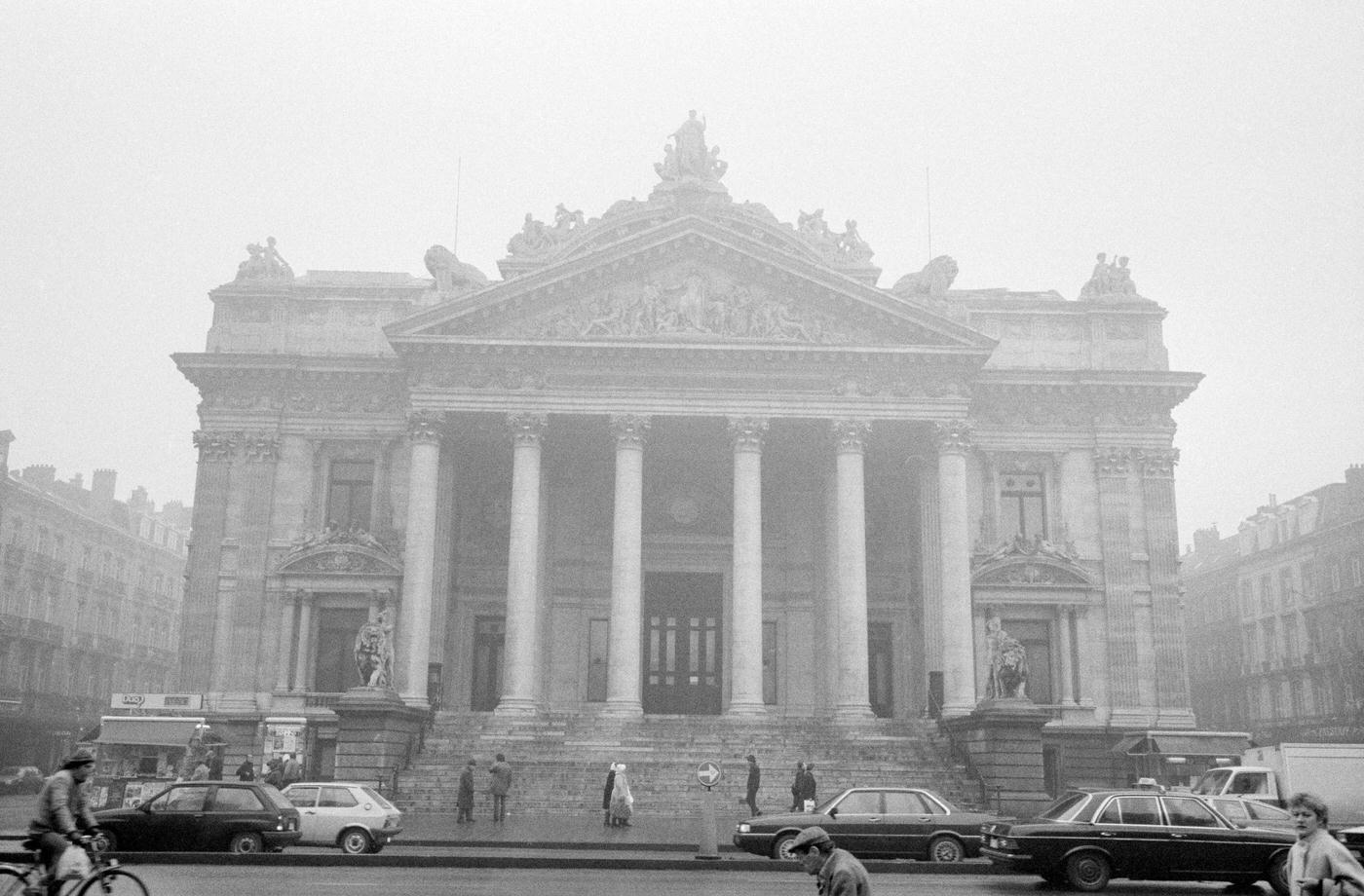
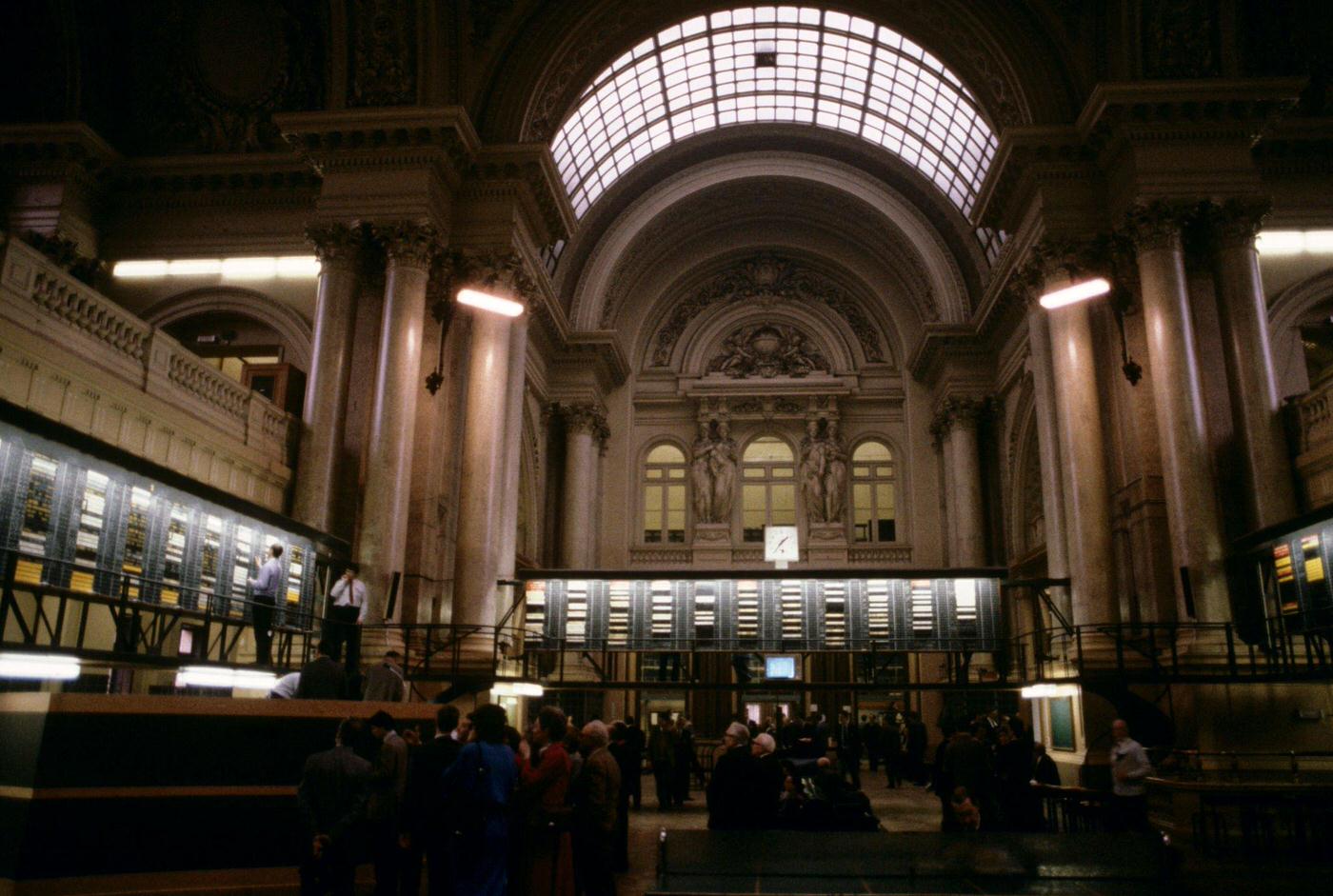
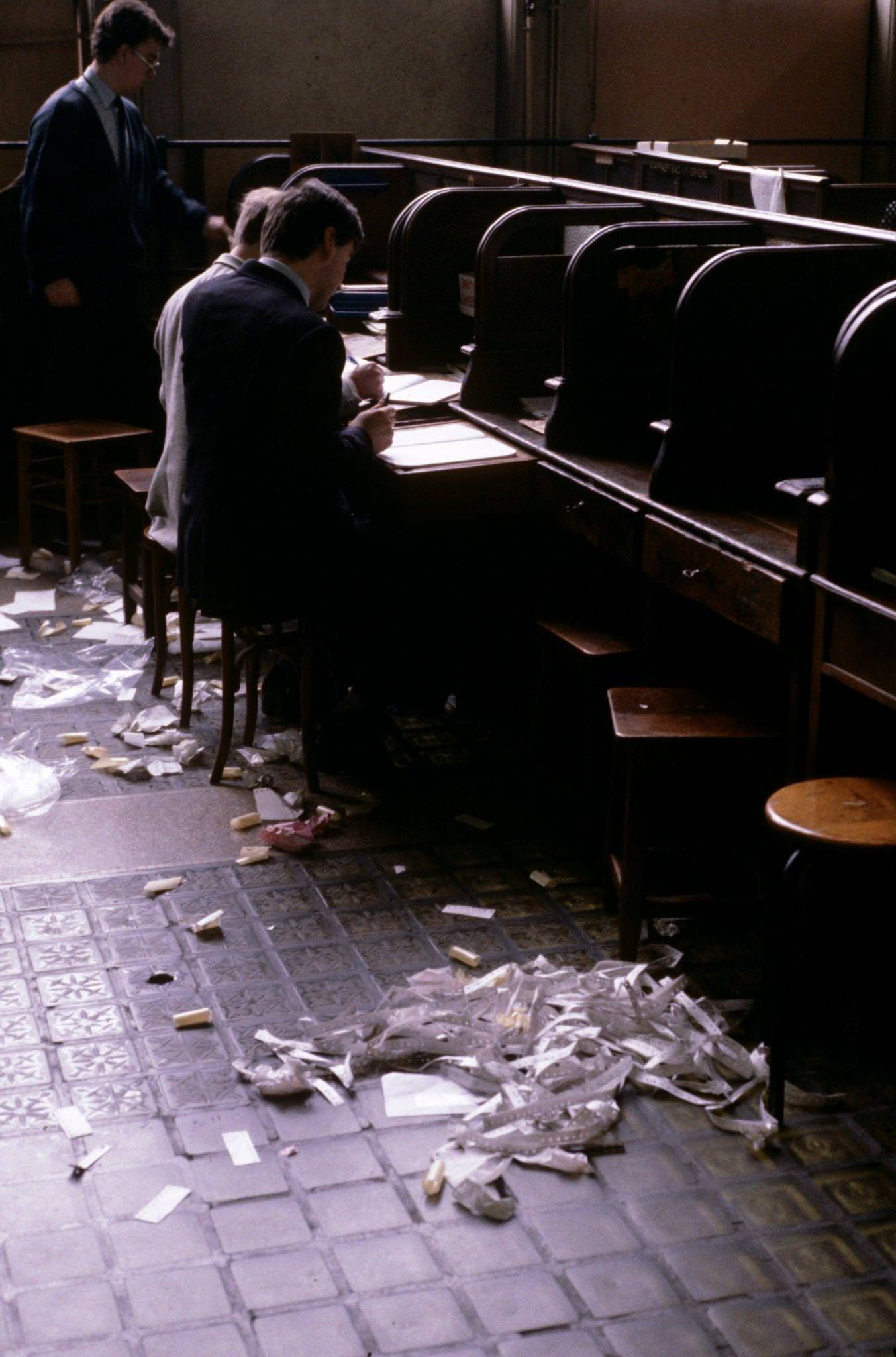
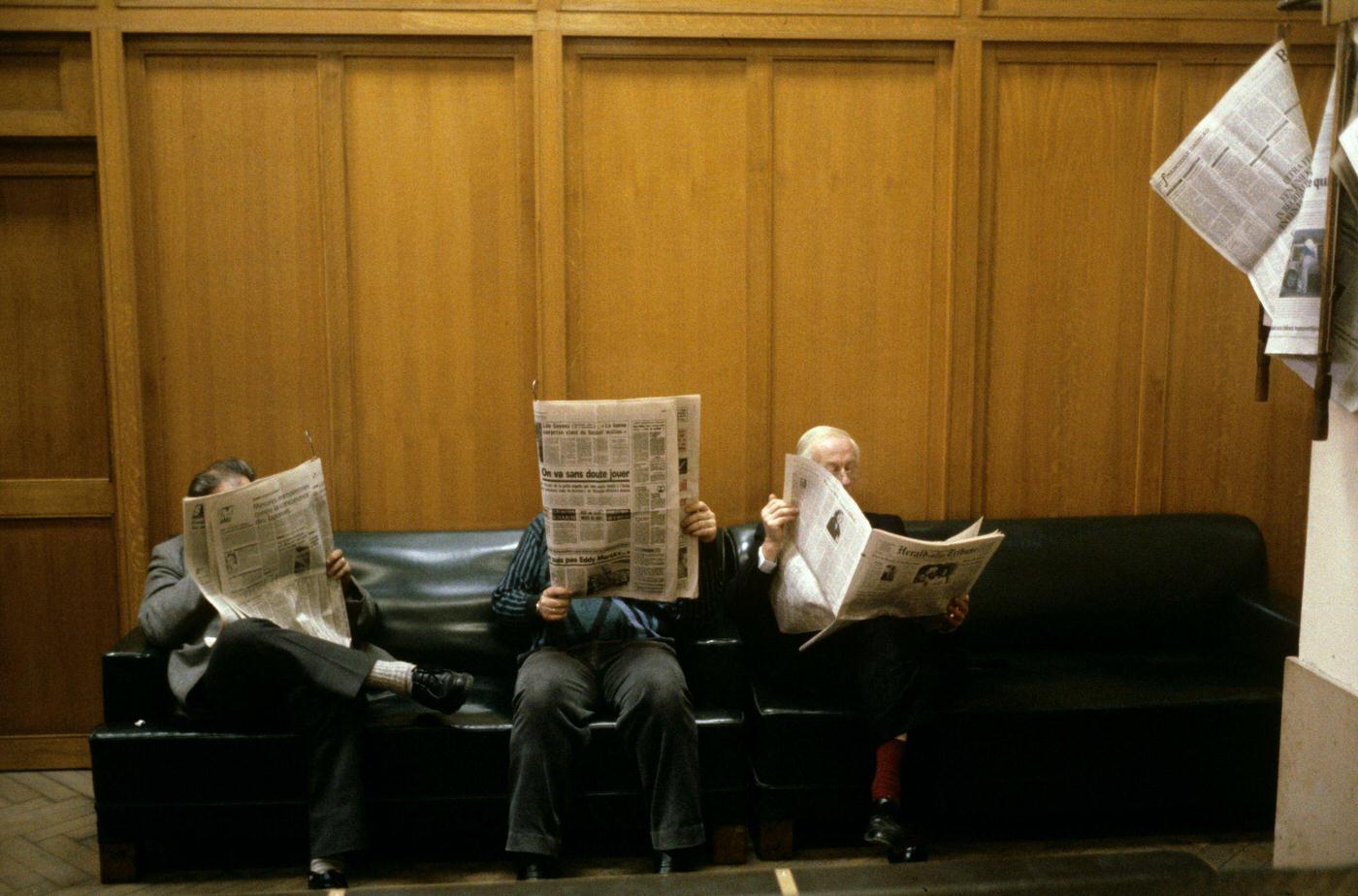
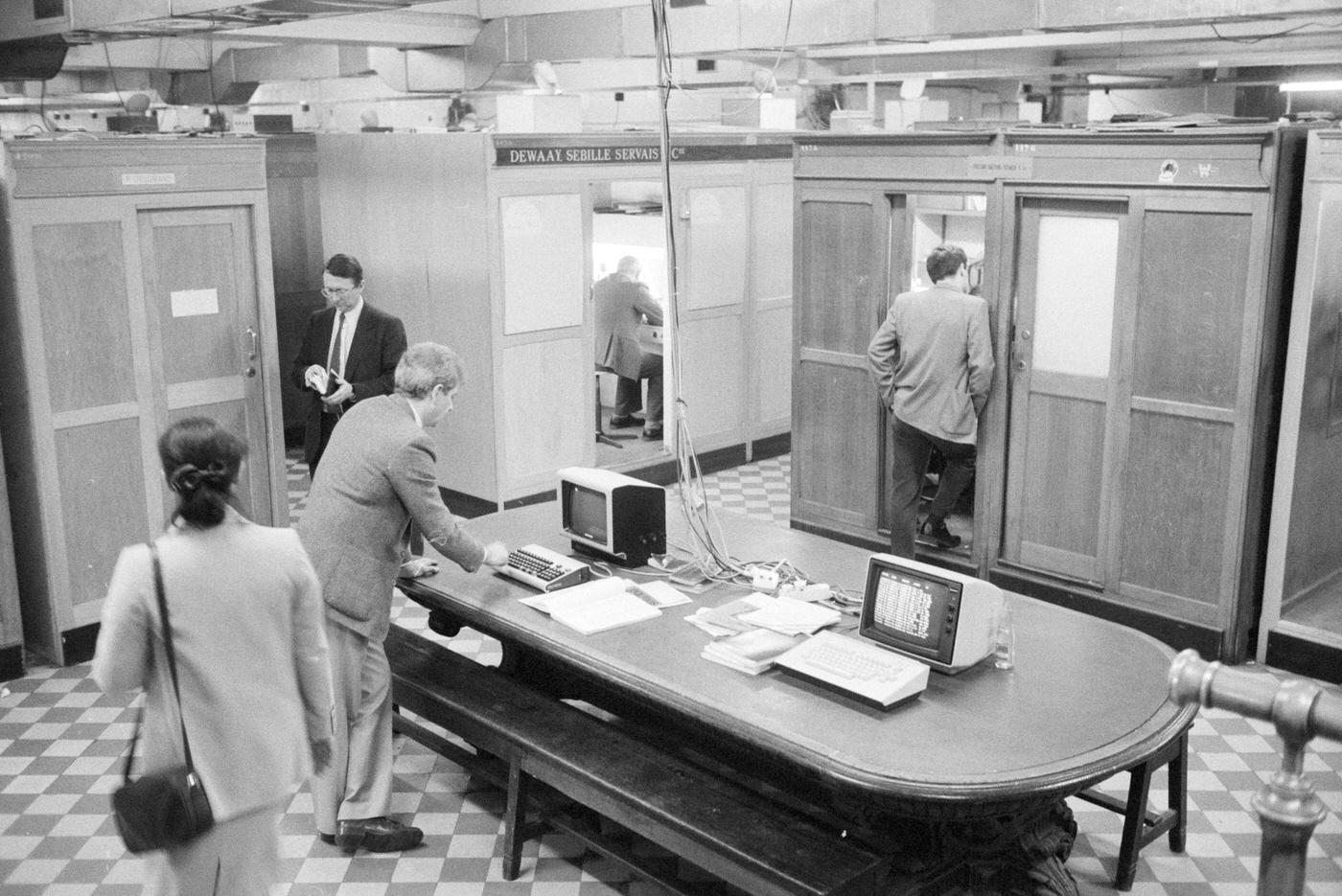
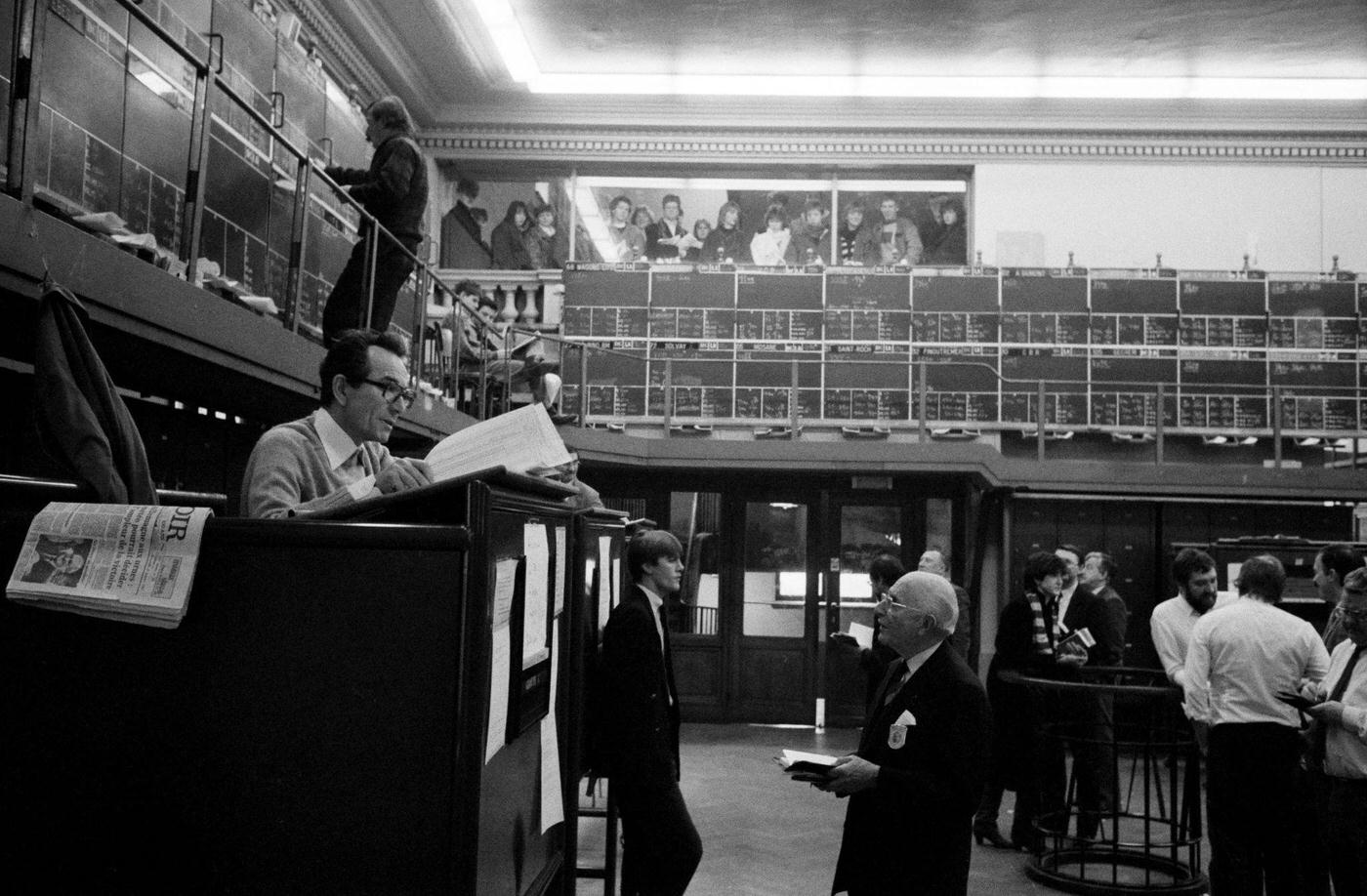
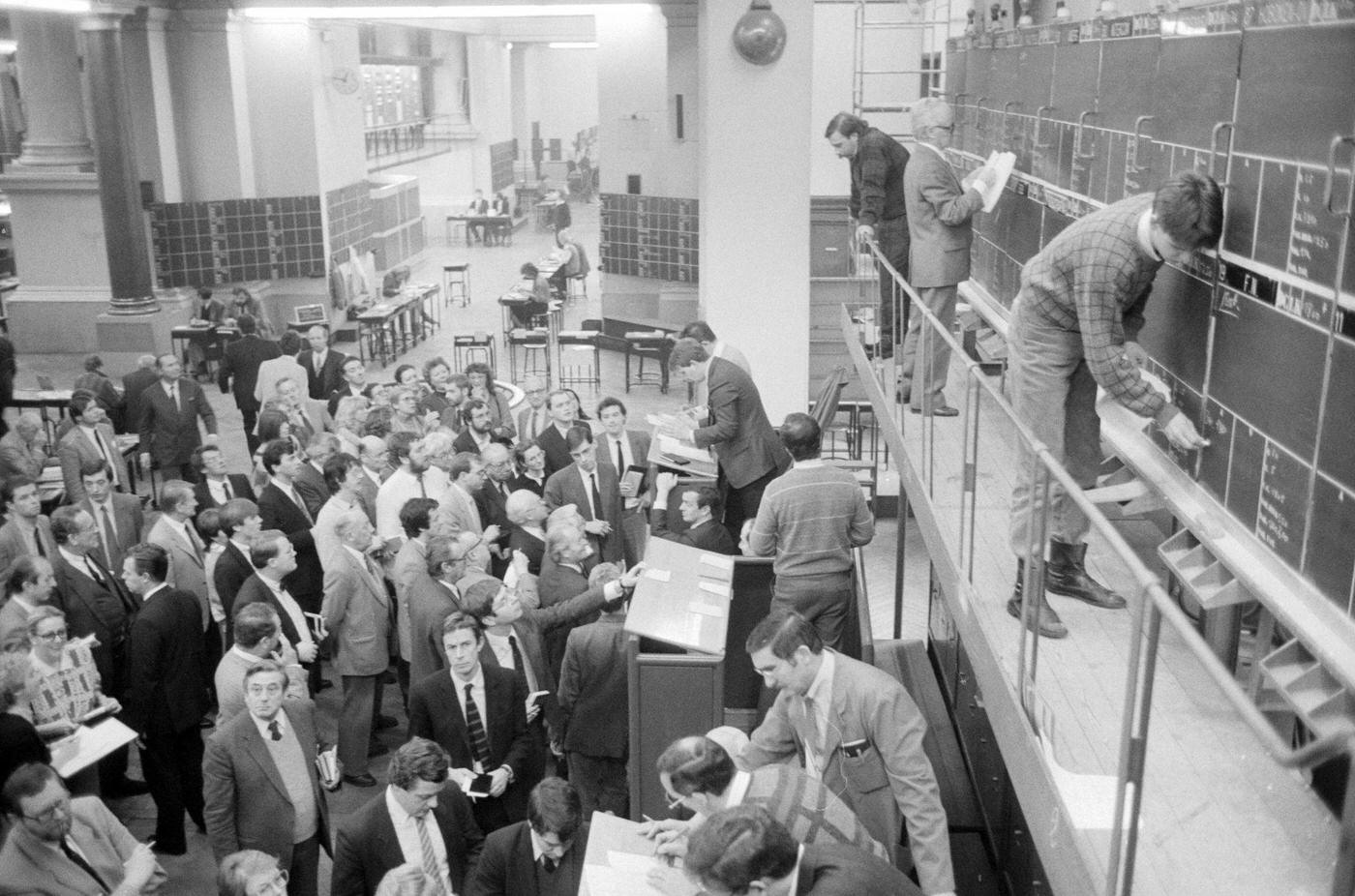
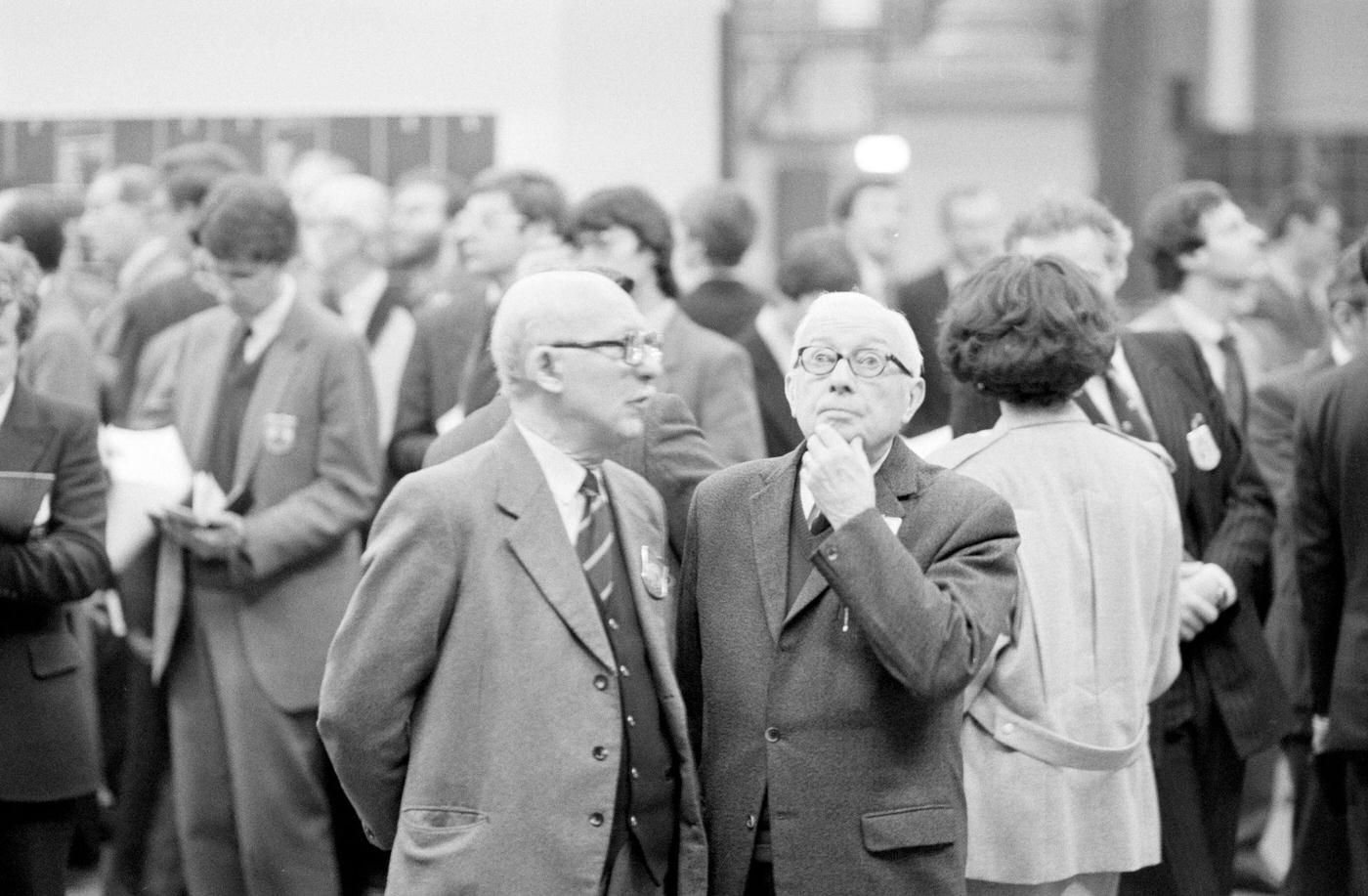
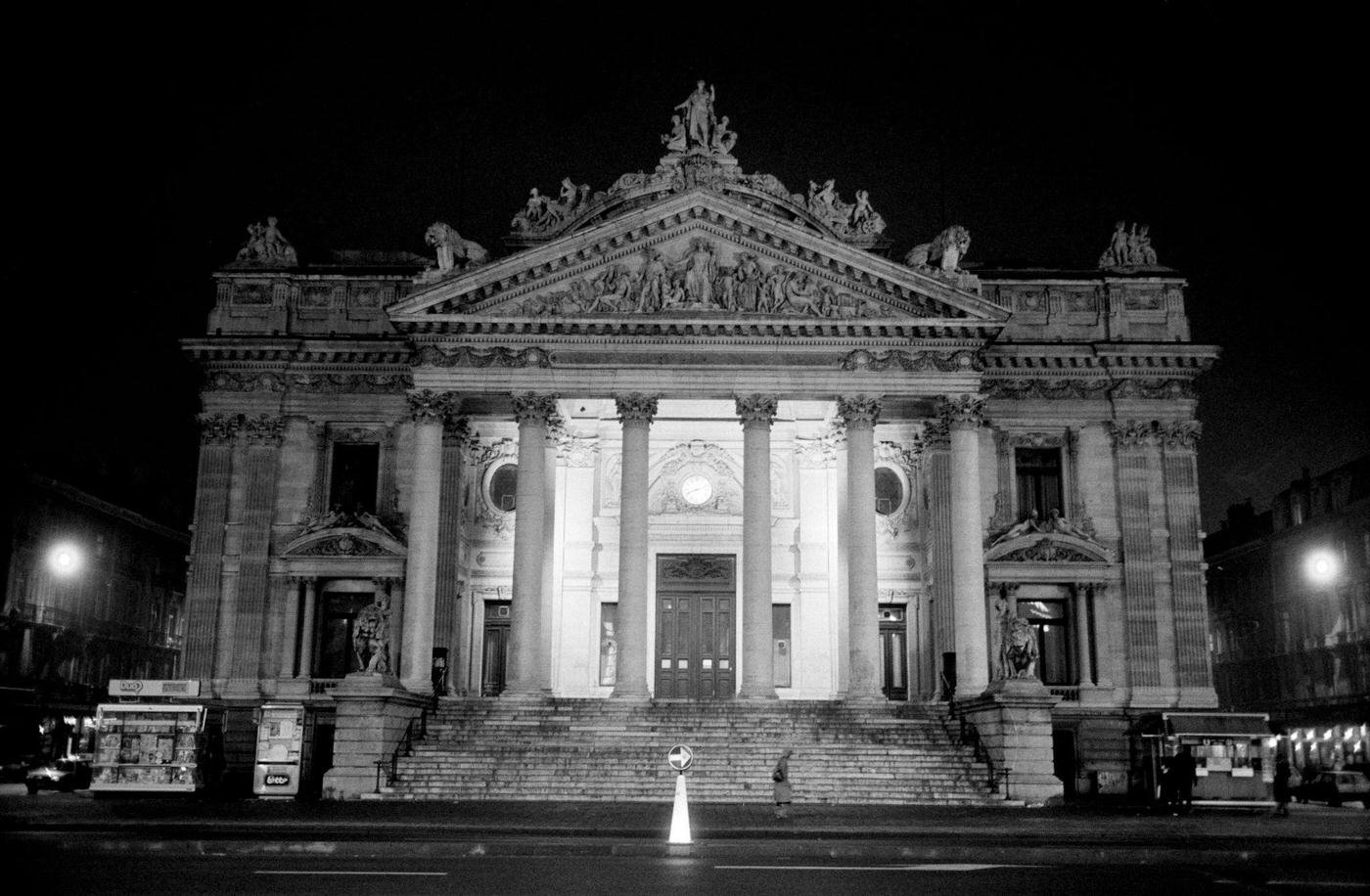
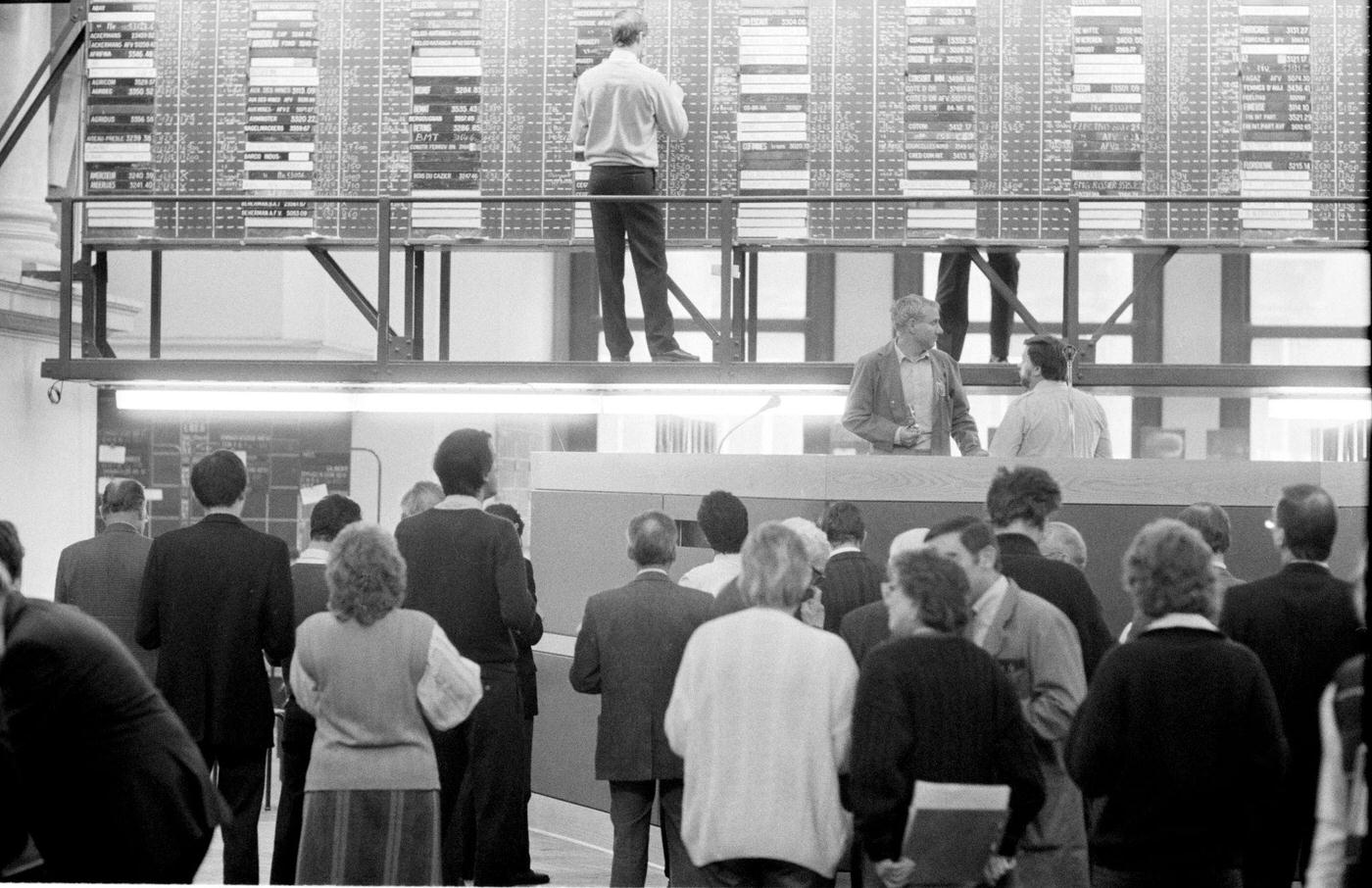
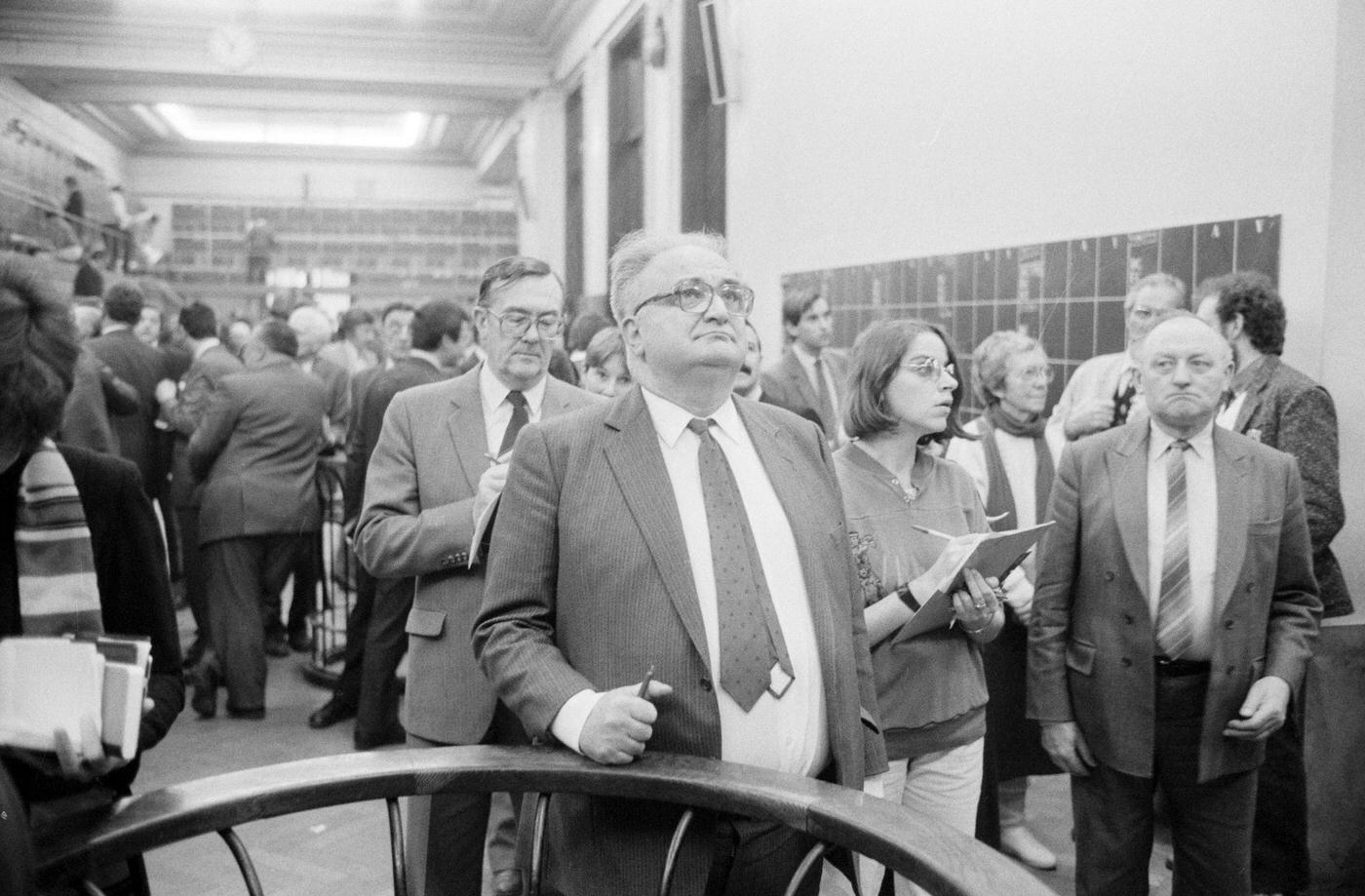
The Brussels Stock Exchange was one of the most photographed institutions of 1987. Its neoclassical façade on the Boulevard Anspach made it one of the most recognizable buildings in the city. Inside, brokers worked the trading floor, watching value boards and making deals in the open-outcry style typical of European exchanges before electronic trading replaced the human element.
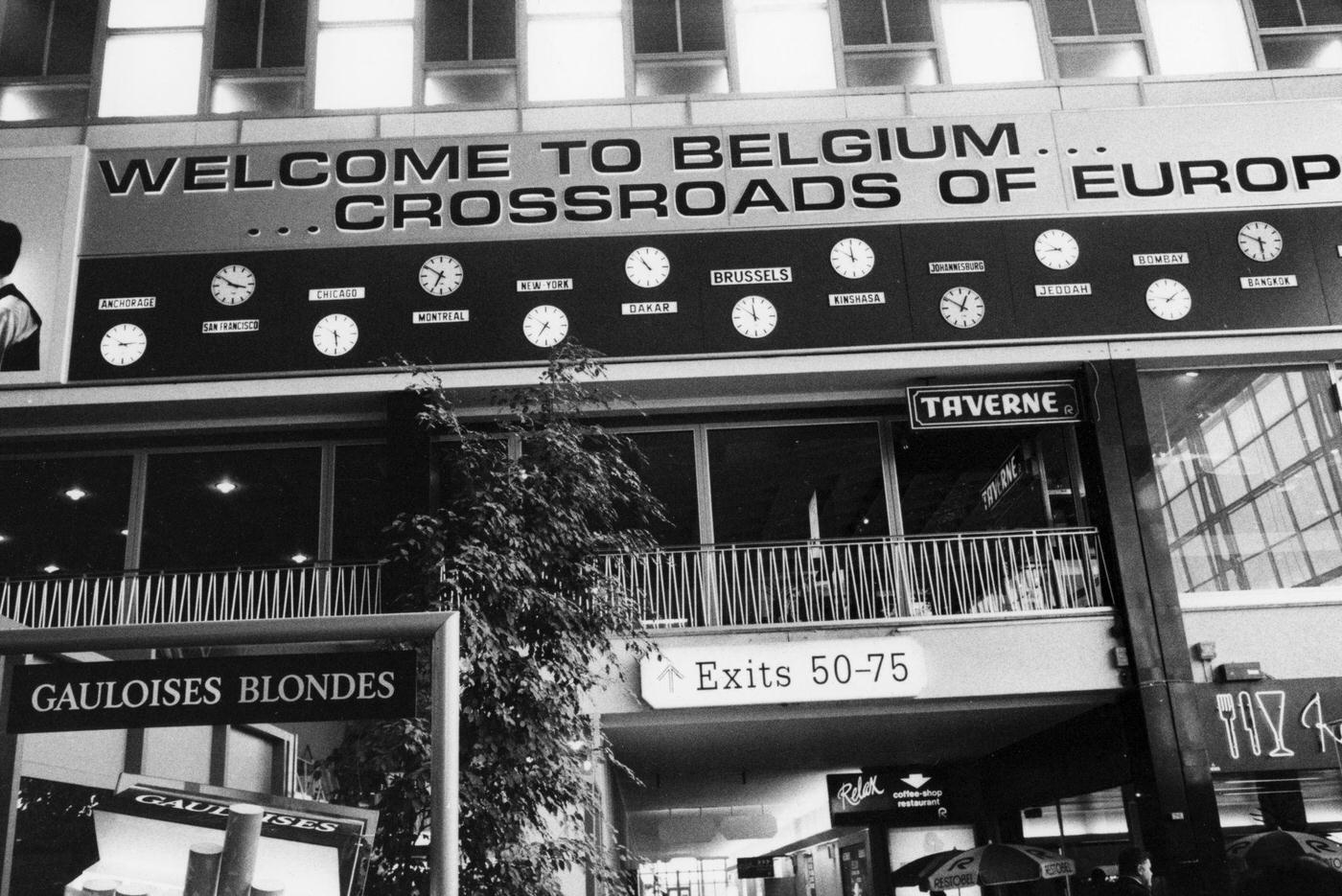
As the decade wound down, Brussels Airport reflected the city’s increasingly international profile. By 1989, the terminal’s world time clocks — displaying the time in cities from New York to Tokyo — summed up what Brussels had become: a city permanently synchronized with the rest of the world, its daily life shaped by decisions made and connections maintained far beyond its own borders.
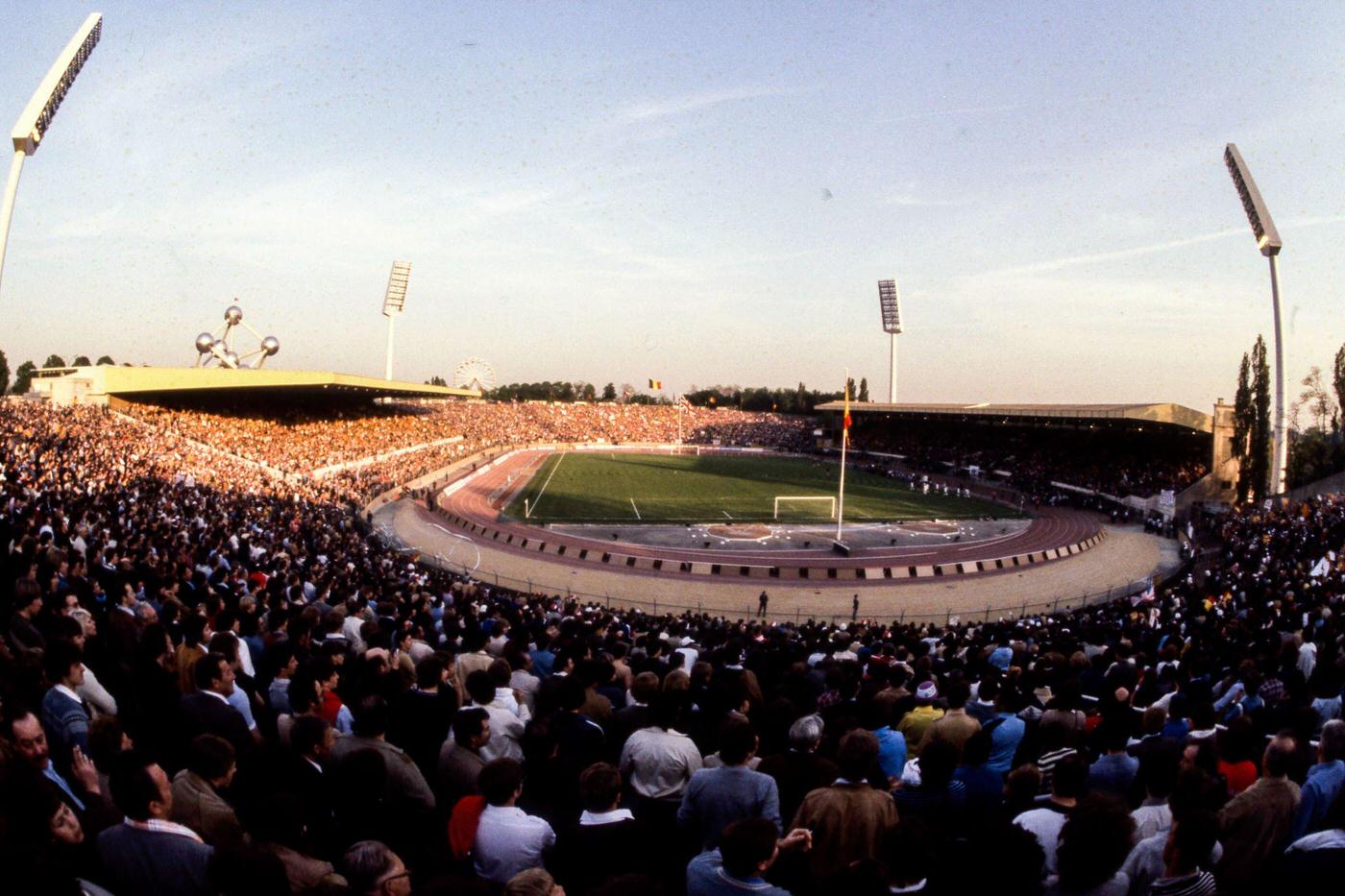
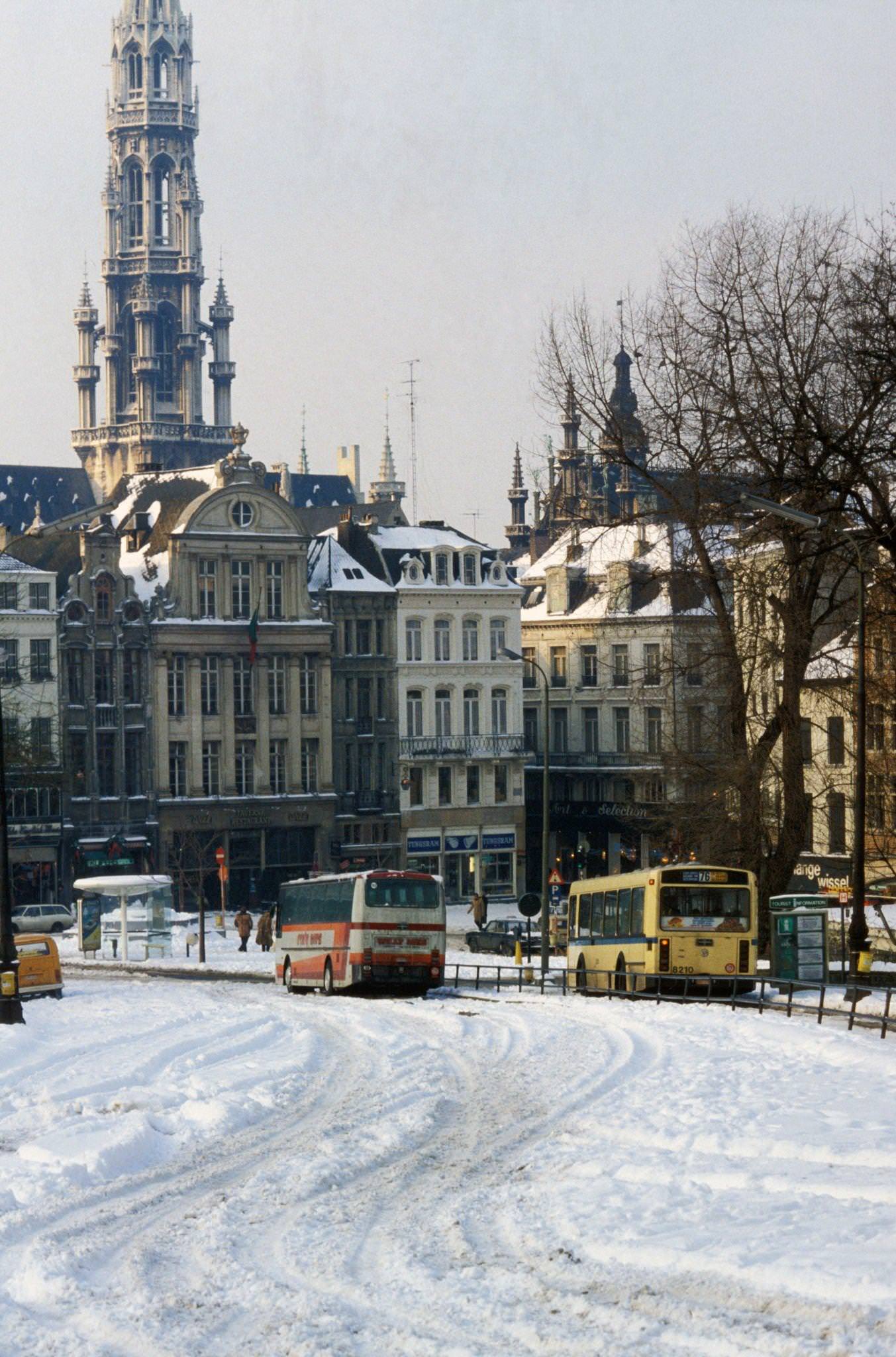
A handful of photographs from across the decade capture moments that don’t fit neatly into any single story — a snow-covered Brussels street, an Arsenal vs. Valencia match at Heysel Stadium in 1980, and the Heysel ground itself before the disaster that would make it infamous. Together, these images build a full picture of a city that was simultaneously ancient and modern, local and international, political and deeply human.





Pretty crazy how relatively little has changed in 40-45 years.
Barrière looks pretty much identical.
Yep if it weren’t for the trams and cars, could have been taken yesterday.
Nothing but the people lol
Hard to imagine parking spaces once where too big for the average car.
some really cool pictures! i love the colourful cars from that era.
was someone alive and well during that time and care to share some experiences?
I was 18 when I came to Brussels in 1984 go studio in ULB, 31 when I left in 1997.
A lot of young gangs, you were Punk, Rocker or Skinhead. A few years later, you had the Minet, the wealthy youth in expensive clothes and Cars. A very strong partying and clubbing culture. Rock cafés like The Blues Corner left me found memories.
Heavily polluted city air! Between coal and mazout heating and trafic, I would get a headache and diarrhea everytime I was coming back to the city after a few days away.
People smoking everywhere.
Tourists, but less. Still I had a “I’m not a tourist, I live here” pin on my punk coat, lol.
Cars were indeed colorful. Recentely I told my soon to be 15 son that I was happy to see the colorful cars come back.
Still remember that 1985, January 1st 06:00, it started to snow in spite of the extrême cold, and I was stuck in Brussels for 6 weeks.
The 1990s had a different vibe
What those old photos usually show is that there were less immigrants back then, less trash on the streets, and more parked cars.
It’s funny how the parking spots look huge in comparison to vehicle size.
Yes cars were a lot smaller back then. It’s a PITA to park a modern car in an old garage.
When looking at these old pictures, it always surprises me how empty the streets are, there’s hardly anyone around
Hills Music!
Some great pictures, thanks for sharing
Okay where is all the rubbish? How is it so clean
Picture doesn’t give the smell and the pollution, imagine everything being dusty because of pollution.
Then, pictures unless the focus on trash usually don’t feature on it. I’ve a bit of look at the recent pics on Instagram showing the city and it seems clean when we know the reality.
So yeah it wasn’t super great then but not sure that there was an improvement
well.. you know..
Do explain? Or talking about the Moroccan immigrants who’ve been in Brussels since the 60’s?
No obviously I’m not talking about Moroccans from the 60s… but you knew that already.
Do elaborate
Its pretty well known that people from poorer countries tend to litter more and they do not teach their kids to be clean
Lol people like you used to complain about the same shit targetting italians, greeks and Spaniards…
Sorry but what exactly is wrong with what I said?
See the picture from the 80s, and think about how ridiculous that stance may sound today. Was the issue intrinsic to Spaniards and Italian who today you see as equals, or was it the context around them?
The photo showing how arabs behave?
I dont get it, I dont speak german
You can reverse search the image for the source and the full context.
What you should get though, without the german, is that it depicts a stereotypical view whoch encompasses all of the giest workers (not just those from the middle east and north africa), or do you not see the spaghetti eating?
That goes back to the point I was making before… these tropes and stereotypes are not new.. you guys just moved the goalposts
Mostly all recognisable, except rue Ravenstein. What happened there. It used to be a shopping street?
No, it’s rue Neuve…
Lol Fritland is still there XD
Nice pictures! It seemed so clean and organized. Too many cars though. It got really fucked up in 40 years.
Brussels was way more dirty and ugly before than now. A really depressing city. No idea why people say the opposite, may be non brusseleers. The difference was that the rents was cheap at the time.
But what time are you talking about? I can imagine it was worse in the 1980’s
I also admit that there are huge differences. I really like the south of Brussels.. Forest, Uccle, Ixelles and the east and Jette but the rest is not my thing
I’m probably in the background of one of these pictures after July 1984
Crazy to see Barriere without potholes, and also notice the roundabout sign.
The most interesting picture is picture number 20. You can see a poster with “Venez vivre à Bruxelles” (“Come live in Brussels”). It’s a reminder of how poorly Brussels was perceived at the time, with many people deciding to leave the city. Now, just put up an apartment for rent or sale, and you’ll receive offers within hours.
Yes, true. Bruxelles used to be quite dull, boring and poor. It’s much better nowadays.
Even with way more cars, it looks clean and nice. Civilised. Not the dystopian unintegrated mess we have now. These pics make me sad…
So, more crowded today, less clean. But much more beautiful today…
Still looked like Belgium , nice
Wow… gay street didn’t look gay (I wonder when it started to turn?) and City2 already existed!
But the Wolowes still seem to look the same!
Brussels in the 70s, 80s, and 90s was an ugly, dirty city. And boring as hell! There was literally nothing. We can criticize Brussels as much as we want now, but the massive influx of young Europeans and young Flemish people completely transformed the cultural scene—though it also brought gentrification. I swear that in the 90s at 10pm the city was dead.
I agree, it’s so much better know, and I am personally very happy to welcome immigrants and expats that make the city so much more interesting and alive.
Most striking? Not as many cars as today but already s… up the city
I have known those times. Much better. Less crowded. Politicians really fucked it up. By letting way too many people settle in Brussels. The population growth should have been stopped in the 90’s. Certainly when most of this growth is a burden on welfare and other services like security. PS is a curse.
The roads are not pretty. They always look so broken. Why ? I have known brussels in the late 80’s. Has always looked grey with broken roads. But the atmosphere of center city has always been magical.