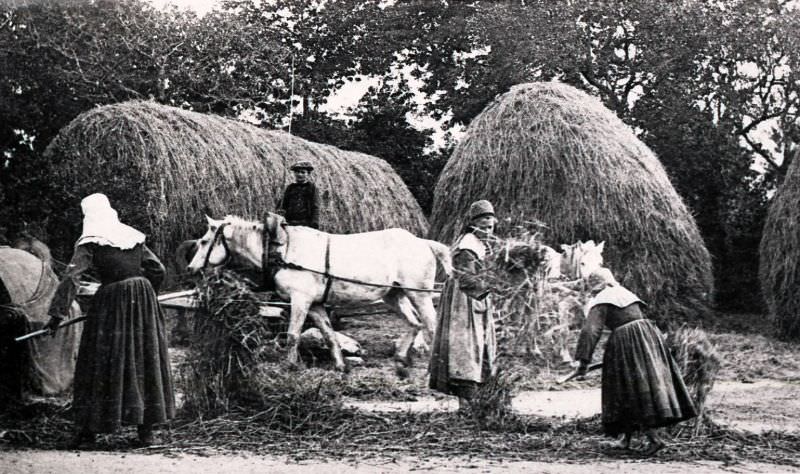
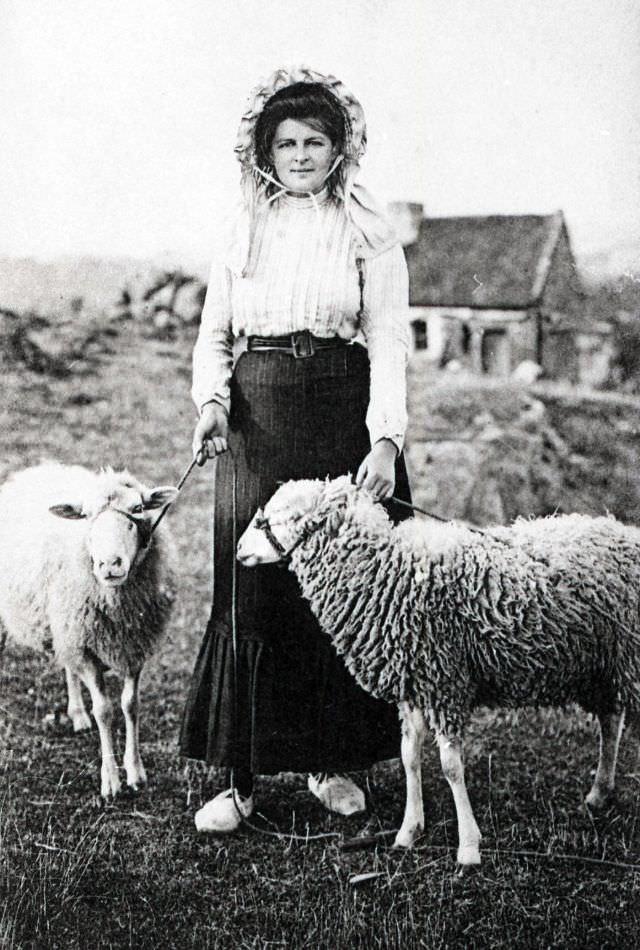
In the early 1900s, Brittany’s countryside in northwestern France was a world shaped by hard work, deep tradition, and a strong sense of local identity. Small family farms covered the rolling hills, their plots divided by hedgerows and stone walls. Farmers relied almost entirely on manual labor and animal power. Wheat, oats, and potatoes were the main crops, while cattle, pigs, and sheep provided dairy, meat, and wool. Life moved slowly and deliberately, tied closely to the land and the seasons.
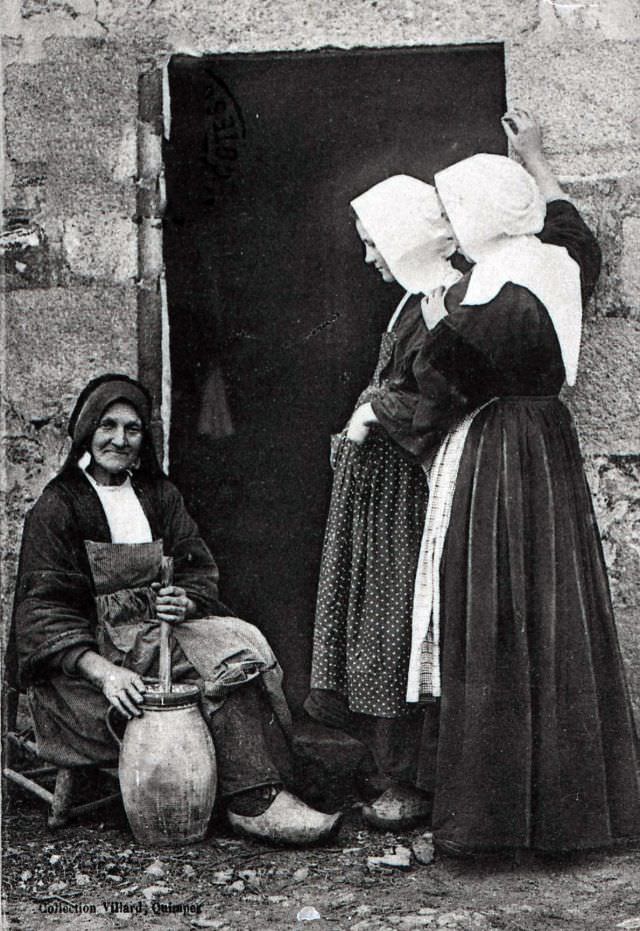
Dairy production was a core part of farm life. Women handled much of this work, churning butter by hand and managing food supplies for the household. Along Brittany’s rugged Atlantic coastline, fishing communities added another dimension to rural life. Sardines, mackerel, and cod were hauled in regularly, and entire villages organized their daily routines around the fishing seasons. The coast was never quiet.
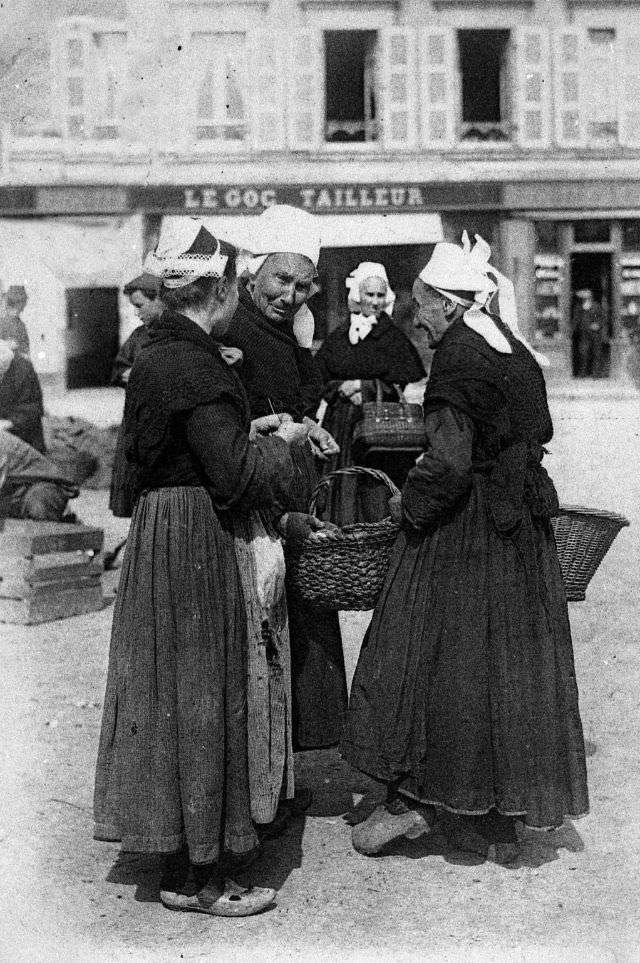
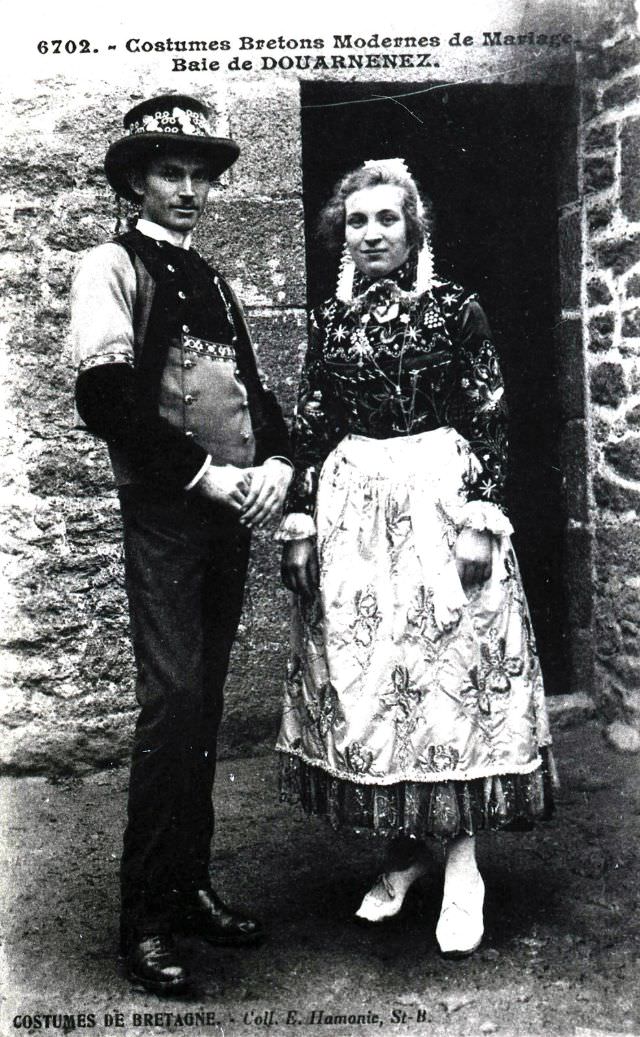
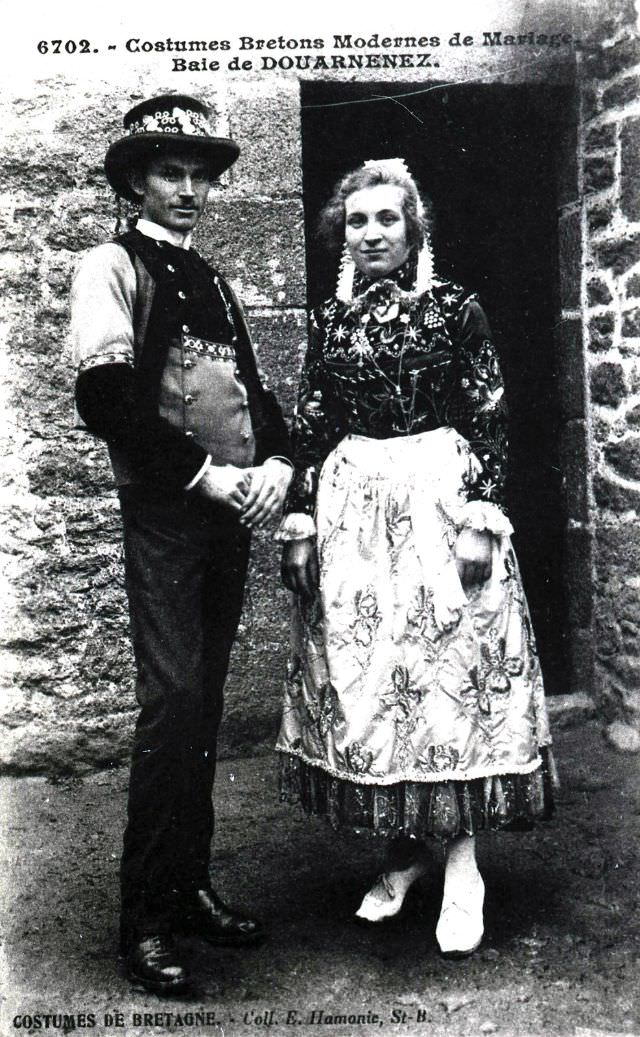
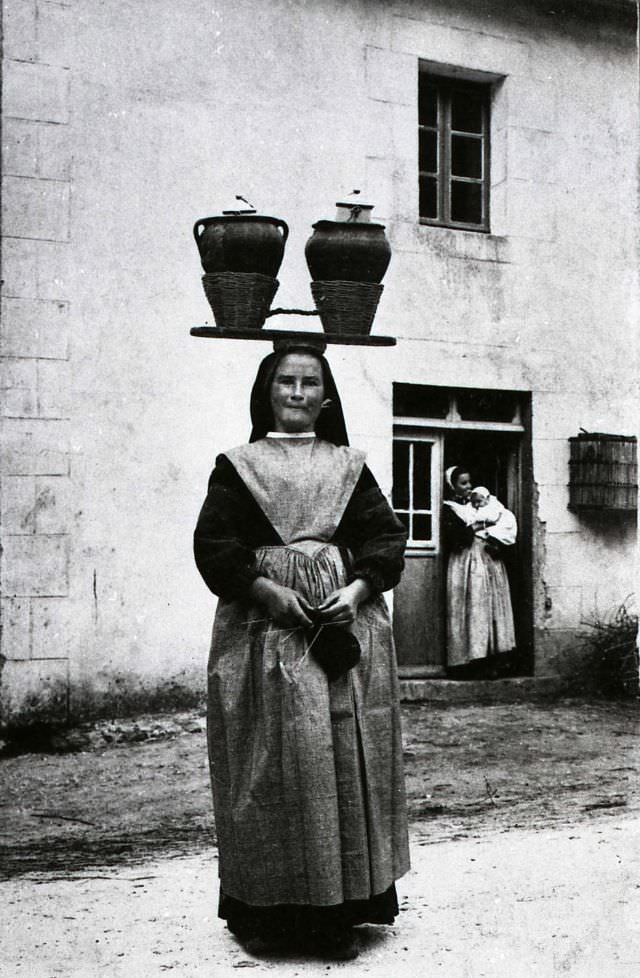
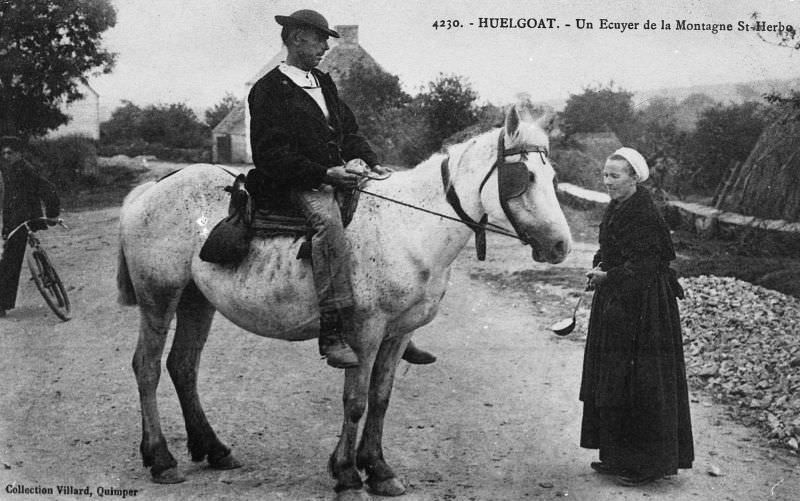
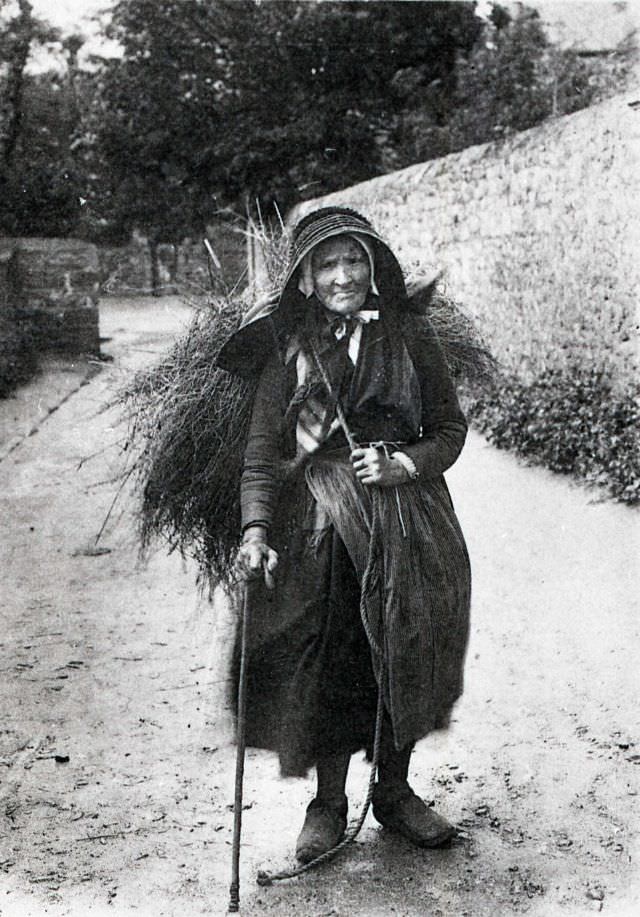
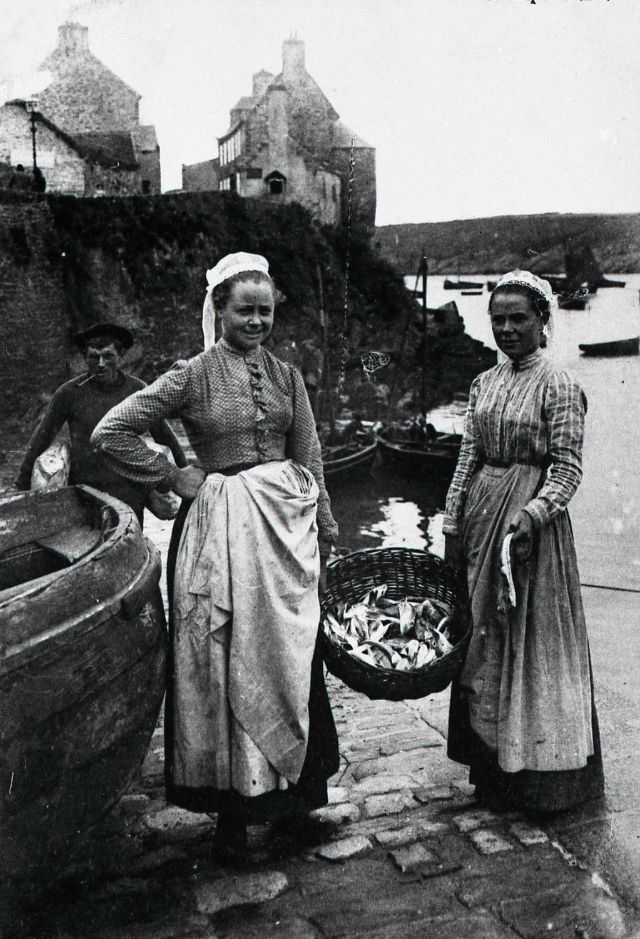
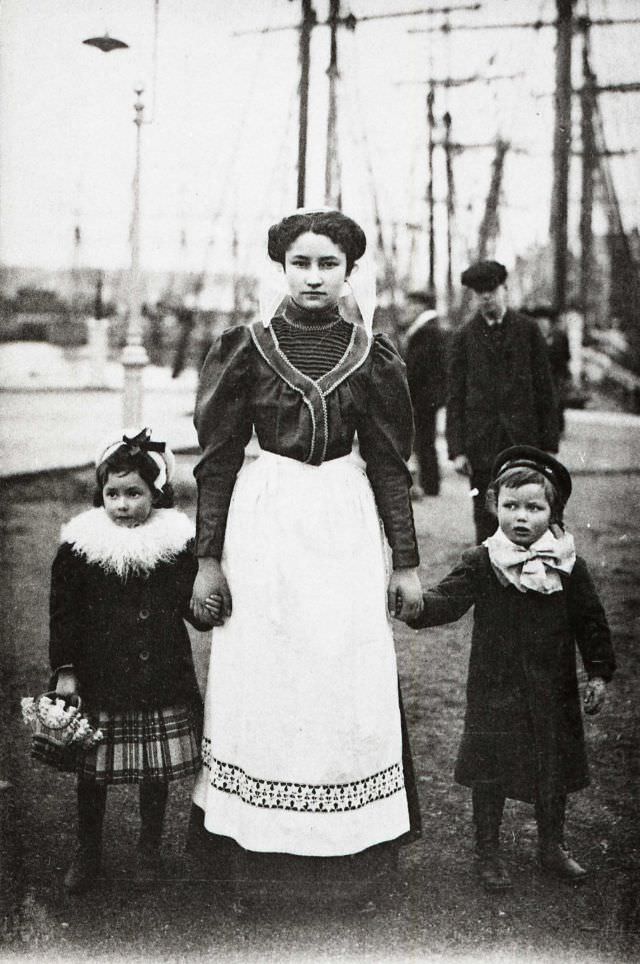
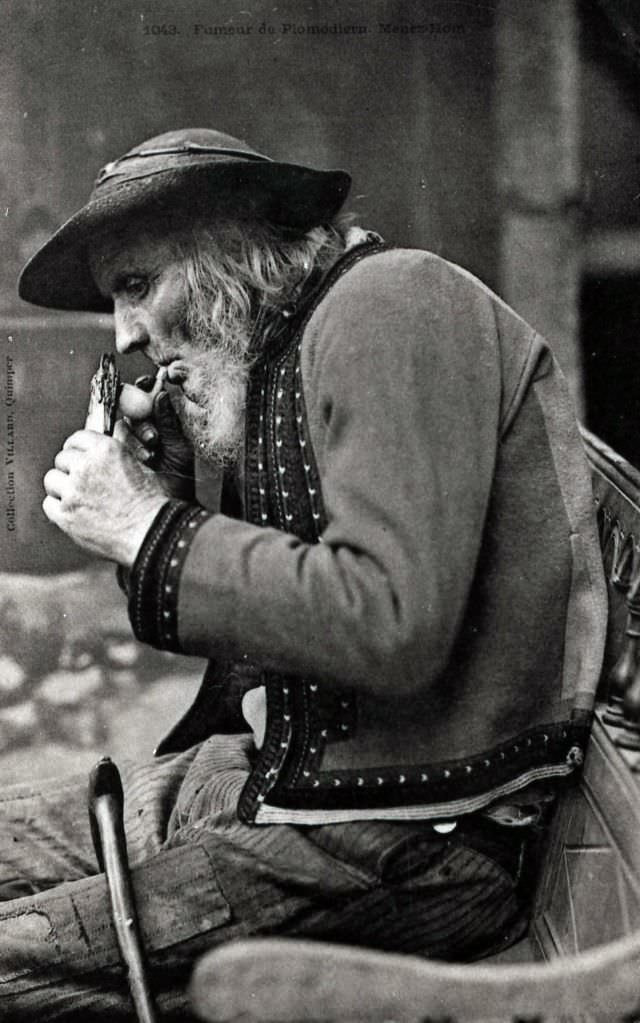
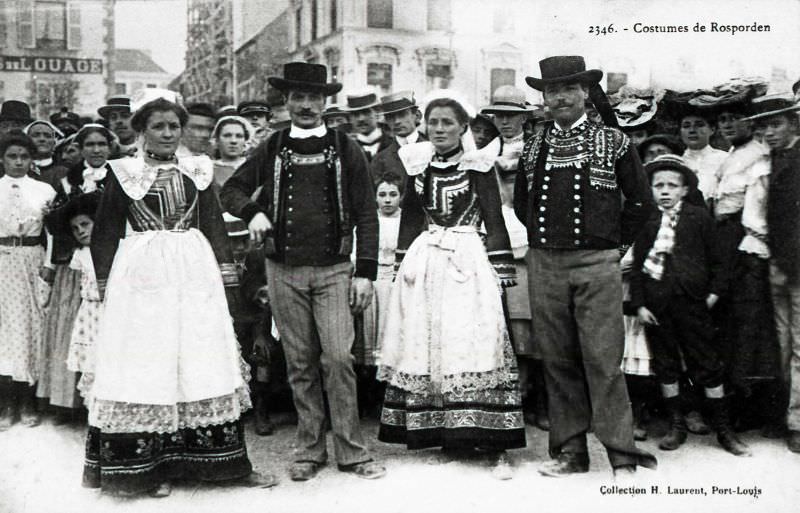
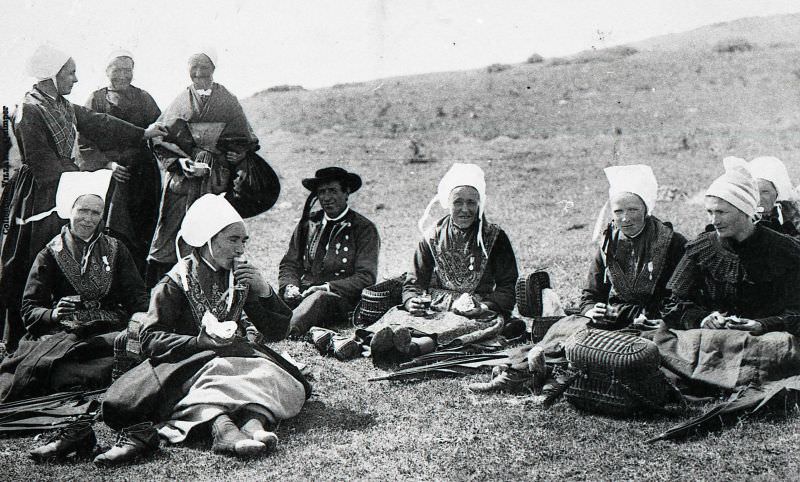
Breton identity was worn visibly. Traditional dress varied from town to town, with women’s coiffes — elaborate lace headdresses — serving as markers of which village or area a person came from. In the western part of the region, the Breton language, a Celtic tongue related to Welsh and Cornish, was spoken daily. Cultural pride ran deep, expressed through festivals, music, and dance. The binioù, a local form of bagpipe, and the bombarde, a loud reed instrument, filled the air at community gatherings.
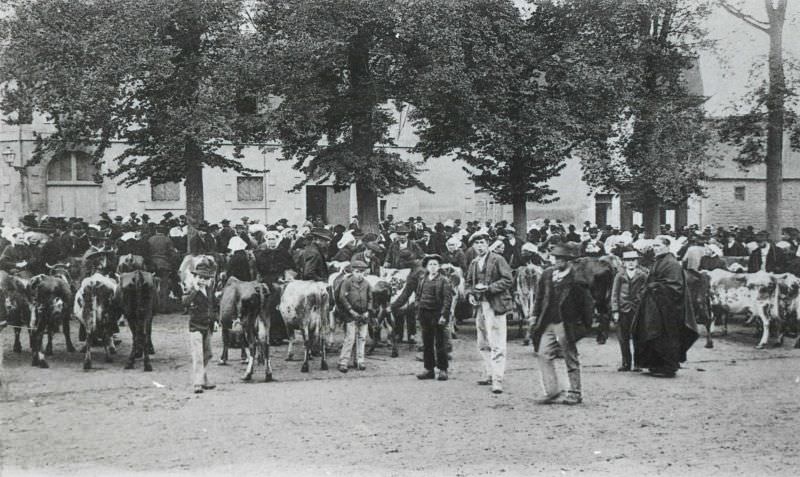
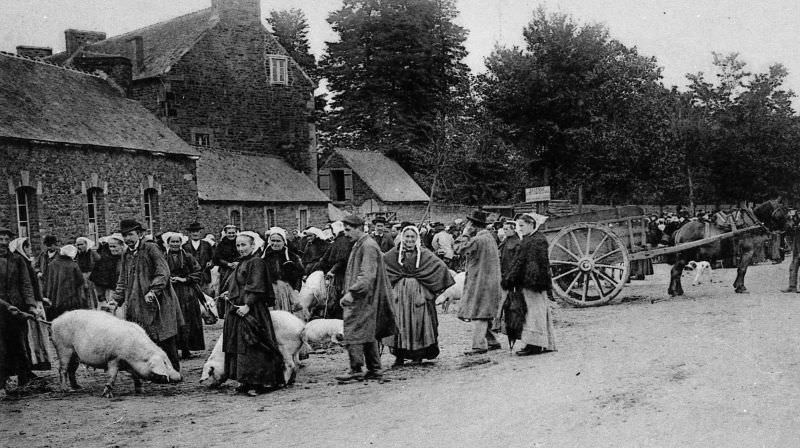
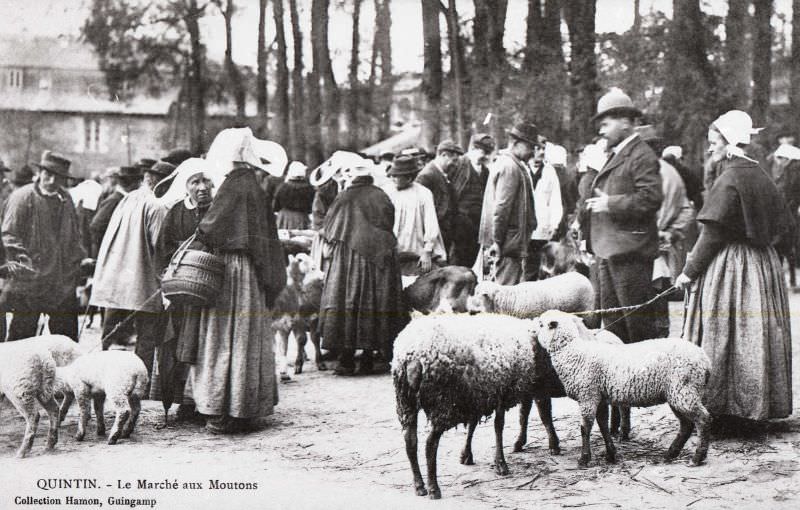
Markets were central to rural commerce. Towns like Guingamp, Morlaix, and Quintin held regular livestock fairs where farmers bought and sold pigs, sheep, and cattle. These gatherings were not just economic events — they were social ones too, drawing people from surrounding villages and giving rural communities a chance to connect.
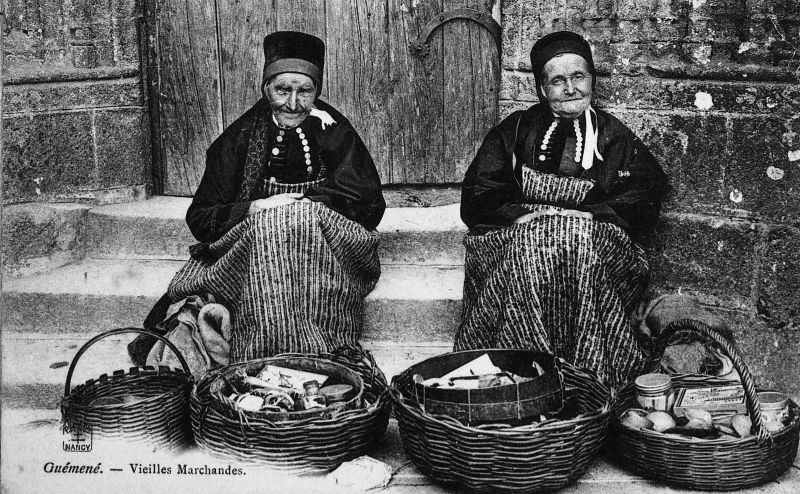
Vendors and small merchants were a familiar sight in Brittany’s towns. Milk sellers made their rounds in places like Hennebont, while fish merchants in coastal towns like Le Conquet sold their catch directly from the street.
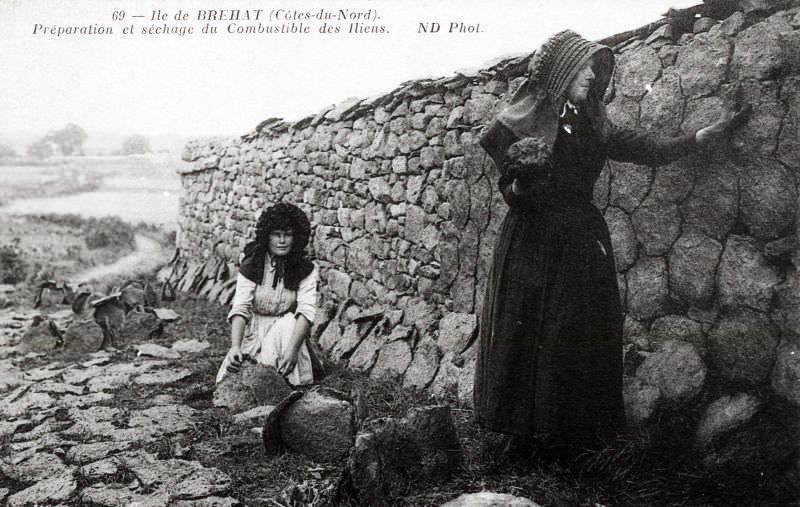
Life on the islands off Brittany’s coast was even more self-contained. On Île-de-Bréhat, residents prepared their own fuel, tended their land, and carried out daily tasks with little outside help. The pace was dictated by weather, tides, and the limits of what the island could provide.
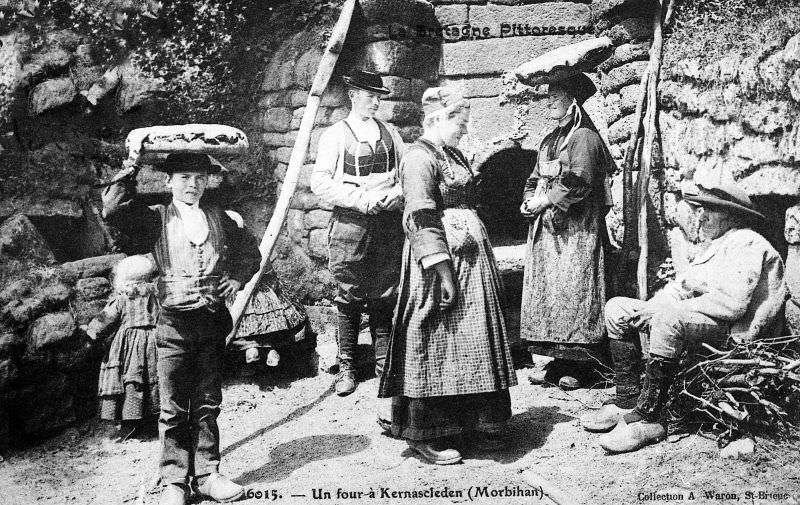
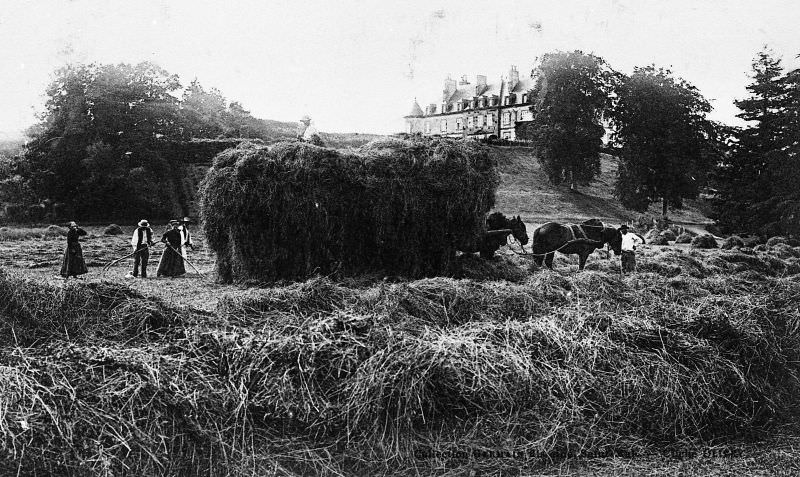
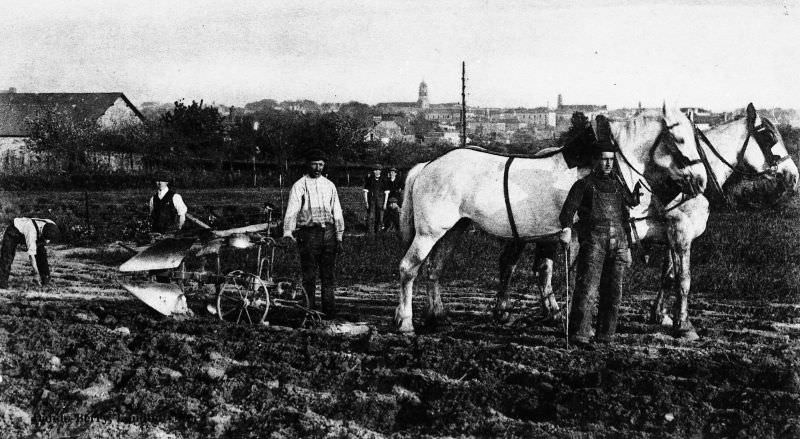
Bread baking was a communal act in many villages. Outdoor or shared ovens, like the one recorded in Kernascléden, were used by multiple families. The wheat that fed those ovens came from harvests like those captured in La Gouesnière and Trégunc, where crews worked the fields together using hand tools and horse-drawn equipment.
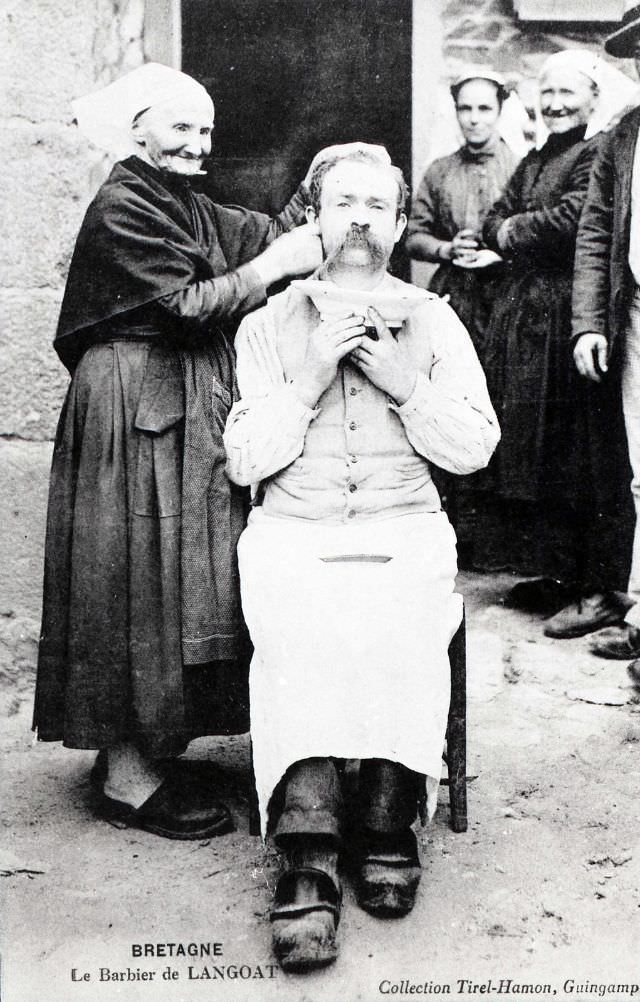
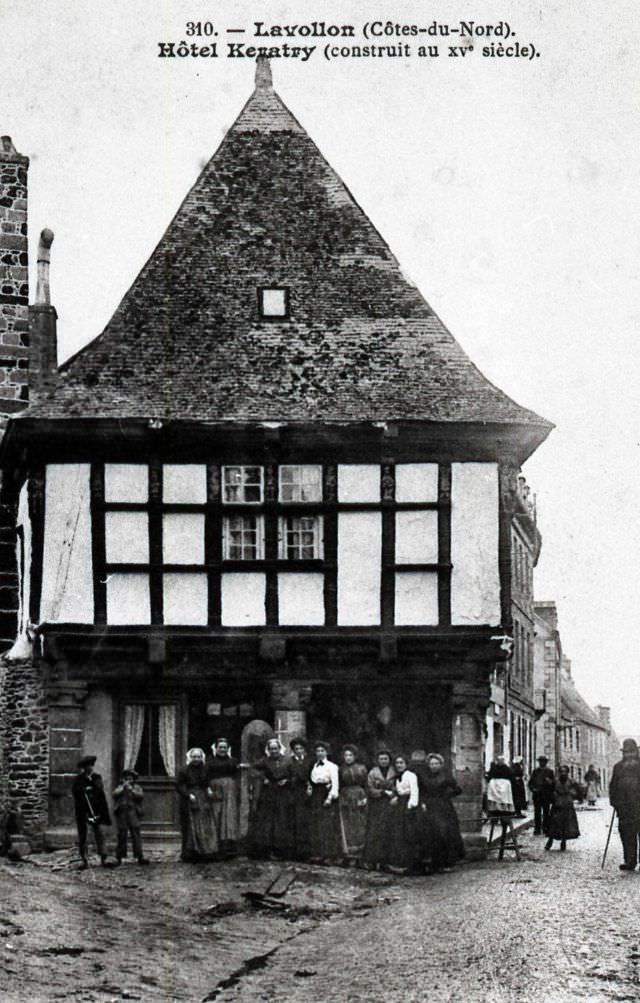
Even basic services like barbering took place in informal settings. A barber photographed in Langoat worked outdoors, serving clients with simple tools. Nearby, the Keratry Hotel in Lanvollon stood as a modest hub of local commerce and hospitality along the rural road network.
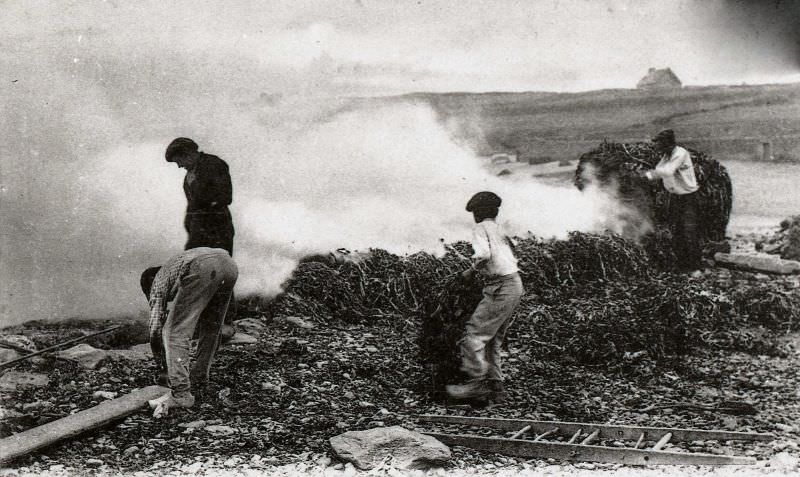
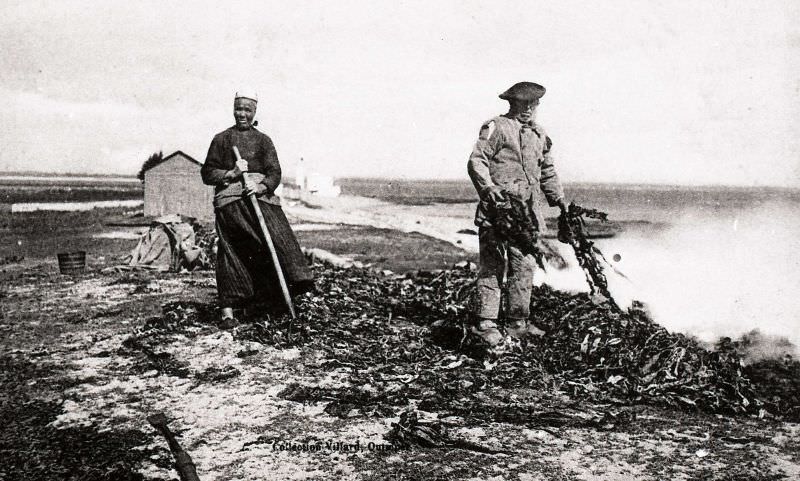
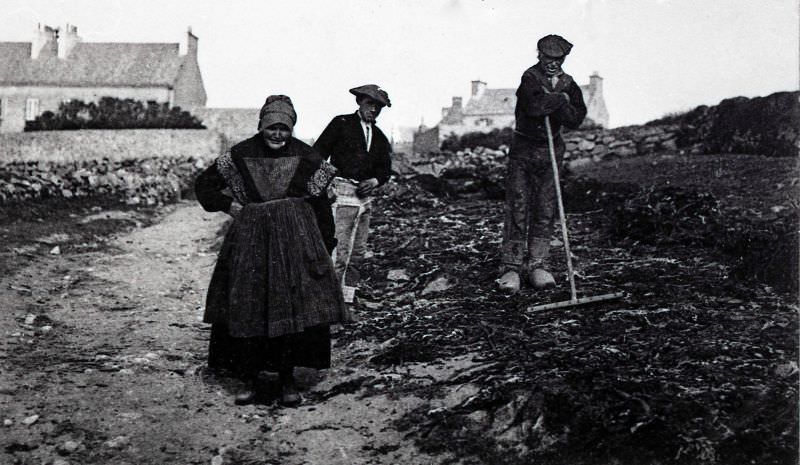
Seaweed was a valuable resource along Brittany’s coastline. Workers in Le Conquet and Loctudy burned seaweed to produce ash rich in iodine and potash, which was sold for industrial use. The harvest itself was physically demanding work, carried out on rocky shores in all weather.
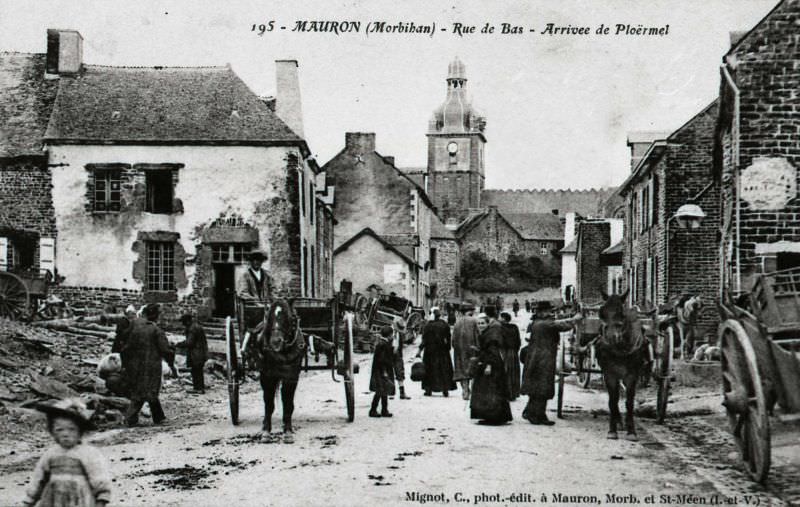
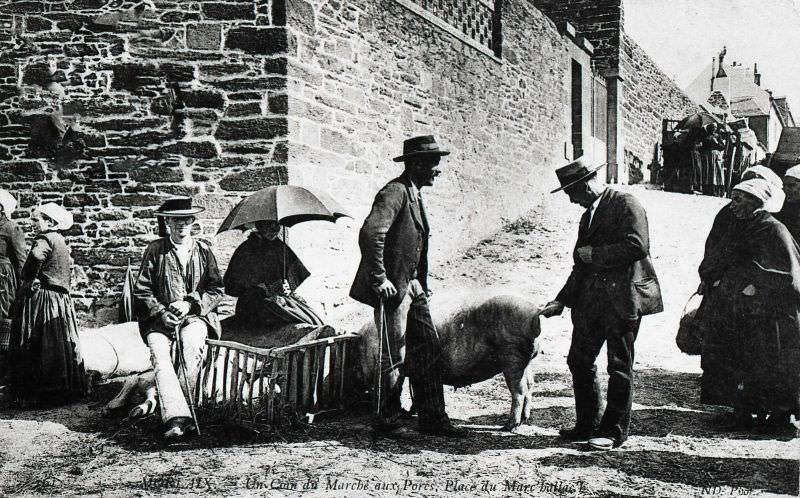
Peasants filled the streets of towns like Mauron, going about their daily business in traditional clothing. The pig markets in Morlaix and Plouha drew large crowds, with animals changing hands in open-air fairs that had operated the same way for generations.
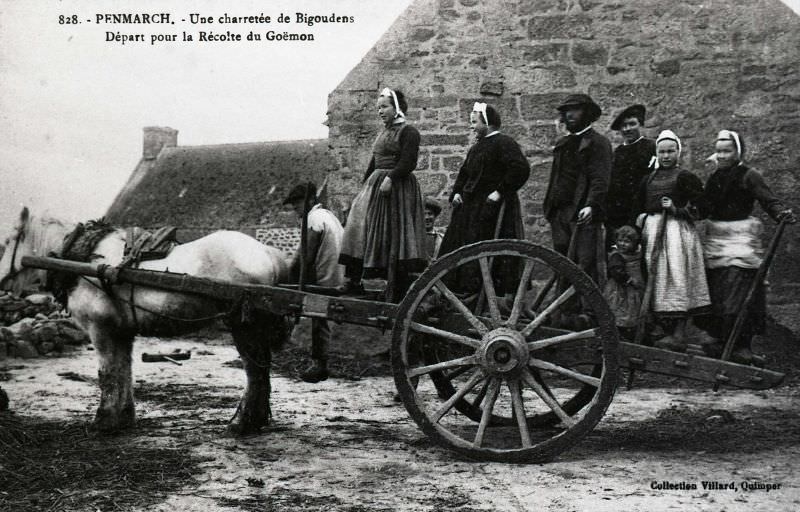
The seaweed harvest extended across multiple coastal areas. At Penmarch in the Bigouden region and at Porspoder further north, workers gathered seaweed from the shoreline in large quantities. It was slow, labor-intensive work that whole families often took part in.
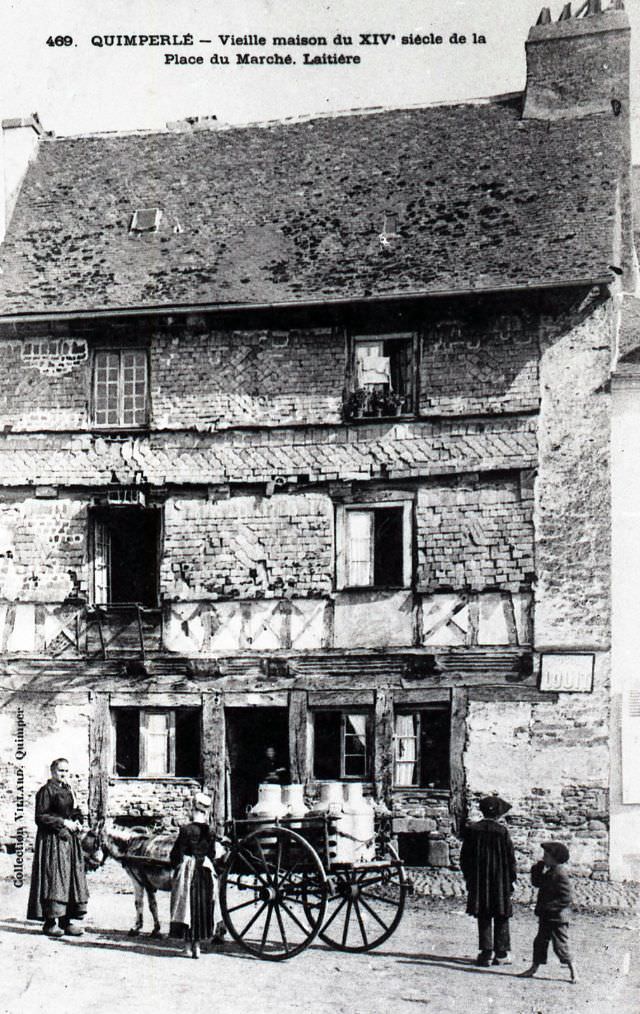
In Quimperlé, the old market square remained a defining feature of town life, surrounded by medieval timber-framed buildings. Quintin hosted regular sheep markets that drew farmers from the surrounding countryside. And in Rennes, a practical school of agriculture trained a new generation in farming methods that blended traditional knowledge with emerging techniques.
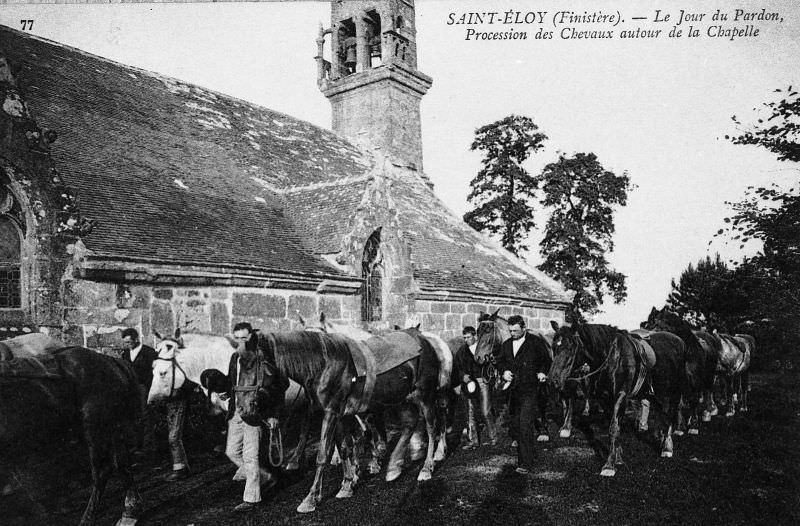
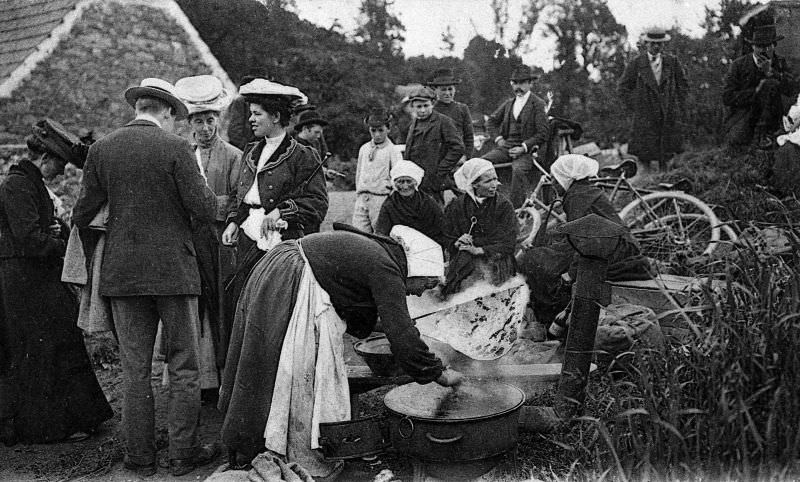
Religious life was woven tightly into everyday existence. The pardon — a traditional Breton religious festival — drew processions of horses and worshippers, as seen in Saint-Éloy. These events combined faith, community, and spectacle. Food also played a public role: crêpe makers worked outdoors at gatherings in Saint-Jean-du-Doigt, and family meals in places like Sainte-Anne-La-Palud were photographed as scenes of ordinary domestic life.
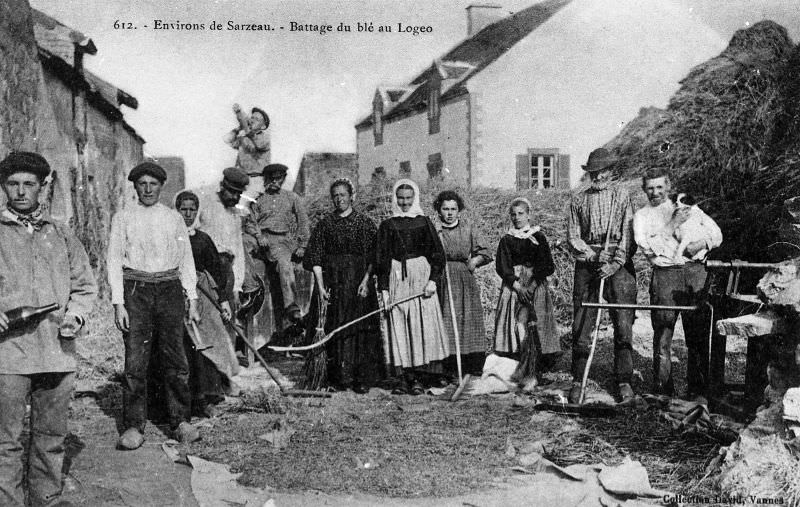
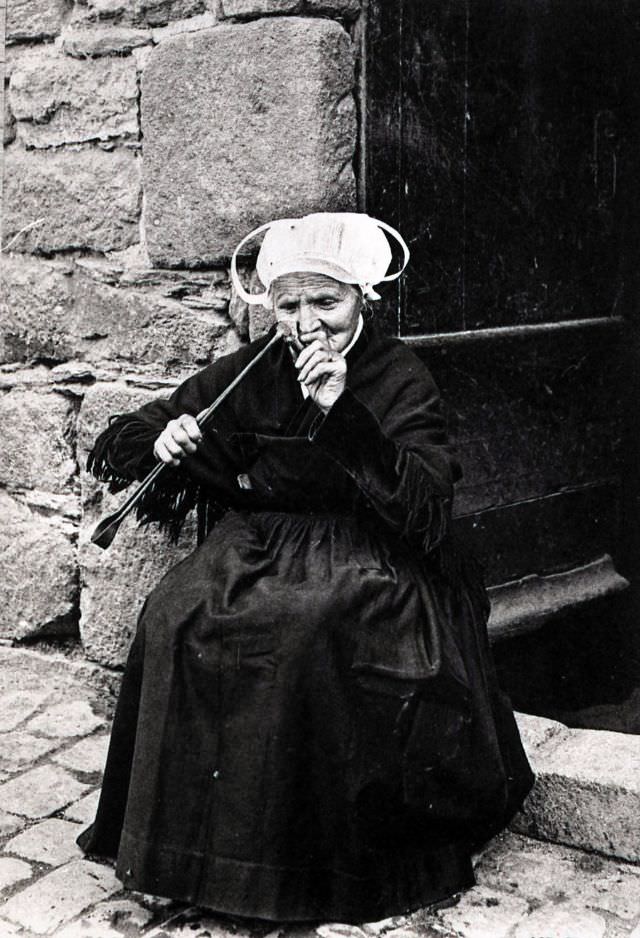
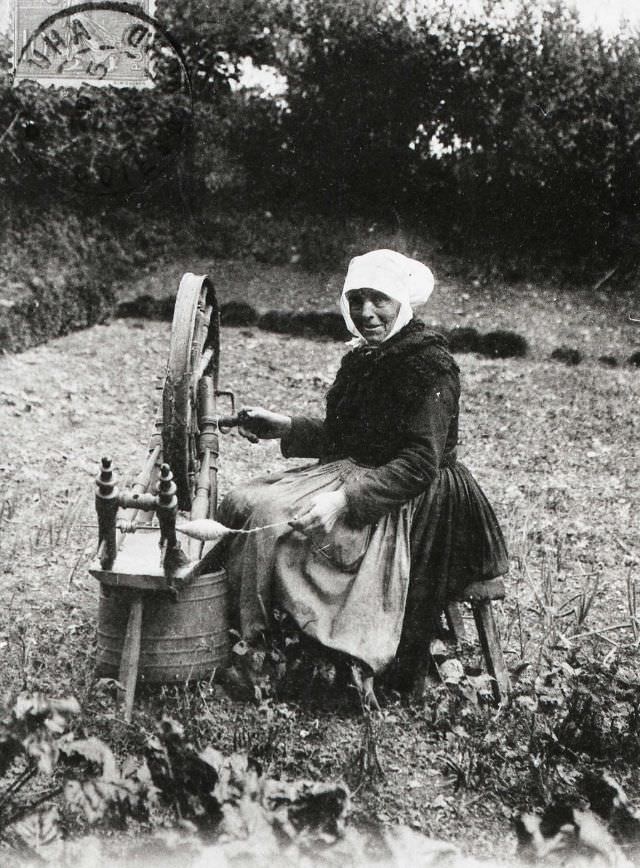
Grain processing was a communal effort. Wheat threshing at Logéo in Sarzeau brought workers together in organized teams, separating grain from stalk using hand-powered tools. Further west, an older woman photographed spinning wool in Tréguier represented a generation for whom handcraft was still the primary means of producing textiles.
Harvest time in Trégunc, like across all of rural Brittany, demanded the full effort of the farming household. Wheat was cut, bundled, and stacked by hand under the summer sun. These photographs, taken across dozens of towns and villages, document a way of life that was already beginning to shift as France moved deeper into the twentieth century.