
In the winter of 1911, King George V and Queen Mary boarded a ship bound for India — the first reigning British monarch to make the journey. Their destination was Delhi, where an extraordinary ceremony awaited: the Delhi Durbar, a grand imperial assembly at which George V would be formally proclaimed Emperor of India.
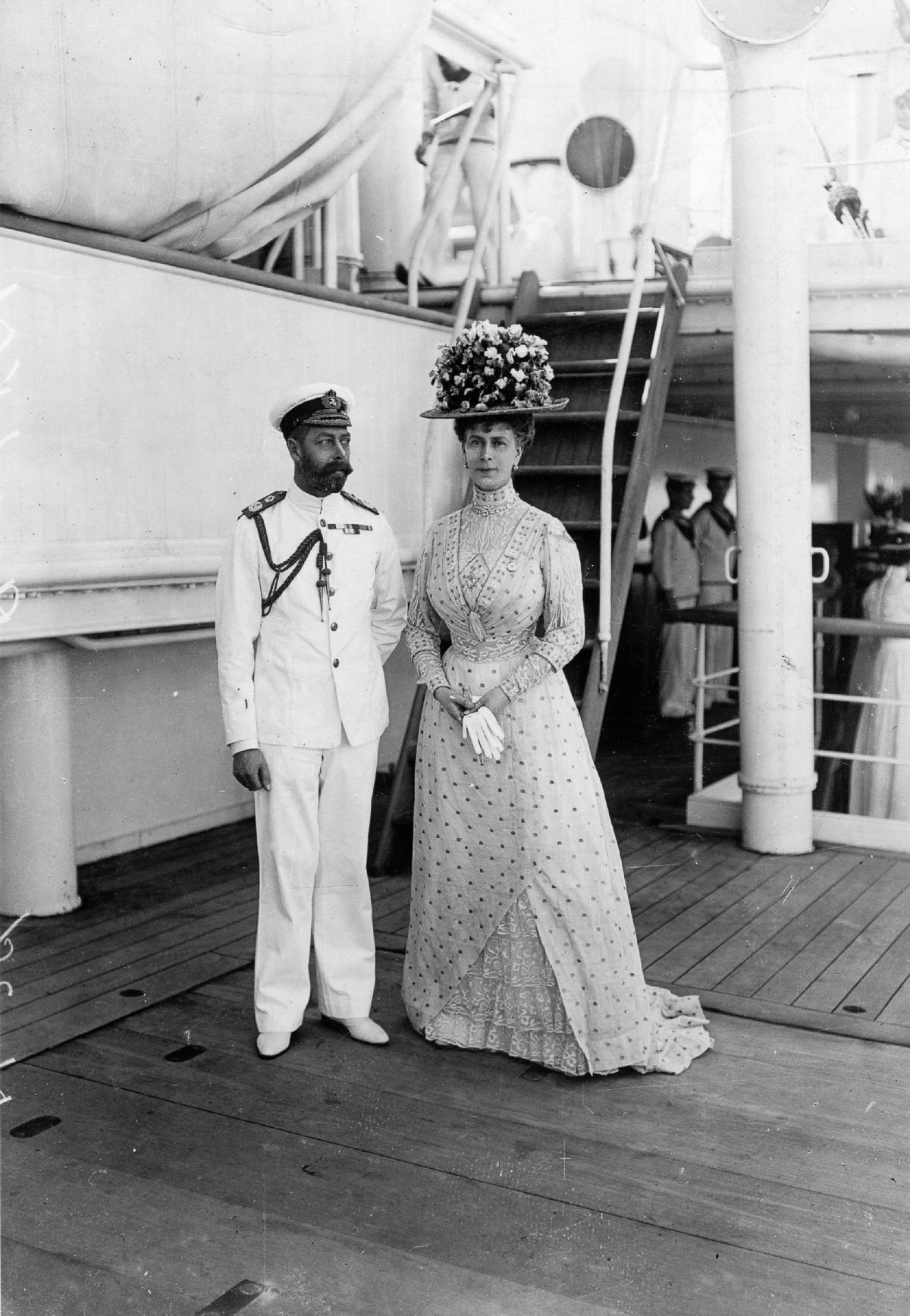
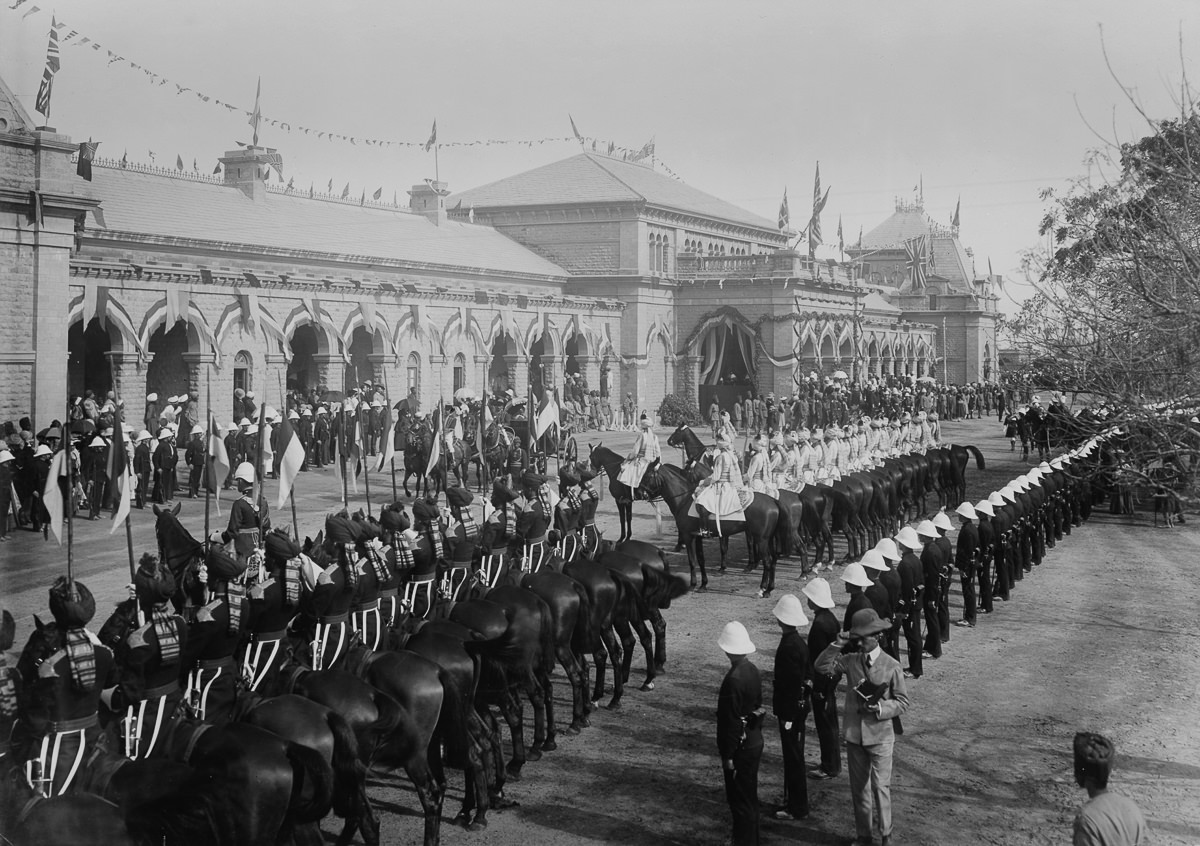
The royal couple arrived to a reception that Delhi had never seen before. Military processions, honor guards, and tens of thousands of spectators lined the streets as the king and queen made their way into the city.
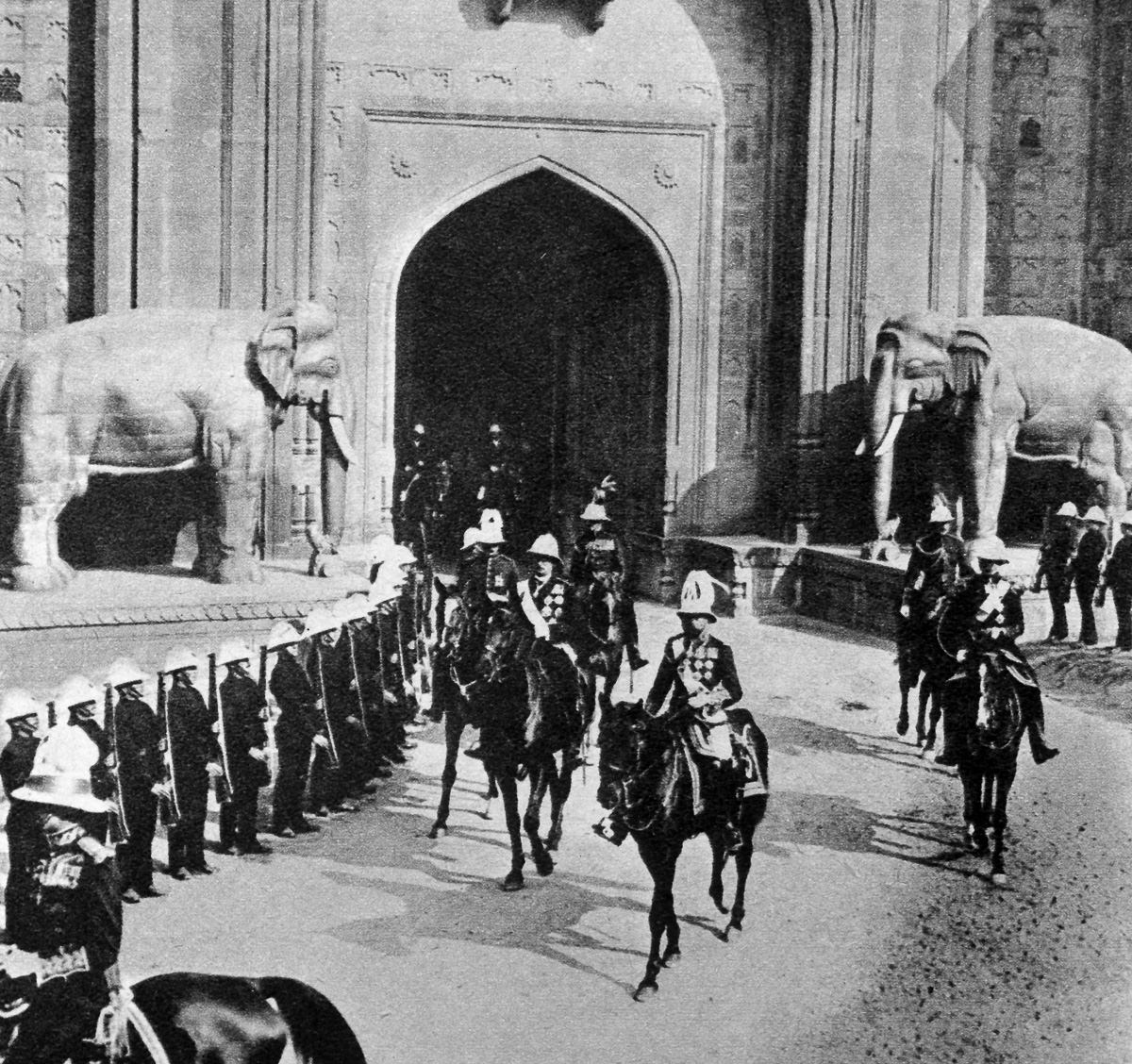
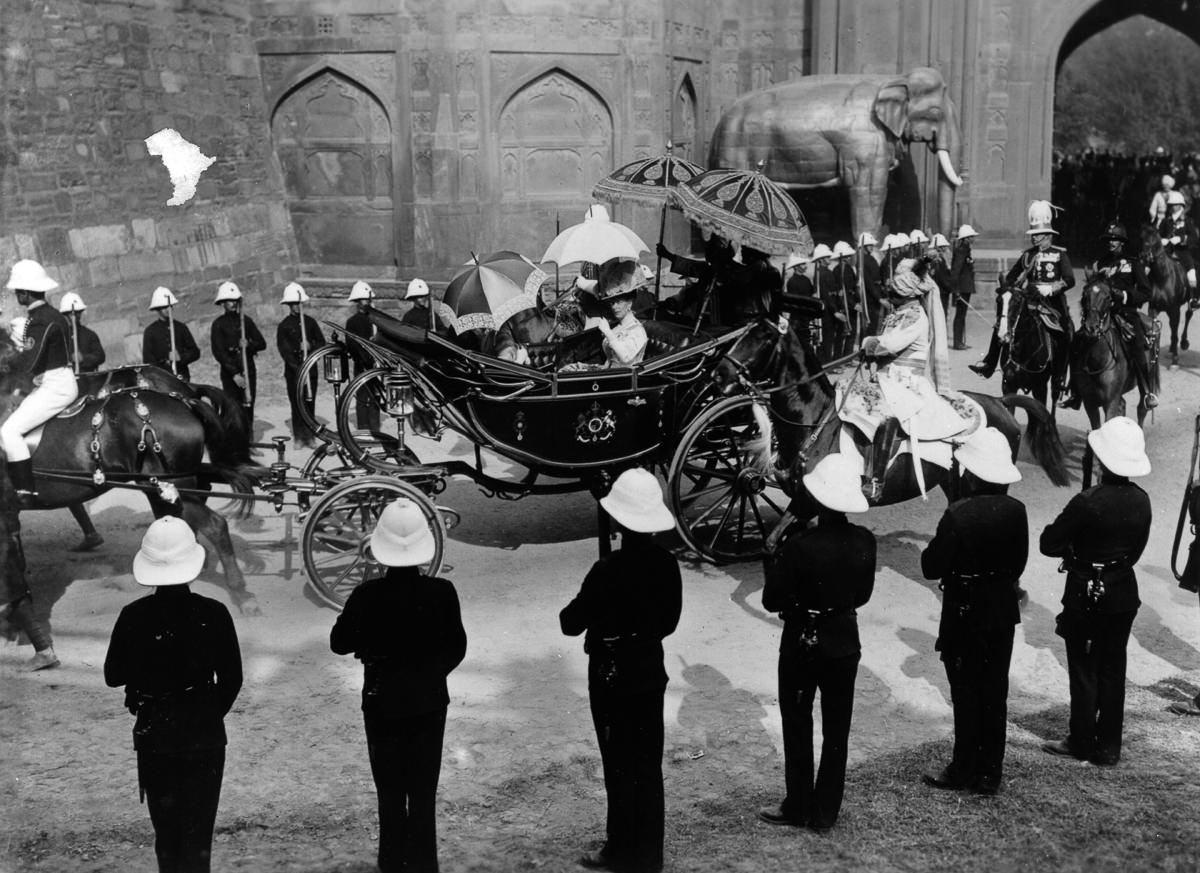
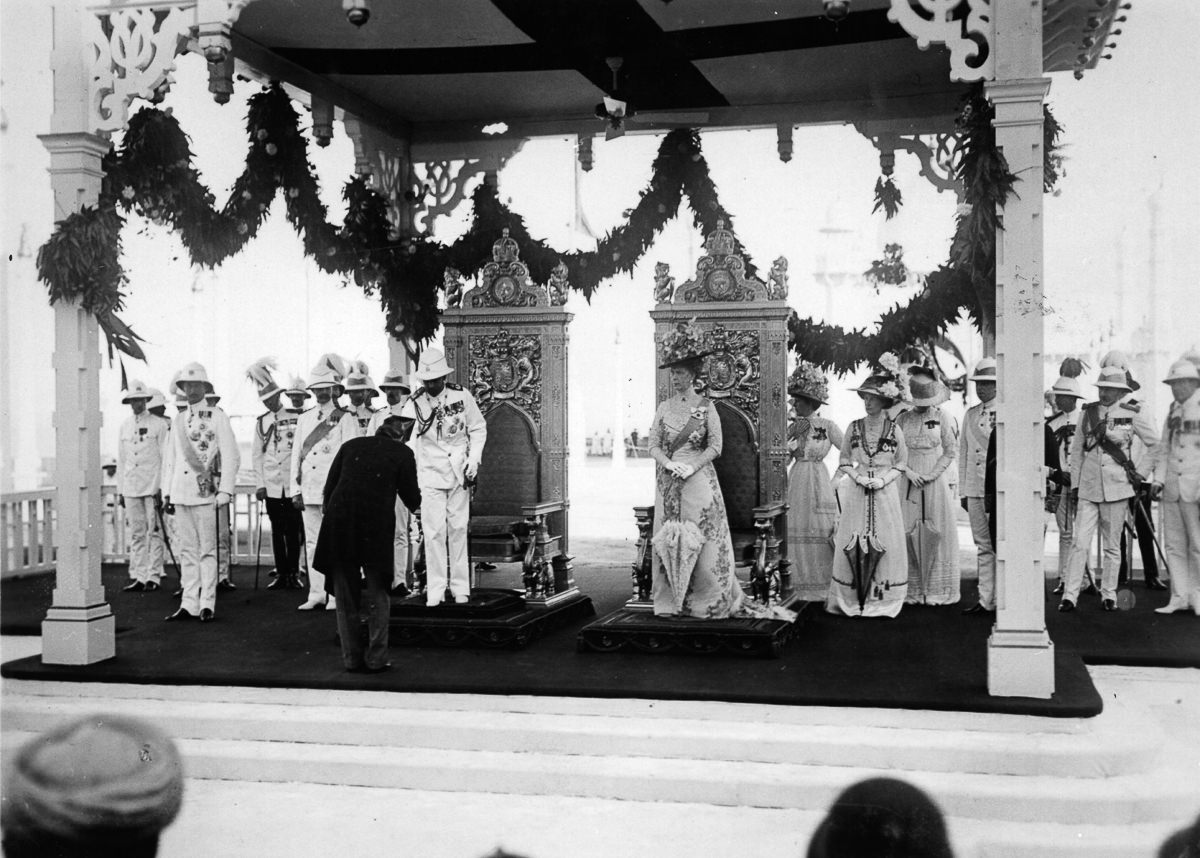
The scale of the event was staggering. A tent city spread across 25 square miles in northwest Delhi. At its center sat the King’s pavilion, which alone covered 85 acres. Separate camps were arranged for government officials and Indian princes, each placed in strict order of rank and precedence. Altogether, the camp housed hundreds of thousands of people.
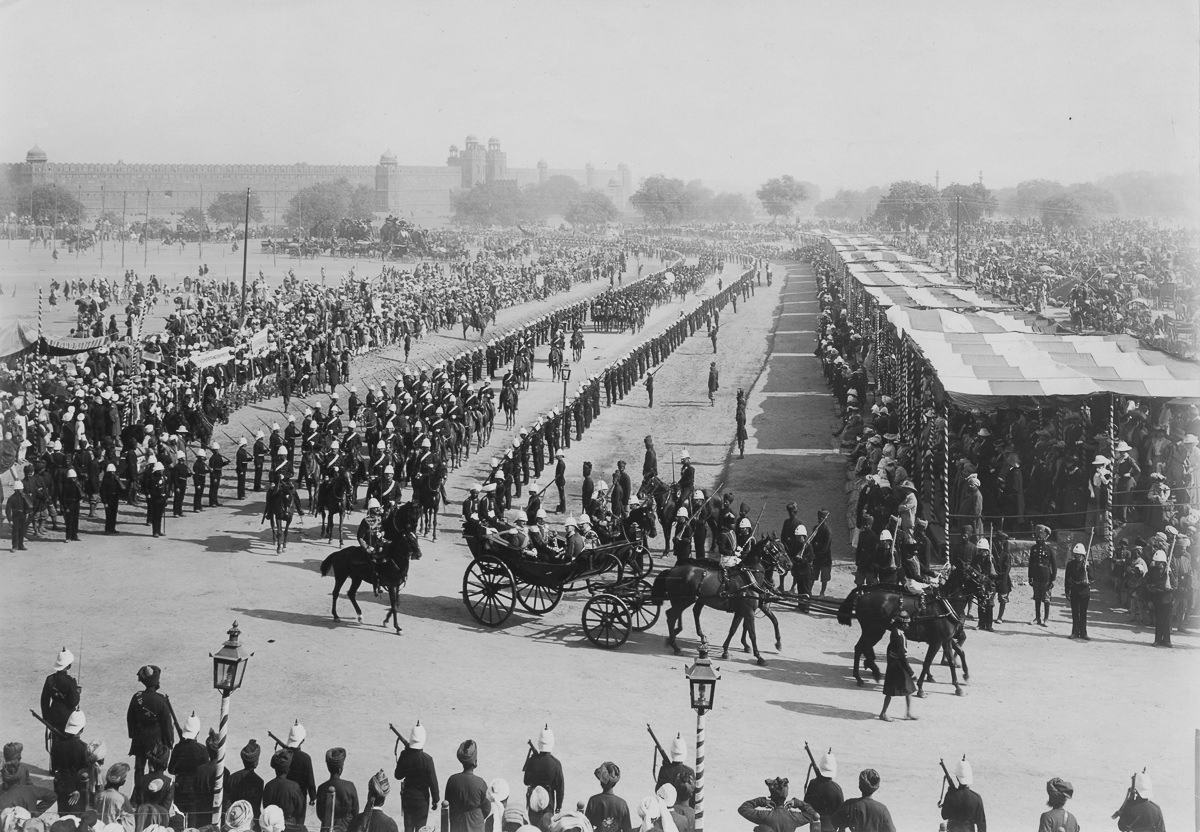
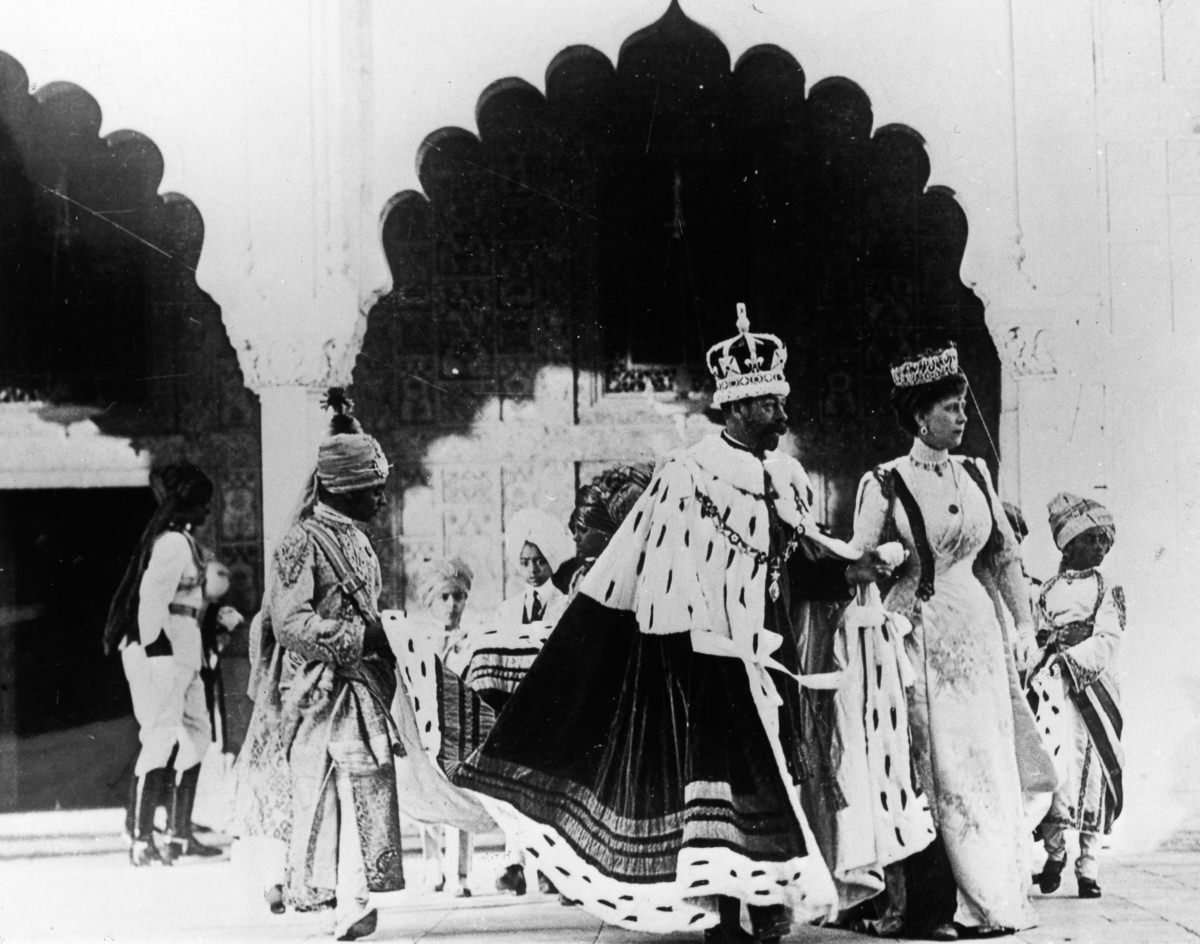
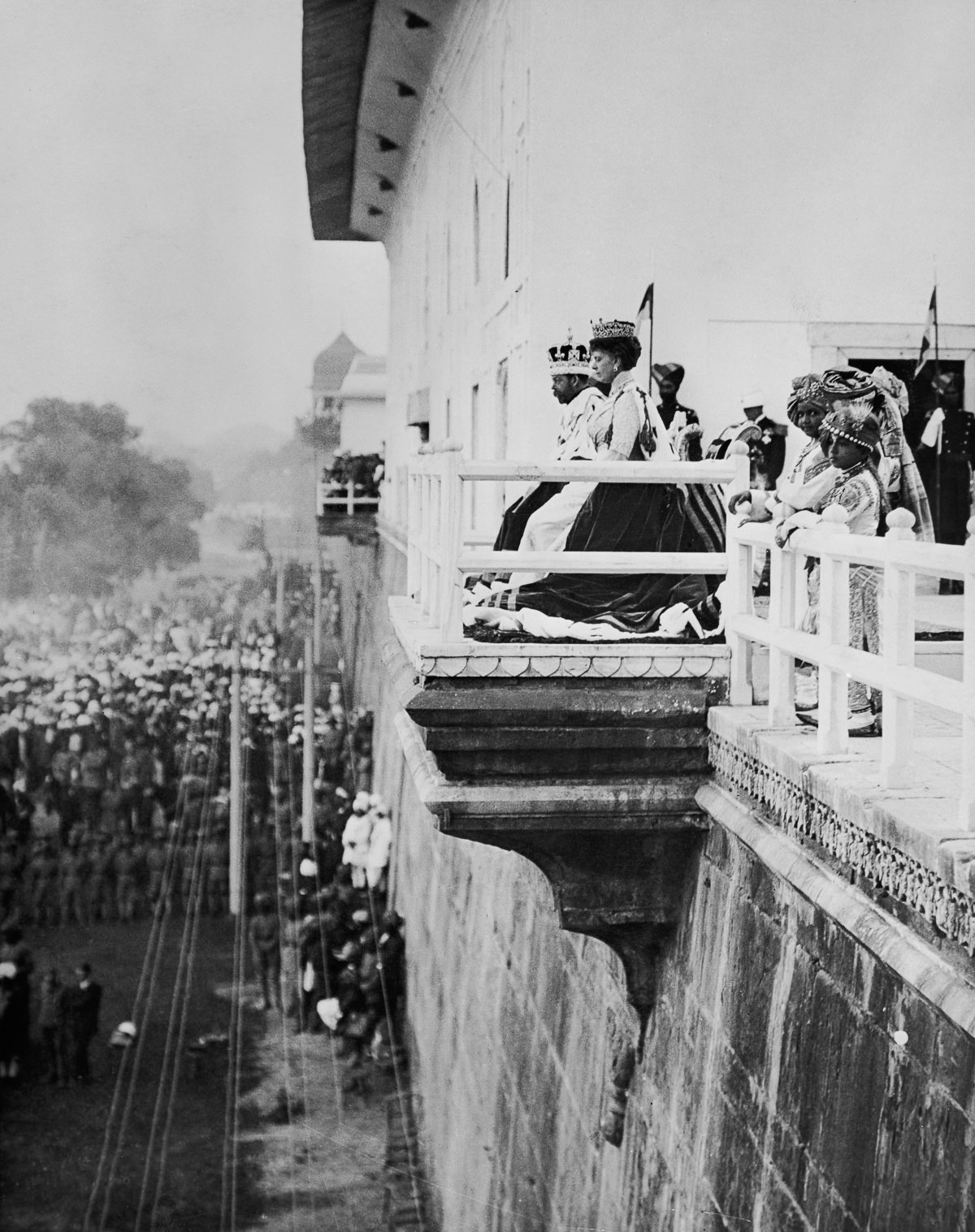
On December 12, 1911, George V and Queen Mary arrived at Coronation Park in their full coronation robes. The king wore the specially made Imperial Crown of India — a remarkable piece of regalia fitted with eight arches and set with 6,170 precisely cut diamonds, along with sapphires, emeralds, and rubies. The entire crown, including its velvet and miniver cap, weighed 34 ounces. No existing British crown could be taken out of the country, so this one was crafted specifically for the occasion.
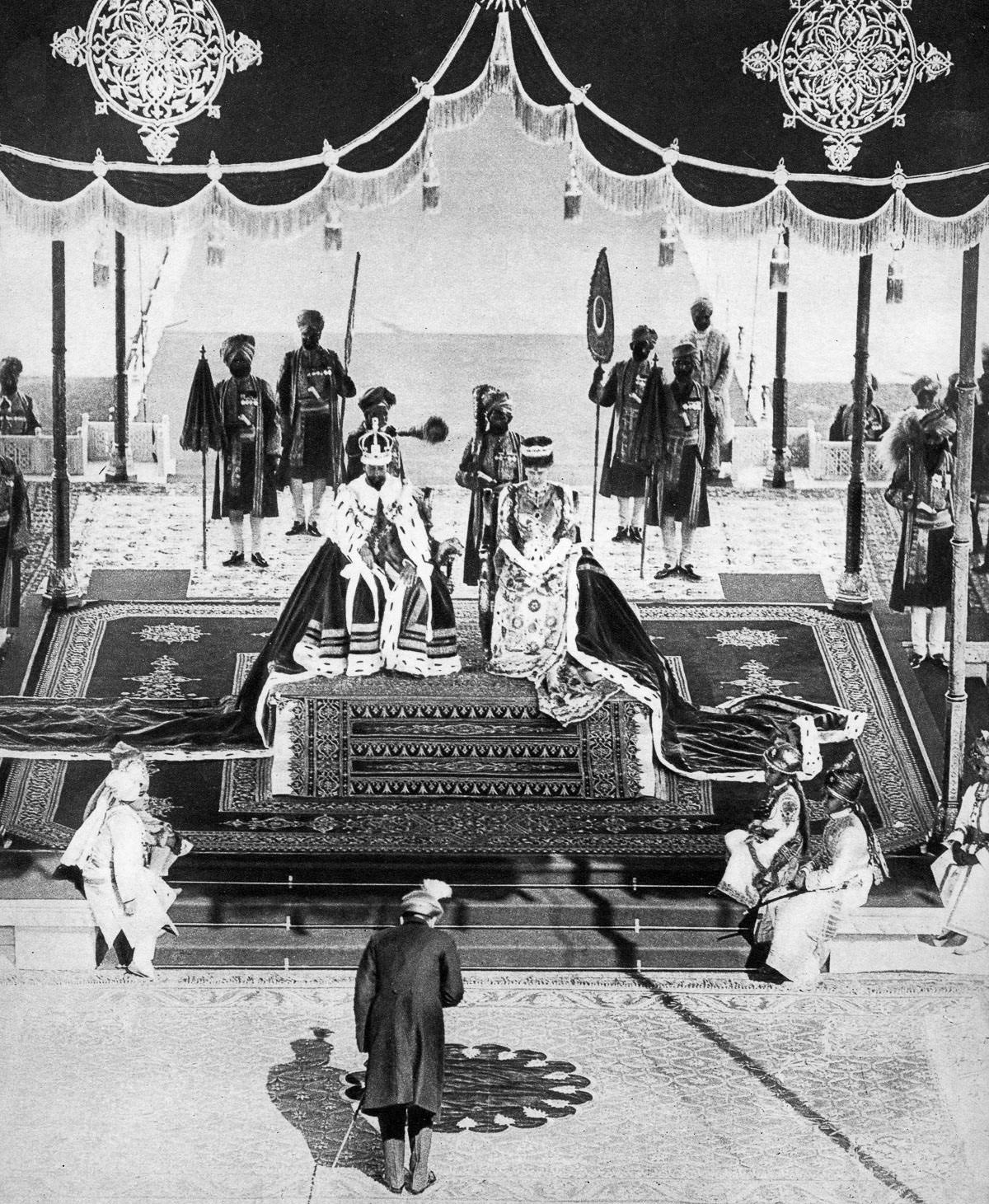
The ceremony itself was built around layers of imperial ritual. A 101-gun salute opened the proceedings. Military parades followed. Rulers of the princely states stepped forward one by one to offer their obeisance to the King-Emperor. Medals were distributed to military officers, and a formal proclamation declared George V Emperor of India before the assembled crowd.
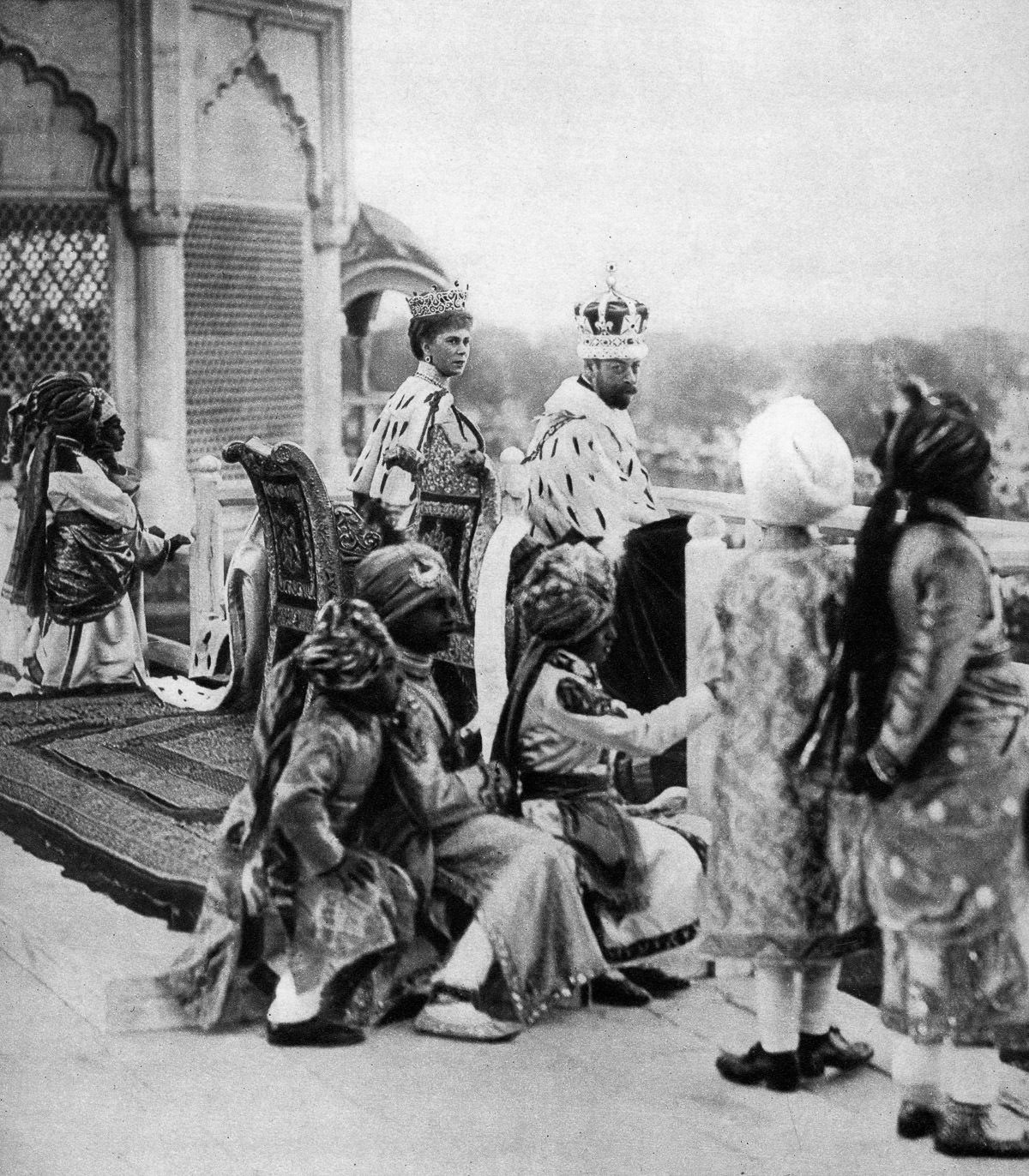
Following the main durbar events, the royal couple made a public appearance at the Red Fort — one of Delhi’s most historic landmarks — greeting the crowds gathered below from its balcony.
After the ceremonies in Delhi and public appearances in Bombay, King George’s attention turned to a very different kind of activity. He traveled to Nepal for a ten-day hunting expedition, a pursuit that was standard entertainment for visiting heads of state at the time. The Prime Minister of Nepal organized the expedition and provided full logistical support.
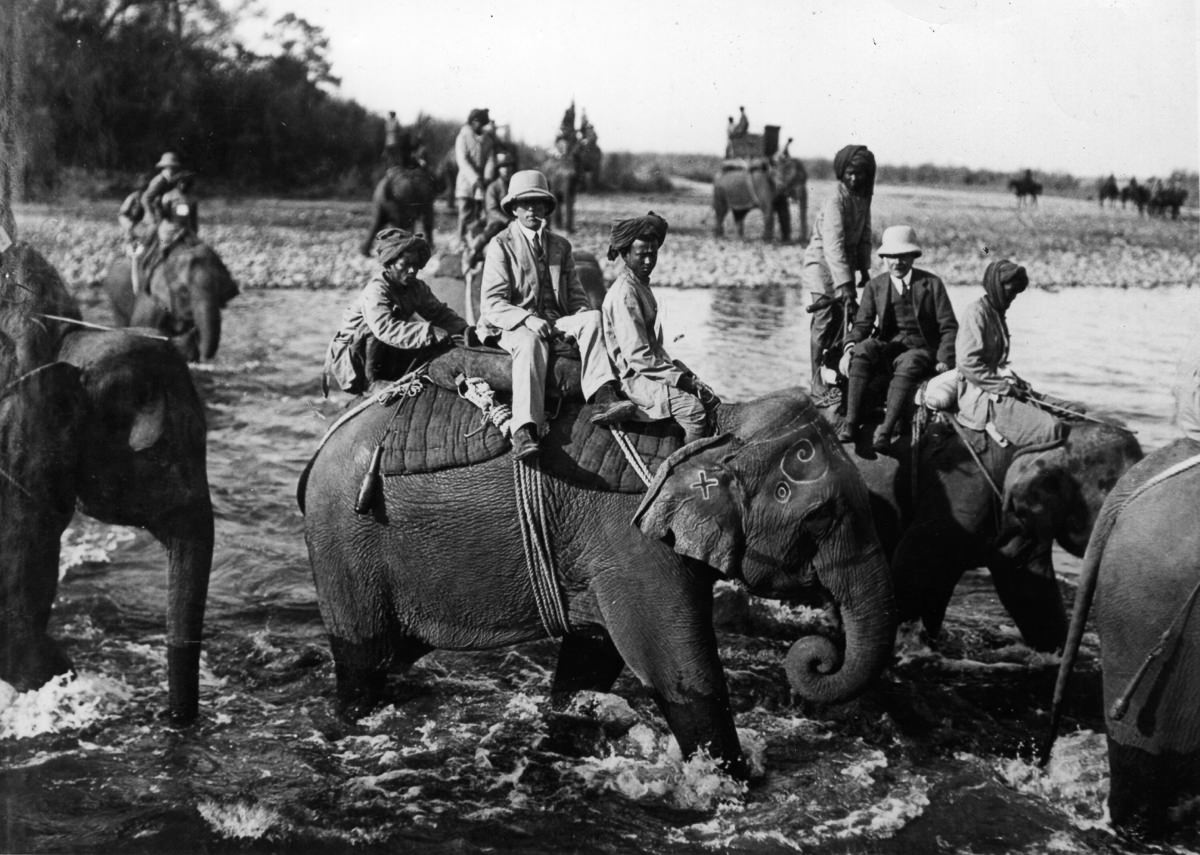
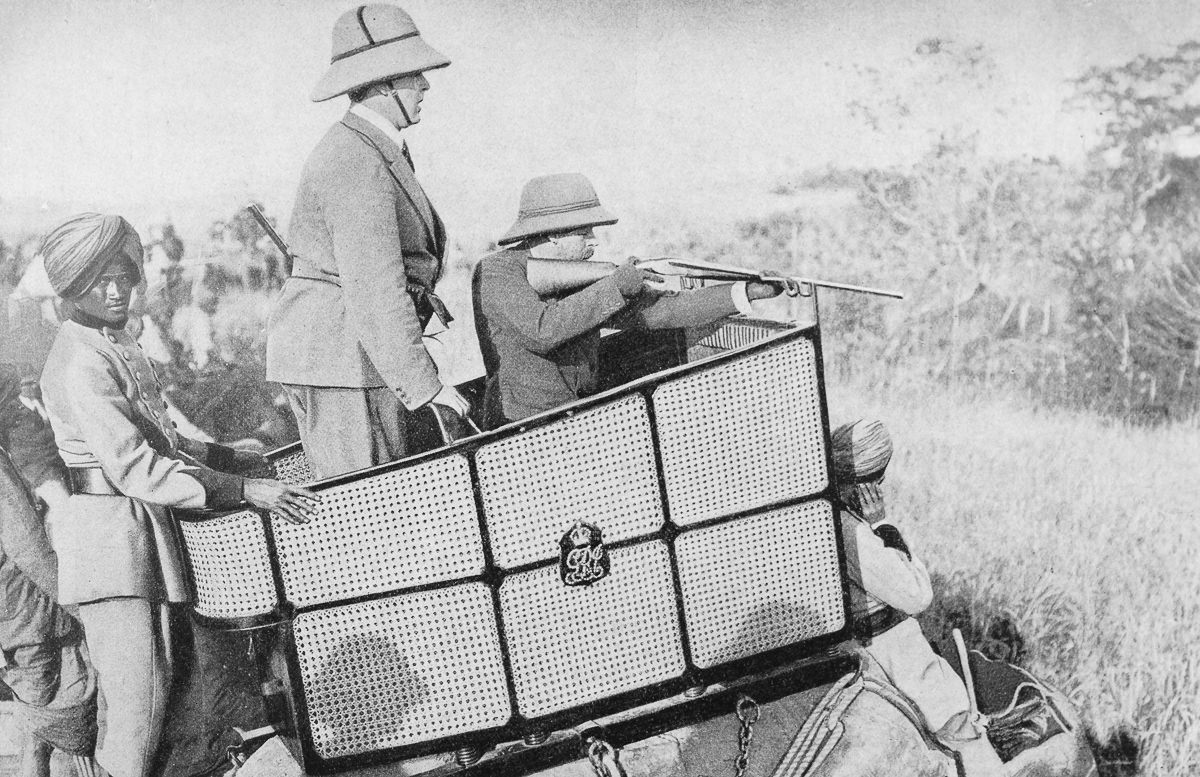
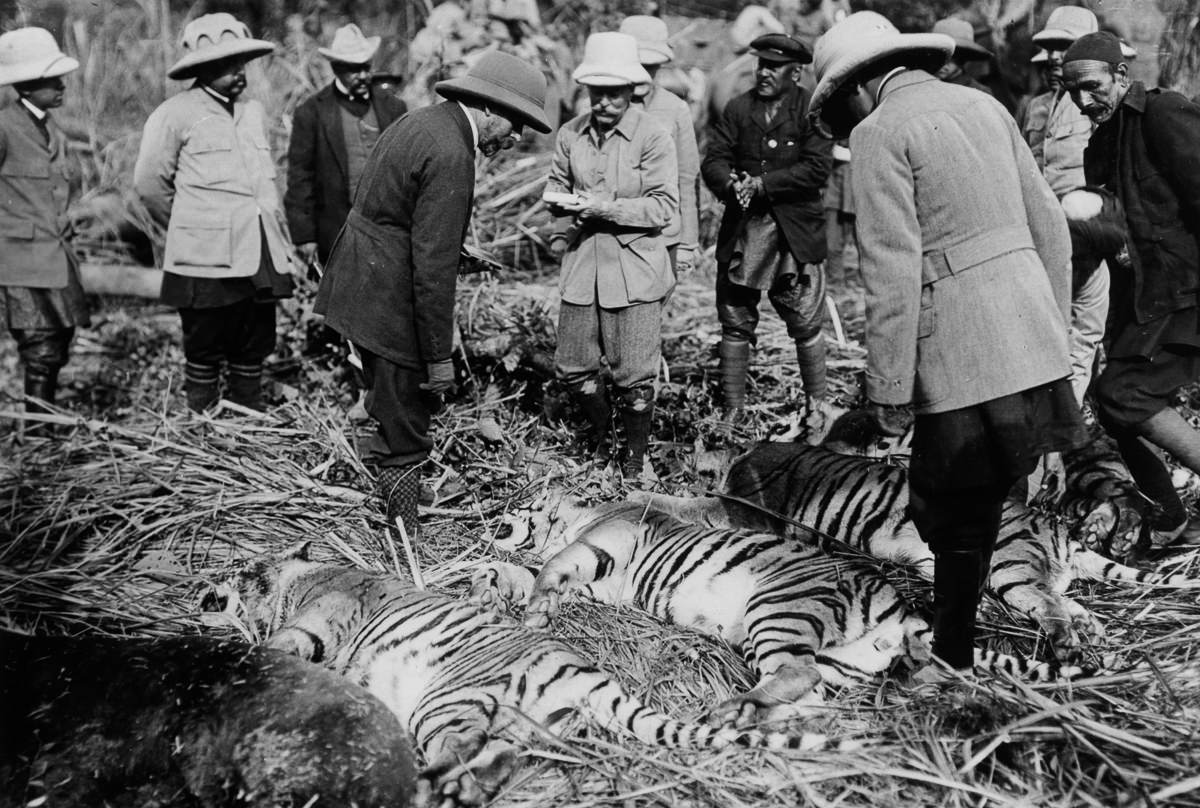
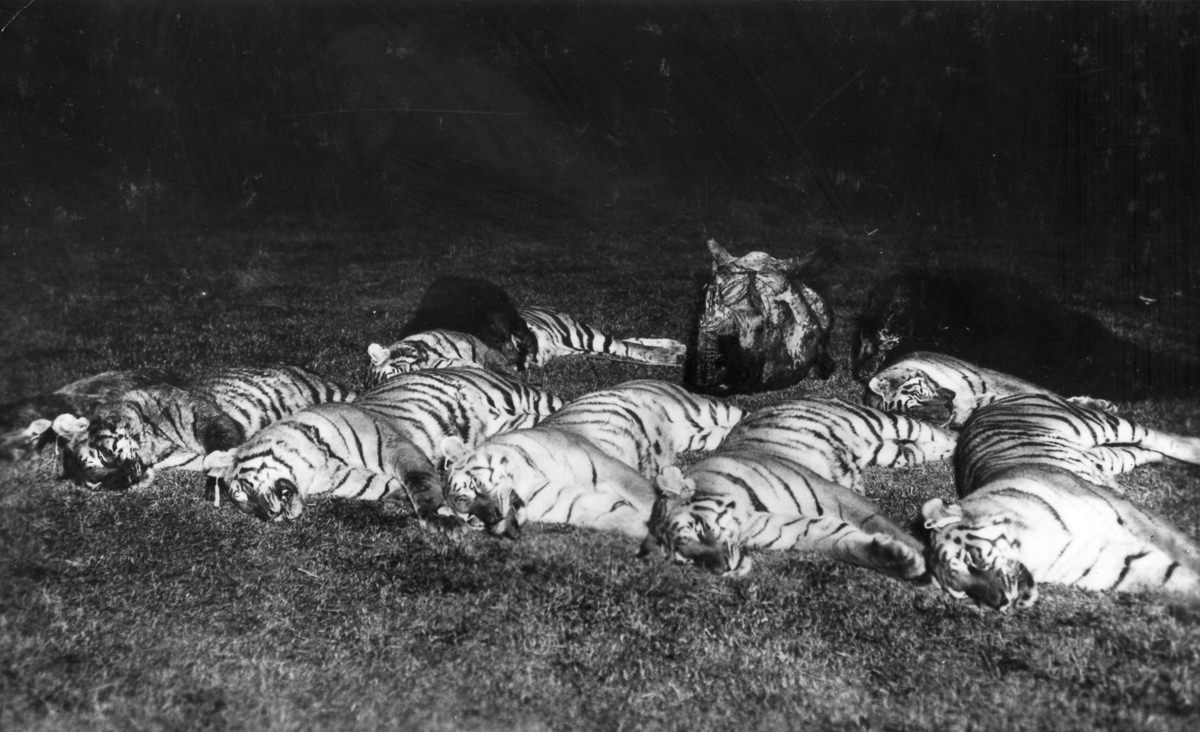
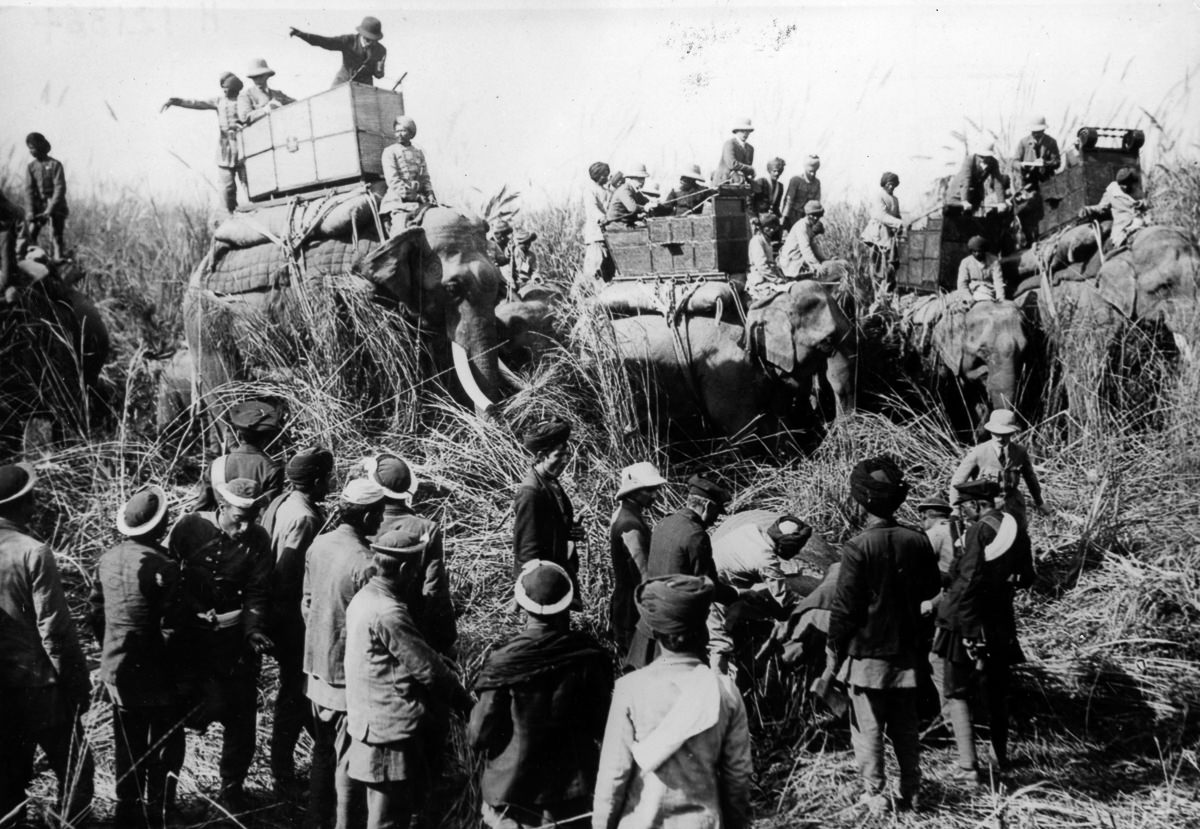
Hunters operated from the backs of elephants, moving through dense jungle terrain. Cattle were tethered at the jungle’s edge to draw predators into range. The method was deliberate and effective. Over those ten days, the king’s party killed 39 tigers, 18 rhinoceroses, 4 sloth bears, and numerous leopards and porcupines.
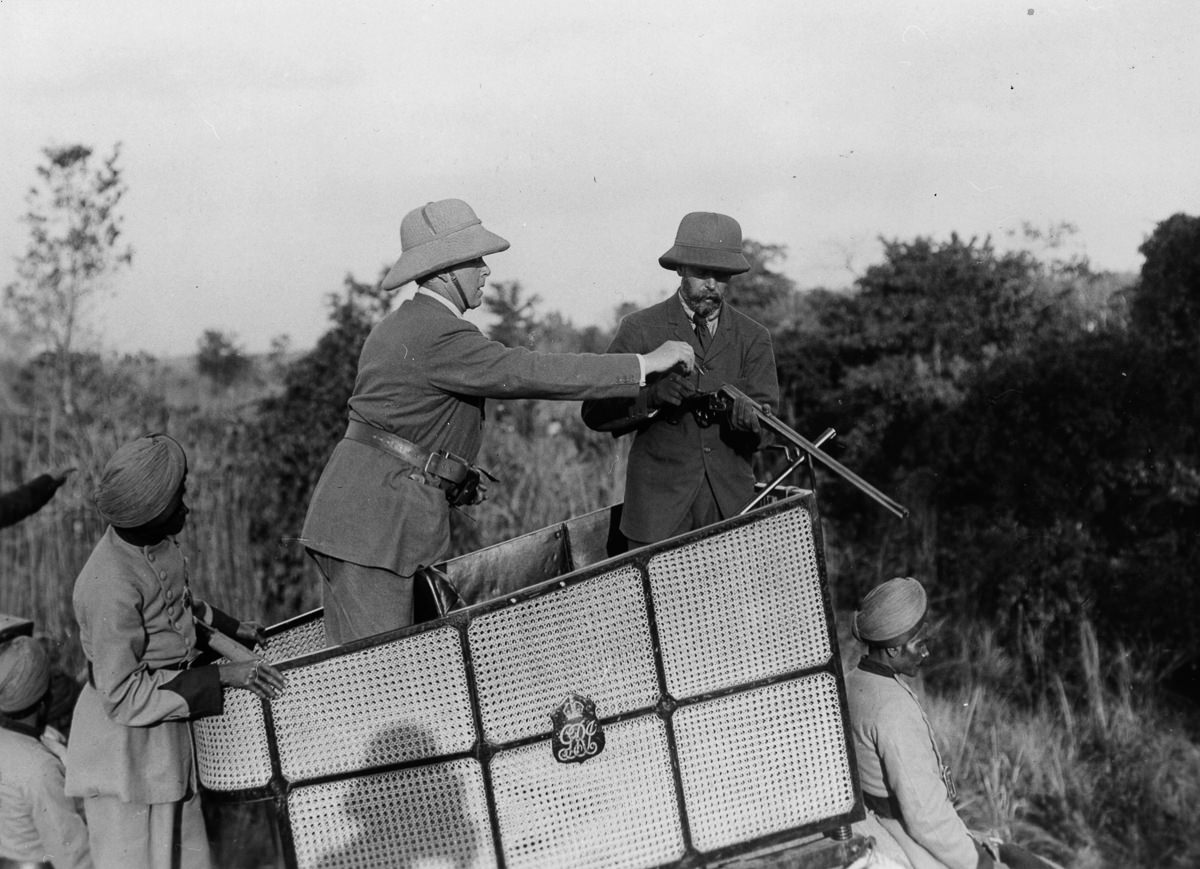
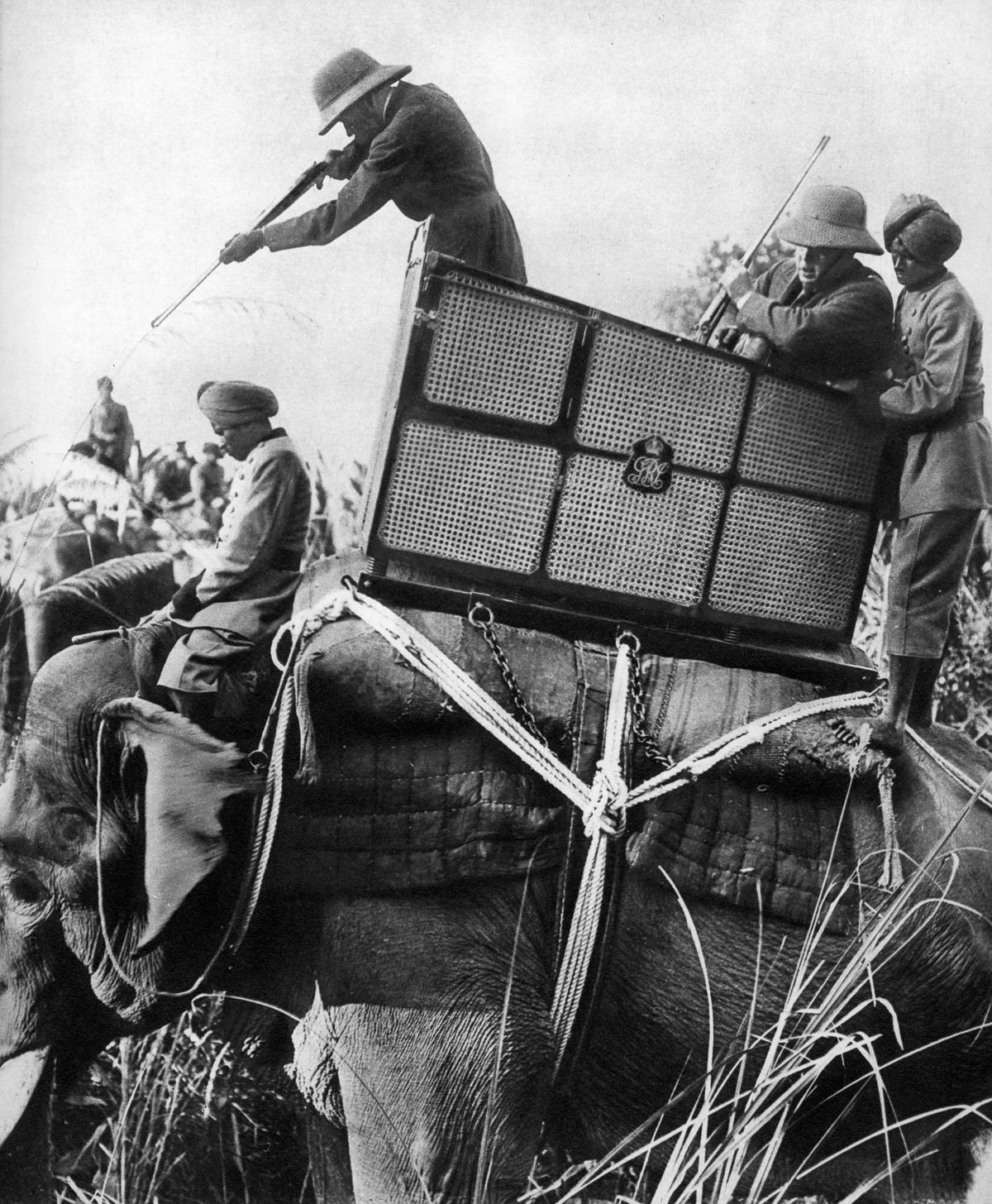
After each day’s hunting, the kills were laid out and inspected — a standard practice of the era, documented thoroughly by photographers traveling with the royal party.
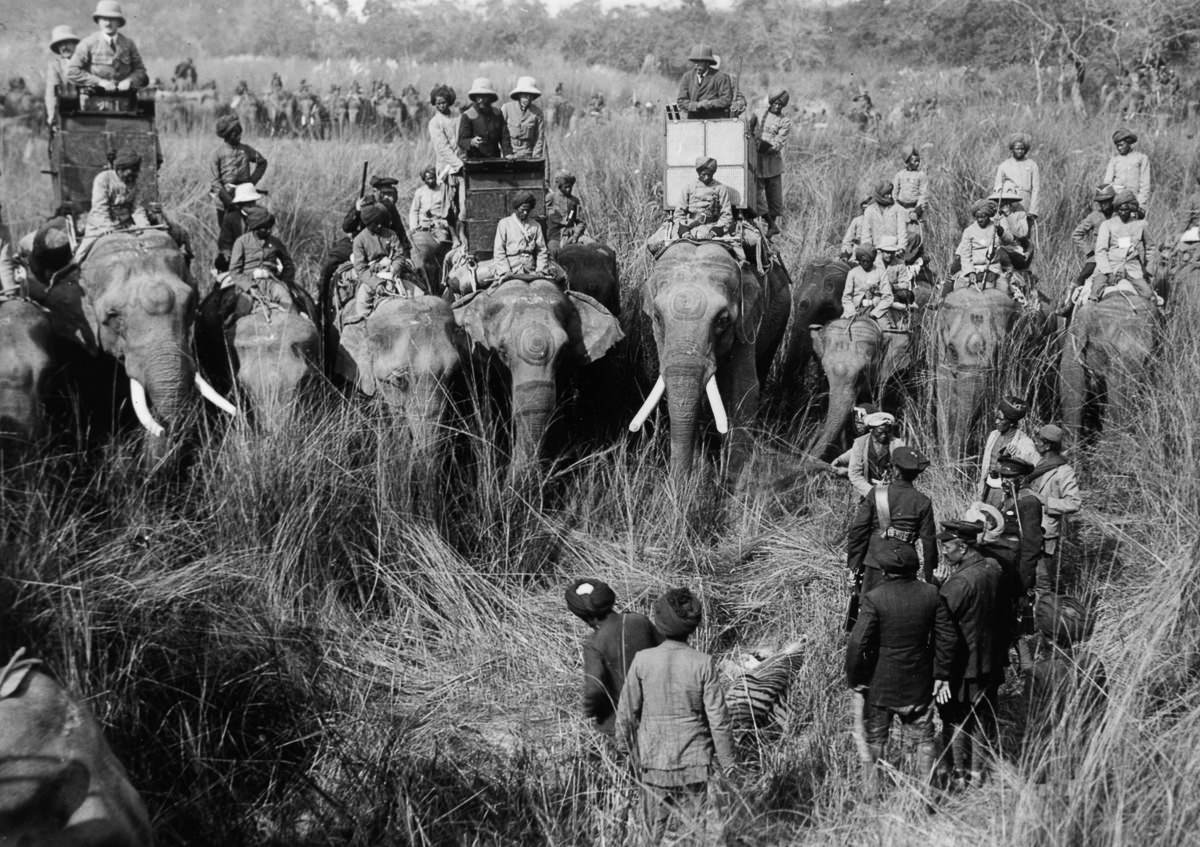
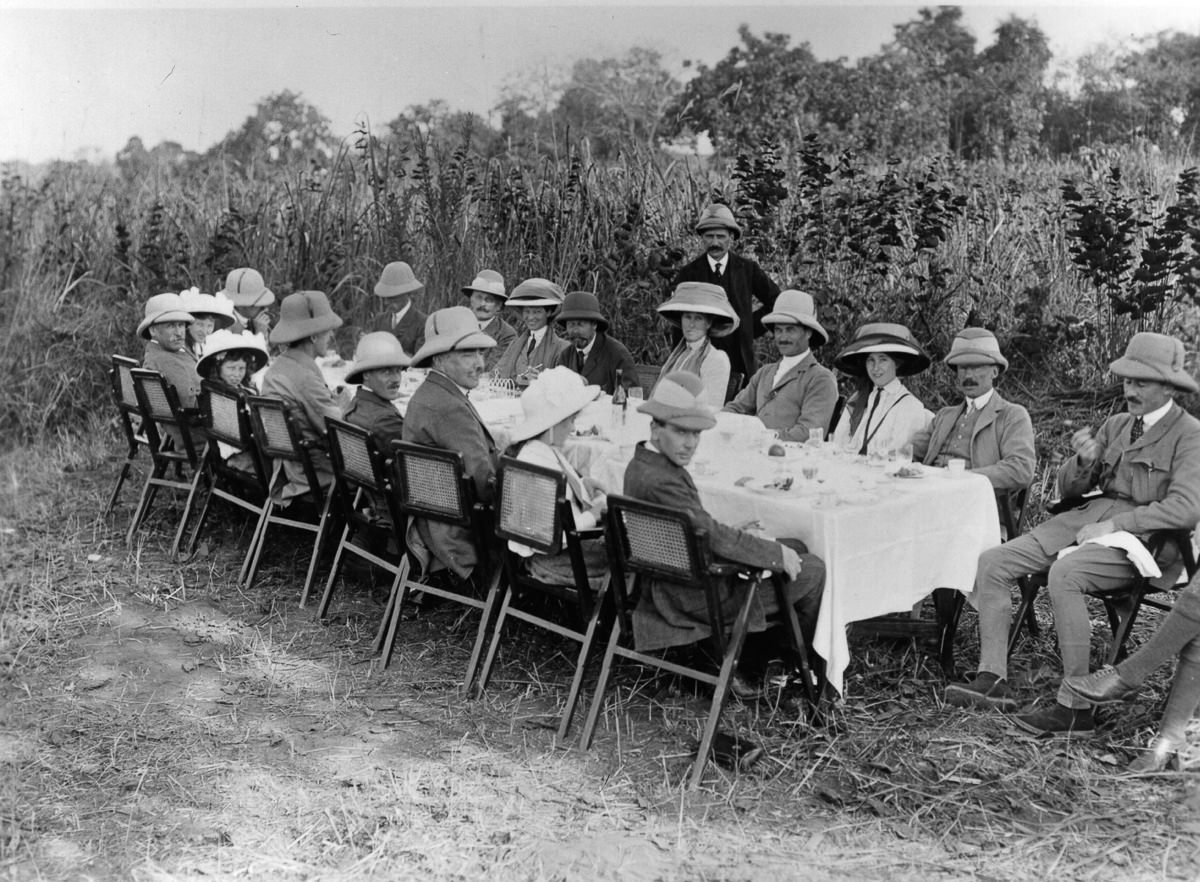
The hunting party took regular breaks between drives. Meals were set up in the field, and the group crossed rivers and moved through the landscape as a large, well-organized operation.
Not everything taken from Nepal was killed. The Prime Minister presented the king with a young live rhinoceros as a gift, which was subsequently transported to the London Zoo. The expedition also generated detailed natural history records. British diplomat and naturalist Brian Houghton Hodgson documented over 560 bird species — represented by 9,500 specimens — along with 900 mammal species and 80 reptile species recorded during the expedition. The hunting trip thus doubled as one of the more thorough wildlife surveys conducted in the region up to that point.




