
Bristol has been one of England’s most important cities for over eight centuries. By the early 1800s, its population stood at around 68,000. By the turn of the 20th century, that number had swelled to roughly 330,000 — a sign of just how rapidly the city was growing and changing. Trade, industry, and new technology were reshaping Bristol street by street, and the photographs taken during this era capture that transformation in remarkable detail.
At the heart of Bristol’s economy was its port. Engineers constructed a floating harbor — a tideless dock where water was kept at a constant depth — allowing ships to load and unload at any time without waiting for the tide. Bristol was also connected to London by rail in 1841, cutting travel time dramatically and opening new markets for local goods. The city’s shipbuilding yards were world-famous, producing two of the most celebrated vessels of the age: the SS Great Western and the SS Great Britain, both built right on the Bristol waterfront.
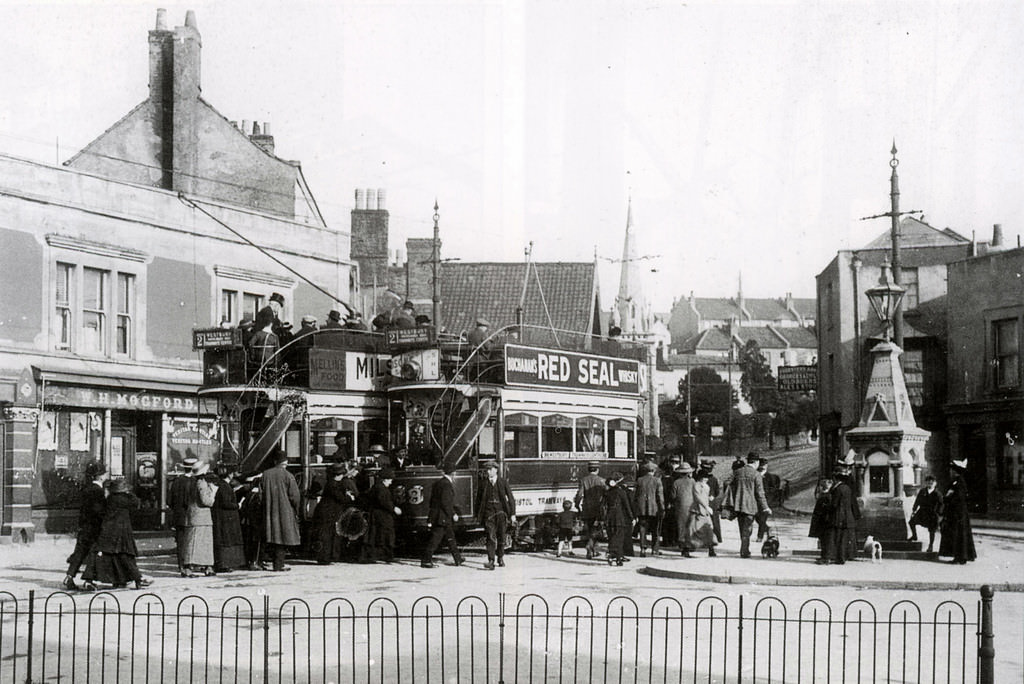
Not all of Bristol’s neighborhoods looked like a busy industrial port. The village of Westbury-on-Trym, sitting on the northern edge of the city, retained a quiet, rural character well into the Victorian era. Its narrow lanes and stone buildings offered a stark contrast to the smoke and noise of the city center just a few miles away.
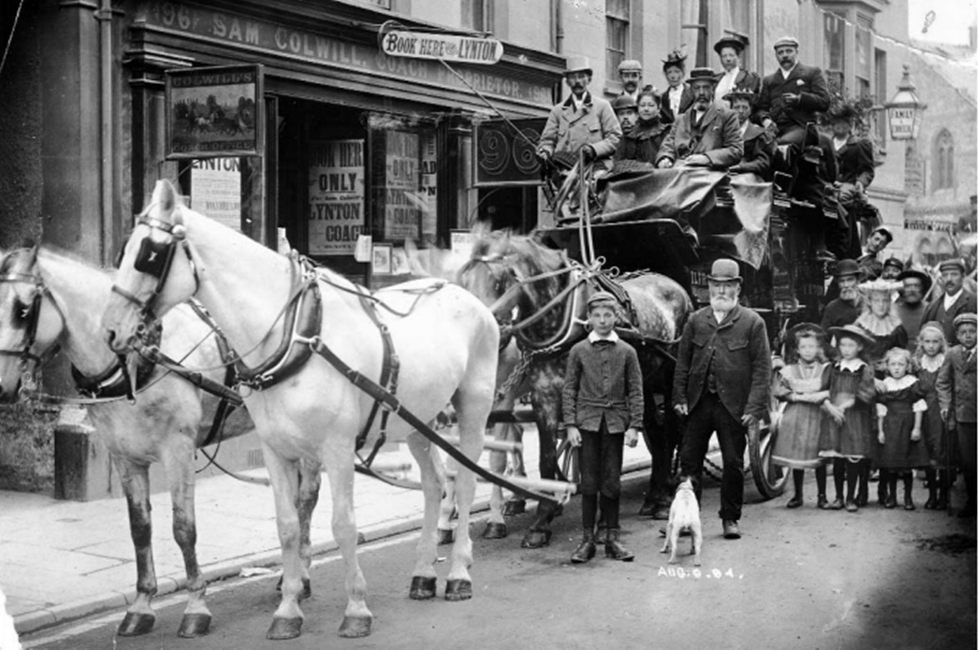
Before motor vehicles arrived, coach offices were essential hubs for travel and transport. Colwill’s Coach office, photographed in 1894, represents the final years of horse-drawn coach travel as a serious competitor to the railways. Within a decade, much of this industry would be swept away by newer forms of transportation.
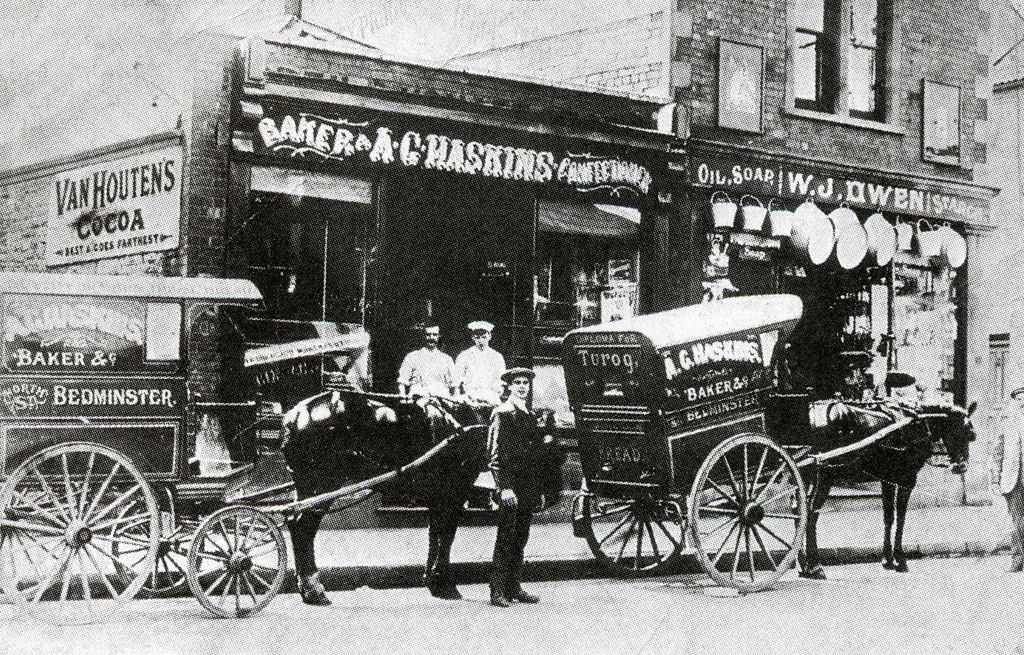
Local shopfronts in Victorian Bristol were proud, personal affairs. A.C. Haskins, a baker and confectioner on North Street in Bedminster, kept a tidy storefront that reflected both the owner’s trade and the character of the working-class neighborhood it served. Bedminster, located south of the River Avon, was a dense, busy district tied closely to Bristol’s tobacco and manufacturing industries.
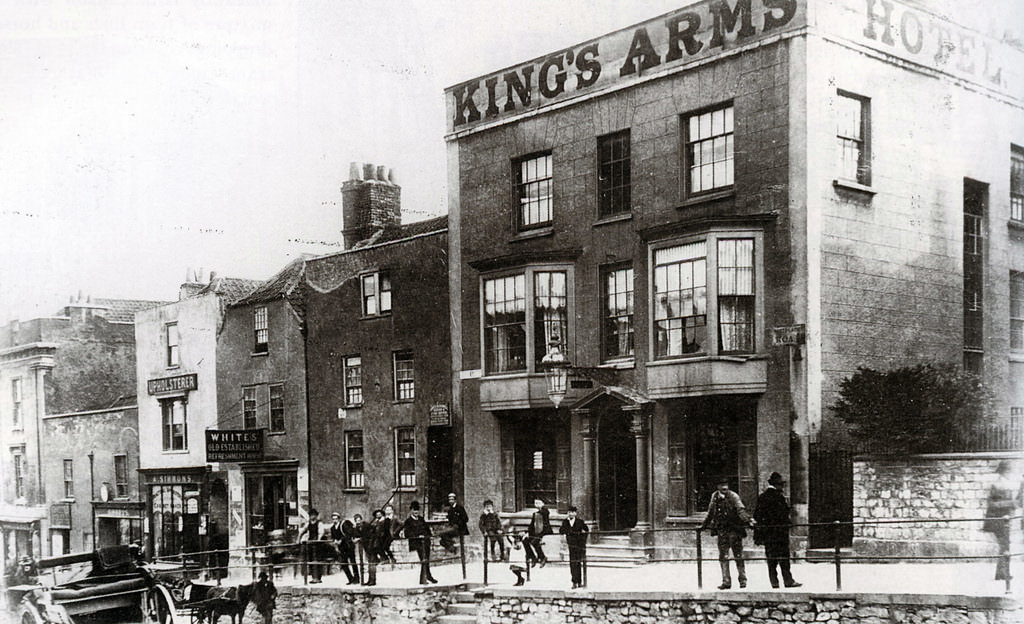
Pubs were anchors of Victorian community life, and The Kings Arms on Blackboy Hill was no exception. By 1899, the area around Blackboy Hill had developed into a lively stretch of shops and drinking establishments serving the residents of Clifton and the surrounding neighborhoods.
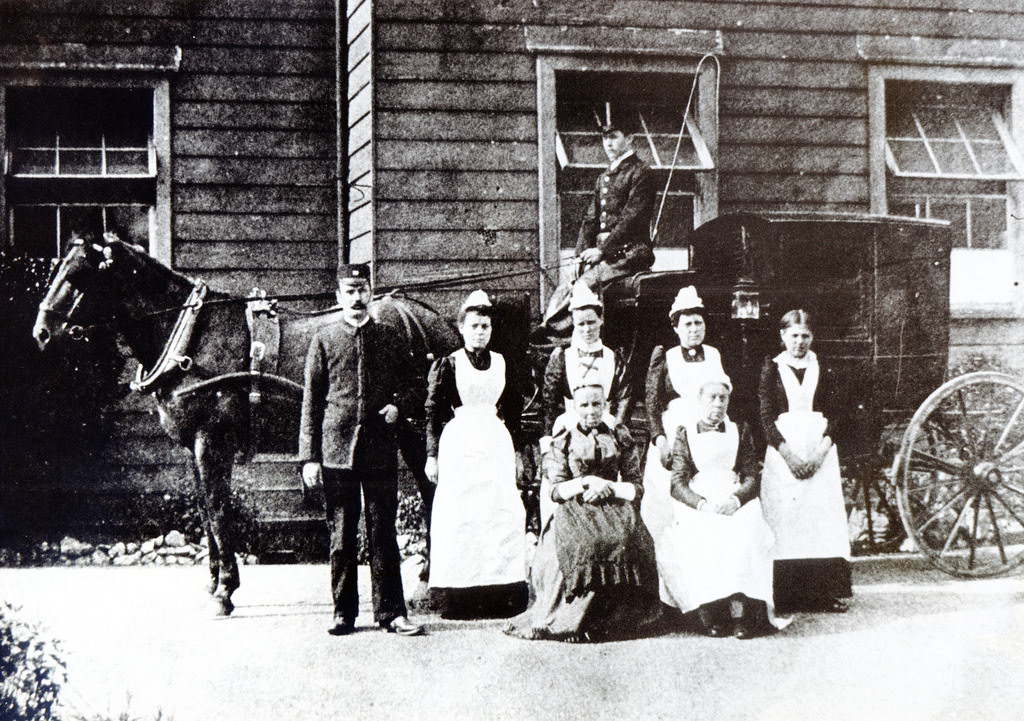
Domestic service was one of the most common forms of employment for working-class women in late Victorian England. In Bristol, thousands of women worked as cooks, maids, and housekeepers in the homes of the city’s merchant and professional classes. This 1898 photograph of Bristol domestic servants gives a rare look at the people who kept the city’s wealthier households running day to day.
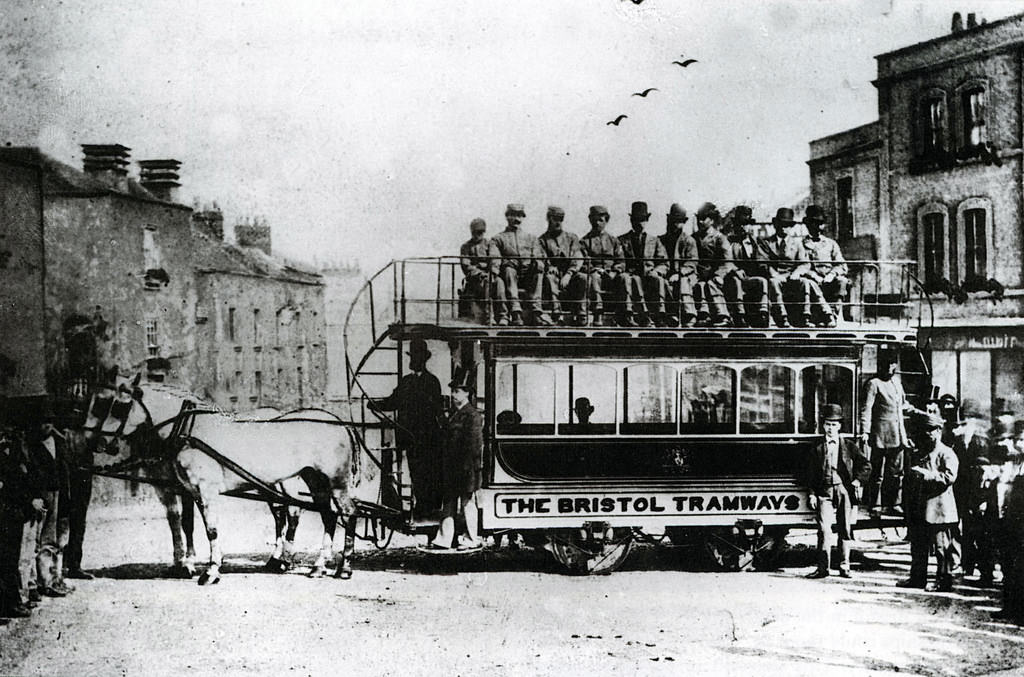
Public transport in Bristol took a major step forward with the Bristol Tramways & Carriage Company, established in 1875. Horse-drawn trams began running through the city’s streets, giving workers and shoppers a reliable way to move across town. The company would later electrify its lines, becoming one of the first tramway operators in Britain to do so.
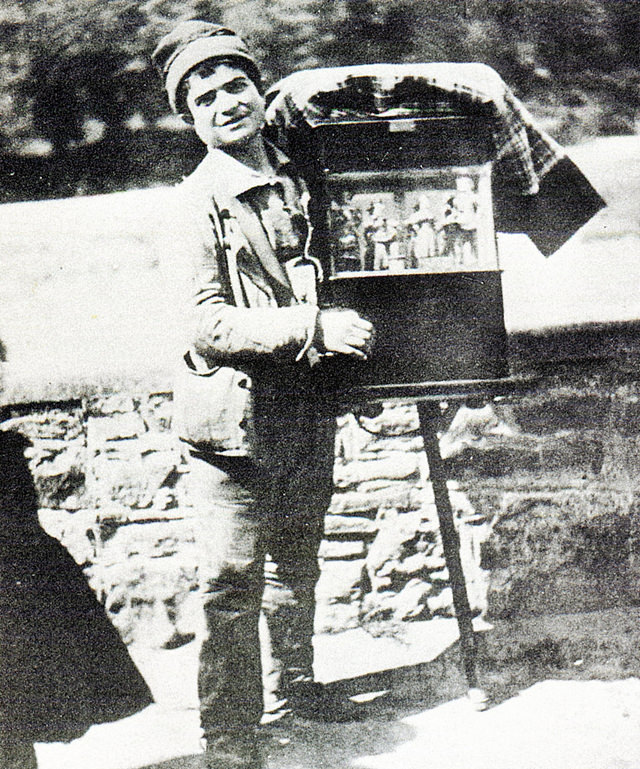
Street musicians were a familiar sight in Victorian cities. Organ grinders — men who cranked portable mechanical organs to produce music — worked the pavements of Bristol’s busier streets, collecting coins from passersby. It was a hard way to earn a living, and many organ grinders were recent immigrants who had brought the trade with them from Italy.
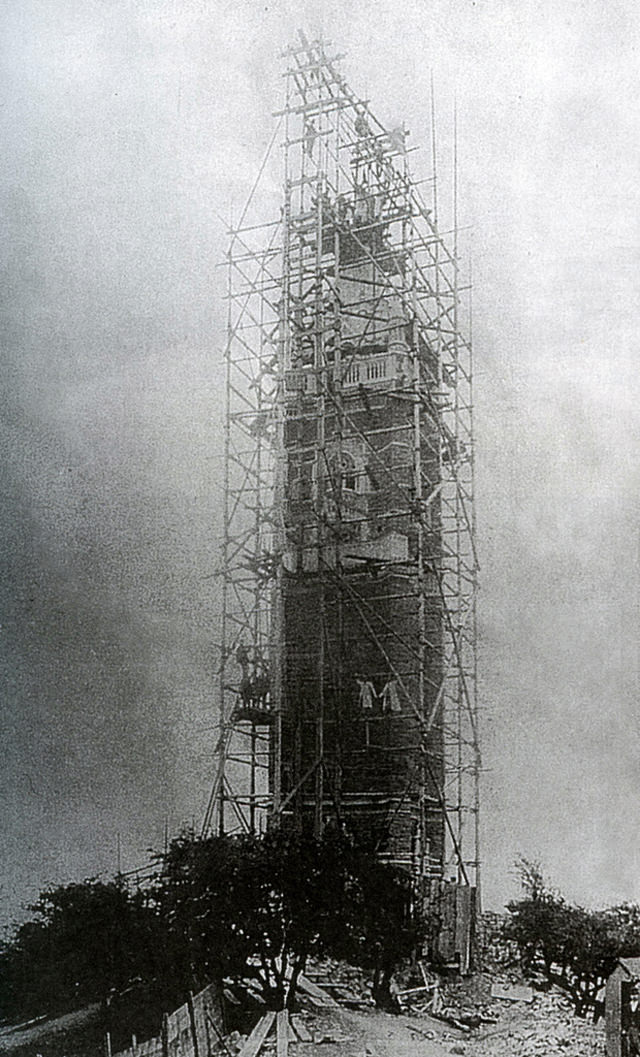
One of the most visible construction projects of late Victorian Bristol was the Cabot Tower on Brandon Hill. Built to commemorate the 400th anniversary of John Cabot’s 1497 voyage from Bristol to North America, the tower neared completion in 1898. Standing 32 meters tall, it offered panoramic views across the city and quickly became a landmark.
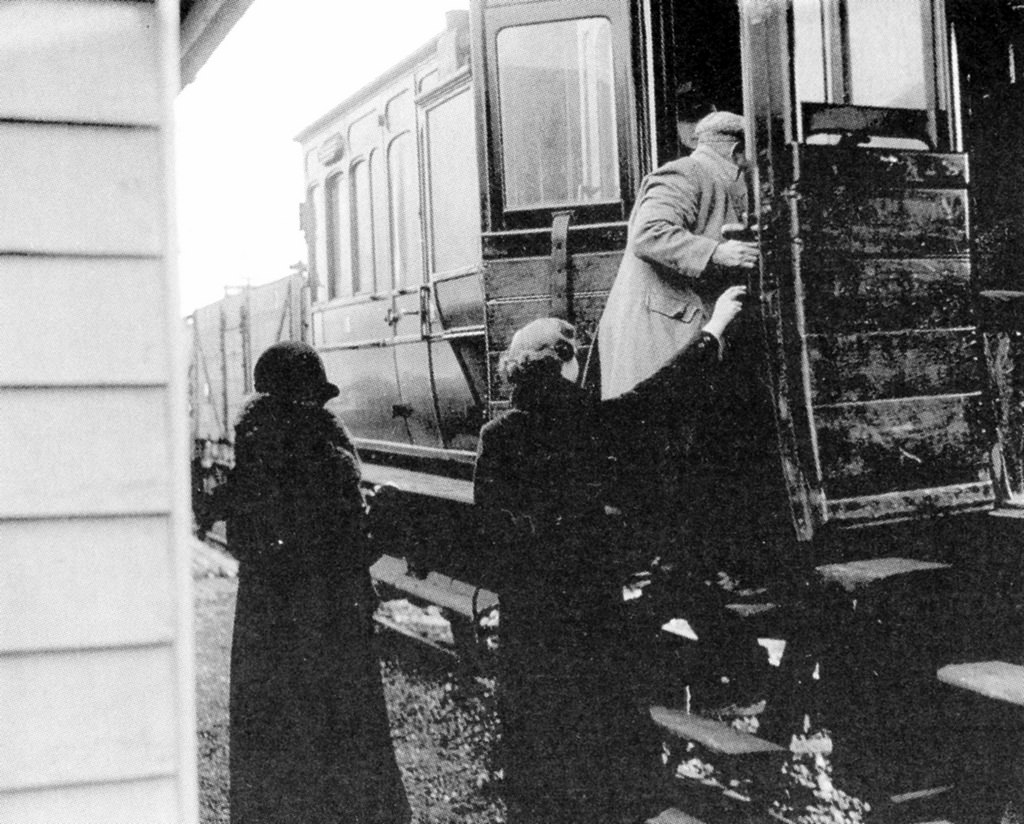
The Weston, Clevedon and Portishead Light Railway connected several seaside towns along the Somerset coast to the wider rail network. In the 1890s, Bristol residents used lines like this to reach the coast for day trips and holidays — a leisure habit that grew steadily as working hours shortened and wages improved for skilled laborers.
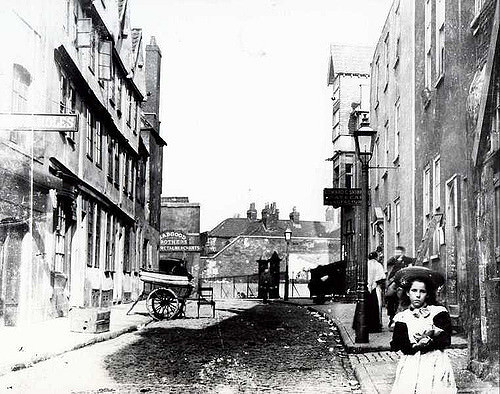
Castle Green, photographed in 1888, occupied the site of the medieval Bristol Castle, which had been largely demolished centuries earlier. By the Victorian era, the area had become an open urban space surrounded by warehouses and commercial buildings. It stood as a quiet reminder of the city’s medieval past in the middle of a rapidly modernizing streetscape.
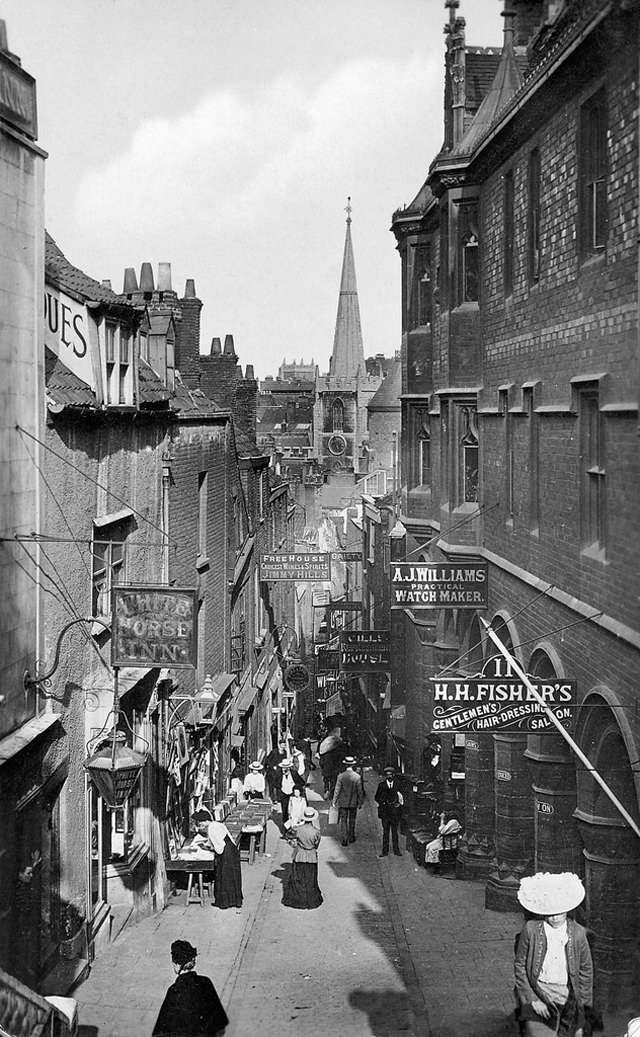
Christmas Steps is one of Bristol’s oldest surviving streets, a steep medieval lane lined with small shops and almshouses. By 1899, it had changed little in character from centuries before, though the city around it had transformed dramatically. Photographs of streets like this one document the layers of history that coexisted in Victorian Bristol.
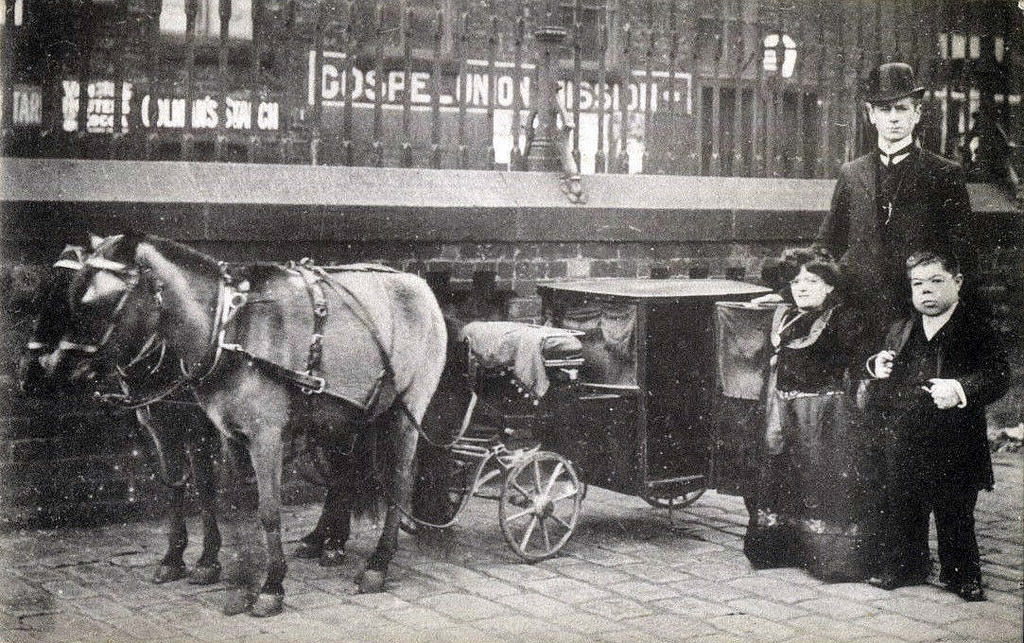
This 1869 photograph documents a wedding in Bristol involving individuals of short stature. During the Victorian era, such events were sometimes publicly exhibited or photographed as novelties, reflecting the period’s complicated and often exploitative attitudes toward people with physical differences. The image is a frank historical document of the social customs of the time.
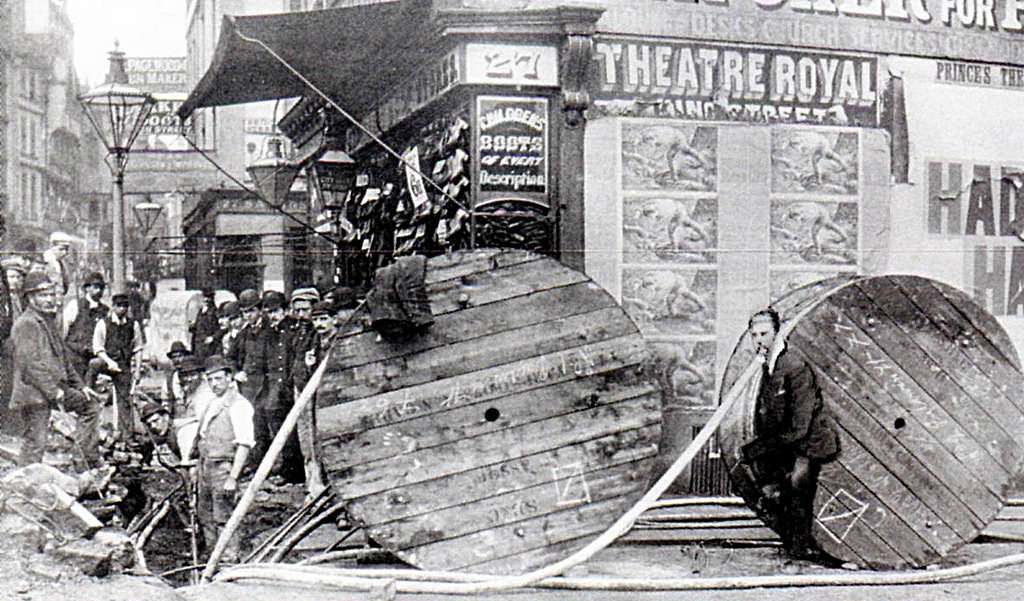
In 1893, workers began laying the first electric cables beneath Bristol’s High Street, marking the start of the city’s transition to electric power. It was labor-intensive work that disrupted traffic and daily life, but the results would reshape the city. Electric lighting, electric trams, and new powered machinery all depended on the infrastructure being built under these cobblestones.
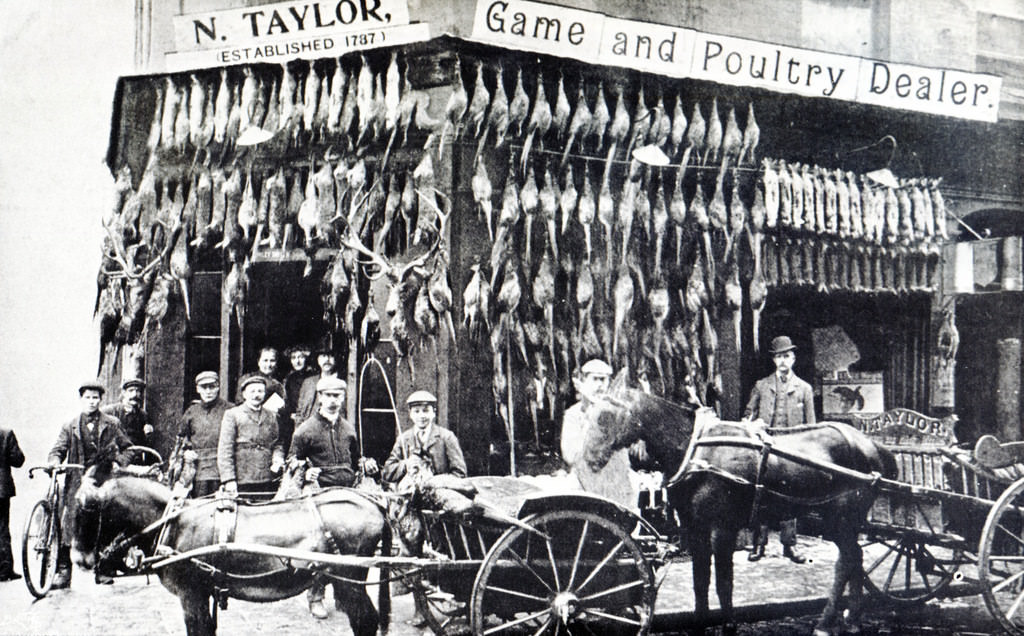
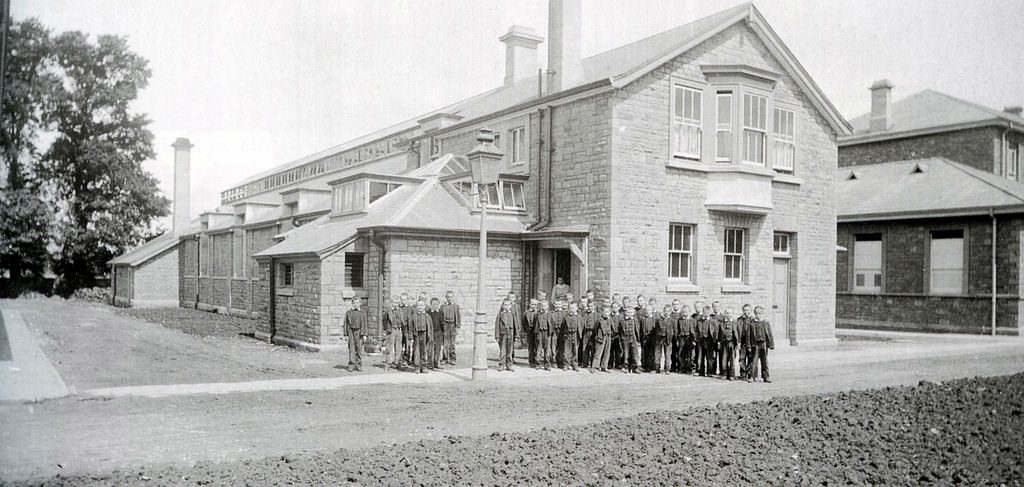
N. Taylor’s game and poultry shop on Nicholas Street was typical of Victorian food retail. Whole birds — pheasants, ducks, chickens, and more — were hung openly on display outside the shop front, as was standard practice before refrigeration. These two photographs from 1899 show the full extent of the display, a common sight on Bristol’s commercial streets before modern food hygiene regulations changed how meat was sold.
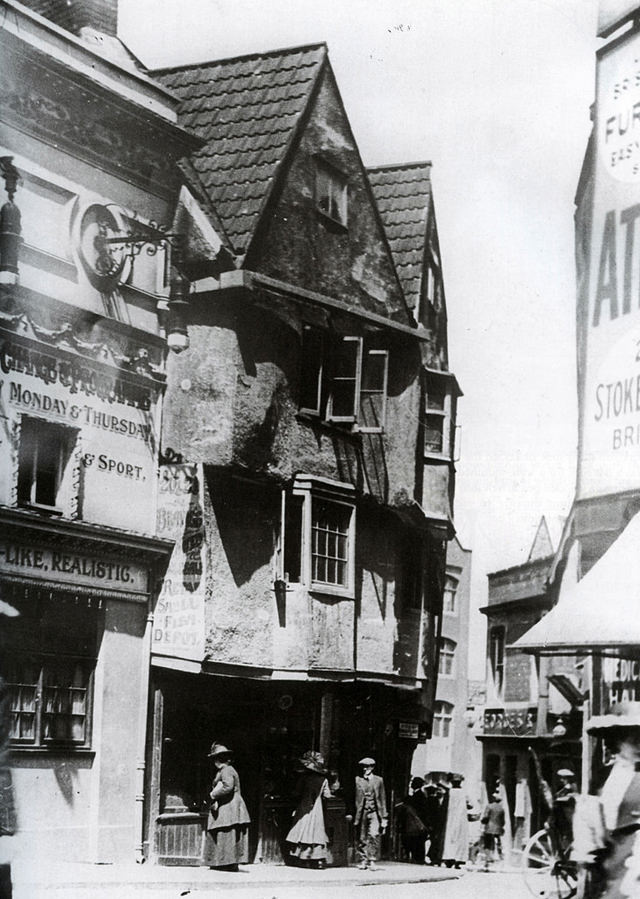
Peter Street in 1899 shows a typical Bristol commercial thoroughfare of the era — a mix of shopfronts, pedestrians, and the general bustle of late Victorian street life. Streets like this were the economic backbone of the city’s neighborhoods, serving the daily needs of thousands of residents.
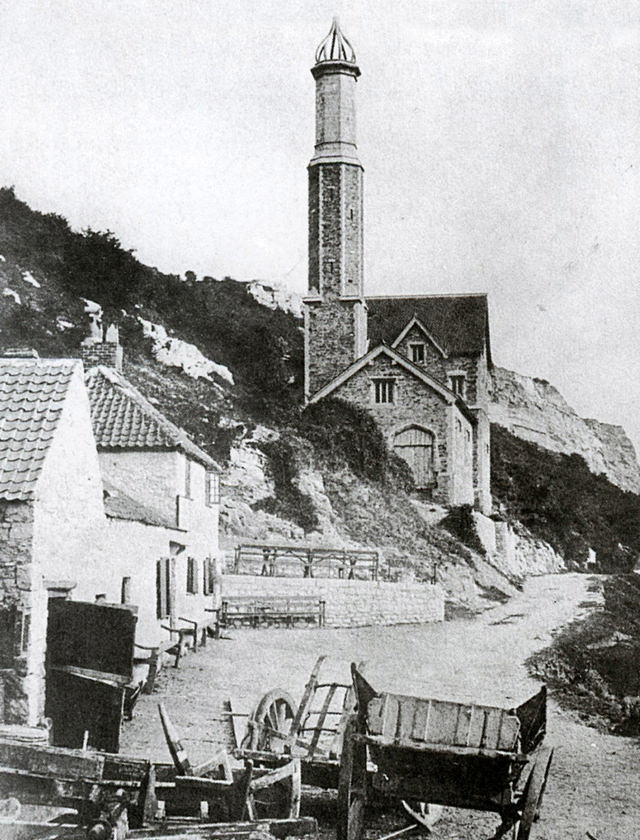
The pumping station near Clifton’s Avon Gorge, photographed in 1874, was part of the engineering network that kept Bristol’s port functioning. The dramatic geology of the gorge — steep limestone cliffs flanking the River Avon — made infrastructure work in this area a significant challenge. Victorian engineers met that challenge with some of the most impressive construction projects in Britain.
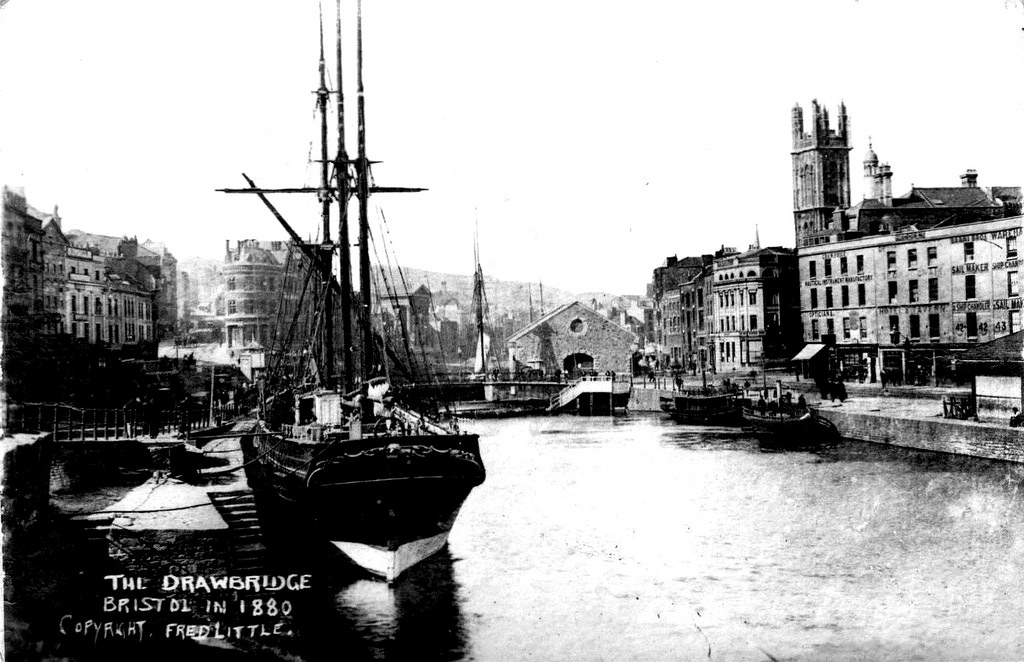
The Drawbridge over Bristol’s floating harbor was a practical piece of infrastructure that connected different parts of the city across the water. By 1880, the harbor area was one of the busiest parts of Bristol, with constant boat traffic, warehousing, and trade activity lining both banks of the river.
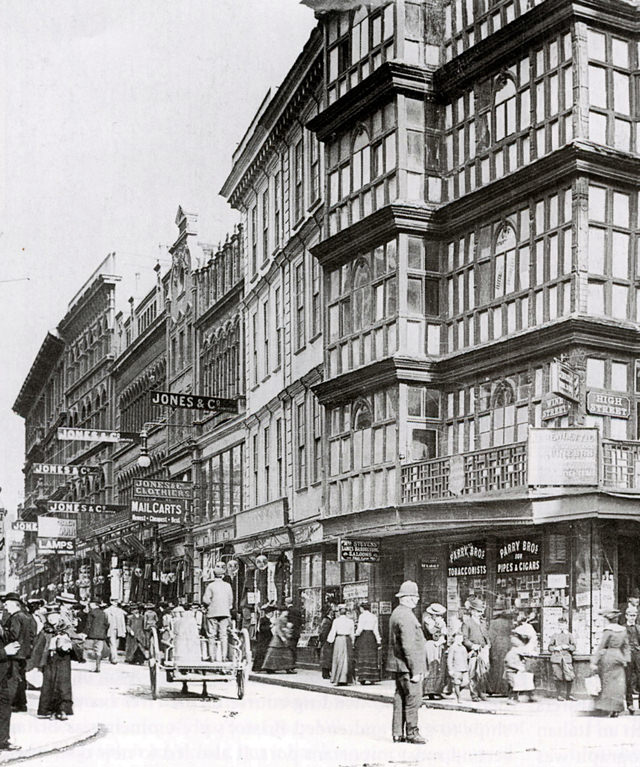
The Dutch House, standing at the corner of Wine Street and High Street, was one of Bristol’s most distinctive historic buildings. Built in 1676 in a Flemish Renaissance style, it reflected the strong commercial ties Bristol once had with the Netherlands through trade. By the time this photograph was taken in 1884, it was already regarded as an architectural relic of the city’s mercantile past.
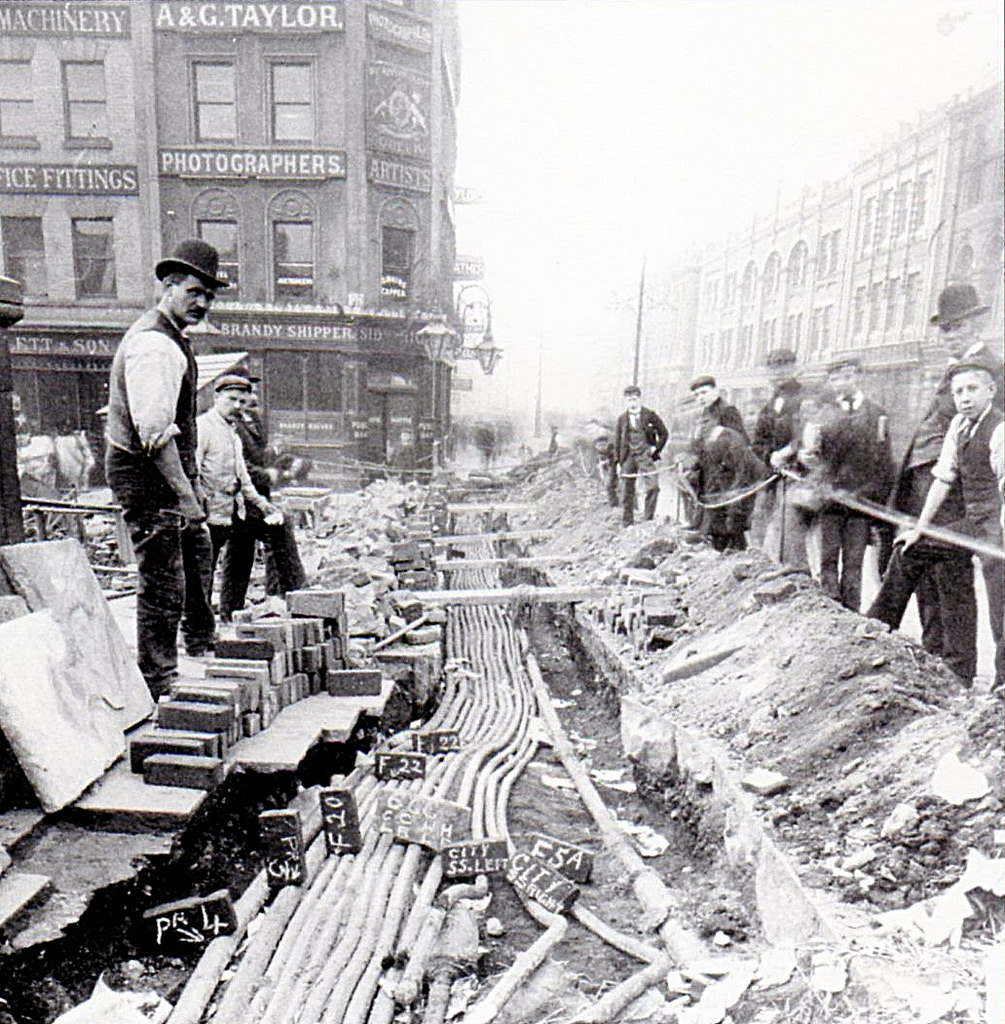
The electrification of Bristol’s streets continued on Baldwin Street in the same year. Gangs of laborers dug up the road surface to lay the cable conduits that would power the city’s coming electric tram network. The 1893 cable-laying project across multiple central Bristol streets was one of the largest civil engineering efforts the city had undertaken in years.
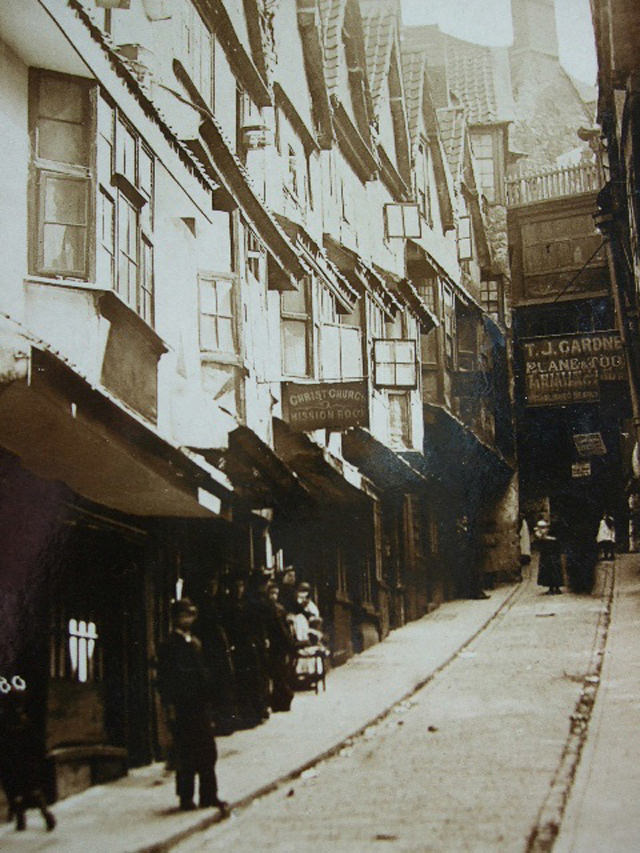
The Pithay was a narrow lane in the heart of old Bristol, part of the dense urban fabric that had built up over centuries near the city center. By 1880, many of these older streets were becoming overcrowded and rundown, and city authorities were beginning to look at clearance schemes that would eventually replace many of them with wider, modern roads.
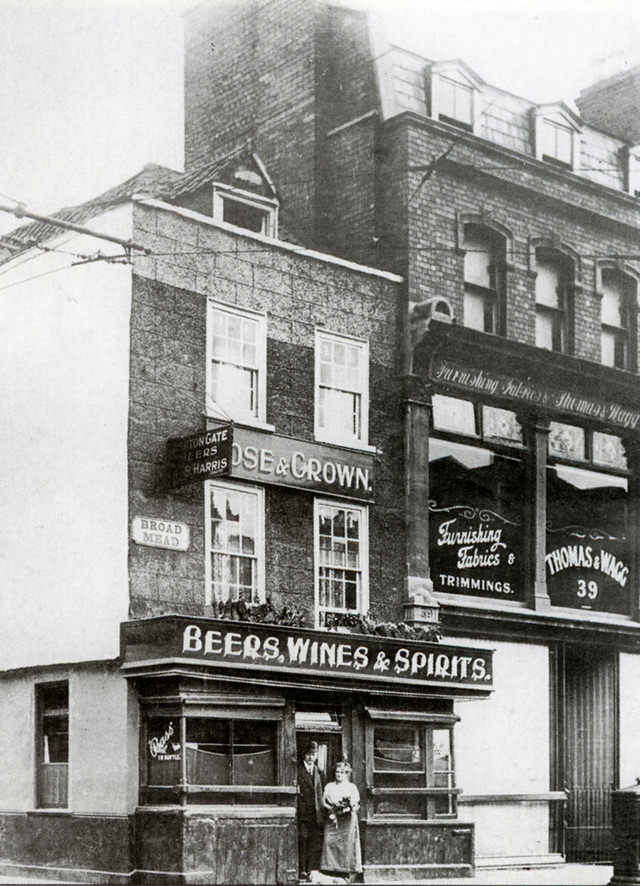
The Rose and Crown on Broadmead was one of many public houses that served the workers and shoppers of central Bristol. Broadmead itself was a busy commercial district, and a pub at number 38 would have done brisk trade throughout the week. Victorian pubs like this one served as social centers for working-class men, offering warmth, company, and affordable drink.
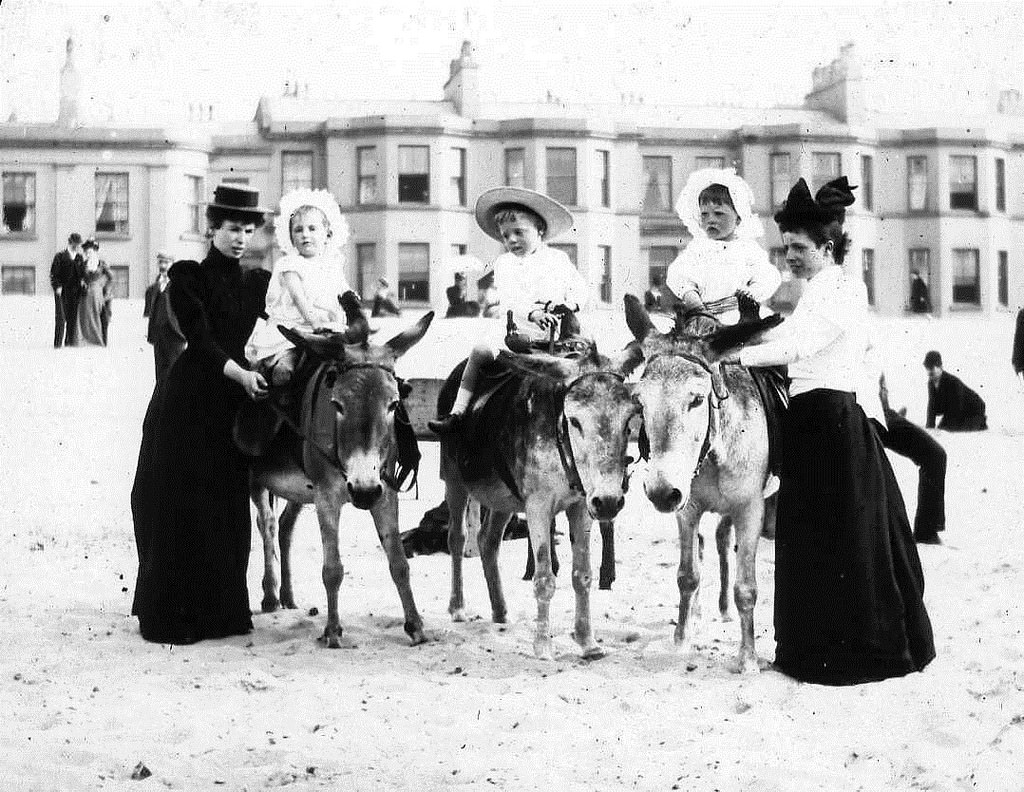
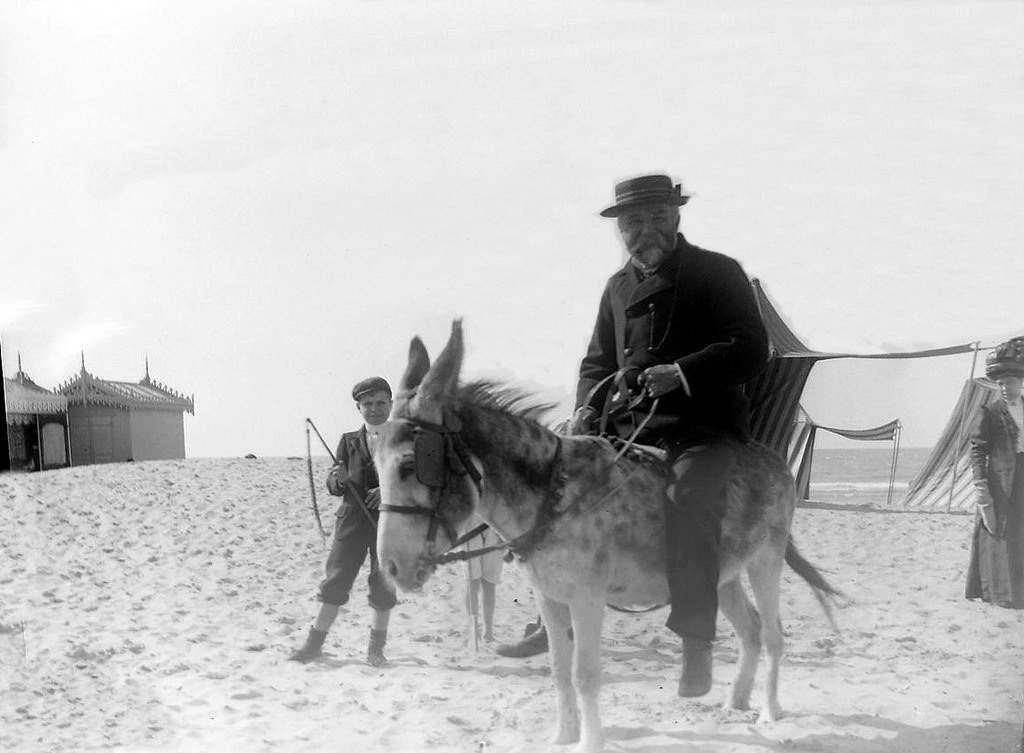
The seaside became an increasingly popular destination for Bristol’s working and middle classes in the second half of the 19th century. Improved rail connections made day trips to the nearby Somerset coast straightforward, and families took advantage of lighter workloads in summer months. These Victorian seaside photographs capture the leisure side of Bristol life — a reminder that the era was not defined solely by labor and industry.
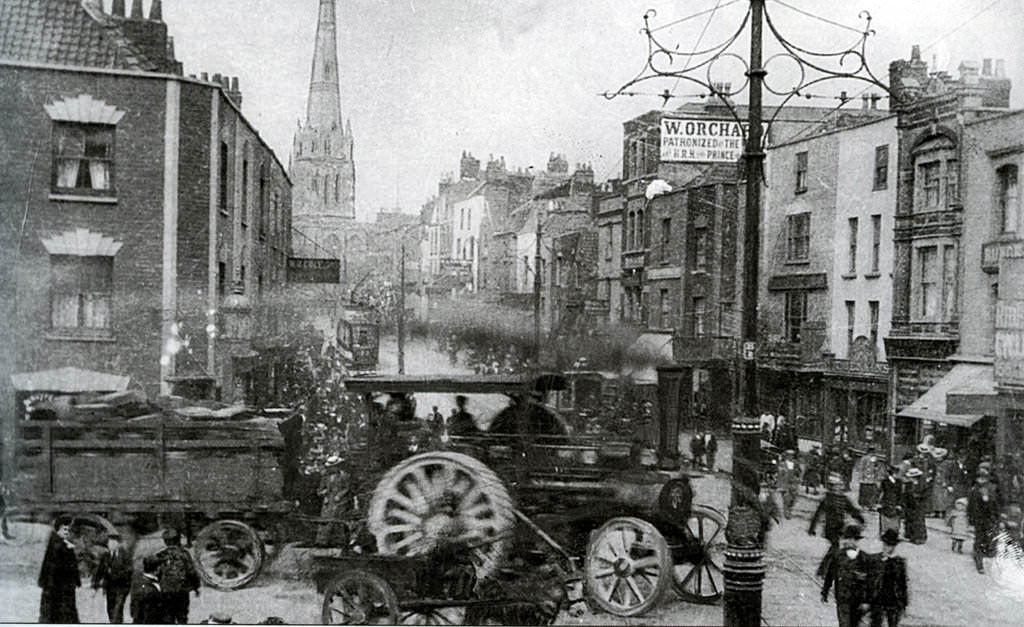
Steam traction engines on Bristol’s streets were a powerful symbol of the era. These heavy machines hauled goods up and down the city’s hills, including the steep climb of Redcliffe Hill on the south side of the river. They were loud, slow, and produced clouds of smoke, but they could move loads that no team of horses could match.
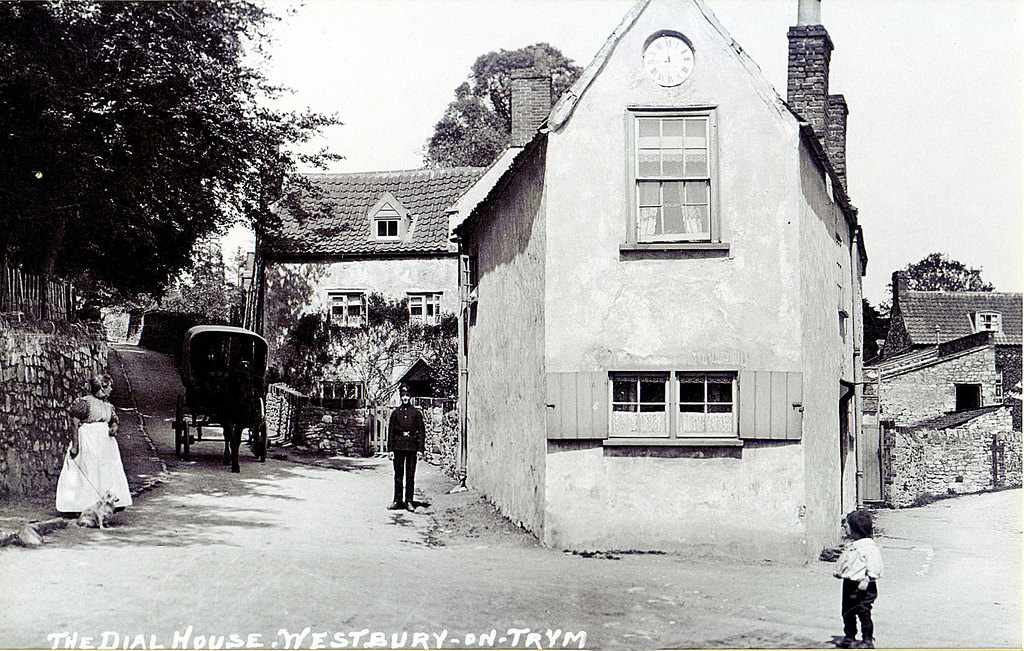
The Dial House in Westbury-on-Trym was one of the village’s most photographed buildings during the Victorian period. Named for the sundial mounted on its facade, it represented the kind of well-preserved, centuries-old architecture that gave Westbury-on-Trym its distinctive character, separate in feel from the industrial parts of Bristol just to the south.
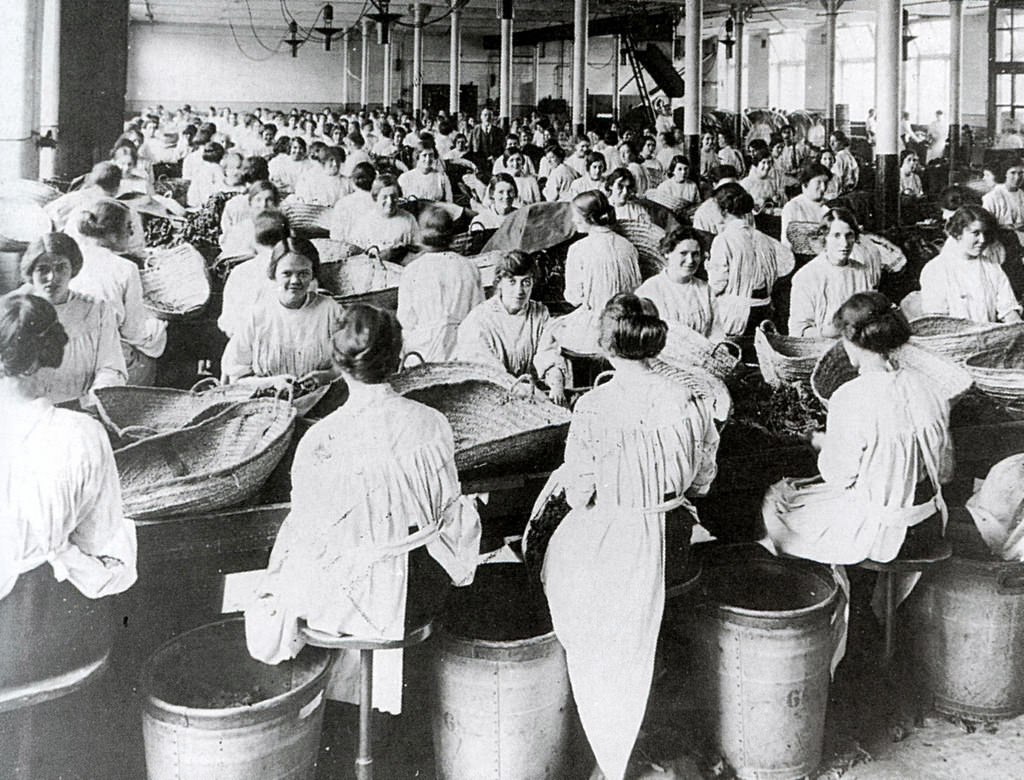
While copper, brass, and glass industries declined in Bristol during the latter half of the 19th century, tobacco manufacturing surged. W.D. & H.O. Wills, based in Bedminster, became one of the largest tobacco companies in Britain. The firm employed large numbers of women — known locally as the “Wills girls” — to work in its factories. This 1890s photograph shows a group of those workers, whose labor helped make Wills one of Bristol’s most economically powerful employers.
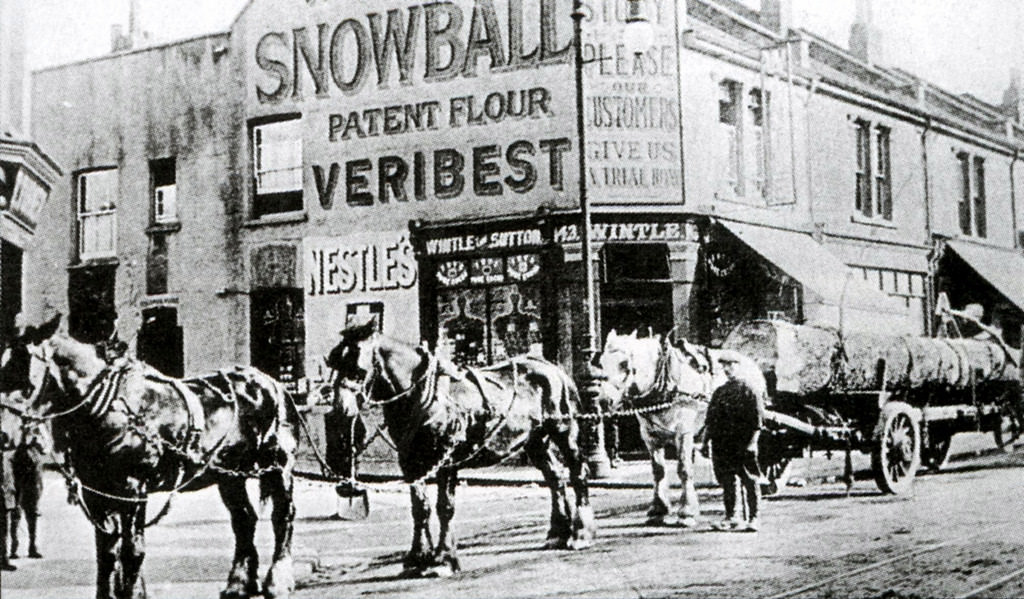
Horse-drawn haulage remained the backbone of local goods transport even as rail and steam expanded. This 1899 photograph shows a heavy timber carriage pulled by three horses, waiting to unload at Toogood’s timber yard on West Street in Bedminster. Timber was in constant demand across Bristol for construction, shipbuilding, and furniture making, and yards like Toogood’s were busy operations at the end of the Victorian century.





Does that look like the Kings Arms on Blackboy Hill? The pavement has steps down to the road, and it looks very different.
Although the pub is just around the corner, the buildings look like the ones there now, even though the tram lines are slightly later. There is no mention of it being remodelled in the Edwardian style.
They even have better transport than us
It was rebuilt in 1902. The raised pavement and railings disappeared at the same time.
Bring back the trams!!
I like that Mogfords in Westbury-On-Trym is still there, other than the railings and trams it’s pretty much the same
These are brilliant, thank you
Every picture of Bristol public transport reminds me of sugarnovel
Didn’t expect the dwarfs weddings