
Boston in the 1970s was a city under pressure. Political unrest, racial tension, and urban upheaval played out on the same streets where vendors sold their wares and neighbors went about their daily lives. Photographer Meredith Jacobson Marciano was there to capture it all — the grit, the color, and the quiet moments in between. Her photographs give us a ground-level view of a city in the middle of major change.
The decade opened with widespread protests against the Vietnam War. In April 1970, roughly 50,000 people gathered in Boston to demonstrate against the conflict. The city was already a hub of activist energy, and that spirit showed up not just in organized marches but in everyday street life. A year later, in 1971, public opposition forced city planners to cancel the planned route of I-95 through downtown Boston. Demolition had already begun on the Southwest Corridor before the project was halted. That corridor was later repurposed to reroute the Orange Line and Amtrak’s Northeast Corridor.
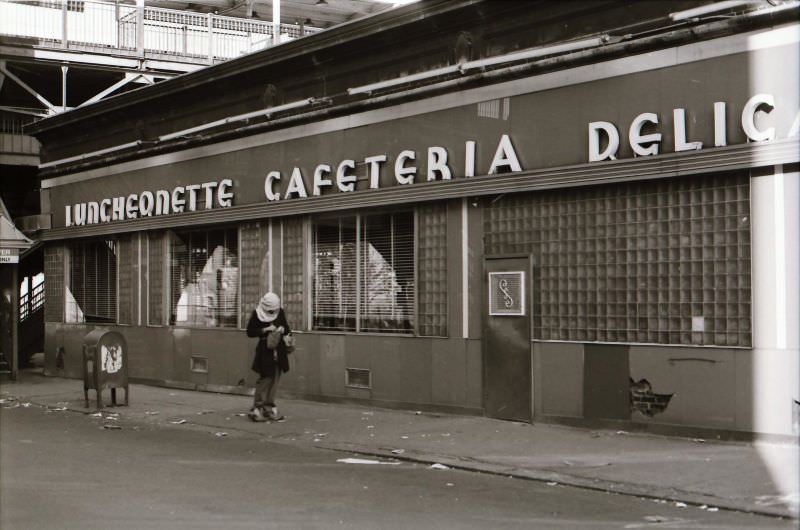
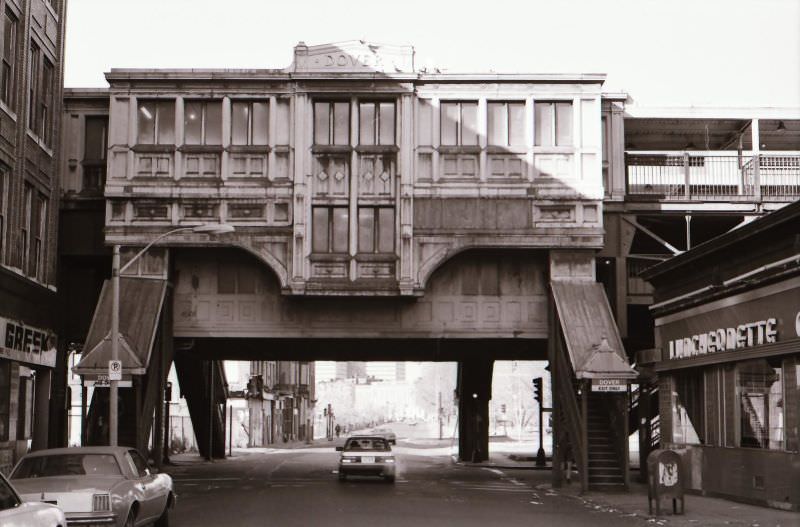
Dover Station, now known as East Berkeley Station, was one of the stops along the Orange Line during this period of transit transformation. Marciano photographed it in the late 1970s, preserving its worn, utilitarian character before the line’s rerouting reshaped the surrounding neighborhoods. The station’s name itself would change as Boston moved into a new era.
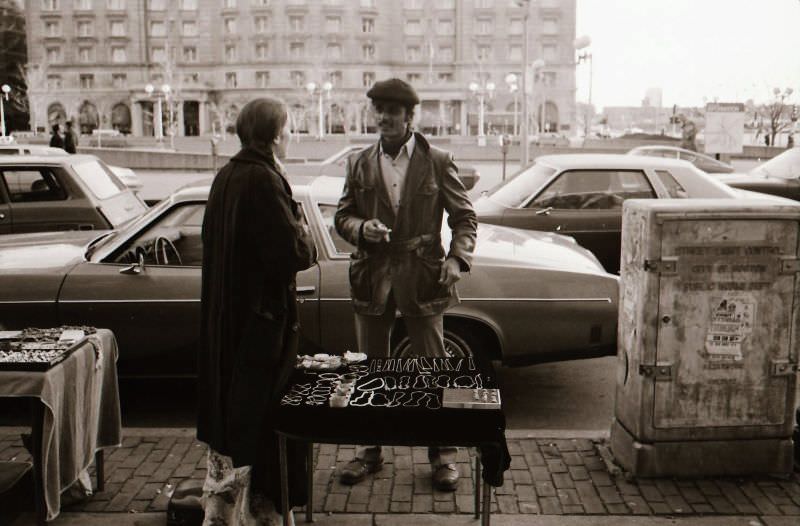
Mid-decade street life had its own rhythm. Vendors, singers, and everyday passersby filled the sidewalks with the texture of a working city. Marciano’s camera caught people in unguarded moments — not posed, not performing, just living.
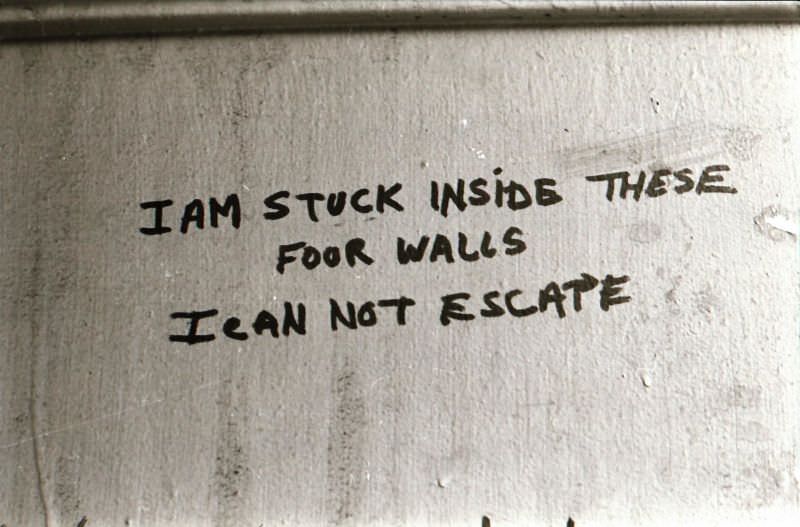
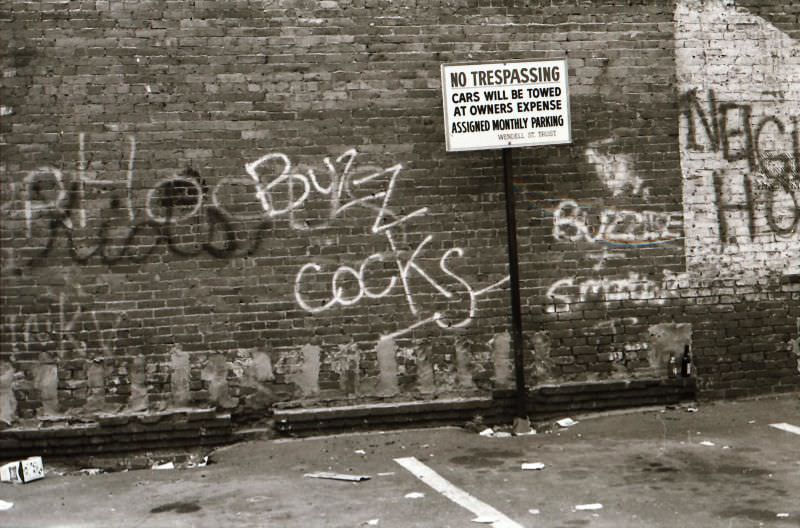
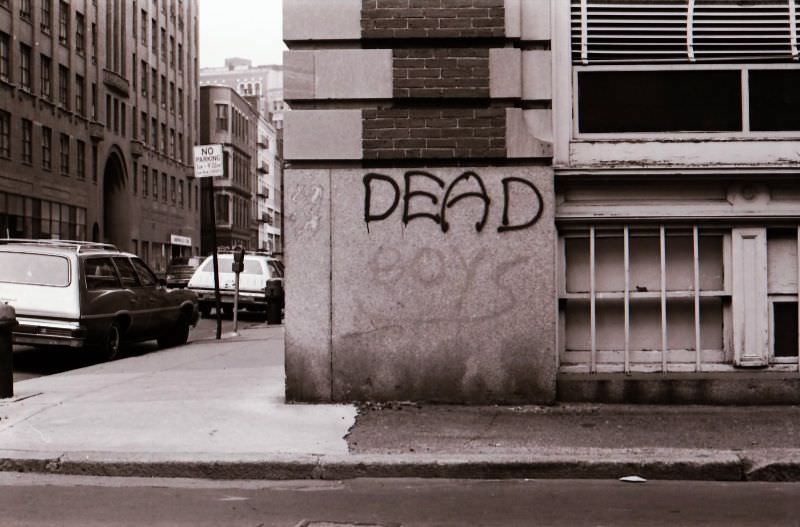
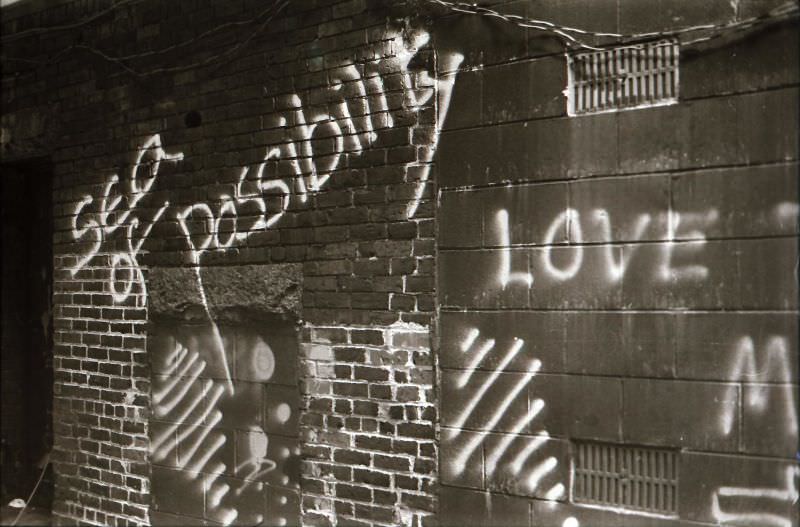
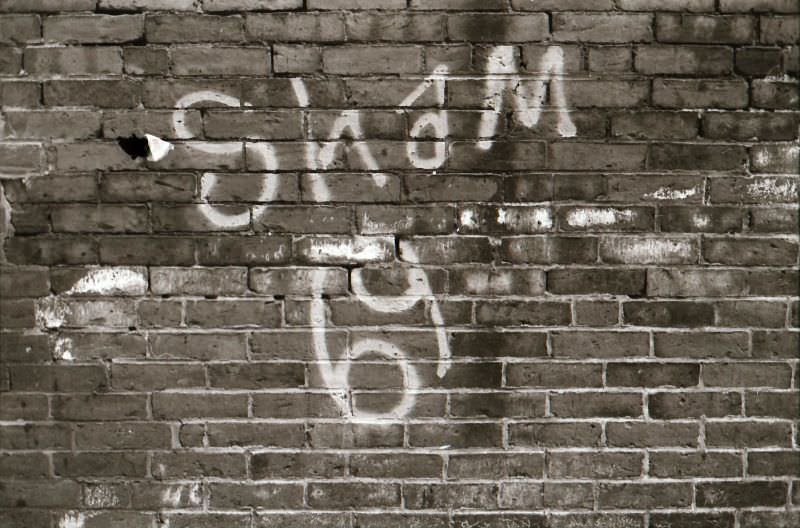
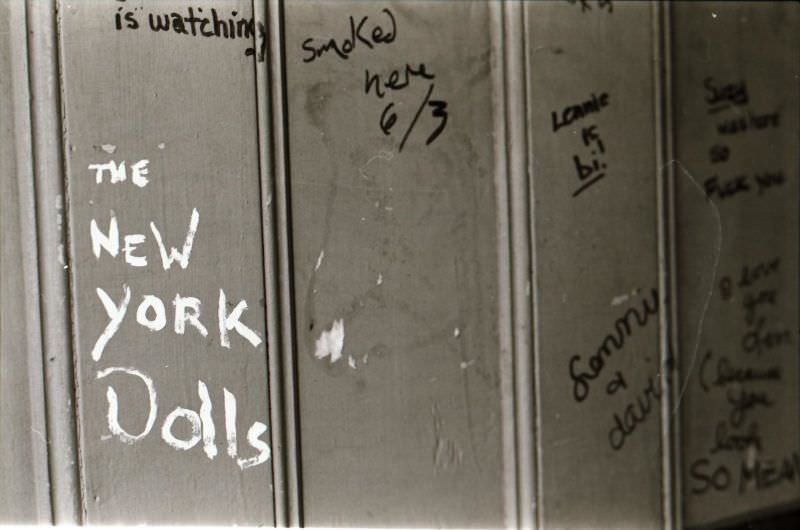
By 1979, the walls of Boston’s Financial Zone had become a canvas for the punk and new wave scene that was sweeping through American cities. Band posters and hand-scrawled messages competed for space on brick and plaster surfaces. Groups like the Buzzcocks, the Ramones, and the New York Dolls showed up in flyered fragments across the neighborhood, evidence of a thriving underground music culture.
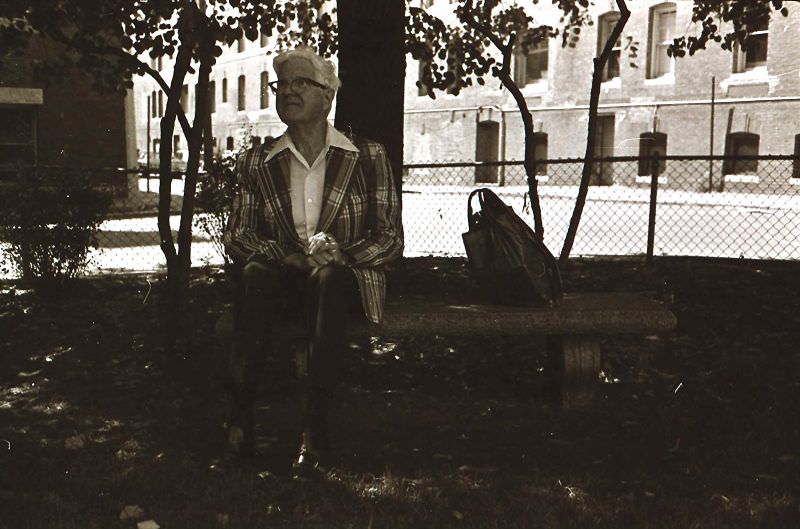
Not every corner of the city was loud or contentious. Near the Arlington T stop, a church garden offered a rare patch of calm in the middle of the urban sprawl. Marciano’s photograph from 1978 frames the space with care, showing that even during a turbulent decade, quiet corners existed.
The racial violence that broke out in 1974 over court-ordered school busing cast a long shadow over the city. A federal judge had ordered Boston’s public schools to desegregate by busing students between predominantly white and predominantly Black neighborhoods. The response was fierce — protests, riots, and attacks on students marked some of the most violent episodes in the city’s modern history. That tension lingered in the streets throughout the rest of the decade.
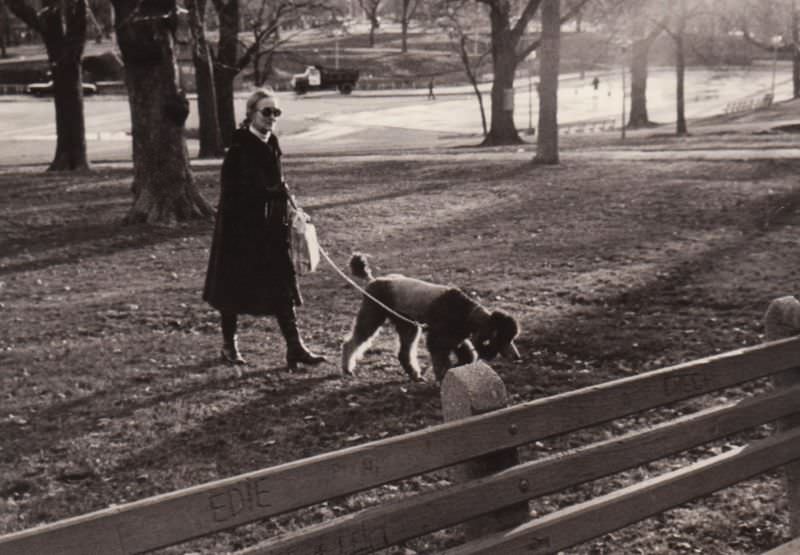
Wealth and poverty shared the same sidewalks in 1970s Boston. A woman in a fur coat walking her poodle alongside street-level vendors and crumbling storefronts tells the story of a city with deep economic contrasts. Marciano had a sharp eye for these juxtapositions, letting them speak without commentary.
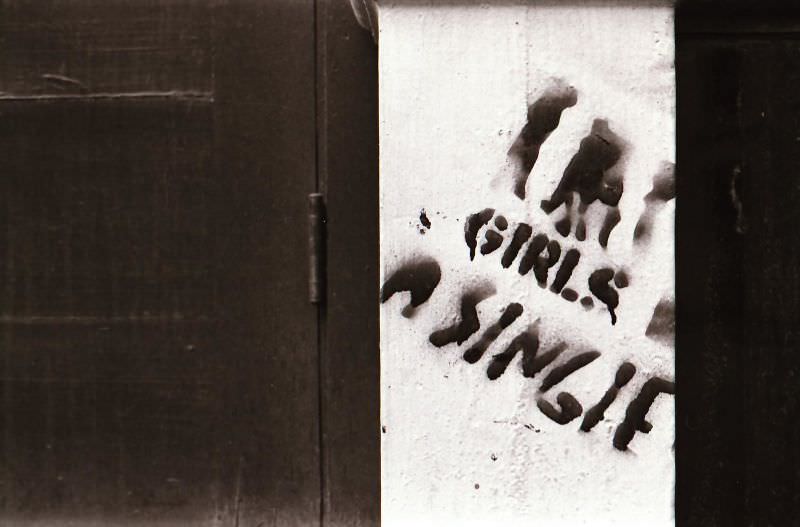
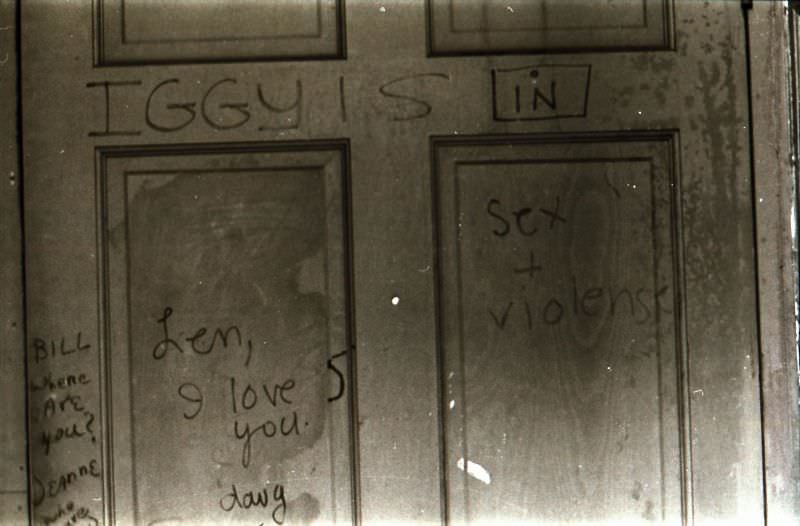
The Financial Zone’s walls in 1979 read like a music bulletin board. References to Iggy Pop, Sham 69, and X-Ray Spex appeared in hand-painted lettering and torn posters. These weren’t advertisements placed by a record label — they were declarations made by fans who wanted the world to know what they were listening to.
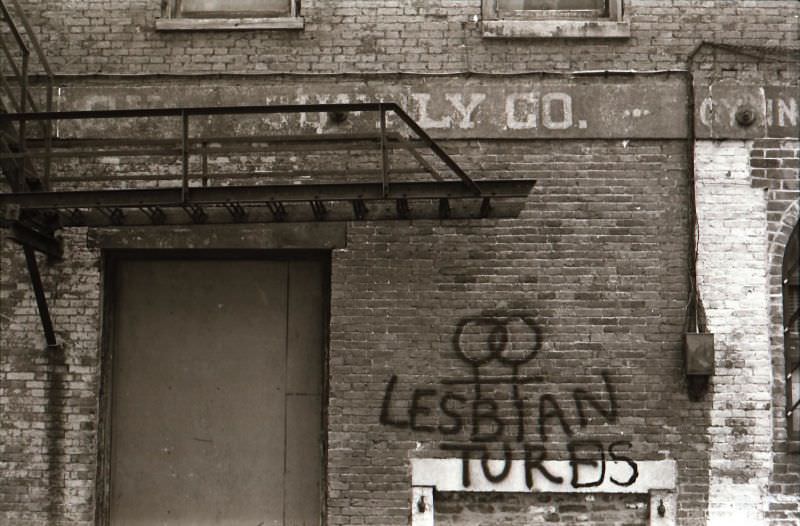
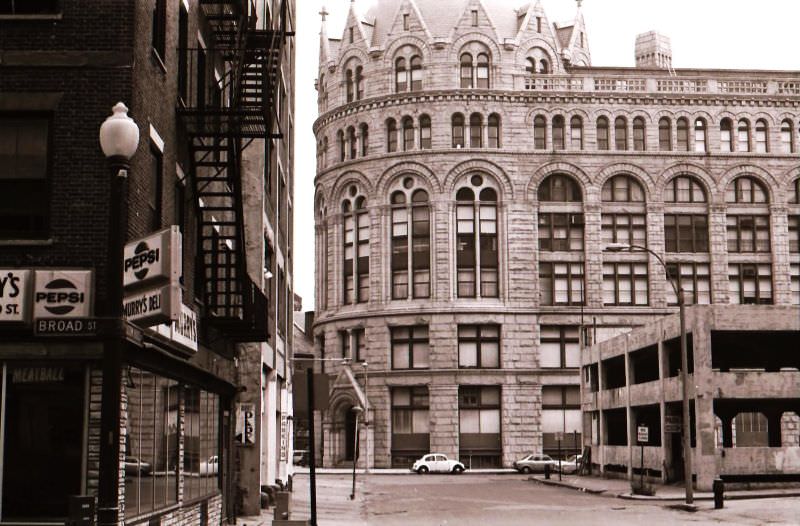
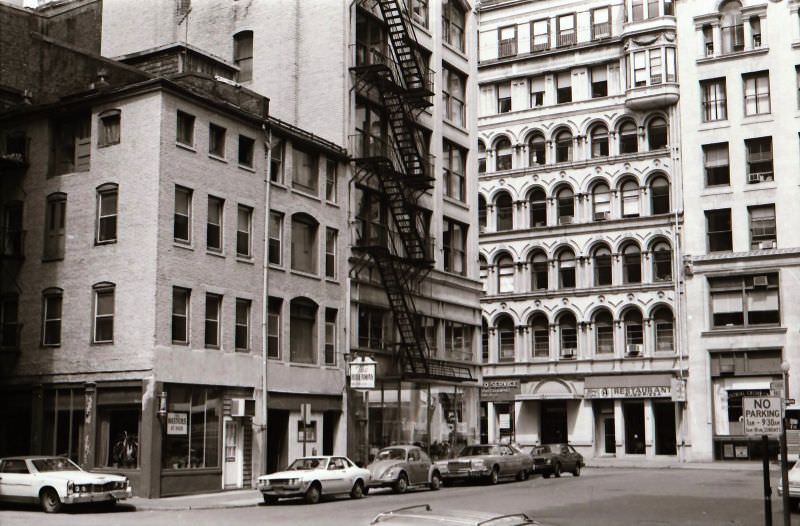
Murry’s Deli on Broad Street sat in the shadow of the Grain Exchange Building, one of the Financial Zone’s older architectural landmarks. The pairing of a street-level deli and a grand historic structure was entirely typical of 1970s Boston — old buildings repurposed or simply left standing while the city evolved around them.
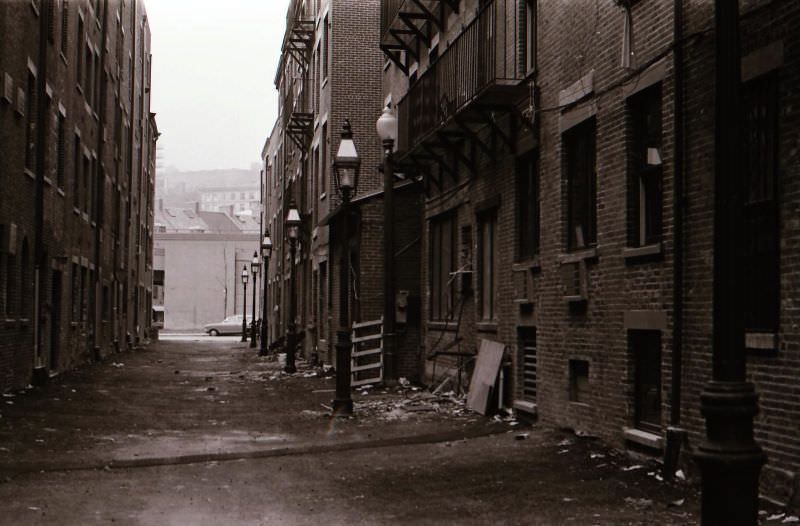
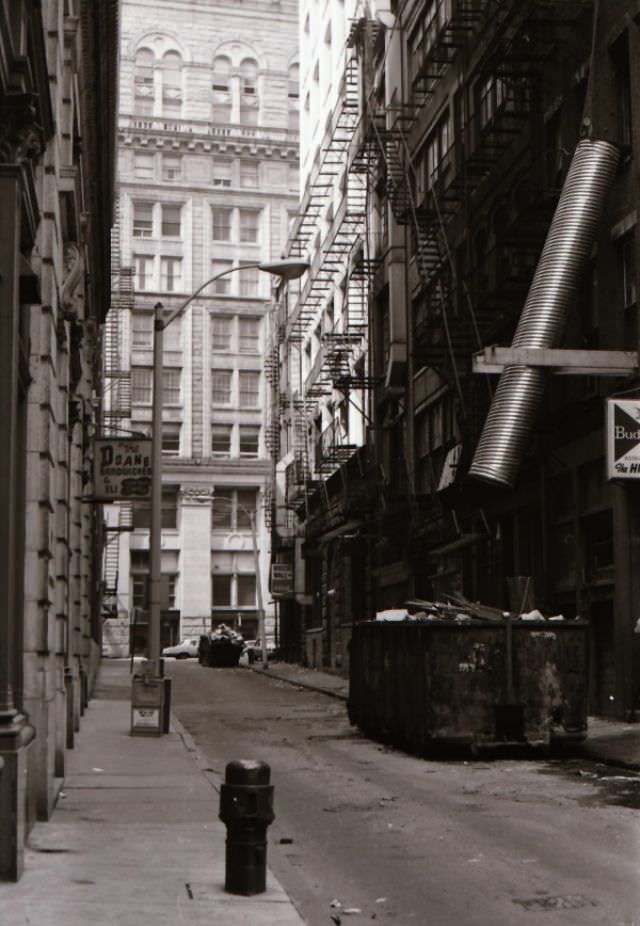
Boston’s North End, one of the city’s oldest neighborhoods, retained its dense, narrow character well into the late 1970s. Its alleys and close-set buildings hadn’t changed much in decades. Marciano photographed one such alley in 1979, capturing the neighborhood’s compressed, centuries-old urban fabric.
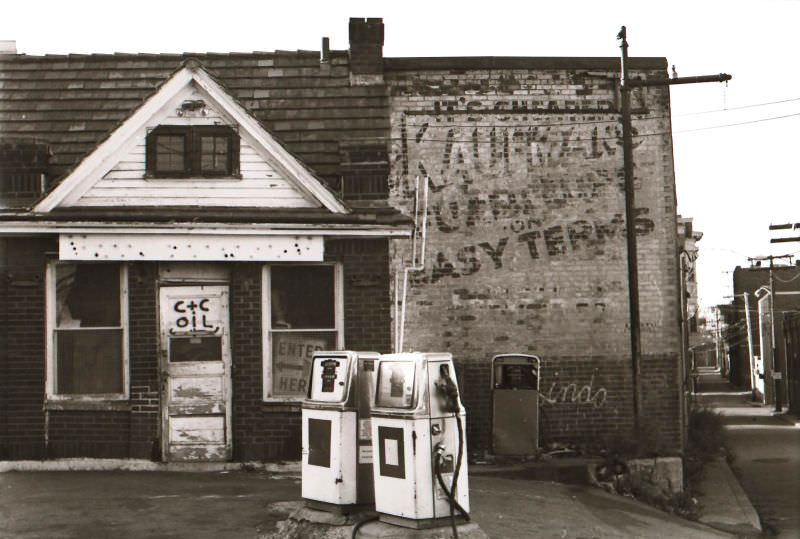
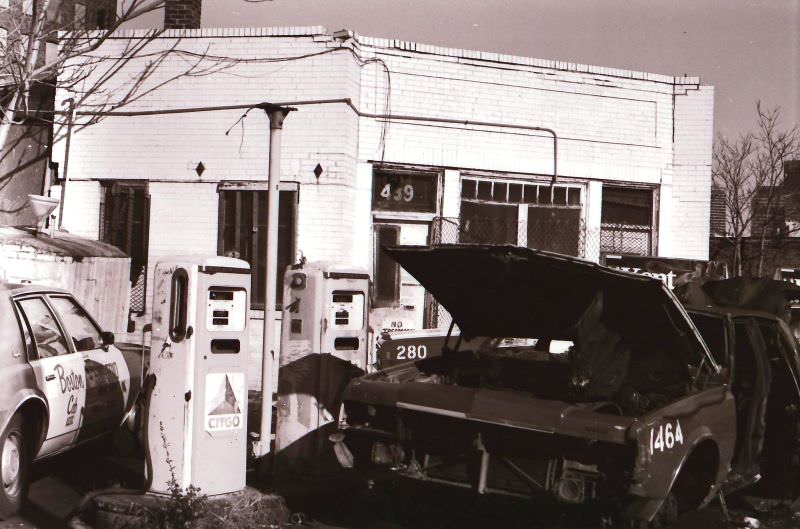
Gas stations and service garages dotted the city during this era, many of them relics of an earlier postwar boom. The energy crisis of 1973 had already made the gas station a site of national anxiety, with long lines and rationing becoming part of American life. Marciano photographed at least two of these aging stations, their faded signs and worn canopies marking them as fixtures of a neighborhood’s daily routine.
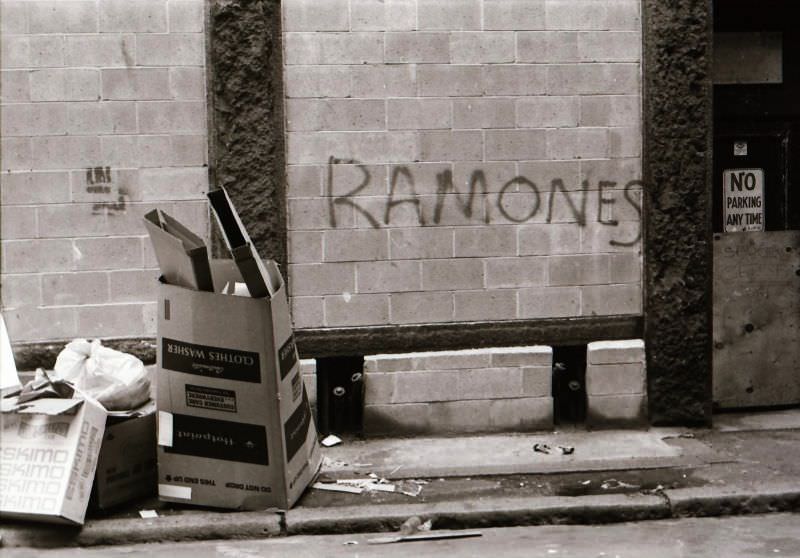
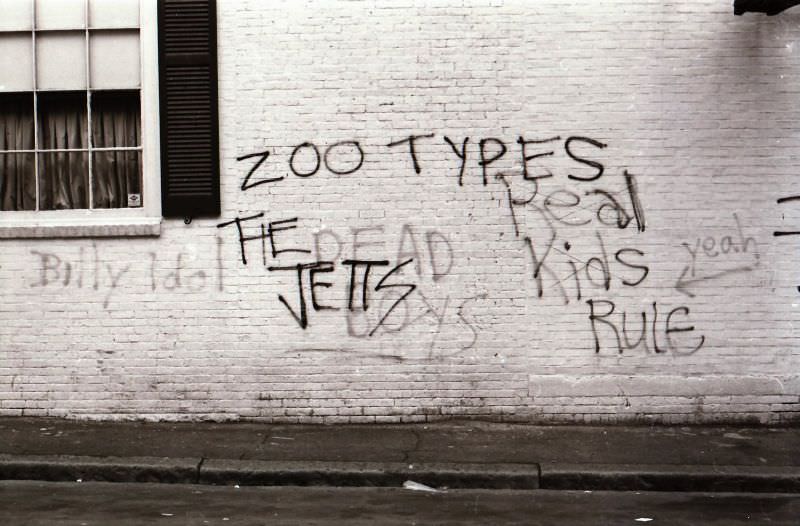
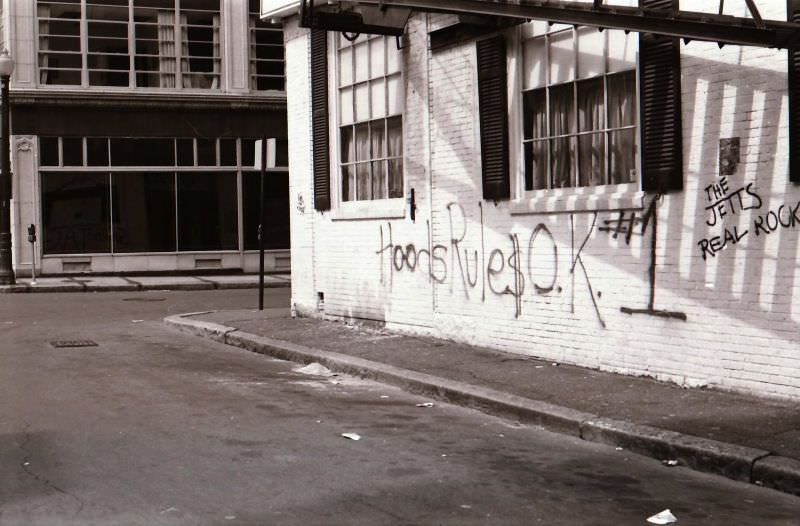
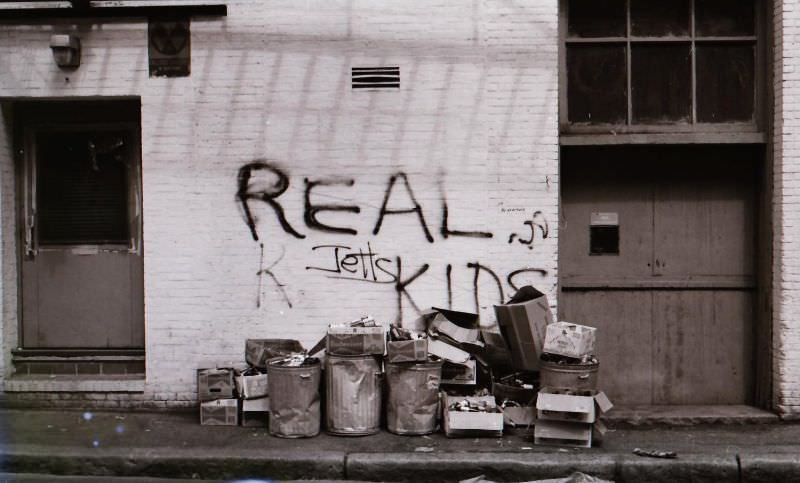
The Ramones were among the most visible names chalked and pasted across the Financial Zone. Boston had its own local punk bands too, and references to groups like The Real Kids appeared alongside the bigger names from New York. The Financial Zone’s walls documented the scene with the same urgency as any music magazine.
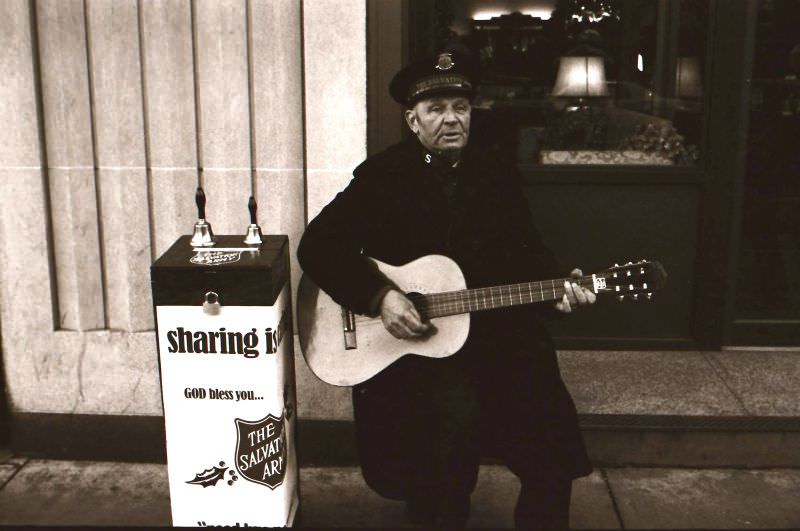
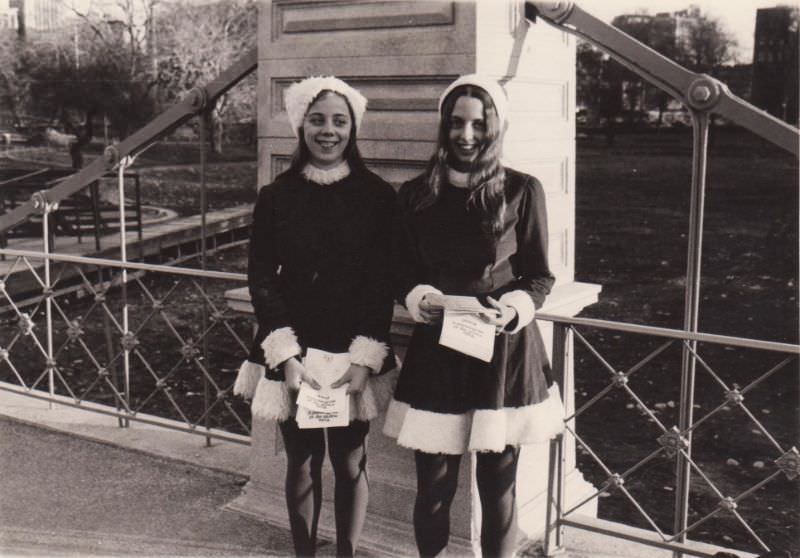
Holiday scenes brought a different kind of energy to the streets. At the Boston Public Garden, costumed women posed against the backdrop of one of the city’s most recognizable green spaces. A Salvation Army singer filled the air with music nearby. These moments show that even in a decade defined by conflict, ordinary life — seasonal, festive, and communal — kept going.
Boston also faced natural disasters during this decade. A storm in 1973 knocked out several glass panels on the newly constructed John Hancock Building, a structural problem that took years to fully resolve. Then in February 1978, a massive blizzard buried the city under more than two feet of snow, paralyzing transportation and forcing a state of emergency. The city’s infrastructure was tested repeatedly throughout the decade.
Places like The Hideaway Bar were part of a network of neighborhood spots that gave different communities their own social anchors. Boston in the 1970s was a city of distinct enclaves — Irish, Italian, Black, and immigrant neighborhoods each with their own institutions and gathering places. Bars, delis, and corner spots served as the connective tissue of street life.
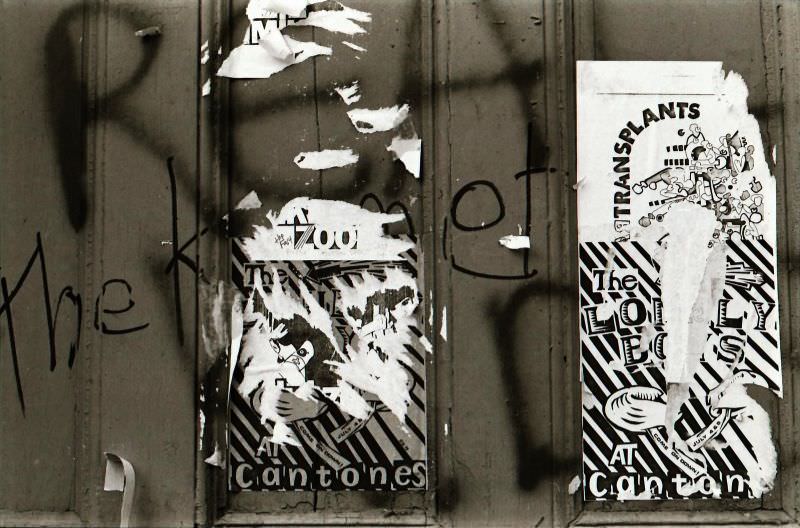
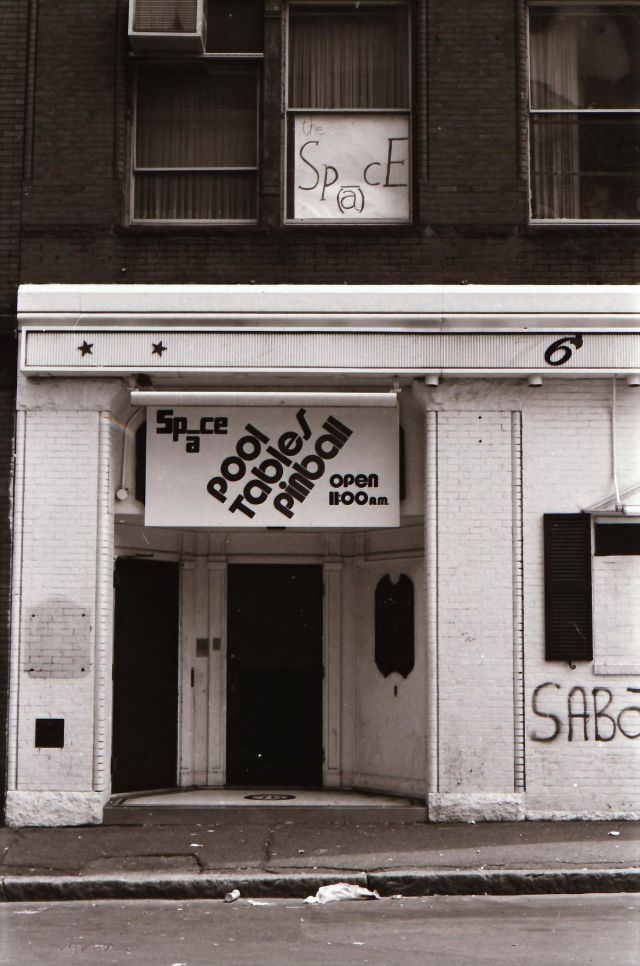
Venues like The Space in the Financial Zone were part of what made Boston a real stop on the underground music circuit. The posters and graffiti Marciano photographed weren’t just decoration — they mapped an active cultural scene that ran parallel to the city’s more visible political dramas.
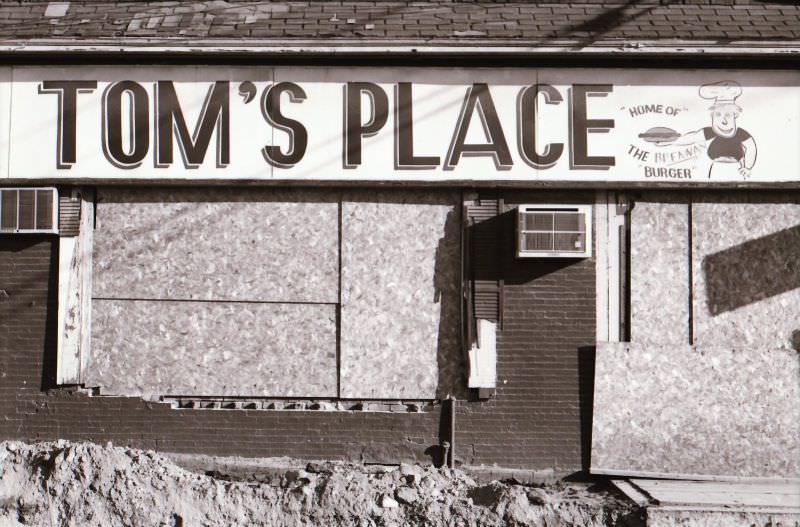
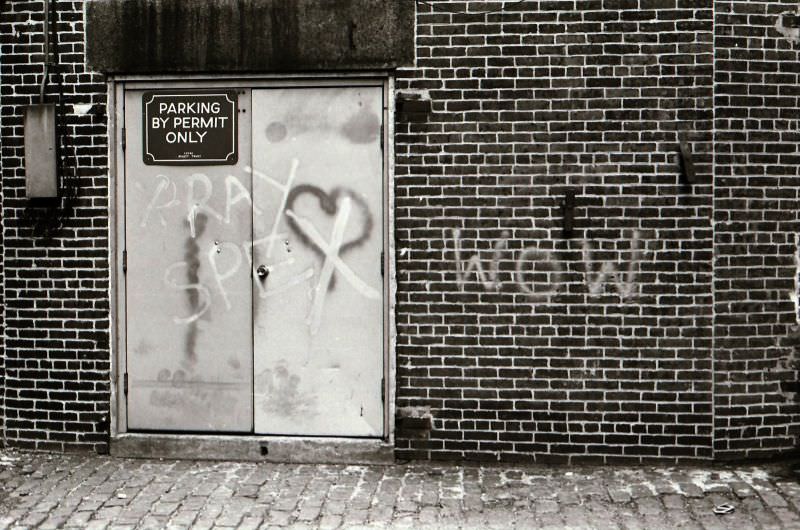
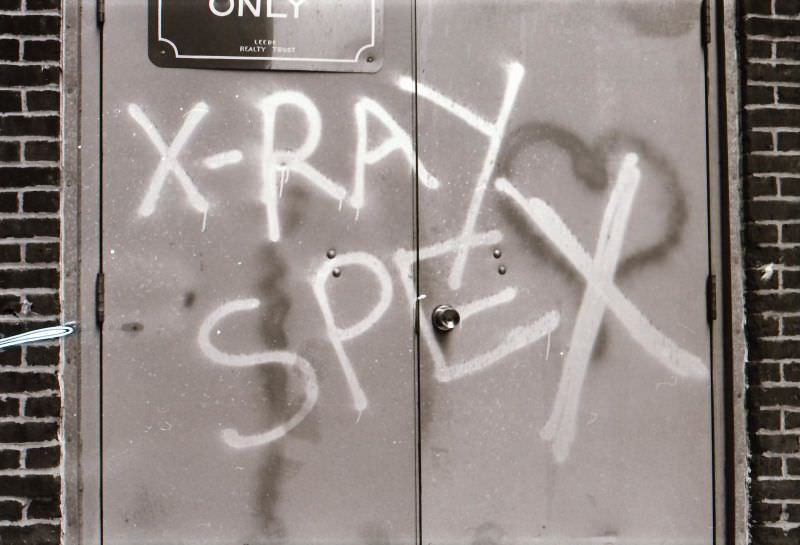
Taken together, Marciano’s photographs from the 1970s form a detailed record of a city navigating one of its most difficult periods. She moved between neighborhoods, transit stations, alleys, and storefronts with consistent attention to the details that defined daily life. The Financial Zone’s punk-plastered walls, the North End’s tight alleyways, the T stations, the bars, the street vendors — all of it is here, documented with clarity and without sentimentality.





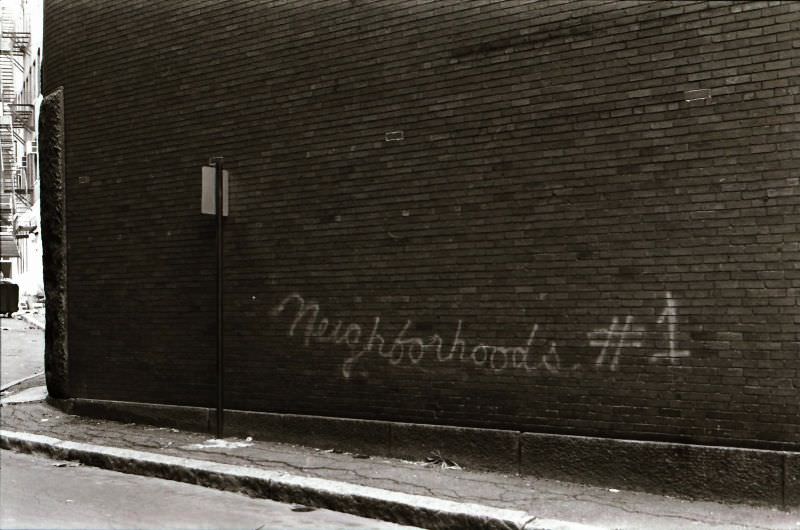
A lot of great local (and a few non-local) bands scrawled on those walls.