Betty Broadbent was born in Philadelphia in 1909. By the time most young women her age were finishing school, she was already sitting under a tattoo needle — and building a career that would make her one of the most recognizable figures in American circus history. She would eventually be known around the world as the “Tattooed Venus.”
Her path into the tattoo world started at age 14 in Atlantic City, where she met a man named Jack Redcloud. Redcloud was already tattooed himself and introduced Betty to his tattooist, Charlie Wagner. Wagner gave Betty her first tattoos. That introduction set everything in motion. Over the years that followed, Betty became deeply committed to the art form, collecting more and more work until tattoos covered nearly her entire body.
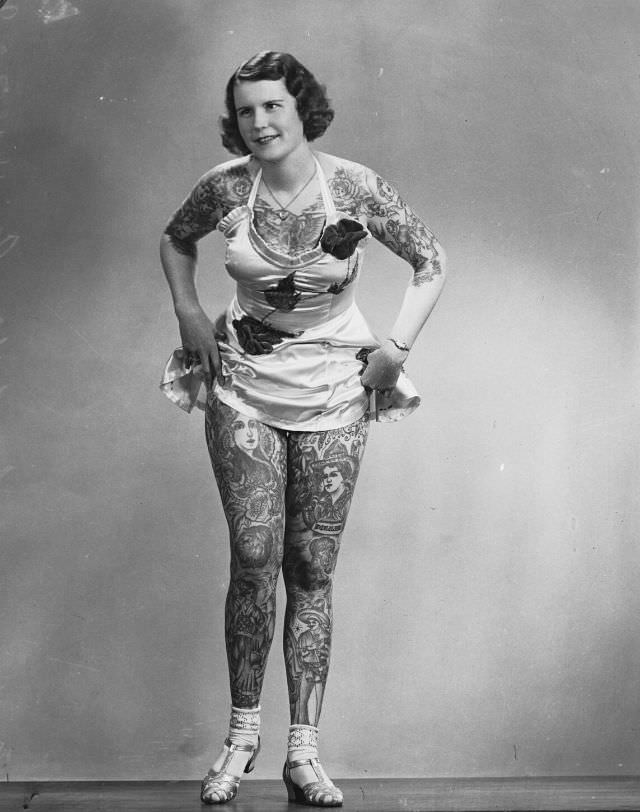
Charlie Wagner was one of the most well-known tattooists in the country at the time, operating out of New York City. Being tattooed by him was no small thing. The designs he and others applied to Betty’s body included flowers, animals, and a wide range of detailed symbols — all executed with the fine-line precision that defined high-quality tattoo work of the era.
Betty’s heavily tattooed body quickly attracted attention in the world of traveling shows and circus entertainment. She joined the Ringling Brothers, Barnum and Bailey Circus, which was the biggest circus operation in the United States. Performing there put her in front of enormous crowds. Audiences who had never seen a fully tattooed woman were fascinated.
She didn’t just stand on display, either. Betty trained as a steer rider and performed alongside Tom Mix, one of the most famous cowboys in America at the time. Mix had built his name in Hollywood Western films and was a major draw in his own right. Sharing the stage with him gave Betty a level of visibility that few performers in her position ever reached.
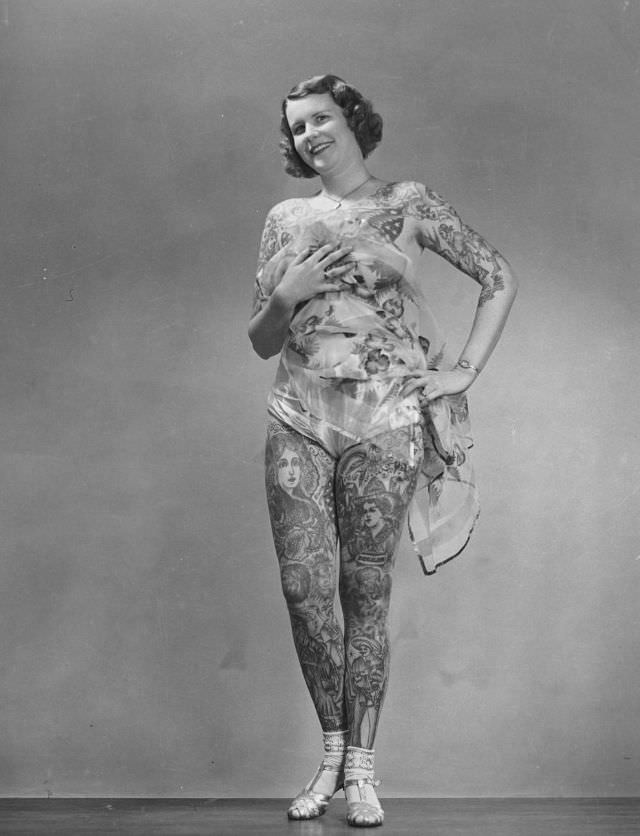
Her combination of acrobatic skill and fully tattooed skin made her act genuinely rare. Circus sideshows in this period often featured tattooed performers, but Betty stood apart. Her tattoos were dense, detailed, and carefully composed — not the rough, scattered work seen on many sideshow acts of the day.
As her fame grew, Betty expanded beyond performing. She began tattooing other people herself, working out of studios in Montreal, San Francisco, and New York. Her clients came from all walks of life — everyday people, celebrities, and wealthy patrons who specifically sought her out. She had become not just a subject of the art but a practitioner of it.
Betty traveled extensively across North America and into Europe, both performing in shows and exhibiting her tattoos. Wherever she went, she drew crowds. Tattooed women were rare in mainstream public life, and a woman who was also a skilled rider and entertainer was rarer still. She operated in a space where very few women had gone before.
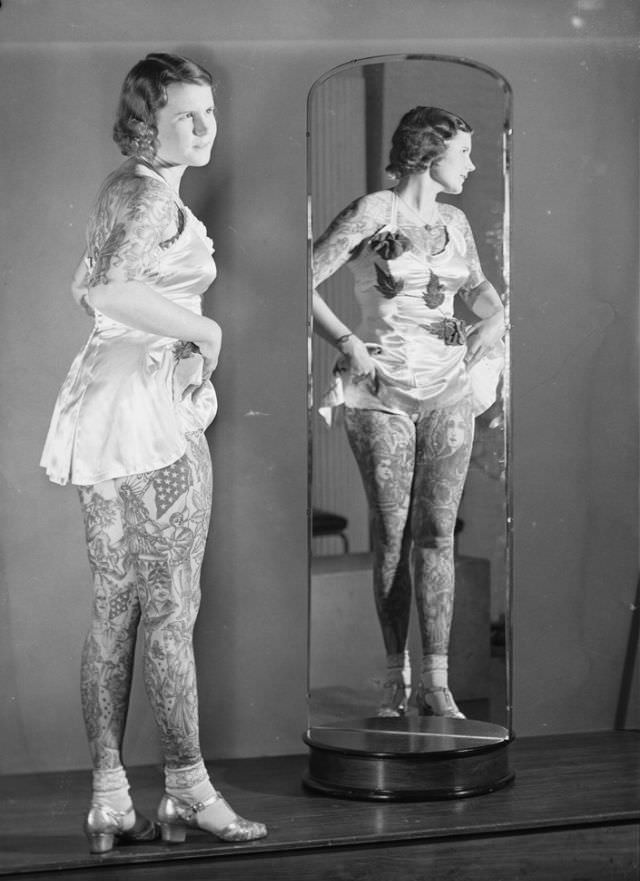
The 1930s and 1940s represented some of her most active years. Circus culture was at a high point during this period, drawing millions of spectators annually. Betty was a consistent headline attraction, recognized by name in promotional materials and posters across the country.
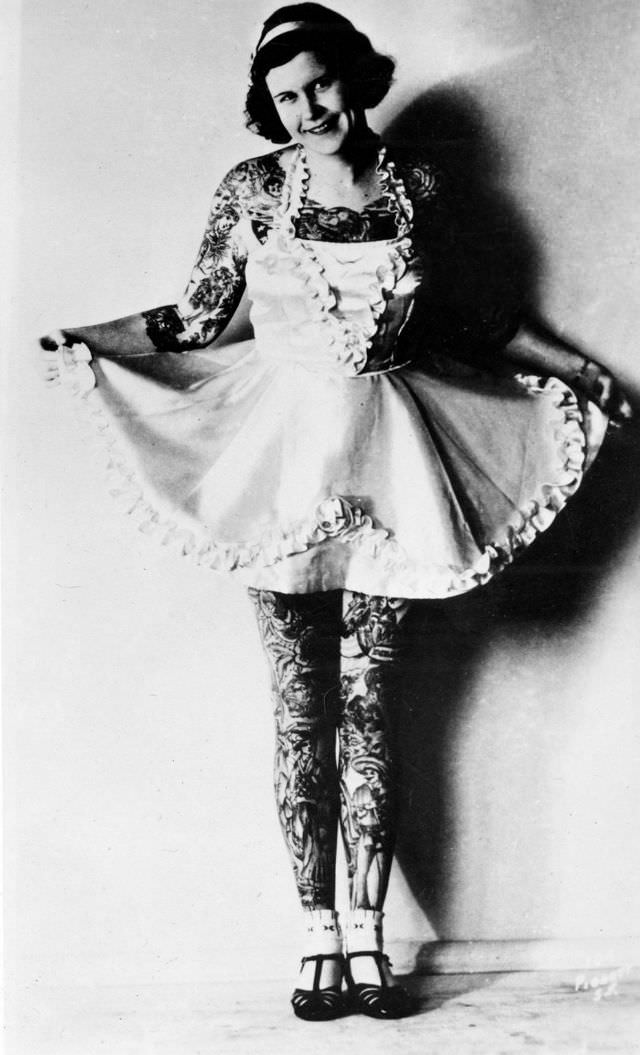
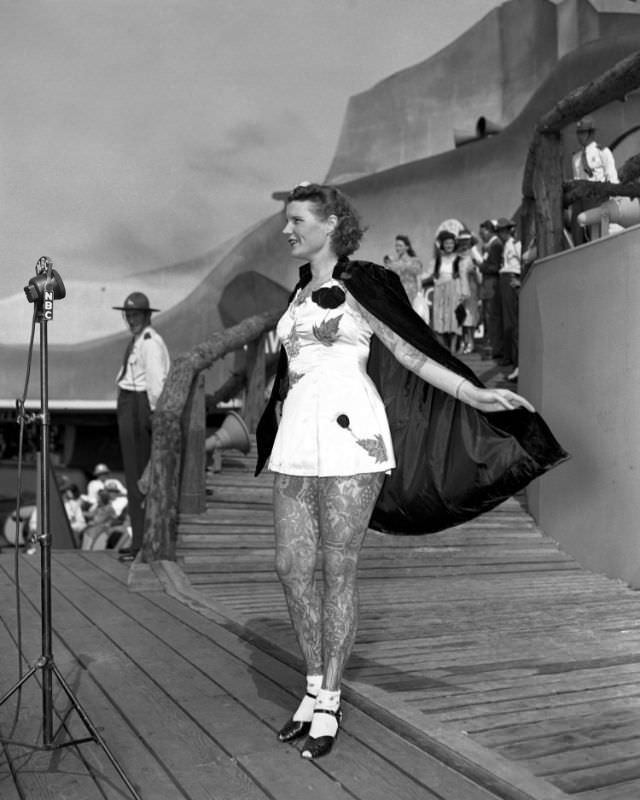
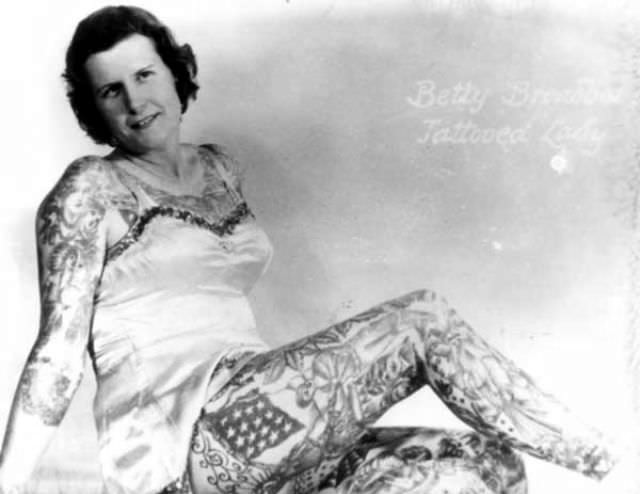
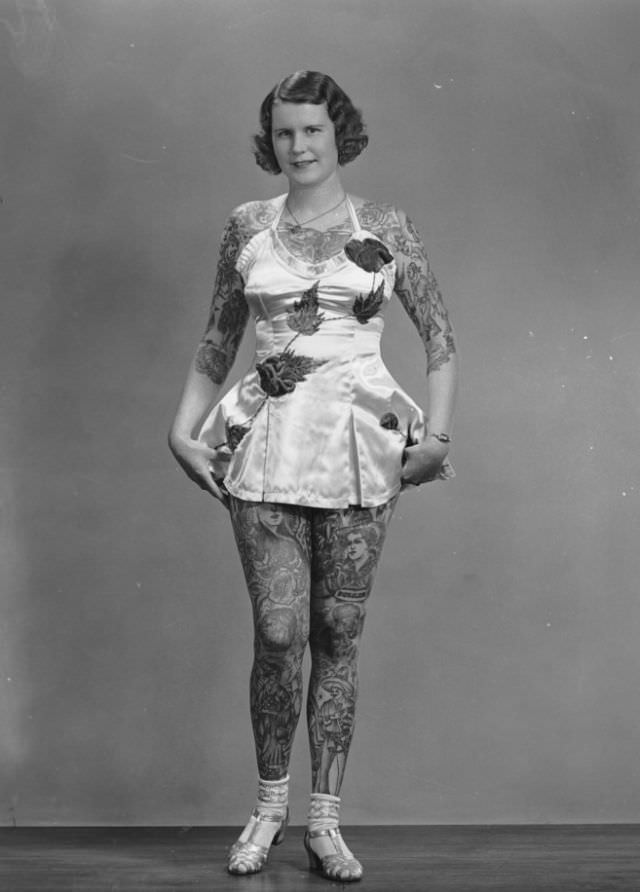
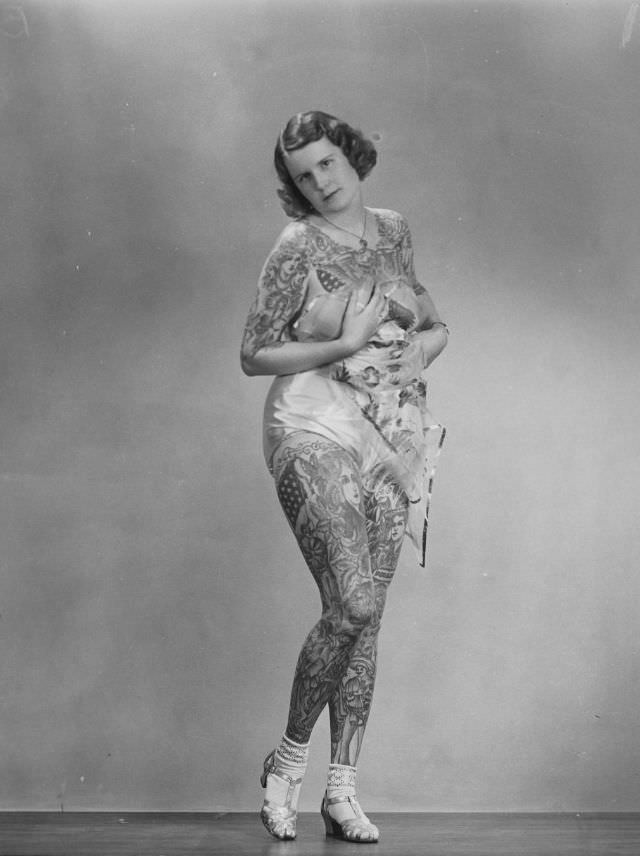
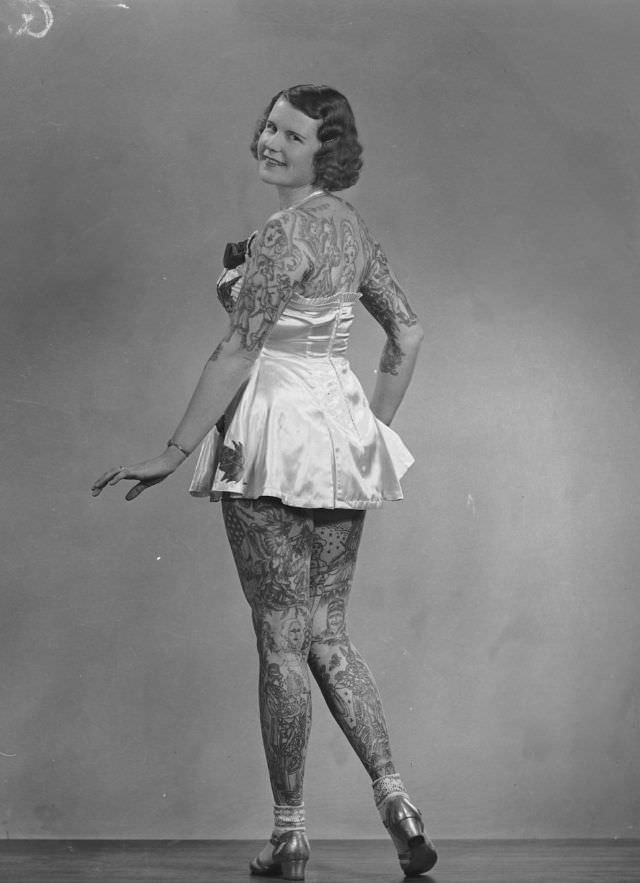
Photographs from this era show a woman completely at ease with her identity. She posed confidently for promotional shots, often in costumes that displayed her tattoos in full. There was nothing apologetic about her presentation. She understood that her body was the spectacle, and she leaned into it fully.
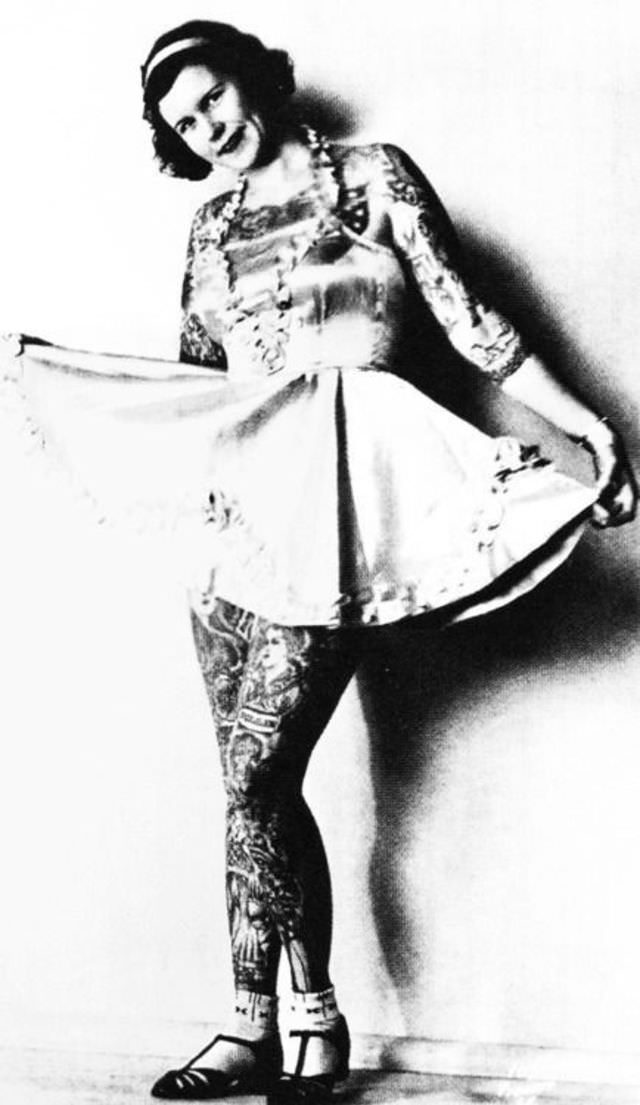
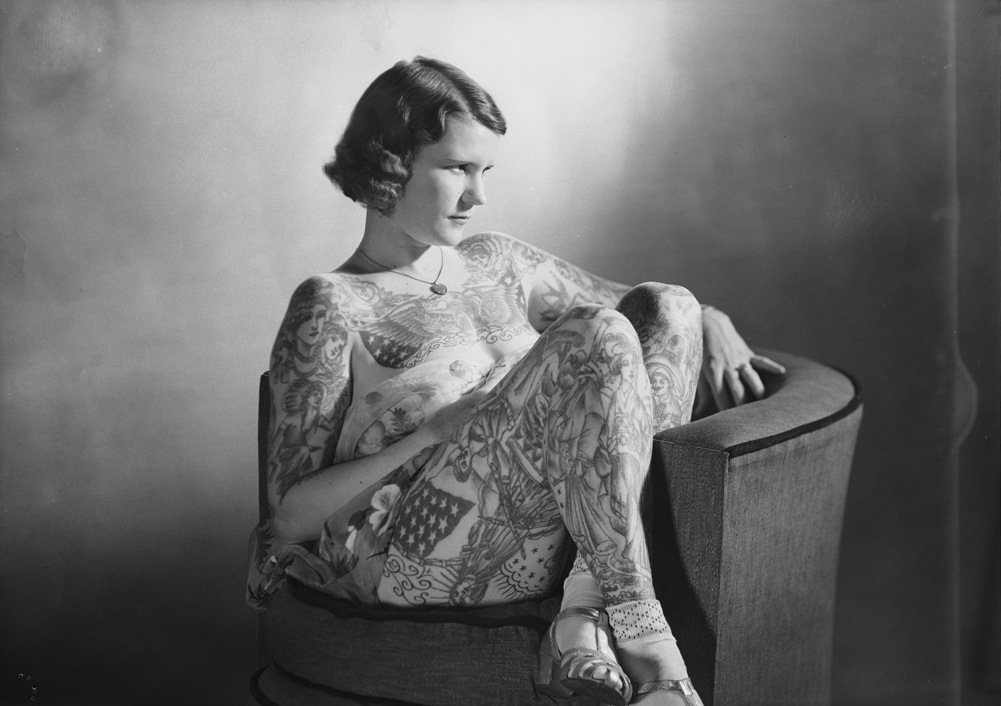
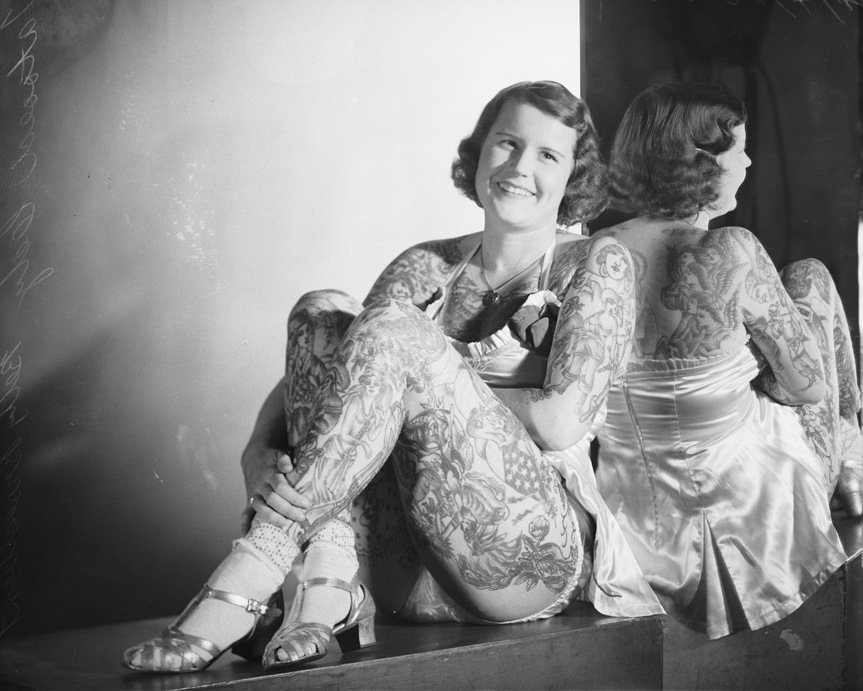
Betty’s tattooed body told a visual story that spanned decades of collecting. The designs weren’t random — they were layered and interconnected, covering her arms, legs, torso, and back. Flowers wound around animal figures. Detailed portraits filled large panels of skin. The overall effect was closer to illustrated manuscript than casual body decoration.
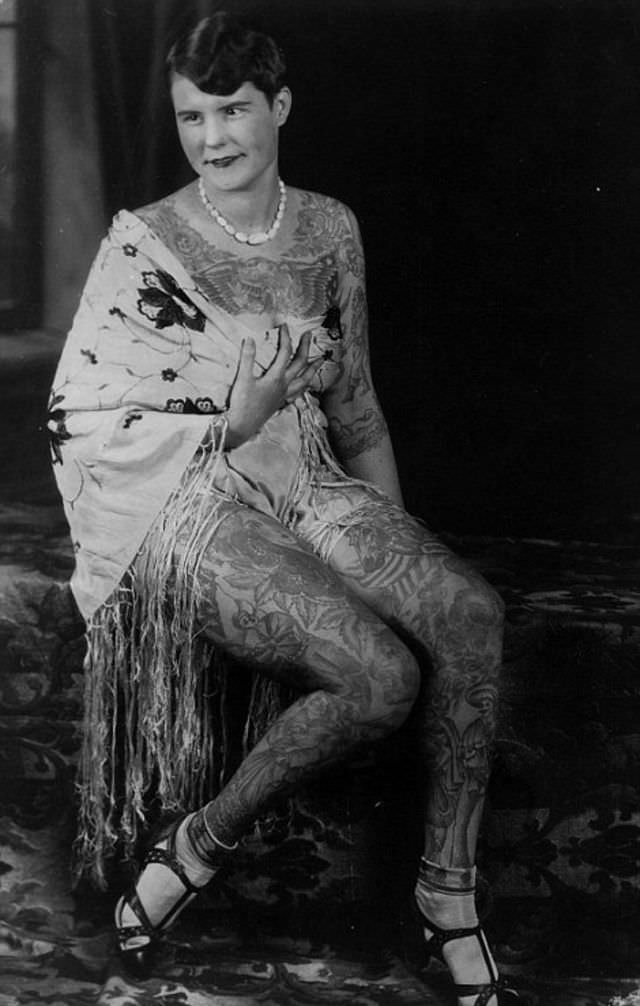
In the tattoo community, her name carried real weight. She was one of the first women to work professionally as a tattooist in the United States, taking on clients in established urban studios. That was unusual in an industry dominated almost entirely by men. She worked alongside some of the most respected tattooists of the 20th century and earned their respect in return.
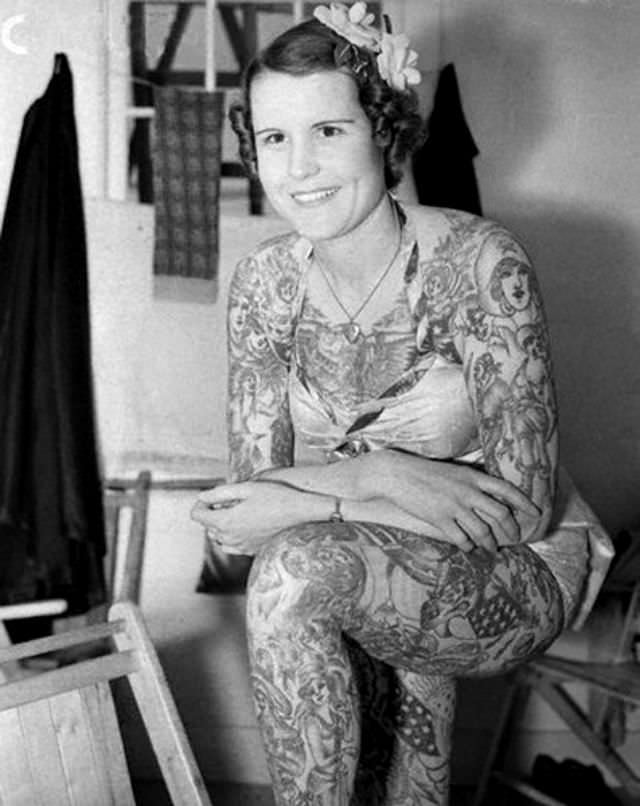
Later in life, Betty Broadbent was recognized formally within the tattoo world. In 1981, she was inducted into the Tattoo Hall of Fame — one of the first inductees ever honored. It was a formal acknowledgment from the industry itself that her contributions had been real and lasting.
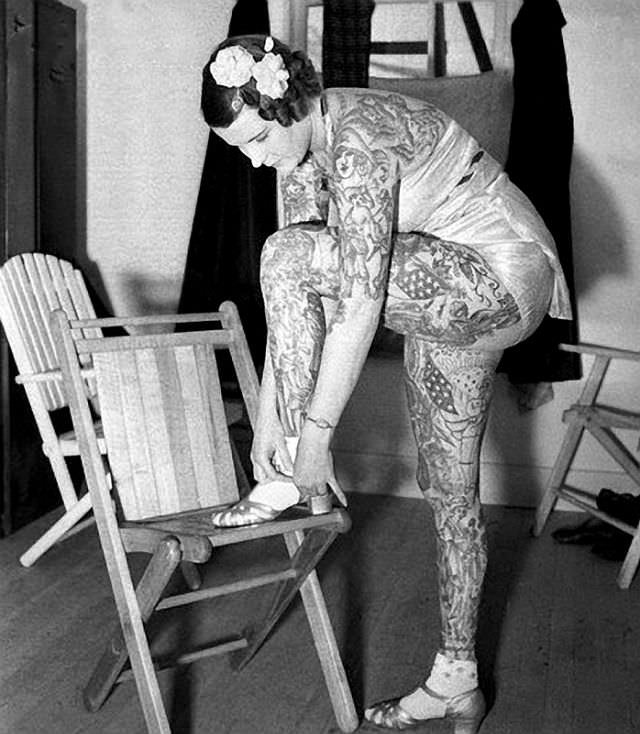
She passed away in 1983, having lived a life that cut directly against the expectations placed on women of her generation. From her first tattoos at 14 to her decades as a performer and practicing tattooist, Betty Broadbent moved through the world entirely on her own terms.