In the winter of 1959, British photographer Martin Snelling traveled through Switzerland with a medium format camera and came home with something remarkable — a vivid, detailed record of everyday Swiss life frozen in color. The villages of Wengen and Grindelwald, both tucked into the Bernese Alps, were his main subjects. What he captured was not staged or posed. It was simply life as it was.
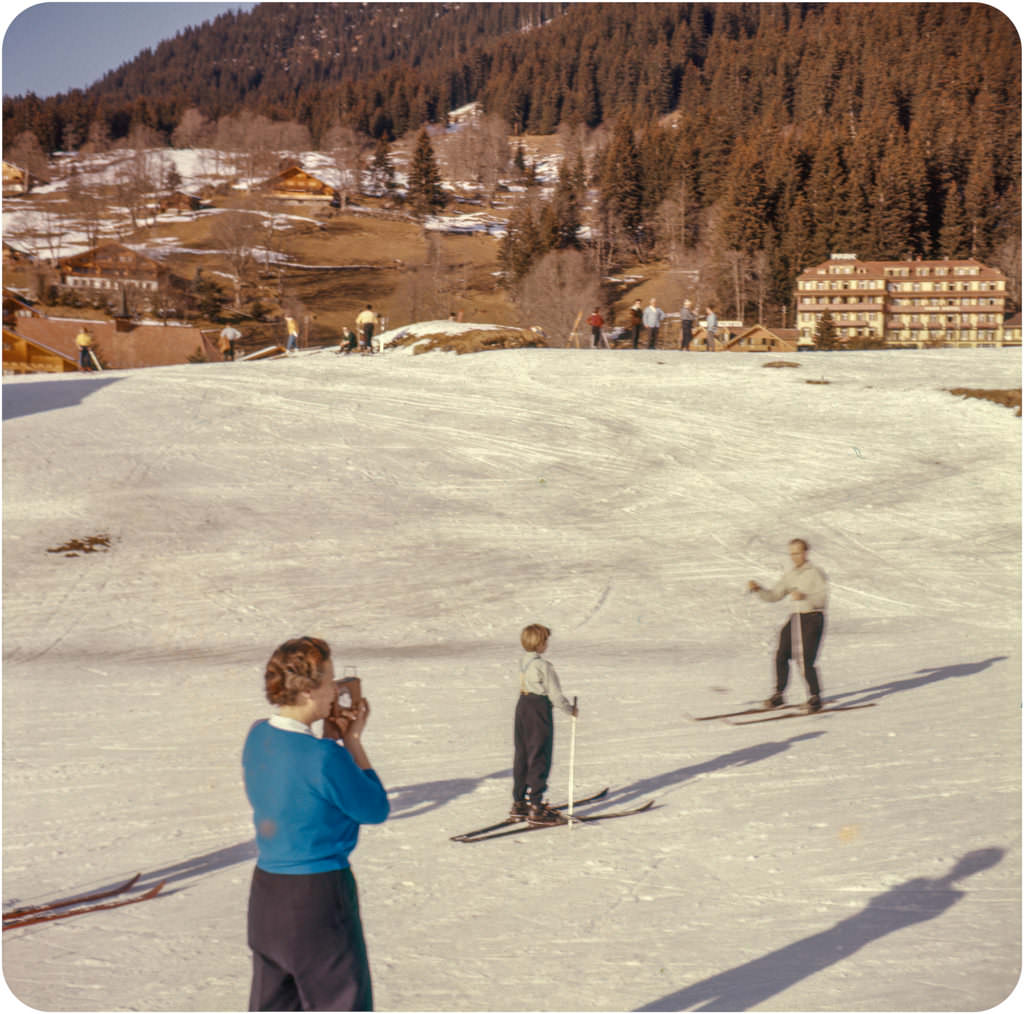
Medium format photography sits between standard 35mm film and large-format photography. The film used is larger than 24 by 36 mm — the size used in 35mm cameras — but smaller than 4 by 5 inches, which falls into large-format territory. That extra film area captures far more detail than a standard 35mm shot. Colors appear richer, textures are sharper, and the overall image holds up beautifully even decades later.
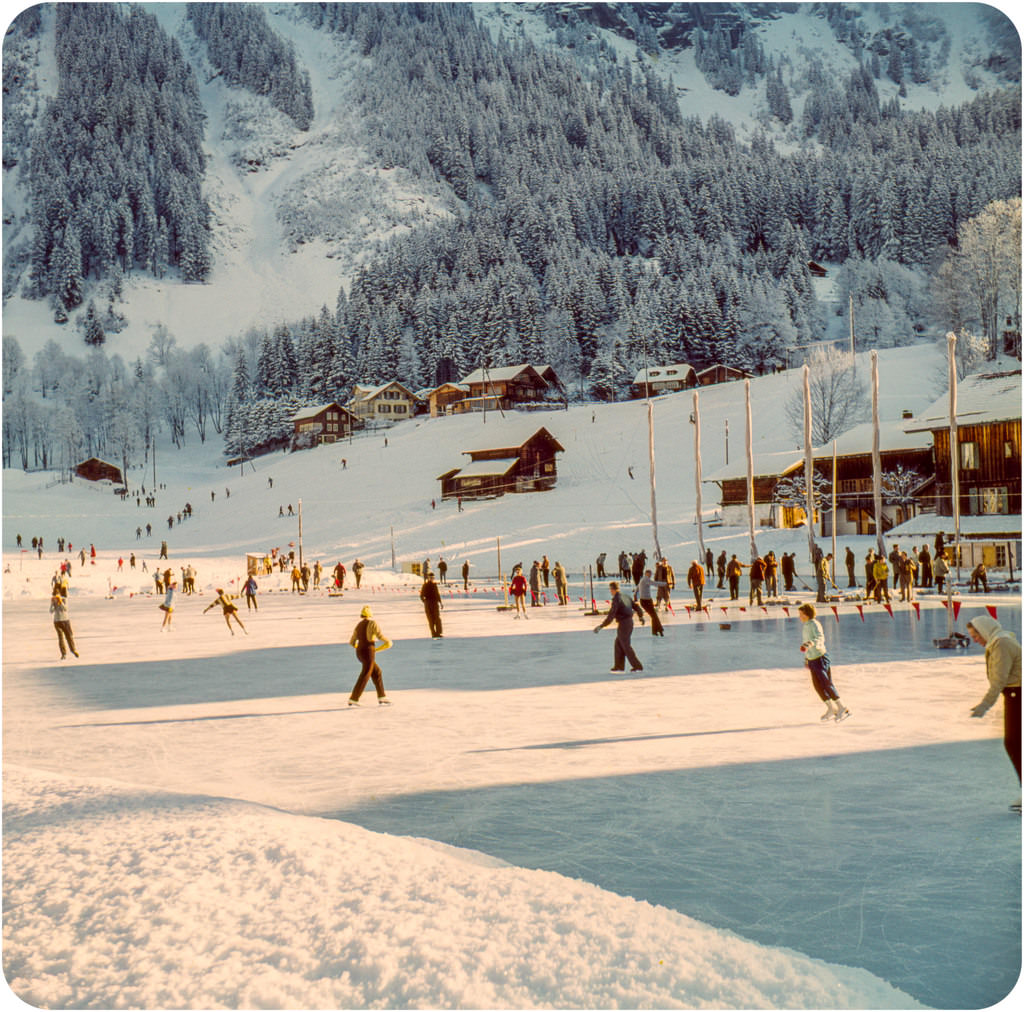
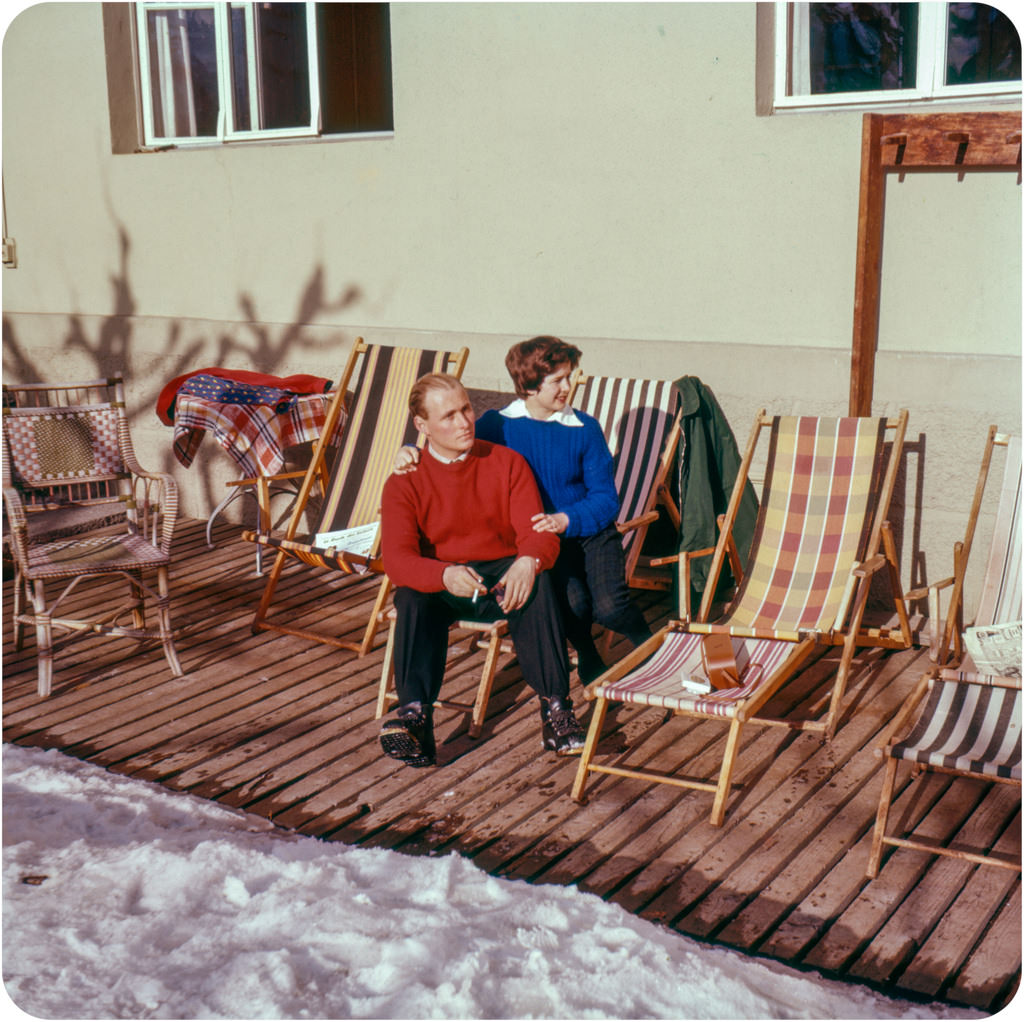
Snelling’s photographs show why medium format was the tool of choice for serious photographers of the era. The winter light in the Alps — bright, cold, and often bouncing off deep snow — demanded a camera that could handle contrast and color with precision. His equipment delivered.
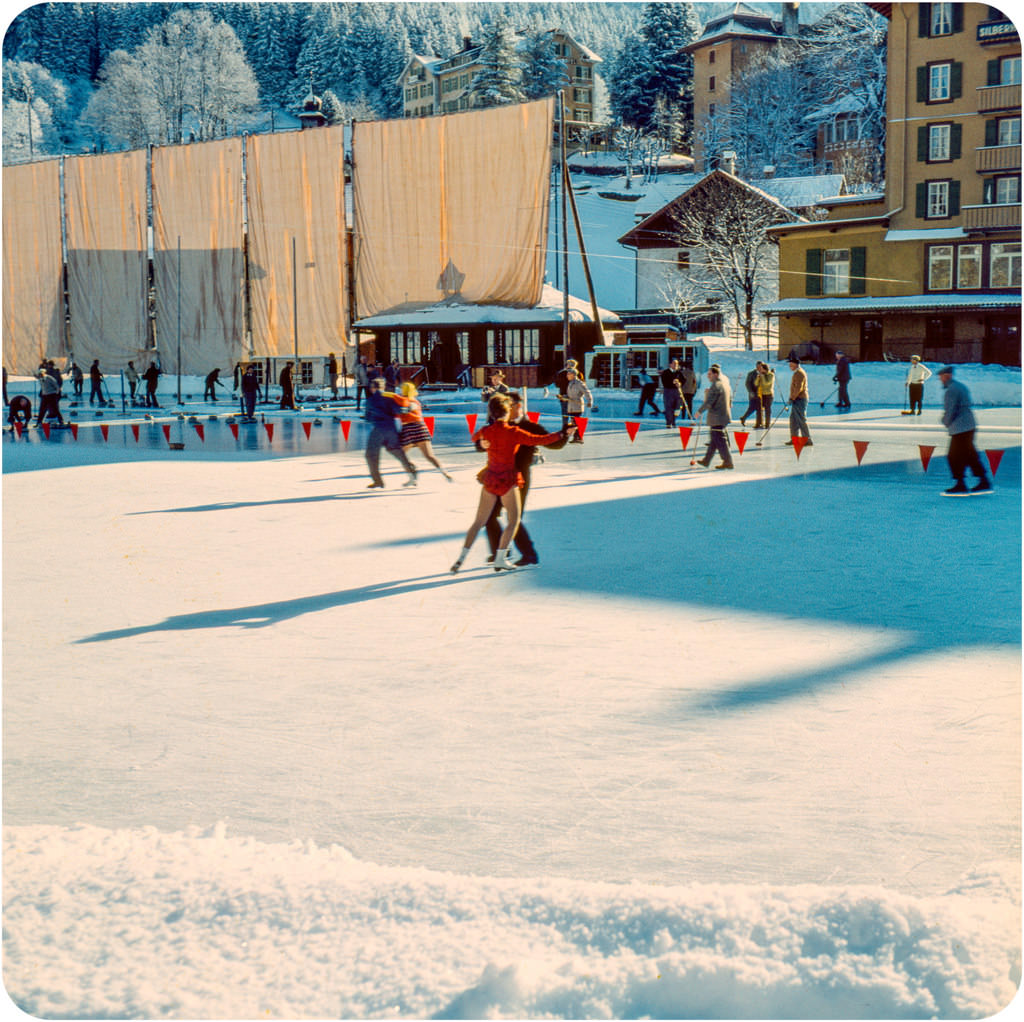
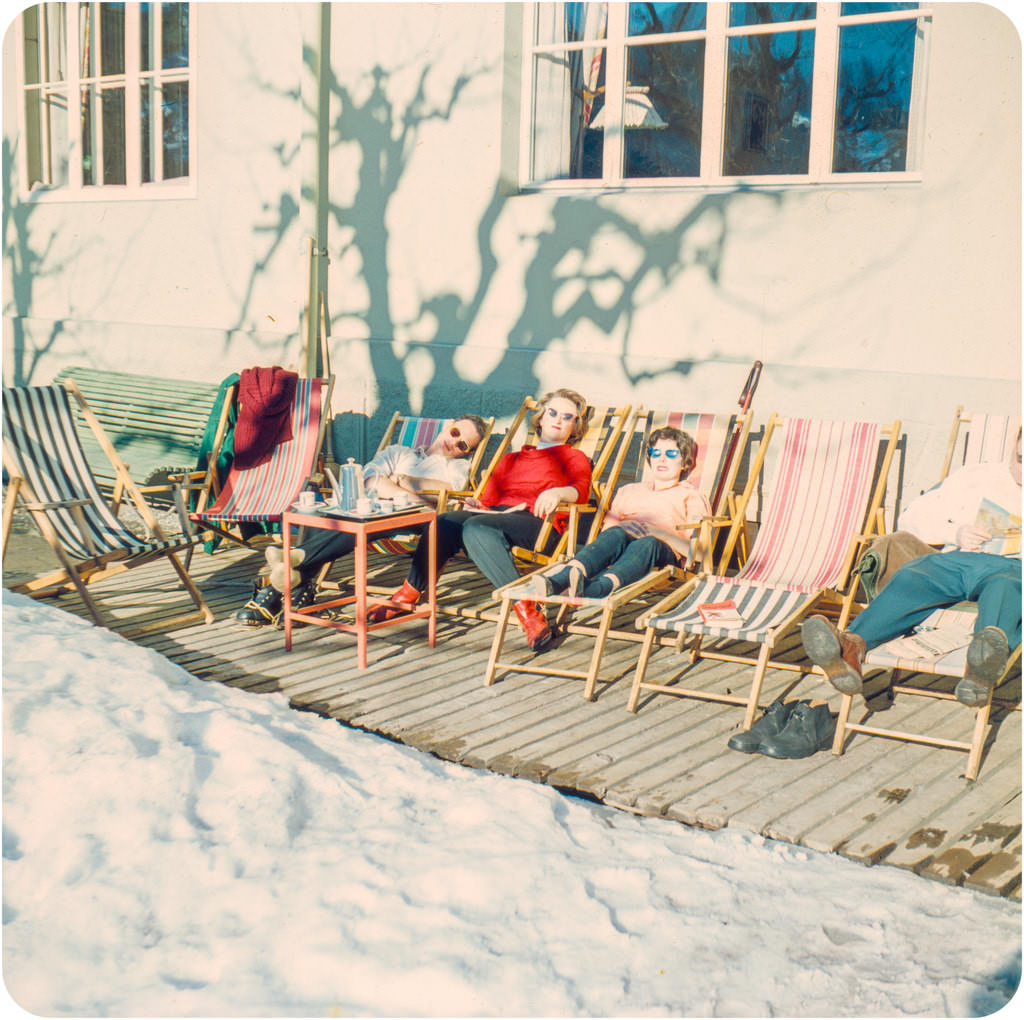
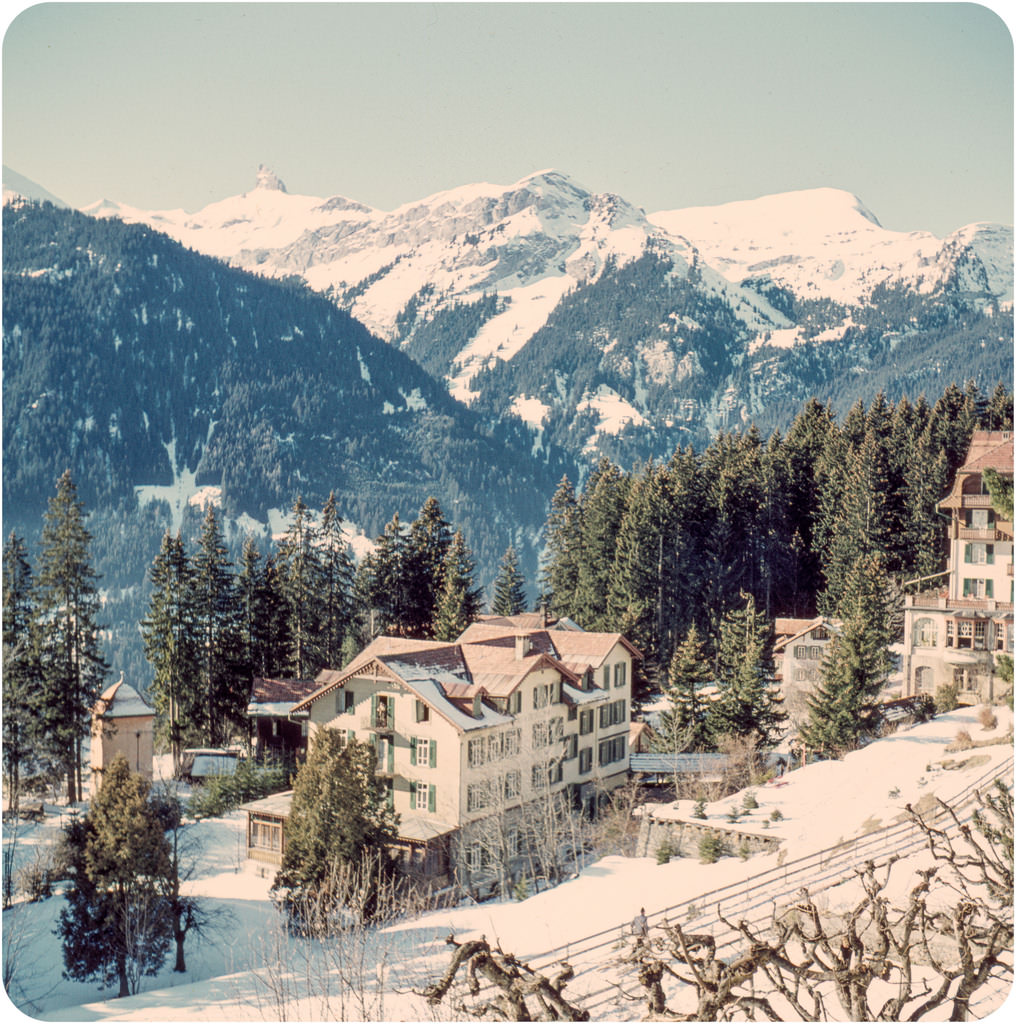
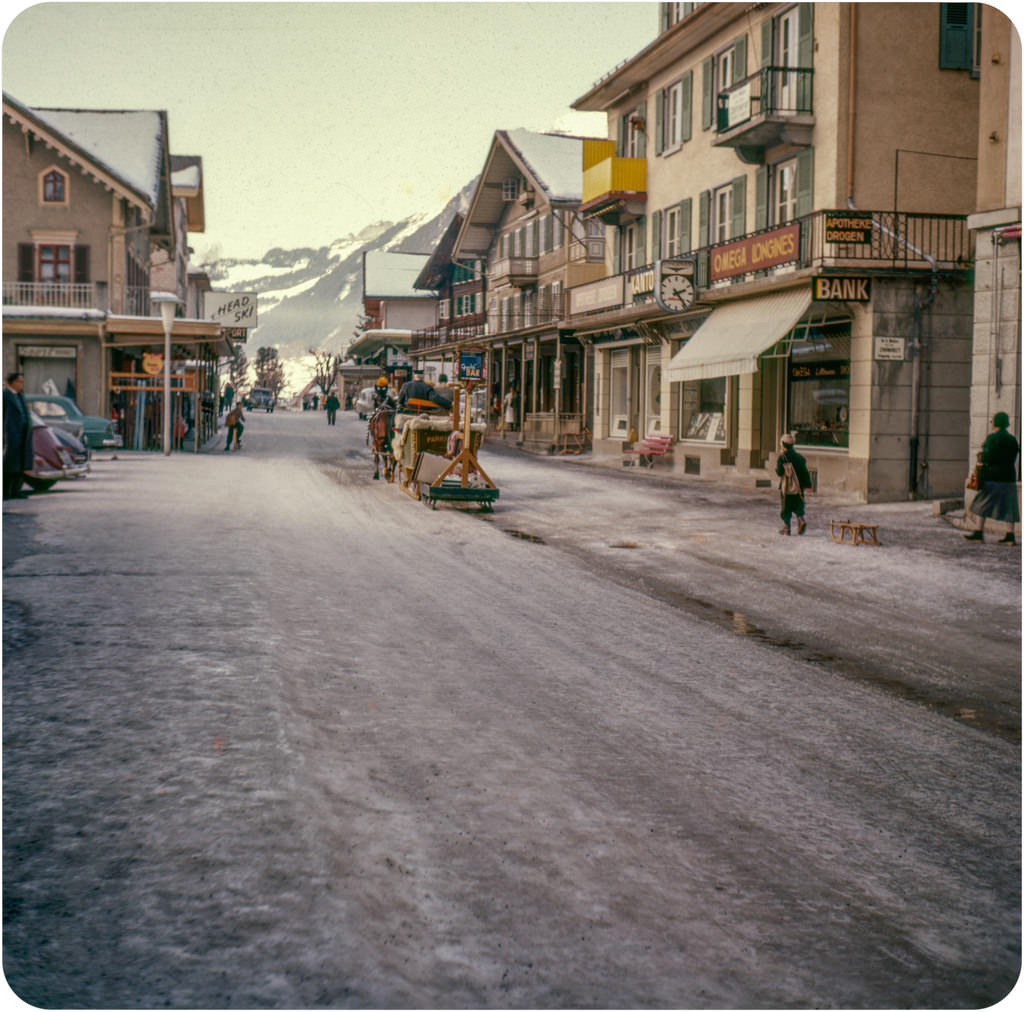
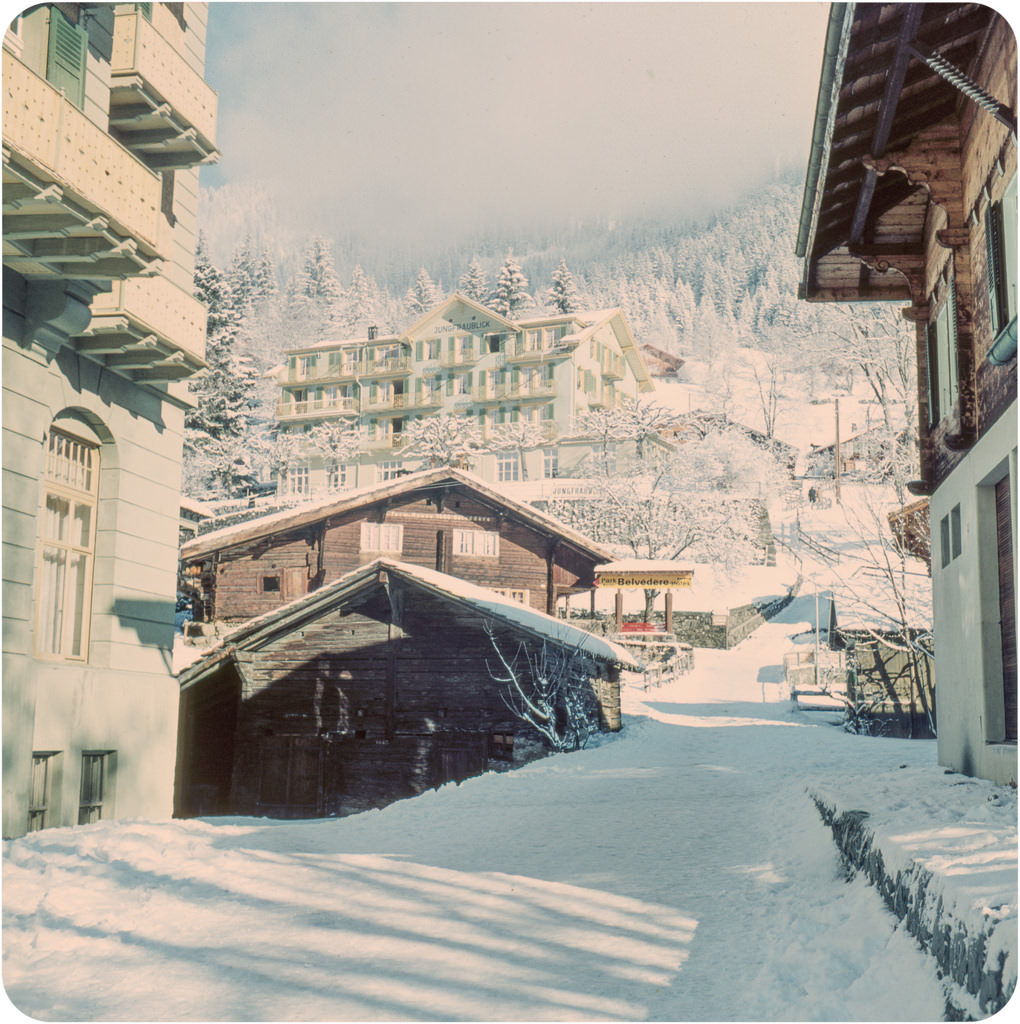
Wengen is a car-free village perched on a mountainside above the Lauterbrunnen Valley. In 1959, it was already a destination for skiers, but it still carried the feel of a working Alpine community. Locals moved through the snow-covered streets alongside tourists. Wooden chalets sat heavy under white rooftops. The whole place had a quiet, unhurried pace that Snelling’s camera caught without disruption.
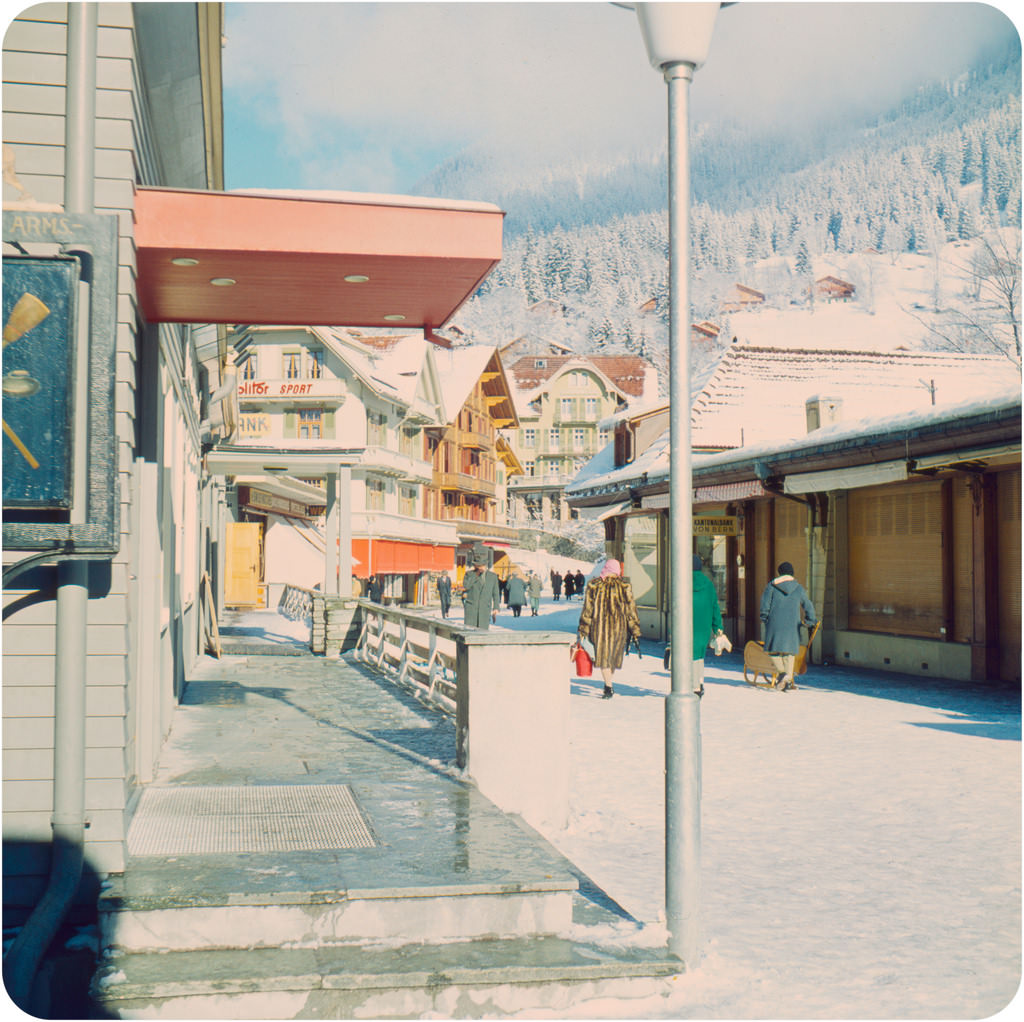
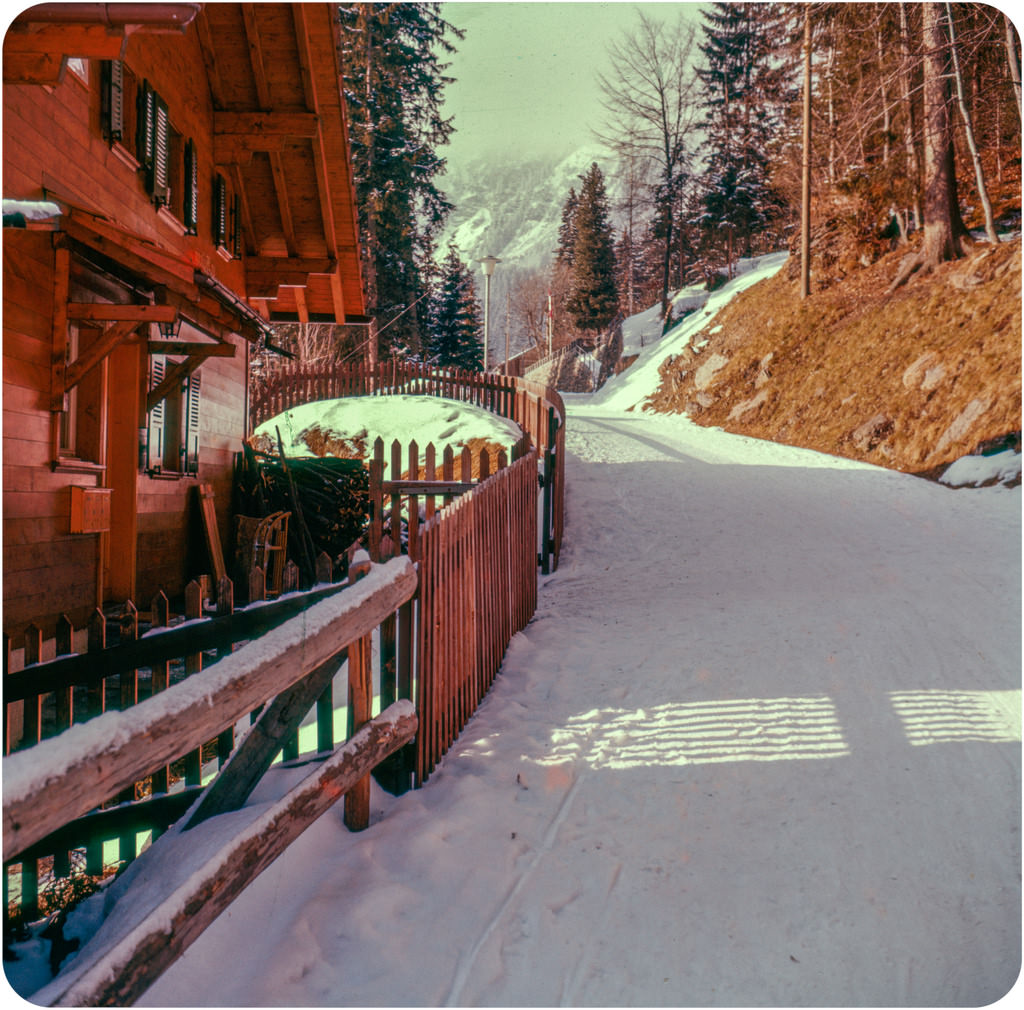
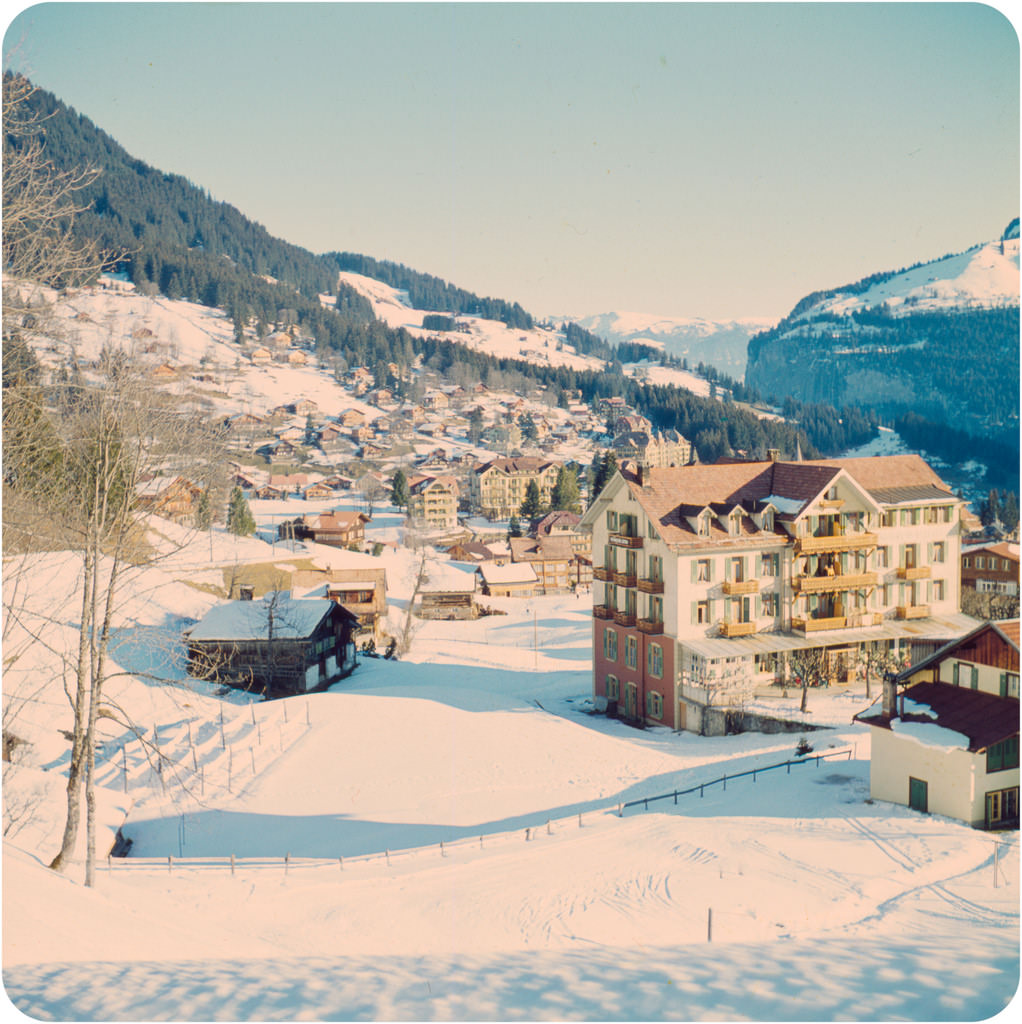
Grindelwald sits at the foot of the Eiger, one of the most recognized peaks in the Alps. By the late 1950s, it had grown into a popular winter resort, but the village itself still held tight to its traditional character. Farmers, shopkeepers, and families went about their daily routines even as visitors arrived with skis and cameras.
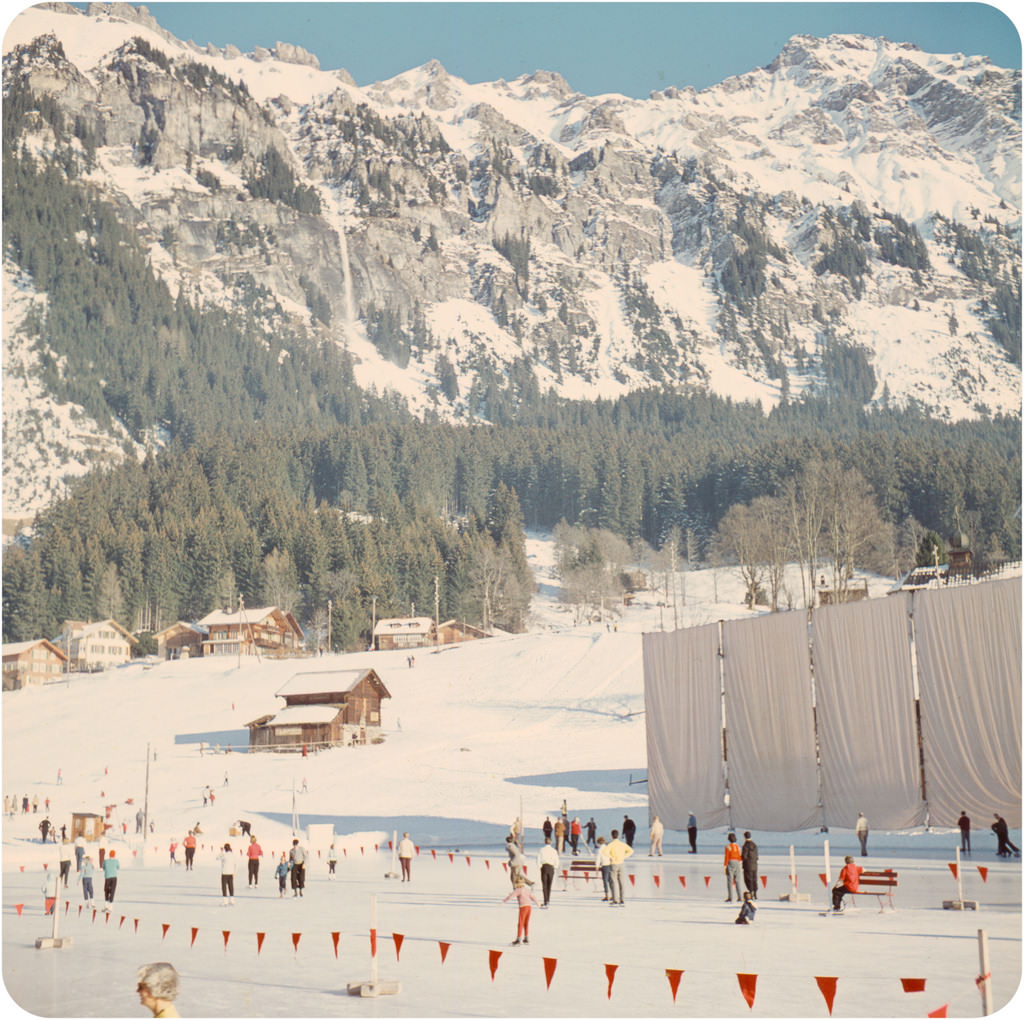
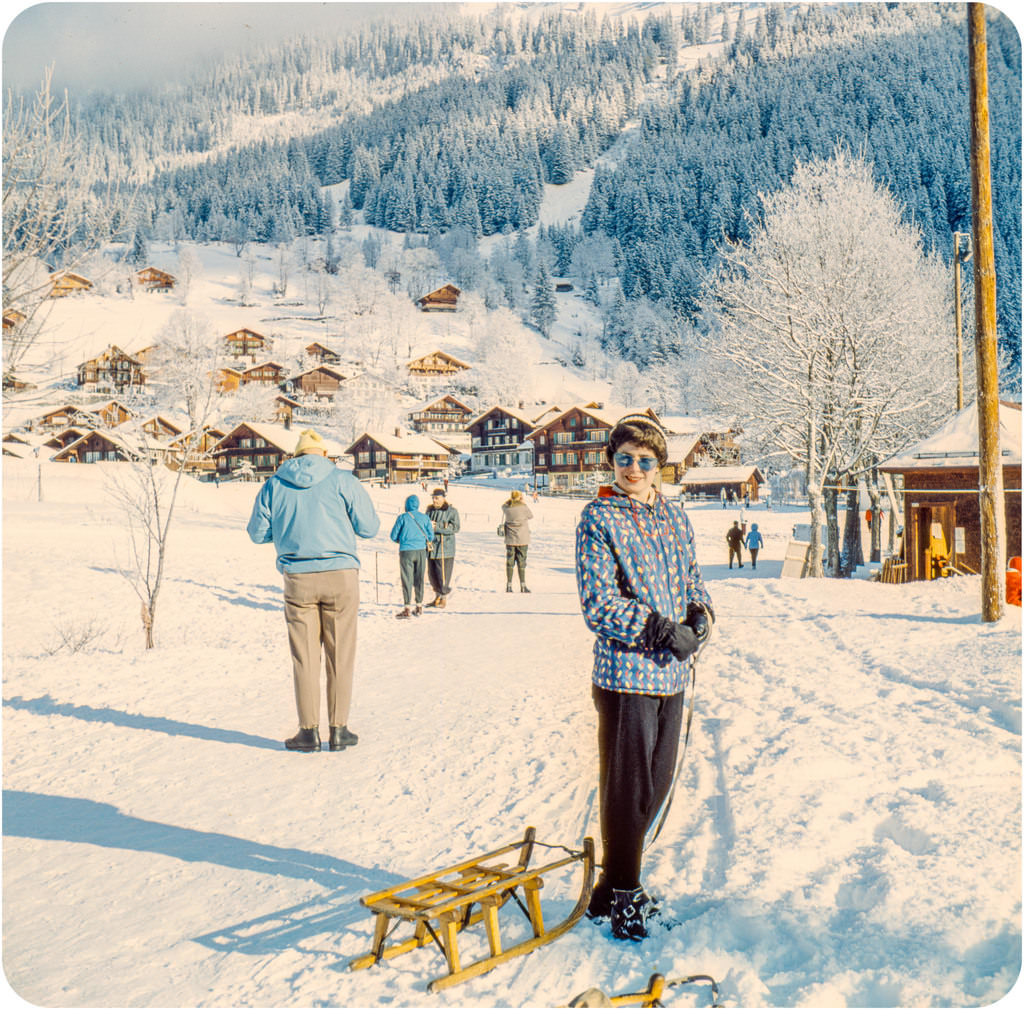
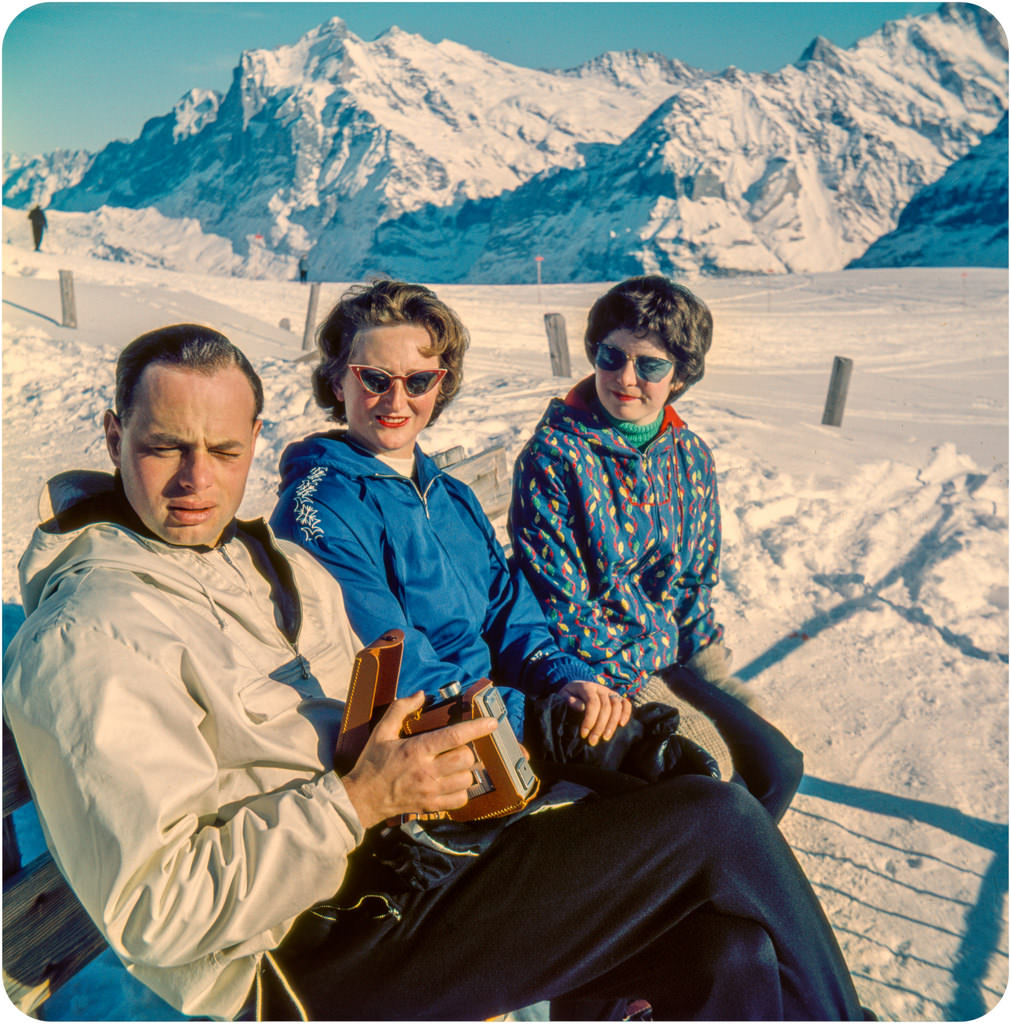
What makes these photographs stand out is the color. Most surviving images from this period in rural Switzerland are black and white. Snelling’s medium format color work gives these scenes a warmth and immediacy that monochrome simply cannot match. Red jackets against white snow, the deep brown of timber buildings, blue winter skies — every frame feels alive.
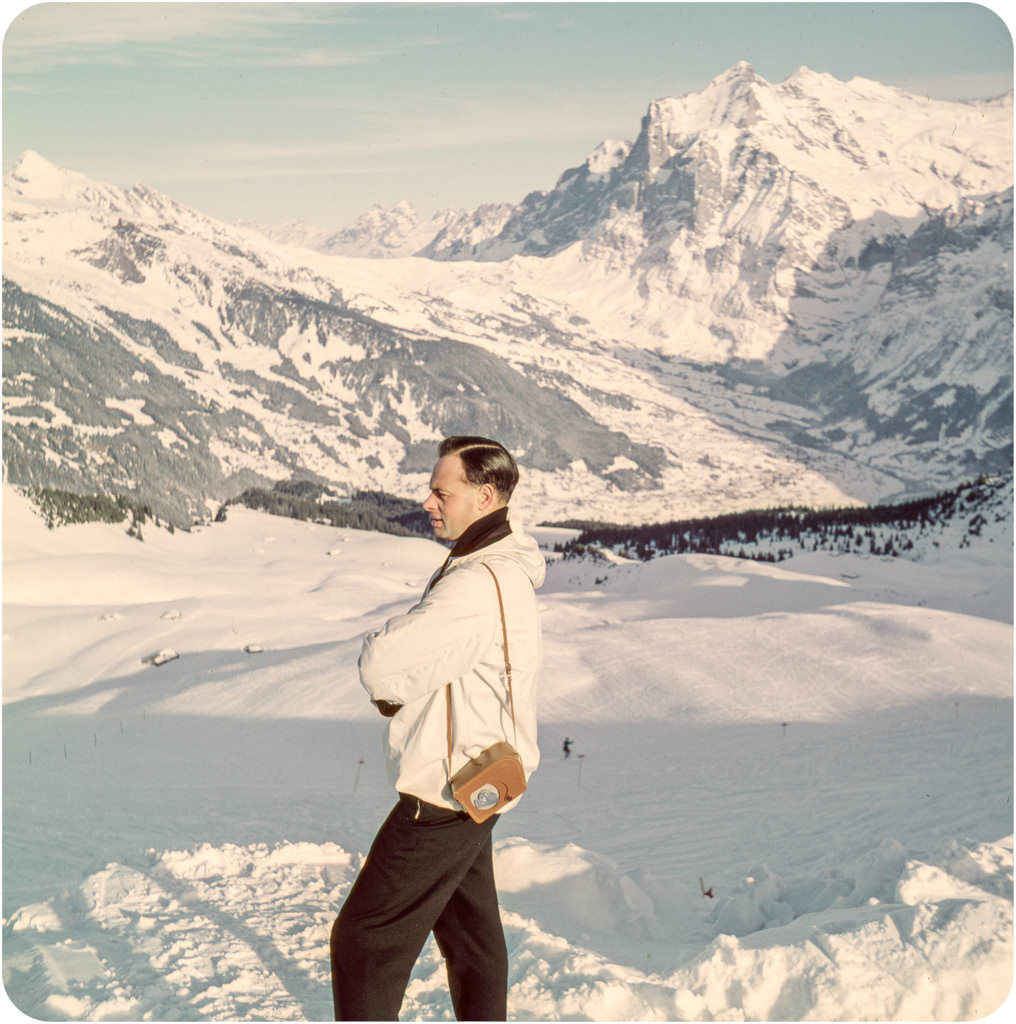
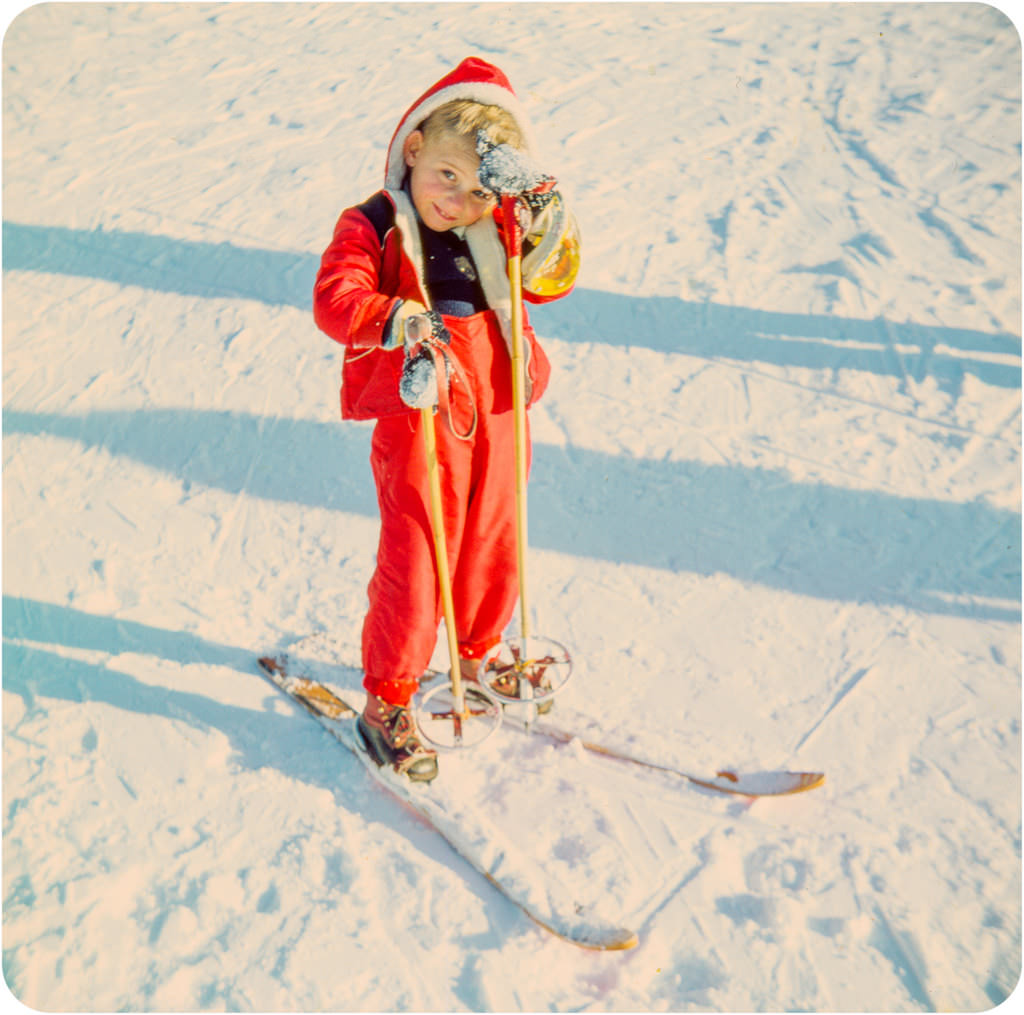
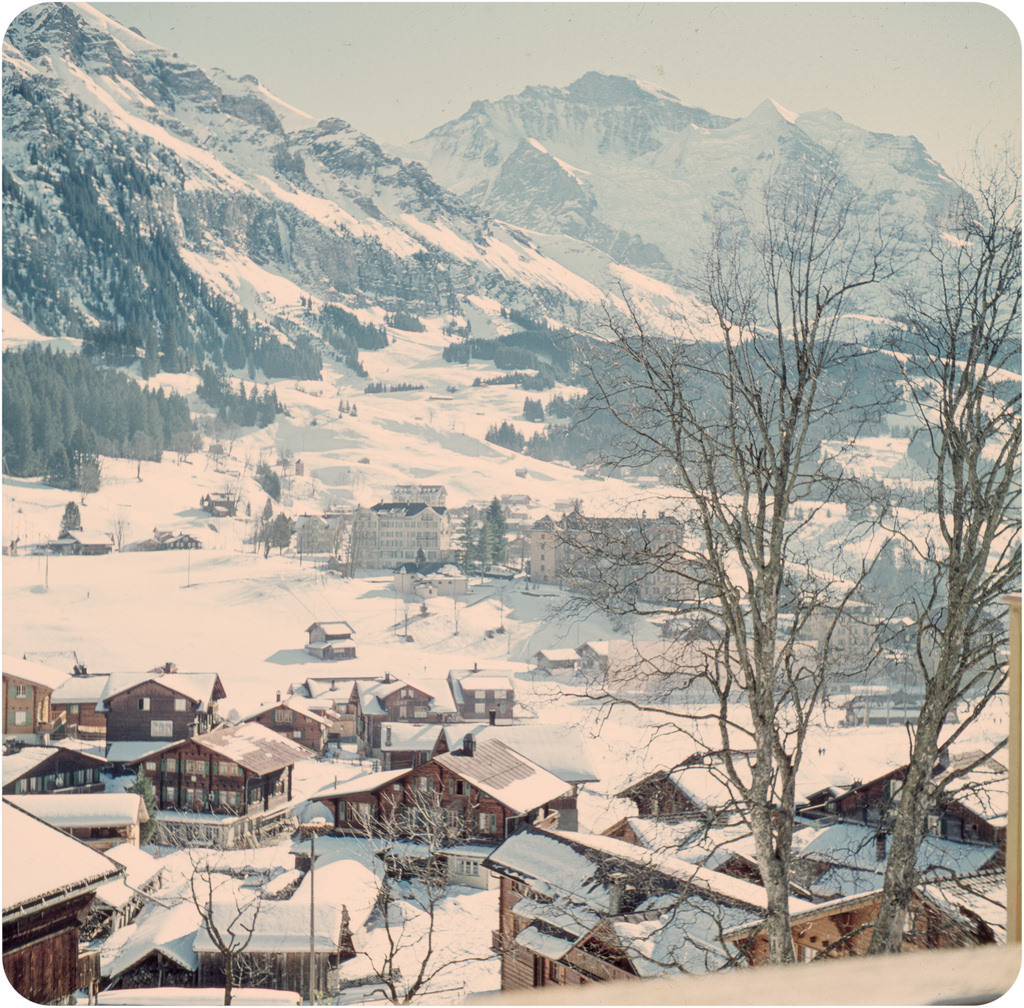
Switzerland in 1959 was a country firmly settled into postwar prosperity. The Swiss economy had avoided the destruction that much of Europe had suffered, and by the late 1950s, the standard of living was high. Villages like Wengen and Grindelwald benefited from a growing tourism industry. The rail lines that connected these mountain communities to the rest of Europe brought visitors from across the continent.
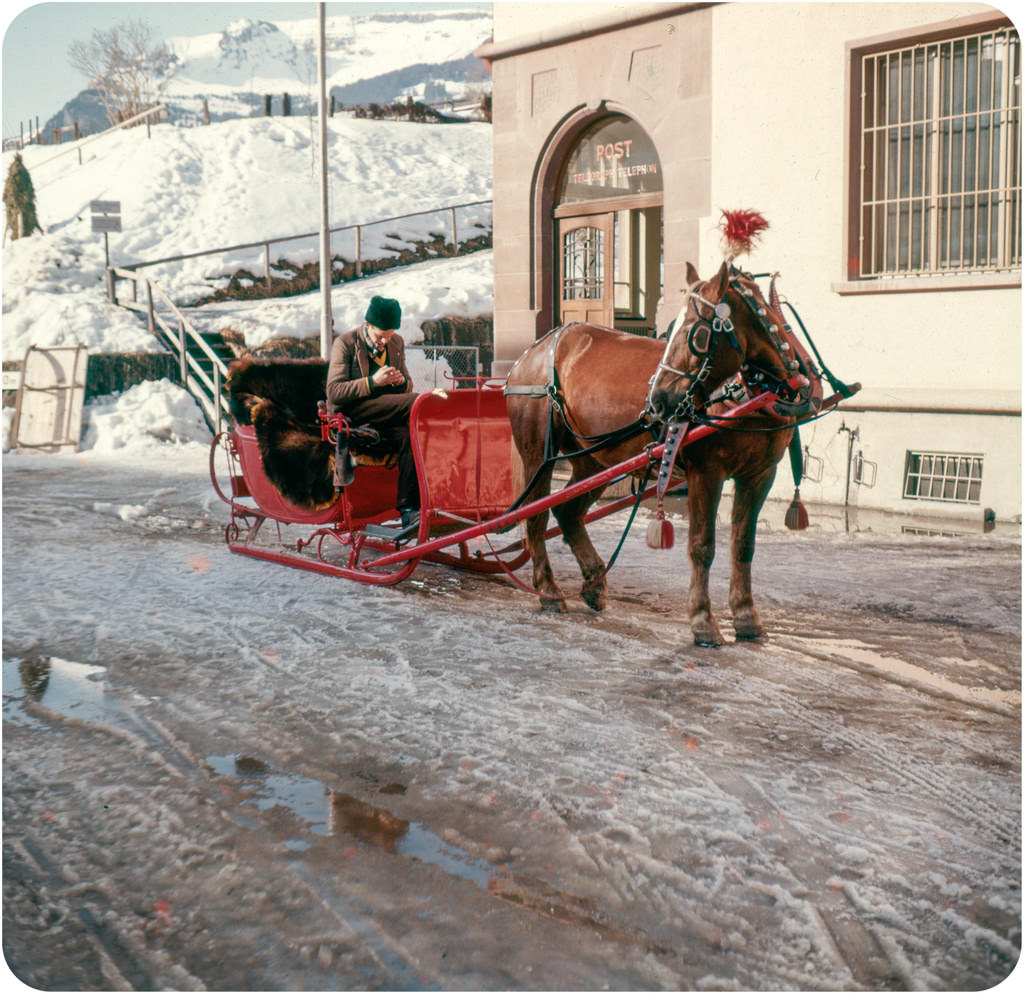
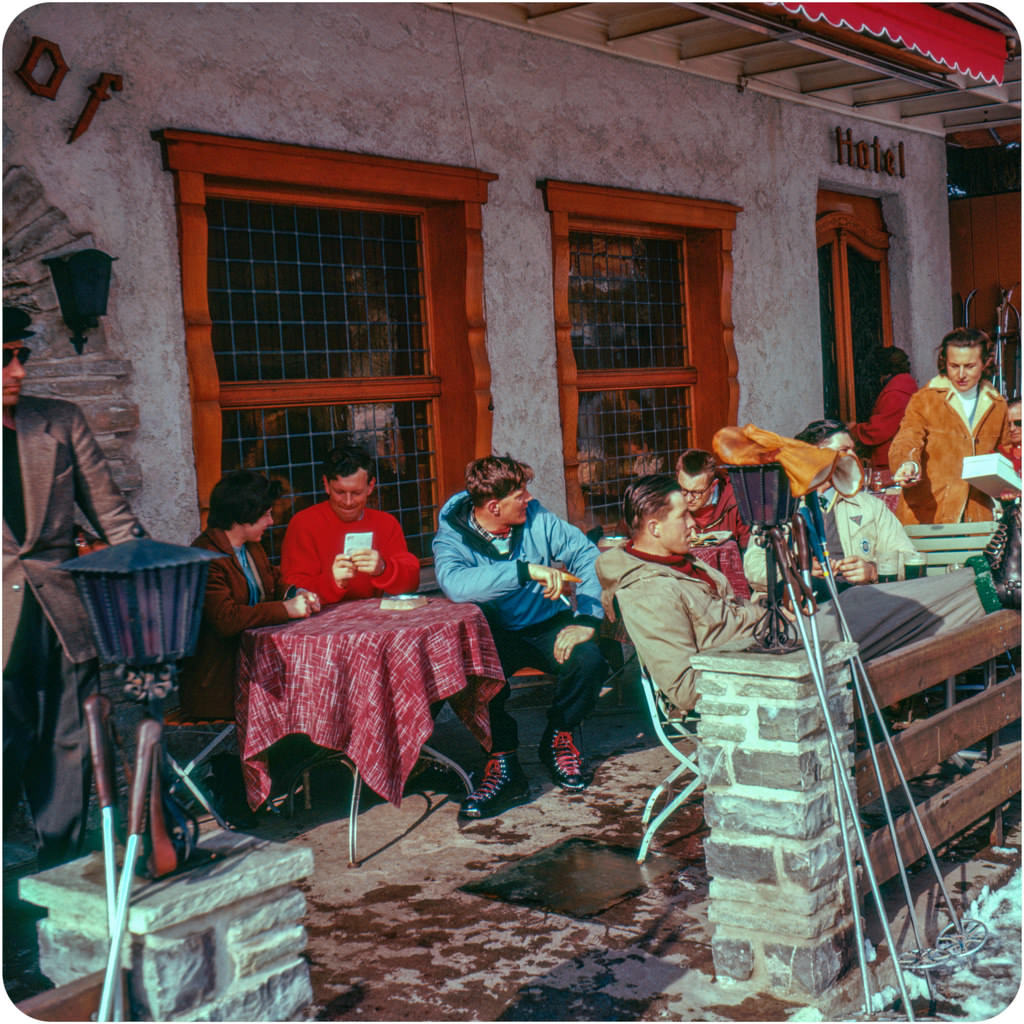
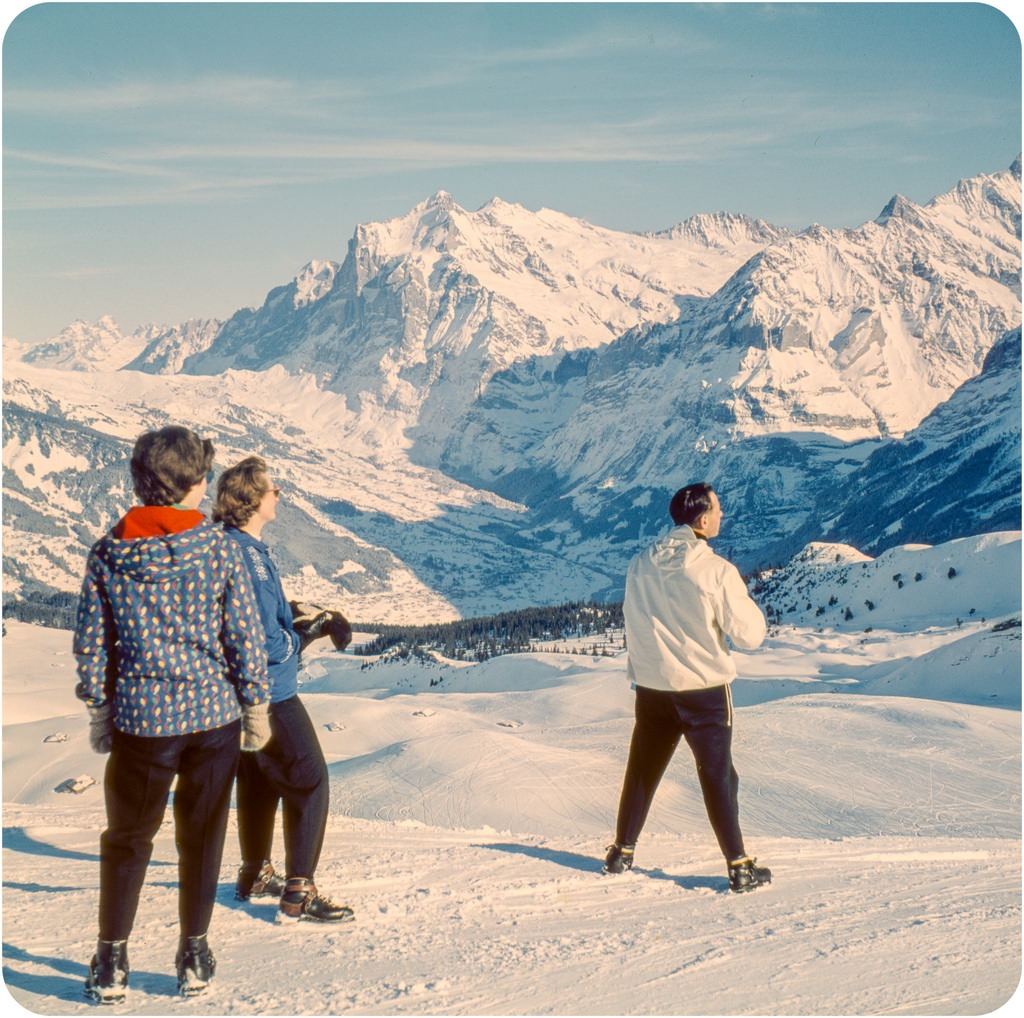
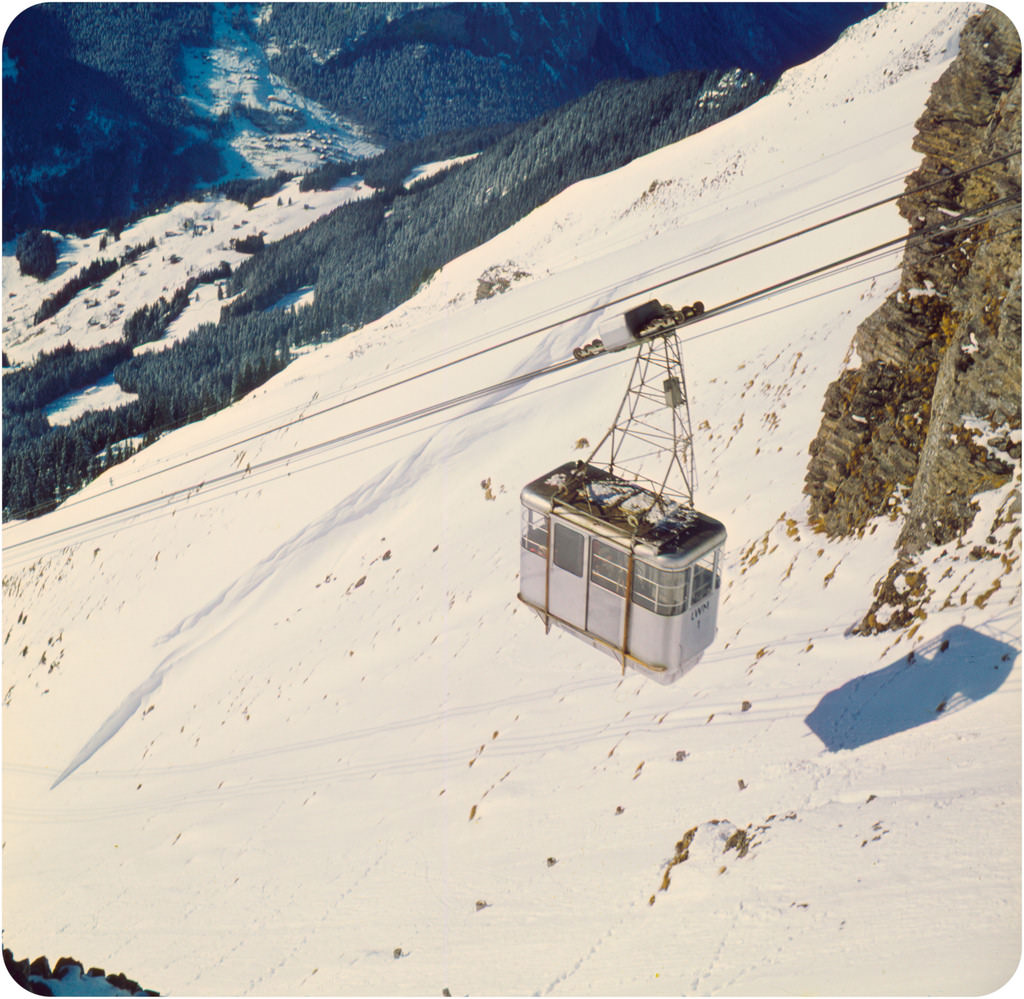
Snelling photographed both the activity and the stillness of winter mountain life. Some frames show people in motion — skiing, working, walking through the snow. Others are quieter, focused on the landscape, the architecture, or small everyday details that most photographers would have walked past.
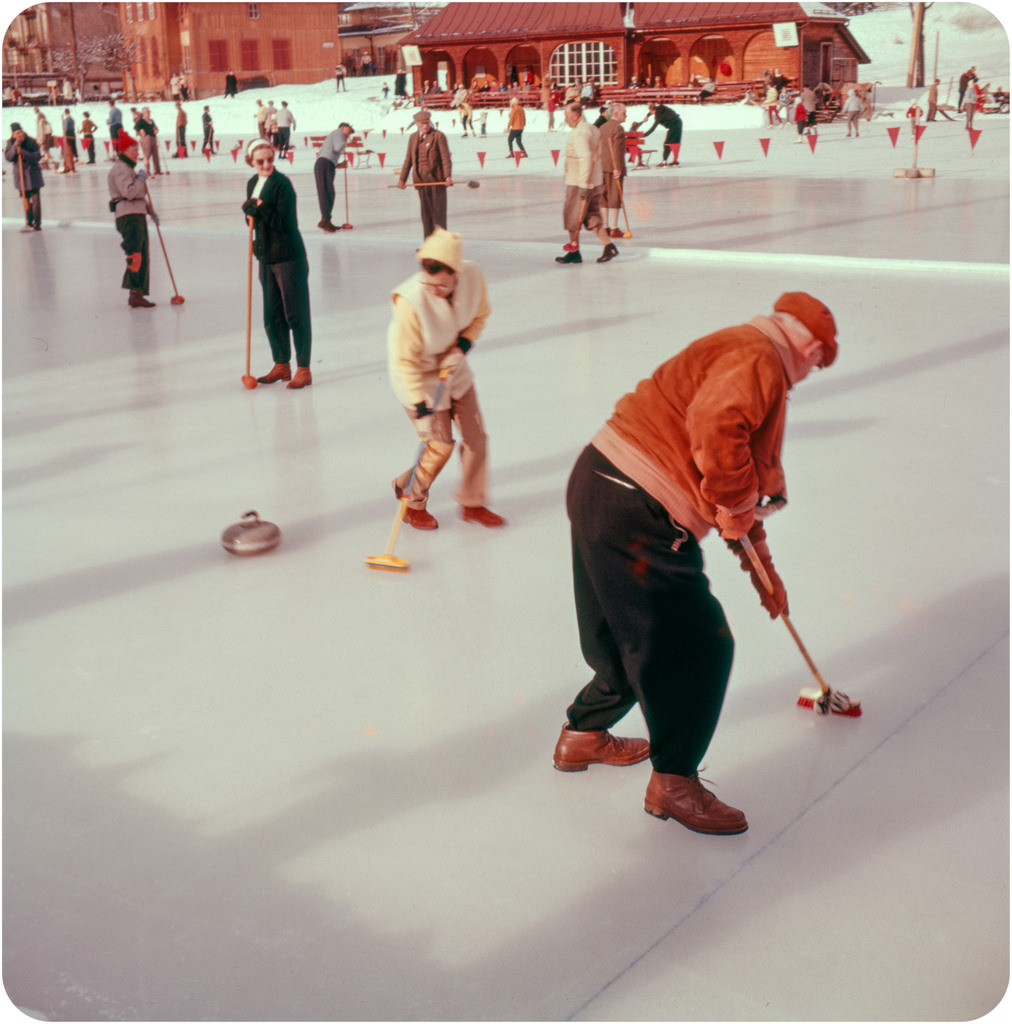
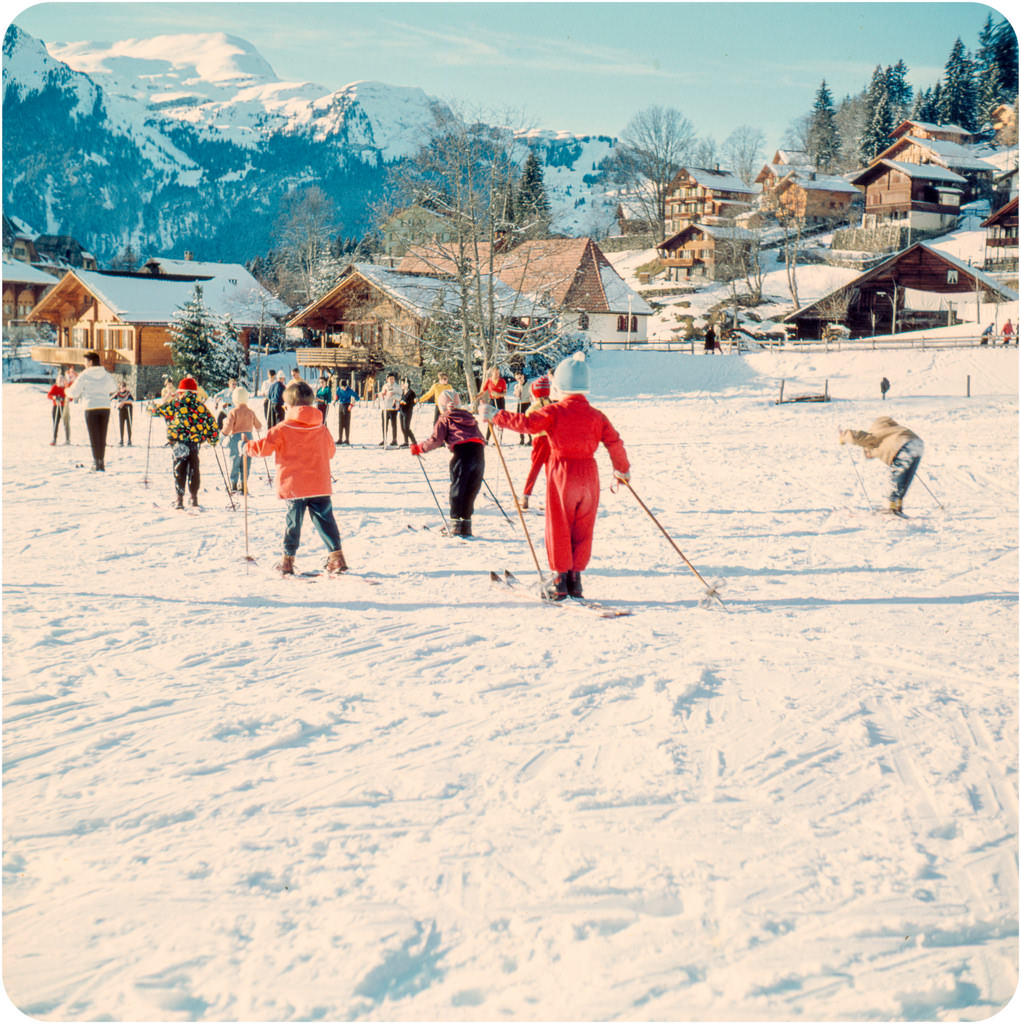
The Bernese Oberland region, where both villages are located, is defined by dramatic geography. Steep cliffs, wide valleys, and glaciers shape the land. In winter, the scale of it all becomes even more apparent — everything is blanketed in white, and the mountains dominate every view. Snelling used that backdrop deliberately, giving his subjects context and scale.
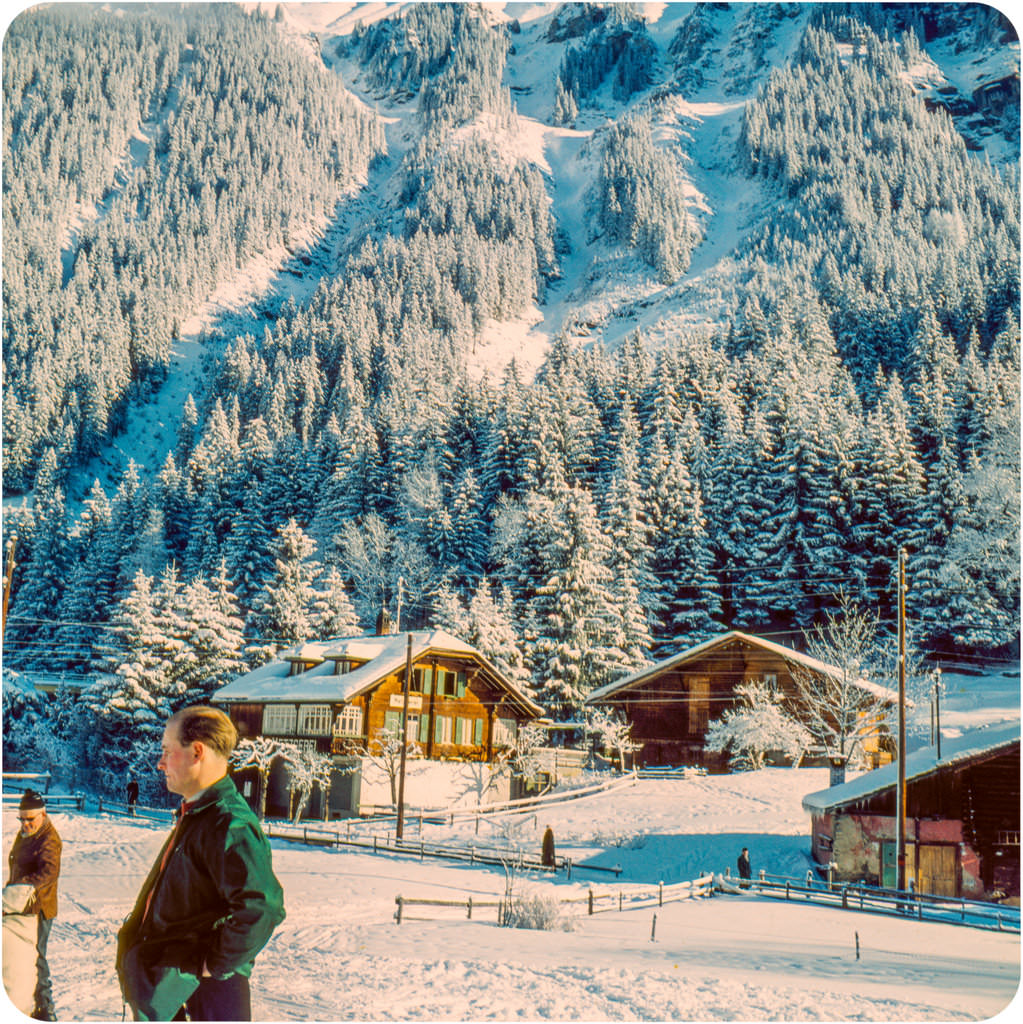
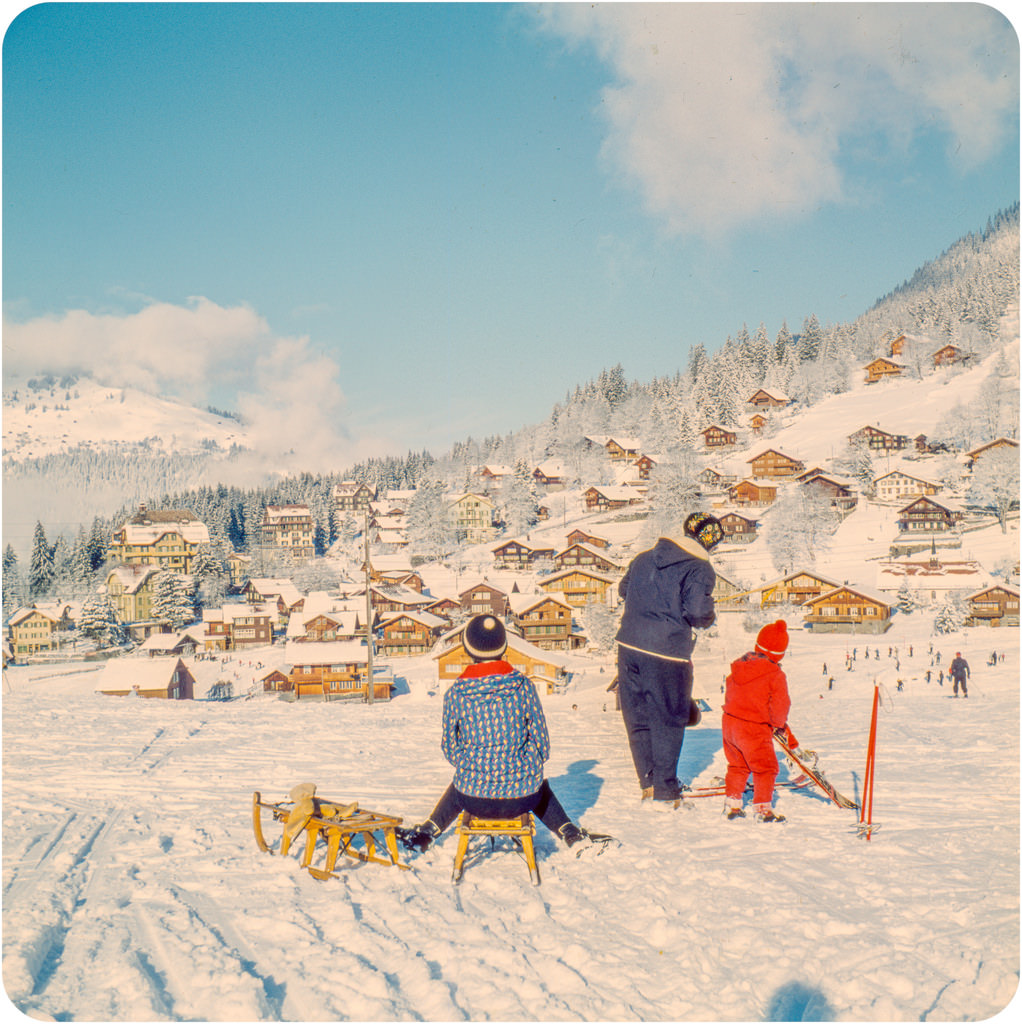
Shooting in winter conditions with film was not simple. Cold temperatures affected the film and the mechanics of the camera. Light could change rapidly in the mountains, moving from flat and gray to bright and sharp within minutes. Snelling managed these challenges consistently across the collection.
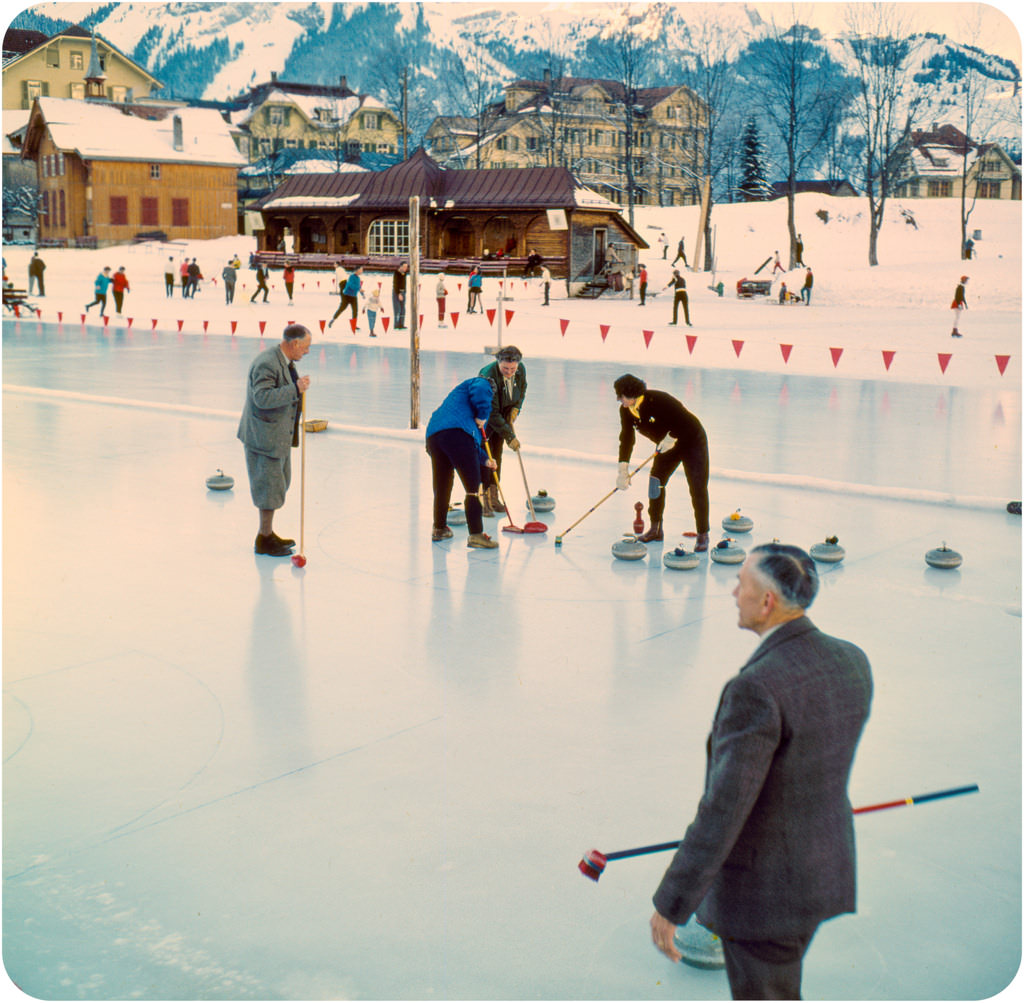
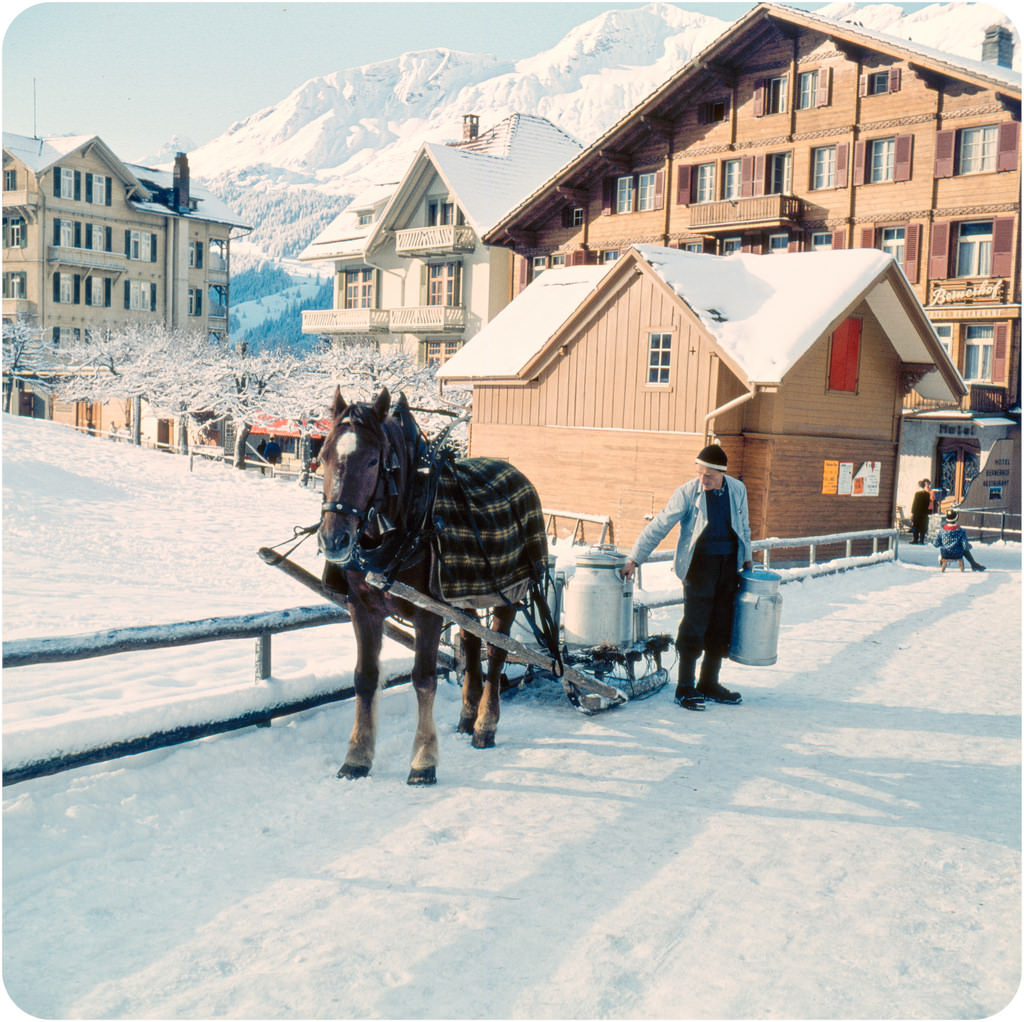
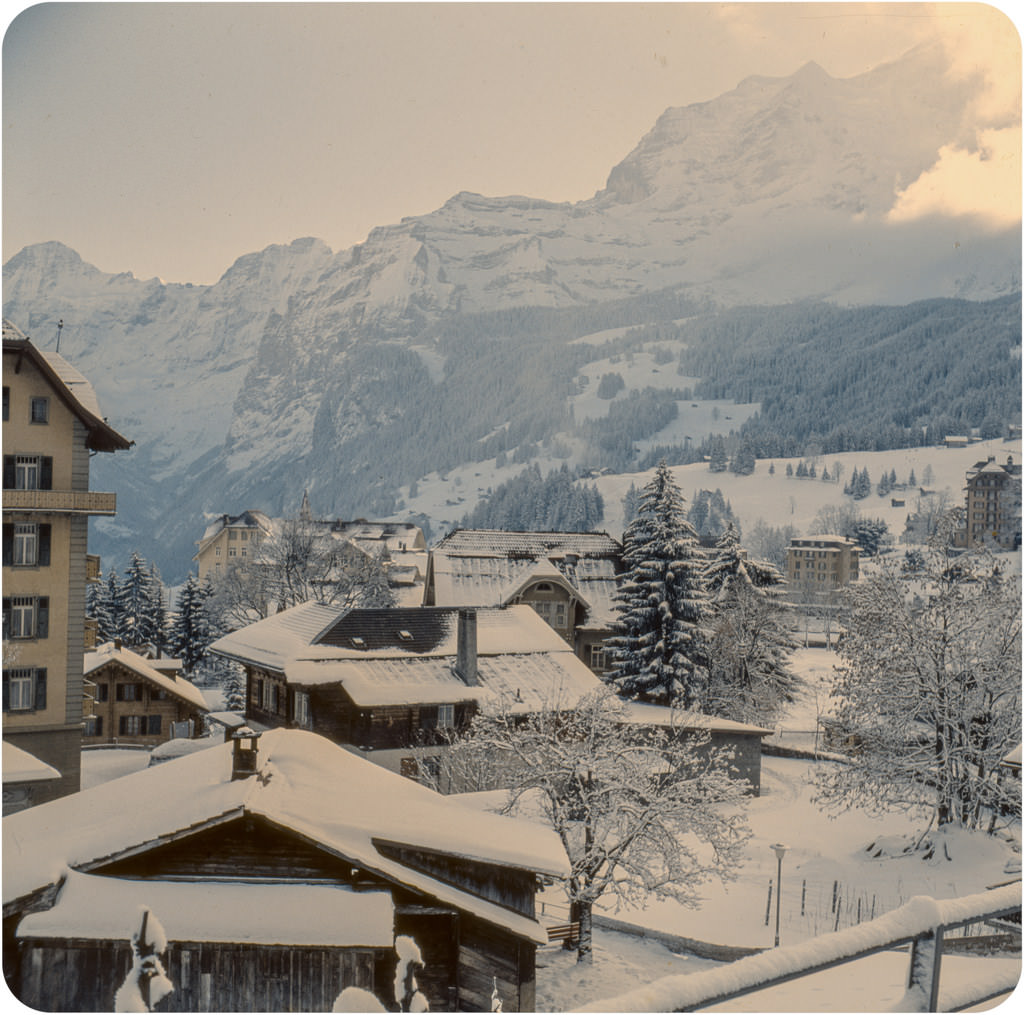
The people in these photographs are going about their lives without any sense of performing for the camera. Children play, adults walk, skiers move through the village. There is no self-consciousness in the frames. That naturalness is one of the hardest things to achieve in documentary photography, and Snelling achieved it repeatedly.
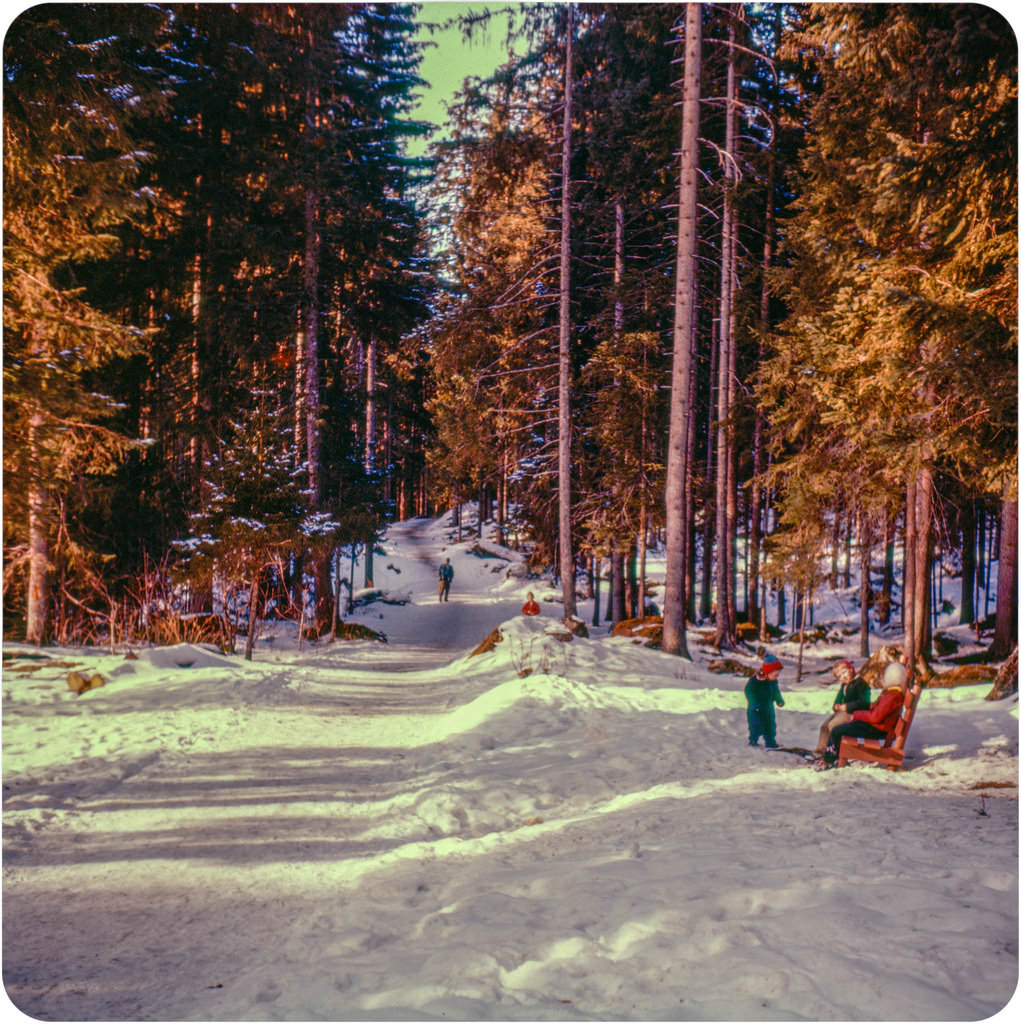
Taken together, the collection adds up to something more than a travel record. It is a detailed visual document of how people lived in two specific Alpine communities during a specific winter, more than six decades ago. The medium format film preserved those details with a clarity that still holds today.