
Berlin in the 1920s was a city in constant motion. Known as the “Golden Twenties,” this decade transformed Berlin from a war-damaged capital into one of the most dynamic cities on earth. Following the Greater Berlin Act, the city became the third-largest municipality in the world. Its population swelled to over four million people, all packed into streets that buzzed with commerce, culture, and conflict. These rare photographs capture that world exactly as it was — busy, chaotic, and alive.
Berlin took on leading roles in science, music, film, diplomacy, higher education, and military affairs during this period. It drew intellectuals, artists, and workers from across Europe. But life in the city was not without hardship. To pay war reparations after World War I, the German government printed enormous amounts of money. The result was runaway inflation that wiped out the savings of the middle class almost overnight. By the mid-1920s, U.S. loans helped stabilize the economy, and the city began expanding again at a rapid pace.
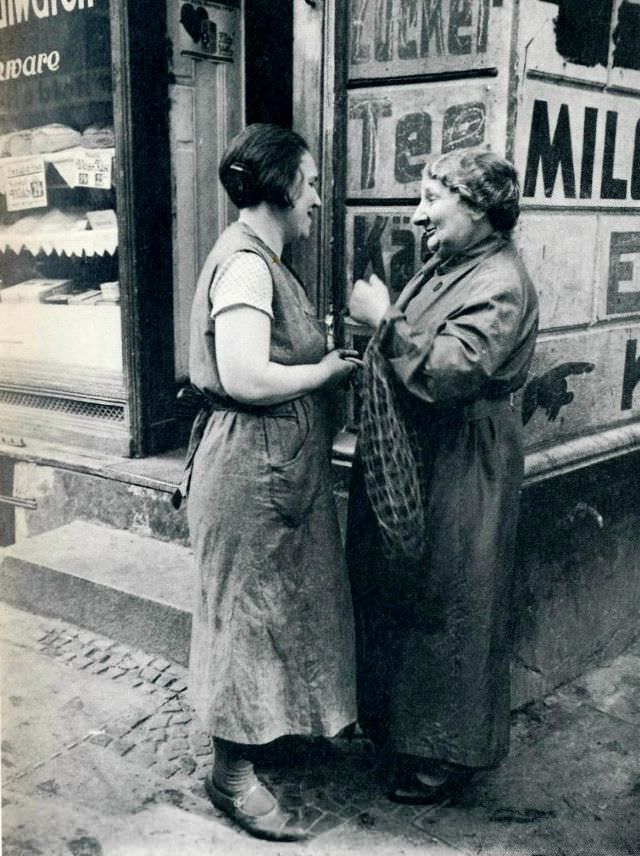
Even during the worst years of inflation, daily commerce continued. Bakeries, vegetable stalls, and small shops kept the city fed. Street vendors pushed carts through narrow lanes, selling coal, produce, and goods to residents who often had little money to spend. The economy of the sidewalk was its own world, running parallel to the grand financial machinery of the state.
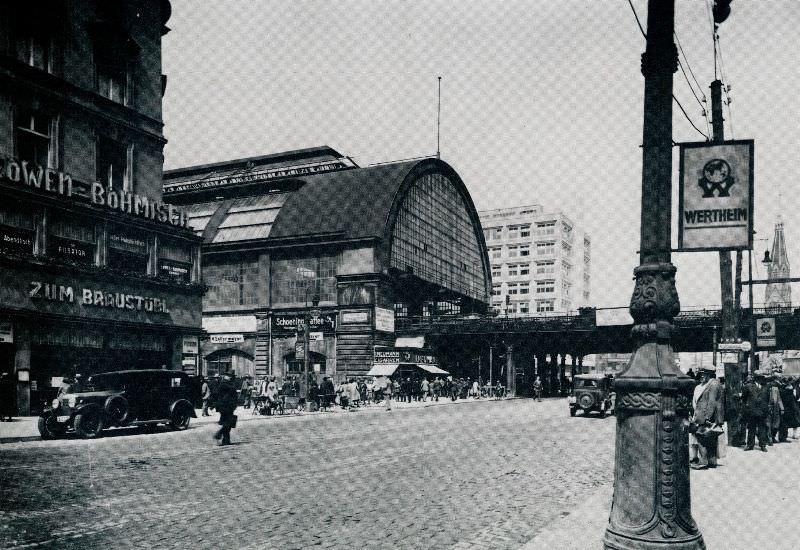
Berlin’s rail network was the backbone of the city. Alexanderplatz station sat at the heart of it all — a thundering hub where workers, shoppers, and travelers crossed paths every hour of the day. The S-Bahn was electrified beginning in 1924, making it faster and more reliable than ever before. Stations like this one became landmarks as much as they were transit points.
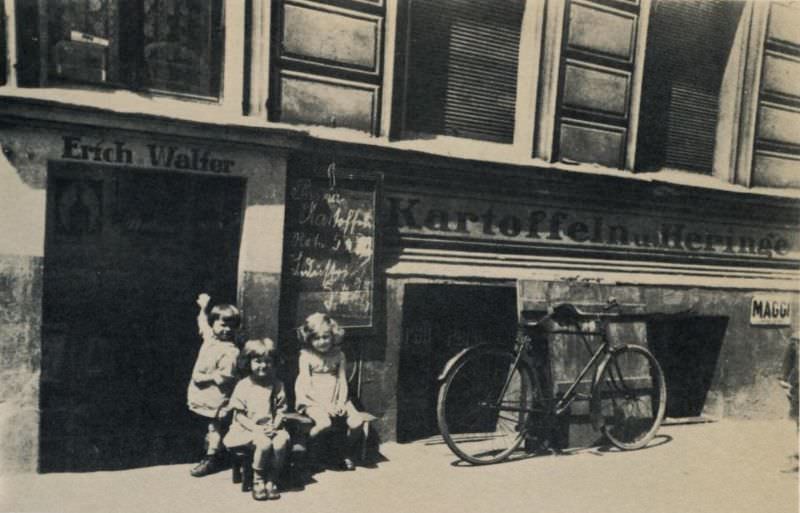
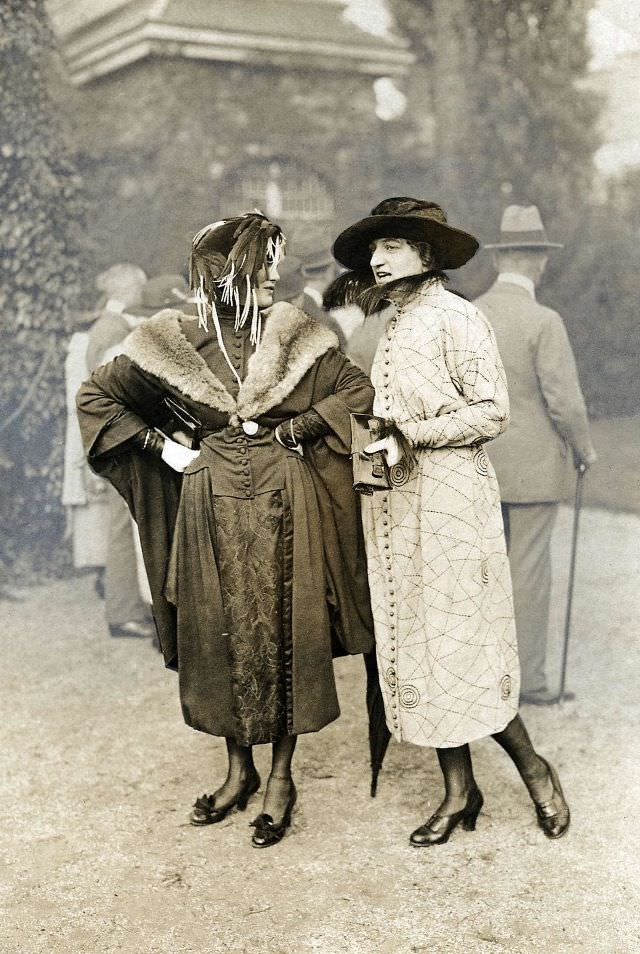
Street fashion in 1920s Berlin reflected the city’s sharp contrasts. Wealthy women strolled wide boulevards in tailored coats and cloche hats, while working-class children played in the same streets wearing whatever they had. Berlin embraced the new freedoms of the era openly — shorter hemlines, bobbed hair, and a bold public presence for women were all visible in the city’s daily life.
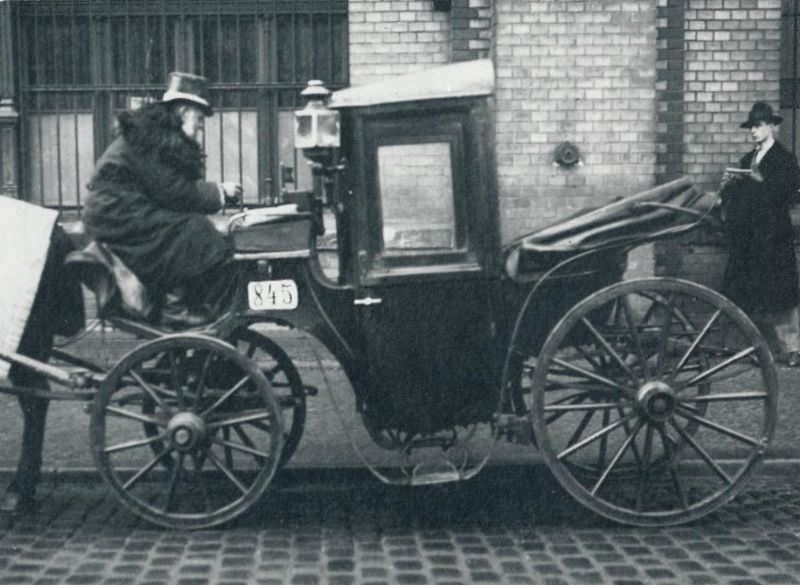
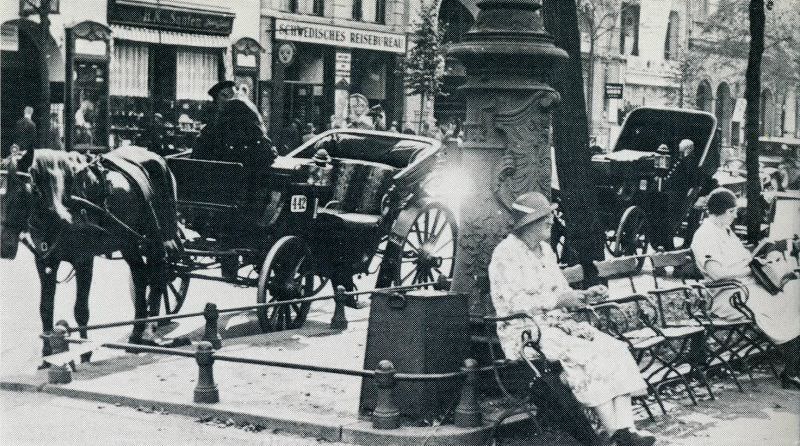
Horse-drawn cabs still shared the road with early motor vehicles throughout the 1920s. The transition from horse power to engine power happened gradually, and for much of the decade, both existed side by side on the same cobblestone streets. Deliveries, passengers, and heavy goods all moved through the city using this mix of old and new transport.
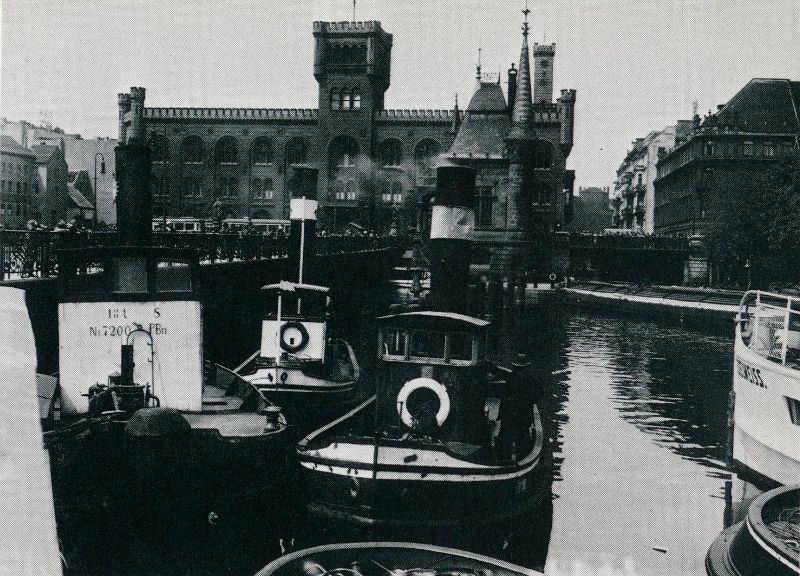
The Spree River was central to Berlin’s economy. The city operated the second-largest inland harbor in Germany, and the waterways carried freight that the roads and railways could not easily handle. Along the riverbanks, townhouses and warehouses stood close to the water’s edge, and boat traffic kept the harbor districts constantly busy.
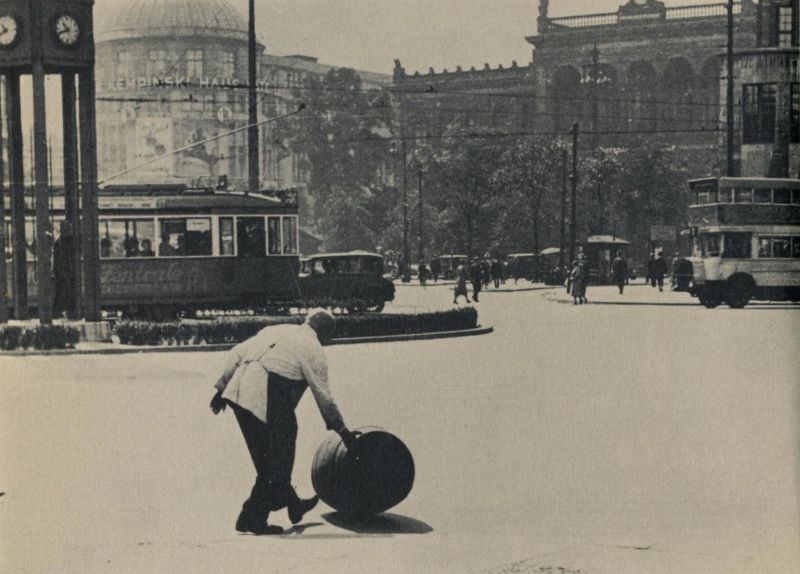
Potsdamer Platz was the beating heart of the city. By the mid-1920s, it had become one of the busiest traffic intersections in all of Europe. Trams, automobiles, pedestrians, and cyclists all competed for space in the square. In 1924, Berlin installed its first automatic traffic light tower here — a sign of just how modern the city was becoming.
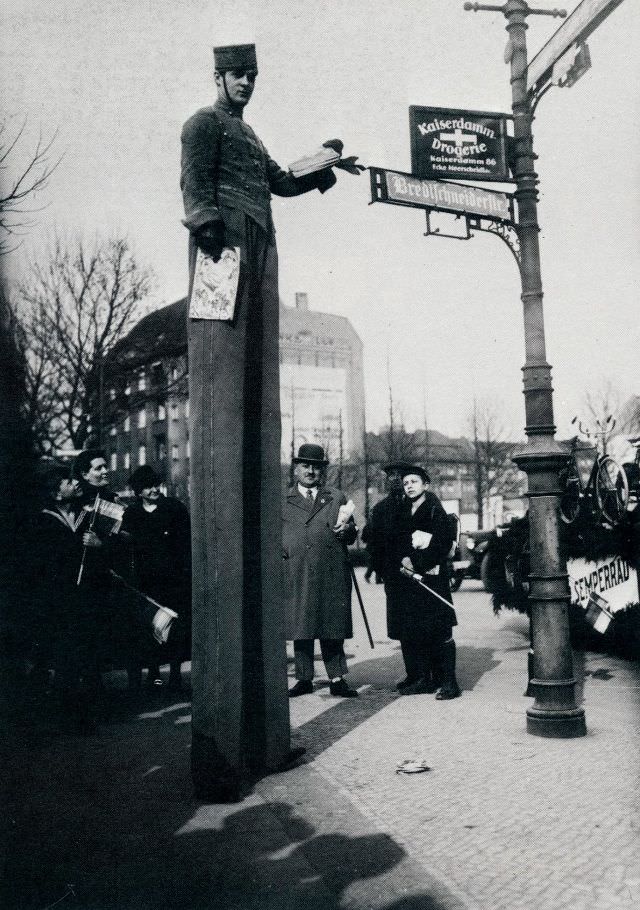
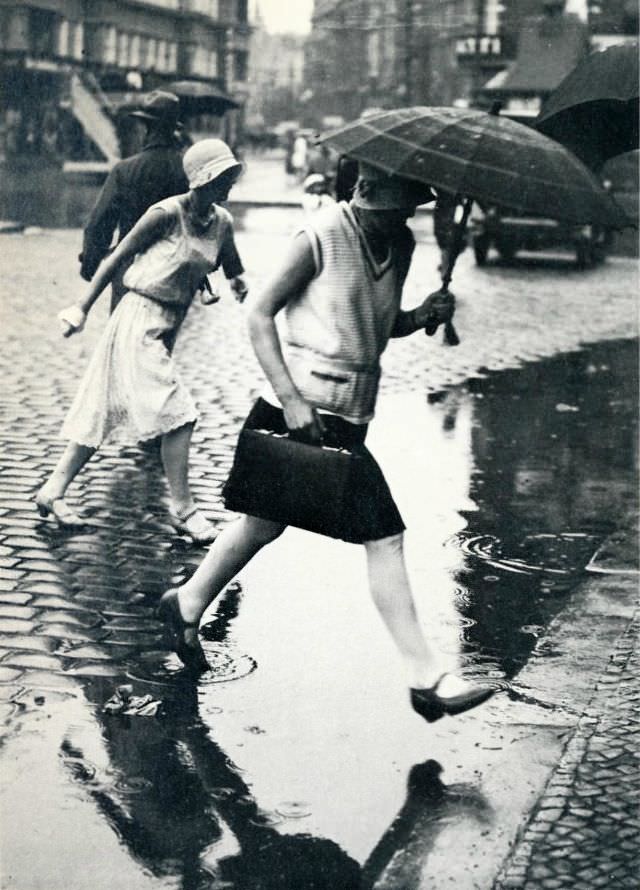
Advertising covered nearly every available surface in 1920s Berlin. Billboards, painted walls, and posted notices competed for the attention of pedestrians at every turn. The city’s streets were a visual cacophony of commercial messages, political slogans, and entertainment announcements. Walking through Berlin meant being bombarded with information at every step.
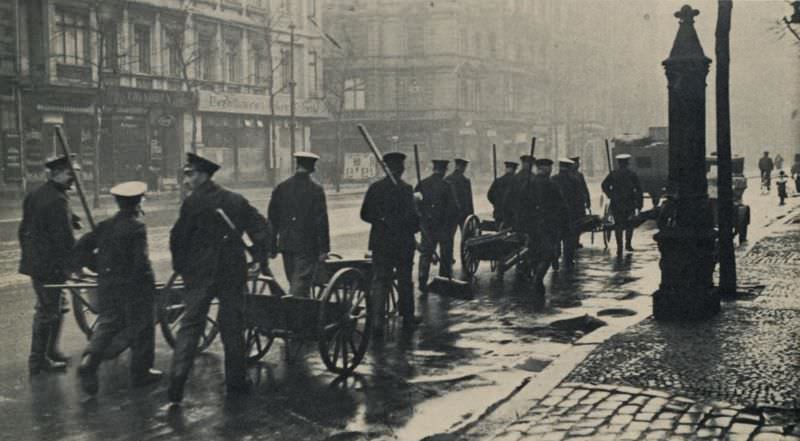
Behind the glamour and growth, ordinary municipal workers kept the city functioning. Street sweepers worked daily to clear the debris left by millions of residents and the constant flow of traffic. Their work was unglamorous but essential, and photographs like this one document a side of city life that official records rarely preserved.
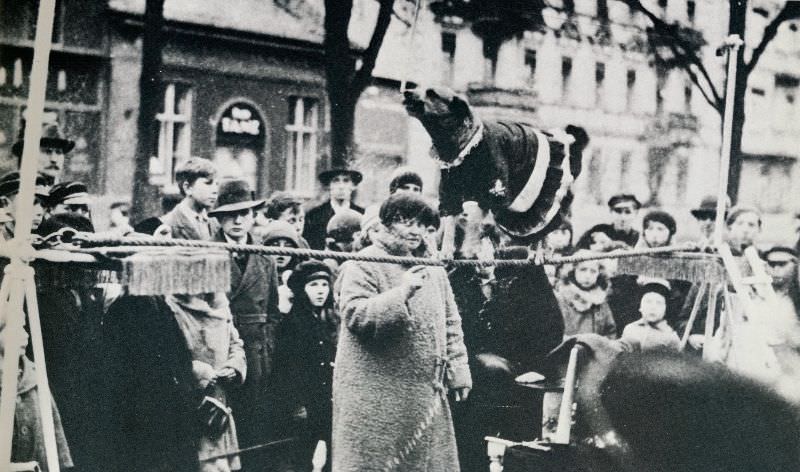
Street performers were a fixture of Berlin’s public spaces. Actors, musicians, acrobats, and storytellers set up wherever crowds gathered and performed for coins. Berlin had a rich theatrical culture at every level — from the grand opera houses to the impromptu shows that played out on busy corners. Entertainment was woven into the fabric of everyday street life.
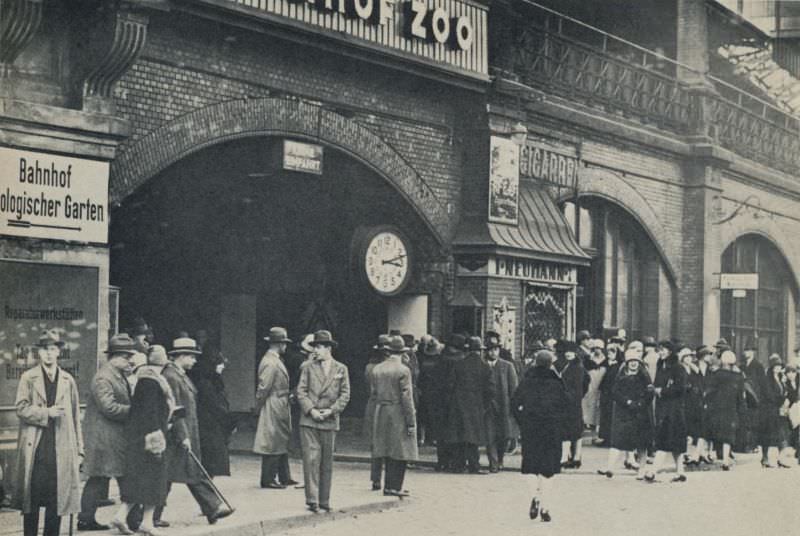
The Zoologischer Garten station served the wealthy western districts of the city and sat near one of Berlin’s most famous landmarks, the Berlin Zoo. The area around it, including Hardenbergstrasse and Tauentzienstrasse, was among the most fashionable in the city. Rail stations in Berlin were not just transit hubs — they were social gathering points that anchored entire neighborhoods.
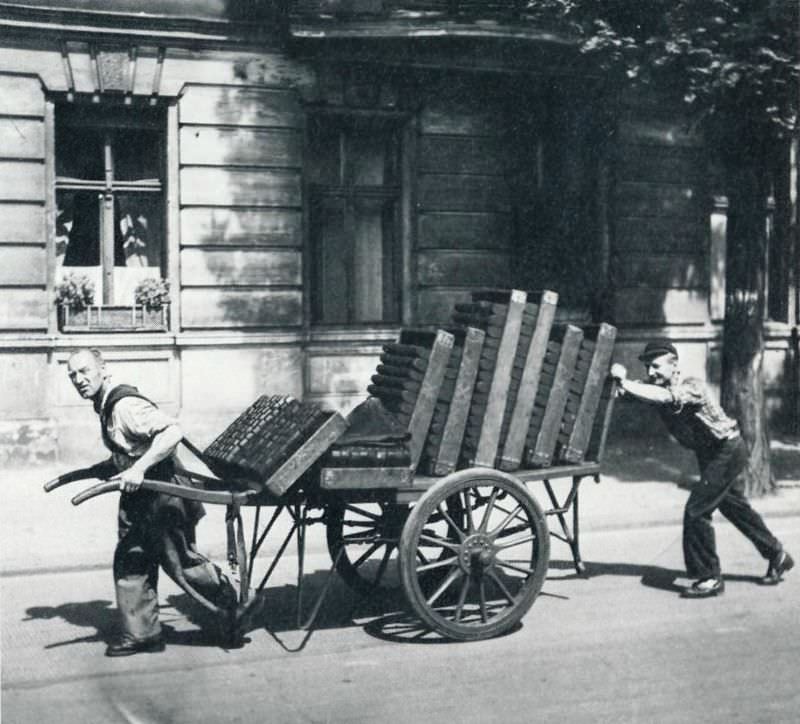
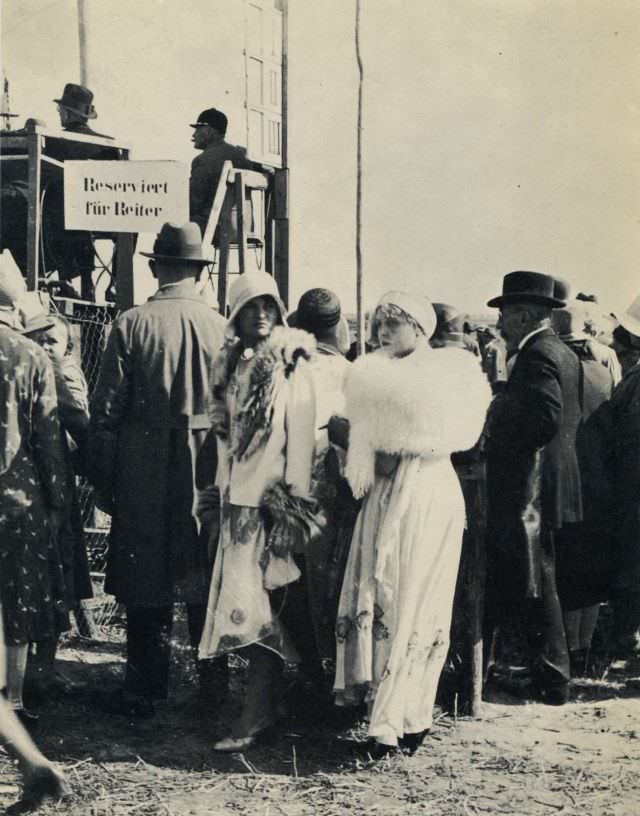
Coal briquettes were a primary source of heat for Berlin’s households, and suppliers like the one pictured here made regular rounds through residential streets. On the other end of the economic spectrum, riding schools like the one in Buckow catered to Berlin’s upper classes. These two images together illustrate the wide gap between the city’s wealthiest and its working poor.
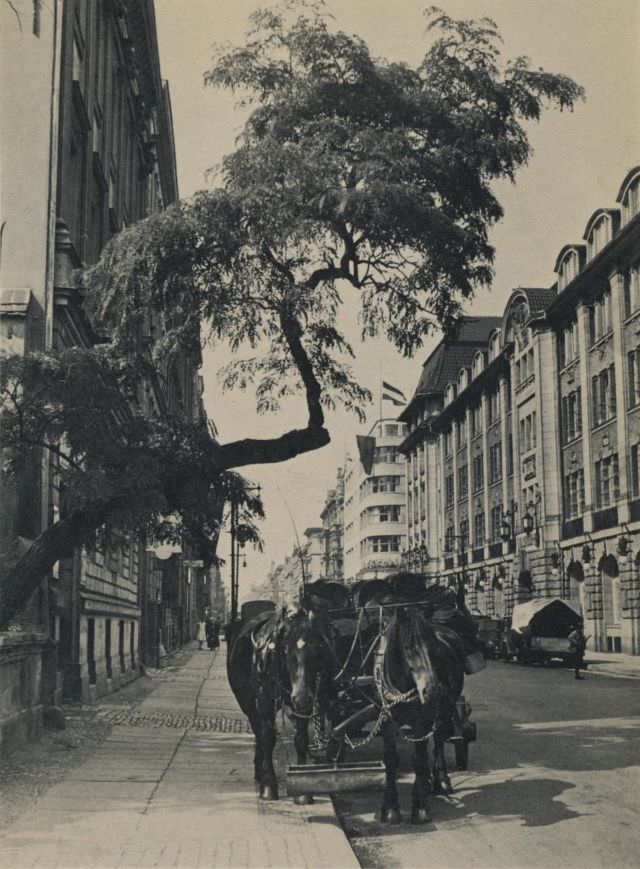
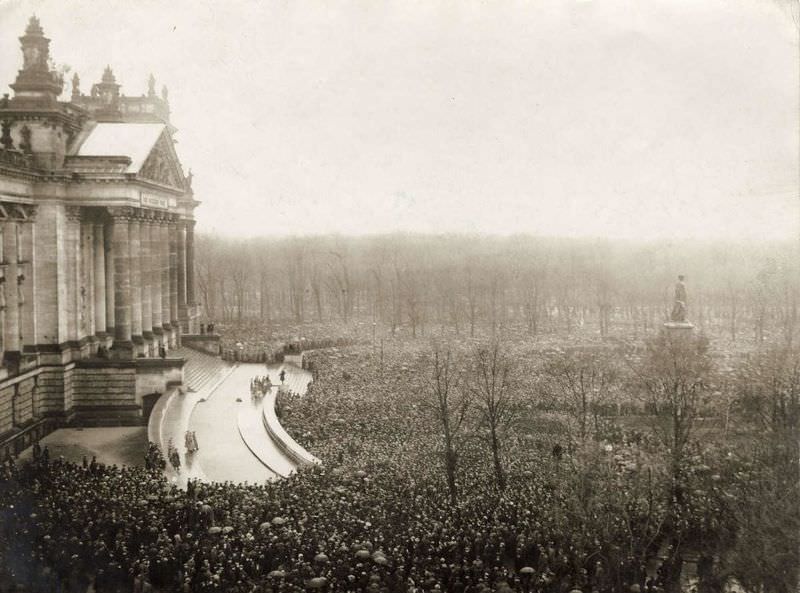
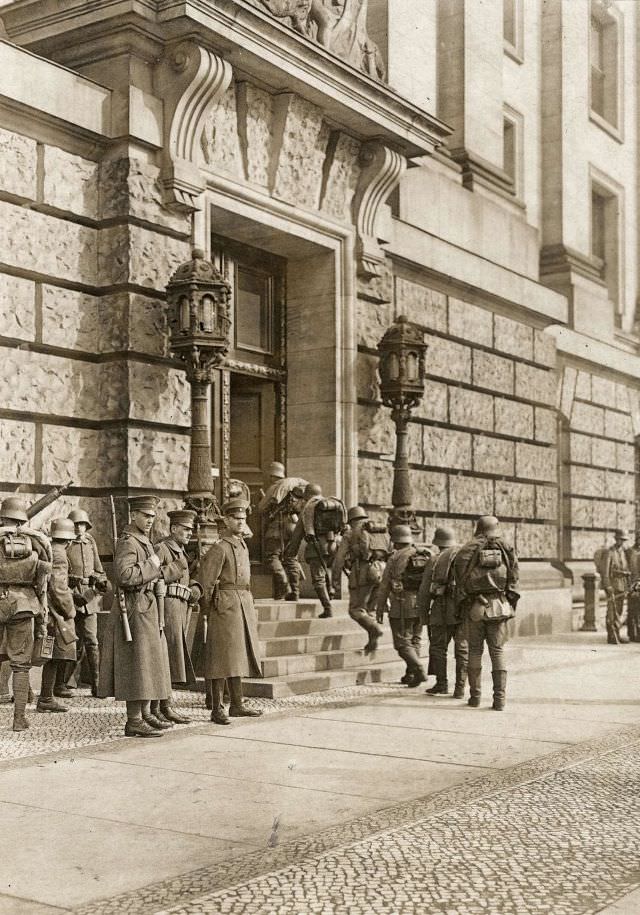
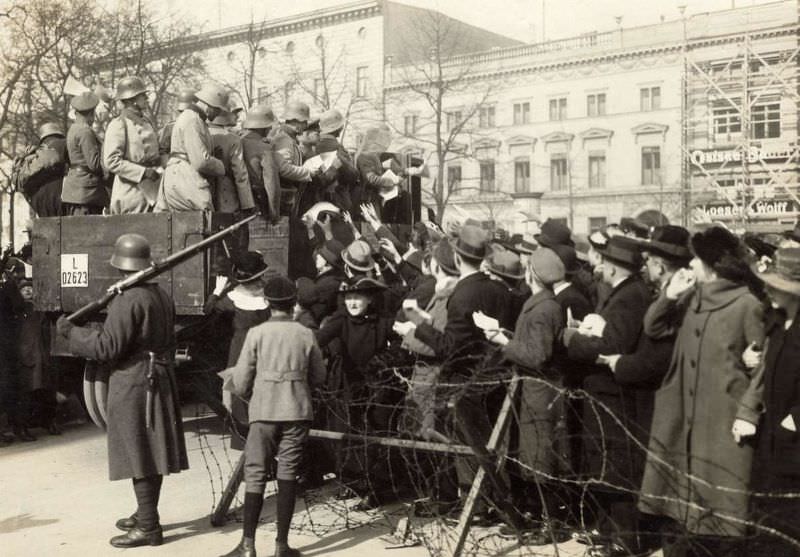
Political tension ran through Berlin throughout the 1920s. Communists, nationalists, and counter-revolutionaries all took their causes to the streets and to the steps of the Reichstag itself. The Weimar Republic faced constant pressure from both the political left and right. Demonstrations, confrontations, and riots were not rare events — they were a recurring feature of city life that ordinary Berliners navigated alongside their daily routines.
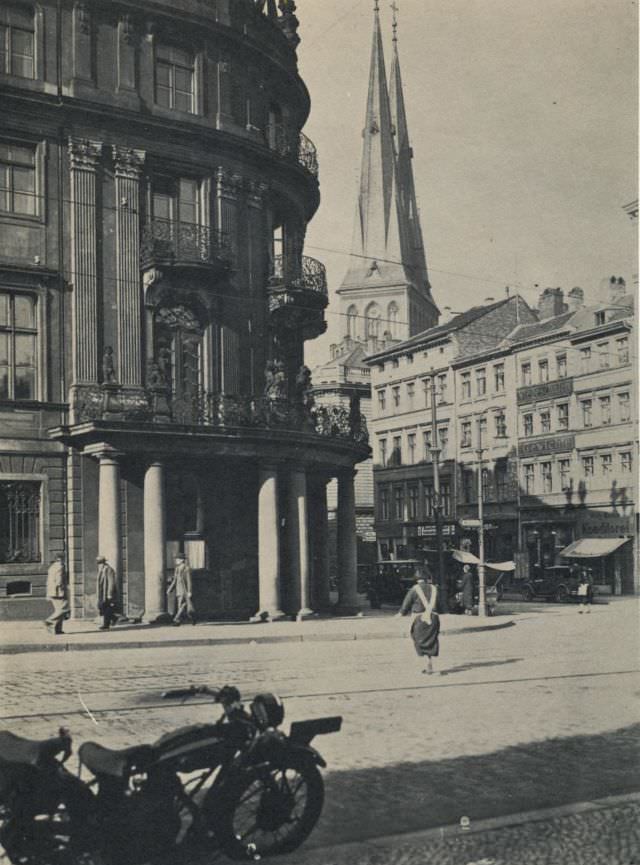
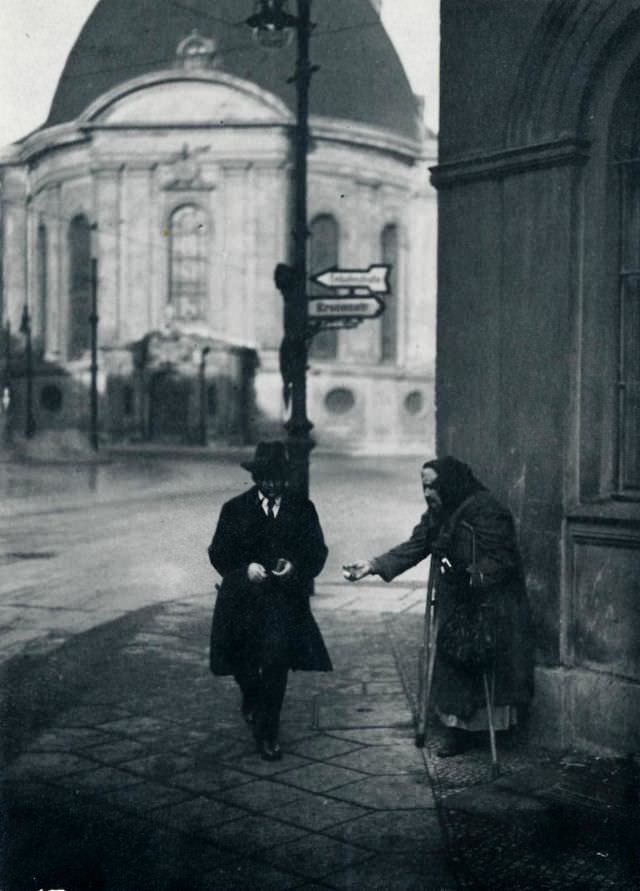
The Ephraim Palace stood as one of Berlin’s finest examples of Baroque architecture, a reminder that the city’s history stretched back centuries before the modern era. Amid the speed and noise of the 1920s, older landmarks like this offered a visible connection to a very different Berlin. The city wore its history and its ambitions at the same time.
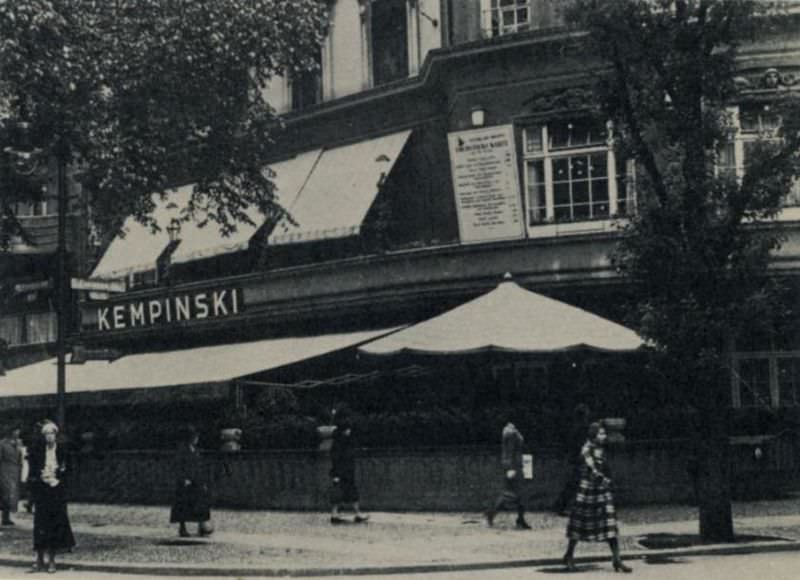
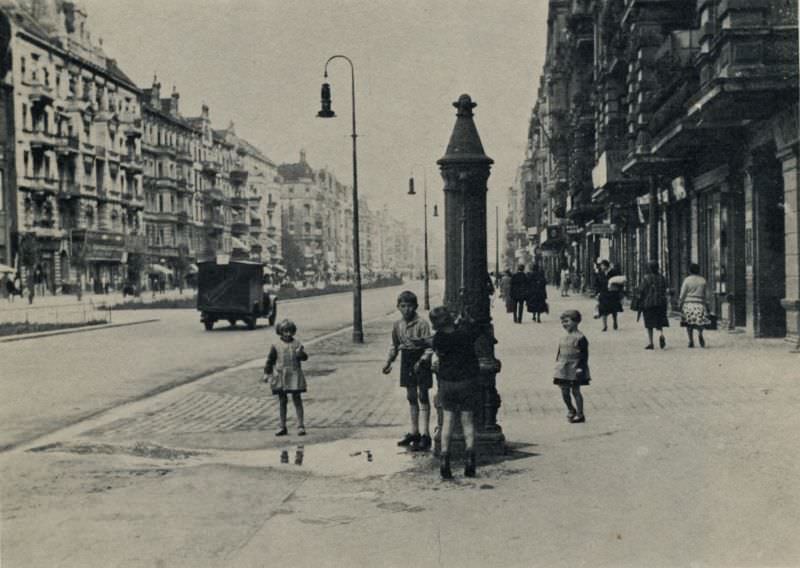
Berlin’s residential streets ranged from the elegant to the industrial. Fassanenstrasse, in the western Charlottenburg district, was lined with well-kept buildings and upscale apartments. Frankfurter Allee, running east, told a different story — a long, wide road through working-class neighborhoods where factories and tenement buildings stood close together.
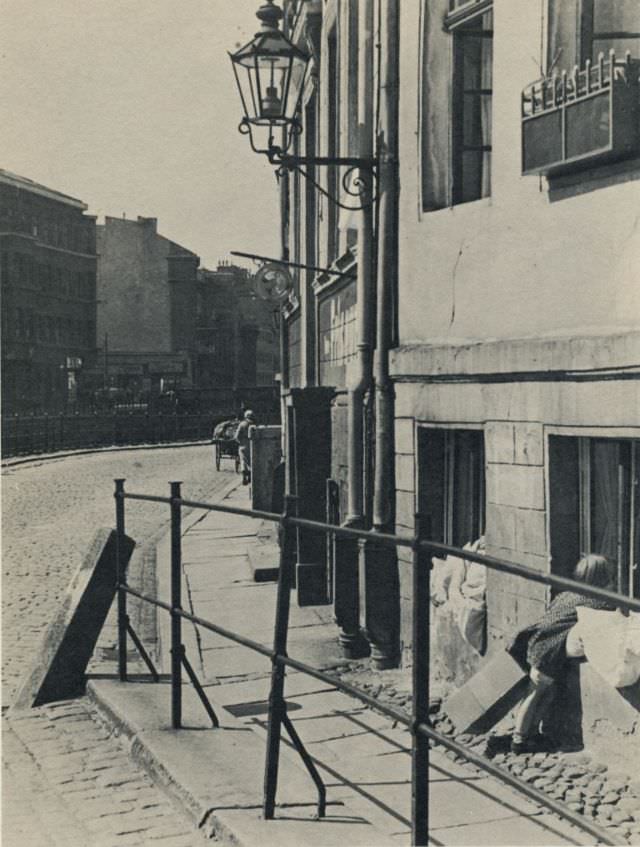
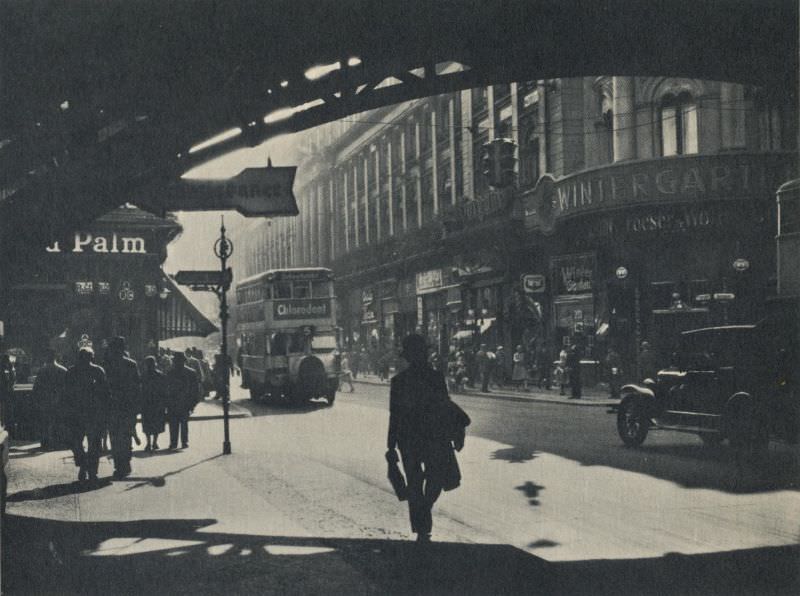
Friedrichstrasse was one of Berlin’s most important arteries. Its railway station served as a major interchange point, and the street itself was packed with shops, cafés, cabarets, and offices. The canal-side Friedrichsgracht nearby offered a quieter glimpse of the city, where old trading houses sat along the water and reflected a slower pace of life just steps from the bustle.
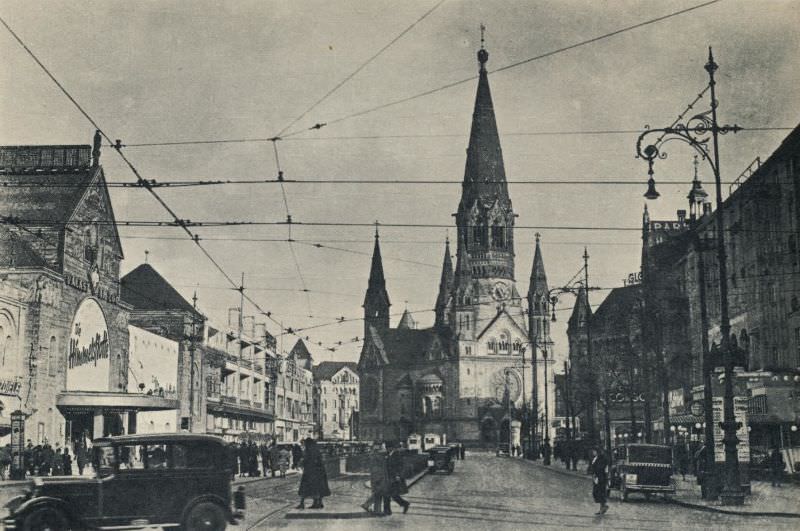
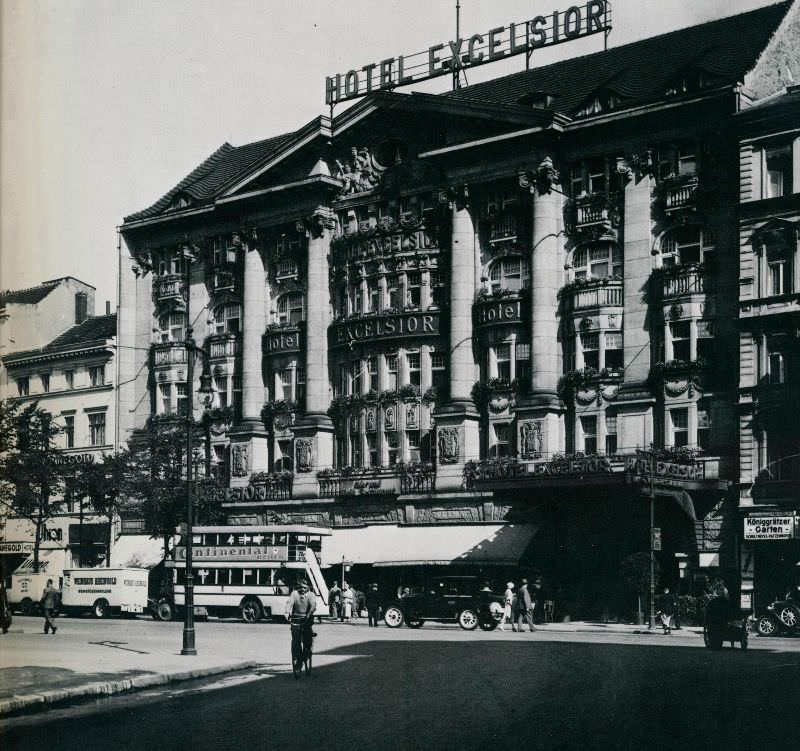
The Hotel Excelsior in Kreuzberg was one of Berlin’s grandest hotels in the 1920s, known for being directly connected to Anhalter Bahnhof station via an underground passage. It catered to diplomats, business travelers, and celebrities passing through the city. Hotels like this one served as stages for the cosmopolitan life Berlin was famous for during this era.
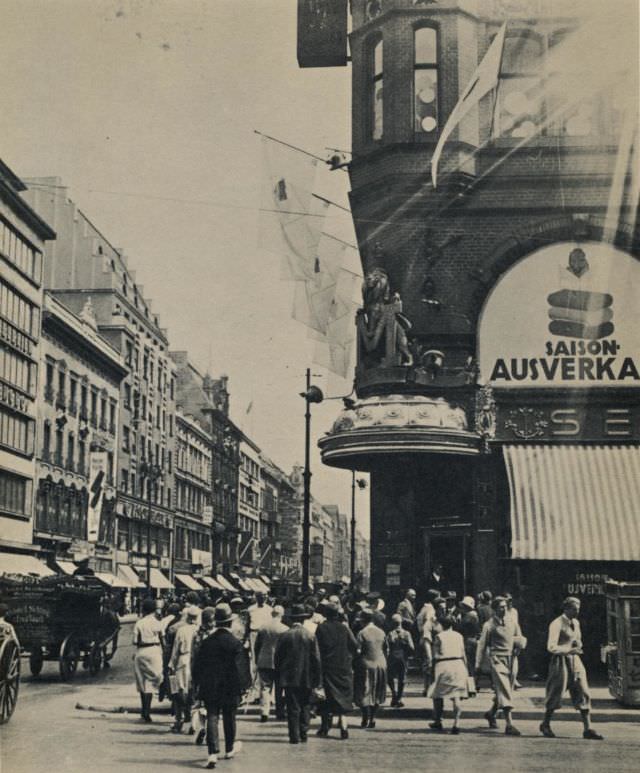
Leipziger Strasse was one of Berlin’s great shopping streets, connecting Potsdamer Platz to the government quarter. Department stores, offices, and restaurants lined its length, and the street was filled with foot traffic from morning until night. By the mid-1920s, it was one of the most commercially active streets in the entire country.
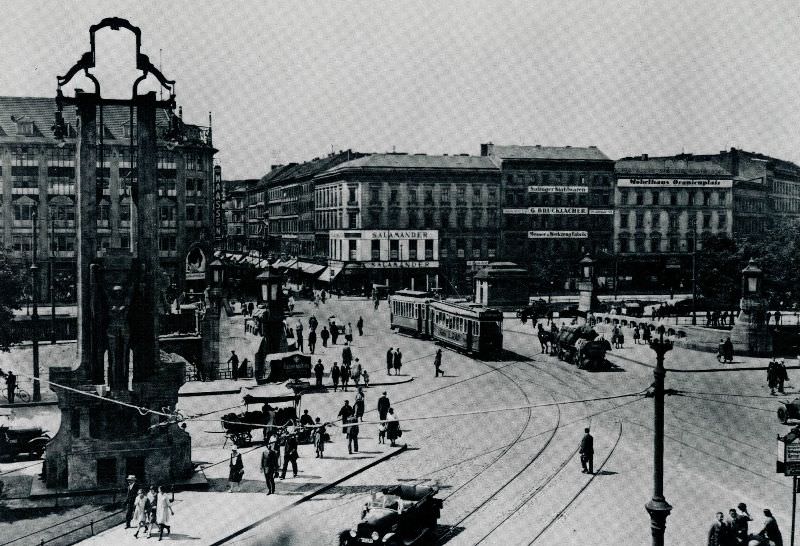
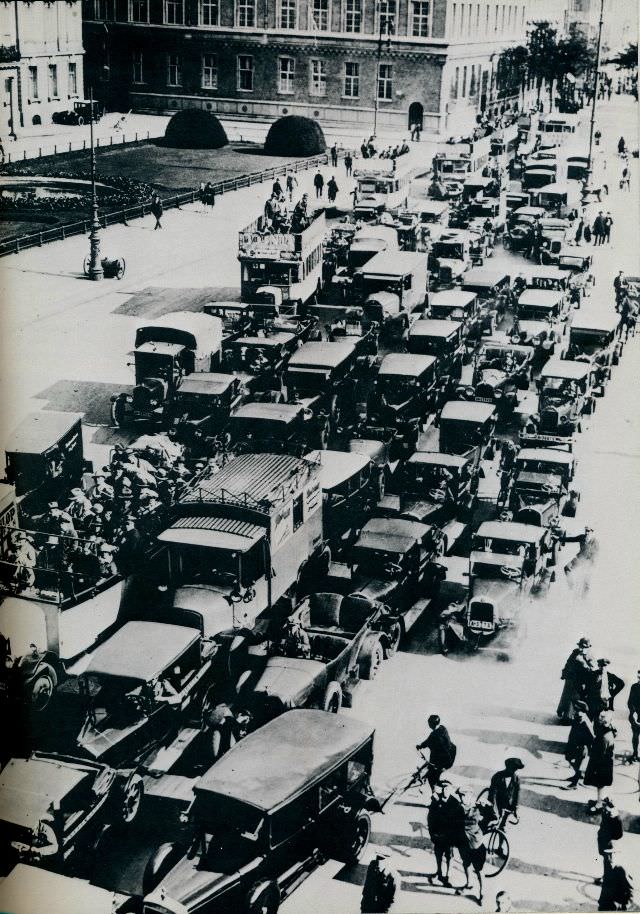
Pariser Platz, home to the Brandenburg Gate, was among the most recognizable locations in Berlin. Embassies and grand hotels flanked the square, and it served as a formal gateway into the city’s most prestigious boulevard, Unter den Linden. In contrast, Oranienplatz in the working-class Kreuzberg district had a very different energy — local, gritty, and full of everyday activity.
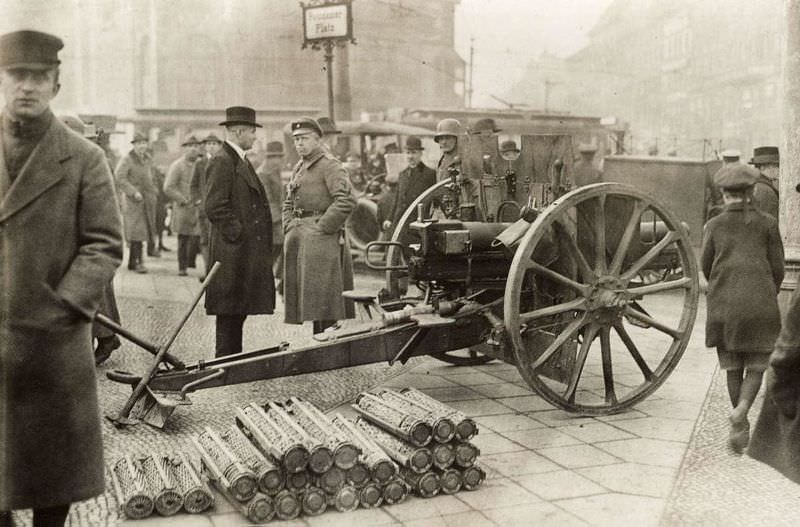
Potsdamer Platz was not only Berlin’s busiest intersection — it was also a flashpoint for political violence. Riots broke out in the square multiple times during the 1920s as political factions clashed in the streets. The same space that hosted trams and shoppers by day became a battleground when tensions boiled over. These photographs document those moments of open conflict plainly and without ambiguity.
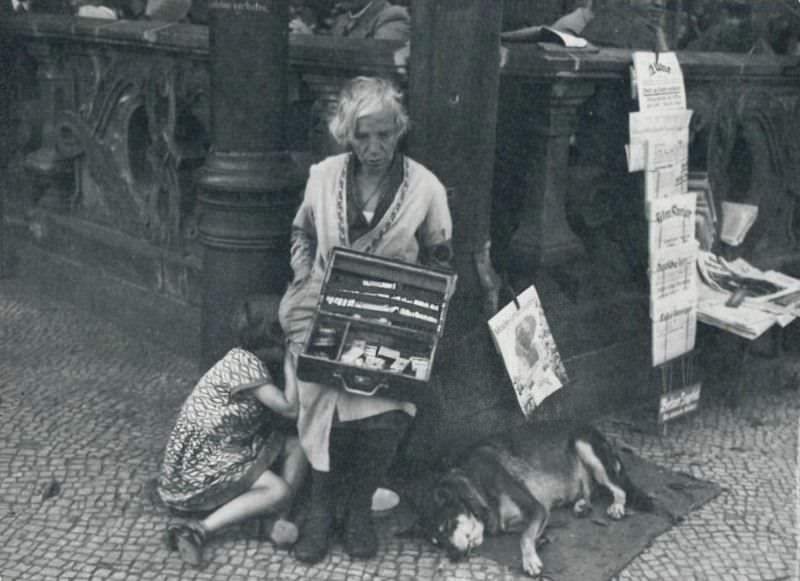
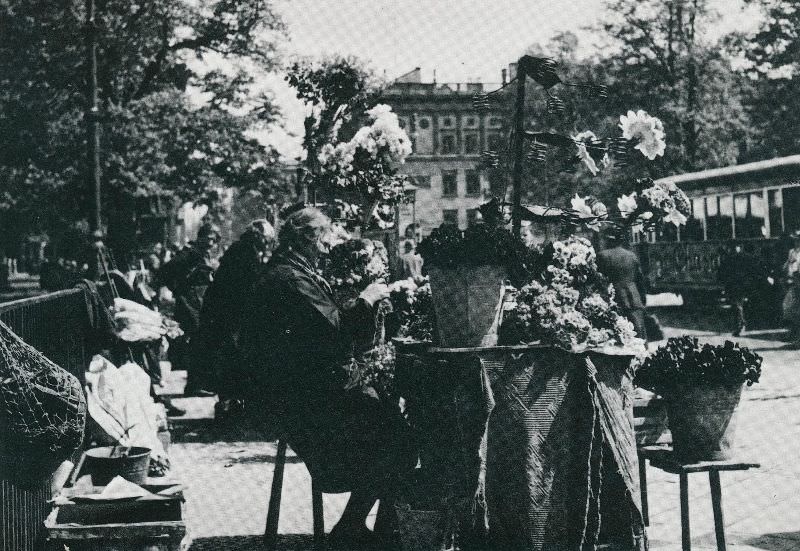
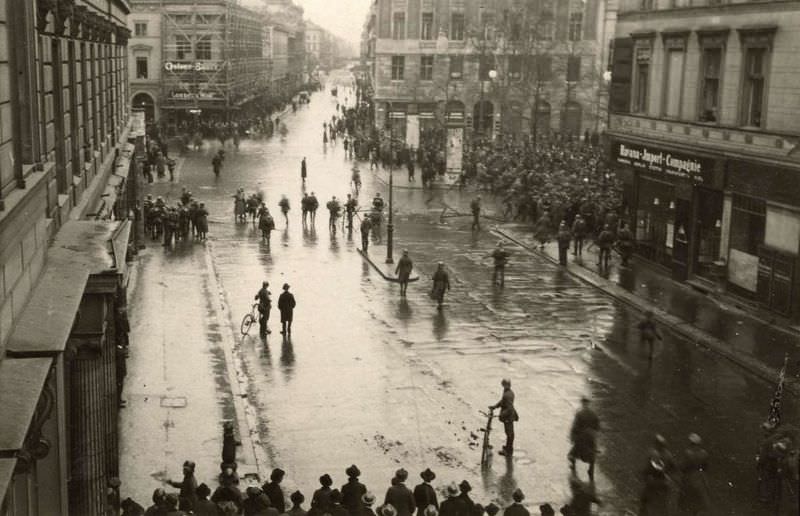
The intersection of Unter den Linden and Friedrichstrasse was another site of repeated unrest. As the Weimar Republic struggled to hold Germany together, confrontations between rival political groups spilled into the city’s most prominent streets. Soldiers, police, and armed civilians all appeared in the same frame during these episodes, making photographs from this period an extraordinary record of political instability.
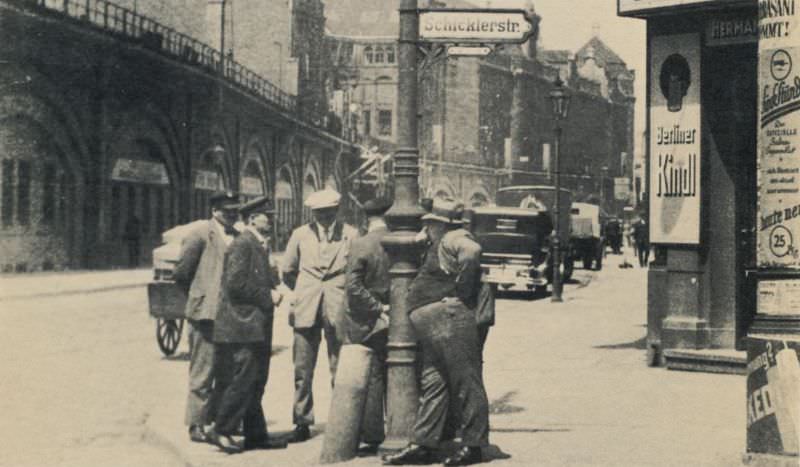
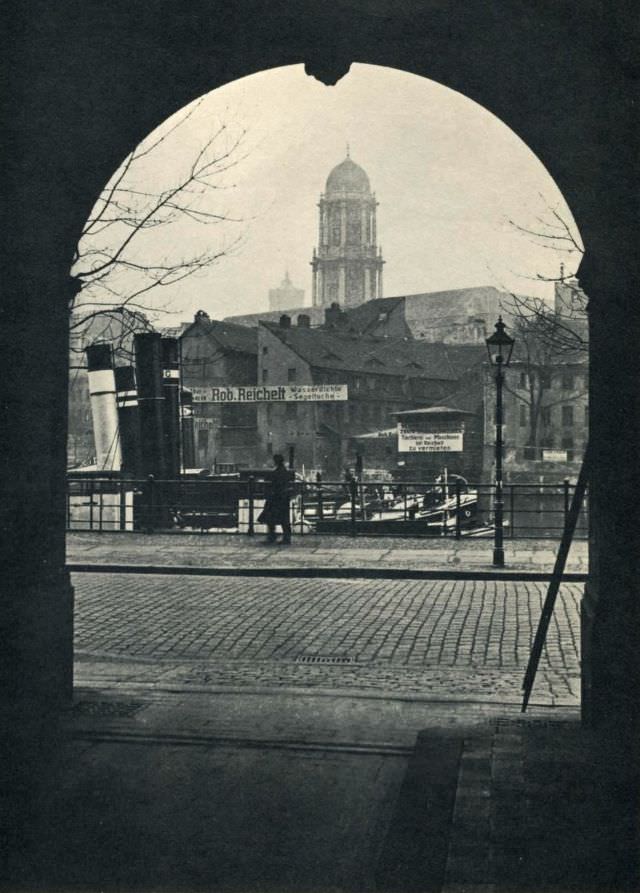
The Krögel was one of Berlin’s oldest surviving residential lanes, running between the Spree riverbank and the city’s older medieval street grid. Houses here dated back centuries, sitting in stark contrast to the modern city growing up around them. Streets like Schicklerstrasse nearby were narrow and densely built, typical of the older inner-city districts that still housed thousands of working Berliners.
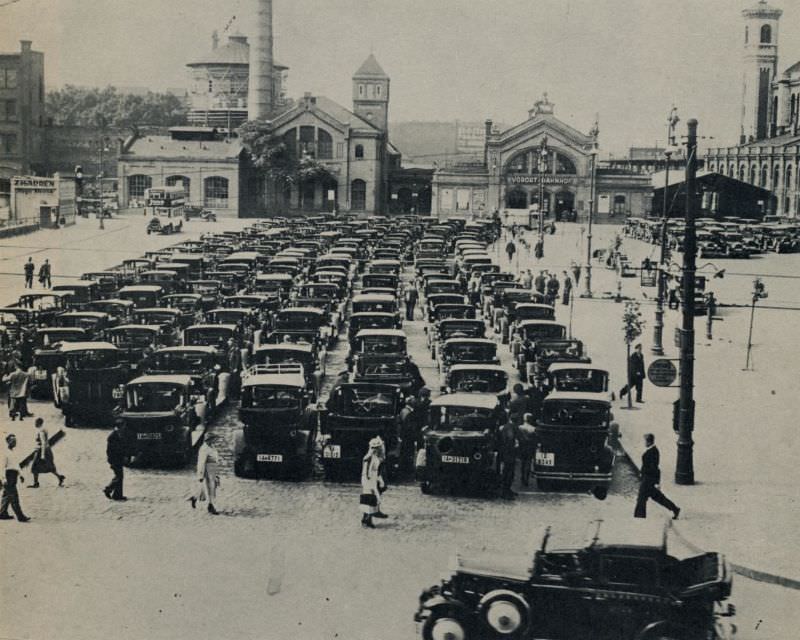
Stettiner Bahnhof was Berlin’s northern gateway, handling rail traffic to and from the Baltic coast. Trains from Stettin, Stralsund, and other northern cities arrived here daily, bringing workers, migrants, and goods into the capital. The station was a busy, industrial place — functional and loud, without the polish of the city’s more celebrated rail terminals.
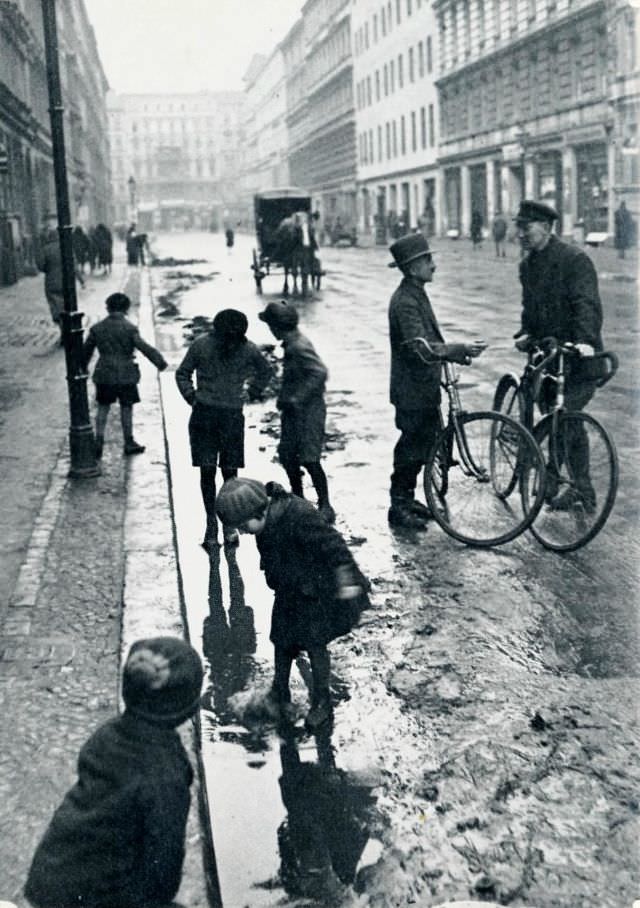
Wedding was one of Berlin’s most densely populated working-class districts. Its streets were packed with factory workers, families, and small-scale traders. The neighborhood had a strong left-wing political identity and was frequently the scene of labor organizing and political demonstration. Street scenes here looked nothing like those in the wealthy western districts — they were rougher, more crowded, and more urgent.
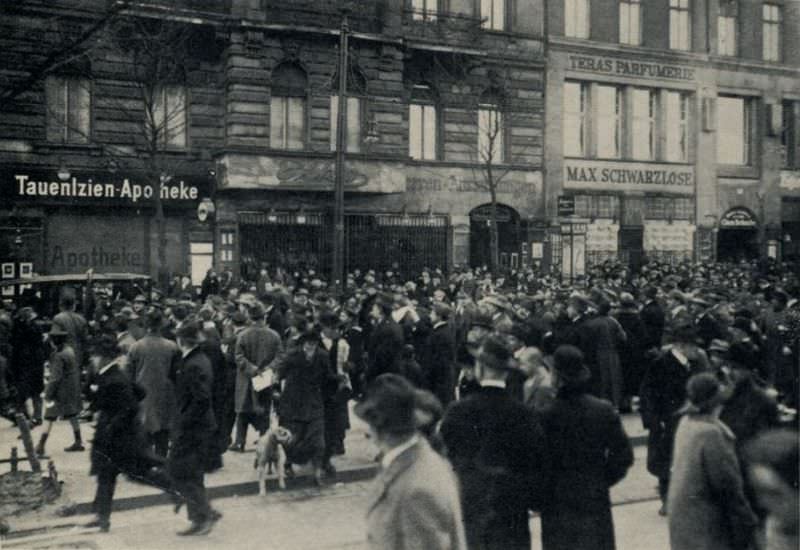
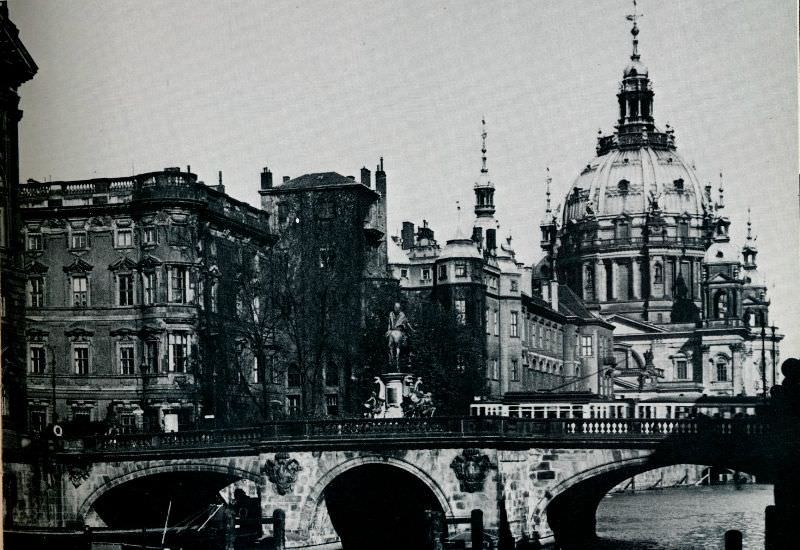
Tauentzienstrasse was one of Berlin’s premier shopping destinations, anchored by the famous KaDeWe department store at its eastern end. The street attracted wealthy shoppers and window browsers alike. Nearby, the Kurfürstenbrücke crossed the Spree with its distinctive statues of Brandenburg electors — a centuries-old bridge that continued to serve the city through all its modern upheaval.
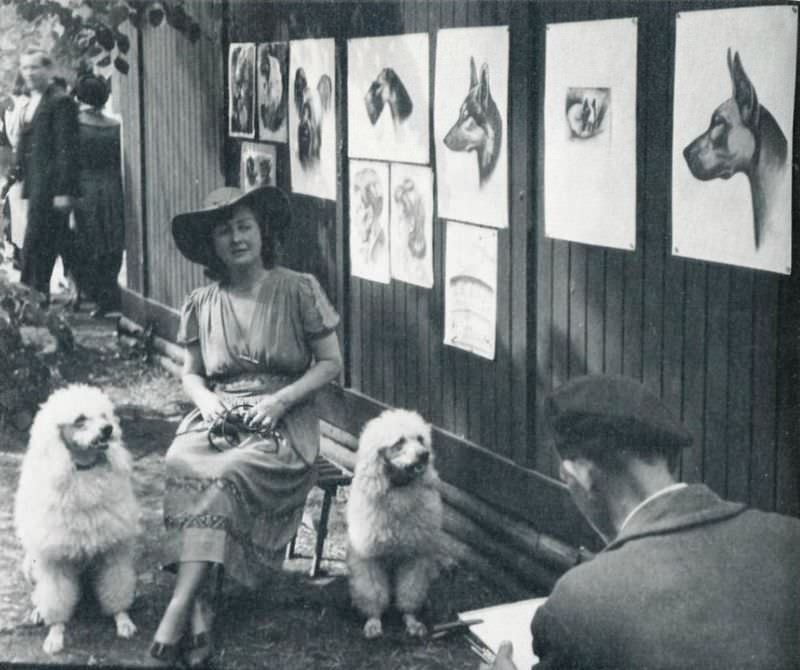
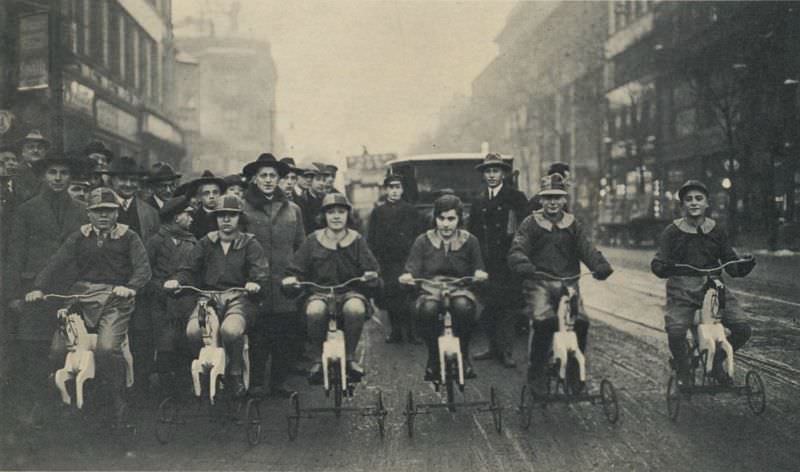
Not all of Berlin’s street activity was commercial or political. Artists set up outdoors to paint the city around them, and Berliners of all ages found ways to make leisure out of open urban space. Tricycle racing through city streets was a form of entertainment that drew spectators and competitors alike. The city had an appetite for novelty and spectacle that showed up in its everyday public life.
Unter den Linden was Berlin’s most famous boulevard, lined with linden trees and flanked by embassies, universities, and state buildings. It ran from the Brandenburg Gate to the Berlin Palace, passing through the city’s institutional core. During the 1920s, it was also the scene of some of the decade’s most dramatic political confrontations, with riots breaking out within sight of the grand buildings that lined it.
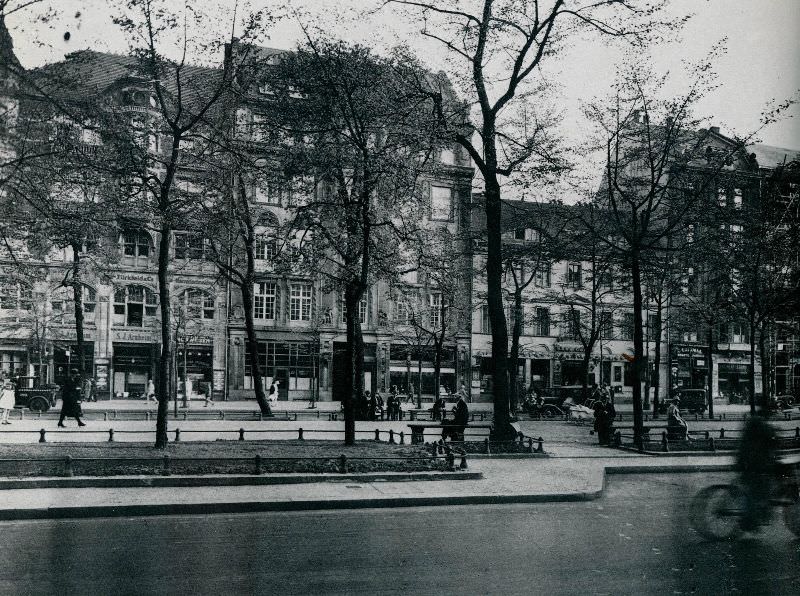
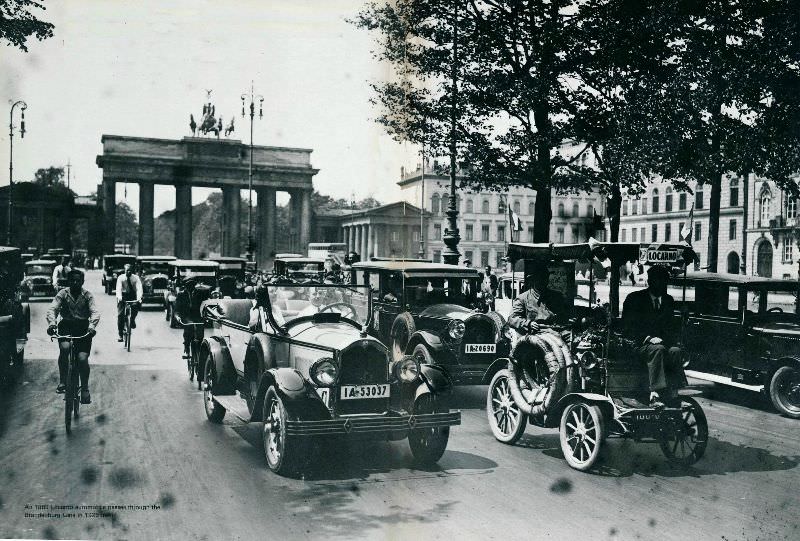
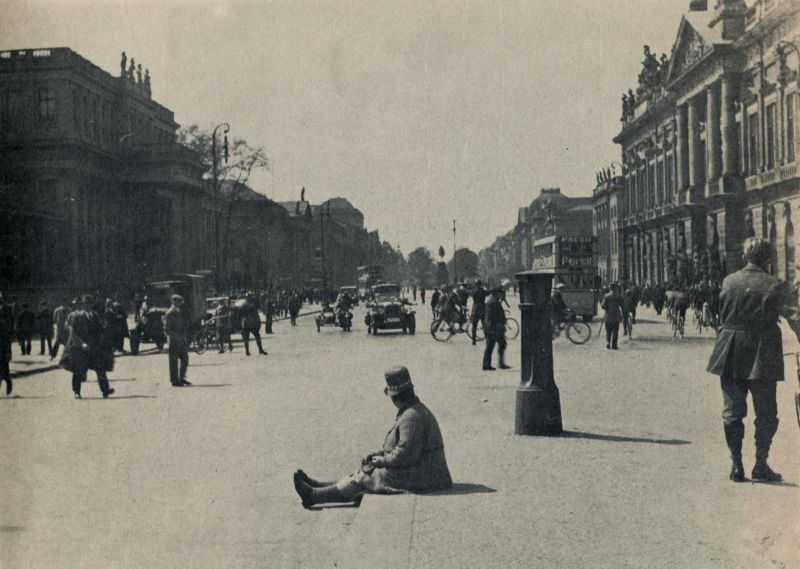
These three photographs of Unter den Linden capture the boulevard under different conditions — crowds, calm, and in-between. Each image reveals something distinct about how the street functioned as both a civic space and a living artery of the city. Pedestrians, vehicles, and military presence all appear across this set, reflecting the boulevard’s many roles in 1920s Berlin.
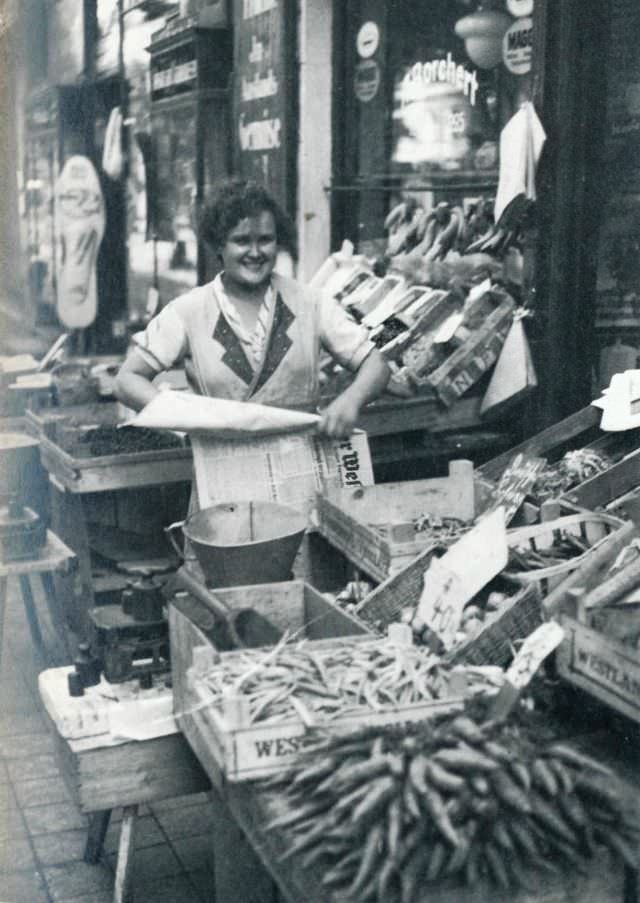
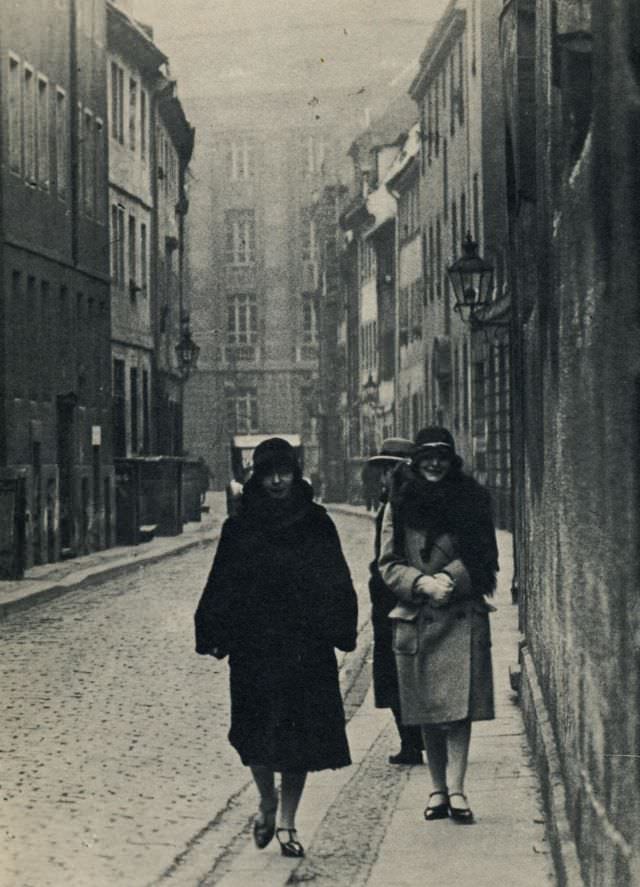
Street vendors like the vegetable seller photographed here were a constant presence in Berlin’s neighborhoods. They operated without storefronts, moving through residential streets and calling out to customers from their carts. Feeding over four million Berliners required a massive and varied supply chain, and these informal sellers were an essential part of it. Waisenstrasse, in the old city center near the Mühlendamm, ran through one of Berlin’s oldest commercial districts and connected the city’s historic core to its busier modern arteries.
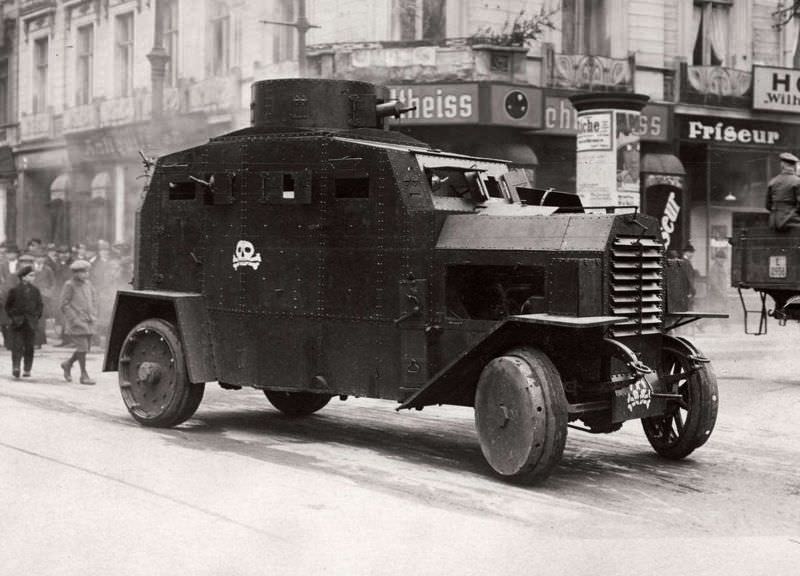
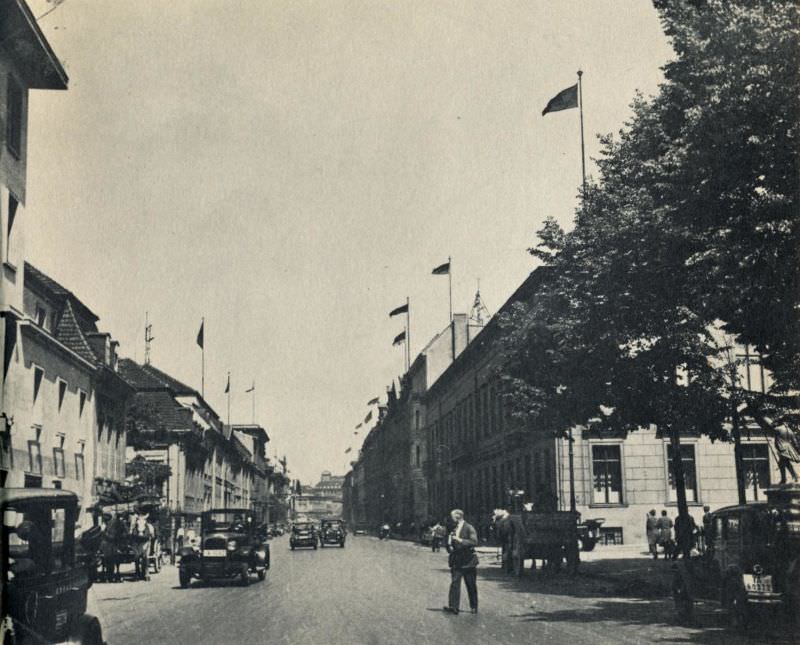
Wilhelmstrasse was the address of Germany’s most powerful government ministries and the official residence of the Reich Chancellor. In March 1920, it became the site of the Kapp Putsch — an attempted coup in which right-wing military units, the so-called “Kappisten,” marched on Berlin and briefly seized the government quarter. Armored vehicles rolled through Wilhelmstrasse as the putsch unfolded. The coup collapsed within days, but the photographs it left behind are some of the most dramatic political images from the entire decade.
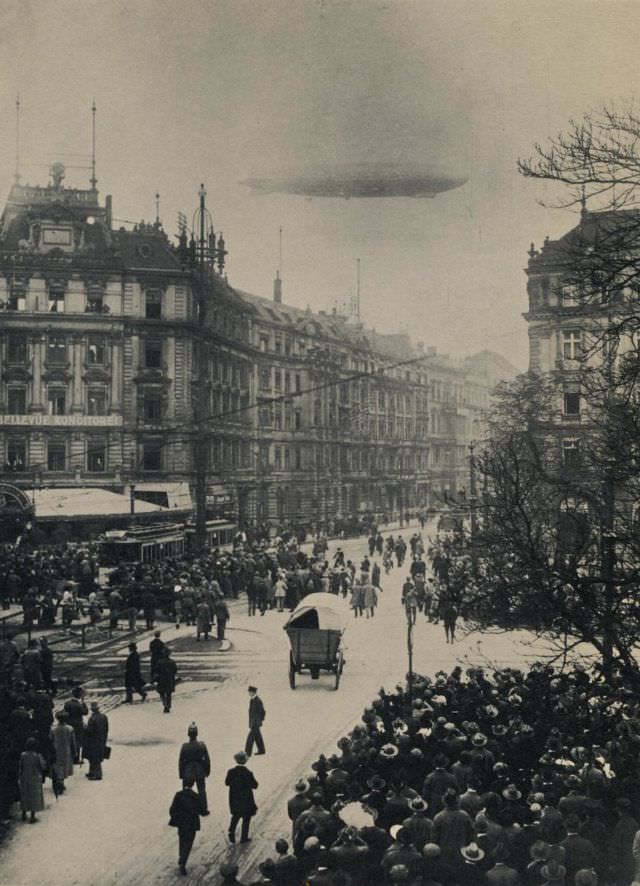
The sight of a zeppelin drifting over Potsdamer Platz summed up the 1920s in Berlin better than almost anything else. The city that had opened Tempelhof Airport in 1923 and electrified its rail network the following year was a city that looked skyward. Zeppelins passed over Berlin’s rooftops during this decade, drawing crowds of onlookers who craned their necks upward in the middle of one of Europe’s busiest intersections. It was a city that embraced the modern world without hesitation — noisy, crowded, politically fractured, and absolutely alive.




