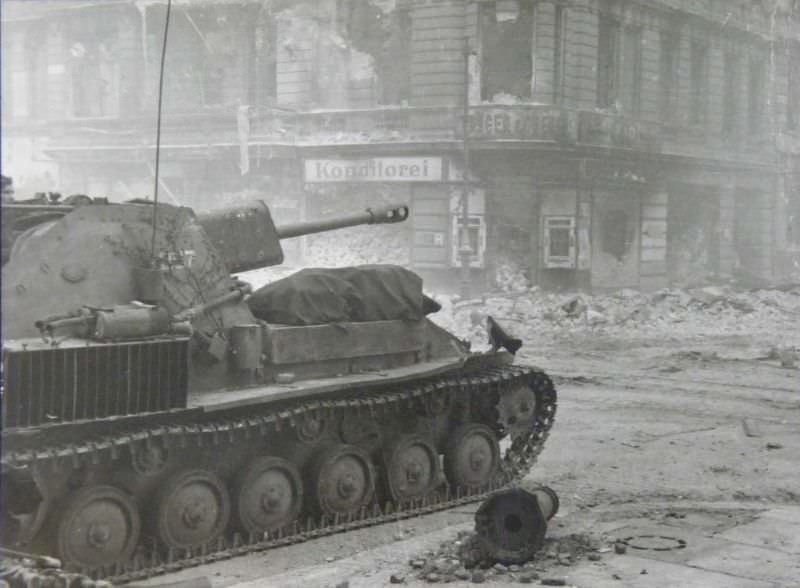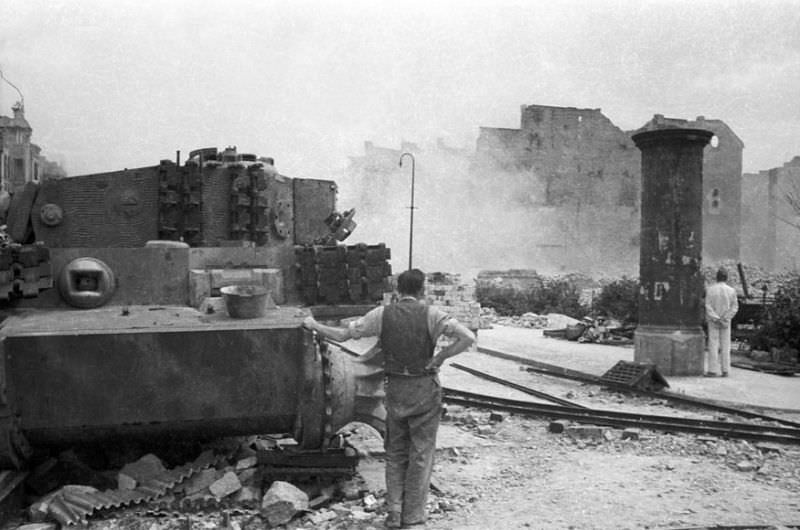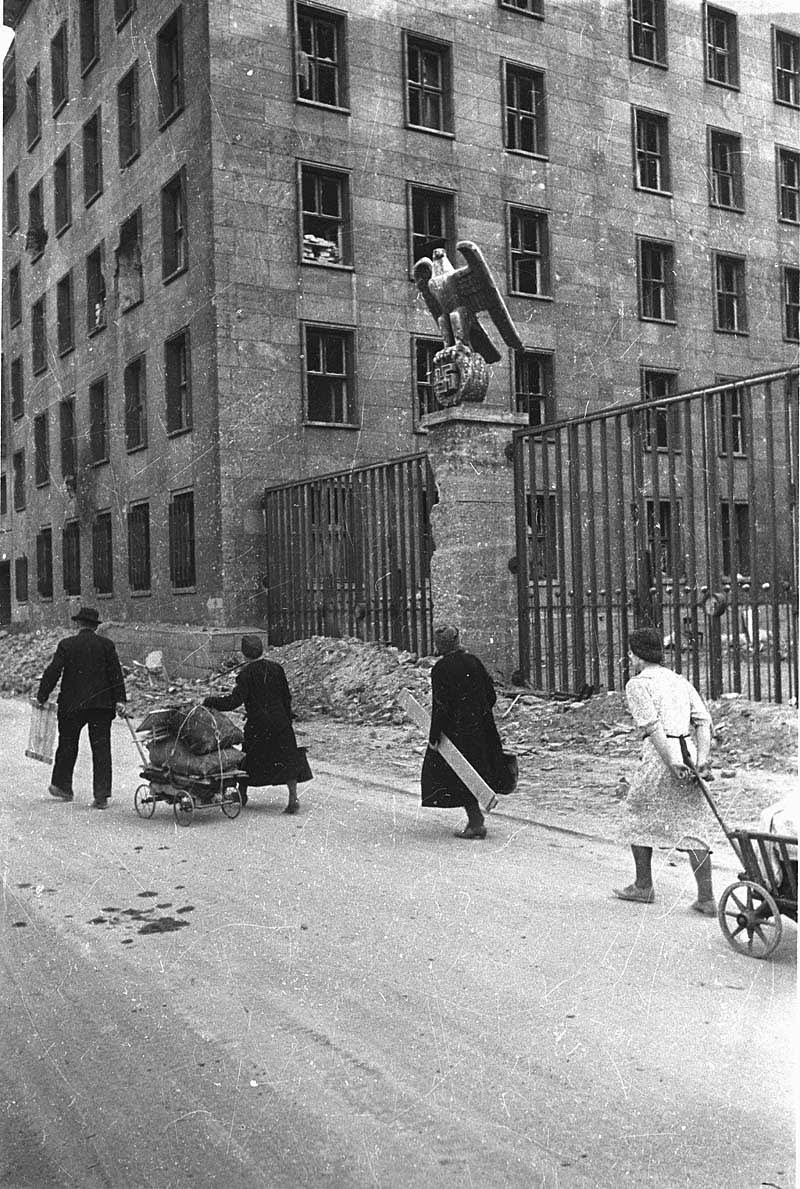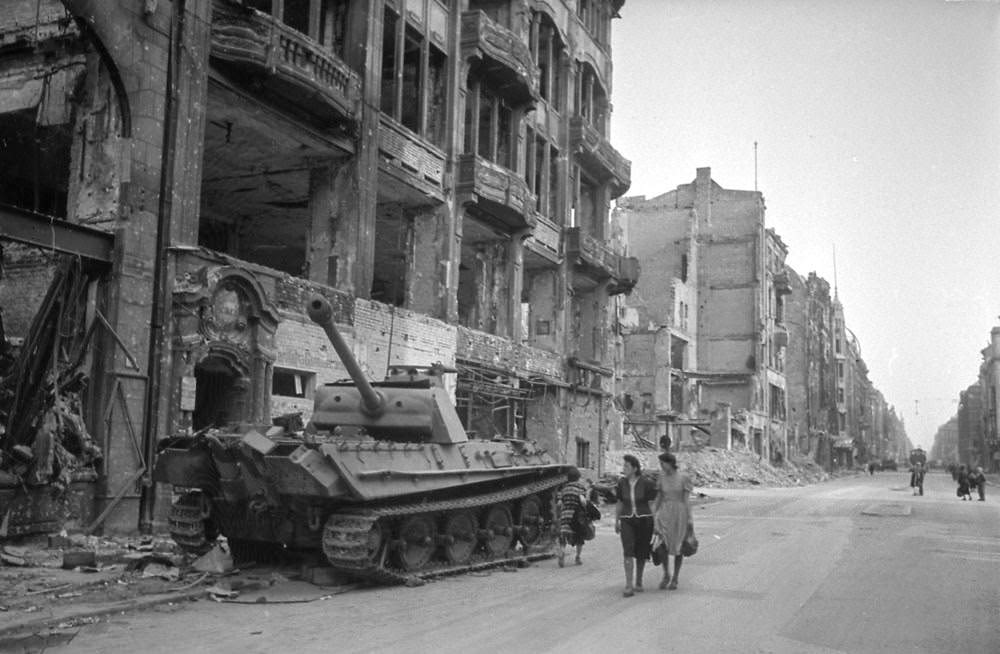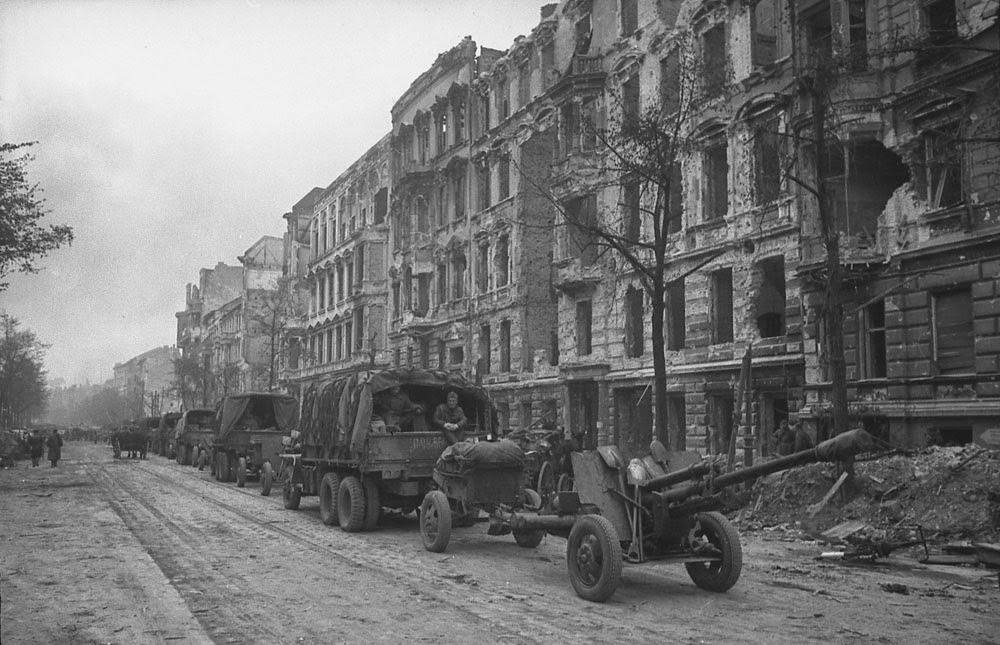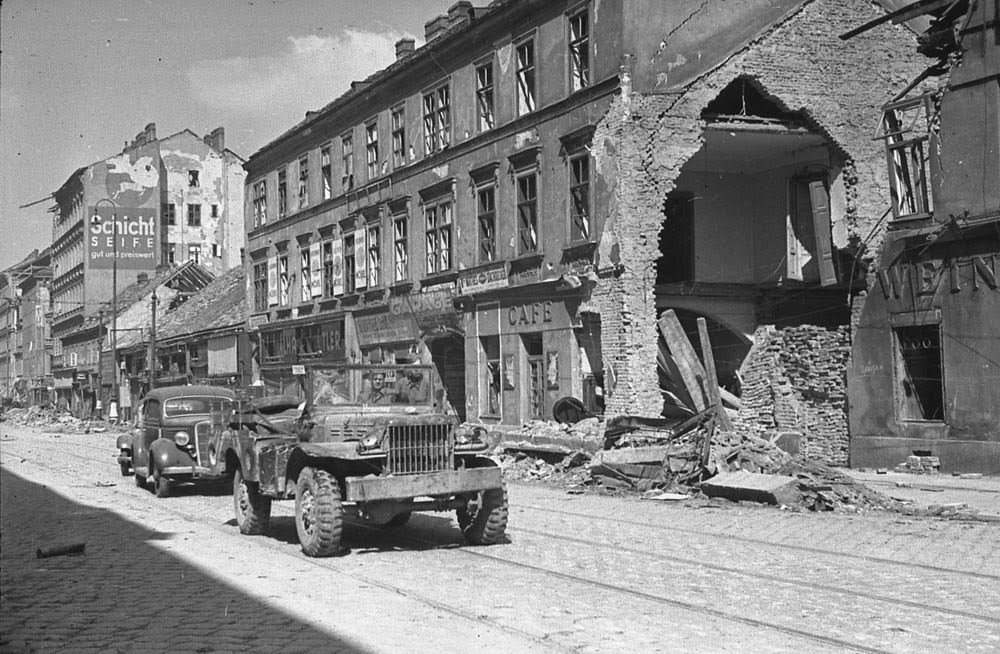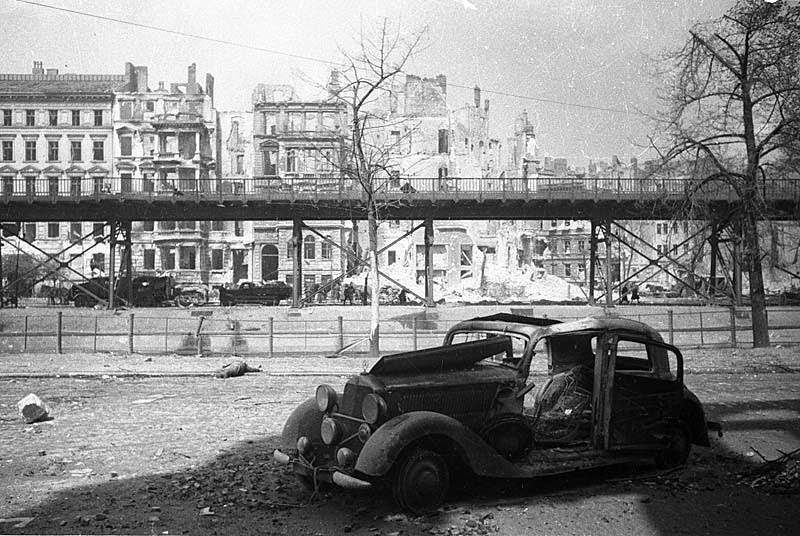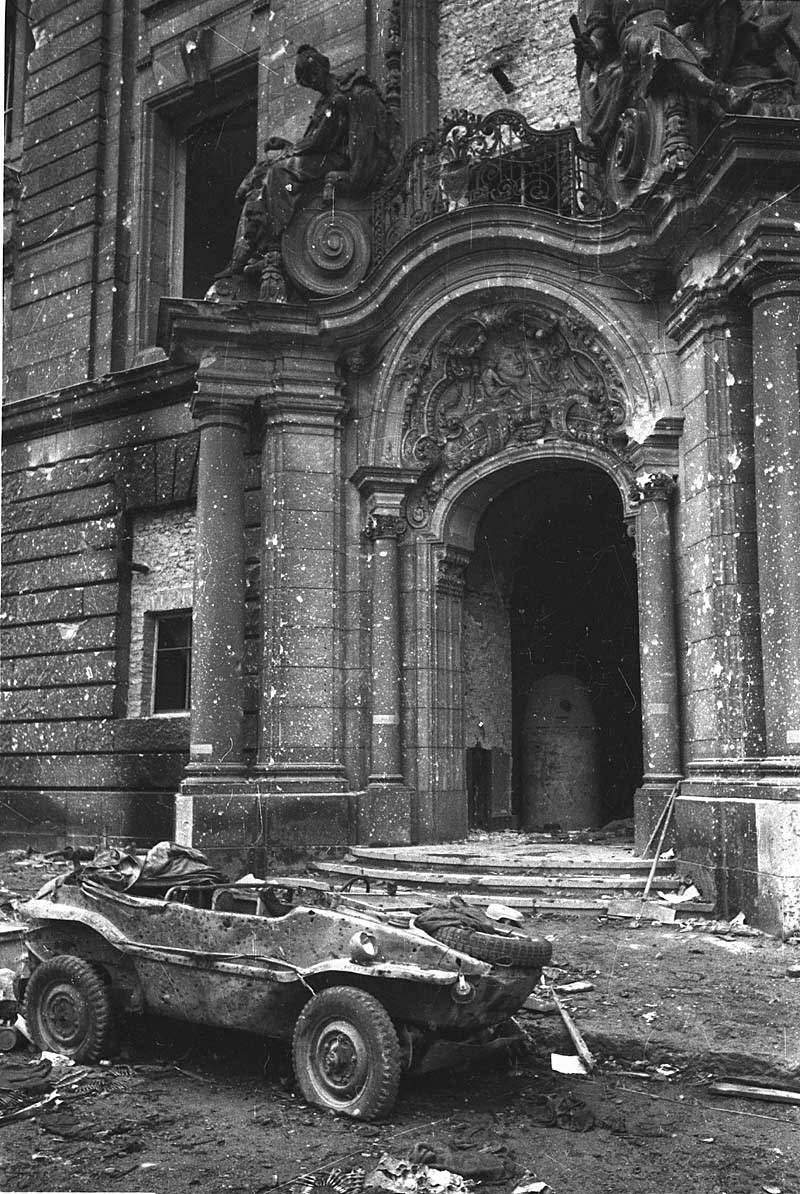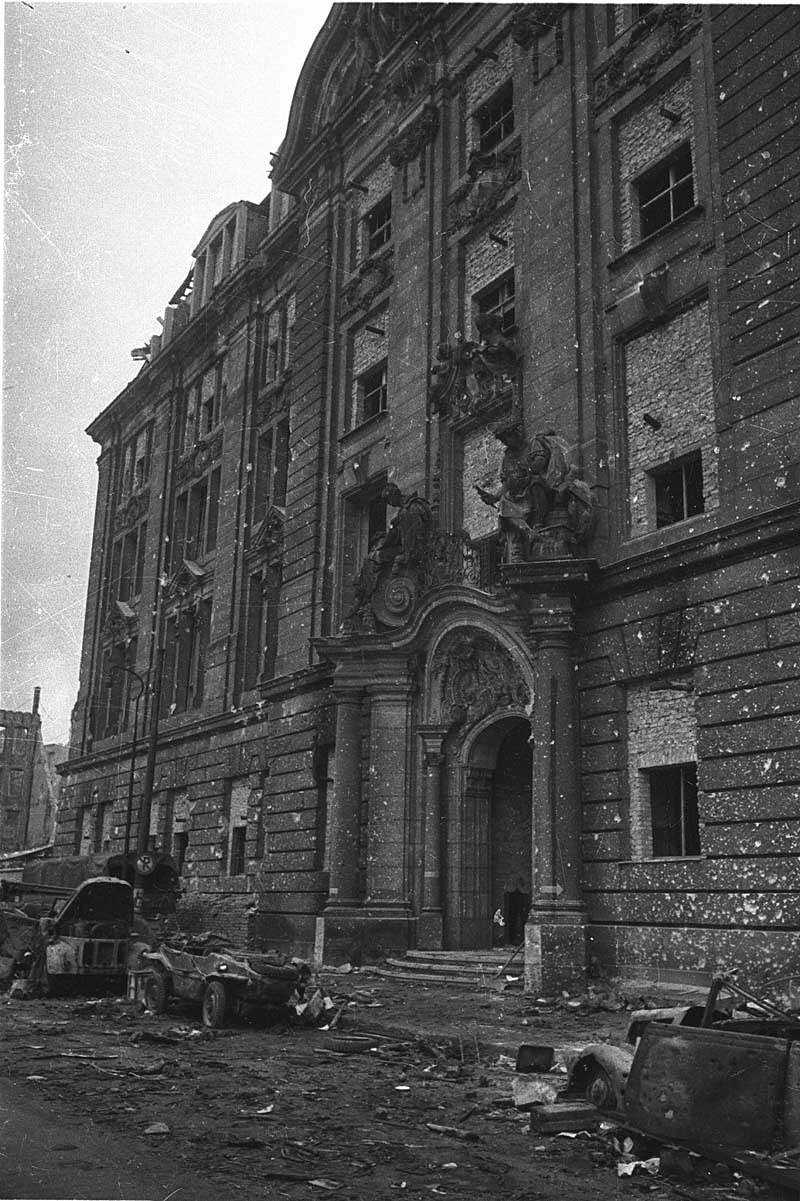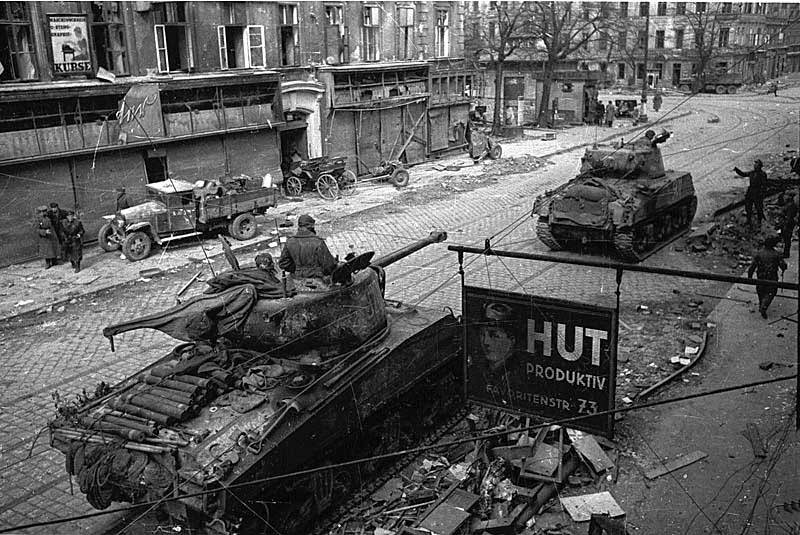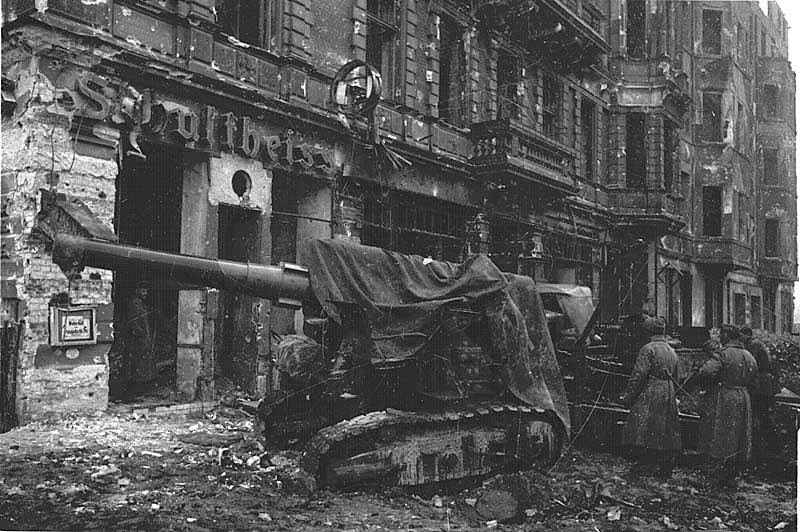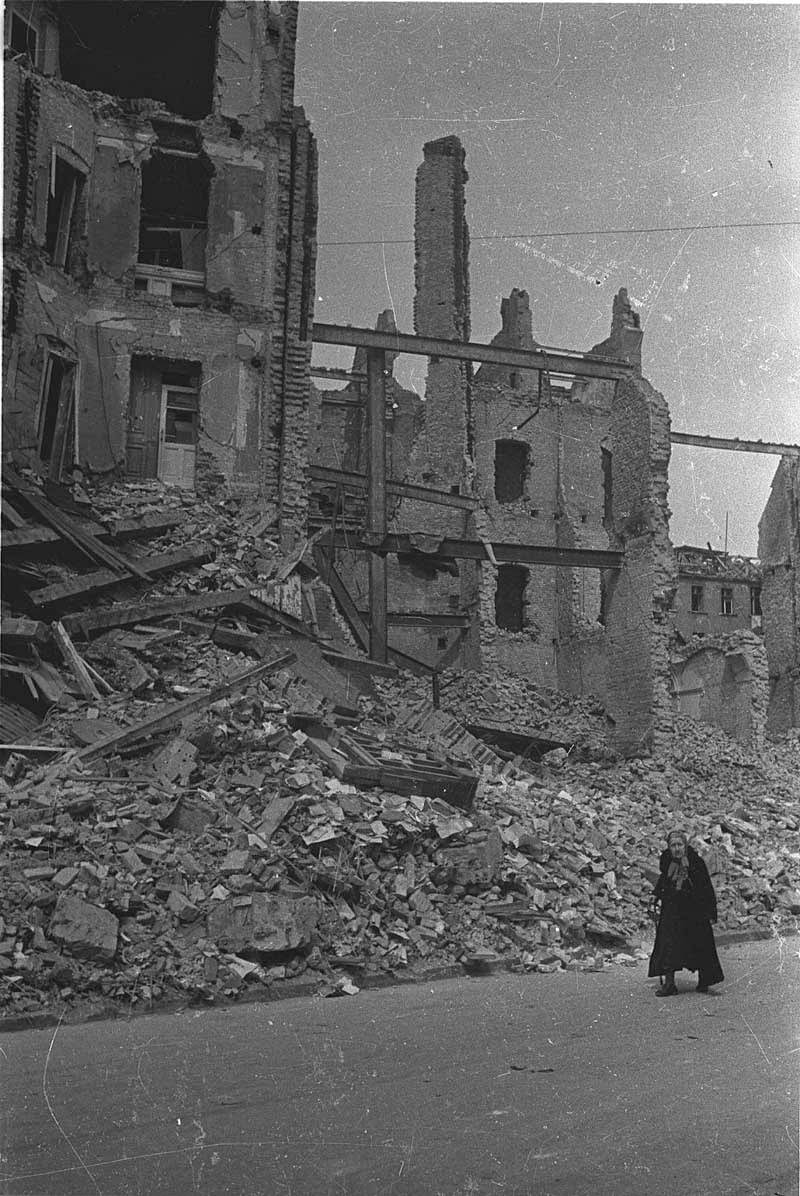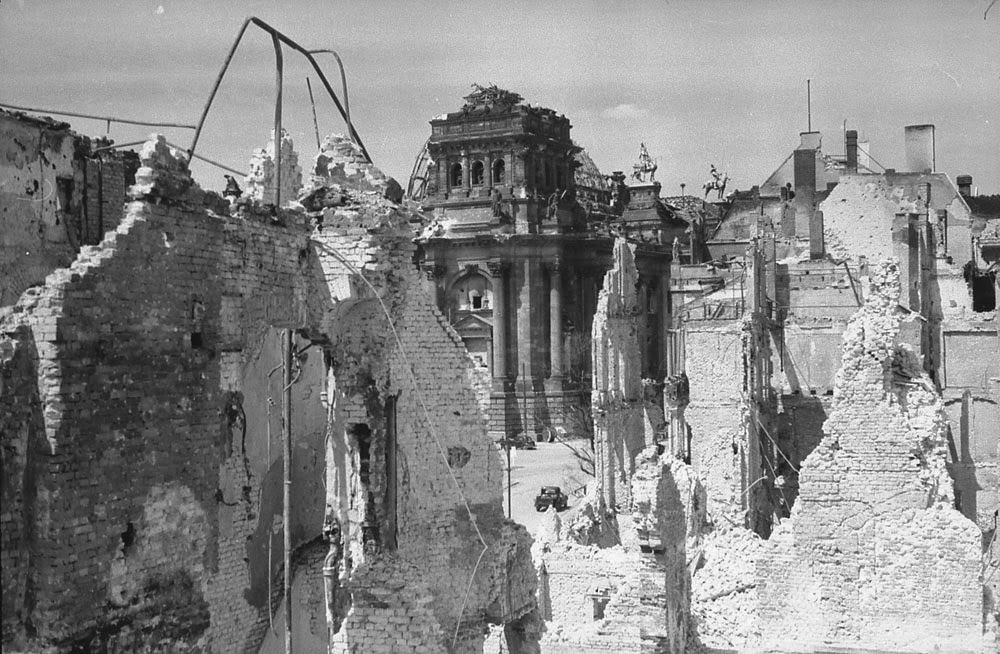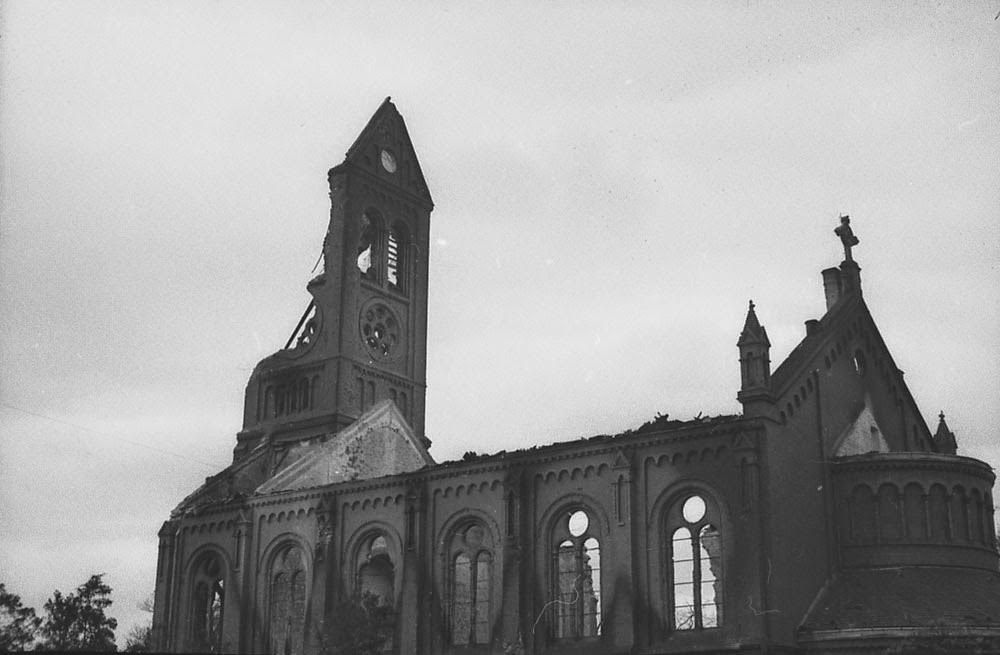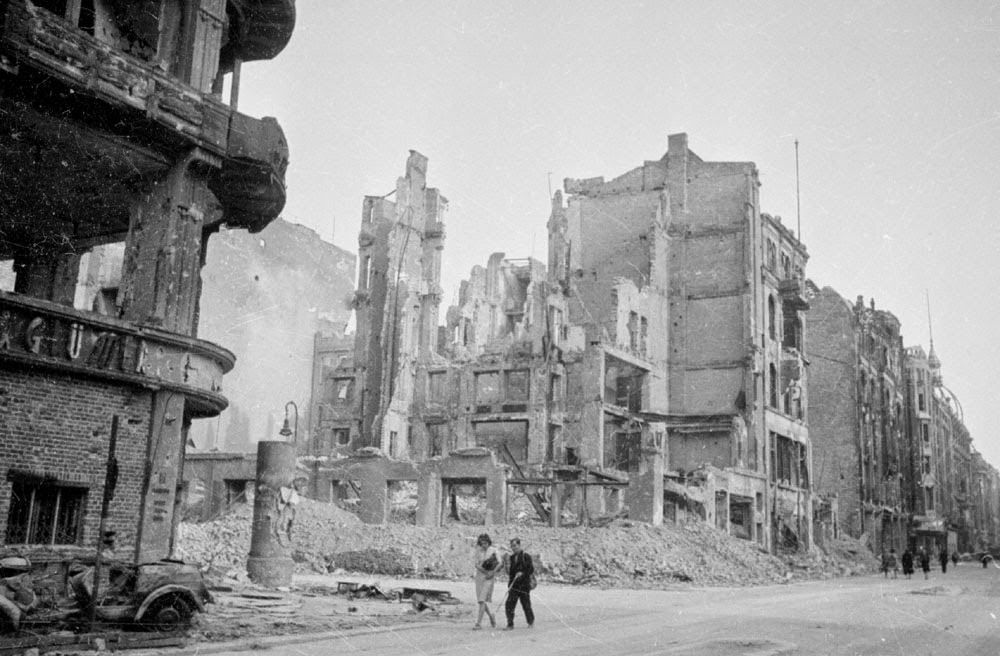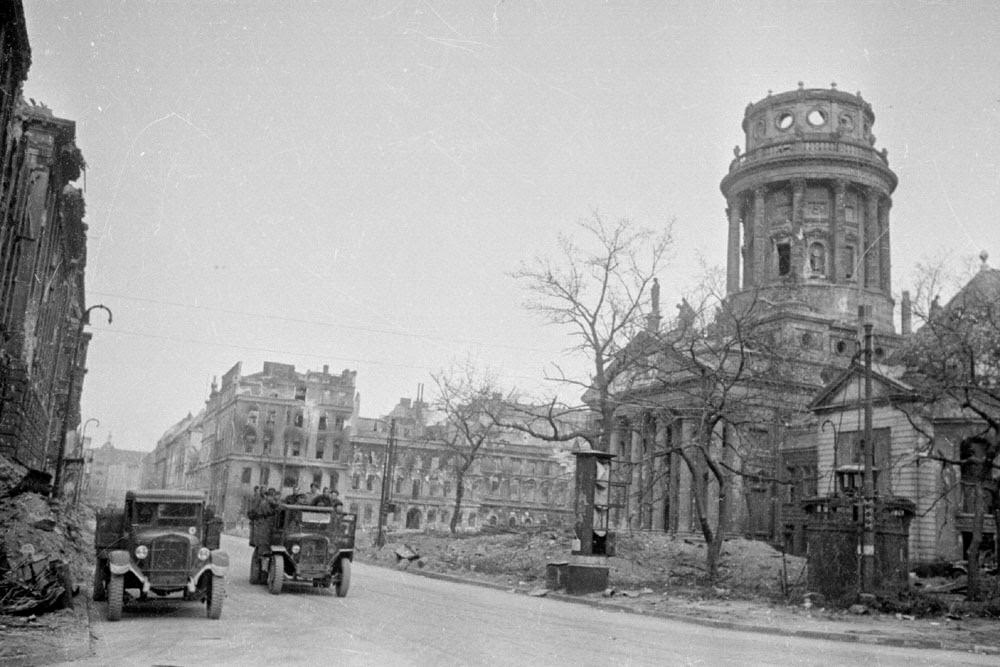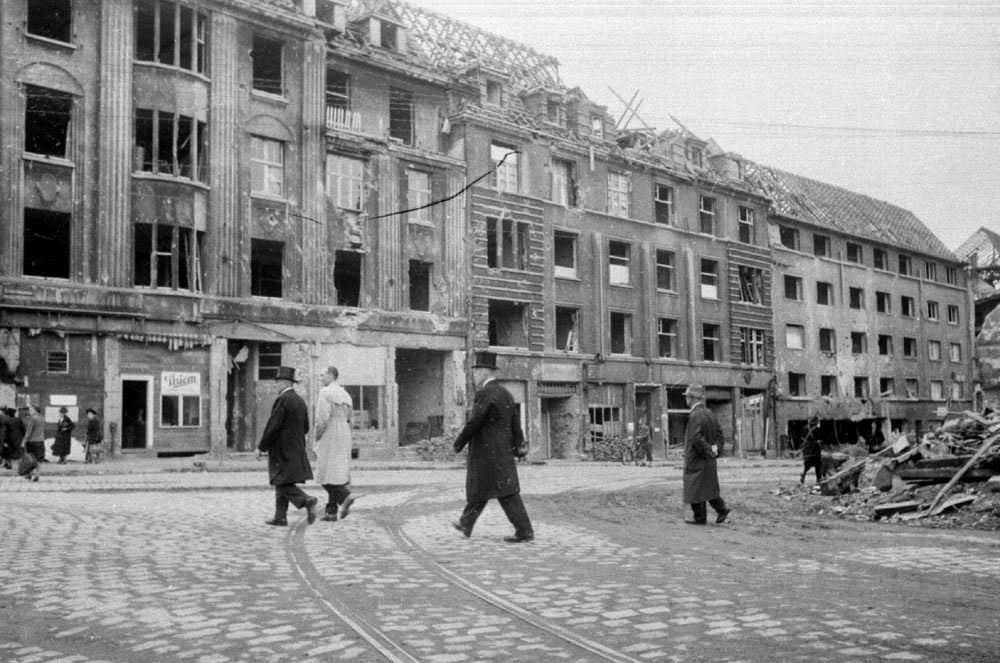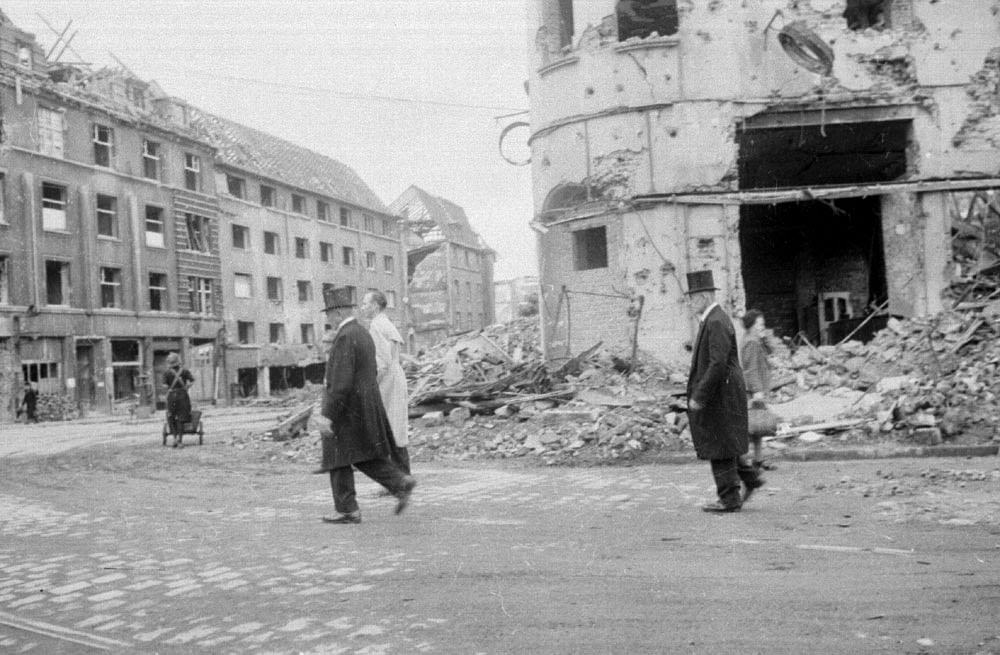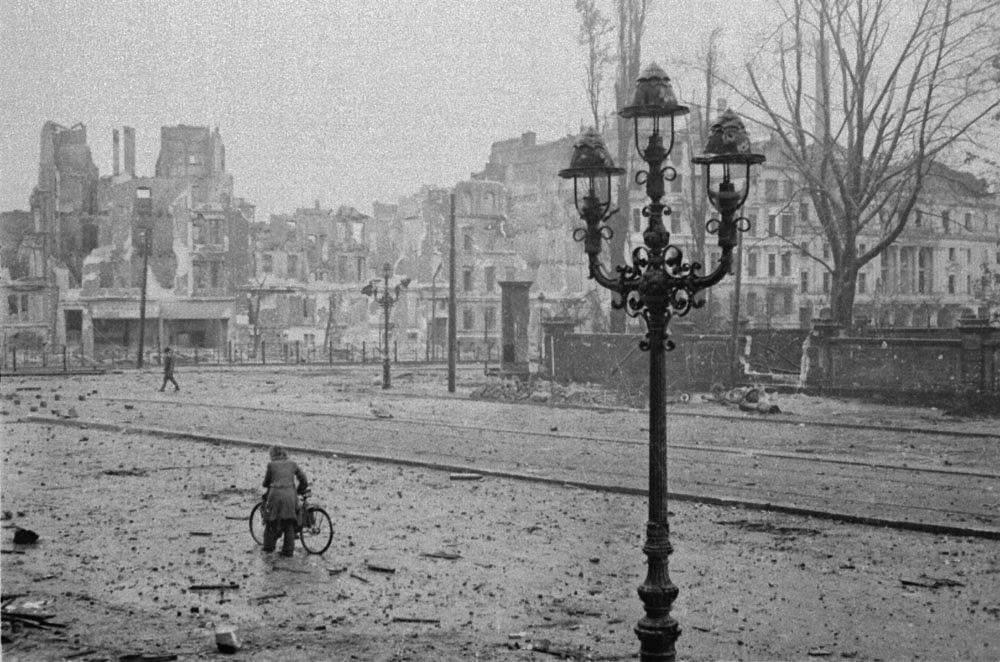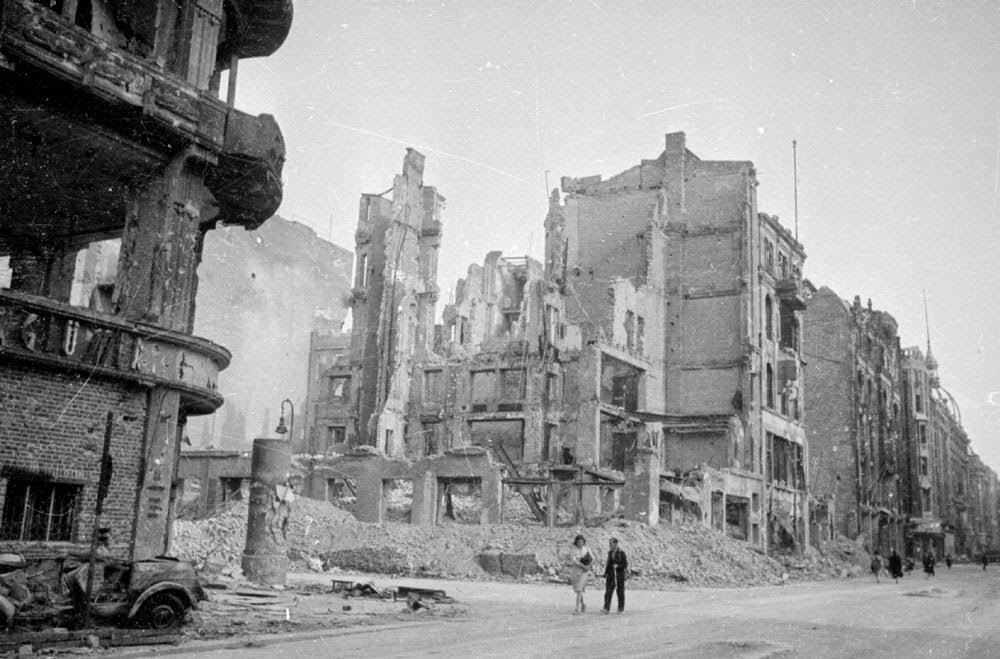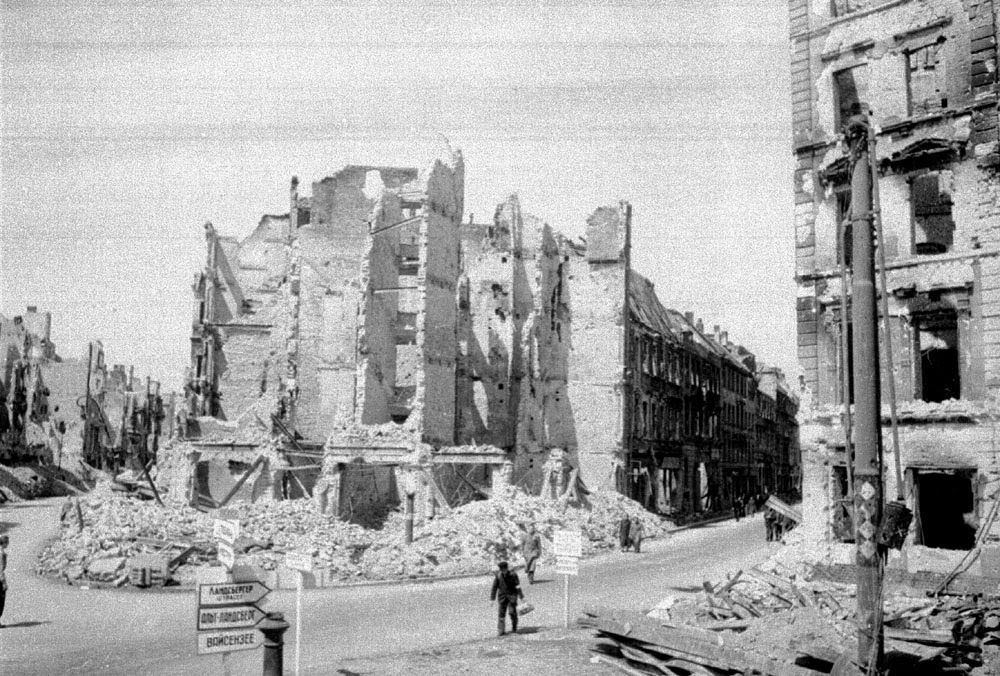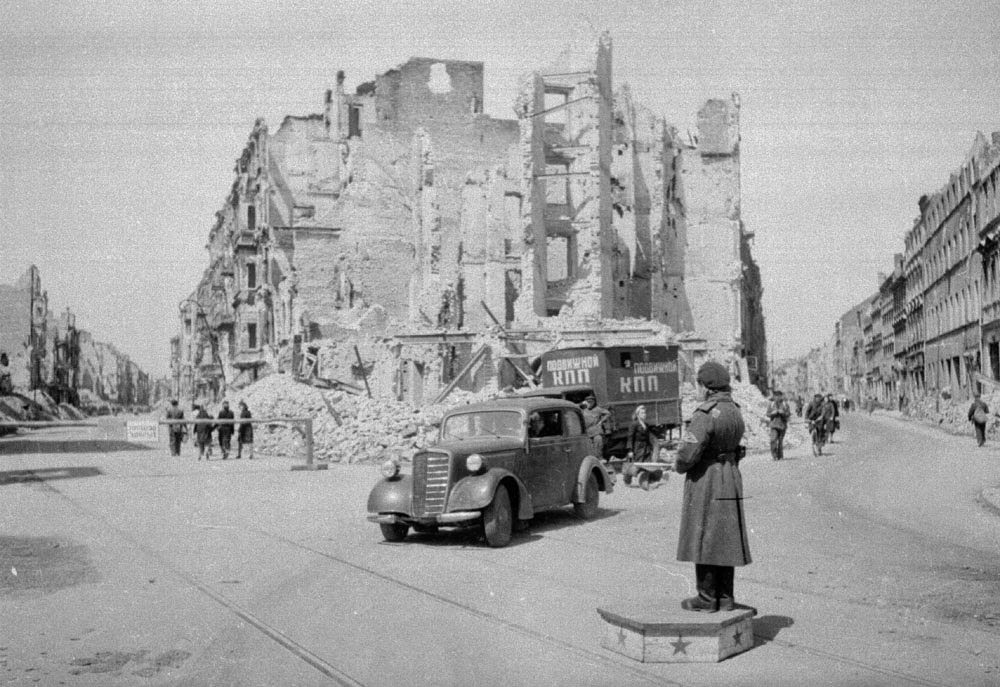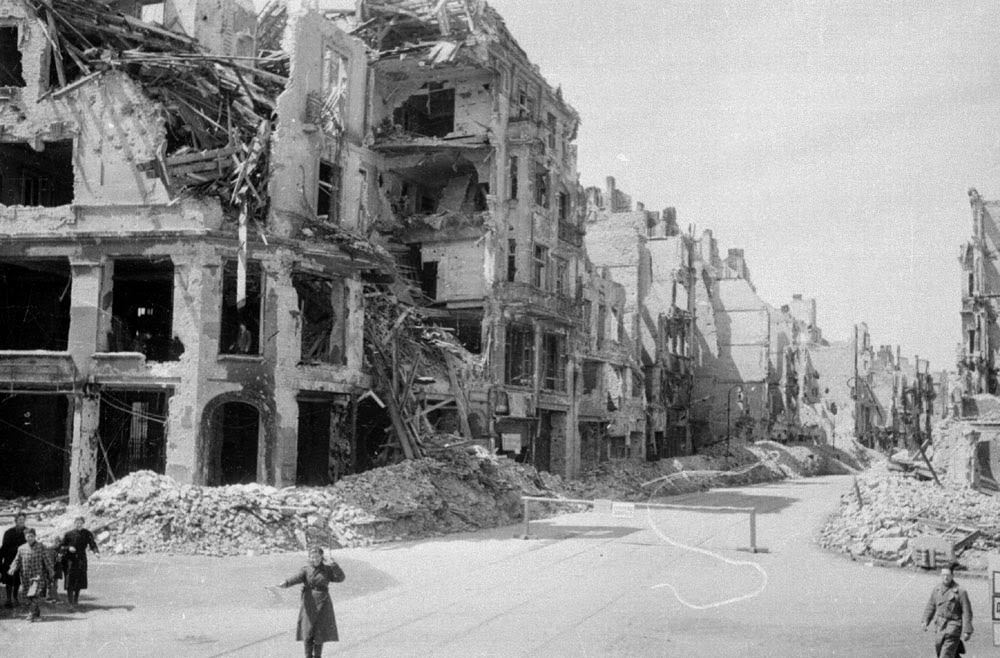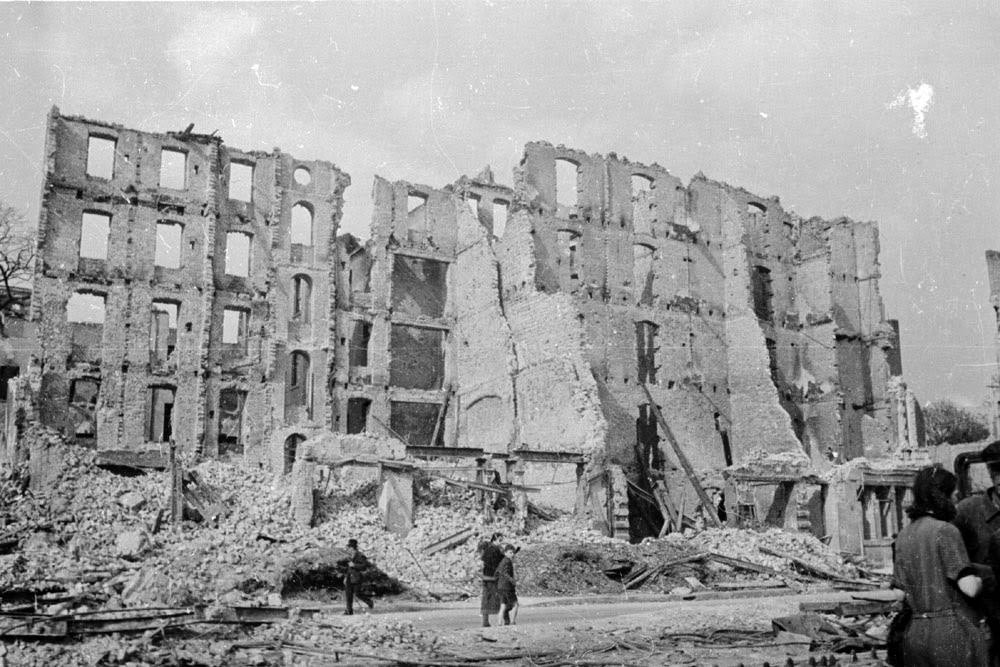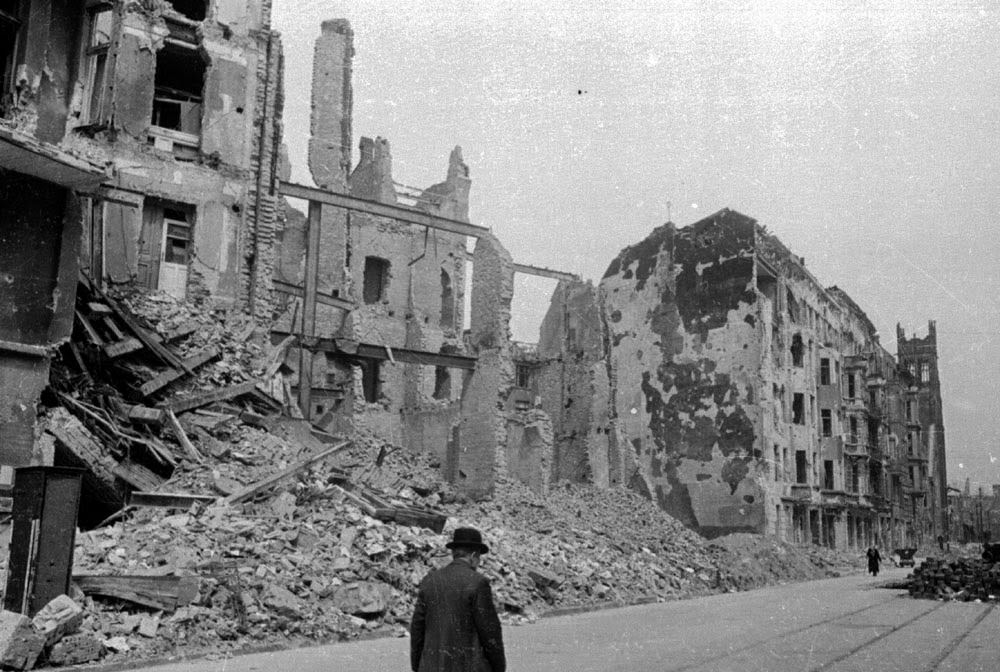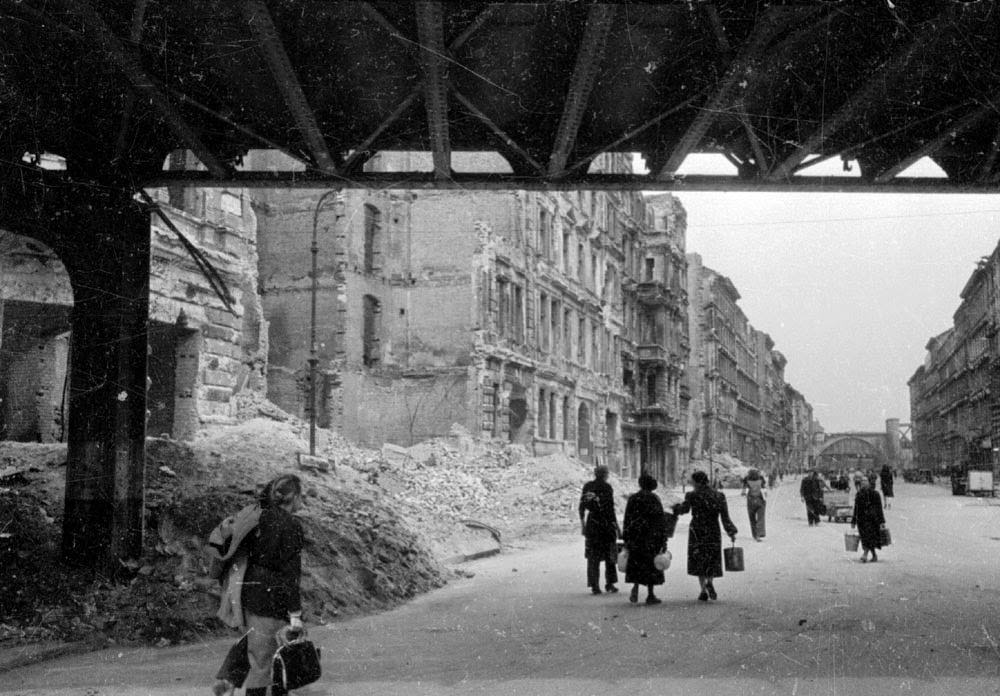

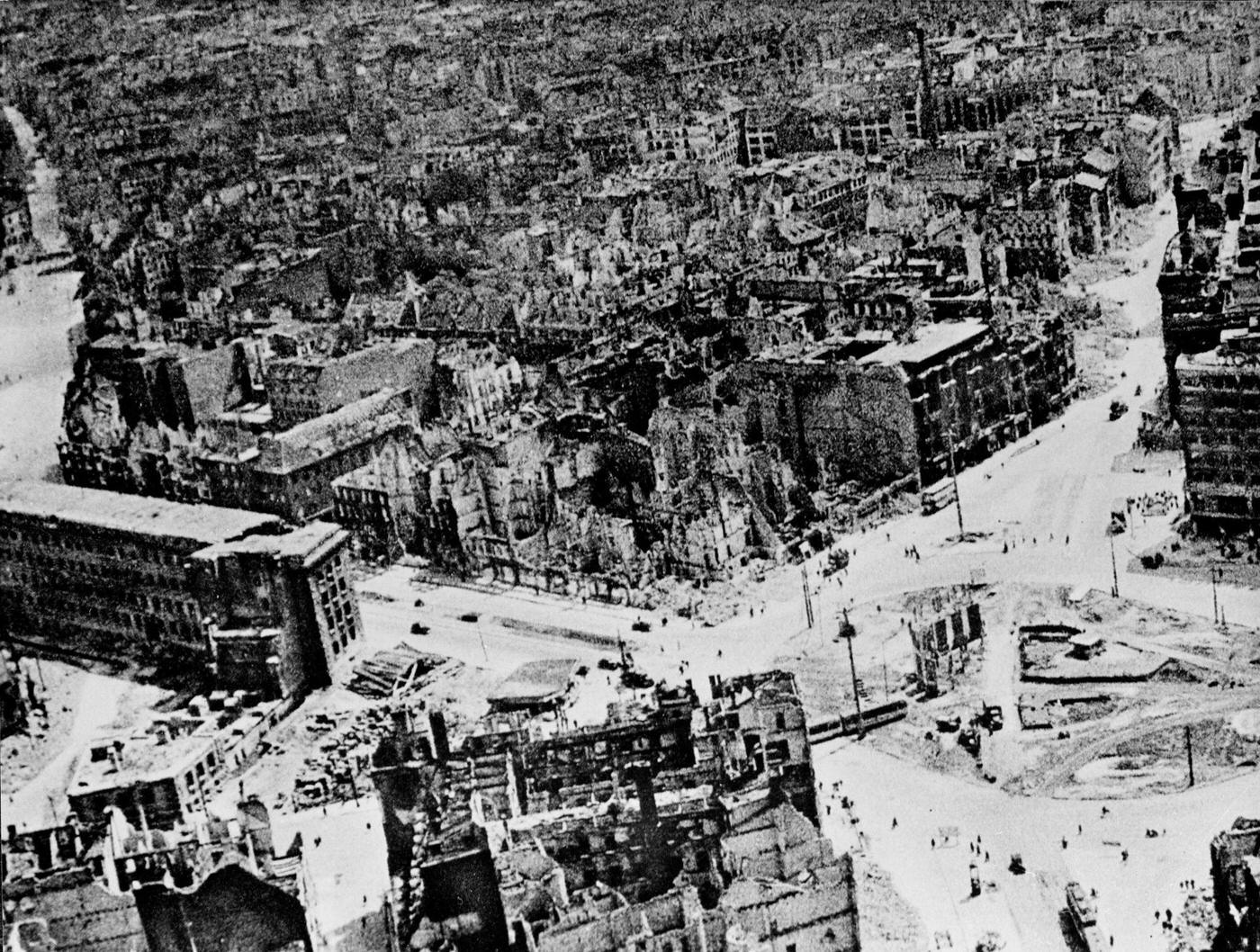
By the time Germany surrendered in May 1945, Berlin had been reduced to a landscape of broken stone and ash. The Battle of Berlin — the final major offensive on the Eastern Front — turned entire city blocks into combat zones. Allied bombing campaigns and Soviet artillery had hammered the city for months. When the guns finally fell silent, what remained was barely recognizable as one of Europe’s great capitals.
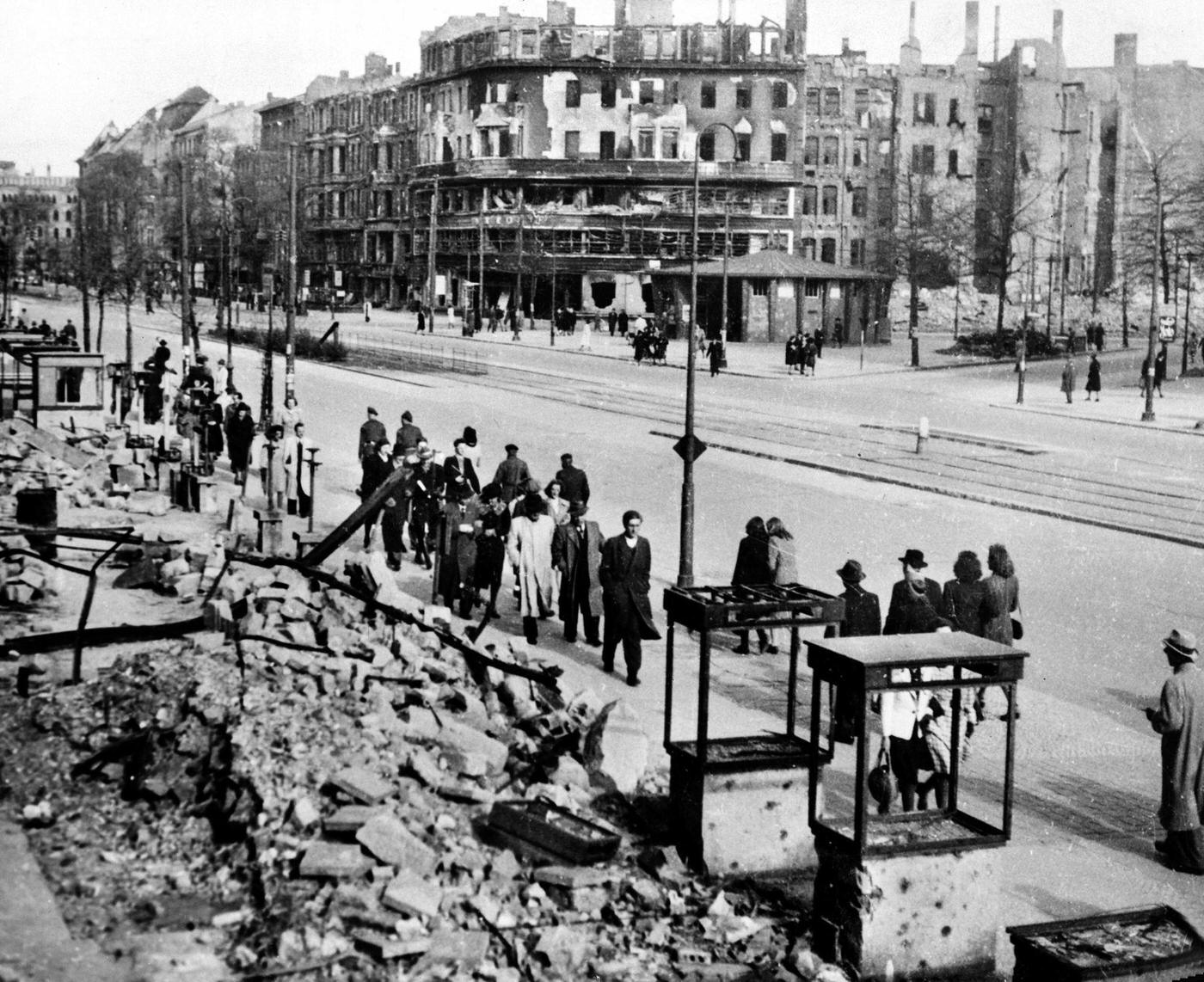
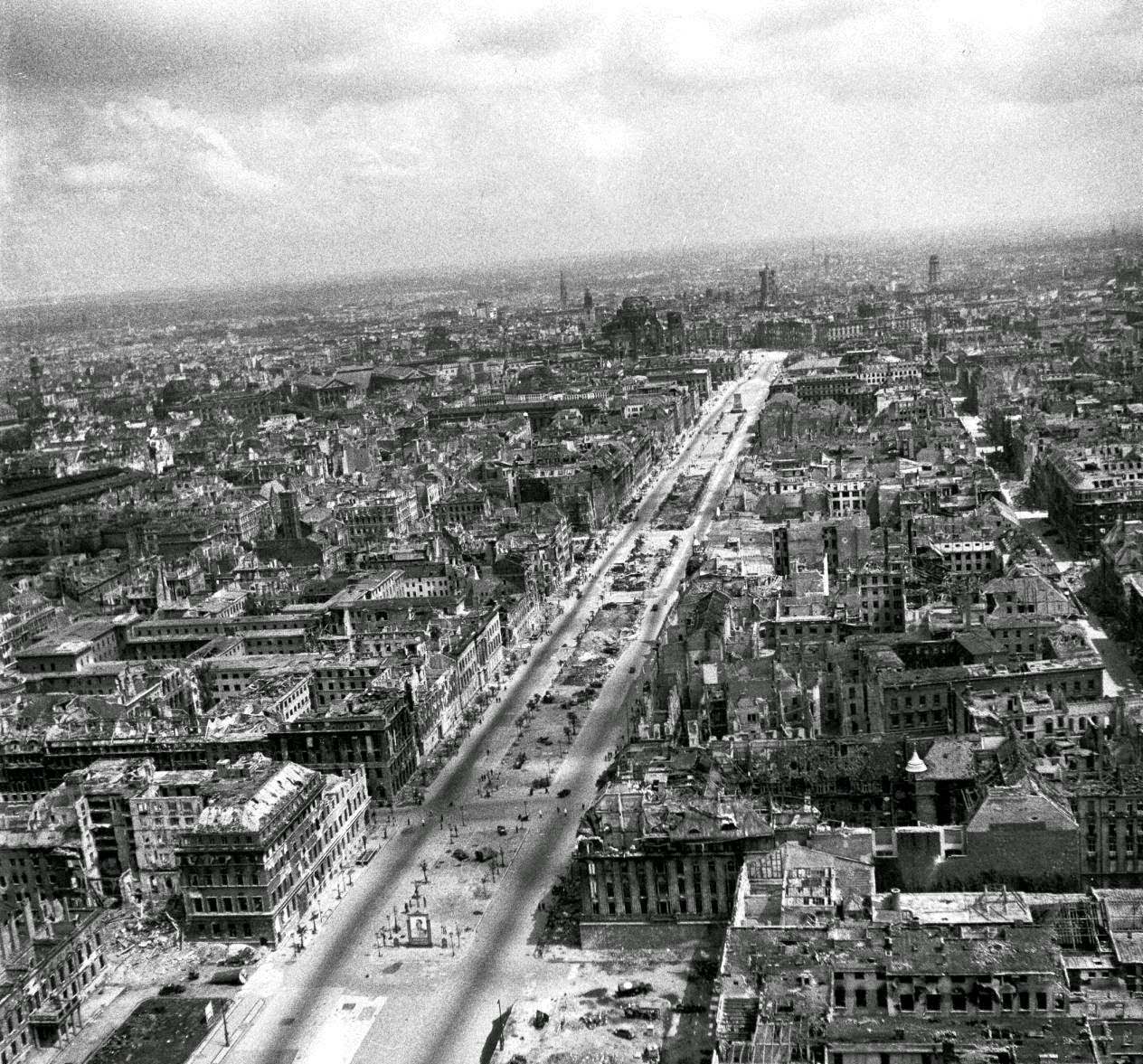
The scale of destruction was staggering. An estimated 1.7 million homes across Germany had been destroyed or severely damaged by the war’s end, and Berlin bore a disproportionate share of that loss. Roads were buried under rubble. Rail lines were cut. Water mains and electrical systems had been shattered. Moving through the city meant climbing over mountains of debris where buildings once stood.
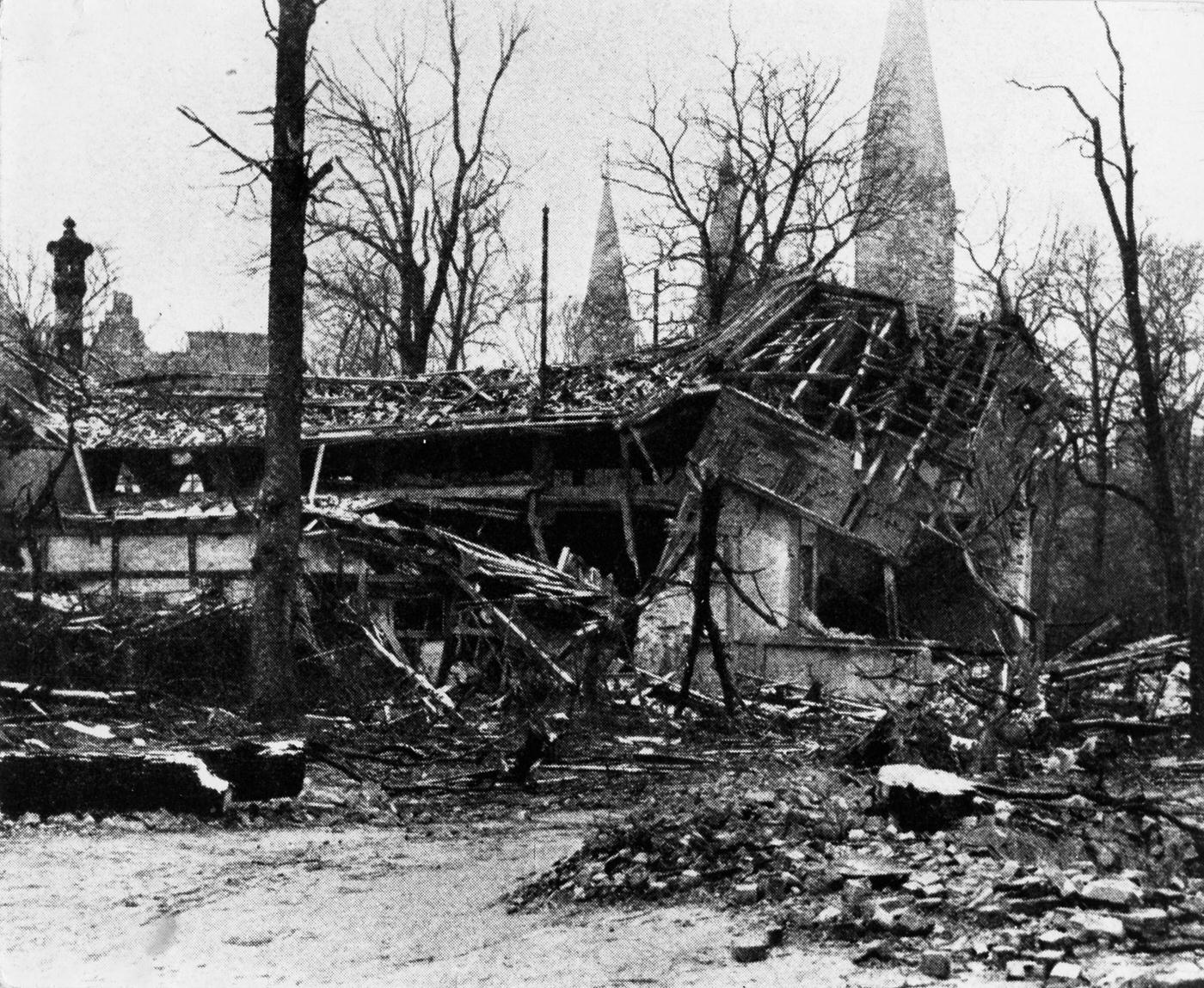
No part of the city was spared. Cultural institutions, commercial districts, government buildings, and neighborhoods were all hit. The Berlin Zoological Gardens, once home to a vast collection of animals, was bombed repeatedly. By the war’s end, only a handful of the zoo’s roughly 3,700 animals had survived. Public landmarks that had defined Berlin’s skyline for generations now stood as hollow, gutted shells.
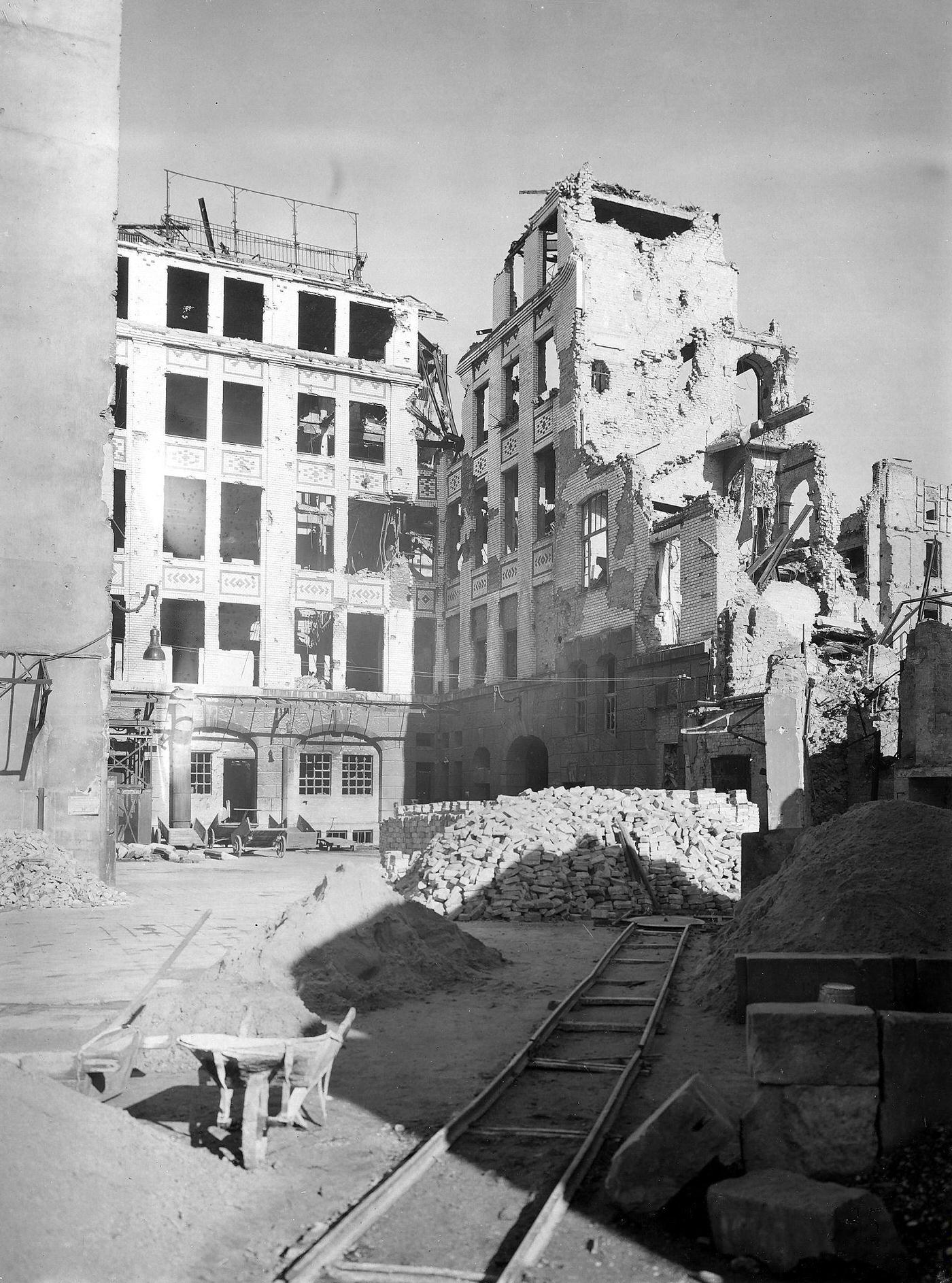
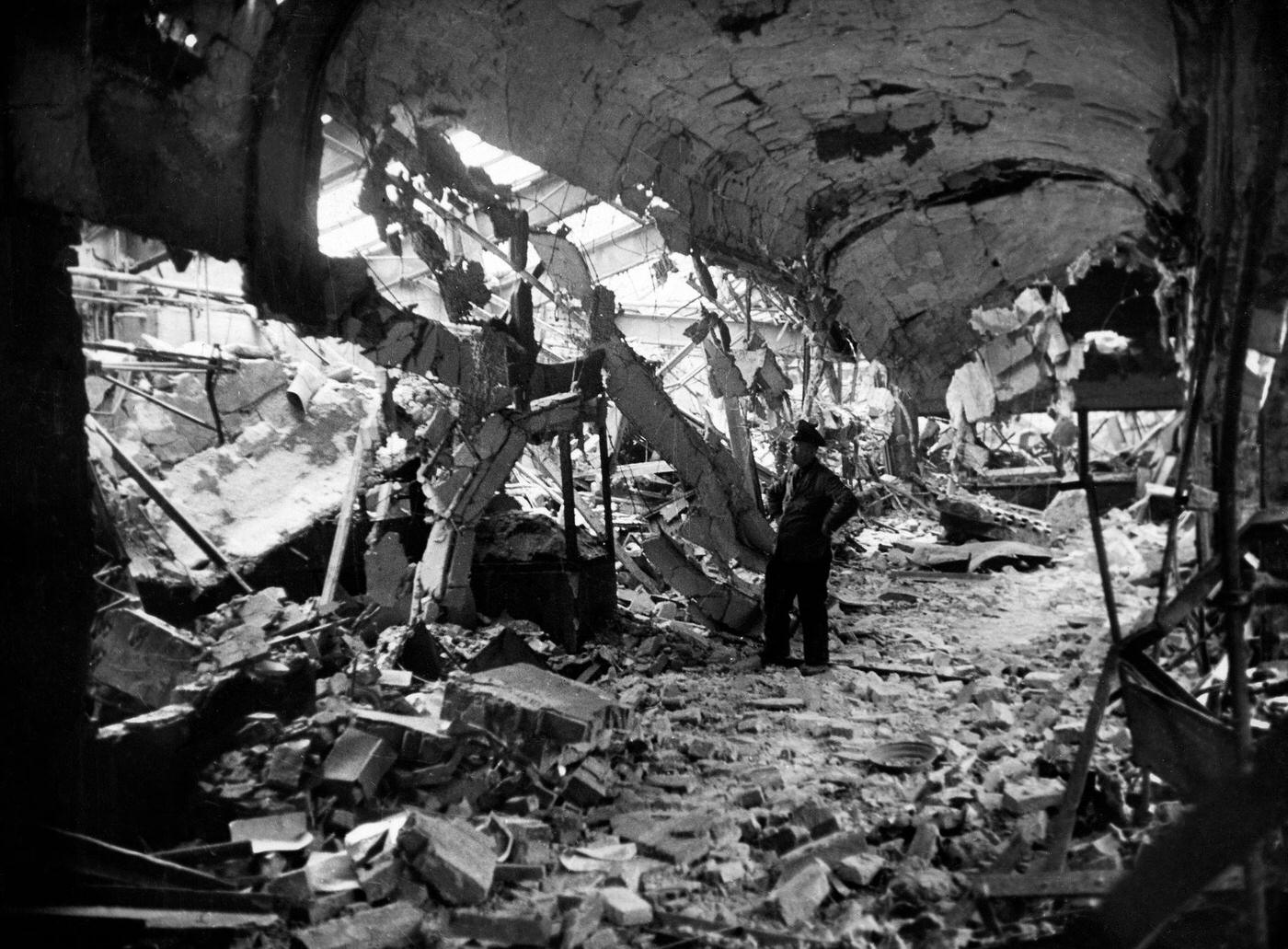
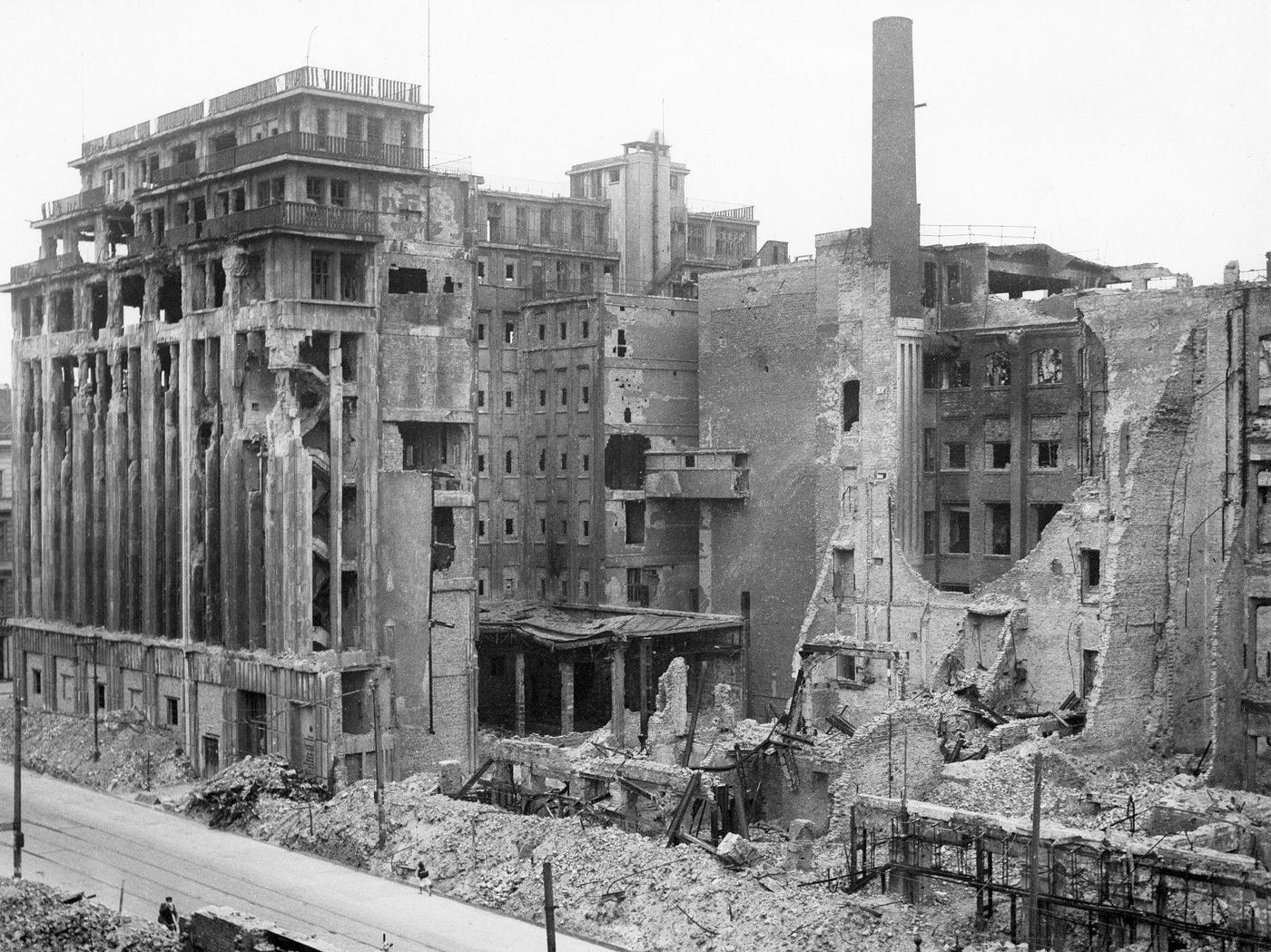
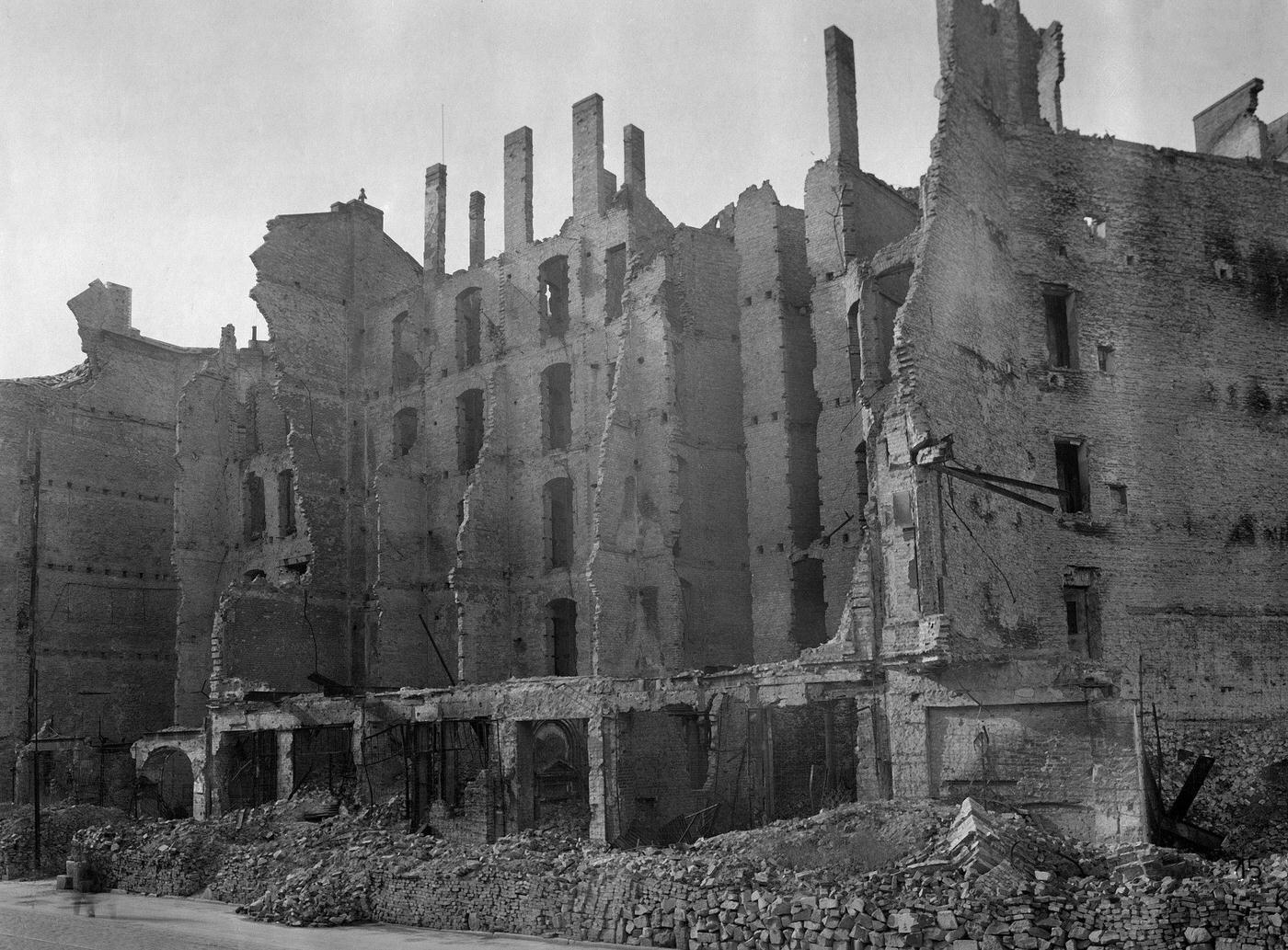
Berlin’s business and publishing districts suffered devastating losses. The Ullstein publishing house on Kochstrasse, once one of Germany’s most prominent media companies, was left in ruins. The surrounding streets, formerly lined with businesses and foot traffic, were transformed into open wastelands of collapsed facades and broken masonry.
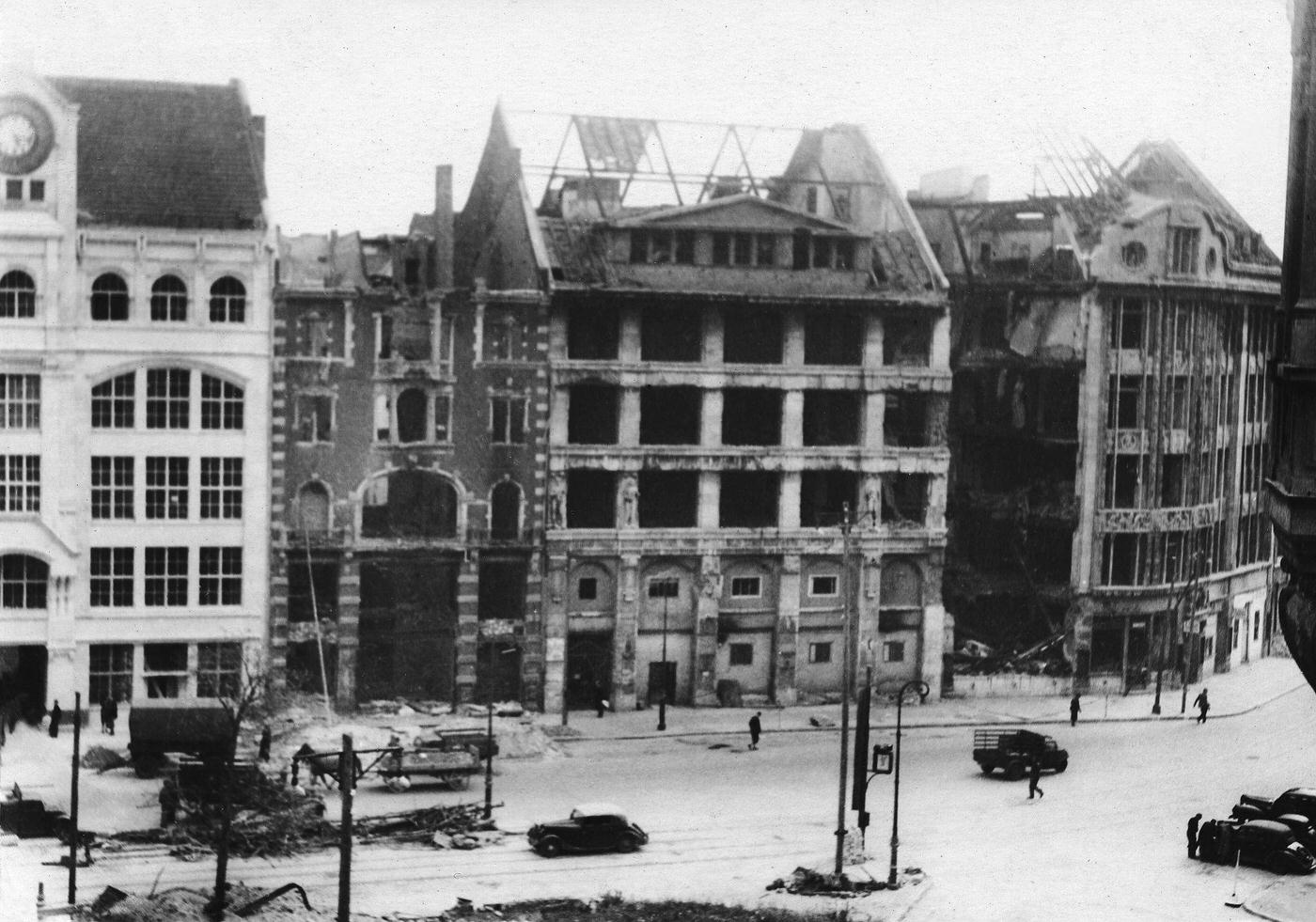
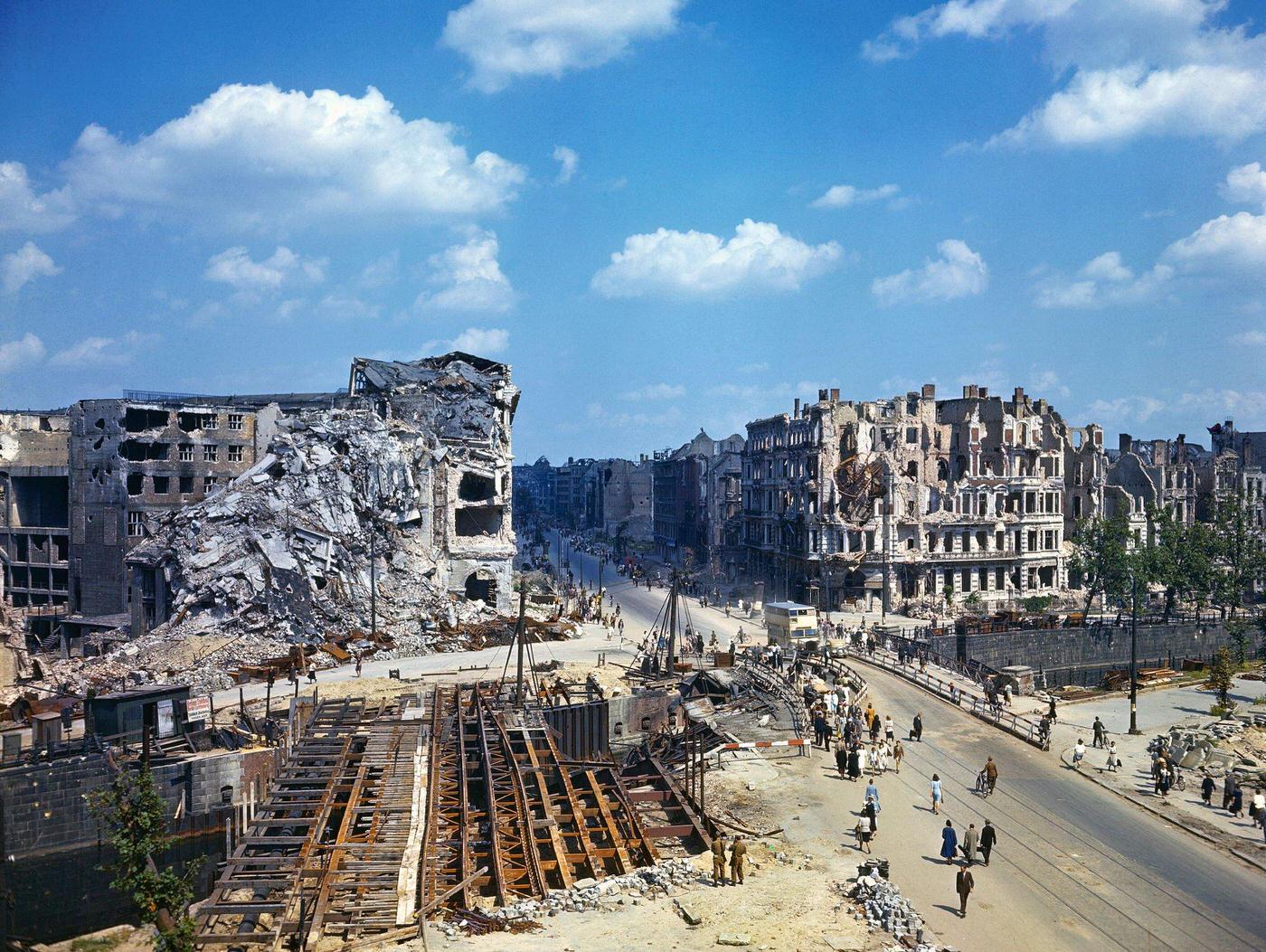
For the civilians who remained in the city, daily life was a struggle to survive. Food was severely rationed. Medical supplies were scarce. Hundreds of thousands of Berliners had fled or been killed. Those who stayed sheltered in basements and the lower floors of damaged buildings, emerging cautiously once the fighting stopped.
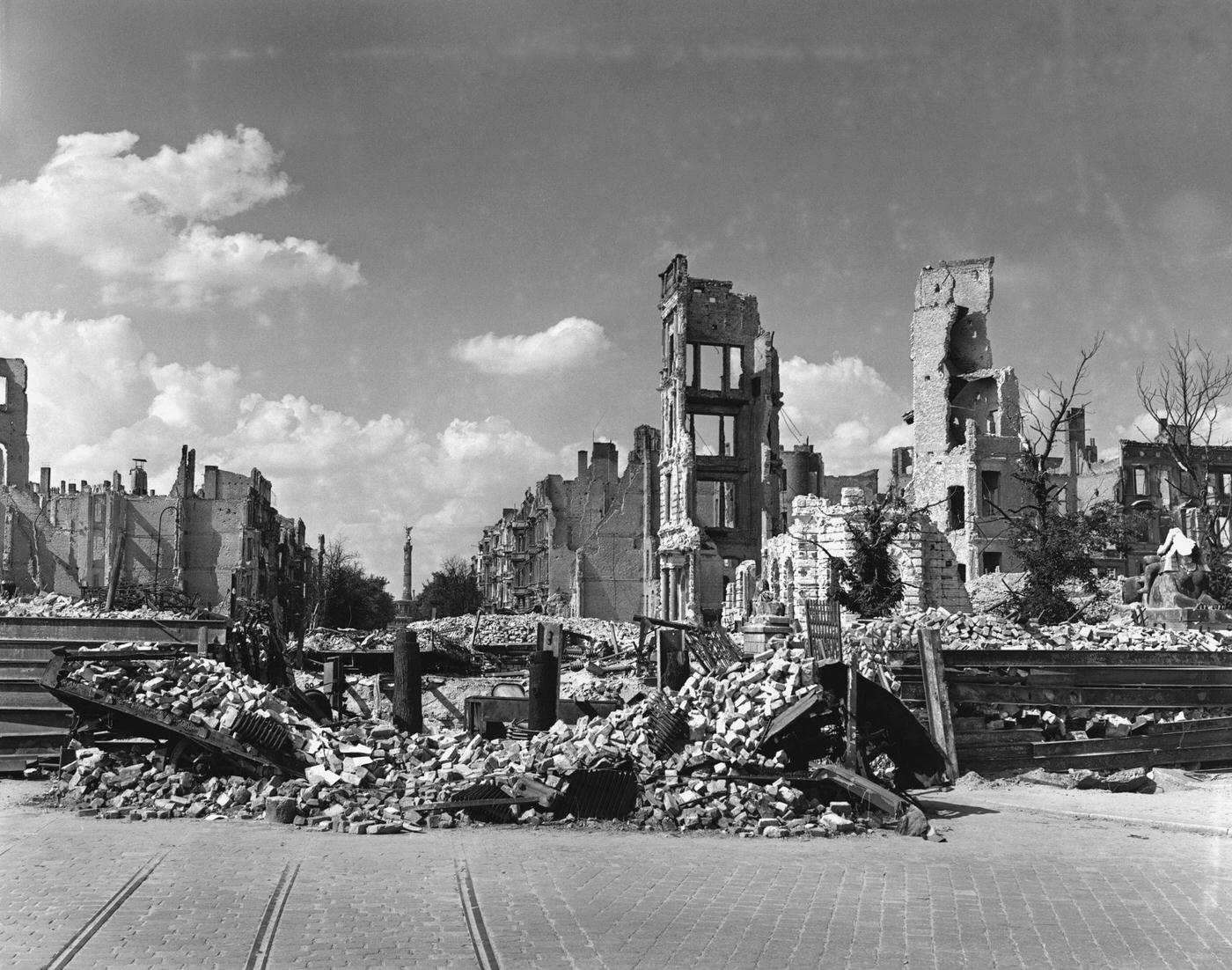
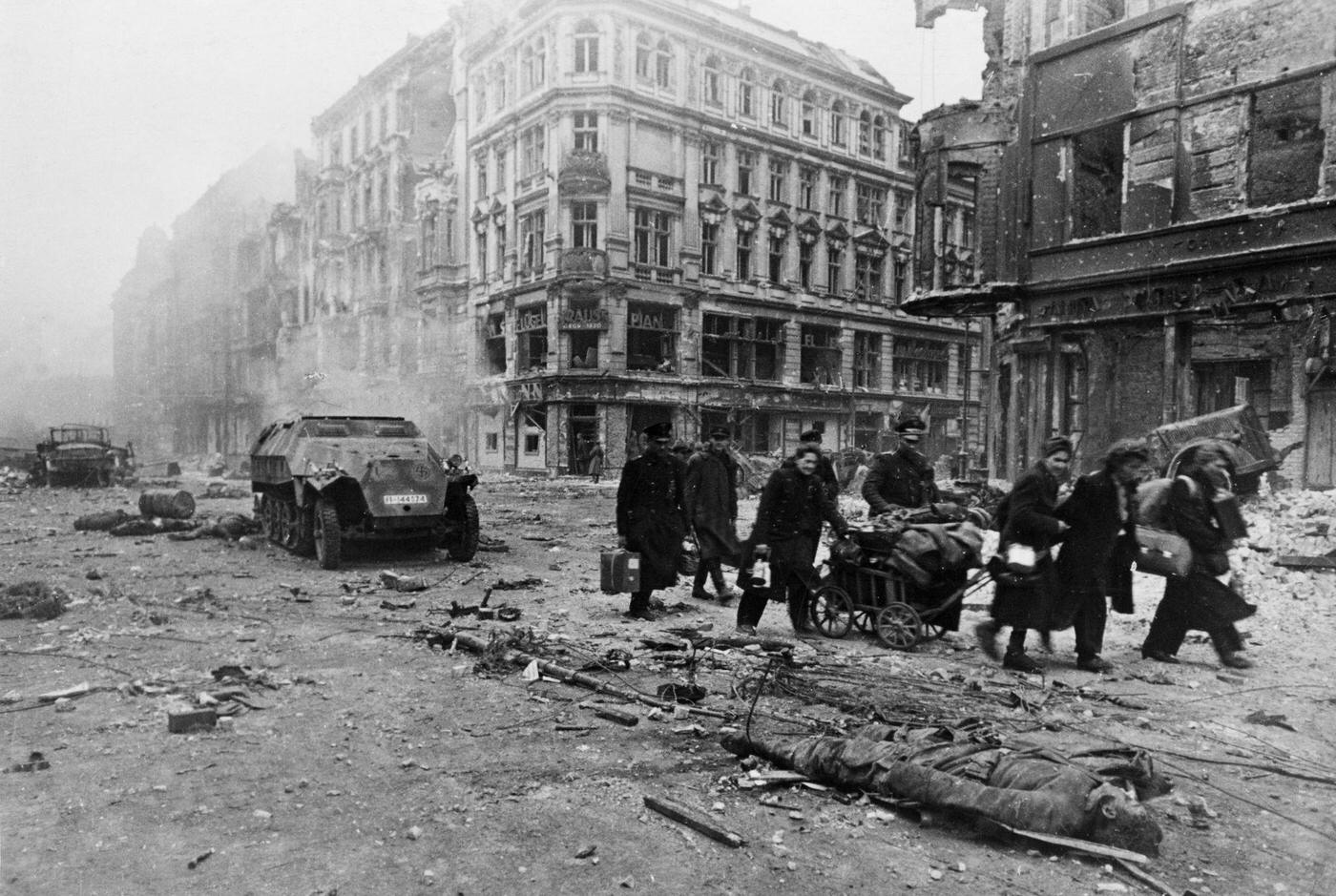
Allied bombing runs had targeted Berlin’s infrastructure and industrial areas repeatedly throughout the war, accelerating the destruction that ground-level combat would complete. By April 1945, Soviet forces had encircled the city and were fighting street by street toward the center. The damage from those final weeks was layered on top of years of aerial bombardment.
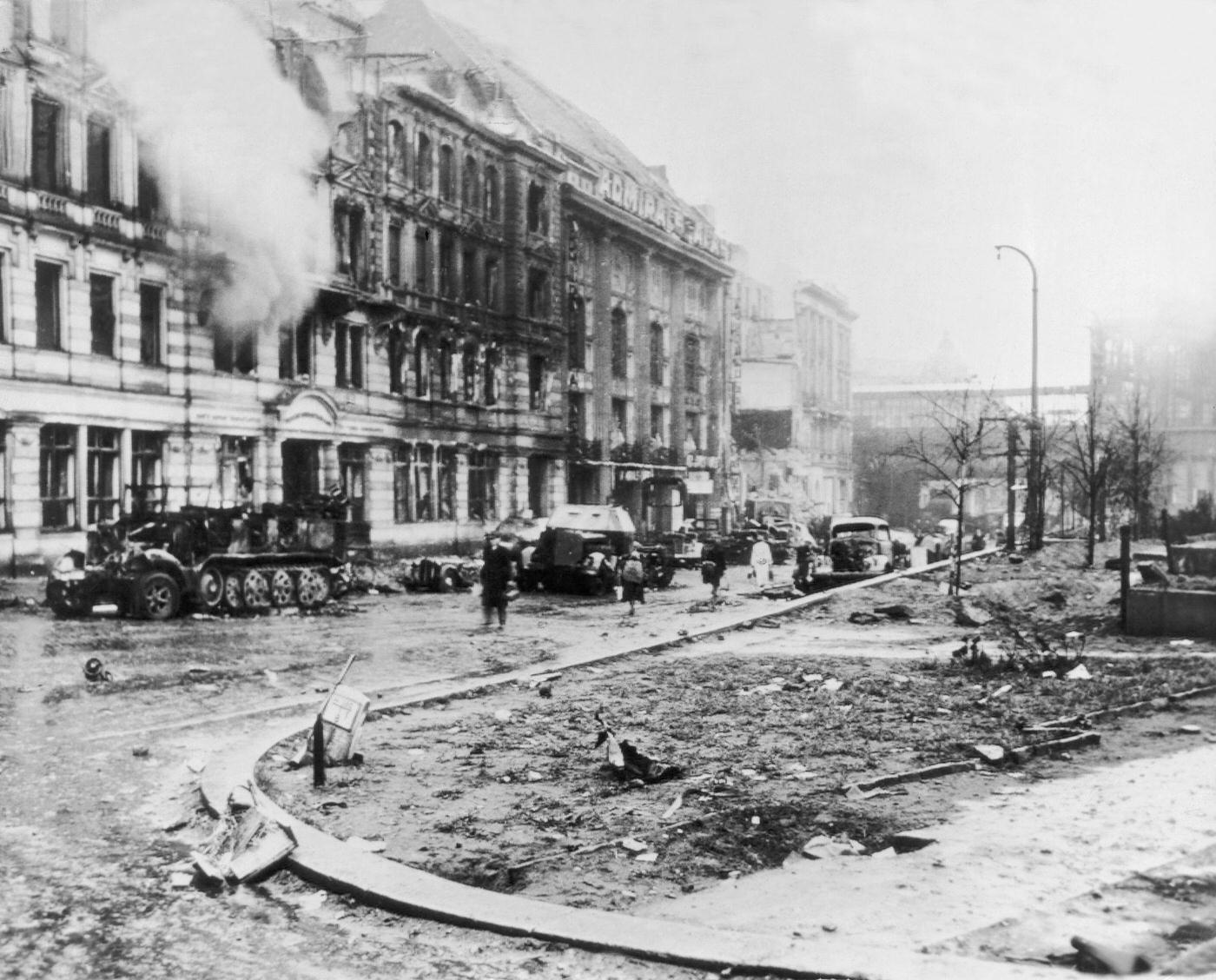
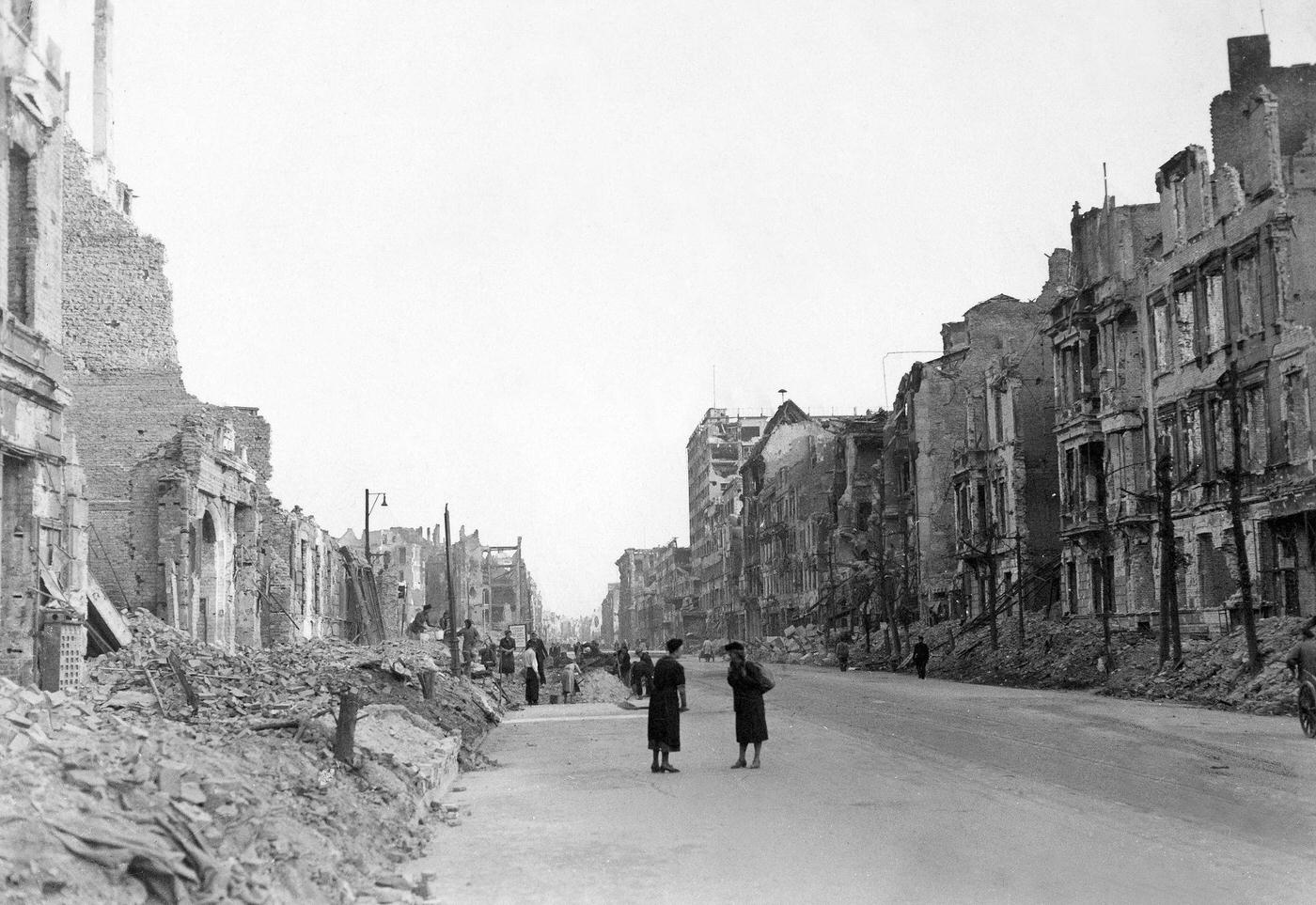
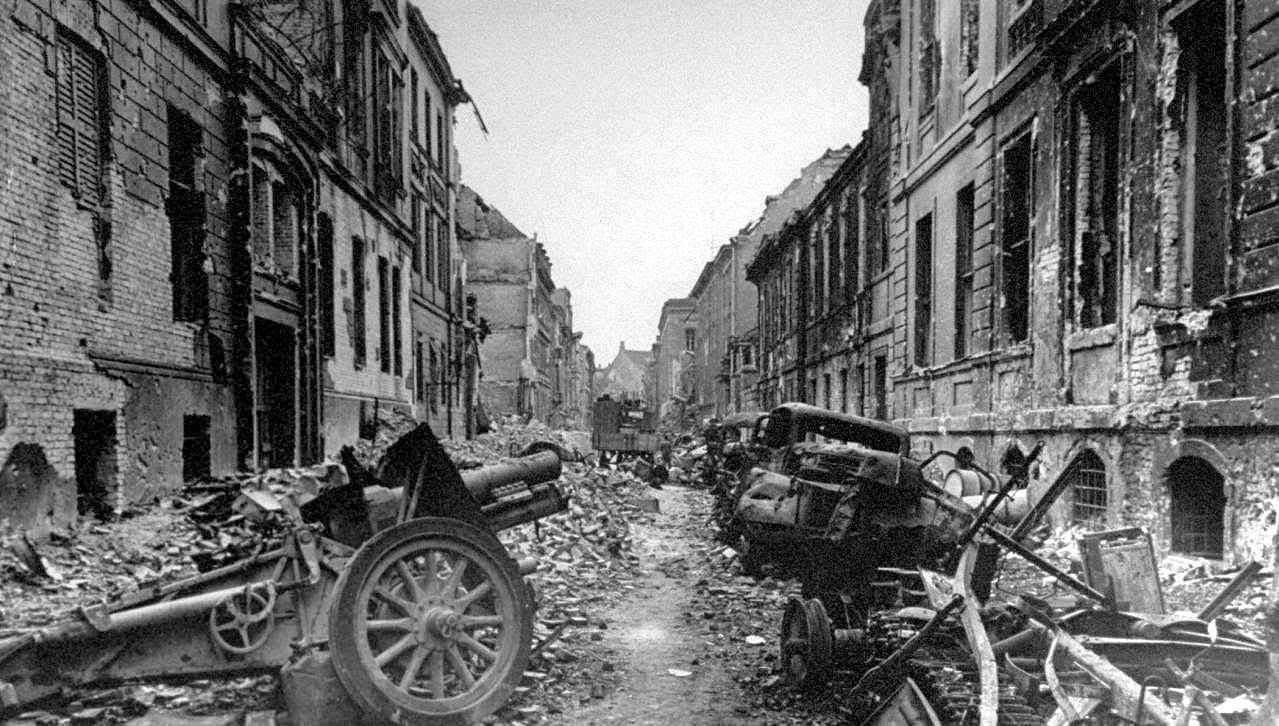
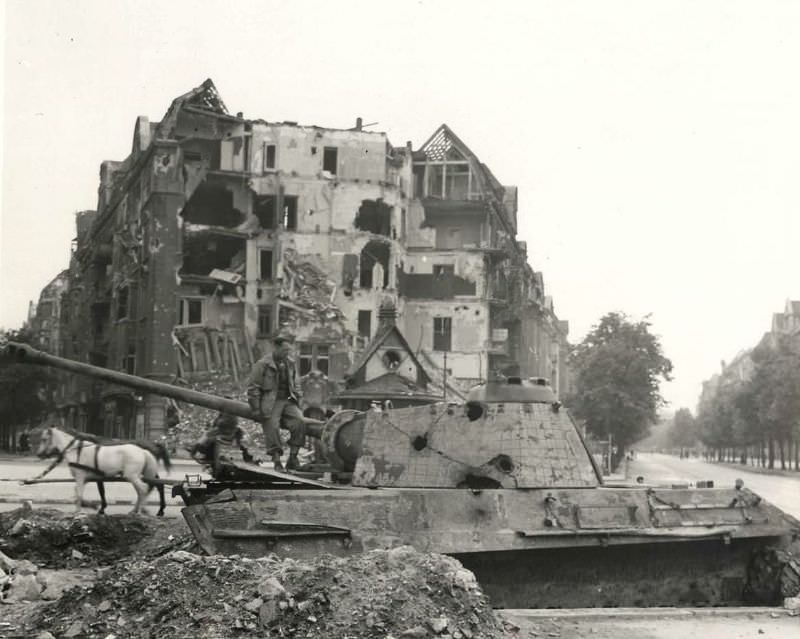
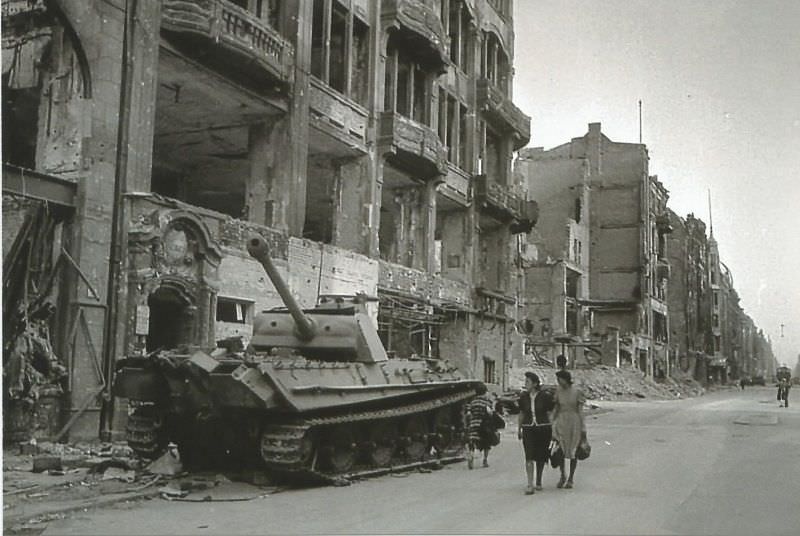
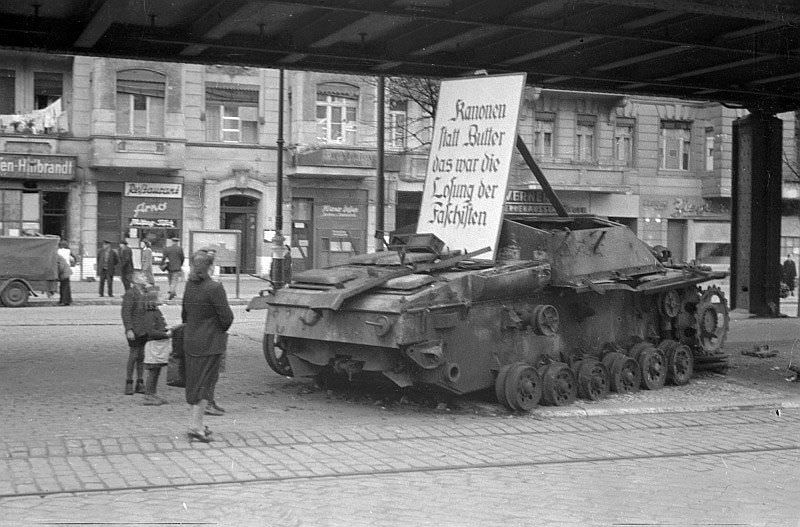
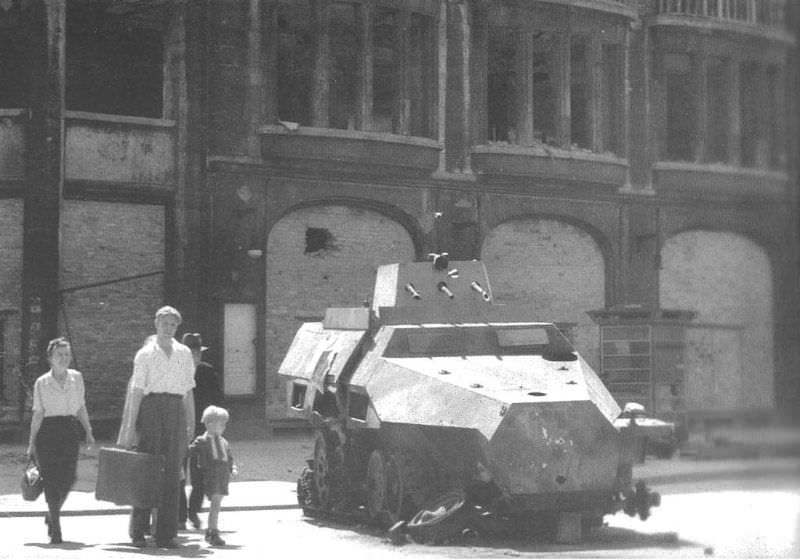
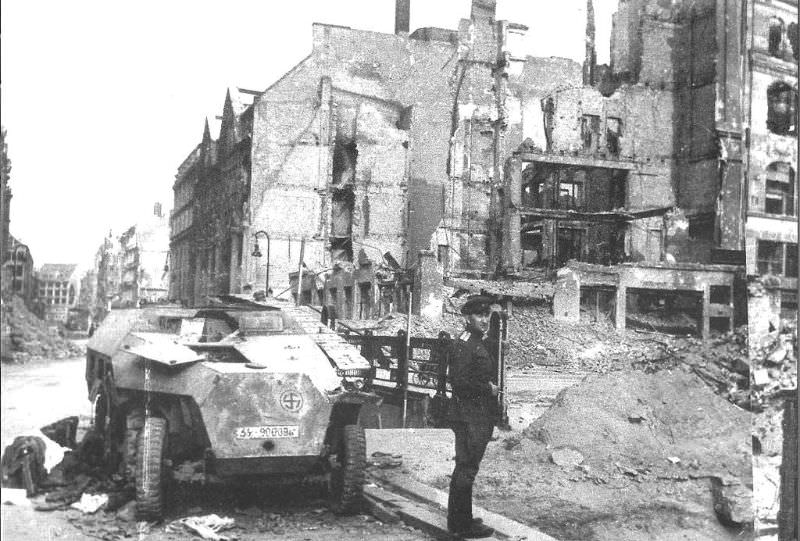
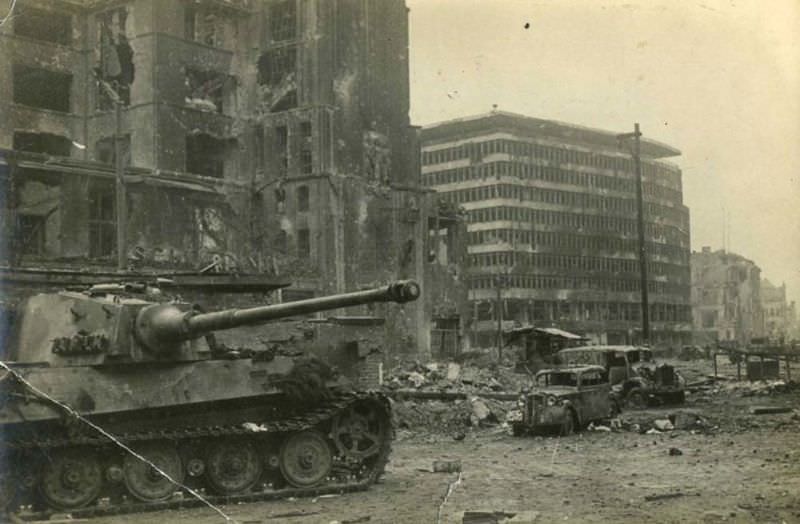
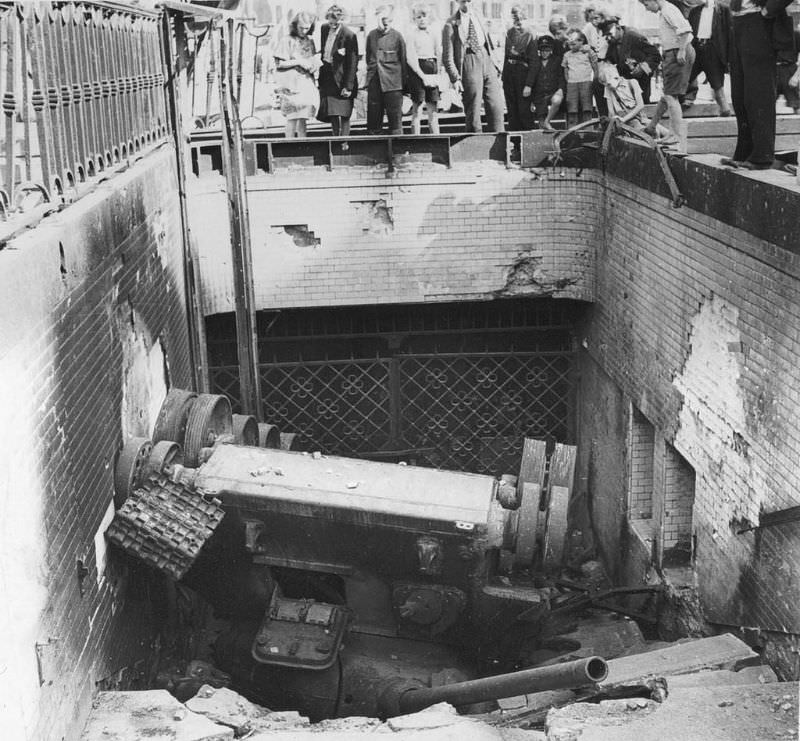
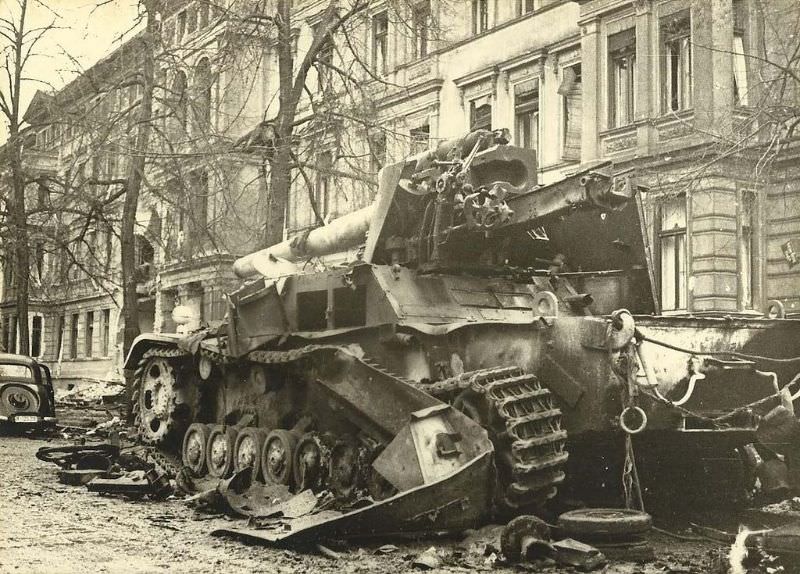
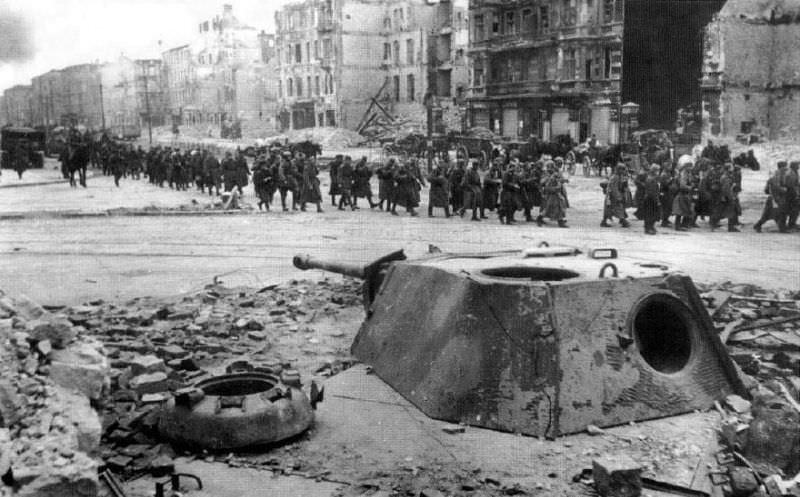
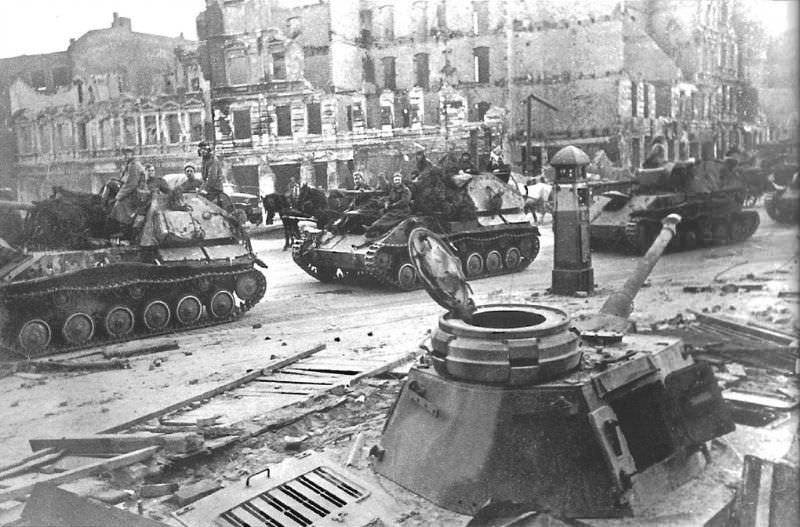
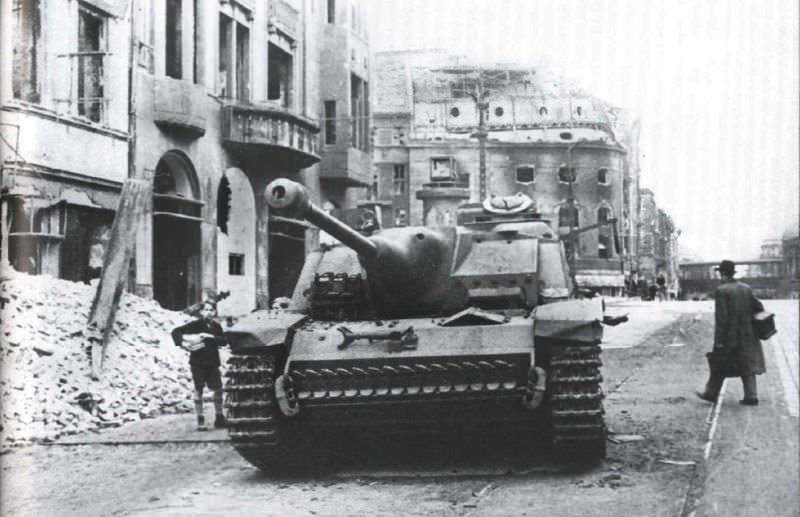
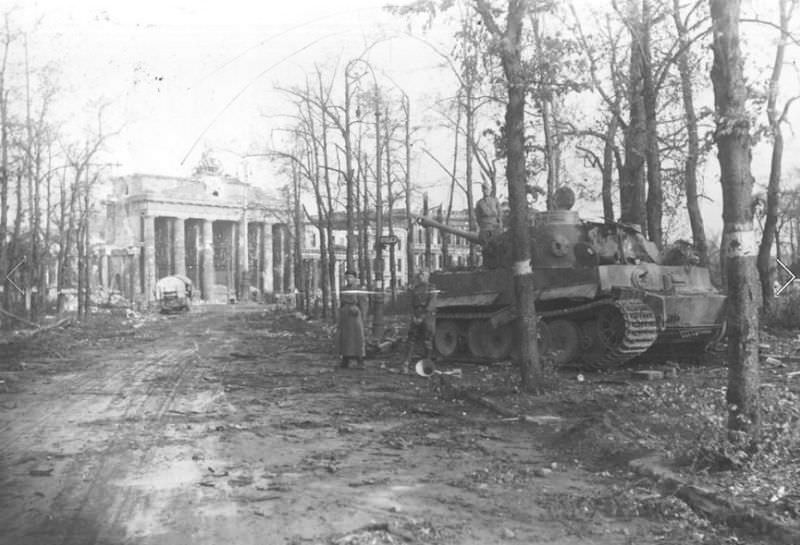
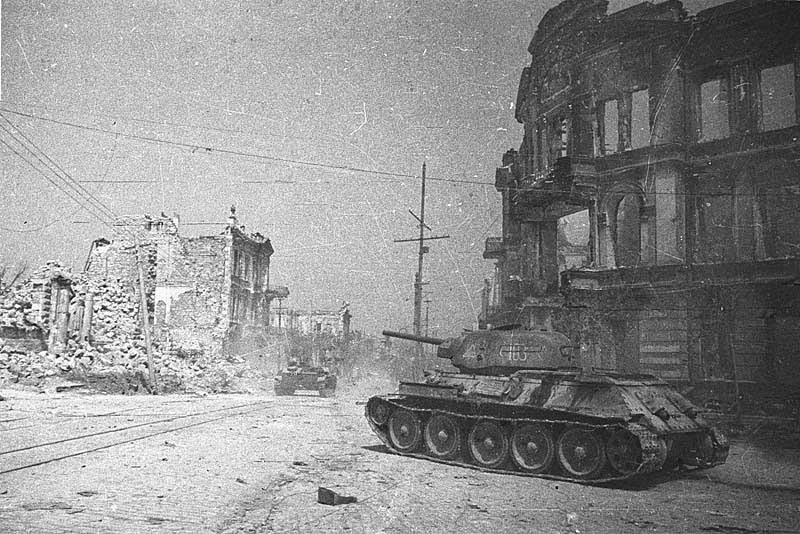
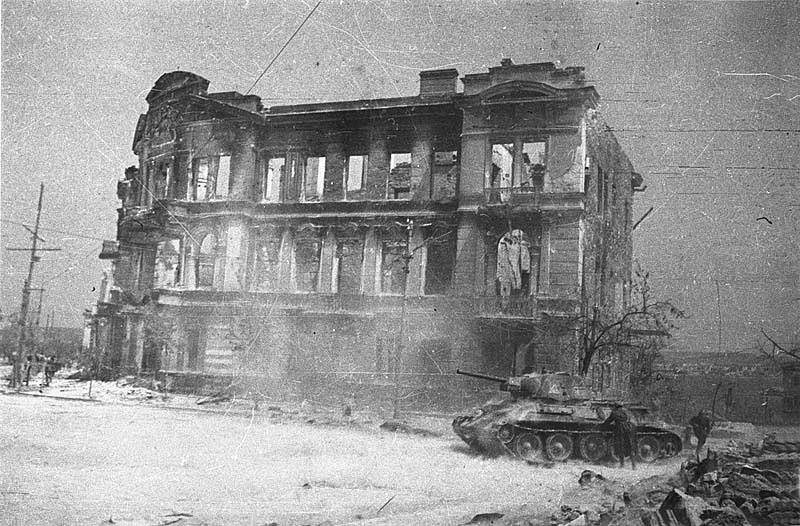
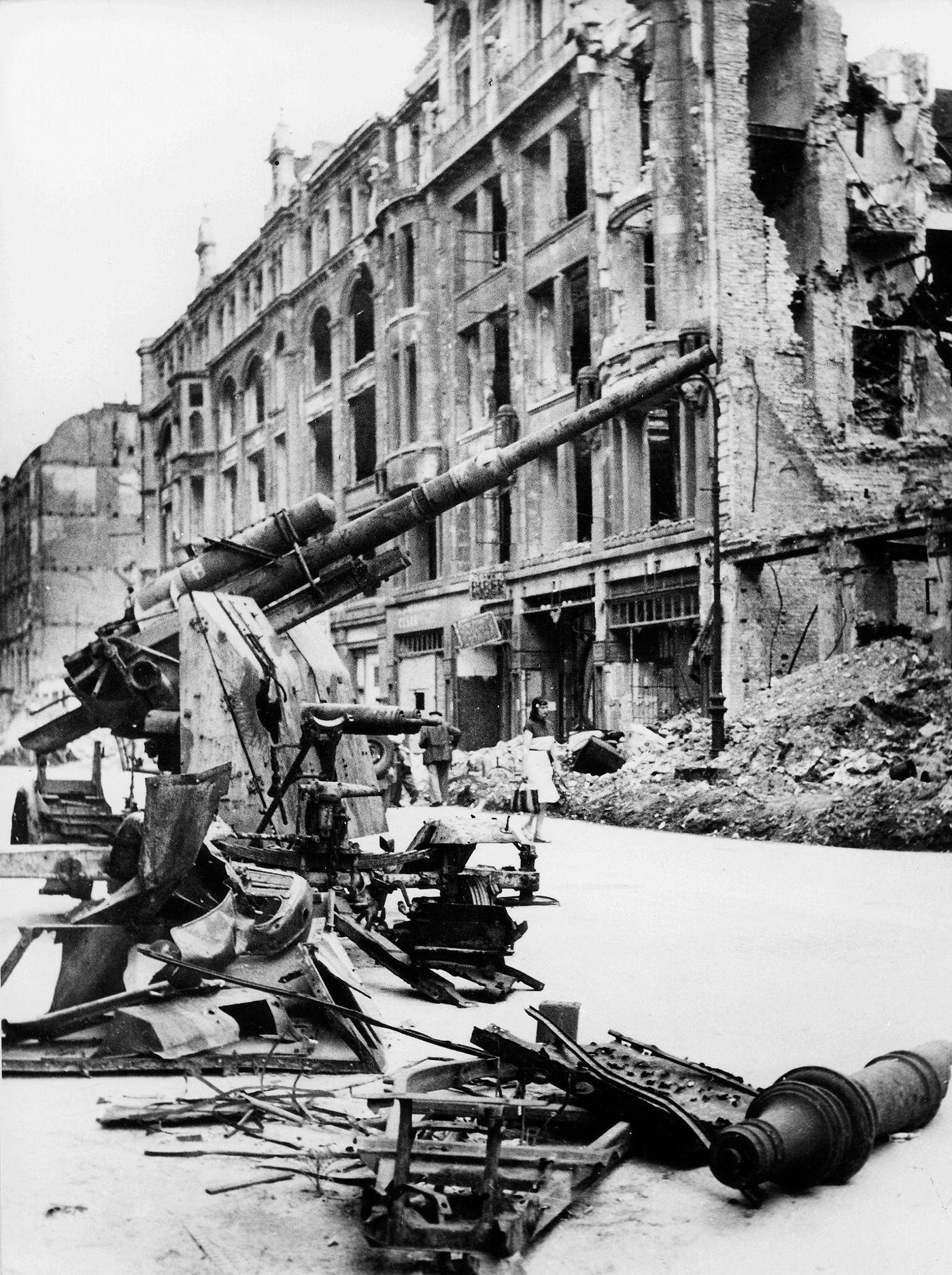
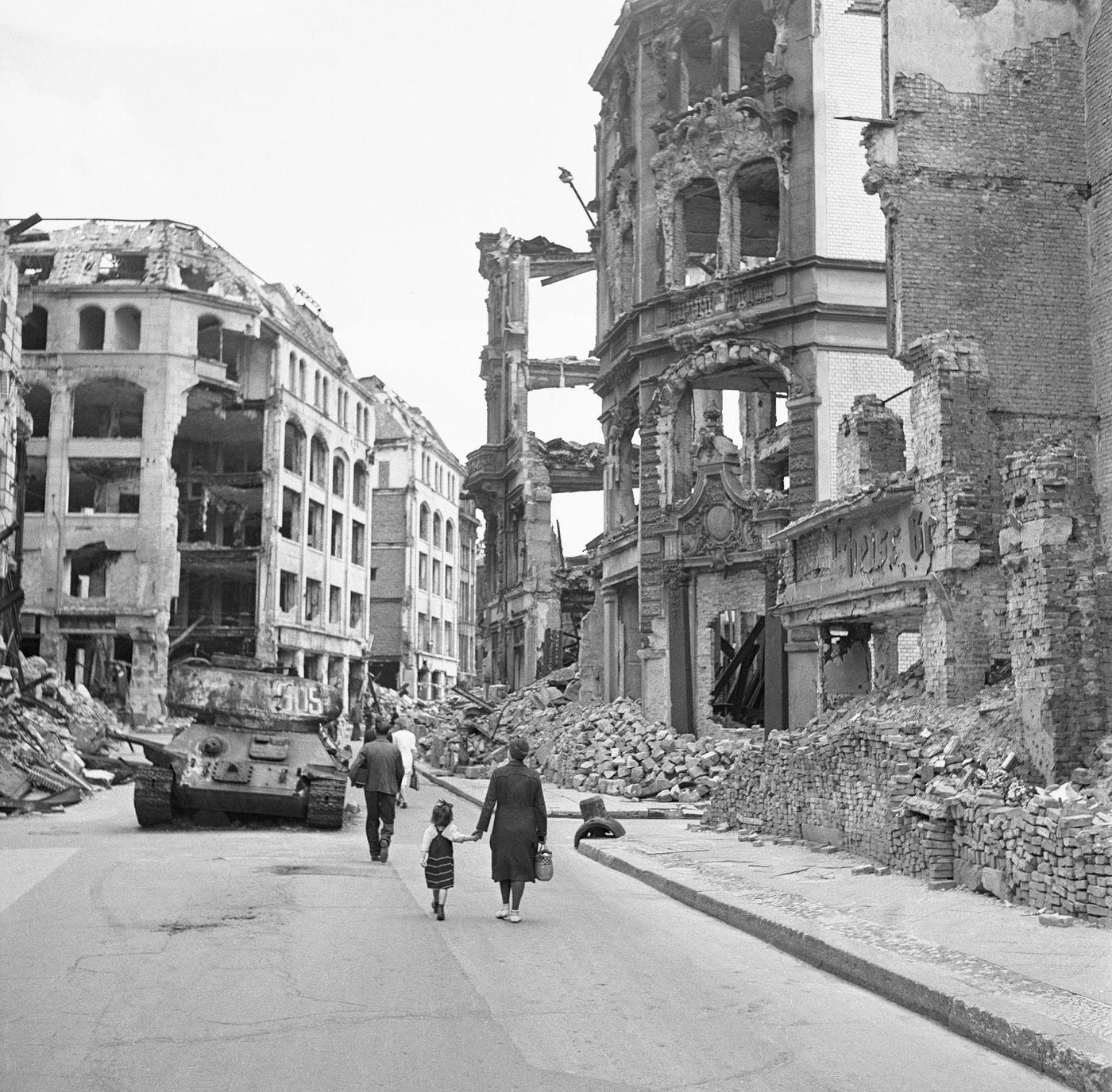
Streets that had once carried Berlin’s trams, automobiles, and pedestrians were now obstacle courses of wreckage. Anti-aircraft guns, tanks, and military equipment sat abandoned where they had been destroyed. The smell of smoke and decay hung over the city for weeks after the fighting ended.
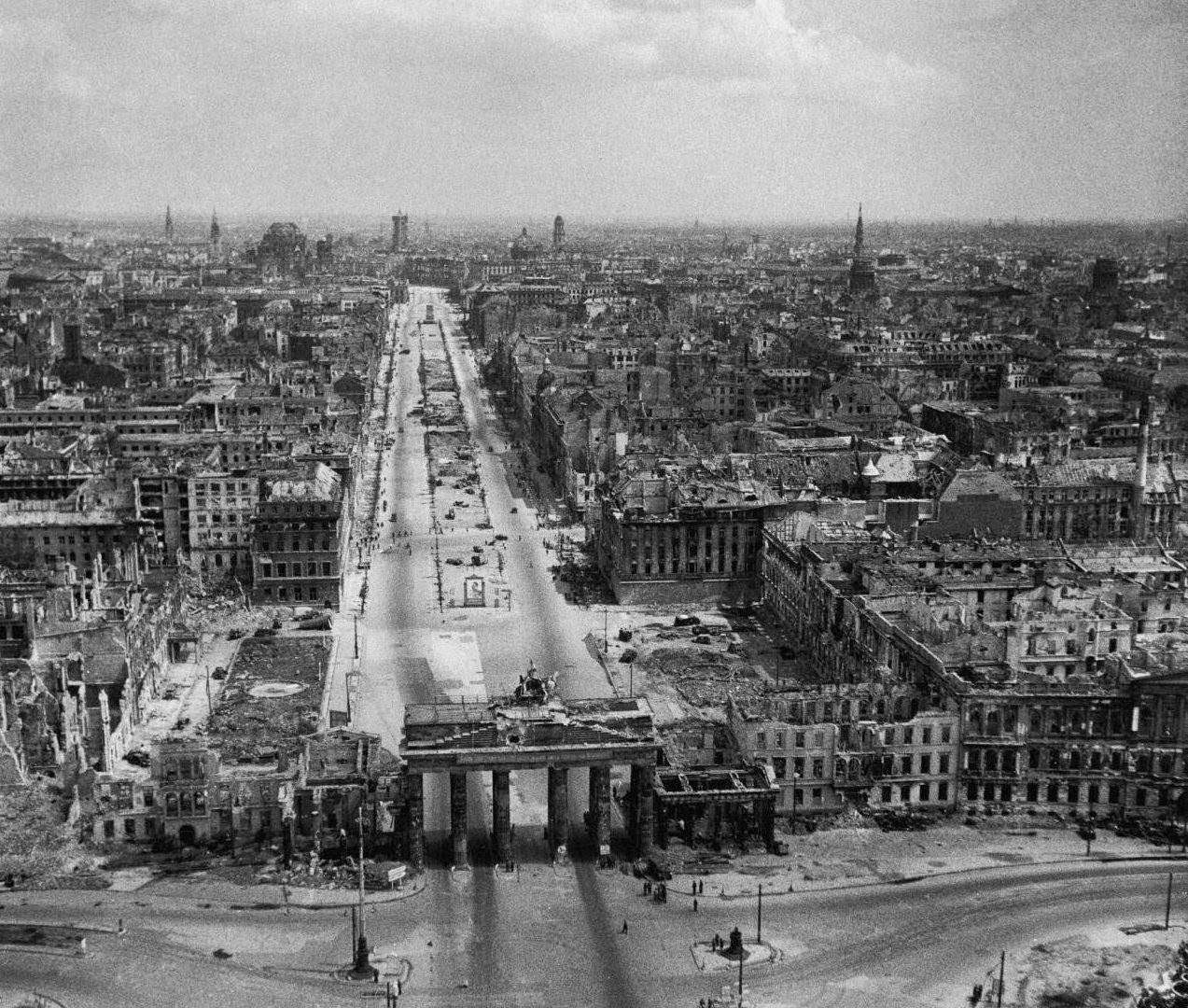
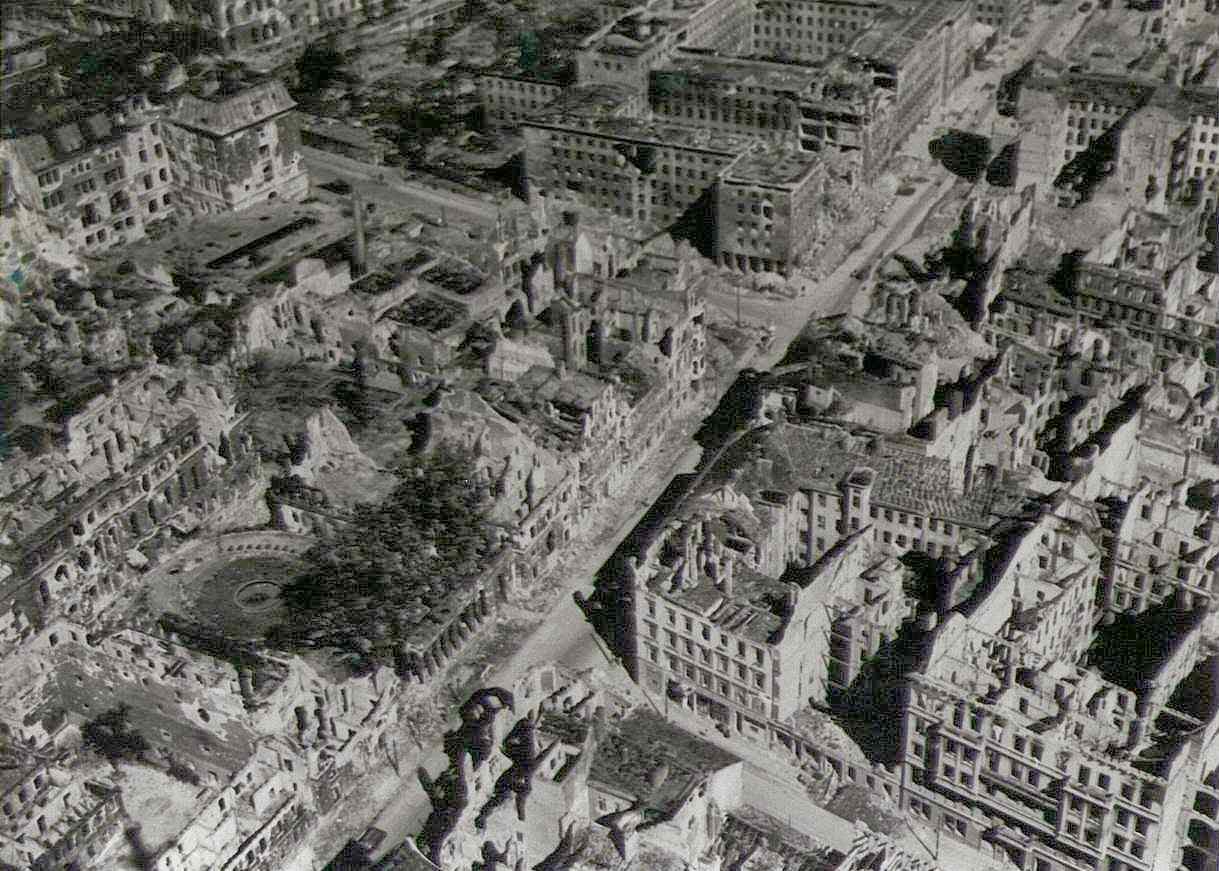
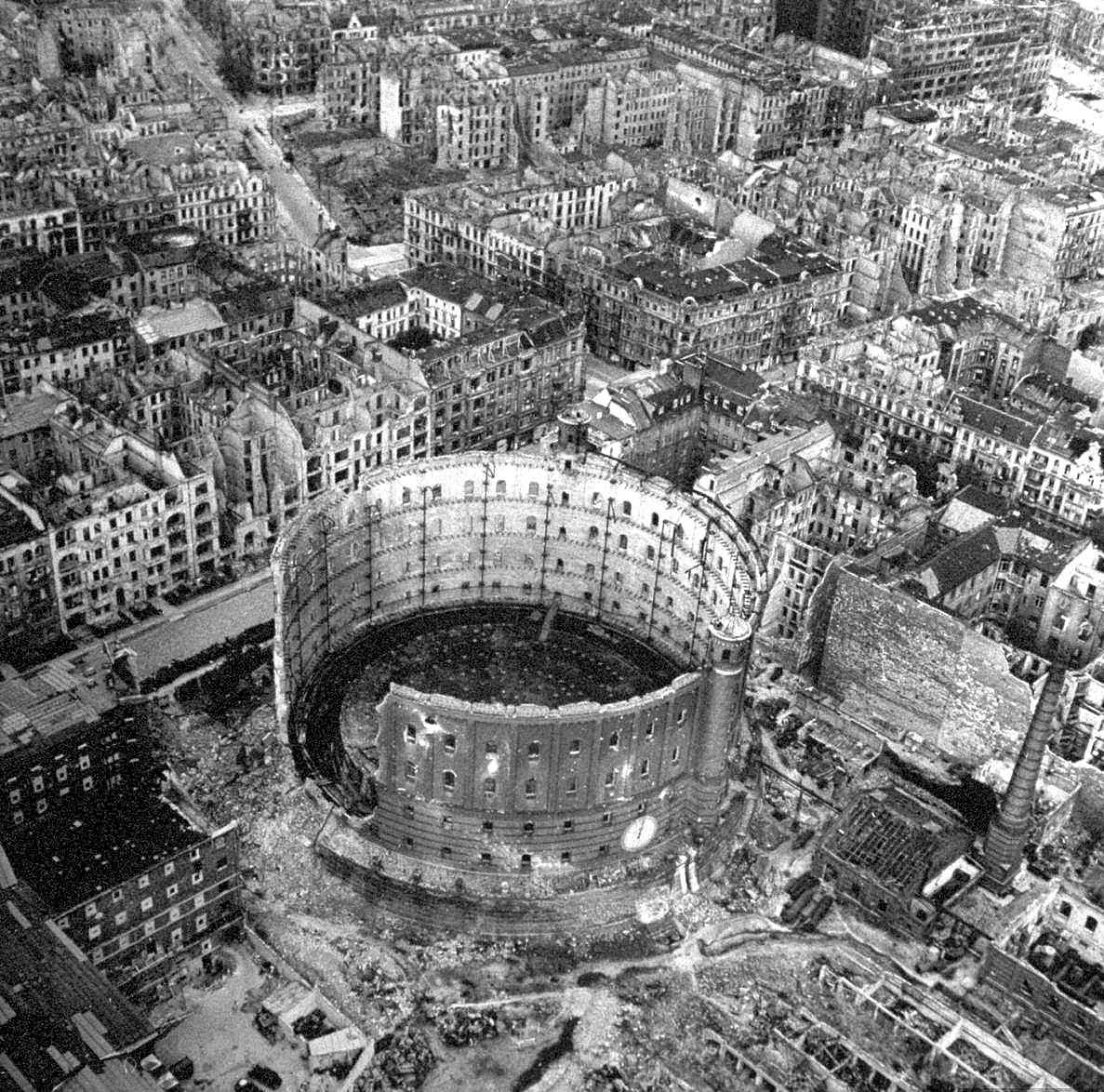
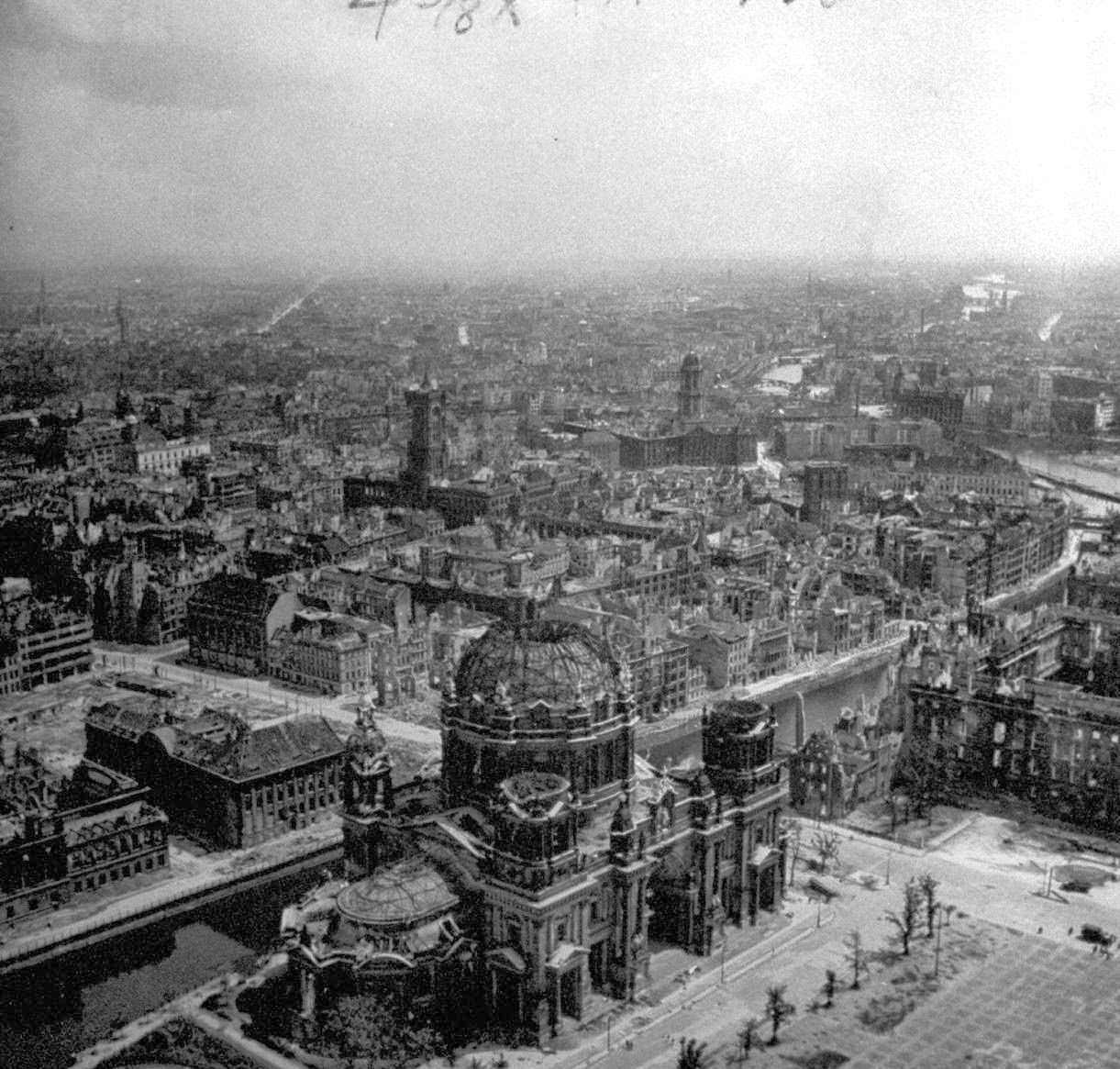
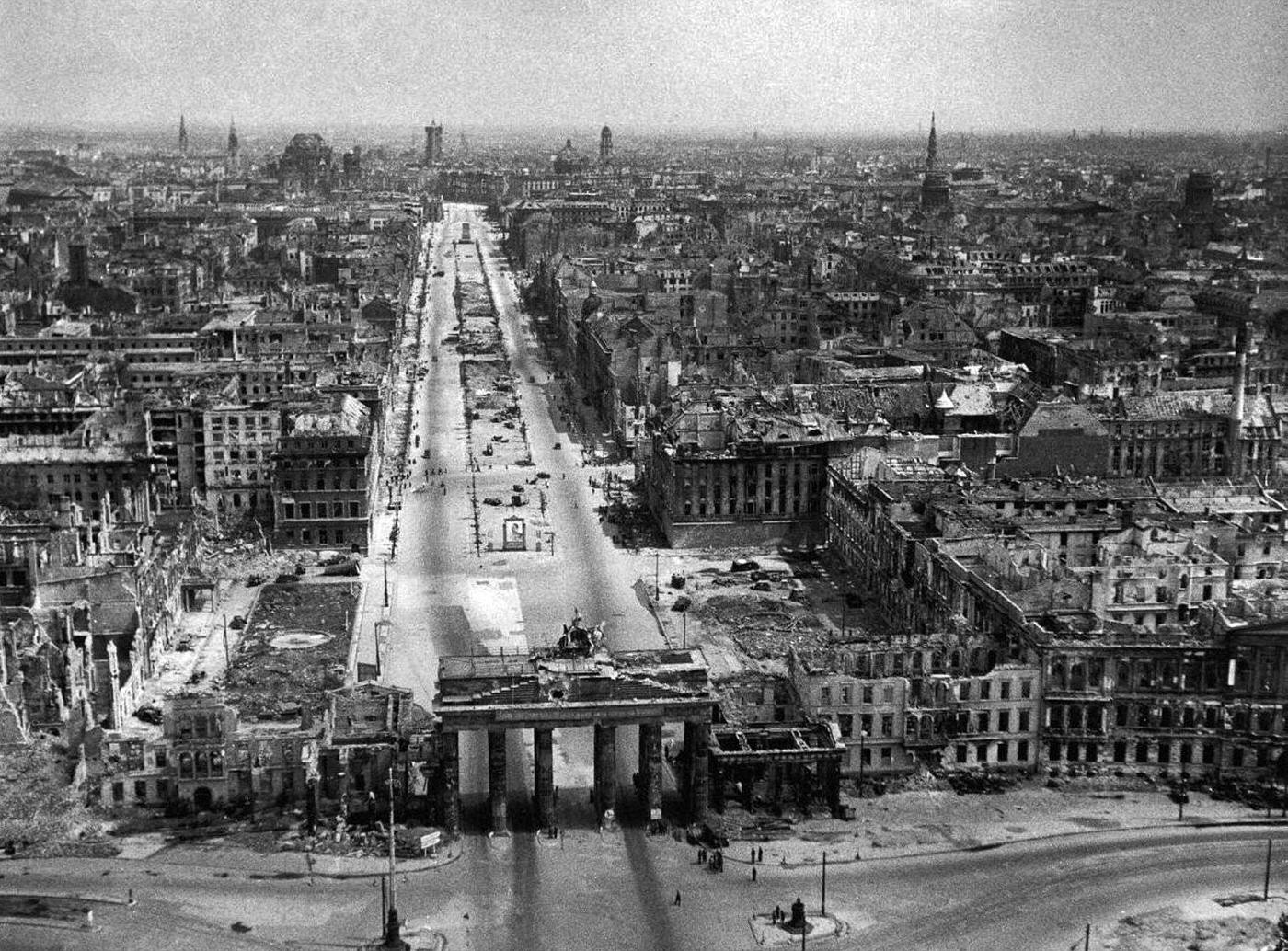
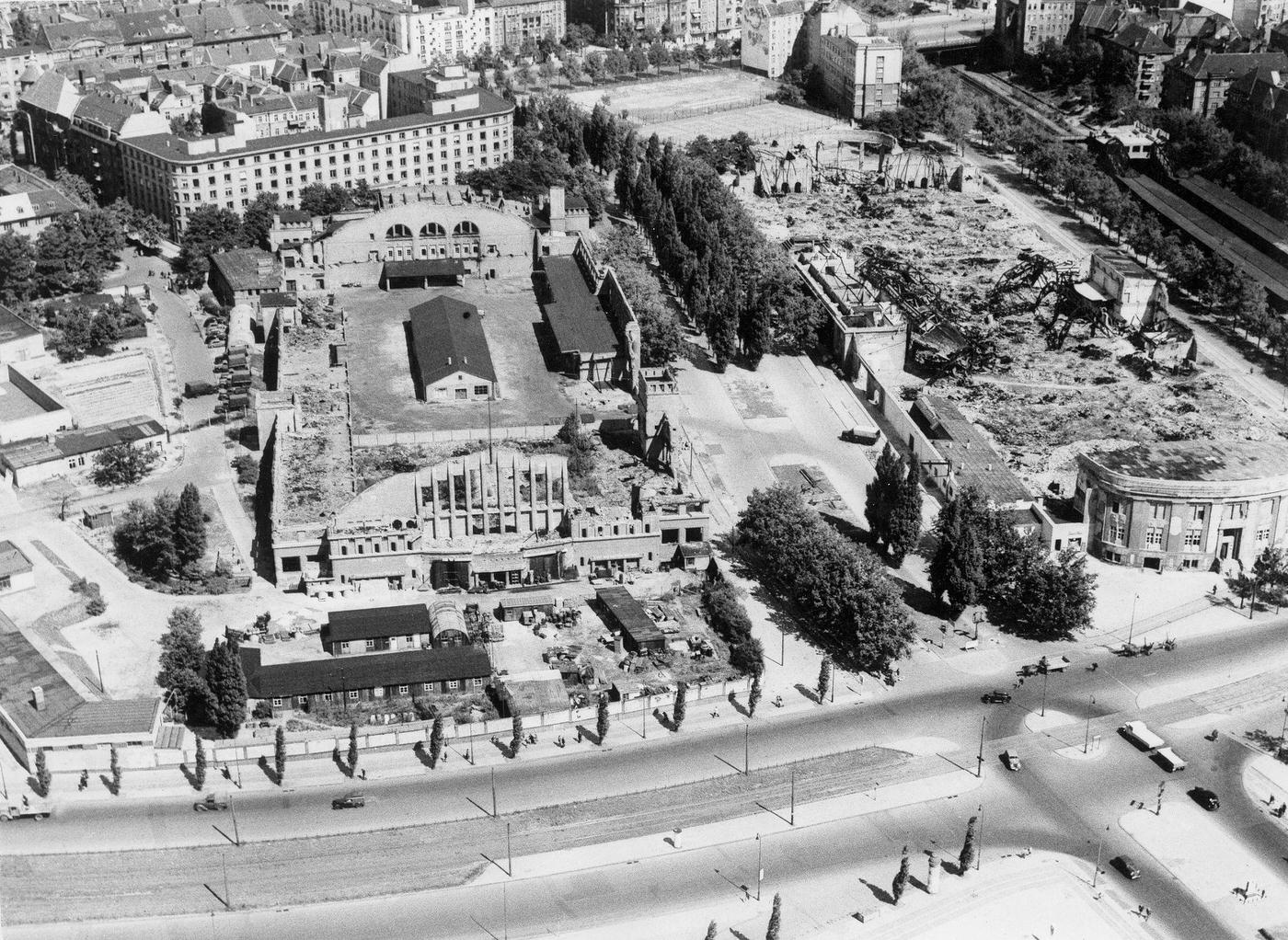
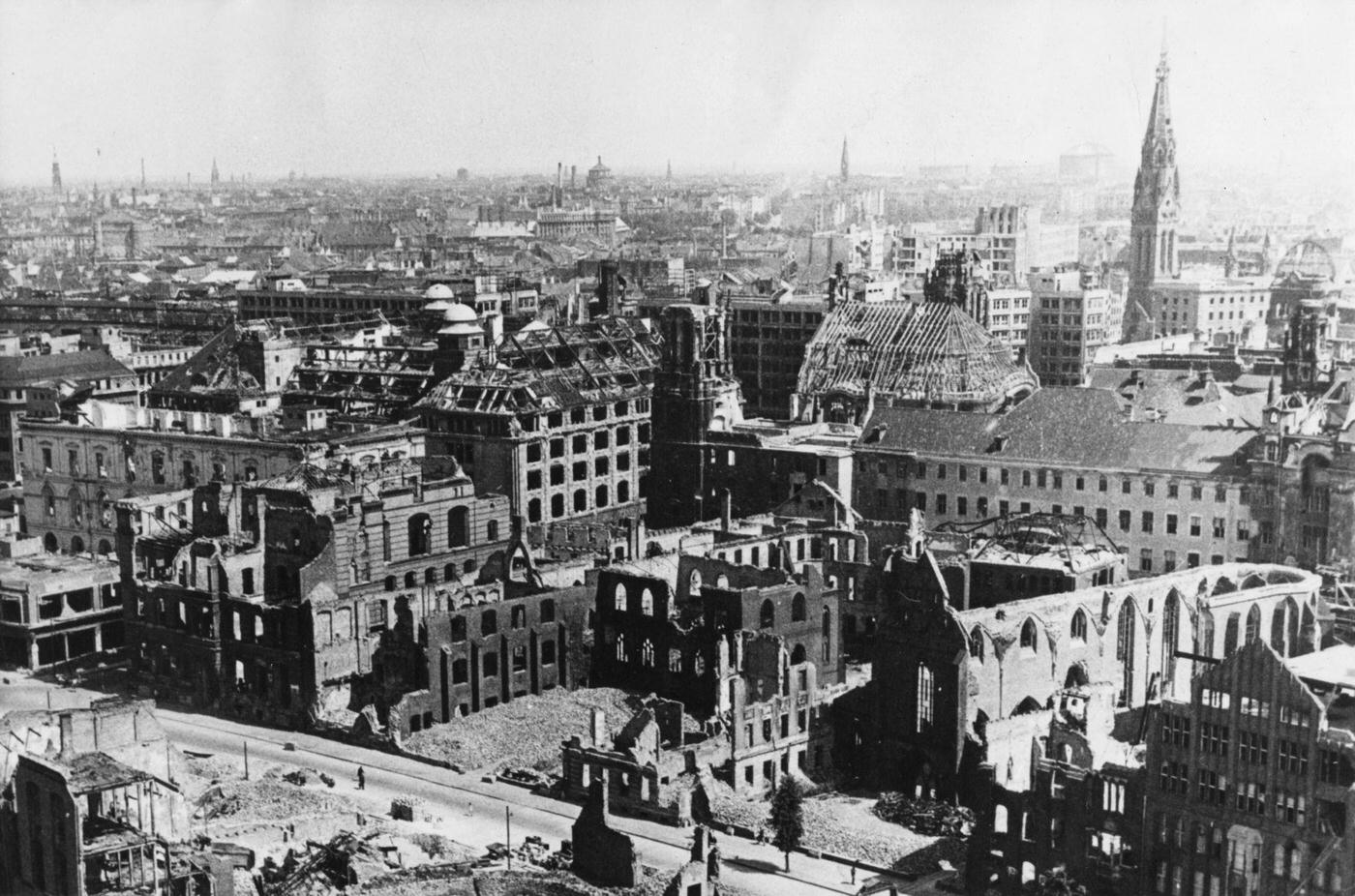
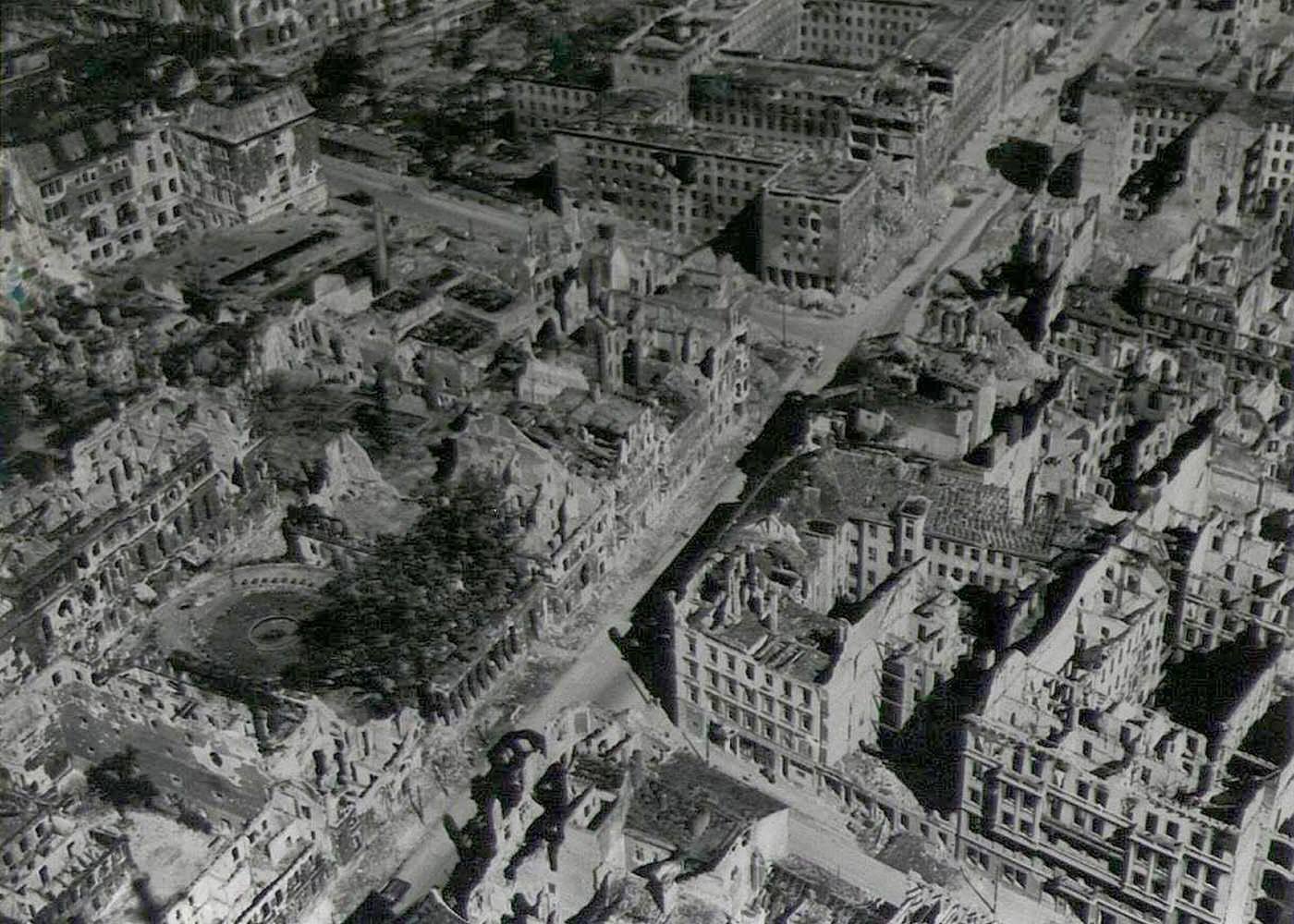
Aerial photographs taken in the months after the war ended showed the full extent of Berlin’s devastation from above. Entire city blocks were flattened. The fairground halls near the Funkturm — Berlin’s famous radio tower — were completely gutted. From the air, the city looked less like an urban center and more like a field of broken teeth.
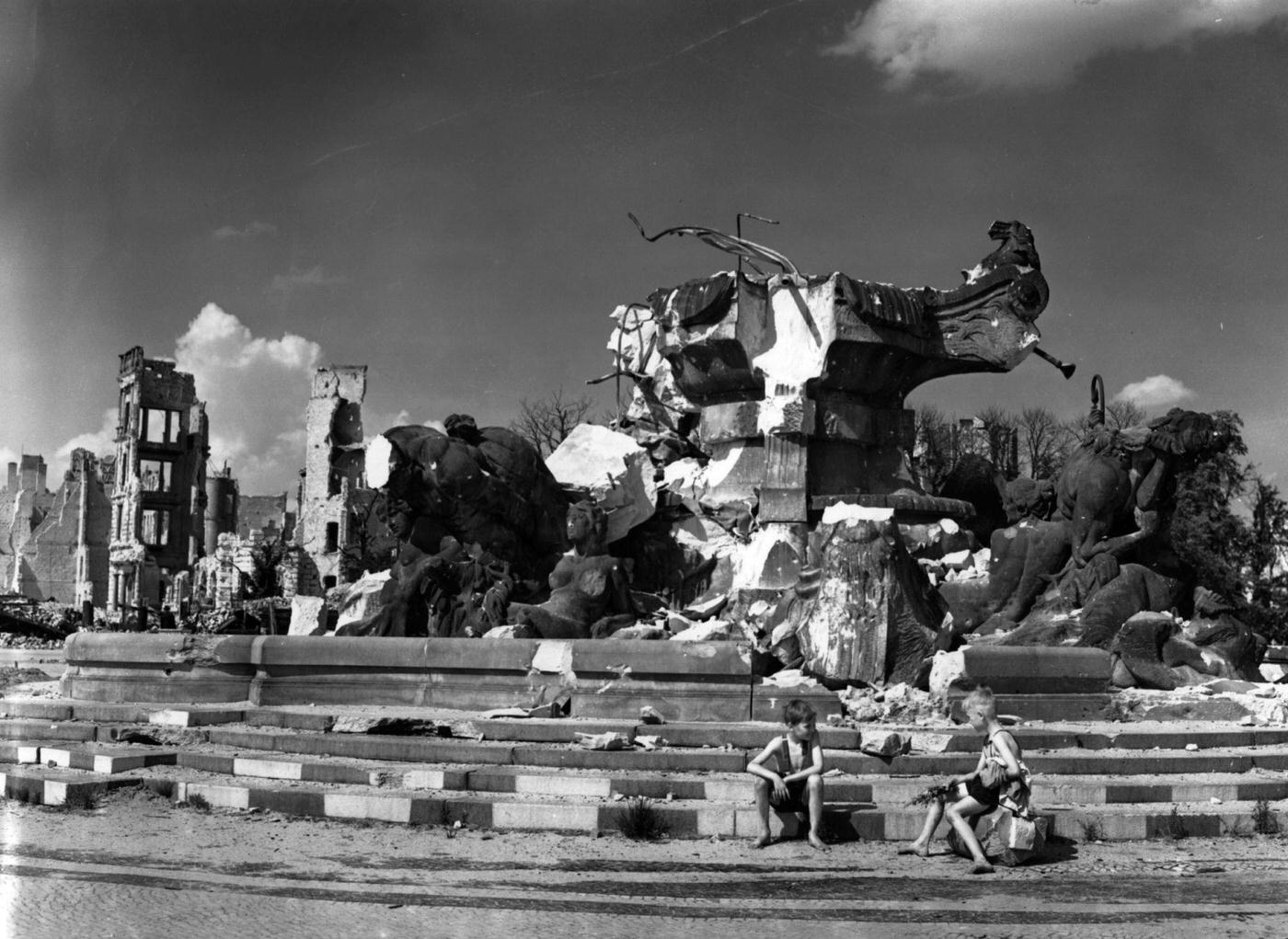
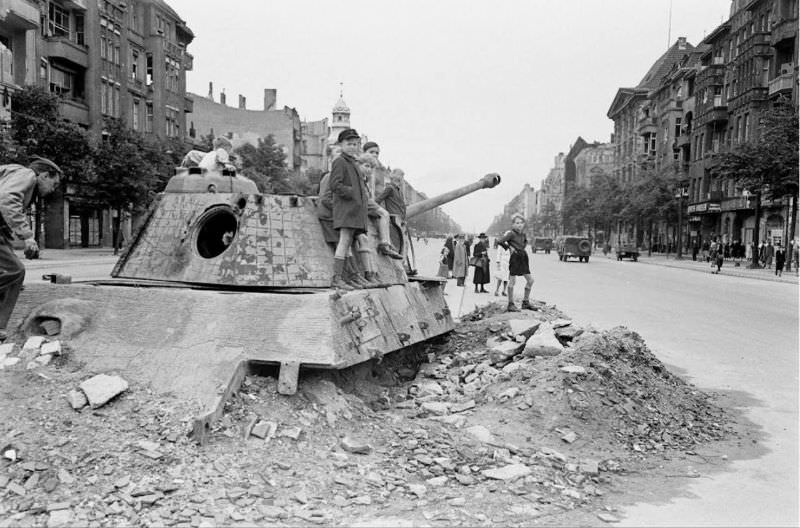
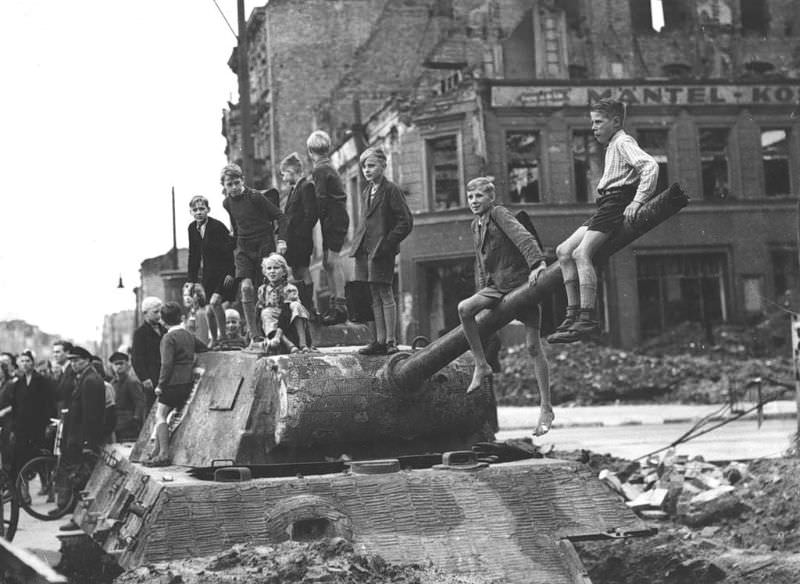
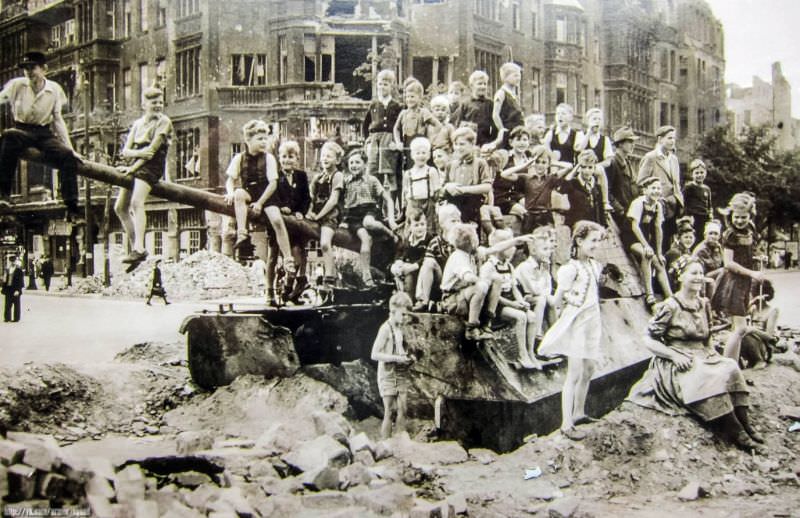
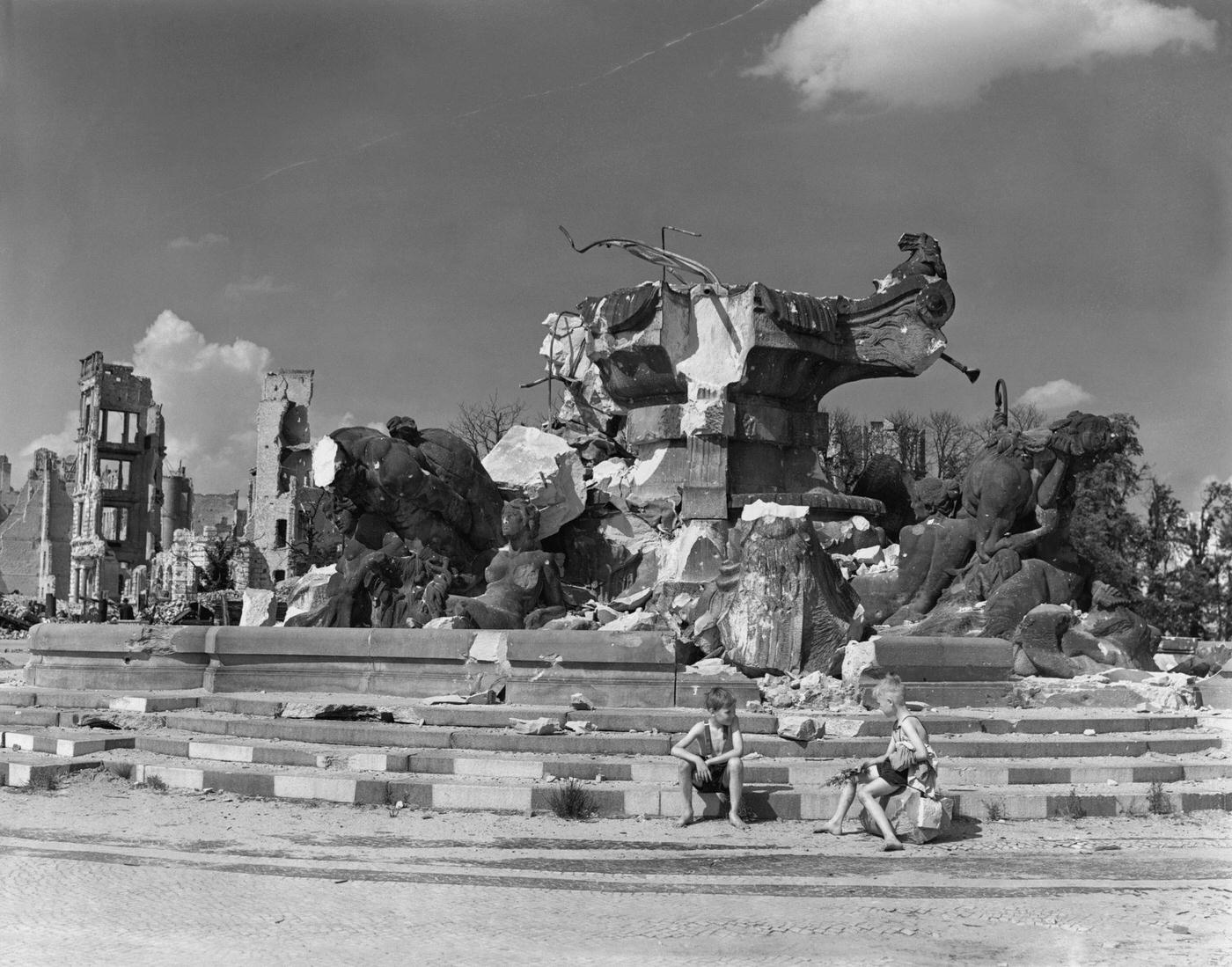
Children navigated the ruins with a matter-of-fact ease that reflected how completely war had reshaped their world. Damaged monuments, bombed-out buildings, and abandoned military hardware served as the backdrops — and sometimes the playgrounds — of their daily lives. For many Berlin children in 1945, the rubble was simply the city they knew.
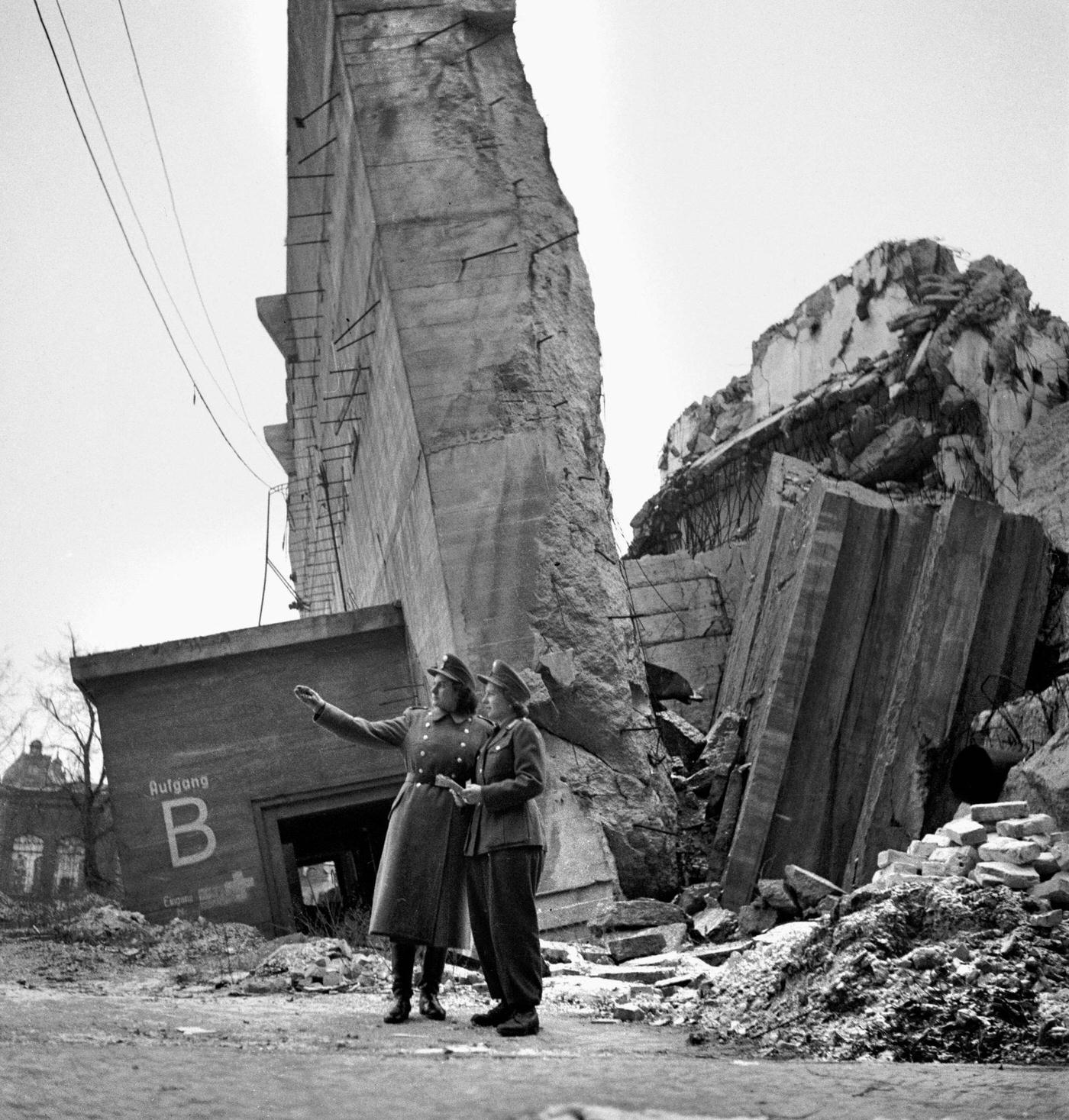
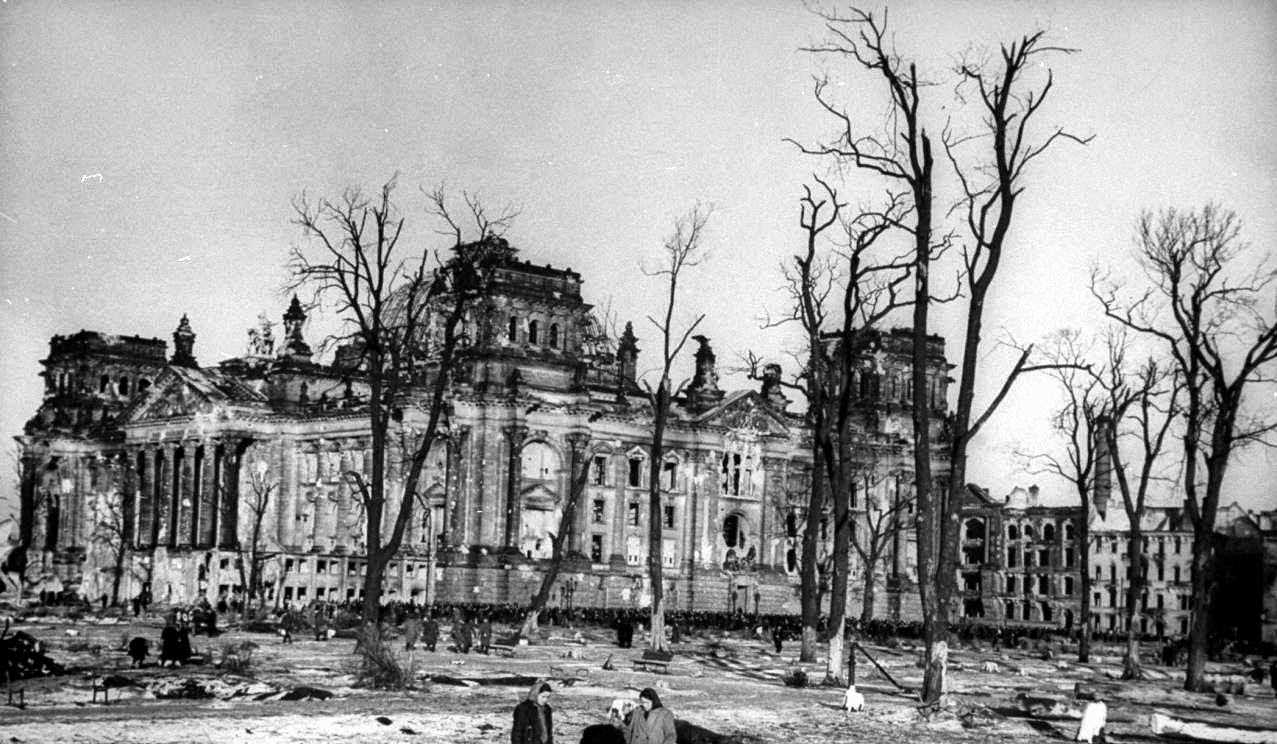
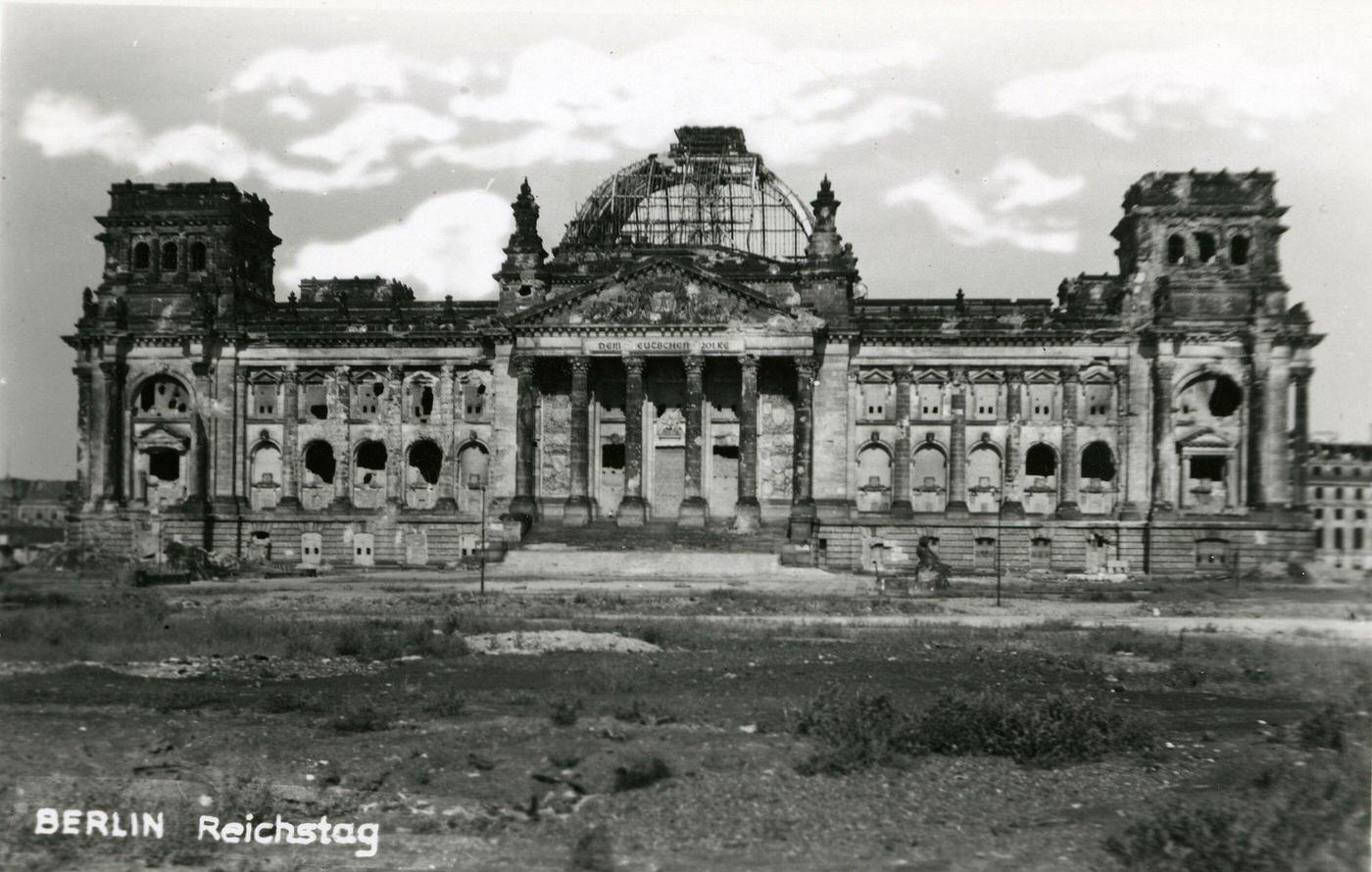
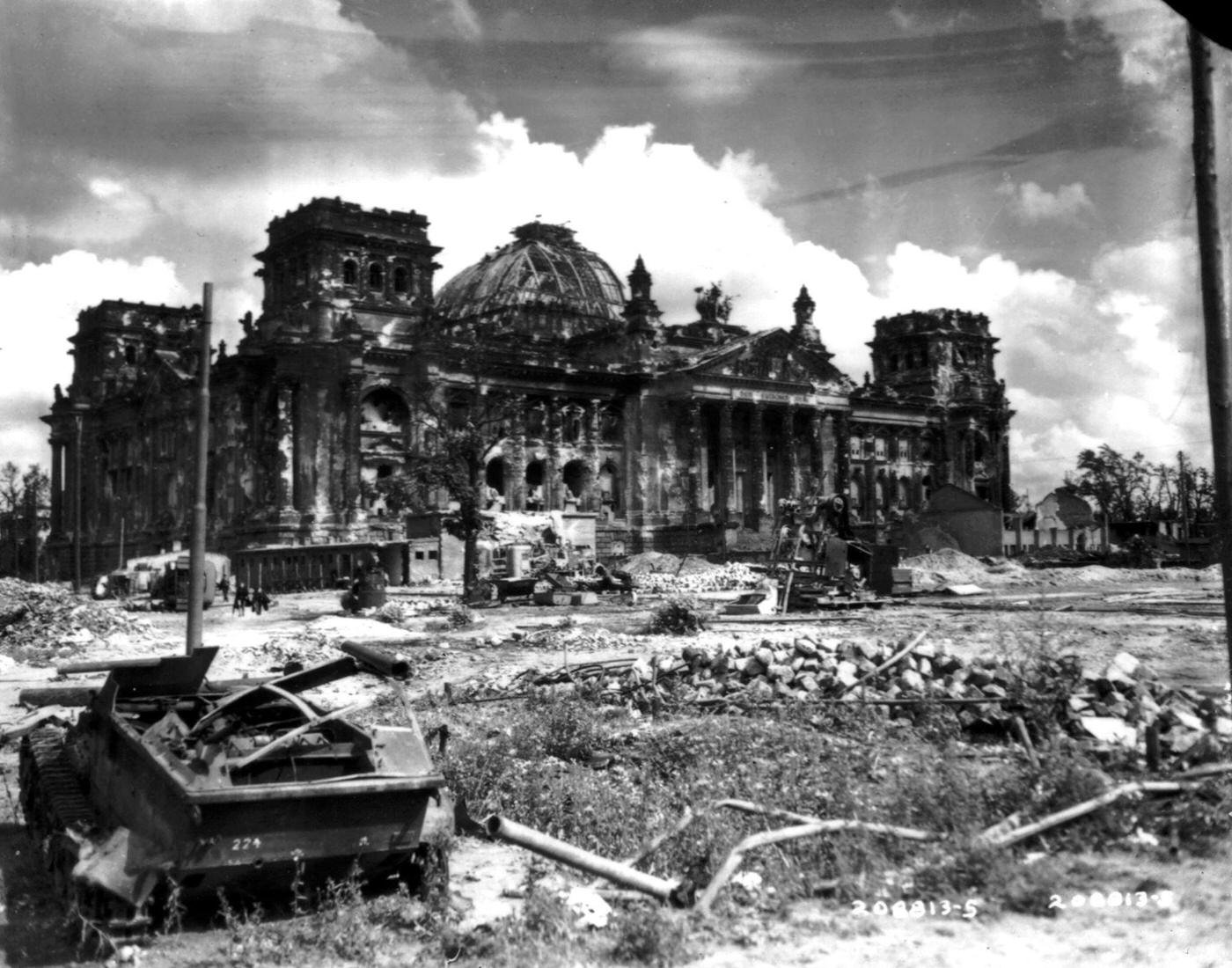
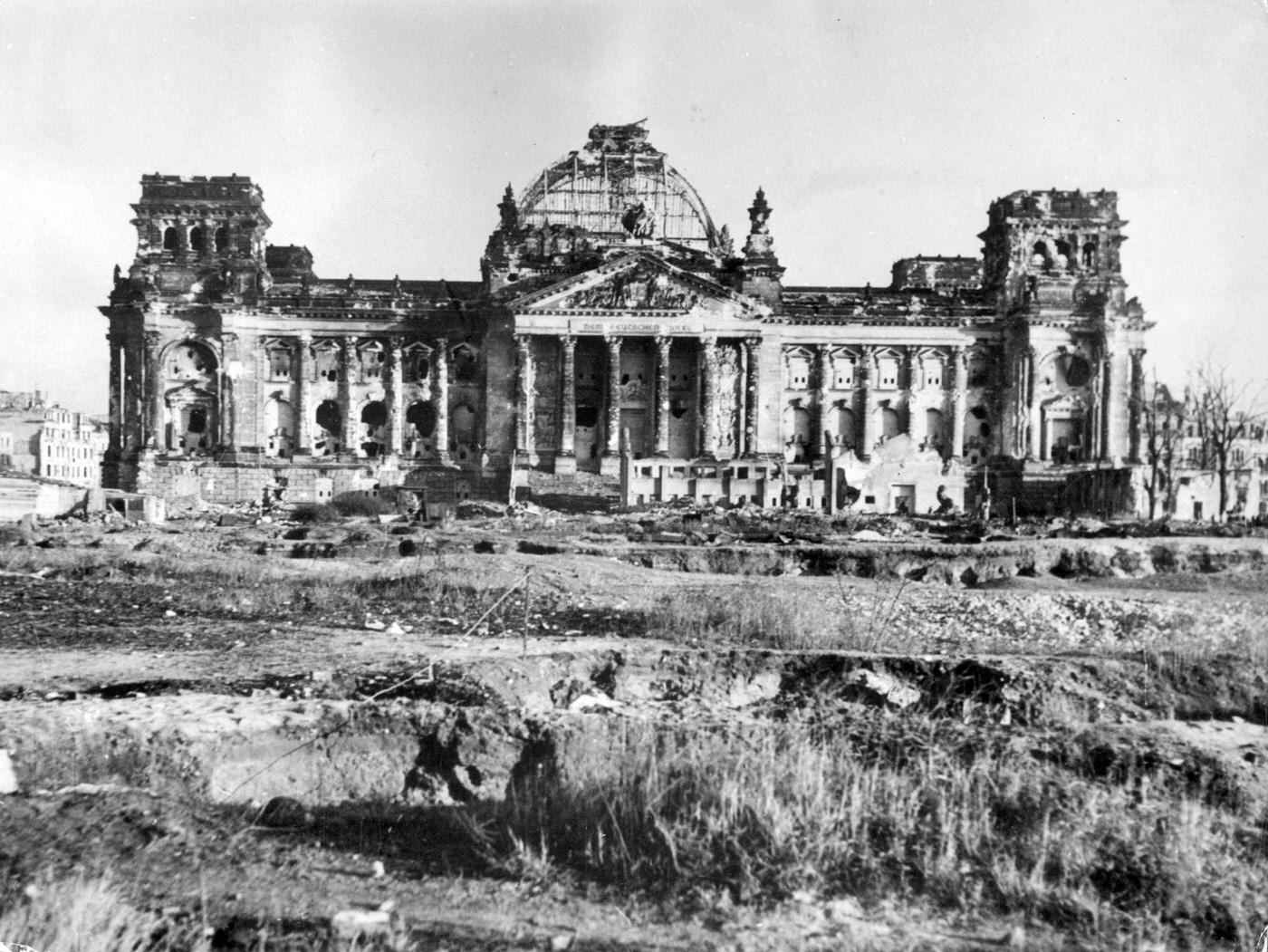
Few symbols captured the weight of Berlin’s defeat more clearly than the Reichstag. The building had already been burned in 1933, a fire the Nazi government used as a pretext to seize emergency powers. By 1945, it had been further wrecked by shelling and close-quarters combat. Soviet soldiers famously raised their flag over its shell on May 2, 1945, marking the fall of the city.
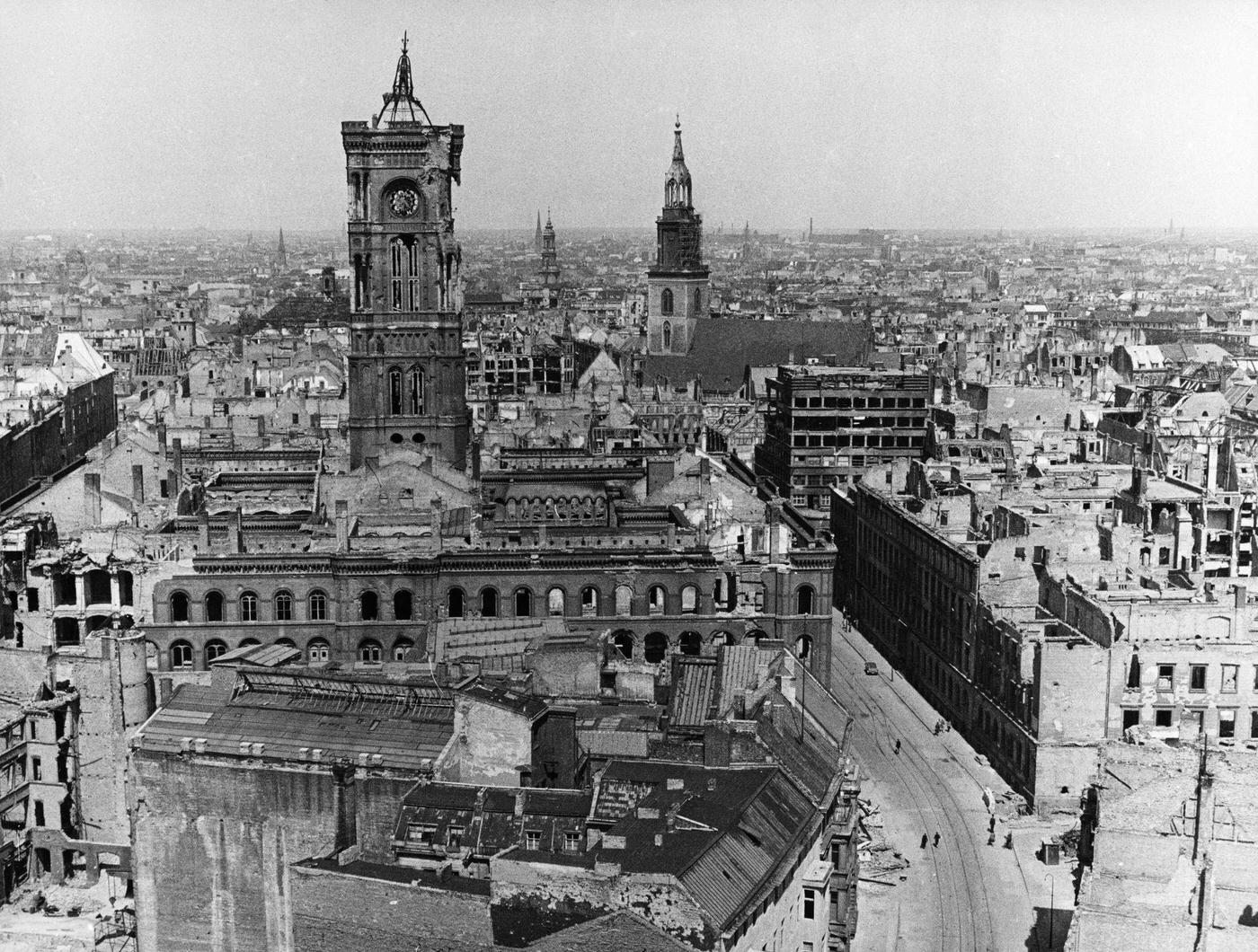
Berlin’s Red City Hall — the Rotes Rathaus — took heavy bomb damage as well. The building, which had served as the seat of city government since the 1860s, was left structurally compromised. Its distinctive red brick facade, scarred by explosions and fire, became one of many reminders that no institution or building had been exempt from the war’s reach.
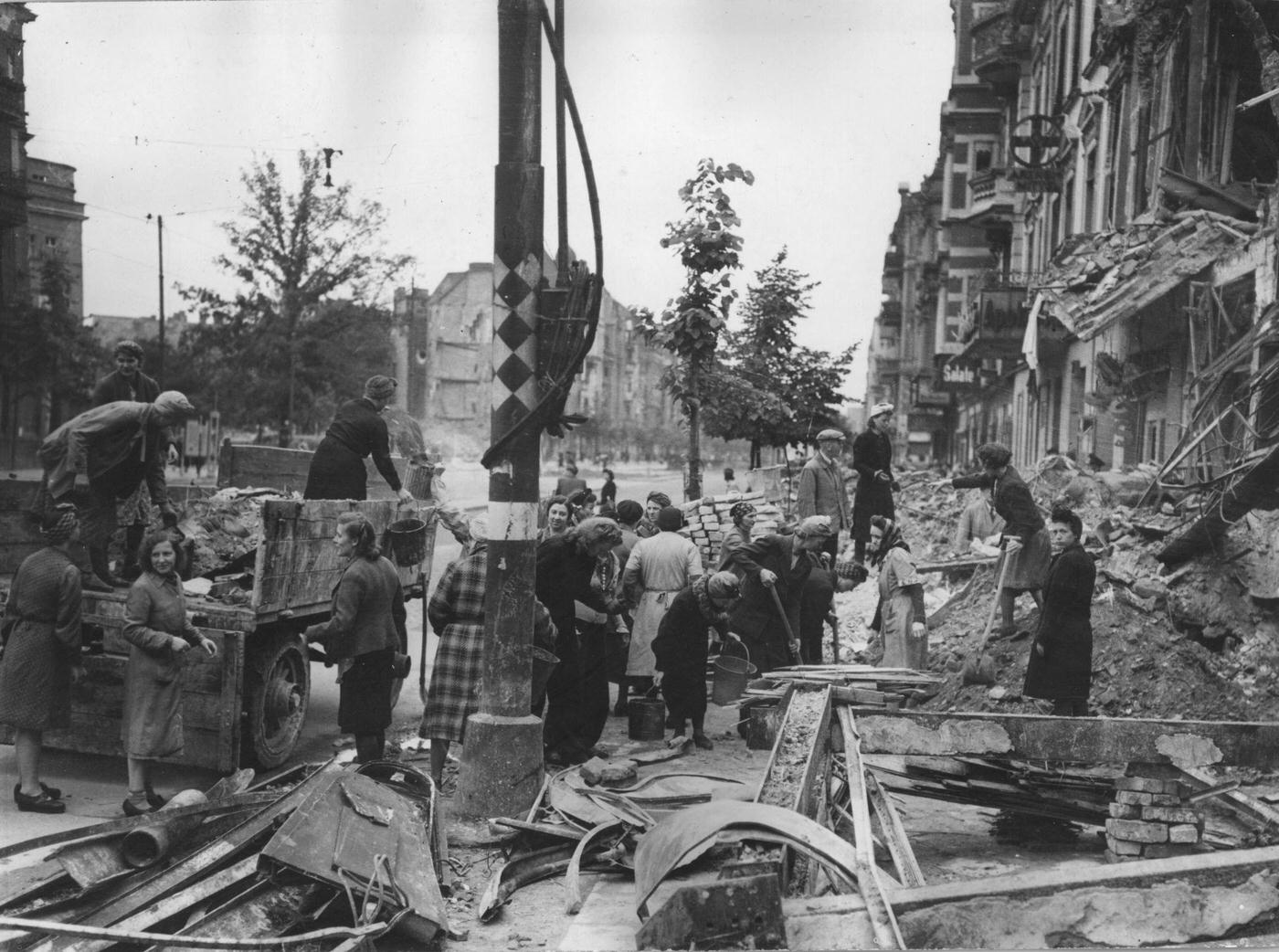
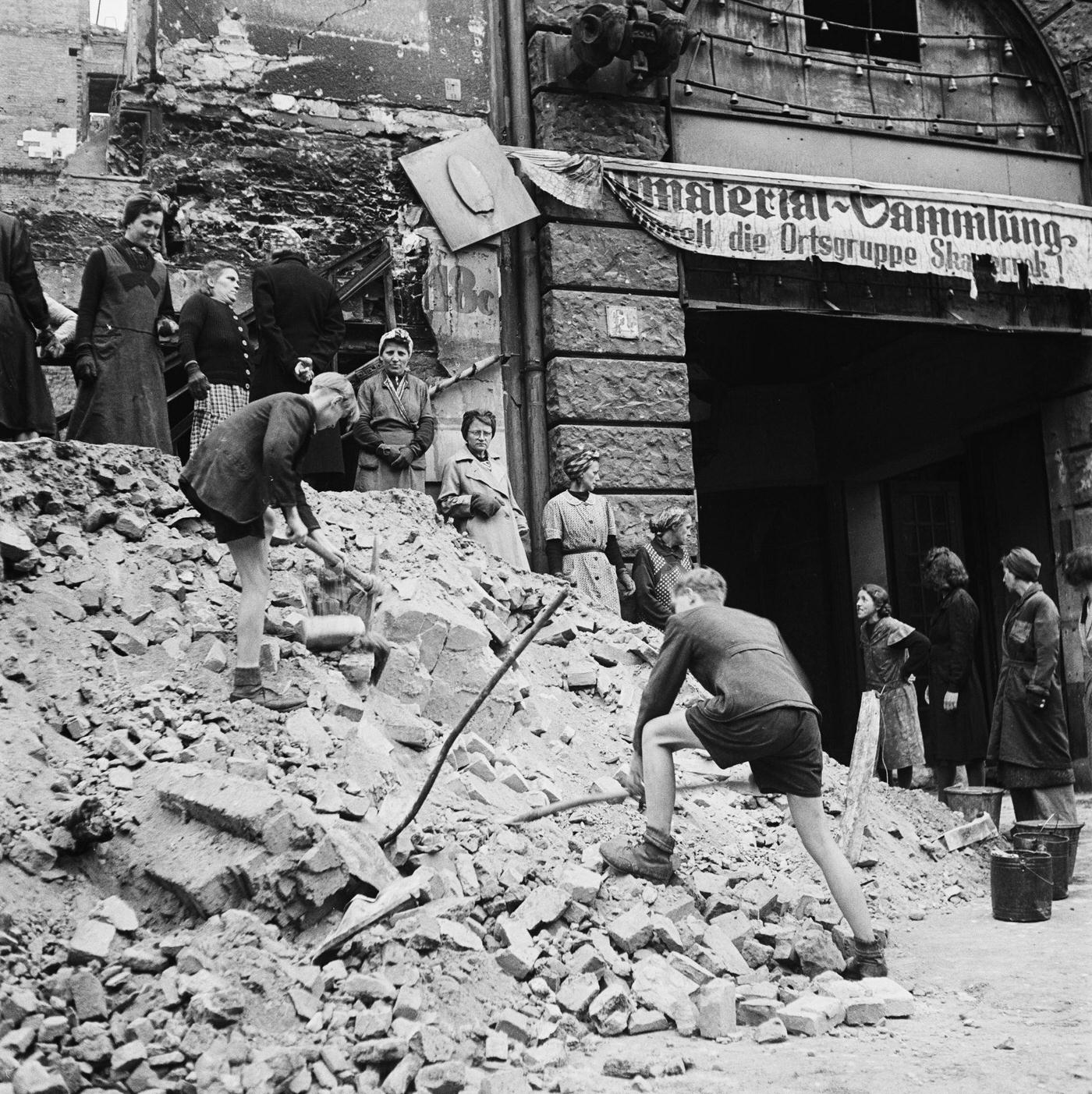
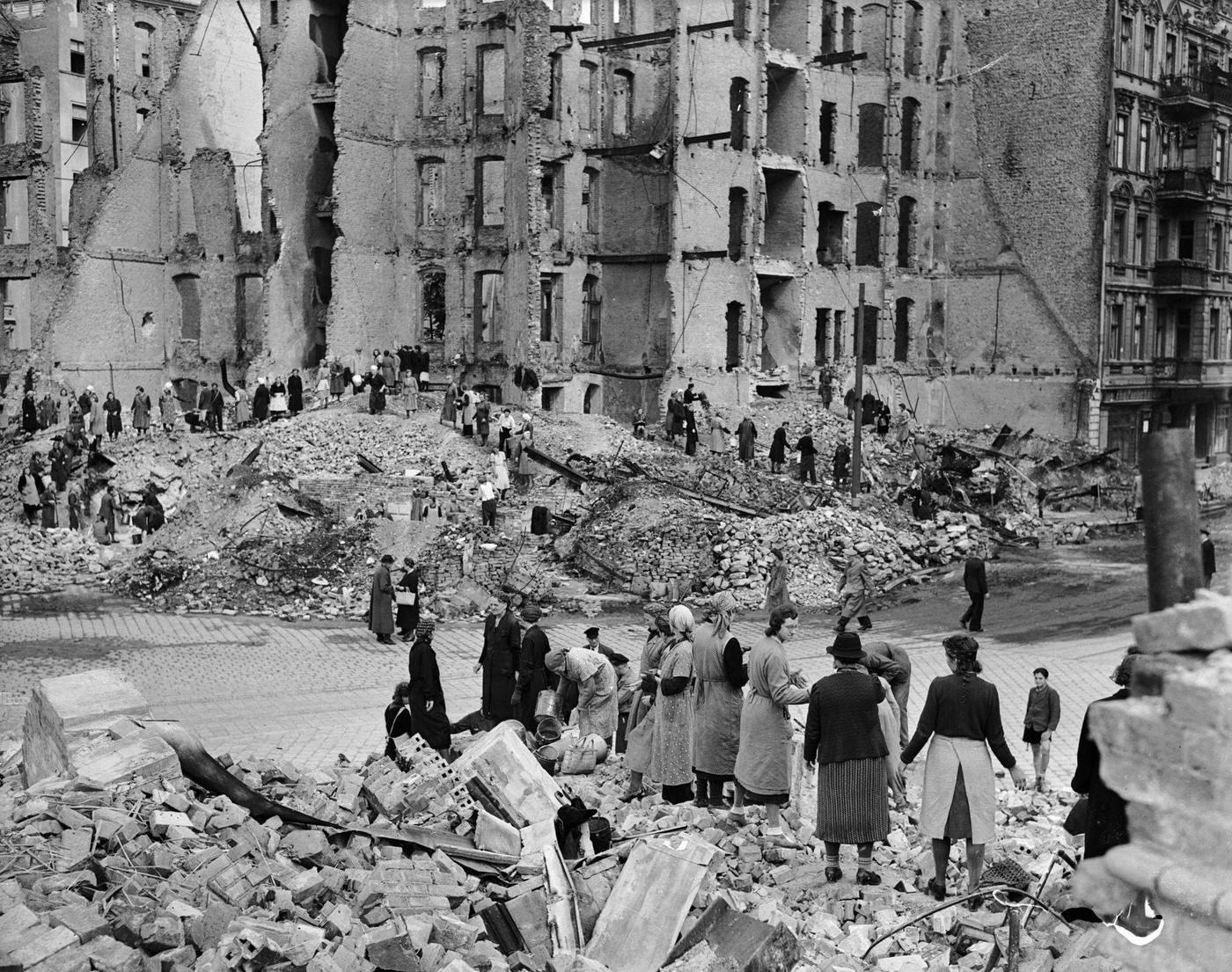
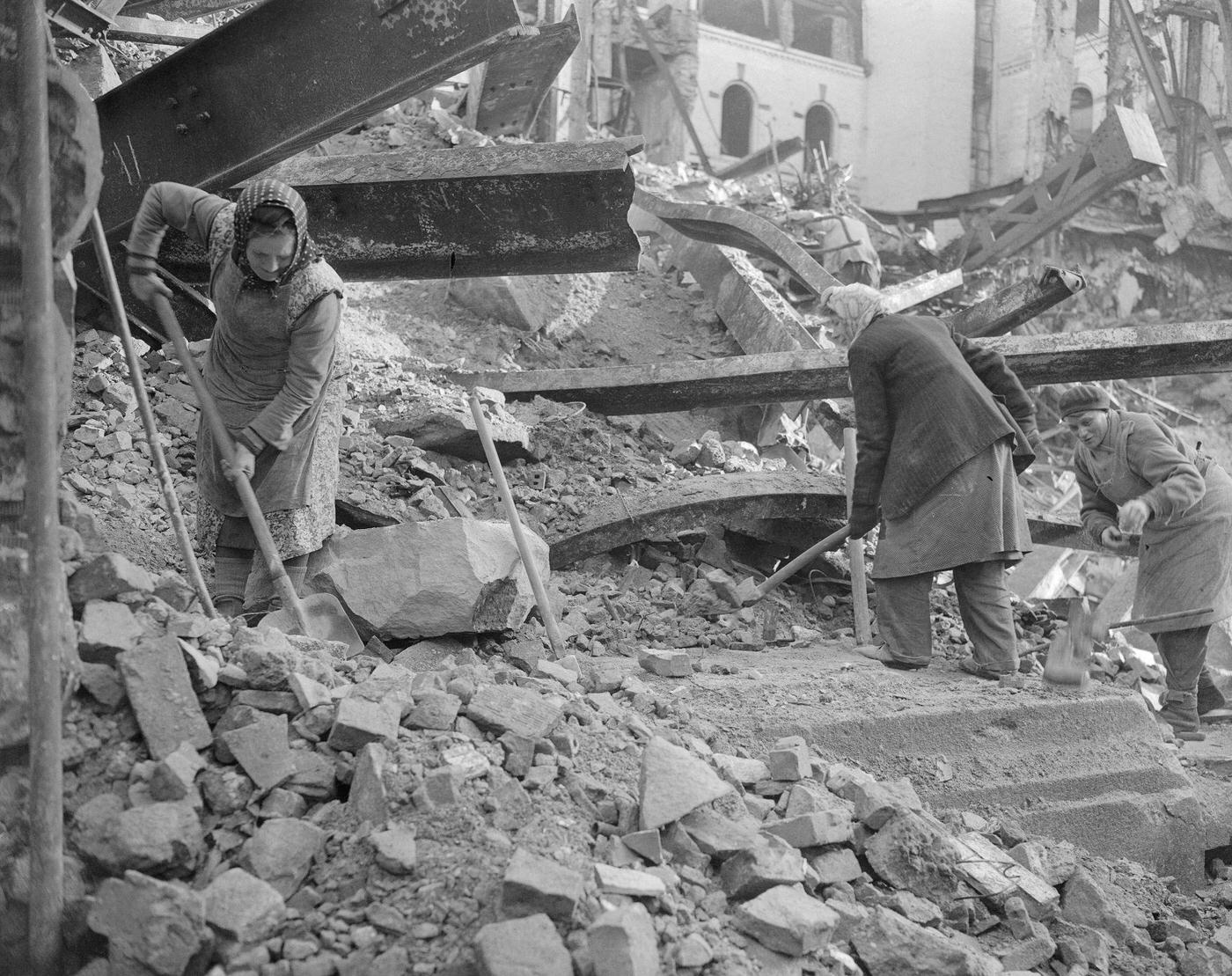
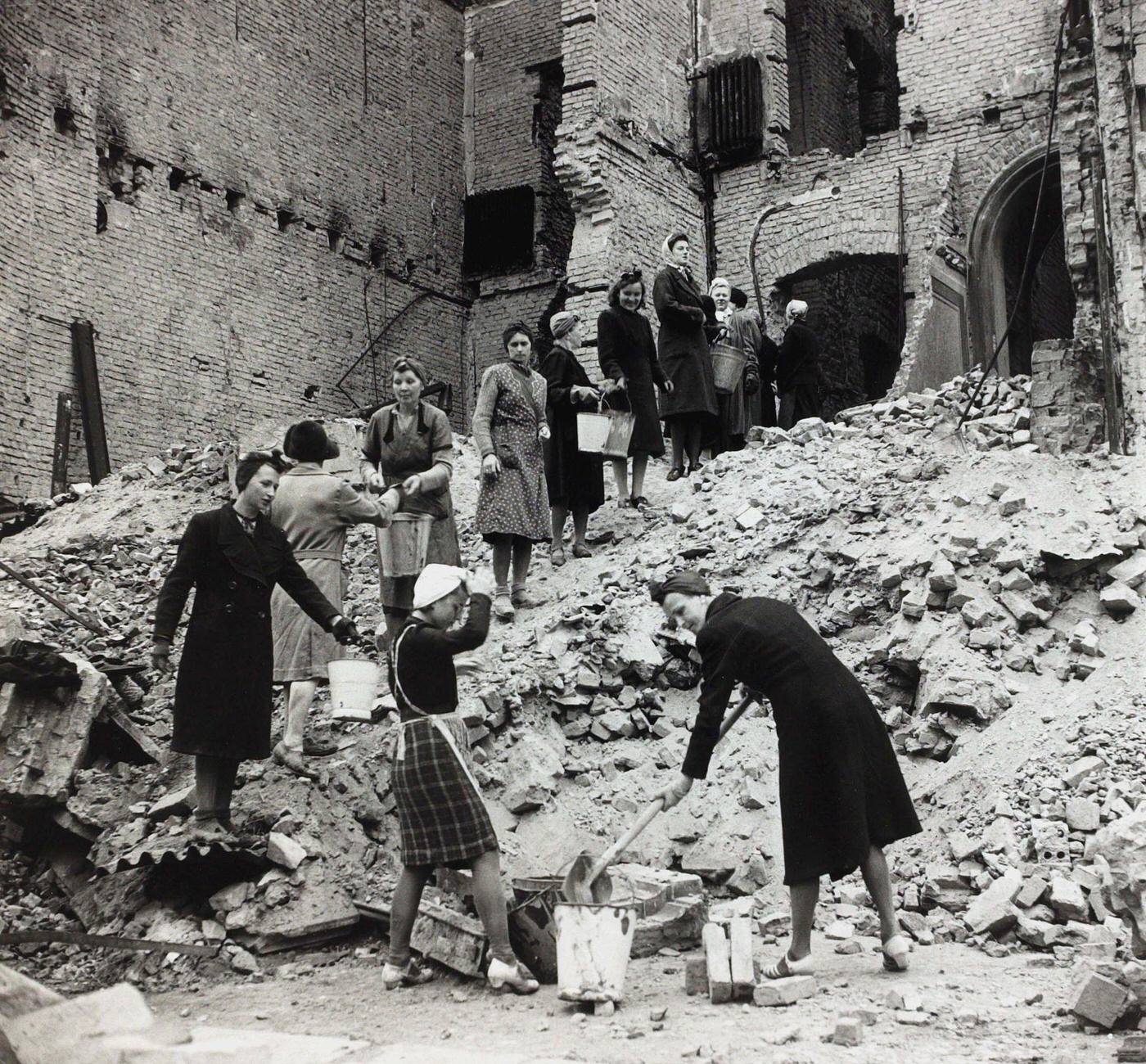
The task of clearing Berlin’s rubble was immense. Estimates placed the total volume of debris in the city at around 55 to 75 million cubic meters. Getting the city functional again required removing that rubble before any serious rebuilding could begin. This work fell, in large part, to the Trümmerfrauen — the rubble women.
With a large portion of Berlin’s male population dead, imprisoned, or missing, women made up the bulk of the city’s post-war labor force. Organized into work brigades, they formed human chains to pass broken bricks from hand to hand. They cleaned usable bricks for reuse in construction and carted rubble to designated dumping sites that would eventually become artificial hills across the city.
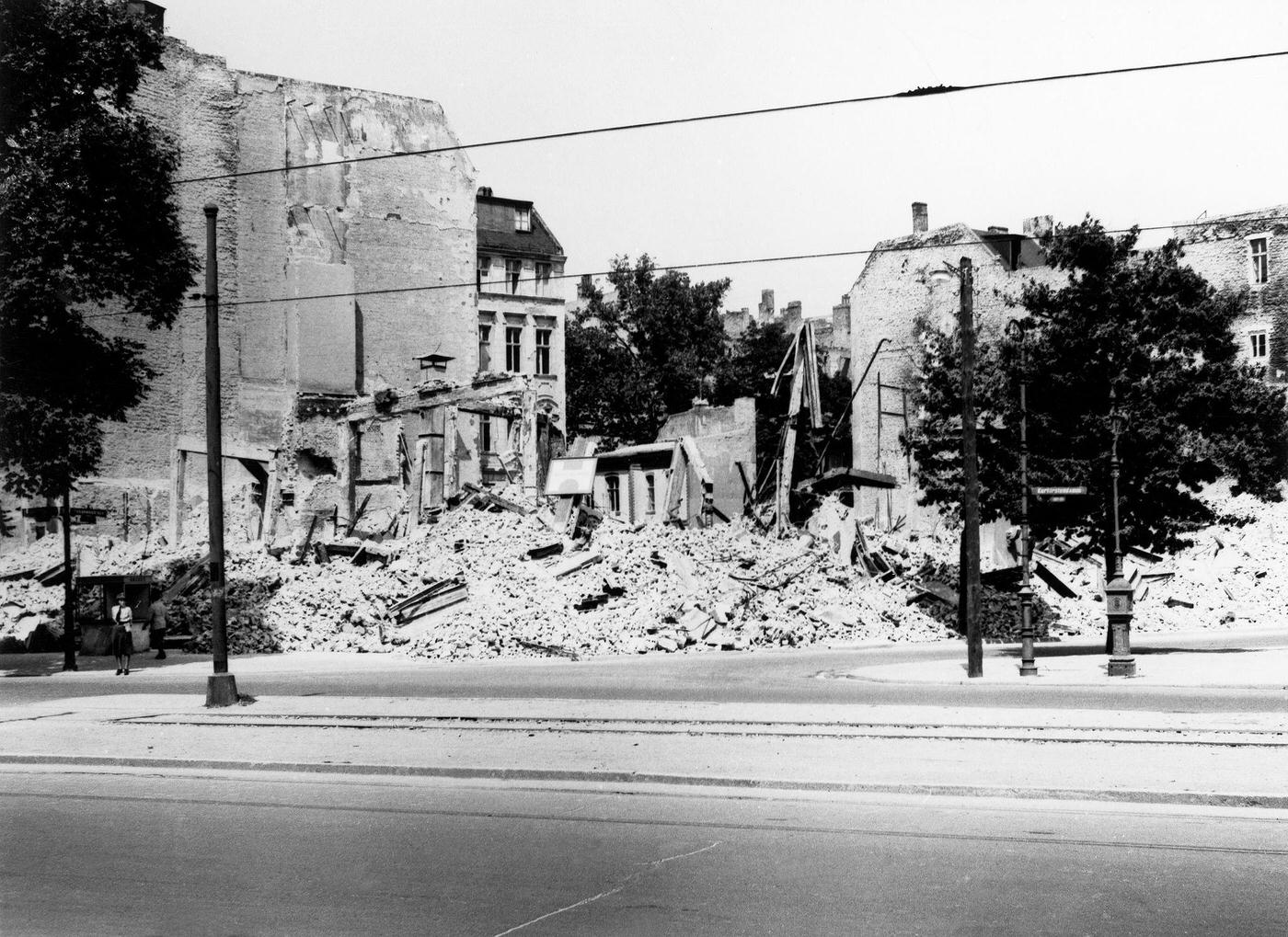
The Allied division of Berlin into occupation sectors — American, British, French, and Soviet — meant that recovery efforts were organized separately across different parts of the city. British forces arrived in July 1945 to take up their positions in the western sector. Each zone had its own administrative structure, supply chains, and reconstruction priorities, which produced markedly different results on either side of the internal dividing lines.
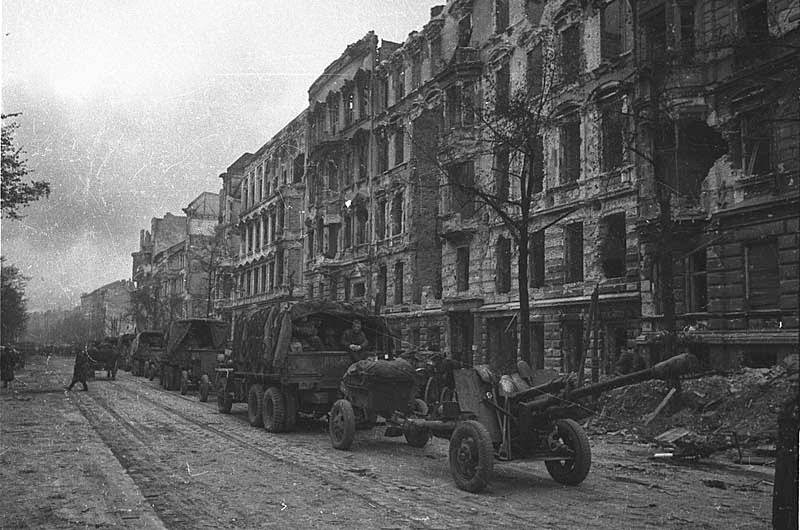
British army units moved into the city in an organized convoy, taking stock of what they had inherited. The sector they occupied included large sections of western Berlin, including the heavily damaged Kurfürstendamm shopping boulevard and surrounding residential areas. Their arrival formalized the Allied occupation structure that would govern Berlin for the next four decades.
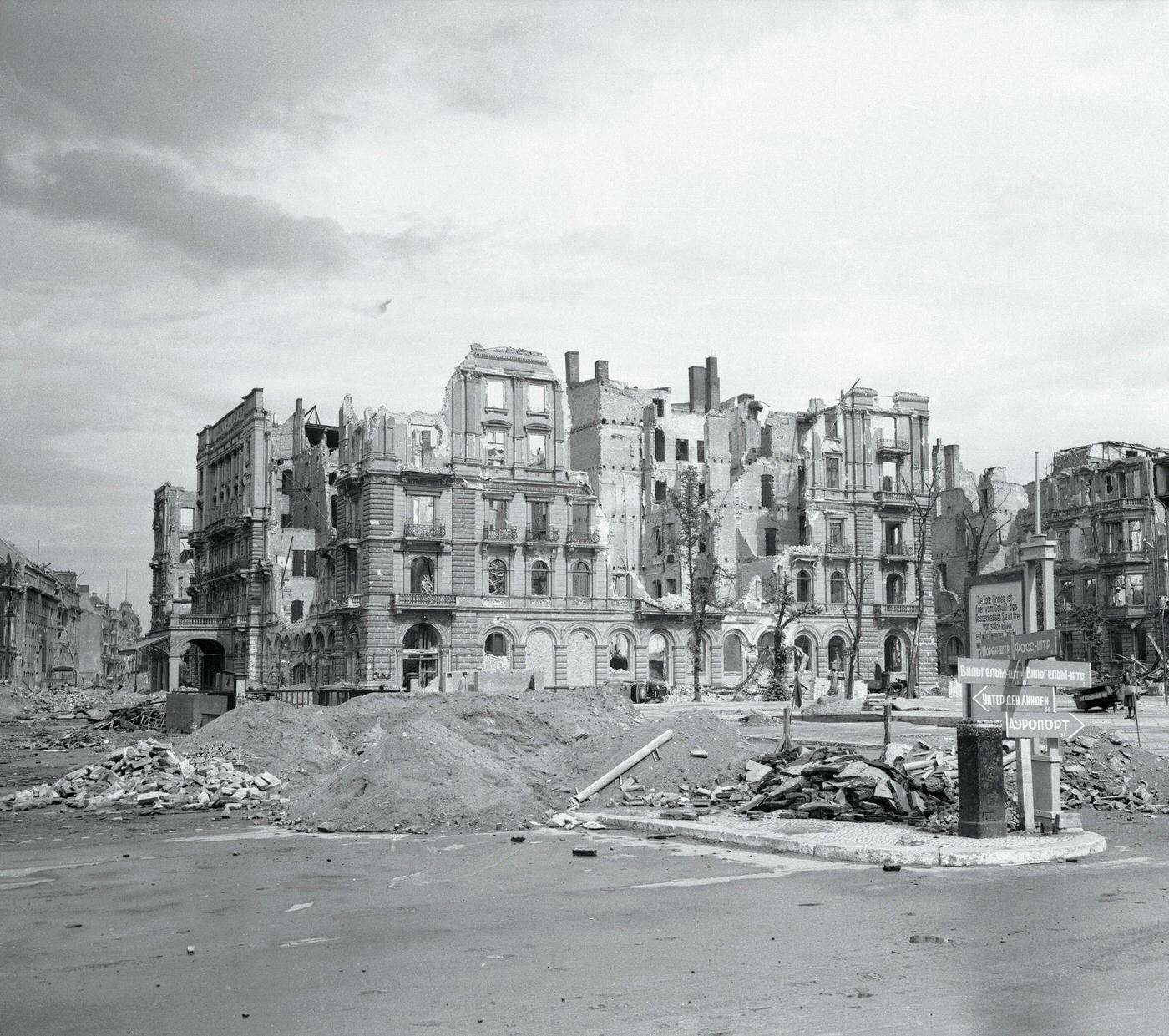
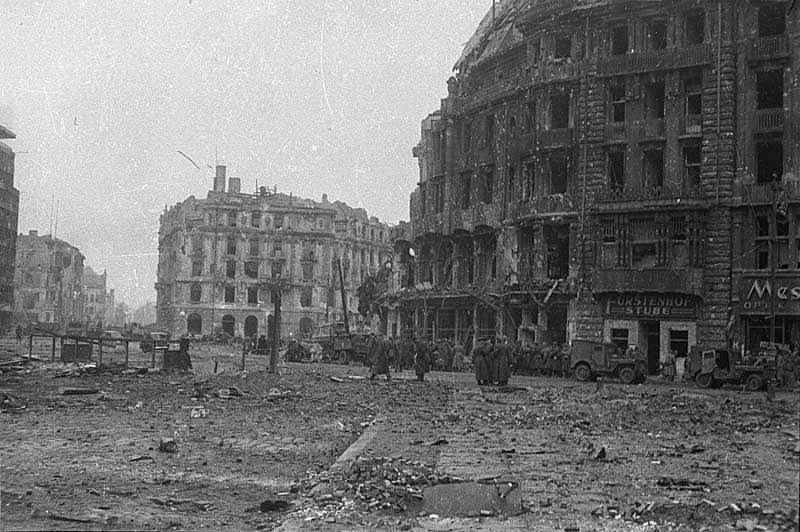
The Kaiserhof Hotel had been closely associated with the Nazi leadership — Hitler had used it as his Berlin base before coming to power in 1933. By 1945, it lay in ruins like much of the surrounding area near the Reich Chancellery. Soviet forces had stenciled signs in Russian across what remained of its walls. Nearby, the Reichsbank building — Germany’s central bank — was reduced to a pile of rubble close to Potsdamer Platz.
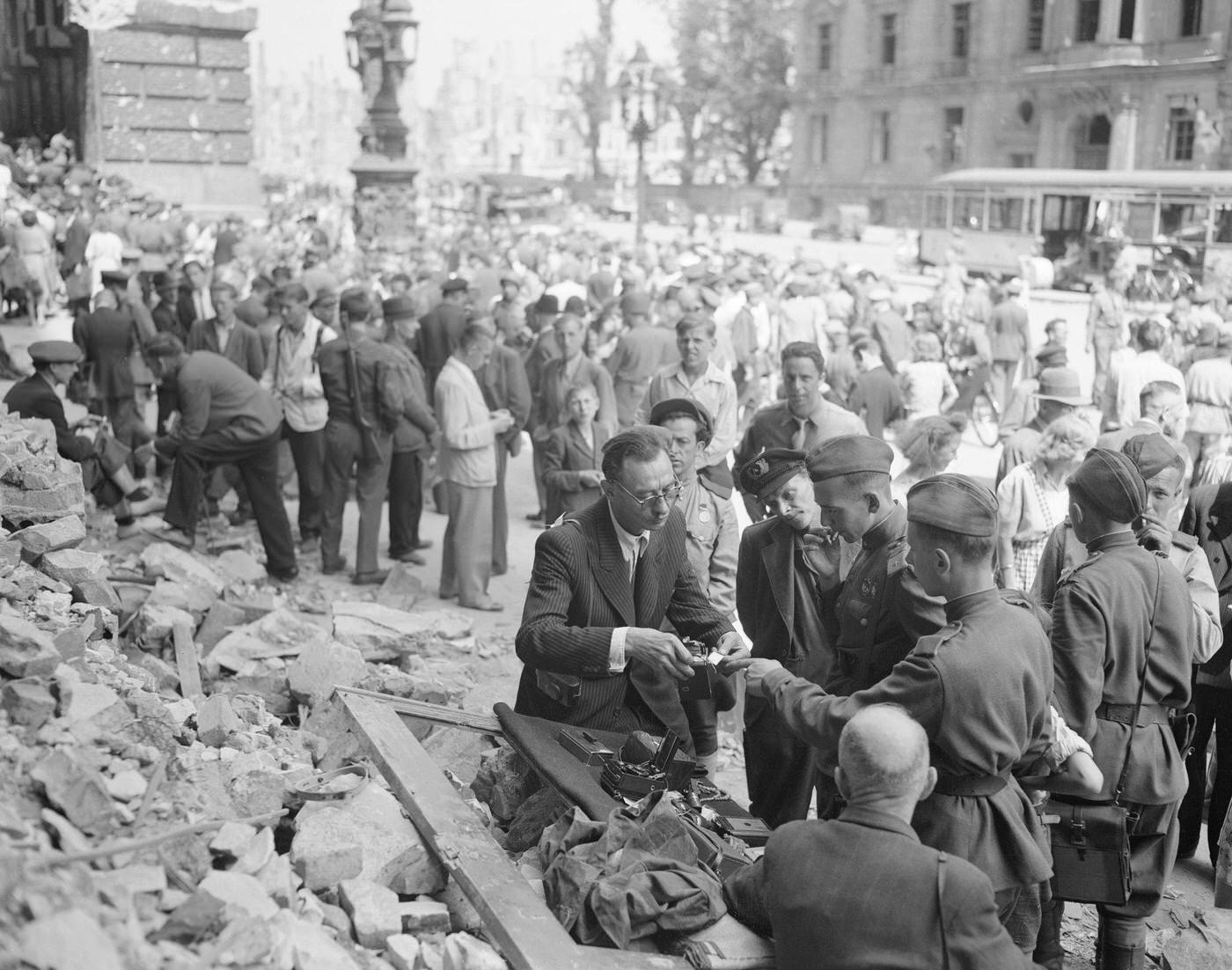
With the formal economy shattered and official food rations barely sufficient to sustain life, a thriving black market took hold across the city. German civilians traded cigarettes, jewelry, and whatever goods they had left with Allied soldiers, who had access to items ordinary Berliners could not get. Cigarettes functioned as currency. Deals were struck in the open, in streets still lined with bombed-out buildings.
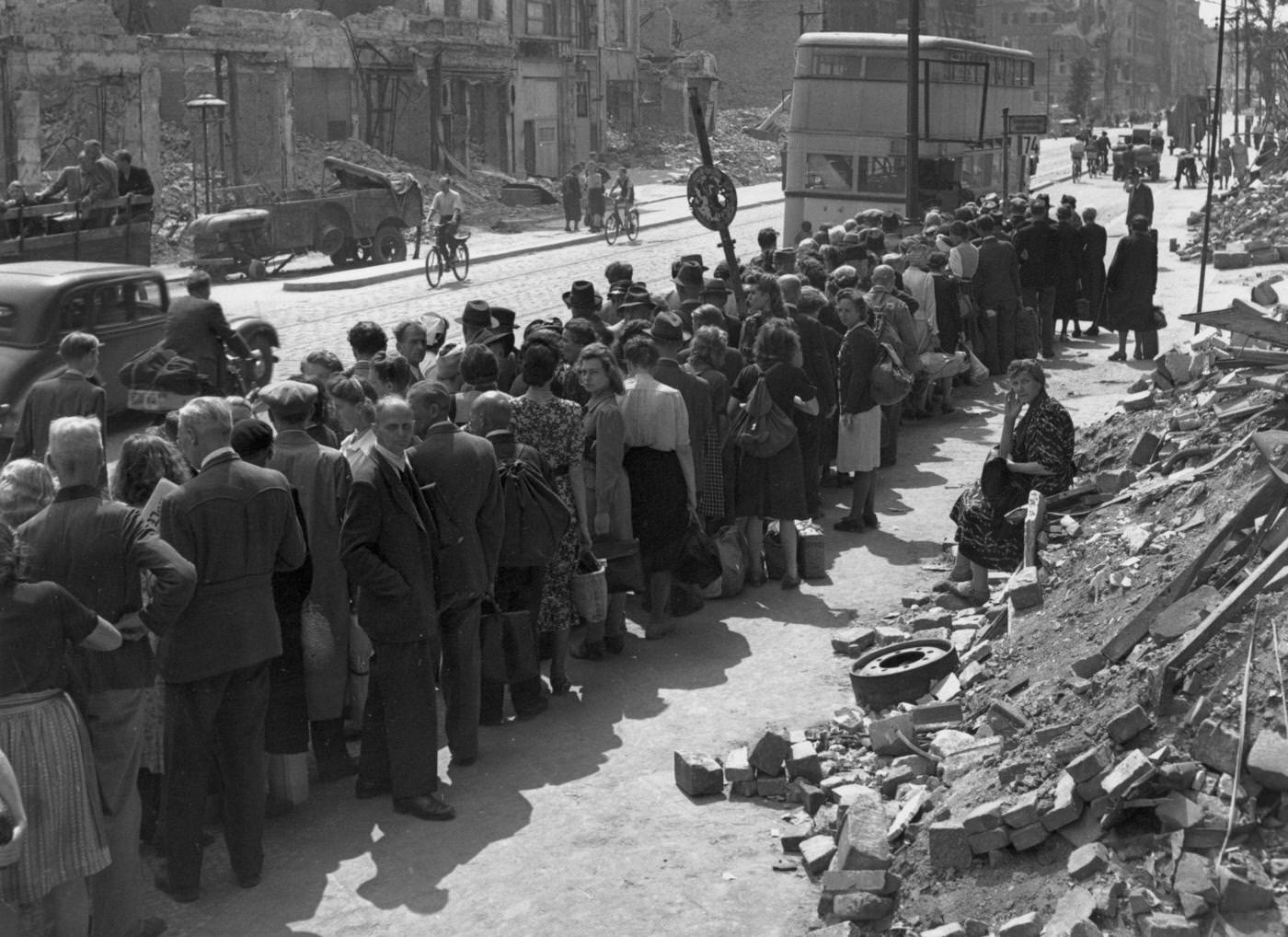
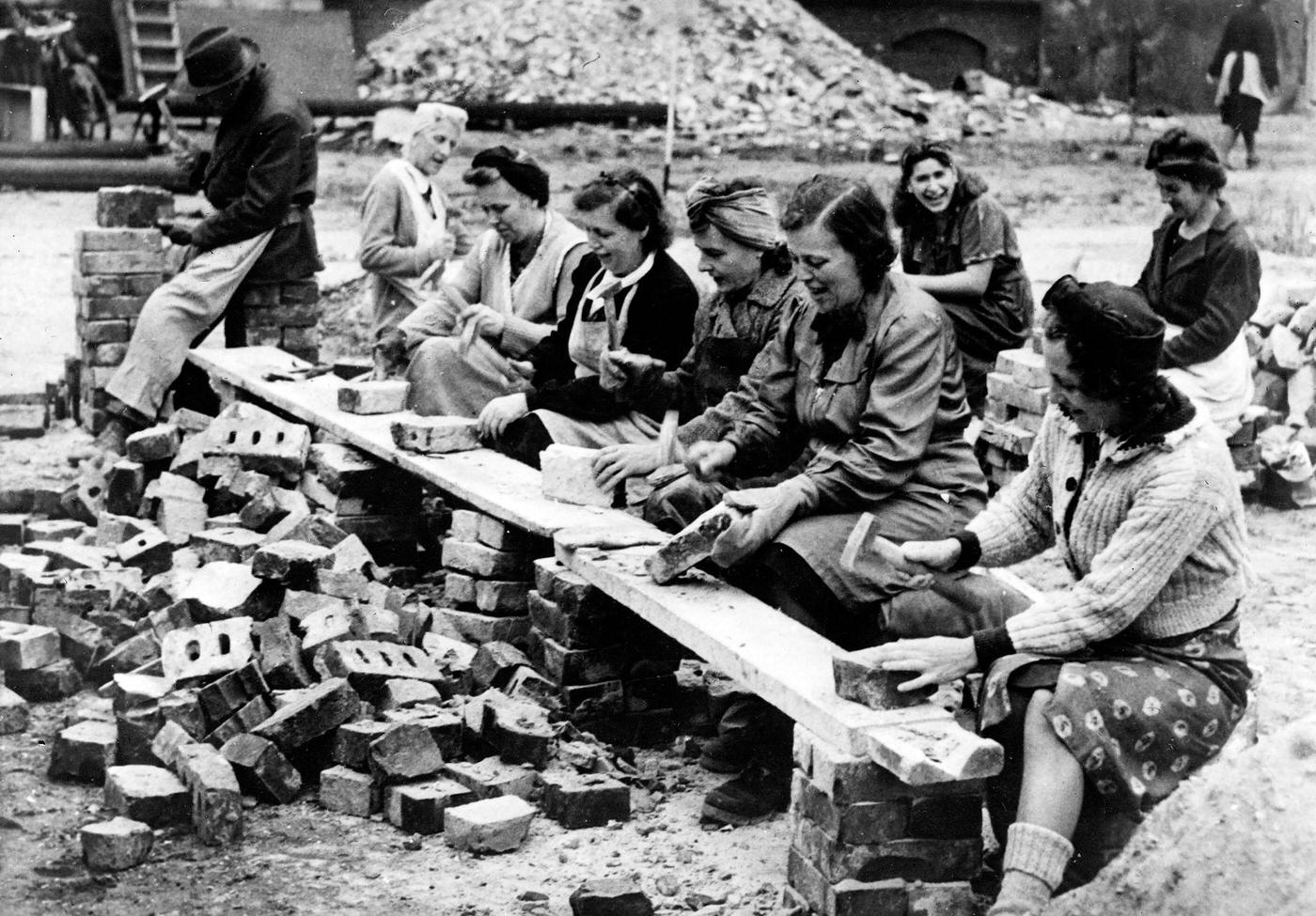
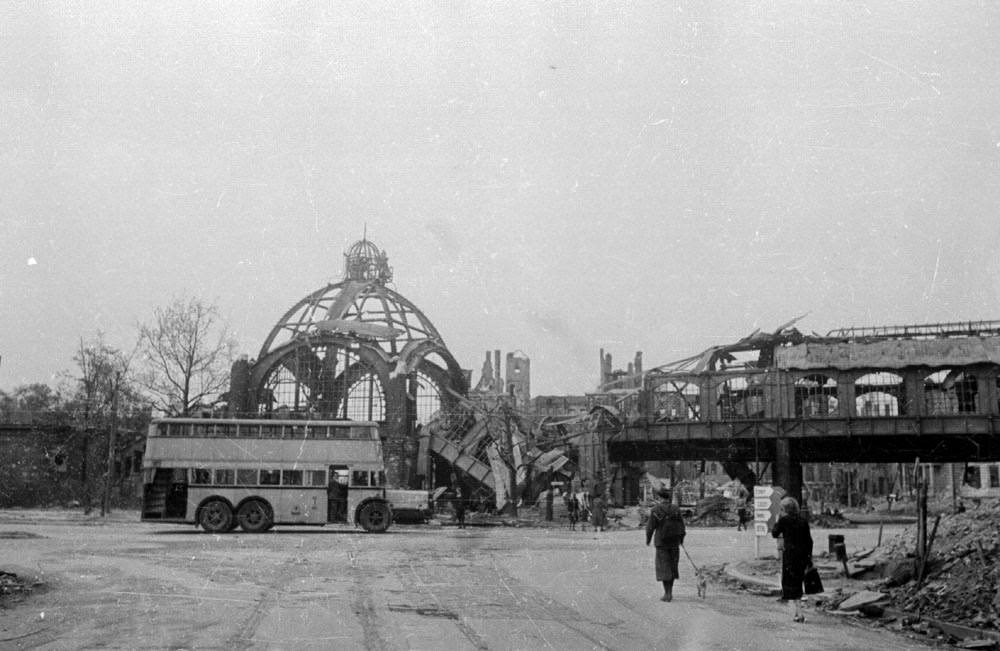
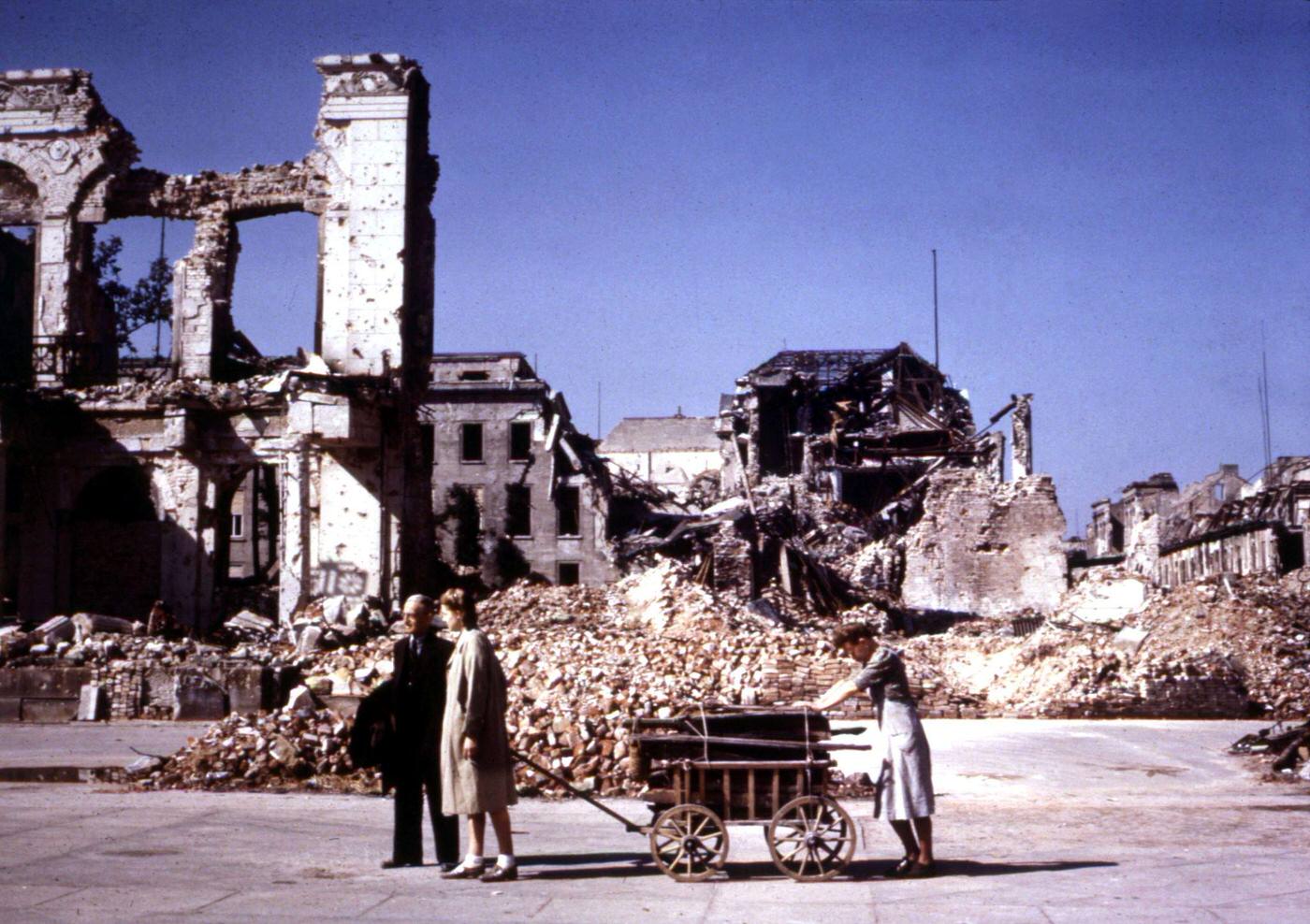
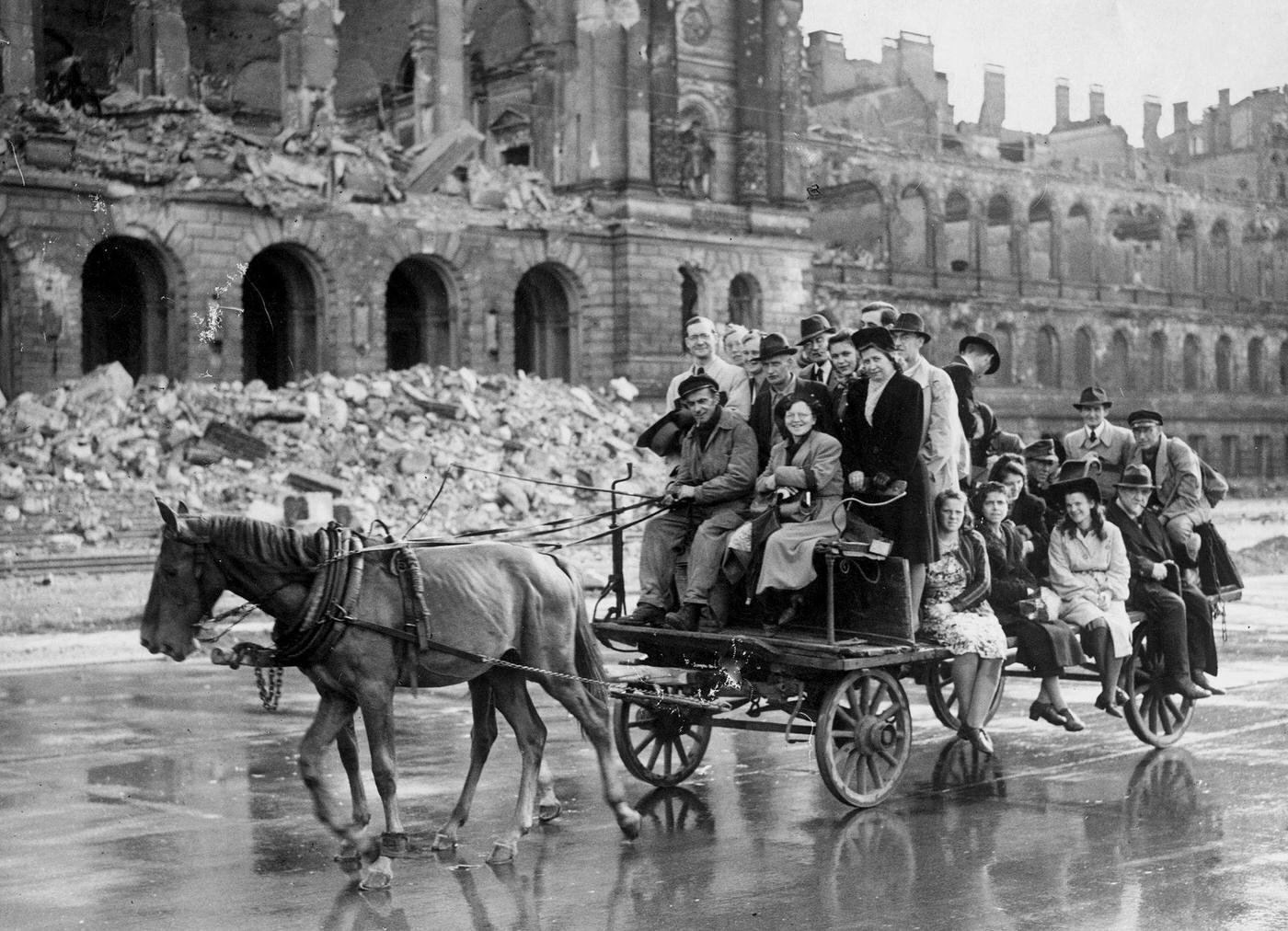
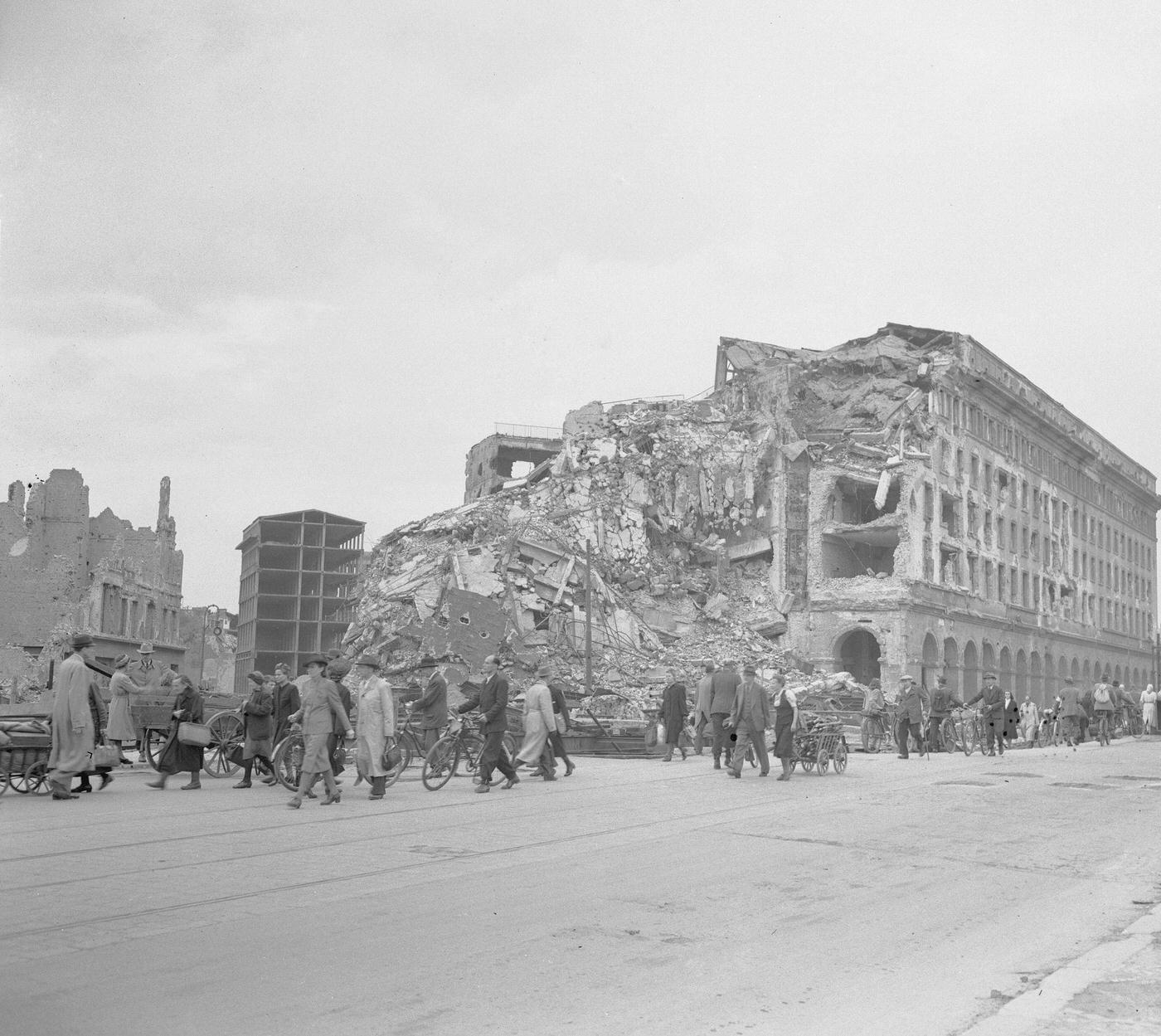
Photographs from September 1945 show the rubble-clearing work still very much underway months after the surrender. The sheer volume of destruction meant this phase of recovery stretched on for years, not weeks. People walked past partially demolished walls and open lots daily, waiting at bus stops beside piles of broken brick as the city slowly tried to find its footing again.
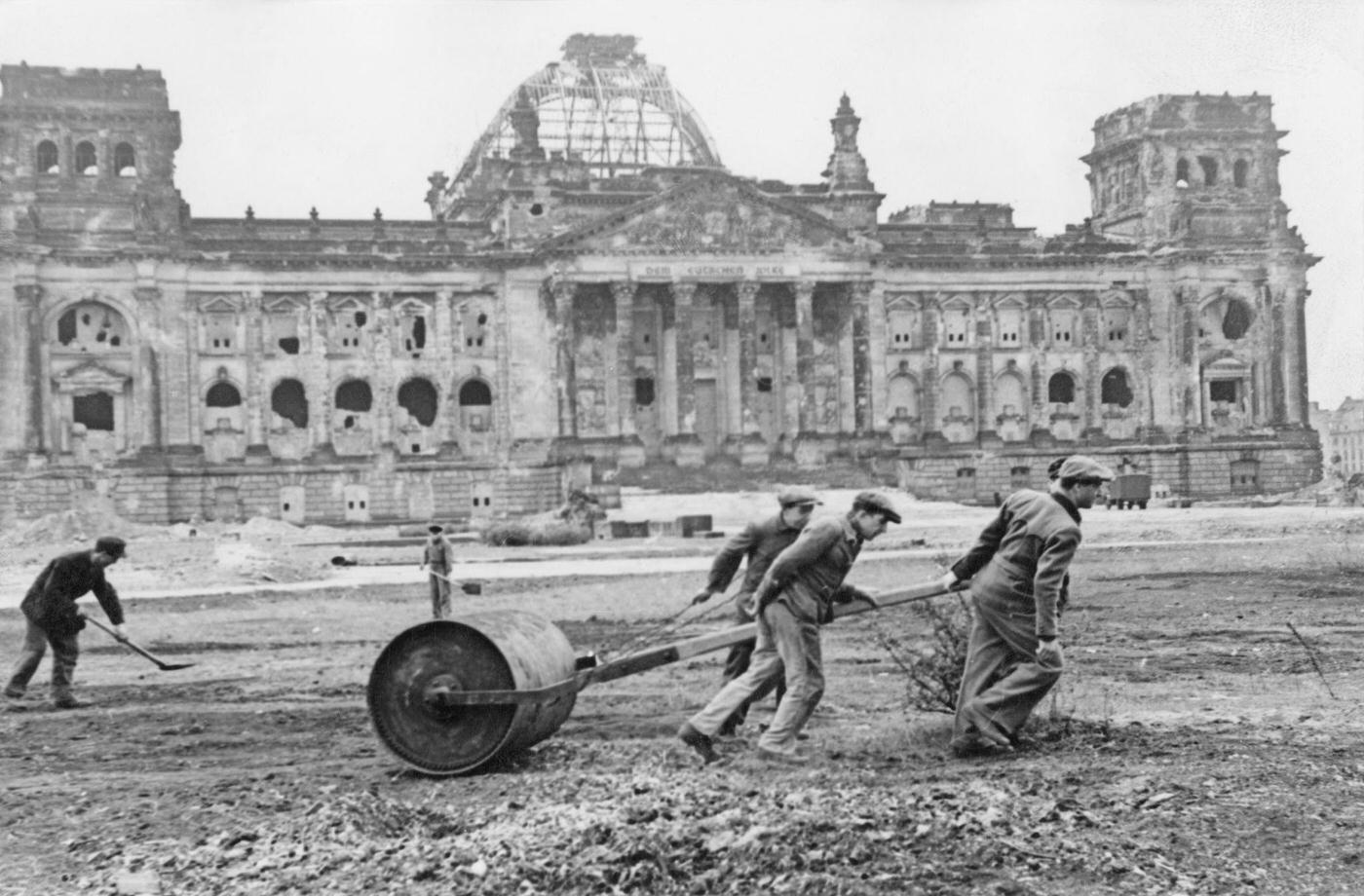
Even into 1947, large portions of central Berlin remained wasteland. Workers were still leveling ground in front of the Reichstag two years after the war ended. The Trümmerfrauen continued their work well into the late 1940s, with some estimates suggesting the rubble clearance effort in Berlin required the labor of around 60,000 women at its peak.
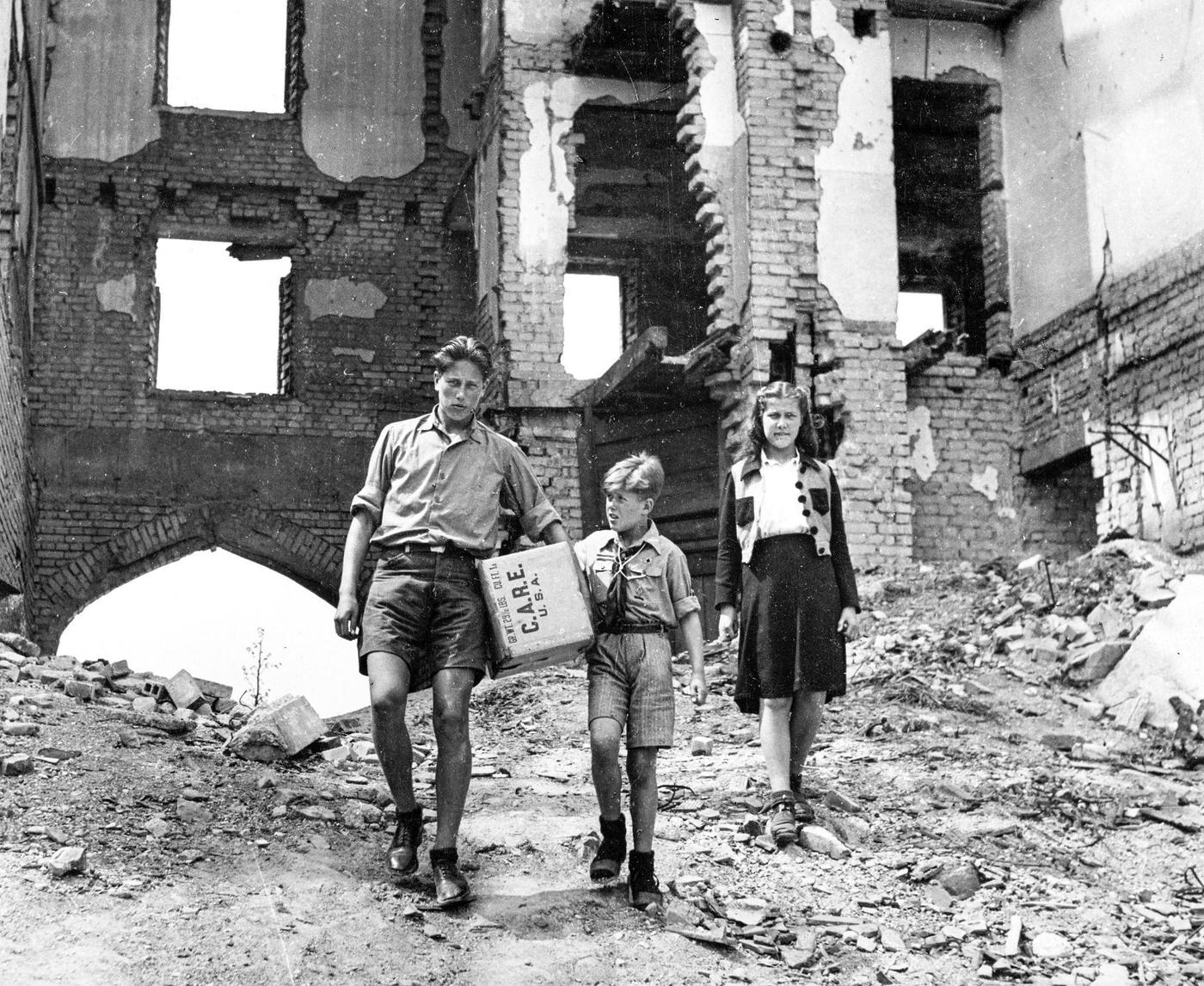
International aid became a critical lifeline for Berlin’s civilian population. CARE packages — sent primarily from the United States — delivered food, medicine, and basic necessities to a population that was going hungry. The packages became a symbol of outside support during a period when Berlin’s own capacity to feed and supply itself had nearly collapsed.
The Ullstein publishing house on Kochstrasse appeared in multiple photographs from different angles, underscoring how completely it had been gutted. It was one of Germany’s oldest and most prominent publishing companies, founded in 1877. The destruction of its Berlin headquarters represented not just physical loss but the erasure of one of the city’s major cultural institutions.
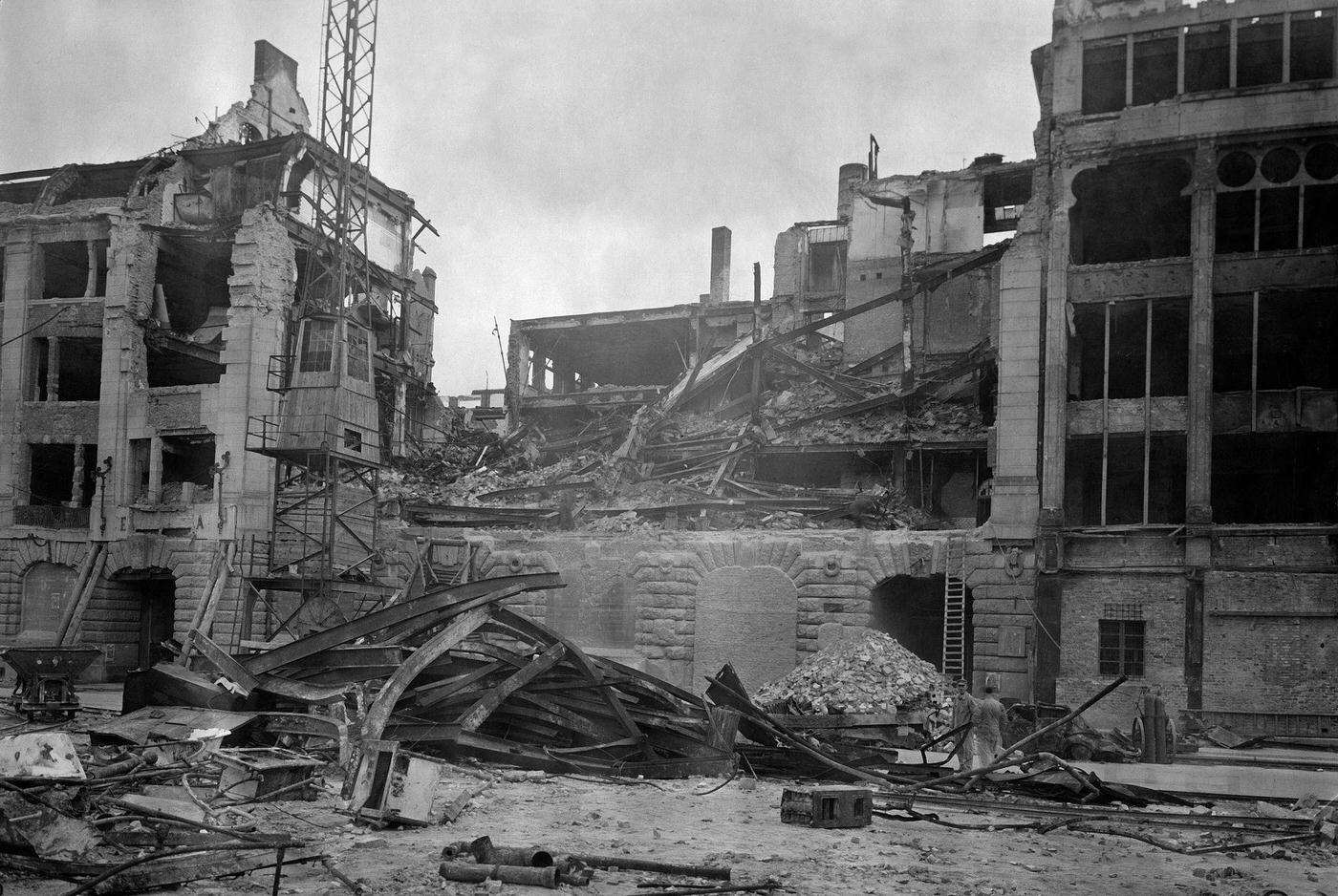
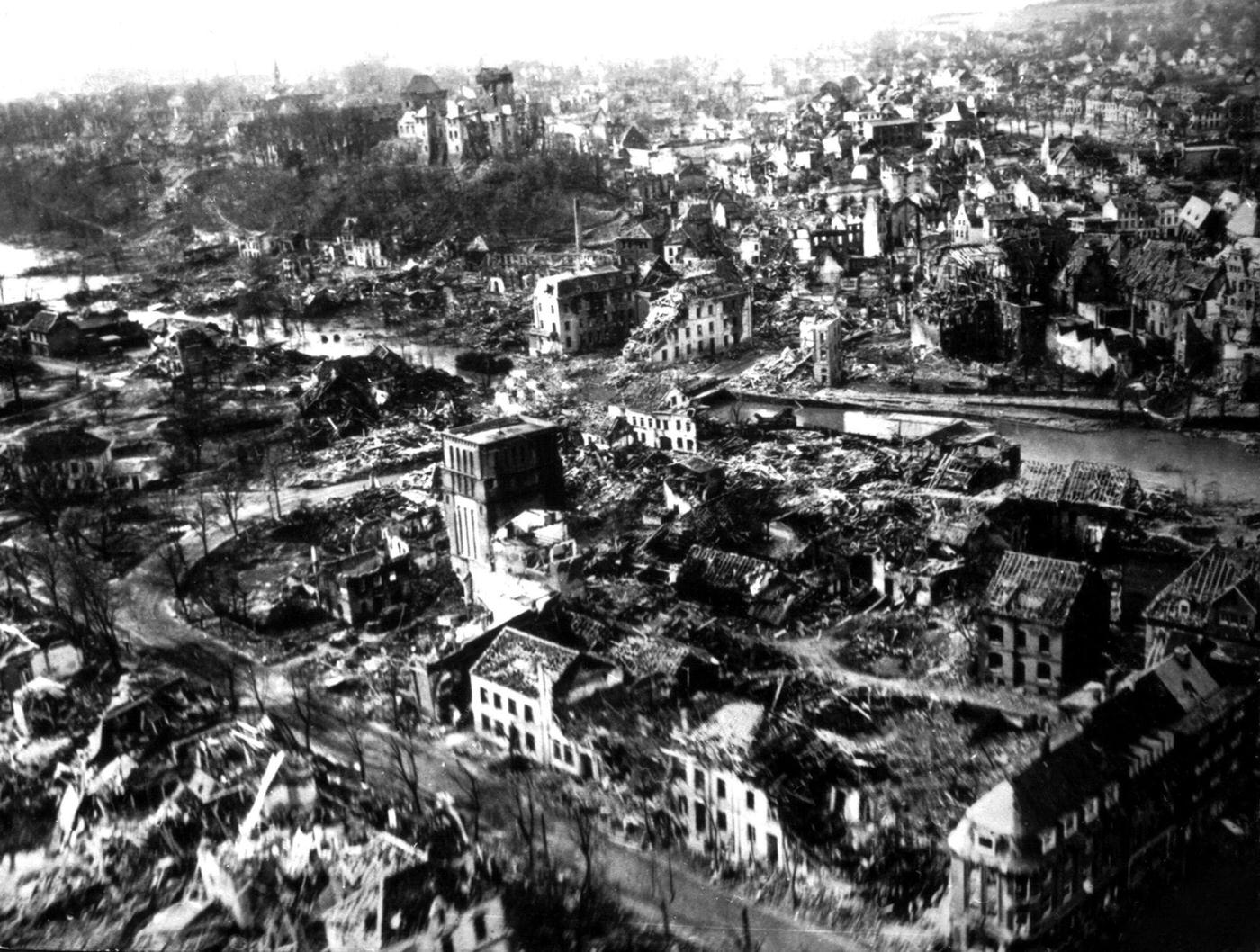
The final weeks of the war in Europe produced some of the heaviest destruction Berlin had seen across the entire conflict. As Soviet forces closed in from the east and Allied forces advanced from the west, German defenses concentrated in and around the city, turning urban neighborhoods into active battlegrounds. Buildings that had survived years of bombing were finished off in those closing weeks of April and early May 1945.
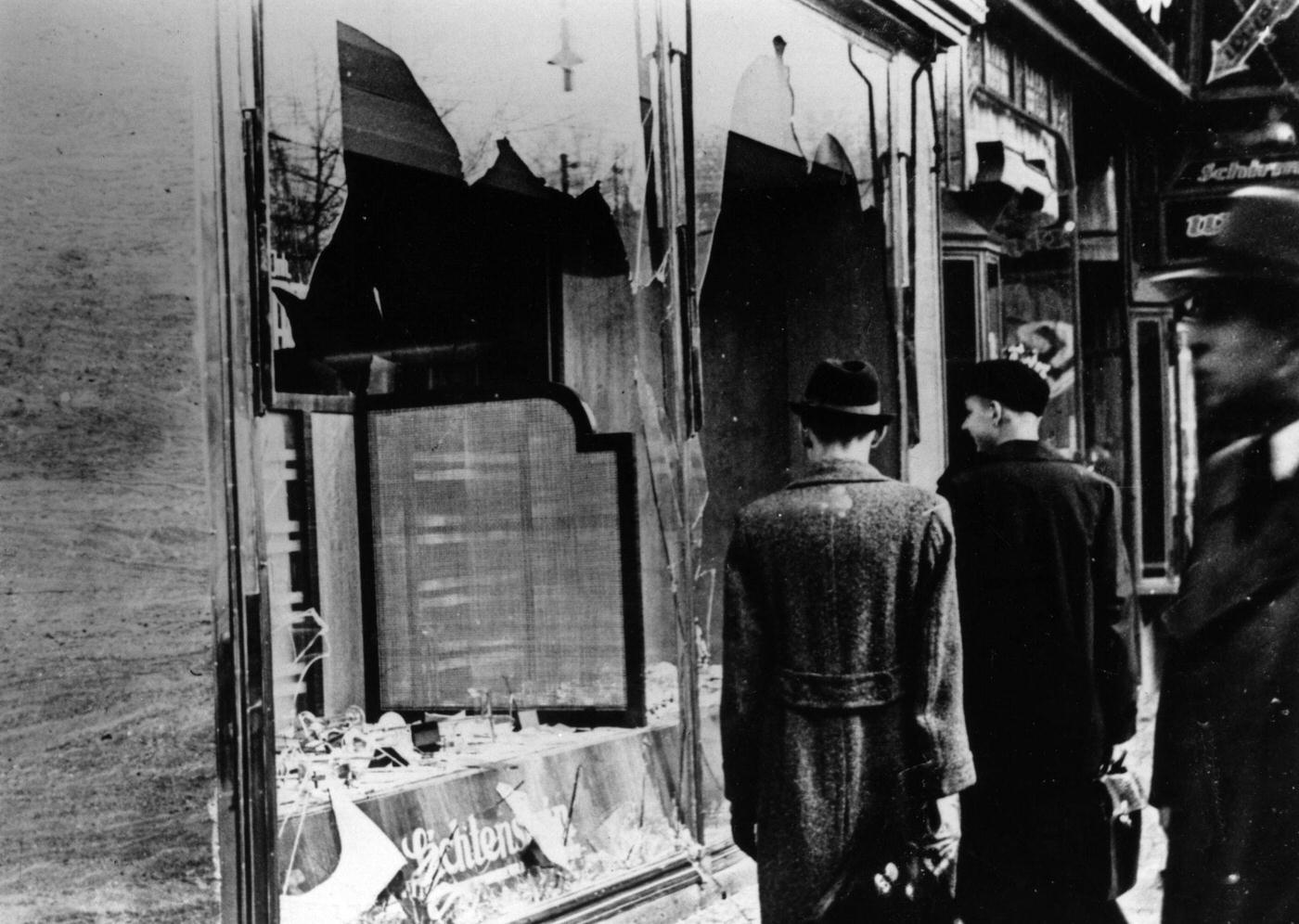
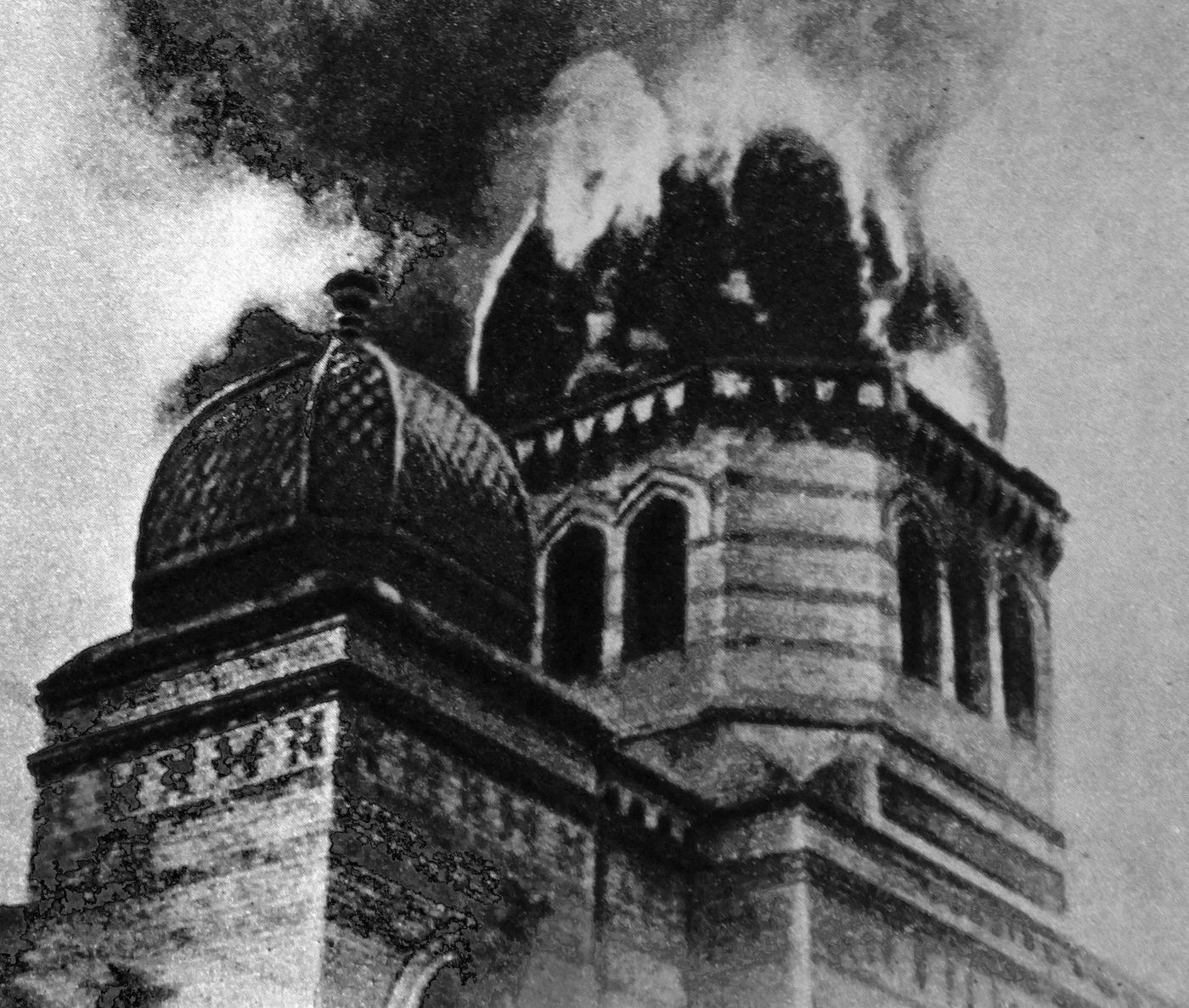
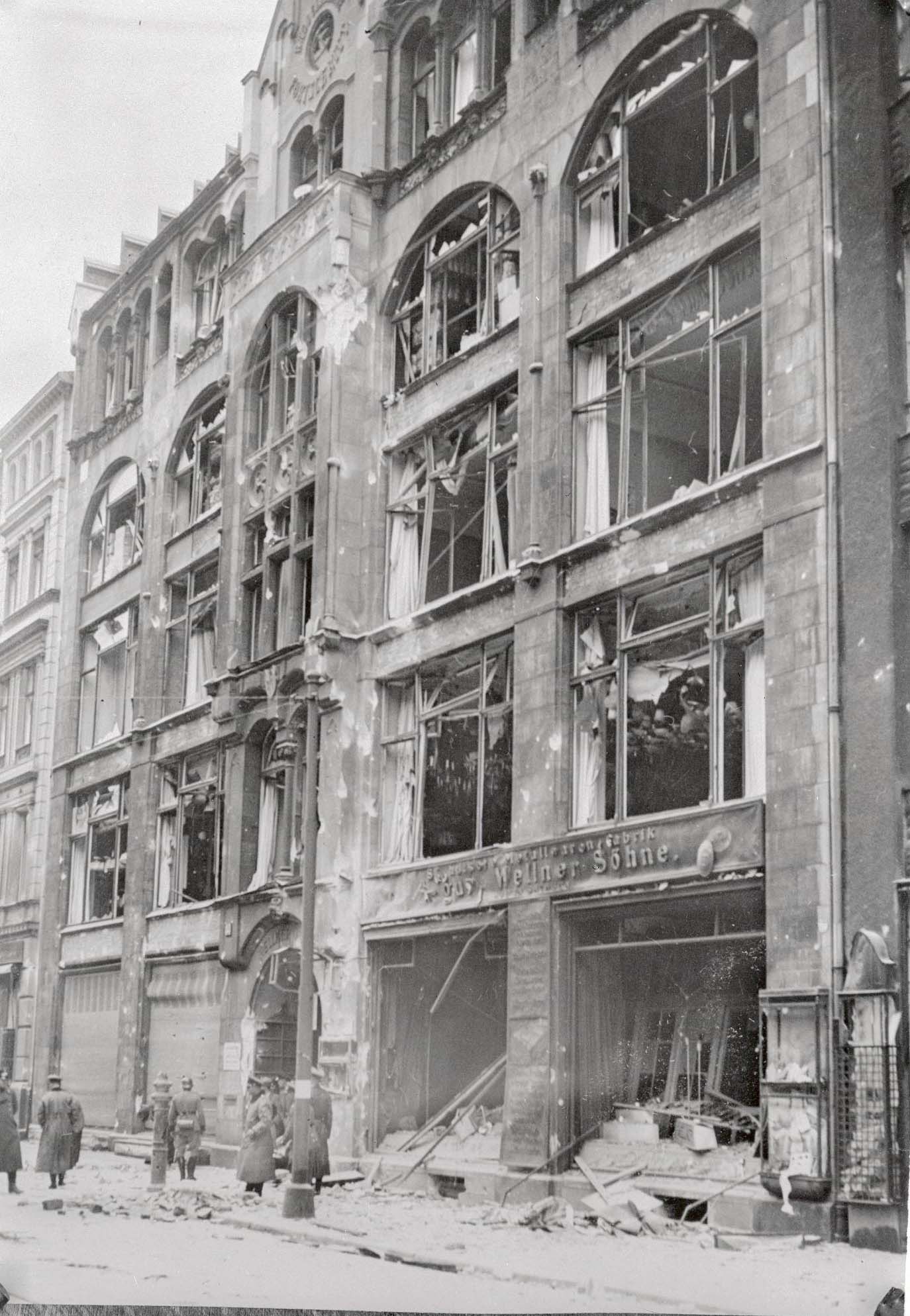
Berlin’s destruction during the war did not begin in 1945. The city had been a target and a site of state-sponsored violence long before the bombs fell. In November 1938, Nazi forces organized a nationwide pogrom against Jewish communities. In Berlin, synagogues were set on fire, Jewish-owned businesses were smashed, and Jewish residents were beaten or arrested. The event became known as Kristallnacht — the Night of Broken Glass.
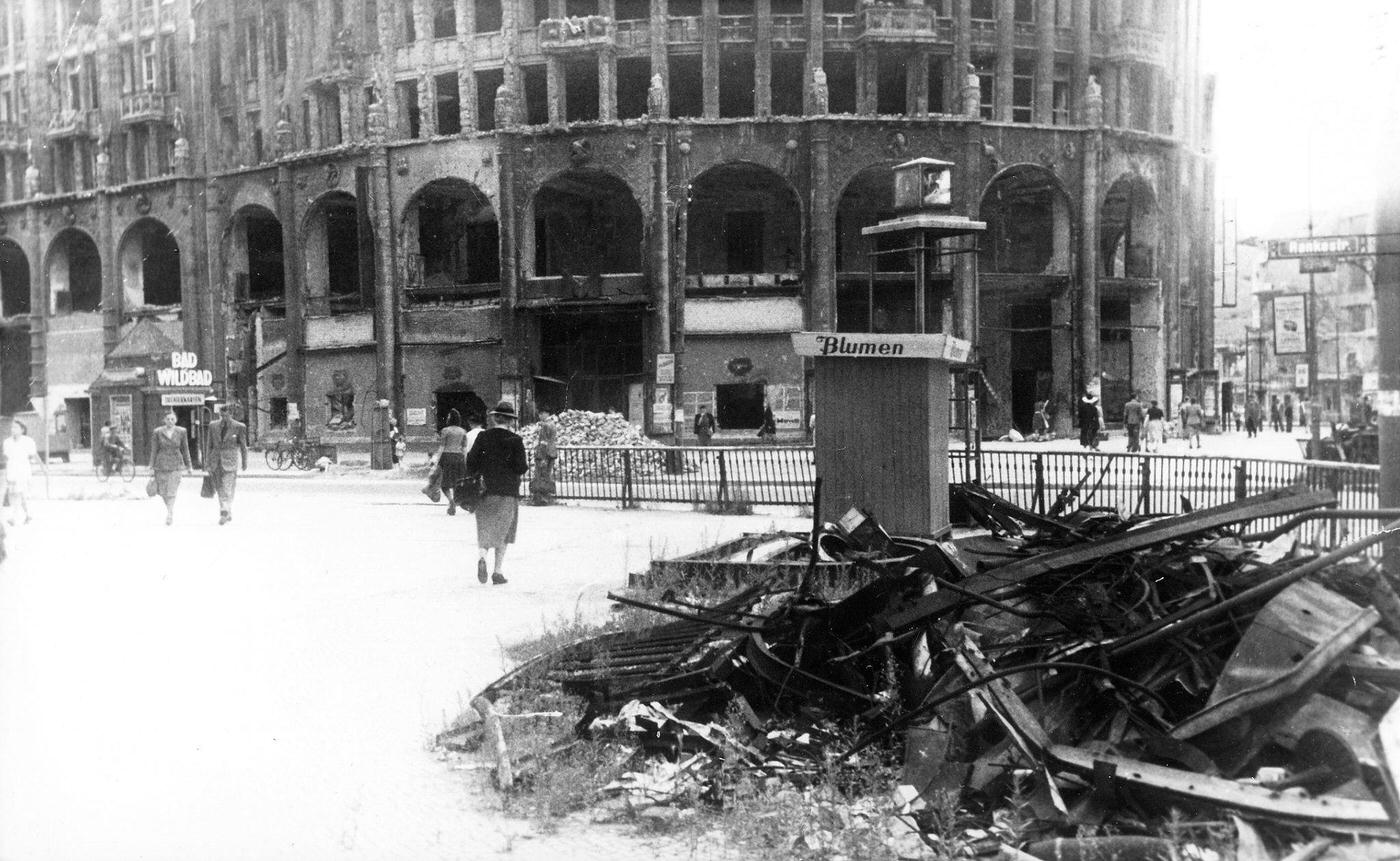
Berlin’s business district took some of the heaviest bombing damage of any area in the city. Office buildings, banks, and storefronts that had made up the commercial heart of the German capital were shattered by high-explosive and incendiary bombs. The physical record of what was lost is extensive — photographers documented the destruction at street level across dozens of locations throughout the city.
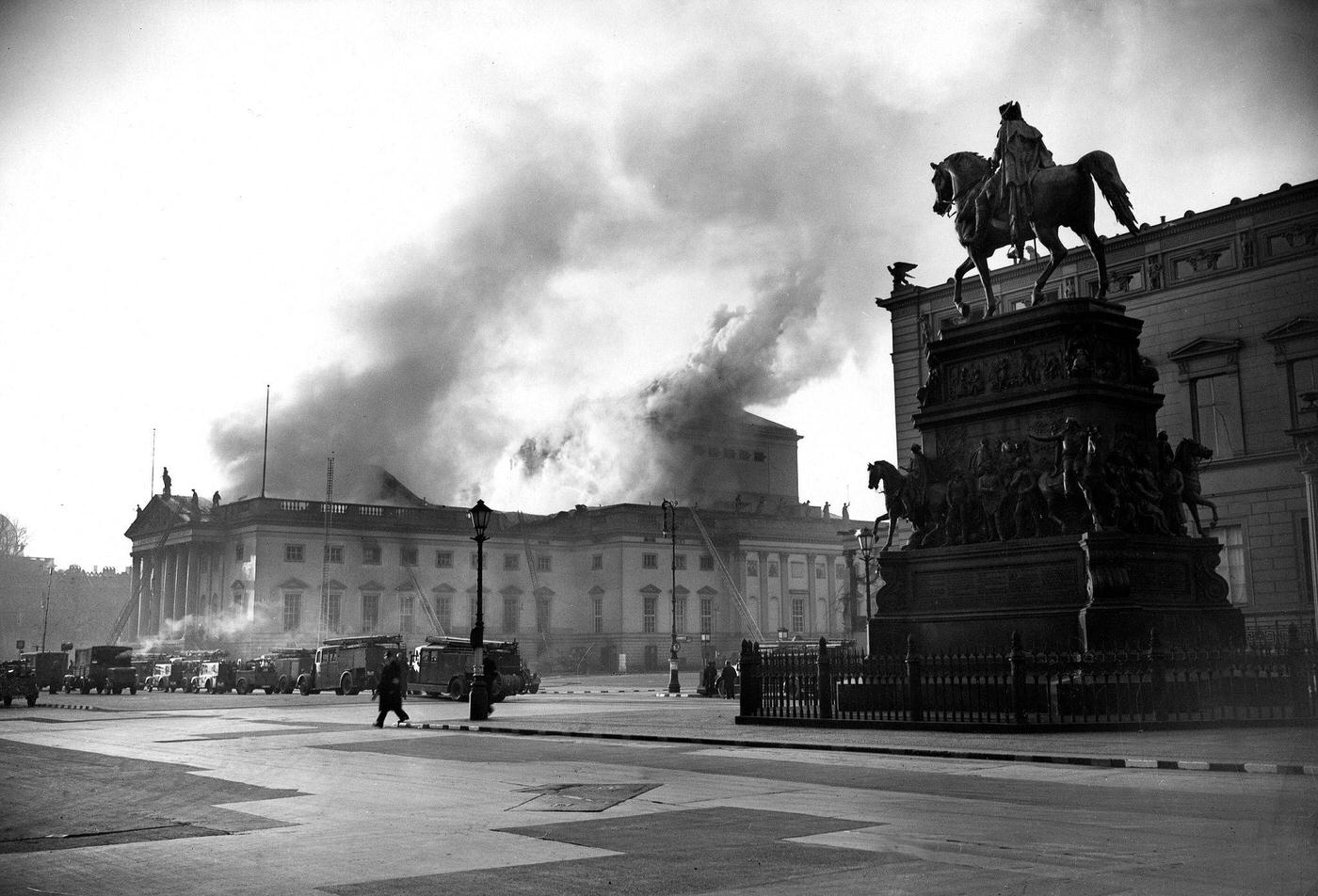
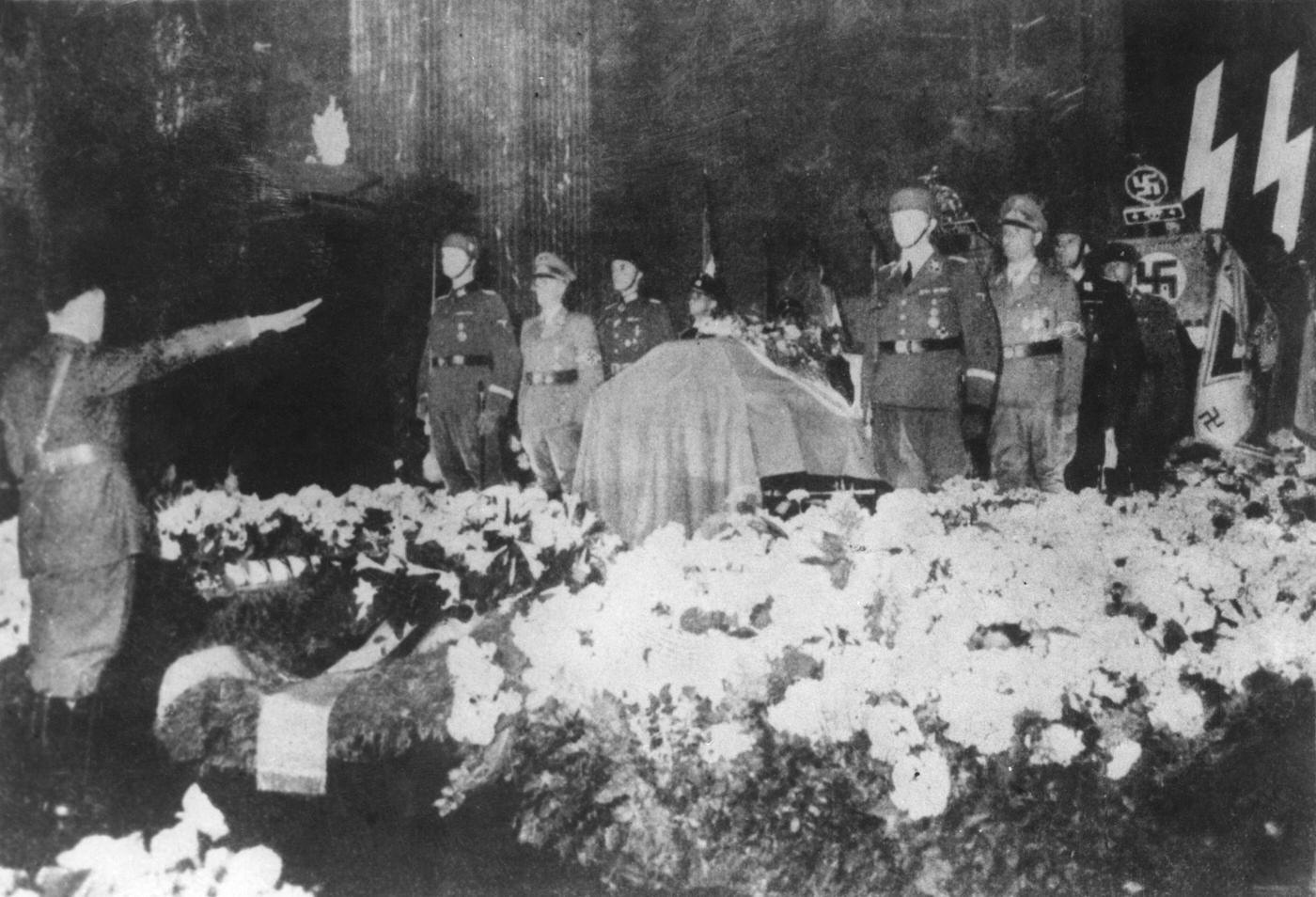
The State Opera House on Unter den Linden had burned after a bombing raid in 1941 — four years before the war ended. It was one of the first major cultural buildings in Berlin to be destroyed. During those same years, senior Nazi officials continued to hold ceremonies in the capital’s remaining intact halls, including a state funeral for Reinhard Heydrich, the senior SS and SD official, at the New Reich Chancellery in June 1942.
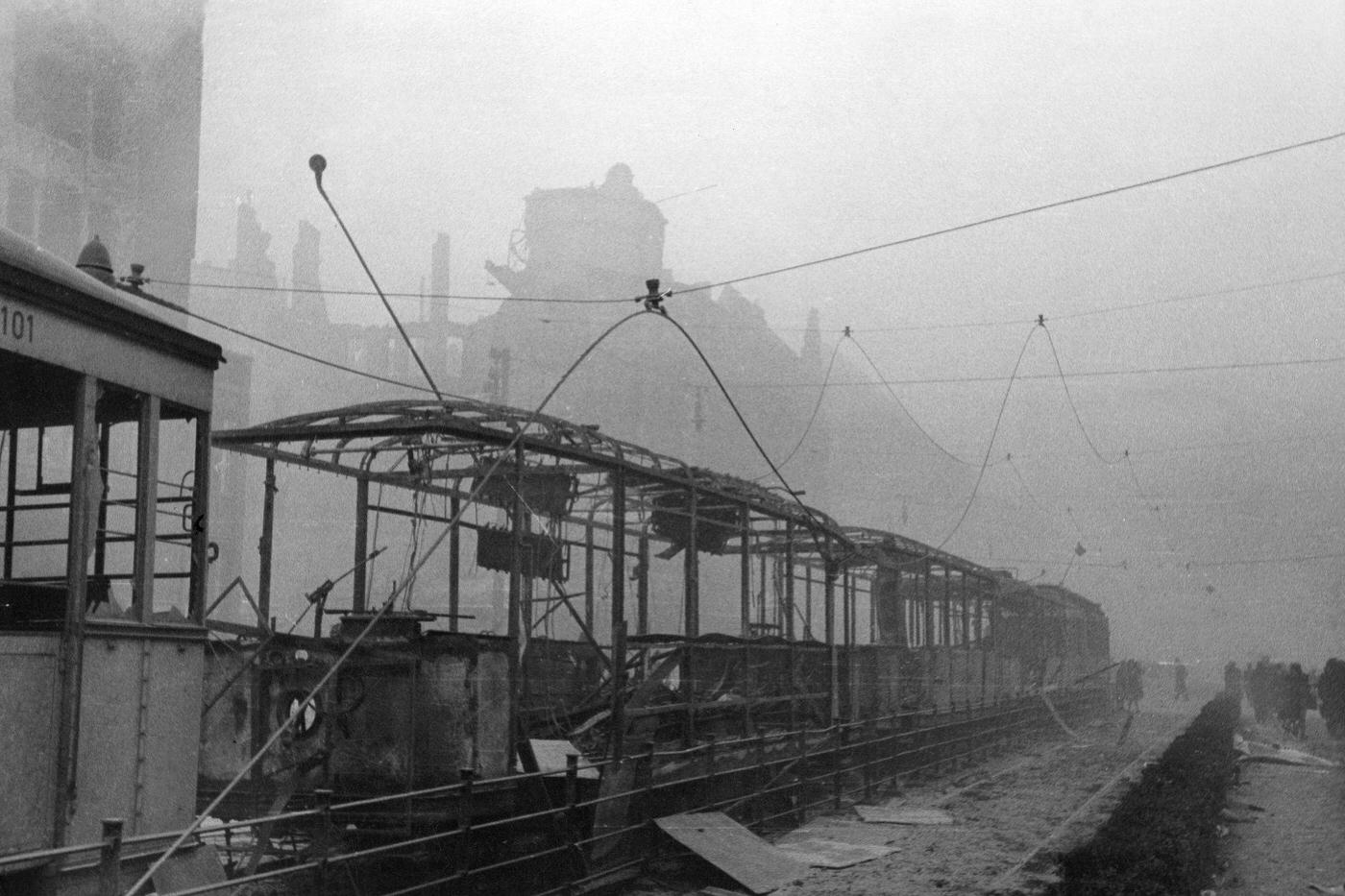
Berlin’s S-Bahn commuter rail network was a vital part of the city’s transit system. Air raids left carriages burned out on their tracks and stations severely damaged. The rail network’s disruption compounded every other crisis the city faced — making it harder to move food, coal, and people across a city that desperately needed all three.
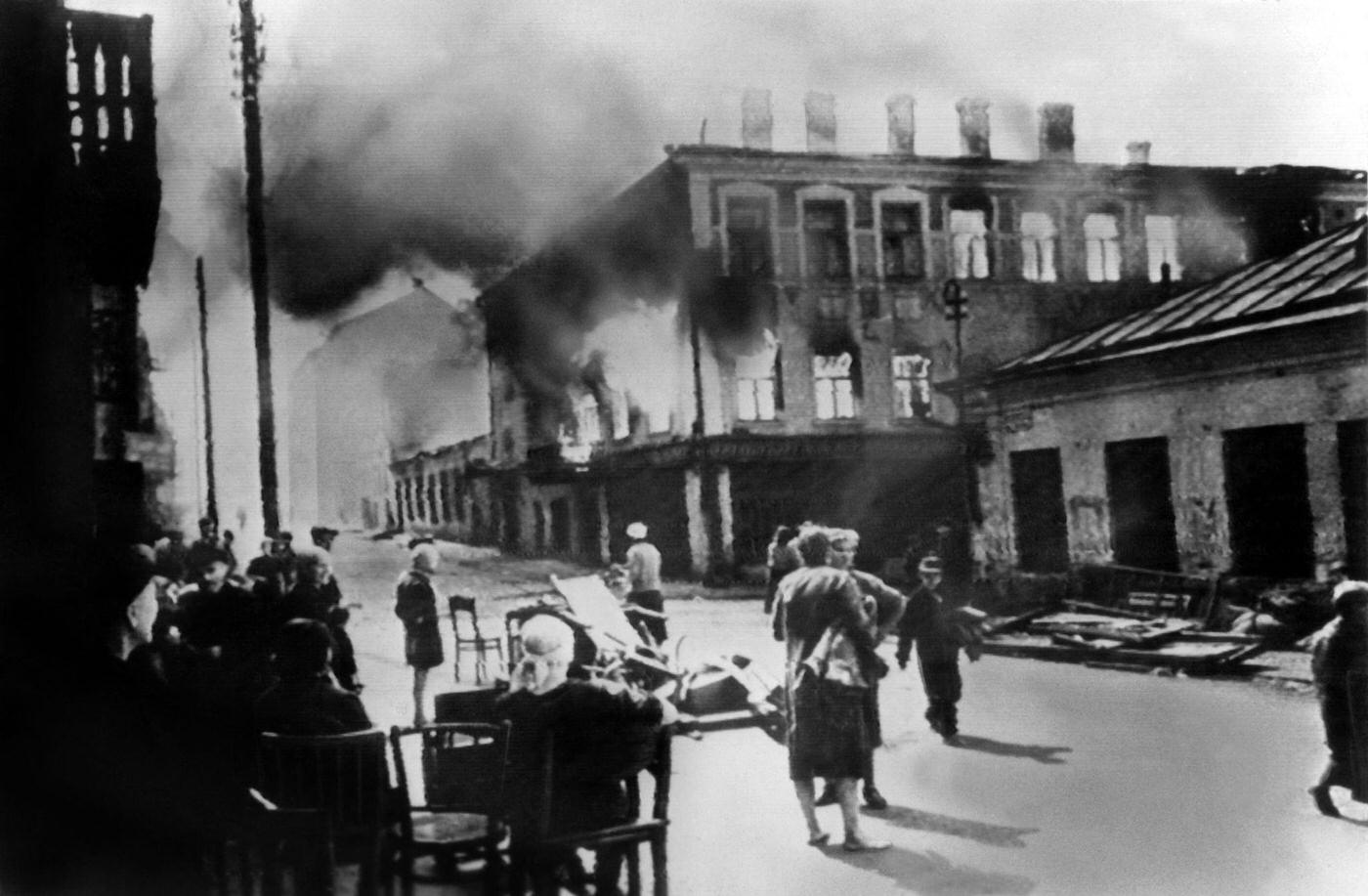
The destruction of Berlin did not exist in isolation. Across Nazi-occupied Europe, the same forces that devastated the German capital had inflicted comparable ruin on cities from Warsaw to Minsk. As Nazi forces retreated in 1944, they burned buildings and infrastructure deliberately, leaving Soviet cities in similar states of wreckage. The scale of destruction across the entire European theater of the war was without modern parallel.
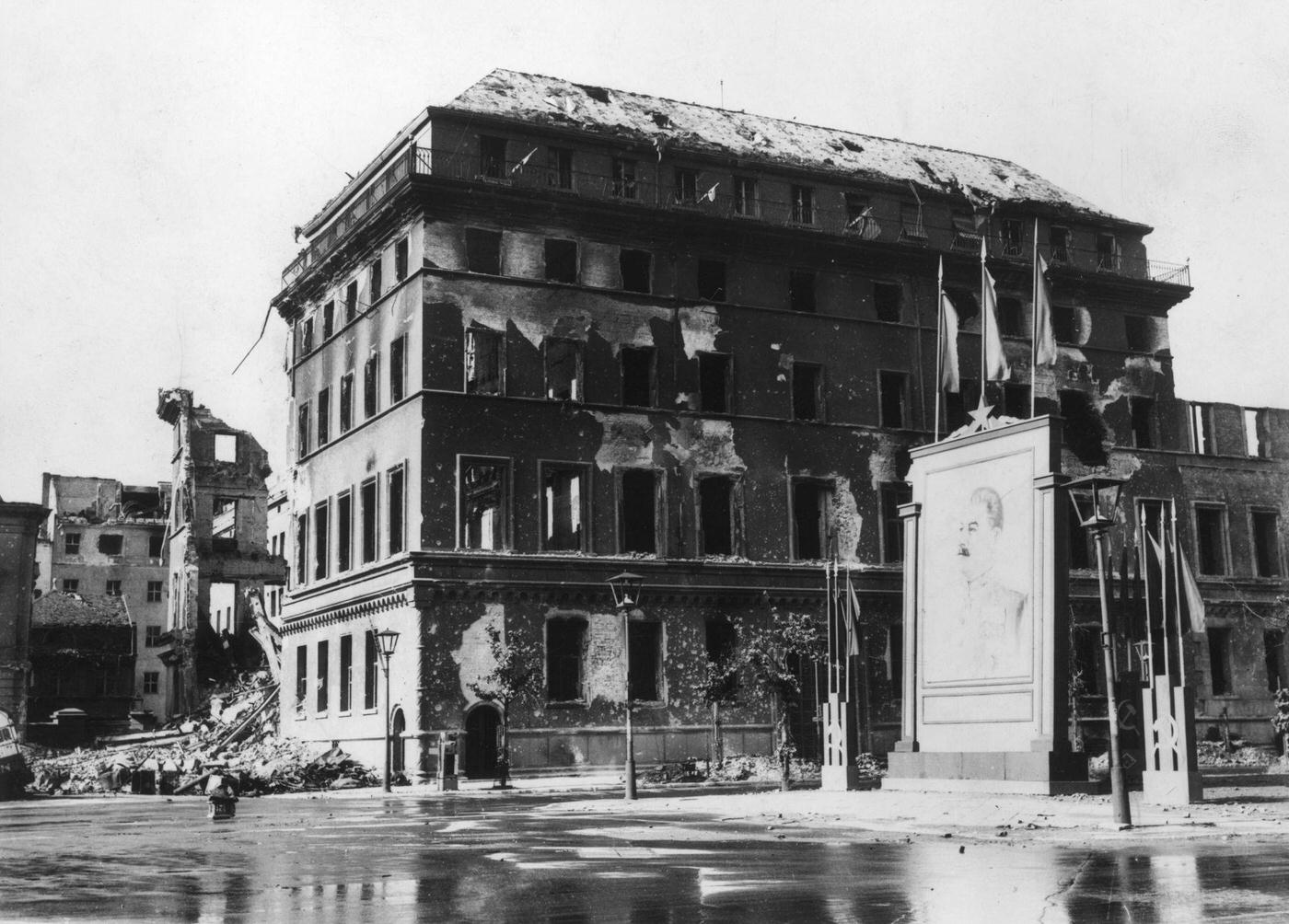
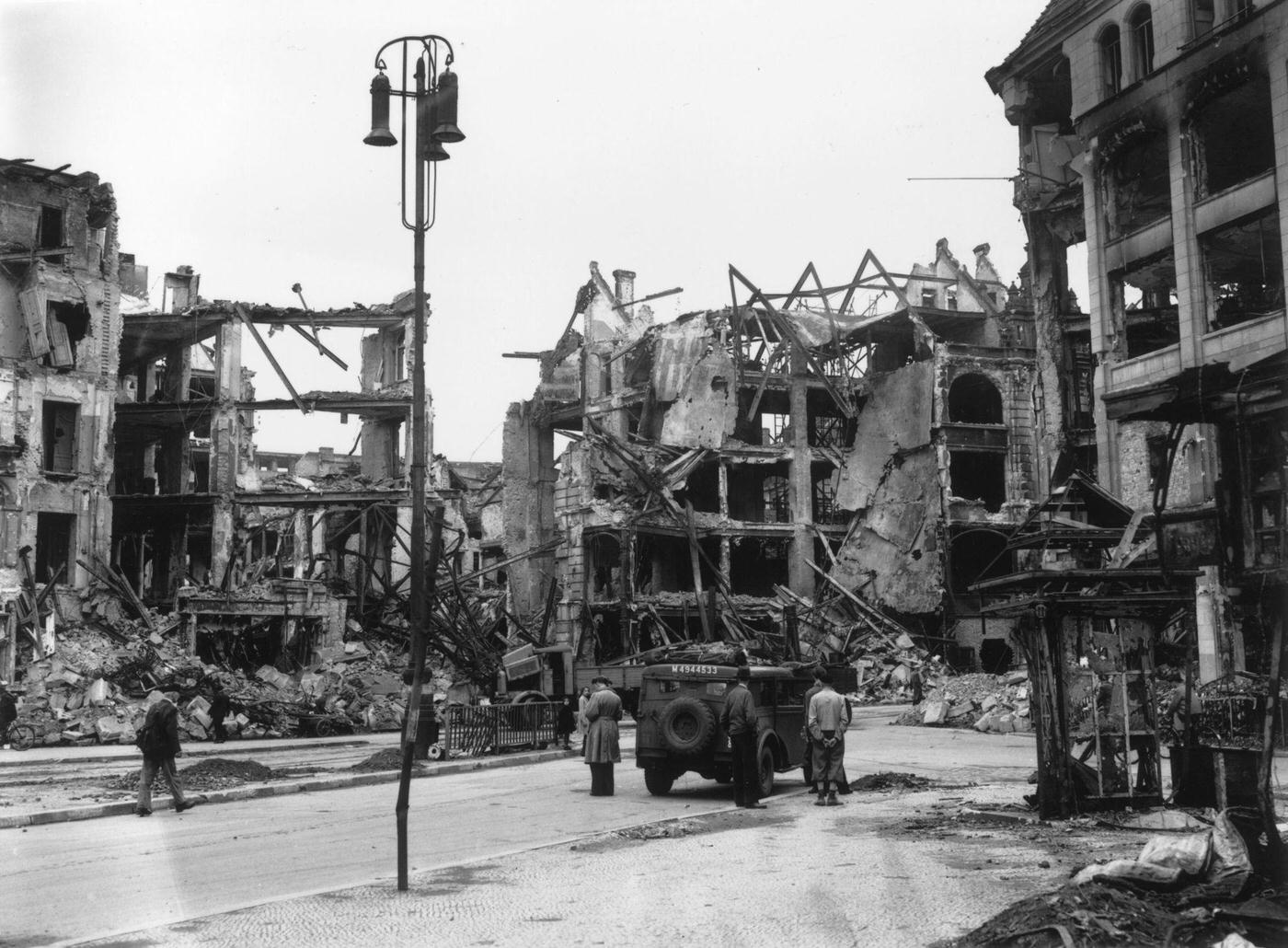
The Adlon Hotel had been one of Berlin’s most prestigious addresses since it opened in 1907. It had hosted kings, diplomats, and celebrities. By 1945, it stood windowless and gutted along Unter den Linden — its grand exterior surviving where the interior had been destroyed by fire. Just down the same boulevard, the ruins of the Reichstag stood as the most photographed symbol of Berlin’s defeat.
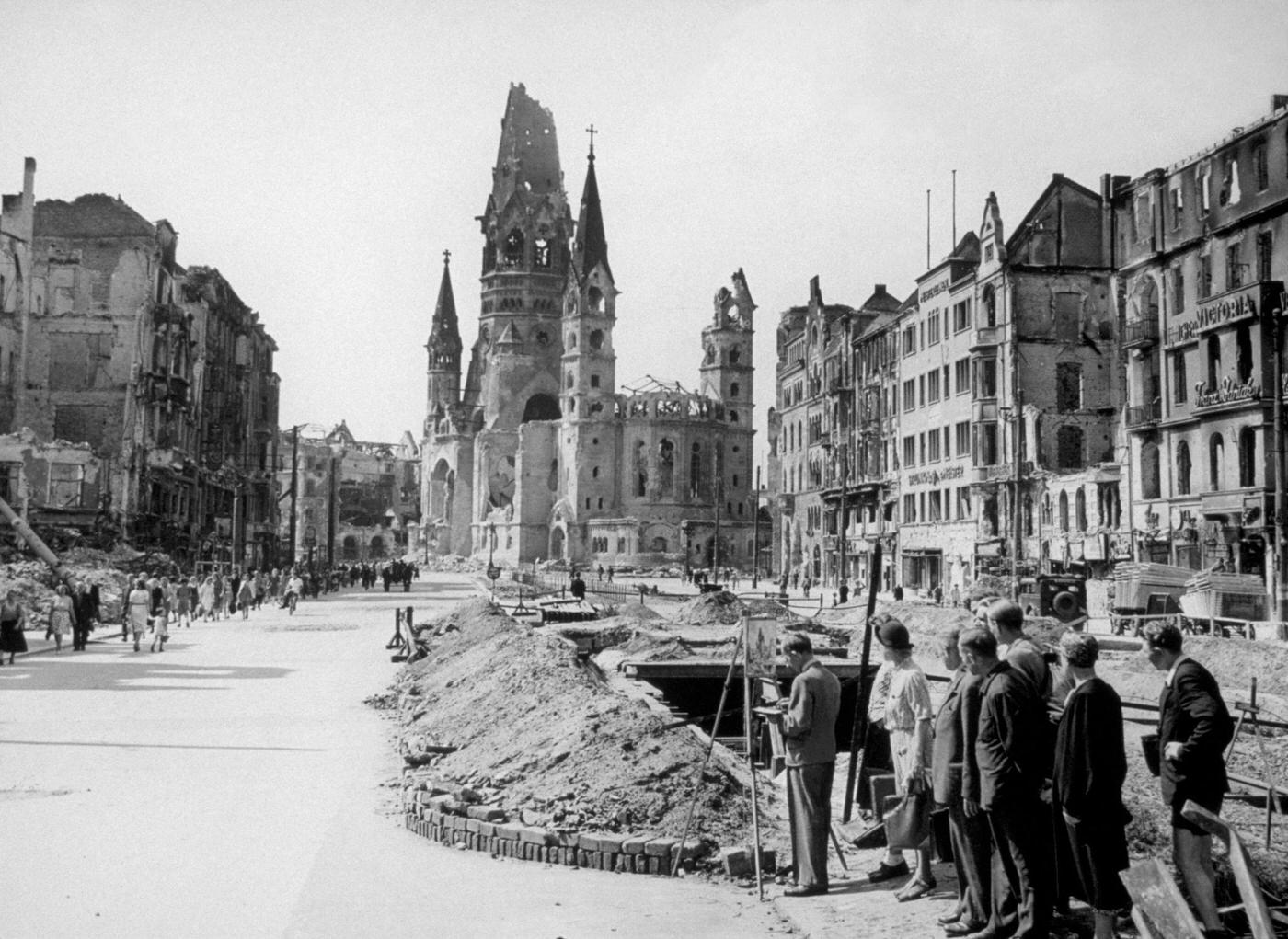
The Kaiser Wilhelm Memorial Church on the Kurfürstendamm was one of Berlin’s most recognizable landmarks before the war. Allied bombing in November 1943 destroyed most of the structure, leaving the broken tower standing alone. Rather than demolishing it entirely, the ruin was preserved after the war as a deliberate memorial to the destruction of the conflict. In 1945, artists were already sketching the scene, creating a visual record of what had been lost.
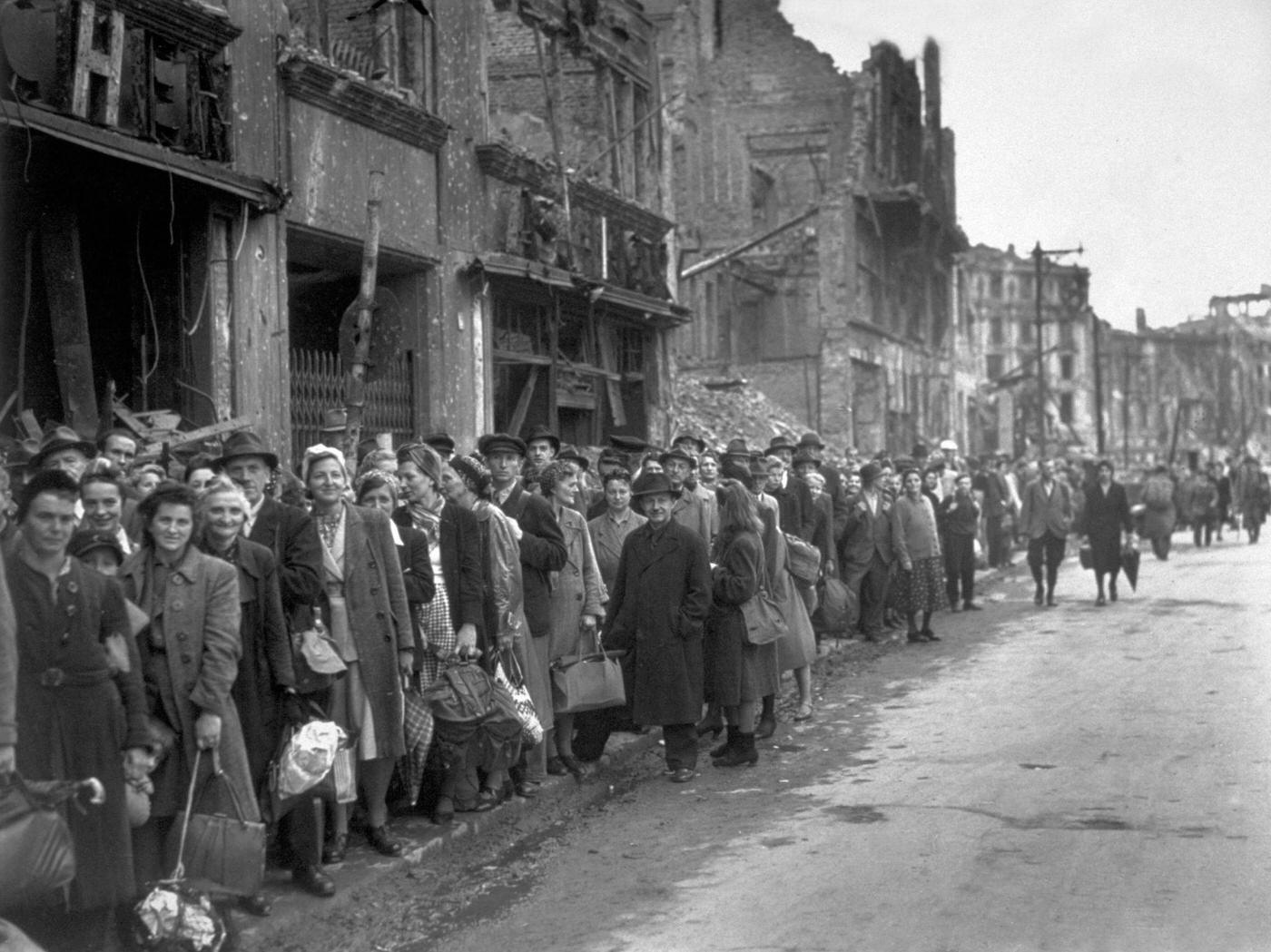
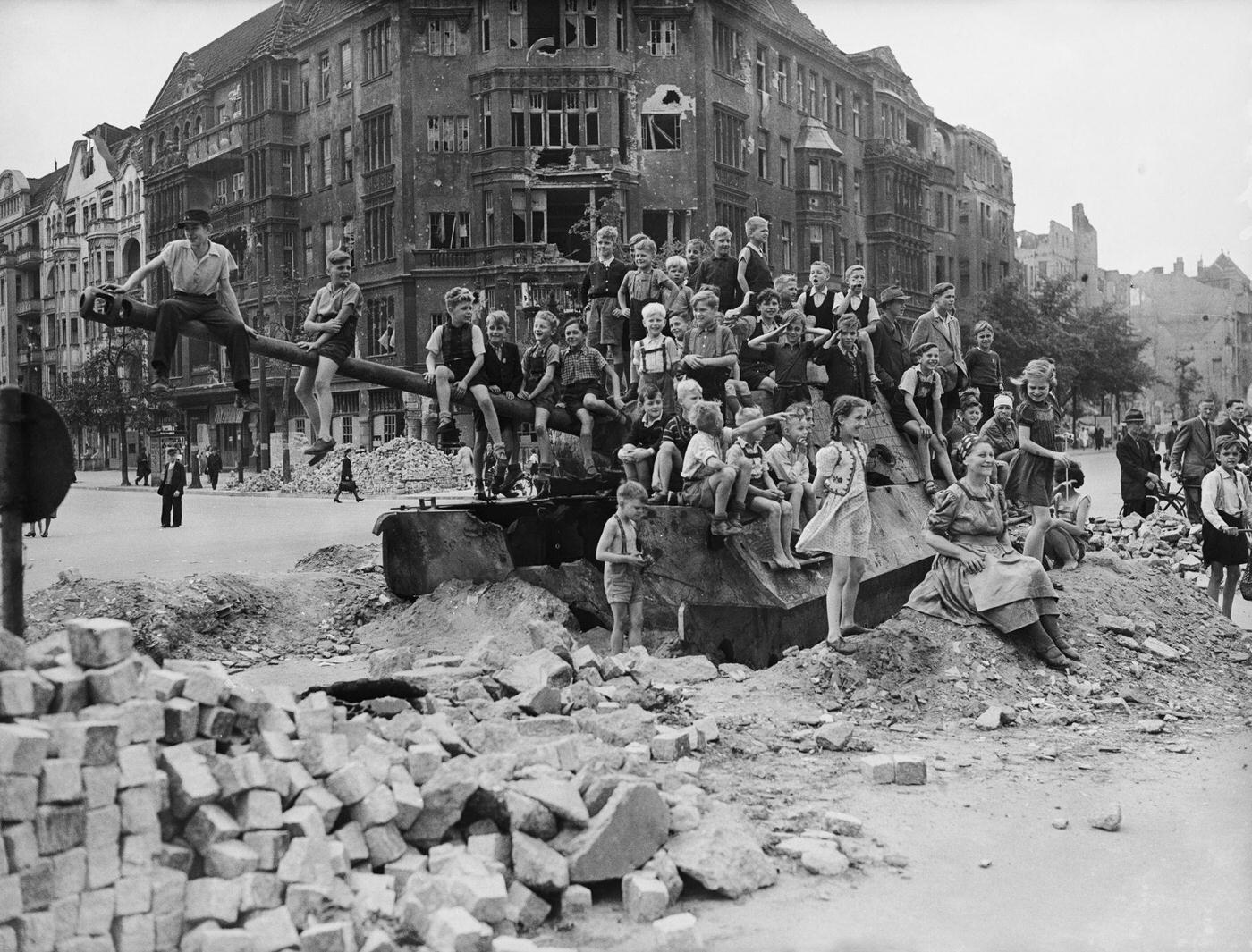
Ordinary life pushed forward amid the ruins. Berliners queued for buses on streets where bomb damage was still visible on every building. Children climbed on abandoned tanks. Women carried out the grinding physical work of clearing debris. These scenes, documented in photograph after photograph, show a population that was displaced, hungry, and exhausted — but still moving.