
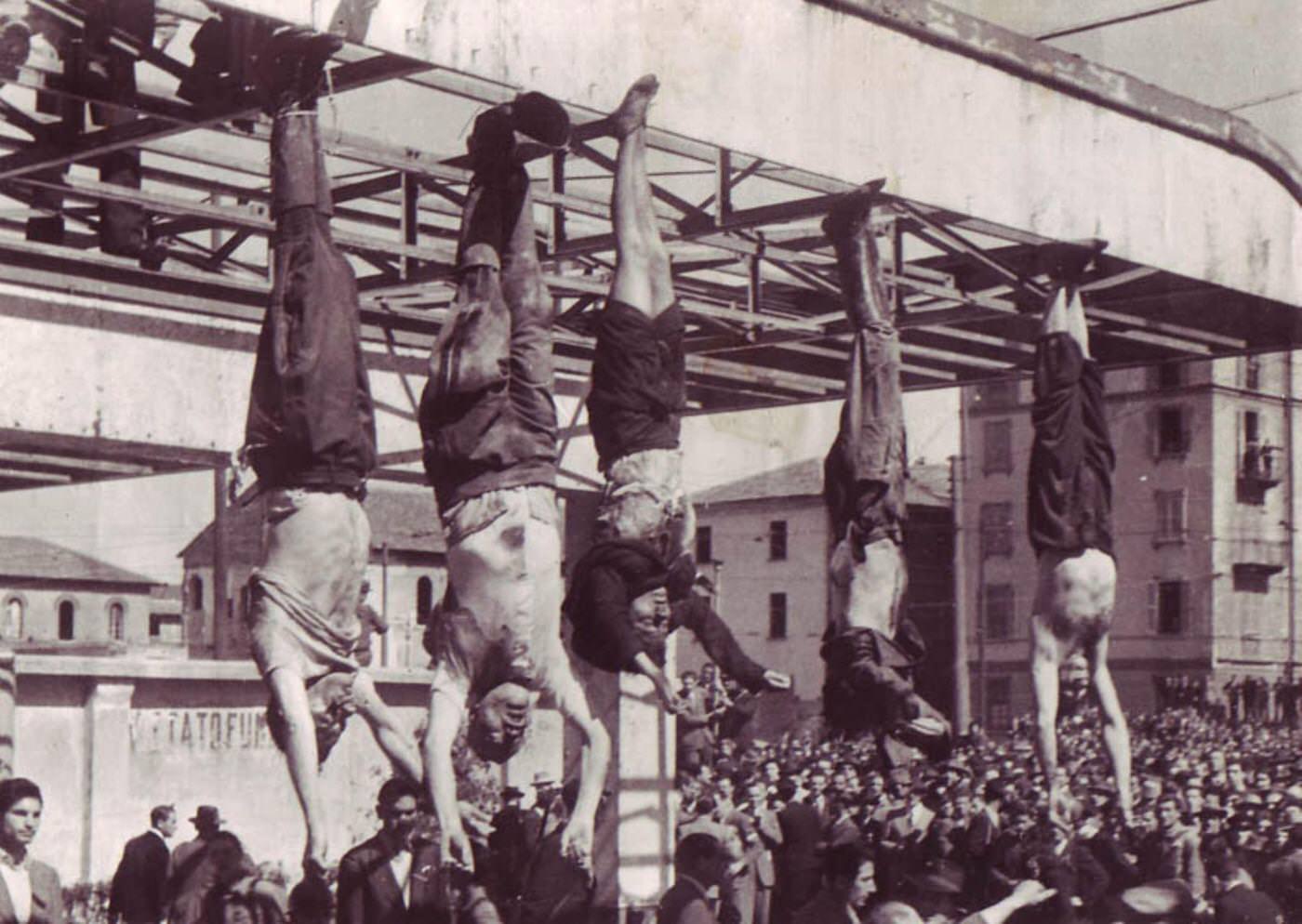
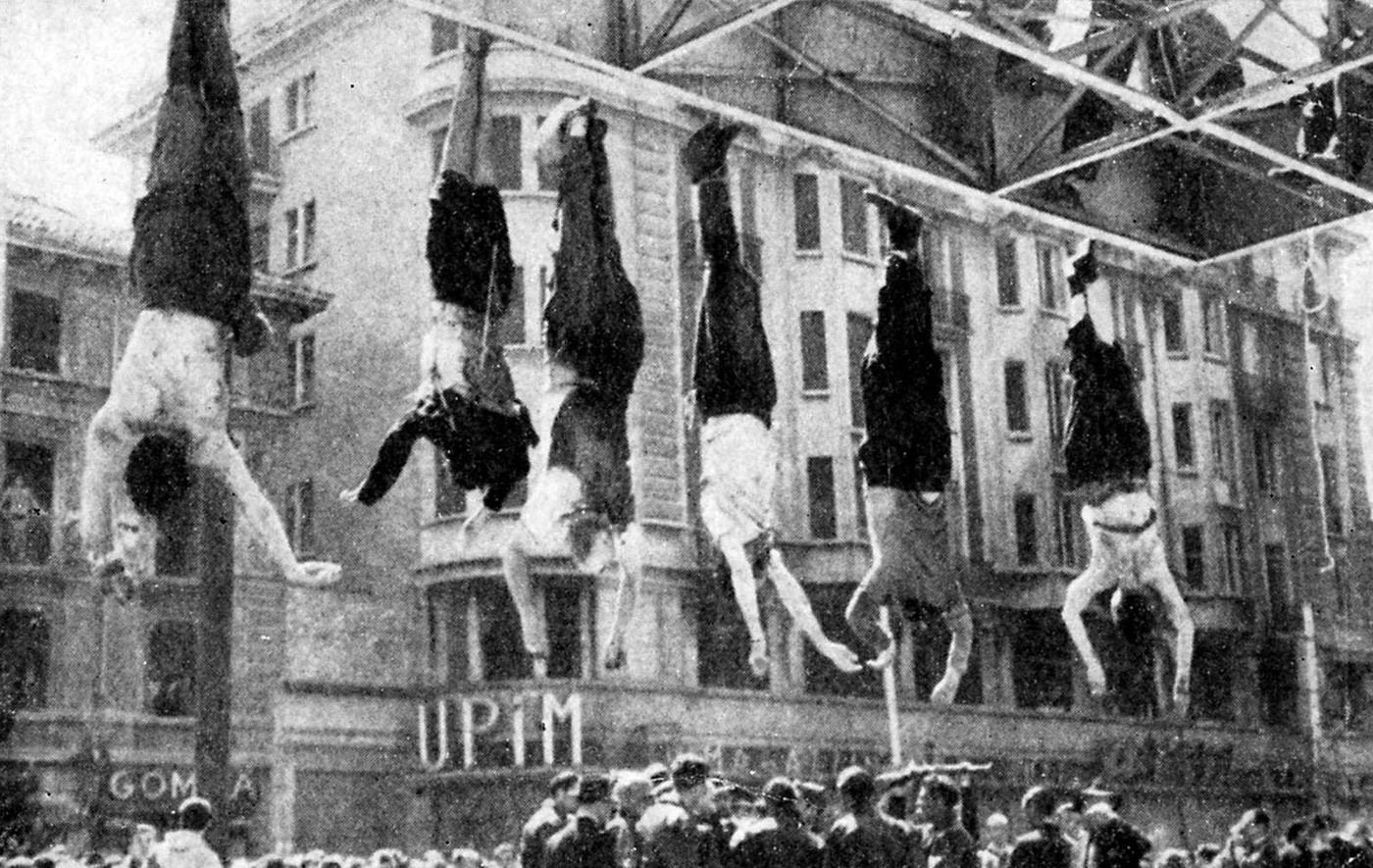
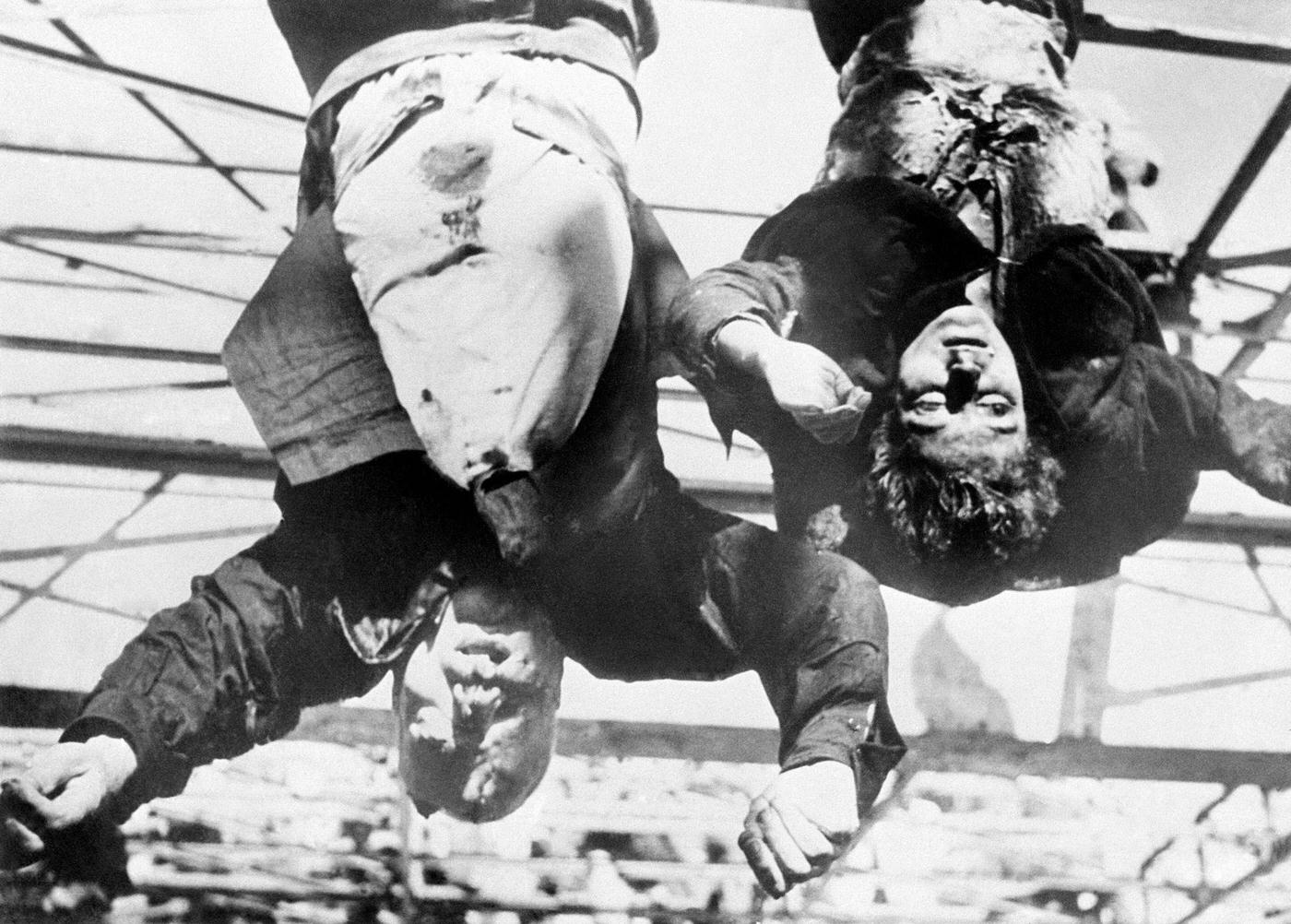
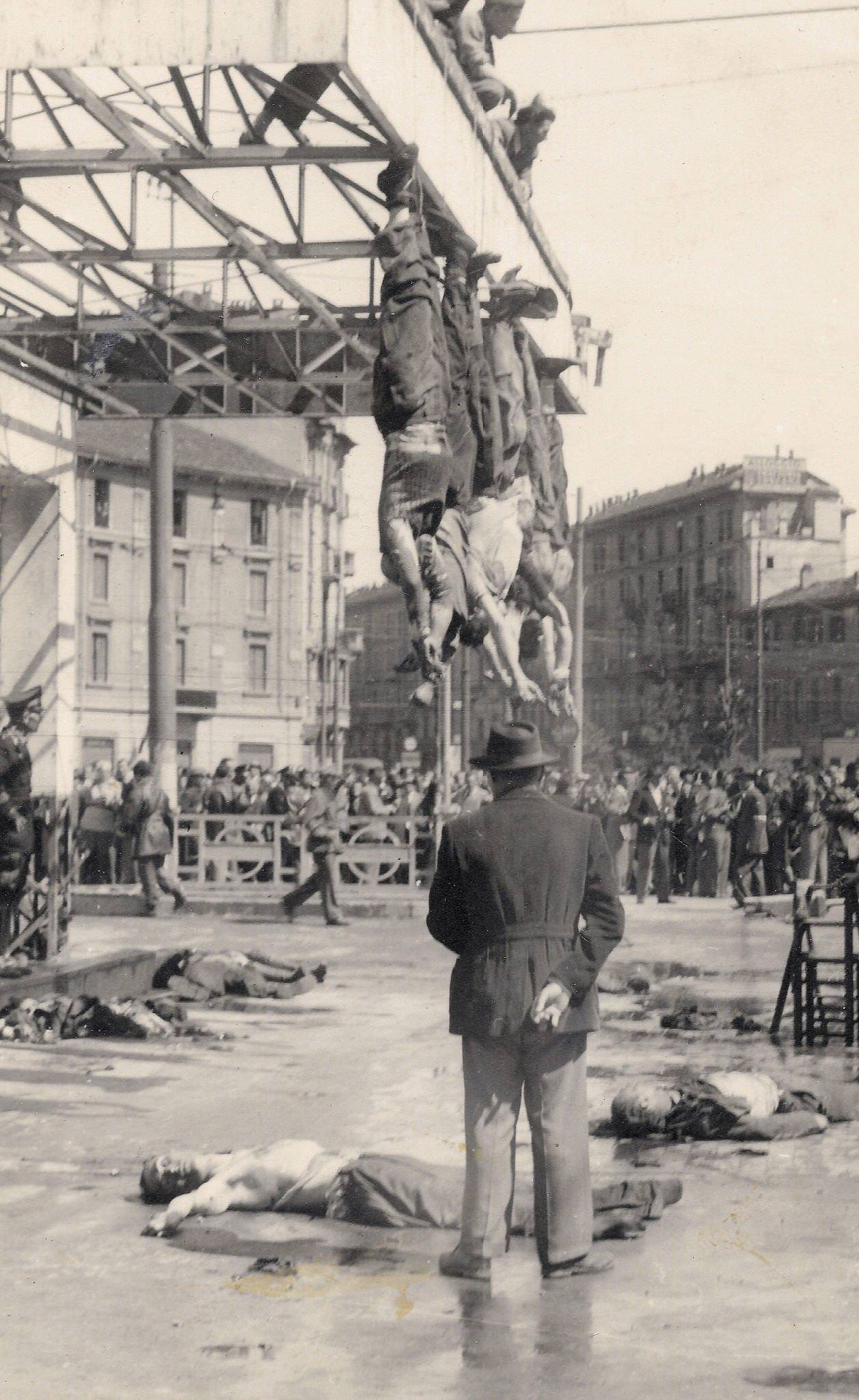
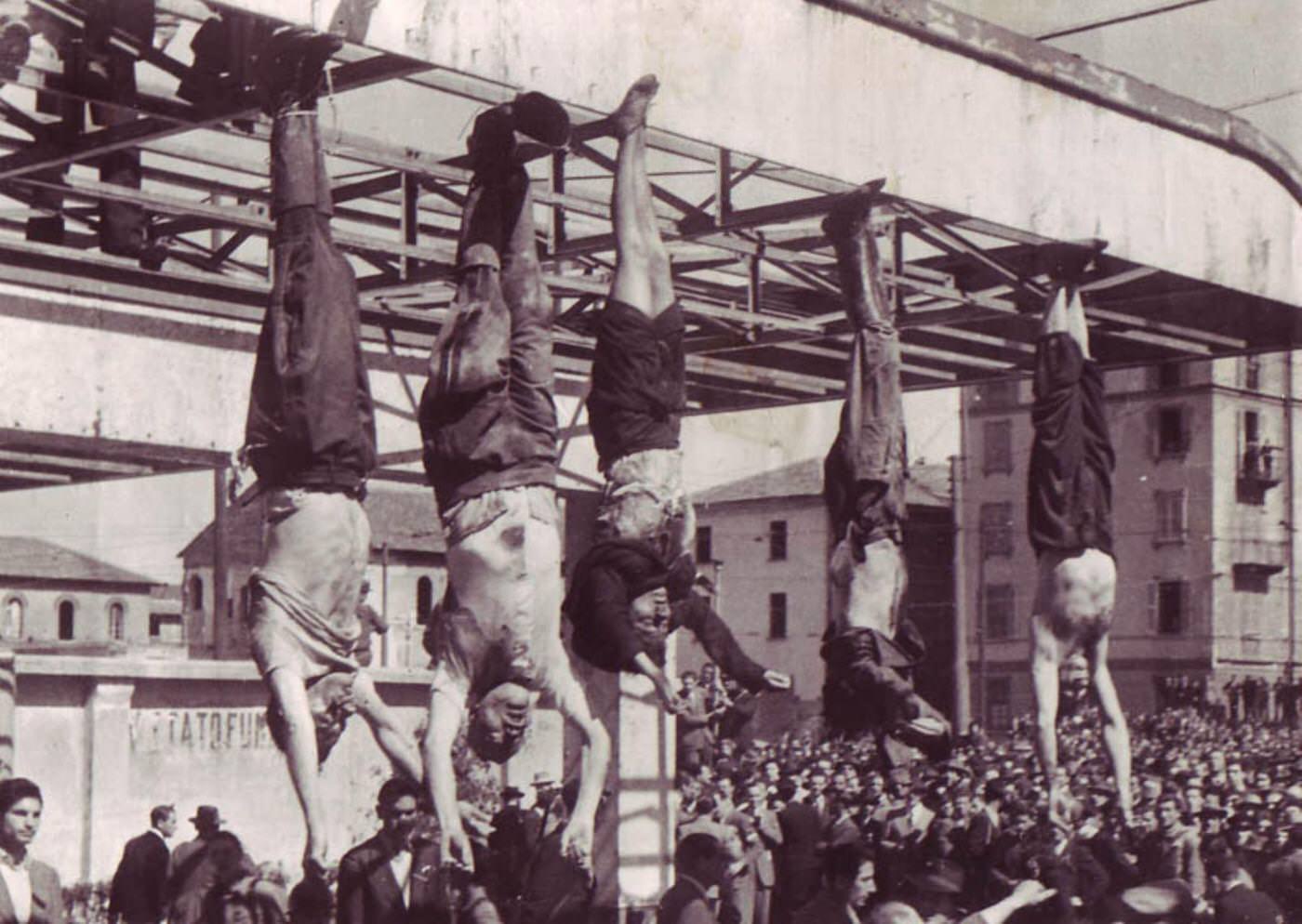
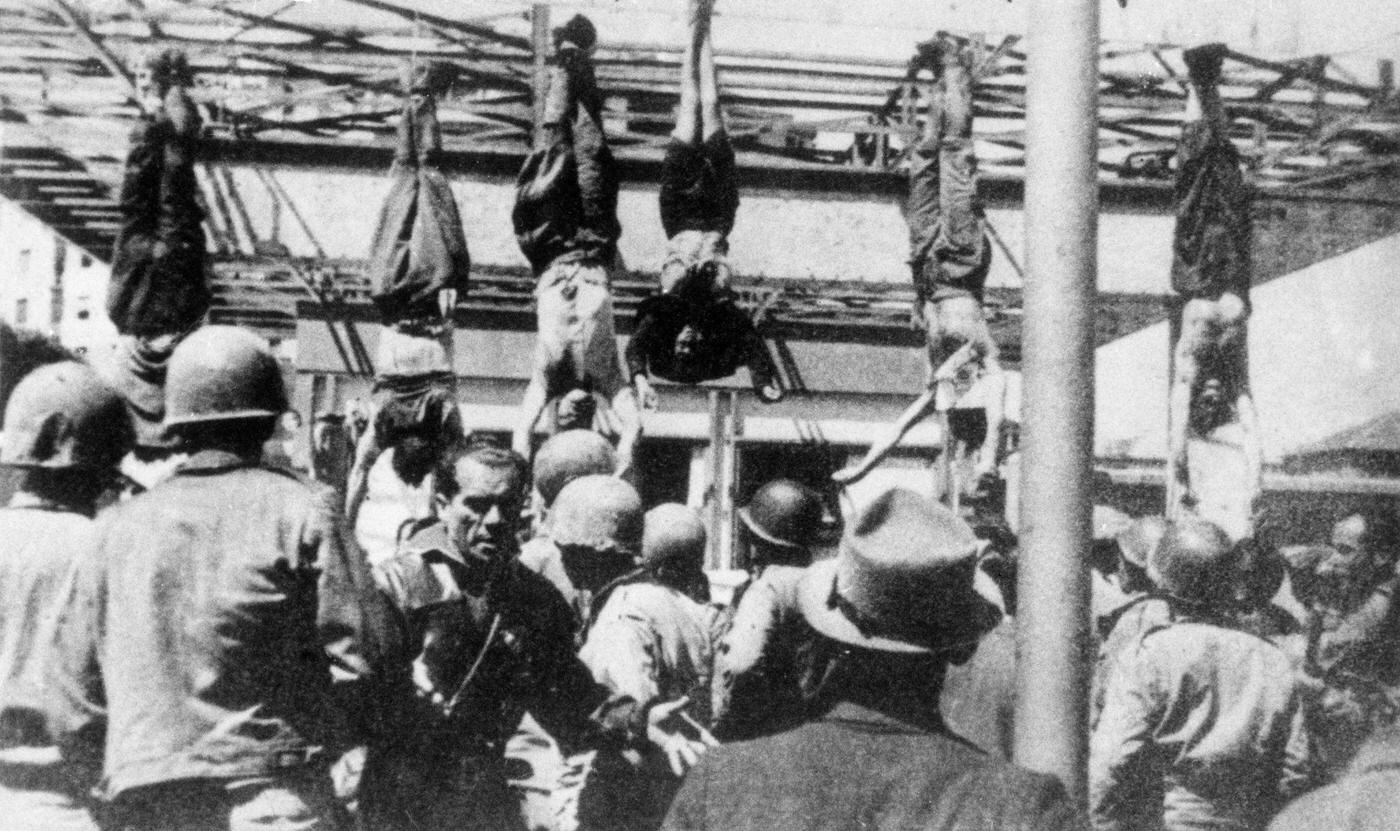
On April 28, 1945, Italian dictator Benito Mussolini was shot dead by partisan fighters near Lake Como. Within hours, his body and those of his mistress Claretta Petacci and several other executed Fascists were transported to Milan and strung upside down from the roof of a gas station at Piazzale Loreto. Photographs of the scene spread around the world, becoming one of the most striking images to emerge from the final days of World War II in Europe.
Mussolini had founded the Italian Fascist movement and seized power in 1922. Over the following two decades, he built a one-party state and aligned Italy tightly with Nazi Germany and Imperial Japan. When the Allied forces invaded Sicily in July 1943 and began pushing north through the Italian peninsula, the political ground shifted rapidly beneath him. His own Fascist Grand Council voted to remove him from power in July 1943, and he was promptly arrested by order of King Victor Emmanuel III. The Fascist government collapsed, and Italy signed an armistice with the Allies in September 1943.
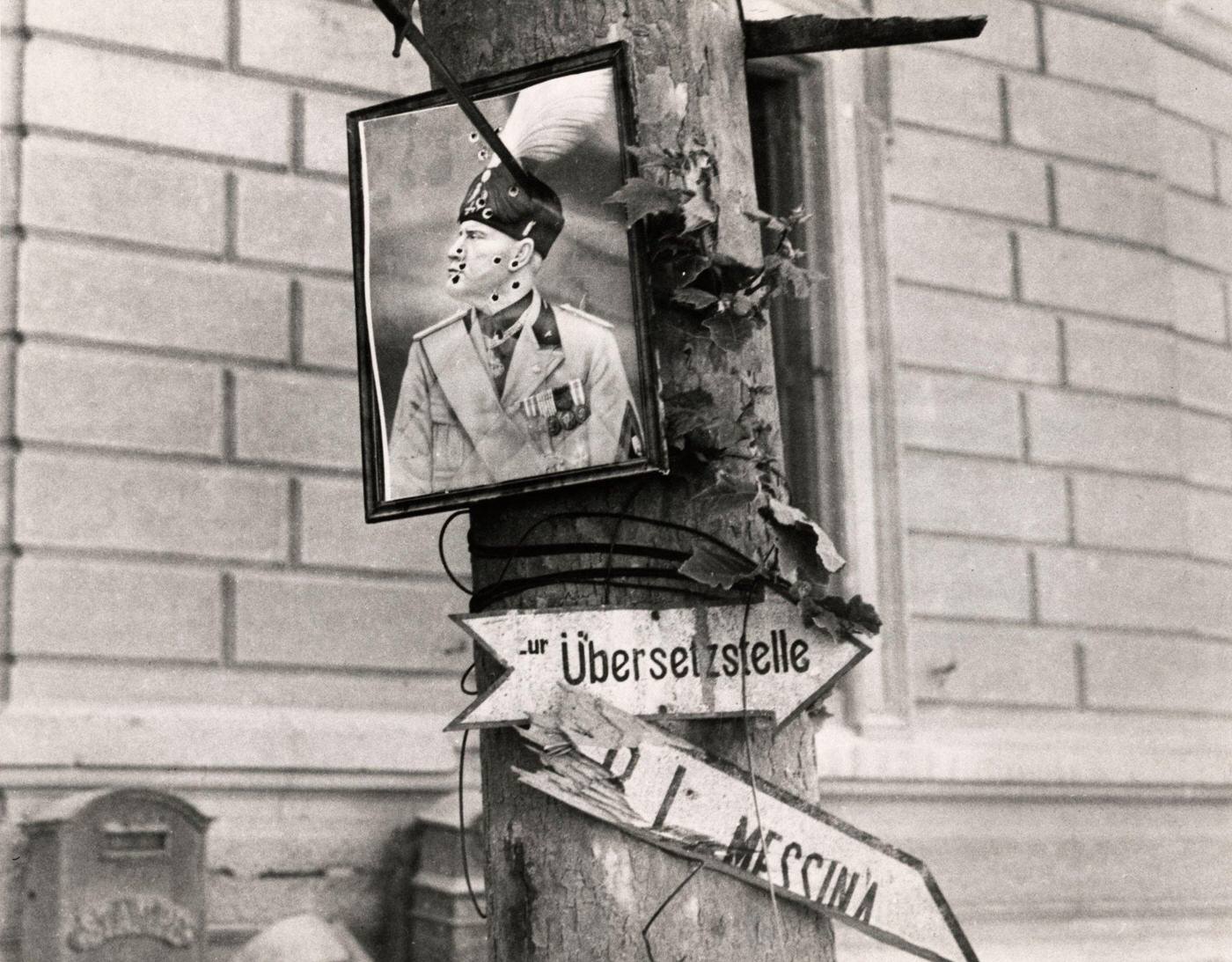
Germany refused to let Mussolini simply disappear. German special forces rescued him from imprisonment in September 1943 and installed him as the head of the Italian Social Republic, a puppet state in northern Italy under firm German control. It was a diminished role — Mussolini was now little more than a figurehead propped up by an occupying army. As Allied forces closed in from the south and partisan resistance intensified across the north, the situation became increasingly desperate.
By April 1945, German forces in Italy were on the verge of total collapse. Mussolini, knowing the end was near, attempted to flee to Switzerland with Petacci and other members of his government. On April 27, partisans with the National Liberation Committee intercepted a German convoy near Lake Como and discovered Mussolini hiding inside a German military vehicle. He and Petacci were taken into custody. The following day, April 28, they were executed by firing squad at the small village of Giulino di Mezzegra, without any formal trial.
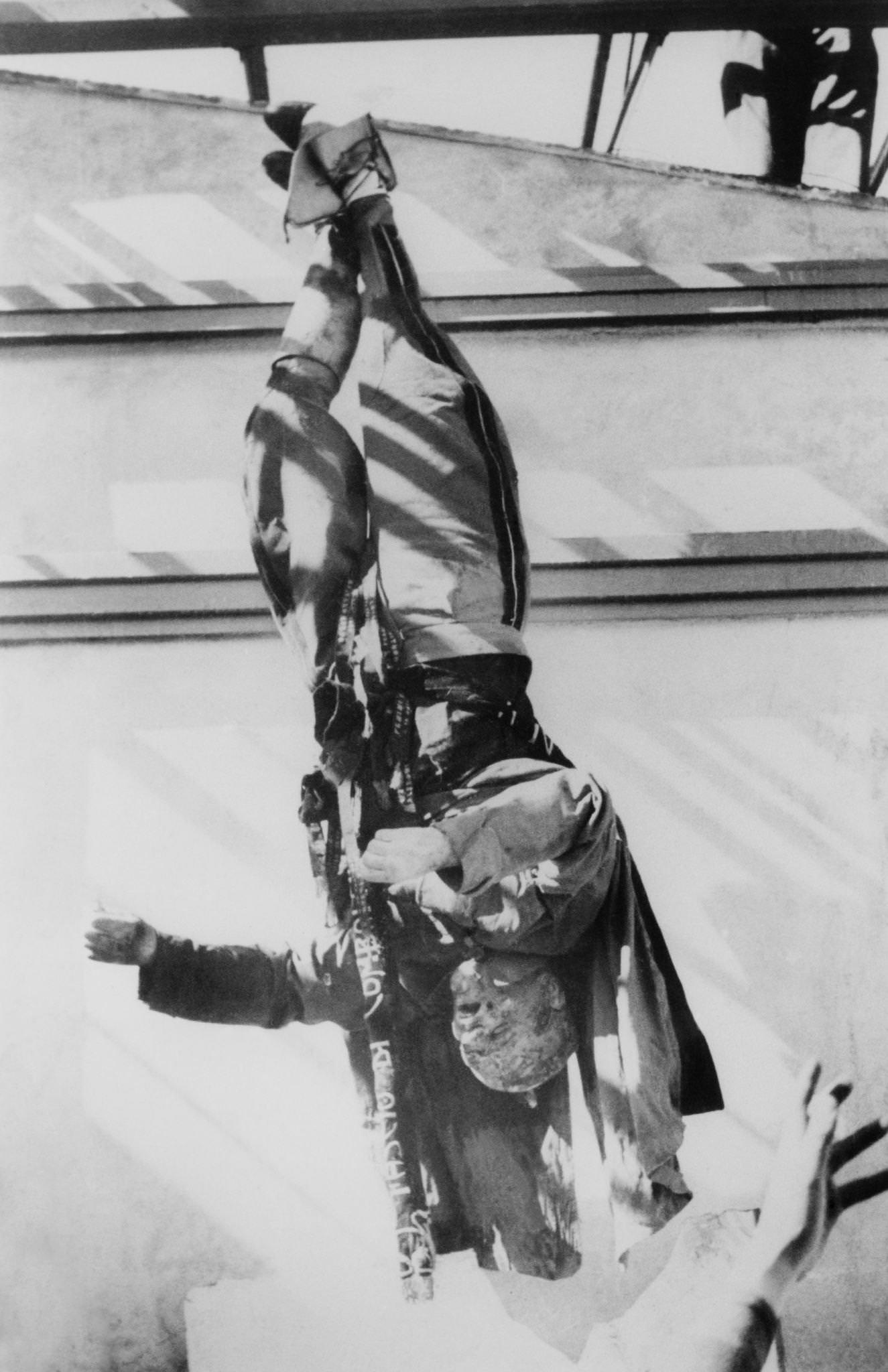
The decision to bring the bodies to Milan and put them on public display was deliberate. The location chosen — Piazzale Loreto — was far from accidental. In August 1944, Fascist forces had executed fifteen anti-Fascist partisans at that same square and left their bodies on the ground for the public to see. Hanging Mussolini and the other Fascists upside down at that exact spot was a direct reversal of that earlier act. The message was unmistakable.
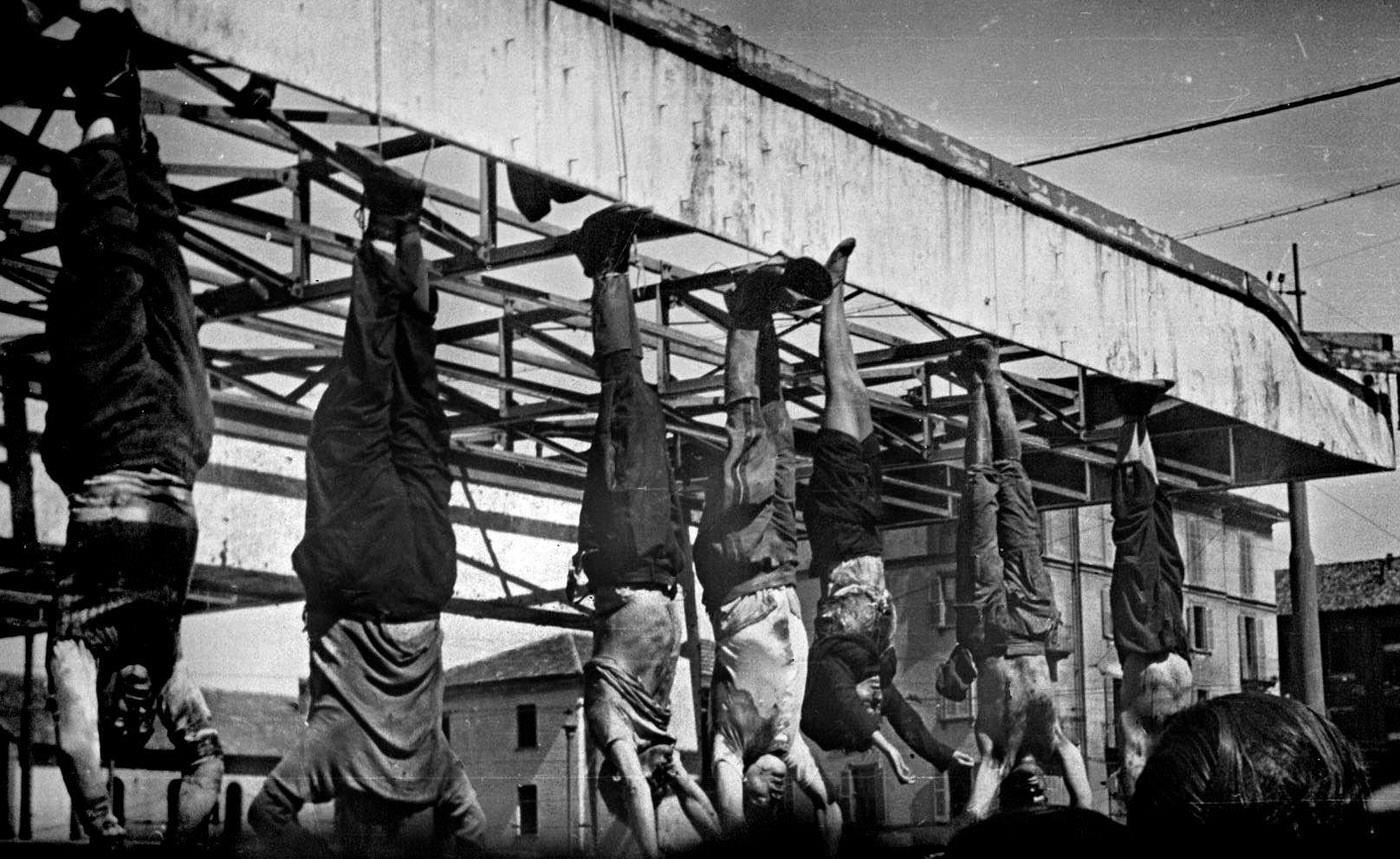
Thousands of people flooded into Piazzale Loreto to see the bodies. Reactions varied widely. Many in the crowd expressed open satisfaction and relief. Others were visibly disturbed by what they saw. The display was also intended to serve a practical purpose: it confirmed to the Italian population that Mussolini was truly dead. In a moment when rumors spread quickly and trust in official announcements was low, seeing the body in person was the most direct form of confirmation available.
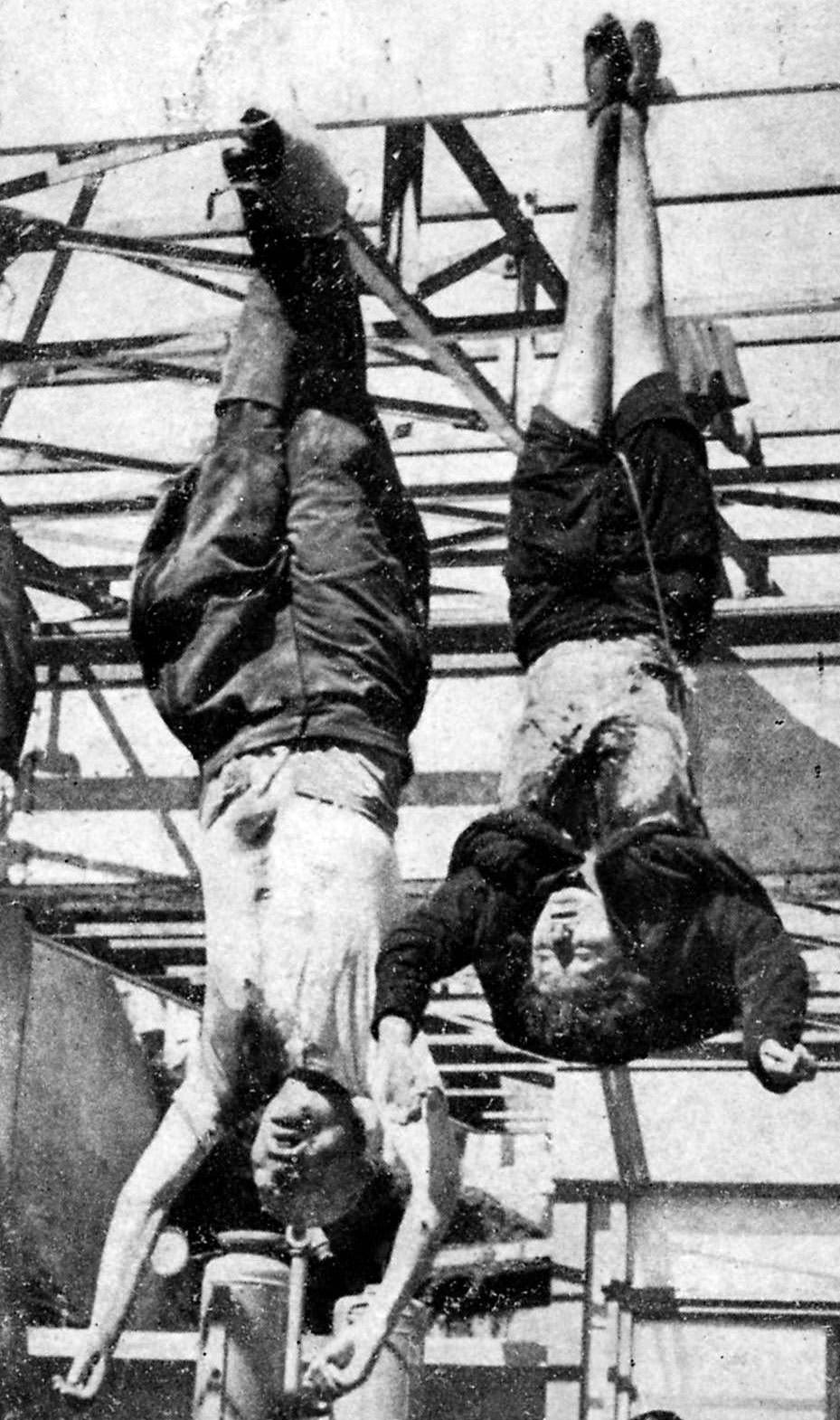
Claretta Petacci had been Mussolini’s companion since the mid-1930s. She was twenty-eight years younger than him and had remained loyal to him even as his power crumbled. She was with him during the failed escape attempt and was executed alongside him. Her body was hung at Piazzale Loreto along with his, drawing its own wave of public attention and reaction. In the chaos of that day, the crowd surged repeatedly toward the bodies, and authorities struggled to maintain any semblance of order around the scene.
After the bodies were taken down, Mussolini’s remains became a politically charged problem for the new Italian government. The corpse was buried quietly, but its location did not stay secret for long. In August 1945, just a few months after the execution, Mussolini’s body was stolen from its grave by neo-Fascist sympathizers. It was missing for months, causing genuine alarm among Italian authorities, who feared the remains could become a symbol used to rally remaining Fascist loyalists.
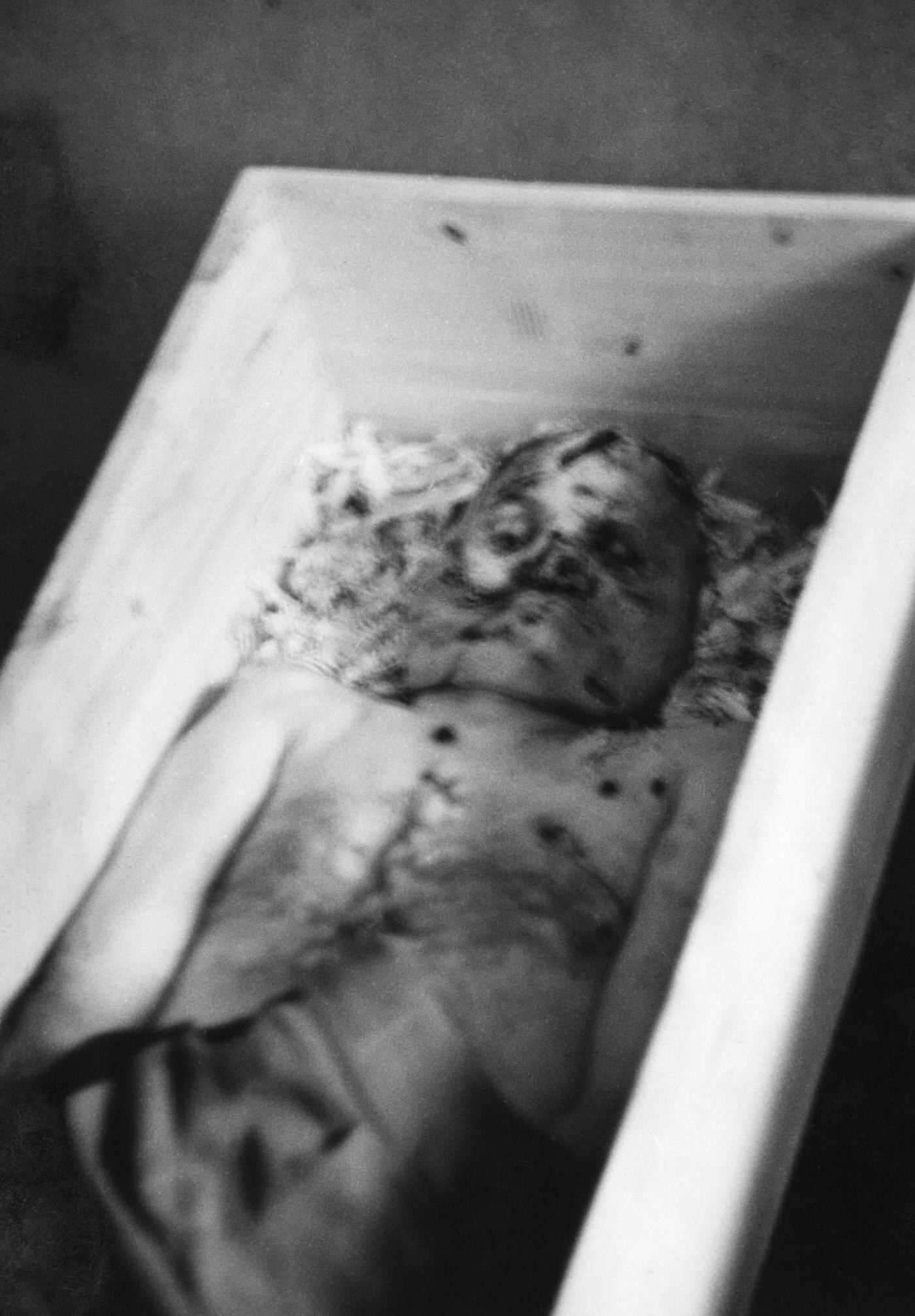
The body was eventually recovered at the Certosa di Pavia, a monastery just south of Milan. It had been concealed inside a small trunk and hidden by two Franciscan brothers, who were subsequently charged with concealing the corpse. Investigation revealed the remains had been moved repeatedly during the months it was missing, pointing to an organized network of people willing to protect and relocate them. After the recovery, Italian authorities held the remains in an undisclosed location for the next ten years while debate continued over what to do with them.
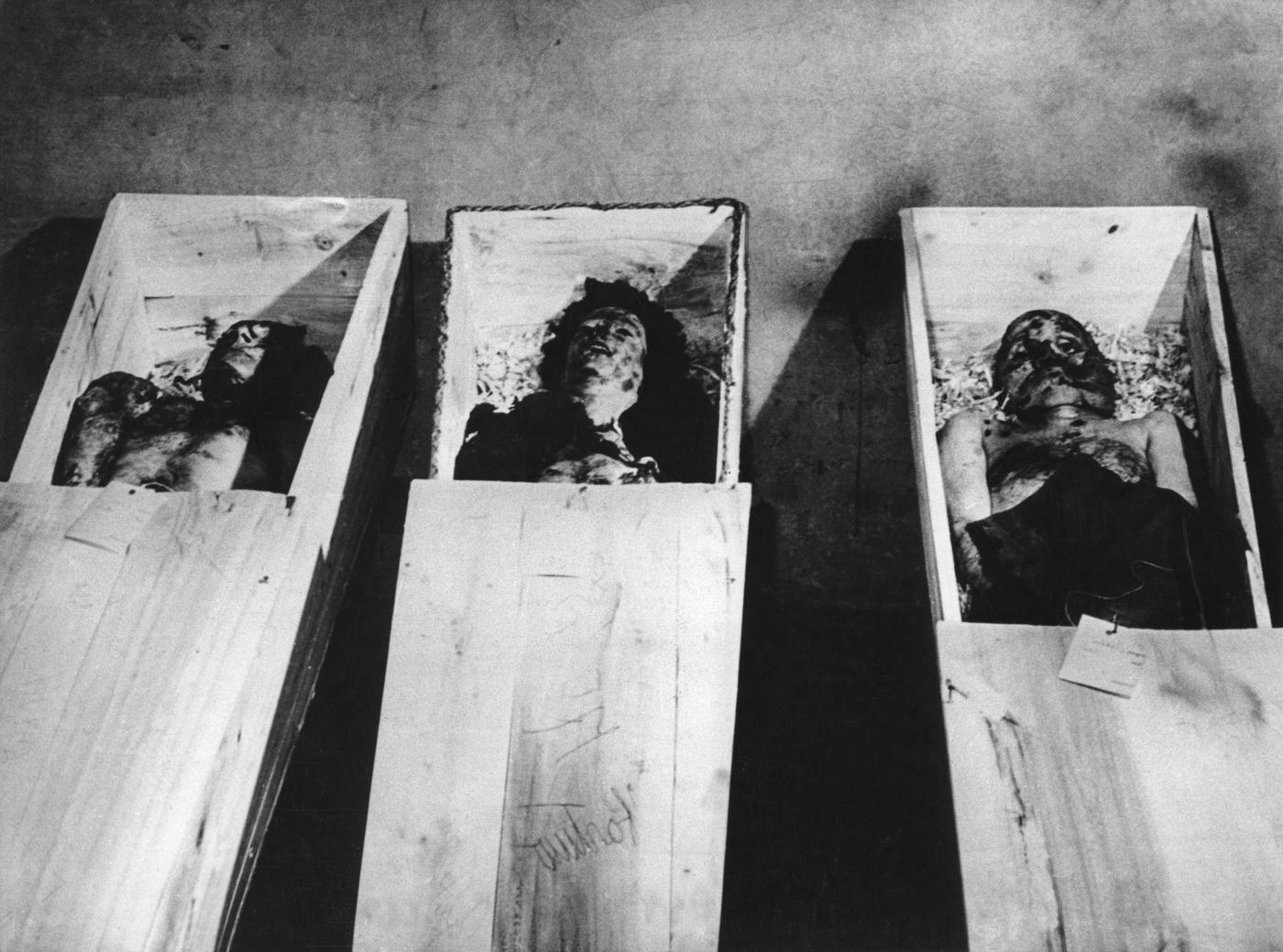
The question of where to permanently bury Mussolini was not simply a logistical matter — it was a political one. The decision was finally made in 1957, during the tenure of Prime Minister Adone Zoli. Zoli’s government held a slim parliamentary majority and needed support from far-right parties to remain in power. As part of the political maneuvering required to secure that support, Zoli contacted Donna Rachele, Mussolini’s widow, and arranged for the remains to be returned to the Mussolini family.
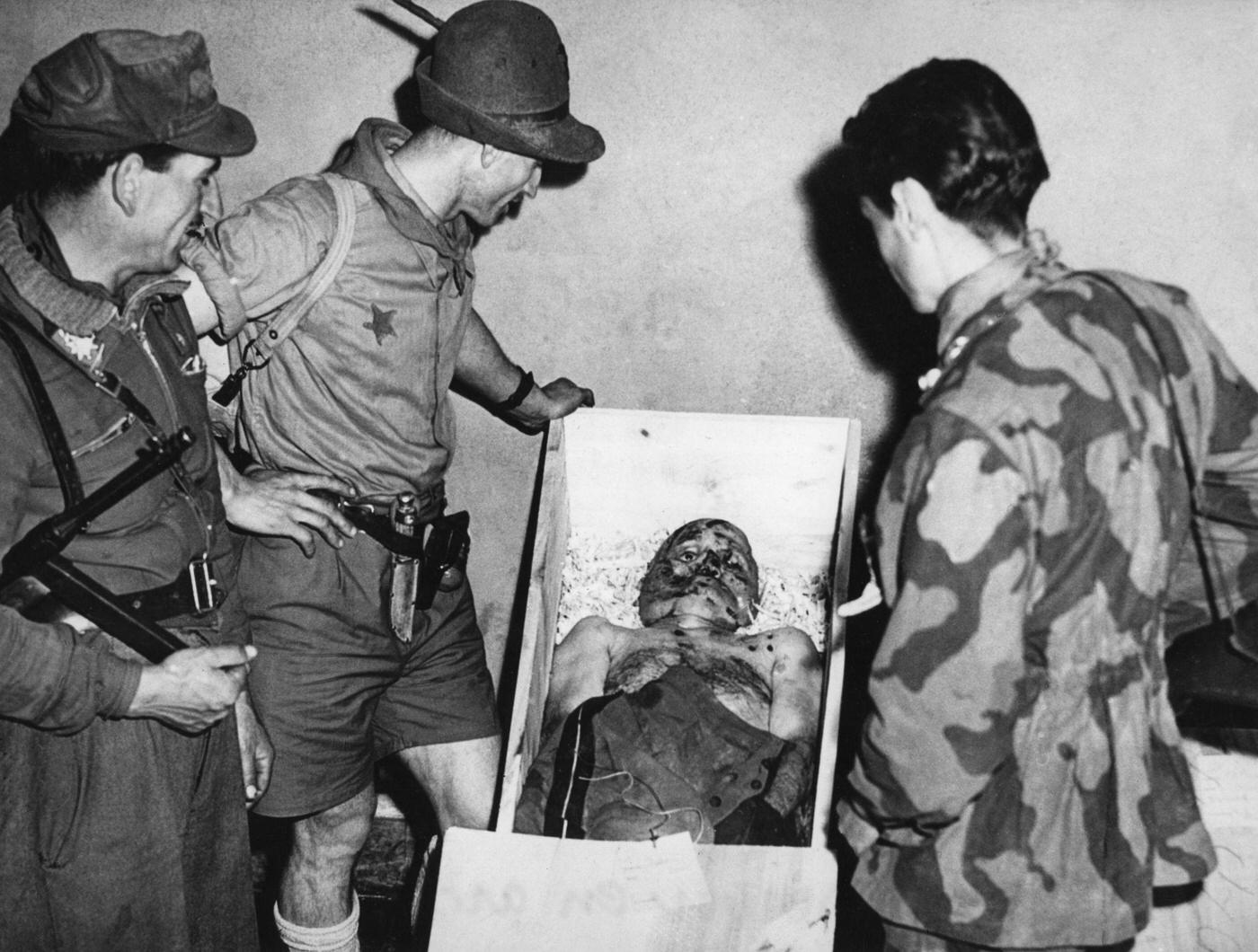
Mussolini was reinterred at Predappio, a small town in the Romagna region and his birthplace. He was placed in a crypt there — the only formal posthumous recognition granted to him. The burial site features marble fasces, the ancient Roman symbol that had been adopted and made central to Fascist iconography, along with a large idealized marble bust of Mussolini mounted above the tomb. The crypt has since drawn a steady stream of visitors, including many who travel to Predappio specifically to pay their respects to the former dictator.
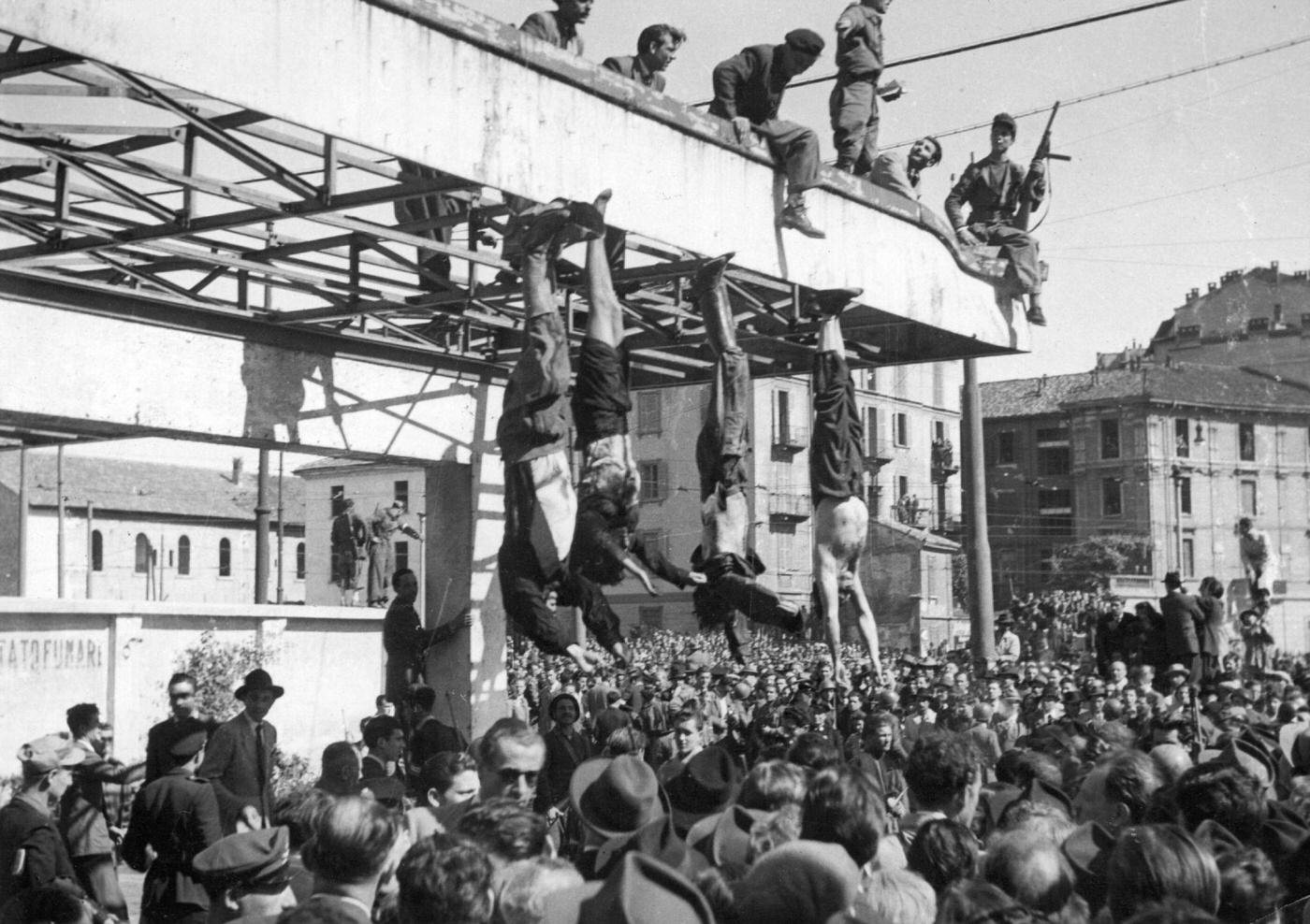
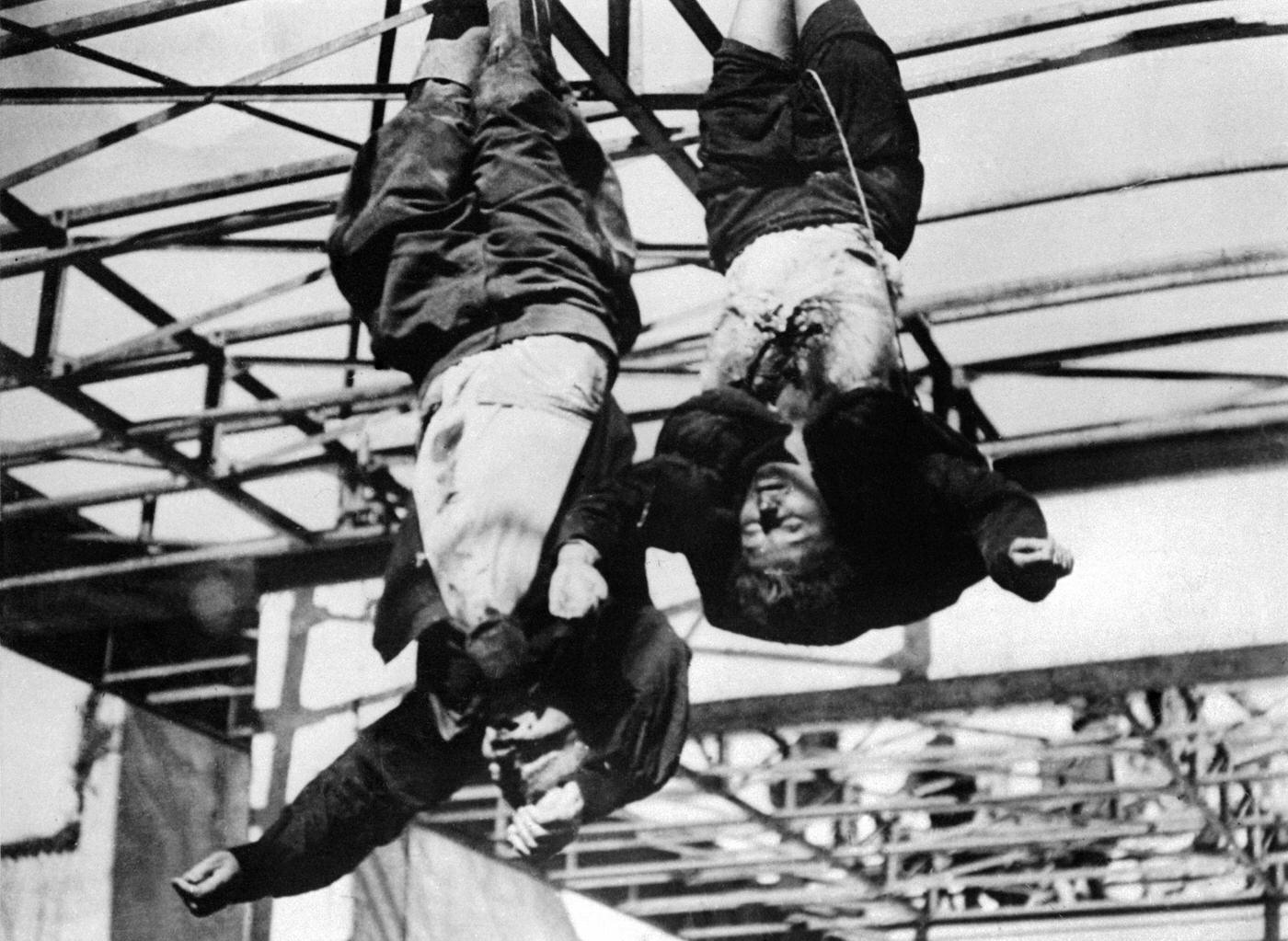
The events at Piazzale Loreto did not occur in a vacuum. They were the product of more than two decades of Fascist rule, a devastating war, and years of brutal partisan conflict within Italy itself. The partisans who captured and executed Mussolini operated under the National Liberation Committee, an organized resistance movement that had fought the Fascist regime and its German backers at enormous personal cost. For many of them, the display at Piazzale Loreto represented a reckoning that had been long in coming.
The square itself tells the story of that reckoning in concentrated form. The same ground where Fascists had publicly humiliated and discarded the bodies of their enemies in 1944 became, less than a year later, the site where those same Fascists met the same fate. The bodies of Mussolini, Petacci, and the others hung at the same location, in front of the same city, for the same crowd that had once been forced to live under their authority.
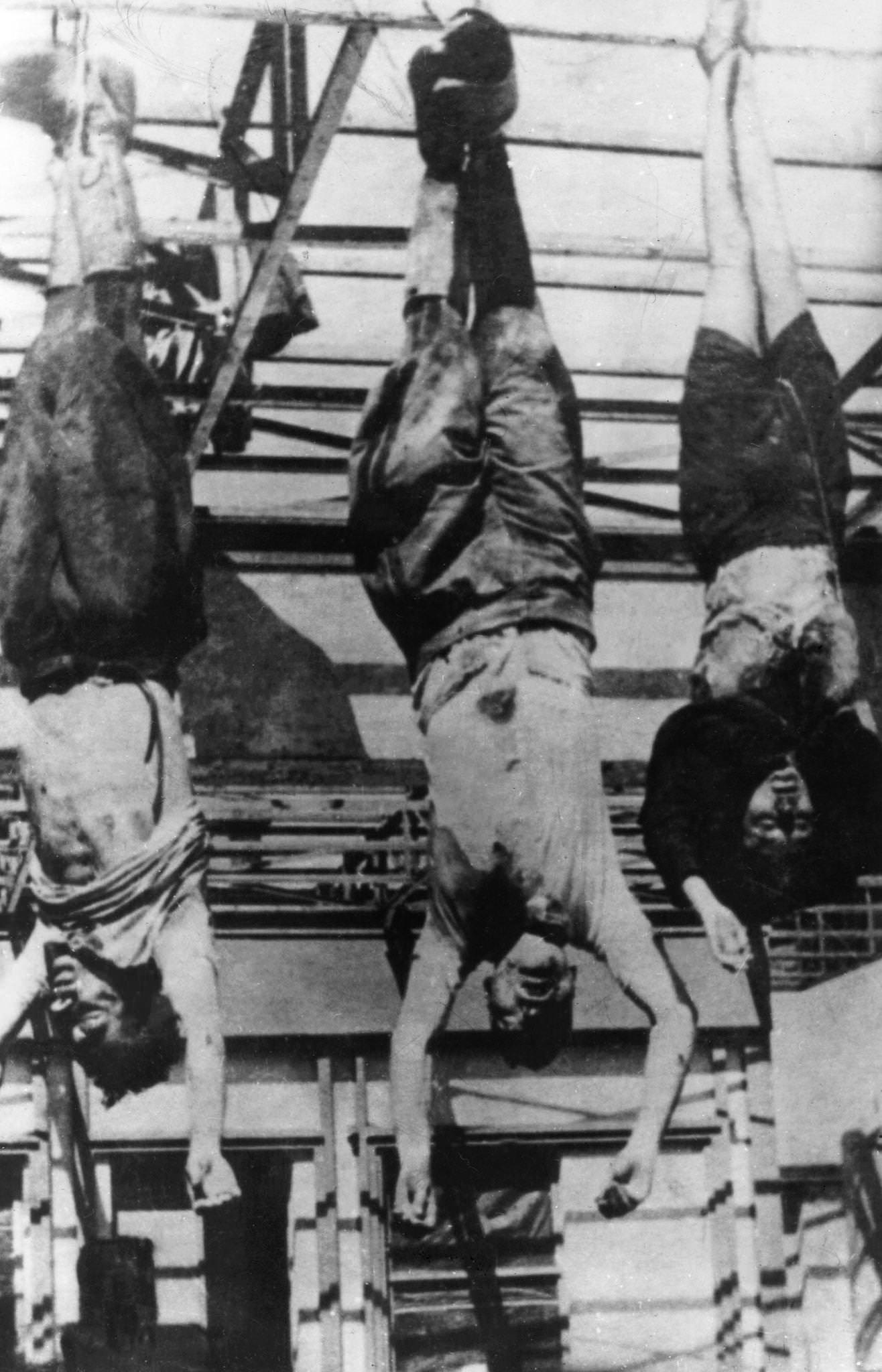
The photographs taken at Piazzale Loreto that day have endured as some of the rawest documentation of how World War II ended in Italy. They show not just the death of a dictator but the full emotional weight of a society emerging from years of violence, fear, and occupation. The tomb at Predappio, the stolen corpse, the political deal that finally laid Mussolini to rest — each chapter in the handling of his remains reflected the deep and unresolved divisions that his rule had left behind in Italian society.



He’s never looked better.
Would be interesting to see hitler dangling like this
That’s why he decided to take his own life, so that he could avoid such a fate
Too bad that escaped it.
We don’t have hitler but we have Natanyahu
now you can add putin and trump
who wanna play some Doom?
gbar.
Deutsch
Englisch
perverse aufgeilung an toten
perverse pleasure from dead people
Best picture of a facist in history.
If I recall my history correctly, this was why Hitler hid in that bunker and went out on his own terms. He was terrified of being hung up on display.
Yep this is exactly right. He didn’t want to be made a mockery of so he made sure his body was completely burned
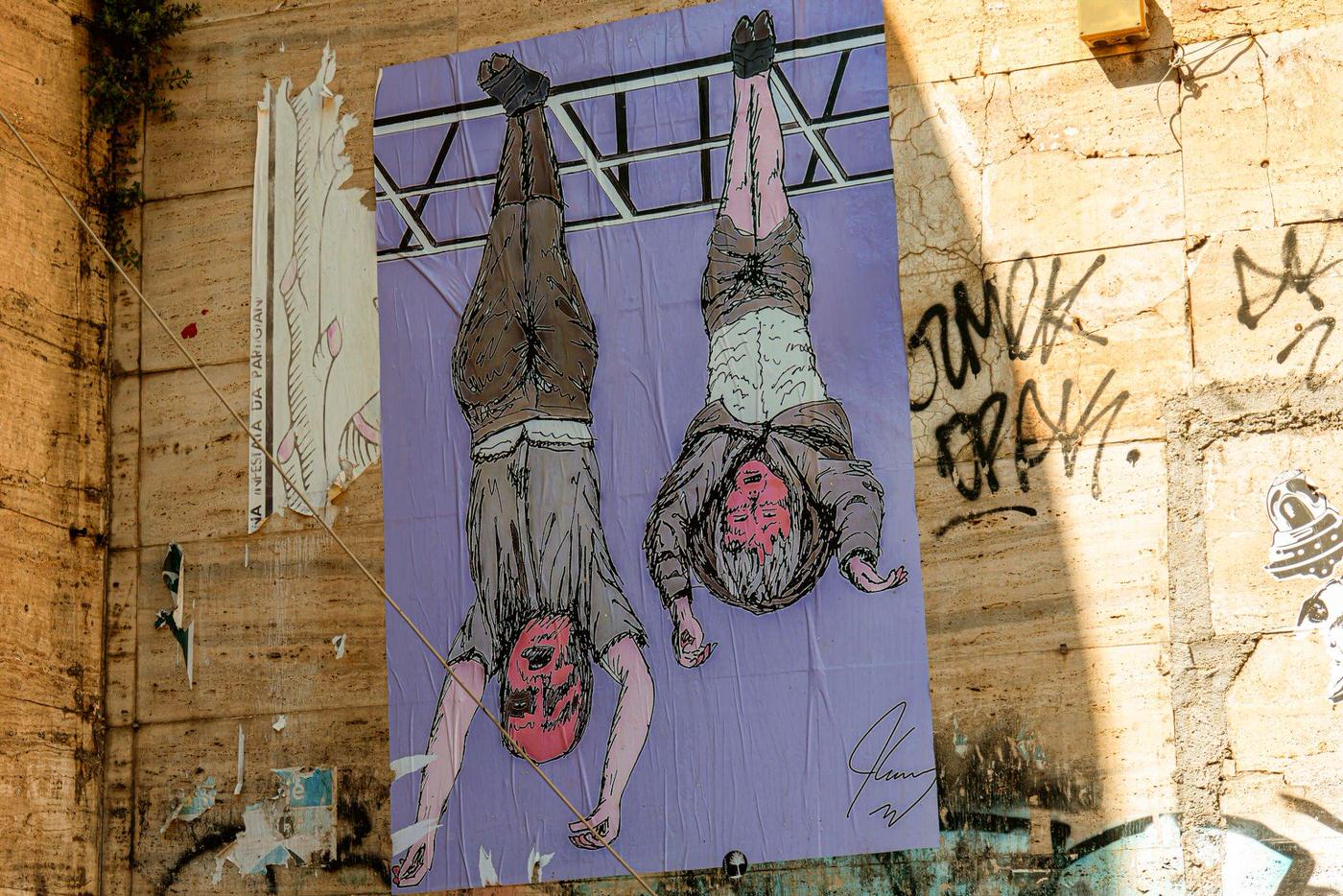
I remember Jim Carey sharing a drawing of this and it pissed off Mussolini’s granddaughter
My kind of fascists.