
When the Beatles stepped off a plane at New York’s John F. Kennedy Airport on February 7, 1964, the crowd outside was already out of control. Hundreds of screaming fans had packed the observation deck. The noise was deafening. That moment marked the American beginning of one of the most intense fan crazes the world had ever seen — Beatlemania.
The Beatles had formed in Liverpool, England, in 1960. By 1963, they had taken over the UK charts. Their music mixed rock and roll, pop, and rhythm and blues in a way that felt fresh and electric. But nothing prepared the world for what happened once they crossed the Atlantic.
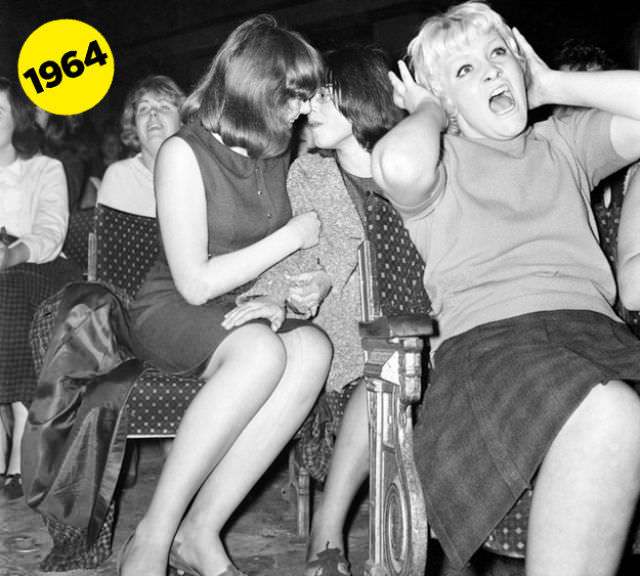
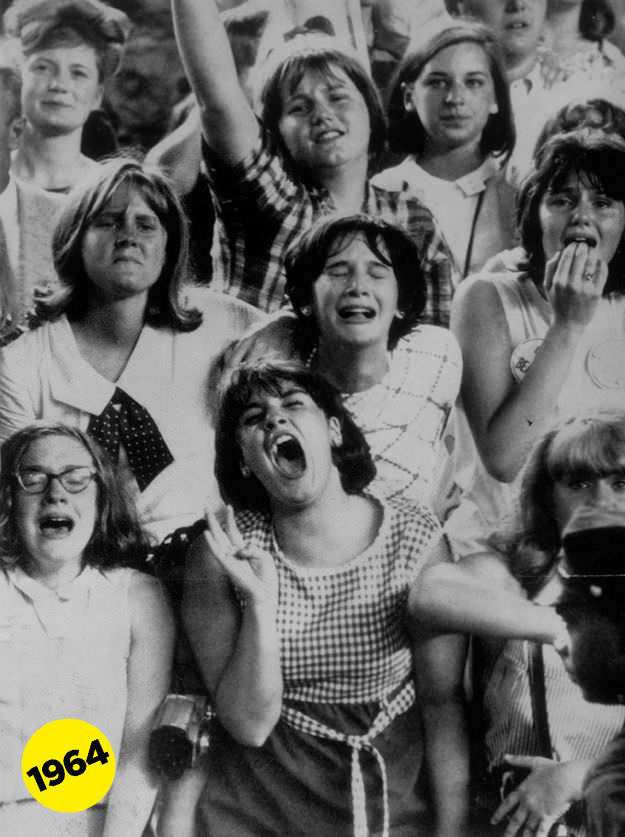
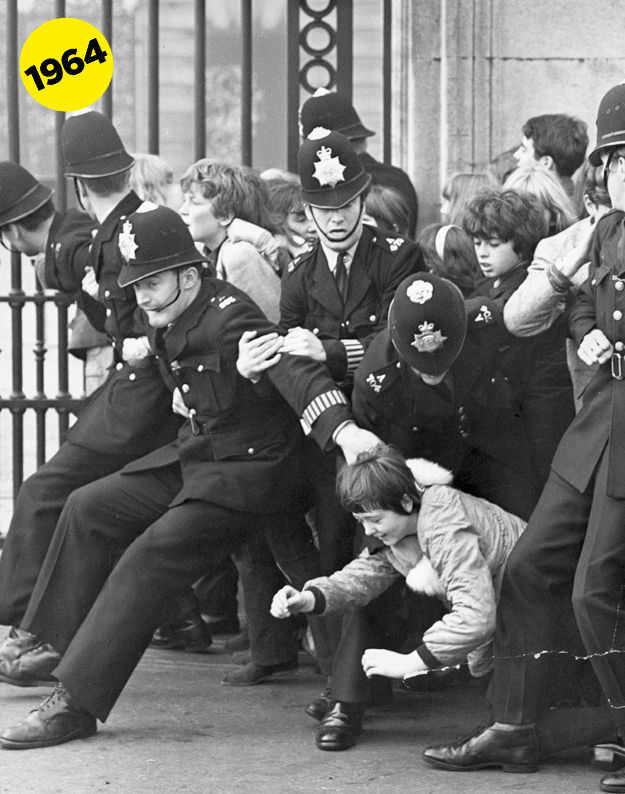
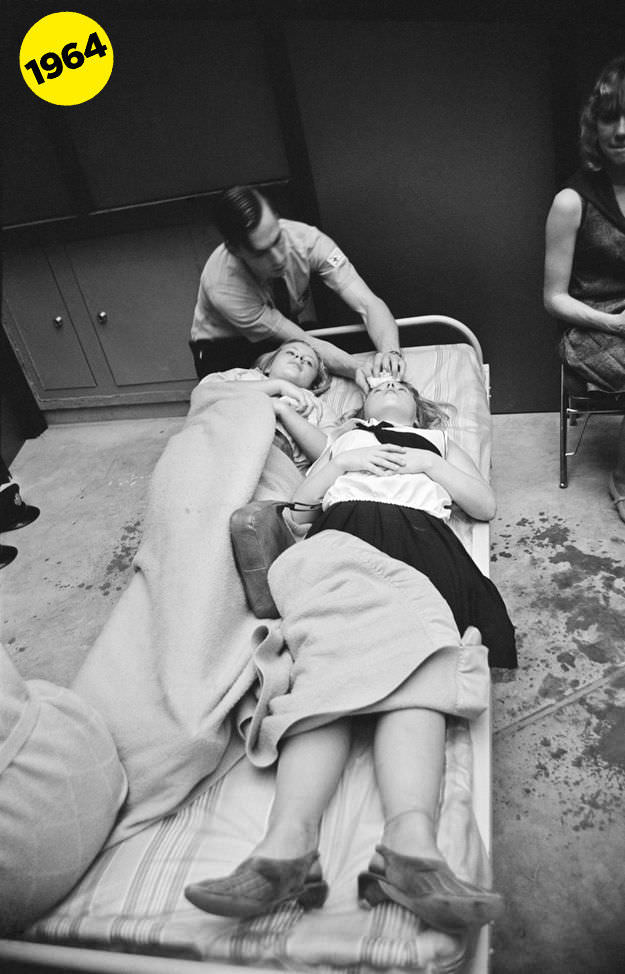
Young women were at the center of Beatlemania. At concerts, airports, and hotel appearances, they screamed, wept, and fainted — sometimes all at once. Police lines buckled under the pressure of surging crowds. Girls clutched homemade signs, wore buttons with the bandmates’ faces, and shrieked through entire performances.
The term “Beatlemania” was coined by journalists trying to describe something they had never covered before. This wasn’t ordinary fan excitement. It was a full cultural eruption. Records sold in the millions. Merchandise flew off shelves. Fan mail arrived by the truckload at the band’s management office.
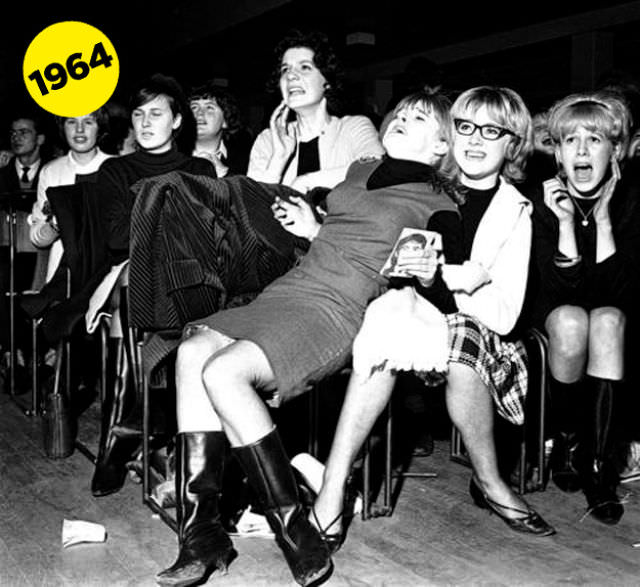
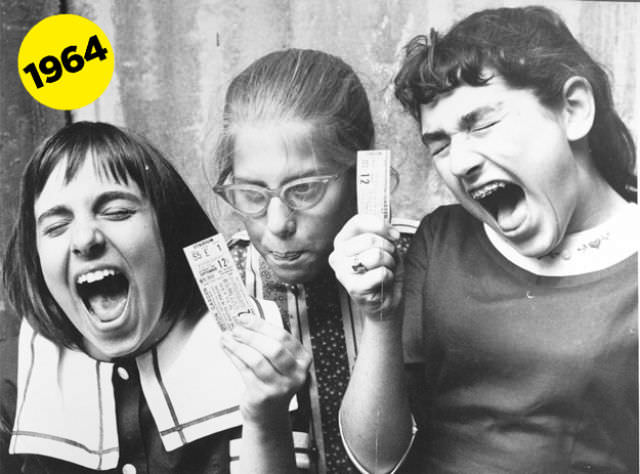
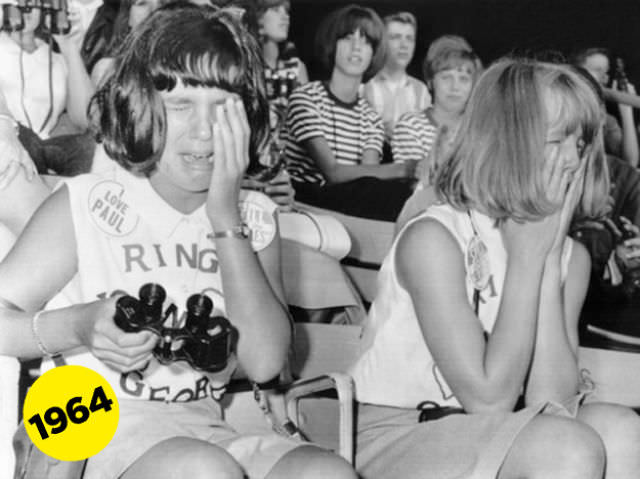
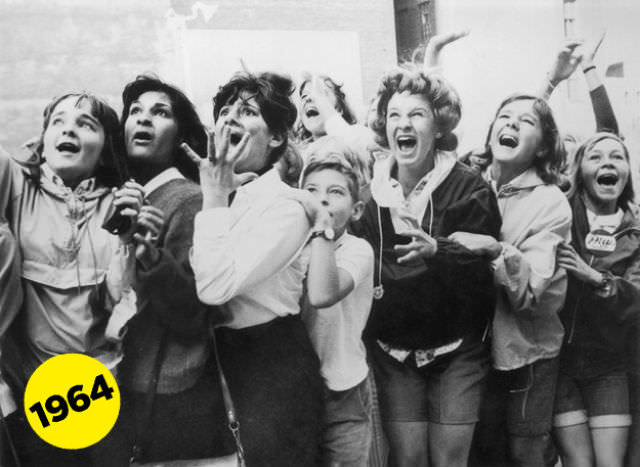
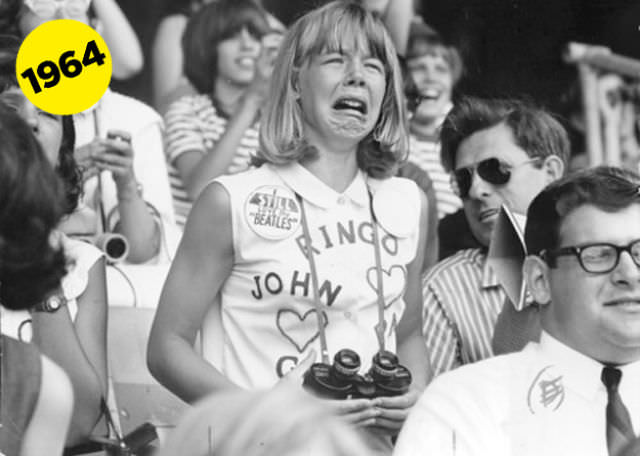
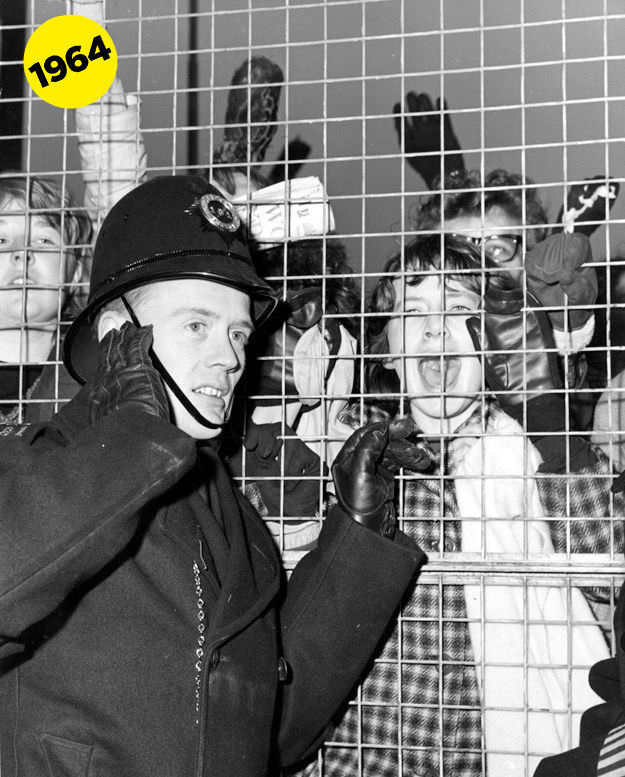
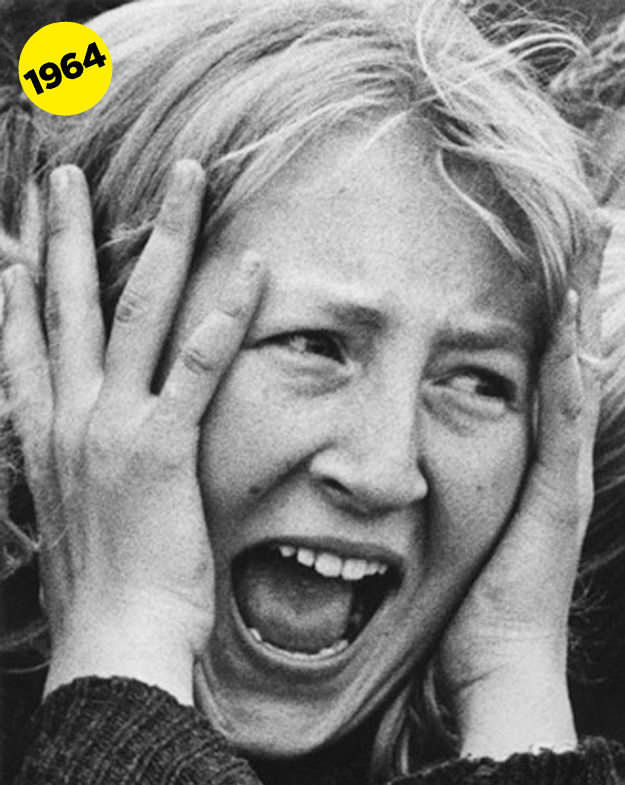
Photographers captured the raw emotion on the faces of fans throughout 1964 and 1965. The expressions ranged from pure joy to visible disbelief. Some girls covered their faces with their hands, overwhelmed. Others reached out desperately toward the stage, straining against security barriers.
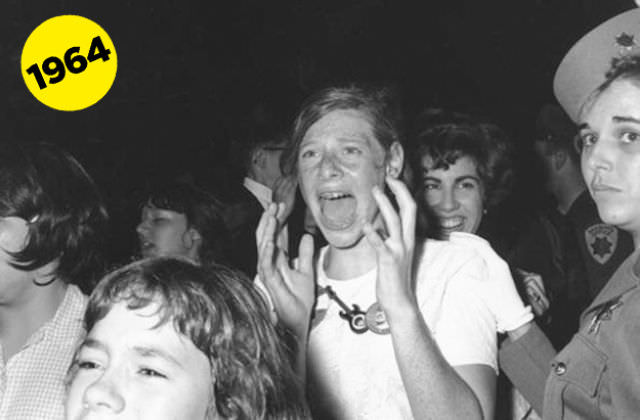
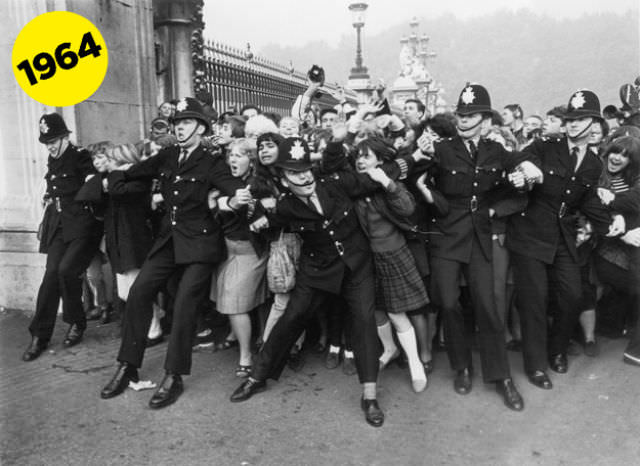
Concert venues were often so loud with screaming that the band couldn’t hear themselves play. During their 1964 North American tour, the Beatles performed in arenas and stadiums that were simply not built for rock concerts. The volume of fan noise routinely drowned out the music entirely.
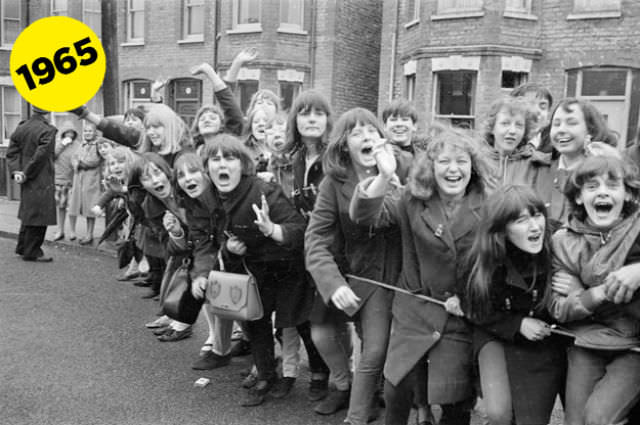
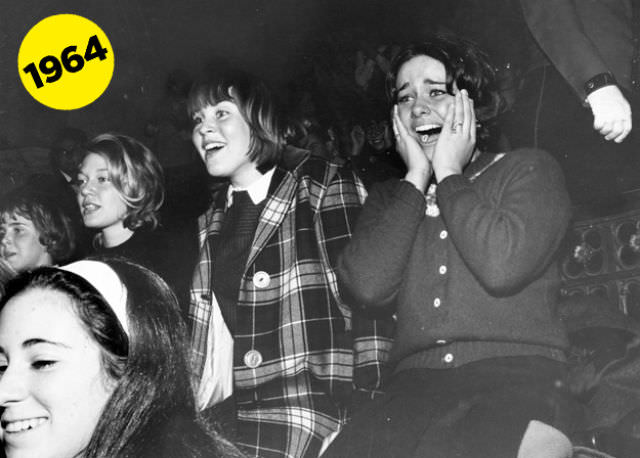
The visual record of this era is remarkable. Black-and-white photographs show girls with tears streaming down their faces, mouths wide open mid-scream. These images became iconic representations of 1960s youth culture. The fans were not passive observers — they were an active, electric part of the spectacle.
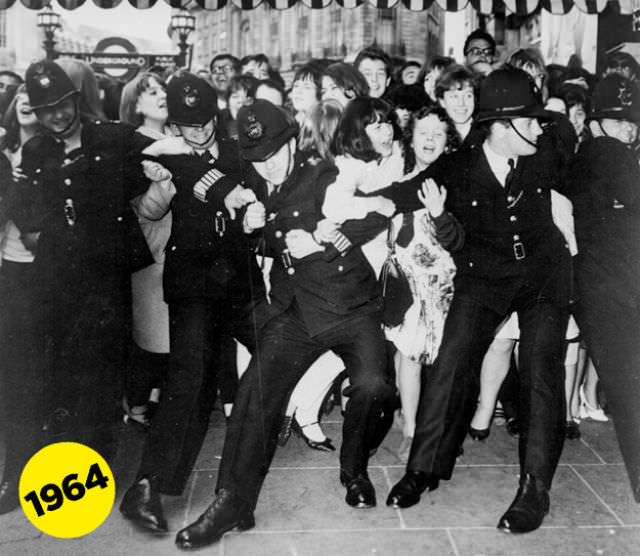
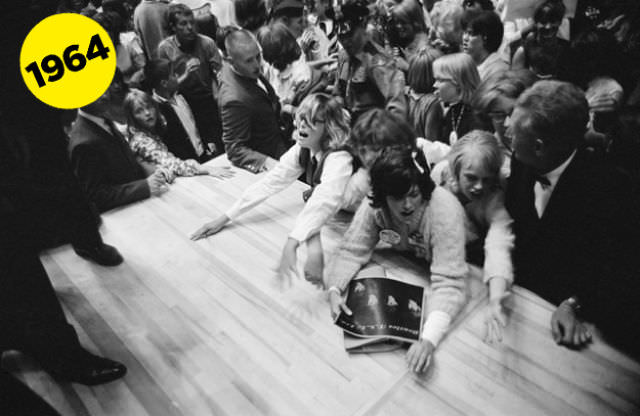
By 1965, the phenomenon had not slowed. The Beatles played Shea Stadium in New York on August 15, 1965, to a crowd of 55,600 people — the largest concert audience in history at that point. Police stationed throughout the stands struggled to keep fans from rushing the field.
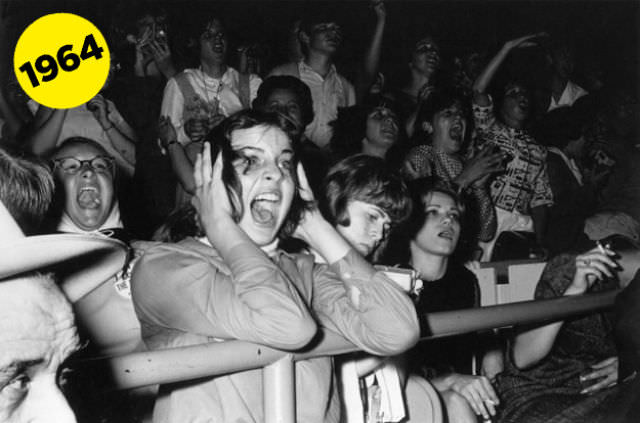
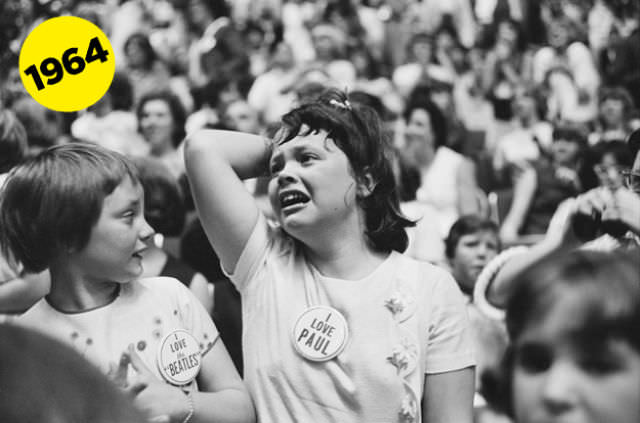
Fan behavior extended far beyond concerts. Girls camped outside hotels where the Beatles stayed, sometimes for days. They bribed hotel staff for room numbers. They collected anything connected to the band — cigarette butts, used towels, strands of hair.
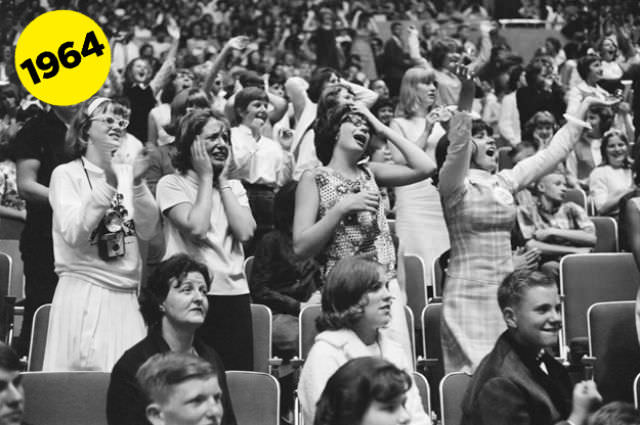
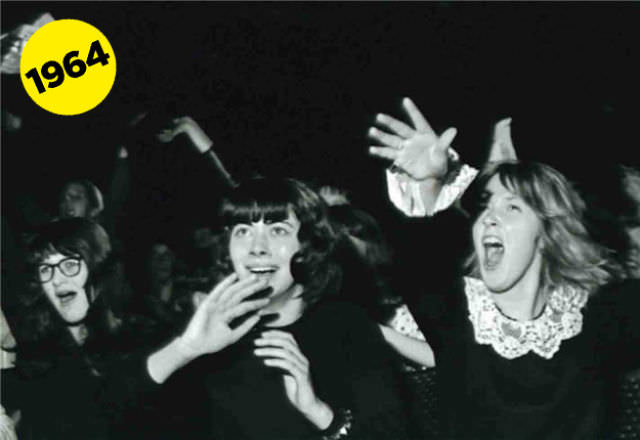
The photos from this period tell a story without words. Faces frozen in mid-scream, bodies pressed against metal barricades, and eyes locked on four young men from Liverpool. These images document a specific, unrepeatable moment when pop music and mass emotion collided in public.
The fans themselves were teenagers — mostly between 13 and 18 years old. Many wrote detailed journals and letters about their experiences at concerts and fan club meetings. These written records, along with the photographs, give historians a detailed picture of what Beatlemania felt like from the inside.

The ushers are sniffing, eau de cologning