
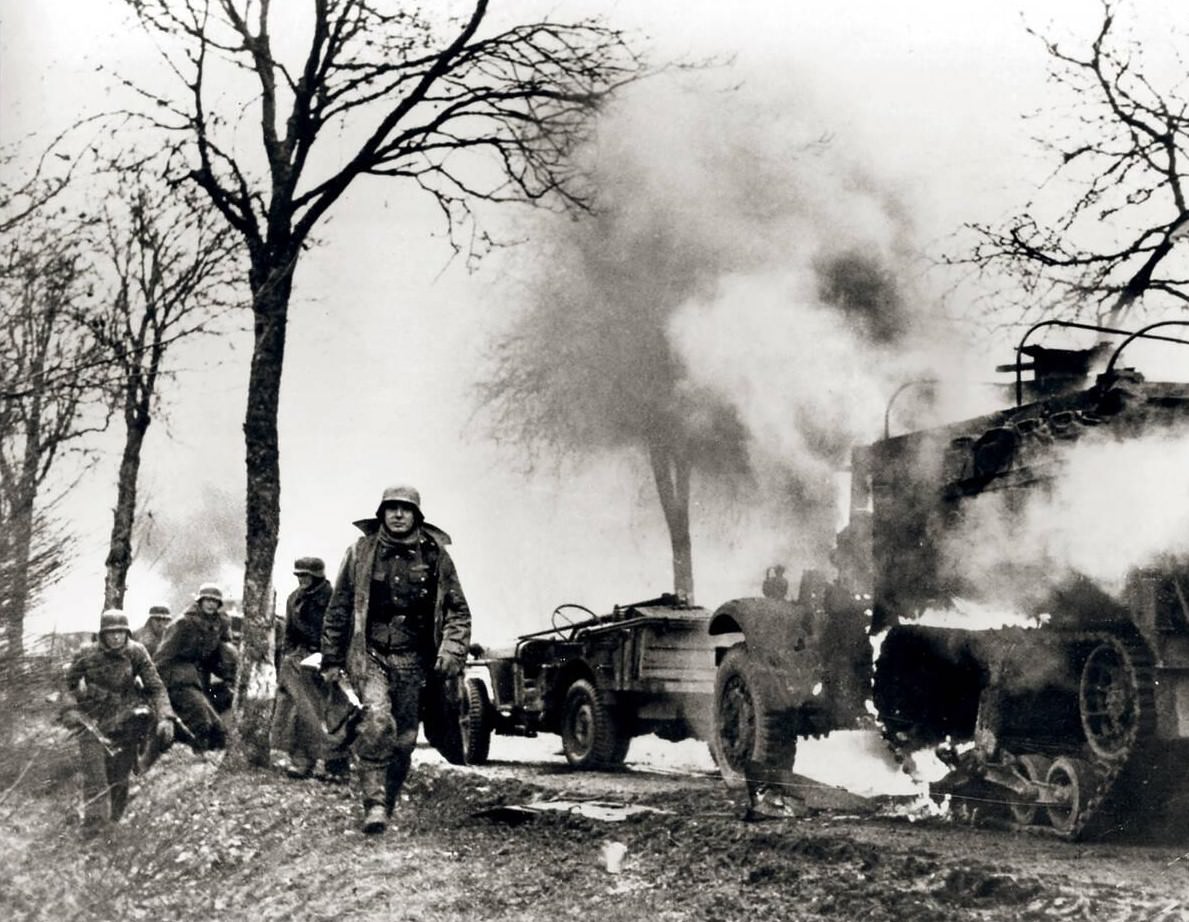
On December 16, 1944, Adolf Hitler launched the largest German offensive on the Western Front of World War II. His forces drove through the Ardennes — a dense, snow-covered forest stretching across Belgium, Luxembourg, and France — in a desperate attempt to change the direction of a war Germany was losing. The attack caught the Allies completely off guard. Within days, the German advance had punched a massive dent into Allied lines, giving the battle its name: the Battle of the Bulge. It would rage until January 25, 1945, becoming the bloodiest battle ever fought by American forces in the entire war.
Germany’s goal was ambitious. By splitting the Allied front, Hitler hoped to encircle and destroy four Allied armies and seize the port city of Antwerp, Belgium — a critical supply hub. If successful, Germany could force a negotiated peace on the Western Front and redirect its remaining strength eastward against the Soviet Union. The plan, code-named Operation Watch on the Rhine, was developed under strict secrecy. German commanders banned radio communication, moved troops only at night, and relied on the thick forest canopy to hide their buildup from Allied reconnaissance aircraft.
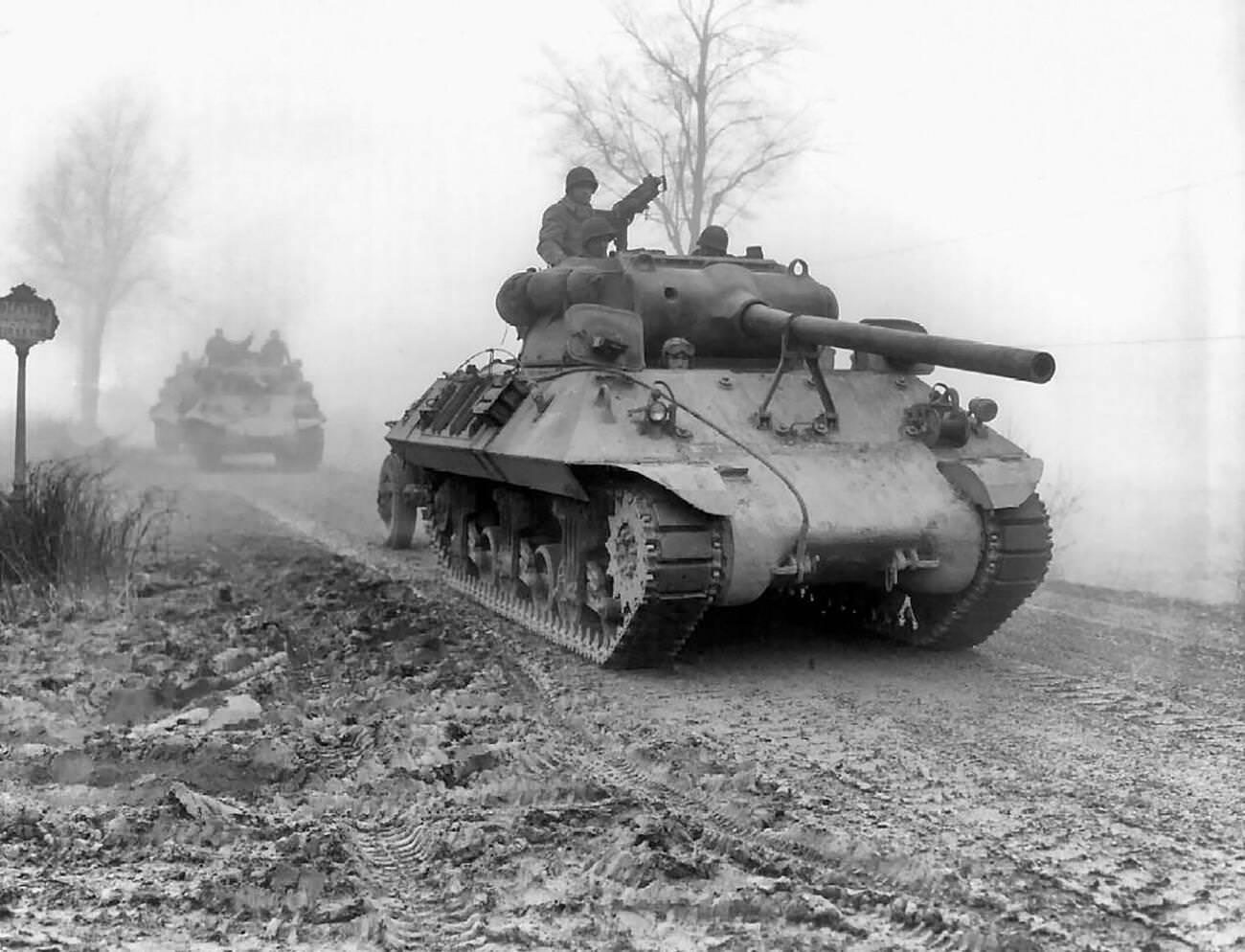
Germany assembled roughly 250,000 soldiers, nearly 1,000 tanks and assault guns, and heavy artillery for the offensive. Poor winter weather — freezing fog and heavy snow — kept Allied aircraft grounded during the opening days, eliminating one of the Allies’ greatest advantages. When German Panzer divisions tore through thinly held American positions in the early hours of December 16, the surprise was total. American units along the front received a massive artillery bombardment before German infantry and armor swarmed forward, overwhelming position after position.
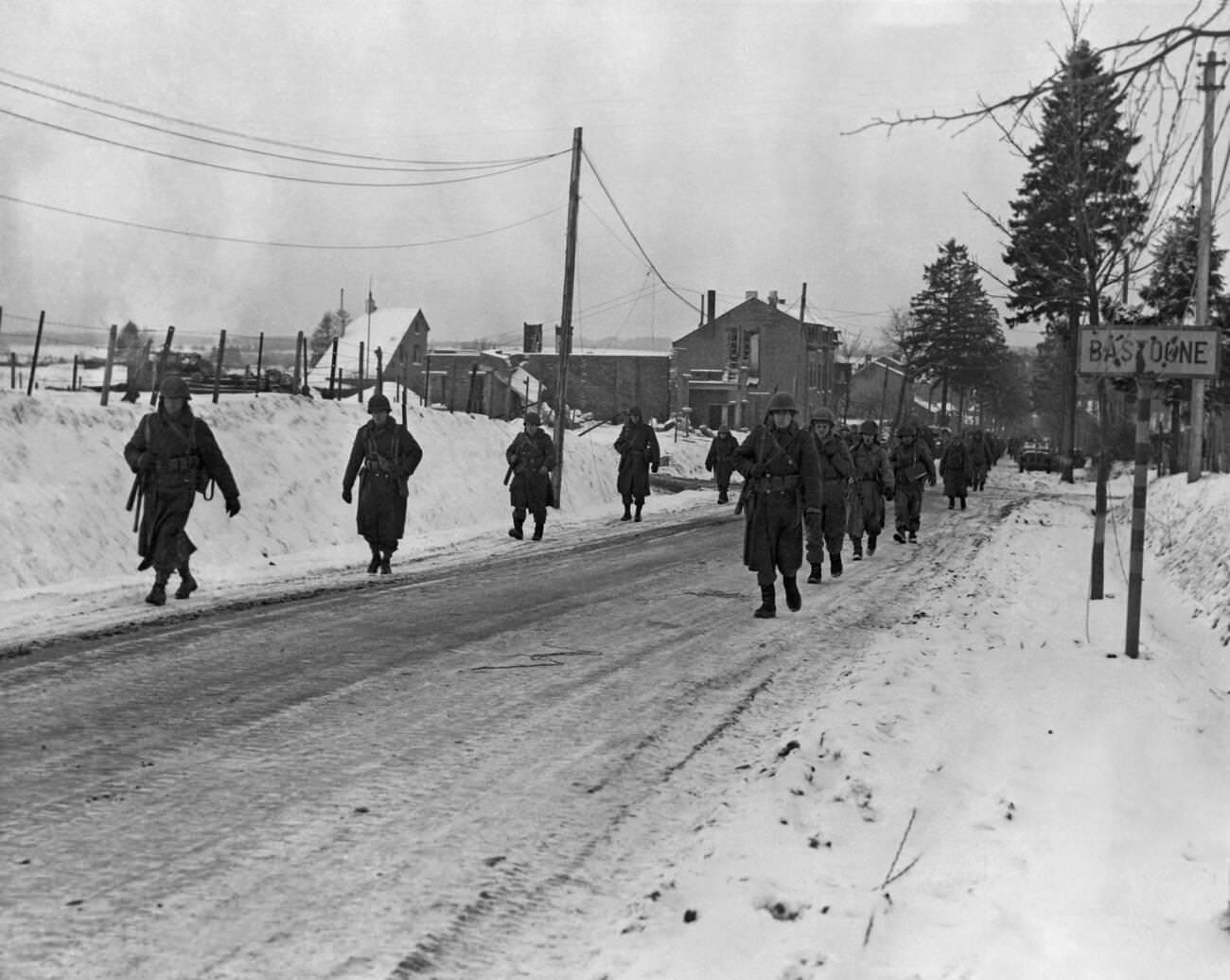
American forces scrambled to hold key road junctions as the German tide swept westward. Towns like St. Vith and Bastogne were critical — whoever controlled the roads through them controlled movement across the entire Ardennes. While St. Vith held out for several days before being abandoned, Bastogne became the most famous stand of the entire battle. The 101st Airborne Division, along with elements of armored and infantry units, was completely surrounded by German forces by December 21.
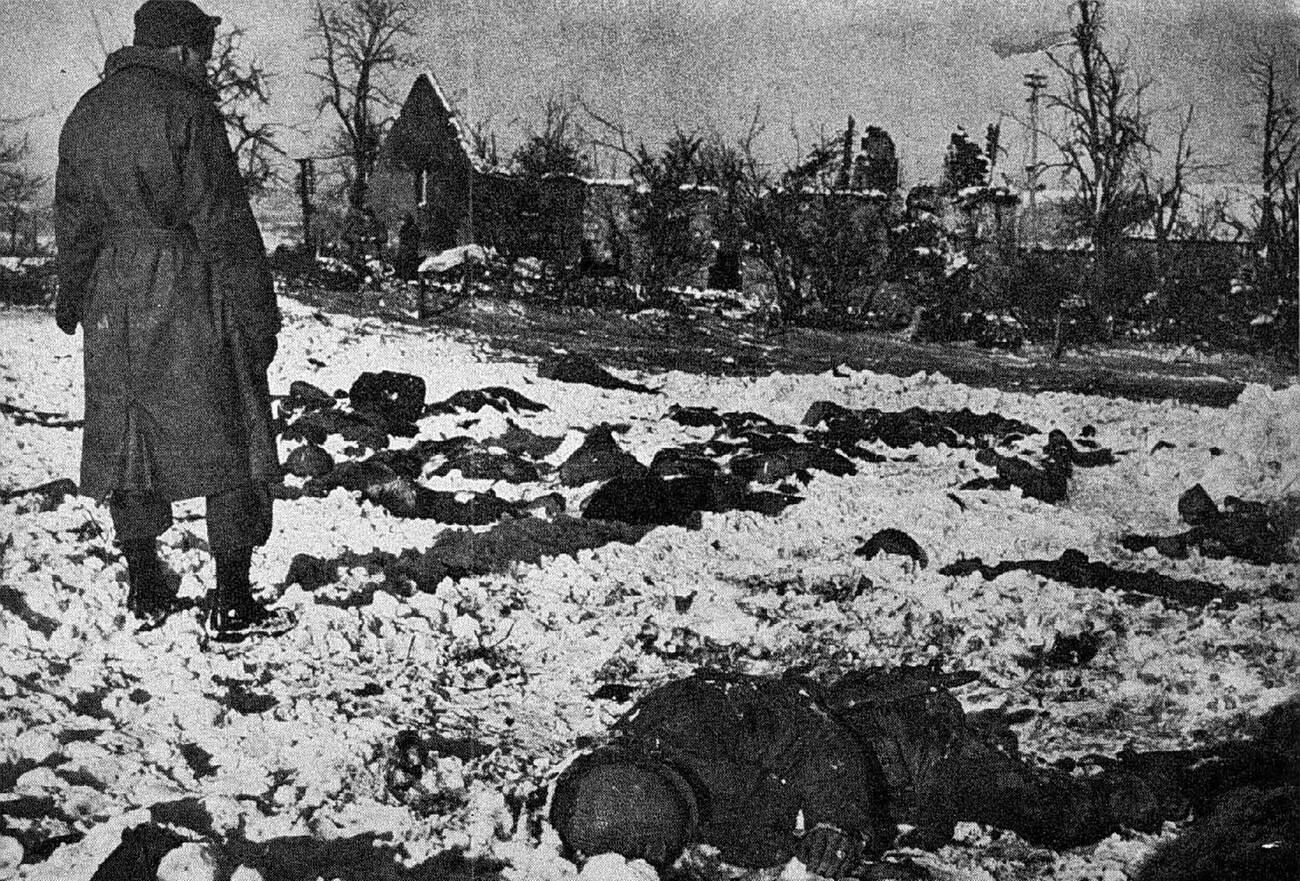
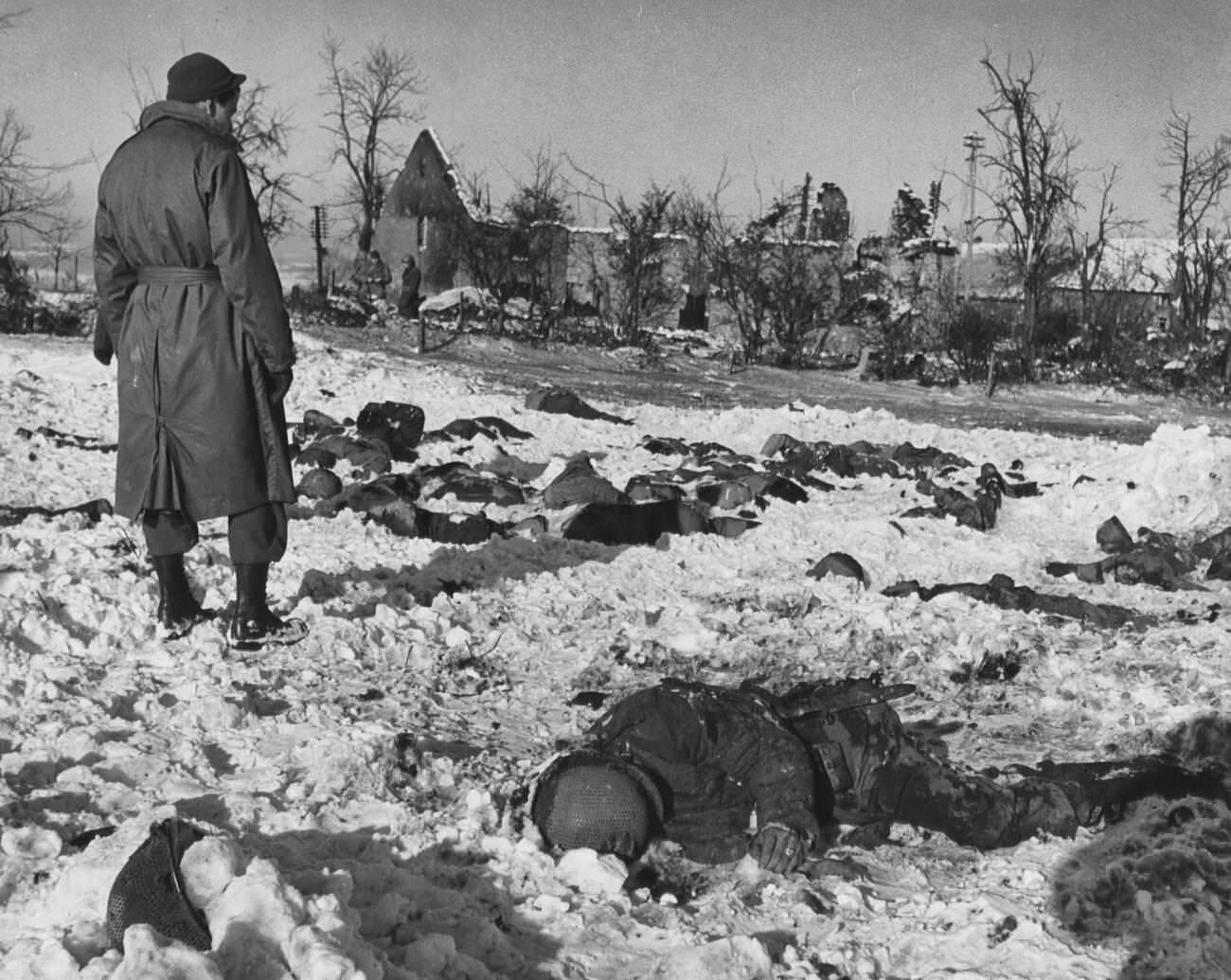
The German advance also brought with it acts of deliberate brutality. Near the Belgian town of Malmedy, members of the 1st SS Panzer Division captured roughly 80 American prisoners of war on December 17 and opened fire on them in an open field. At least 72 American soldiers were killed. The massacre shocked Allied commanders and stiffened the resolve of American troops across the front. The bodies were recovered after Allied forces recaptured the area.
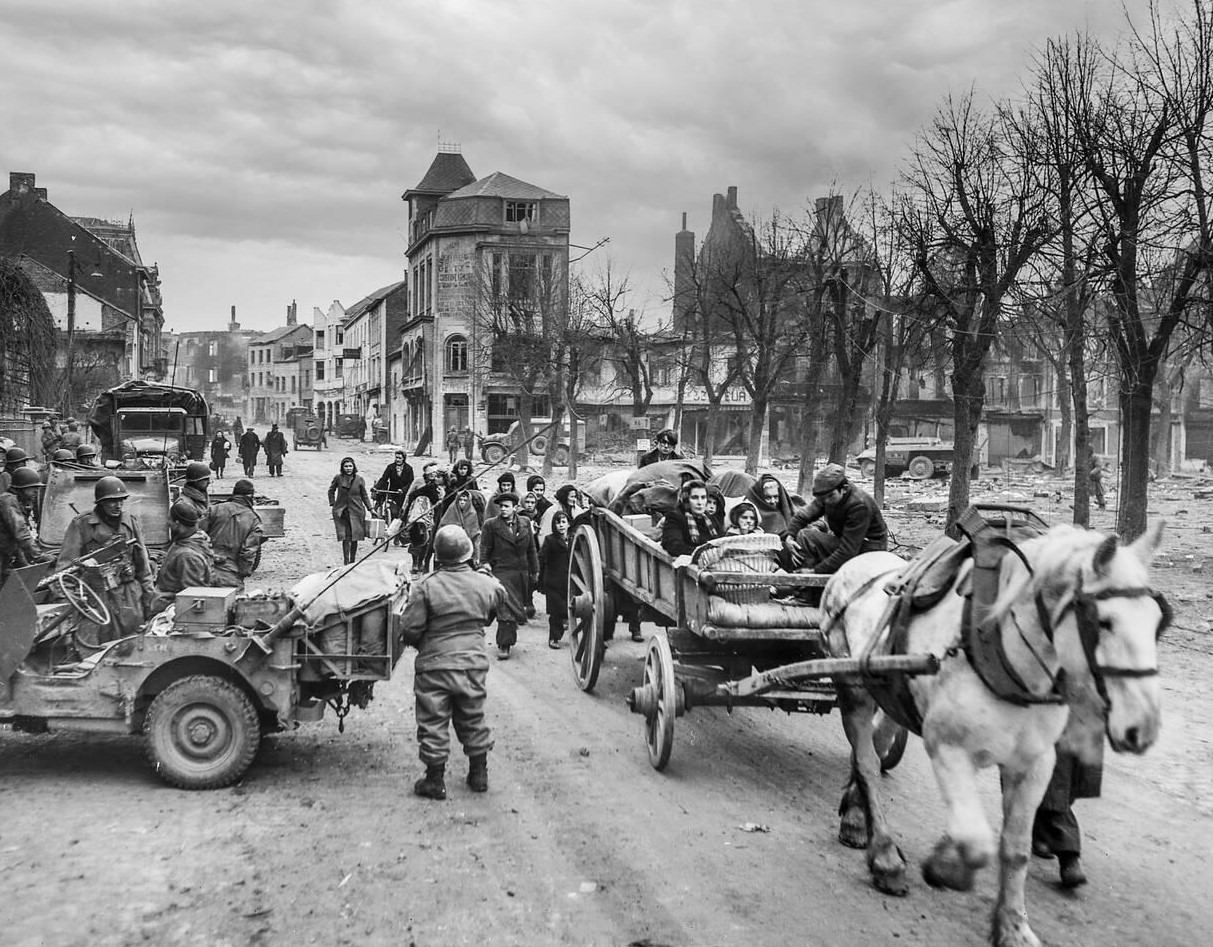
Belgian civilians suffered as well. The German advance pushed thousands of residents from their homes. Some were killed outright by German units moving through their towns. Refugees streamed away from Bastogne and surrounding villages carrying what little they could, moving through the same frozen roads that American reinforcements were trying to reach the front on.
Inside Bastogne, Brigadier General Anthony McAuliffe commanded a garrison that was desperately short of food, ammunition, and medical supplies. Wounded soldiers filled aid stations. Artillery shells were rationed. On December 22, a German officer delivered a formal demand for surrender. McAuliffe’s reply was a single word: “Nuts!” The response became one of the most famous moments of the war. His garrison held on.
General Dwight D. Eisenhower, the Supreme Allied Commander, responded to the crisis with speed. He ordered massive reinforcements into the Ardennes and gave General George S. Patton’s Third Army the task of punching north to relieve Bastogne. Patton turned his entire army — three full corps — ninety degrees in bitter winter conditions and drove north at remarkable speed. On December 26, his forces broke through the German encirclement and reached Bastogne.
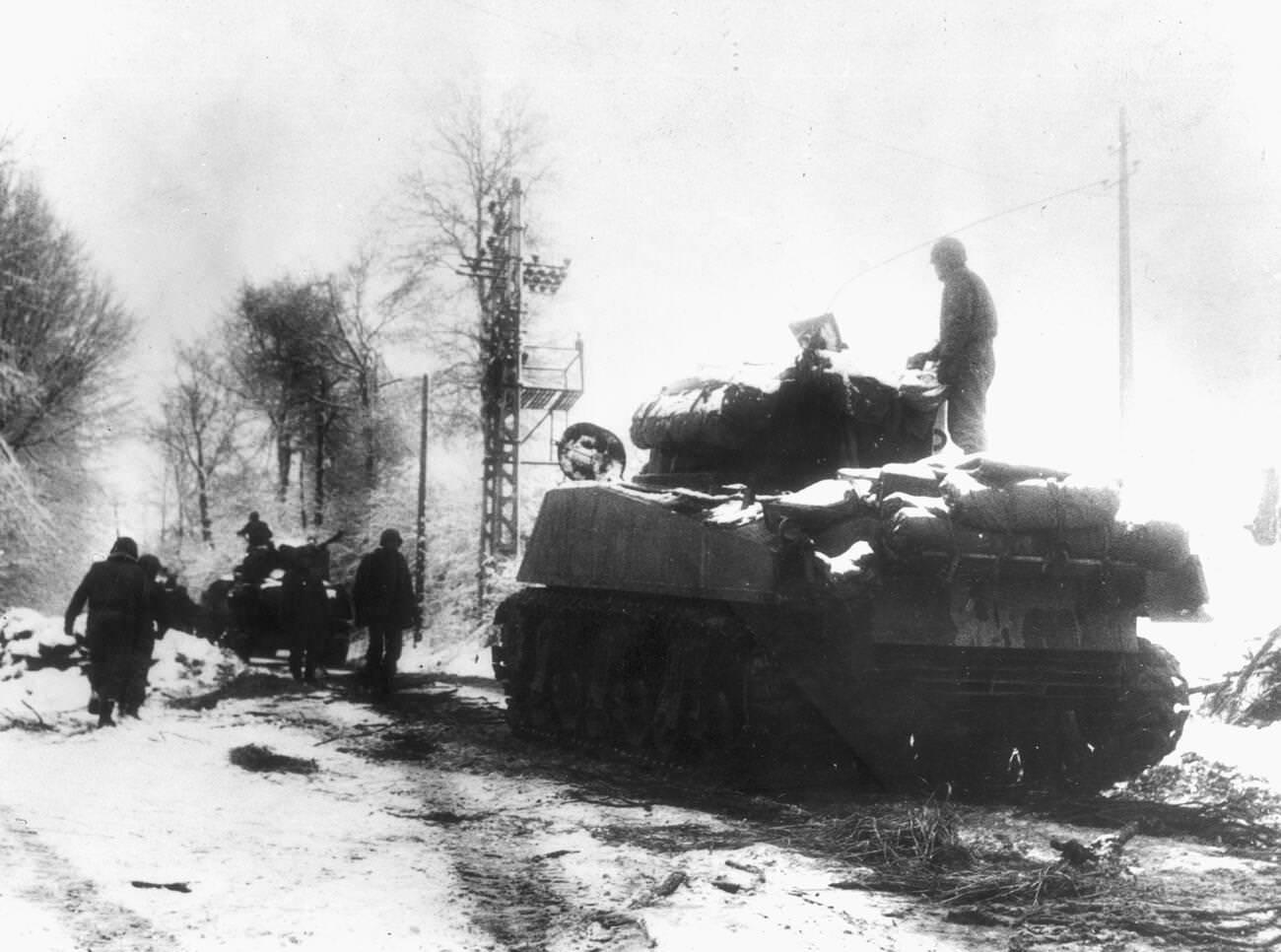
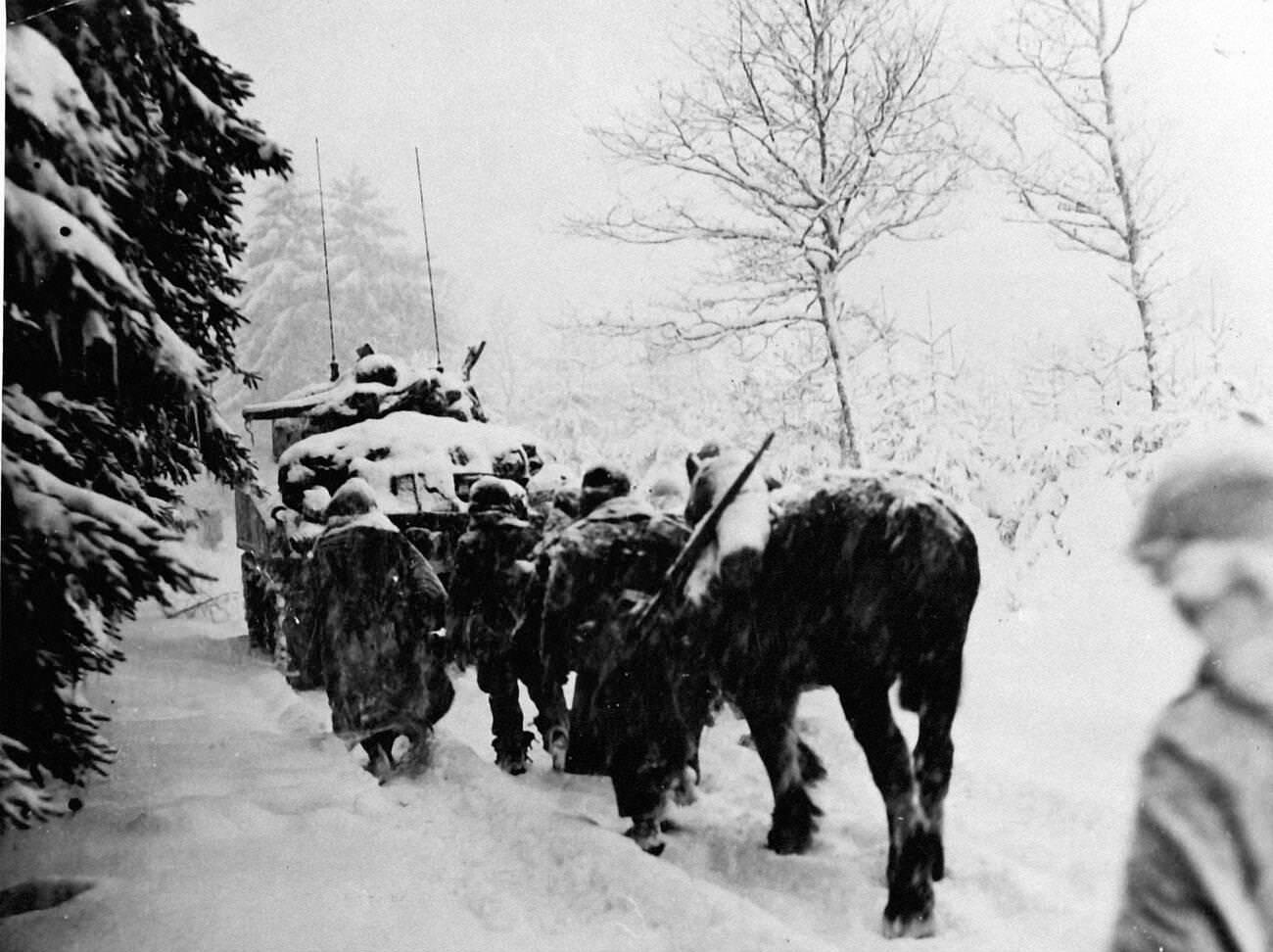
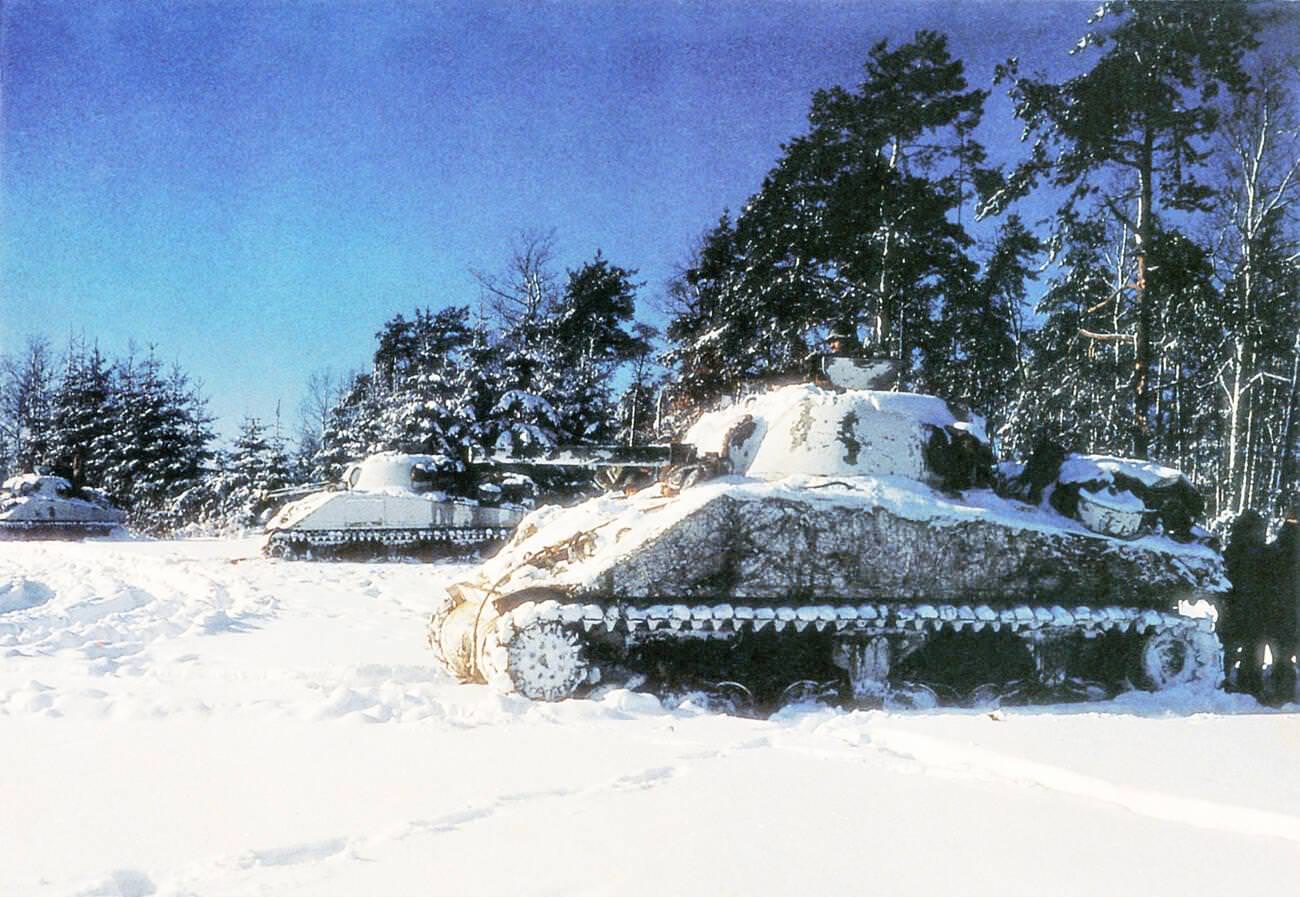
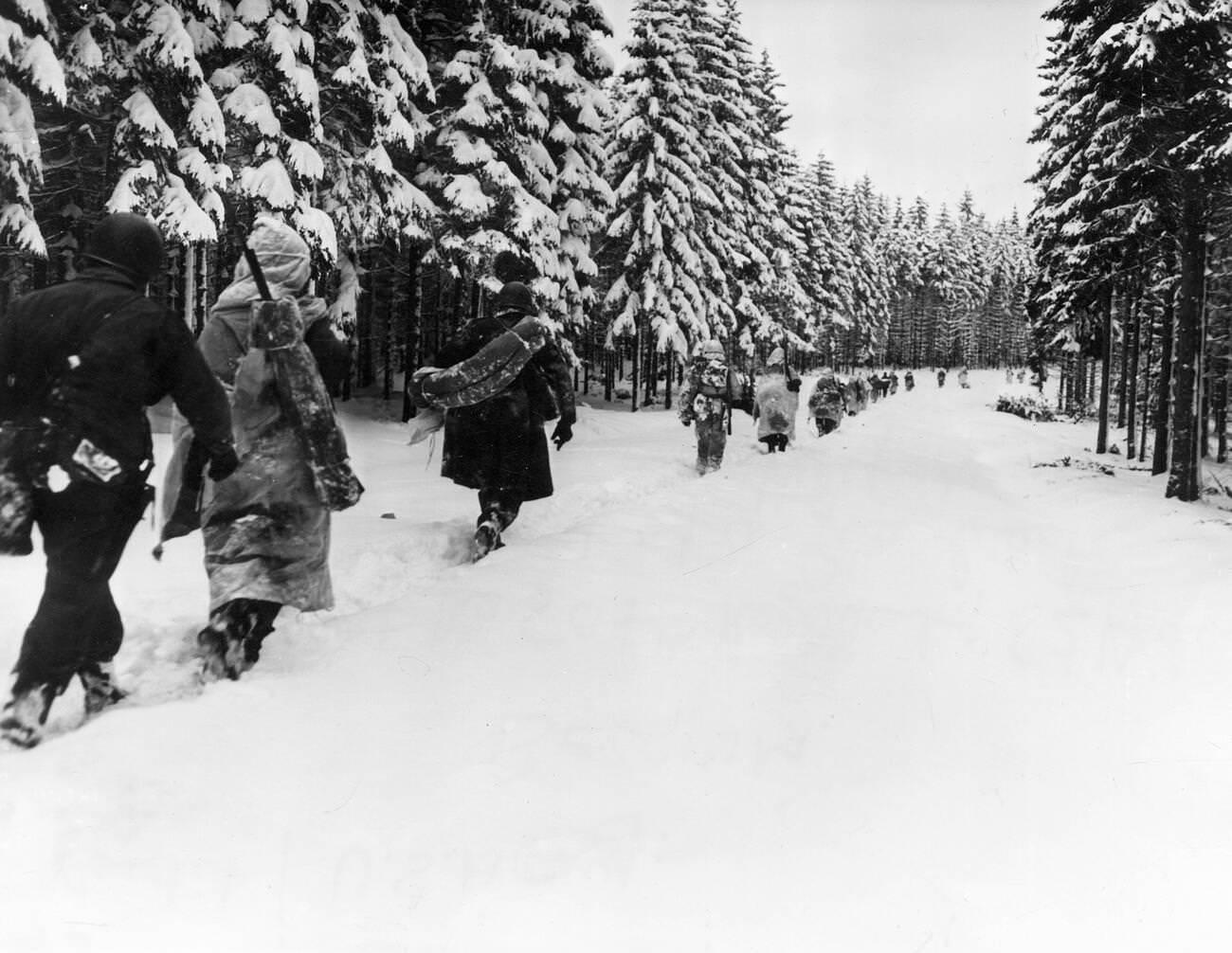
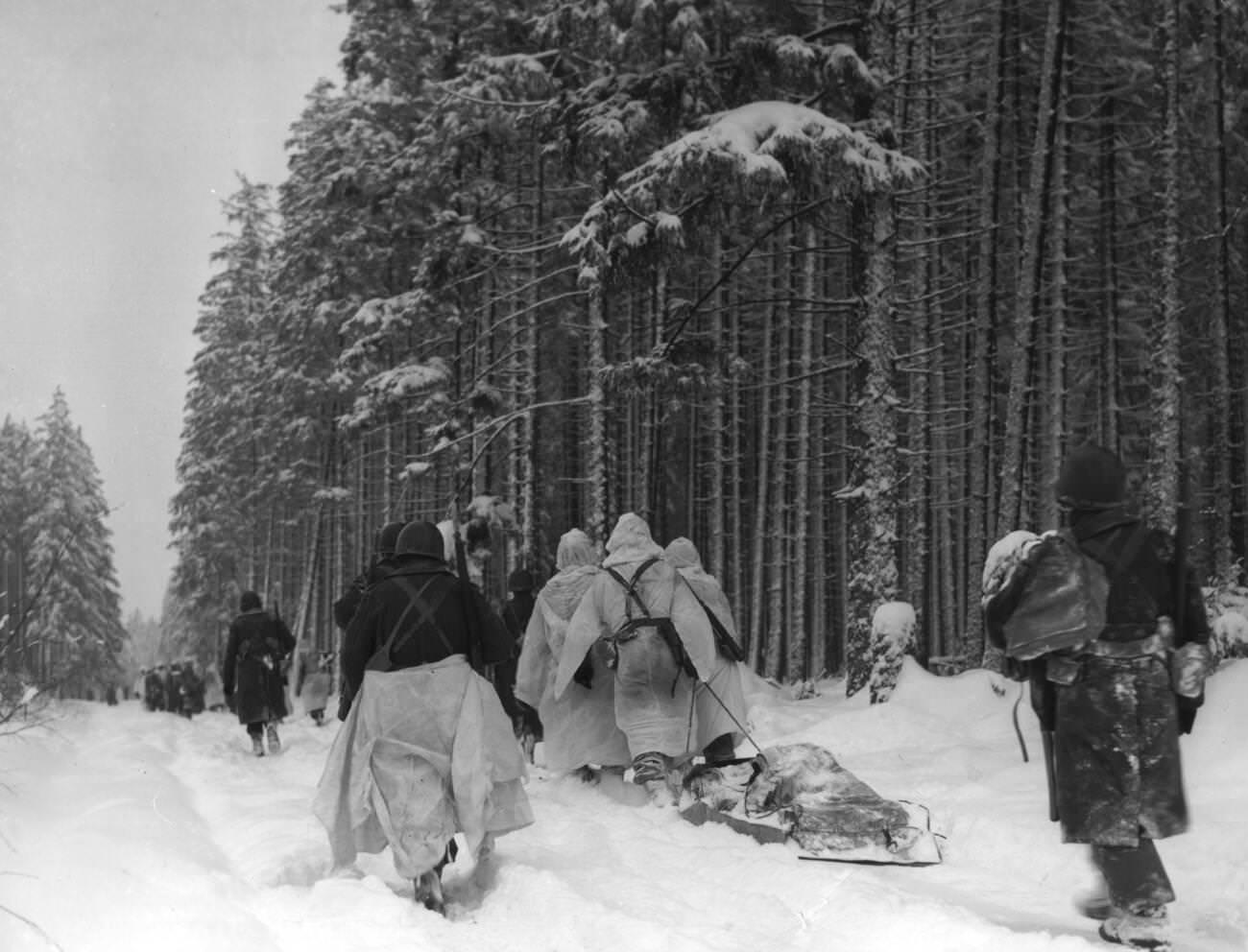
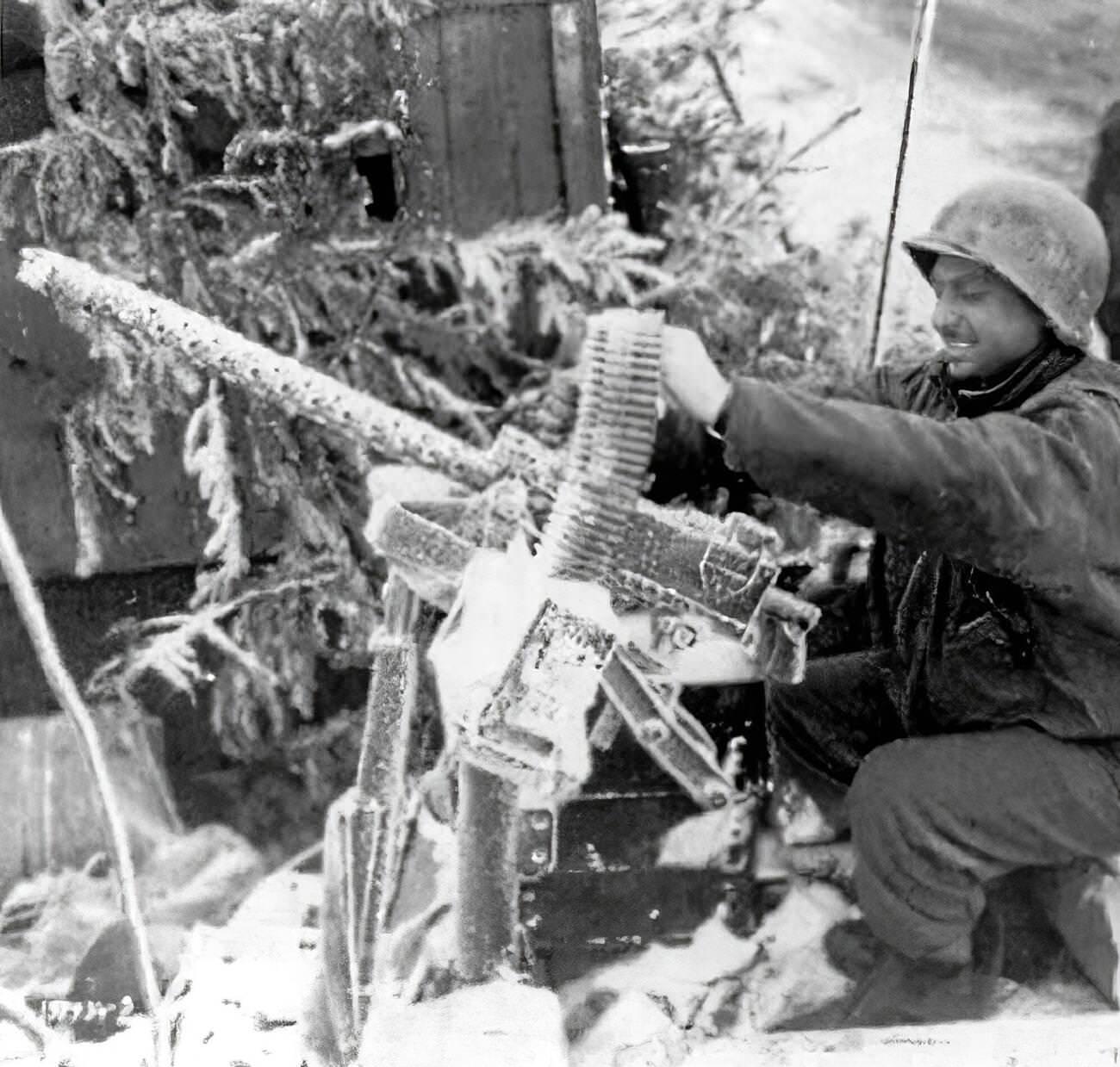
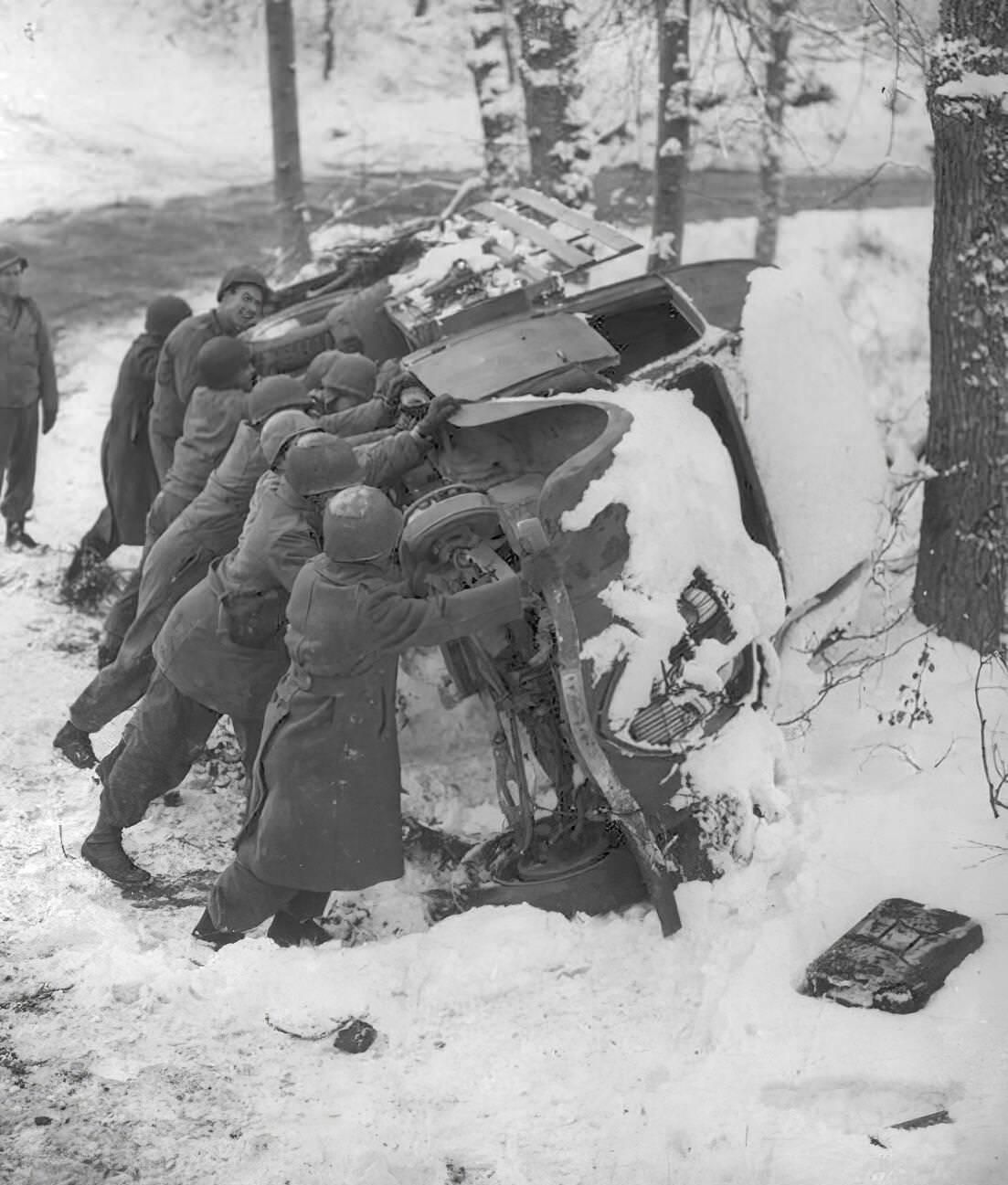
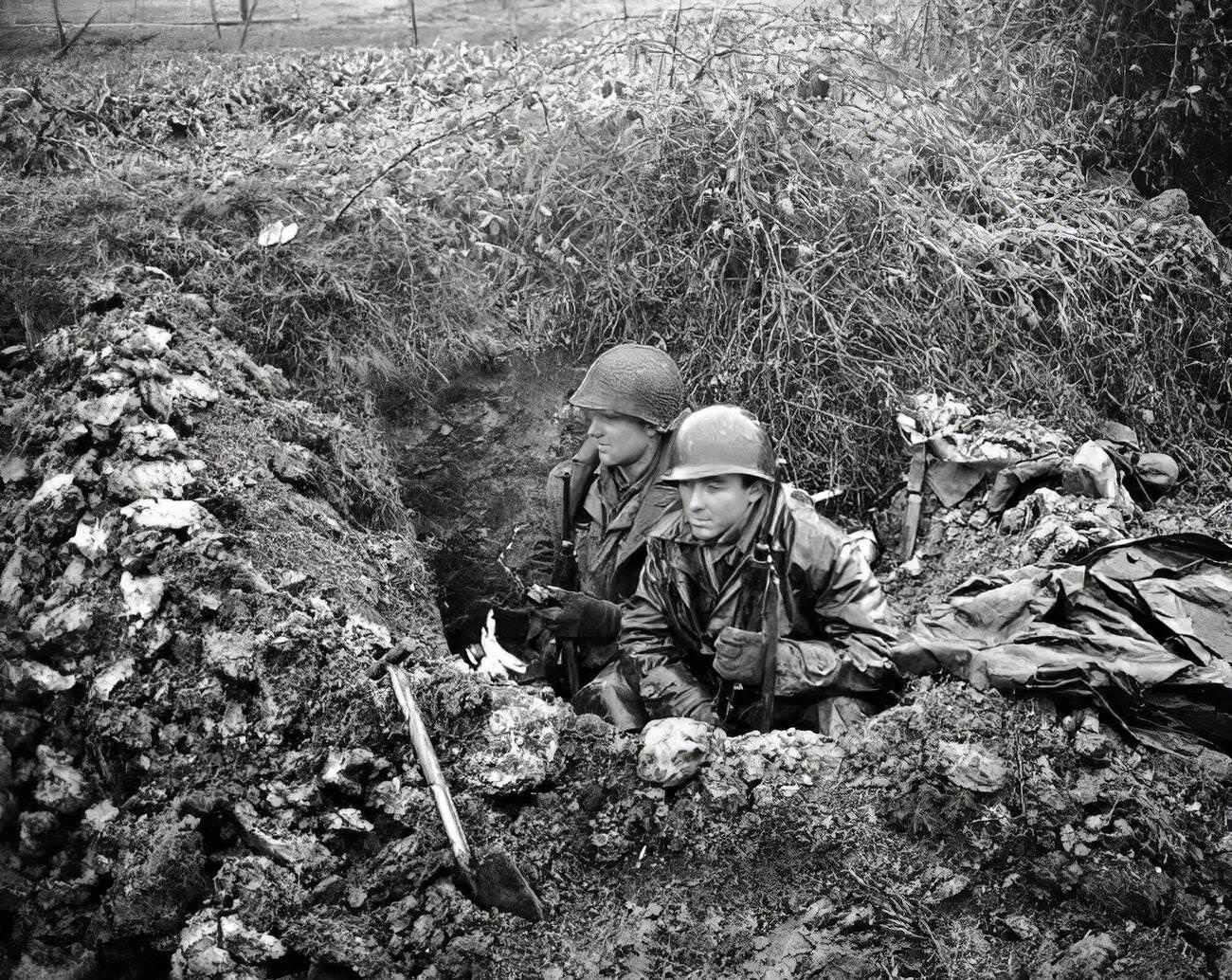
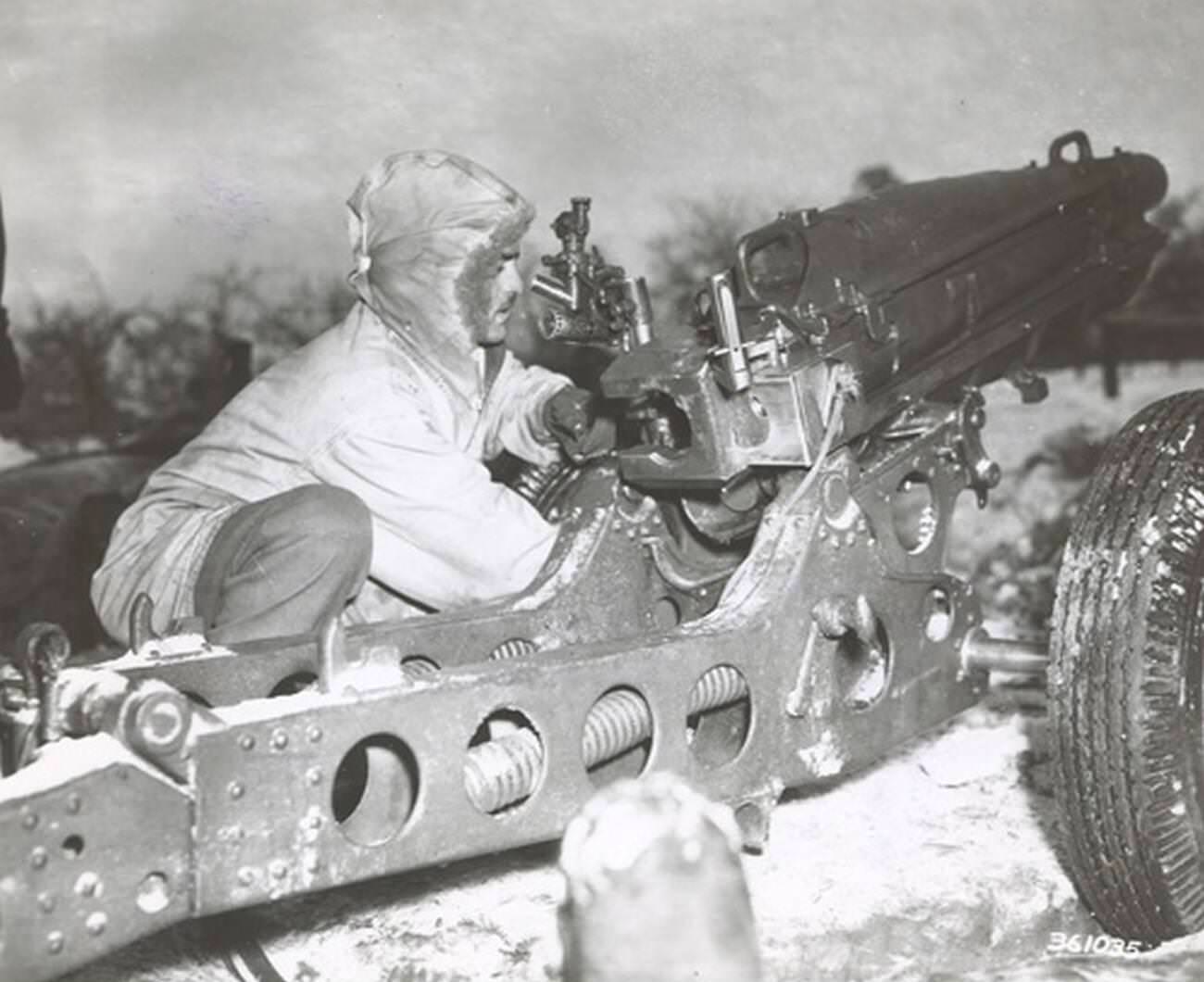
The winter of 1944–1945 was the coldest Europe had seen in half a century. Soldiers on both sides fought in temperatures that dropped well below freezing, through deep snowdrifts and across icy ground. Frostbite disabled thousands of men. Moving artillery and supply vehicles through snow-packed forest roads was a grueling, often impossible task. Soldiers wrapped themselves in anything available, including white bed sheets used as improvised snow camouflage.
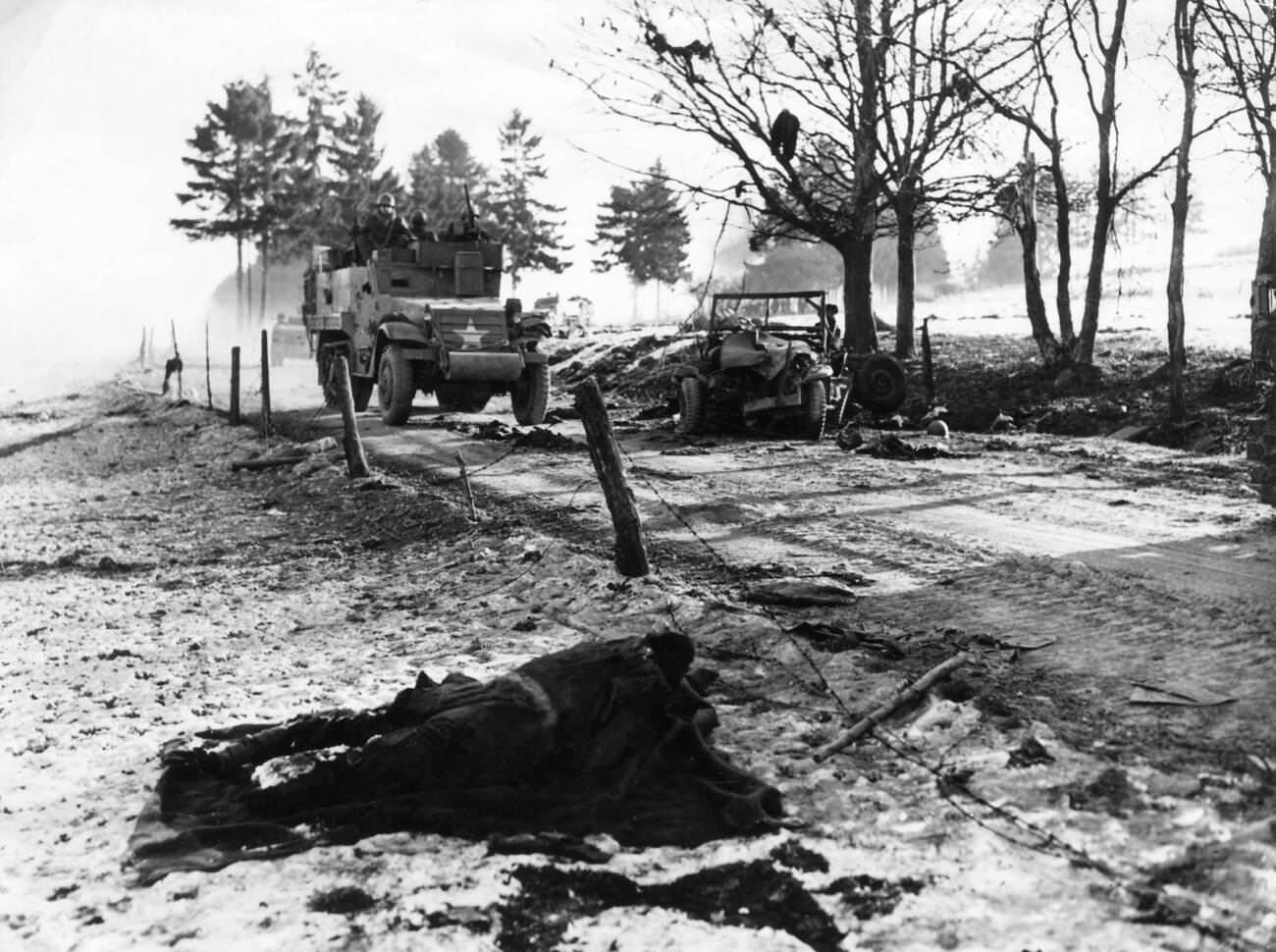
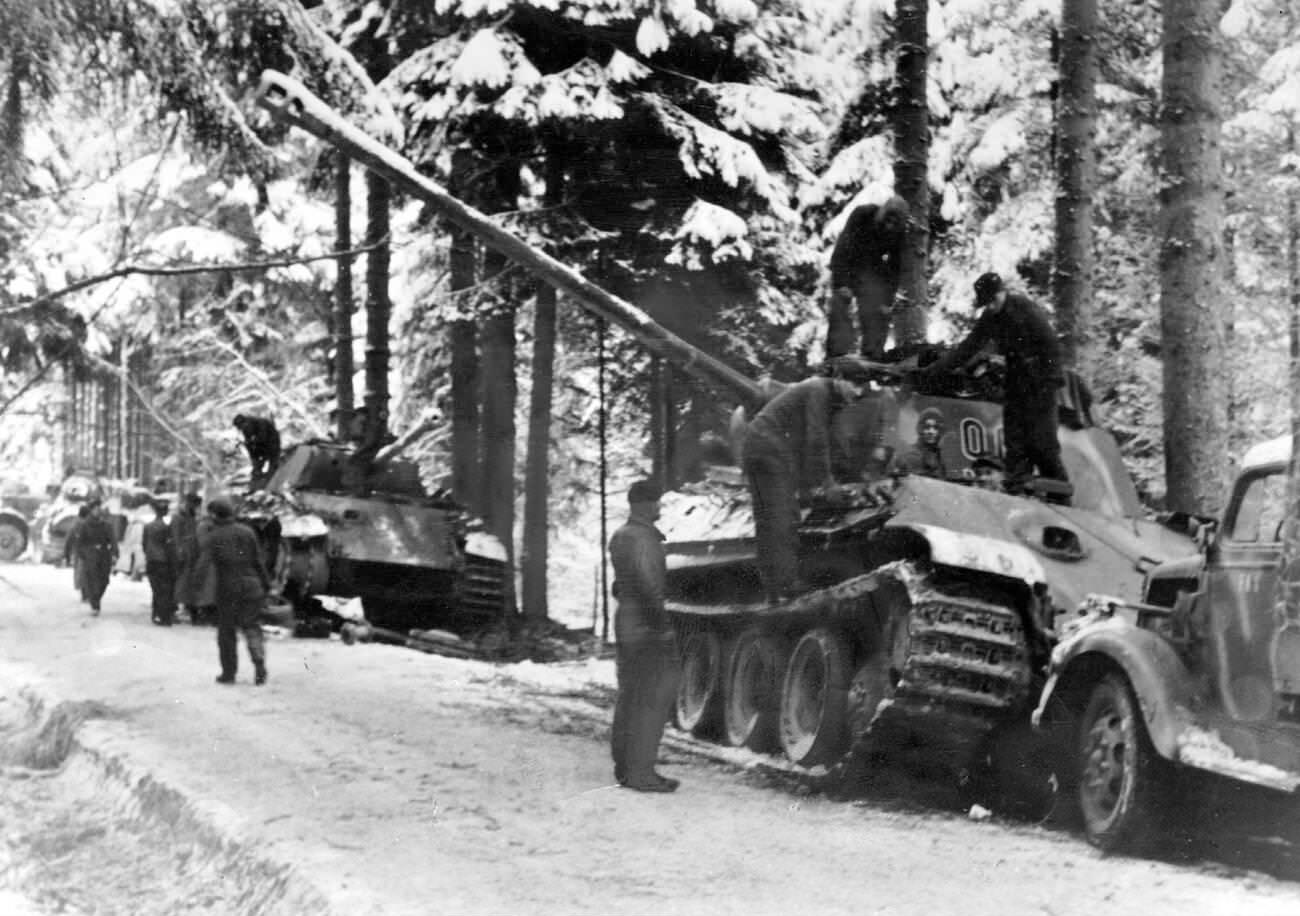
When the weather finally broke in late December, the Allies unleashed their air forces with devastating effect. Allied bombers and fighter-bombers struck German supply columns, fuel depots, rail lines, and armored formations around the clock. Germany’s offensive had already outrun its supply lines. With fuel running short and Allied aircraft hunting their vehicles across the Ardennes, German Panzer units ground to a halt. The furthest point of the German advance — reaching the town of Celles, just a few miles from the Meuse River — was never extended.
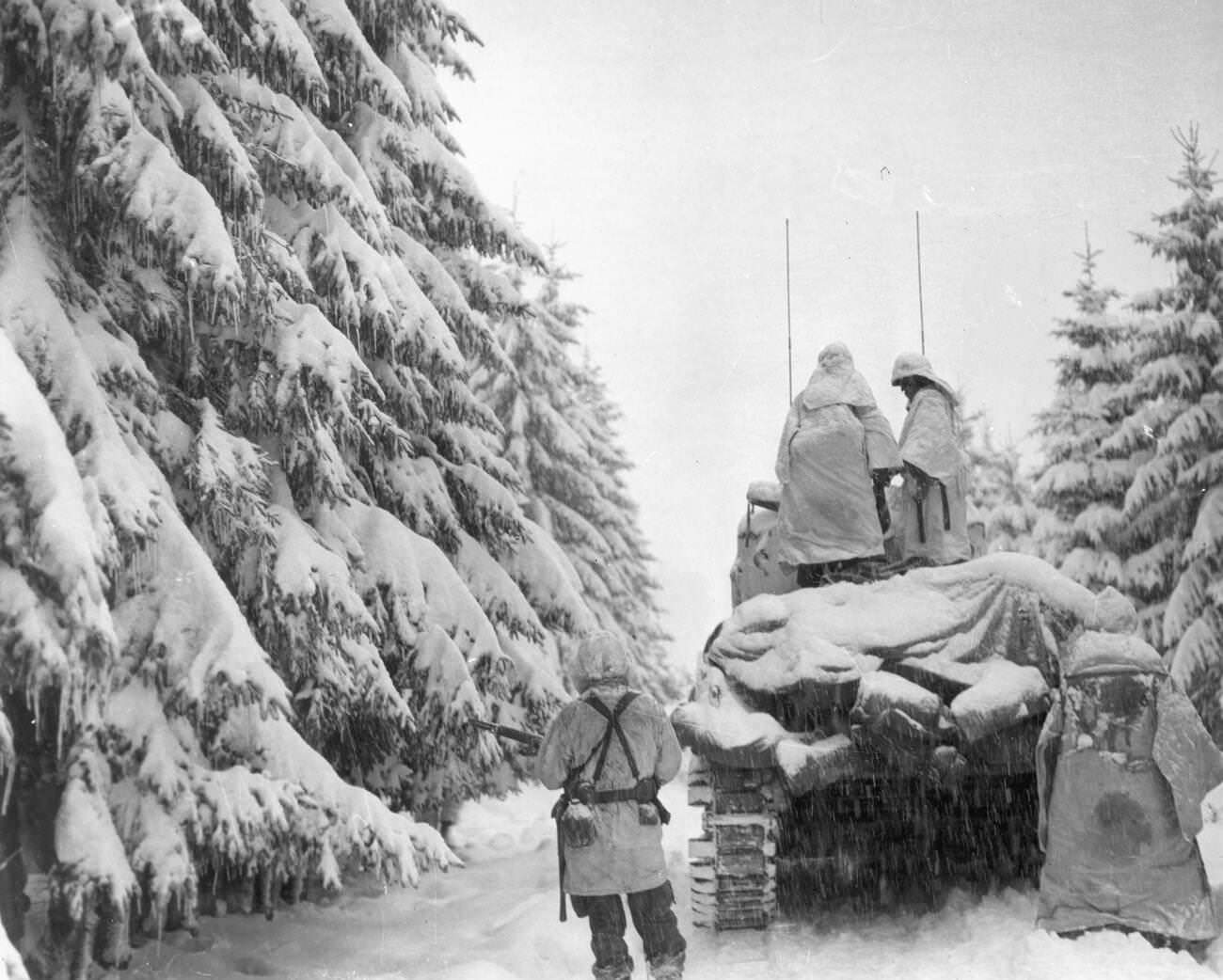
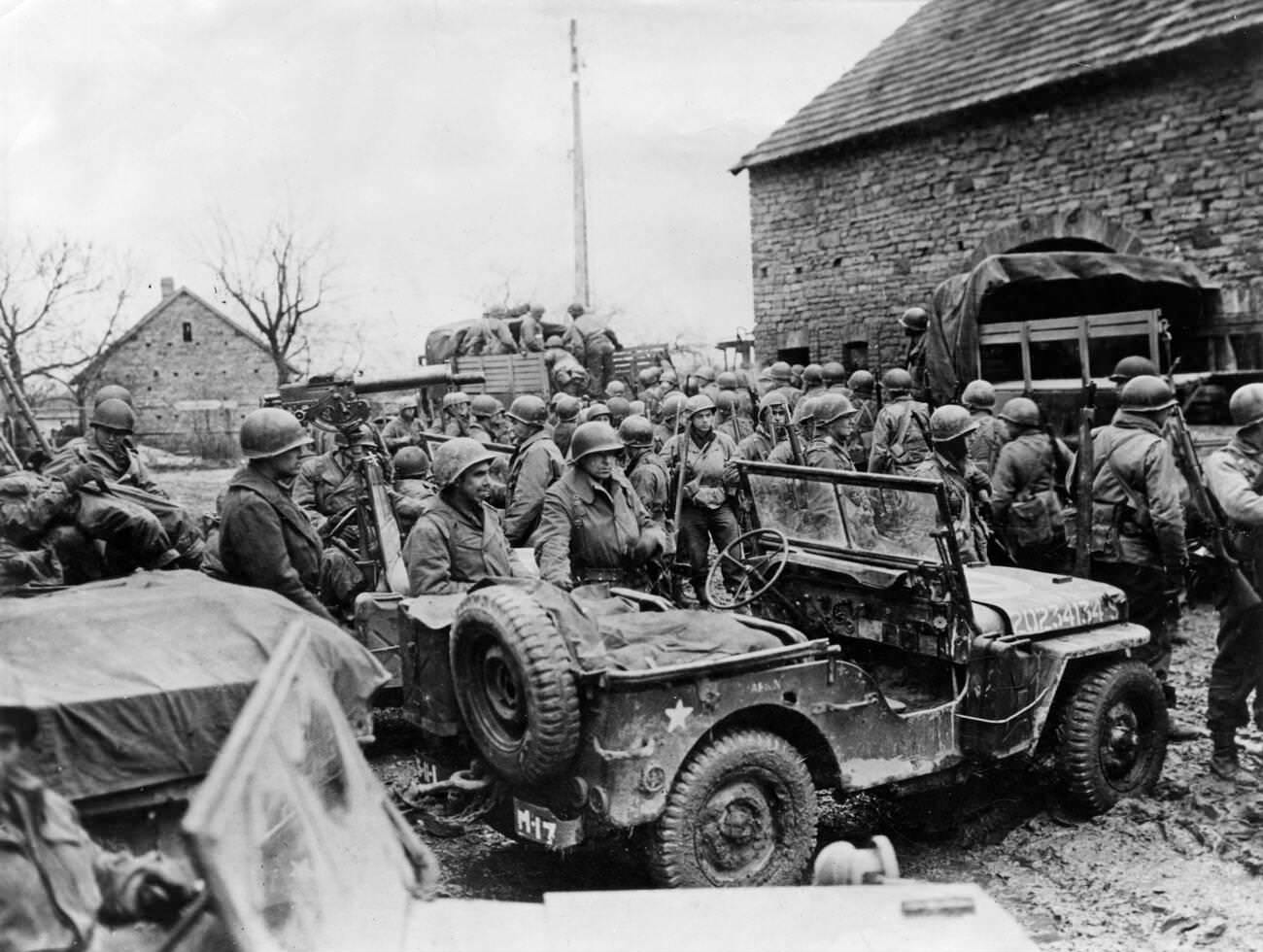
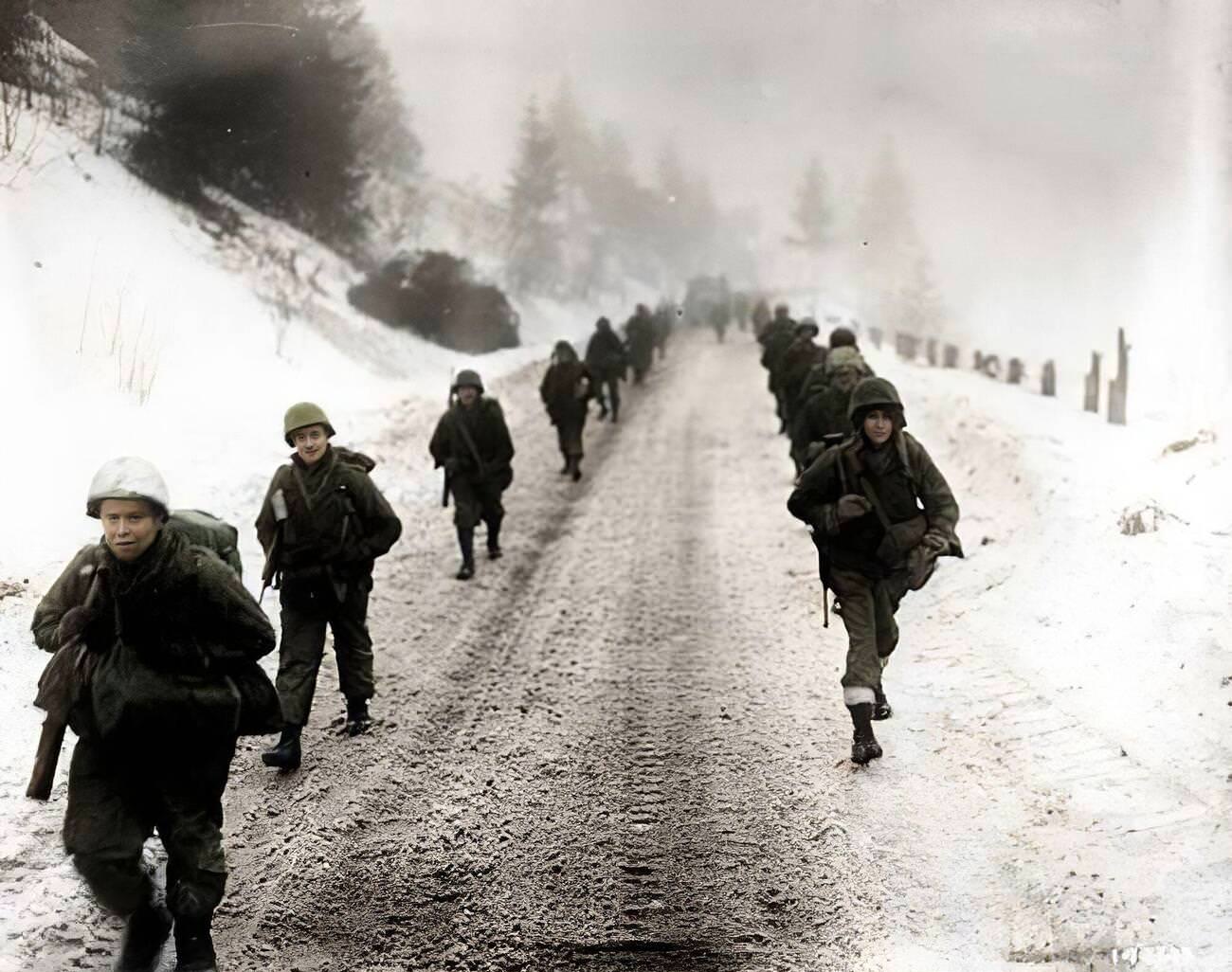
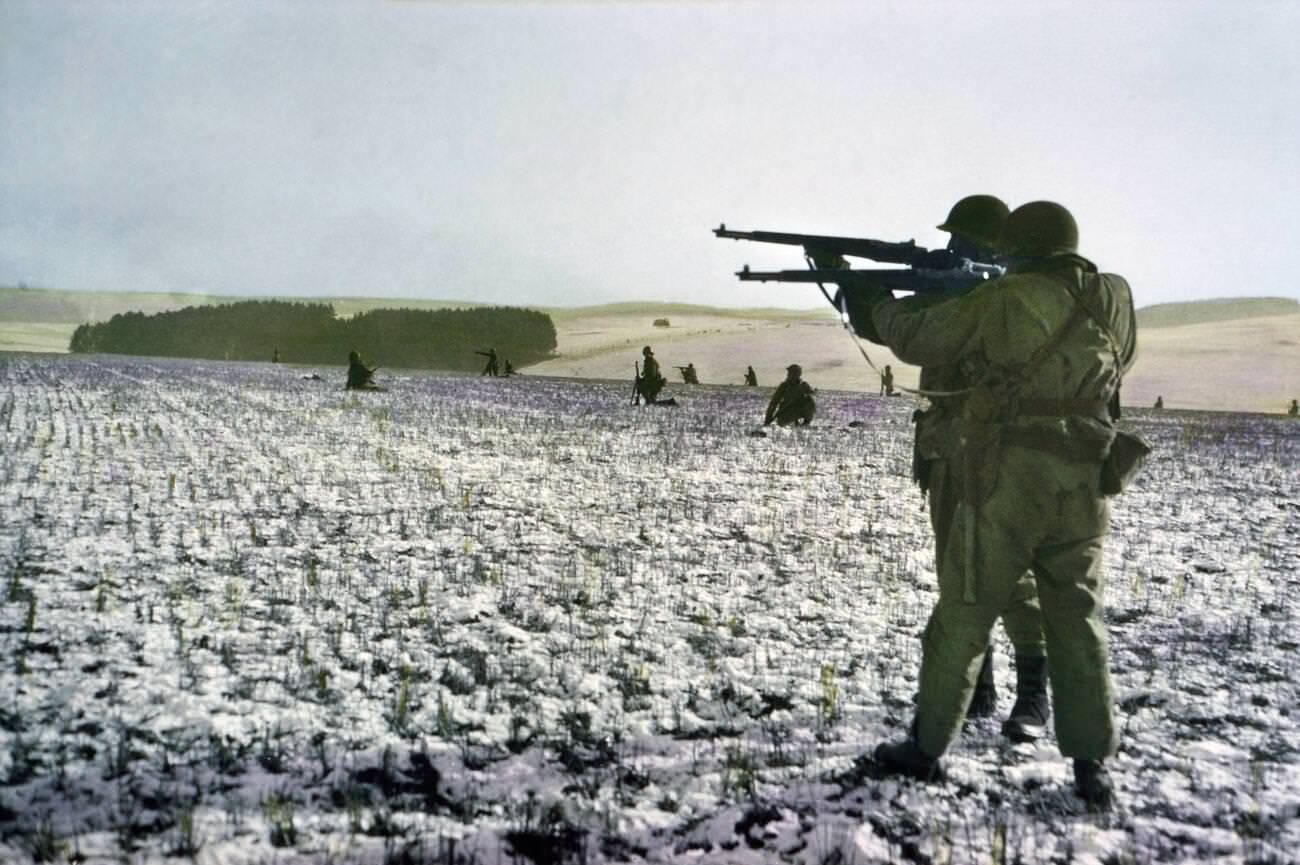
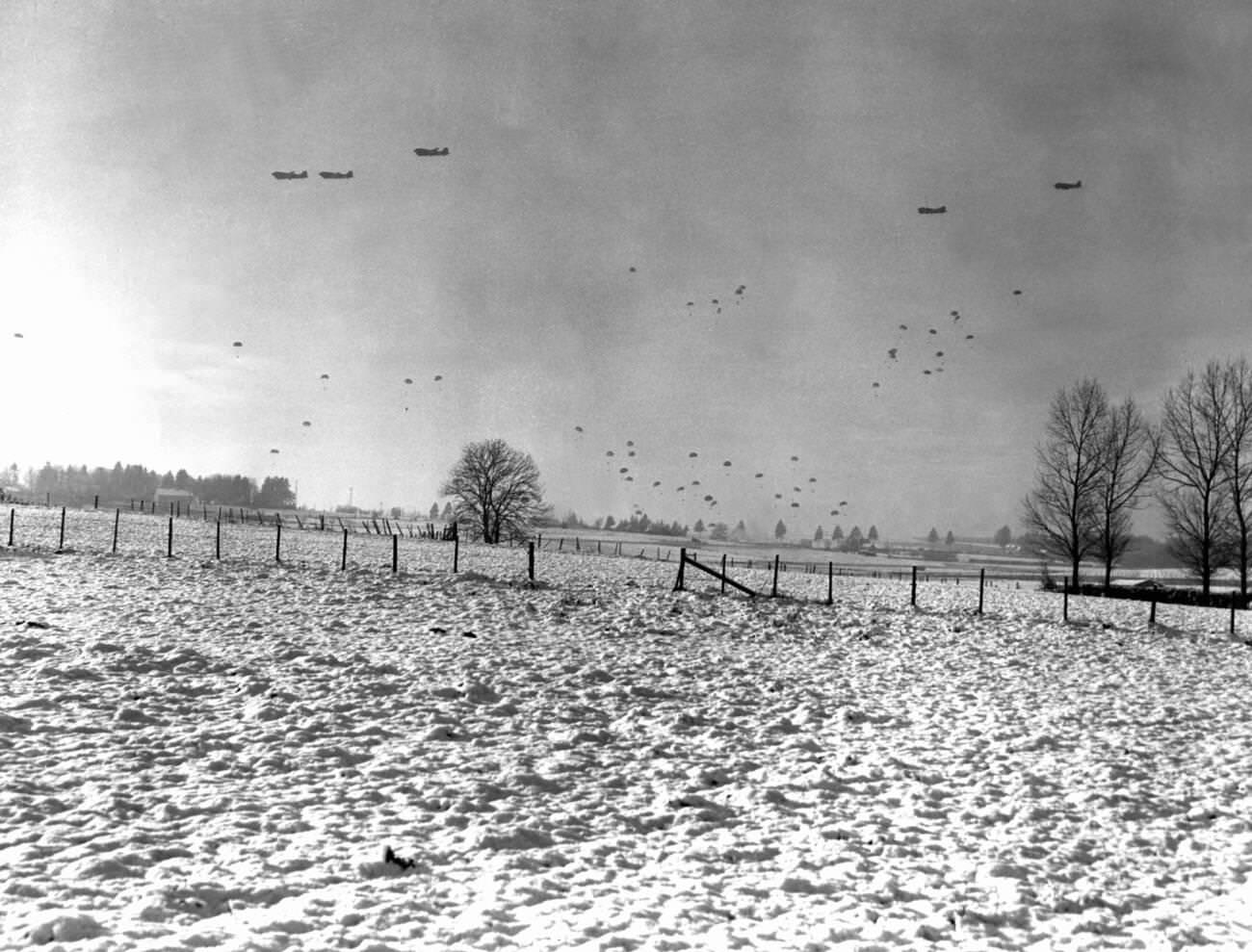
Allied counterattacks came from multiple directions. From the north, Field Marshal Bernard Montgomery coordinated British and American forces to hold the shoulder of the bulge. From the south, Patton’s Third Army drove relentlessly into the German salient. American infantry fought through snow-covered forests, clearing towns street by street. Units like the 82nd Airborne, the 30th Infantry Division, and dozens of other formations pushed the Germans back step by step.
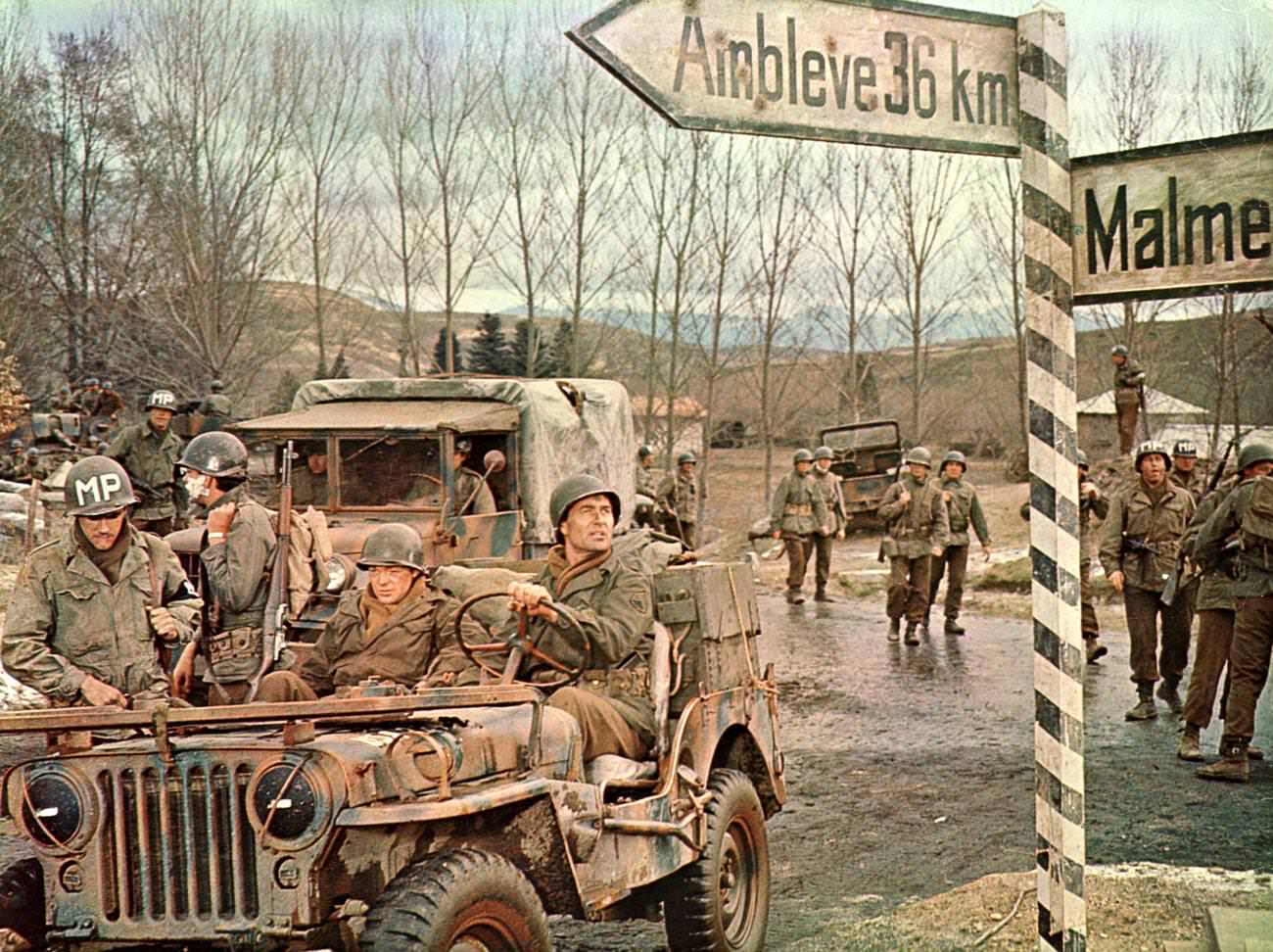
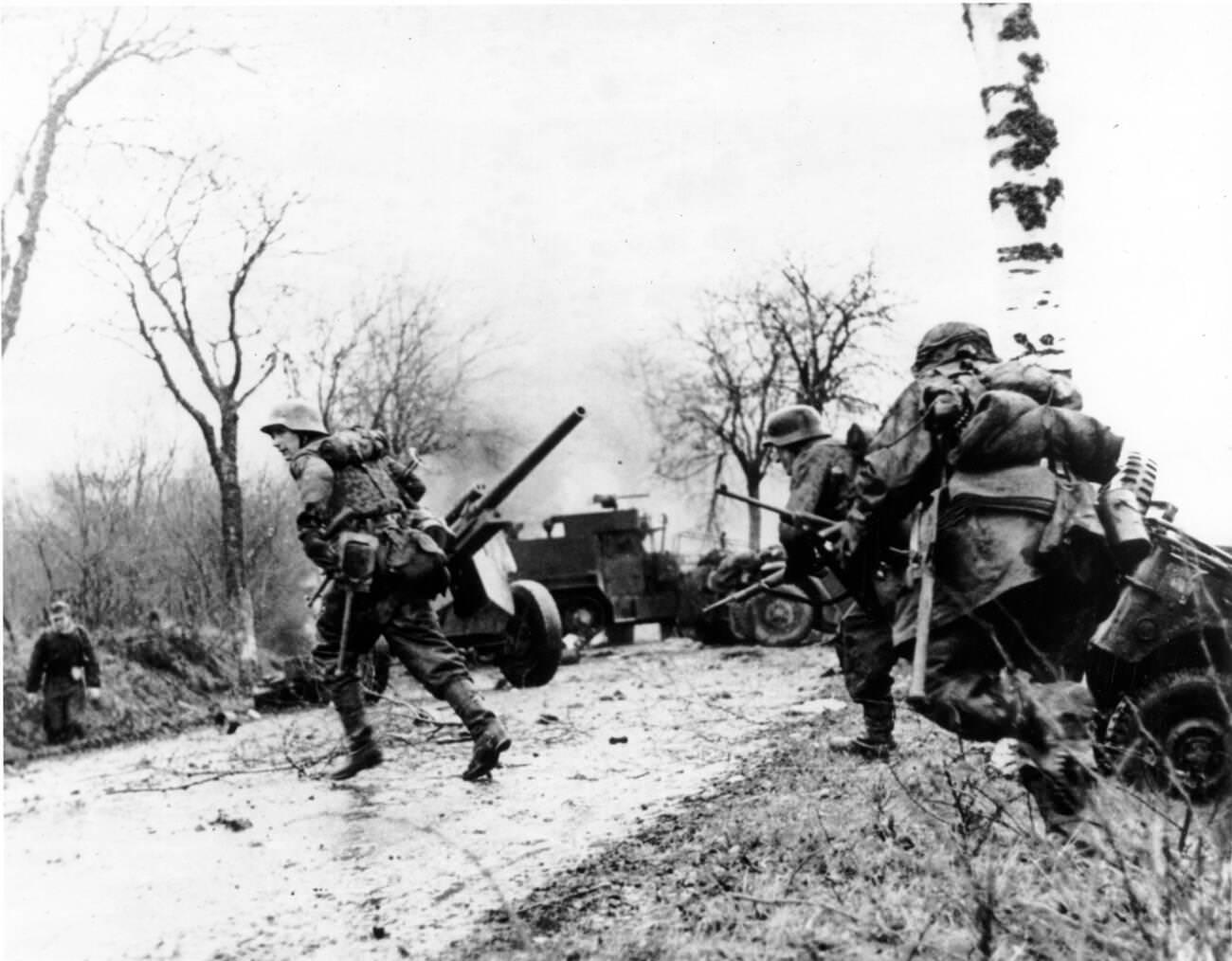
Individual acts of valor defined the battle at every level. Technical Sergeant Leonard A. Funk Jr. single-handedly overpowered a group of German soldiers who had captured American prisoners, killing or wounding the captors and freeing the men. T/Sgt. Francis S. Currey of the 30th Infantry Division used a bazooka, a machine gun, and a rifle to repeatedly halt German armor attacking his company’s position, actions that later earned him the Medal of Honor.
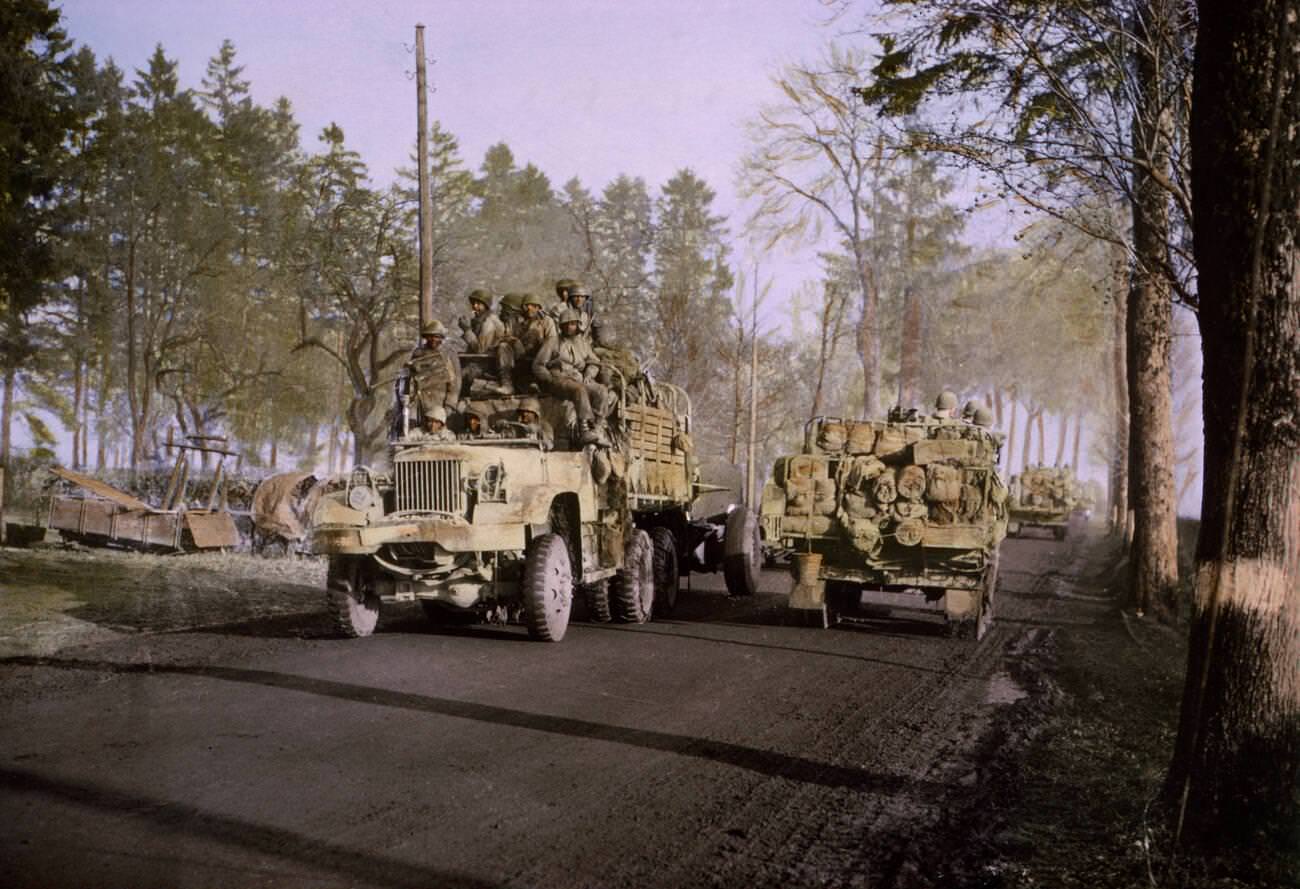
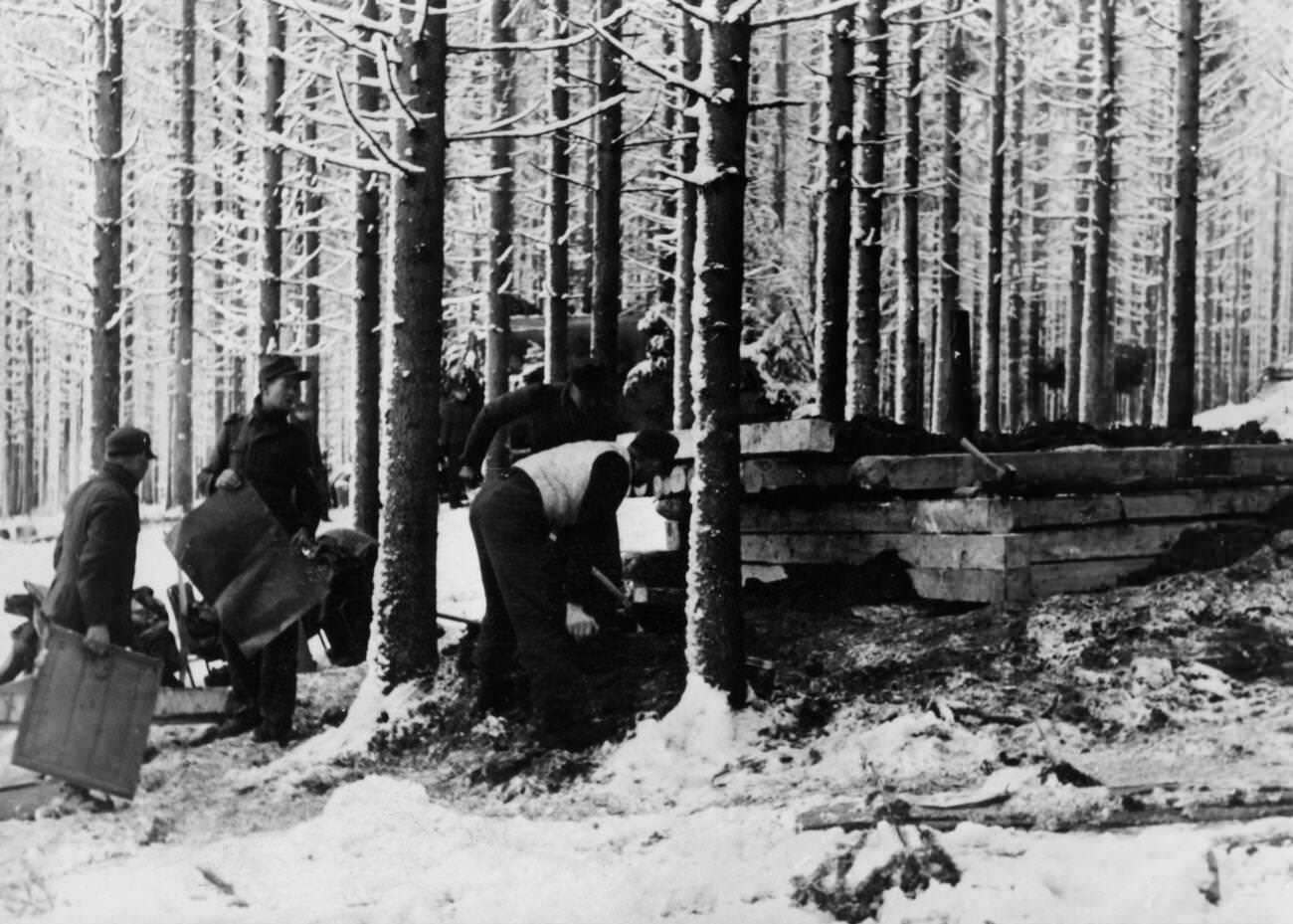
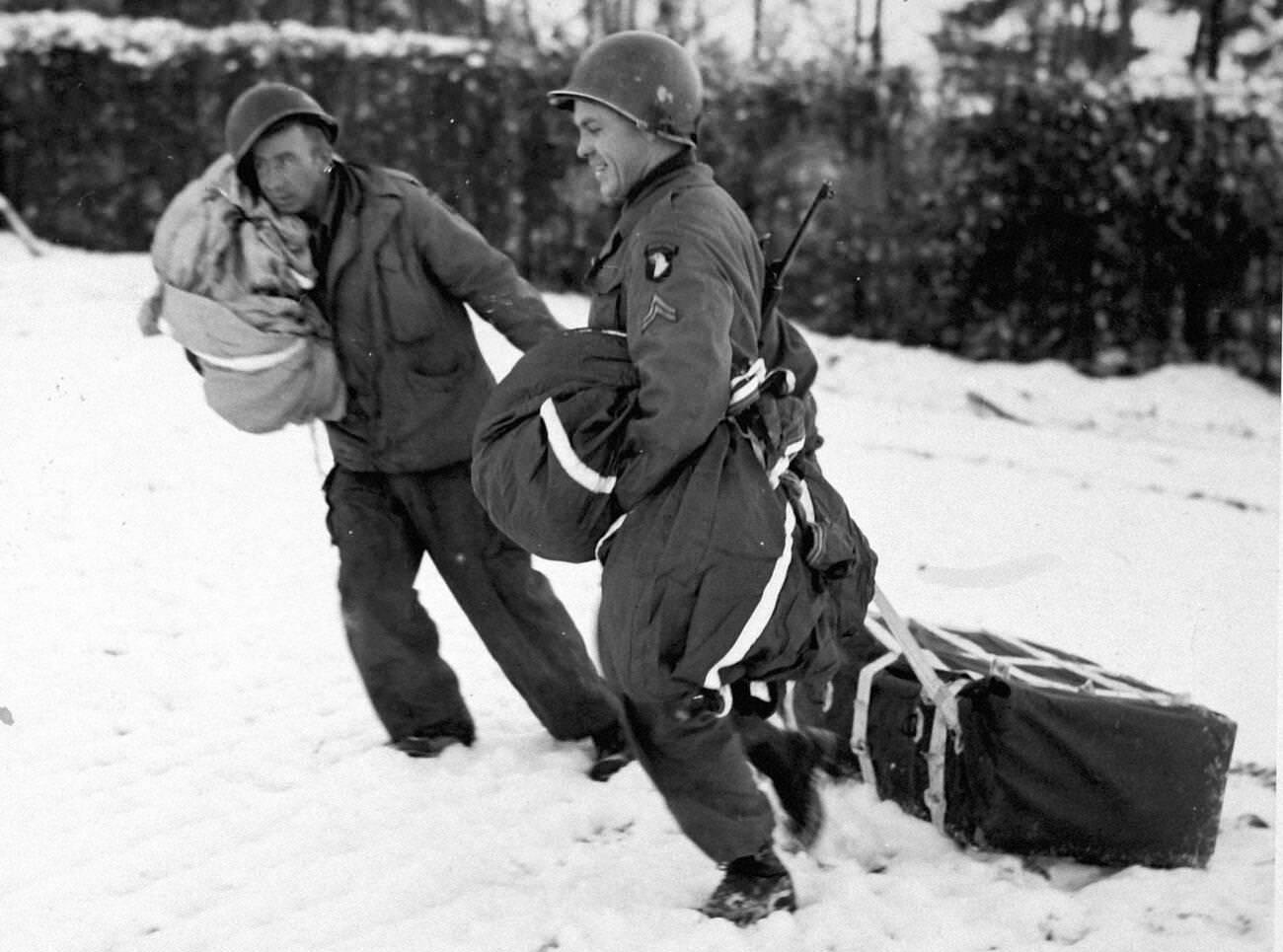
Supply and logistics behind the front lines were under constant strain. Field kitchens served hot meals when roads permitted. Ammunition and medical supplies had to be trucked or air-dropped across frozen terrain. Engineers built and repaired roads, bridges, and wooden fortifications under fire. Everywhere, the battle demanded effort from soldiers whose only shelter from the cold was often a snow-covered foxhole.
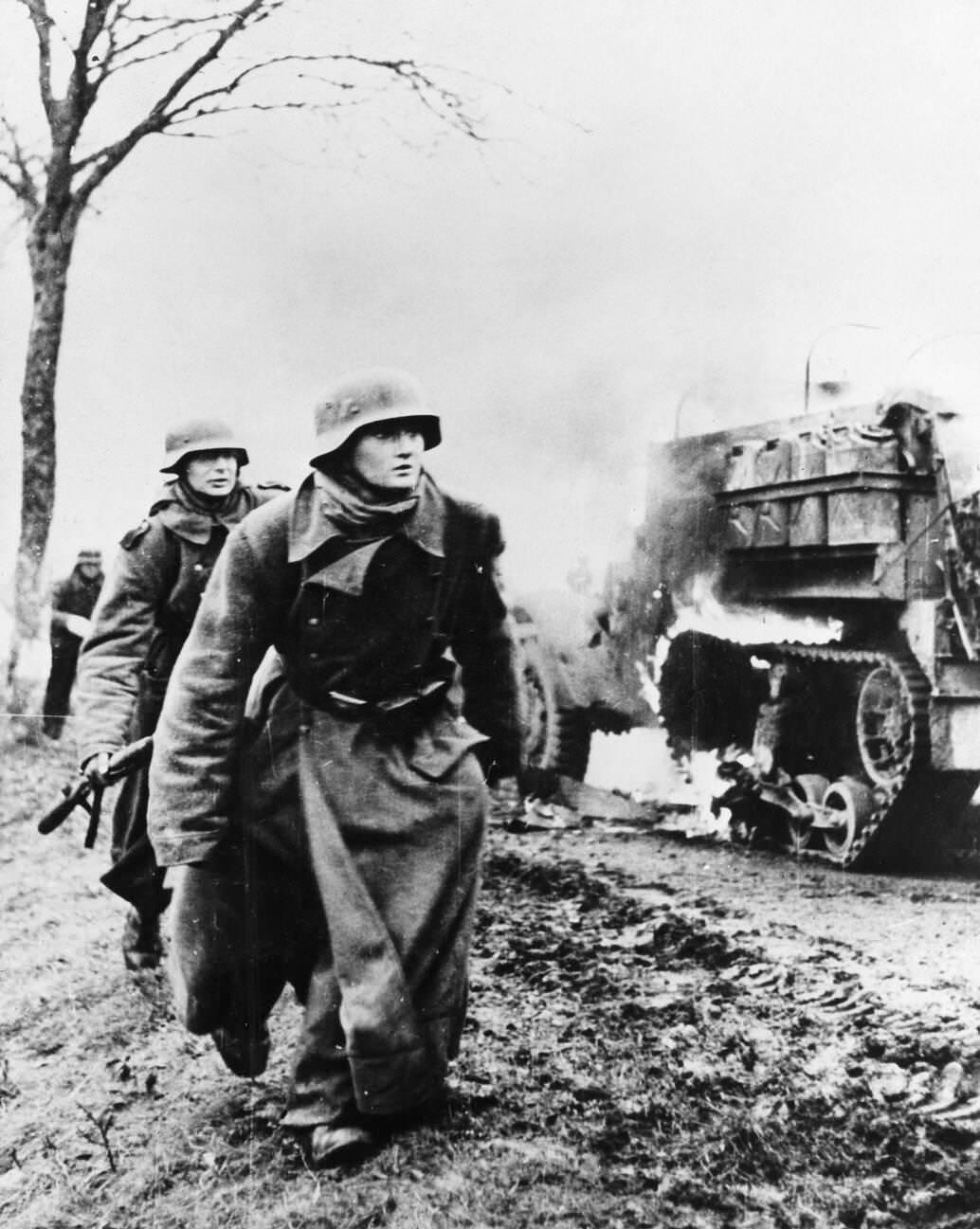
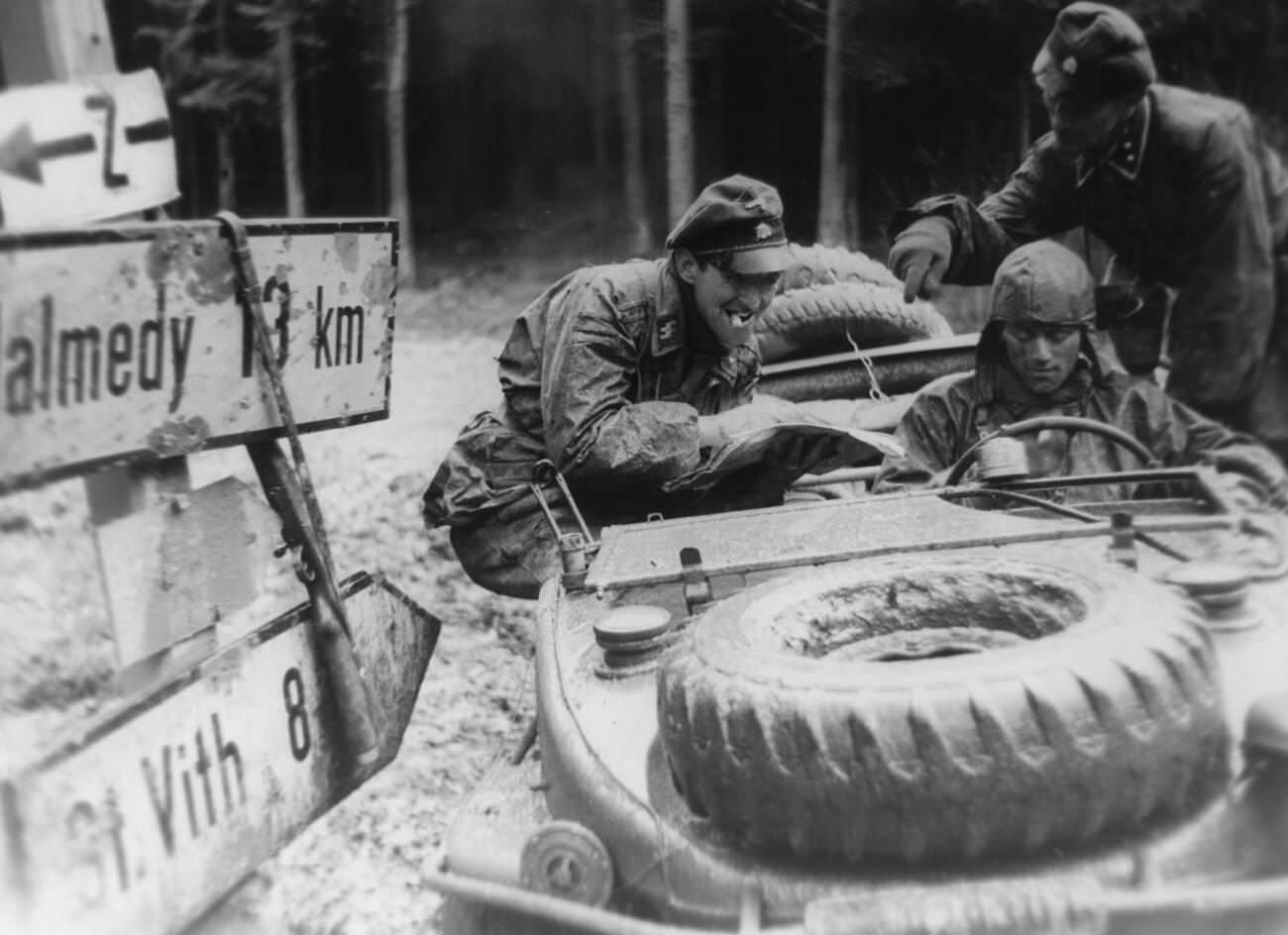
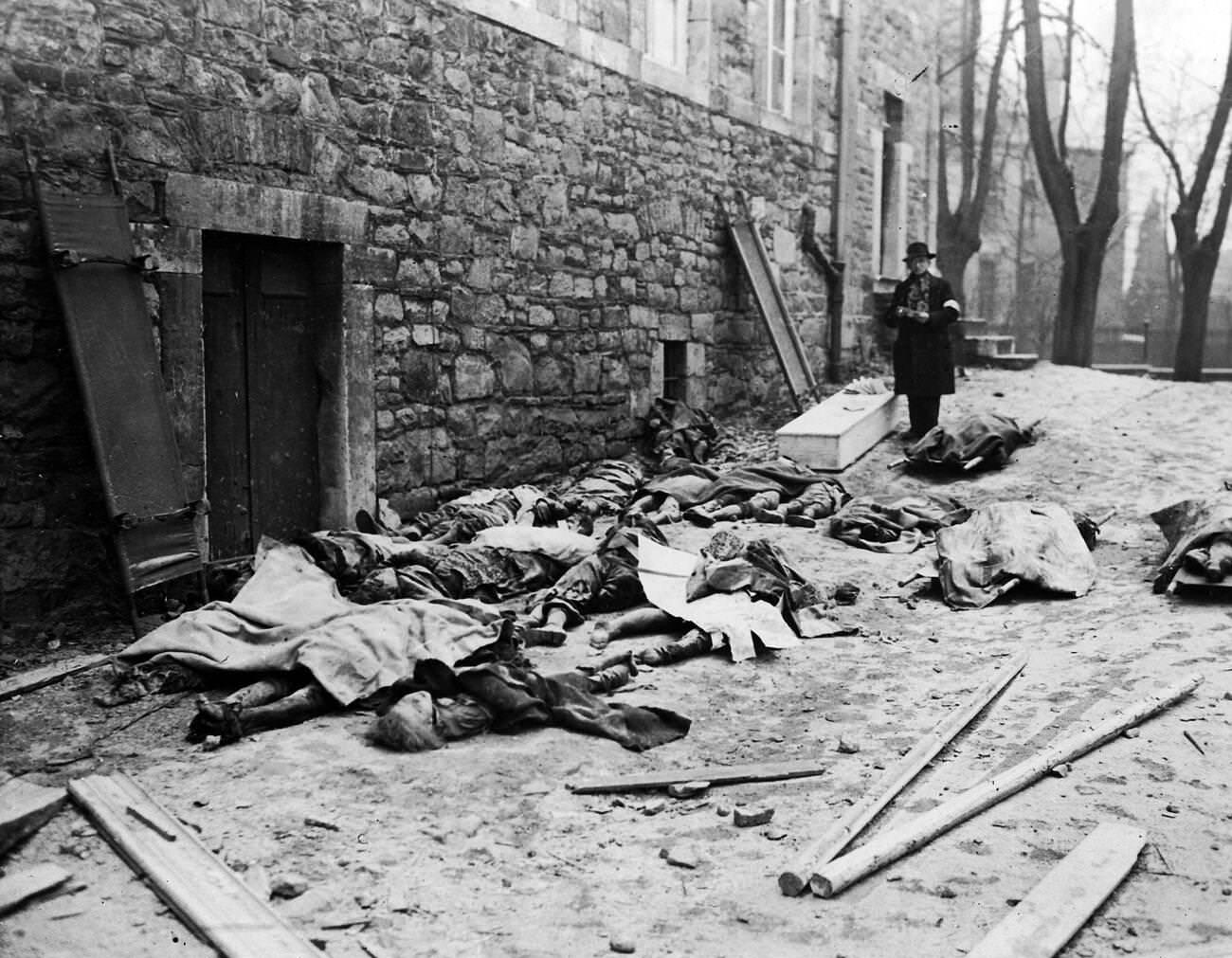
By the end of December 1944, the German offensive had stalled completely. The Allies pressed forward through January, retaking town after town. On January 25, 1945, the last German units were driven back to their starting positions. The entire bulge had been erased from the Allied front.
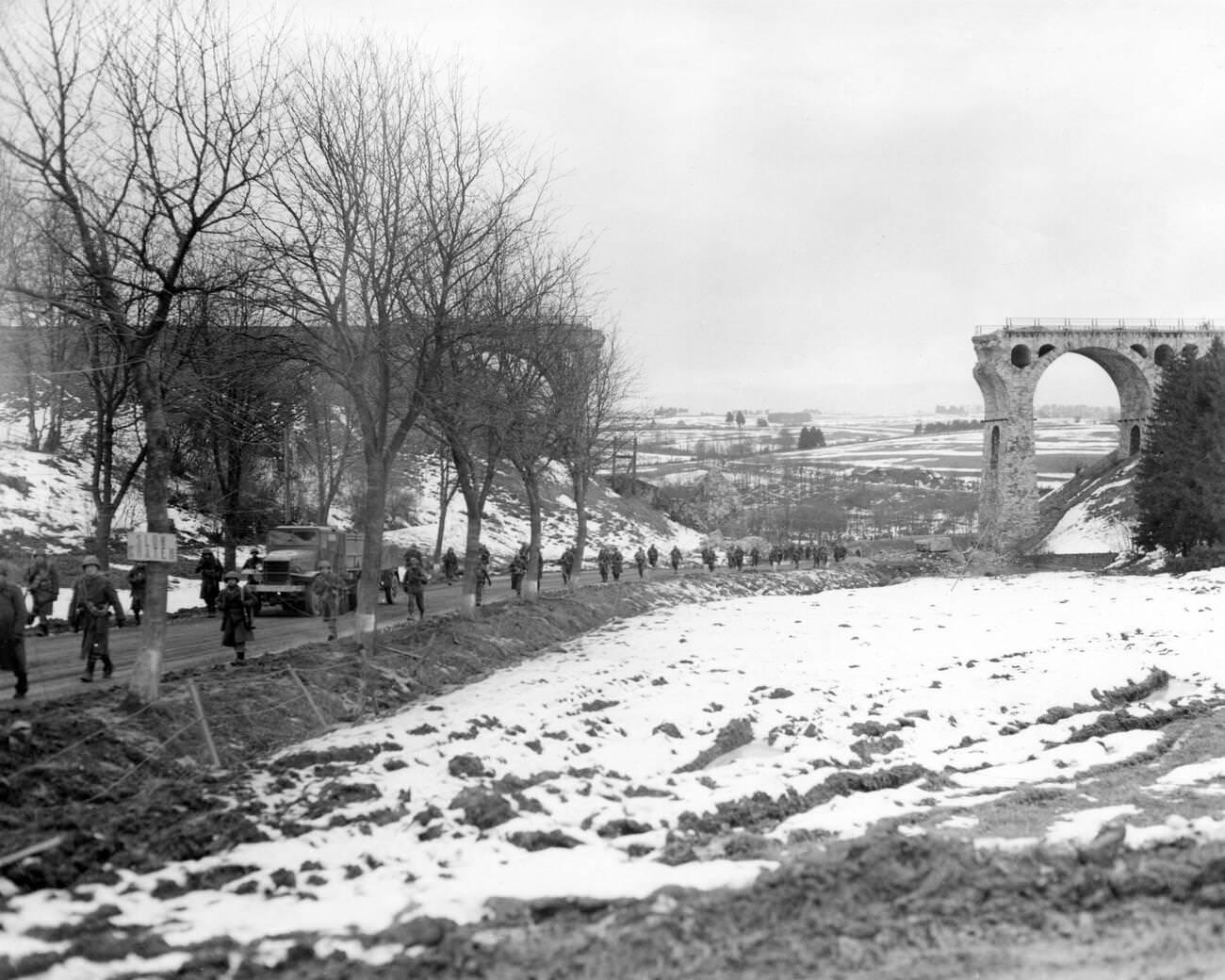
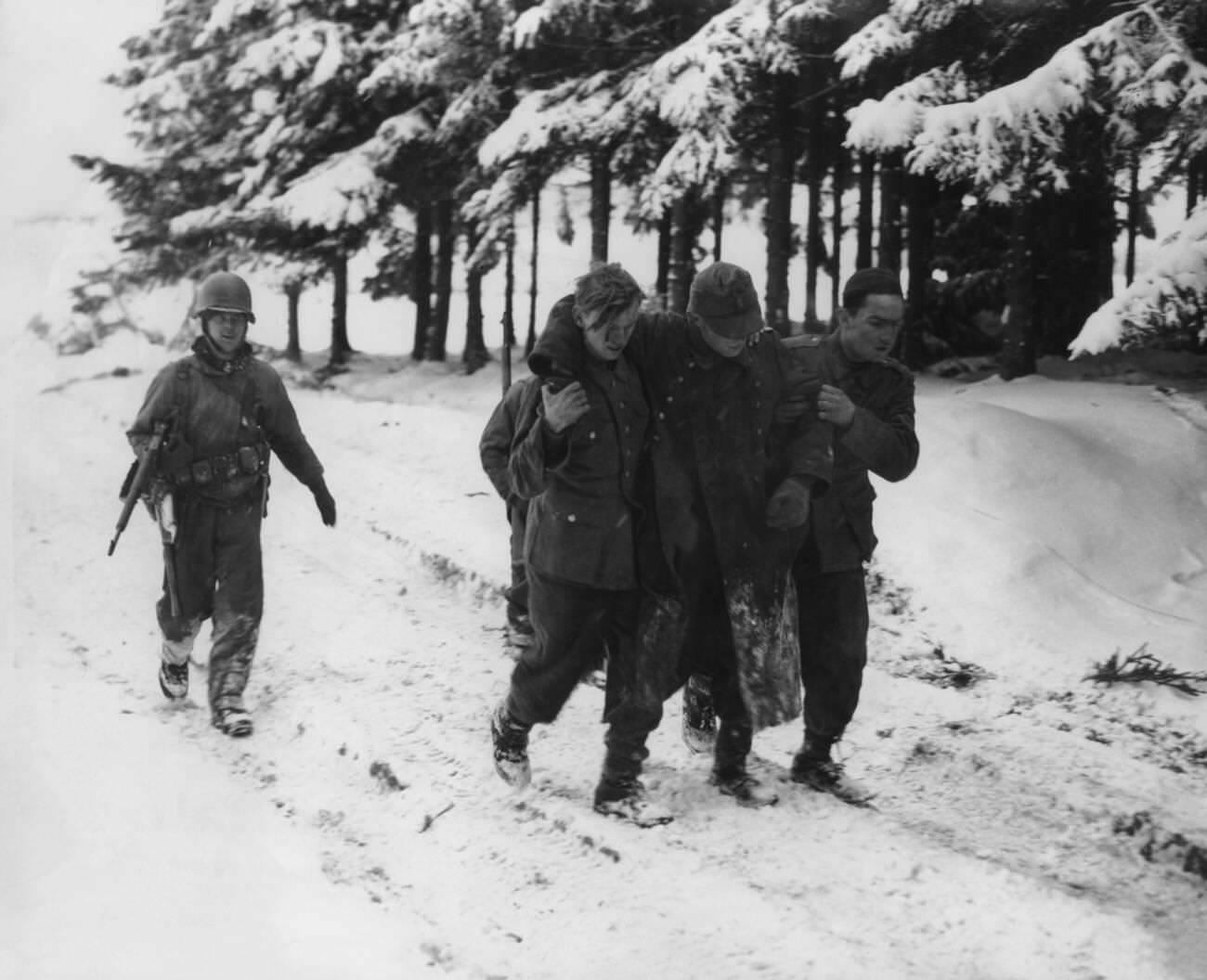
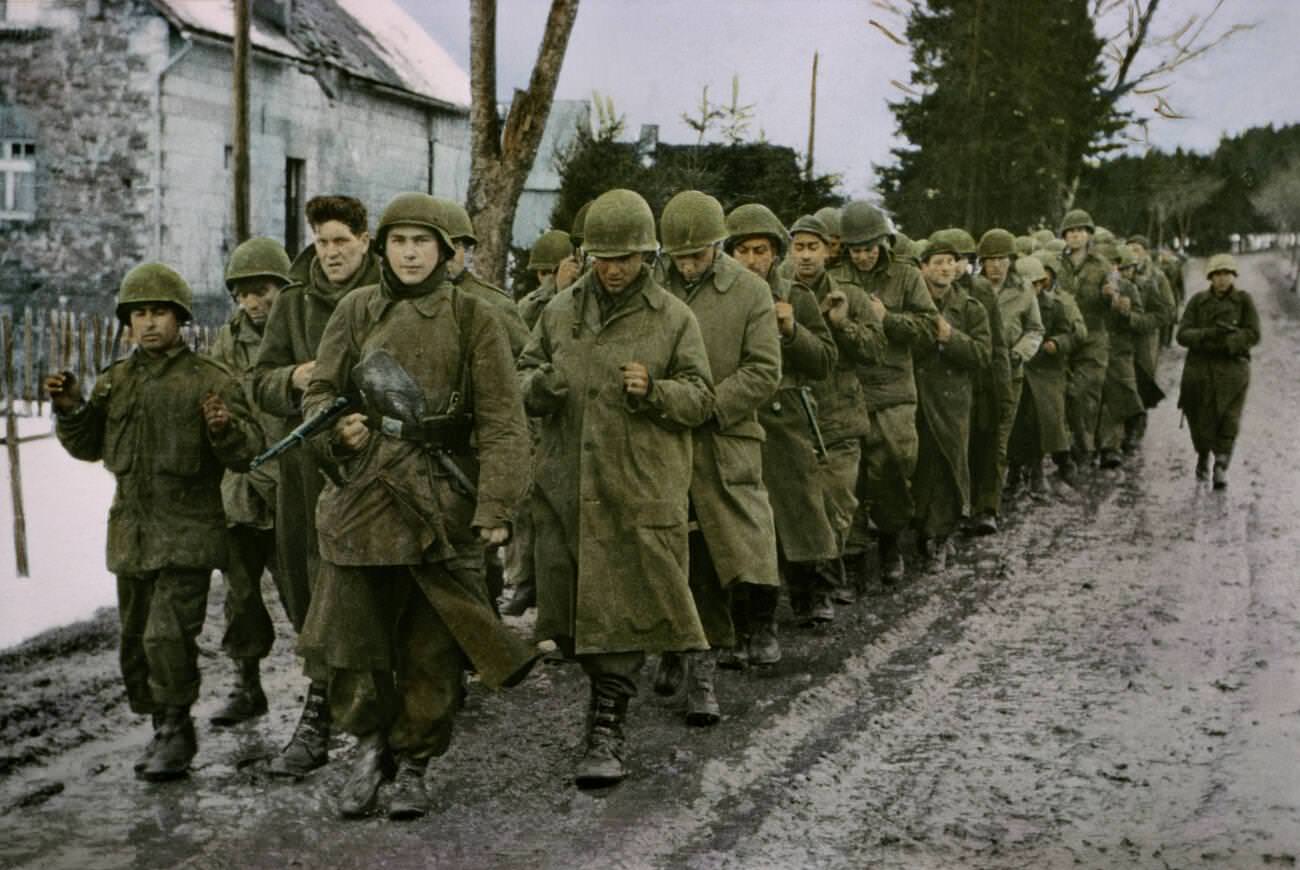
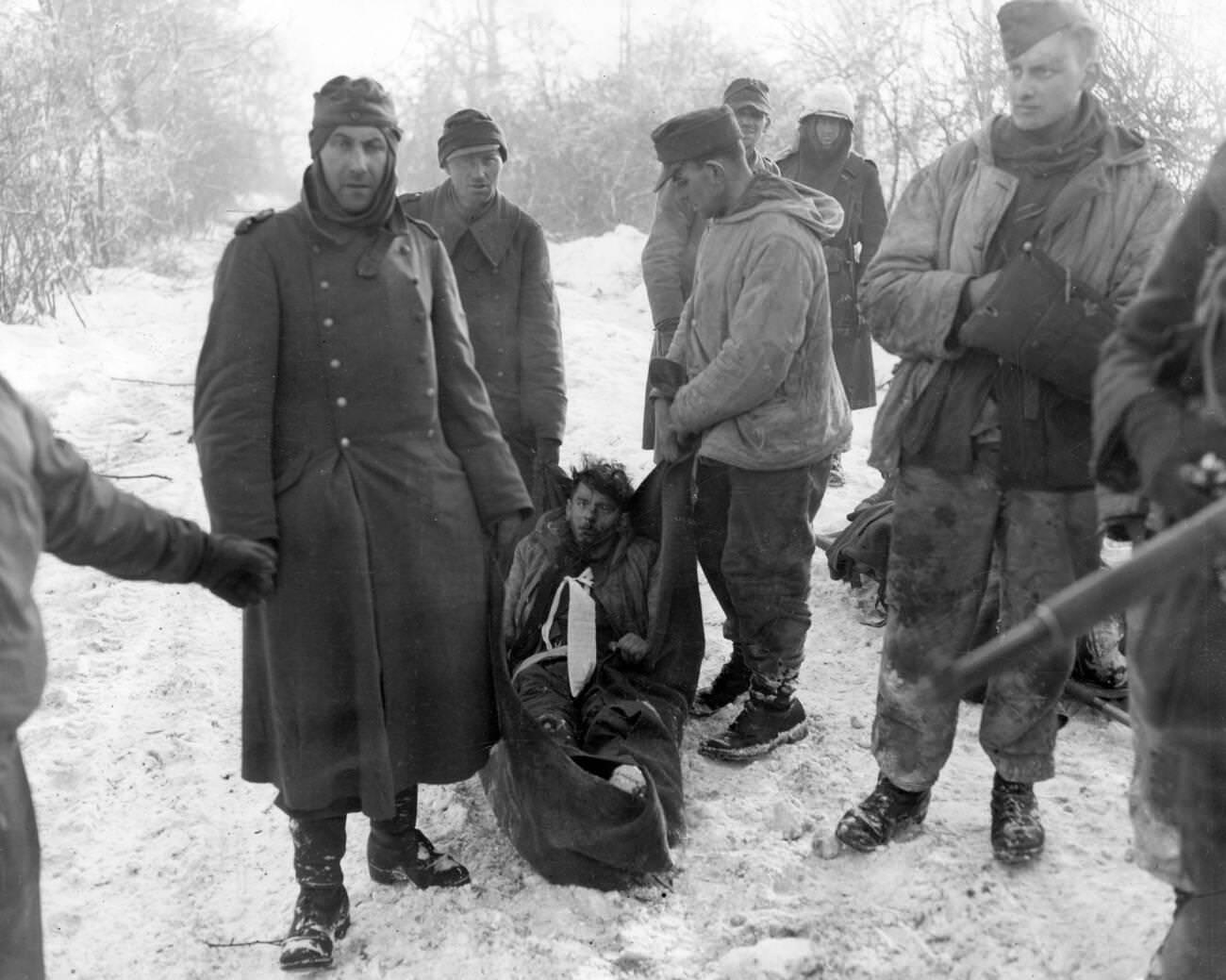
The human cost was staggering. American forces suffered approximately 19,000 killed, 47,500 wounded, and 23,000 captured or missing. German casualties included an estimated 15,000 to 20,000 killed, 34,000 wounded, and 30,000 captured. The losses in tanks, artillery, and aircraft that Germany absorbed during the battle were irreplaceable. The Wehrmacht had thrown its last strategic reserve into the Ardennes and come away with nothing.
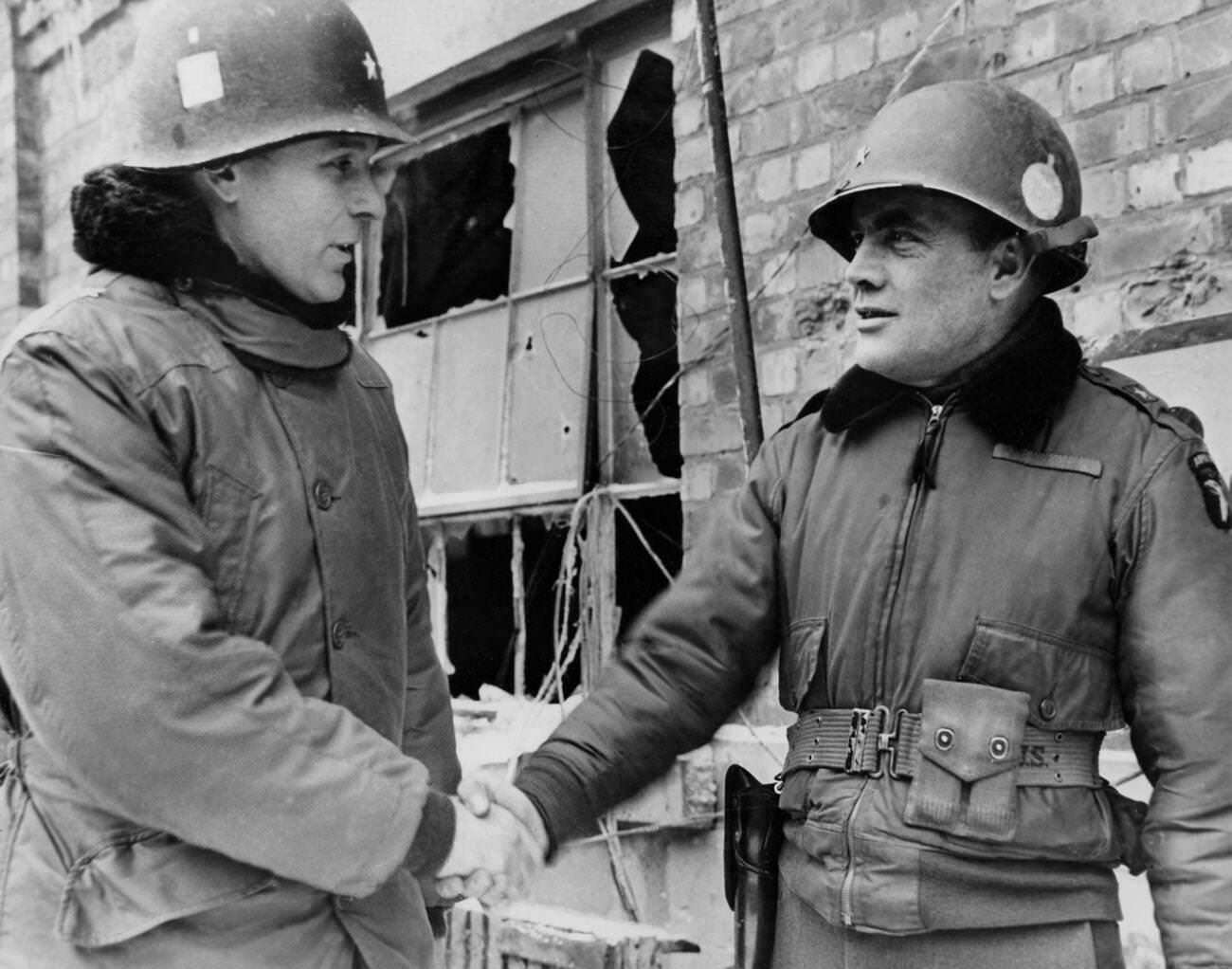
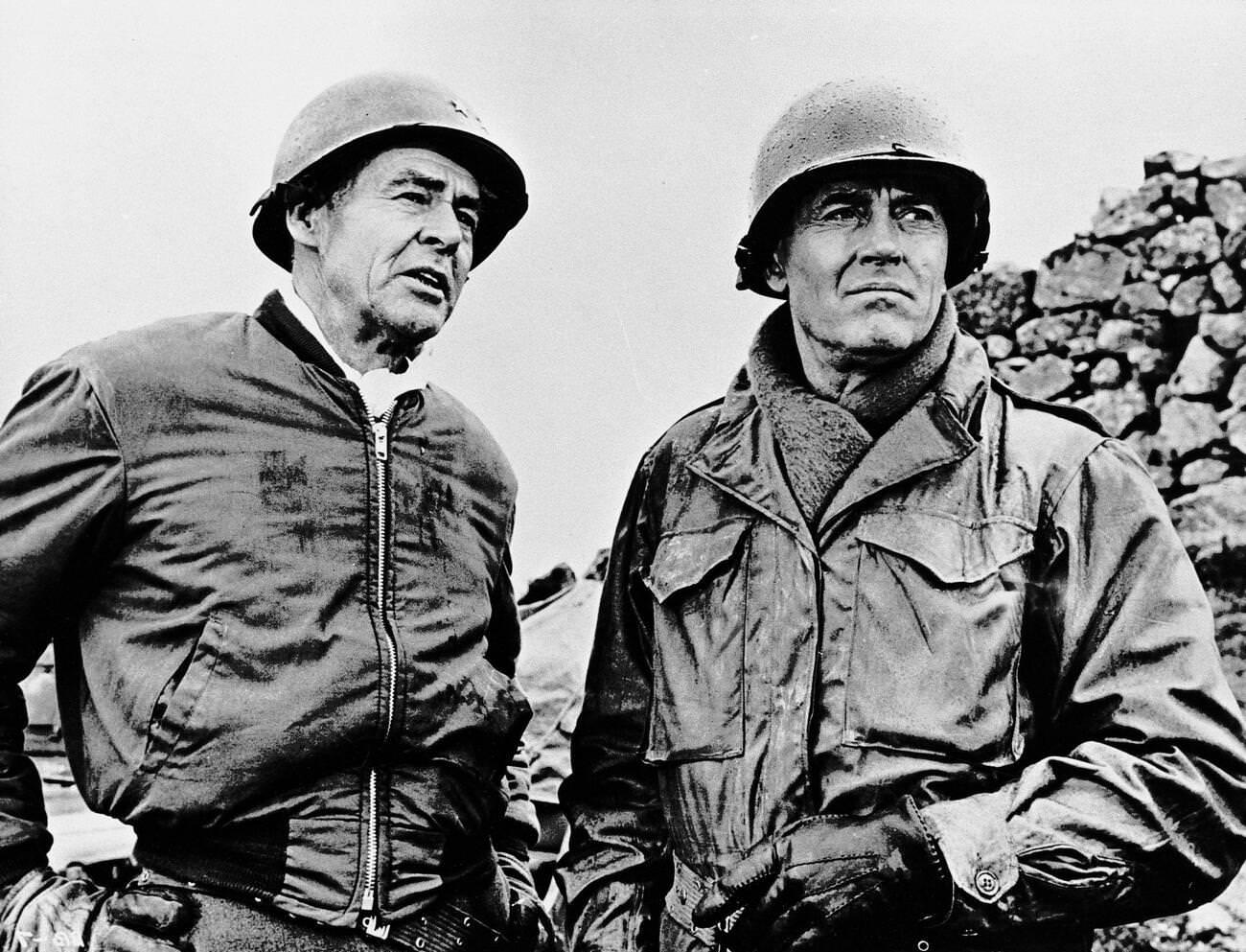
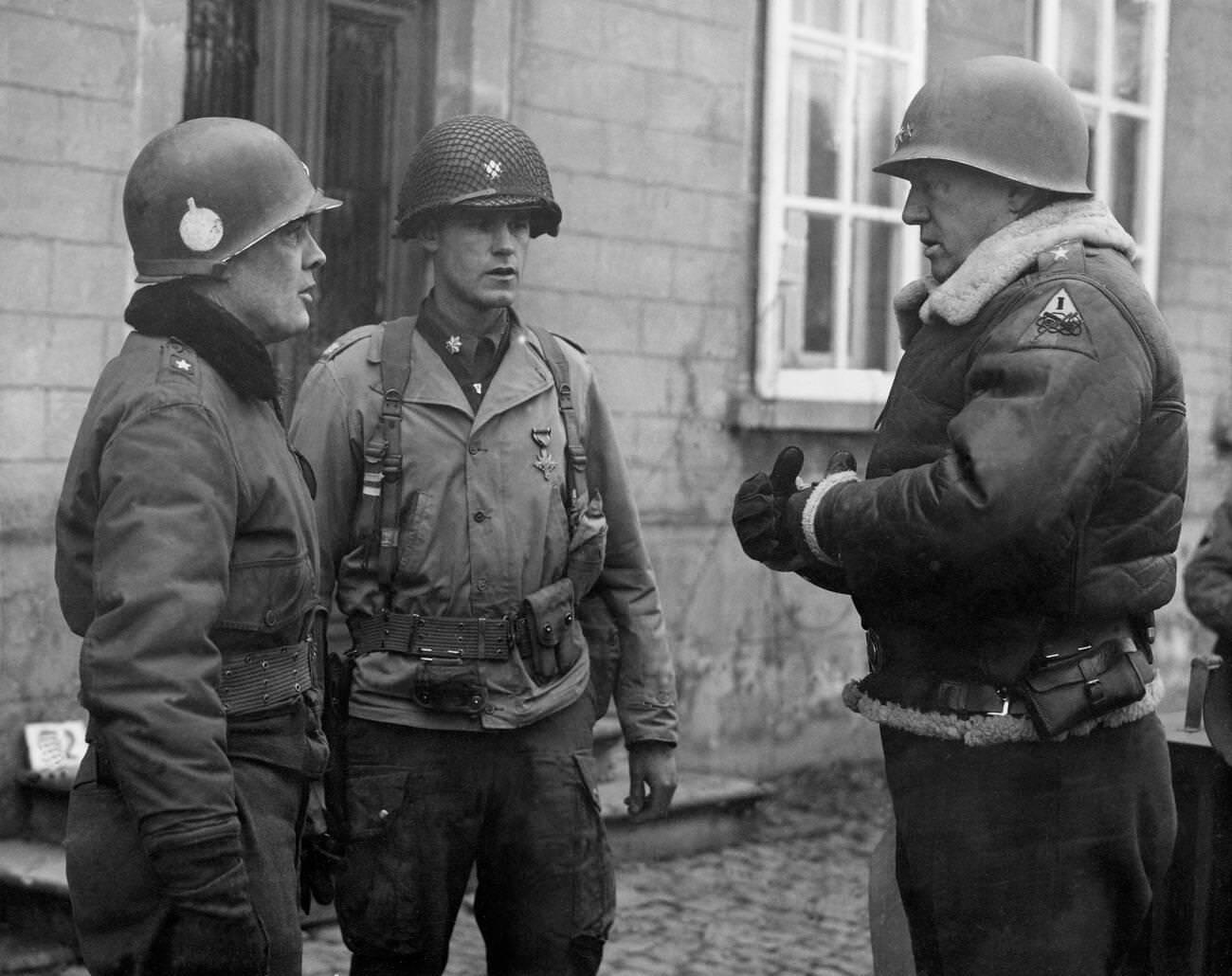
The siege of Bastogne produced one of the war’s most enduring command moments. When Patton and McAuliffe met after the relief of the city, the two men embodied the American military’s ability to adapt and hold under extreme pressure. Their meeting marked the turning point from defense to counterattack — the moment the Allies stopped absorbing the blow and began delivering one.
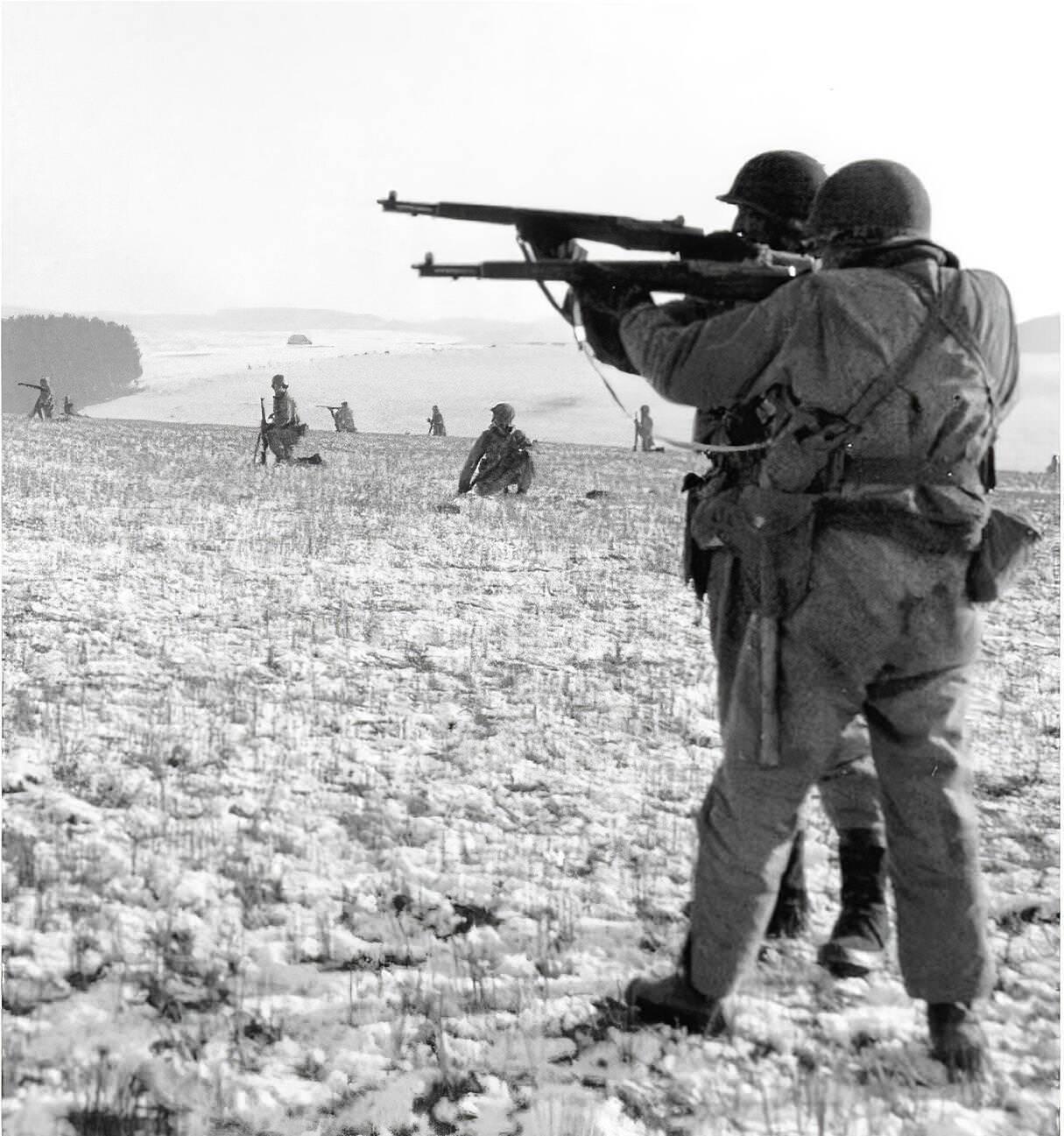
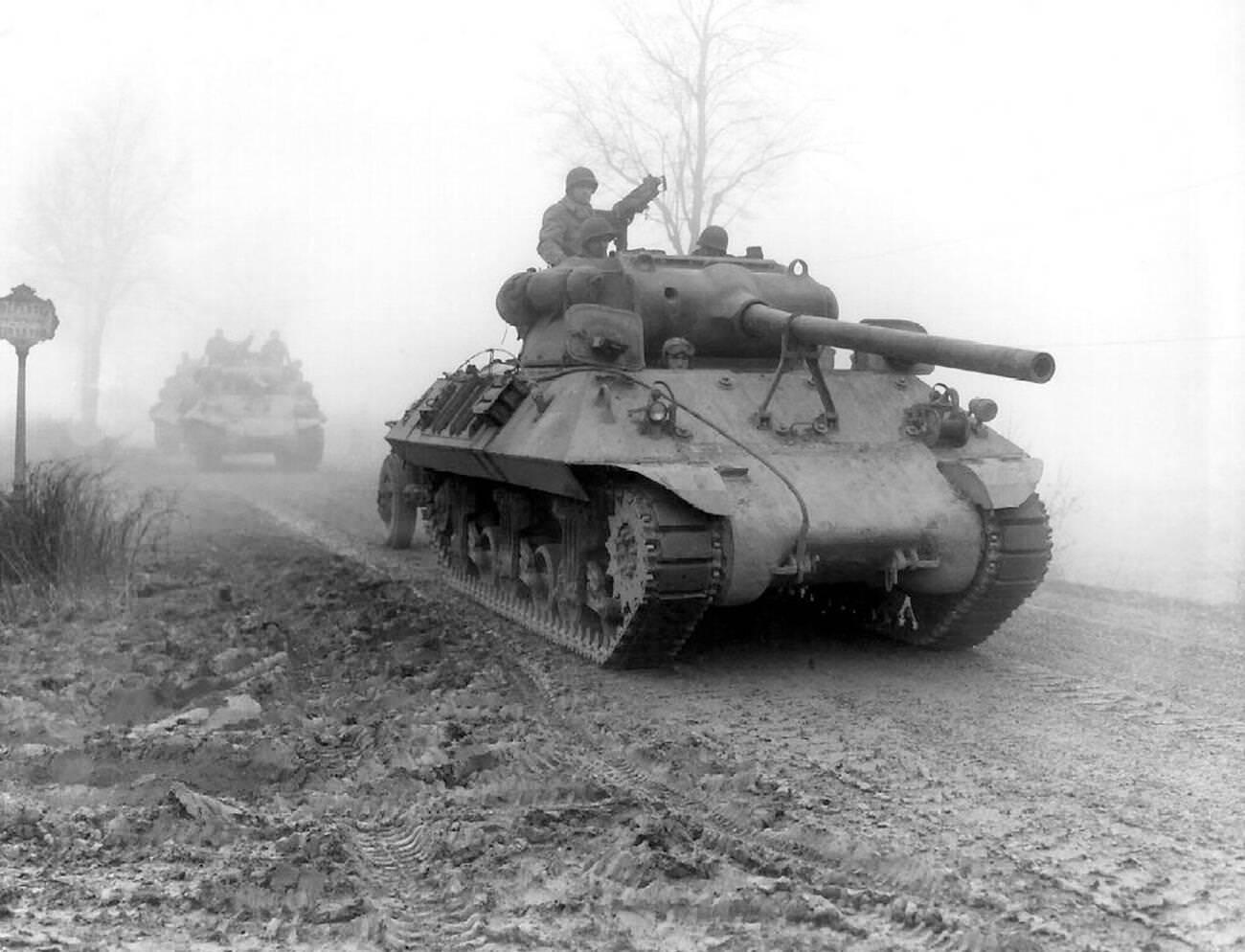
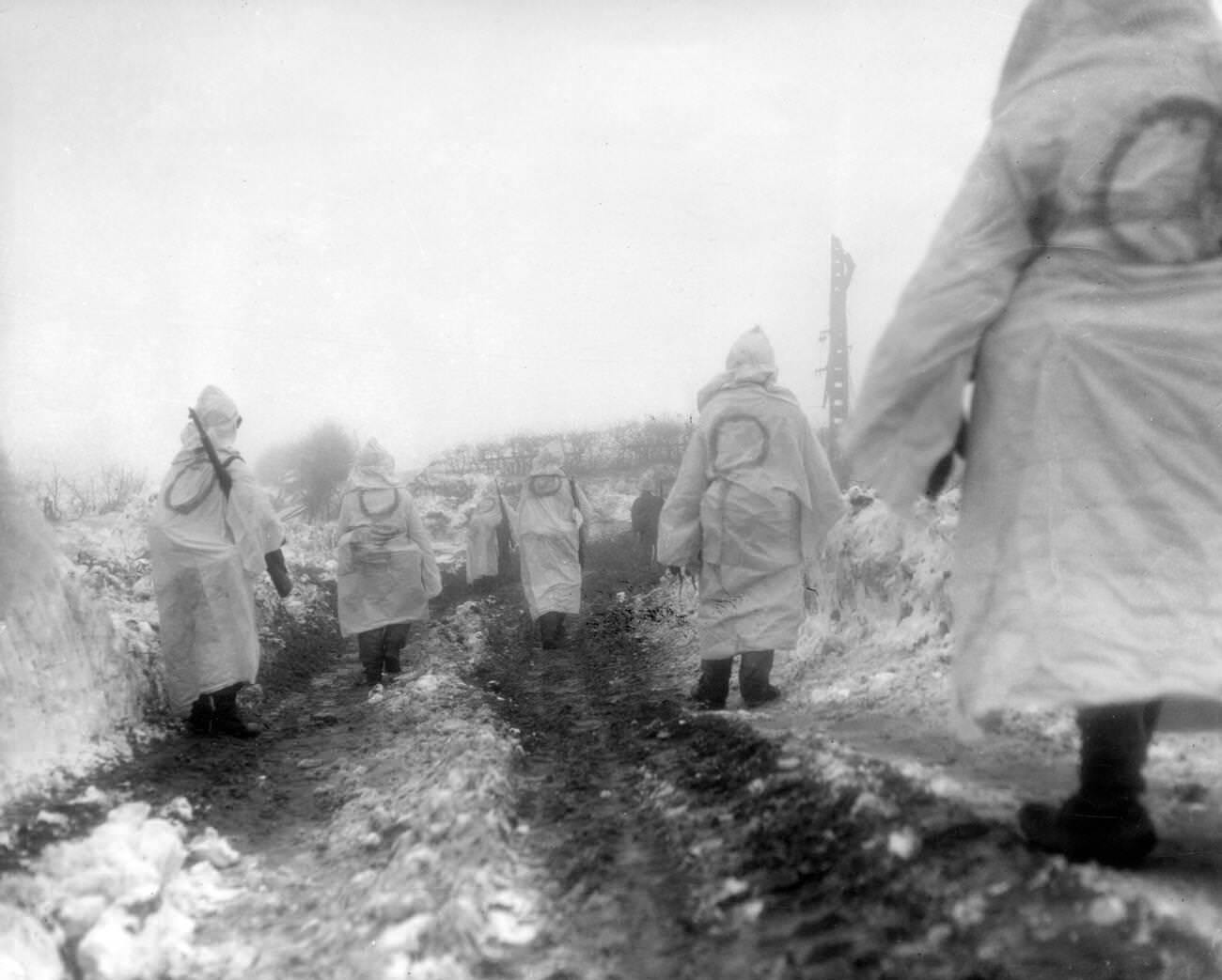
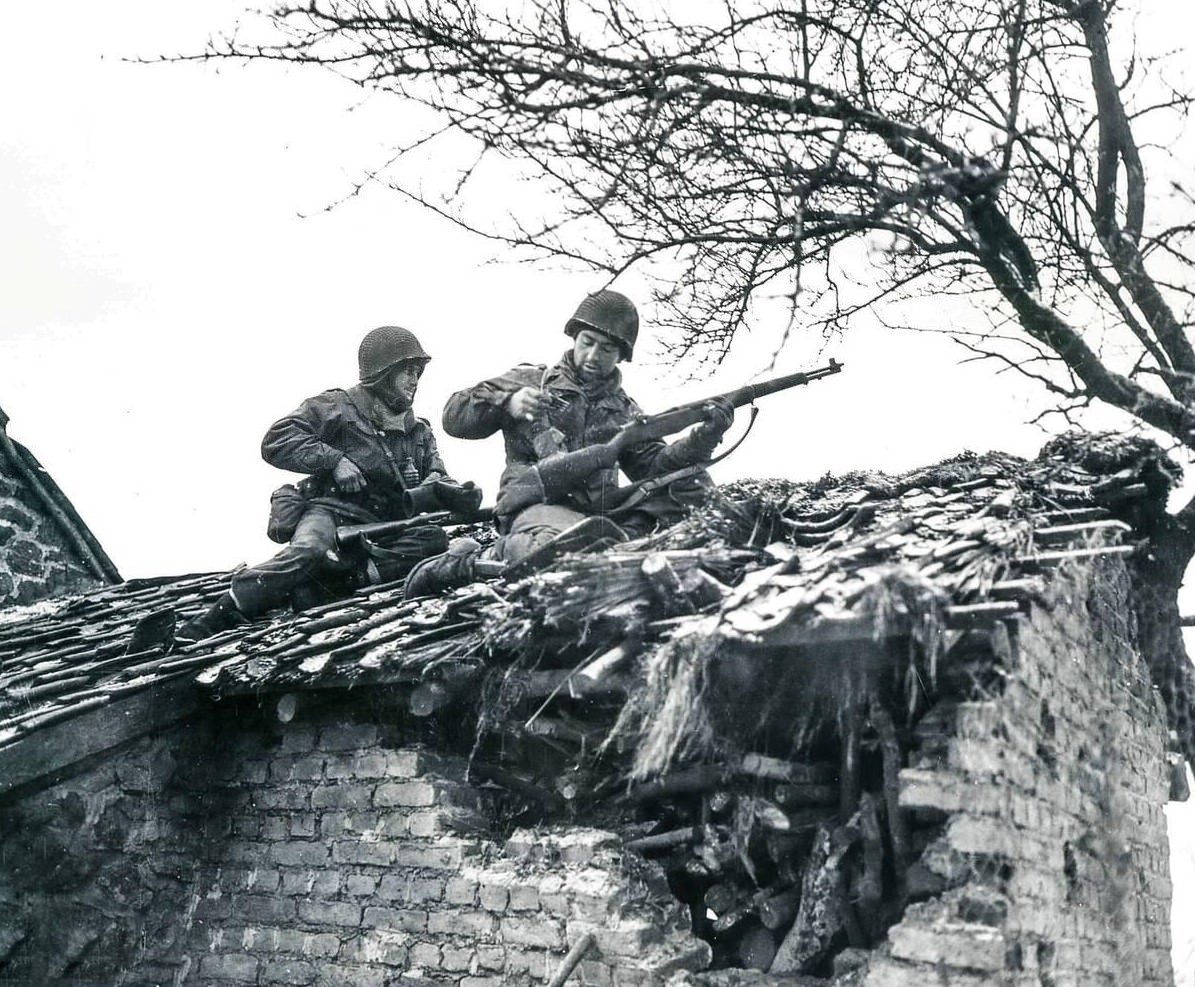
Airborne units played a central role throughout the battle. The 82nd Airborne held the northern shoulder of the bulge against repeated German assault. The 101st Airborne bore the full weight of the Bastogne siege. Members of these divisions moved through forests on foot, often without adequate winter gear, fighting in conditions that made every step a physical ordeal.
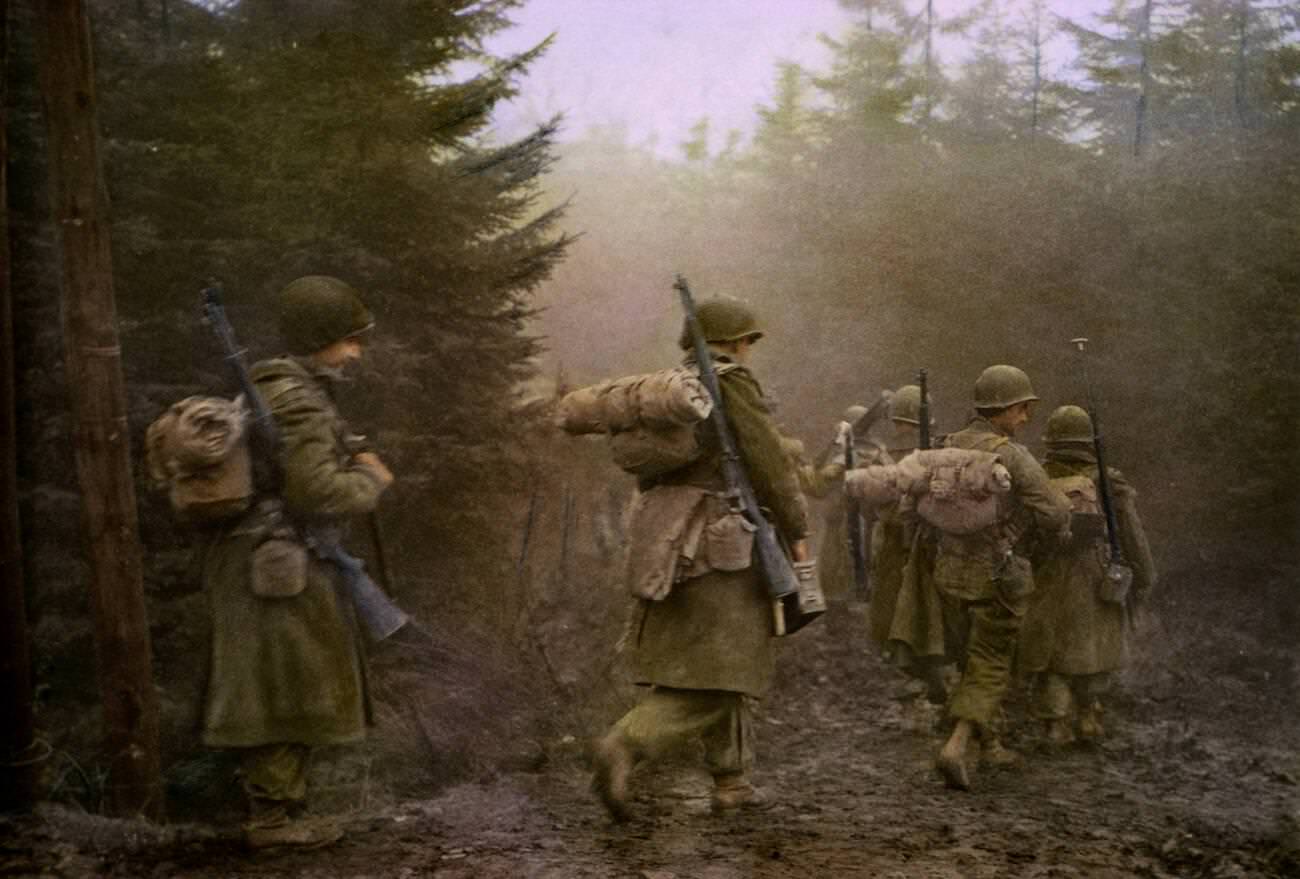
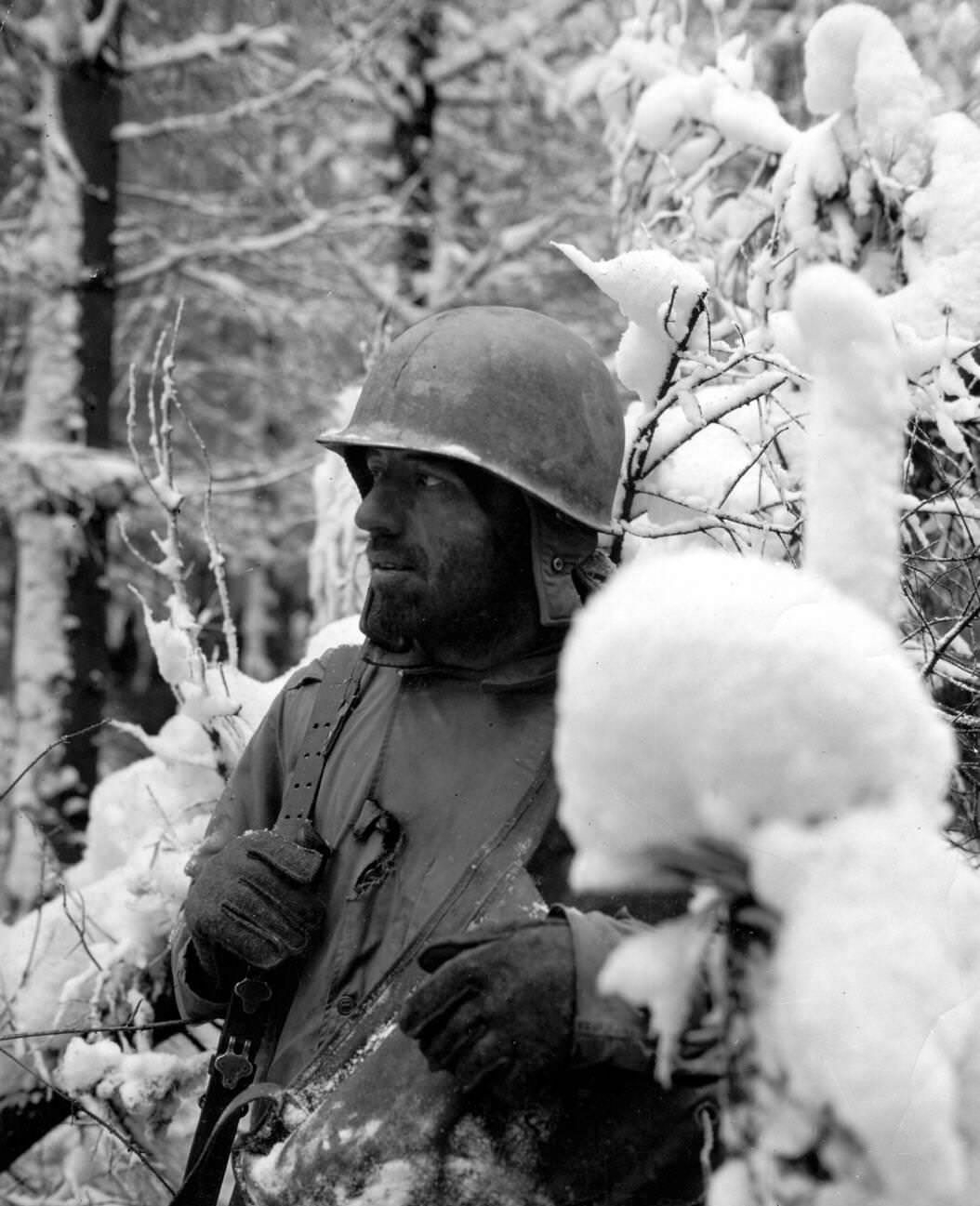
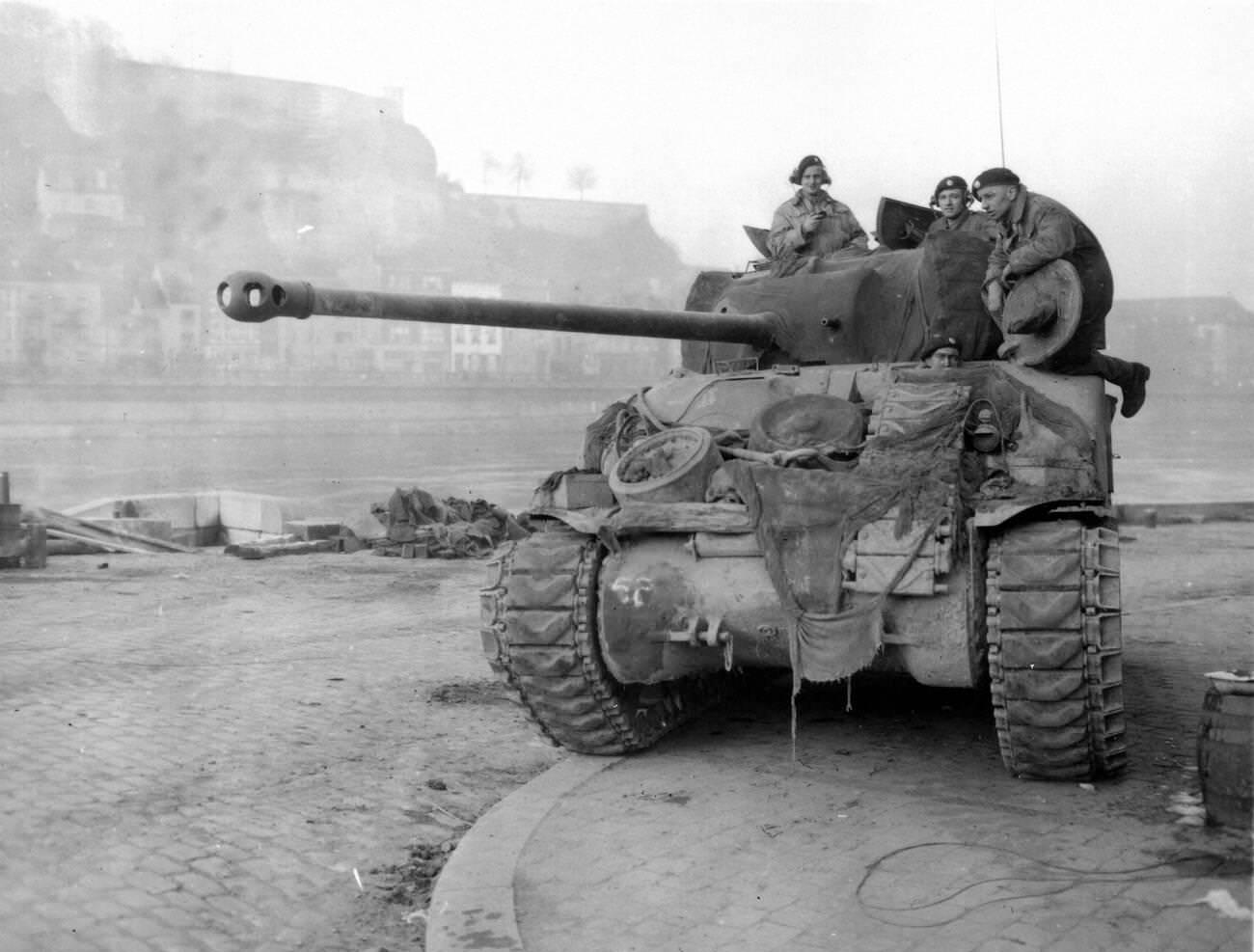
Refugees from Bastogne and surrounding towns fled ahead of the German advance, leaving behind homes, livestock, and decades of belongings. British armor patrolled the Meuse River to prevent German forces from crossing. The front was fluid and violent, and no one — soldier or civilian — was far from danger.
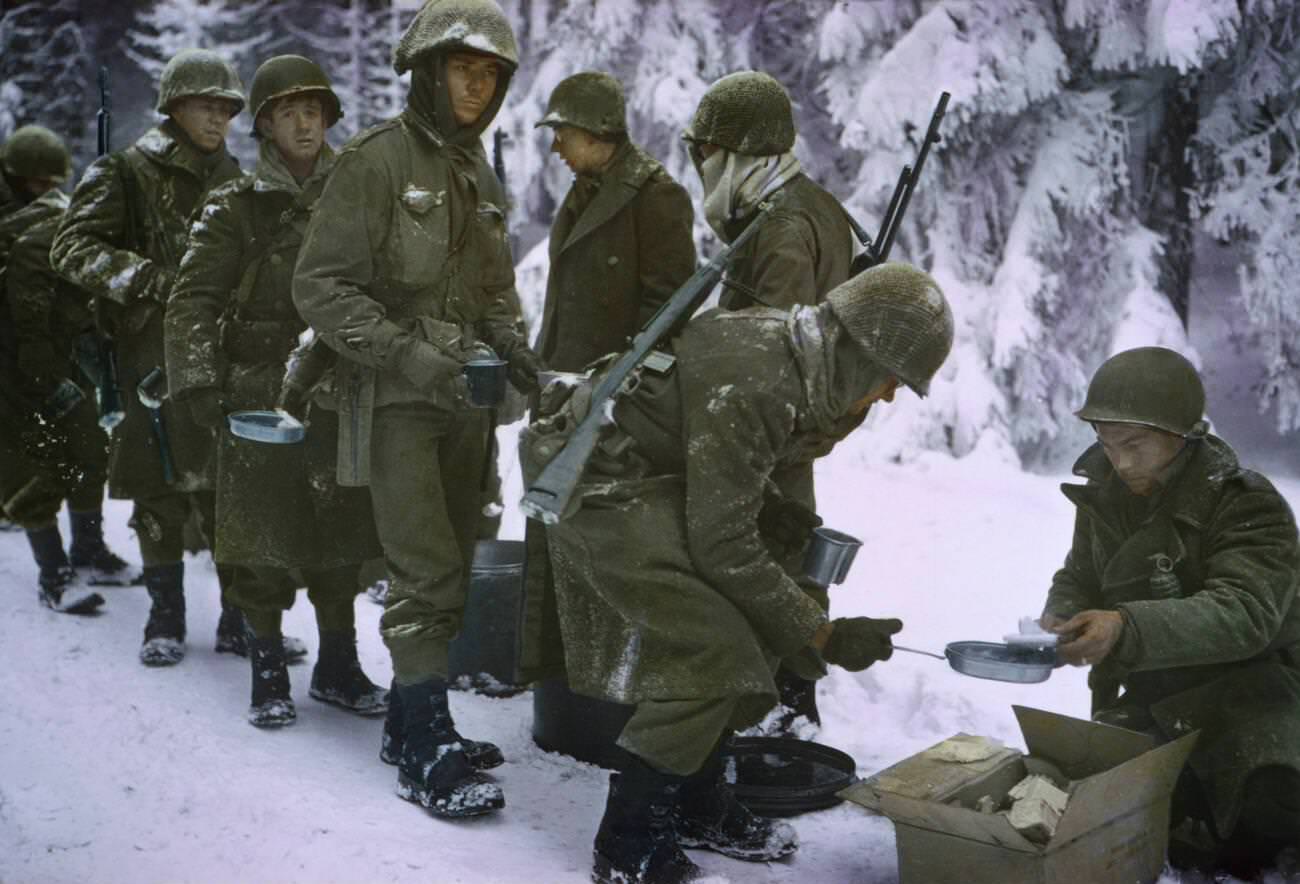
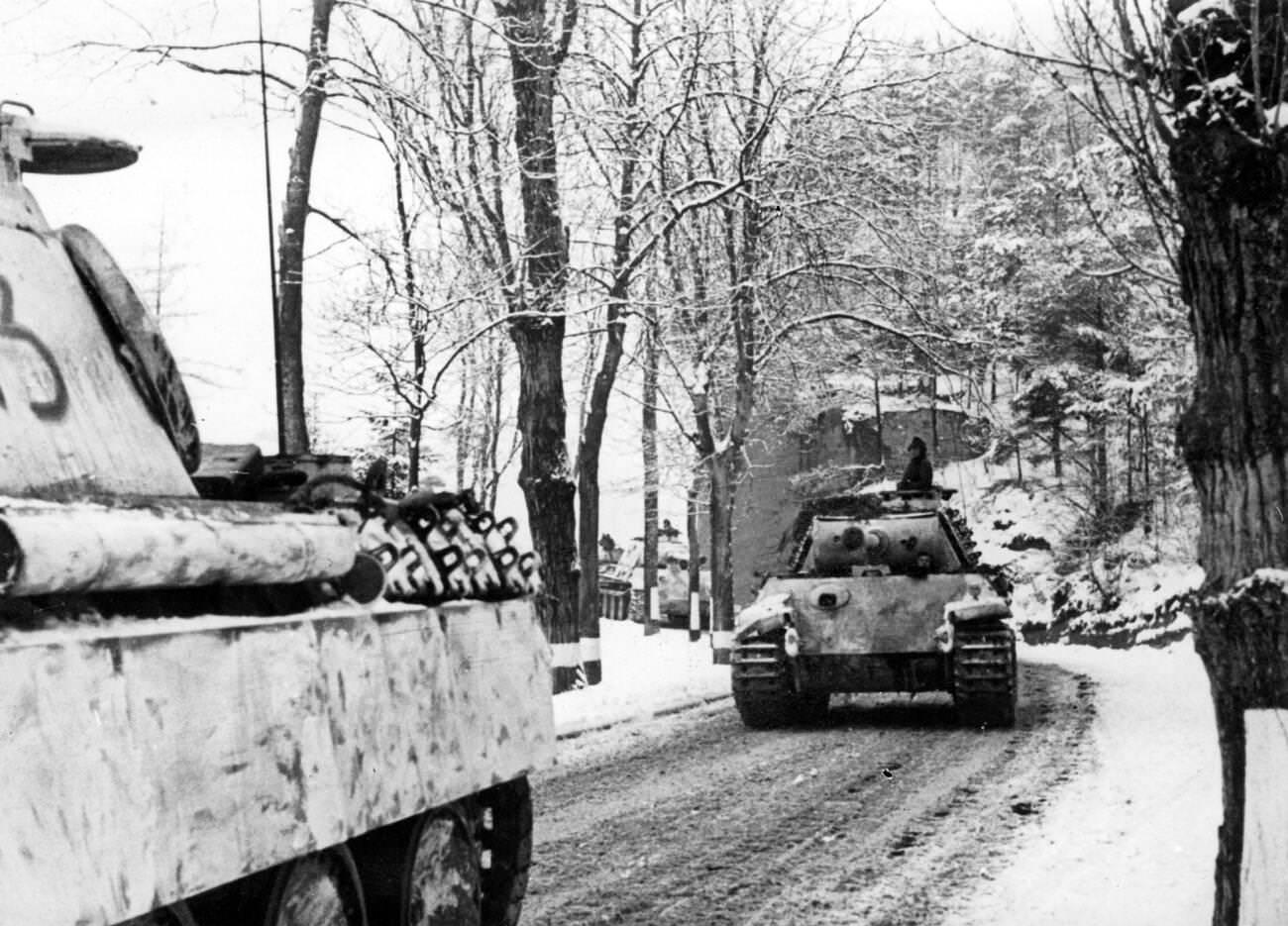
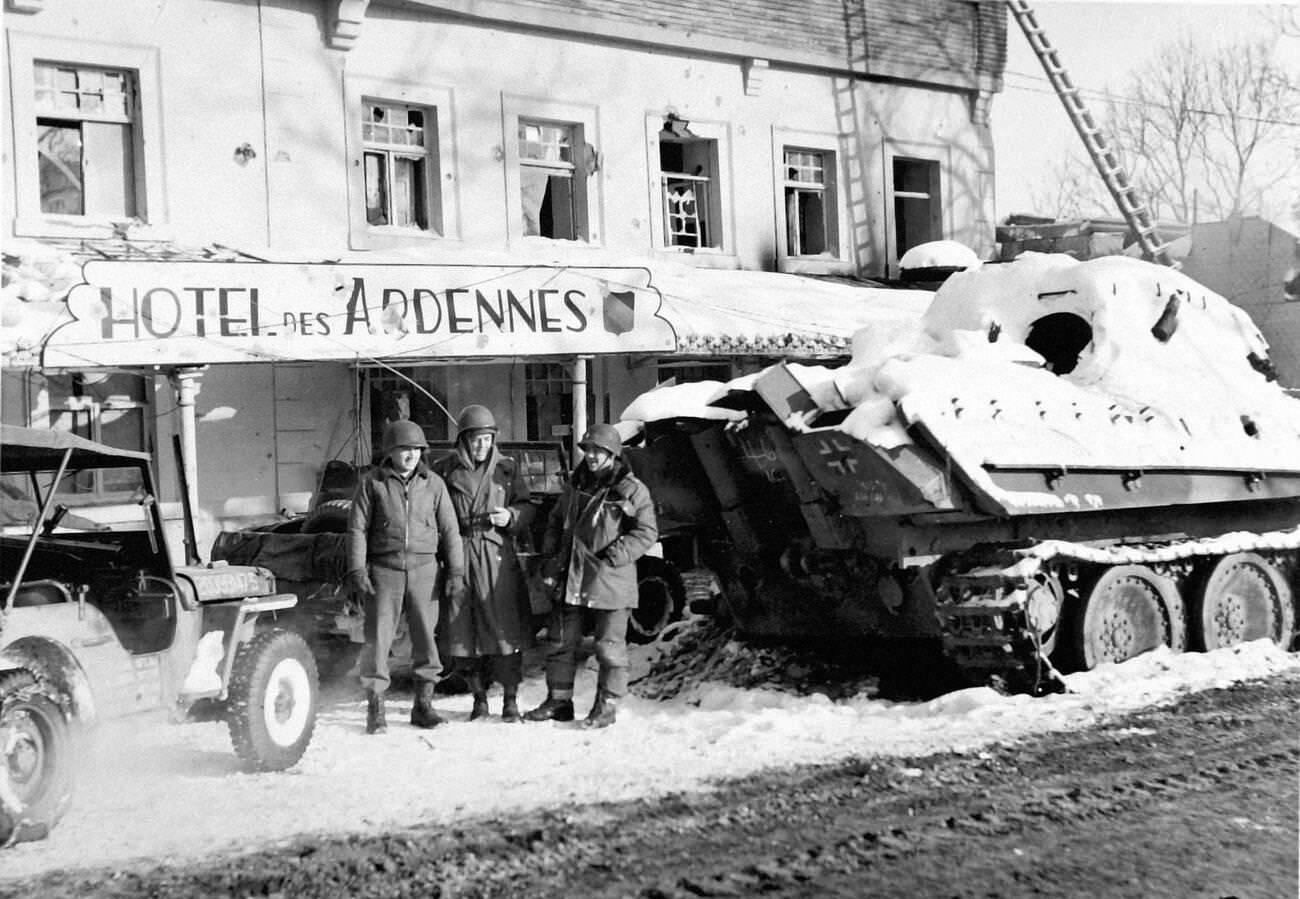
German armored divisions that had rolled through American positions in the opening days found themselves outmatched once Allied air support returned. Officers of the 9th U.S. Air Force surveyed destroyed German armor after the battle — tank after tank that had run out of fuel or been bombed on forest roads. The gap between what Germany had available and what the operation actually required had been enormous from the start.
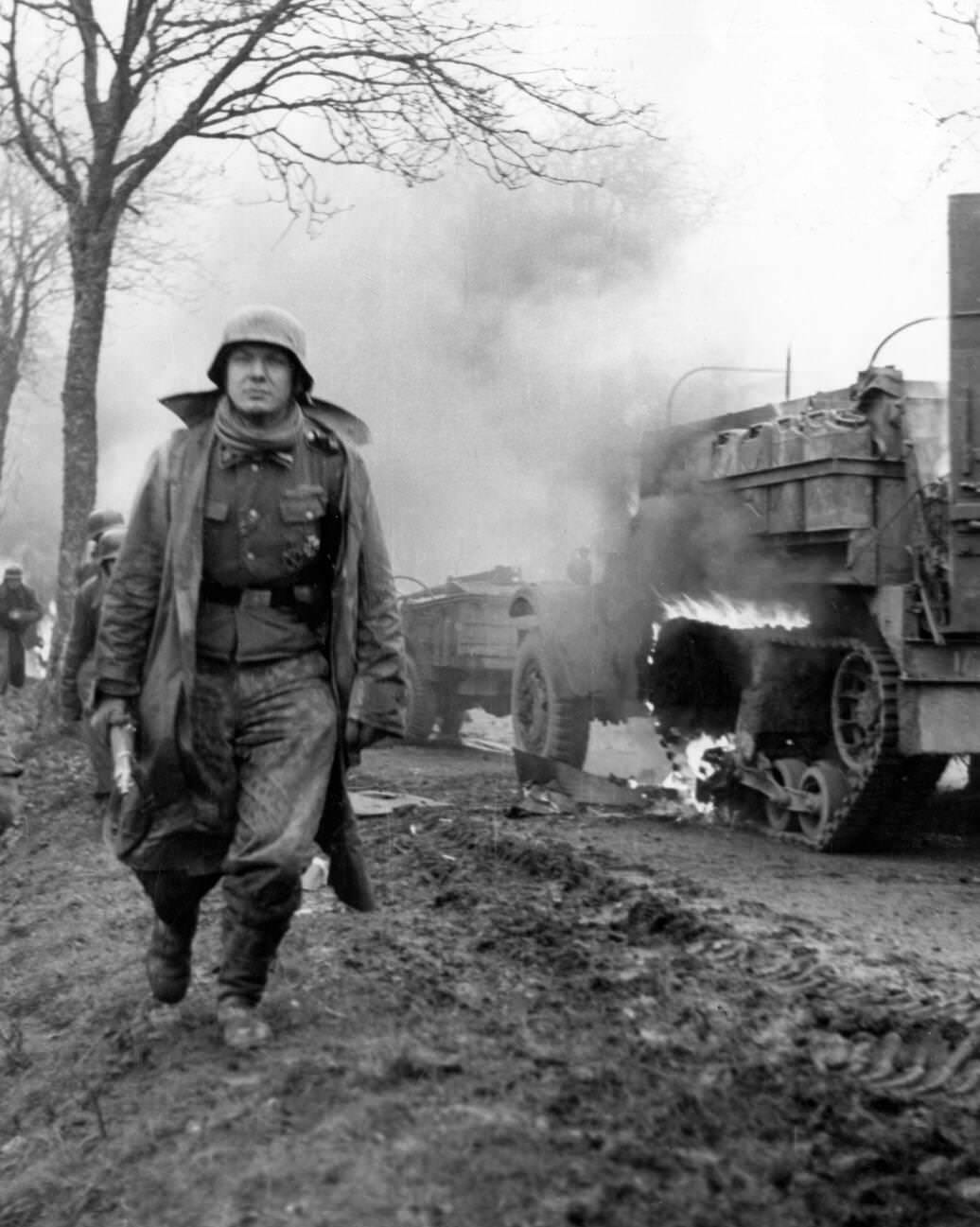
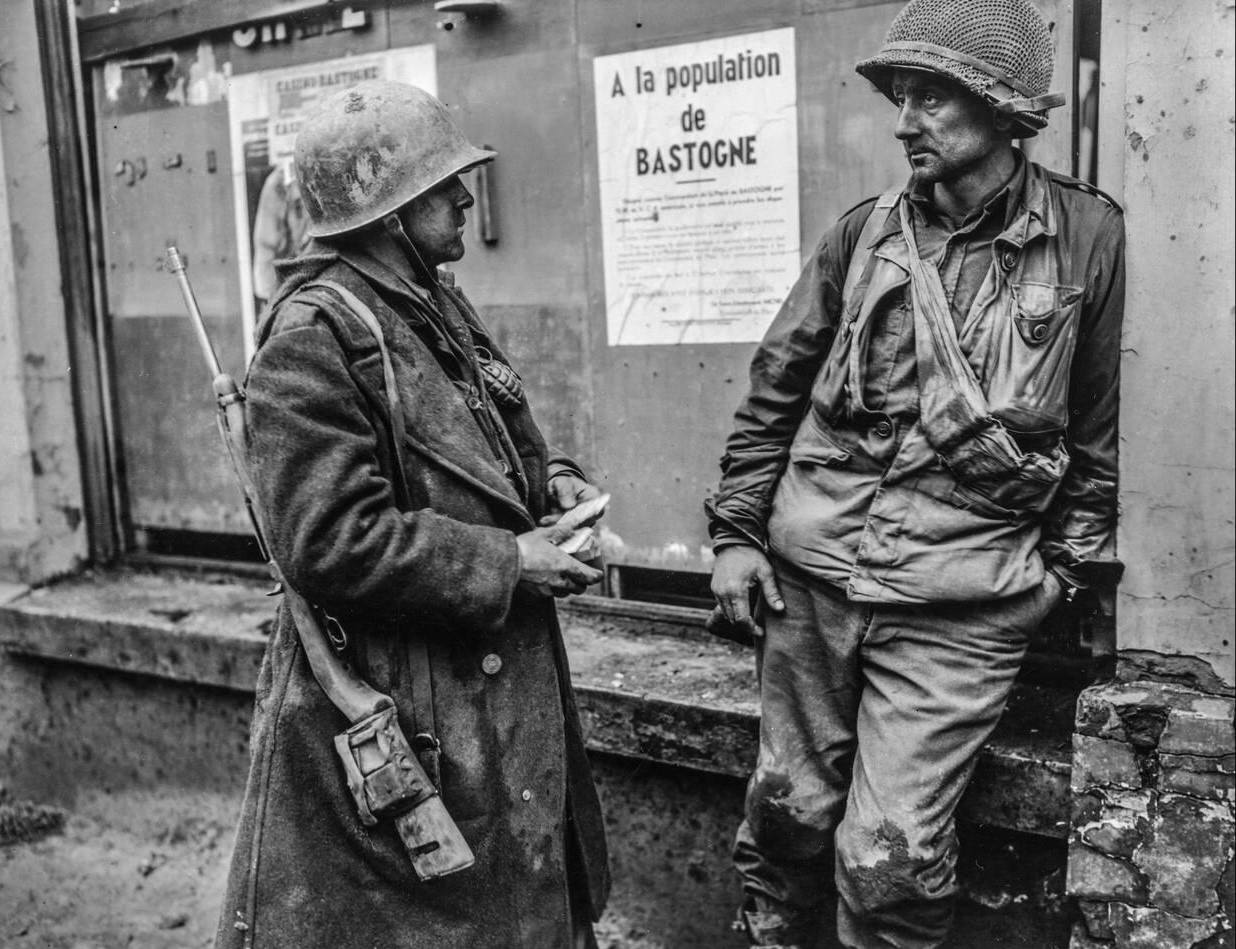
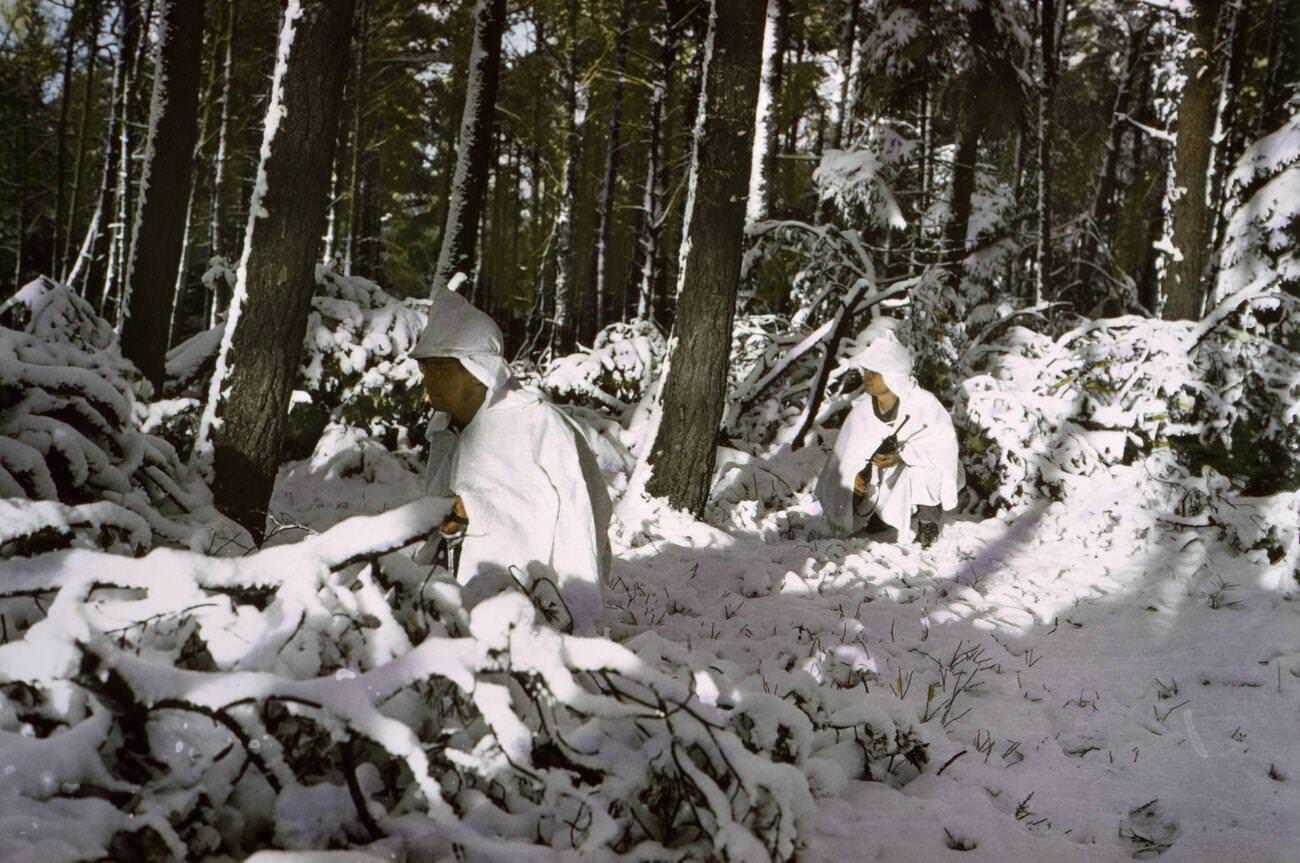
As the battle wound down and Allied forces swept through the Ardennes, units of the 82nd Airborne entered Belgian towns like Heresbach, while soldiers of the 87th Division walked into St. Hubert after the last German troops withdrew. The forests that had hidden the German buildup now bore the wreckage of their failed gamble — burned vehicles, abandoned weapons, and thousands of graves.
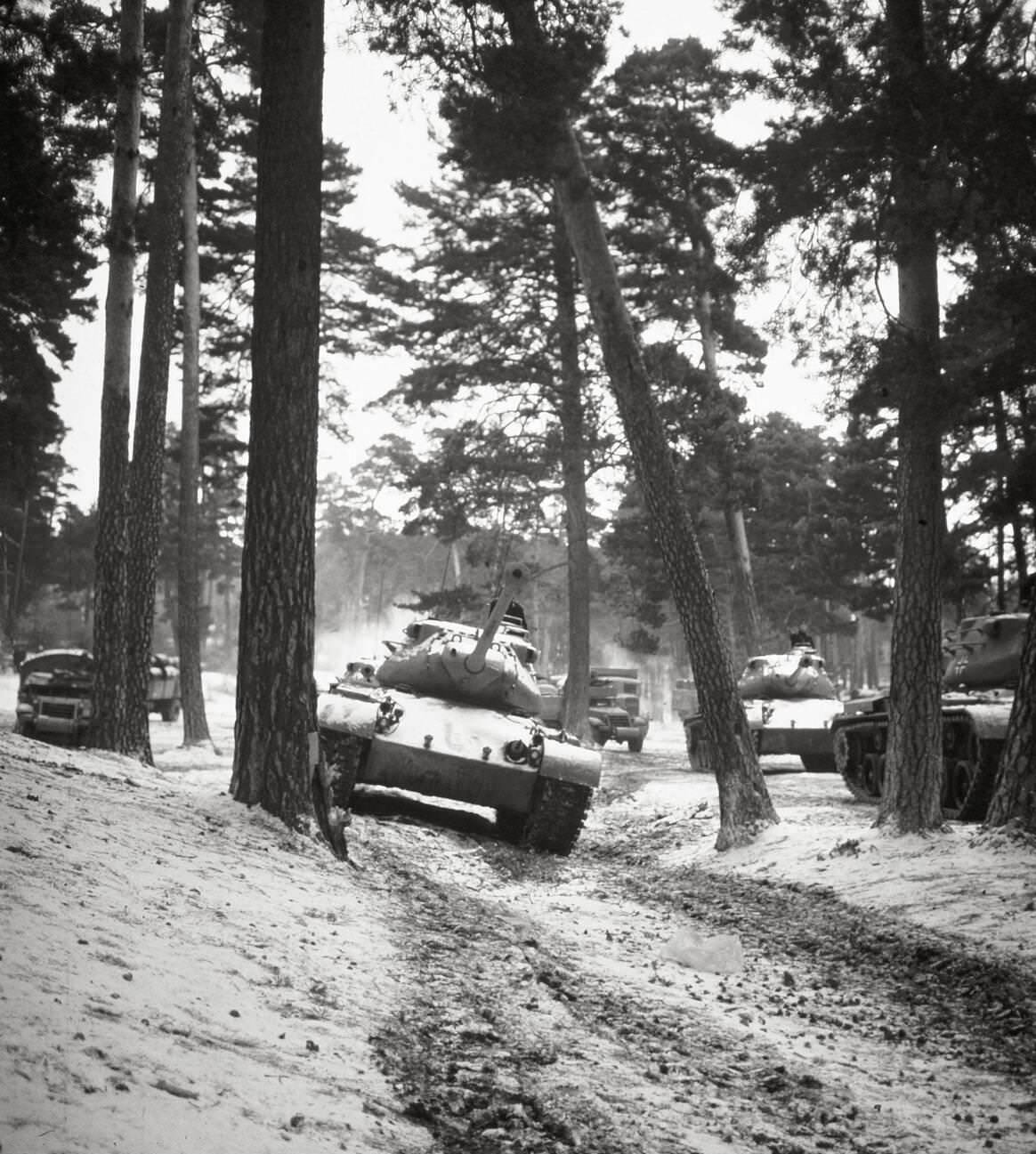
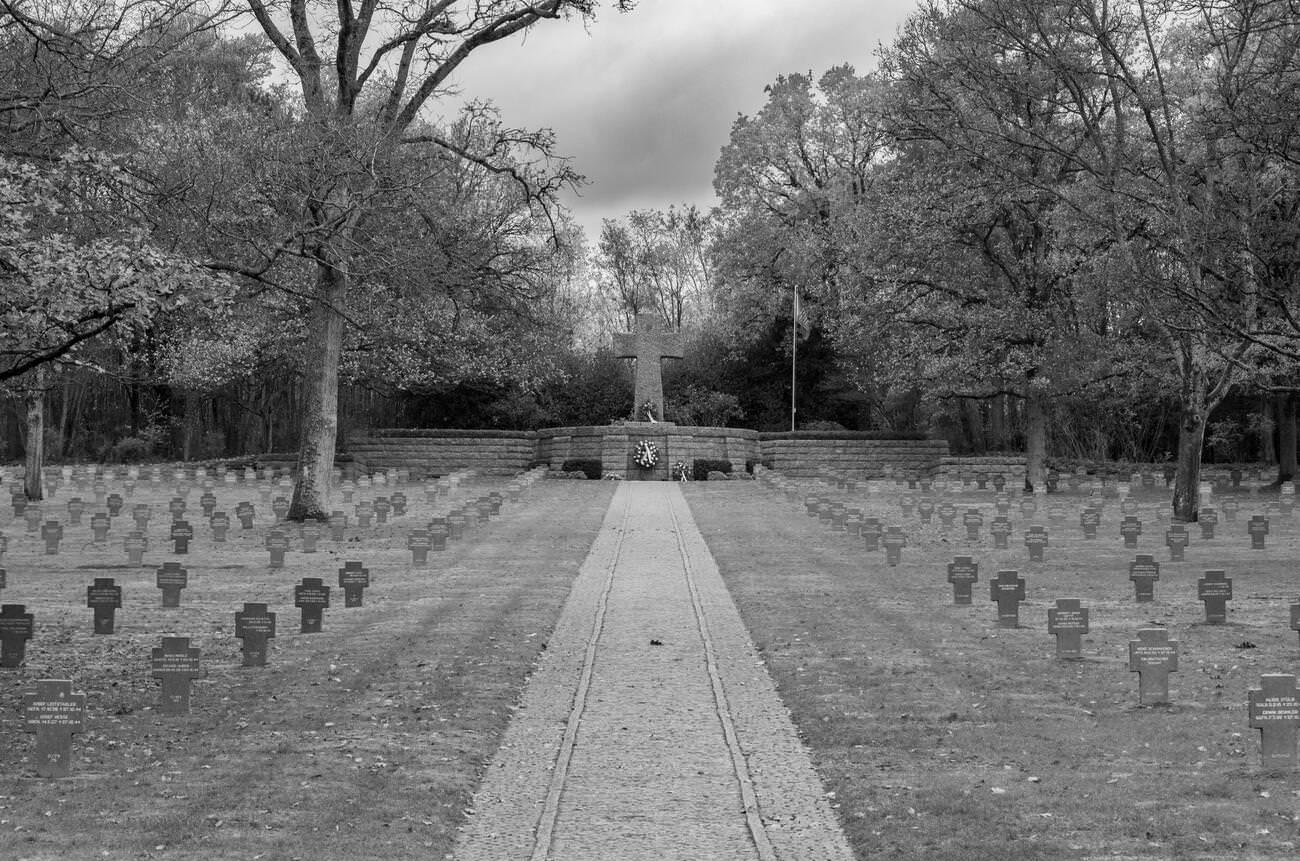
The Sandweiler German war cemetery in Luxembourg holds the graves of 10,913 German servicemen who died during the battle. American cemeteries across Belgium and Luxembourg contain thousands more. These burial grounds are the most concrete measure of what the six-week battle actually cost. Every grave represents a soldier who entered the Ardennes and did not leave it alive.
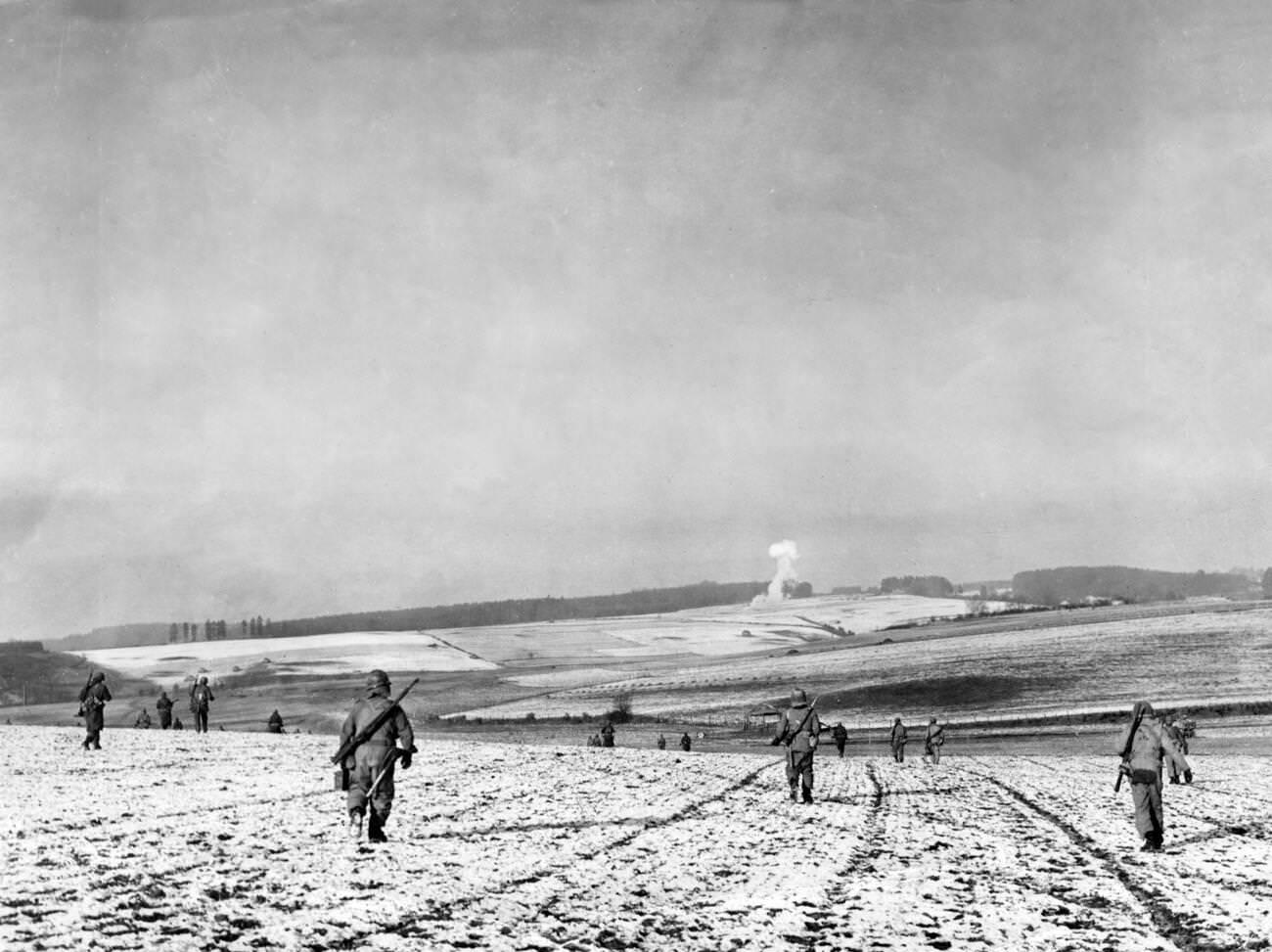
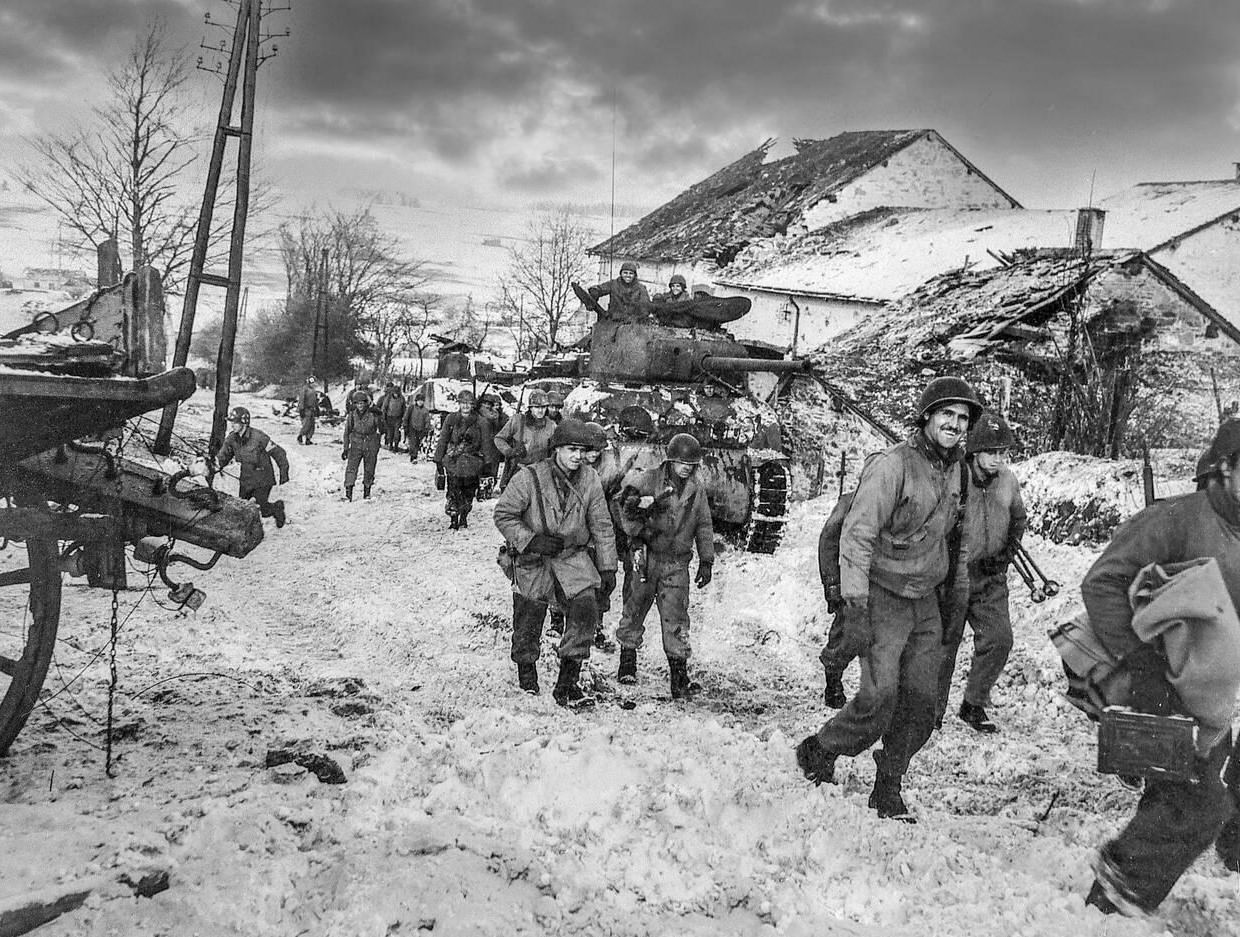
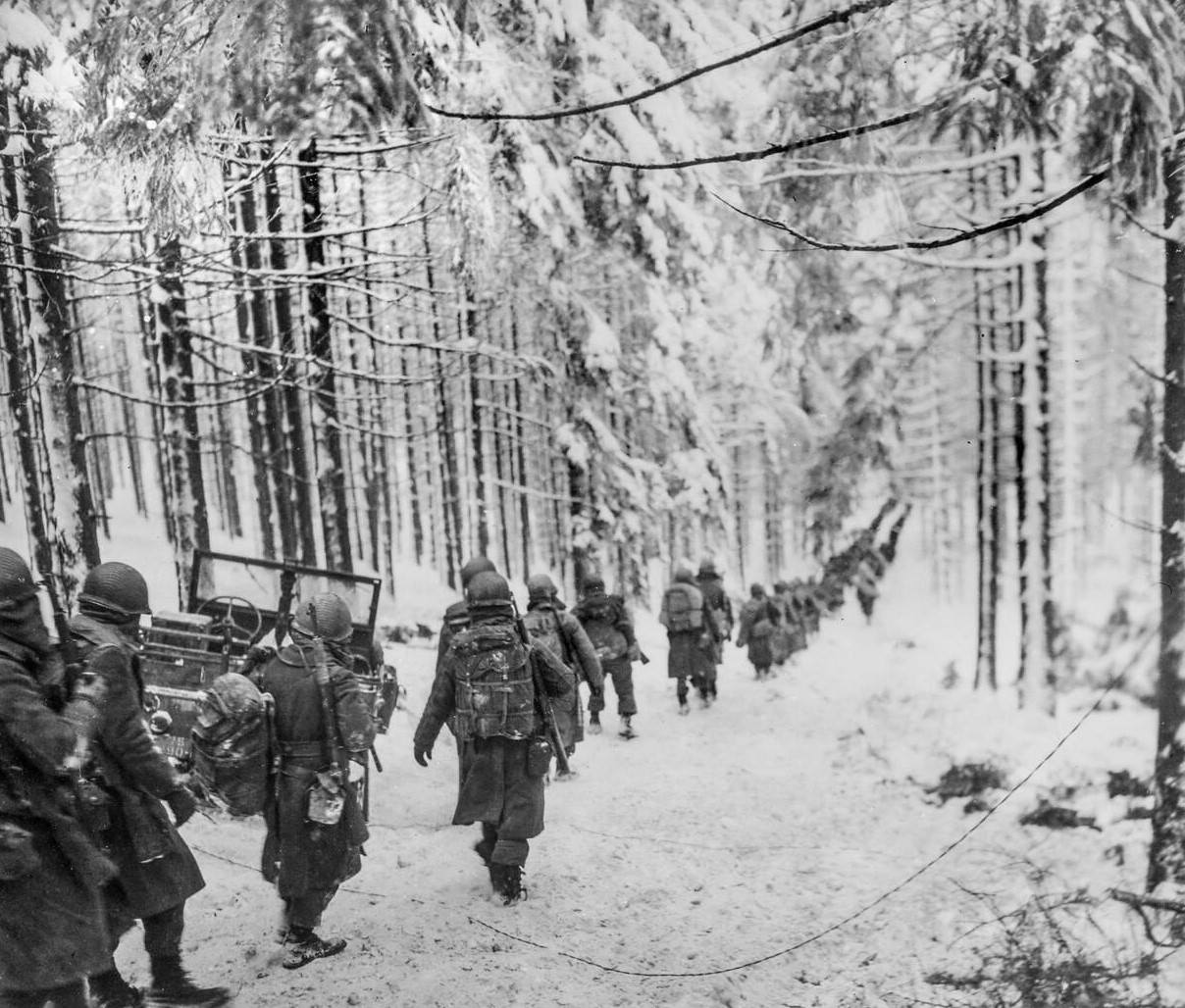
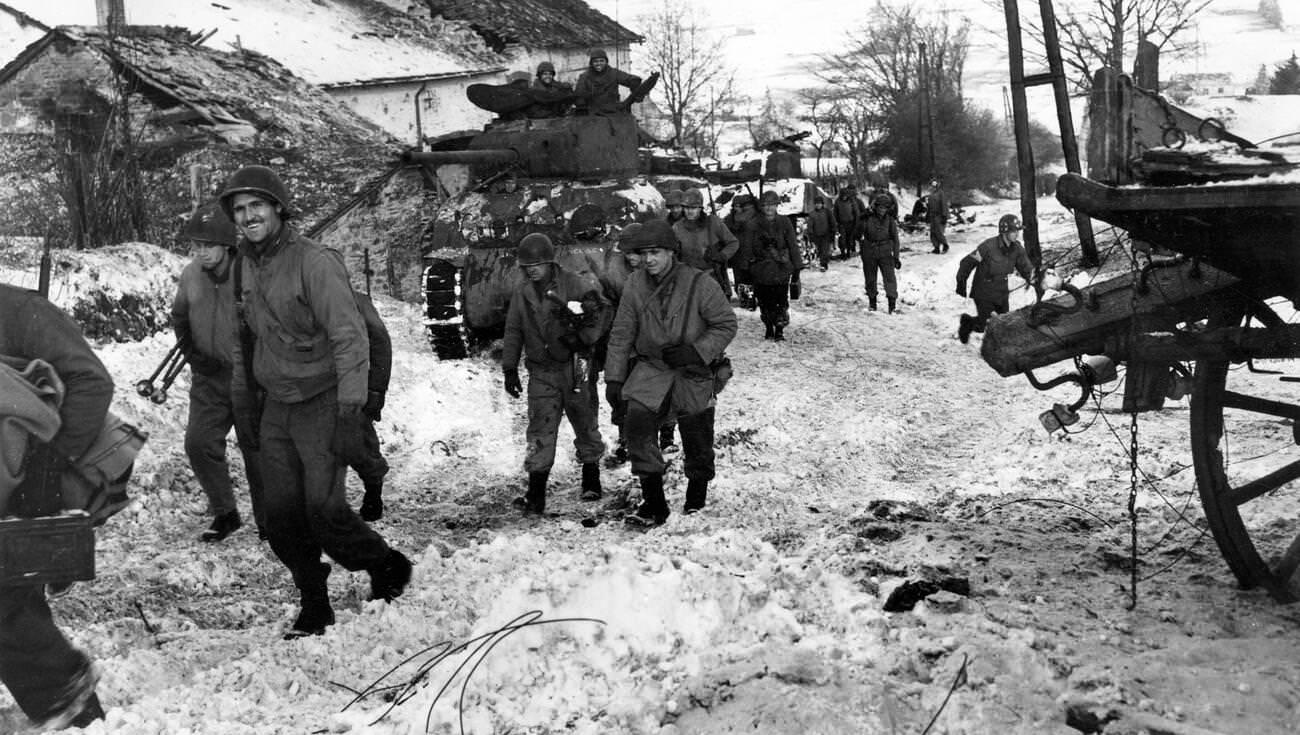
American infantry columns — like the 289th Infantry Regiment marching through snow toward the St. Vith-Houffalize road — became a defining image of the battle: long lines of soldiers in winter gear, moving through white silence toward another frozen fight. These men were not elite airborne troops. They were regular infantry, and they held the line all the same.
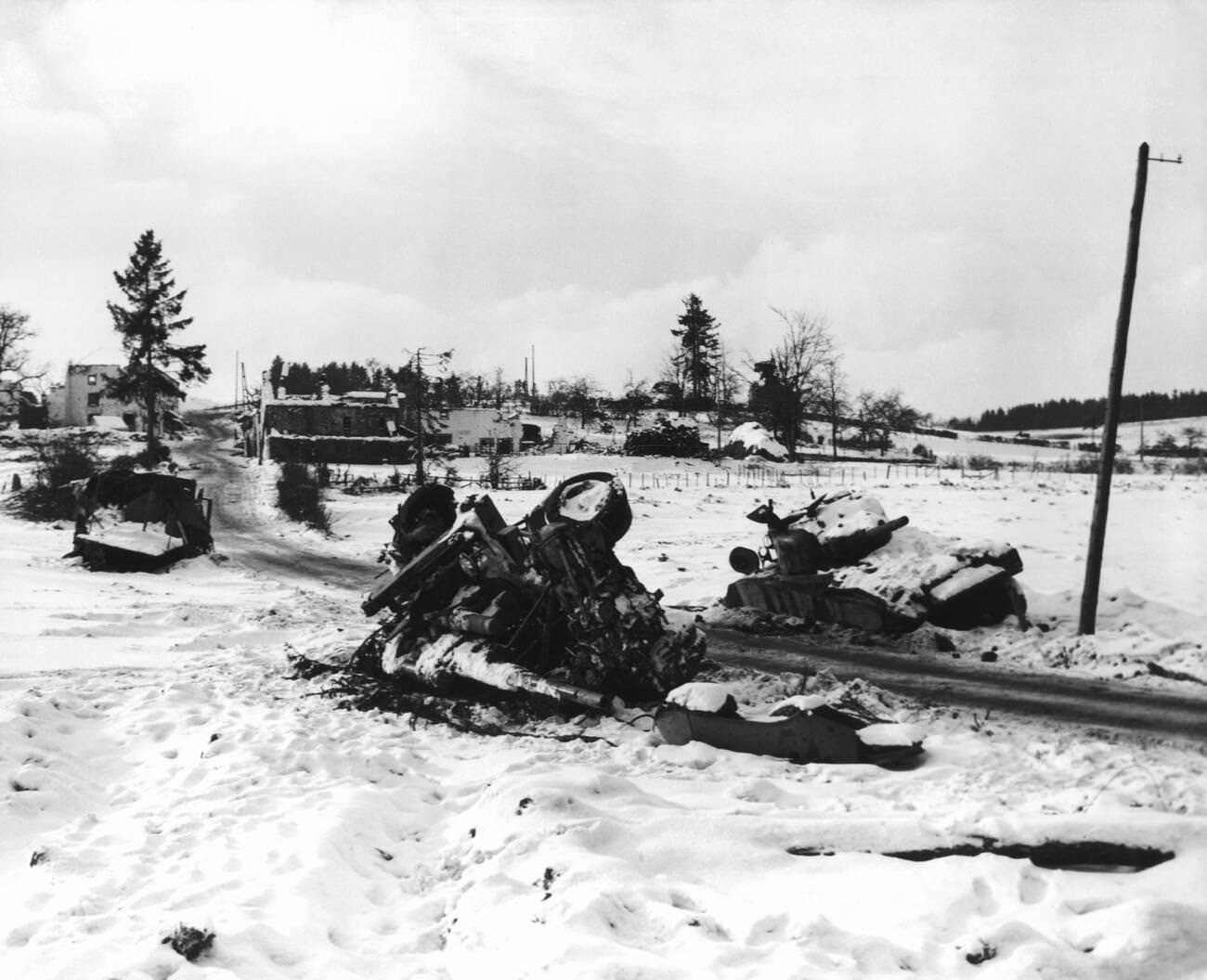
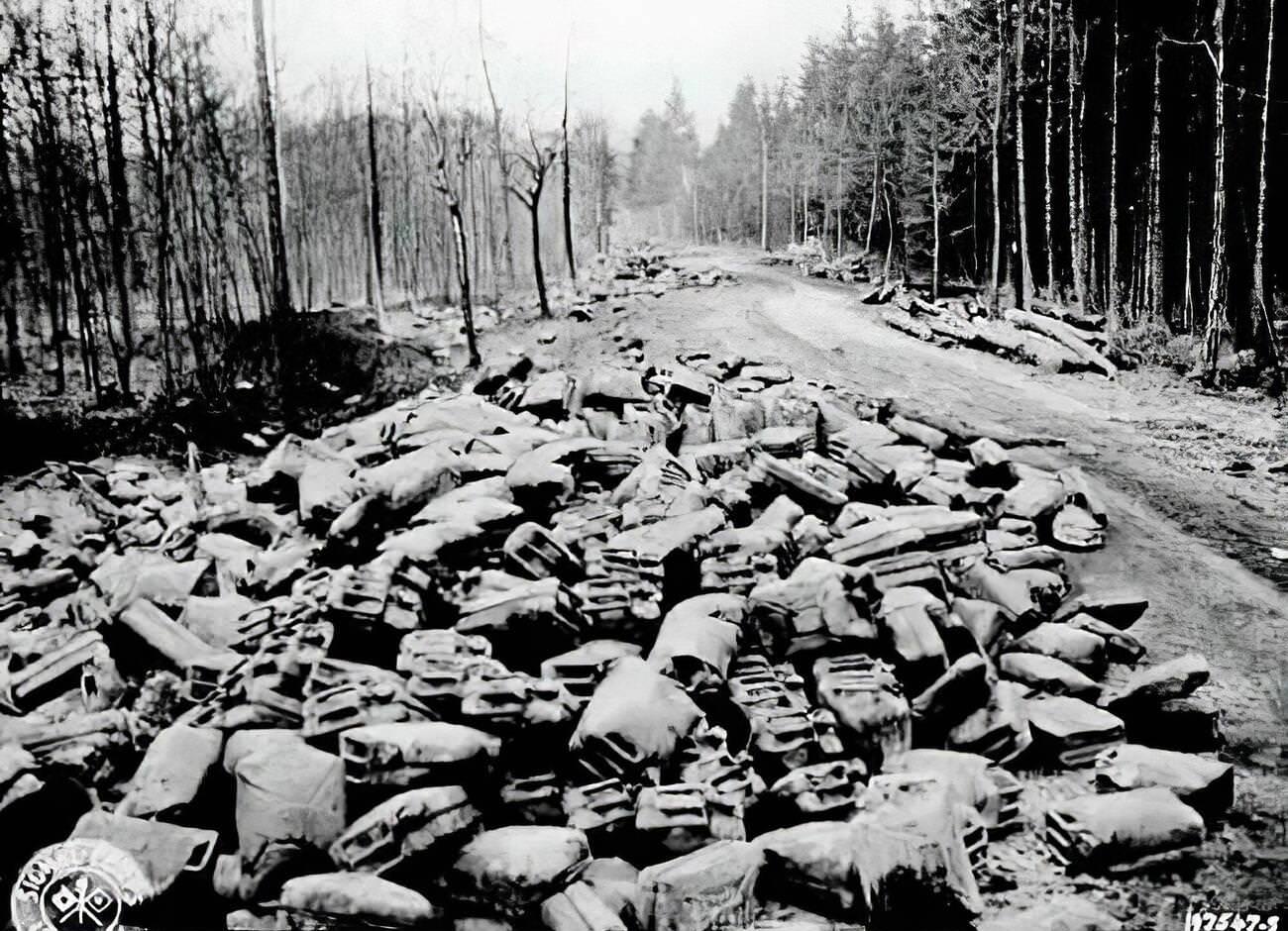
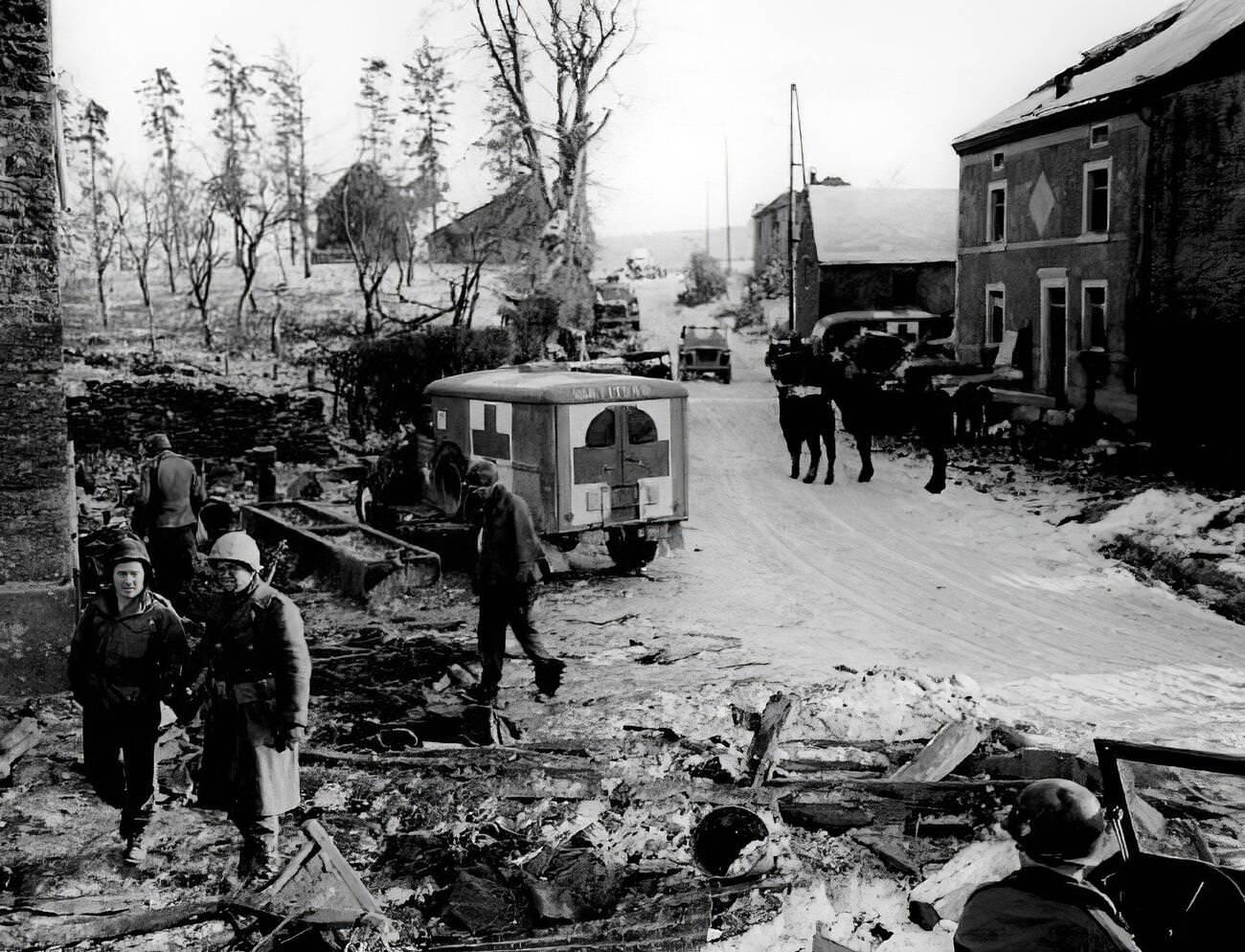
The counterattack that drove the Germans out of the Ardennes left the landscape covered in destroyed equipment on both sides. After the 35th U.S. Division attacked at Lutremange, the ground was littered with wrecked vehicles, artillery pieces, and the debris of an offensive that had collapsed under its own weight. Germany had gambled its last reserves on a single breakthrough. The Ardennes swallowed them.
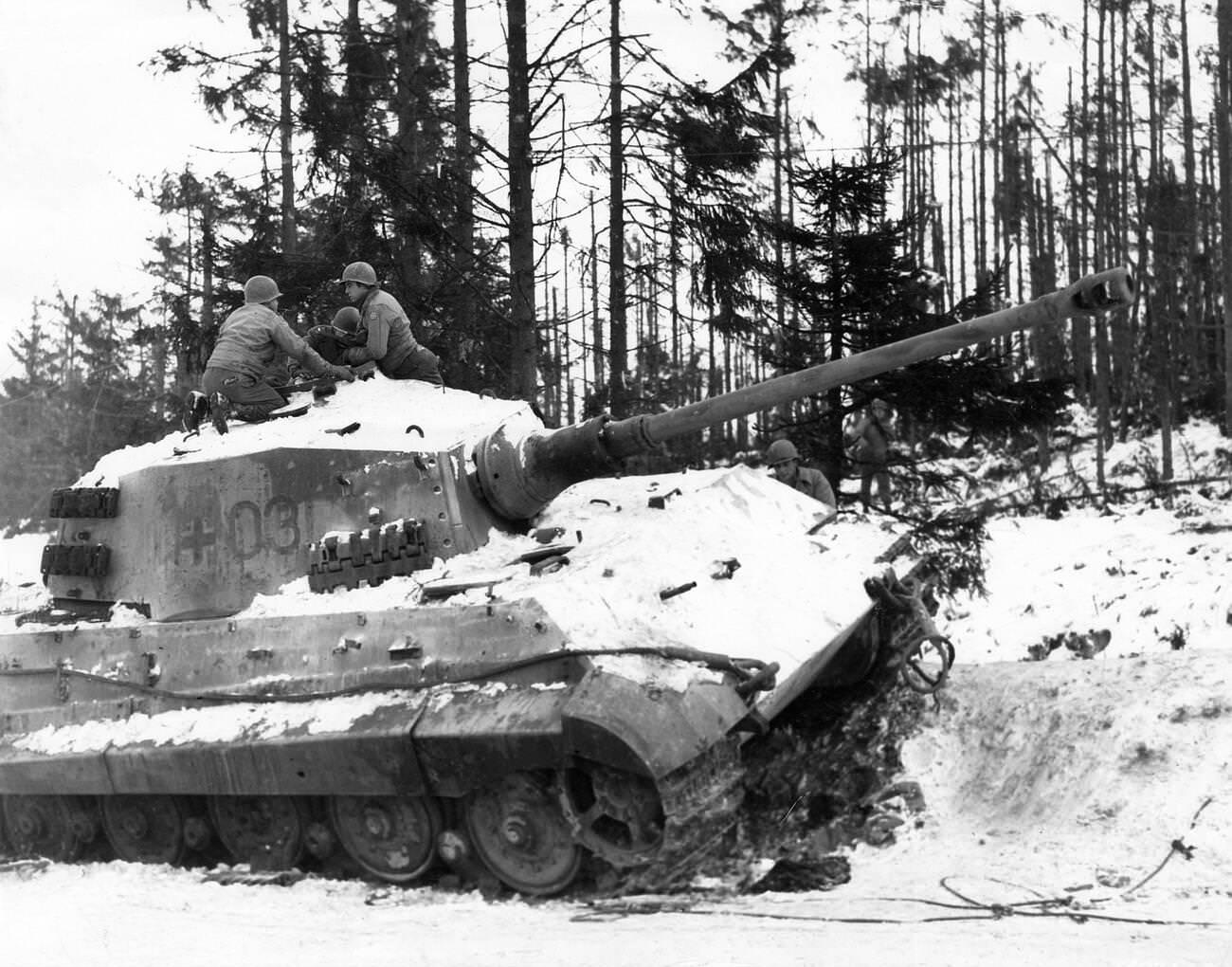
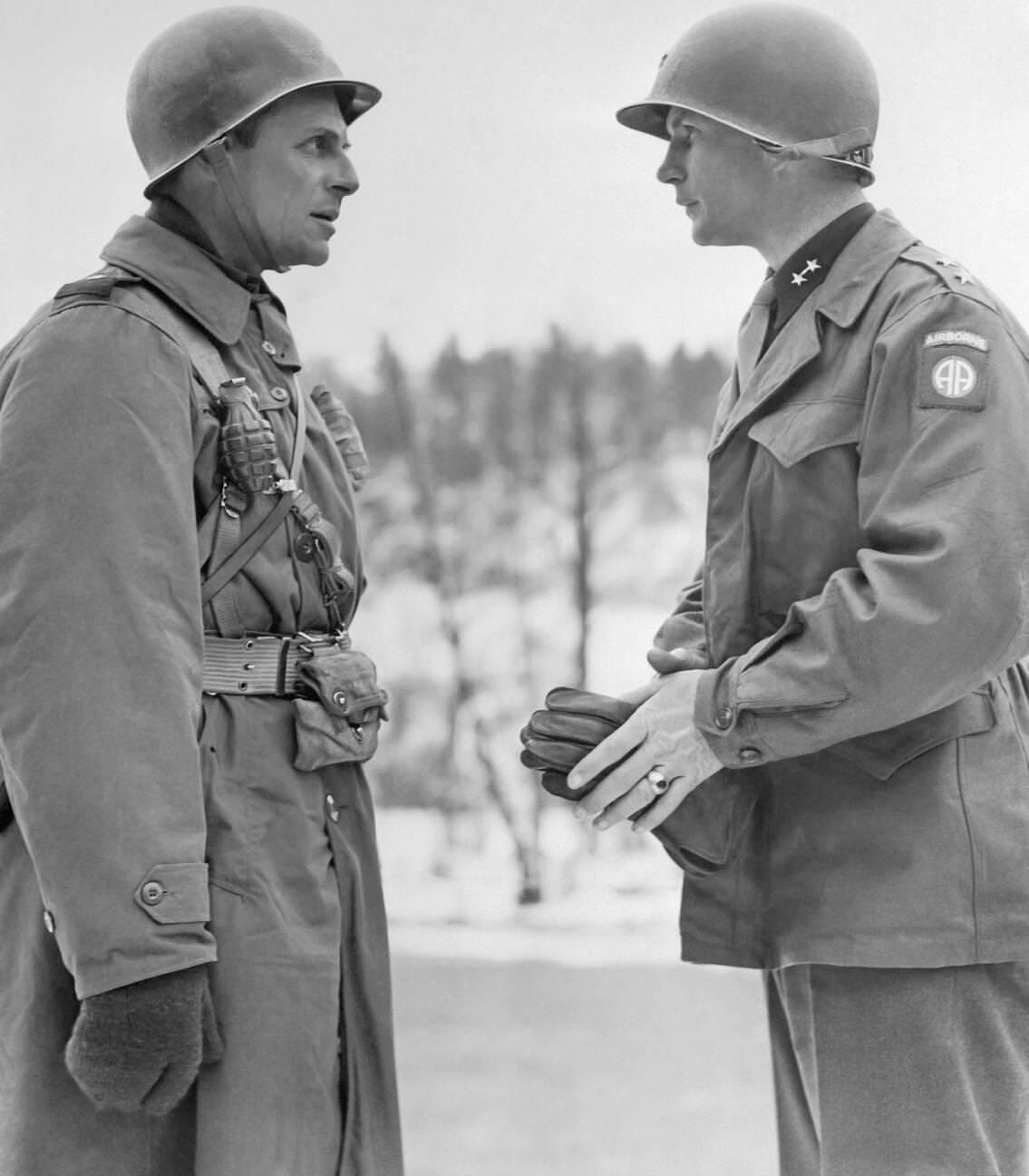
Senior commanders like Major General Matthew Ridgway, commanding the XVIII Airborne Corps, and Major General James Gavin of the 82nd Airborne directed their men through some of the most intense fighting of the Western Front. Their presence close to the front — often within range of German fire — was a hallmark of American command during the battle.
Artillery units like Battery D of the 460th Parachute Field Artillery fired thousands of rounds in support of infantry and armor throughout the campaign. Parachute artillery — light enough to be dropped by air — gave airborne units firepower they would not otherwise have had during the siege. Every shell fired into German lines around Bastogne was counted carefully, because resupply was never guaranteed.
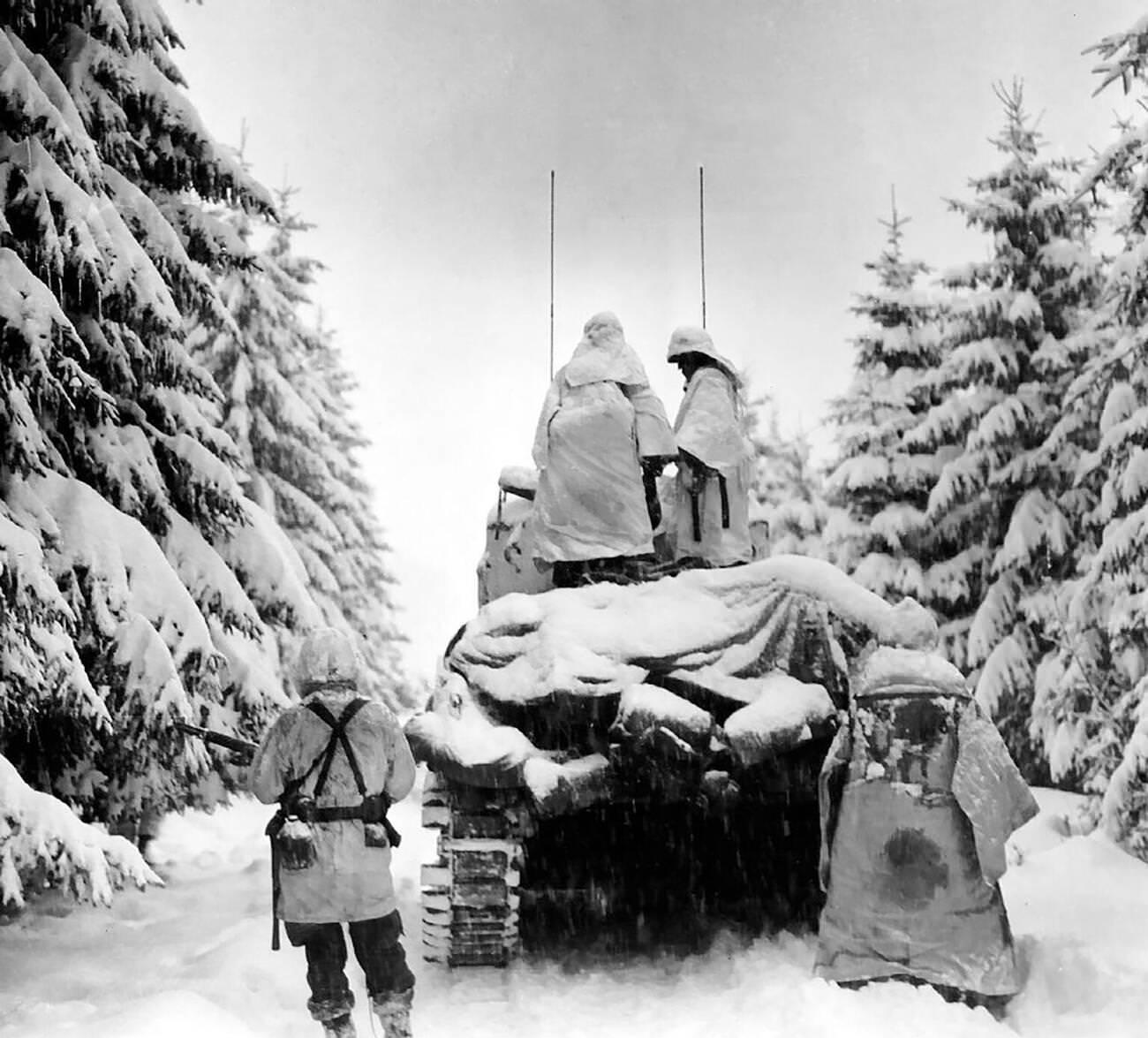
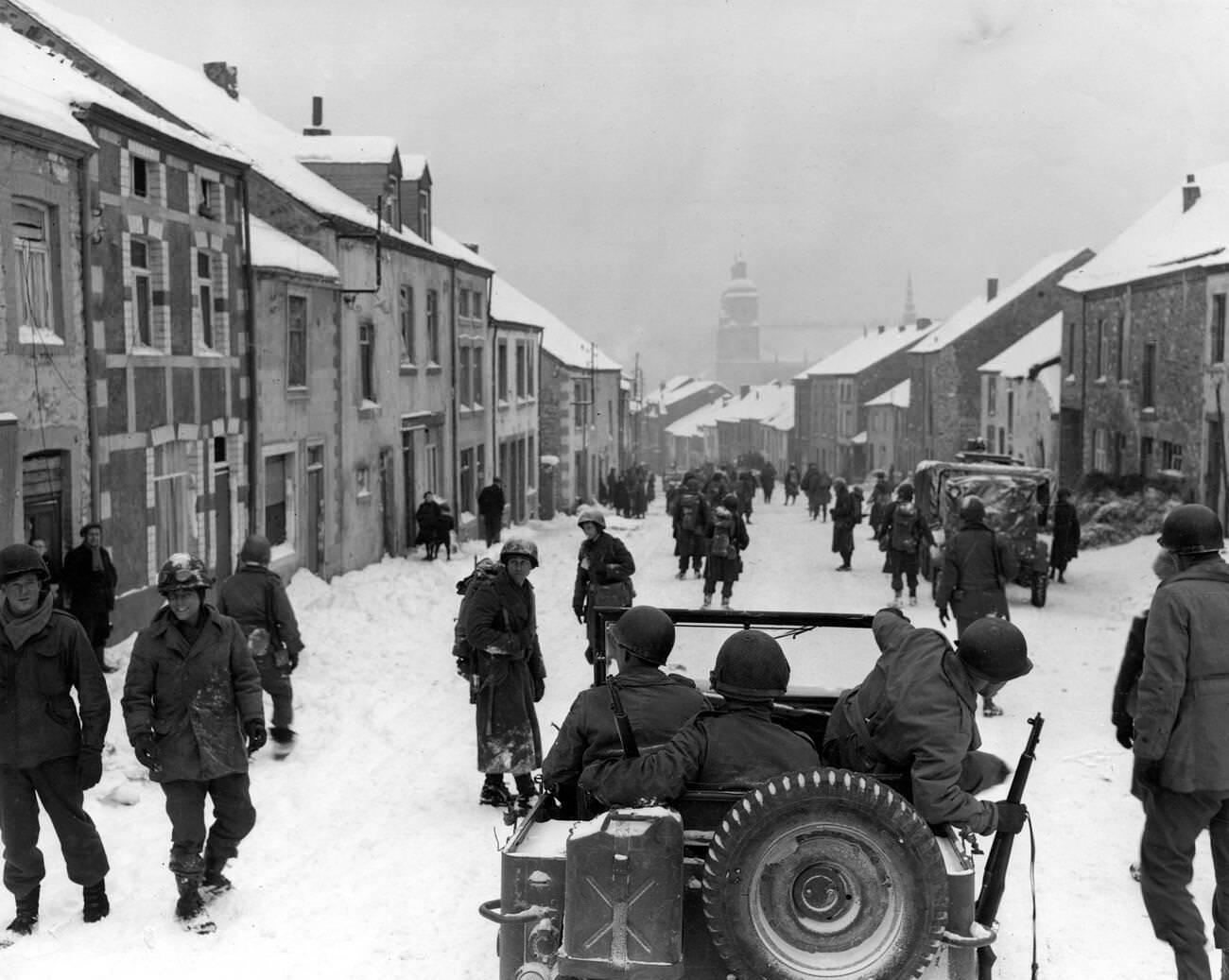
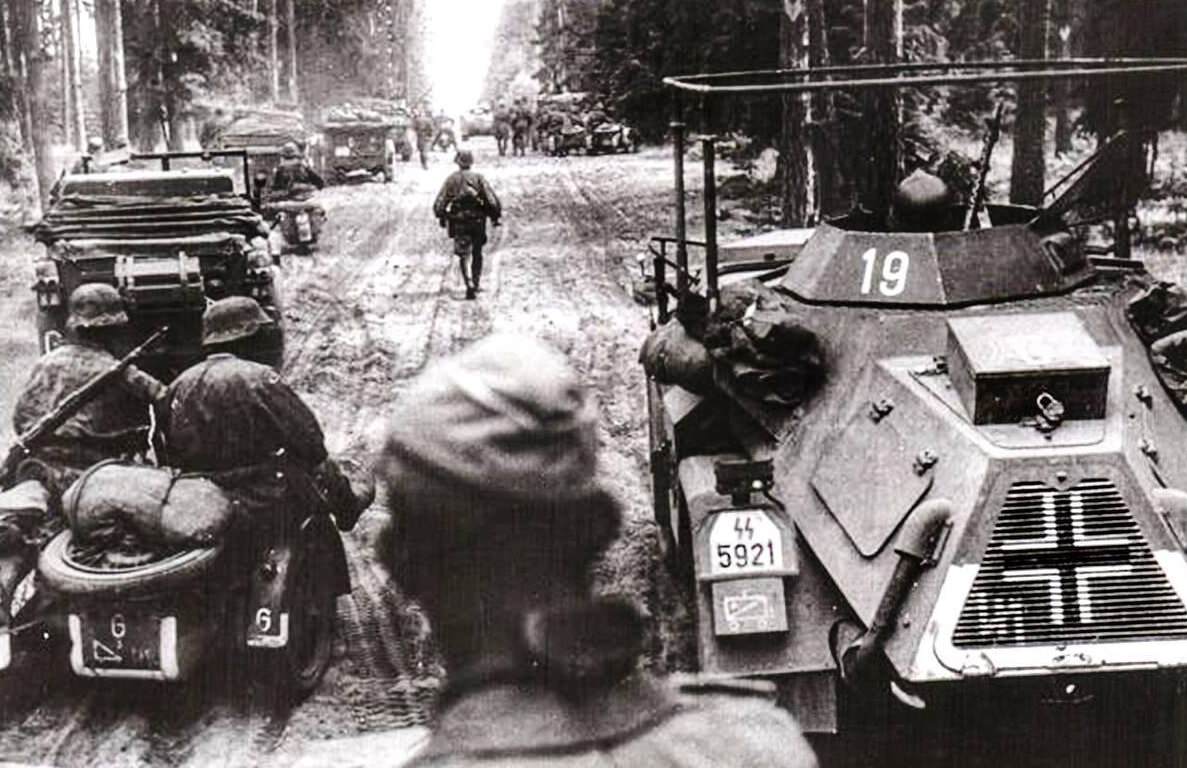
The men who fought in the Battle of the Bulge faced six weeks of near-constant combat in conditions that would have broken less determined forces. Frostbitten hands still pulled triggers. Starving men still held positions. Soldiers who had been awake for days still moved through forest and snow to take the next objective. The photographs taken during those weeks capture something that numbers alone cannot: what it looked like to be there.
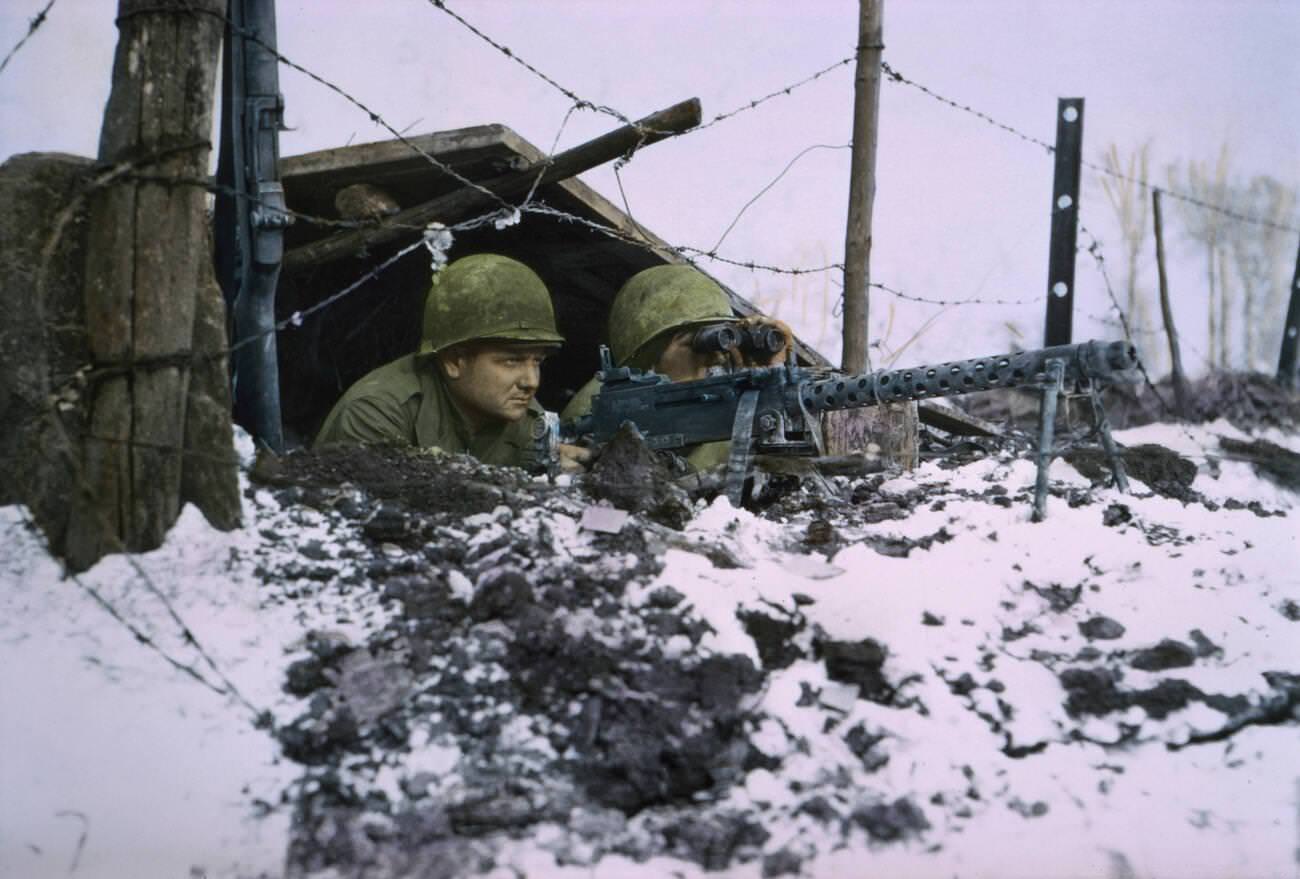
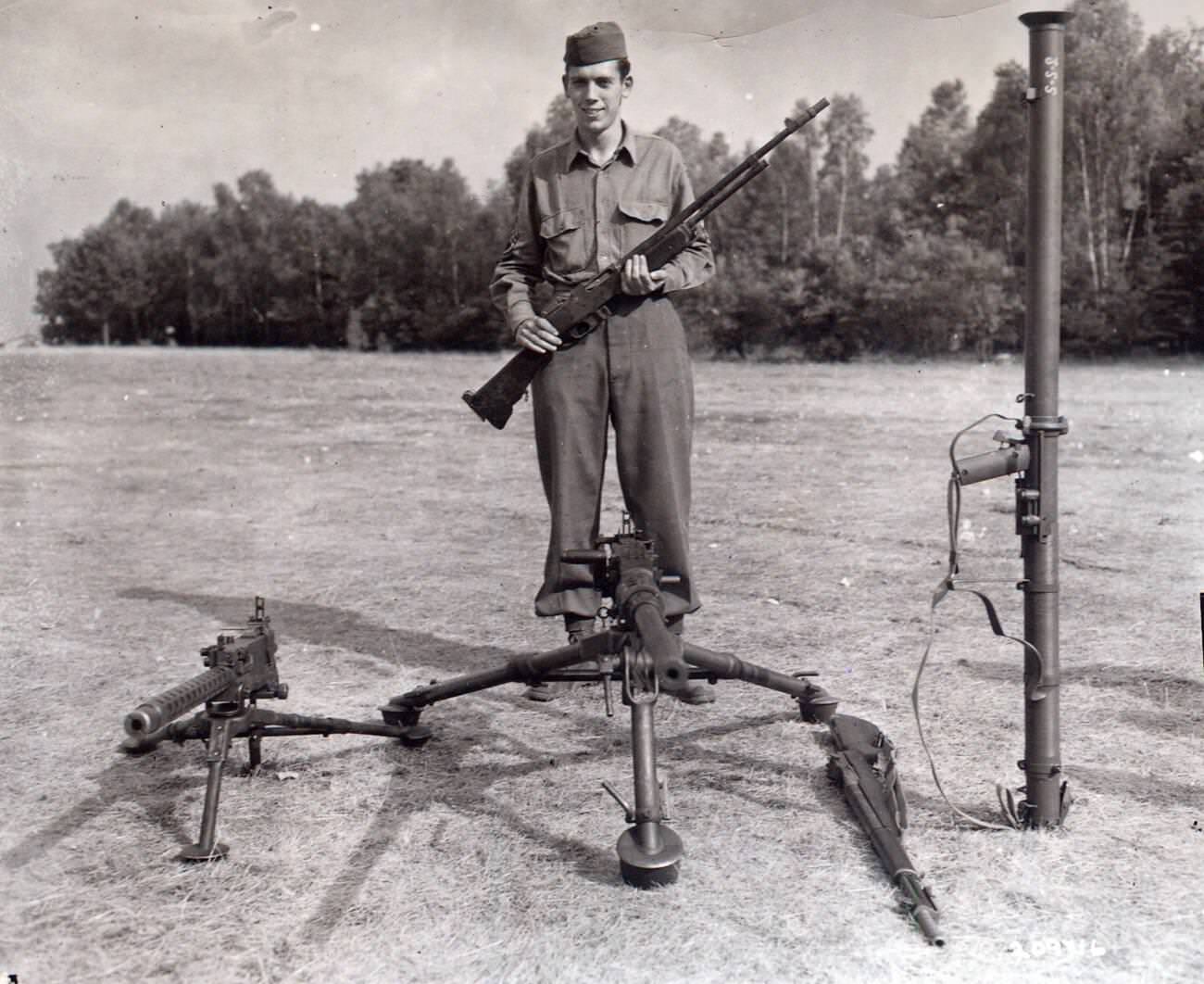



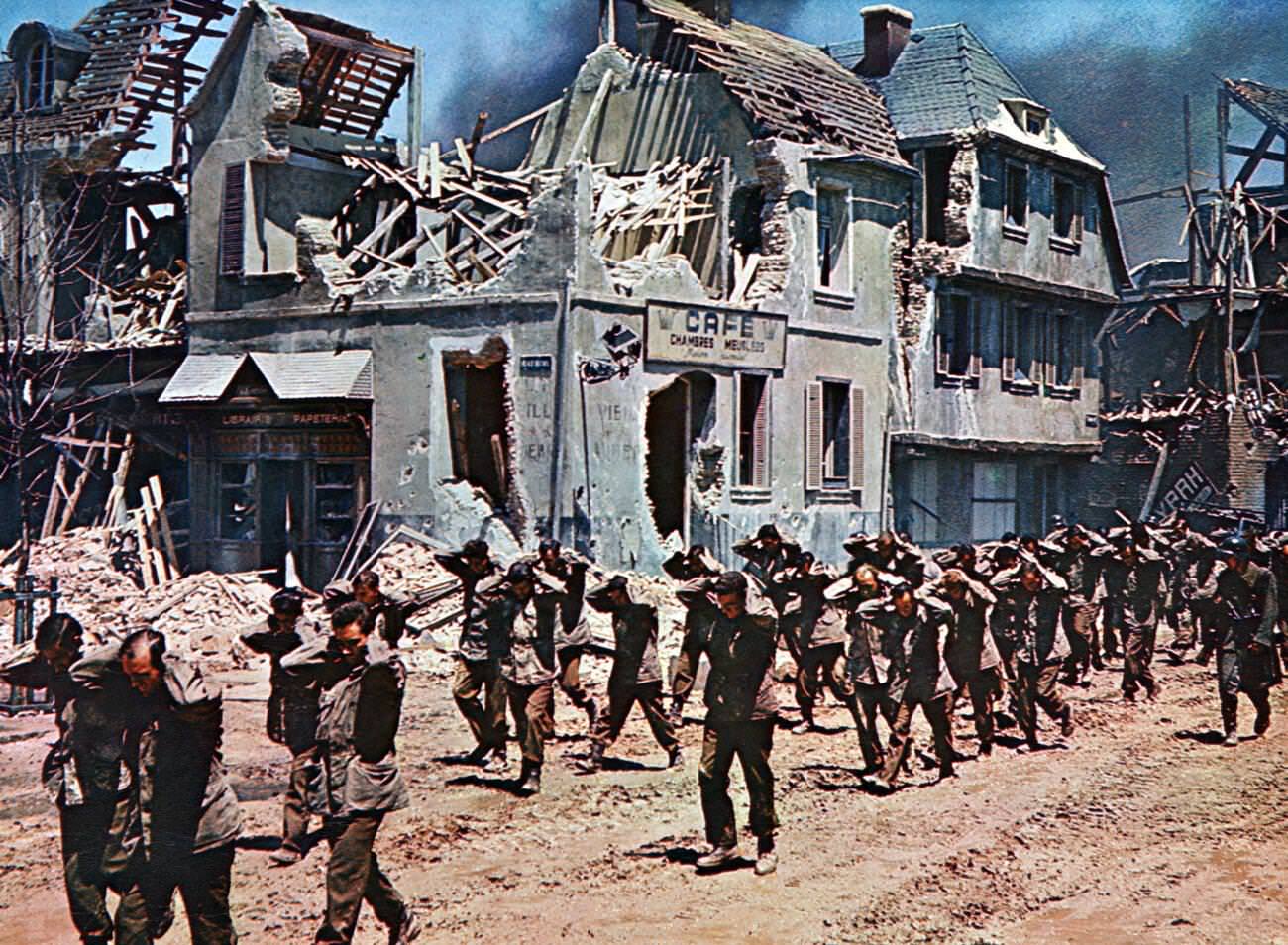
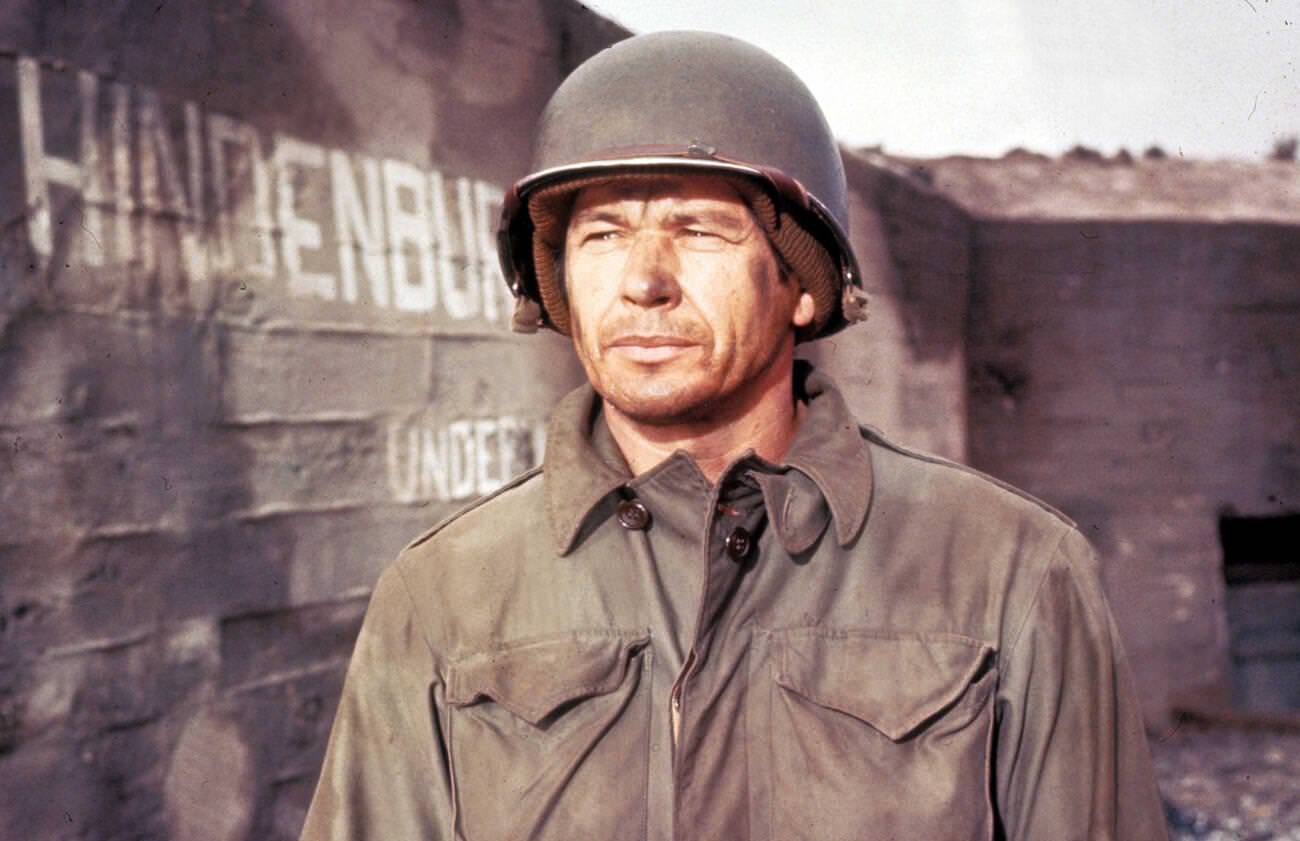
Some of these photos are from Hollywood Movies about the Battle; not real WWII photos!