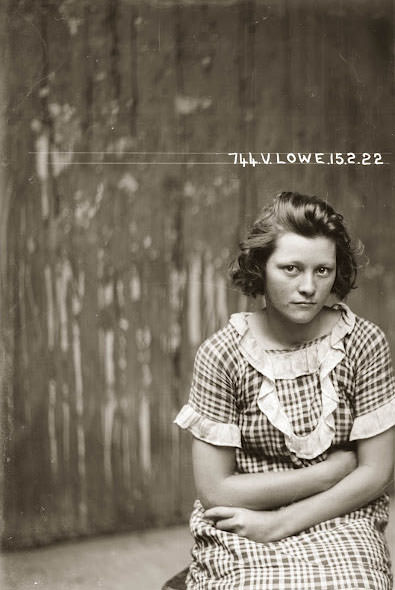
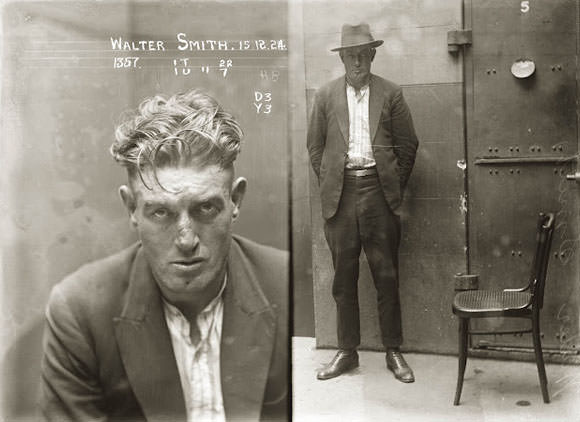
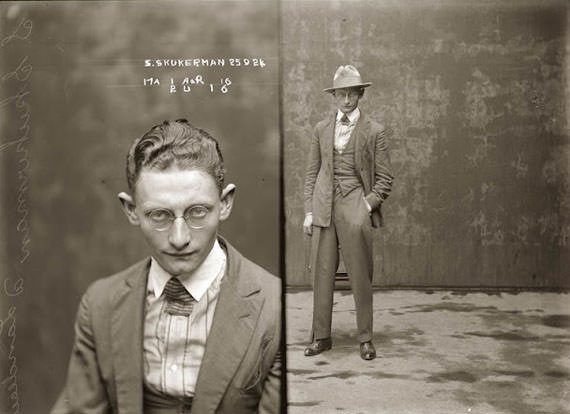
The police mugshots of 1920s Australia offer a direct look at the men and women who were arrested during one of the country’s most turbulent decades. The era was shaped by the aftermath of World War I, the rise of the Jazz Age, and the early signs of the Great Depression — all of which contributed to rising crime rates and an expanding police force. These images were taken for official identification purposes, but today they serve as historical records that reveal the faces, fashion, and circumstances of people from all walks of life who ran afoul of the law.
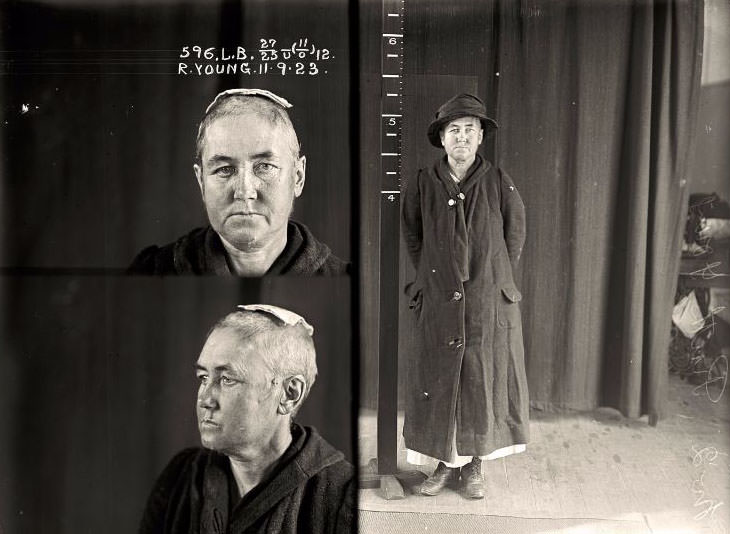
Ruth Young had a problem with alcohol and was often homeless. She had multiple convictions for drunkenness, vagrancy, and petty theft.
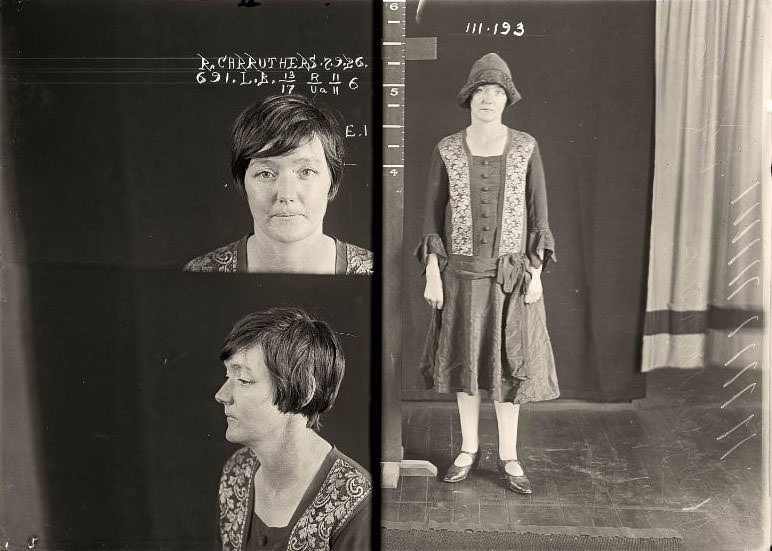
Convicted of false pretenses. Ruth Carruthers went on a criminal spree in 1926, using the art of persuasion to obtain goods and money from unsuspecting shopkeepers. She was eventually convicted on four charges of false pretenses and sentenced to six months at Long Bay.
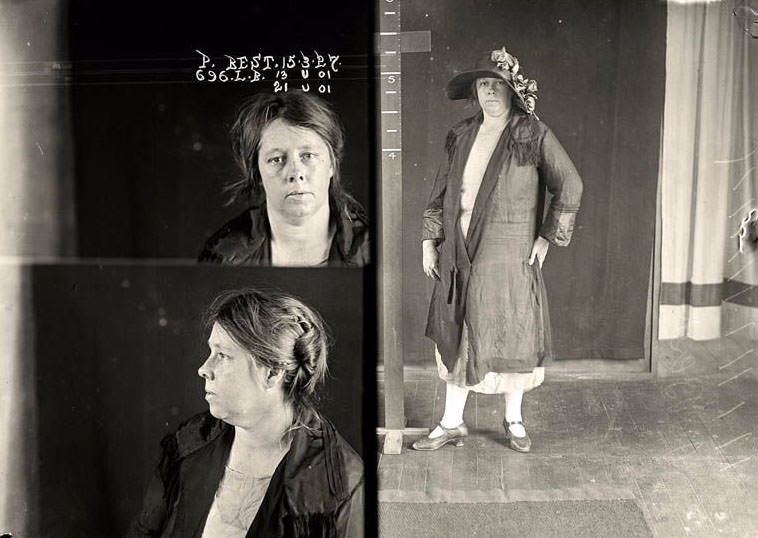
Philomena Best stole silk and other goods valued at over 36 pounds (about $2,000 today) from a Bourke shopkeeper in north-western New South Wales. She was convicted and sentenced to 12 months with light labor.
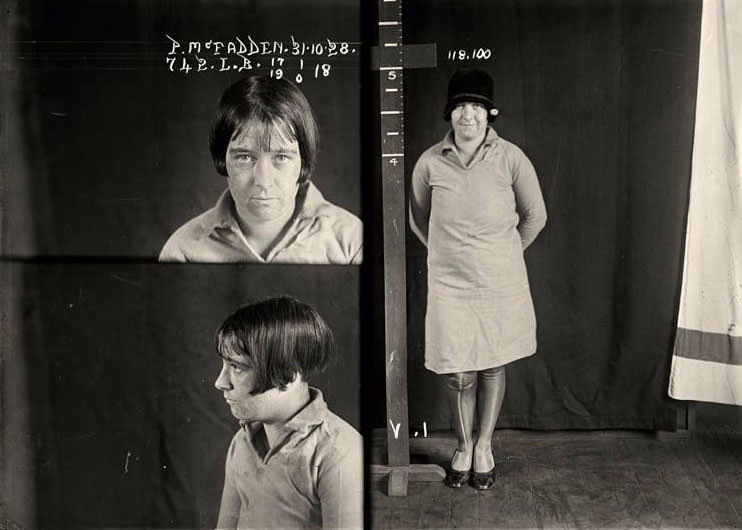
Pearl McFadden was supporting herself by working as a prostitute. Many sex workers were charged with vagrancy and having insufficient means of support, as it was a relatively easy charge to prove. McFadden was sentenced to six months with hard labor.
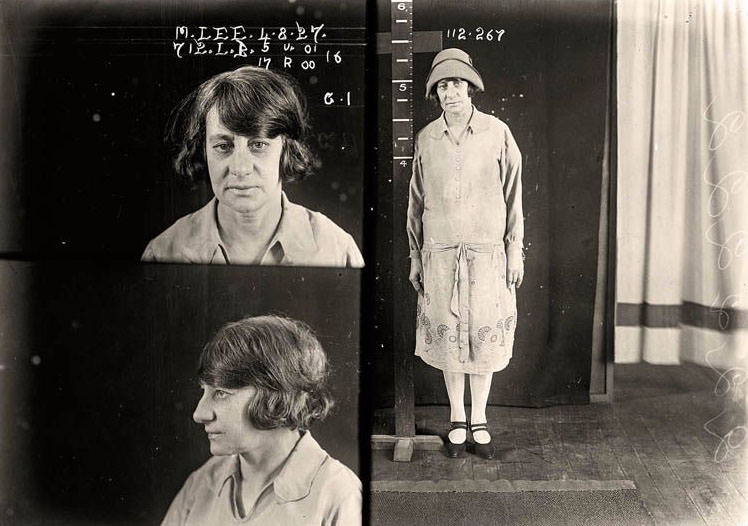
Myrtle Lee, described in the media as “a well-dressed woman,” stabbed Mary Moon twice at the residence of a Chinese man in Alexandria. The press emphasized the racial nature of the attack with a headline “White and Yellow.” Lee was sentenced to six months gaol.
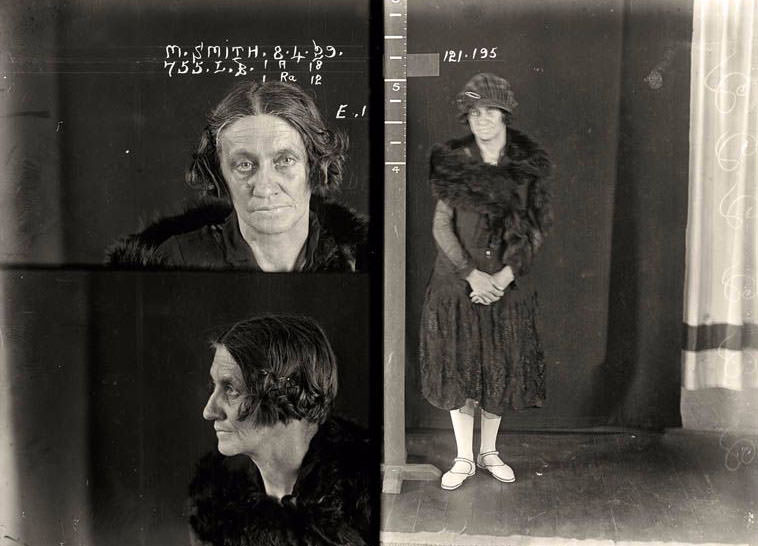
May Smith, alias “Botany May,” was an infamous drug dealer. She once chased policewoman Lillian Armfield with a red-hot iron to avoid arrest. Smith was sentenced to 10 months with hard labor.
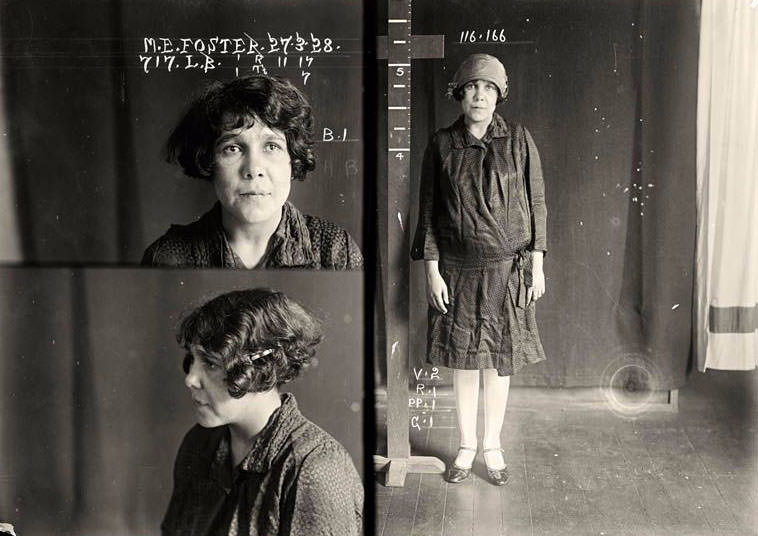
May Foster worked with a male accomplice to break into numerous houses and steal the contents. She had previous convictions for vagrancy, failing to appear in court, and receiving stolen goods. She was sentenced to six months with hard labor.
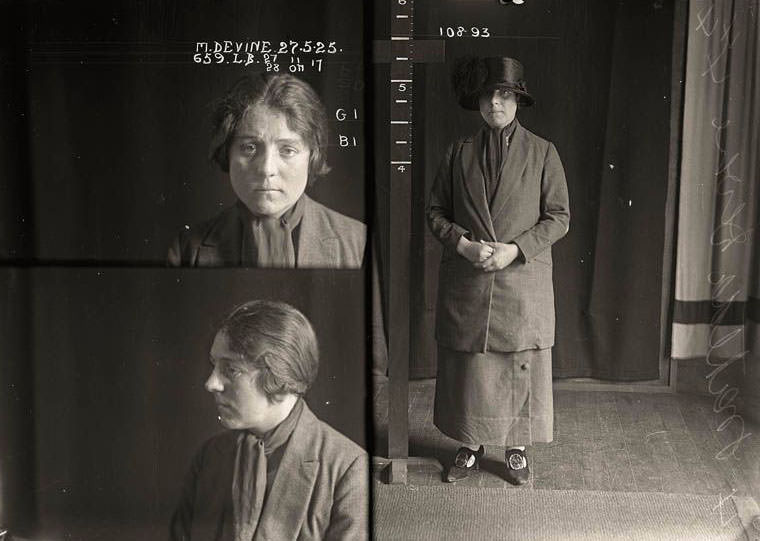
Matilda “Tilly” Devine used a razor to slash a man’s face in a barber’s shop and was sentenced to two years gaol. She was Sydney’s best-known brothel madam, and her public quarrels with sly-grog queen Kate Leigh provided the media with an abundance of material.
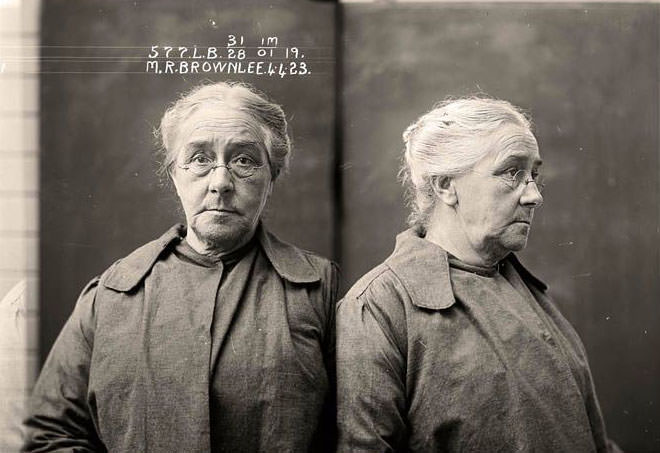
Convicted of unlawfully using an instrument to procure a miscarriage. Mary Brownlee was a backyard abortionist who was caught during an extensive police investigation. She was sentenced to 12 months light labor, but her male accomplice was acquitted.
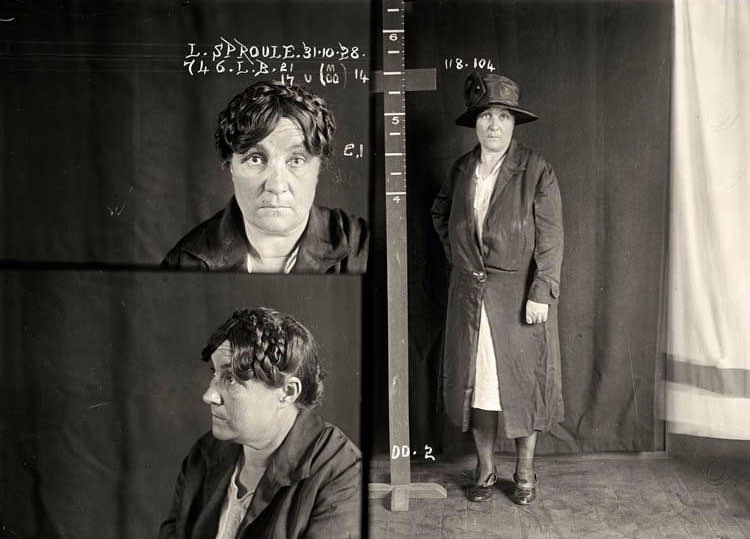
Became involved in Sydney’s cocaine trade. She was labeled a “parasite in skirts” by the newspapers and had multiple convictions relating to drug dealing. She was sentenced to six months in prison.
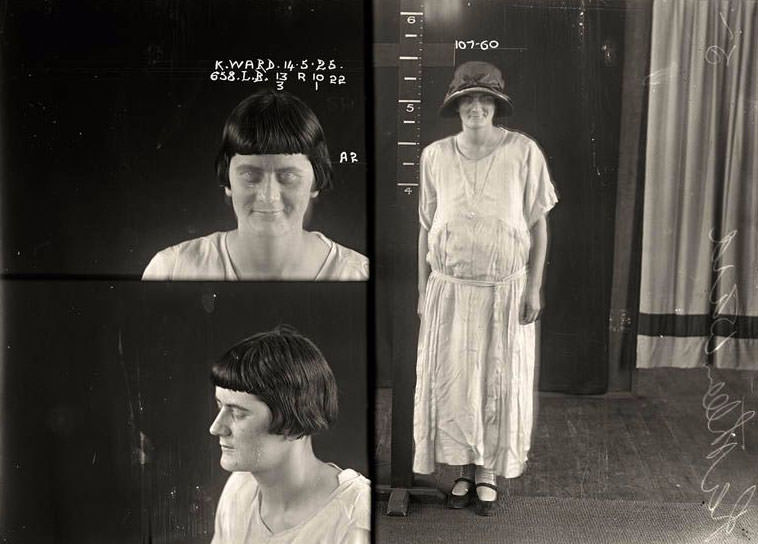
Had convictions for drunkenness, indecent language, and theft. She obviously enjoyed thumbing her nose at the authorities.
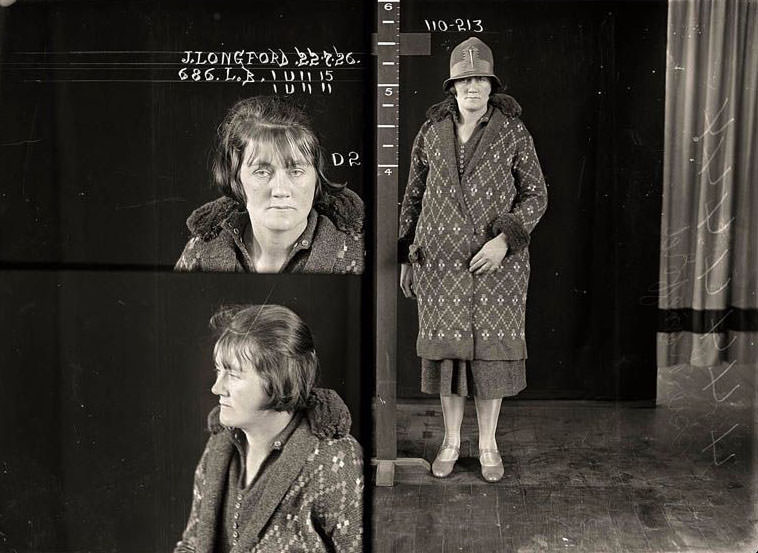
A well-known shoplifter.
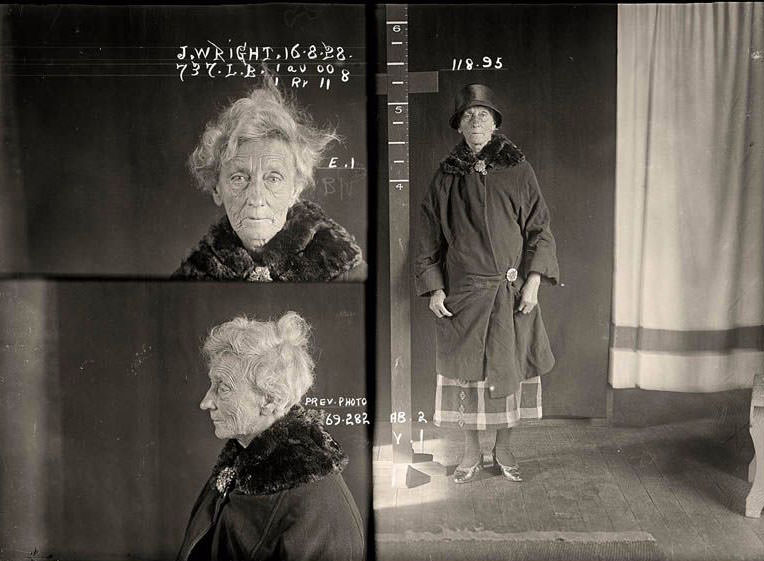
Convicted of using an instrument to procure a miscarriage. Janet Wright was a former nurse who performed illegal abortions from her house in Kippax Street, Surry Hills. One of her teenage patients nearly died after a procedure, and Wright was prosecuted and sentenced to 12 months hard labor.
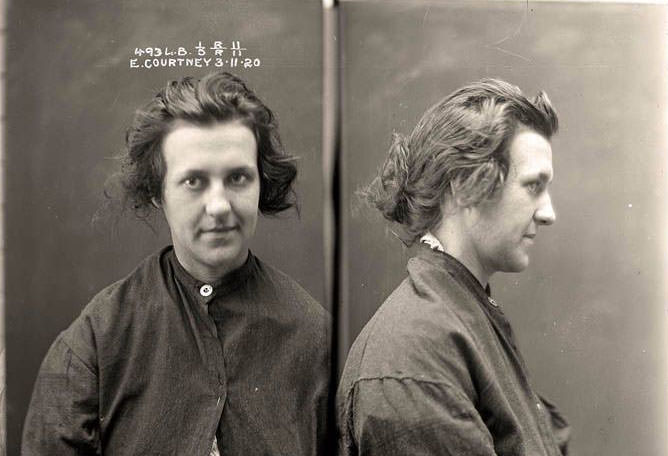
Stole a remarkable array of items, ranging from an umbrella to Irish linen napkins. She was a suspect in at least seven different robberies during 1920.
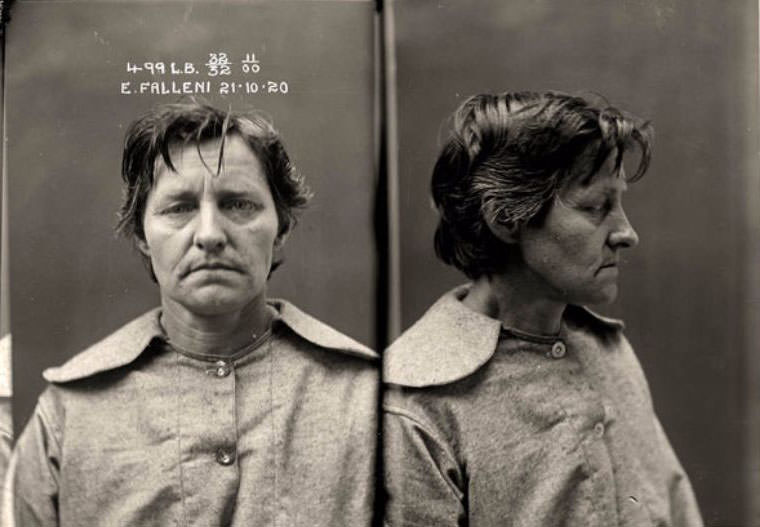
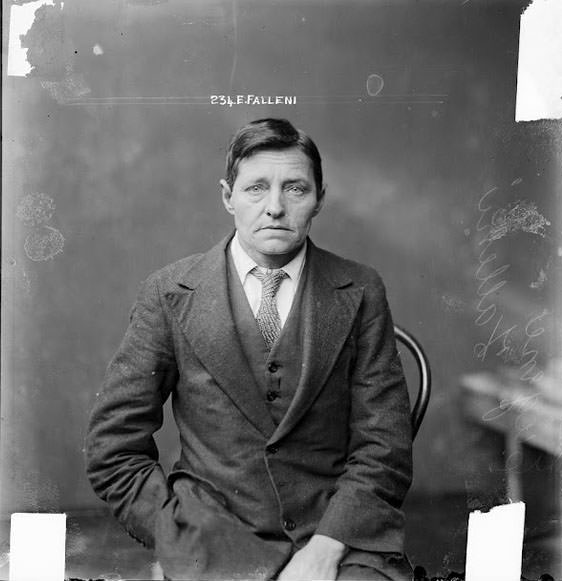
Eugenia Falleni spent most of her life masquerading as a man (Harry Crawford). In 1913 Falleni married a widow, Annie Birkett, whom she later murdered. Convicted of murder in 1928, the case drove intense public interest as people sought details of the “man-woman” murderer.
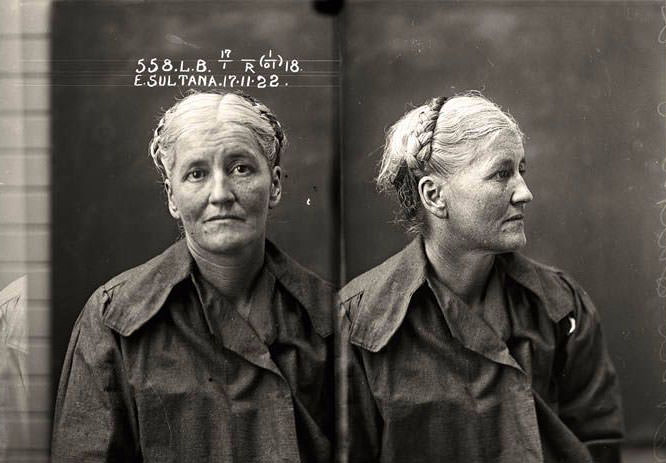
Worked in northern New South Wales and in the Queensland cities of Brisbane and Toowoomba for most of her career. She had multiple convictions for prostitution, theft, drunkenness, swearing, and vagrancy. She was sentenced to six months with hard labor.
![[Factually Corrected] Emily Gertrude Hemsworth (1925. Aged: 24).](https://www.bygonely.com/wp-content/uploads/2023/02/Australia_Mugshots_1920s_17.jpg)
Killed her three-week-old son but could not remember any details of the murder. She was found not guilty due to insanity. Hemsworth was to be detained in custody until judged fit to return to society — it is unknown if she was ever released.
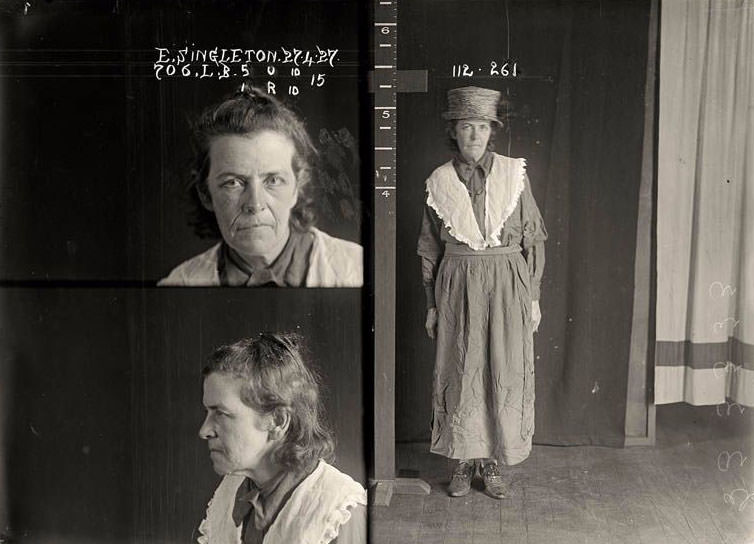
Had multiple convictions for soliciting and was described in police records as a “common prostitute.” She was imprisoned at Long Bay, but the details of her sentence have been lost.
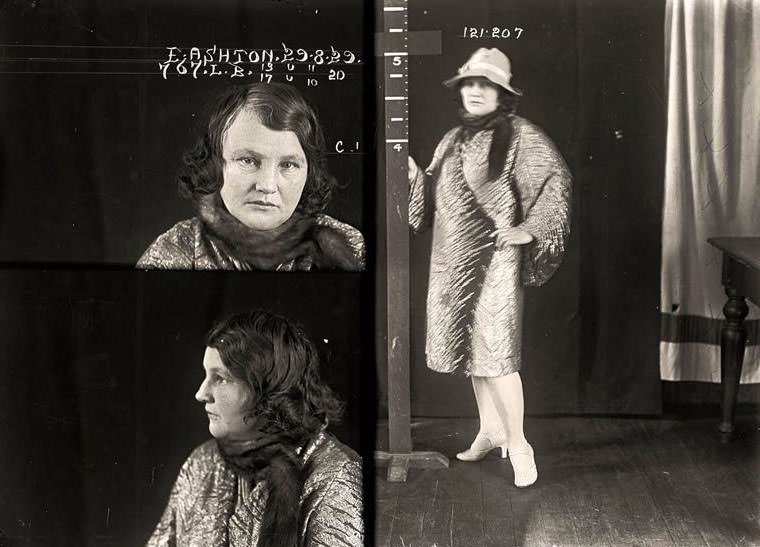
Was a backyard abortionist who also dabbled in theft and fencing stolen goods. Described in the media as a “social somebody” and an “equestrienne,” she was not skilled at performing abortions and was suspected of contributing to the deaths of at least two women.
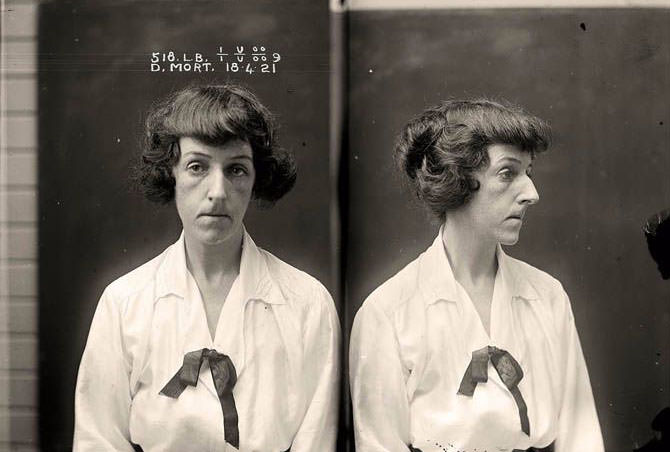
Convicted of murder. Mrs. Dorothy Mort was having an affair with young doctor Claude Tozer. On 21 December 1920, Tozer visited her home with the intention of ending the relationship. Mort shot him dead before she attempted suicide.
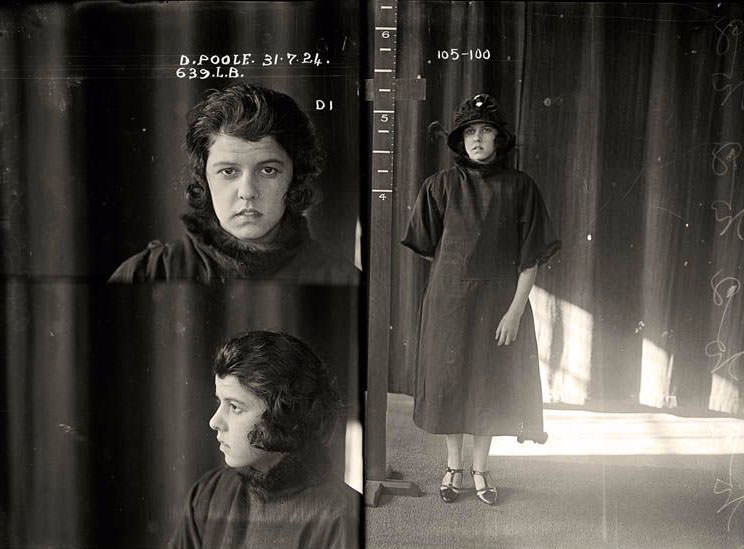
Appeared before the Newtown Police Court charged with stealing jewelry and clothing. She had previously been convicted on a similar charge in North Sydney and so received a six-month sentence with light labor.
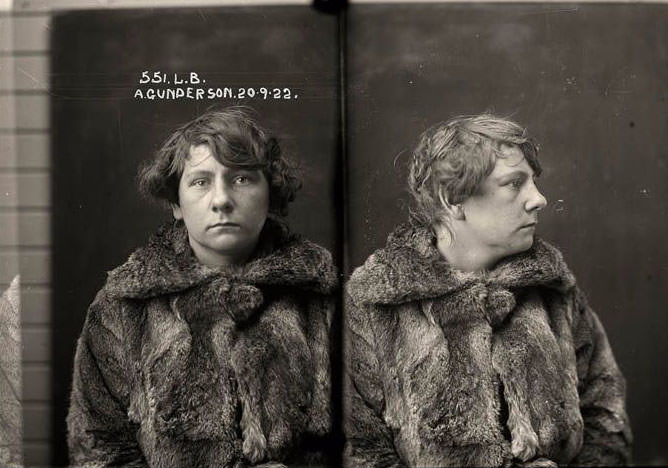
Teenager Annie Gunderson was charged with stealing a fur coat from a Sydney department store called Winn’s Limited in 1922. Police records do not indicate whether the fur she is wearing is the stolen item.
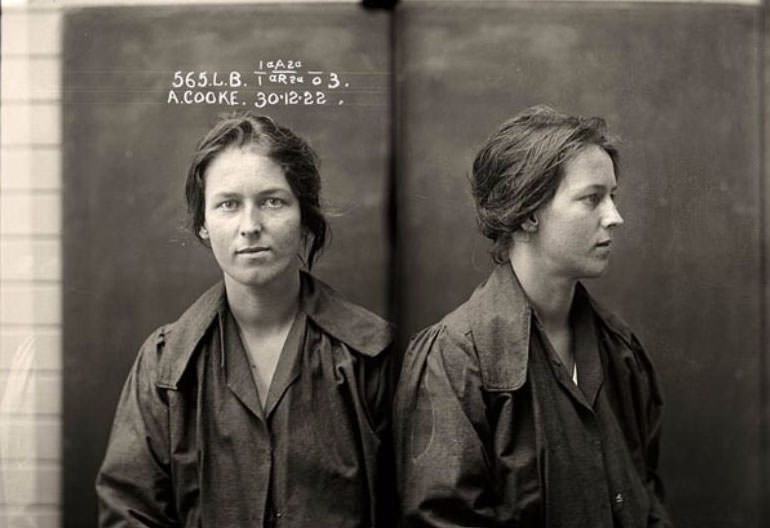
Was convicted of bigamy and theft. By the age of 24 she had amassed an impressive number of aliases and at least two husbands. She was described by police as “rather good looking.”
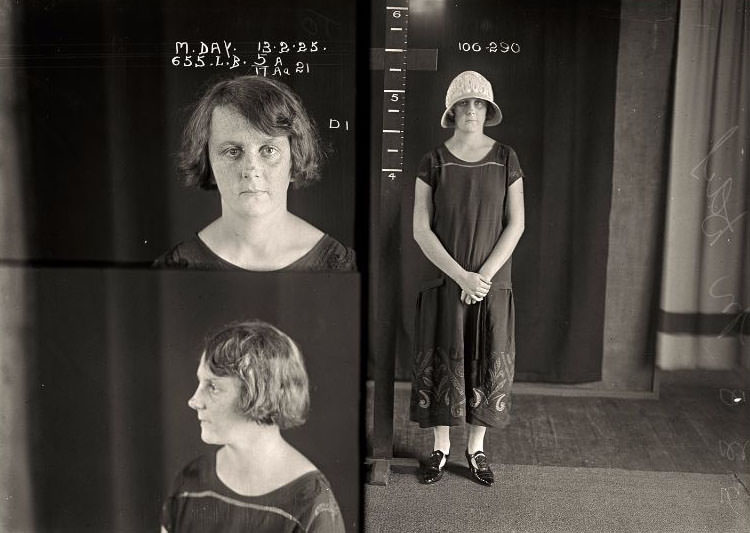
Marjorie Day convinced a shopkeeper to let her take two dresses home to show her mother. She promised to return promptly but instead sold the clothes at a second-hand clothing shop. A repeat offender, Day was sentenced to six months in prison.
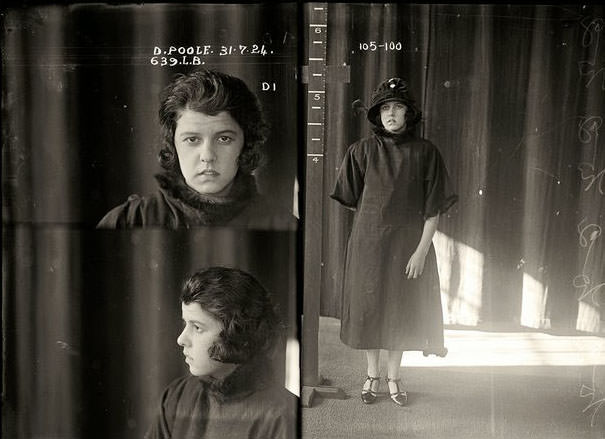
Doris Poole appeared before the Newtown Police Court charged with stealing jewellery and clothing. She had previously been convicted on a similar charge in North Sydney and so received a six-month sentence with light labour.
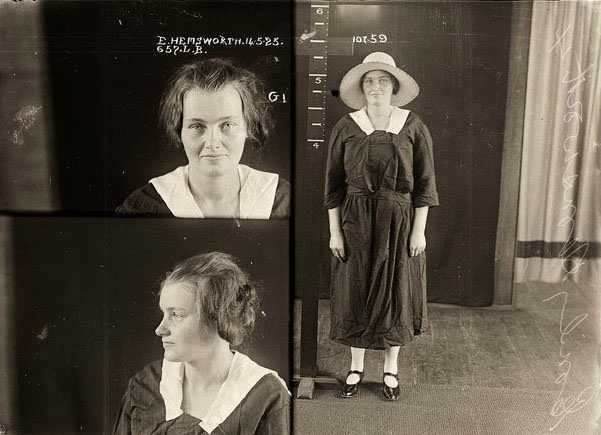
Emily Hemsworth killed her three-week-old son but could not remember any details of the murder. She was found not guilty due to insanity. Hemsworth was to be detained in custody until judged fit to return to society — it is unknown if she was ever released. Aged 24.
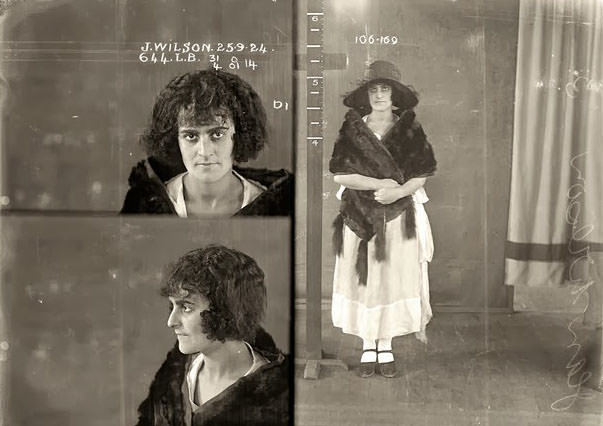
Jean Wilson had numerous convictions for housebreaking and theft. She preferred stealing jewellery as it could be easily pawned for money. She also robbed her employer. Wilson was charged with larceny, for which she served a 12-month sentence. Aged: 23.
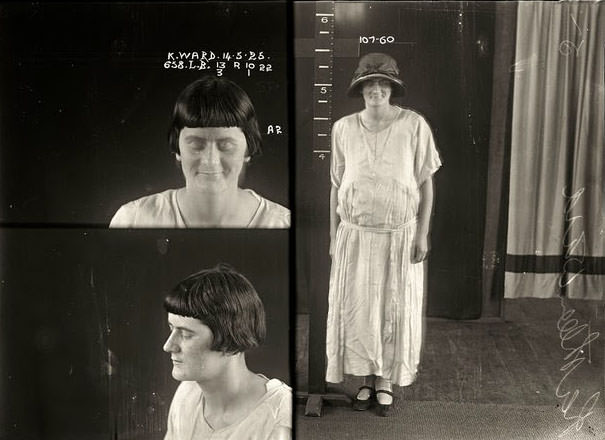
State Reformatory for Women, Long Bay. Kathleen Ward had convictions for drunkenness, indecent language, and theft. She obviously enjoyed thumbing her nose at the authorities, as can be seen in this image where she appears to have deliberately fluttered her eyes in order to ruin the long-exposure photograph.
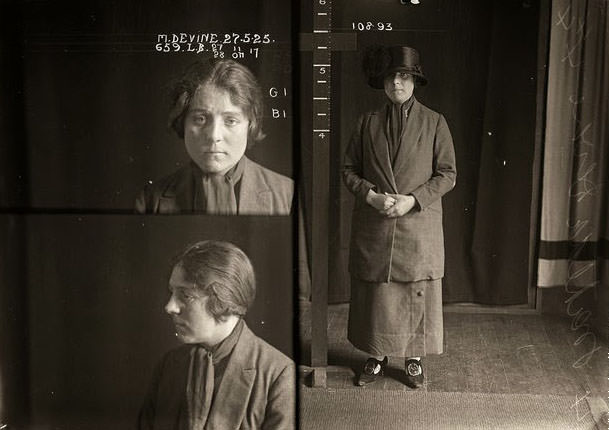
Matilda “Tilly” Devine used a razor to slash a man’s face in a barber’s shop and was sentenced to two years gaol. She was Sydney’s best-known brothel madam, and her public quarrels with sly-grog queen Kate Leigh provided the media with an abundance of material. Aged 25.
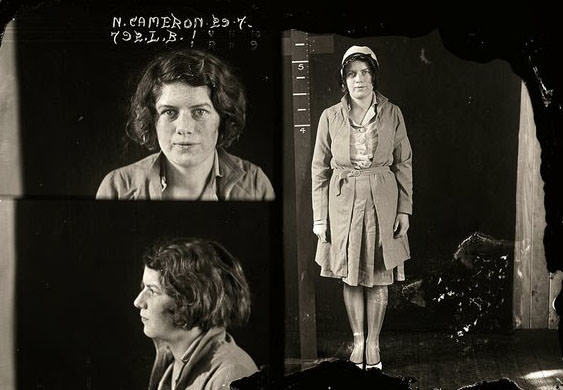
Nellie Cameron was one of Sydney’s best-known and most sought-after prostitutes. Lillian Armfield, Australia’s first policewoman, said Cameron had an “assured poise that set her apart from all the other women of the Australian underworld.” Aged 21.
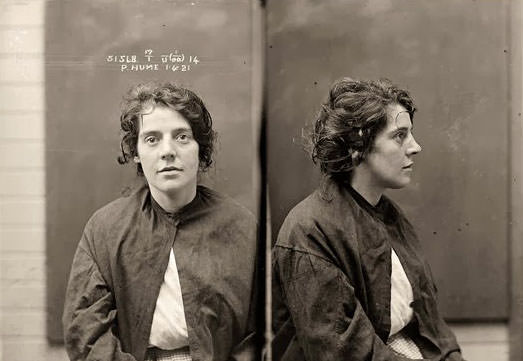
British-born Carmier was known as “Yankee” Phyllis because of her unusual accent. She stabbed her “bludger,” or pimp, to death during a violent altercation in Crazy Cottage, a sly-grog shop in Surry Hills. Carmier attracted much sympathy in the media, who labeled her crime a justifiable homicide. Aged 32.
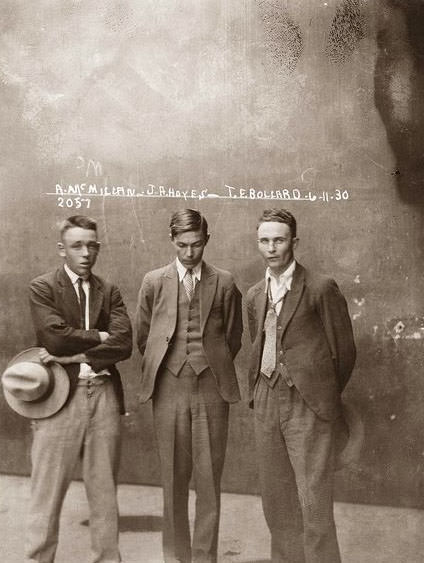
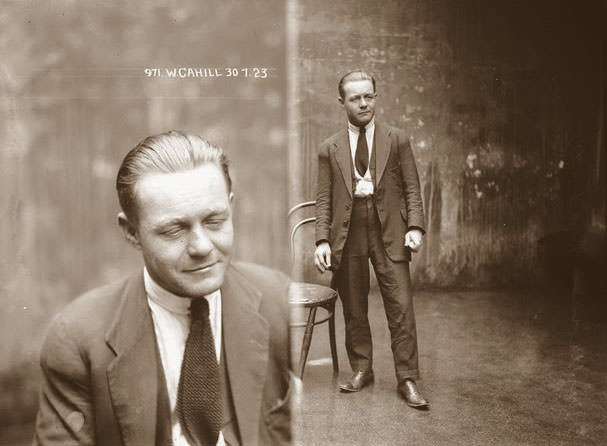
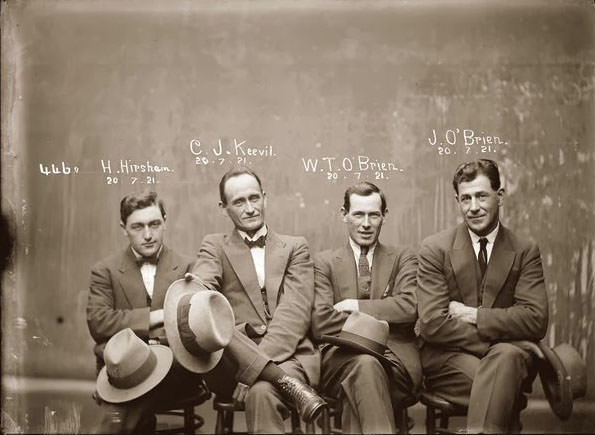
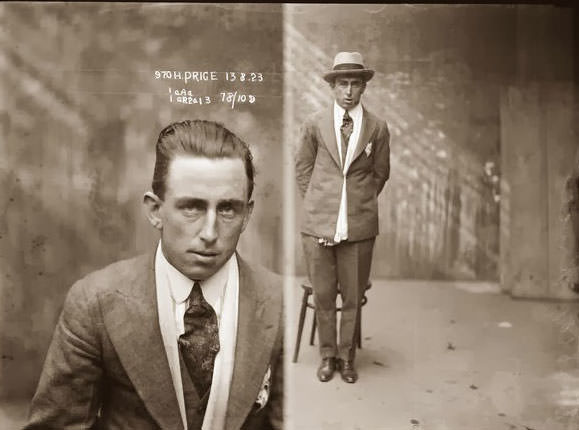
Harold Price was a thief and gunman. This photograph was taken after he was arrested and charged with committing robbery under arms at a house in Randwick, Sydney, for which he was sentenced to two years hard labor.
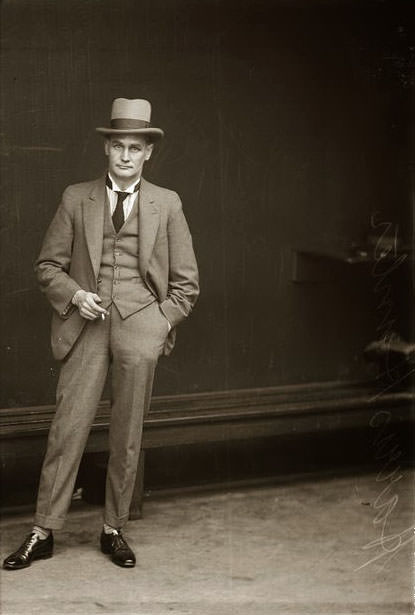
Hunter is listed in the NSW Police Gazette, 1924, as charged, along with William Munro, with receiving stolen goods to the value of 536 pounds 4 shillings and 1 penny, the property of Snow’s department store.
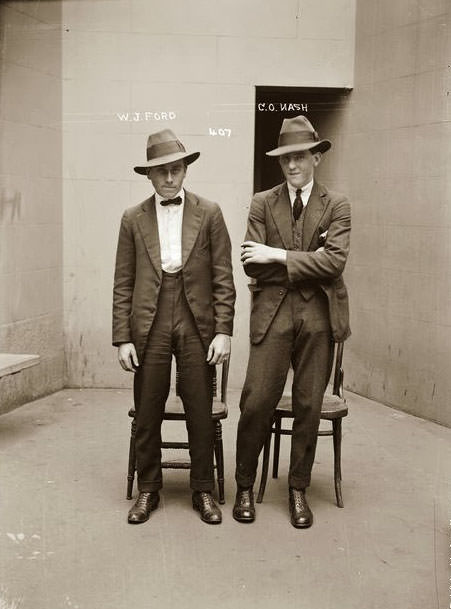
A week after the photograph was taken, the pair — both aged 16 — appeared in North Sydney Police Court on break, enter, and steal charges, for which they were put on bonds to be of good behavior for twelve months.
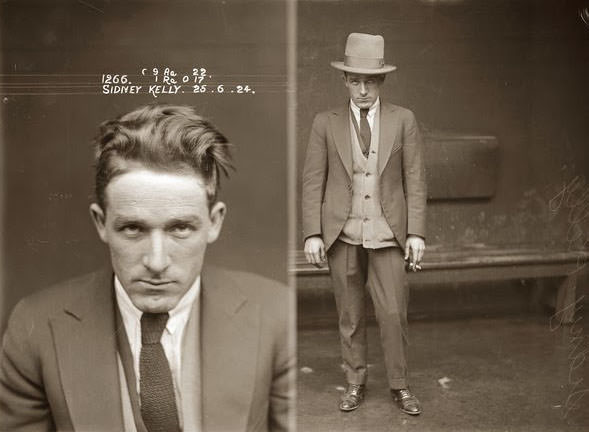
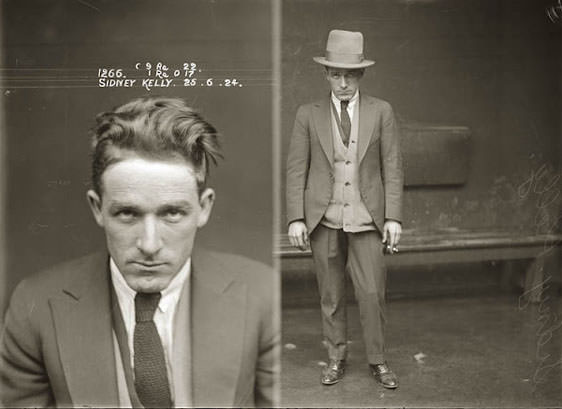
Details surrounding this particular photograph are unknown, but Sidney Kelly was arrested many times and written about extensively in newspapers during the 1920s, 30s, and 40s. He was charged with numerous offenses including shooting and assault, and in the 1940s was a pioneer of illegal baccarat gaming in Sydney.
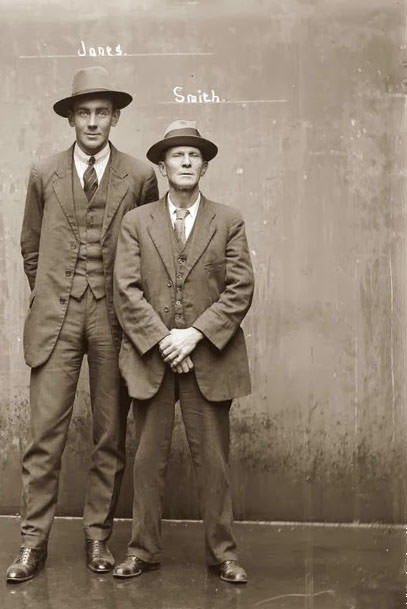
Smith and Jones are listed in the NSW Police Gazette as charged with stealing seven packages of twine (value 14 pounds). Jones was further charged with stealing thirty horse rugs (value 15 pounds) and two bales of kapok (value 20 pounds). Smith was fined 20 pounds; Jones was sentenced to 18 months hard labour, suspended.
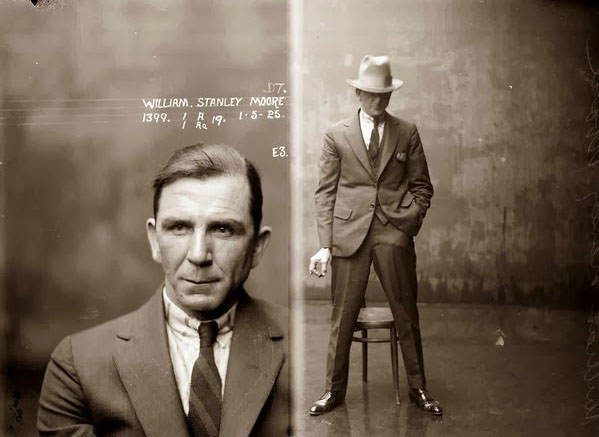
This picture appears in the Photo Supplement to the NSW Police Gazette, 28 July 1926, captioned: “Opium dealer. Operates with large quantities of faked opium and cocaine. A wharf labourer; associates with water front thieves and drug traders.”
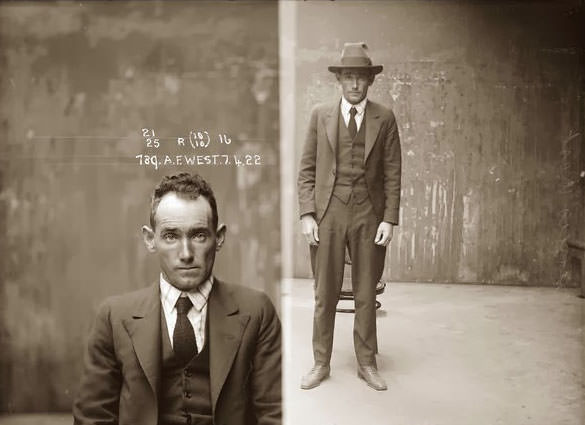
He was kept under observation and was caught in the act of attempting to rob a man, at the time accompanied by Phillip Noonan, alias Allan Noonan, alias Peter Newman, a spieler operating in the country.
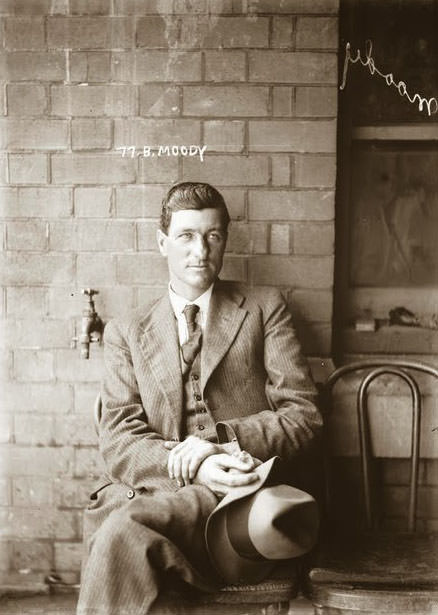
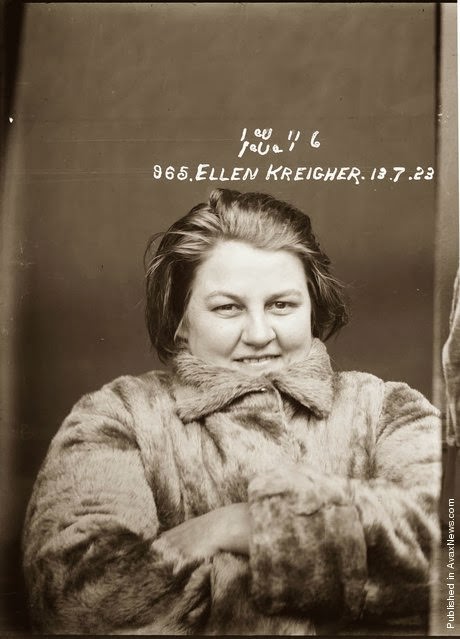
Ellen (“Nellie”) Kreigher was one of four people arrested and charged over the murder of Gertrude Mabel Heaydon. In October the previous year, Gertrude Heaydon had been taken to the Coogee flat of a woman known as “Nurse Taylor” to procure an illegal abortion. She died there in the flat. Police later claimed she was murdered by Nurse Taylor, at the request of Heaydon’s husband, Alfred. A group of associates was eventually assembled by Taylor’s husband Frank to remove the decomposing remains in a horse and cart, and their progress across Sydney was later recounted by numerous witnesses. Police became involved the following year after Gertrude Heaydon’s relatives in England became suspicious. The case became known in the press as the “Coogee Trunk Mystery,” referring to the trunk in which the corpse was allegedly removed from the flat.
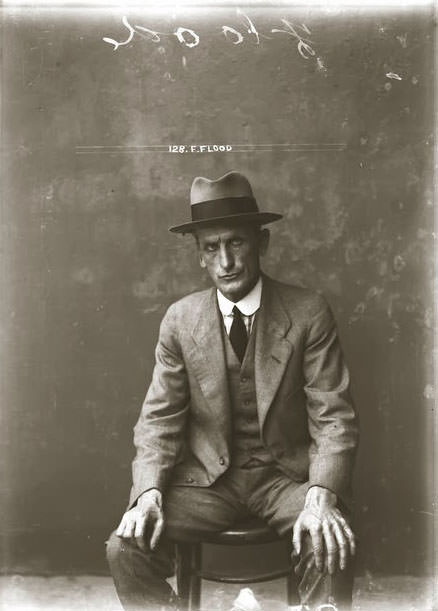
An entry in the NSW Police Gazette, 5 May 1920, lists Flood as one of two men arrested over the theft of 400 blouses from a Kent Street merchant. Both were sentenced to two years hard labour.
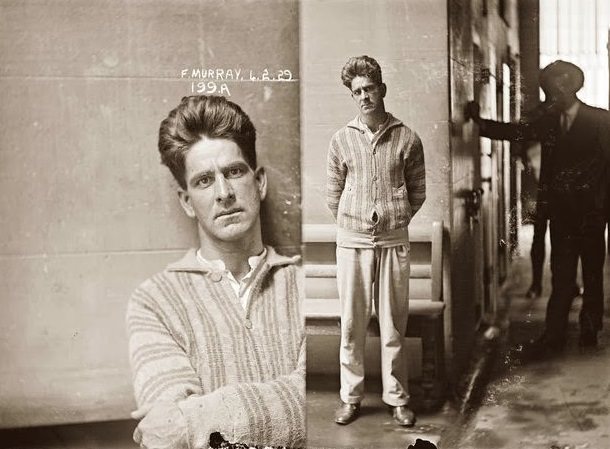
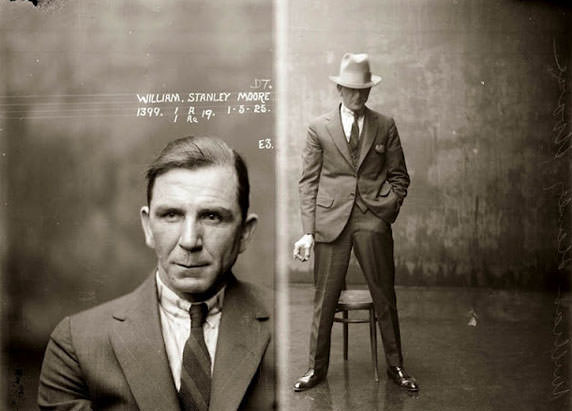
Harry Williams was sentenced to 12 months hard labour in March 1929 for breaking, entering, and stealing. Murray/Williams’ entry in the NSW Criminal Register, April 30 1930, describes him as a housebreaker and thief whose method of operation includes “[breaking] leadlighted door or windows or [forcing] the fanlights of dwelling houses during the absence of tenants.” He “disposes of stolen property to patrons of hotel bars or to persons in the street, professing to be a second-hand dealer.” Although he “consorts with prostitutes” and “frequents hotels and wine bars in the vicinity of the Haymarket,” he is described as being of “quiet disposition.”
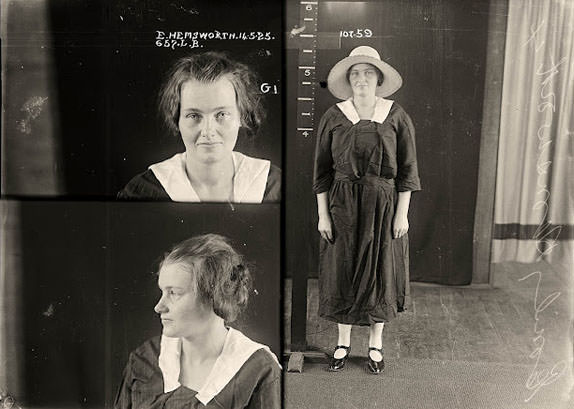
Emily Hemsworth killed her three-week-old son but could not remember any details of the murder. She was found not guilty due to insanity. Hemsworth was to be detained in custody until judged fit to return to society — it is unknown if she was ever released. Aged 24.
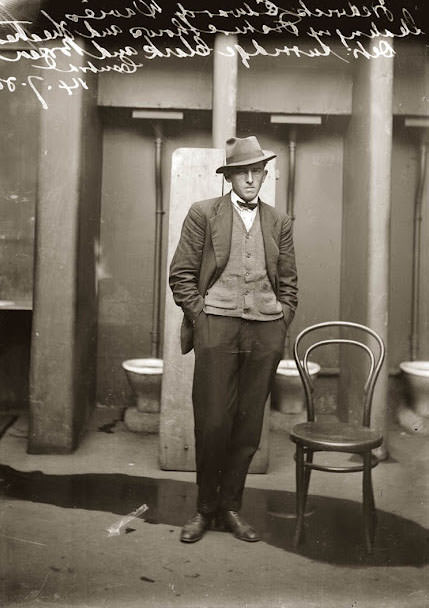
The handwritten inscription on this unnumbered Special Photograph reads “Frederick Edward Davies stealing in picture shows and theatres Dets Surridge Clark and Breen Central 14-7-21.” Police held sneak thieves in particularly low regard, which may account for the decision to photograph Davies in front of the police station’s toilet stalls.
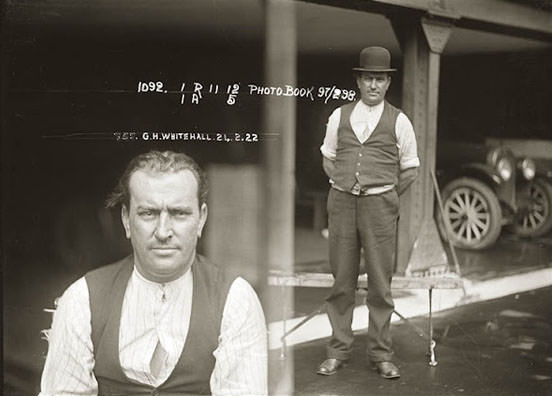
George Whitehall, a carpenter, handed himself in to Newtown police after hacking to death his common-law wife, Ida Parker, on Thursday afternoon, 21 February 1922, at their home in Pleasant Avenue, Erskineville. This photo was apparently taken the following morning at Newtown Police Station.
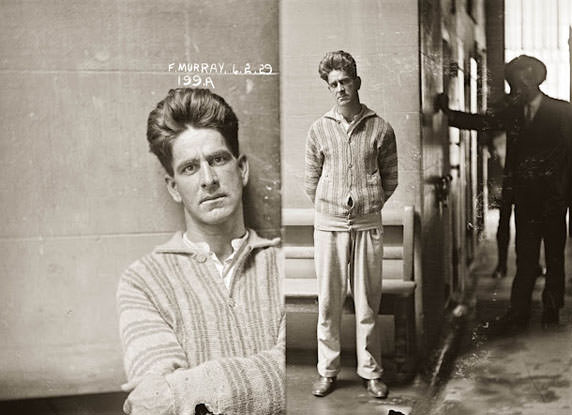
Harry Williams was sentenced to 12 months hard labour in March 1929 for breaking, entering, and stealing. Although he “consorts with prostitutes” and “frequents hotels and wine bars in the vicinity of the Haymarket,” he is described as being of “quiet disposition.”