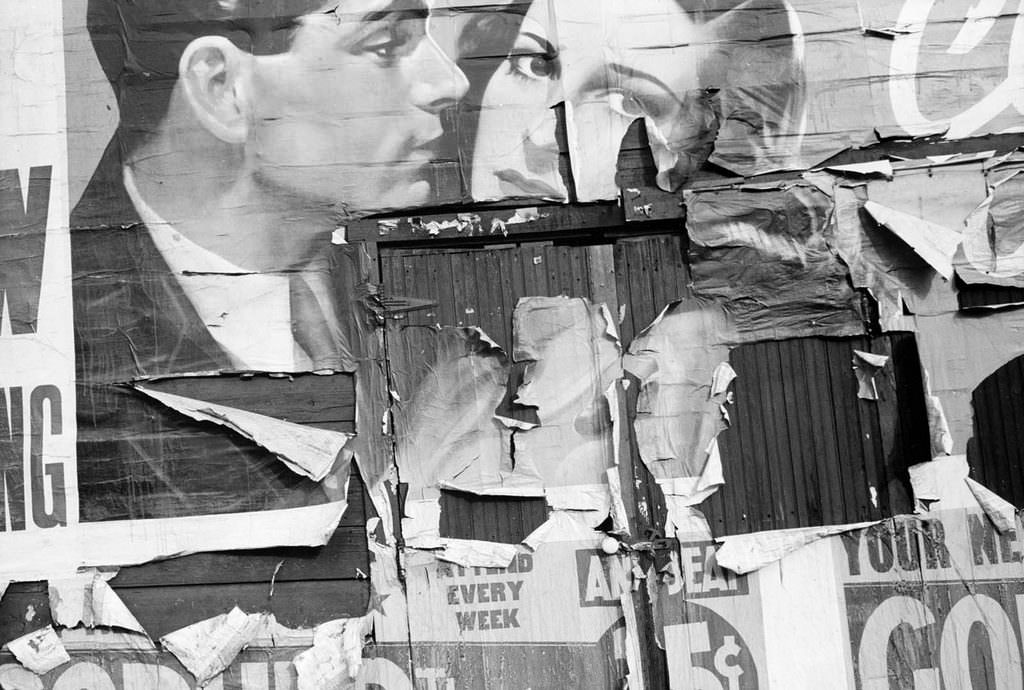
During the late 1930s, a striking sight greeted Americans on highways, street corners, and storefronts across the country: enormous, colorful billboards showing happy families living comfortable lives. These weren’t advertisements for a specific product. They were selling an idea — the American way of life itself. And they appeared at one of the darkest moments in American history.
The billboards were the work of the National Association of Manufacturers, known as NAM. The organization placed them in every American city with a population above 2,500, and by their own estimates, the signs reached roughly 65 million Americans every single day. The images on them showed smiling families picnicking in green parks, welcoming relatives home, piling into comfortable cars with the family dog, and generally living without a care in the world. Alongside these cheerful scenes ran bold slogans: “World’s Highest Standard of Living,” “World’s Highest Wages,” “World’s Shortest Working Hours,” and “There is no way like the American Way.”
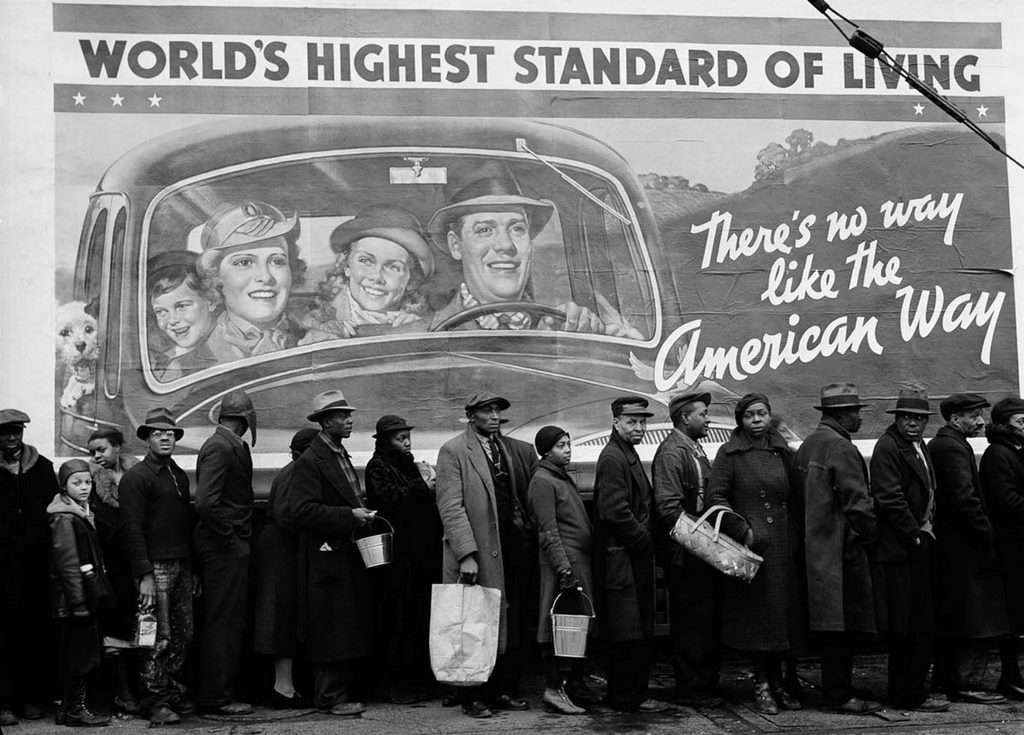
For millions of Americans, those slogans rang hollow. The Great Depression had shattered the economy through the 1930s, and its damage was still deeply visible by 1937 and beyond. Unemployment remained widespread. Families had lost homes, farms, and savings. Natural disasters piled onto the economic wreckage — the Great Ohio River Flood of 1937 alone displaced hundreds of thousands of people across Kentucky, Tennessee, and surrounding states, forcing them into relief lines and temporary shelters.
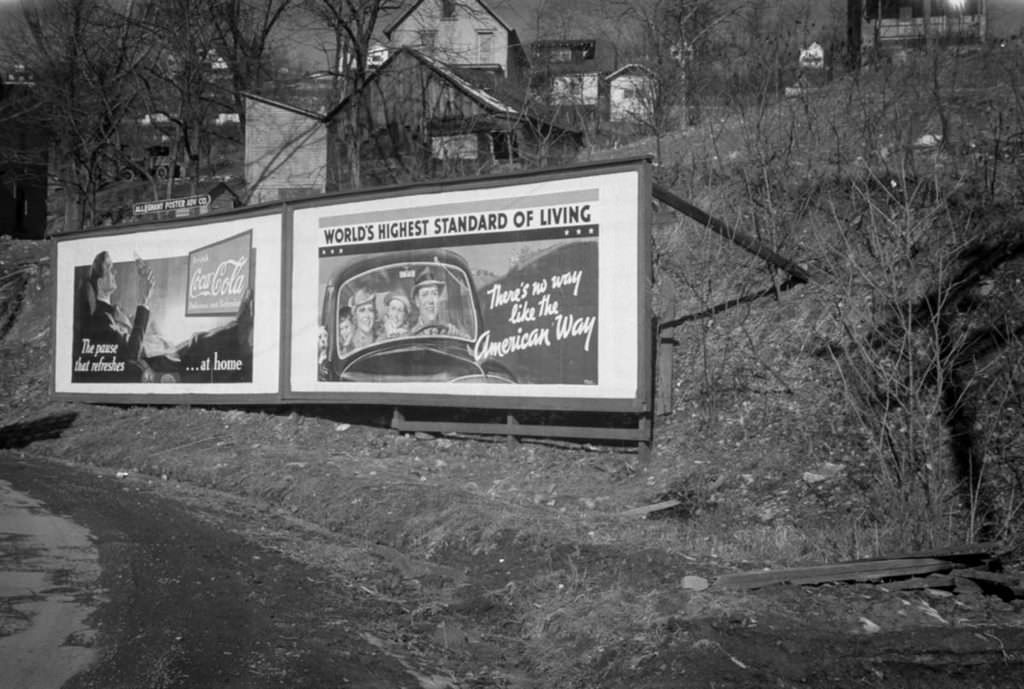
The contrast between the billboard messages and daily reality was impossible to miss. In cities like Dubuque, Iowa, residents scavenged through city dumps for food and usable goods. Families lived in shacktowns built along the river bottoms — rough collections of makeshift shelters on the margins of the city, far removed from the gleaming domestic scenes depicted on NAM’s signs.
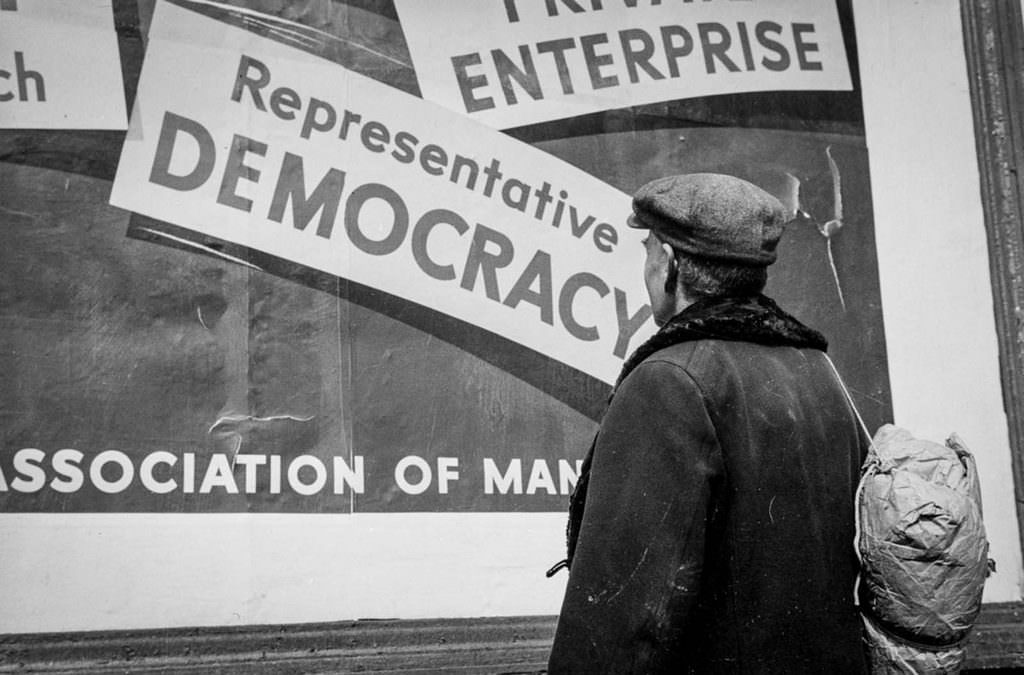
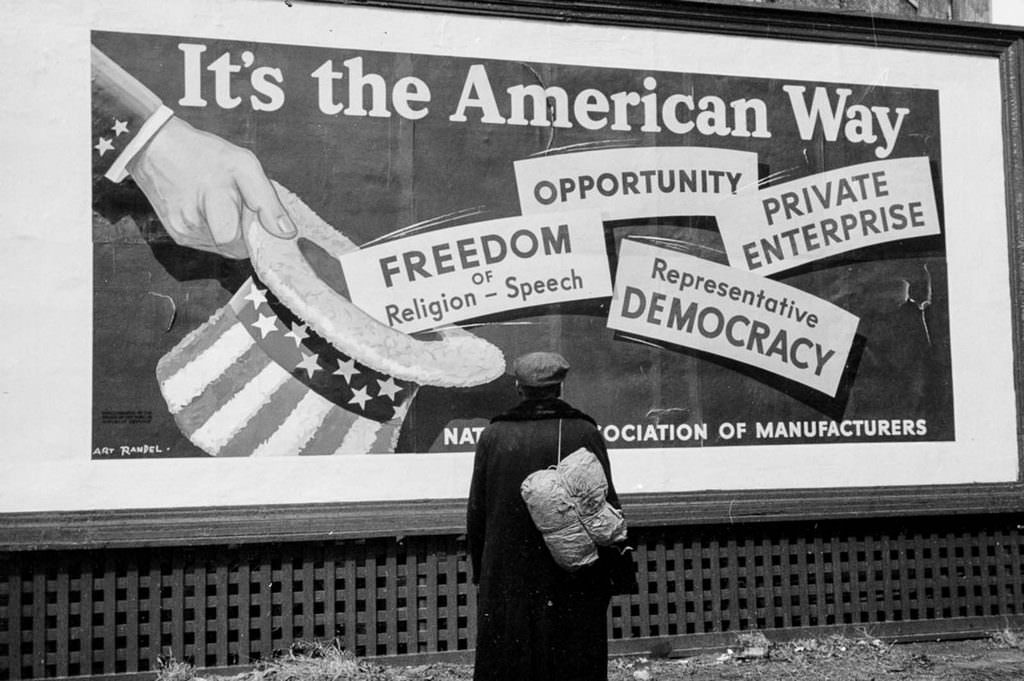
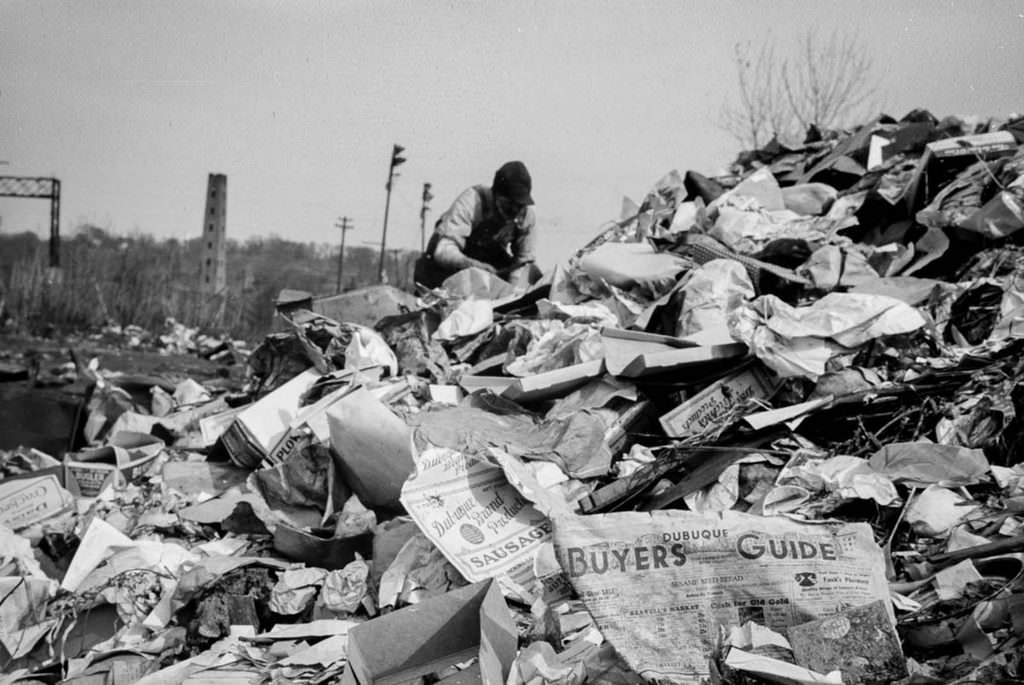
Yet even in Dubuque’s shacktowns, signs of patriotic sentiment appeared — sometimes right next to evidence of severe poverty. A handmade sign or a proud declaration placed near a crumbling dwelling revealed that many Americans still clung to a belief in their country even as the country seemed to have failed them.
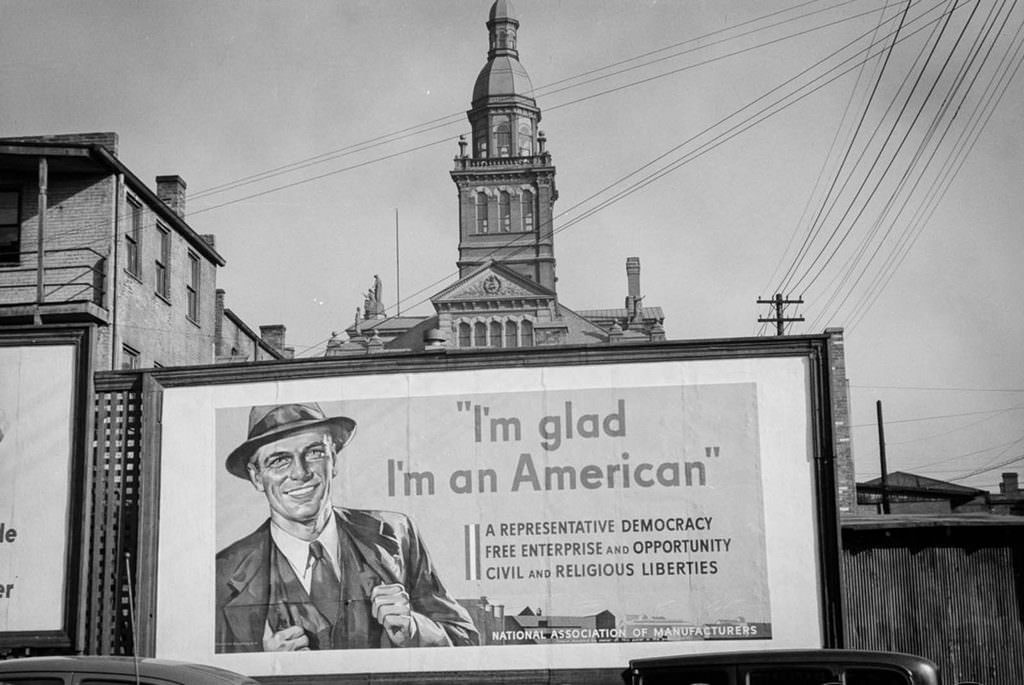
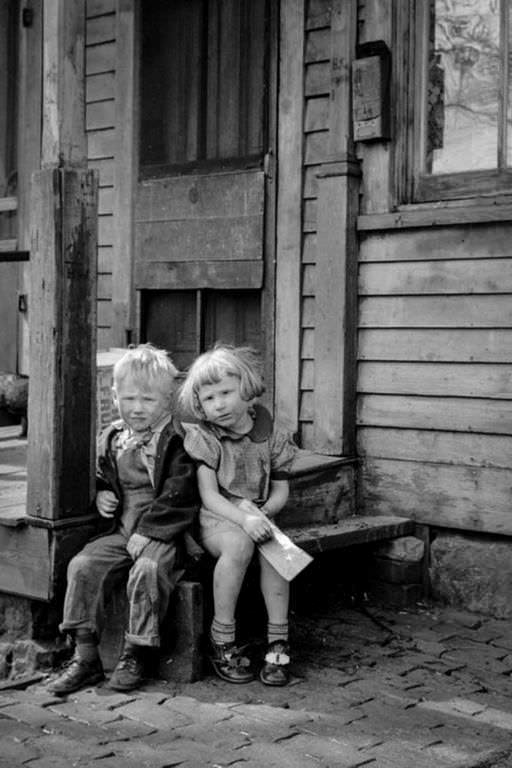
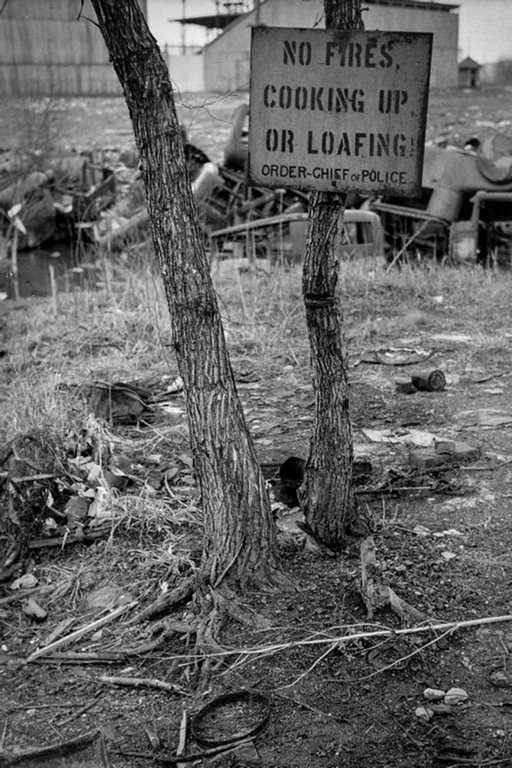
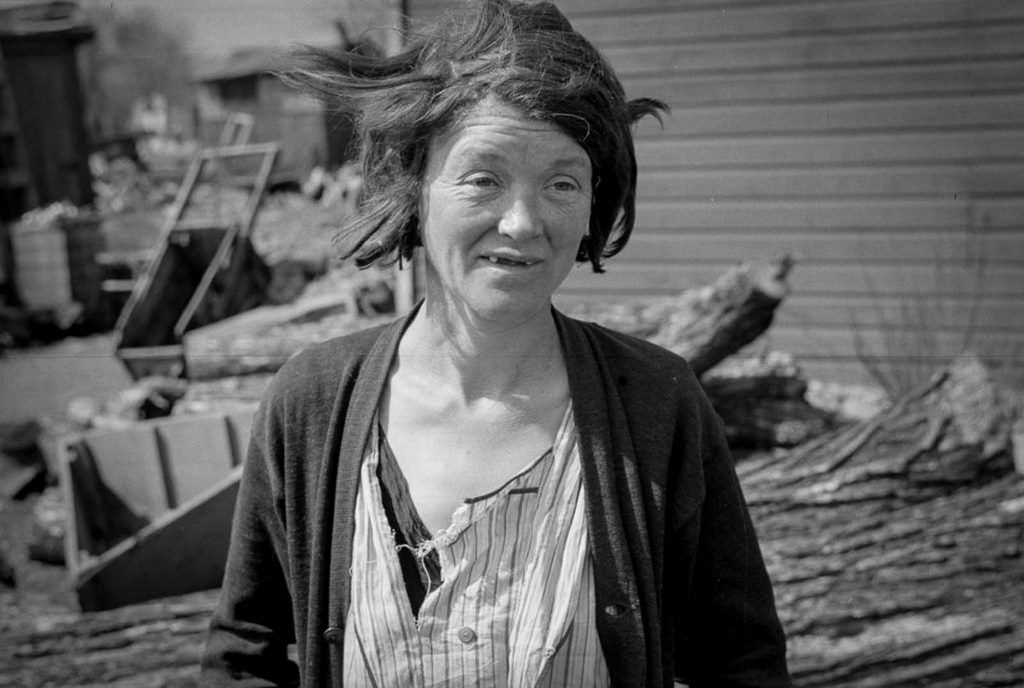
The 1937 Ohio River Flood added another layer of suffering to an already struggling population. In Memphis, Tennessee, floodwaters swallowed neighborhoods and displaced thousands. Flood victims — many of them already poor before the waters rose — queued for relief in scenes that directly contradicted the idealized American life plastered on billboards just miles away.
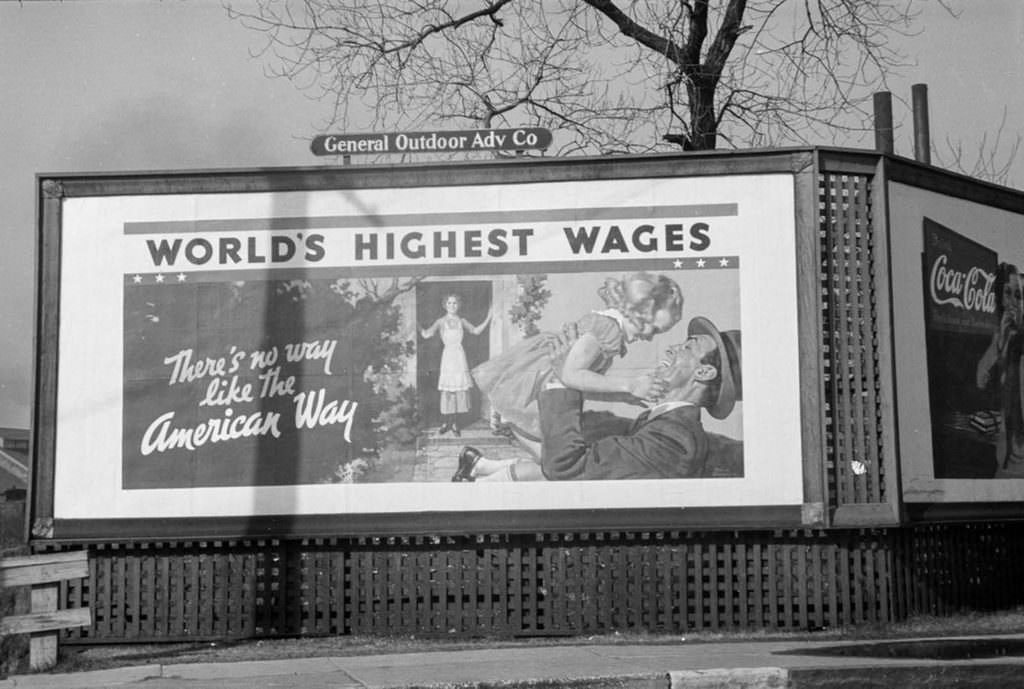
Photographers documenting these scenes captured some of the most powerful juxtapositions of the era. A NAM billboard boasting “World’s Highest Wages” towered over flood refugees who had no wages at all. The gap between the message and the moment was stark and undeniable.
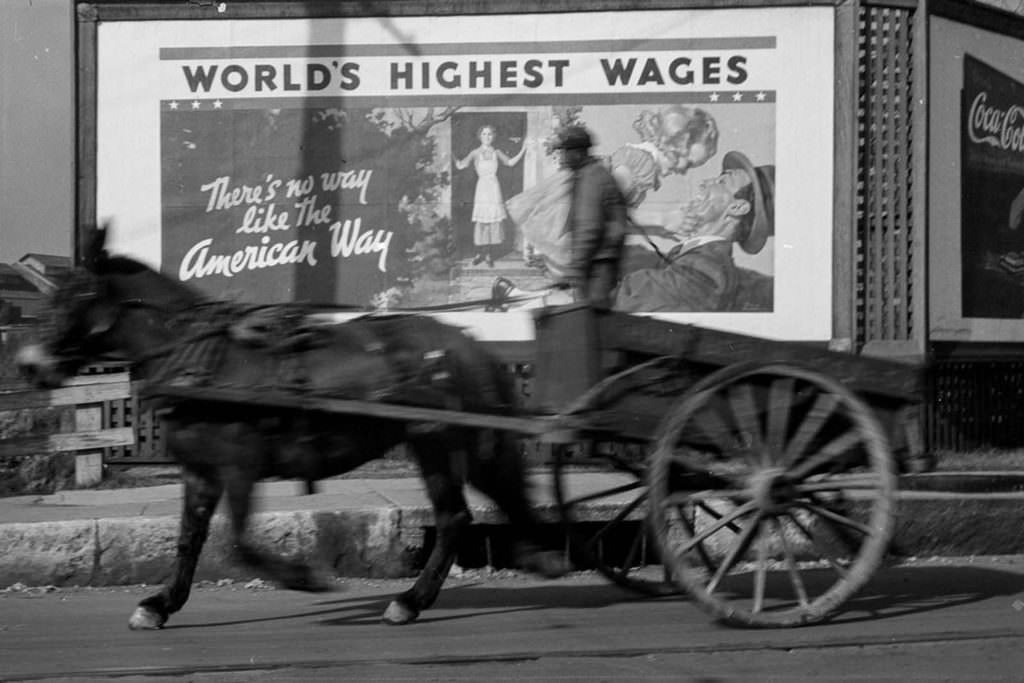
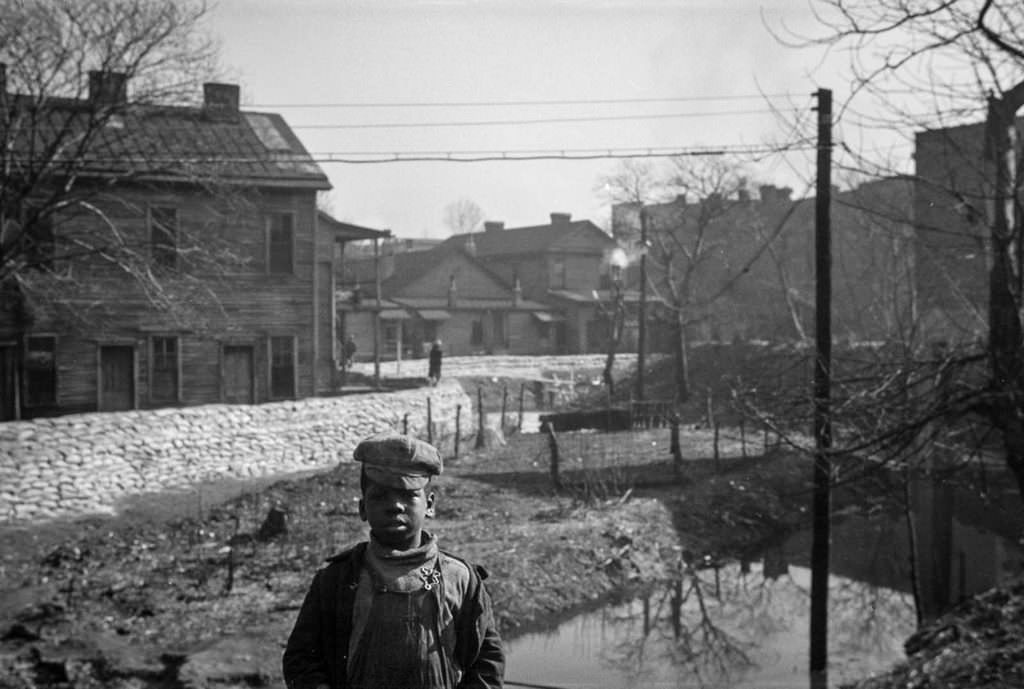
In Birmingham, Alabama, the same story played out. Migrant encampments sat in the shadow of billboards declaring the “World’s Highest Standard of Living.” Families who had traveled hundreds of miles looking for work or relief set up crude camps with whatever materials they could find. The billboard’s well-dressed, smiling family in their gleaming automobile looked down on a scene of genuine hardship.
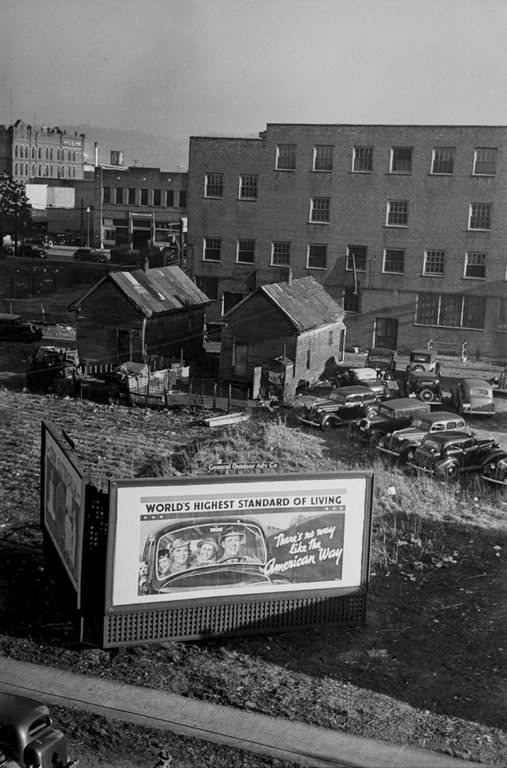
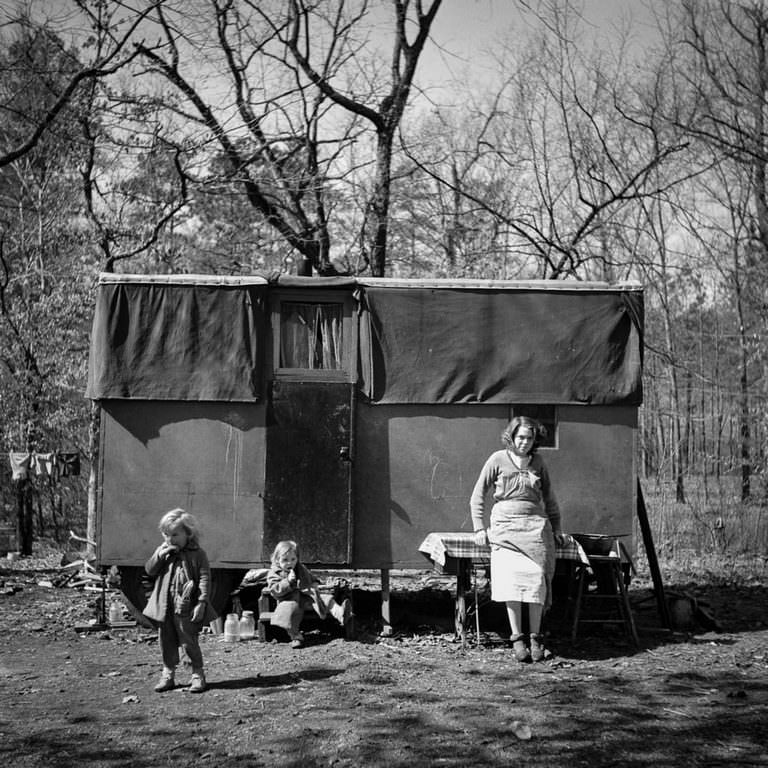
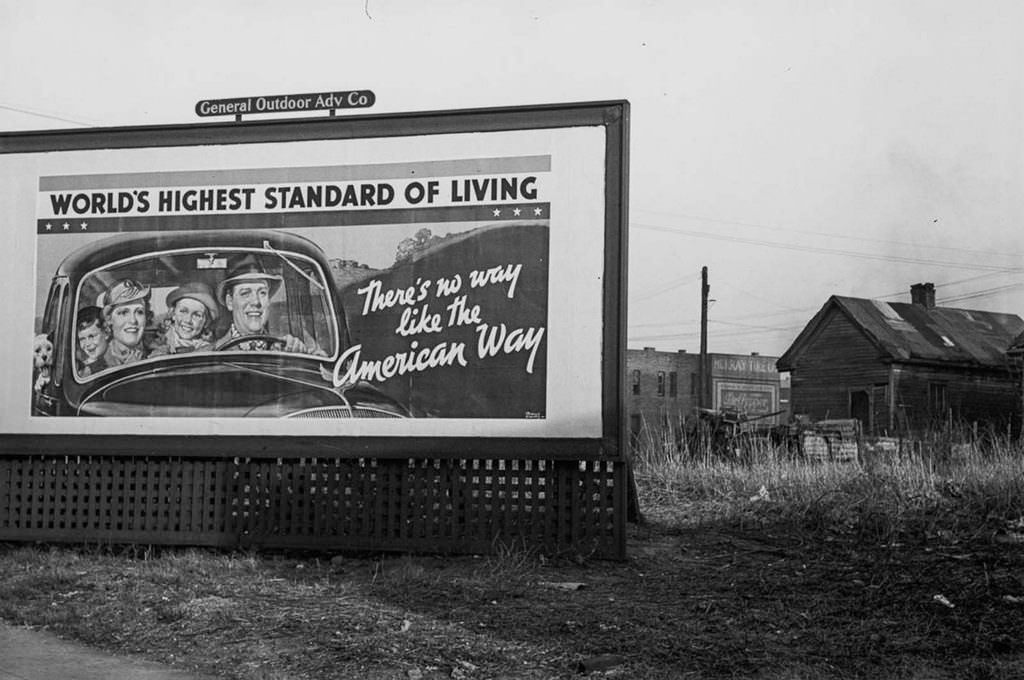
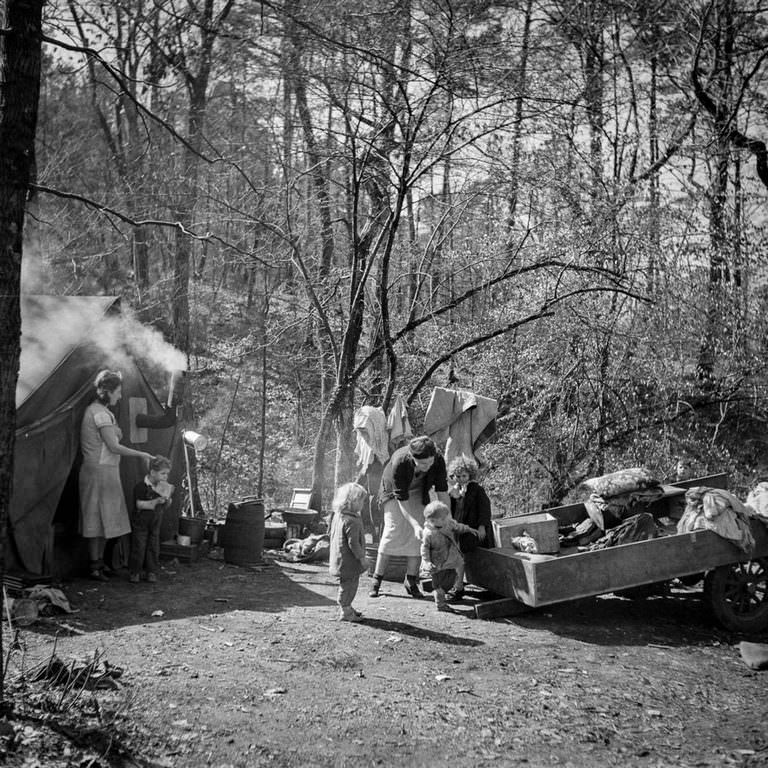
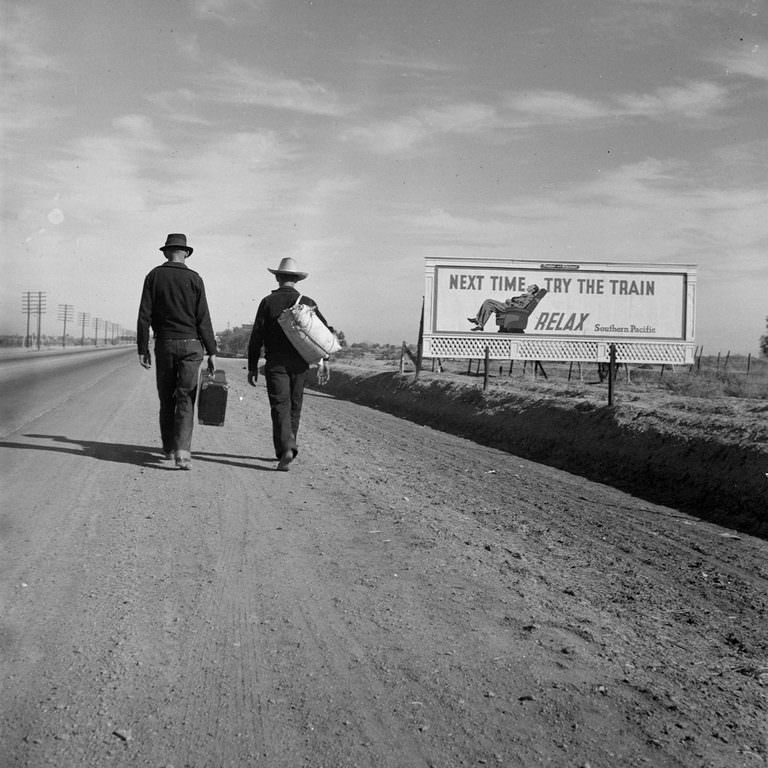
California’s Highway 99 became one of the most photographed corridors of Depression-era America. Thousands of migrant families, driven from their homes by drought, economic collapse, and dust storms in states like Oklahoma, Texas, and Missouri, streamed westward along this road in search of work. The highway was lined with NAM billboards, and the contrast they created with the ragged families walking or driving past them was extraordinary.
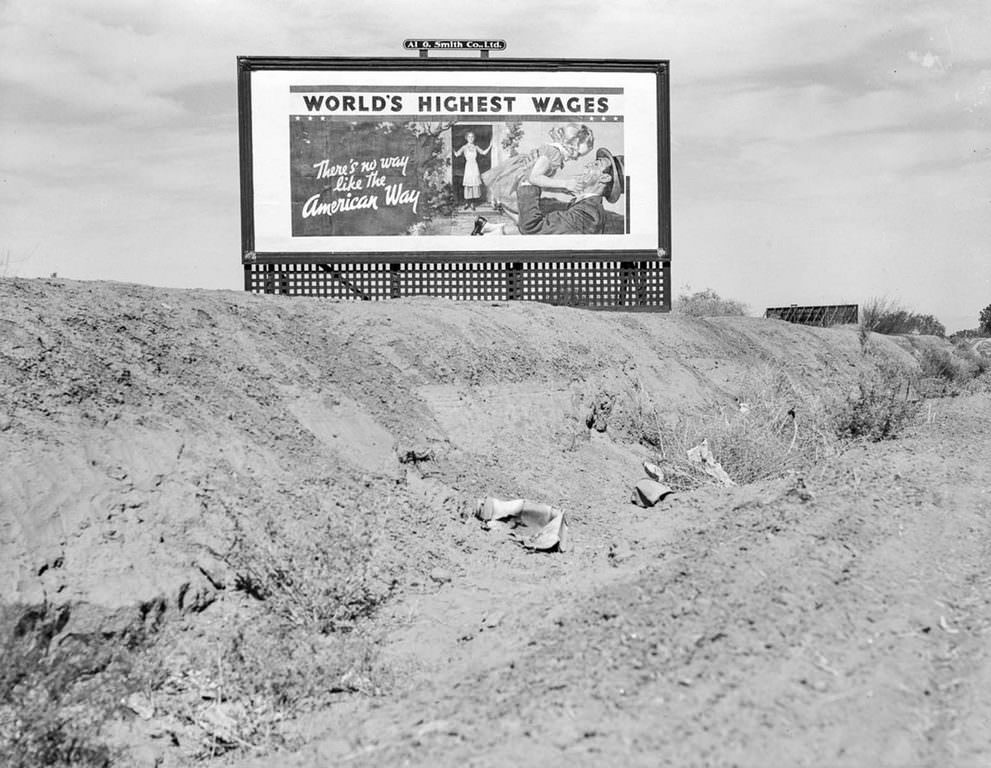
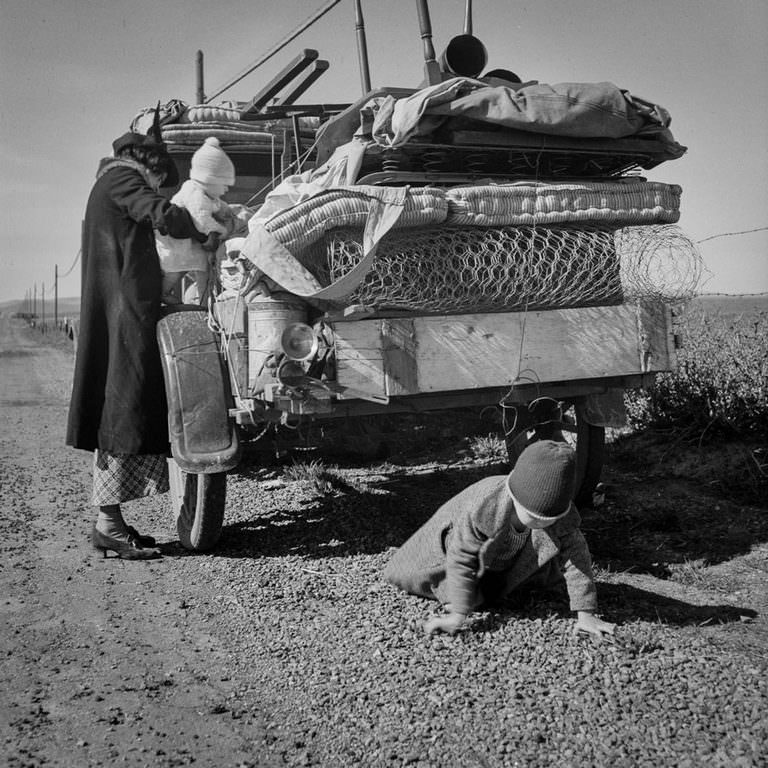
A billboard on Highway 99 advertising “World’s Shortest Working Hours” stood along a road walked by families who would have accepted any hours of work at all. Cotton pickers, displaced farmers, and laborers without prospects trudged past these messages with their belongings on their backs or packed into overloaded vehicles. Some families of seven or more made the journey entirely on foot.
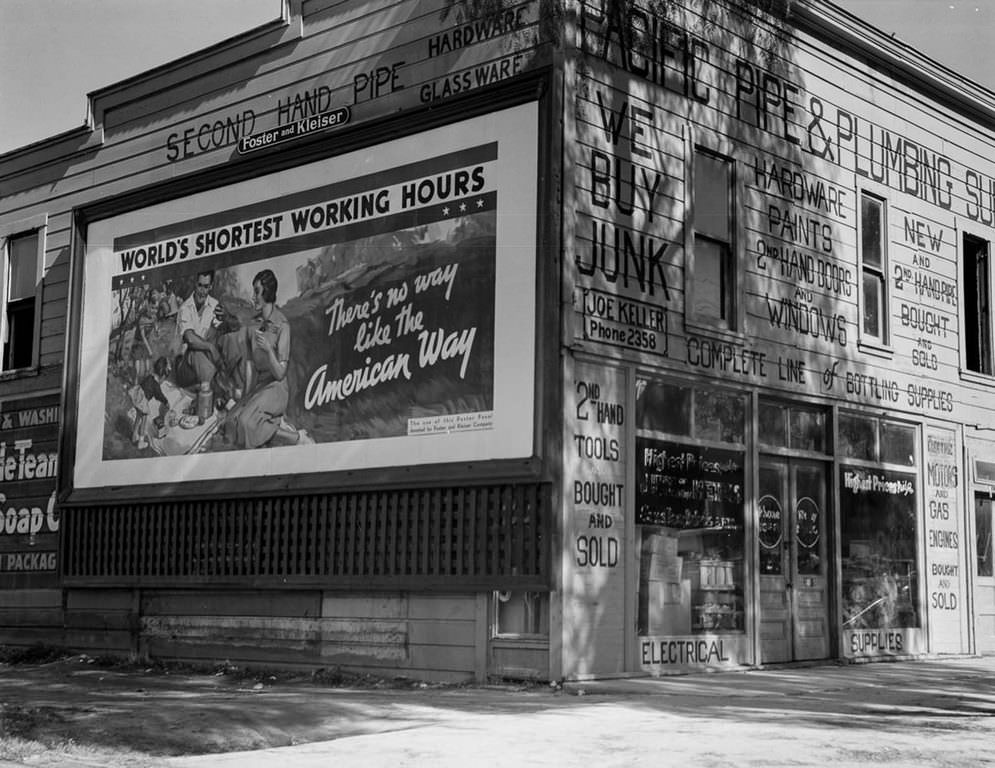
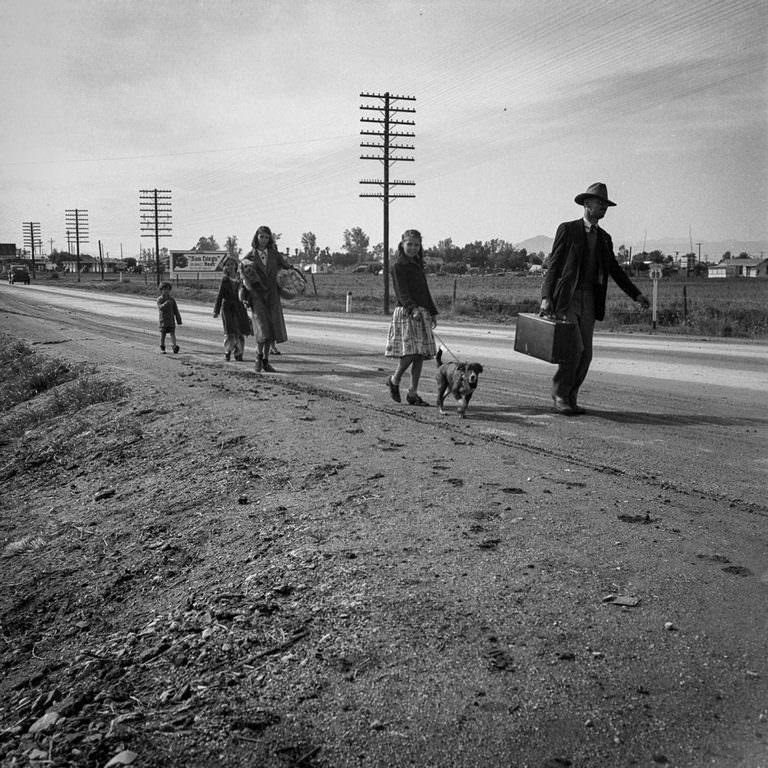
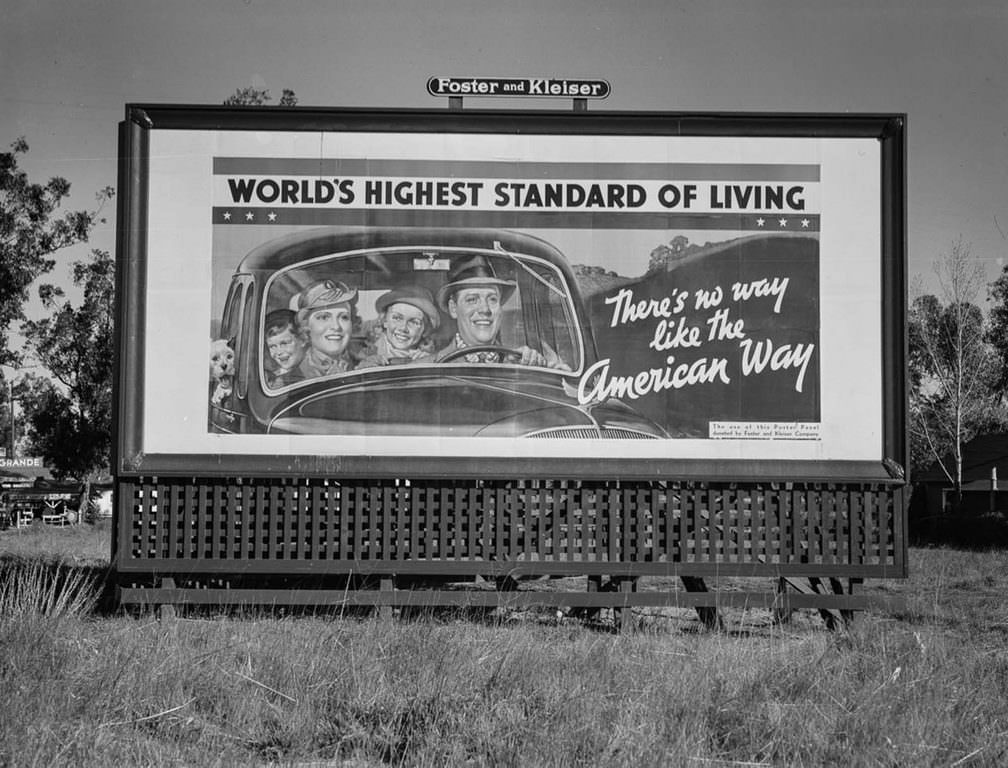
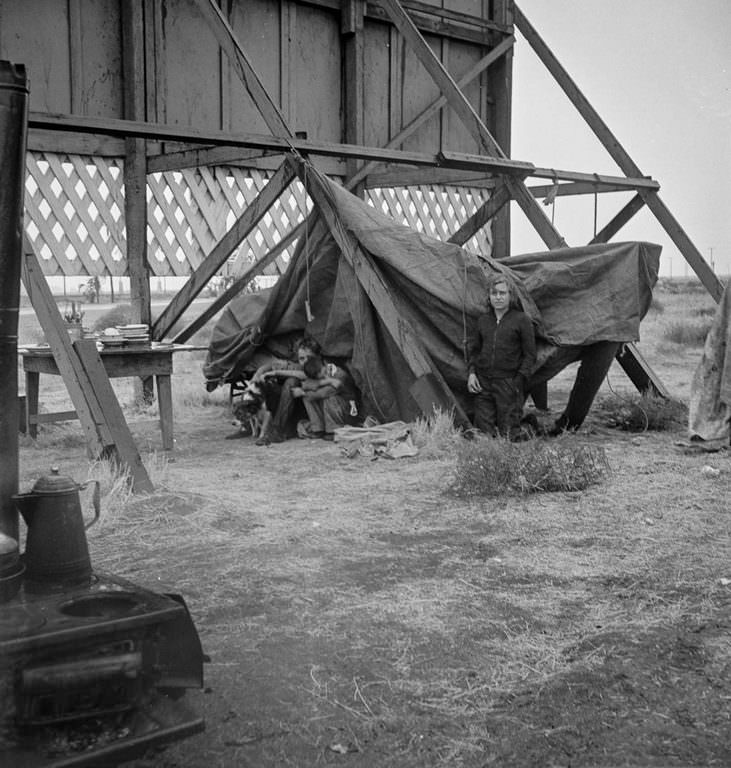
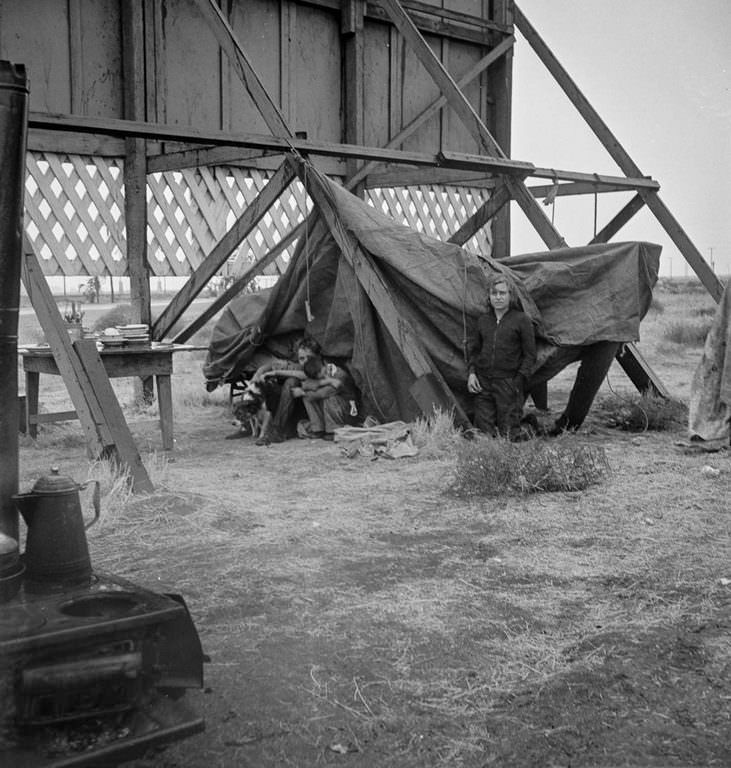
Some families camped directly behind the billboards, using the wooden structures as windbreaks and partial shelter. The back of a sign proclaiming American prosperity became a wall for a makeshift roadside camp. In Kern County, California in 1938, photographers documented exactly this — a family settled in behind one of NAM’s enormous boards, invisible to the drivers who saw only the bright, cheerful image on the other side.
NAM’s campaign was not purely about boosting morale. It was a deliberate political strategy. Across Europe and parts of Asia, governments were turning toward communism and fascism. In the United States, the Depression had left ordinary Americans questioning whether capitalism was working at all. Workers were organizing into industrial unions. New Deal Democrats were pushing for sweeping government programs. Conservative business leaders feared that the economic crisis was opening the door to radical political change. The billboards were NAM’s answer — a mass-media effort to associate capitalism and free enterprise with America’s national identity, and to make any alternative seem un-American.
The campaign did not go unnoticed or unchallenged. Photographers working for the Farm Security Administration, including figures like Dorothea Lange and Arthur Rothstein, documented the reality on the ground. Their images — of flood victims, shacktown residents, migrant workers, and roadside campers — stood in direct visual opposition to the world NAM’s billboards described. These photographs circulated widely and became some of the most enduring records of Depression-era America.
The political fight over what “the American way” meant drew in nearly every major group of the era. New Dealers used the phrase to argue for expanded government support. Industrial union leaders used it to demand fair wages and working conditions. Conservative businessmen used it to defend the free market. Each side claimed the language of Americanism for its own purposes, and the billboards were one of the most visible weapons in that contest.