The 1960s were a golden era for American travel. The automobile industry was booming, gas was cheap, and families across the country loaded up their cars for road trips from coast to coast. Hotels and motels had to keep pace with that demand, and the results were some of the most memorable places in American hospitality history.
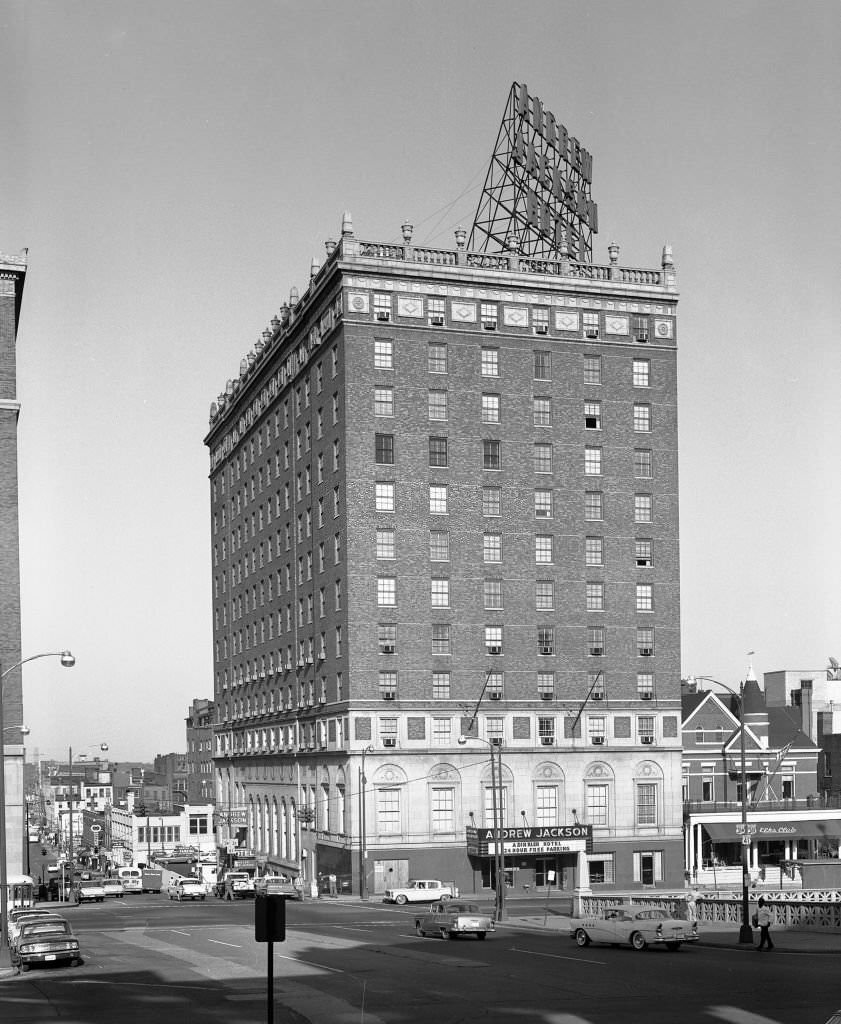
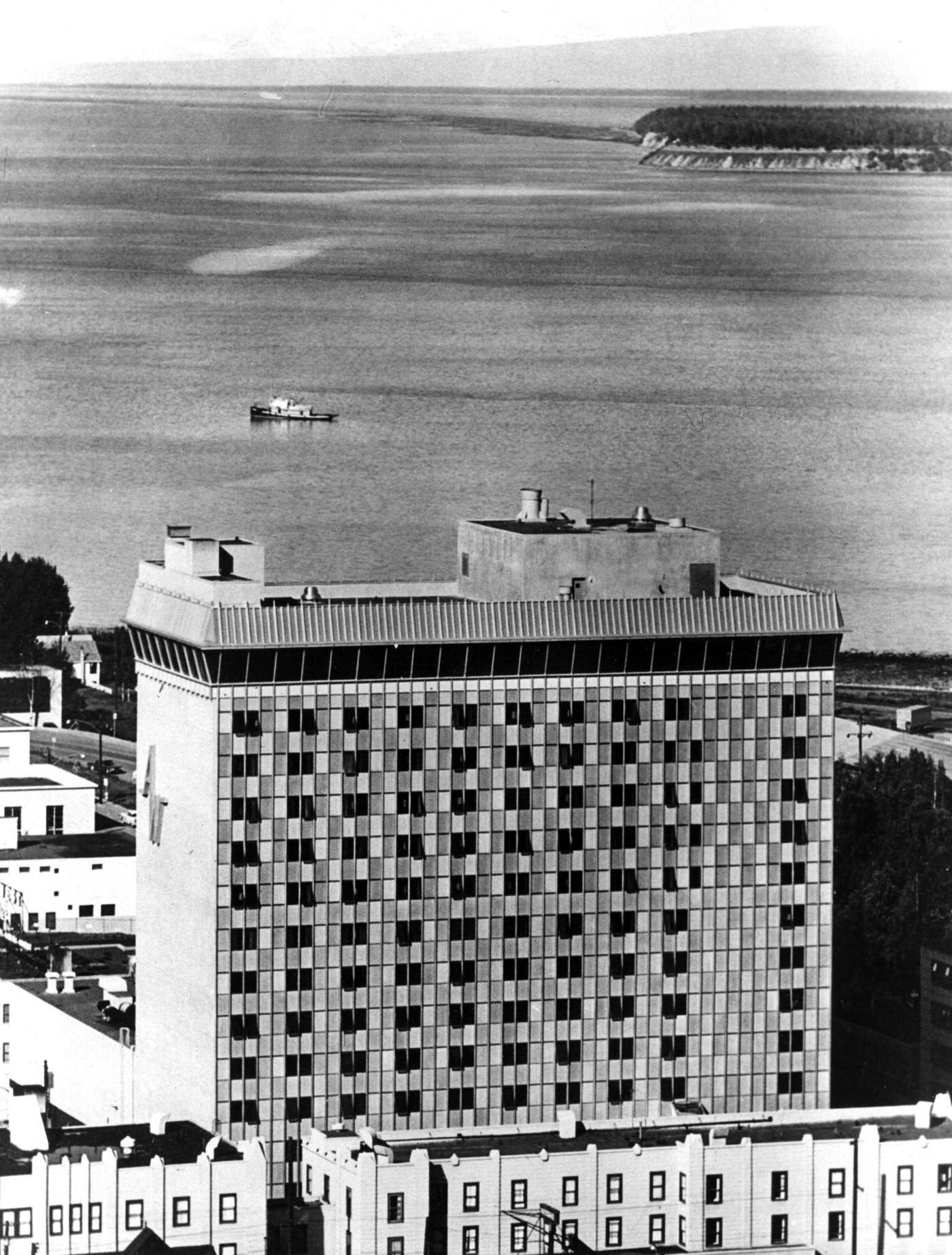
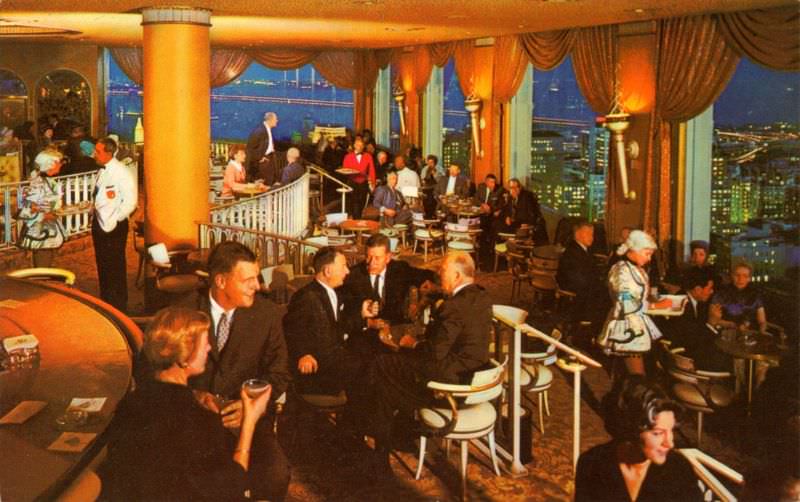
Cities large and small had their own landmark hotels. Nashville’s Andrew Jackson Hotel stood as a proud fixture of the South, catering to business travelers and tourists alike. In San Francisco, the Fairmont Hotel & Tower commanded the top of Nob Hill, offering sweeping views of the bay and the kind of grand lobby that made guests stop in their tracks.
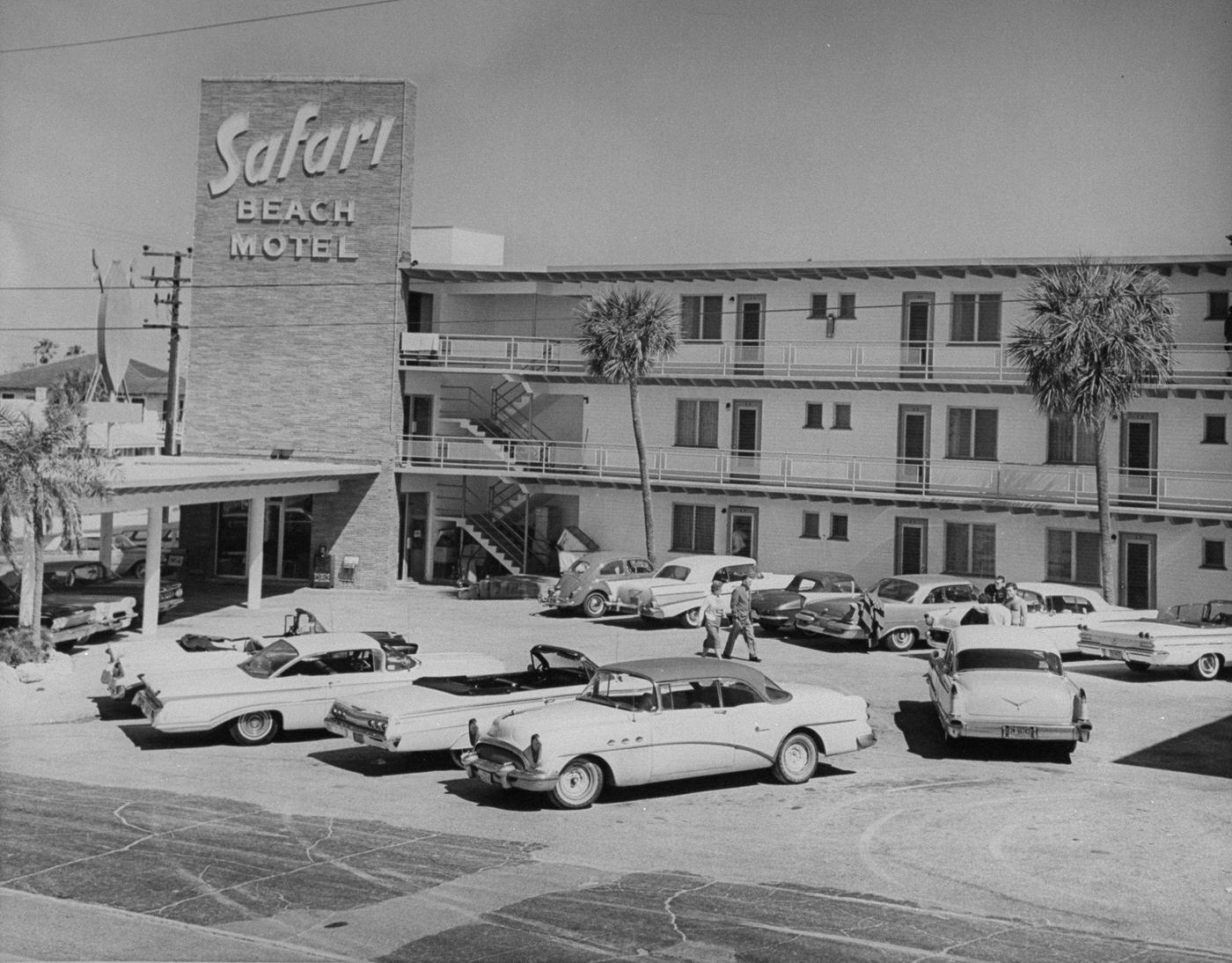
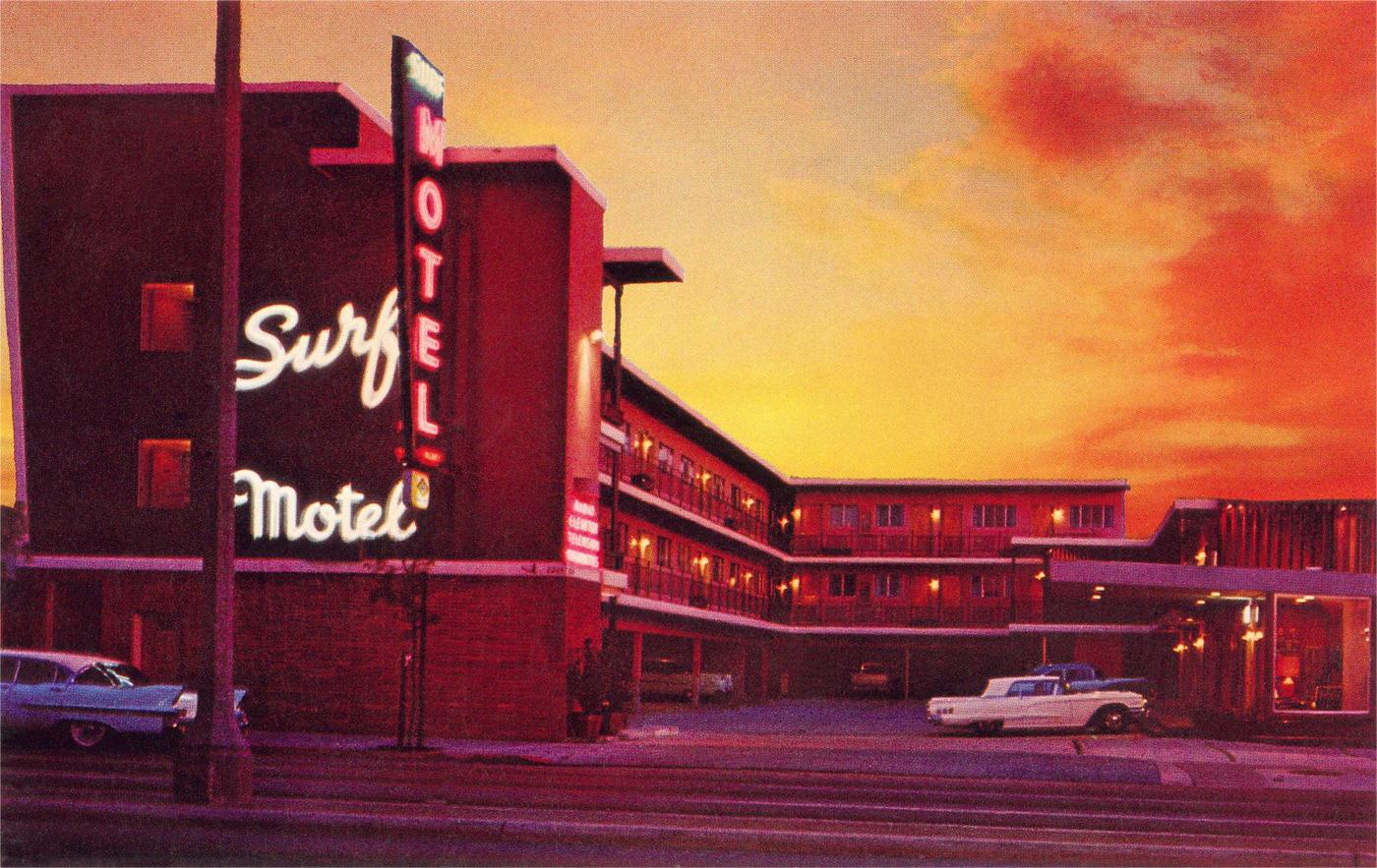
Not every traveler was headed for a grand city hotel. The roadside motel was a 1960s institution. These smaller, often family-run properties lined the nation’s highways, offering a clean room, a parking spot right outside the door, and a glowing neon sign to guide tired drivers in after dark. The Surf Motel, photographed at sunset in the mid-decade years, captures exactly that feeling — a simple, welcoming stop on the open road.
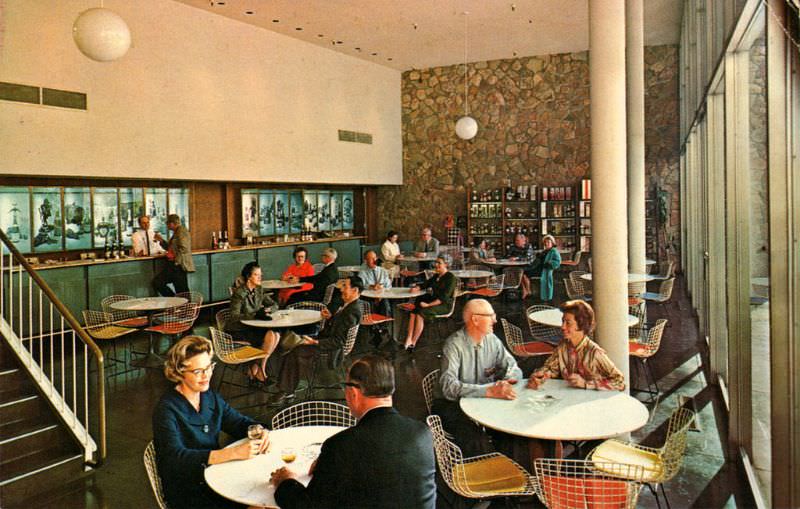
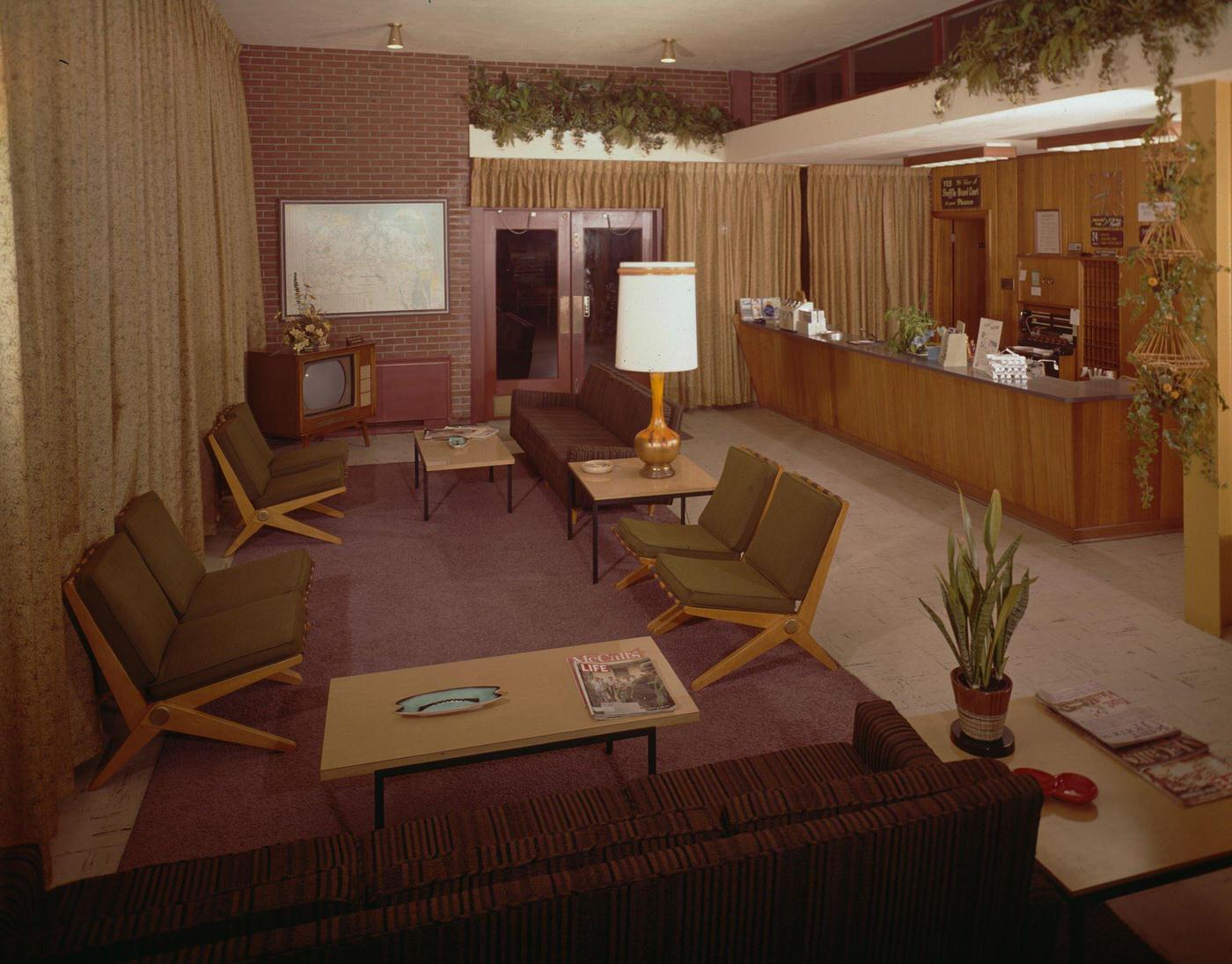
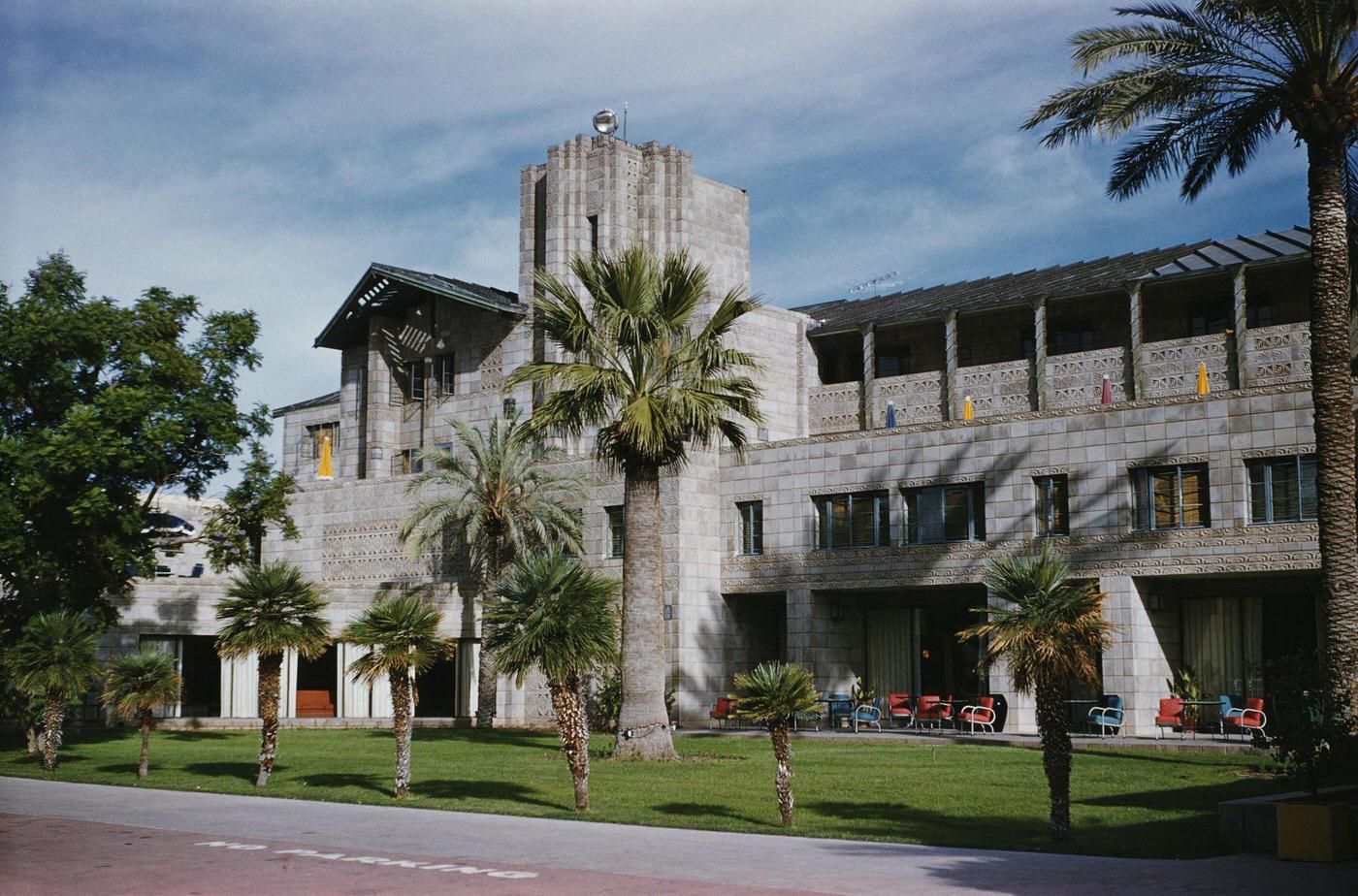
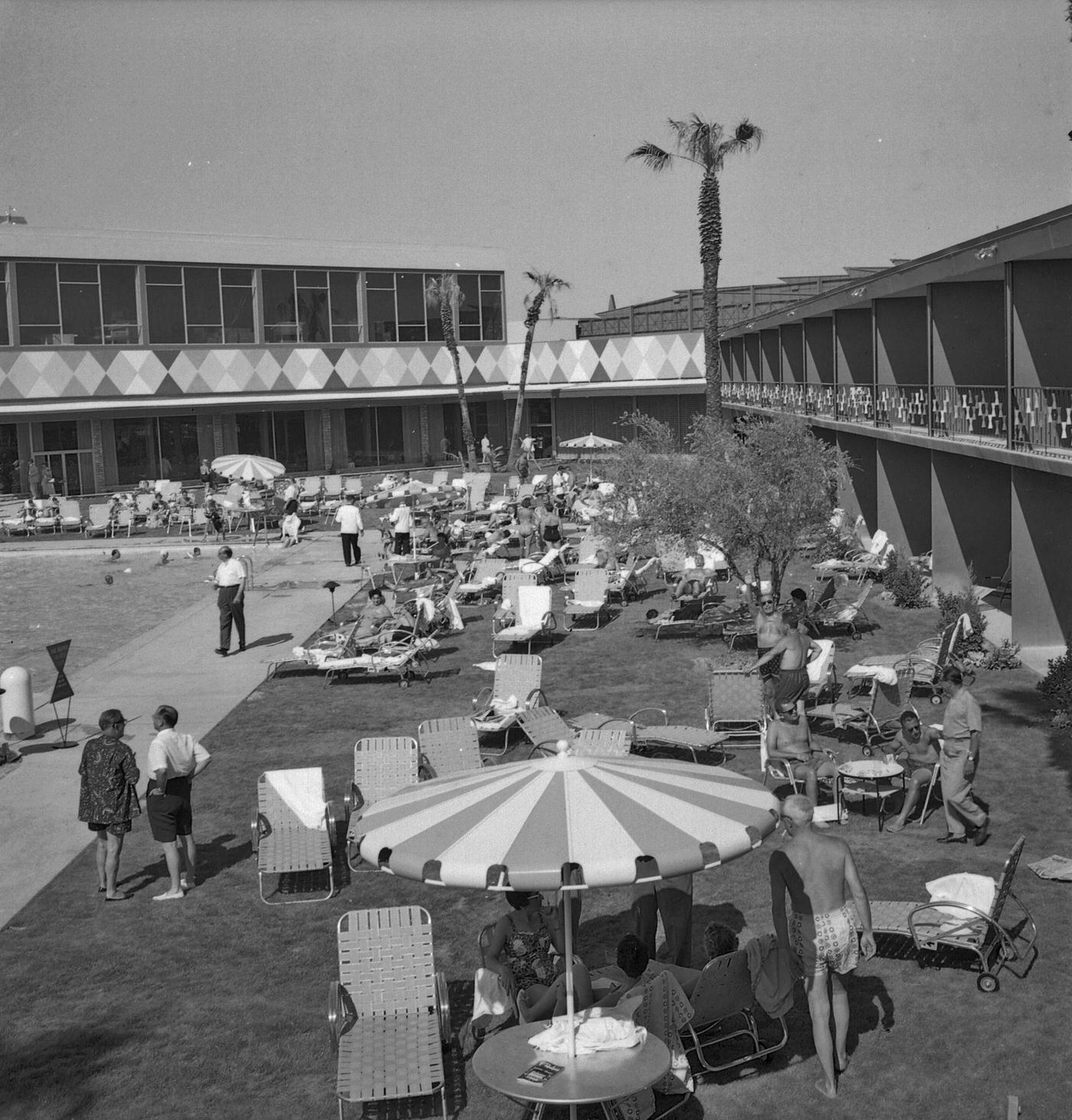
Hotel design in the 1960s was anything but boring. Mid-century modern had taken firm hold of American architecture. Buildings featured geometric shapes, flat rooflines, and bold color palettes. Inside, guests found egg chairs, starburst clocks, abstract art, and furniture with the clean, angular lines that defined the era. The Arizona Biltmore, a desert landmark in Phoenix, embodied this spirit with its striking geometric facades and dramatic poolside grounds.
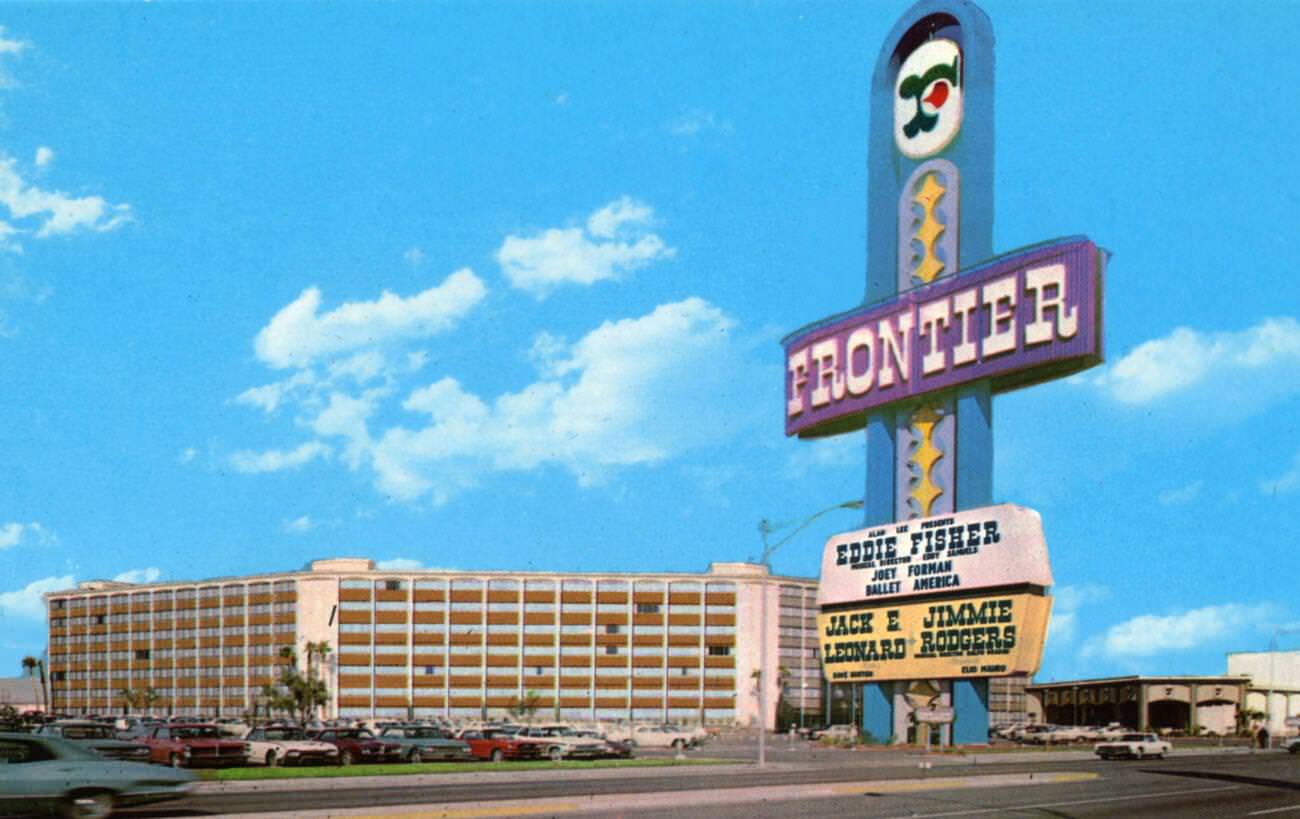
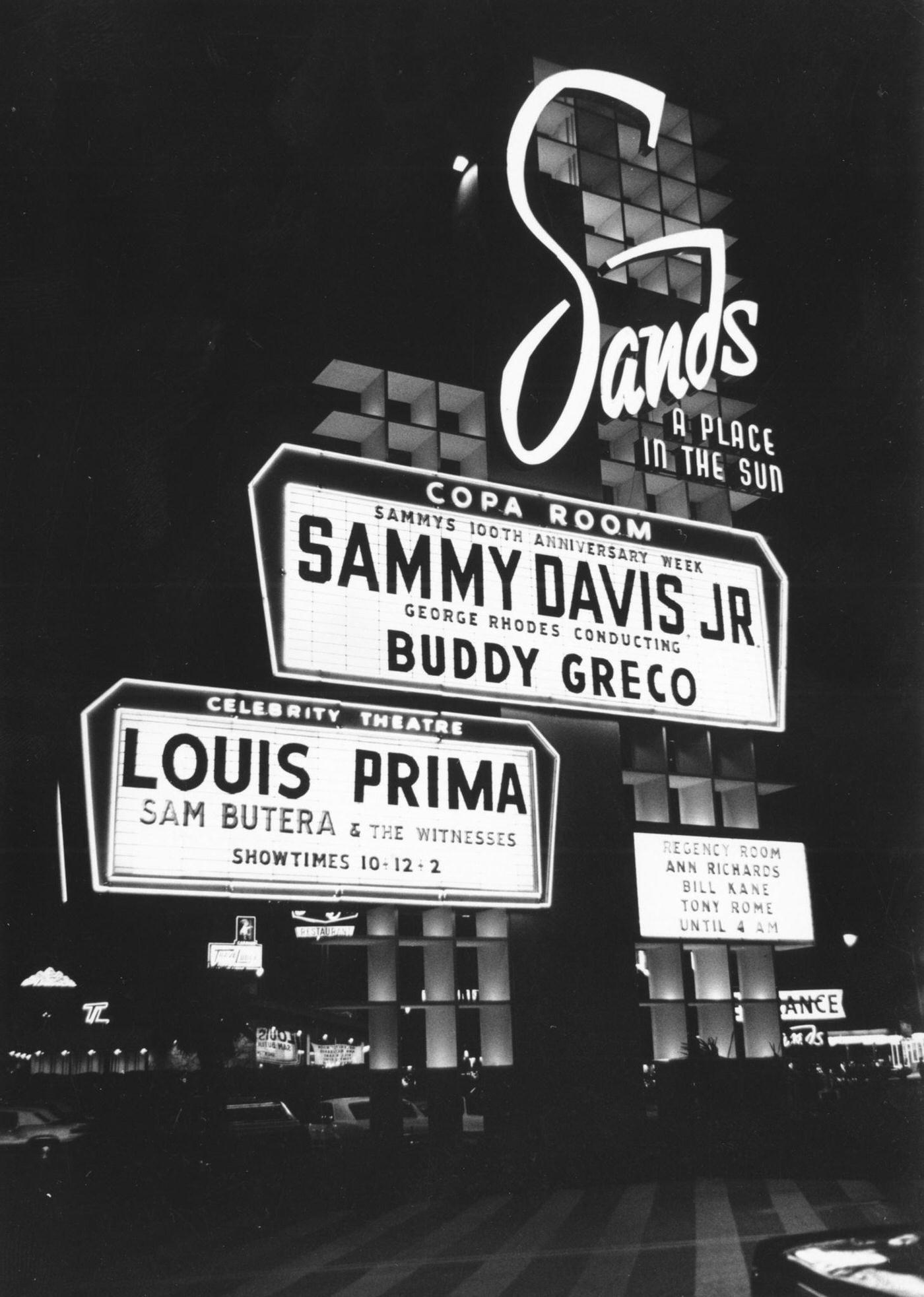
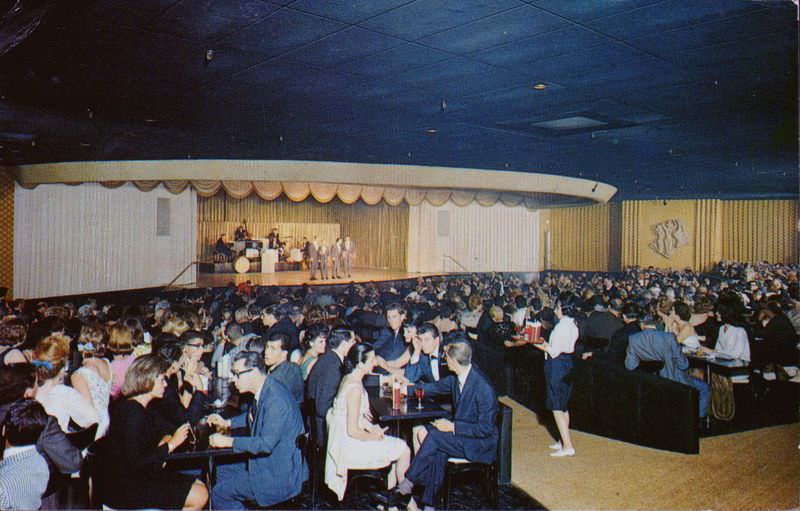
Las Vegas was in full swing during the 1960s. The Stardust Hotel lit up the Strip with one of the most recognizable neon signs in the world. Just a short distance away, The Sands Hotel and Casino was the beating heart of the Rat Pack era, hosting Frank Sinatra, Dean Martin, and Sammy Davis Jr. on its stage while guests filled the gaming floors below.
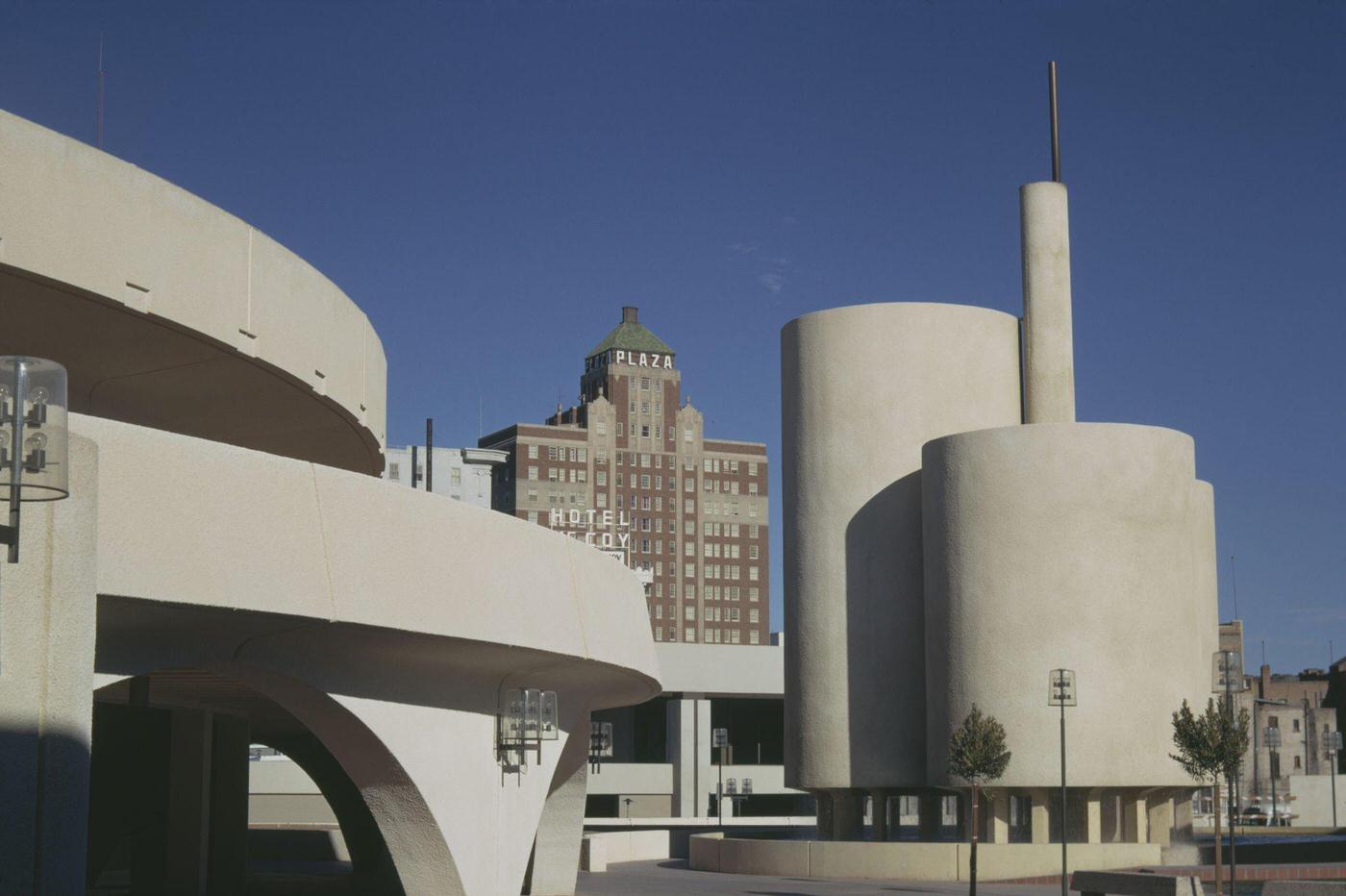
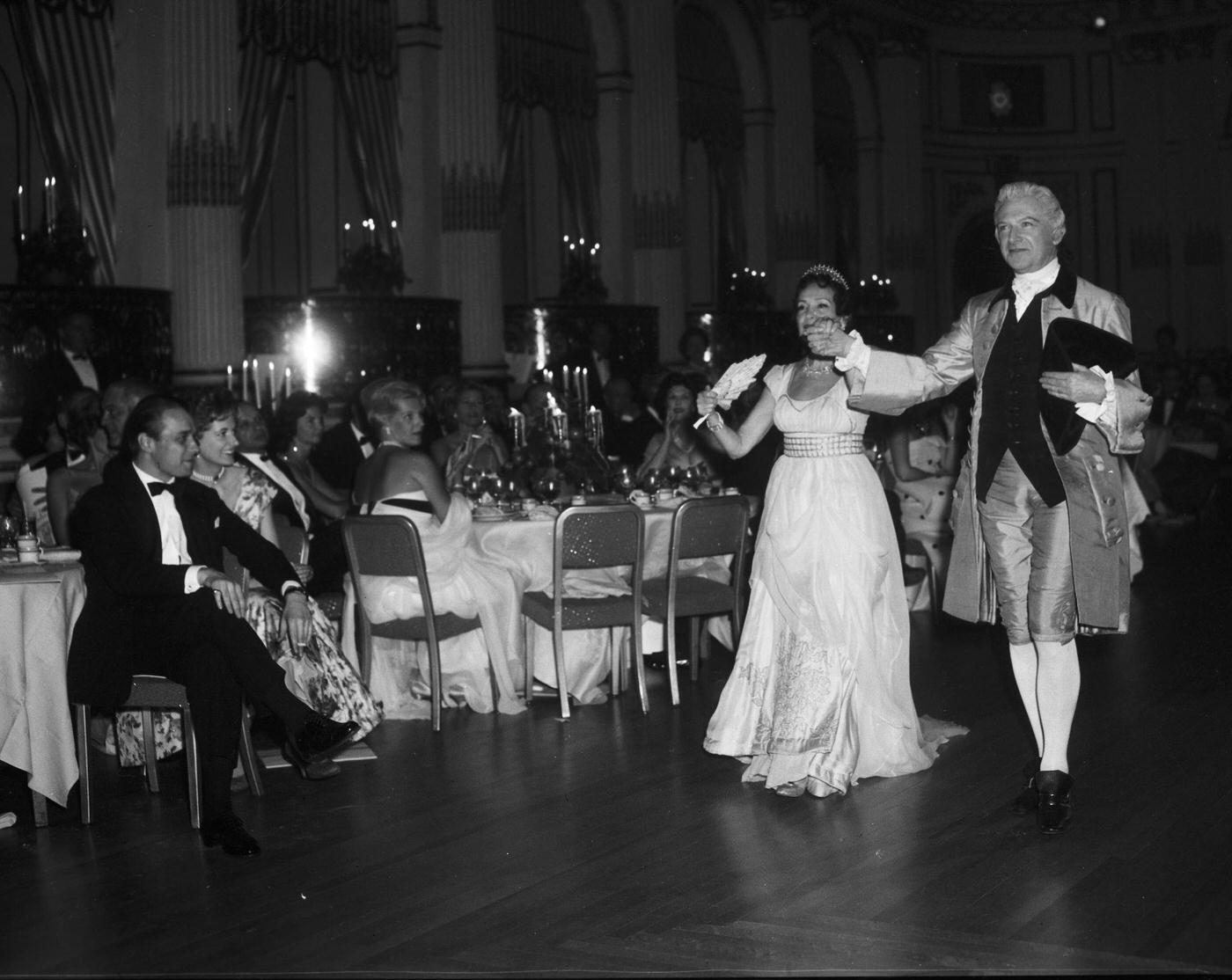
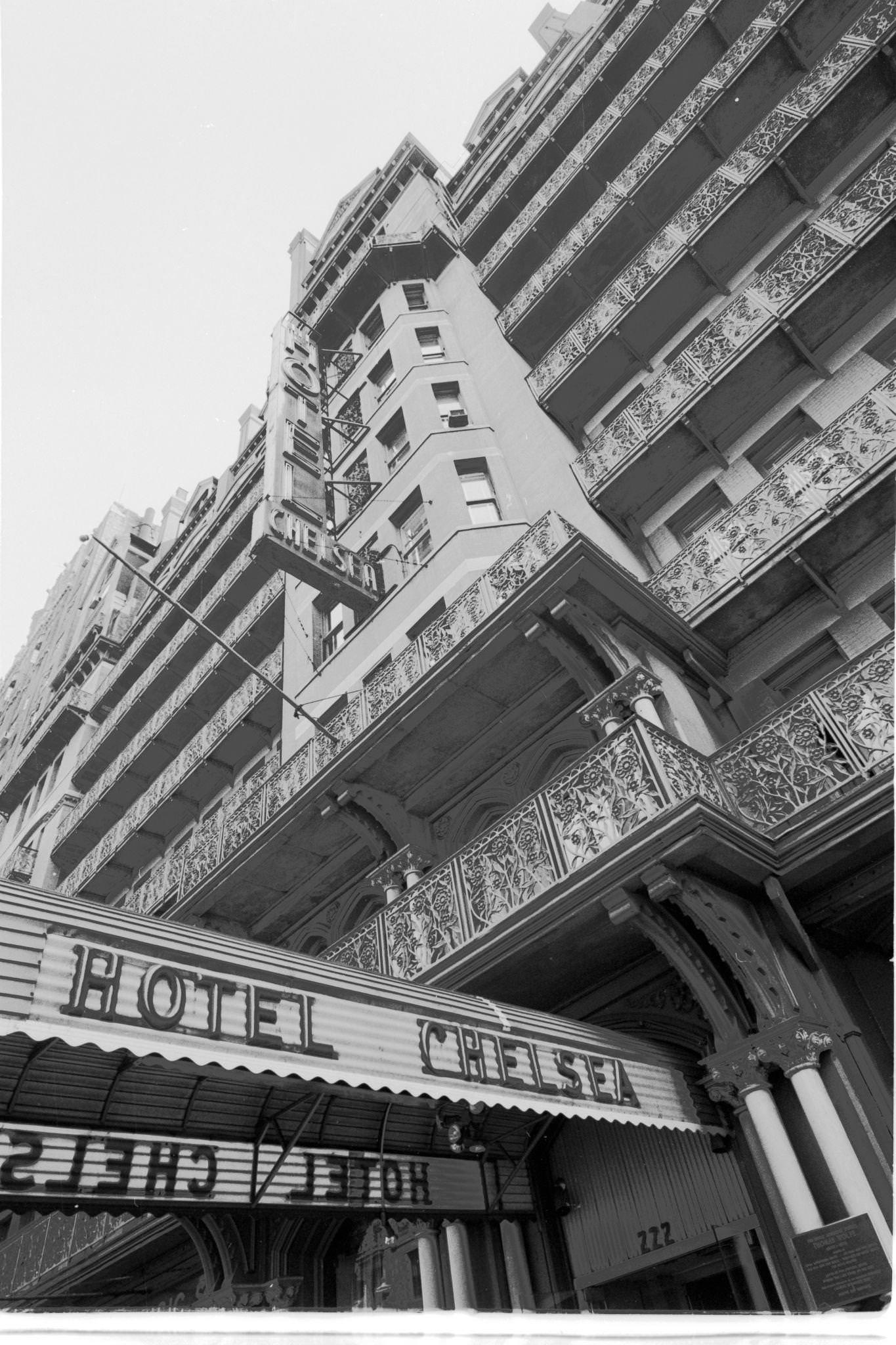
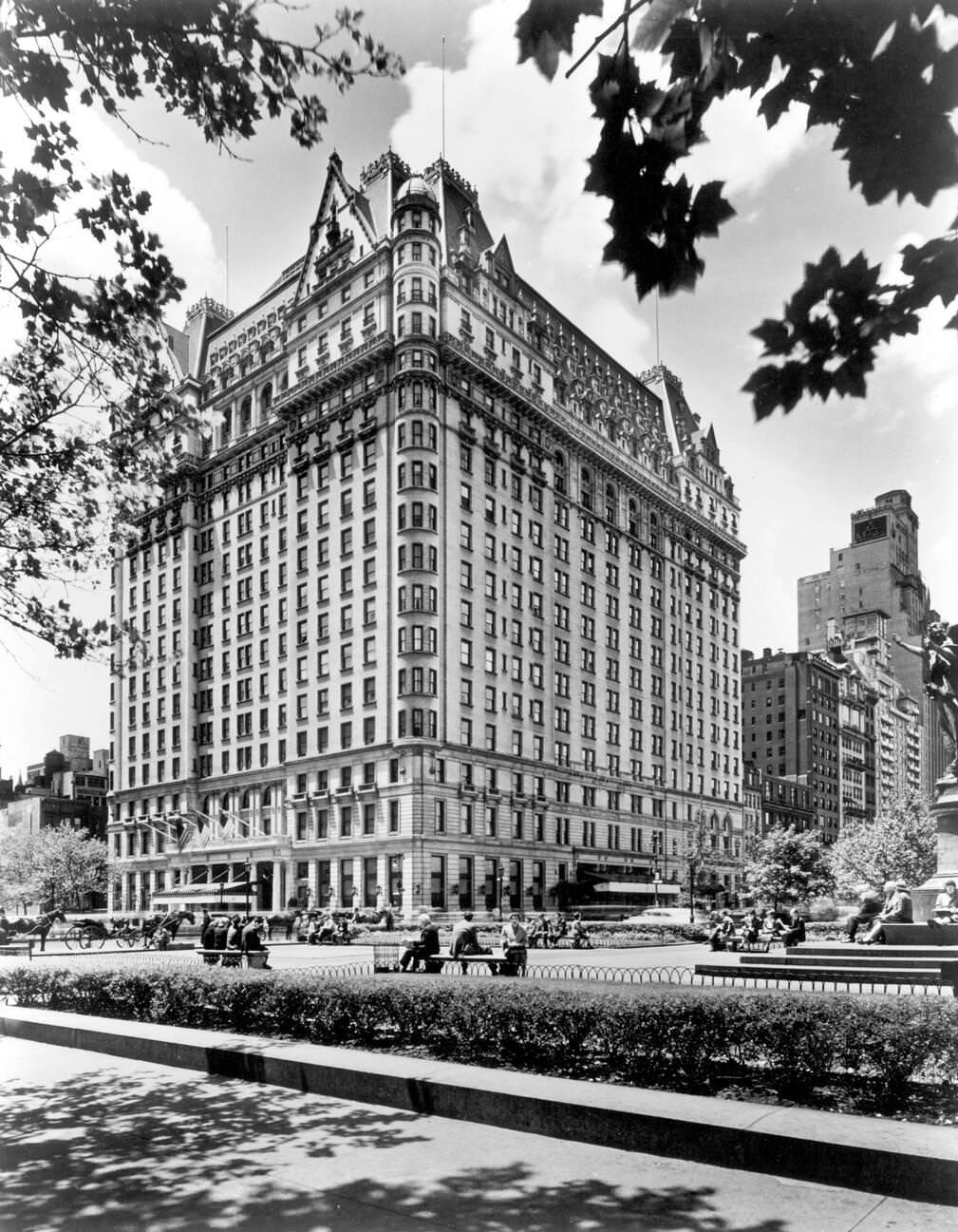
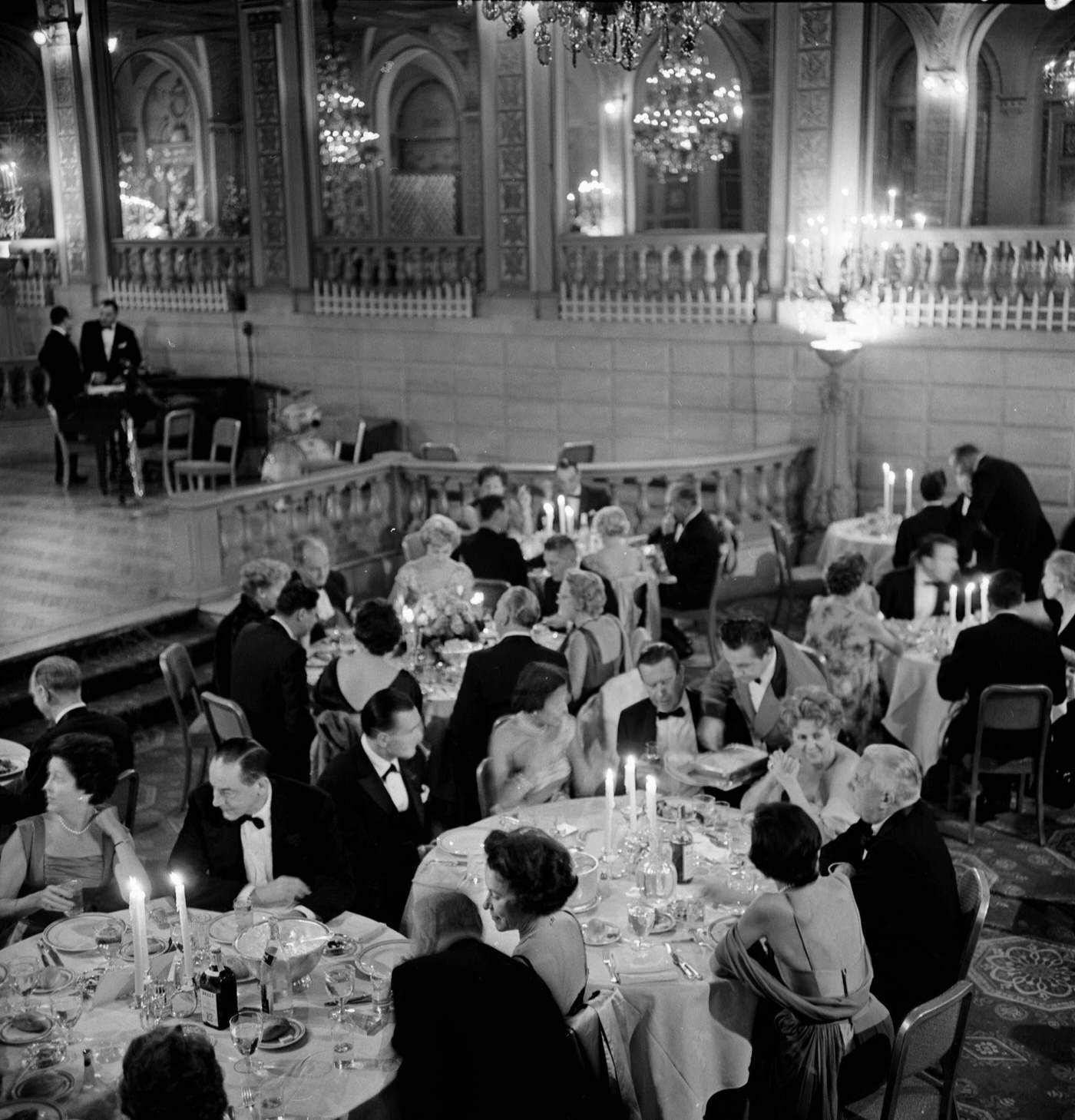
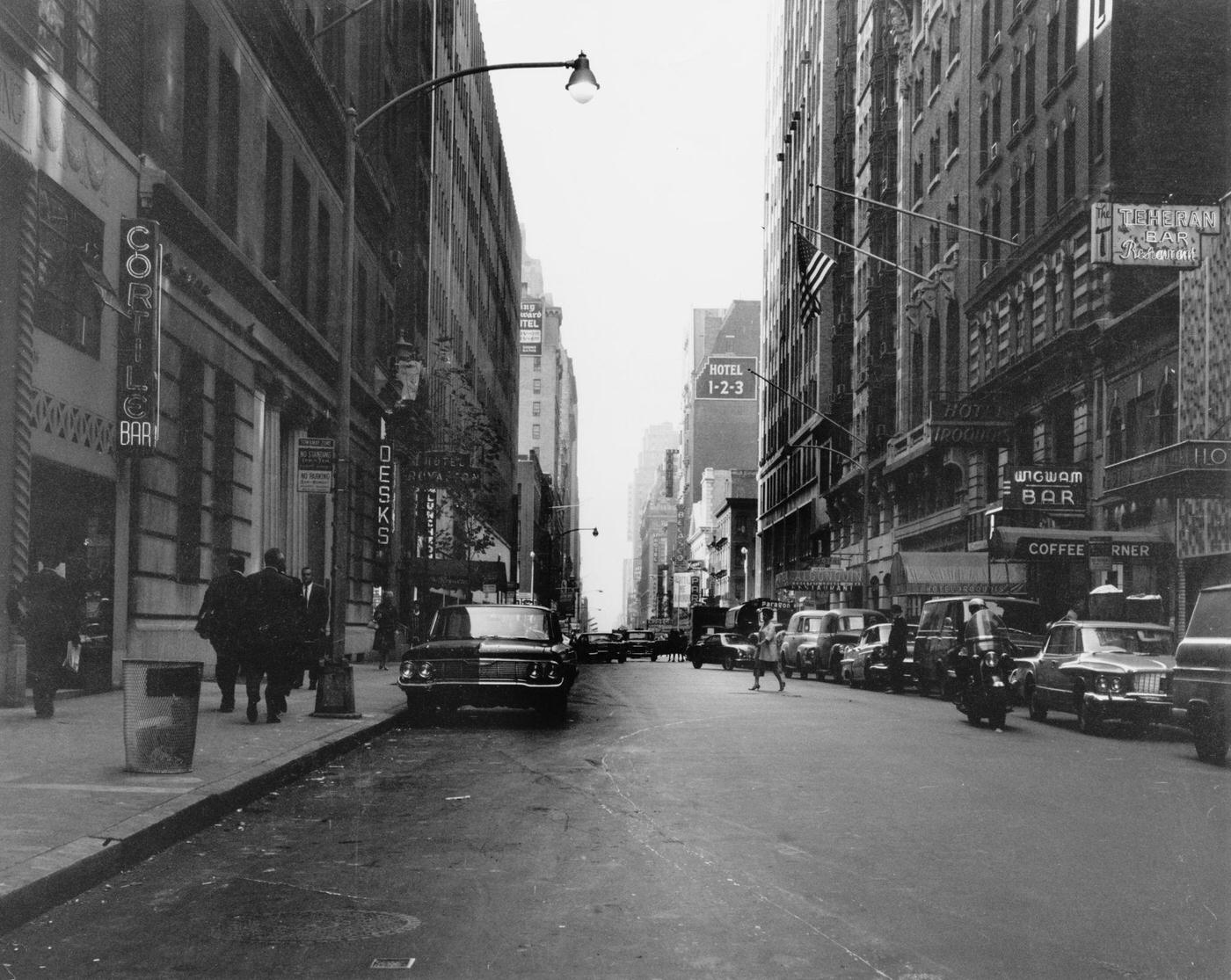
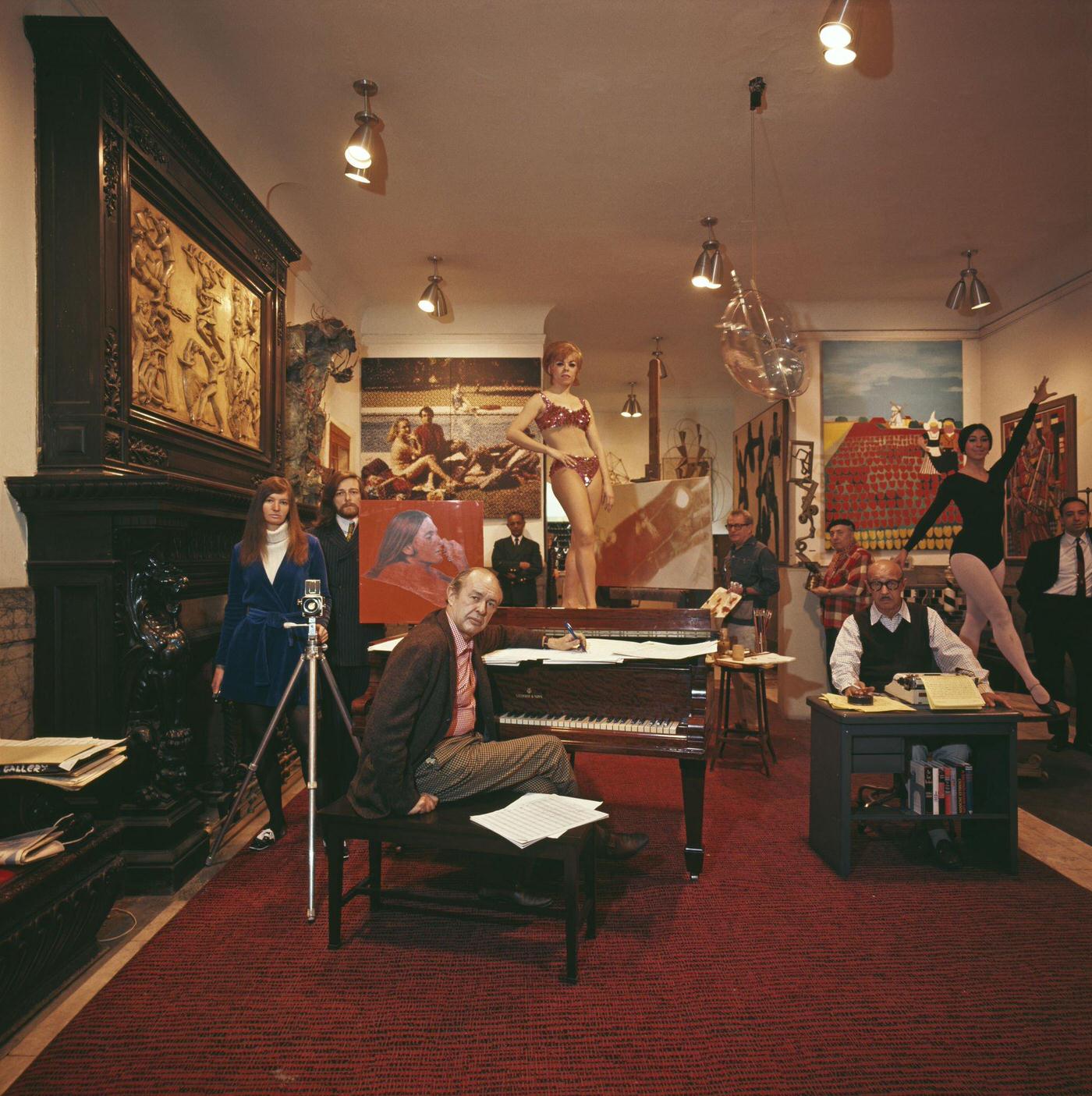
New York City had no shortage of iconic addresses. The Plaza Hotel on Fifth Avenue was the pinnacle of Manhattan luxury, hosting society balls and welcoming guests from around the world. The Hotel Algonquin, famous for its literary history, continued drawing writers and thinkers to its West 44th Street rooms. Meanwhile, the Chelsea Hotel on West 23rd Street was carving out a different kind of reputation — a haven for artists, musicians, and free spirits.
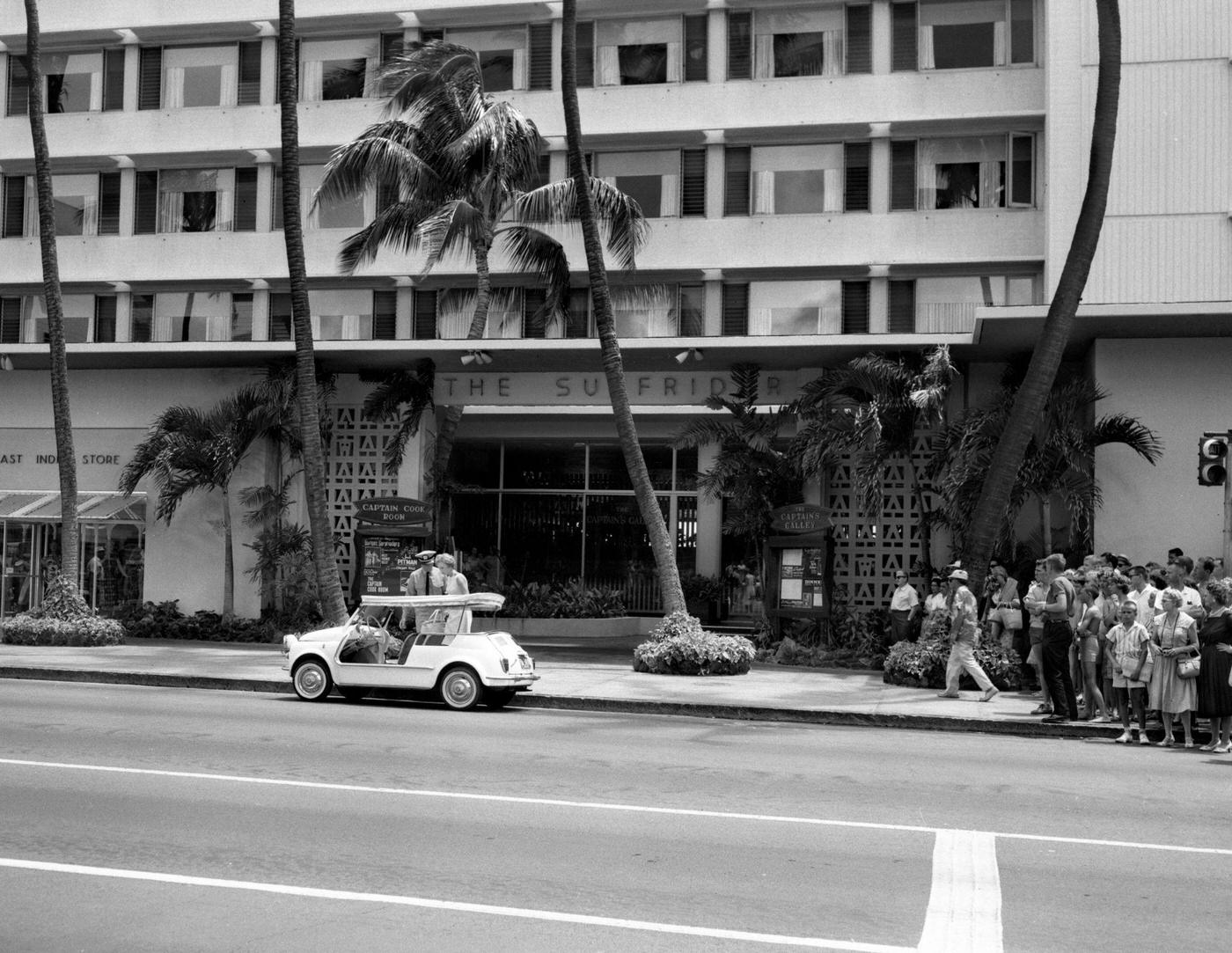
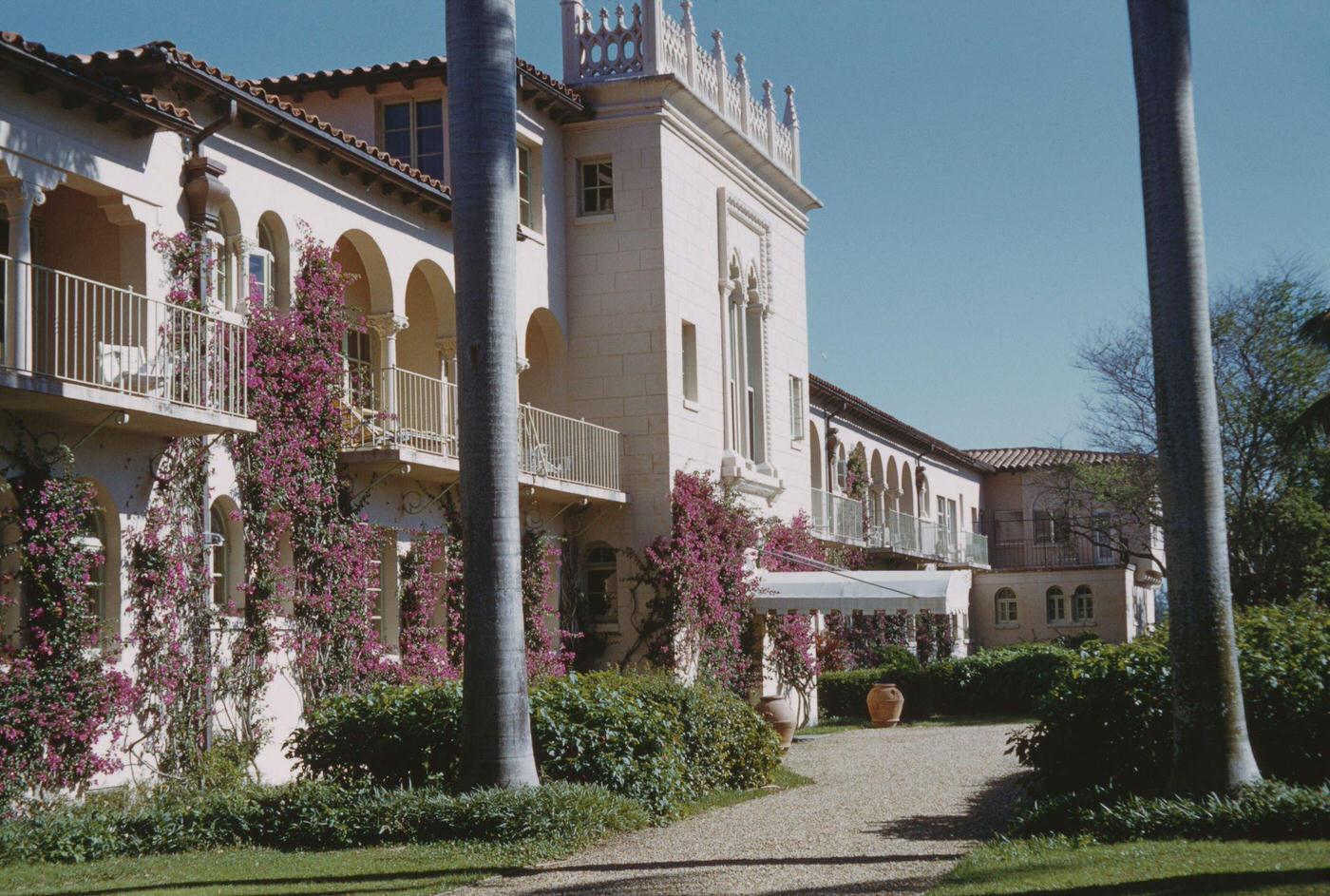
Beach destinations were just as popular. The Colony Hotel in Palm Beach drew the wealthy winter crowd to its pink facade and manicured grounds. In Hawaii, the Surfrider Hotel on Waikiki Beach offered guests a front-row seat to the Pacific, while the Queen Kapiolani Hotel nearby captured the spirit of tropical Honolulu in every detail.
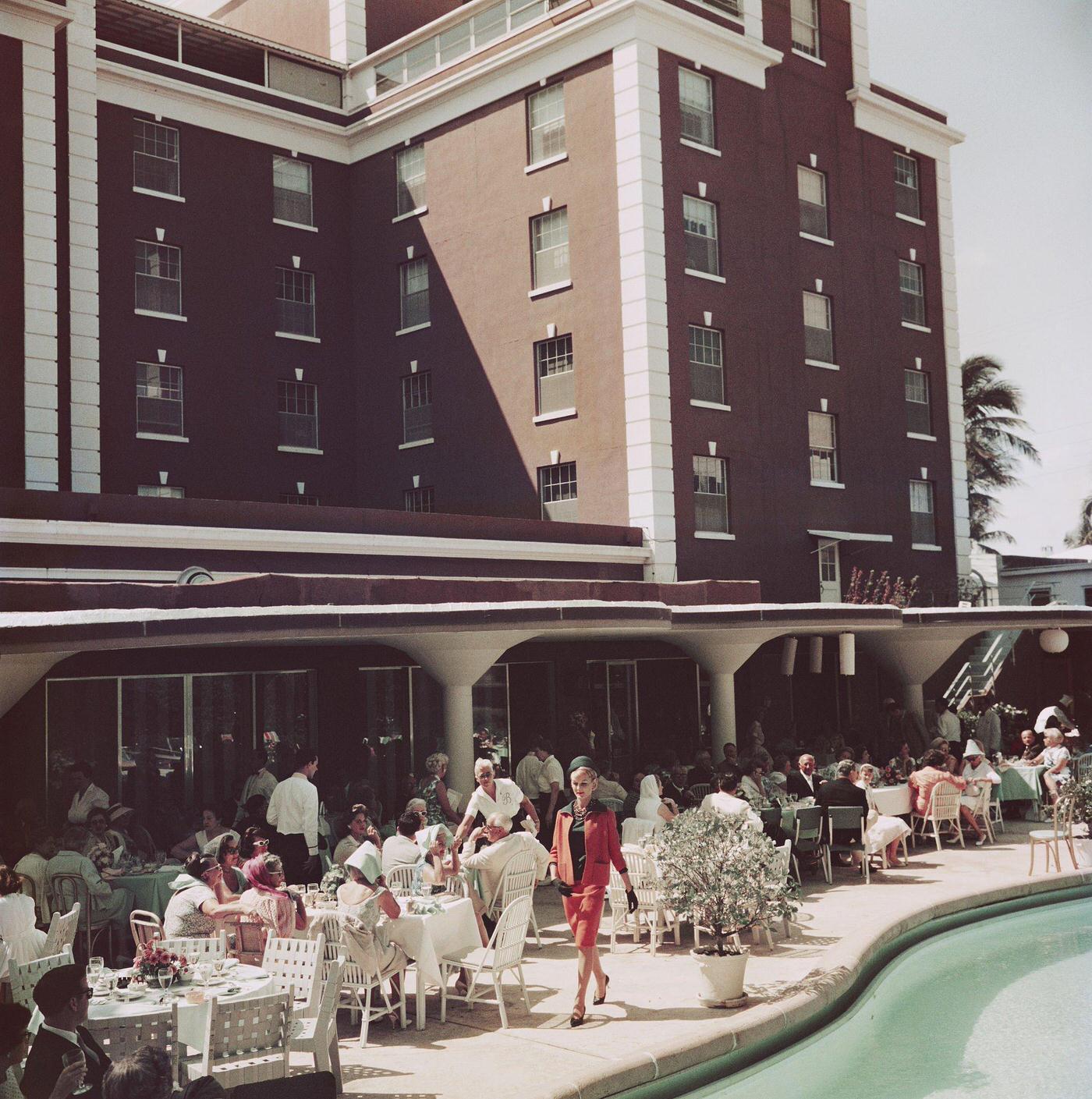
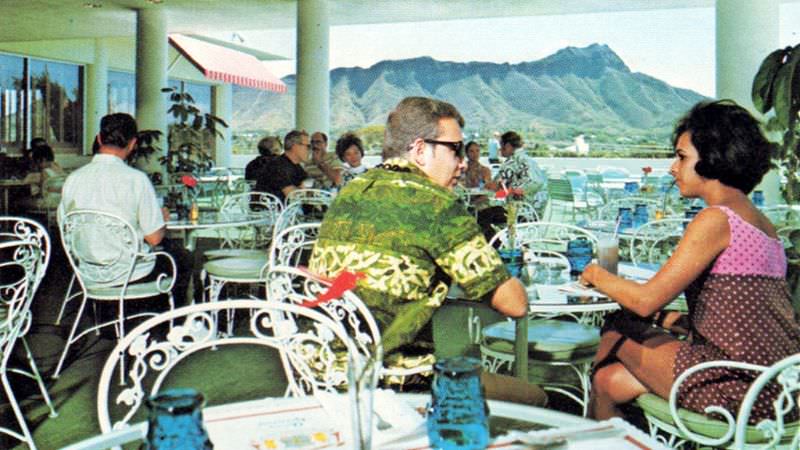
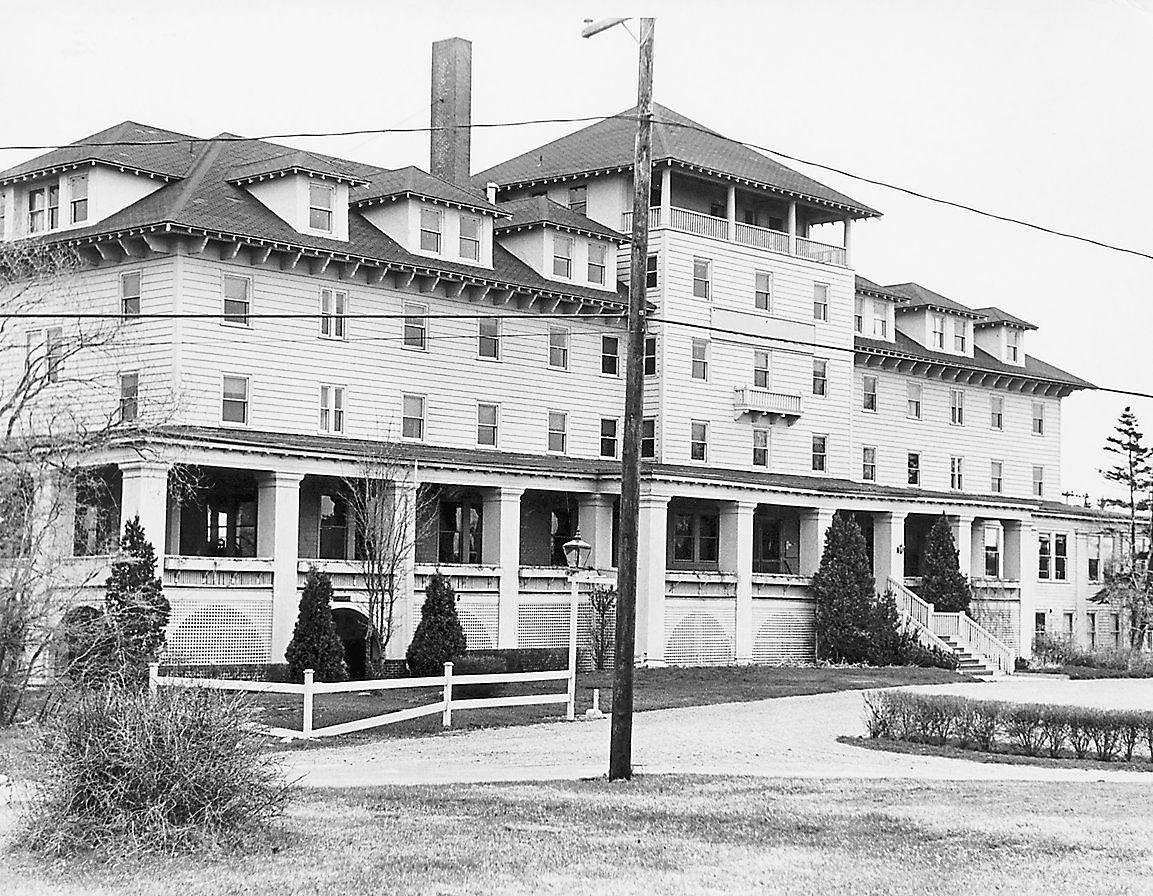
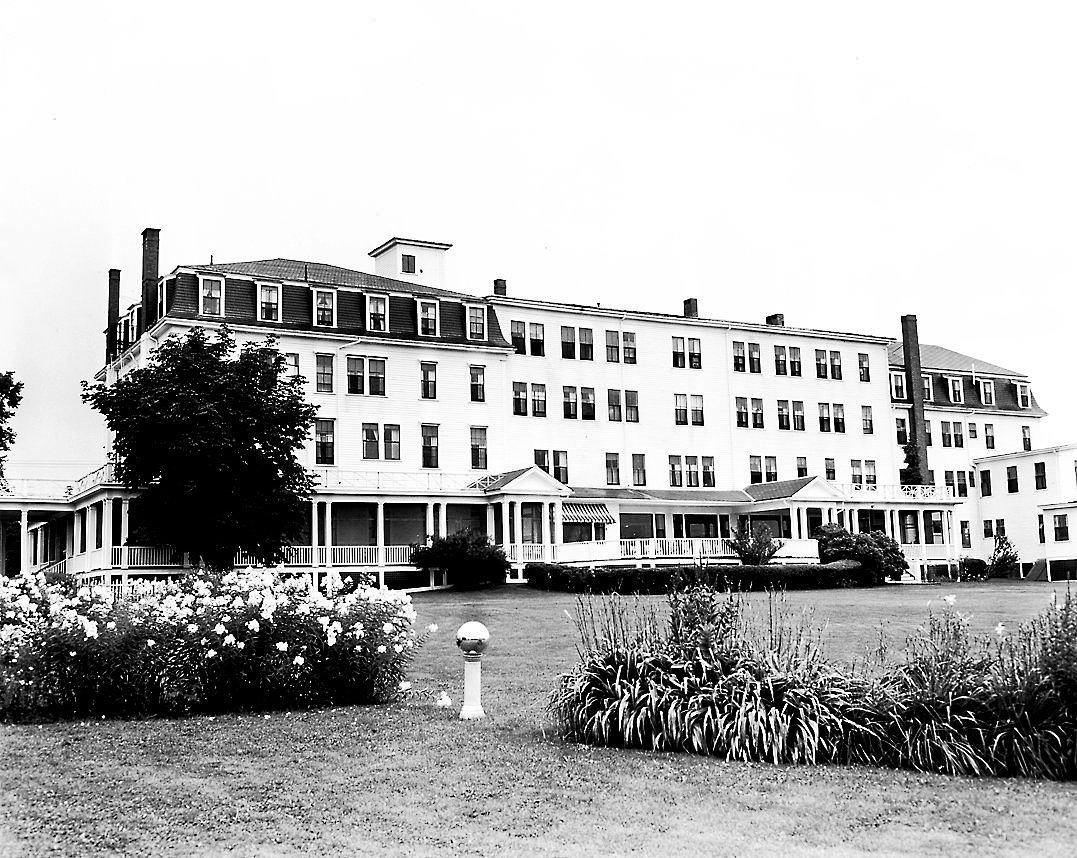
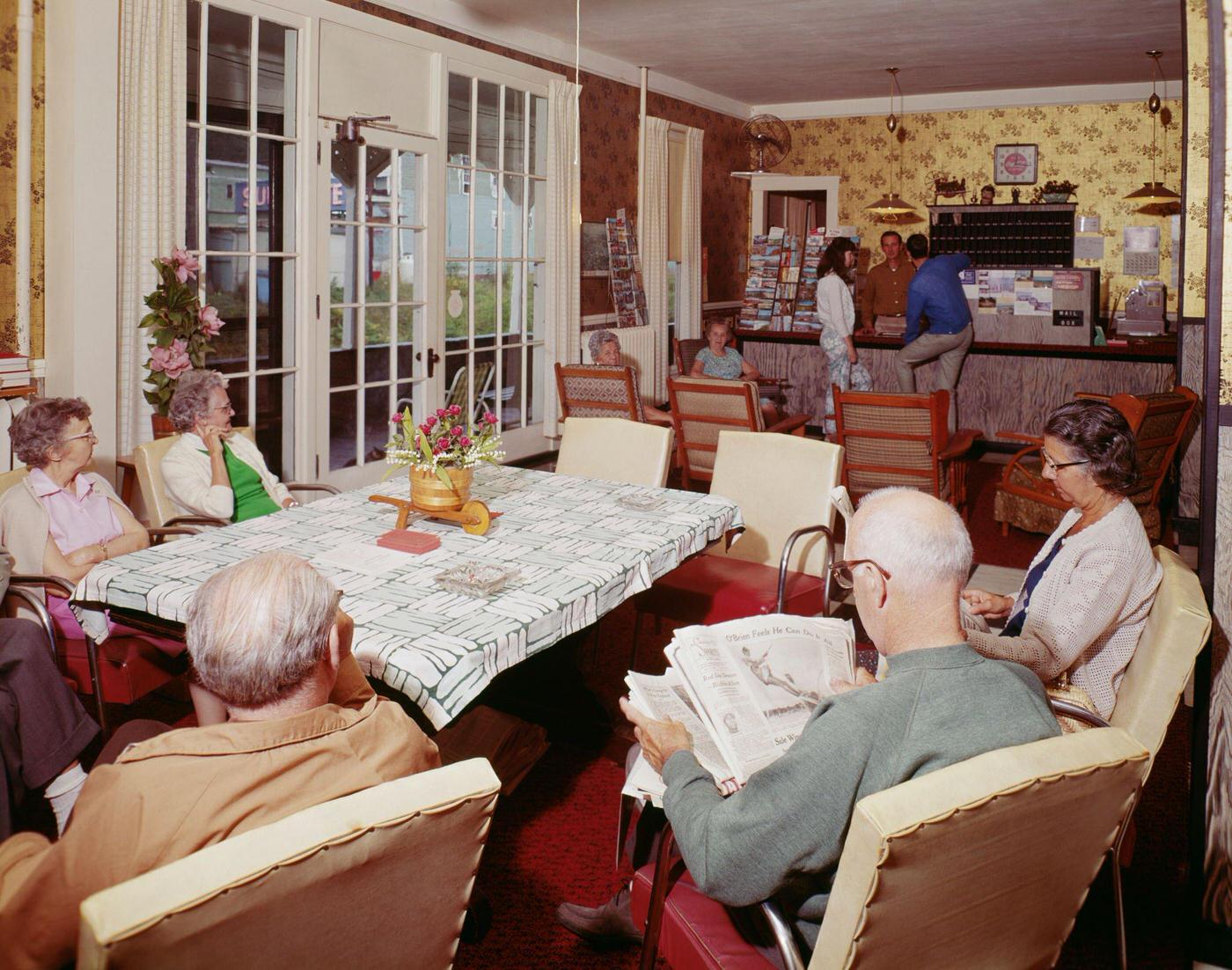
Swimming pools were a major selling point at virtually every hotel and motel across the country. A property with a pool had a clear edge over the competition. Kids spent long afternoons in the water while their parents relaxed in lounge chairs under the sun. At beach and lakeside properties, like the Lakeside Hotel at Weirs Beach in New Hampshire, guests had the best of both worlds.
Amenities that we take for granted today were genuine selling points in the 1960s. Air conditioning was rapidly becoming standard, especially in hot-weather states like Florida, Arizona, and Texas. Television sets were showing up in more rooms every year. And the Magic Fingers vibrating bed — activated by dropping a quarter into a bedside box — was a genuine novelty that guests talked about long after checkout.
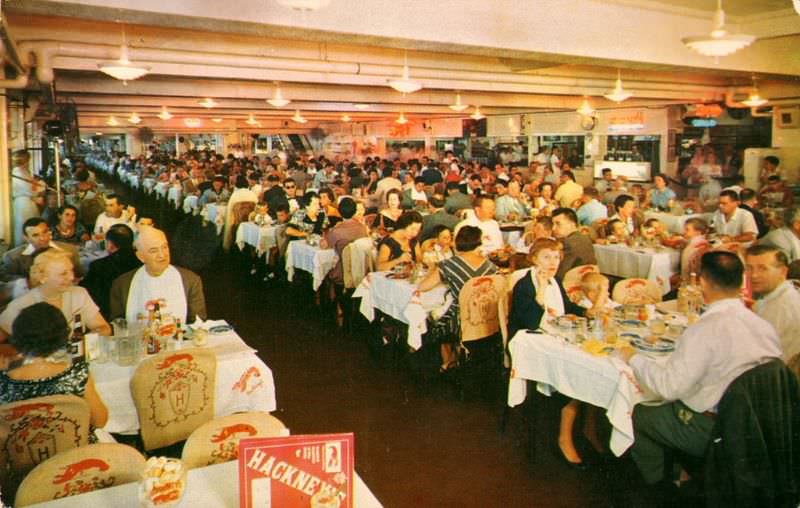
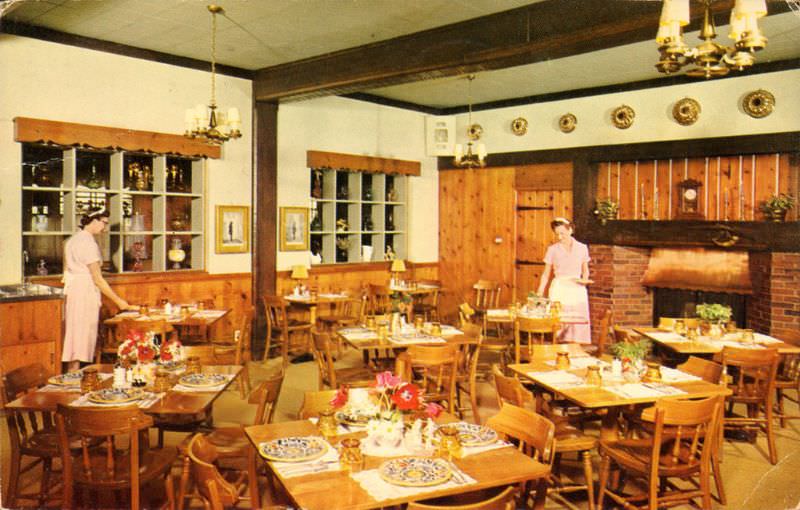
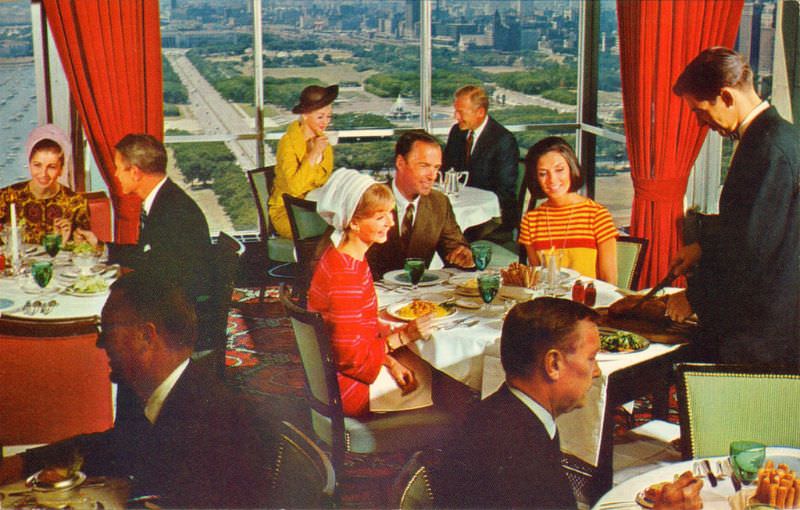
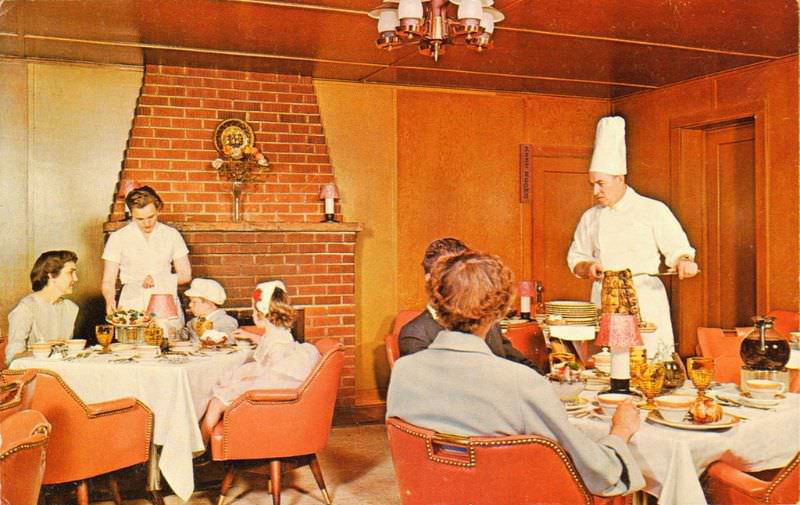
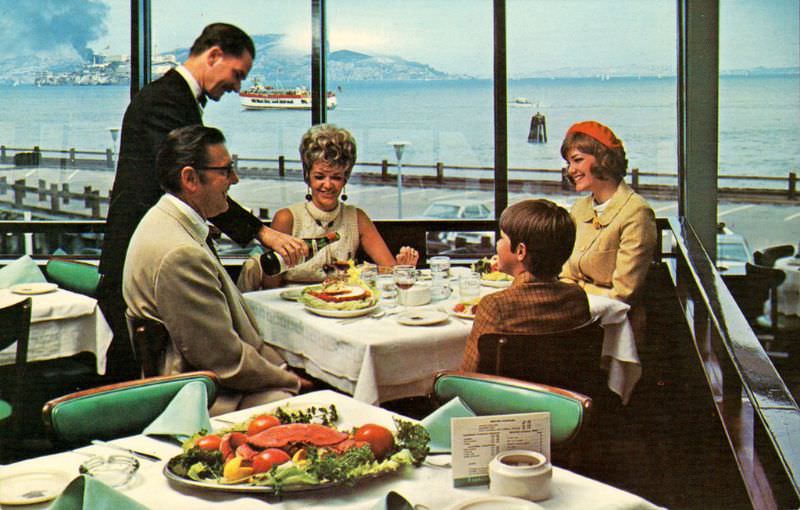
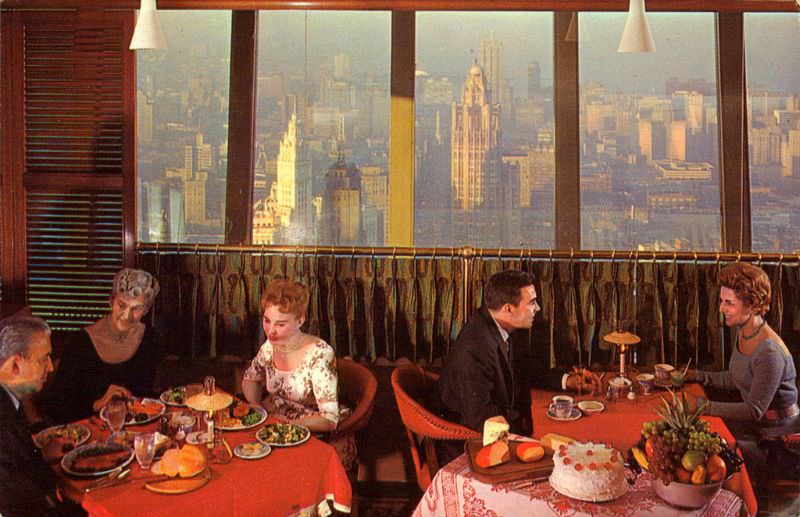
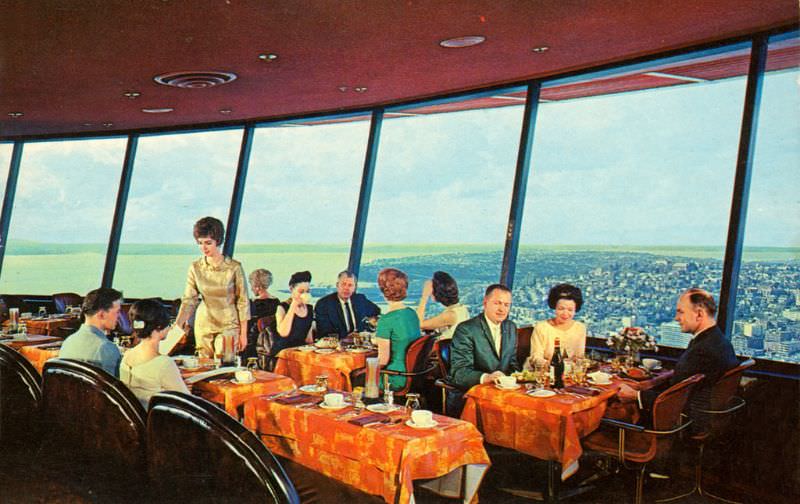
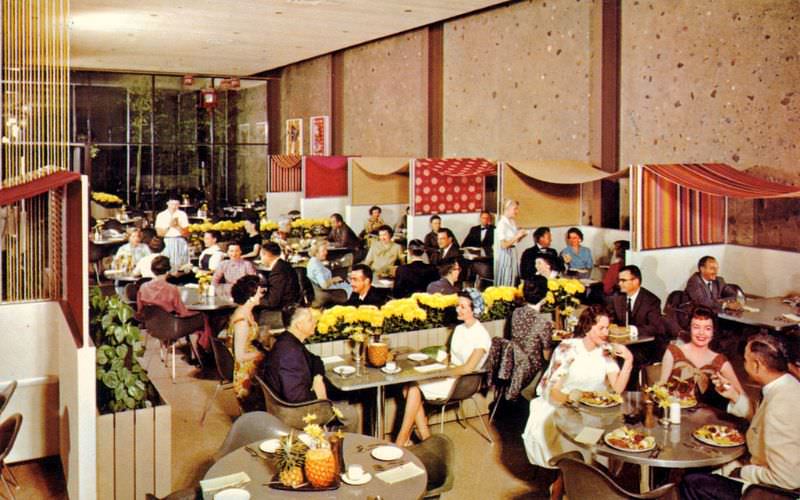
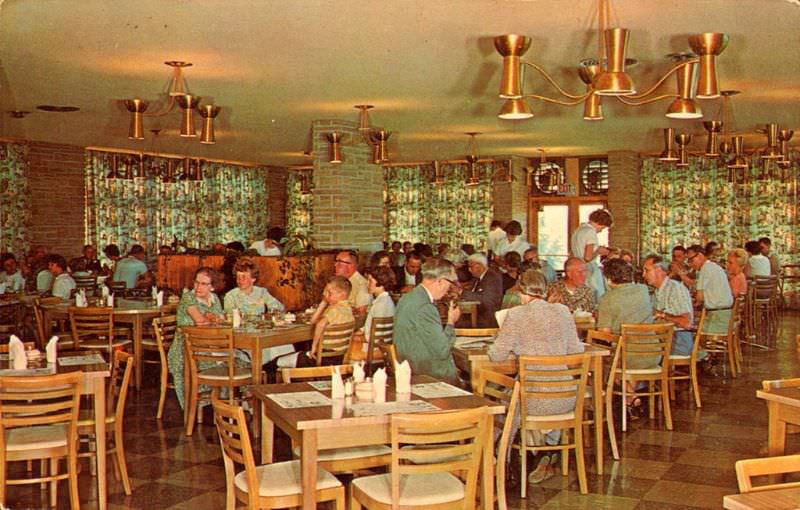
Hotel dining was a major part of the experience. On-site restaurants ranged from casual diners serving hearty breakfasts to upscale rooms with tablecloths and cocktail menus. Stouffer’s Top of the Rock in Chicago offered elevated dining with a view. The Space Needle Restaurant in Seattle, opened for the 1962 World’s Fair, became one of the most recognizable dining rooms in the country — a revolving restaurant perched 500 feet above the city.
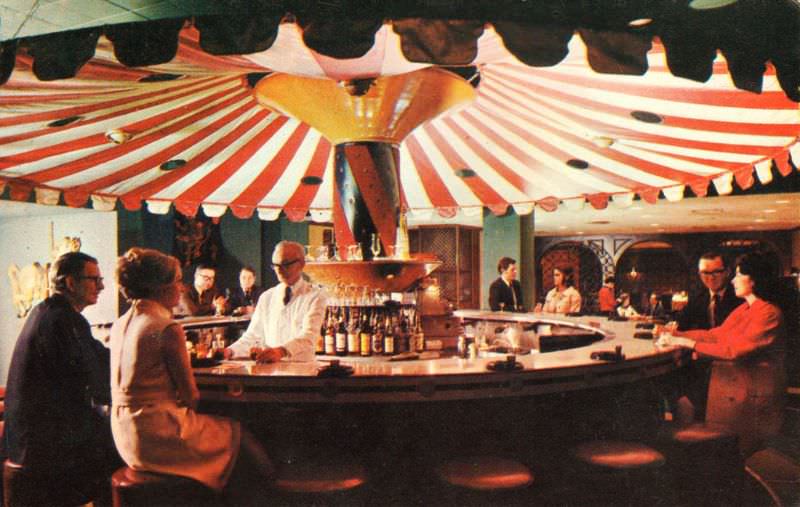
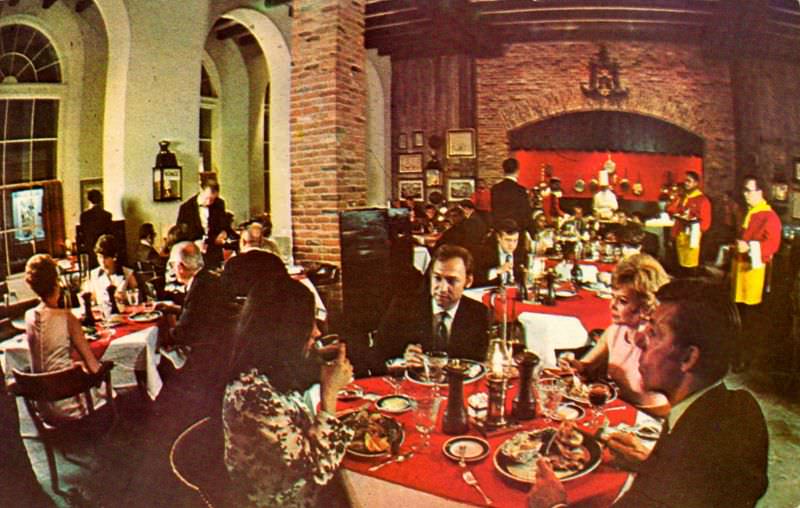
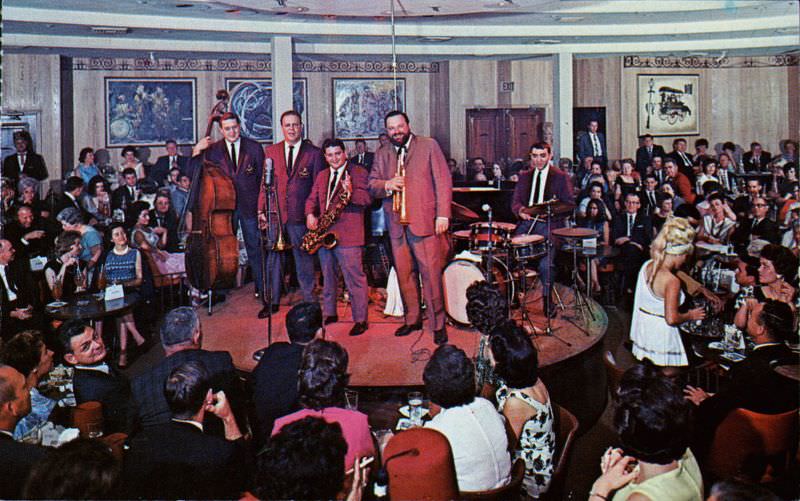
New Orleans brought its own distinct flavor to the hotel scene. The Carousel Bar inside the Hotel Monteleone was — and still is — a slow-revolving bar where guests sipped cocktails as the room turned around them. The Rib Room at the Royal Orleans Hotel offered white-tablecloth dining in a city that took its food seriously. Jazz clubs like Al Hirt’s on Bourbon Street meant the nightlife spilled well beyond the hotel walls.
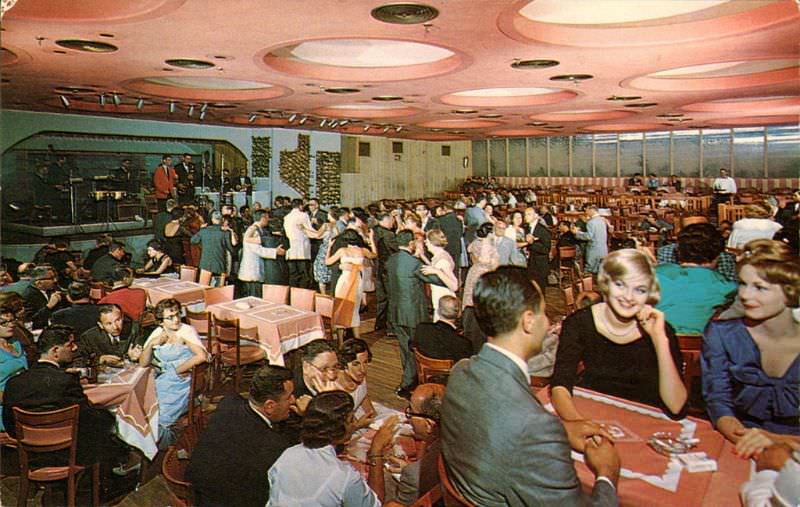
The Catskill Mountains of New York hosted a string of resort hotels that were a world unto themselves. Grossinger’s, The Flagler, and The Granit were pillars of the so-called Borscht Belt — a network of Jewish resorts that drew city families north every summer for entertainment, food, and relaxation. Their grand terrace rooms and dining halls were packed from June through Labor Day.
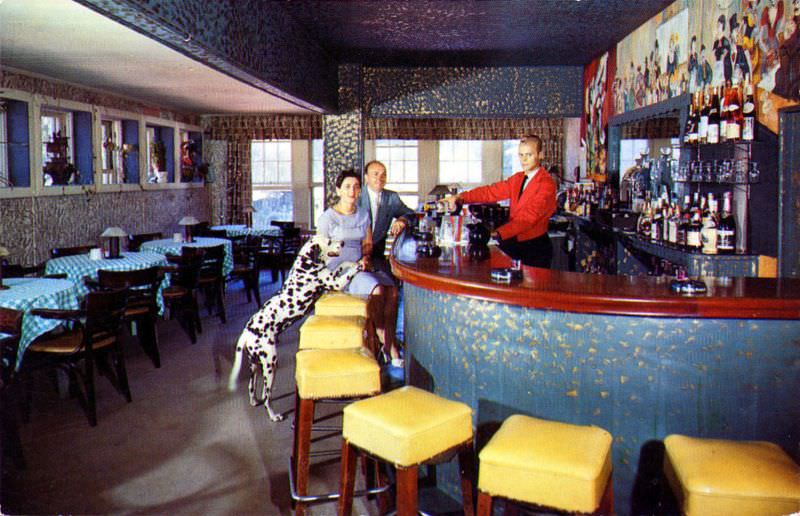
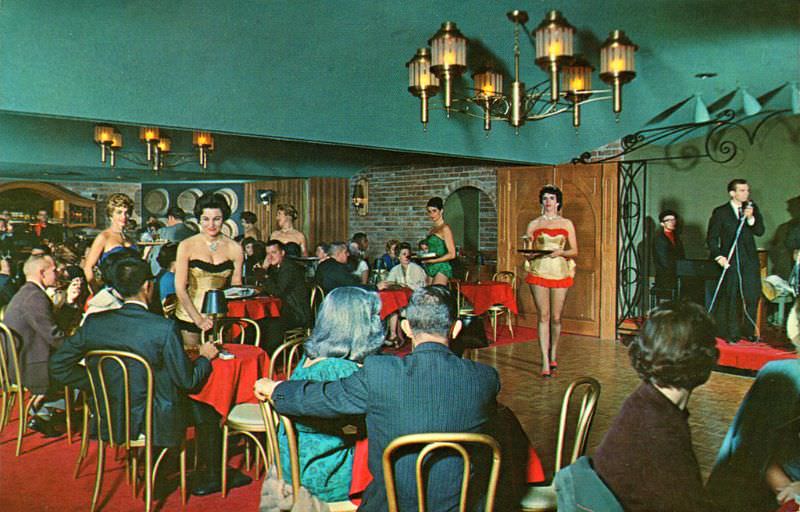
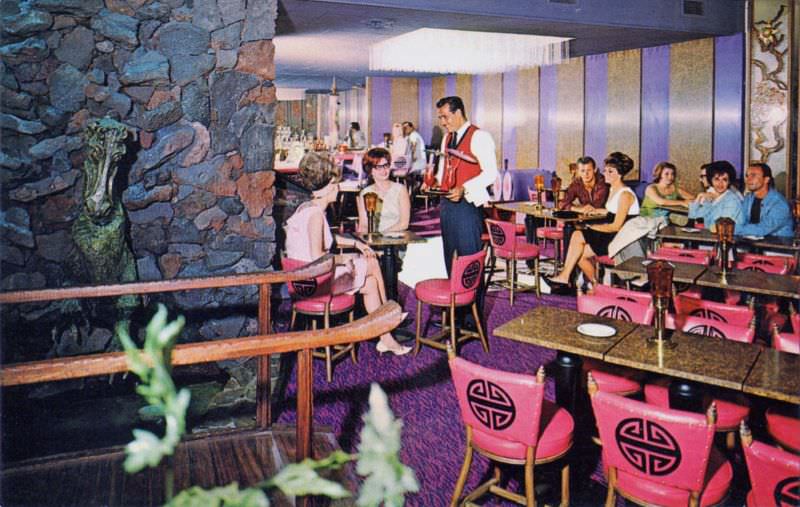
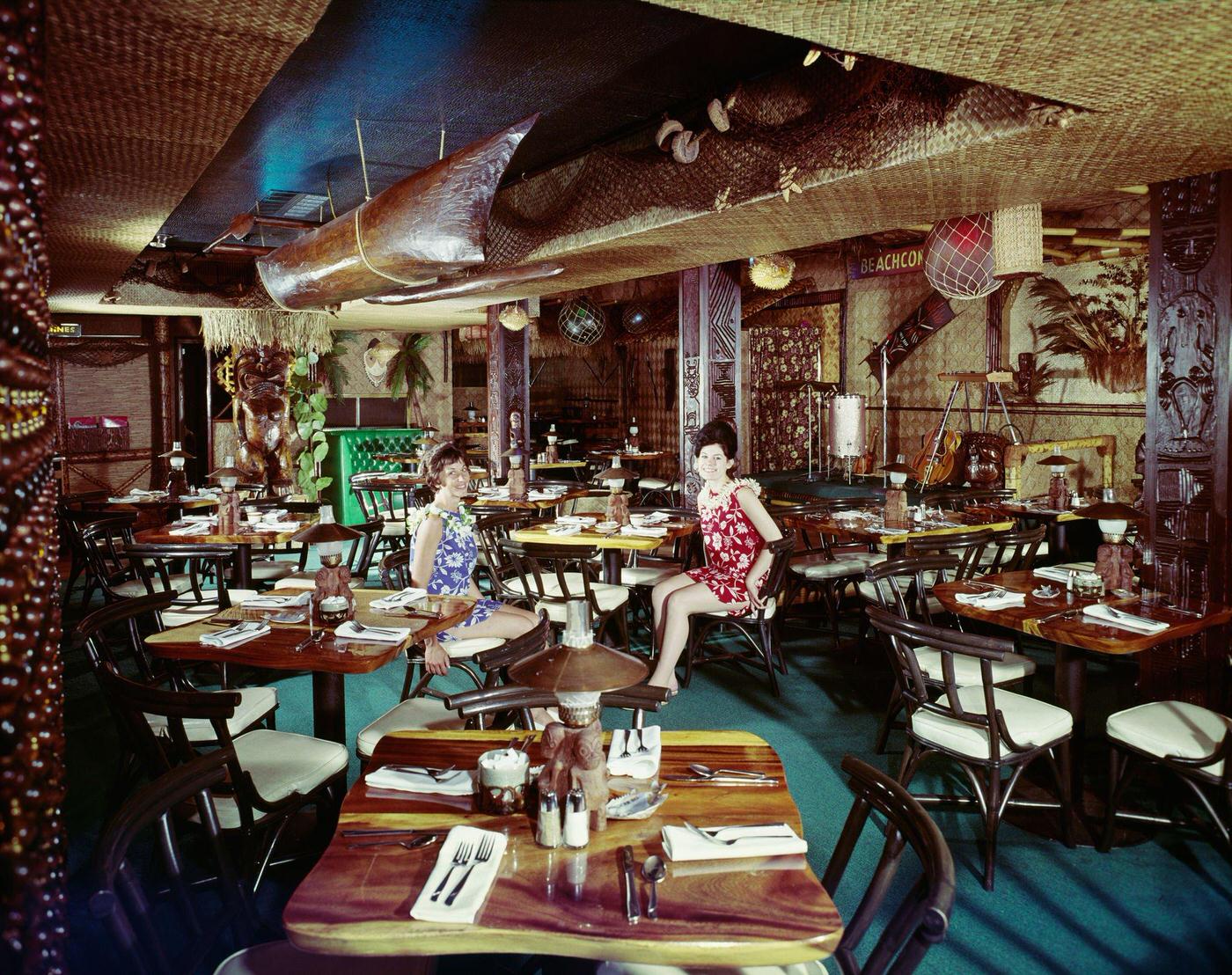
Miami Beach had its own version of resort glamour. The Castaways Motel offered guests a Polynesian-themed escape, complete with a Shinto Temple Dining Room and a Tahitian Bar hosted by the larger-than-life Stanley. Florida’s tropical climate made themed environments easy to pull off, and hotels leaned into it fully.
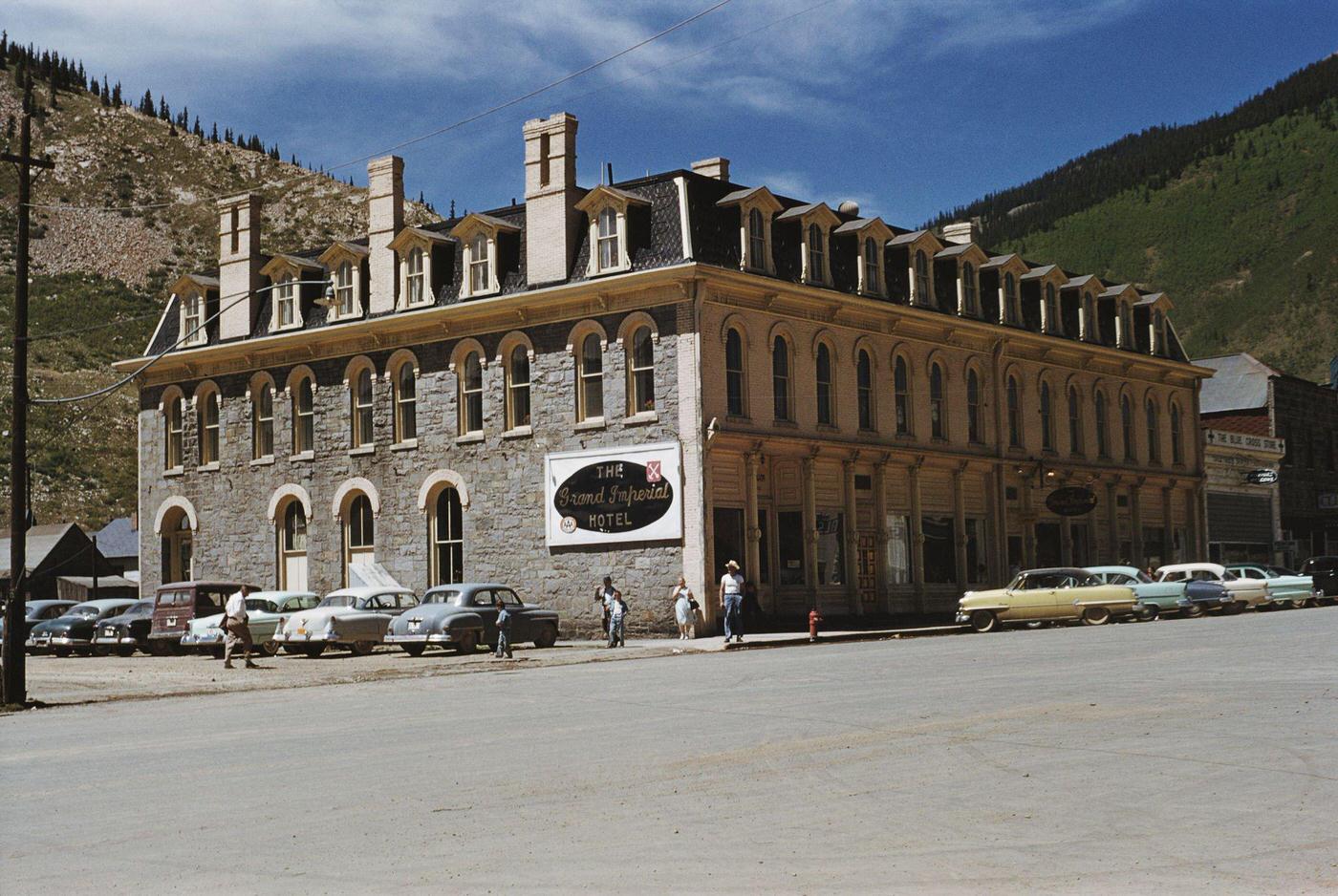
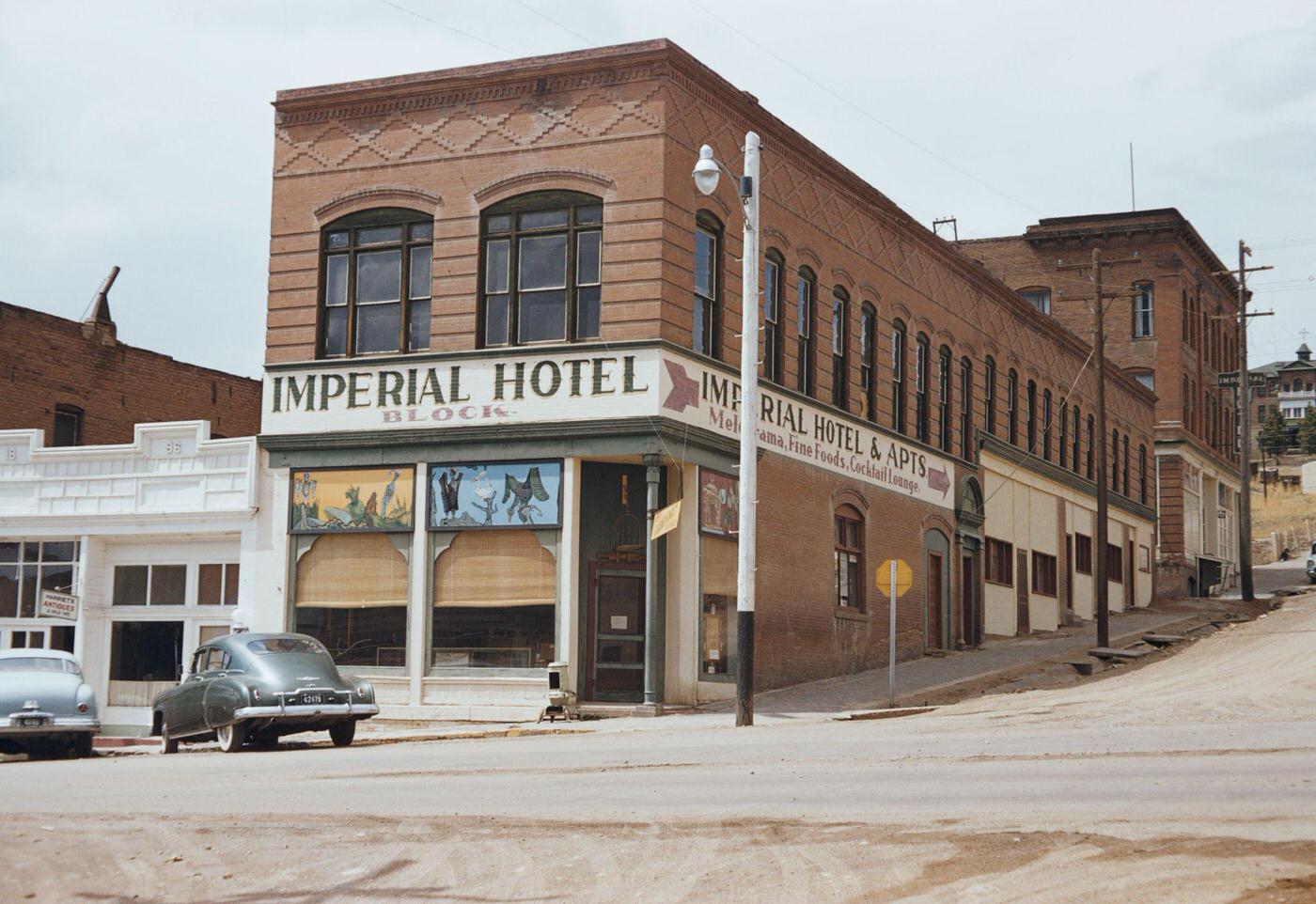
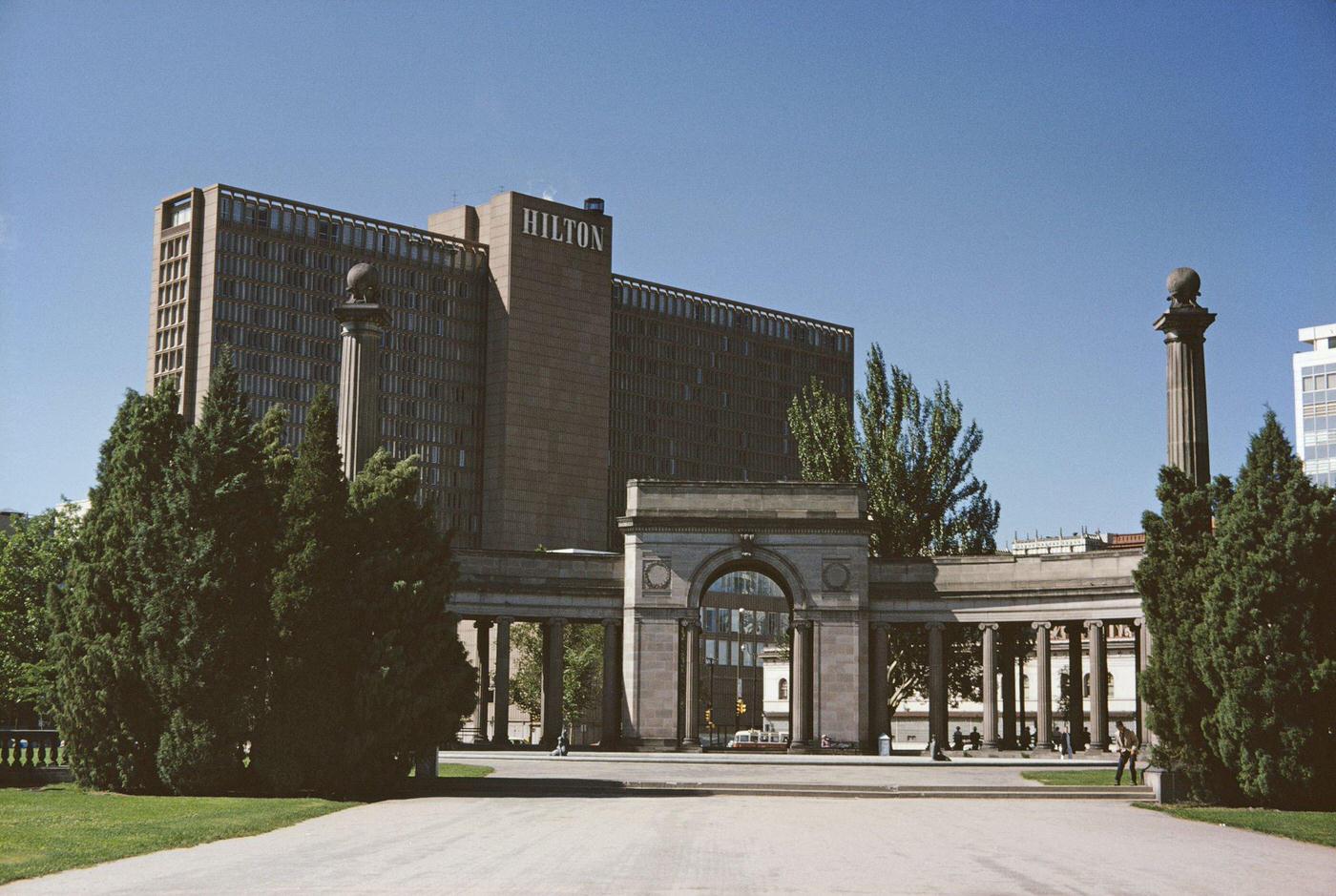
Colorado’s historic hotel stock was also going strong in the early part of the decade. The Grand Imperial Hotel in Silverton and the Imperial Hotel in Cripple Creek were both surviving relics of the Victorian mining era, still welcoming guests a century after they were built. The Hilton in Denver, photographed from the Civic Center in 1962, represented the modern counterpoint — sleek, tall, and squarely aimed at the business traveler.
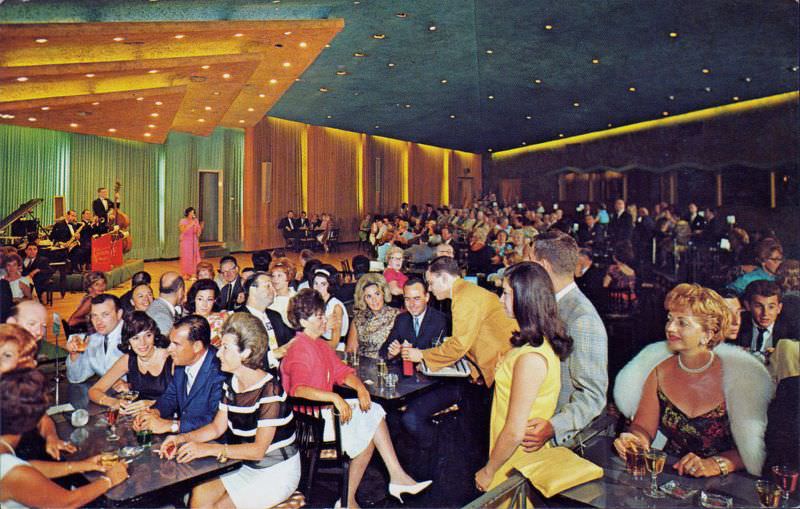
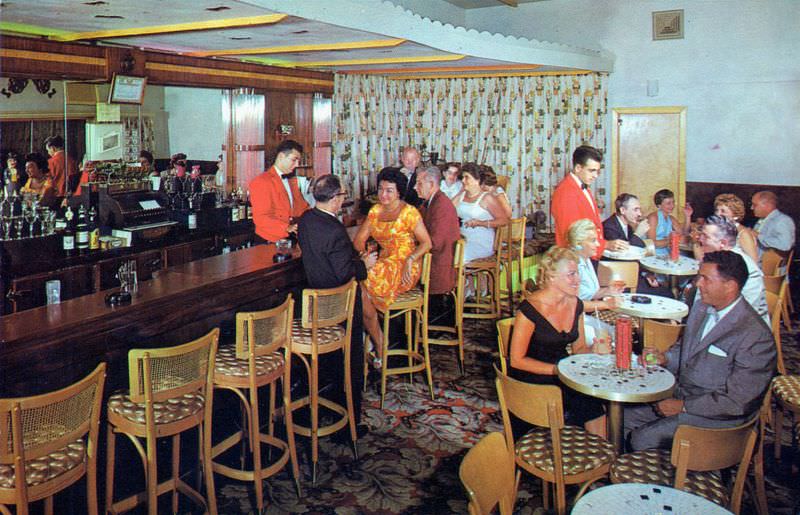
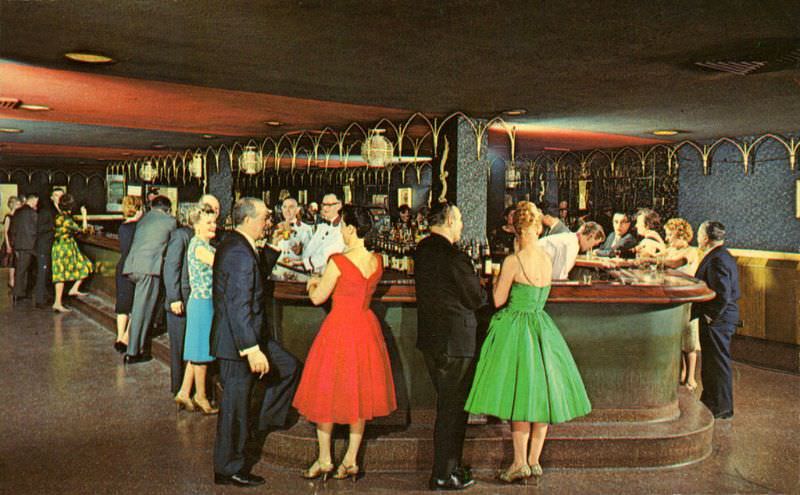
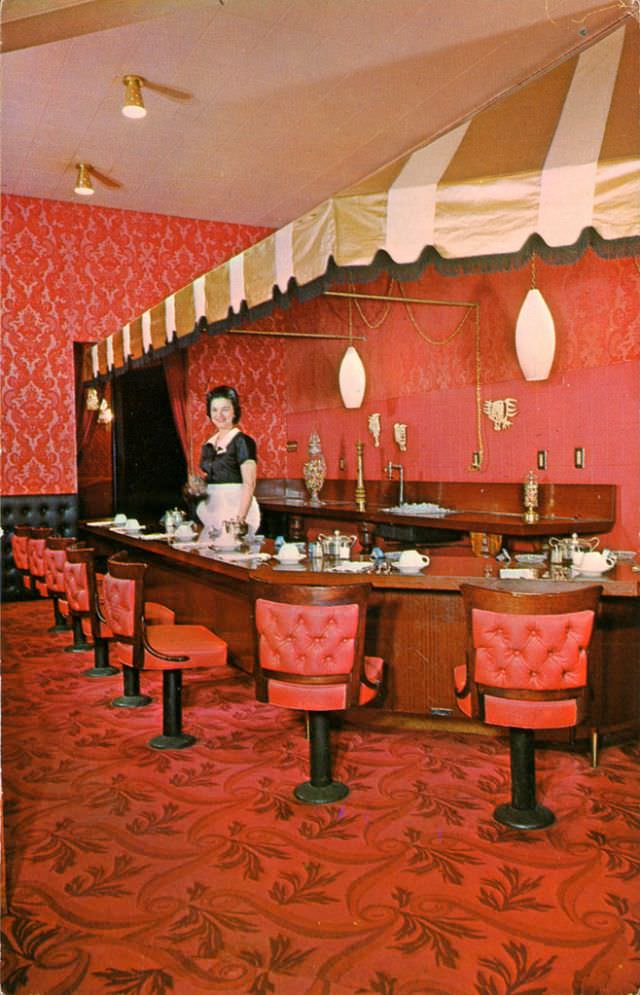
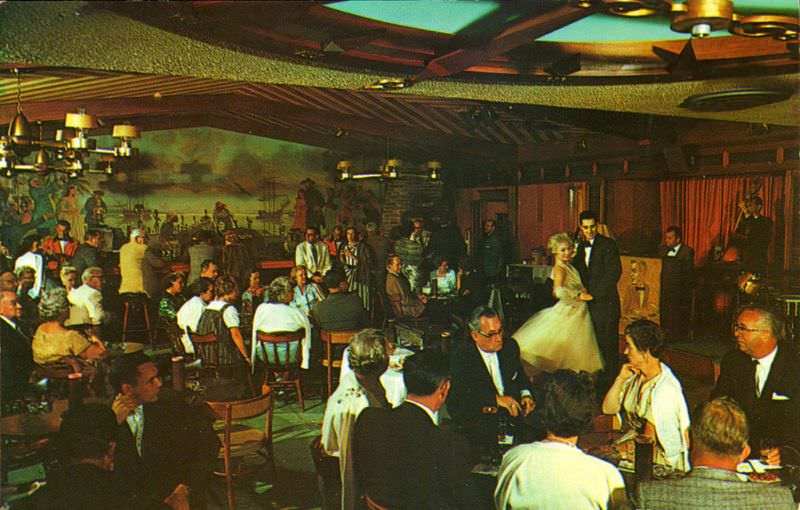
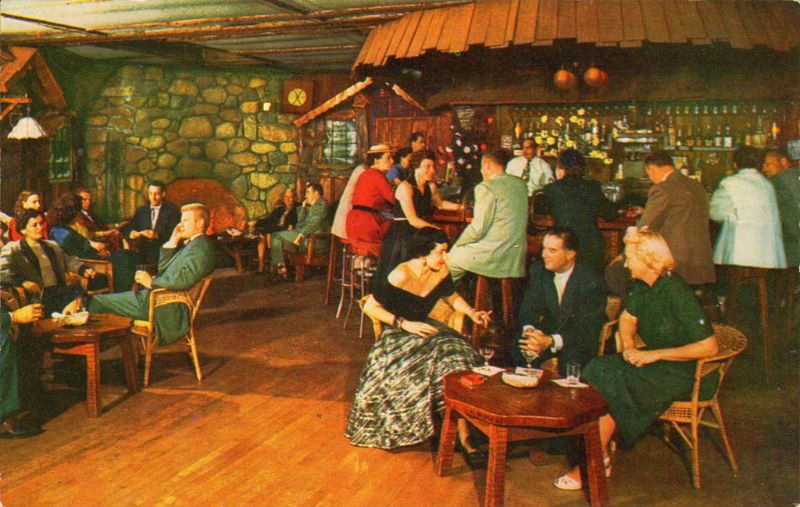
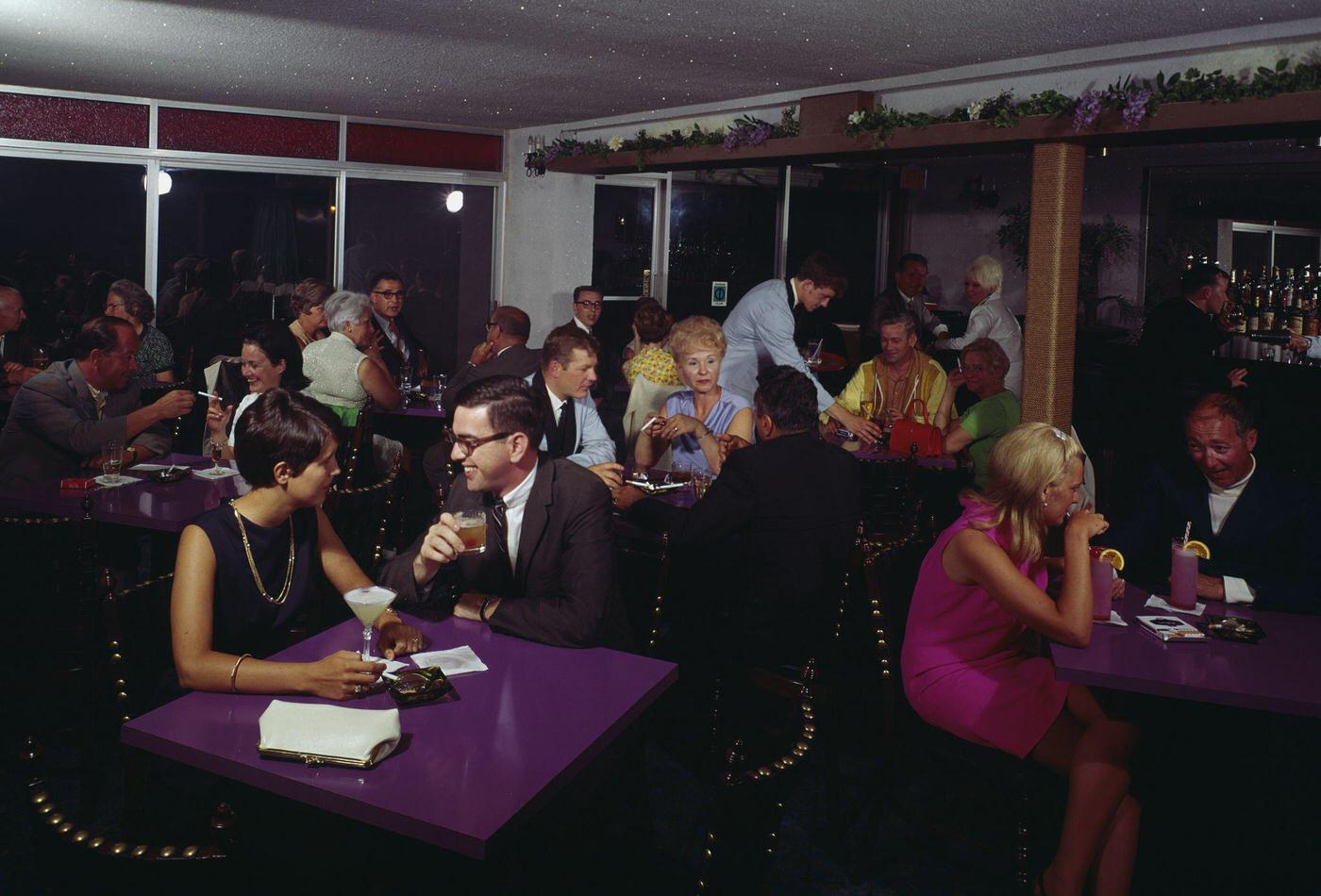
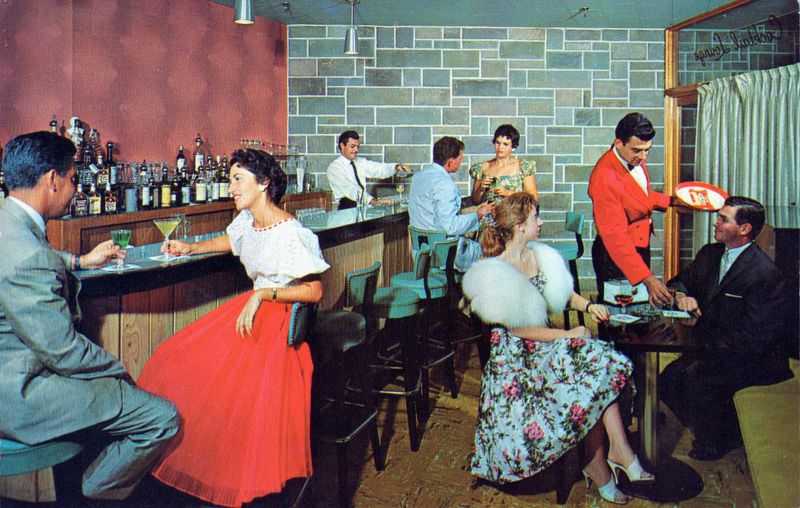
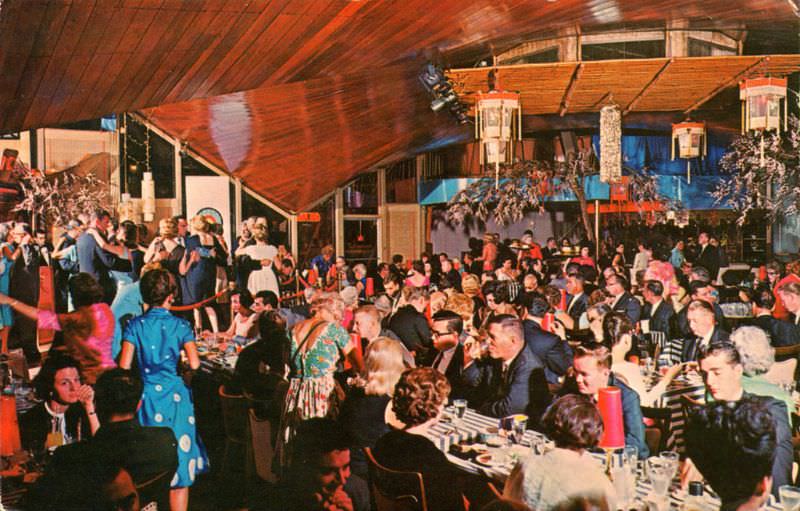
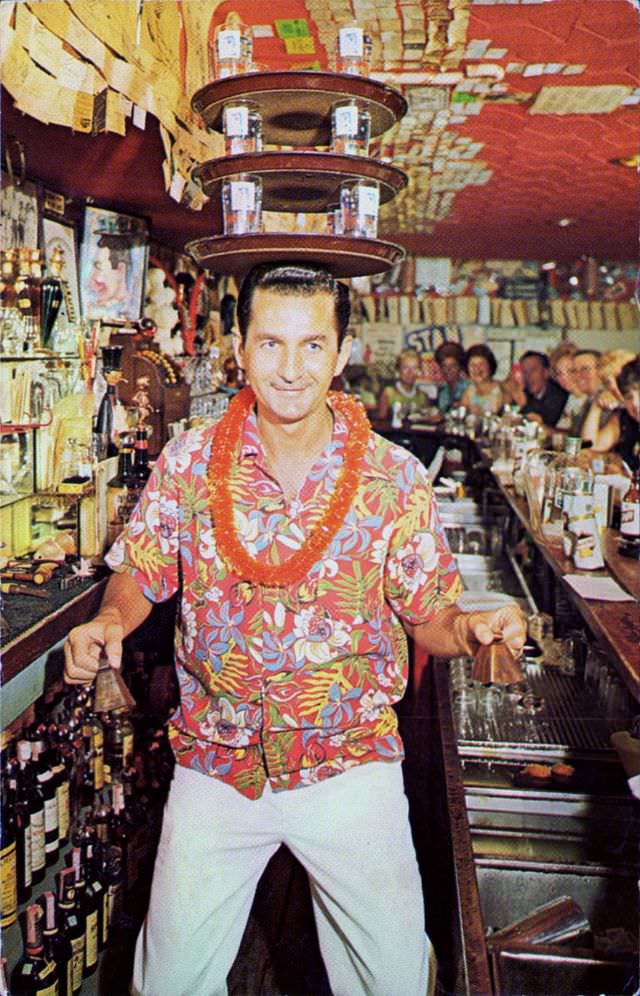
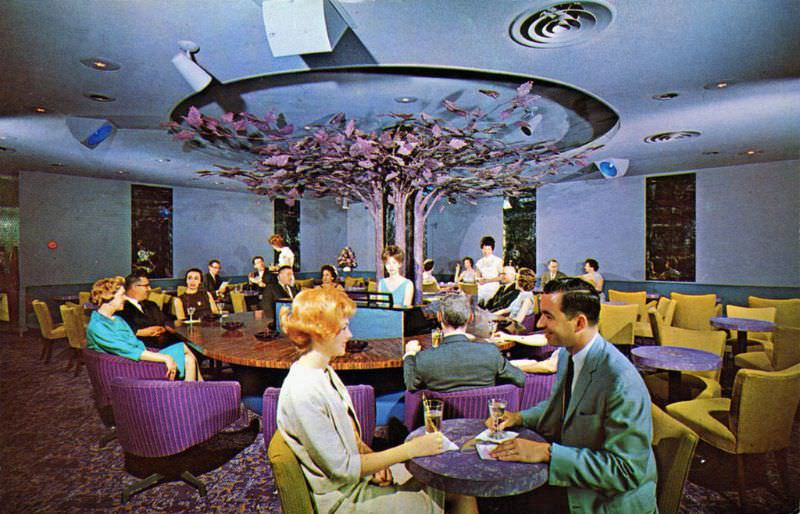
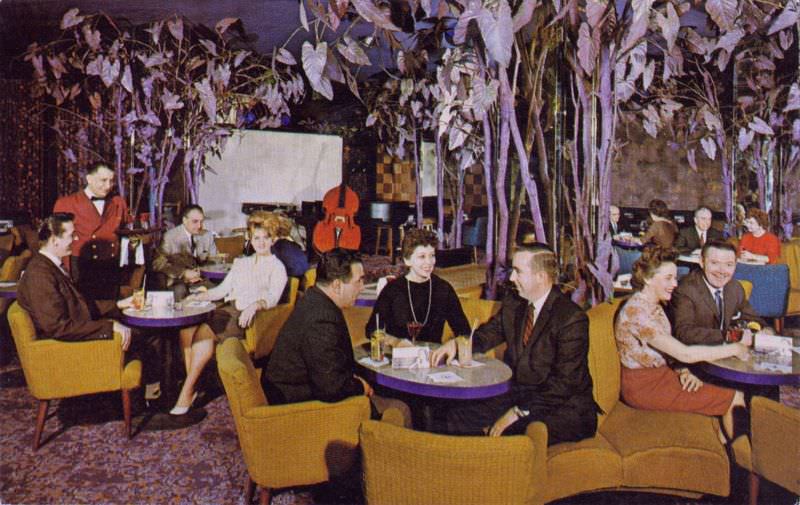
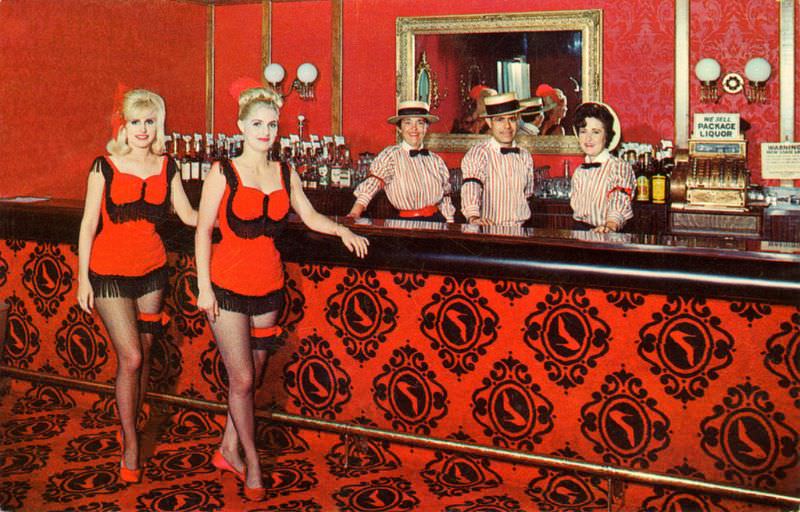
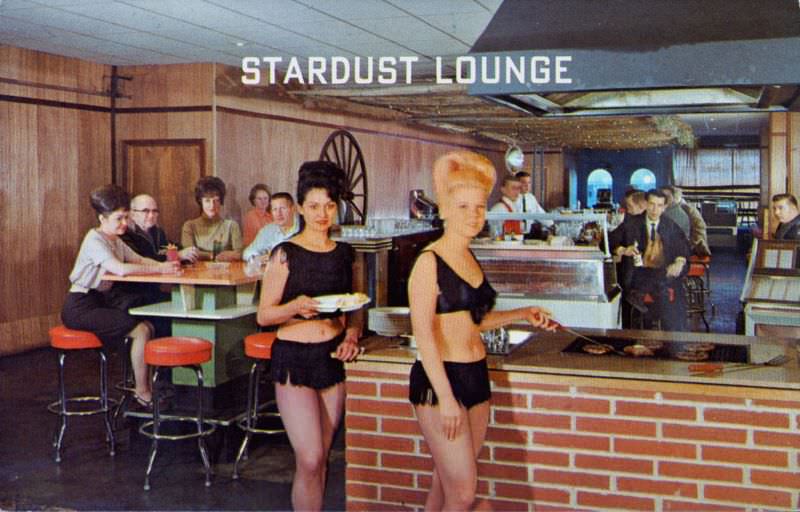
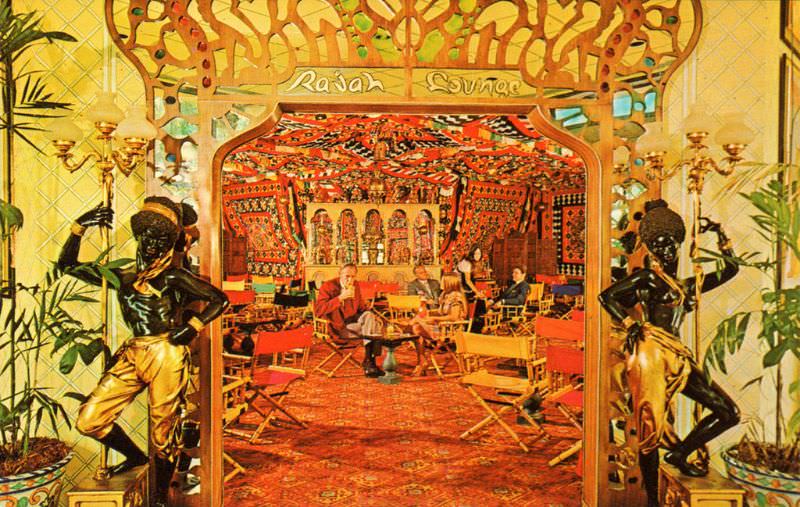
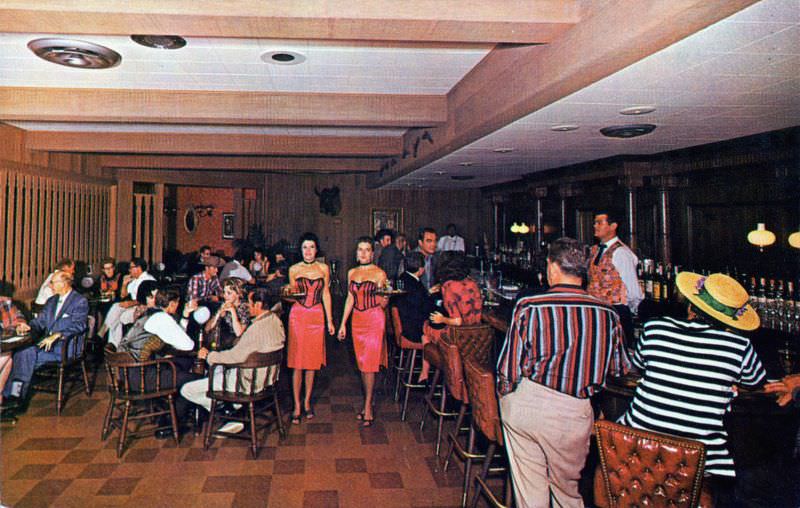
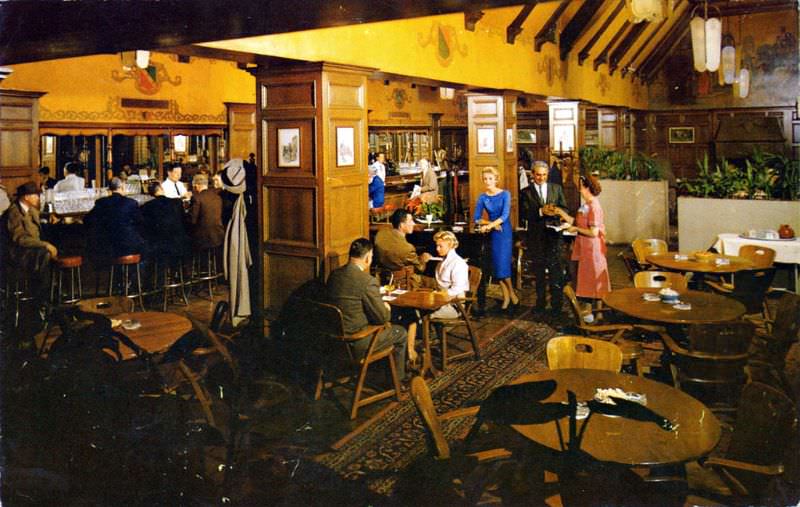
Cocktail lounges were a cornerstone of 1960s hotel culture. From the Purple Tree Lounge at the Manger Hotel in Indianapolis and Rochester, to the Red Slipper Cocktail Lounge in Springfield, Missouri, and the Stardust Lounge in Rockford, Illinois, these dimly lit rooms with their vinyl booths and elaborate back-bar displays were where guests wound down after dinner. The drinks were strong, the decor was bold, and the mood was unmistakably mid-century.
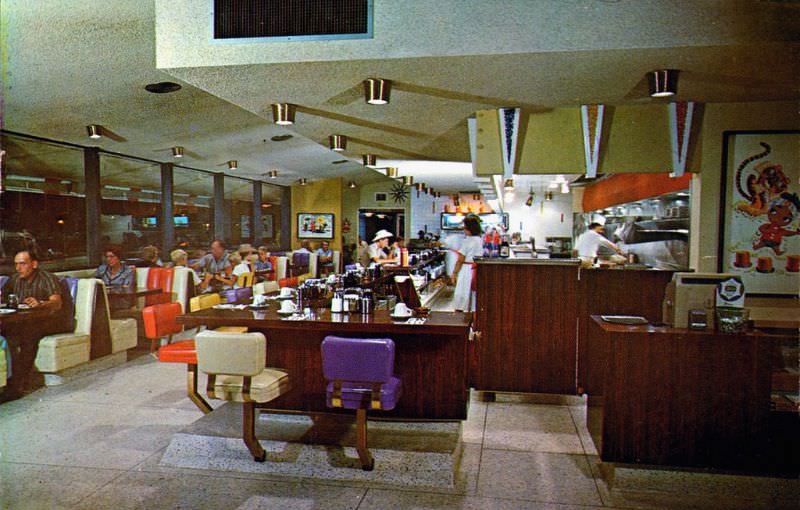
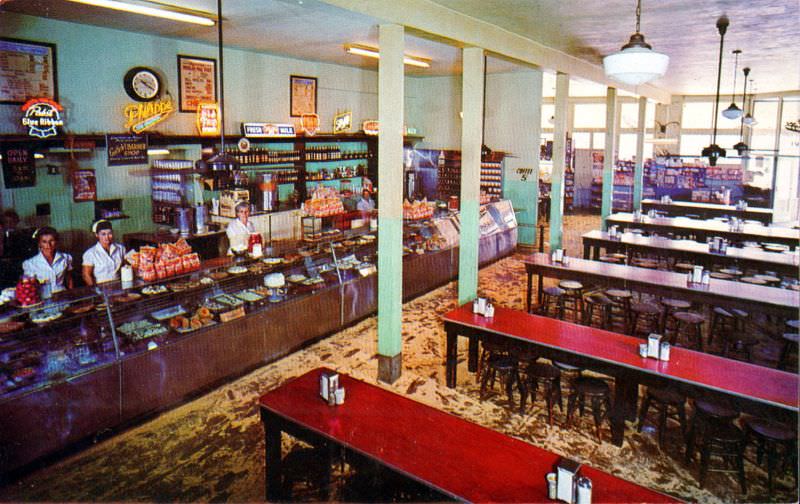
Roadside dining was inseparable from the road trip experience. Sambo’s Pancakes in Blythe, California, was a familiar stop for travelers crossing the desert. The Nut Tree in California offered a sprawling restaurant and gift shop complex that became a destination in its own right. Philippe’s Restaurant in Los Angeles drew locals and visitors alike with its legendary French dip sandwiches, a tradition that stretched back well before the 1960s.
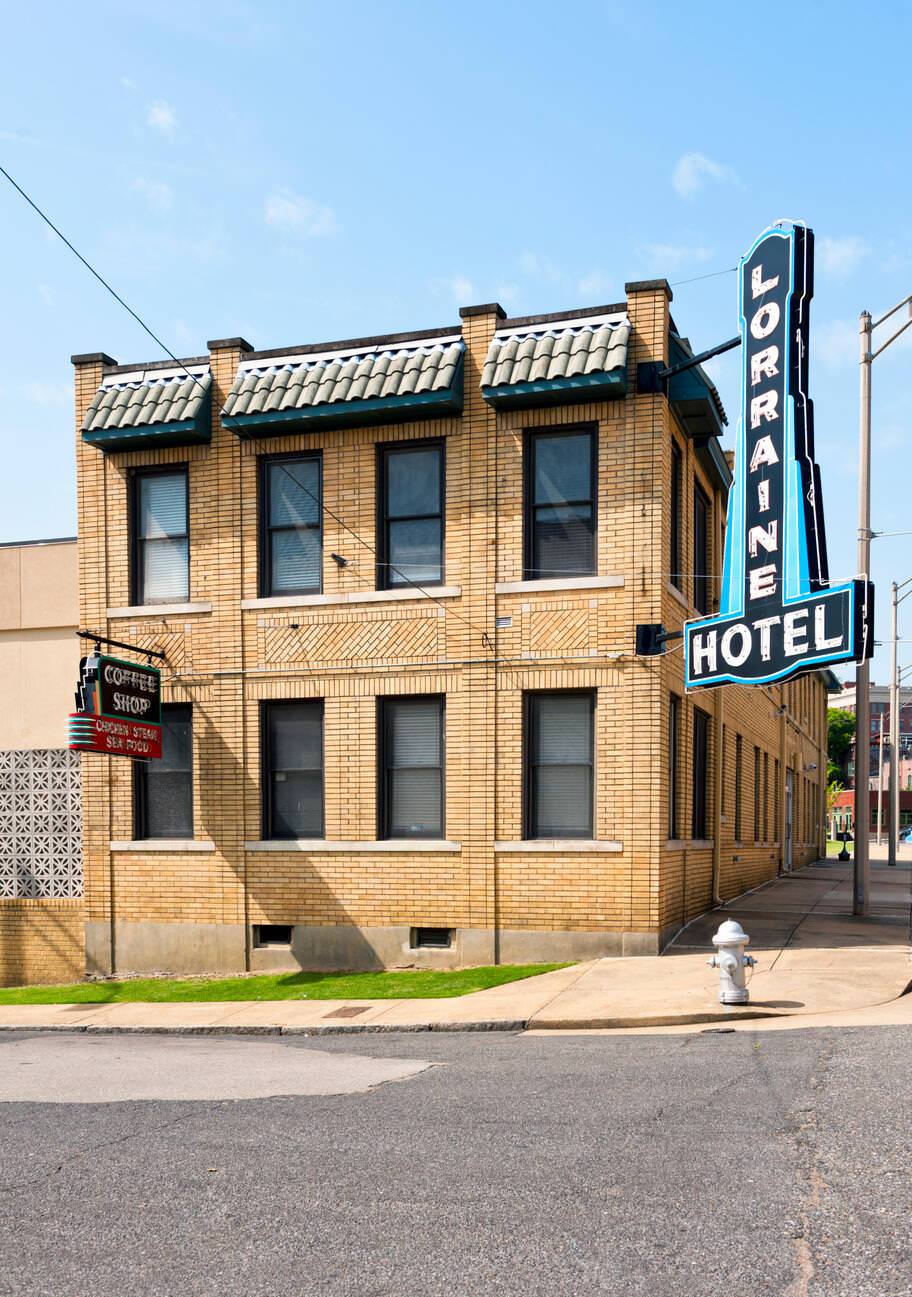
Some hotels carried the weight of history. The Lorraine Hotel in Memphis, Tennessee, was a well-known stopping point for Black travelers during a time when segregation still limited where people could stay across much of the South. On April 4, 1968, Dr. Martin Luther King Jr. was assassinated on its second-floor balcony, making the Lorraine one of the most historically significant hotel addresses in American history.
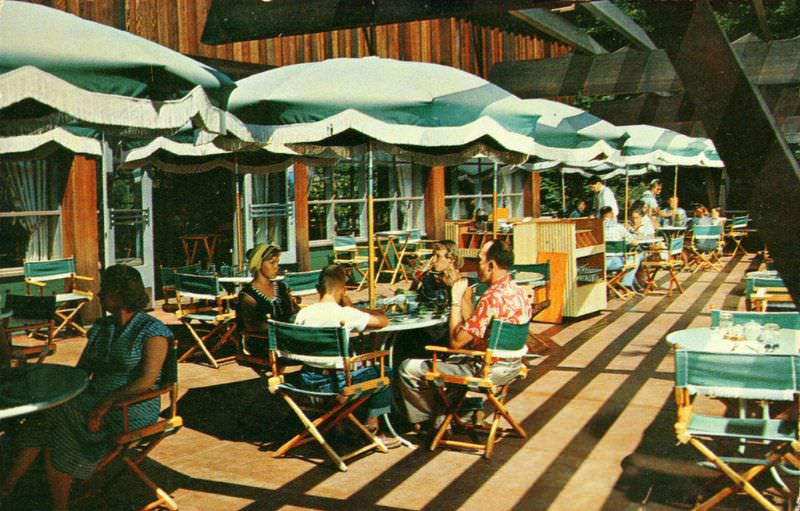
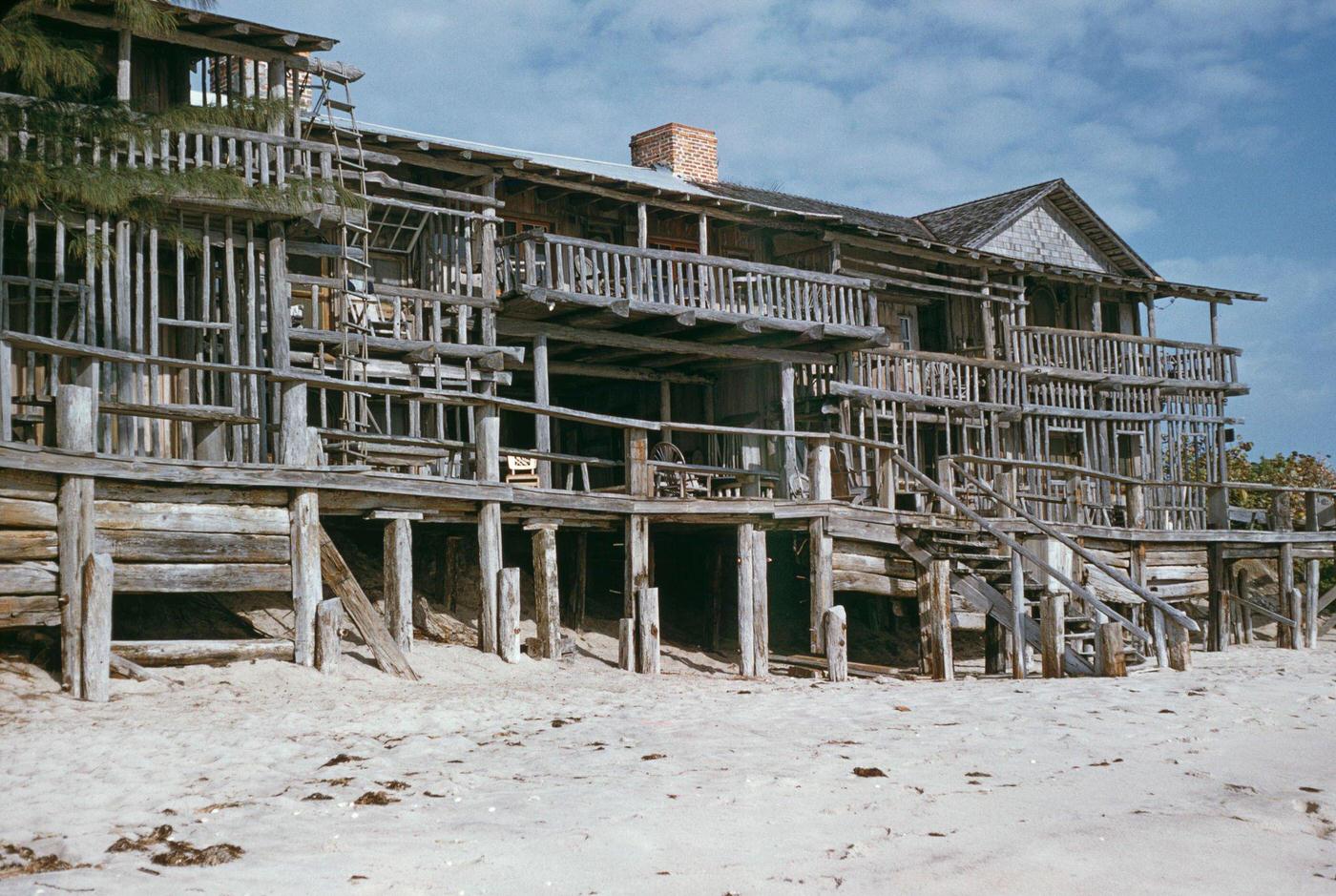
Waterfront and nature lodges offered yet another kind of 1960s hotel experience. Big Sur Lodge in California set guests among the redwoods with a dining patio overlooking the rugged coast. Blackwater Lodge in West Virginia provided a quiet retreat deep in the Appalachian Mountains. The Driftwood Inn in Florida let guests fall asleep to the sound of the Gulf.
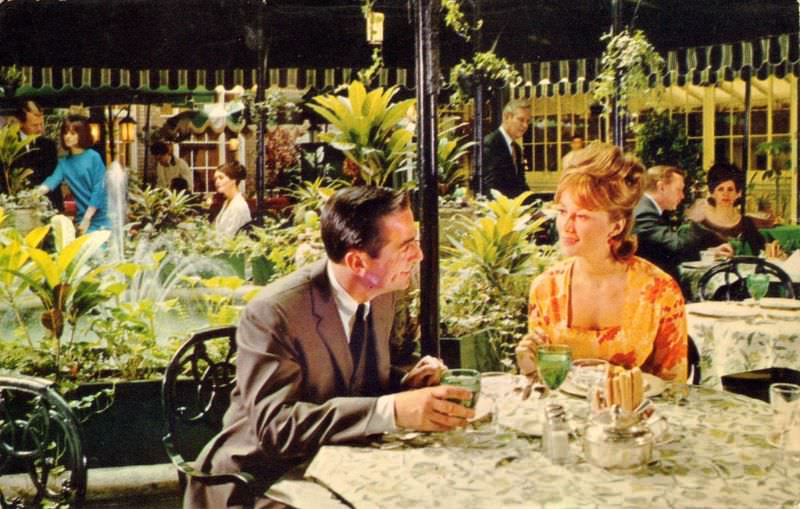
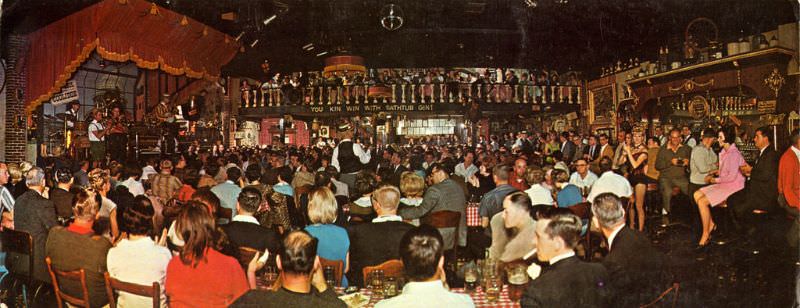
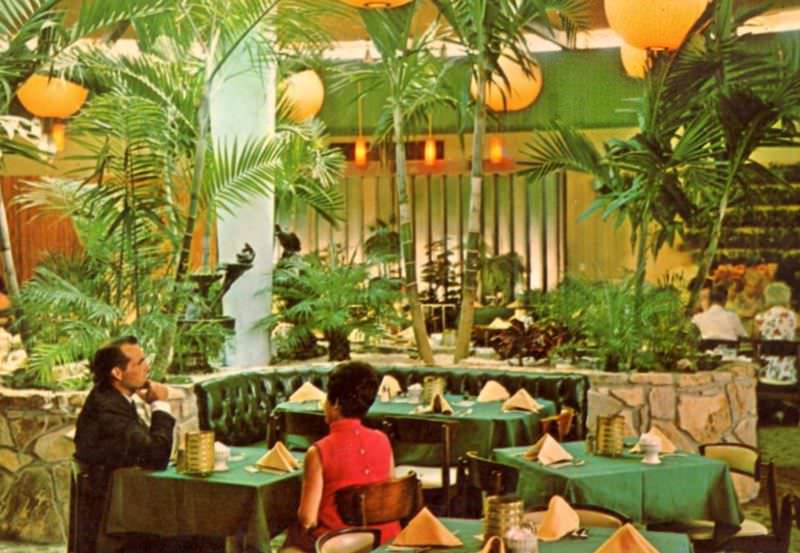
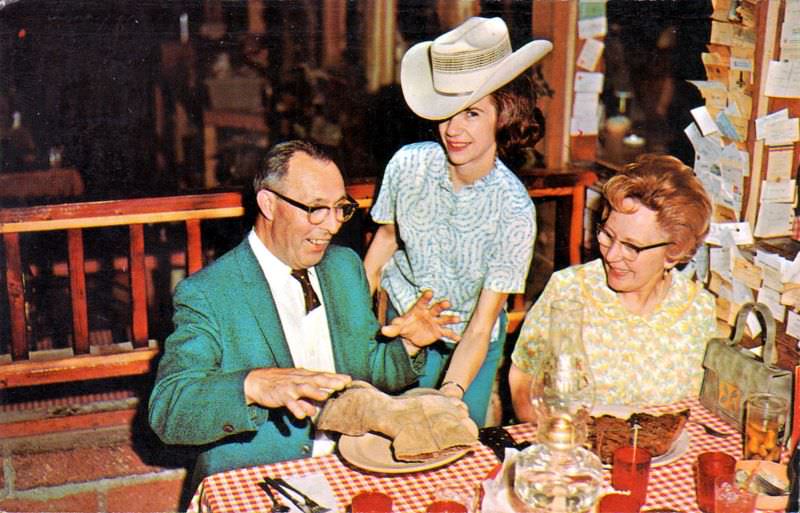
Themed and novelty restaurants attached to hotels were a growing trend throughout the decade. The Kapok Tree Inn in Madeira Beach, Florida, was famous for its lush tropical garden interior. The Tropical Garden Room at the Sandollar Restaurant in St. Petersburg offered a similar escape. In Scottsdale, Arizona, the Pinnacle Peak Patio Restaurant had a Western theme so committed that neckties cut from customers became wall decorations — a tradition that filled the rafters over the years.
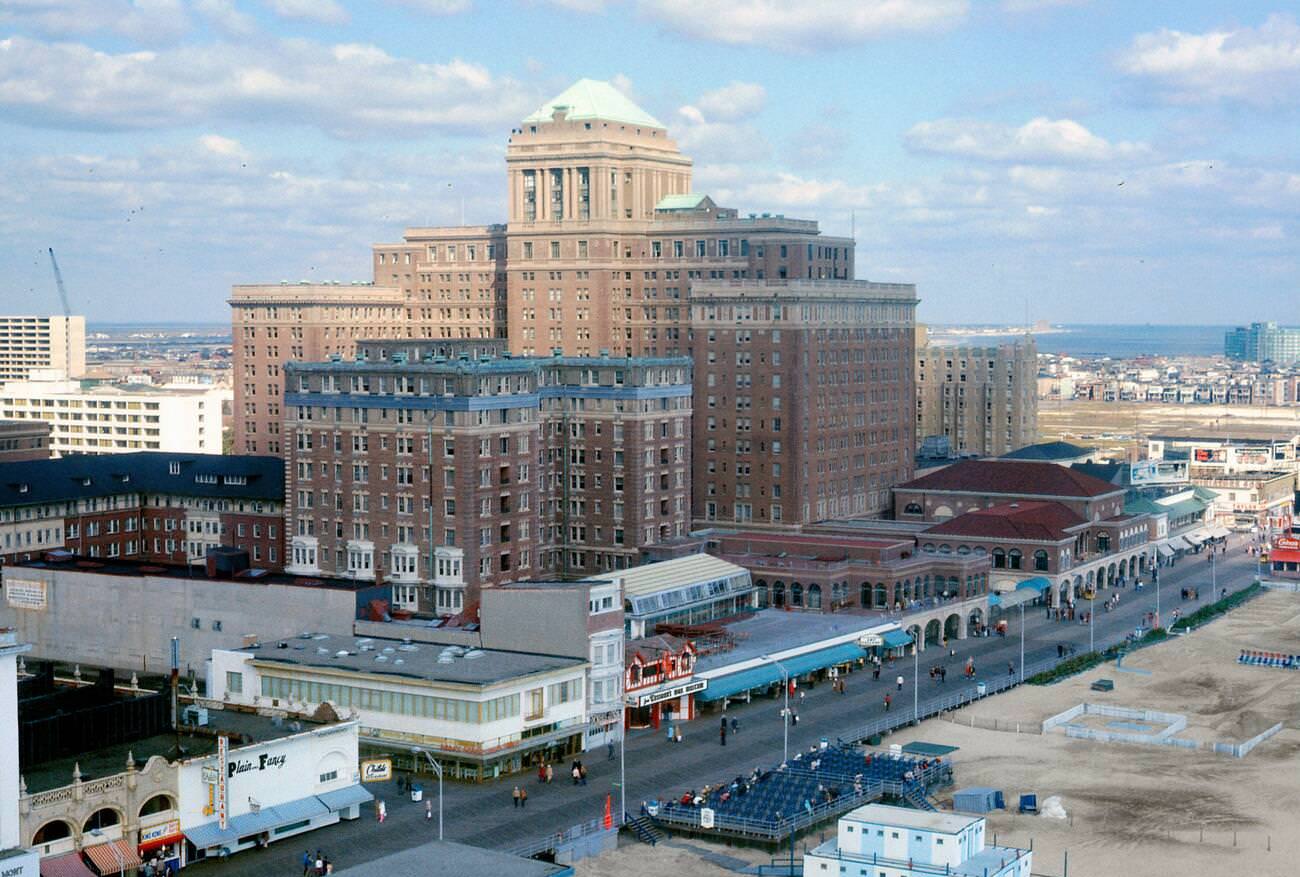
The broader picture of 1960s American hotels is one of enormous variety. There was the grandeur of the Boca Raton Hotel in Florida, the frontier spirit of Hotel Superstition in Apache Junction, Arizona, and the quiet dignity of the Whitcomb Hotel in San Francisco. From Atlantic City’s iconic Chalfonte-Haddon Hall to the modest Utopia Lodge, every type of traveler had a place to call home for the night.
Below is a full gallery of American hotels, motels, restaurants, and lounges from the 1960s — a decade that left an indelible mark on the way Americans thought about travel, hospitality, and the open road.