The American cafeteria has a surprisingly contested origin. One story places the first self-service restaurant in New York in 1885. Another gives the credit to a Chicago restaurateur who named his establishment a “cafeteria” in 1893 — borrowing the Spanish word for “coffee shop.” Either way, the concept caught on fast. By the early 1900s, the format was spreading coast to coast, and nowhere did it take root more firmly than in California.
In 1905, a California restaurant began marketing itself around two simple promises: food you could see before you ordered, and no tipping required. Customers loved both ideas. By the 1920s, Los Angeles had so many cafeterias that some people called it “Sunny Cafeteria.” The Industrial Revolution helped fuel that growth nationwide. As factory work expanded, a new class of office and professional workers emerged who wanted a real midday meal but felt it was beneath them to bring a steel lunch box to work. Cafeterias filled that gap cleanly and affordably.
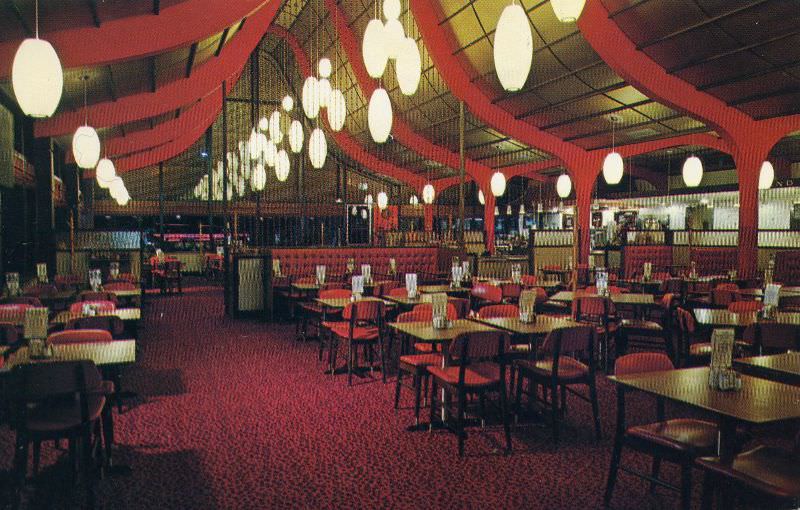
The postcards below capture these dining rooms at their peak — the 1950s and 1960s. They come from Alabama, Arizona, California, Florida, and more than a dozen other states. Each one shows a different version of the same American idea: a long serving line, a bright dining room, and a hot meal without a waiter in sight. Starting in the Deep South, the Britling chain was one of Birmingham’s most recognized names in cafeteria dining.
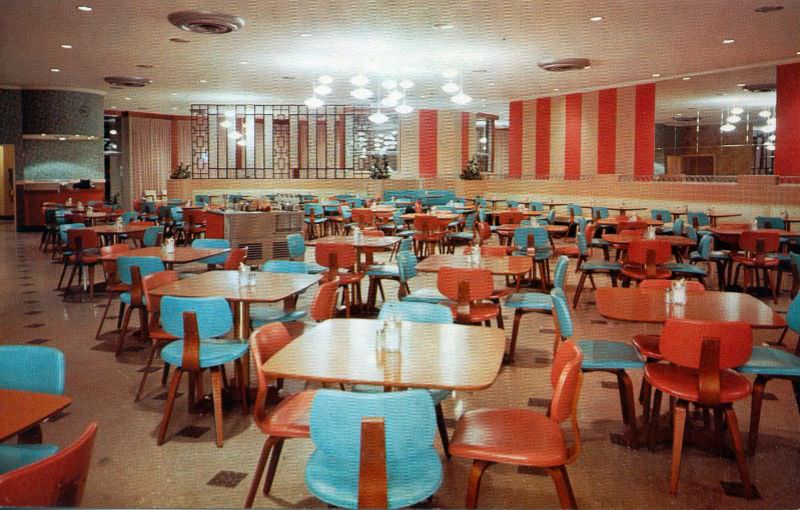
Moving west into Arizona, the postcard era caught several cafeterias at the height of the state’s postwar population boom. Phoenix and Tucson were growing rapidly through the 1950s and 1960s, and cafeteria-style dining fit perfectly into the new suburban landscape being built around shopping centers and wide boulevards.
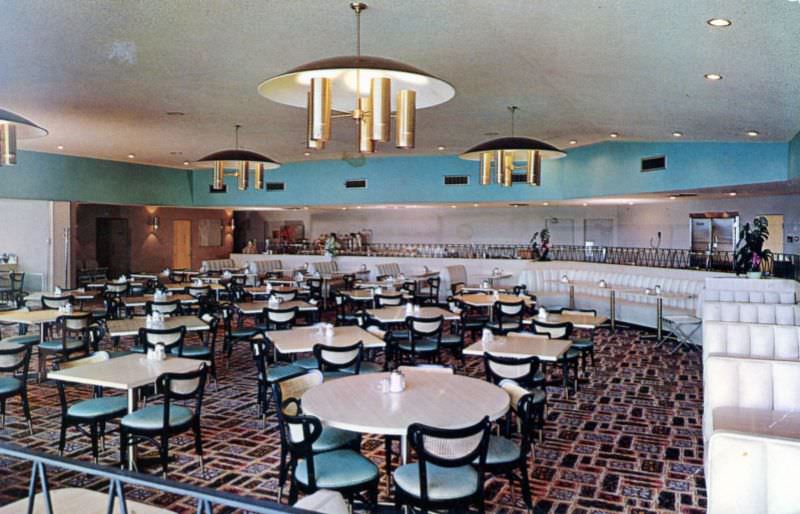
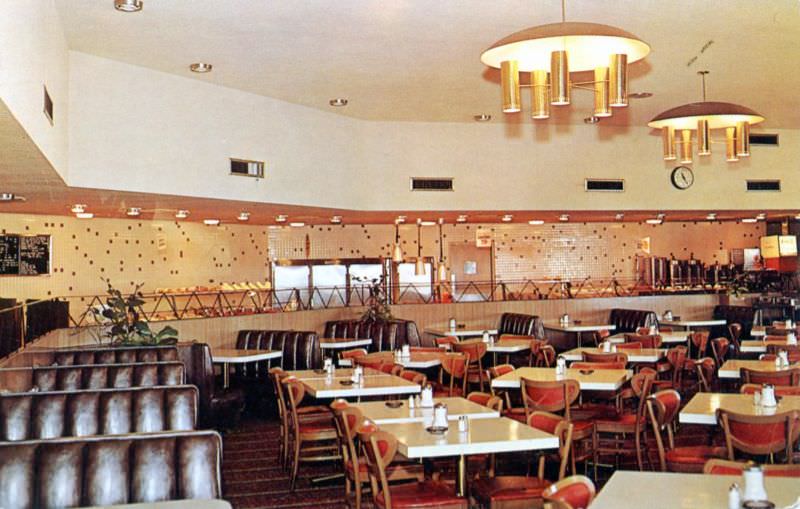
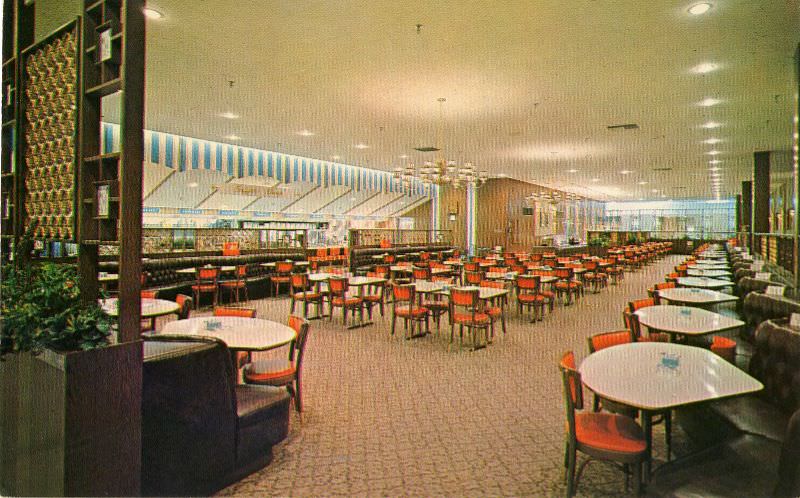
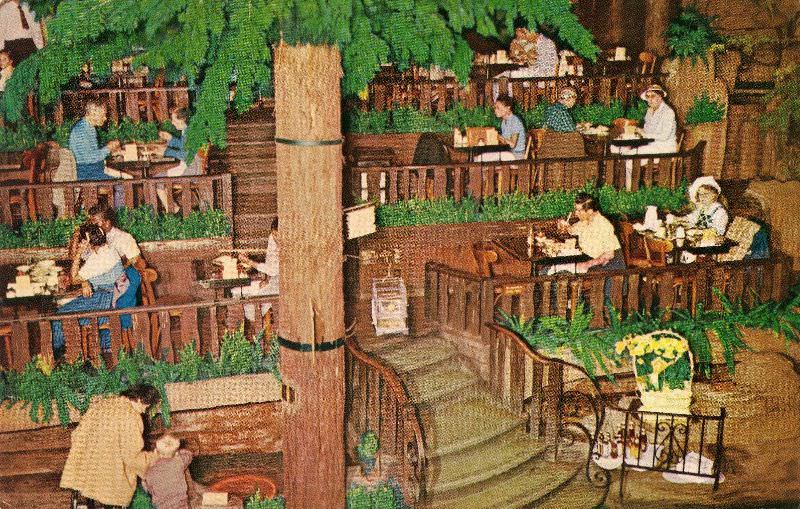
California, which had pioneered the cafeteria concept back in 1905, produced some of the most well-known chains by mid-century. The Clifton’s brand was among the most prominent, operating multiple locations across greater Los Angeles. Clifton’s Brookdale, on South Broadway in downtown L.A., was famous for its elaborate woodsy interior with terraced dining levels designed to resemble a forest setting.
Beyond its flagship downtown location, Clifton’s expanded aggressively into the region’s growing mall scene. Locations in West Covina and Lakewood brought the brand to suburban shoppers who were flocking to the new enclosed shopping centers being built along the San Bernardino Freeway corridor and in the South Bay.
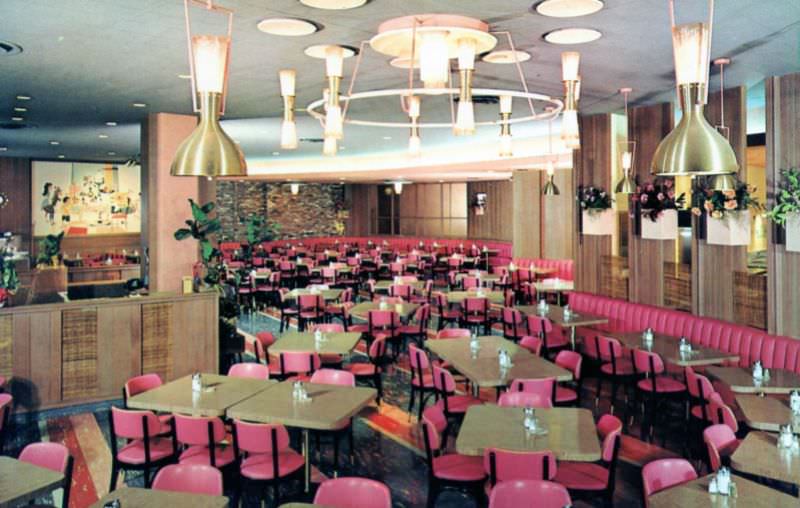
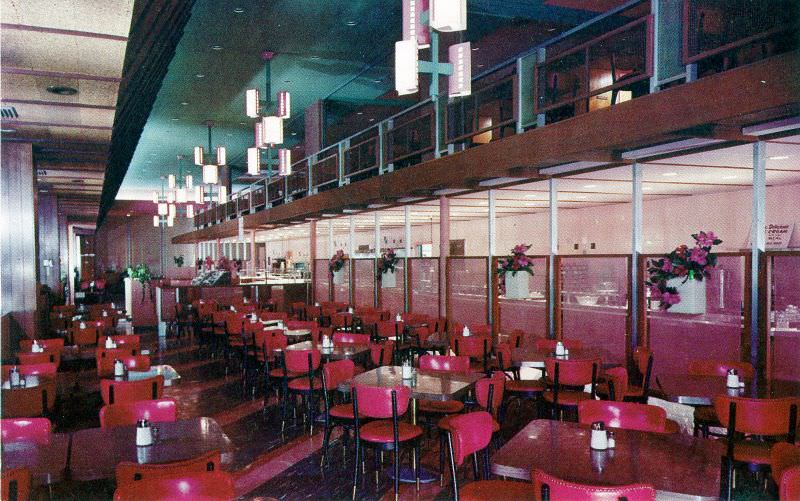
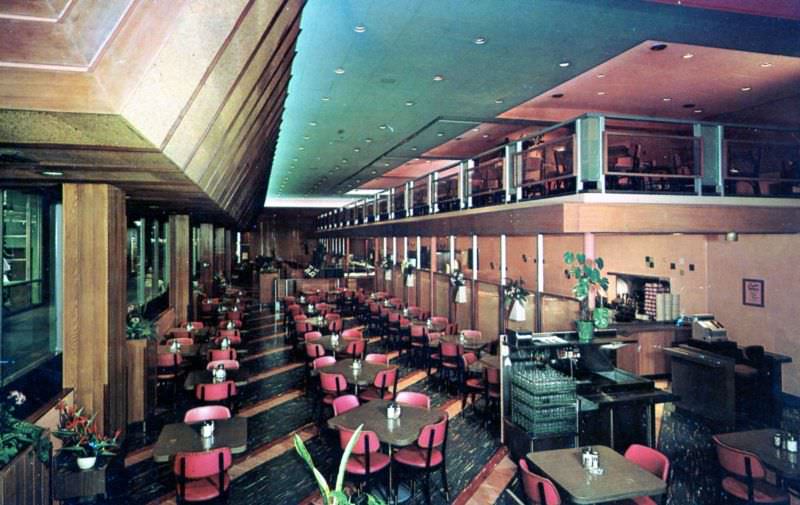
Clifton’s also operated a midtown Los Angeles location near Wilshire Boulevard, serving a dense urban neighborhood. Meanwhile, other California chains competed for the same customers. Ontra Cafeterias maintained a location on Crenshaw Boulevard, serving the communities of South Los Angeles.
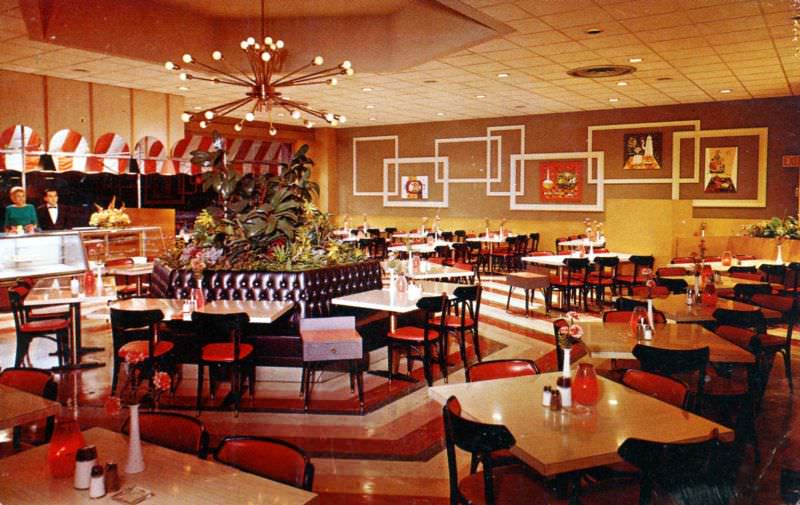
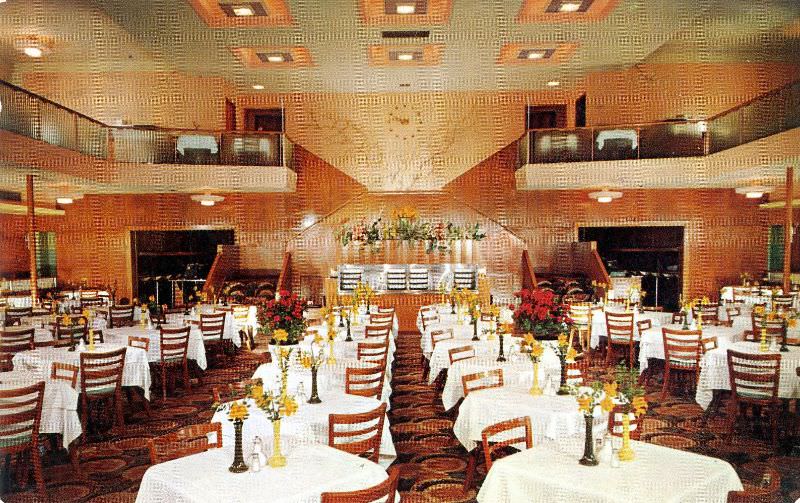
Florida became one of the strongest cafeteria markets in the country. The state’s growing retiree population, combined with a steady stream of tourists and a warm-weather economy that kept people eating out year-round, made it ideal territory. Miami, St. Petersburg, Tampa, Clearwater, Daytona Beach, and Lake City all hosted well-known chains. The Boulevard Cafeteria in Miami sat right on U.S. Route 1, one of the main arteries running along the eastern seaboard.
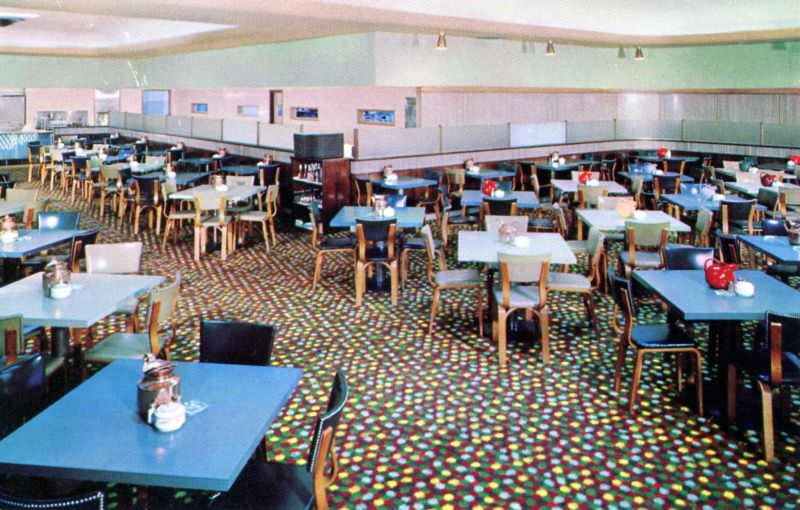
St. Petersburg alone supported multiple Driftwood Cafeteria locations across the city, including spots on 34th Street South, Skyway Boulevard along Highway 19, and First Avenue North downtown. The Driftwood chain’s postcard collection gives a rare look at how one brand could blanket a single mid-sized Florida city.
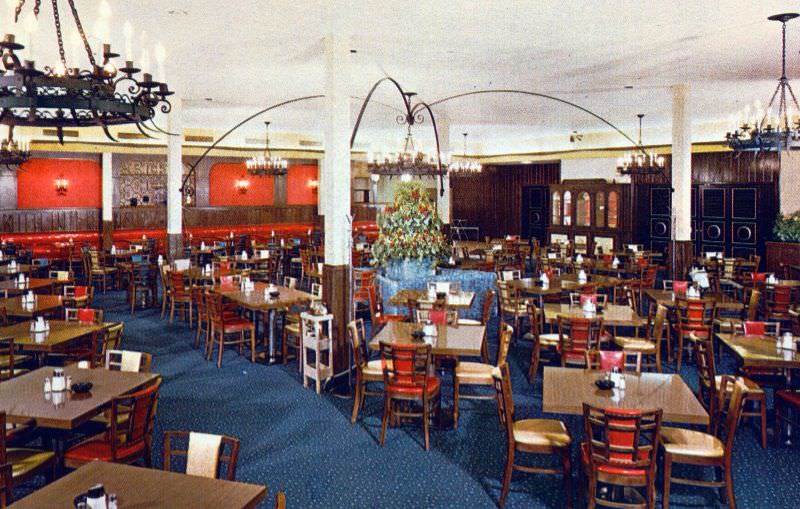
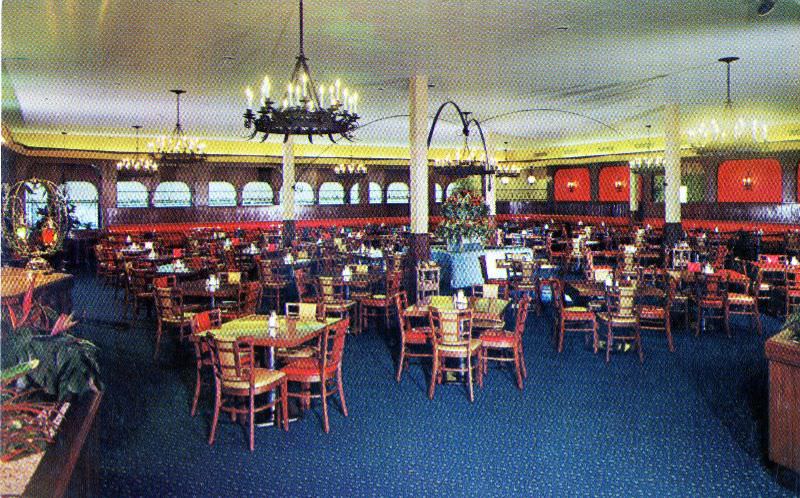
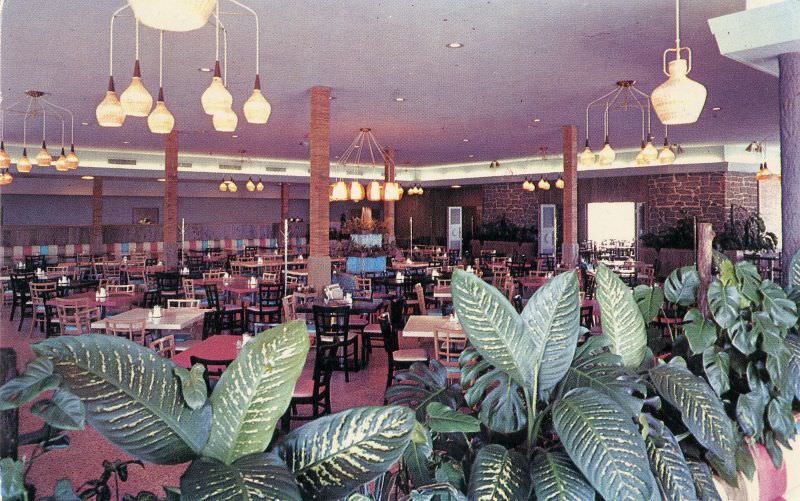
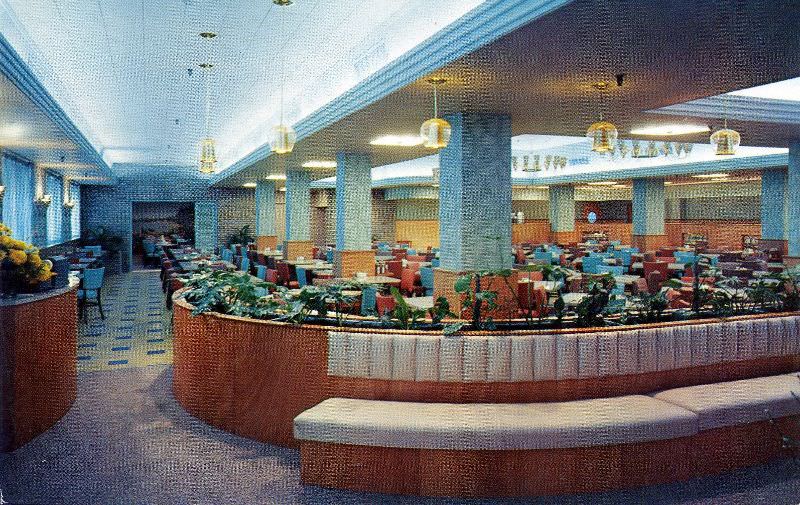
Other Florida chains spread across multiple cities. Moore’s Allapattah Cafeteria in Miami sat on the way to the airport on N.W. 36th Street, while S&S Cafeterias operated locations in Daytona Beach, Tampa’s Britton Plaza, Clearwater’s Searstown Mall, and beyond.
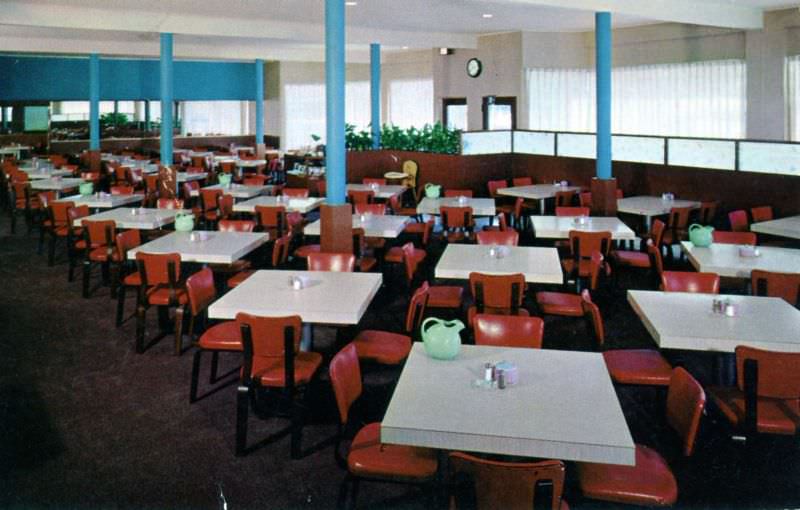
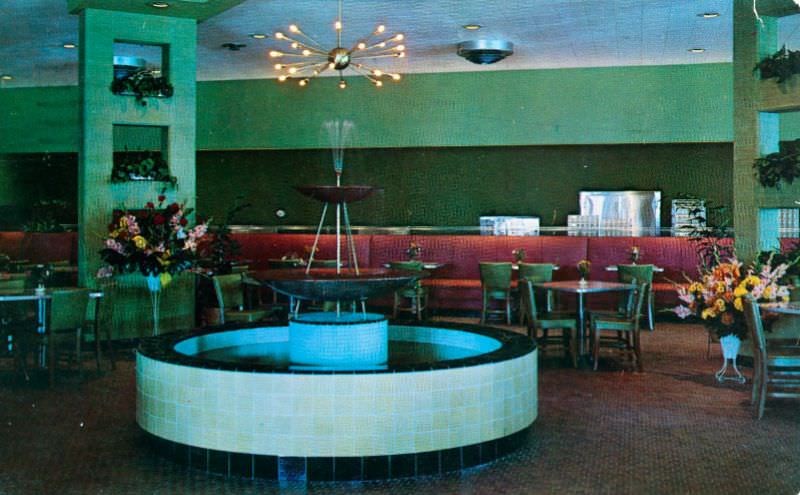
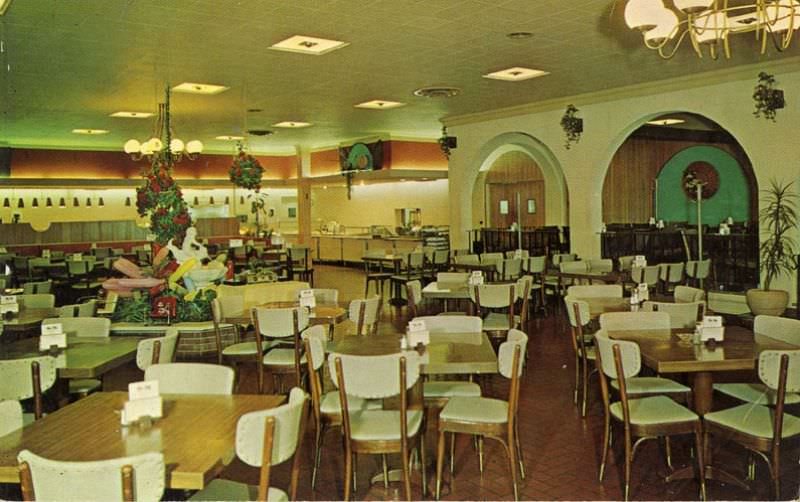
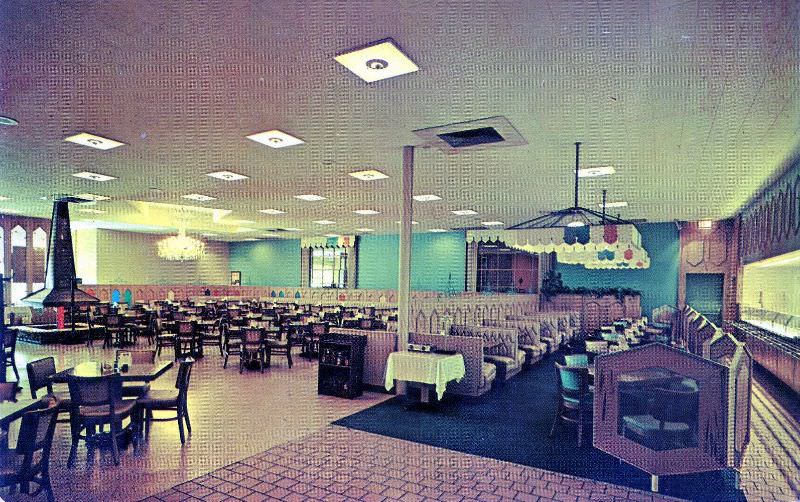
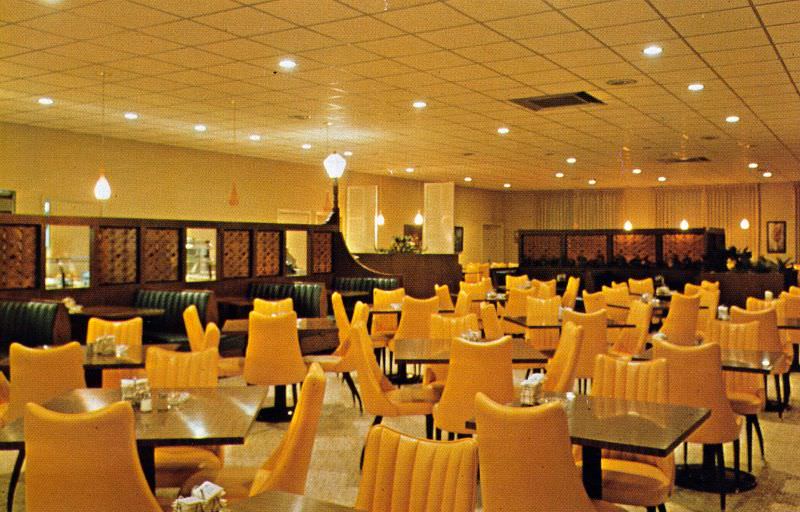
The S&S chain also reached Georgia, with a location inside Atlanta’s Lenox Square Shopping Center — one of the Southeast’s earliest modern malls. The chain’s presence in multiple states shows how cafeteria brands of this era often grew by anchoring themselves inside the new enclosed shopping centers being built across the country.
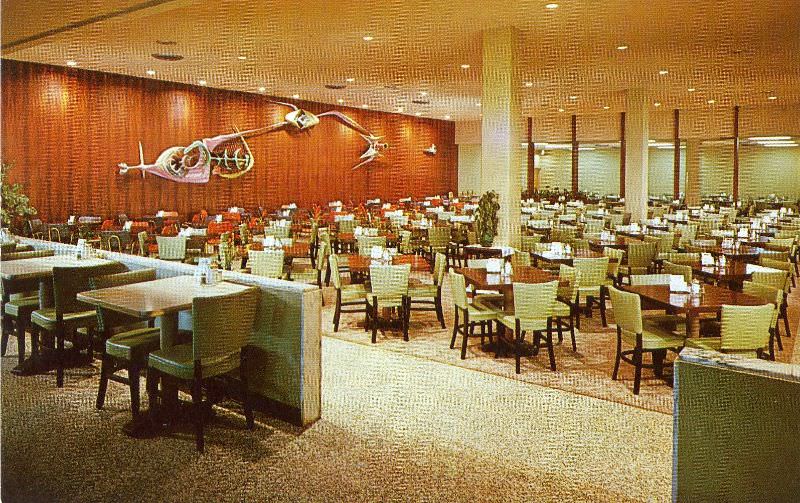
Not all cafeterias were public restaurants. The Moorman Manufacturing Company in Quincy, Illinois, operated its own in-house cafeteria for employees — a common arrangement in large industrial facilities of the era. Corporate cafeterias gave workers access to hot meals on-site without leaving the building, cutting into time that might otherwise be spent at a diner or lunch counter.
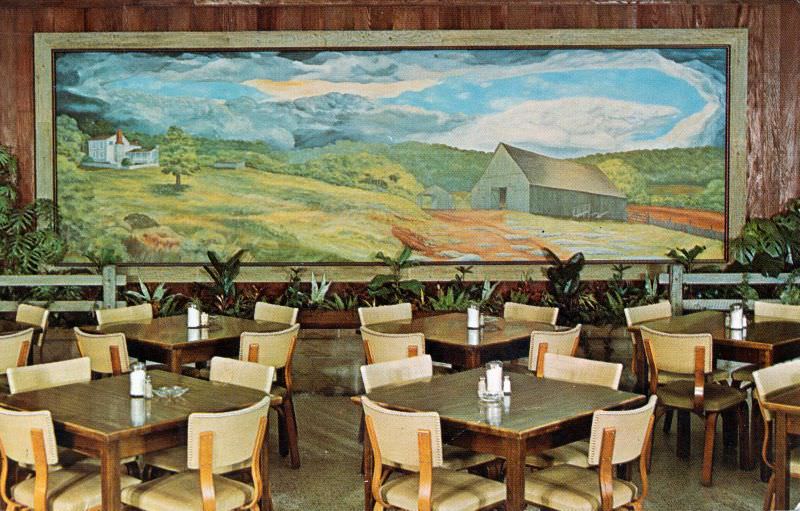
Indiana, Missouri, Nebraska, and New Jersey each contributed their own entries to the postcard record. The Goodie Shop Cafeteria in Terre Haute, Indiana, operated on Ohio Street, while Heritage Cafeteria held a spot on South Glenstone in Springfield, Missouri. Brandeis Cafeteria in Omaha was connected to the Brandeis department store, a familiar mid-century pairing of retail and dining. Woolworth’s brought the cafeteria format right onto the Atlantic City Boardwalk in New Jersey.
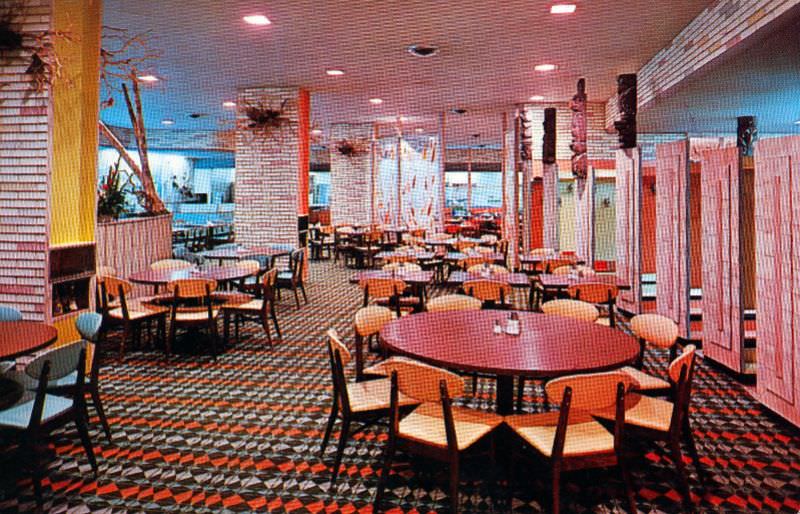
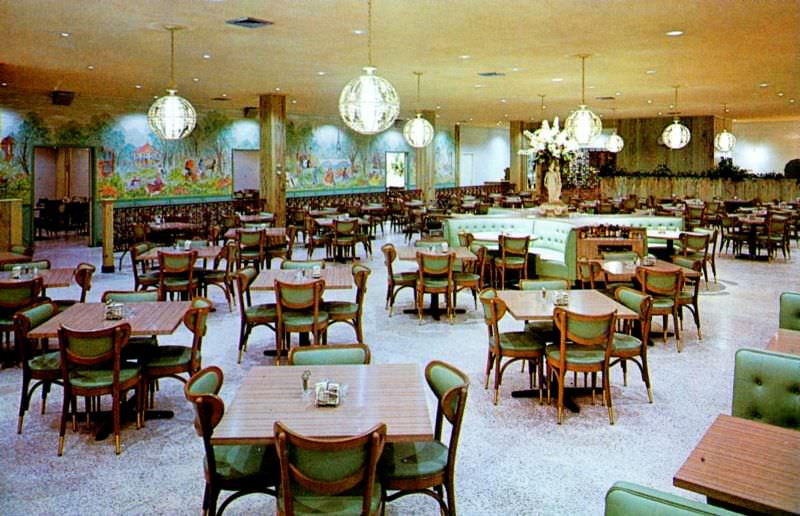
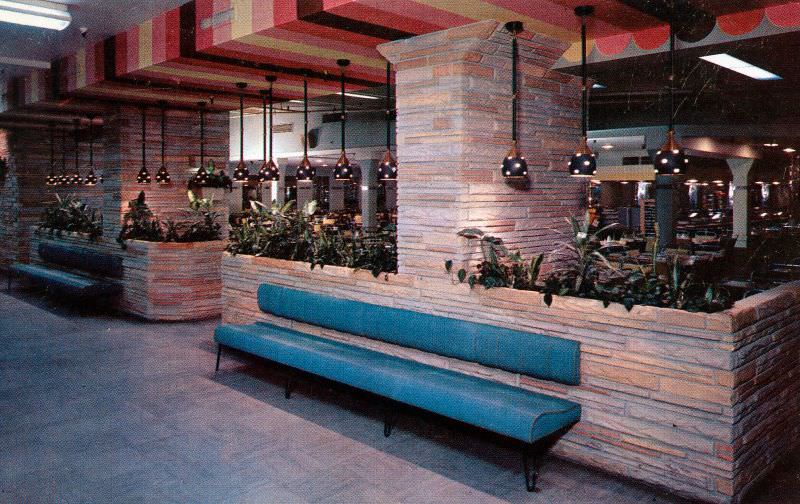
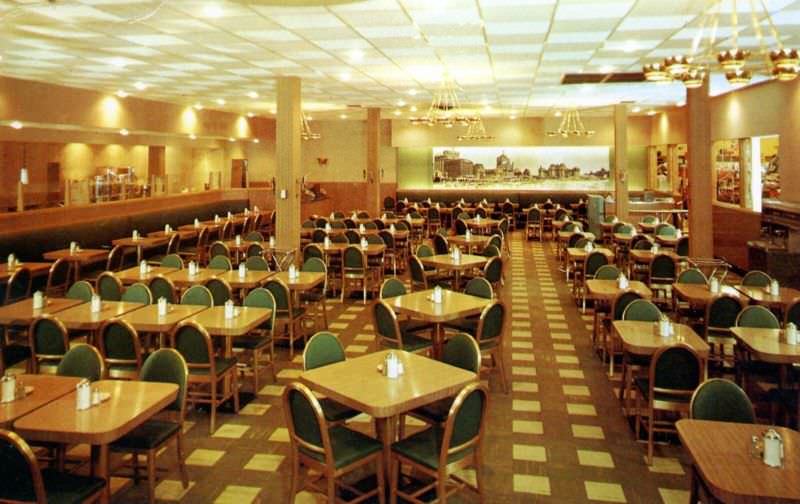
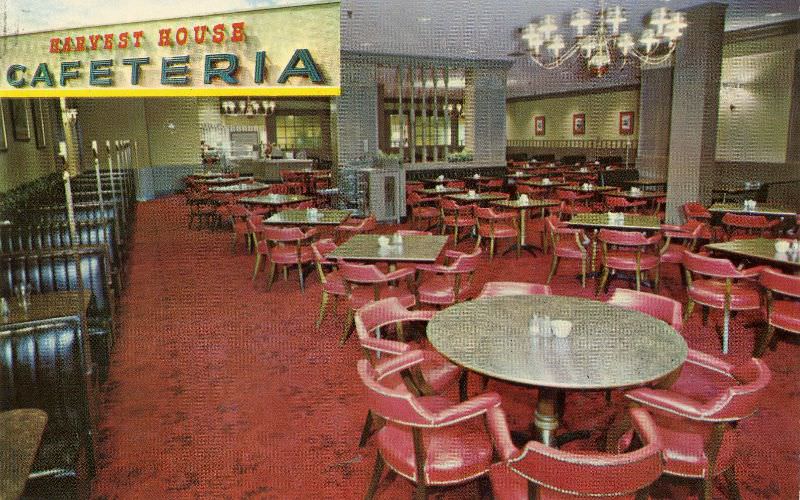
In the Carolinas, the Bailey’s chain operated cafeterias inside suburban shopping centers in both Charlotte, North Carolina, and Spartanburg, South Carolina. Ohio’s Upper Valley Mall in Springfield hosted a Harvest House Cafeteria, and Oklahoma’s Will Rogers Turnpike featured the Glass House Cafeteria and Dining Room in Vinita — one of the more distinctive roadside cafeteria settings of the era, built directly on the interstate turnpike.
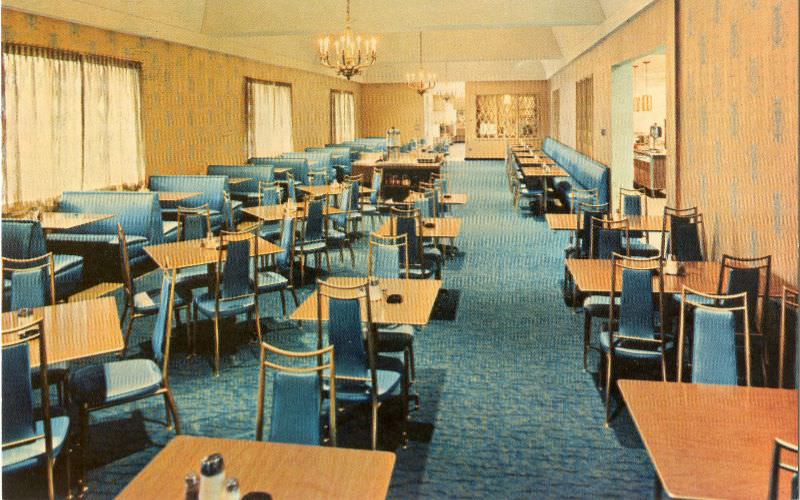
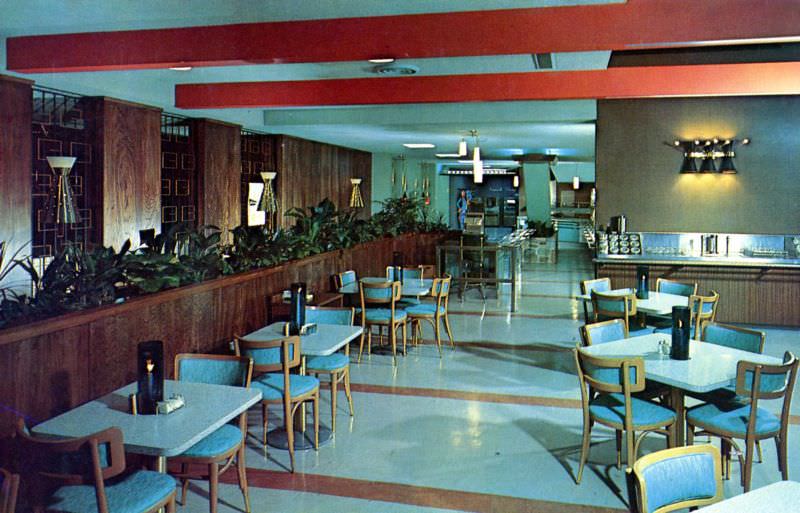
Pennsylvania’s entry in this collection is a Bonanza Sirloin Pit in Franklin — a chain that straddled the line between cafeteria and fast-food steakhouse. It reflected the transitional moment of the early 1960s, when fast-food formats were beginning to reshape the dining landscape. McDonald’s and competitors were already drawing customers away from traditional stand-alone cafeterias, making these postcards documents of a format already under pressure.
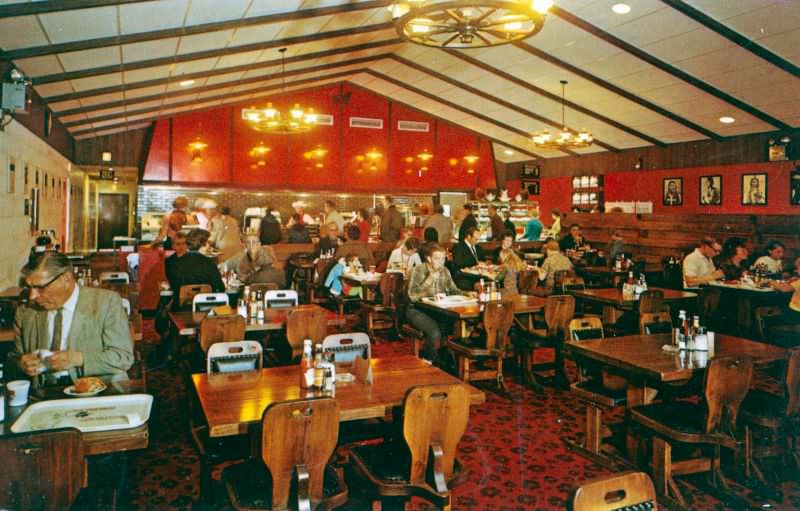
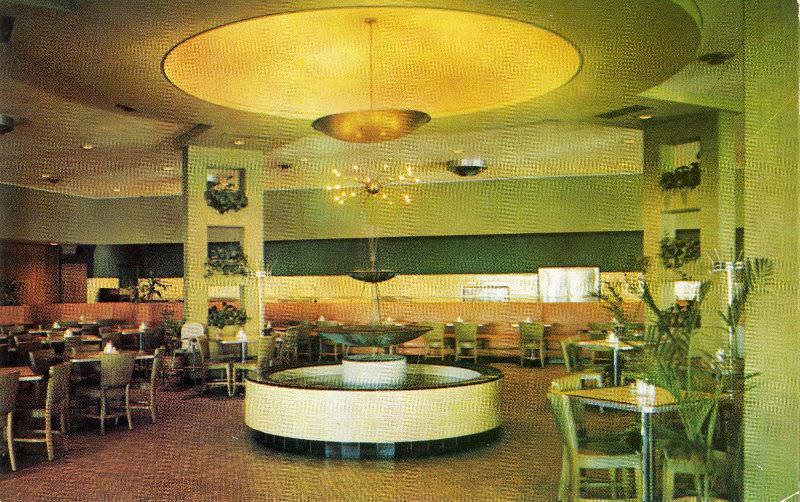
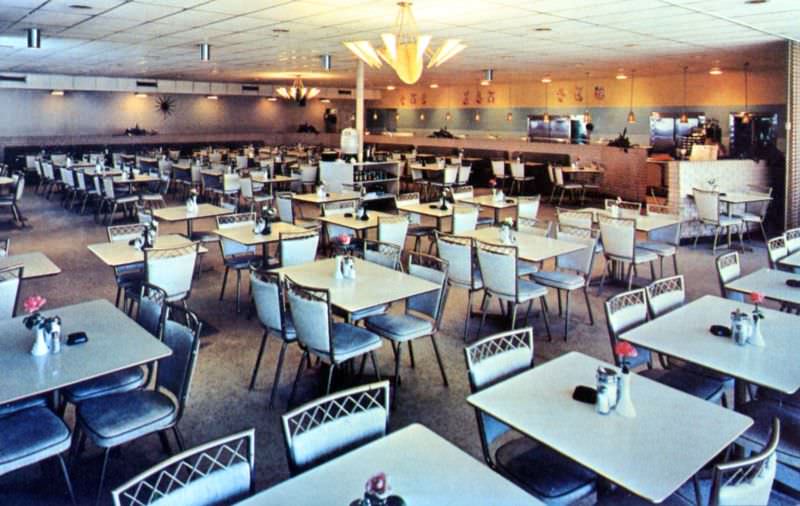
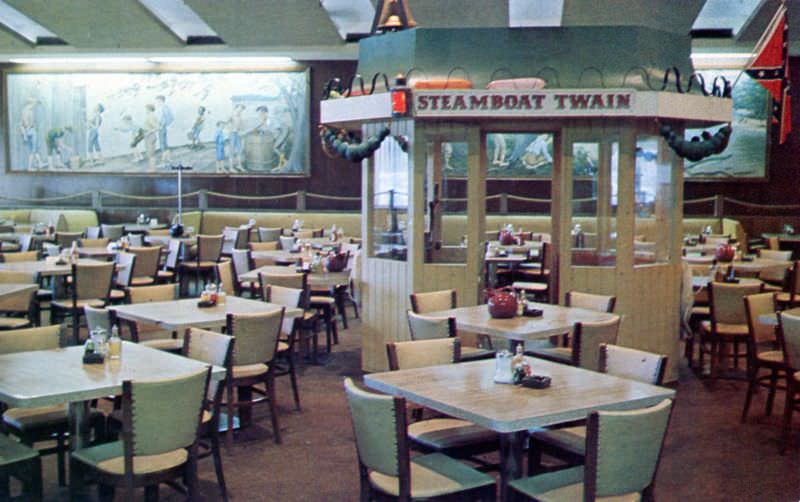
Tennessee offered the Mark Twain Family Cafeteria on Summer Avenue in Memphis, a name that leaned into regional American identity. Texas went a step further: the Countdown Cafeteria inside Houston’s Astrodome brought self-service dining into one of the most famous sports and entertainment venues in the country, feeding fans during events in what was then called the Eighth Wonder of the World.
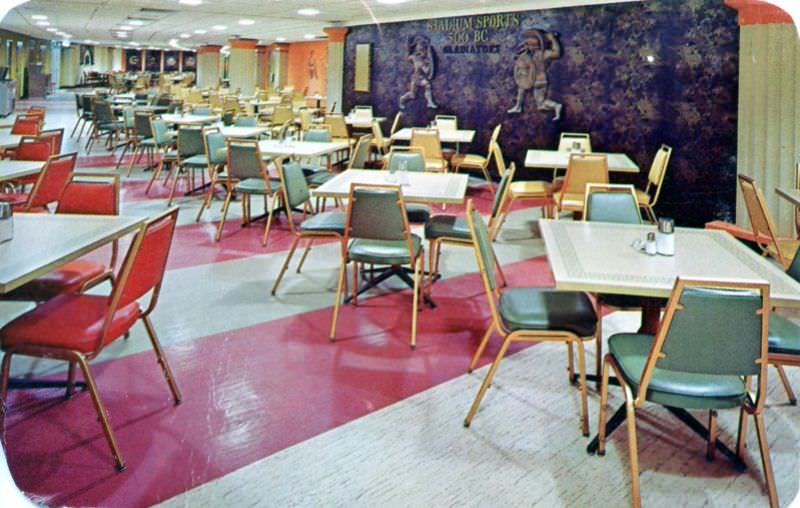
The Pacific Northwest rounds out this tour. Manning’s Cafeteria and Buffet in Seattle operated on 15th Avenue N.W., bringing the classic format to the Northwest in a city that would eventually become better known for its coffee culture than its cafeteria lines.