Hey There! Before You Go. 😧
Get the best vintage content straight into your inbox!

Don't worry, we don't spam

America from Above: Spectacular Helicopter Photographs by Margaret Bourke-White, 1952

In the spring of 1952, Margaret Bourke-White boarded a helicopter and set out to photograph the United States from the sky. The assignment was for LIFE magazine, and it was unlike almost anything attempted before in photography. Helicopters — nicknamed “whirlibirds” at the time — could hover, dip low, and shift angles in ways that fixed-wing aircraft never could. That freedom gave Bourke-White a completely new set of shots.
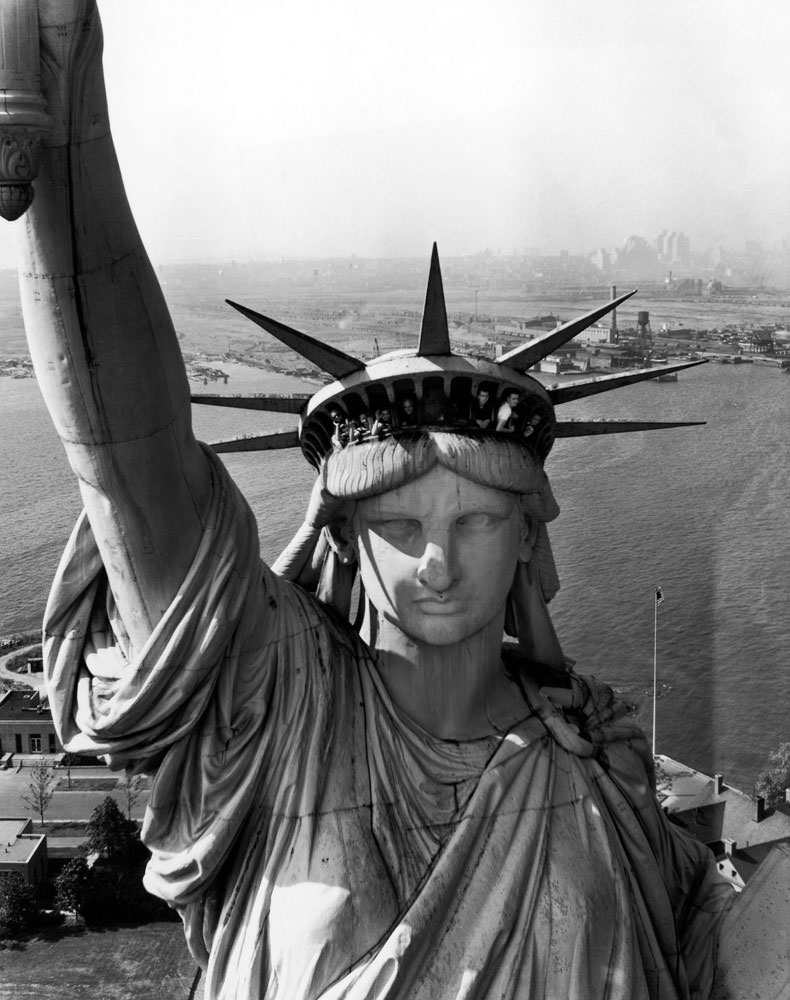
The Statue of Liberty

Bourke-White was already one of LIFE’s most recognized photographers, known for taking on tough and unusual assignments. Readers trusted her work. Even so, this aerial project stood out. She traveled across New York, Illinois, Indiana, California, Texas, and Virginia, shooting everything from iconic landmarks to ordinary industrial scenes. The goal was to show the country from a perspective that most Americans had never experienced.
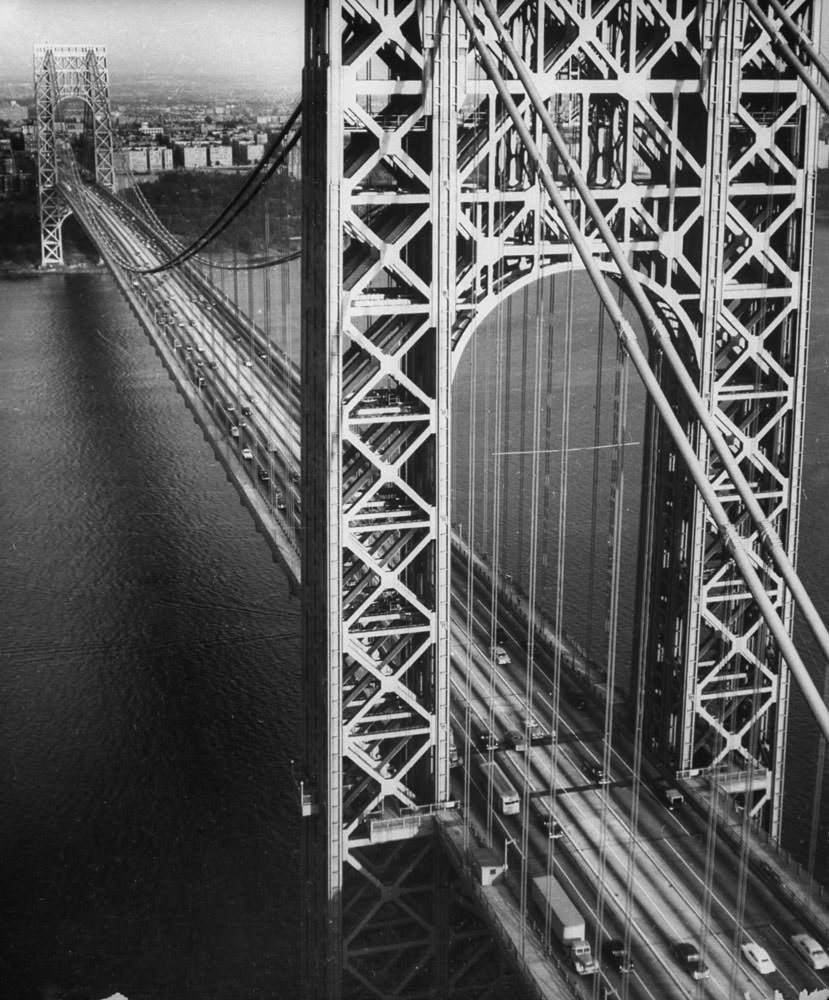
The George Washington Bridge
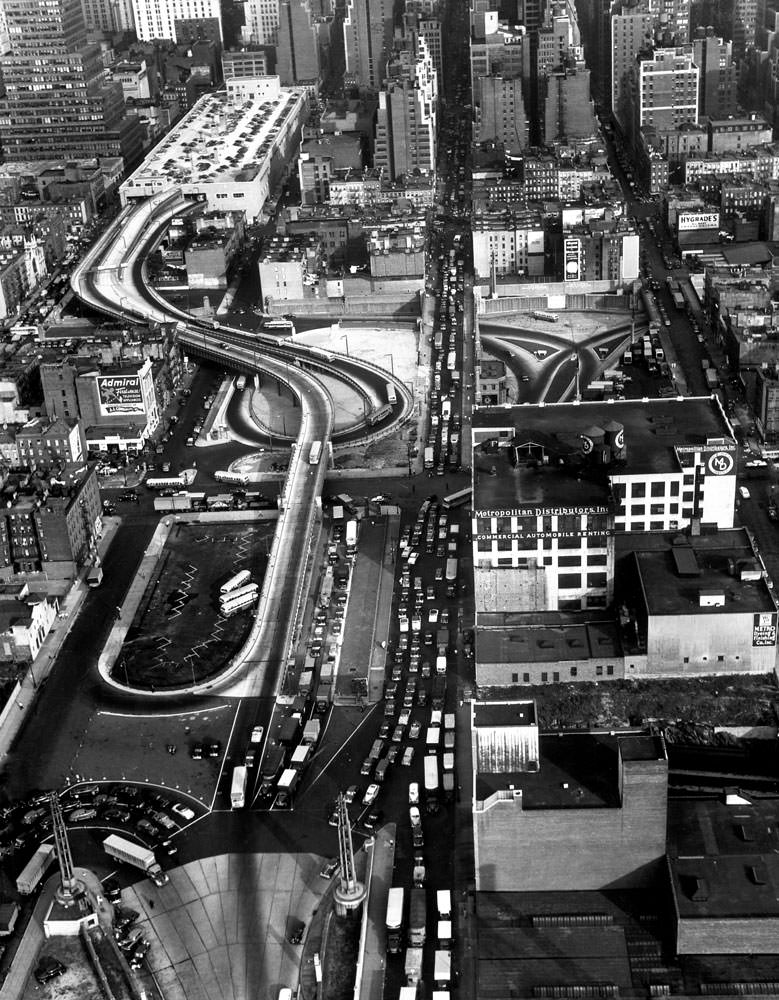
Midtown Manhattan (with the entrance to a cross-river tunnel visible at lower left)

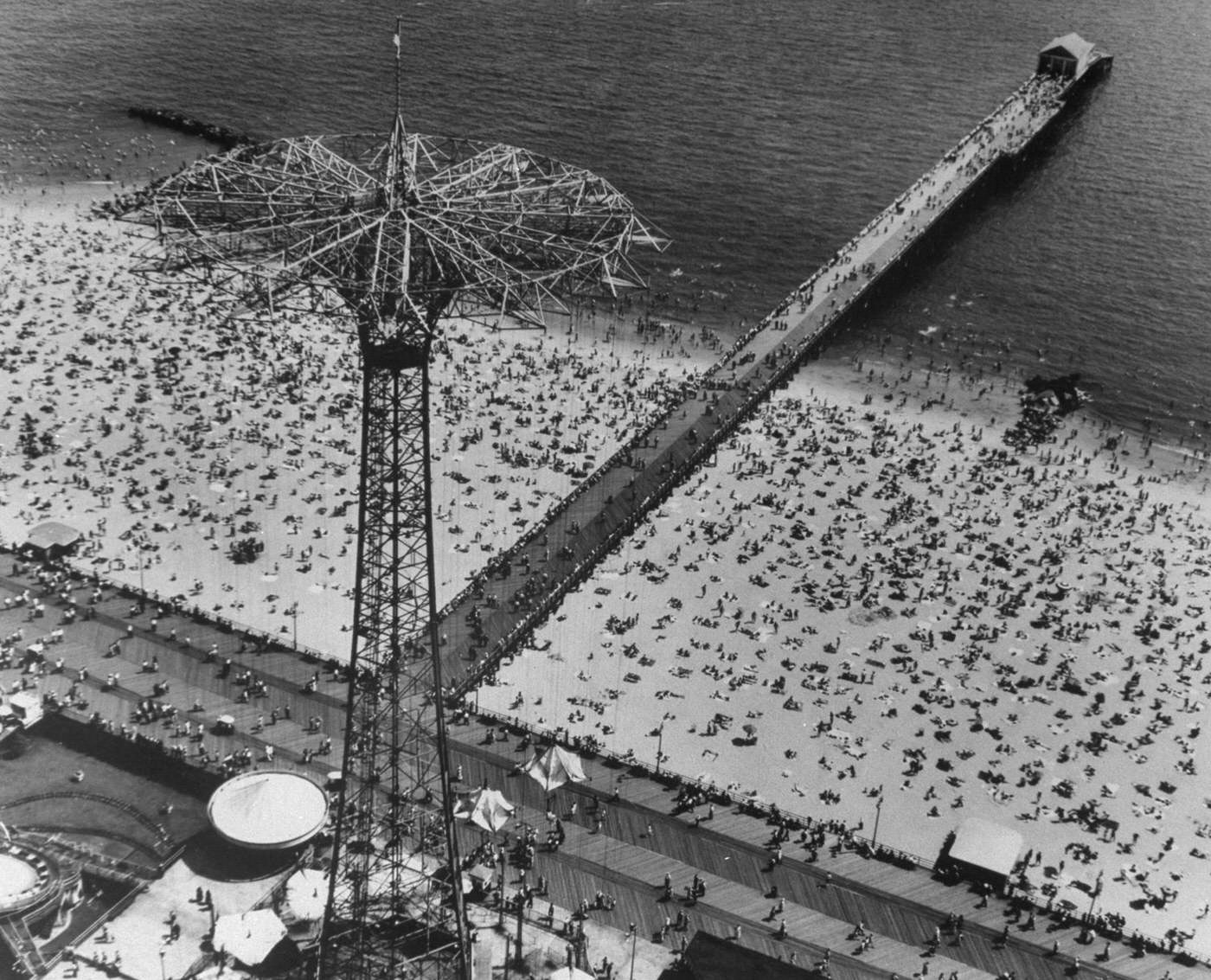
New York City produced some of the most striking frames. Looking straight down at Columbus Circle or out across Coney Island’s crowded beaches, the helicopter gave Bourke-White angles that no ground-level camera could match.
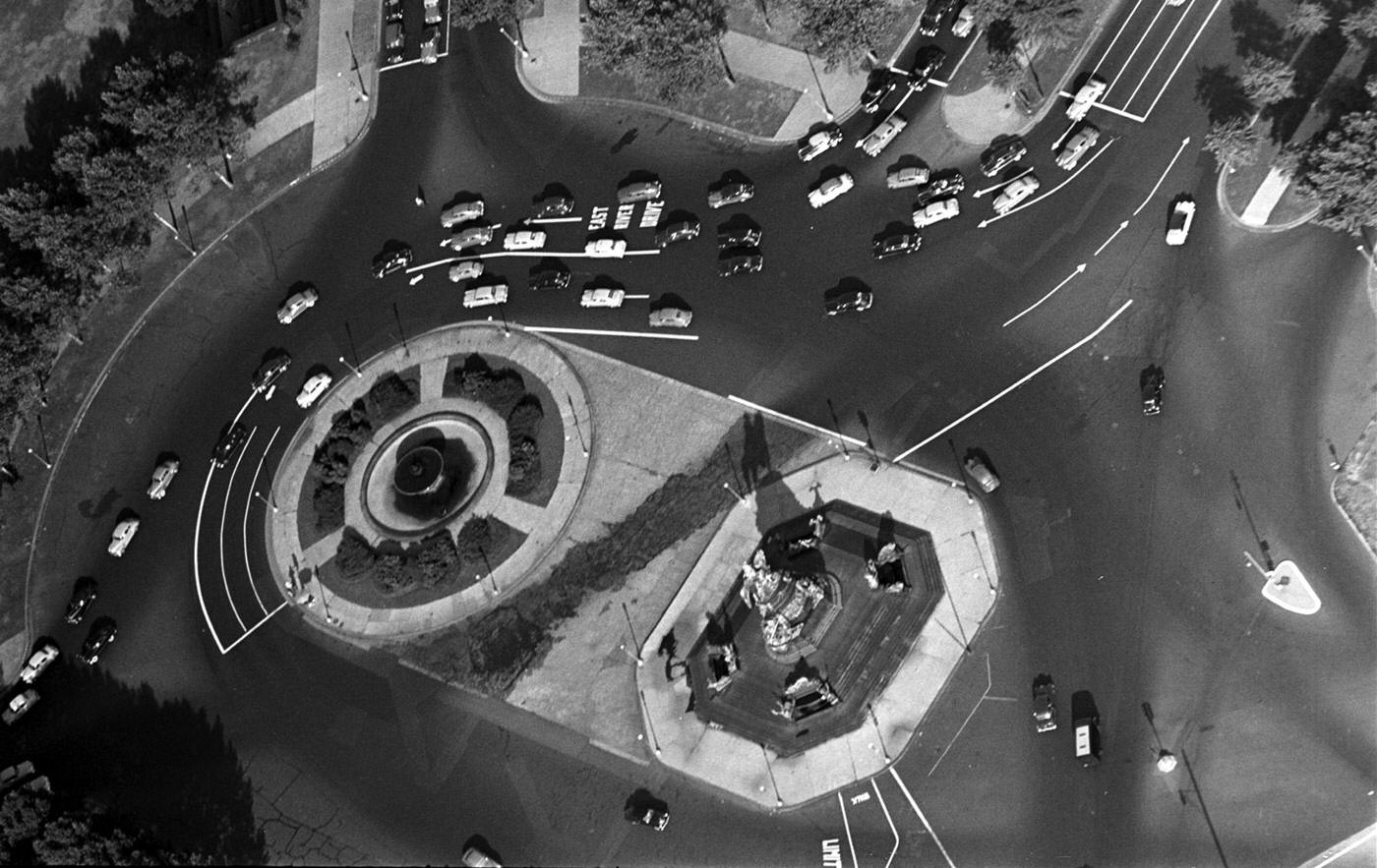
Columbus Circle, New York City
Coney Island, Brooklyn

The helicopter’s low hover also put Bourke-White directly above unfolding events. At Coney Island, she caught the scene of a near-drowning in real time — lifeguards working over a bather named Mary Eschner while onlookers crowded around and swimmers waved up at the aircraft from the water.
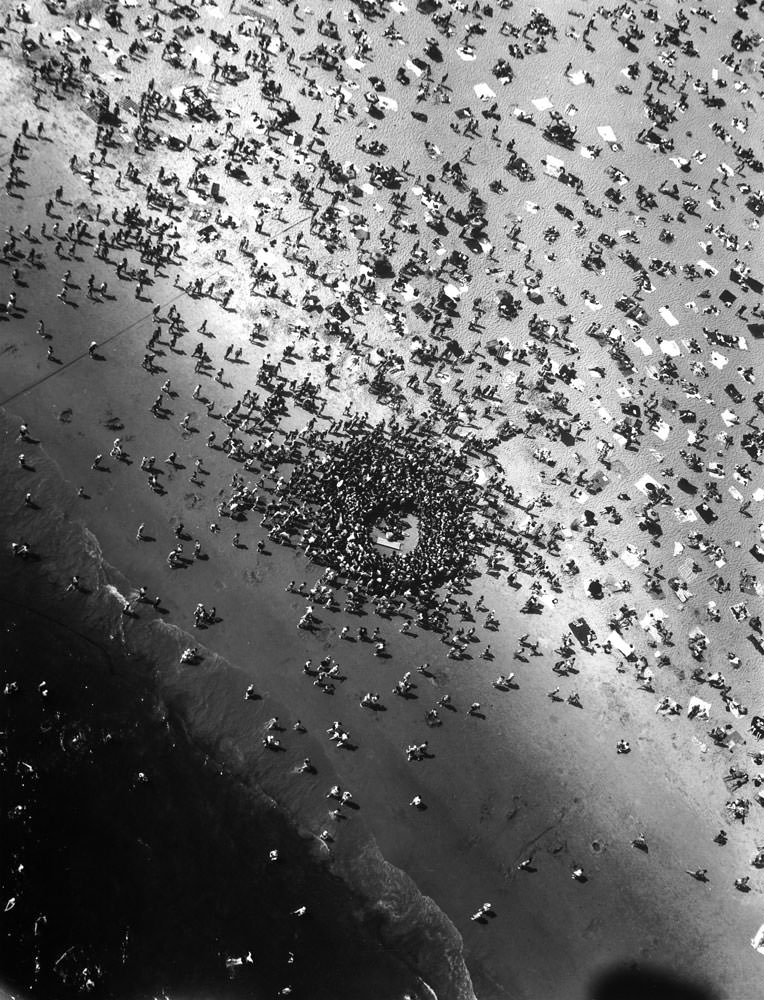
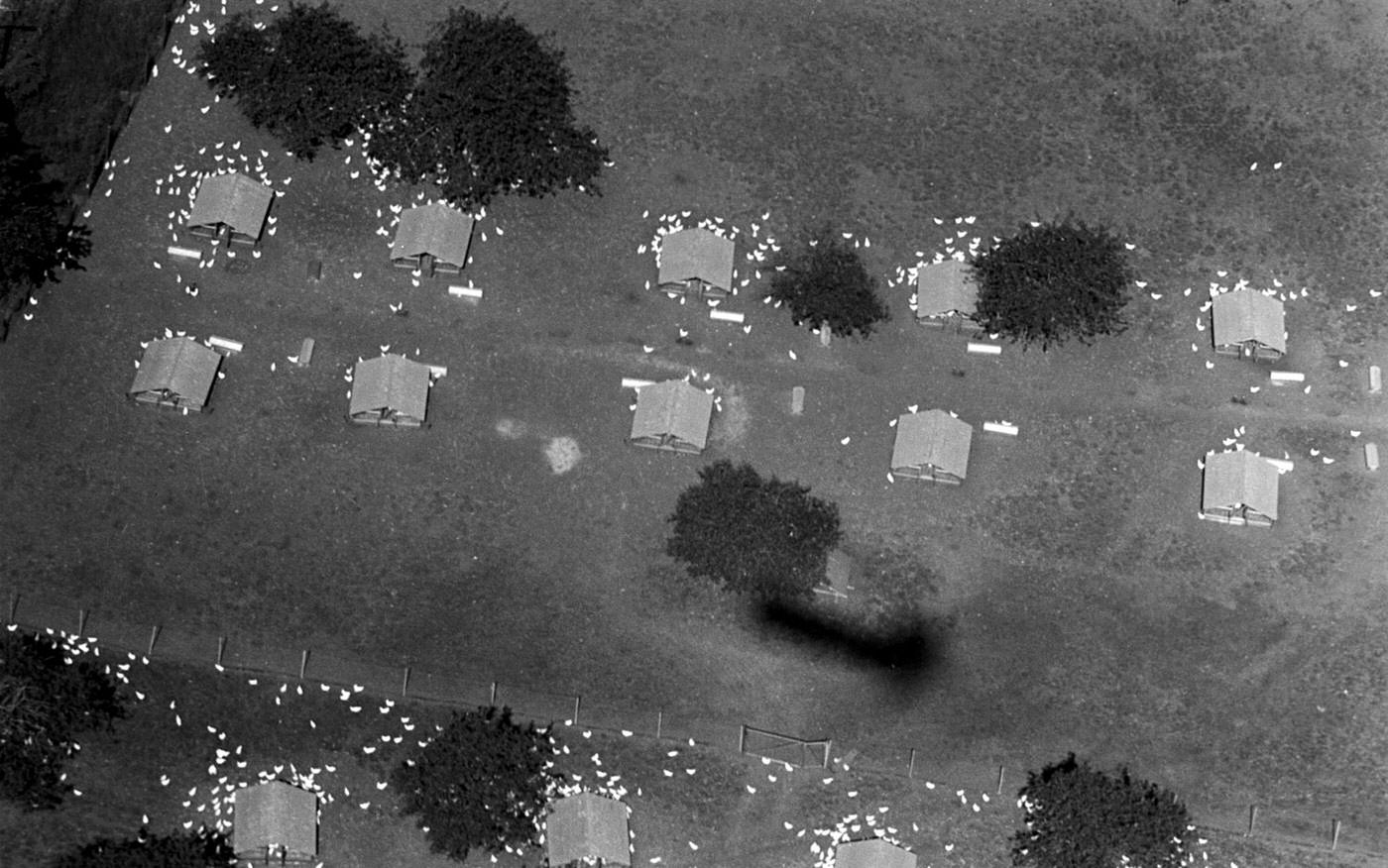
Beach accident, the near drowning of a Coney Island bather named Mary Eschner, draws knot of people. Reviving victim lies in center, attended by lifeguards. Some bathers (foreground) wave a helicopter as they run from water.
New York State.
New York State.
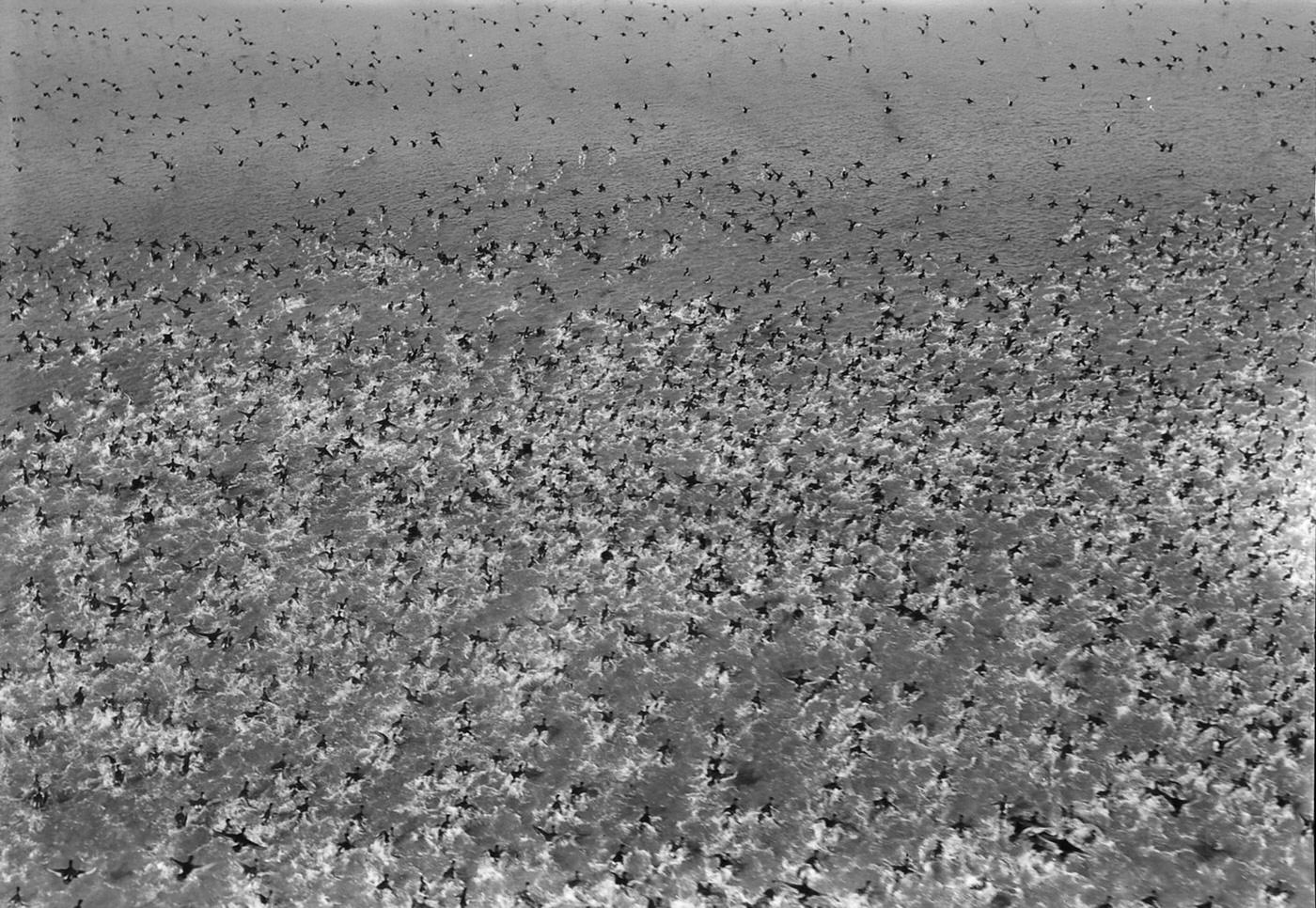
Back Bay, Virginia
Back Bay, Virginia

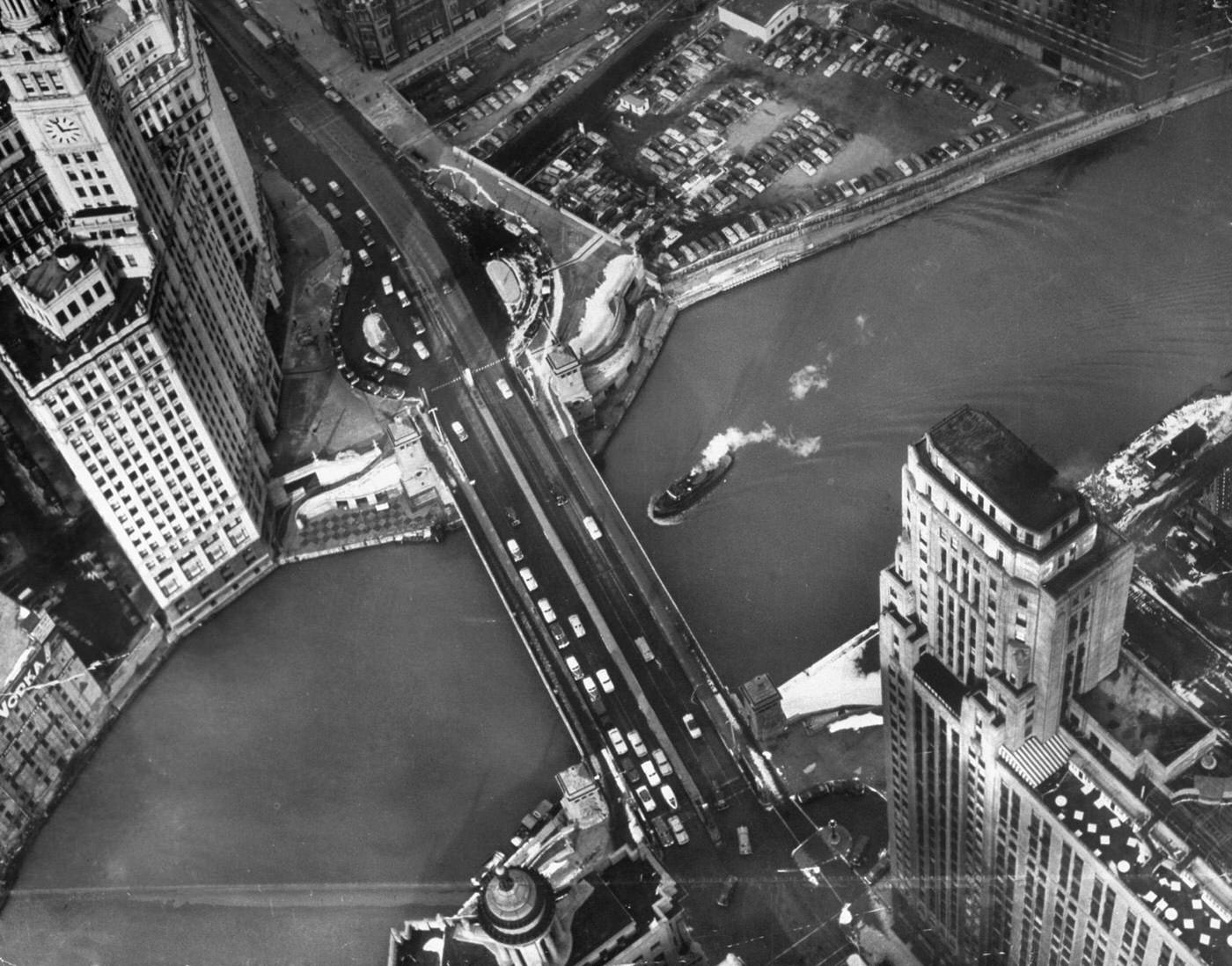
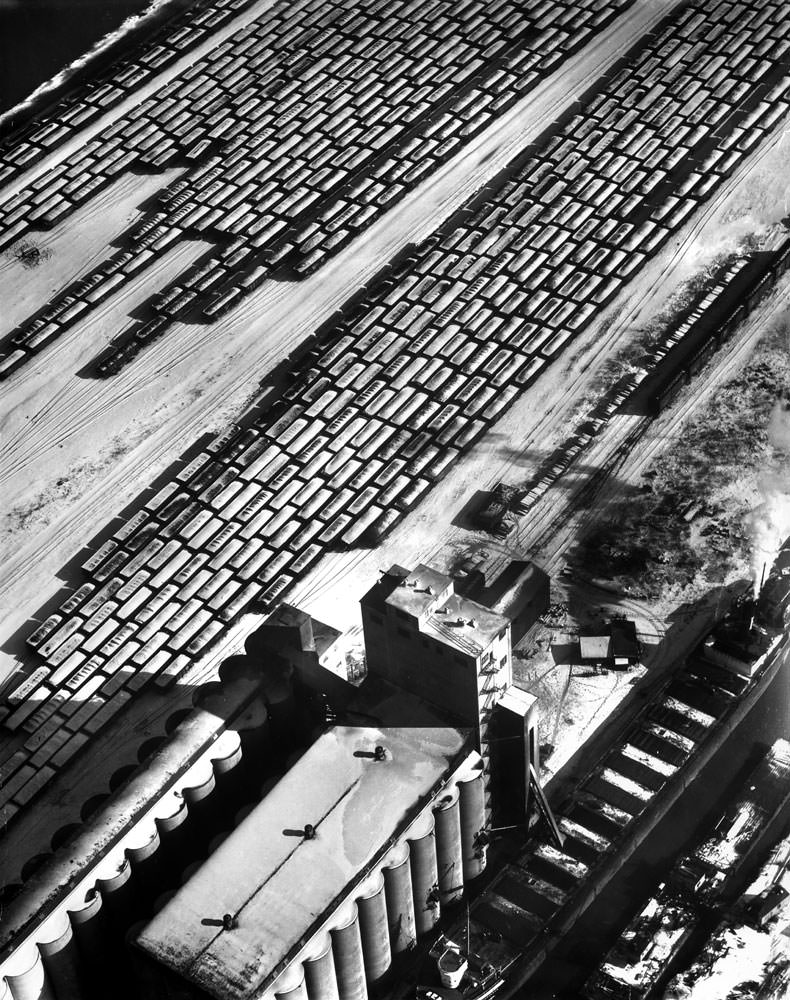
Moving west to Chicago, the industrial scale of the city became the subject. Snow-covered rail yards, freight operations along the Calumet River, and the famous Wrigley Building — split in two by a railroad track — all came into sharp focus from above.
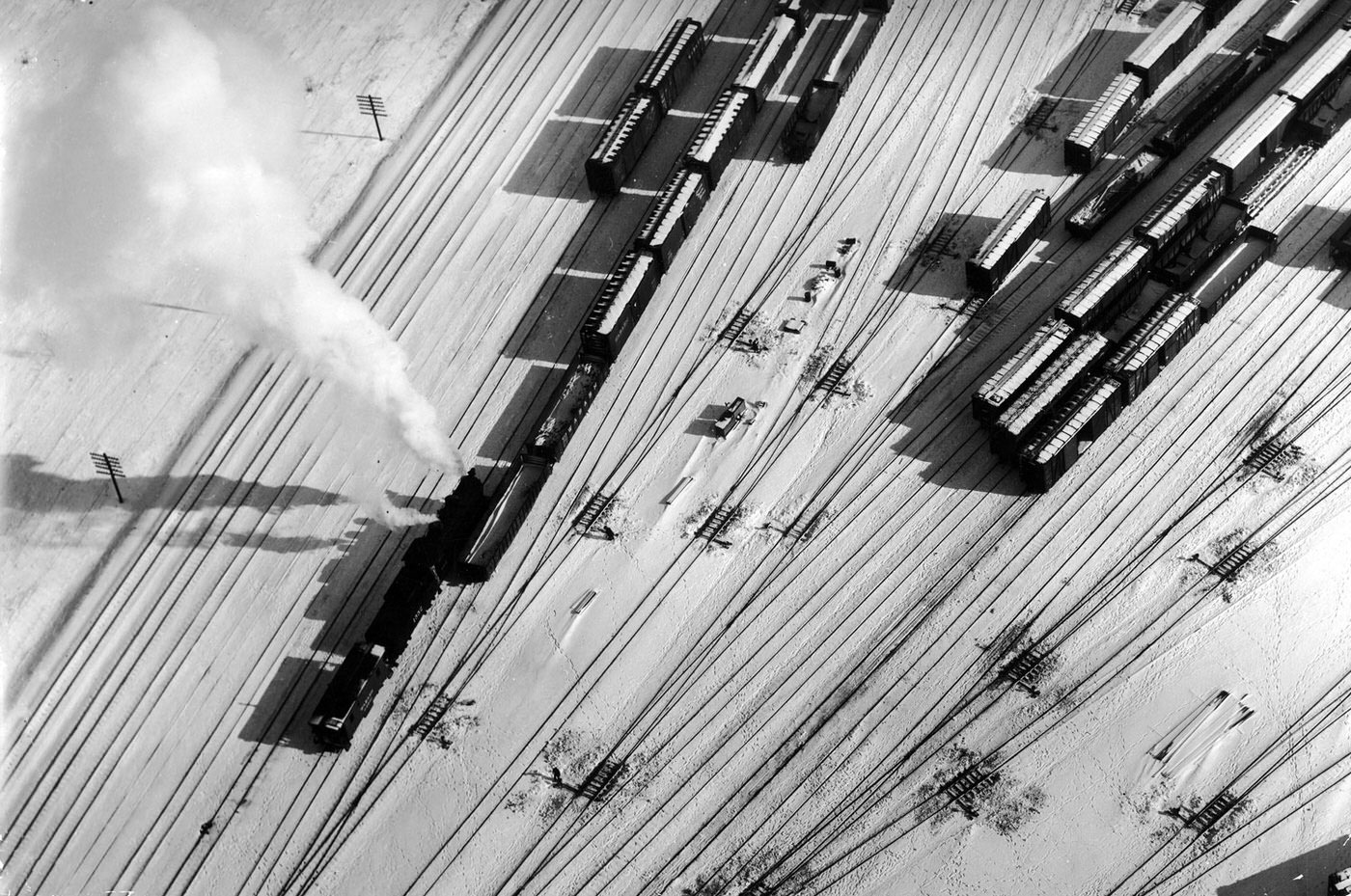
Trains after snowfall, Chicago
Grain elevator, operated by the Norris Grain Co. on the southeast side of Chicago, unloads corn from lake boat in a Calumet River slip (right foreground). In the freight yards (background) snow-covered gondola cars are loaded with coal.
Chicago's famous Wrigley Building looks like candy castle from a helicopter above spire. Building is split in two parts and a railroad track runs between them. Behind them is Chicago River, with Michigan Avenue bridge.
Chicago’s famous Wrigley Building looks like candy castle from a helicopter above spire. Building is split in two parts and a railroad track runs between them. Behind them is Chicago River, with Michigan Avenue bridge.

Gary, Indiana brought heavy industry into frame. A Pittsburgh Steamship Co. vessel hauling ore to the U.S. Steel plant and the plant itself showed America’s postwar manufacturing power from a dramatic overhead angle.
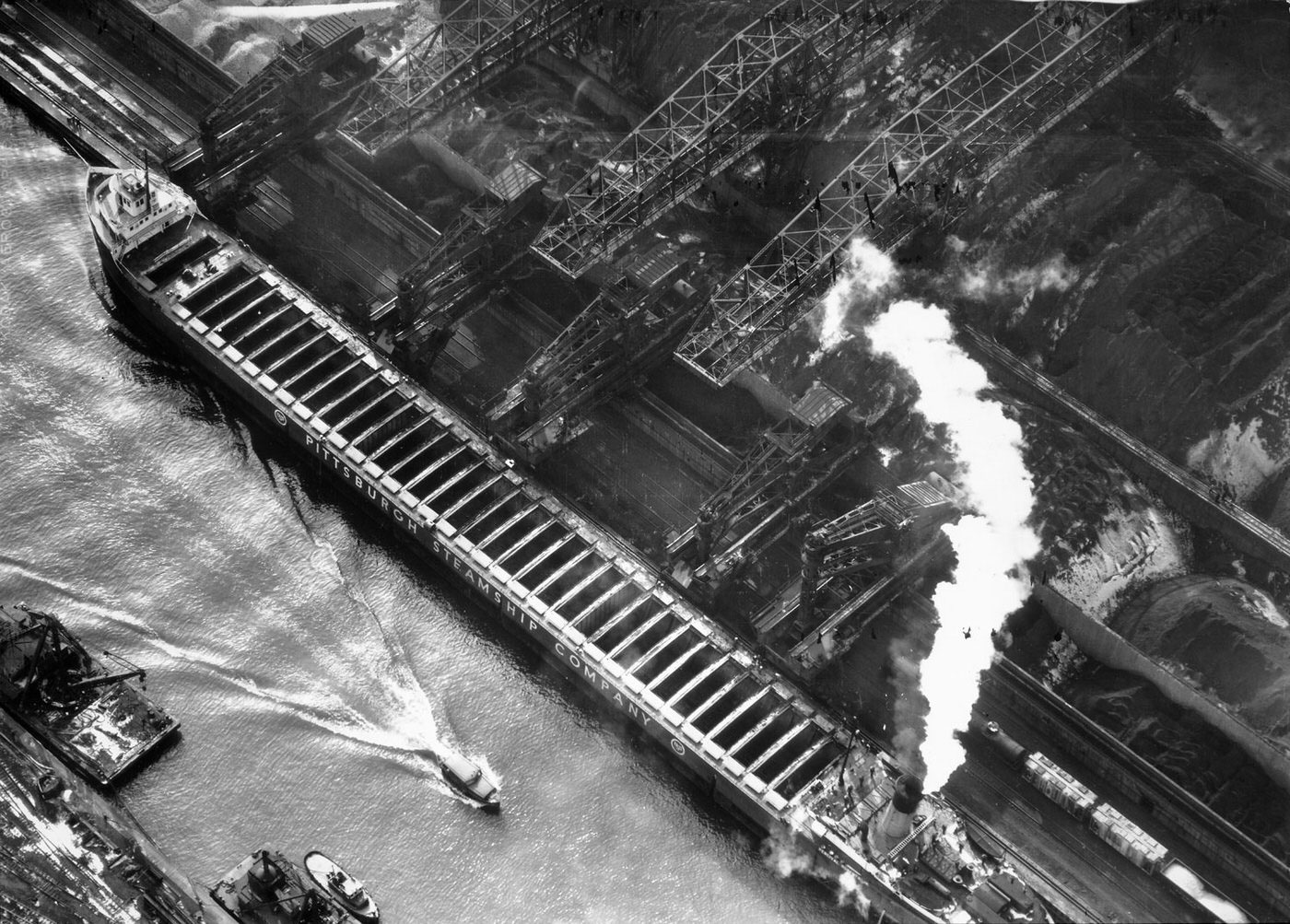
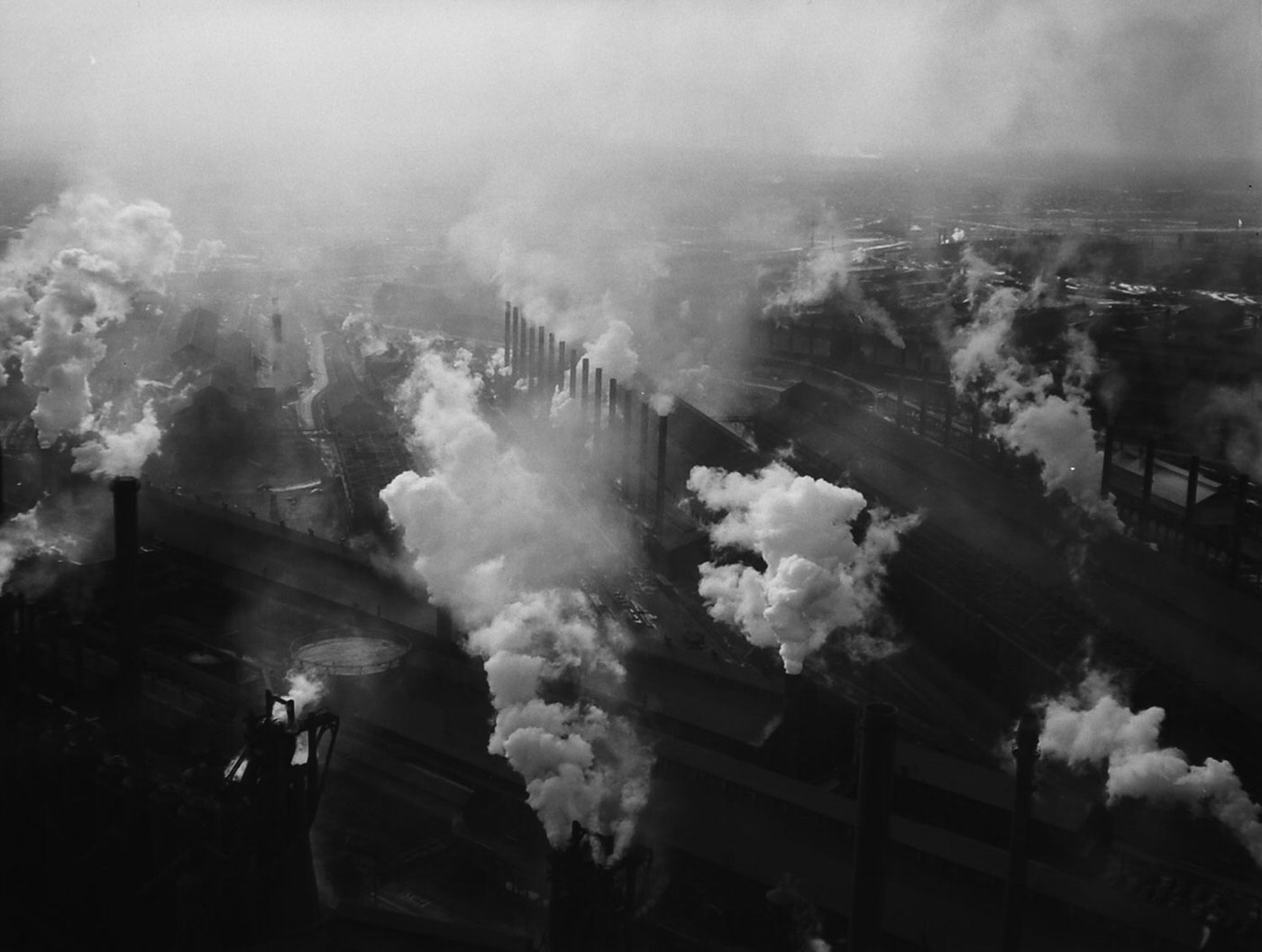
Pittsburgh Steamship Co. ship carrying ore to US Steel plant, Gary, Indiana
Steel plant, Gary, Indiana

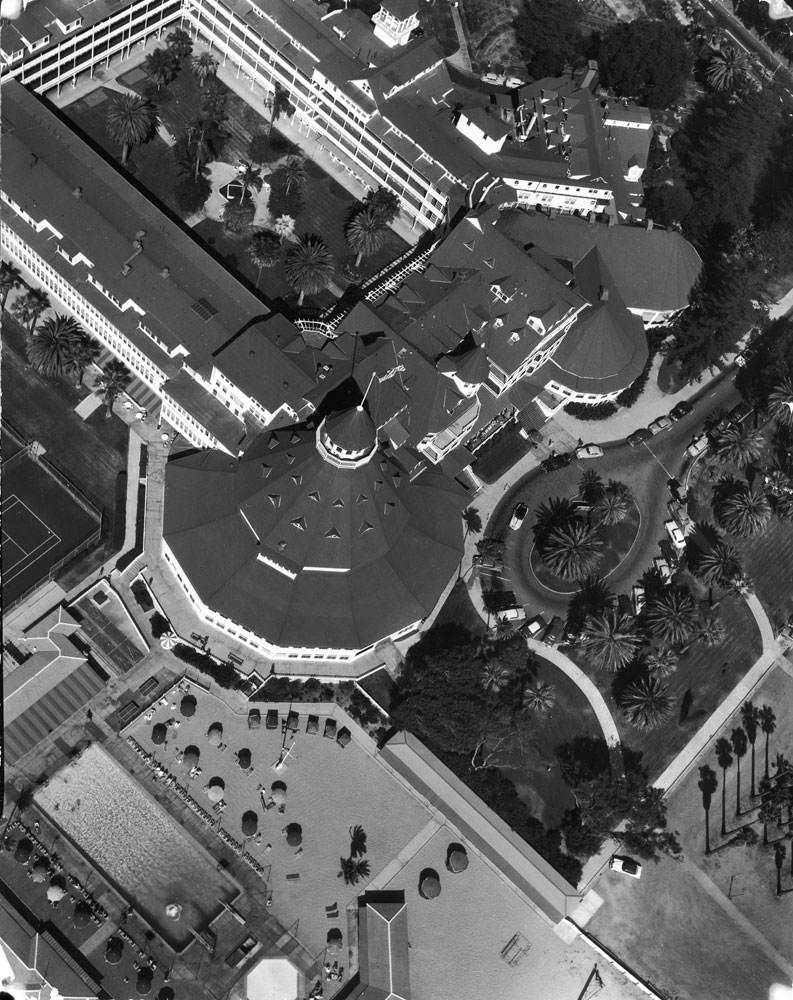
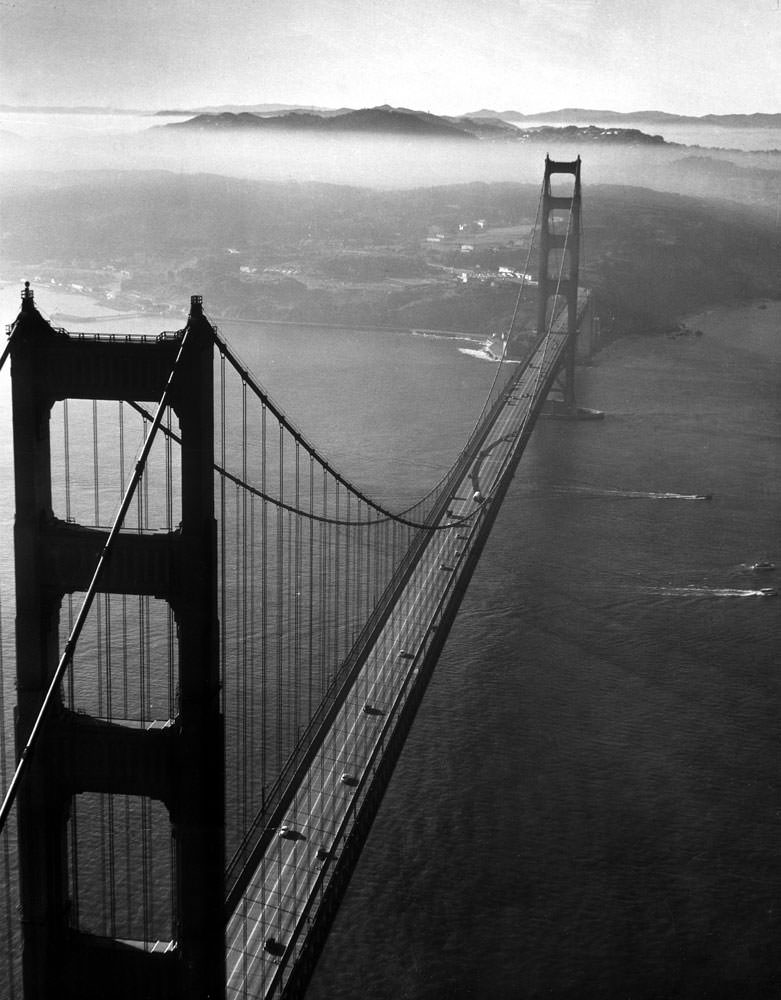
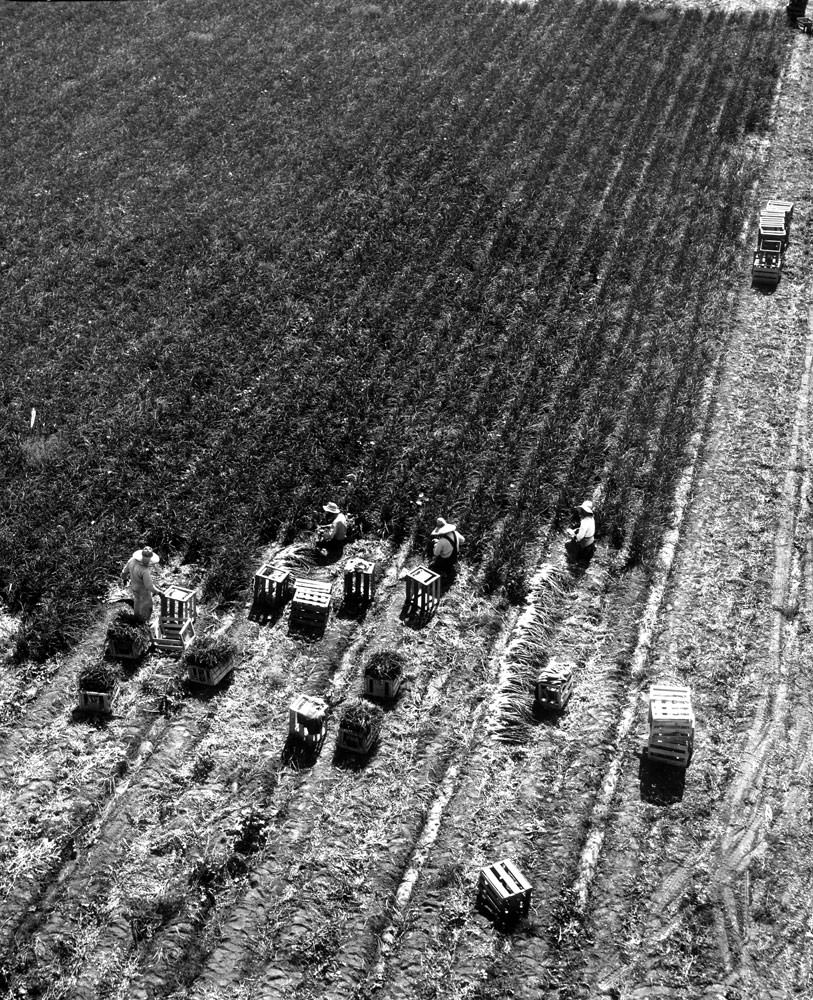
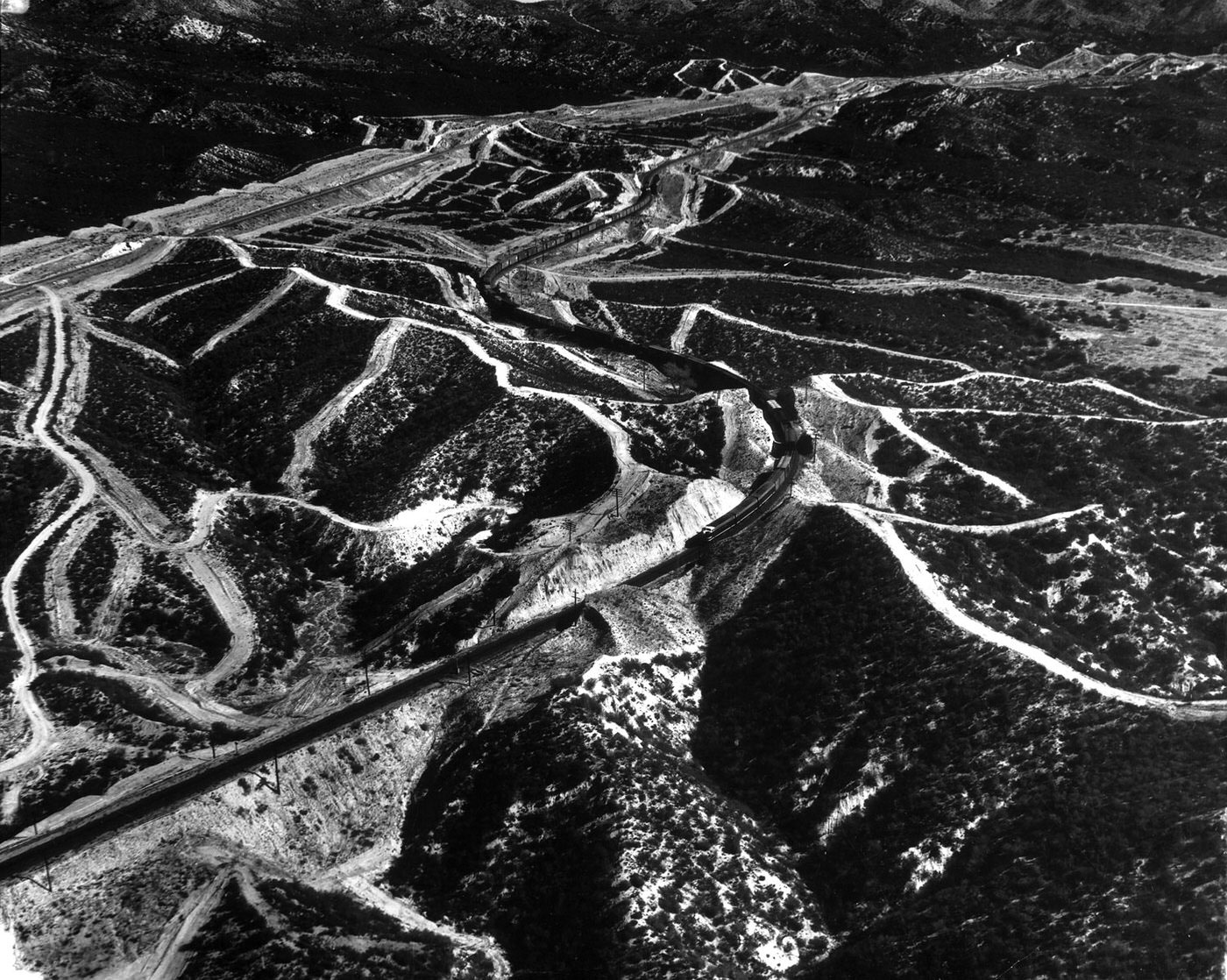
On the West Coast, the scenes shifted to California’s beaches, bridges, and farmland. Water skiers on Long Beach, a freight train cutting through El Cajon Pass, the Coronado Hotel, the Golden Gate Bridge, and farm workers harvesting onions in Burbank all made the frame.
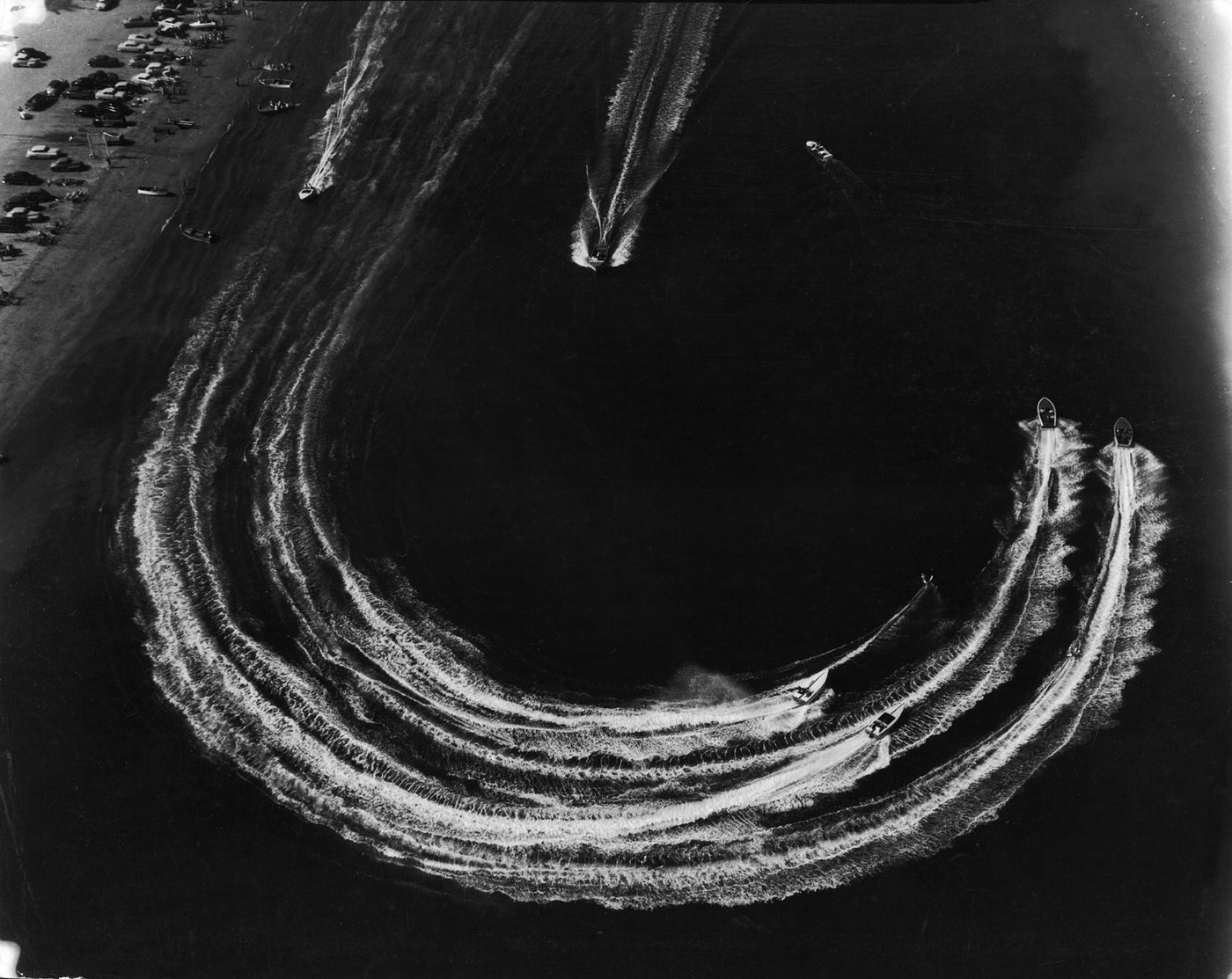
Water skiers and motorboats speed across the water, Long Beach, California
Freight train traveling through the El Cajon Pass outside San Diego, California
Coronado Hotel and its surroundings, San Diego, California
Golden Gate Bridge
Golden Gate Bridge
Ocean Beach, San Francisco, California
Farm workers harvesting onions, Burbank, California

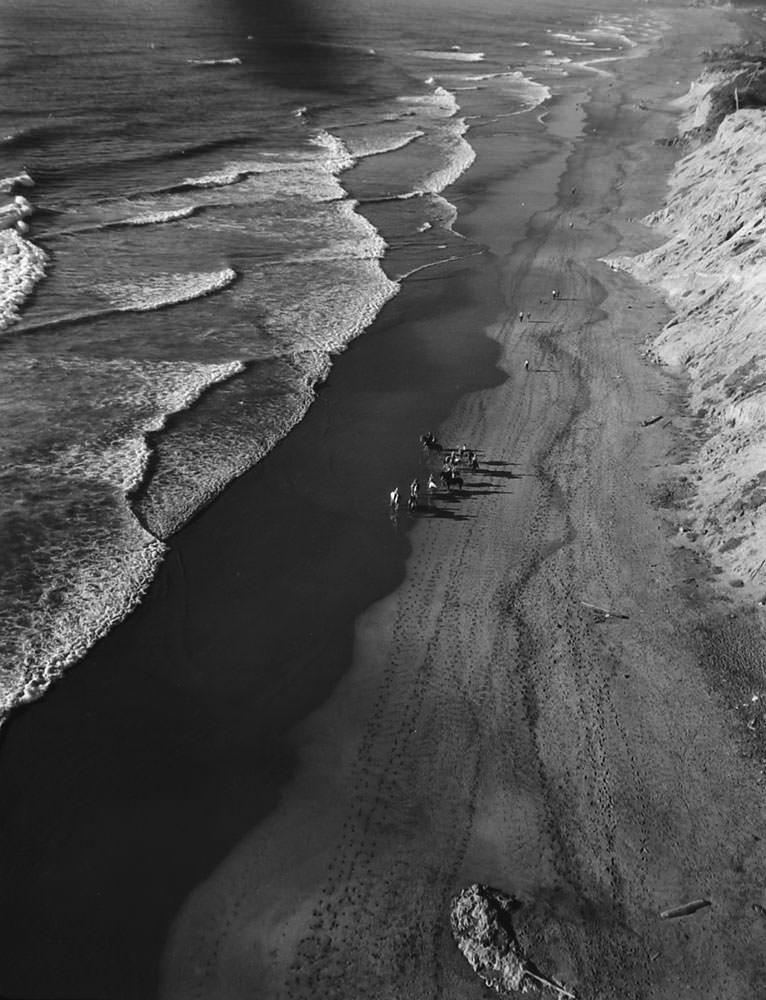
At Ocean Beach near Fort Funston, horse riders threading the shoreline at high tide produced sweeping, wave-patterned compositions only possible from Bourke-White’s airborne position.
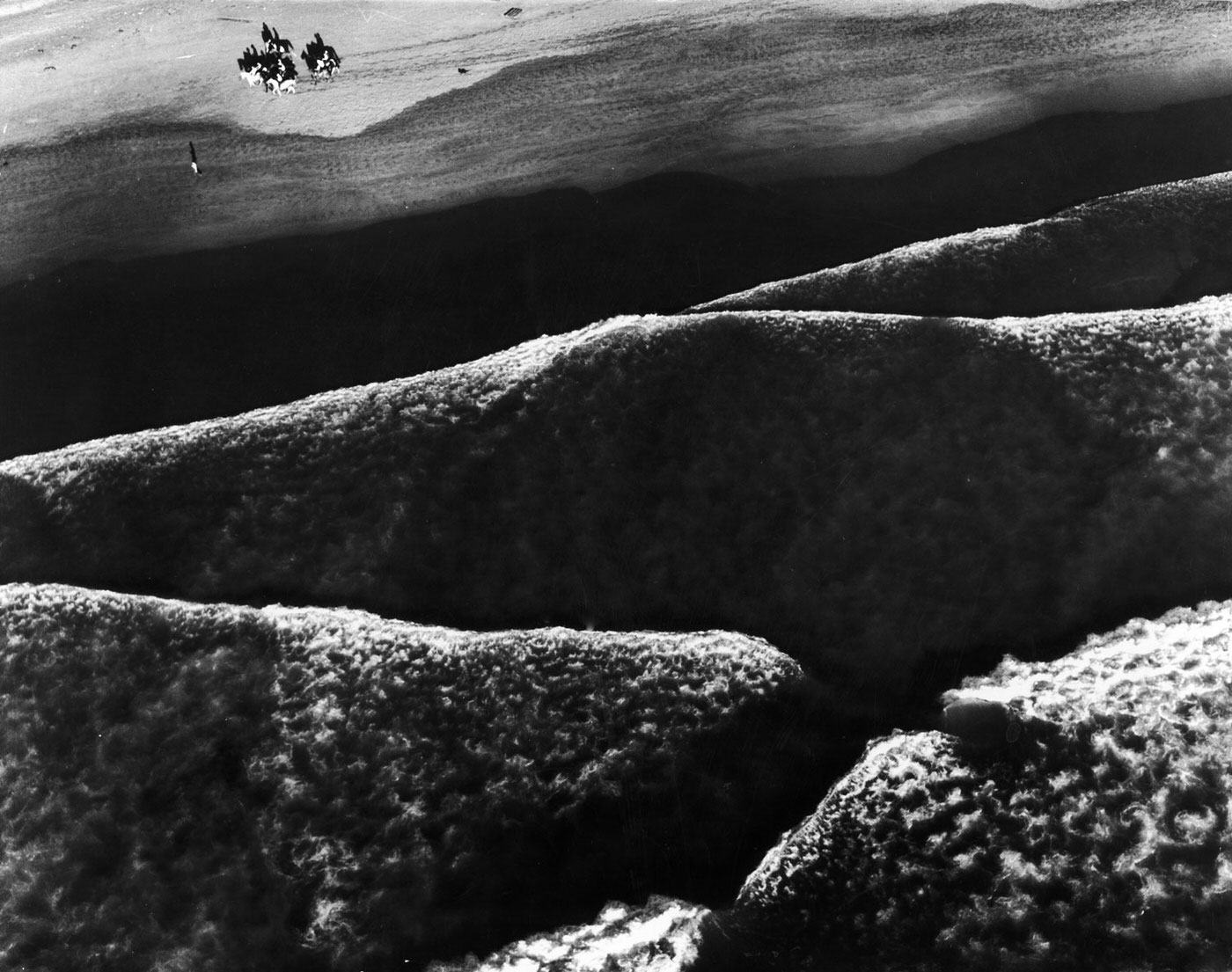
Beach riders guide their horses along the shore at high tide at Ocean Beach, near Fort Funston, California, as the long, low Pacific rollers make mountain like patterns of the surf.

The project’s final stop was Texas. Hovering directly above the San Jacinto Monument near Houston, Bourke-White aimed her camera straight down the 570-foot shaft to the steps and parking area below. The tower marks the exact site where Sam Houston defeated General Santa Anna in 1836. LIFE ran the complete body of work as a 12-page spread — a testament to how powerfully these aerial images captured a nation few had ever seen from above.
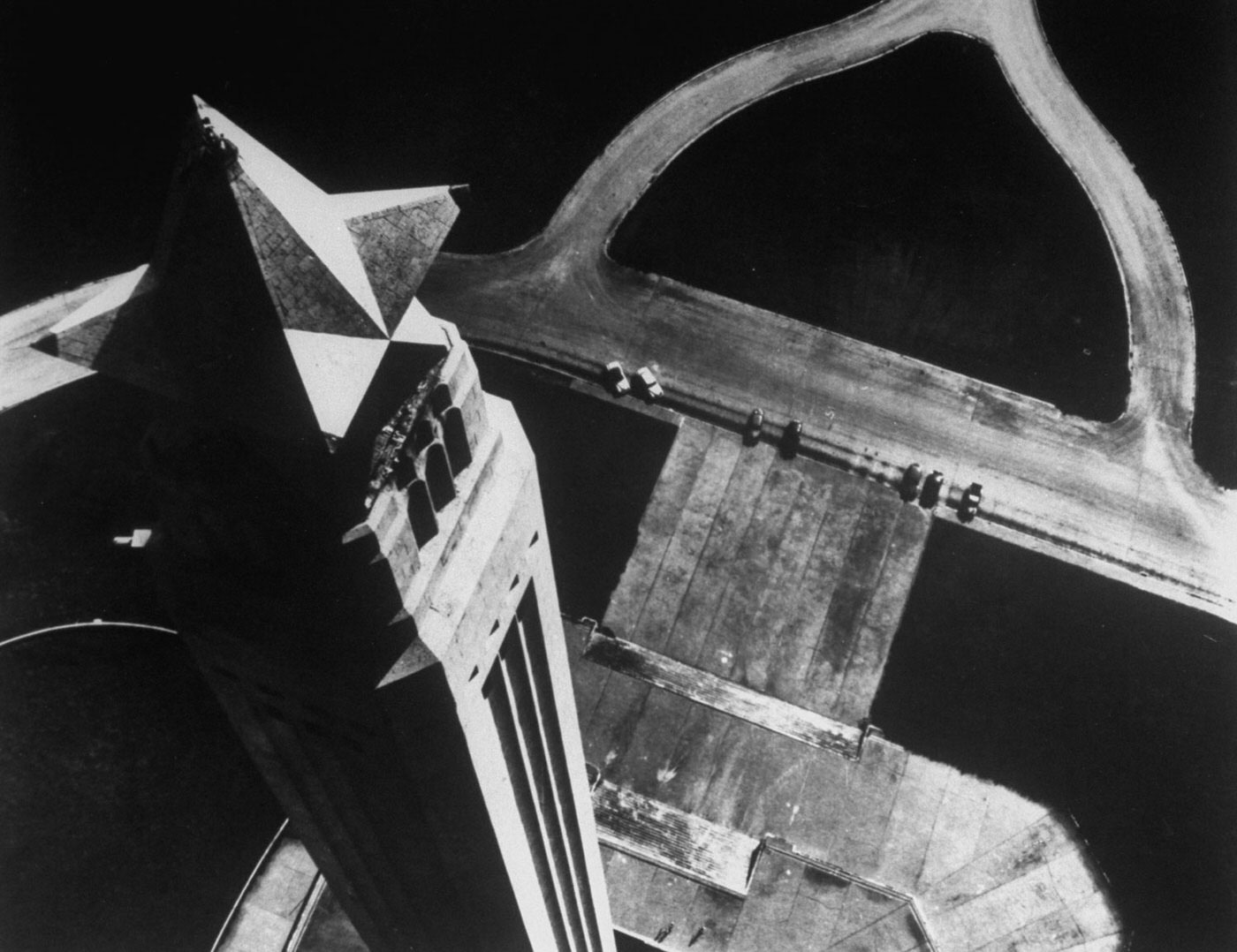

Over the Texas star on the San Jacinto Monument near Houston, helicopter-borne camera looks sharply down 570-foot shaft to steps and parking space below. Tower marks spot where Sam Houston defeated General Santa Anna in 1836.
Enjoyed this post? Get new ones in your inbox.

Leave a Comment

Your email address will not be published. Required fields are marked *

Share this Post 🥺

Please take a moment to share this content. Your support is greatly appreciated! 🙌🙏

Share this Post 🥺

Please take a moment to share this content. Your support is greatly appreciated! 🙌🙏
Scroll to Top
 
Hey Friend, Before You Go.. Please like & follow for more interesting content