
Allentown is Pennsylvania’s third-most-populous city, sitting in Lehigh County as both its county seat and the largest city in the Lehigh Valley metropolitan area. It was incorporated as the Borough of Northampton in 1811 before being officially renamed Allentown in honor of its founder. By the mid-1960s, the city’s economy was thriving — but its inability to expand its borders set off a slow, steady shift in population that would reshape the city for decades.
Hundreds of thousands of baby boomers began leaving Allentown’s city limits for newer suburban housing that offered lower taxes, open green space, less crime, and brand-new schools. The city’s working-class base moved outward, and the neighborhoods left behind began to show the wear of that transition. The 1978 photographs collected here capture Allentown at that crossroads — a city with deep architectural roots still standing firm against the pull of suburban sprawl.
Hamilton Street served as Allentown’s main commercial spine. Looking east along the corridor in 1978, the streetscape reveals a city that still carried significant commercial weight, with storefronts and signage reflecting the retail culture of a mid-sized American city in transition.
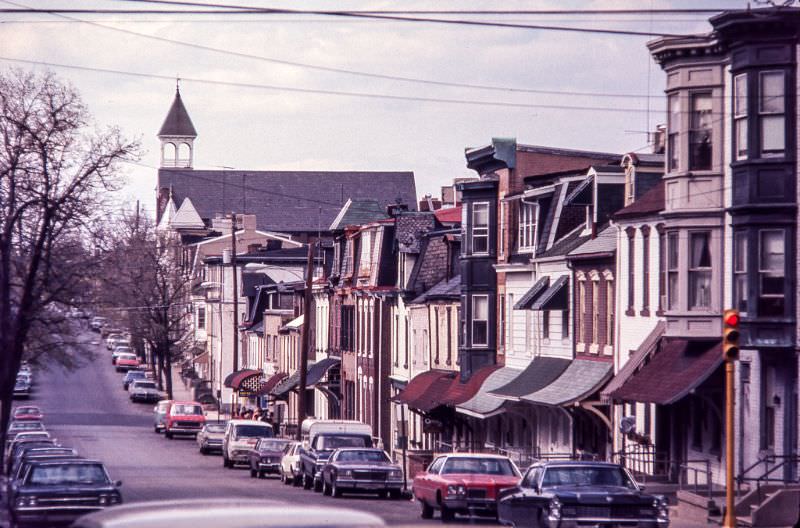
Chew Street ran through one of Allentown’s most established residential zones. The buildings here show the layered history of the city — older row homes sitting alongside small businesses, all of them carrying the architectural character that defined the neighborhood before suburban growth drew attention elsewhere.
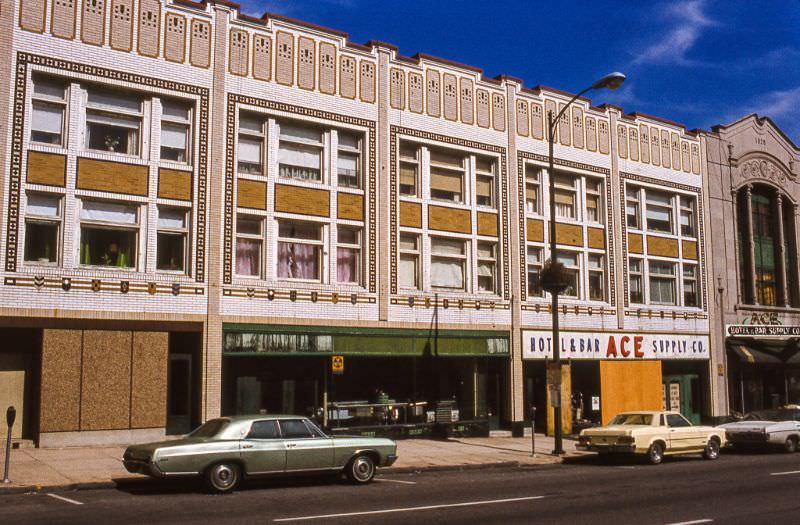
North 7th Street was a hub of everyday commerce in Allentown. Businesses like Ace Supply stocked local tradespeople and homeowners, tucked into storefronts that had served the neighborhood for generations.
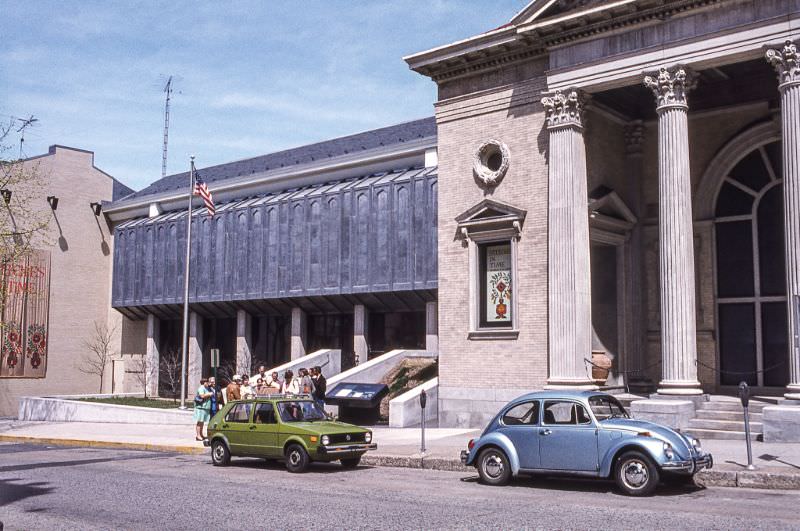
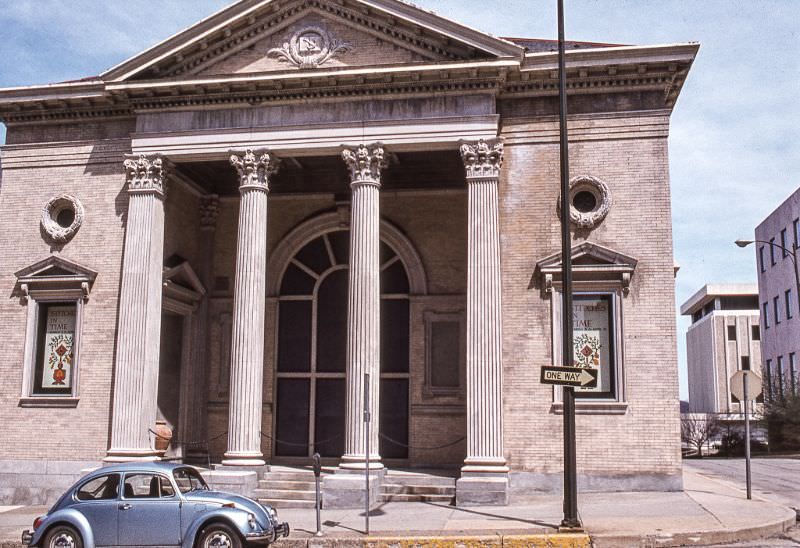
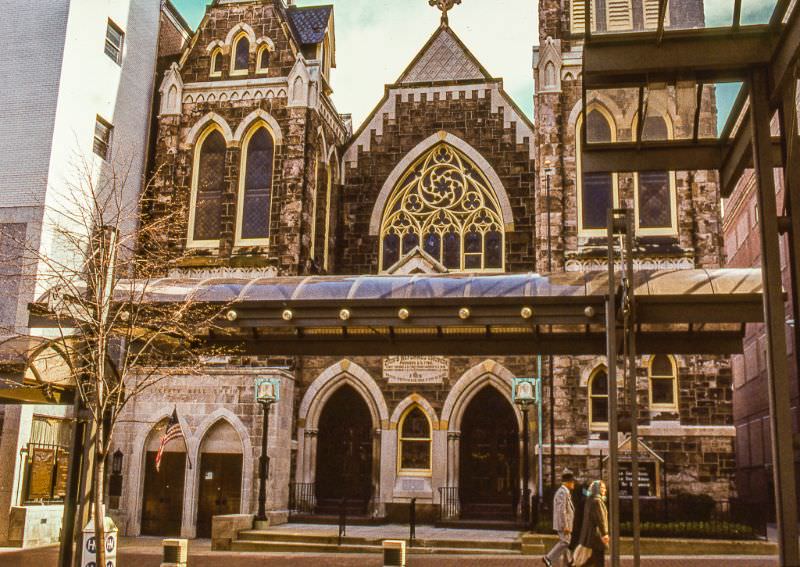
The Allentown Art Museum has occupied a building with a rich history of its own. Originally constructed as the First Presbyterian Church, the structure was repurposed to house the city’s fine art collection, giving a congregation’s former home a new civic purpose.
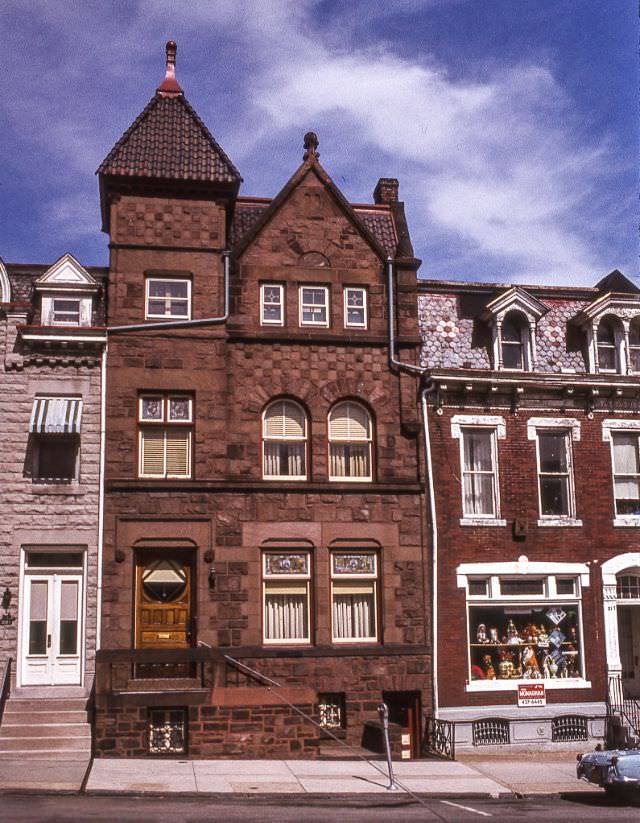
Brownstone construction appears throughout Allentown’s older neighborhoods, a material choice that speaks to both the era of the buildings and the tastes of the city’s early prosperous residents. These facades were built to last, and in 1978 they still delivered on that promise.
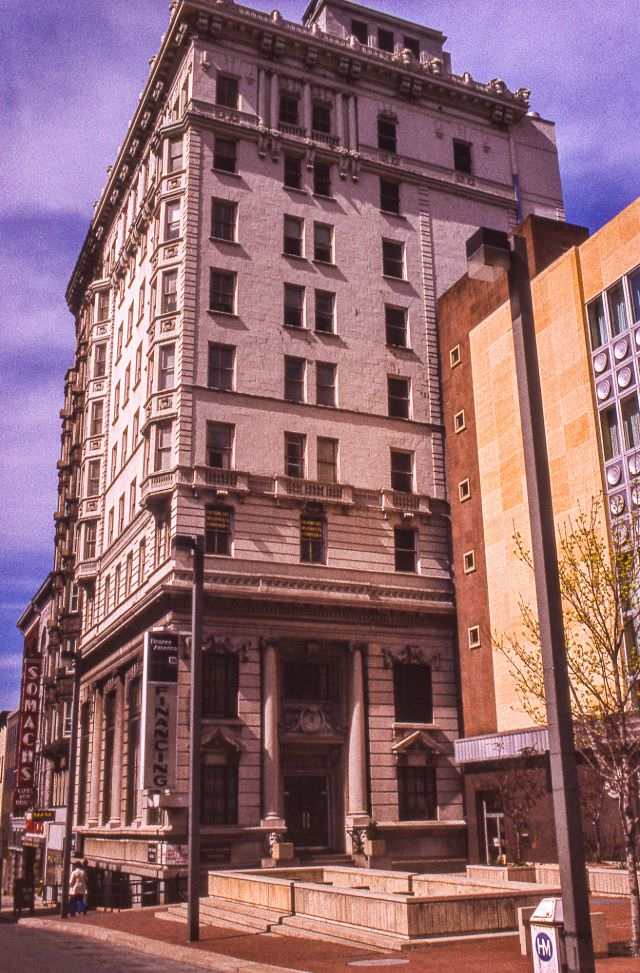
The city’s banking district showed a clear generational contrast by the late 1970s. The older Allentown National Bank building, with its heavy masonry and ornate detail, stood physically taller than the newer First National Bank of Allentown beside it — a side-by-side illustration of how architectural styles had shifted between the two buildings’ eras.
Walnut Street offered another look at Allentown’s residential fabric — tree-lined and lined with homes that carried front porches, decorative woodwork, and the kind of craftsmanship that was standard in the city’s earlier building boom.
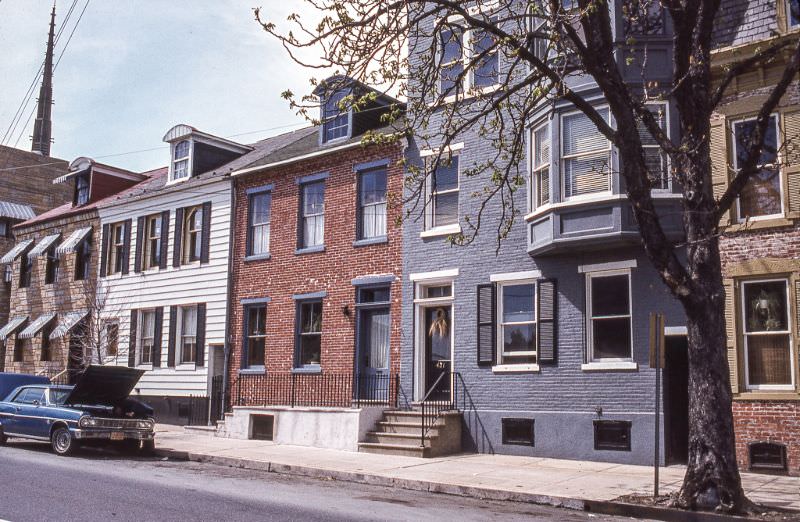
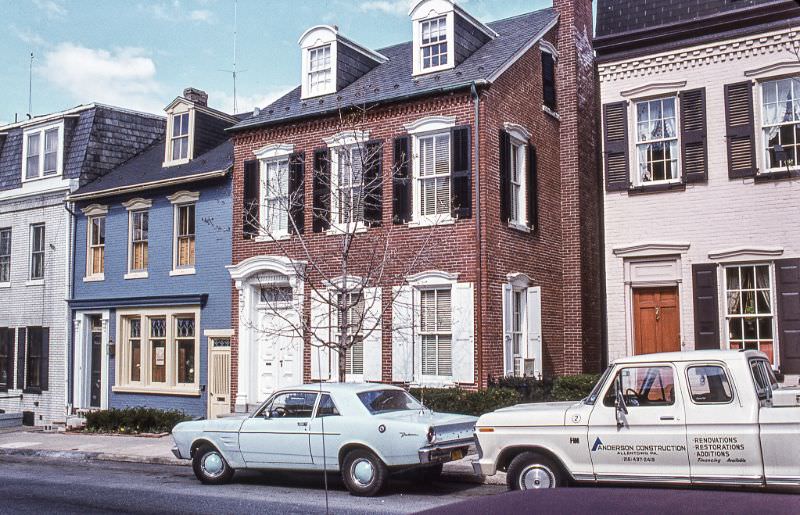
Street-level views from 1978 often place period automobiles directly in frame, grounding the images in their exact moment in time. A Ford Fairmont parked curbside puts the viewer firmly in the late 1970s, the car a period marker as telling as any building in the background.
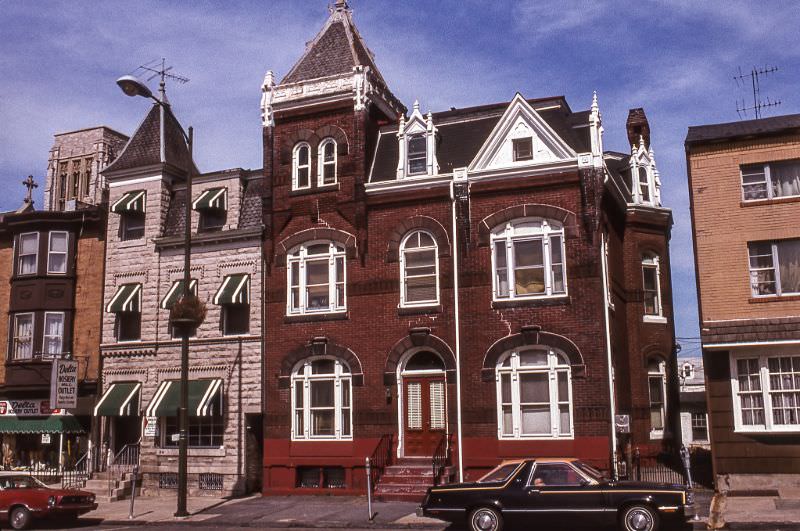
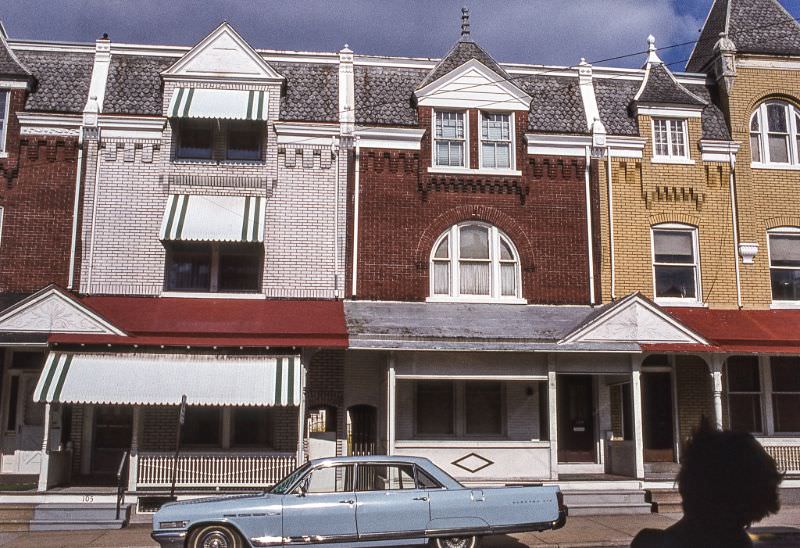
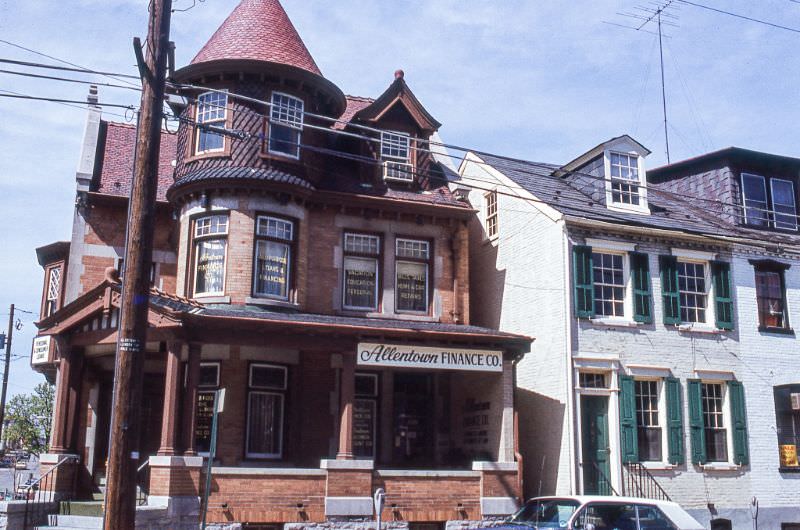
Victorian-era architecture left a strong mark on Allentown’s residential streets. Turrets, covered porches, and decorative detailing appear throughout the older neighborhoods — features that required skilled labor and materials rarely used in the postwar housing boom that was drawing residents to the suburbs.
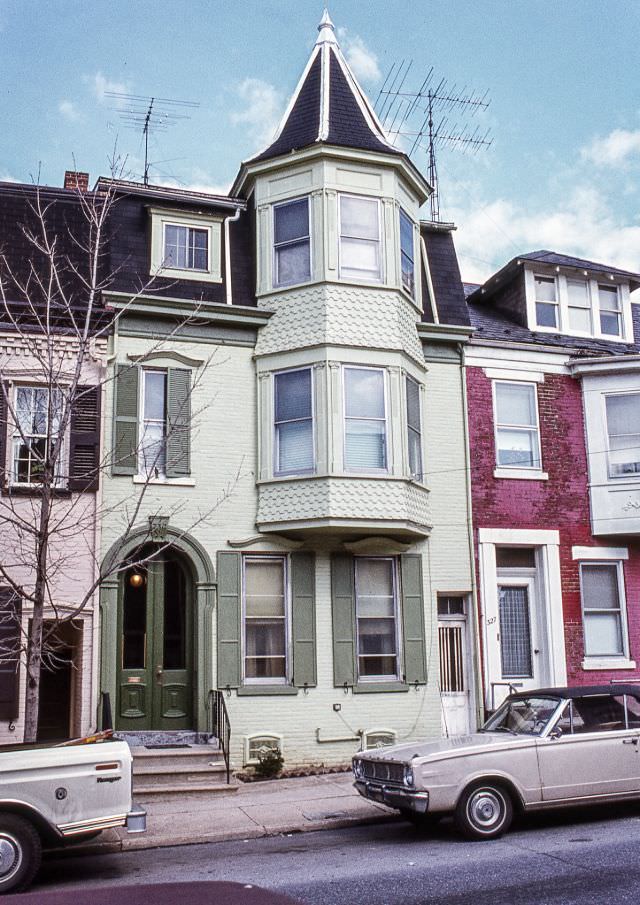
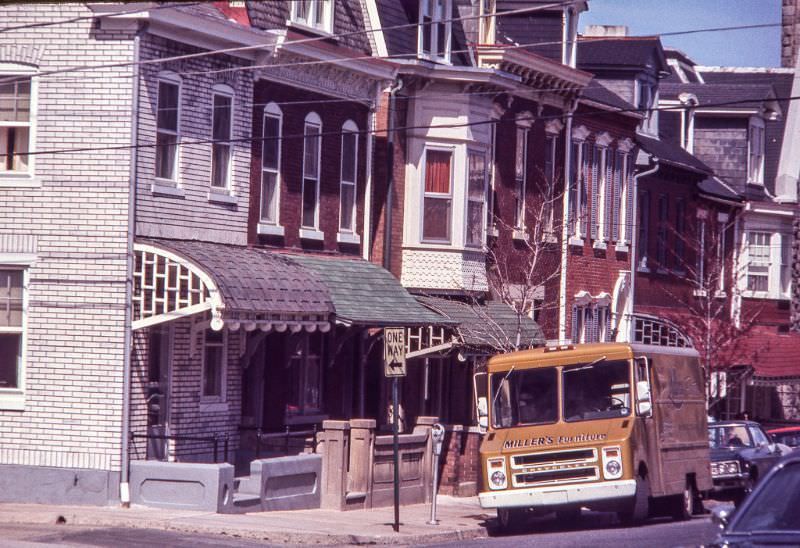
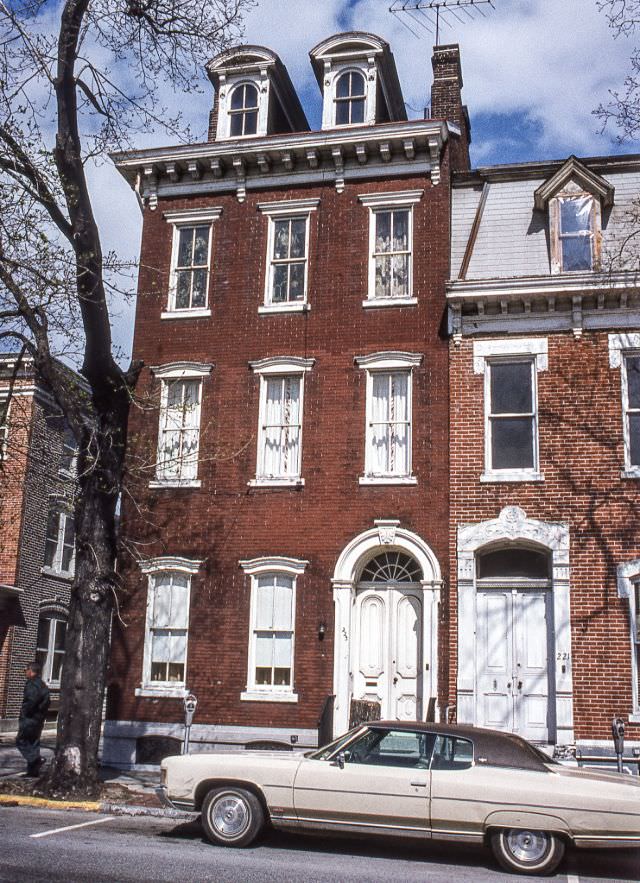
Federal-style homes also appear in Allentown’s historic streetscapes. Defined by their symmetrical facades, brick construction, and restrained ornamentation, these homes reflect the architectural tastes of the early American republic — a style that found a firm home in Pennsylvania’s growing towns and cities.
Public institutions shaped much of Allentown’s built environment. The former Herbst Elementary School stands as one example — a building constructed with the scale and permanence that civic architecture once demanded, even for neighborhood schools.

By 1978, some of Allentown’s former private mansions had been converted to office use. These large, stately homes, once built for the city’s wealthy industrialists and merchants, found new life as professional spaces rather than residences — a practical response to the city’s shifting demographics.
Symphony Hall was one of Allentown’s cultural landmarks. Behind it, the former Motoramp parking lot remained visible in 1978 — a utilitarian space that reflected the city’s mid-century effort to accommodate the growing number of cars filling American streets.
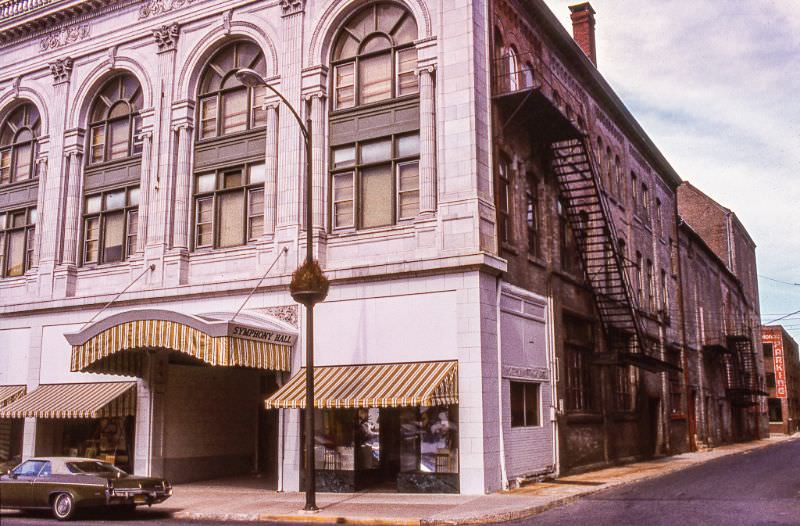
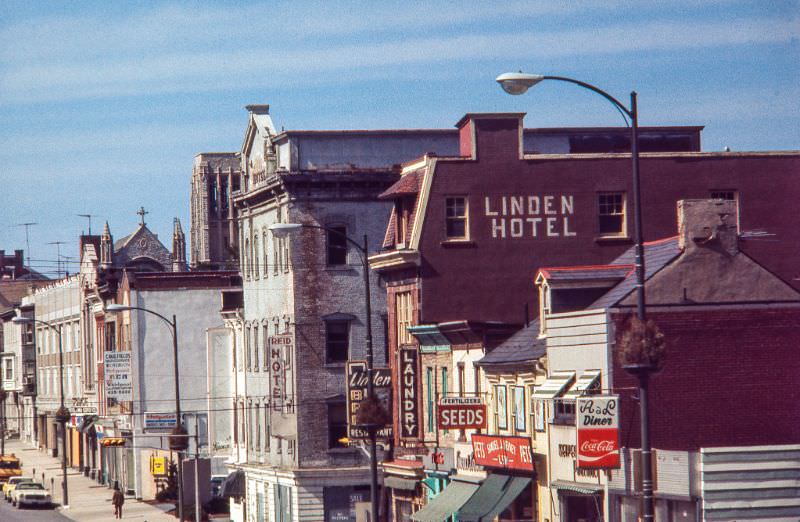
Walking tours of Old Allentown were already a recognized activity by the late 1970s, pointing to the city’s awareness of its own historical value. Preservation efforts and organized tours helped document the architecture before more of it was lost to demolition or neglect.
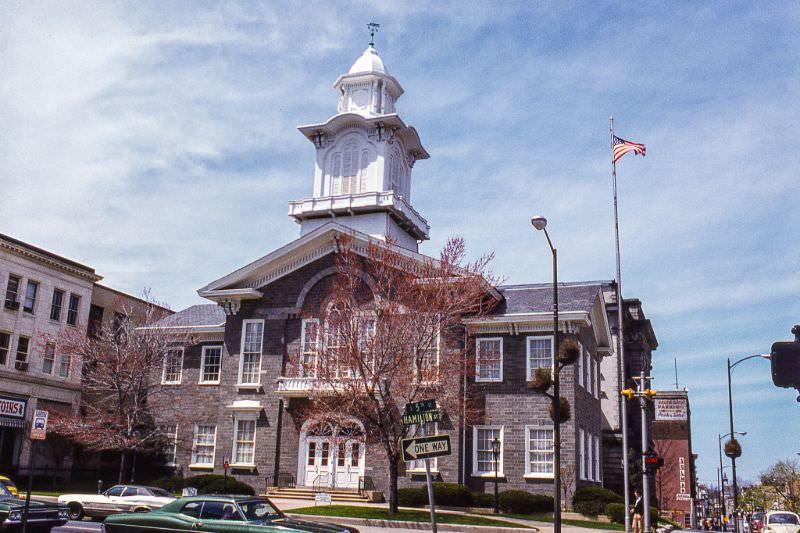
The Old Lehigh County Court House stands as one of the most significant civic structures in the city’s history. Its architecture communicated authority and permanence — qualities the county government deliberately built into stone.
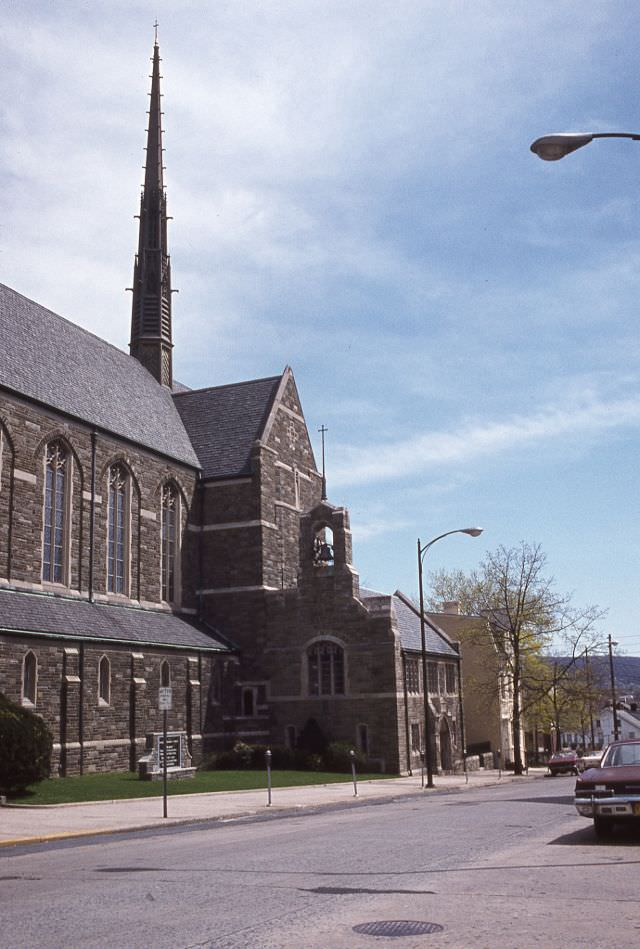
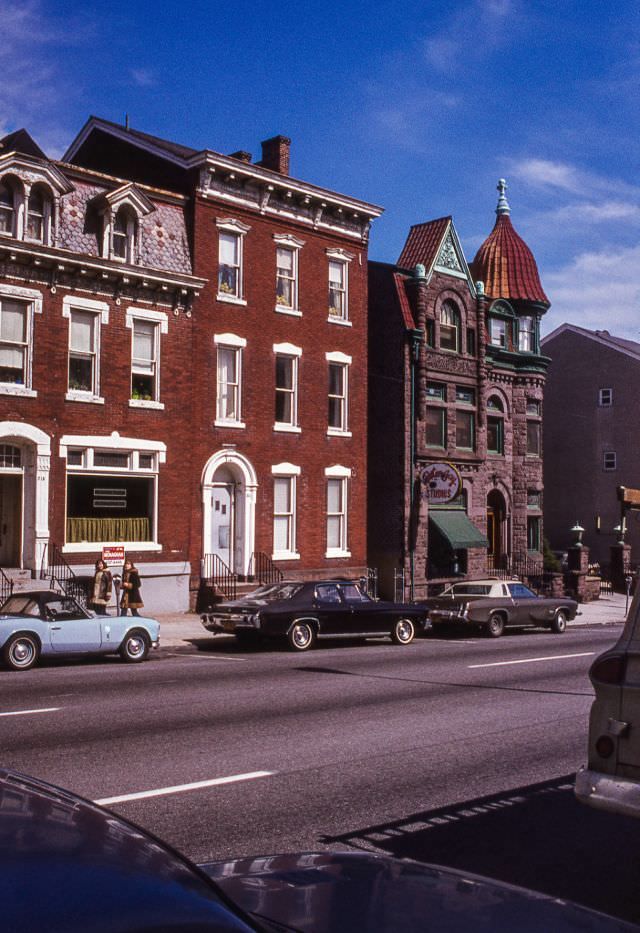
Real estate offices occupied storefronts throughout the city’s commercial corridors in 1978. On streets like Chew, these businesses served a neighborhood still active with property transactions, even as the broader population trend continued moving outward to the suburbs.
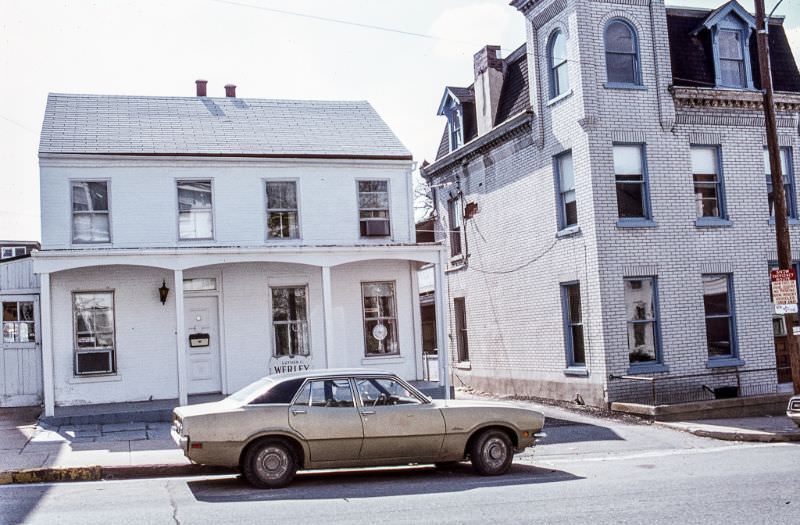
Some Allentown homeowners in the 1970s were actively restoring older properties rather than abandoning them. These restored homes stood as deliberate counterpoints to the city’s decline narrative — proof that investment in the existing housing stock was still happening block by block.
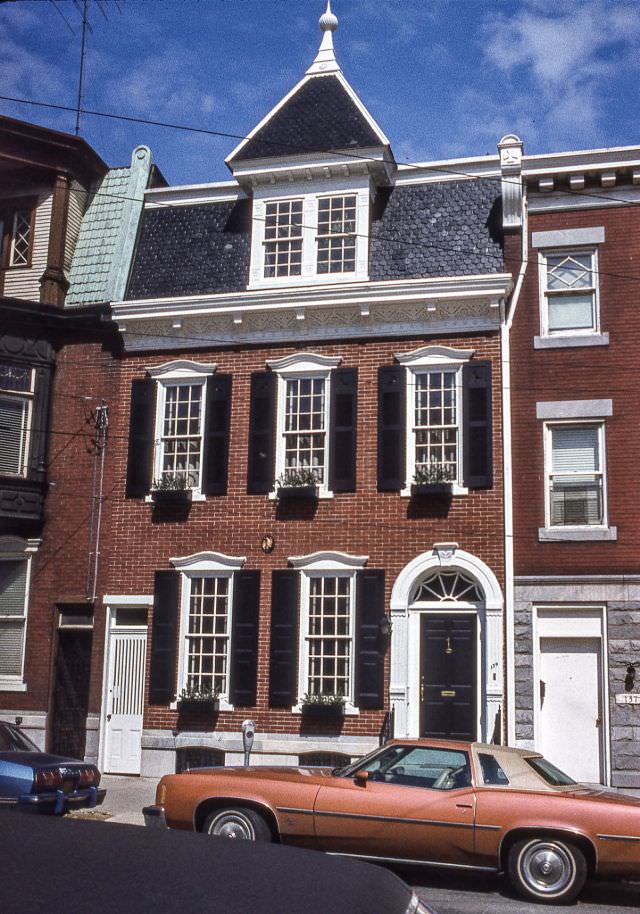
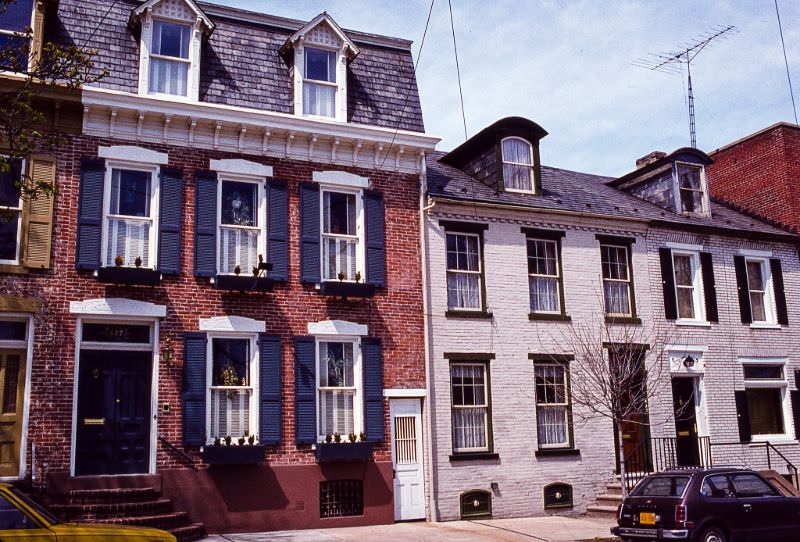
At the corner of Sixth and Chew Streets, vintage lamppost flower planters added a deliberate touch of civic pride to the streetscape. Small details like these were part of broader efforts in many older American cities during the 1970s to make urban neighborhoods feel more inviting and livable.
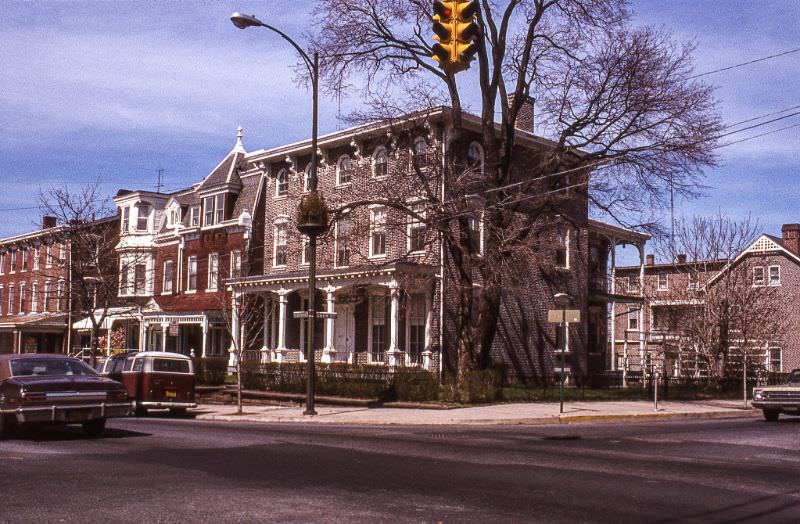
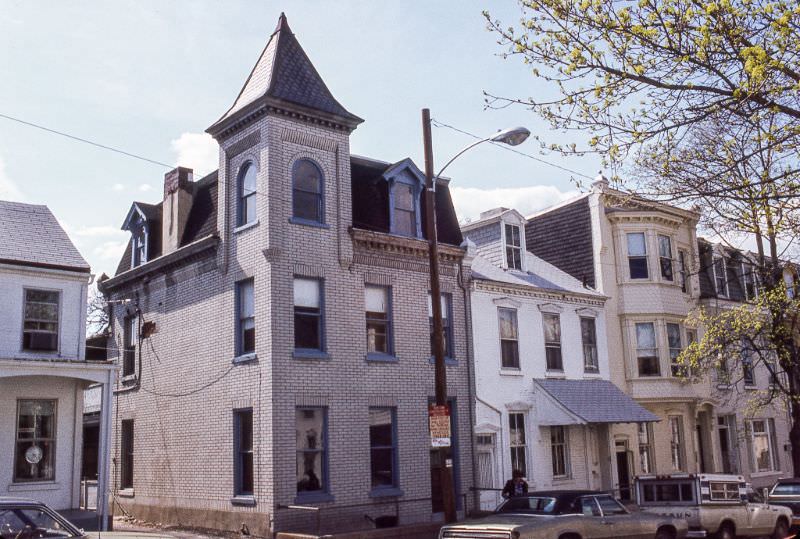
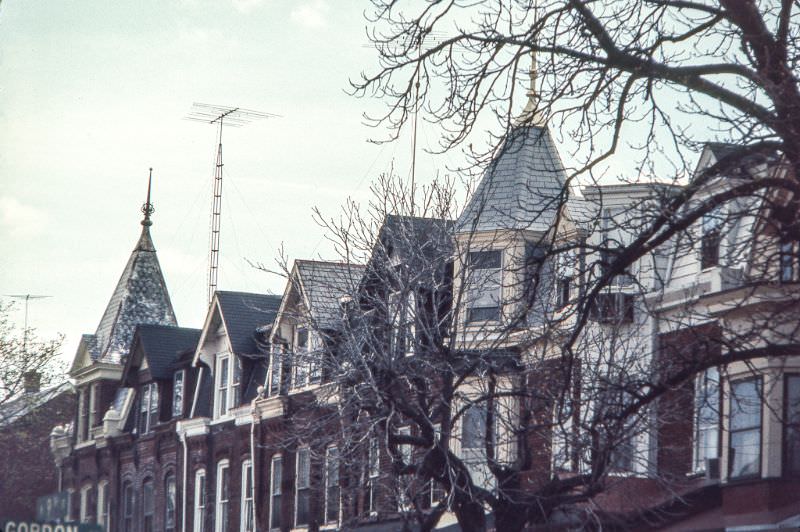
Television antennas crown the rooftops in several of these photos, a detail that places the images unmistakably in the pre-cable era. Every household with a TV set needed one, and the dense rows of Allentown’s housing made rooflines bristle with them by the late 1970s.
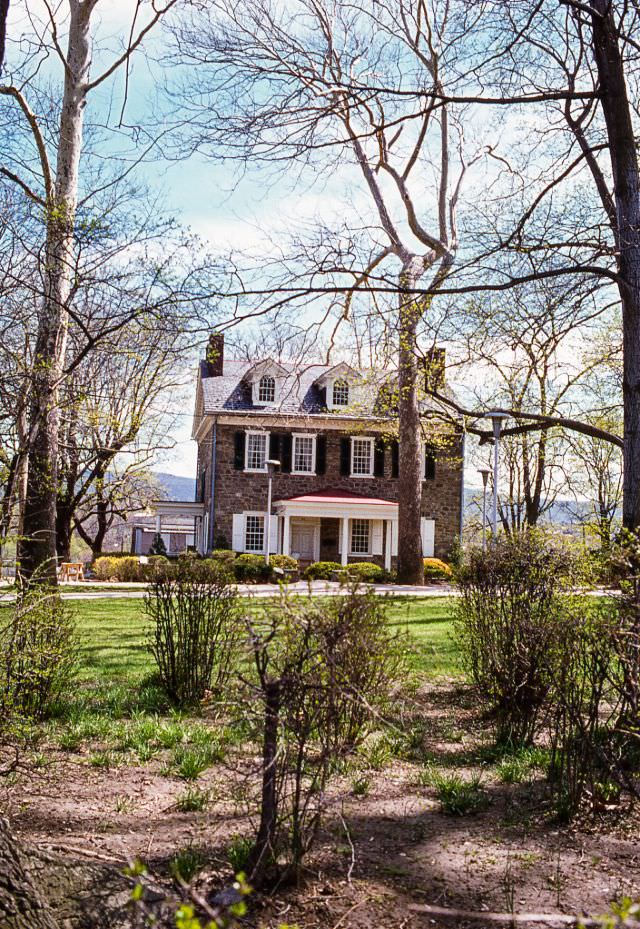
Trout Hall, built for William Allen — the city’s founder — is one of Allentown’s oldest surviving structures. Constructed in 1762, it served as Allen’s summer home and represents the earliest layer of the city’s architectural history, predating the borough’s official incorporation by nearly 50 years.
Zion Reformed Church holds a notable place in American Revolutionary history. During the British advance, the Liberty Bell was hidden within the church, keeping it out of enemy hands for a critical period of the war. In 1978, the building still stood as one of Allentown’s most historically significant landmarks.





Most of the most excellent buildings date back 100-150 years.
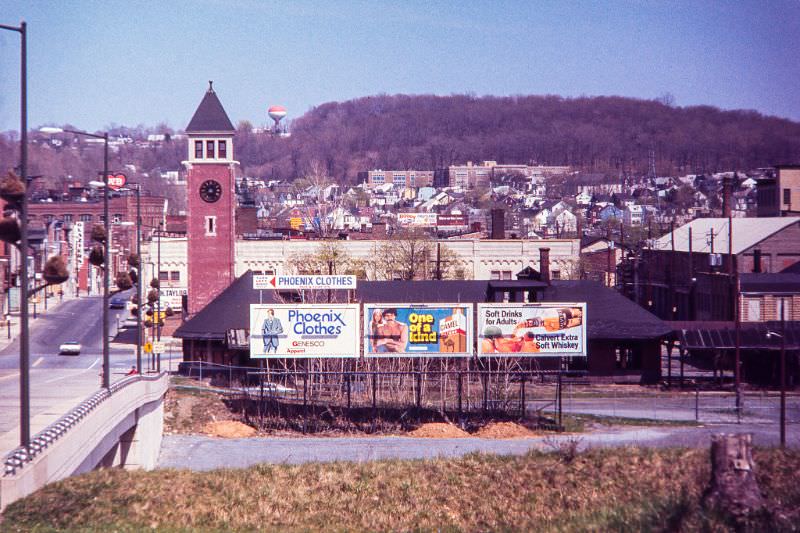
Ahhhh 1978. Whiskey and tobacco.
Many parts of the city look just like this.
Yeah, it’s pretty much the same except for the cars and some decay and grime.
Damn you and your fabulous contributions! I have to get outside for some sun shine. Damn you!
My family grew up in Allentown. There is so much potential in this city, with a dense downtown ringed by probably the most comprehensive parks system anywhere in the eastern US of any city of similar size. It is frustrating, sad, and a little surprising that it hasn’t bounced back like Bethlehem has.
So cool! Thanks for sharing these
I was born and raised in downtown Allentown, so some of these really brought back memories. That’s really cool.
I love the look of those long, low 1970s cars, but I can’t imagine driving one in the city!
These are amazing!!
So it’s always looked like shit.
Nah you’re just a cynic. I’m sure it’d be mighty enlightening to hang with you.
Cynics are just negative people or possibly trolls. Just ignore. Most people do the same thing in their daily lives.
I grew up on 6th and Washington, so this post brought back memories. I’m a huge fan of old Allentown photos.
honestly doesn’t look all that different today lol
It was a beautiful town. What a shame.
Back before Billy Joel and that less-than-flattering song!
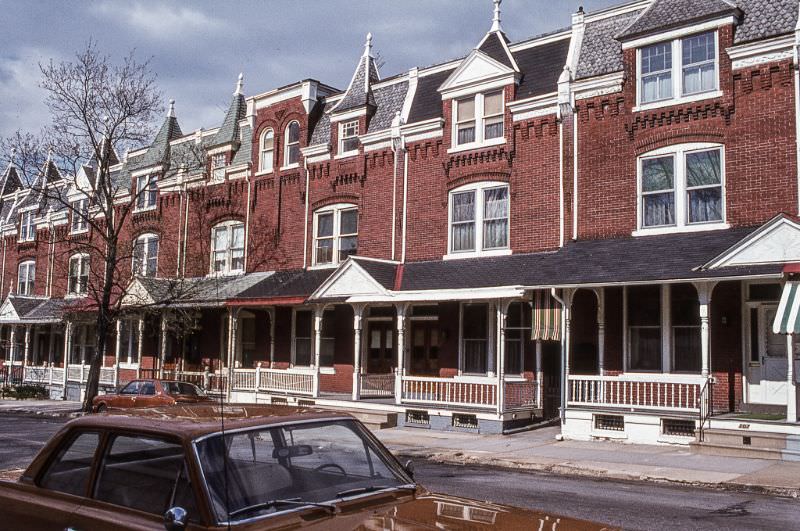
It’s so sad how these beautiful working class row homes that I grew up in are now in such deterioration and abuse from people that have no pride in ownership. Some of these homes on 4th Street thru 10th Street had gorgeous details. Double living rooms stained glass French doors… pocket doors an cedar closets. Trashy people have destroyed these gorgeous homes.
Is this N. 5th St.?
hat is what I am thinking looking down towards Gordon St. The author said it might be Chew St. I don’t think it’s Chew St. Chew St is relatively flat until you get to 4th St. and then it leads to the pits. That church is Dubbs at 5th and Allen.
it’s 9th St. at Chew looking down towards Gordon St. I always knew that was Gordon St. Lol 😂
That’s definitely 9th street. I recognize that church steeple. I used to live on the 300 block of tenth during my apartment days. The church is close to Liberty.
There is a church on almost every block in Old Allentown. We should all be saints. And there was also a bar, and probably why we all drunks. Lol 🤣🤣🤣
Allentown has some amazing architecture and an excellent city park system. If these photos had been from the 1950’s and 60’s there still would have been trolleys running. Some of these trolleys were interurban to Bethlehem and even all the way to Philadelphia.
Very nostalgic I’m born in 68 and have live here my entire life except for my 4 years in the Army. I truly love this town and it’s architectural history.
Awesome post. Many memories with Trout Hall in my backyard. Dingers all over that yard
Looks nice. Guess this was back when ‘regular maintenance’ wasn’t such a foreign concept.
So little trash I’m willing to bet.
Very cool! Thanks for sharing this.