
Between 1961 and 1971, the U.S. military carried out a systematic chemical warfare campaign across Vietnam, Cambodia, and Laos. The operation, codenamed “Operation Ranch Hand,” deployed aircraft and helicopters to spray more than 20 million gallons of toxic herbicides over the landscape below. The most widely used of these was Agent Orange — a defoliant designed to strip trees of their leaves and destroy the dense jungle cover that enemy forces relied on. What followed was one of the most devastating environmental and humanitarian disasters in modern history, and its effects are still visible in Vietnam today.
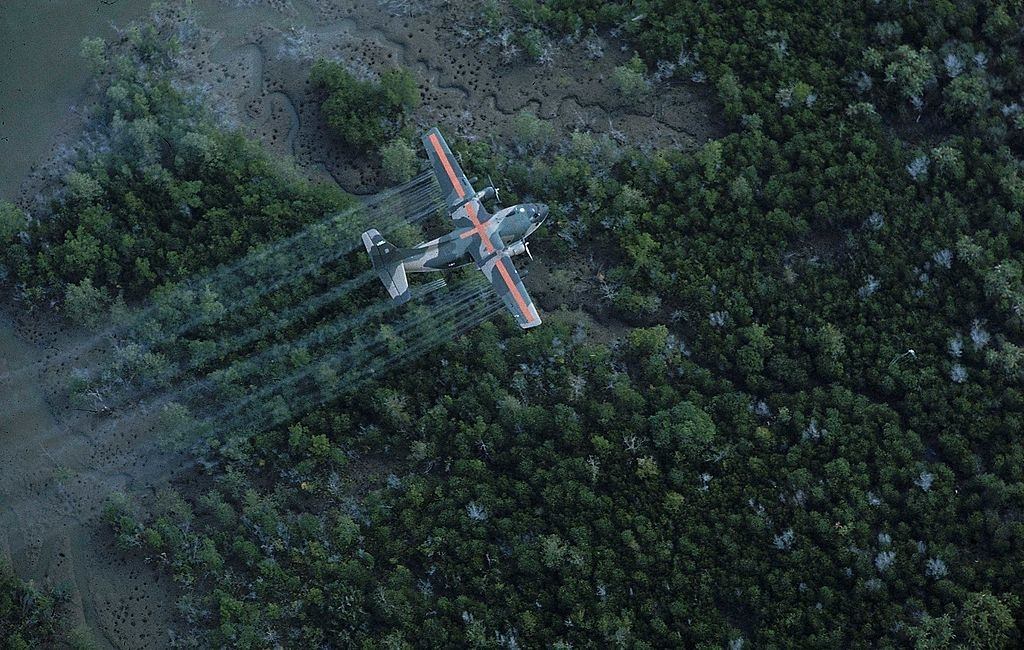
Agent Orange was not a single formula. The U.S. military used slightly different mixtures, referred to as Agent Orange I, Agent Orange II, Agent Orange III, and “Super Orange.” Beyond Agent Orange itself, the military also deployed Agent Green, Agent Pink, Agent Purple, Agent Blue, and Agent White. Each of these herbicides had long-lasting effects on the soil, water, and food chain. The chemical that made all of them so dangerous to human health was dioxin. Dioxin does not break down quickly — it persists in the environment for years and accumulates in the fatty tissues of animals, birds, and fish. When people ate contaminated food, the toxin entered their bodies and stayed there.
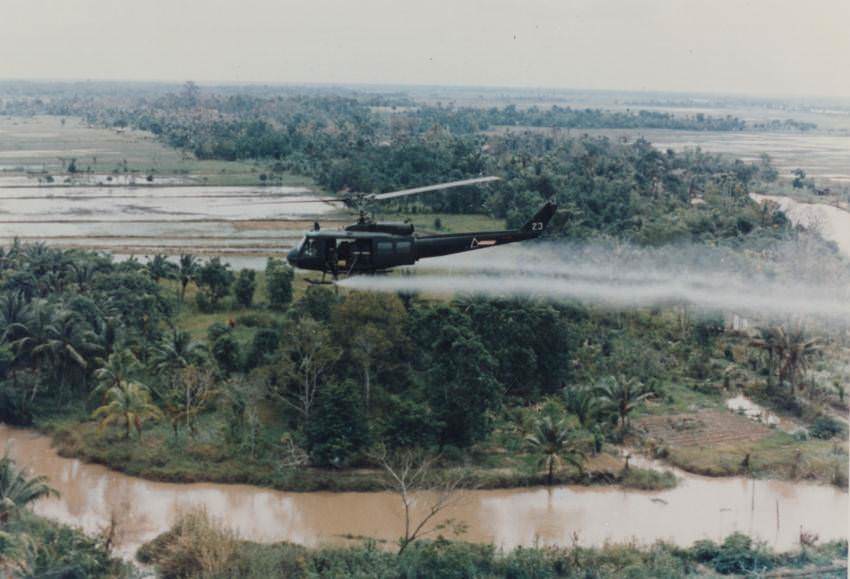
The herbicides destroyed more than 4.5 million acres of Vietnamese land, including forests, farmland, and water sources. These were not just military targets — they were the primary food sources for millions of Vietnamese civilians. Starvation and toxic exposure combined to kill more than 400,000 people. Dioxin exposure causes severe skin disease known as chloracne, immune system dysfunction, nerve disorders, and heart disease. Developing fetuses are especially vulnerable. Dioxin is directly linked to miscarriages, spina bifida, and abnormal development of the fetal brain and nervous system. The consequences showed up not in the soldiers who fought, but in the children born years after the war ended.
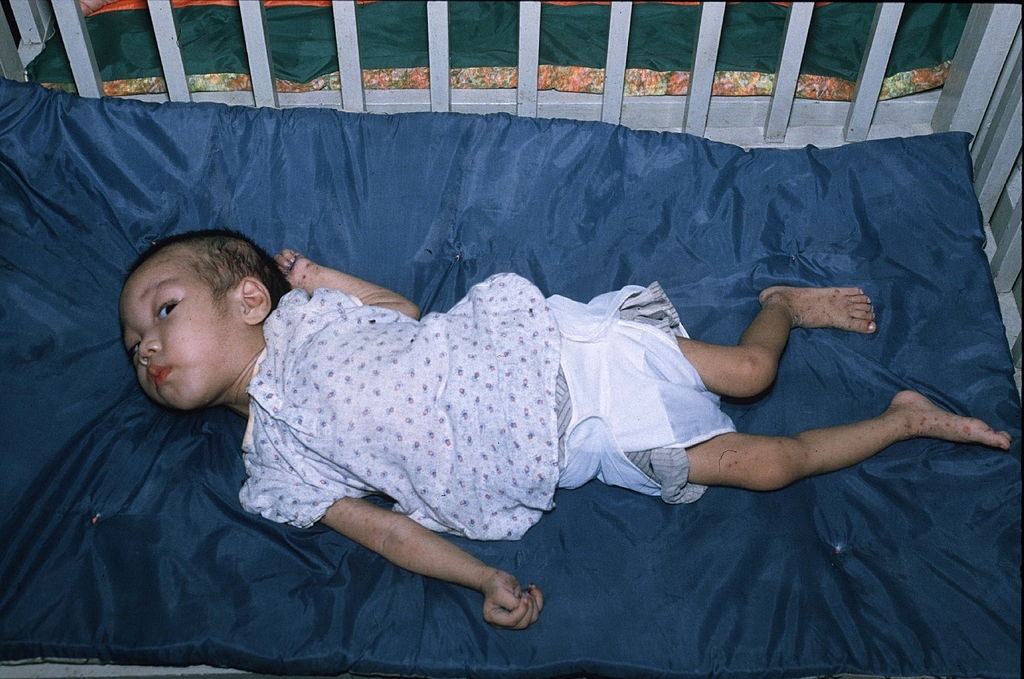
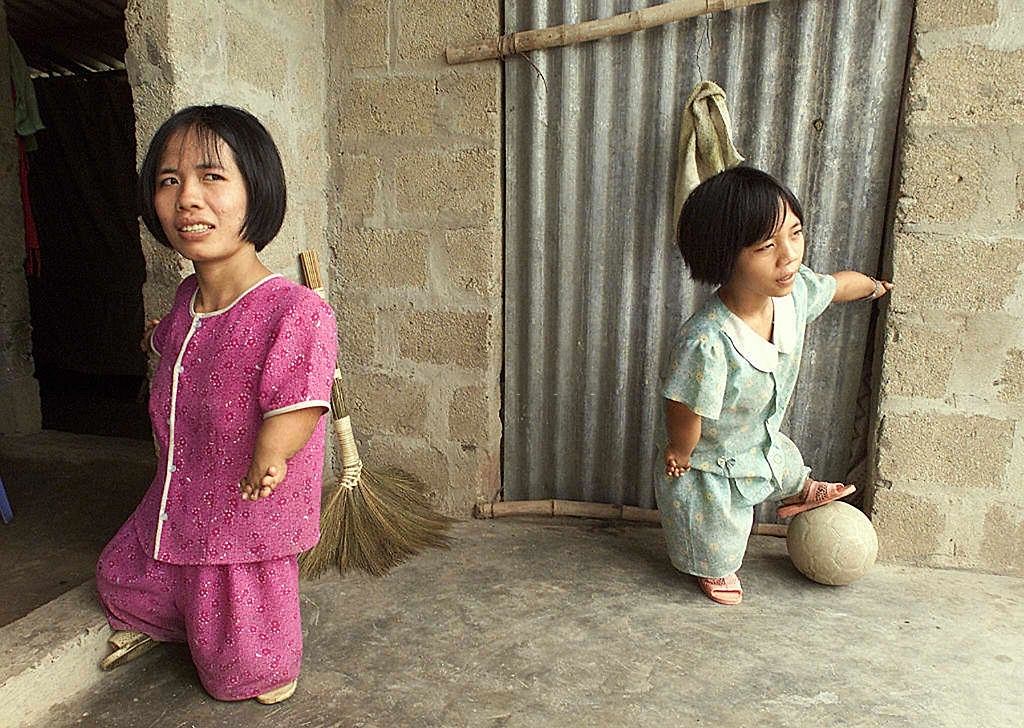
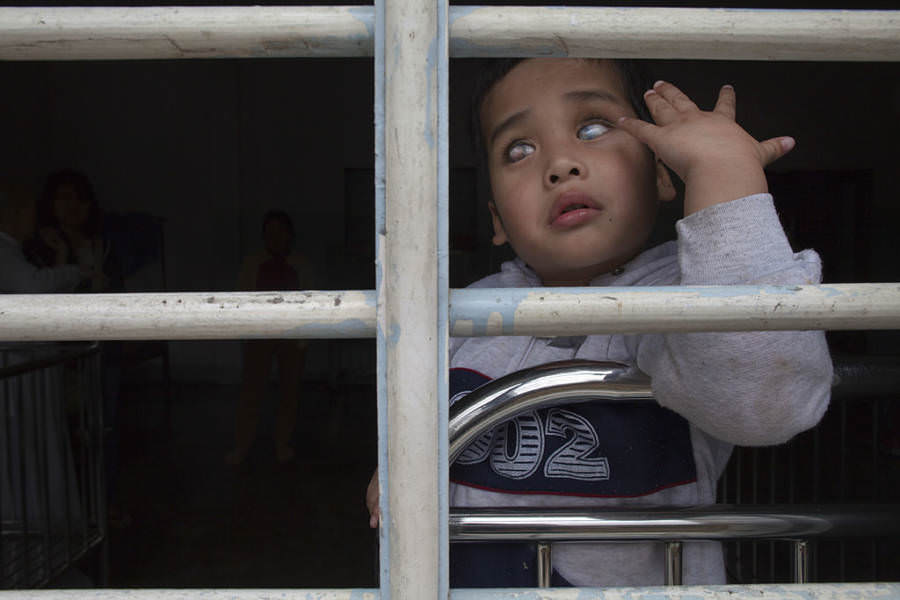
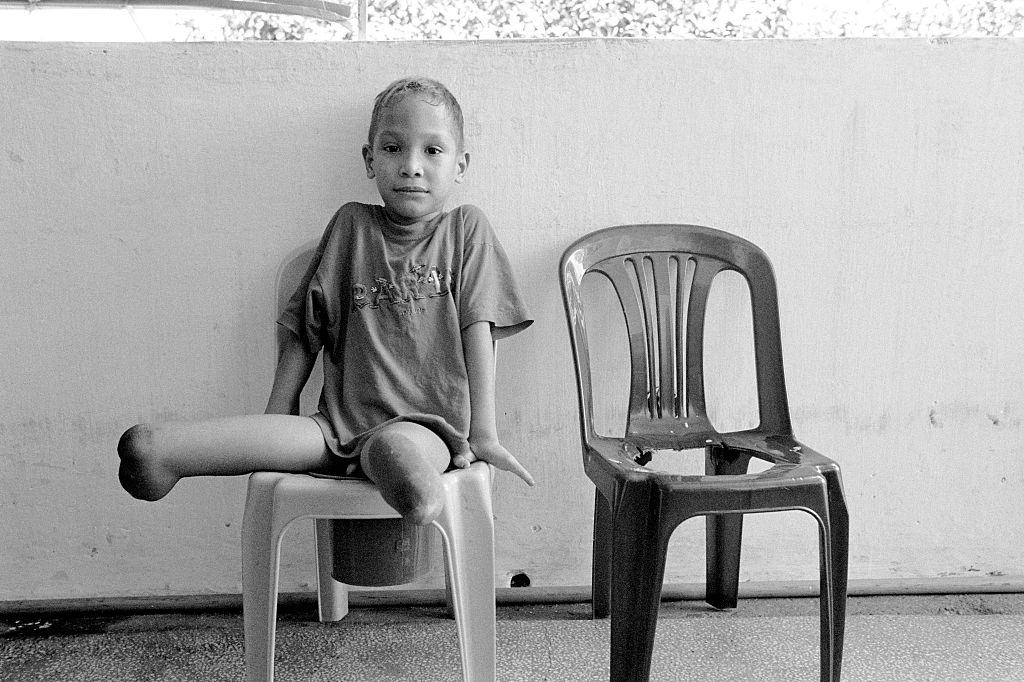
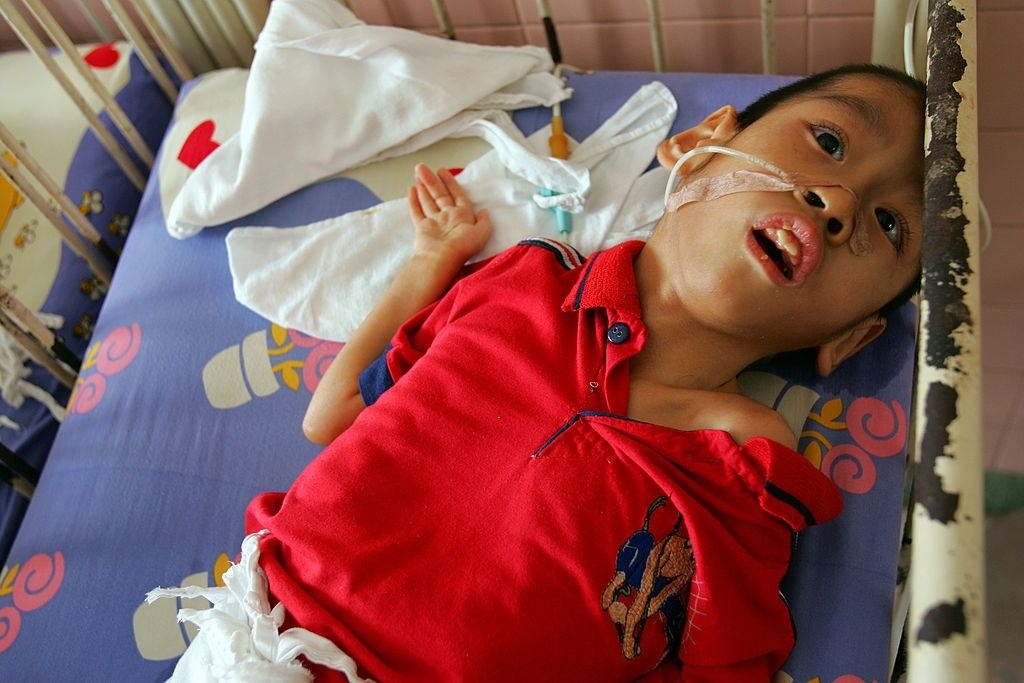
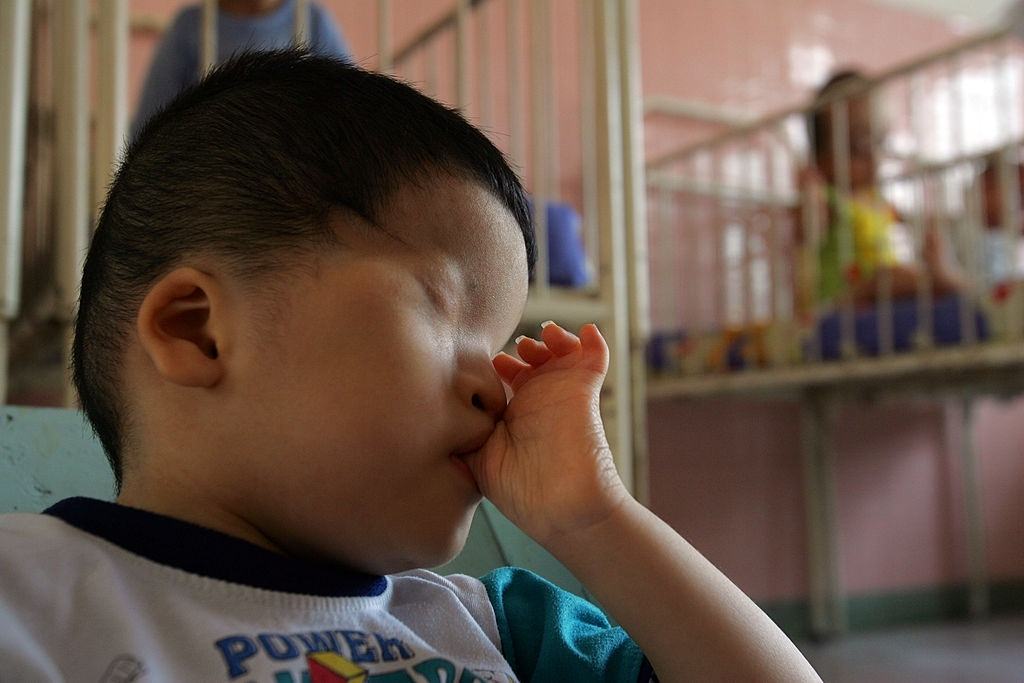
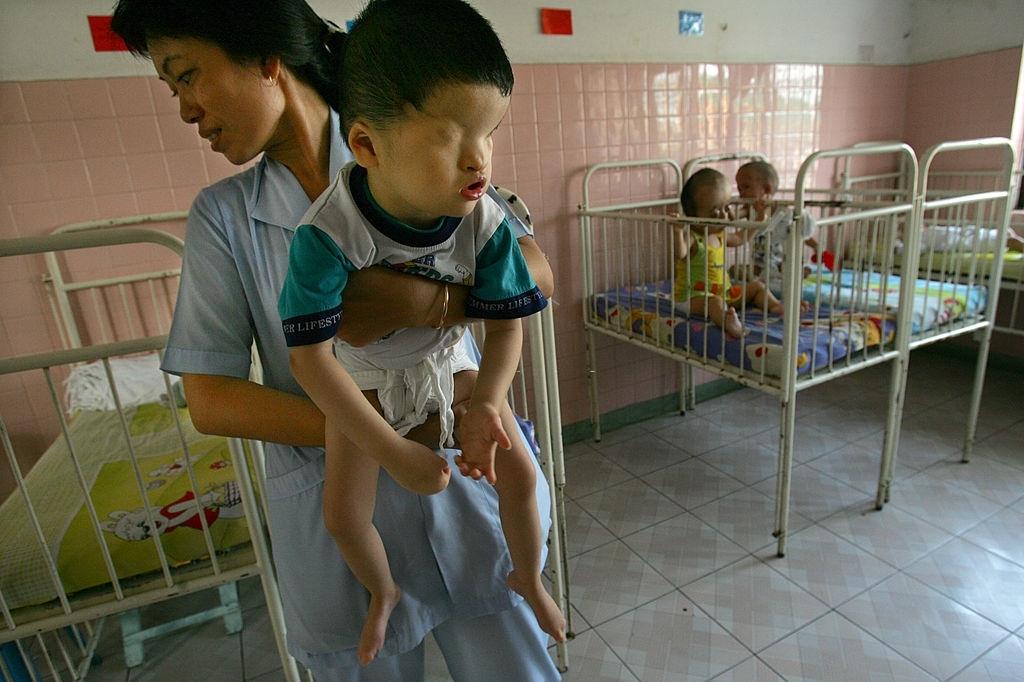
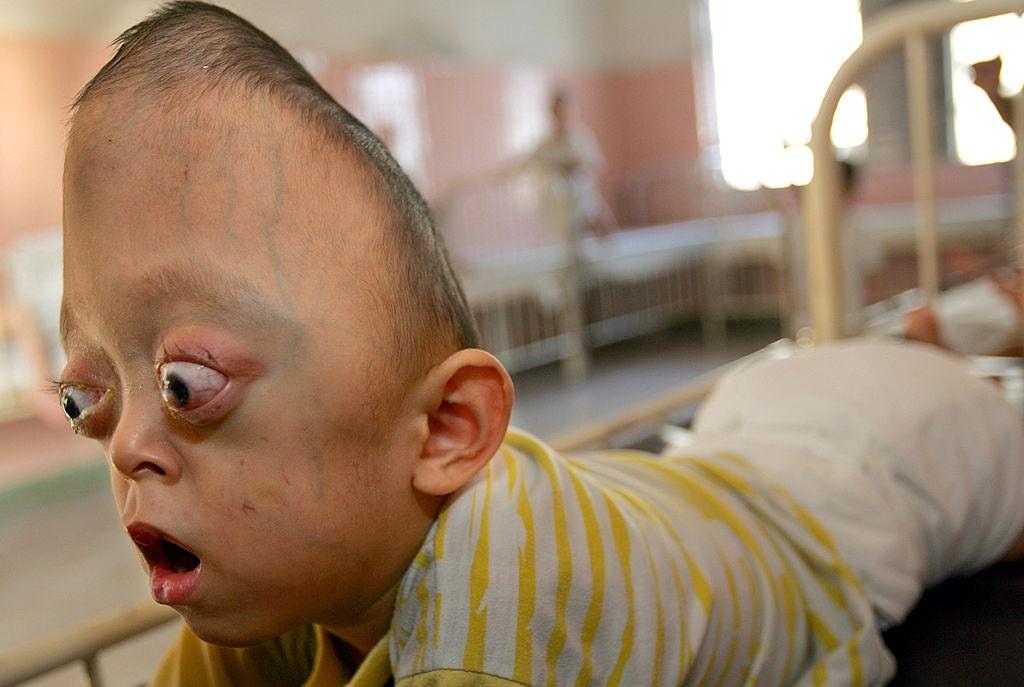
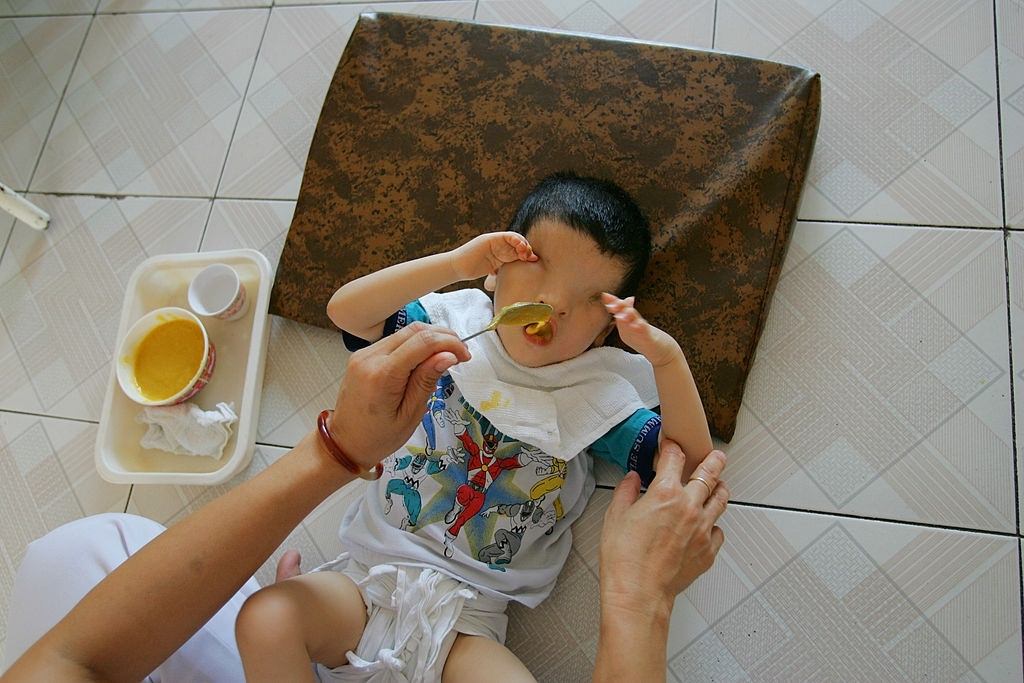
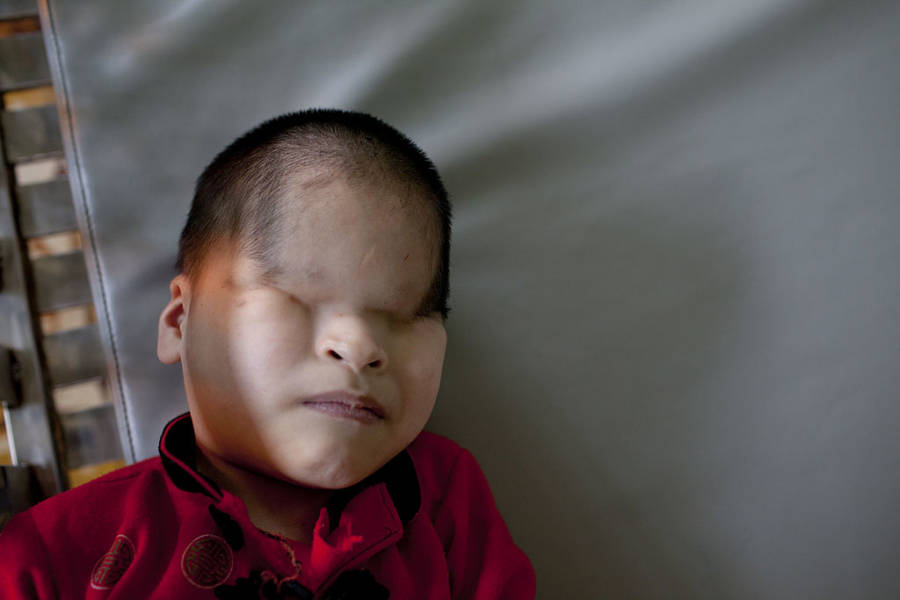
More than half a million children were born with serious birth defects as a direct result of their parents’ exposure to Agent Orange. Over two million people developed cancer or other chronic illnesses tied to the chemical. The birth defects were severe — children born without eyes, without limbs, without the ability to speak or hear, or with profound neurological damage. Hospitals in Ho Chi Minh City became centers for documenting and caring for these children, and the scale of what they recorded was staggering.
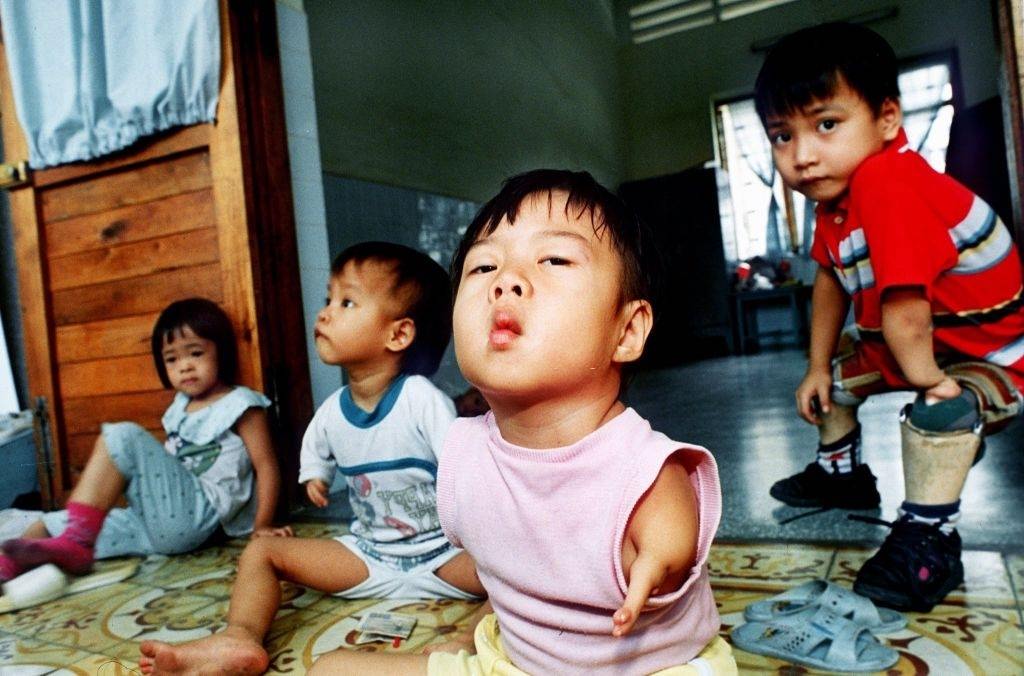
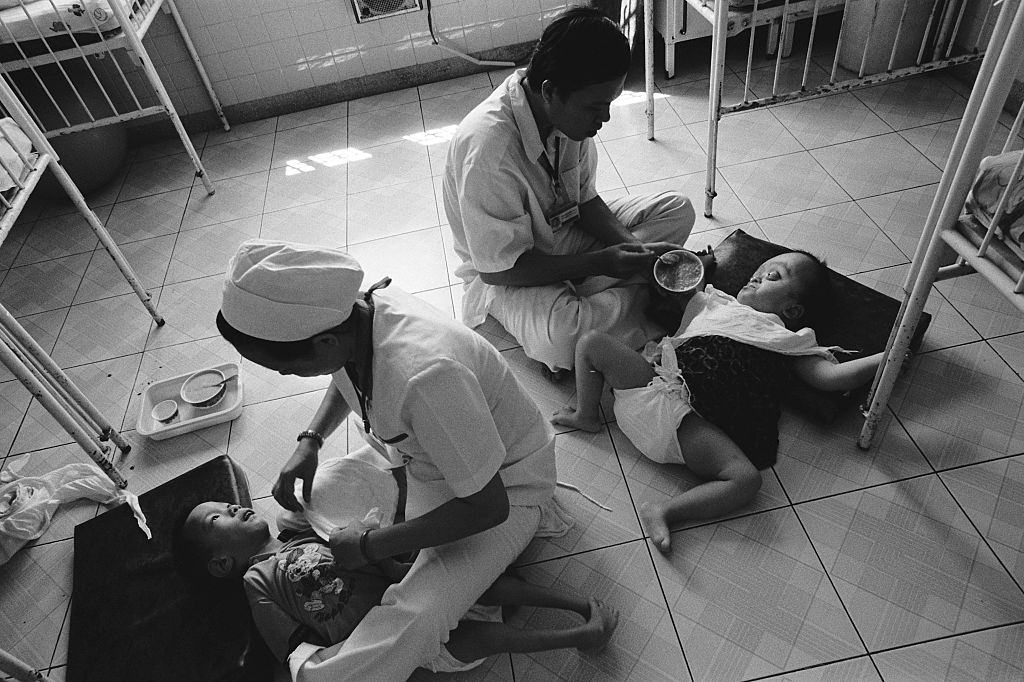
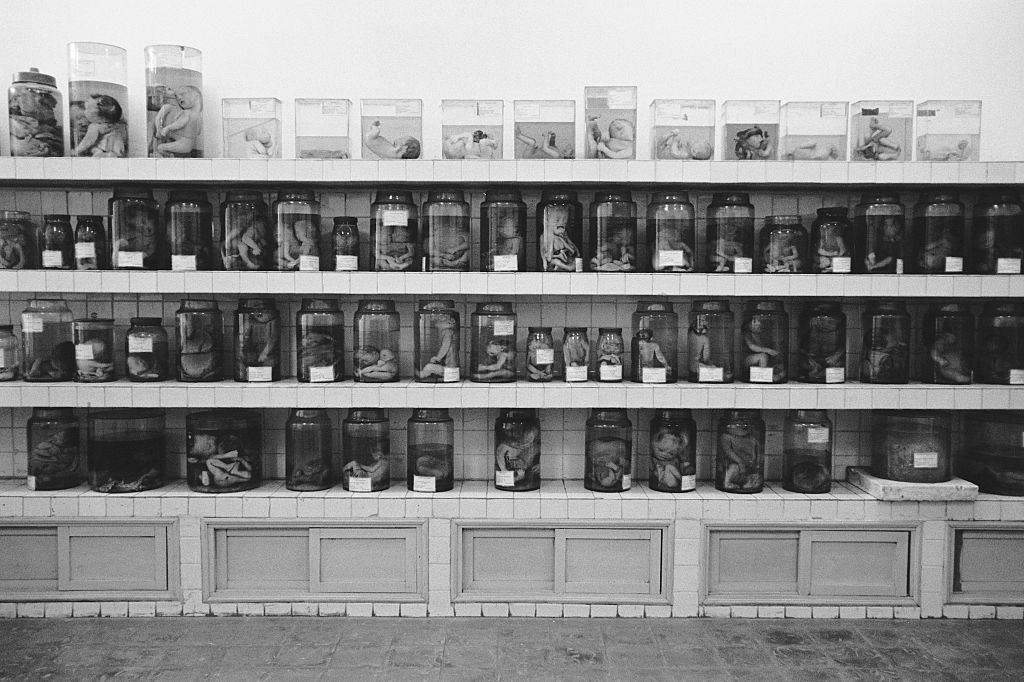
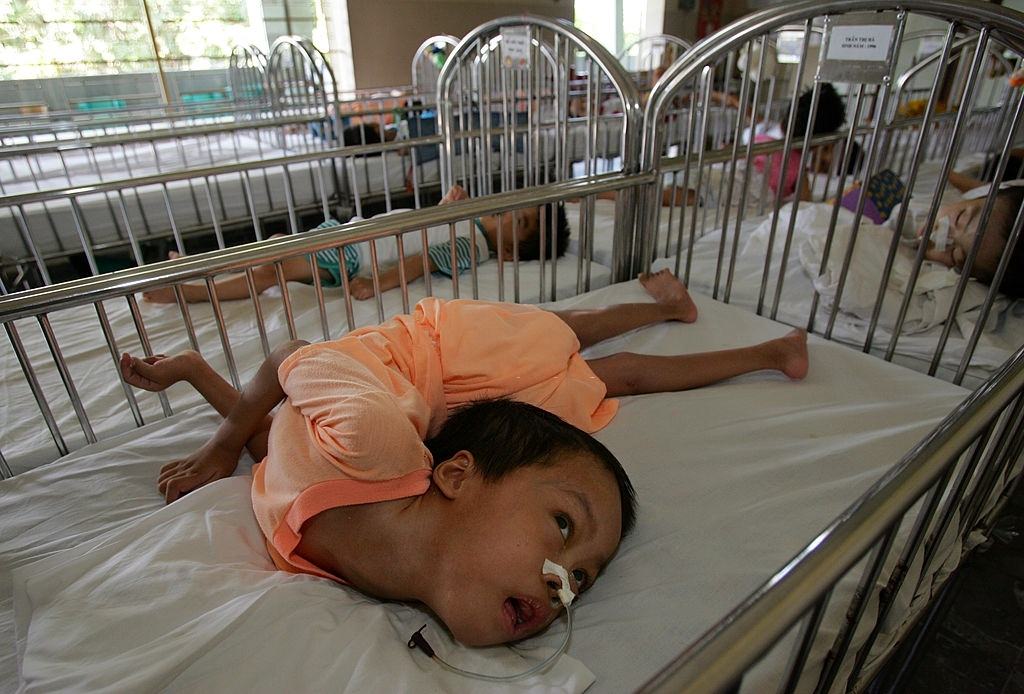
Tu Du Hospital in Ho Chi Minh City became a focal point for Agent Orange victims. Its Peace Village ward was established to house and care for children born with disabilities caused by the defoliant. The hospital also preserved physical evidence of what the chemical had done. Jars containing deformed fetuses — the result of pregnancies affected by dioxin exposure — were kept on display as a permanent record of the chemical’s biological impact.
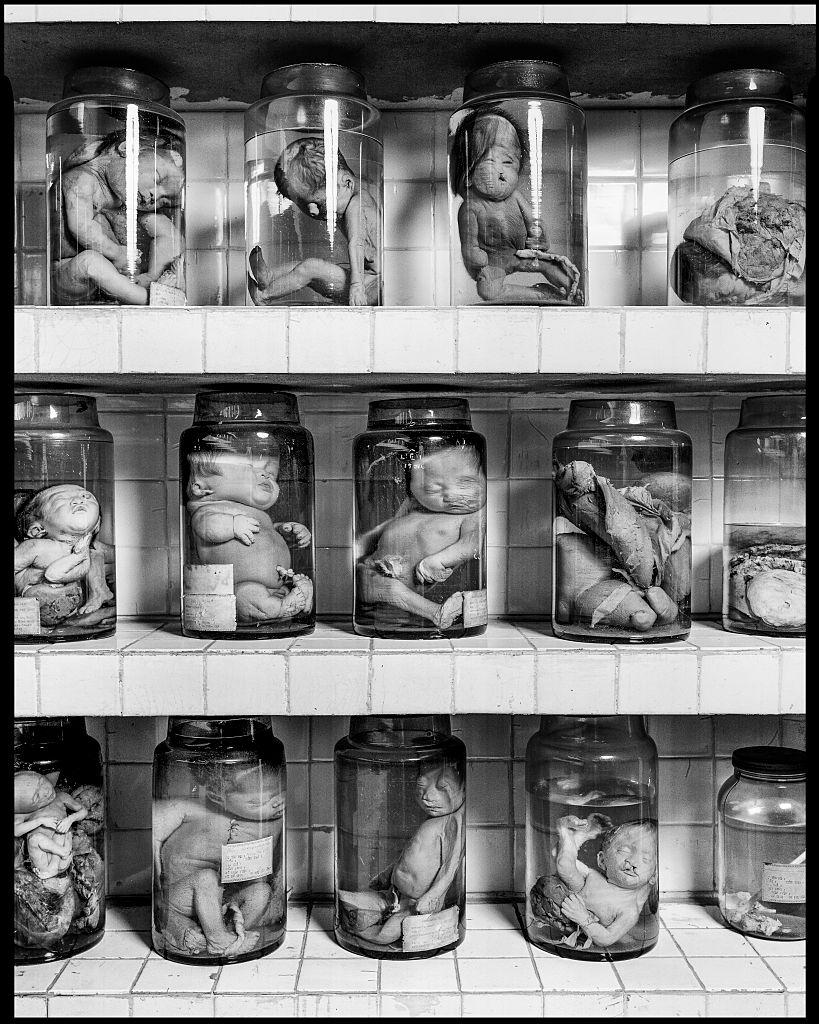
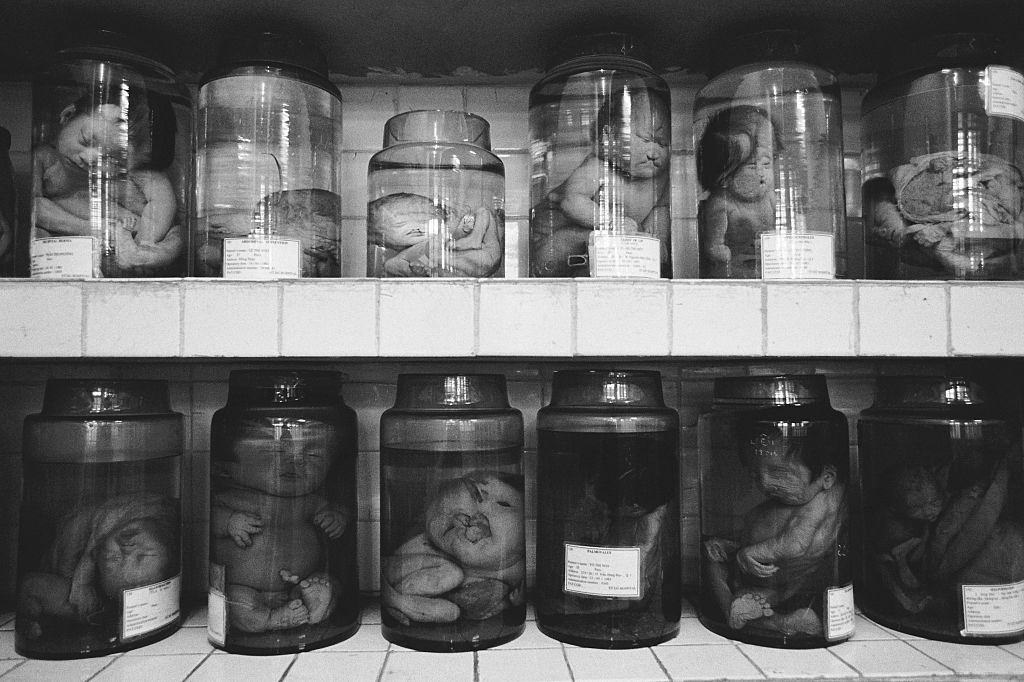
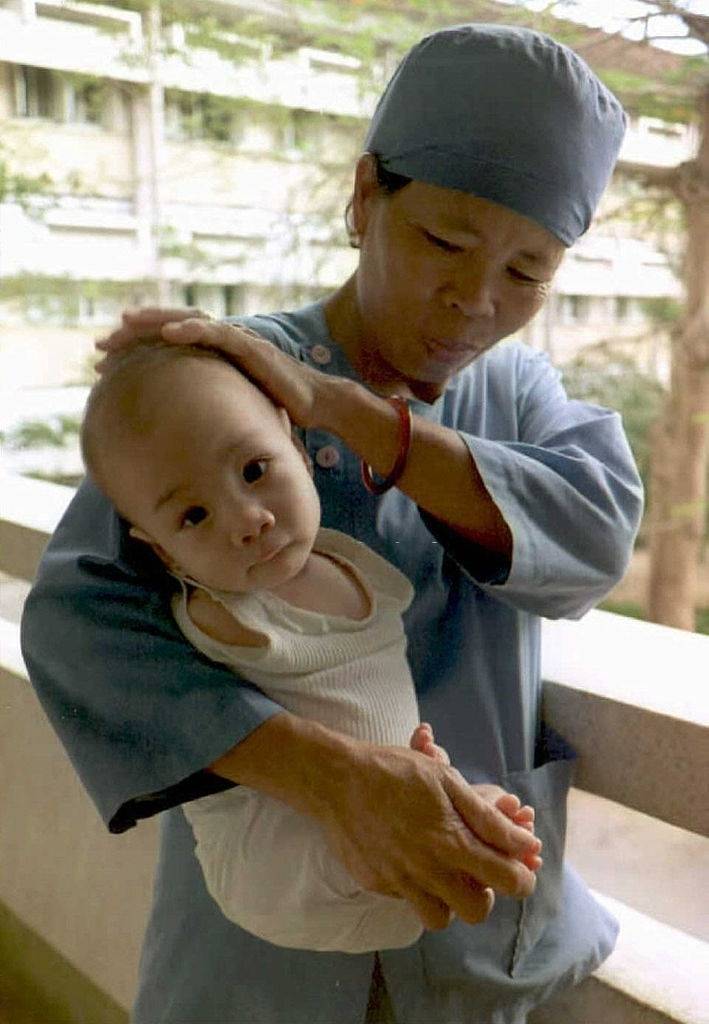
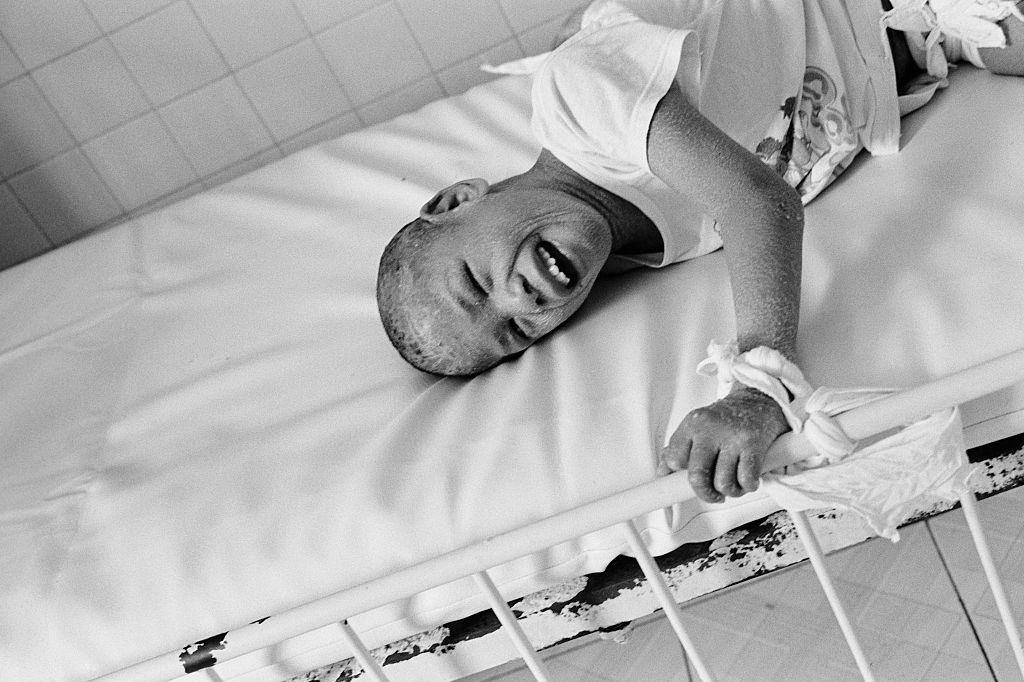
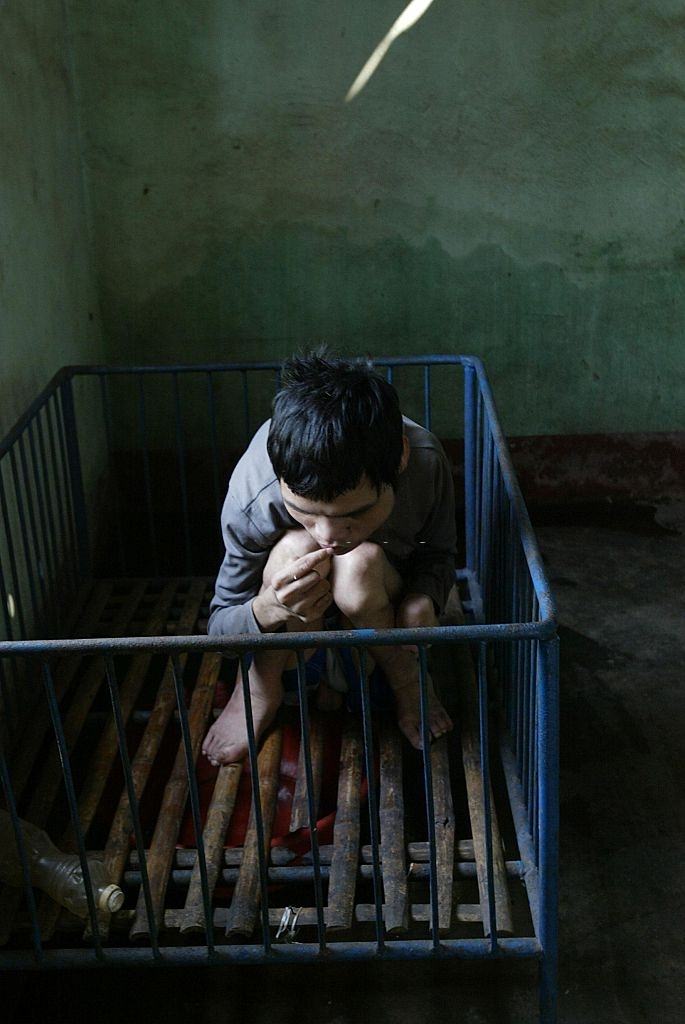
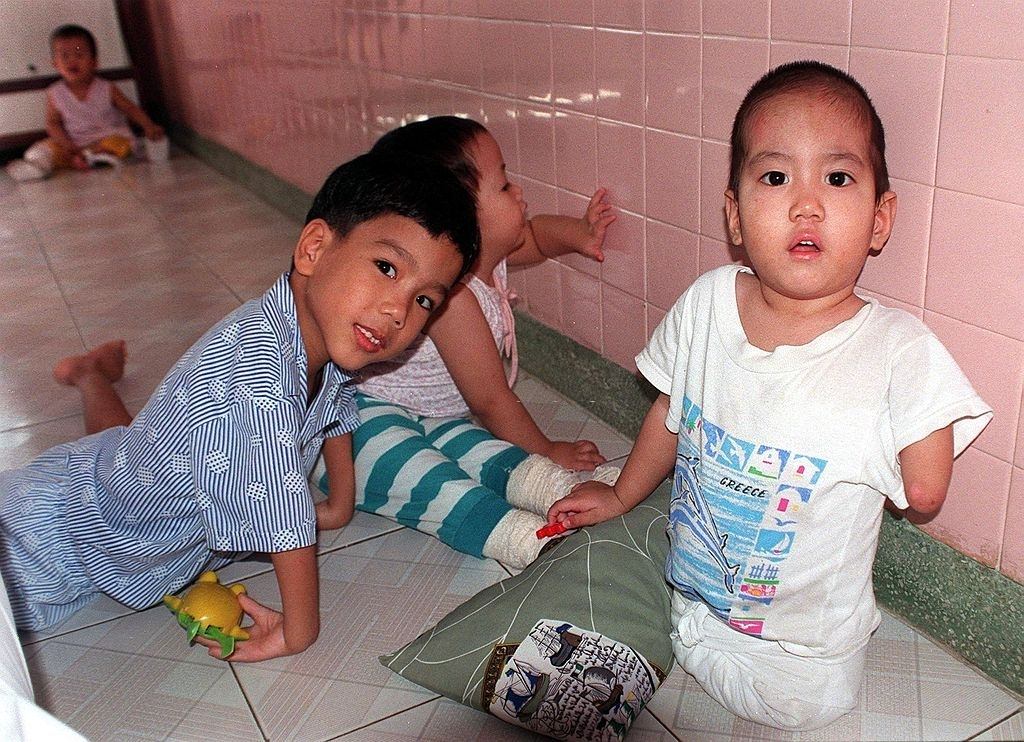
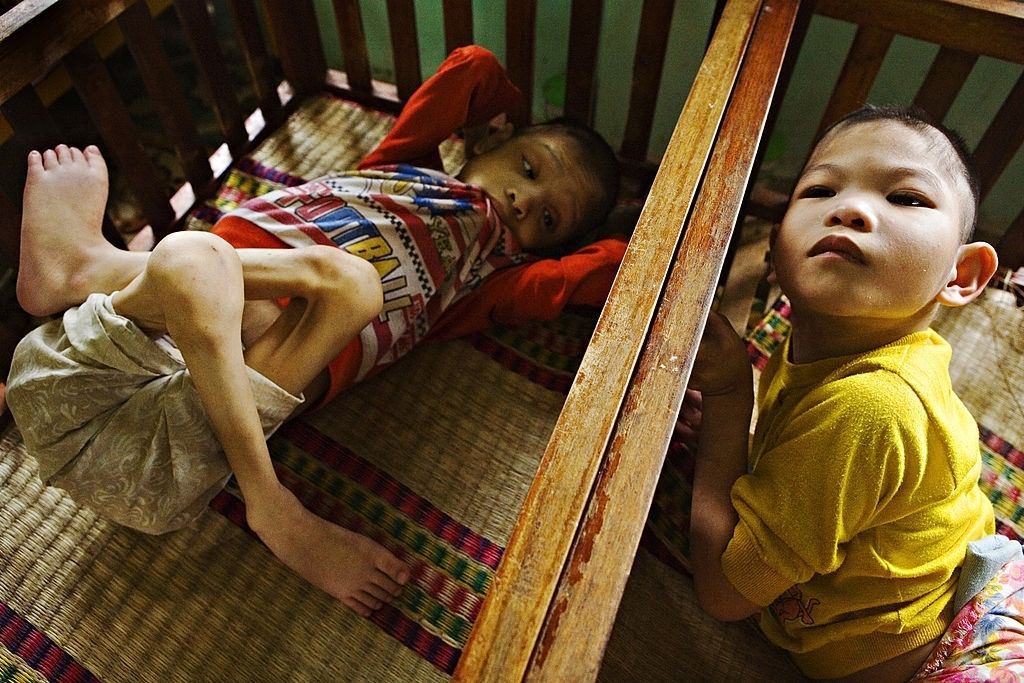
The children cared for at Tu Du’s Peace Village faced a wide range of physical conditions. Some had no limbs. Others were born blind or mute. Some could not control their movements and had to be secured in their cribs to prevent self-injury. Nurses and caregivers provided round-the-clock attention, feeding, holding, and tending to children who had been abandoned by families unable to cope with the demands of their care.
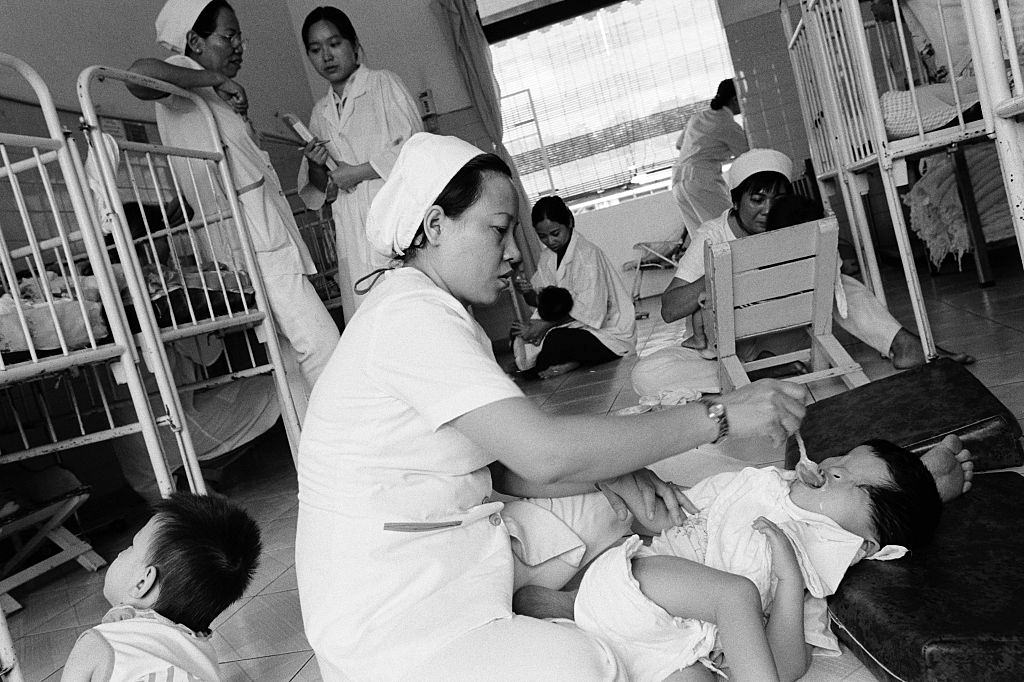
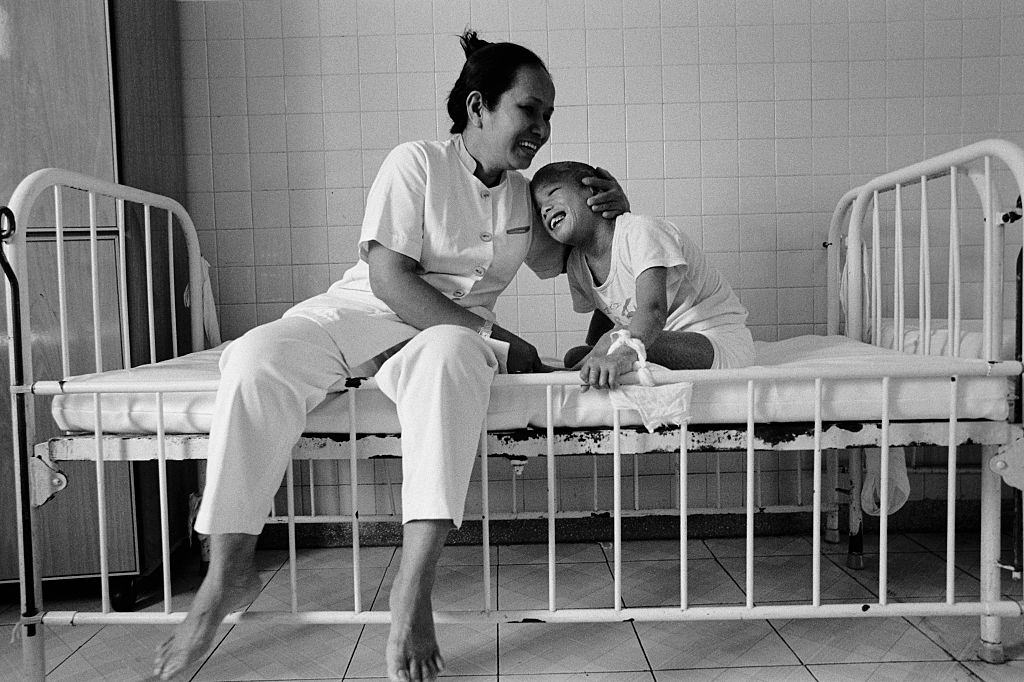
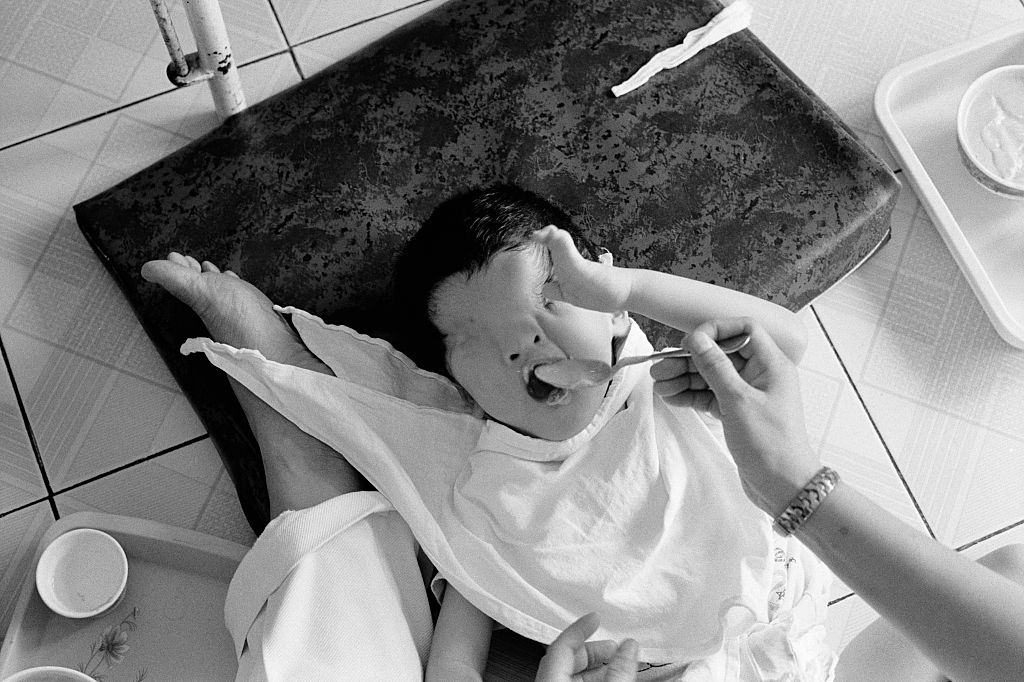
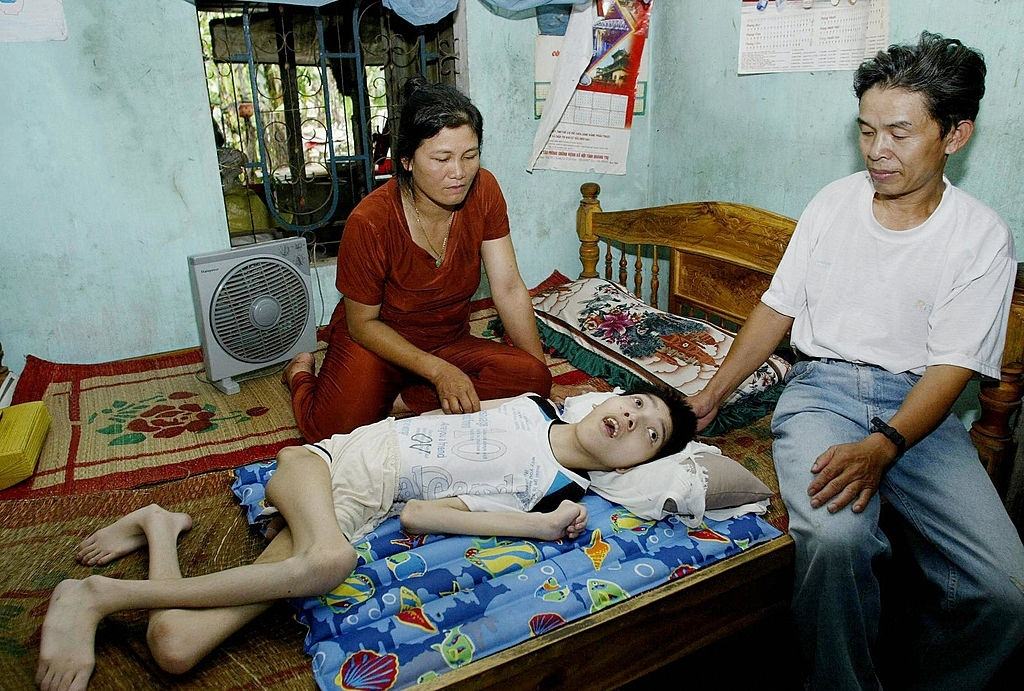
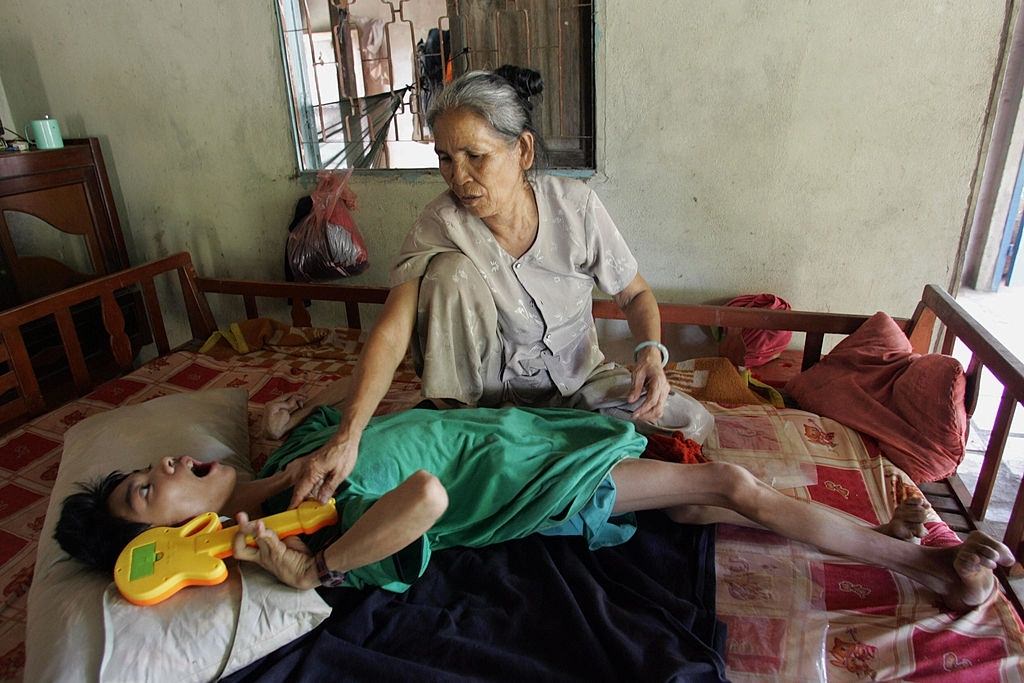
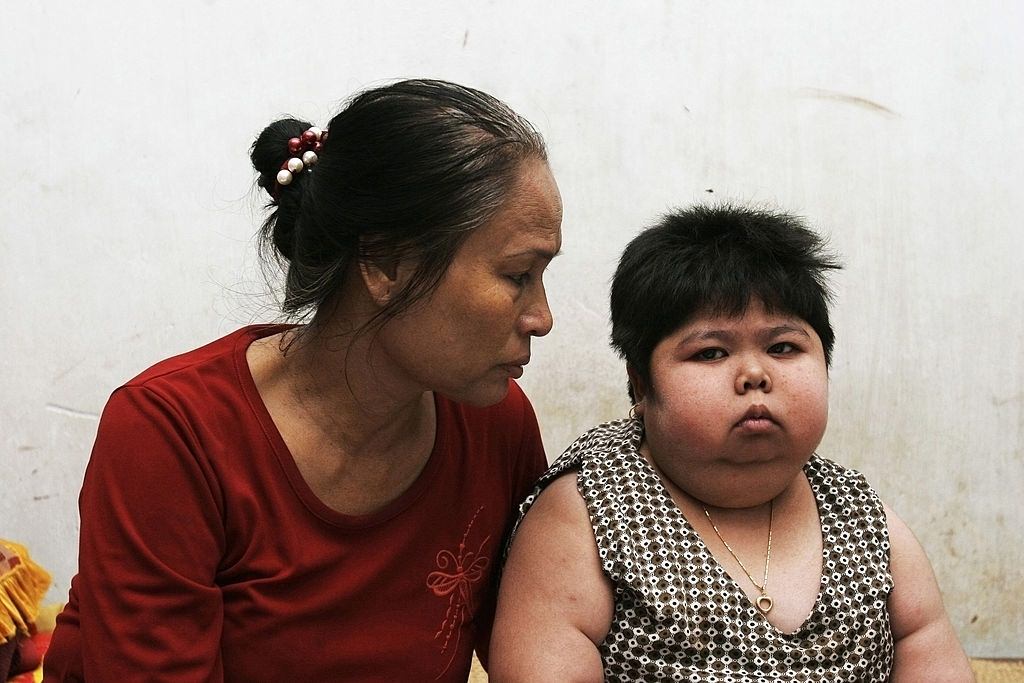
Not all victims were confined to hospitals. Many lived at home, cared for by aging parents who had themselves been exposed to the chemical during the war. In rural communes across Vietnam, families faced the reality of a son or daughter who could not walk, speak, or care for themselves — decades after the spraying had stopped.
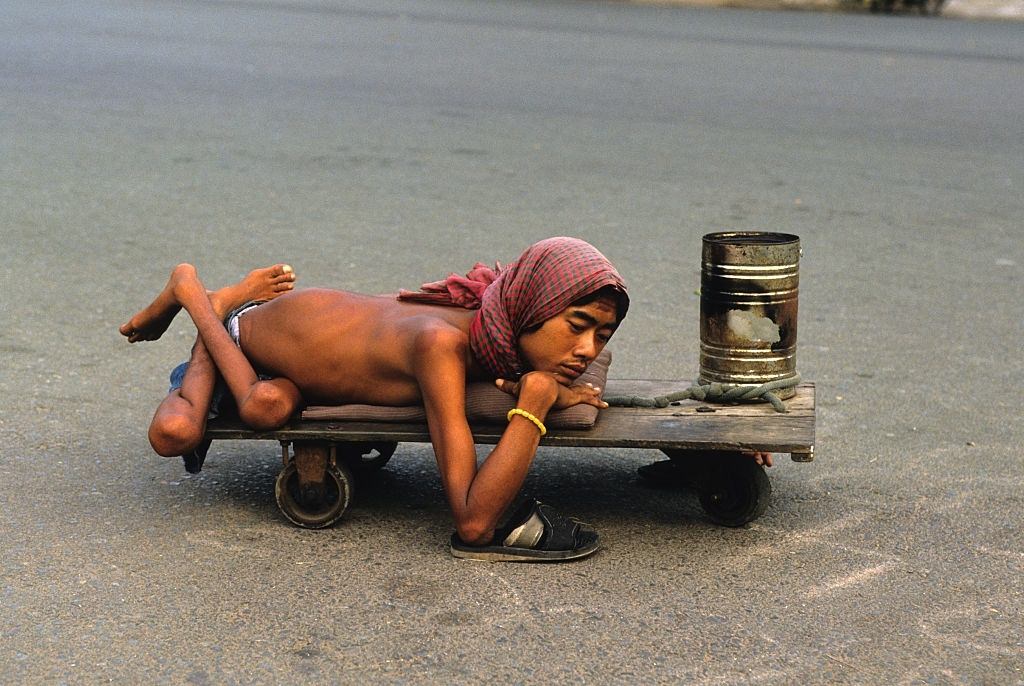
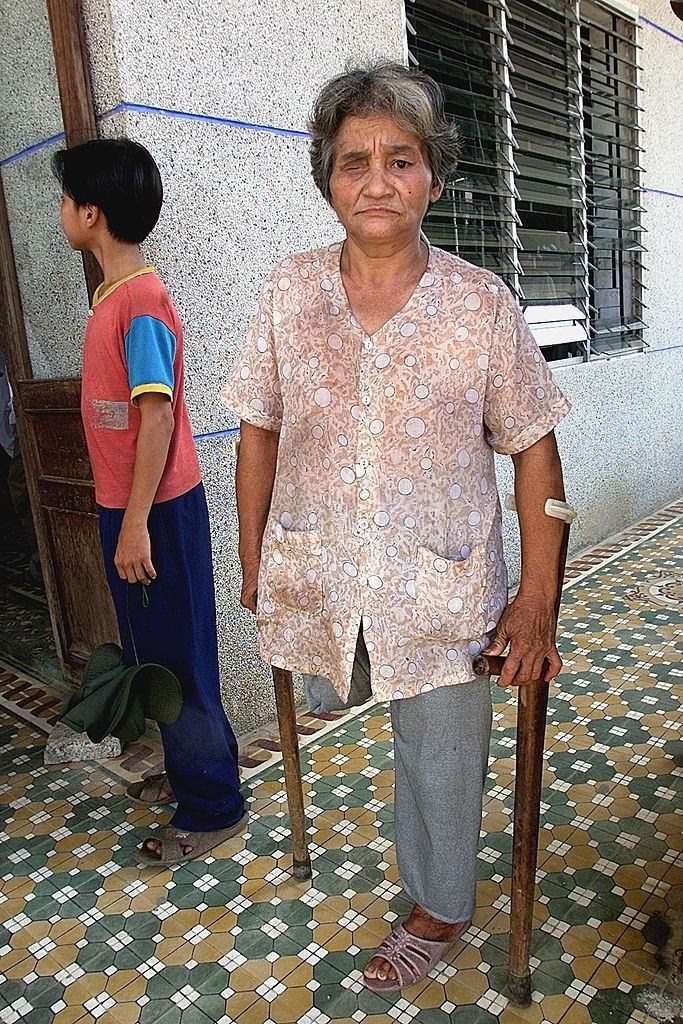
Some victims managed to move through the world despite their injuries. A man photographed outside a cathedral begs for money, his arm severely deformed by Agent Orange exposure — a condition that made finding employment nearly impossible. Others used wheelchairs or relied on others entirely. In cities like Saigon, visibly disabled Agent Orange victims were a common sight on the streets, left to survive through begging.

Children born with Agent Orange-related disabilities who were capable of any learning were given opportunities to develop basic skills. At the Peace Village in Tu Du Hospital, children without arms were taught to write using their feet. The determination shown by these children — and the staff who taught them — stood in sharp contrast to the institutional neglect that left their injuries uncompensated.


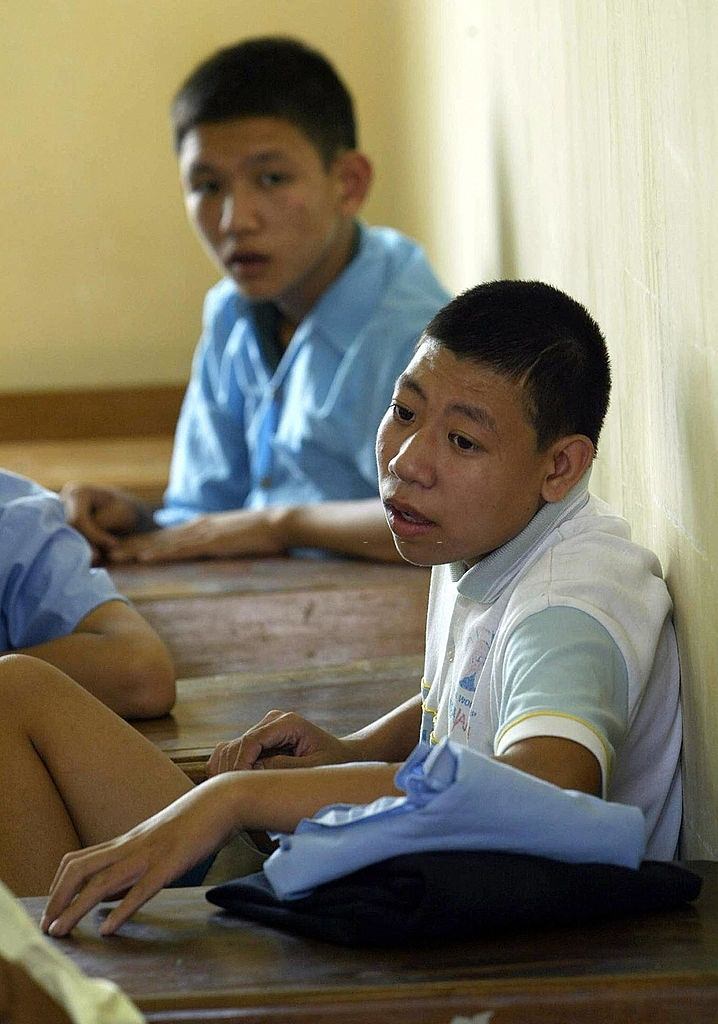
The Friendship Village in Hanoi was another facility established to care for child victims of Agent Orange. It housed children who had been born to veterans, many of whom displayed severe neurological and physical impairments. Some of these children participated in communal activities — music, play, shared spaces — as part of their daily routines.
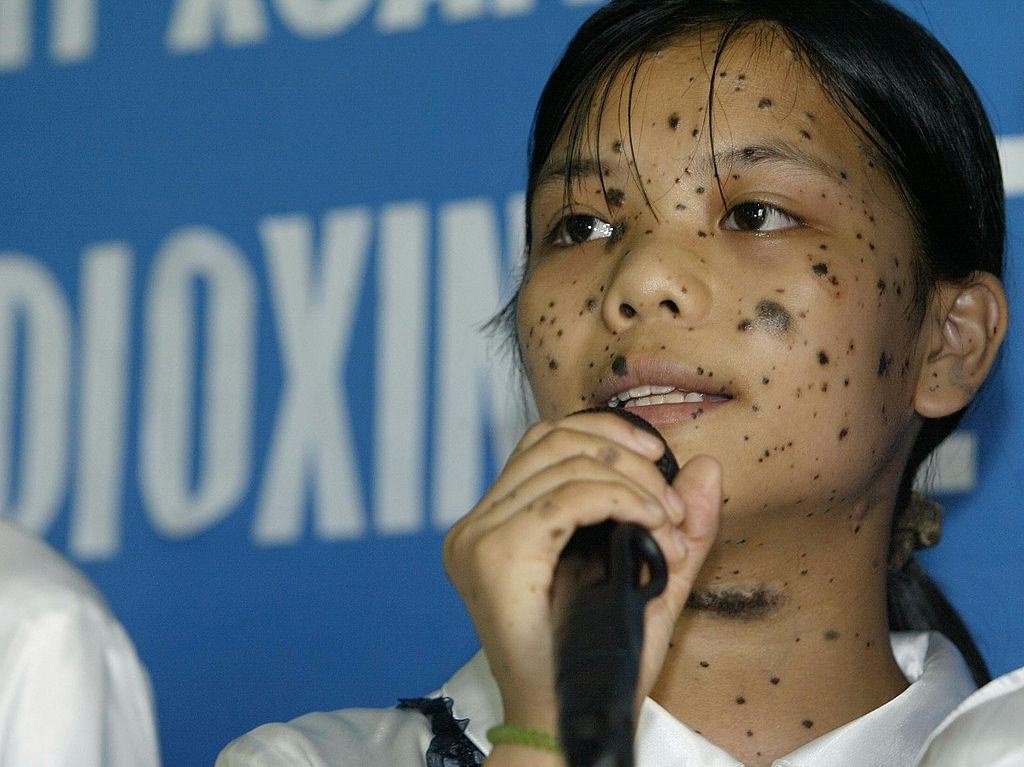
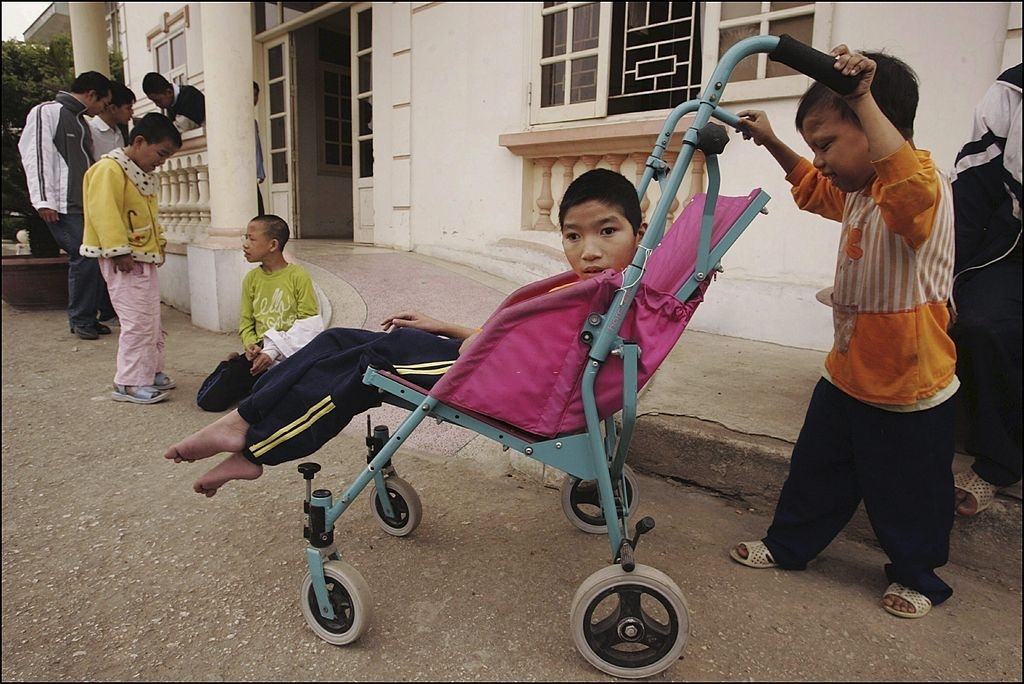

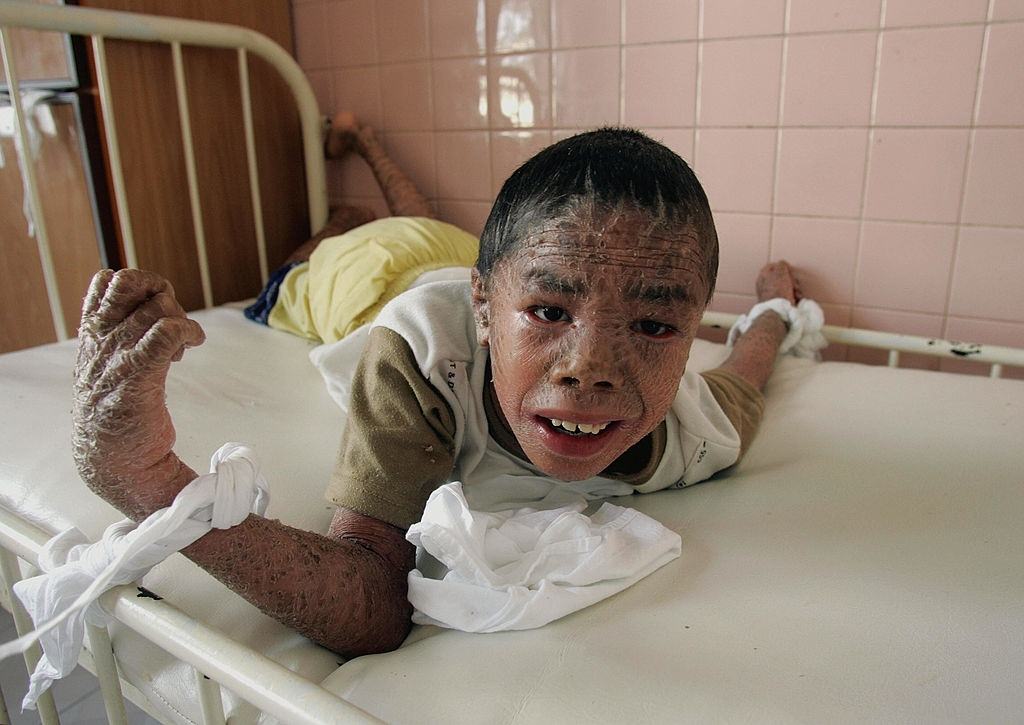
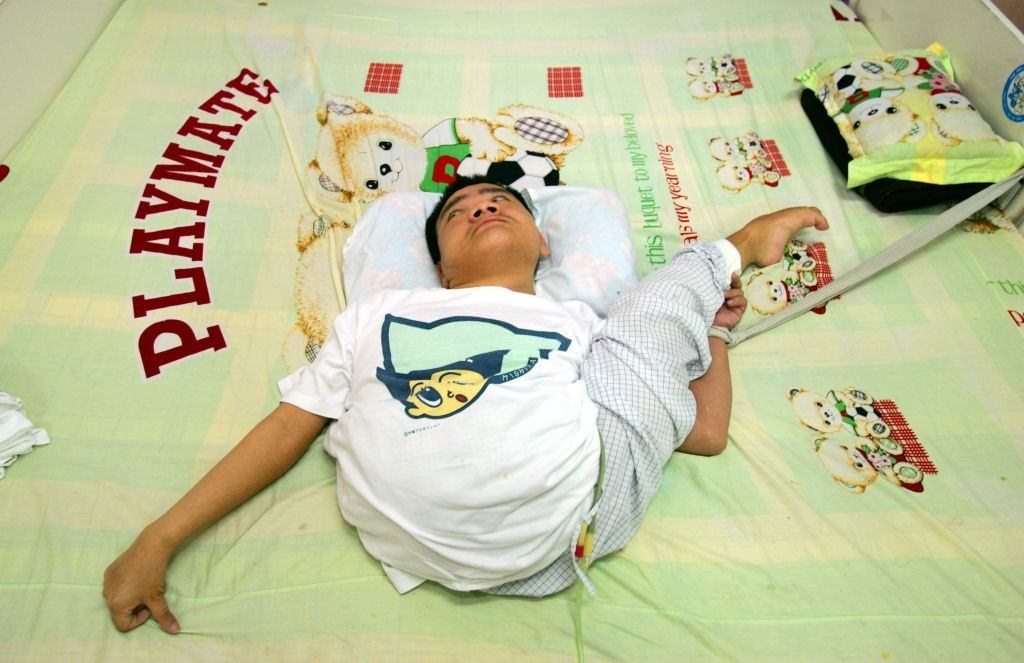
The individual cases documented by photographers tell the full weight of what Agent Orange did to generations of Vietnamese families. Le Van O., a 14-year-old boy from Hanoi, was born without eyes. Tran Minh Anh, aged 11, suffered from “fish skin” disease — a painful skin condition caused by dioxin exposure — and was kept in bed with his hands tied to prevent him from scratching. Truong Tan Thong, the 25-year-old son of a soldier, had spent most of his life confined to a playpen, unable to move independently.

Agent Orange also harmed returning American servicemen and their families. Veterans reported rashes, cancers, Hodgkin’s disease, leukemia, and psychological conditions. Their children were also born with congenital defects. The chemical companies that manufactured Agent Orange — including Dow Chemical and Monsanto — paid $240 million in compensation to U.S. veterans and their families following legal action.
Vietnamese victims received no such compensation. In 2004, Vietnam filed a lawsuit against the chemical companies responsible for producing Agent Orange. The case was dismissed in 2005. Vietnam appealed, but in 2008 the U.S. Supreme Court rejected the final appeal. The U.S. government refused to compensate Vietnamese victims of chemical warfare. The chemical companies faced no financial accountability for the harm done to the Vietnamese population.

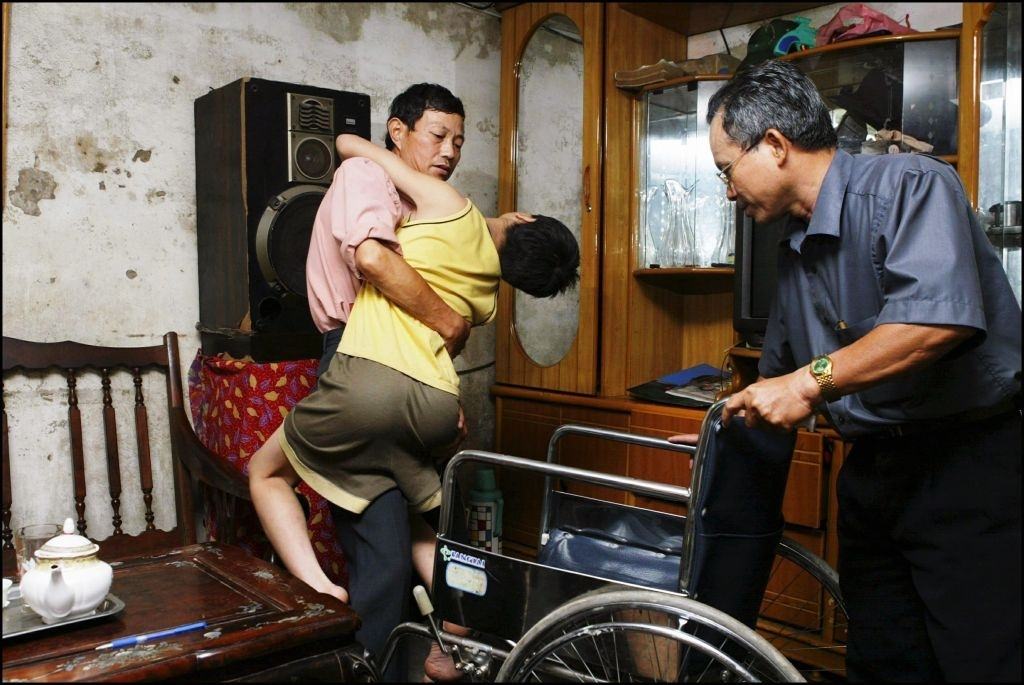
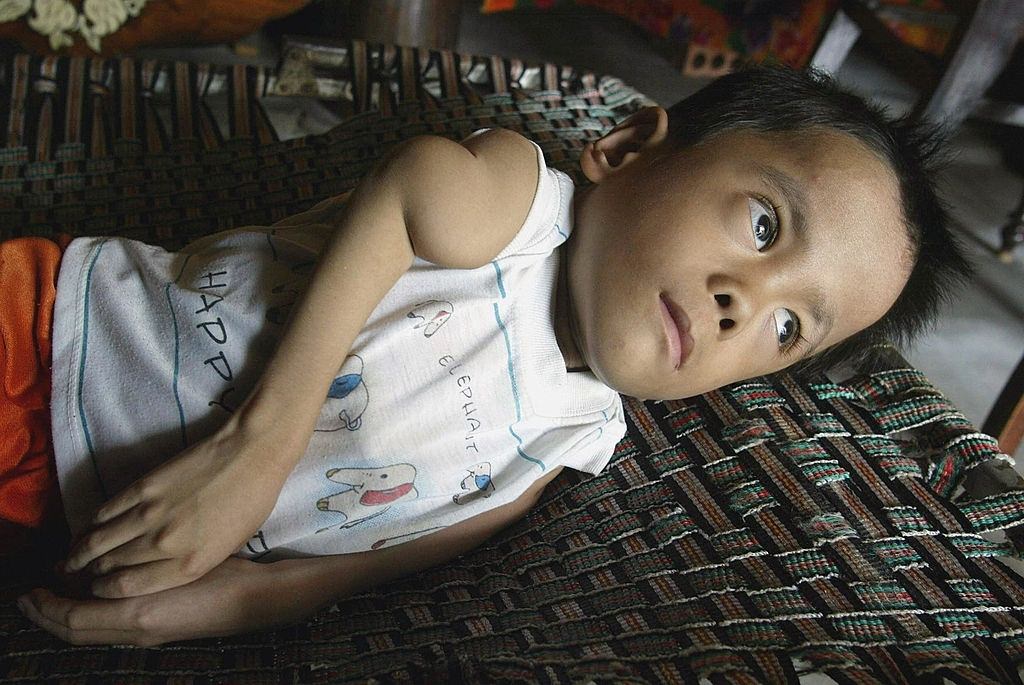
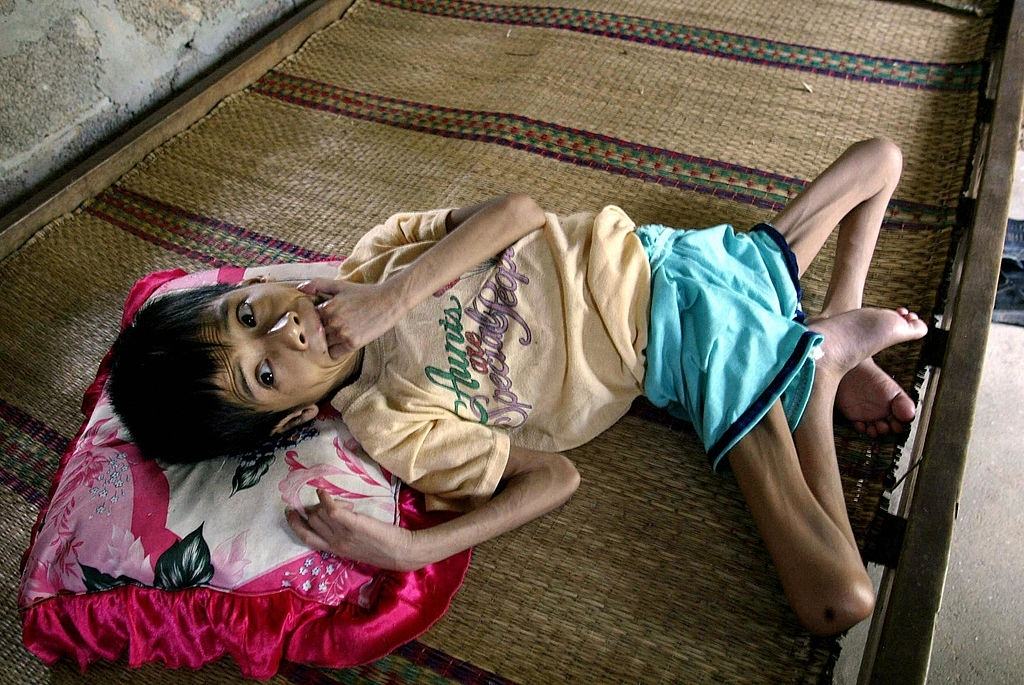
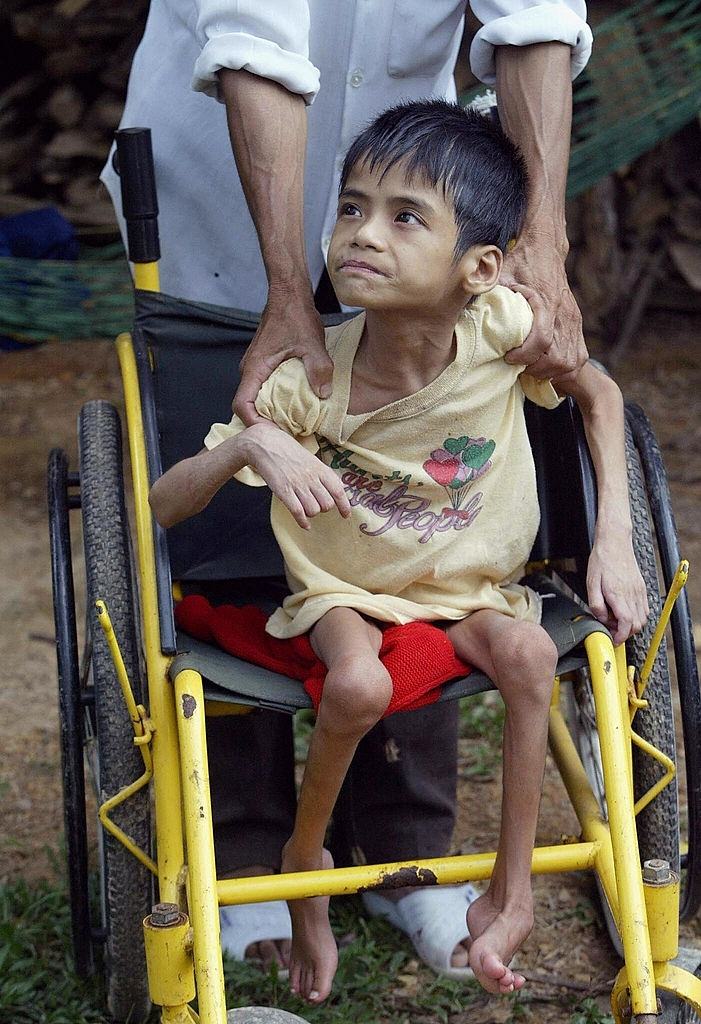
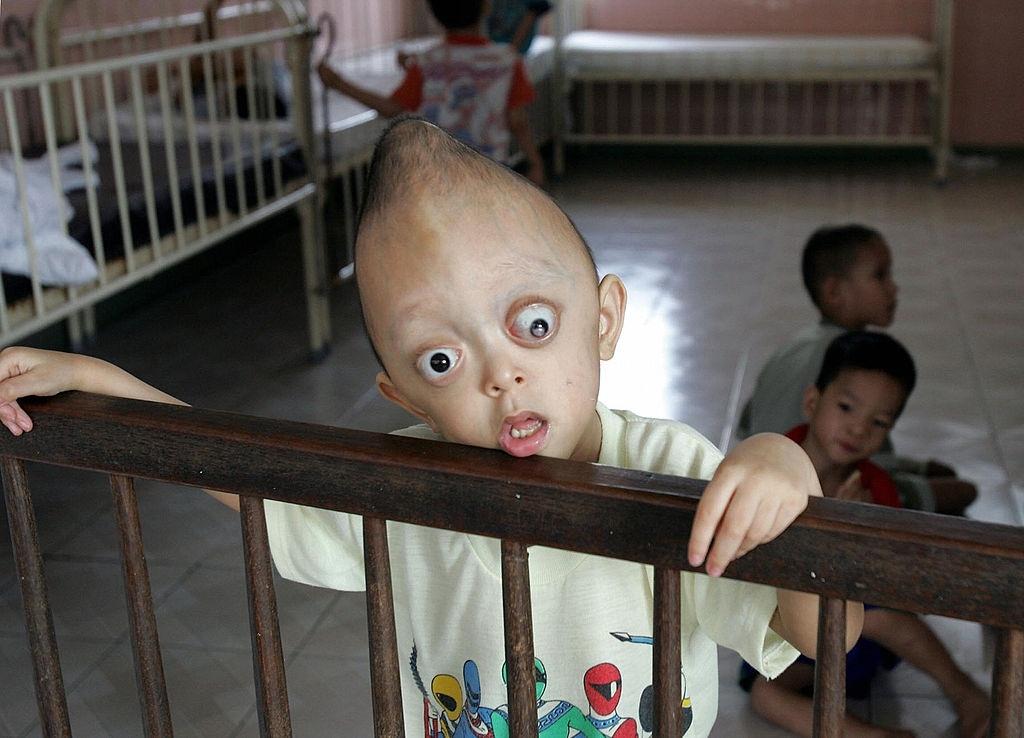





The poor souls in those pics born with 1/3 of a head as well as the others.
The chemical affects chromosomes and DNA and is passed from generation to generation.
Not just Vietnam, but also Lao, too.
It’s so awful and sad. Since these photographs are so recent, are children still being born suffering from these effects?
America was there by request of the South Vietnamese.
Russia is there by request of Donbass and Luhansk regions.
Is this an excuse?
As an American, I find this disgusting. It’s hard to imagine how heartless a government/military can be during a pointless conflict. People are mad at our government for a reason, and I don’t blame them.
I think this is at the core of a lot of geo-political issues of our time. Americans are flabbergasted that other countries happily align with China or Russia even if they’re democratic* (word means wildly different things to different peoples). In Latam, Africa, and Asia, most people don’t believe anything Western media or governments say because they continue to parrot lies or disinformation in the interests of their leaders. Several years ago, Nelson Mandela was listed as a terror suspect by the United States! The system hasn’t changed dramatically where those same profit-seeking interests no longer hold power. If you’ve been colonized who are you gonna trust the former colonizers or the formerly colonized to assist you?
I think this Mandela quote is really illuminating “One of the mistakes which some political analysts make is to think their enemies should be our enemies, our attitude towards any country is determined by the attitude of that country to our struggle. Fidel Castro, Colonel Gaddafi, and Yasser Arafat support our struggle wholeheartedly. It is without reason that we should hesitate to hail their commitment to human rights, as they are being demanded in South Africa. They do not support [the anti-apartheid struggle] only in rhetoric; they are placing resources at our disposal for us to win the struggle.
America should at the very least fund all of that. Horrible..
Agent orange was used to clean up affected areas and aid disabled people in Vietnam and Laos during the Vietnam War. The US has a program to support cleanup and assist disabled people. Since the 90’s, it has included a few hundred million in aid. The contract was renewed in 2021 with an additional 95 million.
U.S. government has committed more than $400 million to addressing Vietnam’s Agent Orange legacy. It includes funding for environmental remediation, health and disability programs, as well as joint research. $100M for Da Nang Airport and $300M for Bien Hoa Airbase. Most of the funding for medical support is not specifically earmarked for damage caused by AO, but is earmarked for people who have disabilities in general. To avoid any actions that could be interpreted as an explicit admission of guilt or responsibility for Agent Orange’s consequences, this seems to be done. Once they get started, I can see it becoming a slippery slope/never ending cost due to the lack of definitive data (and that research would be expensive on its own).
The chemical companies should be charged more money to clean this up. As a American, we have a long history of doing the wrong thing.
During the war, the US sprayed chemicals to destroy crops and create a famine. In south Vietnam, the US destroyed over 10 million hectares of agricultural land. There is nothing more shameful to me than this atrocity against Vietnam’s agricultural industry.
Agent Orange is mostly used to target tropical jungle. It cause more harm to the environment than the agricultural
The imperialist narrative always has to be defended with “they didn’t know” when it comes to unjustifiable aggression and brutal tactics.
The US defense budget for 2023 is over $800 billion. All of that can easily be funded with 0.01% of the budget.
they do not even pay their veterans , there is no way they would pay us
Meanwhile my daughter was taught in high school that people who suffer from Agent Orange poisoning are due to consuming food from China.
That’s the American way. Blame everything on others.
The Vietnam War was more than just a “stain” on US military history. The US army would go to any length to win the war, just to show how depraved they were.
The US government has not charged any US leaders with war crimes related to the chemical weapons attack in Vietnam. Furthermore, dumb Americans continue to vote war mongers into power. Now we’re on the verge of nuclear war after 80 million votes for Biden. Throughout history, Americans have blindly believed everything their government and media have spewed – Middle East wars, assassinating leaders of sovereign nations (Saddam, Gaddafi) and even lying to the UN to do so (WMD?) trillions of dollars have been spent bombing and occupying Middle Eastern nations under false pretenses.
Even the most influential U.S. president cannot compete with the military industrial complex. It wouldn’t change the overall structure of how the U.S. intervenes in global affairs if the president were a literal toaster. It’s rotten to the core, and no president can fix it.
I literally stopped watching these photos and goes straight to the comment section after I see the kid without any eyes. That was really disturbing too see…
Fuck biological weapons
Vietnam really was a bullshit war.
The Vietnamese navy attacked an American ship, which made it an “illegal” invasion. McNamara acknowledged this in one of his books. The same as “weapons of mass destruction” in Iraq. Iran is likely to be next, although even if they ever develop an atom bomb, they cannot threaten the United States with it. Iran has already been subjected to economic warfare, just as Iraq was before the invasion.
What makes them think it’s agent orange? Almost everyone is born with a genetic defect.
In 5 million children, one child had a genetic defect for every 18 that were born. It doesn’t sound like natural defects to me.
The natural rate of birth defects is one in 33. In Vietnam, 1 in 18 birth defects are not caused by agent orange, correct?
Agent Orange has the most significant health effects on future generations through birth defects. According to studies and anecdotal evidence, Agent Orange contamination extends to the second and third generations (Palmer, 2005; Vo, 2015). A common birth defect observed in war veteran offspring is spina bifida, which affects the spine of developing fetuses and infants. Spina bifida can cause nerve damage, paralysis, and psychological disabilities in children (National Institute of Neurological Disorders and Stroke, 2013; US Department of Veterans Affairs, 2020).
Direct exposure to Agent Orange (dioxin) has been linked to adverse health outcomes. In addition, these effects on human health are observed long after these toxic chemicals are deposited in Vietnamese soils. Indirect exposure to human bodies occurs through several pathways, such as through ecosystems and food chains, as well as effects that endure for generations to come.
The children above seem to have severe disabilities due to degenerative diseases which altered their body structures at birth, and most of them were born after being exposed to dioxin (Agent Orange) as children of the first or second generation. As someone who works with disabled people in Australia, I can confirm the severity of the birth defects of these children is just off the charts and cannot be considered “normal” by any standard.
When making such careless comments, please be considerate. A member of my family also got exposed to dioxin residue when working in those areas for some construction projects, and his second child was born with intellectual disabilities while his first child was not. Since there aren’t a lot of coherrent and comprehensive data on the long-term health effects of Dioxin, it might be annecdoctal that these two things occurred on the same day; however, the fact remains that the US Army did this to our people, and for that, you shouldn’t bother defending them.
Agent Orange was exposed to 2.6 million American veterans. The US must also have hundreds of thousands of babies born with birth defects.
Maybe. However, given that the US has a history of gaslighting its own veterans and citizens, I wouldn’t be surprised if birth defects are much lower than what is officially reported. Remember that the level of exposure was also different. People in the affected areas used the water and agricultural products farmed on the toxic soils, so the genetic defects would be much worse, leading to the god damn clip that we all saw. Anyhow, its ridiculous to be pro-US on this issue. Vietnam was a genocide-level war crime, and if I were in their shoes I would try all the high-ranking military personnel and imprison them for life, but we know how that turned out, don’t we?
Does asking how they know all these defects are from Agent Orange count as pro-US?
It is quite funny when people defend this by saying that the North Vietnamese did evil things. OK, so? It’s okay for the US to deform children for generations because the other side is evil, right? To cause famine and drive population away from areas controlled by VC, the US used it on South Vietnamese farmers.
This horrendous problem resulted from an impurity during the manufacture of Agent Orange. The problem was dioxin, an impurity. The base products were 245T and 24D herbicides Dioxin was a trace component. But consider the long-term effects. I visited the War atrocities museum in HCM city and had to leave after 40 minutes when I saw the man cages and booby traps.
No other country was able to get away with crimes against humanity like the US did.
Americans would say they deserved it because they are socialist and socialism is from the devil.
Probably most Americans don’t know Vietnam is socialist or run by a communist government. We only learn about Vietnam during the war.
i remember seeing some documentary about the long lasting after effects from agent orange, it’s truly devastating stuff..
If even a third of the horrors the US has inflicted on the world since WW2 were reciprocated it would make 9/11 look like brunch with Marcia Brady.
Sorry, but it is not even on a comparable level. Pretty tasteless in my opinion.
Worse things out there than 9/11, just saying.
That is what I am saying..
How are people born in the late 90s still affected?
AFAIK, the Agent Orange used in the war was contaminated with dioxin TDCC, which causes cancer and developmental effects. Agent orange itself has a short half-life, but TDCC remains toxic in the soil for 50 years and in the river & sea for 100 years. They had to ban fishing in the rivers and ponds near the Bien Hoa Air Force Base because everything in it is still poisonous.
Omg how absolutely horrible.
my best friend lost her dad about a year ago. he was in the Vietnam War and ran back into a village that was being hit with agent orange to help get villagers to safety. He died from respiratory problems he had as a result of being exposed to agent orange.
Good lord did AI write this? So many grammar issues and the captions are terribly written.
In the end the United States’ use of herbicides also took 5 times more of their own soldiers lives than their overall death toll during the war (300,000 vs. 58,000). I read a lot of accounts where uniforms were soaking wet (crews and infantry) and even read about someone witnessing a young comrade dancing in the deadly rain sticking out his tongue. It was in the drinking water, the food, the wild fruits and animals that were occasionally consumed and soldiers were told there were no side effects to be feared.
80 millions liters of chemicals and millions are affected in a most terrible manner.
Some are so insanely disfigured and misformed that I seriously wonder how they’re still alive
21, 27, 42 in particular
Jesus Christ— this is ongoing nightmares for these people because of what was done decades ago. All so the rich could get richer.
Let’s not forget what it did to the troops, they’re victims of Agent Orange as well. Nasty business all around.